

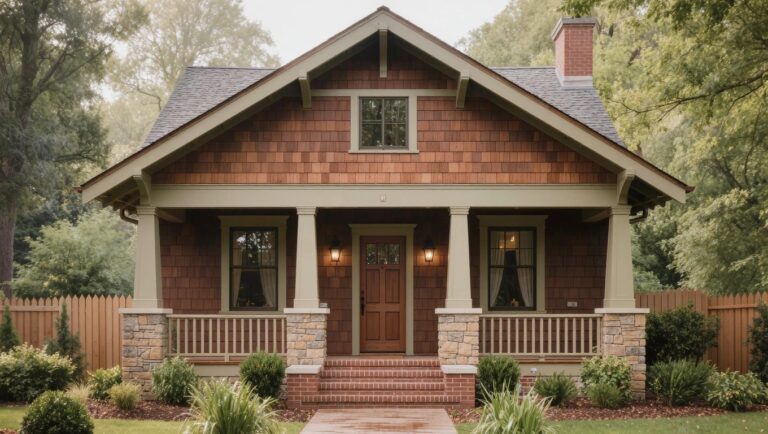
I’ve been mulling over stained house exteriors lately, since they bring a subtle glow that plain paint often misses.
The best ones use tones that pull warmth from the wood grain and match the light around the home.
I shy away from heavy dark stains myself, as they swallow up the architecture over time.
Lighter choices let the structure breathe while softening the overall look.
Certain approaches in these stand solid enough to borrow for a porch or garage.
Stained Board and Batten Siding
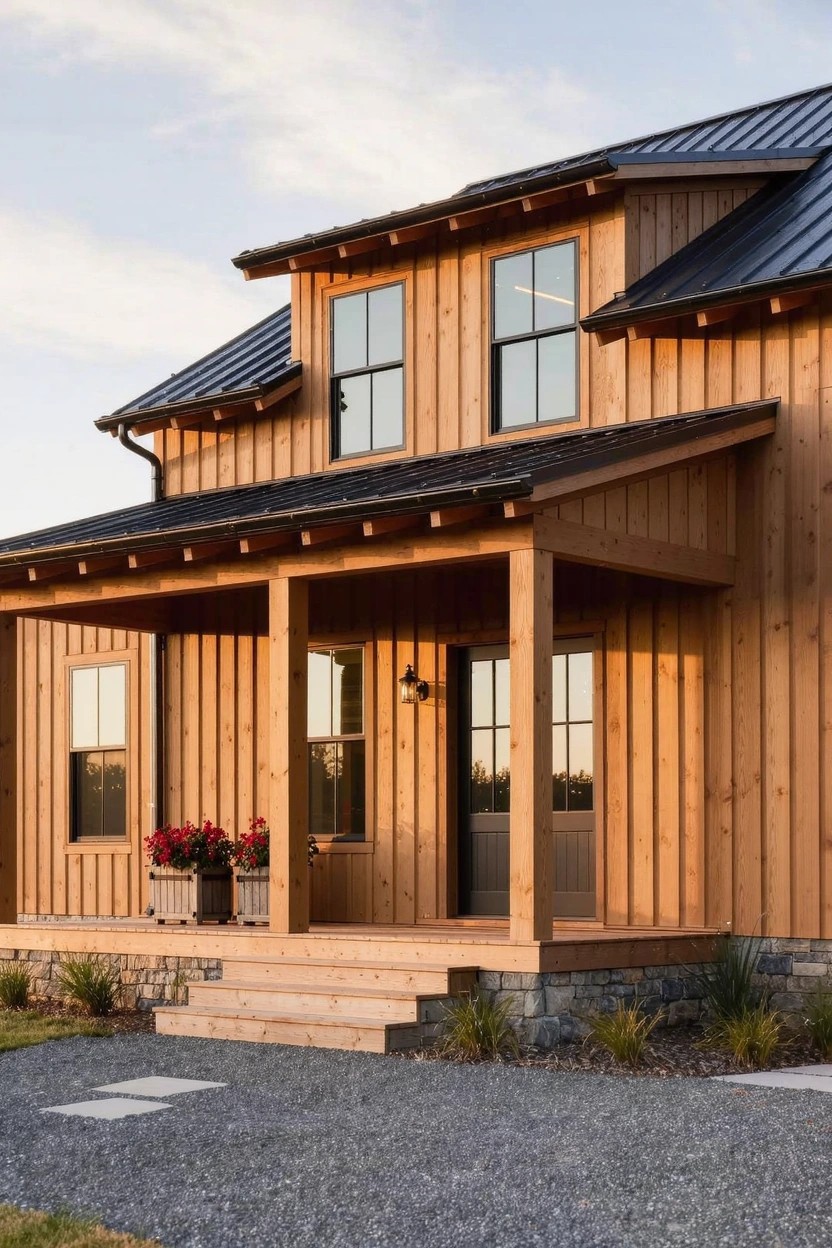
Board and batten siding in a warm wood stain gives a house a cozy, textured look without much fuss. You see it here covering the walls from top to bottom, with those vertical boards spaced just right. It catches the light nicely and pairs well with a dark metal roof. Folks like it because it feels solid and lived-in, not too slick.
This siding works best on homes with simple shapes like gables or farmhouses. Stain it to match your wood type, maybe cedar or pine, and keep up with resealing every few years to fend off weather. Skip it on super-modern places unless you want some rustic contrast. A gravel path out front keeps things practical.
Shingled Gable Porch
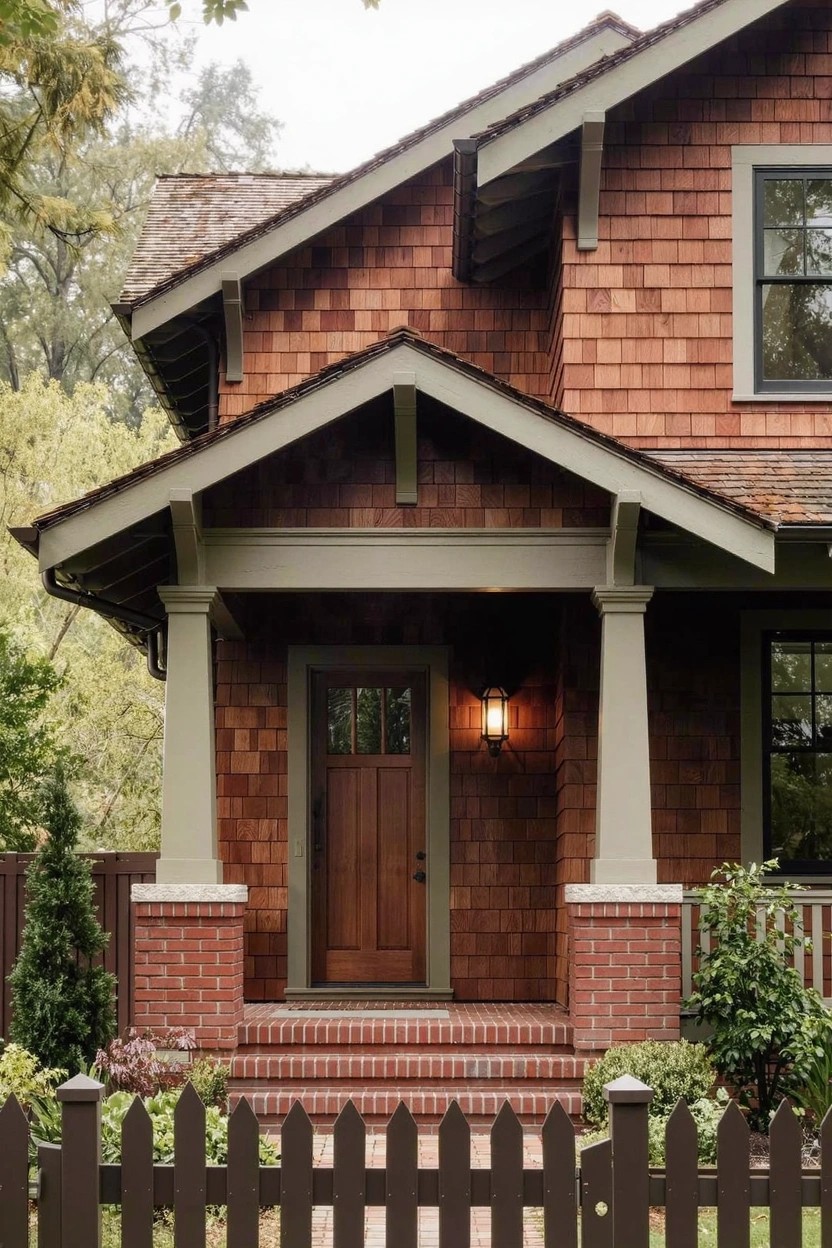
A gable porch roof covered in the same reddish stain as the house ties the entry right into the main structure. It makes the front door feel like part of the house instead of an add-on. Those tapered columns on brick bases keep things sturdy without fuss.
This setup works best on bungalow style homes with a modest front yard. Match the shingle color to your siding for that warm flow. Just keep the porch depth around eight feet or so. Too deep and it starts eating up the lawn.
Horizontal Wood Siding
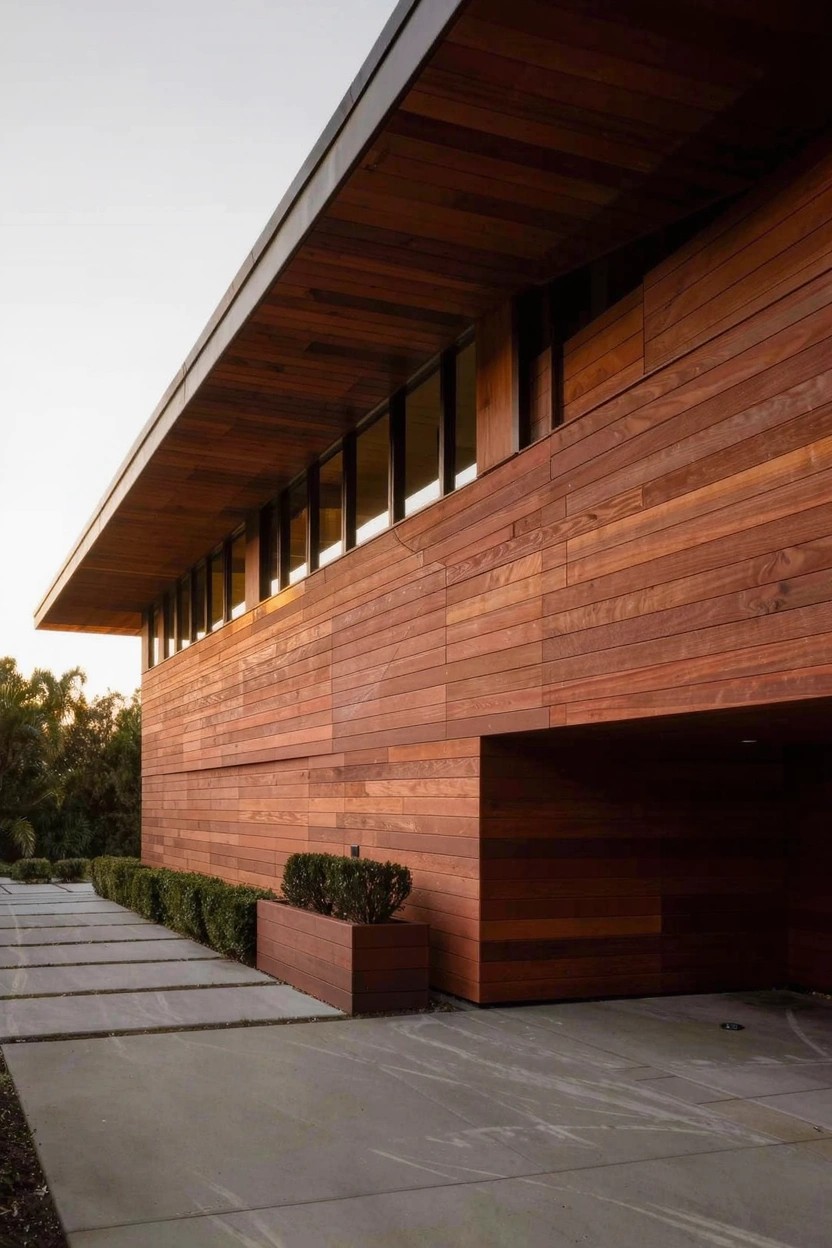
Horizontal wood siding covers this house in long, even planks. The warm stain on the wood pulls everything together. It softens the modern lines and makes the place feel more welcoming right from the street.
Try this siding on ranch homes or low-slung modern ones. It suits spots with some tree cover, like here with the boxwoods nearby. Pick a stain that matches your climate, and seal it well to keep the color lasting.
Shingled Siding on Coastal Homes
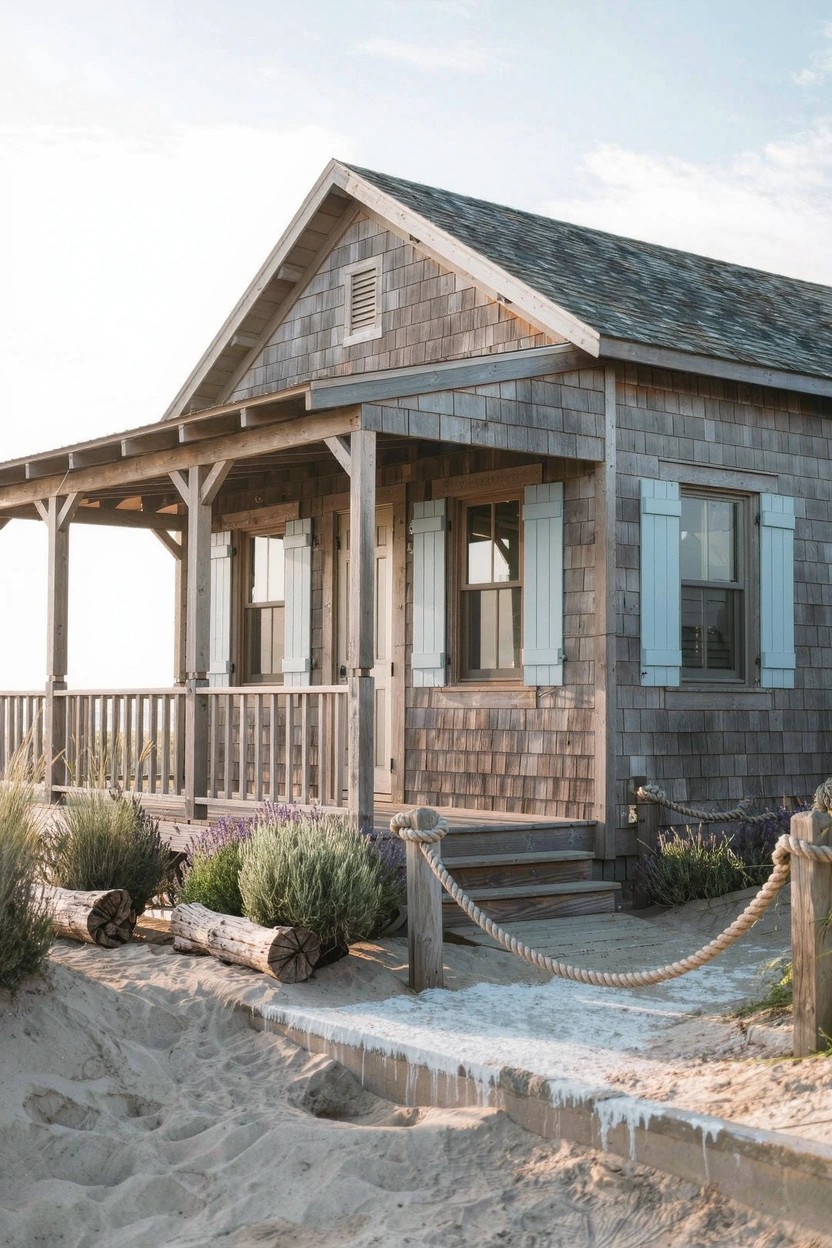
Shingled siding like this fits right in along the shore. The soft gray stain on the cedar picks up tones from the sand and driftwood nearby. It makes a small house feel solid and welcoming. No need for bold colors. This look stays quiet and blends with the setting.
Use it on cottages or bungalows near water. The material holds up to wind and salt if you seal it right. Add a basic porch railing to keep things open. Works best where you want low upkeep… just check the stain every couple years.
Vertical Stained Wood Siding
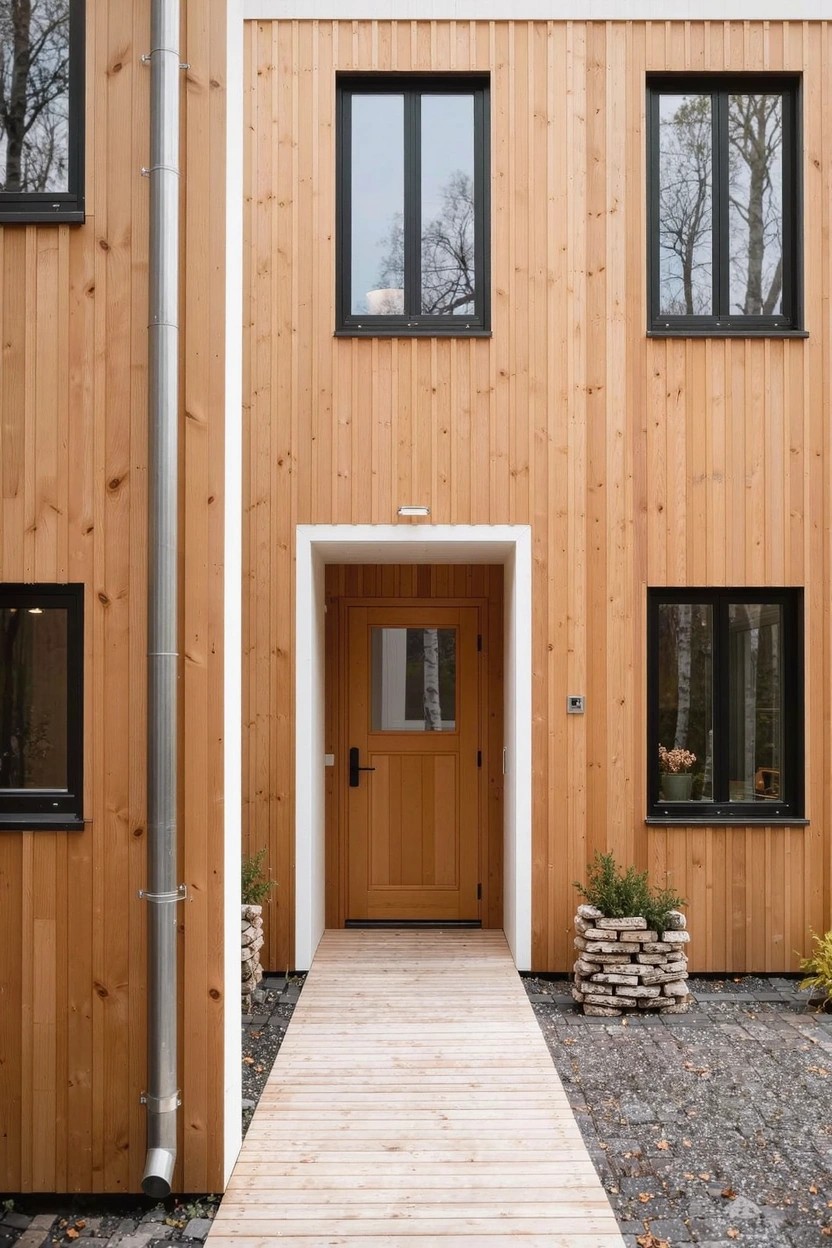
Vertical stained wood siding like this gives a house a warm, cabin-like feel without going overboard. The light stain on these boards picks up the golden tones from nearby trees and keeps things looking fresh year-round. Black window frames pop against it just enough to define the shape.
You can use this siding on any side of the house that faces the street or yard. It works best on homes in wooded spots or cooler climates where you want that cozy pull from the front. Just plan to restain every few years to hold the color.
Stained Barn Wood Exterior
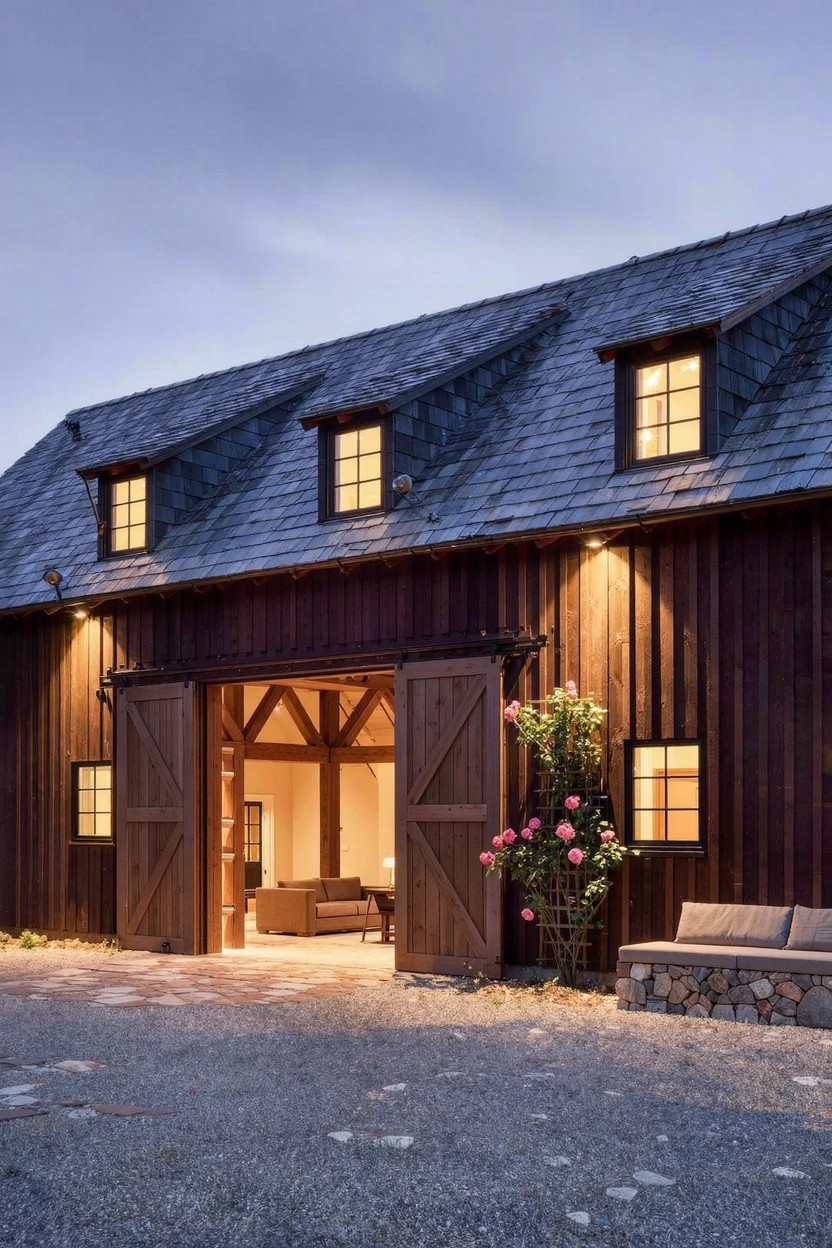
Stained wood siding like this on a barn-style home turns a simple structure into something warm and solid. The dark stain soaks into the boards, picking up the evening light just right and making the whole front feel welcoming. Those open double doors help too, pulling the inside out a bit.
You can pull this off on a country lot or even a bigger suburban yard for a guest house or studio. Stick to vertical boards and a steep roofline for that barn shape. Go for gravel in front to keep it low fuss, and add climbers like roses on one side. Watch the stain quality though. It needs to hold up outdoors.
Stained Wood Porch Entry
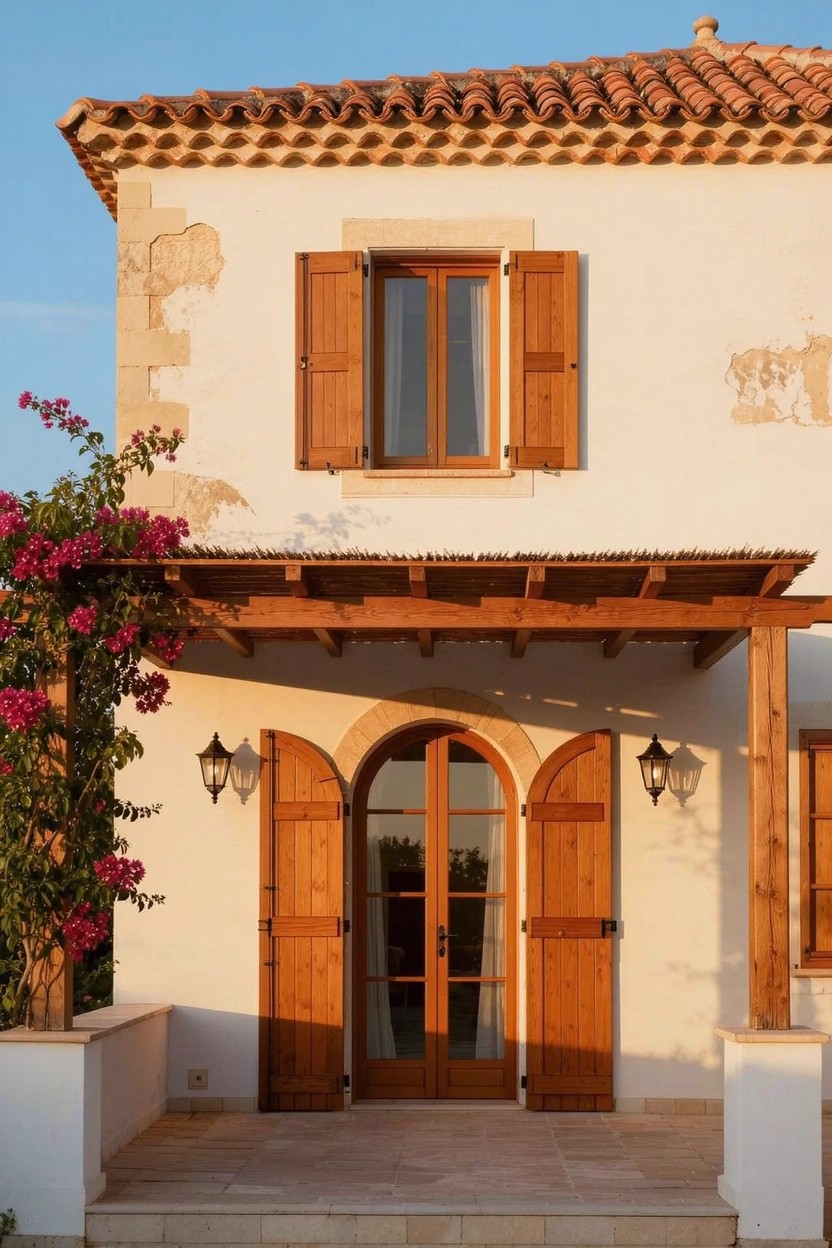
A stained wood porch like this one turns a basic white stucco house into something cozy at the front door. Those thick overhead beams give shade and pull the eye right to the entry. The warm wood tone bounces off the plain walls in a good way, making the whole facade less stark.
Put this setup on older homes with light walls, especially in sunny spots like the Southwest. It suits flat front yards where you need some height and texture. Go for a honey-colored stain that weathers well, and add lanterns or vines along the posts to tie it together without much fuss.
Warm Stained Timber Cladding
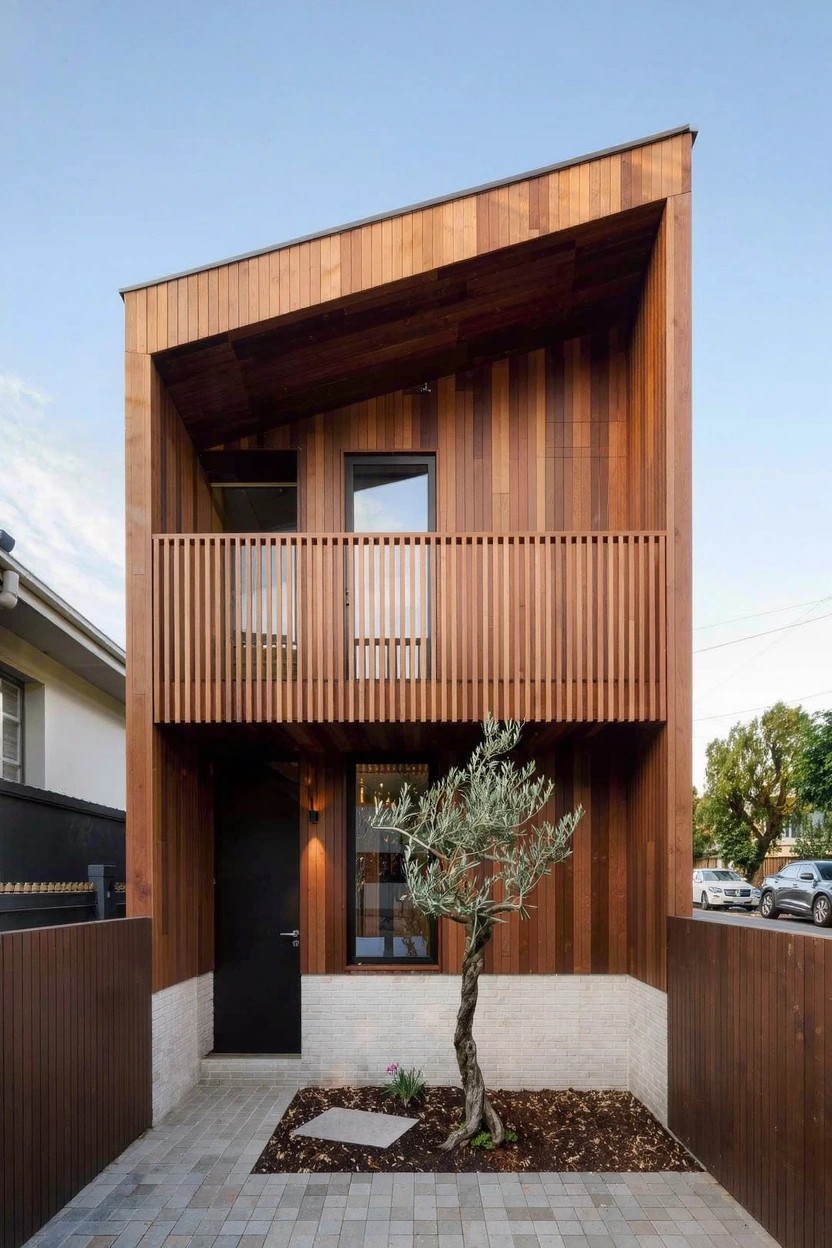
Warm stained timber cladding like this turns a stark modern house into something that feels right at home. The brown tone softens those sharp angles and pulls everything together, from the sloped upper wall down to the balcony rail. Folks notice it right away from the street. It just looks lived-in.
You can pull this off on smaller urban lots or anywhere with clean lines already. Stick it on walls and roofs for that wraparound effect, and keep windows dark to let the wood stand out. One thing. Timber needs sealing now and then to hold up in wet weather.
Stained Vertical Siding on a Garage
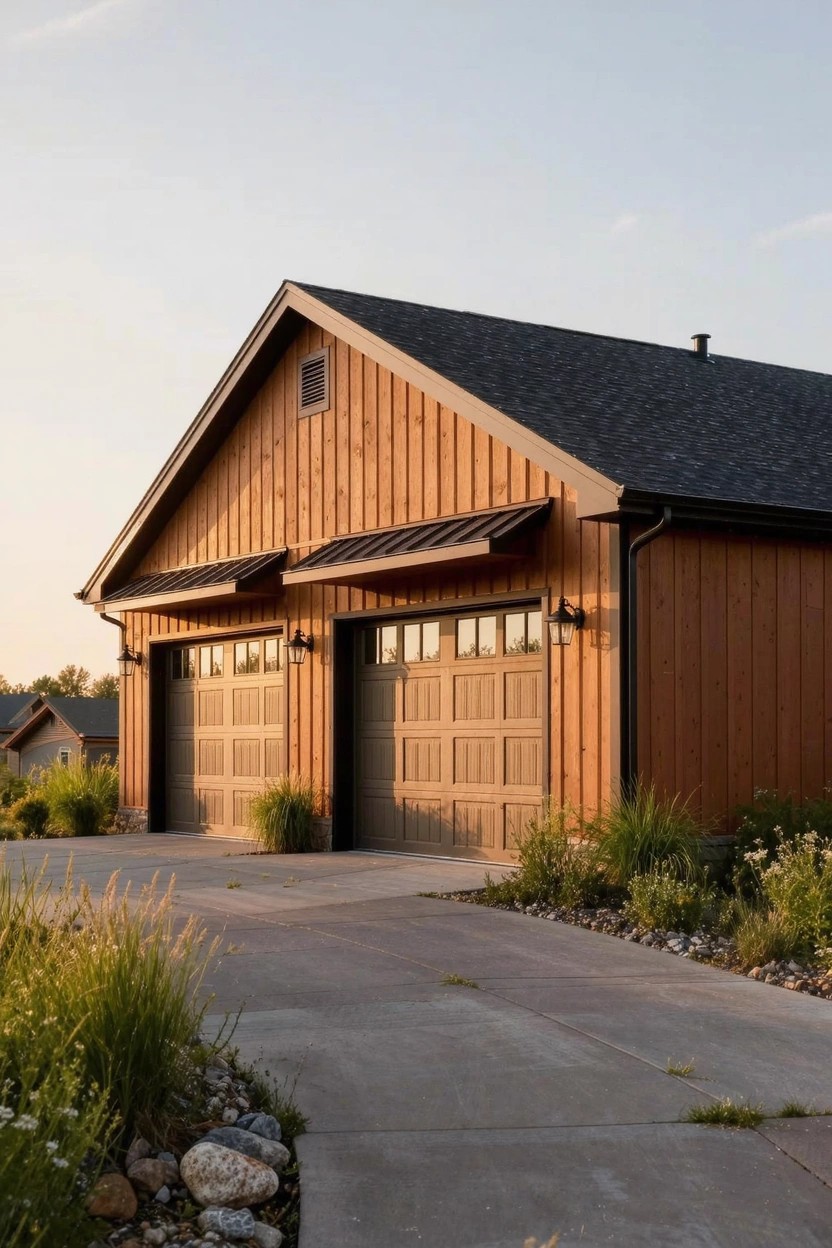
A simple stain job on vertical board-and-batten siding turns a plain garage into something with real character. That warm wood tone catches the light just right. It fits the house without trying too hard.
Put this on a detached garage or workshop where you want some warmth without a lot of fuss. It suits homes in the country or suburbs with open yards. Go for a semi-transparent stain so the grain shows through. Keep up with resealing every couple years.
Warm Stained Shingle Siding
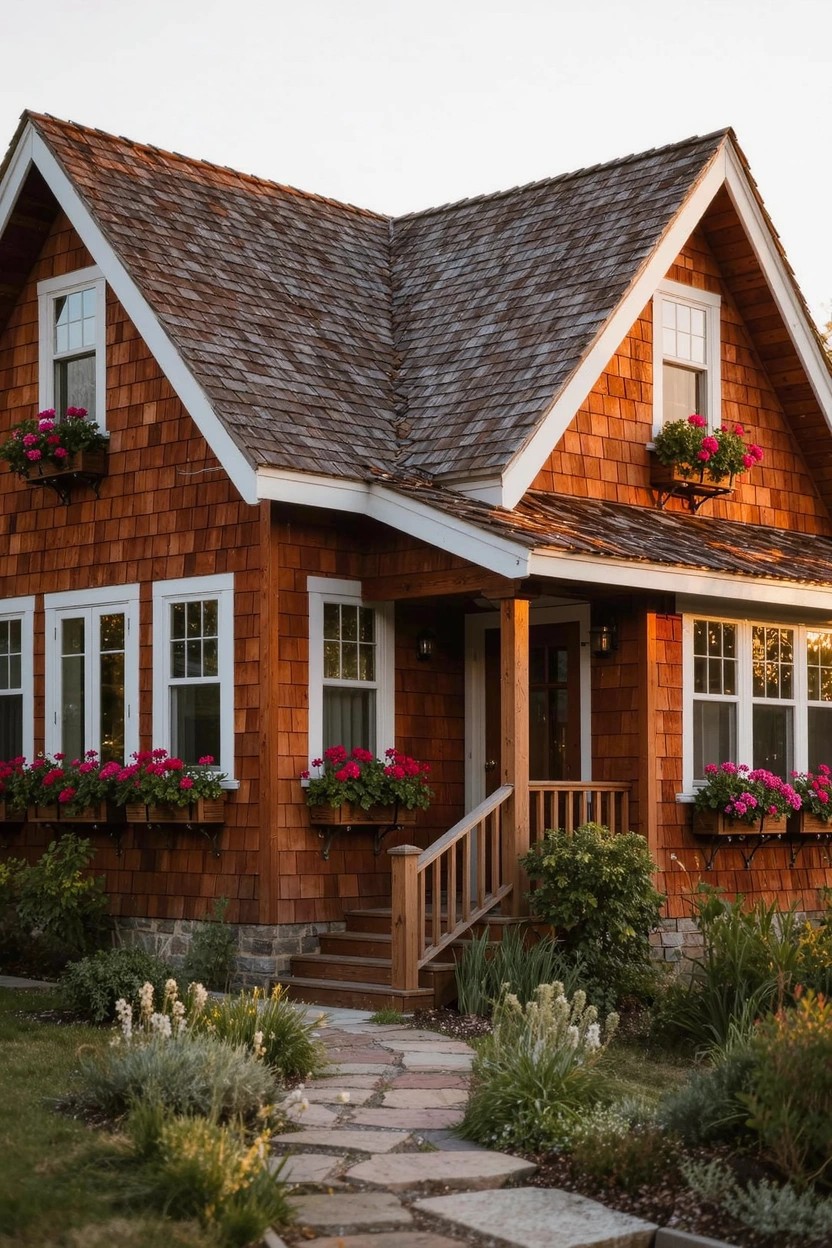
Shingle siding stained in a warm reddish tone gives a house that settled-in feel right away. It brings out the natural texture of the shakes without overpowering things. Flower boxes tucked under the windows add a bit of color that plays right off the wood.
This look fits cottage or cabin style homes best, especially where you have some garden plantings nearby. Go for a quality exterior stain to handle weather changes. It keeps the warmth showing through year after year.
Stained Wood Siding on Modern Houses
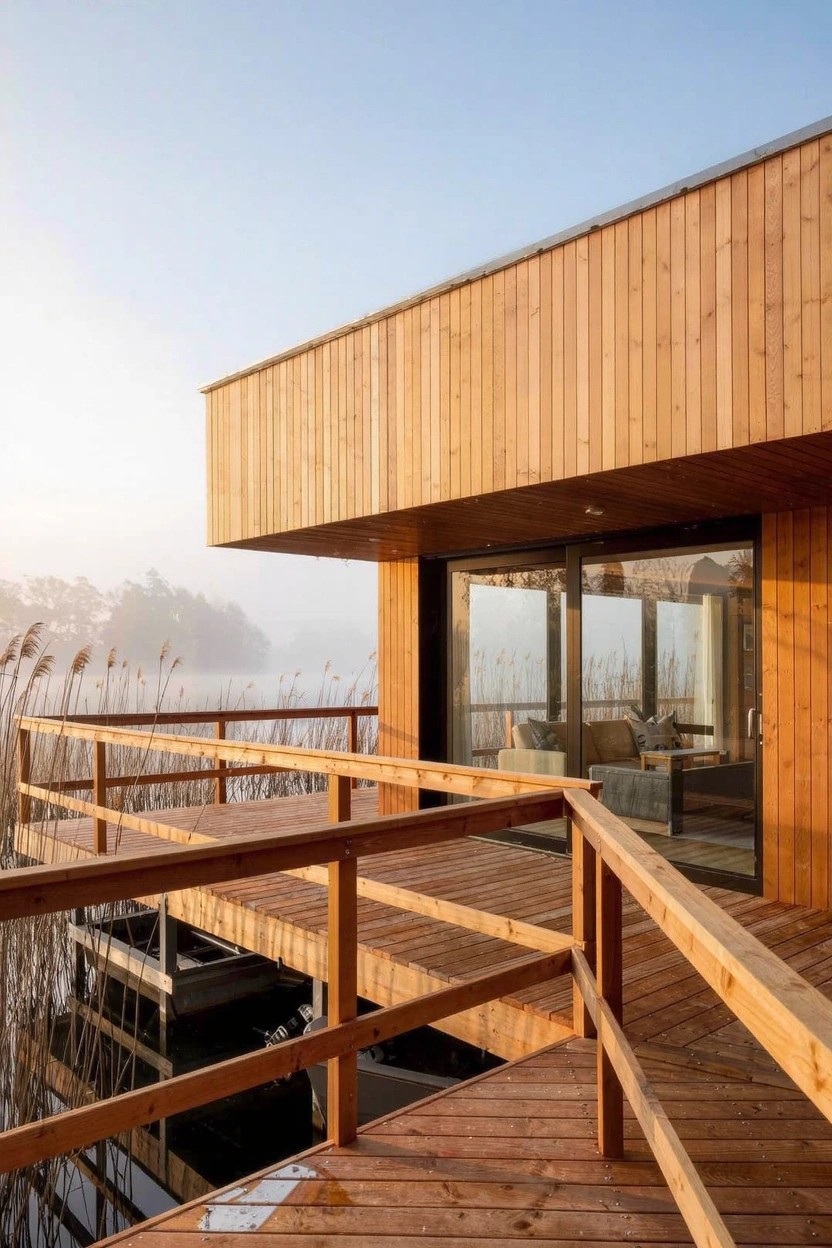
Warm stained wood siding like this turns a boxy modern house into something that feels right at home by the water. The vertical boards pick up the golden tones of cedar or pine, making the whole facade less stark. Those big glass walls help too, pulling the outside right in.
You can use this on any contemporary build where you want a touch of warmth without losing clean lines. It suits lake houses or wooded lots best. Go for a semi-transparent stain to let the grain show, and seal it well if moisture is around.
Stained Timber Balconies
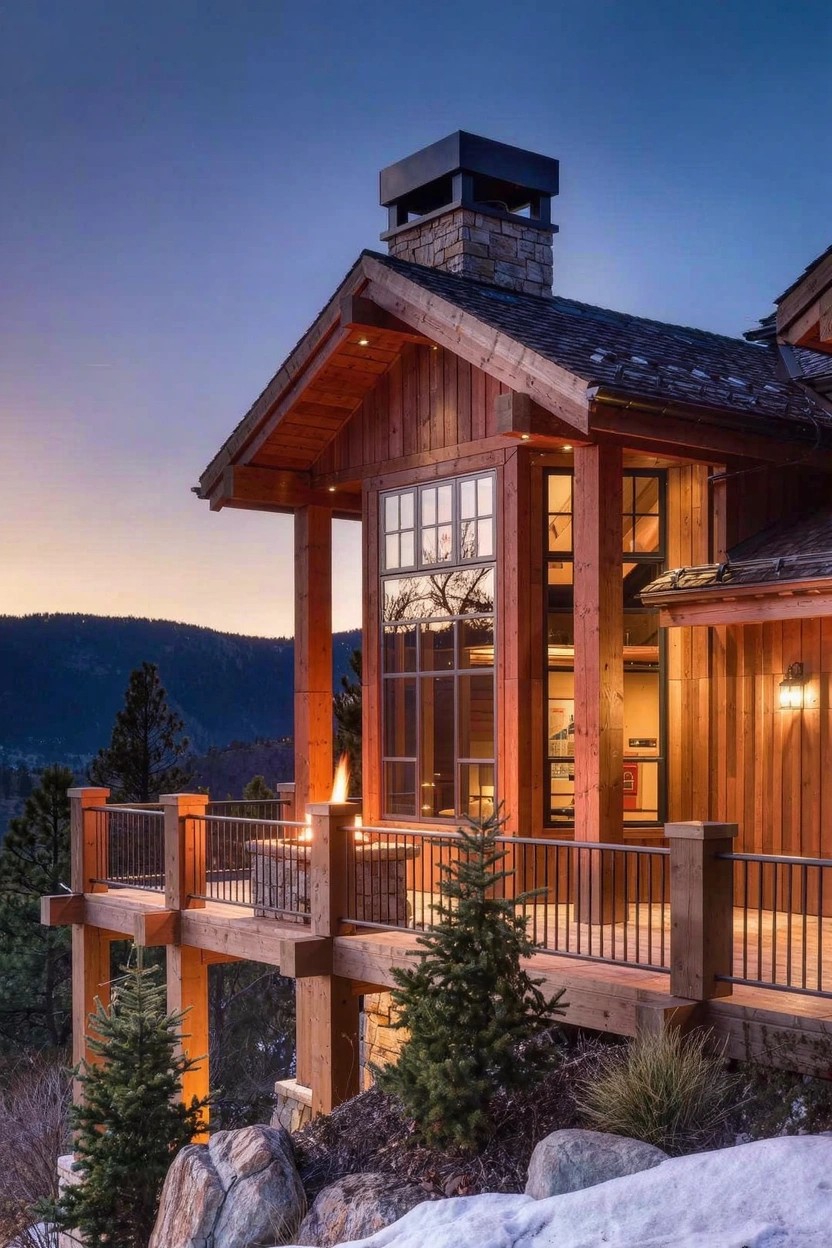
Stained timber balconies like this one pull the house right into the landscape. The wood posts and railings match the siding stain perfectly. That warm tone stands out against rocks and pines. It makes the spot feel like part of the home, not an add-on.
Try this on sloped sites where flat ground is short. Bolt the posts into bedrock if you can. It suits cabin or lodge homes in the mountains. Just check local codes for height and wind loads. Keeps things safe.
Wood Balcony Over the Entry
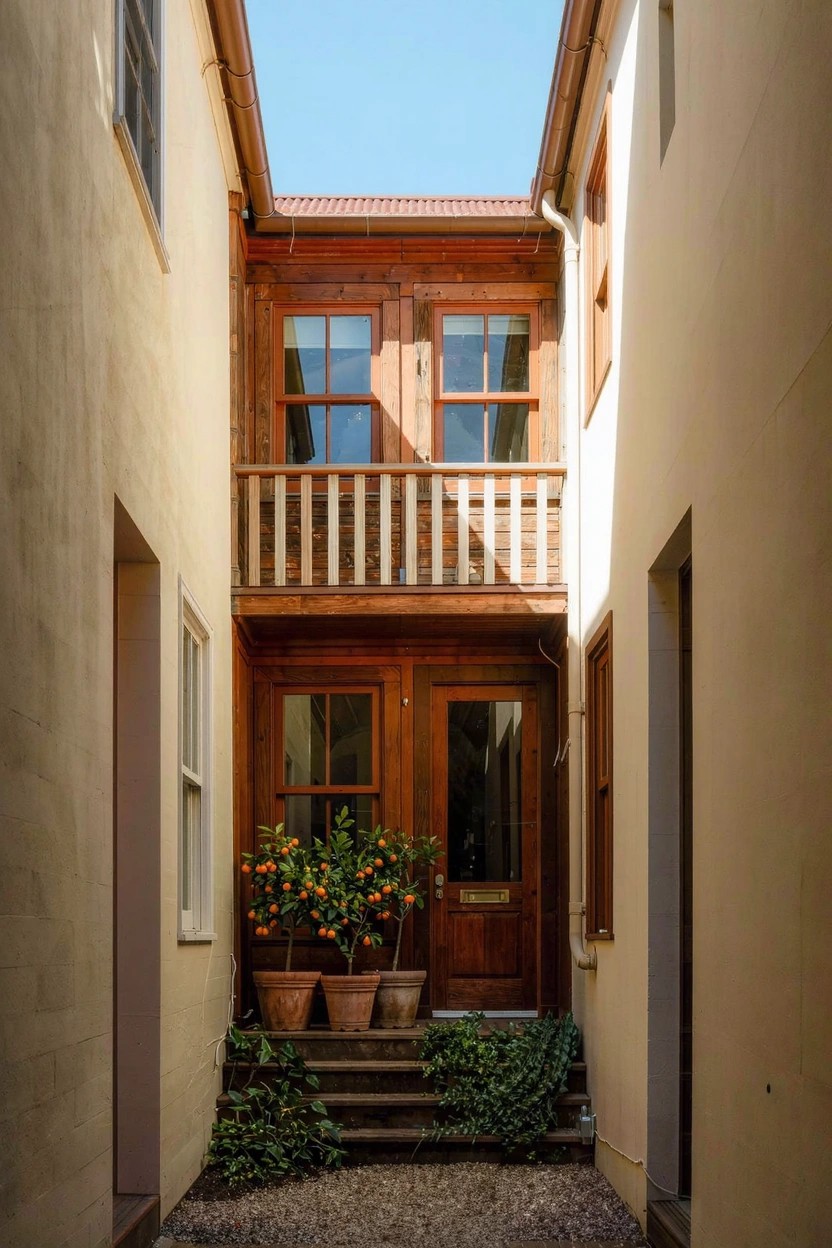
A wood balcony like this one sits right above the front entry, using a deep stain that pulls warm tones from the surrounding stucco. It gives the plain walls some real character without overwhelming the space. Those big double doors below match perfectly, making the whole setup feel solid and welcoming.
Try this on homes tucked into courtyards or tight urban spots, especially where you want to soften light-colored walls. Add a couple potted trees by the steps for scale… it works best on two-story houses with a bit of height. Just make sure the wood is sealed well against weather.
Dark Stained Beams on White Plaster
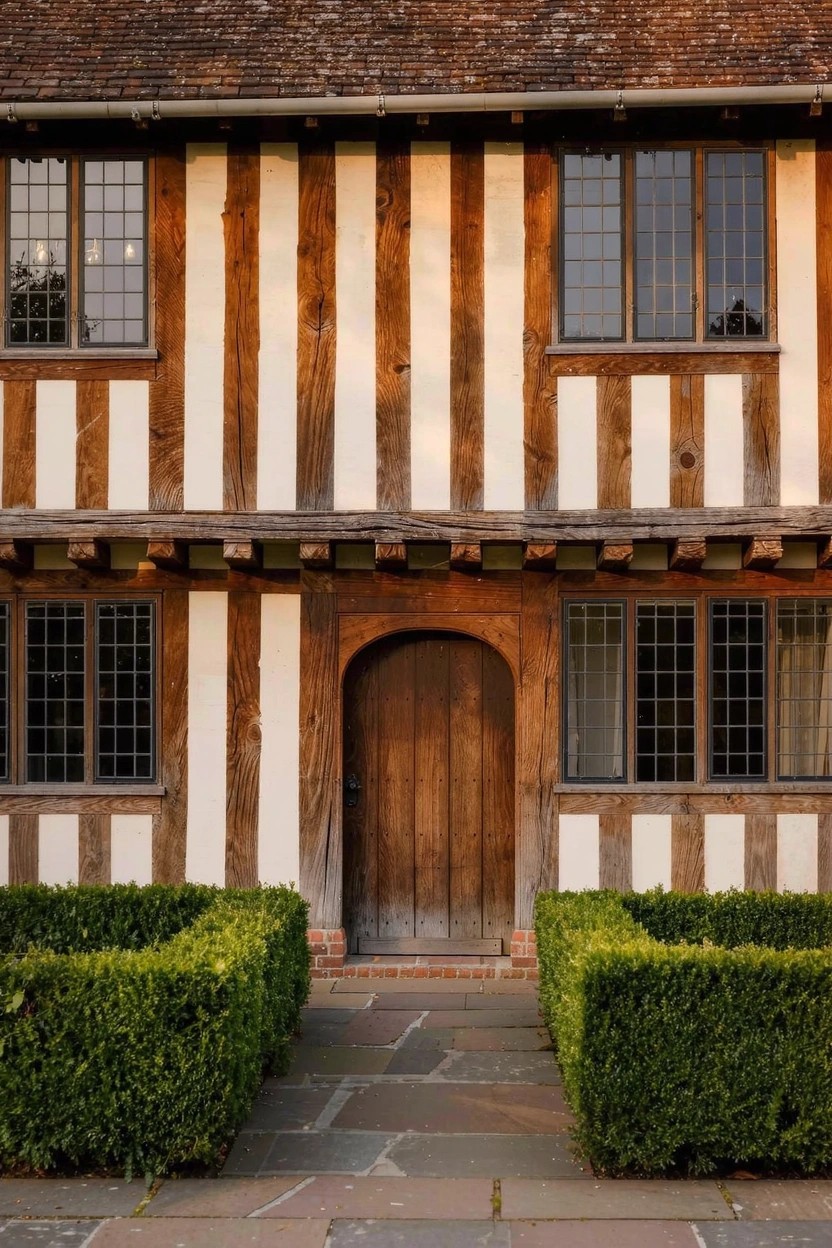
Half-timbered houses like this one use dark stained wooden beams set against white plaster walls. The beams stand out right away. They give the whole front a cozy, lived-in feel without much color. That simple contrast warms things up on a plain facade.
You can add this look to homes with some historic style, or even update a plain boxy house. Keep the beams thick and evenly spaced. Pair the door with low boxwood hedges along the path. Just seal the wood well. It holds up in most yards.
Horizontal Stained Wood Cladding
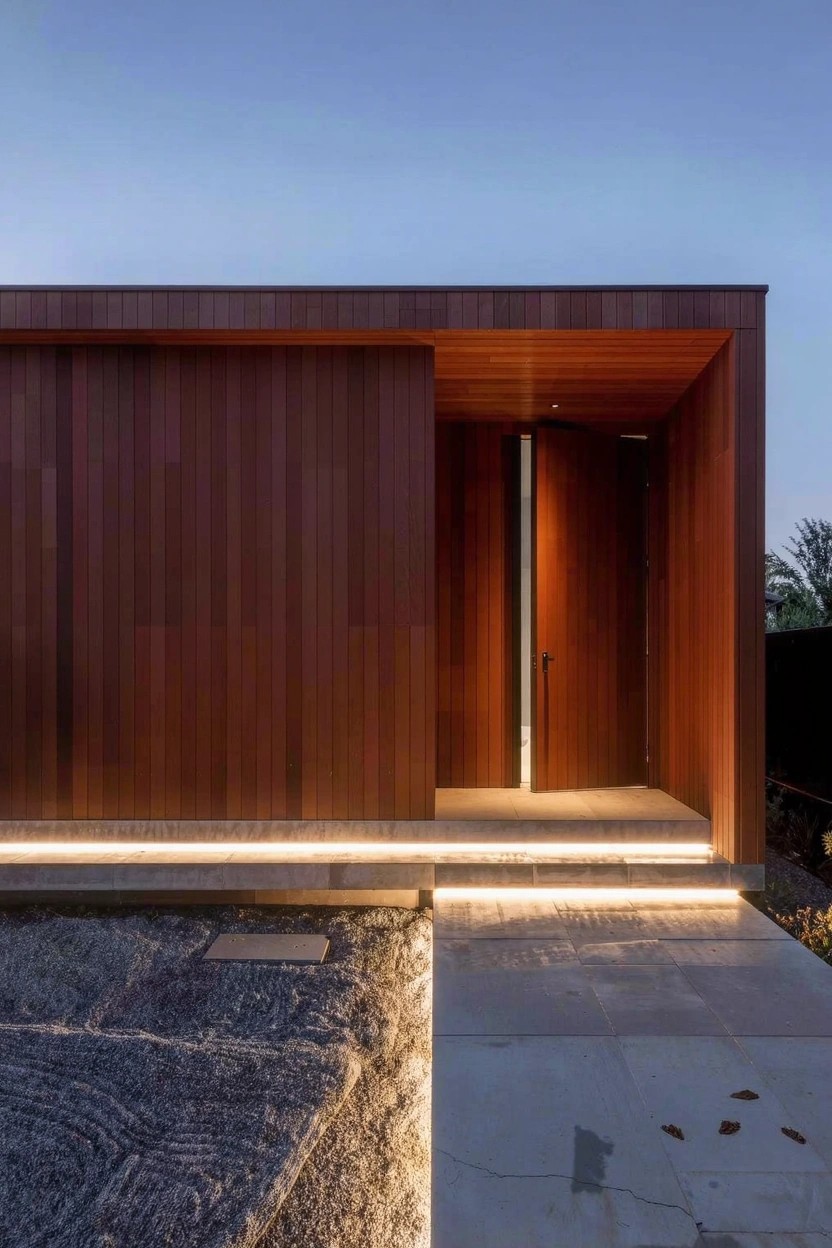
Horizontal stained wood cladding like this gives a modern house real warmth right up front. The planks run full height across the facade, turning what might feel boxy into something approachable. That rich brown tone holds its own at dusk, and it sets off a simple door nicely.
Try it on contemporary homes or ranch styles that need more character. It works best where you want low upkeep but some texture. Pair the wood with gravel beds or stone paths, and add a light strip underneath for evenings. Watch the sun exposure though, since the stain can fade over time.
Pergola Covered in Vines
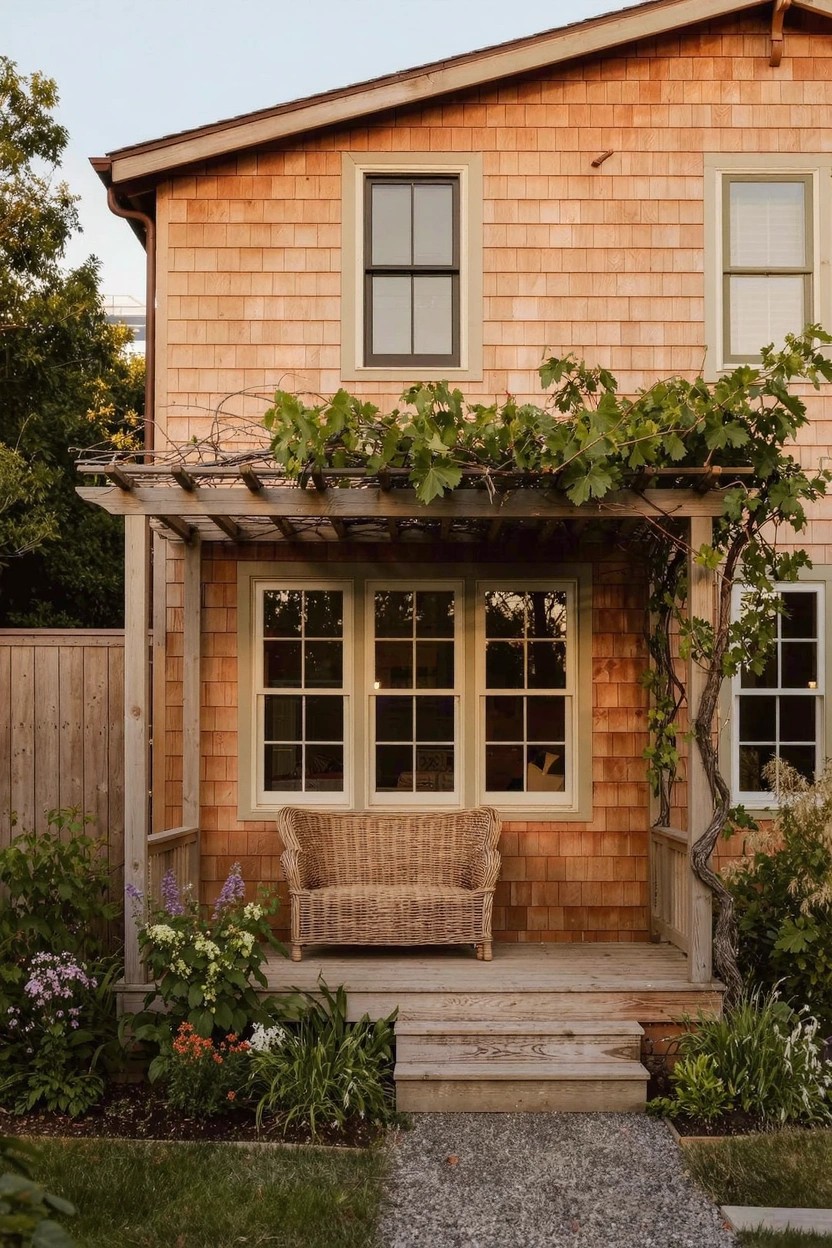
A pergola like this one softens a porch and pulls the house into the yard. Vines climb right over the open wooden frame, giving shade for that wicker seat without closing things in. On a warm stained shingle house, it adds a lived-in touch that feels right at home.
Try it on a side or front porch where you want a spot to sit outside. Suits older homes or ones with a bit of garden room. Go for tough vines that grow quick, but trim them back so they don’t take over the windows. Keeps the look easy year round.
Horizontal Stained Wood Siding
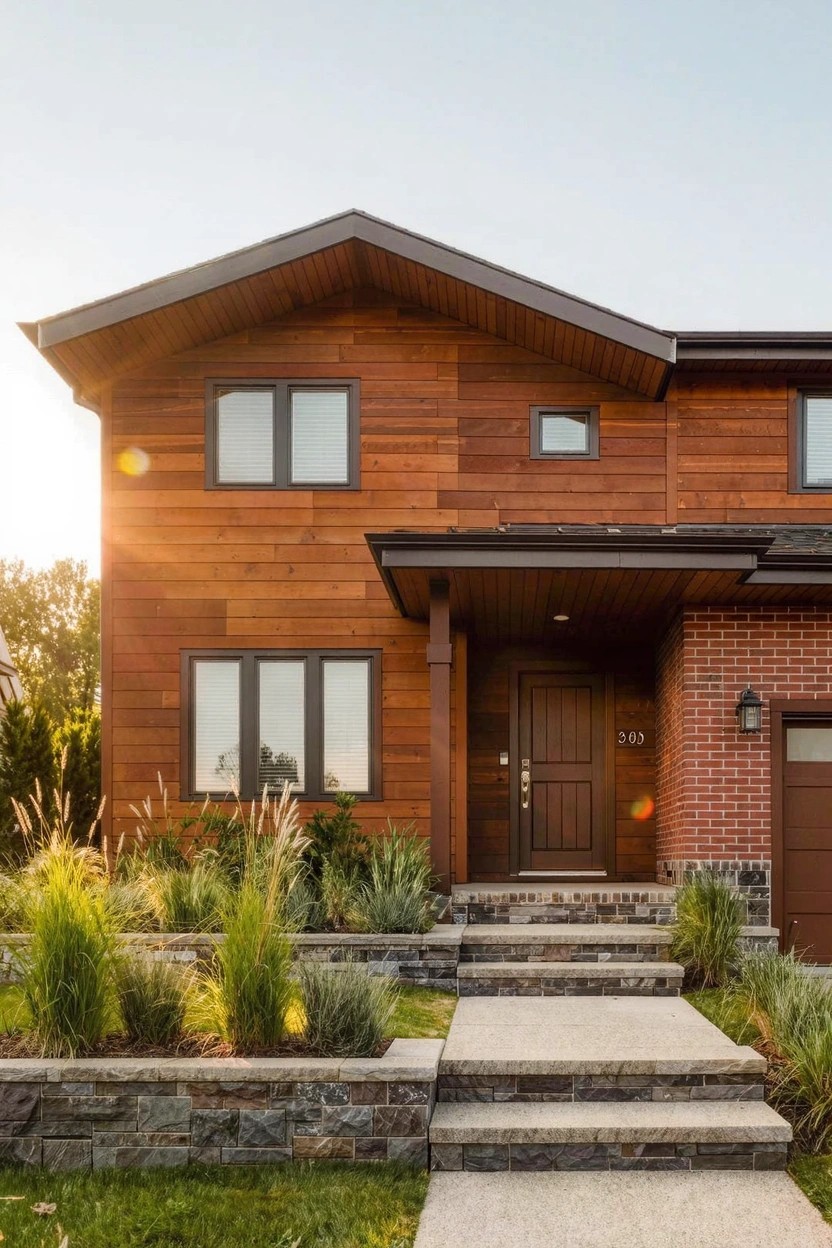
Horizontal stained wood siding covers most of this house front. The dark stain soaks in deep and pulls the eye right to the entry. It works because it softens those big modern lines. Warmth comes through without much fuss.
Put it on homes that need a little personality. Ranch houses or two-stories with simple roofs take to it well. Brick at the base helps hold it down… and watch the sun exposure so the color stays even over time.
Elevated Cabins on Sloped Terrain
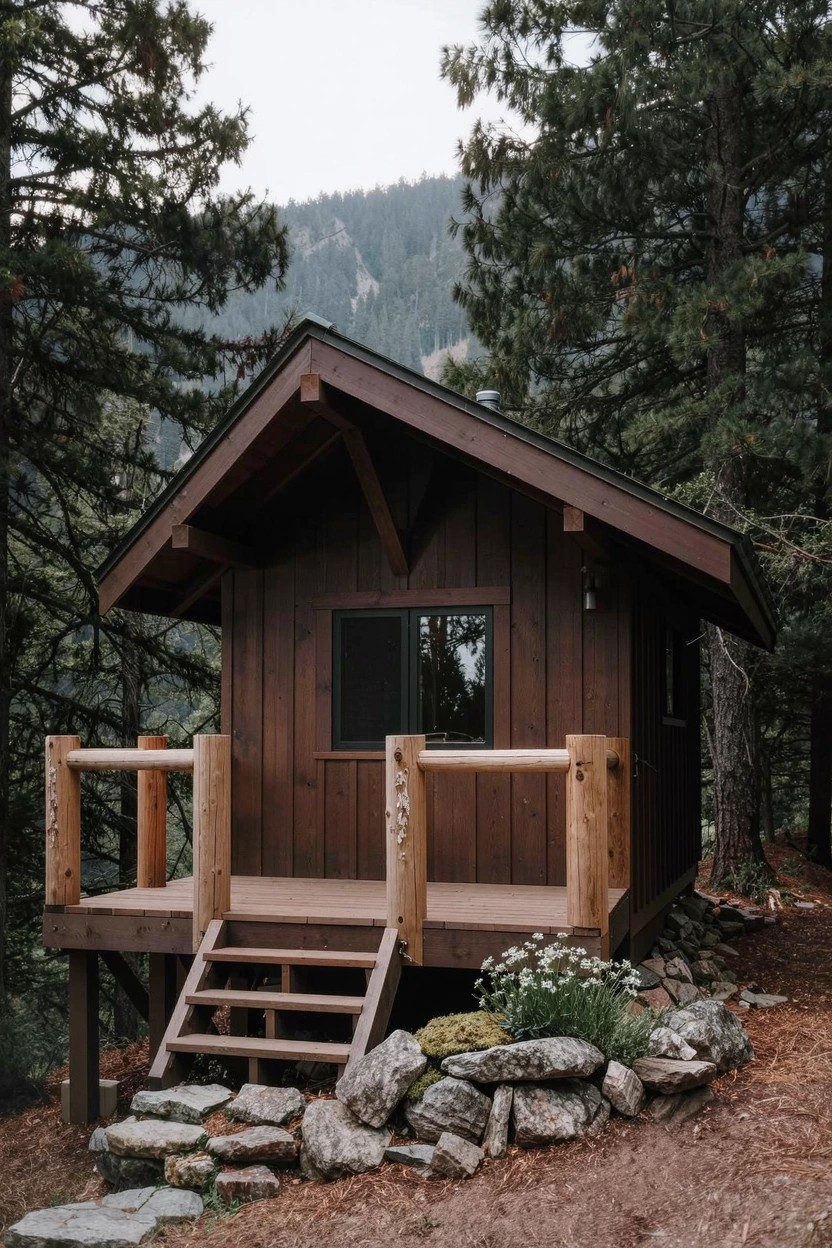
Raising a cabin on sturdy wooden stilts lets it sit right above a rocky slope without a lot of earth moving. You get that natural deck right at the door, and the dark stain on the wood pulls in the warmth from the surrounding pines. It keeps the house dry and makes the entry feel open to the trees.
This setup works best on wooded lots where the ground drops away fast. Pair it with simple railings and wide steps down to a stone base. Skip it on flat ground, though. It suits small cabins more than big houses, and watch for local building codes on heights.
Warm Stained Wood on Vertical Facades
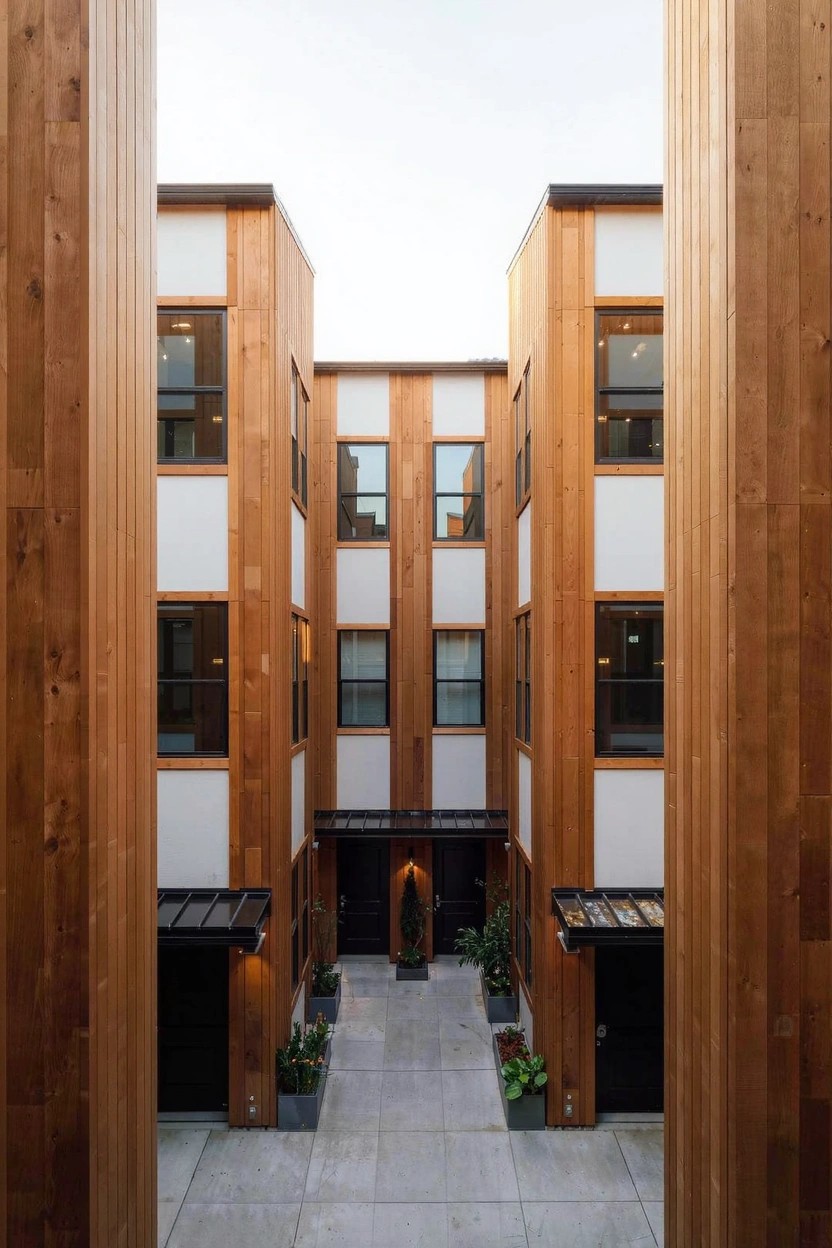
Vertical stained wood siding covers the main faces here. It pulls the eye up along those tall boards and brings real warmth to what could be a plain modern box. The wood’s color plays well against the white panels. No fuss. Just solid contrast.
This works great on townhouses or low-rise apartments. Use it where you want height without extra trim. Suits spots with some courtyard or alley access. Keep up with sealing the wood every couple years. Simple upkeep keeps it looking good.
Pergola Covered Entry Patio
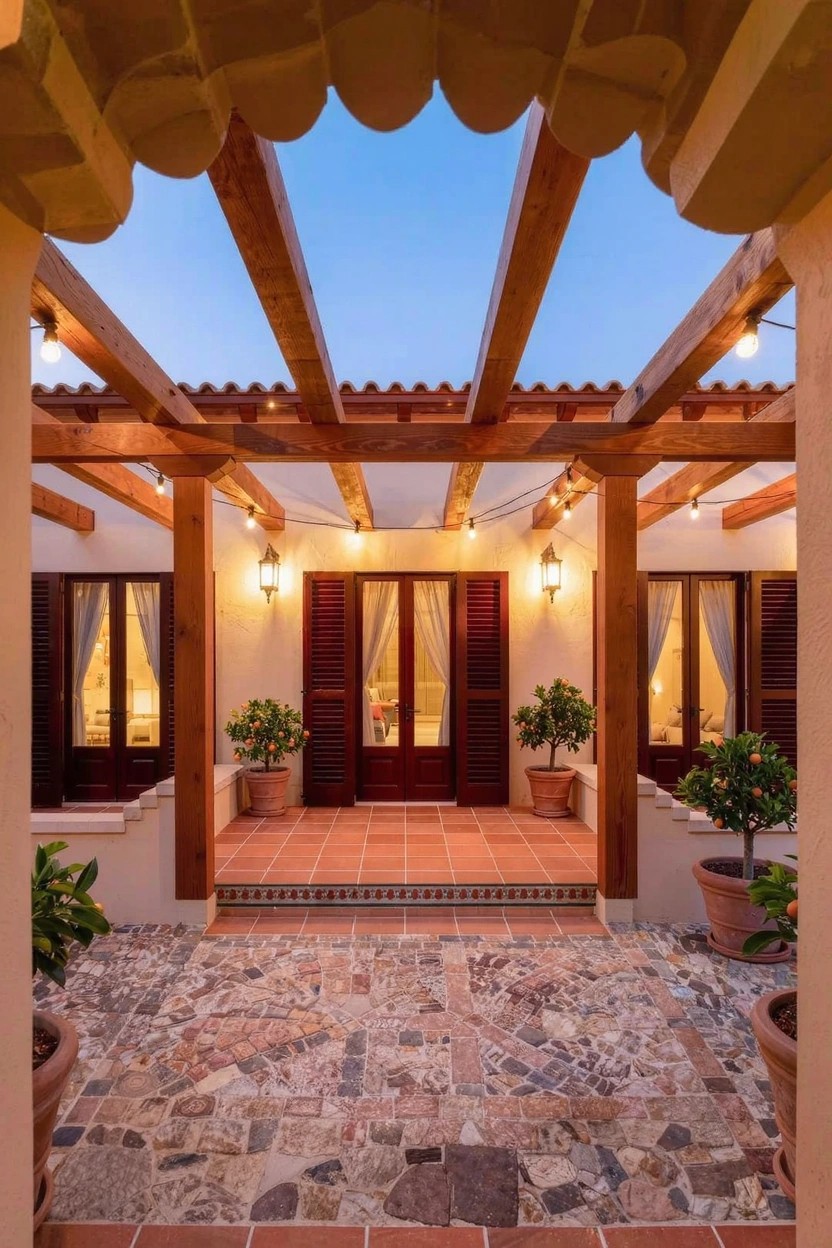
A pergola stretched over the entry patio pulls the whole front together in a simple way. Those thick stained wood beams up top offer shade without closing things off. They echo the warm tones on the doors below and make the spot feel protected and homey right from the walkway.
Put one like this near your front door if you have room for a few steps of terrace. Stain the wood medium brown to blend with siding or trim. Add lanterns on the posts and a couple big potted plants. It suits ranch or Mediterranean style houses best… just check your local codes for pergola height.
Stained Porch Columns
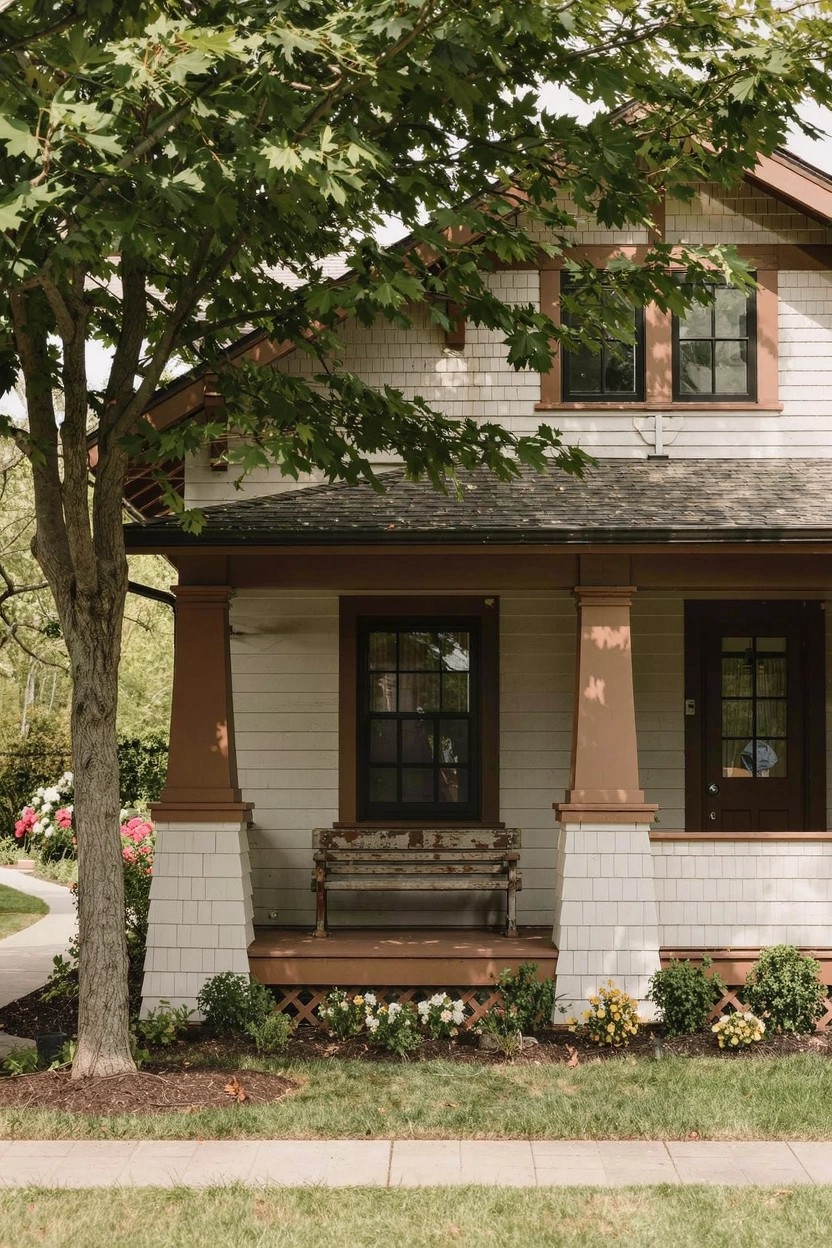
Stained porch columns stand out here on this white house. The dark brown finish on the tapered supports adds real warmth to the plain siding. Folks notice it right away. It pulls the entry together in a simple Craftsman way.
Try this on older bungalows or similar homes with light walls. Go for a medium stain shade that fits your doors and windows. It suits shady spots under trees. Just seal the wood well to hold up over time.
Slatted Wood Screens for Privacy
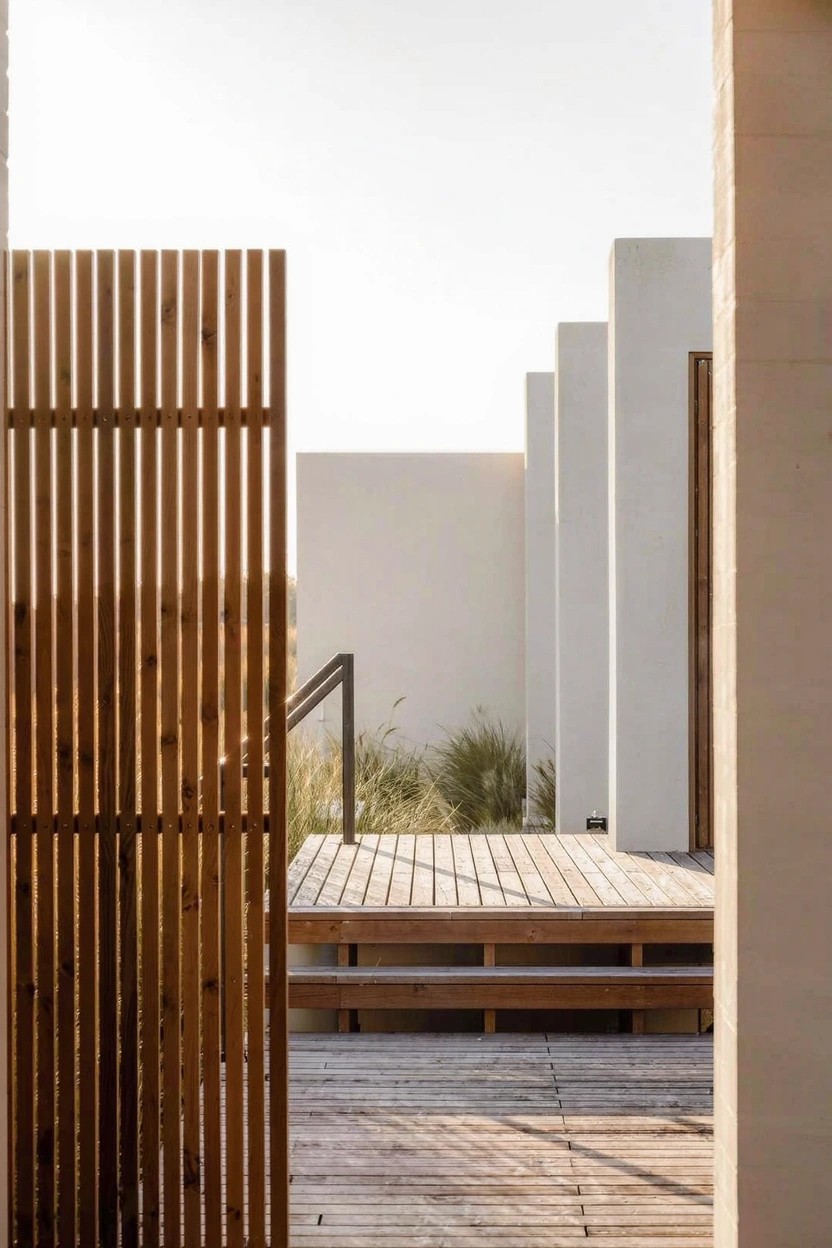
Slatted wood screens like these give your deck or patio some real privacy without blocking all the light. The vertical slats catch the eye right away. And that warm stain on the wood? It softens up those crisp white walls in a simple way that feels welcoming.
Put them along one side of a deck, maybe near the house entry. They suit flat yards or modern homes best, especially where you want to hide a neighbor’s view. Go with durable wood like cedar. Space the slats a bit apart… keeps it airy. Just seal the stain well if it’s out in the weather much.
Ivy on Brick Walls
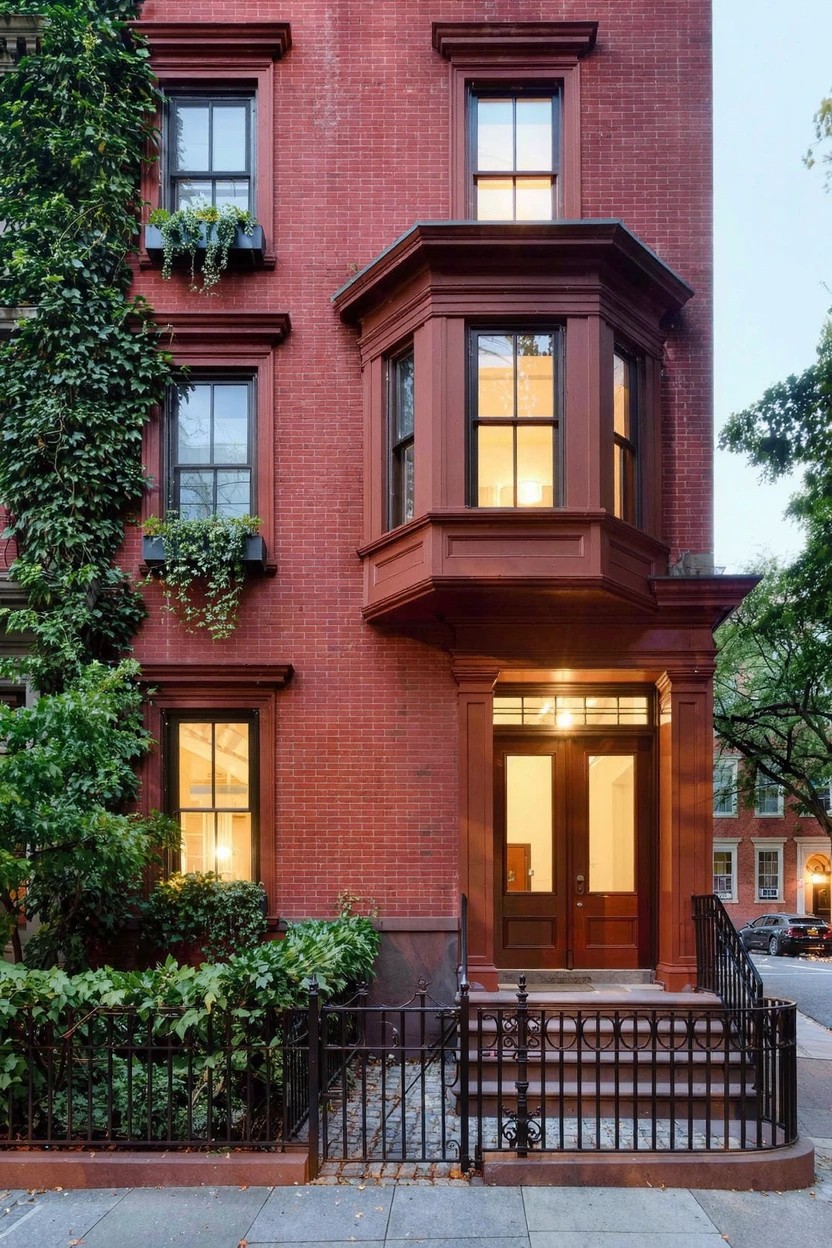
One nice touch for brick houses is growing ivy up the walls. It softens that solid brick look and pulls some garden right onto the facade. Here the ivy climbs thick over red brick, with plants in the window boxes too. Folks like how it makes a plain wall feel lived-in and cozy.
This works best on townhouses or older homes where the brick needs a little green boost. Plant ivy at the base near the fence or steps, and train it up. Just trim it back now and then around doors and windows… or it might get too bold.
Stained Wood Cladding on Modern Houses
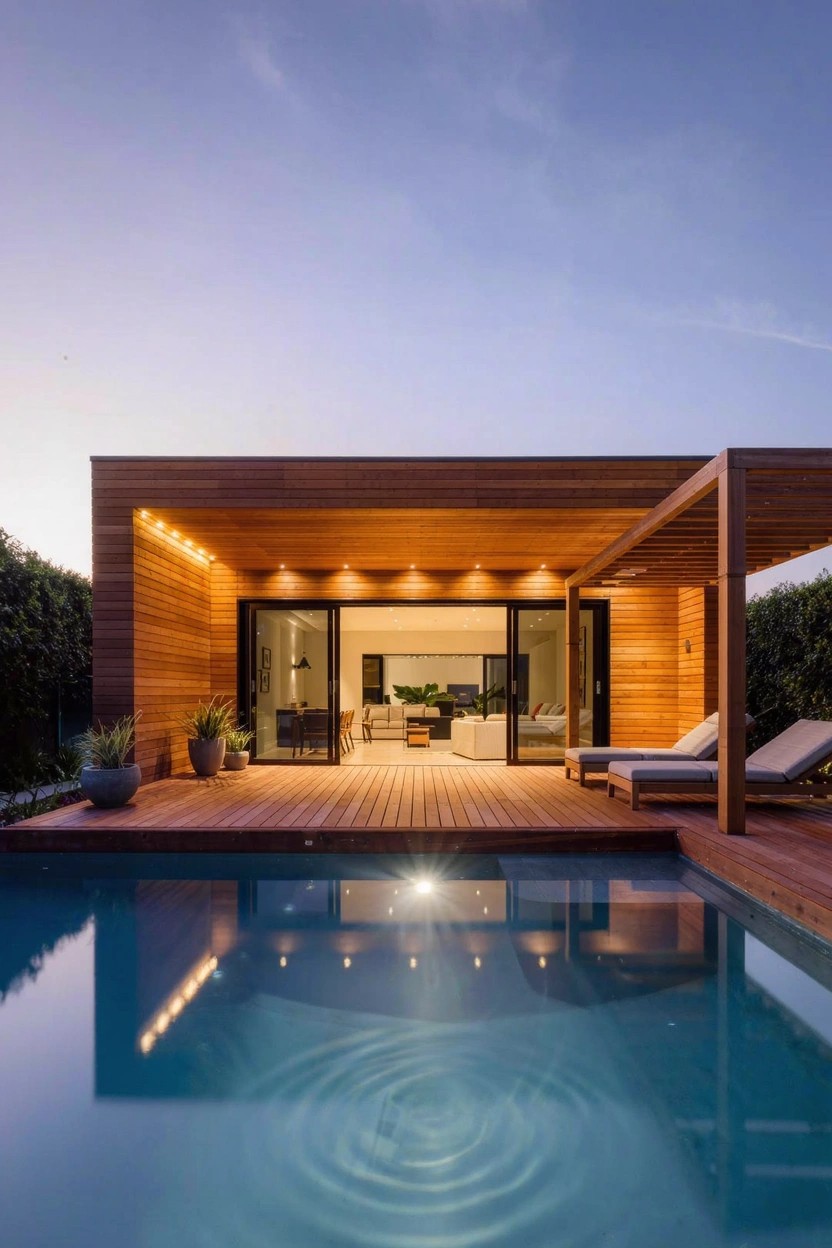
Stained wood cladding works well on these boxy modern homes. The warm brown stain on the horizontal boards brings a bit of coziness to the straight lines and big glass areas. It keeps things simple but makes the place look lived-in right away.
Try this on a single-story house with a flat roof. It fits yards with room for a deck or pool nearby. Pick a durable stain so the wood holds up over time, especially facing west like this one.
Frequently Asked Questions
Q: How do I pick a stain color that actually warms up my house?
A: Walk around your neighborhood at different times of day and note what shades catch your eye on other homes. Swatch a few options right on your siding to see how they play with your roof and landscaping. Warm browns or reds pull it off best without clashing.
Q: What’s the first step to prepping old wood siding for stain?
A: Scrub every inch with a deck cleaner and stiff brush to blast away mildew and grime. Rinse well and wait a couple dry days. Skip this and your new stain peels fast.
Q: Can I stain over faded paint on my exterior?
A: Scrape off loose paint first, then hit it with a chemical stripper for the stubborn stuff. Sand smooth once dry. Stain grabs better on raw wood anyway.
Q: How often do I need to restain my house exterior?
A: Check it every couple years, especially after harsh winters. Refresh when the color fades or water stops beading up. A quick coat keeps that warm glow going strong.
