

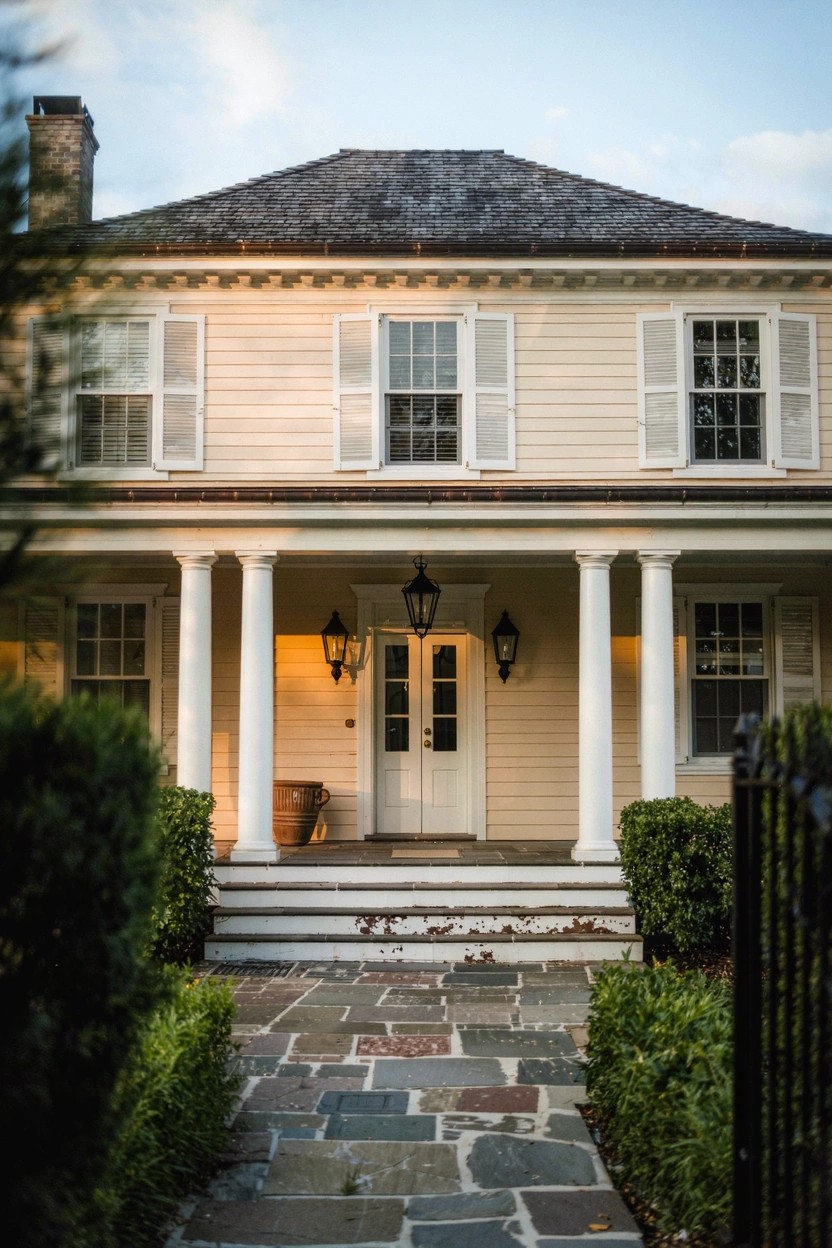
I’ve been walking through established neighborhoods lately, noting how certain house colors hold their charm year after year. The ones that pull subtle tones from the siding, stonework, or even the oak trees out front create that effortless harmony. I skipped a charcoal gray for our trim once because it swallowed the light, turning welcoming into gloomy. Shades with balanced undertones avoid that trap and let the architecture shine through changing weather. A few here match what lasts.
Soft Yellow Siding on Traditional Homes
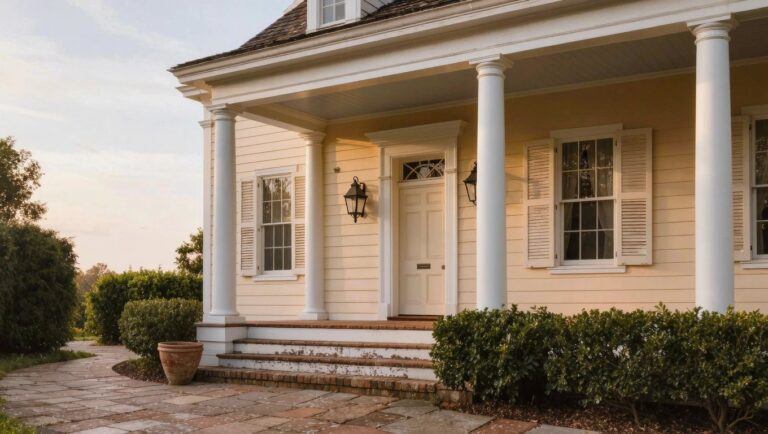
Soft yellow siding like this brings a gentle warmth to a house without overwhelming the look. It plays nicely off white trim around the windows and doors, keeping everything clean and balanced. On a classic setup with clapboard walls and a front porch, the color feels right at home, especially as the sun hits it in the late day.
This shade suits older homes with gabled roofs and columns best. Paint it over good siding, then stick to crisp white for shutters and porch details. Hedges along the walk help set it off. Just clean it now and then, since yellow can show dirt over time.
Red Front Door
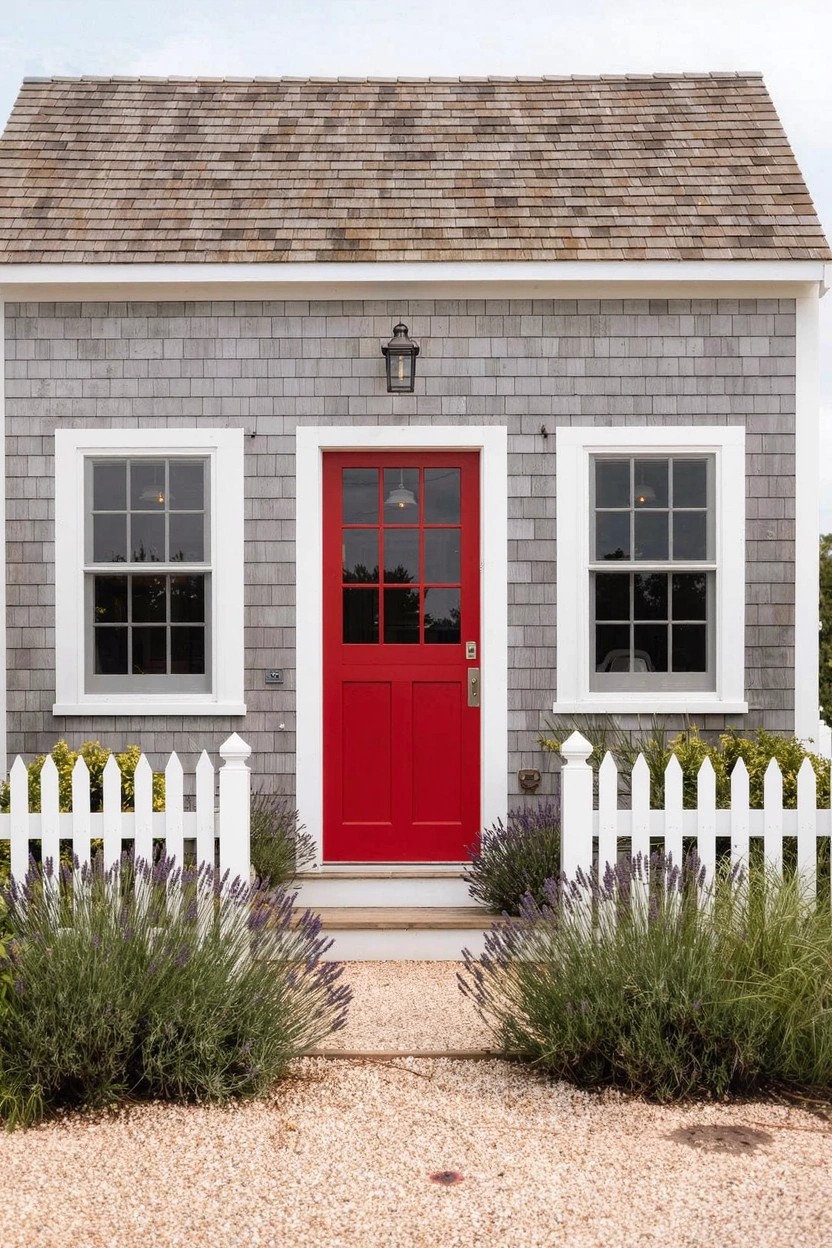
A red front door gives your house that extra welcome right at the entry. Against quiet gray shingles and white trim, it pulls the eye without taking over. Folks have used this trick for years on simple homes. It just works.
Paint yours red if you have neutral siding. Suits cottages or older places near the coast best. Pick a glossy finish to hold up outside. Skip it on busier colors though. Red shows scratches easy.
Dark Navy Siding Paint
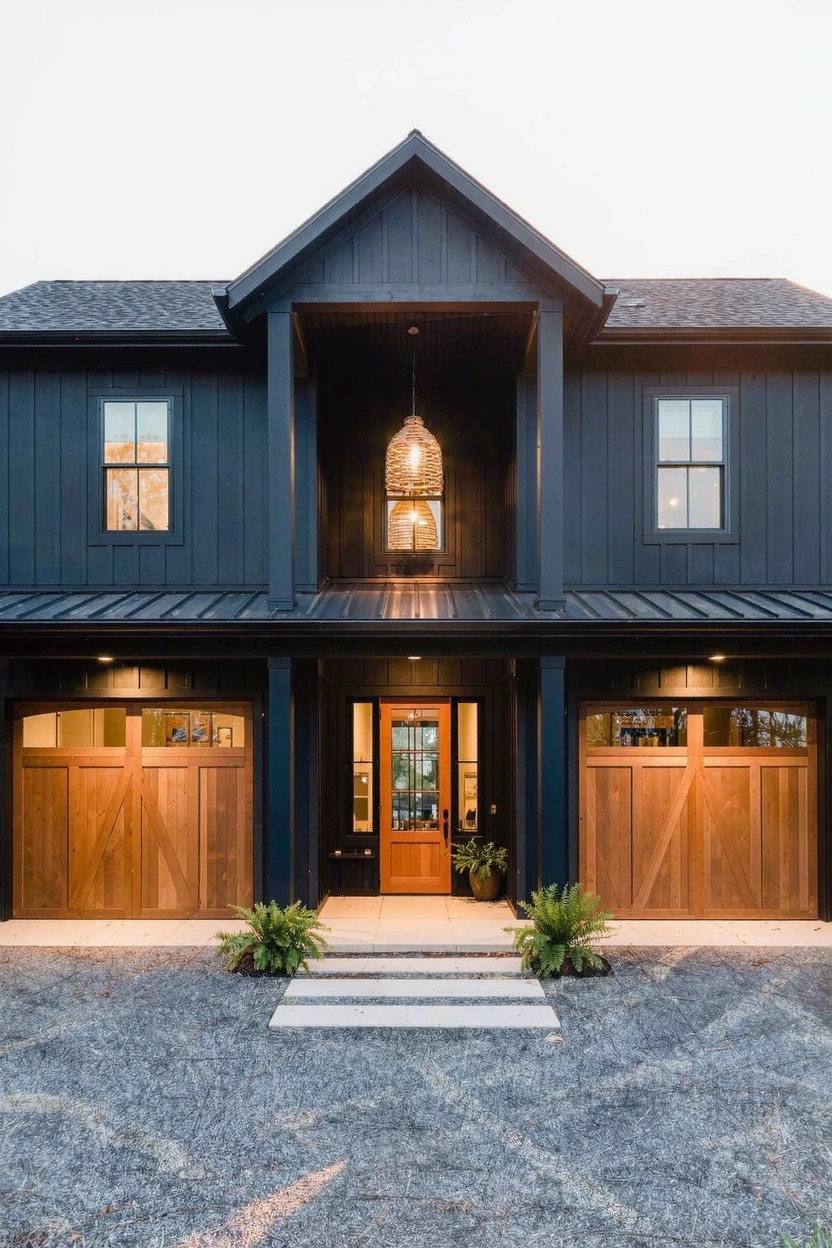
This deep navy paint on the siding turns a simple farmhouse into something sharp and modern. It hides dirt better than lighter colors. And that warm wood on the garage doors? It pops right against the dark body without much fuss.
Use it on homes with gable roofs or clean board-and-batten siding. Suits country spots or even suburbs if you keep the yard simple. Skip it on super small houses. The dark can shrink things a bit.
Black and White Tudor Exterior
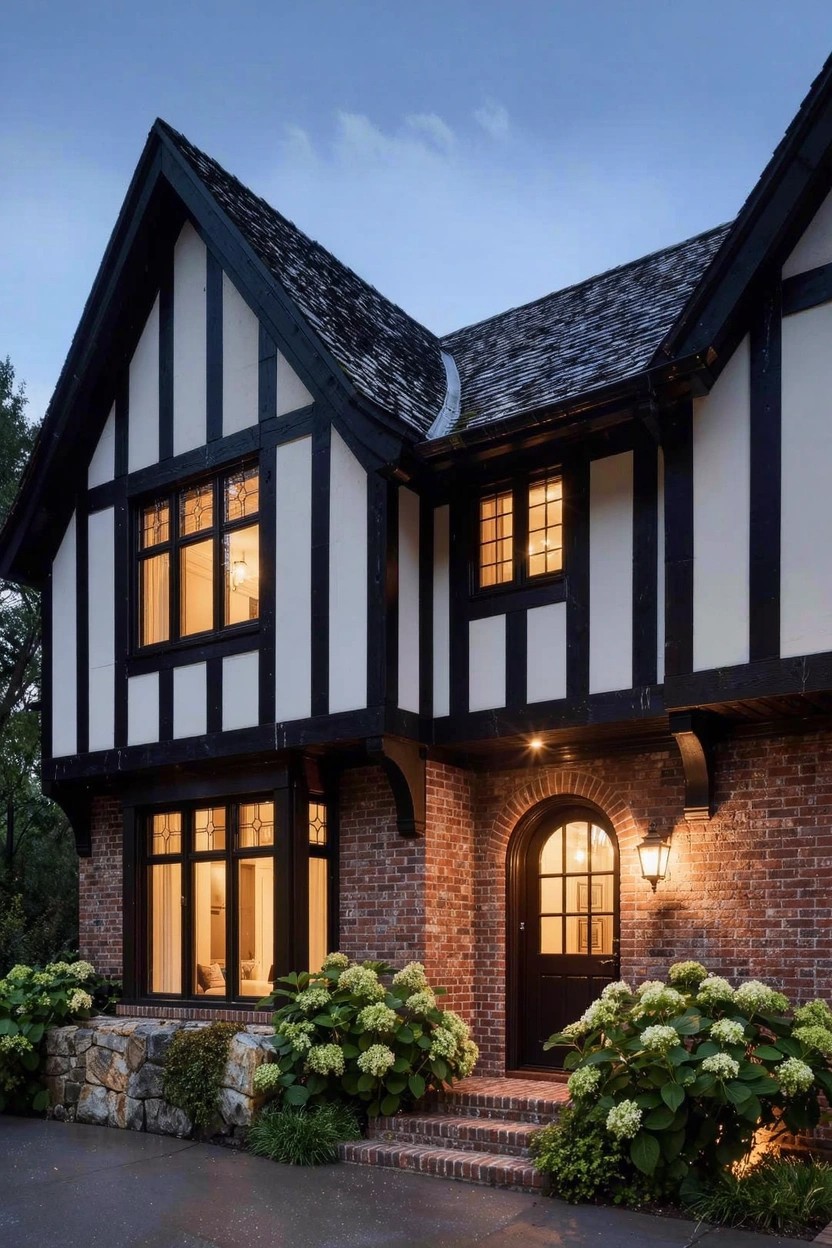
Black timbers painted crisp black over white walls give this house its strong, classic look. That high contrast makes the Tudor style pop without much fuss. It’s simple but holds up year after year, especially as the light fades in the evening.
Use this paint combo on homes with exposed beams or half-timber details. It suits older neighborhoods or spots with some brickwork at the base. Keep plants like those big hydrangeas nearby to ease the edges a little.
Sage Green Siding
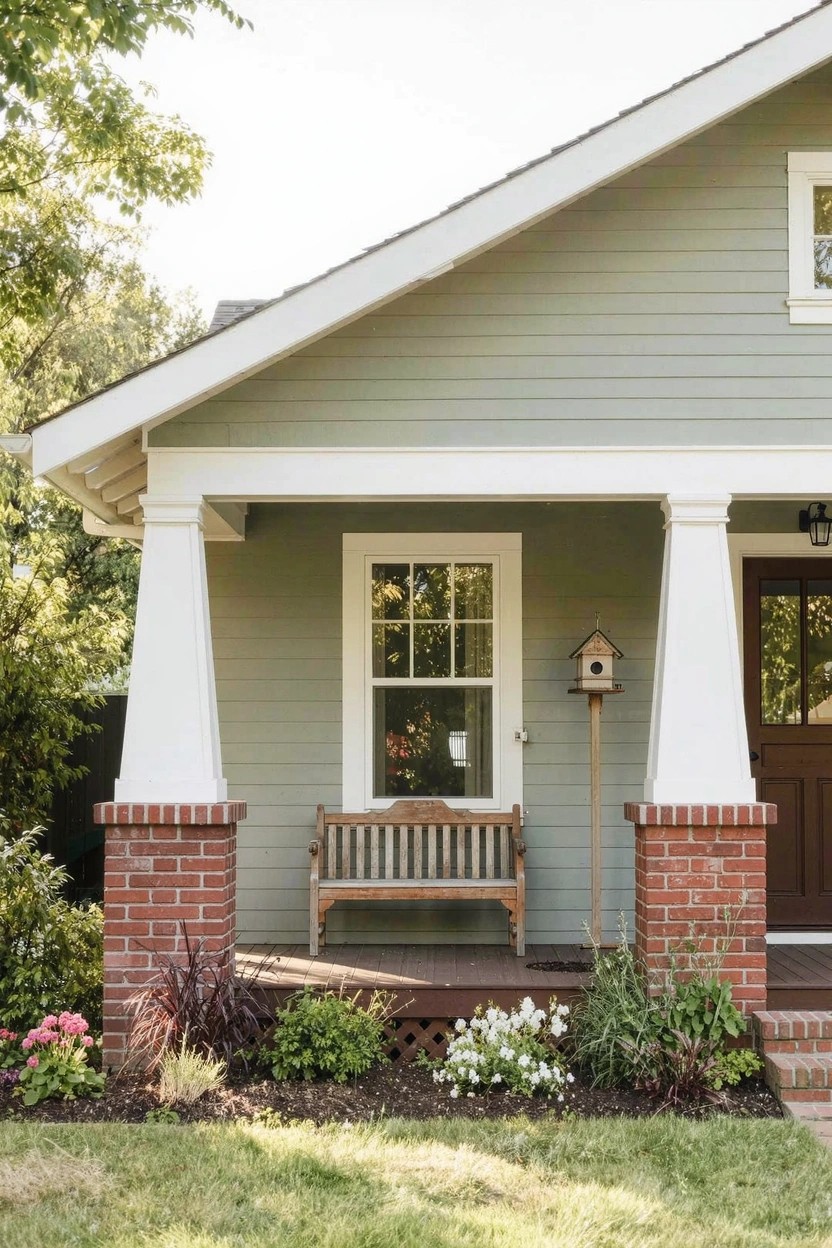
A soft sage green like this on the siding keeps things looking fresh year after year. It sits easy between the green yard and white trim without fighting anything. Folks keep coming back to it because it feels settled on the house, not showy.
Put it on Craftsman bungalows or older ranch styles where you want low upkeep color. Brick columns or accents add a nice pop underneath. Skip it on super modern boxes… might feel off. Trim stays crisp white, door a bit darker.
Terracotta Stucco Walls
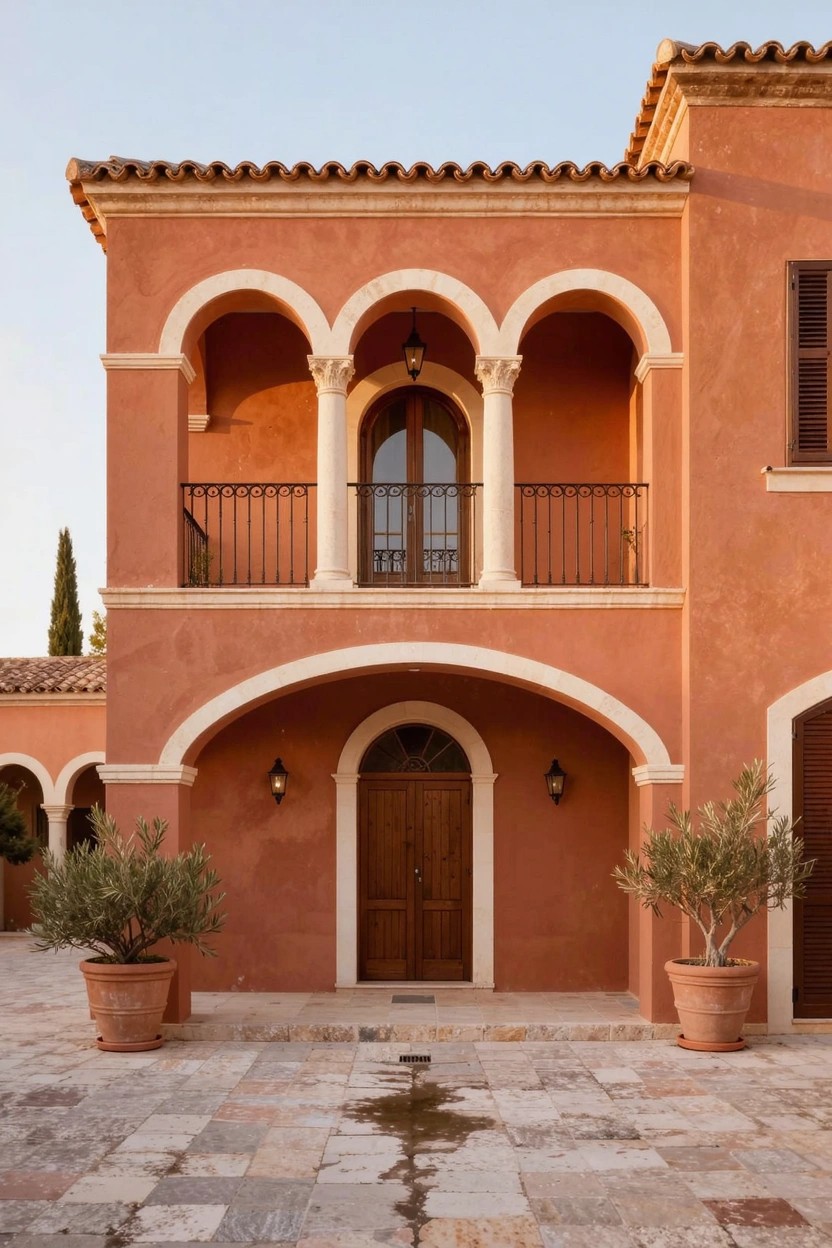
Warm terracotta paint on stucco walls gives a house that easy Mediterranean look. It picks up the sun nicely without shouting, and it fits right in with arches or simple balconies. Folks like how it feels lived-in and steady over time.
Use this color on homes in sunny spots, maybe with a stone walkway out front. Pair it with potted olives or lanterns for a bit more interest. Steer clear if your area’s too shady. It shows dirt easier than white does.
Warm Beige Shingles with Dark Trim
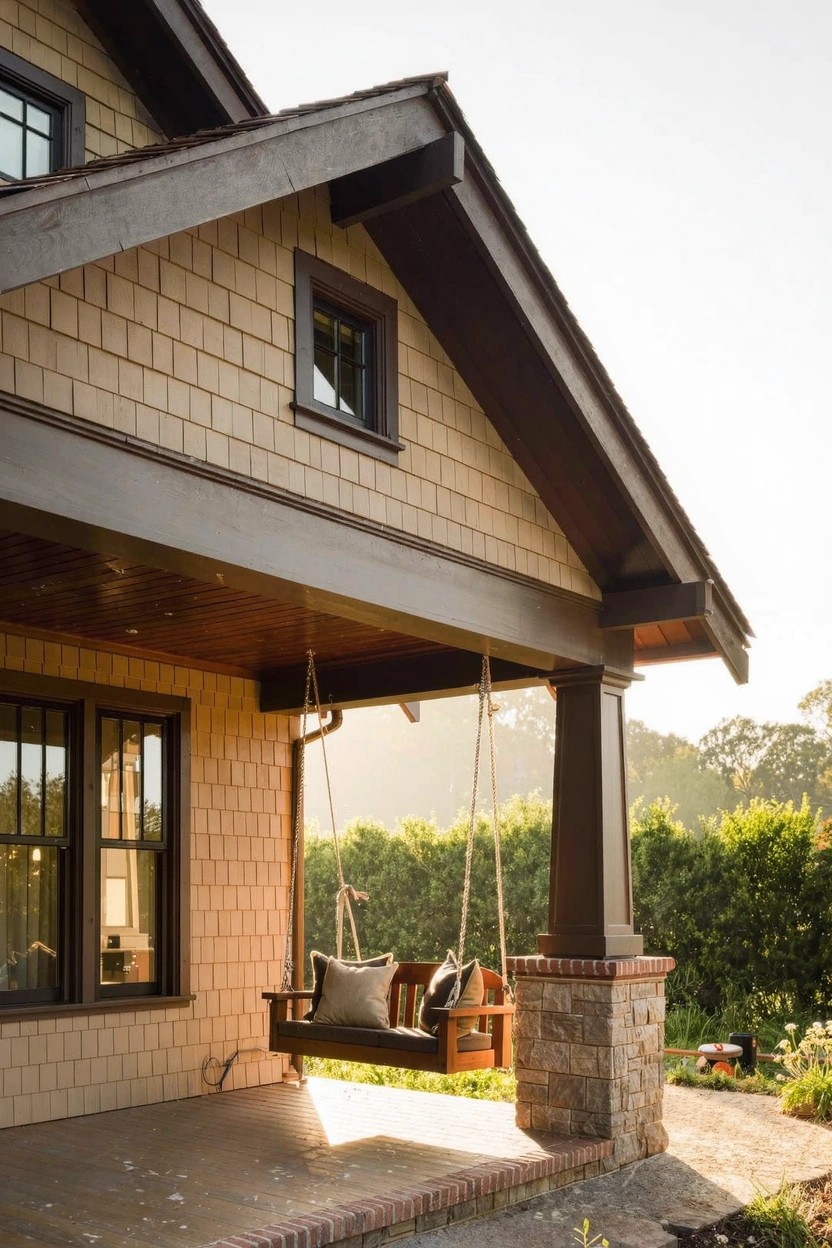
A warm beige on shingle siding like this pairs nicely with dark brown trim. It keeps things looking settled and classic, no matter the years. The light siding lets the house breathe while the trim pulls your eye to the windows and porch edges.
This setup fits older bungalow homes or ones with Craftsman touches. Use it where you get good sun. The porch swing here shows how it welcomes folks in. Pick a trim shade that’s deep enough so it doesn’t fade into the siding.
Muted Green Siding
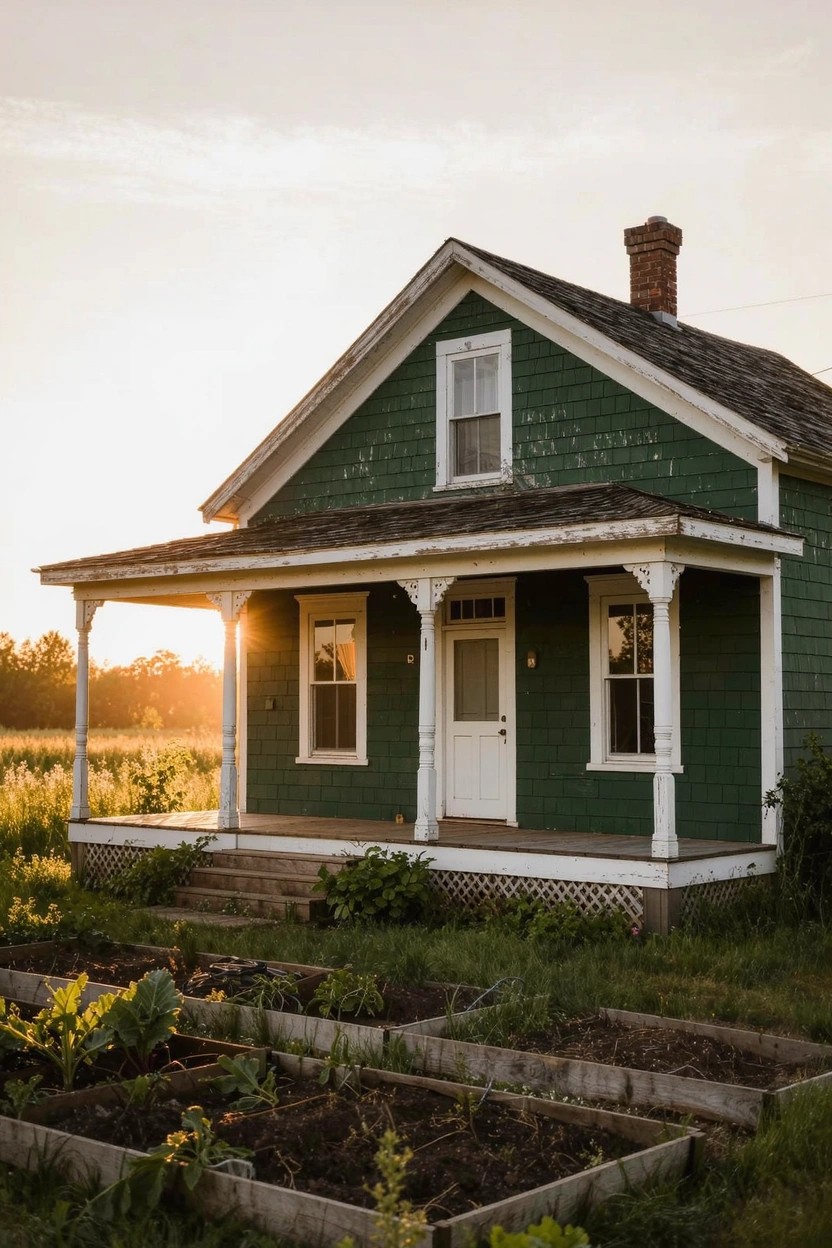
Green siding like this has a quiet appeal that fits right into country settings. It covers the clapboard nicely, showing some age without looking worn out. White trim on the windows and door pulls it together clean.
This color suits older farmhouses or cottages best, especially where there are open fields or simple gardens out front. Pick a shade that’s not too yellow or blue, and it holds up year round. Just clean the siding now and then to keep that fresh look.
Red Doors on Brick Houses
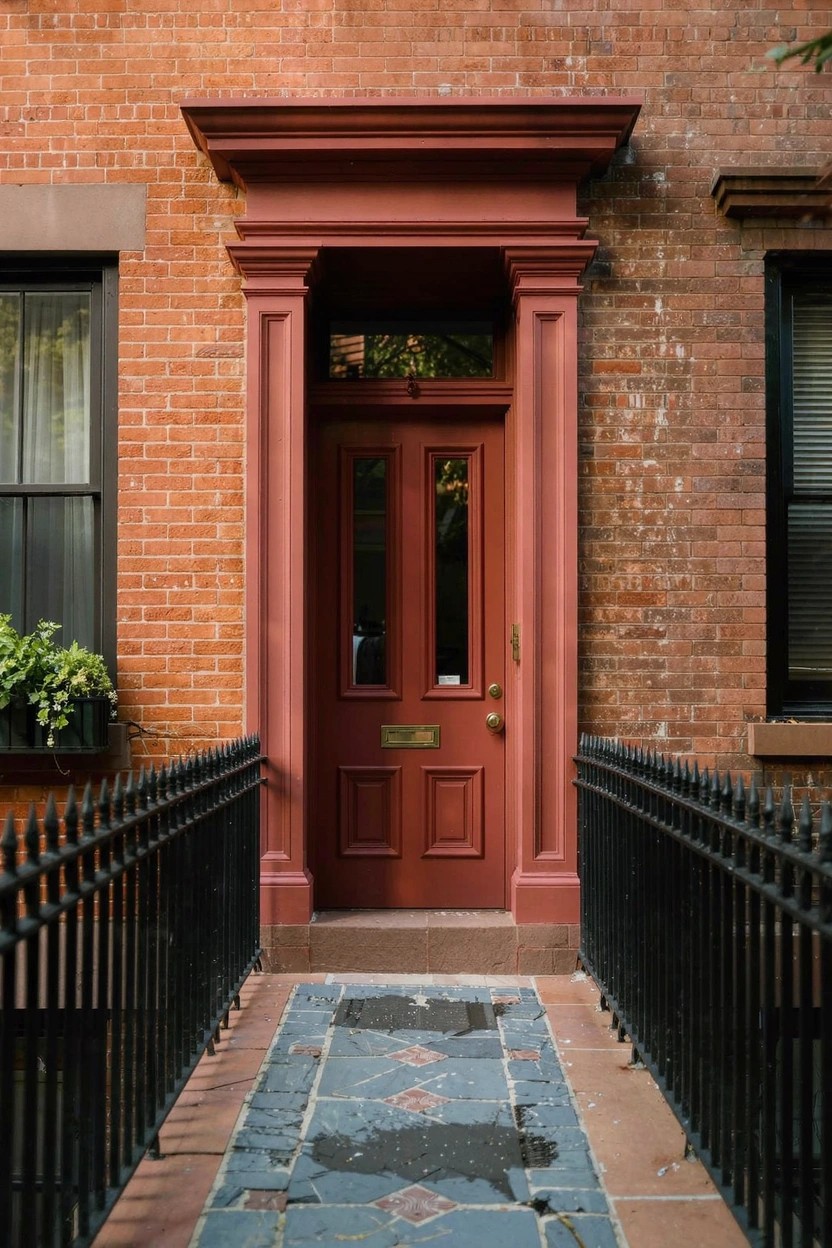
A red front door brings a home’s entry to life, especially against brick walls. This deep shade looks rich and settled in, pulling eyes right to the door without overwhelming the house. It’s one of those simple paint choices that feels right on older homes.
Paint it on townhouses or rowhomes with brick facades. The color works best where you want some warmth up front. Keep the frame the same red too. Skip it if your brick is too cool-toned… it might clash.
Soft Blue Siding
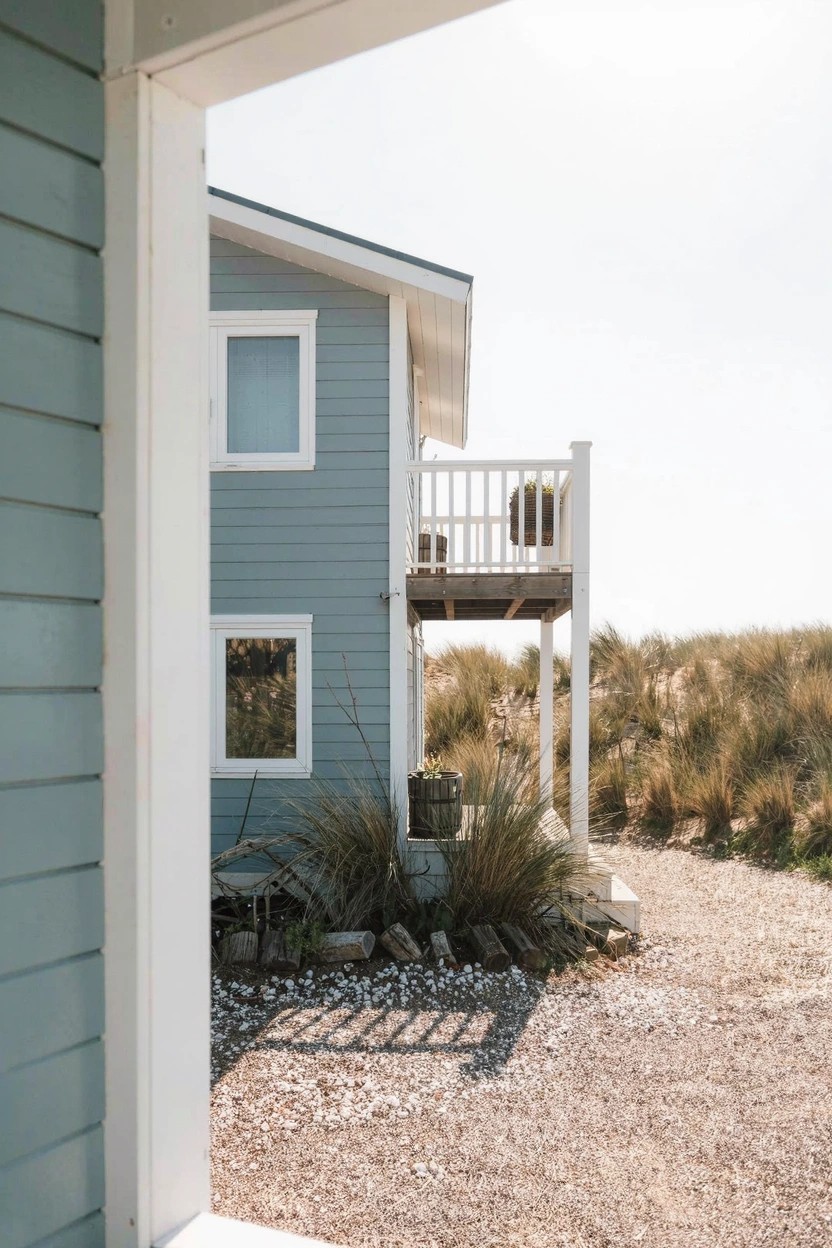
Soft blue siding like this stands out without trying too hard. It picks up the calm feel of a beach setting, especially with dune grasses planted right along the base. White trim around the windows adds a clean edge that keeps the whole look fresh year round.
This color suits clapboard houses near water or open fields. Paint it on the main body and let natural plantings fill in around the gravel path or driveway. Skip it for busy urban spots though. It shines where things stay simple.
Soft Gray Shingle Siding
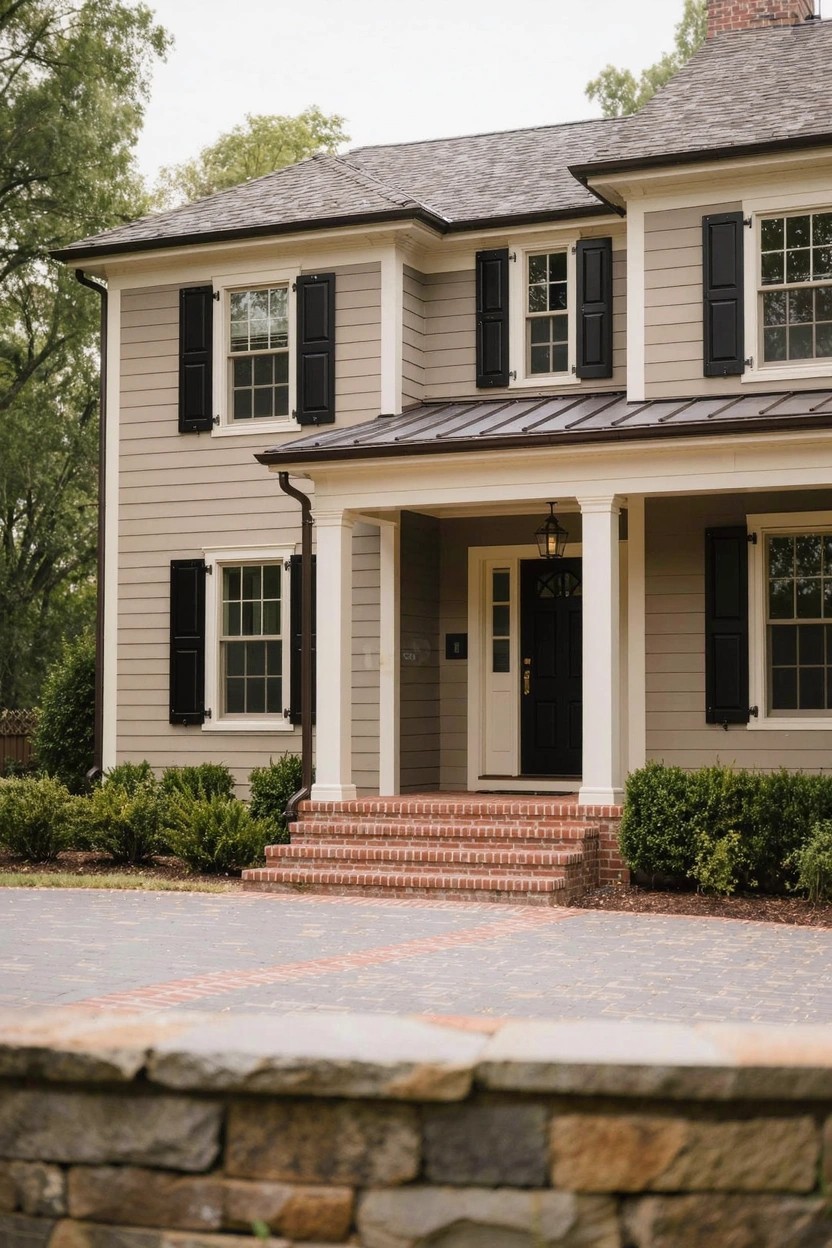
Soft gray shingle siding like this catches the eye without trying too hard. It has a bit of warmth that goes well with black shutters and white trim on the porch columns. Folks keep coming back to this color because it stays looking good year round. Trees and shrubs in the yard set it off nicely.
This siding suits older style homes, especially ones with a front porch. Paint the body soft gray, trim bright white, and accents black. It works in shady spots or sunny ones. Watch that you clean the shingles now and then to keep the gray fresh.
Sage Green Trim on White Siding
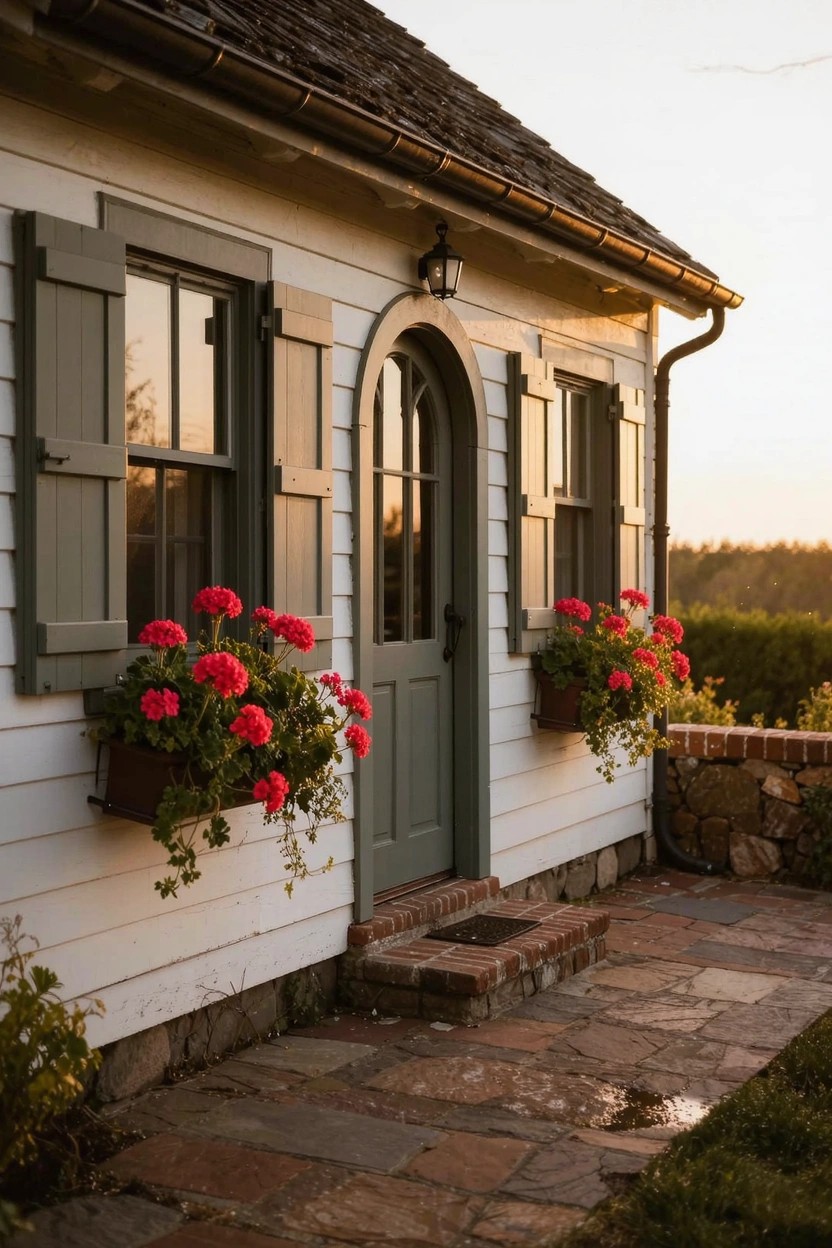
White siding keeps things clean and bright. Add sage green to the shutters and front door like this. It gives a soft contrast that feels right at home on older style houses. Those red geraniums in the window boxes pop even more against the green. It’s a look that’s been around forever but still fresh.
Try it on cottages or farmhouses with simple lines. The green works best if it’s not too dark. Pair it with flower boxes for extra charm. Skip it on super modern homes though. It suits yards with some planting around the base.
Pale Yellow House with Blue Door
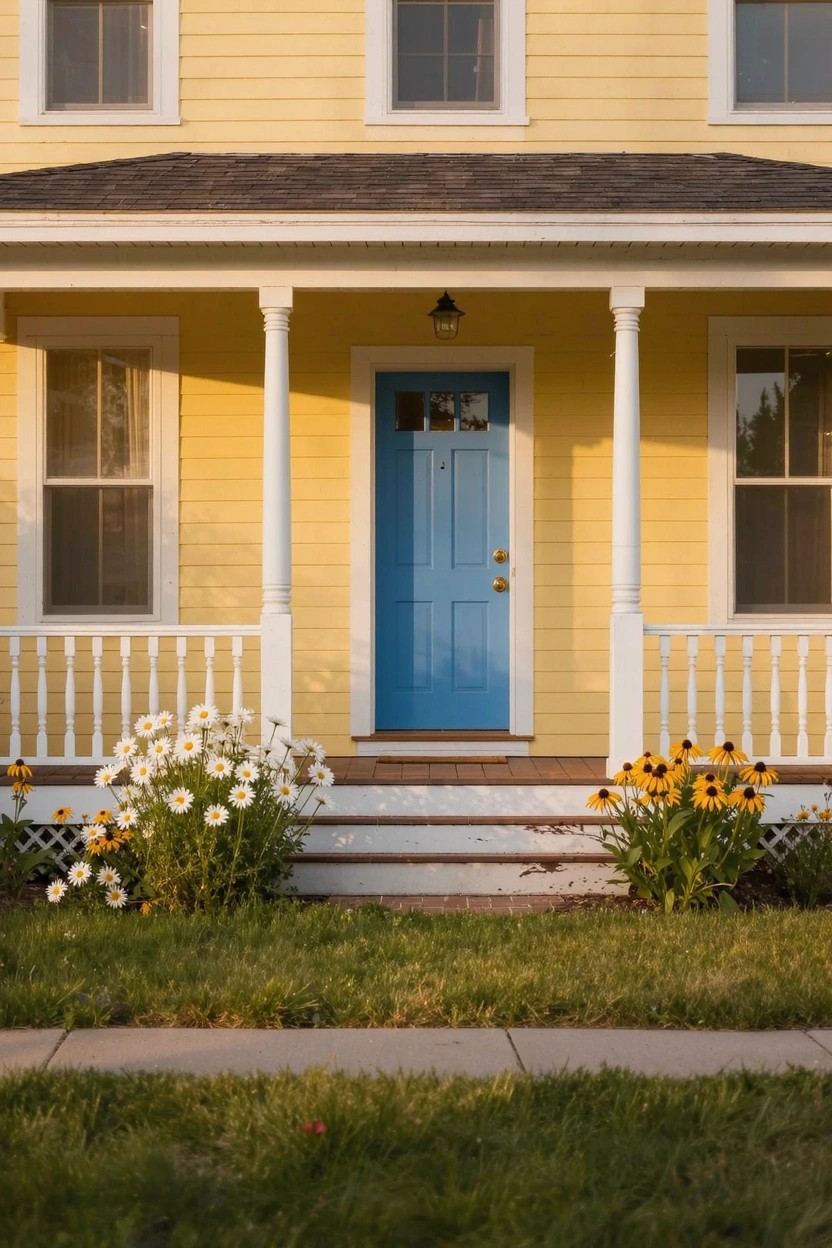
Pale yellow siding gives a house that sunny, welcoming feel that lasts through the seasons. A bright blue front door adds just the right punch of color right at the entry. White trim around the porch columns ties it all together without fuss.
This setup shines on traditional homes or simple farmhouses with a front porch. It works best in sunny spots where the yellow stays lively. Pick a soft yellow shade to avoid it looking washed out, and go for a true blue door that doesn’t fade fast.
Soft Blue Siding
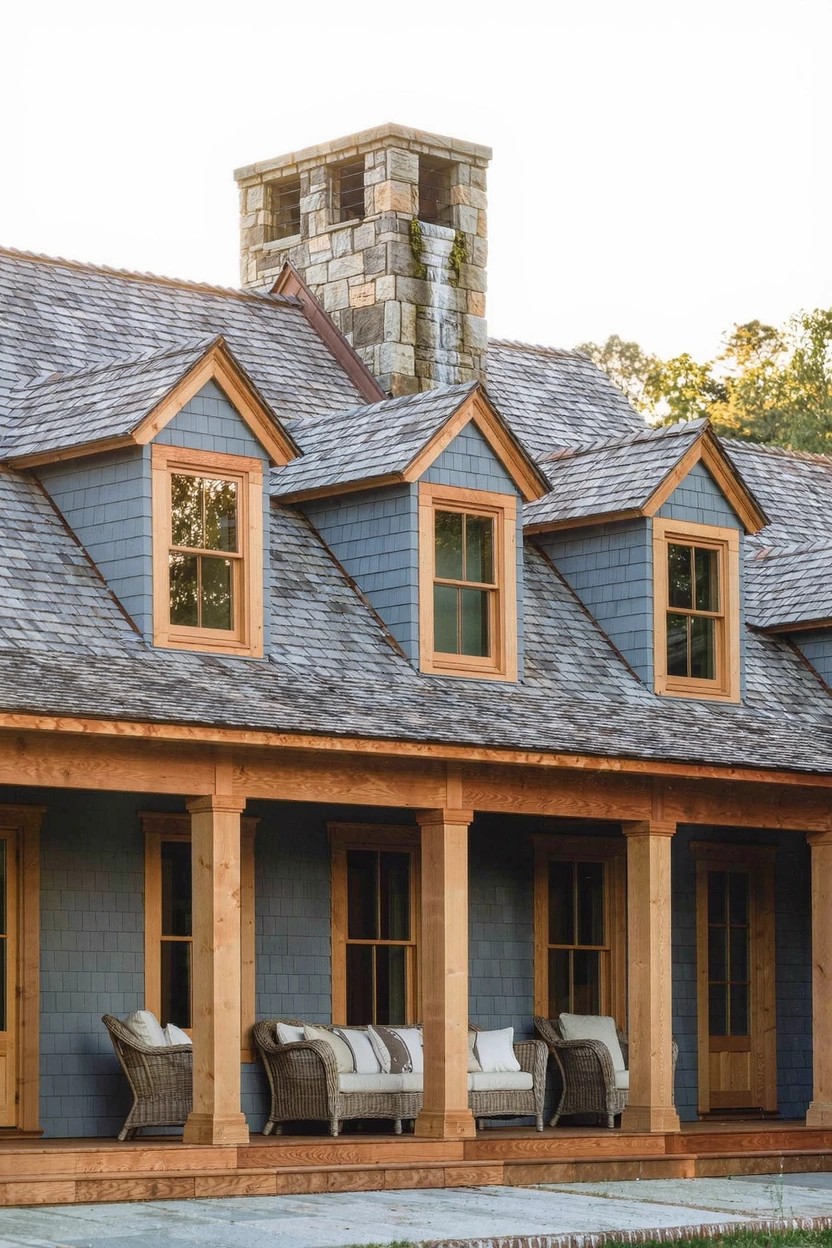
Soft blue paint on clapboard siding gives a house that calm, lived-in look people keep coming back to. It stands out without trying too hard, especially when you leave the porch columns and roof shakes in their natural wood tones. That blue here feels right at home in a wooded spot, pulling the eye up to those dormers without overwhelming the yard.
Try this color on older farmhouses or cottages where you want something coastal but not flashy. Pick a shade with gray undertones so it doesn’t fade fast in the sun. Pair it with plain wood trim, and skip bold accents unless your porch furniture needs a pop.
Deep Green Exterior Paint
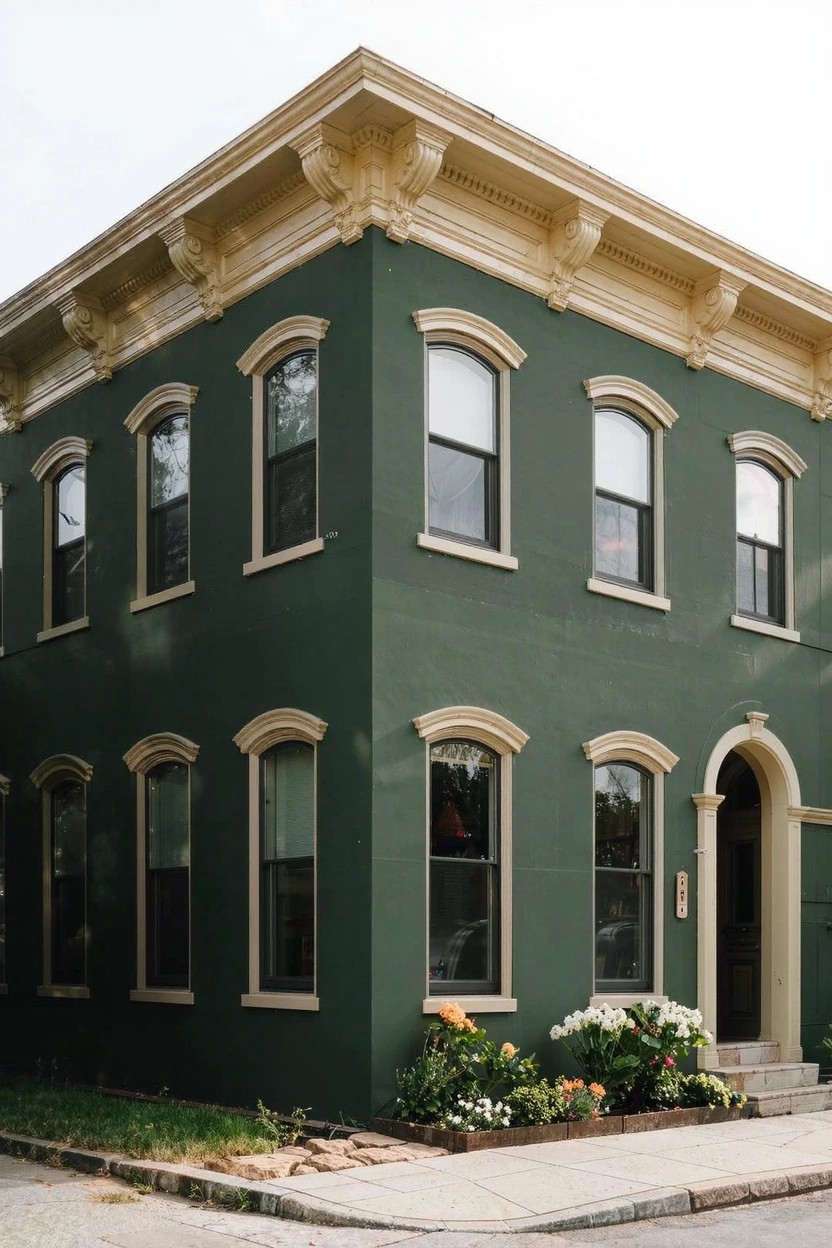
Deep green paint like this gives an older house a fresh, grounded look that feels right at home on city streets. It wraps the whole facade nicely, especially on a corner spot where the color shows from two sides. The cream trim up top pops just enough without stealing the show.
Try it on homes with some architectural detail, like arched windows or bracketed edges. It works best in neighborhoods with trees or gardens nearby. Keep the trim light to let the green breathe, and pair it with simple plantings out front. Not every house pulls it off, so test a sample first in different lights.
Deep Gray Siding
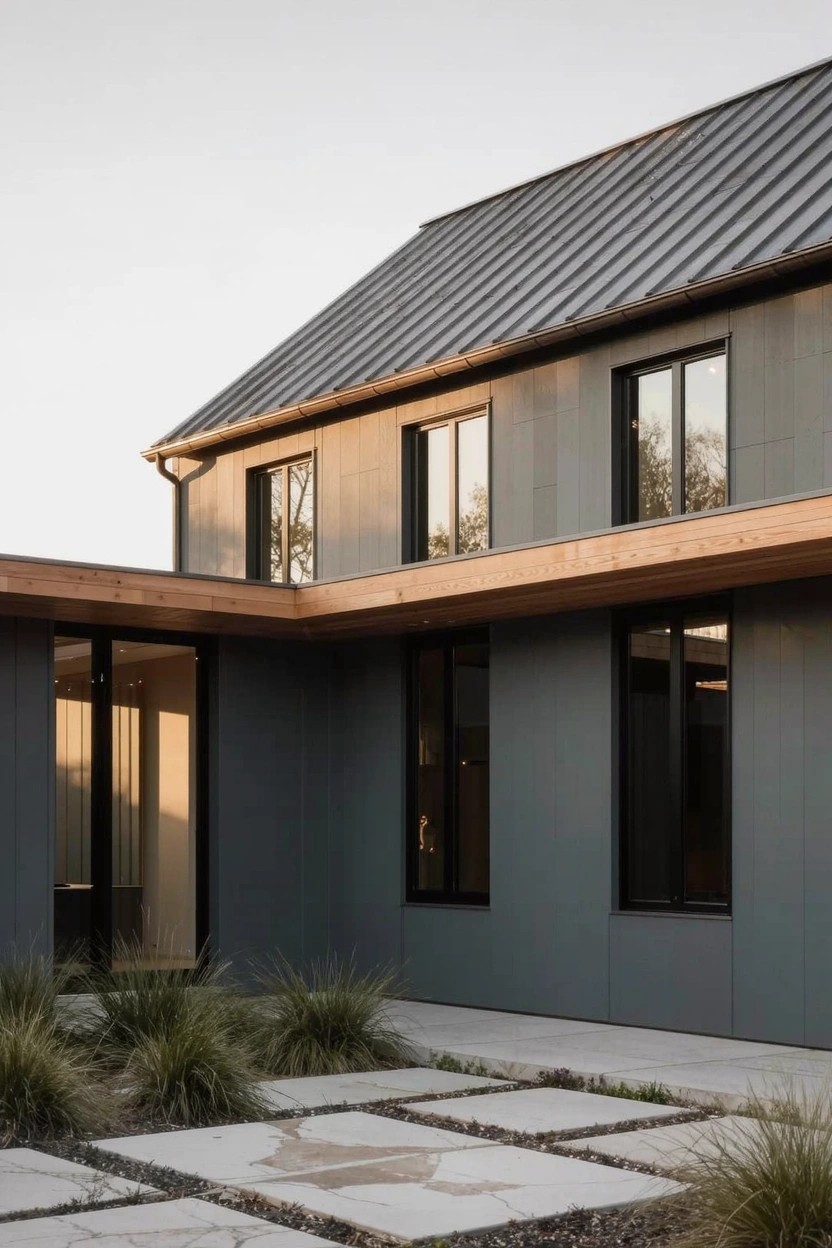
Deep gray siding like this gives a house a clean, modern edge. It feels timeless because the color sits quietly against trees or sky, without pulling focus. Here, it covers most of the walls, letting black windows and a matching metal roof blend right in.
Try it on a simple rectangular home or a barn-style build. It works best where you want low upkeep, since the shade hides dirt well. Just pair it with some wood trim for a touch of warmth, and keep plantings soft around the base.
Soft Gray Siding
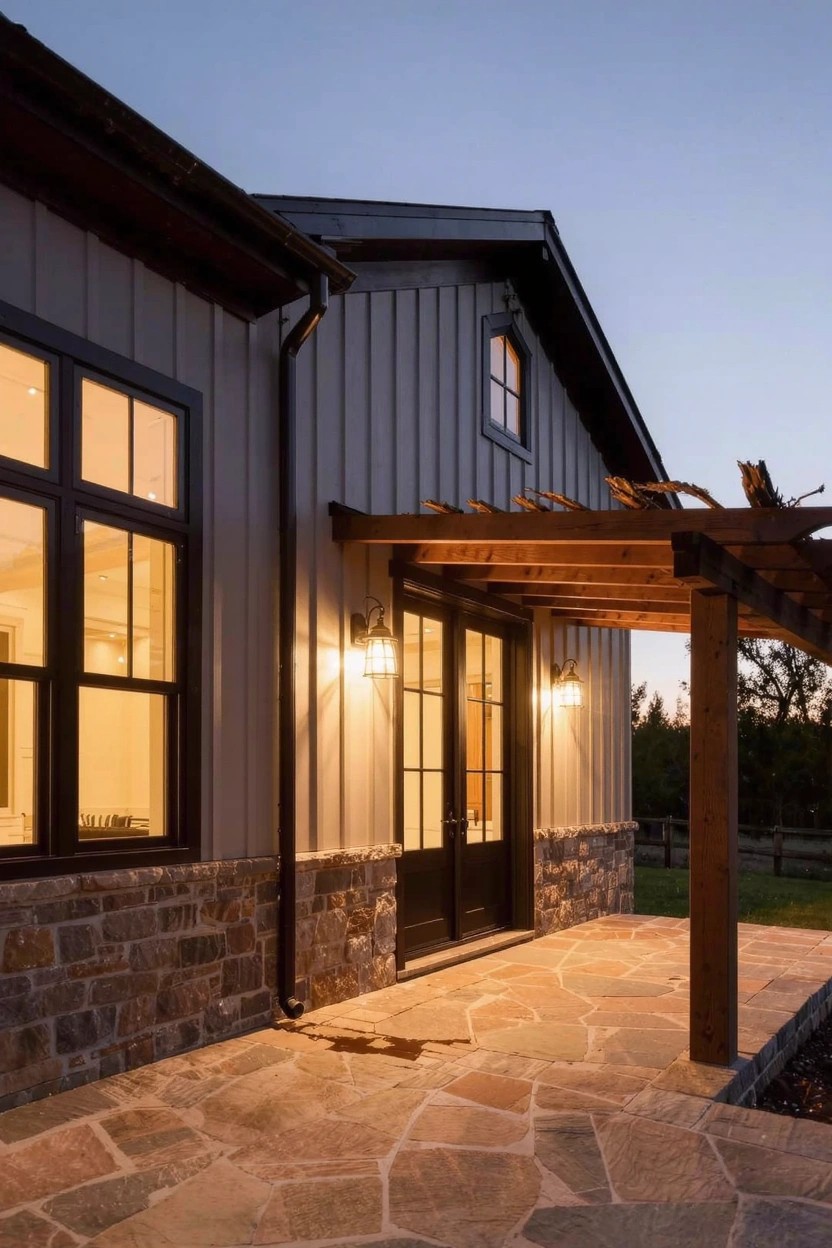
Soft gray siding like this catches the eye without trying too hard. It works on homes that mix modern lines with a bit of rustic feel. The corrugated texture adds shadow play that keeps things interesting, especially as light changes through the day. Here, it sits well against the stone base and black-framed doors.
You can pull this off on ranch houses or simple two-stories, mostly in country or wooded spots. Pair it with warm stone or wood elements to avoid a cold look. Just test the shade against your local light. It holds up year-round.
Light Blue Exterior Paint

This light blue paint color brings a cool, relaxed feel to a house exterior. It stands out on clean modern lines without being too bold. Folks notice how it softens the look against wood accents and stone plantings.
Paint it on smooth walls or stucco for best results. It suits homes in sunny areas or near the coast. Add low-water plants like succulents around the base… keeps things simple and drought-friendly.
Black Exterior Paint
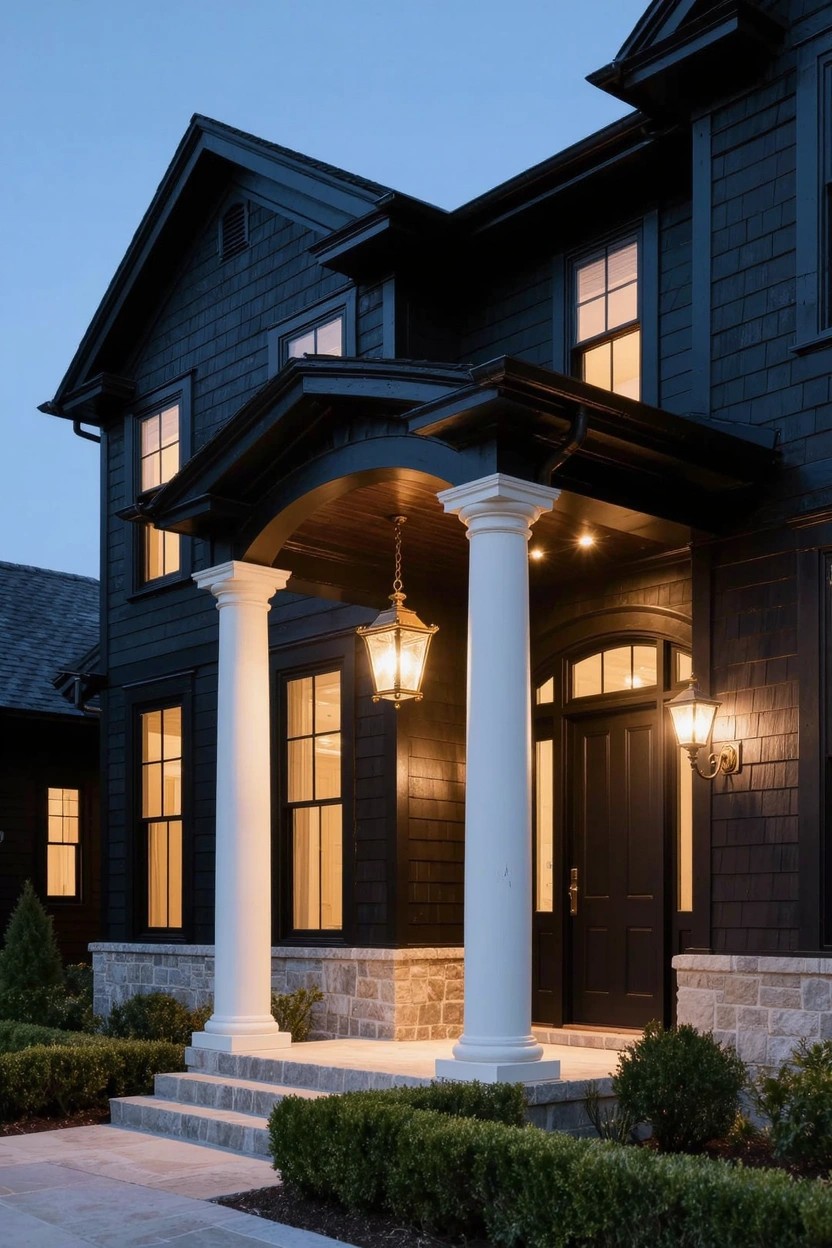
Black paint on a house siding like this gives the whole front a strong, grounded look. It pulls your eye to the white columns and lets the stone base stand out without much fuss. Folks keep coming back to this color because it hides dirt well and suits different lights through the day.
Use it on homes with some classic trim or porch details to keep things balanced. It fits older style houses best, especially where you have shrubs or steps at the entry. Pick a high-quality exterior paint though. Lighter colors might show every smudge.
Frequently Asked Questions
Q: How do I test these colors on my house before painting the whole thing?
A: Grab some sample pints from your local paint store and paint big swatches on different sides of the house. Walk around at different times of day to see how the light changes them. This quick step saves you from regrets later.
Q: What if my house has brick? Can I still use these colors?
A: Paint the trim, shutters, or garage door instead of the brick itself. Pick a shade from the list that echoes the brick’s warm tones for a pulled-together vibe. Brick loves a fresh accent like that.
Q: Do these colors work on all house styles, like modern ones?
A: They flex beautifully across styles because they’re classic neutrals and soft hues. Soften a bold modern facade with a pale gray or warm beige. Your house pulls it off effortlessly.
Q: How do I pick a trim color that goes with the main house color?
A: Go one shade lighter or darker on the color wheel for crisp contrast. White trim pops against most of these, but try a soft cream if your main color runs deep. Test it out, and it’ll click right away.
