

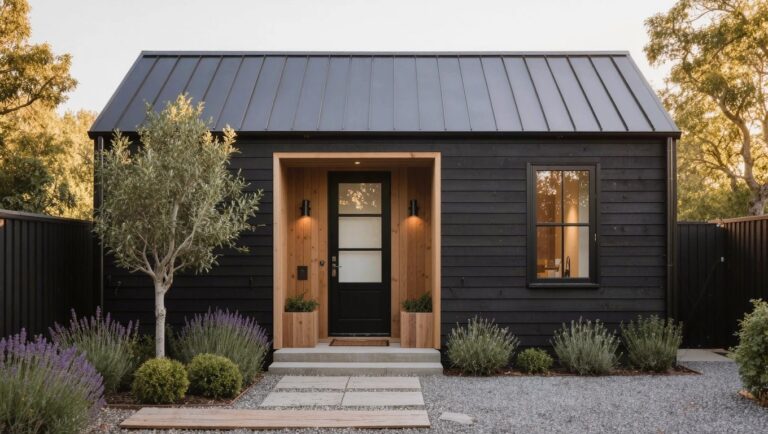
I’ve noticed how small house elevations often struggle to feel cohesive on tight lots. I gravitate toward designs that stack clean lines and subtle textures to draw the eye upward. They pull together when the entry pulls focus without competing elements stealing attention. Designs fall flat if mismatched siding or fussy trim crowds the simple shape. A couple nail the scale just right.
Wood Entry on Dark Siding
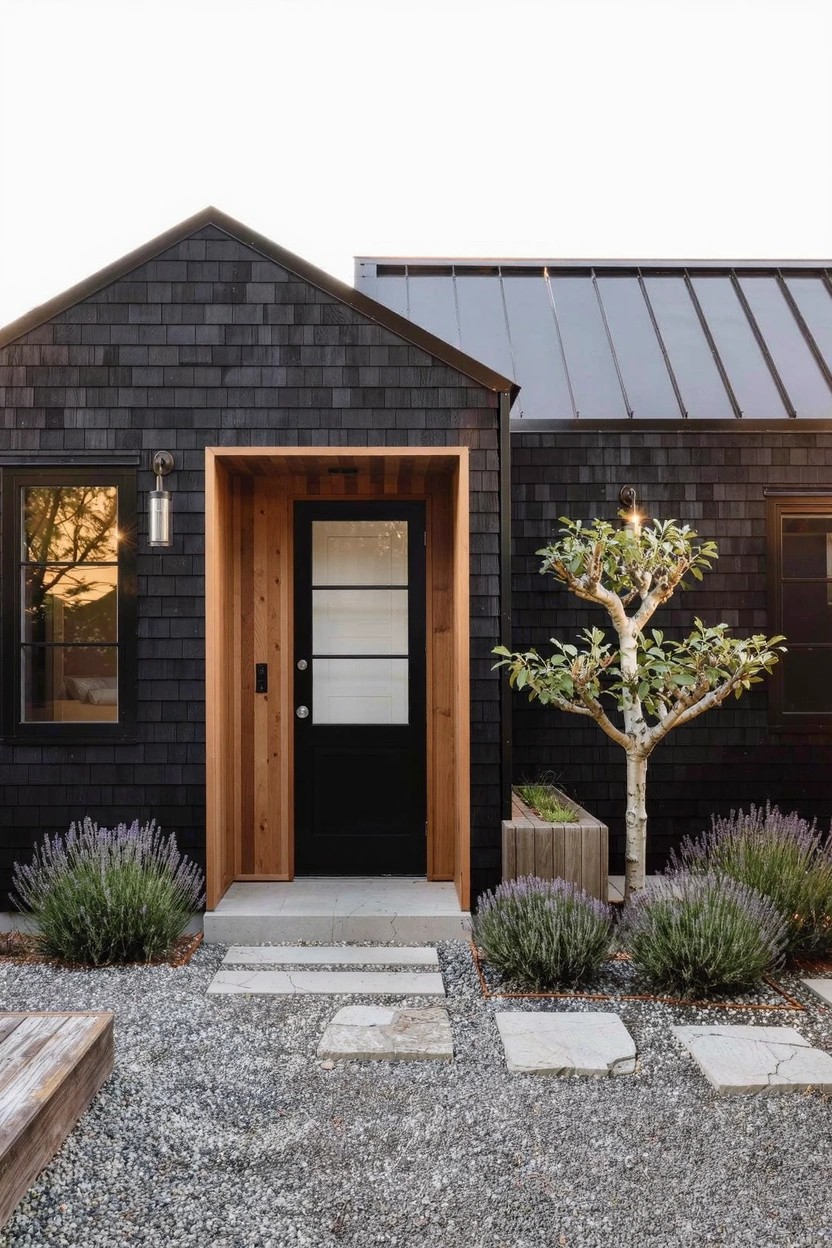
A dark black shingle house can sometimes blend into the background. But adding a simple wood frame around the front door changes that. Here the light cedar trim wraps the glass door and makes the entry the clear focal point. It brings warmth right where you need it most.
This setup works well on compact homes with limited yard space. Use natural wood like cedar or redwood that weathers nicely over time. Pair it with gravel ground cover and stone steps to keep things low fuss. It’s perfect for modern cabins or any place where you want the door to welcome folks without extra porch buildout.
Classic Covered Porch
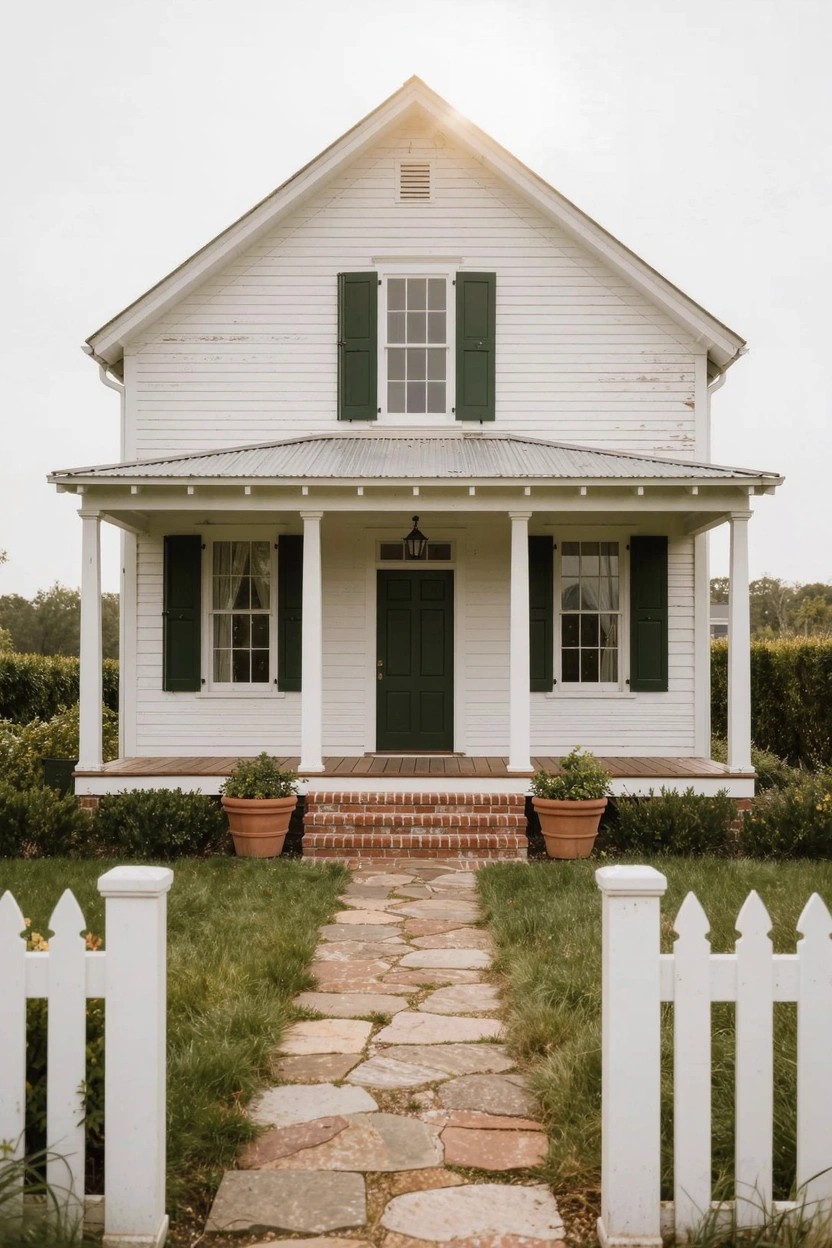
A covered front porch like this one keeps things simple and neighborly. White columns line up neat on each side of the door. They hold up the roof just right over the entry. Folks notice it first when they drive by. It makes a small house feel more settled in its spot.
Put this on older style homes or cottages with some yard room. Brick steps lead up nice, and a couple pots of green at the base help. Skip big fancy railings if you want easy upkeep. It works in town or country as long as the porch stays level and painted fresh.
Blue Facade on a Rowhouse
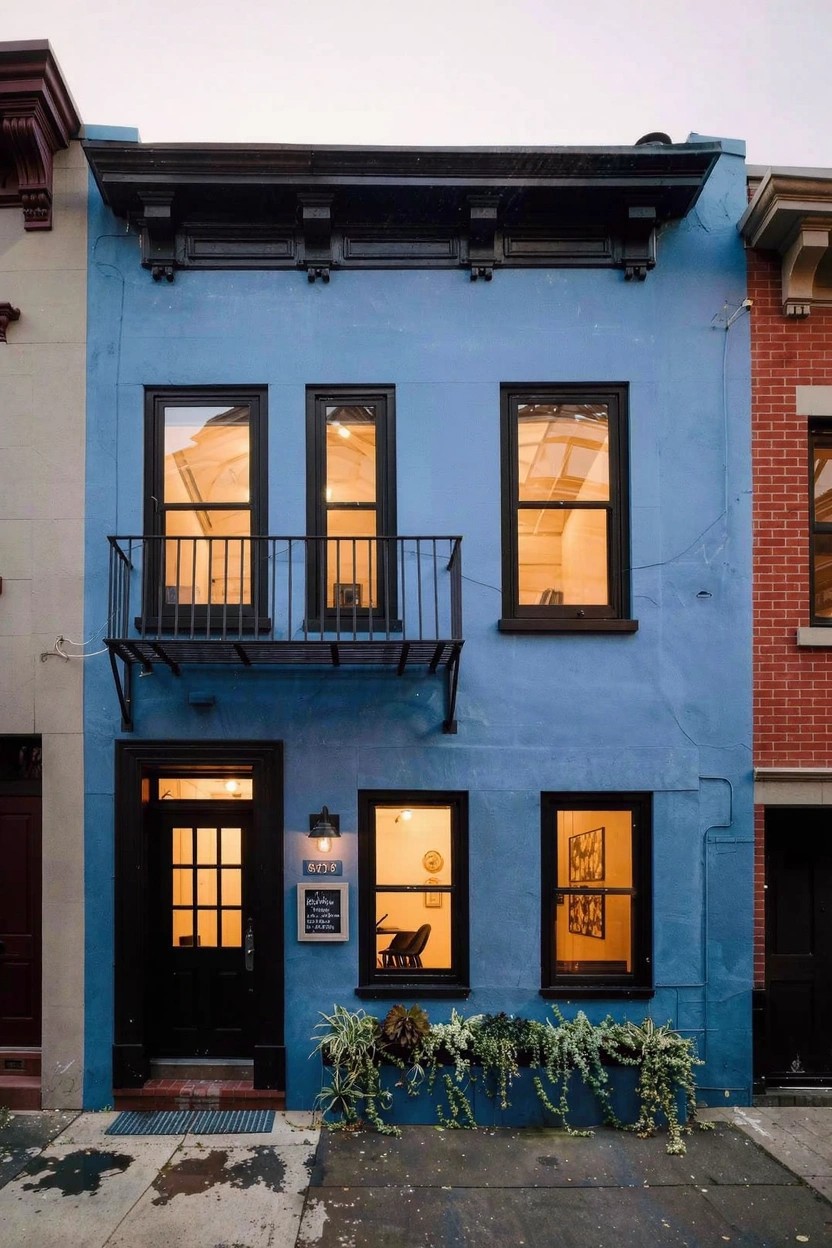
A deep blue paint job like this one freshens up a plain rowhouse fast. It stands out against brick neighbors without much effort. Black trim on the windows and door keeps everything crisp and ties it together.
This works well on narrow city homes from the early 1900s. Use a good exterior paint that handles weather. Dark accents help on light or neutral walls nearby. Prep the old siding first.
Covered Porch Entry
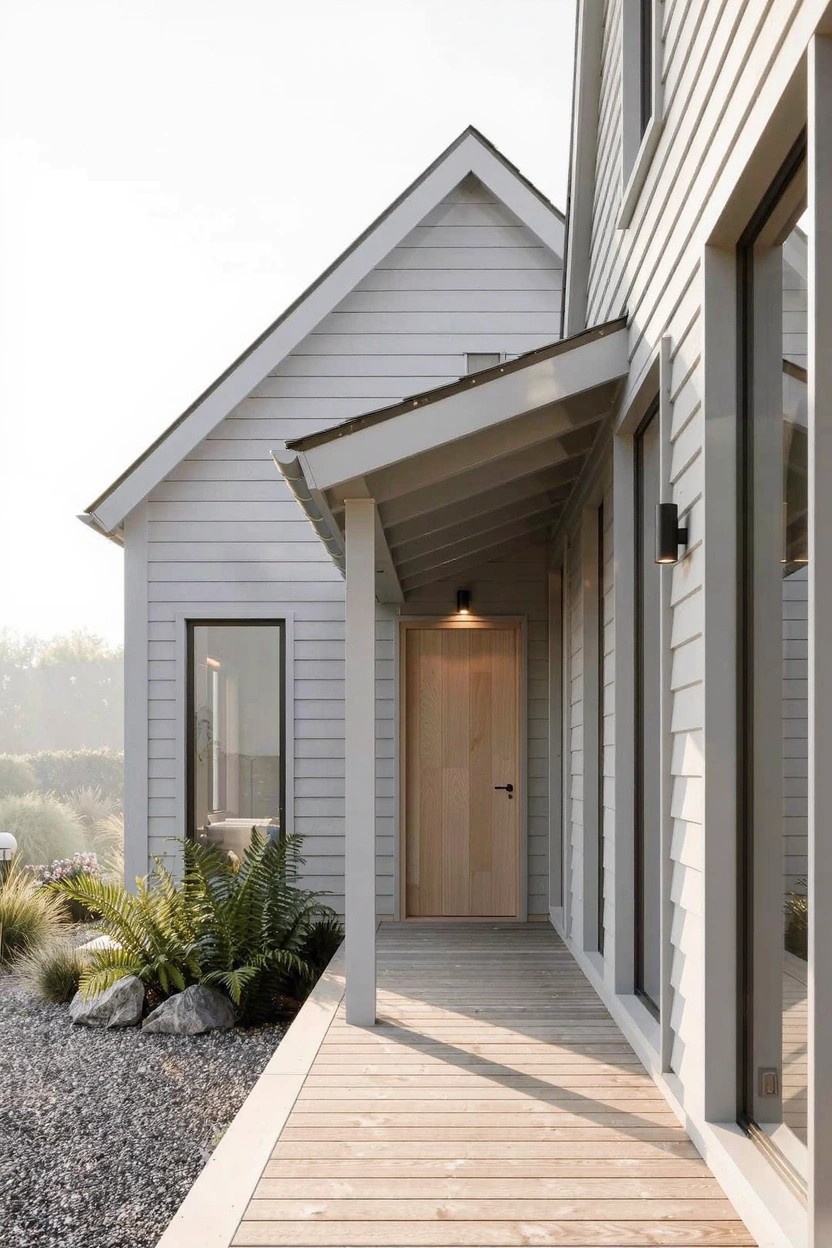
A covered porch right at the front door turns a plain entry into something more welcoming. The natural wood deck and posts here stand out against the white siding. They add warmth without changing the clean look of the house.
This kind of porch fits small homes best, especially ones with simple shapes. Put it on the side or front where it gets some shade. Pick weather-resistant wood and keep plants low around the base so the porch stays the focus.
Screened Porch Entry
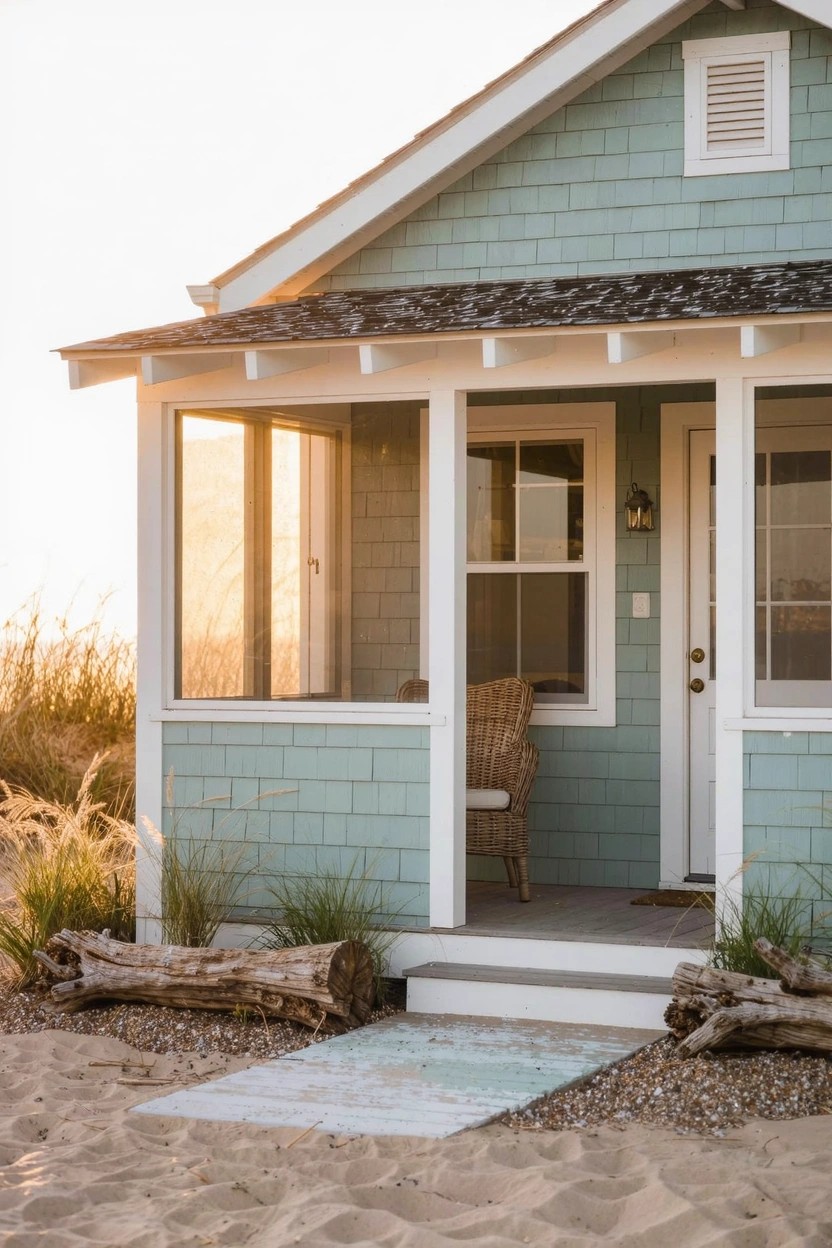
A screened porch like this one makes the front of a small house feel open and ready for company. It pulls the outdoors close without the sand and bugs tracking inside. That wicker chair tucked by the door shows how it turns entry space into a spot to sit and watch the day go by.
Put this on cottages or bungalows in beach towns or warm spots. Screen an existing porch or add one over the door area. Keep plantings low around the steps so the porch stays the focus. Skip it if your yard gets too shady. It suits homes where folks spend time outside year round.
Arched Entry with Flanking Lanterns
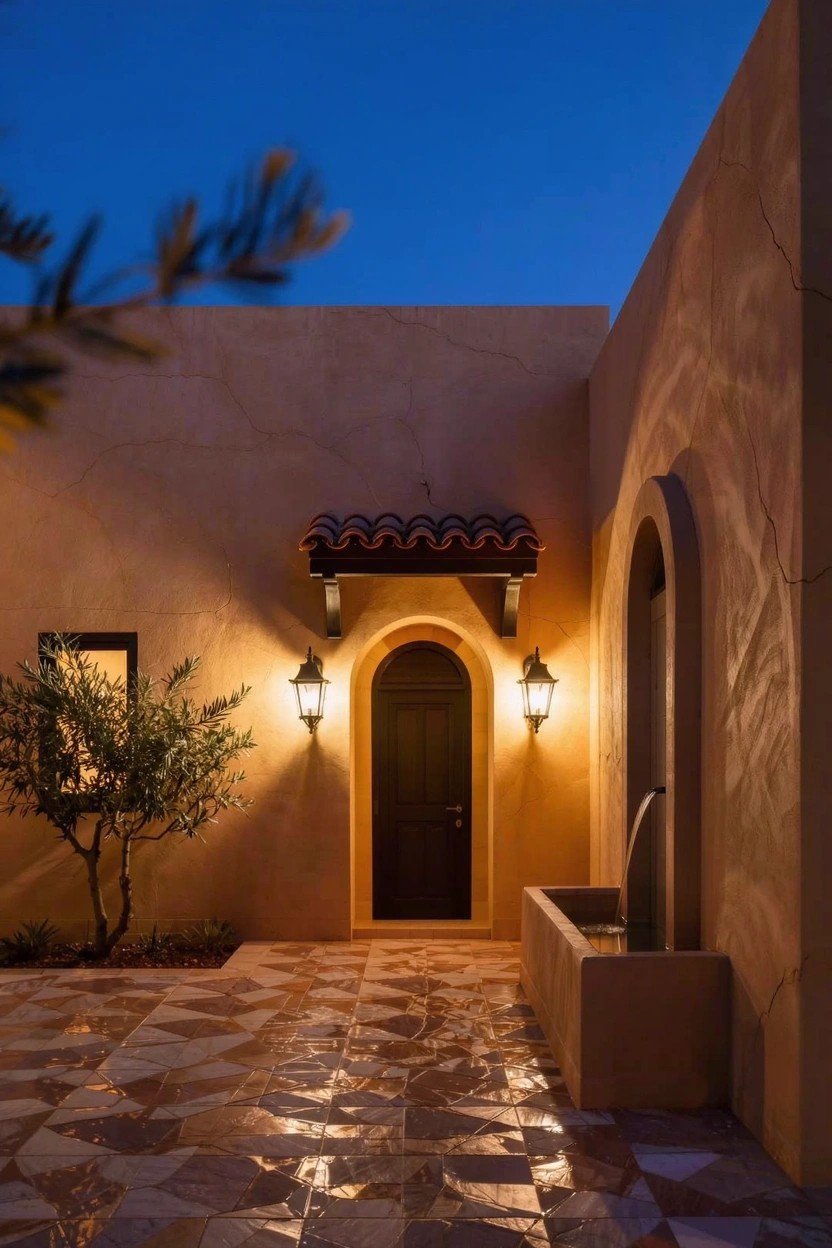
A plain arched door like this one gets a big lift from lanterns hung on both sides. The warm glow picks out the wood grain and tile overhang just right. It turns a basic entry into something folks notice when they drive by. Nothing fancy. Just good steady light at dusk or night.
Put this on smaller homes with stucco or adobe walls. It fits warm spots like the Southwest. Bolt the lanterns firm at eye height so they light the path too. Skip big fixtures. These wall ones keep things tidy. Works in a courtyard setup especially.
Black and White Facade Contrast
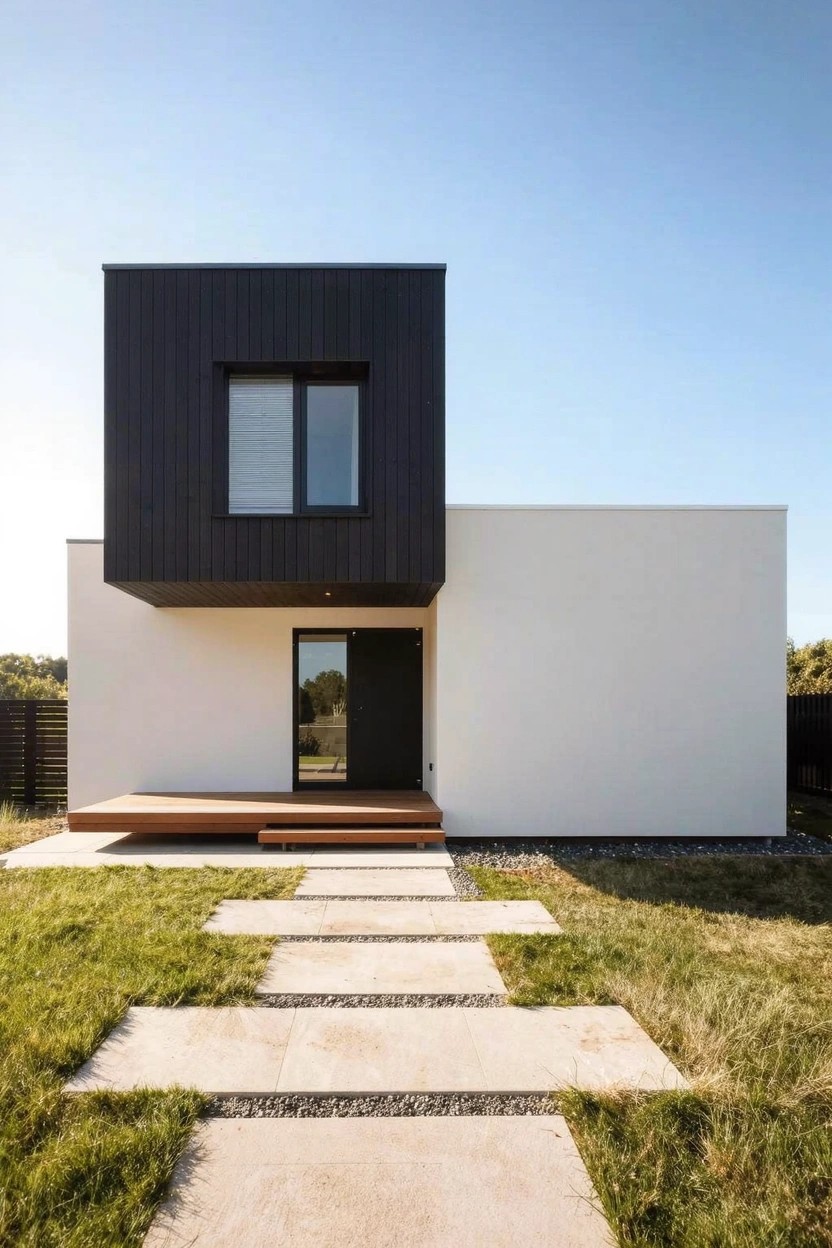
This setup takes a plain white base and tops it with a black box-like upper section. The sharp difference between the colors gives the house a clean modern feel. It stands out right away but stays simple. No busy details needed.
Try this on a small house in a flat yard. It suits boxy shapes with big glass around the door. The wood platform at the entry adds a warm touch without overdoing it. Just make sure the black part doesn’t overwhelm the white. Scale matters here.
Covered Front Porch
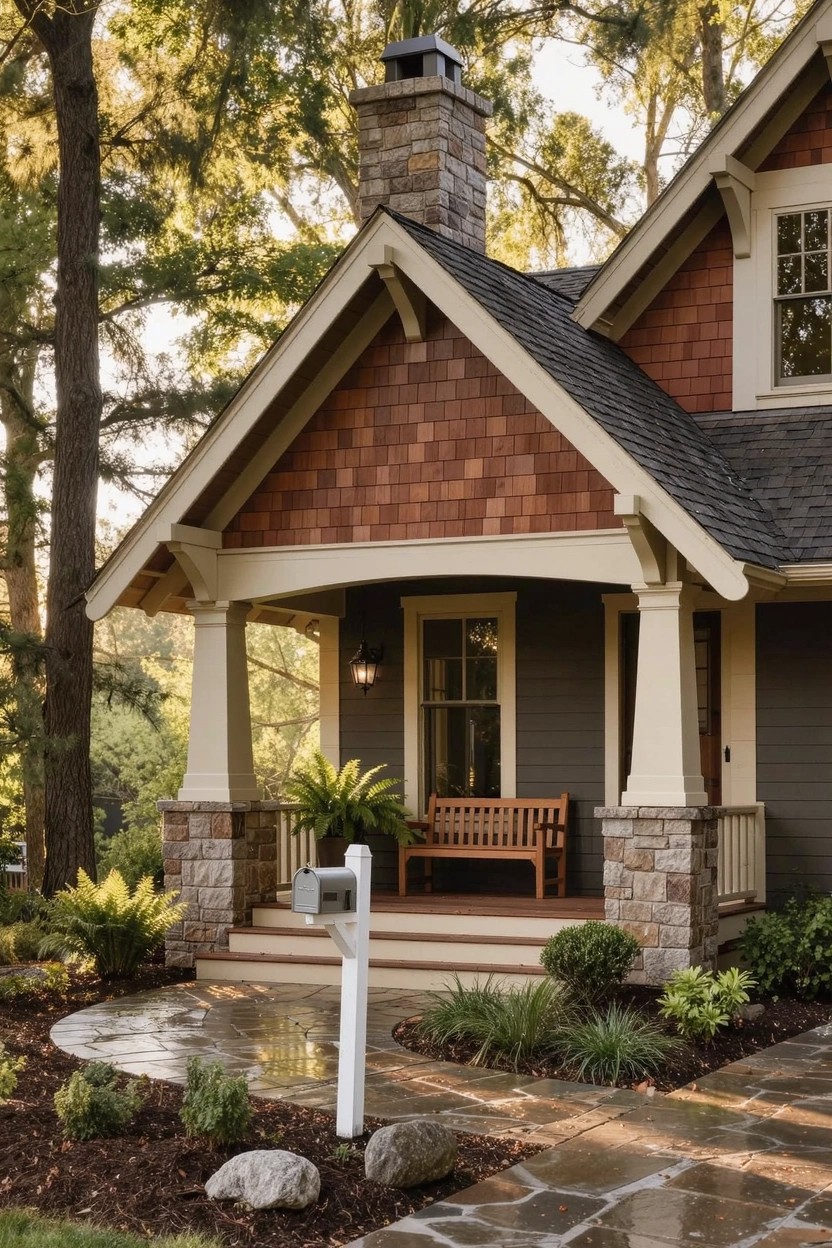
A covered front porch pulls the whole house together on a small lot. Here the gable roof with shakes sits right over the entry, and that bench adds a place to sit without taking up yard space. It works because it gives shade and a bit of shelter right where you need it most.
Put one on a bungalow or craftsman house facing the street. Use stone for the bases on the columns to match a natural yard… keeps things sturdy. Skip it if your lot is too narrow, though.
Boxwood Shrubs by the Front Steps
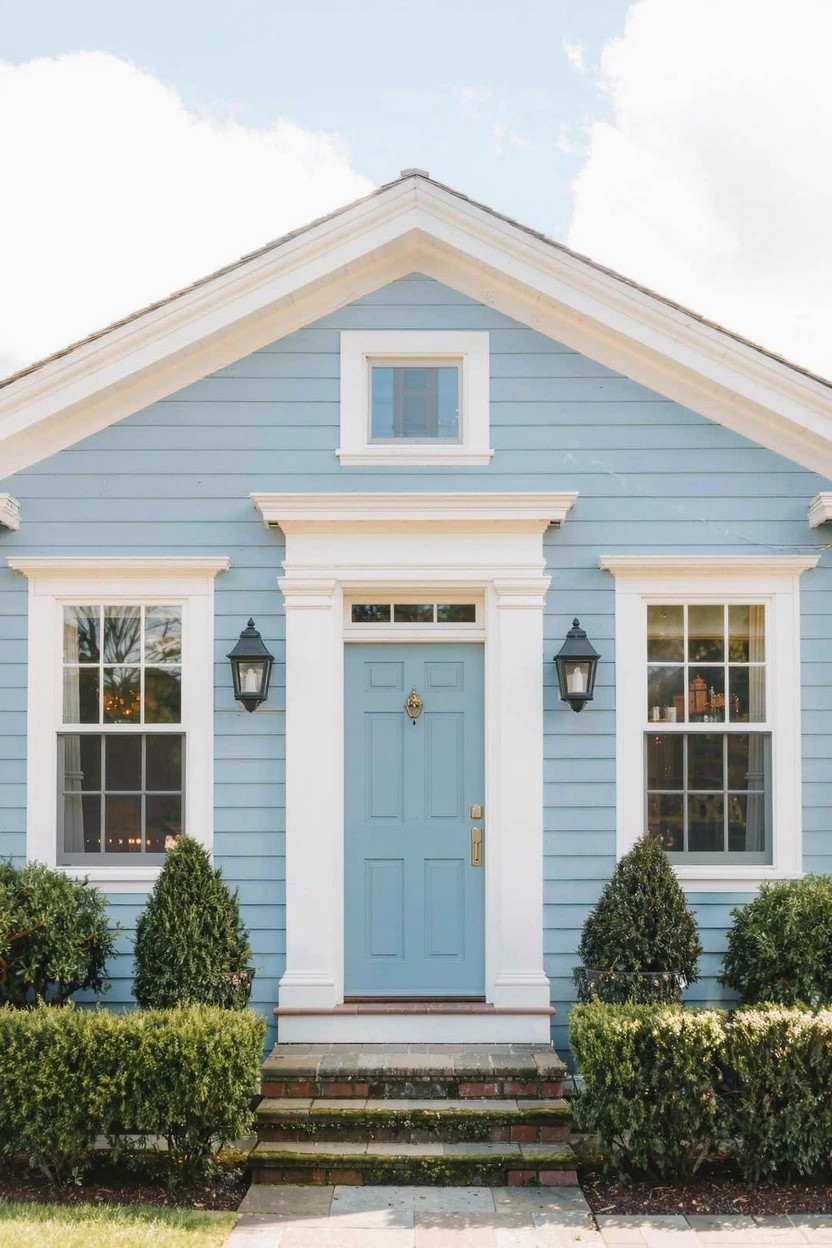
Boxwood shrubs planted right beside the front steps give this small house entry a tidy, balanced look. They sit low and round here, matching the light blue siding and white door without taking over. Folks like how they add some green structure to the yard edge. It pulls the eye straight to the door.
Try this on homes with a short set of steps leading up. Boxwoods stay compact, so they suit narrow lots or city yards. Trim them a couple times a year to keep the shape. Pick a sunny spot, though. They won’t thrive in deep shade.
Front Porch on Stone Pillars
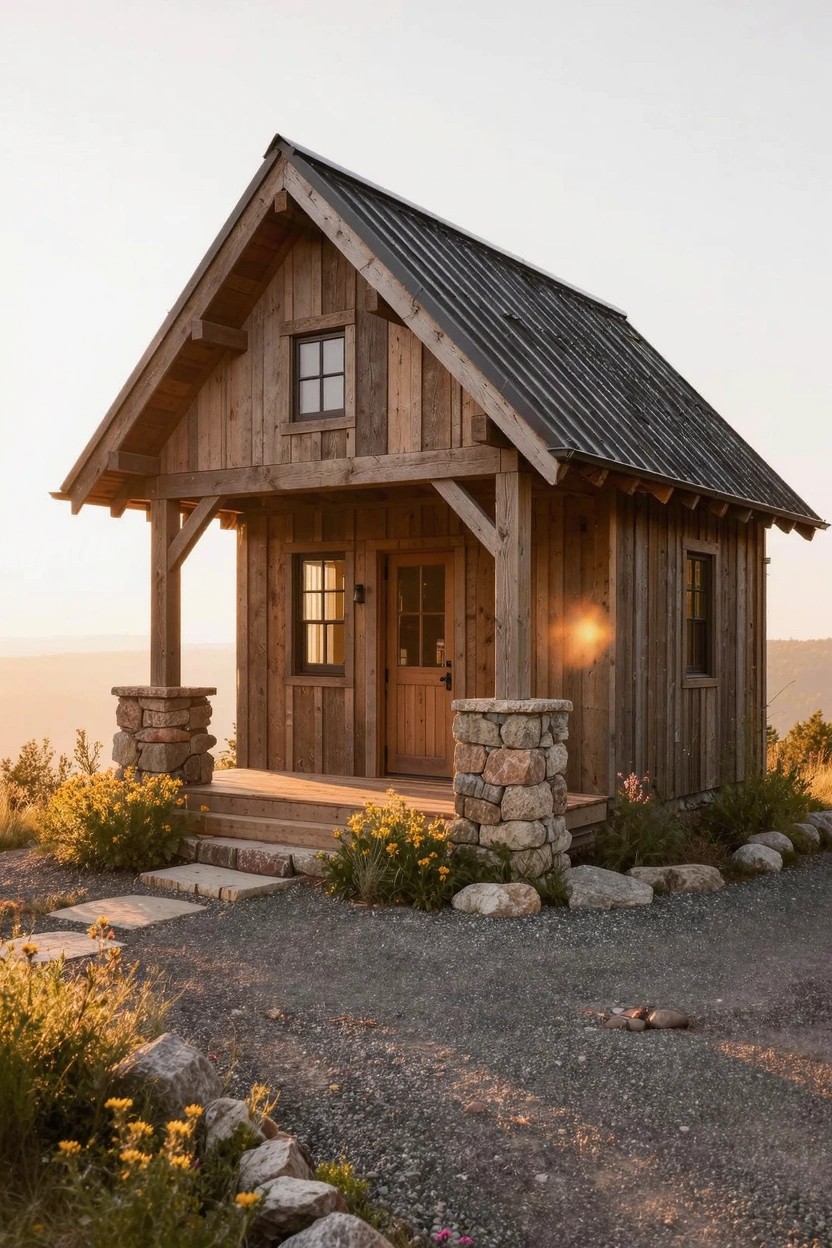
A front porch held up by stone pillars like this one makes a small house feel steady and tied to its spot. The rough stones at the base match up with the wood walls above, so nothing looks out of place. Folks notice how it pulls the house down to earth without much fuss.
Put this on homes in rocky or sloped areas, where you can use stones already around. It suits cabins and simple country places best. Watch that the pillars sit firm, or add gravel underneath for drainage.
Cantilevered Roof Over the Entry
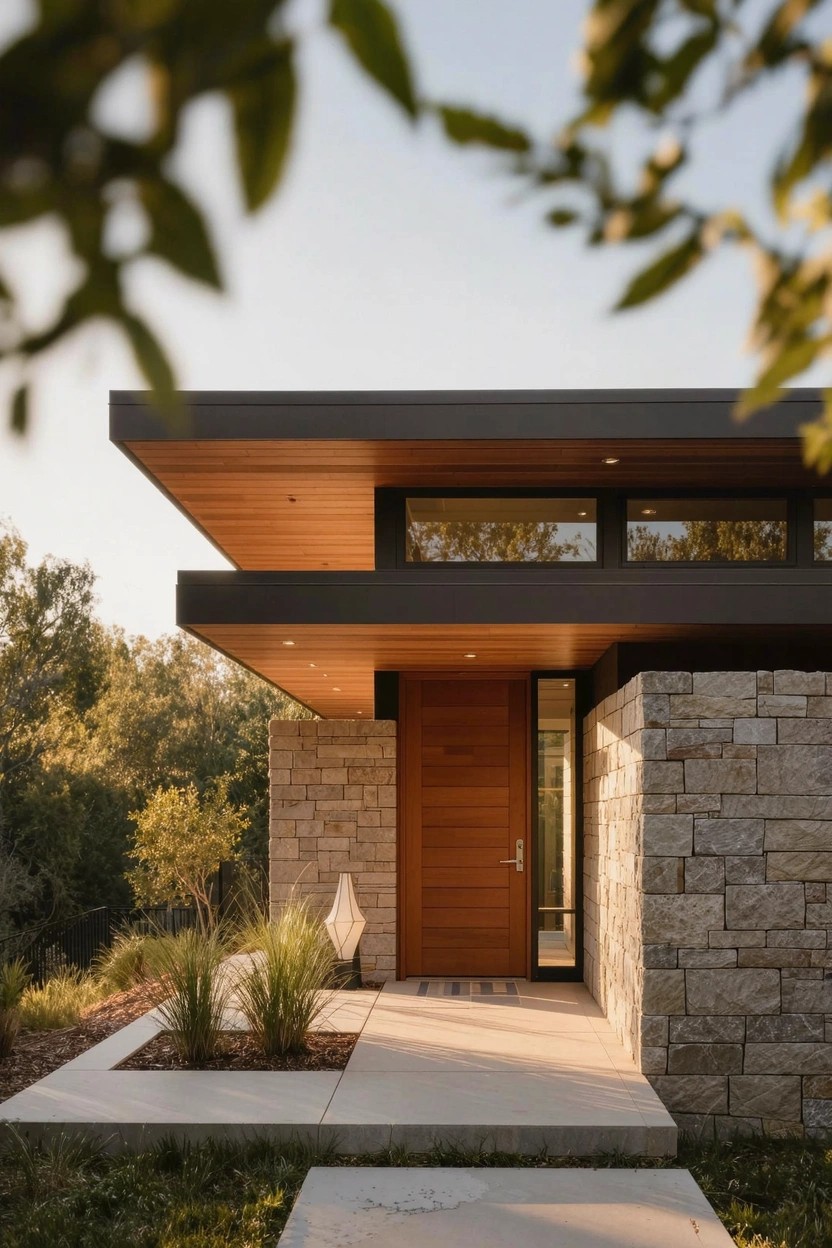
A flat roof that cantilevers out over the front door makes a real difference here. It gives you a covered spot to step under, away from rain or sun. The wood ceiling underneath warms things up next to the rough stone base. Folks notice this kind of simple shelter right away.
You can add this to most small homes facing the street. It suits spots with some trees or grasses nearby, keeping the look natural. Go for sturdy beams so it holds up over time. Watch the slope on the roof edge to shed water clean.
Turquoise Front Door
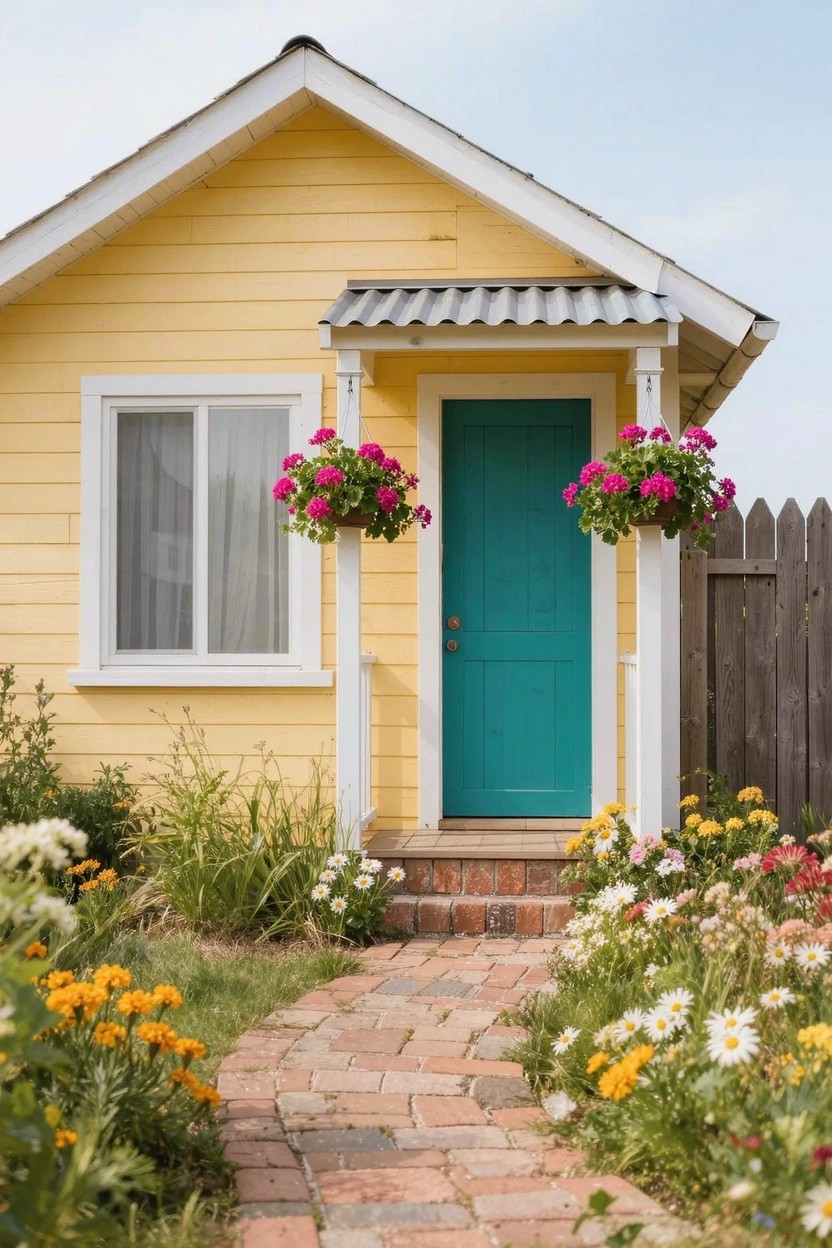
A turquoise front door like this one on a yellow house pulls your eye straight to the entry. It stands out without trying too hard. Paired with pink hanging baskets on the porch posts, it gives the whole front a fresh, cheerful feel that small homes can really use.
Try this on cottage style houses or any place with light siding colors. Pick a shade that contrasts but doesn’t clash, like turquoise against pale yellow. It suits yards with some flowers around the path. One thing to watch. Make sure your door hardware is sturdy since bold colors show dirt faster.
Simple Covered Front Porch
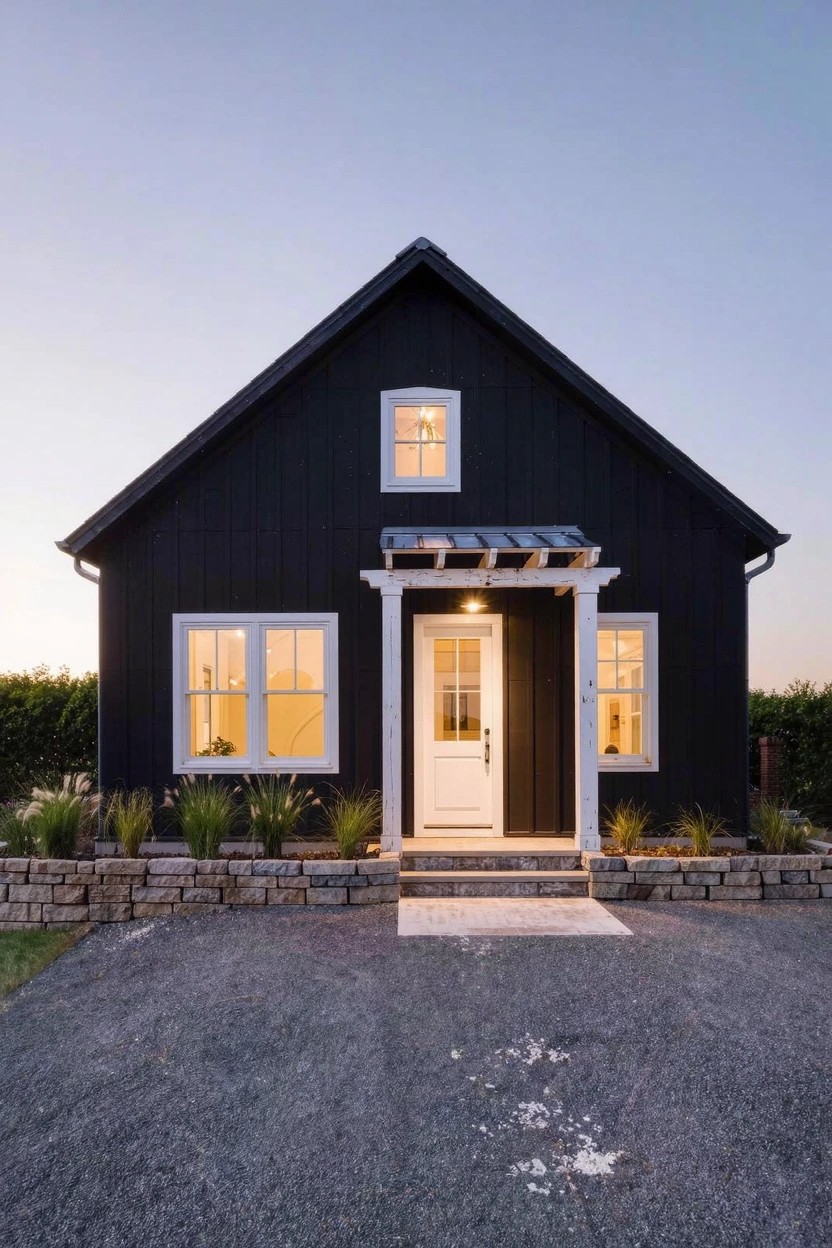
This porch setup keeps things straightforward. White columns support a basic roof overhang right over the door. It frames the entry on a small dark house without crowding the front yard. Folks notice it right away. Adds shelter for rainy days too.
Put one like this on a gable-roof home with a driveway approach. White works best against black or gray siding for that clean look. Skip fancy details. Just make sure the base sits firm on stone or blocks. Good for town lots where space stays tight.
Elevated Porch on Wooden Posts
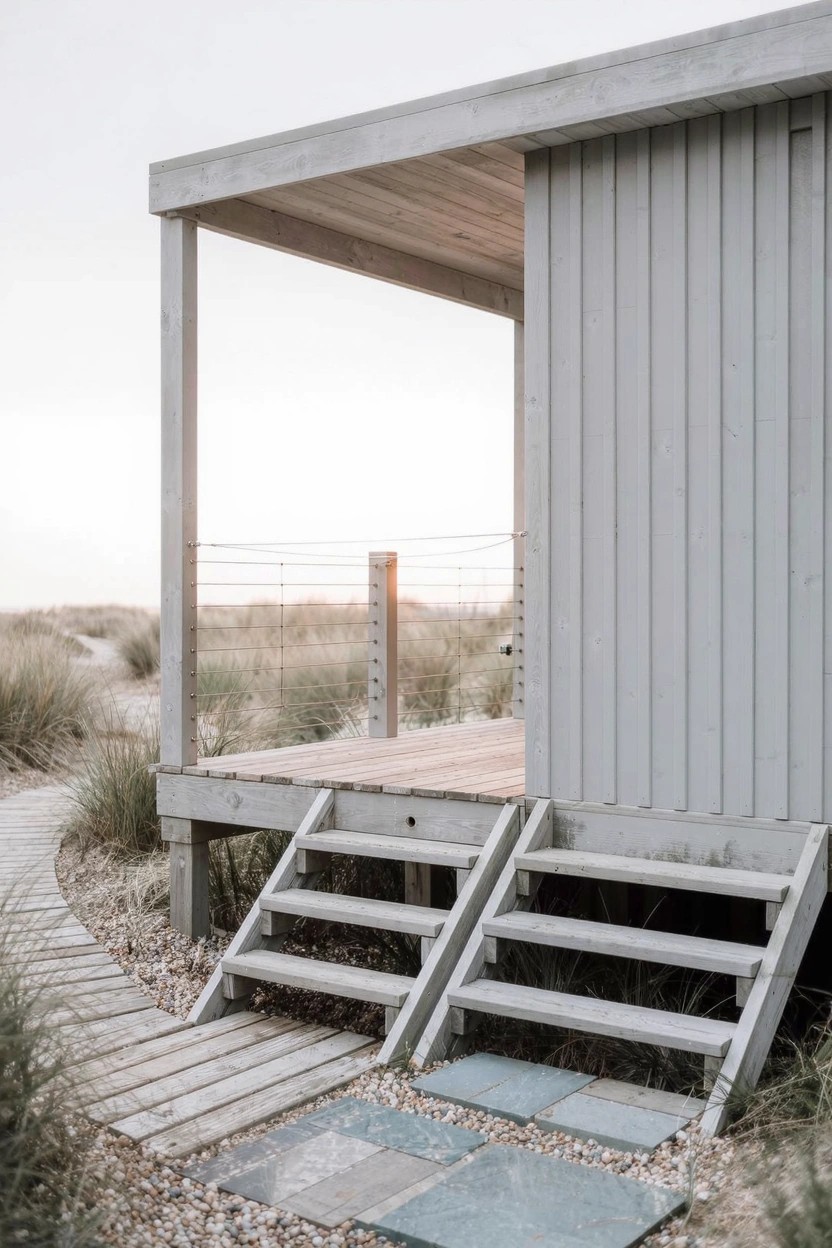
This kind of elevated porch works well for small houses in uneven yards. The house sits up on posts, giving room underneath and a flat deck space right outside the door. Double stairs lead right up to it, making the entry feel open and easy. Gray siding keeps things simple against natural surroundings like dunes.
You can use this setup on coastal spots or sloped lots where water might rise. Build the deck from treated wood to last outdoors. Add basic railings. It suits compact cabins best… just make sure the posts are solid for stability.
Half-Timbered Facade
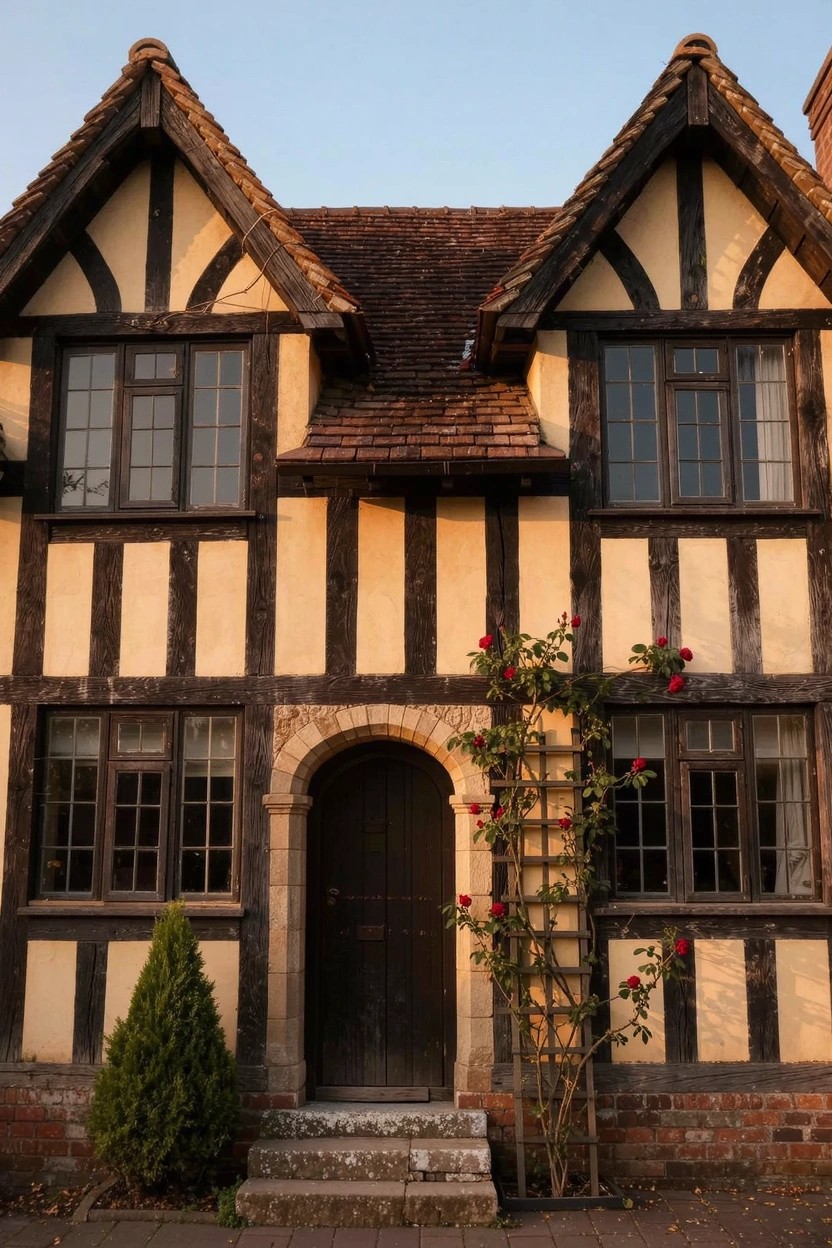
Half-timbered facades like this one use dark wood beams over light plaster. They give a house that cozy old English cottage feel right away. The black timbers stand out strong against the pale walls. And a few climbing roses along the side just soften things up nicely.
This look fits small homes best, especially ones with steep roofs or simple shapes. Paint the plaster a soft cream or beige. Use real wood beams if you can, or sturdy faux ones that last. Keep plantings low key around the door. It works in town yards or country spots. Just make sure the proportions feel right, or it can look off.
Screened Entry Porch
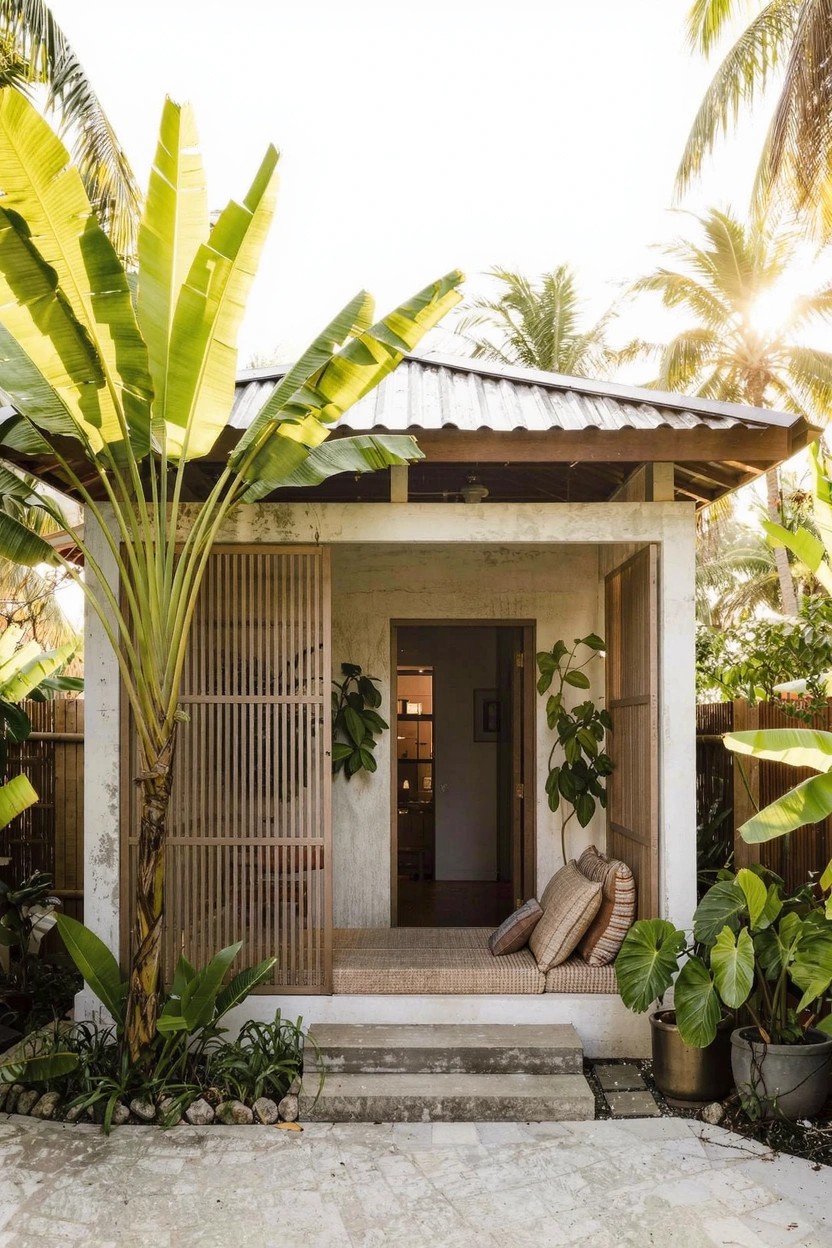
Wooden slat screens like these on the entry porch let air move through while blocking direct views inside. They fit right on this simple raised platform and work with the tall banana plants nearby. Folks notice how it keeps the house cool and open feeling even in hot weather.
Try this setup on smaller homes in warm areas. Build the porch a step or two up from ground level so water stays out. Use treated wood for the screens to last longer outdoors and add some cushions if you want spots to sit.
Rustic Stone House Entry
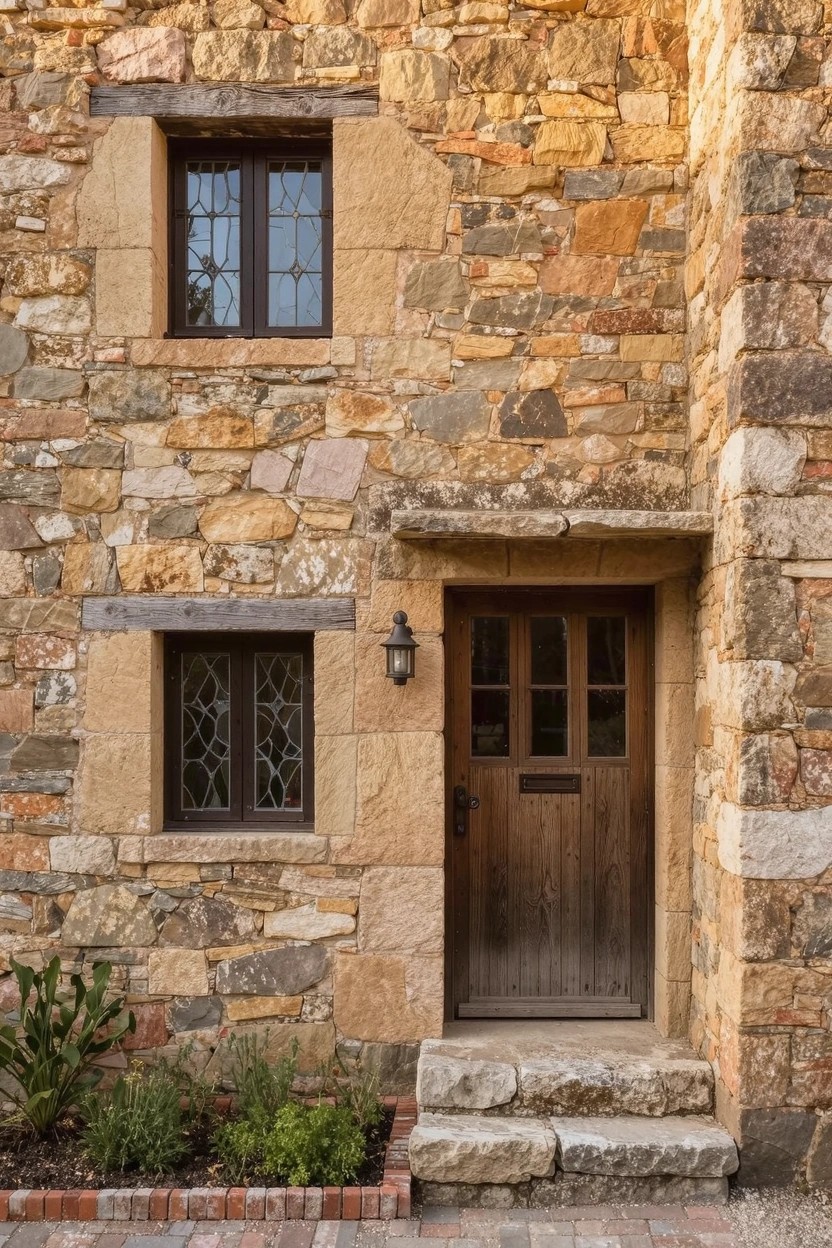
This entry setup on a small stone house pulls everything together without trying too hard. Rough beige stones build up around the dark wooden door, with a couple of leaded windows nearby. That single lantern by the door gives it a warm glow, especially at dusk. It’s the kind of front that feels solid and lived-in right away.
You can pull this off on cottage-style homes or older bungalows in rural spots. Use local fieldstone for the walls to blend in, then go with a paneled oak door for contrast. Add a few steps if needed… keeps mud off the threshold. Watch the scale though. Too big a lantern overwhelms a tiny house.
Yellow Door on a Dark Facade
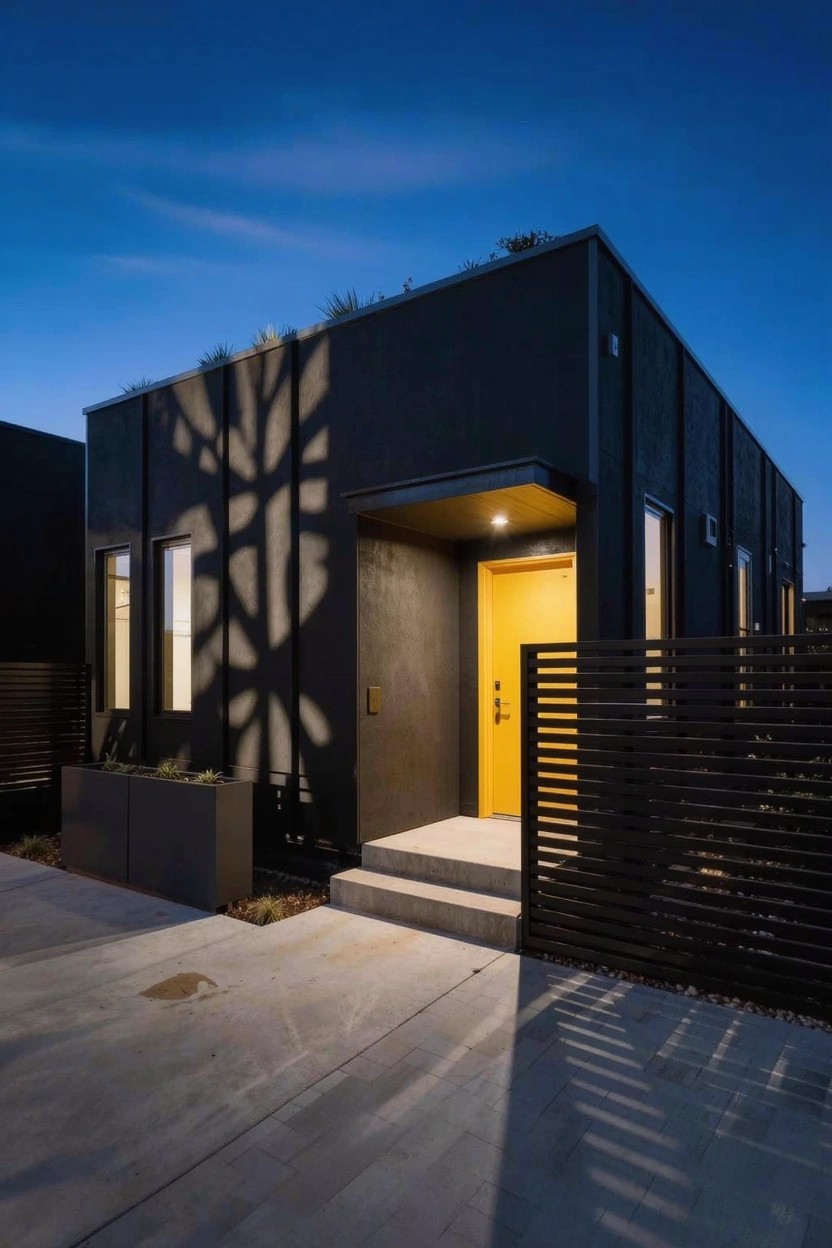
A yellow front door like this one really pulls the eye on a dark house. The black walls fade into the evening, but that bright color marks the spot to enter. It keeps things simple while adding a bit of cheer to a plain box shape.
This works best on small modern homes where you want focus up front. Paint your door a strong shade against siding in black, gray, or deep brown. It suits driveways like this one too. Just seal it well so the color lasts through rain.
Curved Brick Path to the Porch
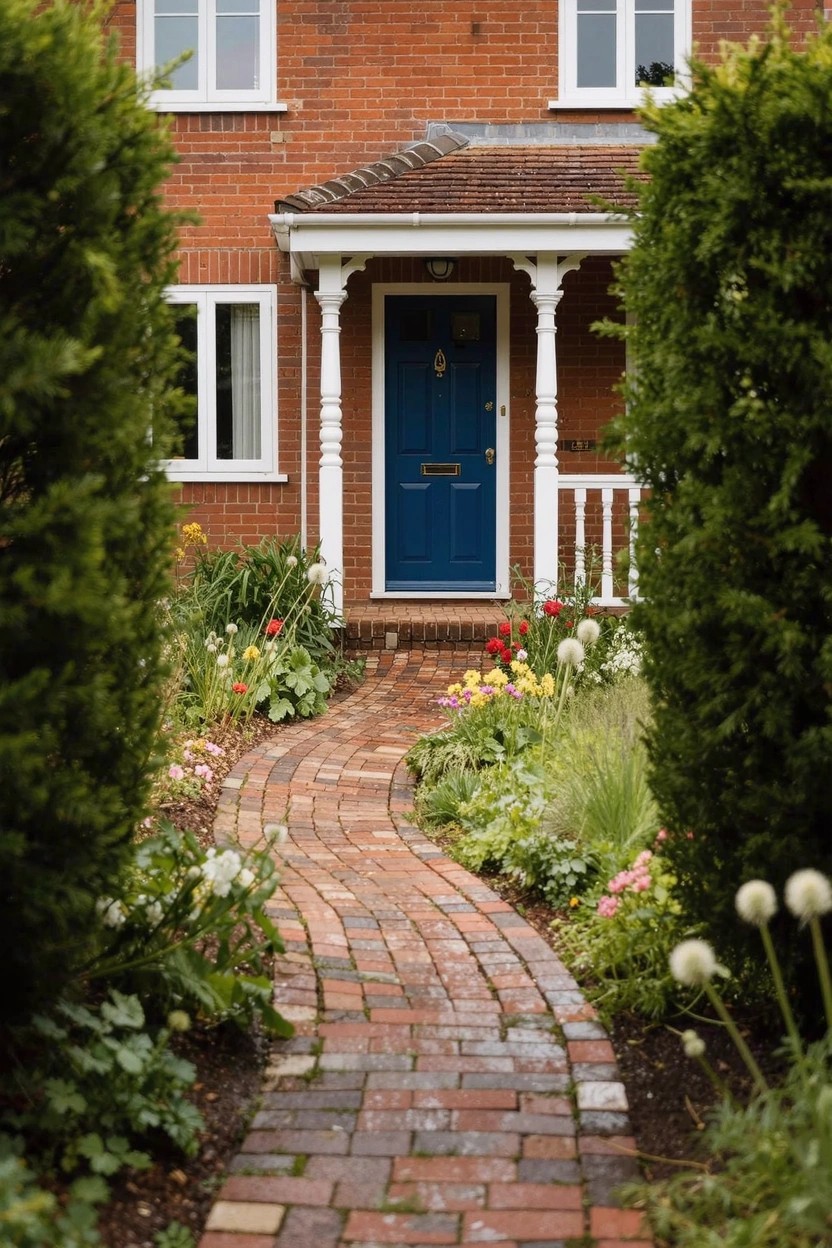
A curved brick path like this one winds gently from the street through the front garden straight to the porch. It stands out because it slows you down a bit as you walk, letting the planting on both sides catch your eye. Those tall hedges give structure, and the flowers tucked in keep things colorful year after year.
This kind of path suits small front yards on older homes, especially brick or cottage styles. Use reclaimed bricks if you can find them for that worn-in look. Keep the hedges trimmed back from the path… and watch the scale so it does not overwhelm a narrow lot.
Concrete Base with Built-In Planters
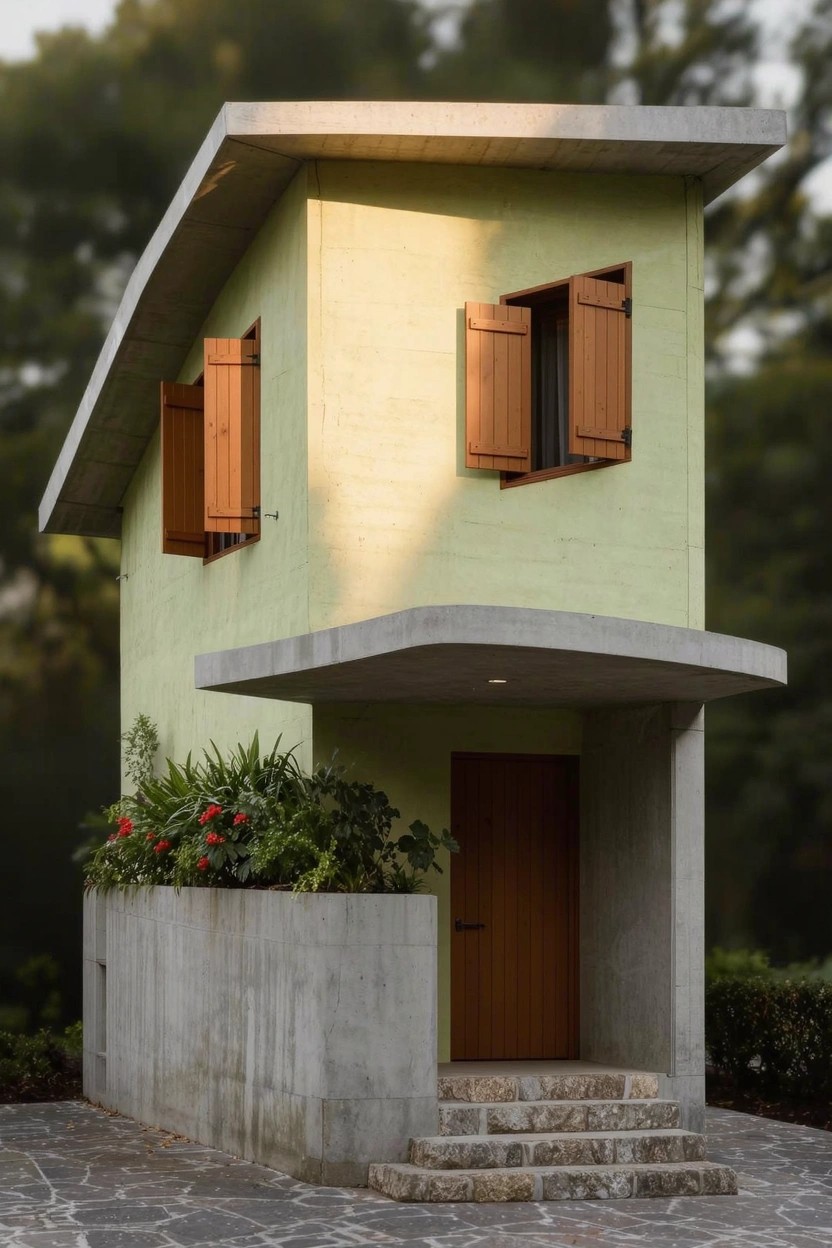
Raising a small house on a plain concrete base does a lot for the look. Here, they tucked planters right into the edges of the base, packed with leafy greens and bright red flowers. It keeps the house from sitting flat on the ground. Feels more planted in place. Sturdy too.
You see this work best on compact modern homes, especially where the yard slopes or gets wet. Pair it with simple steps up to the door. Watch the drainage though. Poor setup leads to soggy roots fast.
Garden Path Through the Flowers
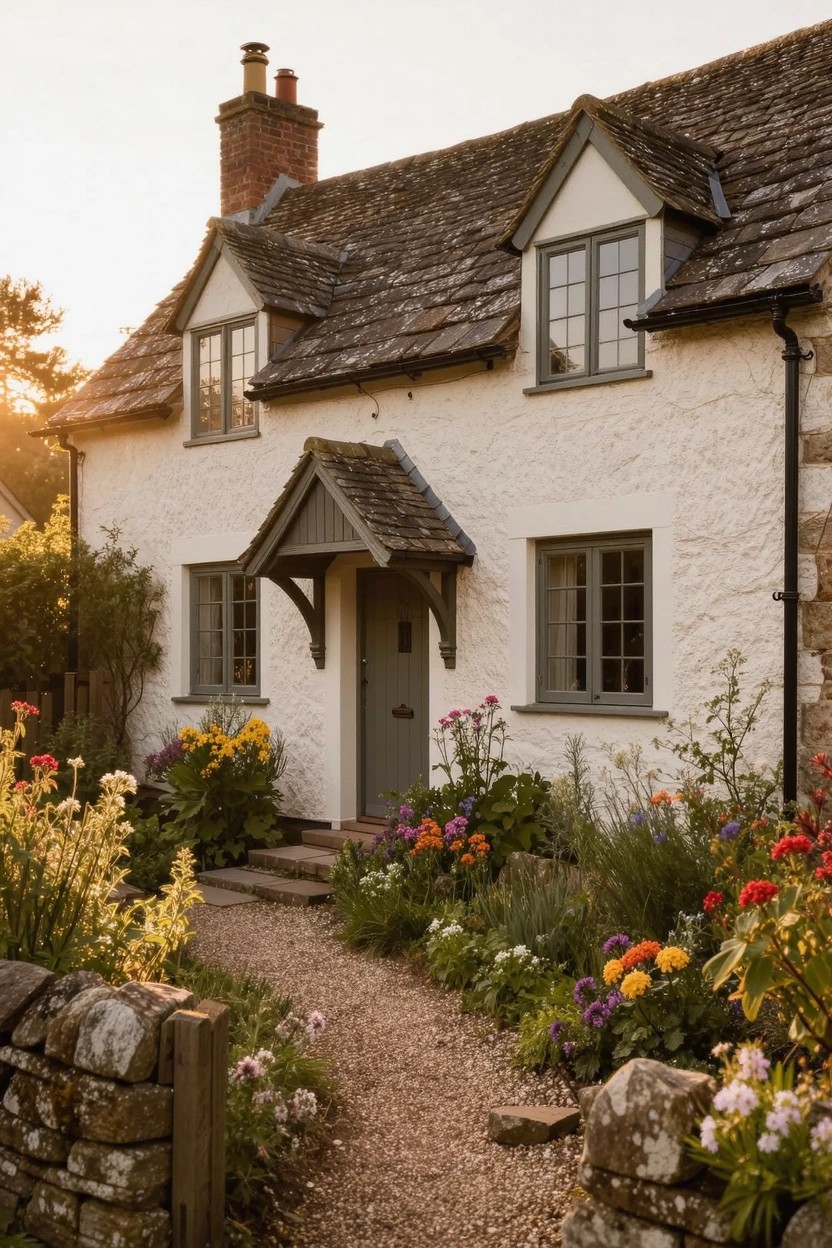
A gravel path like this one pulls you right up to the door without much fuss. It’s lined on both sides with bright flowers spilling over, things like dahlias and tall blooms in pinks and yellows. What stands out is how it turns a plain walk to the house into something you actually want to stroll along. No big hardscape needed. Just plants doing their job.
This setup works best on small cottages or older homes where you want that lived-in feel. Lay down loose gravel between the beds so it drains well, and pick tough perennials that come back each year. Keep the path narrow… maybe three feet wide. It suits spots with good sun for flowers, but watch out for overgrowth if you skip trimming in summer.
Frequently Asked Questions
Q: How do I pick a design that actually fits my house?
A: Walk around your home and snap photos from every angle. Match the design’s vibe to your roofline and door setup. That way it blends right in instead of sticking out.
Q: Can I make these elevations happen on a tight budget?
A: Focus on paint, shutters, and landscaping first. They refresh the look fast and cheap. Save the big structural changes for later.
Q: What if my neighborhood has rules about changing the front?
A: Chat with your local HOA or city planner early. Show them a couple designs from the article that nod to the area’s style. They often greenlight tweaks that keep things harmonious.
Q: How soon can I see results after starting?
A: Pick quick wins like siding or entry doors. You notice the difference in weeks. Full makeovers take a few months but feel worth it.
