

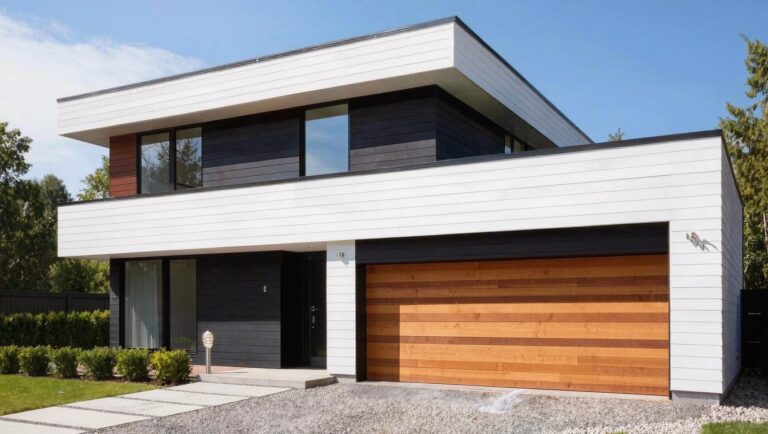
I’ve been eyeing house exteriors in my area, struck by how fresh paint gives them that sharp, lived-in polish. Colors work best when they echo the roof tiles or nearby trees, letting the architecture breathe.
I skip anything too vibrant myself, since it fades fast under sun and pulls focus from the details. Crisp trim against a muted body color nails the look almost every time.
A couple of these ideas strike me as smart ones to adapt for a subtle update.
Two-Tone Black and White Siding
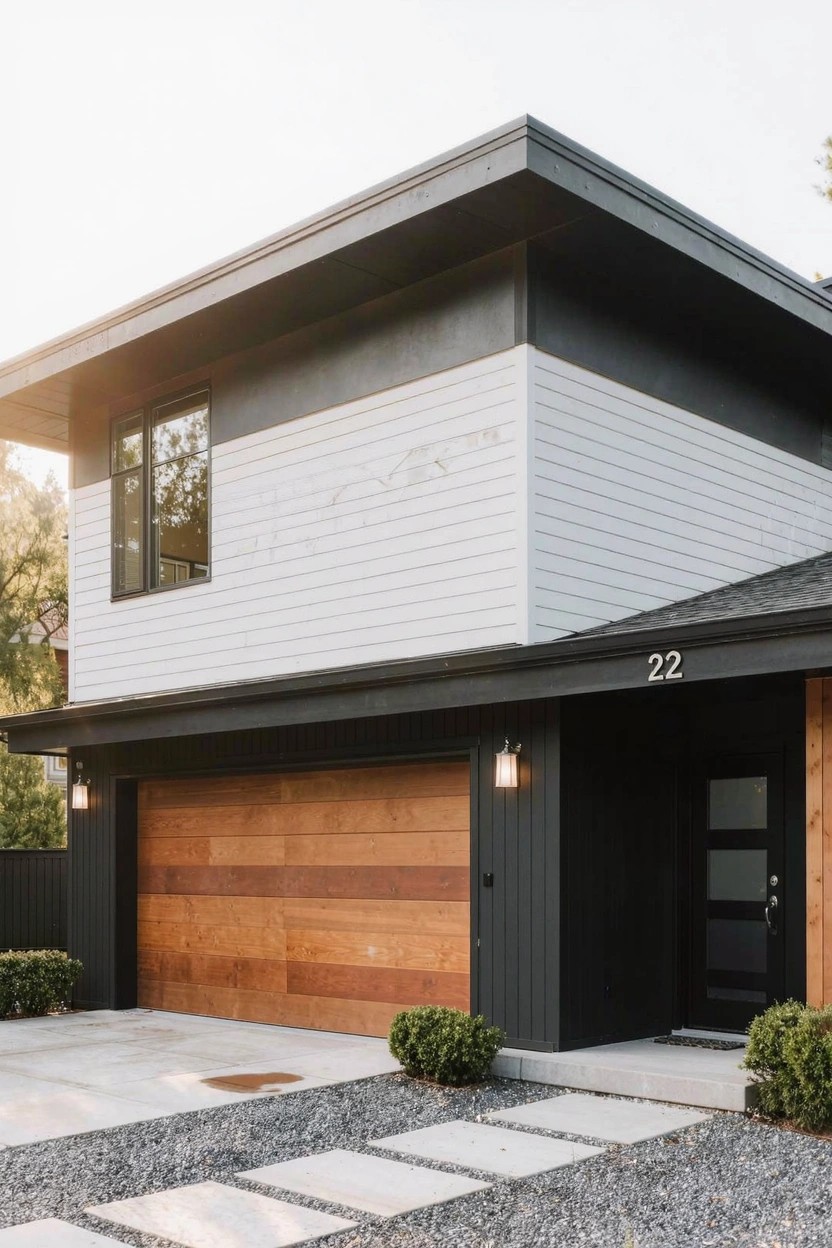
Black on the bottom, white on top. That’s the simple setup here. It breaks up the facade nicely and makes the house feel taller and more modern. The wood garage door fits right in, bringing some warmth to the crisp colors.
This look suits homes with clean lines, like ranch or contemporary styles. Paint the lower section black up to about waist height on the garage, then switch to white above. It hides dirt better downstairs too. Skip it on super traditional houses, though.
Light Blue Siding with White Trim
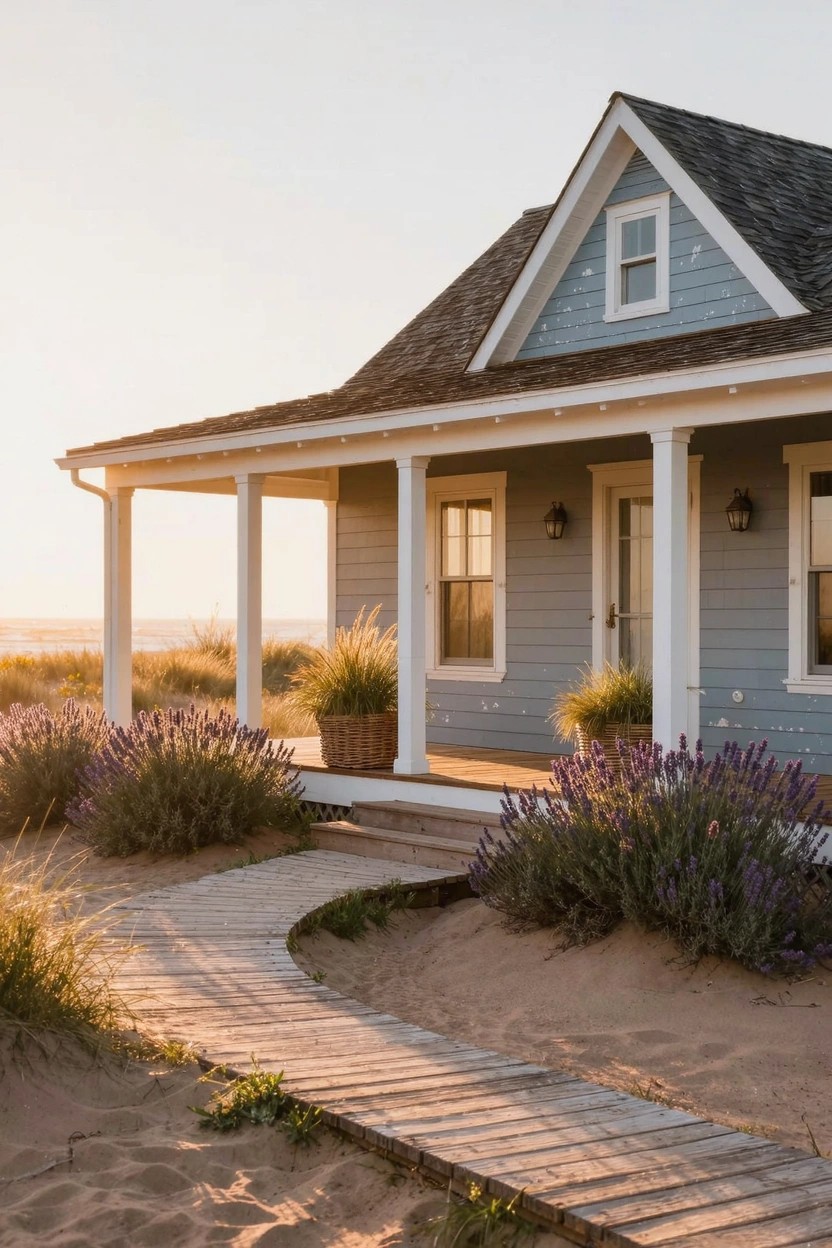
This light blue siding paired with white trim gives a house a fresh, clean look that feels right at home by the beach. The soft blue keeps things calm and ties into the water nearby, while the white pops on the porch columns and window frames. It makes the whole front feel polished without trying too hard.
Try this on a cottage or raised beach house where you want low upkeep colors that handle salt air. Pick a durable exterior paint rated for coastal spots, and keep the trim bright with a semi-gloss finish. Works best on clapboard or shingle siding… just avoid darker shades if your yard stays sandy.
Shades of Gray on Plaster Walls
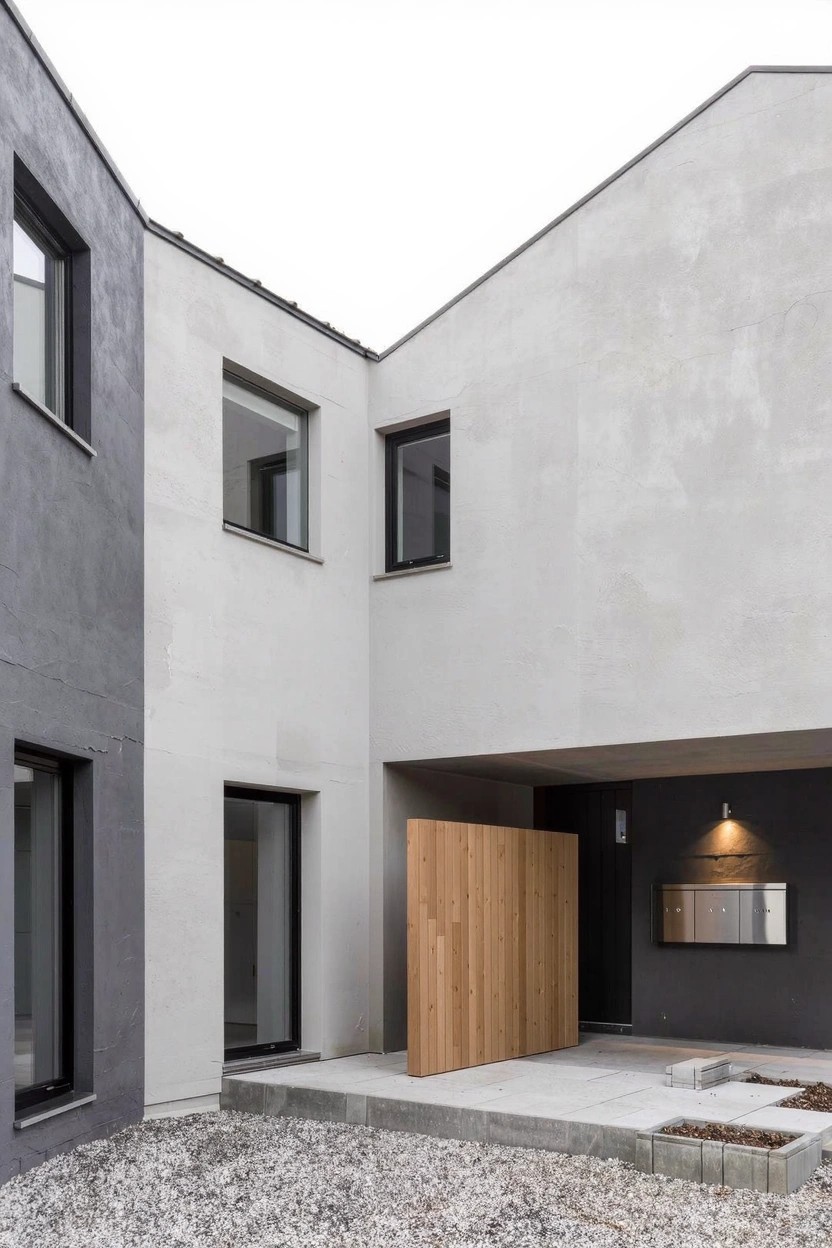
One simple way to get that clean polished look is painting your house walls in shades of gray plaster. Here you see a darker gray on one side meeting a lighter shade on the other. It keeps things modern and sharp without much fuss. The matte finish helps too. It hides dirt better than glossy paint.
This works best on boxy modern homes or ones with clean lines. Pair it with black window frames and a wood door like this one for some warmth. Skip it on busy traditional houses though. It might look out of place. Just test samples in different lights first.
Crisp White House Paint
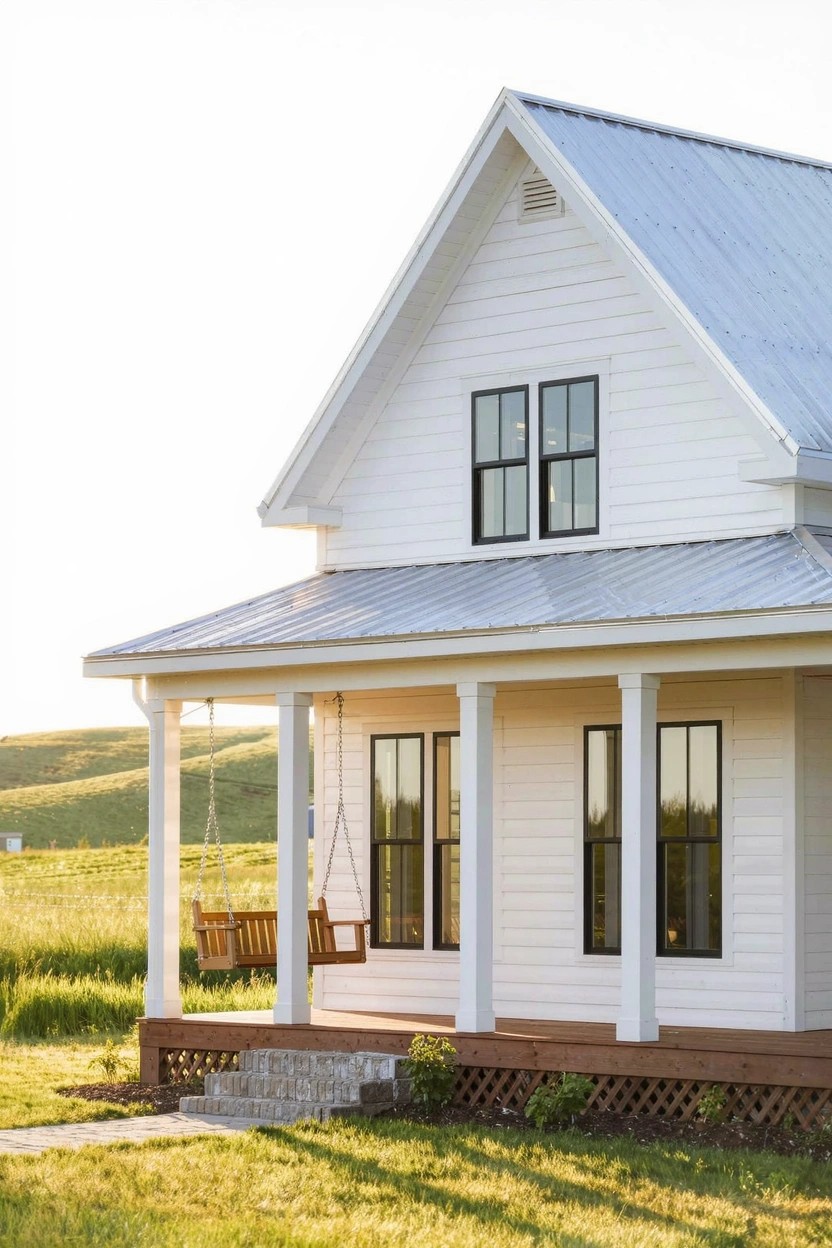
White paint on a house like this just looks clean and fresh. It brightens up the whole place without trying too hard. The siding here picks up the light, making the home stand out against green fields or any yard. Black window frames add some needed contrast so it doesn’t wash out.
This works best on farmhouses or cottages with simple lines. Pair it with a metal roof or dark shutters for balance. Skip it if your spot gets too much shade. A porch swing nearby keeps things welcoming.
Deep Navy Blue Exterior Walls
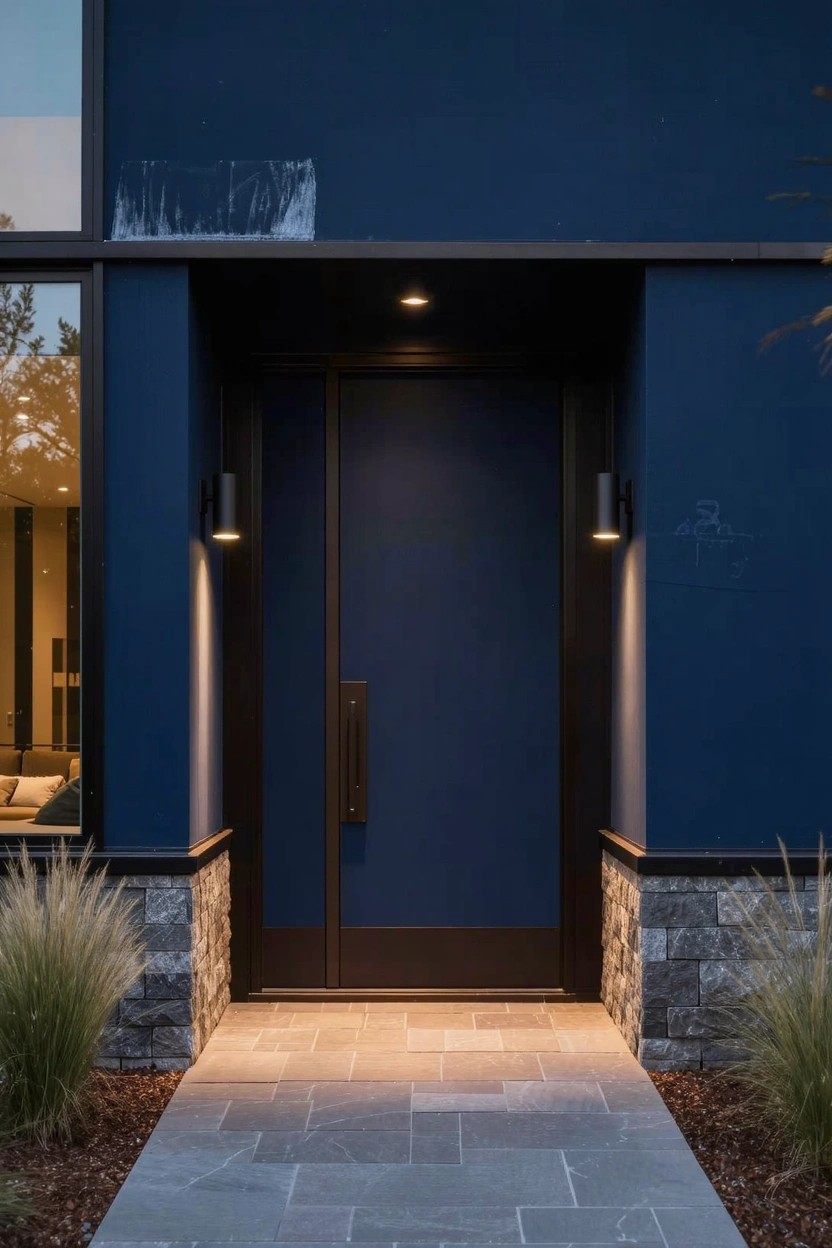
A deep navy blue paint job on house walls brings a clean and polished feel that’s simple to pull off. It looks sharp at night with basic wall lights and holds up well next to stone bases or plantings. Folks like how it shifts from bold in daylight to cozy after dark.
Try this on modern homes with flat surfaces like stucco. It suits spots with some shade to keep the color true over time. Add dark trim around doors and windows. Steer clear of super sunny yards… the hue might lighten too fast.
Terracotta Exterior Paint
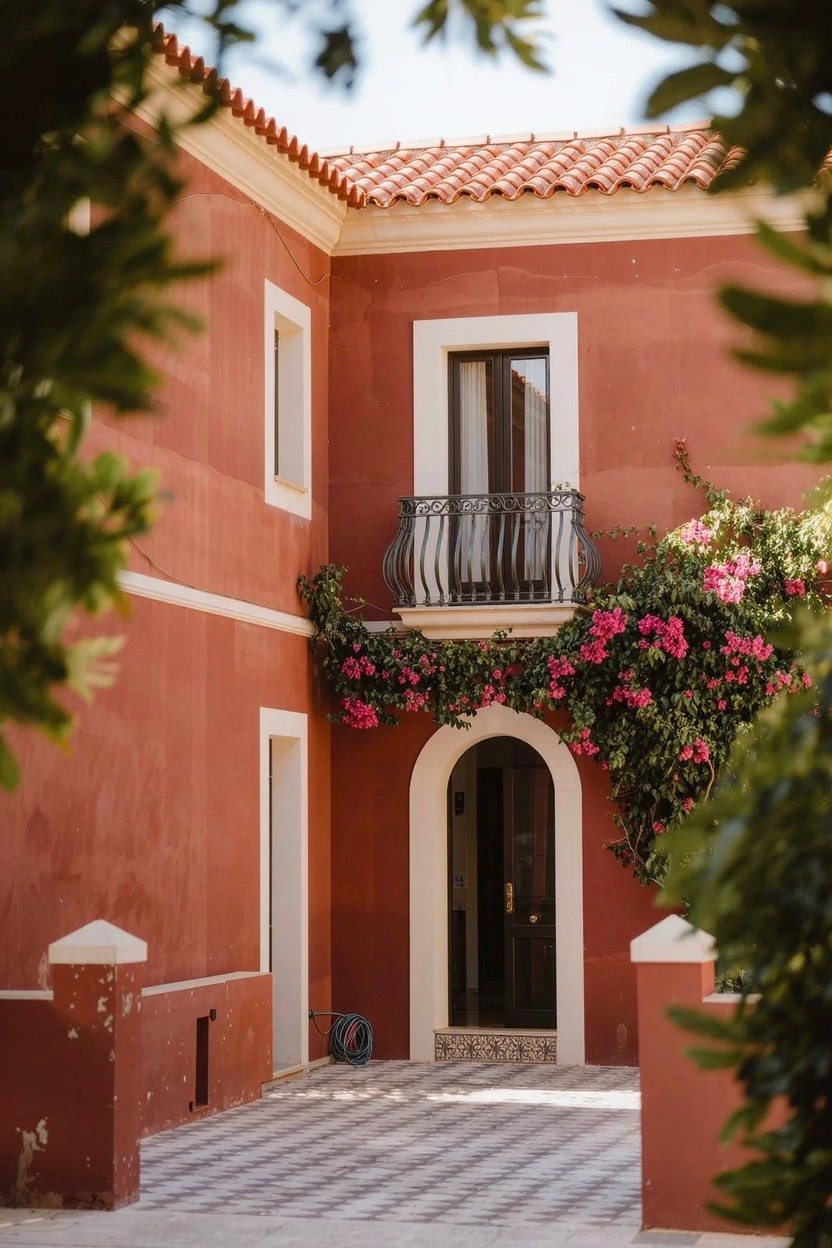
Terracotta paint turns a plain stucco house into something with real character. The warm red hue picks up the sun nicely and pairs clean with white trim on windows and doors. It gives that polished look without trying too hard.
Try it on ranch or Mediterranean-style homes where the color blends with the landscape. It suits dry, sunny yards best. Add vines around the entry if you want. Prep the walls good first, or the paint fades fast.
Mint Green Cottage Exteriors
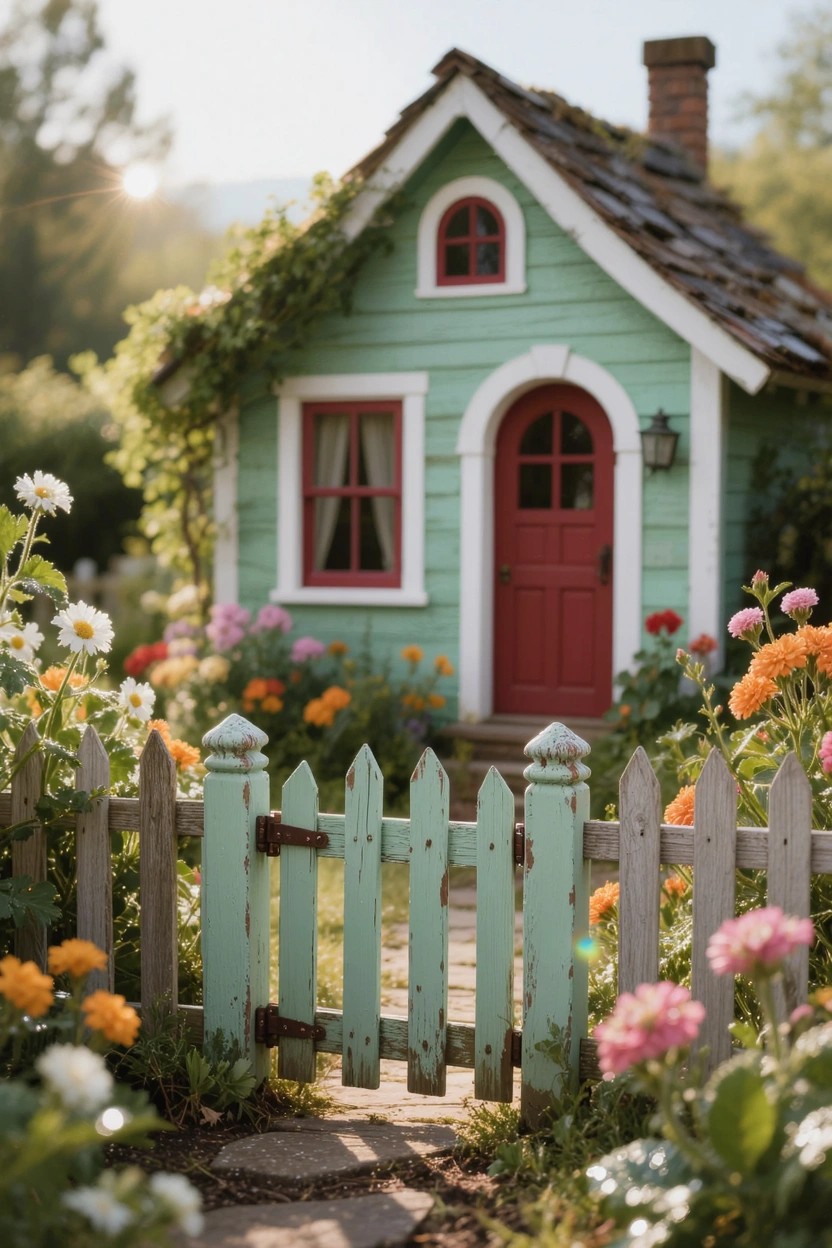
Mint green paint on a house like this brings out a clean, fresh feel that fits right into a garden setting. It stands out without being too bold, and that red front door adds just the right pop of color. Folks notice how the soft green makes the whole place look lively and polished, especially when flowers grow up around the base.
You can pull this off on smaller homes or cottages where you want a whimsical touch. Pick a quality exterior paint in that mint shade, and make sure the trim stays crisp white. It works best in yard spots with some planting nearby, but watch the sun exposure so the color doesn’t fade too quick.
Sage Green Siding Paint
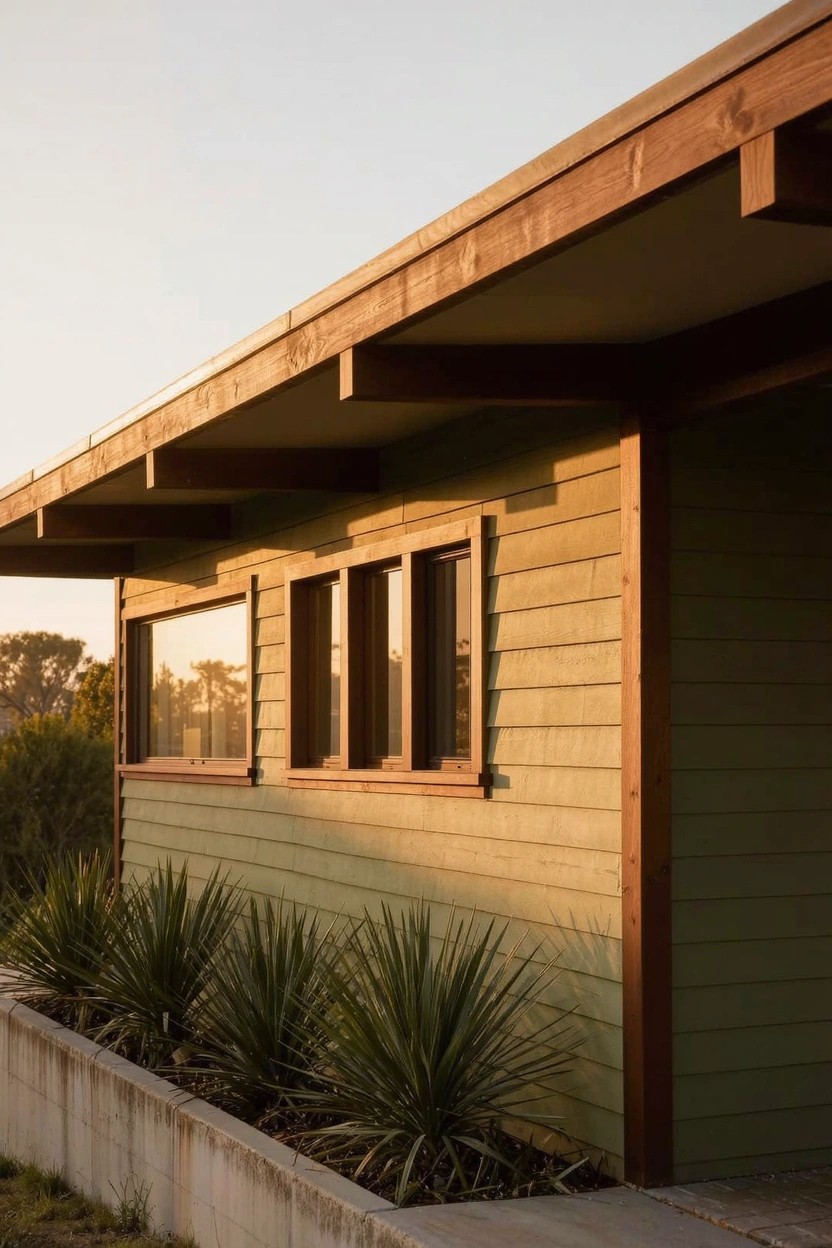
Sage green siding paint gives a house that calm, natural feel without trying too hard. It picks up on the colors around it, like plants and earth, so the home looks settled into its spot. Here, the soft green on vertical boards works with warm wood trim overhead. Folks notice how fresh and clean it keeps things.
This paint shade suits ranch or midcentury homes best, especially where there’s some yard or native plants nearby. Go for a quality exterior paint that holds color through weather. Pair it with unstained cedar or redwood accents… they warm it right up. Skip it on super shady lots, though. The green needs light to pop.
Blue Garage Doors on White Siding
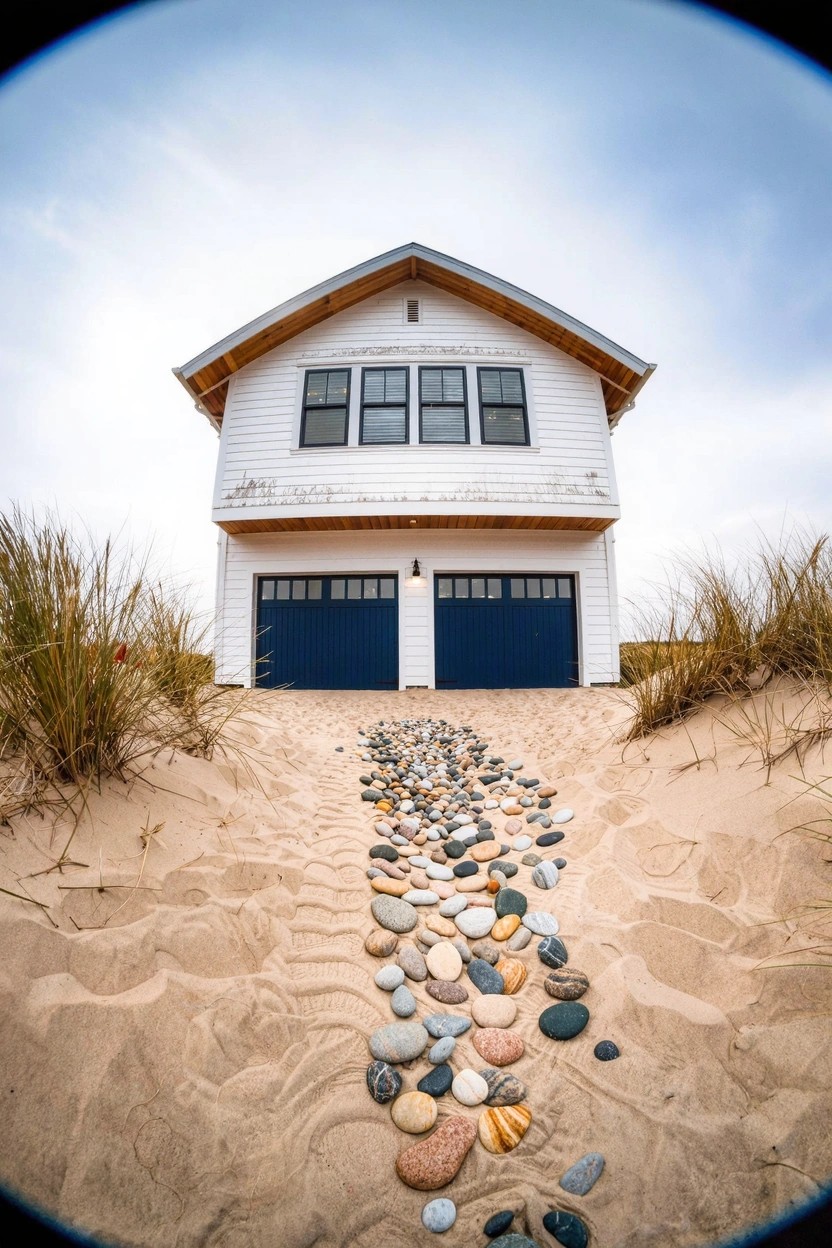
Blue garage doors catch the eye on a white house like this one. The navy shade stands out clean against the siding without taking over. It fits right in with a beach setting too, where the sand and grass keep things simple.
Try this on coastal homes or light-colored houses near water. It works best when the rest of the exterior stays neutral. Watch the doors for wear, since the color puts them front and center.
Dark Gray Paint on Brick
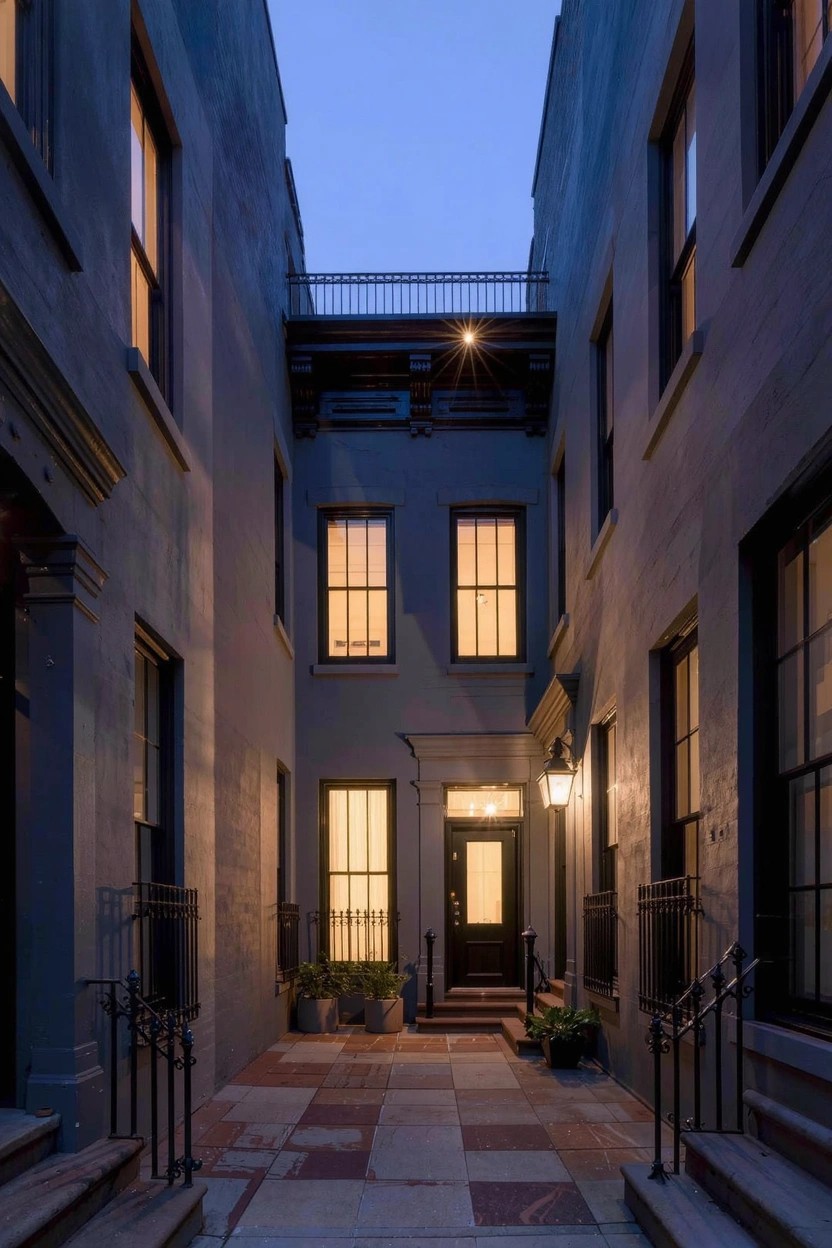
Dark gray paint on brick walls turns a plain masonry house into something sharp and modern. It keeps the brick texture you like but gives the whole front a clean, even finish that looks great at dusk. The color pulls in the shadows around the entry, making the warm window lights and black door stand out nice.
This works best on older townhouses or row homes where you want low-key polish without big changes. Use a breathable masonry paint so moisture doesn’t trap. Stick to matte or low-sheen to avoid glare… and it holds up well in city spots with some grit.
Brick Houses with Black Shutters
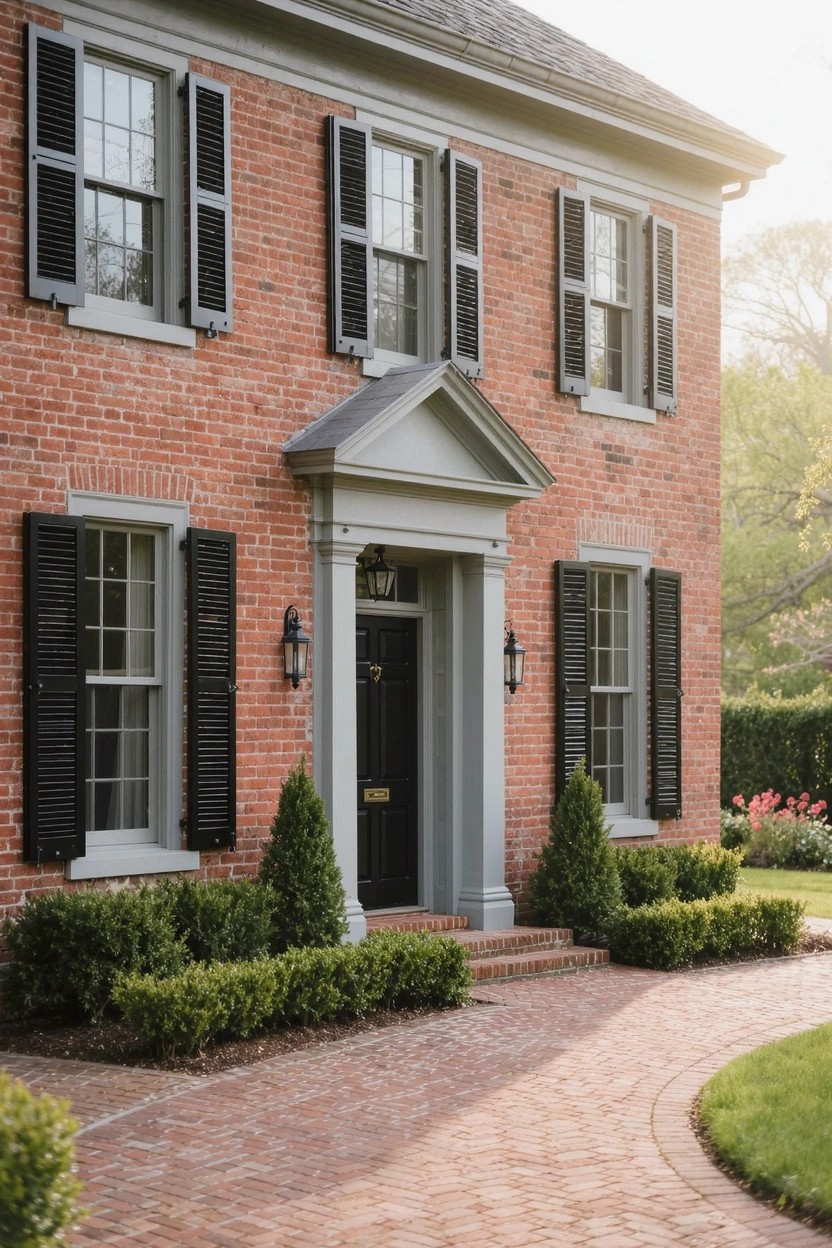
Brick houses look sharp with black shutters. The dark color pulls the eye to the windows and gives the whole front a clean edge. It keeps things simple but finished, especially on homes with some age to them.
Try this on traditional two-story houses, like colonials. Paint plain wood shutters black and hang lanterns by the door for extra polish. It suits most yards, just keep the trim neutral so the contrast stays clear.
Black Exterior Paint
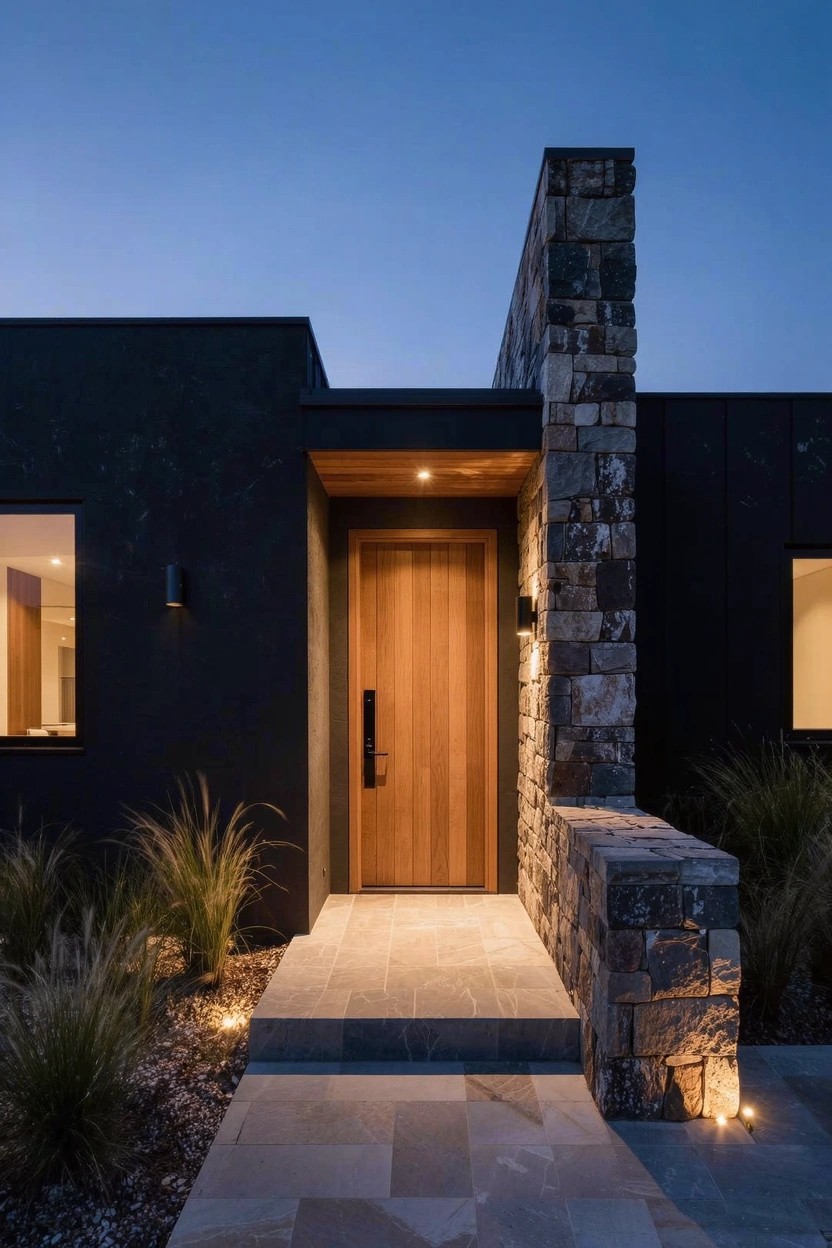
Black paint on house walls gives a clean modern look that stands out without trying too hard. Here it works with a plain wood door and some stone around the entry. The dark color pulls everything together at night, when the lights kick in.
This idea fits flat-roof homes or simple boxes in the suburbs. Pick a flat or matte finish so it does not show dirt. Keep plantings low around the base… helps it not feel too stark.
Bold Front Door Color
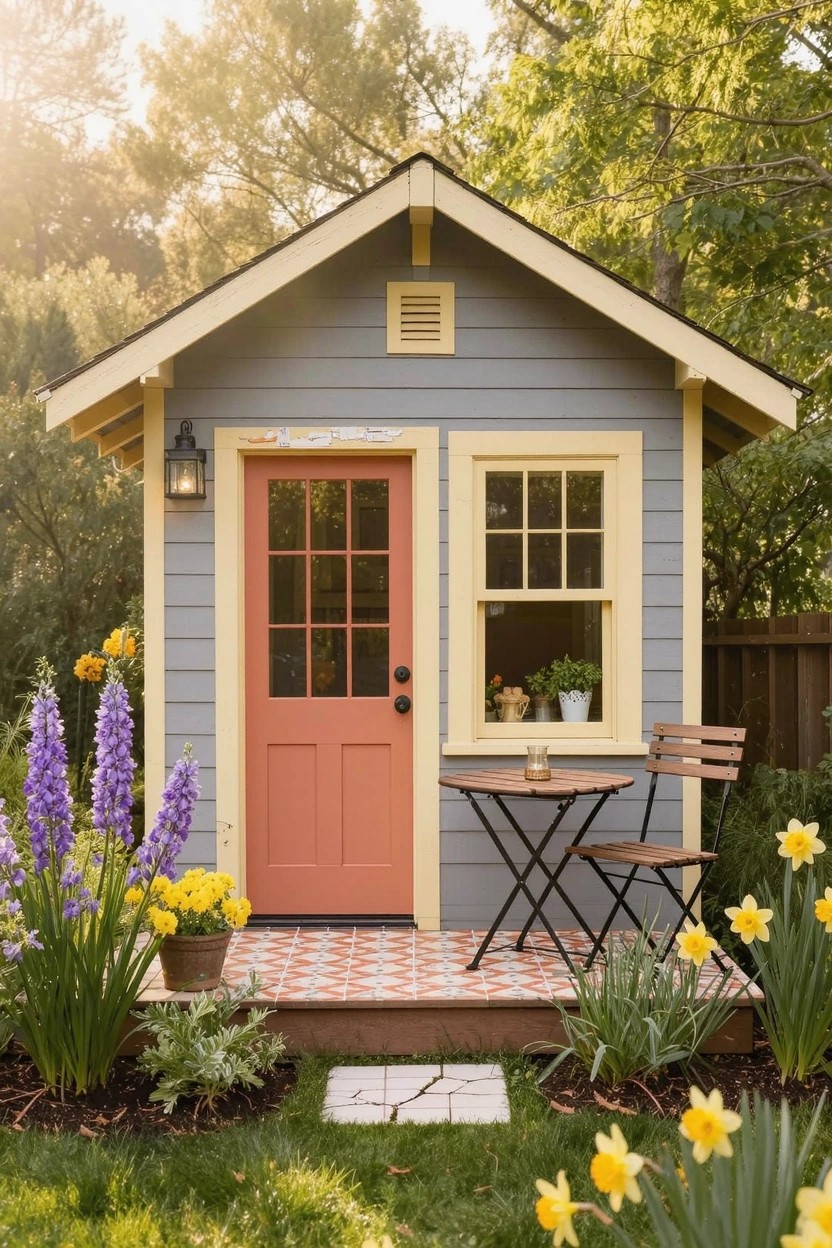
A bright orange door like this one really pulls the eye right to the entry. Against soft blue-gray siding and yellow trim, it adds just enough color to make the house feel lively and welcoming. Folks notice it from the street, and it works because the rest stays calm.
Paint your door a strong shade if you want simple curb appeal. It suits cottages or small homes in a garden spot best. Match it loosely to nearby flowers or trim, but keep the body neutral so the door shines. Easy update, lasts years.
Reflecting Pool Out Front
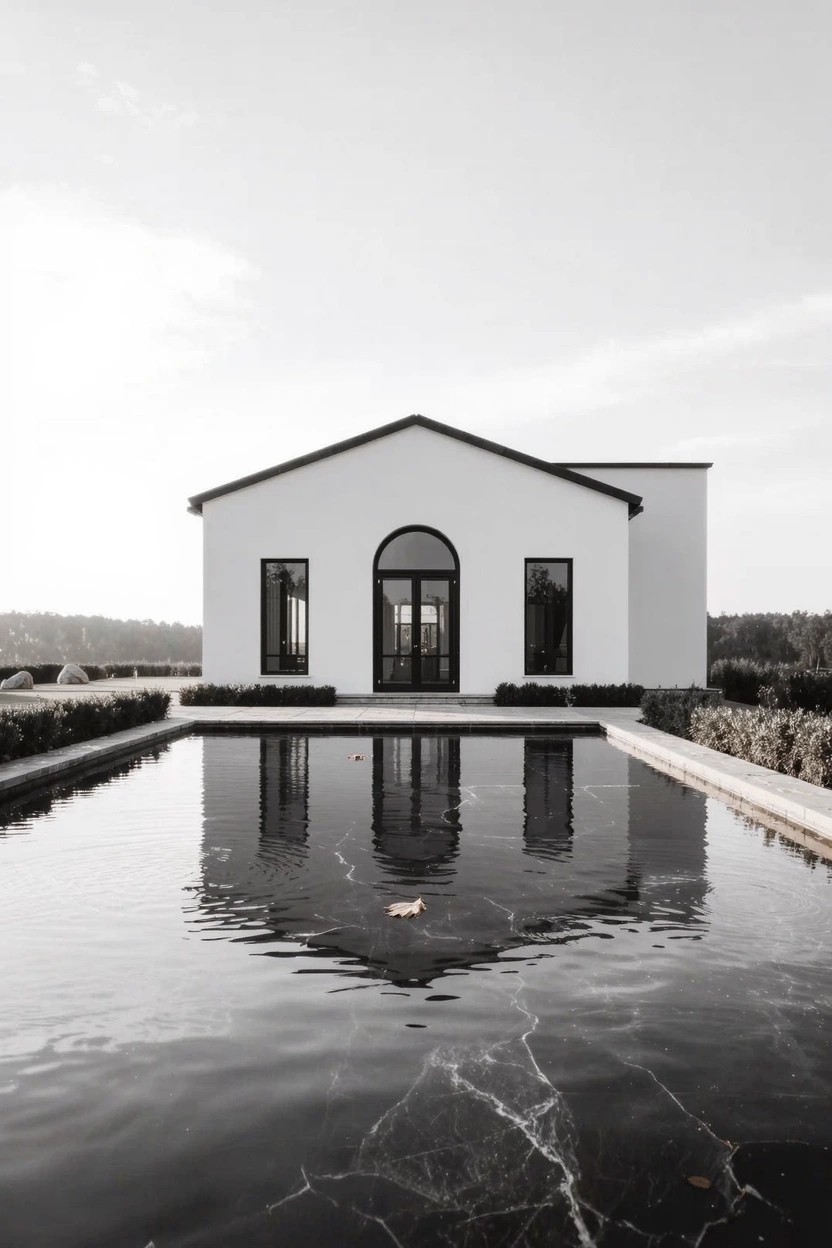
A long narrow pool right in front of the house works wonders for making the facade pop. It mirrors the clean white walls and black-framed windows perfectly. That reflection doubles the height and adds a sense of calm order to the whole setup. Folks notice it right away. It’s simple but pulls off that polished look without much fuss.
Try this on a flat yard where you have room for symmetry. It suits modern homes or even updated traditional ones with straight lines. Keep the pool still and dark for the best mirror effect. Just watch the upkeep. Algae can sneak in if you’re not careful. Boxwoods along the edges help frame it nicely.
Deep Green Front Door
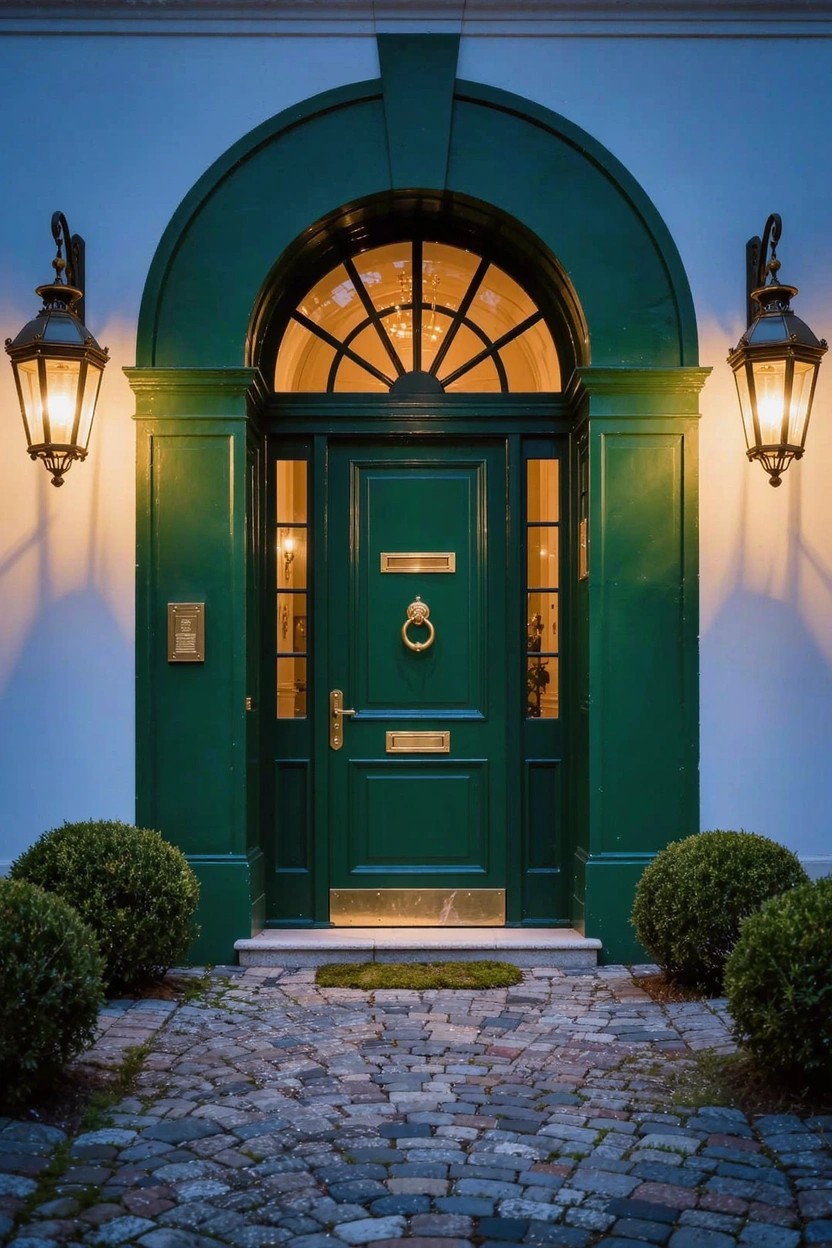
A deep green front door stands out clean and sharp against lighter walls. It pulls the eye straight to the entry without much fuss. Folks have used greens like this for ages because the color feels rich yet settled, especially with simple brass hardware.
Paint it on traditional homes or ones with clean lines. It works best where you want some color punch up front. Pair it with wall lanterns for light at night. Just pick a shade that matches your trim, or it might clash a bit.
Rustic Red Barn Siding
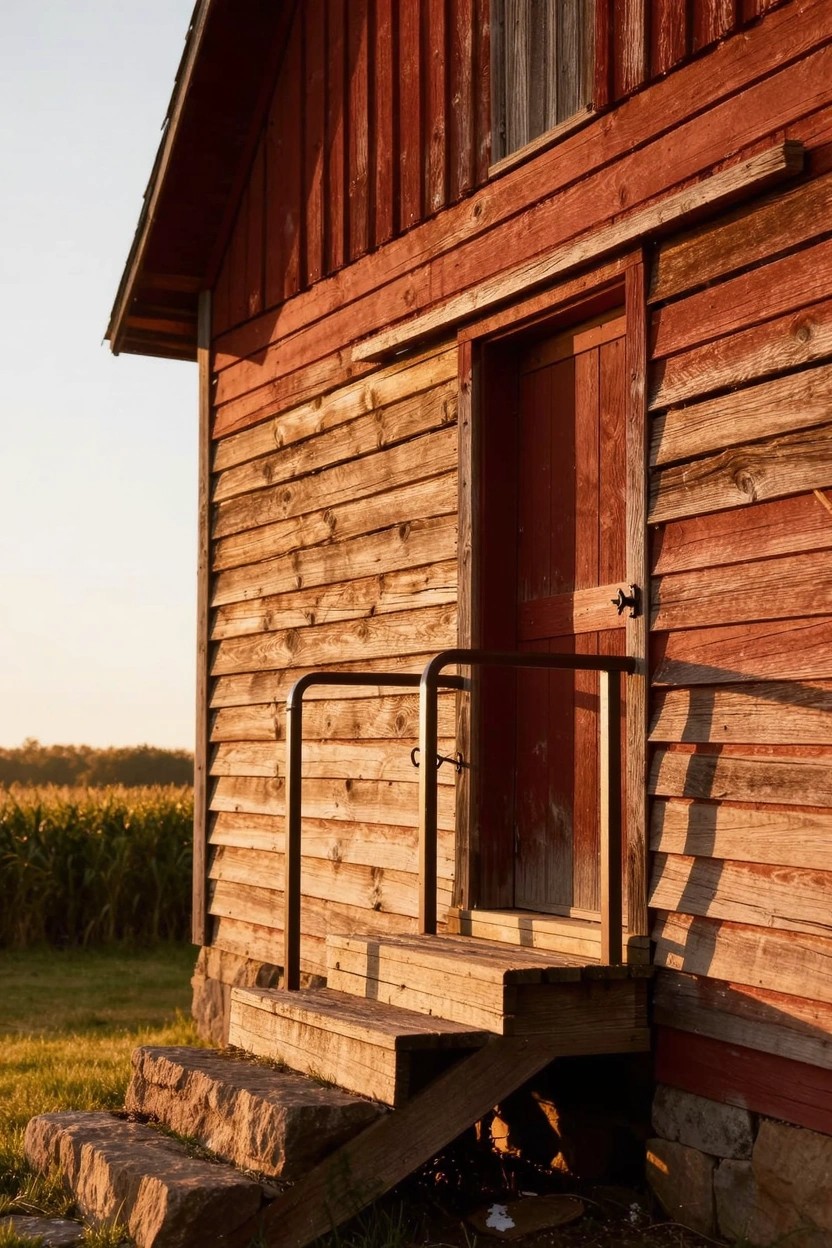
Red barn siding catches the eye right away. It’s that classic farm look with bold red paint over wood planks. Some spots weather a bit for character. It gives a house clean lines without looking too new or fussy. Folks like it because it feels honest and strong.
Try this on a simple farmhouse or cabin. It works best out in the country where fields stretch out. Add a red door and basic steps like the ones here. Just keep the wood sealed so the color lasts. Not every neighborhood pulls it off though.
Blue Doors on a White House
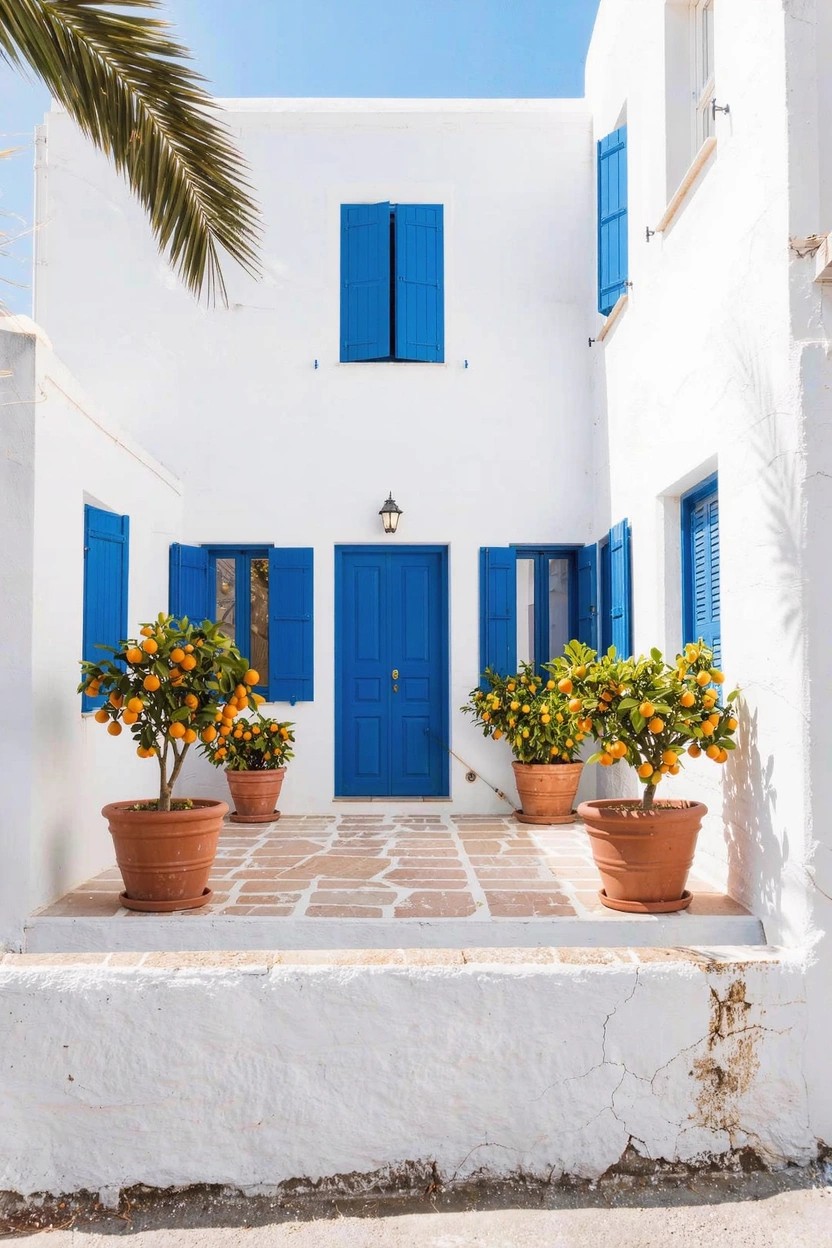
A white exterior painted smooth and bright sets up this simple idea perfectly. Then you paint the front door and shutters a strong blue. That color jump makes the entry stand out without much fuss. It’s clean. Polished. And it works in bright sun where the white stays crisp.
This suits older stucco homes or anything with a boxy shape. Think warm spots like the Southwest or seaside towns. Pick a blue that’s not too faded… go vivid. Flank the door with potted trees if you can. They add life without messing up the lines.
Slatted Pergola Over the Entry
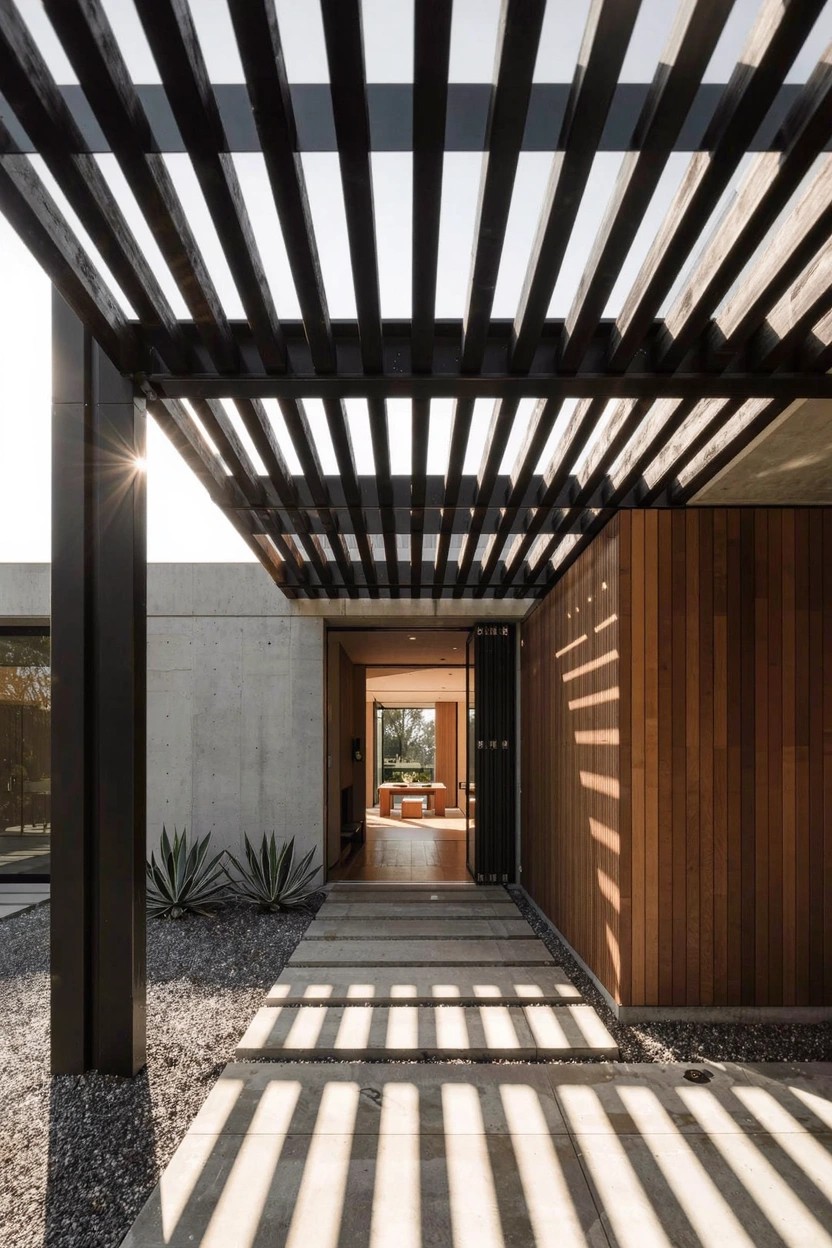
This black steel pergola runs straight over the walkway to the door. The slats let sunlight filter down in stripes across the concrete path. It pulls the eye along without trying too hard. Shade like that makes the front approach feel more welcoming on hot days.
Try it on a flat entry setup where sun hits strong. Modern houses take to it easy but it could work on ranch styles too. Space the slats so shadows shift through the day… just check local codes for wind load.
Classic Portico Entry
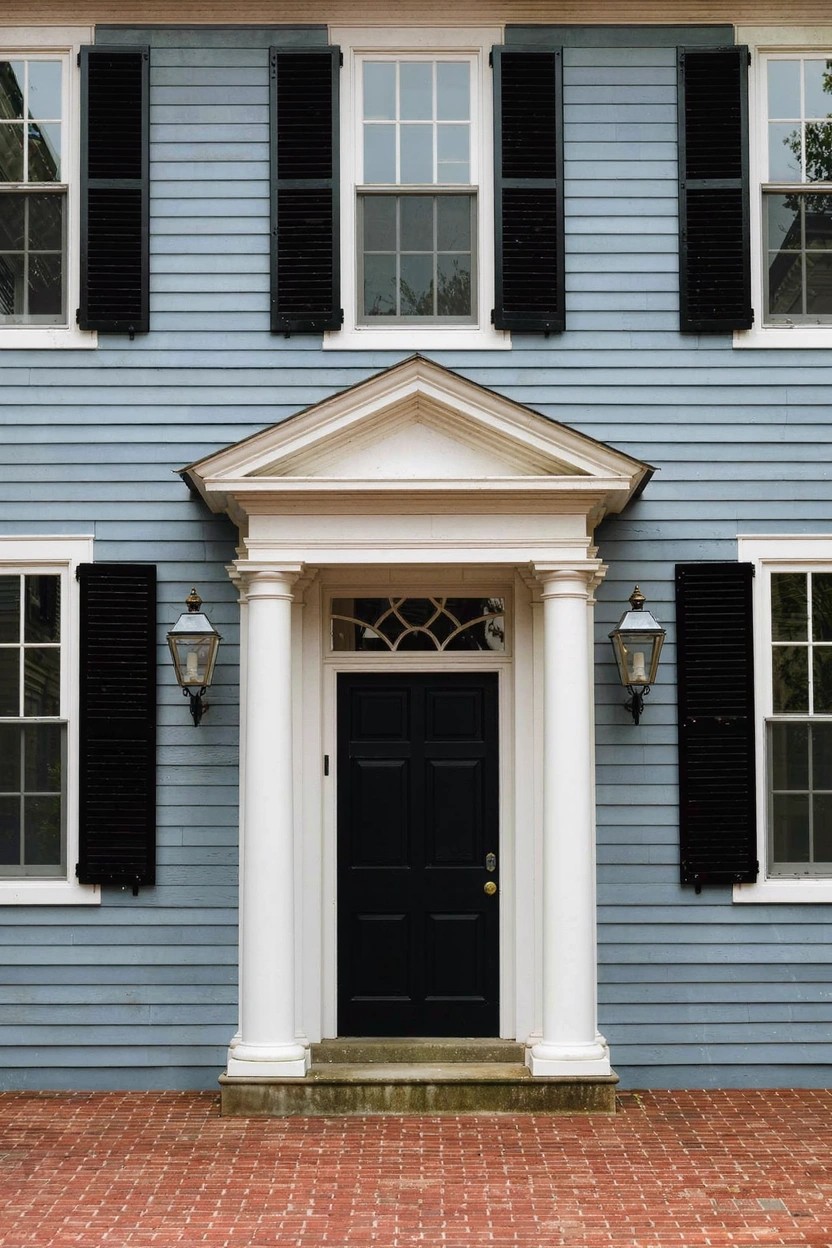
A portico entry sets your front door apart in a clean way. White columns and a simple pediment frame the door nicely. It pulls the eye right to the entrance without much fuss.
This setup suits older style homes like colonials or federals. Paint the columns bright white against any siding color. Pair with lanterns on each side. Just make sure the base sits steady on brick or stone.
Light Walls with Turquoise Trim
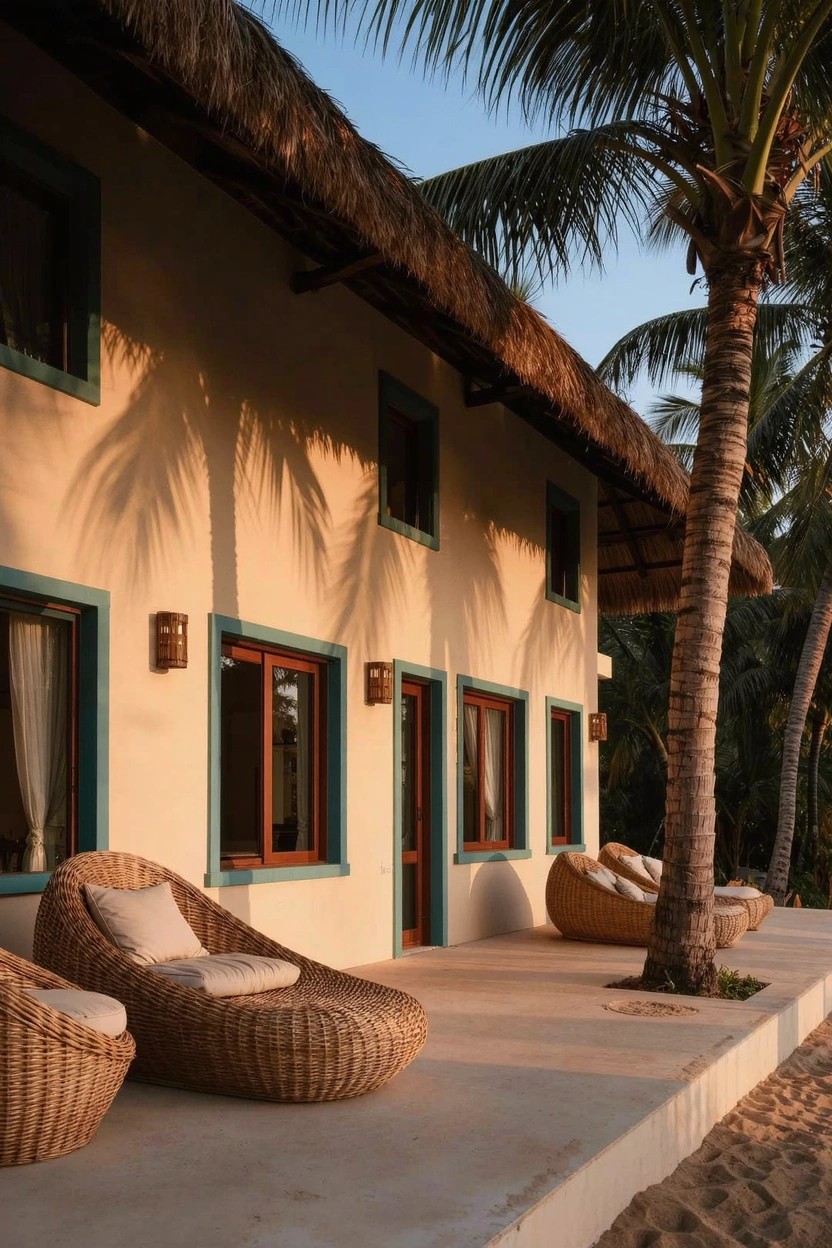
Pale walls like the soft beige stucco here set up a clean base that lets turquoise trim around the doors and windows really stand out. It gives the whole house a fresh, polished feel without much fuss. Folks notice how the color pops just right in sunny spots, keeping things light and beachy.
This setup works best on simple stucco or plaster homes near the water or in warm areas. Paint the trim bold turquoise, but stick to one shade so it doesn’t fight the walls. Watch for fading in harsh sun, though. Add a few lounge chairs out front, and you’ve got easy outdoor living.
Clean White Board Siding
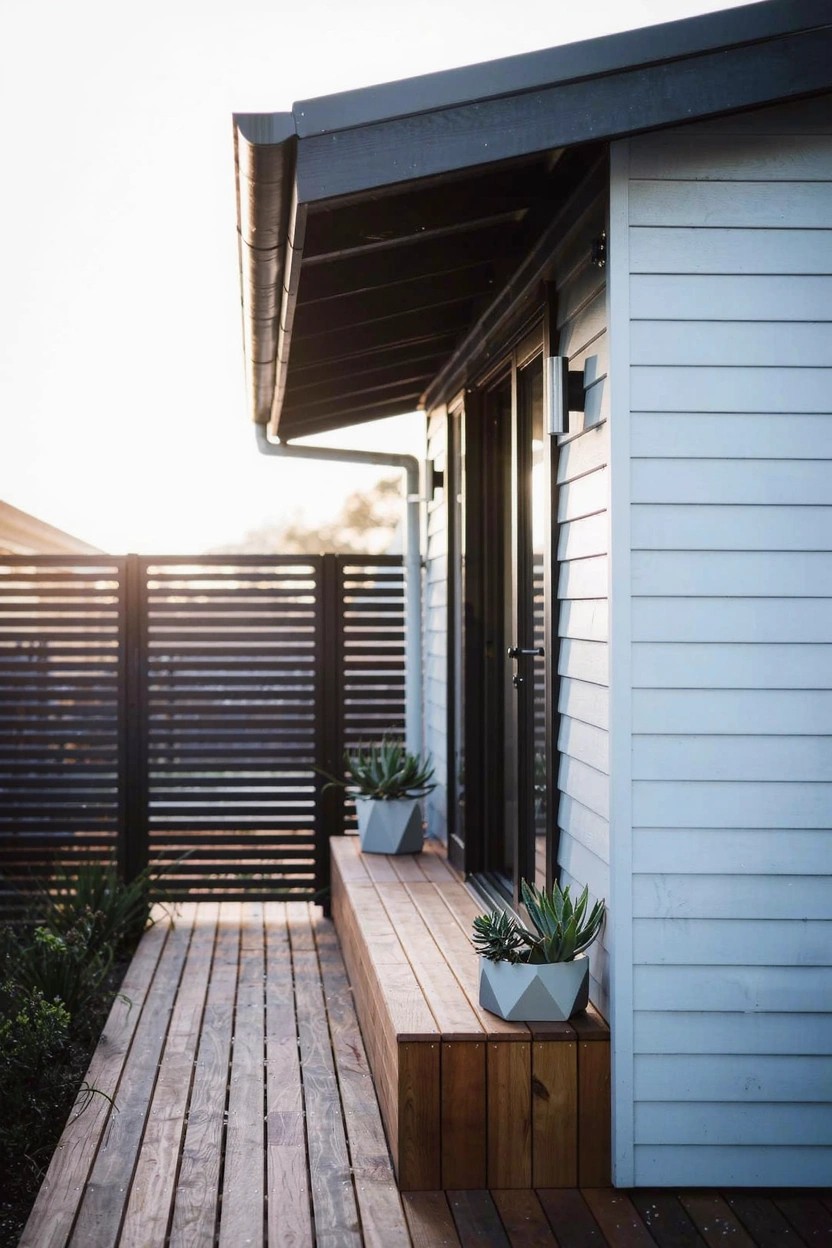
White board siding like this keeps things simple and fresh. It gives the house a crisp edge that looks polished without much fuss. The light color bounces back sunlight nicely, making the place feel open even on a small lot. Pair it with a few wood touches, and it starts to warm up.
Try this on ranch or modern homes where you want low upkeep. It works best in sunny spots or near the coast, since the white stays bright against green plants or decks. Just seal the wood nearby to match the clean lines. Add pots like those agaves for some green without overplanting.
Mustard Yellow Exterior Paint
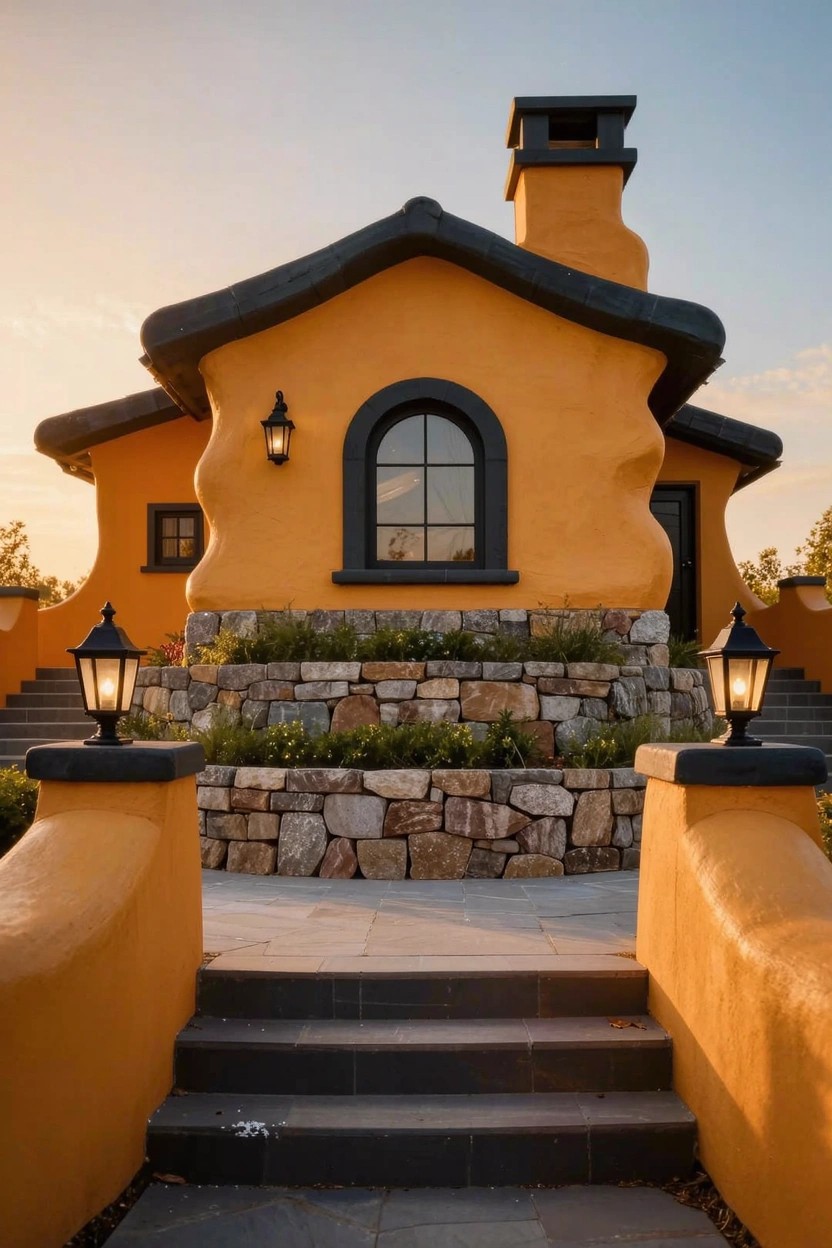
A mustard yellow paint like this brings a sunny, cheerful lift to a house front. It works extra well on curved stucco walls. The color warms up the whole look and pairs nice with black trim around windows and roof edges.
Paint it on ranch or cottage style homes in mild climates. Add stone at the base and lanterns by the steps for balance. Skip it on boxy modern builds… it needs some shape to hug.
Sage Green Shingles
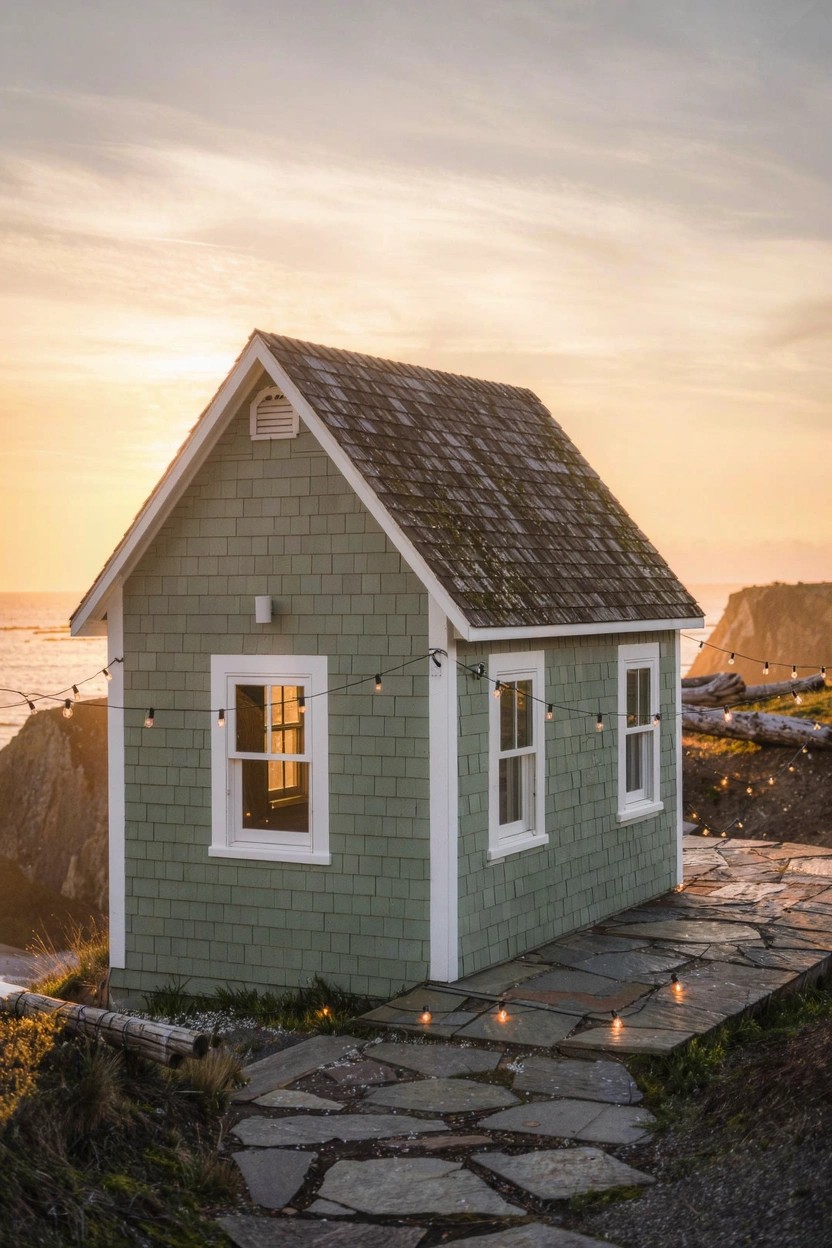
Sage green paint on shingles brings a clean, settled look to a house. It softens the edges and ties into natural surroundings like ocean views or wooded lots. Here, white trim on the windows keeps things crisp without overpowering the color.
Try this on cottages or bungalows in coastal or rural spots. Pick a high-quality exterior paint rated for textured surfaces. It suits modest homes best… avoids looking out of place on larger ones.
Sleek Black House Exteriors
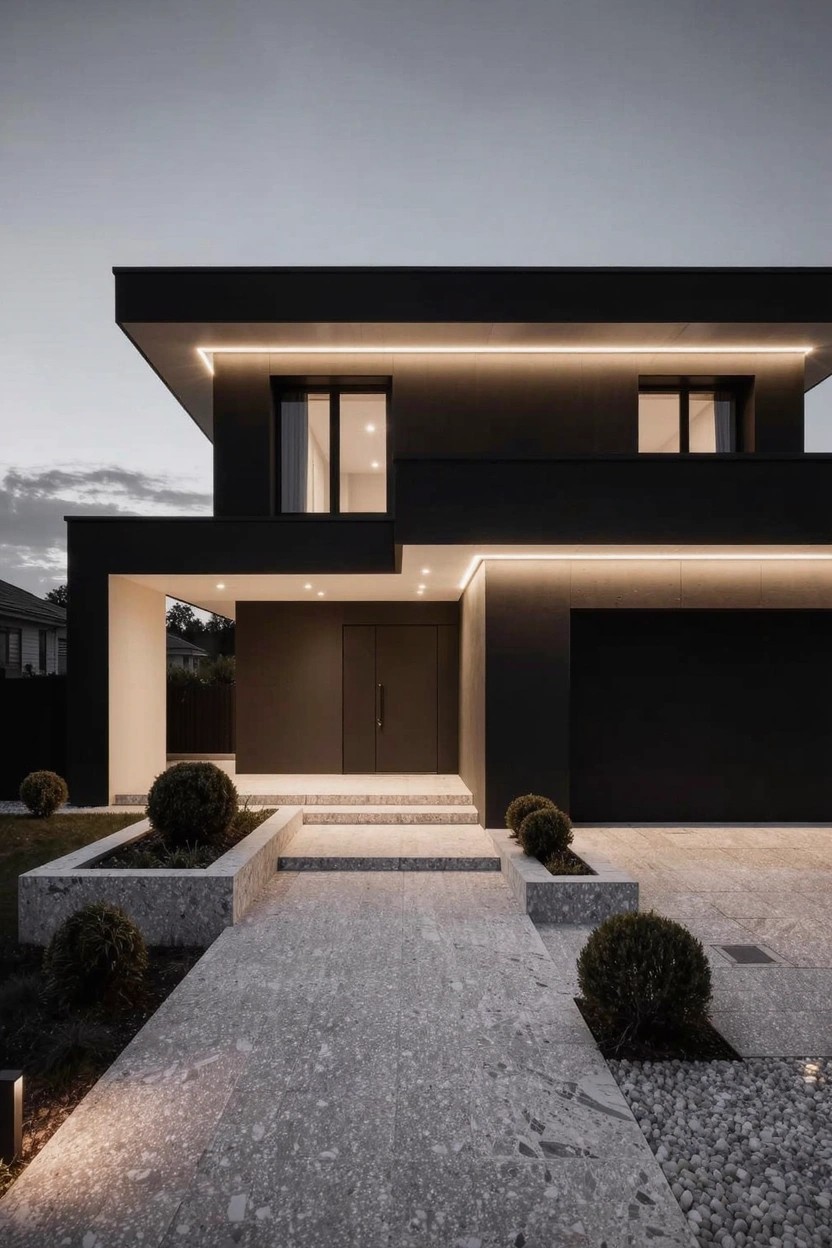
Black paint on a house exterior can give it that sharp, modern edge without much fuss. It pulls the whole front together into one clean shape, especially when you add simple lines like those LED strips along the roof and entry. Folks notice how it stands out at dusk, making the home look polished and put-together.
Try it on homes with flat roofs or big windows, where the dark color shows off the structure. It works best in places with some yard space, like pairing it with a light pebble driveway to keep things from feeling too heavy. Just clean it now and then, since dirt shows up more on black.
Frequently Asked Questions
Q: How do I test these paint colors on my house before going all in?
A: Paint large sample patches on a few walls facing different directions. Check them morning, noon, and evening as sunlight shifts. The one that stays sharp and welcoming wins.
Q: My house has old flaky paint. Can I just slap new coats right over it?
A: Scrape off loose flakes first with a wire brush or scraper. Sand smooth spots next so your fresh paint grips tight. Skip this and you’ll peel again in a year.
Q: What’s the quickest way to clean siding before painting?
A: Hook up a garden hose with a spray nozzle and hit every inch top to bottom. Scrub mildew patches by hand with soapy water and a soft brush. Rinse well and let dry a day.
Q: Dark colors look sleek, but will they work on a sunny south-facing house? A: Go bold on shaded sides, but lighten up on full-sun walls to dodge quick fading. Navy holds up great with quality paint. Test swatches there first.
