

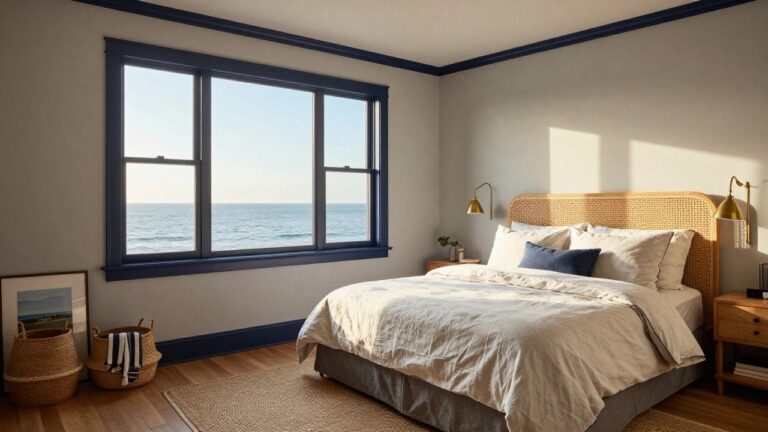
I’ve noticed that bedrooms really come alive when trim provides just enough contrast to define the edges without stealing the show.
It helps the space feel cohesive, especially in rooms where furniture and lighting already compete for attention.
I tested a bold trim color against pale walls in my spare room once, and it grounded the whole layout in a way plain white never could.
Most people pick up on trim details first around the headboard or window frames, where they frame views and add subtle height.
A few of these approaches are practical enough to adapt right away in any home.
Navy Trim on Light Gray Walls
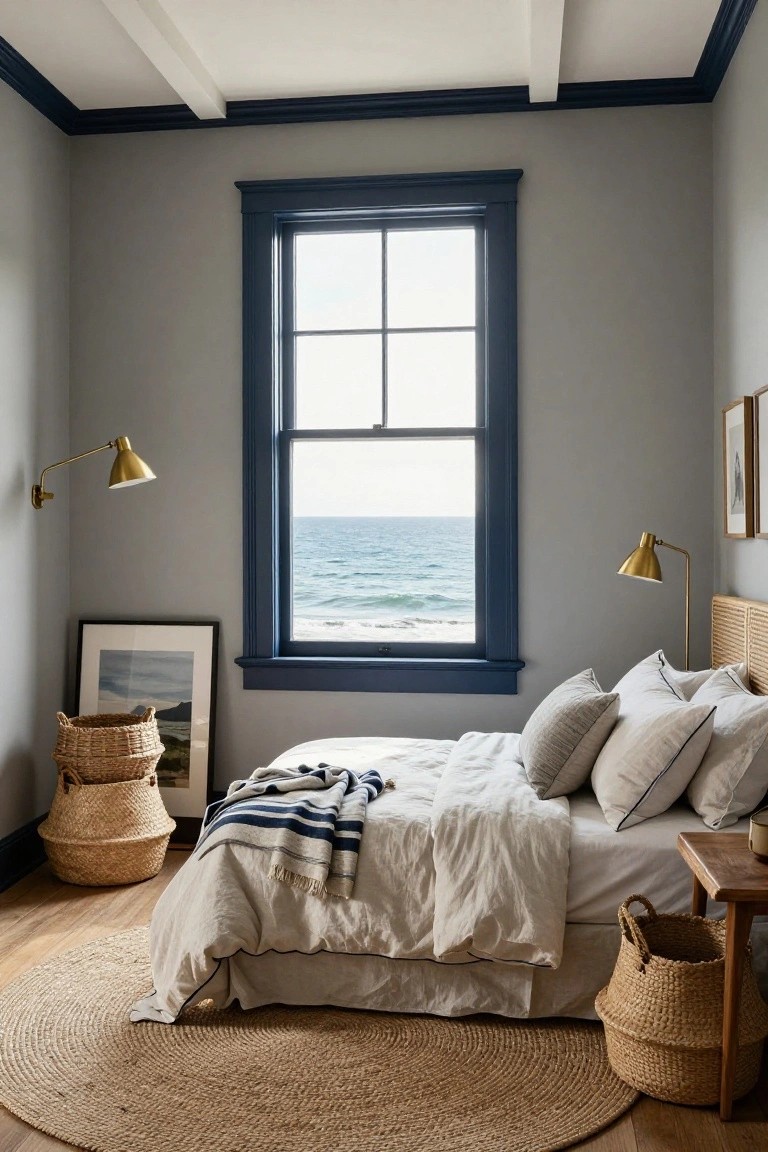
Navy trim painted around the windows and moldings stands out clean against these soft gray walls. It gives the room edges and shape. That blue pulls your eye to the big window and ocean beyond, without overwhelming the calm feel.
This works great in bedrooms with natural light or views. Paint it on existing wood trim in older homes, or add simple moldings if you don’t have them. Keep walls pale so the trim doesn’t close in the space. Coastal spots love it… but any sunny room could pull it off.
Recommended Products

Ready to use, pre-mixed door and trim paint offers a fresh new look on interior or exterior metal, wood and fiberglass

Use for a variety of indoor and outdoor project surfaces including wood, metal, plaster, masonry or unglazed ceramic

Ideal for use on interior/exterior surfaces including wood, plastic, plaster, metal, masonry and unglazed ceramic
Black Trim on Light Walls
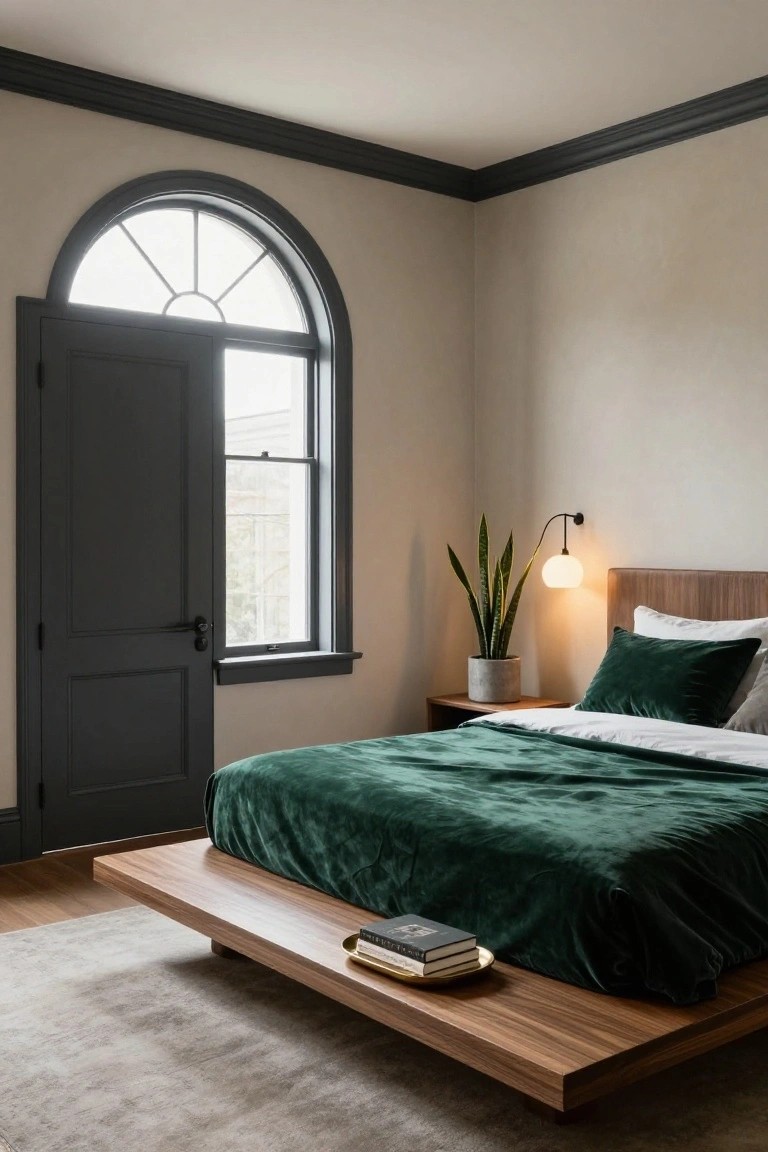
Black trim works well in bedrooms when you want a clean contrast without much fuss. Here the dark frames around the door and arched window stand out sharp against pale walls. It pulls focus to the room’s bones. Adds some edge to softer colors.
Try it in homes with good window light or high ceilings. Paint trim semigloss black over existing wood. Pairs easy with wood beds and green accents… just keep walls neutral so the trim does the talking. Avoid small rooms unless you love bold lines.
Navy Trim on White Walls
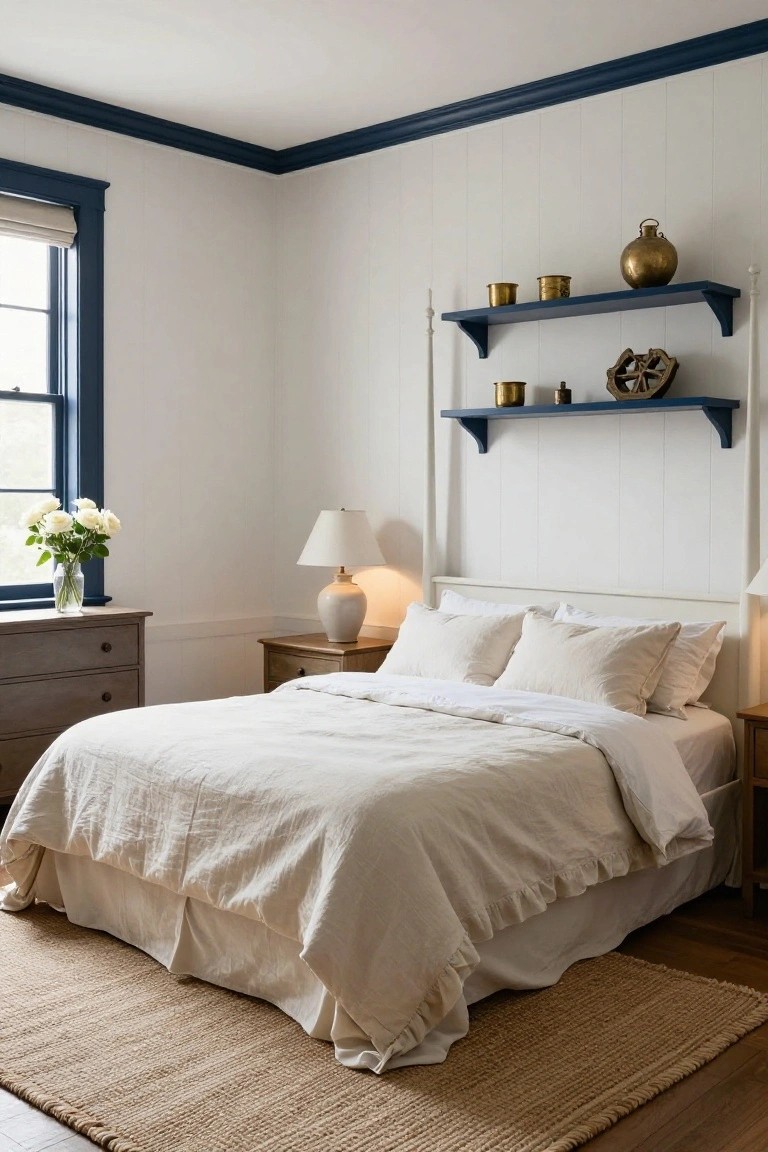
Navy trim runs along the ceiling and frames the windows in this bedroom, standing out sharp against the white shiplap walls. That contrast pulls the room together without much fuss. It adds some structure up top where you notice it most, keeping things light and airy below.
This look fits older homes or coastal spots best, especially bedrooms where you want calm vibes. Go for it on crown molding and shelves like the ones holding brass jars here. Skip it if your walls are already busy… keeps the focus right.
Mint Green Trim on Bedroom Walls
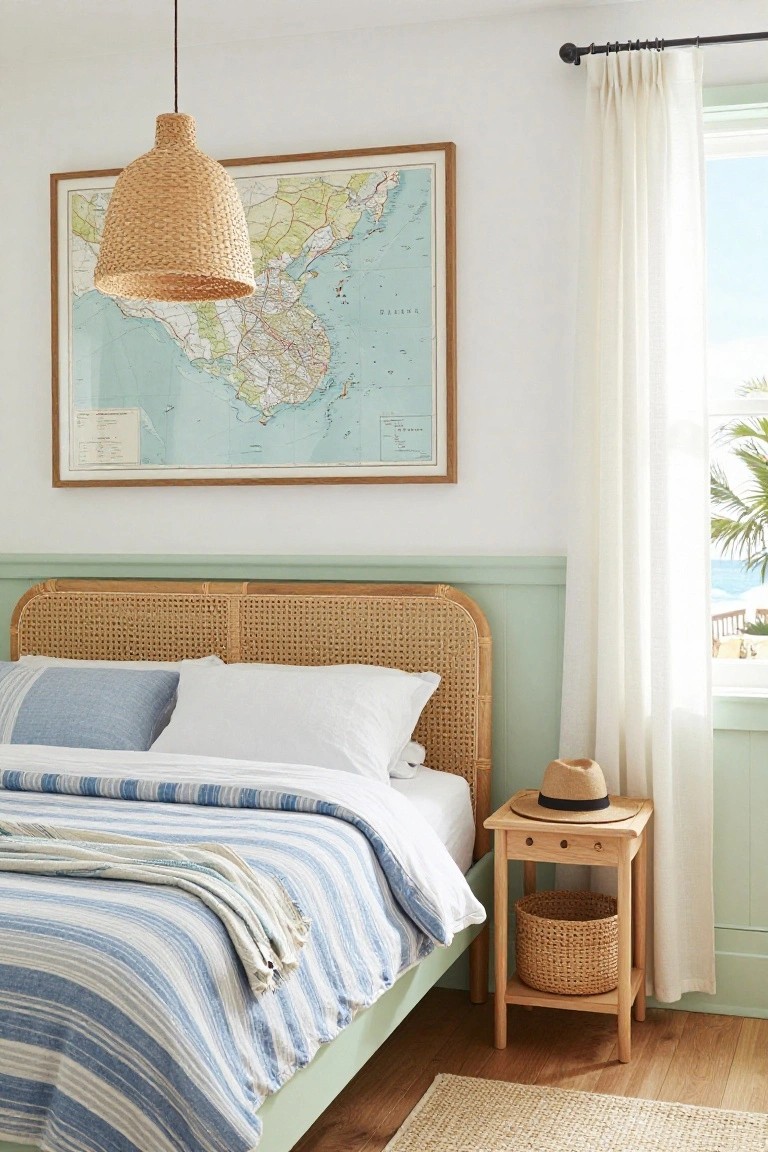
A soft mint green trim runs along the lower part of the bedroom walls here, right up behind the rattan headboard. It stands out nicely against the white upper walls and keeps things feeling light and beachy. That green adds just enough color to make the room pop without taking over.
This kind of trim works best in brighter spaces with good natural light, like ones facing the water. Paint it on a simple board-and-batten setup or even just the baseboard area extended up. Pair it with natural materials, and it suits coastal homes or any spot needing a calm refresh.
Black Walls with Walnut Wood
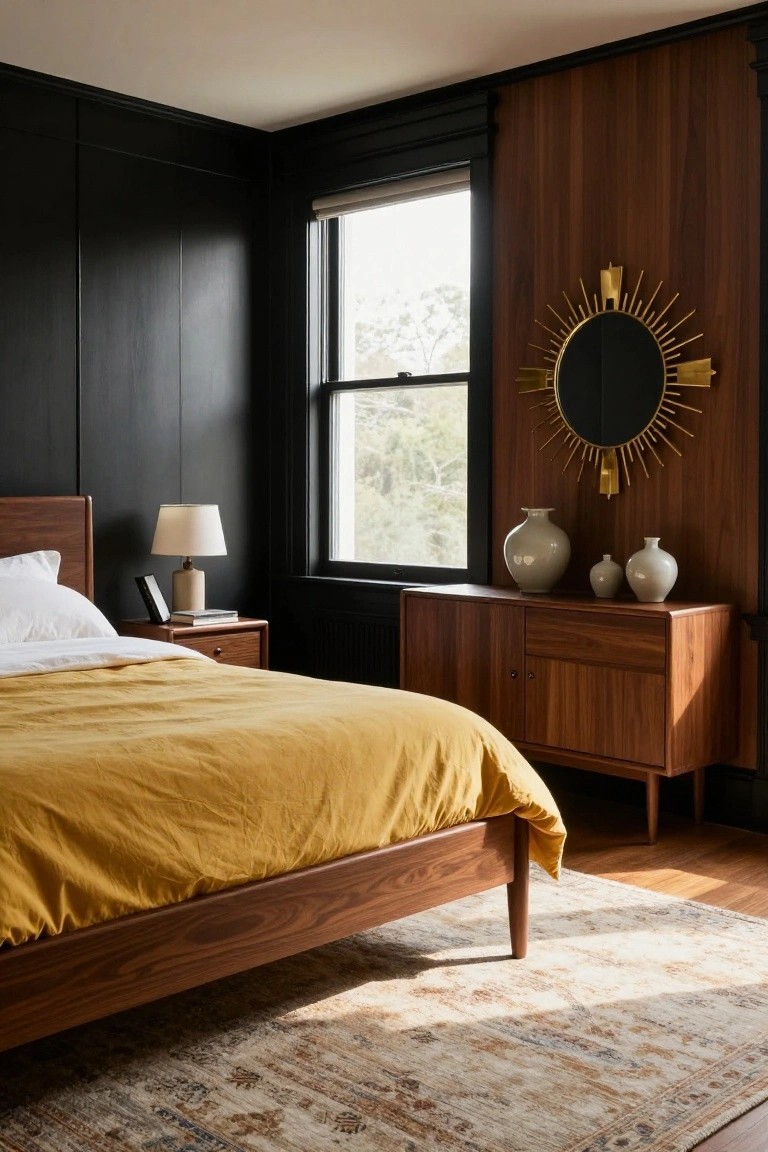
Dark walls like this matte black paneling make a strong backdrop for a bedroom. They contrast nicely with warm walnut wood on the bed frame and dresser. That mix keeps the room feeling grounded and a bit moody. Without the wood, black alone might turn too cave-like.
Try this in medium-sized bedrooms that get decent window light. Layer in mustard yellow bedding for a soft pop that doesn’t fight the walls. It suits older homes with some character. Just skip it if your space runs small or dark.
Green Trim on White Bedroom Walls
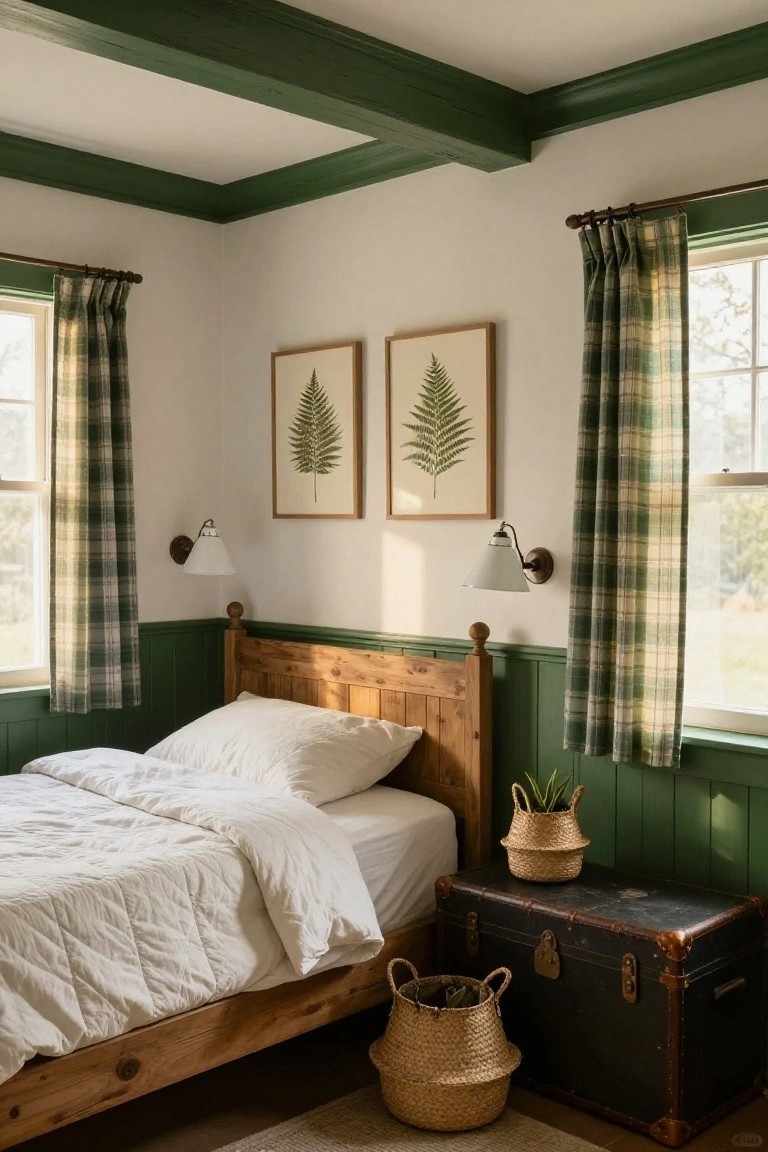
Green trim painted on the lower walls, ceiling beams, and window frames gives this bedroom a strong but simple contrast. The white upper walls keep things bright, while the green adds depth and ties into the natural wood bed. It feels grounded, like the room belongs in a countryside house.
Try this in spaces with tall ceilings or lots of windows. It suits older homes best, where you can highlight existing moldings. Pick a green with some warmth… avoid anything too cool-toned.
Wood Trim on Dark Walls
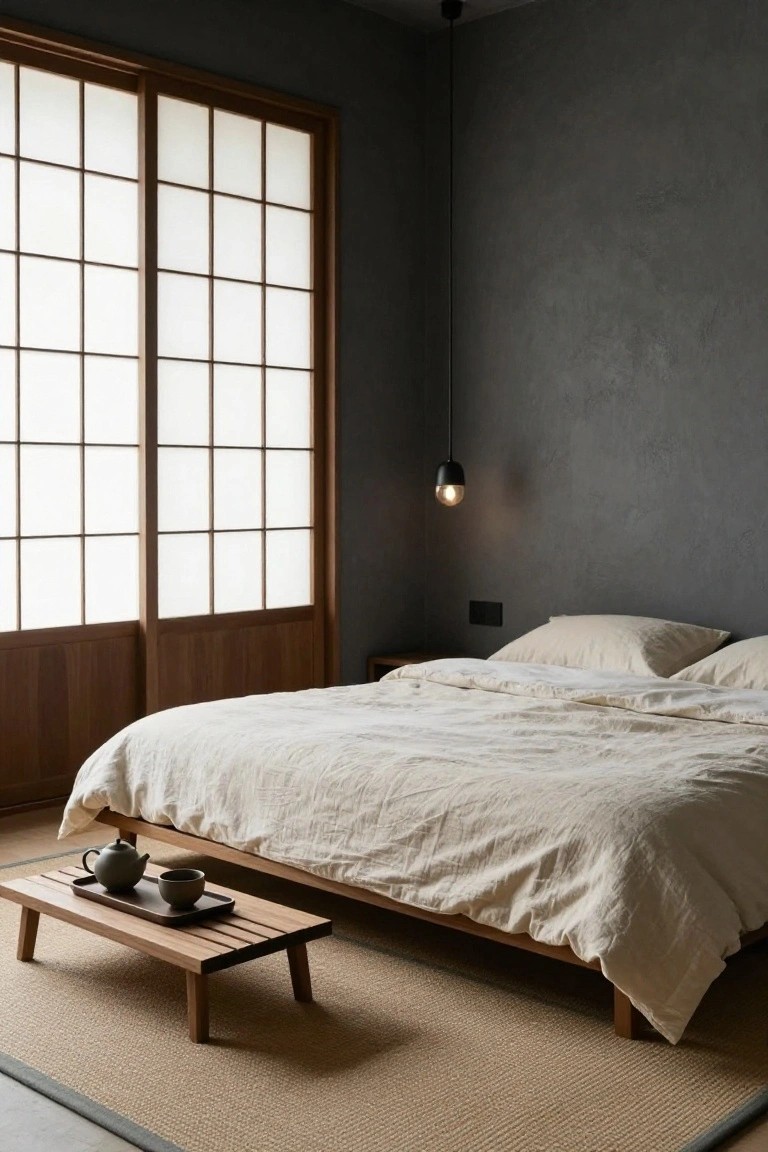
Warm wood trim works nicely against dark walls like you see here with the shoji screens. The light cedar tones pop just enough to keep the room from feeling too closed in. It brings a bit of natural warmth to the space without much fuss.
You can pull this off in smaller bedrooms or any room with good natural light. Frame doors or windows this way and let the rest stay simple. Skip it if your walls have a lot of texture already… might compete too much.
Teal Trim on Bedroom Walls
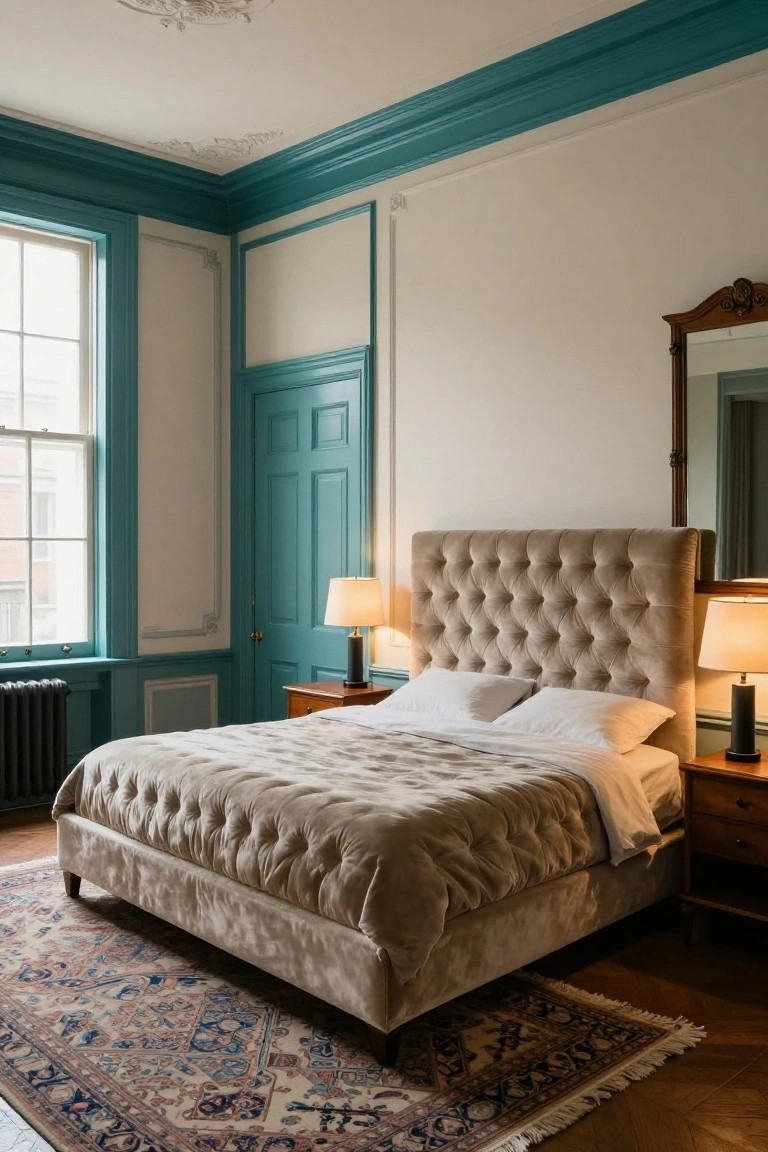
Teal trim stands out here against the pale walls and ceiling. It highlights the doors, window frames, and moldings without taking over the room. Paired with a simple tufted bed and neutral bedding, it keeps the look quiet but interesting.
This works well in older homes with tall ceilings and good woodwork. Pick a shade that picks up some light from nearby fabrics or rugs. It suits spaces that get decent daylight… just test the color first on a small bit of trim.
Red Trim on Blue Bedroom Walls
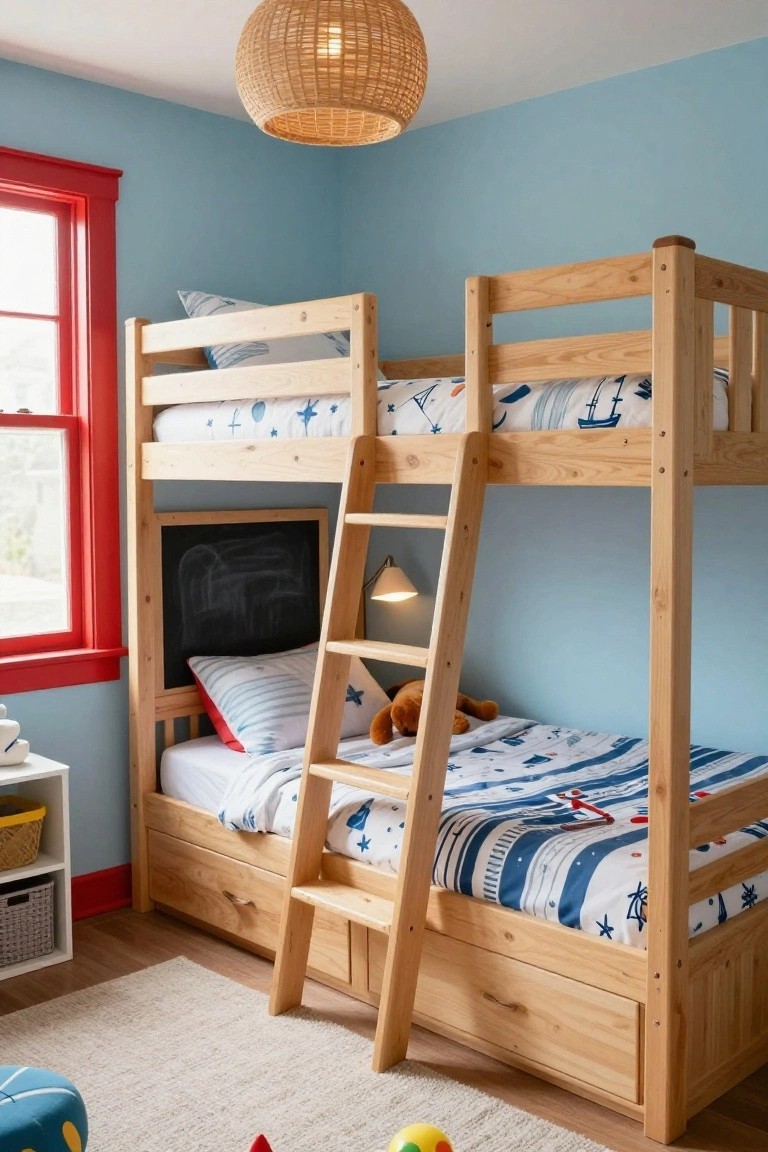
A simple way to give a bedroom some punch is bold trim paint. Soft blue walls paired with bright red around the windows and baseboards make the room pop. It draws a clean line that feels playful, especially with a wooden bunk bed and nautical bedding keeping things kid-friendly.
This setup suits younger kids’ rooms or play spaces where you want energy without chaos. Pick a strong accent color for the trim that contrasts the wall shade. Stick to natural wood furniture underneath so it doesn’t compete. One thing to watch. Lighter trim might wash out in bigger rooms.
Black Trim on Beige Walls
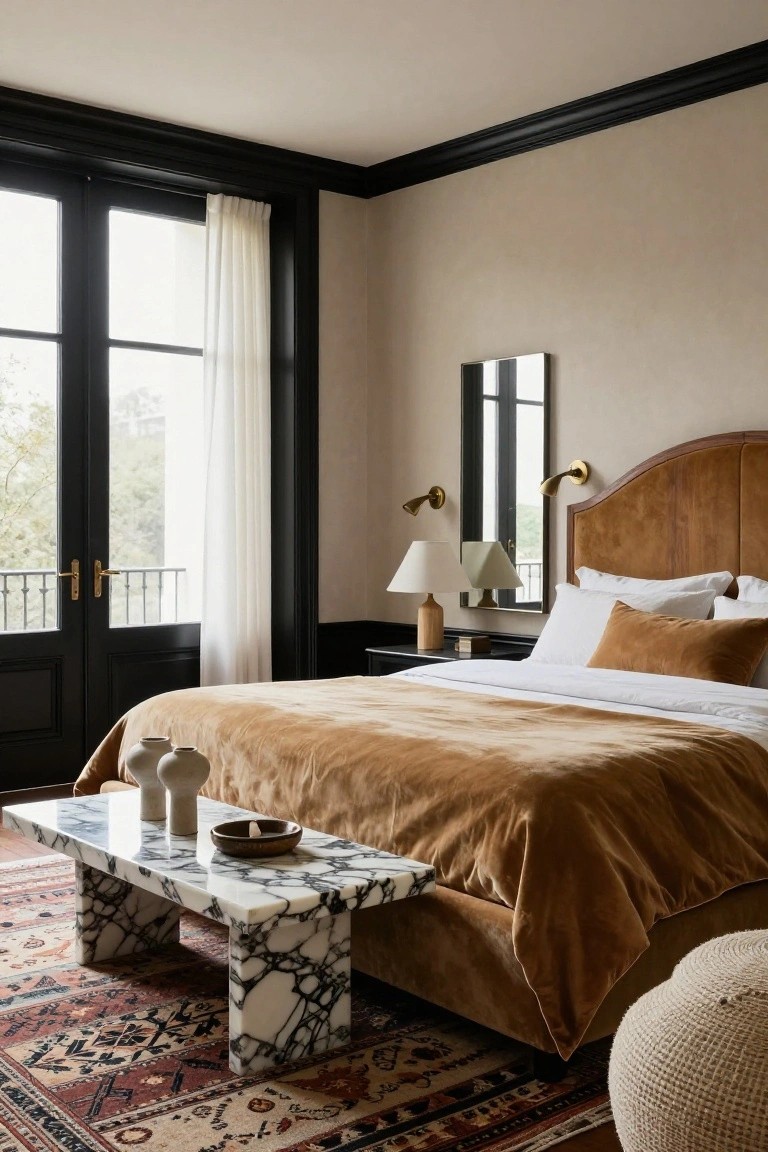
Black trim runs around the doors, windows, and ceiling in this bedroom, setting it off against the soft beige walls. It pulls the eye without taking over, and pairs well with warmer pieces like the wood headboard. Rooms like this feel more defined that way.
Paint your trim black or charcoal for the same effect, especially if you have tall ceilings or big windows. It suits older homes with neutral paint already. Stick to matte finishes so it stays subtle… and test a small spot first.
Shiplap Walls with White Trim
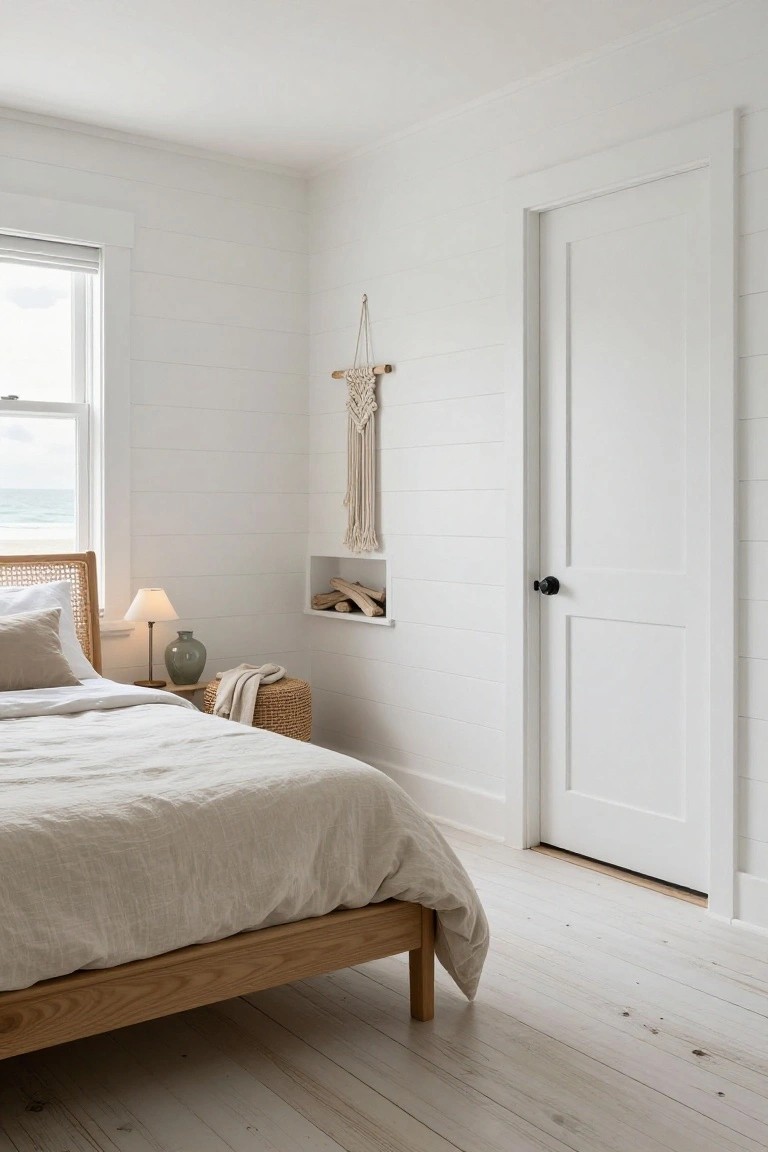
White shiplap covers the walls here, giving horizontal texture that stands out against the smooth white trim on the door and window. That little contrast keeps the room feeling open and beachy. The light oak bed pulls in some wood warmth too. Rooms like this work because they stay simple.
Try shiplap walls in coastal bedrooms or cottages where you want easy texture without color. It suits spaces with big windows… like this one overlooking the ocean. Pair it with natural wood pieces for balance, and skip dark stains that could overwhelm the white.
Terracotta Trim on White Walls
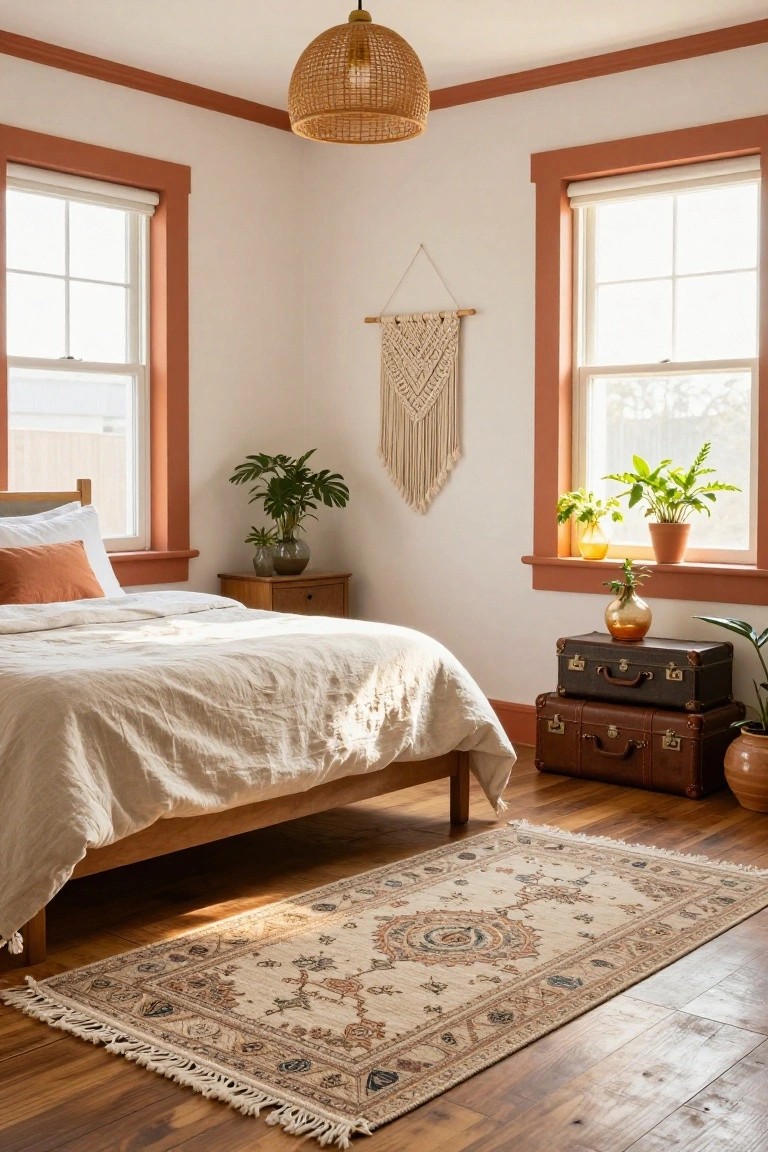
A simple way to warm up a white bedroom is with terracotta trim around the windows and ceiling edges. It adds a bit of color that feels earthy and pulls the room together. In this setup, the bold trim stands out against the clean walls but keeps things light.
This look fits older homes with wood floors or simple furniture. Paint the trim first to test the shade. It works best in smaller bedrooms… just avoid going too dark if light is limited.
Recommended Products

Glossy Painted Finish: Finished with an eco-friendly gloss paint, these white floating shelves offer a smoother, more polished appearance and greater durability than standard veneer finishes. The high-gloss surface resists wear, moisture, and daily scratches, keeping your shelves looking fresh and clean over time

Generous Coverage: 10 pcs of molding trim, each 3.9 ft, totaling 39 ft. Solves the common issue of insufficient quantity for full-room projects. Achieve a consistent look across your home without extra orders

Generous Coverage: 10 pcs of molding trim, each 3.9 ft, totaling 39 ft. Solves the common issue of insufficient quantity for full-room projects. Achieve a consistent look across your home without extra orders
Dark Walls with Light Wood Trim
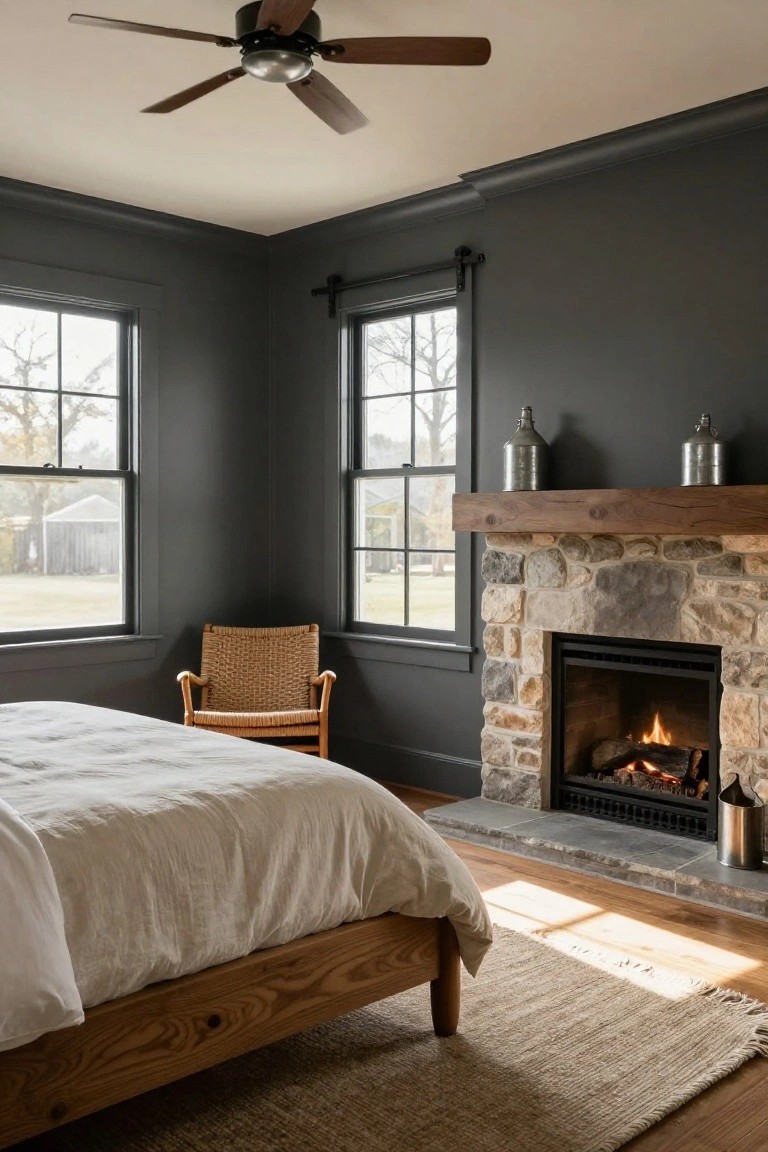
Dark walls like this charcoal gray paint make a bedroom feel cozy and pulled back, especially in a corner spot with windows on two sides. But the light wood trim on the mantel and the oak bed frame lift it right up. That contrast keeps things from getting too heavy. You get depth without the cave vibe.
This setup works best in older homes or farmhouses with good light coming in. Paint your walls a deep gray, then stain trim and built-ins in a pale oak or natural wood finish. Skip it if your room is small and north-facing… might feel dim. Add white bedding to tie it all together.
Navy Trim in a Light Nursery
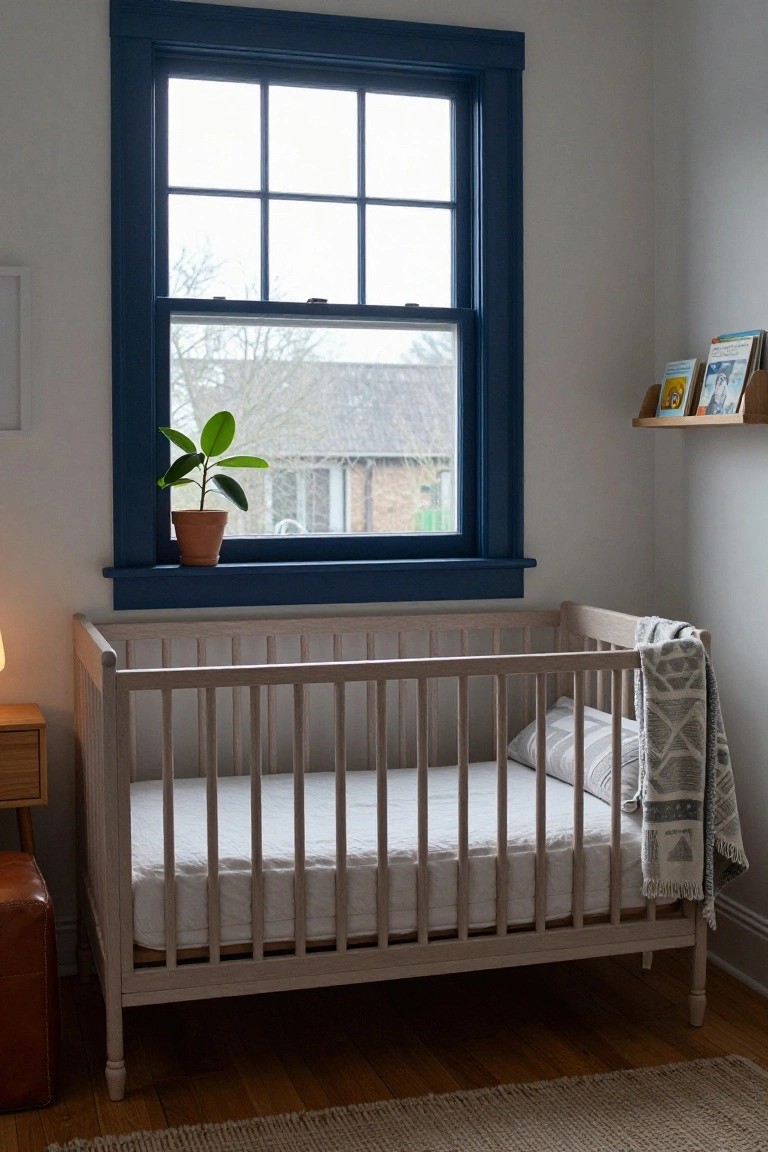
A nursery bedroom like this one gets a clean lift from navy blue paint on the window trim and moldings. Against pale walls and a natural wood crib, that dark trim draws a sharp line around the big window. It keeps things simple and calm. No fuss.
Try this in a kid’s room or small bedroom where you want some edge without dark walls everywhere. Pick a matte navy. It suits older houses with tall windows best. Just tape carefully around the glass.
Green Trim on Sage Walls
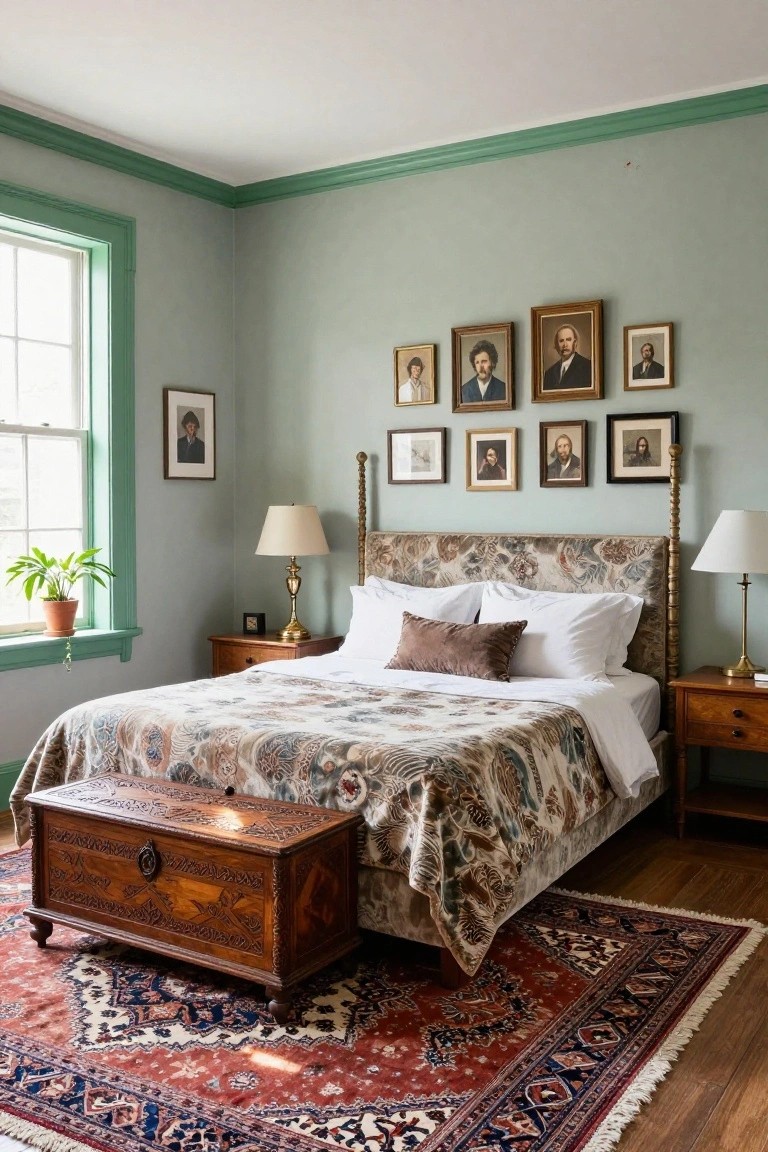
A soft sage green paint on the walls paired with deeper emerald trim around the windows and ceiling gives this bedroom a gentle contrast. The trim stands out just enough to frame the room without overpowering the calm feel. It keeps things tied together, especially with all those portraits hung up high.
This look fits older homes or spaces with wood details like the four-poster bed here. Use it where you want subtle definition. Stick to natural light rooms… too dark and the greens might blend. Test shades first on a small wall section.
Black Trim in a White Bedroom
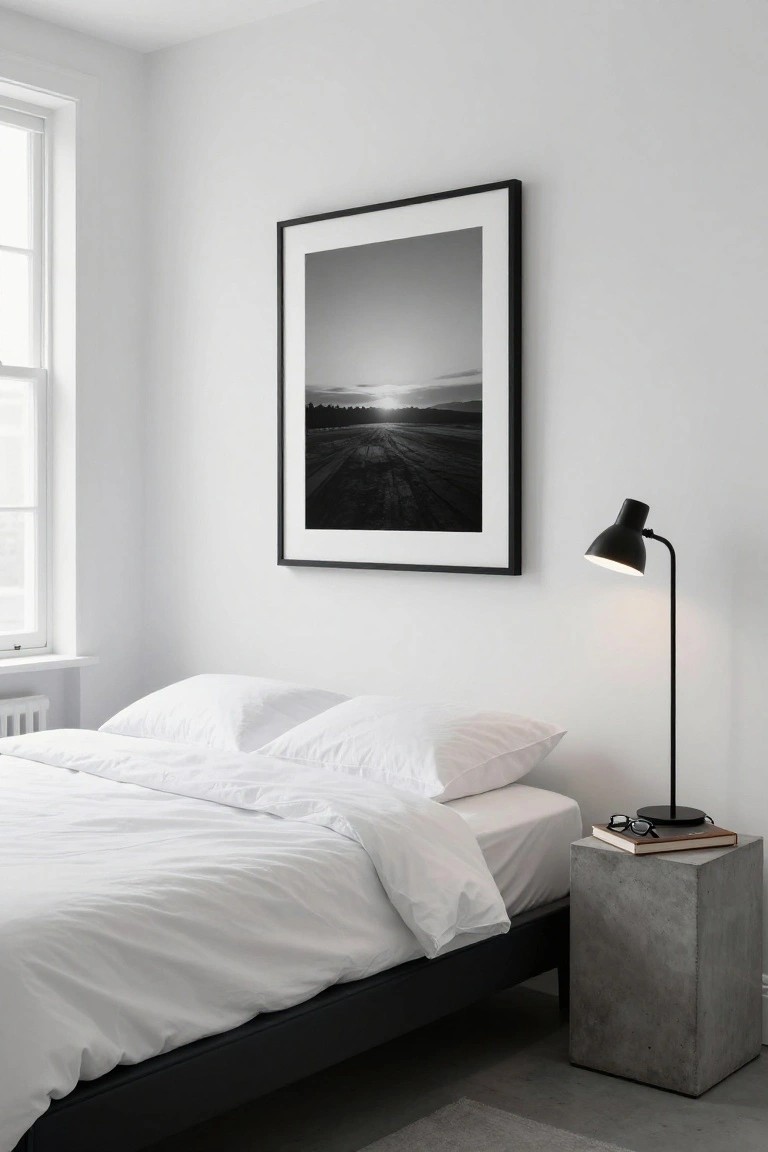
A plain white bedroom can feel a little too empty sometimes. But adding black trim changes that quick. Here you see a big black picture frame on the wall, a black bed frame, and a black lamp. Those dark lines give the room shape and a modern edge without much fuss. It keeps things calm but pulls your eye around.
This works best in small or simple spaces where you want clean lines. Use it on bed frames, wall art, or lamps like this. Stick to one or two pieces so it doesn’t get busy. Good for apartments or modern homes. Just make sure the black stuff is matte, not shiny, to keep the soft feel.
White Bedroom with Black Window Trim
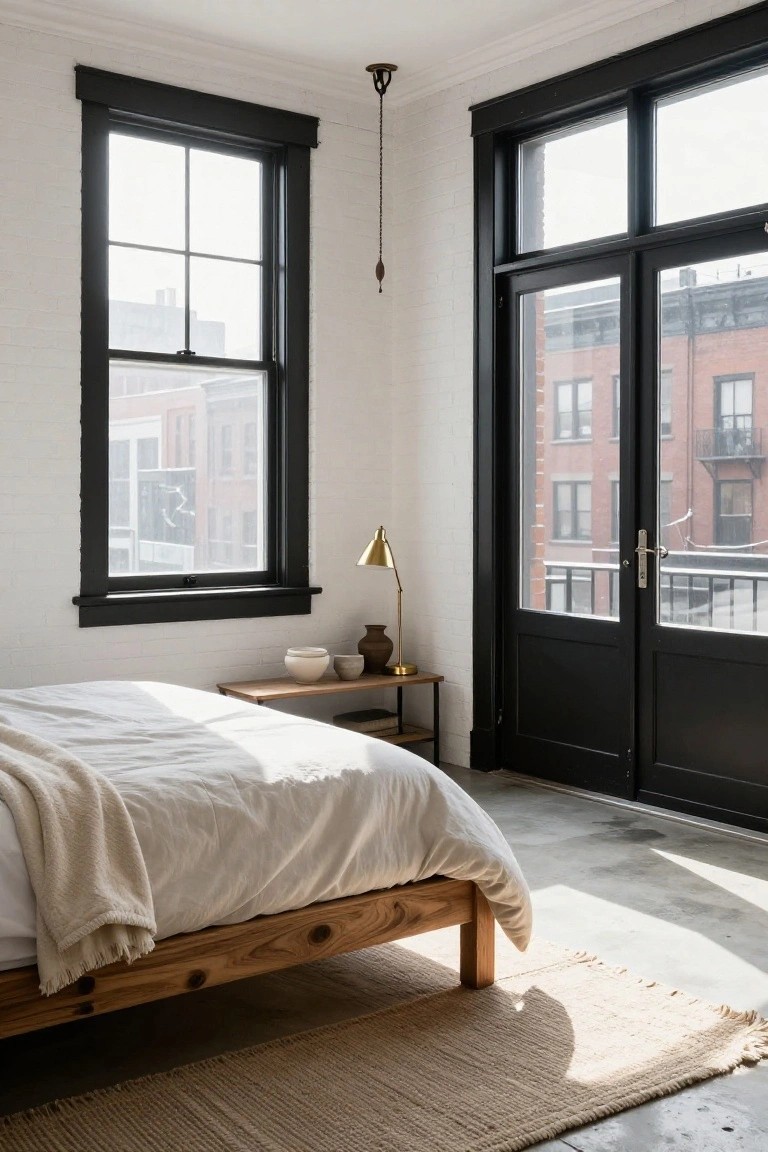
Black trim around the windows and doors gives this bedroom a sharp, defined look against the plain white walls. It pulls your eye to the views outside and keeps things from feeling too bland. The wood bed frame adds just enough warmth to balance it out.
This setup works great in city apartments or lofts where you want that crisp contrast. Paint your trim matte black, stick to white walls, and pair with simple wood furniture. Skip it in super small rooms though… might feel too heavy.
White Walls with Gray Trim
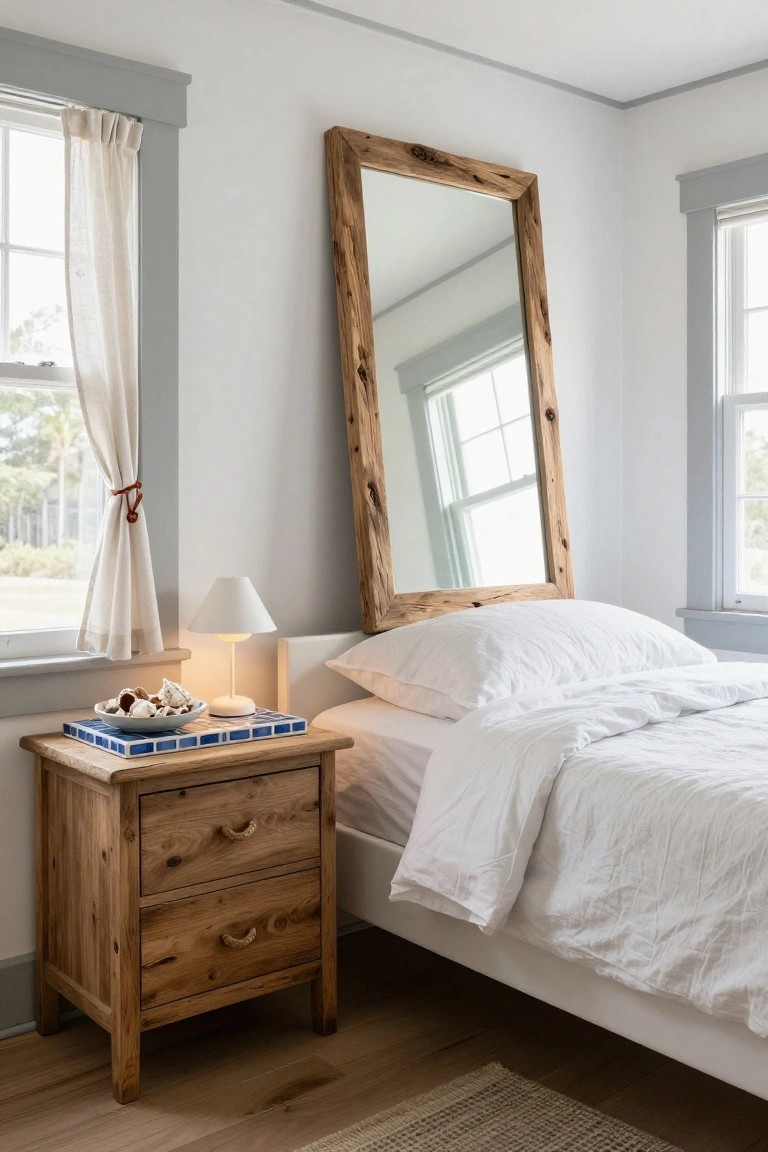
Gray trim around the windows and ceiling gives this bedroom clean lines against the white walls. It adds just enough contrast to make the space feel put-together, without pulling focus from the light airy vibe. The natural wood bed and nightstand tie right in.
This look fits well in coastal homes or any room with good natural light. Pick a soft gray to keep it fresh, and pair it with wood pieces for warmth. Skip bold colors elsewhere, or it might compete.
Dark Trim on Beige Walls
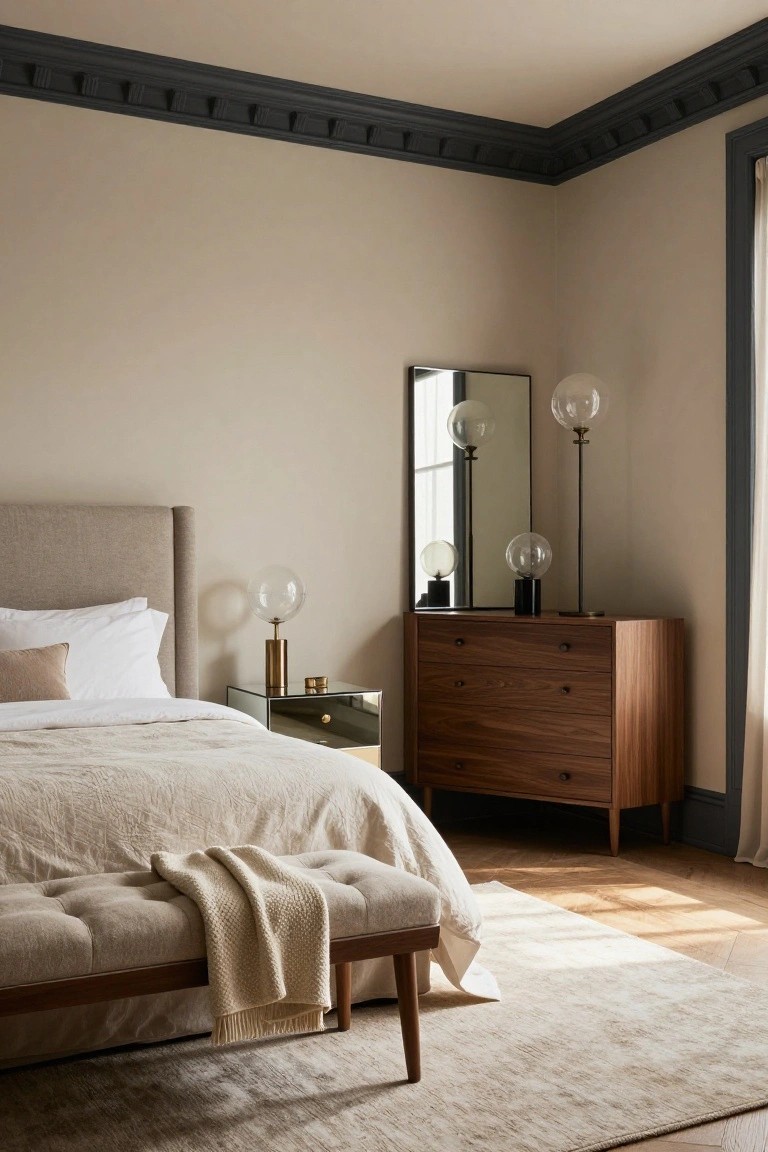
Dark trim painted black stands out nicely against pale beige walls in this bedroom setup. The cornice molding along the ceiling and the frames around the windows give the room clear lines and shape. It keeps things simple while adding some edge to the soft background.
You can pull this off in most bedrooms by just painting existing trim a deep black. It pairs well with wood furniture like the walnut dresser here and keeps the space feeling open. Best in rooms with good natural light, though. Skip it if your walls lean too yellow.
Black Trim on Pale Walls
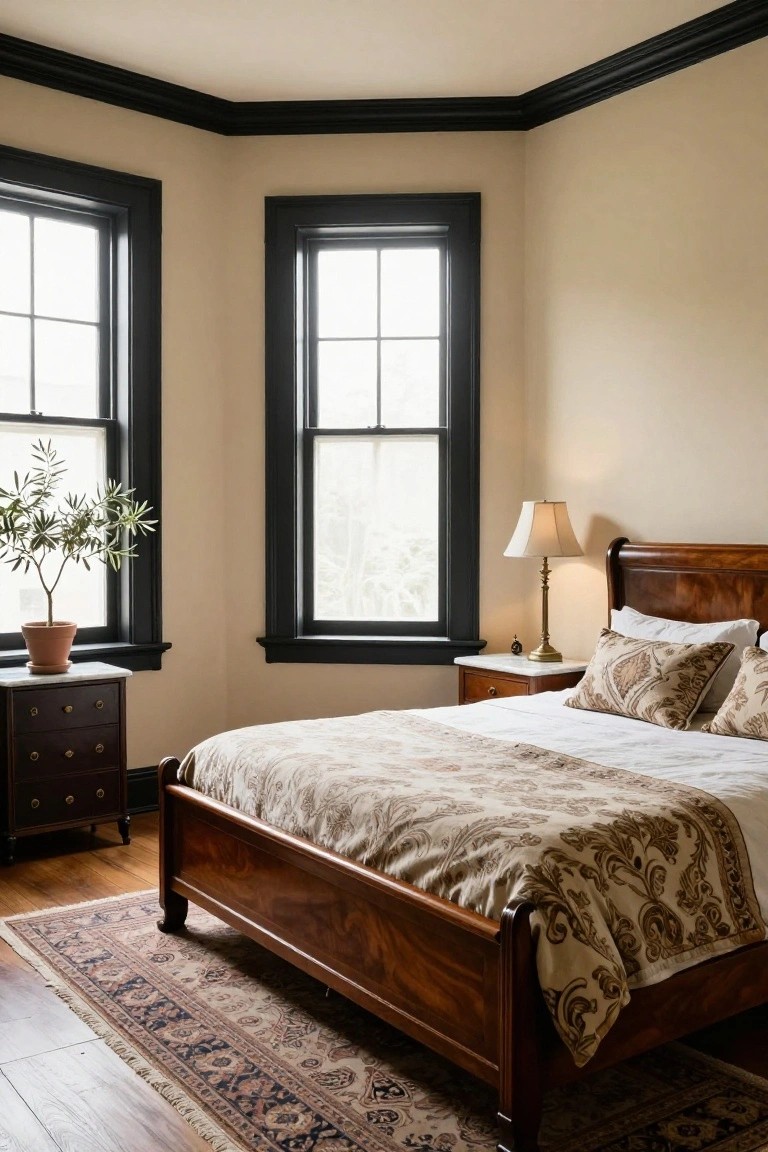
Black trim painted around the windows, doors, and ceiling stands out sharp against these pale beige walls. It pulls your eye to the room’s shape and those tall windows without making things feel heavy. The wood furniture fits right in, like it’s always been there.
This look works best in older homes with decent crown molding already. Paint the trim black or dark charcoal, then keep walls light. It suits bedrooms that get good natural light. Skip it if your trim is beat up, though. Fix that first.
Dark Trim on Sage Green Walls
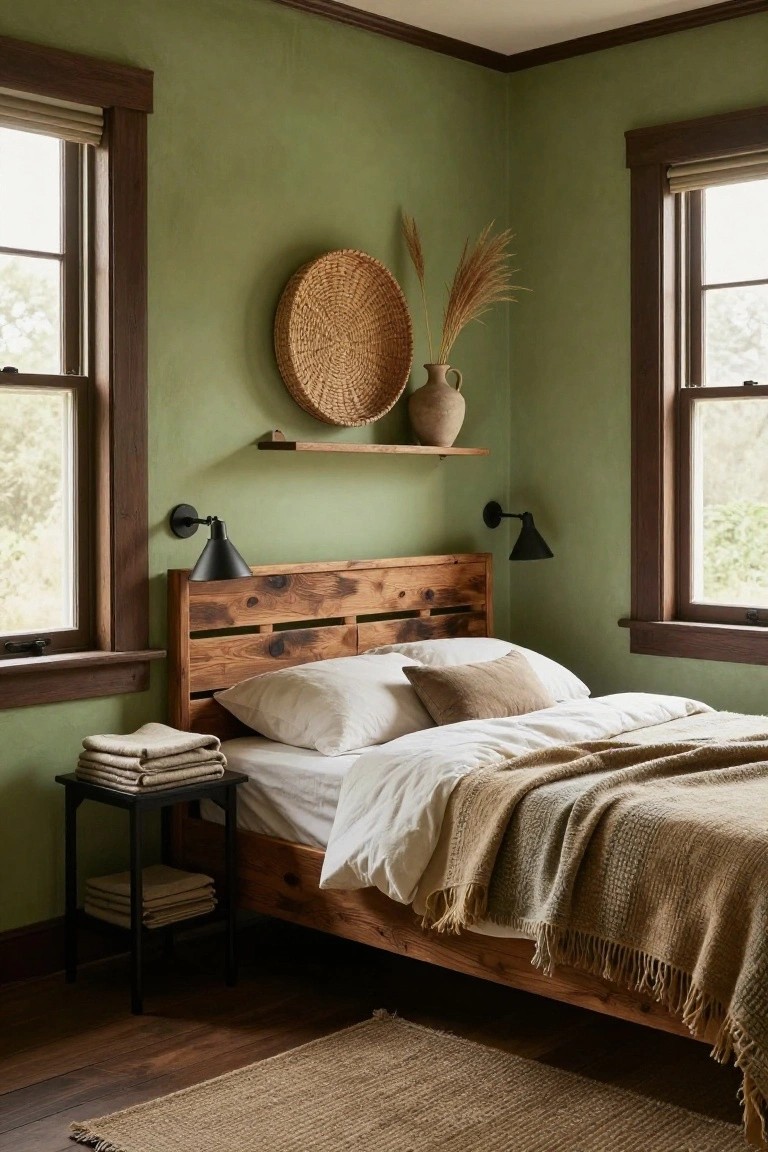
Dark wood trim stands out nicely against soft sage green walls in this bedroom setup. The brown tones around the windows and moldings add some weight to the light paint color. It keeps things feeling calm but pulls your eye around the room without much fuss.
You can pull this off in older homes where trim is already there. Just clean it up or stain it darker if needed. It suits bedrooms facing north for extra warmth. Skip it in super small spaces though… might feel a bit heavy.
Soft Gray Walls with White Trim
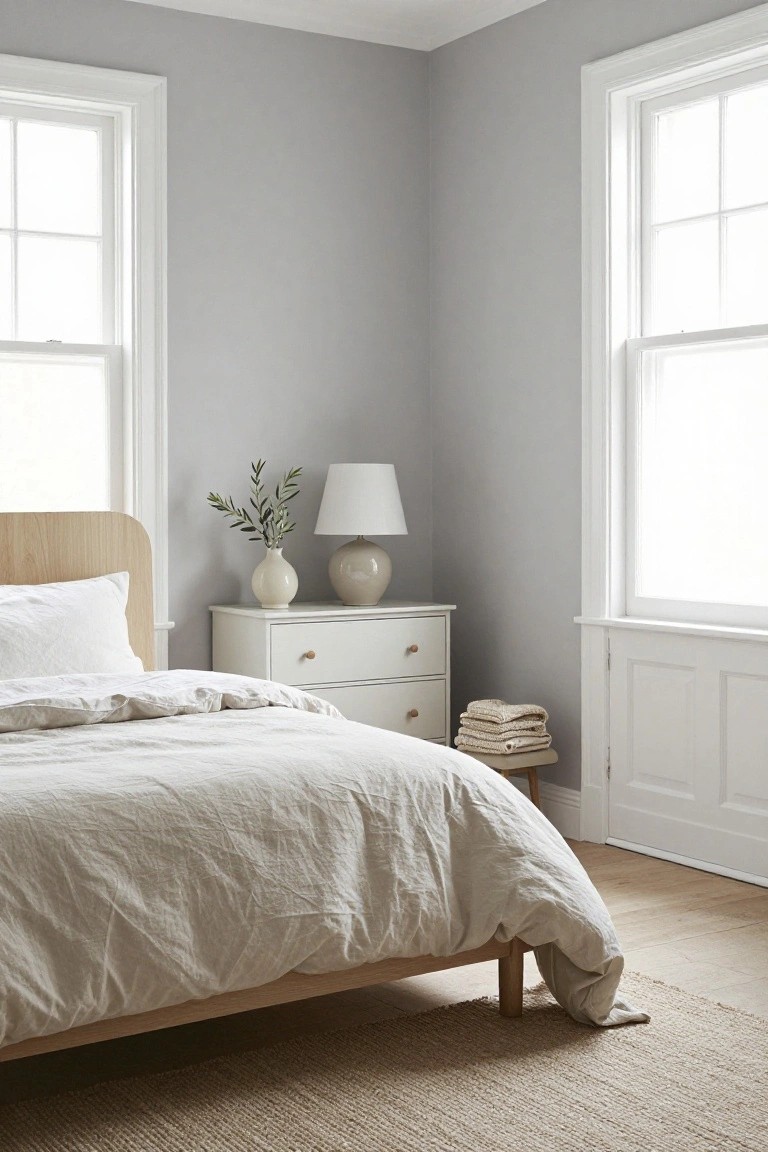
A soft gray wall color like this one pairs beautifully with crisp white trim around the windows and doors. It keeps the room light and airy while the white outlines make everything feel more defined. Rooms like this bedroom corner end up looking calm and put-together without much effort.
This setup shines in spaces with good natural light coming through big windows. It suits older homes with classic woodwork or simpler modern rooms. Go for a warm gray tone to avoid anything too cold, and let the white furniture nearby pick up that trim for easy flow.
Frequently Asked Questions
Q: My bedroom walls are a soft beige. What trim color really pops without overwhelming the room? A: Go for a deep navy or charcoal gray. It grounds the space and makes your beige walls feel warmer. Test a sample board first in your lighting.
Q: Can I add contrast trim to old baseboards without ripping them out? A: Just clean them well and prime if needed. Layer on two coats of your chosen paint color with a small brush for precision. The fresh contrast hides years of wear.
Q: How do I make contrast trim work in a tiny bedroom? A: Stick to thinner trim lines, under two inches wide. Paint the ceiling trim to match the walls for breathing room. And skip heavy patterns, they close in the space.
Q: What’s the easiest way to update trim for that contrast look on a budget? A: Grab semi-gloss paint in a matte-finish contrast shade…
