

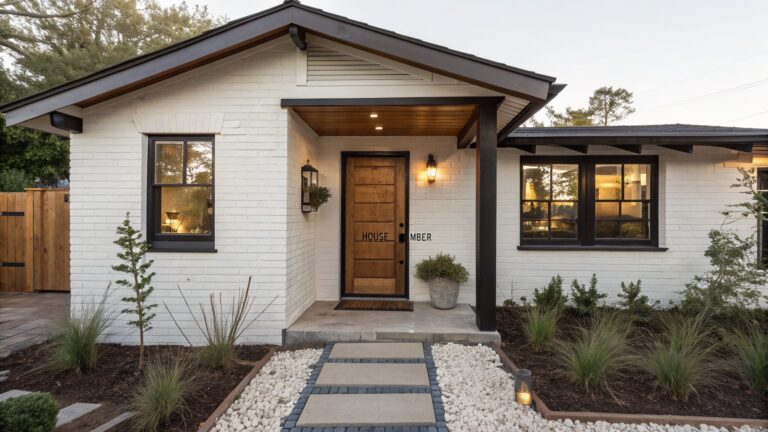
I’ve noticed that painting the brick on small homes often brings out their charm in ways raw brick never quite manages. From the street, you first take in the facade’s color against the roofline and entry, where a thoughtful shade can make a compact house feel established and welcoming. In my own neighborhood walks, the exteriors that pair soft paints with clean window frames or subtle trim stand out because they scale well to tight lots without looking fussy. These choices handle weather shifts better too, keeping the look fresh year after year. A couple here are practical enough to adapt right away.
Wooden Door Entry on White Brick Facade
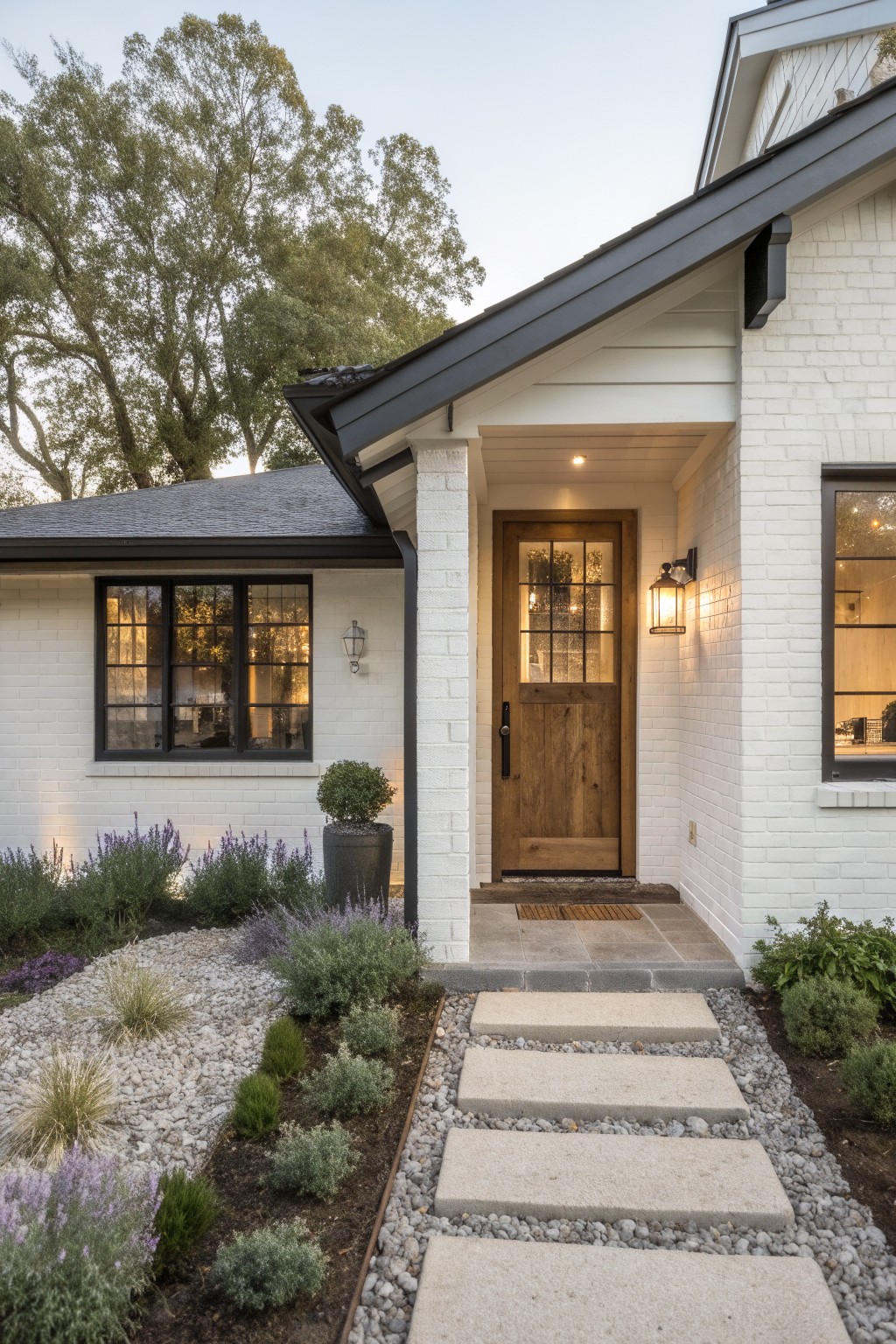
A rustic wooden door like this one adds real warmth to a crisp white painted brick house. The dark stain on the door pulls focus right to the entry without overwhelming the clean lines of the brick. Black window frames and a simple covered porch keep things balanced, making the front feel more approachable.
This setup works great on smaller homes where you want curb appeal without extra fuss. Pair it with a gravel path and low plants out front, and it fits most yards. Just make sure the door hardware matches the wood tone so it doesn’t look tacked on.
Recommended Products
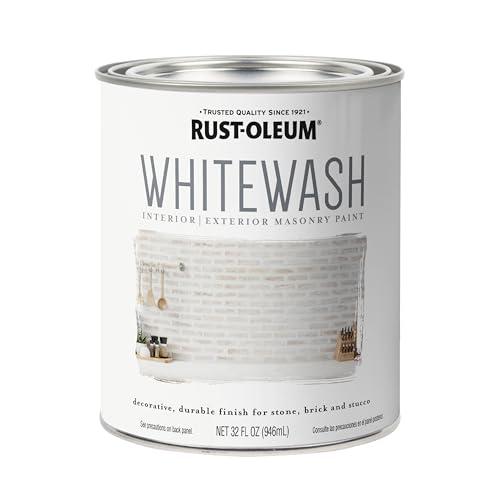
GREAT FOR HIGHLY POROUS SURFACES: Brightens the appearance of stucco, stone, brick and wood while letting natural surface texture shine through

MADE FOR EXTERIOR MASONRY: Designed for concrete, cement, brick, stone, stucco and masonry walls. Ideal for refreshing exterior walls, facades, garden walls and other properly prepared vertical masonry surfaces.
Soft Sage Painted Brick Facade
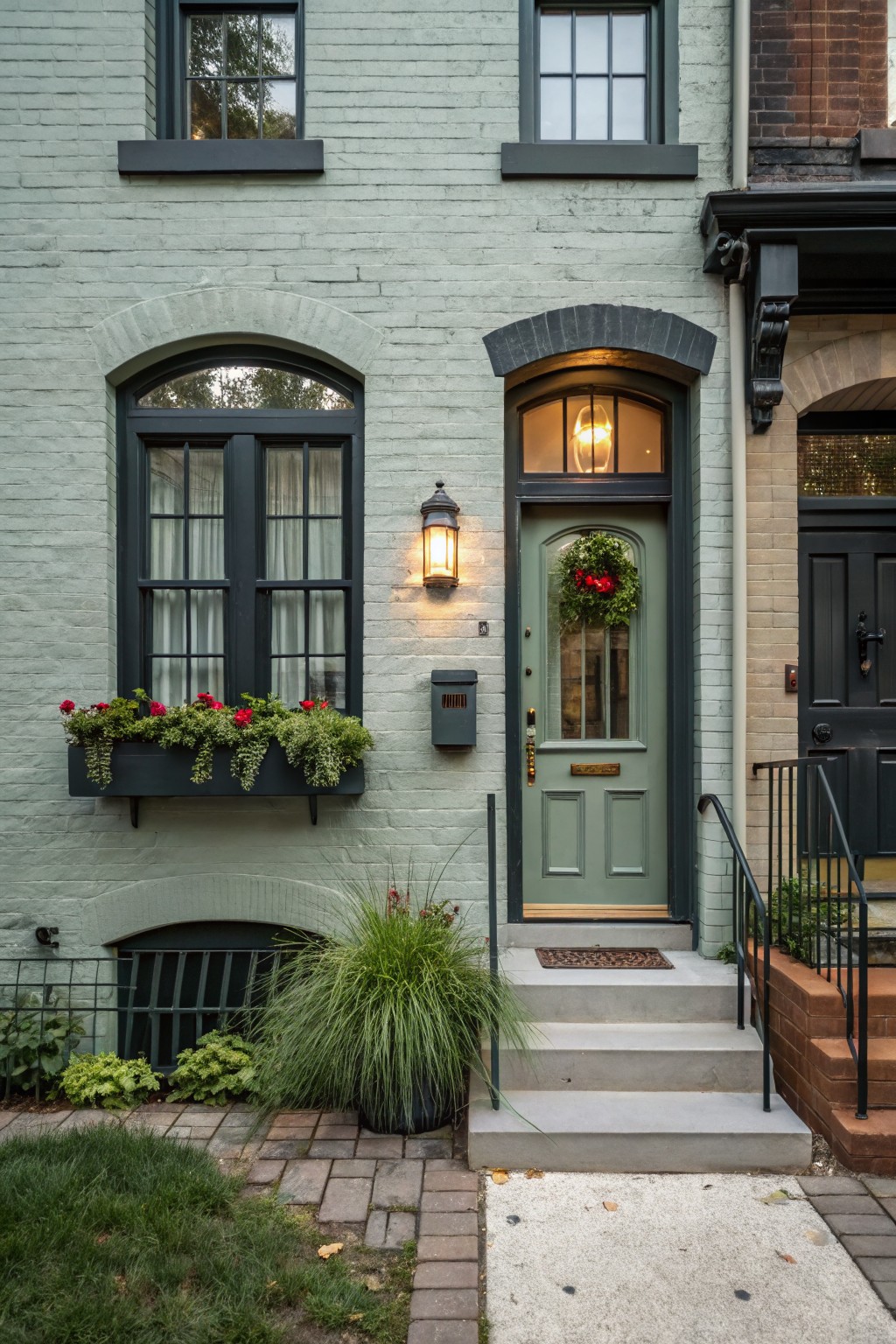
Painted brick exteriors work well on small row houses like this one. The light sage green softens the brick’s texture without hiding it, and those black window frames add just enough contrast to make the front stand out. A matching green door keeps things cohesive and friendly looking.
This approach fits tight urban spots where space is limited. Stick to simple details like flower boxes and a potted grass by the steps. Go with a breathable paint made for masonry so moisture doesn’t get trapped.
Entry Bench for Curb Appeal
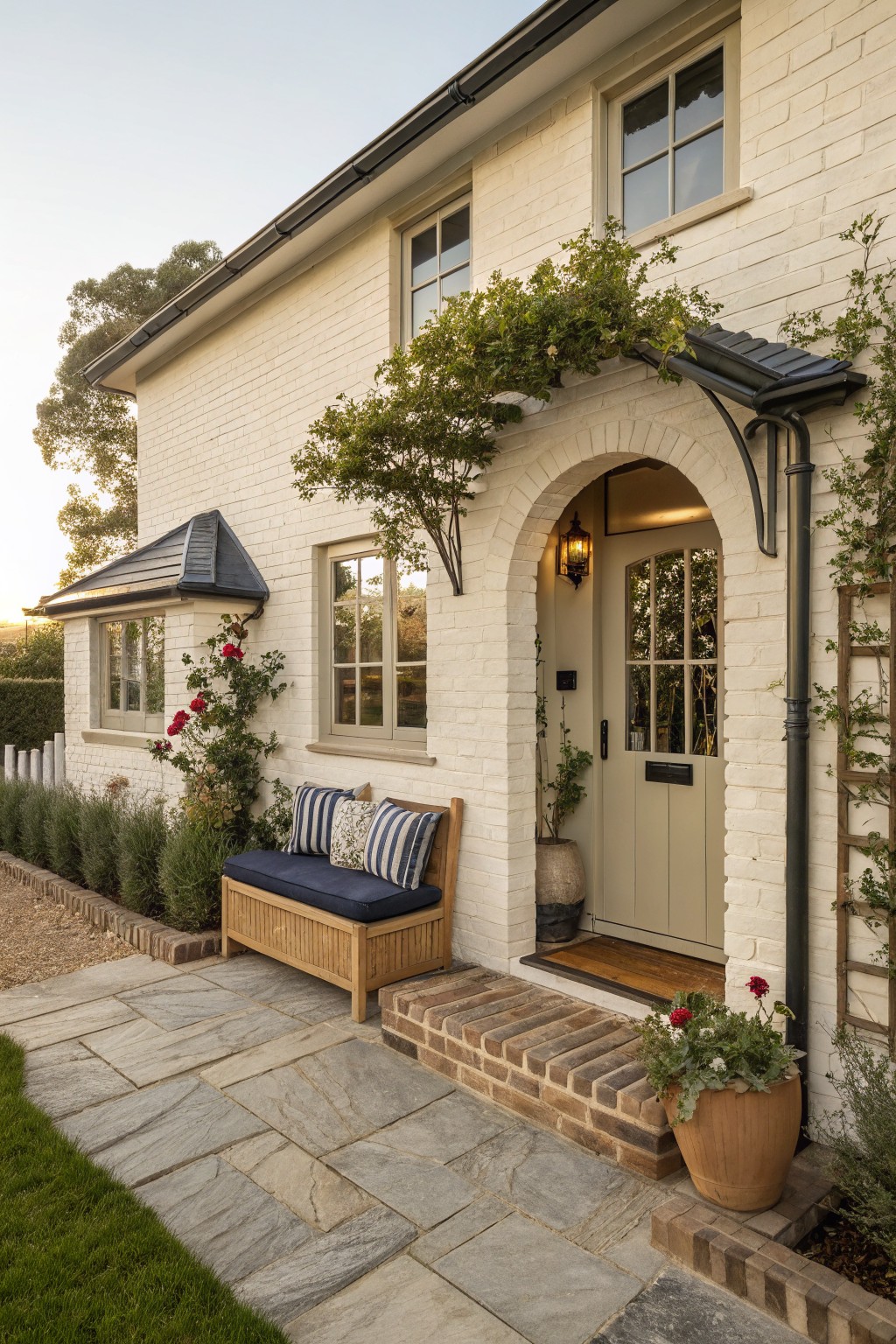
A wooden bench set right by the front steps works wonders on a small painted brick house. It gives visitors a place to pause, maybe kick off shoes or just sit a minute. Here, blue cushions and pillows make it comfy, and the nearby climbing roses tie it right into the entry arch without crowding things.
Try this on compact homes where yard space is tight. Tuck the bench against the brick wall next to the door, pick one sturdy enough for outdoors, and add simple cushions. It suits cottage-style facades best, softening that boxy feel while keeping maintenance low. Just watch for damp spots underfoot after rain.
White Painted Brick with Dark Brick Contrast
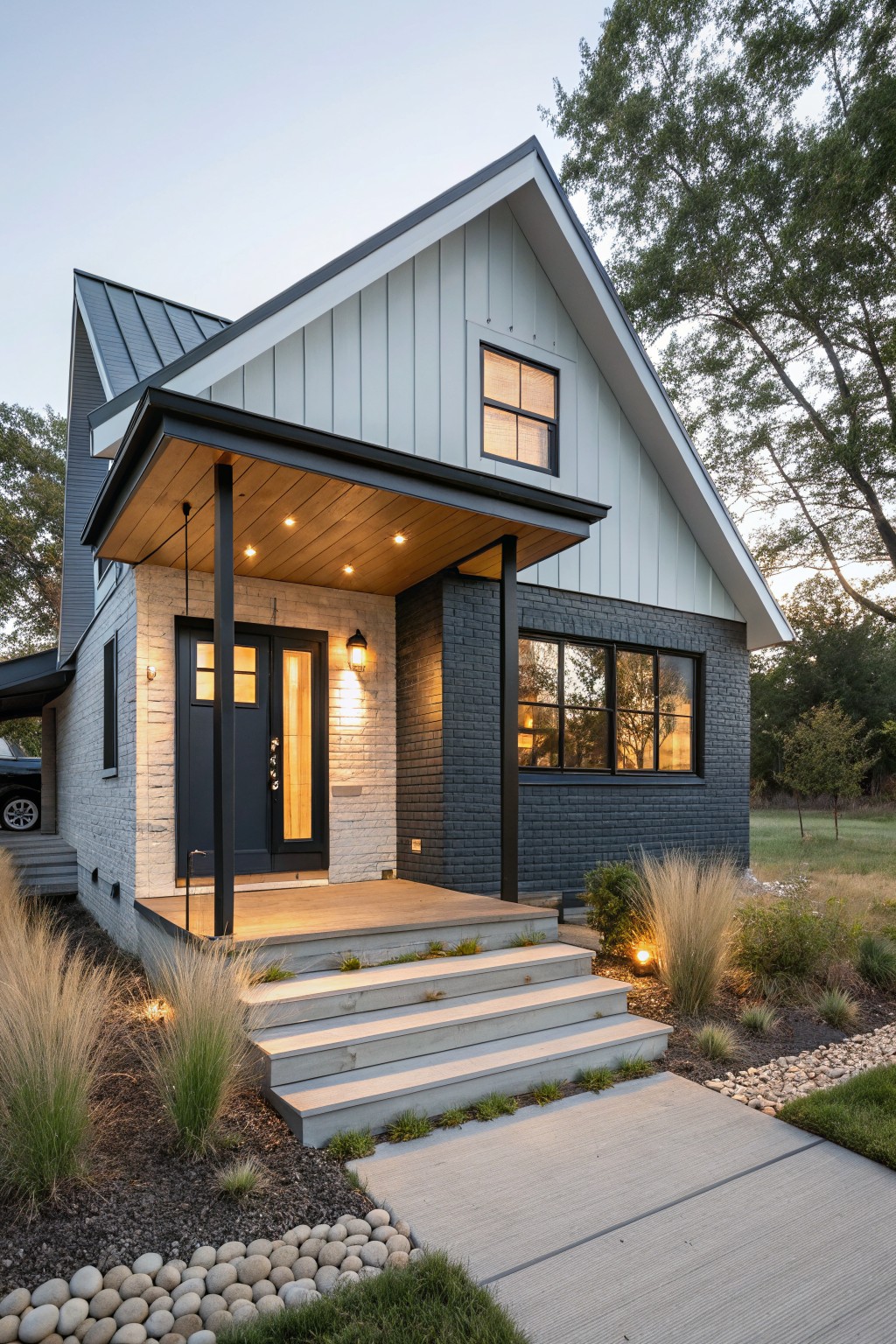
This compact house pulls off a smart material mix by using white painted brick right at the entry and switching to dark brick on the side. That simple contrast adds depth and keeps things interesting without overwhelming the small scale. Black windows and a metal roof sharpen it up nicely.
Try this on a narrow lot or starter home where you want curb appeal on a dime. Paint one brick wall white to brighten the front, leave the side darker for balance, and add vertical siding overhead. It suits modern farmhouse styles best and holds up well in any climate.
Teal Door on Softly Painted Brick
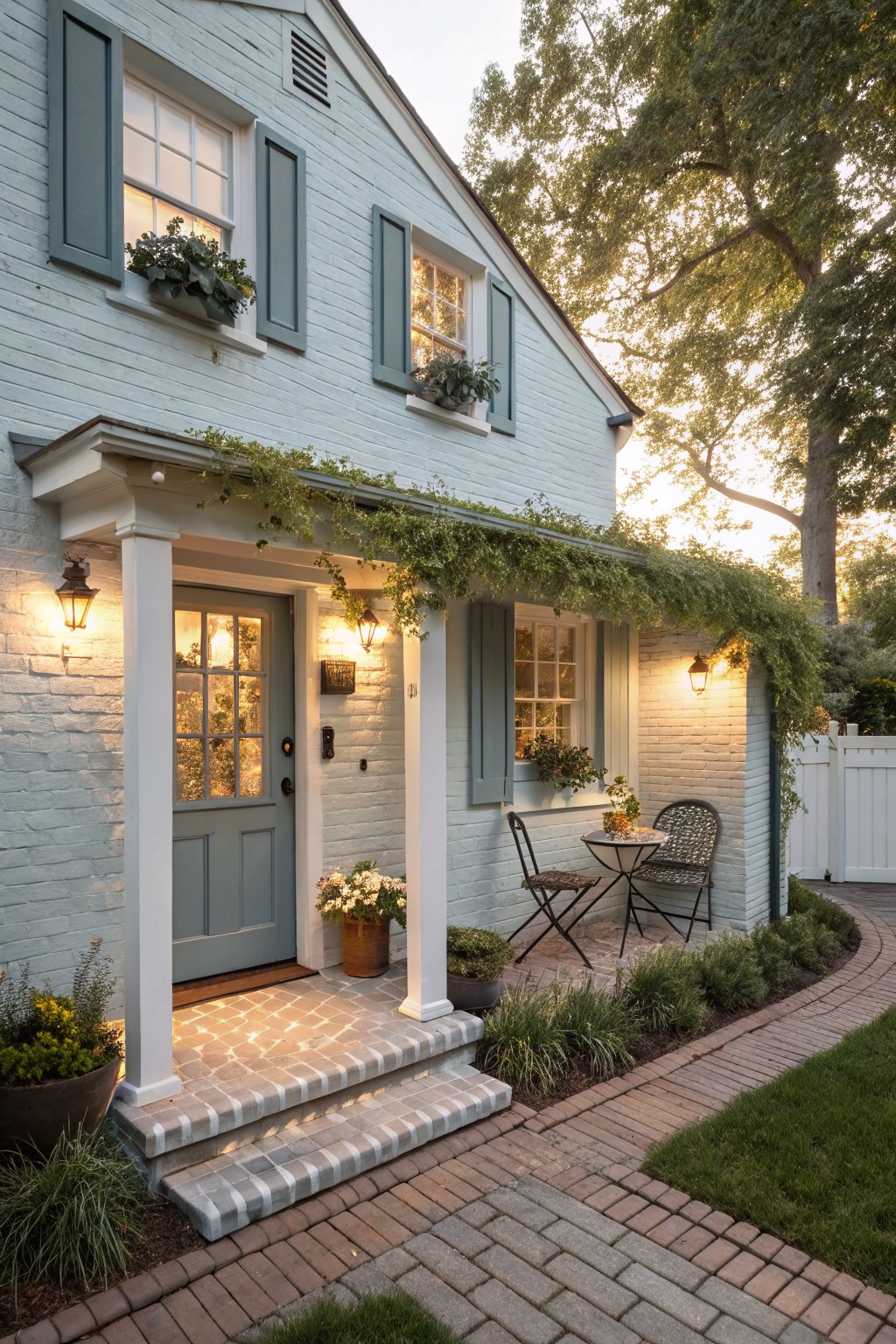
A light blue-gray paint on brick gives this small house a fresh, airy feel that makes it stand out without trying too hard. The deeper teal door pulls everything together, especially with matching shutters, and those warm porch lanterns make the entry welcoming right at dusk.
Try this on compact homes where you want classic charm that reads modern too. Pick a pastel brick shade first, then a bolder teal for the door that echoes nearby plants or trees. It works best facing south or with some shade. Just test paint samples in real light.
Stone Pillars Support a Cozy Porch
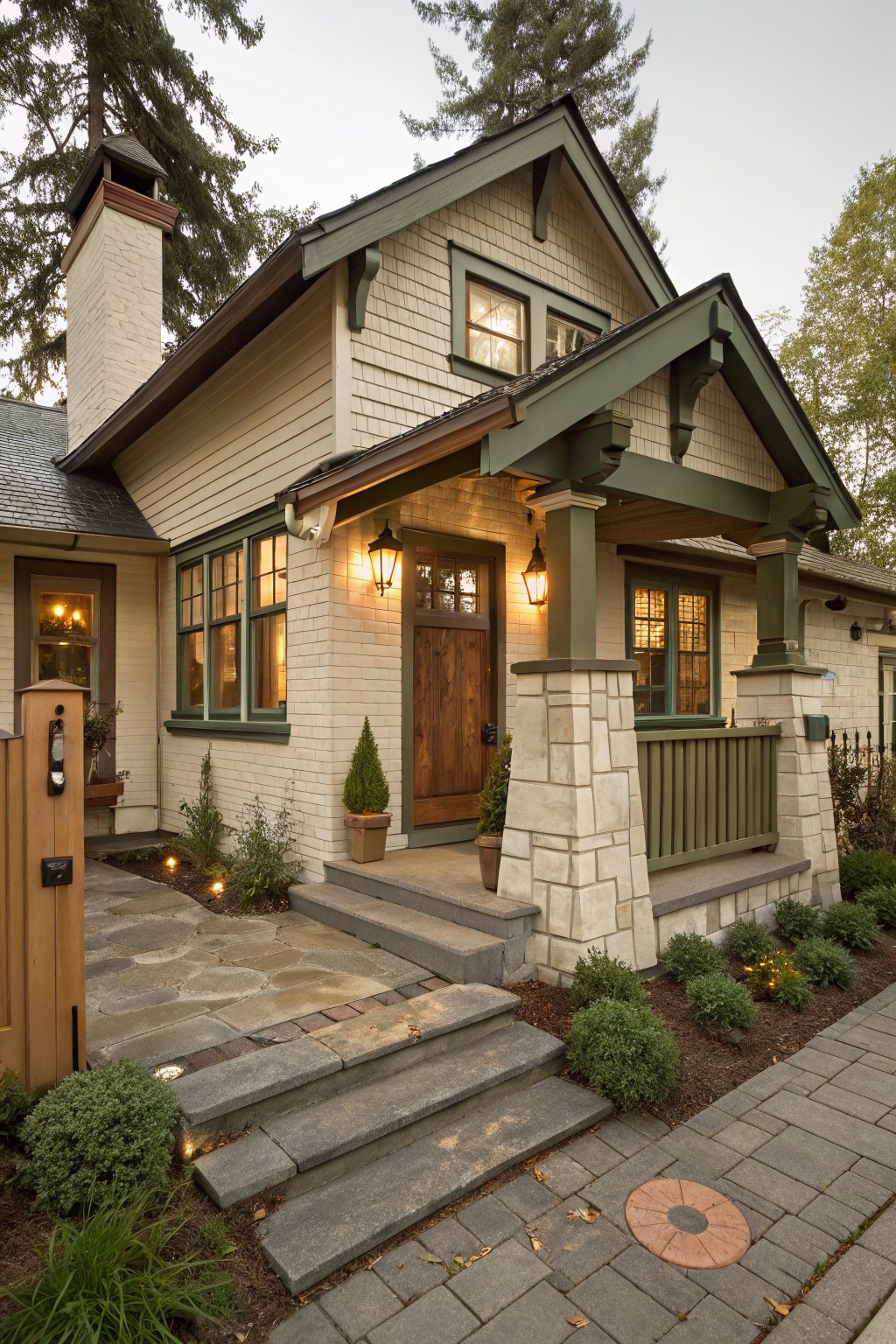
Tall stone pillars hold up this front porch on a small house with light shingle siding. They give the entry a sturdy Craftsman look that feels right at home in a compact yard. Green paint on the posts and trim sets them off nicely, drawing the eye to the door without much fuss.
This setup works well for bungalows or cottages where you want porch shade and presence. Place the pillars at the corners and add lanterns for evening light. It suits milder climates best, and pair it with simple steps to keep the focus on the entry.
Warm Painted Brick Facade
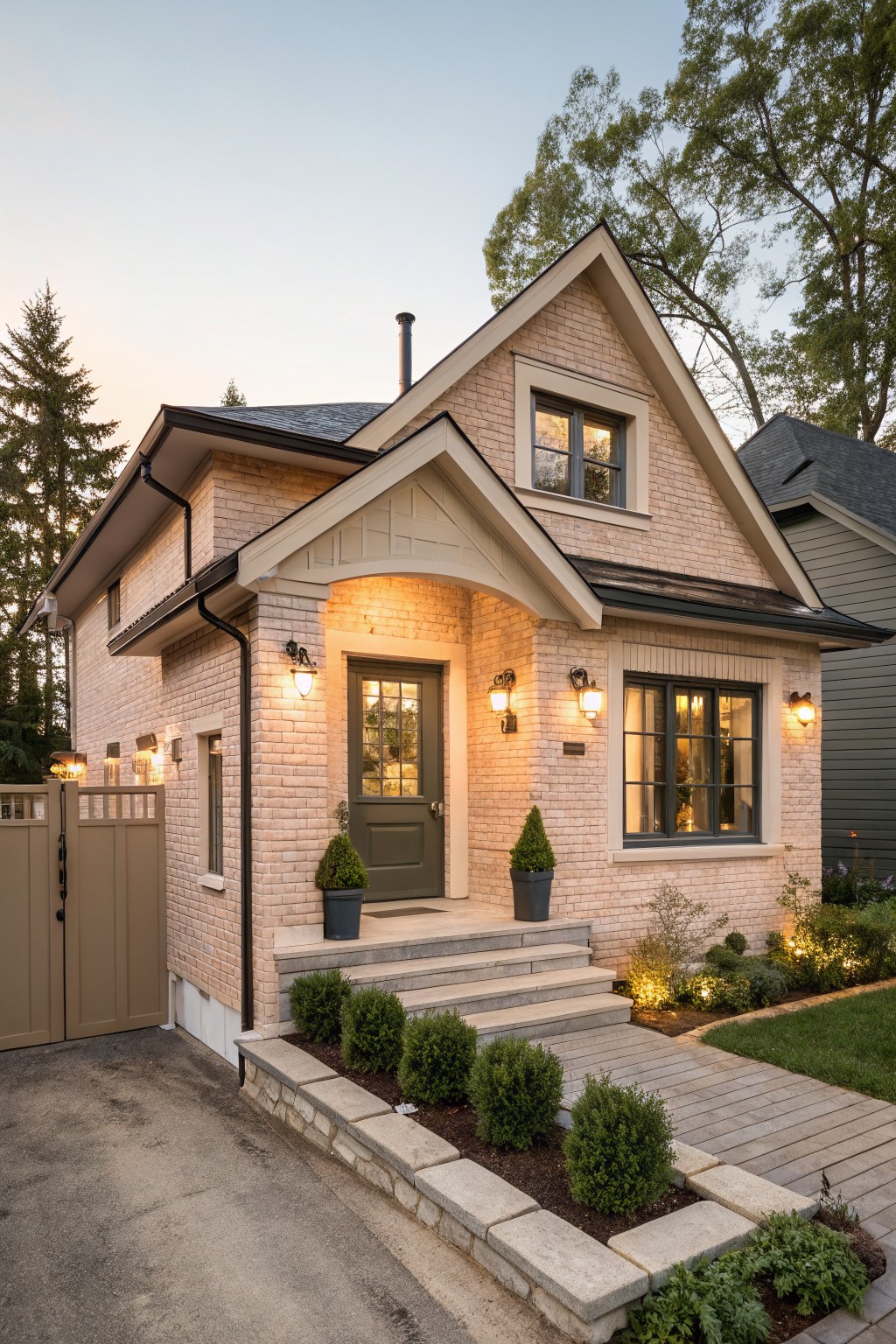
A light beige painted brick gives this small house a soft, approachable look that fits right into a neighborhood setting. It tones down the usual red brick heaviness, making the home feel bigger and more open from the street. The simple gable roof and white trim keep things clean, while that dark green door pulls everything together without trying too hard.
This works best on compact lots where you want curb appeal without overwhelming the space. Paint your brick in a warm neutral like this beige, then add lanterns for evening glow and a couple boxwoods by the steps. Skip busy details. It suits traditional or craftsman styles, and holds up well in cooler climates.
Charcoal Painted Brick Exterior
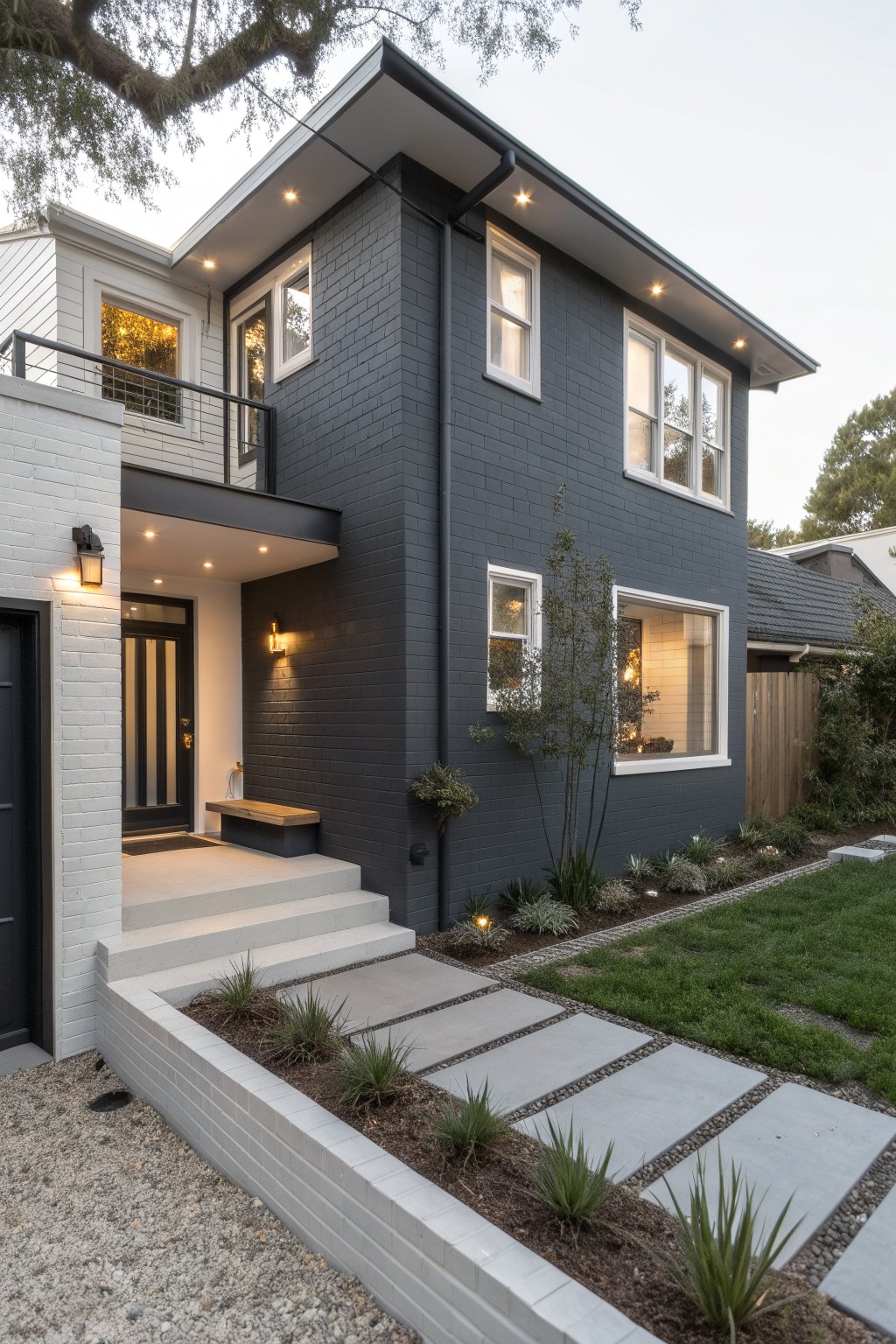
Dark painted brick in a deep charcoal shade gives this compact house a strong, modern presence without overwhelming the scale. The main body of the house uses that moody gray brick, while the garage and entry area keep things crisp with white brick. It creates clean contrast that makes the home stand out on a smaller lot. Simple steps and a black door pull it all together nicely.
This look works great on two-story homes where you want height without bulk. Paint existing brick or choose new in that charcoal tone, then add white brick accents around openings or the garage for balance. Keep landscaping low-key with grasses and agaves along the base. It suits urban or suburban spots… just make sure the paint is breathable masonry type to avoid issues down the line.
Lavender Borders Frame the Entry
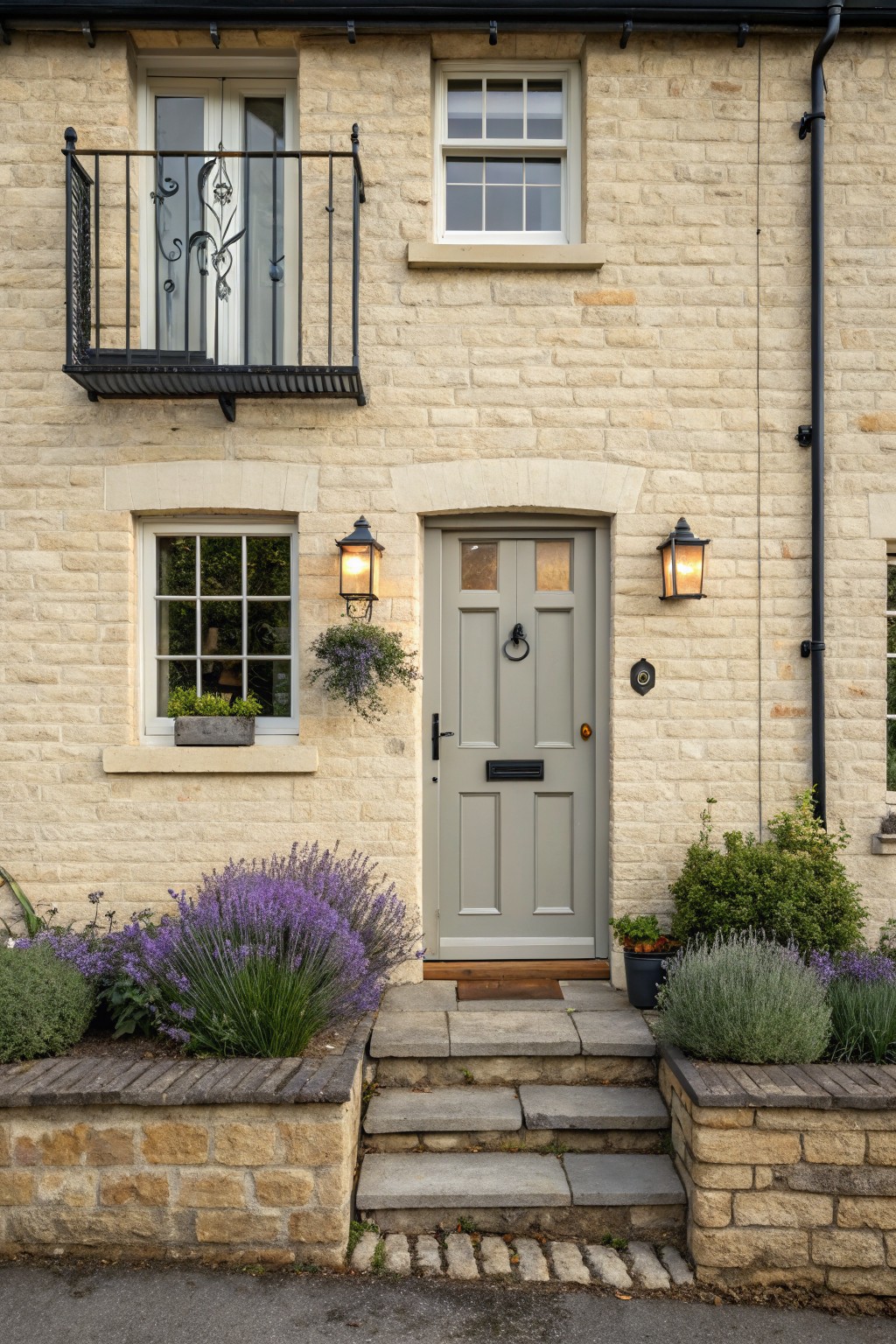
Low lavender beds lining the stone steps make this painted brick house entry pop. The soft purple blooms hug the base without overwhelming the compact facade, and they tie right into the beige brick tones. Paired with the gray door and simple lanterns, it gives a welcoming cottage feel that’s easy on the eyes.
Try this on smaller homes facing the street, where you need curb appeal fast. Use raised beds built from the same stone as your steps to keep it tidy, and pick drought-tolerant lavender for low upkeep. It suits sunny spots best, and skips big shrubs that crowd the walk-up.
Covered Porch on Light Brick Exterior
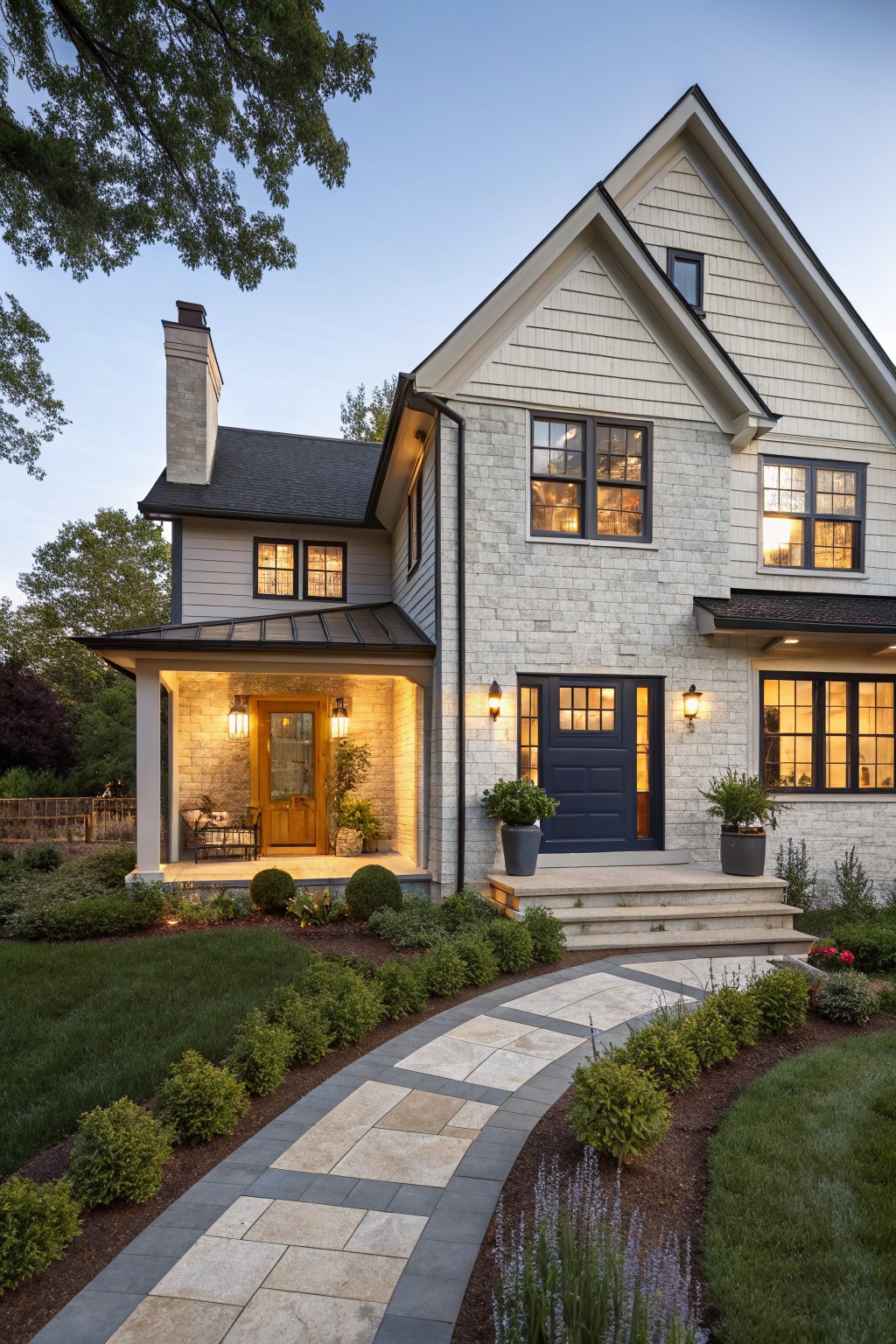
A covered porch like this one turns a plain brick house into something friendly and lived-in. The light brick gives a soft base, and the porch roof with its metal edge keeps rain off while framing the entry just right. Add lanterns on each side, and it feels ready for evening chats right away.
These porches suit compact homes best, since they tuck right against the facade without eating yard space. Go for stone steps and a wood or glass door on yours, maybe in navy for some color pop. It works on ranch or two-story brick places, especially if you keep plants simple around the base.
Pale Brick with Black Metal Accents
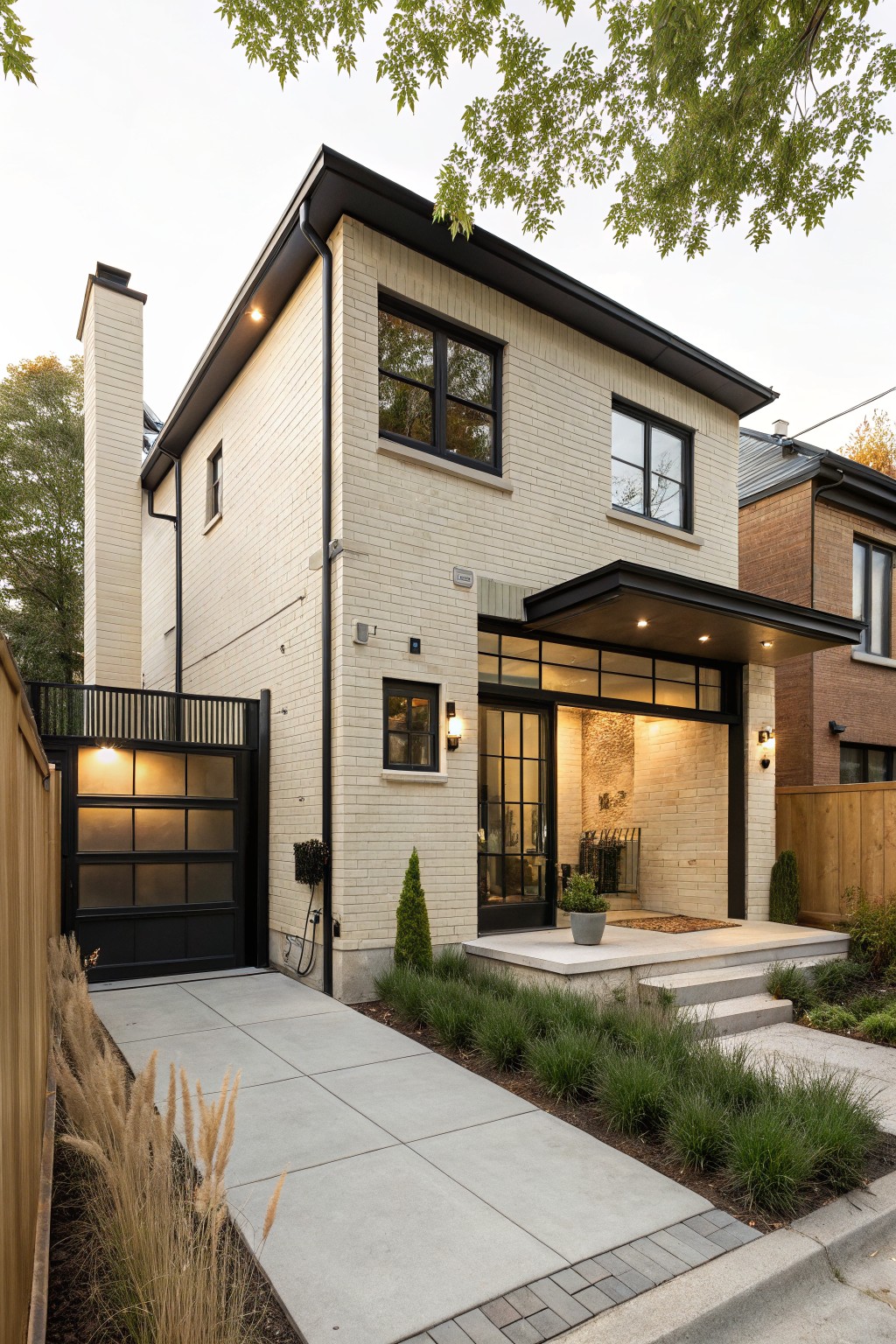
This look uses a soft pale brick base and adds sharp black metal for windows, doors, and that overhanging entry canopy. It keeps the house feeling light and approachable but gives it a modern kick that stands out on a smaller lot. The contrast makes the facade read clean and current without going overboard.
Try this on compact urban homes or semis where you want curb appeal that doesn’t crowd the space. Stick to simple plantings along the path to let the brick and black details shine. It works best in neighborhoods with some traditional houses, bridging old and new nicely.
Recommended Products

Size: 12ft wide x 8ft high(137.8 x 98 inches) which is large enough for party decoration or photography. Package include 1 x backdrop, stand not included. You can hang it easily with clips, nails or adhesive tape.

Size: 12ft wide x 10ft high(141.7 x 118 inches) which is large enough for party decoration or photography. Package include 1 x backdrop, stand not included. You can hang it easily with clips, nails or adhesive tape.
Size: 12ft wide x 10ft high(141.7 x 118 inches) which is large enough for party decoration or photography. Package include 1 x backdrop, stand not included. You can hang it easily with clips, nails or adhesive tape.
Soft Green Paint on Victorian Siding
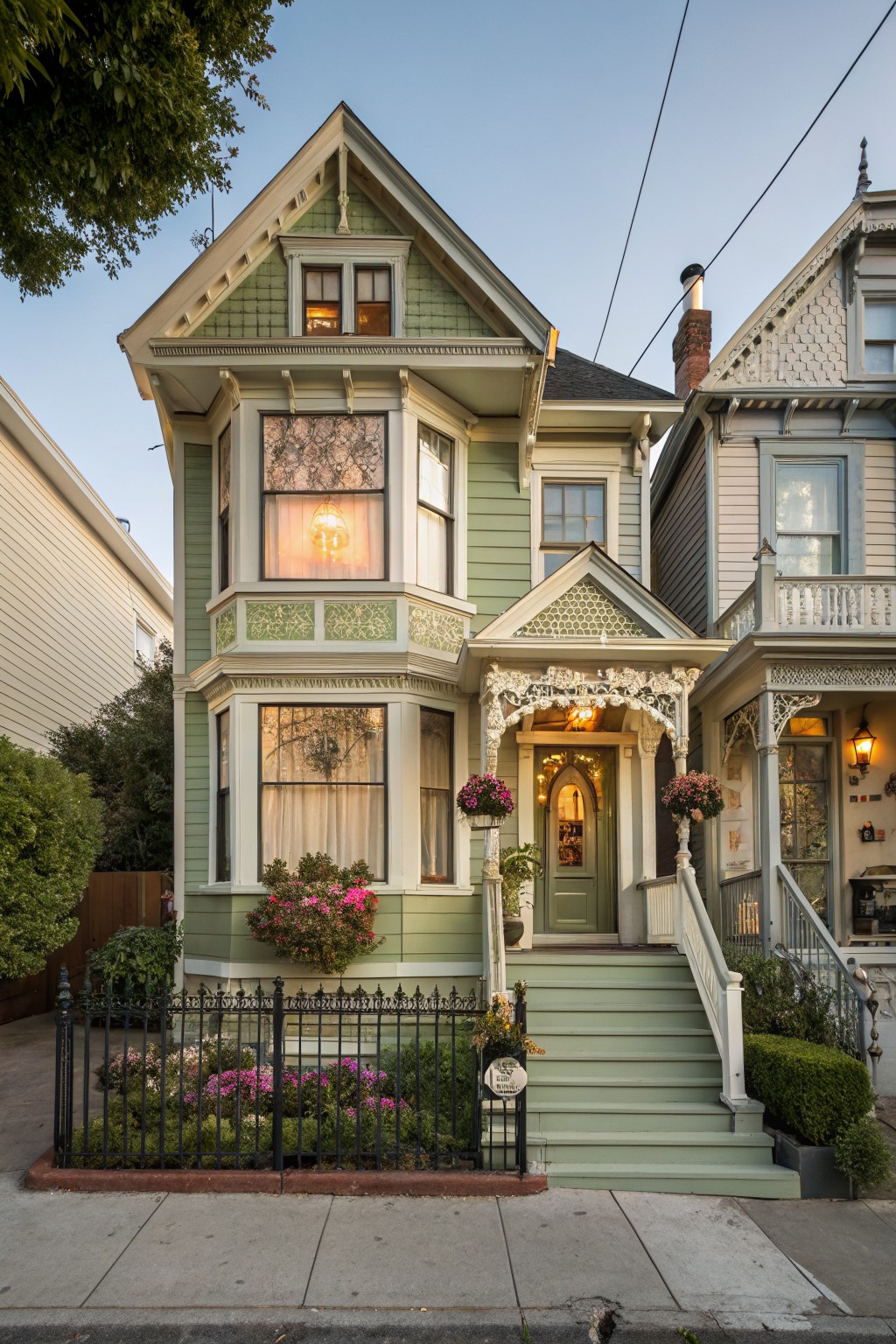
A soft green paint like this turns a small Victorian house into something really charming from the street. It lets the cream trim and gingerbread details stand out without overpowering the compact size. Those big bay windows catch the light nicely, especially with warm lamps glowing inside at dusk.
This look fits best on narrow city lots where you want classic style but nothing too bold. Go for a sage or seafoam shade on lap siding or shingles, then pair it with white or off-white trim. Flower boxes on the bays add life. Just test the color in different lights first, since greens can shift.
Sunny Yellow Door on Gray Brick
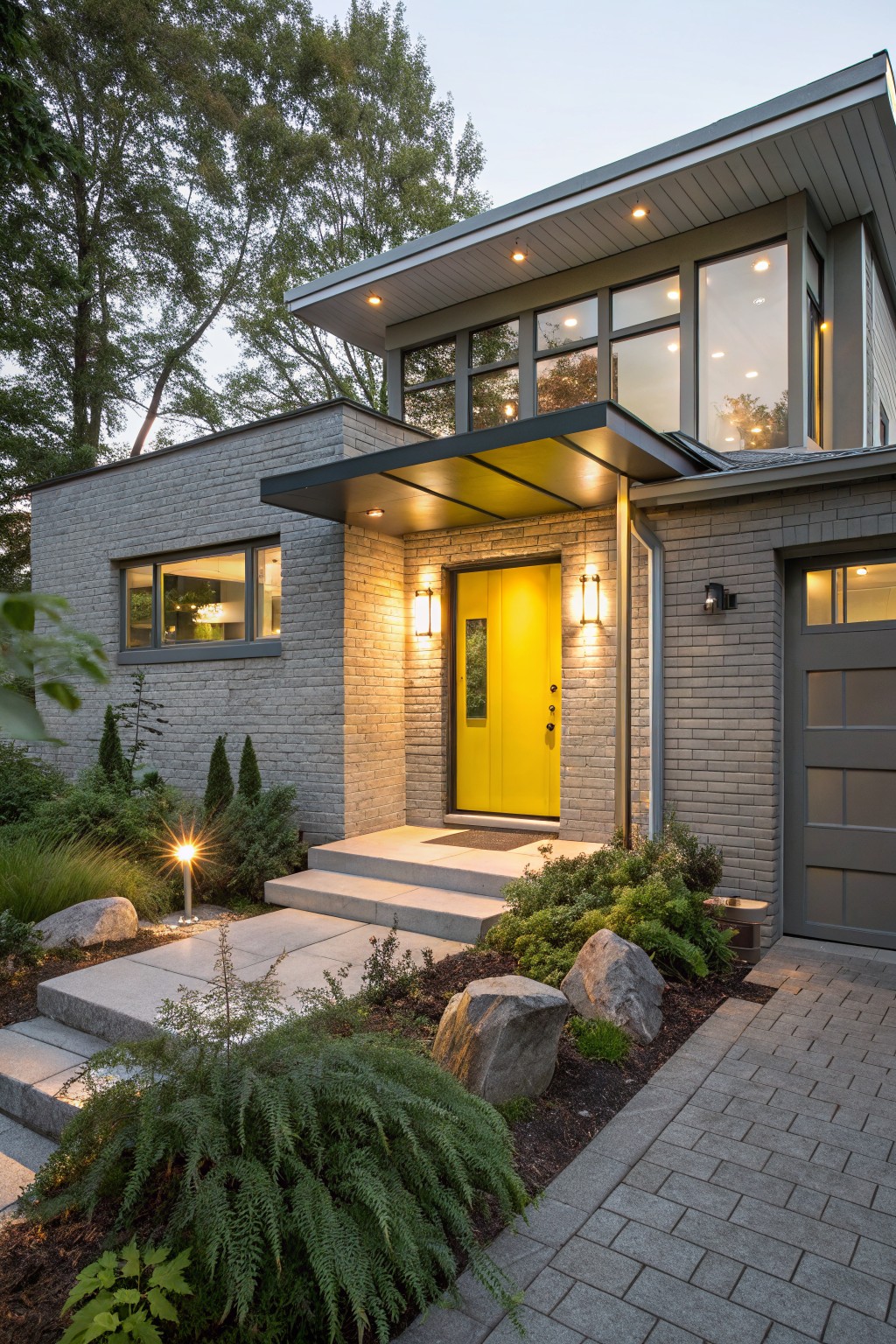
A bright yellow front door gives this compact brick house a cheerful focal point right at the entry. Against the soft gray brick and clean modern lines, it pulls your eye in and makes the whole facade feel more approachable. That pop of color works because it keeps things simple elsewhere, like the slim metal canopy overhead and warm entry lights.
Try this on smaller homes with painted or light brick exteriors. It suits contemporary styles best, where neutrals dominate. Just pair it with restrained landscaping around the steps, and avoid busier colors nearby. Easy update that boosts curb appeal without much fuss.
Raised Planters Edge a Narrow Patio
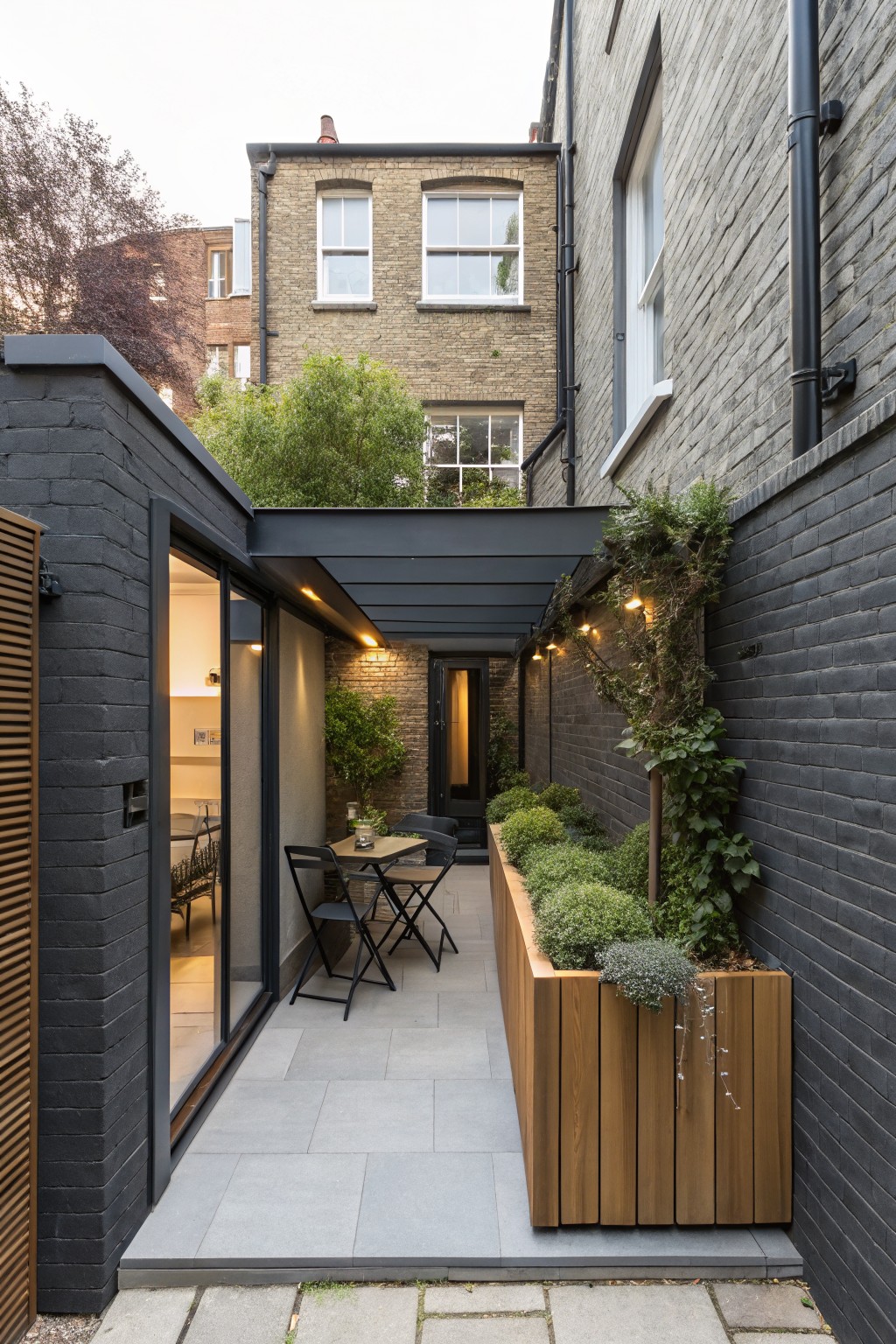
A tall wooden planter box running along one wall turns this slim side patio into a green spot without eating up walking room. You see the simple gray stone floor, bistro table and chairs nearby, and how the plants soften that dark brick wall. It keeps things open yet lively, perfect for tight urban yards.
These work best in narrow courtyards or alley-like spaces behind row houses. Build the planter to waist height with treated wood, fill it with low shrubs or climbers, and tuck in a small table set. Skip anything fussy. It fits compact homes where you want outdoor time but floor space stays practical.
Welcoming Entry Bench on Painted Brick
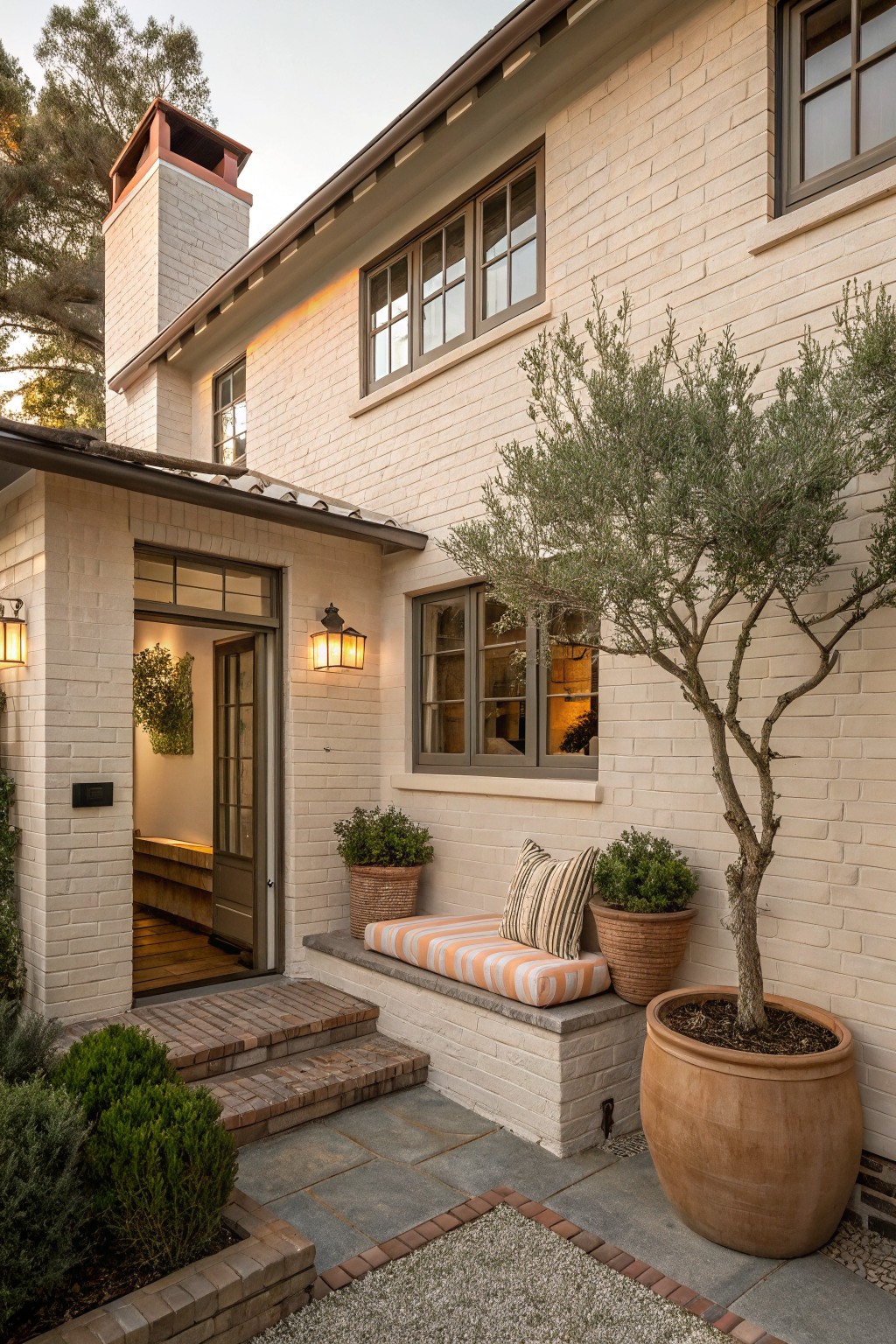
A built-in bench tucked right by the front door works wonders on a painted brick house like this one. The soft cream brick gives a gentle backdrop, and that low seat with striped cushions makes the entry feel like a spot to pause. It’s a small touch that turns a plain facade into something neighborly and lived-in.
This idea fits compact homes perfectly, since the bench uses wall space instead of yard. Pair it with potted plants on either side, maybe a big olive tree like here, and keep steps simple with brick treads. Skip it if your entry gets too much foot traffic, though. Just right for cozy front porches.
Light Blue Painted Siding on a Small Cottage
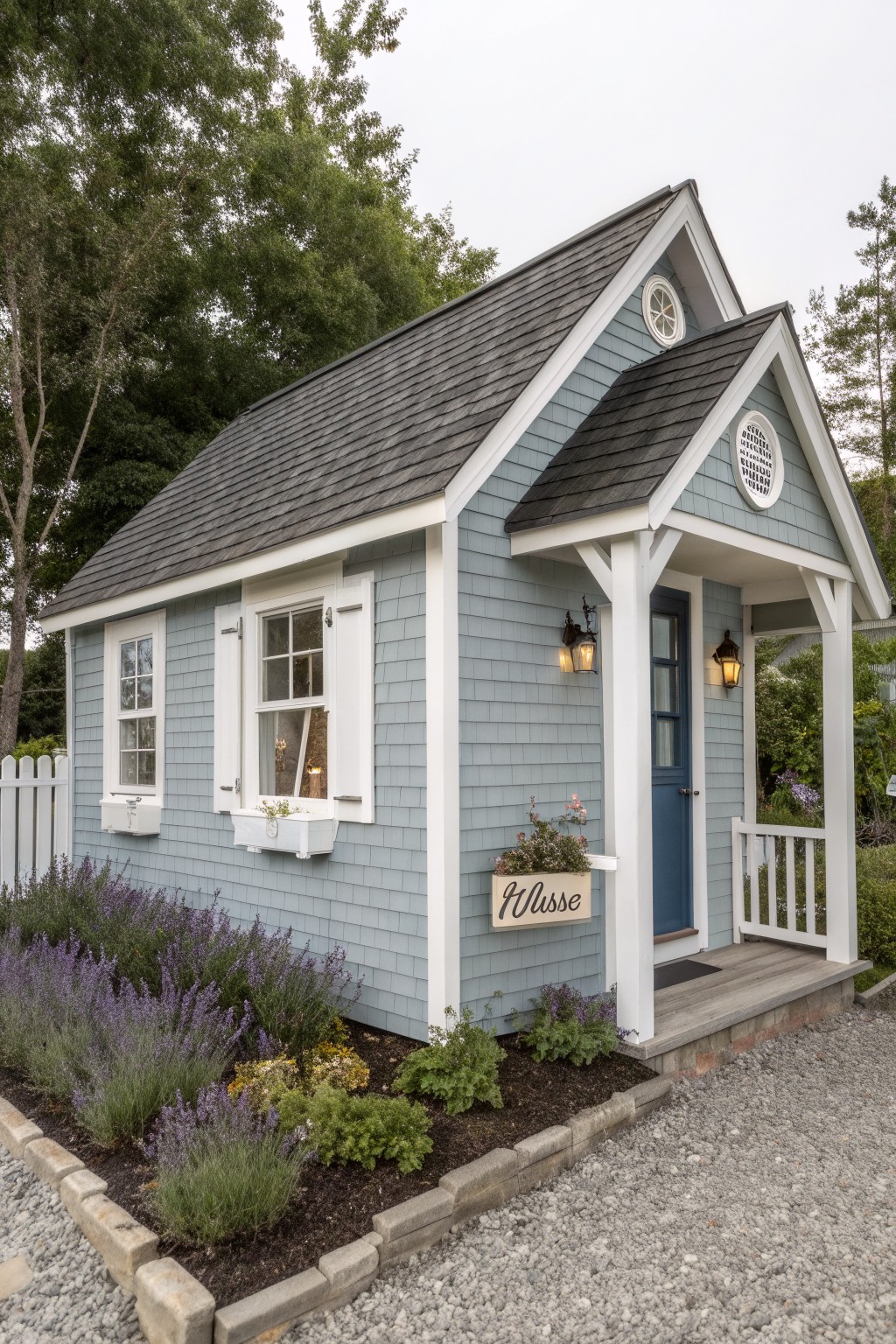
This little house shows how a soft light blue paint on clapboard siding can turn a compact structure into something straight out of a storybook. The color picks up on coastal or countryside vibes without being too bold. It pairs nicely with white trim around the windows and roofline, making the place feel crisp yet approachable. That gabled porch up front adds just enough shelter to welcome folks in.
You can pull this off on any small backyard guest house or starter home under 400 square feet. Go for a muted blue-gray shade that fades into overcast skies or green surroundings. Add simple flower boxes or a planter by the door, like the lavender here, to keep it low fuss. Watch the scale though. Too much porch on a tiny build might overwhelm, so keep it snug.
Warm Wood Canopy on Light Brick Facade
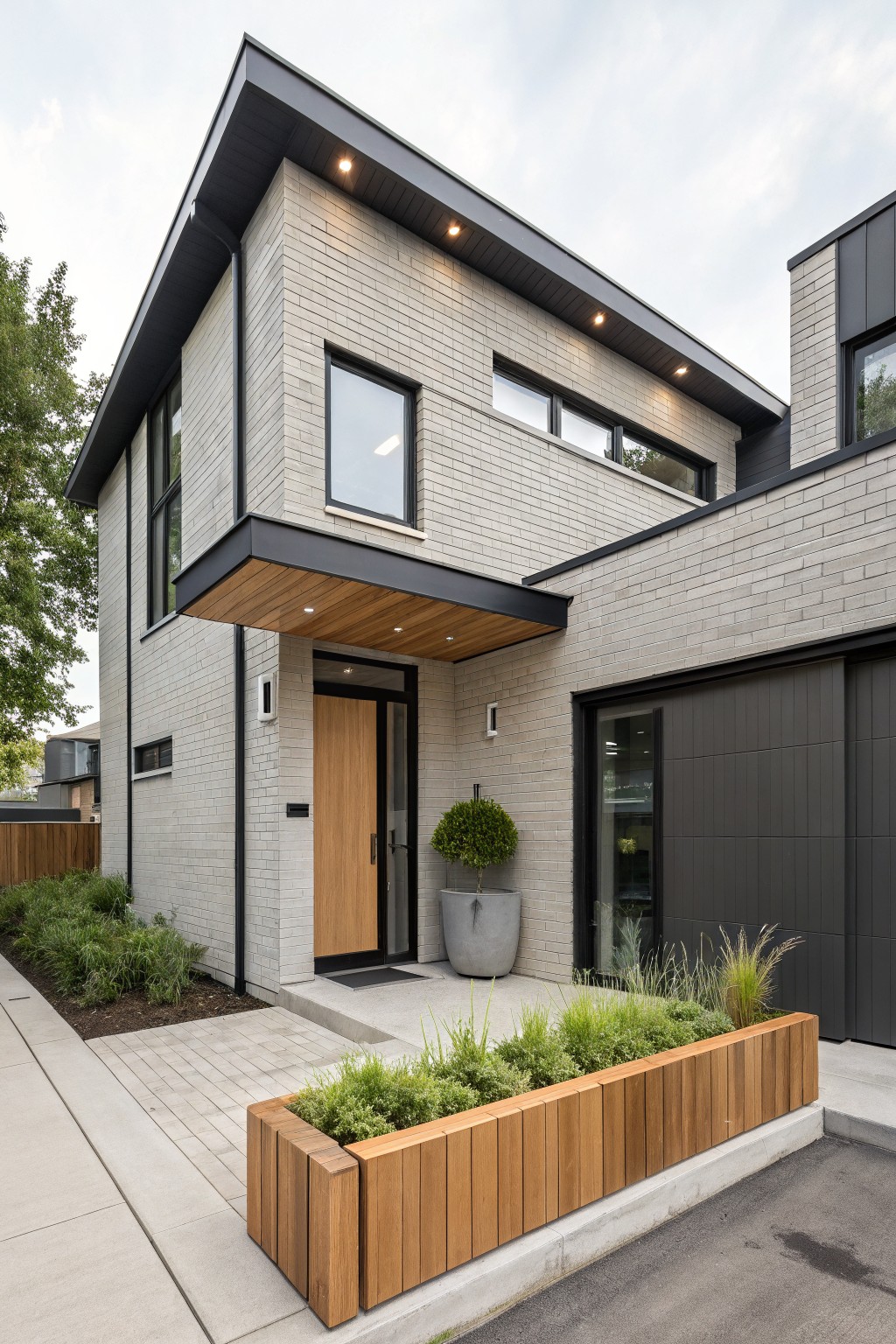
A light gray brick exterior like this one gets a lift from the simple wood canopy over the front door. The cantilevered design adds a bit of shadow and depth without much fuss. It pulls in some natural warmth against the cool brick and black metal trim. Folks notice the entry right away but in a calm way.
This setup works well on smaller homes where you want modern lines but not a cold feel. Try it on a compact lot with a narrow front yard. Keep the wood natural or oiled for low upkeep. Just make sure the canopy scale matches your door height so it doesn’t overwhelm the space.
Painted Brick Tudor Facade for Compact Homes
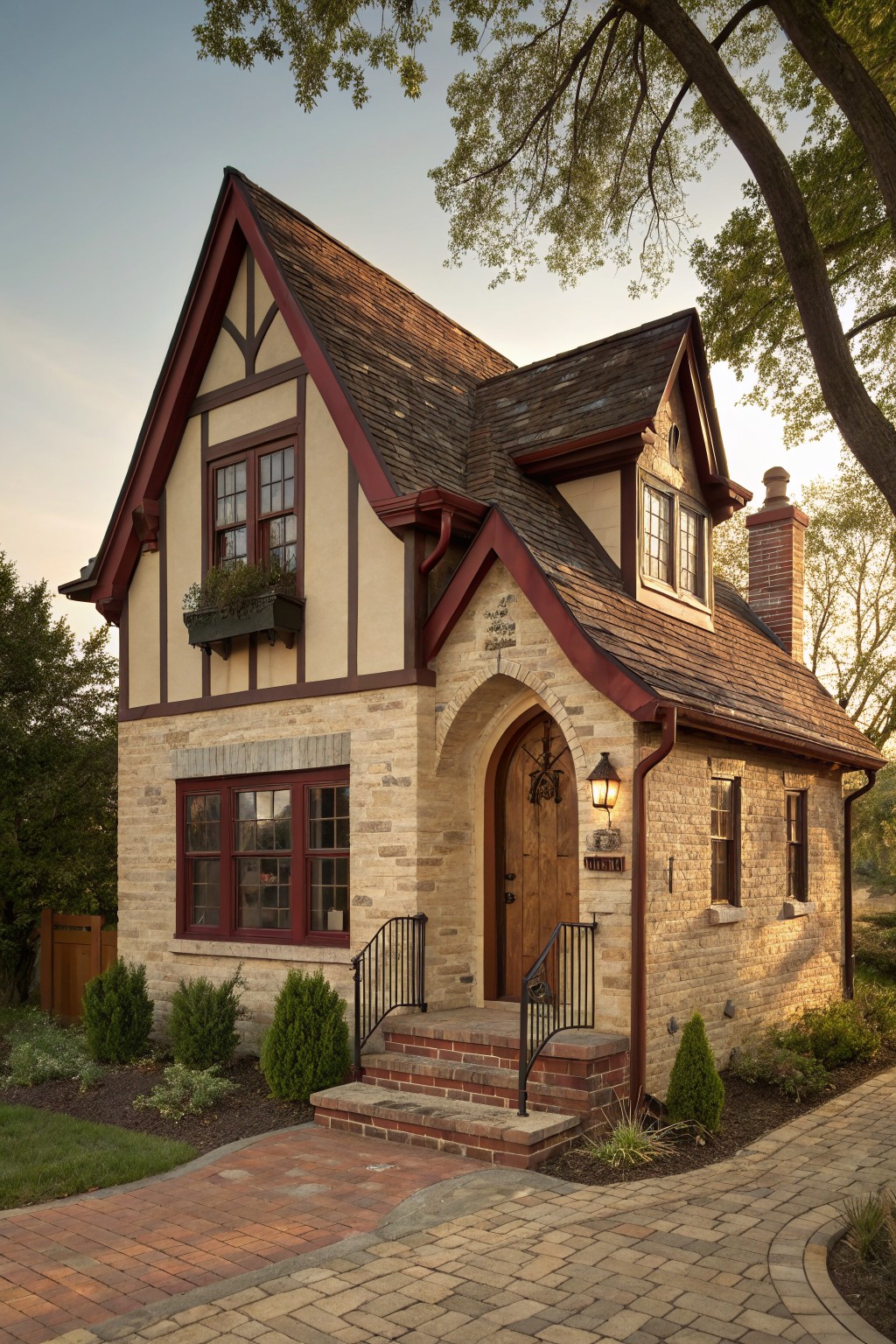
This setup takes a small house and gives it real character with a painted brick base and those dark timber frames. The beige brick keeps things light and approachable, while the red timbers outline the gables and windows for a classic storybook feel. It’s perfect for compact spots since it adds height and interest without needing much width.
You can pull this off on a narrow lot or older bungalow by painting rough brick a soft neutral first. Focus the timbers on key spots like the entry arch and upper stories. Works best in family neighborhoods or suburbs where a touch of old-world charm stands out but doesn’t overpower. Just keep the plantings simple around the base so the house stays the star.
Blending Stone and Wood on Coastal Facades
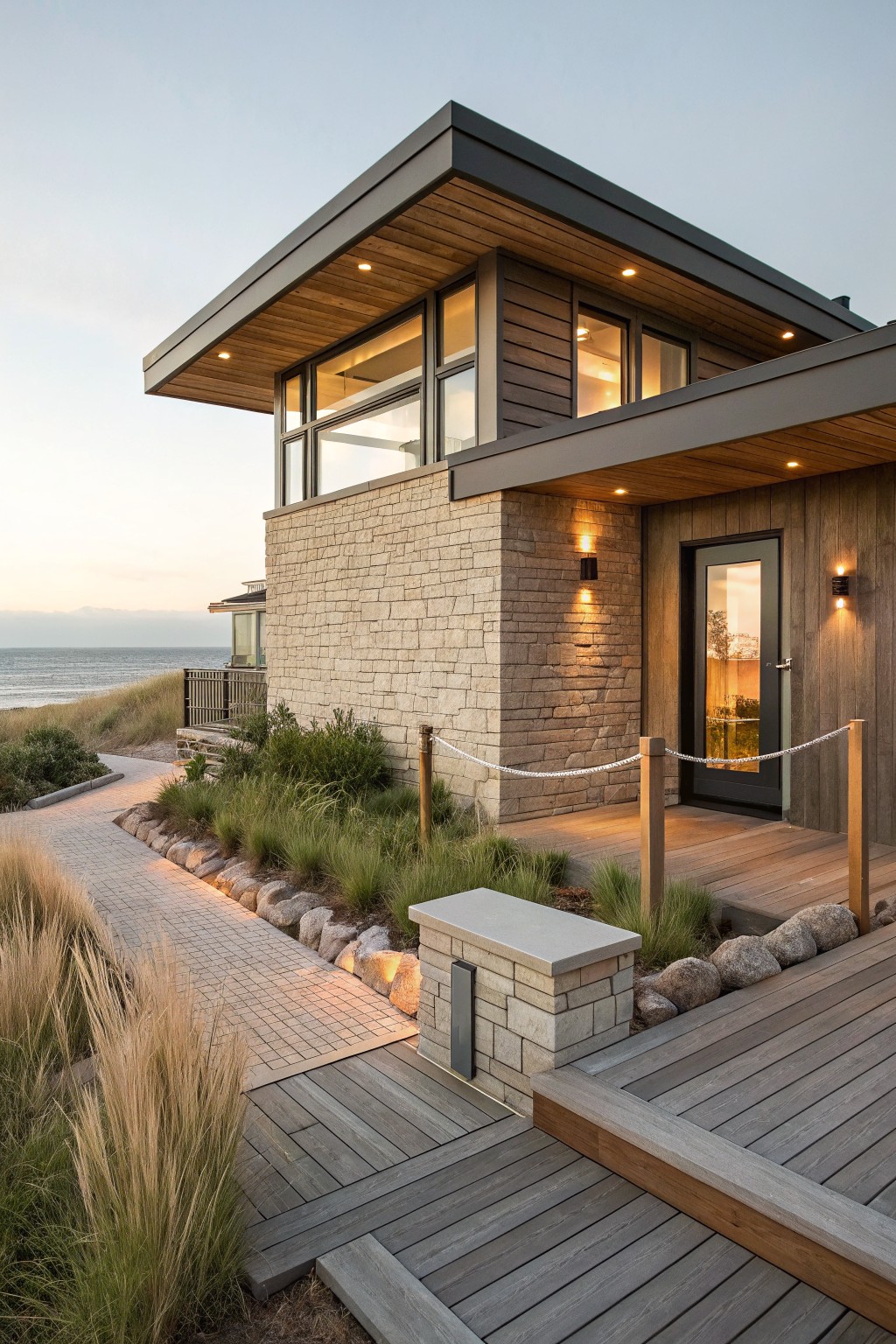
One smart way to give a small house real presence is mixing a rugged stone base with smooth wood cladding up top. Here the beige limestone corner anchors everything, while the dark cedar siding lifts the eye toward those big glass windows and overhanging roof. It feels solid against the beach dunes but still open and modern, without looking too fussy.
This works great for compact homes in sandy or windy spots, where stone takes the beating from salt air and wood keeps things from feeling cold. Use similar light stone for the first story and warmer wood accents higher up, tying in a deck or path like the pavers shown. Skip painted brick if you’re going coastal. Just seal the wood well and keep plantings low around the base.
Whitewashed Stone Cottage Entry
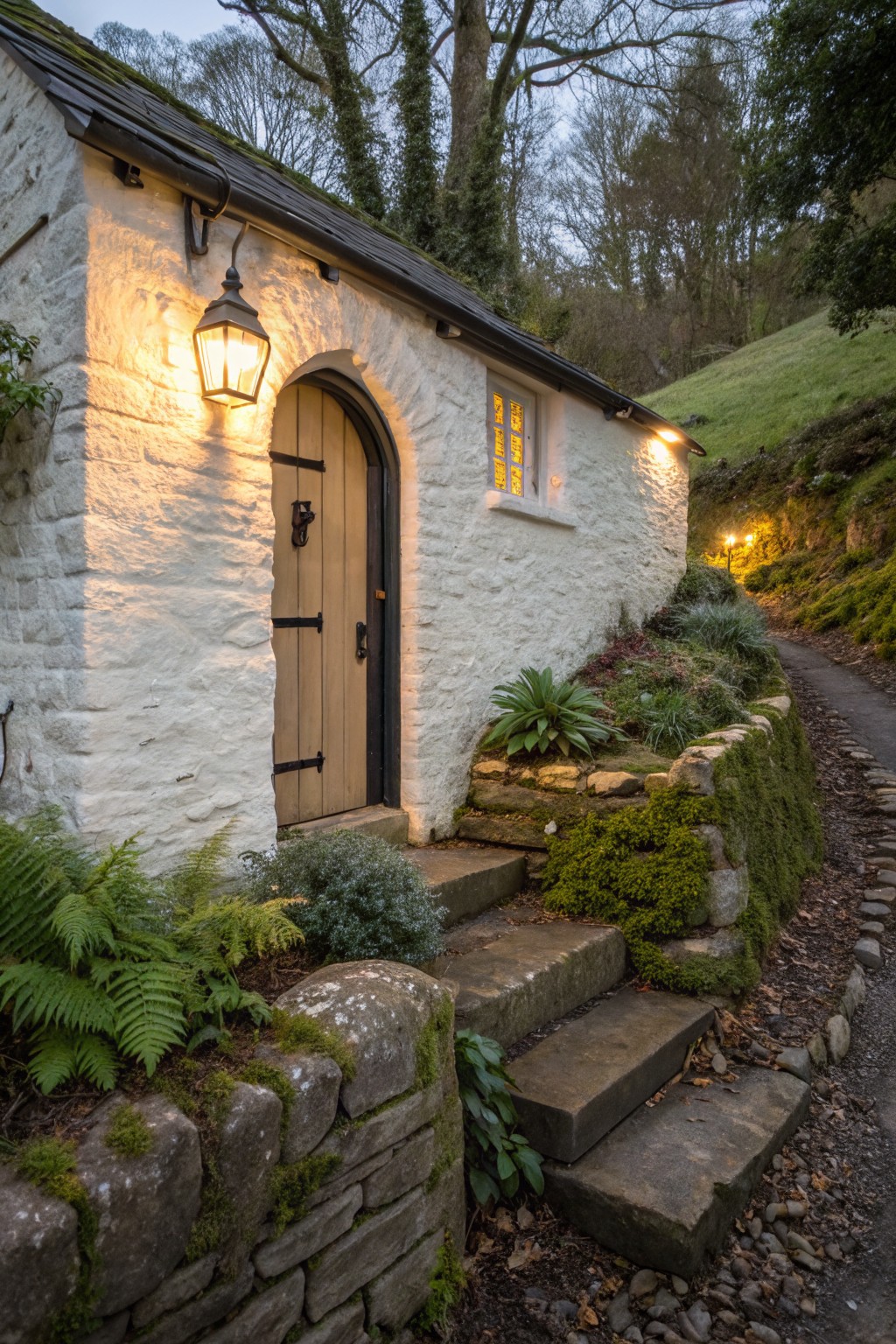
Whitewashed stone walls turn a tiny house into something straight out of a countryside walk. The soft paint over the rough stone softens hard edges and picks up light nicely, especially at dusk. That arched wooden door adds contrast without overpowering the simple shape.
This look fits compact homes on slopes or in gardens, where the stone ties right into the landscape. Hang a lantern by the door for easy evenings. Keep plantings low around the steps so the entry stays the focus… just right for spots that need a bit of old-world charm.
Frequently Asked Questions
Q: Does painting brick on a small house make it feel bigger?
A: Pick light colors like soft whites or pale grays. They bounce sunlight around and open up the space. Dark shades can shrink things visually.
Q: What’s the easiest way to prep old brick for paint?
A: Scrub it down with a stiff brush and mild detergent first. Let it dry fully for a couple days. Skip harsh chemicals that strip the brick’s texture.
Q: How do I choose a color that won’t clash with my trim?
A: Test samples on the actual wall at different times of day. Pull from your door or shutter hues for harmony. And trust your gut on what feels welcoming.
Q: Will the paint hold up in rainy weather?
A: Go with a breathable masonry paint made for brick. It lets moisture escape so the brick stays healthy underneath. Reapply every 5 to 10 years tops it off nicely.
