

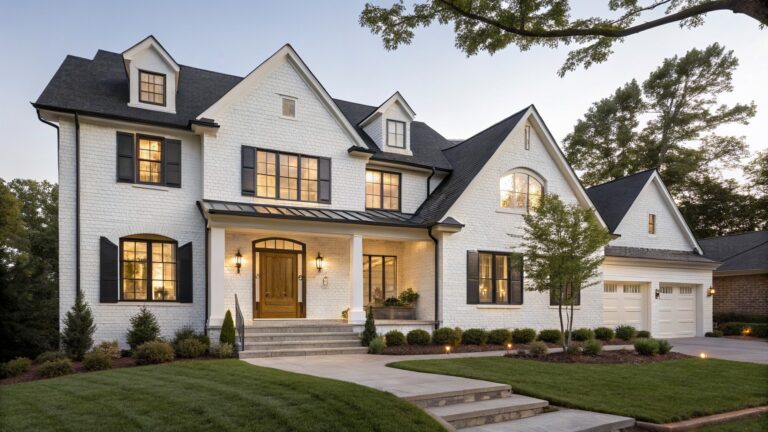
I remember scanning neighborhood streets and noticing how unpainted brick on two-story homes often makes the facade feel heavy and disconnected from the roofline.
Painting it shifts that dynamic, softening the scale while letting the entry and windows anchor the whole look.
I’ve eyed a few local examples where a muted blue-gray on the lower level lifts the upper story just enough to read balanced from the curb.
The right choices here consider how siding and trim interact with the paint, avoiding clashes that show up in person.
They’re grounded updates worth sketching out for your own house.
White Brick House with Black Window Frames
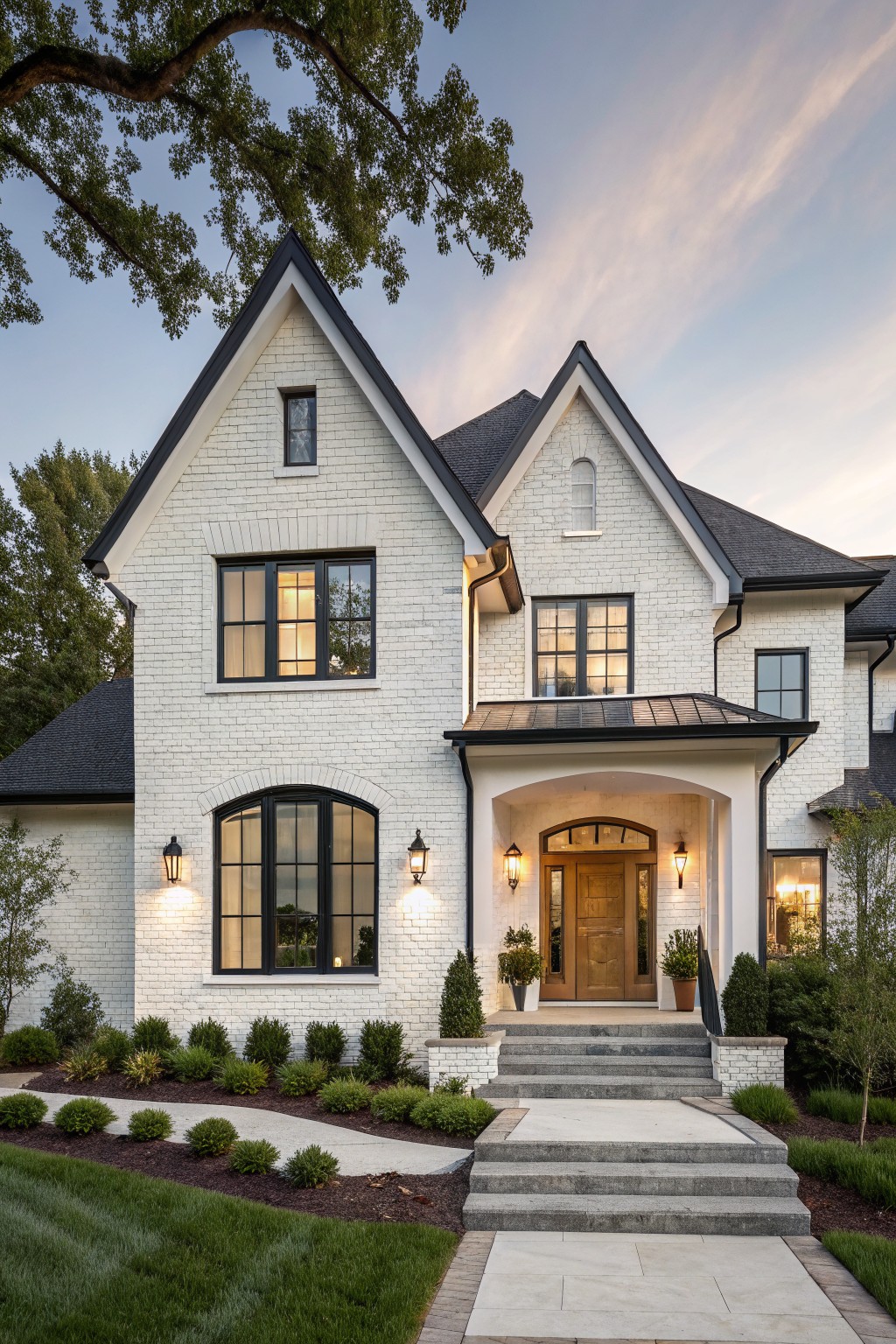
White painted brick gives this two-story home a fresh, clean look that feels timeless without trying too hard. The black frames around the windows pop against it, making the whole facade sharper and more defined. That contrast pulls your eye up to the gables and across the front without overwhelming things. It’s a simple way to update an older style house.
You can pull this off on most two-story homes, especially ones with some traditional rooflines or arches like the entry here. Keep the brick bright white and the black limited to windows, doors, and maybe roof edges. It suits neighborhoods with green lawns and shrubs. Just make sure the proportions stay balanced, or it might feel too stark.
Recommended Products
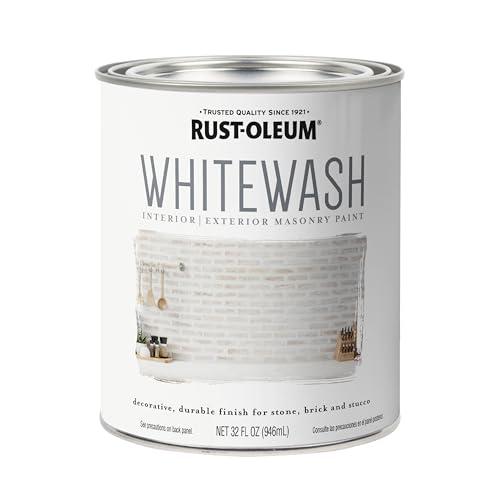
GREAT FOR HIGHLY POROUS SURFACES: Brightens the appearance of stucco, stone, brick and wood while letting natural surface texture shine through

MADE FOR EXTERIOR MASONRY: Designed for concrete, cement, brick, stone, stucco and masonry walls. Ideal for refreshing exterior walls, facades, garden walls and other properly prepared vertical masonry surfaces.
Light Brick Facade with Navy Shutters
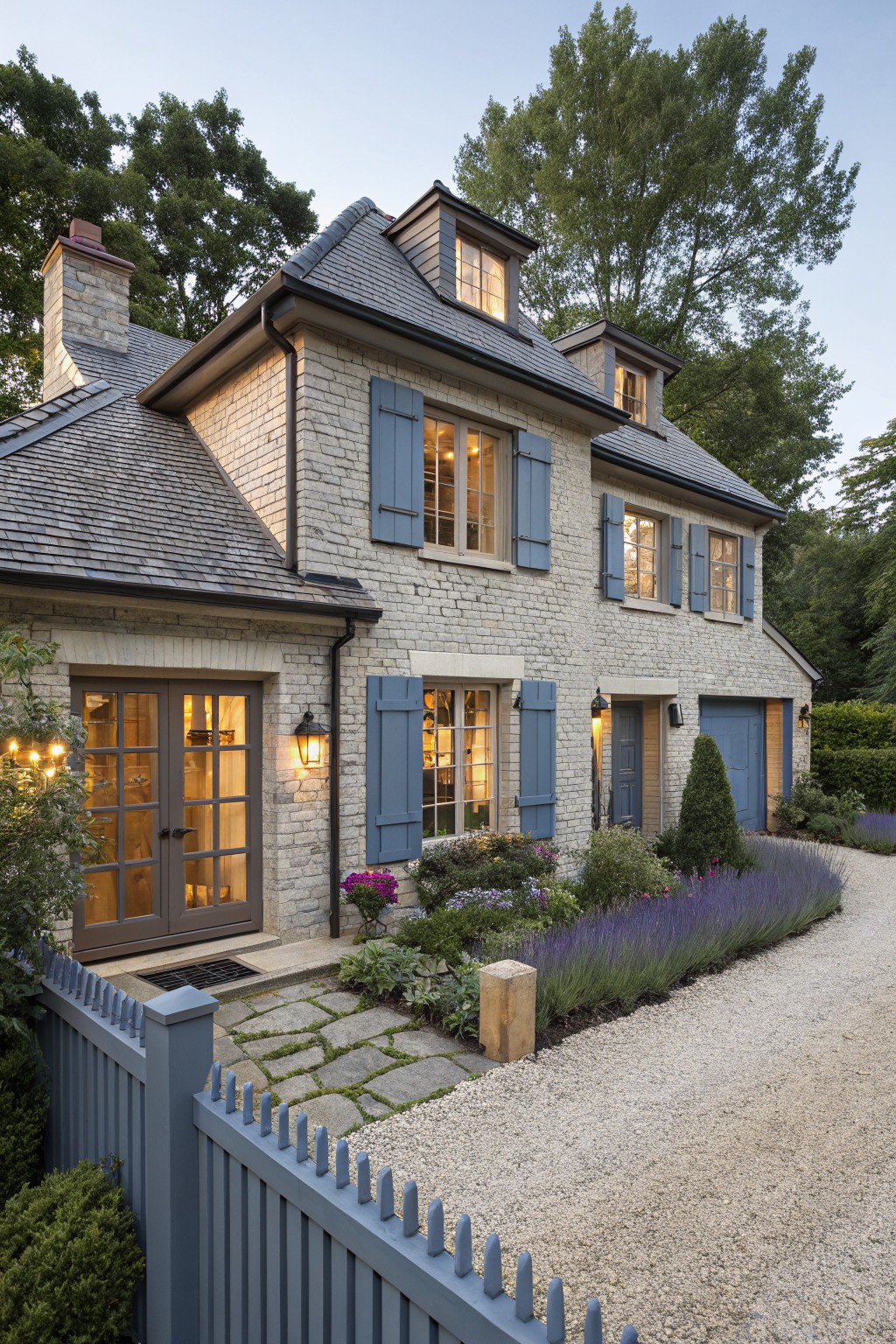
One straightforward way to give a two-story brick house some personality is painting the brick a soft light color and adding navy blue shutters. It keeps things calm but adds just enough contrast to make the windows pop without overwhelming the look. Those shutters frame the upper and lower windows nicely, tying into the slate roof and chimney for a pulled-together feel.
This setup works best on homes with simple rooflines and plenty of windows. Pair it with a gravel driveway and low plantings along the front to keep the focus on the house itself. Skip busier colors on the door or trim, or it might start to compete. It’s practical for traditional neighborhoods too, since the navy feels classic but fresh.
Dark Brick Facade with Cantilevered Wood
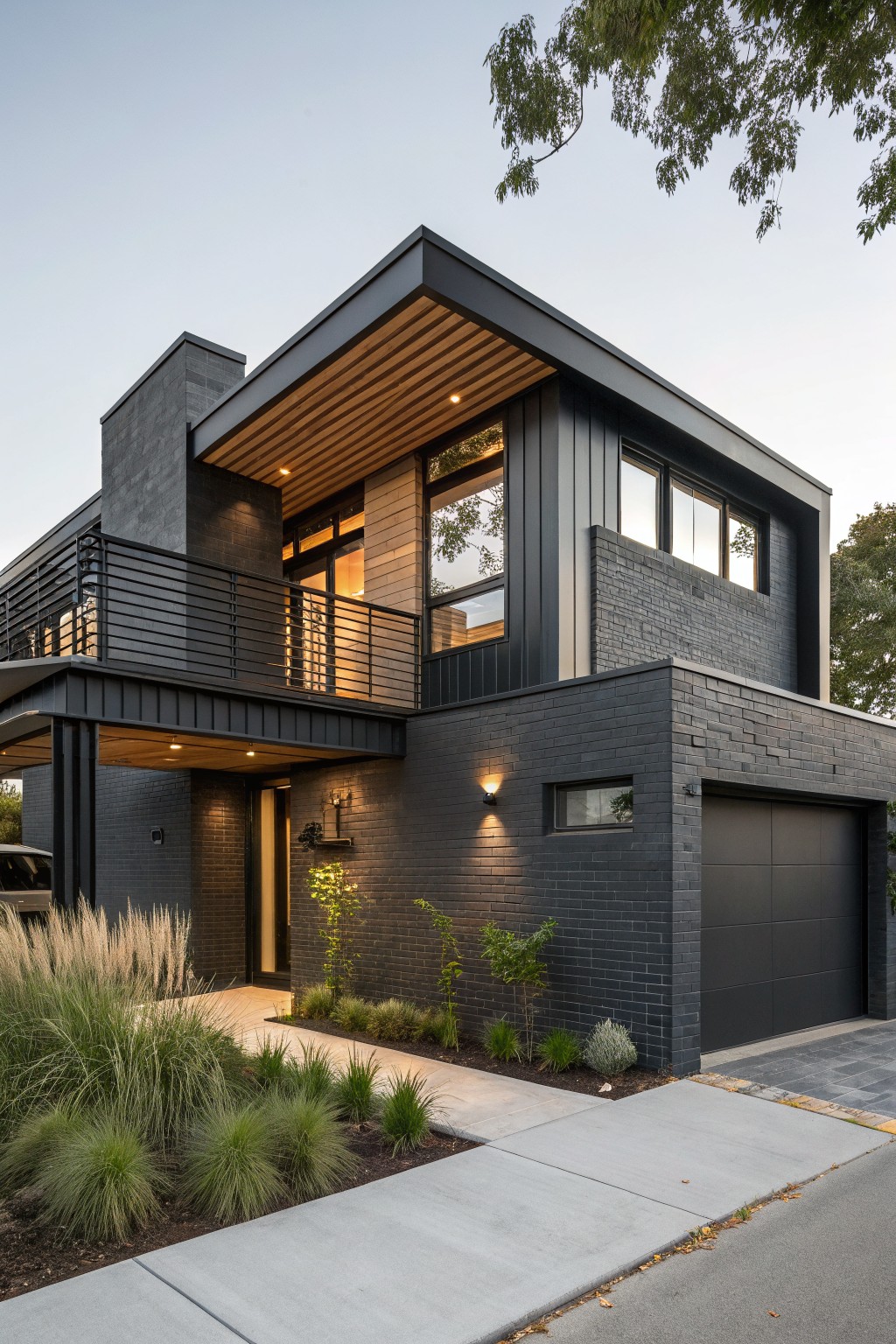
A cantilevered upper level works nicely on a two-story house like this one. The dark brick base stays solid and grounded. Then the wood-lined overhang juts out just enough to add some lift and warmth. It keeps the look modern but not cold. That wood detail pulls your eye up without overwhelming the brick.
You can pull this off on narrower lots where you want height without bulk. Pair it with black metal accents around windows and railings for clean lines. It suits homes in town or suburbs aiming for that balanced modern feel. Just make sure the wood is protected from weather so it lasts.
Recommended Products

One Piece Injection Molded Polypropylene Construction

One Piece Injection Molded Polypropylene Construction
A Porch with Stone Columns
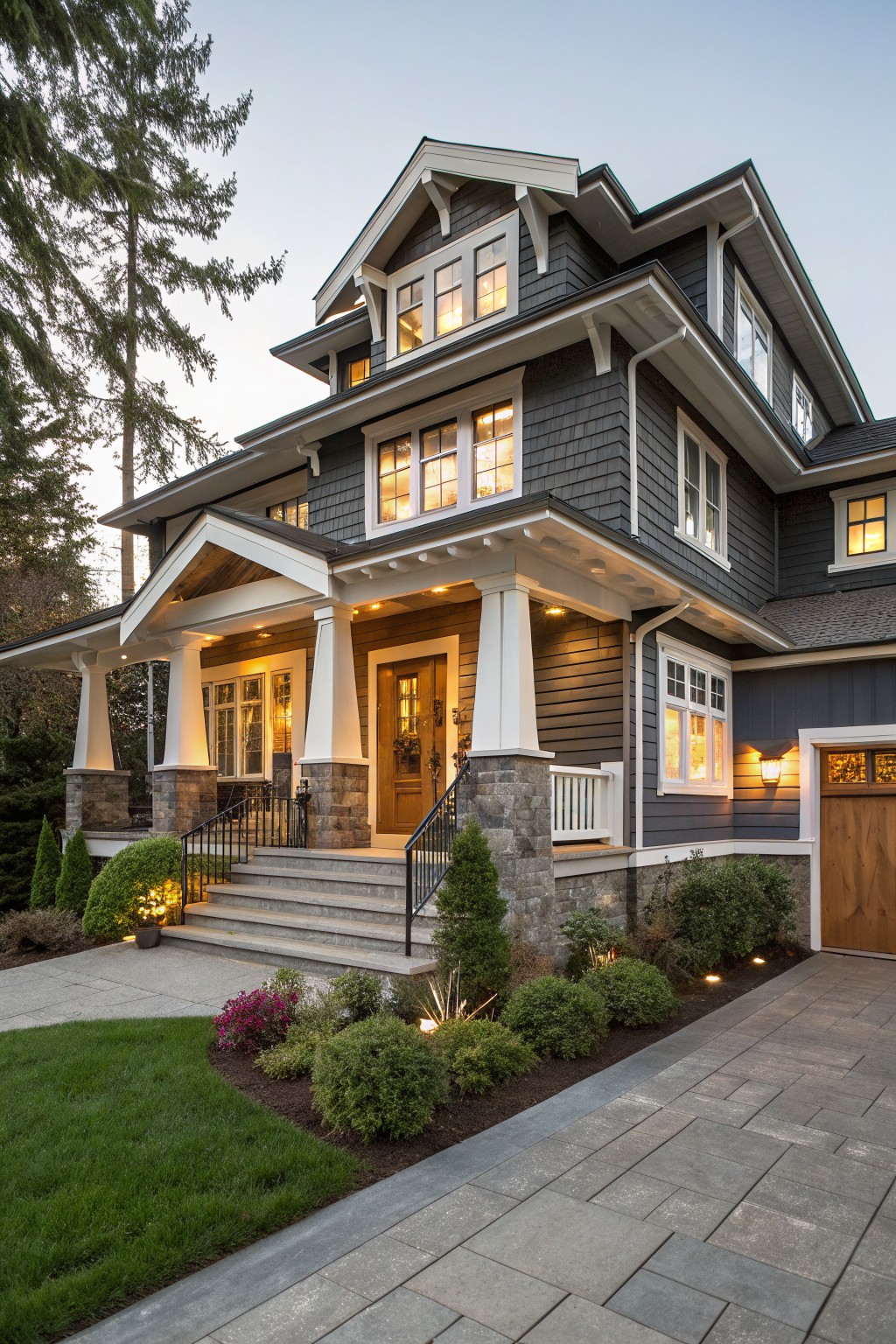
A deep covered porch like this one pulls the eye right to the front door. Those sturdy stone columns at the base give it real weight, especially against the lighter shakes up top. It makes the whole two-story front feel settled and balanced, not top-heavy. The warm wood door fits right in too.
You can pull this off on most traditional homes, especially Craftsman styles. Match the stone to your foundation or local rock for a natural tie-in. Add low lights along the steps like here. Just keep the columns proportional so they don’t overwhelm a smaller entry.
Light Blue Siding on a Two-Story Porch Home
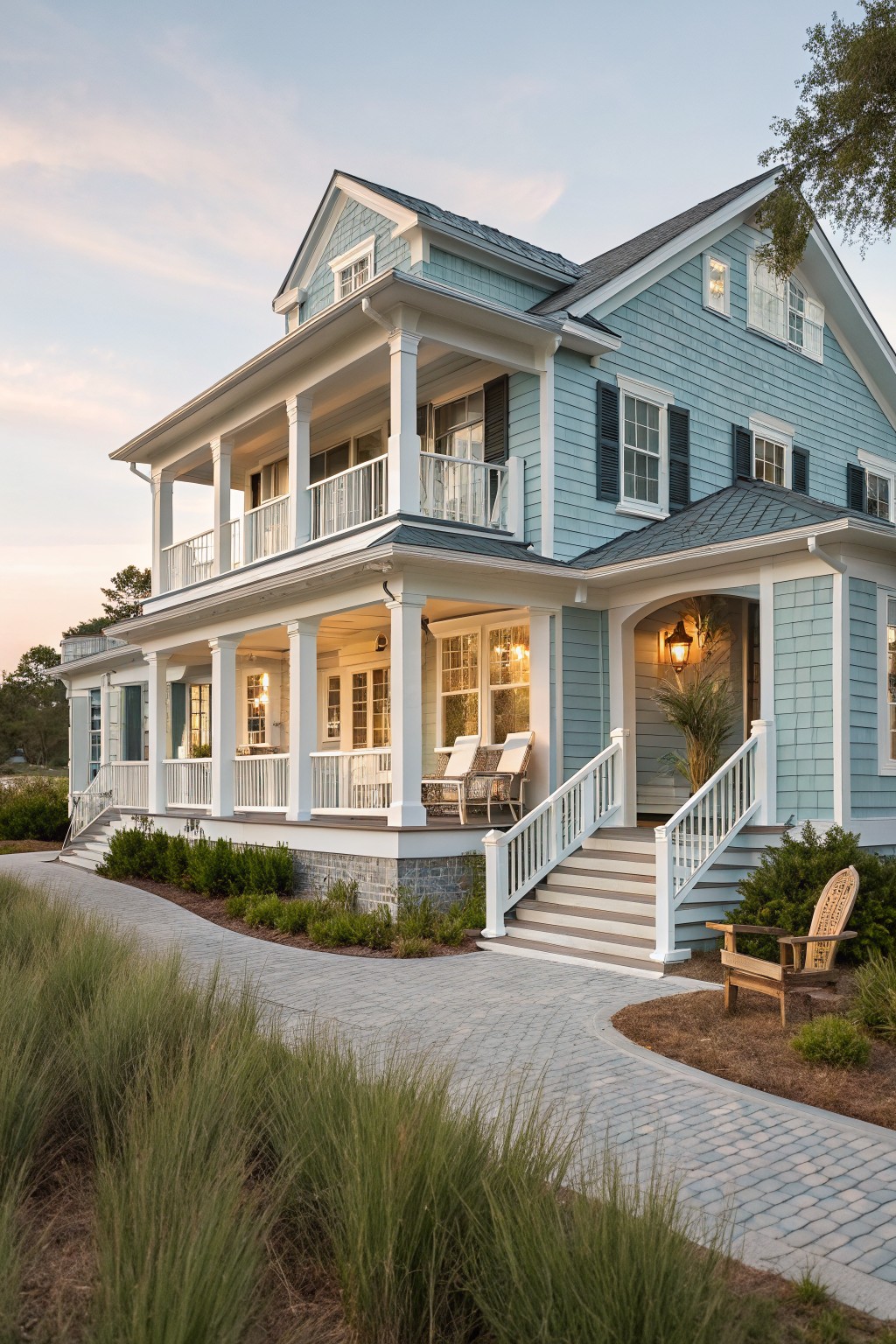
A soft light blue paint on the clapboard siding makes this two-story house feel light and balanced. The white columns and railings on the wraparound porches add structure without overwhelming the design. It pulls the eye up evenly across levels, keeping things calm and approachable.
This works best on traditional homes near water or in mild climates where you want curb appeal without fuss. Pick a durable exterior paint in that pale blue shade, then crisp white for trim and porch elements. Skip dark accents if you prefer the softer look… though black shutters do add nice pop here.
Light Painted Brick with Black Window Frames
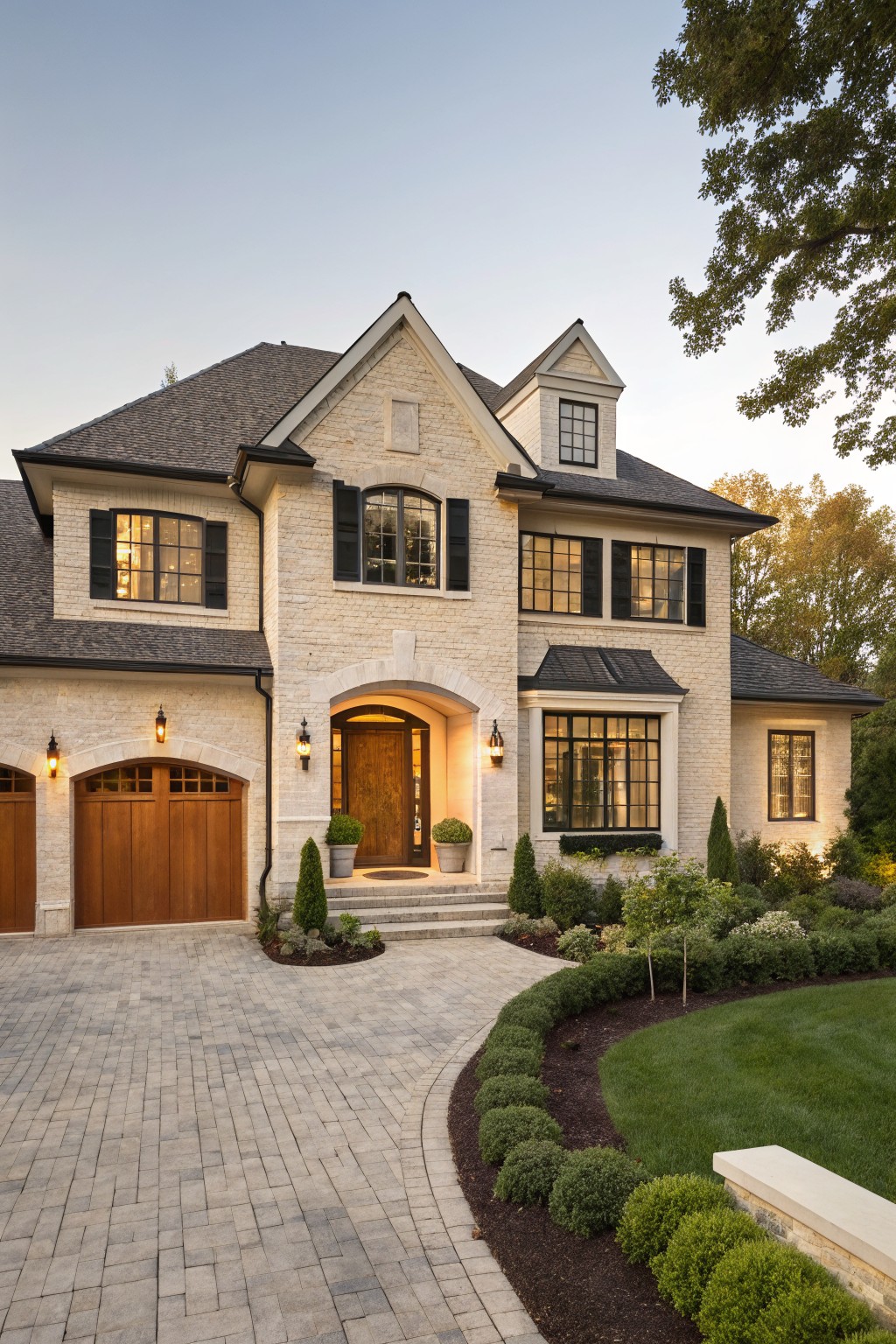
This two-story home uses light painted brick as the base, then adds black frames around the windows and doors for a clean contrast. It keeps things balanced without feeling too busy. The dark accents pop nicely against the soft brick, making the whole facade look put-together and welcoming from the street.
You can pull this off on most suburban homes, especially ones with gables and arches like this. Pair it with wood garage doors and simple lanterns at the entry to tie it in. Just make sure the black trim matches your roofline so it doesn’t overwhelm the brick…it works best in neutral neighborhoods where you want subtle update.
Blush Pink Painted Brick Exterior
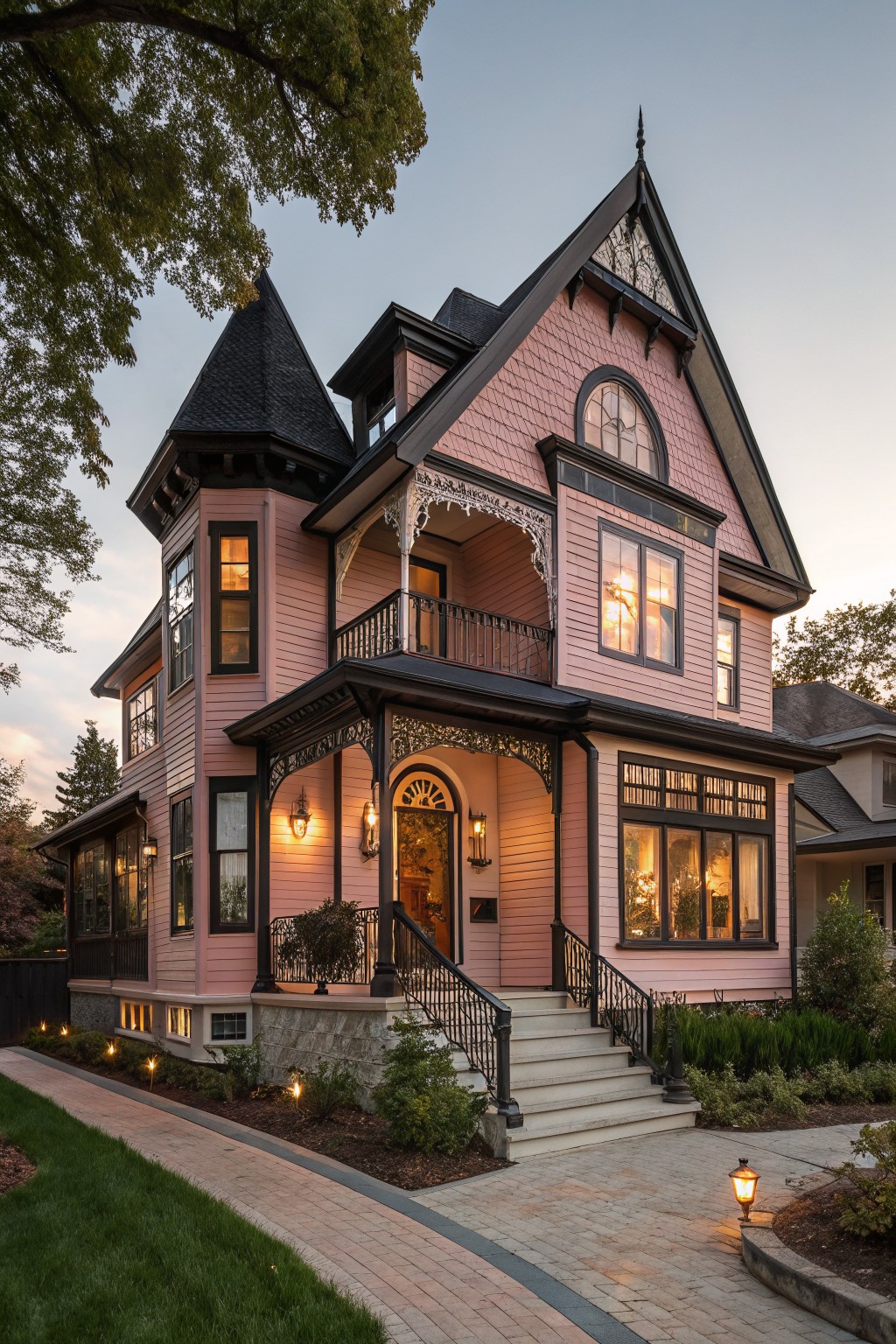
Painting brick exteriors in a soft blush pink tone takes a classic two-story Victorian house and makes it feel fresh yet timeless. The color softens the bold lines of the architecture, like the steep roof peaks and ornate porch details, without losing that historic charm. Paired with black trim around the windows and doors, it creates a nice contrast that keeps the look balanced and not too sweet.
This approach works best on homes with lots of gingerbread trim or fishscale shingles, where the pink acts as a gentle backdrop. Try it on an older house needing a curb appeal boost, or even a newer build wanting that romantic vibe. Just make sure the paint is breathable masonry type to avoid moisture issues down the line.
Black Brick Exterior with Wood Accents
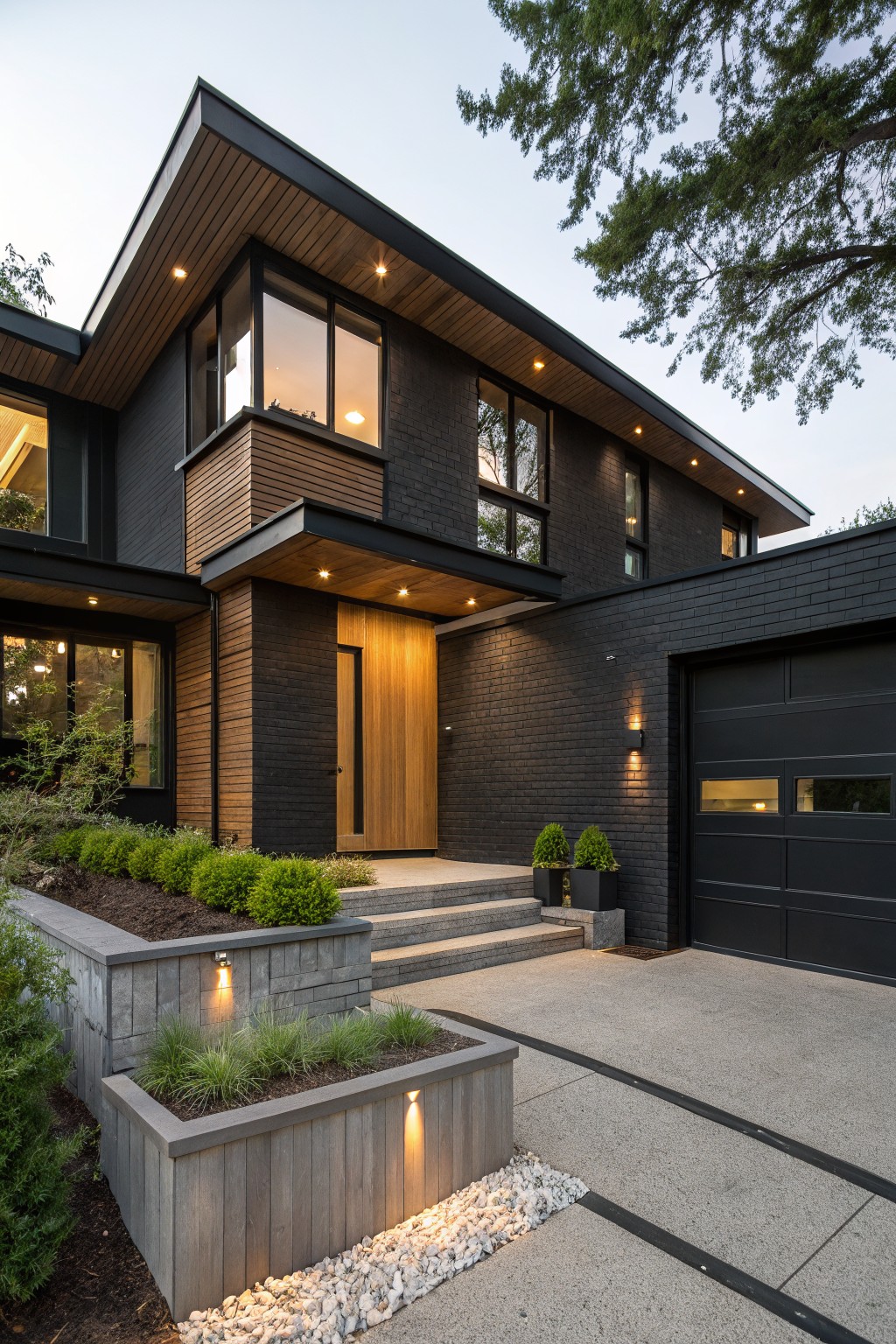
One look that keeps coming up for two-story homes is pairing dark brick with wood accents. The black brick gives a solid, modern base. Then wood steps in on things like the entry overhang and side cladding. It adds that bit of warmth without overdoing it. The contrast feels right. Not too stark. Houses like this stand out on the street but still look approachable.
You can pull this off on most any two-story setup. Especially if your brick is painted a deep charcoal or black. Use cedar or similar wood on vertical panels or the entry area. Keep the wood natural or lightly stained. It works best where you want modern vibes with some coziness. Just make sure the wood gets protection from weather. That way it ages nicely over time.
Painted Brick Home with Green Shutters
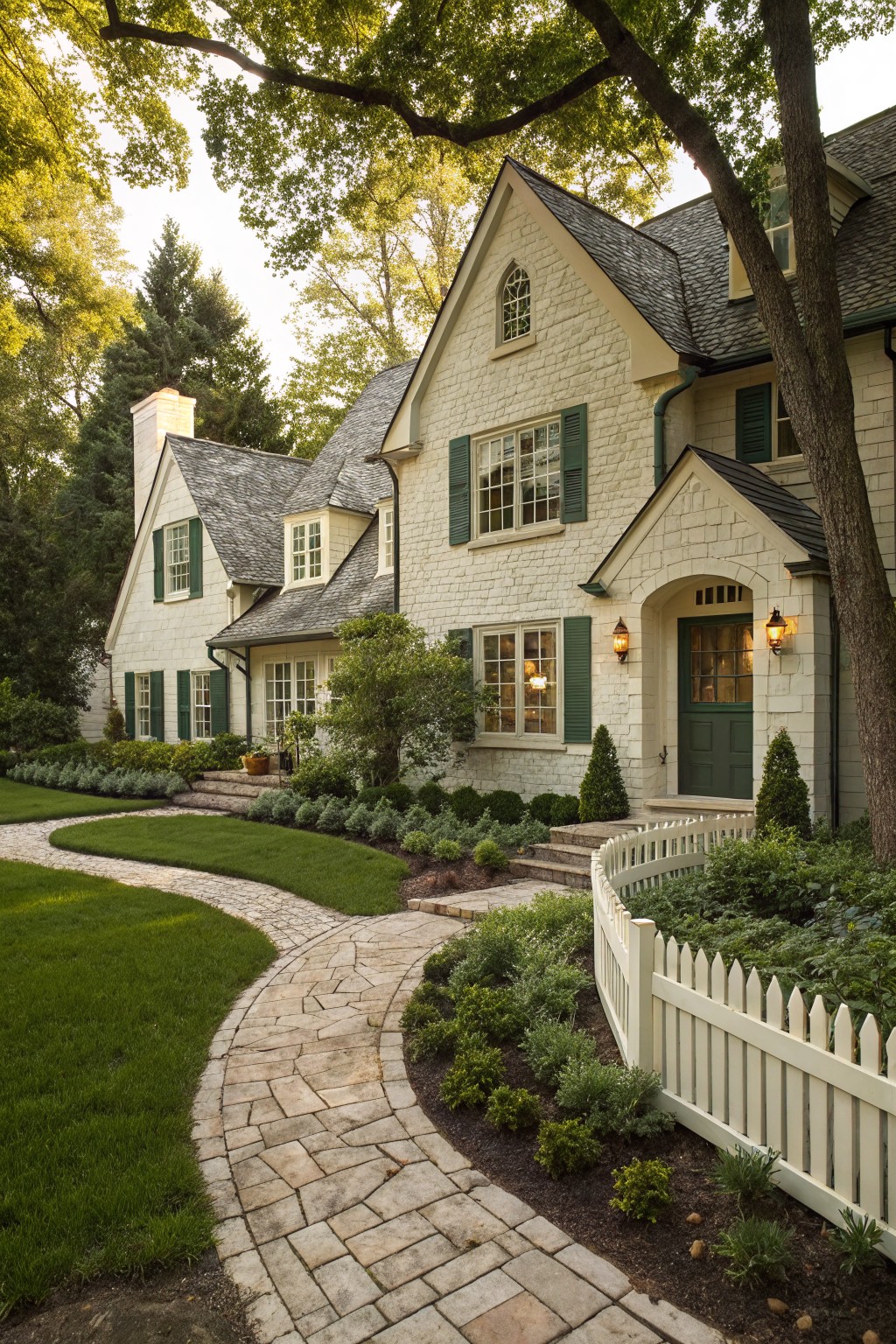
A light cream paint on the brick gives this two-story house a softer look than raw brick. The deep green shutters on the windows and door pull in some color that feels right at home with the surrounding trees. That dark slate roof adds weight up top, keeping the whole front balanced and easy on the eyes.
This setup works best on homes with gables and arches, like older styles in leafy neighborhoods. Paint the brick a warm neutral, then match shutters to nearby evergreens. Add a simple path like the stone one here to draw folks right to the entry. Skip bold colors if you want it to stay classic.
White Painted Brick Facade with Black Trim
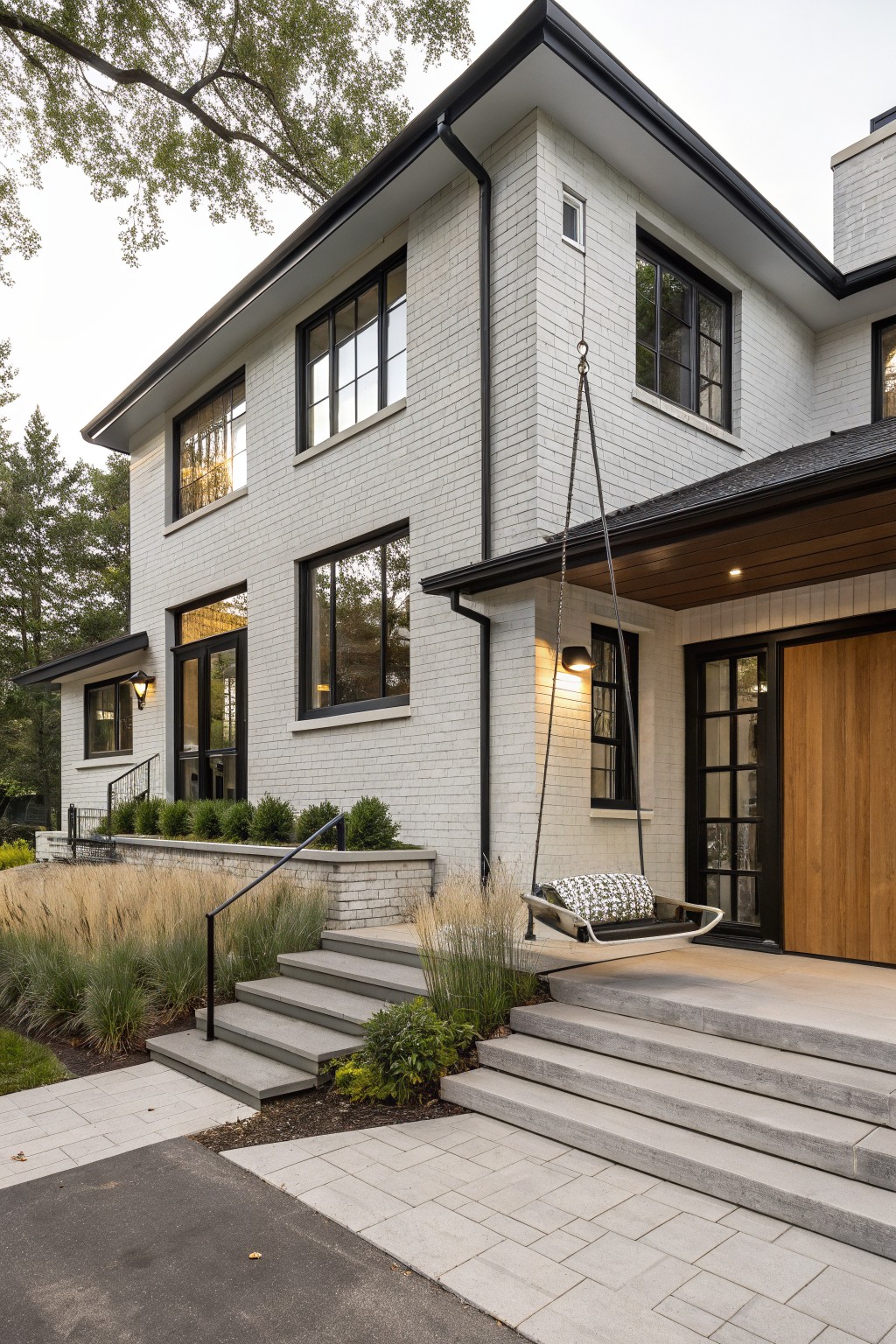
White painted brick in a soft shade covers this two-story home, setting off the black frames around the tall windows and doors. That contrast keeps things sharp and current, but the brick’s texture stops it from feeling too cold. A wood front door pulls in some natural tone right at the entry.
You can pull this off by painting existing brick white and swapping in black metal frames if your windows need updating. It suits family homes on tree-lined streets, where you want curb appeal that lasts. Just keep landscaping low-key, like tall grasses by the steps, so the house stays the focus.
Welcoming Arched Entry Door
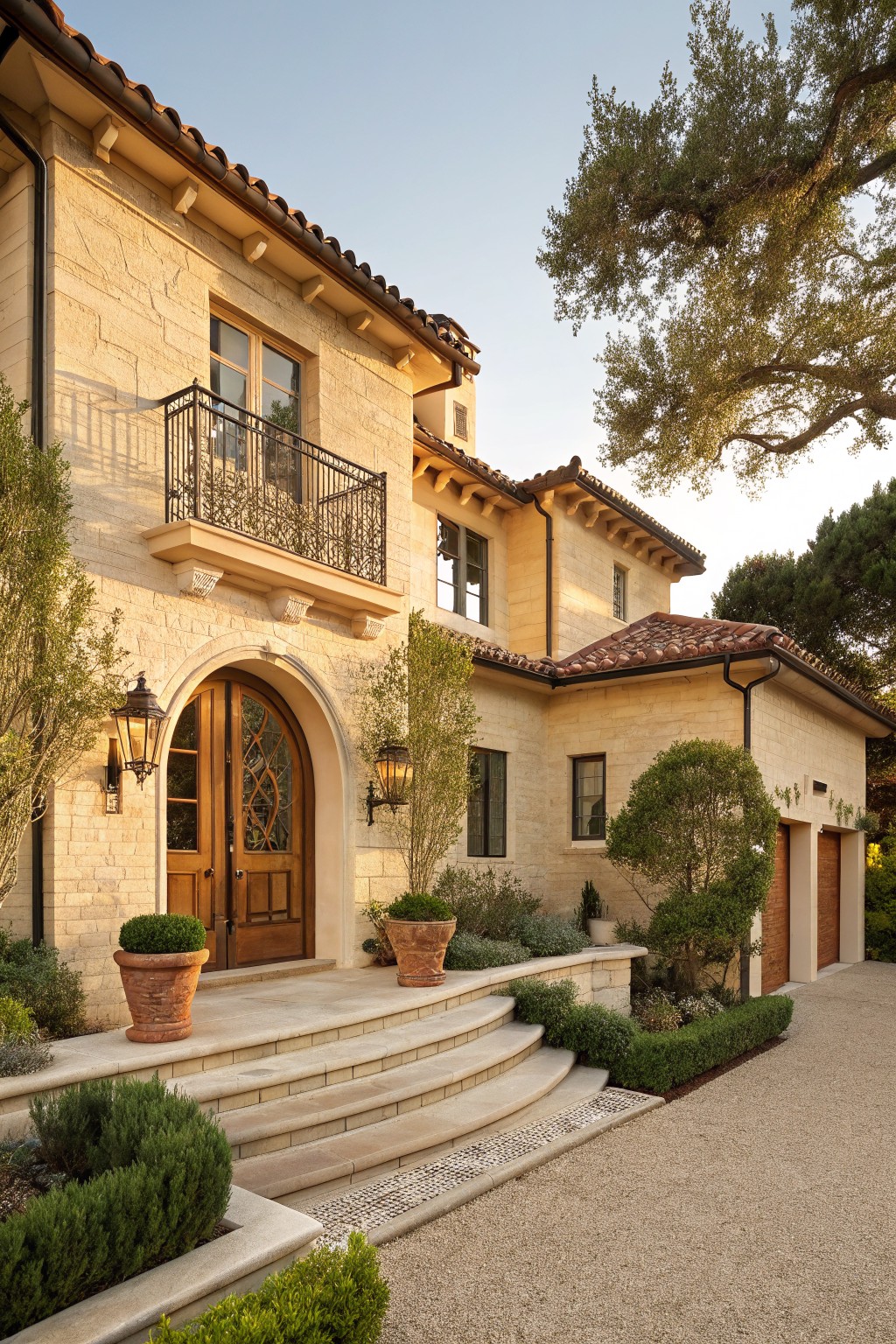
A big arched wooden door like this one pulls the whole front of the house together. Set into light stone walls with a balcony overhead, it gives the two-story facade a clear focal point without feeling busy. The curve of the arch softens the solid stone look, and those matching lanterns on either side add just enough light to make it feel open and used.
You can pull this off on most traditional two-story homes, especially if you want a bit of old-world charm. Go for dark wood on the door to stand out against pale walls, and keep the steps wide for easy access. Add a couple of large terracotta pots nearby… it keeps things simple and grounded. Watch the scale though, too small an arch gets lost.
Shingle Siding with Stone Base
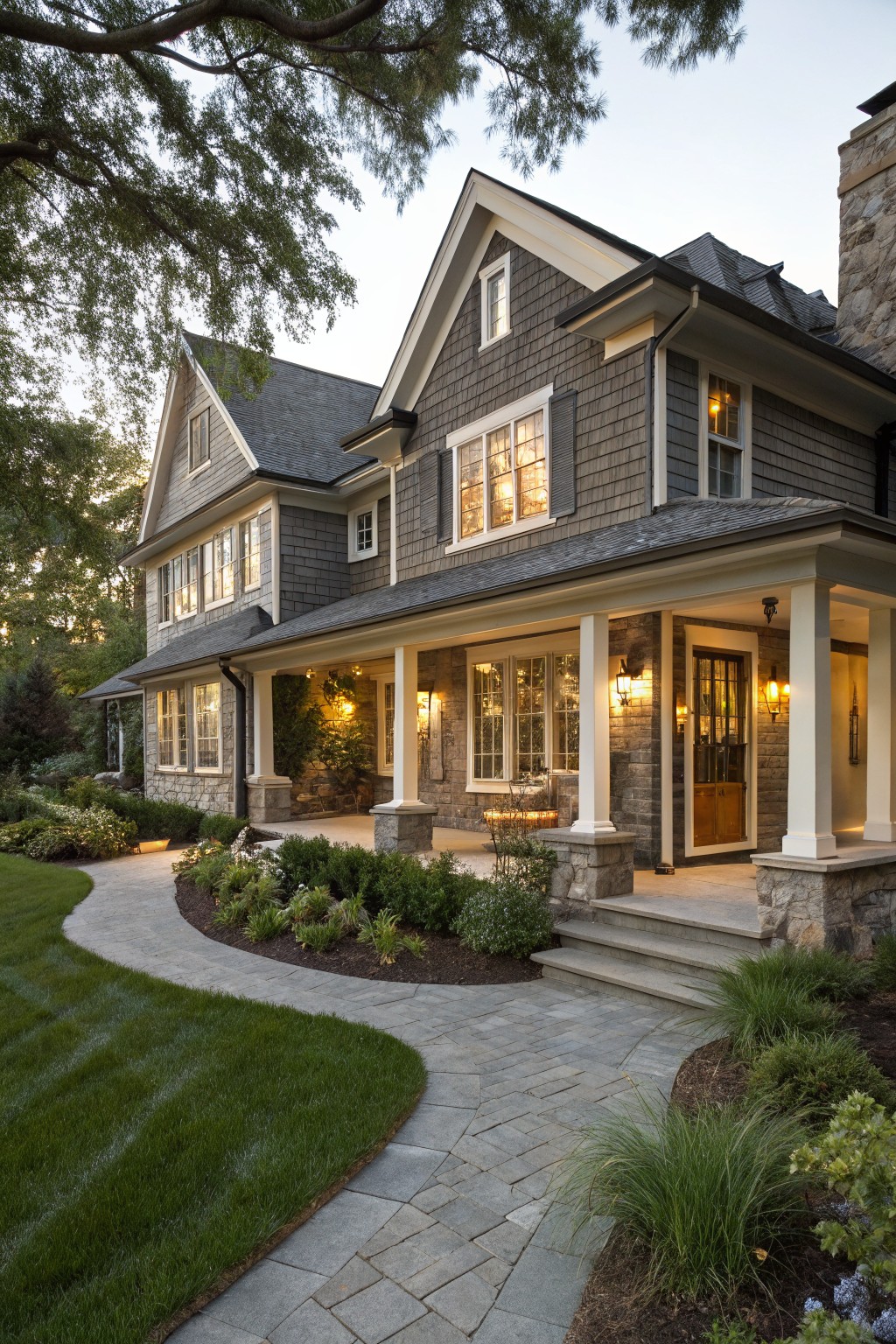
Gray shingle siding covers most of this two-story house. Stone forms the foundation and porch pillars. That mix gives the facade a steady feel. The upper part stays light and textured. The bottom anchors everything without overwhelming.
Try this on homes in wooded areas or older neighborhoods. It suits craftsman or colonial styles. Keep stone to key spots like entries and bases. Pair with simple landscaping so the house stays the focus.
Green Siding with Wood Accents
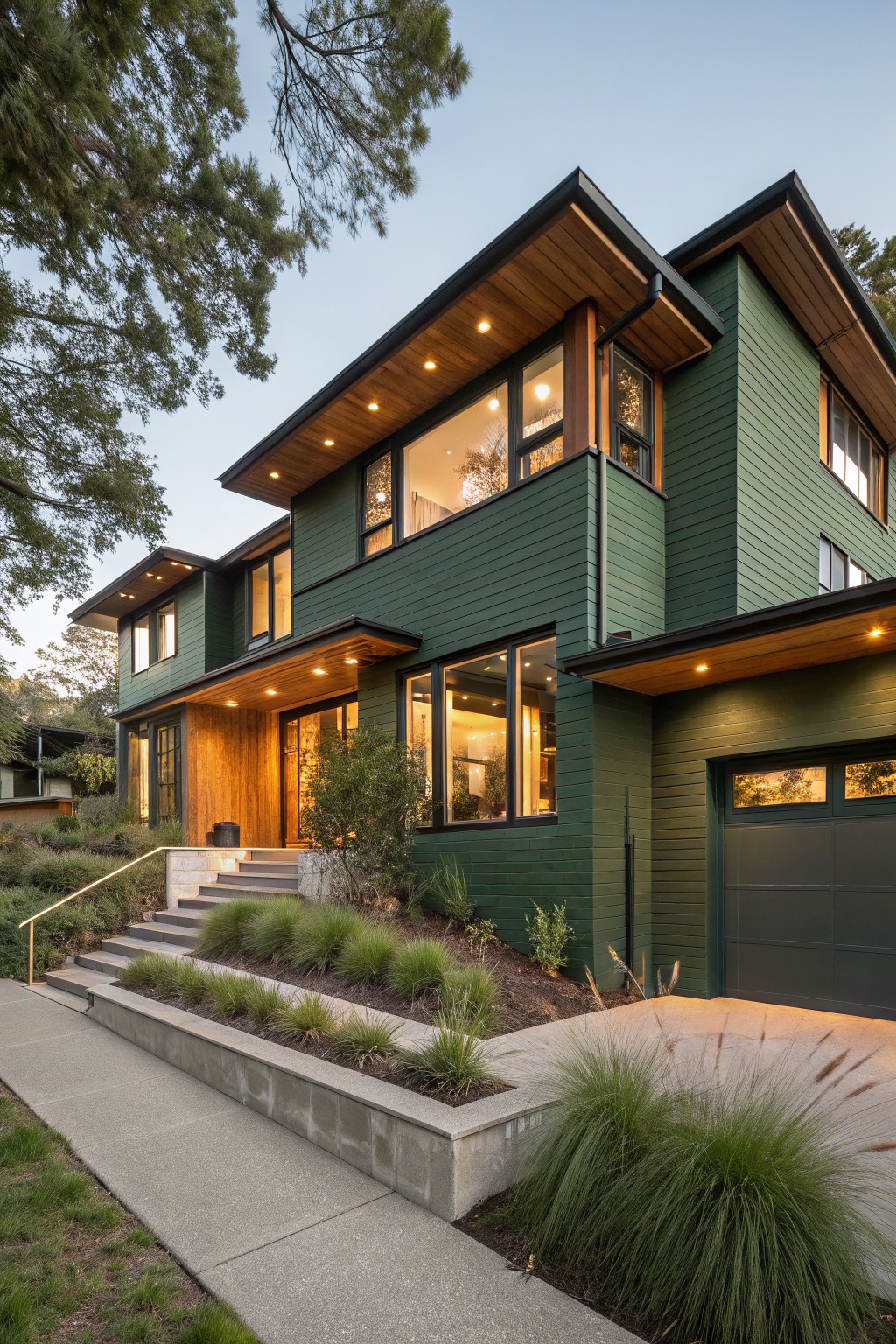
A deep green siding like this gives a two-story house a calm, modern feel that blends right into natural surroundings. The vertical boards keep lines clean and tall, while cedar wood on the overhangs and entry adds just enough warmth to avoid a cold look. Large windows let light pour in, making the whole facade feel open.
This setup suits homes on hillsides or in wooded spots, where the green ties into trees and the wood keeps things from fading into the background. Go for black frames on windows and simple steps up to the door. Skip busy details, though. It holds up well year-round with low upkeep.
Light Painted Brick with Teal Shutters
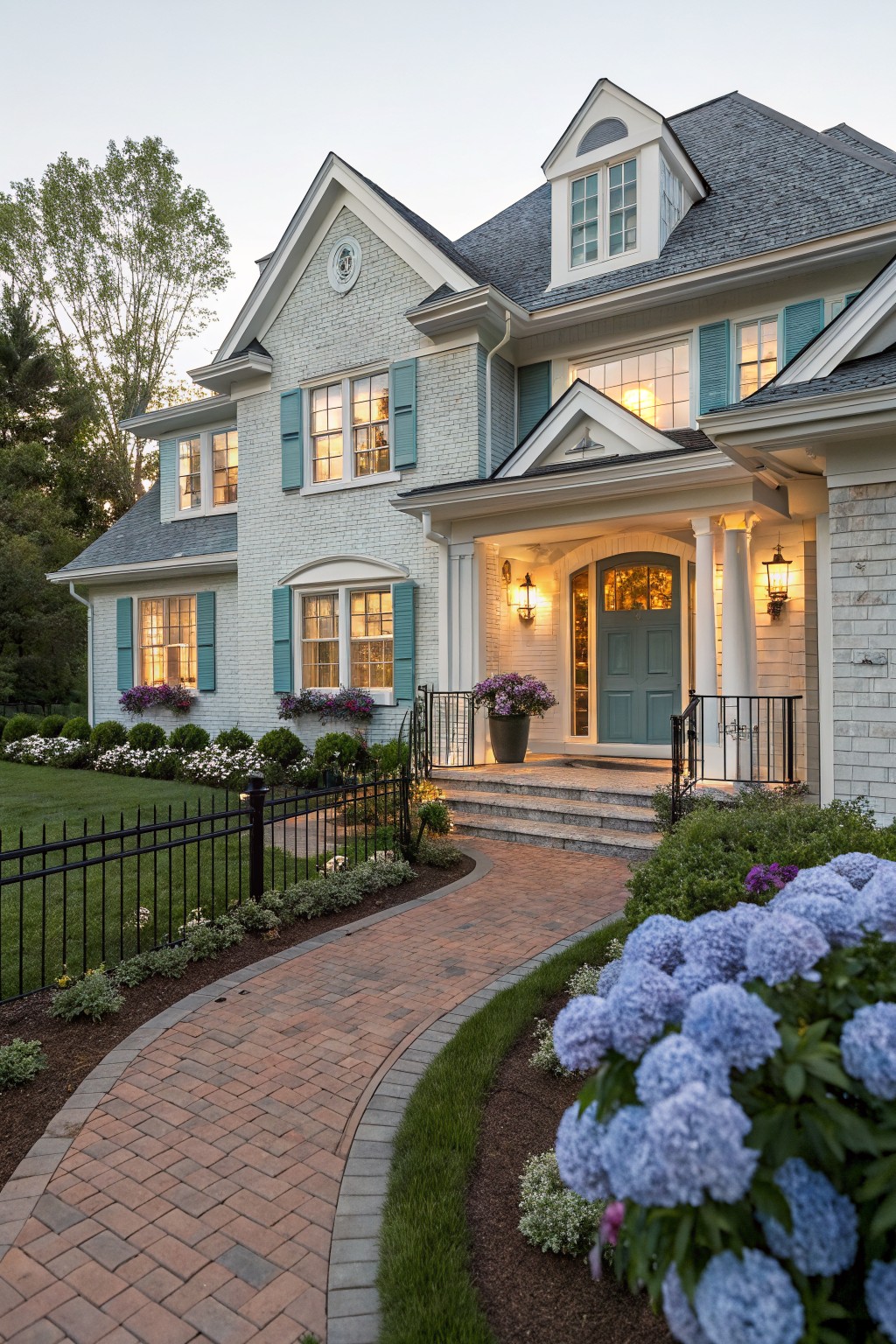
A soft pale paint on brick gives this two-story house a gentle, updated look that still nods to classic style. The teal shutters on the windows and matching door pull in a bit of coastal color. It keeps things balanced. No heavy contrasts or bold patterns to fight each other.
This setup suits older homes or suburbs where you want curb appeal without big changes. Paint your brick in a light gray-white tone first. Add teal to shutters and entry only. Line the walk with low plants like hydrangeas to tie it to the ground. Skip it on super modern houses. It can feel out of place there.
Stone Lower Level with Wood Siding Above
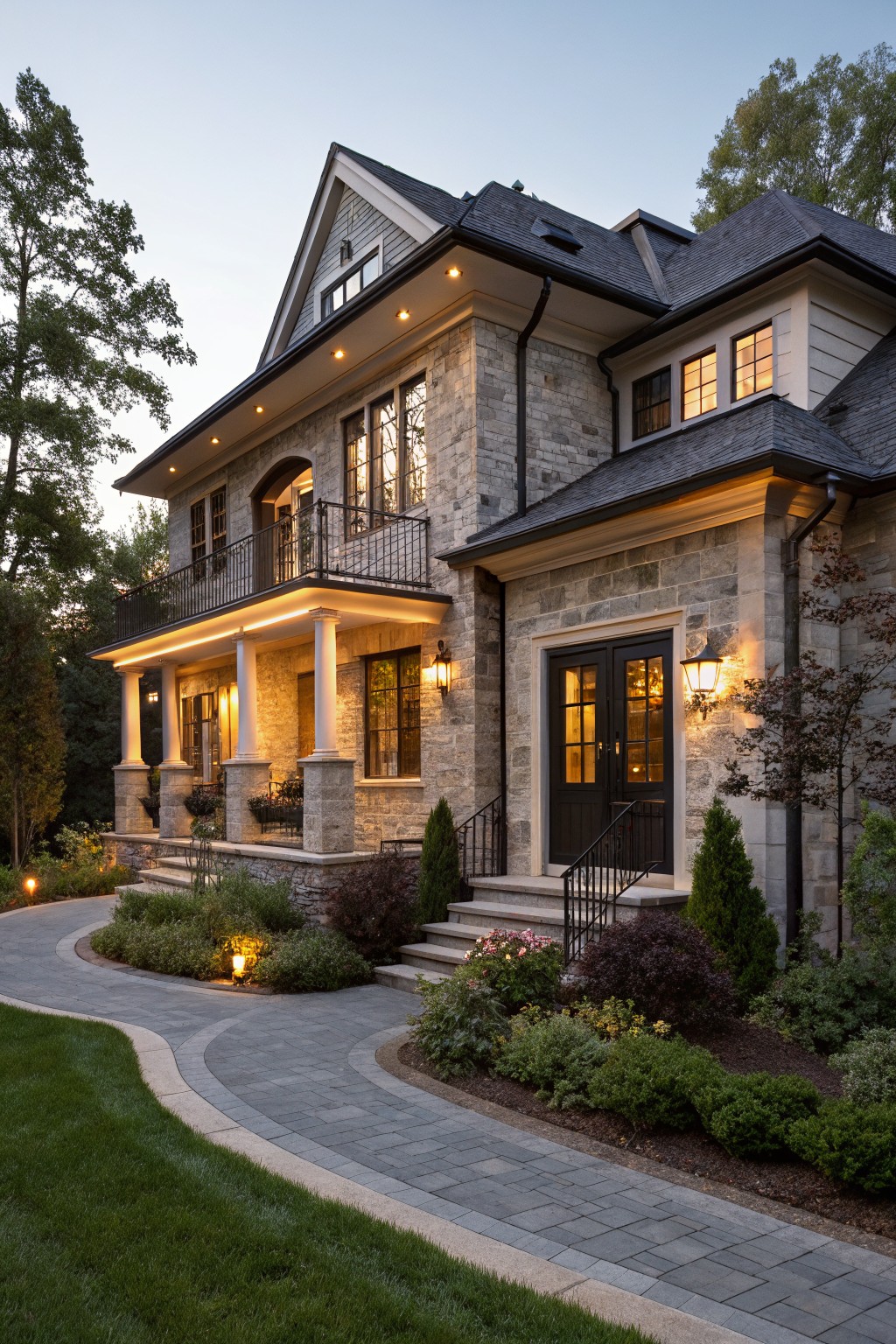
A two-story house like this one uses natural stone on the lower level and lighter wood siding up top. That mix keeps the base solid and grounded while the upper part feels a bit airier. The covered porch pulls it all together with stone columns that match the bottom and add some welcome shade.
Try this on homes where you want a classic look without going all stone. It fits older neighborhoods or spots with bigger lots. Just keep the porch steps simple and light the entry at night. Watch the siding color so it doesn’t blend into the roofline.
Pale Yellow Paint on Classic Two-Story Homes
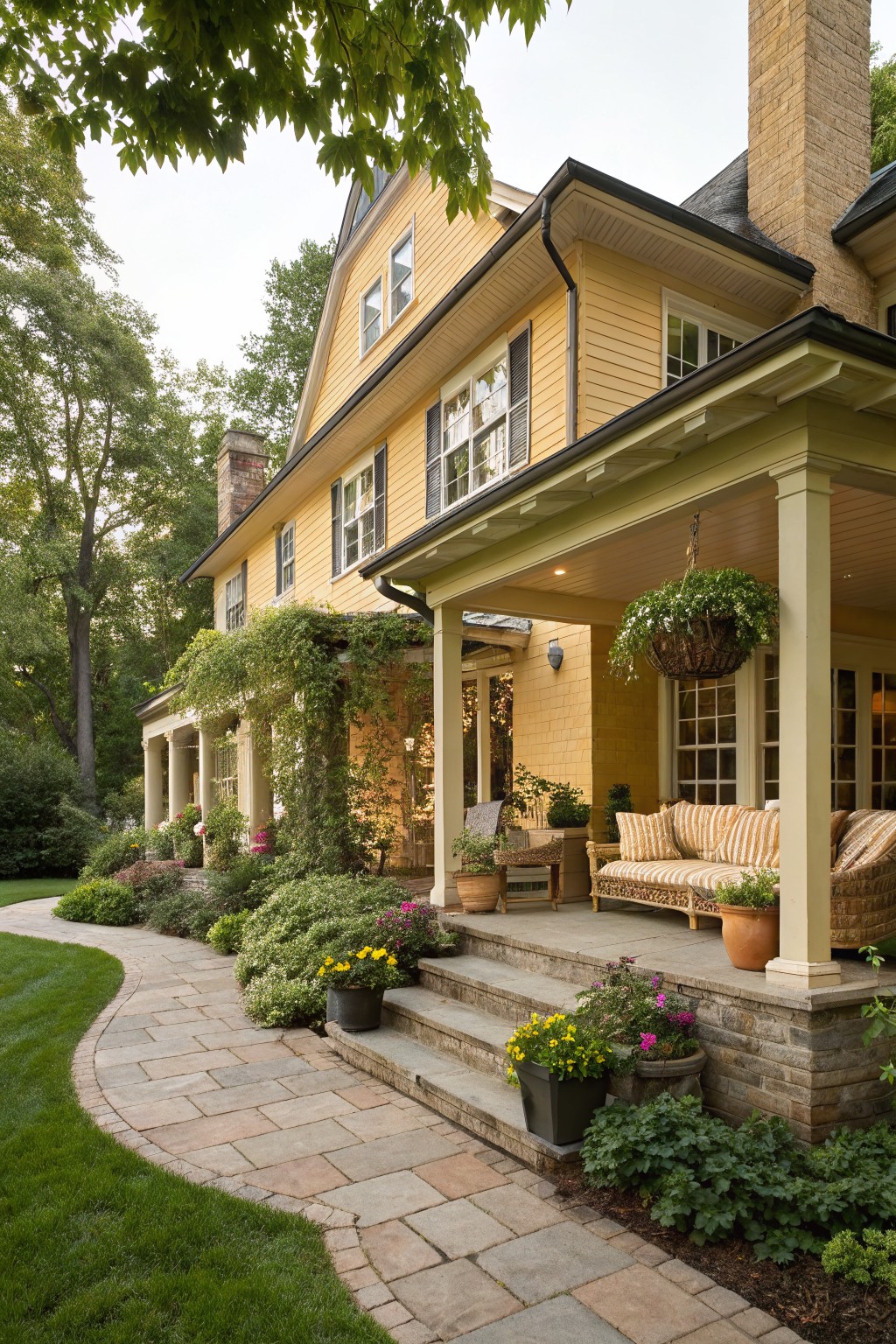
Pale yellow paint shows up well on traditional two-story houses like this one. It keeps the classic lines of the gabled roof and multi-pane windows but gives the whole facade a lighter, more open feel. The color picks up the green from the trees and plants around it without clashing, and the white trim keeps things crisp.
This works best on homes with some architectural detail already, like columns on the porch or brick accents on the chimney. Go for a soft shade if your house faces north, since it stays brighter longer. Just pair it with neutral stone steps or a simple path so the yellow doesn’t overwhelm the entry.
Navy Painted Brick Two-Story Exterior
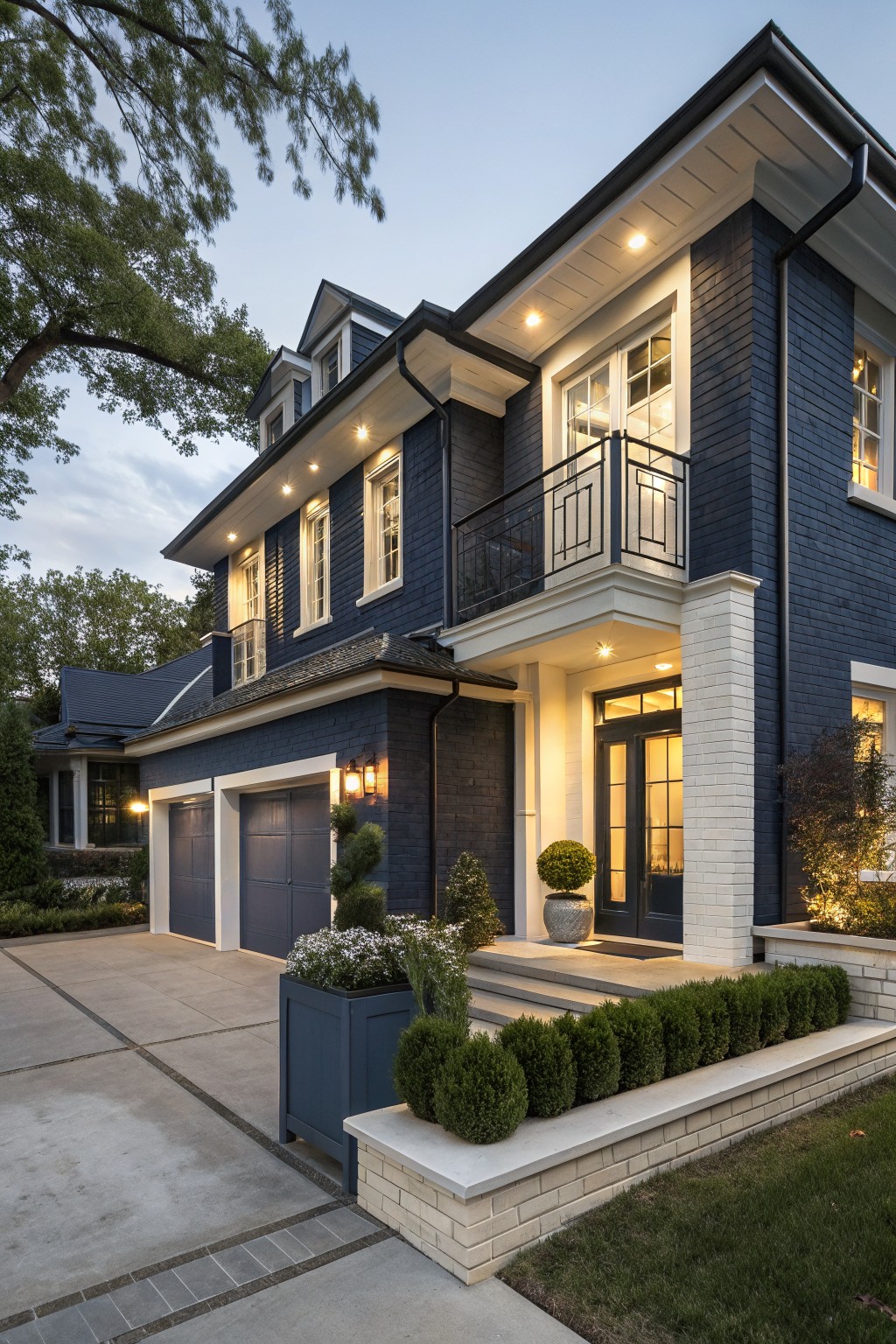
A deep navy paint on brick gives this two-story house a clean, modern edge without losing that classic feel. The color wraps the whole facade nicely, from the garage up to the balcony, and the white trim around windows and doors keeps everything sharp and balanced. It stands out at dusk when lights come on, but stays understated during the day.
This works best on homes with straightforward lines, like in older suburbs where you want curb appeal without big changes. Paint over existing brick if it’s in good shape, and stick to matching navy garage doors. Pair it with simple boxwood hedges along the front. One thing, test the shade first. Navy can pull cool or warm depending on your light.
Light Brick Paired with Black Trim
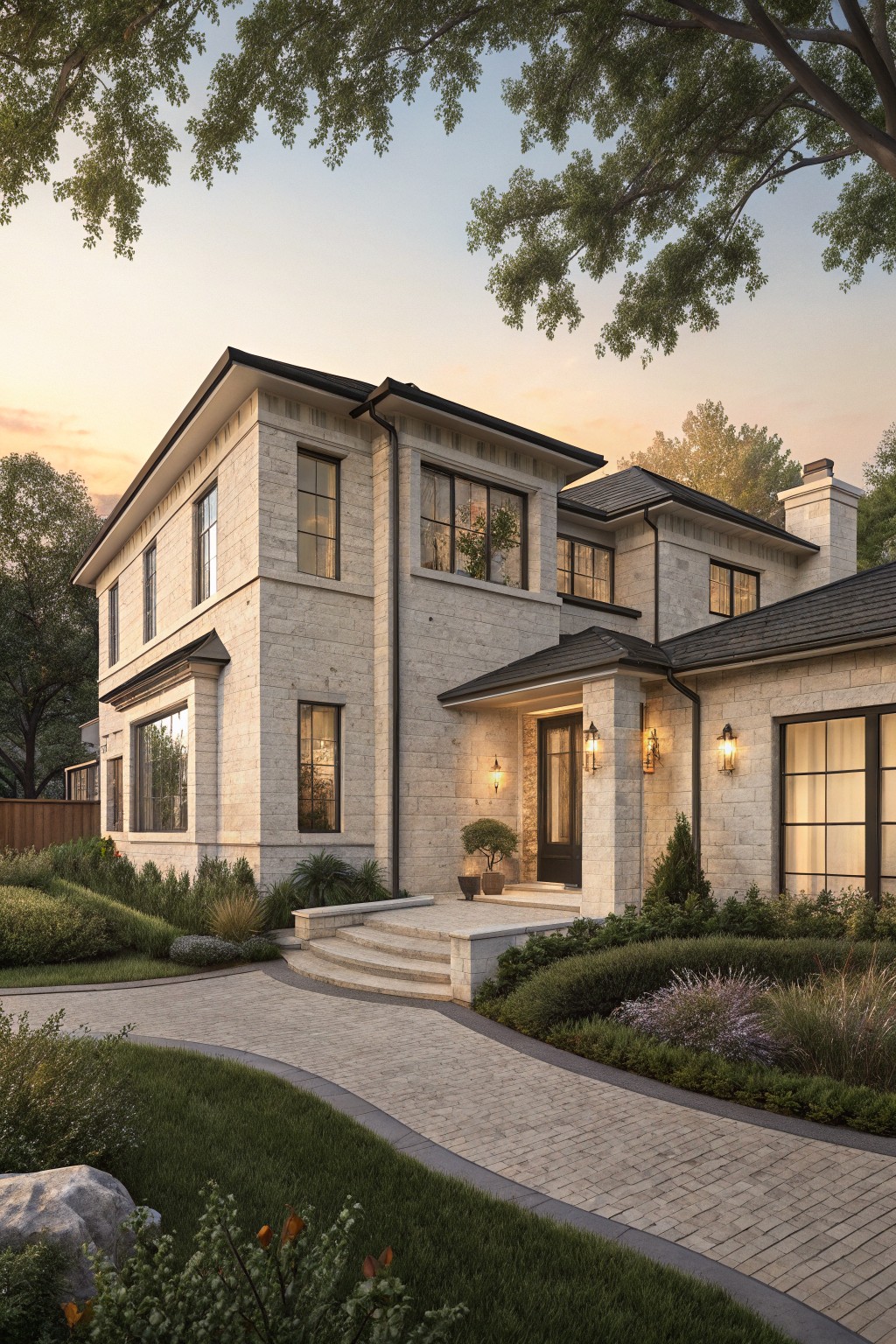
One straightforward way to give a two-story brick house a fresh, balanced feel is painting the brick a soft light color and adding black trim around the windows and roofline. It keeps things simple without overwhelming the street view. The contrast makes the home stand out just enough, especially with those black-framed windows that echo the dark roof.
This setup works best on homes in neighborhoods with a mix of traditional and newer styles. Use it where you want curb appeal that lasts through seasons. Pair the entry with stone steps like these to ground it. Just make sure the black paint is high-quality exterior grade so it holds up.
Arched Portico Entry on Painted Brick House
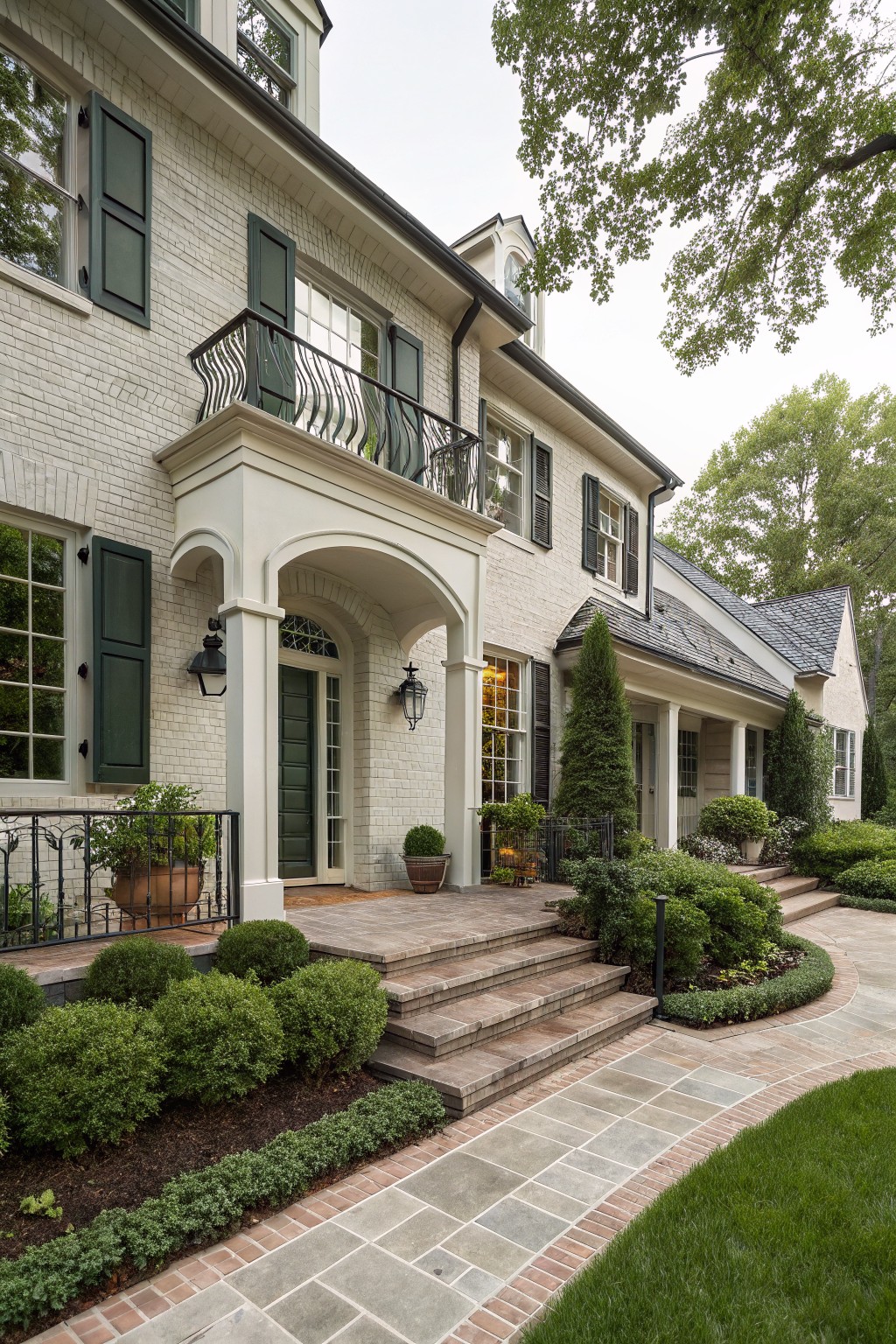
A classic arched portico like this one frames the front door nicely on a two-story painted brick house. The white brick gives a clean backdrop, and the simple columns with the arch overhead make the entry feel important but not overdone. Dark green shutters on the windows nearby tie in with the door for some steady color that keeps things from looking plain.
This setup works best on homes with a bit of a traditional vibe, especially if you have steps leading up to the door. It pulls focus to the entrance right away. Add low boxwood shrubs along the base and a wrought iron railing if you have a balcony up top. Just keep the brick paint fresh to avoid a dated feel.
Warm Wood Porch Ceiling
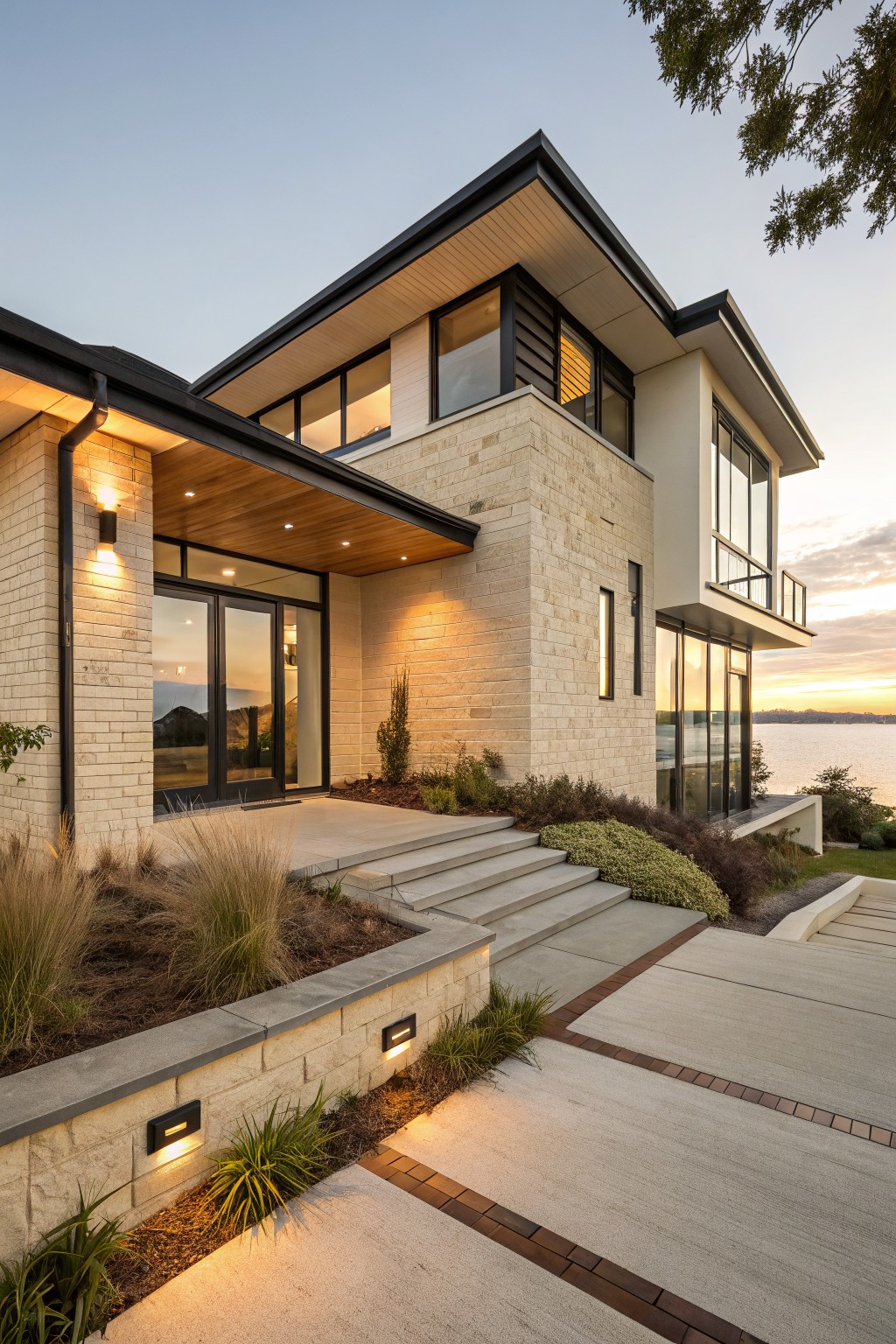
A wood ceiling on the entry porch brings some needed coziness to this light stone house. It softens those sharp modern lines and ties into the dusk lighting nicely. Without it, the stone and glass might feel a bit cold, but the wood keeps things balanced and homey right at the front door.
This works great on two-story homes with clean stone or painted brick bases. Use it over a simple glass door setup like this one, and pick a light wood stain to match the stone tones. It suits spots with some landscaping around the steps, but skip it if your porch is super narrow… it needs room to breathe.
Frequently Asked Questions
Q: How do I pick a paint color that flows well on a two-story house?
A: Swatch a few options right on your lower and upper brick walls. Step back from the street and check morning to evening light. Soft taupes or cool grays tie the stories together without overwhelming.
Q: Should I paint the entire brick or just the bottom?
A: Paint it all for that pulled-together feel. Partial jobs show seams that throw off balance on two stories. And pros reach the top without the hassle.
Q: What’s the quickest way to clean brick before painting?
A: Blast it lightly with a pressure washer on low. Scrub stubborn spots by hand, then rinse thoroughly. Dry time takes a day or two… patience pays off.
Q: Will the paint hold up in rain and sun?
A: Grab breathable paint made for masonry. Two solid coats lock it in against weather. Touch up fades every decade.
