

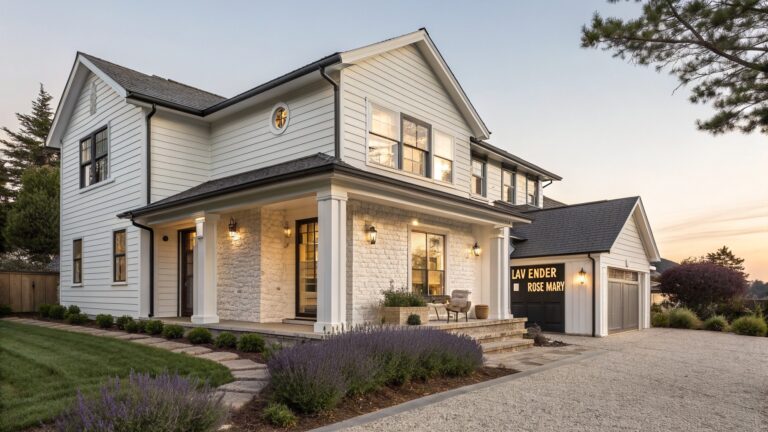
I’ve noticed how painted brick and siding can make a house’s facade feel more alive without competing for attention.
From the street, that balance of textures hits first, either welcoming you in or leaving you unsure.
It changes everything.
In real neighborhoods, the best examples work with the roofline and entry rather than fighting them, something photos rarely capture fully.
A few of these ideas have me thinking about tweaks I’d try on a typical suburban exterior.
White Siding Over Stone Garage Base
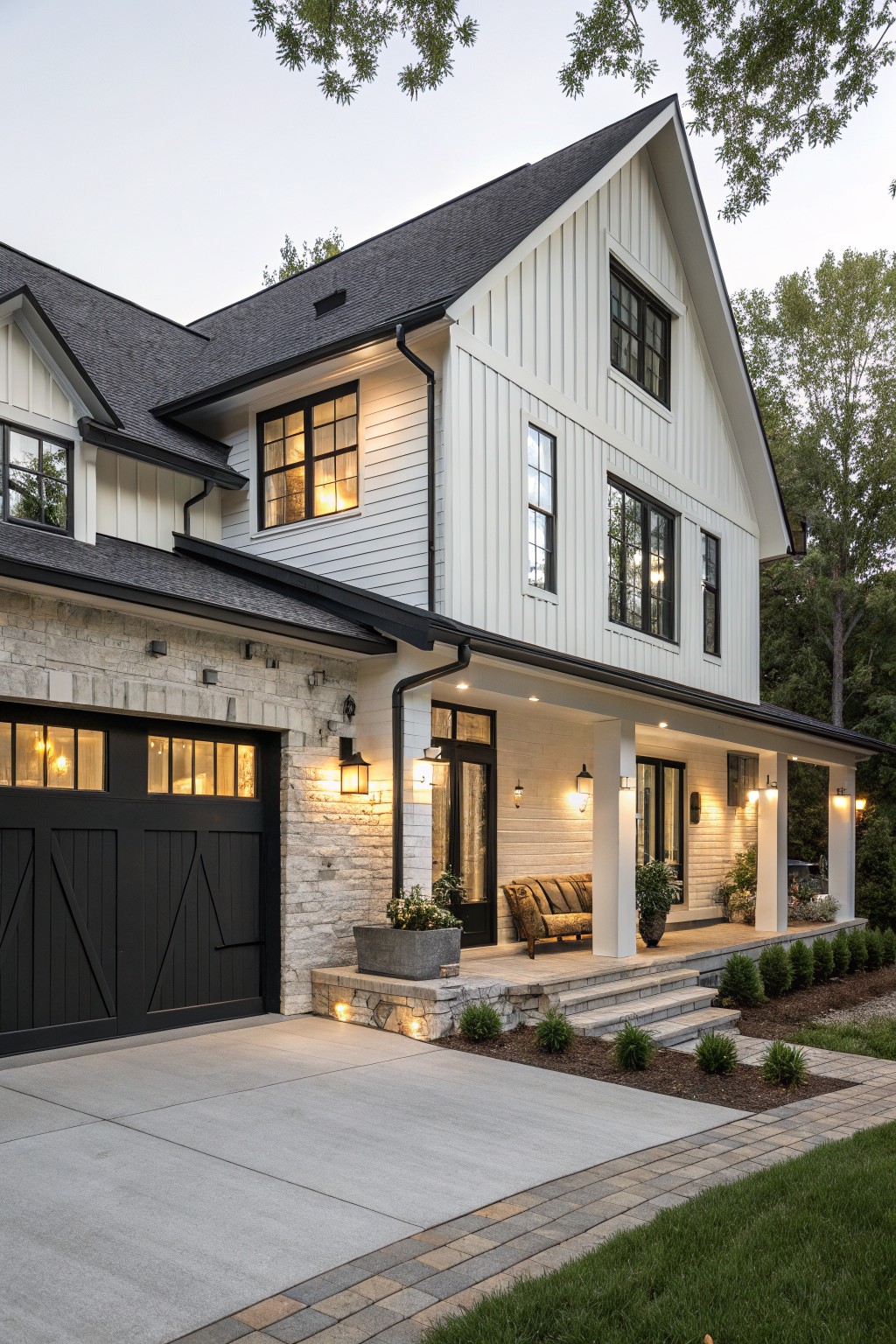
One straightforward way to add texture to a siding house is to build the garage out of stone veneer while keeping the rest in crisp white board-and-batten siding. The stone at the bottom gives a sturdy foundation look. It contrasts nicely with the clean lines up top. Black garage doors pull it together without much fuss.
This setup suits ranch or two-story homes in suburban spots. It grounds the whole facade so the house doesn’t feel top-heavy. Go for light gray stone to match the white siding best. Skip painting the stone. Let its rough surface do the textural work.
Recommended Products

UNIVERSAL 6.5" x 6.5" DESIGN – 6.5 x 6.5 inch mounting plate provides versatile compatibility for a wide range of exterior light fixtures and receptacles.
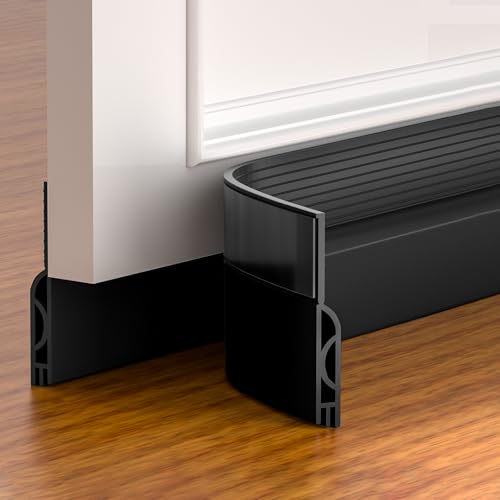
THICKENED SILICONE MATERIAL - BUILT TO LAST :The Door Draft Stopper is made of pure silicone material that is heat- and cold-resistant, and easy to bend without deforming. This draft stopper for the bottom of the door has no "compression memory," won’t damage the floor, and is pliable enough to allow you to easily open the door even on crooked floors. Door strip’s sleek finish blends seamlessly with any decor

Up and Down Outdoor Wall Sconce Lights: Our exterior lighting fixtures feature a simple square design with 2 clear glass covers and a matte black finish. They are suitable for both indoor and outdoor use, such as at entrances, corridors, passages, gardens, patios, or villas
Craftsman Porch House in Green Painted Siding
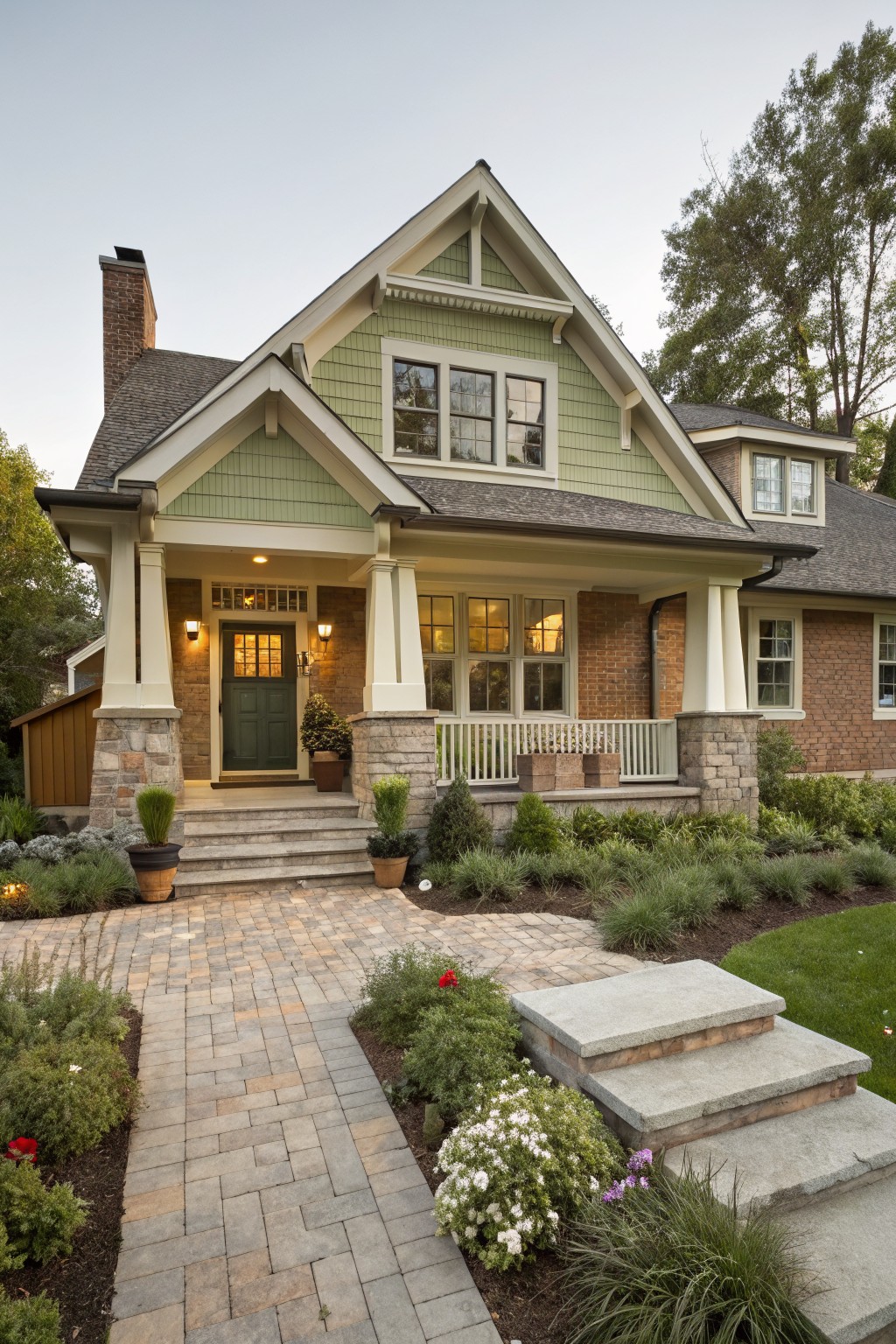
This Craftsman-style home uses sage green painted shingle siding to cover most of the facade, letting a tall brick chimney and sturdy stone porch pillars stand out. The green softens the look while the brick and stone add real weight and texture. It keeps things from feeling too busy. Folks like how the colors play off each other without clashing.
You can pull this off on older bungalows or new builds aiming for that classic vibe. Pick a muted green siding paint that won’t fade fast, then limit brick to the chimney or a side wall. Stone pillars work best around the entry for support. Skip it on super modern homes… it suits traditional neighborhoods better.
Light Brick Facade with Black Frames
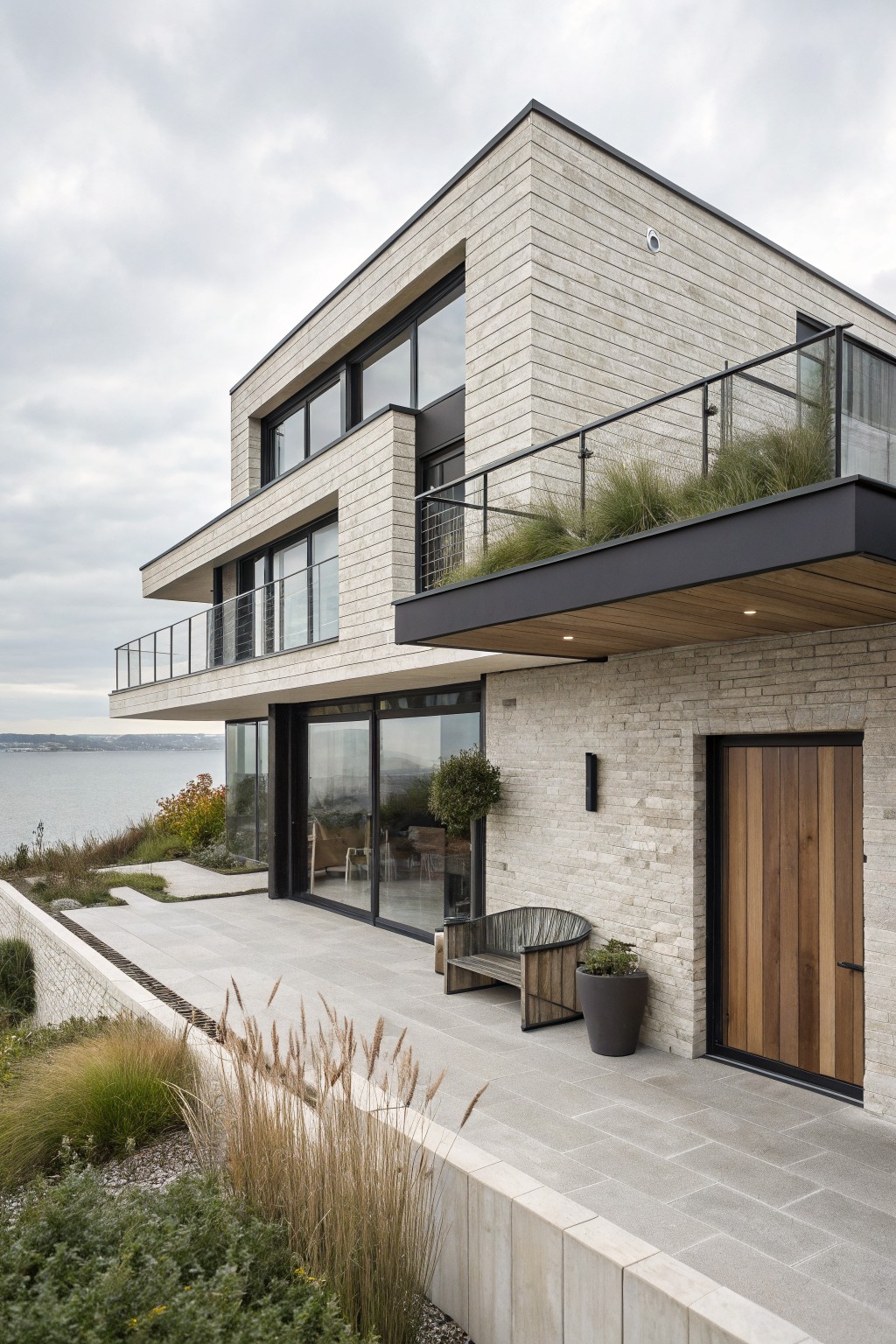
Light brick makes up most of this house exterior. It has that soft, neutral tone that feels calm and easy on the eyes. Then black metal frames outline the large windows and balcony. That simple contrast pulls the whole look together. It adds texture right where you need it, keeping the design modern but not stark.
Try this on a two-story home with good views. The light brick suits coastal spots or open lots, where it won’t compete with the scenery. Pair it with a wood door for a touch of warmth. Skip heavy trim though. Thin black lines work best to avoid bulk.
Recommended Products


【Specifications】Each piece measures 8.54” x 2.2” x 0.1”. With standard 3/8” spacing, 15PCS cover approx. 2.54 sq.ft. Perfect for testing or small projects.

Size and Weight: Size of each brick is 8.7" L x 2.4" W x 0.1" Thick. Weight is 0.1 lb per piece. A box of 76 pieces thin bricks cover about 10 sq.ft.
Stucco Siding Paired with Stone Details
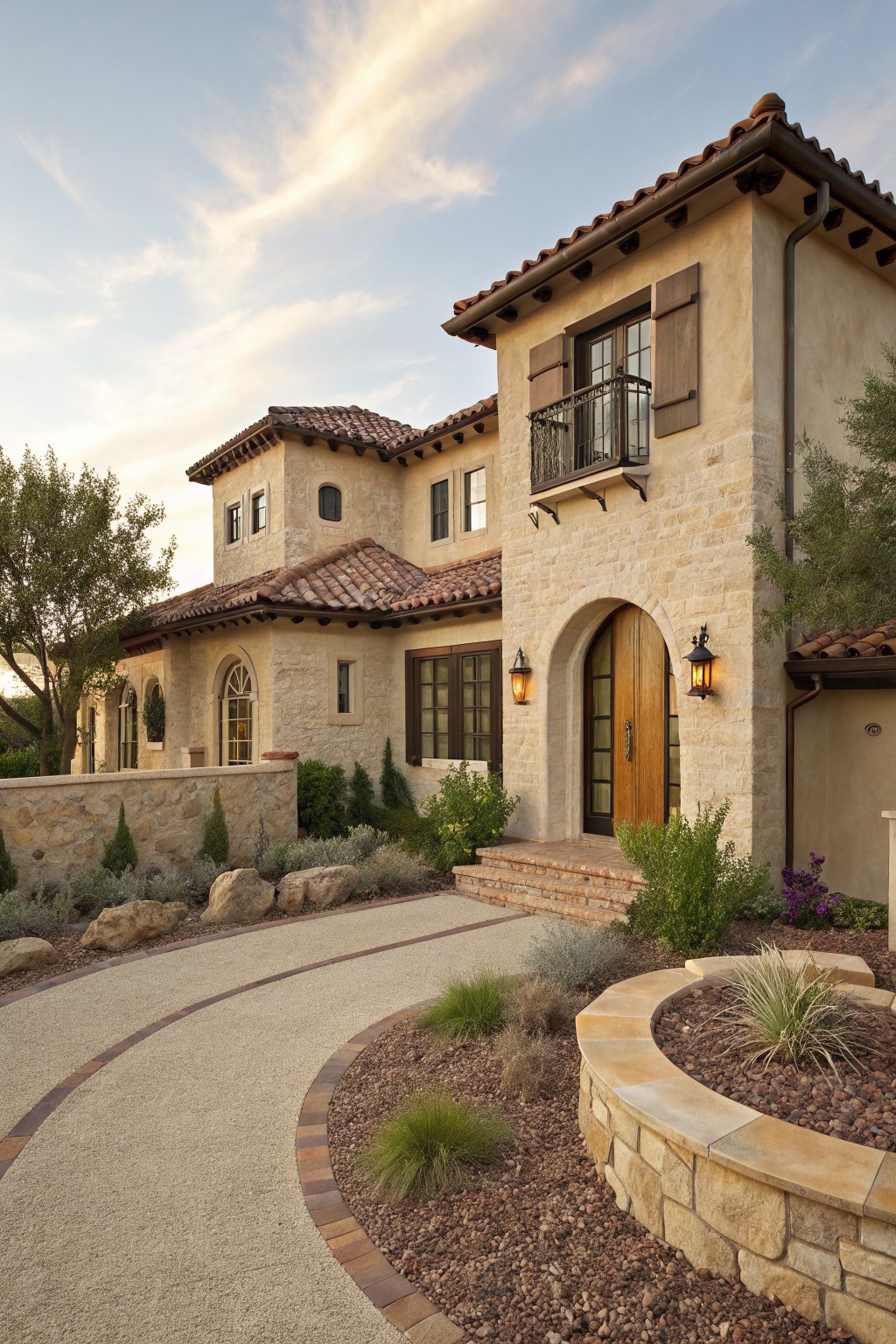
Smooth stucco covers most of this house, giving it a clean base. Rough stone blocks frame the entry arch and corners. That mix adds texture right where you notice it most, like around the wood door and lanterns. Keeps things simple but not plain.
Try this on ranch or Mediterranean homes in dry areas. Stone works best in bigger chunks near the front door or garage. Skip it everywhere or it gets busy. Pairs well with gravel paths like the curved one here.
Brick Facade with Gray Metal Siding

This setup uses familiar red brick on the lower walls and switches to gray corrugated metal siding higher up. The brick gives a solid, traditional base while the metal adds a clean industrial touch. Together they balance rough texture with smooth panels, making the house feel updated but not overdone.
Try this on older brick homes in the city or suburbs where you want curb appeal without a full redo. Accent the gable or side additions with the siding, and keep the entry simple like the black metal canopy here. It suits narrower lots best, but scale the metal back if your house is bigger.
Stone Walls Boost Siding Texture
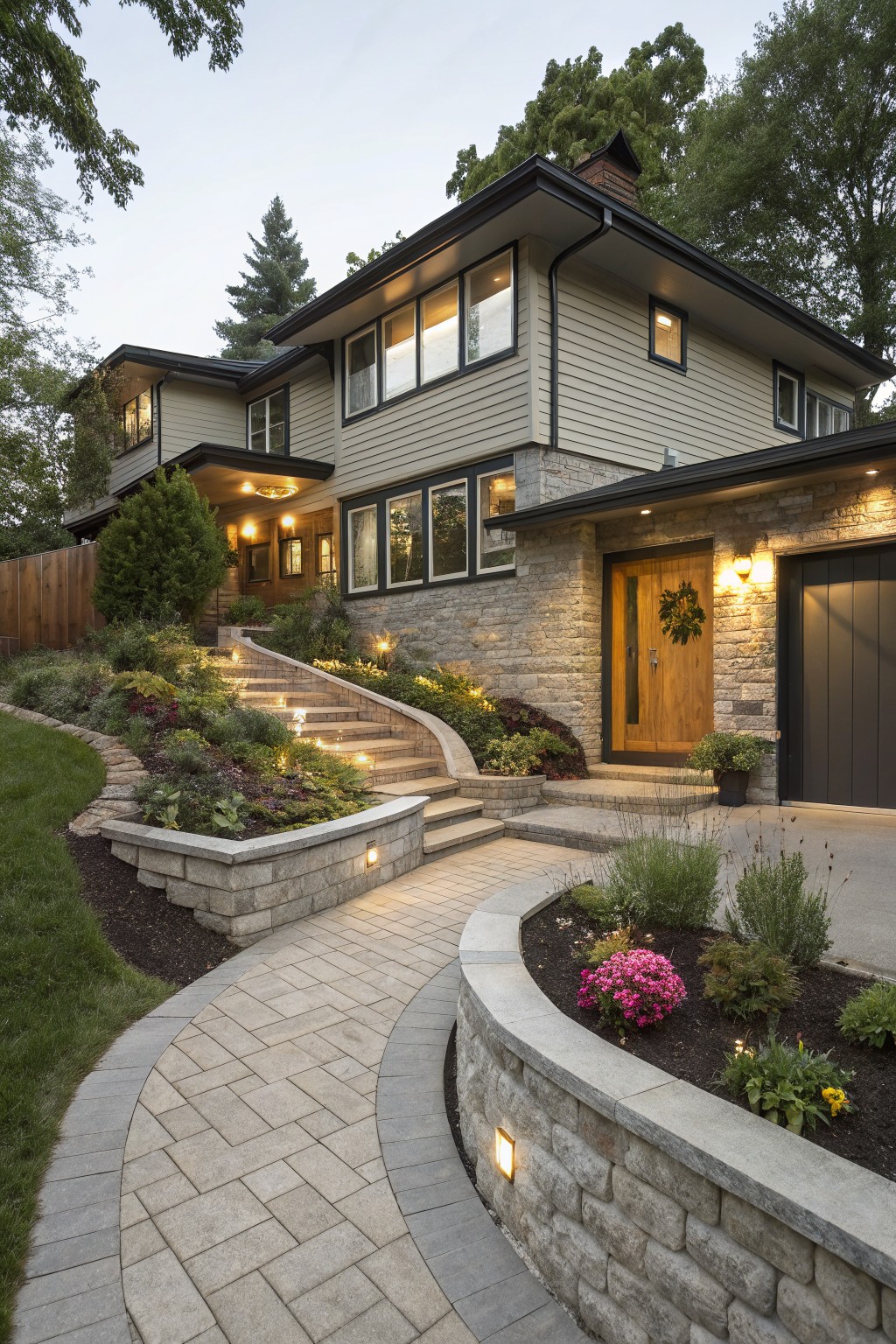
Houses with smooth siding can feel a bit plain up close. Adding stone walls like these changes that. The rough limestone base and retaining walls here give the light beige siding some real grit and weight. It ties the entry stairs right into the slope without looking forced.
Try this on any front yard with a drop off to the street. Stack the stone low around paths and steps, then light it softly at night. Works best on craftsman or northwest modern homes where you want subtle heft without going all masonry.
Shake Siding Adds Depth to Light Stone Facades
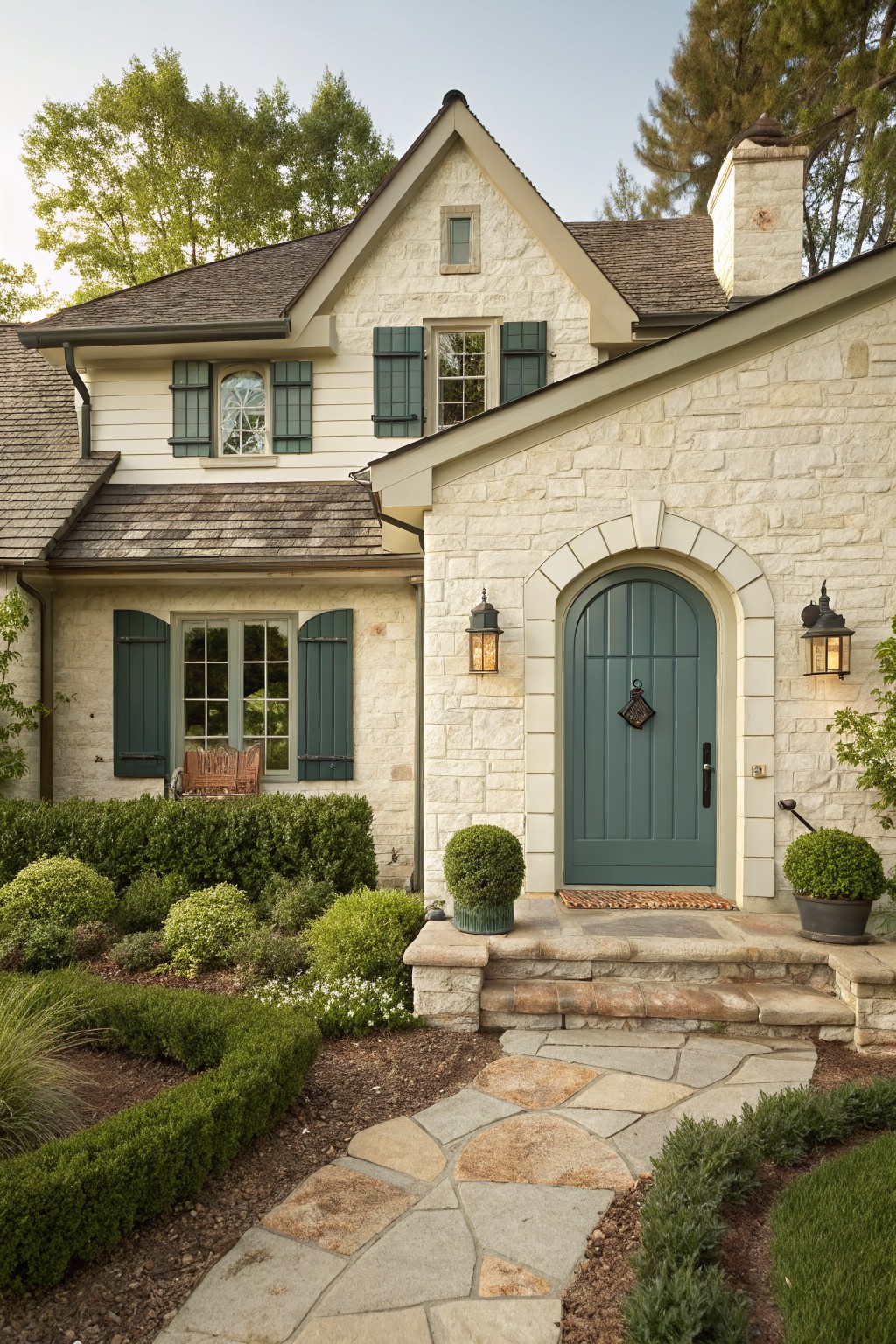
This setup uses wood shake siding on the house wings to give some texture against the smoother light stone walls. It keeps things interesting without overwhelming the clean look of the painted stone. The shakes on the gables pick up on traditional styles, and that green arched door pulls your eye right to the entry.
Try this on homes with a classic vibe, like cottages or small estates. It works best where you want subtle layers, maybe on side additions or garage areas. Just match the shakes to your roof color so it all reads as one unit. Steer clear if your lot is super modern, though. It suits calmer neighborhoods fine.
Recommended Products

DURABLE LED BRICK LIGHT WITH ANGLED LOUVER – Designed with a die-cast aluminum housing and faceplate, this LED brick light features a sleek powder-coated finish in White, Black, or Bronze. The angled louver provides targeted downward illumination, ideal for pathways and outdoor walls.

Rich, Lustrous Satin Black Finish: Slender 4-sided stem supports a trim, Craftsman-inspired shade With a clear, etched lens

【High Bright &More Safe】Bright warm white LED deck lighting bring impressive starry effect, making you feel sweet and comfortable in your house. Add the black protecting shell for embedded installed on floor/stone stairs will be safer for led deck lights kit.
Creamy Painted Brick with Black Shutters
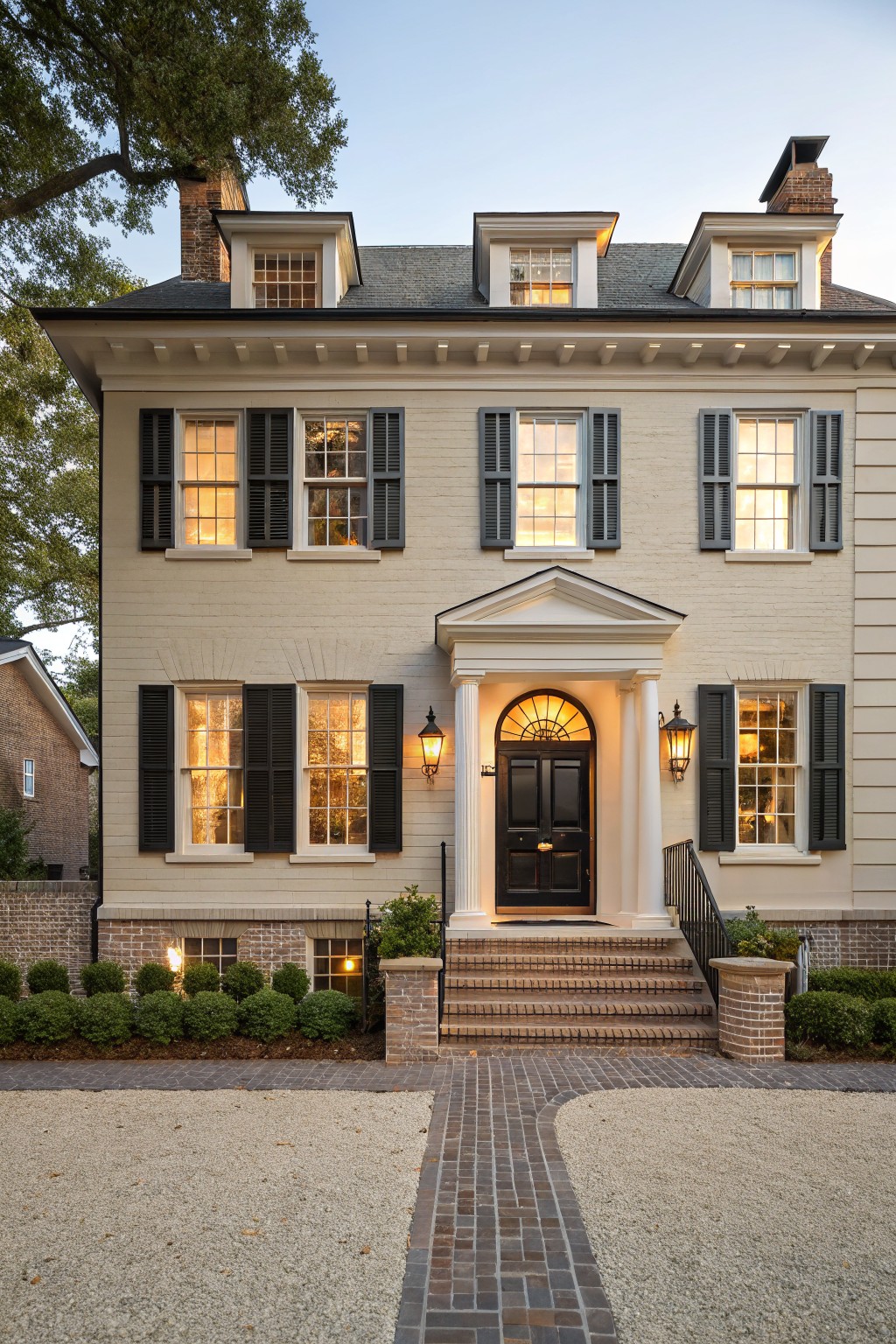
A light creamy paint on brick creates a soft backdrop for a house exterior. Black shutters stand out sharp against it, framing the windows nicely. This setup adds clear lines and texture without overwhelming the look. Those lanterns by the door pick up the black too, helping everything tie together at dusk.
It suits older style homes or neighborhoods where you want classic appeal. Pick a pale neutral for the brick to stay bright, then go bold black on shutters and hardware. Keep trim white for balance. Just make sure the paint seals well against weather.
White Brick Exterior with Cream Siding
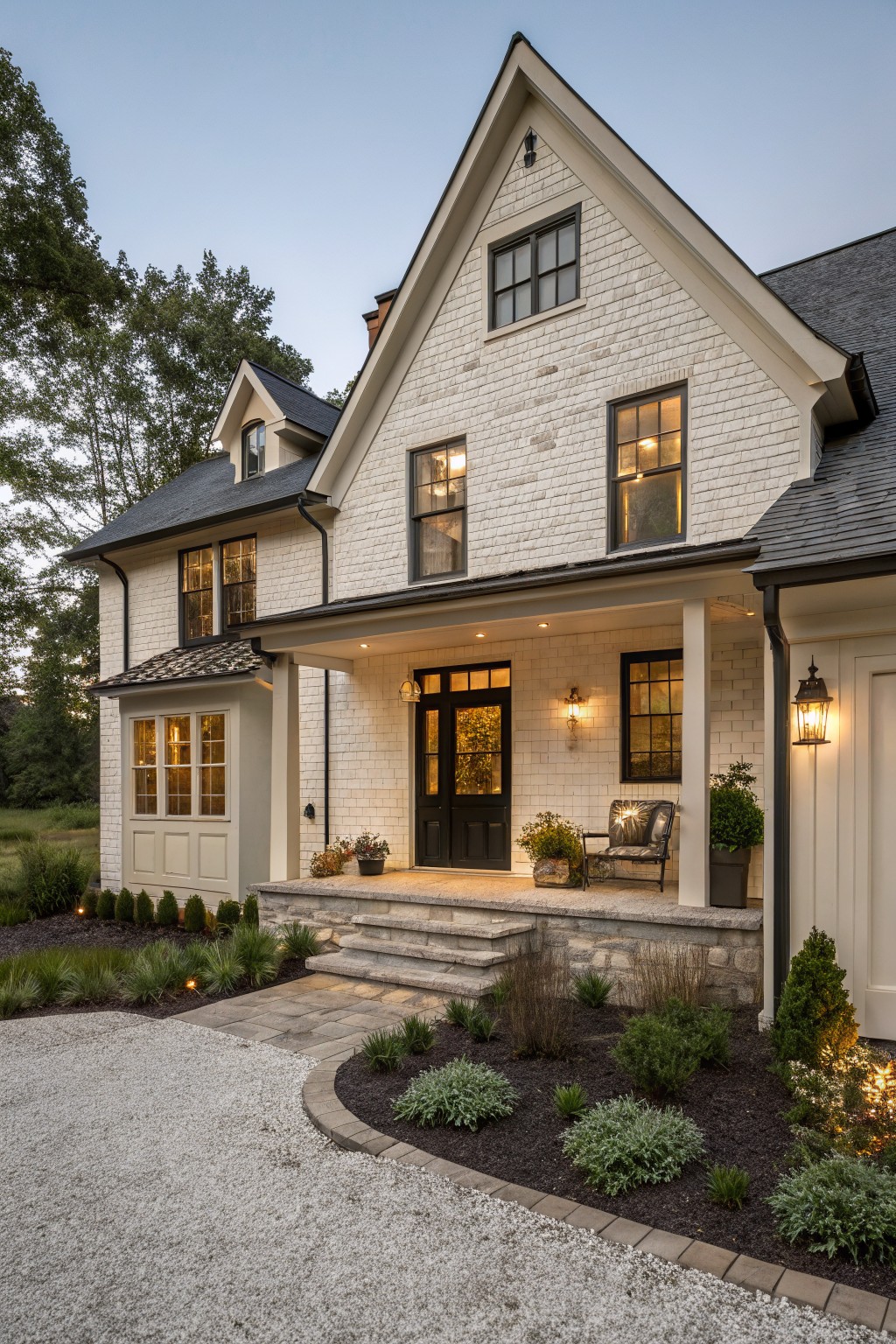
Painted white brick gives this house a clean, fresh look that feels timeless without being too stark. Pairing it with cream board-and-batten siding on the garage and side additions adds just enough texture variation to keep things interesting. The black-framed windows and door pull it all together, making the facade stand out nicely against the trees.
This setup works great on traditional or farmhouse-style homes in suburban spots. Use it where you want curb appeal that stays low-maintenance… the brick handles weather well, and the siding softens corners. Stick to light neutrals so the textures show up best, and add stone steps at the entry for that grounded feel.
White Siding with Stone Entry Details
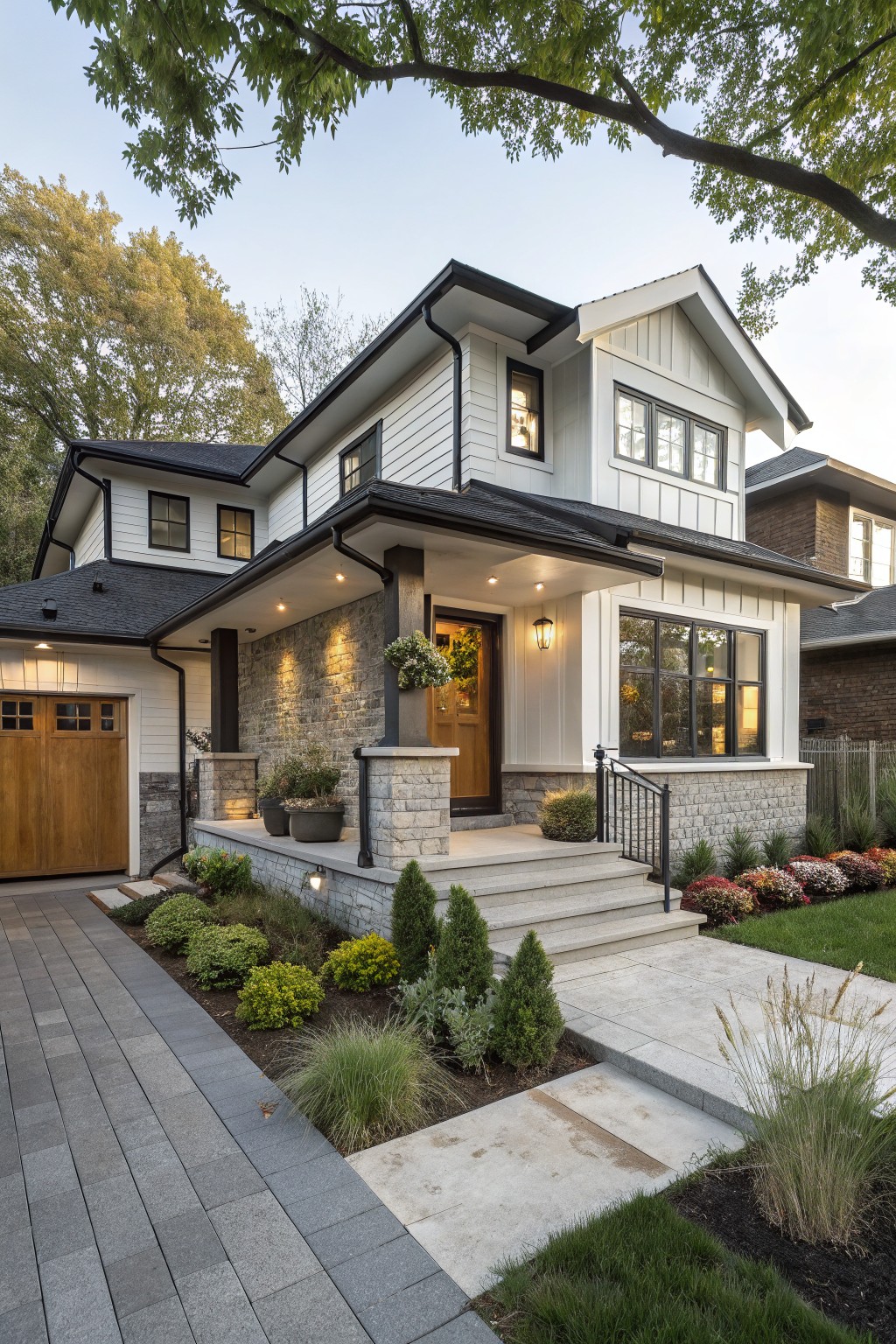
One straightforward way to add texture to a white siding exterior is stone accents around the entry and garage. Here the rugged stone base ties right into the porch pillars and garage side, giving the smooth white siding some weight without taking over. Black trim on the windows and roofline sharpens everything up nicely. It keeps the house looking clean but not plain.
This setup works best on two-story homes where the stone sits low and draws the eye to the front door. Use it on a craftsman or farmhouse style if you want subtle contrast. Just make sure the stone color blends with the siding so it doesn’t fight the white. Skip it on super small houses, though. The proportions matter.
White Painted Brick on Modern Facades
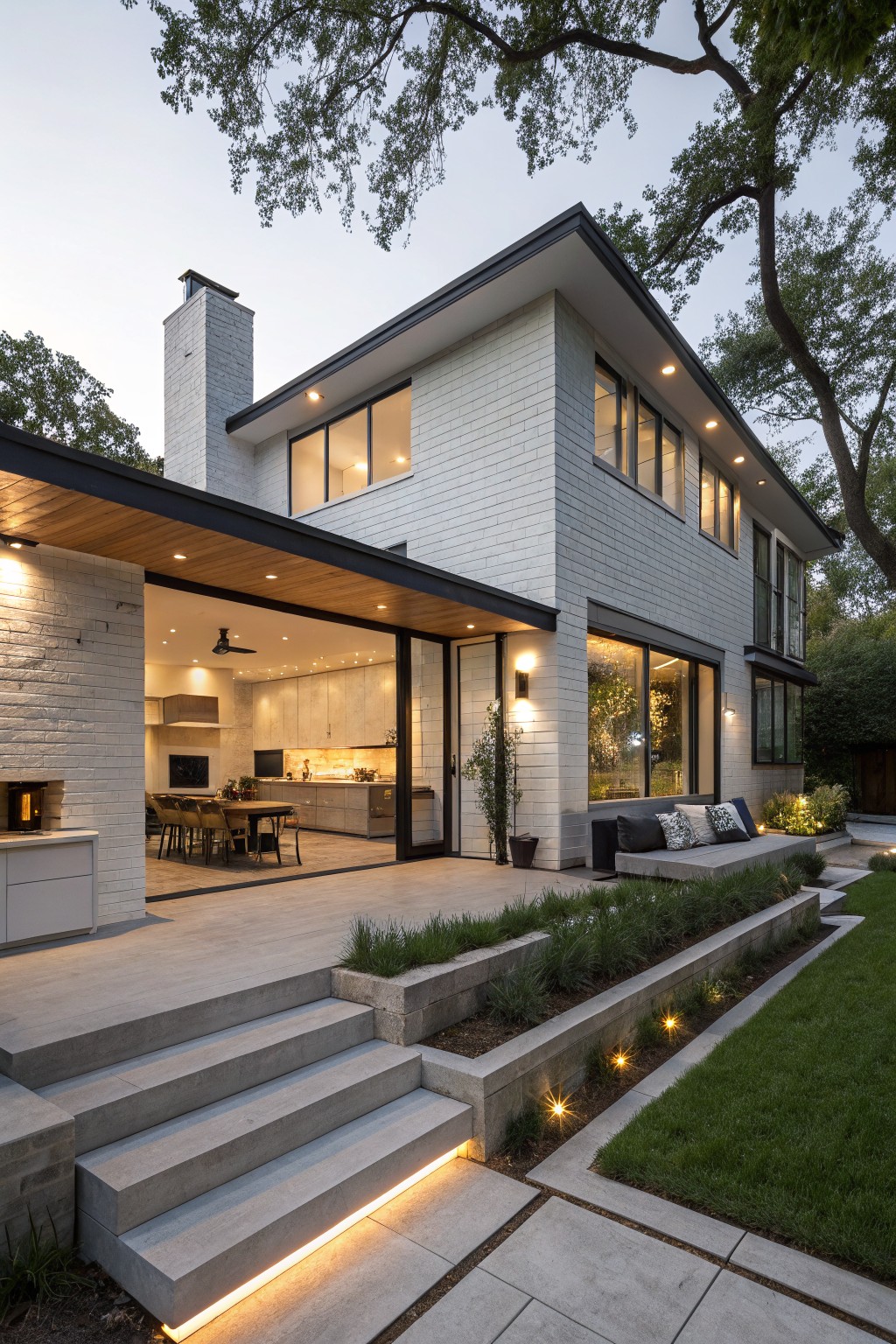
Painted white brick gives this house a clean, bright exterior that feels fresh without being stark. The rough brick texture stands out against the smooth white areas and dark metal roofline, creating just enough contrast to keep the look interesting. Large windows and a wood-covered patio pull it all together nicely.
This approach works best on contemporary or mid-century homes in leafy neighborhoods. Use a high-quality, breathable paint to protect the brick long-term, and pair it with black trim for definition. It softens bigger structures… worth considering if your place has good bones but needs updating.
Frequently Asked Questions
Q: How do I pick paint colors that actually work with my existing siding?
A: Walk around your house at different times of day and snap photos in natural light. Hold up siding samples or chips next to those shots to see what warms up the textures without overwhelming them. Stick to colors a shade or two lighter or darker than your siding for that easy balance.
Q: Do I have to power wash brick every time before painting?
A: Grab a stiff brush and garden hose first to knock off loose dirt and mildew. Power washing blasts too hard on older brick and can damage the surface. Let it dry a full week after.
Q: Can painted brick handle rainy climates okay?
A: Choose a breathable masonry paint that lets moisture escape. It sheds water better than you think and cuts down on cracks over time. Reapply a fresh coat every 7-10 years to keep it sharp.
Q: What’s the simplest way to blend new siding with painted brick?
And match the paint sheen to your siding’s finish, like satin on satin.
That pulls textures together without extra fuss.
