

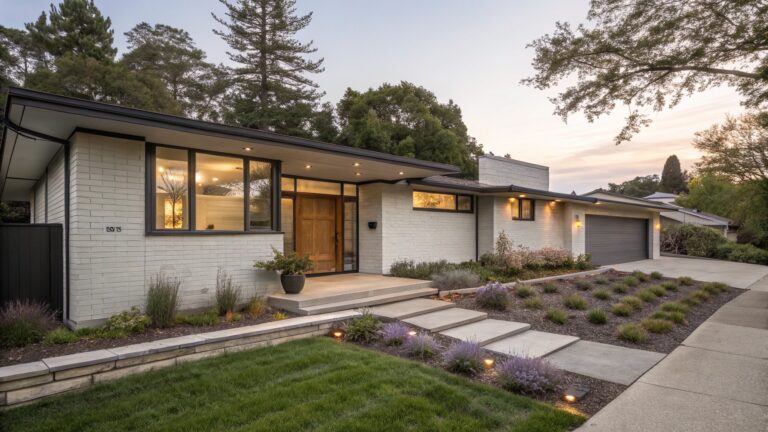
I’ve driven by countless brick homes, and the painted ones always catch my eye first because they redefine the facade without hiding the texture underneath. That fresh coat shifts how the whole front reads from the street, making rooflines and entries feel more connected and alive. I once parked across from a house where taupe paint on the bricks warmed up the stark white garage door in a way plain brick never could. These homes nail the balance of color that weathers well alongside trim, shutters, and simple plantings to build real curb appeal. Some of their combos are practical enough to adapt next time you’re eyeing your own exterior.
Painted Brick Facade with Cantilevered Roof
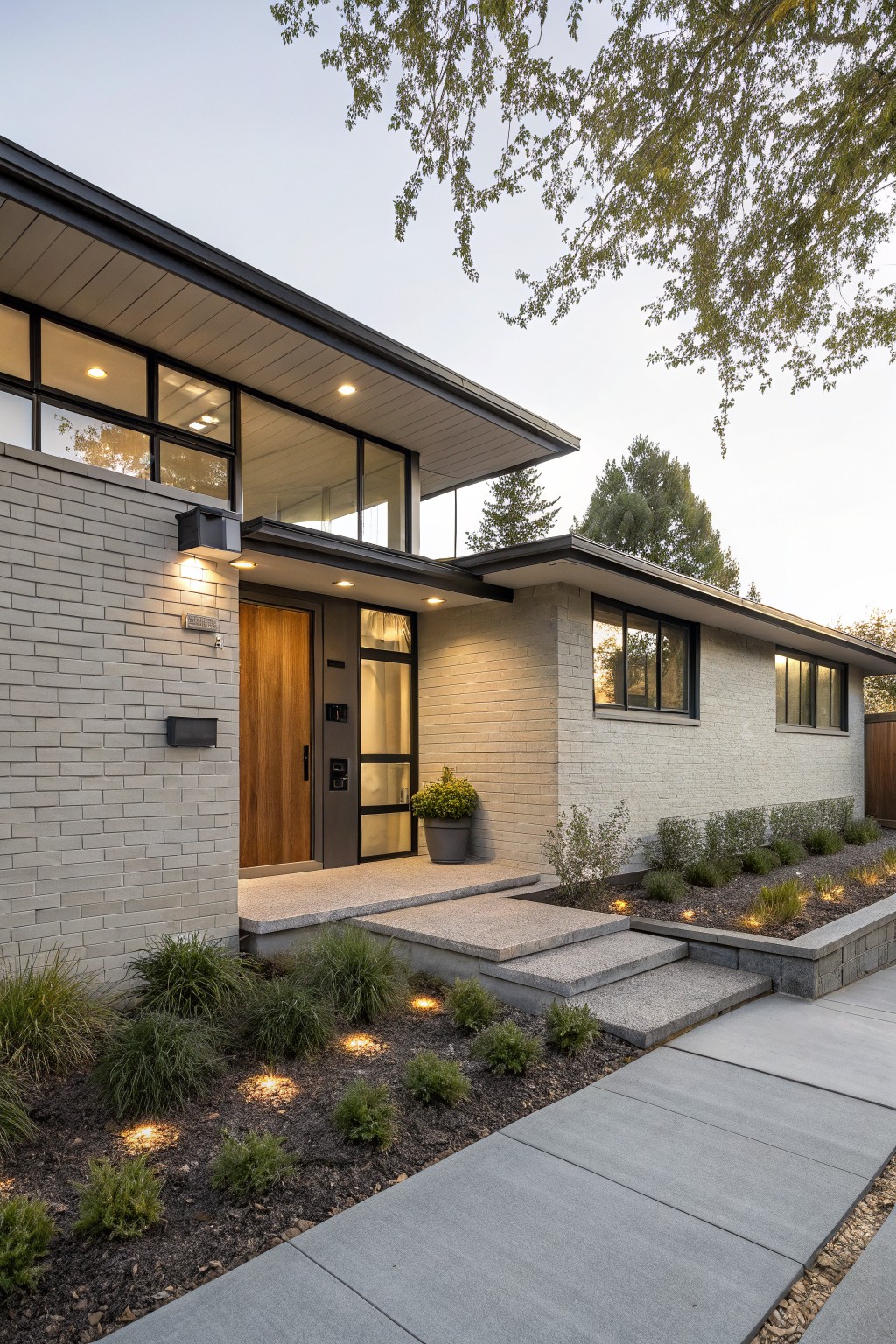
A light painted brick exterior gets a lift from this deep cantilevered roof that stretches out over the entry. It casts nice shadows on the brick during the day and frames the wood door just right. Those black metal accents around the windows and glass sidelight keep things sharp and modern without much fuss.
This setup suits low-slung homes like ranches or mid-century styles on a simple lot. Paint the brick a soft gray to let the overhang stand out, then add steps and low plants leading up. Skip heavy trim. It draws the eye to the door right away.
Recommended Products
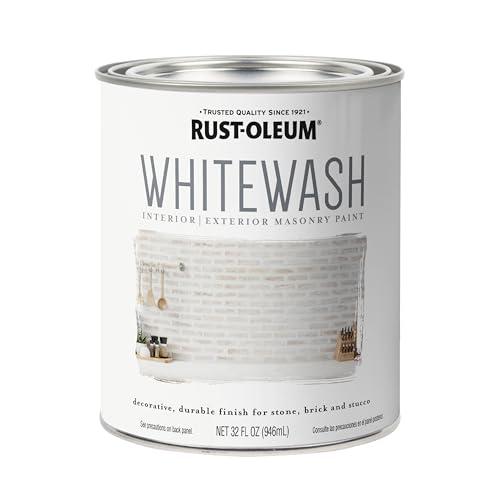
GREAT FOR HIGHLY POROUS SURFACES: Brightens the appearance of stucco, stone, brick and wood while letting natural surface texture shine through
Made in United States
Teal Door on Painted Brick Porch
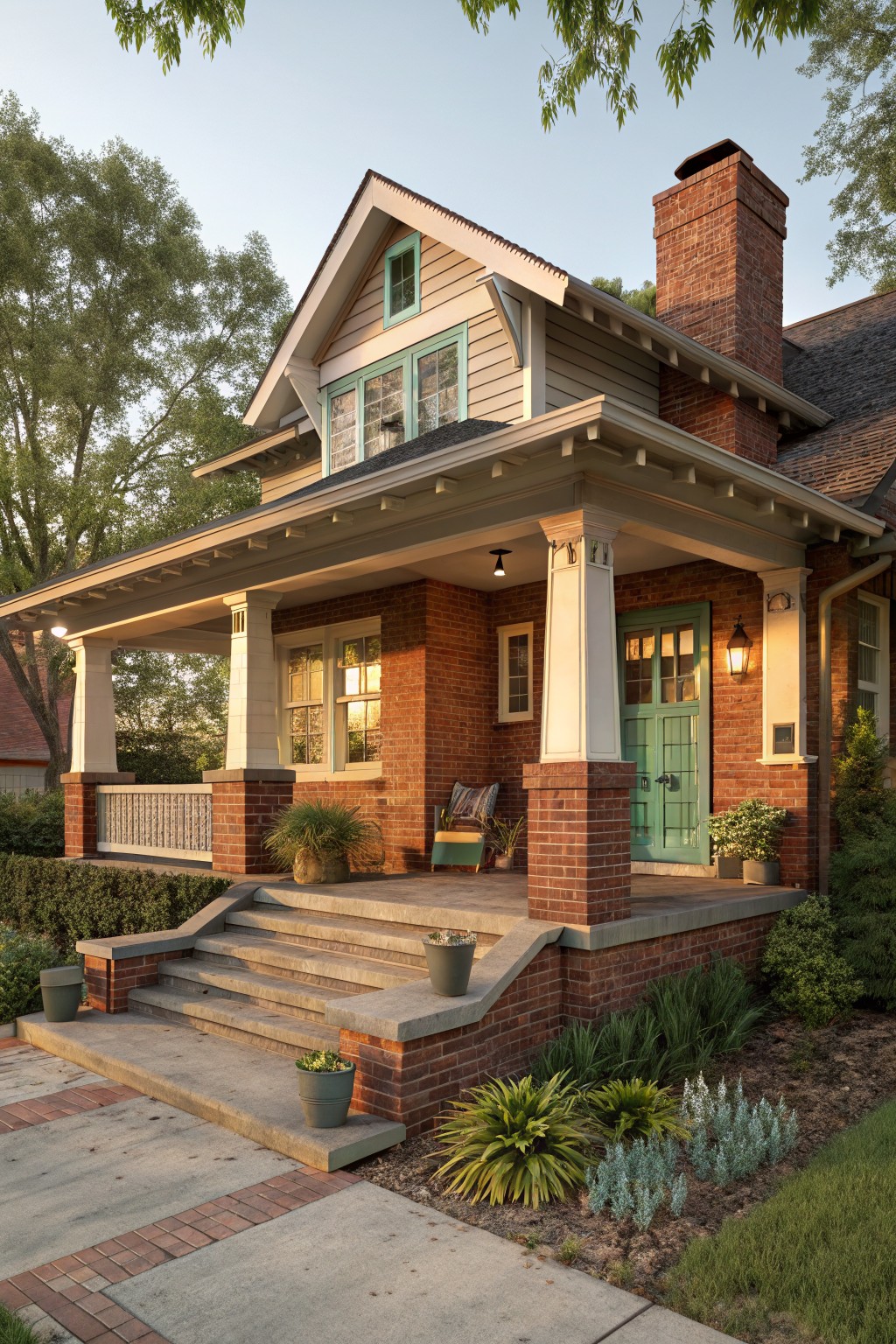
A bright teal door grabs your eye right away on this painted brick Craftsman home. The light brick base and crisp white porch columns set up a neutral backdrop that lets the door color take center stage. It adds just enough personality to make the whole front feel more approachable without overwhelming the architecture.
This works great on bungalows or older homes with simple facades. Pick a shade that ties into your plants or trim, maybe add a couple pots nearby like the ferns here. Skip it if your porch is too narrow, though. The porch shading helps the color read well in different light.
Black Painted Brick on Row Houses
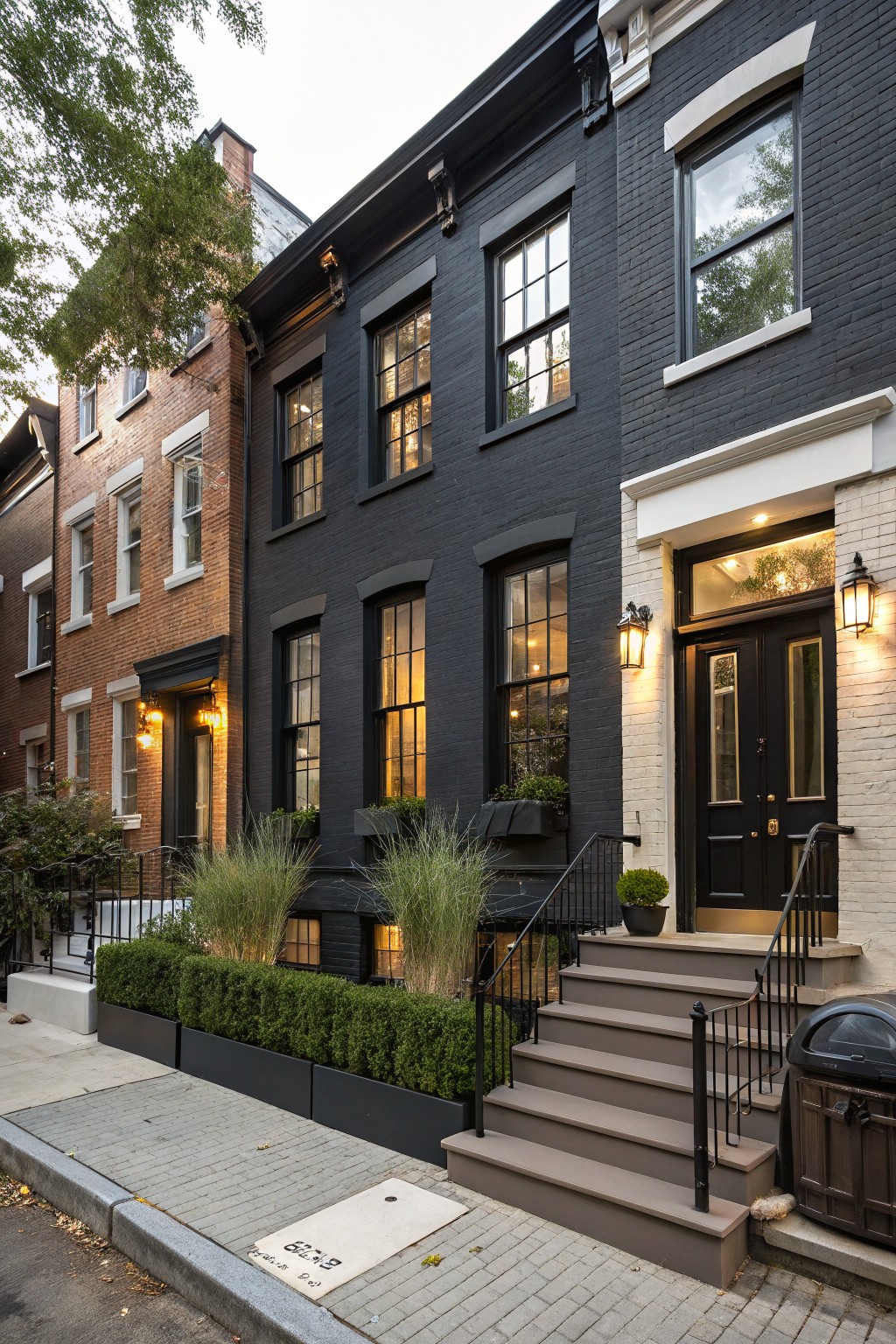
Painting the brick black on this row house gives it a sharp, modern edge that sets it apart from the red brick neighbors. The matte finish soaks up light during the day but lets windows glow warmly at dusk. It keeps the traditional shape intact while making everything feel fresh and bold.
This look suits attached urban homes where you want standout curb appeal without big changes. Add low boxwood hedges along the base and lanterns by the door, like here. Go for durable exterior paint, though. It holds up best on brick that’s already solid.
Recommended Products

【Specifications】Each piece measures 8.54” x 2.2” x 0.1”. With standard 3/8” spacing, 15PCS cover approx. 2.54 sq.ft. Perfect for testing or small projects.

👍 Premium 3D Realistic Brick Foam: Safety and environmental, brick pattern effect, simple and modern style.

【Size】:Grey brick wallpaper measures 17.5" x 120" can cover 14.5 sq.ft/Roll
Soft Painted Brick with Green Shutters
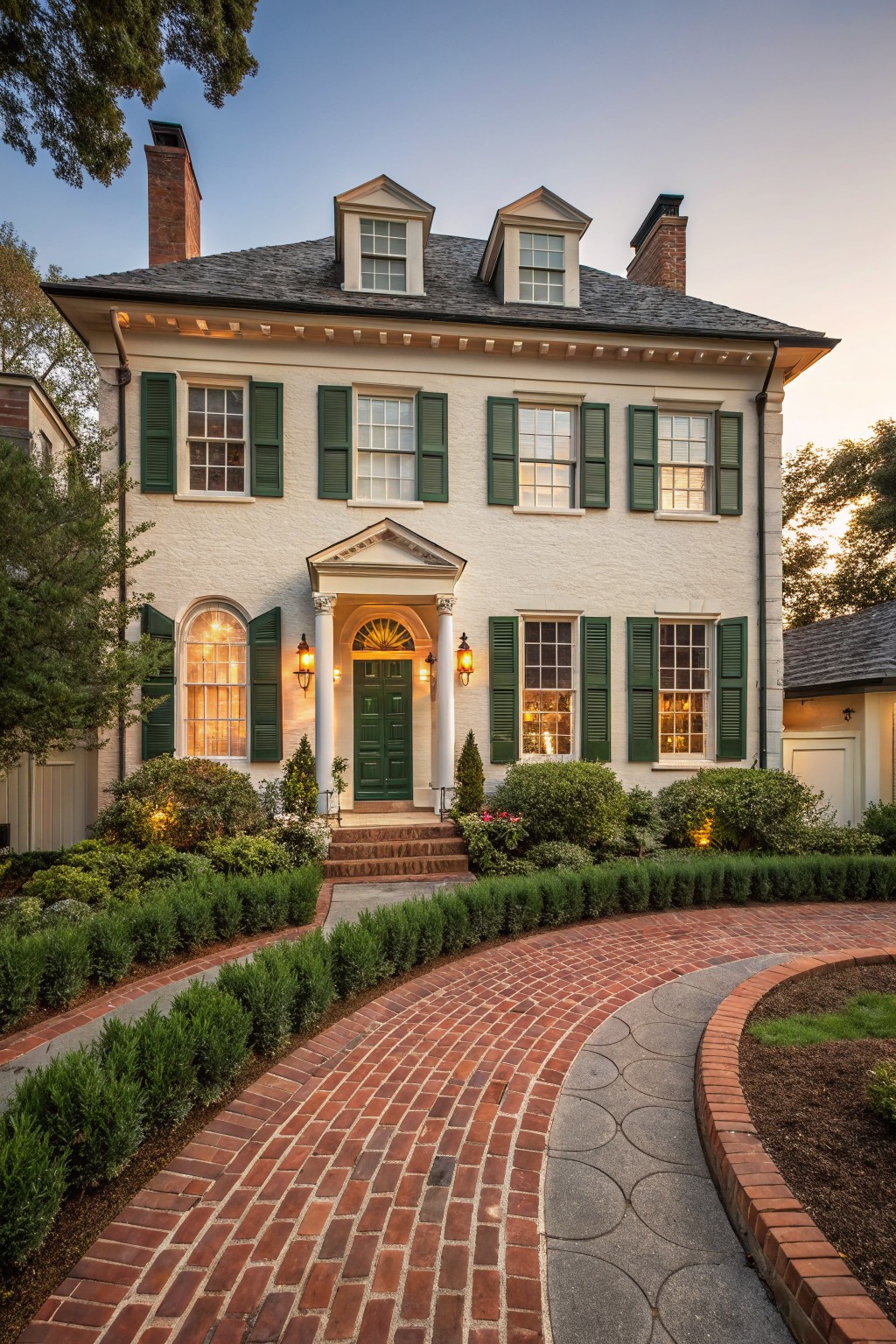
Painting brick a soft cream shade like this one keeps the texture you want from real masonry but lightens the whole front of the house. Pair it with dark green shutters on the multipaned windows and you get clean lines that feel classic without being too stark. That entry porch with its columns ties it all together nicely.
This look suits older style homes or ones you want to give a fresh traditional feel. The green pops against the cream so use the same shades on a two story facade with balanced windows. Add a brick path curving up to the door and you’ve got real curb appeal that lasts. Just keep the landscaping simple so it doesn’t fight the house.
Pastel Painted Shingles on a Porch Home
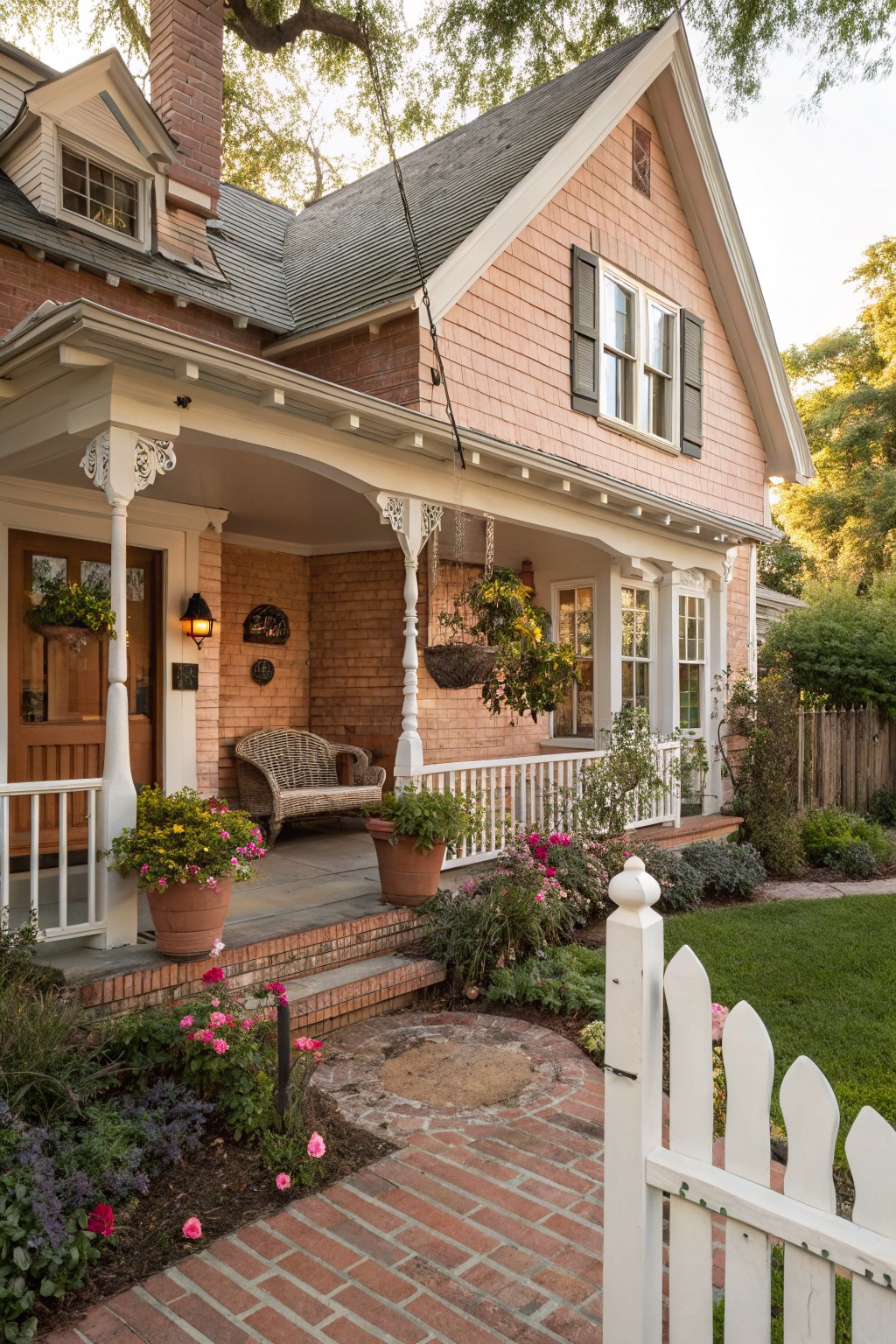
A soft pastel shade on shingle siding like this one brings out the best in older homes. It tones down the usual dark shingles while keeping that textured look people expect from traditional styles. Here the pinkish hue works with the natural brick on the porch pillars and chimney. White trim sharpens everything up. The result feels fresh yet rooted in classic architecture.
Try this on Craftsman or Victorian houses that need a gentle update. Pair it with brick accents that aren’t painted. Add simple porch seating and a few potted plants to make the entry more lived-in. It suits neighborhoods with mature trees. Just test the color in different lights first. Pastels can shift warmer or cooler depending on the sun.
Blue Painted Brick with Red Door Pop
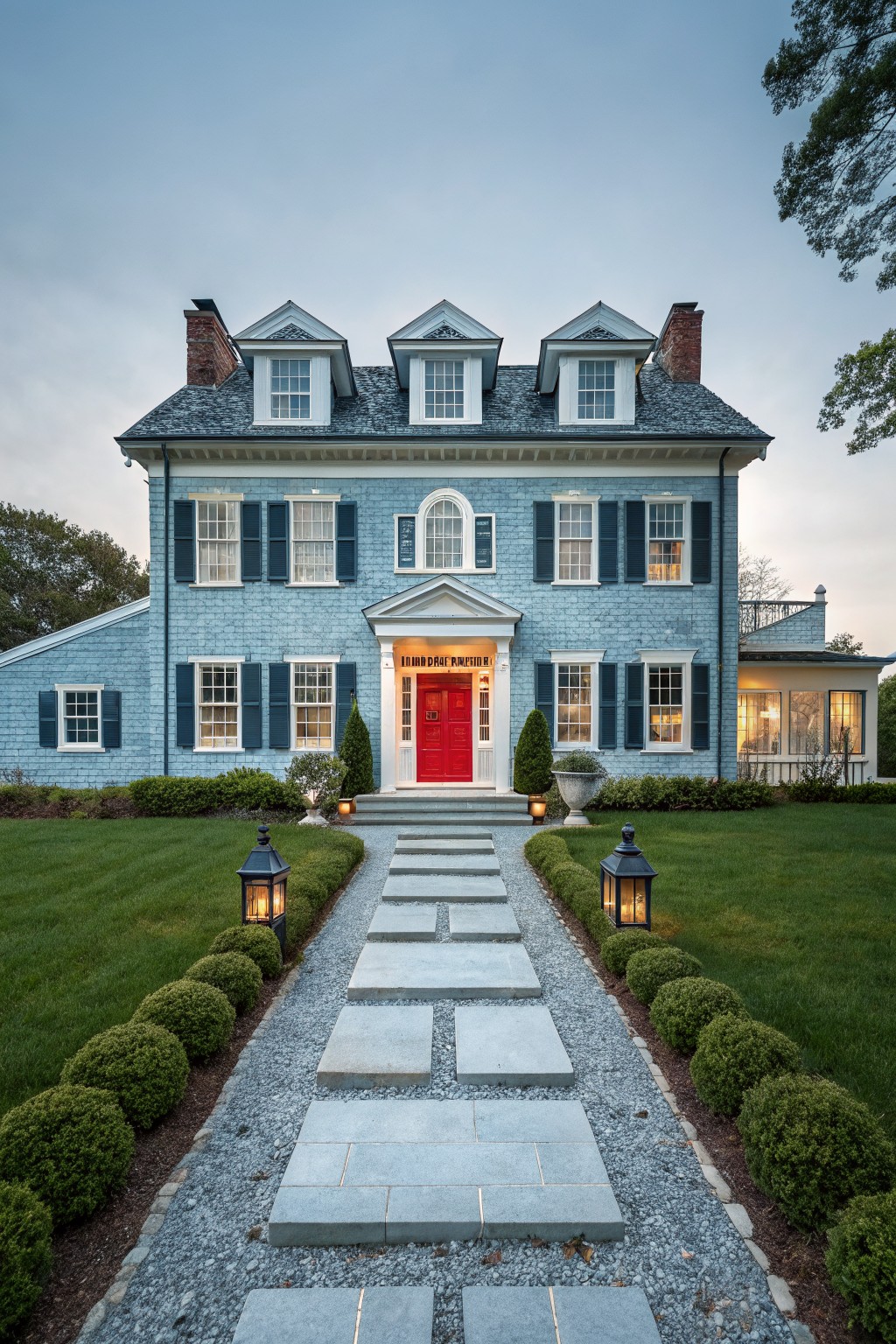
Painting brick in a soft blue like this takes a traditional house and makes it feel lighter and more approachable. That vibrant red door stands out against the muted tone, drawing attention straight to the entry without overwhelming the whole facade. It’s a simple switch that adds personality to what could be just another clapboard look.
This setup shines on older homes or New England-style places where you want curb appeal that nods to history but feels current. Pair it with clean white trim and a few lanterns along the path to keep things balanced. Just make sure the red isn’t too bright, or it might clash on smaller houses.
Rich Green Painted Brick Rowhouse
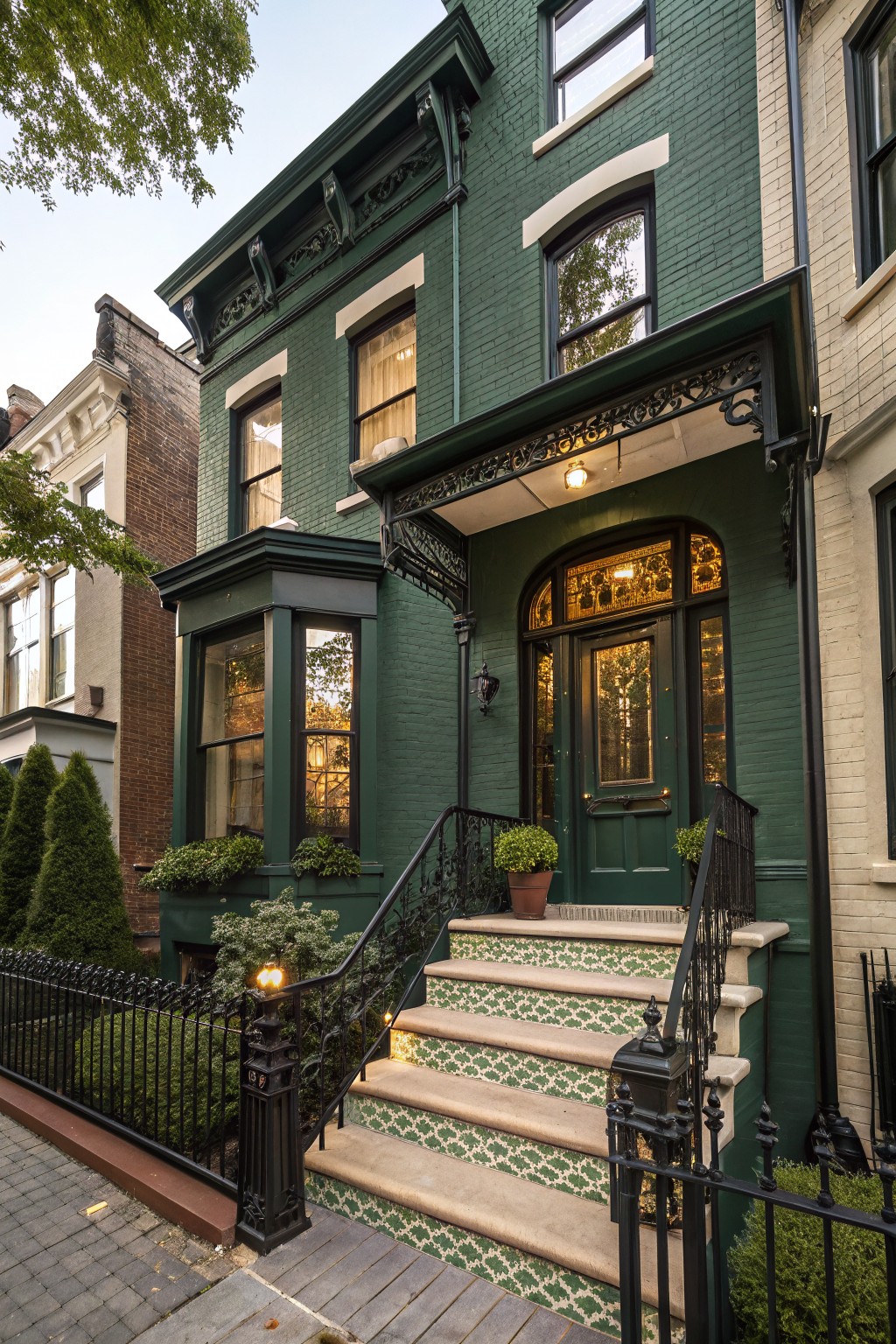
Dark green paint on brick turns this narrow rowhouse into something special. It keeps the Victorian details intact like the bay window and ornate ironwork but gives the whole facade a fresh, moody look that fits right into a city street. Those patterned tiles on the steps add just enough pattern without overdoing it.
This works great on older brick homes in rowhouse neighborhoods where you want curb appeal that nods to history. Go for a deep shade like this on south-facing walls so it ages well in the sun. Skip it if your brick is super rough, though, paint might not hold up as nicely.
Porch Entry on Light Stone House
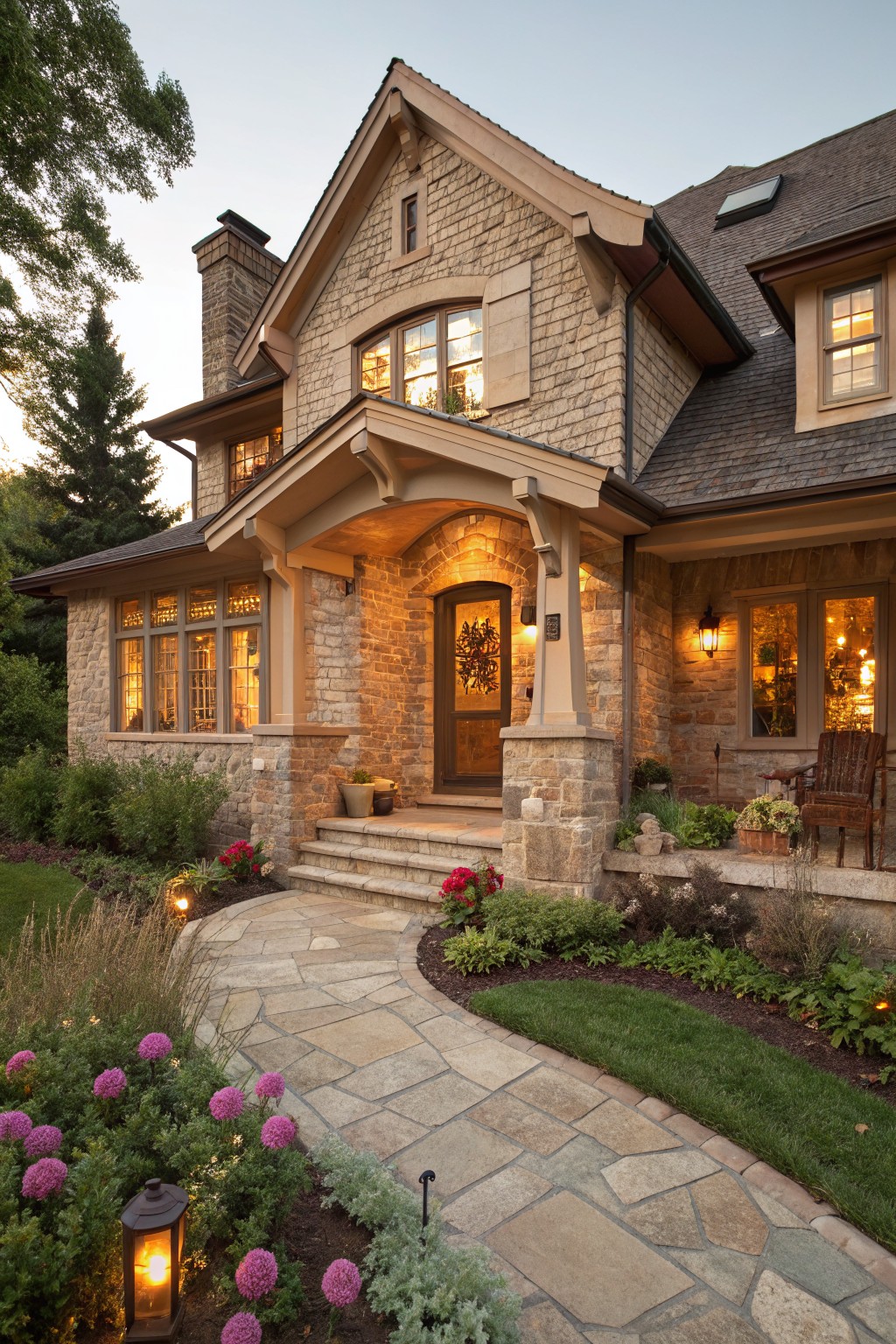
A light beige stone facade like this one gets a big lift from a deep wooden porch that frames the front door. The porch’s beams and supports add some warmth against the stone, and those lanterns make it feel ready for company even at dusk. It’s a simple way to turn a plain front into something folks notice right away.
This setup works best on homes with bigger lots where you can add steps and a path leading up. Go for natural wood tones if your stone is pale, and keep the lighting soft. Skip it on super-modern houses, though. It suits Craftsman or traditional styles just fine.
Pale Green Shingle Exterior on a Cottage Home
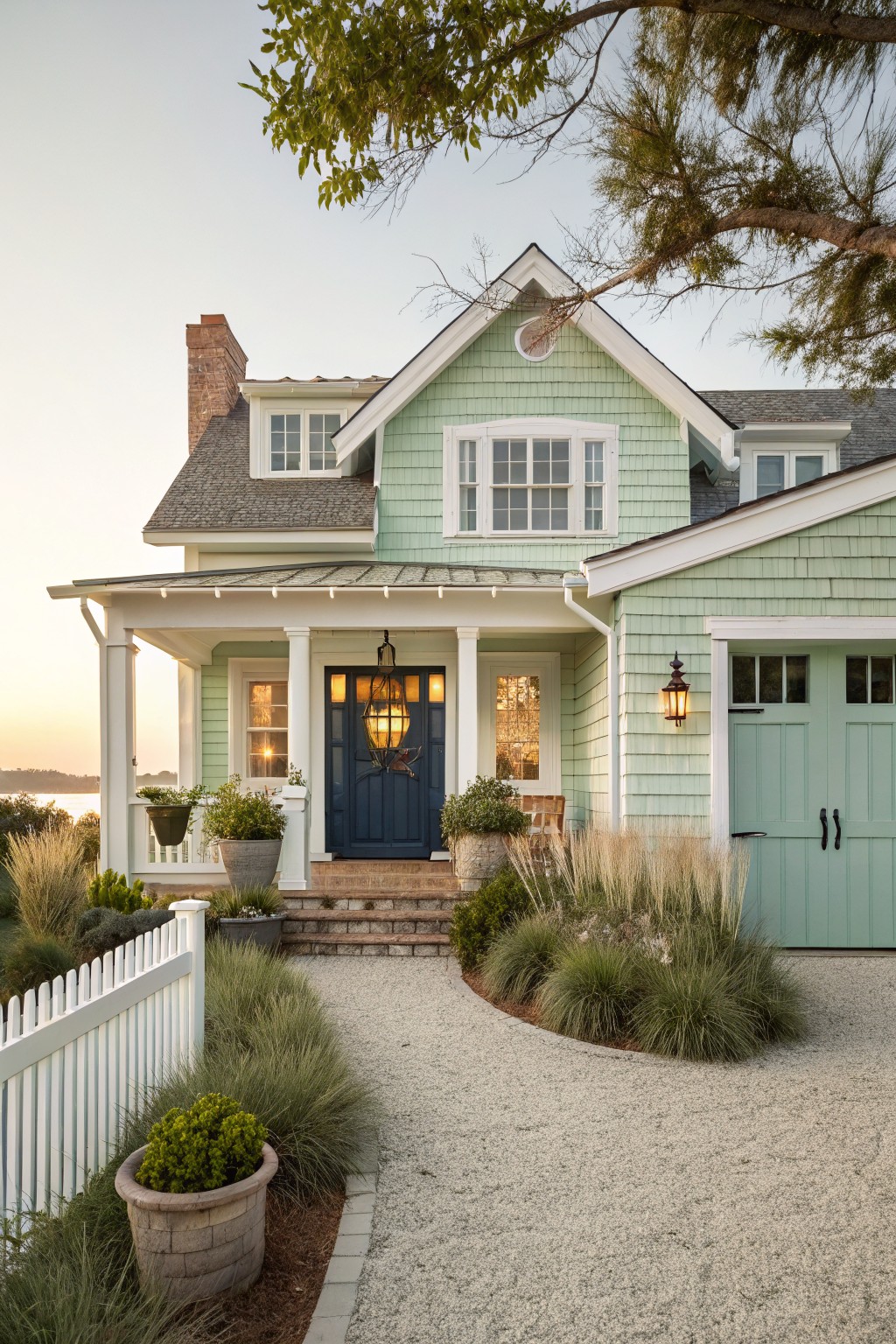
This cottage pulls off a soft pale green paint on its shingle siding that feels fresh without trying too hard. The color works because it picks up the nearby water and trees, blending the house right into its coastal spot. White trim keeps things crisp around the windows and porch, and that dark blue front door adds just enough punch to make you notice the entry.
You can try this on older shingle or clapboard houses, especially near beaches or lakes where greens already play a part. Stick to one shade lighter than your surroundings, and pair it with neutral trim so the house stays calm from the street. It suits family homes that want easy curb appeal, not something flashy.
Half-Timbered Facade on Painted Brick
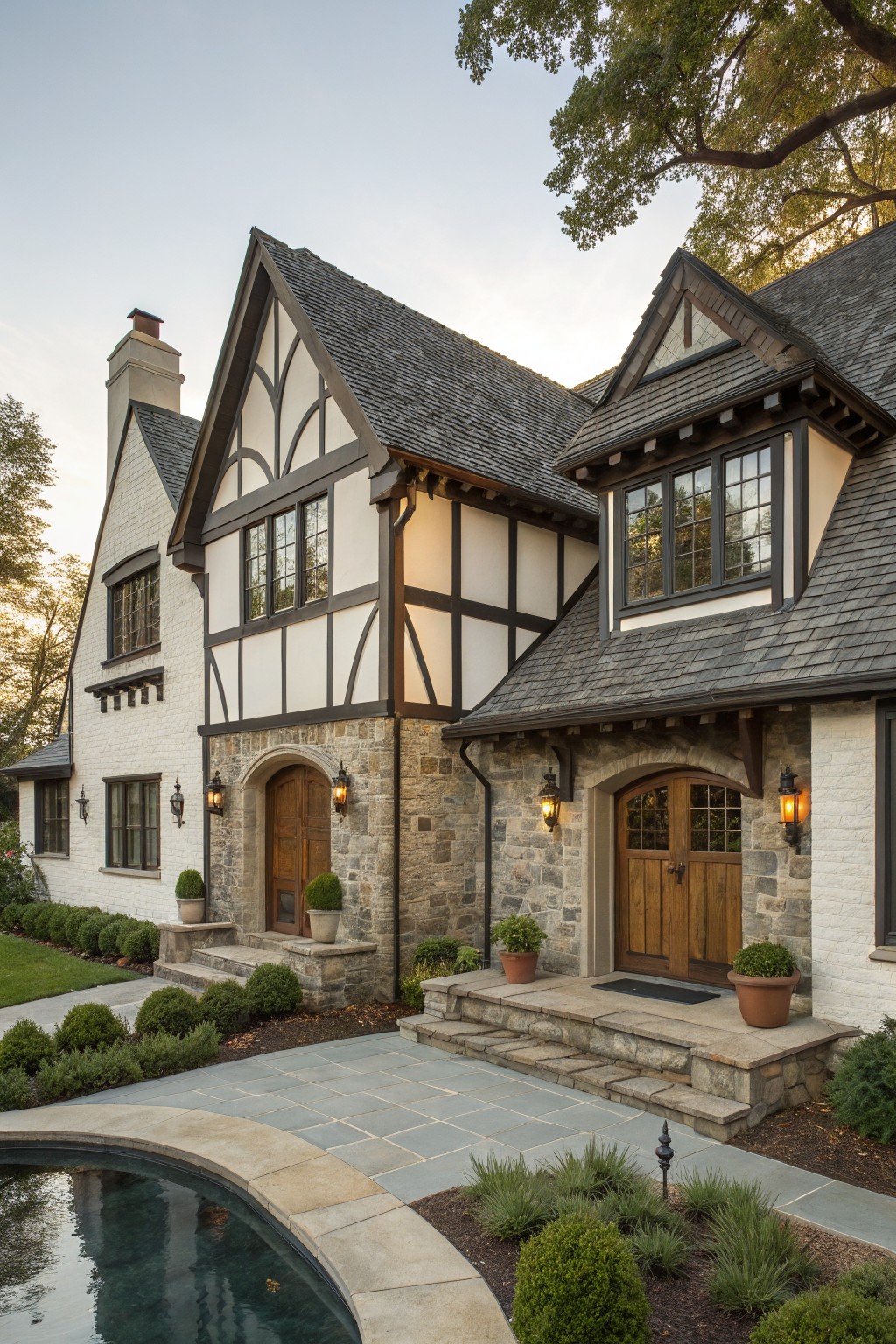
Dark timbers running across white painted brick give this house a nod to old English style. The black beams pop against the clean white surface, breaking up the flatness and adding some history without overdoing it. You see it around the gables and sides here, tying the whole front together.
This look fits homes with pitched roofs or in neighborhoods that lean traditional. Use wider timbers for bigger houses, narrower ones on smaller spots. Stone at the entry, like the archway and steps shown, grounds it nicely. Keep the paint fresh, though, or the contrast fades fast.
Dark Brick with Stone Entry Pillars
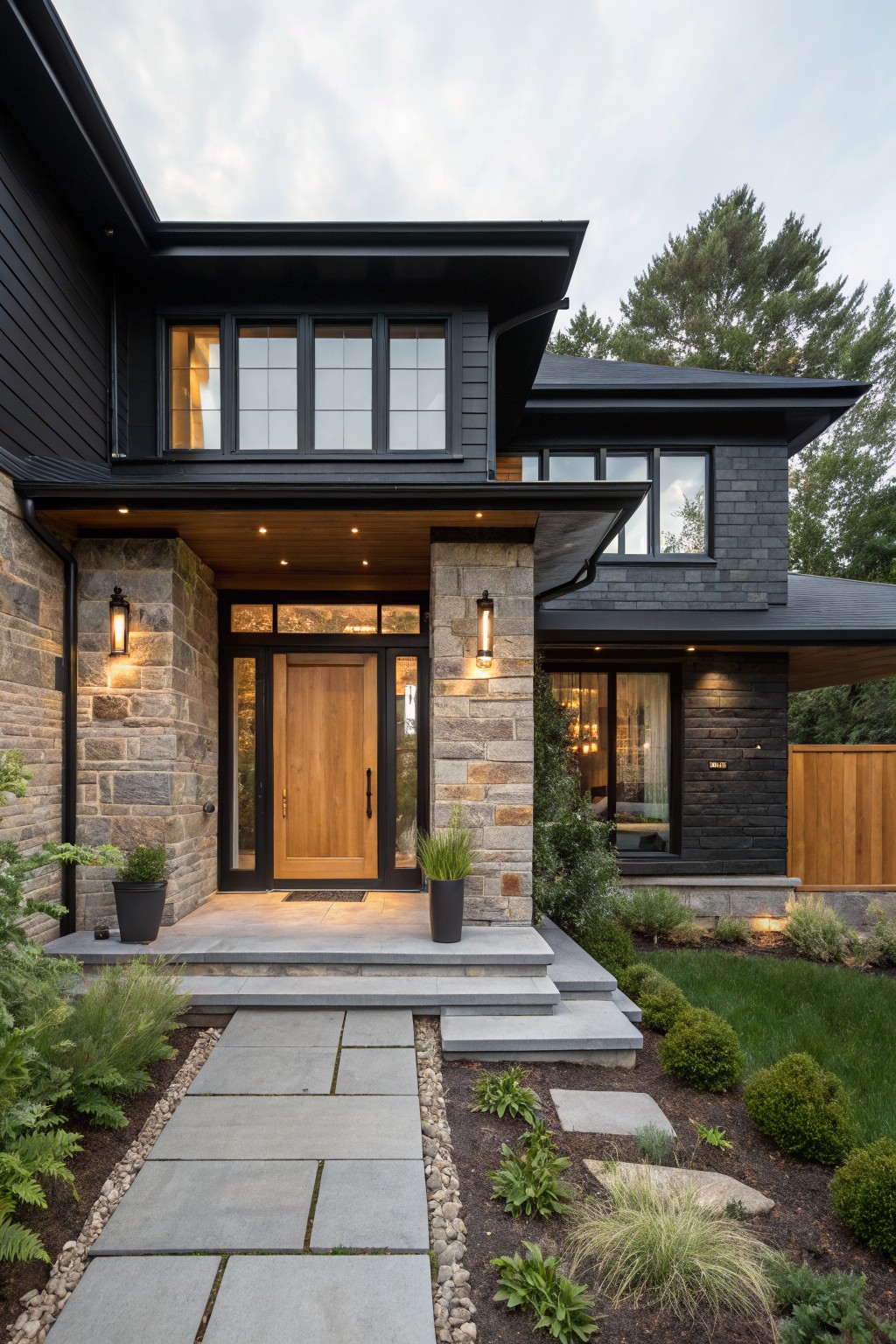
This setup takes a dark brick or siding exterior and adds natural stone pillars right around the front door. It pulls the eye straight to the entry without much effort. The rough texture of the stone softens the sleek black look, and those lanterns on the pillars light it up nicely at dusk.
Try this on a modern or transitional house where you want some warmth up front. It suits spots with trees nearby, keeps things low-key on maintenance. Just make sure the stone matches your region’s style so it doesn’t stick out too much.
Black Door Entry on Brick Facade
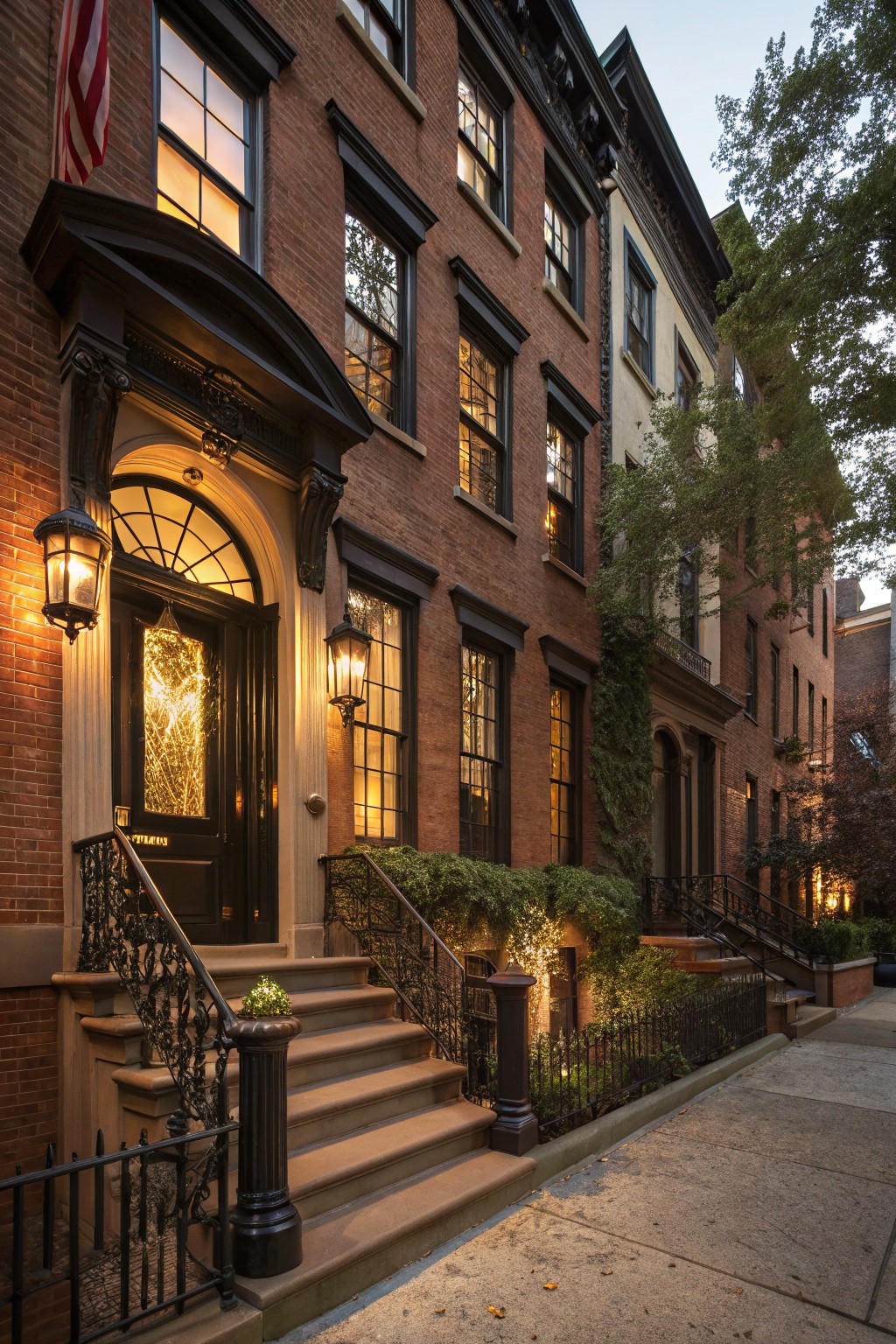
A black front door stands out strong against warm brick like nothing else. Here the deep black paint on the door, frame, and trim pulls your eye right up the steps to the entry. Paired with lanterns that light it up at dusk, it gives the whole house a polished, lived-in feel without overdoing it.
This works best on classic row houses or townhomes where the brick already has character. Just paint the door and any trim black, add simple iron railings if you have steps, and hang matching lanterns. Skip it on super modern builds… it shines on older spots needing that extra welcome.
Painted Brick with Black Cantilever Entry
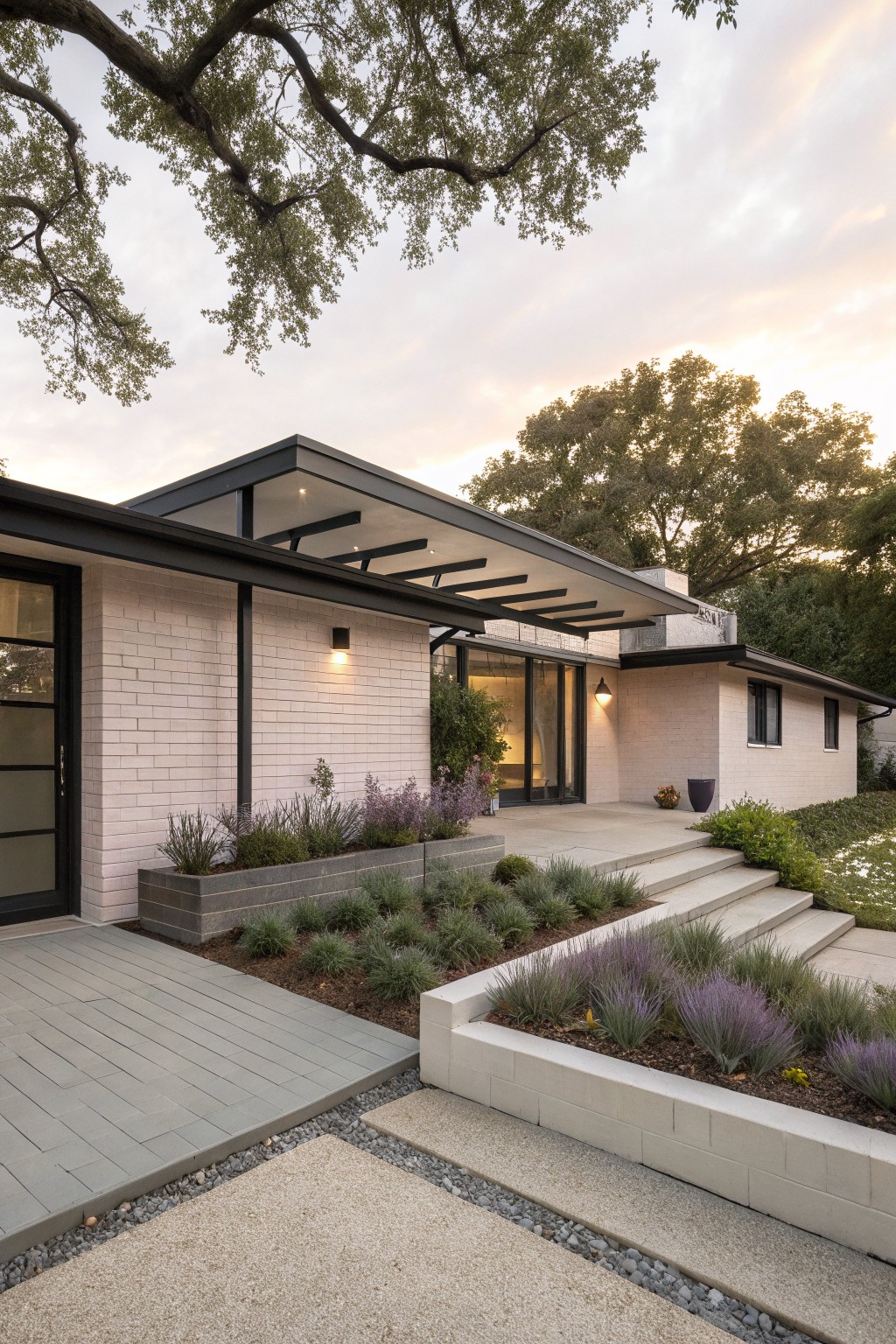
Pale painted brick gives this house a soft base that feels fresh and timeless. The real standout is the black steel cantilever roof stretching out over the entry. It frames the glass doors nicely and adds a modern edge without making things feel too stark. That overhang pulls your eye right to the front door.
This setup shines on low single-story homes like ranches or mid-centuries. Paint your brick in a light warm tone first, then add black metal beams for the roofline and frames. Skip it on super tall facades… it might look off balance there. Just make sure the steel is powder-coated to hold up outdoors.
Stone Foundations Ground Shingle Homes
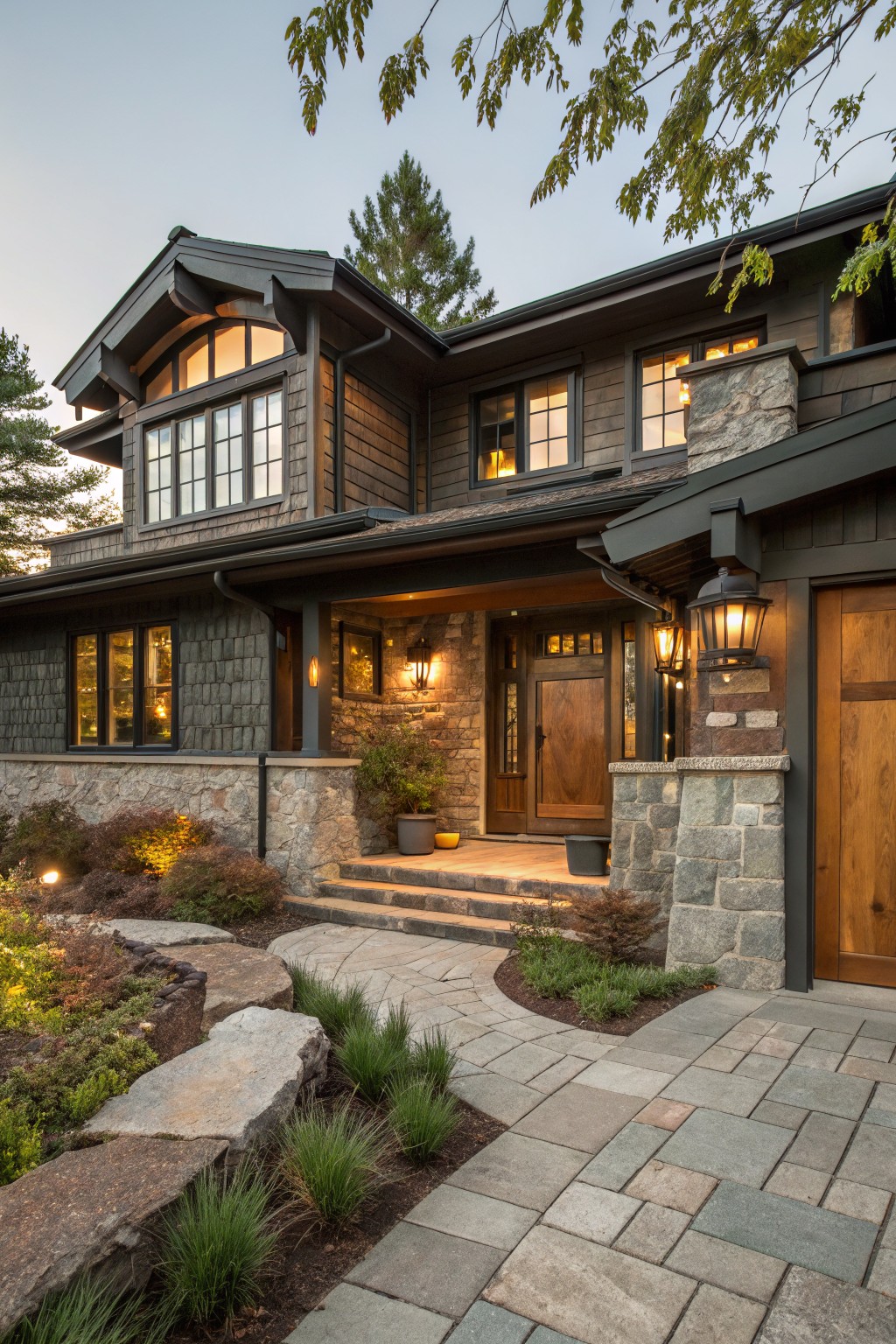
A good stone foundation like this one ties the house right into the landscape. Those rugged, light gray boulders and stacked walls at the base make the dark wood shakes feel less like a box and more like part of the woods. It adds real texture without much fuss, and the entry pillars frame the door nicely for that welcoming touch.
This works best on sloped lots or wooded properties where you want some natural heft at ground level. Source local fieldstone to match your site, keep the mortar minimal for a dry-stack look, and let plants tuck in around the edges. Skip it if your yard is super flat, though, it might overwhelm.
Mint Green Painted Brick Cottage
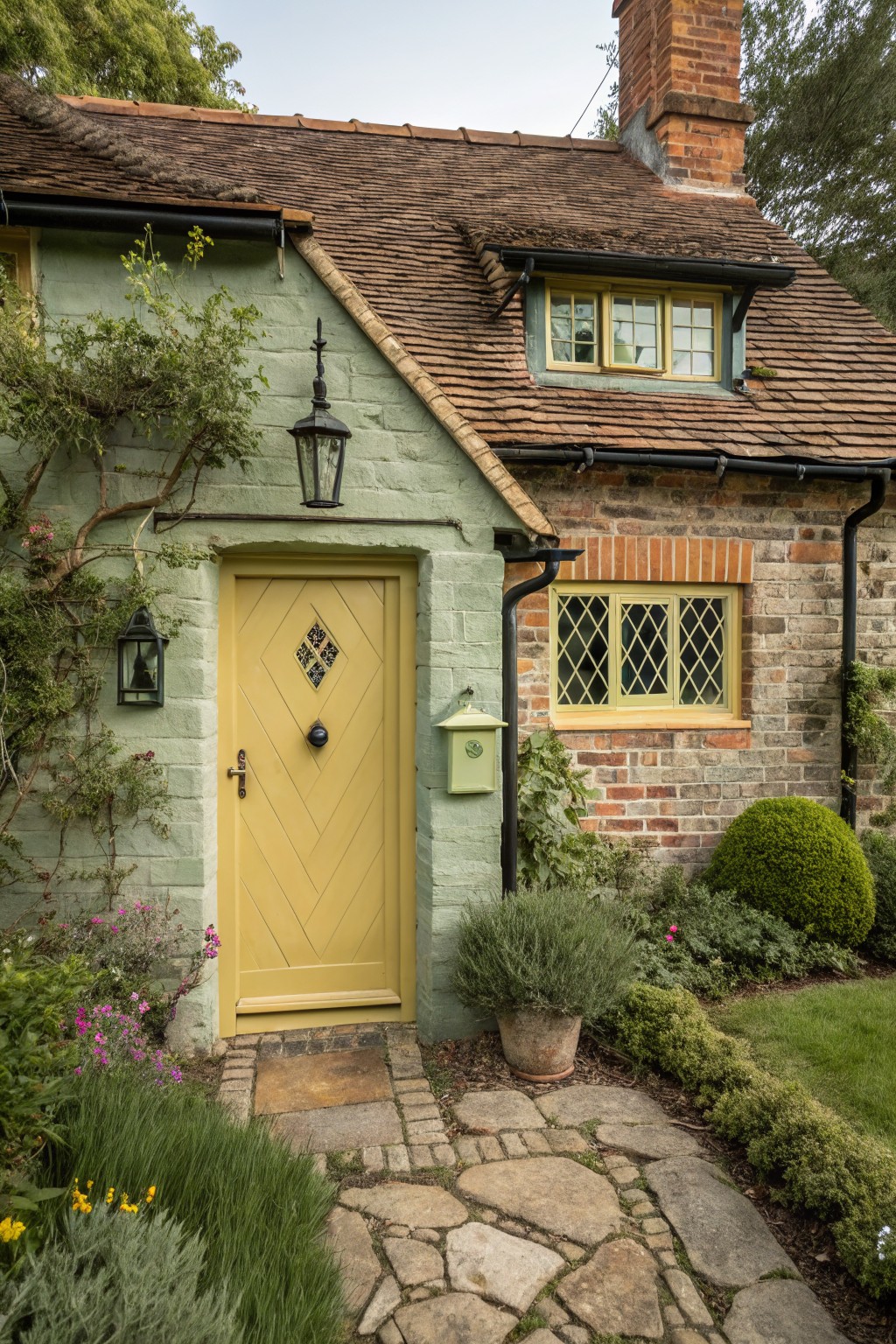
Painting the brick walls of a cottage in a pale mint green softens the look of the sturdy material and brings out its texture nicely. That sunny yellow door with its diamond window pulls everything together at the entry. It’s a simple change that makes the house feel more approachable without losing any character.
This works best on older brick homes in a country or garden setting, where you want curb appeal that feels lived-in rather than stark. Pick a muted green to avoid overpowering the brick pattern, and contrast it with a brighter door color. Just test the shade in different lights first… brick can shift tones outdoors.
Classic Brick with Modern Black Extension
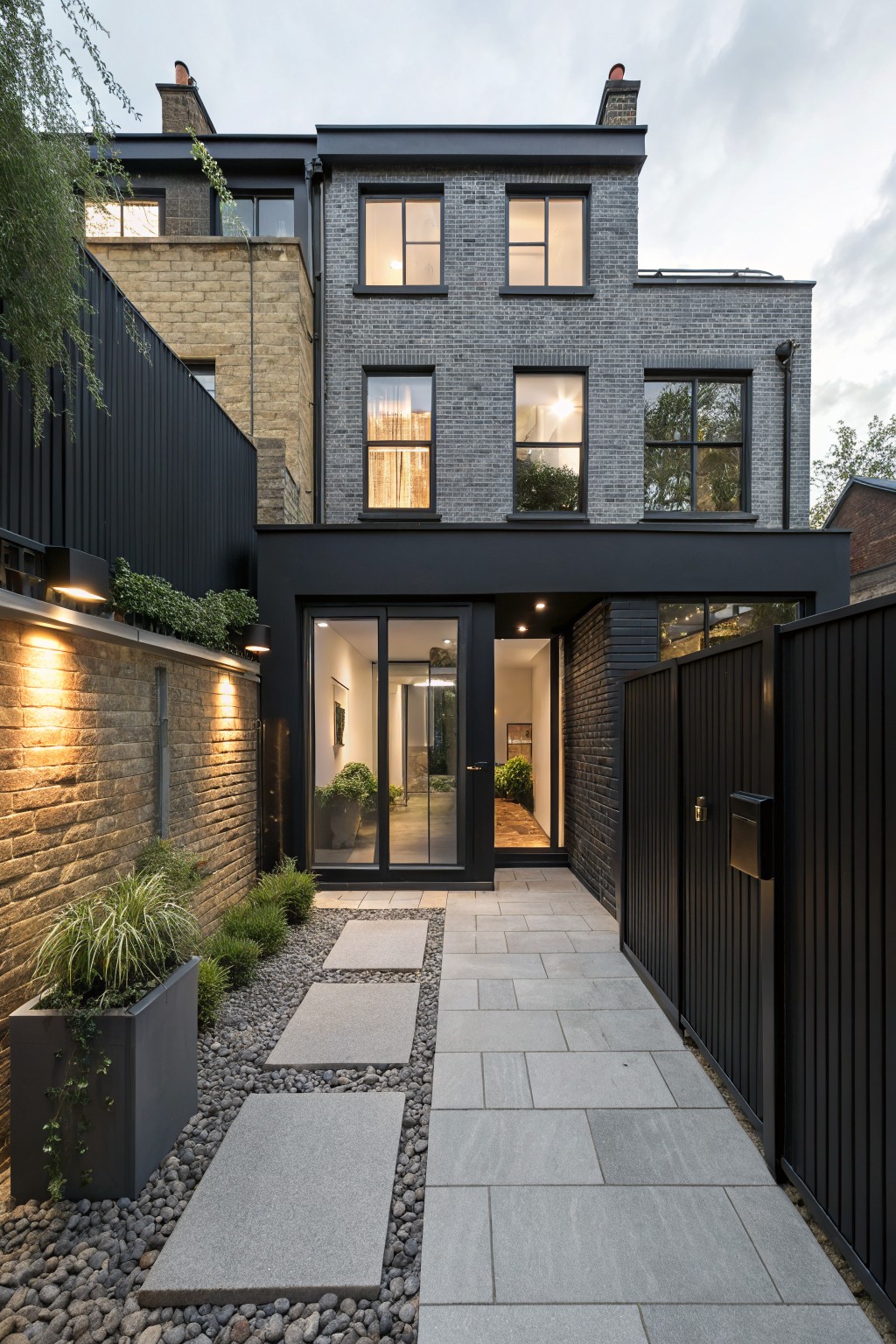
Older brick homes often get a fresh update with a sleek black extension like this one. The warm yellow brick down low contrasts sharply with the dark cladding and frames above. It keeps the traditional feel but adds a modern edge that makes the whole place stand out from the street. Those big glass doors at the entry pull it all together too.
This approach works best on terraced houses in denser neighborhoods. Frame your addition in matte black metal or brick to echo the structure without clashing. Pair it with a simple path of pavers and gravel to lead right in. Just make sure the scale matches your original build so it feels added on, not slapped together.
Light Brick Base Anchors Wood Cladding
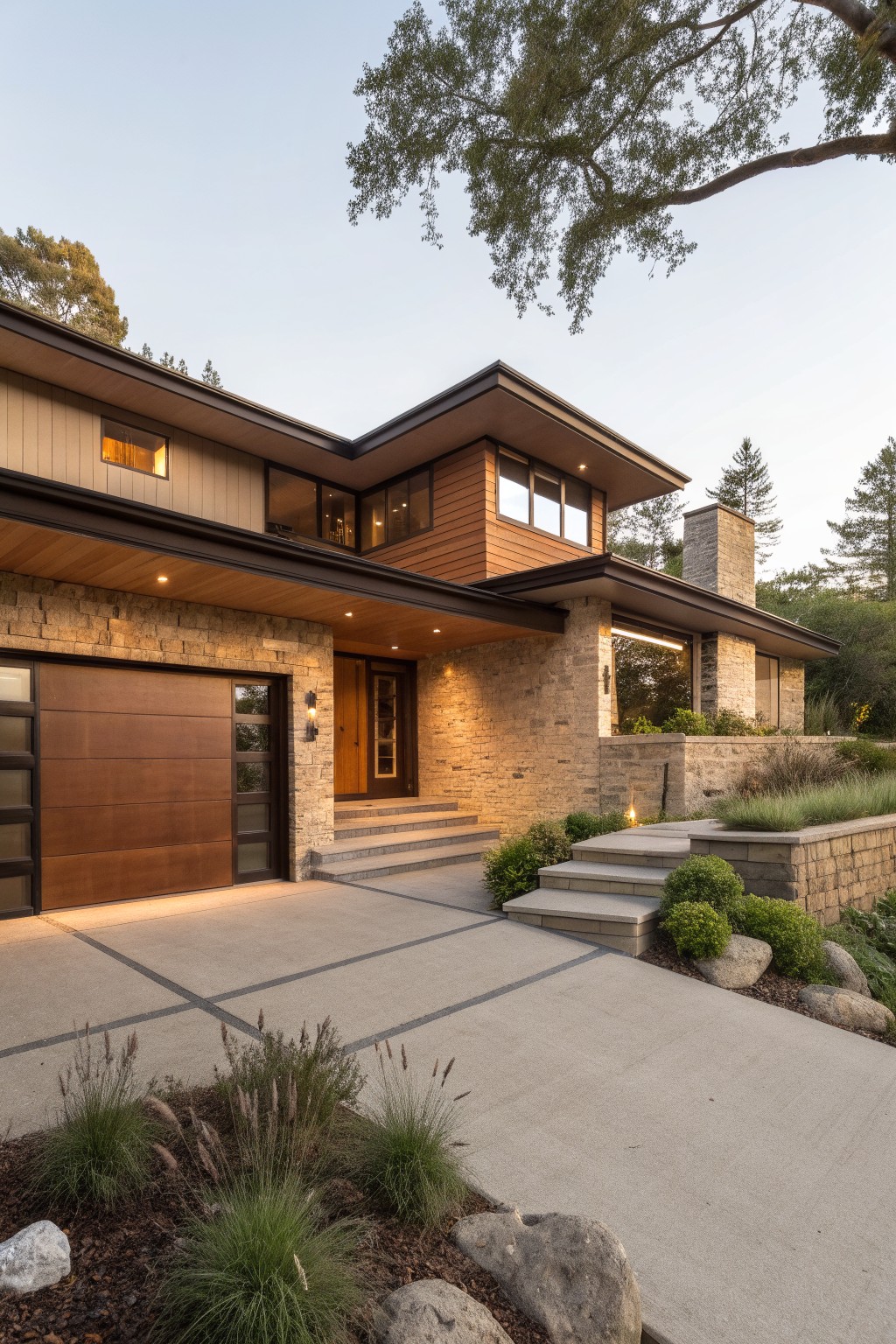
A light brick base like this one gives a modern home some real staying power. Here it’s paired with warm wood siding up top, making the house feel rooted even with those sharp rooflines and big glass windows. The pale tone on the brick keeps things from getting too dark or busy, and it picks up the stone steps right at the entry.
This setup works best on homes tucked into wooded spots or on gentle slopes. Use a soft paint on the brick to blend with natural surroundings, then add a simple wood garage door for contrast. Skip heavy trim. It suits family houses that want modern lines but not a cold boxy look.
Portico Entry on Painted Brick
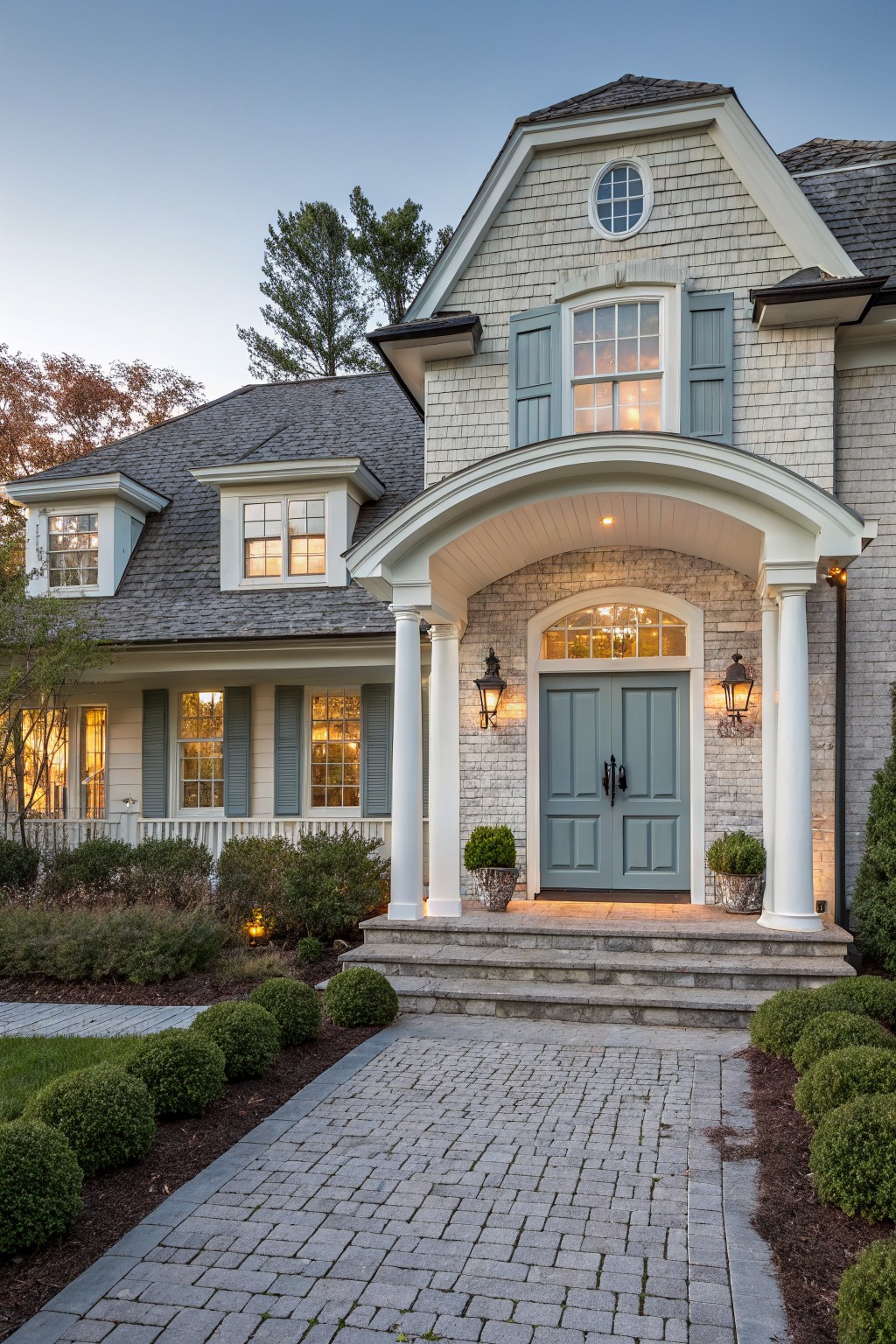
A simple portico like this one takes a painted brick house up a notch. Those white columns and the curved arch over the door give the entry a classic feel without overdoing it. The light brick paint lets the architecture stand out, especially with warm lights kicking on at dusk.
This setup suits homes in neighborhoods where you want some formality but not a full-on mansion look. Keep the landscaping low-key around the steps and path so the portico stays the star. It draws folks right to the door… practical too for a bit of covered space.
Green Door on White Painted Brick
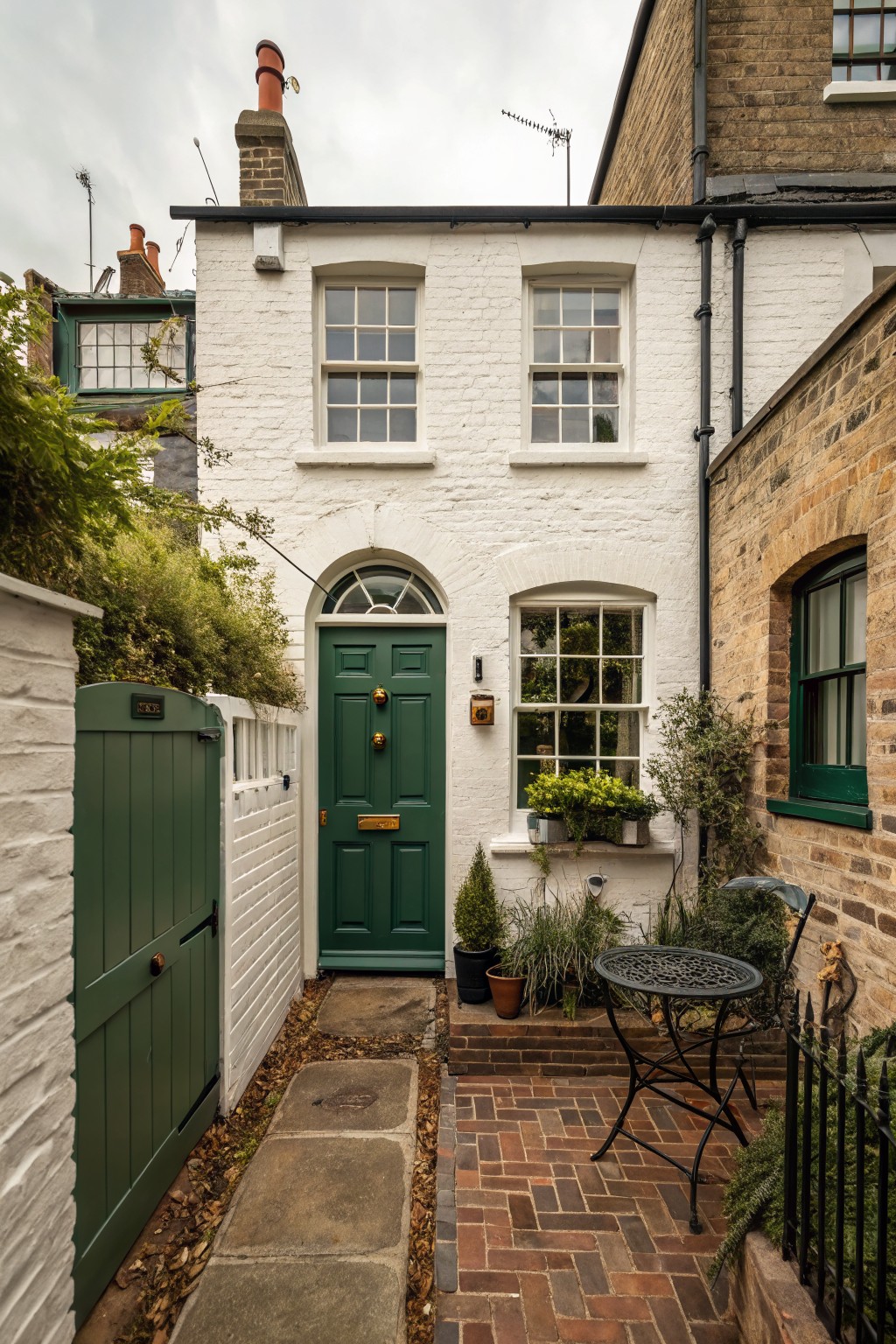
Painting the brick white keeps things bright and clean. That deep green door stands out just right. It pulls your eye to the entry without trying too hard. Brass knocker and simple plants on the sill add a bit more polish. Folks love this look because it feels fresh yet traditional.
Try it on older row houses or narrow city spots. Pick a quality paint for the brick so it lasts. Go bold on the door color but keep windows plain. Watch the scale. Too big a door might overwhelm a small facade. Suits English-style homes best.
Frequently Asked Questions
Q: Can I paint my own brick house without hiring pros?
A: Rent a sprayer and tackle it over a weekend if you like hands-on projects. Just mask off windows and doors first to avoid drips everywhere.
Q: What paint should I use on brick?
A: Pick up breathable masonry paint from the paint store. It soaks into the brick instead of sitting on top, so it stays put through rain and sun.
Q: How do I pick a color that works with my house?
A: Walk your neighborhood and snap pics of homes you love. Test a few sample patches on your brick in morning light, then live with them a day before committing.
Q: Will painted brick hold up over time?
A: Touch up scuffs every couple years with a brush. And power wash gently every spring to knock off winter grime.
