

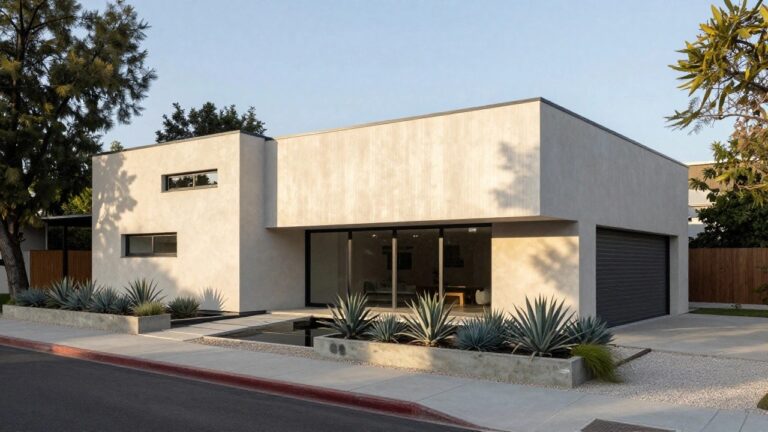
I always notice how a modern mansion’s exterior pulls you in from the street, especially when the facade mixes sleek panels with grounded stone bases that add real weight.
One facade I passed recently looked stark in photos until sunlight hit the varied roofline and made the whole thing breathe.
Curb appeal builds from those smart choices, like entries that recess just enough to frame the door without hiding it.
Materials matter too, because what endures weather and still reads clean after a few years sets the good ones apart.
Save the designs playing shadow with deep overhangs.
Modern Stucco and Wood Facade
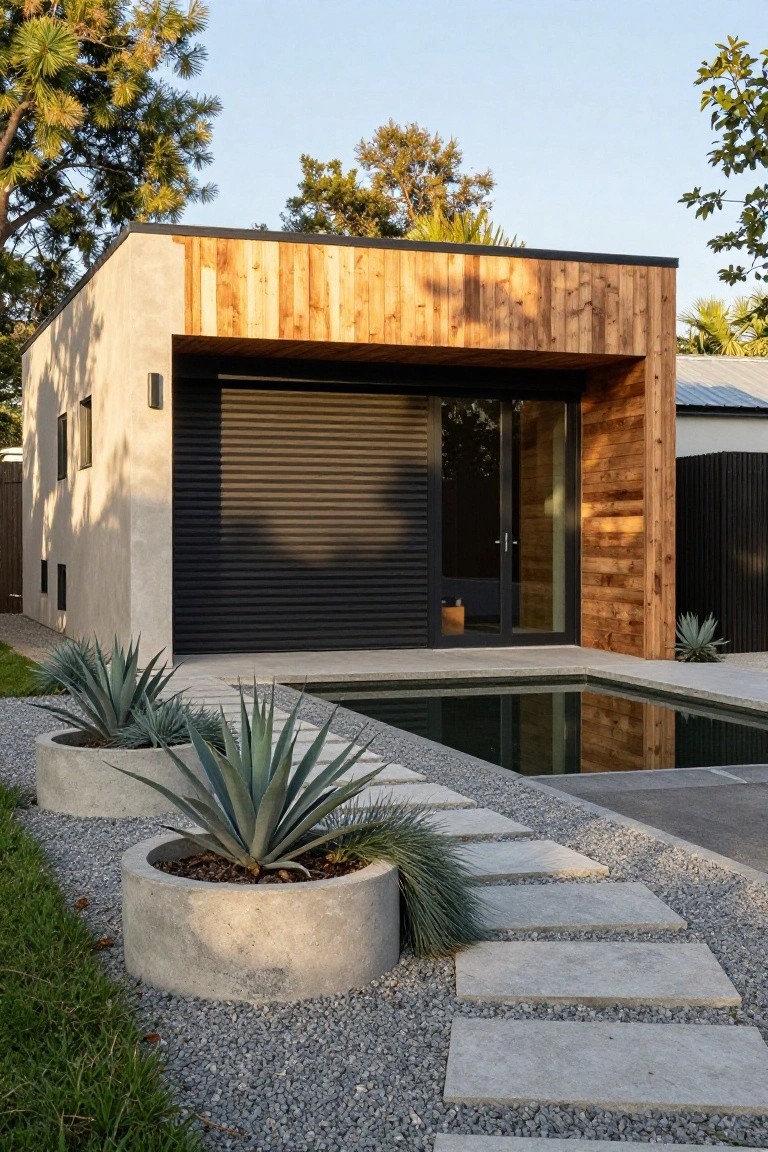
Smooth stucco covers most of this compact house, but vertical cedar planks run up one side and across the top. That simple mix keeps things modern and boxy without feeling cold. The wood brings in a bit of natural texture that stands out against the plain stucco, especially in the late afternoon light.
You can pull this off on smaller structures like a garage or guest house. It suits dry, sunny spots where stucco holds up well. Just keep the lines sharp, maybe add a dark garage door like this one, and let gravel or a few tough plants handle the ground. Avoid overdoing the wood, or it starts to look busy.
Warm Wood Cladding on Sleek Modern Houses
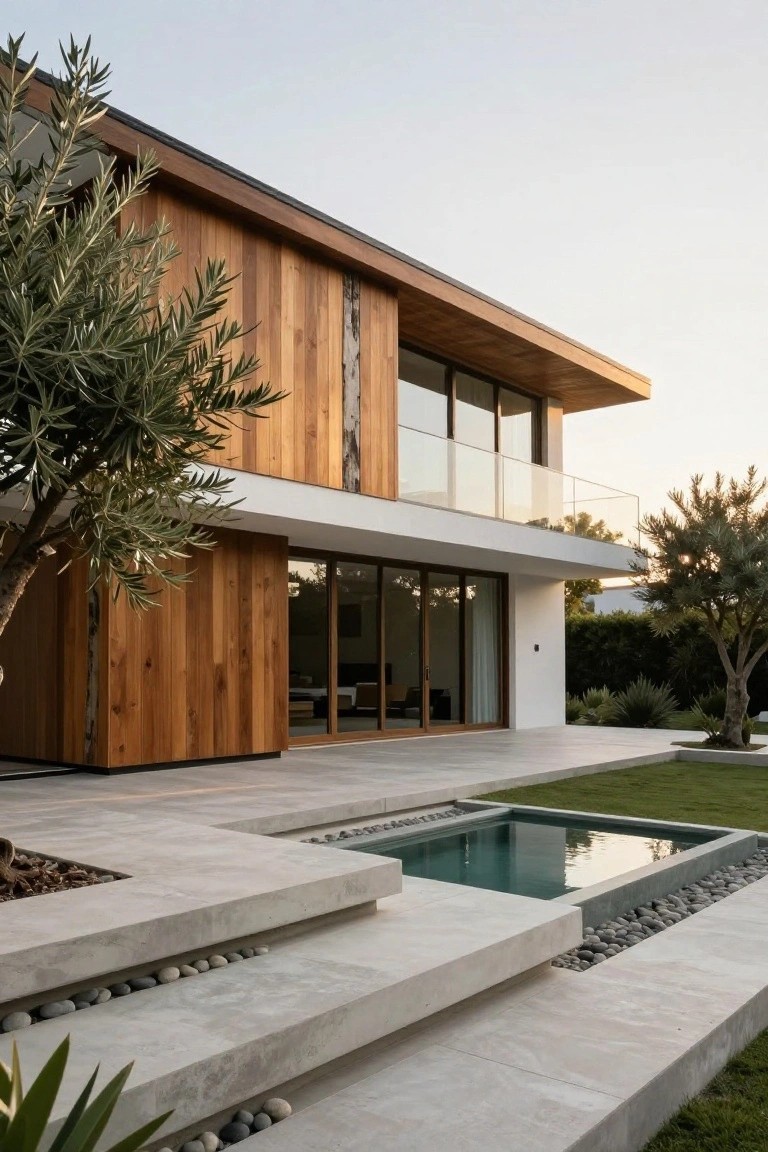
One look at this house shows how vertical wood panels can warm up a super clean modern design. The cedar-toned siding runs up the side, breaking up the white stucco and glass without overwhelming the simple lines. It adds that natural touch that makes the place feel lived-in right away, especially against the hard concrete steps and patio.
You can pull this off on mid-sized homes where you want contemporary style but not ice-cold vibes. Stick the wood on one or two walls facing the street or yard, pair it with big windows for light, and keep the rest minimal. Works great in sunny spots like California, but seal the wood well to handle weather.
Modern White Stone Facade
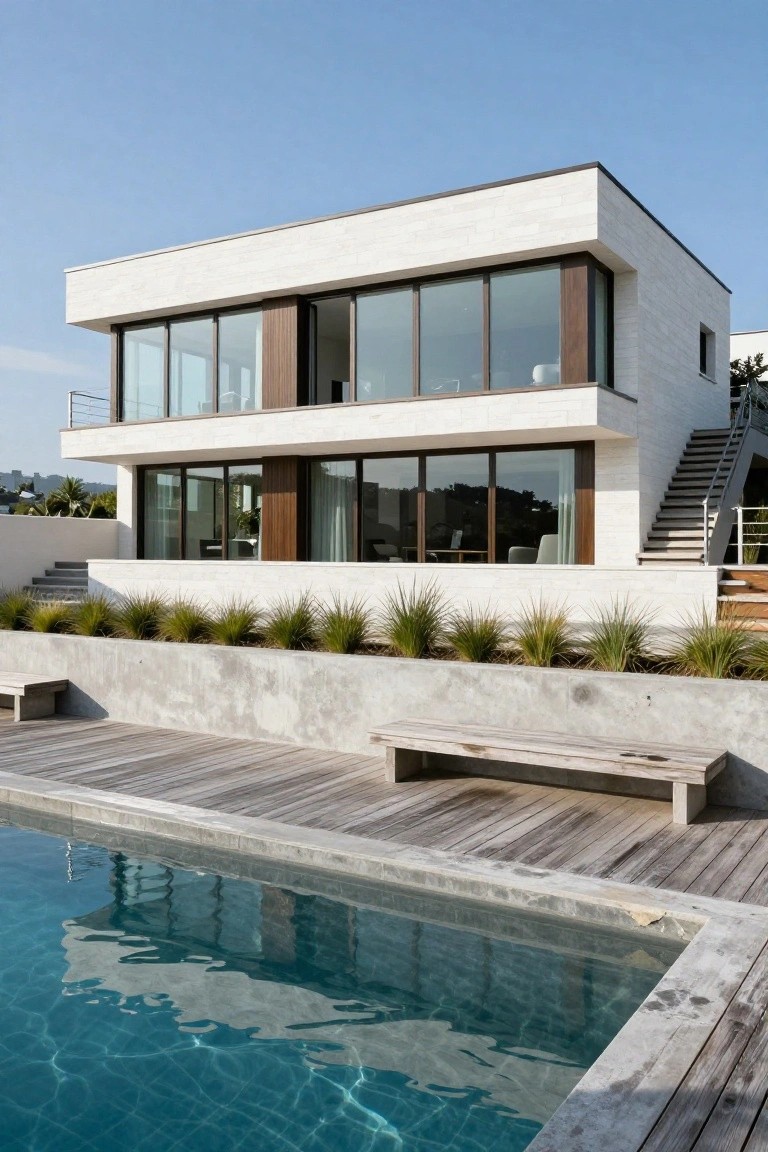
This kind of white stone exterior keeps things simple and fresh. The clean panels go up smooth against the sky, and those wood strips around the big glass windows add just enough warmth without clutter. It makes the house feel open and tied right to the outdoors, especially with the pool sitting close below.
You can pull this off on a hillside lot where you want the architecture to stand out quietly. Pair it with a wood deck and some low grasses along the base for easy flow. Works best in sunny spots, coastal areas maybe, but watch the maintenance on that stone if you’re not near the water.
Stone and Timber Facade for Mountain Homes
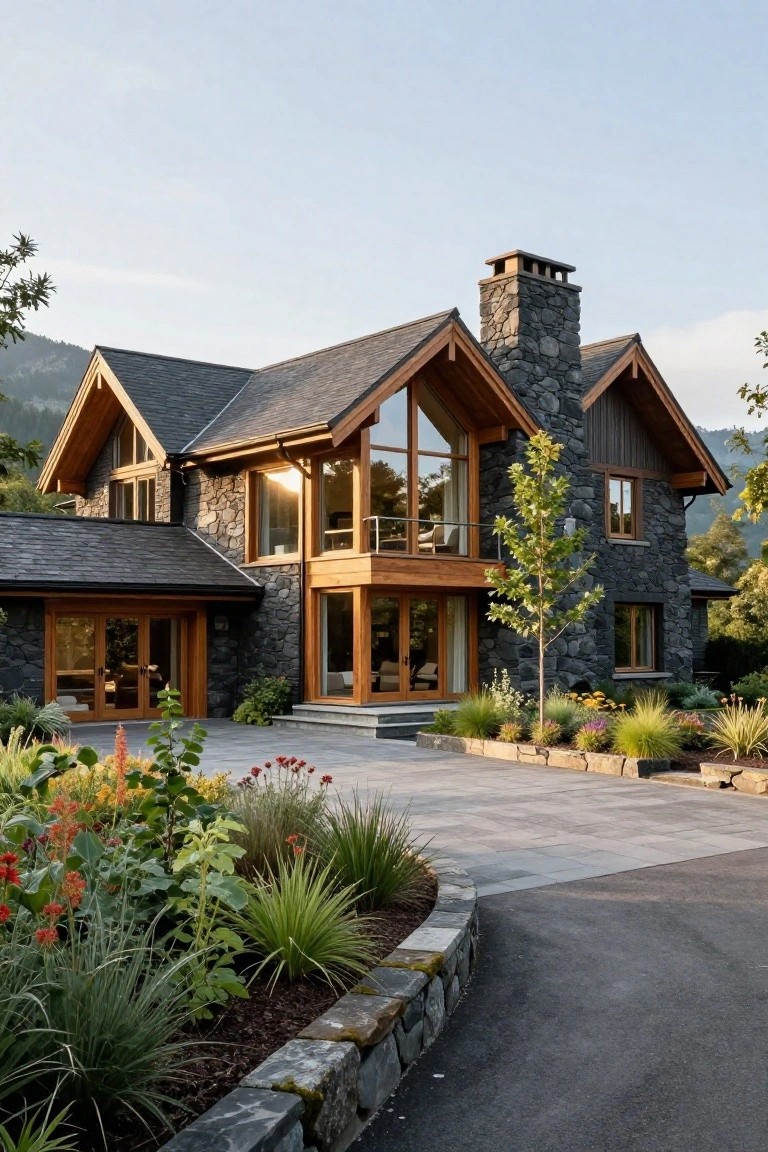
This design pulls together rugged dark stone for the lower walls and chimney with warm timber beams and siding up top. It gives the house a solid base that looks like it grew out of the hillside, while the wood keeps things from feeling too cold or blocky. Those big glass windows let in the views too, making the whole front feel open to the outdoors.
You see this approach a lot in sloped, wooded spots where you want the house to blend in rather than stick out. Pair local stone with cedar or similar woods that weather well, and keep the roof steep to shed snow. It suits bigger family homes… just make sure the stonework matches your budget, since it’s not cheap.
Stone Facade with Vertical Lavender
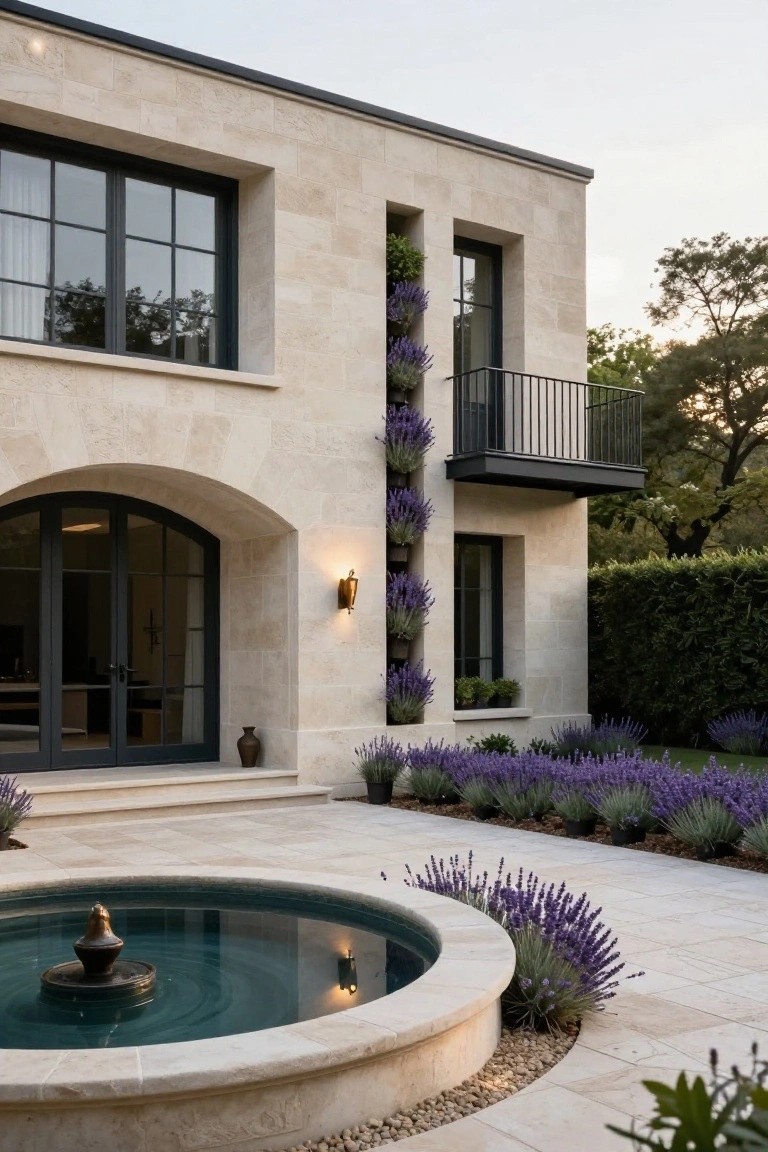
One simple way to warm up a plain stone exterior is by running vertical planters straight up a wall like this. Here, the beige stone gets a boost from those tall stacks of purple lavender, right next to the balcony and window. It softens the look without much effort, and the color pops against the black frames on the doors and windows.
This works great on sunny side walls or entries where plants get good light. Choose tough varieties like lavender that handle neglect okay. It suits warmer spots, maybe a courtyard or driveway edge. Just keep the pots uniform so they blend into the architecture, not fight it.
Spanish-Style Entry Courtyard
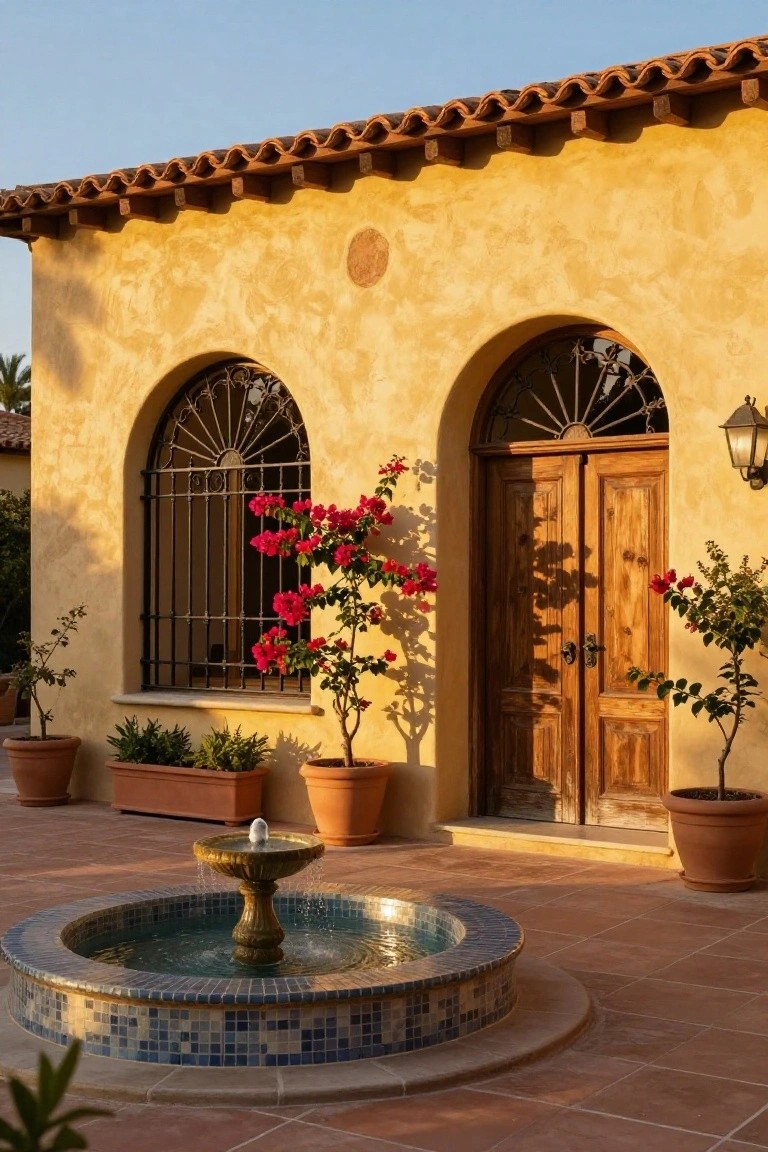
Warm ochre stucco walls meet a pair of arched windows and a rustic wooden double door in this setup. A small fountain sits right out front on the patio, bubbling away. It pulls you right to the entrance without trying too hard. That mix of soft curves and earthy tones gives the whole facade a lived-in, sunny charm that feels timeless.
You can pull this off on smaller homes too, especially where the weather stays mild. Tuck the fountain into a paved entry area, flank the door with potted bougainvillea or similar for pops of red. Skip it if your front yard is tight… just scale down to containers. Works best when the house already has some arch or tile details to echo.
Black Metal Cladding for Sleek Modern Homes
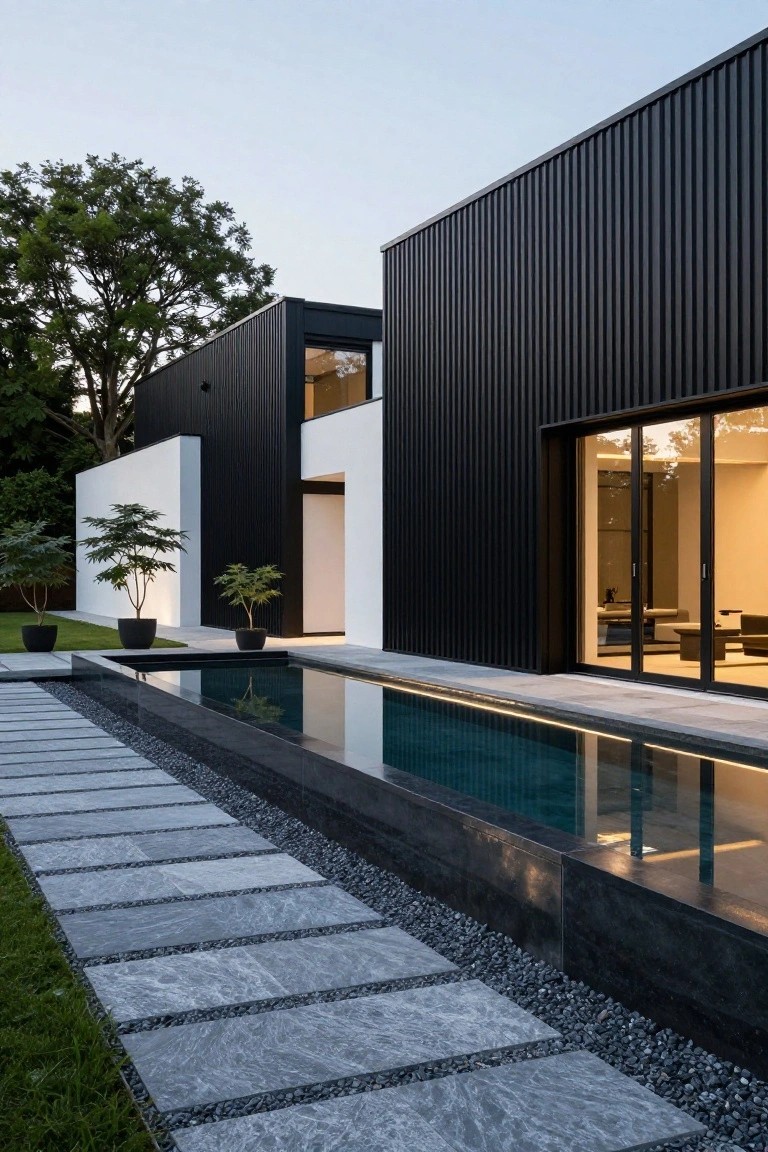
Black metal cladding like this gives a house a strong, no-nonsense look. The vertical panels run up the full height of the wall, making the building feel solid and tall. It pairs well with white sections nearby, which keep things from getting too heavy. That mix stands out against the green yard and trees.
You can pull this off on a new build or a simple addition to an older place. It works best where you want curb appeal without much upkeep. Just make sure the panels are good quality so they don’t fade or dent easy. Run a slim path or pool right alongside like here, and it ties the house to the yard nicely.
Infinity Edge Pool on a Cliff
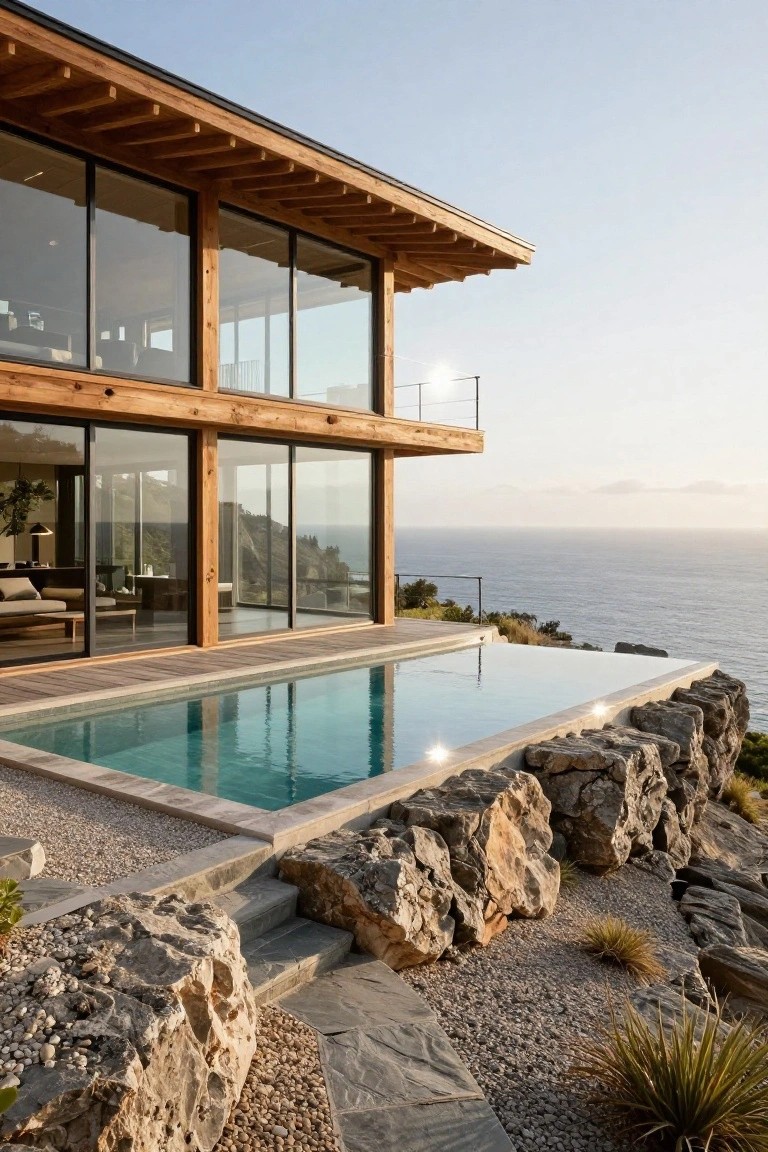
One standout feature here is the infinity edge pool perched right at the cliff’s edge. It uses the natural rock outcrops to form part of the pool wall, so the water looks like it drops straight into the ocean below. That creates a real sense of extension, pulling the sea right up to your backyard without any harsh lines breaking it up.
This works best on sloped coastal lots where you’ve got that drop-off view. Pair it with a simple deck like the wood and stone one shown, and keep plantings low around the rocks for easy upkeep. Just make sure engineering handles the stability, especially in windy spots.
Wood Cladding on Concrete Walls
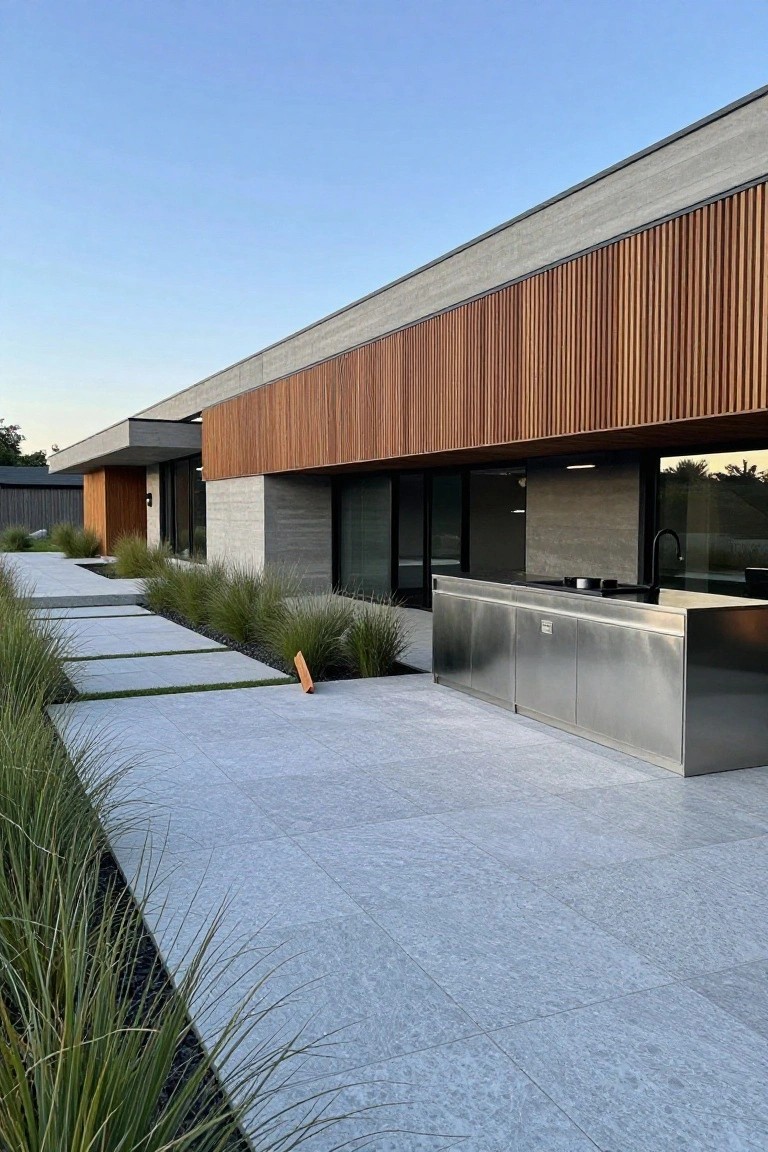
Concrete gives a house that solid, modern feel. Pair it with vertical wood panels on one side, and you get contrast that keeps things interesting. The wood adds texture and pulls the eye along the length of the wall. Large windows fit right in, letting light play off both materials.
This setup suits low-slung homes in warm climates. Use it to highlight an outdoor kitchen or entry path. Pick durable wood like cedar, treated for the outdoors. It keeps the look clean without too much upkeep.
Rustic Stucco Facade
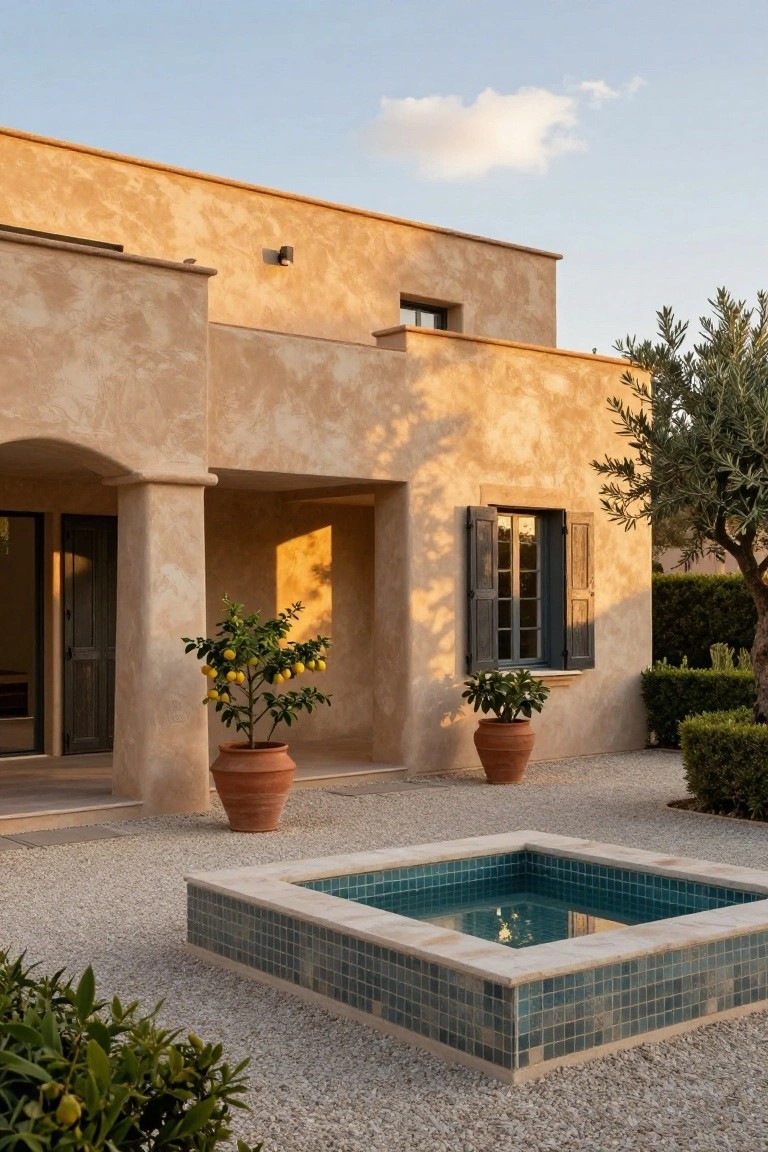
Textured stucco walls like these give a house that sun-warmed, lived-in feel right away. The soft ochre color picks up the light at dusk, making the whole front look cozy instead of stark. It works because the rough surface adds real character without much fuss, and it ties right into the potted lemon trees nearby.
You can pull this off on ranch styles or low modern homes in dry spots. Slap it over block or frame, then keep plantings simple around the base. Watch the maintenance though, it needs sealing now and then to hold up. Fits best where you want easy warmth… no paint touch-ups every year.
Rusted Steel on Concrete Facades
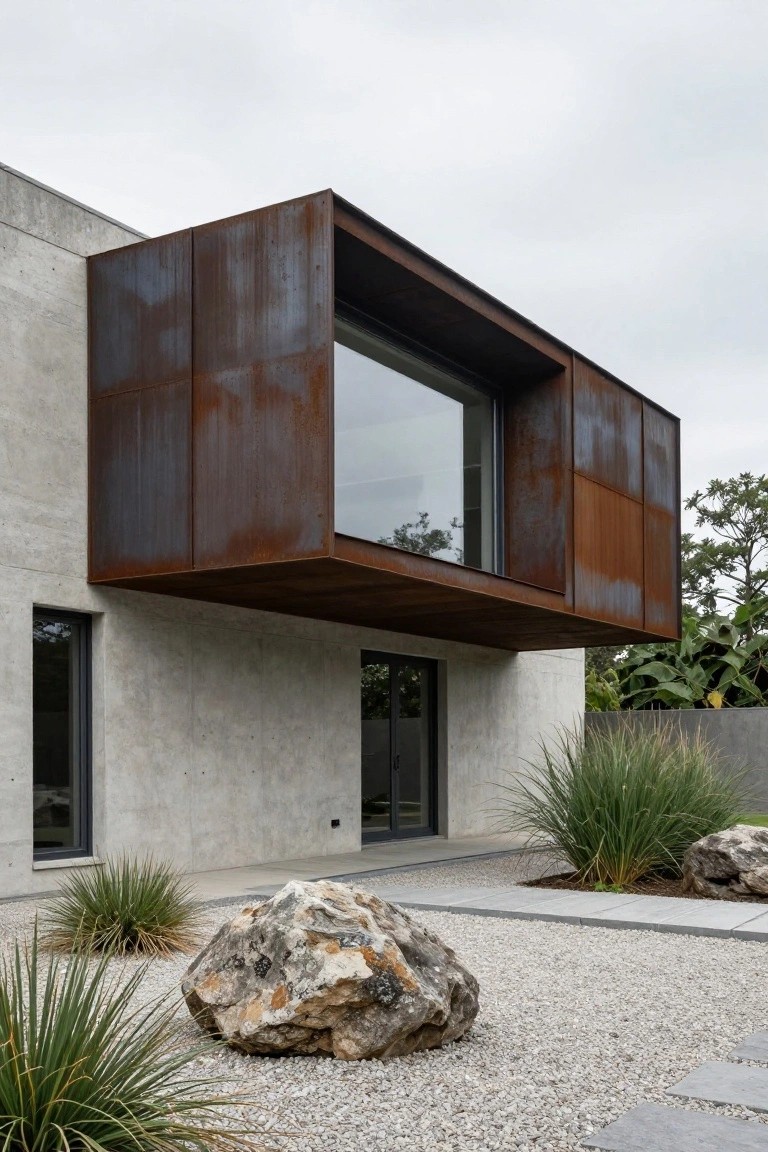
Raw concrete walls meet bold rusted steel in this setup, where a cantilevered metal box holds a wide window and juts out over the entry. That rust gives the whole front a rugged edge without trying too hard. It feels modern yet grounded, like the house has been there a while.
This combo shines on simple, boxy homes in mild climates where the patina builds naturally over time. Skip paint or sealants to let it age. Use gravel and sparse plants out front to avoid cluttering the look. It suits urban lots or spots with some trees nearby.
Recommended Products
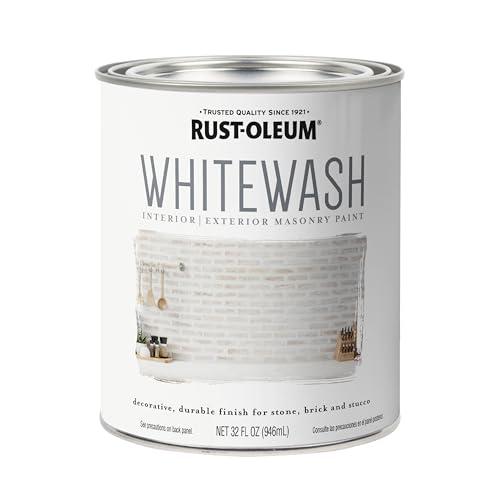
GREAT FOR HIGHLY POROUS SURFACES: Brightens the appearance of stucco, stone, brick and wood while letting natural surface texture shine through


Color matching screws
Living Green Walls on House Facades
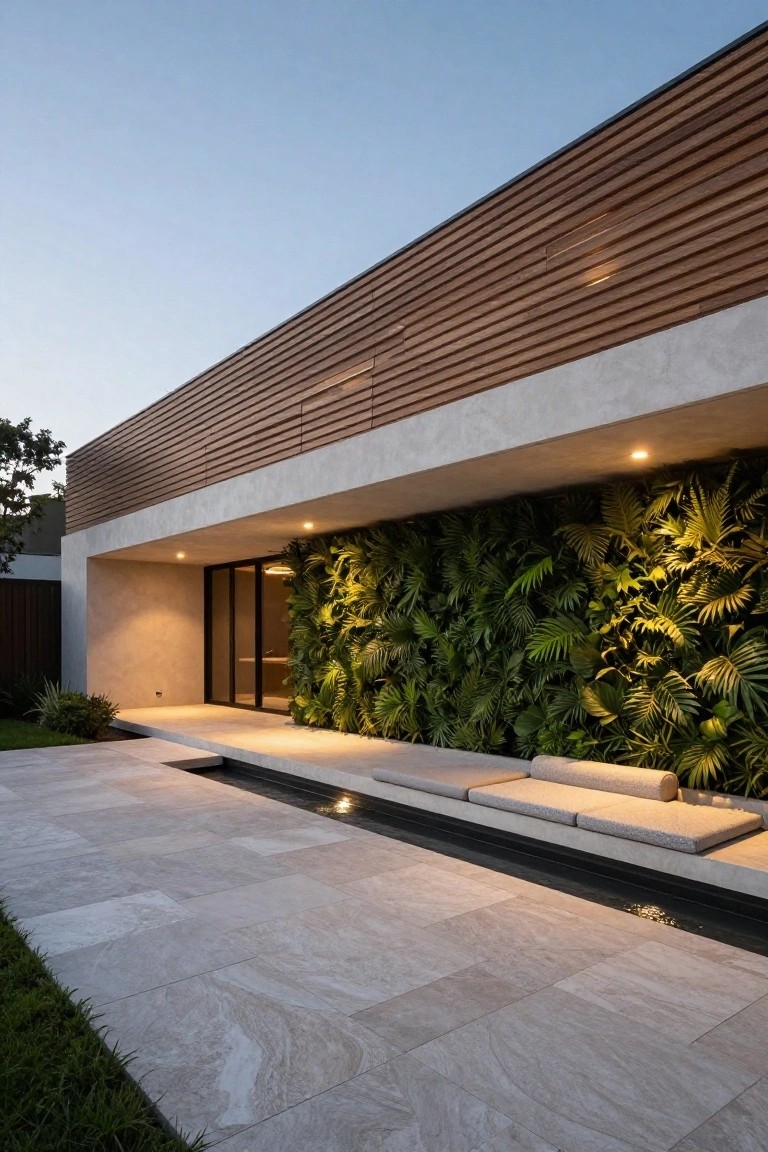
One simple way to bring nature into a modern exterior is with a tall living wall of plants. In this design, ferns cover the wall next to the entry door, lit softly at dusk. It softens the stucco and wood slats above without overwhelming the clean lines. People notice how it makes the house feel alive and connected to the yard.
You can add one like this on a side wall or entry area where it gets some sun and water. It works best on homes with flat surfaces, like mid-century or contemporary styles. Pick tough plants like ferns or ivy, and set up a drip system to keep it easy. Just watch for too much shade, which might thin things out.
Warm Wood and Stone Lake House Exterior
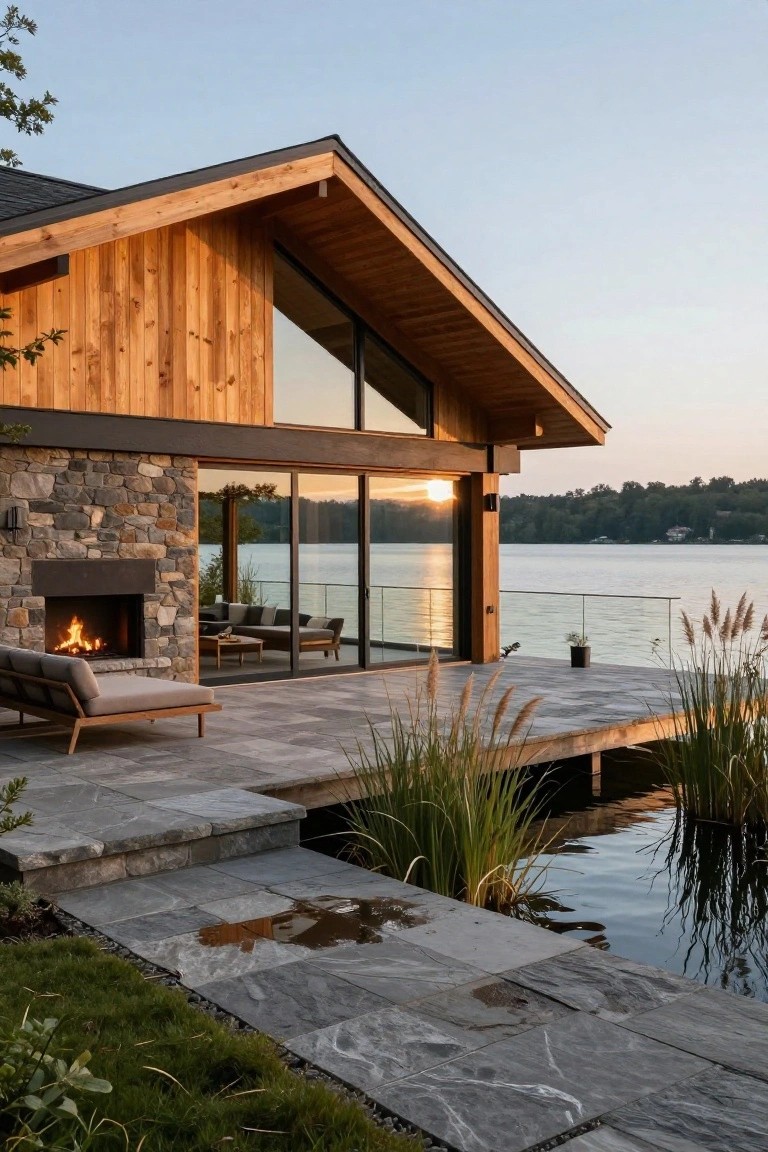
Vertical cedar siding paired with a rugged stone base gives this lakeside home a cozy yet sturdy look. The wood warms up the sharp lines of the modern roof and glass walls, while the stone anchors everything to the ground. It’s a simple combo that fits right into natural spots like wooded shores or hillsides.
You can pull this off on homes near water or trees, where the materials echo the surroundings. Keep the wood treated for weather, and use it on just one or two sides to avoid overwhelming a smaller place. That stone fireplace outdoors ties it all together without much extra work.
Cantilevered Facade for Shaded Entry Appeal
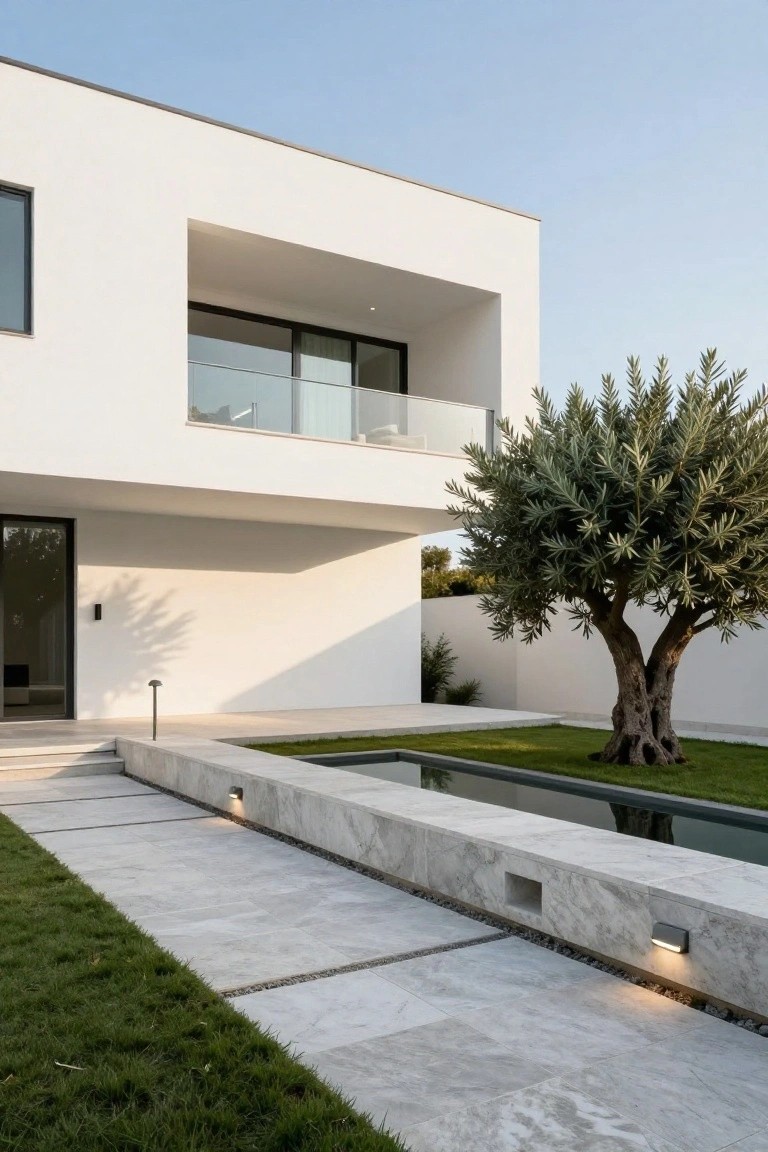
One look at this modern home shows how a simple cantilever works wonders on the front. The upper level juts out over the entry door, casting a clean shadow across those bright white walls. It pulls the eye right to the door without any fussy columns or overhangs. That shadow play adds real depth to what could be a flat boxy look.
You can pull this off on newer flat-roof homes or even add a similar extension during a reno. It fits best in sunny spots where shade matters, and pairs well with a straight stone path like the one here leading up. Just keep the lines crisp, or it loses that modern edge.
Stone and Wood Exterior Design
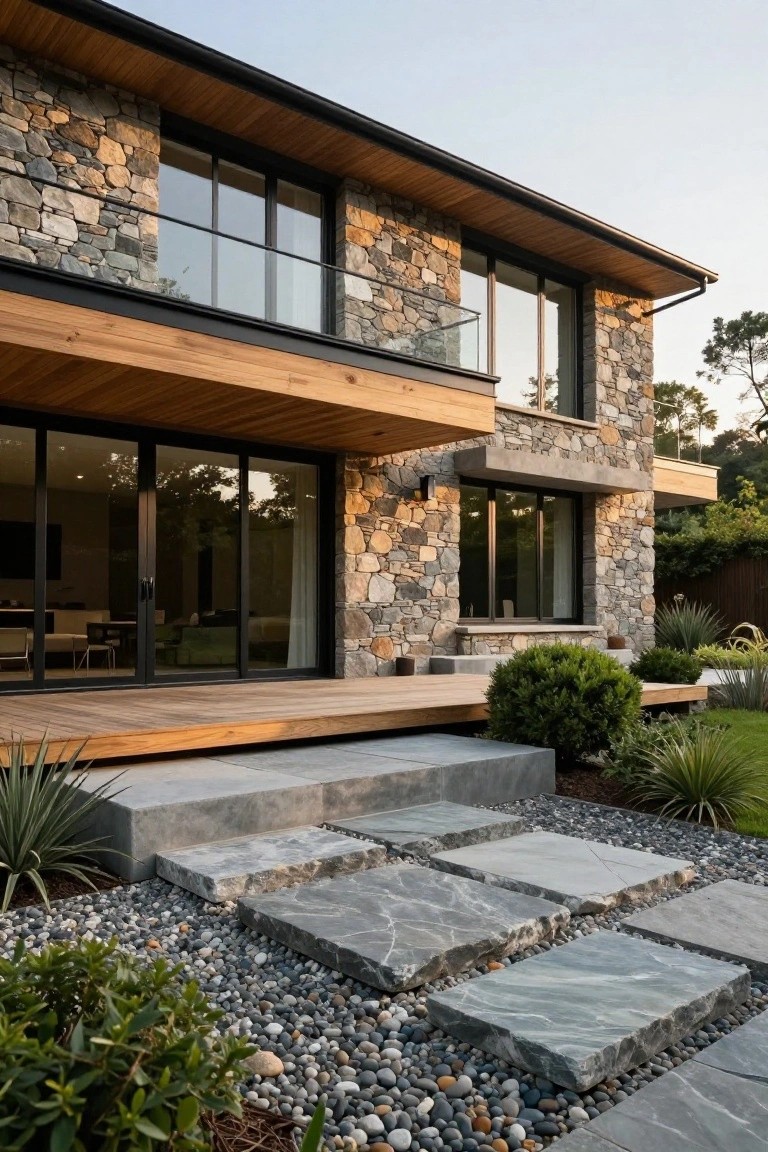
A solid stone base anchors this house while wood elements overhead keep things light and modern. The rough texture of the stacked stones contrasts nicely with smooth wood cantilevers, making the whole facade feel sturdy yet open. Big glass doors pull the outside in too.
This setup suits homes on wooded lots or sloped sites where you want natural ties without a cabin feel. Use local stone for that real fit, and let the wood weather a bit. Skip paint on either, just seal for protection. It’s low fuss once built.
Wood and White Coastal Facade
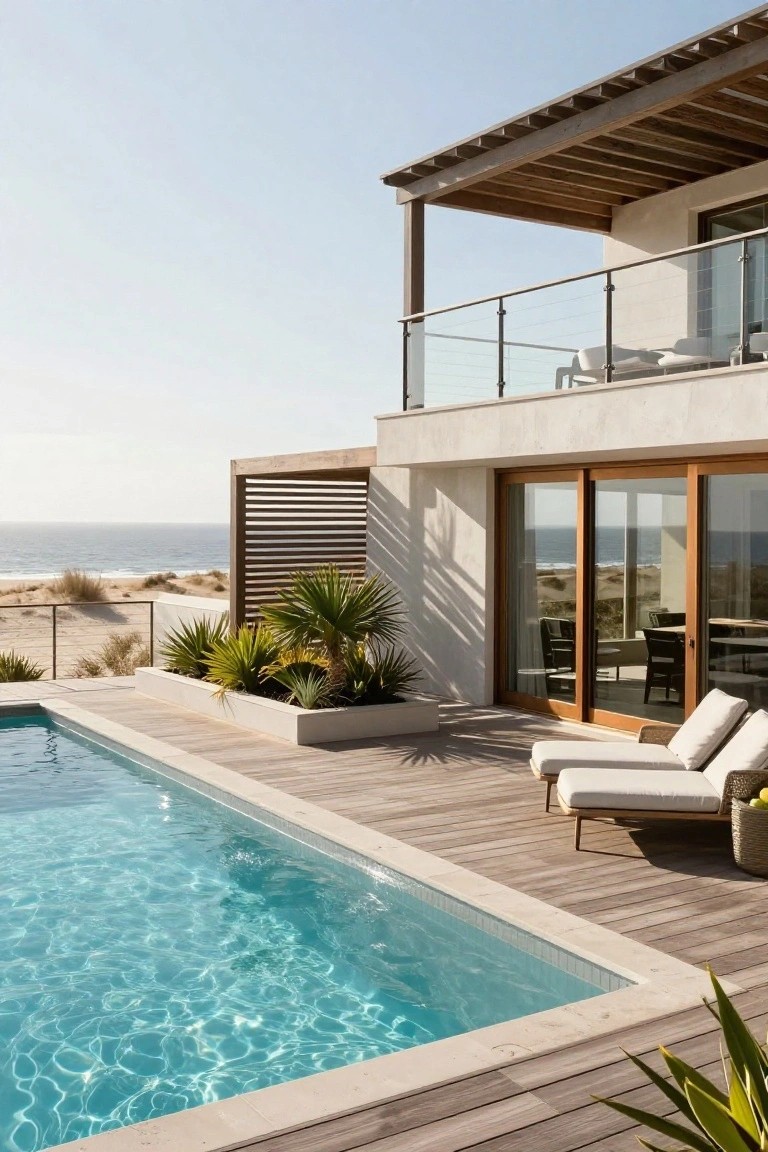
A white stucco exterior like this one keeps things light and simple, especially by the beach. The wooden pergola overhead and slatted screens add texture without cluttering the look. It pulls the house into the sandy surroundings naturally.
This setup works great for modern homes on waterfront lots. Use smooth plaster walls for easy upkeep, then layer in teak or cedar elements for contrast. Open it up with big glass doors to a deck or pool area. Skip it if your site gets too much shade, since the crisp lines shine best in sun.
Arched Stucco Facade for Coastal Homes
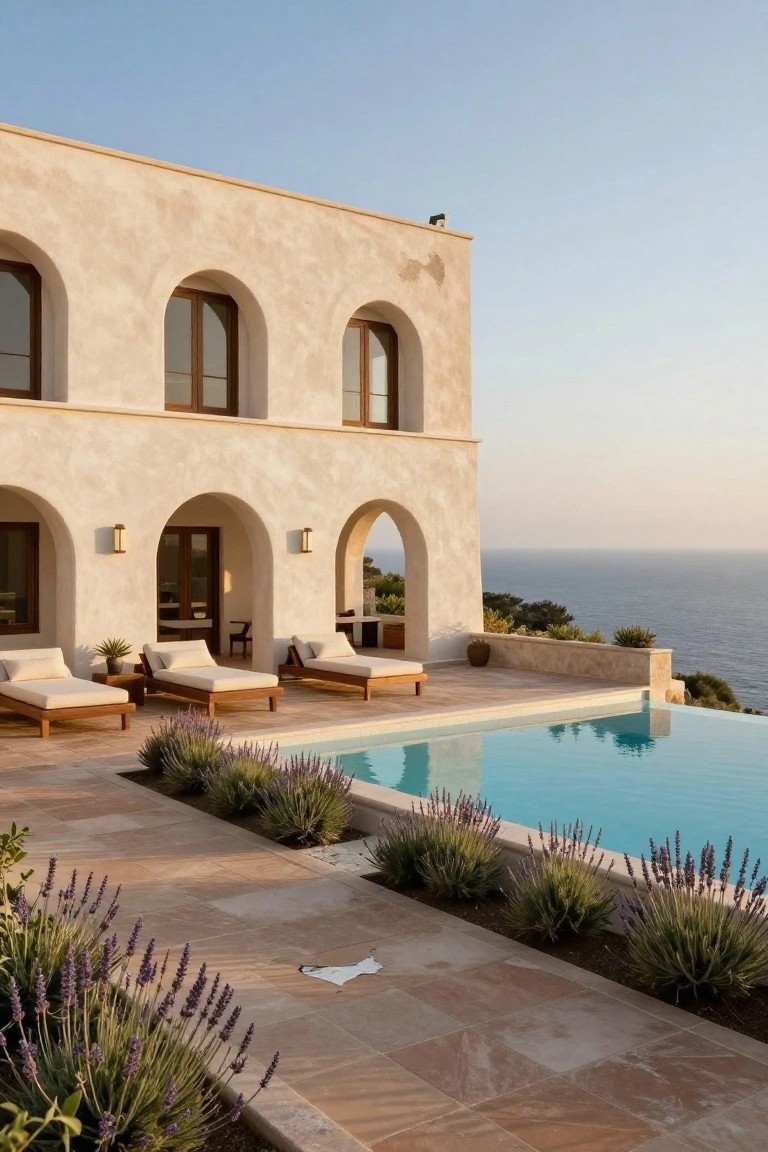
Rounded arches in a light stucco wall like this one set a calm tone for the whole house exterior. The soft curves paired with dark wood frames keep things simple and timeless. They break up the plain wall nicely without much fuss, and here they line up to pull the eye right toward the sea.
This works best on homes with big views, like cliffside spots or anything facing water. Stick to pale stucco for that washed-out Mediterranean vibe, and add wall lamps for evening light. It suits warmer climates where you want the outside to feel open and easy.
Exposed Concrete and Wood Facade Design
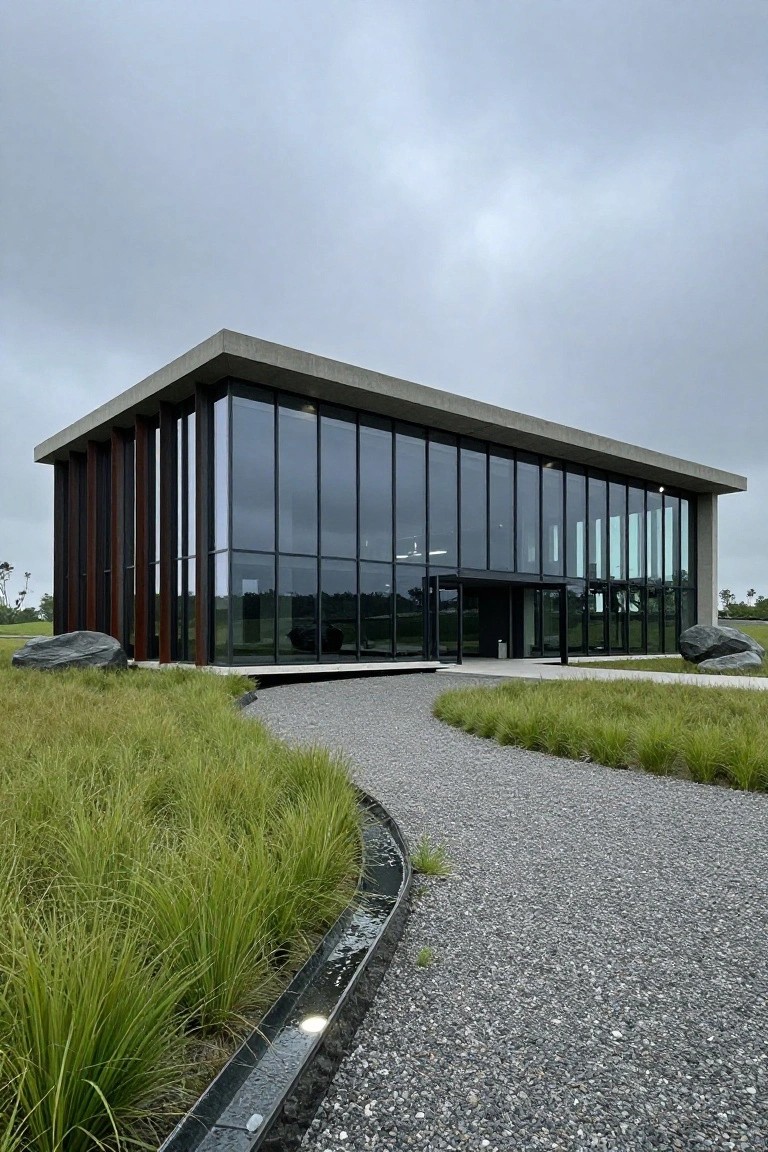
Exposed concrete gives this modern house a solid, grounded feel right away. The thick slabs form clean edges around huge glass walls, while dark wood fins add just enough warmth without softening things too much. It’s a simple way to make a big statement, especially under a plain sky like this.
You can pull this off on low-slung homes where the materials stand out against grass or fields. Keep landscaping minimal, like tall native plants and a few big rocks along a gravel path. Avoid busy details that fight the concrete’s heft. Works best in rainy or coastal spots where the raw look ages nicely.
Courtyard Fountain Entryways
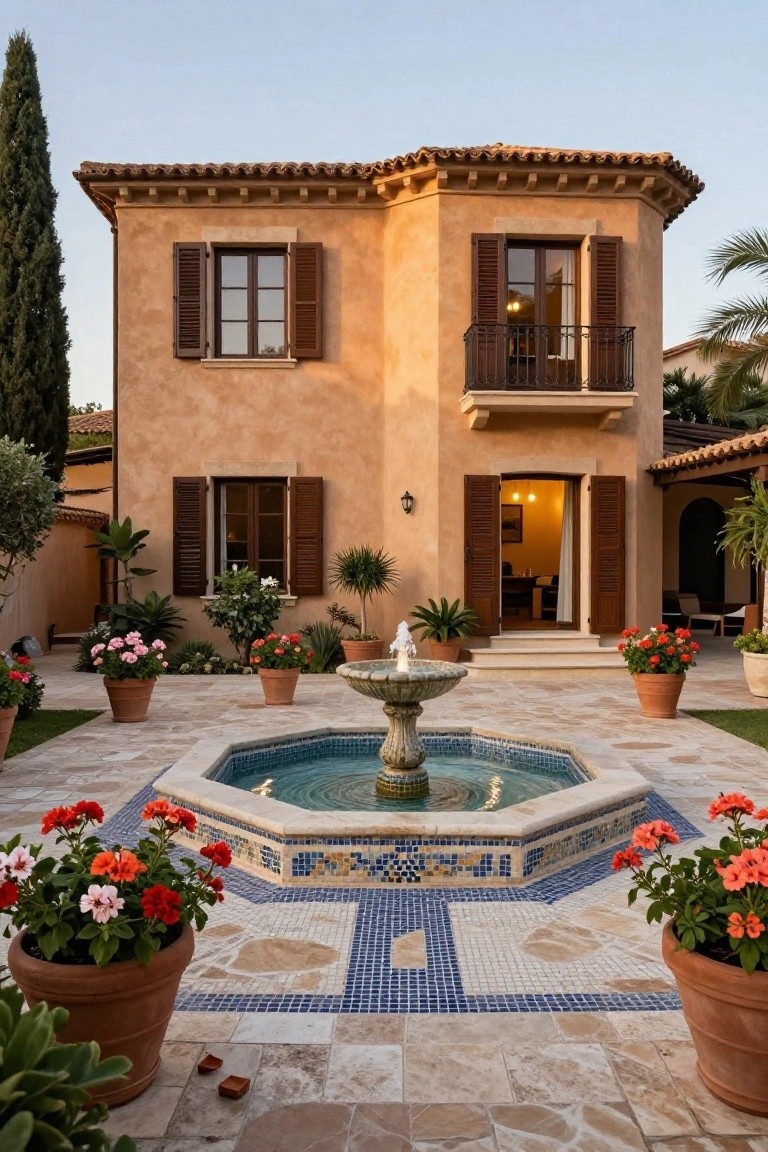
A central fountain like this one turns a simple house entry into something special. Placed right in the courtyard, it anchors the space with its octagonal tiled basin and gentle water flow. The blue and white tiles stand out nicely against the warm stucco walls and terracotta pots filled with geraniums. It’s a quiet way to add movement and sound without much fuss.
This setup works best on larger homes in mild climates where you can enjoy the patio year-round. Center the fountain along the path to the door, and surround it with potted plants for easy color. It suits villas or estates with some open yard space. Just pick low-water plants nearby to keep maintenance straightforward.
Frequently Asked Questions
Q: How do I pick a color scheme from these designs that works on my house?
A: Walk around your neighborhood at dusk and note what shades pop against the sky.
Pick one dominant color from the photos, like soft gray, then layer in black accents for doors and windows. Your house blends right in but stands out.
Q: Can I get that sleek modern look on a budget?
A: Focus on the front door first. Paint it matte black, add a oversized house number, and hang two slim sconces.
Skip the full siding swap for now. That alone pulls eyes to your entry like those mansion shots.
Q: What’s a quick fix for boring landscaping in front of a modern facade?
Plant natives that sway in the breeze, like ornamental grasses. Rake in some dark mulch to ground it all.
Q: How do I mix wood with metal without it looking messy?
A: But here’s the trick. Run vertical wood planks next to smooth metal panels in the same tone.
Step back ten feet after installing a sample. If it flows, you nailed the balance those designs show.
