

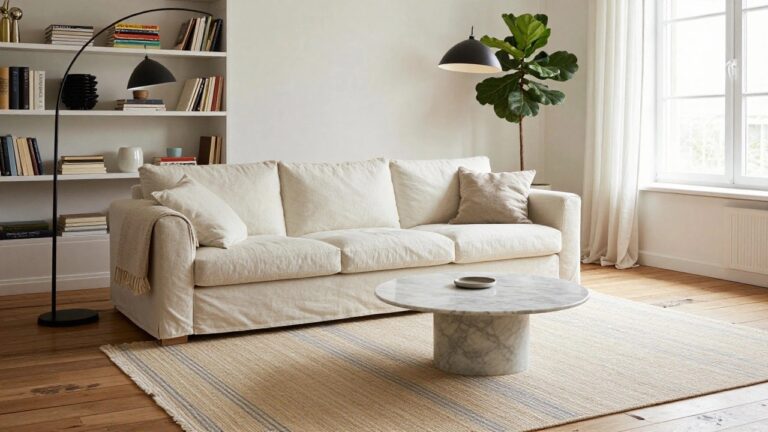
I’ve noticed how a living room starts to feel truly lived-in once you layer in the right rug underfoot. It grounds the furniture, softens echoes off hard floors, and quietly shapes the way people settle in for evenings together. In our house, I once overlooked the scale until the edges curled up underfoot during movie nights. Certain rugs pull a space together by matching the room’s flow, from cozy nooks to open family zones. A few of these ideas have stuck with me for how they’d adapt to everyday messes and foot traffic.
Subtle Striped Rugs in Minimalist Living Rooms
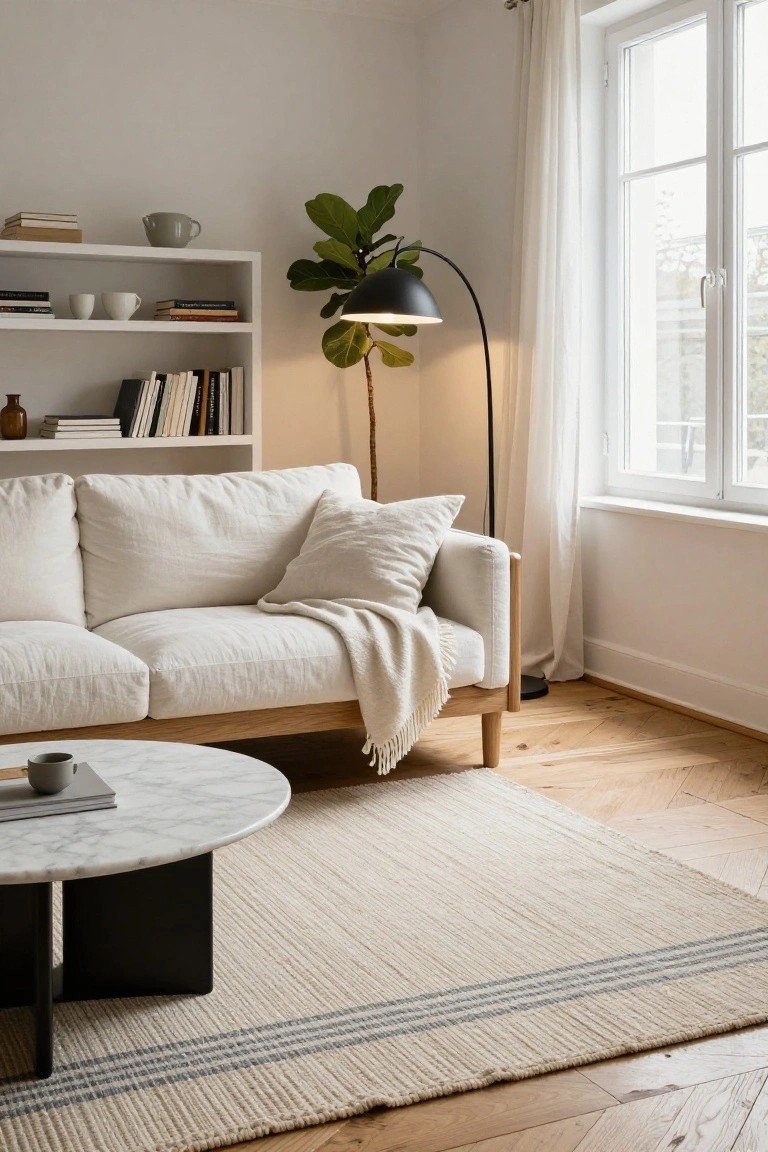
A pale rug with thin blue stripes pulls together the seating area in this light-filled room. Placed under the low oak-framed sofa and round marble coffee table, it adds quiet texture that echoes the wood floors without stealing focus from the simple shelves or fiddle leaf fig. Rooms like this stay calm and open because the rug blends right in.
Try this in spaces with white walls and light woods, especially if you want a Scandinavian feel. Go for natural materials in soft beiges or off-whites, sized to fit two-thirds under the sofa. It suits apartments or open-plan homes… just avoid dark stripes that could shrink the floor.
Recommended Products

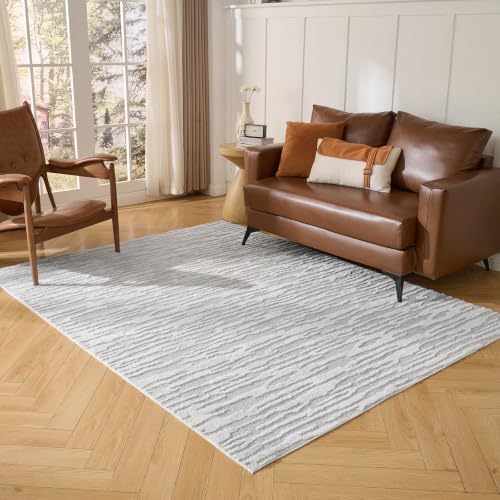
[MODERN ELEGANCE & PREMIUM DUAL-FABRIC TEXTURE] The raygomi minimalist area rug brings a serene, Japandi-inspired aesthetic to your home. Woven from a specialized blend of two distinct premium materials, it delivers an exceptionally rich and dimensional texture. Featuring a stunning high-low pile design, the 3D carved abstract wavy patterns create an organic visual depth that perfectly captures modern living. Its elegant color palette of beige and crisp white accents effortlessly complements any contemporary neutral decor.

Patterned Rugs in Neutral Living Rooms
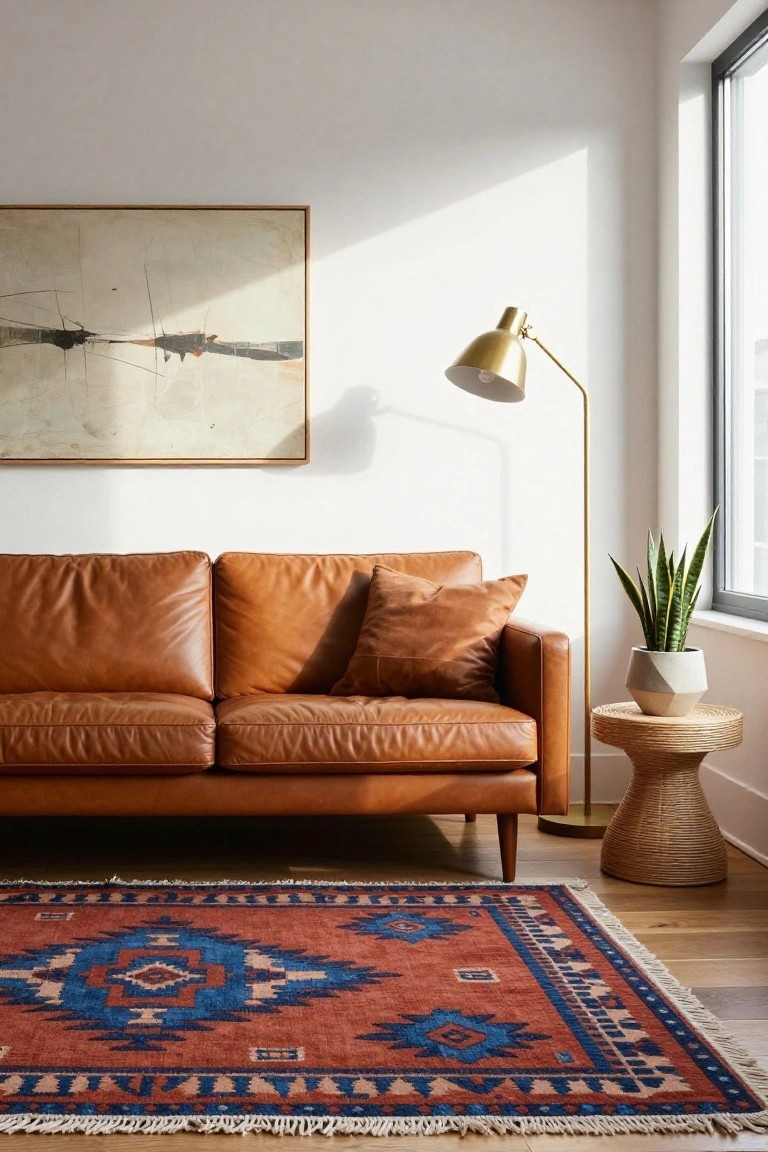
A bold rug like this one with red tones and blue geometrics works great under a tan leather sofa. It pulls in color against plain white walls and simple wood floors. That mix keeps things calm but interesting, especially with leather’s clean lines.
This setup fits most homes with mid-century style sofas or any neutral seating. Go for a rug sized just right to fit under the front legs. Watch the scale though, too big and it swamps the room. Add one plant nearby for balance.
Defining Living Room Seating with an Area Rug
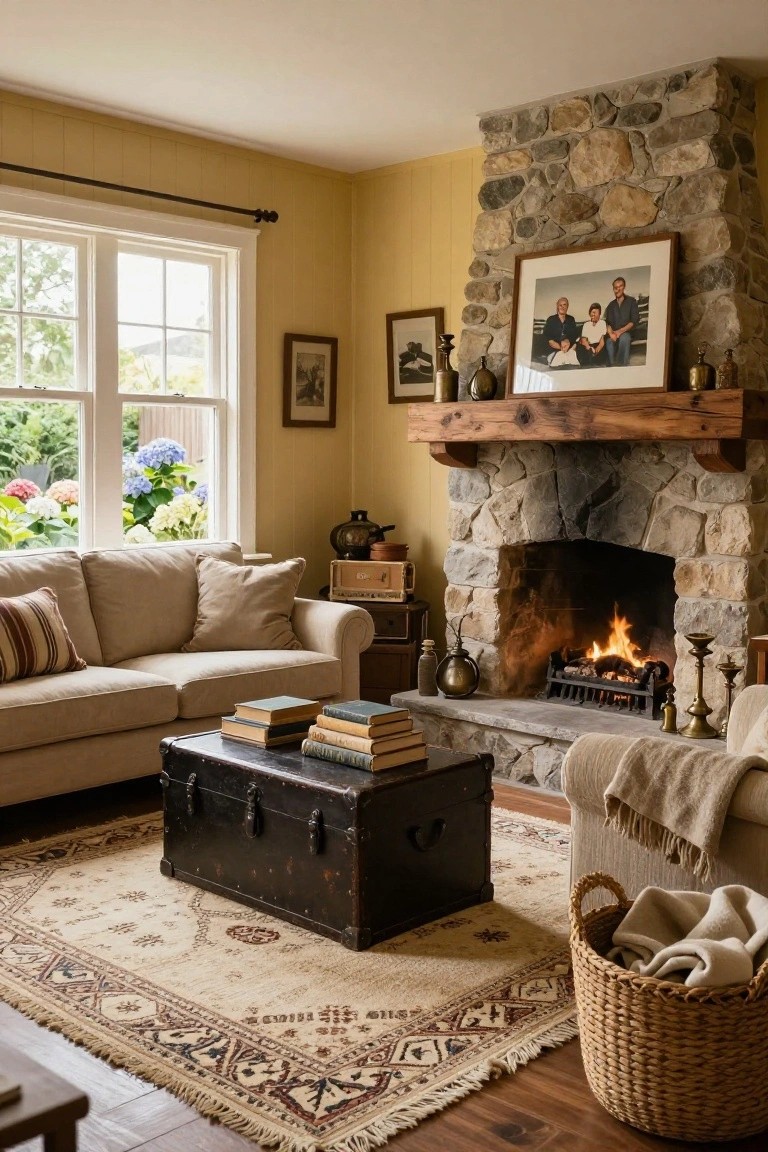
A good area rug can pull together the seating in a living room like this one does. Here it’s placed right under the old trunk coffee table and most of the sofa, creating a clear spot for relaxing by the fireplace. The pale tones and subtle pattern fit with the soft furniture and warm walls, making the whole area feel settled and easy to live in.
Try this in a family room or casual space with a stone hearth. Make sure the rug is big enough so the front legs of key pieces sit on it, but not so huge it creeps too far under the walls. Low-pile styles handle traffic well around a fire. It keeps things from feeling too empty on a wood floor.
Leather Rugs in Industrial Living Rooms
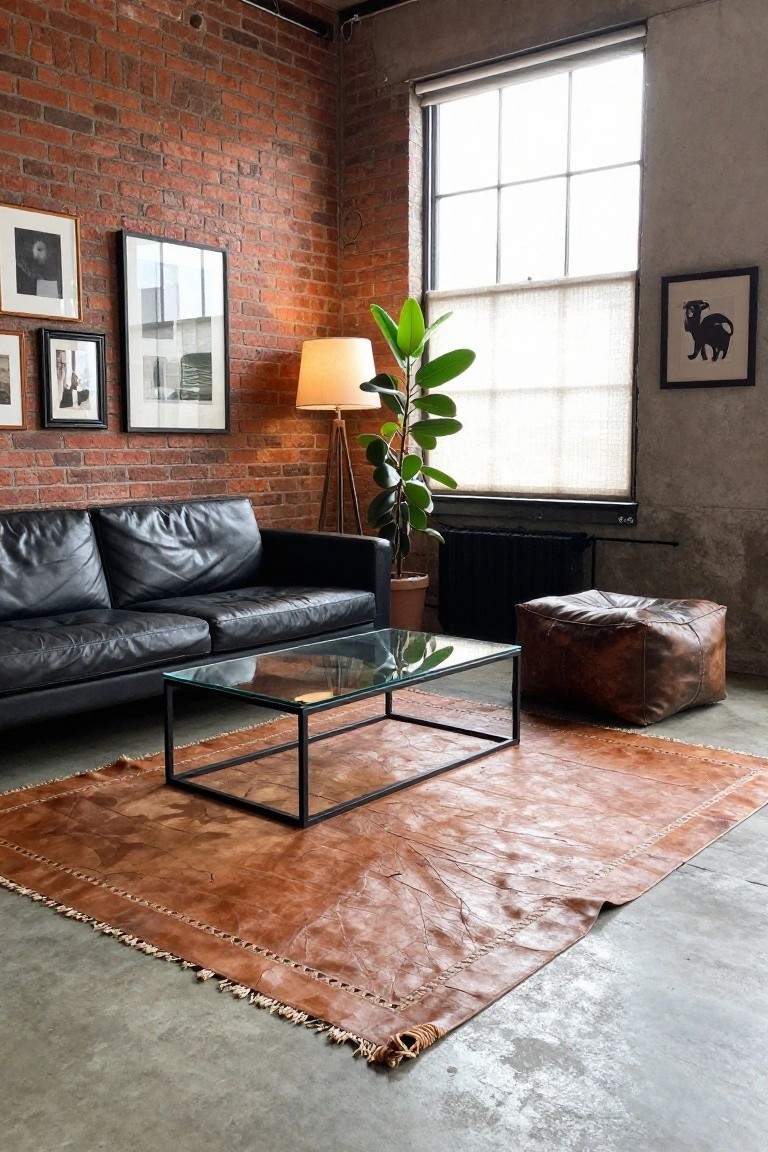
A big leather rug like this one fits right into a room with exposed brick walls. It sits under the black leather sofa and glass coffee table, giving the space a grounded feel without adding too much pattern or color. The fringe edges add a bit of detail that matches the raw look of the bricks and concrete floor.
These rugs work best in lofts or open urban homes where you want texture but not fuss. Go for one large enough to tuck under the front legs of your seating, and keep nearby pieces simple. They hold up well to traffic too.
Blue Rugs in Coastal Living Rooms
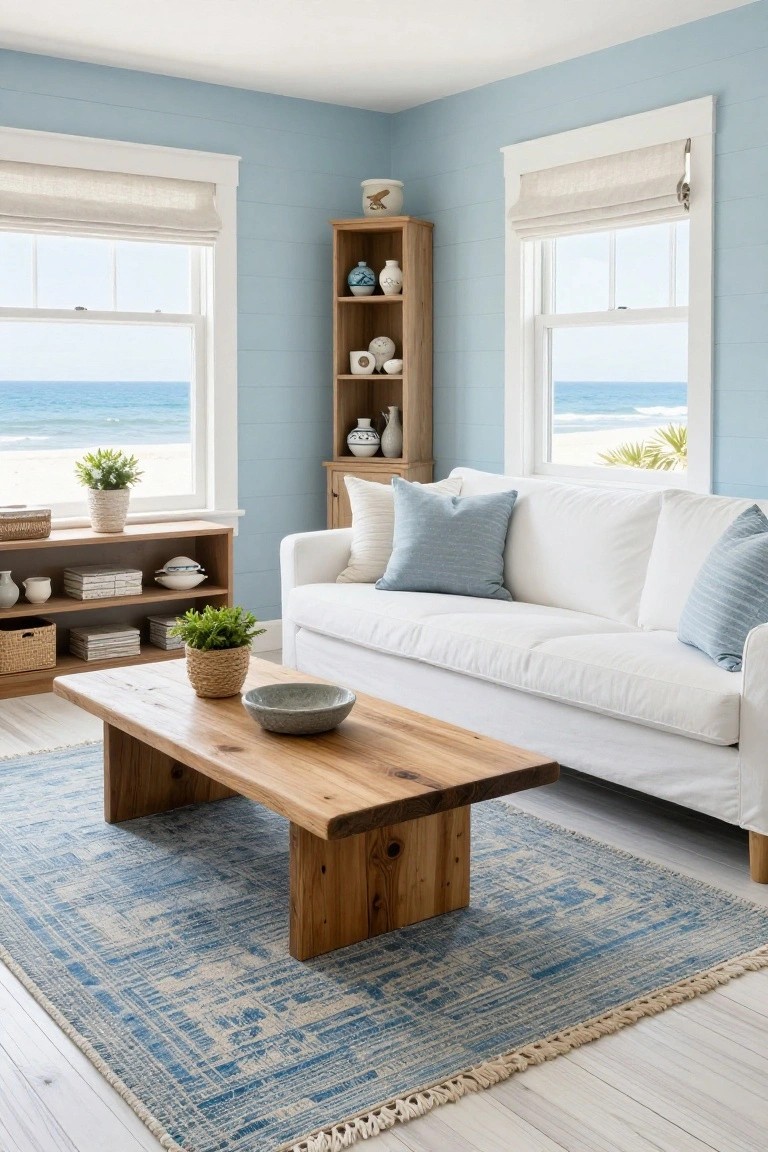
A blue rug like this one pulls a coastal living room together nicely. It echoes the soft blue walls and the ocean just outside the windows, while its subtle pattern adds a bit of interest under the white sofa and wood coffee table. Rooms this light can feel empty without something on the floor, and the rug fills that space without making things busy.
Try it in beach houses or any sunny room with water views. Go for a low-pile rug in tones that match your walls or scenery, and size it so the sofa legs sit halfway on it. Keeps everything casual and grounded… just watch the fringe doesn’t catch on furniture legs.
Oriental Rugs with Green Velvet Sofas
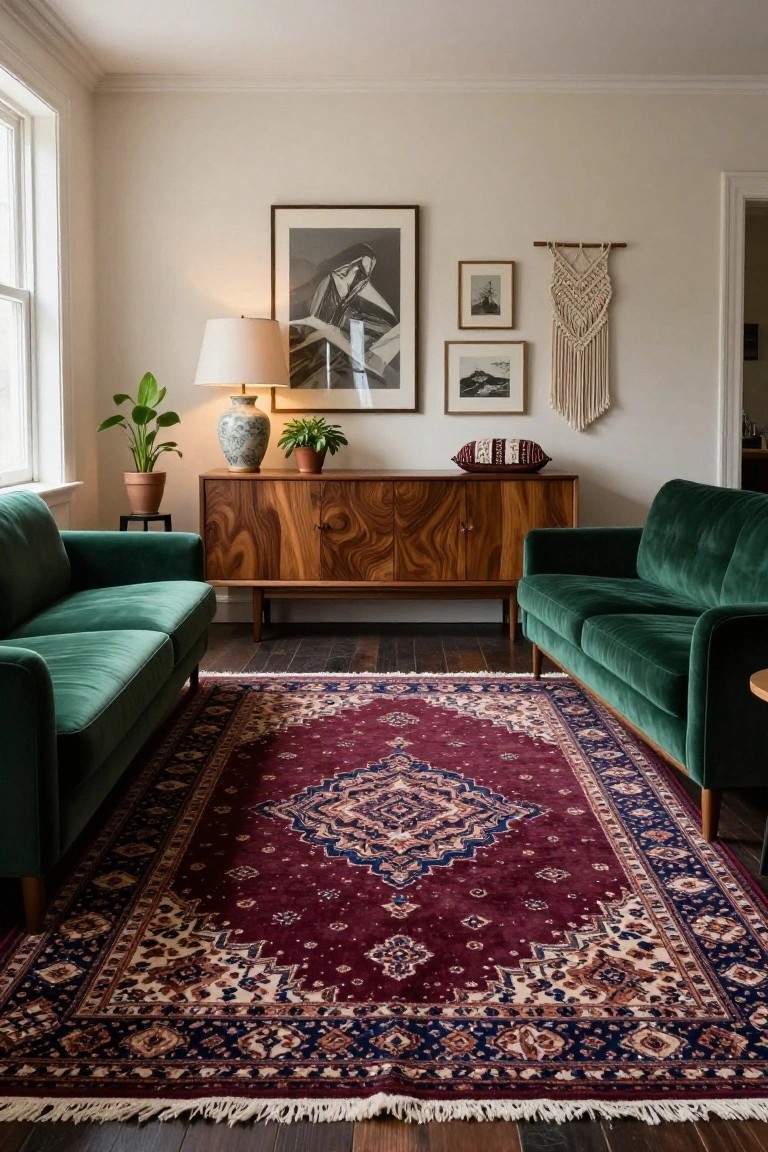
A deep red Persian rug like this one pulls together emerald green velvet sofas in a simple, striking way. The rug’s busy patterns and colors stand out against the solid green upholstery, and they echo the wood tones in the nearby credenza. It adds that layer of interest folks often want in a living room without going overboard.
Put this combo in a sunny space with white walls to let the colors breathe. It suits homes mixing mid-century pieces with softer modern touches. Just measure for a rug big enough to sit under the front legs of both sofas, or it might feel off balance.
Layer a Natural Woven Rug Over Tatami
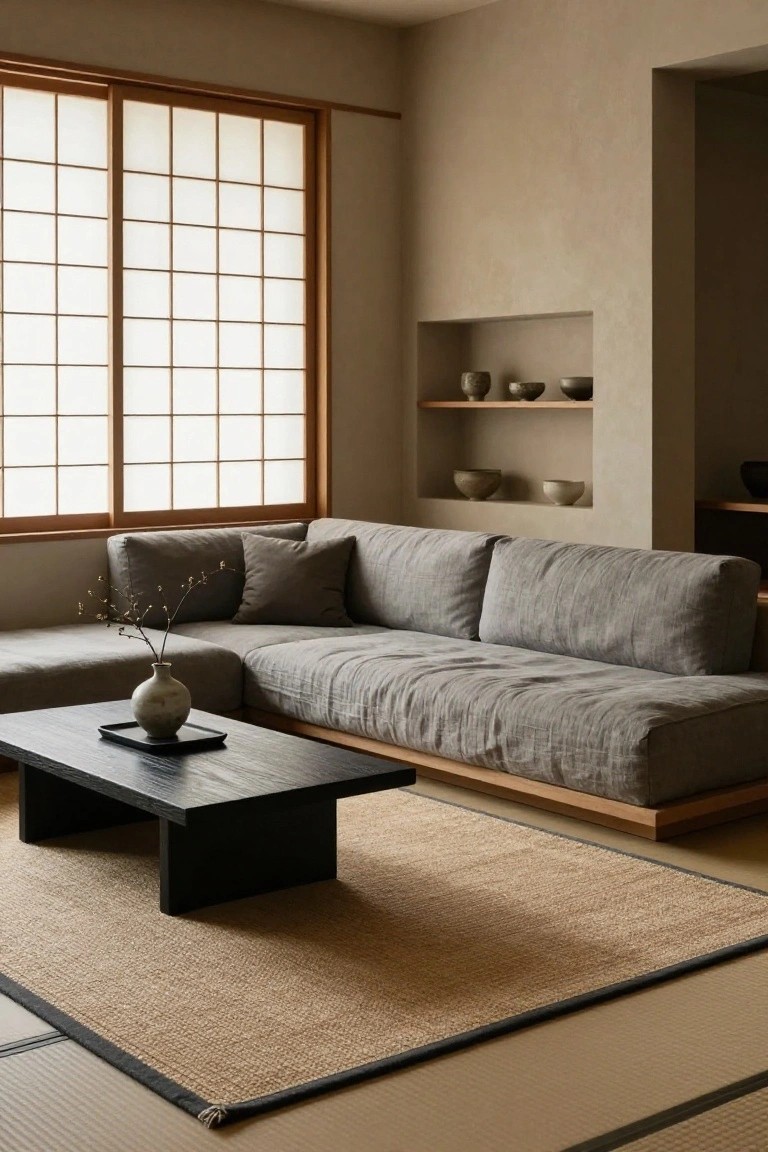
In rooms like this Japanese-style living area, a simple seagrass rug layered right on the tatami mats does a quiet job of marking out the seating spot. It brings in some texture without much fuss, working nicely with the low sofa and black table. The beige tones blend into the neutral walls and wood frames, keeping everything calm and open.
Try this in smaller spaces or anywhere you want a low-key zen feel. It suits homes with minimalist furniture best, maybe a modern apartment or a room you’re simplifying. Just pick a rug sized to fit under the table and chairs, and skip bold patterns so it doesn’t compete with the plain pottery or branches nearby.
Seagrass Rugs in Neutral Living Rooms
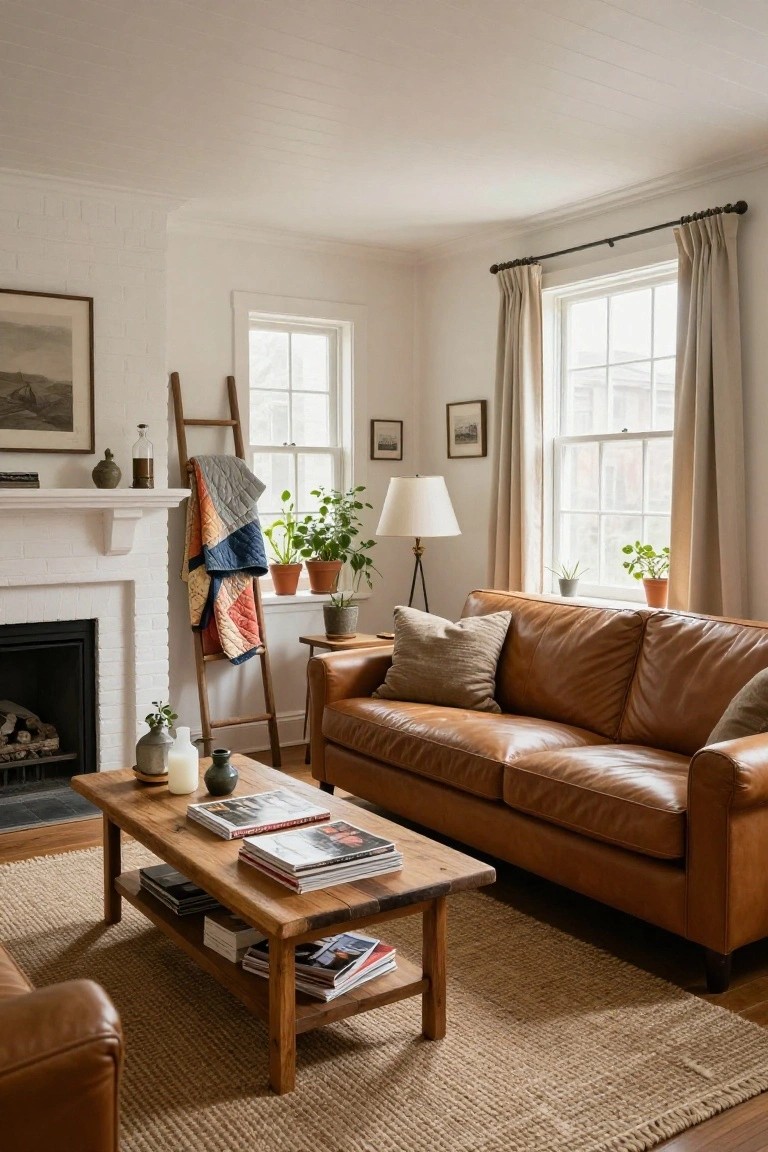
A seagrass rug works nicely here under the leather sofa and wood coffee table. Its light tan color and rough texture play off the smooth leather and warm wood tones. That mix keeps the room feeling easygoing, not too fussy.
Put one in a living room with white walls or light floors. Let it peek out a bit around the furniture so the texture shows. It holds up well in busy family spaces, just shake it out now and then.
Abstract Rugs Add Life to Neutral Rooms
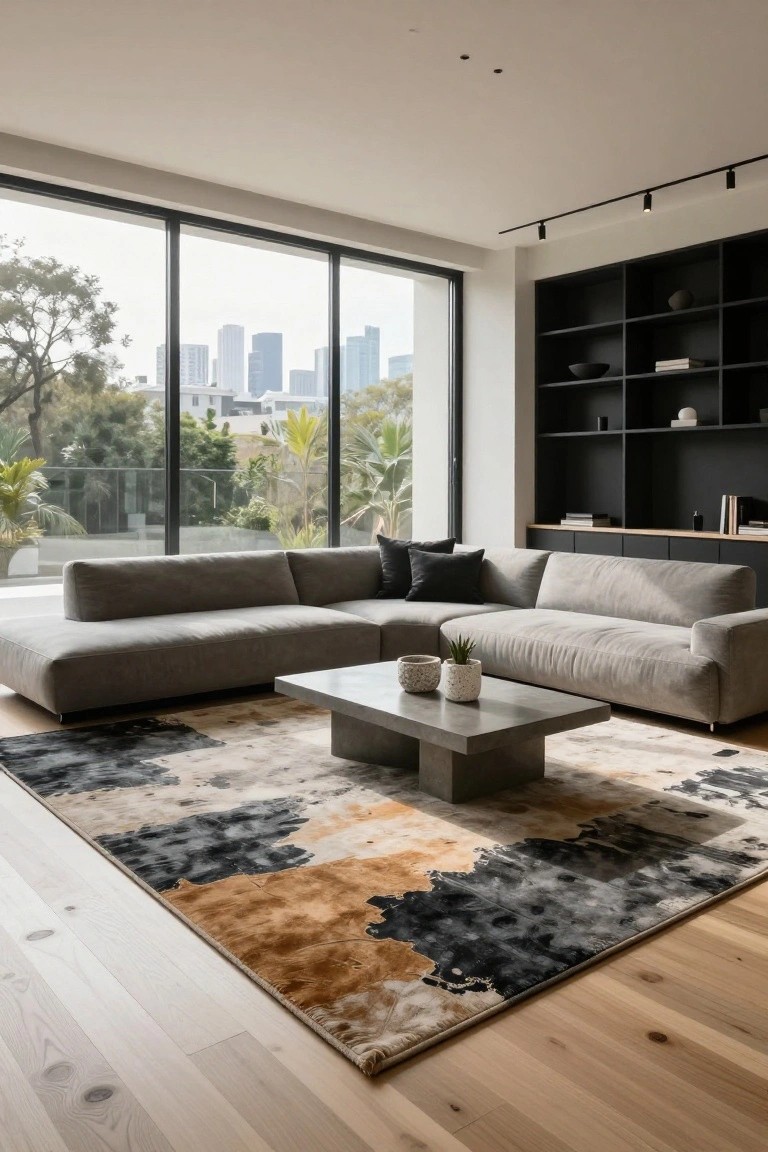
A good abstract rug can wake up a simple living room without much fuss. Here, one with grays, blacks, and hints of orange sits under a big gray sofa and concrete coffee table. It pulls in the black shelves and lets the neutral walls stay quiet. The pattern feels modern but not too busy, which keeps the space calm even with those big windows letting in the view.
This works best in open rooms where you want some color play but not a lot of clutter. Pick a rug large enough to go under the front legs of your sofa, maybe 8 by 10 feet for most setups. It suits apartments or homes with city views… just make sure the tones echo your furniture so it all hangs together.
Patterned Rugs in Paneled Living Rooms
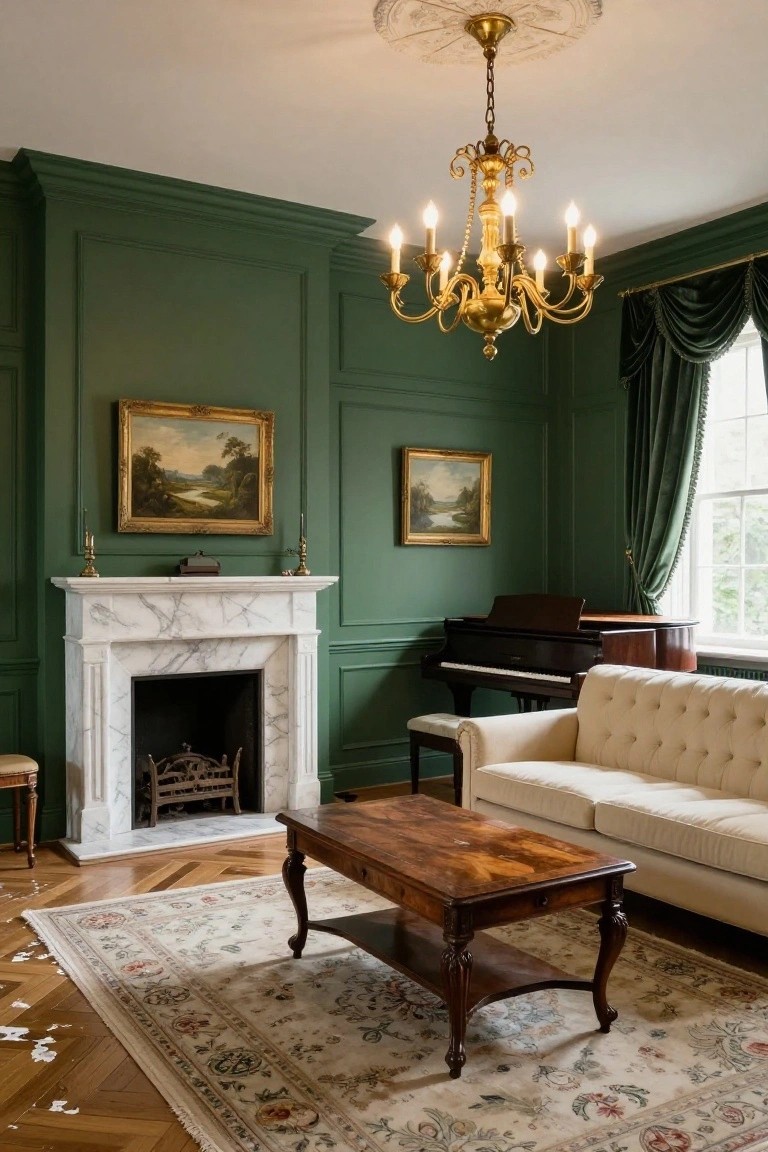
A large rug like this one covers most of the floor under the sofa and low wood table. Its cream base with subtle pinks and greens picks up on the room’s deeper wall color without clashing. That soft pattern keeps the space feeling full but not busy, especially nice in a formal setup.
This works best in older-style rooms with wood paneling or trim. Go for a rug that hangs out a foot or so beyond your chairs and table. It suits homes with neutral upholstery and mixed wood furniture. One thing, measure first so it doesn’t bunch up oddly.
Statement Rugs in Neutral Living Rooms
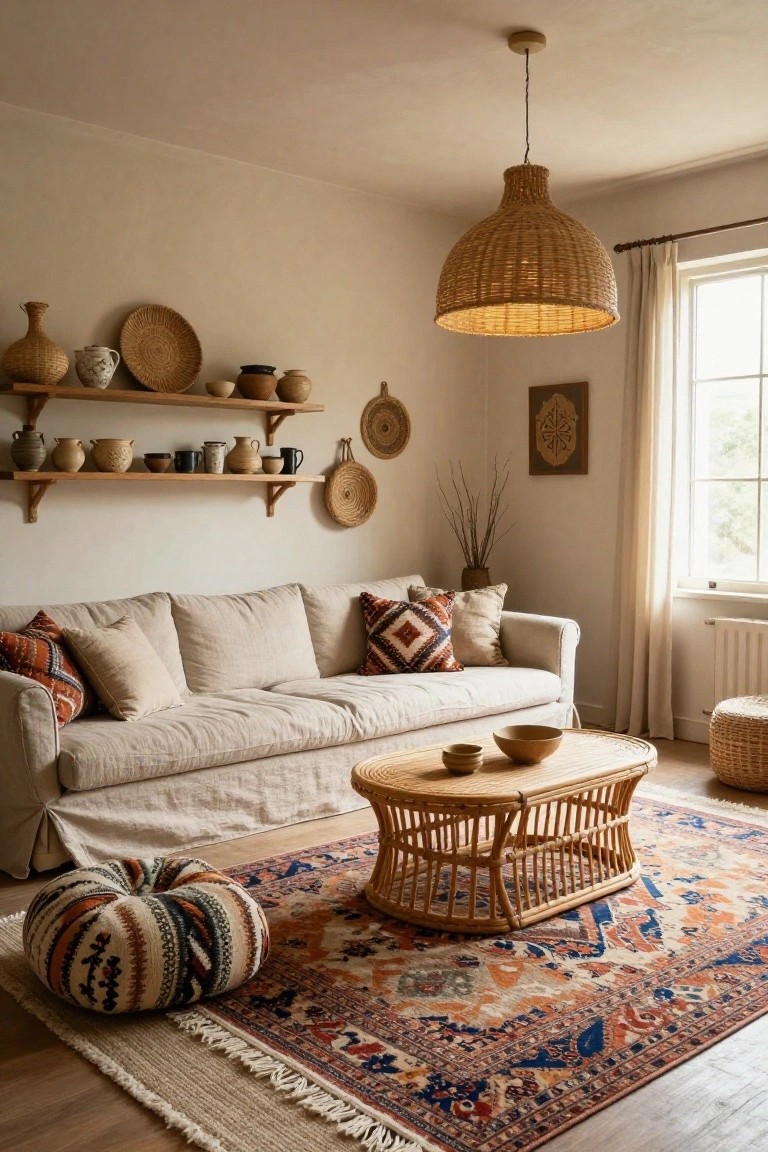
A bold rug like this one, with its swirling blues, oranges, and intricate patterns, sits right under the rattan coffee table and linen sofa. It pulls in warm colors that brighten the pale walls and keep things from feeling too plain. Rooms like this stay calm because the rug handles all the pattern work.
Put one in a sunny living area with slipcovers or woven furniture. Size it so it reaches under the sofa legs for that grounded look. Skip it in super modern spots, though. It fits older homes or rentals that need a quick color lift.
Checkered Rug in Dark Living Rooms
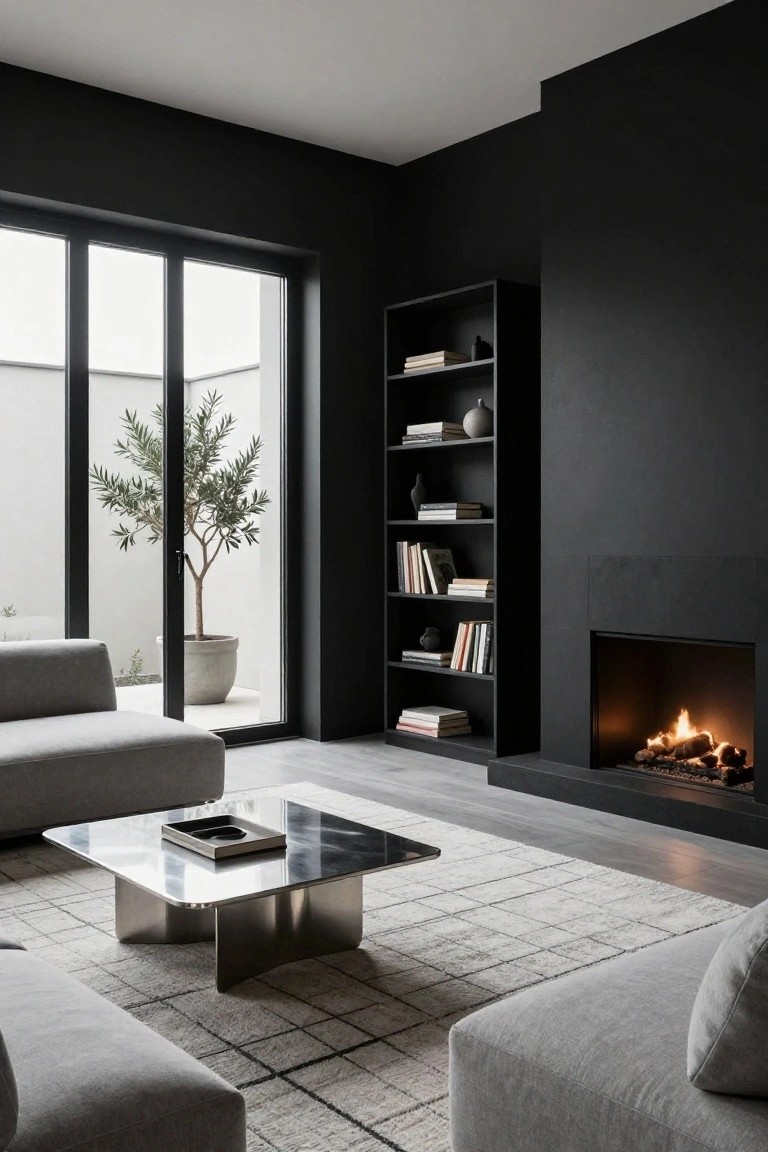
A light checkered rug like this one pulls a dark room right into focus. With black walls all around and gray sofas keeping things neutral, that subtle grid pattern on the floor adds just enough lightness without overwhelming the mood. It sits nicely under the coffee table and between the seating, making the space feel more livable and a bit playful too.
Try this in any modern living room with moody walls or heavy furniture. It works best on light wood or gray floors where the contrast shows up clear. Keep the rug sized to fit the seating area snugly… and pair it with simple pieces so the pattern doesn’t fight the rest. Good for apartments or open plans that need a soft lift.
Layered Rugs Warm Wooden Floors
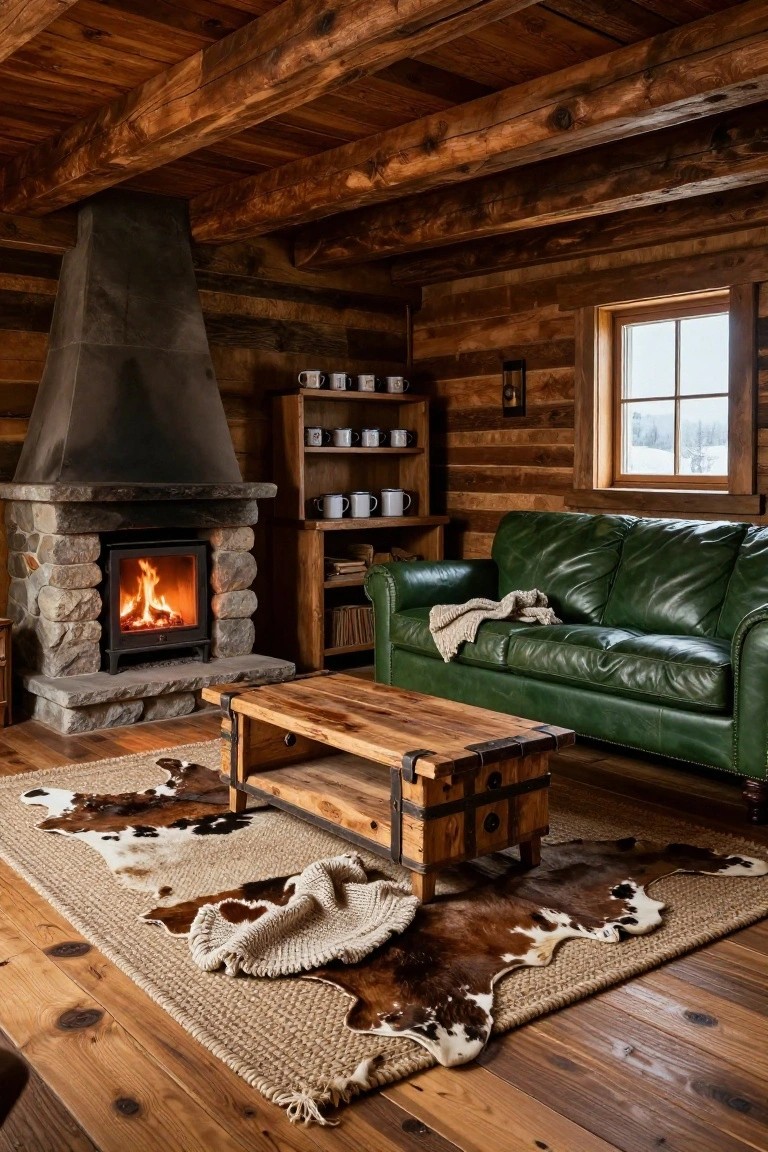
In a cabin living room full of wood walls and floors, layering rugs keeps things from feeling too bare. A simple jute rug goes down first for that natural base, then a cowhide rug layers on top in the seating spot. It pulls in texture and a touch of pattern that plays right off the rustic vibe.
This kind of layering fits best in log homes or mountain retreats where wood dominates. Pick neutral jute to let wood shine, add the cowhide for interest near the sofa or chairs. Keep it simple… too many layers can bunch up and trip folks.
Jute Rugs on Herringbone Floors
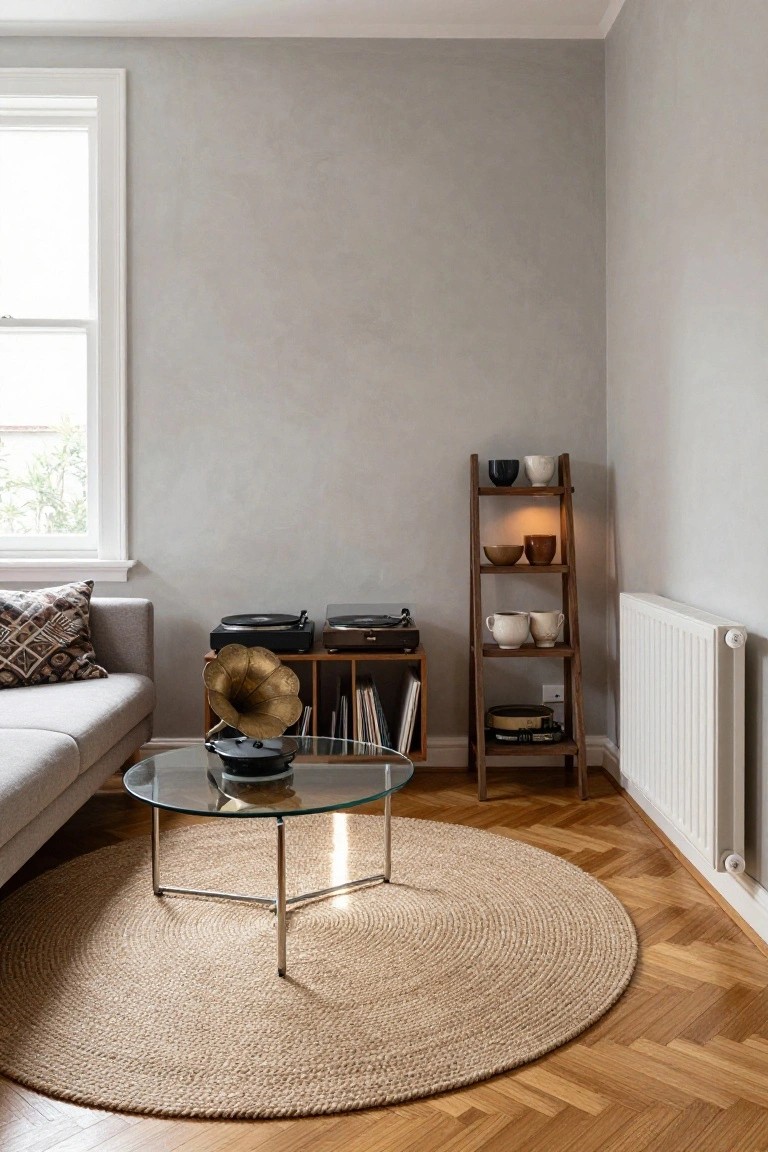
A round jute rug sits right over herringbone parquet floors in this living room corner. The natural weave picks up on the wood tones nicely and brings in some softer texture to balance the hard surfaces. Rooms like this feel more settled with that bit of organic material underfoot.
You can pull this off in any space with patterned wood floors. Keep the rug round and medium-sized to let the floor pattern peek through, especially under a glass coffee table. It suits casual setups with a sofa nearby, just watch the edges don’t curl up in high traffic spots.
Neutral Rug with Navy Sofa
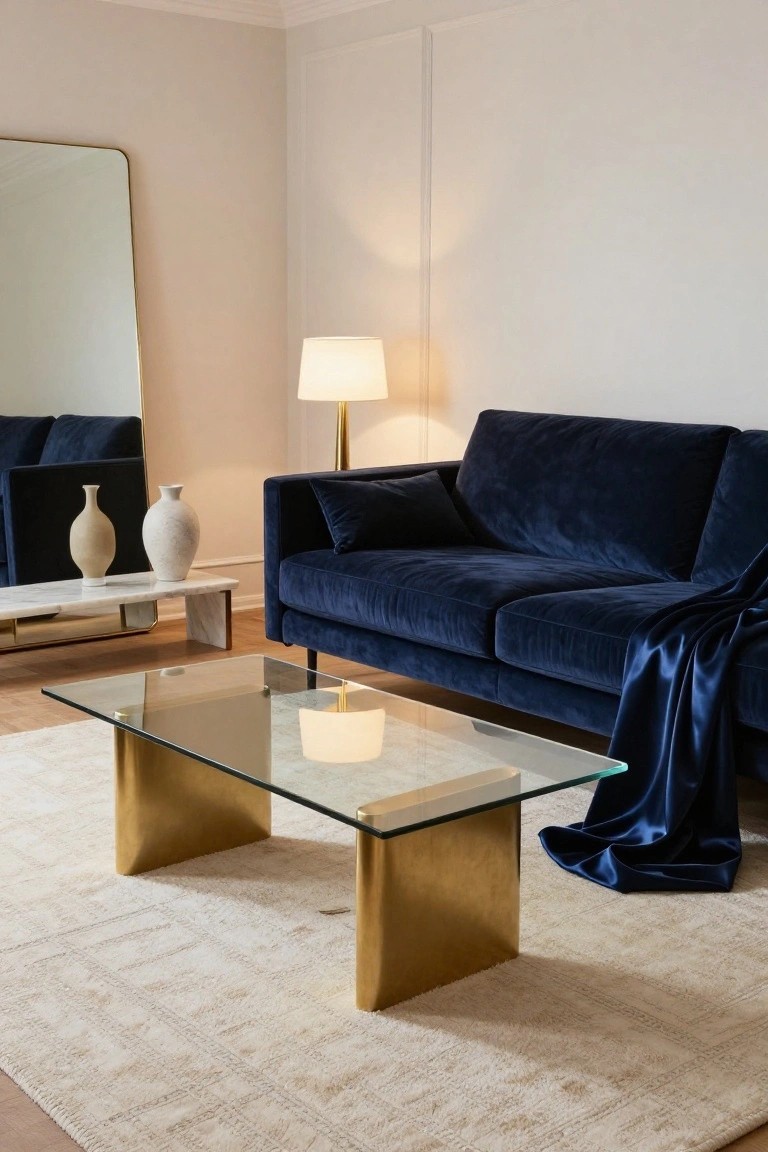
A light, textured rug like this one pulls together a living room where navy velvet takes center stage. Placed right under the sofa and that brass-legged glass coffee table, it adds softness and keeps bolder pieces from overwhelming the space. The pale tone echoes the walls nicely.
This works well in modern rooms with wood floors or open layouts. Go for a low-pile option so it doesn’t bunch up under furniture. Size it to fit the seating area… and it’ll make any dark sofa feel more settled in.
Traditional Rugs Bring Pattern to Neutral Rooms
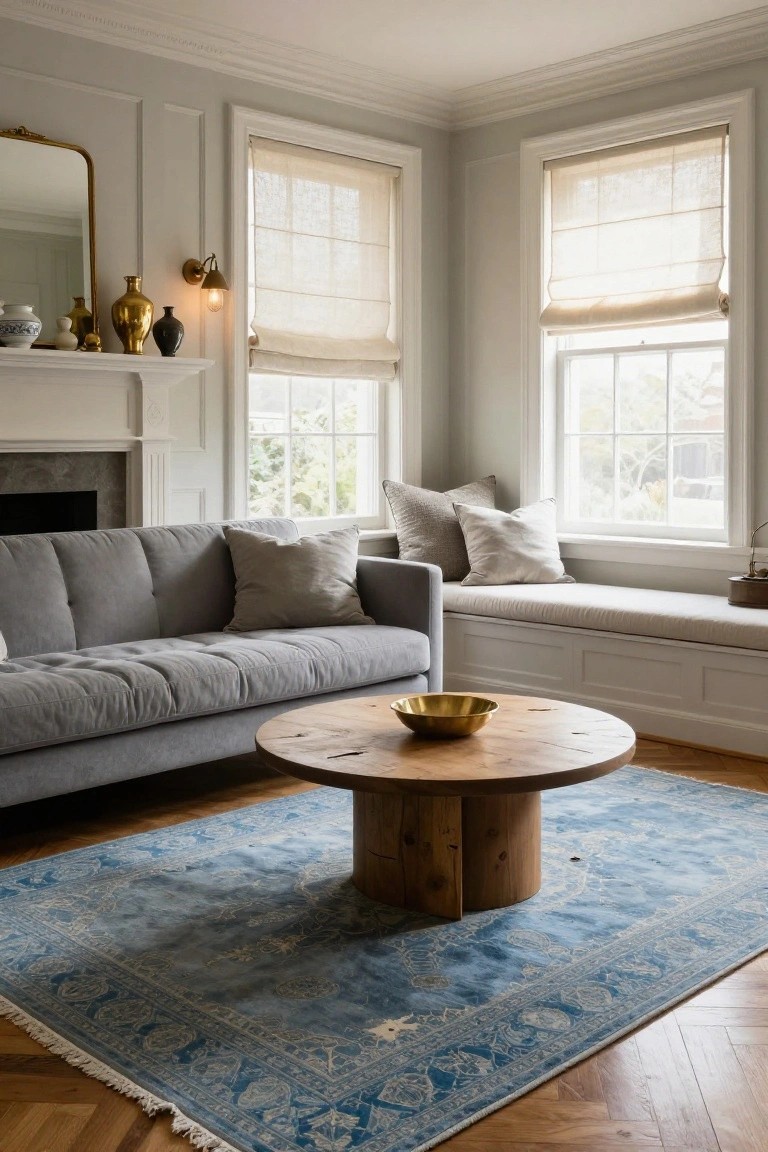
A blue traditional rug pulls this living room together. It sits right under the gray sofa and wood coffee table, adding color and subtle design to the pale walls and simple furniture. The pattern feels right at home without overwhelming the calm setup.
This look fits older homes or any space with soft grays and whites. Place the rug so the front legs of the sofa touch it. It adds interest to built-in window seats or fireplaces too. Pick one with faded blues if you want it to blend in easier.
Patterned Rugs Warm Up Rustic Living Rooms
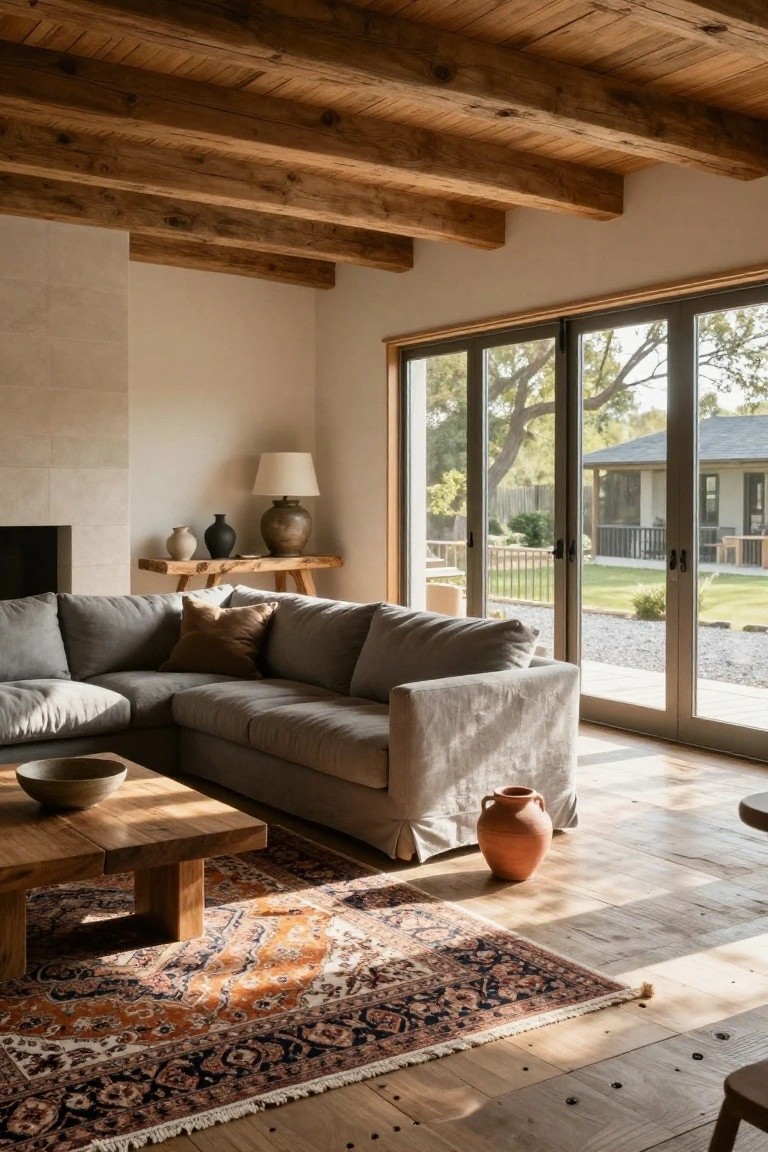
You see this kind of setup a lot in homes with those big wooden beams and wide-plank floors. A colorful Persian-style rug sits right under the sofa and coffee table, pulling in warm oranges and reds against the soft gray linen cushions and neutral walls. It adds just enough pattern without overwhelming the casual feel, and the low wooden table keeps everything grounded on that rug.
Try this in a room with lots of natural wood or stone. Pick a rug with some age to it, maybe one that’s not too busy, and layer it under your main seating spot. It works best in open family rooms where you want color but not fuss. Skip it if your floors are dark already… might get too heavy.
Rug Under Armchair for Cozy Corners
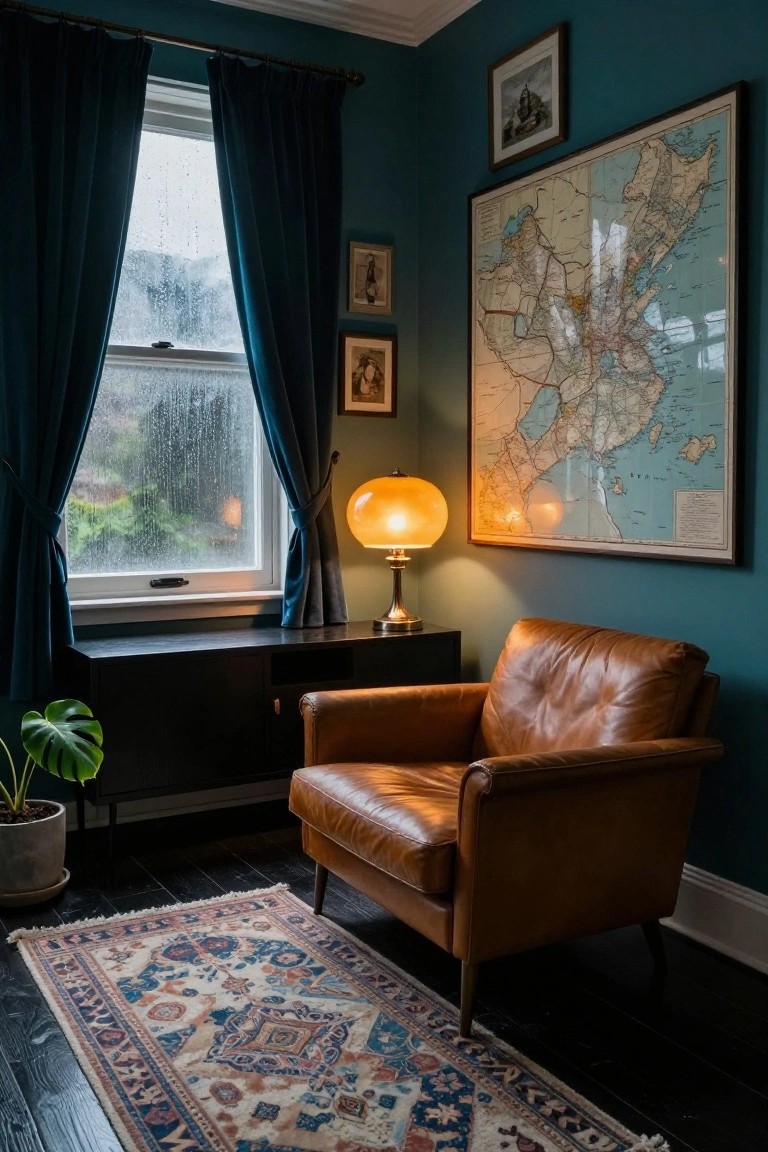
One easy way to set off a favorite chair in the living room is with a patterned rug right under it. This oriental-style rug in blues, reds, and creams pulls the tan leather armchair together with the teal walls. It stops the chair from looking lost on the dark floor and gives the spot some personality.
Try this in any underused corner, especially near a window. Make sure the rug covers most of the chair’s base but leaves the legs visible. It suits older homes or apartments… adds warmth without much fuss.
Frequently Asked Questions
Q: How do I figure out the right rug size for my living room setup?
A: Tuck the front two legs of your sofa and chairs onto the rug. That pulls the seating area together without swallowing the whole floor. Aim for at least 5×8 feet in most spaces.
Q: Can I layer two rugs like some of those photos show?
A: Lay a big neutral one first, then overlap a smaller textured rug by the sofa. It adds warmth and depth fast. Stick to two layers max, or it gets busy.
Q: What if my rug color clashes a little with the couch?
A: Echo one color from the rug in throw pillows or a lamp. The small tie-in smooths it right out. Lay it down and live with it a week before deciding.
Q: How do I keep the rug from bunching up on my wood floors?
A: Grab rug pads with grippy rubber backing. Cut them to fit and slide them under. They stop slips and add cushion too.
