

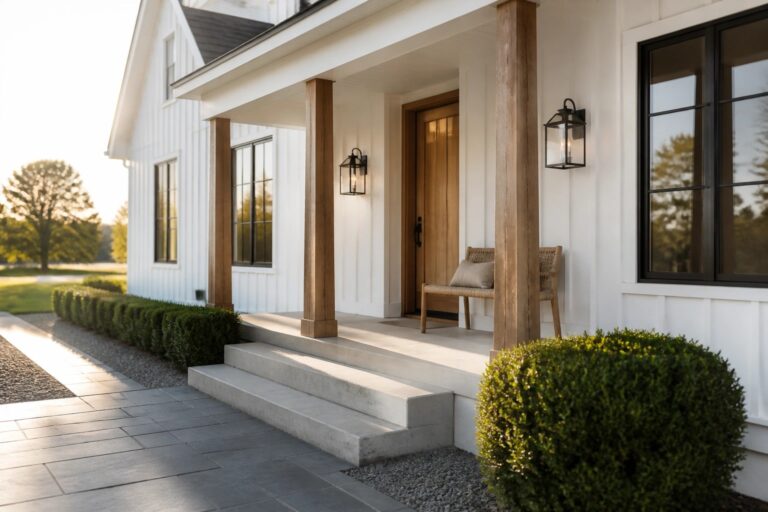
When I stand in front of a farmhouse that has been pared back, the way the siding meets the roofline usually decides whether the whole front feels settled or unfinished.
The materials make a bigger difference than most people expect once you see them in changing light throughout the day.
Details matter more than I expected.
Choosing a door color or shutter style that actually matches the scale of the house can shift how welcoming the entrance reads from the street.
I tend to sketch a couple of these combinations on my own elevation drawings before deciding which ones would hold up once the seasons change.
Natural Wood Columns on White Siding
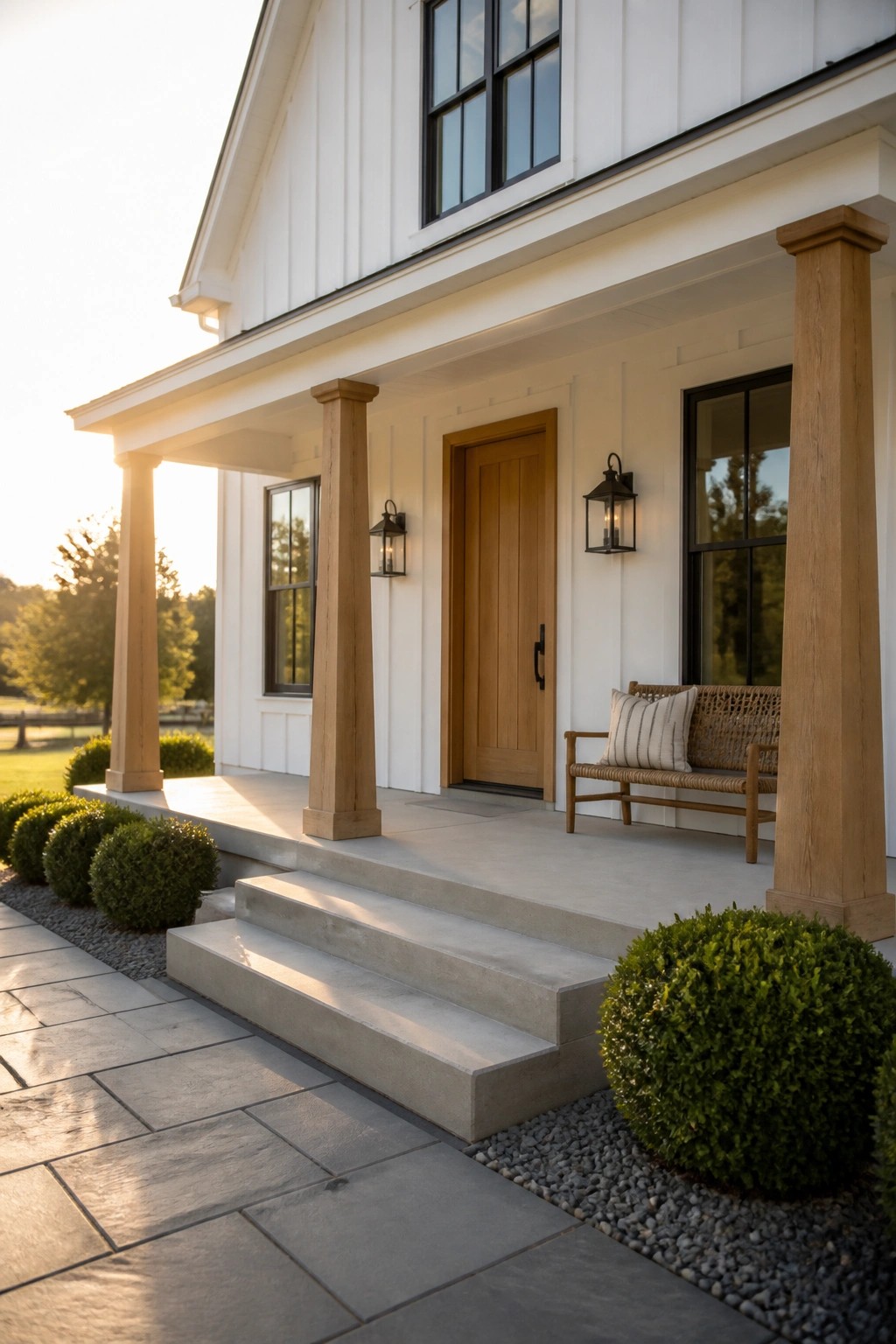
Many minimalist farmhouses lean on natural wood columns to support the porch roof. The wood brings a bit of warmth and texture that stops the white siding from feeling too stark.
These columns work best on homes that already have simple lines and few extra details. Choose straight posts in a medium tone and let them stand out against the paint and dark trim.
Mixing Wood Siding With Stone
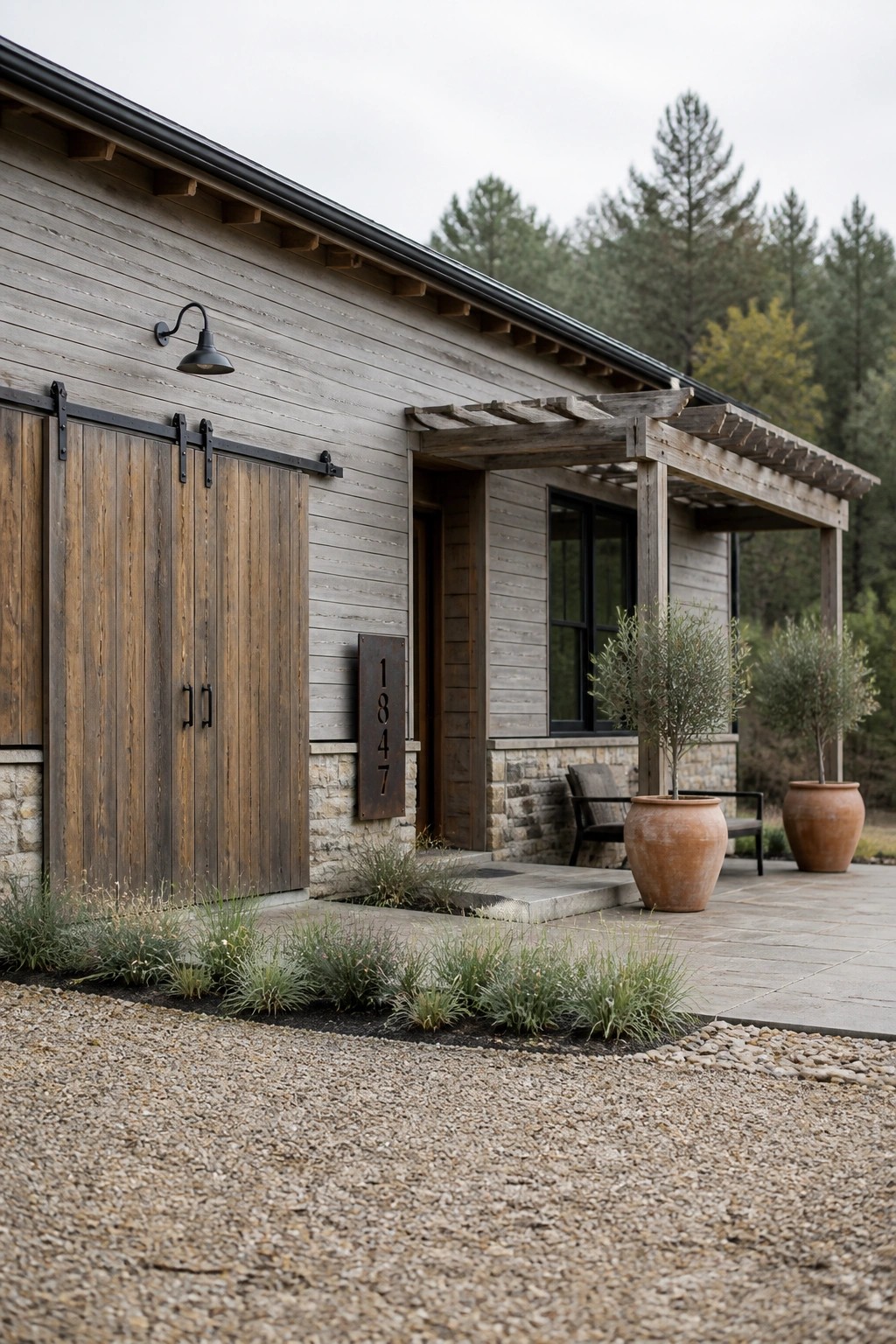
This combination keeps the exterior simple while adding just enough texture to avoid a flat look. The wood sits above the stone and creates a clean break that feels balanced rather than busy. Many people like it because it gives the house weight at the bottom without needing extra trim or decoration.
It works best on homes with a lower profile and open lots where the base can show clearly. Keep the stone height modest so it does not overwhelm the siding above it. Dark hardware and simple windows help the materials stay the focus.
Arched Entries on Simple Stucco Homes
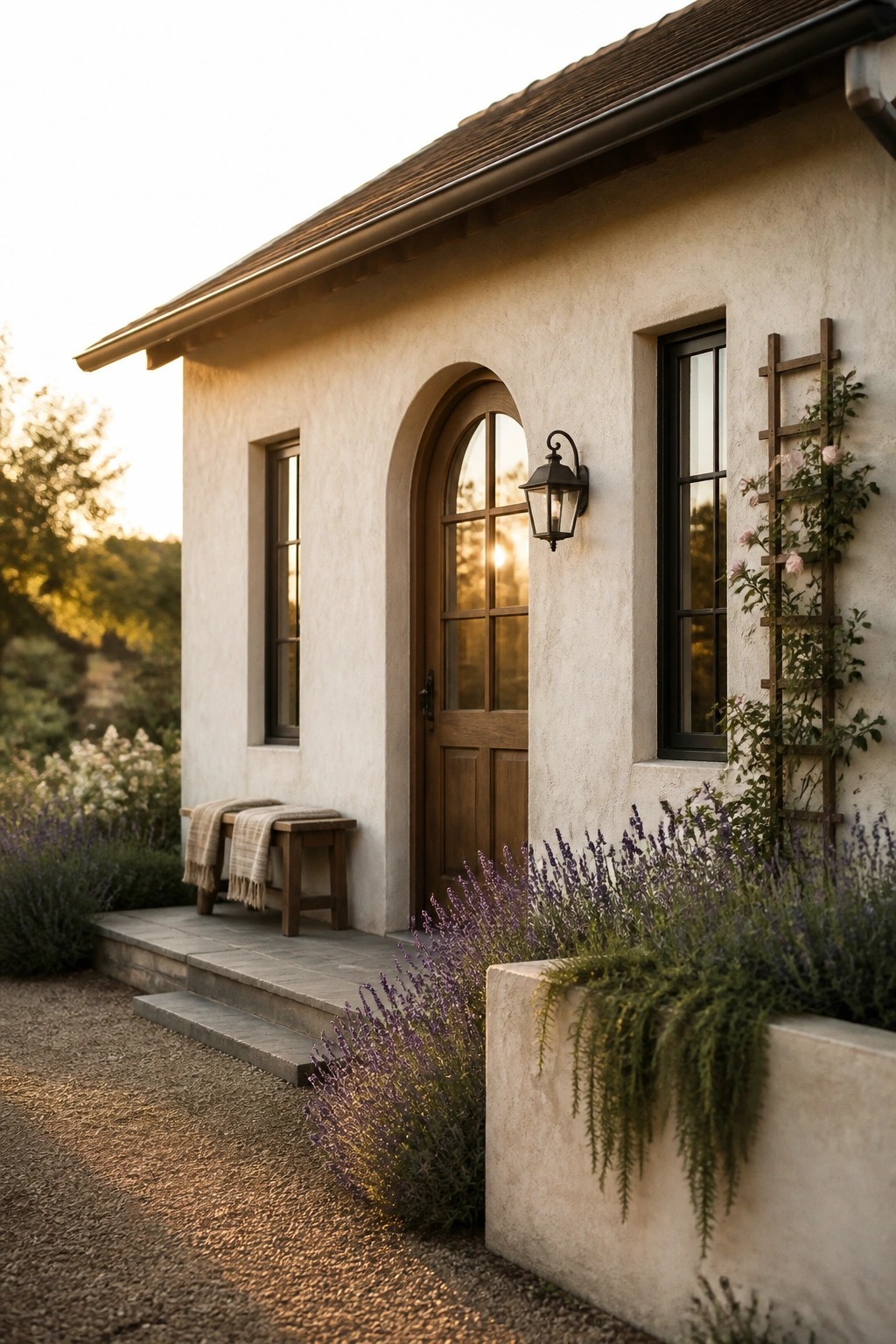
An arched doorway gives a stucco farmhouse a quiet focal point without adding extra trim or decoration. The curve breaks up the flat wall just enough to feel welcoming while the rest of the exterior stays plain and low-key.
This works best on smaller homes where you want the entry to stand out on its own. Keep the door in natural wood, limit nearby plantings to a few low beds, and skip ornate lighting so the shape does the work.
Vertical Siding With Wood Accents
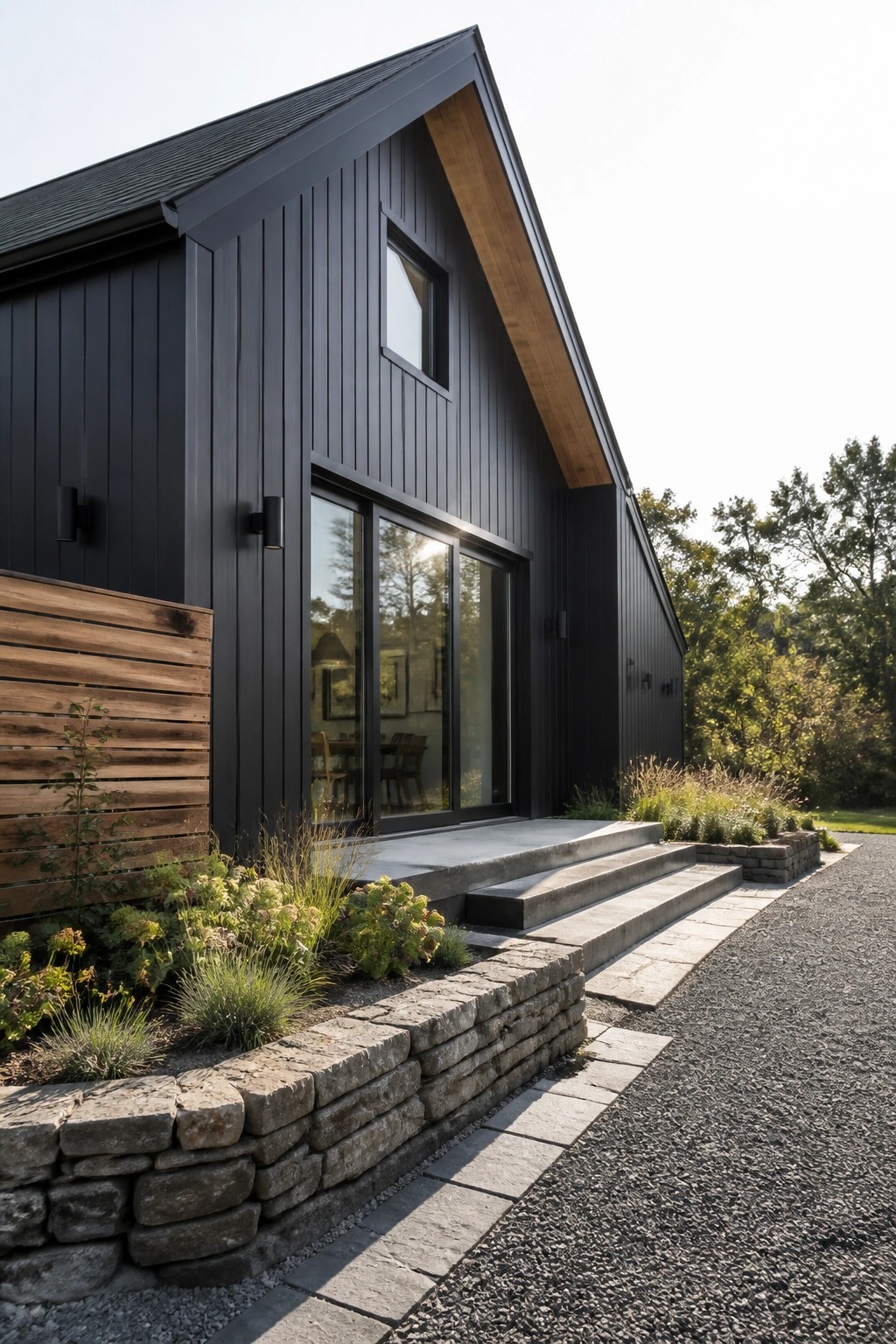
Vertical siding keeps the lines simple and helps the house feel taller and more grounded. It works well on gabled shapes because it emphasizes the roof pitch without adding extra trim or fuss.
Pair the dark boards with wood accents under the eaves or on side screens to bring in some natural warmth. This mix suits homes that want a clean modern look while still reading as farmhouse. It also holds up in most climates with little upkeep.
White Brick With Black Accents
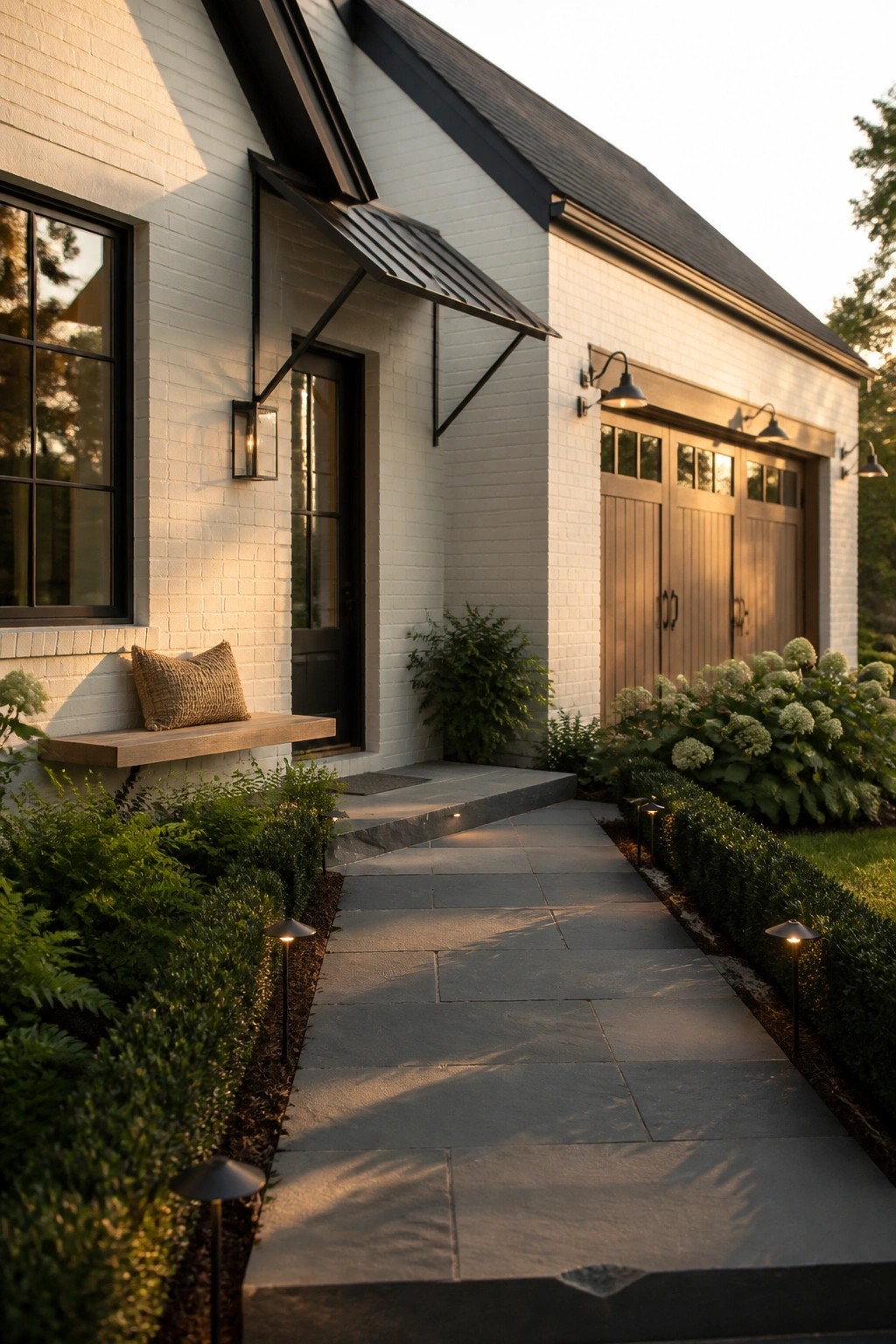
White brick gains a sharper look when paired with black metal trim and awnings. The contrast keeps the house feeling simple while still standing out from the usual all-white or all-wood farmhouses. It works especially well on homes that already have clean lines.
Try it on the main entry first, then add it around windows or the garage if the proportions still feel right. Too many black pieces can start to feel heavy, so limit them to two or three spots on the front. This approach suits smaller or newer builds that need a bit more definition without extra ornament.
Concrete Planters For A Simple Entry
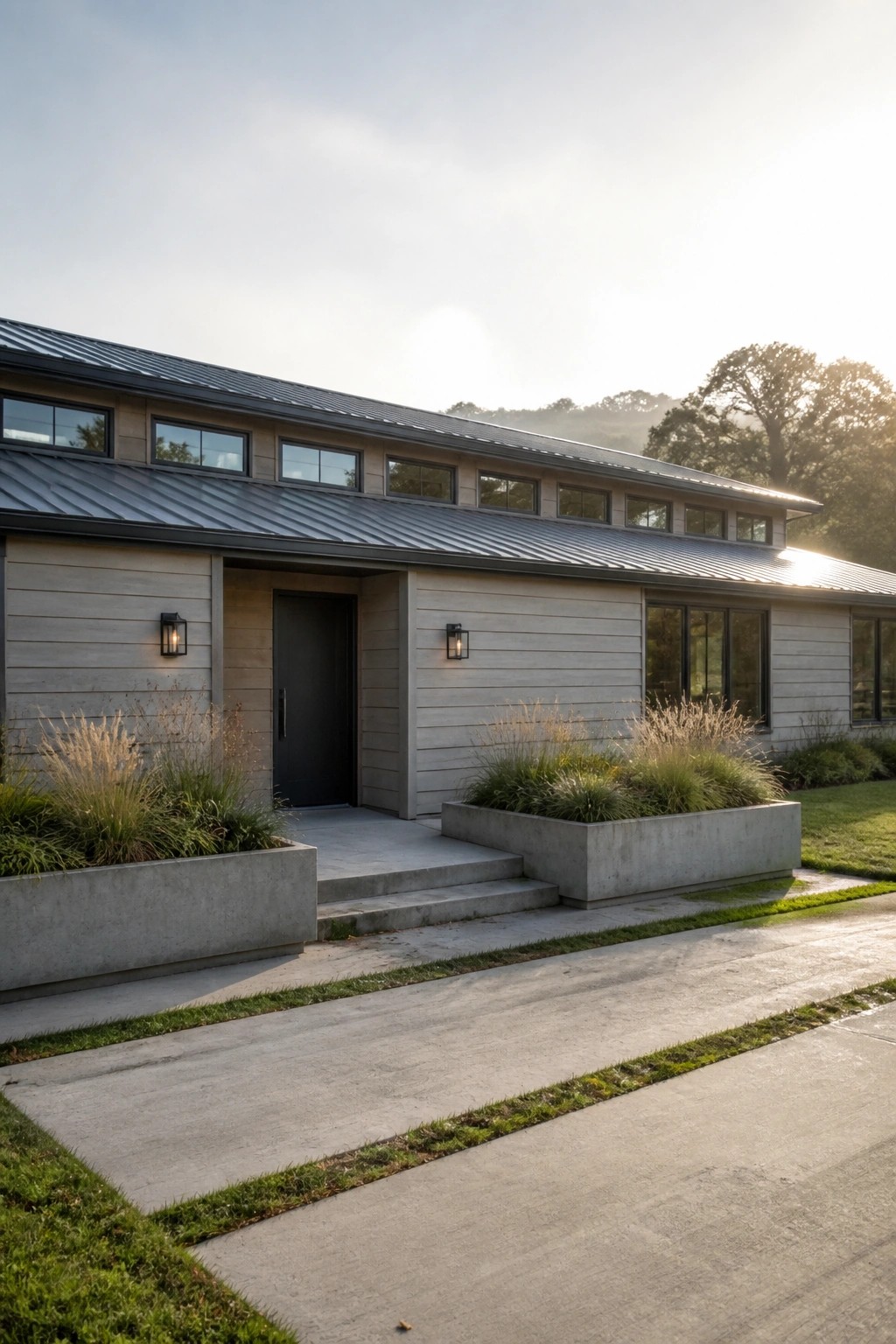
Large concrete planters work well on minimalist farmhouses because they bring greenery right up to the house without adding clutter. They give the front a structured look that fits the clean lines of horizontal siding and a metal roof.
These planters suit homes that already have a low, spread out shape. Set them on either side of the steps to frame the door, and keep the planting simple so the overall feel stays calm and easy to maintain.
Black Accents on White Siding
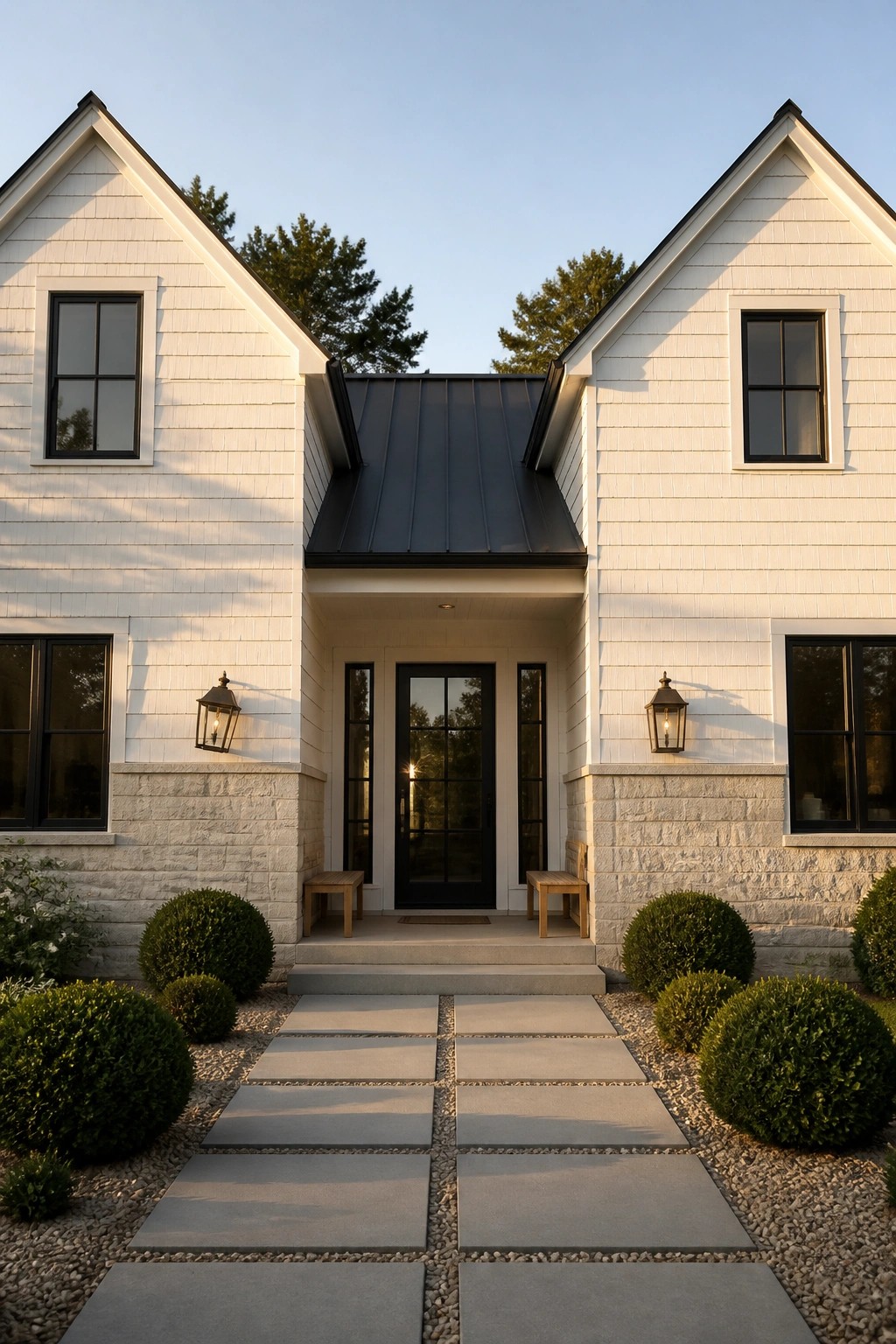
Many people like this approach because the dark frames and door give the white siding a clear shape without adding extra trim or decoration. The contrast stays simple and keeps the front from feeling too plain or too busy at once.
This works best on homes that already have a stone base or metal roof, since those materials help tie the black elements together. Stick to the same black tone for windows, doors, and hardware so the look stays consistent rather than scattered.
Covered Porches With Fireplaces
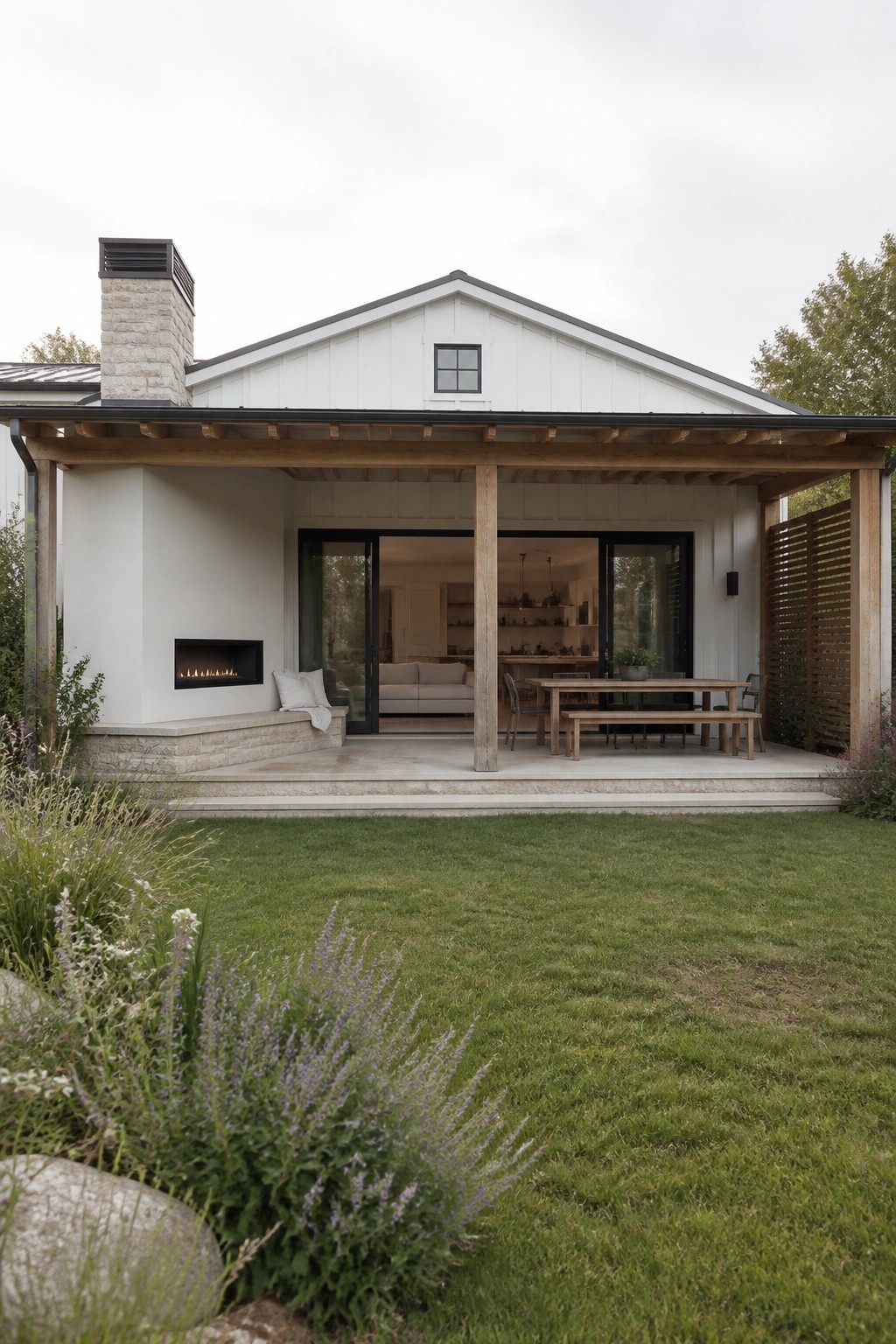
Many people like adding a fireplace to a covered porch because it turns the space into something you can actually use beyond the warm months. The setup stays simple when the fireplace sits low on an exterior wall and the roof extends far enough to keep the seating area dry.
This works best on homes that already have a deep overhang and room for a dining table or a couple of chairs nearby. Keep the materials limited to wood beams and stone so the porch feels like part of the house rather than an add on.
Add An Outdoor Table Beside Your Kitchen
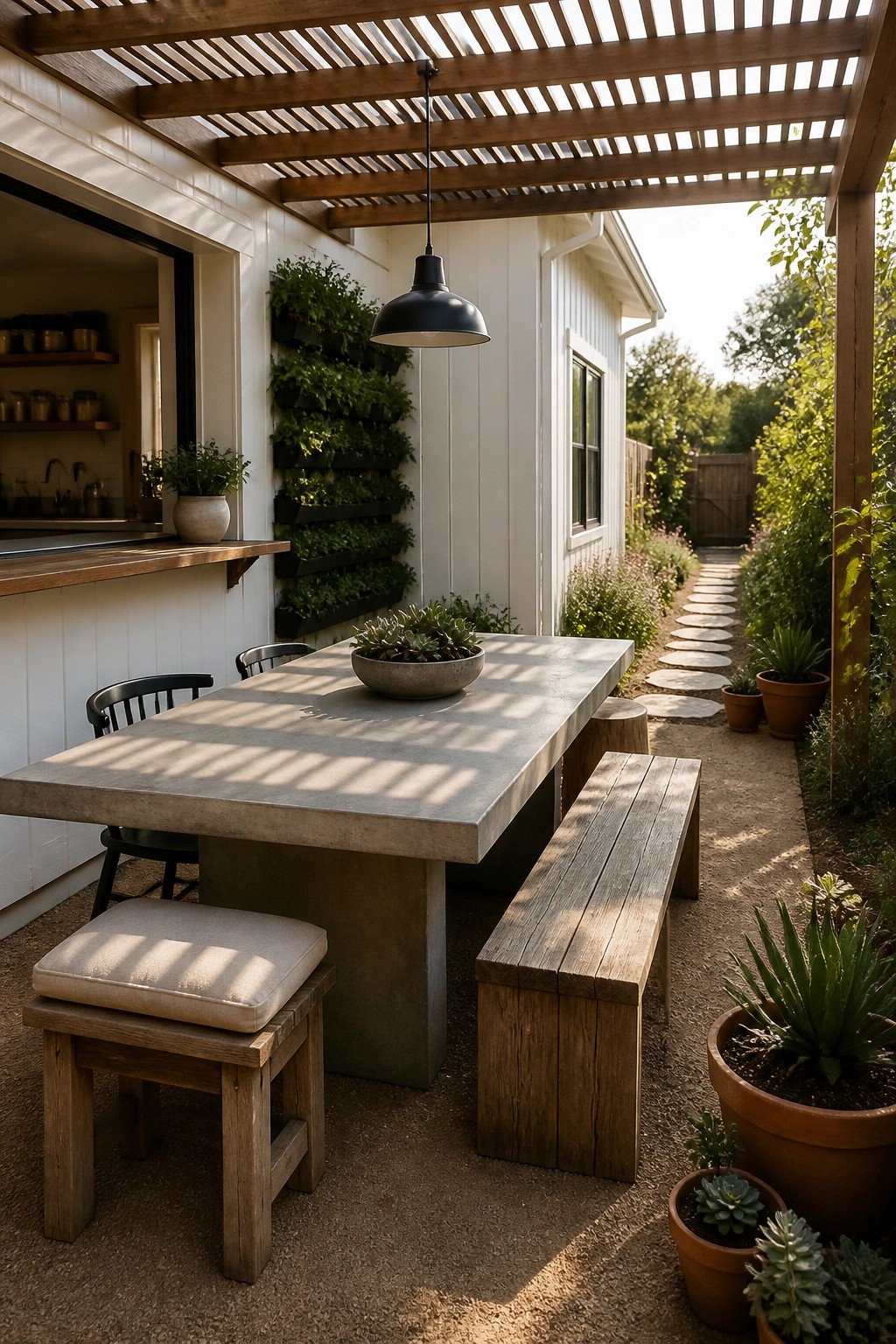
A long concrete table placed right next to the house makes outdoor meals feel easy and natural. The pass-through counter from the indoor kitchen keeps everything close, so you can cook inside and serve outside without extra steps.
This setup works best on a simple patio or gravel area where you already have some shade from a pergola or overhang. It suits homes that want a practical spot for daily use rather than a big entertaining space, and it keeps the layout clean without needing lots of extra furniture.
Rooftop Terraces Add Usable Space
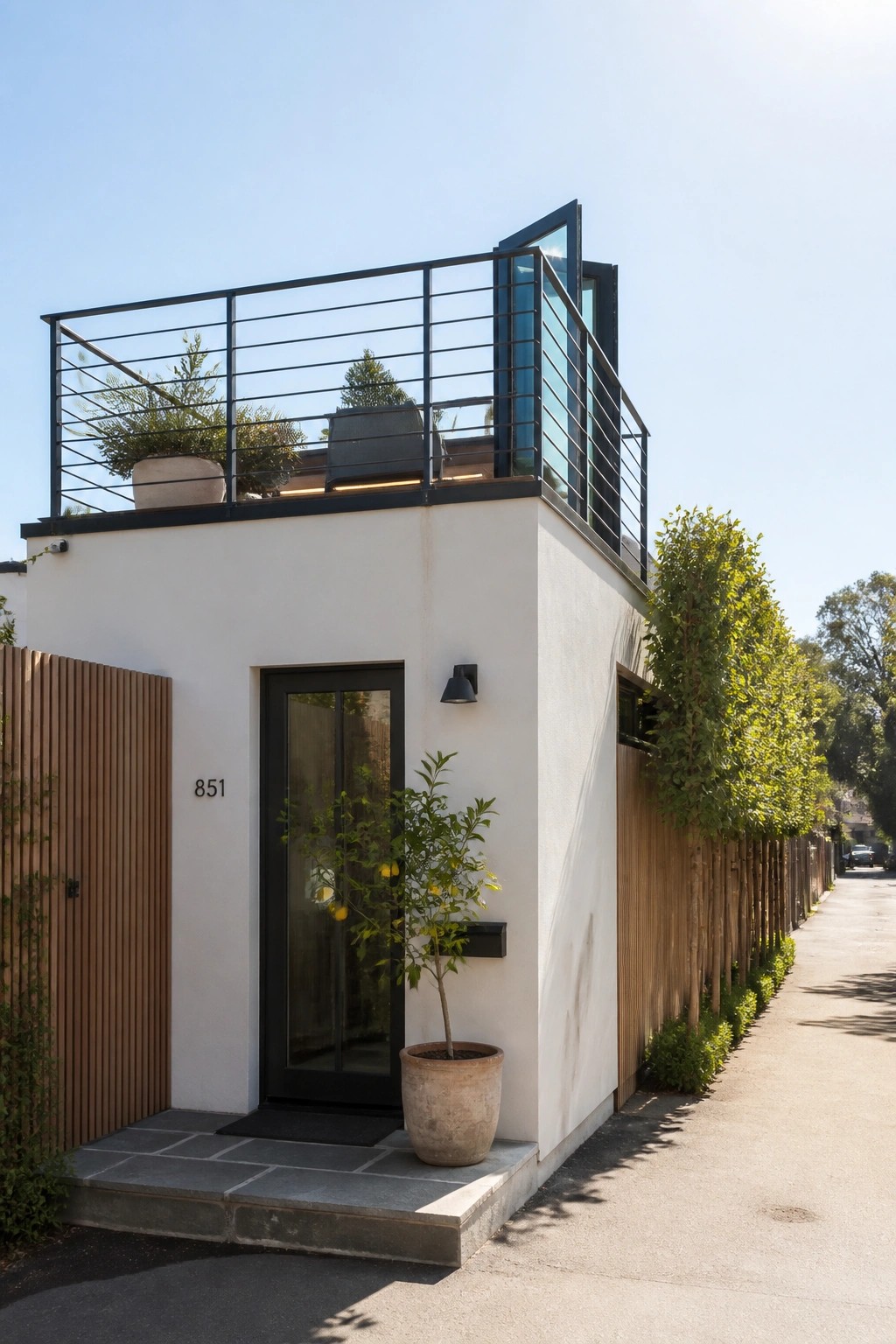
A rooftop terrace gives you outdoor room even when the yard is small. The simple black railing keeps the overall shape clean and does not add visual weight to the house.
This works best on compact homes with flat roofs. Keep the railing minimal and match it to the window frames so the terrace feels like part of the original structure rather than an add-on.
Wood Garage Doors On Brick Exteriors
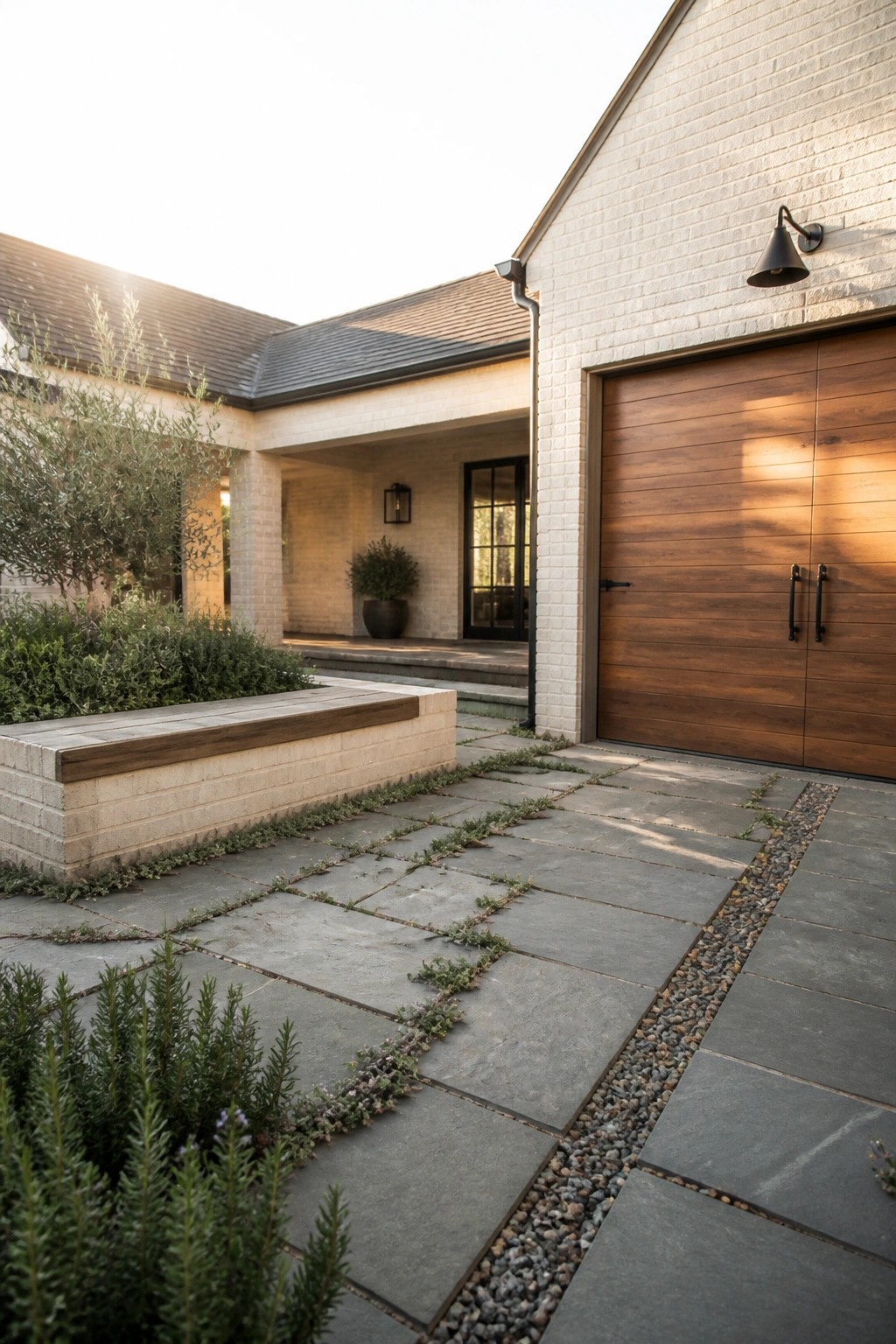
A wood garage door can give a minimalist farmhouse just enough warmth without breaking the clean lines. The natural grain stands out nicely against light brick and keeps the whole front from feeling too stark or flat.
This works best on homes with simple gable roofs and limited ornament. Pair it with gravel paths or stone pavers so the wood reads as part of the overall material mix rather than a lone accent.
Concrete Steps For A Minimalist Entry
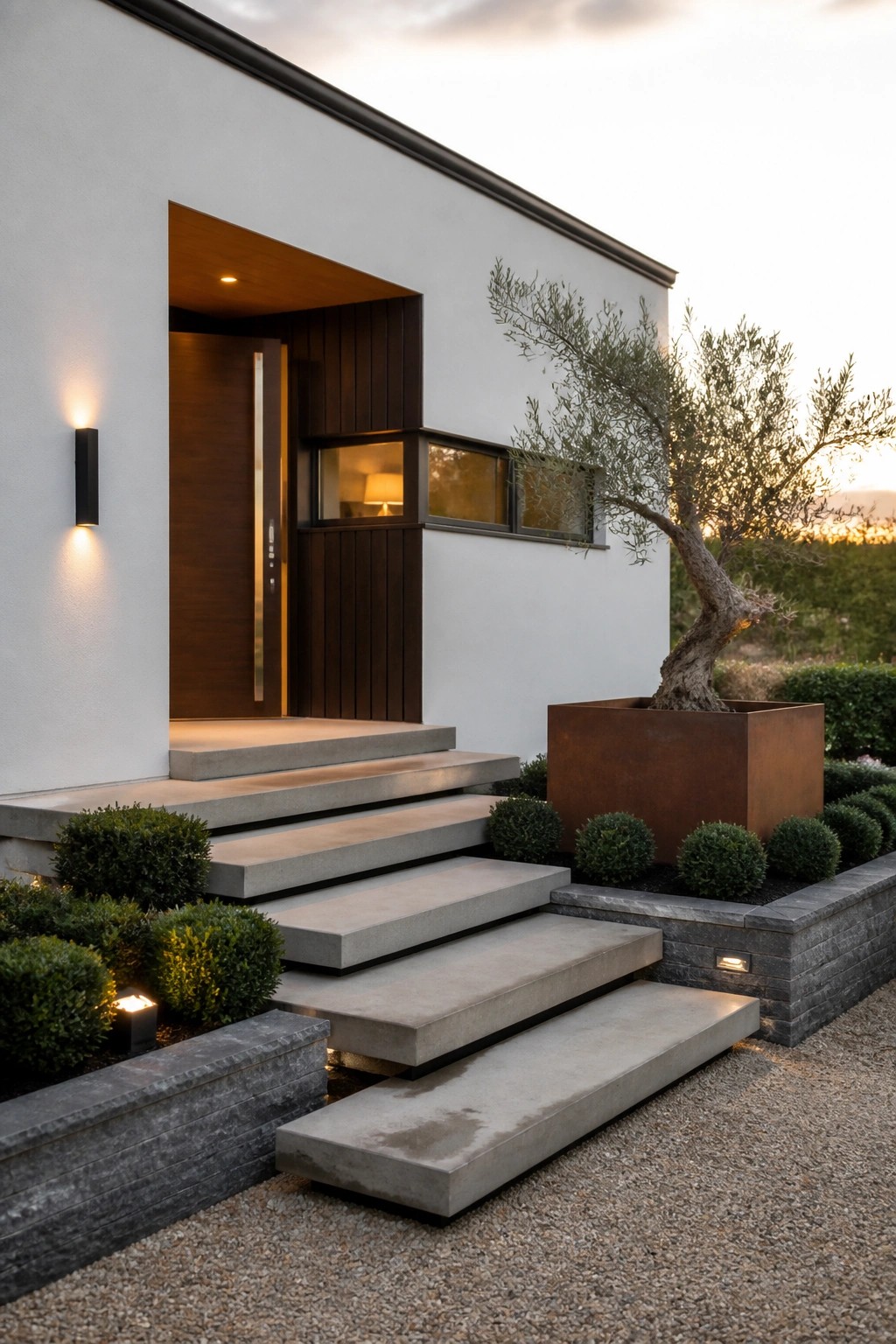
Concrete steps give an entry a quiet, grounded feel that works especially well with minimalist farmhouse homes. They keep the approach simple and let the door and siding do most of the talking instead of adding extra trim or railings.
They suit houses that sit close to grade and look best with low plantings along the sides. Skip fancy lighting or ornate details so the steps stay easy to maintain and read as part of the overall clean lines.
Wood Slat Screens Along Walkways
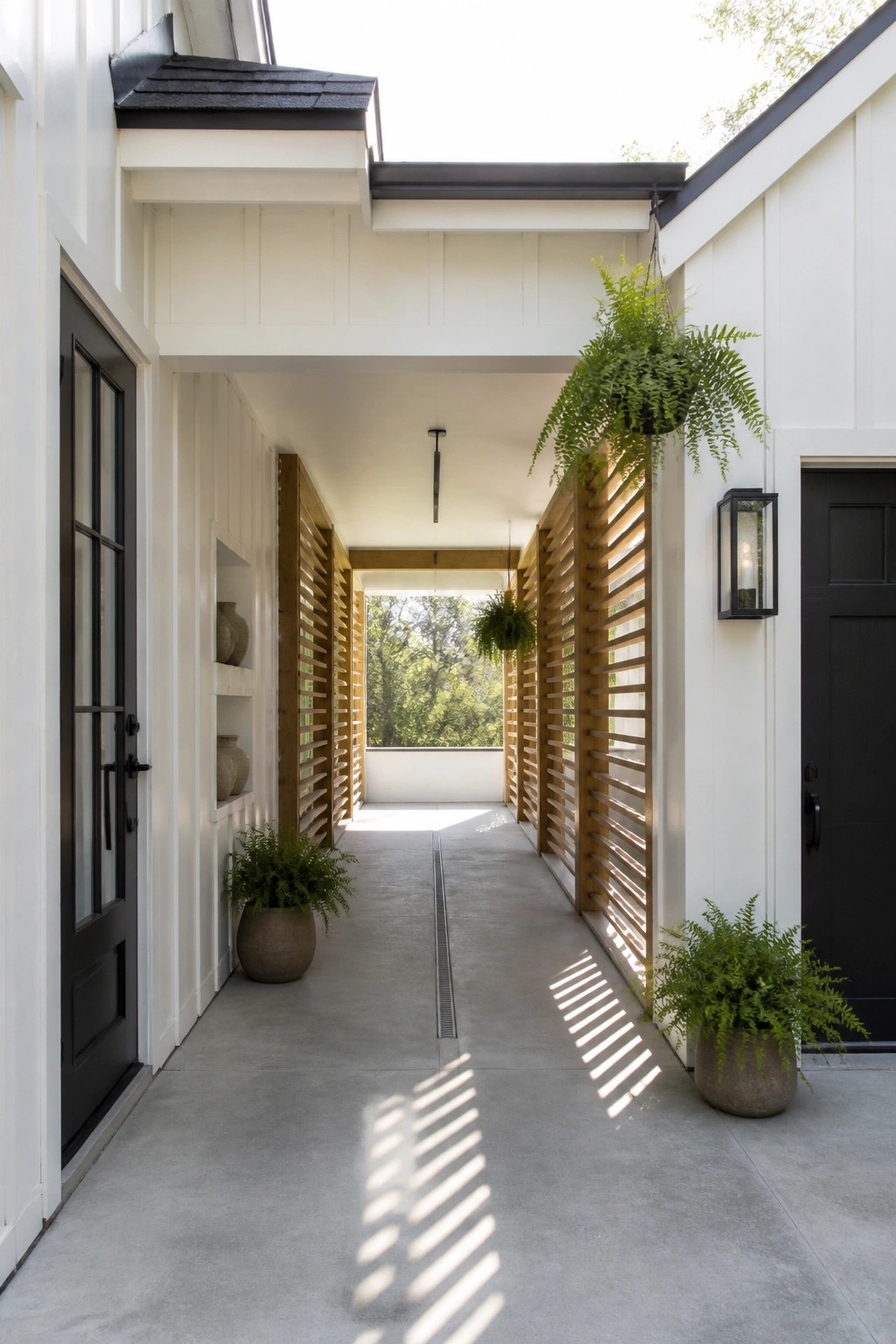
Vertical wood slats add a useful layer of structure to an exterior walkway without making it feel boxed in. They filter sunlight into clean lines across the floor and give just enough privacy while still keeping the space open to air and views. The simple contrast between the white walls and the natural wood also fits right into a minimalist farmhouse look.
This approach works best on longer side passages or breezeways where you want some separation from the street or a neighbor. Keep the slats evenly spaced and let them run from floor to ceiling so the pattern stays consistent. Avoid overcrowding the area with too many plants or decorations, since the slats already do the visual work.
Add A Greenhouse Addition
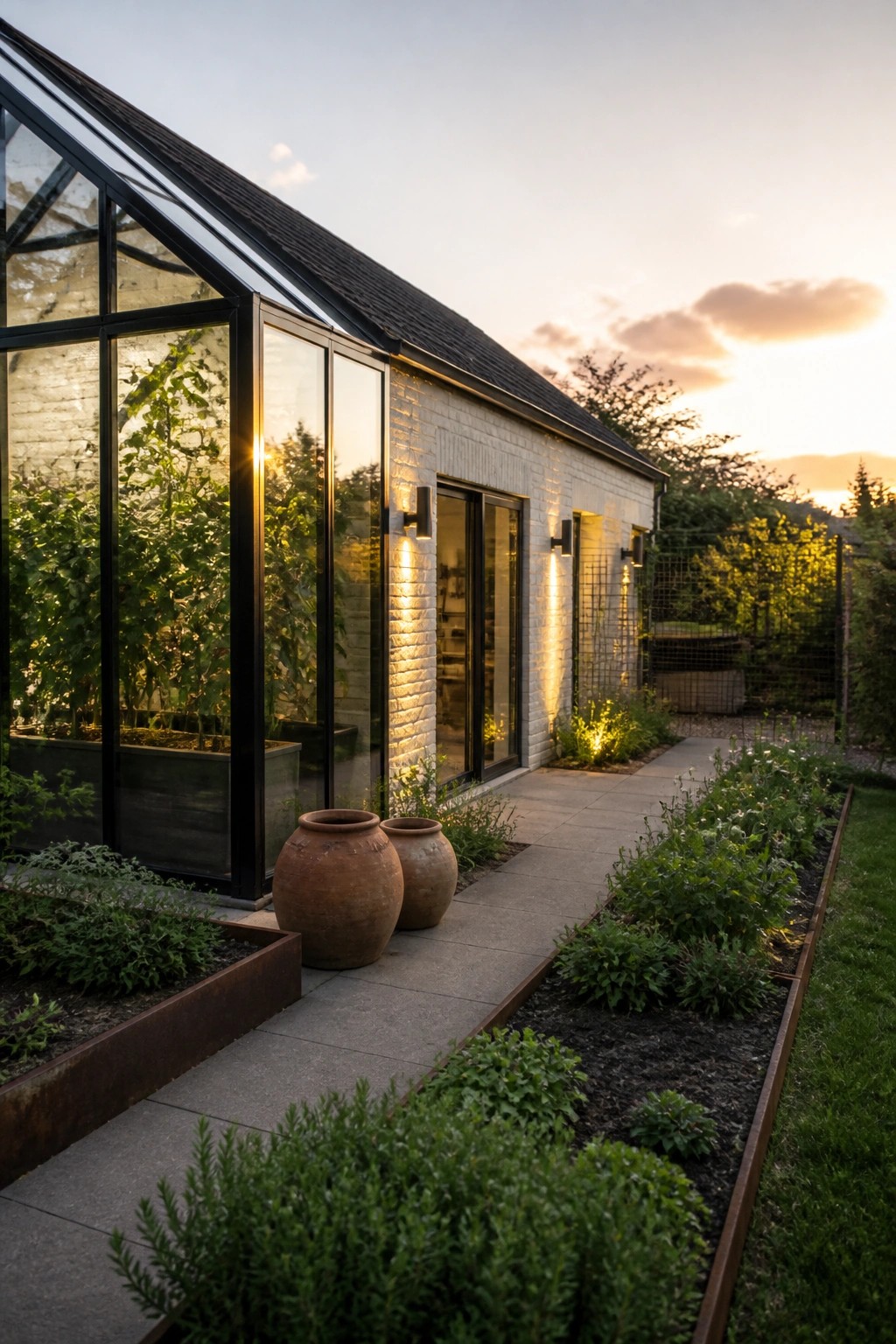
A greenhouse addition brings plants and light right against the house without making the exterior feel busy. It keeps the overall look simple while adding real function for growing things year round.
Place it along a side wall where a path can run beside it and garden beds can sit in front. This setup suits homes with a bit of yard space and works especially well in cooler climates where indoor growing helps extend the season.
Mix Dark Wood Siding With Stone Accents
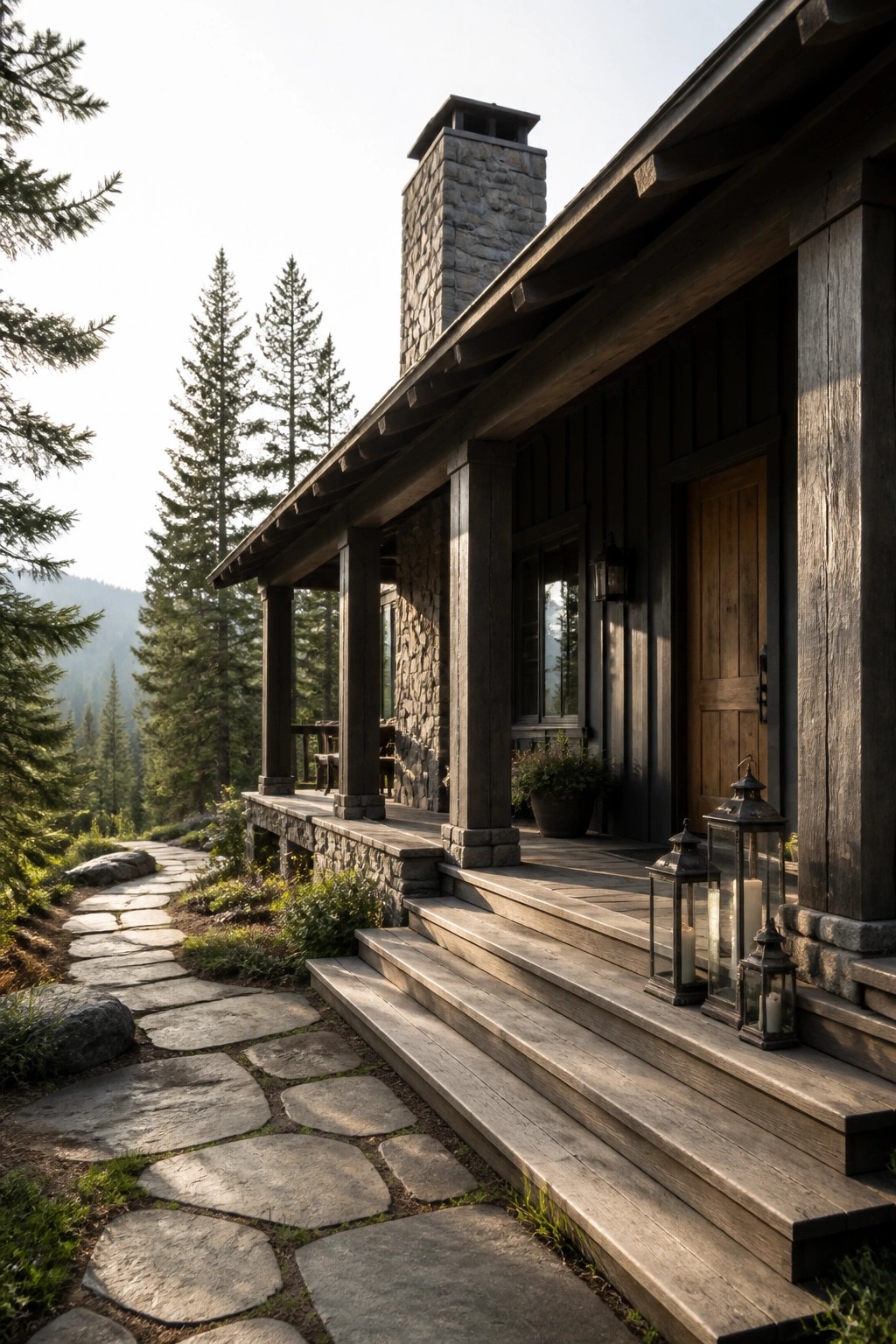
This combination gives a farmhouse exterior a solid base without extra trim or decoration. The stone chimney and foundation stand out against the dark boards and keep the front feeling balanced and simple.
It works best on homes in wooded settings where you want the house to feel connected to the land. Limit stone to one or two key spots so the look stays clean.
Built-In Seating Under A Pergola
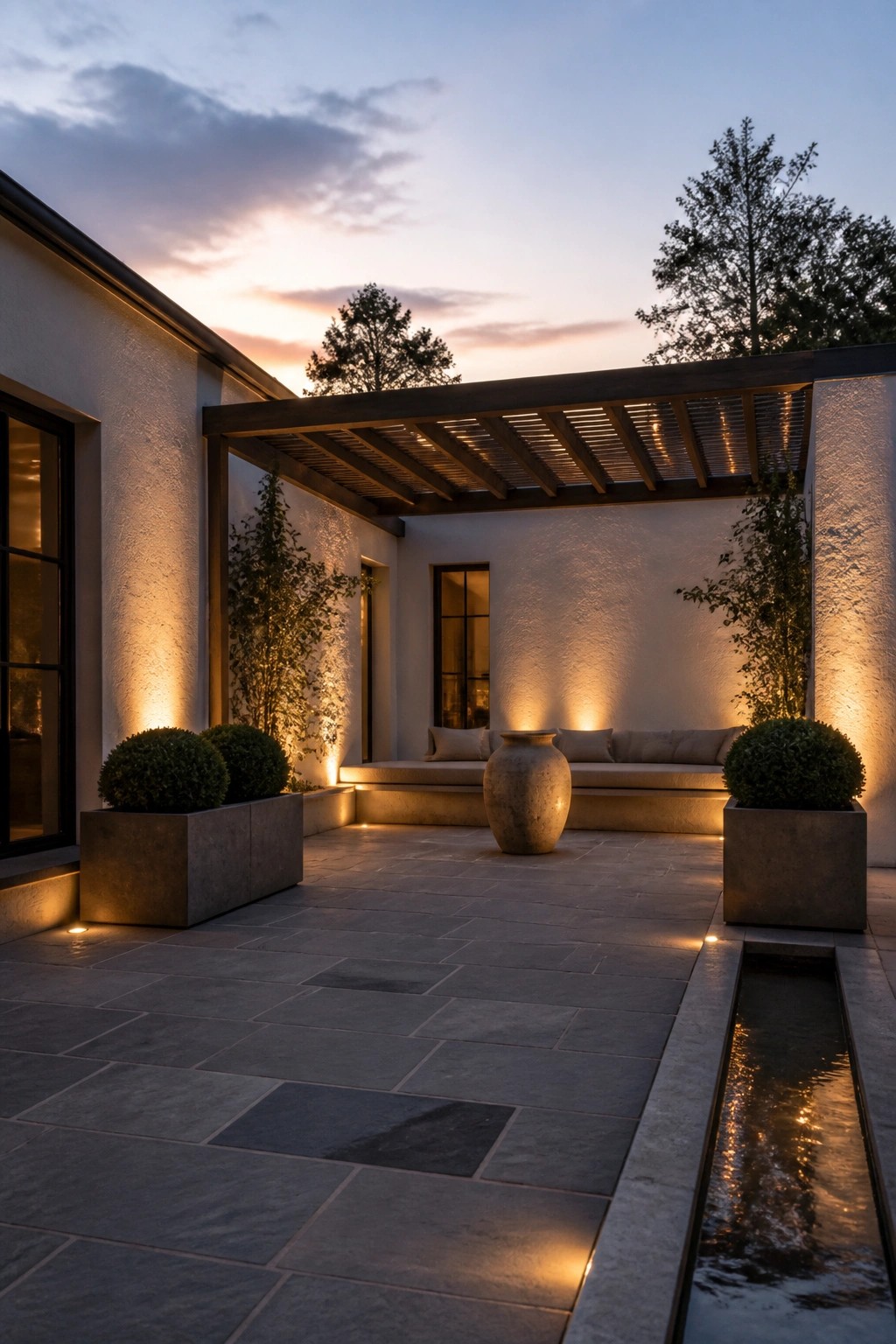
One simple way to make an outdoor area feel more complete is to add built-in seating under a pergola. The overhead structure defines the space and turns an open patio into something that actually invites people to sit and stay awhile. It keeps the look clean while giving the area a clear purpose.
This approach works best on homes with simple architecture and open wall space. Keep the bench low and continuous, add a couple of large planters at the ends, and run low lighting along the base so the space stays usable after dark without extra lamps cluttering the floor.
Contrast White Siding With Wood At The Entry
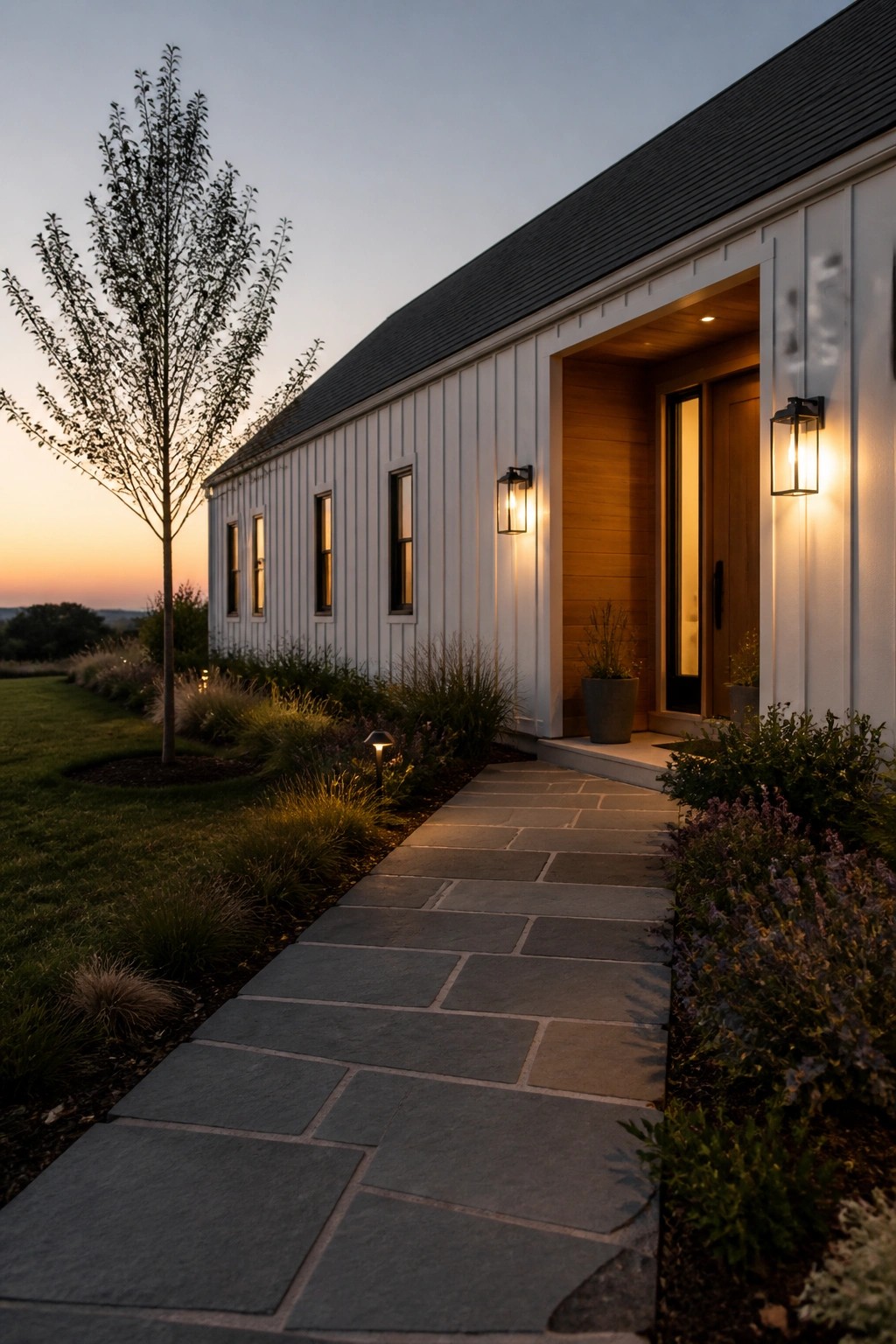
A simple white exterior can feel a little flat on its own. Adding wood around the front door gives it some warmth and breaks up the surface without adding extra trim or details.
This works best on homes with clean lines and minimal ornament. Keep the wood tone natural and let it cover just the entry area so the rest of the siding stays plain.
Frequently Asked Questions
Q: What siding choice works best if I want to avoid any fancy details? A: Board and batten in a soft white or greige keeps the surface flat and simple. It echoes classic farmhouse lines while letting the shape of the house stand out. Skip any corner boards or extra molding.
Q: How should I handle the front porch without it feeling cluttered? A: Use two plain posts and a straight roof overhang. Add one bench or a couple of metal chairs at most. This leaves the space open and easy to maintain.
Q: Can I update my old windows to fit the look without replacing every one? A: Paint the frames black to create contrast against light siding. Swap out any ornate grilles for simple divided panes on the front only. The rest can stay as is for now.
