

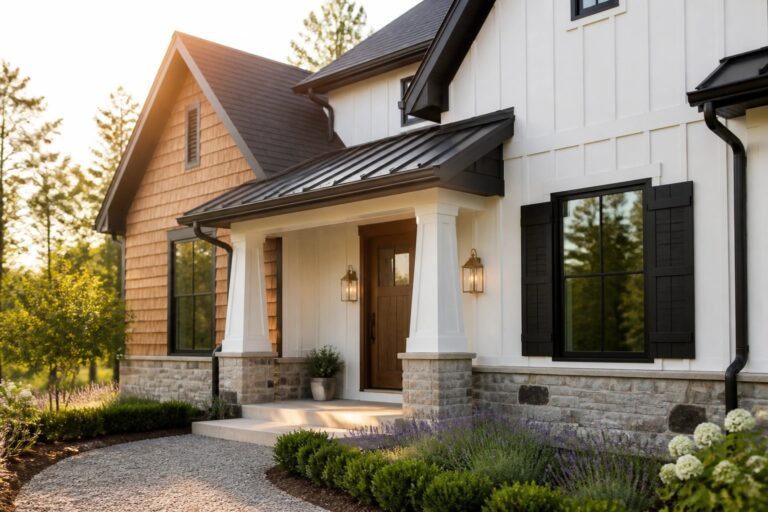
I’ve spent time looking at how mixed siding affects the overall profile of a farmhouse, particularly around the gables and porch areas.
Certain pairings like board and batten with stone can ground the design and make the house feel more settled into its site.
I always check how the materials transition at the roofline because that spot tends to reveal whether the mix was planned carefully.
Samples help more than sketches.
The best results come from letting the natural colors of the materials guide the rest of the exterior details rather than forcing a match.
Mix Wood Shingles With Painted Vertical Siding
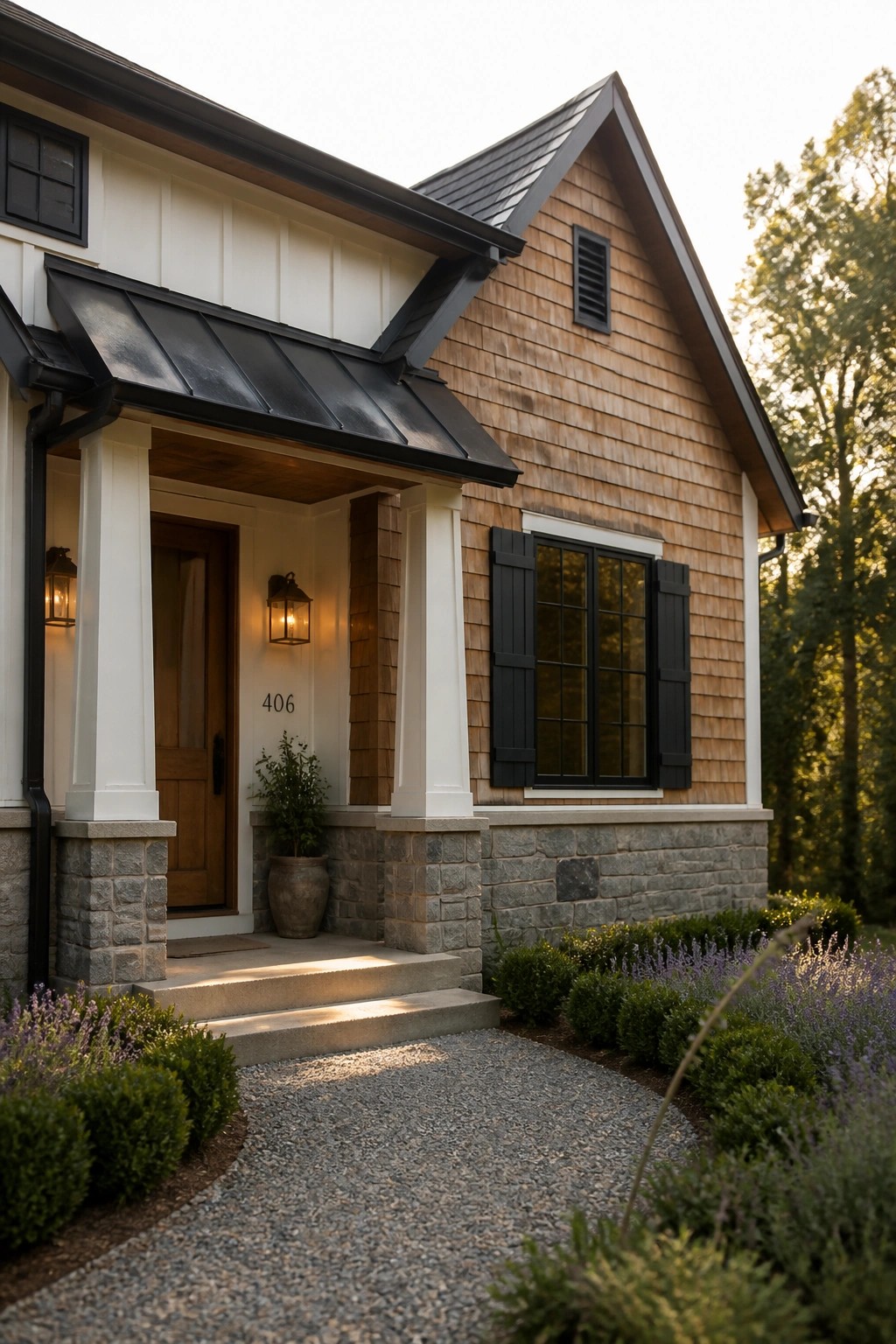
Mixing cedar shingles with painted vertical siding gives a farmhouse more depth without needing lots of extra trim or details. The contrast between the textured shingles and the smoother boards helps the house feel balanced rather than flat, especially on gable ends or side sections.
This approach works best on homes that already have some architectural breaks, like a porch overhang or a stone base. Keep the colors simple so the materials do the work, and avoid covering every surface in the same mix or it can start to feel busy.
Mix Stone Bases With White Siding
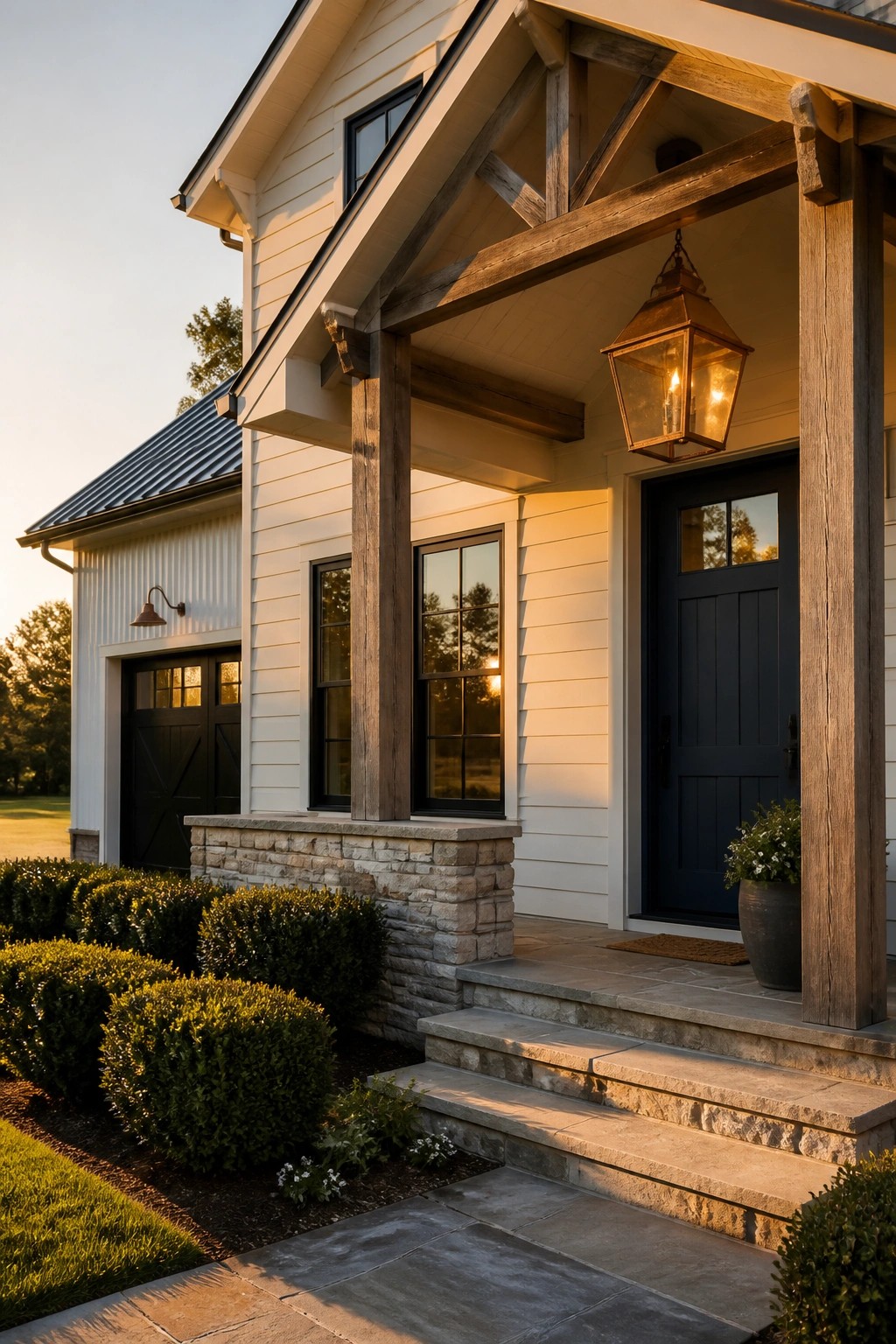
One simple way to add interest to white siding is to run stone along the base of the house and porch. It gives the lower part some weight and breaks up the flat look of the siding without needing a lot of extra trim.
This approach works best on farmhouses that already have wood posts or beams. Keep the stone low and let it stop where the siding begins so the mix stays balanced. It also helps the entry feel more grounded.
Mixing Wood Siding With Brick
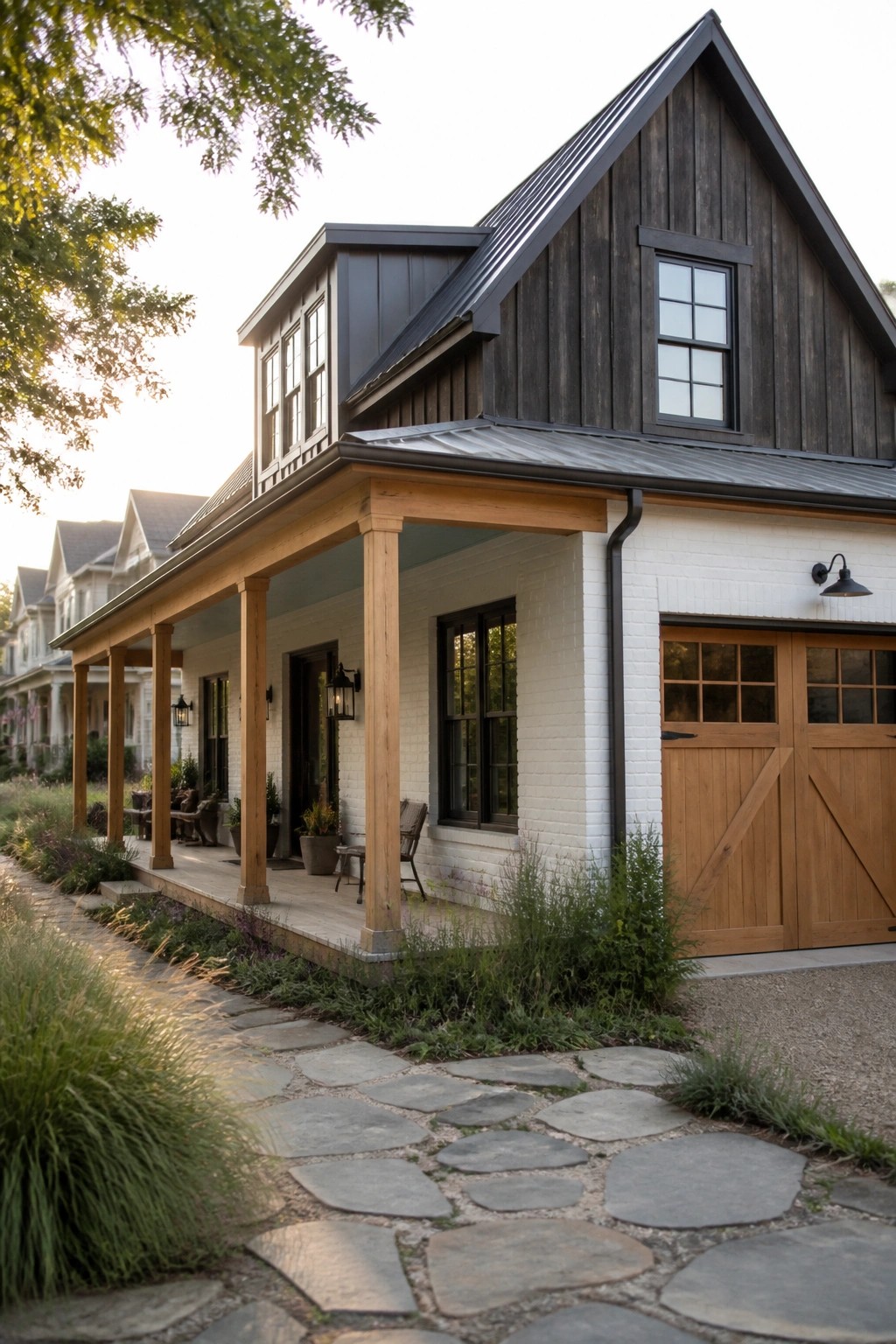
Many farmhouses gain character when the siding combines two different materials instead of sticking to one. Dark wood on the upper section paired with white brick below creates a clear break that keeps the house from looking flat while still feeling grounded.
This approach works best on homes with simple rooflines and larger wall areas where the materials can show off their contrast. Keep the wood tone deep and the brick light so the division stays clean, and make sure the trim color ties both surfaces together rather than fighting them.
Mix Wood Shingles With Horizontal Siding
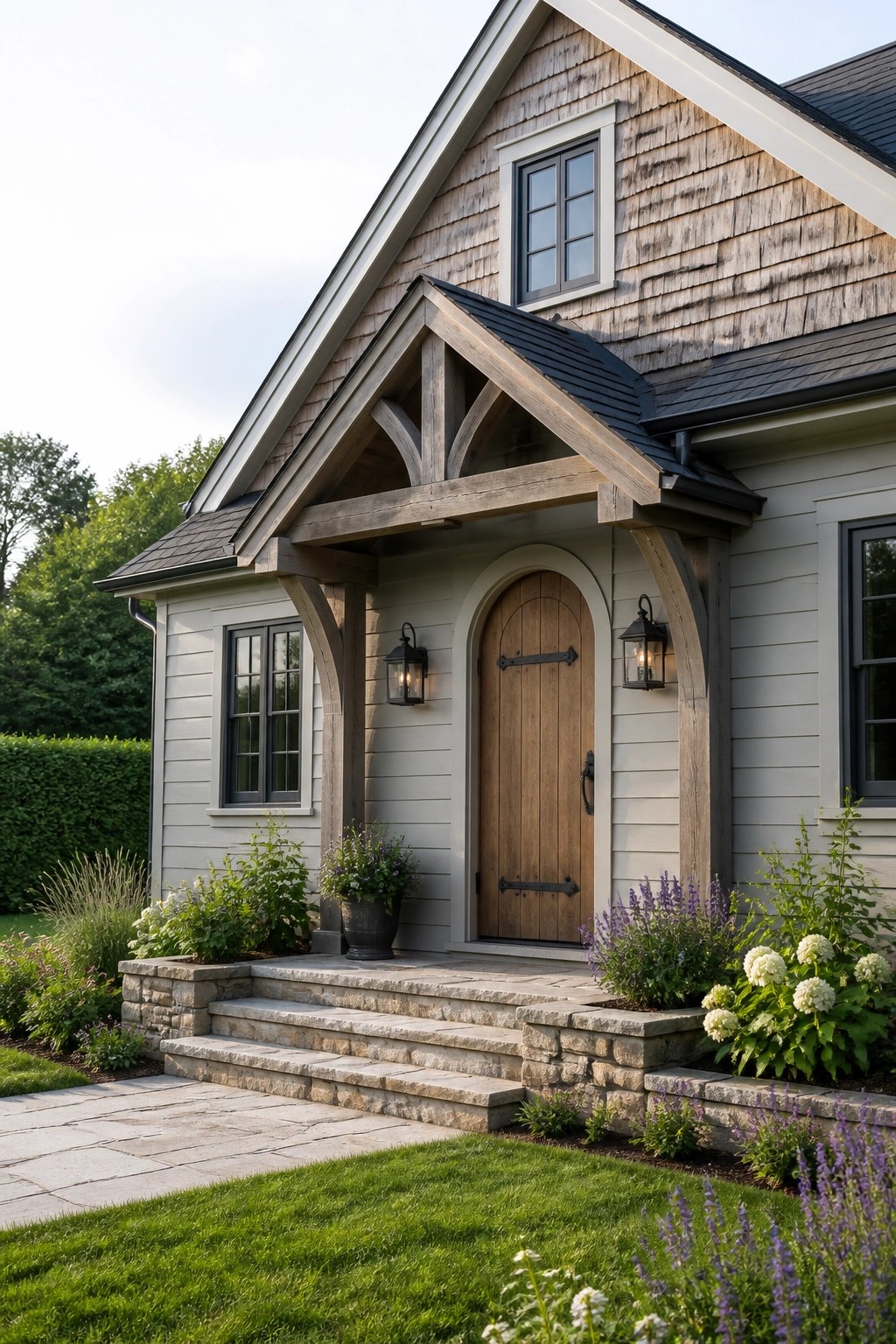
Mixing wood shingles on the upper sections with horizontal siding below gives a farmhouse exterior more texture without making it feel busy. The change in material breaks up the wall height and helps the roofline stand out in a simple way.
This approach works best on homes with clear gables or a defined second story. Keep the colors close so the materials blend rather than compete, and let the stone base handle the grounding instead of adding more patterns higher up.
Mix Vertical Siding With Stone
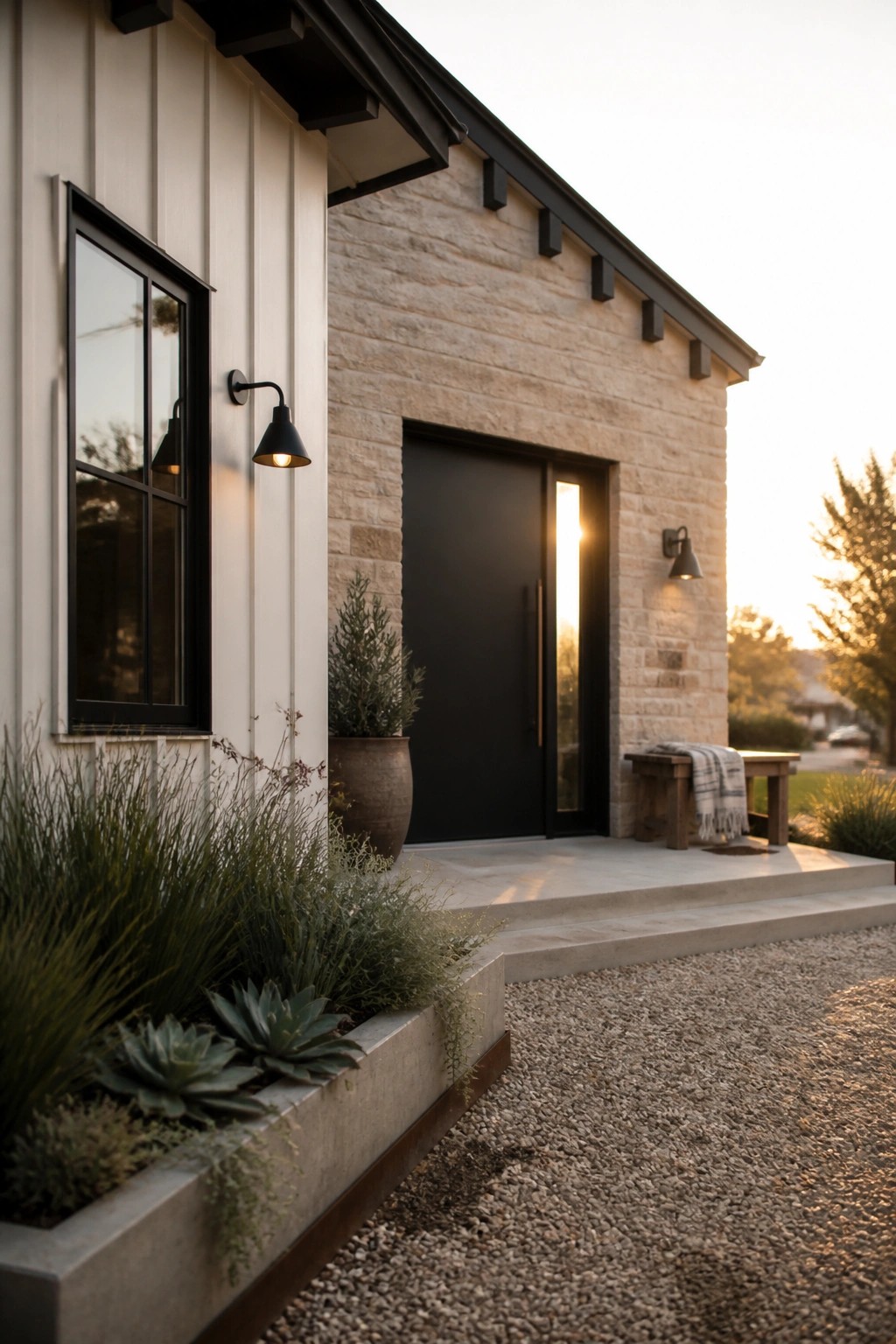
Mixing vertical siding with stone gives a farmhouse a bit of contrast that still feels simple. The siding adds height and clean lines while the stone brings texture, and the two together keep the whole look from feeling flat or one-note.
This combination works best on homes with straightforward shapes and not too many extra details. Keep the siding and stone in light tones and let the trim stay dark so the materials stand out without competing.
Mix Brick With Horizontal Siding
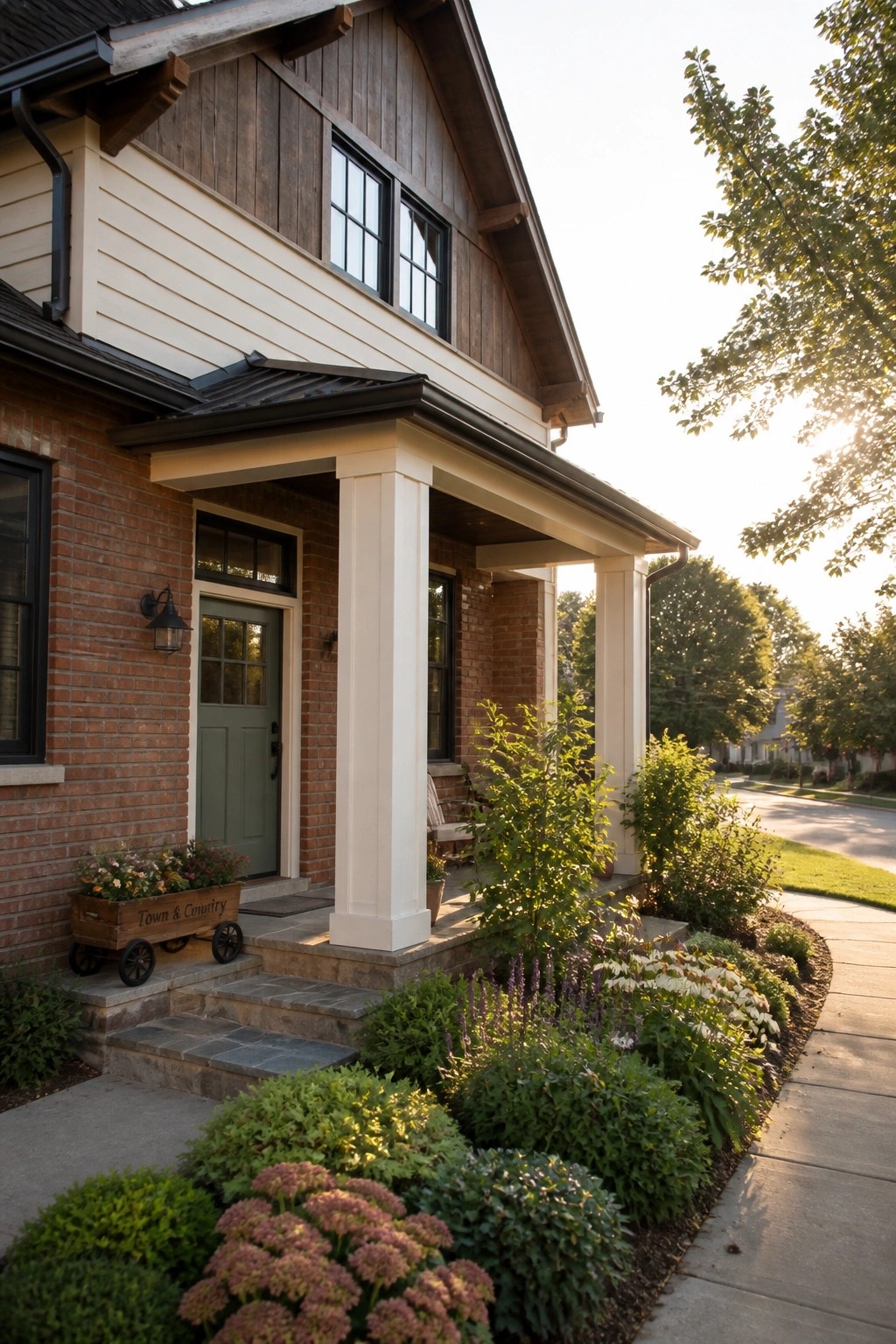
Mixing brick on the lower part of the house with horizontal siding above gives the exterior more weight and interest without needing extra trim or details. The change in material breaks up the height and keeps the look simple but still varied. Many older farmhouses used this approach because it was practical and it aged well.
This works best on homes with a clear base line where the materials can meet naturally. Keep the siding color light and the brick in a warm tone so the shift feels intentional rather than busy. Avoid carrying the mix too high on the gable ends or it can start to feel chopped up.
Mixing Wood Siding With Metal Roofing
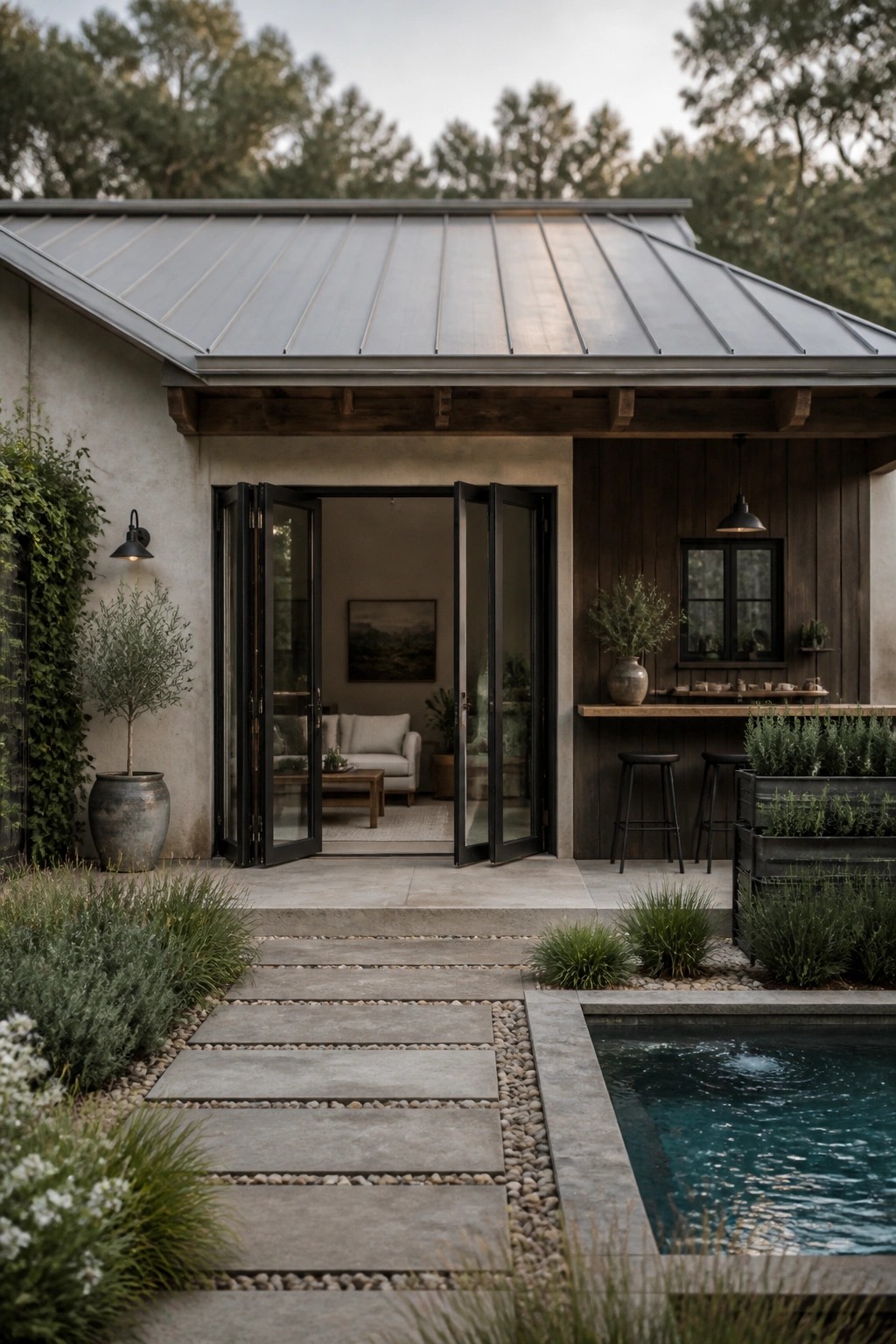
Many farmhouses gain interest when wood siding is placed next to metal roofing instead of covering the whole exterior in one material. The wood brings warmth while the metal keeps the roofline clean and low maintenance.
This approach works best on homes with simple shapes and outdoor areas that connect to the inside. Use the wood on the main walls and let the metal cover the roof and a few accents so the materials do not compete.
Mixing Metal Panels With Painted Siding
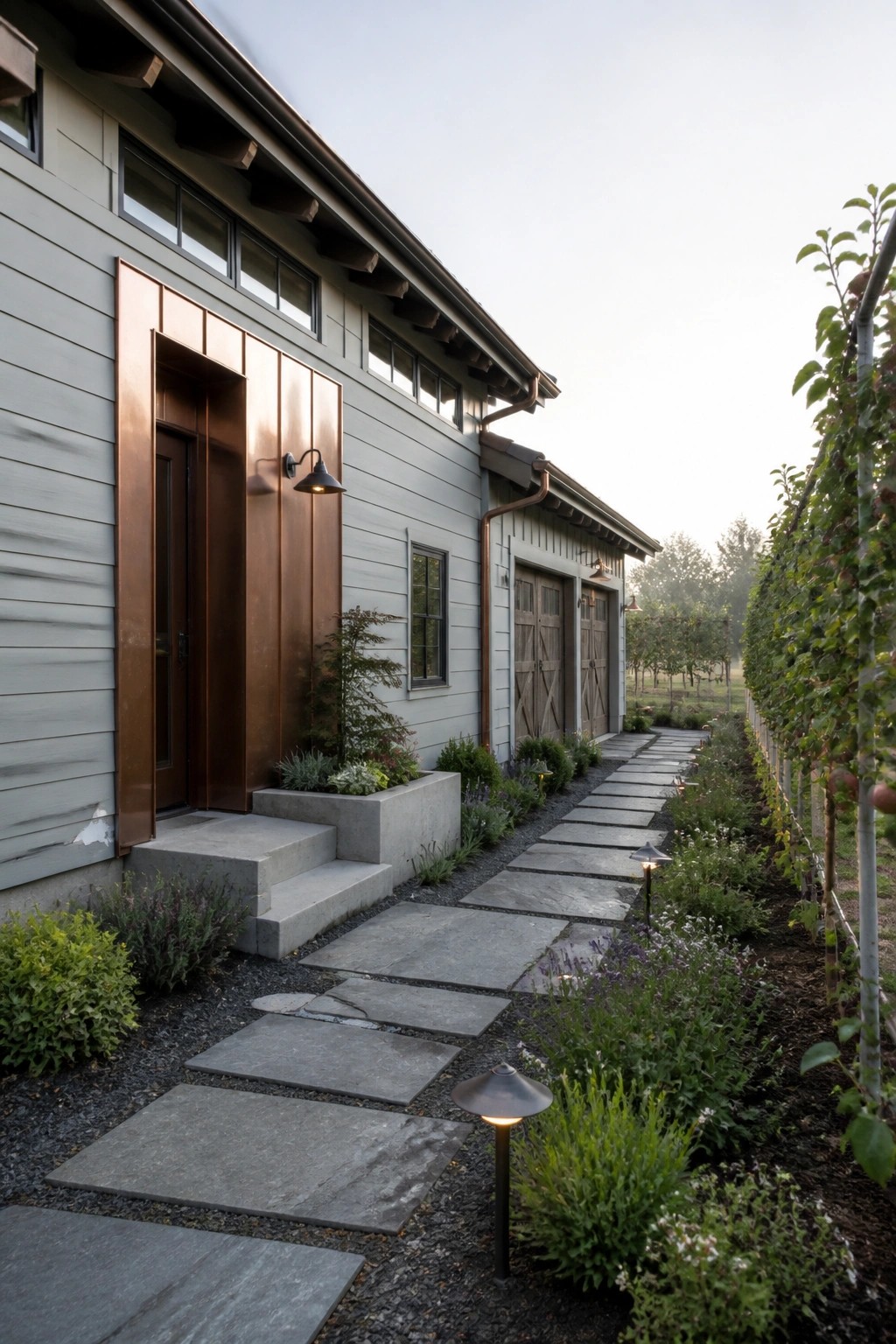
Many farmhouses gain character when you combine painted siding with metal panels. The gray boards keep things simple and familiar while the copper-colored sections around the door create a clear focal point without needing extra trim or color changes.
This mix works best on homes with straightforward rooflines and modest entries. Keep the metal area limited to the door surround or one wall section so it does not overwhelm the rest of the siding. It suits both new builds and updates to older farmhouses where you want a little contrast but still want the look to feel grounded.
Mix Vertical Wood Siding With Lighter Panels
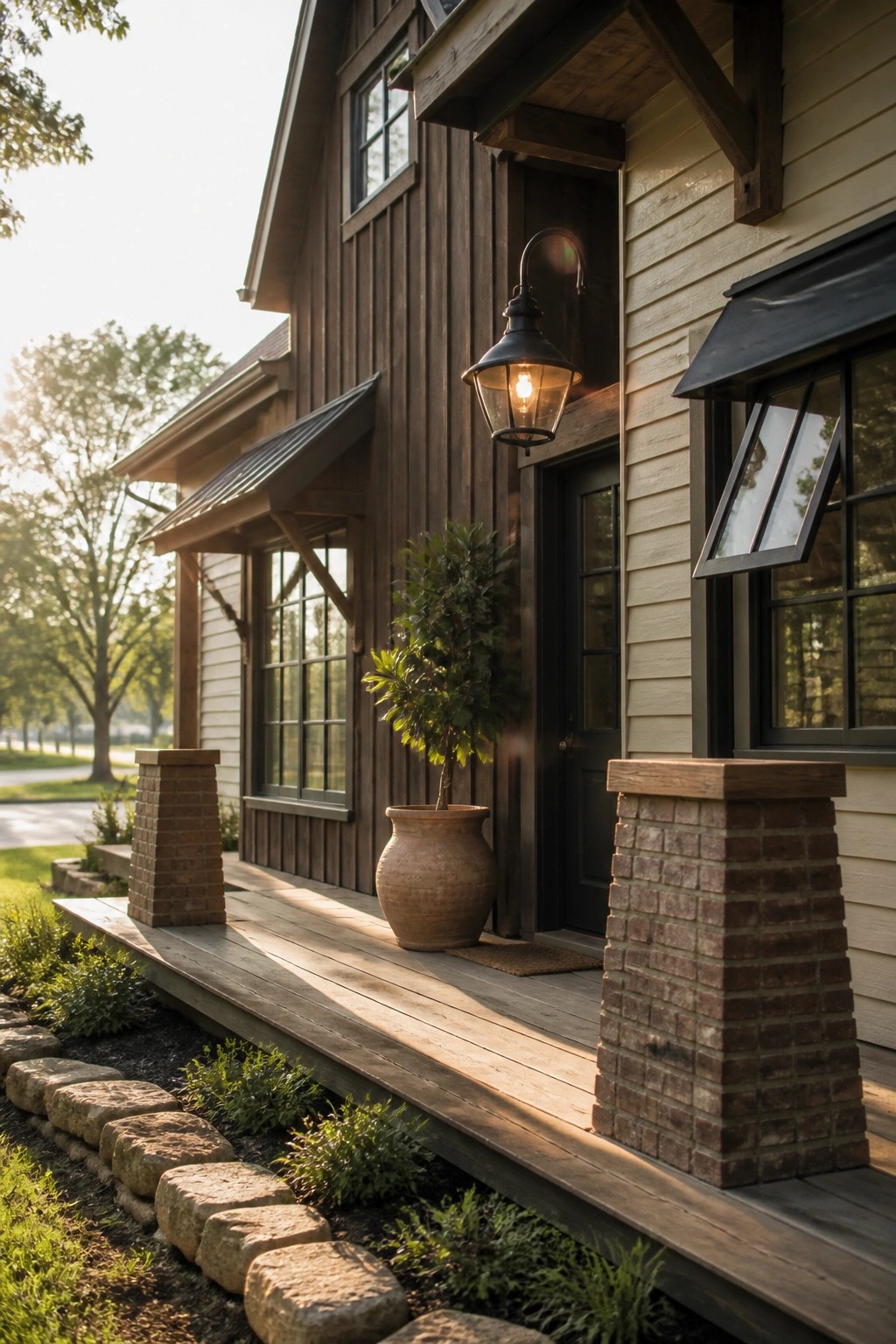
Many farmhouses look more interesting when you put two different siding styles side by side. The dark vertical boards next to lighter horizontal panels create a simple contrast that still feels like a farmhouse.
This mix works best on homes that already have a porch or gable to break up the wall. Keep the colors close in tone so the change reads as intentional rather than busy.
Mix Dark Siding With White Brick
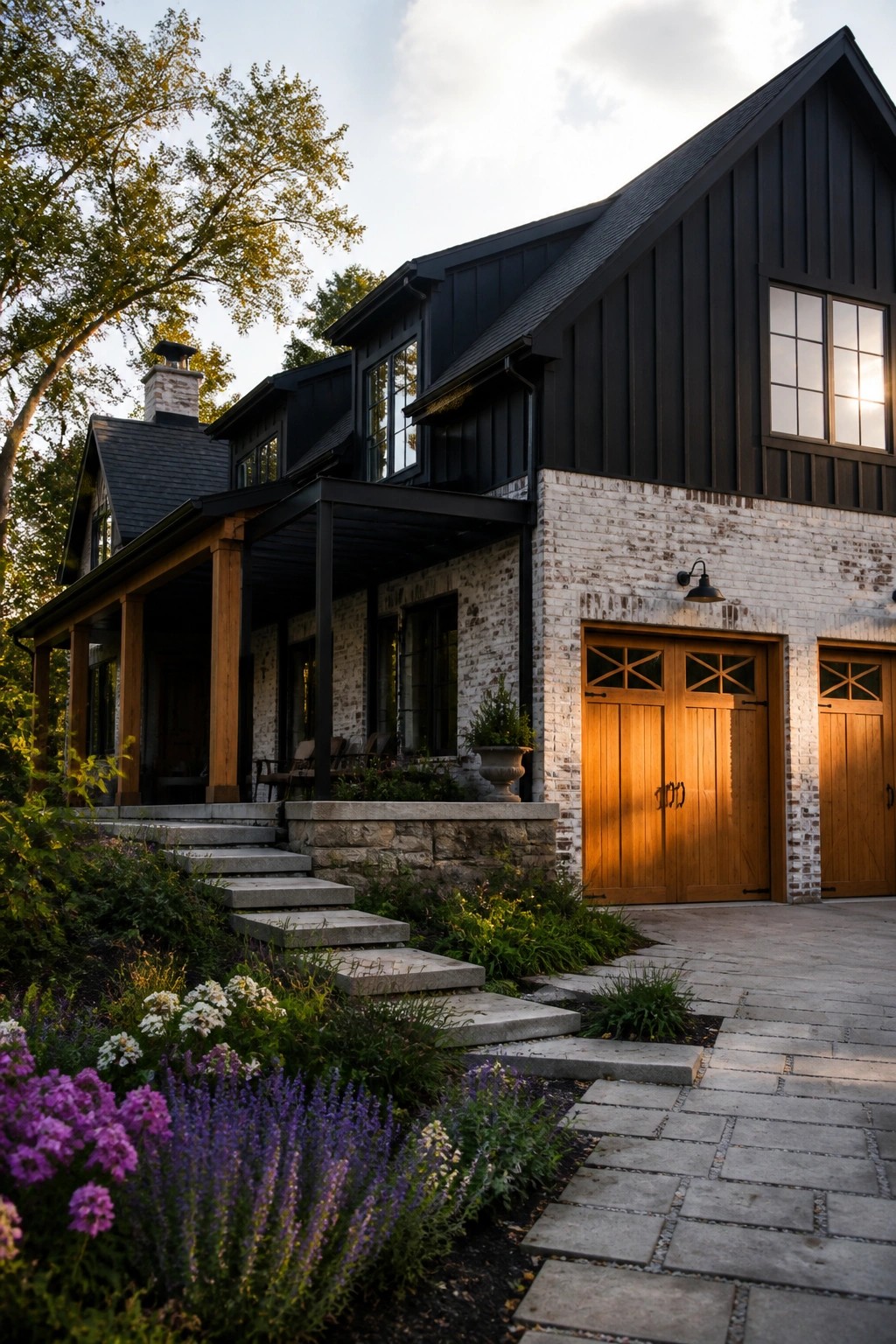
Many farmhouses look more interesting when you pair dark siding with white brick. The contrast keeps the house from feeling flat and gives each material room to stand out without extra trim or details.
This approach works best on homes with simple rooflines where you can let the siding cover the upper sections and brick wrap the base or one side. Watch the scale so the dark color does not overwhelm smaller windows or doors.
Mix Stone With Painted Siding
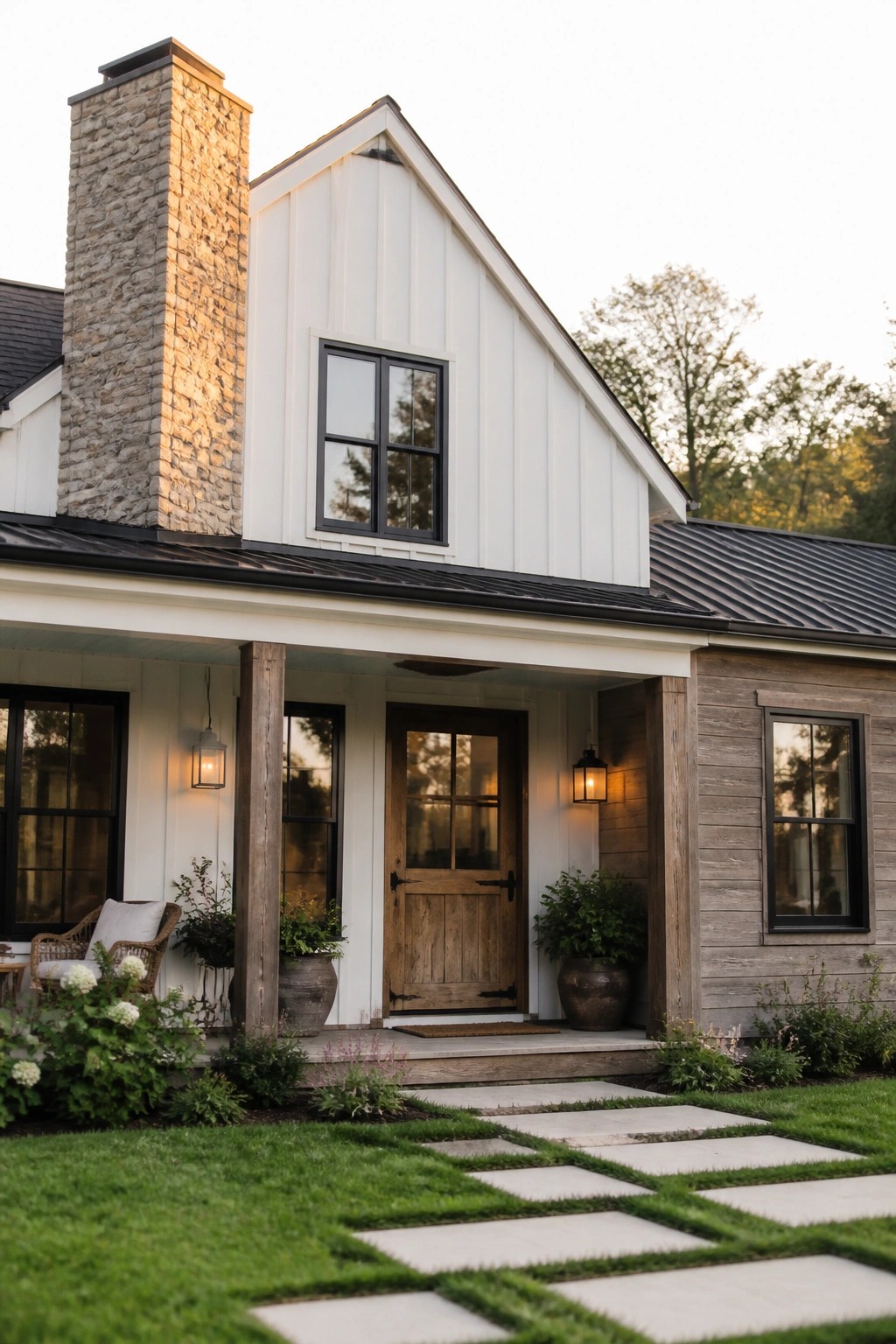
Mixing a stone chimney or accent wall with painted vertical siding gives a farmhouse exterior more weight without making it feel heavy. The stone brings natural texture and a sense of permanence while the white siding keeps the whole look bright and simple. Many people like this because it adds interest without needing lots of extra trim or color changes.
This approach works best on homes with a clear focal point like a chimney or front gable. Keep the siding clean and the stone limited to one or two areas so the materials do not compete. It suits both new builds and updates on older farmhouses.
Mix Painted Siding With Natural Wood
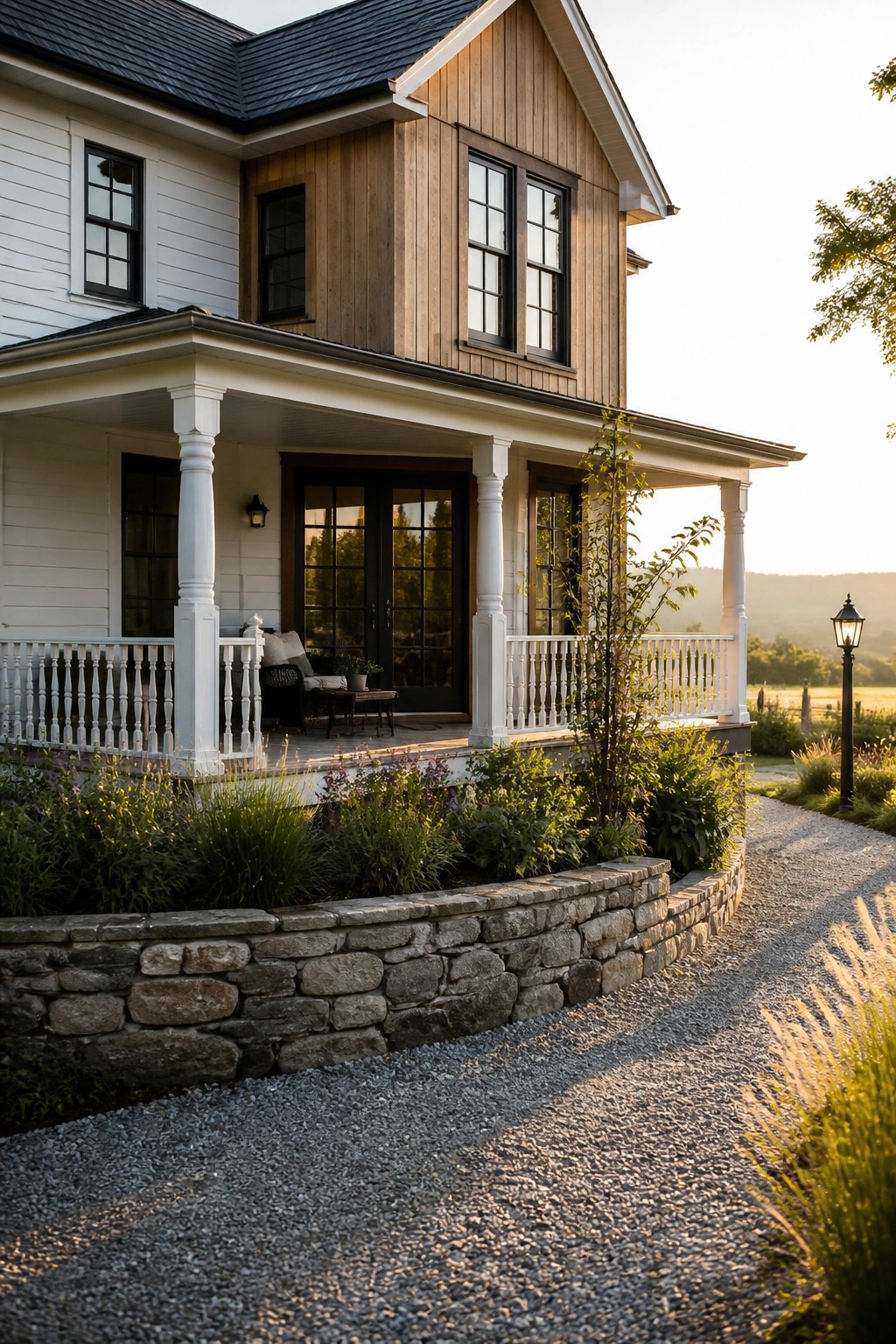
Mixing painted siding with natural wood gives a farmhouse exterior more depth without extra trim or details. The white sections keep the house feeling light while the wood adds warmth and texture right where the eye lands on the gable and accents.
This approach works best on homes that already have a few architectural breaks like porches or different rooflines. Use it on the main body in white and save the wood for one or two key areas so the mix stays simple rather than scattered.
Mix Horizontal Siding With Stone Bases
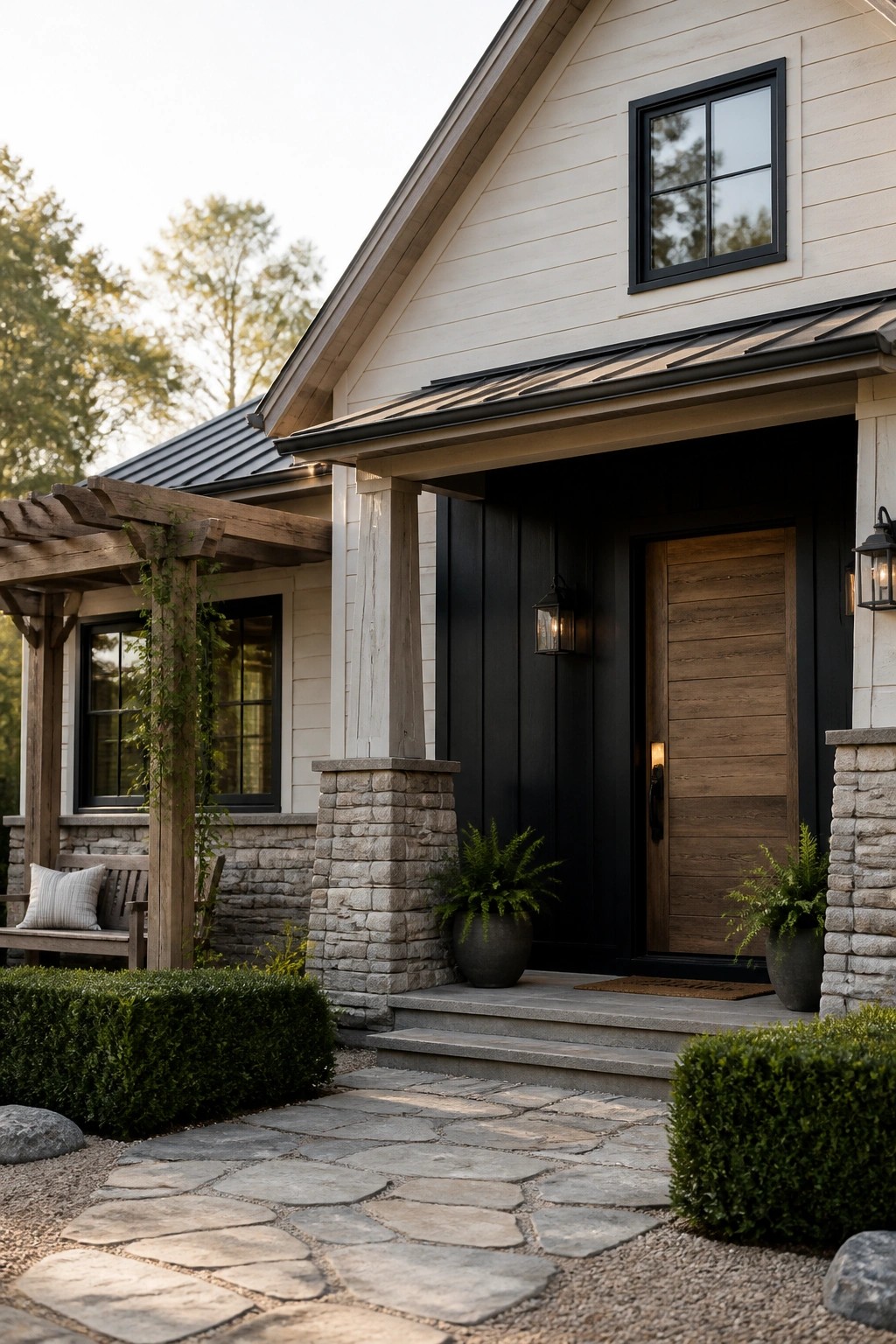
Many farmhouses gain a grounded look when stone covers the lower walls and porch supports. The light siding above stays bright and simple while the stone adds weight where it matters most.
This approach suits homes with clean rooflines and modest porches. Limit the stone to the foundation and columns, then keep the rest of the siding light so the materials balance without competing.
Mix Wood Shingles With White Siding
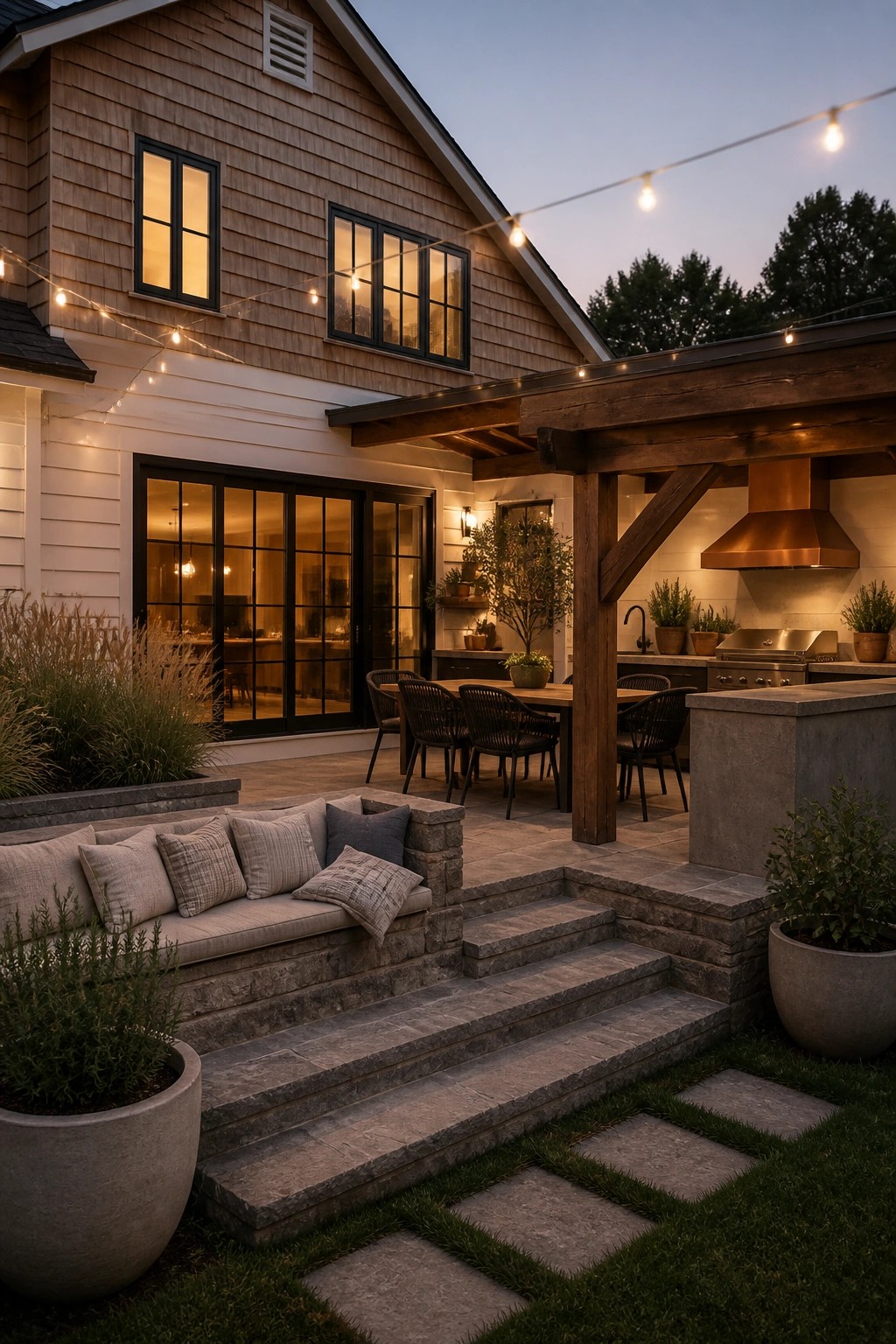
Mixing wood shingles on the upper part of the house with white horizontal siding below gives a farmhouse a bit more texture than a single material would. It breaks up the wall surface in a simple way and helps the roofline feel more defined without needing extra trim or details.
This works best on two-story homes where the change can happen at a natural line like a window header. Keep the colors close and let the materials handle the contrast. Stone on the patio and steps can tie in nicely if you want to extend the mix a little further out from the house.
Mixing Brick And Wood Shingles
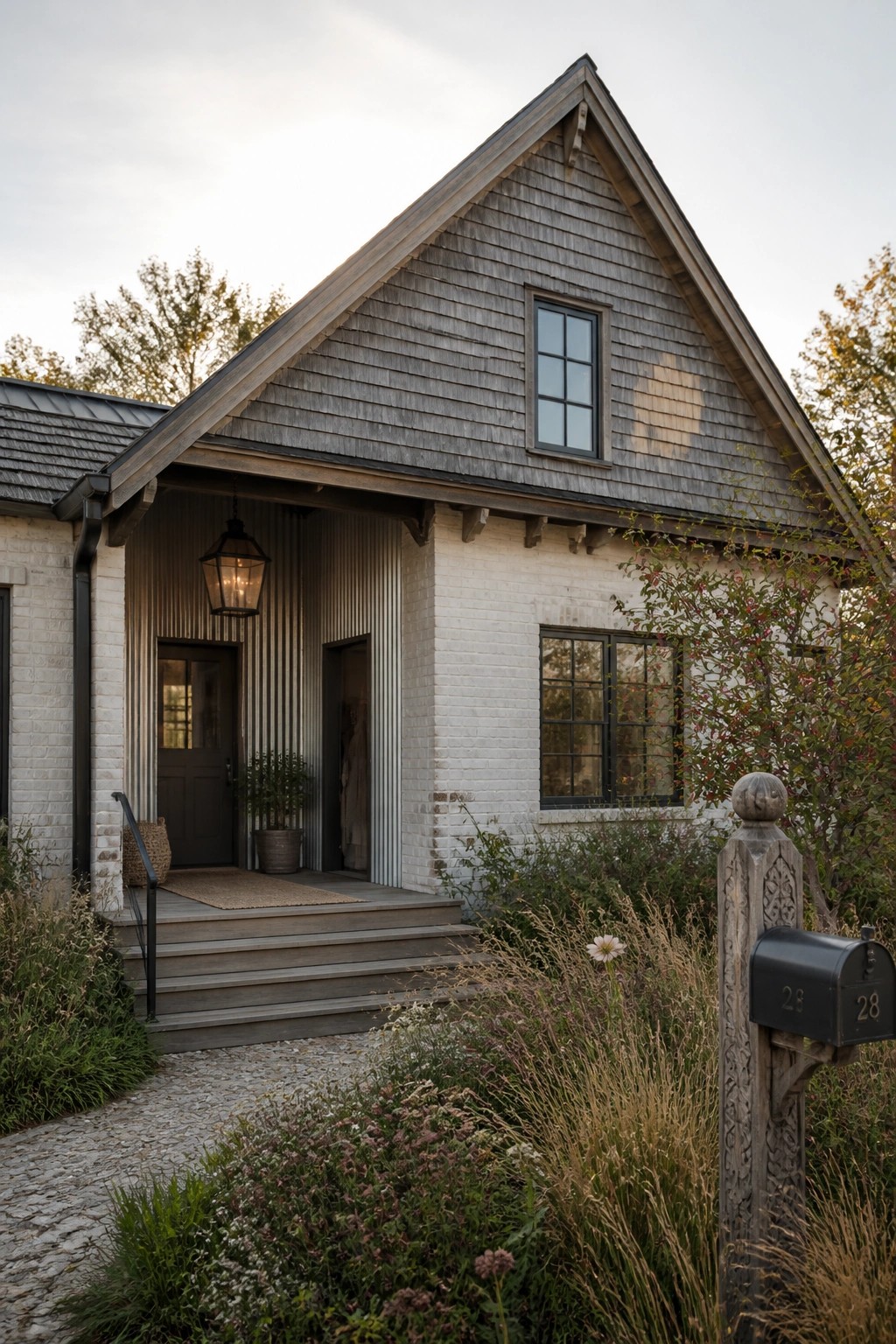
Many farmhouses gain character when the siding mixes brick on the main walls with wood shingles higher up. The brick gives a clean, solid look while the shingles add texture and a bit of age that feels right for this style.
This works best on homes with a clear gable or porch roof where the change can happen naturally. Keep the colors close and limit the mix to two or three materials so it stays simple rather than busy.
Mix Dark Siding With Stone Accents
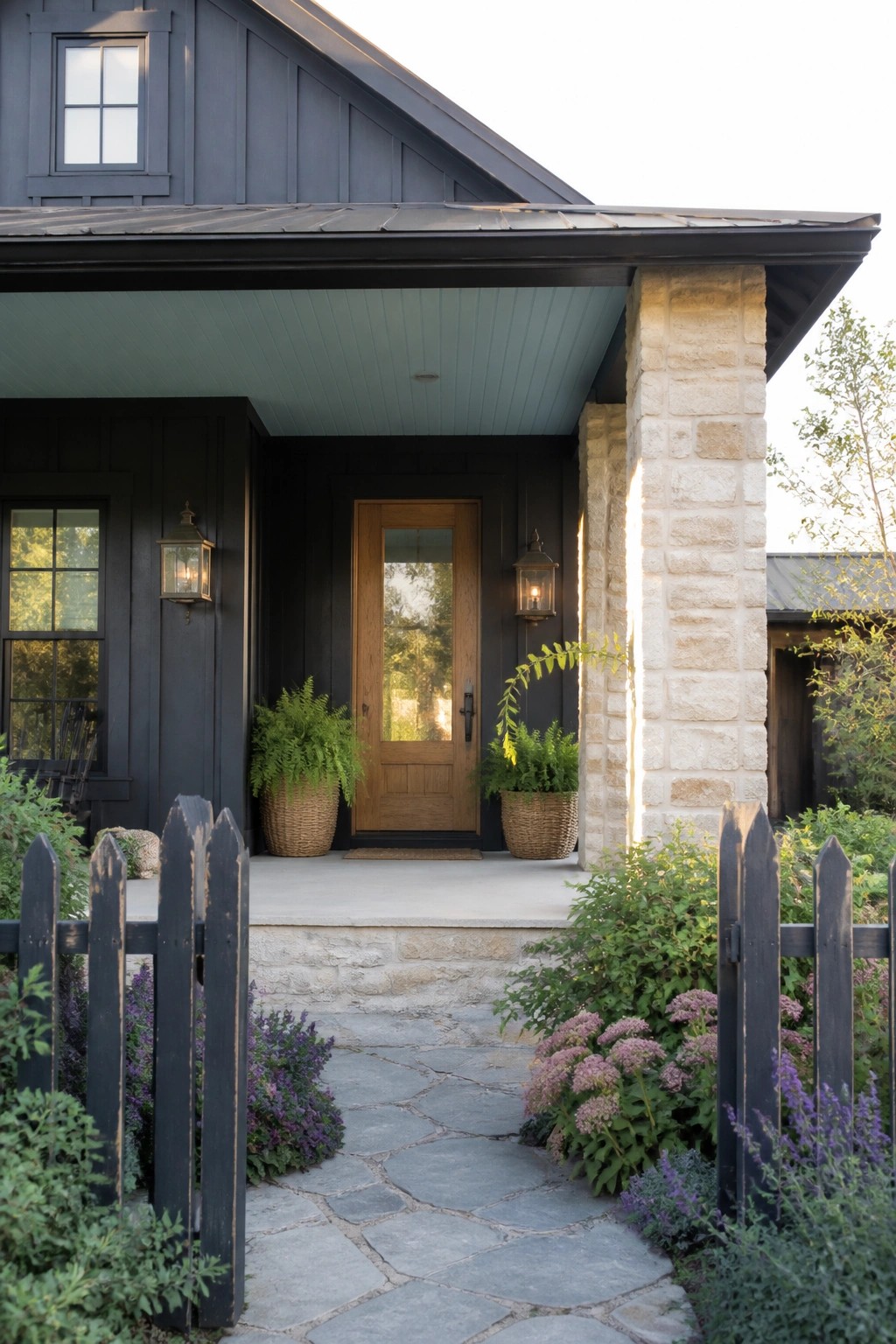
Dark siding stands out more when it sits next to something lighter and rougher like stone. The contrast keeps the house from feeling flat and gives it a simple farmhouse look that still feels solid.
This mix works best on the front of the house or near the entry where the two materials can meet in a clean line. Use it on newer homes or updates where you want the siding to stay the main surface but need something to break up the color and add texture. Keep the stone sections fairly narrow so the dark siding does not get lost.
Stone Adds Texture To Lighter Siding
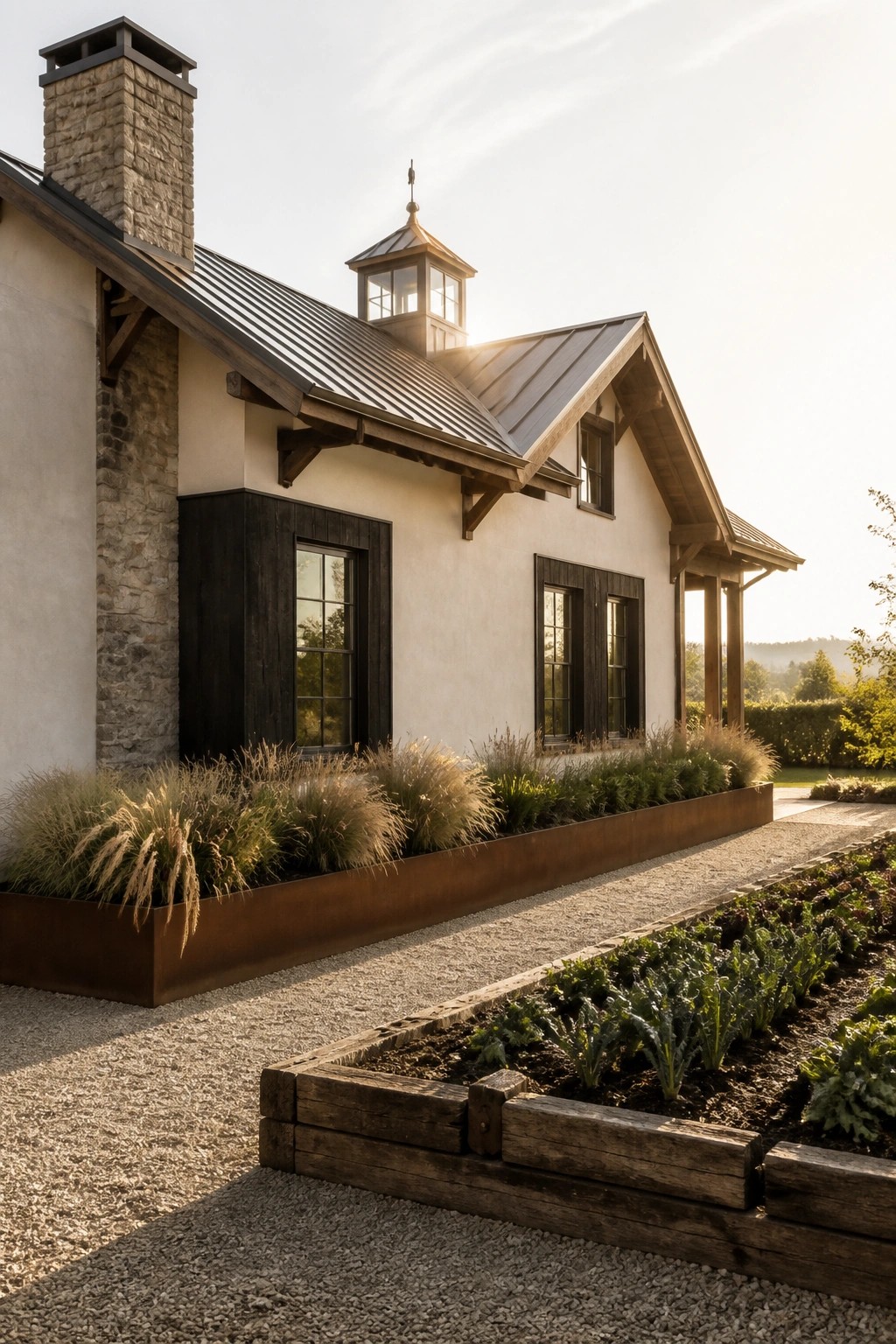
Stone works well when it shows up in small doses against simpler siding. It gives the house a grounded feel without making the whole exterior feel heavy or busy.
This approach suits farmhouses that already use light stucco or wood as the main material. Place the stone at the base, on a chimney, or around key openings so it supports the siding rather than competing with it.
Combine Wood Siding With Stone
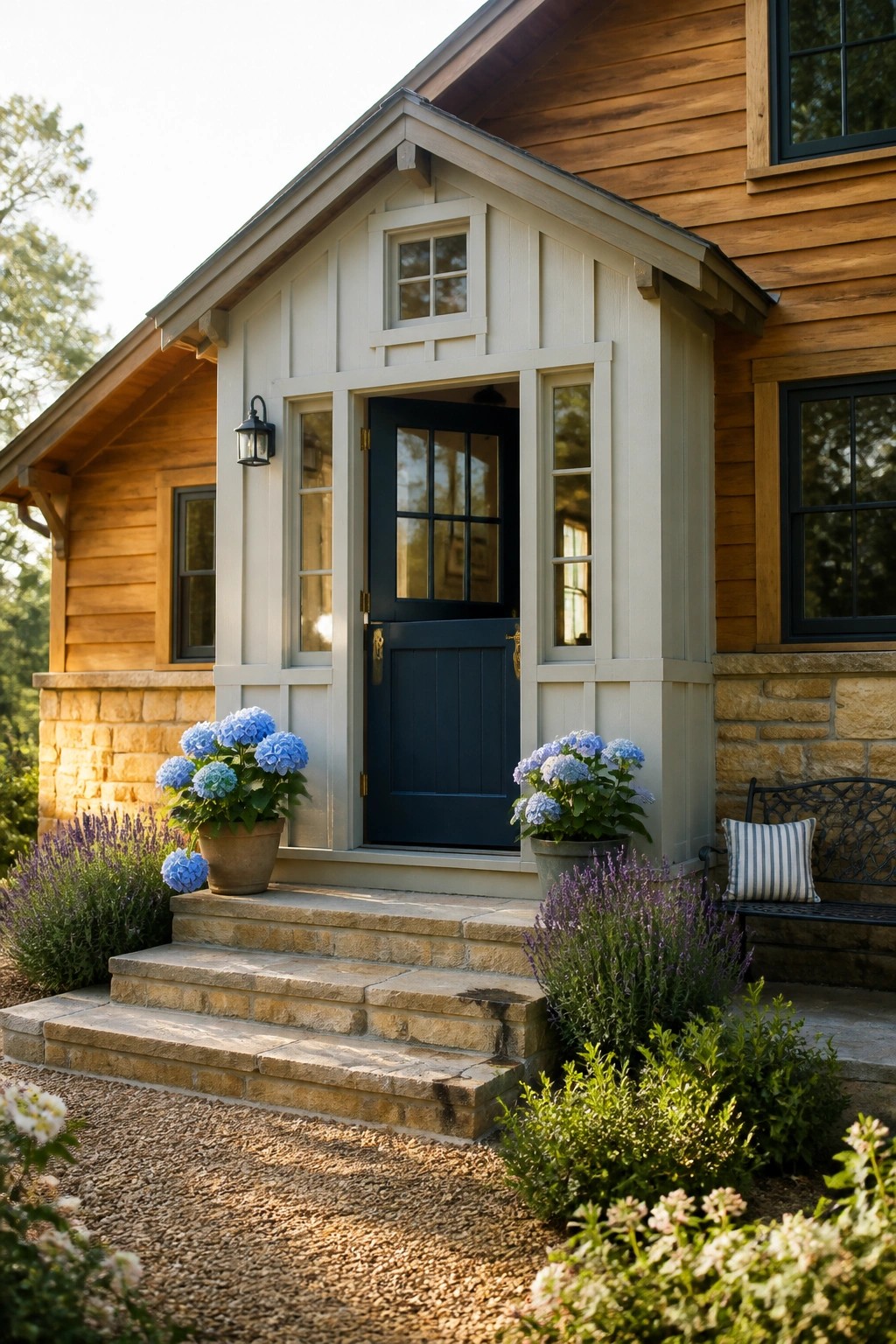
Mixing wood siding with a stone base gives a farmhouse exterior more weight and texture. The natural materials play off each other without needing extra trim or color changes, and the look still feels simple rather than busy.
This approach works best on homes that already have a clear foundation line. Keep the stone low and let the wood run above it so the house does not feel top heavy. It suits both new builds and older farmhouses that need a bit more grounding at ground level.
Highlight Gables With Painted Siding And Wood Accents
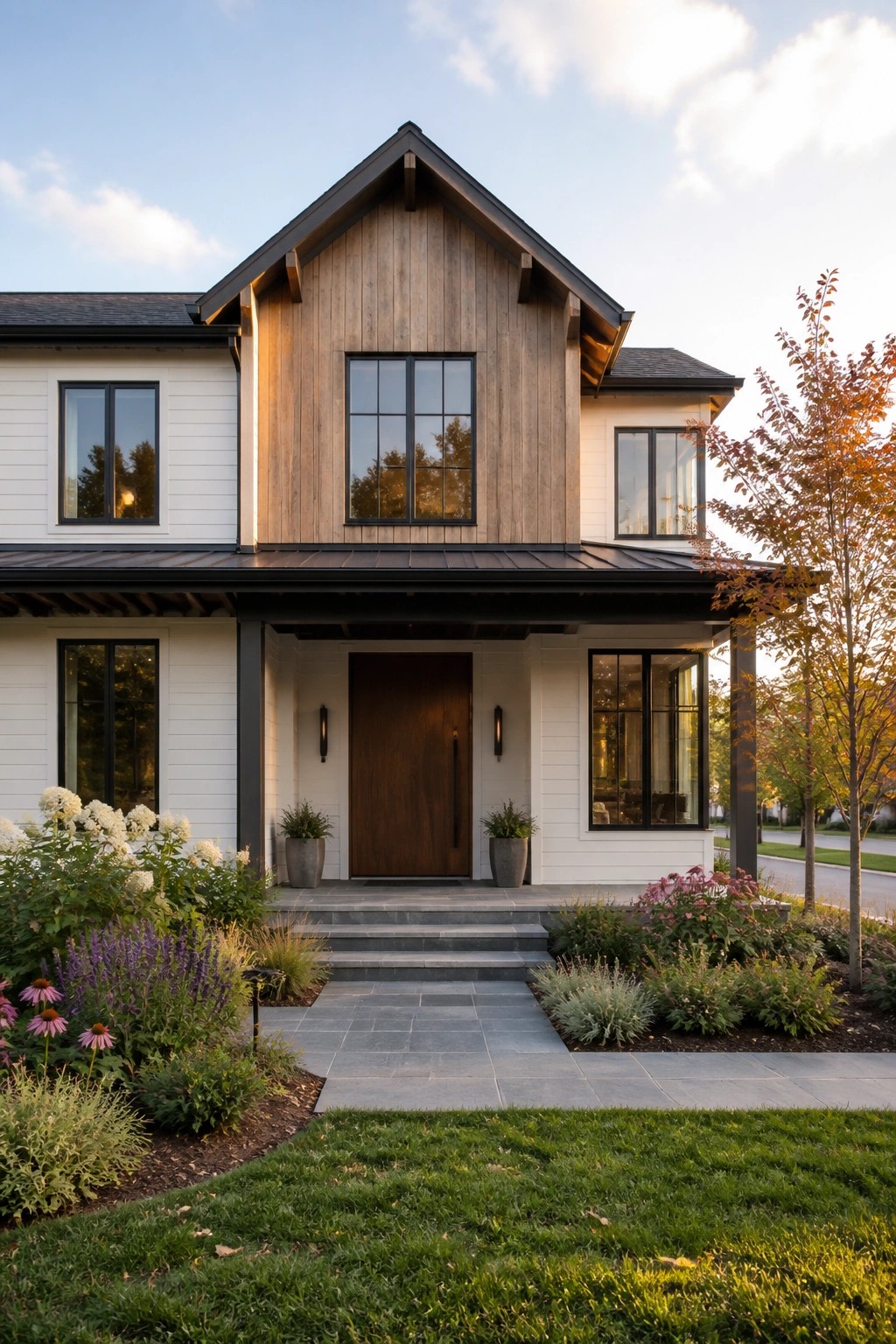
One simple way to add interest to a farmhouse exterior is to combine painted siding with natural wood on key sections. The white boards give the house its clean, classic look while the wood brings in warmth and texture that feels more lived in. This mix works because it breaks up the surface without needing lots of extra trim or color changes.
It tends to suit homes with a strong gable or roofline where one area can stand out. Keep the wood tone fairly natural so it ages gracefully, and make sure the painted sections stay bright to balance the look. The result feels updated but still tied to traditional farmhouse style.
Mixing Siding And Stone On The Base
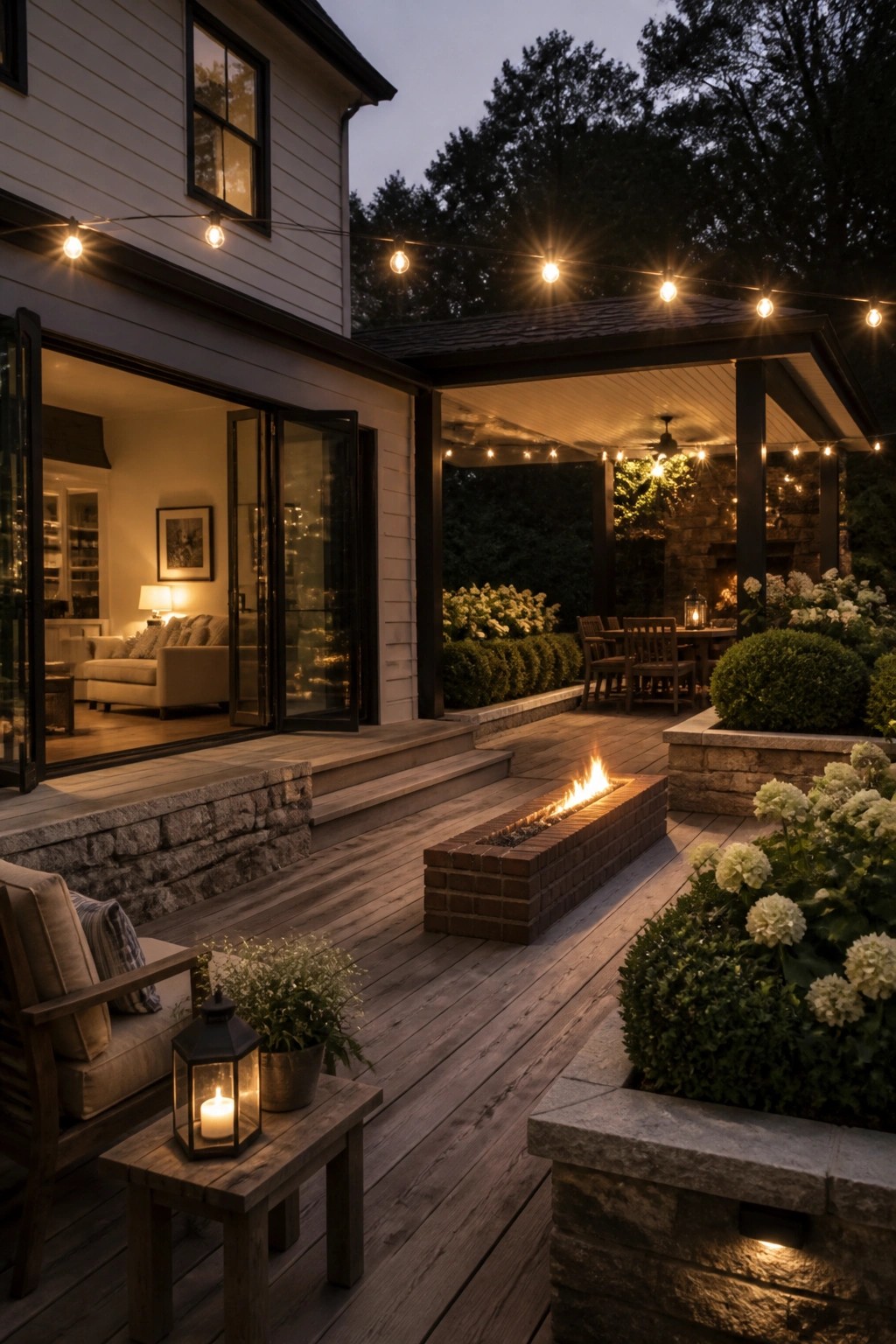
Many farmhouses look better when the siding stops short of the ground and stone takes over for the lower section. The change in material gives the house a grounded feel and breaks up what would otherwise be a tall flat wall of siding. It also handles moisture and wear near the foundation more easily than wood alone.
This approach works well on homes with a deck or porch that sits close to grade. Keep the stone height consistent around the house and match the siding color to the stone tone so the two materials read as one deliberate choice rather than two separate finishes.
Frequently Asked Questions
Q: Which two materials give the best mix for a farmhouse look? A: Wood and stone work great together on the main walls. Put metal accents around the windows and doors. This keeps the whole exterior feeling warm but modern.
Q: How do I protect the wood parts from weather when mixing with metal? A: Seal the wood well before you install it. The metal can shed water away from the joints if you angle them right. Touch up the sealant once a year.
Q: What if my house already has old siding I want to keep? A: You can add new mixed materials to just one side or the gables. Match the old color on the fresh wood so it blends in. But test a small patch first to see if it fits.
