

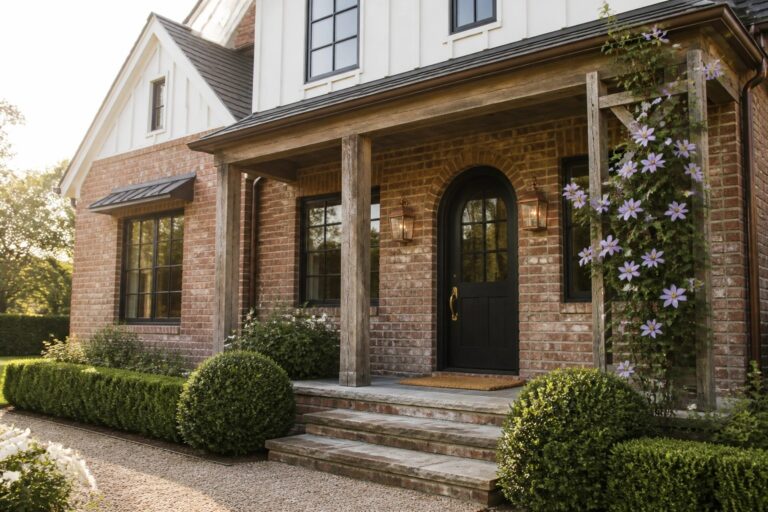
I have always liked how brick exteriors settle into a neighborhood over time and start to feel like they belong there naturally.
The mix of rustic warmth with cleaner modern lines can sometimes look forced if the proportions are off.
Mortar color changes everything.
I would test a few of these combinations on a small section first before committing to the full facade.
Details like the way the entry is framed or how the roofline meets the brick tend to make the biggest difference in how the home reads from the street.
Arched Entries On Brick Homes
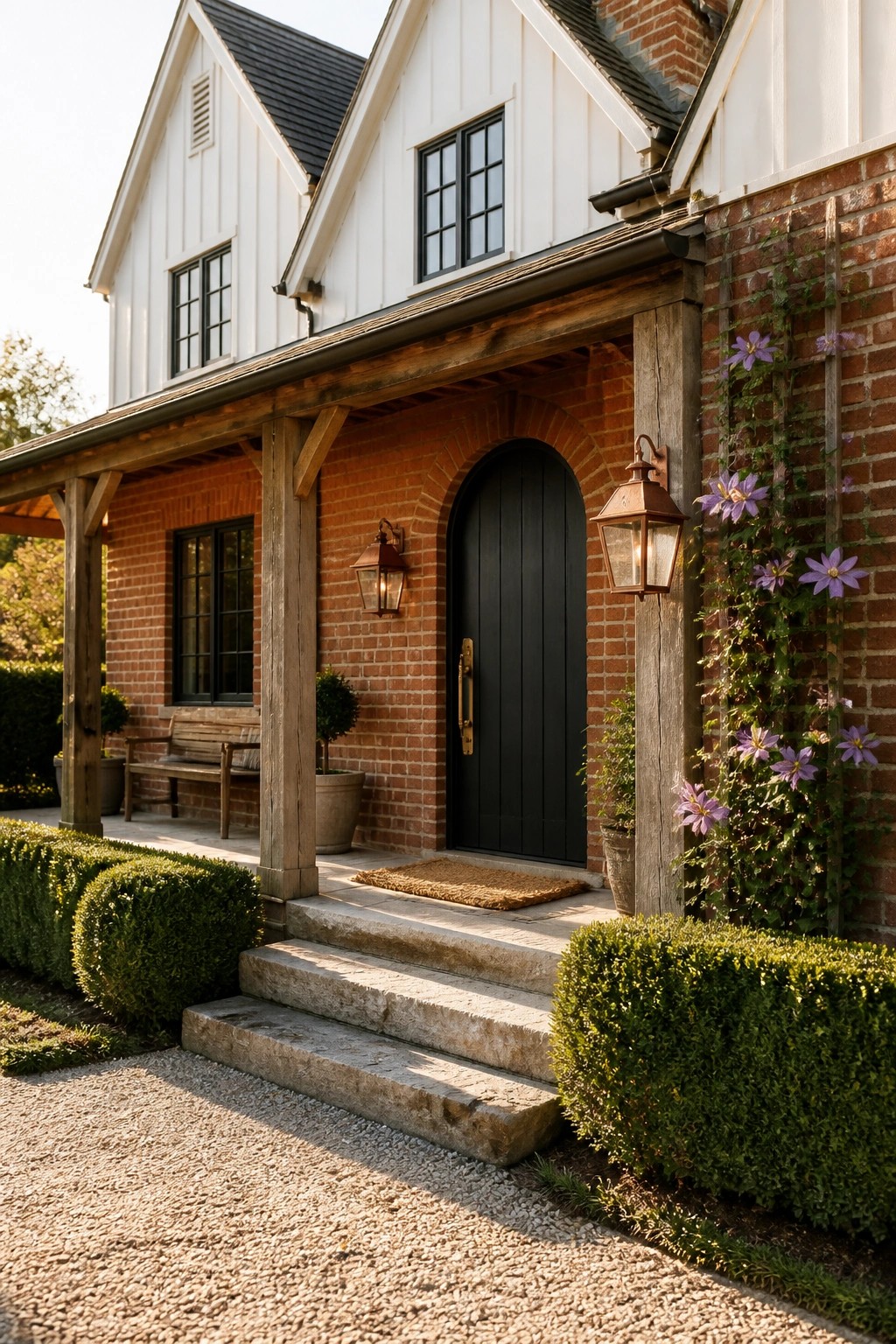
An arched brick entry gives a farmhouse a clear focal point without needing lots of extra trim or detail. The curve softens the straight lines of the brick while still looking sturdy and simple.
This works best on homes where the brick already runs across the front. Keep the door dark so the arch stands out, and use simple lighting on either side rather than anything too ornate.
White Painted Brick With Dark Roofing
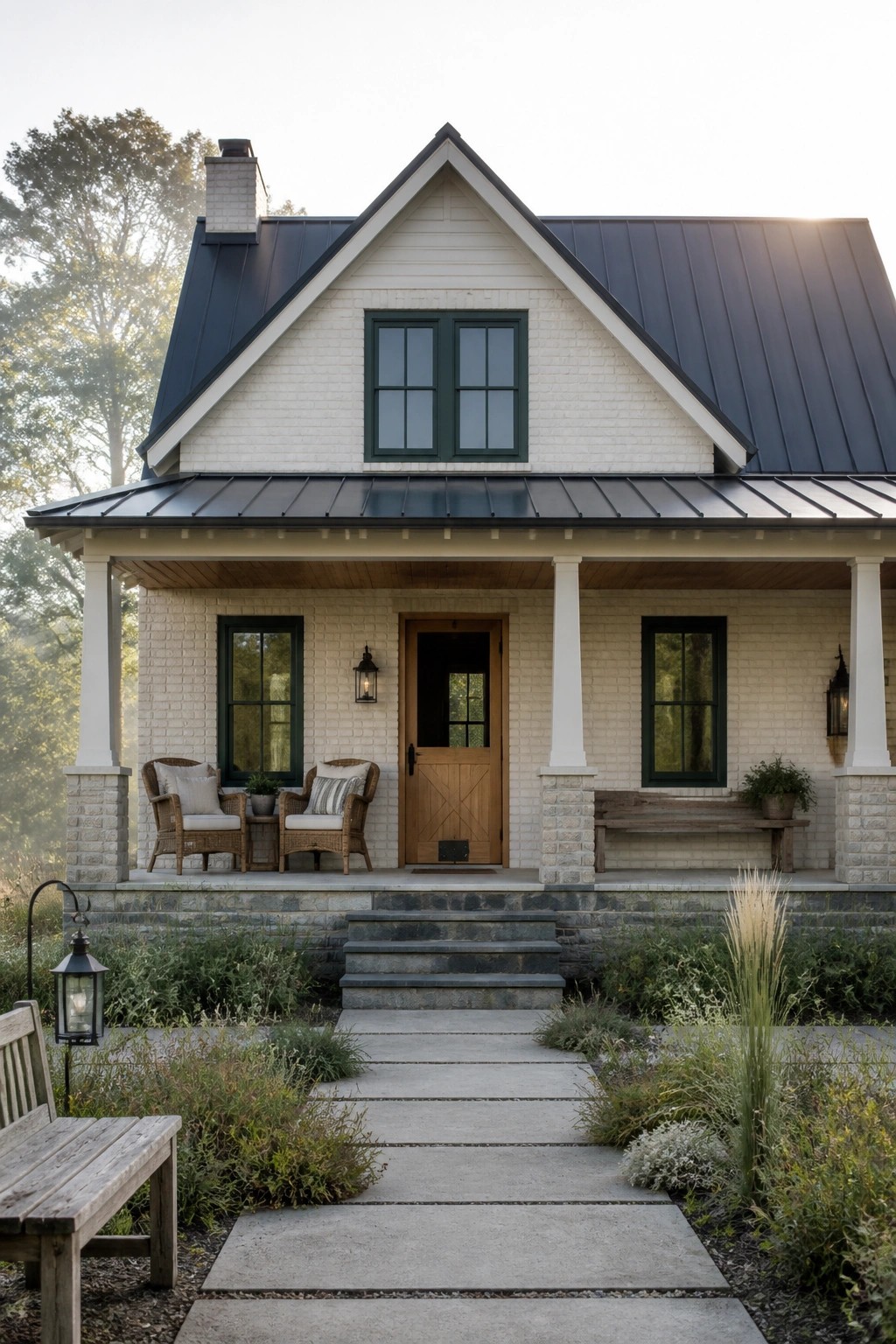
White painted brick gives a farmhouse exterior a lighter, fresher feel while keeping the texture and weight that makes brick so appealing. The dark metal roof and trim create just enough contrast to keep the house from looking too soft or plain.
This works best on homes that already have a simple roofline and want to update the look without major changes. Stick with a good masonry paint and match the trim color to the roof so the whole front stays balanced.
Dark Front Doors Create Contrast On Brick Homes
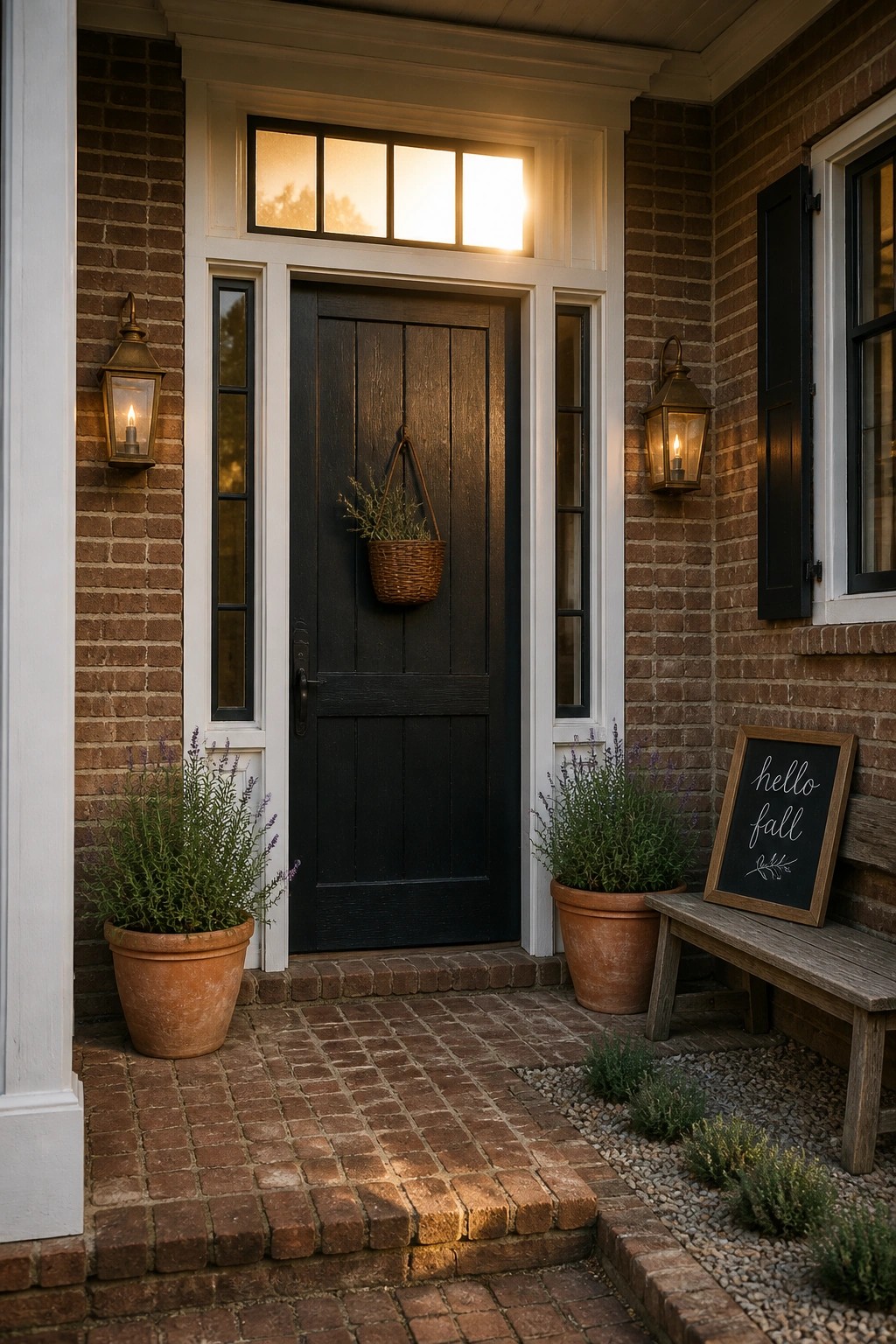
A dark front door stands out nicely against red brick. It gives the whole entry a clear focal point and works especially well when the trim stays light and simple.
This approach suits many farmhouse exteriors and needs very little extra decoration. Place matching lanterns on each side of the door and keep plantings low so the door remains the main feature.
Red Brick With Black Trim
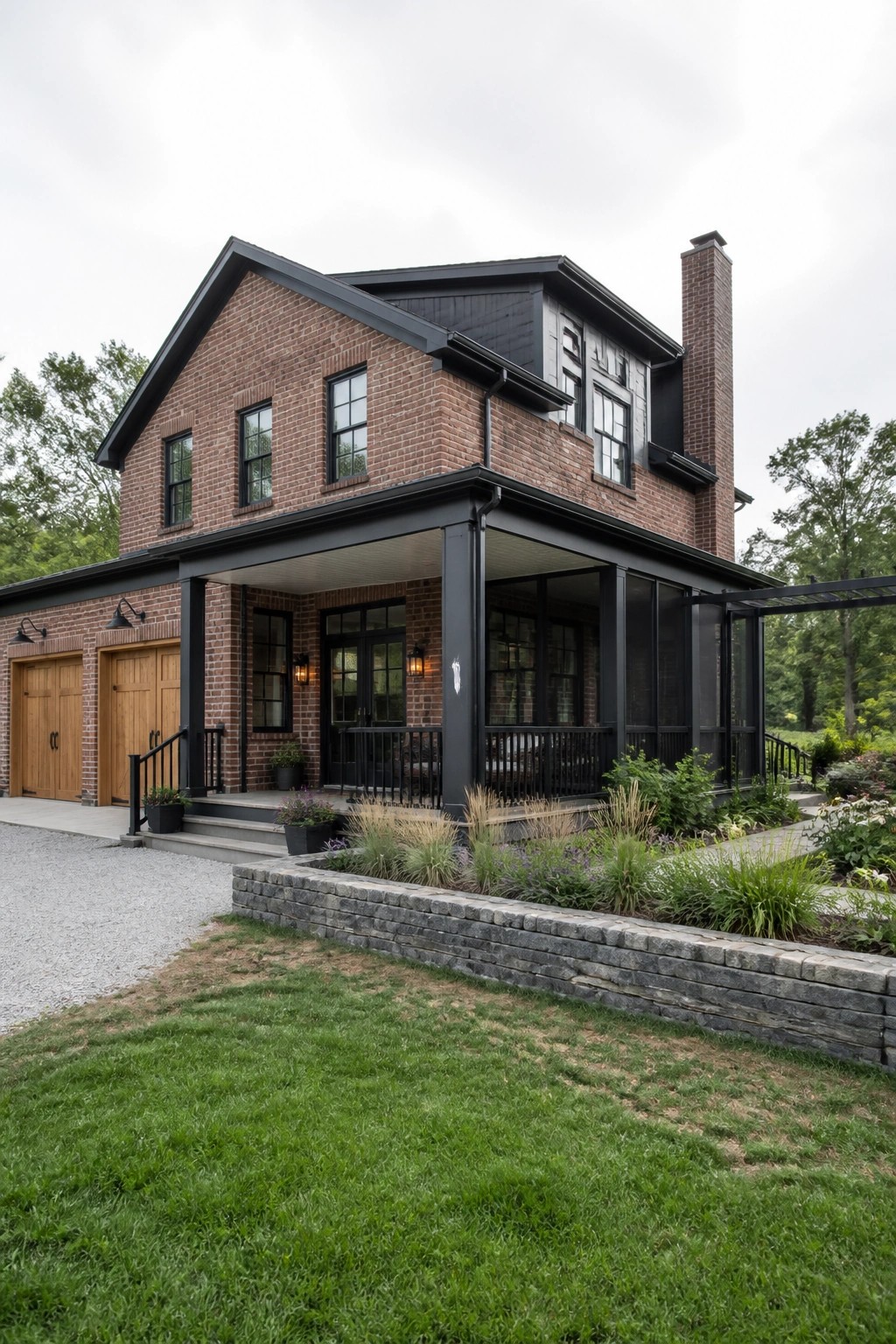
Red brick already brings a solid, timeless look to a farmhouse. Adding black trim around the windows, porch posts, and roofline gives it a sharper, more current feel without losing the rustic side. The contrast keeps the house from feeling too heavy or old-fashioned.
This works best on homes that already have a simple shape and good rooflines. Keep the black areas focused on structural lines like eaves and columns rather than covering large walls. Too much black can start to feel stark, so balance it with the natural warmth of the brick and any wood accents like garage doors.
Mix Dark Brick With Wood Accents
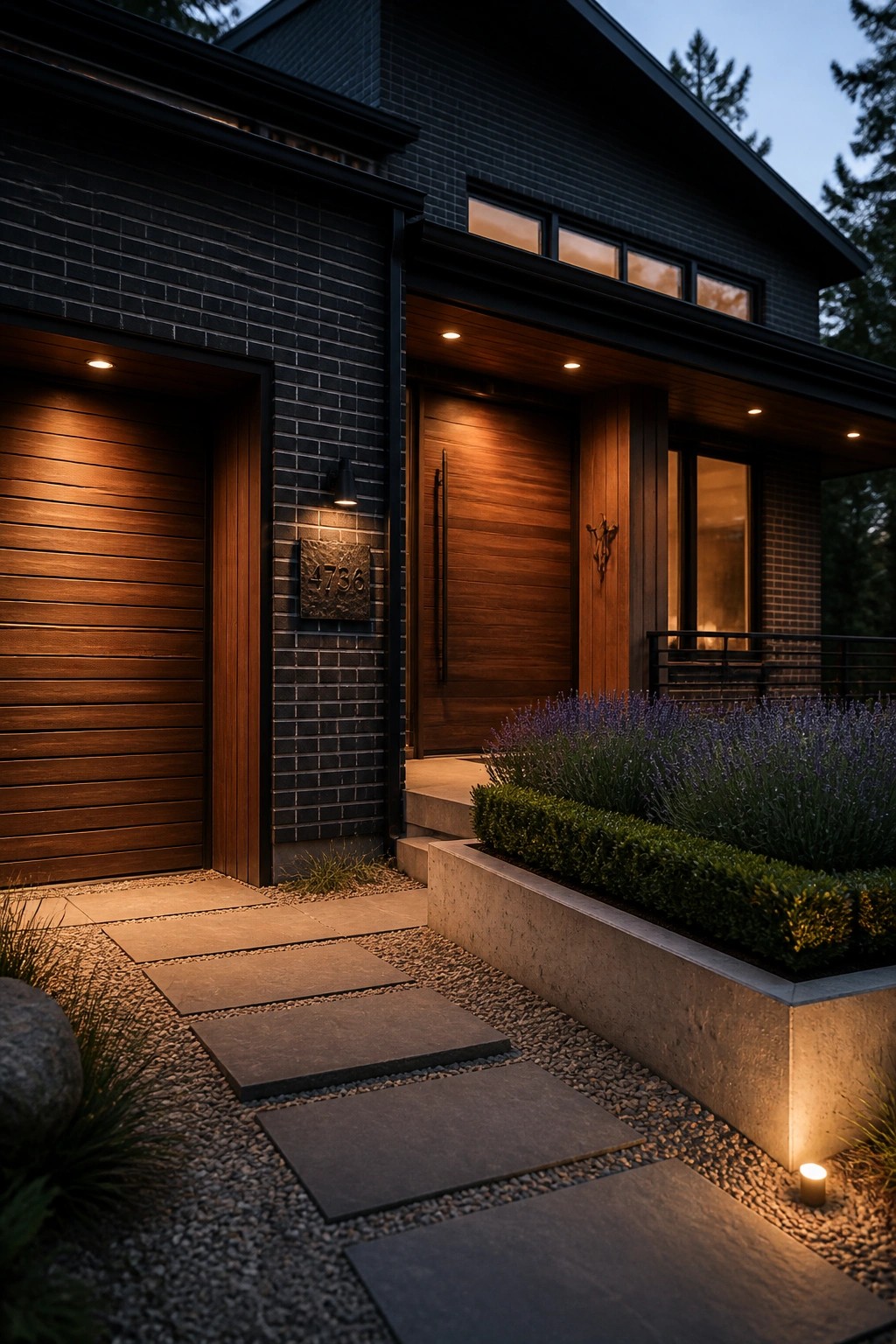
Dark brick looks solid on its own, but it can read flat without something to break it up. Adding wood on the garage door and main entry gives the surface some warmth while keeping the overall look clean and modern.
This approach works best on homes that already lean toward a simple roofline and minimal trim. Stick with natural wood tones rather than stains that compete with the brick, and let the wood cover larger panels like doors instead of scattering it in small details.
Brick Walls Shape Defined Outdoor Rooms
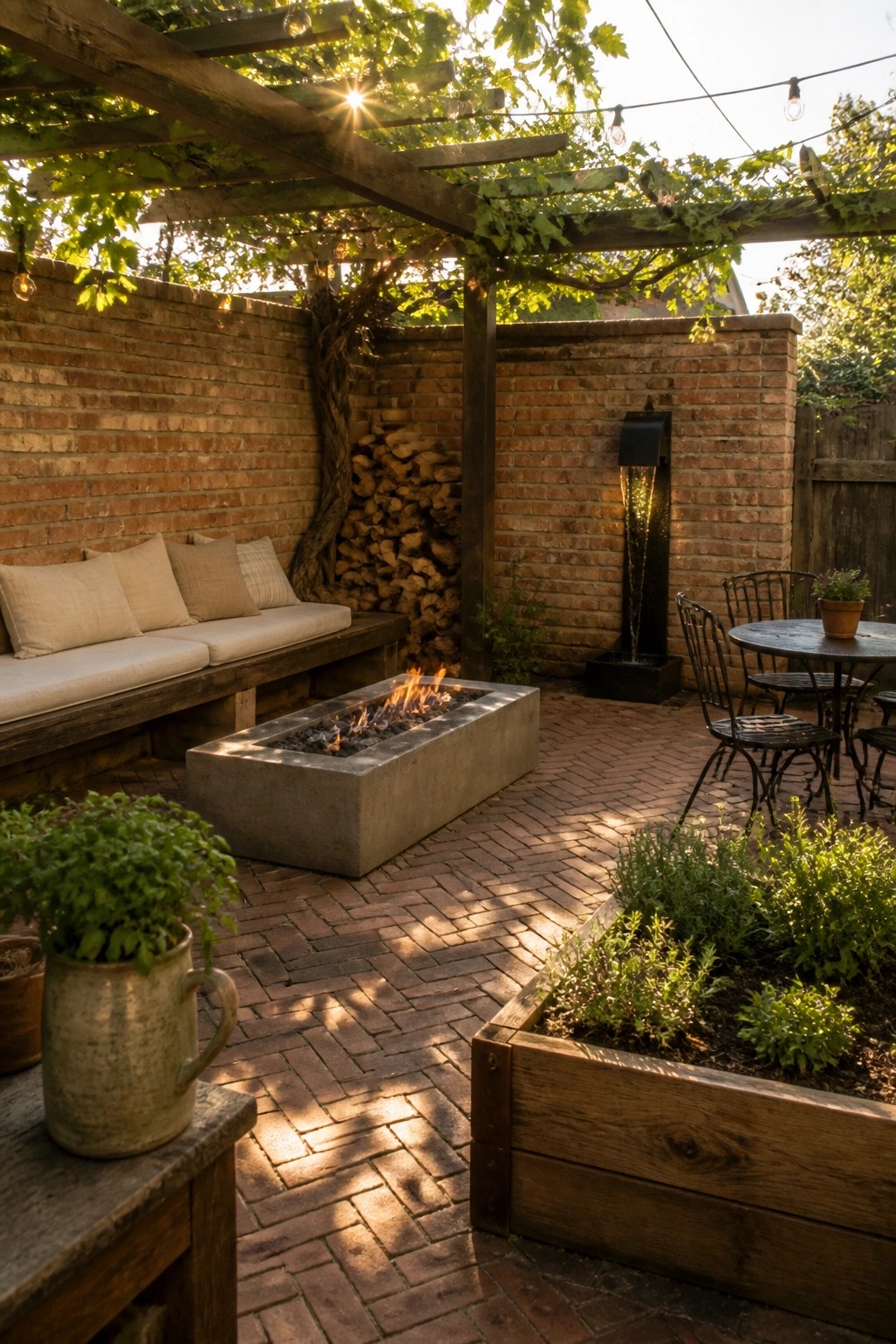
Brick walls work well for turning an open patio into a space that feels more settled and private. They give the area a solid edge without needing a full roof, and the material holds up over time while matching the style of many farmhouses.
This setup suits homes where the backyard needs a clear gathering spot for seating and a fire pit. Keep the wall height around six feet so it blocks the view from outside but still lets in light and air from above.
Stone Columns With Painted Brick
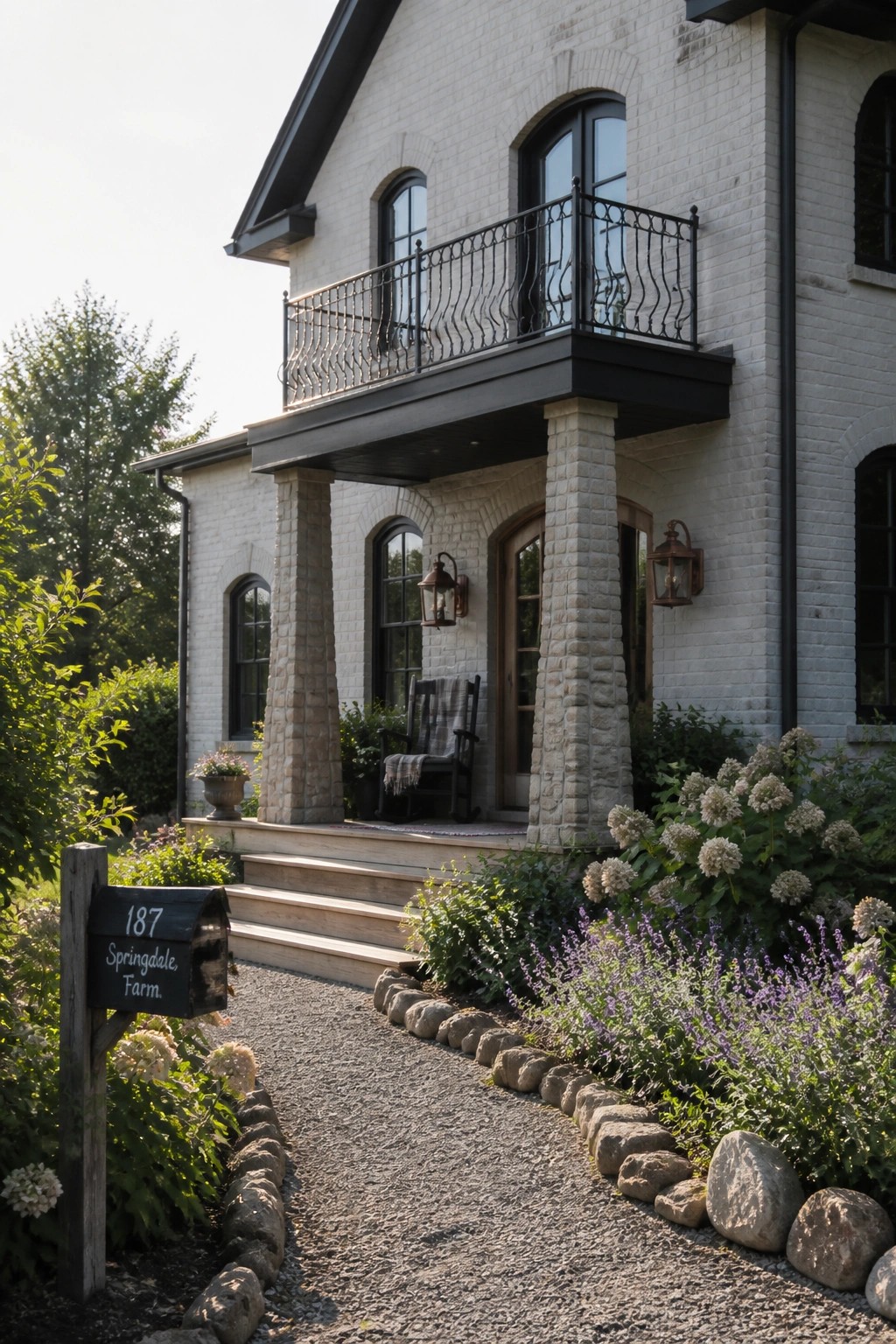
Stone columns give a porch real presence on a brick house. They add weight and texture that painted brick alone can miss, and they make the entry feel more permanent.
This approach works best on homes with simple rooflines and clean window shapes. Keep the stone natural and let the contrast with the brick carry the look instead of adding too many extra details.
Brick With Wood Accents For Added Texture
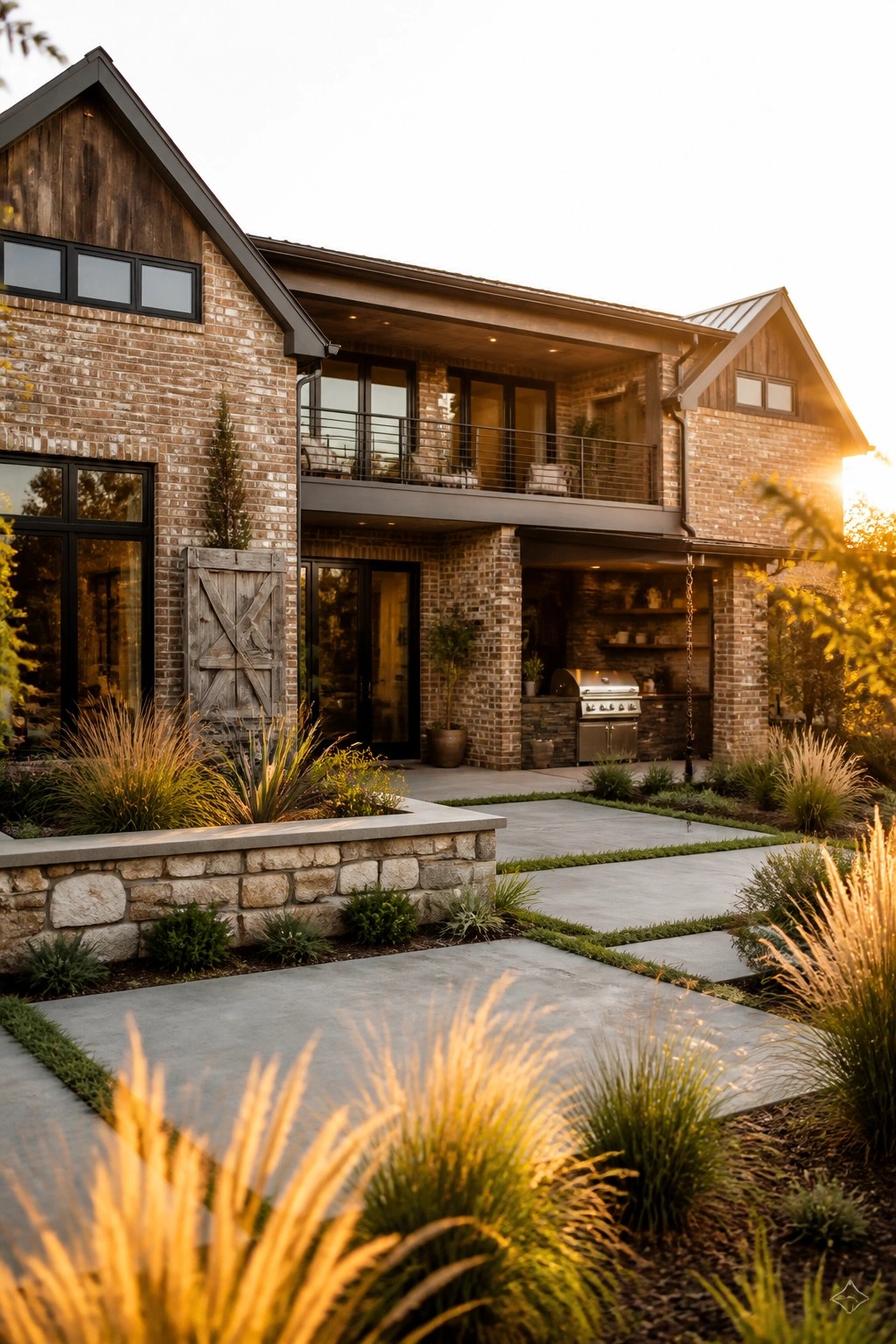
Brick works well as the main material on a farmhouse because it holds up over time and gives the house a solid base. The contrast with wood on the gables and around certain windows keeps the look from feeling too heavy while still showing the rustic side of the style.
This approach suits homes that want a bit of modern edge without losing warmth. Keep the brick consistent on the main walls and use wood only in smaller areas so the two materials balance each other out.
White Trim on Brick Homes
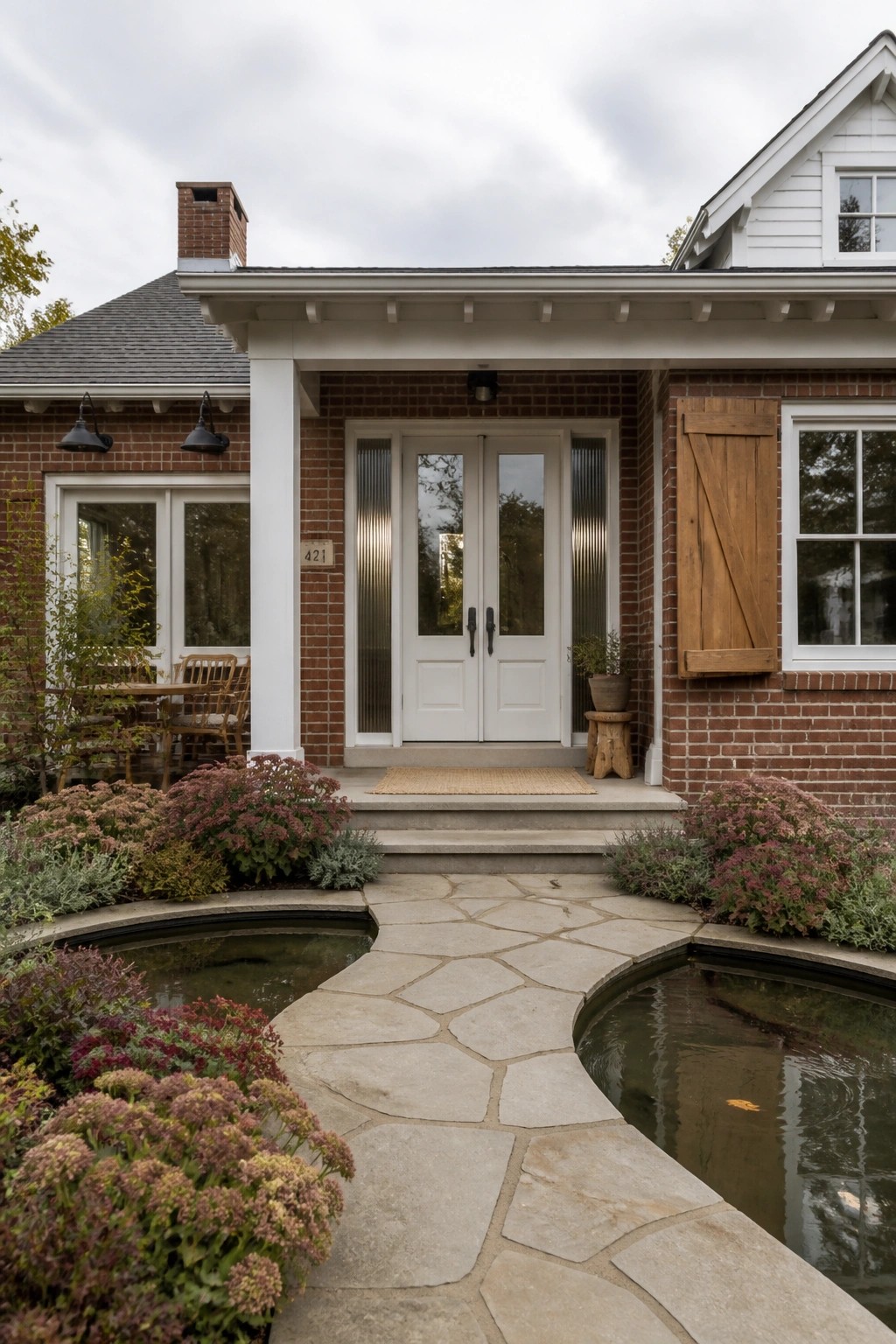
White trim stands out nicely against red brick and gives the whole front a cleaner, more updated look. It helps the entry feel brighter without needing a lot of extra decoration, and the simple columns and door frame do most of the work.
This approach suits older brick houses that need a lift or newer builds that want to keep things straightforward. Keep the trim crisp and limit other colors so the contrast stays strong.
Brick with Dark Trim
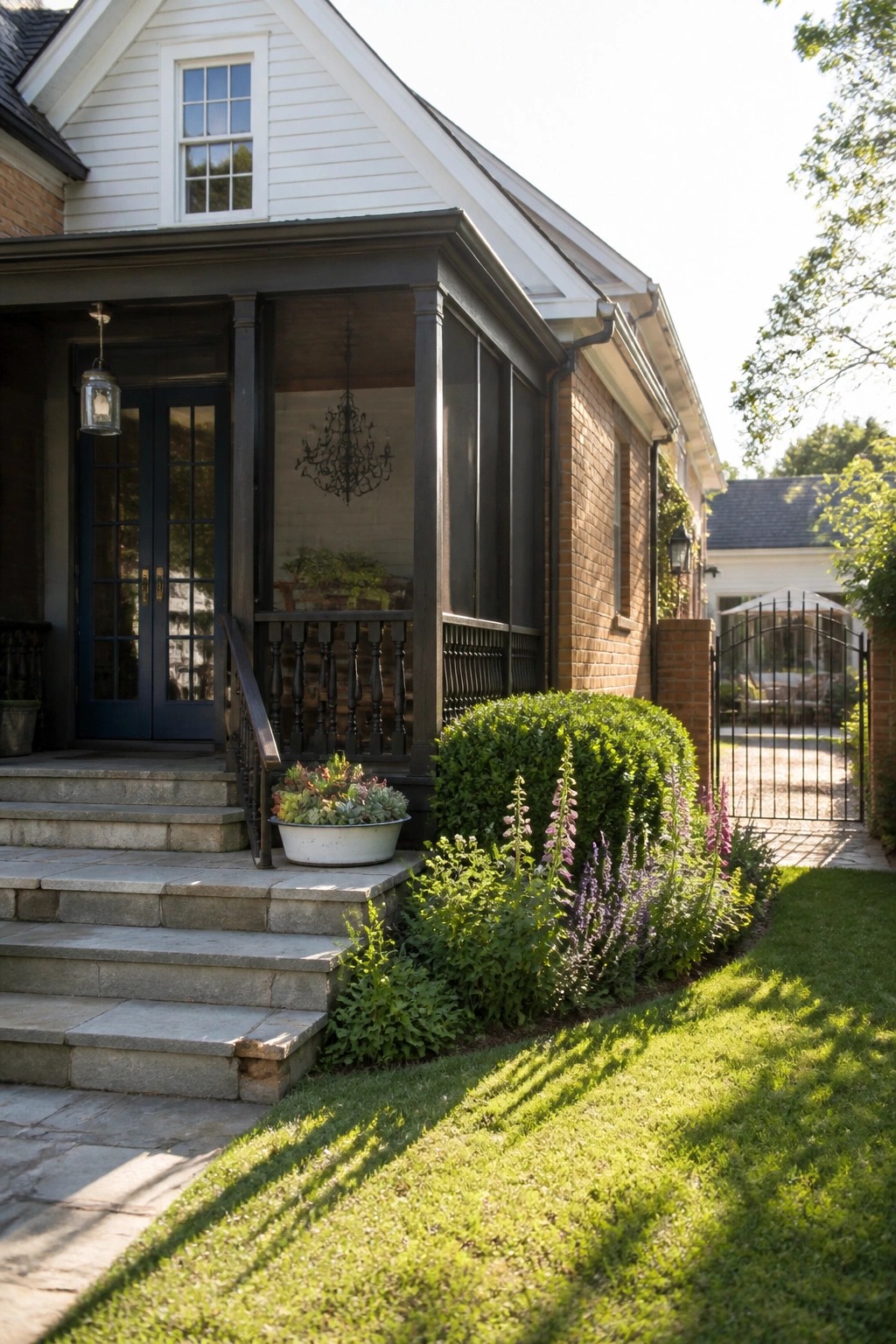
Brick shows up well when the trim around it stays dark. The contrast keeps the whole front from feeling flat and gives the house a grounded look that still reads modern.
This approach works on many farmhouse styles because the brick adds texture while the dark details keep things from looking too traditional. Watch the scale of the trim so it does not overpower the brick itself.
A Projecting Canopy Strengthens the Entry
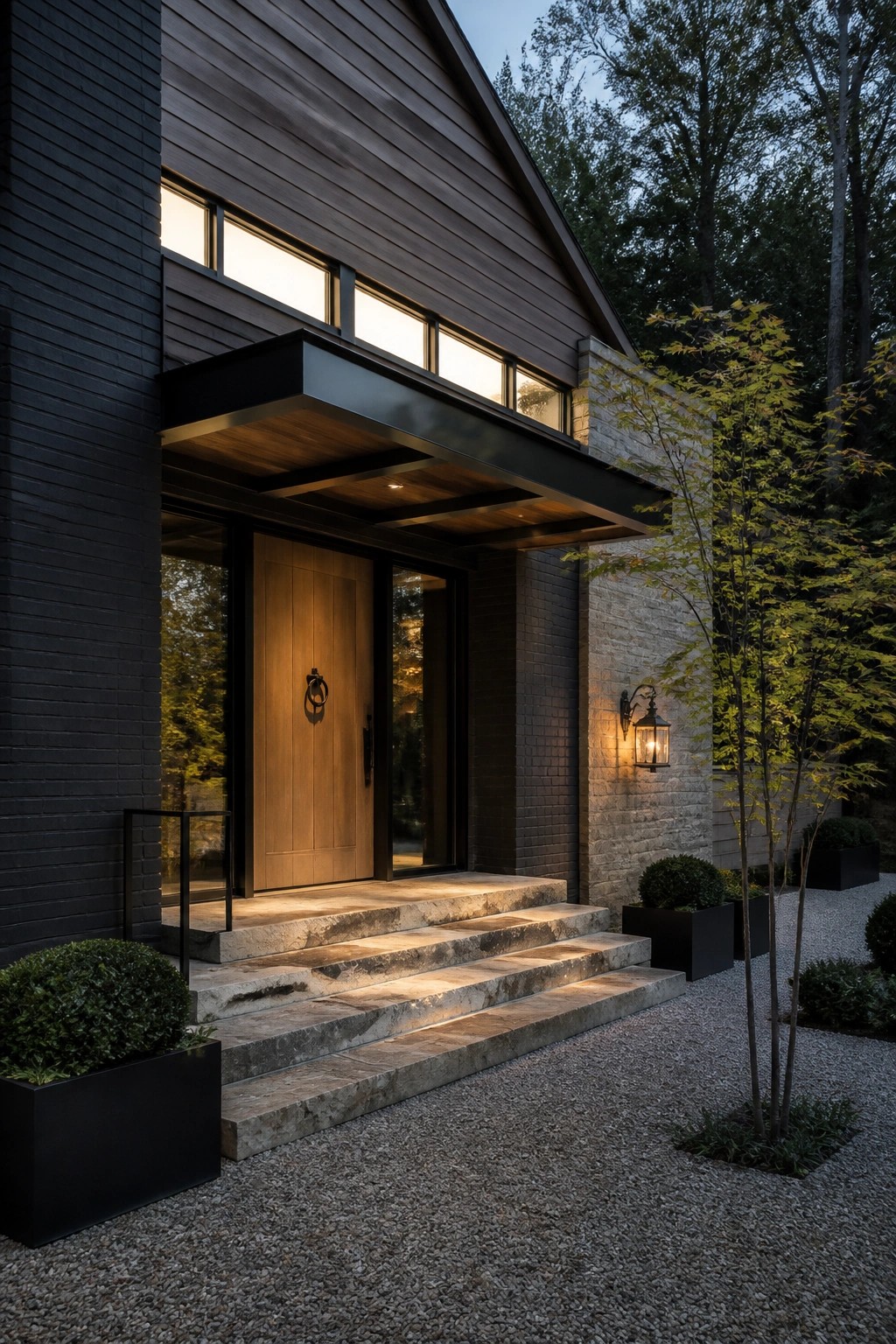
A simple overhang right over the front door gives the whole facade more presence. It creates shelter, marks the entrance clearly, and lets the door itself stand out without extra trim or decoration.
This move works best on homes that already mix materials like dark siding and brick. Keep the overhang fairly deep and use a contrasting finish so it reads as a deliberate choice rather than an afterthought.
Outdoor Dining Tables Placed on Rugs
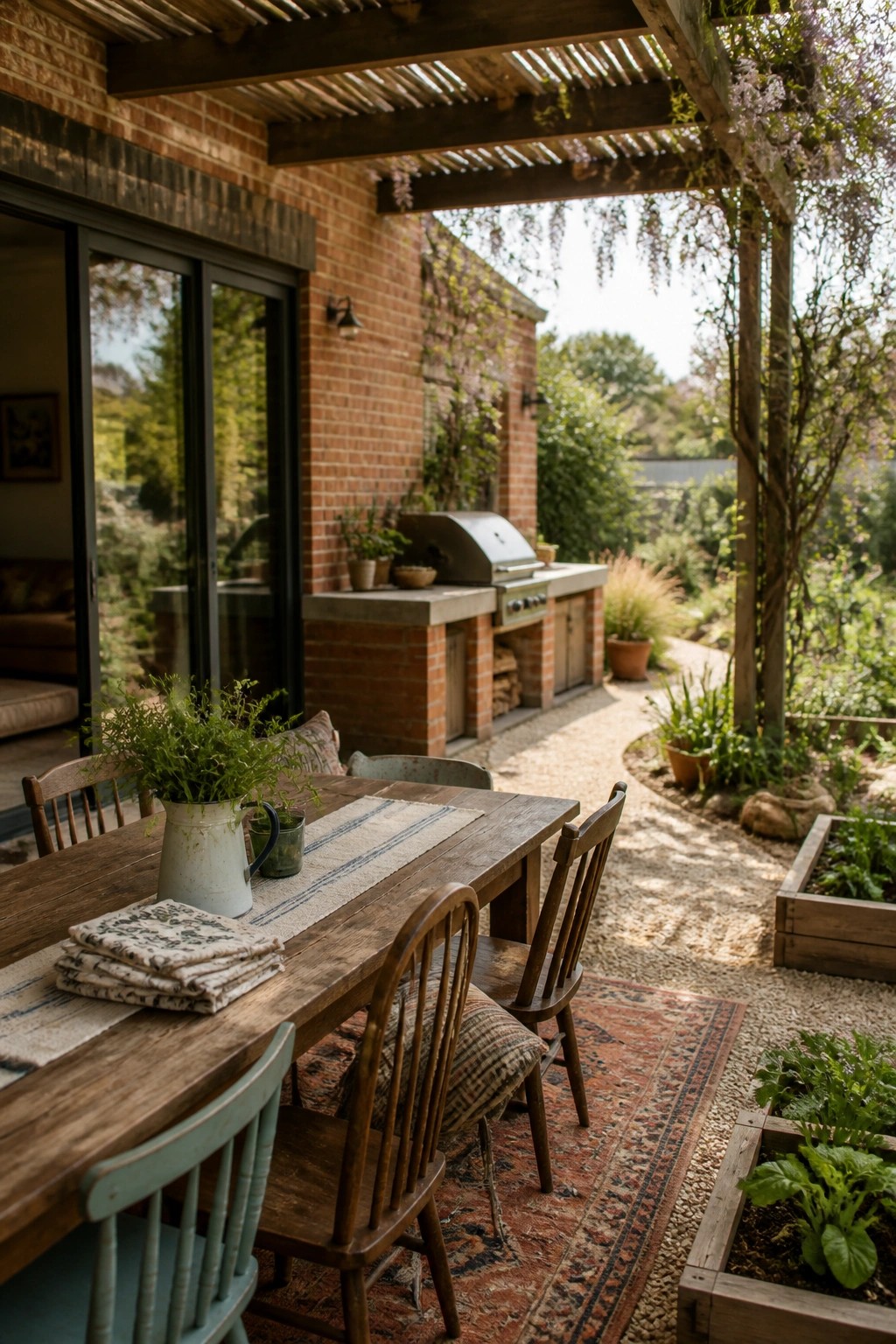
A wooden table set on a rug turns a gravel patch into a clear dining spot. The rug softens the surface, keeps chairs from sinking, and gives the whole area a settled look that feels more like an extra room than a temporary setup.
This works well on patios next to brick houses where the table can sit right outside the doors. Keep the rug sturdy and the table size in scale with the space so traffic can move around it without crowding the path or the garden beds.
Climbing Roses on Brick Exteriors
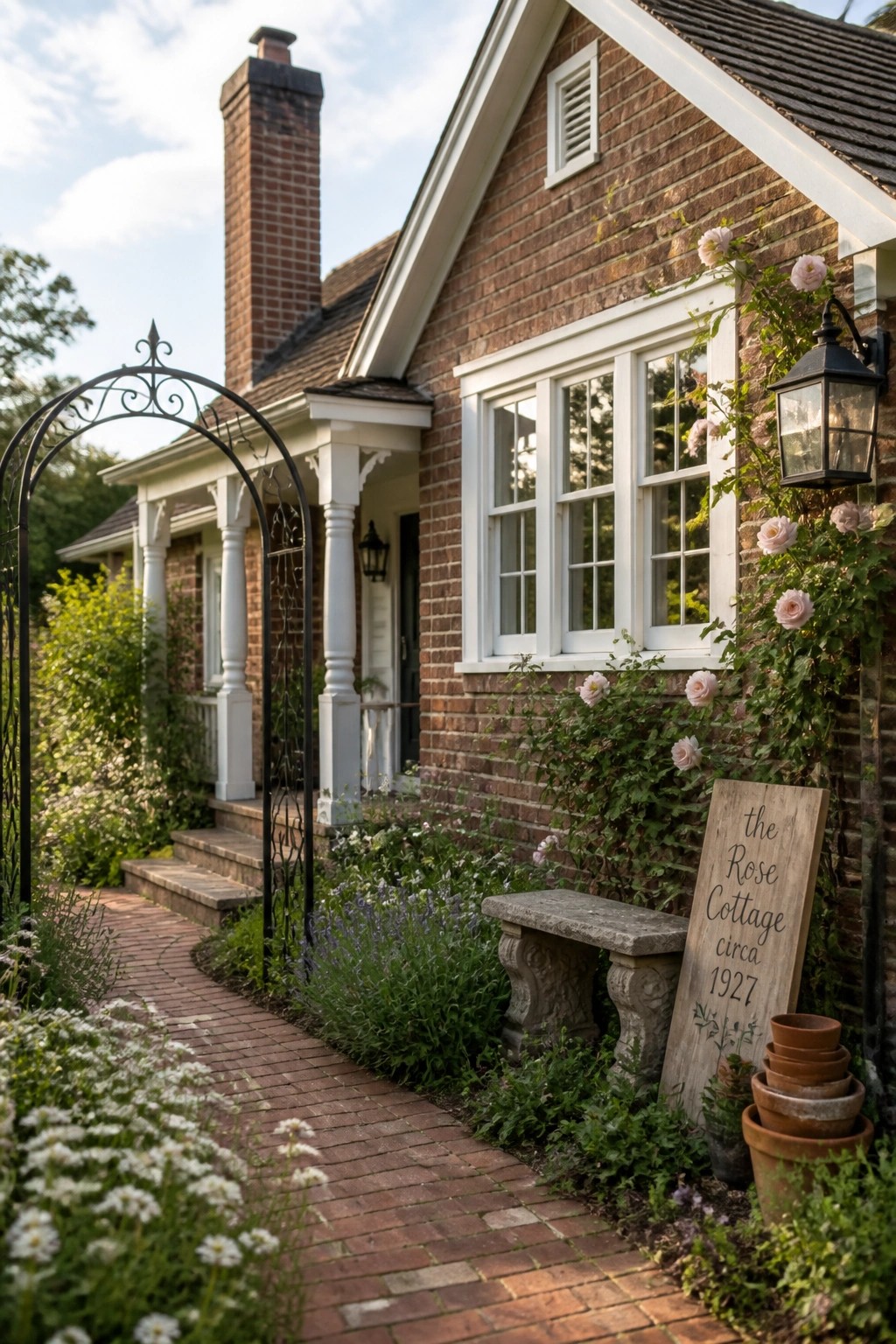
Many brick homes look better when roses are allowed to climb the walls. The flowers break up the solid surface and give the brick a softer, more settled appearance over time.
This approach suits older cottages and farmhouses that already have good brickwork. Plant the roses in beds right against the wall, give them a simple trellis or wires for support, and keep the growth trimmed around windows and doors so the house stays easy to maintain.
Add Rocking Chairs to the Porch
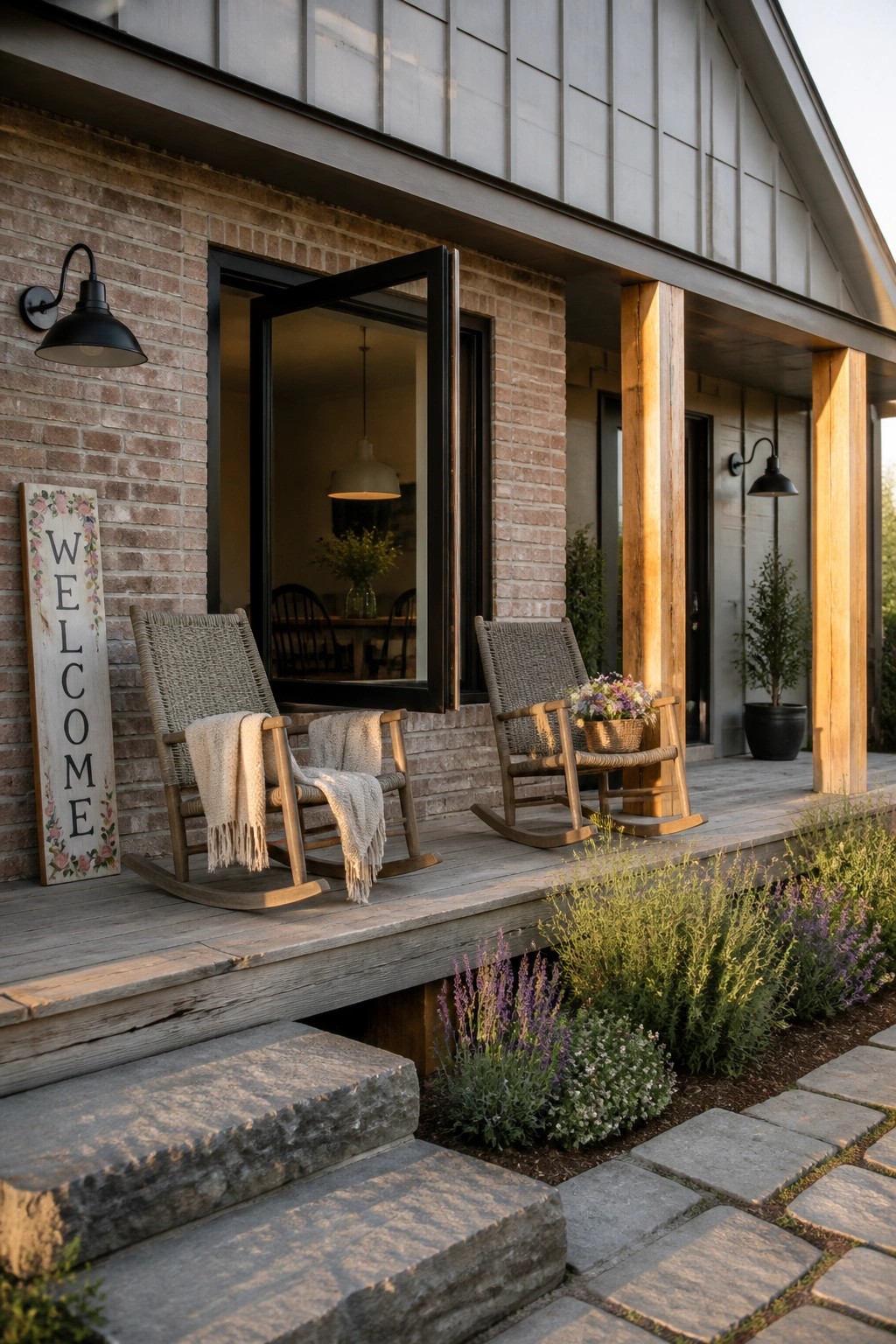
Rocking chairs bring an easy, lived-in look to a brick exterior that might otherwise feel a bit stern. The wood softens the harder surface and gives the whole front a settled, farmhouse quality without needing extra trim or decoration.
Set them near the door on a simple wood deck so they actually get used. This works best on homes that already have a covered porch, since the chairs need some shelter to last and to invite people to sit.
Use A Barn Door For The Entry
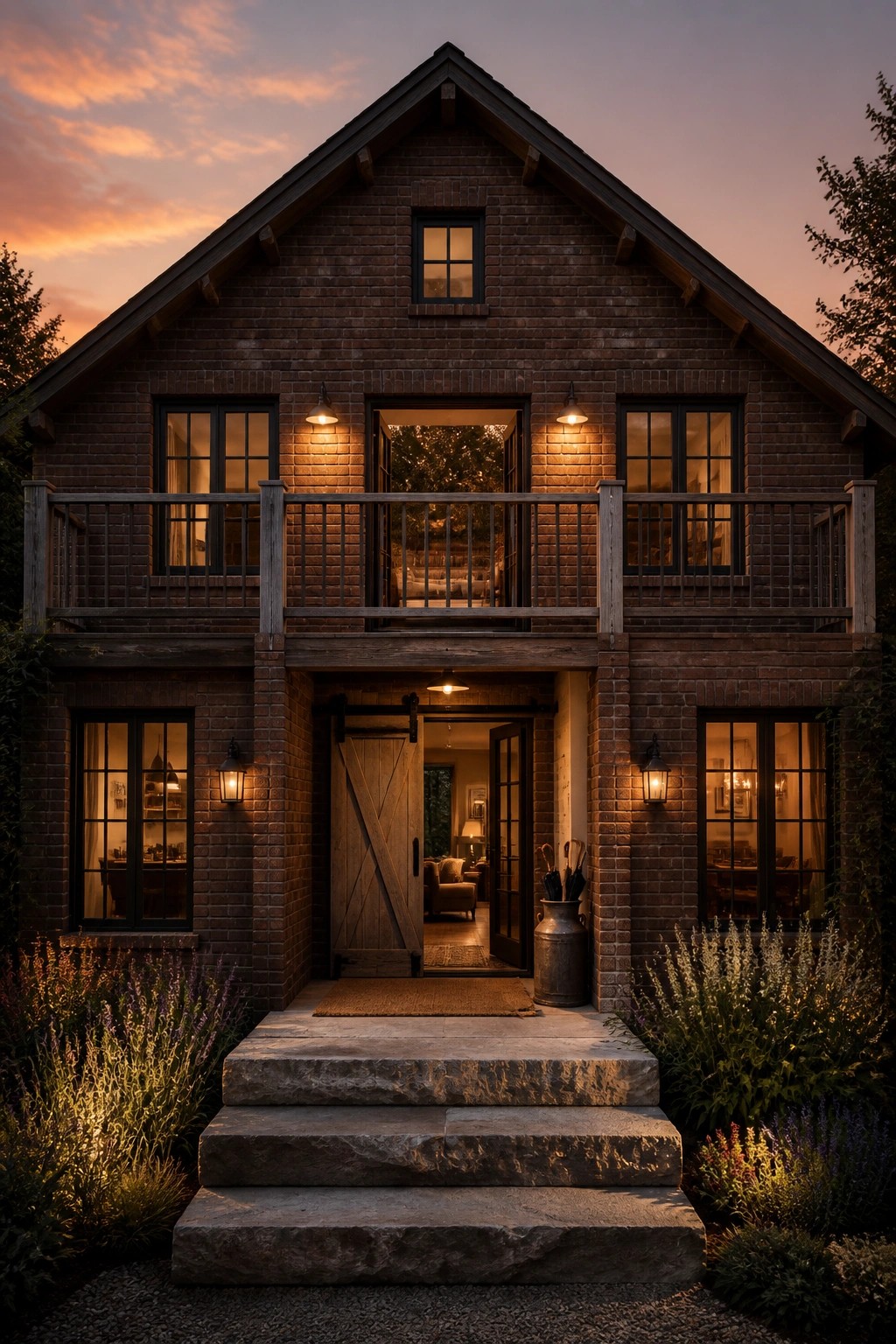
A sliding barn door gives a brick exterior an instant farmhouse lift. The wood softens the harder lines of the brick and adds texture that feels lived-in rather than new. It works because it keeps the entry simple while still making it the main focal point.
This idea suits homes with straightforward rooflines and balanced windows. Place the door where it can be used every day, choose hardware that feels sturdy, and let the surrounding brick stay plain so the door does the talking.
Wood Posts On Brick Exteriors
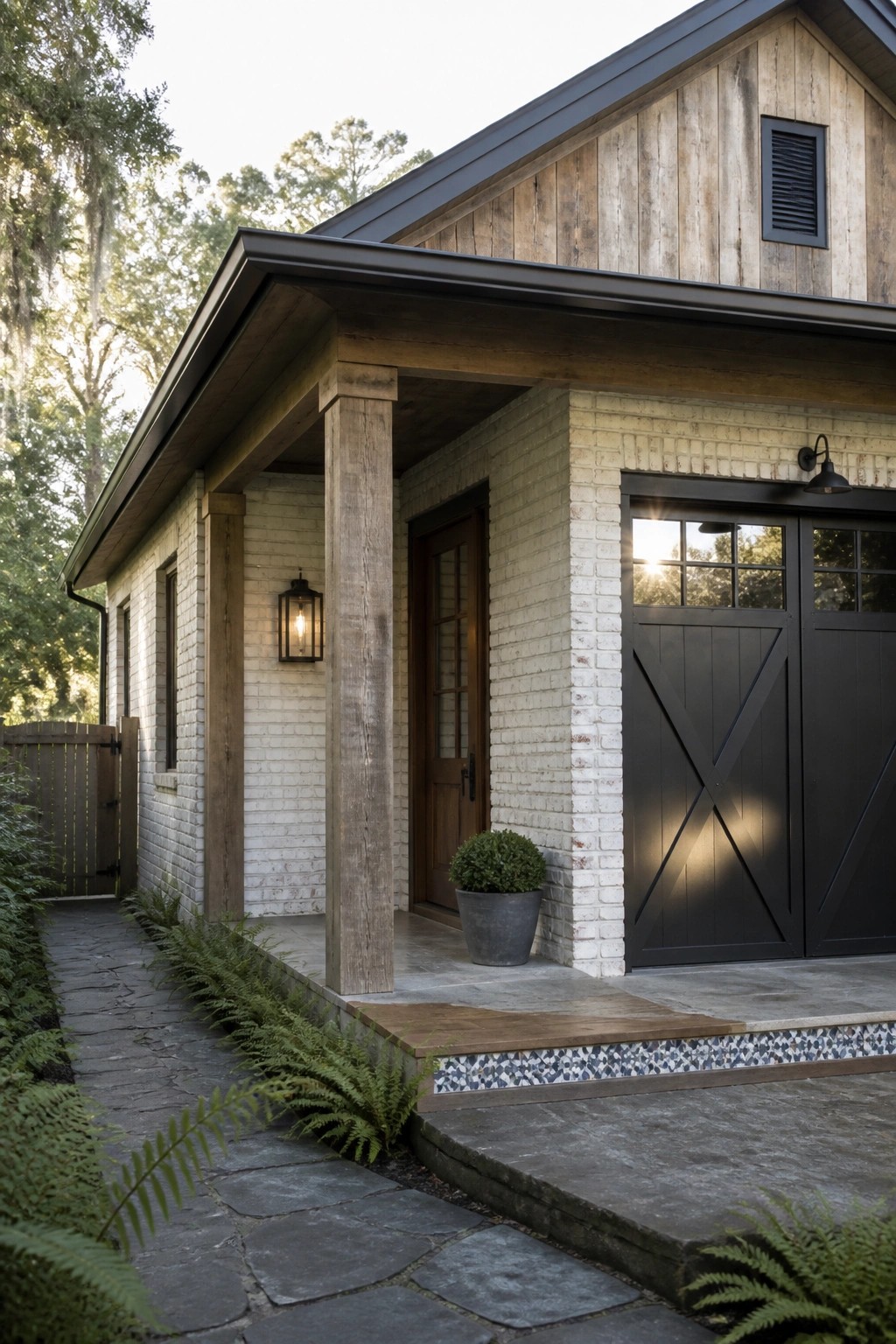
Wood posts bring a solid, grounded feel to a brick exterior. They break up the flat surface of the brick and give the whole front a more hand-built look that fits the rustic modern farmhouse style. The contrast between the lighter brick and the heavier timber makes the entry feel more welcoming without adding much extra detail.
This approach works best on homes that already have a simple brick base. Keep the wood in natural or lightly weathered tones and match the scale of the posts to the size of the porch. Avoid thin posts that look too light next to the brick, or they will lose their impact.
Brick Arches Add Useful Depth to Entries
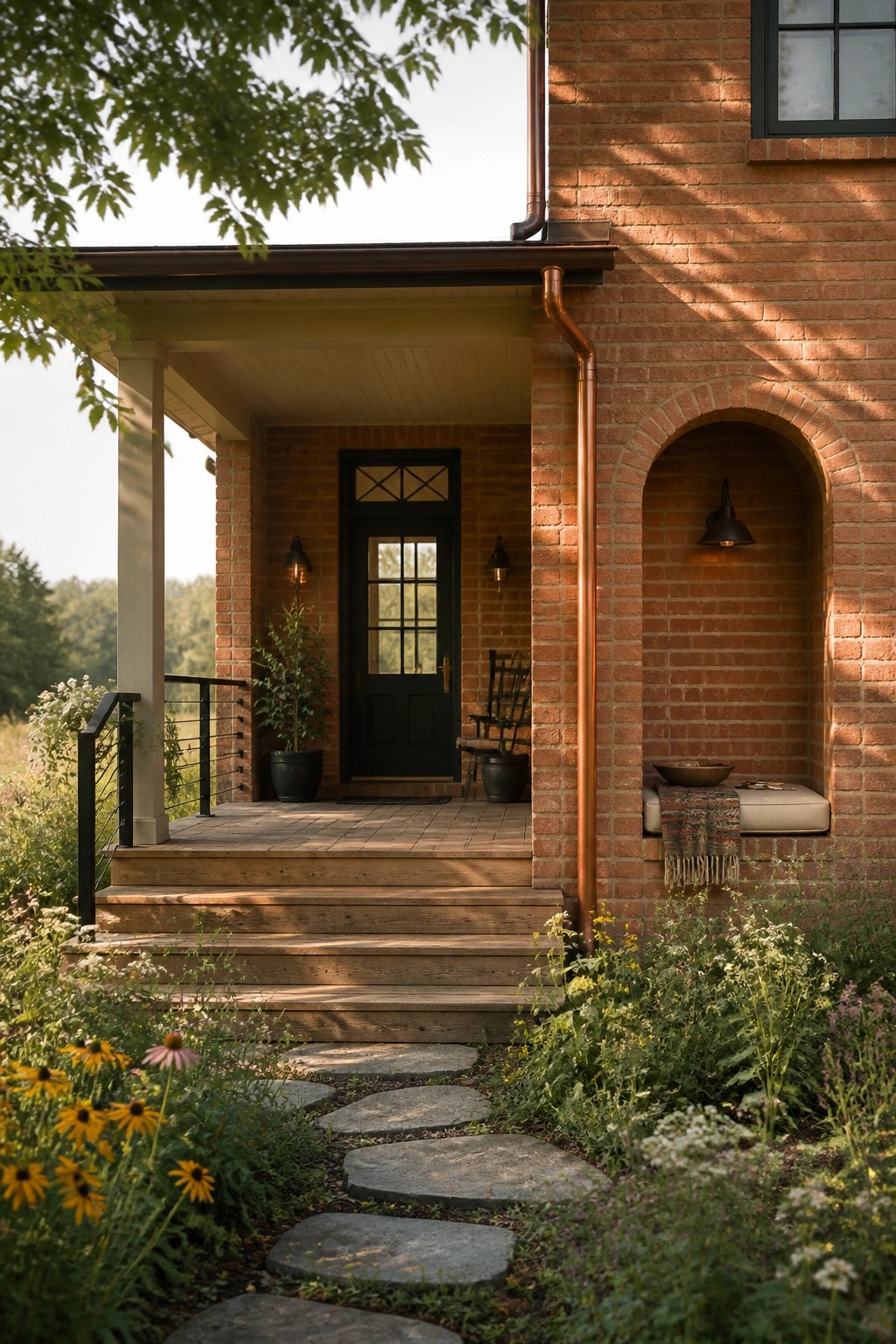
An arched brick niche gives a simple exterior more shape and purpose without needing extra trim or decoration. It creates a recessed spot that feels built into the house rather than added on, and it works especially well on brick because the curve softens the straight lines of the material. Many people like it because it turns an otherwise flat wall into something that invites a small bench or a light.
This detail suits brick farmhouses that already have a porch or covered entry, since the arch echoes traditional forms while keeping the look clean. It works best when sized to fit one or two seats and placed where it gets some shade. Avoid making the niche too deep or too shallow, or it can start to look like an afterthought rather than part of the original structure.
Brick Patios for Outdoor Dining
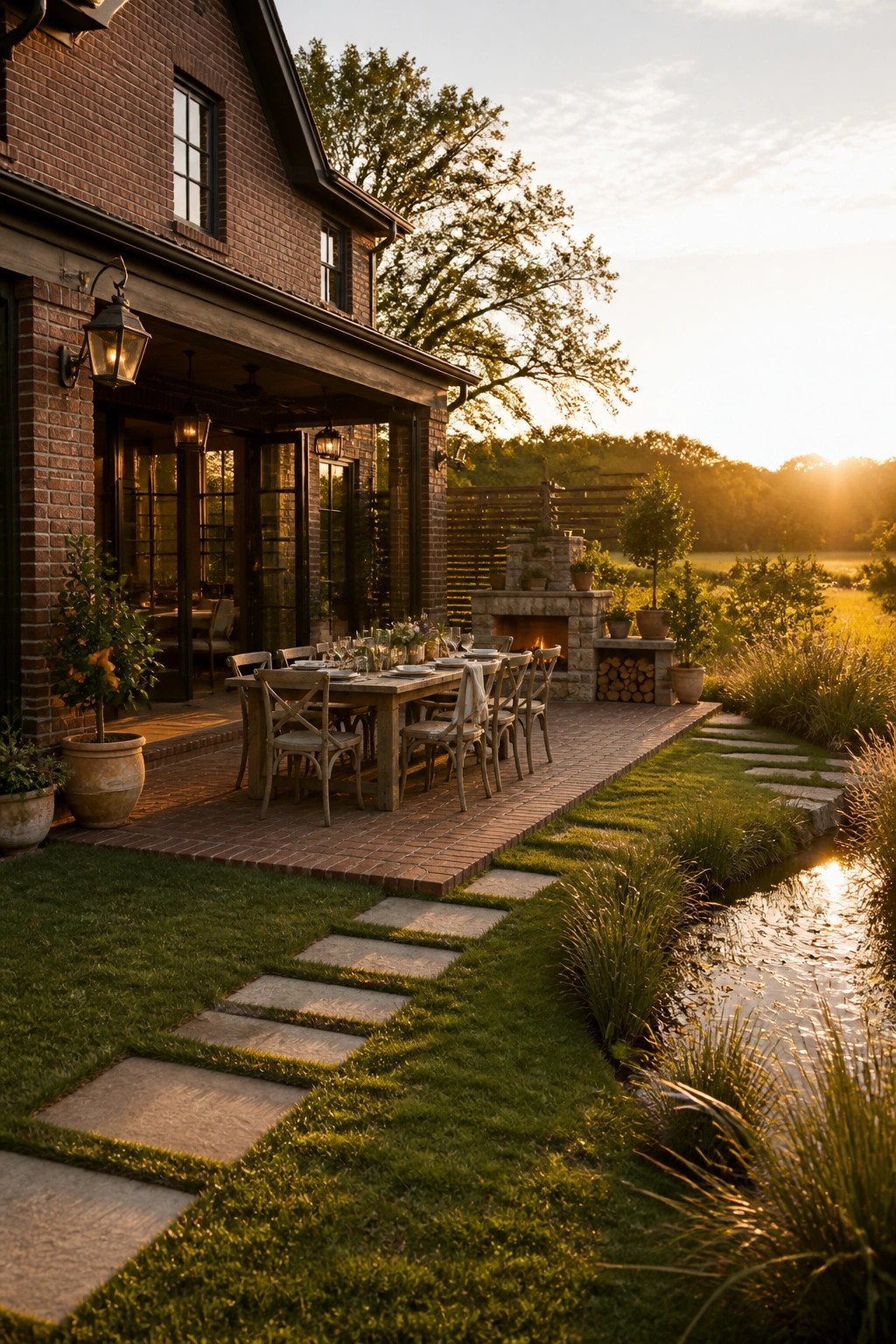
A brick patio gives an outdoor dining setup a solid base that feels tied to the house. It holds up in all kinds of weather and keeps the look simple and practical instead of fussy.
Set the table near the back doors so food moves out easily, and keep a fireplace close by for cooler nights. This works best on homes with some yard space where the patio can stretch out without crowding the lawn.
Frequently Asked Questions
Q: Should I paint the brick or leave it natural for that rustic modern look?
A: Leave most of it natural so the texture stays visible. Paint only small sections if you want a crisp contrast against wood trim. The natural brick already brings the warmth the style needs.
Q: How do I stop the brick from looking too new and shiny?
A: Choose a tumbled or wire-cut brick that has some variation right from the start. Let it weather for a season before you worry about any finish. The slight imperfections give it that lasting character right away.
Q: What if I only want to update the front porch area?
A: Run the same brick across the porch columns and the lower half of the house. This ties everything together without a full redo. Focus the rest of your budget on matching shutters or a metal roof accent.
