

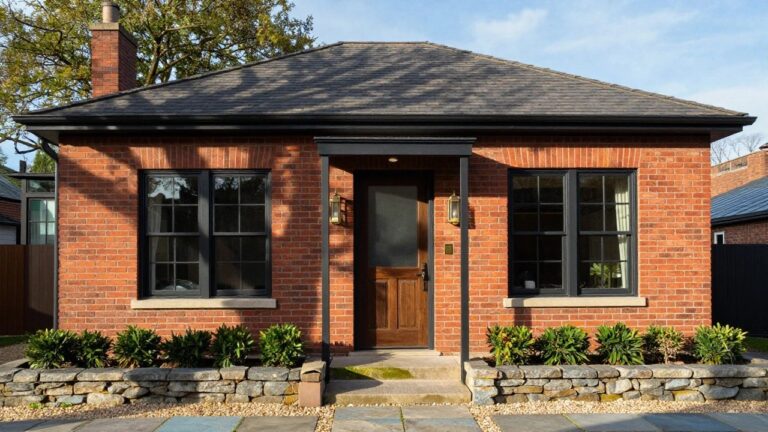
I’ve noticed that the best house exteriors blending classic and modern elements draw you in from the curb with balanced rooflines and thoughtful material mixes. When I scout neighborhoods for inspiration, facades that keep old brick or stone bases but add clean-lined windows always read more grounded than all-new builds. Entryways pull it all together, especially when they nod to tradition without overwhelming the fresh updates. People spot those roof pitches and siding shifts first from the street, deciding in seconds if a home feels welcoming or off. A few of these ideas have me jotting notes for tweaks that could work on any lot size.
Brick House with Black Porch Frame
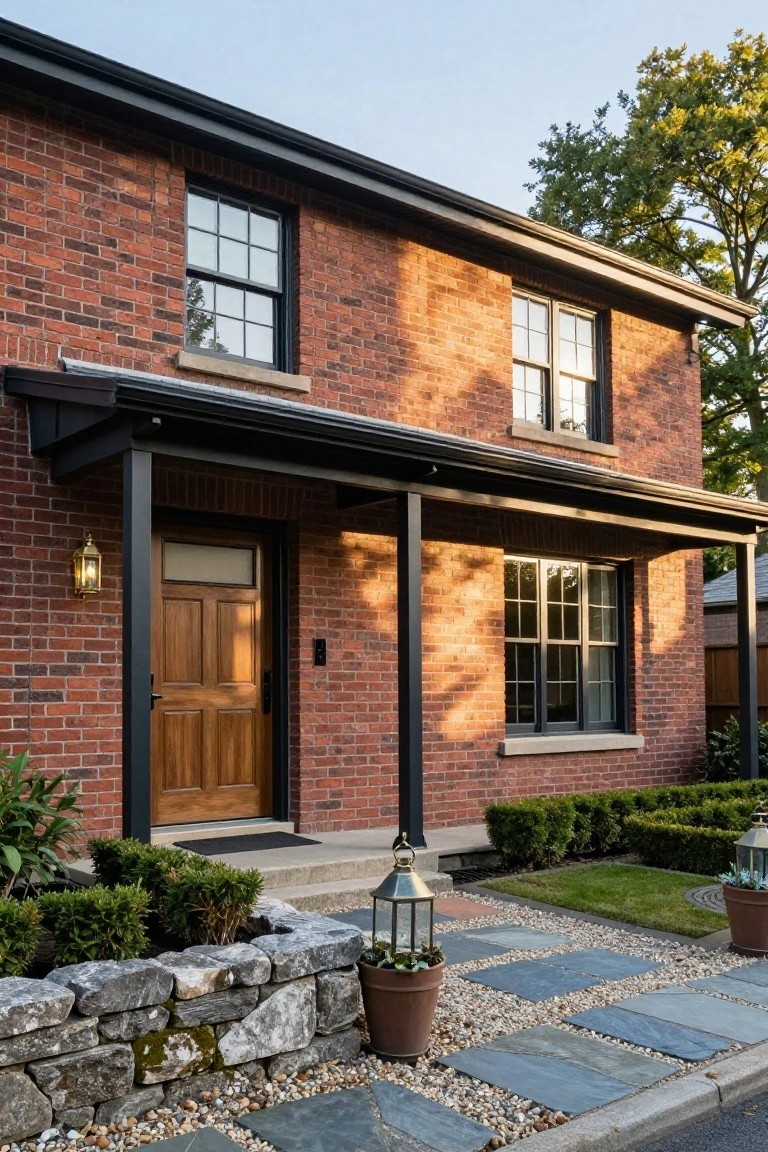
A simple black metal porch frame works wonders on a traditional brick house. It keeps the warm, timeless brick walls front and center but adds that crisp modern edge around the entry door and windows. The dark supports and roofline pull your eye right to the front door without stealing the show from the classic build.
This setup fits older homes that need a fresh look, especially two-story ones with good brickwork already in place. Pair it with a wood door and matching lanterns for balance. Just make sure the porch scale matches the house height, or it might feel off.
Recommended Products

Weather Resistant Construction: Suitable for dry, damp and wet locations, rust-resistant with powder-coated galvanized steel
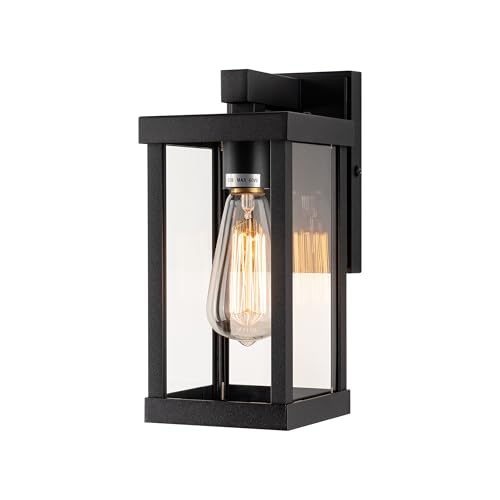
ETL listed, waterproof, rustproof, and weatherproof with aluminum frame and tempered glass panel.

Weather Resistant Construction: Suitable for dry, damp and wet locations, rust-resistant with powder-coated galvanized steel
Navy Arched Front Door
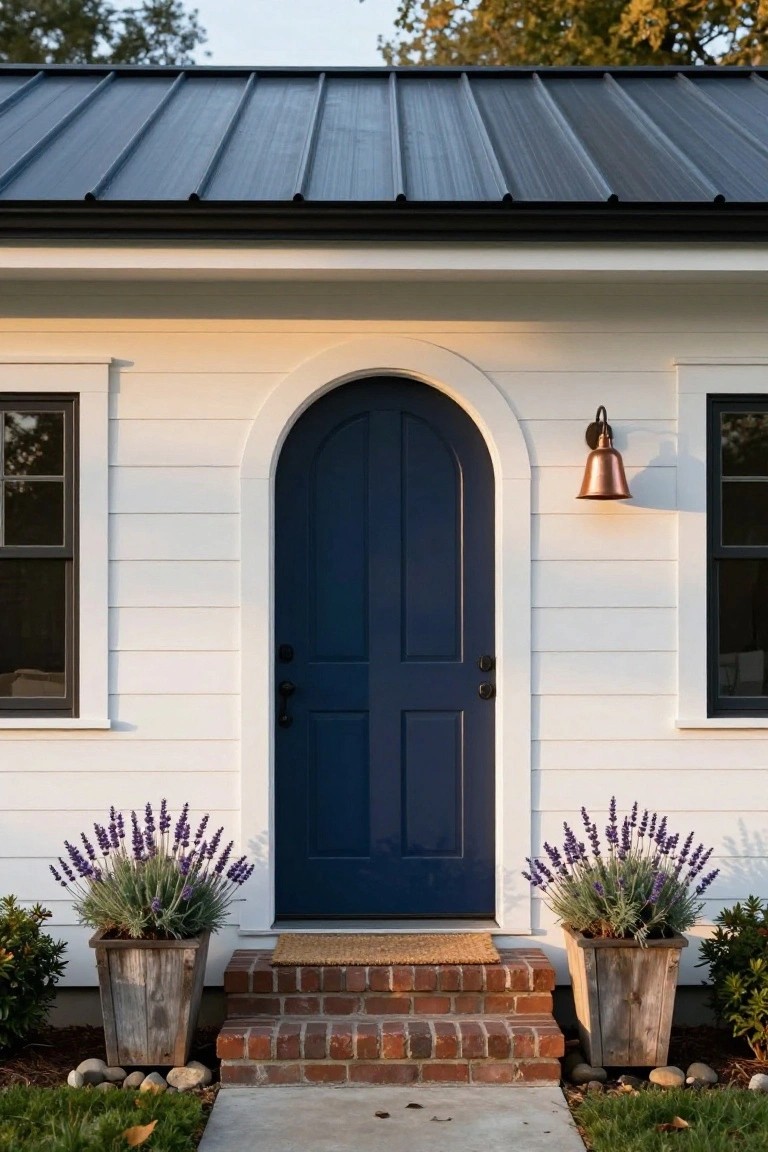
A navy blue arched door like this one pulls the eye right to the entry. It takes a traditional arch shape, something you see on old cottages, but paints it deep navy against plain white siding. That contrast feels fresh without trying too hard. The black metal roof up top keeps it modern. Simple pots of lavender on either side finish it off nicely.
This works best on smaller homes or additions where you want a welcoming pop of color. If your door’s plain, just paint it navy and add an arched trim kit if needed. Skip it on busier facades, though. It shines where the house is mostly white or light, letting the door do the talking.
White Brick Facade with Copper Roof
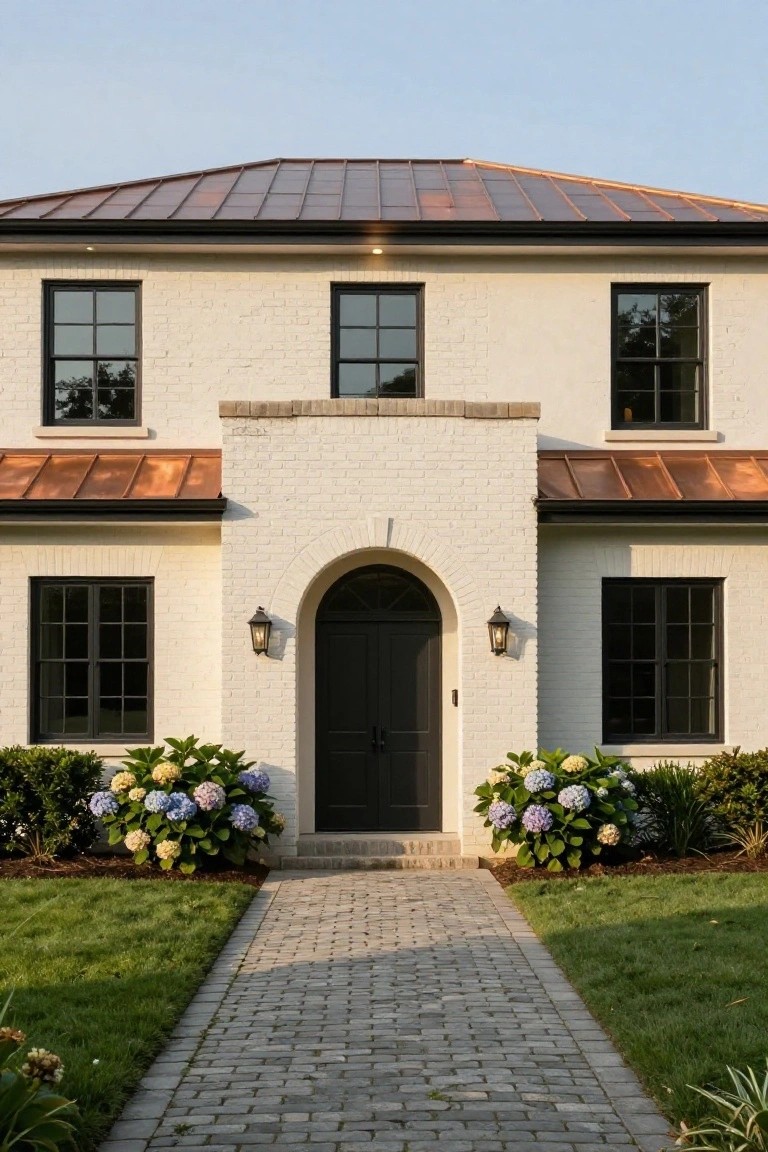
A copper standing seam roof brings a fresh twist to a classic white brick house. The warm reddish tones pop against the clean white exterior and black window frames. It feels traditional yet updated, especially as the copper weathers to a soft patina over time.
This look suits homes in milder climates where the roof can develop that natural green hue. Pair it with simple black trim around doors and windows for balance. Keep landscaping understated, like hydrangeas near the entry, so the roof stays the focus.
Recommended Products

Durable & Weather-Resistant Outdoor Wall Lanterns: Made by a reinforced toughened metal frame and clear glass shade, As reliable Kalium porch lights outdoor, these exterior sconces stay rust-free for years, making them ideal as porch sconce, patio light, or long-lasting exterior wall lantern.

CLASSIC DESIGN WITH MODERN APPEAL: Featuring a streamlined square silhouette, matte black frame, and clear tempered glass panels, this outdoor wall light blends classic lantern styling with modern simplicity. Its versatile design complements farmhouse, traditional, transitional, modern, and industrial exteriors, adding an elegant touch whether the light is on or off.

CLASSIC DESIGN WITH MODERN APPEAL: Featuring a streamlined square silhouette, matte black frame, and clear tempered glass panels, this outdoor wall light blends classic lantern styling with modern simplicity. Its versatile design complements farmhouse, traditional, transitional, modern, and industrial exteriors, adding an elegant touch whether the light is on or off.
Crisp White Siding with Navy Door
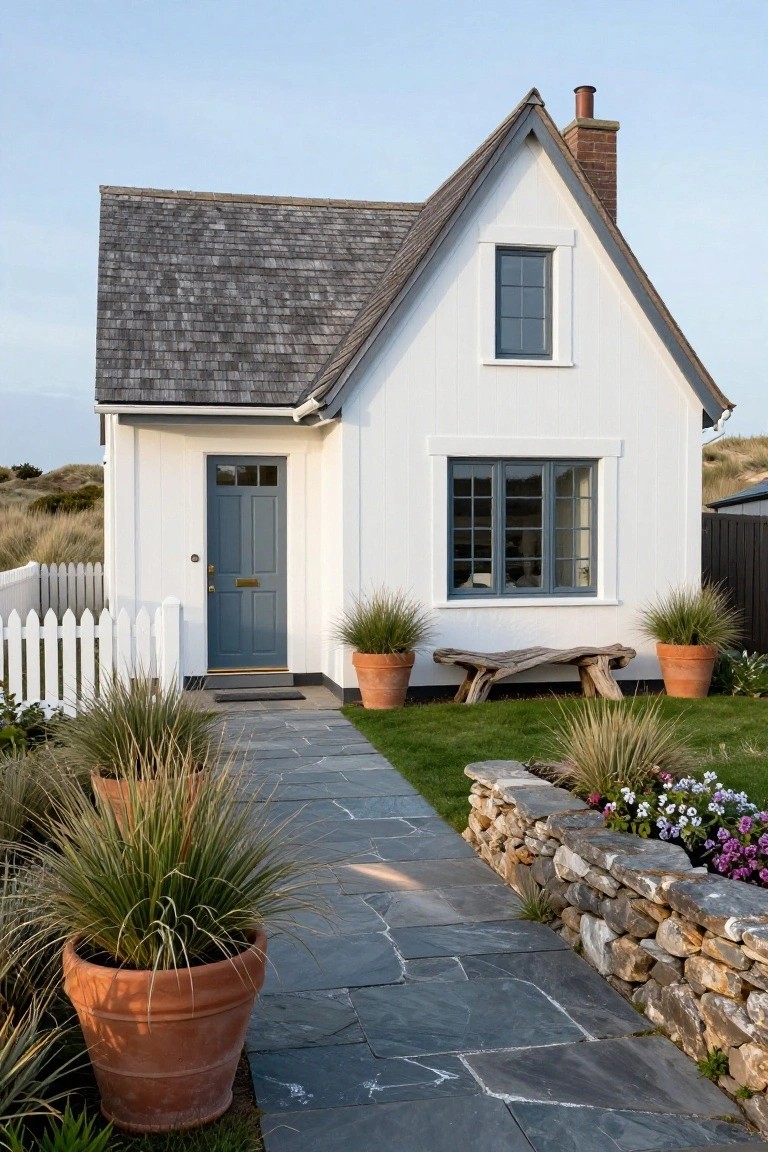
A simple white clapboard exterior like this one feels fresh and classic at the same time. The navy blue front door pulls your eye right to the entry, and it works because the clean white keeps things light while the bold door adds some real character. No fuss, just a look that nods to old beach houses but stays modern.
You can pull this off on a small cottage or starter home, especially if you’re near water or want low-key curb appeal. Flank the path with a couple big terracotta pots of grasses, like they did here, and skip heavy landscaping. Watch the scale though, navy can overwhelm on a big house.
Black Frames on White Walls
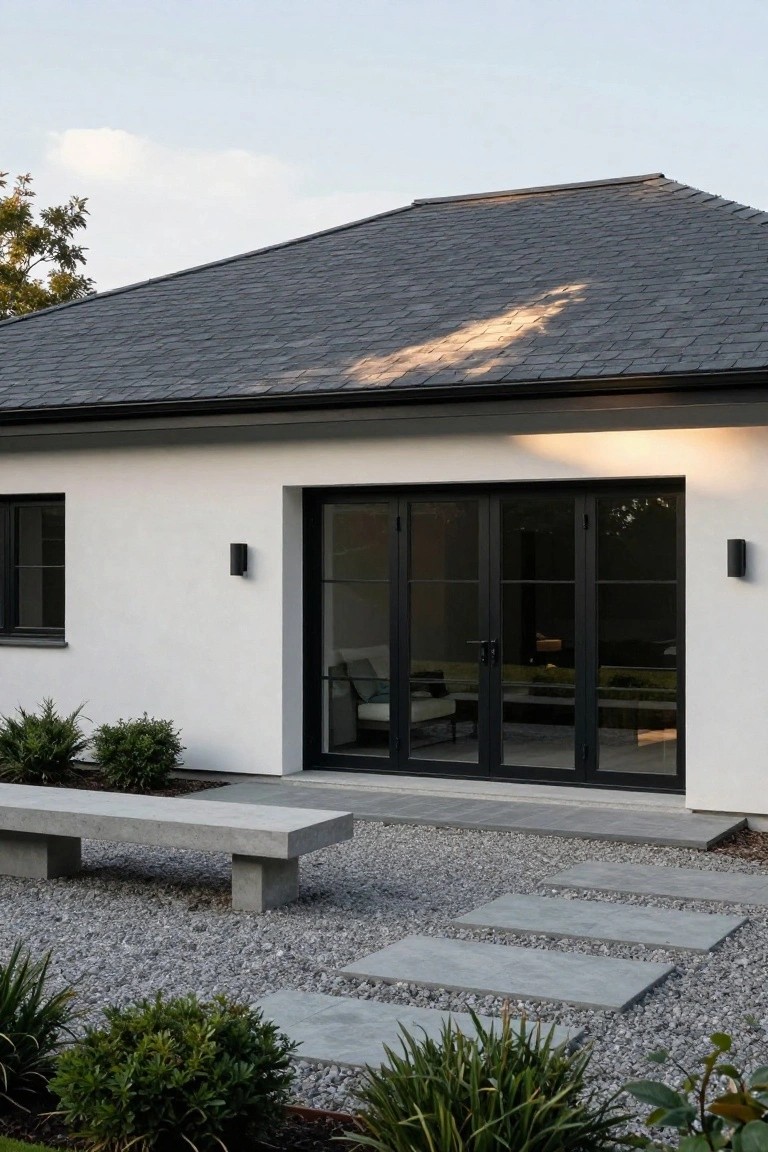
One simple way to mix modern and classic is black metal frames around doors and windows on crisp white walls. That dark slate roof up top adds a traditional touch without overwhelming things. The contrast keeps the house looking sharp and timeless, like it’s been there forever but freshly updated.
This works great on low-slung homes or extensions where you want clean lines. Pick slim frames for a lighter feel, and pair with simple gravel paths out front. It suits milder spots best… too much weather can ding the white render over time.
Timber-Framed Facade with Glass Entry
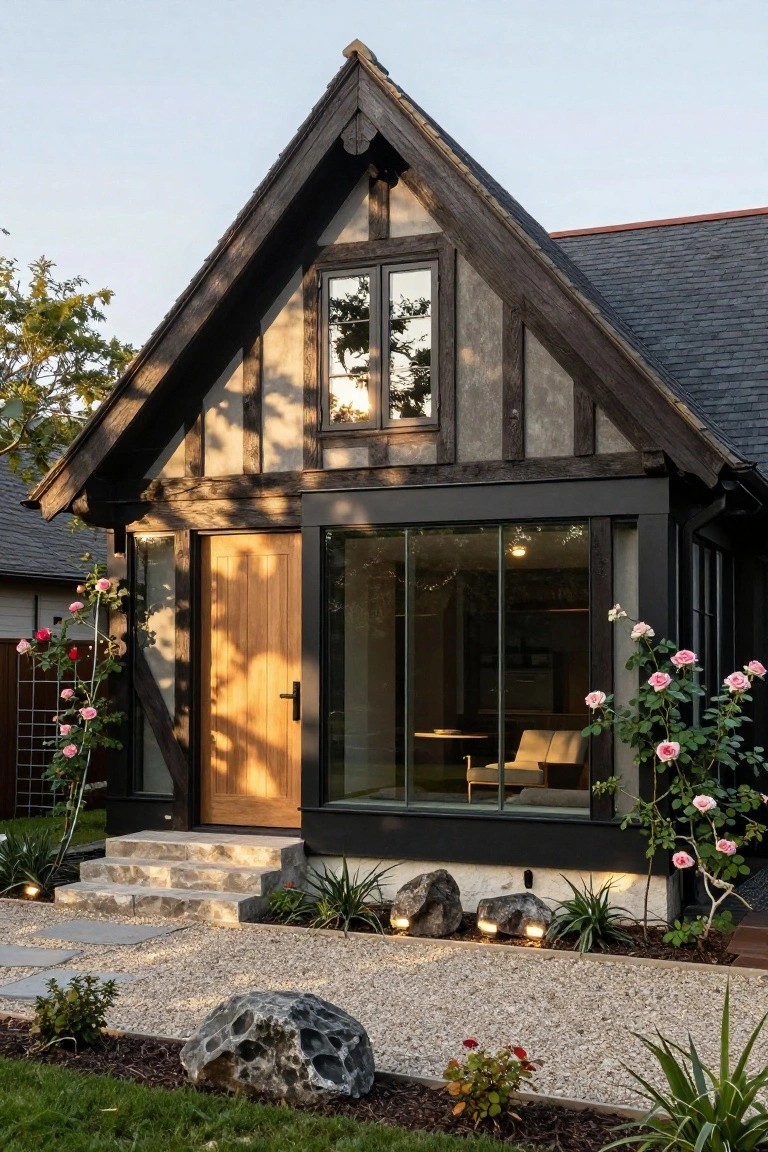
This design takes classic timber framing and pairs it with a big glass panel right at the front door. The dark wood beams on a light wall give that old English cottage look. Then the glass adds a clean modern touch. It pulls the inside out visually. You see a chair and table through it. Roses climb the side for a soft edge.
Try this on a compact house where you want some tradition but more light. Keep the glass floor-to-ceiling next to the door. Use black framing to tie into the timbers. Stone steps lead up nicely. It fits older neighborhoods… just check local rules on big windows.
Patterned Wood Entry Door
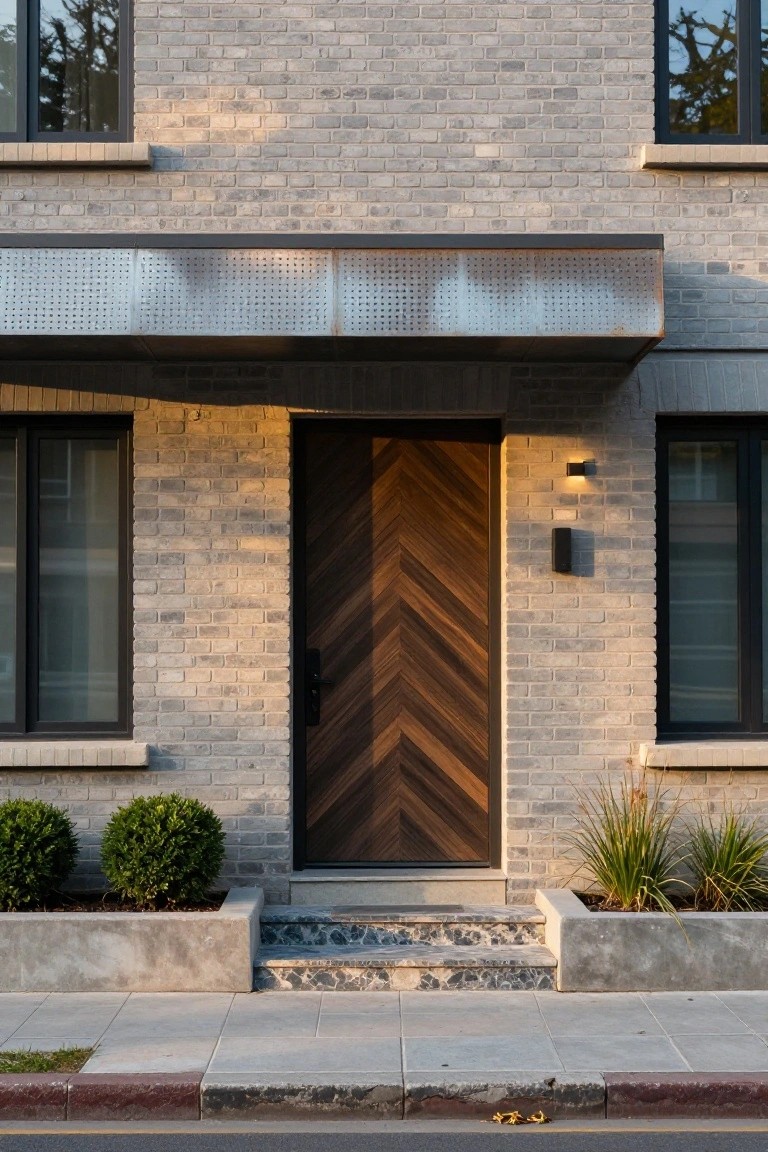
A front door like this one, with its bold chevron wood pattern, turns a plain brick house into something worth a second look. The dark tones pop against light gray bricks, mixing a bit of modern edge with that solid, traditional feel most older homes have. It’s subtle enough not to overwhelm.
This works best on straightforward brick or stone facades where you want one standout feature. Go for a strong pattern in rich wood, paired with simple metal details above. Suits city row houses or quiet suburbs… just keep plants low and steps clean so the door stays the focus.
Stone Walls Grounding a Modern Facade
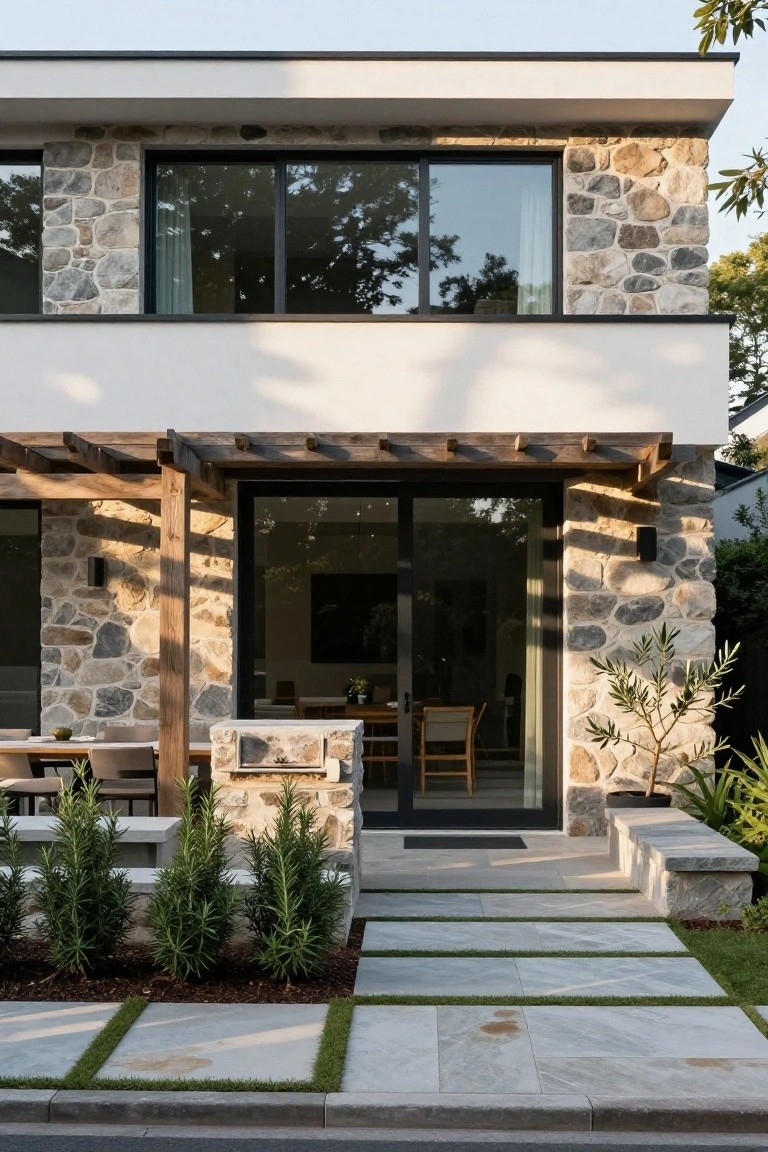
One way to blend old and new on a house exterior is using natural stone for the lower walls. It gives a solid, timeless base that feels rooted in tradition. Pair it with smooth white stucco up top and big black-framed windows. The stone’s rough texture offsets the clean lines nicely. Here, a wooden pergola shades the entry without overwhelming things.
This setup works best on homes with some height, like two-story designs. It adds curb appeal without much upkeep. Stone holds up well in different weather. Just make sure the colors match your area, and keep plantings simple around the base so they don’t hide the stone.
Classic Portico Entry on Stone Facade
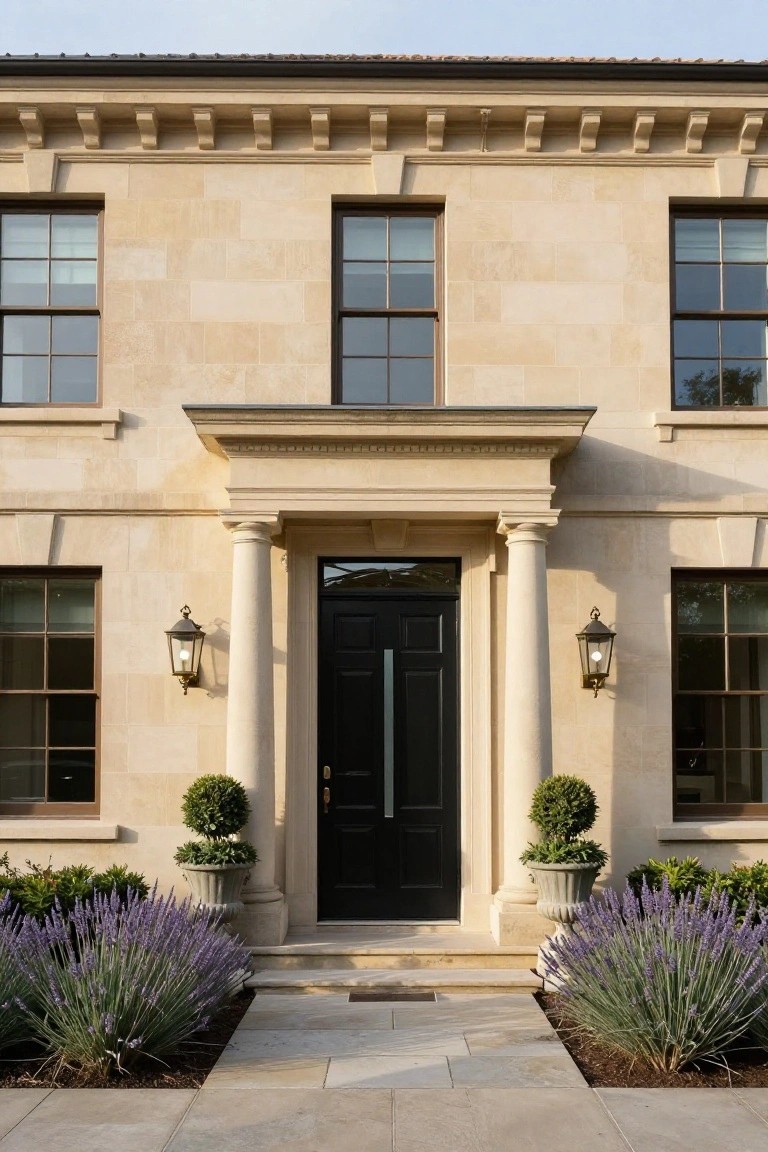
A portico like this one frames the front door with clean columns and a simple pediment. It takes the old idea of classical architecture and fits it right onto a stone house without feeling stuffy. The beige limestone walls and black door keep things sharp and modern, while the lanterns add just enough light to make it welcoming at dusk.
You can pull this off on homes with straightforward facades, especially if you’re aiming for that blend of tradition and now. Tuck in some low lavender beds along the entry path to soften the stone. Skip fussy details though. It suits suburbs or older neighborhoods where curb appeal matters but you don’t want to overdo it.
Brick Facade with Glass Corner Entry
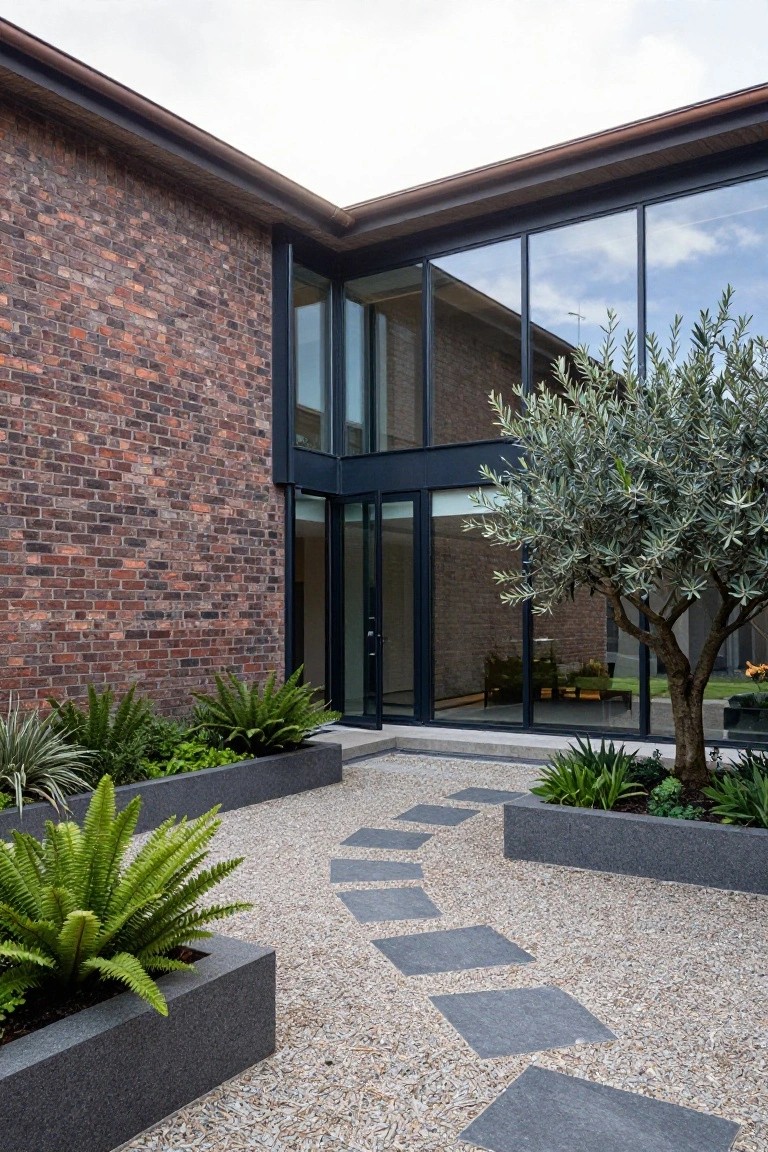
One straightforward way to mix old-school charm with today’s lines is a brick exterior wrapping around a glass corner entry. The textured red brick stays true to classic house roots, holding onto that solid, lived-in warmth. Then the black-framed glass takes over at the corner, flooding the inside with light and opening up the view. It’s a clean switch that nods to both eras without clashing.
This setup shines on homes adding a modern entry to an older brick base. Position it where two walls meet to draw eyes right to the door. Go for gravel or stone ground cover nearby to echo the simple feel. Just keep the glass frames slim so the brick doesn’t get lost… suits family houses or urban spots wanting curb appeal that lasts.
Black Door on Light Stone Facade
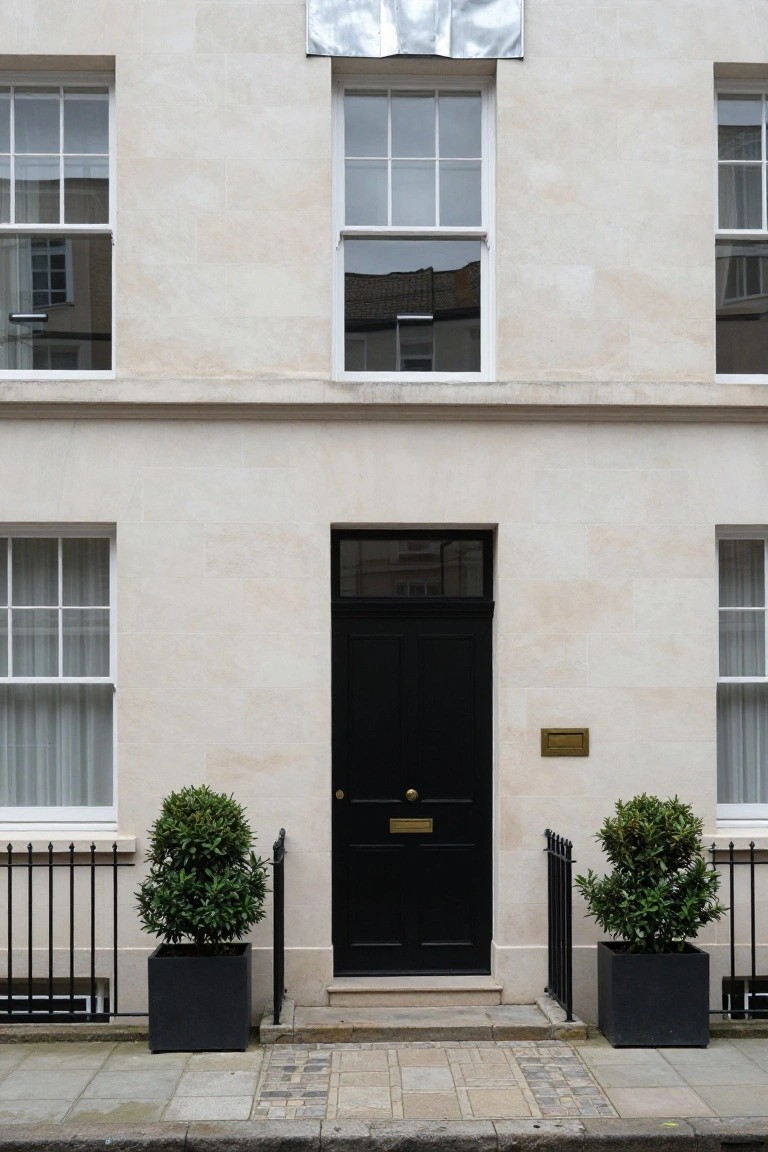
A black front door stands out strong against a pale stone townhouse like this one. It keeps the classic lines of the building but adds a modern punch right at the entry. That contrast pulls your eye in without messing up the simple symmetry. The dark color makes the door feel like the main event.
You can pull this off on older homes with light brick or stone. It works best in city spots where you want some edge. Just add simple potted plants on either side, like these trimmed boxwoods, to frame it neatly. Skip busy details around the door. Keep the steps and path plain too.
Recommended Products

ETL listed, waterproof, rustproof, and weatherproof with aluminum frame and tempered glass panel.
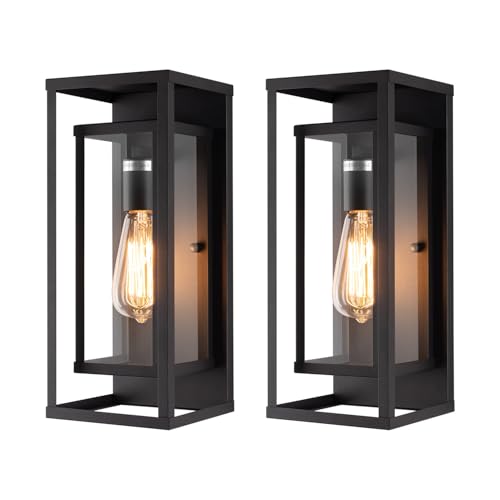
Versatile Location Compatibility: Suitable for dry, damp and wet locations, rust-resistant with powder-coated galvanized steel
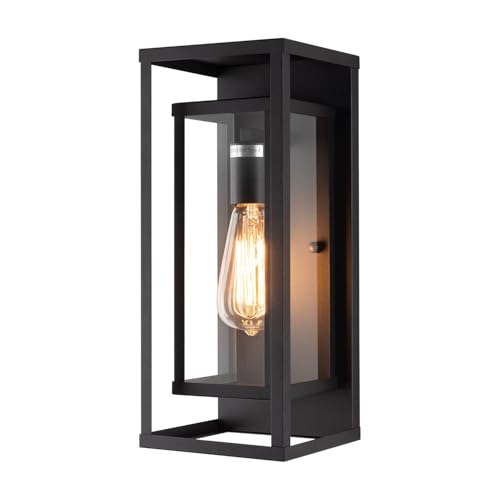
Weather Resistant Construction: Suitable for dry, damp and wet locations, rust-resistant with powder-coated galvanized steel
Outdoor Dining Under a Pergola
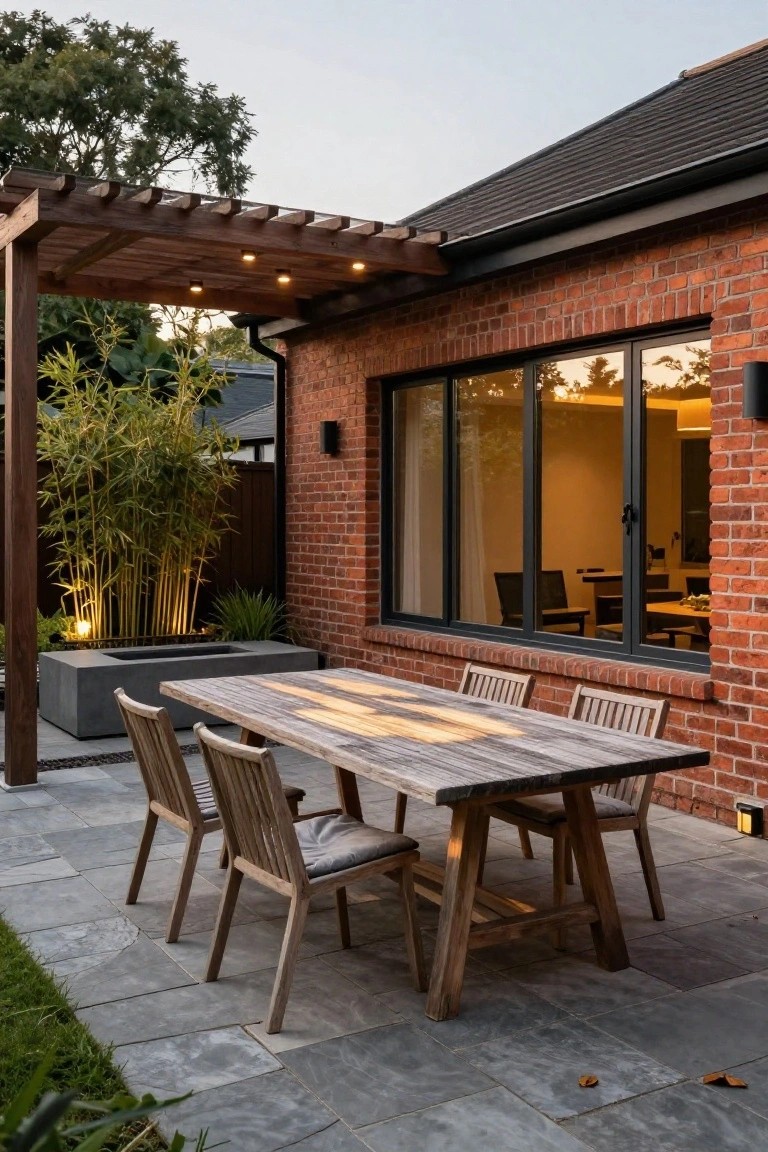
A wooden pergola overhead makes a backyard dining spot feel like an extra room. It pulls the eye right to that long teak table with chairs tucked around it, all on a clean stone patio. The dappled light through the slats keeps things comfortable without blocking the view to the house next door. It’s a straightforward way to stretch your living space outside on nice evenings.
This setup works best on homes with a flat side yard or patio area. Bolt the pergola posts into the ground or attach it to the house wall for stability, then add recessed lights up top for night use. It suits brick or modern houses that could use some wood warmth. Just make sure the surface drains well so you avoid puddles after rain.
Timber-Framed Entry Porch
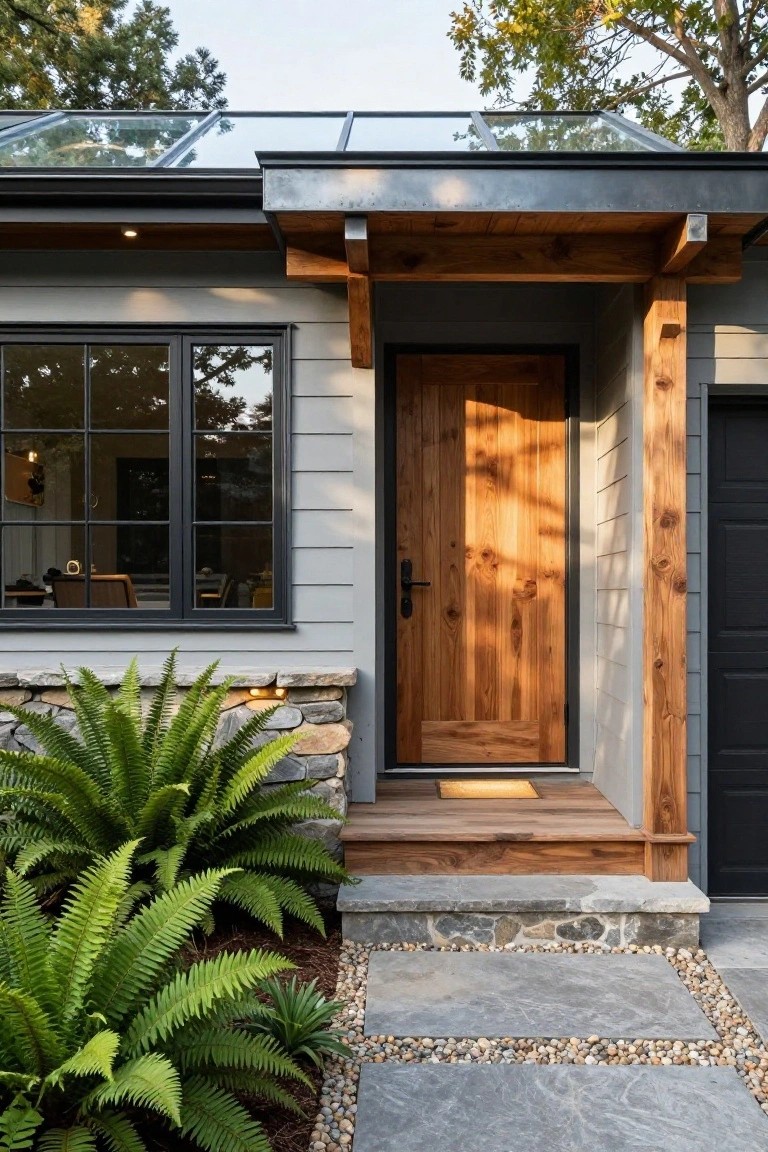
A timber-framed entry porch like this one pulls together warm wood beams and posts against cooler gray siding. It gives the house a nod to older cabin styles without going full rustic. The simple setup makes the front door feel more welcoming right away, especially with that solid cedar door catching the light.
This works best on homes with clean lines and muted colors, like craftsman or contemporary builds. Keep the wood natural or lightly stained, and pair it with stone at the base for stability. Skip heavy decorations. Just let the frame do its job leading folks inside.
Stone Facade with Oversized Glass Entry
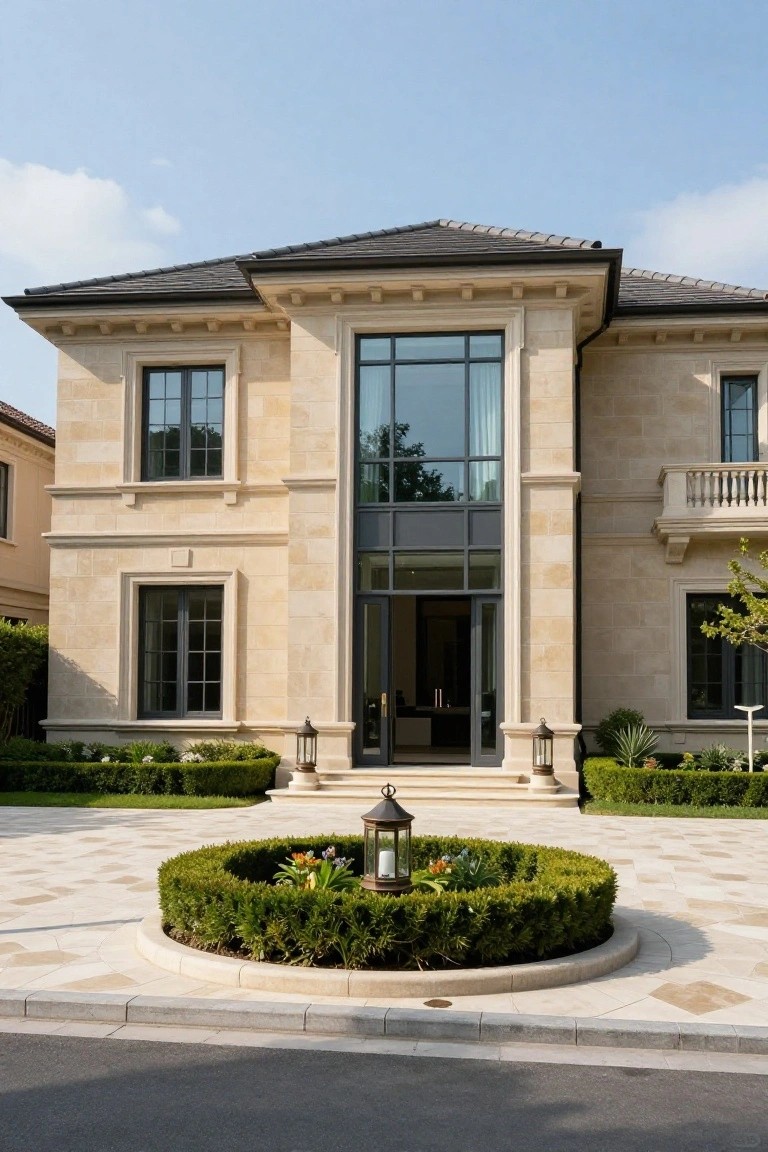
A stone facade like this one uses light beige limestone blocks for that solid, old-world look homes have always trusted. What makes it fresh is the tall central glass entry that runs almost floor to ceiling. It pulls in the classic architecture while adding a modern touch that brightens the whole front.
This setup shines on bigger homes in warmer spots, where the stone holds up to sun and the glass keeps things open. Go for it if you want neighbors noticing your door first… just match the lanterns and steps to keep the scale right. A simple planted circle out front ties it together without stealing focus.
Sleek Trough Planter on the Stoop
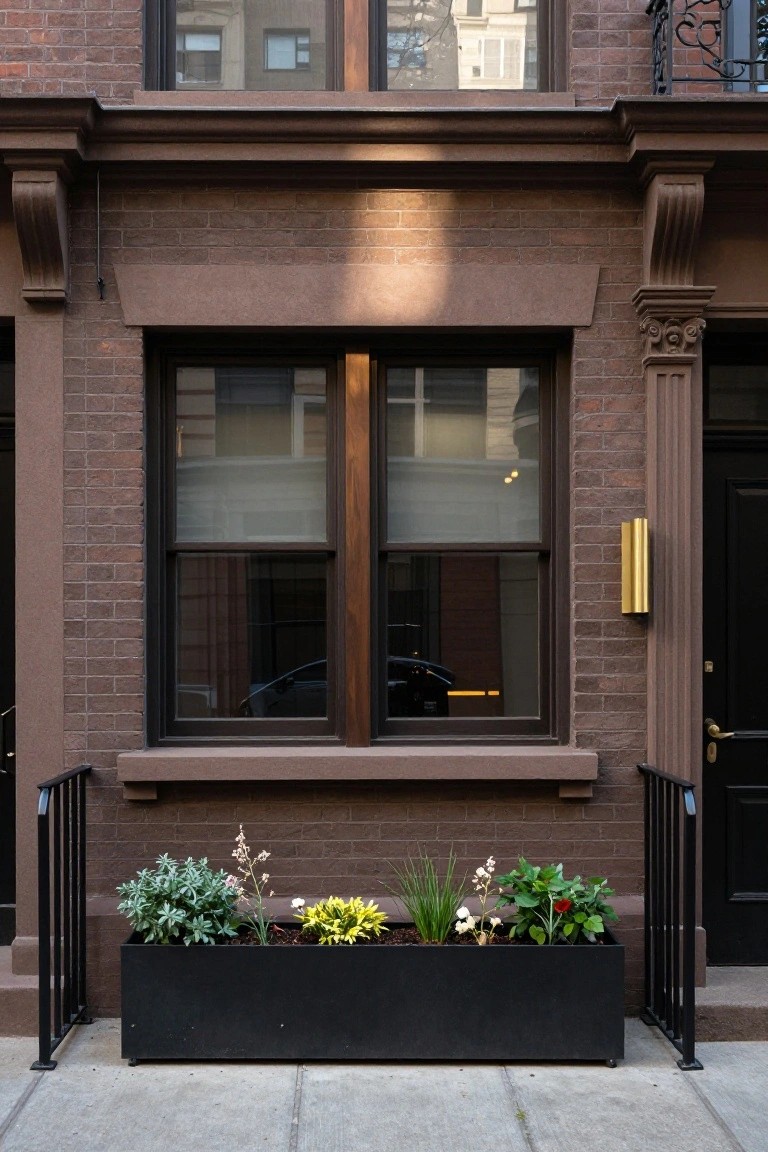
A long black metal planter running the length of the stoop brings a fresh touch to this classic brownstone front. It sits right there with a mix of grasses, succulents, and flowering plants, softening the brick and railing without crowding the entry. That simple line of green picks up on the building’s straight edges but adds life where stone meets sidewalk.
This works great for row houses or urban homes where you want curb appeal but not a full garden. Go for a low trough like this in matte black or corten steel to keep it modern against older brick. Pick tough plants that handle city conditions. Just measure your stoop first… it shouldn’t block steps or railings.
Olive Trees Frame the Entry Door
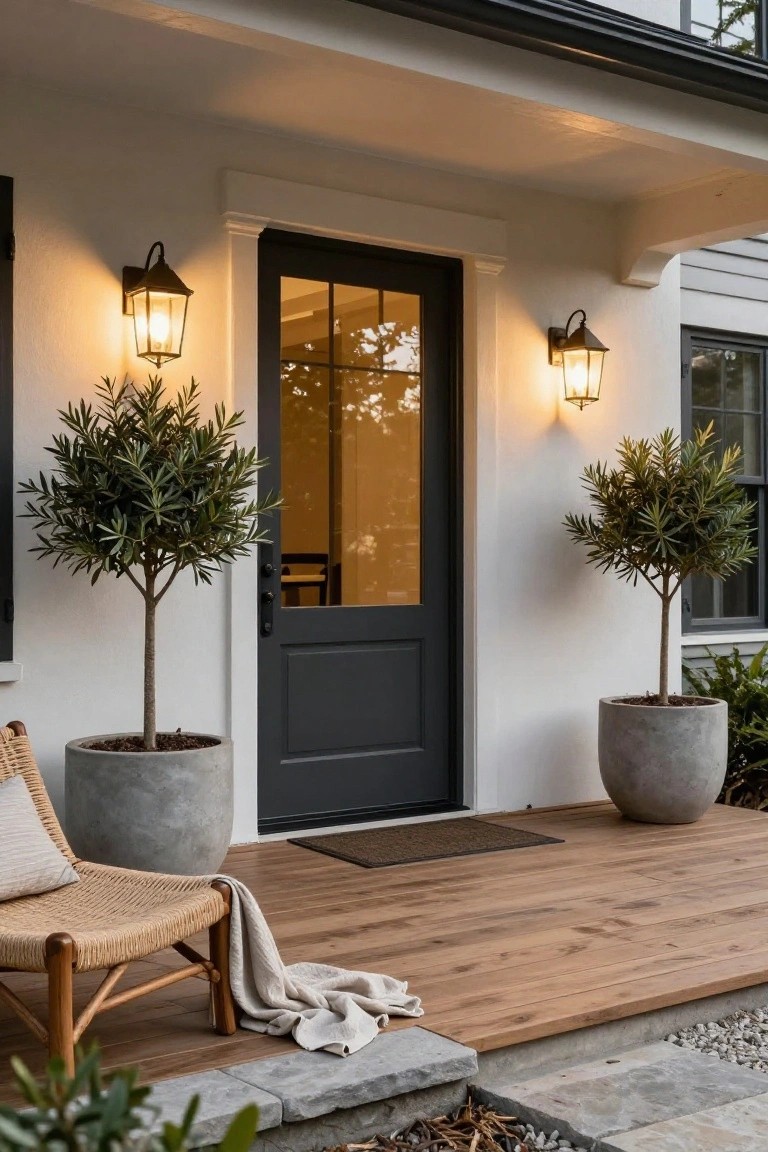
Placing tall olive trees in matching pots on either side of the front door gives this house a simple, timeless welcome. The dark gray door pops against the white walls, and those trees draw your eye straight to the entrance without overwhelming the space. It’s a low-key way to add height and green that feels classic yet fresh.
You can pull this off on most front porches or steps, especially if you like a Mediterranean touch. Go for big concrete pots to match the scale, and pick trees that handle your climate. Trim them now and then to keep the shape neat. Avoid crowding the path though. It suits homes blending clean lines with a bit of old-world charm.
Brick Entry with Long Metal Planter
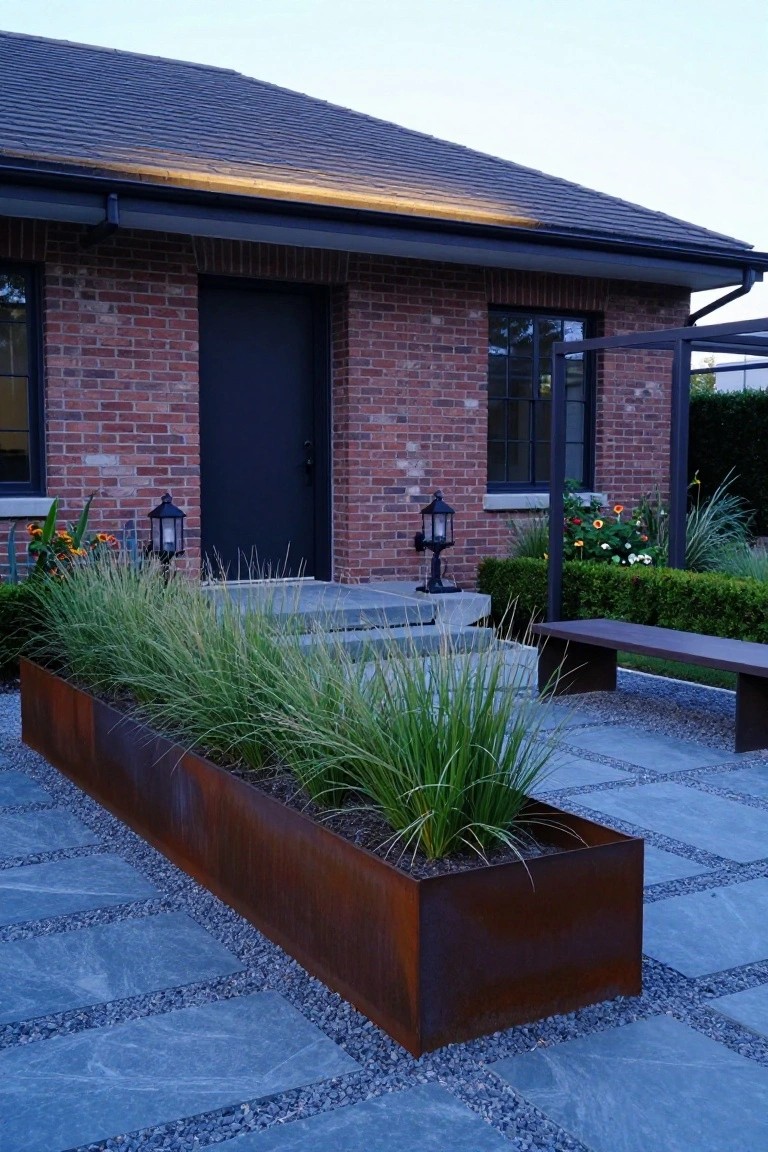
One way to update a classic brick house is with a long, low metal planter running right alongside the entry steps. Here, corten steel gives that rusty patina that picks up on the brick tones without clashing. Tall grasses inside add some sway and height, making the path feel more welcoming instead of stark.
This setup works best on homes with a side or front entry where you have room for a linear bed. Go for drought-tolerant grasses to keep it easy, and pair with simple pavers like these. It suits older brick places wanting a modern touch, but skip it if your lot is super tight… the scale needs space to breathe.
Classic Stone Facade with Glass Pool Doors
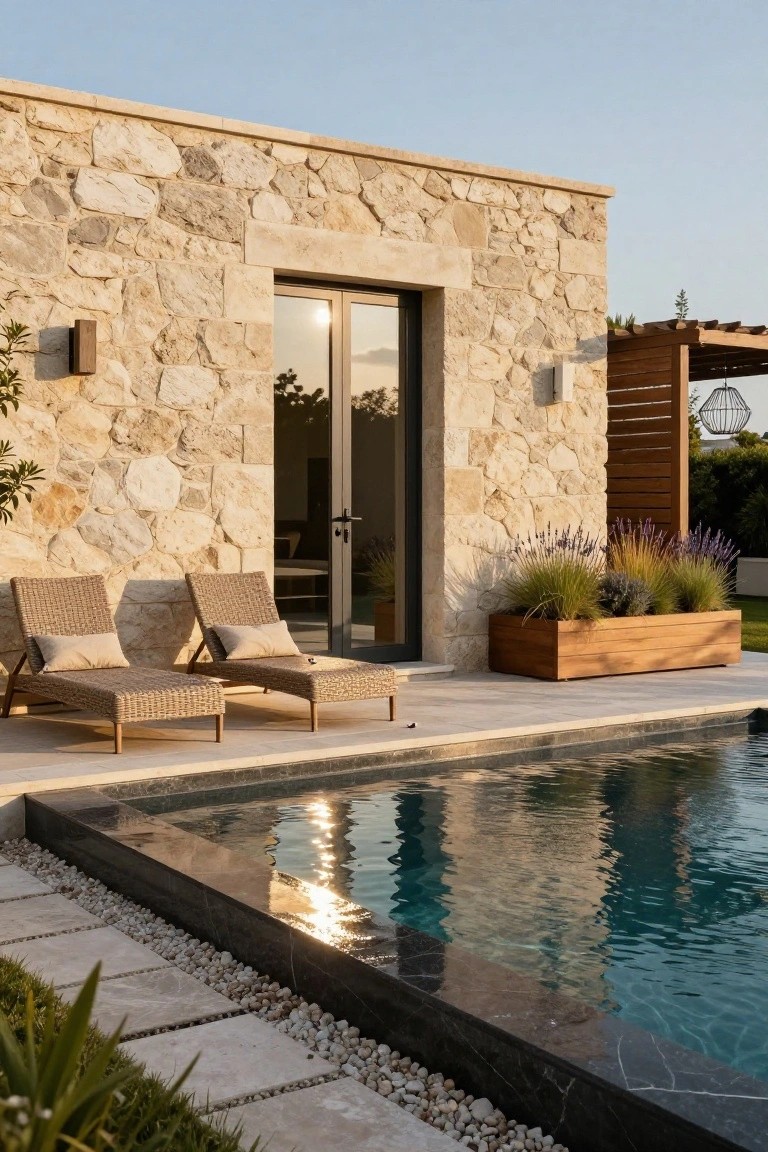
One smart way to mix old and new on a house exterior is setting big glass doors right into a textured stone wall, opening straight onto a pool terrace. The rough limestone blocks give that solid, timeless look folks love in classic homes, while the full-height glass pulls in views and light. Lounge chairs parked nearby make it feel lived-in and ready for use.
This setup shines on single-story homes or additions in warm areas, where you want easy flow from living space to water. Pick dark metal frames to match dark pool coping, and keep plantings simple so the stone and glass stay the stars. Scale matters, though. Small doors won’t have the same impact.
Modern Glass Entry on Stone Facade
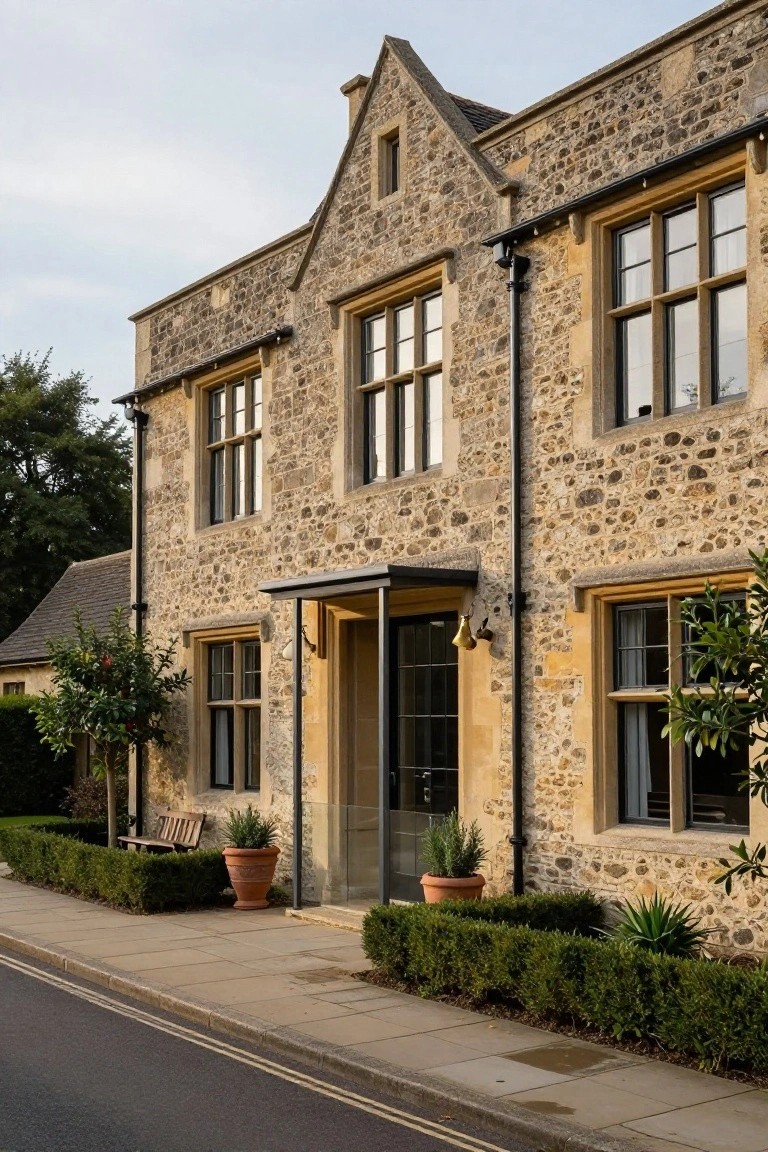
A simple way to update an older stone house is swapping in a full-glass front door. The rough beige stone walls stay true to the building’s roots, but that sleek glass panel and slim metal frame bring in light and a modern edge. Black window frames nearby pick up the contrast without much fuss.
This setup suits country homes or village rows built from local stone. It works best where you want the entry to stand out a bit more. Go for good weather seals on the door, and pair it with a basic canopy to keep rain off. Avoid busy hardware that fights the clean lines.
Frequently Asked Questions
Q: How do I pick modern accents that won’t clash with my old house?
A: Walk around your home and note standout classic details like arched windows or brickwork. Choose modern pieces that play off those shapes, such as slim metal railings or clean-lined lanterns. This keeps everything in harmony without overpowering the original vibe.
Q: What’s one quick fix to blend styles on a tight budget?
A: Paint your trim in a crisp white or soft gray. It sharpens classic lines and lets modern hardware pop. You’ll see a big difference right away.
Q: Can I try these ideas myself, or do I need contractors?
A: Grab a ladder and tackle paint, planters, or new house numbers yourself if you like hands-on work. Save pros for roof tweaks or big siding jobs… they handle the tricky stuff safely.
Q: How do I make sure colors tie old and new together?
A: Pull one neutral shade from your classic brick or stone as the base. Layer in bolder modern pops on doors or shutters that complement it. Test samples in real light first.
