

I’ve noticed that the best house exteriors come alive when the garden wraps around them like an extension of the walls themselves.
Modern facades work best here by using simple materials like wood siding or stucco that let plants climb and soften sharp rooflines without hiding the structure.
When I redid my entryway a couple years back, adding ferns along the base made the whole front read as grounded and welcoming from the street.
Walk up to one of these homes, and your eye goes straight to how the pathway pulls you in through layers of greenery.
A handful stand out as tweaks worth trying on your own place to boost that natural curb appeal.
Stepping Stone Paths in Gravel Gardens

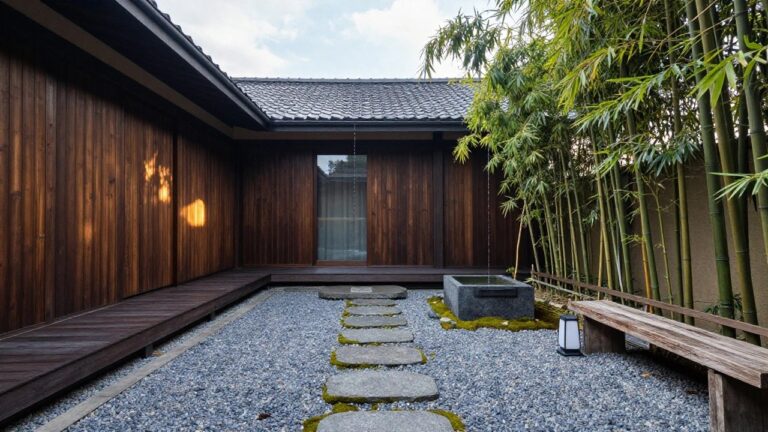
One easy way to connect your house to the outdoors is with a gravel garden path made from rough stepping stones. These dark stones, some covered in moss, sit right in light pebbles and lead from the wooden house wall out to a bench and bamboo. It keeps things simple and calm, like a little walk into nature without mowing or weeding much.
This works great in narrow side yards or along a modern home’s edge where you want that Japanese garden feel. Lay gravel two inches deep, space the stones so your foot lands flat, and add bamboo for screening. Skip it if your area’s too shady, since moss might spread too fast.
Potted Olive Trees Beside Stone Entries
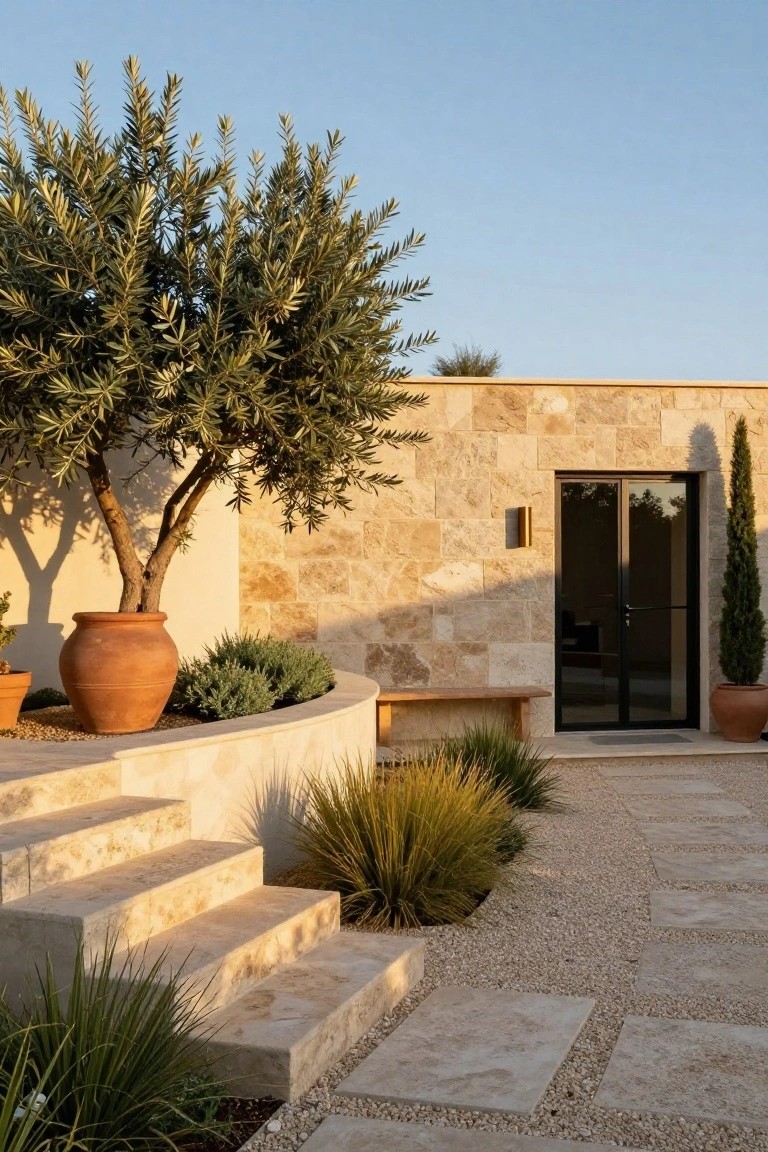
A large terracotta pot with a mature olive tree sits right next to stone steps in this setup. It adds instant height and a relaxed Mediterranean touch to what could be a plain hardscaped entry. The tree’s silvery leaves pick up the stone tones nicely, and its pot blends right in without needing built-in planting.
This idea suits homes with stone or stucco walls in dry areas. Plant olives in oversized pots, at least two feet wide, and group them with low grasses or gravel for easy care. It keeps things simple year round… just water when needed and trim lightly. Skip it if your spot gets heavy frost.
Patio Seating with Built-In Concrete Benches
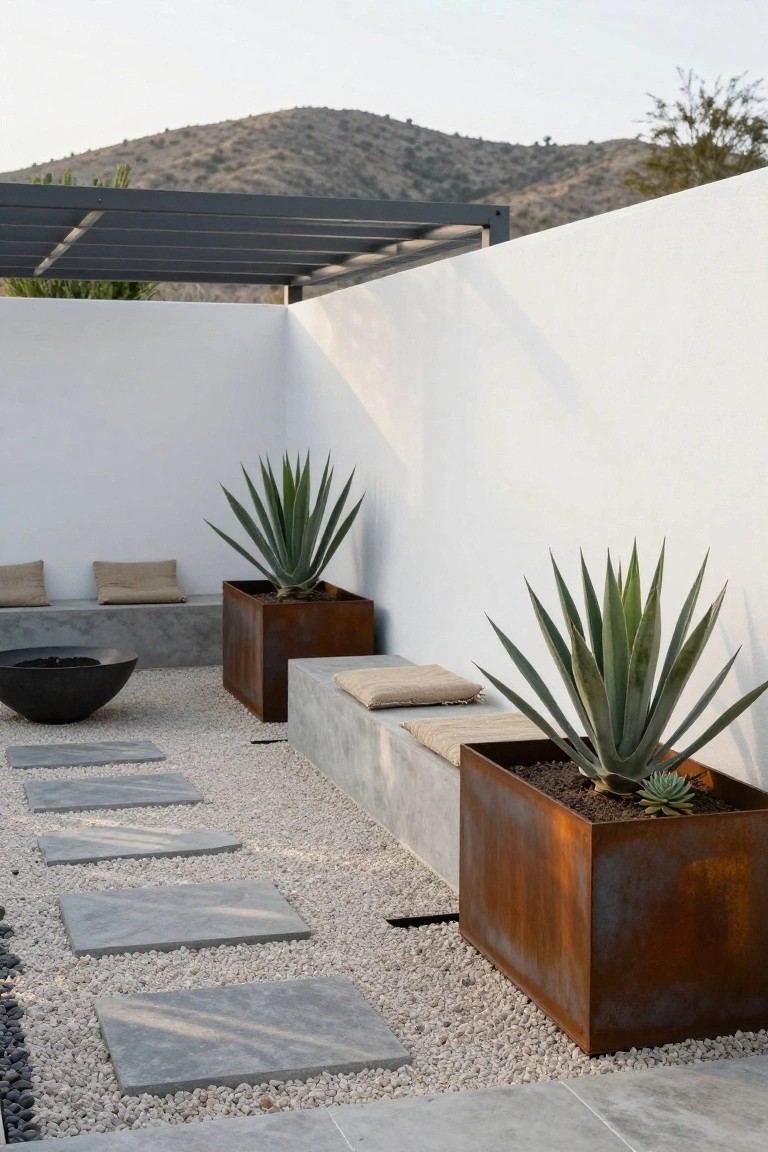
Built-in concrete benches like these hug the courtyard walls and keep the center open for a simple fire bowl. The setup feels practical and open. Gravel fills in around gray stone pavers for paths, and a couple big agaves in rusted metal boxes add some height without crowding things. It’s a clean way to get seating where space is tight.
This works well in dry spots or small yards, especially if you like low upkeep. Add cushions for longer sits… maybe in neutral tones to match. Skip it if your area gets a lot of rain, since concrete can stay damp. Fits modern homes that open right to the outdoors.
Green Roofs on Concrete Houses
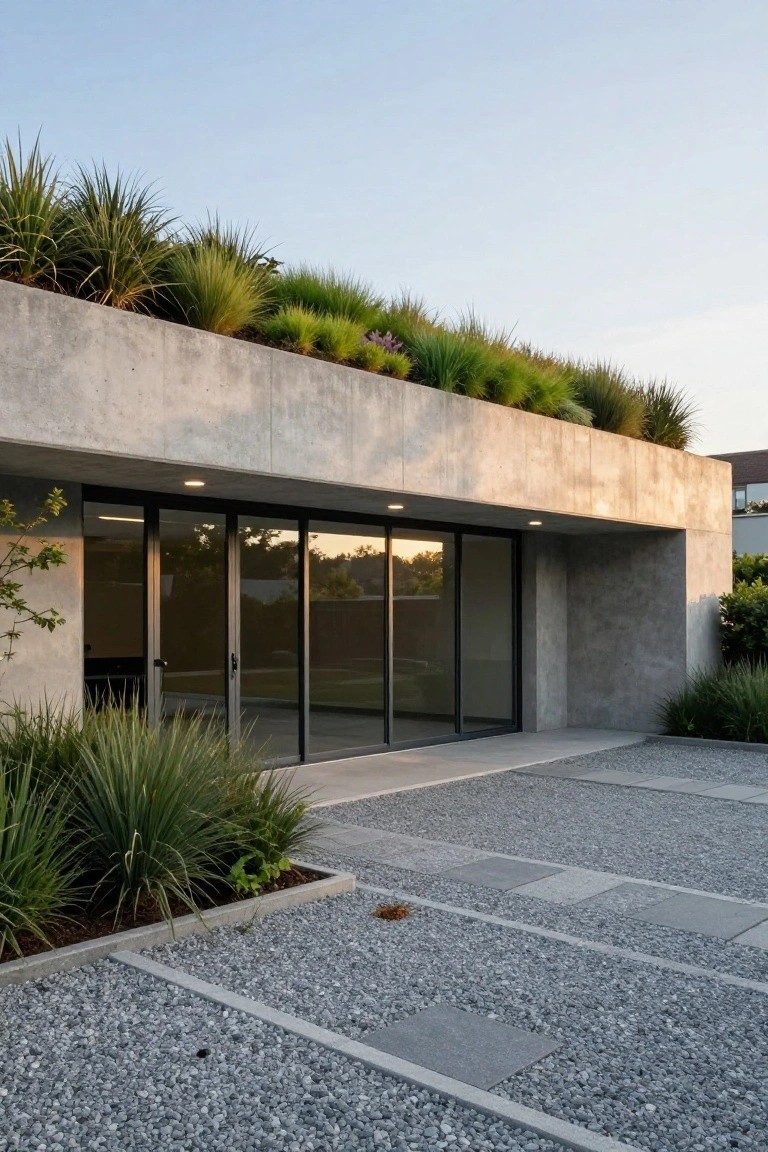
A green roof takes the hard edges off a plain concrete house and makes it look like part of the yard. You see it here with grasses and low plants running right along the top edge, matching the plantings down below. It pulls the whole look together in a natural way, without needing fancy details.
These roofs suit flat or low-slope modern homes best, especially where you want curb appeal that lasts. Pick tough native plants for your area to keep upkeep simple. One thing to check: your roof needs to support the soil and water weight.
Winding Stone Paths with Metal Edging
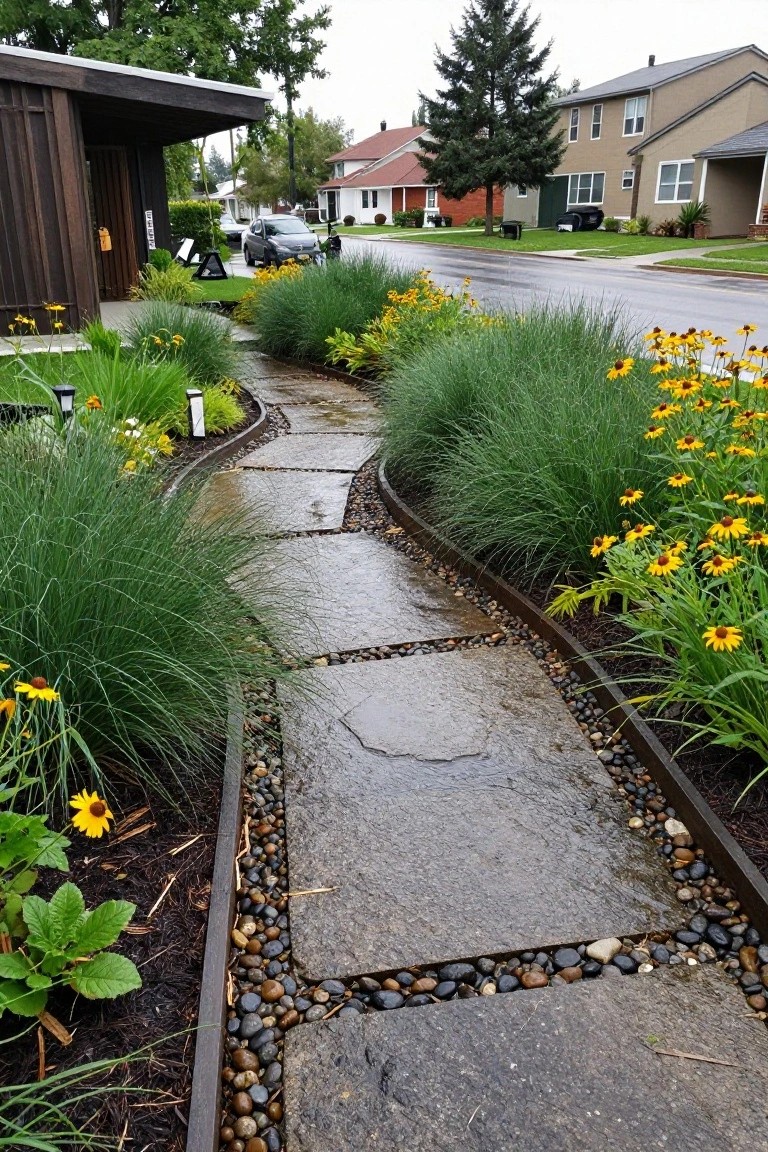
A simple winding path made from rough stone slabs cuts through this garden bed. Tall grasses sway on both sides, mixed with clumps of black-eyed Susans, all held neatly by thin steel edging. The curve keeps it from feeling stiff. Rain adds a nice sheen to the stones, showing how it handles weather.
This setup works well for front approaches to a house. It suits low-sloped yards where you want plants close but not spilling over. Pick durable corten steel that rusts over time for a lived-in look. Stick to perennials that don’t need much fuss, and space the path wide enough for two people.
Poolside Boulders for Natural Appeal
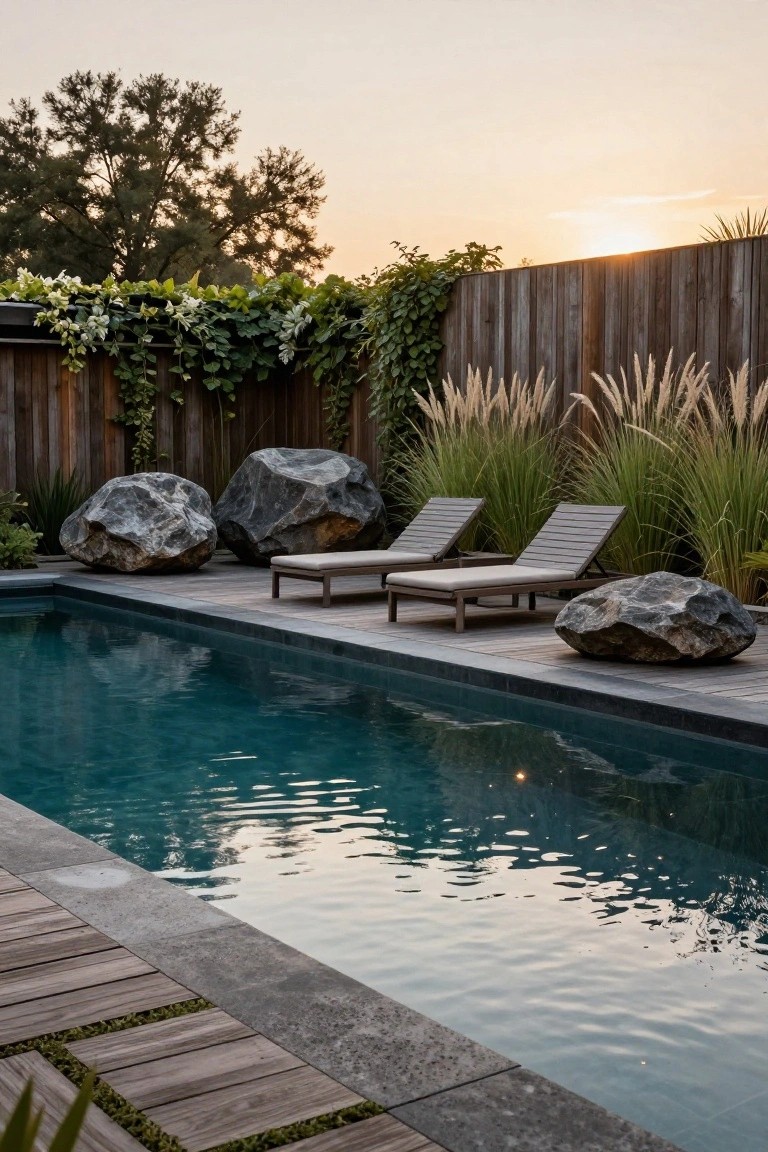
Big boulders like these work great around a pool lounge setup. Placed right next to the wooden chairs and deck, they bring in that raw, outdoor texture without much effort. The rough stone contrasts nicely with the smooth water and clean lines of the pool edge, making the whole spot feel tied to the yard around it. Folks like how it keeps things simple yet interesting.
Put them in smaller backyards where you want to zone off the seating from the rest of the space. Hunt for local rocks to match your area’s look, and tuck a few grasses nearby for movement. This suits modern setups with a pool, especially if you’re after low-upkeep nature vibes. Just make sure they’re stable so no one trips.
Vine-Covered Pergola for Outdoor Dining
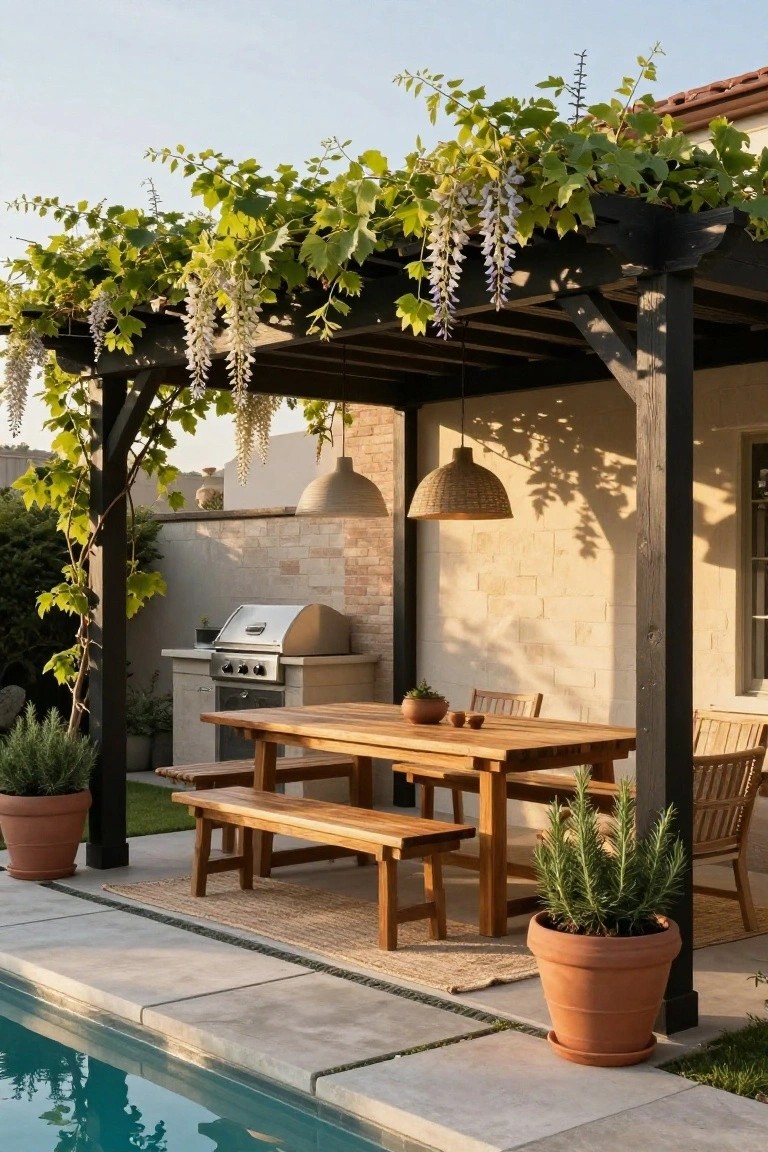
A simple black pergola works great when you let climbing vines take over the top. Here, wisteria hangs down thick, giving shade for meals without blocking the view. It pulls the garden right into your seating area. Feels relaxed, not fussy.
Put one over a plain wooden table and benches in a sunny yard spot. Suits modern homes with a pool or patio nearby. Pick fast-growing vines that flower. Just trim them back once a year so they don’t crowd the space.
Gravel Paths with Steel Edging
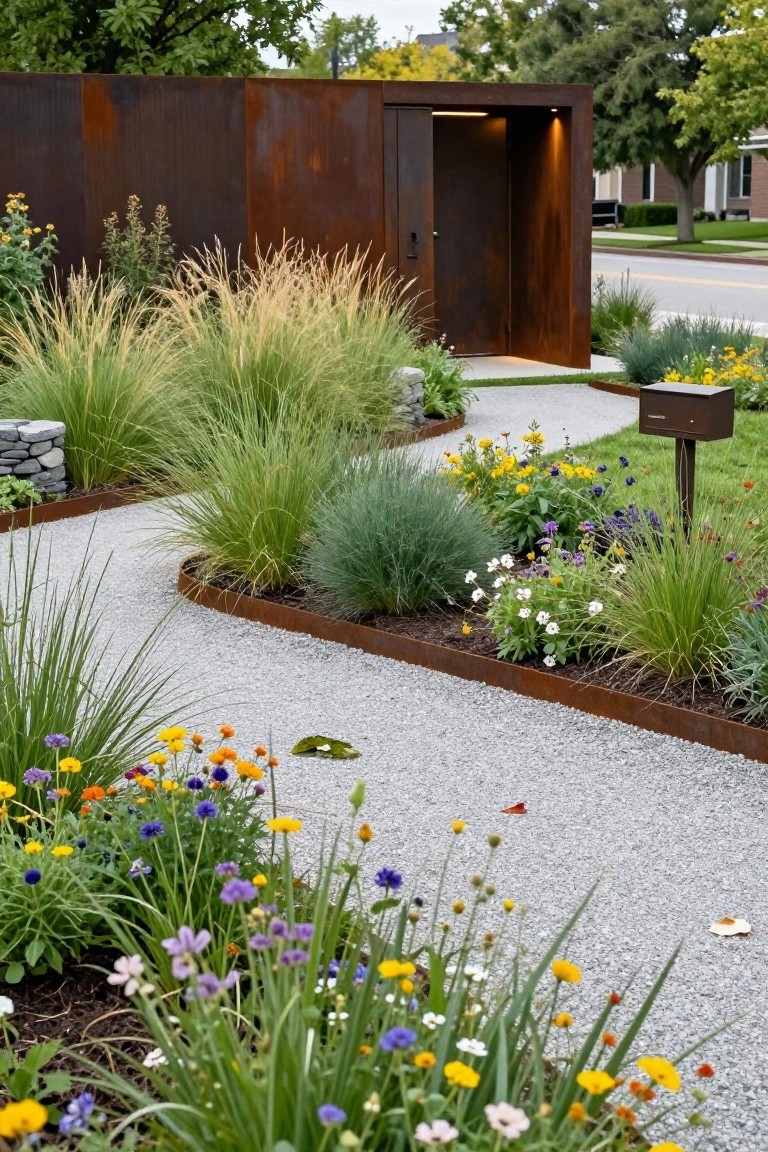
One straightforward landscaping trick is edging gravel paths with corten steel. The rusty metal strips hold everything in place nicely, letting tall grasses and wildflowers spill just right without getting messy. It gives a clean modern look that ties right into the house, especially when the entry uses the same material.
This setup suits front approaches or side yards on mid-sized lots. Go for 4-inch high edging to contain pea gravel and prairie-style plants. It stays low maintenance once established. Skip it in super wet spots, though, or the rust might run.
Rustic Barn House Exterior
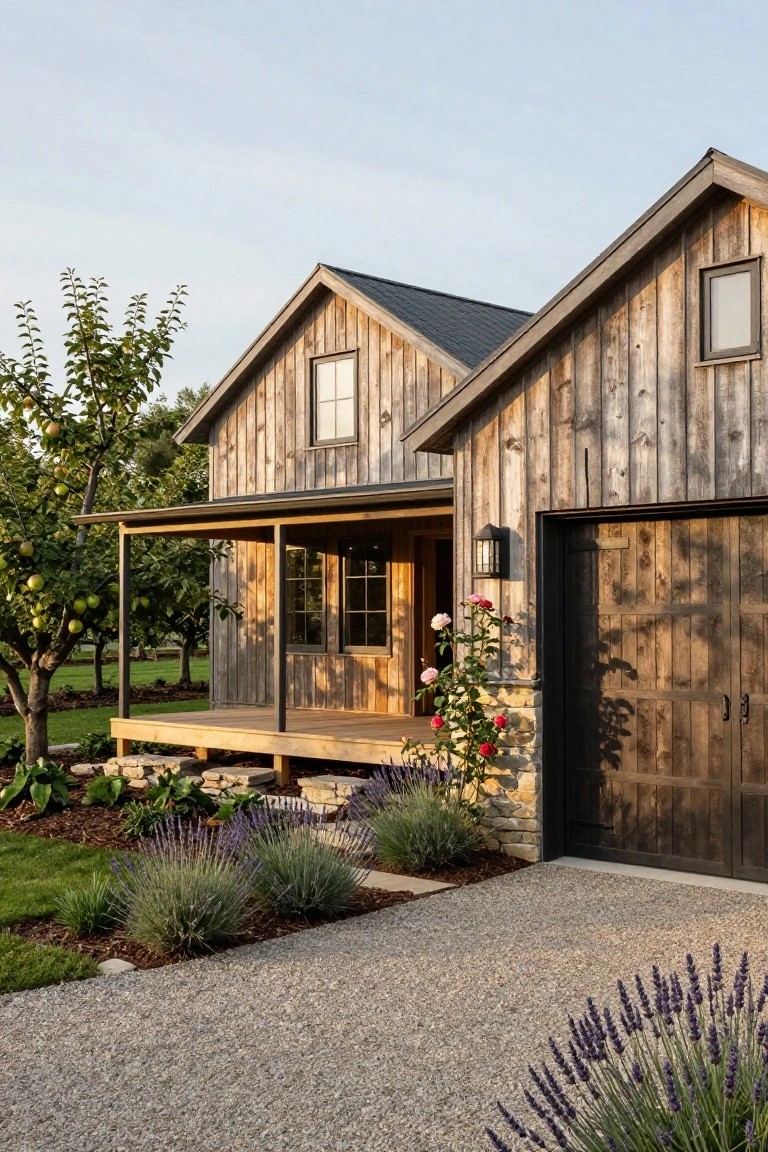
There’s something about a barn-style house wrapped in weathered wood siding that just fits right into a natural setting. The vertical boards here catch the light in a way that echoes the trees around it, like apple orchards and lavender beds, making the whole place feel less built and more grown. It’s a simple material choice but it softens the look of the house against all that green.
You can pull this off on a modest lot or even a suburban yard if you keep the siding rough and let plants crowd up close, like gravel paths leading to low stone walls. Works best for folks wanting low-key curb appeal without fussing over paint jobs every few years. Just make sure the wood is treated to hold up in damp spots.
Entry Steps Lined with Succulents
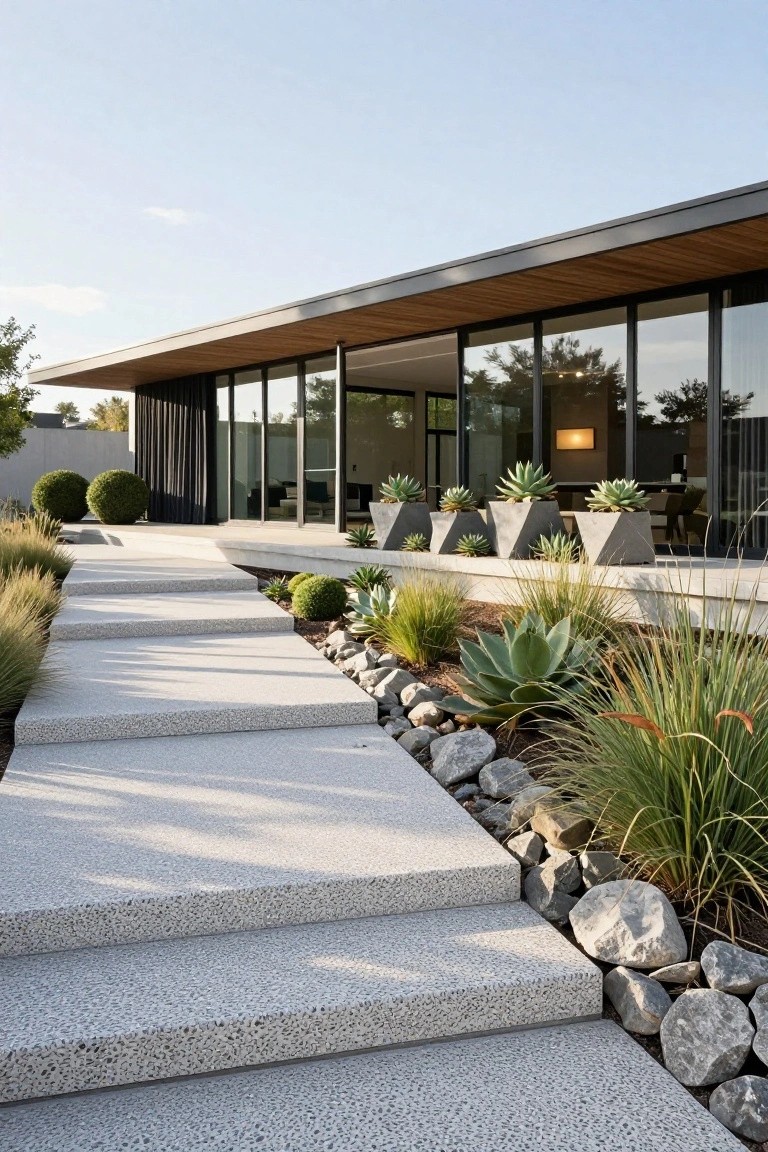
Wide concrete steps like these give a clean path right up to the door. What sets them apart is the edging of loose rocks and clusters of tough succulents, mostly agaves, mixed with tall grasses. It keeps things low fuss while echoing the house’s sharp modern lines. No fussy flowers or mowing needed.
This setup fits homes in dry or sunny yards best. Go for local drought-tough plants that handle poor soil. The textured concrete holds up to foot traffic, and rocks help with drainage. Just keep it sparse so the steps stay the focus.
Raised Beds Right by the Patio
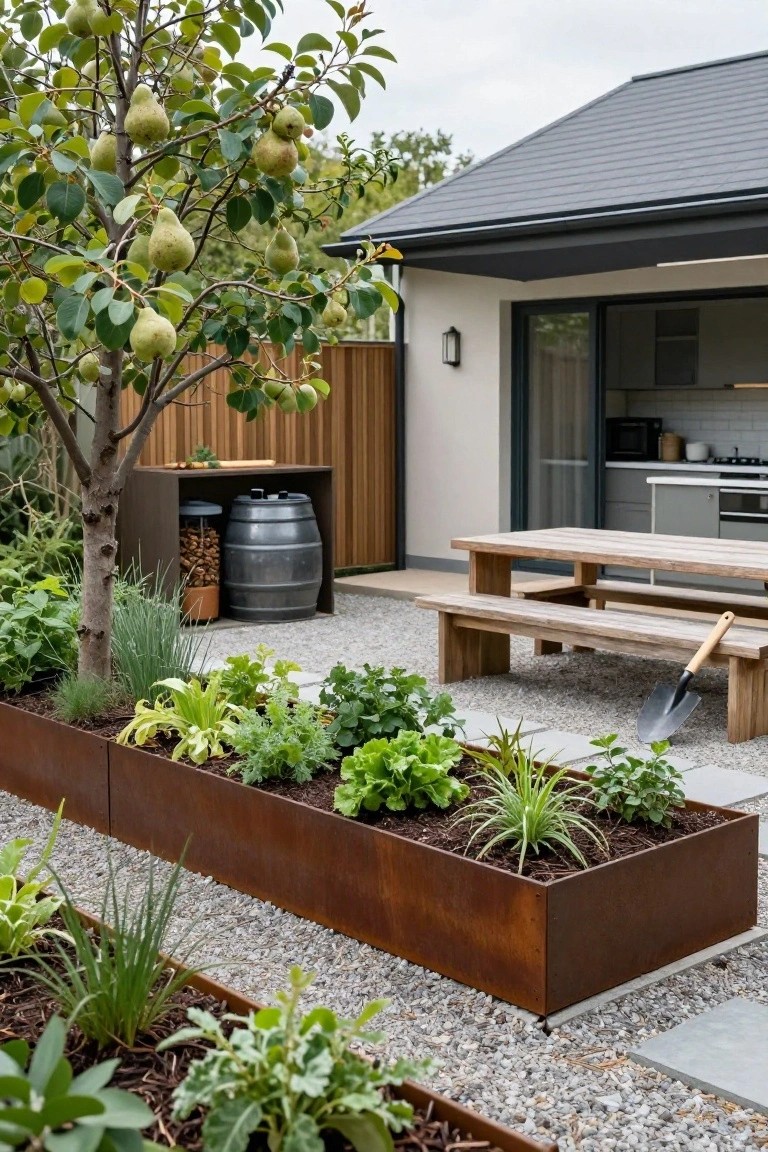
One straightforward way to grow your own herbs and veggies is with long raised beds like these, built from corten steel. They’re filled with lettuce, greens, and herbs, running alongside a simple gravel patio. That rusty metal finish looks right at home with the nearby wooden dining table and pear tree, keeping things practical and tied to nature without much fuss.
Put them close to your kitchen doors, like here, so you can grab fresh picks while cooking. They suit smaller yards or modern setups where you want easy outdoor growing. Go for good drainage in the soil, though. Metal can warm up fast in the sun.
Compact Outdoor Kitchen by the Pool
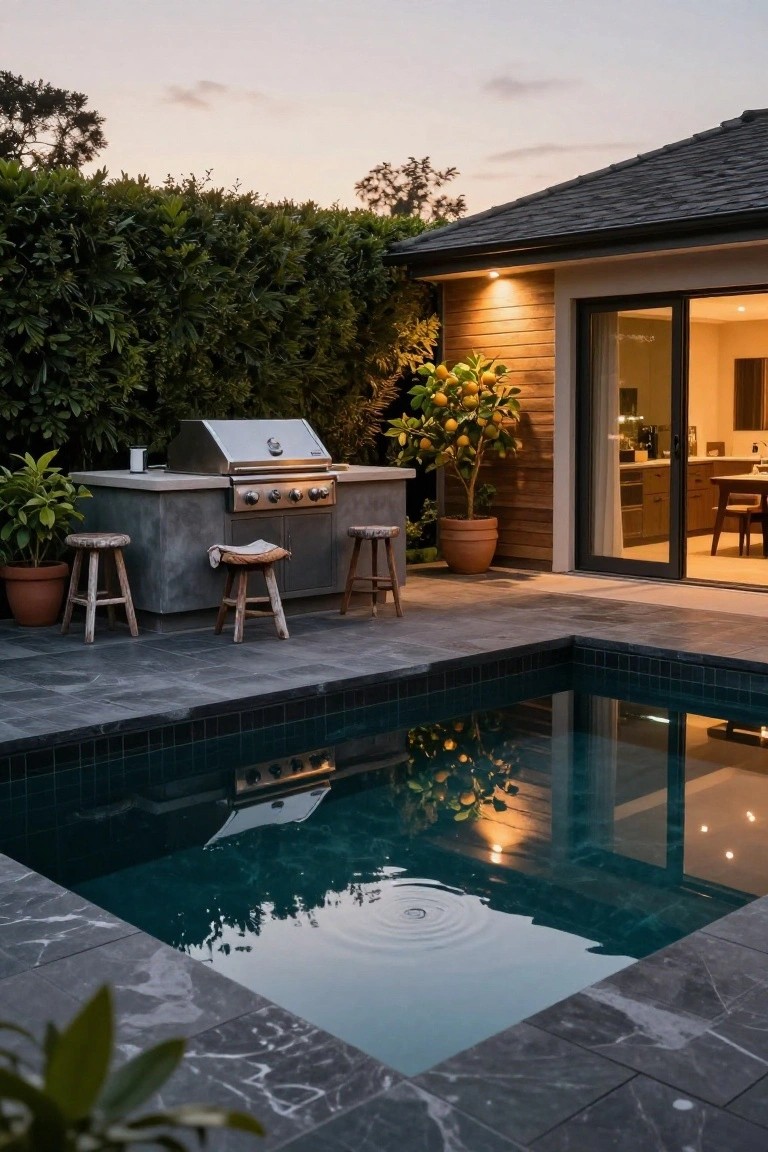
A built-in grill sits on a sturdy concrete counter with a couple wooden stools. Right next to it, a small pool keeps things close and easy. The sliding doors from the house open wide, so you cook inside or out without missing a beat. It’s practical for everyday use, not fussy.
This works best in smaller backyards where you want one spot for cooking and relaxing. Use concrete or stone for the island, it holds up to weather. Pair it with a plunge pool if space is short. Suits modern homes that blend kitchen and yard.
Pools That Mirror the Garden
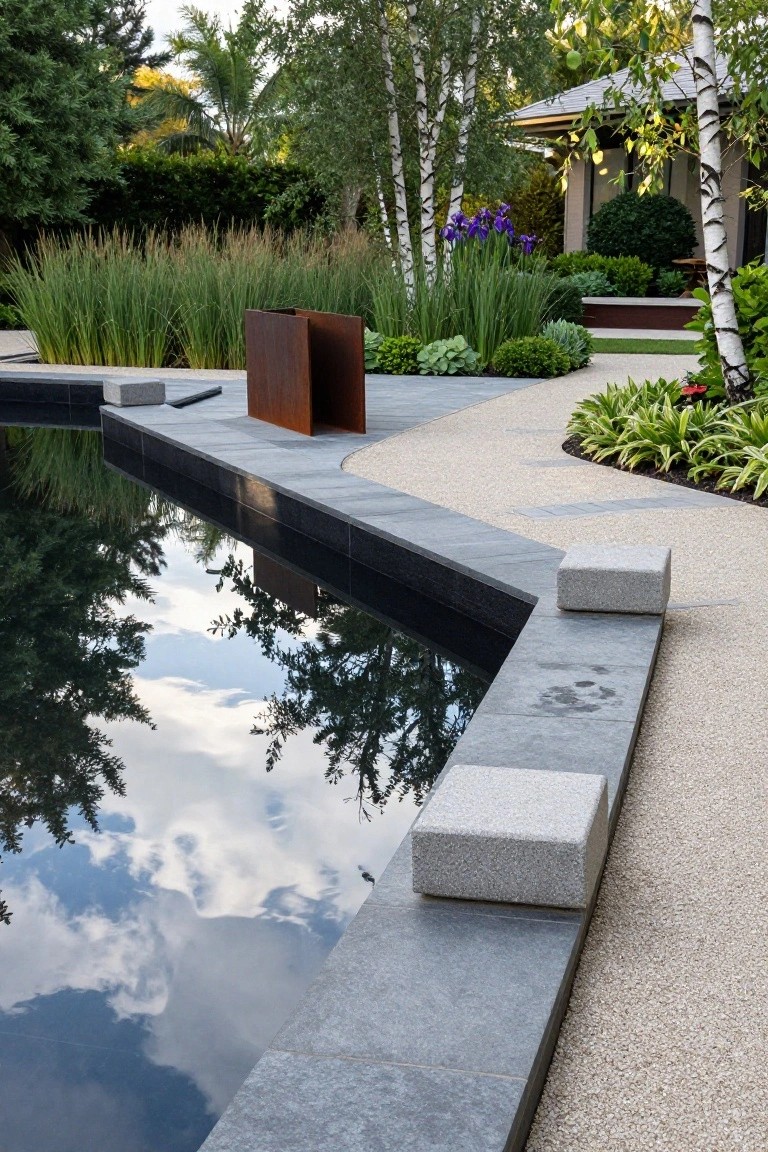
A dark pool like this one turns the water into a perfect mirror for the surrounding trees and sky. You see the birch trunks and clouds right there on the surface. It makes the whole yard feel twice as big and pulls the garden right into the pool area. No busy tiles or lights to distract. Just clean reflection that ties everything together naturally.
This works best in modern backyards where you want low-key outdoor living. Line the pool dark and keep edges simple with stone or concrete. Add gravel paths for easy walking around. It suits homes with tall trees nearby. Keep the water clear though. Algae shows up fast on dark bottoms.
Raised Stone Beds Along Pathways
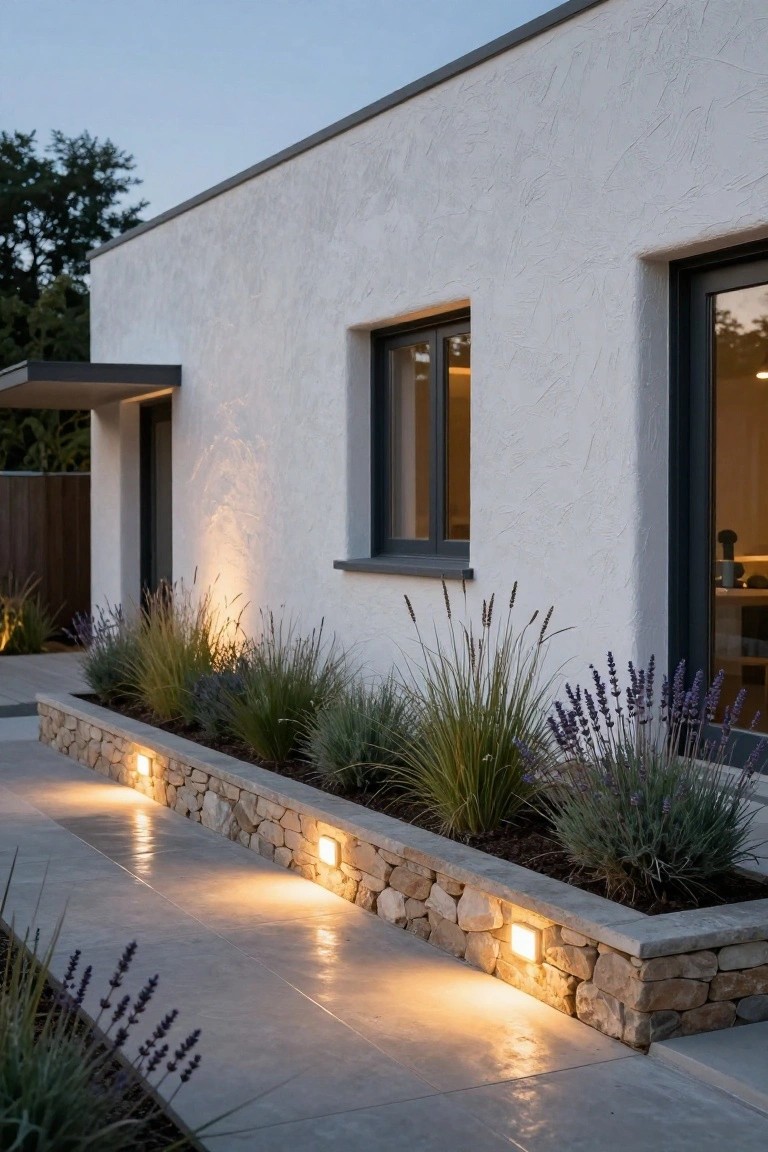
One straightforward way to blend a modern house with its garden is to run raised stone beds right alongside the main path. Here you see a low dry-stacked stone wall holding back tall grasses and lavender, keeping everything neat without feeling too fussy. The plants add some natural movement against the clean white walls and gray path, and those built-in lights make it welcoming at night.
This setup works great for side entries or back walkways where you want low upkeep but still some green interest. Use drought-tolerant stuff like pampas grass or lavender so it doesn’t need constant watering. It suits flat yards or modern homes with simple lines. Just keep the stone local if you can, to match the feel.
Frequently Asked Questions
Q: How do I pick plants that actually blend with my modern house exterior?
A: Look at your house’s colors and materials first. Pick native plants or ones with similar tones, like silvery grasses against gray siding or deep greens near wood accents. They grow happy in your climate too.
Q: What if my yard is super small, like just a patio?
A: Go vertical. Train vines up trellises or stack planters along walls to mimic those big designs without eating space.
Q: Can I pull off one of these looks without spending a ton?
A: Start with mulch and gravel paths. They define areas cheap and fast, then add a few statement plants you love.
Q: How often do these gardens need upkeep to stay sharp?
A: Trim once a month and weed weekly at first. After that, nature does most of the work if you chose the right low-fuss plants.
