

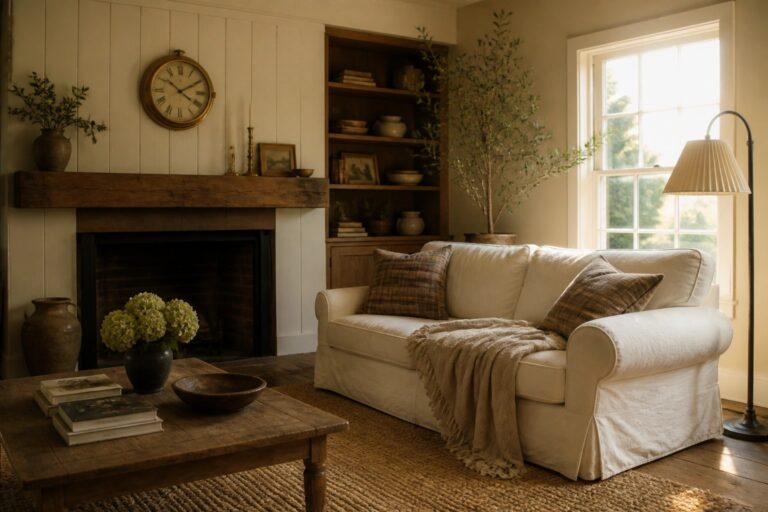
I have found that paint color choices tend to shape how a room settles once the furniture and daily light patterns are in place.
Beige shades often work best when they pick up on the wood tones and textiles already in the space rather than fighting them.
The light in each room decides more than the sample suggests.
I usually tape a few options to different walls and live with them for a week before deciding which one feels right for the main living areas.
Over time those small shifts in tone from morning to evening light determine whether the room feels balanced or just painted.
Warm Beige Walls in Farmhouse Living Rooms
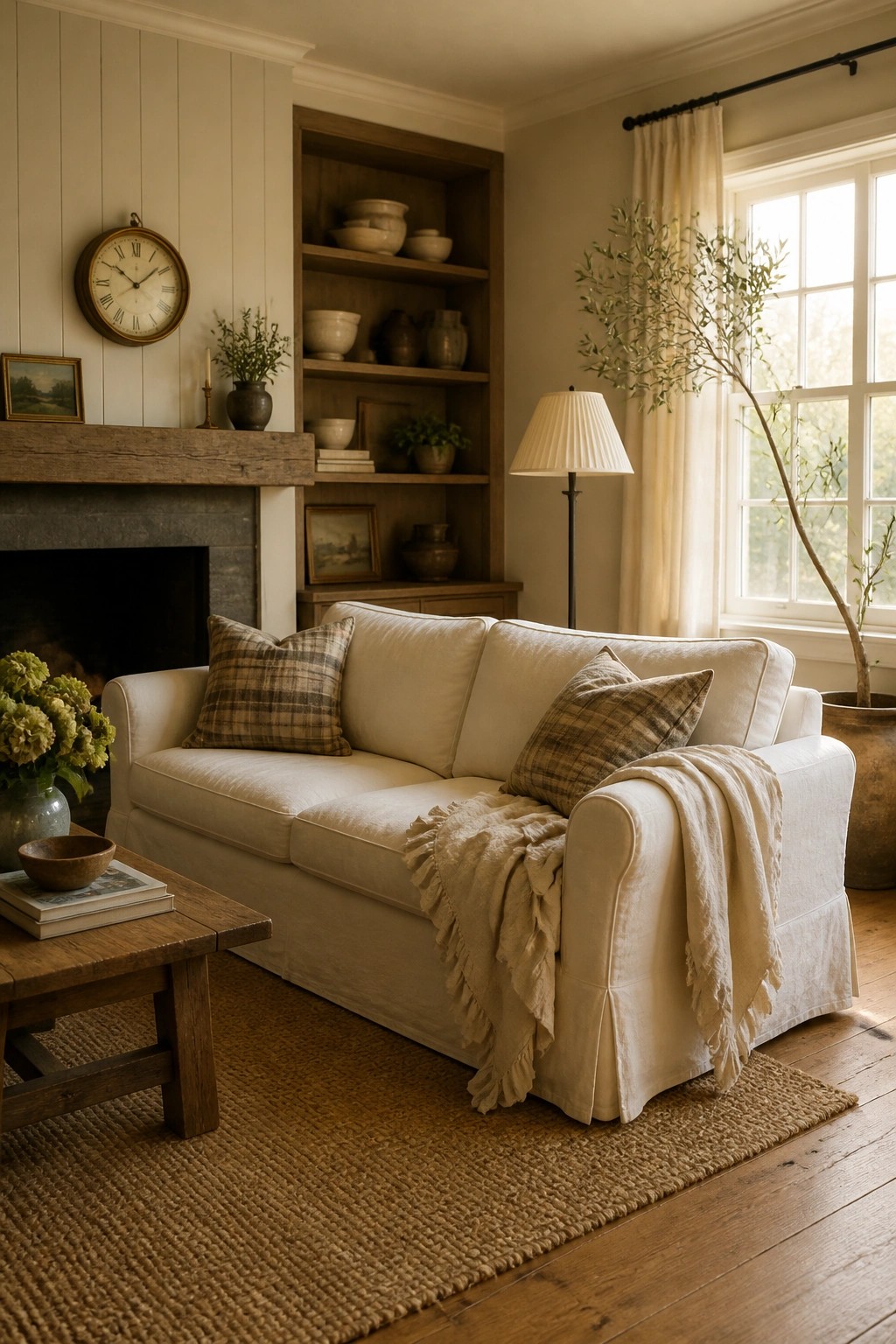
A warm beige on the walls sets a calm base that lets wood tones and simple fabrics feel more natural. It works especially well in rooms that already have built-ins and older trim, since the color keeps everything from feeling too stark.
This shade suits homes that get good daylight and pairs best with slipcovered pieces and natural rugs. Test it on a large board first, because the tone can shift quite a bit depending on the light.
Warm Beige Cabinets for a Calm Kitchen
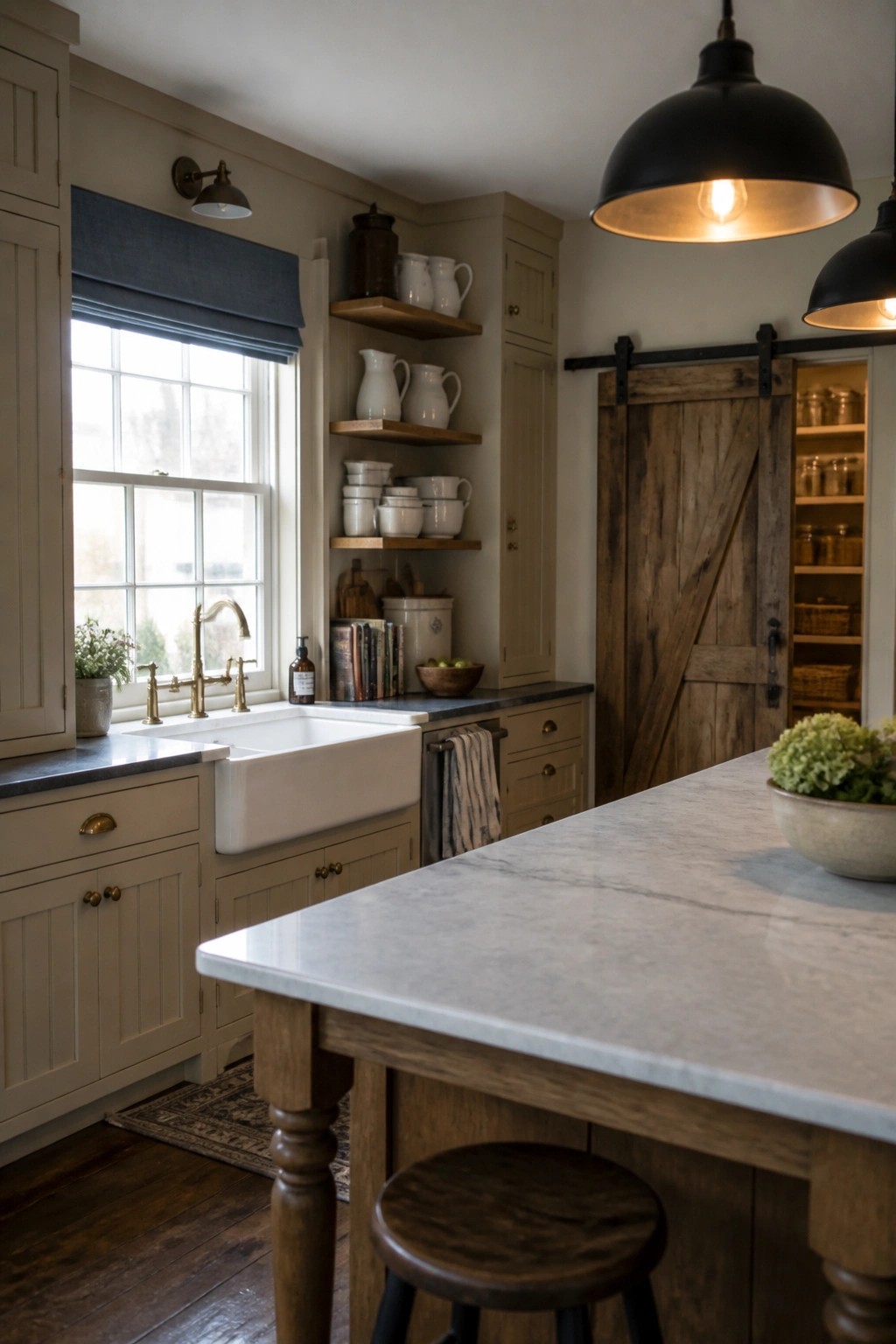
Warm beige works well on cabinets because it gives the whole space a soft, steady look without feeling too stark or too dark. The color sits nicely between warm and cool, so it pairs with wood tones and stone without fighting them. Many older kitchens feel more settled once the cabinets move away from bright white.
This choice suits homes that want a simple, lived-in feel rather than a crisp modern one. Keep the walls in a similar tone so the room reads as one quiet layer instead of a mix of separate colors. It also leaves room to add darker accents later if the space starts to feel too light.
Warm Beige Paint For Everyday Dining Rooms
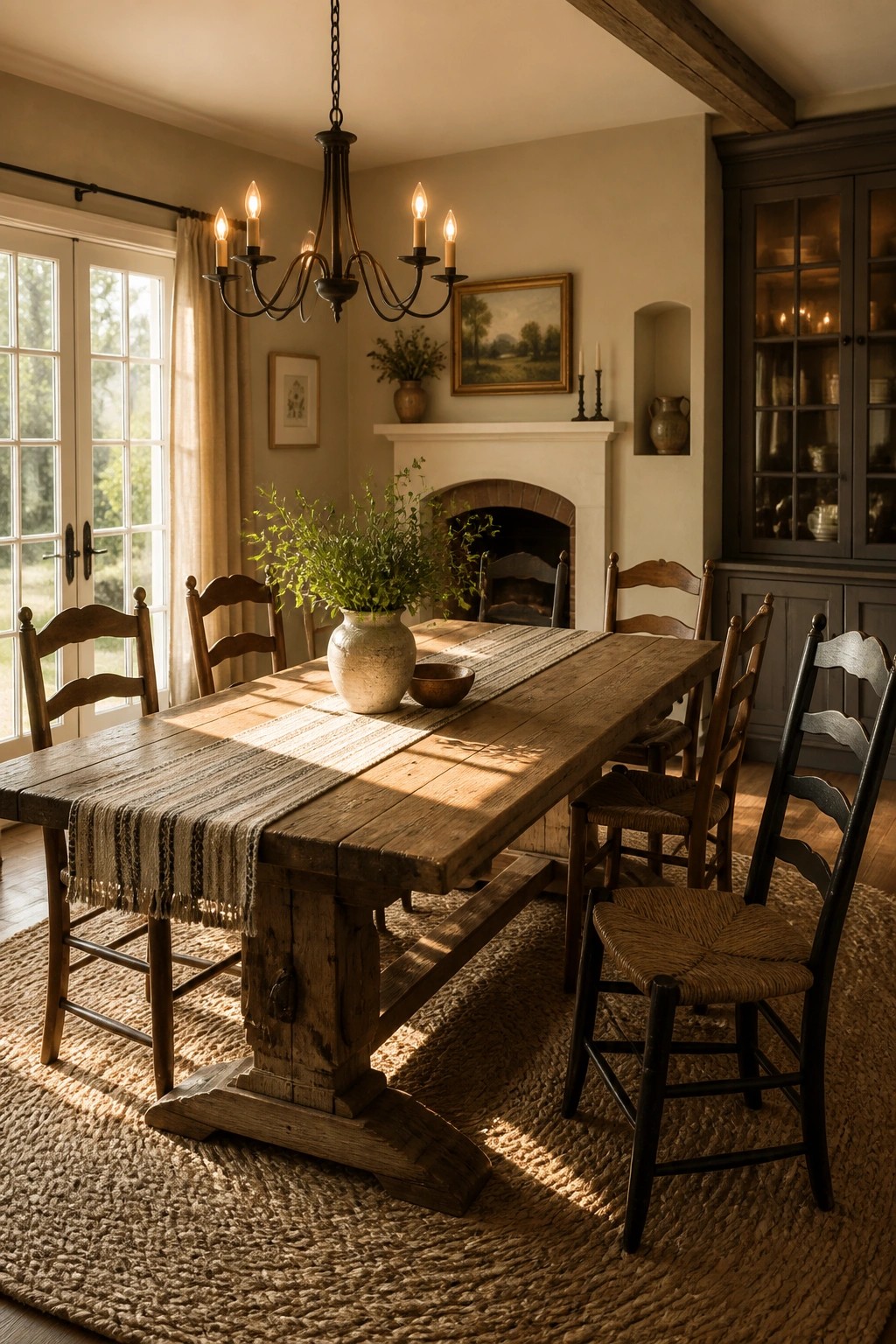
Warm beige paint gives a dining room a quiet backdrop that lets wood furniture and simple textures do the work. It keeps the space from feeling too bright or cold, especially when sunlight moves across the table during the day.
This shade works best in rooms that already have older wood floors or built-in details like a brick fireplace. Stick with the same tone on trim and ceiling so the walls blend in rather than stand out.
Warm Beige Bedroom Walls
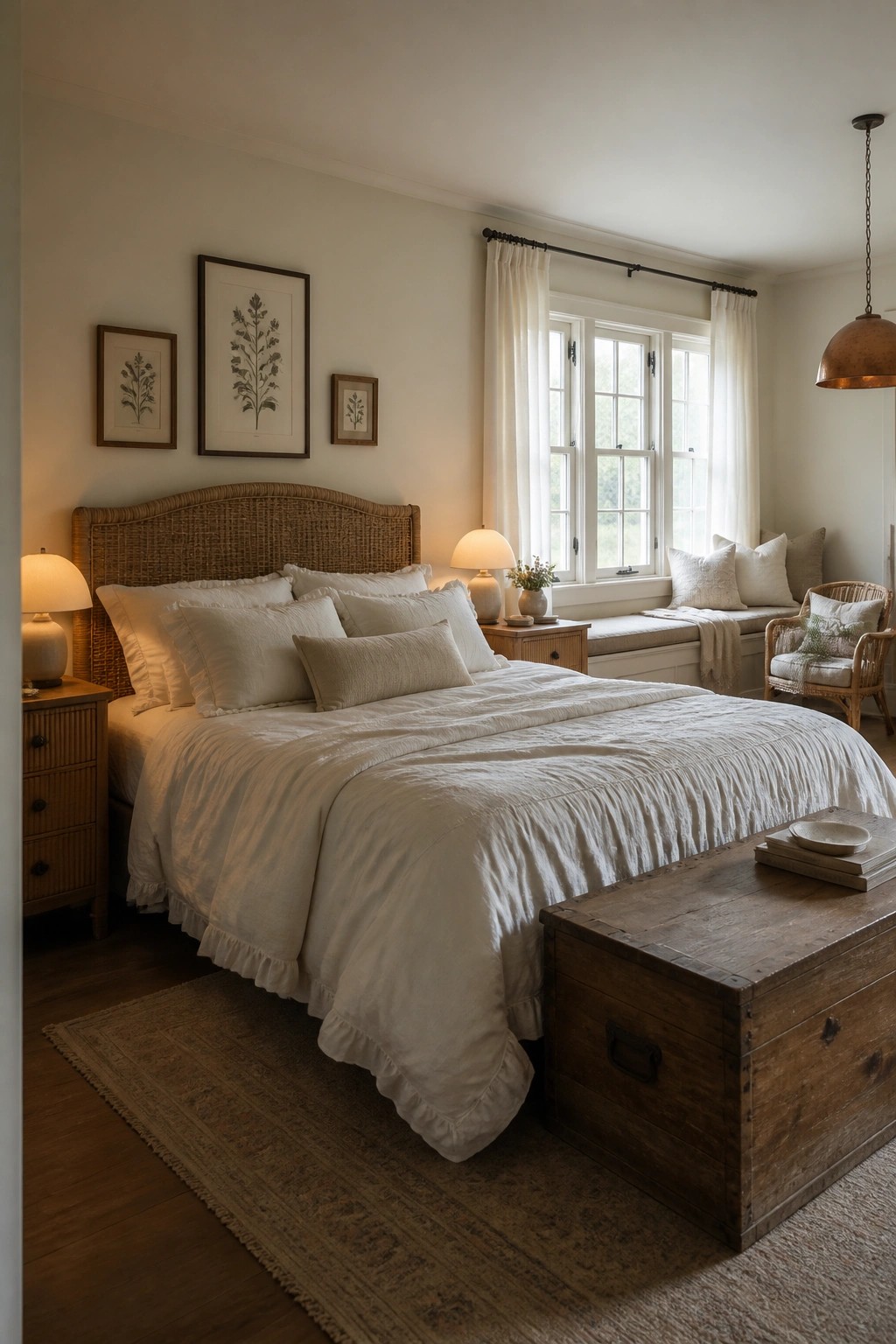
A warm beige on the walls gives a bedroom that soft, settled look many people want in a farmhouse home. It feels calm and easy to live with, especially when the rest of the room stays simple.
This color works best in spaces that get good daylight. It pairs nicely with white or off-white bedding and natural wood pieces, so the room stays light without turning stark.
Warm Beige For A Nursery
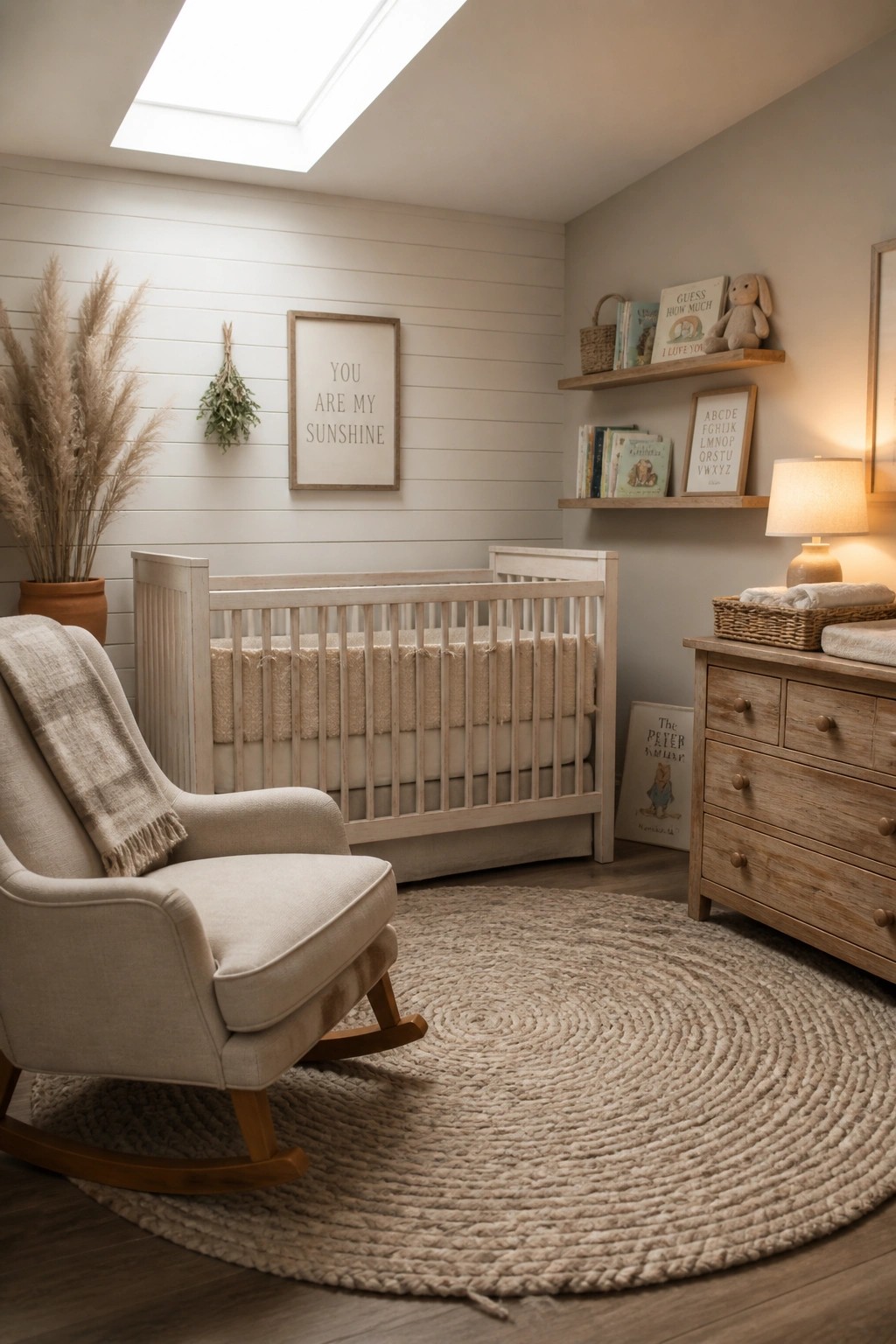
A warm beige works well in a nursery because it keeps the space calm without feeling cold or too bright. The color sits softly on the walls and lets the room feel gentle even when light changes throughout the day.
It pairs easily with light wood furniture and simple fabrics. Use it in smaller rooms where you want the space to feel cozy rather than stark, and keep the trim and ceiling light so the beige stays the main focus.
Built-Ins Painted In Warm Beige
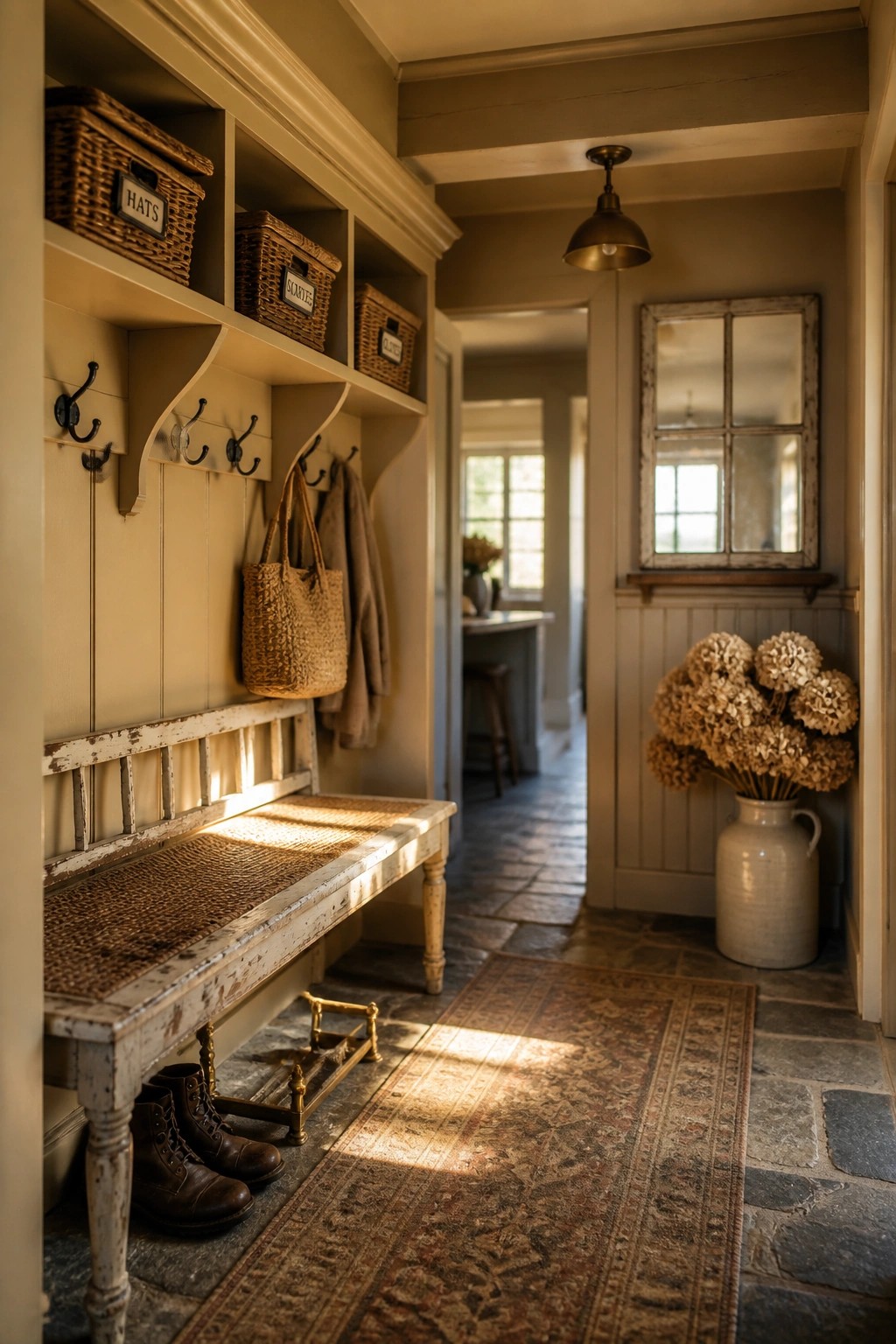
Built-ins painted in a soft beige can turn a basic entry into a space that feels both useful and calm. The color keeps the woodwork from looking heavy while still showing off the shelves and hooks in a simple way. It works especially well in farmhouse homes where you want the entry to handle daily clutter without feeling busy.
This approach suits homes that need practical storage near the door. Keep the paint finish slightly matte so the beige reads warm rather than flat, and avoid overcrowding the open shelves so the color stays the main feature.
Warm Neutrals For A Home Workspace
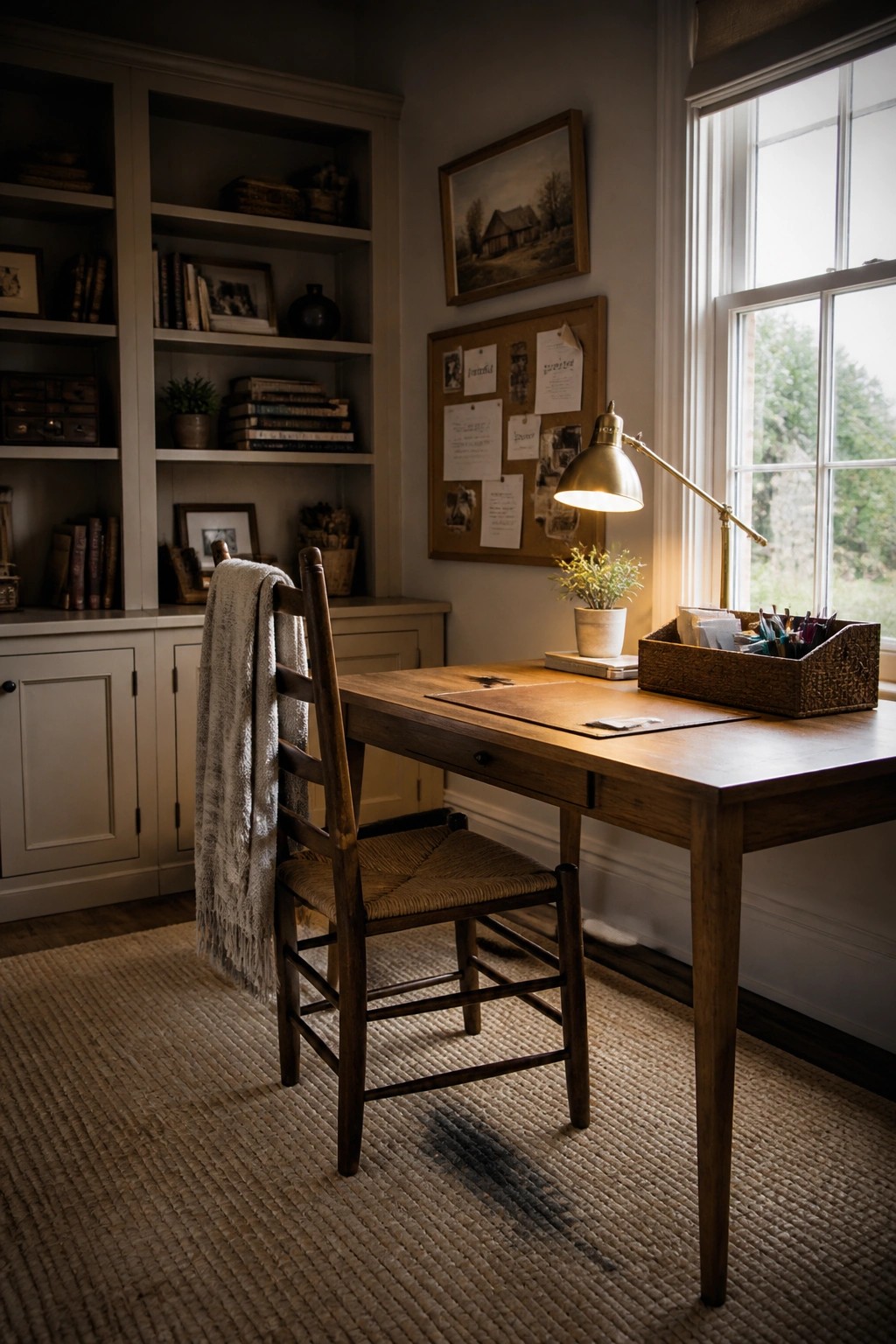
A soft neutral wall color helps a workspace feel calmer and more lived in. It lets the wood tones and simple furnishings stand out without competing for attention.
This kind of paint choice suits smaller rooms or any space that needs to feel useful but not stark. Keep the undertones warm so the room stays inviting even when the desk lamp is the main light source at night.
Warm Beige Walls for Bedrooms
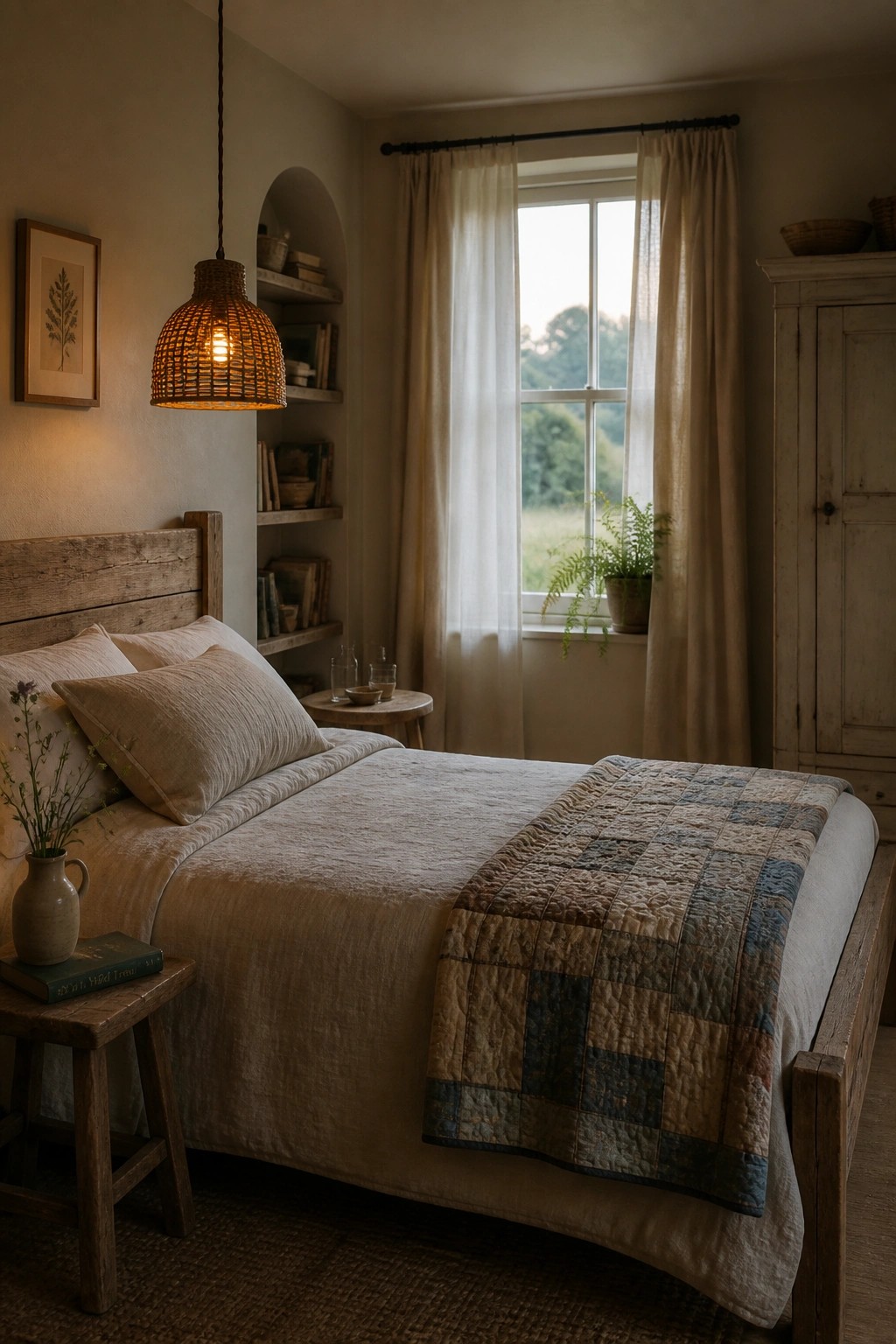
Warm beige walls give a bedroom a quiet, settled feel that works well with older homes and simple furnishings. The color sits nicely between too light and too heavy, so the room still feels bright enough during the day while staying soft at night.
This approach suits spaces that already have wood tones and neutral textiles. Keep the trim and ceiling a touch lighter so the walls do not close in, and test the paint on a larger patch first since beige can shift a lot with changing light.
Warm Beige Paint For Built In Nooks
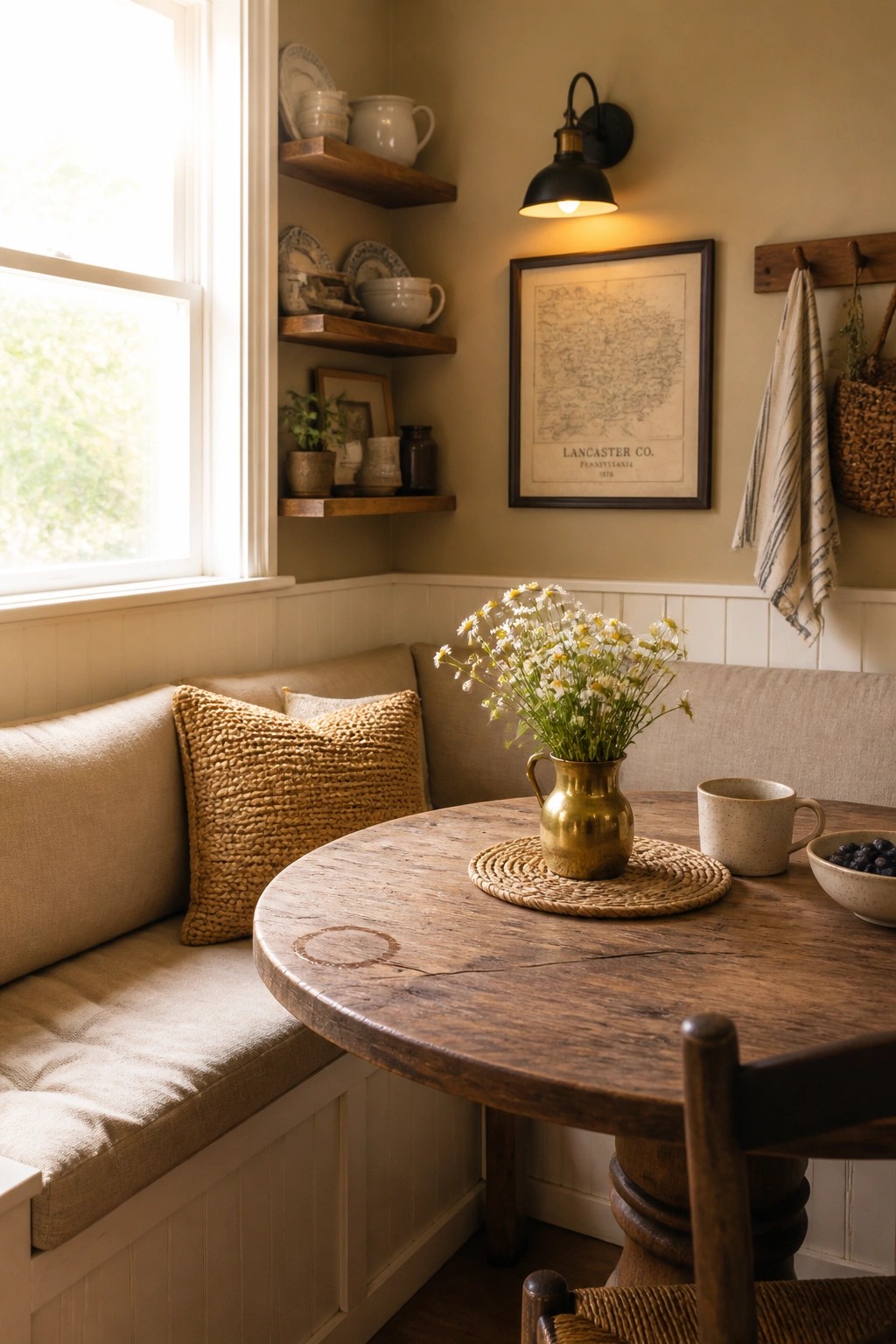
Warm beige works well on walls that wrap around built in seating because it keeps the whole area feeling soft and connected. The color adds just enough warmth to balance the wood tones without making the space feel closed in.
It suits farmhouse homes that already have trim, shelves, and natural materials in place. Try it in corners where you eat or gather often, and keep the trim a clean white so the beige stays gentle rather than heavy.
Warm Beige Walls For A Cozy Bath
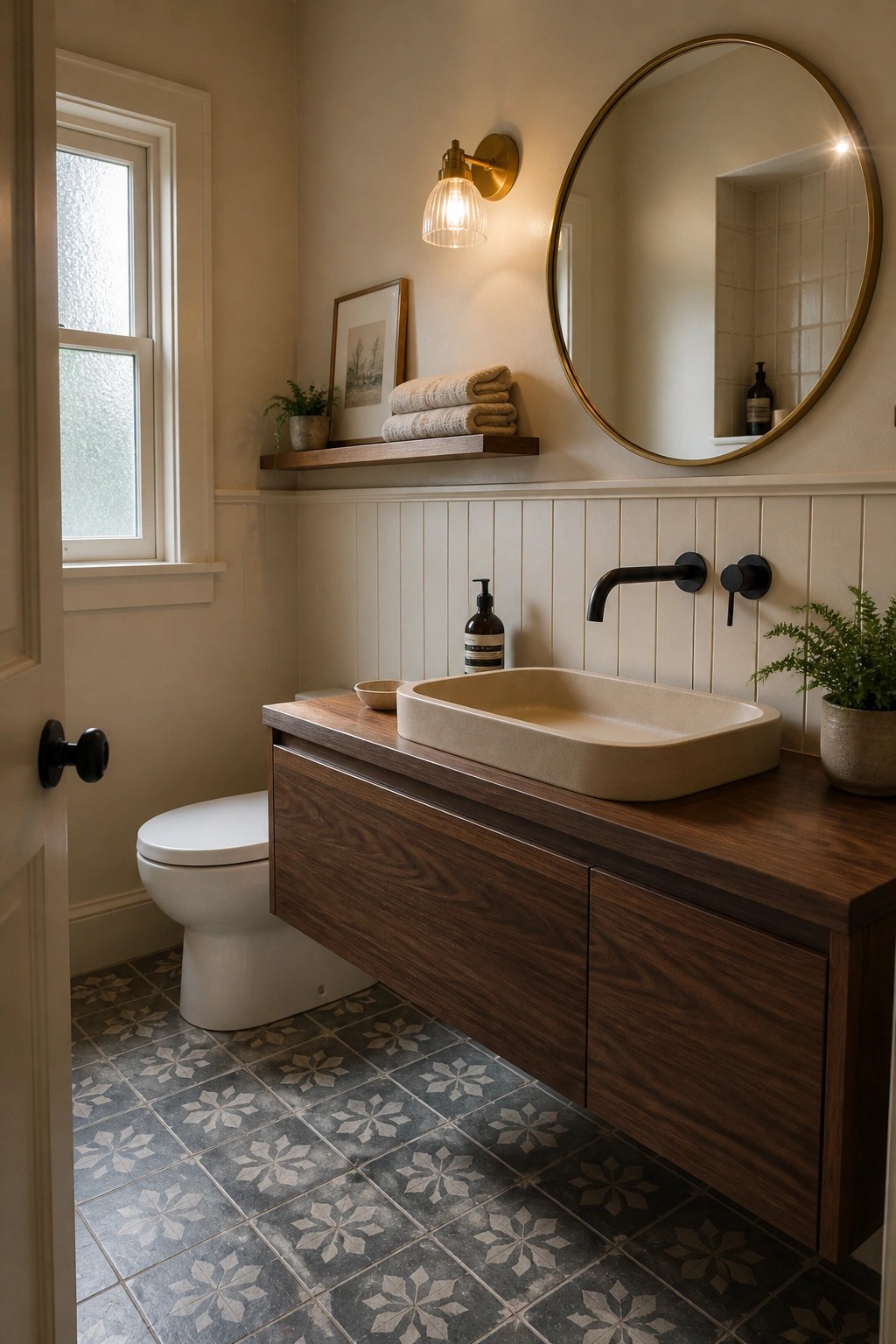
Warm beige paint on the walls gives a bathroom that soft, lived-in feel without making the space look washed out. It works especially well when you want the room to feel calm and a little warmer than plain white, particularly in smaller baths where light can bounce around.
This color choice suits older homes or any space that leans farmhouse but still needs to handle daily use. Keep the finish slightly satin so it wipes clean easily, and test the shade in both daylight and at night since beige can shift more than you expect once the lights are on.
Soft Green Paint For Laundry Rooms
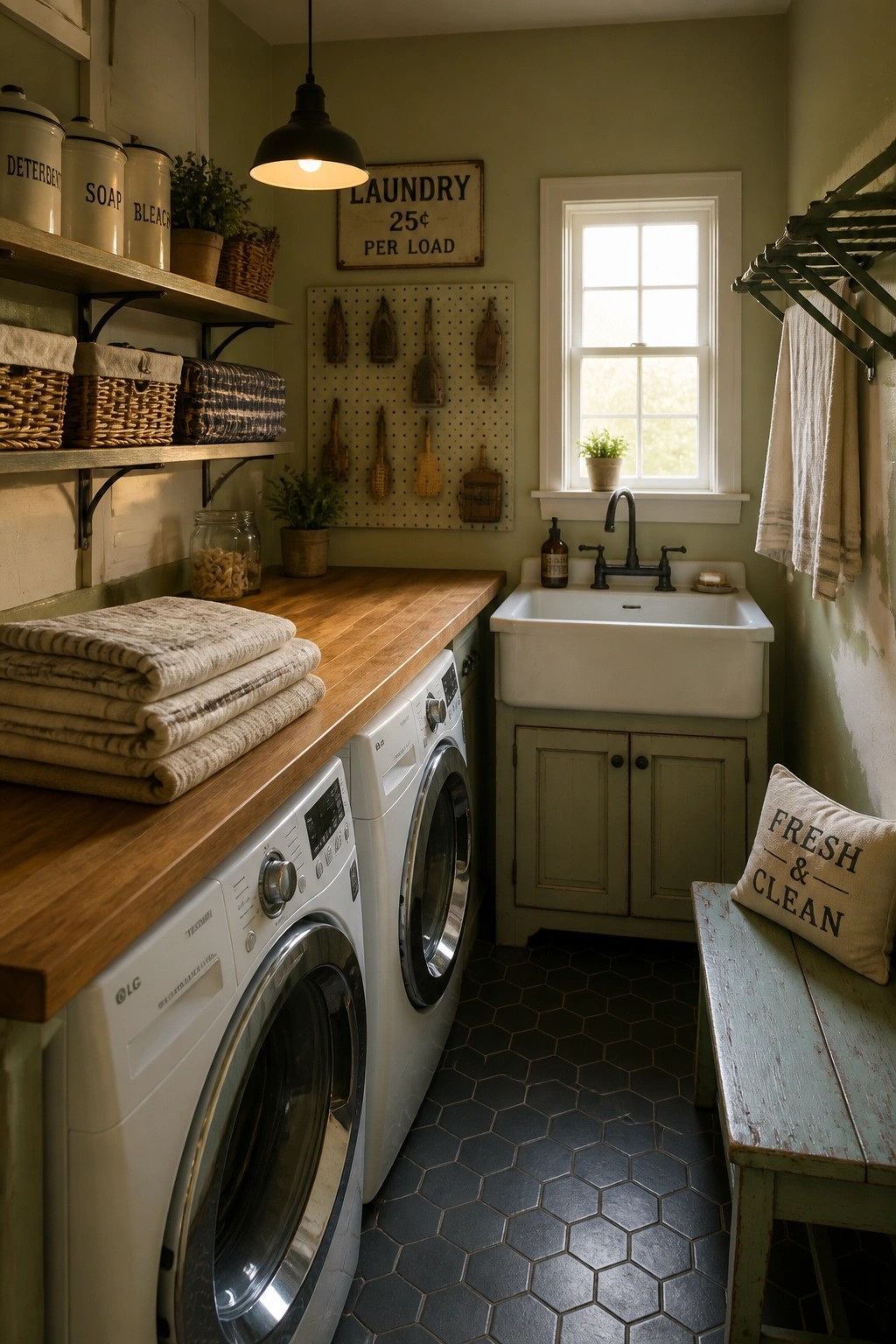
A soft muted green on the walls turns a basic laundry room into a space that feels calmer and more finished. The color keeps things light while adding just enough warmth to prevent the room from feeling cold or purely functional.
This approach works best in smaller homes or older houses where the laundry area sits near living spaces. Stick with simple wood tones and white fixtures so the paint color stays the main source of softness without competing for attention.
Warm Beige Across Walls And Tile
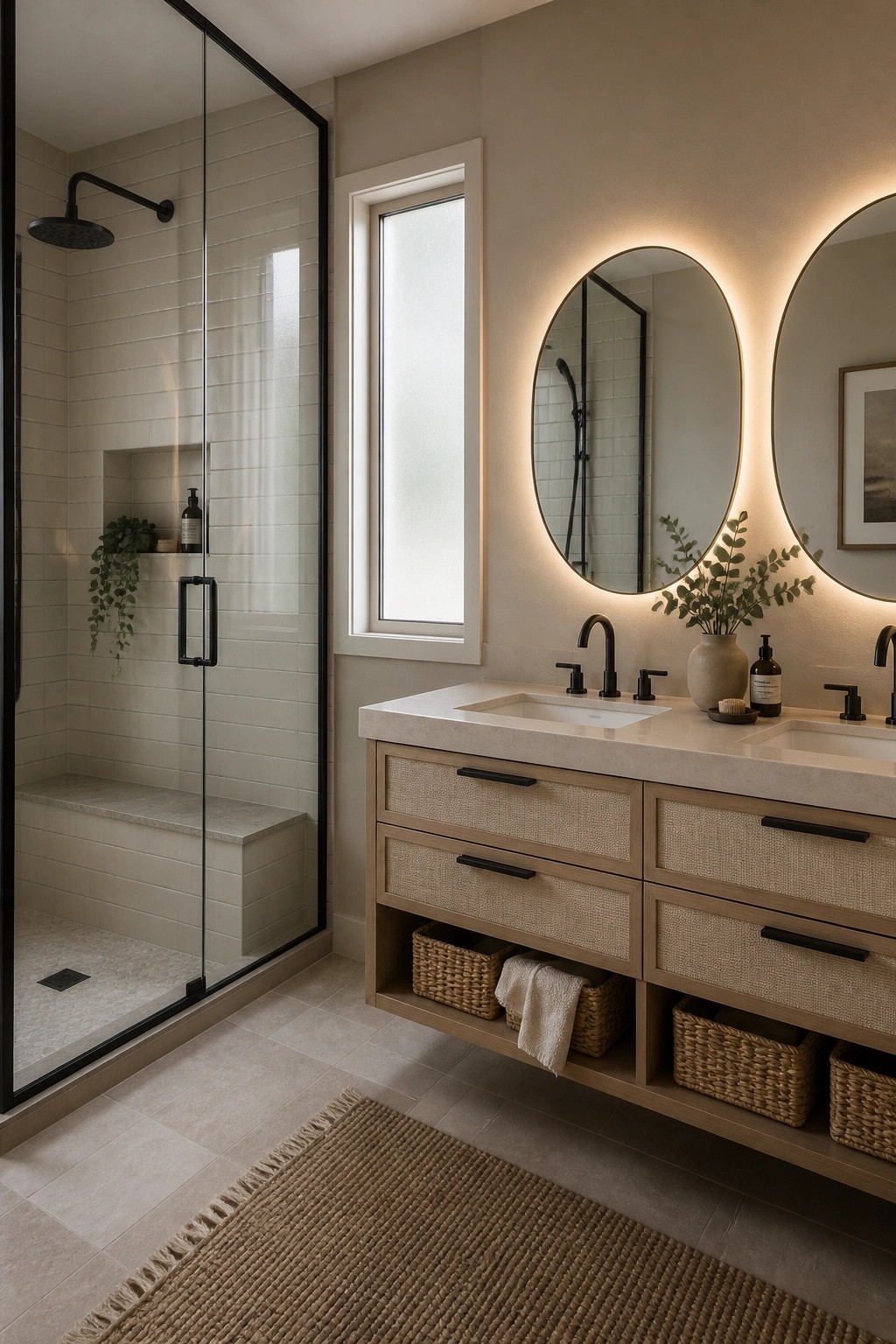
Carrying the same warm beige from the walls straight into the shower tile creates a calmer bathroom that feels more like one connected space. The color stays soft instead of breaking up into separate zones, which helps smaller rooms feel a little bigger and less busy.
This works well in farmhouse homes where you already plan to use beige paint in the main rooms. Stick with matte or slightly textured tile so the finish stays quiet and the color stays the main focus.
Warm Beige For Hallway Walls
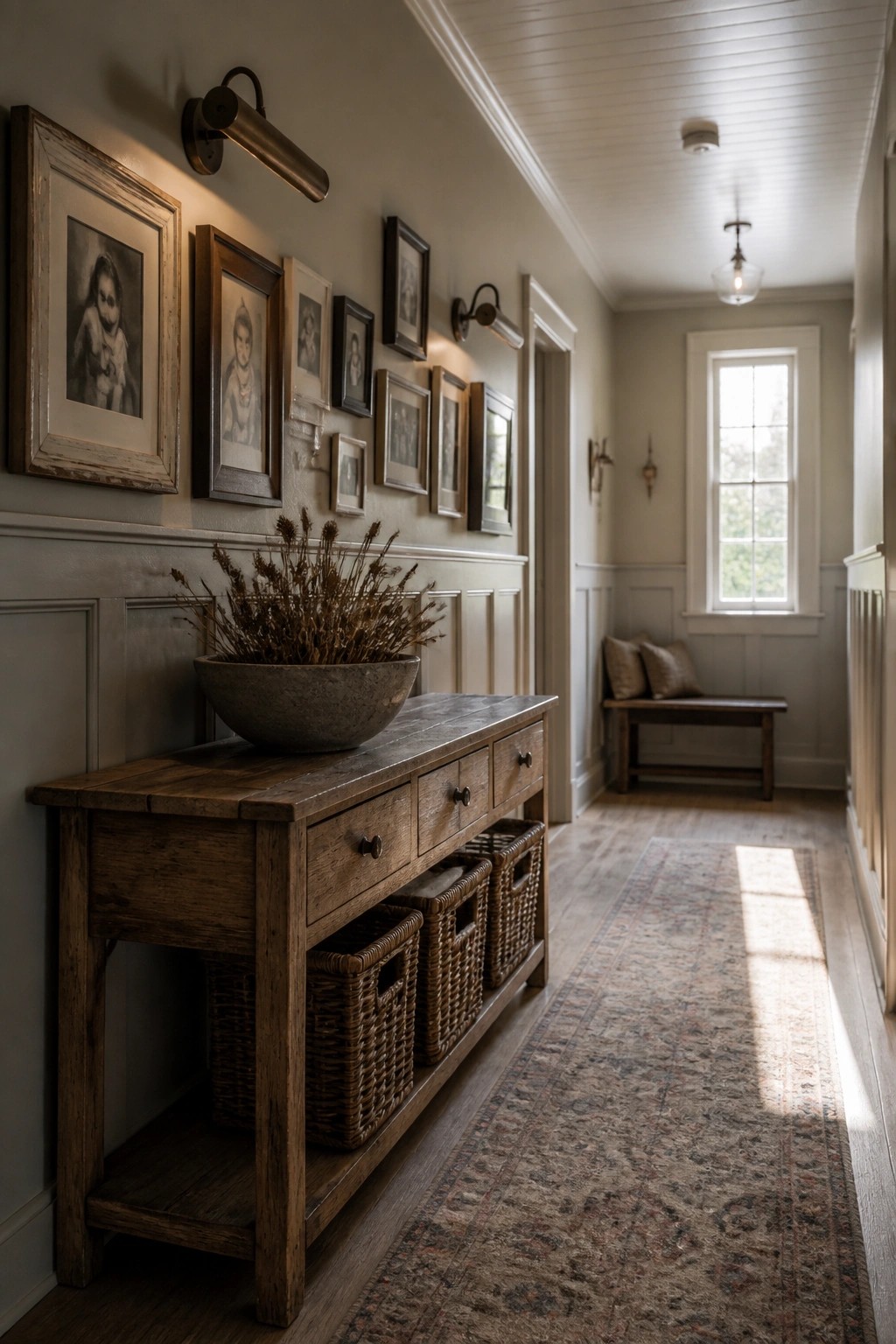
A warm beige paint color can turn a plain hallway into a softer space that feels more welcoming as you move through the house. It adds just enough warmth without making the area feel closed in, especially when the light changes throughout the day.
This color works best in older homes or farmhouse layouts where you want the hallway to connect rooms without standing out. Pair it with white trim and natural wood pieces to keep the look balanced and easy to live with.
Open Shelving in the Pantry
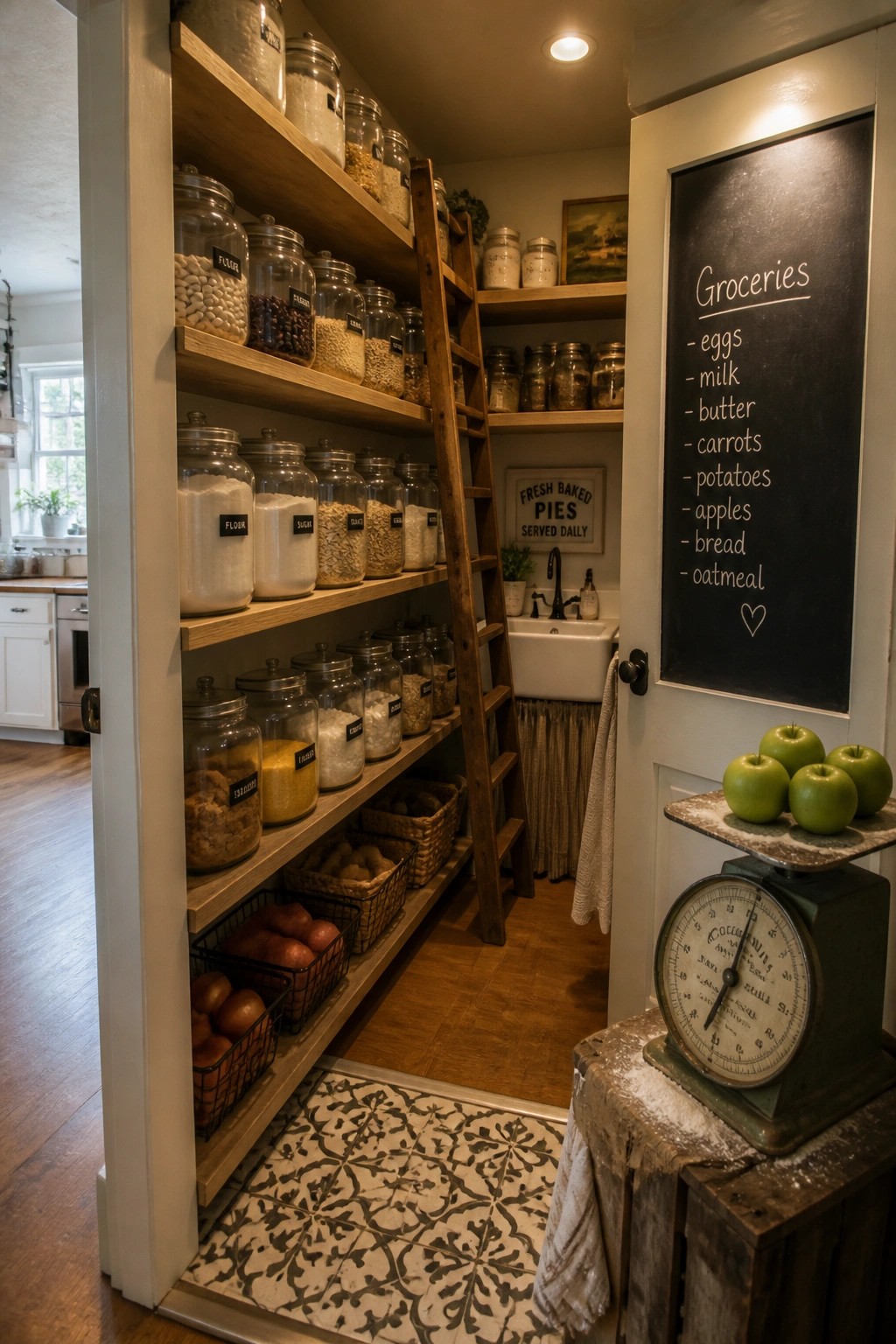
Open shelving works well in a pantry because it keeps everything visible and easy to reach. You can grab what you need without digging through cabinets, and the wood tones add a simple warmth that fits right into a farmhouse kitchen.
This setup suits homes that have a bit of extra wall space near the kitchen. Stick with lighter paint colors on the surrounding walls so the shelves do not feel heavy, and leave enough room between rows for comfortable access.
Warm Beige Walls in Sunlit Rooms
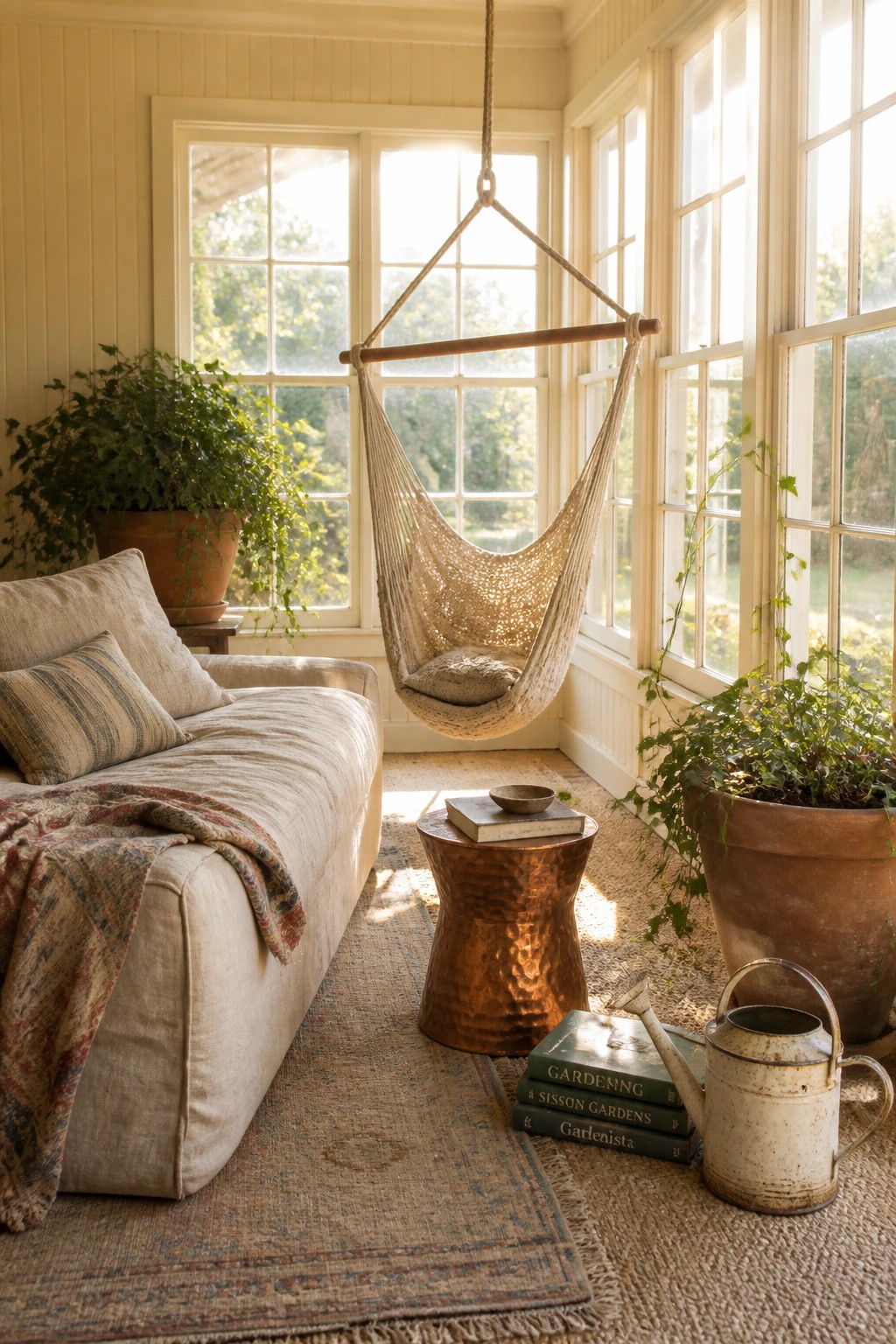
A warm beige paint color works well on walls when a room gets strong natural light throughout the day. It prevents the space from feeling washed out and instead keeps everything soft and grounded, even with large windows all around.
This choice suits older homes or simple farmhouse interiors where you want a calm backdrop that feels lived in. Keep the trim light and let natural textures like linen and wood carry most of the interest so the walls stay quiet.
Warm Beige For A Calm Kids Room
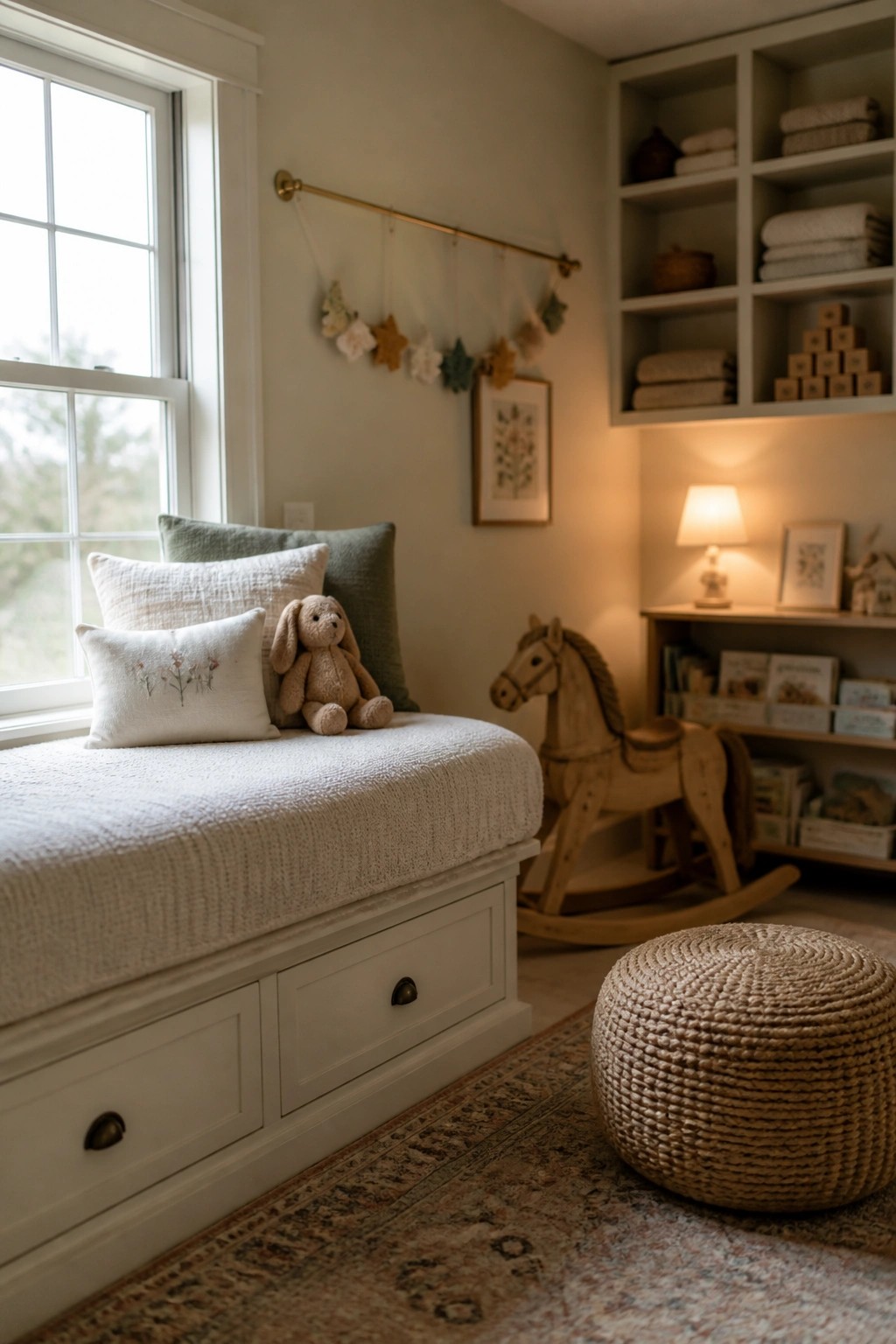
A soft warm beige on the walls gives a child’s room a gentle base that feels welcoming without trying too hard. It keeps the space from feeling stark while still letting white trim and natural textures stand out in a simple way.
This color works best in rooms that get steady daylight, since it stays soft rather than turning dull. Pair it with built-in shelves and a window seat so the room feels practical and calm at the same time.
Warm Beige Walls In Casual Dining Areas
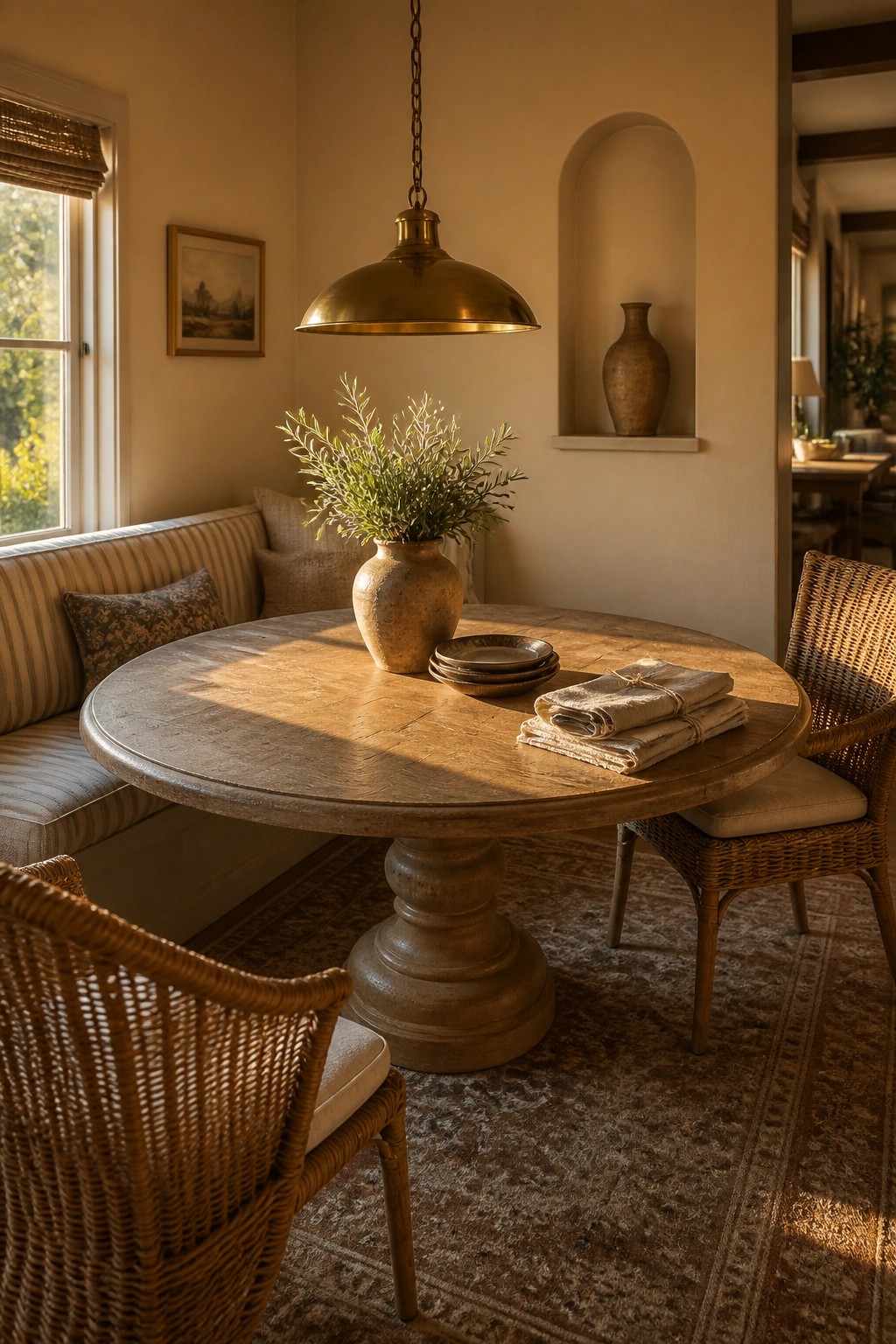
A warm beige paint color works well on walls around a dining table because it keeps the space feeling soft and grounded. The color lets wood tones and simple textures come forward without competing.
This choice suits farmhouse homes that get steady daylight. Keep the trim and ceiling light so the beige stays calm rather than turning heavy.
Warm Beige On Bedroom Walls
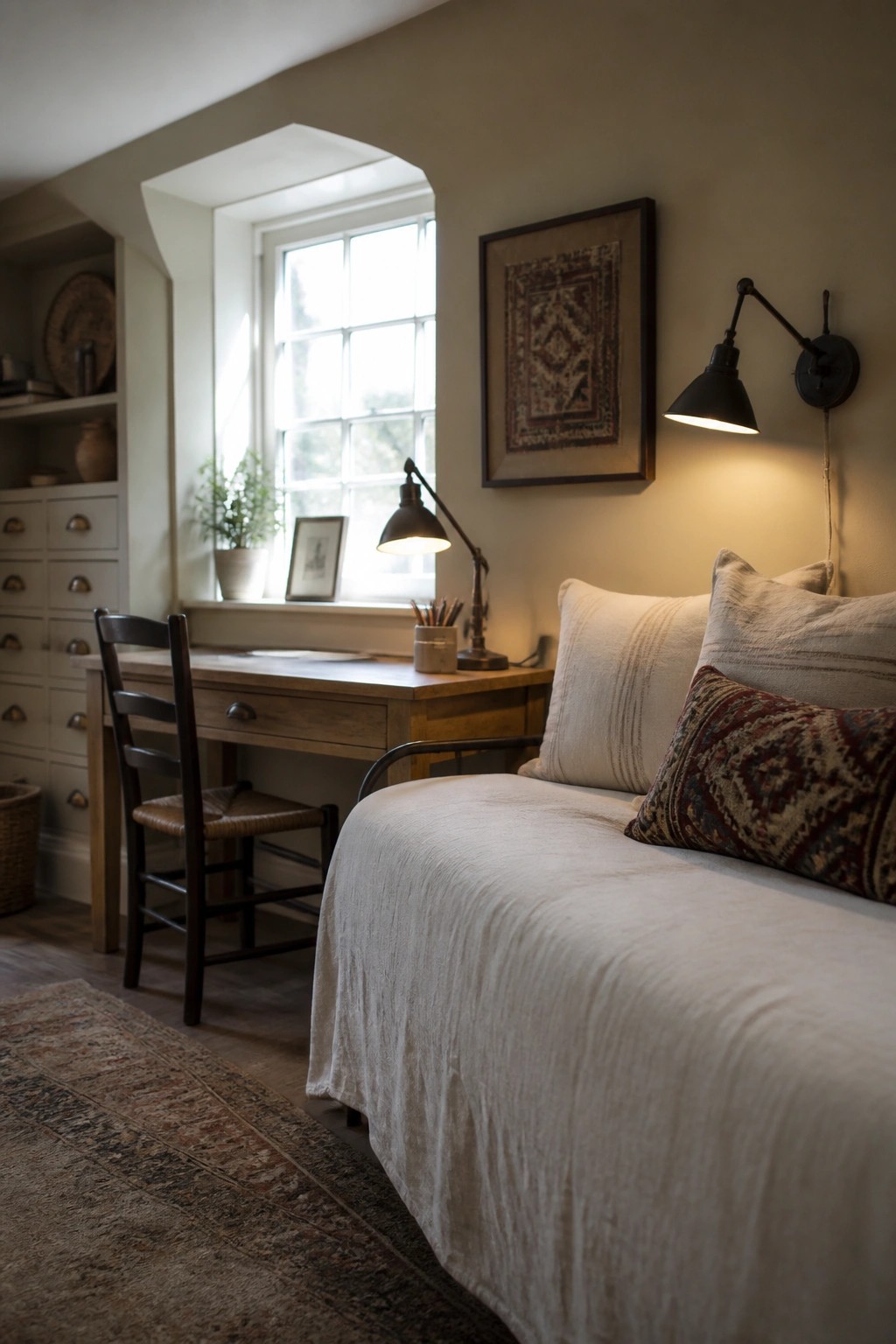
A warm beige works well on bedroom walls because it keeps the space feeling soft without turning too heavy. The color holds up nicely next to wood tones and simple fabrics, and it gives the room a quiet background that still feels lived in.
This shade suits older homes or any bedroom that gets decent daylight. Use it on all four walls, keep the trim pale, and stick with natural textiles so the beige stays the main note rather than competing with stronger colors.
Warm Beige On Fireplace Walls
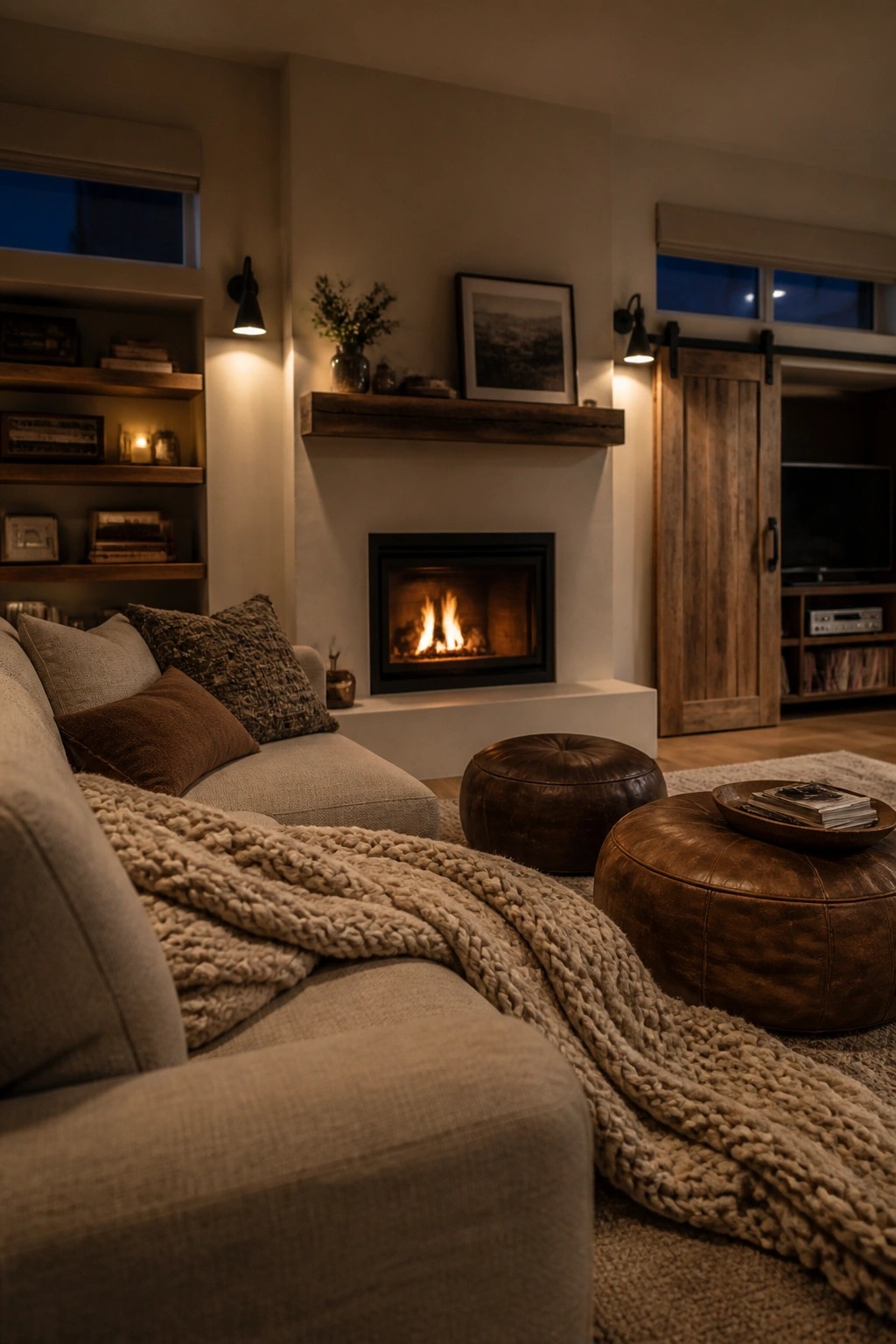
A warm beige paint color works well on walls that frame a fireplace because it keeps the focus on the fire without making the area feel cold or stark. The soft tone blends with wood tones and textured fabrics, which helps the whole room feel pulled together even when the lighting is low.
This approach suits older homes or simpler farmhouse layouts where you want the fireplace to feel like part of the living space rather than a separate feature. Stick with a beige that has a slight yellow or taupe undertone so it does not shift too gray in the evening.
Warm Beige Walls With White Trim
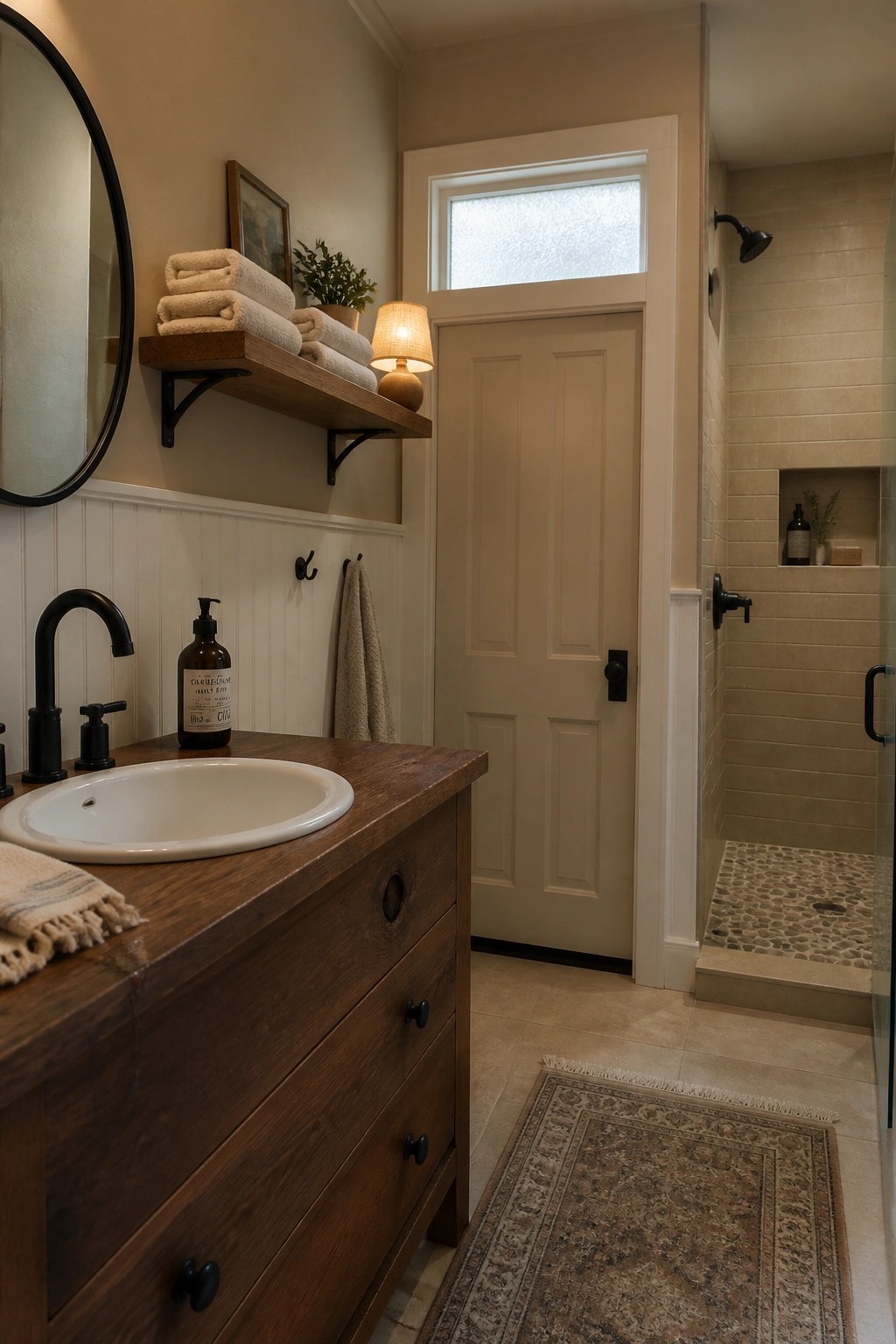
Warm beige paint works especially well in bathrooms because it keeps the space feeling soft without going too dark or too stark. The color sits nicely against white trim and helps tie together wood tones and tile without competing with them.
This approach suits smaller bathrooms or ones that need to feel calm rather than busy. Keep the trim crisp and the wood elements simple so the beige stays the main note in the room.
Warm Beige Walls In The Dining Room
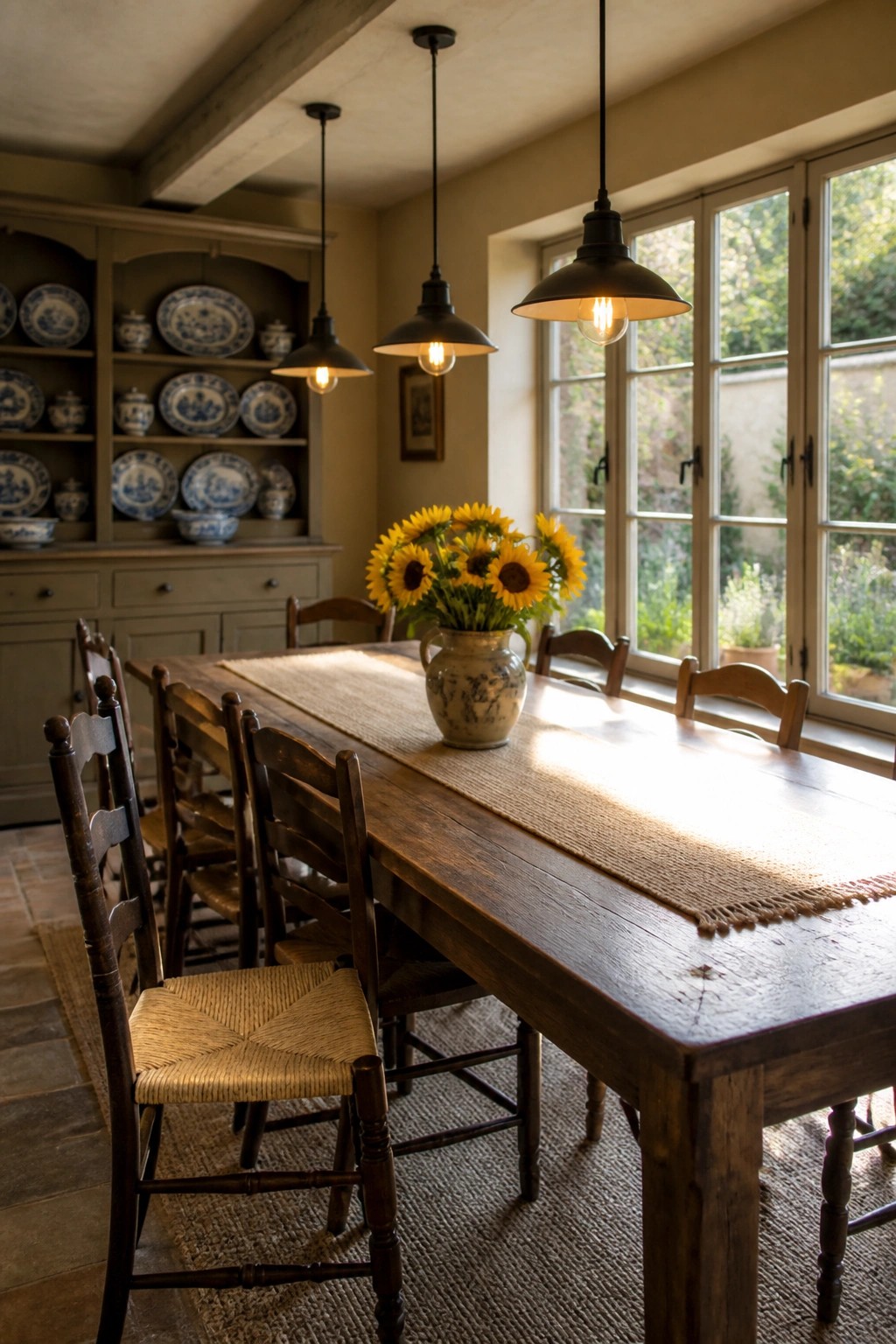
A soft warm beige on the walls helps a dining room feel calmer without losing any of its character. It works especially well when the room already has dark wood furniture and open storage pieces that could otherwise feel heavy.
This color choice suits older homes or simple farmhouse layouts where you want the walls to support the wood tones rather than compete with them. Test the paint on a few boards first, since the same beige can look quite different once the furniture and lighting are in place.
Warm Beige On Upper Bathroom Walls
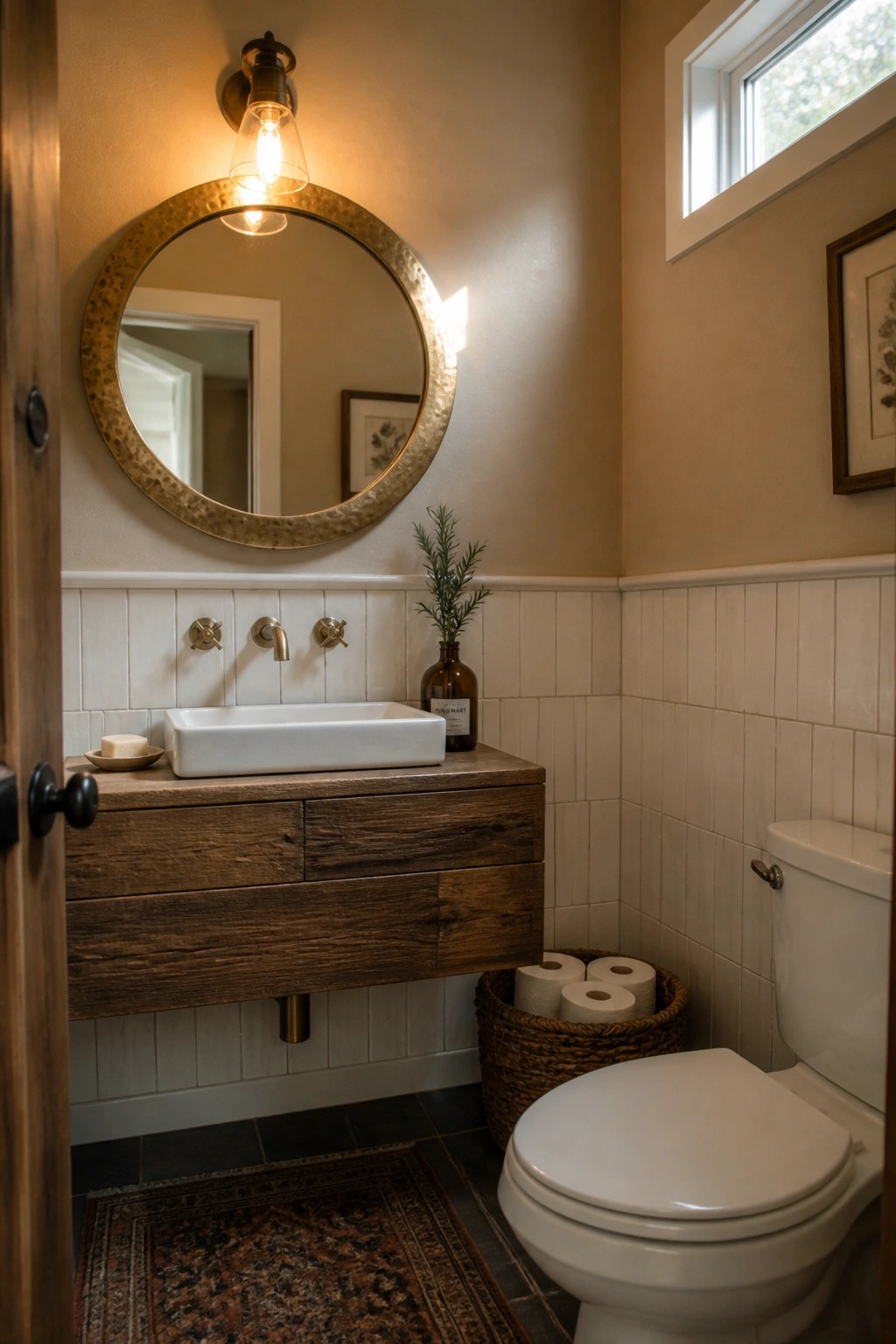
A warm beige paint color above white wainscoting gives a bathroom a softer look that still feels clean. The tone adds a bit of depth without making the space feel closed in, especially when paired with natural wood and simple fixtures.
This approach works best in smaller bathrooms or homes that lean toward farmhouse style. Keep the trim and lower walls bright so the beige reads as warm rather than muddy, and test the paint in both daylight and evening light before committing.
Match Built-Ins To The Wall Color
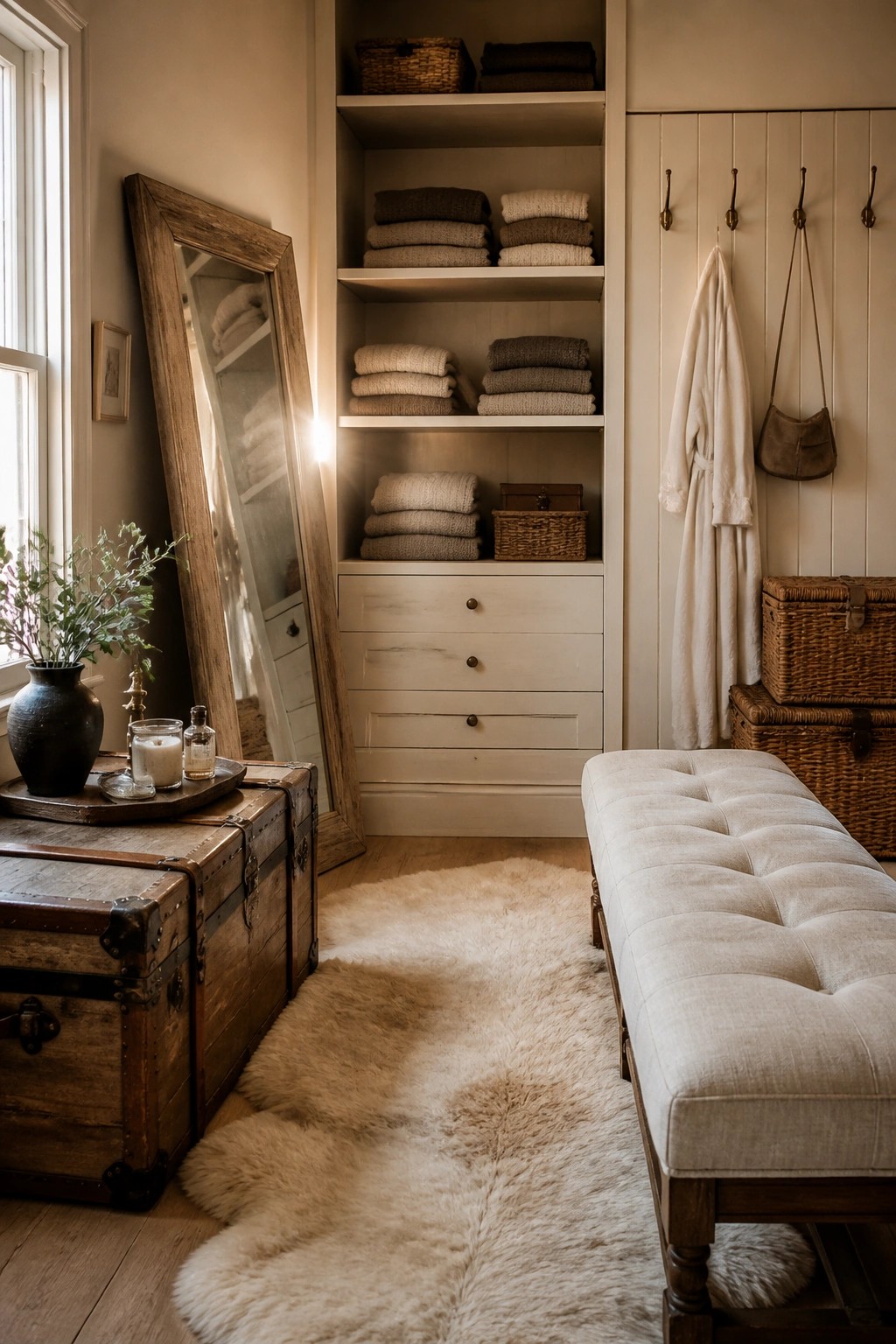
Many people paint built-in shelves and drawers the same soft neutral as the walls. This keeps the storage from breaking up the space and helps the room feel calmer overall.
It works especially well in smaller rooms or areas that need to stay simple. Stick with warm beige tones on the wood pieces and textiles so the whole setup stays soft instead of feeling like separate furniture.
Frequently Asked Questions
Q: How do I know which beige will look right in my living room with all the wood beams? A: Grab a few sample pots and paint large swatches right on the wall. Check them morning and evening since the wood tones shift how the beige reads throughout the day.
Q: What if the paint still feels too cool once it’s up? A: Add warm accents like linen curtains or a jute rug to pull the color in the right direction. A single layer of that texture often fixes the chill without repainting.
Q: Should I go lighter or darker if the room gets direct sun most afternoons? A: Lean darker. Strong light washes out pale beiges fast and leaves the space looking flat.
