

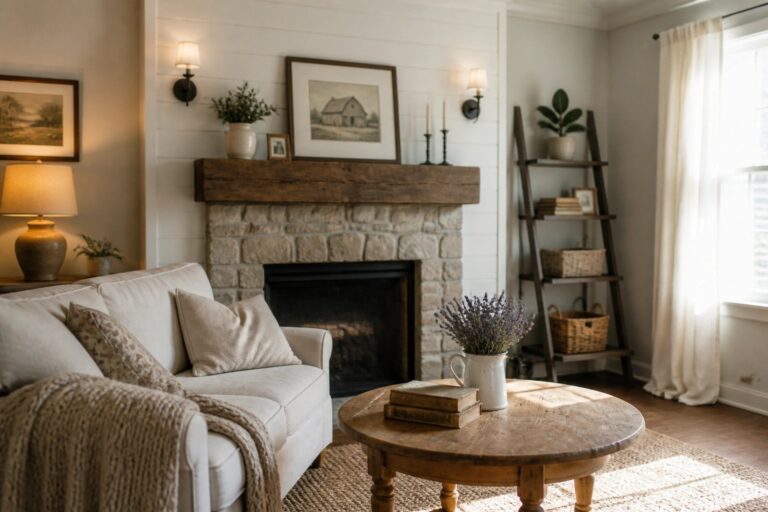
I’ve learned that the right neutral paint in a farmhouse often comes down to how it plays against the wood floors and built-ins once everything is in place.
Rooms end up feeling more settled when the color supports the textures already there instead of fighting them.
Some shades only reveal their warmth after the furniture moves in.
Over the years I’ve noticed that timeless neutrals hold up better in spaces we use every day because they don’t fight the natural light or the way shadows fall across the walls.
Testing a few options on different walls helps show which ones will actually work once the room comes together.
Light Neutral Paint Brightens Farmhouse Living Rooms
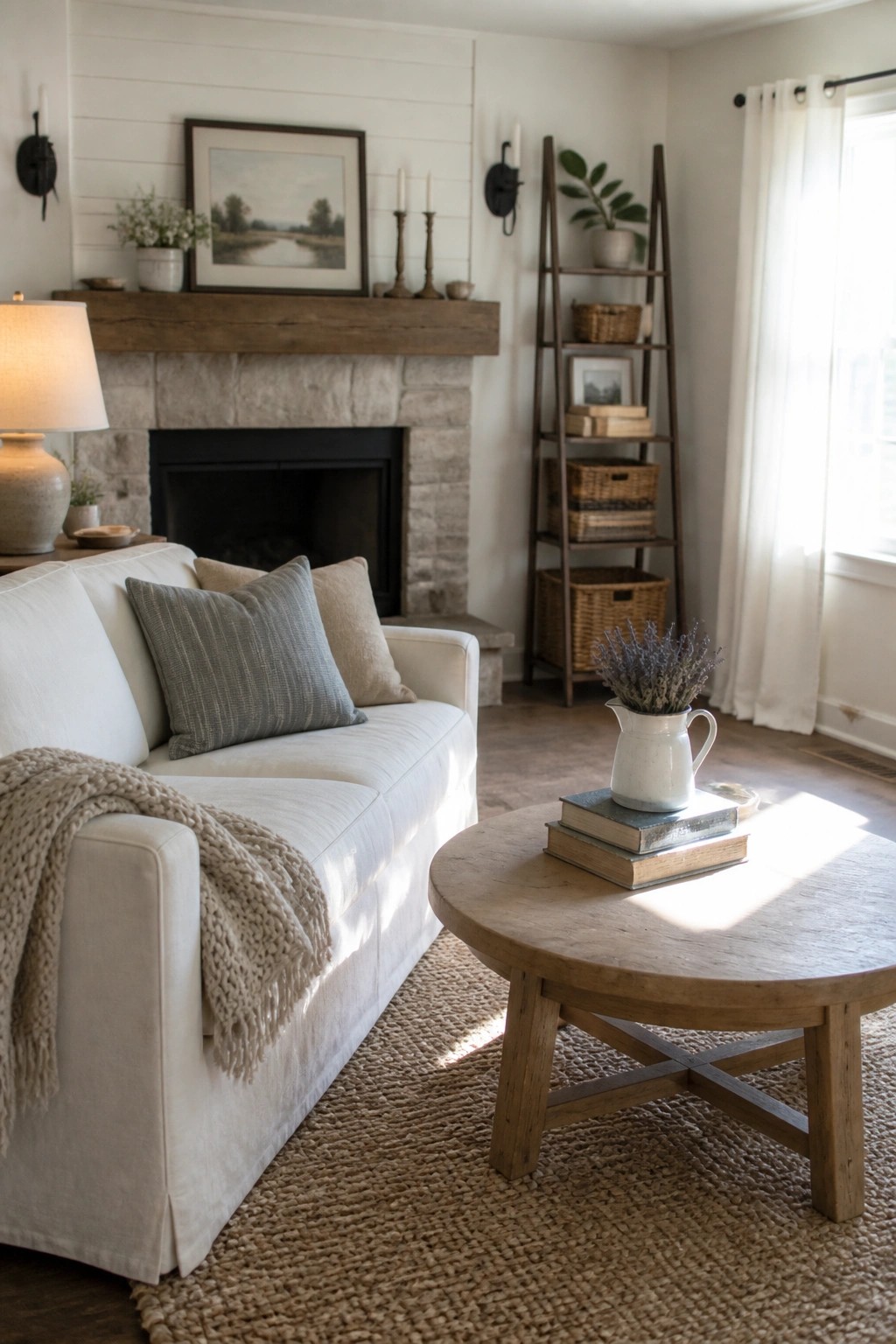
Light neutral paint on the walls helps a farmhouse living room feel open and calm even when wood beams and stone are present. The white finish reflects light throughout the day and keeps heavier elements from feeling dark or closed in.
This approach works best in rooms that already have natural textures like a stone fireplace or wood furniture. It suits homes that want a simple backdrop that lasts for years without needing frequent updates.
Soft Neutral Paint On Kitchen Cabinets
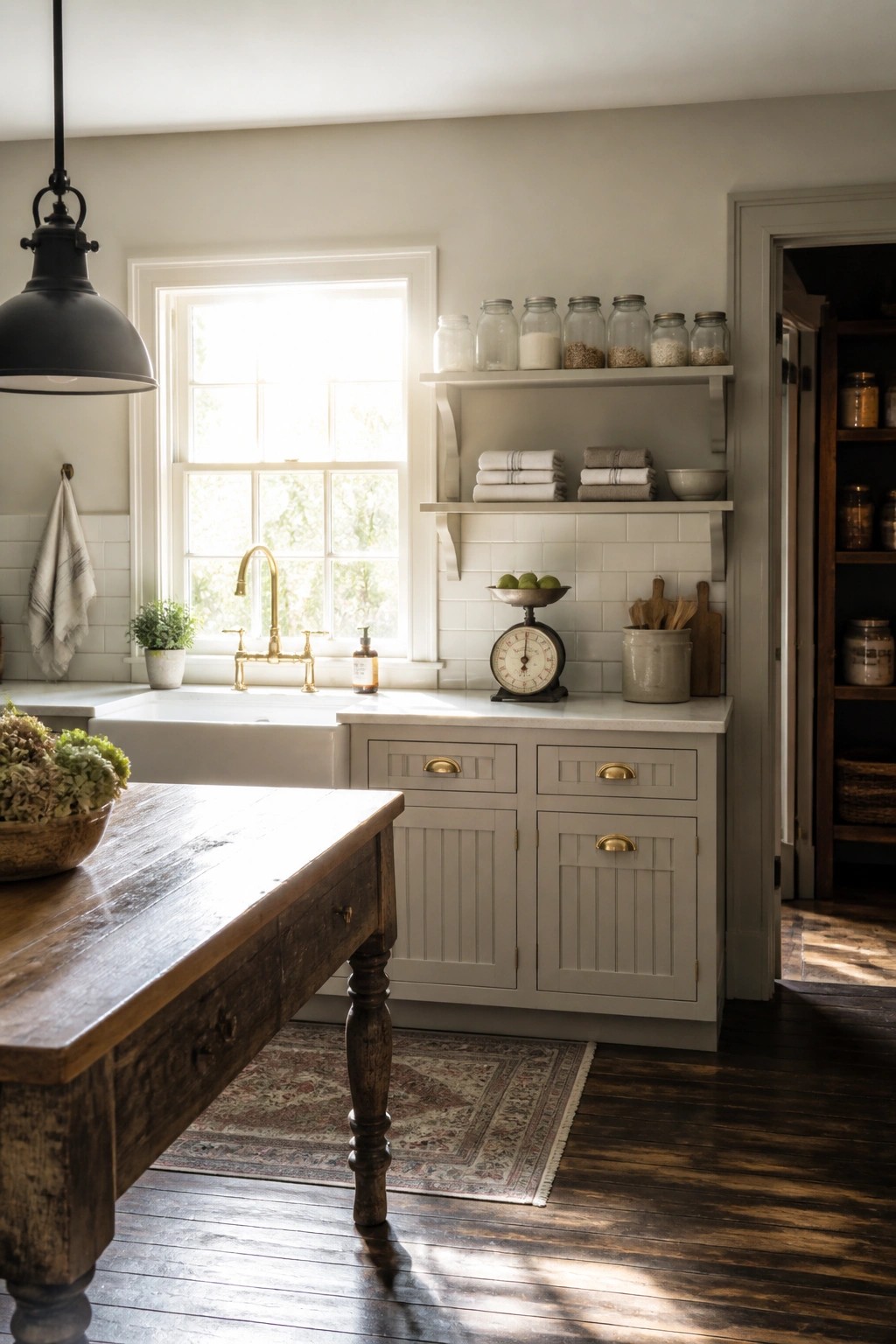
A soft neutral on the cabinets helps a farmhouse kitchen feel calm and settled without looking too styled. It pairs easily with white tile, wood counters, and simple hardware, and it holds up well to daily use.
This kind of color works best in rooms that get good natural light. Test a few samples on the actual cabinet doors first, since the same paint can shift quite a bit depending on the time of day.
Warm Neutrals Suit Farmhouse Dining Rooms
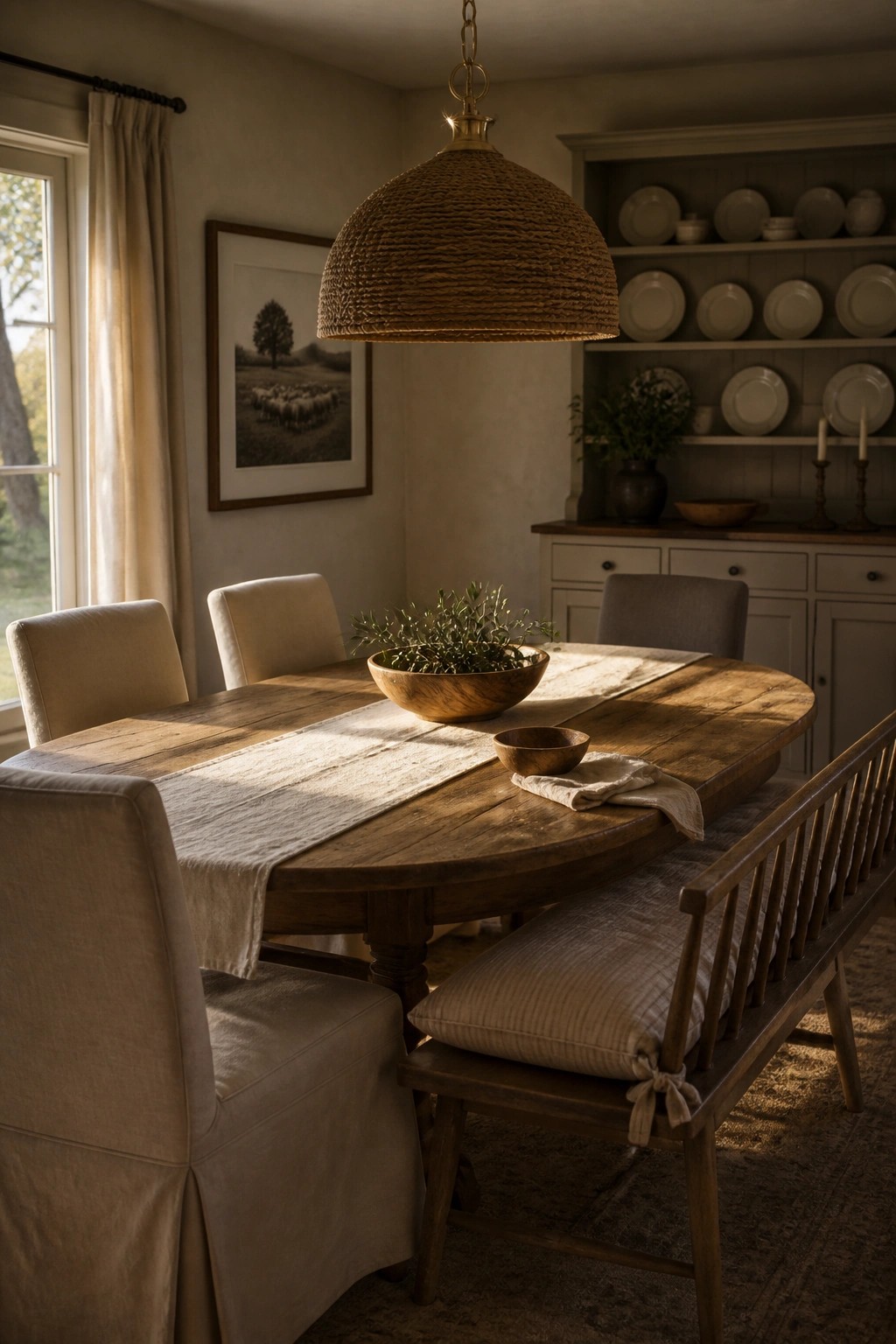
A soft neutral on the walls keeps a dining room feeling calm and open. It lets the wood tones and simple fabrics stand out without adding extra color that might date quickly.
This works best in spaces with good natural light and older trim details. Stick with warm undertones rather than cool grays, and test samples on the wall at different times of day before committing.
Soft Gray Neutrals for Bedroom Walls
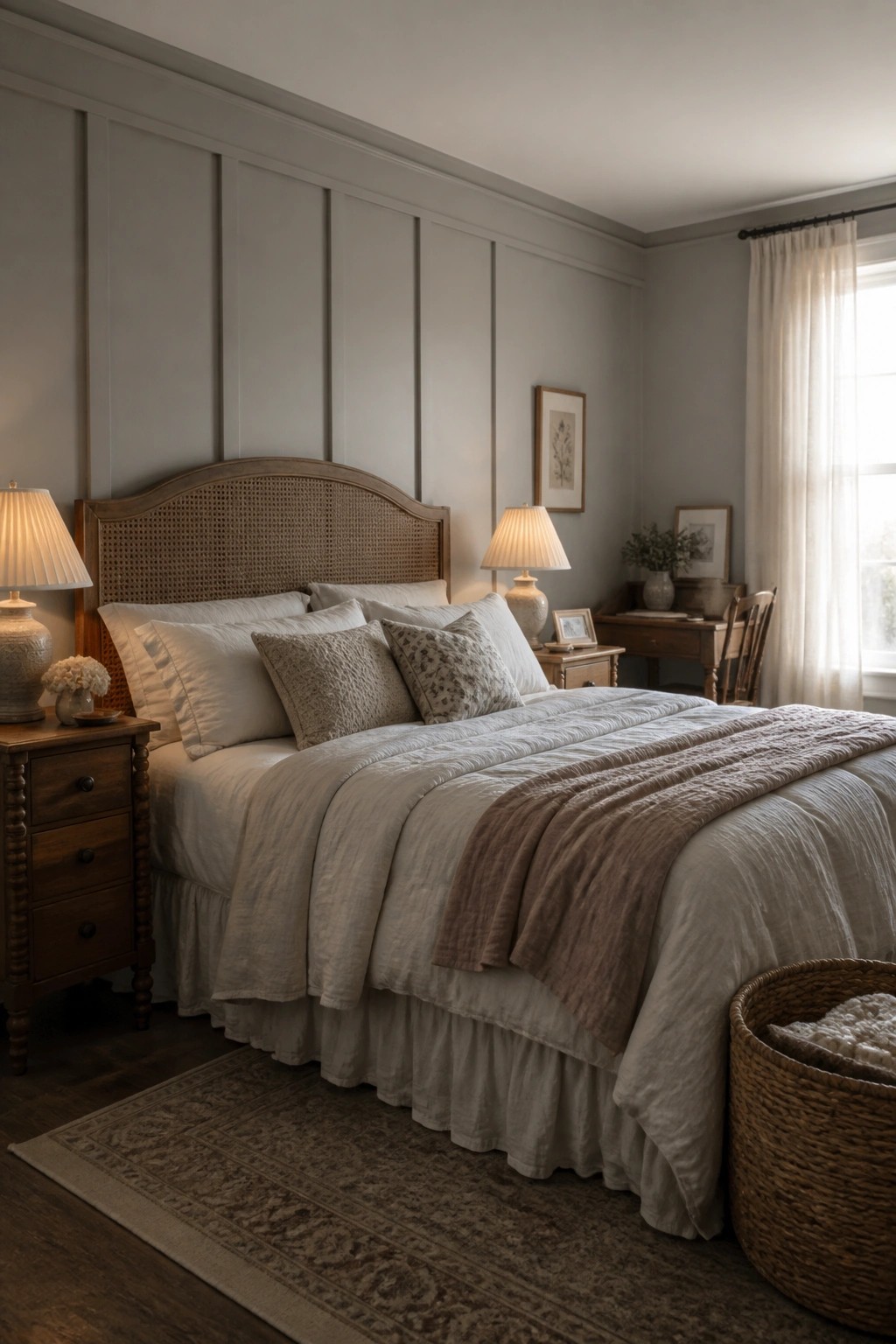
A soft gray neutral works well on bedroom walls because it stays calm without feeling cold. The color shifts gently with the light and gives the space a quiet background that does not compete with the bedding or wood tones.
It suits farmhouse homes best when the trim stays crisp white and the rest of the room stays simple. Keep the layers light so the walls can set the tone without extra pattern or color.
Warm Neutrals on Bedroom Walls
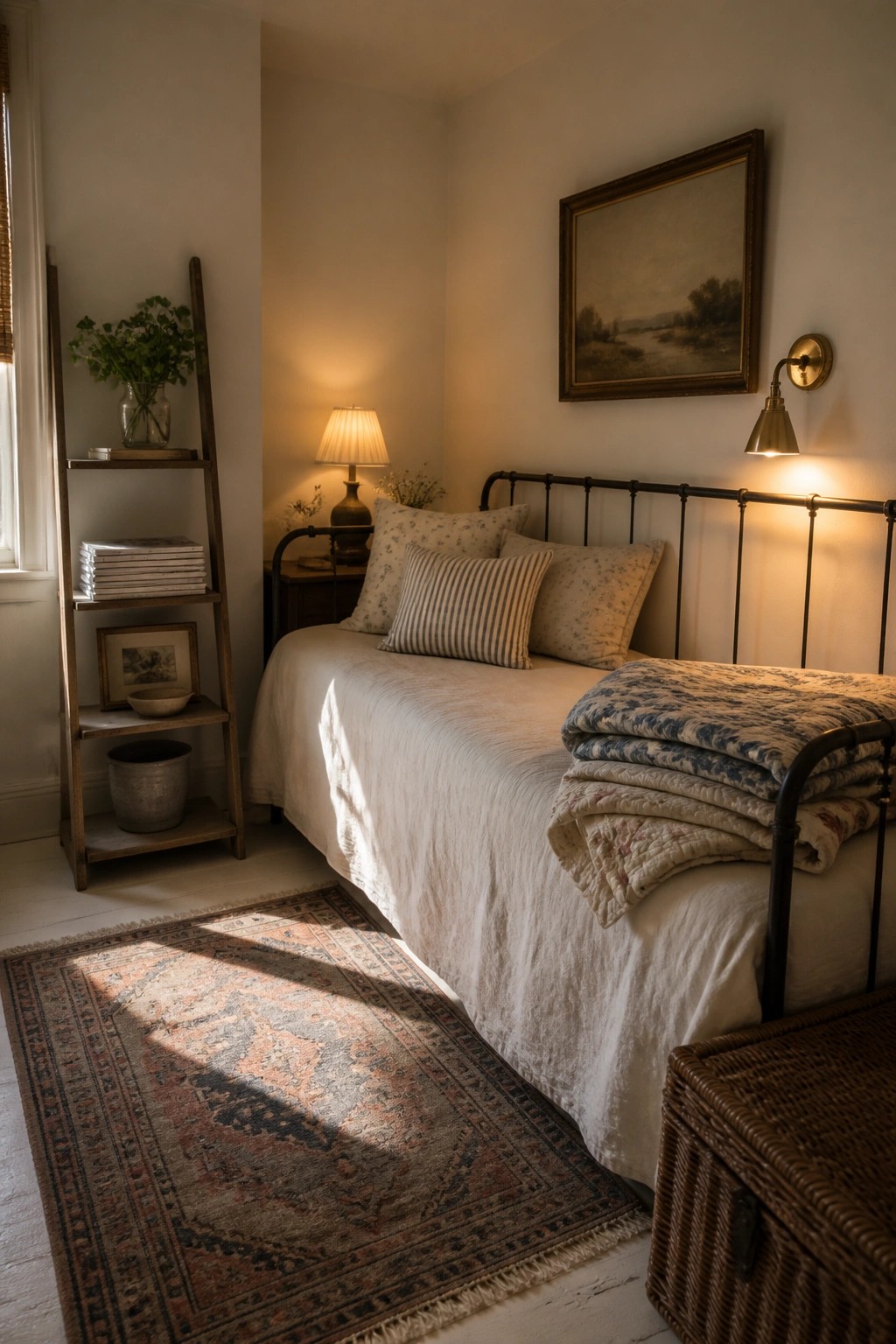
A soft warm neutral on the walls gives a bedroom that classic farmhouse feel without making the space feel flat. It lets the light move gently through the room and pairs easily with simple bedding and older furniture pieces.
This works best in smaller bedrooms or older homes where you want the space to feel calm and lived in. Keep the trim bright white and add layers of soft linens and a rug with some faded color so the walls stay the main focus.
Soft Neutral Paint In A Nursery
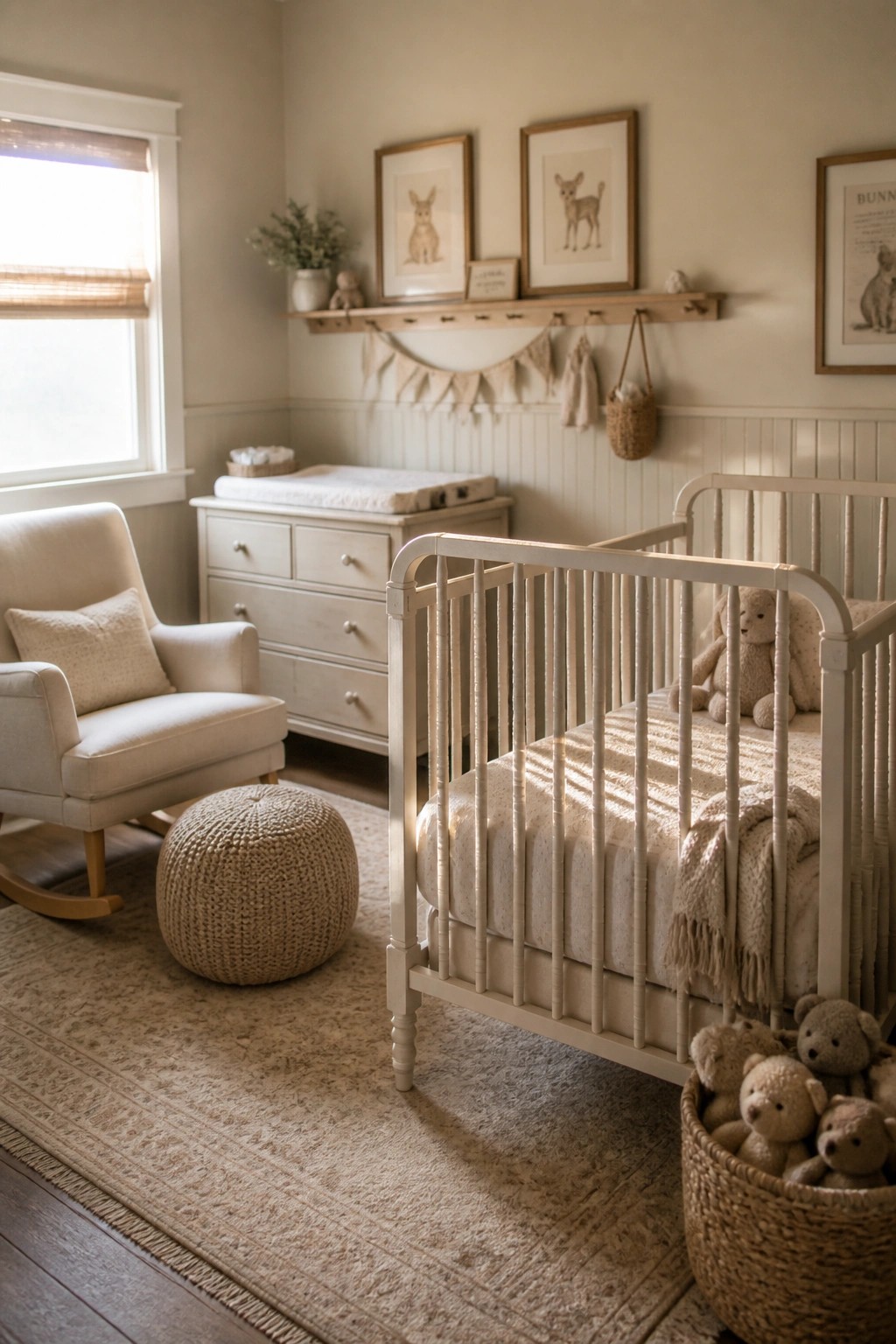
A warm neutral on the walls gives a nursery that quiet, settled feeling without trying too hard. It keeps the room from feeling too babyish and lets the space grow with the child instead of needing a full repaint in a few years.
This approach works best in rooms with decent natural light. Pair the wall color with white or cream trim and simple wood furniture so the neutral stays the main focus instead of competing with too many patterns.
Neutral Paint Colors With Built-In Shelving
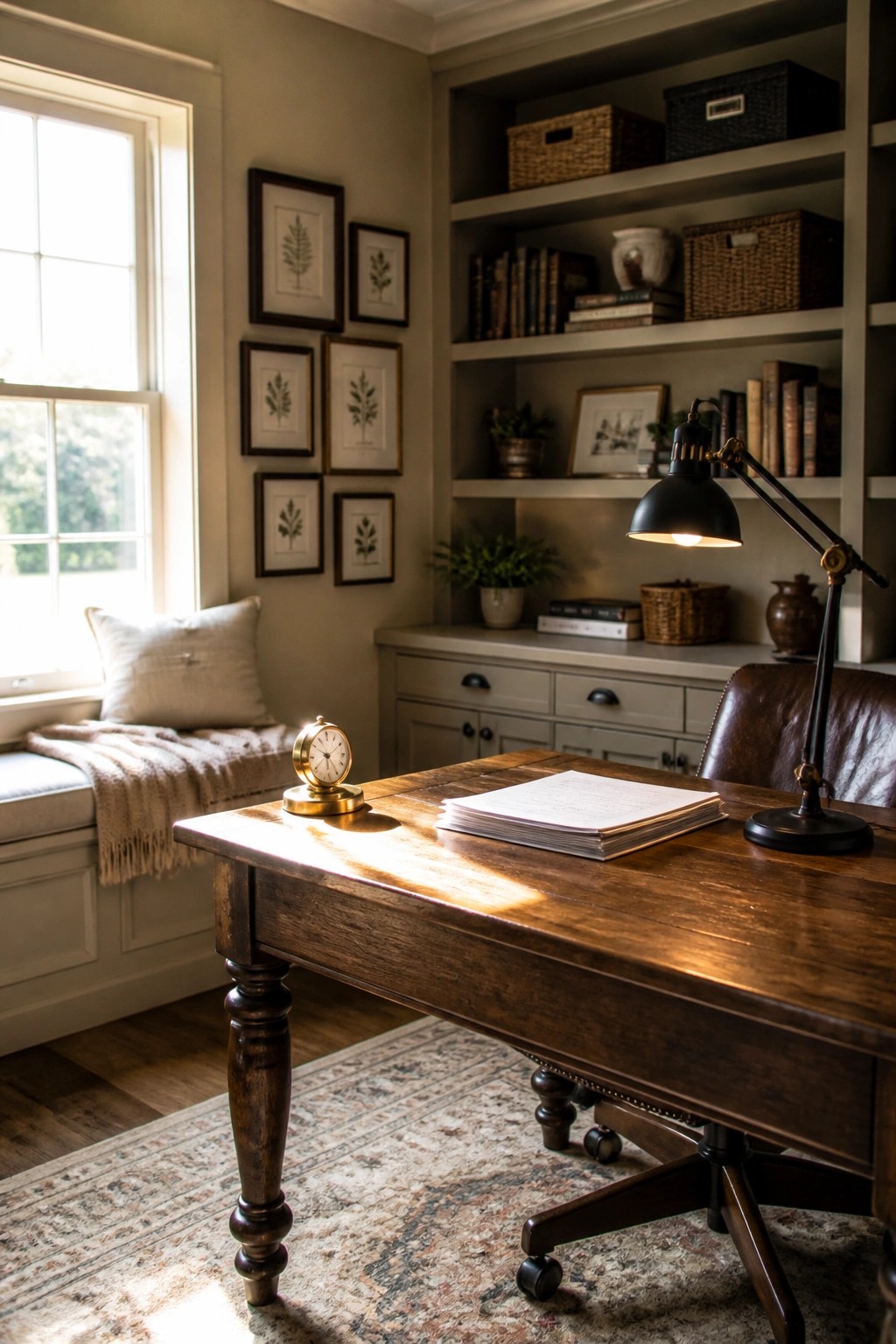
A soft neutral wall color lets built-in shelving and wood furniture feel balanced instead of heavy. In rooms like this study, the paint acts as a quiet backdrop so the wood tones and storage details can stand out without fighting for attention.
This approach works well in offices or living rooms that need both function and calm. Pick a warm neutral with a touch of gray or greige so it pairs easily with existing wood, then keep the trim and cabinet fronts in the same family for a clean look.
Built-In Benches For Shoe Storage
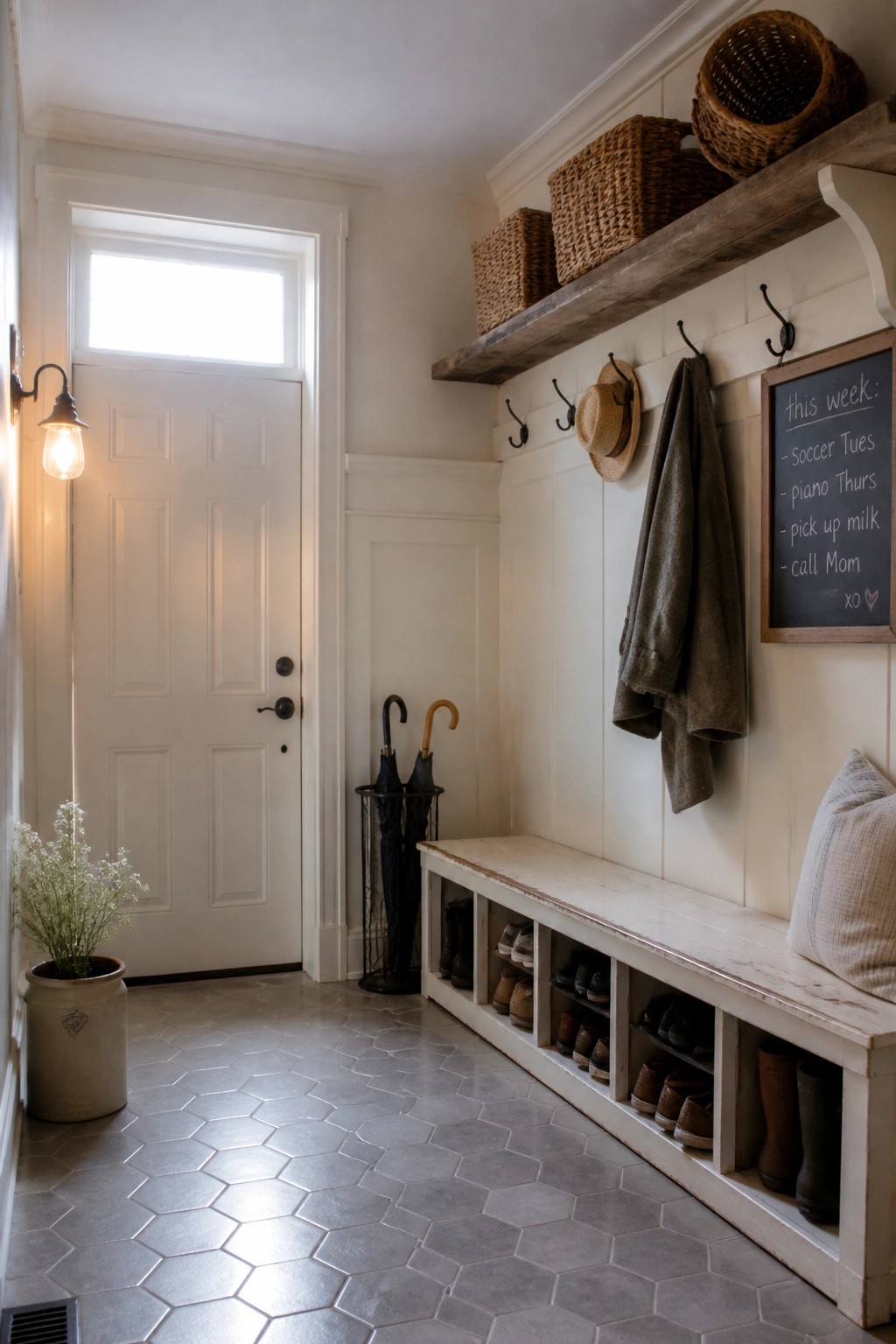
A long bench with open compartments underneath gives an entryway a place for shoes without needing extra furniture or bins scattered around. The setup keeps boots and sneakers visible and easy to reach while the bench itself doubles as seating for pulling them on or off.
This kind of storage works best in homes that see regular traffic through the door, especially families with kids or anyone who spends time outside. It stays practical as long as the cubbies stay shallow enough to avoid deep piles of shoes that are hard to sort through.
Warm Neutrals On Bathroom Walls
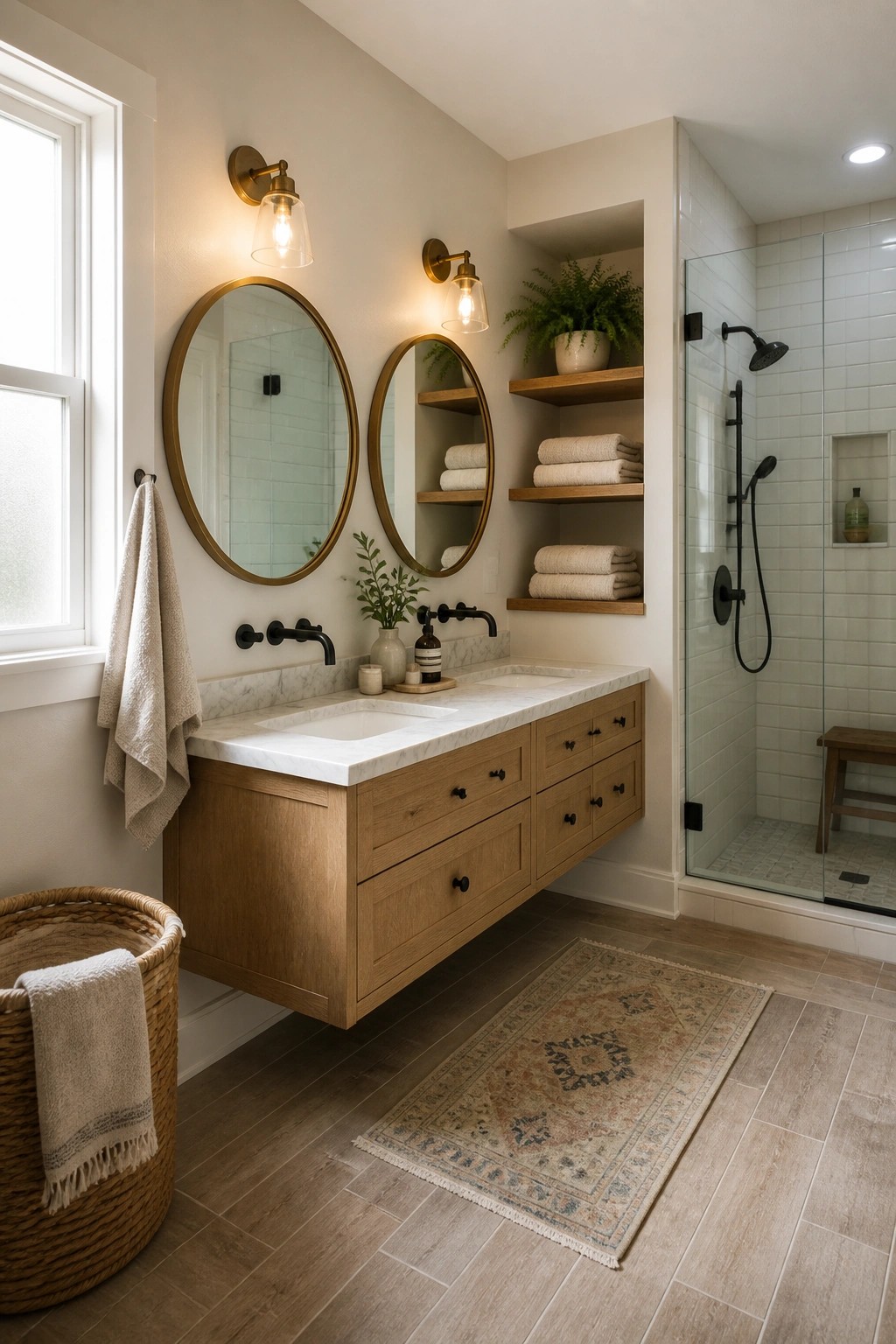
A soft warm neutral on the walls gives a bathroom that relaxed farmhouse feel without trying too hard. It lets wood tones and stone surfaces read clearly while keeping the space calm and simple.
This color choice works best in rooms with some natural light and wood elements. Test the paint on a large board first because the warmth can shift depending on the time of day and the finishes around it.
Soft Neutral Paint Over Wainscoting
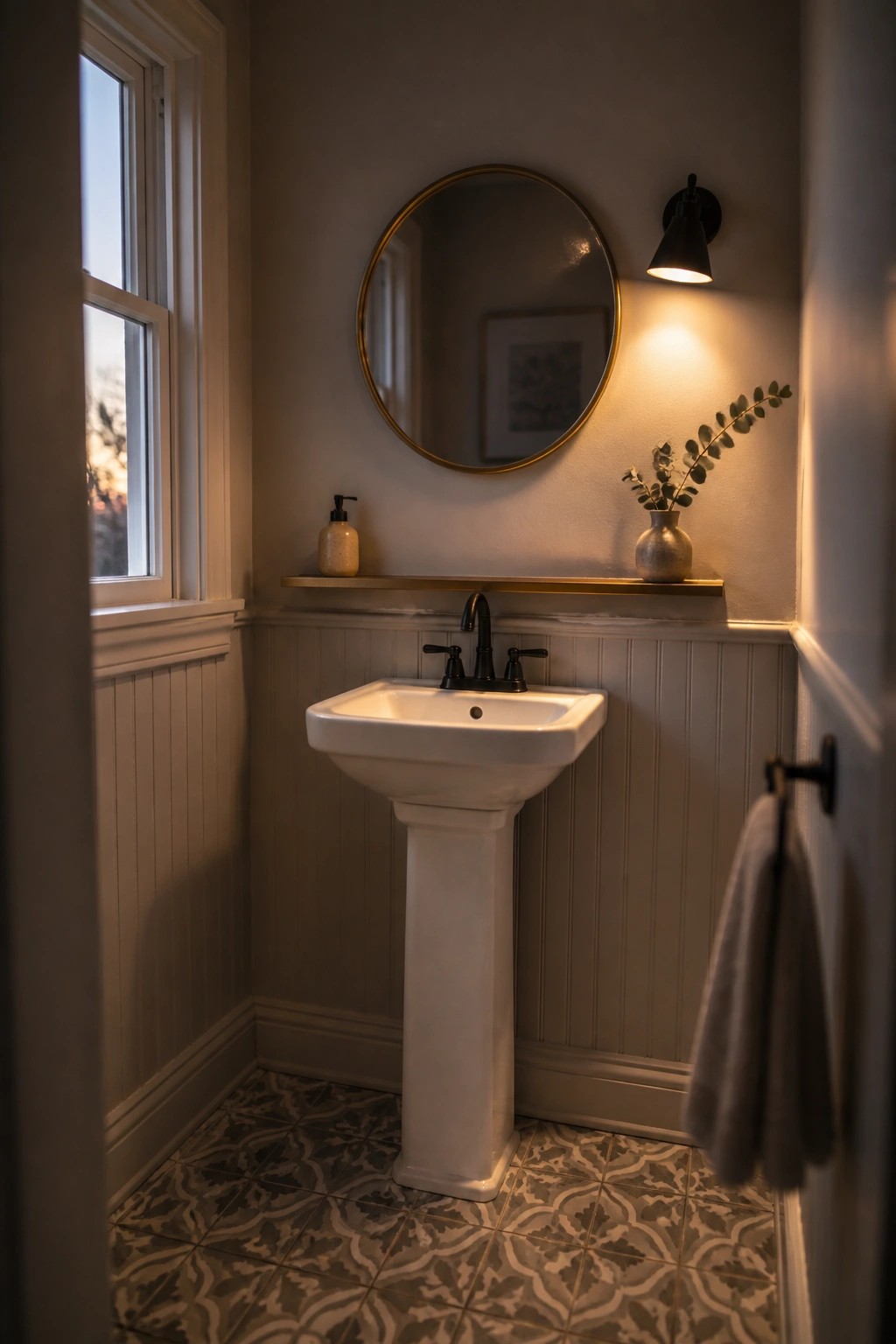
A soft neutral on the upper walls pairs nicely with white wainscoting in small bathrooms. It keeps the room from feeling closed in while still giving it that simple farmhouse feel.
This works best in spaces that get good natural light. Stick with a warm off-white or light greige so the color stays calm year after year.
Soft Neutral Walls For The Laundry Room
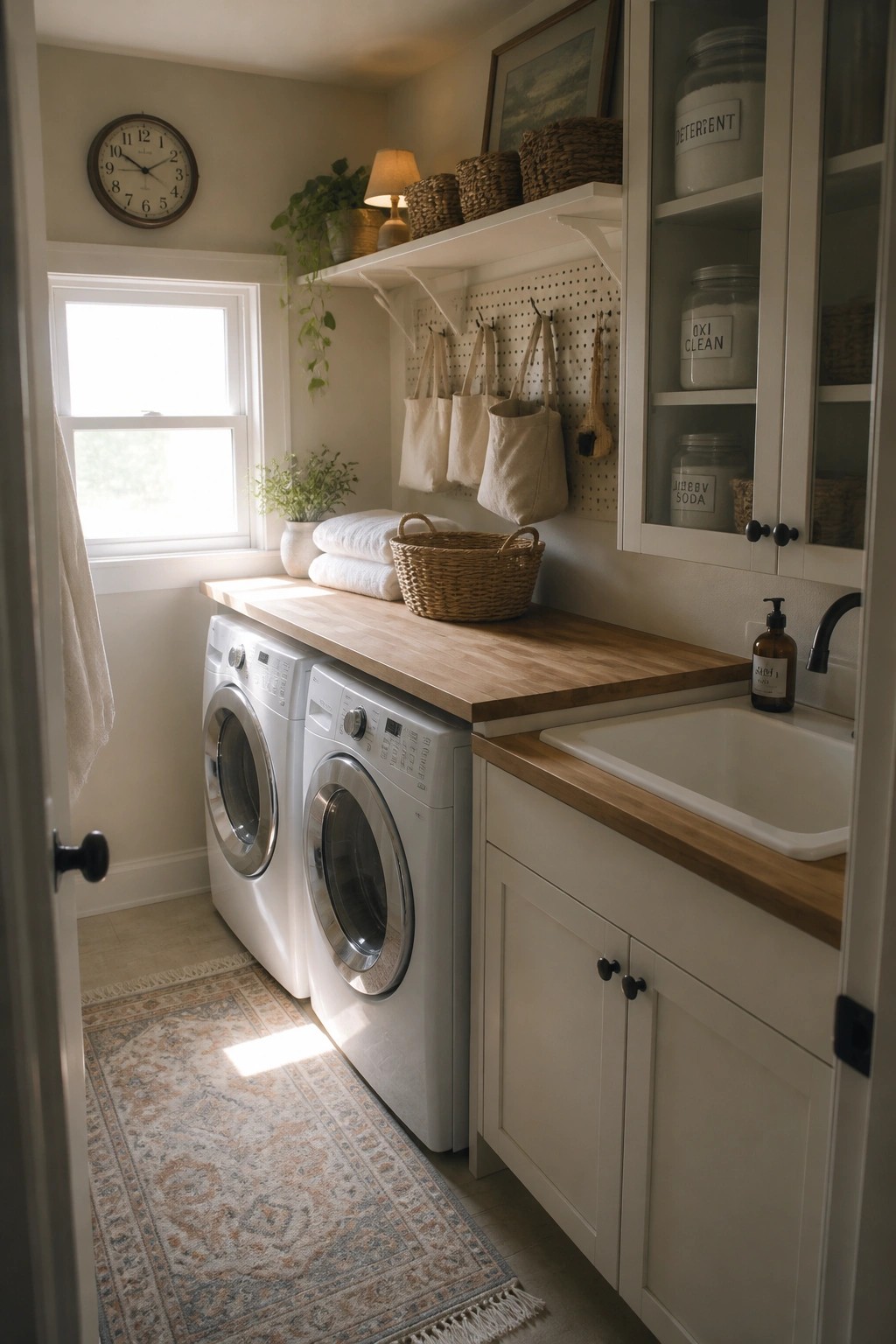
A soft neutral on the walls works well in a laundry room because it keeps the space feeling open and calm even when it holds a lot of equipment. The color also pairs easily with white cabinetry and wood tones without making the room look too busy or cold.
This approach suits smaller utility spaces in farmhouse homes where you want the room to feel connected to the rest of the house. It holds up over time and gives you room to change towels, baskets, or hardware later without repainting.
Warm Neutral Walls In The Kitchen
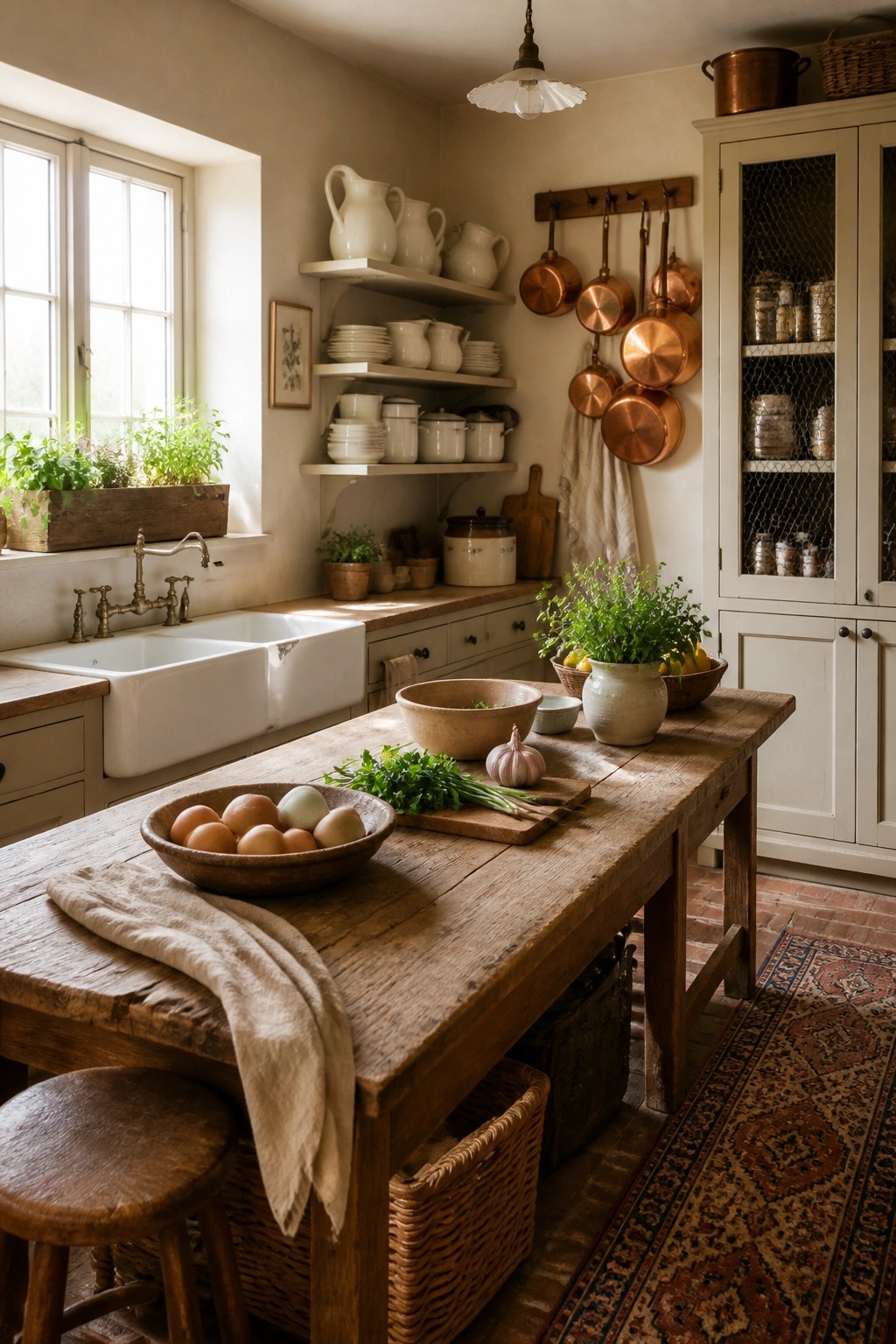
A warm neutral on the walls helps a kitchen feel settled and easy to live in. It gives the wood tones and white pieces room to stand out without fighting for attention, and the color stays steady no matter how the light shifts through the day.
This works best in older homes or simple farmhouse layouts where you want the materials to do most of the work. Keep the shade slightly creamy rather than stark so the room stays cozy, and test it on a large board before committing.
Soft Neutral Paint For Built In Seating Areas
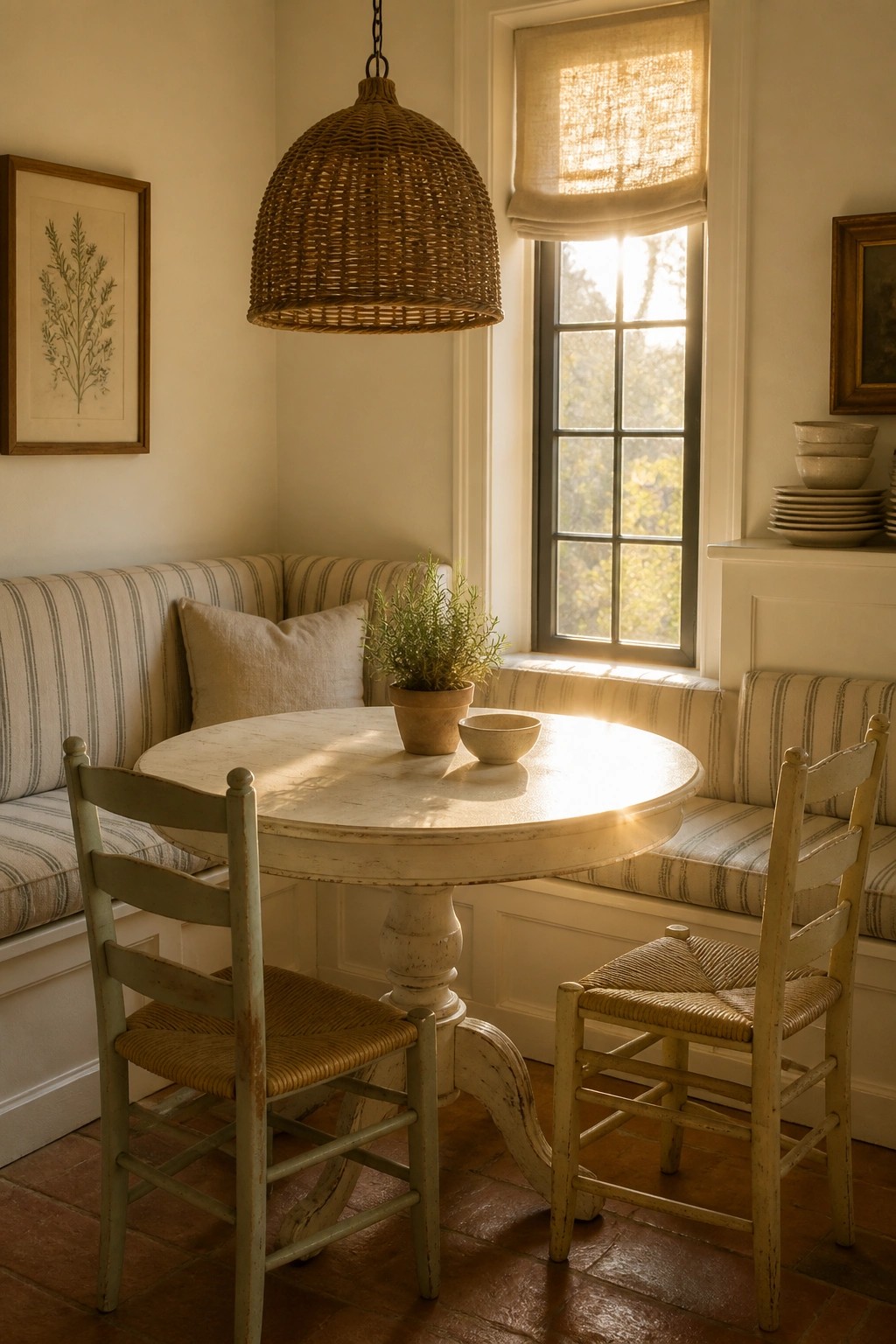
A soft neutral on the walls helps a small dining corner feel open and calm without much effort. The color stays quiet behind the striped cushions and painted trim, letting the light from the window do most of the work.
This approach works well in older homes where you want the built ins to blend rather than stand out. Keep the trim in a similar tone or just a shade lighter so the whole area reads as one simple space.
Neutral Walls That Let Wood Furniture Stand Out
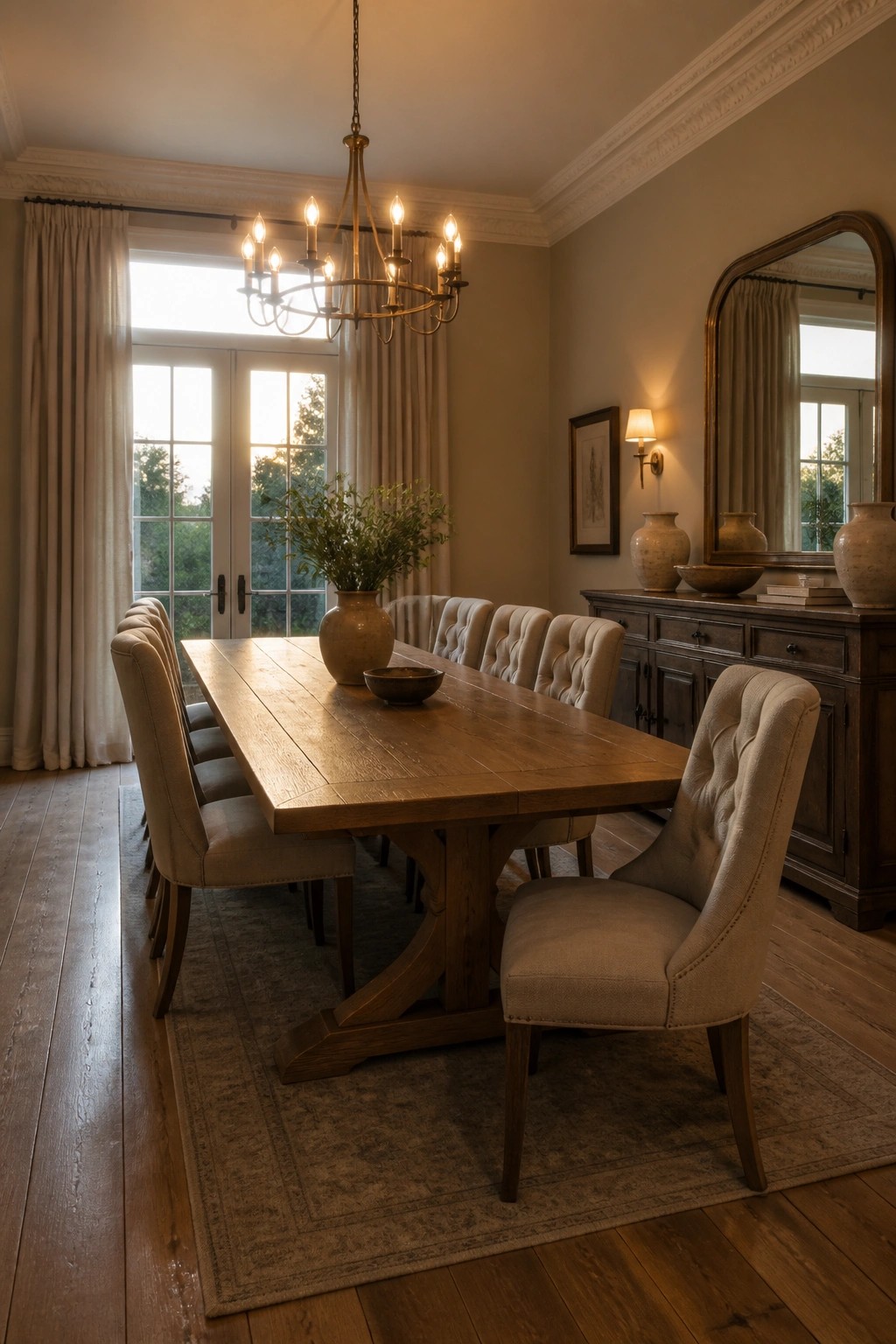
A soft neutral on the walls helps a dining room feel calm and balanced when wood furniture is the main feature. It lets the grain and tone of the table and chairs come forward without extra color fighting for attention.
This approach works especially well in rooms with good natural light and classic farmhouse details. Keep the paint finish matte or eggshell so the wood still feels like the warmer element in the space.
Soft Neutral Colors In A Reading Nook
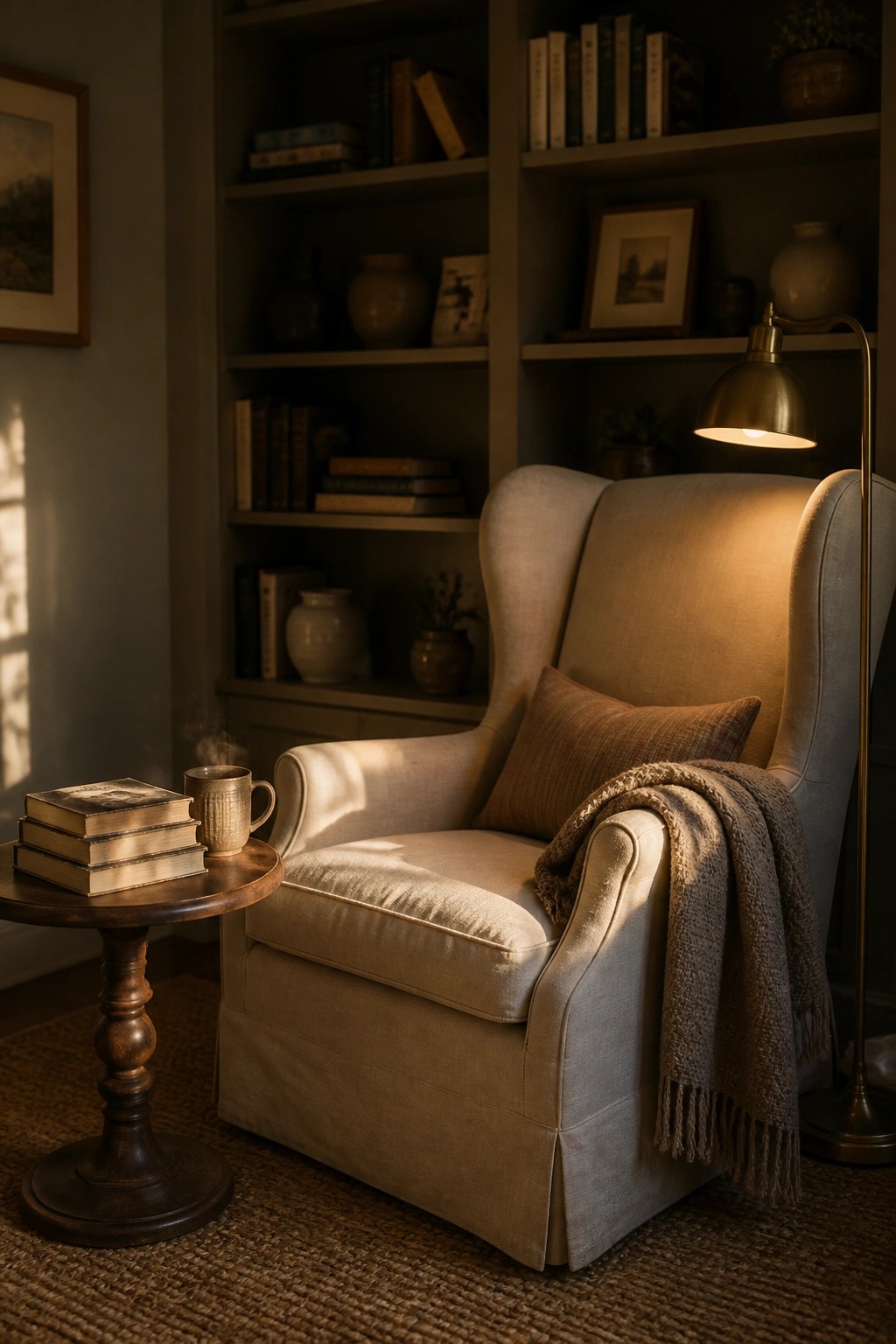
A small reading spot feels more lasting when the walls and main chair stay in the same soft neutral range. The color choice keeps the area from looking busy and lets the built-in shelves and simple accessories carry the interest.
This works best in rooms that already have some wood tones or older trim. Keep the chair fabric and wall paint close in tone so the whole corner reads as one calm zone rather than a collection of separate pieces.
Soft Neutrals For Hallway Walls
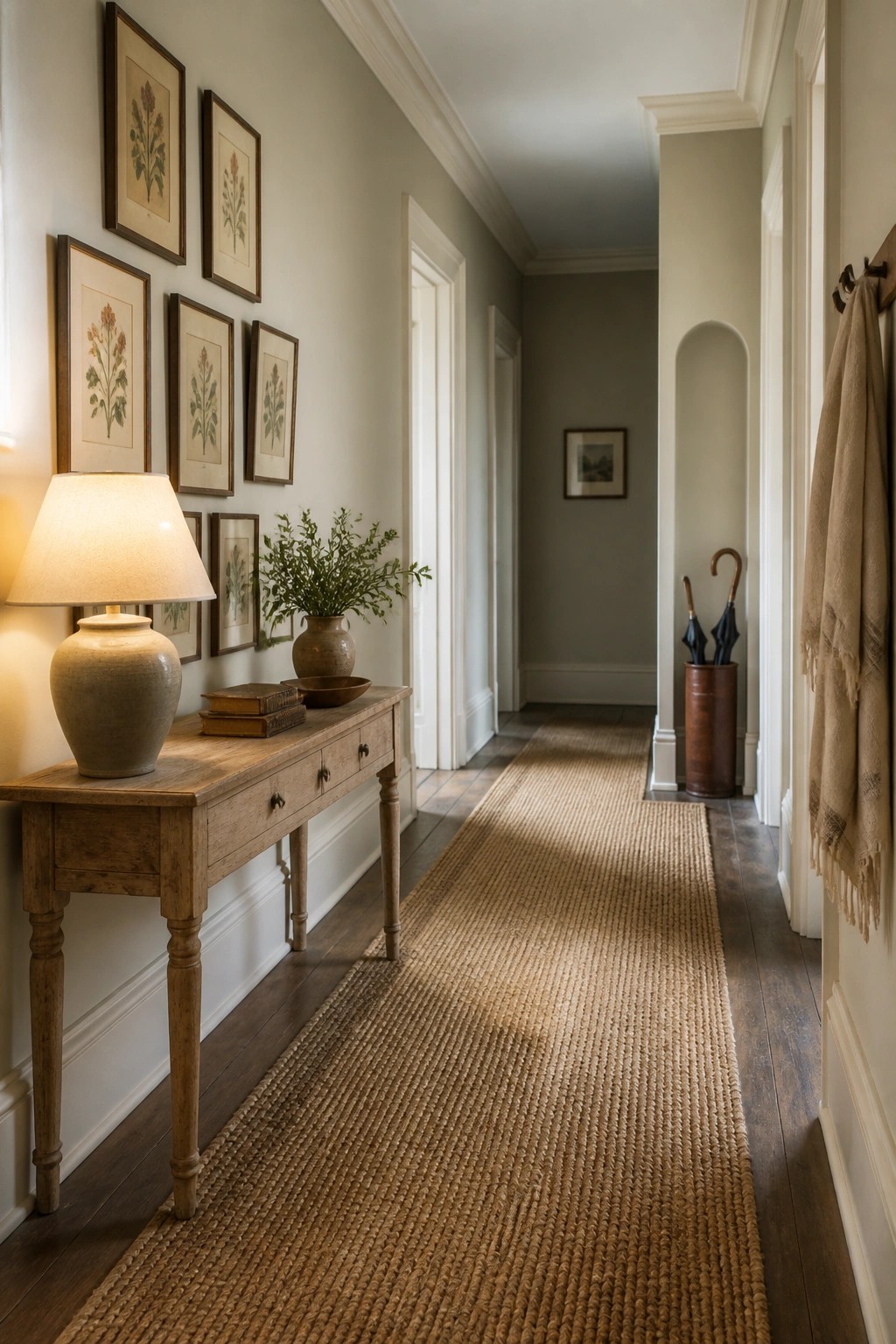
A light neutral paint color on hallway walls can make the whole space feel calmer and more open. In older homes especially, this choice keeps the focus on the wood floors and simple furnishings instead of competing with them.
It works best when the color has a touch of warmth so it does not go cold under changing light. Pair it with natural textures like a woven rug or unpainted wood pieces to keep the look grounded and easy to live with.
Warm Neutral Walls in the Bathroom
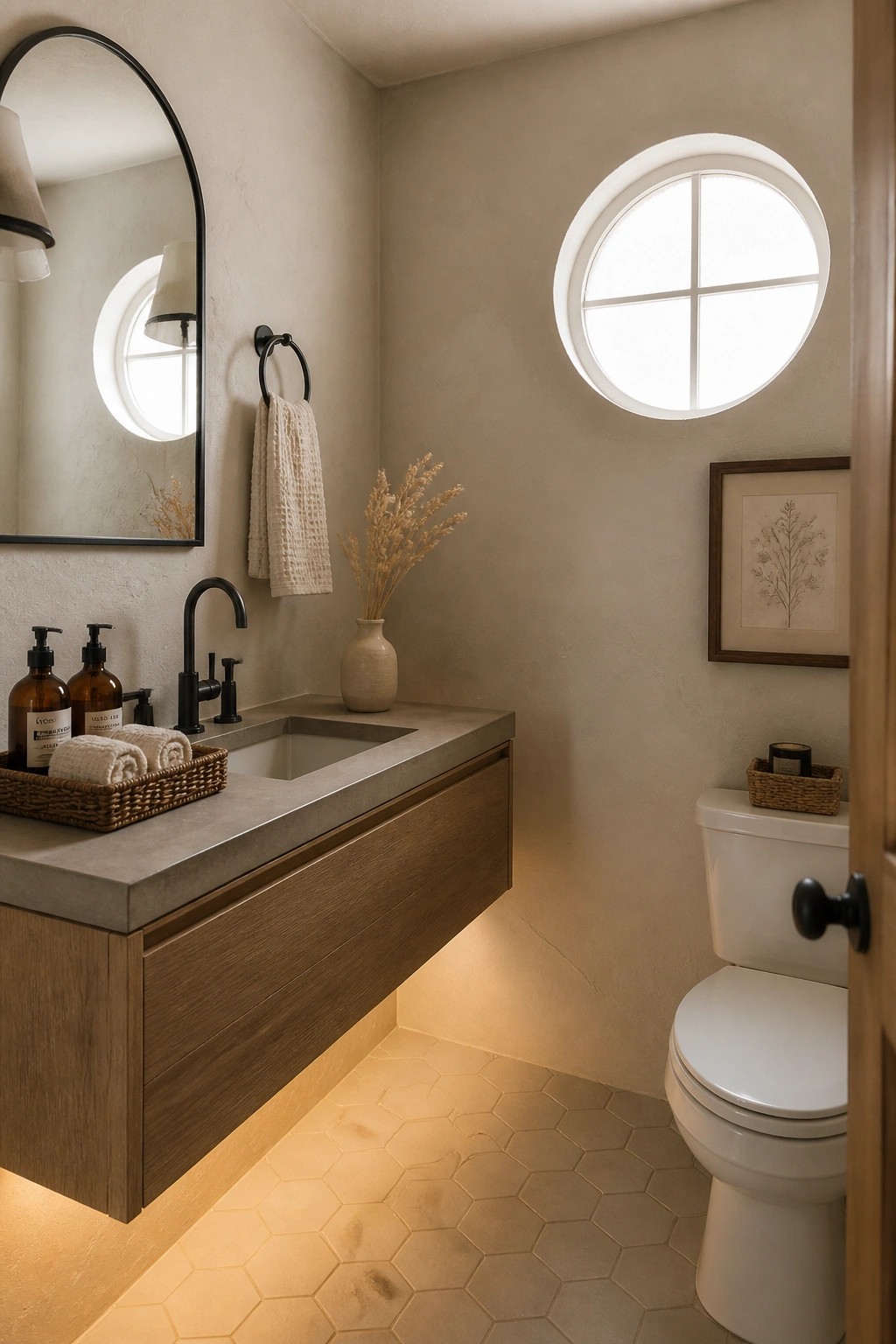
Warm neutrals like this soft beige work well in bathrooms because they keep the space from feeling cold even when there are lots of hard surfaces. The color sits nicely between gray and brown, so it reads as calm rather than stark.
This kind of paint suits smaller bathrooms especially well since it helps the room feel a little softer without adding much visual weight. It also pairs easily with wood vanities and simple fixtures, which is why the look stays useful in farmhouse homes over time.
Soft Neutral Paint For Vanity Cabinets
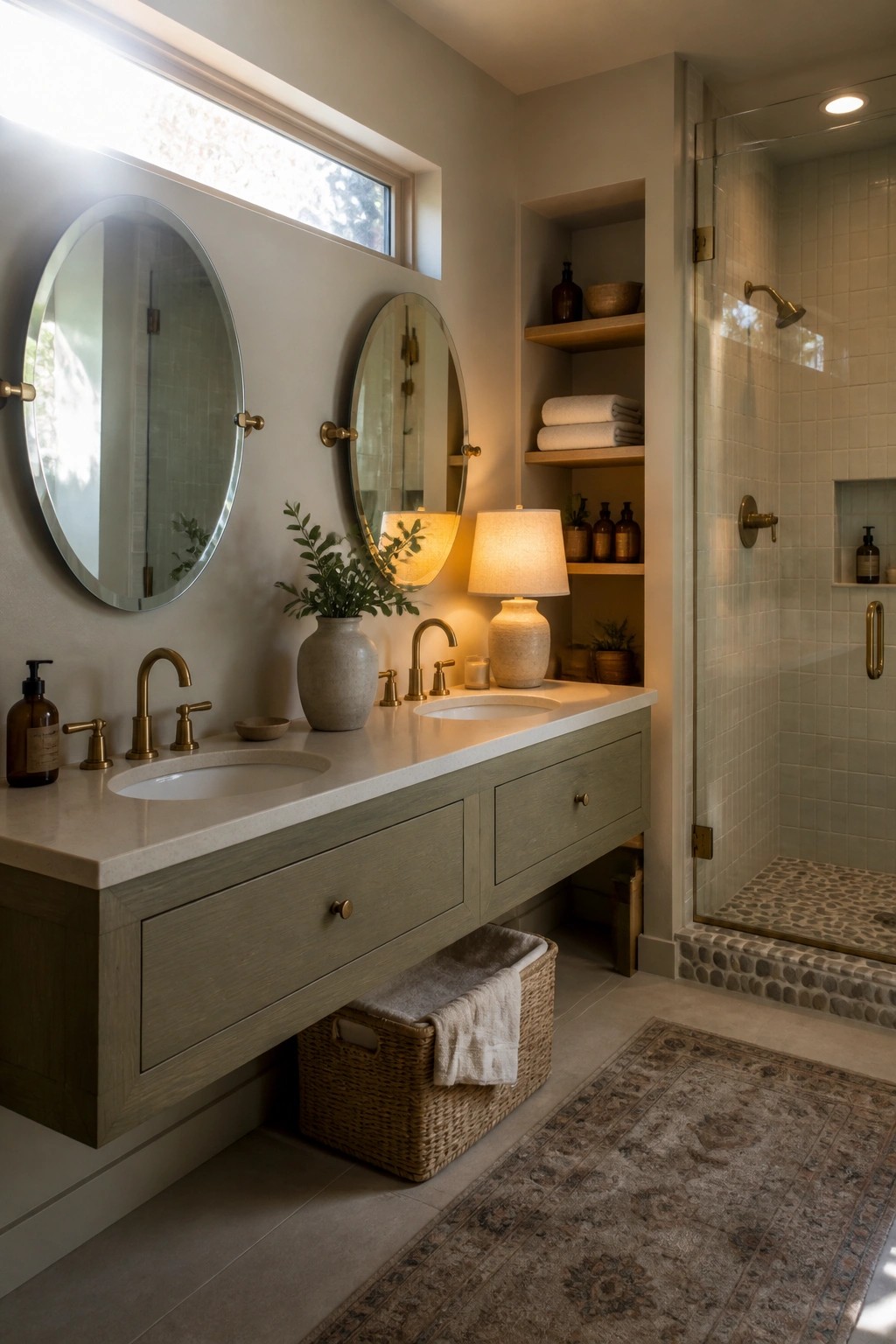
A soft neutral on the vanity cabinet helps the whole bathroom feel calm and put together. It avoids sharp contrast between the cabinet and the walls, which keeps the space from feeling busy or chopped up.
This approach works especially well in farmhouse bathrooms that get steady use. Pick a muted greige or light sage with warm undertones, carry it across the cabinet and any built-in shelves, and let the white counter and simple hardware keep the look clean.
Light Neutral Paint For Bright Farmhouse Rooms
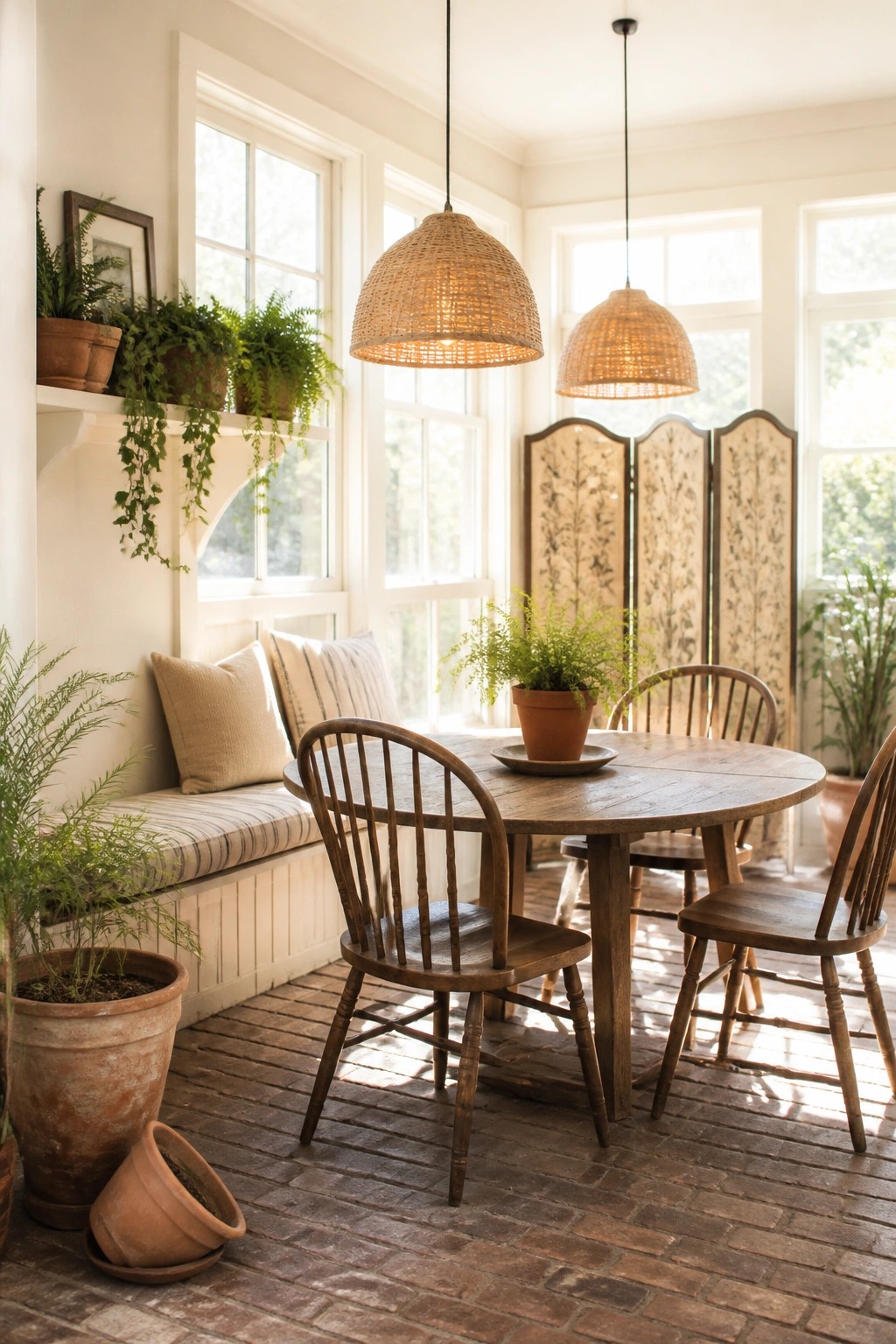
A soft off-white on the walls helps a room like this feel open and calm even when it has heavy wood furniture and a brick floor. The color bounces light around instead of soaking it up, which keeps the space from feeling dark or closed in during the day.
This approach works best in rooms with multiple windows and natural wood tones. Keep the trim bright white so the walls stay clean and the wood pieces stand out without competing for attention.
Soft Neutral Paint In A Farmhouse Pantry
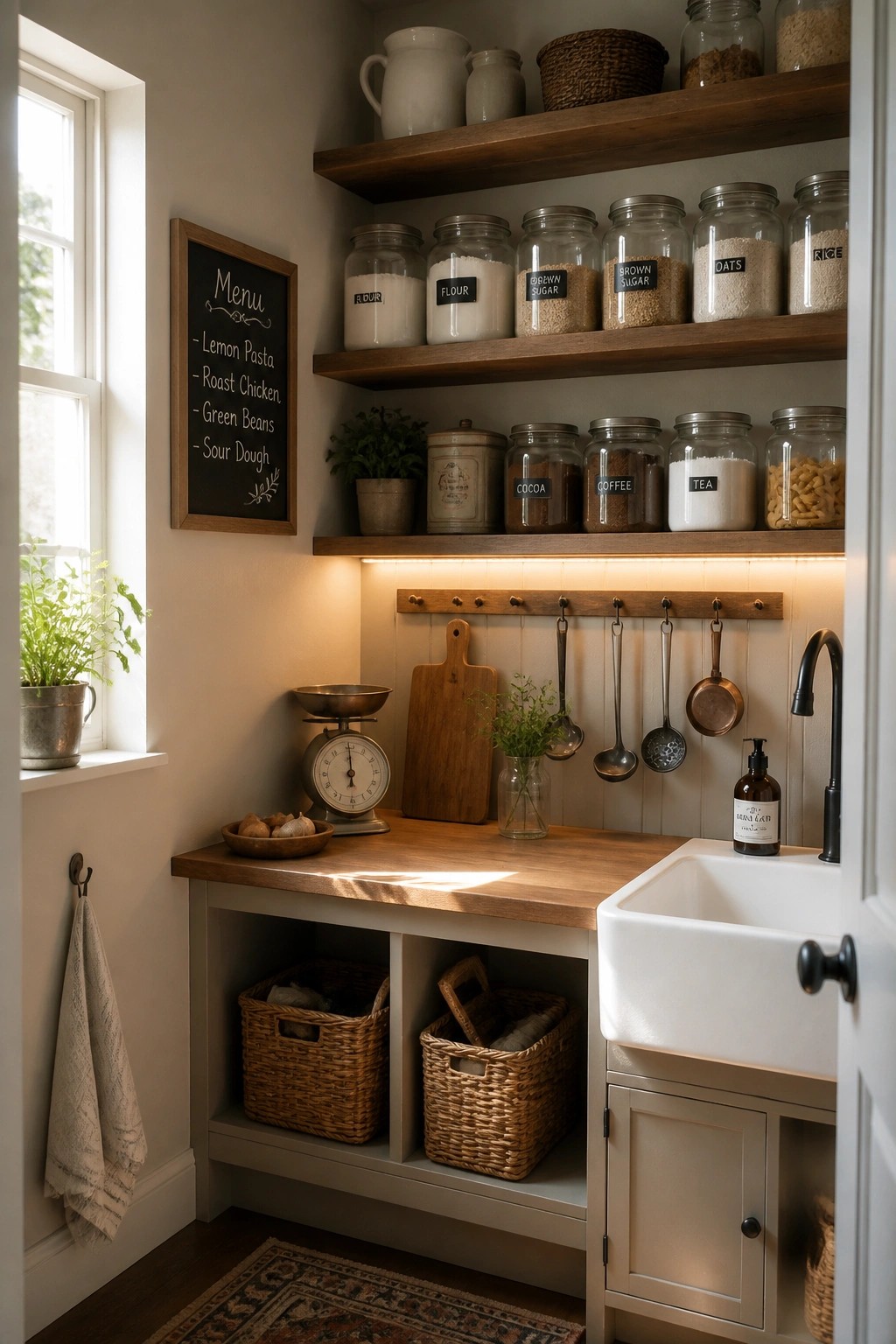
A warm neutral paint color works well in a space like this because it keeps everything feeling calm even when the shelves are full. The tone blends easily with wood and white surfaces, so the room stays practical without looking busy.
This kind of color suits older homes or any kitchen area that gets daily use. It holds up over time and gives you room to swap out linens or jars later without repainting.
Neutral Paint For Kids Rooms
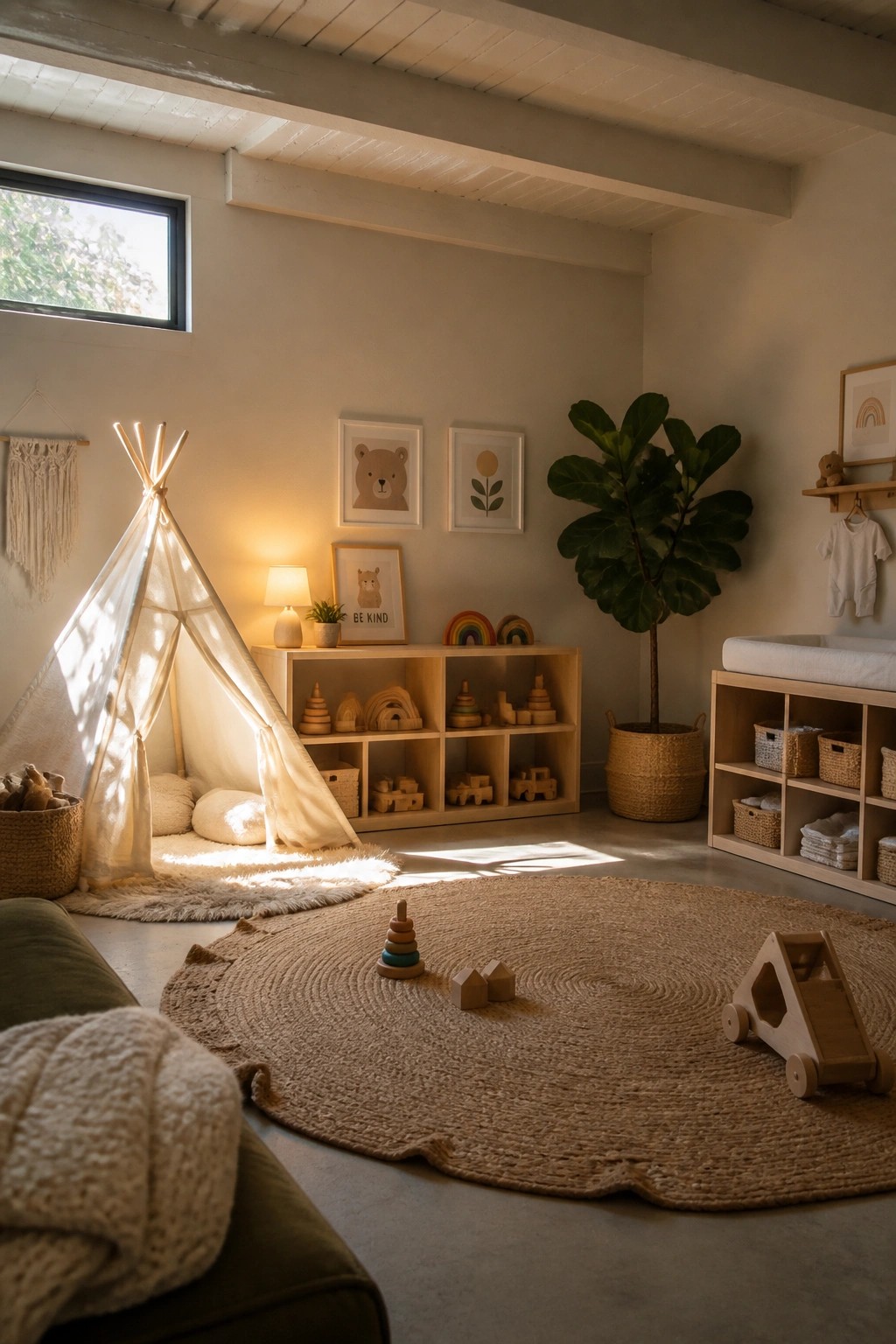
A soft neutral on the walls gives a playroom room to breathe even when toys are everywhere. It keeps the space from feeling busy or overwhelming and lets the wooden pieces and natural textures stand out without extra effort.
This kind of color works best in homes that already lean farmhouse or simple. Pick a warm tone with a little depth so it does not go flat in the afternoon light, and test it on a large board first.
Warm Neutral Walls For The Bathroom
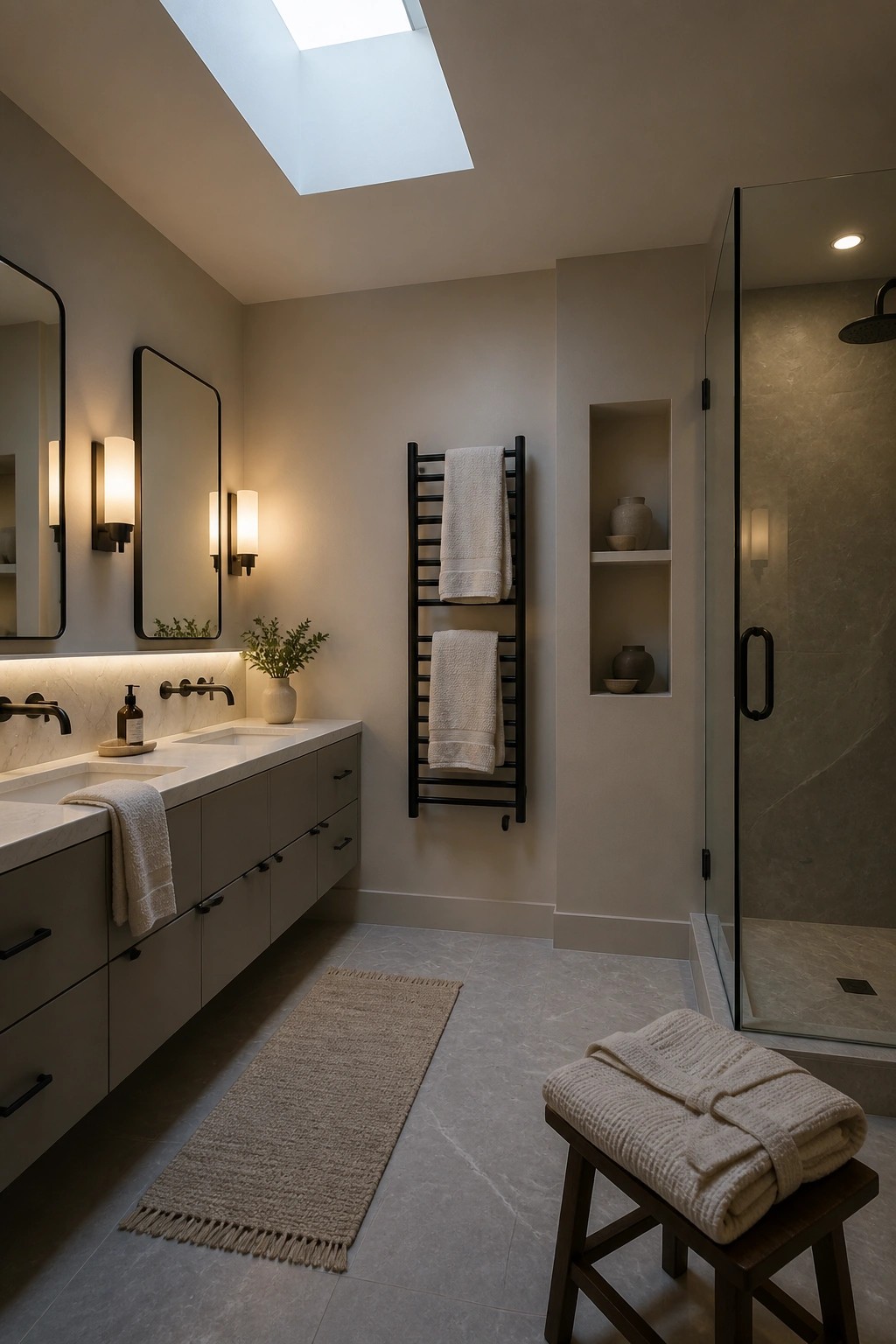
A soft warm neutral on the walls gives a bathroom a calm, settled look that holds up over time. It avoids the chill of pure white while still keeping the space light and open.
This approach works best in rooms with mixed materials like stone or tile. It pairs easily with both dark fixtures and lighter cabinetry, which makes it a good fit for farmhouse homes that want a simple, lasting color choice.
Frequently Asked Questions
Q: Which neutral should I try first in a small space? A: Start with a light greige that has warm undertones. It keeps things cozy without feeling dark.
Q: Will the paint look the same once it’s on all four walls? A: Test in natural light first. But watch how it reads at night too.
Q: How should I coordinate these colors with my cabinets? A: Pull from the same family as your wood or painted cabinets. This keeps the whole room feeling pulled together.
