

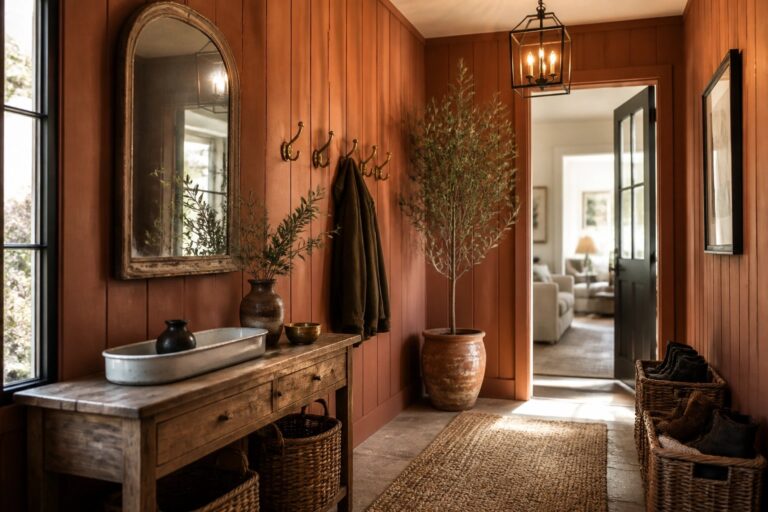
I have found that paint colors only reveal their true effect once the furniture is back in place and the light shifts through the windows during an ordinary day.
Earthy tones tend to settle into older rooms more naturally when they echo the wood tones already on the floors and trim.
Testing a few samples on different walls helps avoid surprises later.
I usually begin with the main living area because that is where any color shift shows up fastest in daily use.
Choosing shades that work with the existing layout keeps the whole house feeling consistent instead of patched together.
Warm Terracotta Paint in the Entry
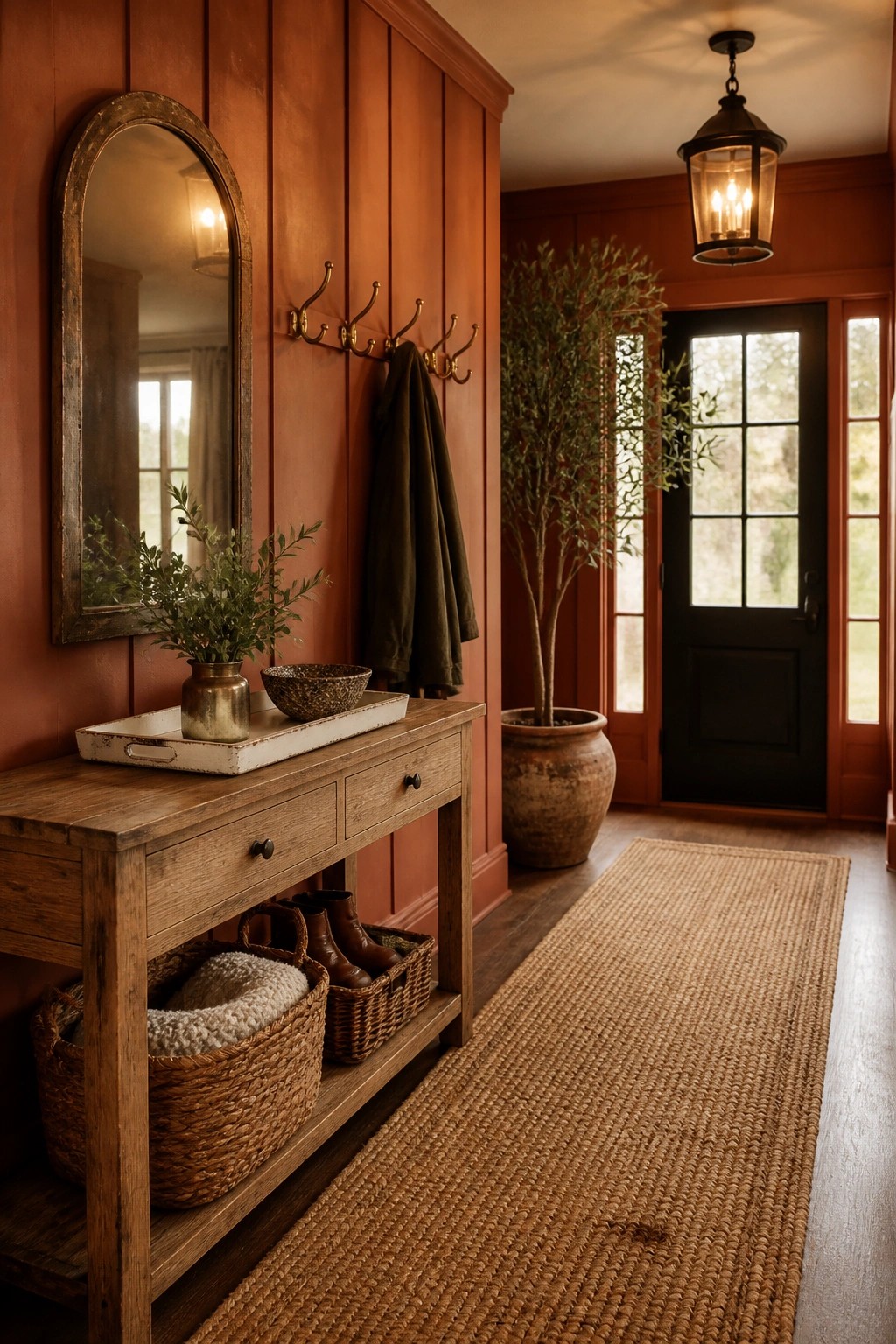
A deep terracotta shade on the walls gives an entry a grounded feel right away. It works especially well with wood furniture and natural textures because the color keeps everything from feeling too bright or cold.
This tone suits older homes or farmhouse layouts where the entry gets steady daylight. It holds up nicely against scuffs and still looks intentional even when the space holds boots and coats.
Warm Earthy Paint Colors For Living Rooms
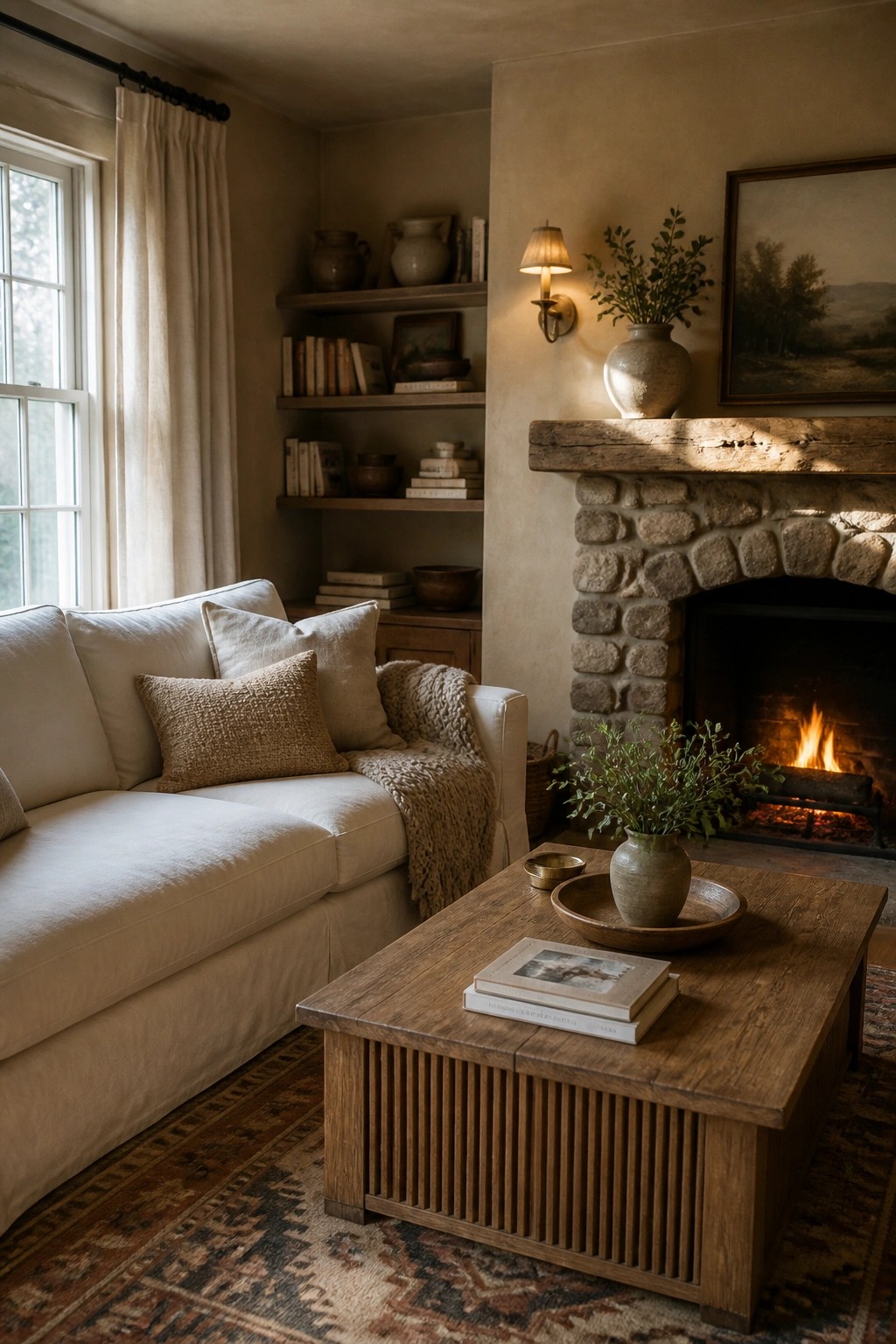
A soft warm neutral on the walls helps tie together the different textures in a rustic room. It keeps the space feeling calm while letting wood and stone show their natural character.
This approach works well in living rooms that already have built-in shelves and a fireplace. Use it where you want the room to feel settled rather than stark, and test the color in both morning and afternoon light before committing.
Soft Earthy Green For Kitchen Cabinets
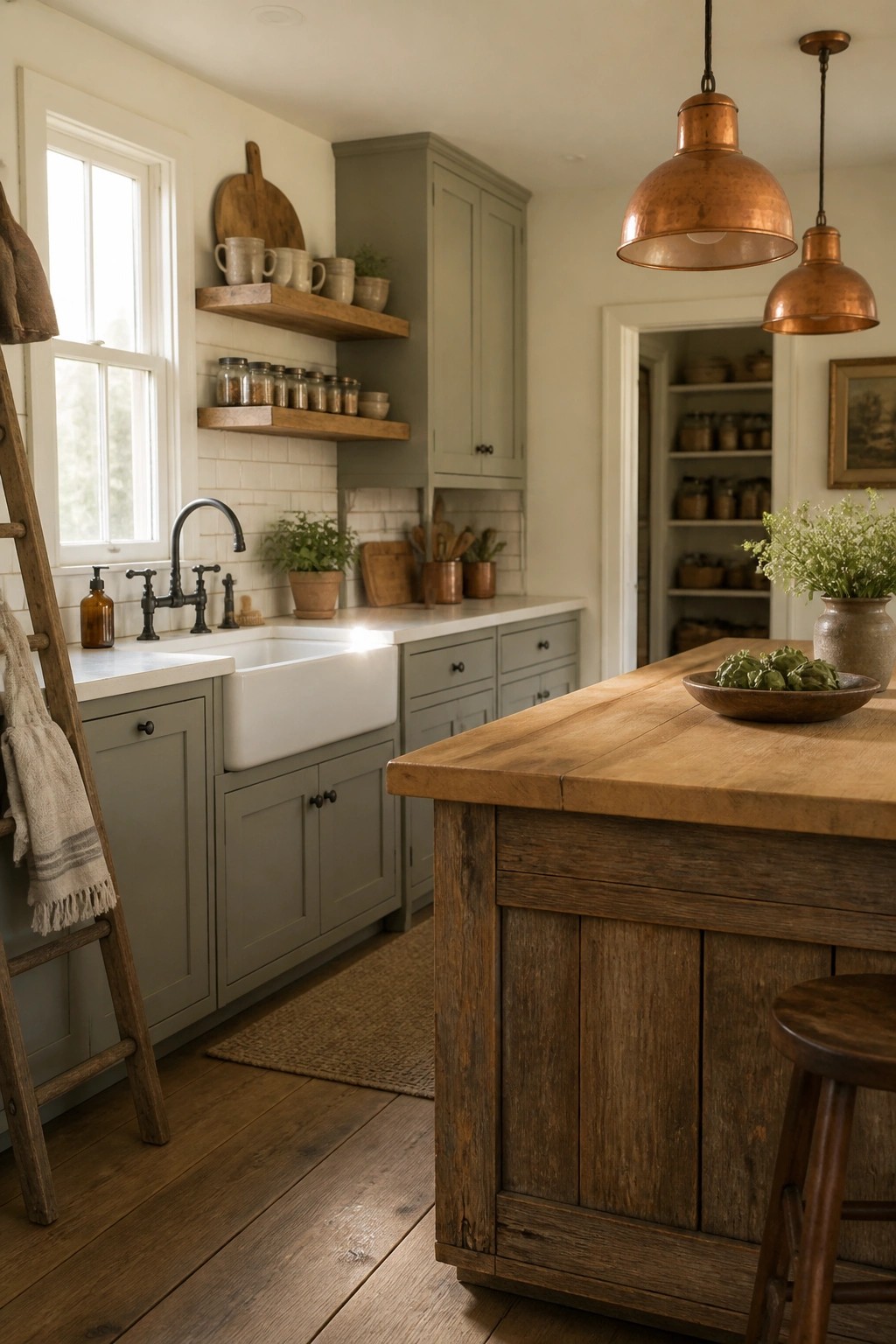
A muted green on the cabinets gives the kitchen a grounded feel without making the space feel heavy. It pairs well with wood tones and white surfaces, which helps the room stay bright while still feeling warm and lived in.
This color works best in kitchens that already have natural wood and simple hardware. It suits older homes or farmhouse styles where you want the cabinets to blend rather than stand out. Test the paint on a few boards first, since the same green can shift depending on the light.
Warm Earthy Walls In The Dining Room
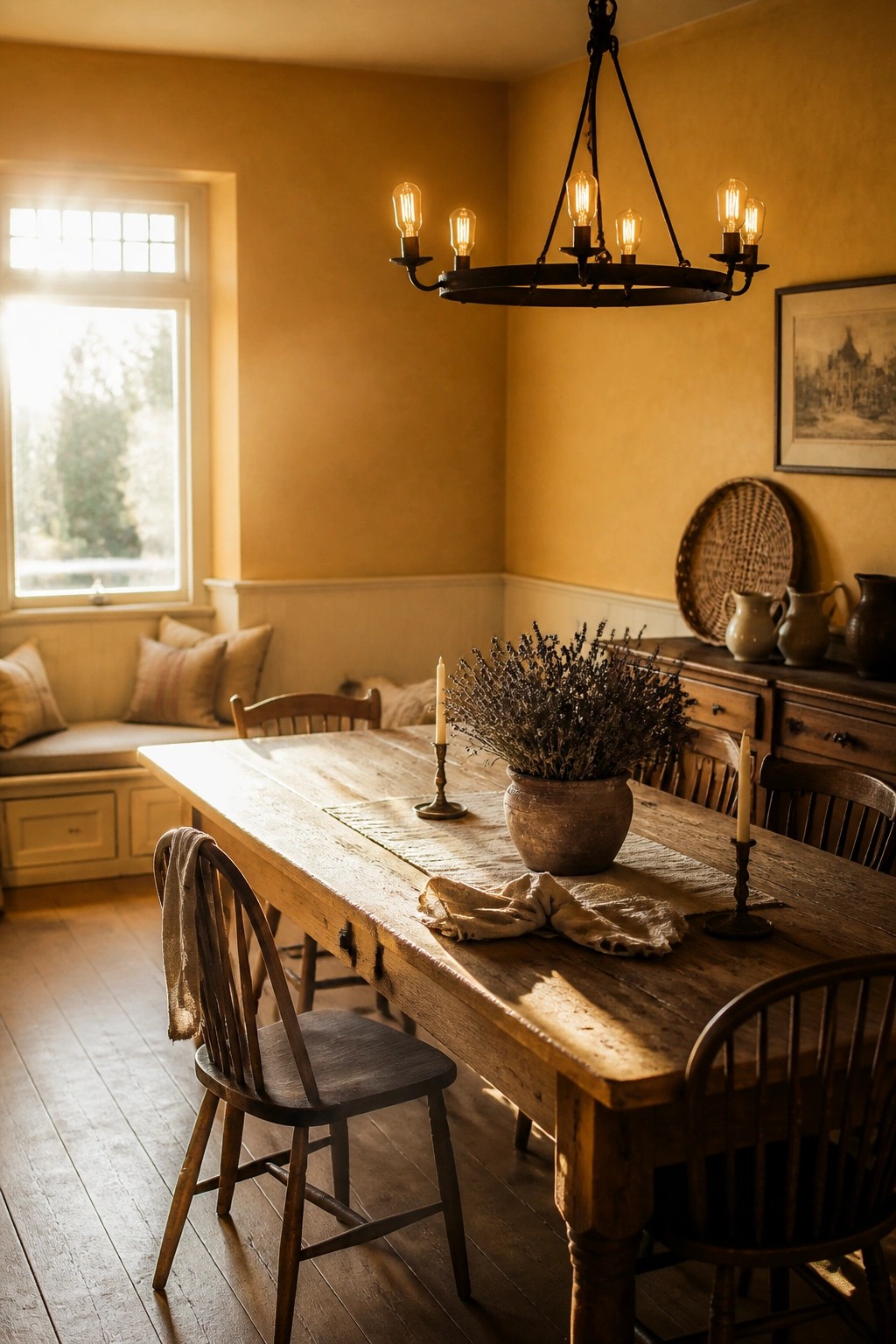
A soft mustard yellow on the walls brings a steady warmth to a rustic dining space without making it feel heavy. It pairs naturally with wood tables and chairs, and the color holds its own even when the light shifts through the day.
This tone works best in rooms that already have older wood floors or simple trim. Keep the rest of the palette quiet so the walls can do the main job, and test the paint on a large board first since earthy colors can shift more than you expect once they are up.
Sage Green Walls In The Bedroom
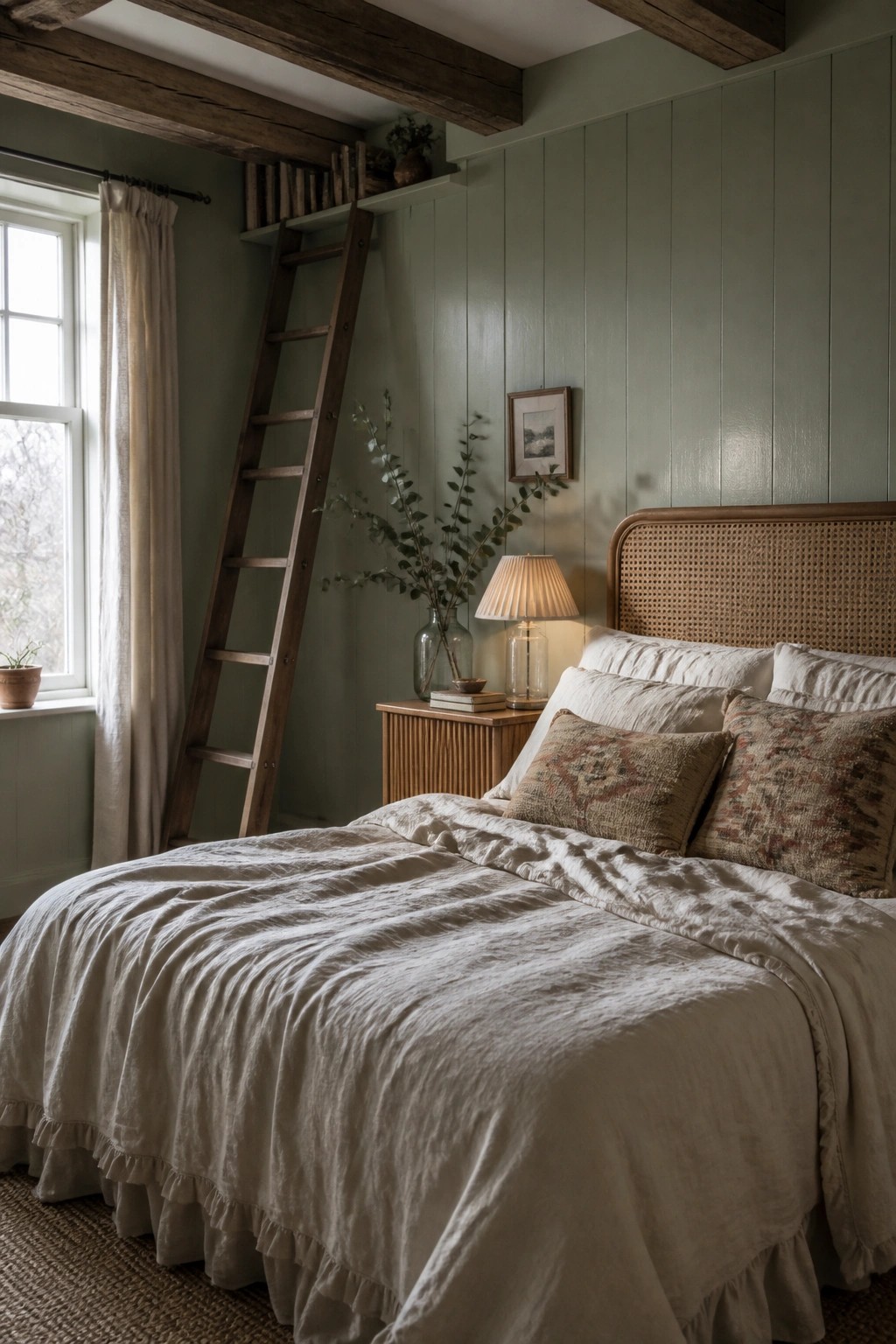
A soft sage green like this one gives a bedroom a quiet, settled feel without making the space dark. It works especially well with wood beams and simple furniture because the color stays in the background while still adding warmth.
This shade suits older homes or any space where you want the walls to feel connected to the natural textures already in the room. Keep the trim light and use linen or cotton bedding so the green stays the main note rather than competing with too many patterns.
Warm Earthy Tones For The Bathroom
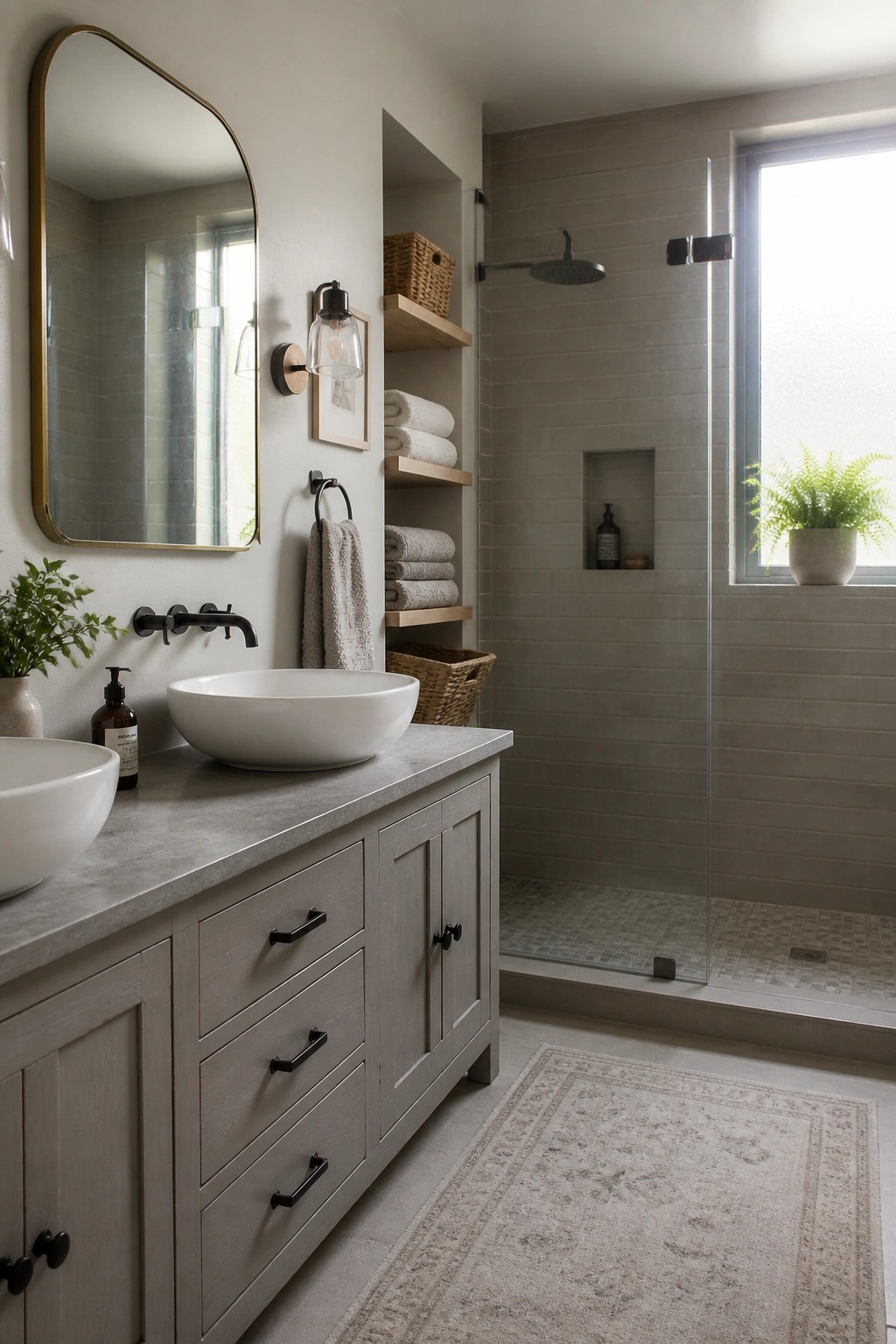
Many bathrooms feel more settled when the walls and tile stay in the same warm neutral range. Soft greige and light taupe shades on the paint and shower walls keep everything connected without looking too flat or cold.
This works best in smaller spaces or homes that lean rustic farmhouse. Keep the vanity a step lighter or darker than the walls so the cabinets still stand out, and test the paint in both morning and evening light before committing.
Warm Ochre On Nursery Walls
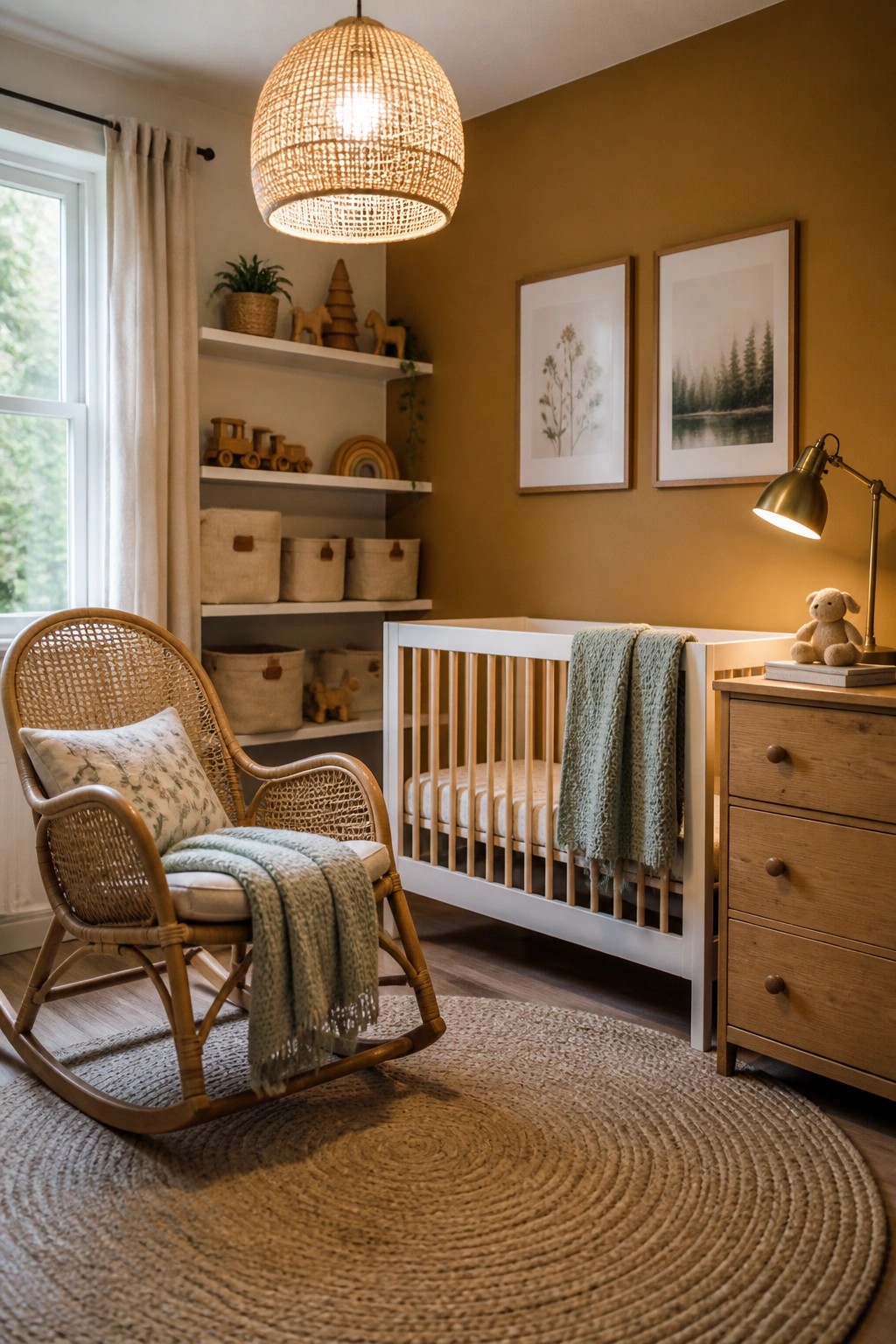
A soft mustard yellow wall like this one brings warmth without making the room feel heavy. It pairs well with natural wood and woven textures, which helps the space feel calm and grounded rather than bright or busy. Many people find this tone easier to live with than cooler grays or stark whites, especially in rooms that get softer afternoon light.
This color works best in smaller spaces where you want a bit of depth but still need the room to feel open. Try it on one or two walls first if you are unsure, and keep the trim and ceiling light so the yellow stays friendly. It suits older homes or any farmhouse style that leans toward simple materials and quiet colors.
Deep Earthy Paint For A Cozy Workspace
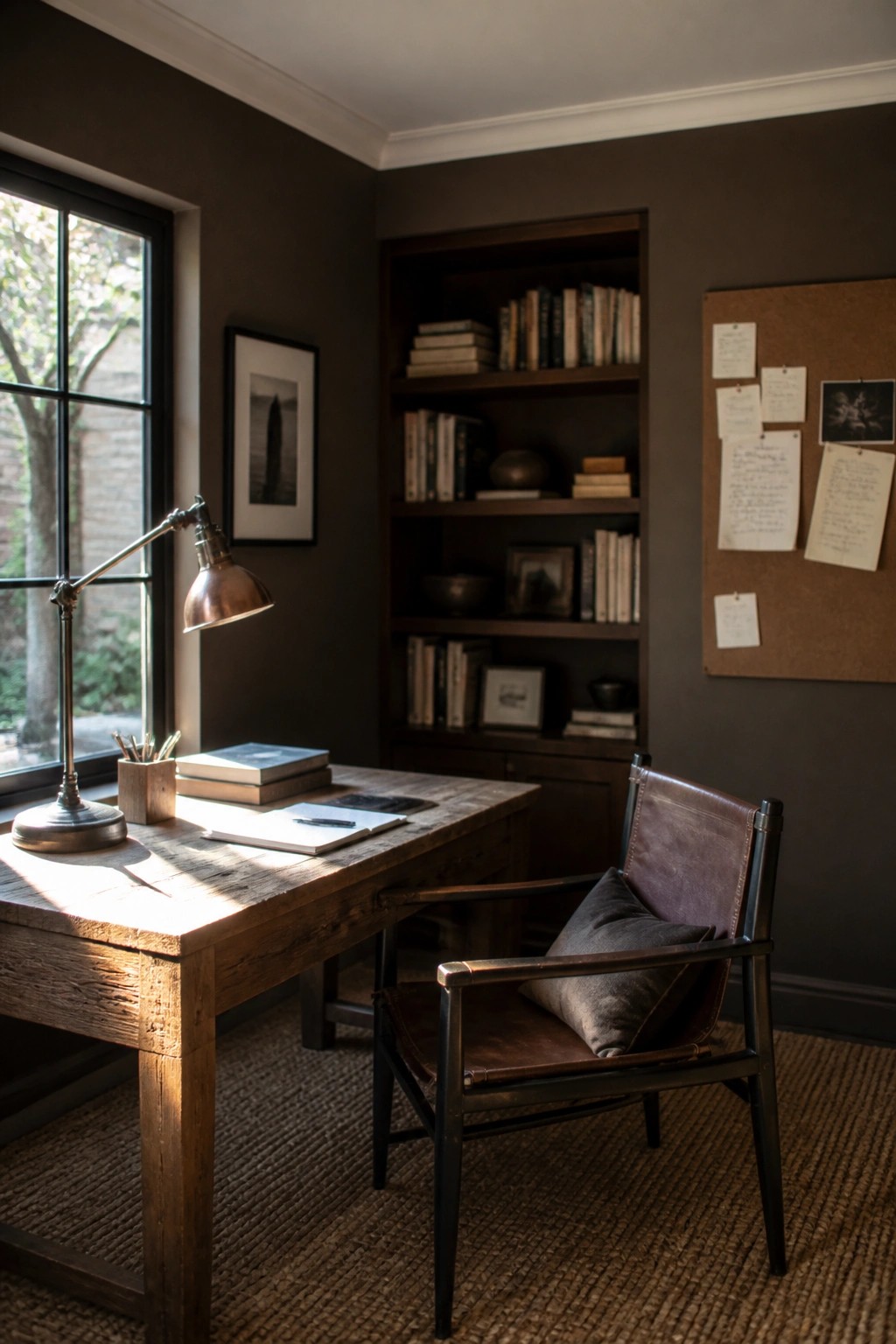
A deep earthy wall color gives a home office or study a grounded, settled feeling that works well for long hours at a desk. It pairs naturally with wood furniture and leather pieces, so the room feels warm instead of stark.
This approach suits older homes or any space where you want a quiet tone without making the room feel closed in. Keep the trim simple and let the wood and leather carry the warmth so the color stays balanced.
Deep Earthy Red For Mudroom Walls
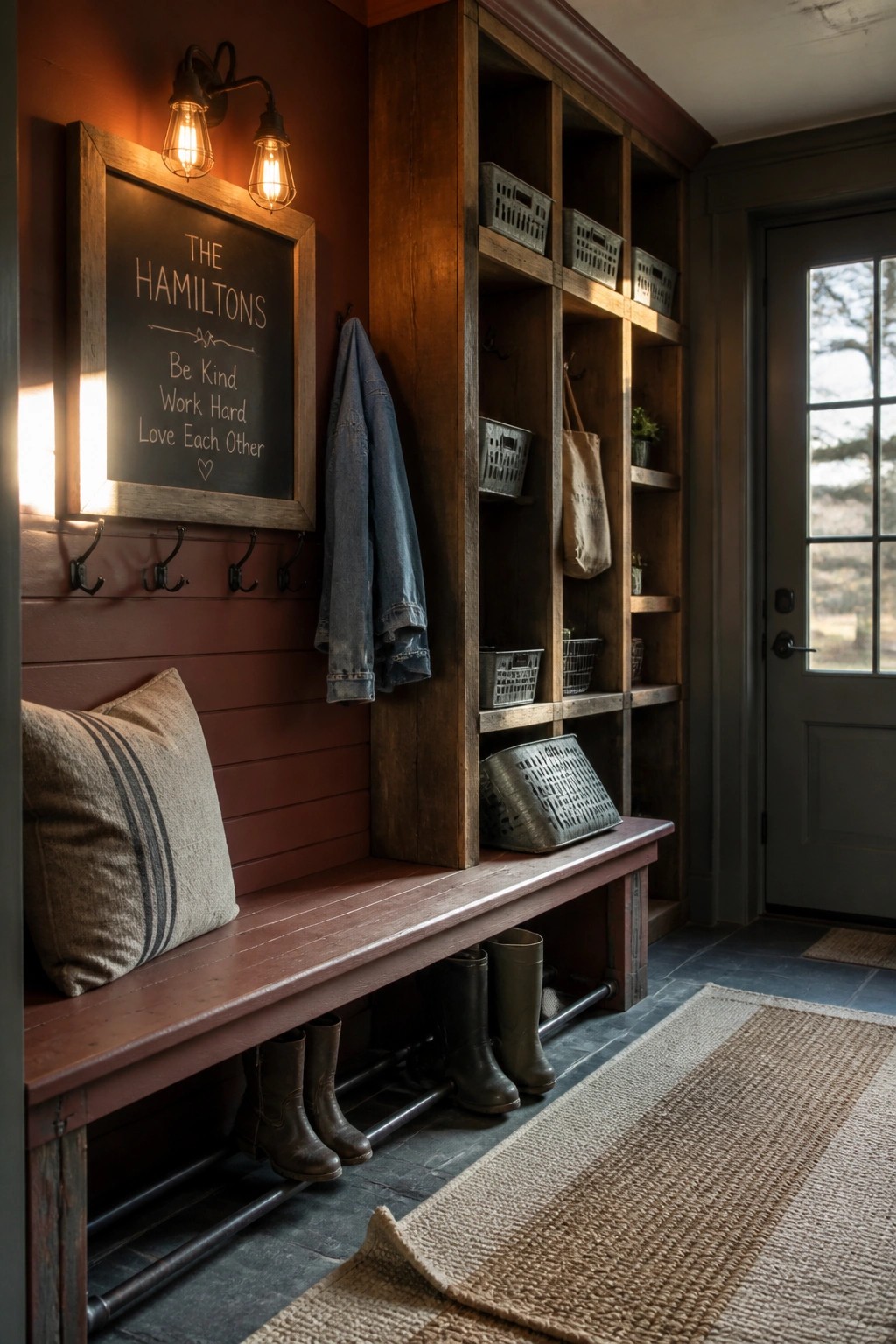
A deep red brown paint like this one gives an entry space real warmth while still feeling grounded. The color holds up well against heavy use and makes the wood tones around it feel even richer.
It suits older homes or any farmhouse style where you want the walls to do some of the work. Keep the trim simple and let the paint carry the mood rather than adding too many layers on top.
Warm Terracotta Walls Behind Pantry Shelves
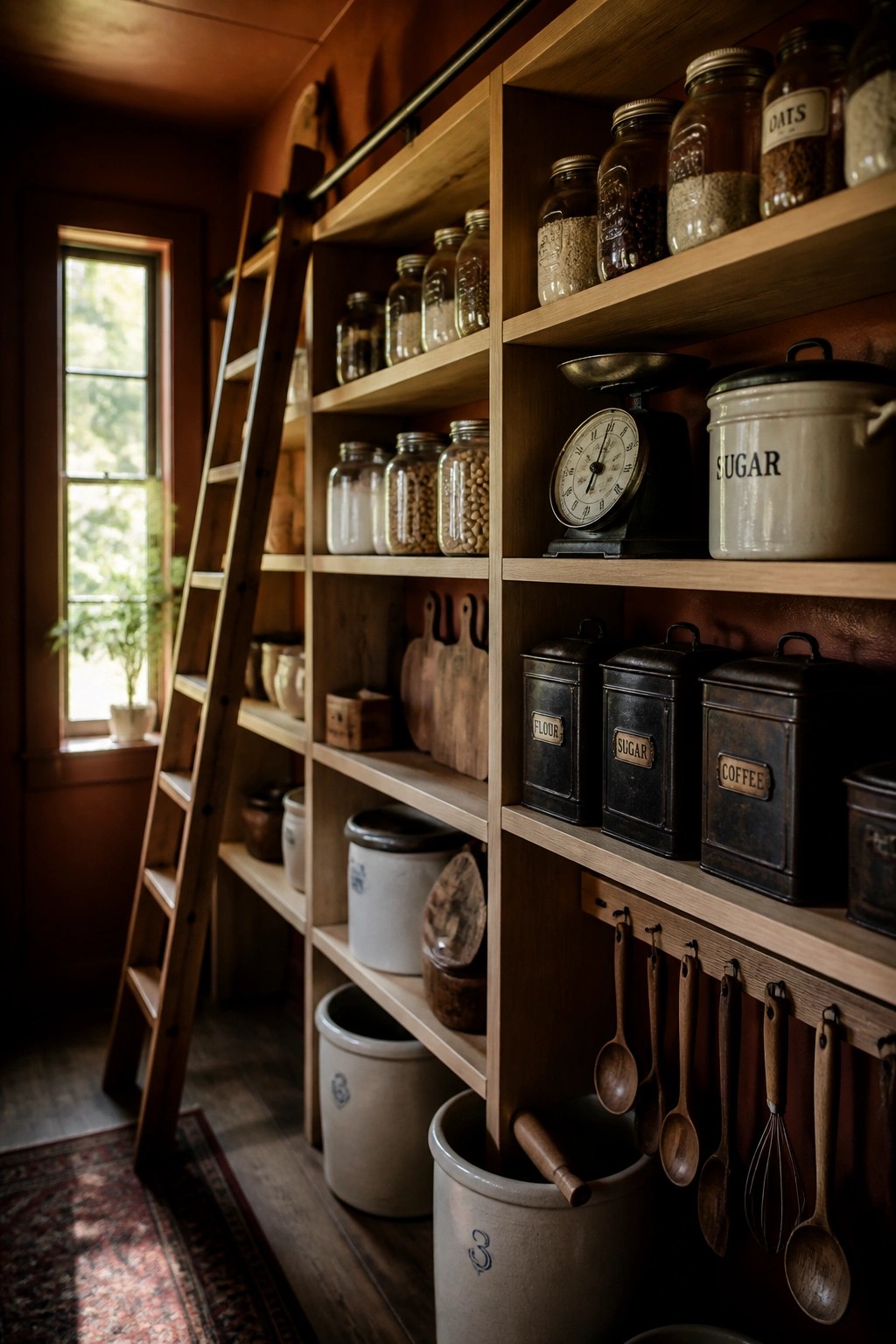
Painting the walls a warm earthy color like terracotta helps the wood shelves and stored goods feel more settled in the room. The tone picks up on the natural wood and keeps the whole area from looking too plain or bright.
This works best in older homes or any farmhouse style pantry where you already have open storage. Keep the color on the deeper side so it still feels cozy even when the shelves are only partly full.
Warm Earthy Wall Colors For Small Dining Nooks
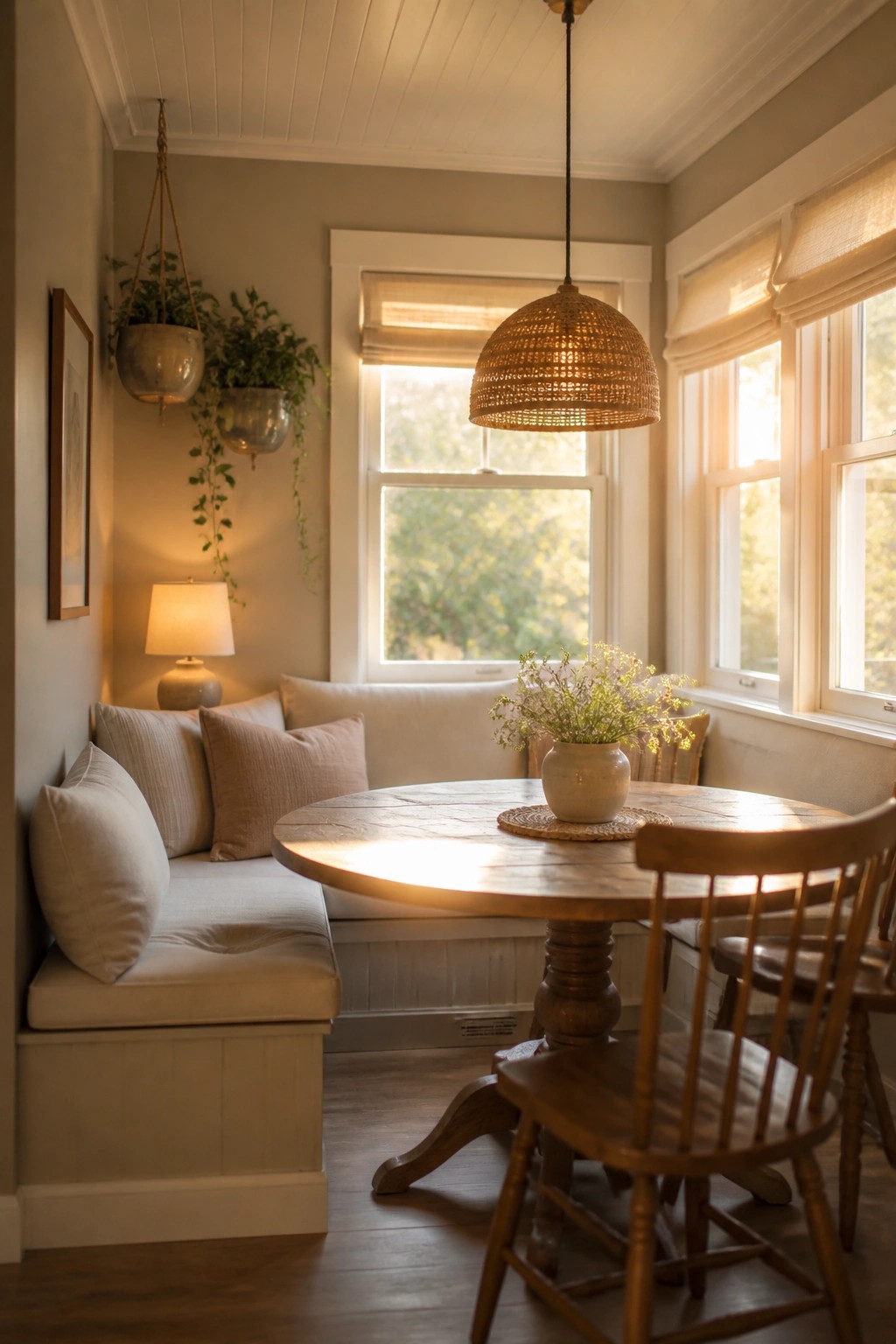
A soft, muted wall color can make a compact dining space feel calm and grounded without closing it in. In this setup the gentle tone pairs with the built-in bench to create a relaxed spot that still feels connected to the rest of the house.
Try the same color on all walls rather than creating an accent wall. It works especially well in rooms with plenty of natural light and simple wood furniture. Keep trim and ceilings light so the space stays airy.
Warm Terracotta Walls For Rustic Bedrooms
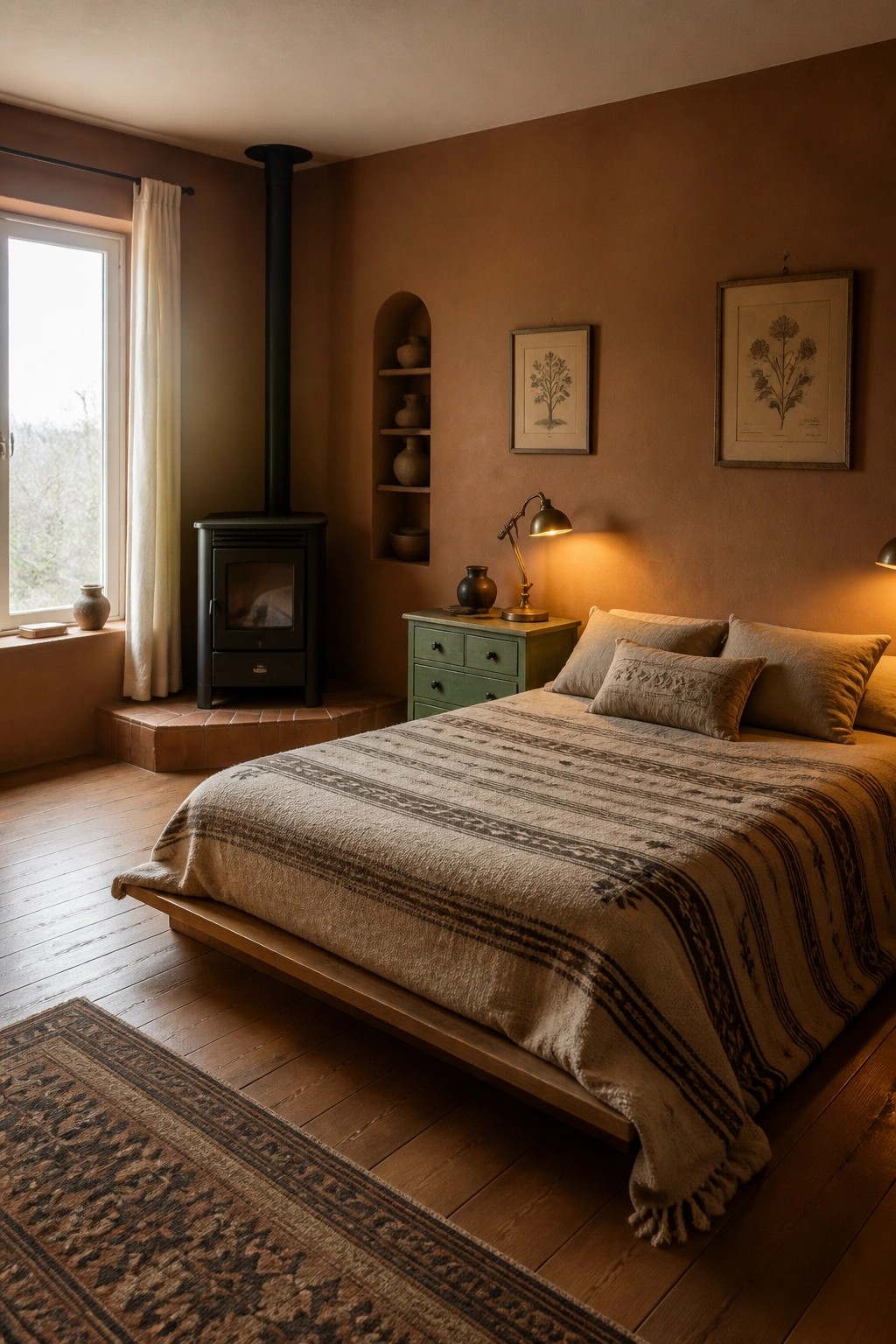
A soft terracotta wall color brings a grounded feel to a bedroom without making the space feel heavy. It works especially well in rustic farmhouse homes because it echoes natural materials like wood and clay while keeping the room calm and lived in.
This shade suits spaces with wood floors and simple furnishings. Test the paint on a large board first since the color shifts with changing light throughout the day.
Warm Earthy Paint For Hallways
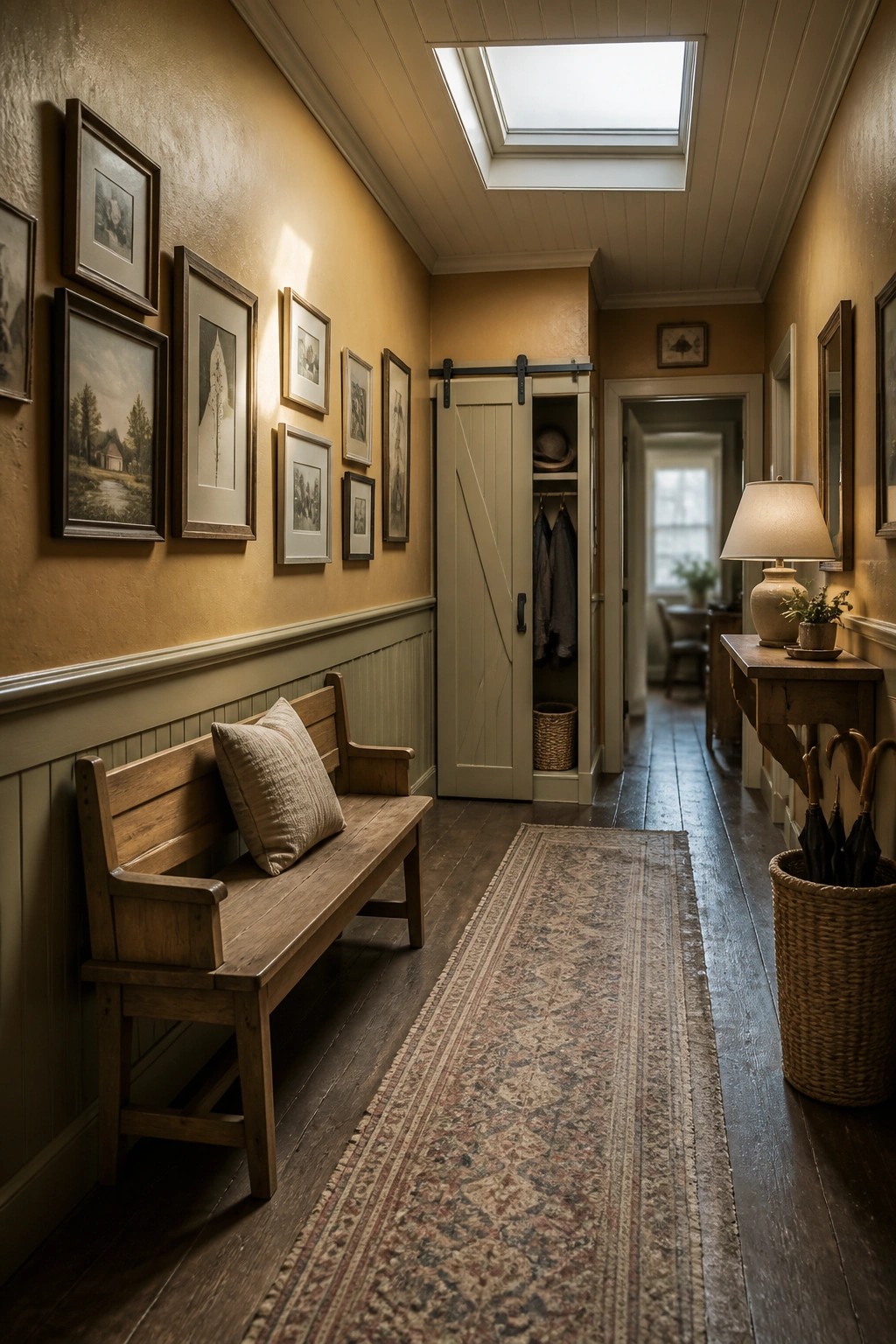
A soft golden ochre works well on hallway walls because it keeps the space feeling bright without turning stark. The color sits nicely against wood trim and older flooring, giving the whole passage a grounded look that still feels lived in.
This shade suits homes that already have natural wood elements or simple built-ins. It helps the hallway connect to nearby rooms instead of feeling like a separate tunnel. Test the paint on a large board first, since hallway light shifts quickly from one end to the other.
Terracotta Walls For Small Spaces
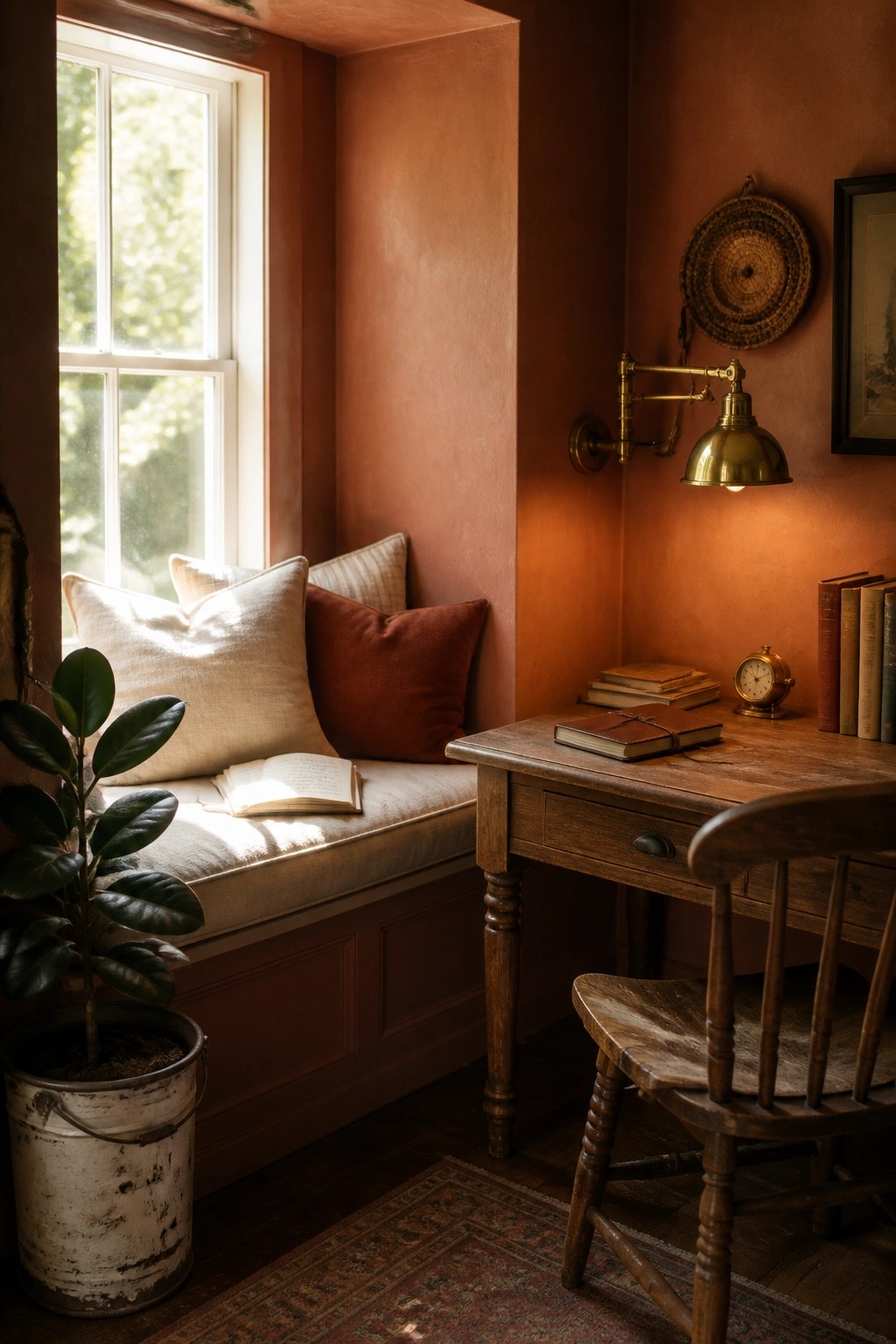
Terracotta paint brings a steady warmth to a room without needing much else around it. The deep earthy tone works especially well in corners that already have wood tones and simple furnishings, since the color itself does most of the work to make the space feel settled.
This shade suits older homes or any room where you want a grounded feel rather than something bright. Keep the trim and ceiling light so the walls stay the main feature, and test the color on a large patch first because it shifts a lot with the light during the day.
Warm Earthy Paint On Closet Cabinetry
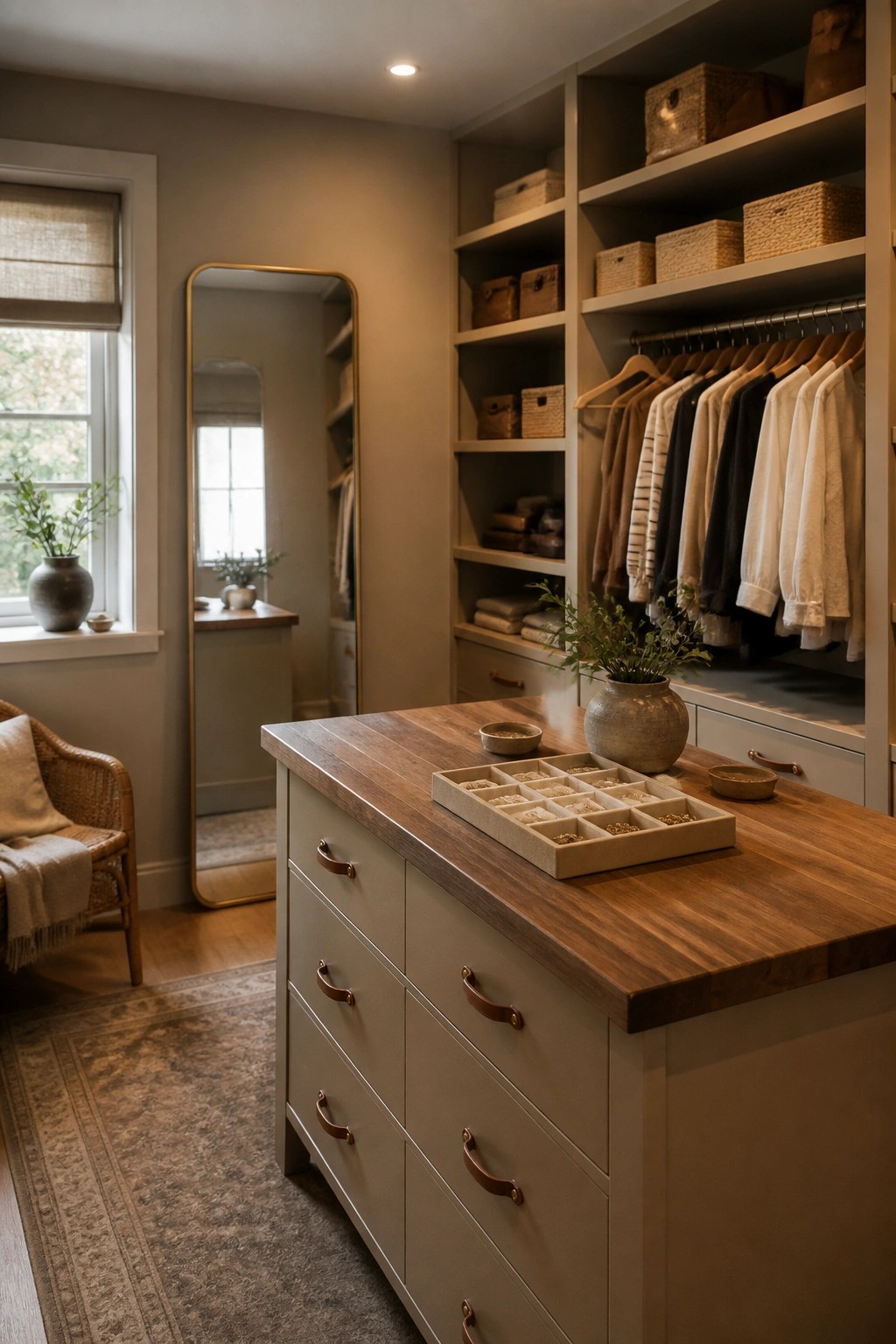
Carrying a soft earthy tone across both the walls and built-in cabinetry helps a room feel calm and pulled together. The color stays quiet enough to let wood and woven textures stand out without competing.
This works especially well in a closet or dressing space where you want storage to recede rather than dominate. Keep the finish matte or low-sheen so the tone reads warm and lived-in instead of flat.
Terracotta Walls In A Bathroom
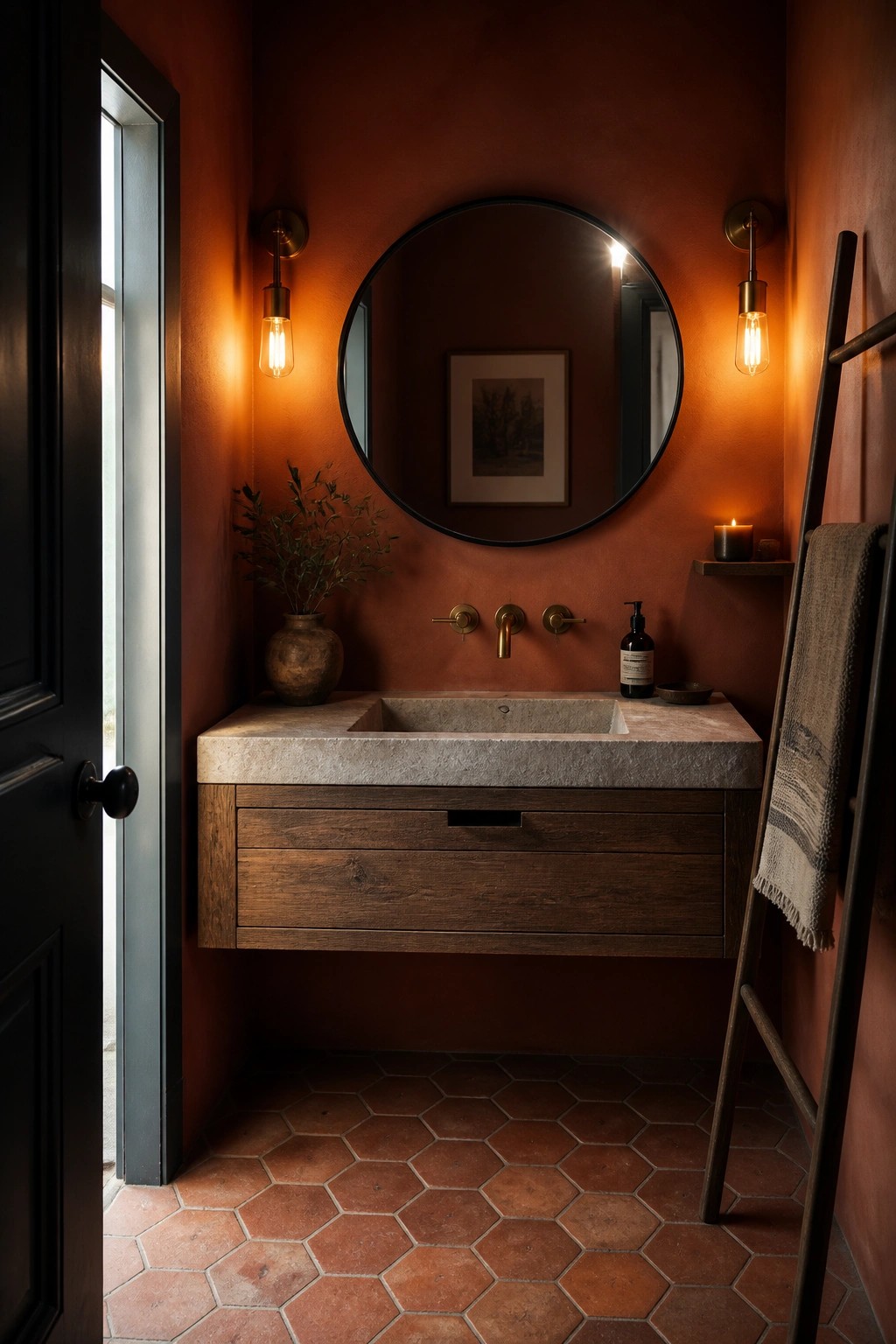
A deep terracotta shade on the walls gives a bathroom that grounded, lived-in feel many people want in a rustic farmhouse. It pairs naturally with wood and stone without needing much else to feel complete.
This color works best in smaller spaces where you want warmth but not darkness. Test a sample on the wall first since these earthy tones can look different in morning light than they do at night.
Earthy Greens For Built-In Nooks
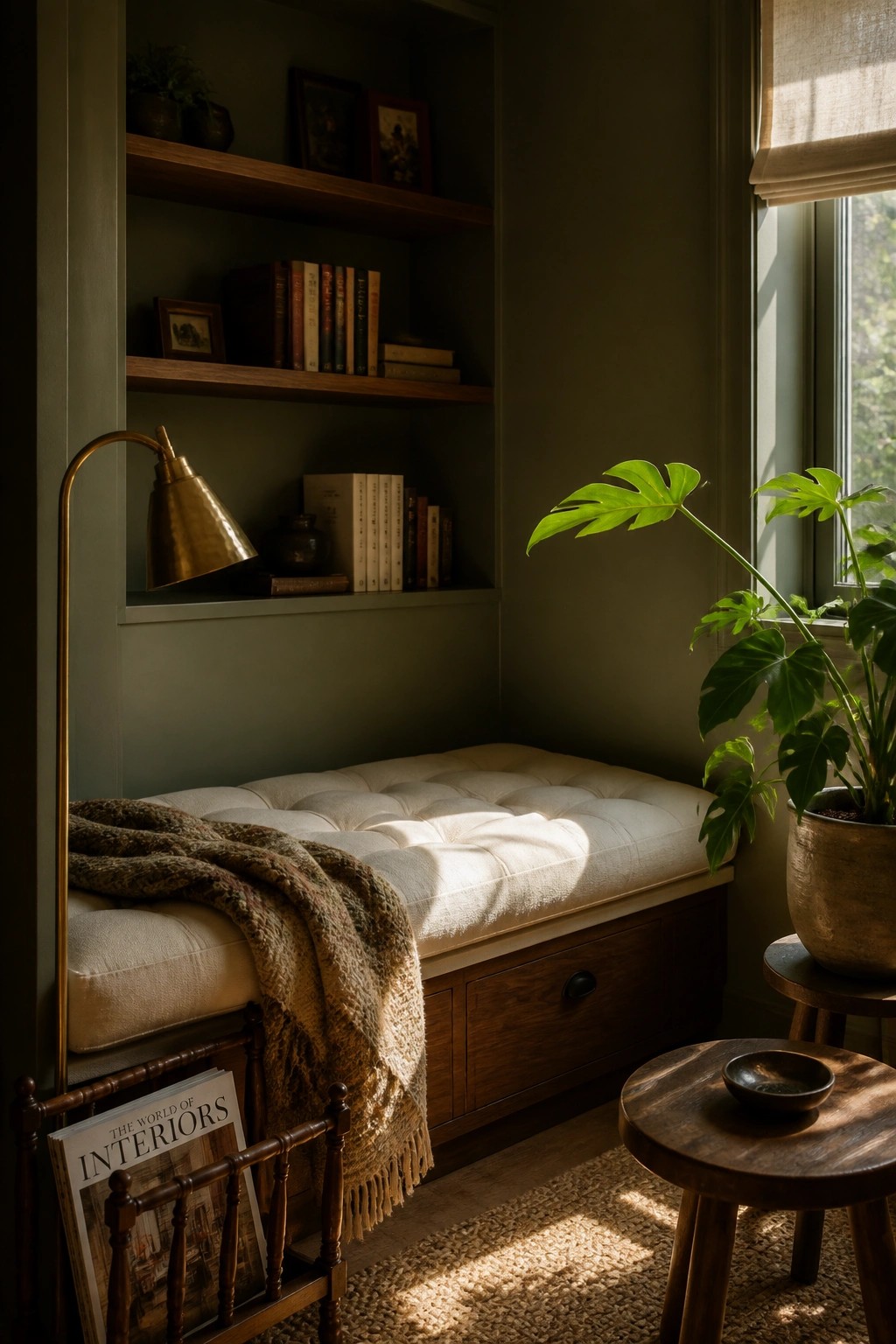
A built-in bench feels more settled when the walls around it are painted a warm earthy green. The color wraps the space and makes the corner feel like a natural part of the room instead of just extra storage.
This works best in smaller alcoves or quiet corners where you want a calm place to sit. Keep the wood tones light and simple so the green stays the main feature.
Warm Neutral Walls That Blend With Stone
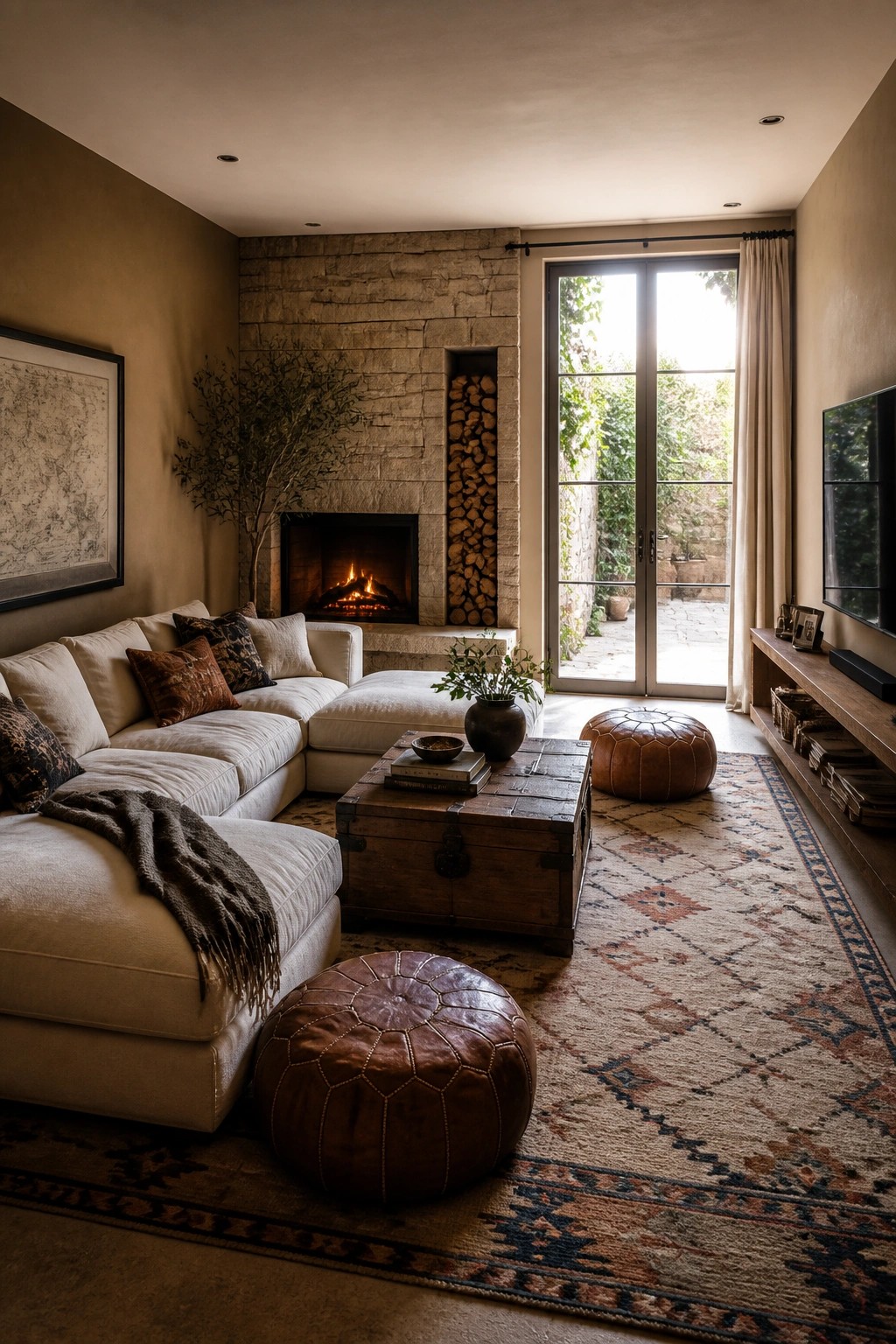
A soft warm neutral on the walls helps tie together stone, wood, and leather without making the room feel heavy. It keeps the space calm while still showing off the texture of the fireplace and the natural grain in the furniture.
This kind of paint color works best in rooms that already have plenty of wood and stone. It suits older homes or any space where you want the walls to sit quietly in the background rather than compete with the materials around them.
Warm Earthy Wall Colors For Rustic Kitchens
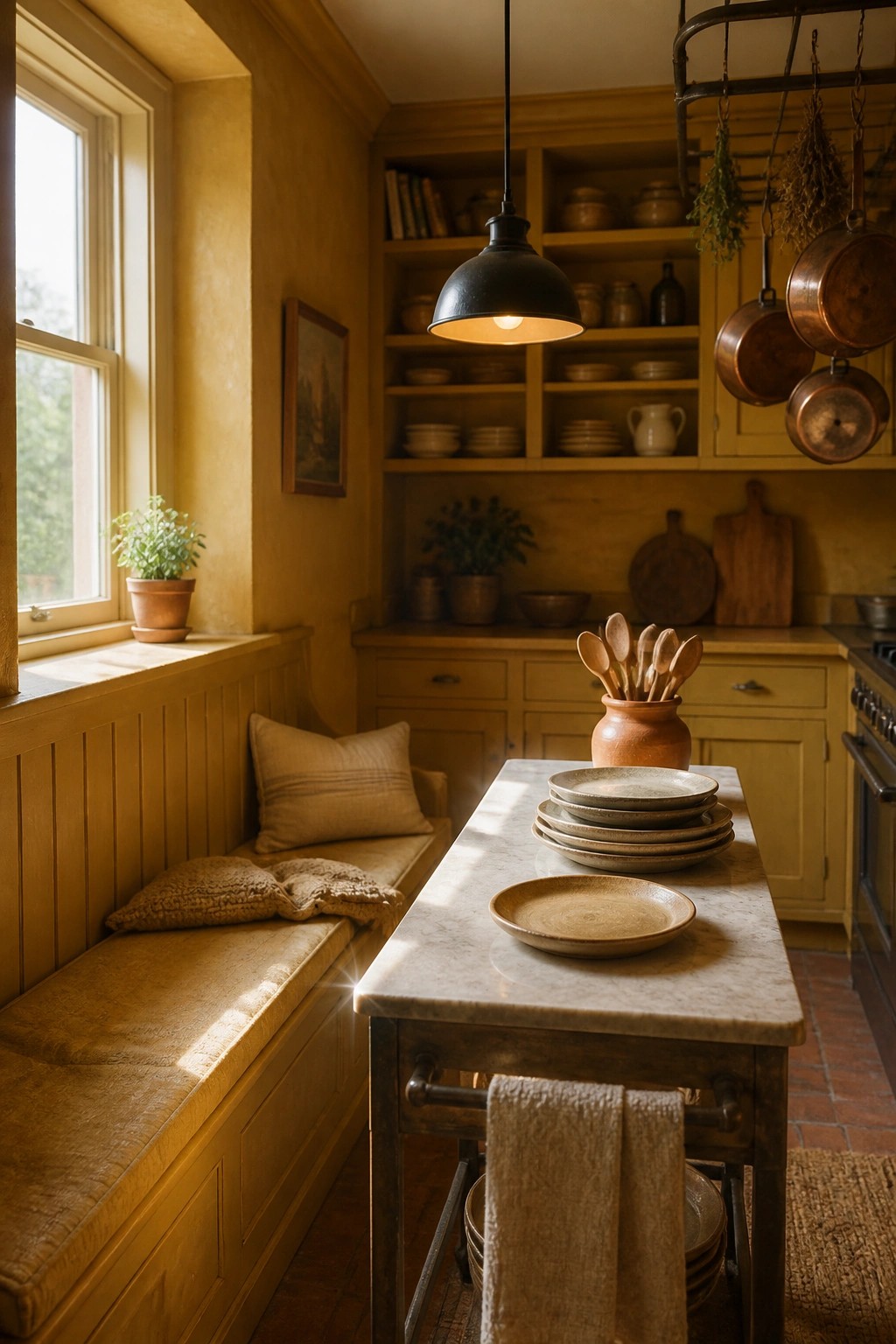
A soft yellow tone on the walls brings natural warmth into a rustic kitchen and helps the wood tones feel more settled. It works because the color shifts gently with the light during the day and keeps the room from looking flat.
This kind of paint suits older homes or simple farmhouse layouts where you already have wood cabinetry and stone surfaces. Stick with a muted shade so it blends rather than competes with the textures already in the room.
Warm Neutrals For Closet Walls
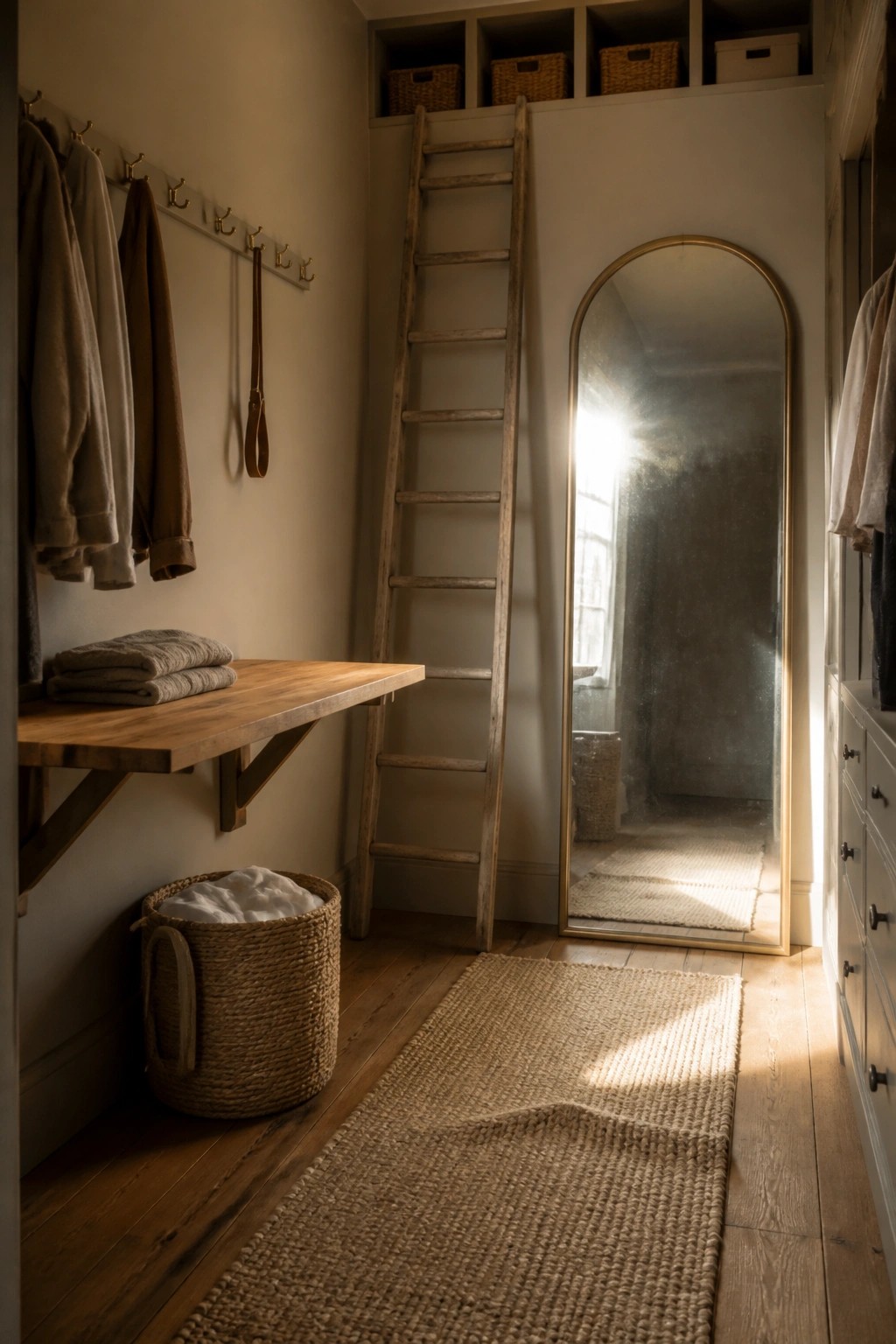
A soft warm neutral on the walls can turn a basic closet into a space that feels calm and pulled together. It keeps the focus on the wood tones and natural textures without making the room feel stark or closed in.
This works best in smaller or narrow closets where you want the space to feel connected to the rest of the house. Choose a color with a touch of warmth so the wood and woven pieces sit nicely against it rather than standing out as separate elements.
Earthy Green Paint For Pantry Storage
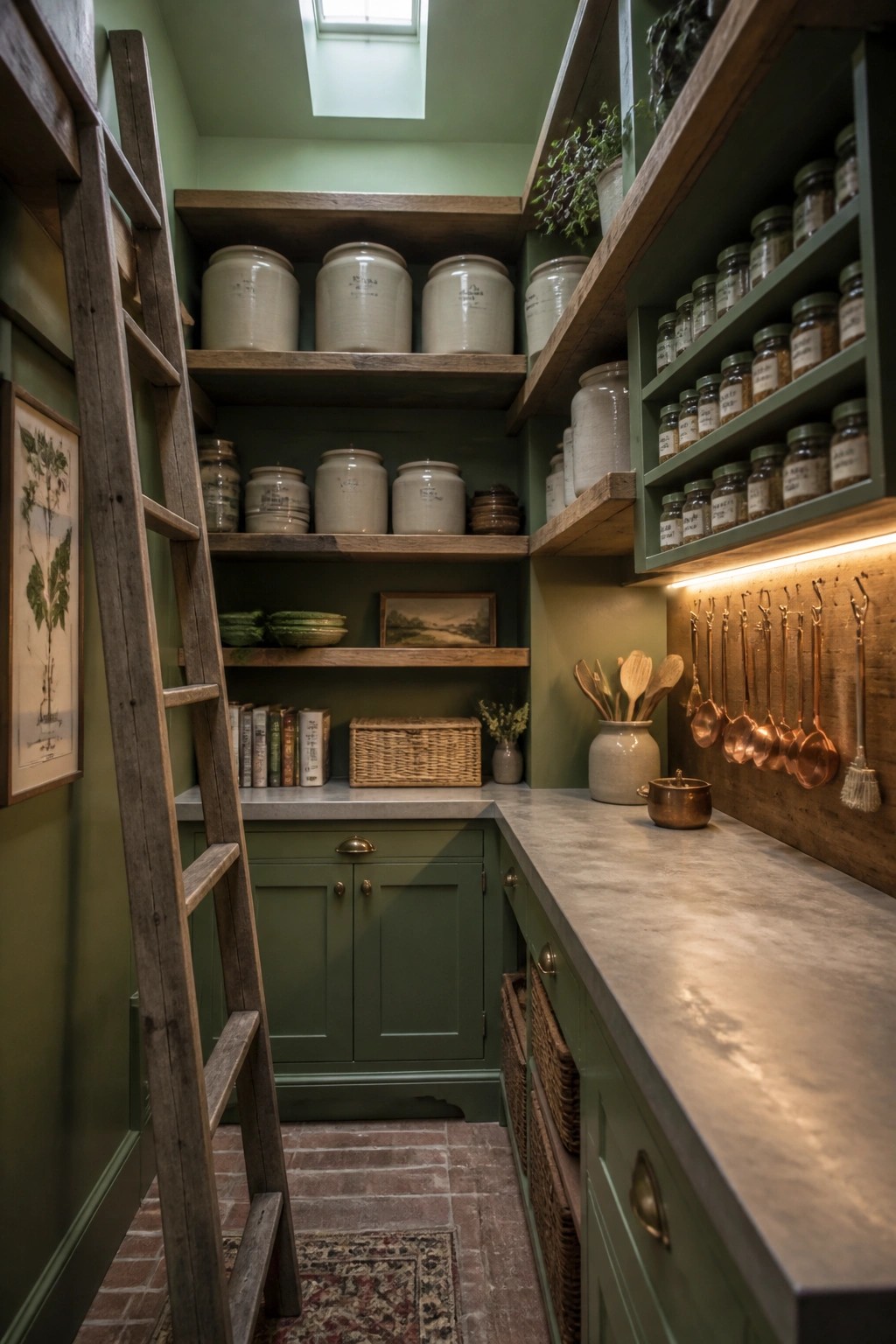
A warm earthy green on the walls and cabinets gives a pantry a settled, lived-in look that fits right into a rustic farmhouse kitchen. The color stays soft enough that it does not close the space in, yet it still feels substantial next to wood and stone.
This approach works best in homes that already lean toward natural materials and simple finishes. Keep the trim and ceiling light so the green stays the main note, and test the paint on a small board first since earthy greens shift more than you expect once they are on all four walls.
Warm Earthy Paint For Hallway Walls
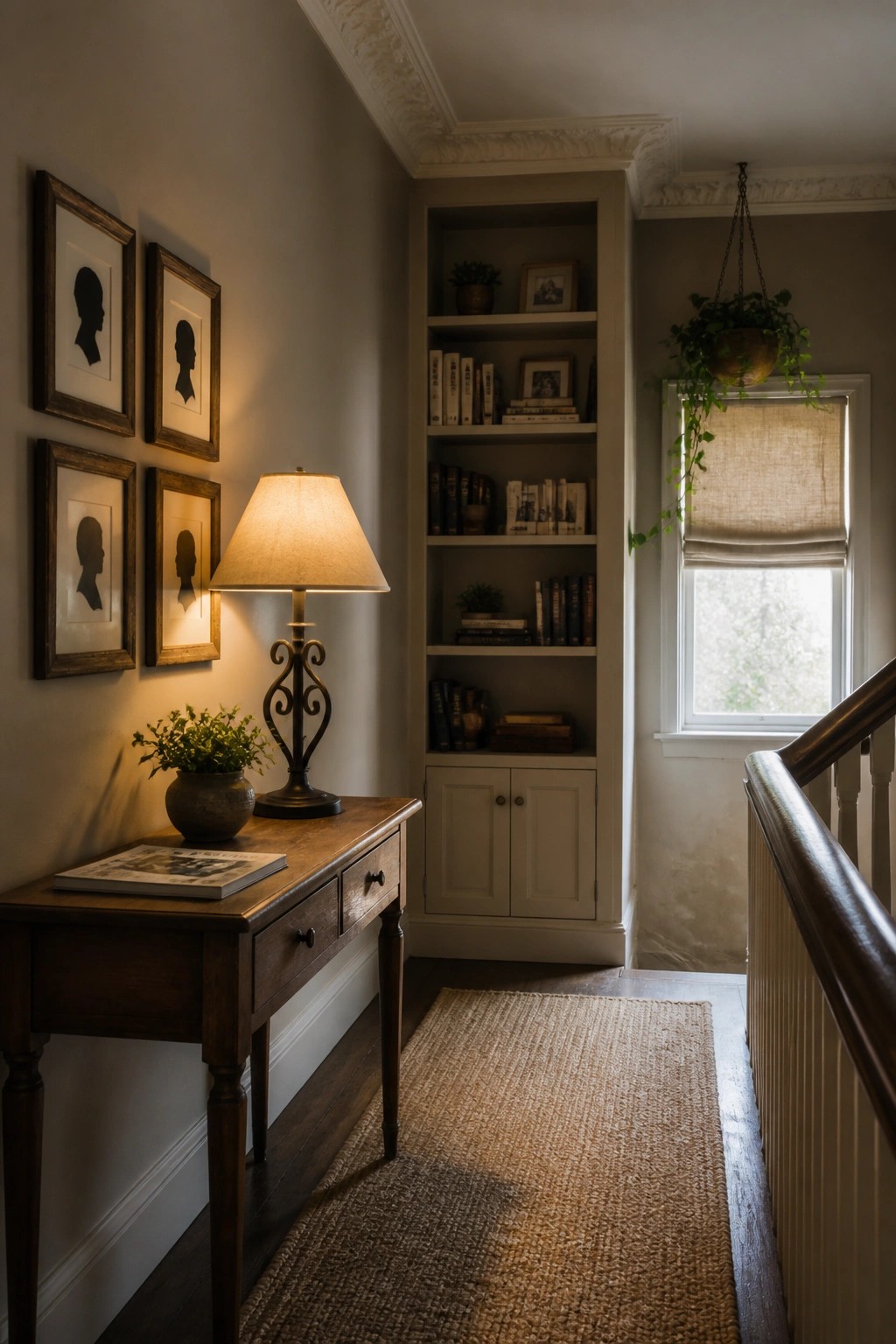
A soft warm neutral on the walls can make a narrow hallway feel calmer and more inviting without much effort. The color here sits between gray and taupe, picking up the warmth from the wood floor and furniture so the space feels connected rather than stark.
This kind of paint works especially well in older homes or farmhouse layouts where you want the walls to recede a bit and let the wood tones and simple furnishings stand out. Keep trim and built-ins in a slightly lighter shade so the color does not feel heavy in a tight space.
Warm Earthy Paint Colors In The Bathroom
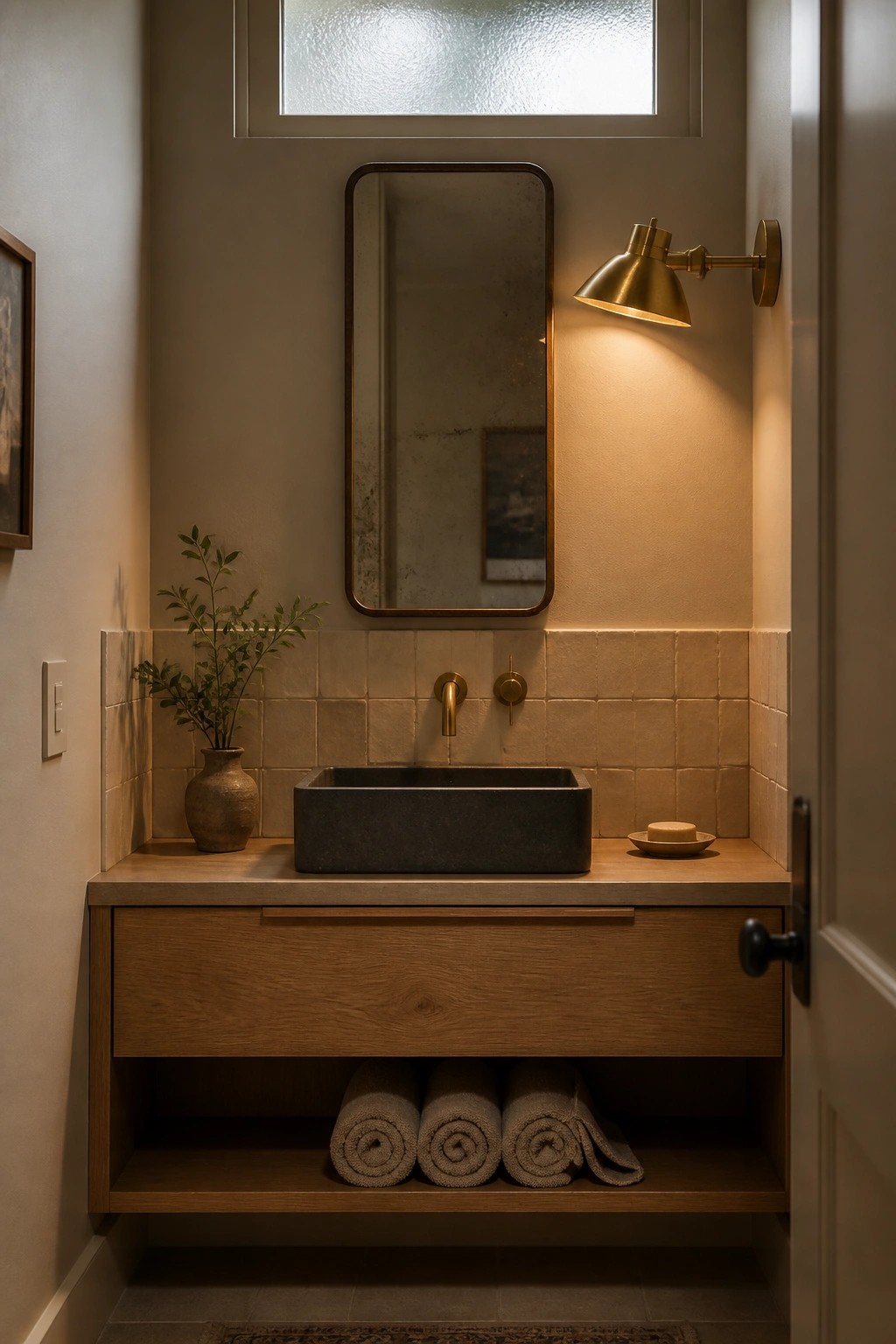
A soft warm taupe on the walls gives a bathroom a calm, grounded look that fits right into a rustic farmhouse style. It works well because it lets the wood and stone elements stand out without competing.
This shade suits smaller bathrooms best, especially when paired with a simple wood vanity and matte tile. Keep the trim and ceiling in a similar tone so the space feels pulled together rather than busy.
Warm Terracotta On The Walls
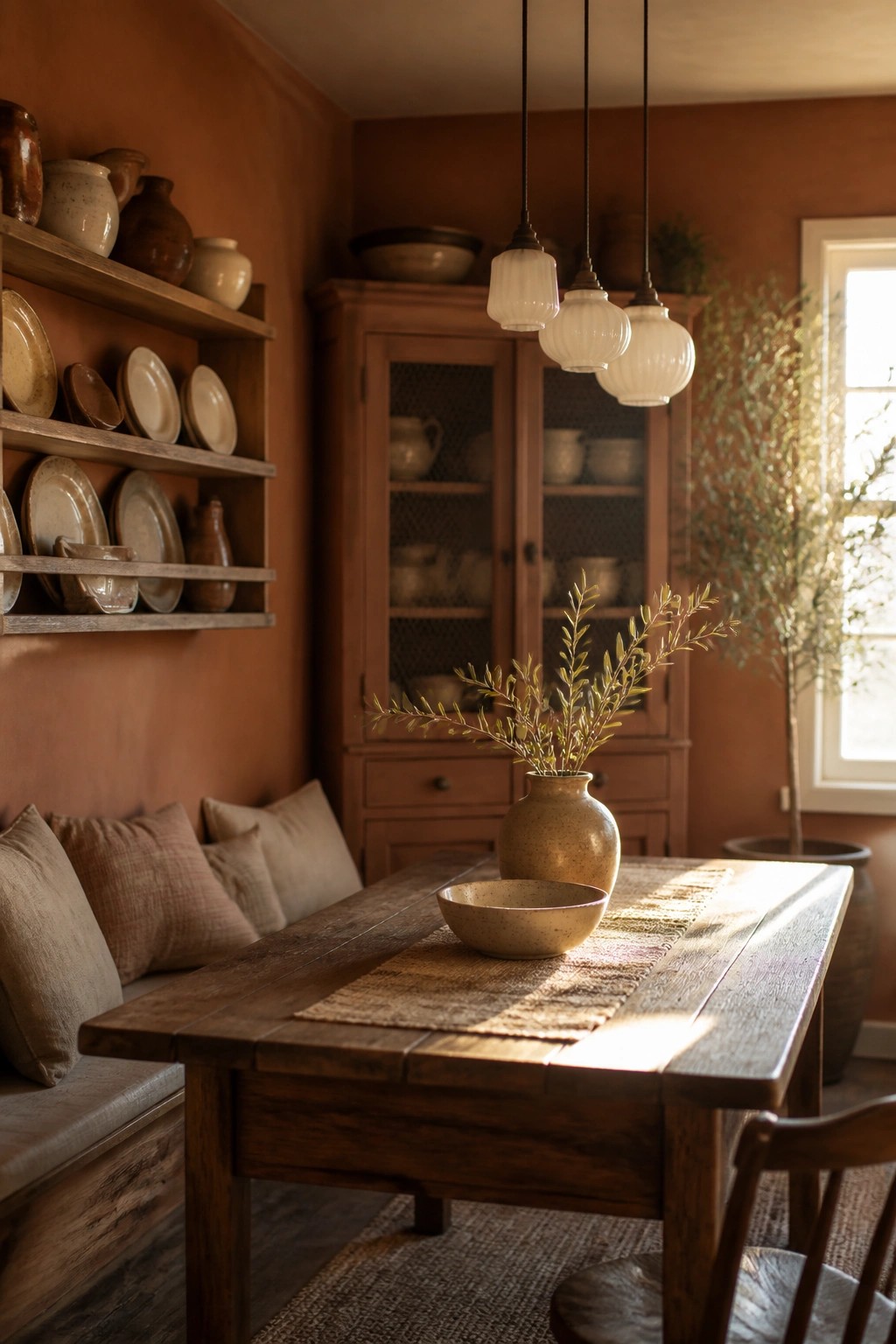
A warm terracotta shade like this one gives a room real presence without trying too hard. It makes the space feel settled and lived in, especially when paired with wood furniture and simple pottery pieces.
This color works best in rooms that get steady daylight. Use it in dining areas or kitchens where you want things to feel gathered together. Keep the trim and ceiling light so the walls stay the main focus.
Frequently Asked Questions
Q: How do I pick the right shade for a north-facing room? A: North light tends to make colors look cooler so lean toward the warmer end of your earthy options. Try a soft terracotta to keep things inviting. Test it at different times of day to see how it shifts.
Q: Will these colors hide imperfections on old walls? A: Warm earthy tones can soften the look of uneven surfaces better than bright whites. They reflect light in a gentle way that draws the eye less to flaws. Still sand and prime your walls first for the smoothest finish.
Q: Can I use one of these paints on cabinets? A: Pick a durable formula in a mid-tone like greige. It gives cabinets an aged farmhouse feel without looking stark.
Q: What accents pair well with these tones? A: Natural wood and woven textures bring out the warmth nicely. Add some greenery or linen fabrics for contrast. Keep metal finishes in aged brass or oil-rubbed bronze.
