

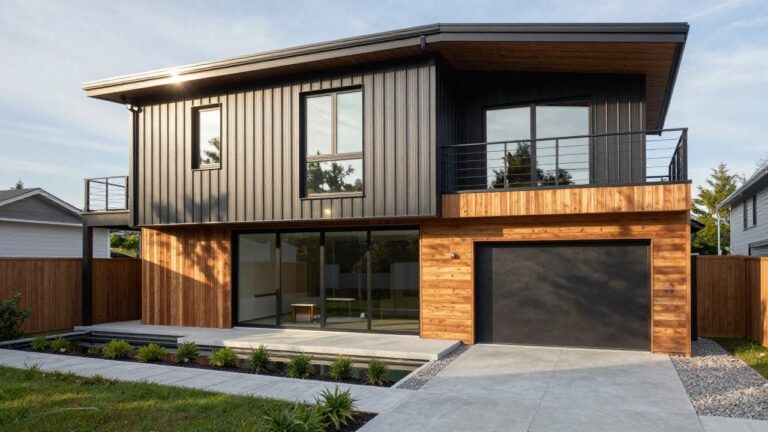
I’ve noticed that a house’s exterior often decides whether it feels welcoming or just plain forgettable from the street. Metal cladding catches my eye because it adds that crisp, modern edge to facades while handling weather better than most materials. The best ones wrap around entries and rooflines smoothly, pulling everything together so the whole front reads as intentional. What works in real life is when the panels reflect light just enough to highlight details without overwhelming the design. A couple of these approaches make me think twice about skipping cladding on my next project update.
Black Corrugated Metal Cladding with Wood Panels
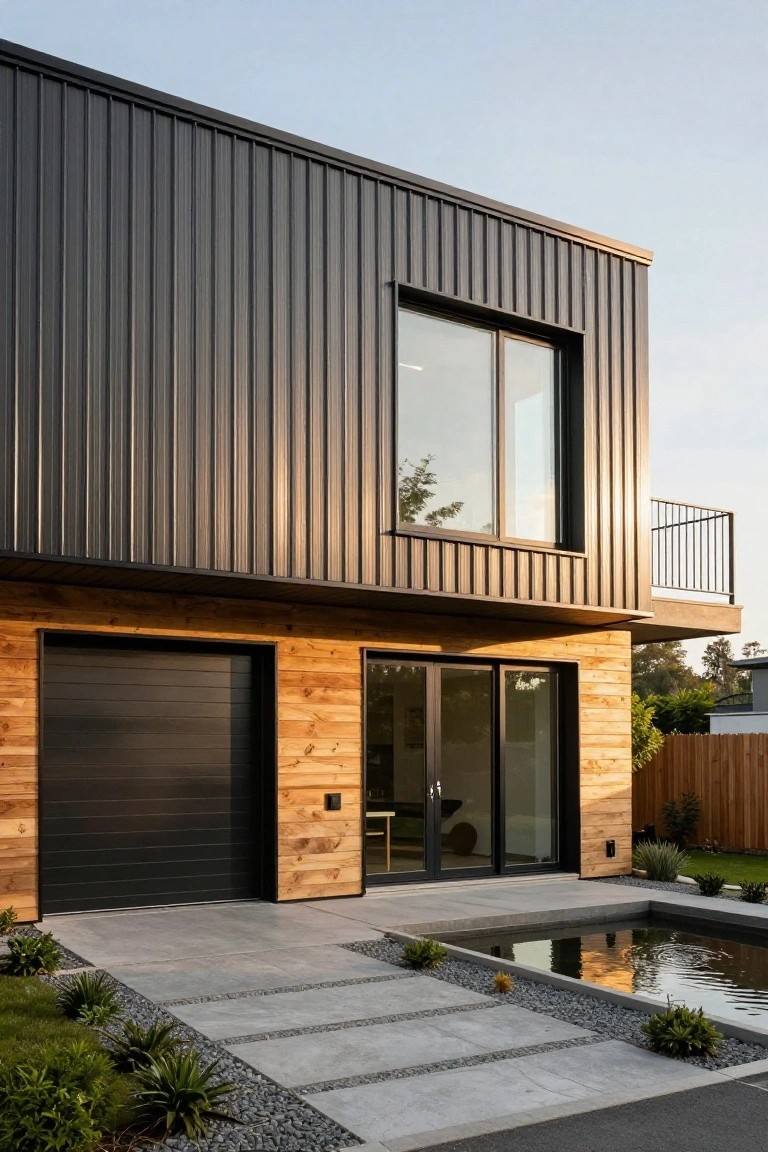
Dark corrugated metal siding covers most of this house facade. It creates that clean, modern edge people go for these days. Paired with light wood panels around the garage and entry, it keeps things from feeling too stark. The metal runs up high, while wood grounds the bottom. Simple mix, but it works.
This setup suits newer homes or updates to older ones in milder climates. Use it where you want low-maintenance walls that still look sharp. Add a bit of landscaping out front, like the small water feature here, to tie it together. Watch the scale though. Metal can overwhelm small houses.
Rusted Metal Canopy Over the Entry
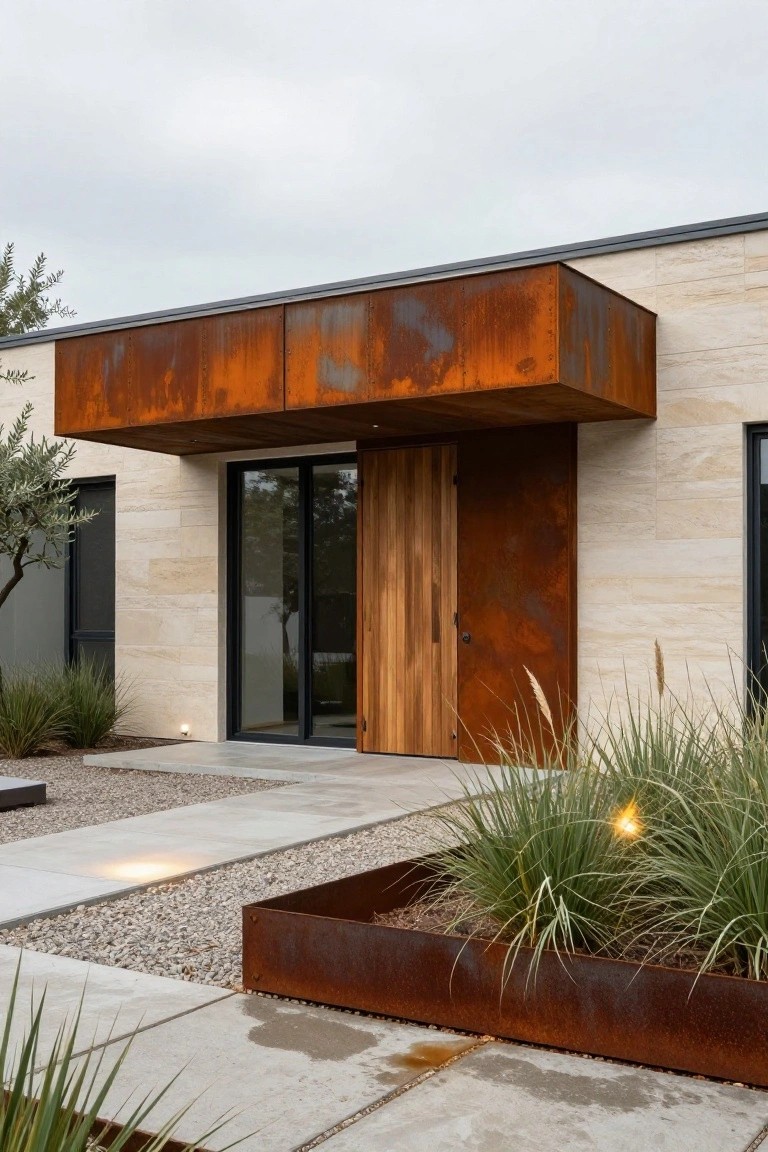
This setup uses corten steel panels that have rusted to a nice orange-brown patina, forming a boxy overhang right above the front door. It sits against light beige stone walls, and that simple contrast gives the house a modern edge without trying too hard. The wooden door tucked underneath feels protected, and the whole entry looks sturdy.
You can pull this off on low-slung modern homes or ranch styles, especially where you want some texture up high. Keep the stone neutral so the rust pops, and add gravel paths or tall grasses nearby to tie it in. The metal weathers on its own over time… no extra upkeep needed.
Gray Metal Roof on a Modern Farmhouse
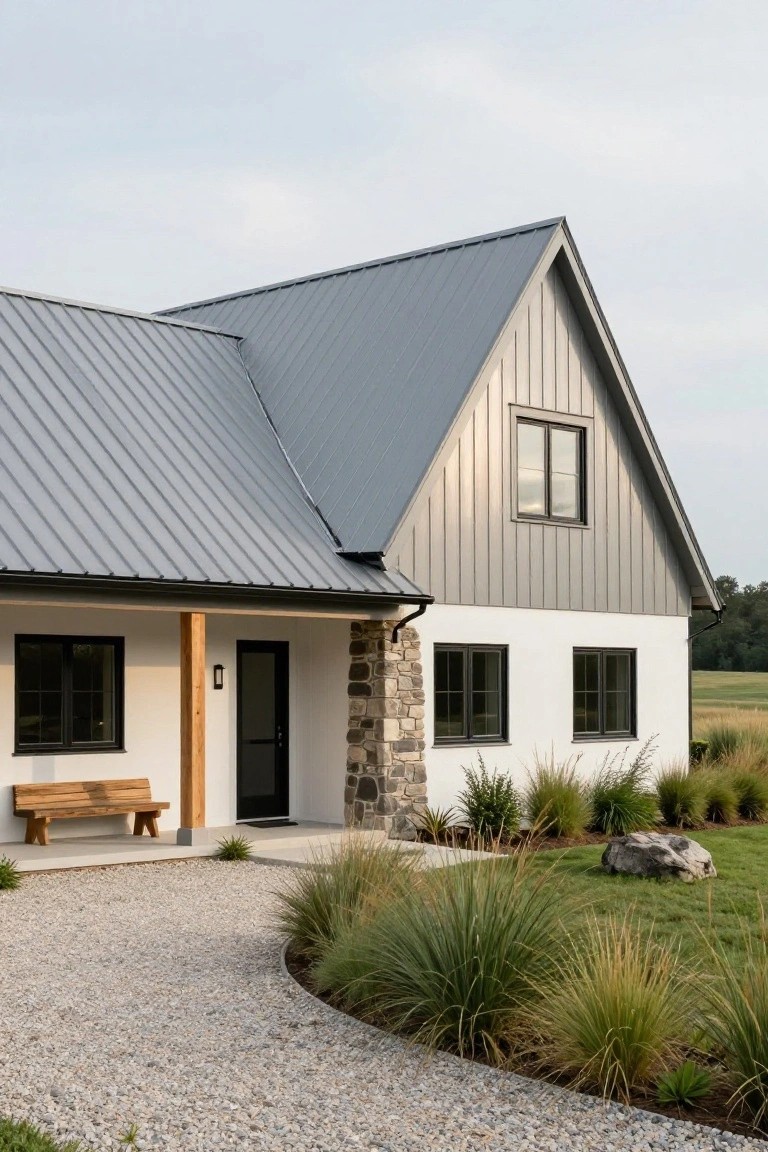
A gray standing seam metal roof like this one updates the classic gabled farmhouse shape in a simple way. It catches the eye with its clean lines and subtle shine, especially against plain white walls and a stone base pillar. That metal adds durability for all kinds of weather too, without making the house feel too industrial.
This works best on homes in open country or suburban spots where you want low upkeep. Stick to neutral siding below and keep landscaping light, like grasses along a gravel path. Just watch the scale, the roof shouldn’t overwhelm a smaller build.
Copper Cladding for Modern Facades
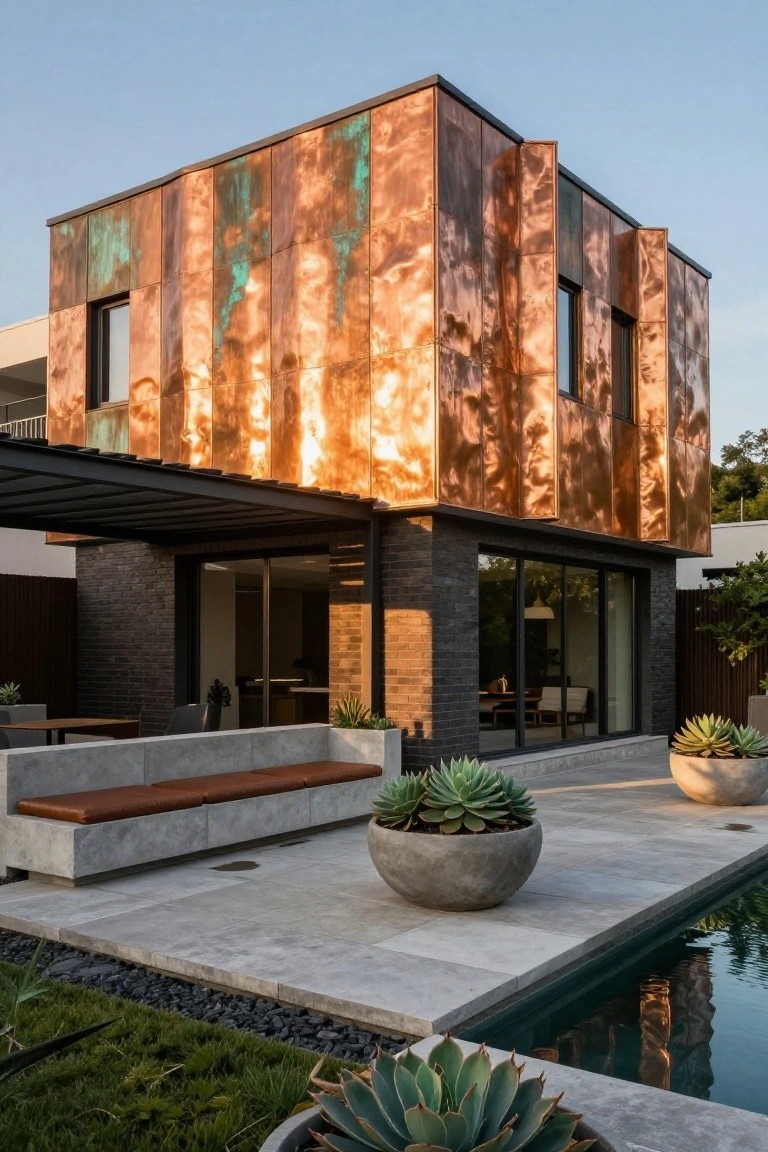
Copper cladding brings a unique texture to modern house exteriors. You see it here on the upper walls, where the metal has weathered to that nice patina mix of copper and green. It pairs well with a plain brick base down low, keeping the look strong but not overdone. Homes like this feel fresh and a bit industrial without going cold.
Try it on boxier shapes or homes with clean lines. It suits places with some weather exposure to build that patina naturally. Go for panels on just the front or side for impact, and check with a pro on how it holds up in your climate.
Corrugated Metal Cladding Over Brick Base
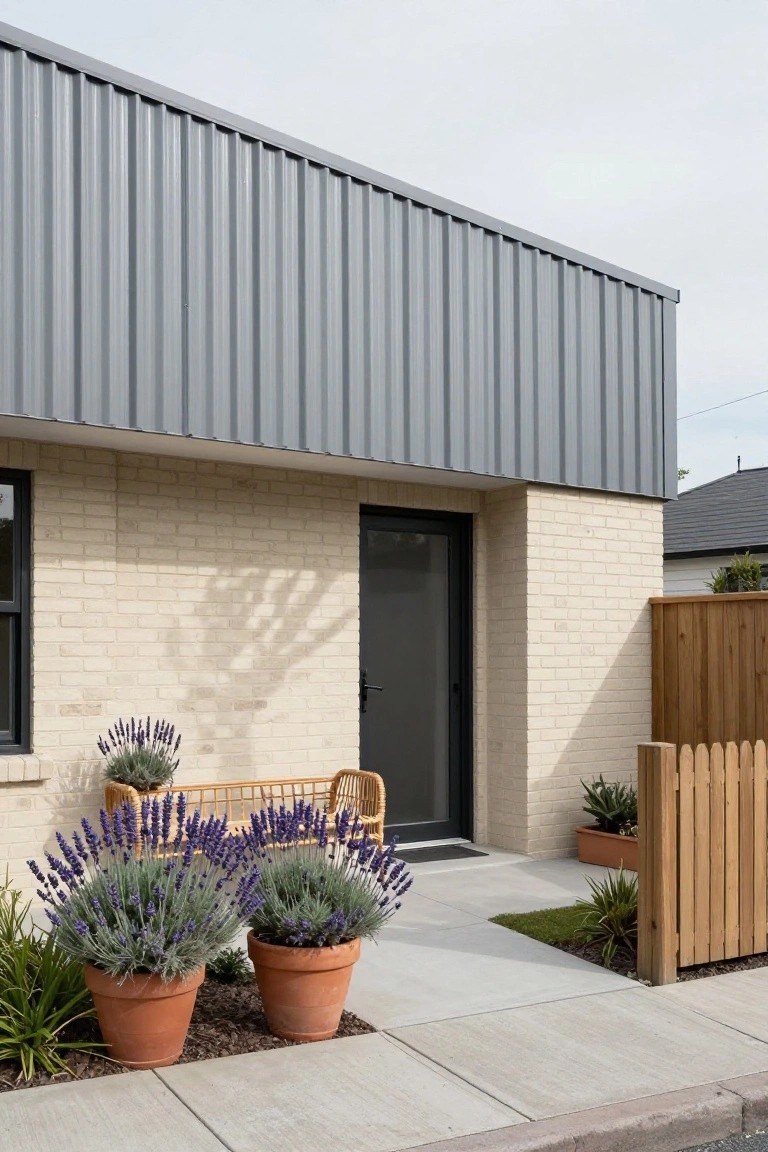
One straightforward way to update a basic brick house is adding corrugated metal cladding to the upper section. Here it’s a muted gray metal running along the roofline and side wall, sitting right above the light beige brick. That mix keeps things simple but gives the front a modern lift. The texture of the metal catches the light nicely, and it doesn’t overwhelm the whole look.
Try this on ranch-style or single-story homes where you want some height without big changes. It holds up well in coastal areas or spots with rain, since metal sheds water easily. Just add a couple pots of lavender or similar by the door to ease the shift from hard materials to entry. Avoid darker metals if your brick is pale… they’ll fight each other.
Vertical Metal Cladding for Coastal Homes
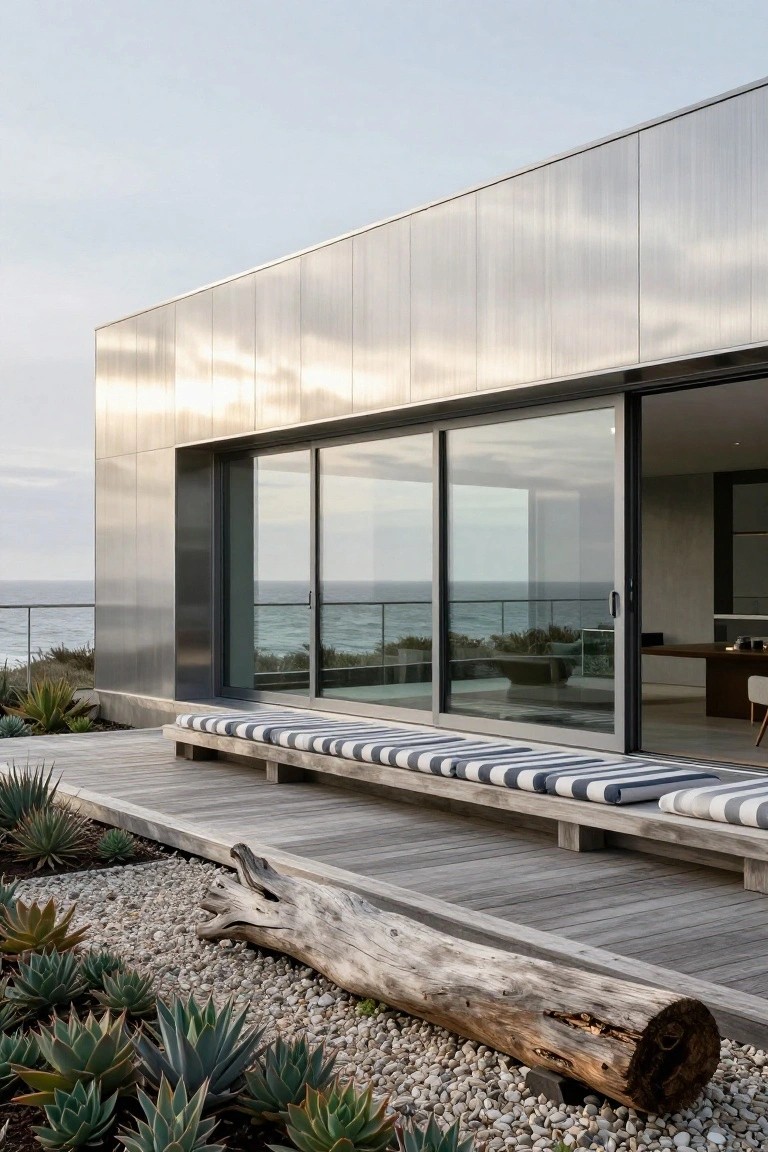
Metal cladding like this works great on homes right by the water. The tall vertical panels give the side of the house a clean, modern look that catches the light just right. Paired with big sliding glass doors, it opens up the space to the ocean view without stealing the show. It’s tough against salt air too, which matters in beach spots.
You can pull this off on a seaside house or anywhere you want that sleek edge. Stick it on one wall facing the best view, like here with the deck and simple bench. Keep landscaping low-key with agaves and pebbles so the metal stays the focus. Just check local rules on reflective surfaces if glare’s an issue.
Dark Corrugated Metal Cladding
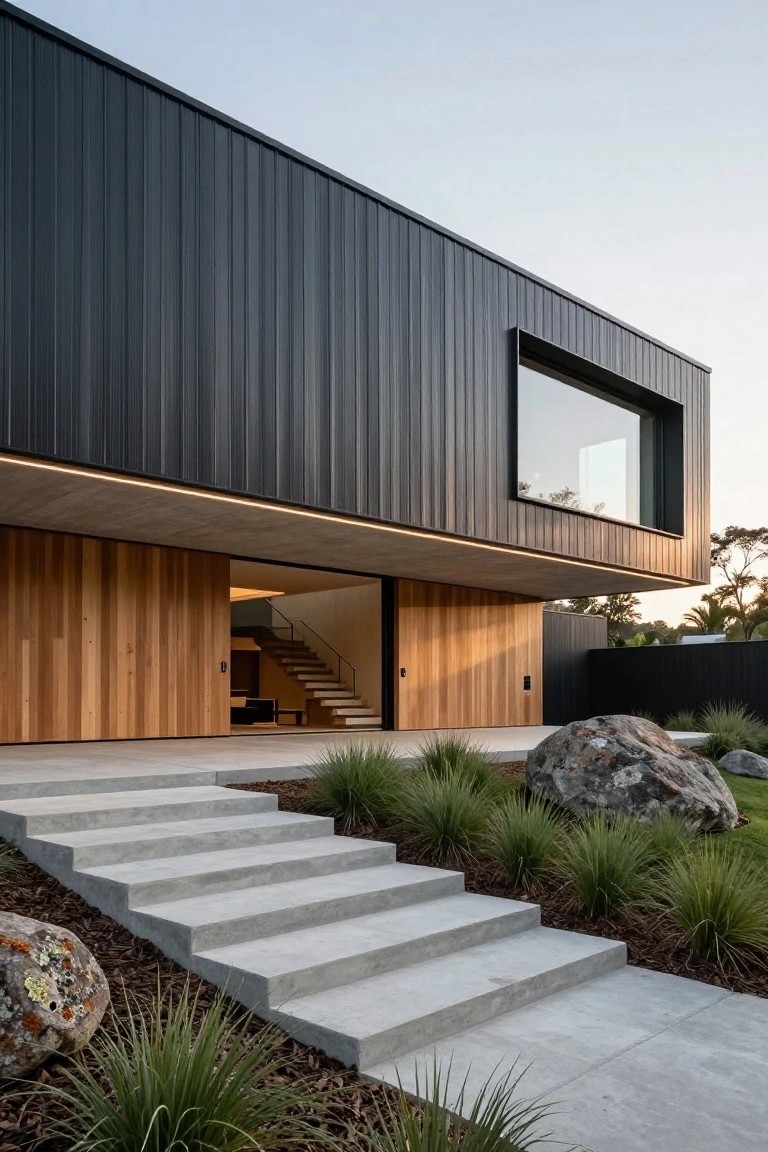
Dark corrugated metal cladding covers most of this house’s facade, giving it a clean, industrial edge that feels right at home in modern designs. The vertical lines add height and rhythm without much fuss. A warm wood sliding door at the entry pulls it together… keeps things from going too cold.
You can pull this off on ranch-style homes or simple boxes where you want low upkeep and a bold street presence. It holds up well in coastal spots or anywhere weather hits hard. Just size the panels right so they don’t overwhelm a smaller build.
Corten Steel Cladding for Small Modern Homes
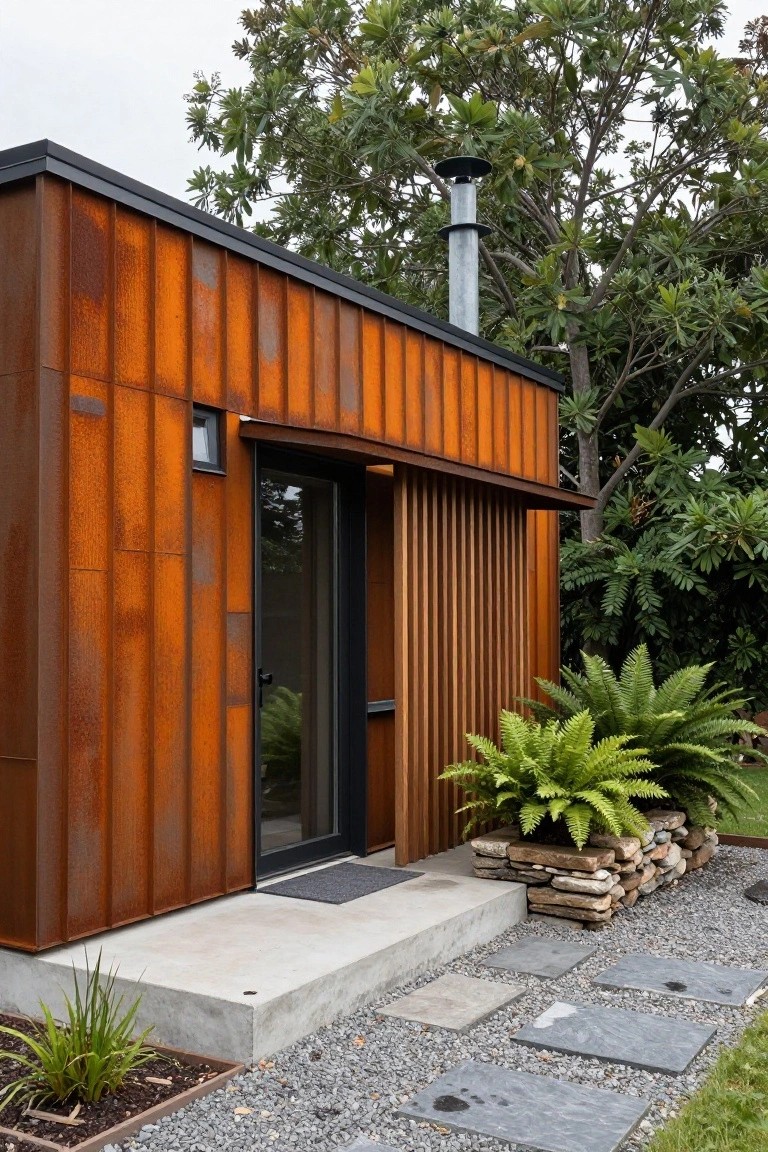
One look at this compact cabin shows how corten steel panels bring a rugged edge to modern design. The rusty orange patina develops over time from weathering, giving the house a lived-in feel without much upkeep. Paired with simple black frames on the door and window, it keeps things clean and bold. That natural rust color pops against green trees and plants nearby.
This cladding works best on smaller structures like backyard studios or starter homes where you want low maintenance and a standout look. It suits rural or wooded spots, blending right into nature. Just make sure the base is set up for drainage to let the patina form evenly. Avoid it in super humid areas unless you treat the edges.
Sleek Vertical Metal Cladding
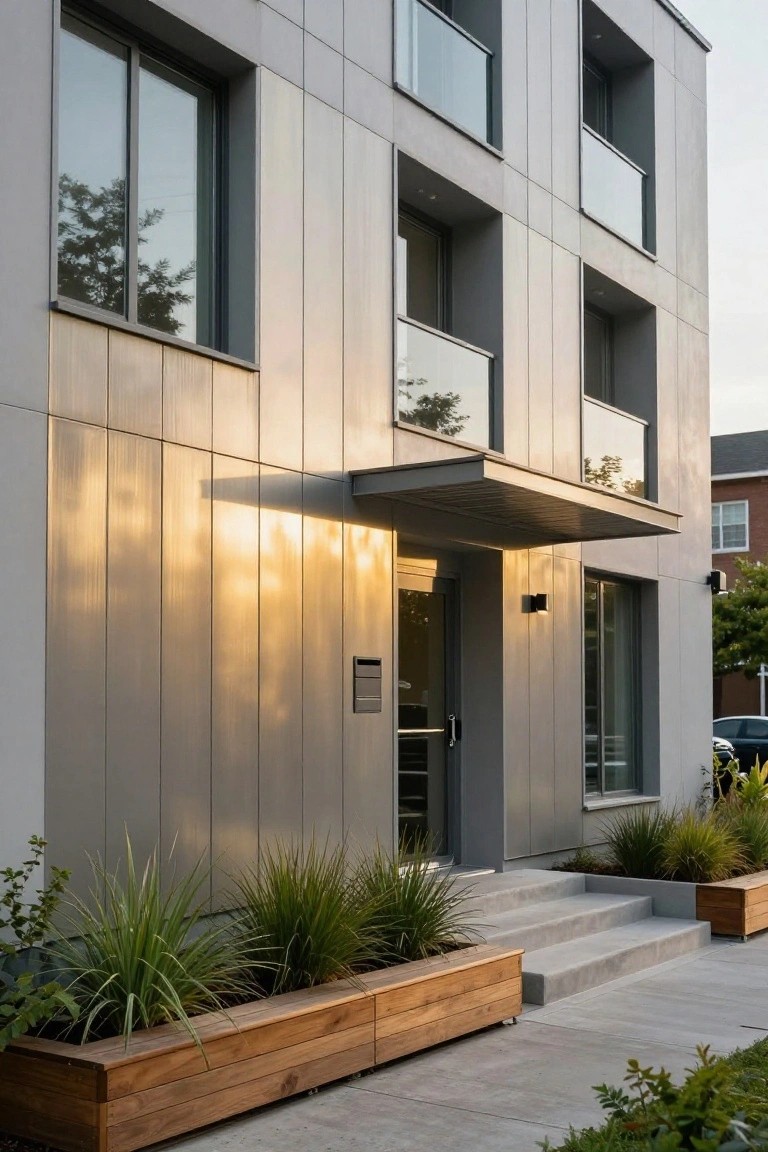
Vertical metal panels like these give a house a clean, modern edge that feels fresh but not overdone. The gray finish picks up the light nicely, especially in the late afternoon, adding subtle shimmer to the facade without much effort. A simple cantilevered awning over the entry pulls it all together, while wood planters nearby add just enough warmth.
This works best on two- or three-story homes in town or suburbs where you want curb appeal that lasts. Stick to vertical lines for height, and pair with concrete steps or glass for balance. Skip it on super small houses, though. It can feel too bold there.
Copper Cladding on a Waterfront House
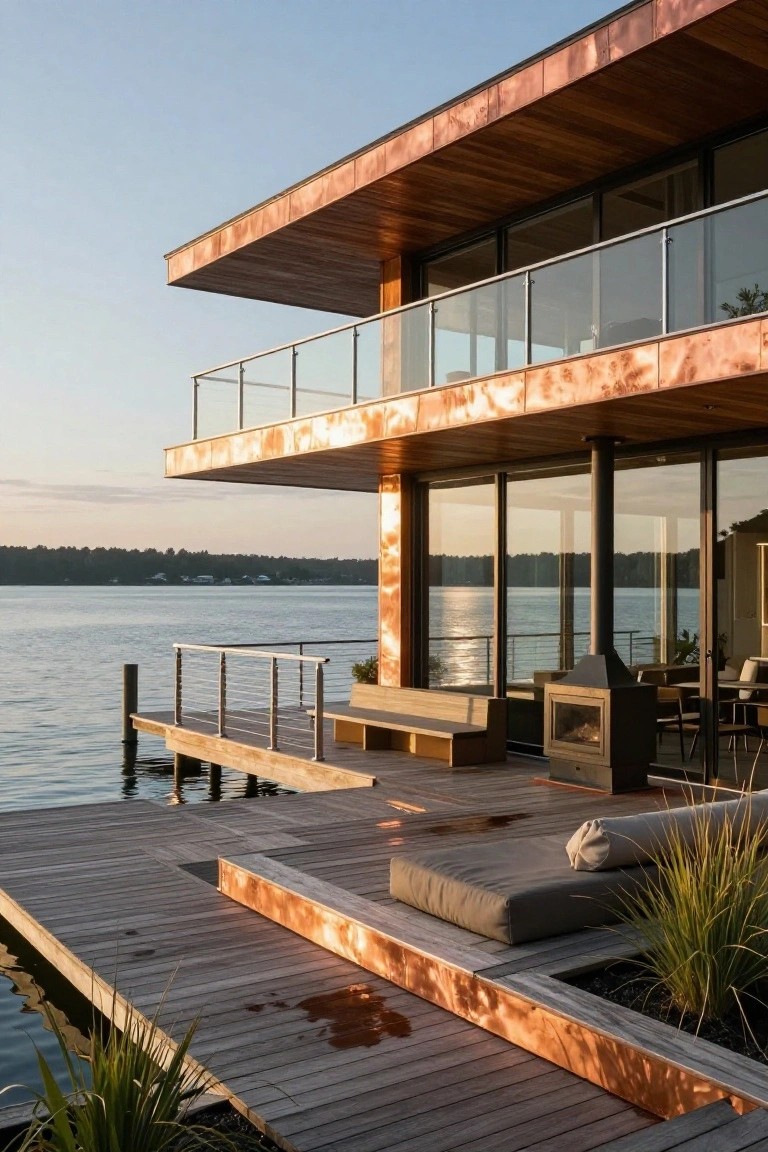
Copper panels wrap this modern house in a way that looks sharp and built to last. The metal siding picks up the light at sunset and sits right against the wood deck without overpowering it. Large glass walls let the lake view flow in, making the whole setup feel open.
You can pull this off on homes by water or in rainy spots, since copper handles moisture well and turns to that green patina folks like. Stick to clean lines and wood accents nearby to avoid a too-industrial feel. It works best on two-story designs where the cladding runs up high.
Recommended Products

ANTI-CORROSION COATING: Featuring a corrosion-resistant rustpert coating that withstands 1000-hour salt spray testing, these durable metal roofing screws excel in extreme weather conditions while maintaining long-lasting rust protection for reliable indoor/outdoor use

Strong & Durable: Our metal roof screws made of mechanical galvanized steel, heads is treated with baking varnish, having passed 1500-hour salt spray test, offer high hardness and exceptional corrosion resistance.

300 Piece Roofing Screws Set- This set includes 300Pack #10 × 1 Inch galvanized metal roofing screws with EPDM washers, 1/4 inch black hex head, and 1 8mm hex socket,This adequate size and hex head shape are nice for most roofing projects
Metallic Tile Cladding on House Walls
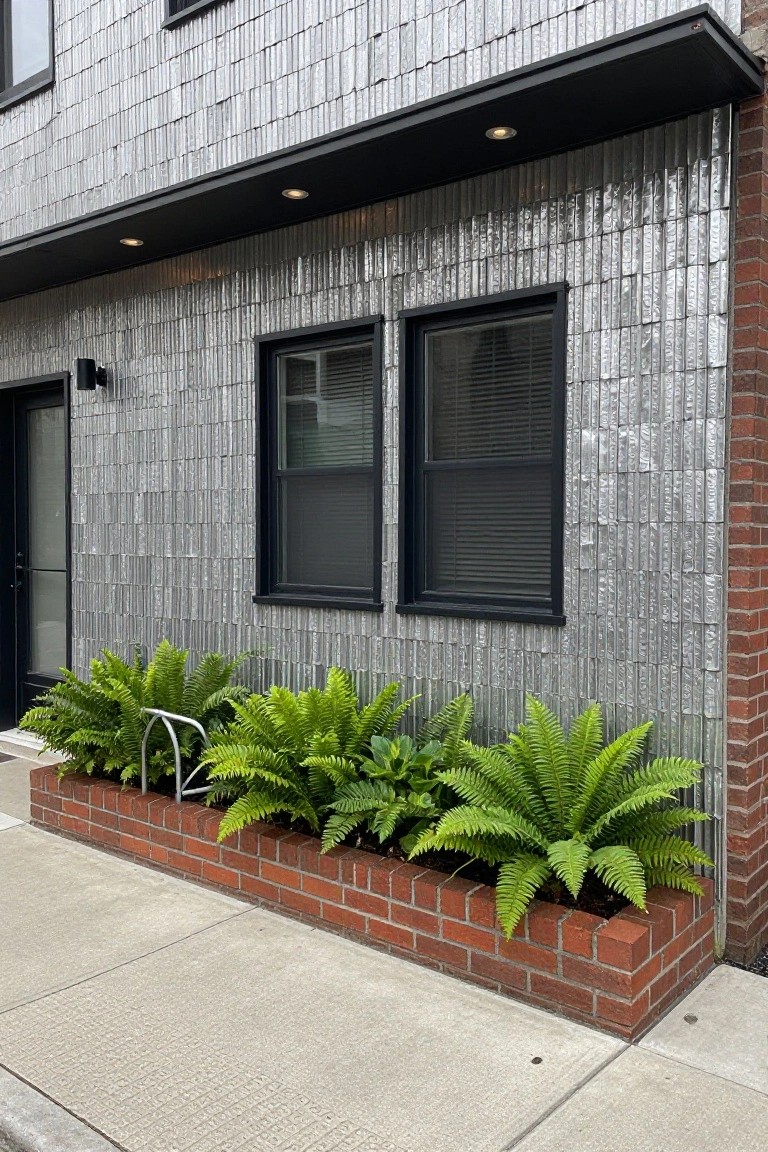
Metal tiles arranged like bricks cover this house’s side wall. The silvery finish catches the light in a subtle way that feels fresh and modern. Black frames around the windows and door keep things sharp, and that low brick planter adds just enough warmth at ground level.
You can pull this off on homes with clean lines, especially in city spots or rainy areas where the metal sheds water easily. Pair it with simple plants below to soften the base. Skip it on super traditional houses, though. It suits spots wanting that industrial touch without much upkeep.
Dark Metal Cladding for Modern Exteriors
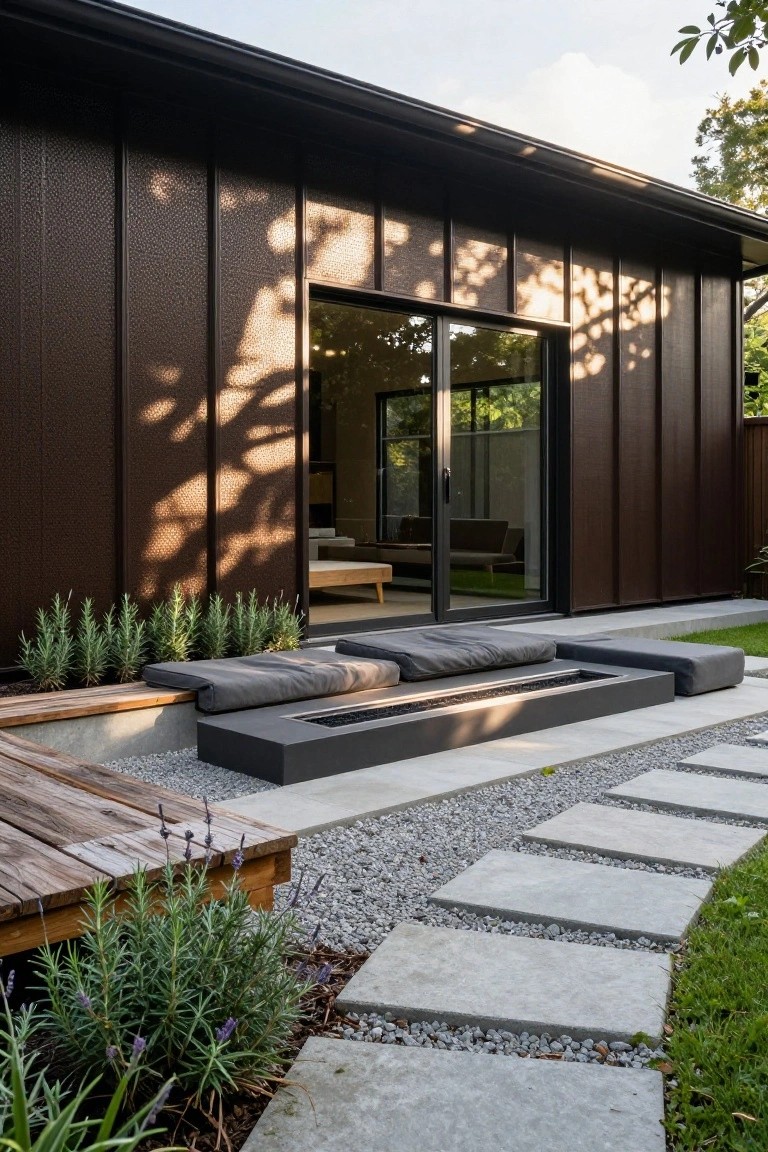
Dark metal cladding like this brings a sharp, contemporary feel to house walls. The vertical textured panels in a deep bronze tone add subtle pattern and shadow play, keeping things sleek instead of plain. It stands out here on the side facade, framing those big sliding doors without stealing the show from the patio beyond.
This works best on newer homes or updates to older ones aiming for a minimalist look. Try it on less-seen walls to highlight indoor-outdoor connections, like near patios with built-in benches. Go for matte finishes to cut glare, and mix with concrete and wood accents for balance… just check local weather resistance first.
Corrugated Copper Cladding for Exterior Walls
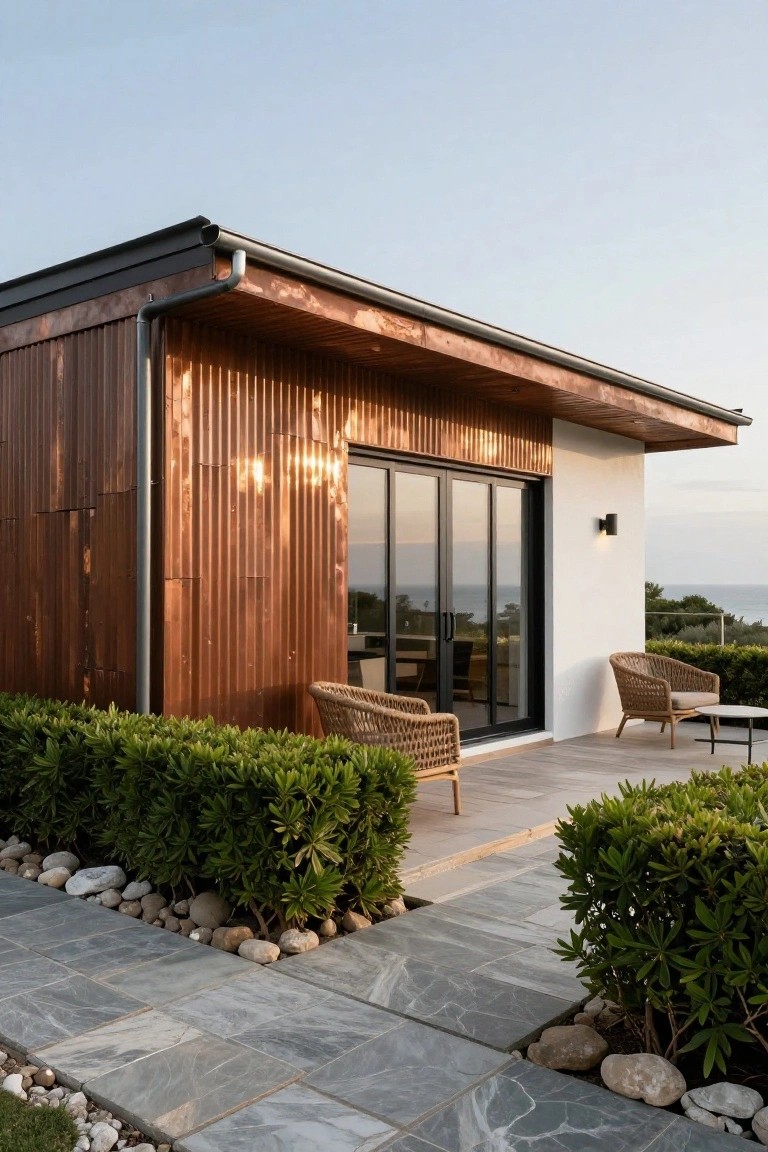
One look at this house shows how corrugated copper panels can give your exterior a fresh modern twist. The metal siding catches the light just right, with those wavy lines adding texture without fuss. It weathers over time to a nice patina that fits right in with natural surroundings, and it’s tough enough for coastal spots or anywhere weather hits hard.
You can use it on one wall like here, next to plain white stucco for contrast. It works best on smaller homes or additions where you want some edge without overwhelming the whole place. Pair it with simple decking and low hedges to keep things clean… just make sure the rest of the design stays straightforward so the copper stands out.
Black Corrugated Metal Cladding
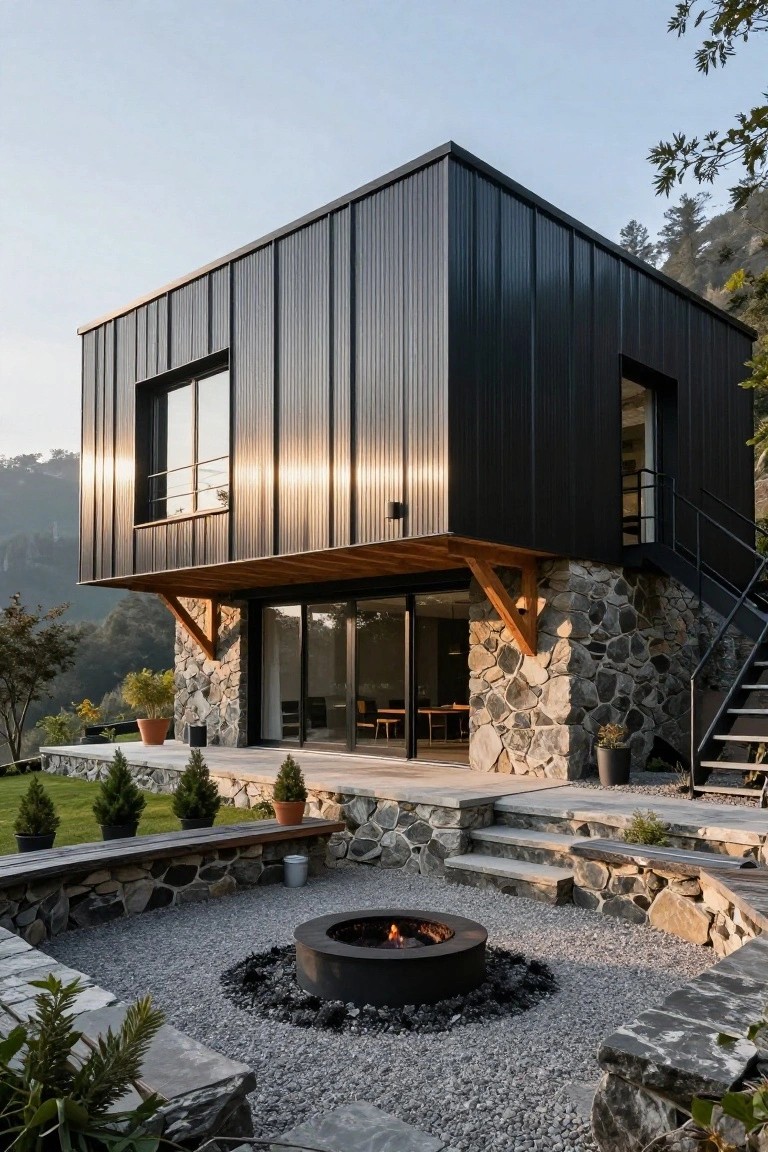
Homes like this one show how black corrugated metal siding can give a clean, modern punch to the exterior. It wraps the upper levels smoothly, reflecting light off the ridges for some subtle shine, while the stone base below keeps it from floating away visually. That combo makes the house feel sturdy yet fresh, especially tucked into a hillside.
Try this on lots with a slope or trees around, where the metal stands out without clashing. It suits straightforward contemporary designs, maybe with big glass for indoor-outdoor flow. Just balance it with wood touches or steps to avoid a too-closed-in box feel.
Gold Metal Cladding on Modern Homes
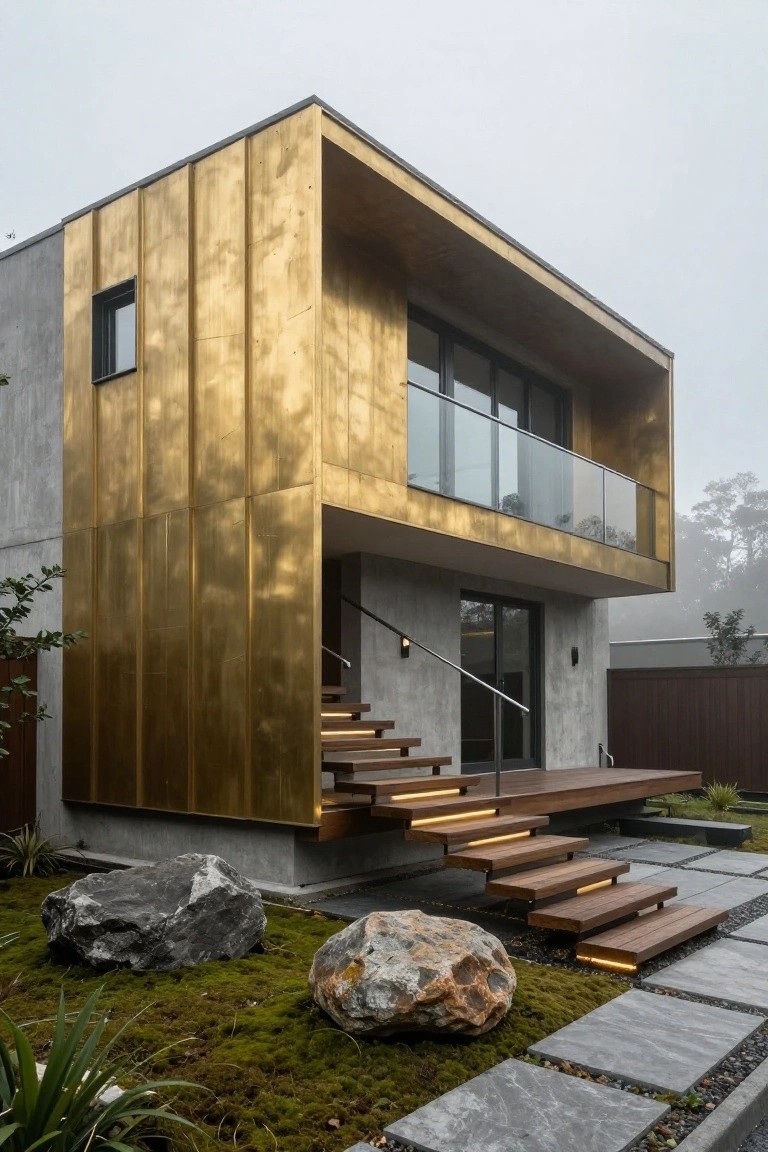
Gold-toned metal panels cover the upper part of this house, giving it a shiny, upscale finish that stands out right away. The vertical panels reflect light in a way that makes the facade feel dynamic and fresh, especially against the rough concrete base below. It’s a simple way to add some luxury without overdoing it.
This works best on boxy contemporary designs, where the metal draws eyes upward and ties into balconies or entries. Pair it with natural wood stairs or stone landscaping for balance, like here with the lit steps leading up. Homes in foggy or green areas get extra pop from the contrast. Clean the panels now and then to keep that gleam.
Dark Metal Cladding on Exterior Walls
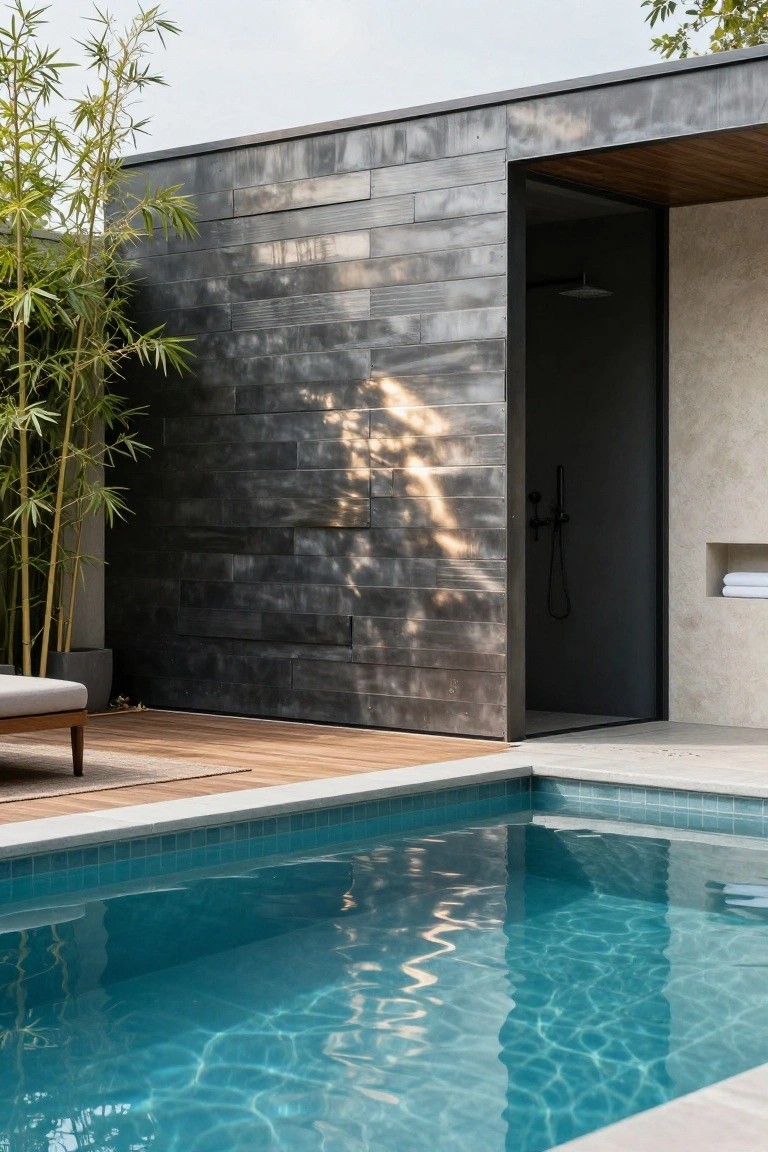
Dark metal panels like these make a strong statement on a house exterior. The horizontal planks have a subtle texture that picks up sunlight and casts soft shadows. Placed right next to a pool or shower area, they add that modern edge without feeling cold. It’s a clean way to handle a boundary wall.
This works best on homes with flat roofs and open yards. Pair it with wood decks or light stone for balance. Keep the metal low maintenance by choosing pre-weathered types. Avoid full wraps if your climate gets too humid, as it can speed up patina changes.
Warm Metal Cladding on Coastal Cantilevers
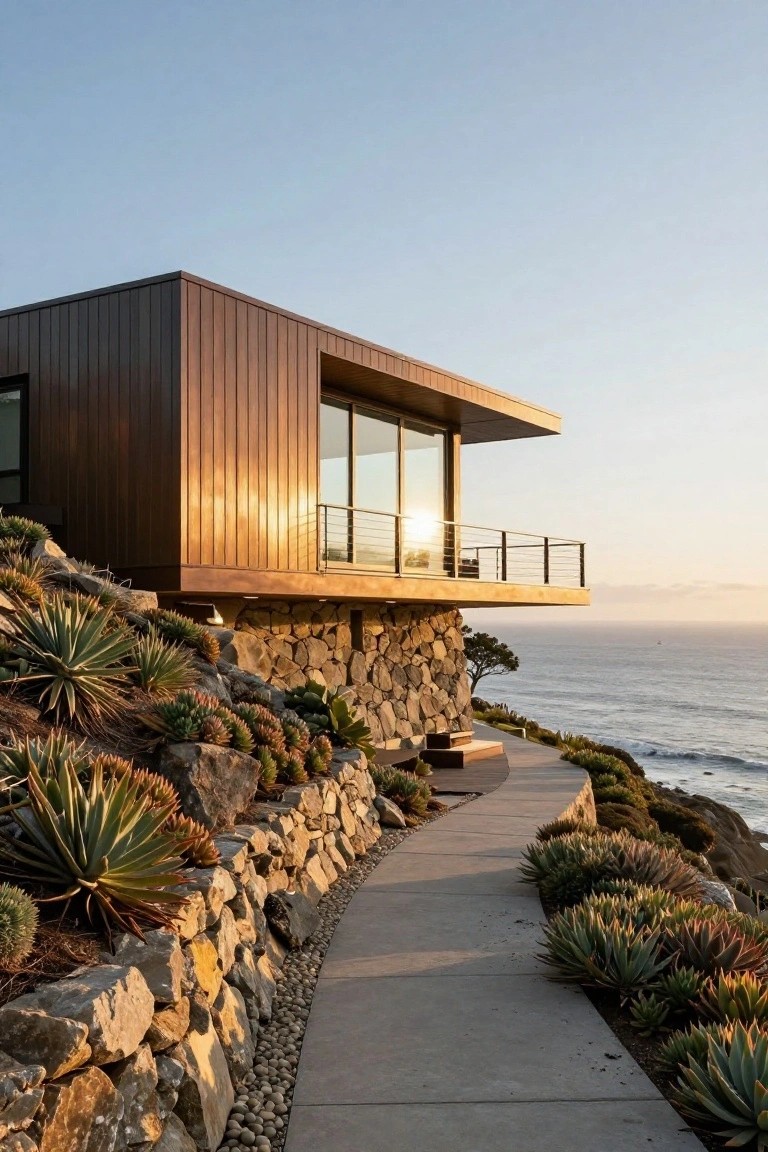
Warm-toned metal panels like these give a modern house a cozy wood-like finish without the upkeep. They wrap the cantilevered box cleanly, catching the light just right against the ocean backdrop. It’s a simple way to make sharp architecture feel at home on rugged cliffs.
Try this on sloped sites where you want durability and low maintenance. The vertical lines work best with stone bases and sparse planting nearby. Skip bold colors; stick to earth tones so it blends rather than fights the surroundings.
Frequently Asked Questions
Q: Does metal cladding rust if I live somewhere rainy?
A: Go for aluminum or stainless steel panels. They resist corrosion way better than plain steel. Rinse off salt or pollen buildup once a year to keep them pristine.
Q: Can I add metal cladding to my older brick house?
A: Overlap slim panels right over the brick for that sleek modern vibe. Pick a finish that echoes your brick’s color. It updates the look without tearing everything down.
Q: How do you clean it without scratching the surface?
A: Grab a garden hose and soft brush with plain water. Skip the pressure washer. Dry spots show up less if you wipe right after.
Q: Should I hire pros or try installing it myself?
A: Call in a contractor who knows metal work. They nail the seams tight to stop water sneaking in. You save headaches down the road.
