

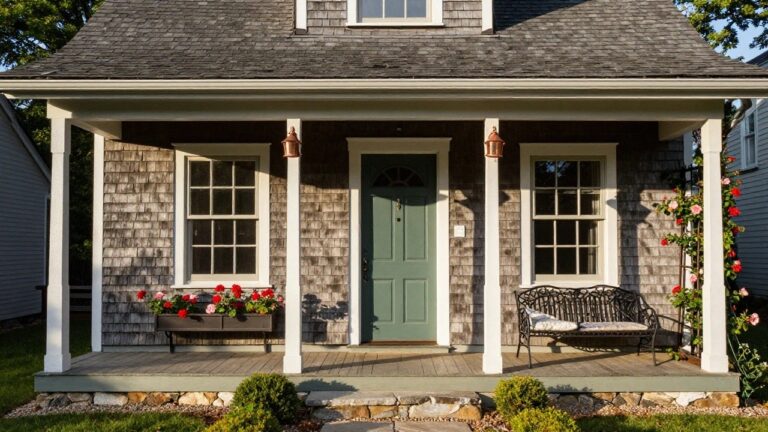
I always slow down when I spot an American cottage exterior that pulls off classic charm without trying too hard, usually thanks to its pitched roof and textured siding blending into the landscape. Those facades work best when the entry pulls everything together, like a centered door flanked by symmetrical windows that frame the view from the street. I’ve seen how materials such as weathered shingles or brick bases hold up through seasons, giving homes a lived-in feel that photos can’t quite capture. Details like subtle trim work or a deep porch eave often make the difference between looking quaint on paper and feeling solid in real life. Save a few of these for your own curb appeal tweaks.
Classic Shingle Cottage Porch
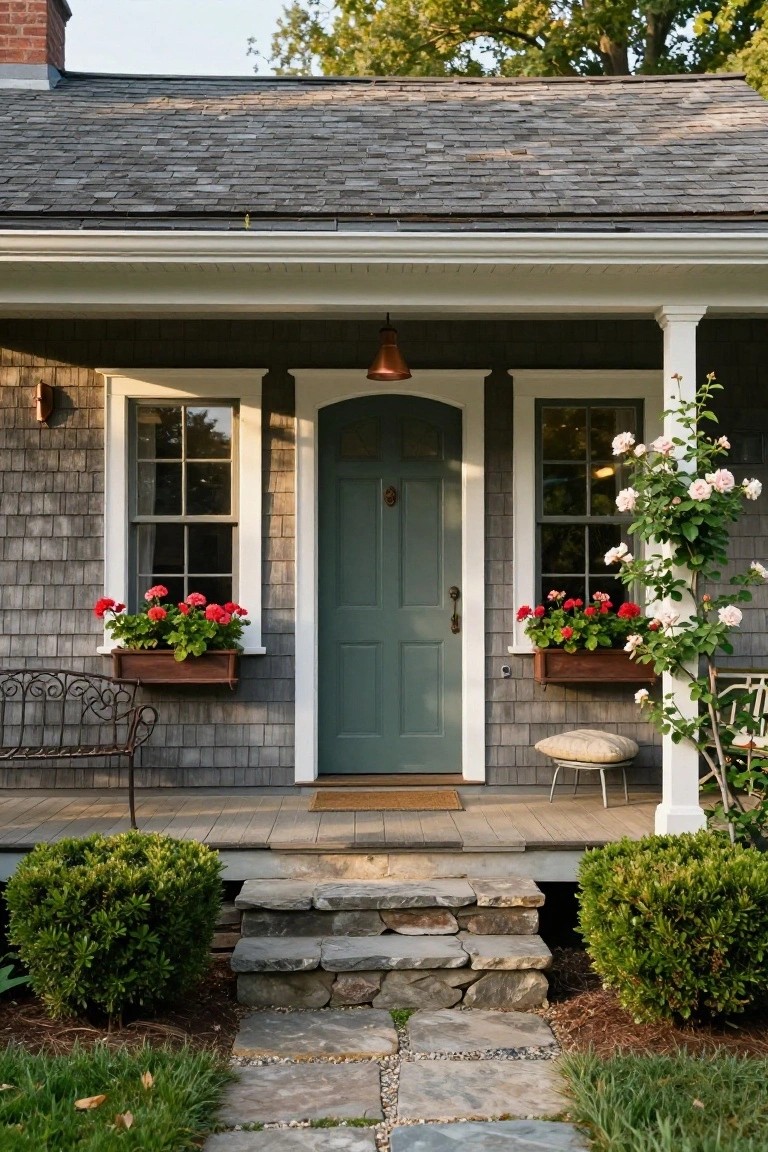
A covered porch like this one pulls together the whole front of a shingle cottage. Gray cedar shingles wrap the house in a textured, weathered look that feels right at home in coastal spots or New England neighborhoods. That deep green arched door sits front and center, simple brass hardware and all, making the entry feel friendly without trying too hard.
Put this setup on a smaller home where you want easy curb appeal. Flank the door with window boxes of geraniums for color that lasts into fall, and add stone steps flanked by boxwoods to guide folks right up. It works best where the porch stays narrow, keeping the focus on the door.
Cream Siding with Navy Blue Accents
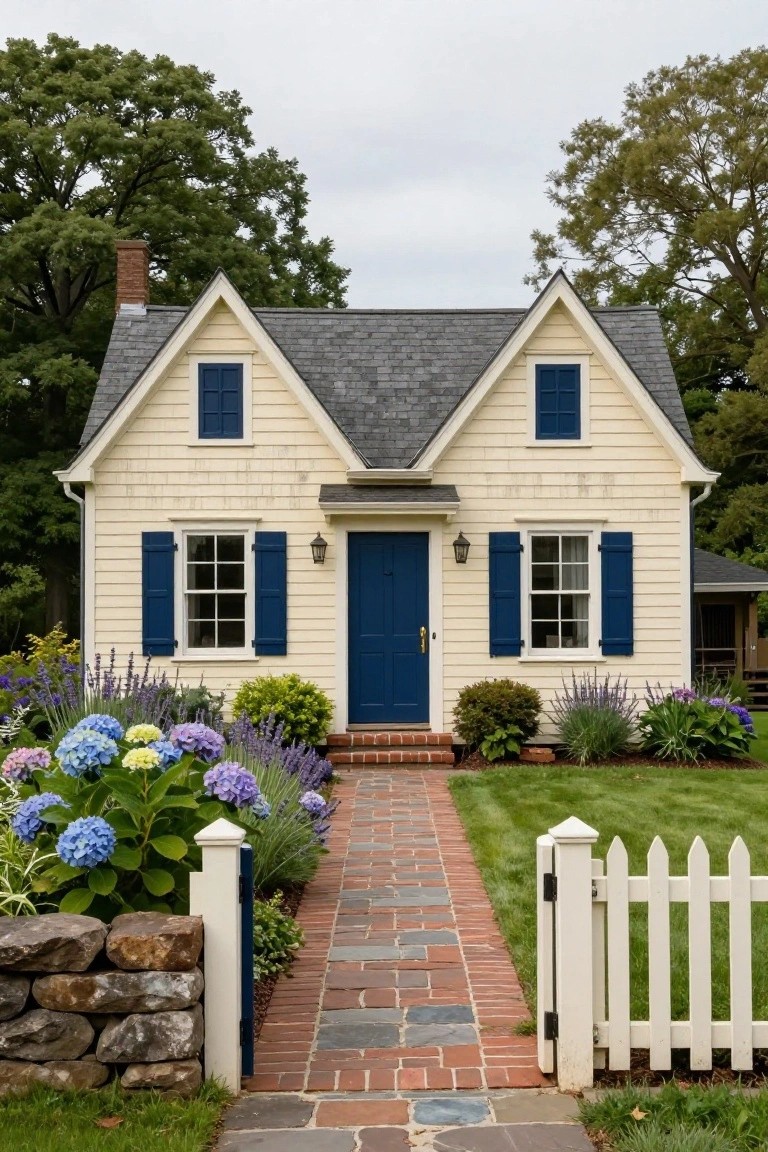
There’s something about a pale cream or soft yellow siding on a cottage that just feels right for American homes. Pair it with navy blue shutters and a front door, like this one shows, and you get that crisp pop without going overboard. The dark blue stands out against the light walls and gray shingle roof. It pulls your eye right to the entry, making the whole house look put-together and friendly from the street.
This combo works best on smaller homes in the Northeast or coastal spots where you want classic charm that holds up year-round. Go for glossy blue paint on the door and matte on the shutters to add a bit of depth. Skip it if your house faces heavy traffic, since the bold color might show dirt faster. A simple brick path leading up keeps things grounded.
Cottage Entry with Wisteria
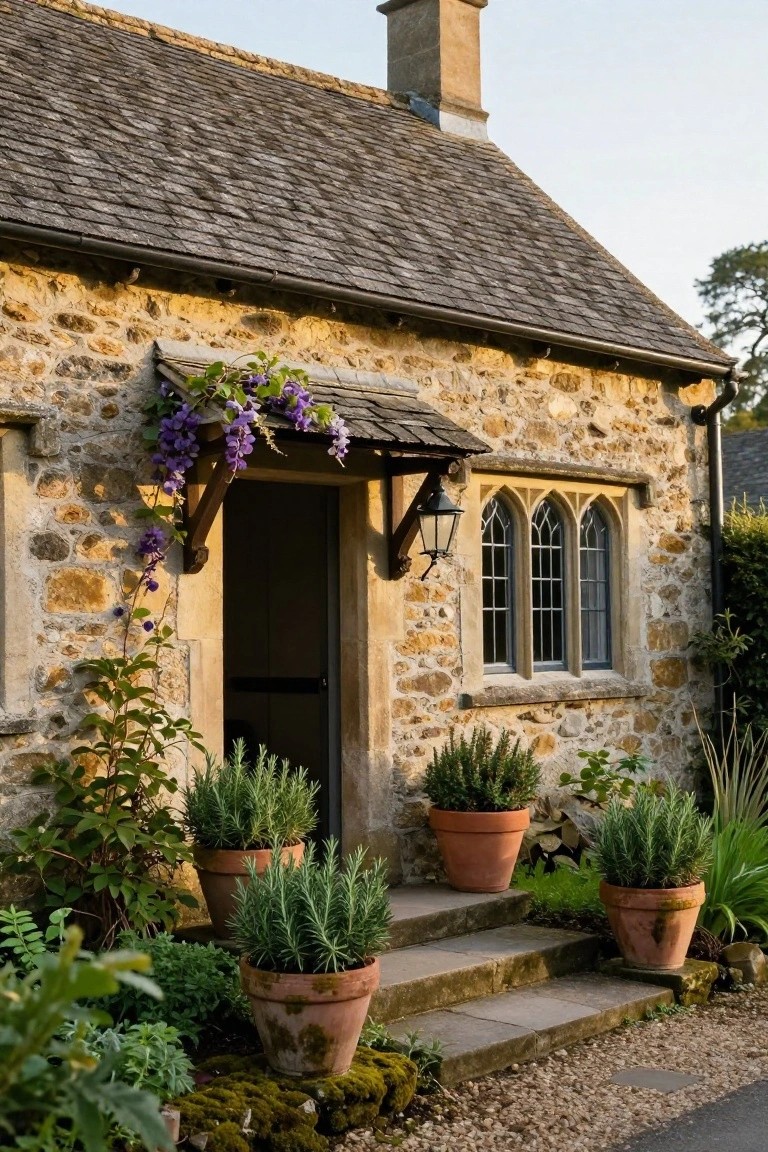
Nothing says classic cottage quite like wisteria spilling over the front door. Here, the purple blooms drape a simple wooden porch hood above a sturdy stone entry, softening the rough walls just enough to welcome folks in. That gothic window nearby adds to the old-world feel without overdoing it.
Try this on homes with natural stone or brick facades, especially if you want low-key curb appeal. Plant wisteria where it can climb a beam or trellis over the door, then flank the steps with pots of rosemary or similar evergreens. It suits rural spots or suburban lots with some garden room. Keep the vine pruned so it does not take over.
White Brick Cottage with Dark Trim
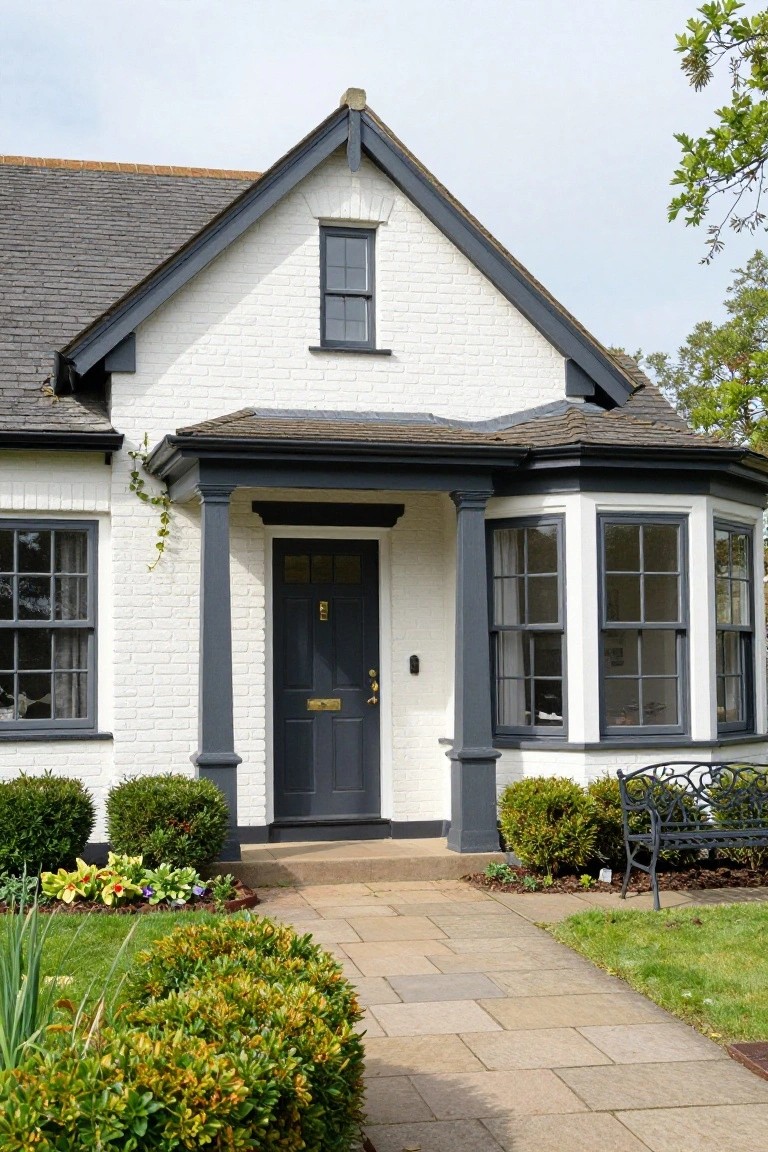
White brick walls set against dark trim give this cottage a sharp, classic look that feels both fresh and timeless. The deep gray porch columns, window frames, and navy door stand out nicely against the bright white, adding definition without overwhelming the simple shape. It’s a straightforward way to update an older style home.
This contrast works best on compact cottages or bungalows in milder climates, where the white stays clean year-round. Start with high-quality exterior paint on the trim to hold up, and echo the dark tone on shutters or gutters if you add them. Avoid going too glossy. Keeps curb appeal high on a budget.
Shingle Cottage Porch Appeal
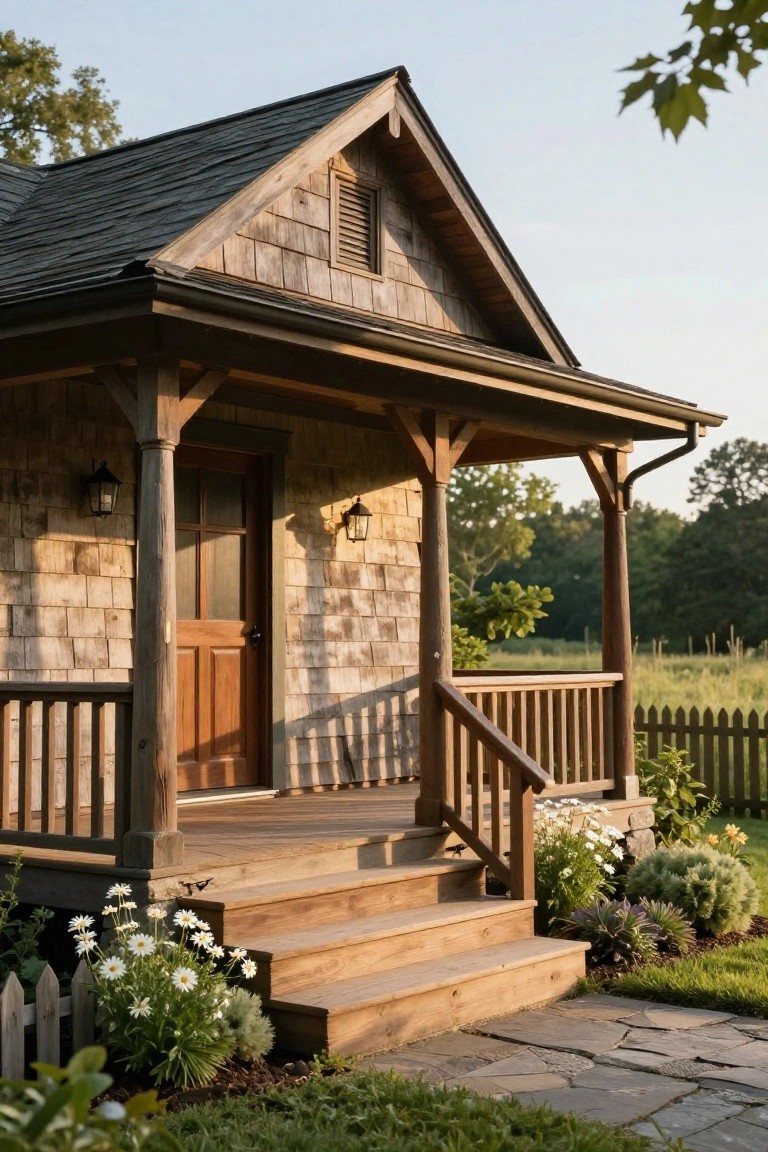
Nothing says classic cottage like a deep porch wrapped in shingle siding. Here the heavy timber posts hold up the roof just right, giving the front a sturdy yet cozy look. Those weathered shingles add real texture too, blending with the wood door and lanterns for an easy welcome home feel.
This setup works best on smaller homes where you want porch time without taking up yard space. Go for natural finishes on the posts and siding so it ages nicely. Plant low flowers at the base like those daisies, and it pulls the house right into the garden. Avoid painting everything matchy. Let the wood show its character.
Classic Shingle Cottage Porch
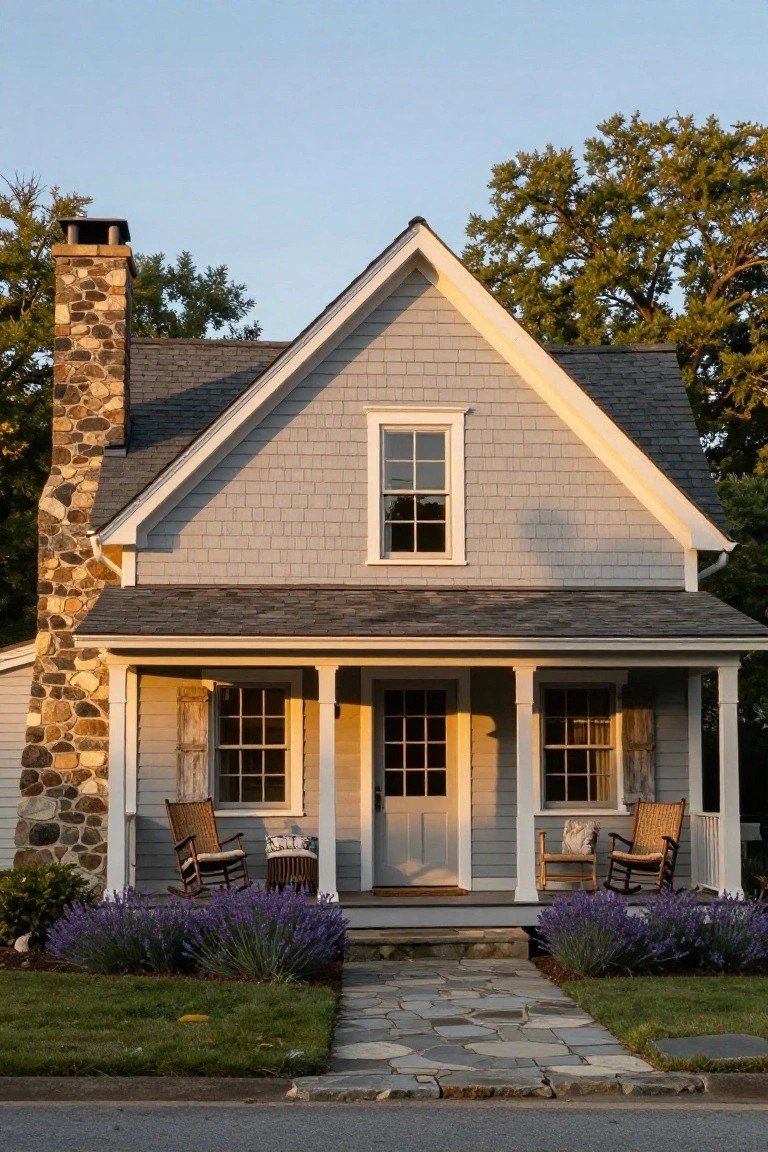
A front porch like this one captures that easy American cottage feel. The wide covered space with white columns sits under the gable roof, paired with simple wicker rockers. It pulls the house together and makes the entry feel open and lived-in.
This setup works well on smaller homes in suburban or rural spots. Keep seating basic and add low plants like lavender along the front for color without overwhelming the walk-up. Skip heavy furniture so it stays light and practical.
Black Window Frames Sharpen White Brick
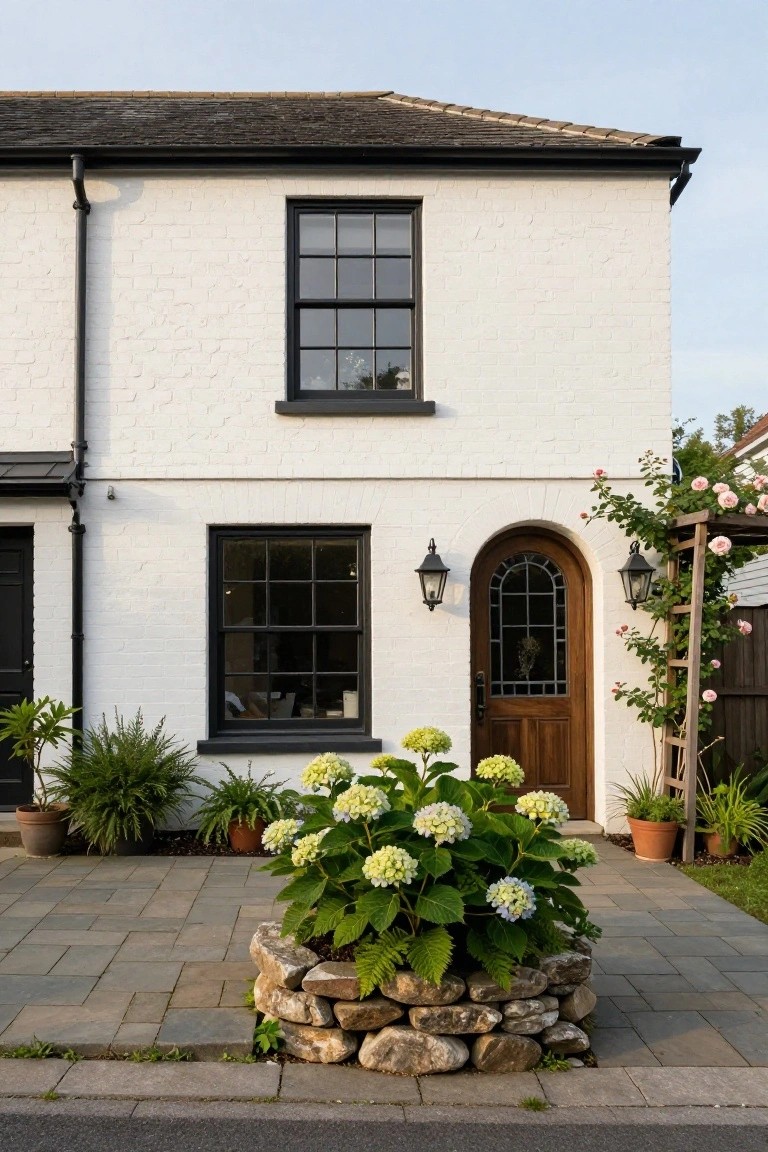
White brick walls have that soft, timeless cottage feel. Add black frames around the windows and door, though, and everything snaps into focus. It’s a simple switch that keeps the classic look but gives the house more edge. No fuss, just clean lines that make the facade read better from the street.
This setup shines on two-story homes with good window placement. Go for matte black paint on the trim to avoid glare. It fits neighborhoods with mixed older houses, where you want charm plus a modern nod. Skip it if your brick is too textured. Keeps things straightforward.
Dark Shingle Siding on Cottages
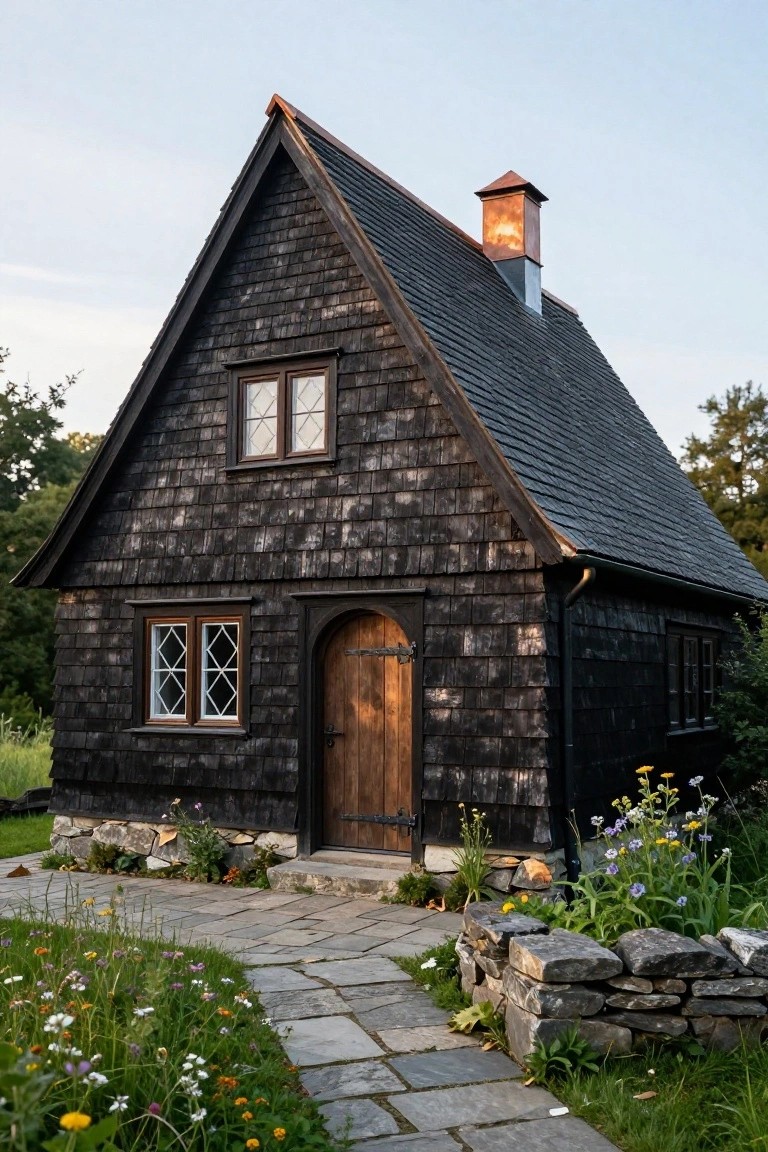
Dark shingle siding like this turns a simple cottage into something that feels straight out of an old storybook. The rough texture of the cedar shakes picks up every bit of light and shadow, making the house look settled into its spot. That copper chimney glowing at dusk just pulls it all together without trying too hard.
You see this style a lot on smaller homes tucked into rural spots or near woods. It holds up well to weather, especially if you treat the wood right from the start. Pair it with a stone base and basic path, and it fits vacation getaways or backyard guest houses without much upkeep.
Built-In Porch Bench Seating
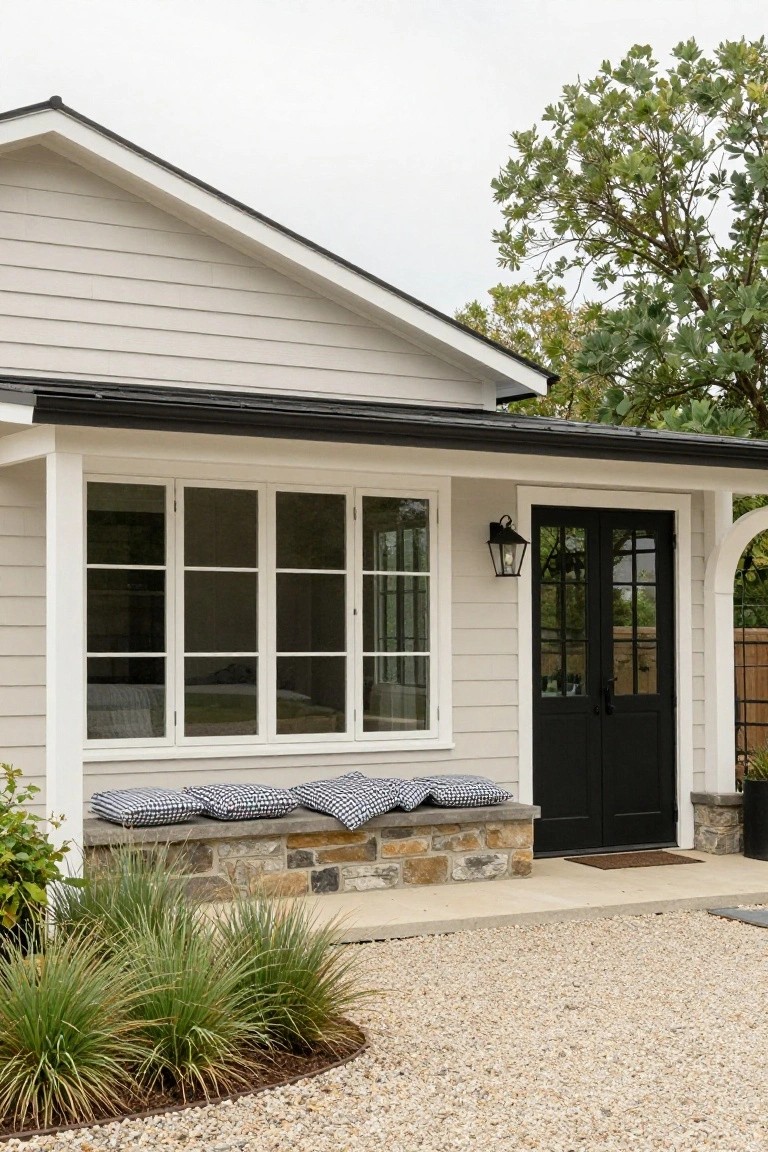
One simple way to make a cottage entry feel more like home is adding a built-in bench right under the front windows. Here it’s tucked into a stone base along the porch, with a few plump pillows in black and white checks. That spot invites folks to sit a minute before knocking, and it softens the look of those tall multipaned windows without taking up extra room.
This works best on smaller porches or narrow entries where you want seating but not bulky furniture. Stone or brick base keeps it sturdy for all seasons. Pair it with pillows that match your siding colors, and it fits older homes or new builds aiming for that cottage feel. Just make sure the bench height lines up comfy with the window sill.
White Cottage Blue Door Entry
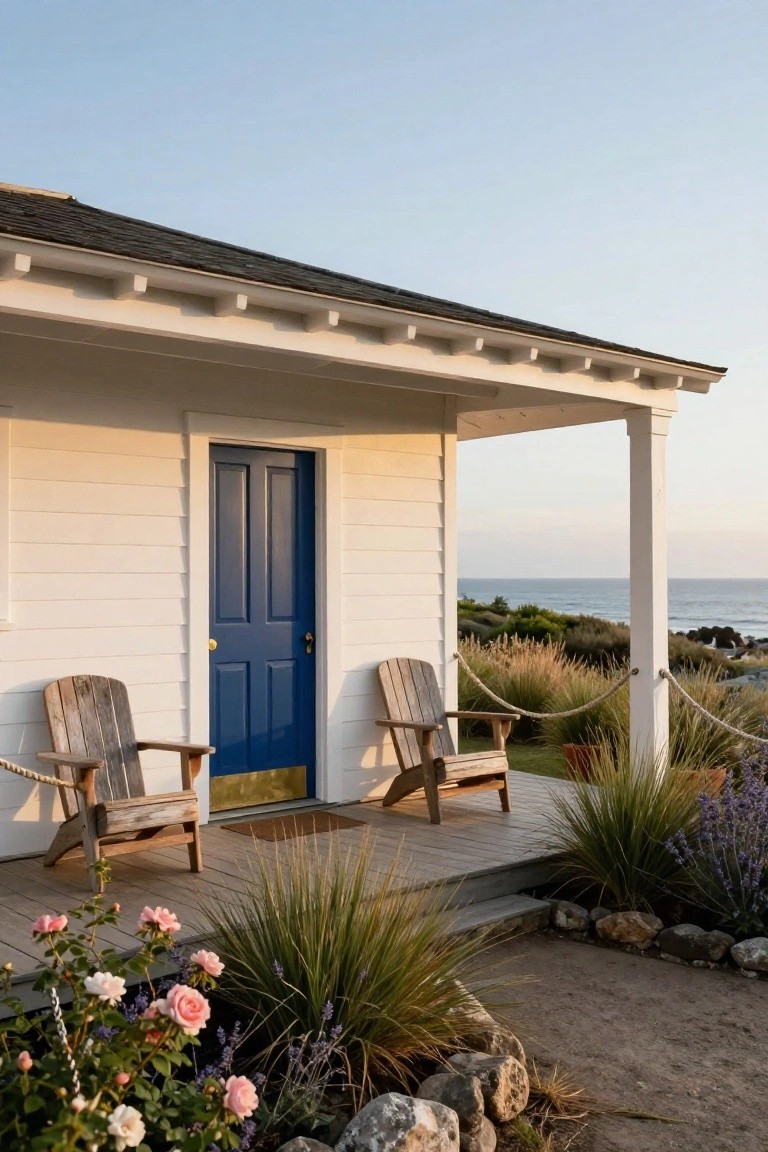
A deep navy blue door stands out nicely against white clapboard siding on this cottage. It pulls the eye right to the front without any fuss. Pair it with plain brass hardware and a couple of old Adirondack chairs on the porch, and you get that easy coastal feel.
This works great on smaller homes near the water or in the country. Go for a true blue tone that holds up to sun. Skip fancy trim around it… keeps things straightforward and welcoming for everyday living.
Vines Draping the Entry Canopy
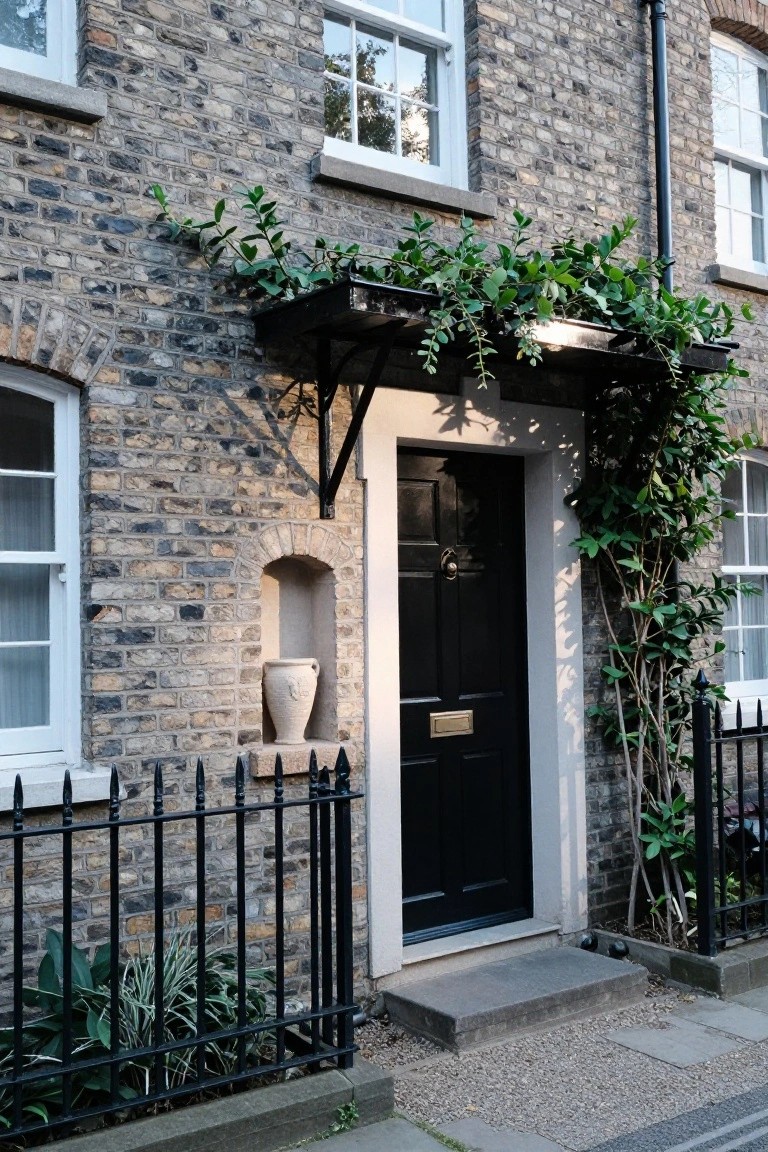
Climbing vines take center stage here over a slim metal canopy above the front door. They soften the dark brick walls and pull the eye right to the entrance without much fuss. That terracotta urn tucked in the side niche adds just a bit more cottage feel. It’s a simple way to make a plain door setup look established and welcoming.
You can pull this off on most any front entry with some structure to hold the plants. Ivy or similar climbers work best since they hug metal or wood frames easily. Suits narrow townhouses or older homes tight to the street… just keep the vines trimmed so they don’t swallow the door knocker.
Classic Plaster and Timber Cottage Walls
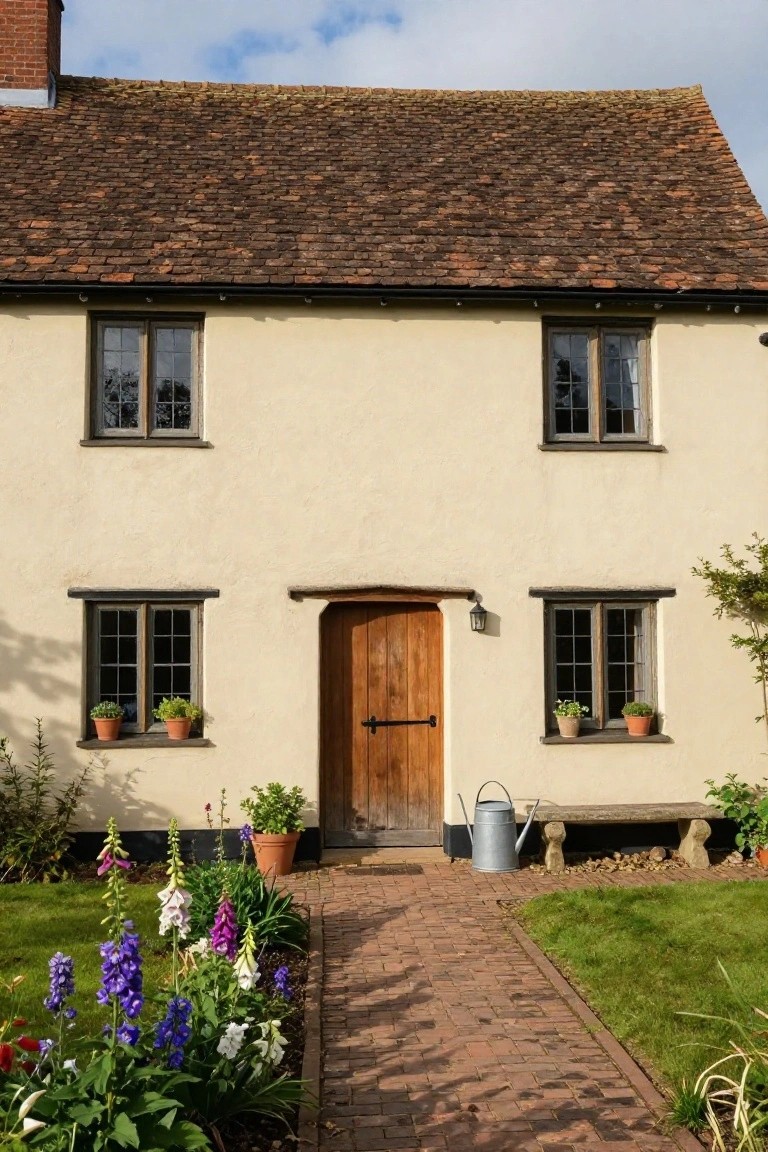
There’s something about a cottage wrapped in soft beige plaster with dark timber framing that just feels right for classic charm. It gives the house that old-world storybook look without trying too hard. The dark frames around the windows and door pull your eye right to the entry, and the warm wooden door adds a sturdy welcome. It’s simple architecture that stands up well over time.
This style works best on smaller homes in rural or suburban spots where you want curb appeal that doesn’t shout. Pair it with a tiled roof and keep the plaster freshened up every few years to avoid cracks. It suits American cottages aiming for English countryside vibes, especially if your lot has some gentle landscaping around the front.
Petite Gabled Cottage Facade
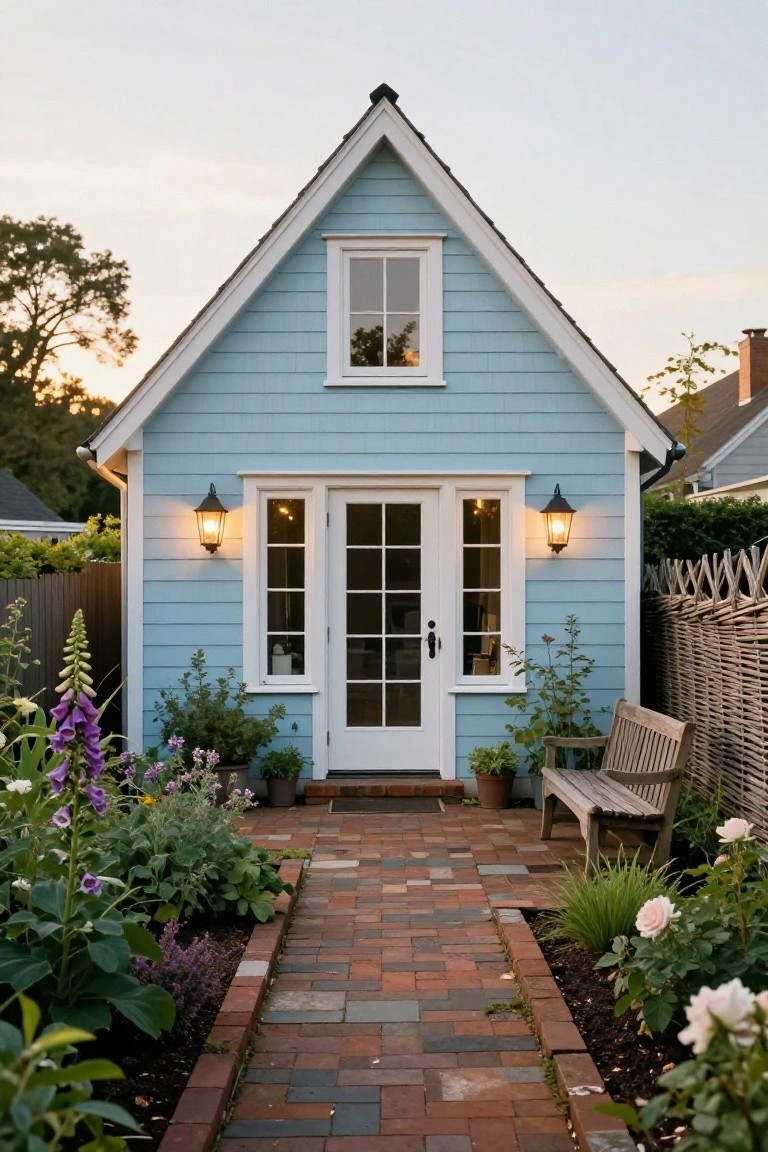
Nothing says classic cottage like a petite gabled front in soft blue clapboard siding. This small structure pulls off that old-school American look with its steep roofline and white trim framing the windows and doors. The French doors at the entry make it feel open and friendly right away. It’s the kind of facade that fits right into a backyard without overwhelming the space.
Try this on a garden shed or guest house where you want some charm without much size. Pick a pale blue paint that catches the light, keep the trim crisp white, and add lanterns for evening glow. It suits cozy lots with a bit of garden around. Scale matters though… go too large and it starts looking like a full house instead.
Symmetrical Potted Trees Frame the Entry
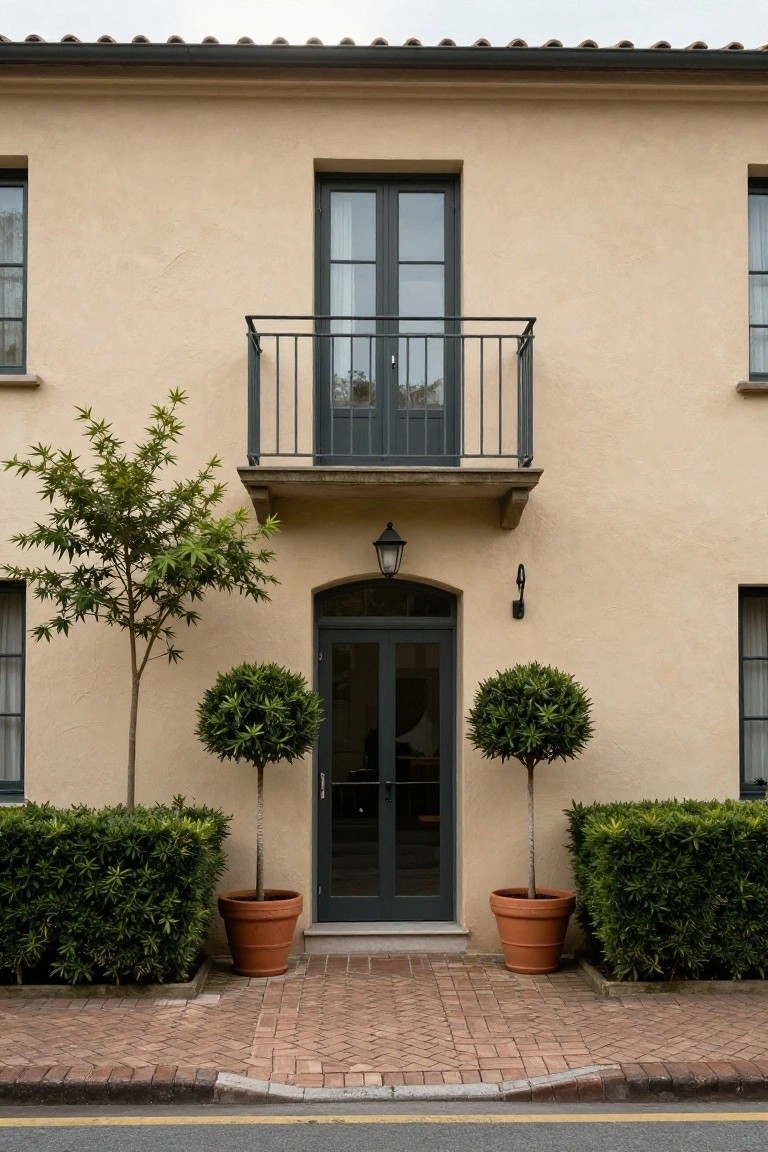
A pair of potted trees, one tall and leafy on the left and a round topiary on the right, stand right beside the front door. They pull your eye straight to that dark arched doorway and make the whole facade look neat and settled. It’s a simple move that gives a cottage instant charm without much fuss.
You’ll want big terracotta pots for stability, filled with evergreens or small maples that hold their shape through the seasons. This setup fits best on narrow urban lots or older homes where yard space is tight. Trim them regular, and watch how they welcome folks in… just pick spots out of the way of foot traffic.
Soft Gray Board-and-Batten Siding
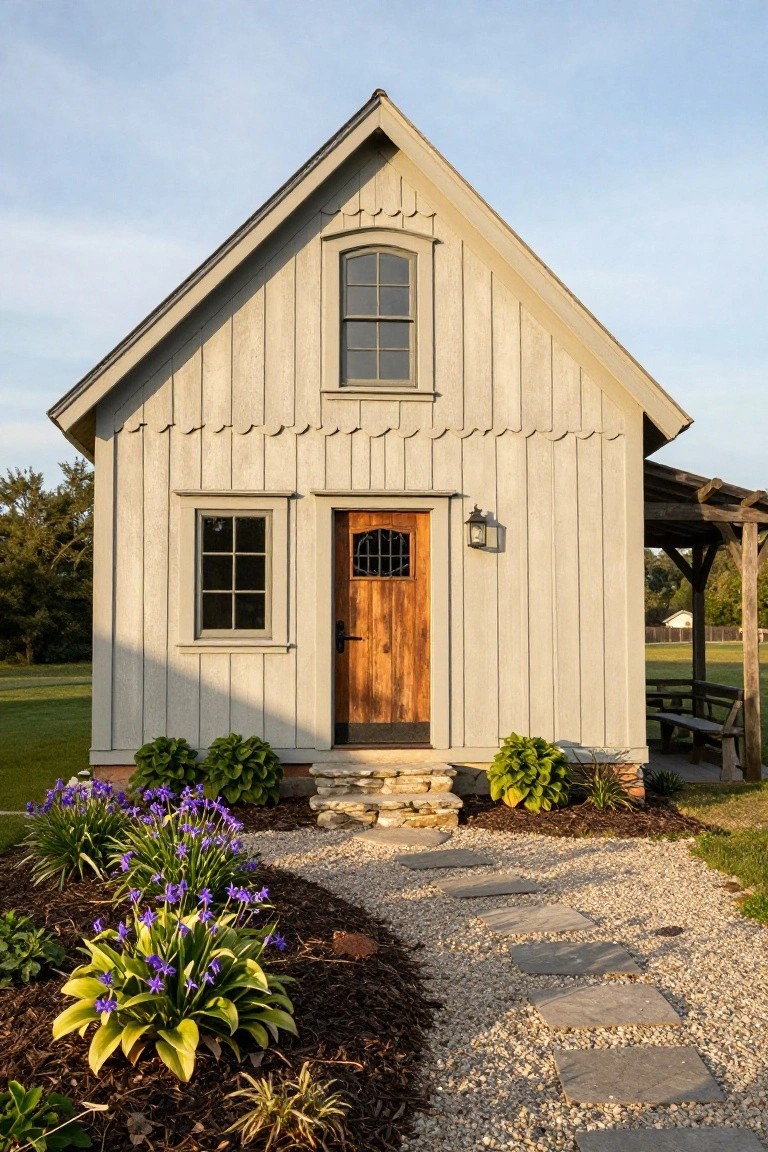
Board-and-batten siding painted in a soft gray gives this little cottage a quiet, classic look that fits right into American country style. The vertical boards add just enough texture to keep things interesting, and that warm wooden door pulls it all together without any extra fuss. It’s the kind of exterior that feels settled in from day one.
You can pull this off on a backyard shed, guest house, or even a full cottage if you’re after low-key charm. Go for a gray with subtle weathering or blue undertones so it ages nicely over time. Natural wood accents on the door or trim work best here… keeps it grounded and easy to maintain in most yards.
Bold Orange Door on Sage Cottage
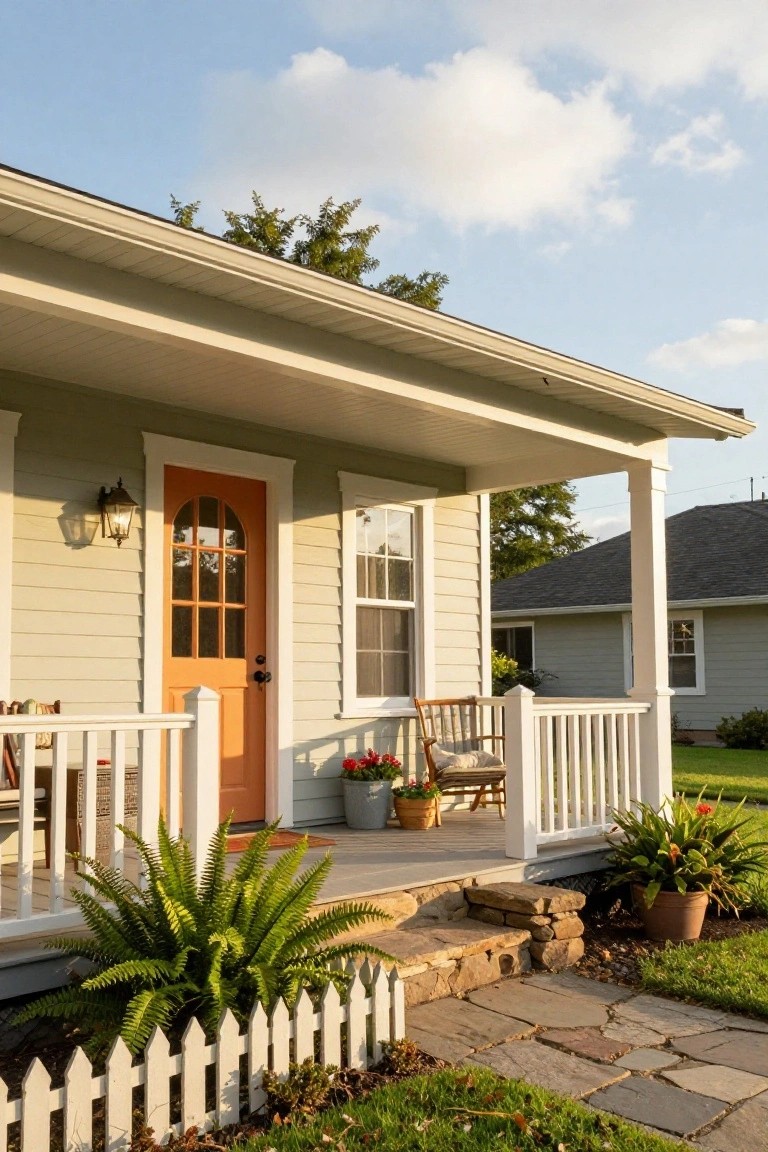
A bright orange front door really makes this cottage pop. Set against soft sage green siding and crisp white trim, it pulls your eye straight to the entry without overwhelming the classic lines. That warm color feels cheerful and welcoming, especially with the porch light and simple plants framing it.
Put a bold door like this on any neutral-toned home, from bungalows to farmhouses. It works best where you want easy curb appeal… just pair it with relaxed porch seating and low-key landscaping so the door stays the star. Skip it if your house already has lots of color elsewhere.
Frequently Asked Questions
Q: How do I add a porch like those charming ones without breaking the bank?
A: Bolt on a simple gabled entry porch with turned posts from your local lumberyard.
Paint it to match your siding, and toss in a couple of rocking chairs.
You’ll get that welcoming vibe overnight.
Q: What siding works best to nail the classic cottage look?
A: Grab clapboard or shake-style siding in cedar tones.
It weathers beautifully and hugs curves just right.
Skip vinyl, though. Wood breathes life into the whole setup.
Q: Which paint colors pull off that timeless cottage charm?
A: Soft sage green or pale blue on the body pairs perfectly with white trim.
Test samples in morning light first.
They fade into the landscape without overwhelming.
Q: How do you keep the exterior looking sharp year-round?
A: Pressure wash gently each spring, then hit stains with a mild bleach mix.
Freshen trim paint every few years…
And your cottage stays picture-perfect.
