

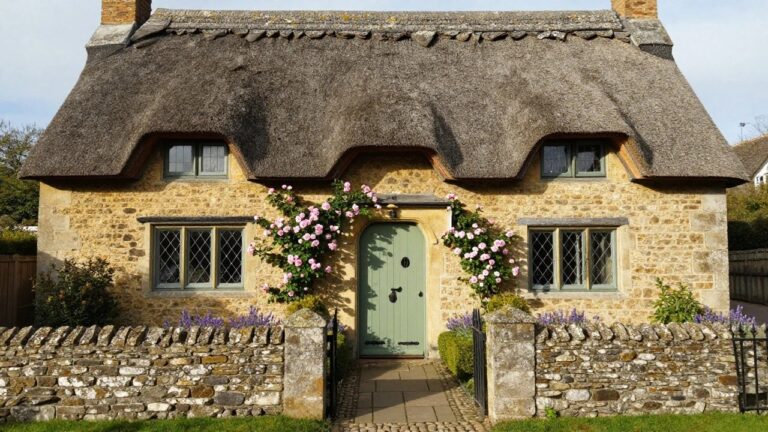
I’ve spent enough time wandering English lanes to appreciate how a cottage’s exterior can transport you straight into a storybook without feeling contrived. The best ones rely on honest materials like rugged stone walls and thatched roofs that age gracefully over decades. From the road, it’s the gentle rooflines and welcoming front paths that draw you in first, hinting at the life unfolding behind them. Details matter. I’ve noted a few facade ideas here that I’d adapt for a simpler home, just to test how they shift the whole street view.
Roses Framing the Cottage Door
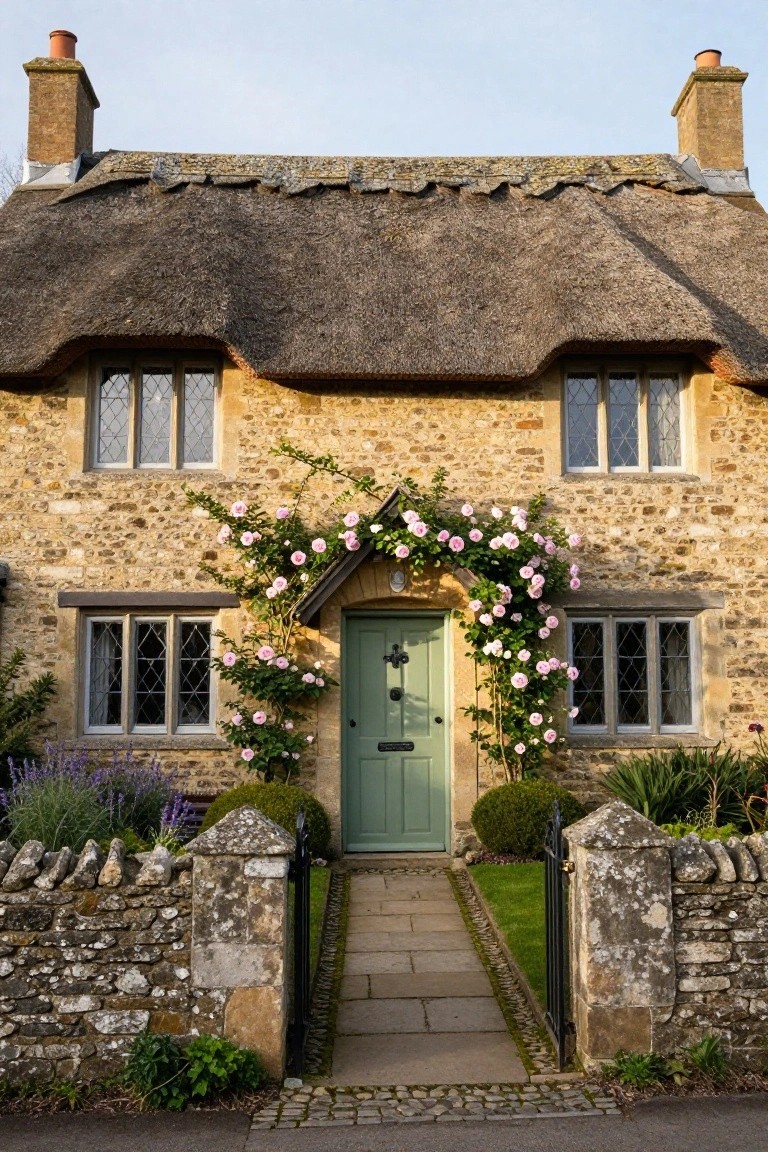
Climbing roses over the front door give this thatched stone cottage pure fairytale feel. The pink blooms spill across a simple wooden porch frame right above the green door. They soften the rough stone walls without hiding the house’s character. It’s a look that pulls you right in as you walk up the path.
Try this on older homes with some texture to the exterior, like brick or stone. Plant a hardy climber like ‘New Dawn’ at the base and guide it up an arch or pergola. Keep it trimmed so it doesn’t block the door… and watch for aphids in damp spots. Fits right into countryside gardens or even a suburban yard wanting that English charm.
Climbing Roses Frame the Entry
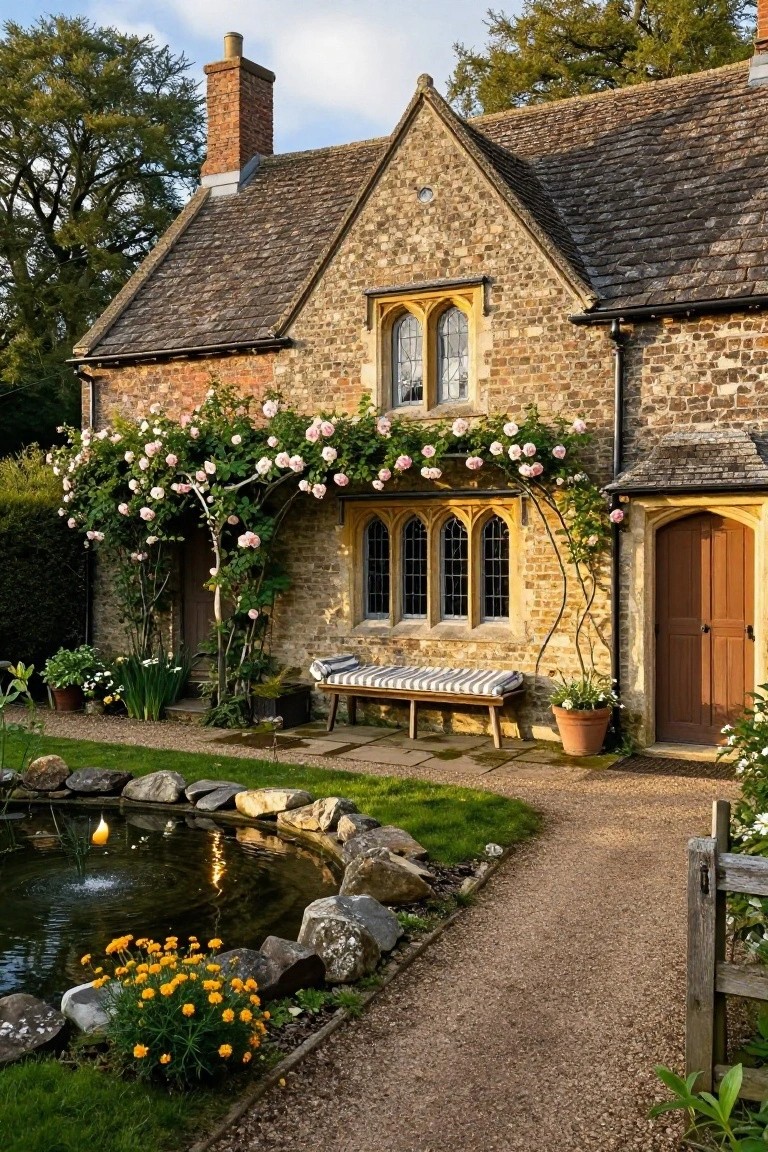
Nothing says English cottage like roses climbing up and over the front door. Here, soft pink blooms arch right above the wooden door on sturdy stems, softening those rugged stone walls without hiding them. It pulls your eye straight to the entrance and gives the whole place that lived-in, storybook feel folks love in the countryside.
You can pull this off on any older stone or brick house with a simple trellis or wires along the wall. Pick repeat-blooming climbers like ‘New Dawn’ for color all season. Just train them loosely at first… they grow fast. Works best on homes with some height at the entry, but watch for too much shade or wind that might slow them down.
Wisteria Over the Cottage Door
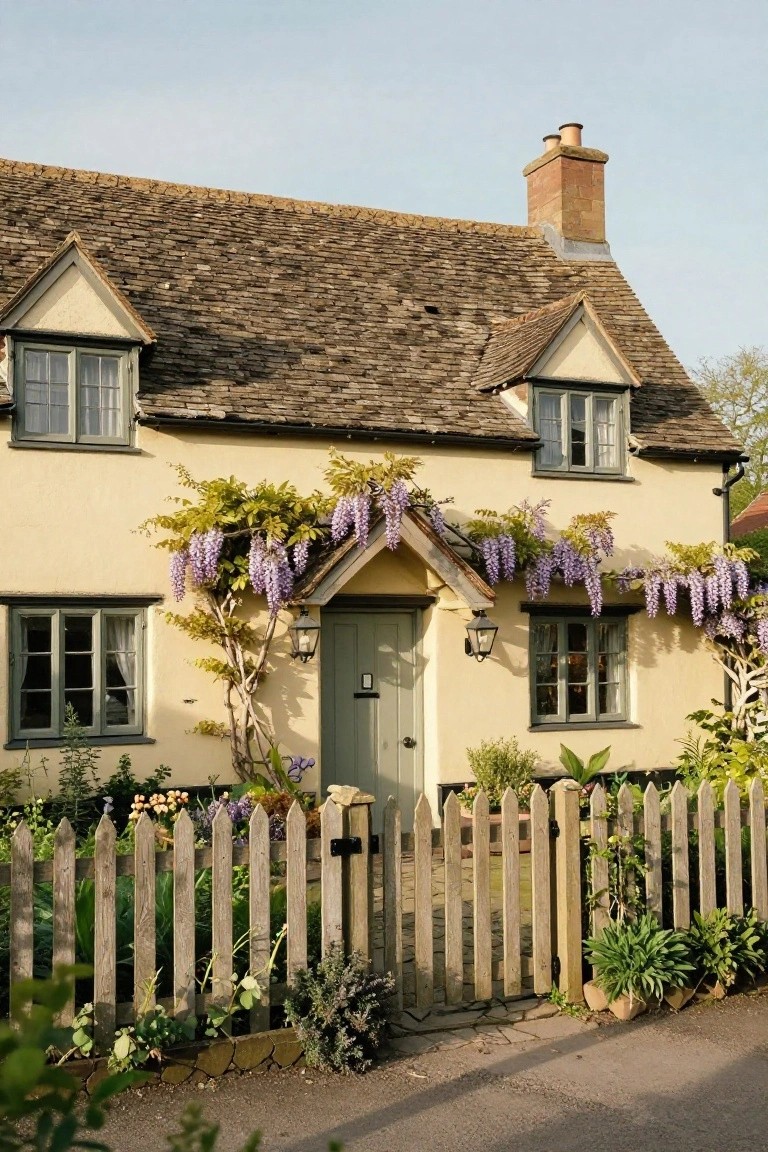
Nothing pulls off that storybook cottage feel quite like wisteria spilling over the front door. Here, the purple blooms hang heavy from the small porch roof, softening the cream walls and drawing your eye right to the green door below. It turns a plain entry into something alive and full of character, especially against the old stone tiles on the roof.
Train a wisteria vine up a simple trellis or porch frame if your home has one. This look fits best on plaster or stone cottages in cooler spots where the plant thrives without much fuss. Trim it back each year to keep the door clear… and watch how it changes the whole front of the house come spring.
Cottage Arched Porch Entries
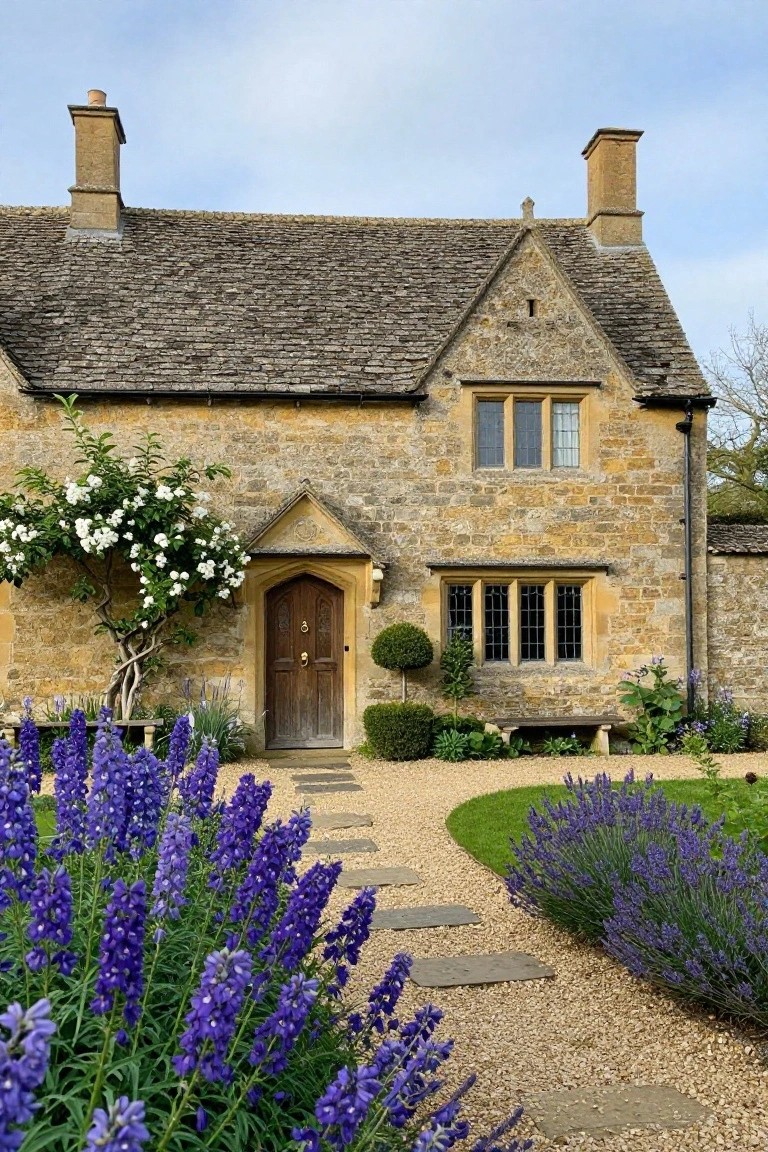
Those old arched porches you see on English stone cottages give the front of the house such a solid, welcoming look. Here it’s built right into the honey-colored stone wall, framing a dark wood door with just enough curve to feel special without trying too hard. A twisty white-flowering tree leans in close beside it, softening things up a bit.
This style fits right on smaller countryside homes where you want the entry to pull people toward the door. Line the path with low lavender like this one, and it ties the house to the garden without overwhelming the stone. Works best if your place has some natural stone already. Skip fancy lanterns though. Keep it simple.
Blue Door on a White Cottage
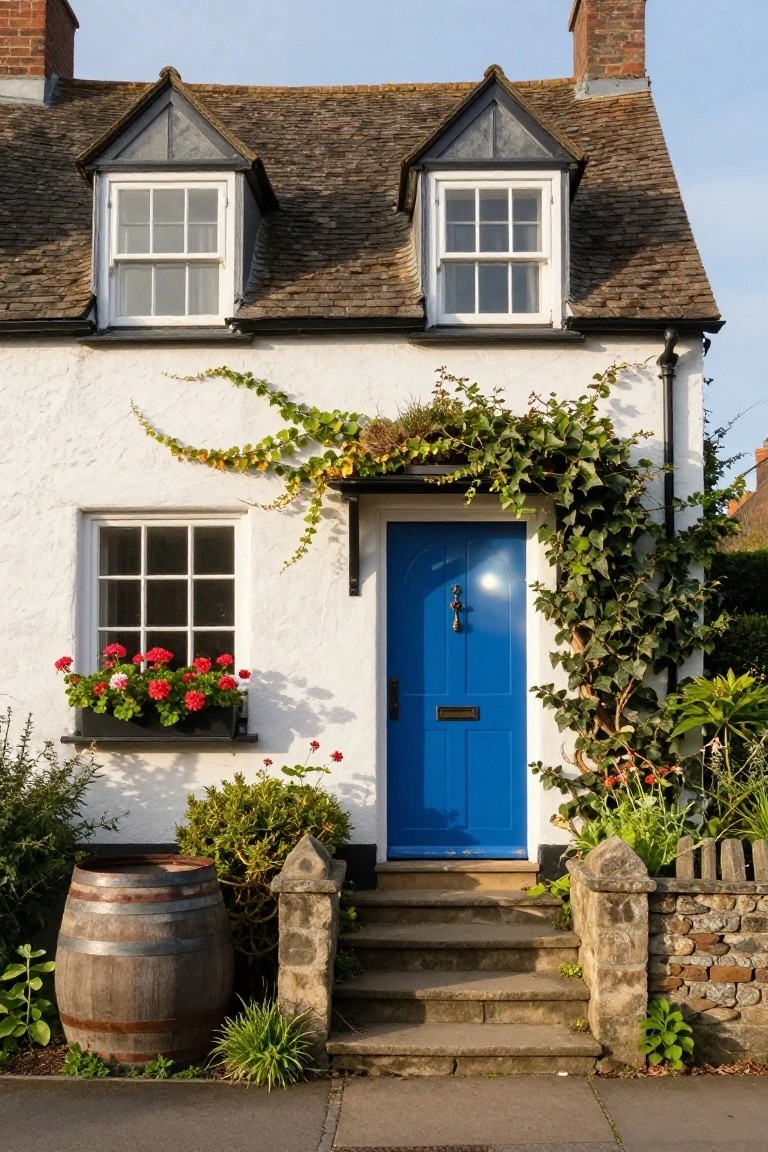
A blue front door like this one gives a plain white cottage real personality right at the entry. It stands out against the rough plaster walls and all that green ivy climbing up the side. Those red geraniums in the window box nearby just add to the cheerful feel without overdoing it.
You can pull this off on most older countryside homes, especially ones with simple lines. Pick a strong color for the door, something like navy or this bright blue, and keep everything else neutral. Add climbing plants if the wall gets enough sun. Just make sure the door hardware shines a bit… it pulls the eye right there.
Classic Half-Timbered Cottage Exterior
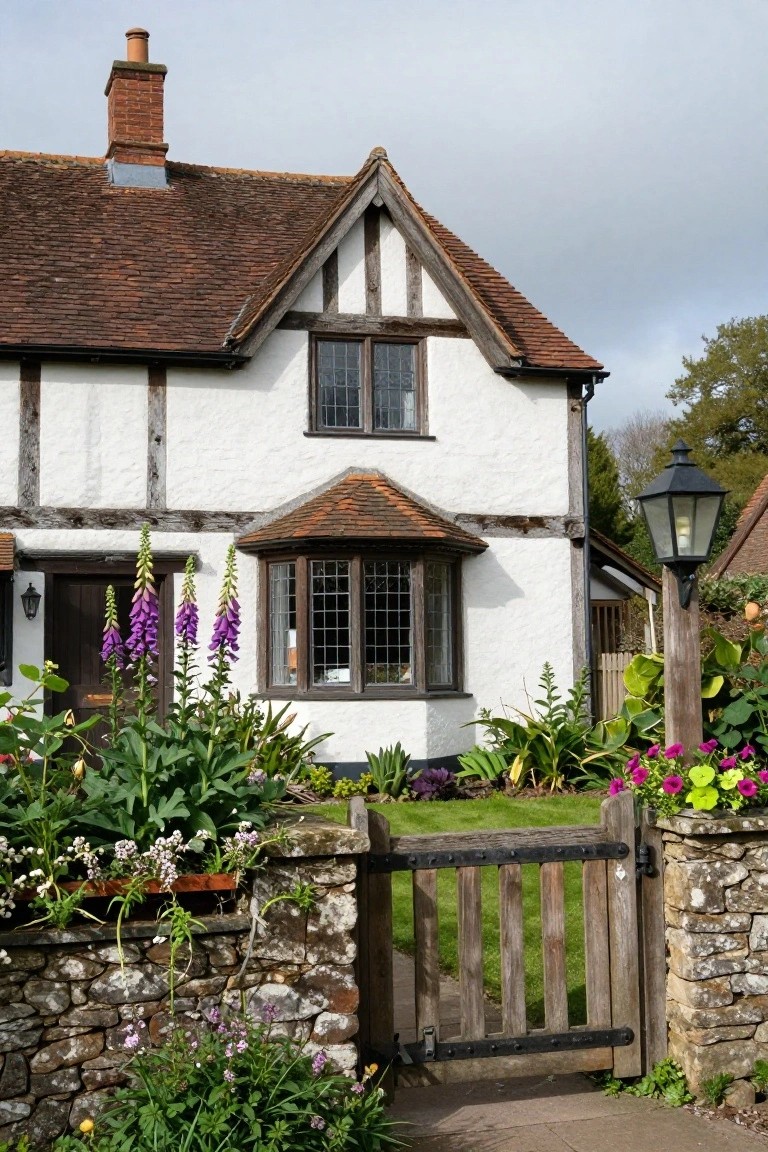
Nothing says English countryside like white plaster walls crossed with dark timber beams. Those strong black lines against the clean white give the house instant history and charm. It pulls the eye right to the front door, making the place feel solid and welcoming from the road.
This look fits older style homes in rural spots best. Paint the plaster bright white and stain the beams deep brown or black for contrast. Add a few tall flowers nearby, like foxgloves, but keep plantings low so they don’t hide the framing. Skip it on modern builds unless you want a full remodel.
Vine-Covered Entry Pergola
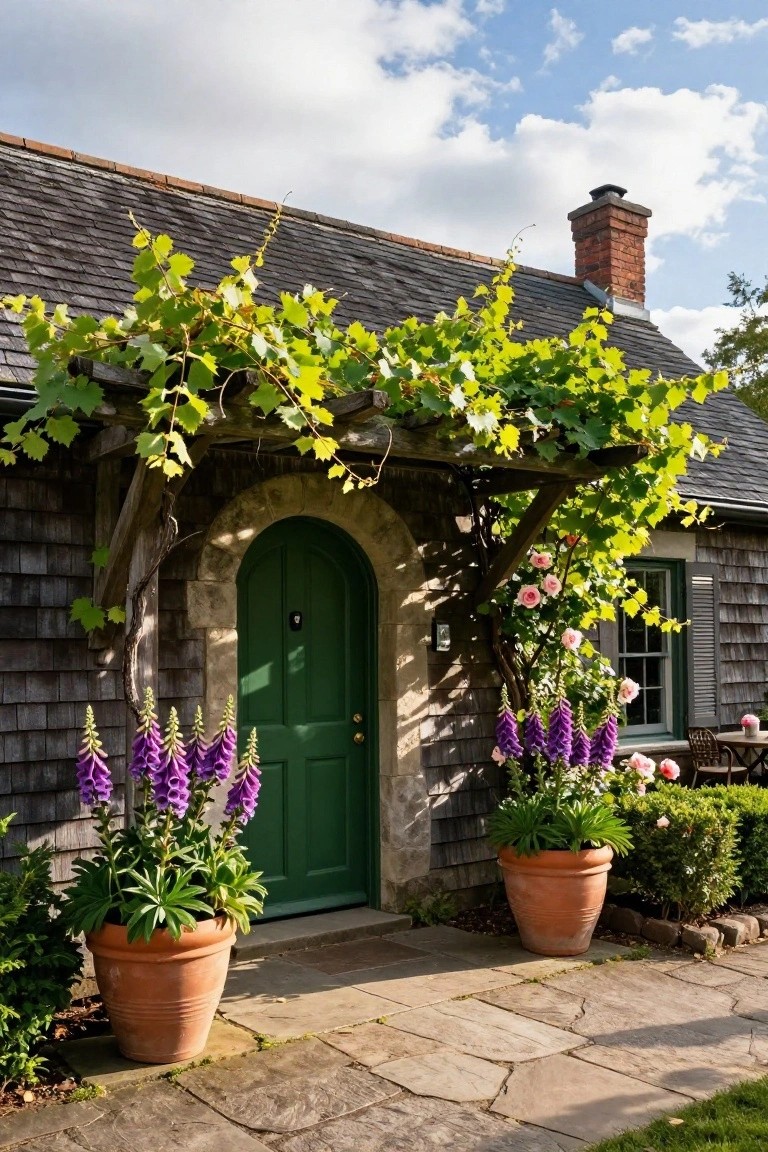
A wooden pergola draped in lush grapevines sits right over this cottage’s arched doorway. It softens the stone arch and shingle siding while making the green door feel tucked away like a secret garden spot. That natural overhang pulls your eye straight to the entrance without trying too hard.
Put one up over any plain door on a bungalow or small house. Pick vines that grow steadily, like grapes, and train them along the beams each season. Flank it with tall potted plants for balance. This setup suits mild climates and adds cottage charm anywhere you want a welcoming front path.
Turquoise Front Door on Brick Cottage
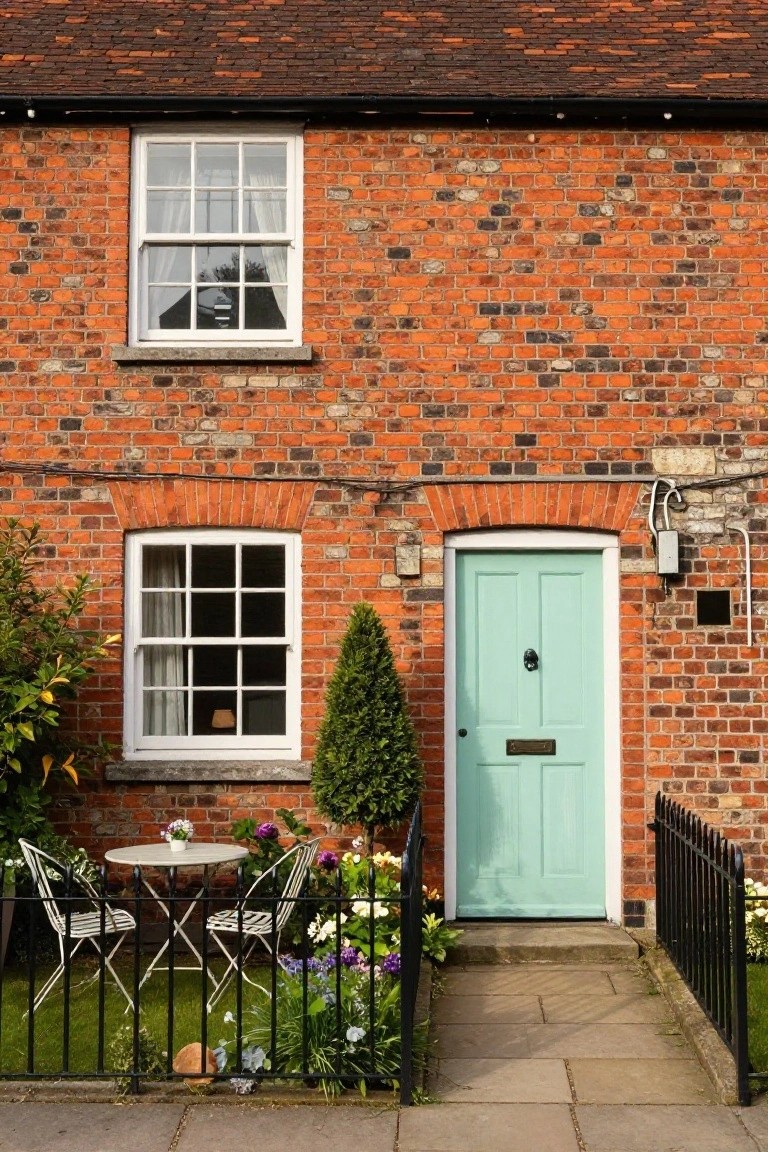
Nothing updates an old brick cottage like a fresh coat of paint on the front door. Here, the soft turquoise shade stands right out against the warm red bricks and white window frames. It keeps that classic English look but adds a bit of cheer that makes you want to knock. Simple change. Big welcome.
Try this on any traditional brick or stone house facing a quiet street. Pick a color that picks up something nearby, like green from plants or blue from the sky. Just test it in daylight first, since shades shift. Works best where the door gets some protection from weather, and pair it with a sturdy knocker for that finishing touch.
Arched Bridge Cottage Entry
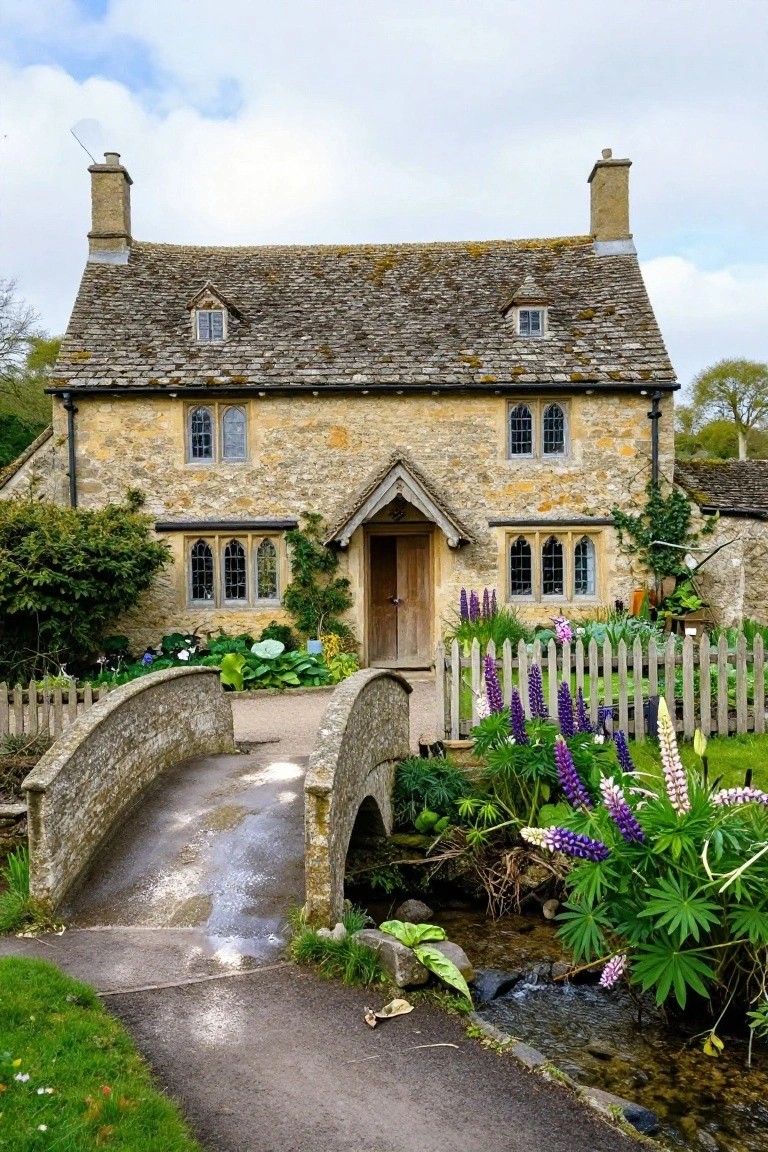
Nothing says fairytale cottage quite like a simple stone arch bridge crossing a stream right at the front door. This one uses the same honey-colored limestone as the house walls, so it all feels part of one natural place. The low arch keeps it humble, and the moss adds age without trying too hard.
Build something like this where you’ve got a natural dip or water run on your lot. Match the stone to your home’s exterior for that seamless look. It suits older rural houses best, giving visitors a fun little crossing before they knock. Just keep the bridge narrow, practical for everyday use.
Bench Seating at the Cottage Entry
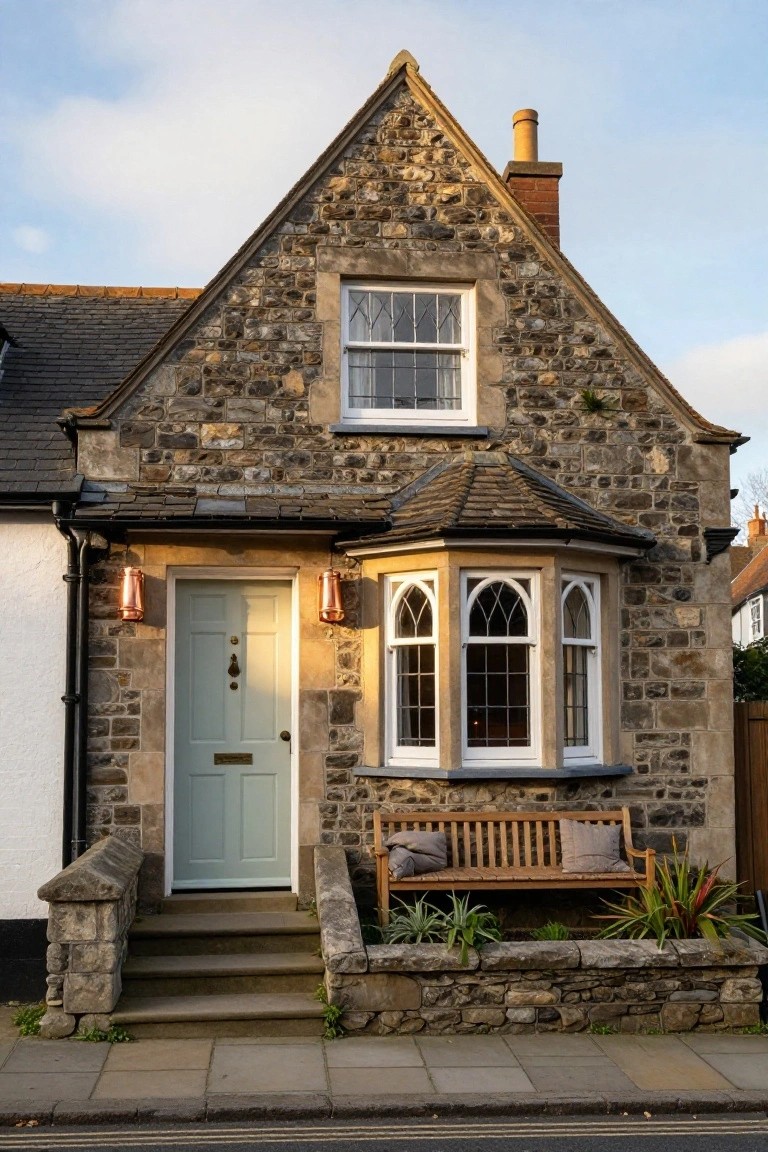
A wooden bench tucked right against the front steps softens up this stone cottage nicely. With a couple of cushions and some tough plants like agave spilling over the edges, it turns a plain entry into something you can picture settling into for a minute. That casual spot draws folks in without trying too hard.
Try it on homes with sturdy stone or brick facades, especially where steps lead straight to the door. It works best in milder spots like the English countryside, so pick rot-resistant wood and swap cushions for the seasons. Just keep plants low so they don’t block the path.
Climbing Roses Over the Entry Door
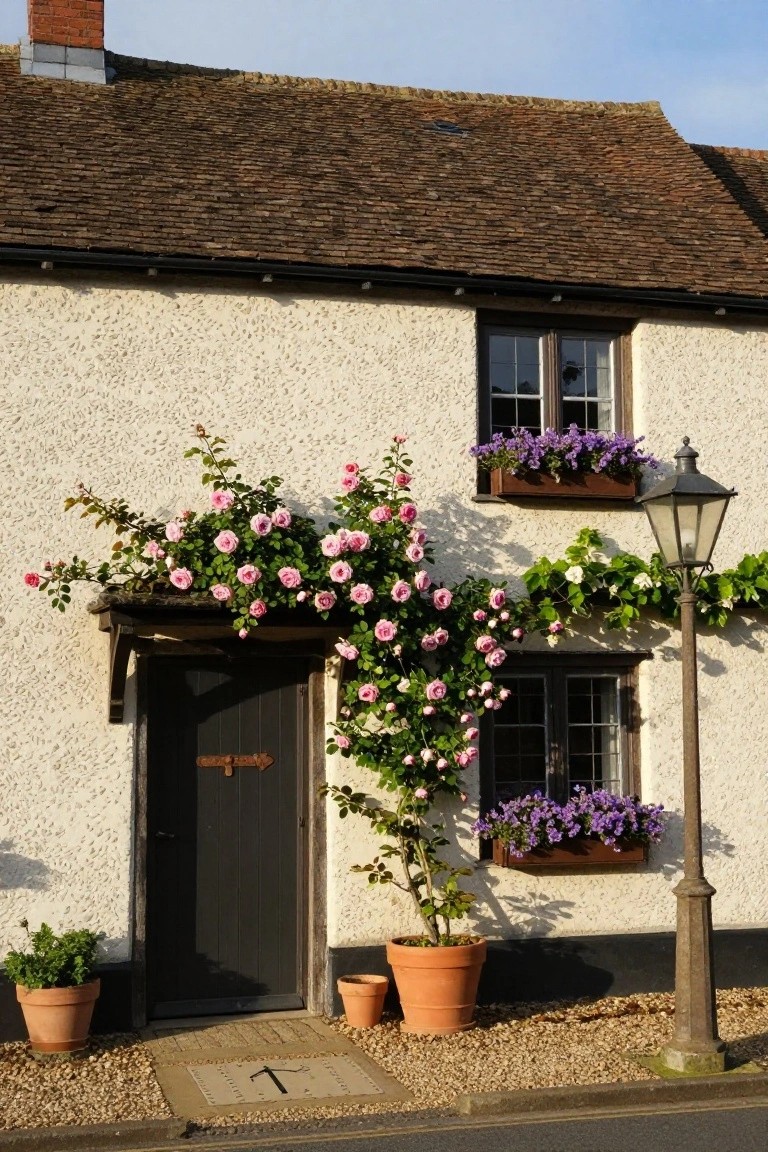
Roses climbing right over the front door give a cottage that straight-out-of-a-storybook look. The pink blooms here soften the plain white walls and pull your eye to the dark wood door without much effort. It’s an easy way to add color and life to a simple facade.
Train a repeat-blooming climber on a wood frame or wires above the door, like they did here. It suits older homes with textured plaster or brick best. Just prune it back each year to keep the path clear… and watch how it turns heads on the street.
Recommended Products

Wild & Rustic Decoration: Our faux thatch features a fluffy, shaggy texture and a realistic hay look. It is fireproof and safe for indoor/outdoor use — perfect decorate gazebos rooftops, outdoor party, tables, and floors. Ideal for fall party decor, halloween, thanksgiving, wild west, large straw bale, Derby parties, Desert Boho parties, Tiki bars, Luau parties, cowboy country barn parties, and weddings
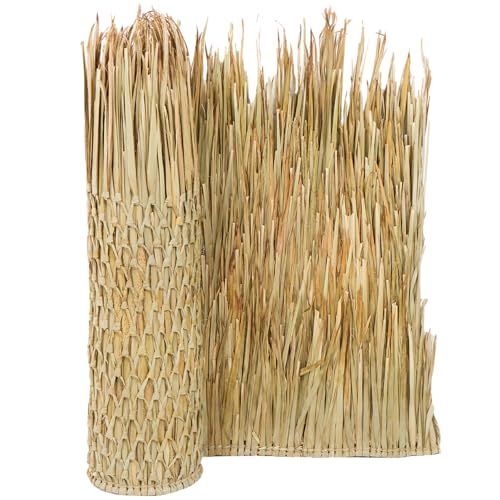
MEXICAN THATCH ROOF RUNNER ROLLS: Mexican Thatch is a great option for tropical Tiki bar decor, DIY duck blind project, or upgrading your backyard, garden, or any outdoor space to a Hawaiian theme.

Pro-Grade Thatch Straw Roof: Made of high-quality PP& PE material with exquisite craftsmanship, the grass fibers are not easy to fall off, looks very chic and realistic.Weatherproof & Unshakable &Tear-Resistant Backing,Mesh Grid,SBR Latex Base for Stability
White Cottage with Blue Trim
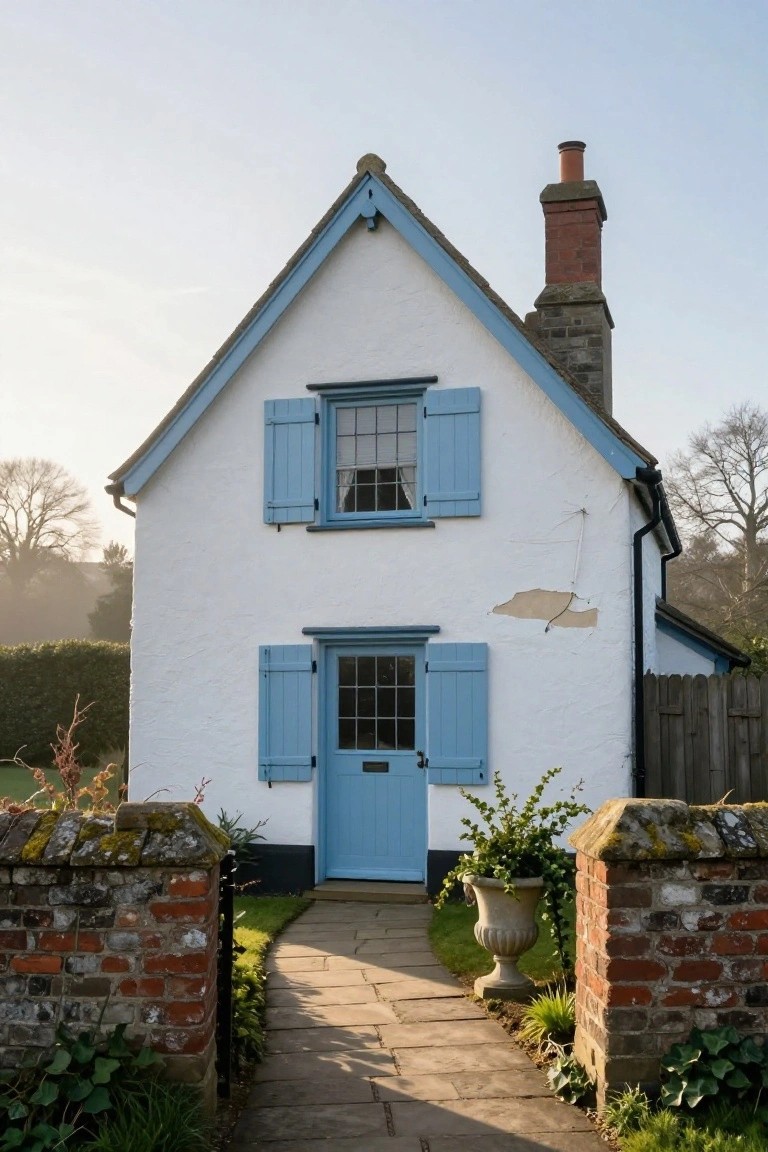
There’s something about a crisp white cottage paired with blue trim that just feels right for the English countryside. The white render keeps things bright and clean, while the blue shutters, door, and eaves add that pop of color without overdoing it. It’s a simple combo that makes the house look fresh and storybook-like, especially with the soft light hitting it in the morning.
You can pull this off on older homes or even new builds aiming for that cottage vibe. Pick a soft blue like this one, maybe something like a faded duck egg, and use it on the windows, door, and roof edges. It works best where you want low-maintenance charm… just keep the white painted or rendered smooth, and watch it draw folks right up the path.
Thatched Roof Cottage Facade
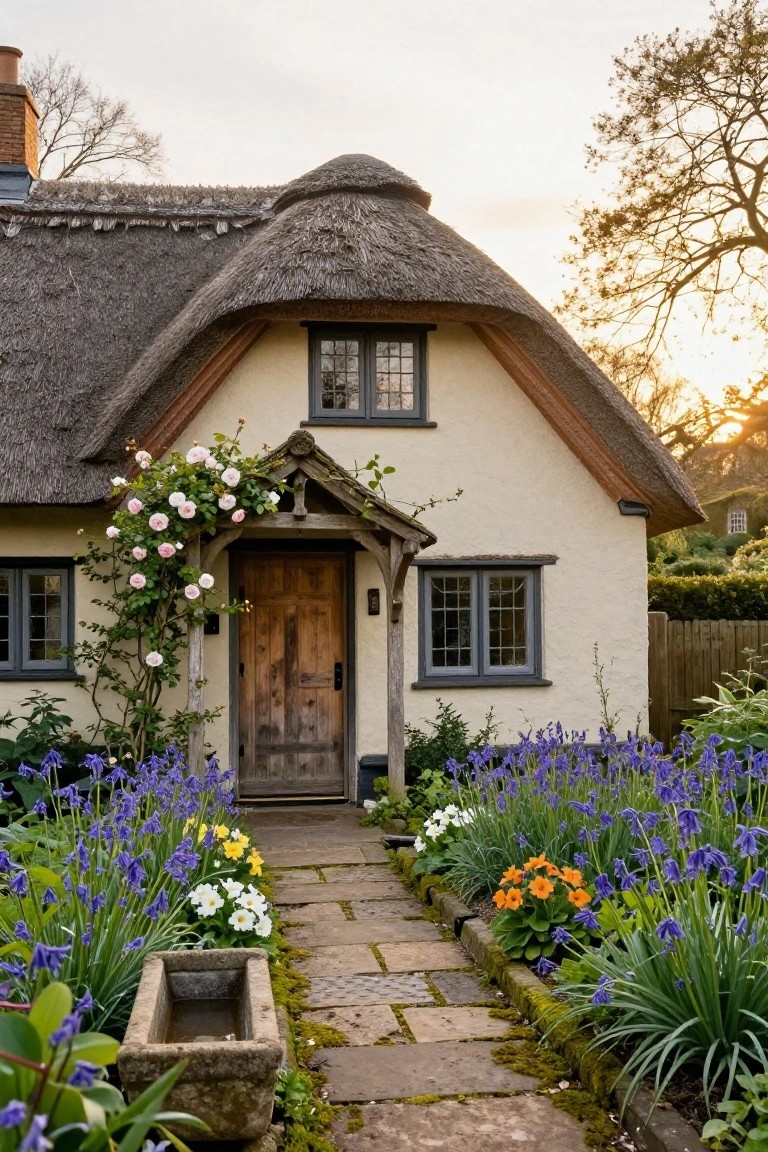
Nothing says English countryside like a thick thatch roof curving over cream walls. This setup gives the house that rounded, storybook shape that pulls you right in from the road. The dark timber porch and leaded windows add just enough structure without taking over. It’s simple architecture that feels lived-in and timeless.
You see this on older farmhouses or new builds trying for cottage charm. It works best where you want low-key curb appeal, maybe with a gravel drive. Keep the thatch maintained to avoid leaks. Pair it with a basic path edged in flowers, like bluebells here, and it stays pretty without much fuss.
Turquoise Door on a Cottage Facade
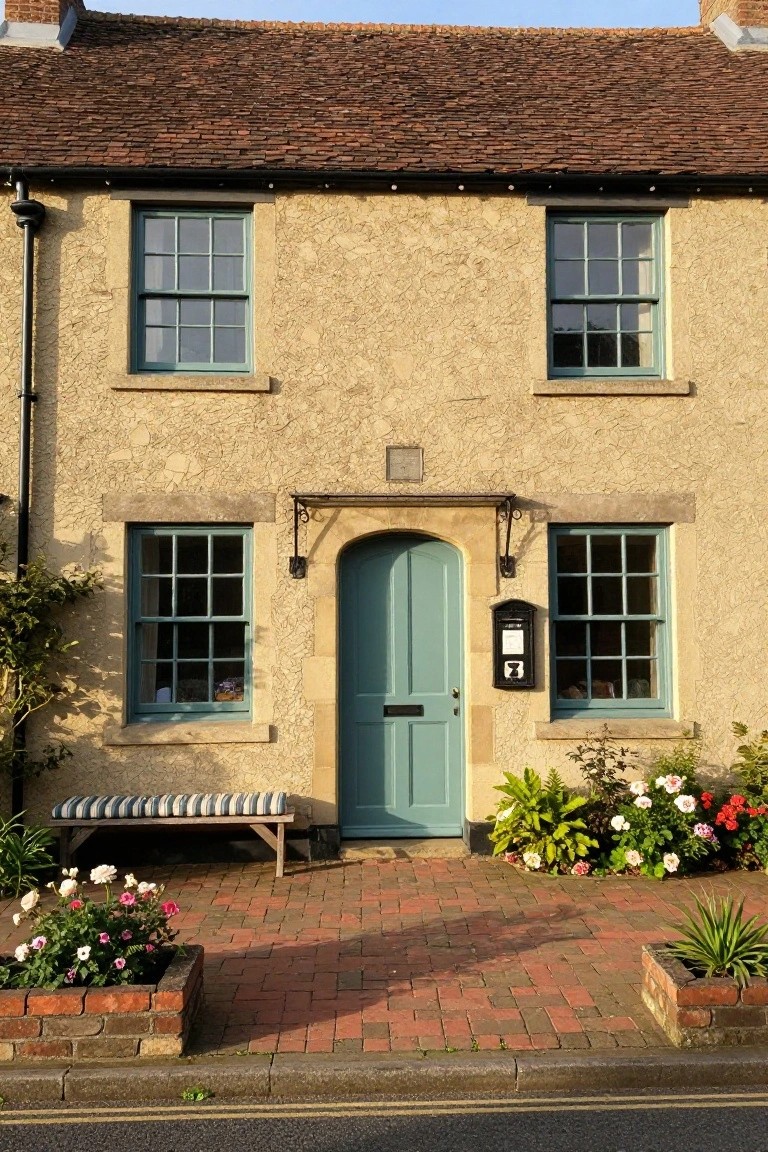
A turquoise front door like this one turns a plain cottage into something special. Set in a stone arch against textured ochre walls, it pulls focus to the entry without much fuss. The color feels right at home in the countryside, adding just enough cheer to make you want to step inside.
Paint your door a similar shade if you’ve got neutral stucco or plaster siding. It suits older homes with simple shapes best, especially where the roof and windows stay subdued. Pair it with black iron hardware and a couple of flower pots out front. Skip it on busier facades though, or it’ll get lost.
Arched Porch Entry
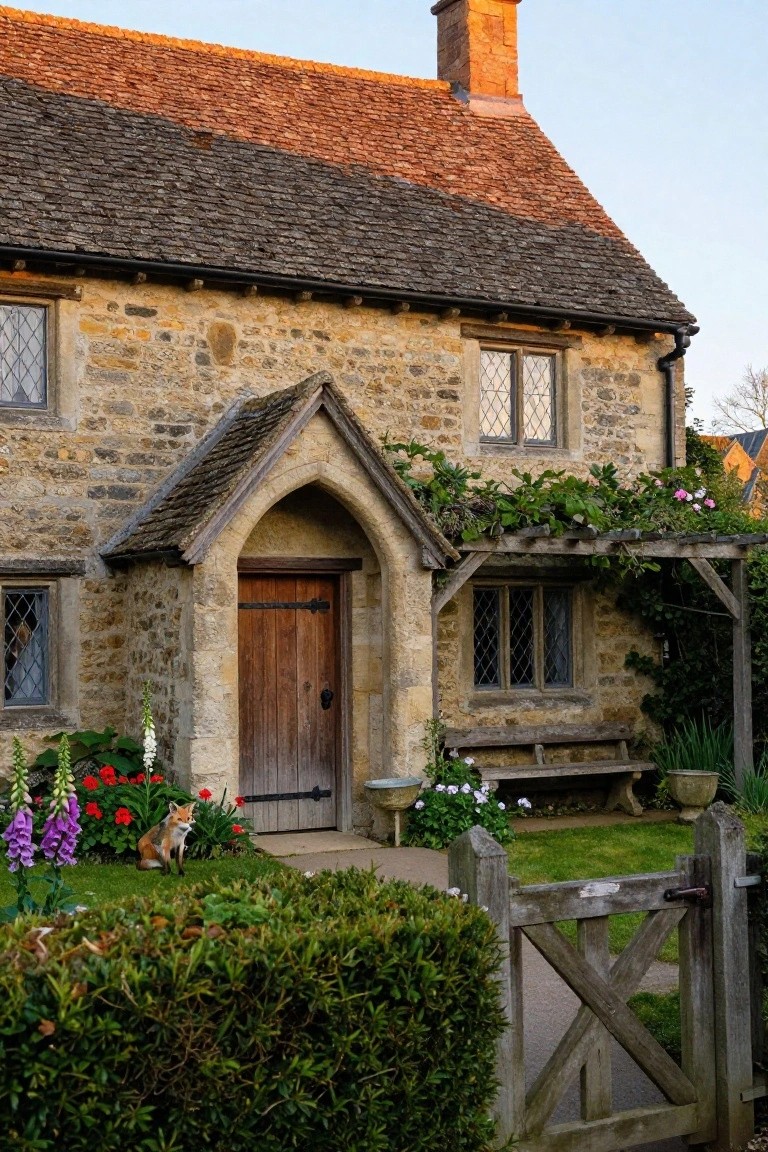
An arched porch like this one pulls the whole cottage together. Built from the same local stone as the walls, it frames a simple wooden door just right. Vines climb over the wooden frame, and flowers sit nearby. That setup makes the front feel protected and storybook-like without much fuss.
Try it on homes with stone or brick facades, especially in rural spots. Keep the arch modest to match the house scale, and add a bench if space allows. It suits older places best, but watch the roof pitch so it blends with the main one.
Stone Cottage Facade Basics
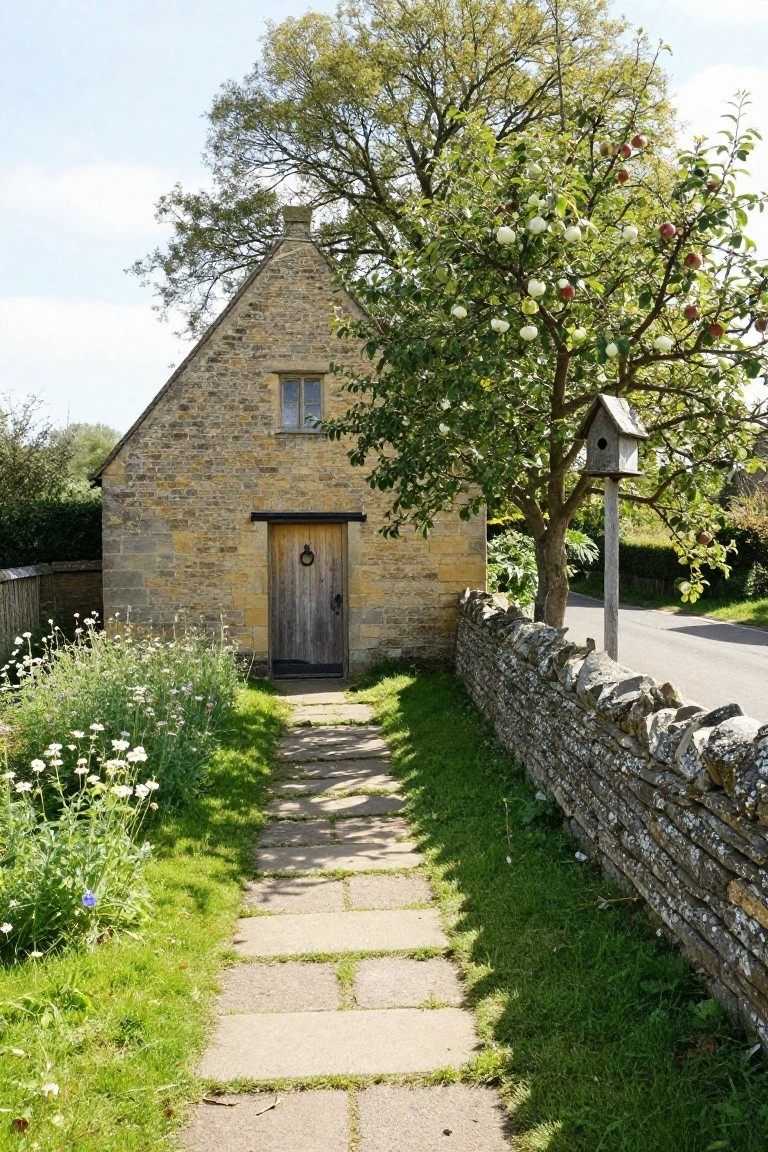
This cottage front nails the simple charm of English countryside homes. Built from warm honey-colored limestone, it has that soft, aged look that fits right into village life. The plain wooden door sits under a basic overhang, and a straight flagstone path runs up to it through some flowers and grass. Nothing fancy. Just solid and welcoming.
You see this style on older farmhouses or new builds copying the look. It suits spots with some land around it. Source local stone blocks for the walls to save money and match the area. Keep the path simple and edged lightly with plants. Skip modern doors or paint. Let the materials do their thing over time.
Stone Cottage with a Pink Door
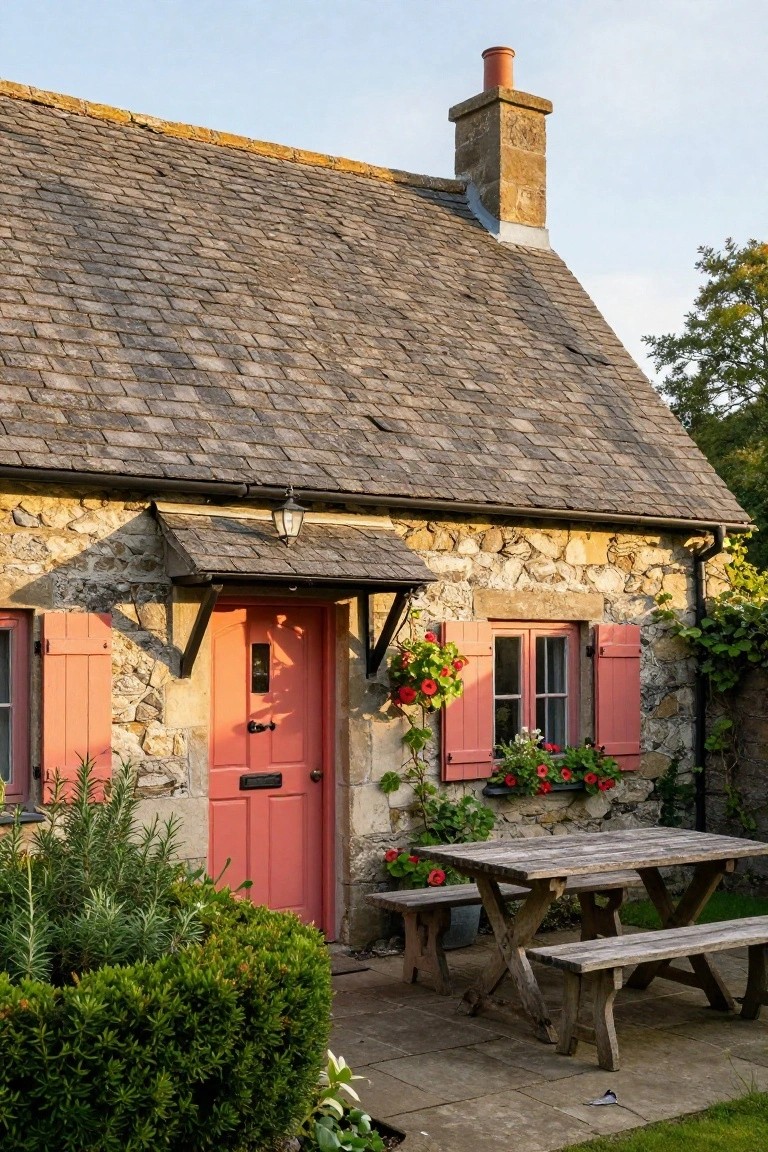
Nothing beats a traditional stone cottage for that fairytale look. But what really makes this one shine is the bright pink door smack in the middle of those rugged walls. It pulls your eye right to the entrance and adds a bit of happy color without overwhelming the natural stone and slate roof. Those matching pink shutters and geraniums in the windows tie it all together nicely.
Paint your own cottage door a bold shade like this if you’ve got a plain stone or brick facade. It suits older countryside homes best, where the stone already has character. Just keep the rest neutral, and maybe match a few shutters or add simple flower boxes. Skip it on super modern places, though. It might feel out of place there.
Red Door on a Stone Cottage
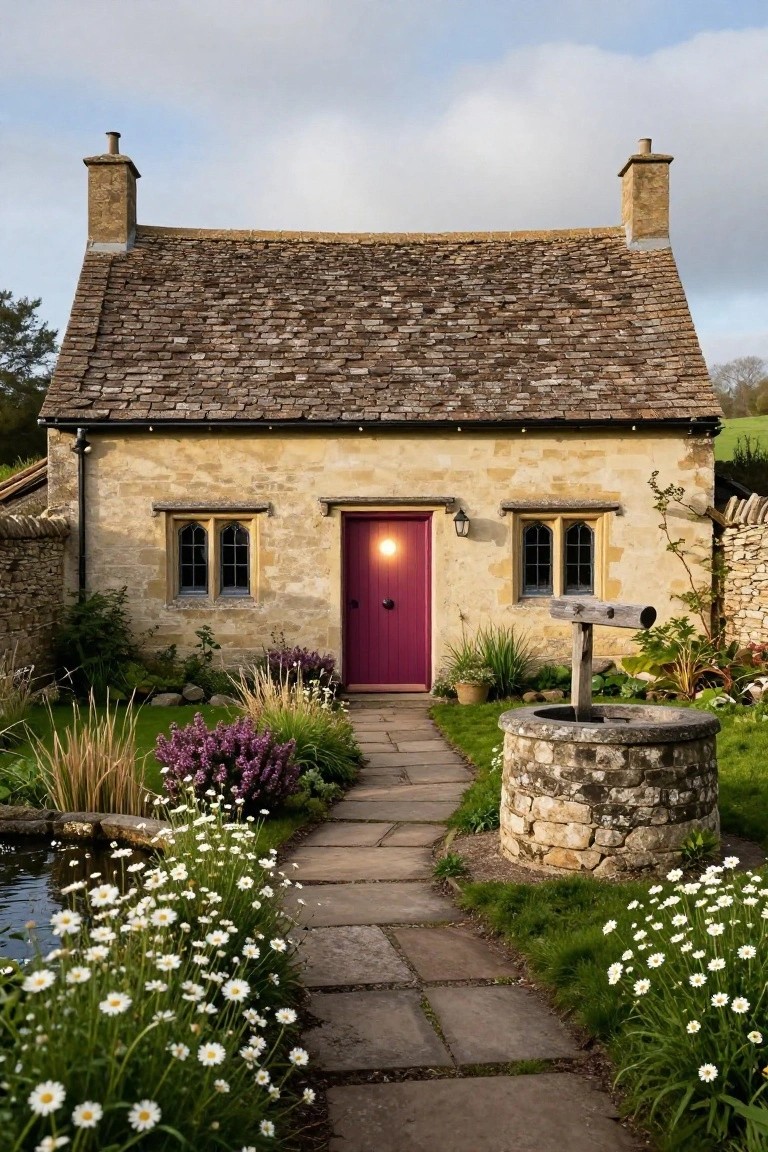
Nothing beats a simple color choice like this bright red door on a honey-colored stone cottage. It pulls your eye right to the entry and gives the whole front a lift without much fuss. The stone walls and slate roof stay neutral so the door does the work, making the place feel more alive and welcoming from the road.
This trick works best on older-style homes like these Cotswold cottages where the architecture is plain and sturdy. Paint your door a strong color like red or blue, keep the rest muted, and add a stone path to lead people in. Just make sure the hardware is sturdy. It won’t suit super modern houses but fits right into countryside spots.
Classic Black and White Timber Cottage Facade
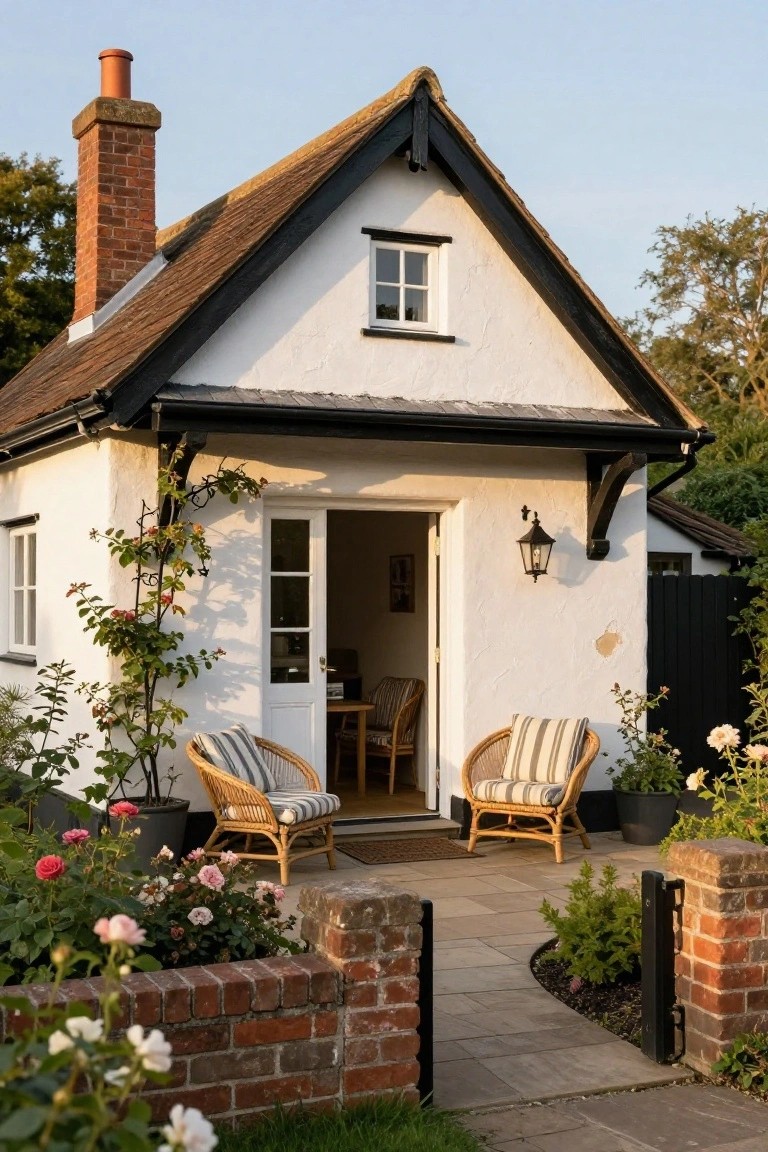
Nothing says English countryside cottage like black timber framing over crisp white walls. This look gives the house instant character, with those dark beams outlining the shape and making the whole thing feel rooted in tradition. A few climbing roses along one side add just enough green without overwhelming the clean lines.
Try it on smaller homes where you want curb appeal without much fuss. It suits period properties or modern builds dressed up as cottages. Keep the white fresh and the black bold, and watch how it draws the eye right to the entry doors.
Classic Thatched Roof Cottage
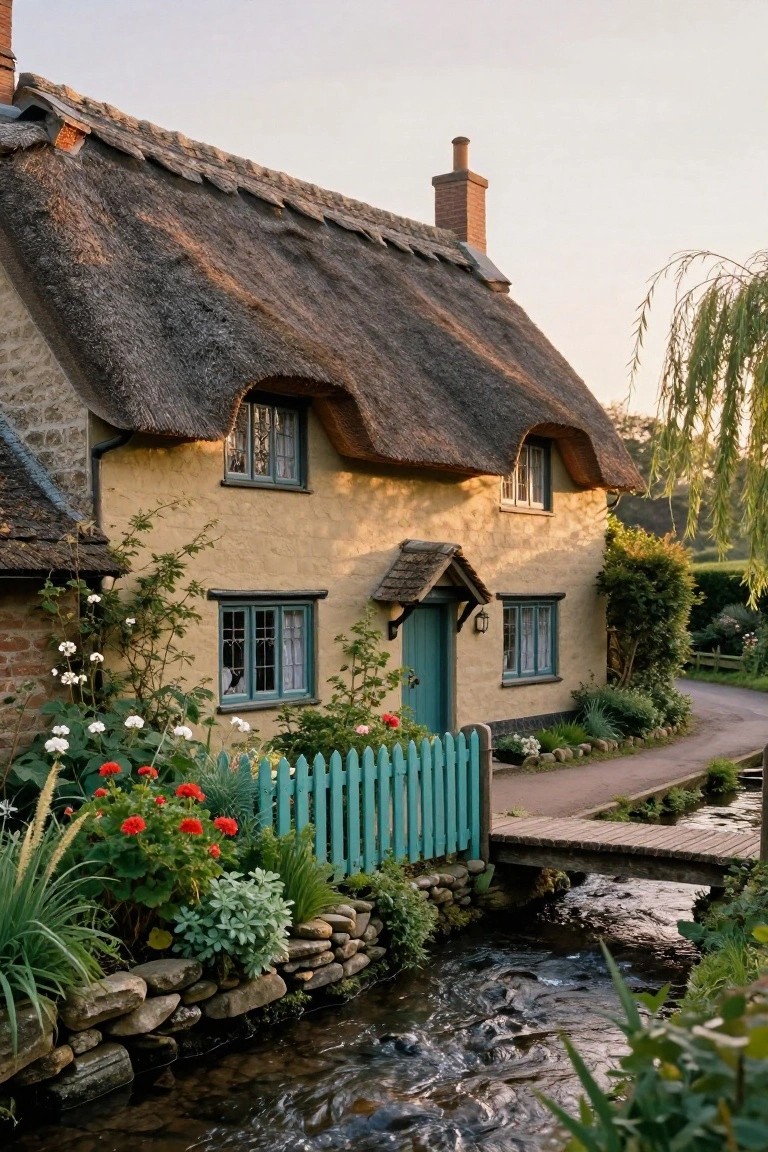
Nothing says English countryside like a thick thatch roof curving over soft stone walls. It gives the whole house this cozy, timeless look that pulls you right into a storybook setting. Here, the heavy thatch catches the light just right, and pairs with simple windows and a pop of color on the door to keep things feeling lived-in rather than fussy.
If you’re after that fairy-tale vibe on a smaller home, thatch works best where you have some rural character already, like stone or brick base. It suits modest cottages facing gardens or water. Just plan for regular upkeep, since thatch needs care to stay looking good over time.
Frequently Asked Questions
Q: How do I pick climbing plants that won’t wreck my house siding?
A: Choose soft-stemmed ones like clematis or ivy that grip without digging in.
Plant them at the base and guide with wires or a trellis.
They’ll hug your walls and bloom into that dreamy tangle.
Q: What colors pop for a cottage door and trim?
A: Pick a deep red or forest green door against creamy walls.
It pulls the eye right up to your entry.
Test chips outside at different times of day.
Q: Can I pull off this look on a brick or modern house?
A: Layer on wood shutters and flower boxes to soften hard lines.
Add a gravel path with wildflowers edging it.
Your place transforms fast.
Q: How do you keep wood fences and details looking fresh?
And here’s the trick: Brush on linseed oil yearly.
It soaks in deep and weathers to a silver patina.
Skip harsh stains.
