

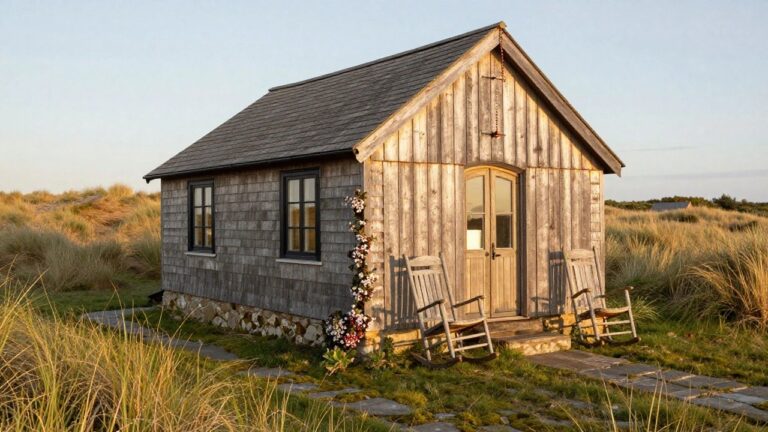
I’ve noticed that cottage exteriors wrapped in natural wood often succeed when they let the grain and texture speak for themselves, pulling the eye toward the surrounding trees and hills instead of shouting for attention. From the street, it’s the way those weathered boards shift color with the seasons that creates real curb appeal, making the house read as part of the landscape rather than a standalone structure. One detail I keep coming back to is how subtle roofline accents in matching wood draw the whole facade together. Overly polished finishes tend to fall flat in real settings, but these rougher, site-stained options hold up year after year without looking contrived. You’ll find a handful of approaches here worth sketching out for your own spot, especially if you’re aiming to soften a steep lot or frame a wooded entry.
Rustic Weathered Wood Siding
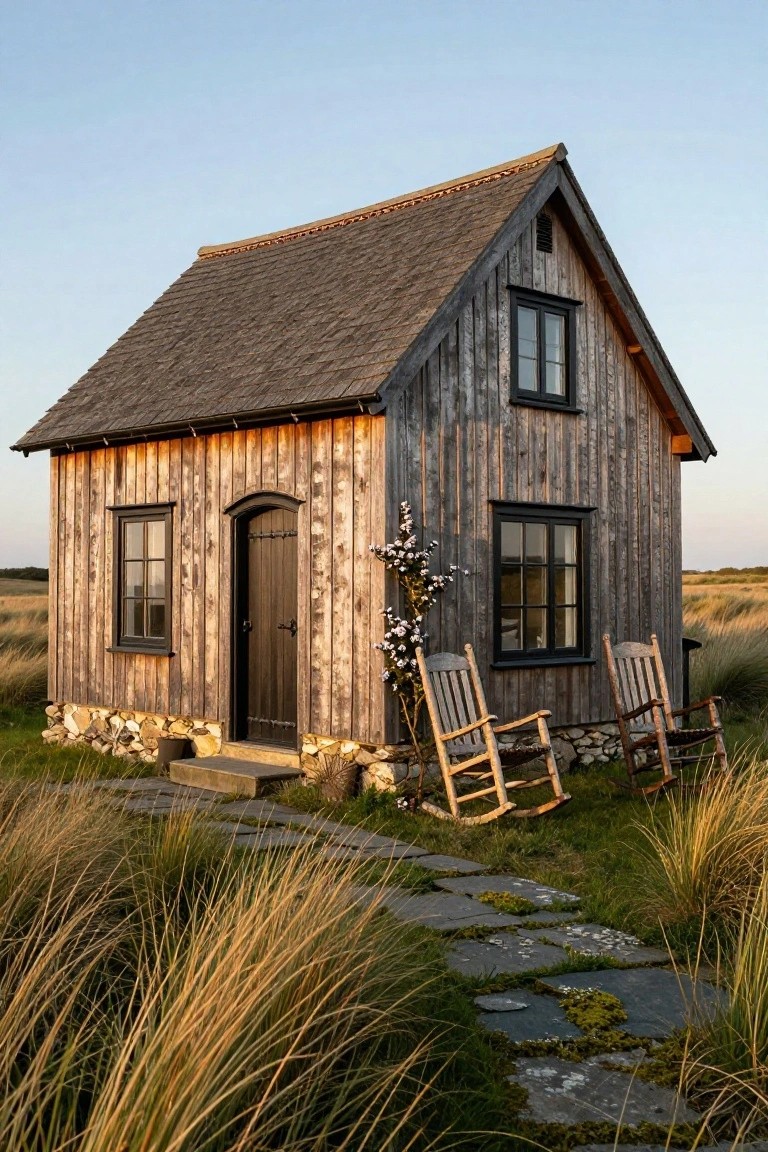
Weathered wood siding like this takes a small cottage and makes it feel like part of the landscape. The dark vertical boards have that aged look, with rough texture that catches the light just right. Pair it with a simple stone base, and the whole thing sits steady on the ground, almost growing out of it. Folks like this because it doesn’t fight the setting. It just settles in.
Try this on a cabin or starter home in a rural spot, where you want low upkeep and real character. Source siding from reclaimed barn wood if you can, or stain fresh pine to darken over time. Keep windows black-framed for punch, and add a couple old rockers out front. Watch the moisture though. Good flashing around the roof keeps rot away.
Rustic Log Porch Entry
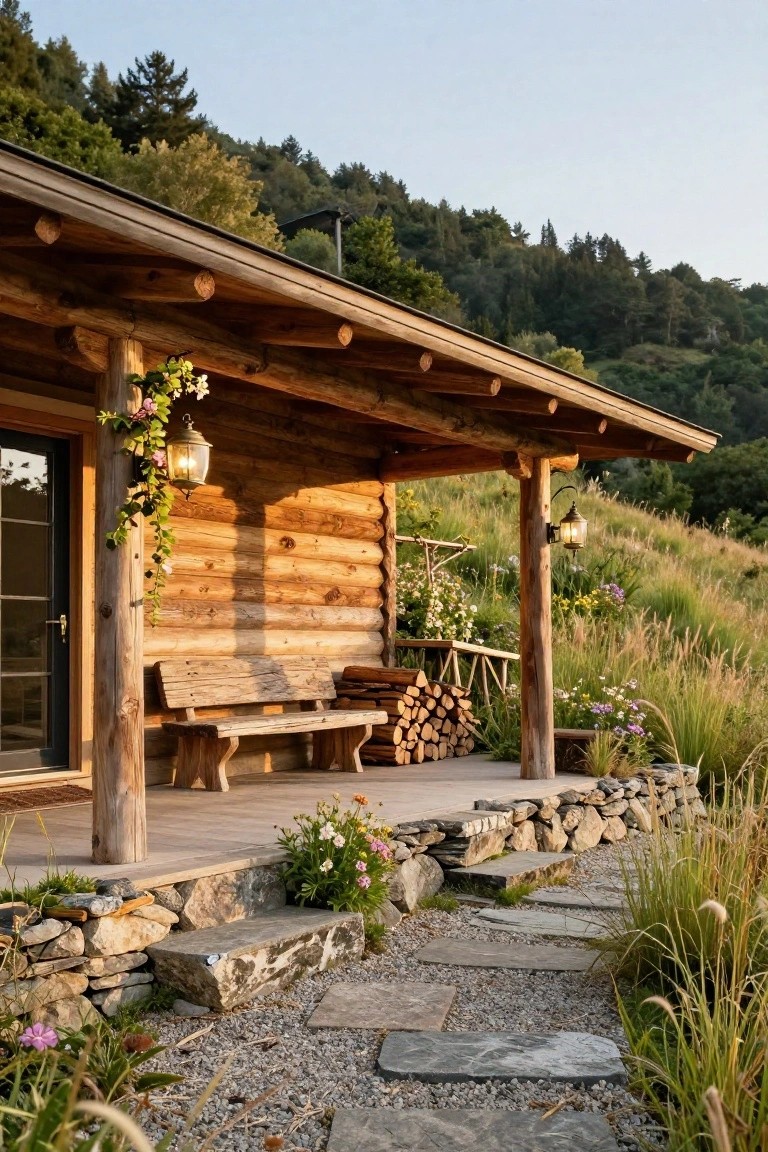
A log porch like this pulls the cabin right into the hillside. Those thick round posts and heavy beams give solid shade over the door and bench. It keeps the wood look going from the walls without any fuss. The firewood stack nearby makes sense too. Everything feels practical and settled in.
Put this on a sloped lot where you want cover from rain or sun. Works best for smaller cottages in wooded spots. Stack logs or pots along the edge for easy access. Skip fancy railings. Let vines climb the posts if the ground stays damp. Keeps upkeep low and the place looking lived-in.
Shingle Siding on Small Cottages
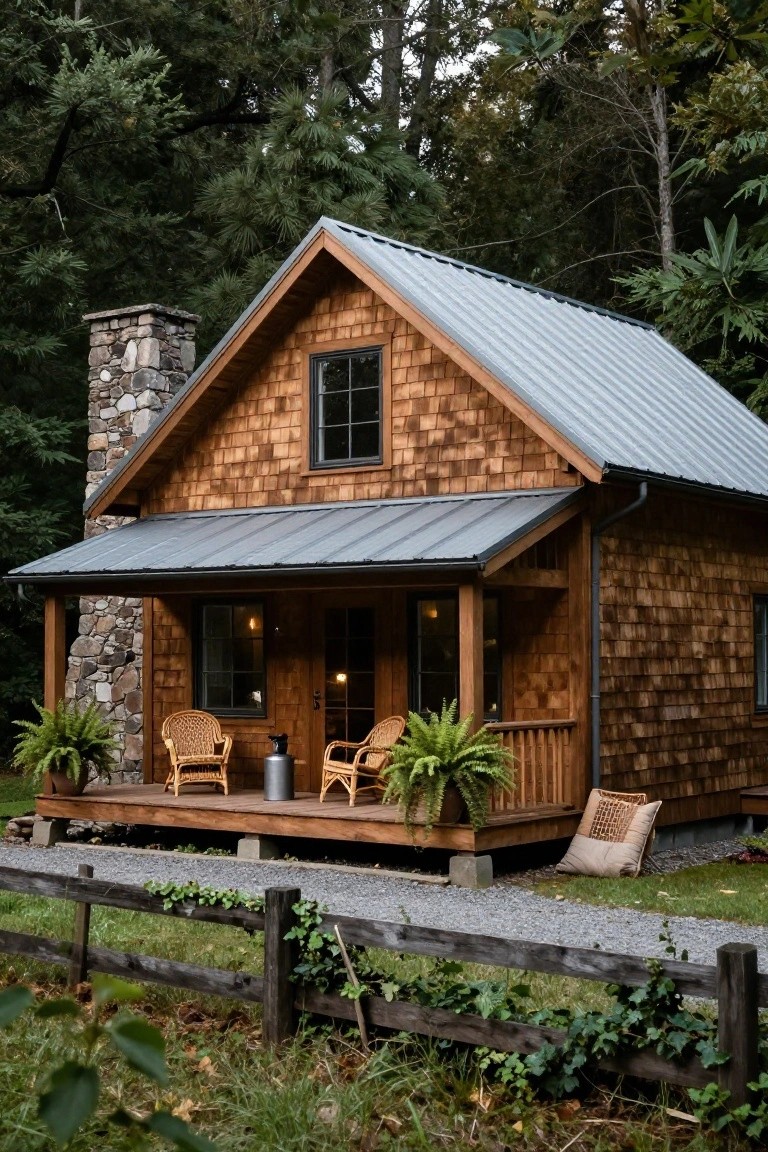
Wood shingle siding covers this cottage completely, giving the whole facade a rough, bark-like texture. It pulls the house right into the surrounding trees without much effort. The dark tones match the forest floor and trunks, so the place feels like it’s always been there.
You can pull this off on any modest cabin tucked into woods or hills. Go for cedar or similar wood shakes that weather to gray over time. Add a simple metal roof like the one here to handle rain without upkeep worries. Skip it on open lots where the texture might look too busy.
Cottage Entry with Terracotta Pots
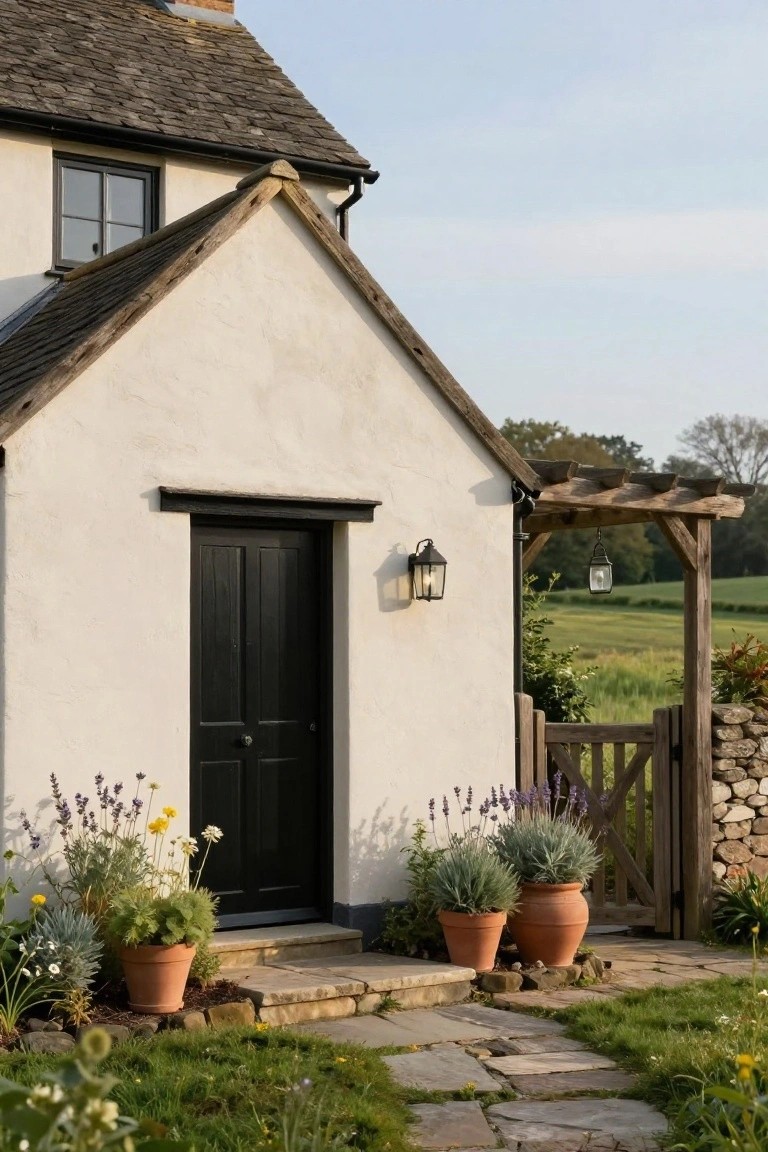
A straightforward way to warm up a plain cottage door is lining up a couple big terracotta pots right at the steps. Here the pots brim with soft grasses and lavender that lean toward the black door set in crisp white walls. That little touch brings the entry alive and ties it to the garden without looking fussy.
It suits older homes with light facades, especially in the country where things feel settled in. Go for earthy pots that echo stone or wood details nearby, and stuff them with low-water plants. They hold up year-round if you pick the right varieties… just refresh the soil come spring.
Dockside Cabin in Weathered Wood
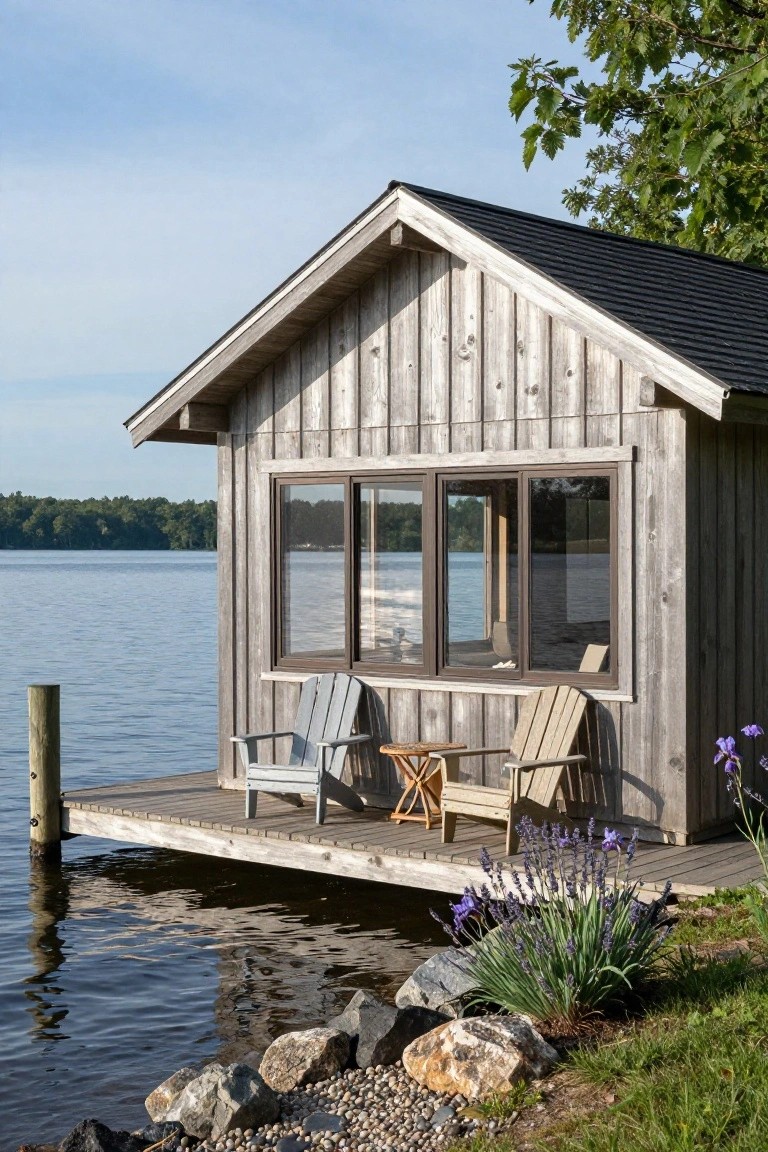
A small cabin like this one sits right on the dock, using light gray vertical wood boards that have that soft, aged look. It pulls the whole lakeside scene together without standing out too much. The big windows catch the water view, and simple chairs on the deck make it feel ready for quiet afternoons.
This works best on waterfront spots, like a lake house or river retreat, where you want something practical and low-key. Start with cedar siding, skip the paint, and let the weather fade it naturally. Keep the roof dark for contrast, and build on sturdy pilings if the water rises.
Warm Shingle Siding on Cottage Entries
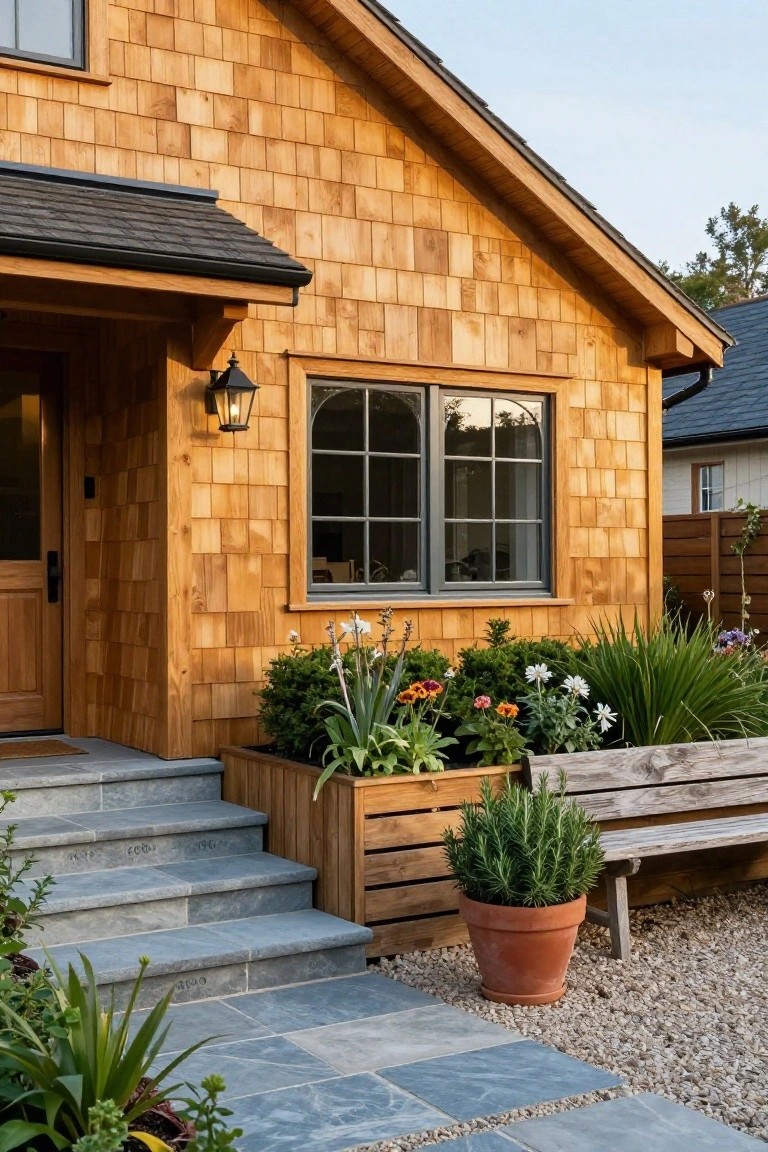
Those golden wood shingles give this cottage a soft, lived-in look that pulls right into the garden. You see it on the side wall and porch, catching the light just so, with a big window and simple door keeping things open but sheltered. A lantern hangs there too, ready for evenings.
It works best on homes tucked near trees or hills, where the wood tone echoes the outdoors without trying too hard. Add stone steps like these and a few pots of rosemary or agave along the edge. Skip busy trim. Let the shingles do the talking… keeps maintenance low over time.
Rustic Shingle Siding for Cottages
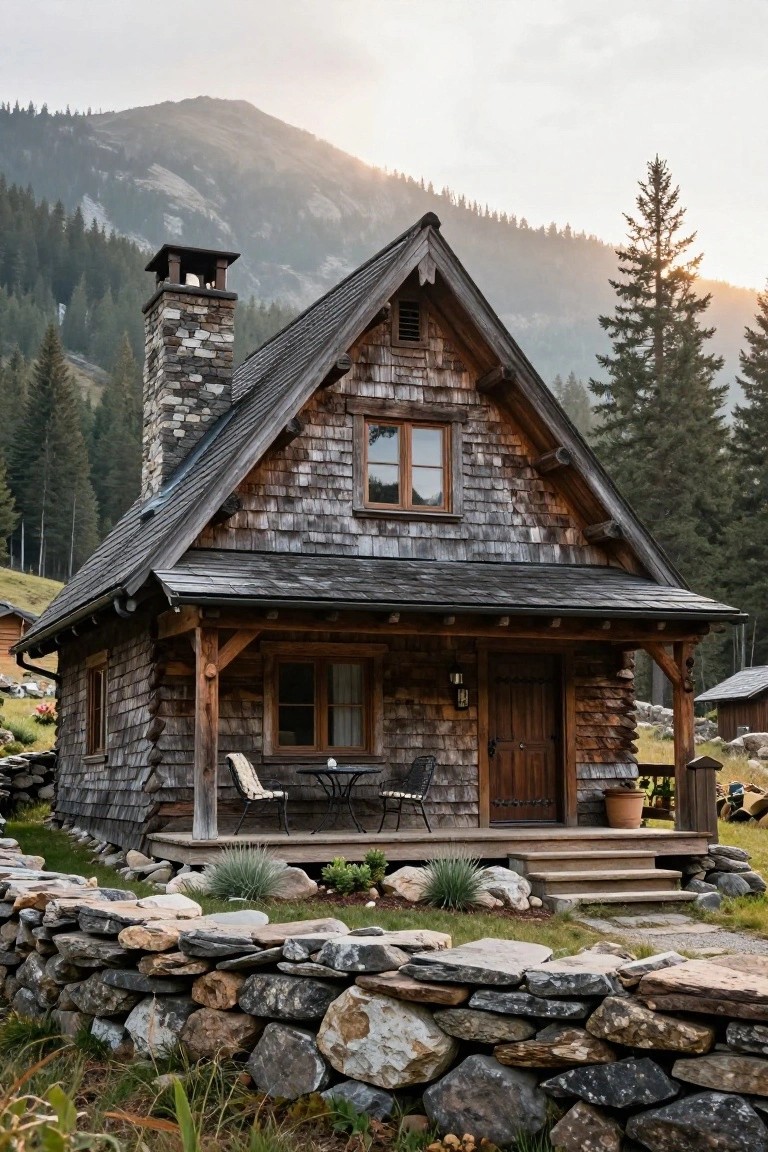
Wood shingle siding gives this cottage a rough, textured look that fits right into the mountains. The dark shingles climb up the steep roof and walls, picking up the feel of the surrounding pines and rocks. It’s not smooth or fancy. Just solid and settled, like the house has been there forever.
You see this a lot in alpine spots or wooded areas where you want the place to fade into the background. Pair it with a stone chimney or low rock walls to tie it all together. Works best on smaller homes with gabled roofs. Skip it if your spot is too flat or open. Might feel out of place there.
Wood Cottage with Black Framed Entry
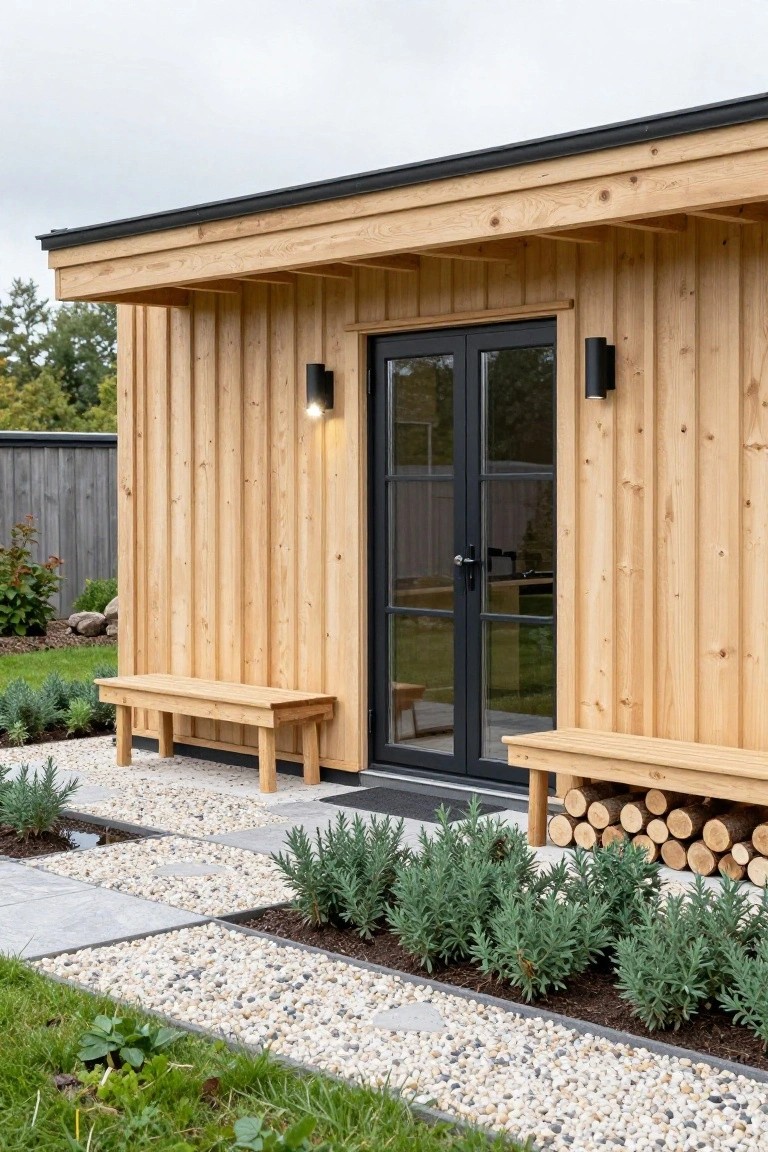
This small outbuilding pulls off a nice mix of natural wood siding and black frames around the doors and windows. The vertical planks give it that classic cottage warmth, and the dark frames keep things crisp without overpowering the wood. Set against the garden, it feels like part of the landscape, especially with the benches right there by the entrance.
You can use this look on a garden cabin, sauna, or home office. It suits wooded backyards or rural spots where you want some modern edge. Just make sure the wood is treated for weather, and keep plantings low around the base so the facade stays the focus.
Cottage Porch with Bench Seating
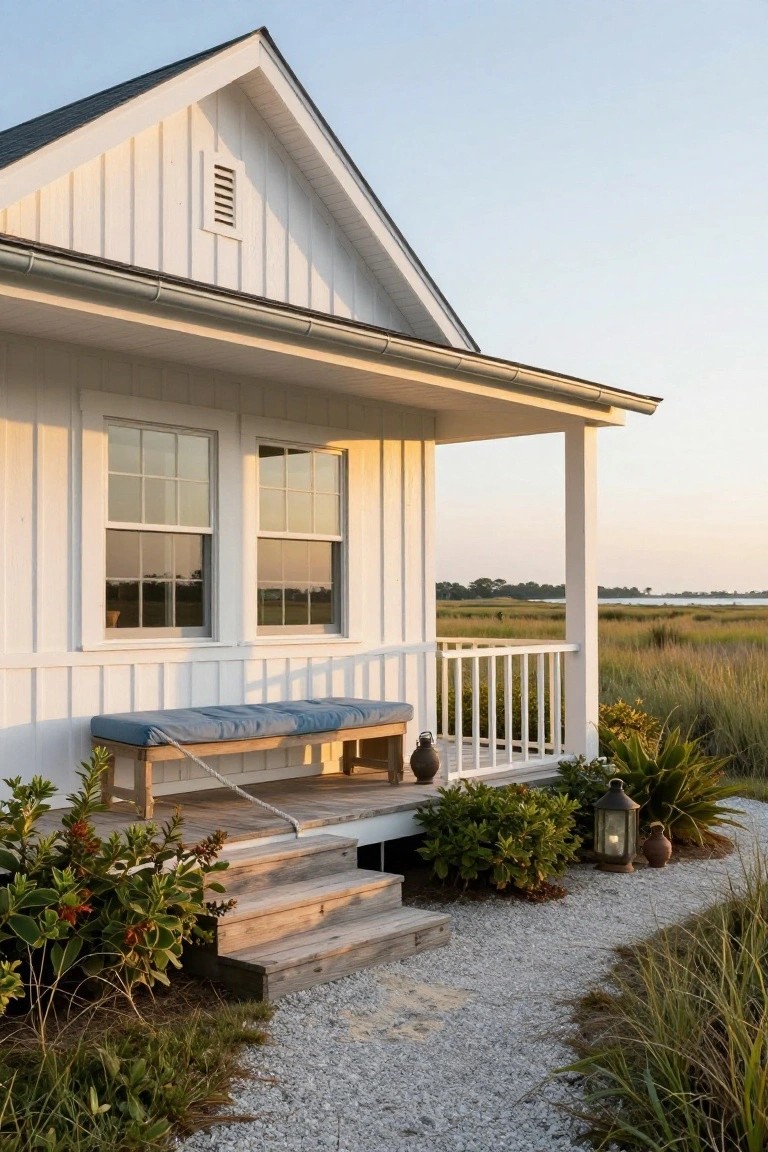
A simple wooden bench on the porch gives this cottage a spot to sit and take in the view. It’s made from natural wood that matches the steps and railing, with a blue cushion for comfort. That bench pulls the house right into the yard, especially with marsh grass all around. It keeps things casual and fits the natural setting without much fuss.
Put a bench like this on your own cottage porch if you want easy outdoor seating. It works best on low porches near water or fields, where you can add rope details or potted plants nearby. Just use untreated wood so it weathers nicely over time. Skip fancy cushions if rain is common.
Dark Wood Cladding Paired with Stone Base
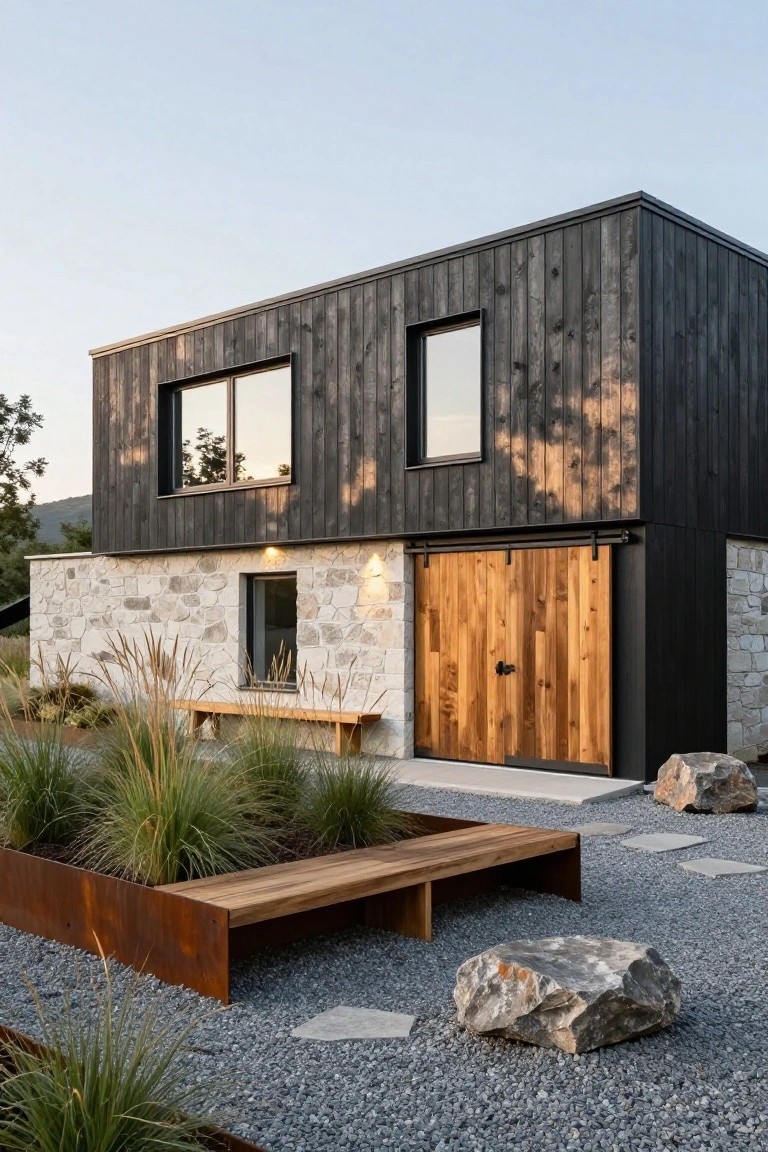
This cottage exterior nails a simple material switch that feels right at home in nature. Up top, dark charred wood planks run vertically for that sleek, modern vibe. Down low, a light stone base keeps things sturdy and ties into the rocky ground around it. The combo makes the house look settled in, not plunked down.
You can pull this off on wooded lots or hilly spots where a solid base matters. Pair it with a wooden garage door like this one for extra warmth. It suits smaller cabins or retreats best, especially if you want low upkeep without losing that natural cottage charm. Just make sure the stone matches your local rock.
Climbing Roses Frame a Rustic Door
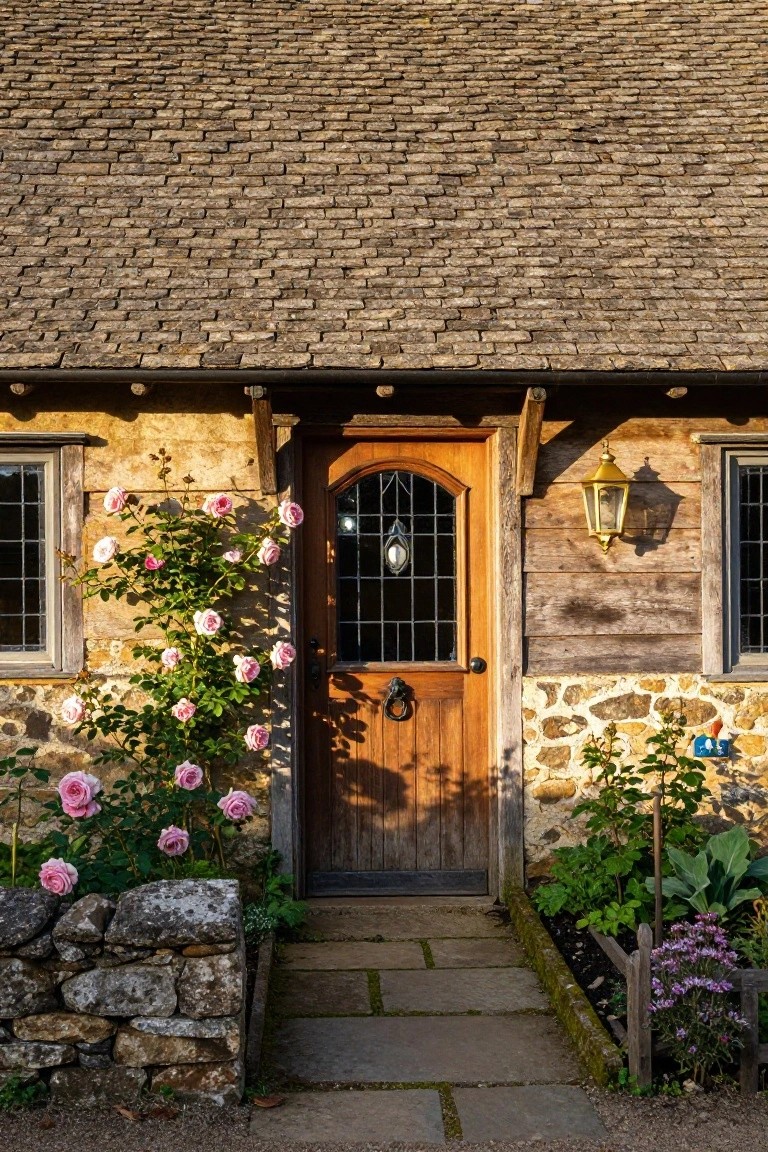
Nothing says cottage charm like pink climbing roses hugging the wall next to your front door. Here, they soften the sturdy stone and aged wood of an arched entry, pulling the house right into the garden. The blooms add easy color without overpowering the simple oak door and its leaded glass.
Try this on homes with textured walls, like stone or stucco, where vines can grab hold. Choose tough ramblers that flower all summer, and guide them along the entry side for that lived-in look. It suits country spots best, but watch for too much shade, or they won’t thrive.
Barn Shutters Add Cottage Character
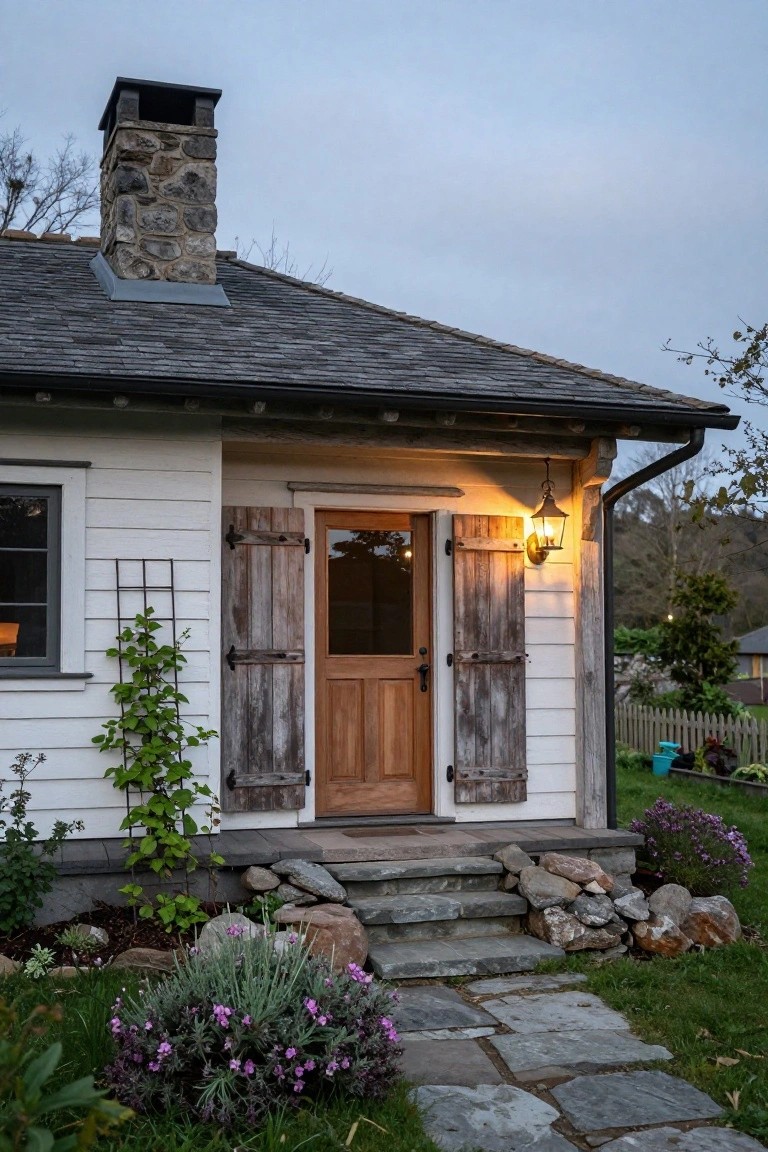
Barn-style shutters like these make a basic front door feel more like home. The rough wood pairs well with a plain wood door and white siding. It pulls in the garden plants and stone steps without trying too hard. Folks notice that lived-in look right away.
Put them on bungalows or older homes tucked into wooded spots. Hang a lantern for evenings. Skip fancy paint on the shutters. Let weather do its thing over time. They suit places where you want the house to settle into the yard.
Pale Weathered Wood Cottage Facade
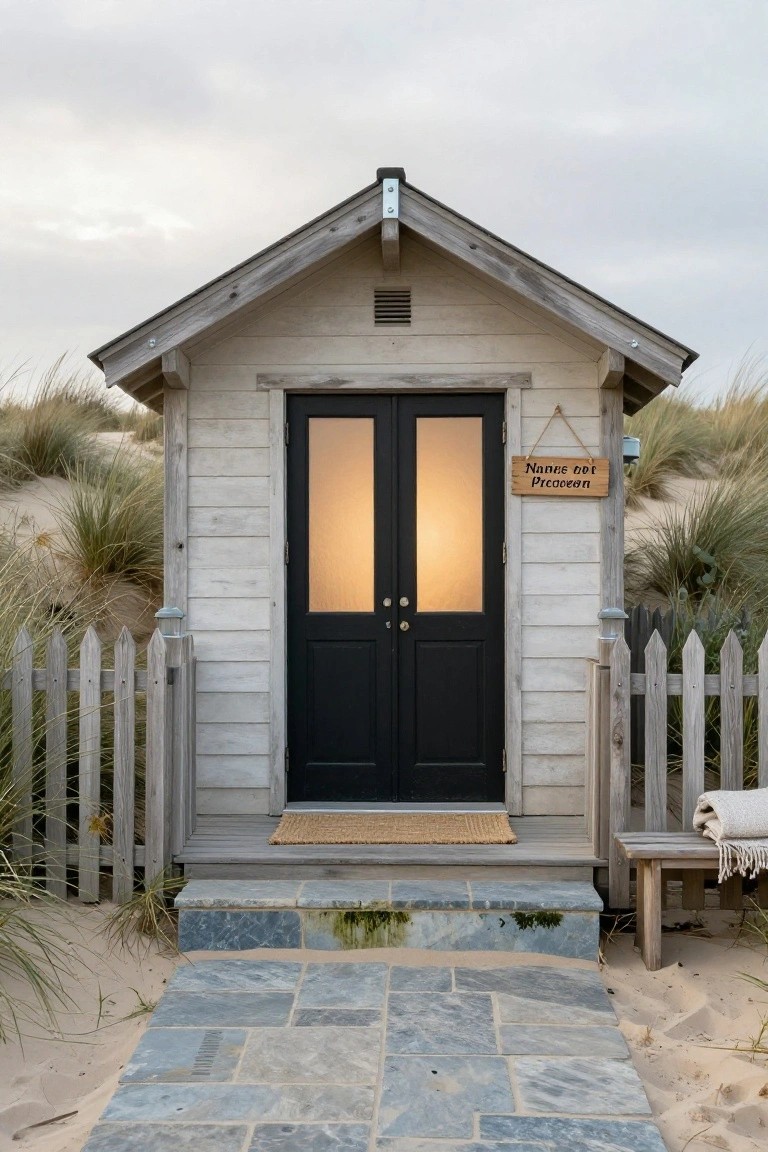
A cottage like this one shows how pale, weathered wood siding can make a small building disappear into its surroundings. The soft white tones echo the sand dunes, so the house feels grown right out of the beach rather than plunked down on it. Dark double doors give the entry some definition without pulling focus from the natural backdrop.
This approach suits coastal spots or anywhere with sandy soil and grasses. Use it on sheds, guest cabins, or bungalows under 800 square feet. Pair the siding with simple stone steps for access, and skip bold colors. It keeps upkeep low since the wood ages gracefully on its own.
Wood Cabin with Black Door Entry
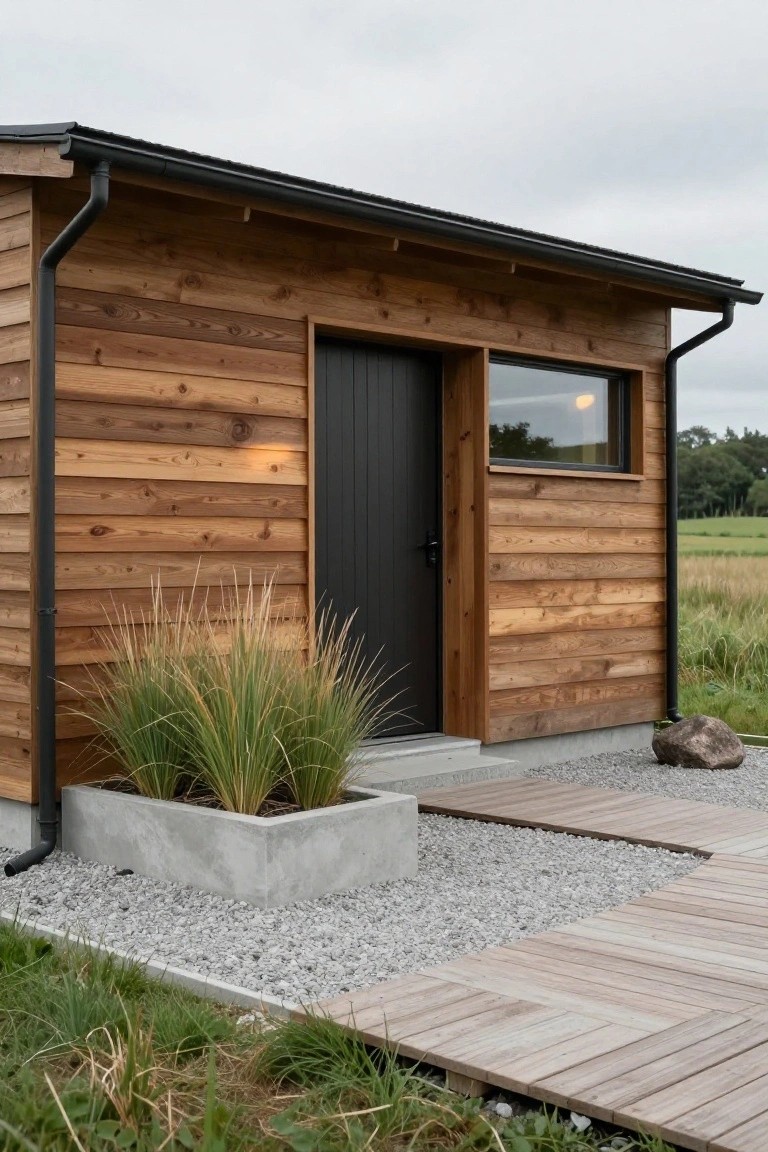
A black front door stands out nicely against the warm tones of horizontal wood siding on this small cabin. It gives the place a modern edge without losing that cozy, natural feel. The wood looks like it’s right at home in the fields, and the dark door pulls your eye to the entrance just enough.
This setup works great for cabins or cottages in rural spots where you want to blend in but add some style. Use a matte black door on fresh cedar or pine siding, and keep the path simple with gravel or wood steps. It suits off-grid builds or weekend getaways. Just make sure the door hardware is sturdy since it’s exposed.
Board and Batten Cottage Siding
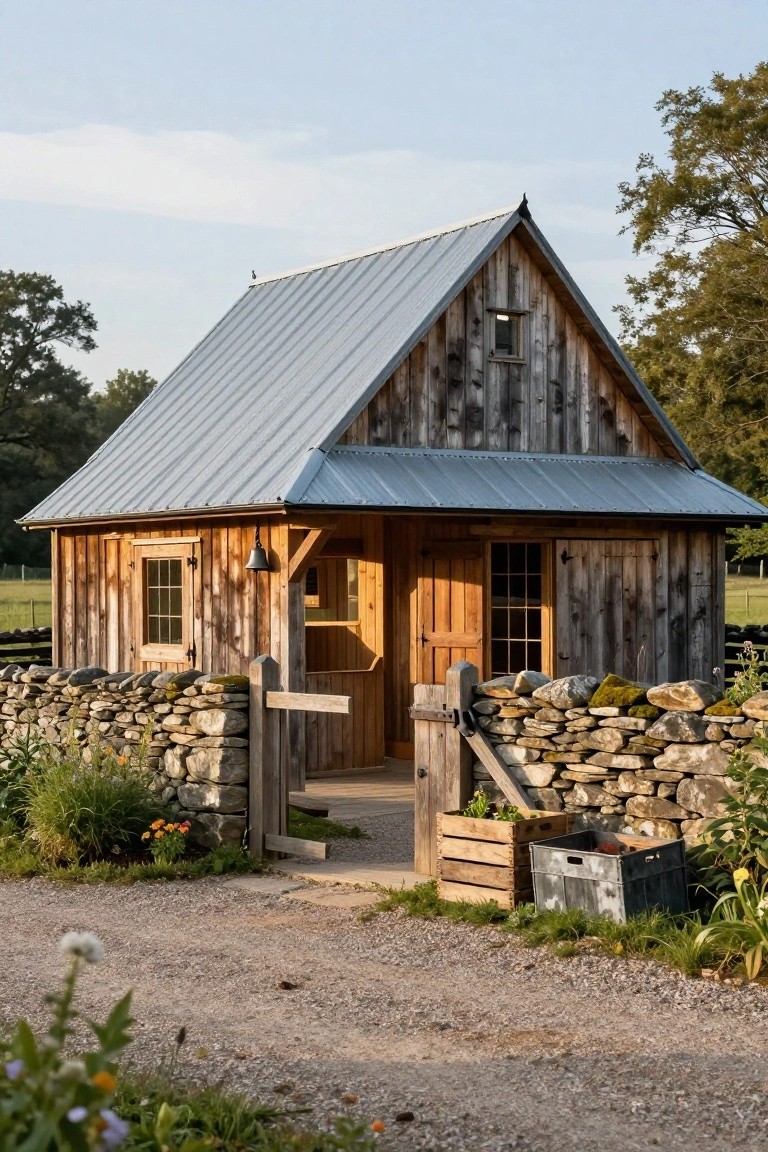
This kind of siding uses vertical wood planks with battens between them. It gives a cottage that old barn feel without much upkeep. The wood here looks naturally weathered already, picking up color from the trees around it. Pair it with a simple metal roof like the one shown, and you get something sturdy that fits right into a rural spot.
Try this on garden sheds, small guest houses, or even a backyard studio. It works best where you have some land and want low fuss. Add a stone wall around the base if you can, to keep it from looking too plain. Just make sure the wood is treated upfront so it holds up to rain.
Climbing Vines Around the Entry Door
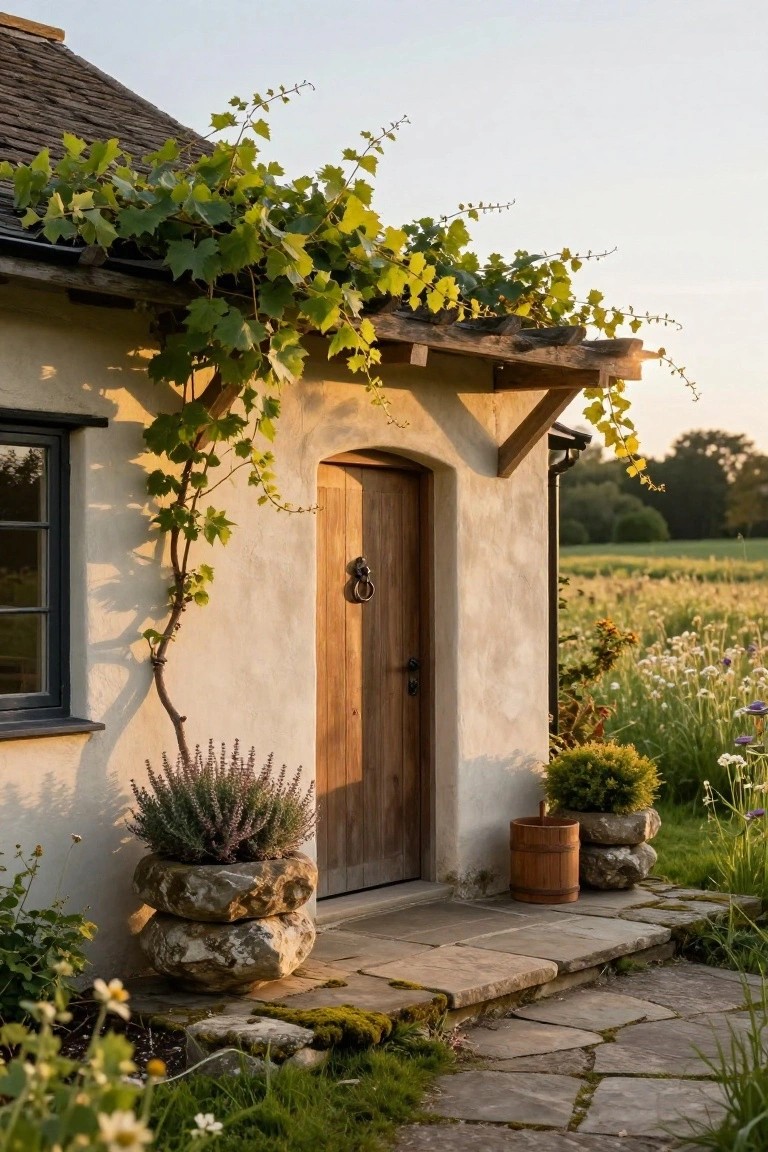
Climbing vines wrapping a front door like this pull the house right into the garden. The green leaves tumble over the stucco wall and peek around the arched wooden door. It gives that lived-in cottage feel without much effort.
Try this on a low country home or anything with soft walls. Go for tough climbers like ivy that grip without wrecking the surface. Trim them back now and then to keep the door clear. It suits spots with fields or woods nearby.
Frequently Asked Questions
Q: How do I keep the wood from graying too fast if I want that fresh look longer?
A: Brush on a light coat of tung oil every spring. It soaks in deep and shields against sun and rain. Your wood stays warm-toned for years.
Q: What if my area’s super rainy—will these exteriors hold up?
A: Go for dense woods like cedar. They resist rot naturally and drain water fast. Just ensure good overhangs on your roof to shed heavy downpours.
Q: Can I mix wood siding with local stone for an even better nature blend?
A: Layer rough stone at the base and wood above. It grounds the cottage in the landscape. Plants creep over both for seamless flow.
Q: How do I pick the right wood shade to match my yard?
A: Walk your property at different times of day. Note the tree bark and soil tones nearby. Match a sample board right there in sunlight.
