

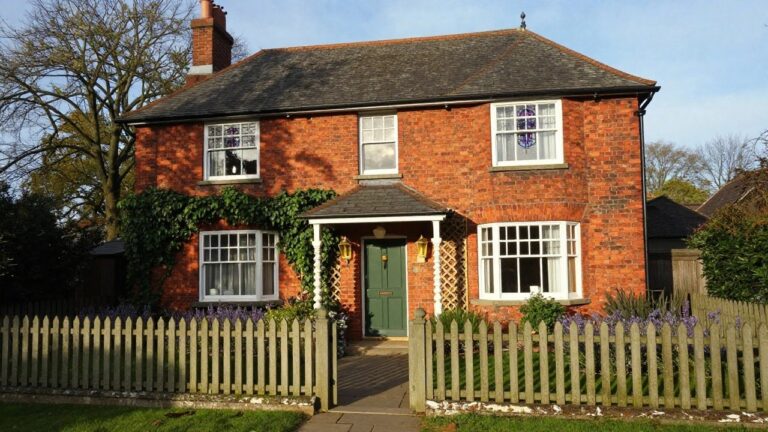
Victorian cottage exteriors catch my eye every time I drive through older neighborhoods, where steep rooflines and gingerbread trim create that perfect blend of whimsy and solidity from the curb. I once watched a friend refresh their facade with period-appropriate clapboard siding, and it totally changed how the house read up close, making the details pop without feeling overdone. Entries often grab attention first, especially when the porch columns and door surrounds echo the home’s historic roots. Designs that mix textured stone bases with lighter upper stories tend to weather well and add depth that lasts. A couple of these could adapt nicely to a modern build.
Turreted Brick Cottage Front
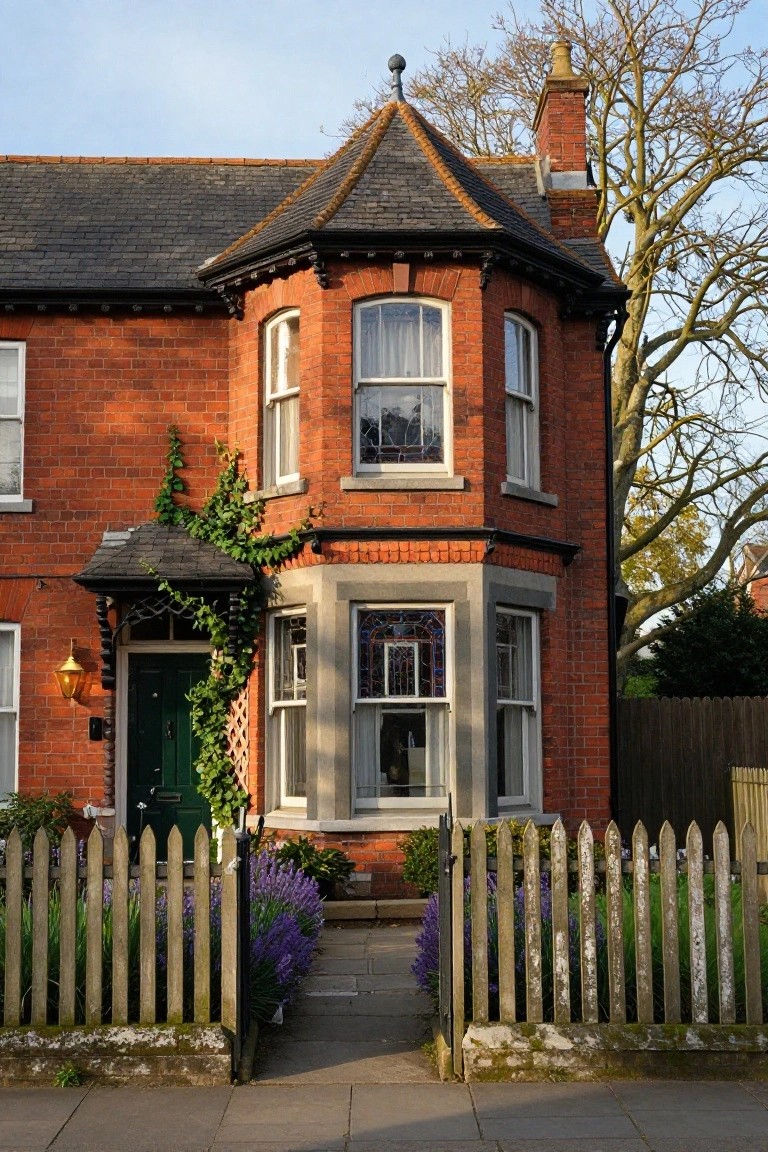
A corner turret like this one really sets a Victorian cottage apart. Built from solid red brick with a pointed slate roof, it adds that touch of historic whimsy without overwhelming the rest of the house. The bay windows below, some with stained glass, pull your eye up and make the facade feel taller and more interesting.
You see this style on many older English homes, and it works best where you want subtle drama at street level. Frame it with a simple picket fence and some climbing ivy on the porch, like here, to keep things cozy. Avoid big modern additions nearby, though. It suits narrow urban lots fine.
Recommended Products

Package Includes: 2 rolls of bulletin board border, has enough length for decoration and crafts making

12 pieces per pack

1.Gingerbread Bulletin Board Border: Package includes 60 PCS gingerbread man bulletin board border trim and 120 small glue for easy to use, great for bulletin board, chalkboard, windows, wall, desks and classroom decorations.
Turret Porch Entry Design
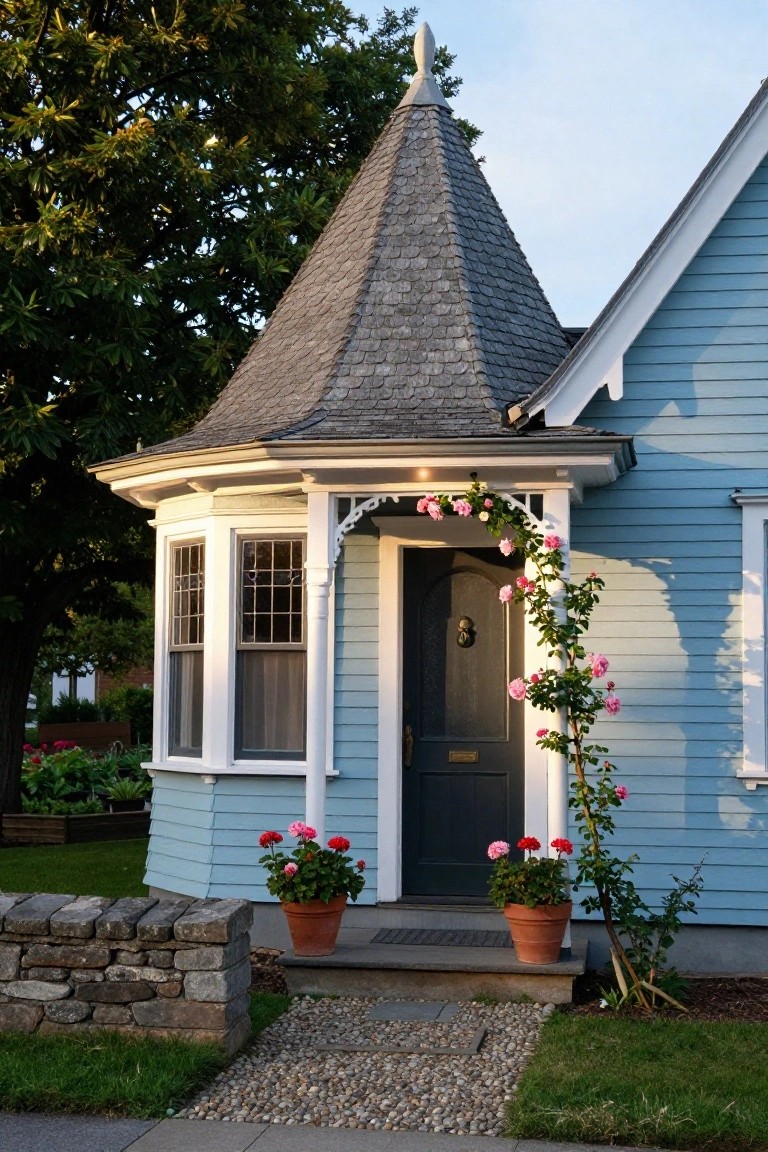
A small turret porch like this wraps right around the front door. That conical shingled roof and bit of gingerbread trim give it real Victorian character. Climbing roses drape over the archway. It pulls the eye straight to the entry and makes the house feel storybook cozy.
This setup suits compact cottages best. It adds historic flair without taking up much space. Go for pale blue siding to keep things light. Watch the scale though… too big and it overpowers the rest of the house.
Yellow Door on Gray Cottage Exterior
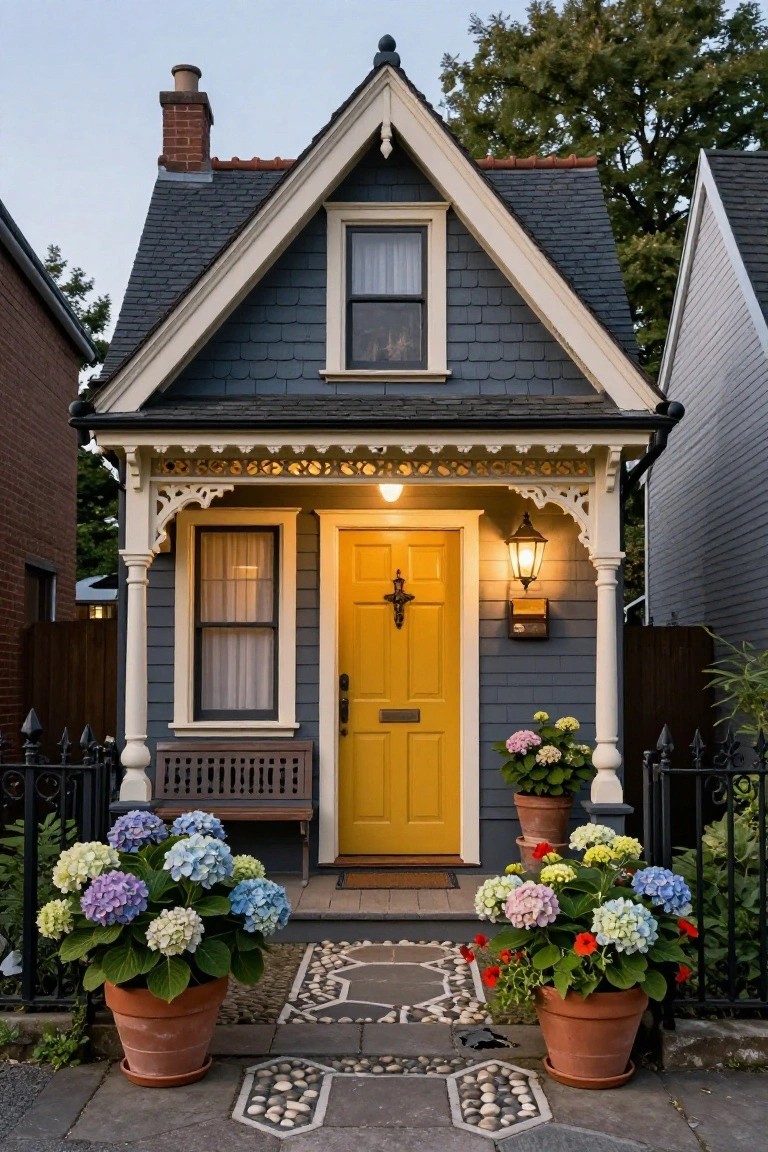
A bright yellow front door stands out nicely against the dark gray siding of this little Victorian cottage. It pulls your eye straight to the entry without clashing, thanks to the white trim and subtle porch details holding things together. That contrast gives the whole facade more life, especially on a compact house like this.
You can pull this off on older homes or tiny bungalows aiming for historic charm. Pick a sunny yellow shade that warms up cool grays, and flank the door with potted plants for balance. It suits urban spots too… just avoid busy streets where the color might fade fast.
Recommended Products
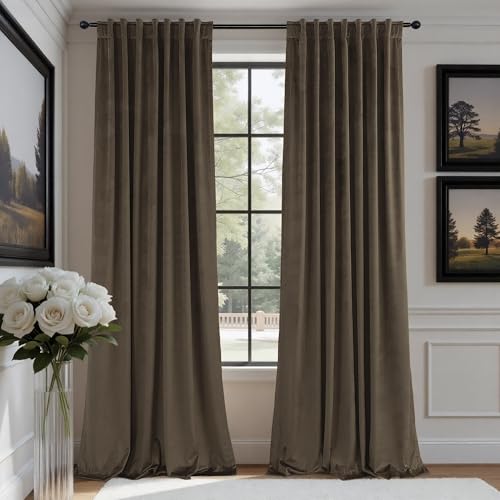
Ready Made: Package includes 2 velvet curtain panels. Each panel measures 52 inches wide by 96 inches long. Designed with a dual top construction—back tab and rod pocket—offering versatile hanging options: (1) Hang from the back loops for an elegant pleated look. (2) Use the 3-inch rod pocket for a classic drape. (3) Hang with clip rings (not included) for easy opening and closing

【Ultra-Thick Plush Jacquard Cotton Fleece】0.7-inch high-density cotton fleece with 3D wavy jacquard texture delivers cloud-like underfoot comfort. Fluffy skin-friendly surface is ideal for barefoot lounging, family gatherings and daily relaxation.

Sold as pair,2 Panels lace curtains 30 inch Length included, each panel measuring 26"W x 30"L.Soft lace fabric.
Shingled Siding for Cozy Cottage Charm

Shingle siding like this gives a Victorian cottage that lived-in historic feel without trying too hard. The varied cedar shakes catch the light in different ways, adding depth to the facade. You see it here on the gable and side walls, working right up to the porch posts. It’s a simple choice that nods to older coastal homes.
This look suits smaller homes on a budget, especially in areas with some weather exposure. Pair it with a basic porch swing and a few tall plants like foxgloves along the steps. Just make sure to treat the shingles for longevity, or they’ll weather too fast. Fits well near trees or in neighborhoods with mixed older houses.
Octagonal Garden Pavilion Exterior
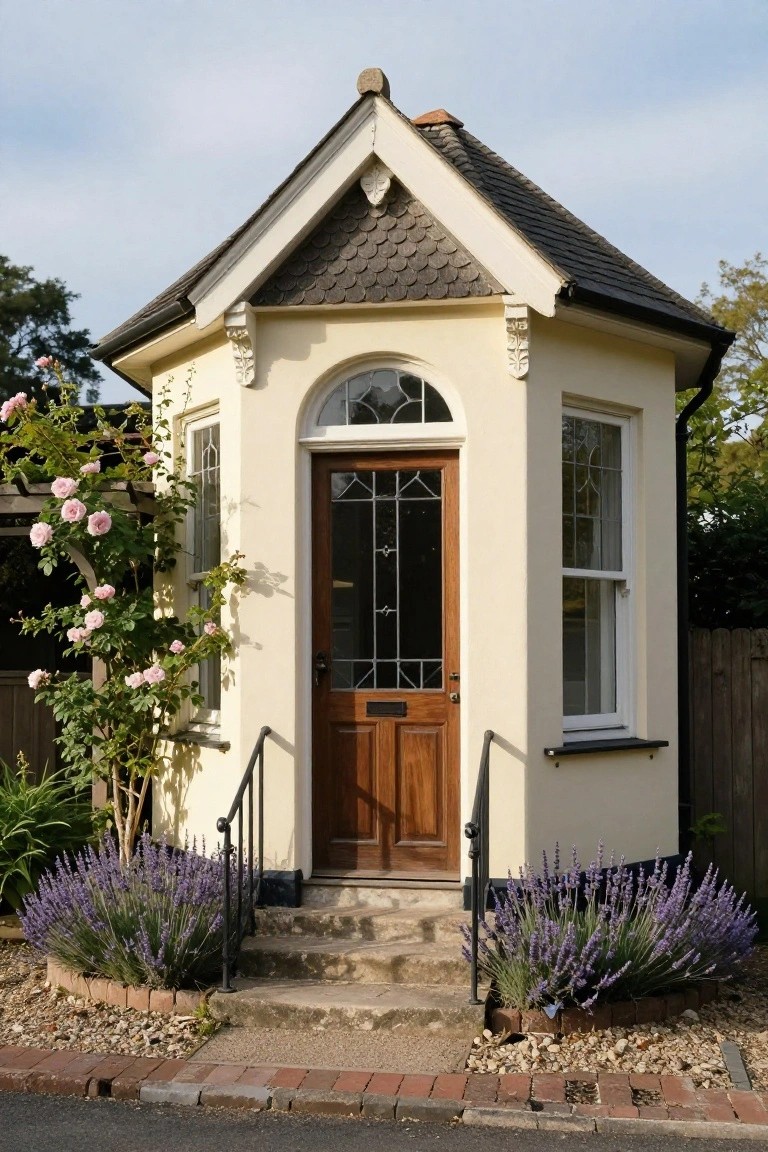
This octagonal pavilion pulls off that sweet Victorian cottage look in a compact way. The cream stucco walls and dark slate roof give it a sturdy yet dainty feel, while the stained glass door and arched fanlight add just enough fancy detail. It’s the kind of garden feature that feels like it grew there naturally.
Use one as a potting shed, summerhouse, or quiet reading nook in a backyard cottage garden. It suits smaller lots where you want historic charm without a full-sized building. Frame it with climbing roses and low lavender beds like this, and keep paths simple with gravel and brick edging.
Classic Hooded Entry Porch
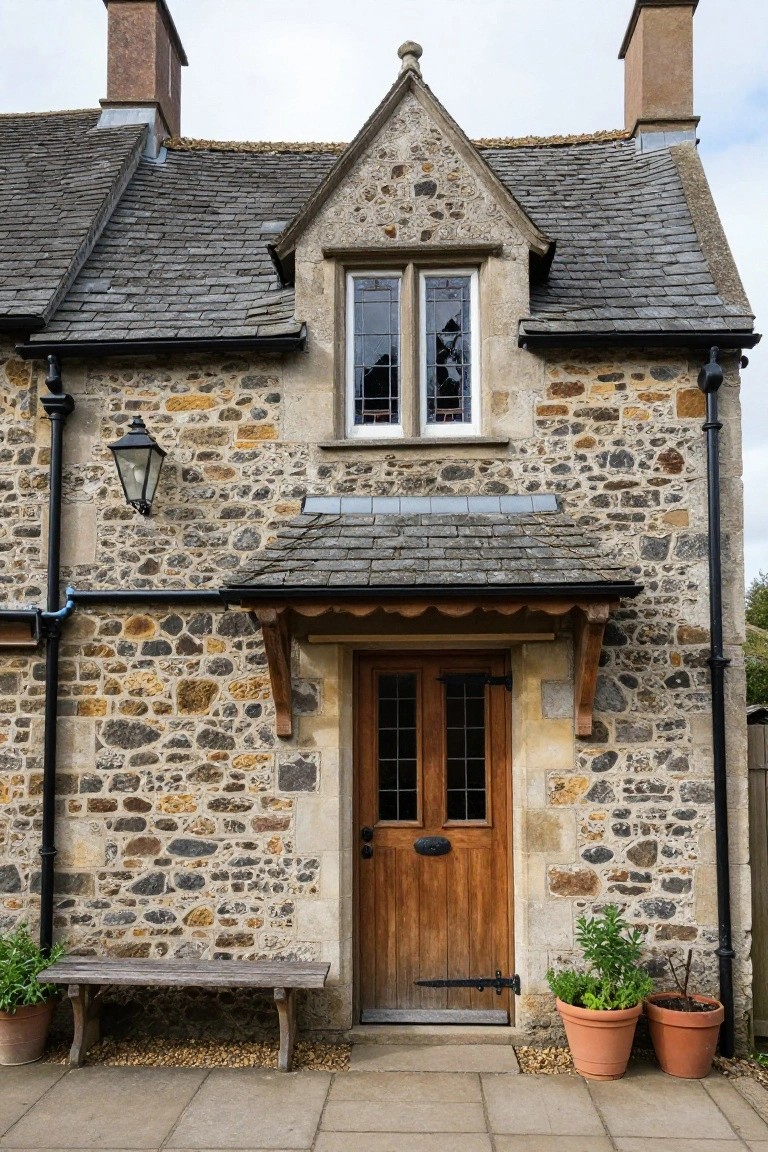
A hooded porch like this one sits right over the front door. It uses simple timber brackets to hold up the slate roof edge. That setup protects the entry from rain and gives the whole facade a cozy, lived-in look. The wooden door with its iron hardware fits right in against the random stone walls.
You see this on lots of older cottages in the countryside. It suits homes with stone or brick exteriors that want more historic feel without a full rebuild. Hang a lantern nearby for evenings. Keep plants simple in pots… just watch that the porch doesn’t get too narrow for foot traffic.
Green Door and Trim on Light Siding
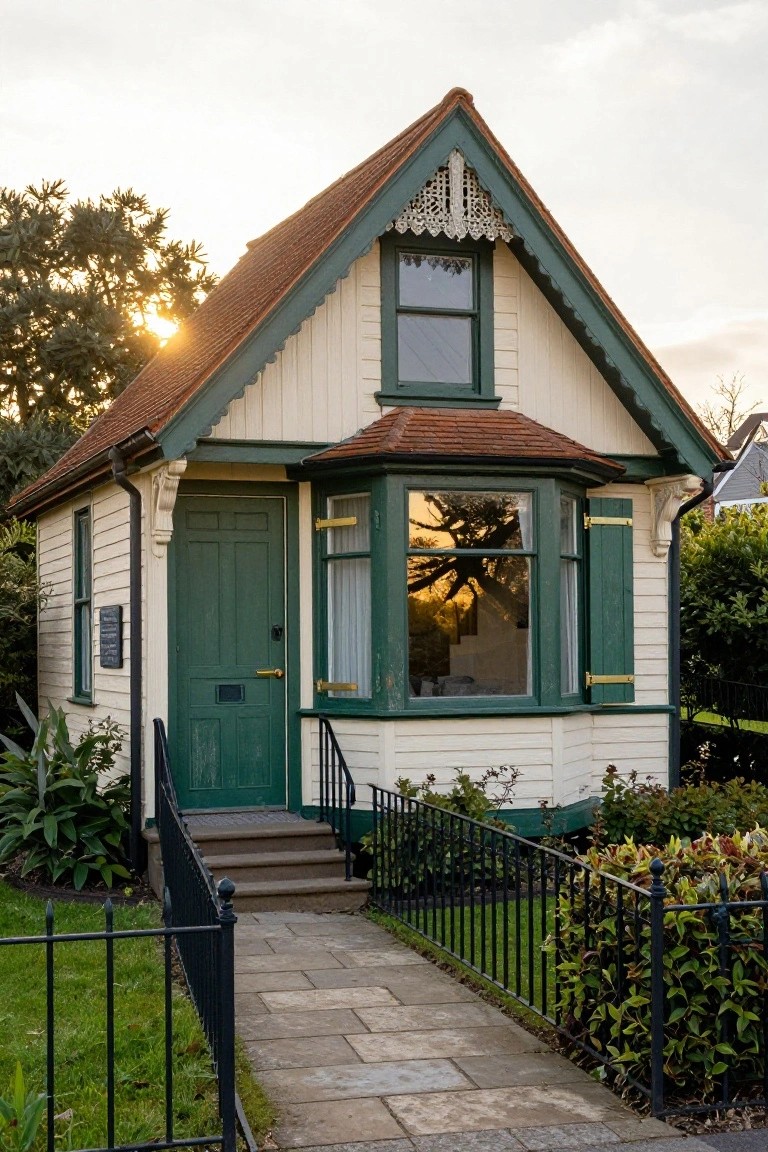
A green front door like this one pulls the eye right to the entry on a small cottage. The cream siding keeps things light while the green on the door, shutters, and trim adds that extra bit of color people notice from the street. It’s straightforward historic charm without much fuss.
Paint this setup on clapboard or shingle homes from the late 1800s or early 1900s. It suits narrow lots where the house sits close to the path. Go for a muted green to match red roofs, and keep the siding pale so nothing competes.
Soft Pink Paint on a Victorian Cottage

A soft pink exterior like this one gives a Victorian cottage a gentle, storybook feel. The blush shade works well against cream trim and those carved porch brackets, keeping the historic details sharp without feeling too serious. It’s a simple change that softens the look just right.
This approach suits compact homes in cozy garden spots. Pair it with gravel paths and climbing roses for extra charm. Use high-quality exterior paint though. It holds up better in damp weather.
Climbing Roses Over the Porch Door
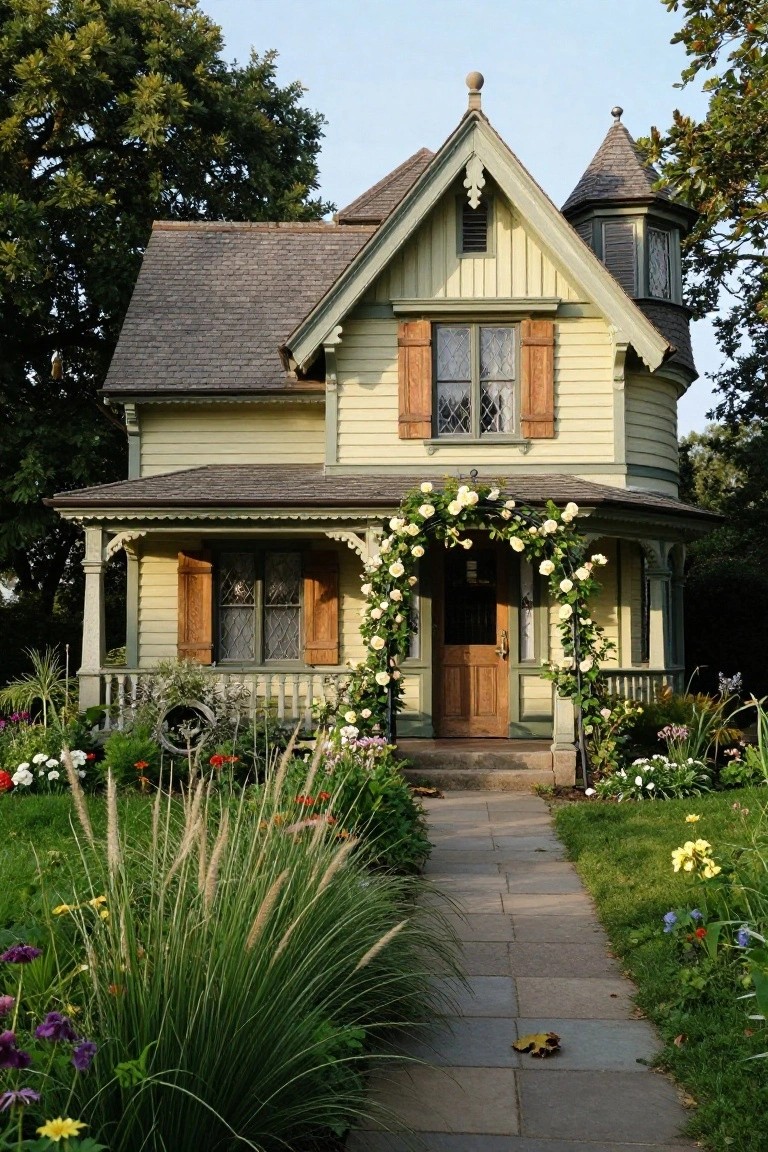
A rose-covered arch right over the front porch door gives this Victorian cottage that old-time romantic feel. The white blooms spill down around the wood door and match nicely with the pale siding and shutters. It’s a small detail but it pulls people right up the path and makes the house look lived-in and loved.
Plant sturdy climbers like New Dawn on a simple metal or wood arch. It works great on sunny porches facing south or west. Older homes with gingerbread trim get a boost from this without changing the architecture. Keep soil rich and prune once a year to keep it tidy.
Charming Covered Porch Entry
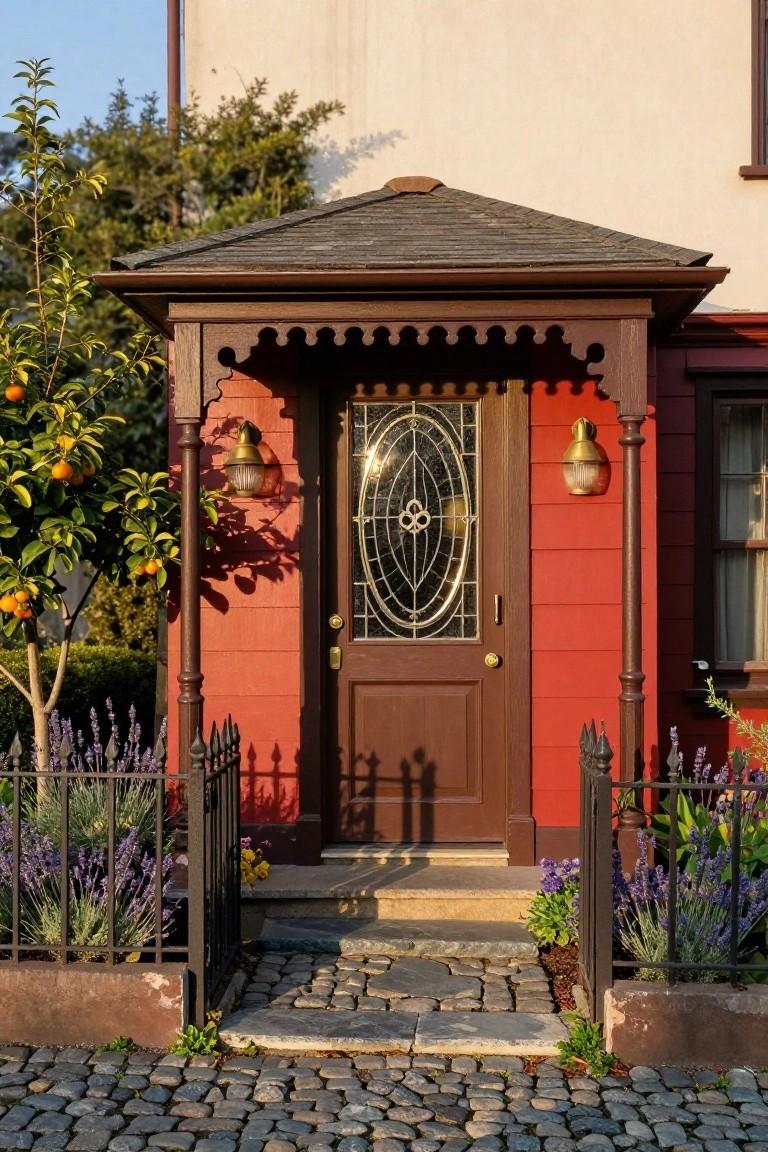
A small covered porch like this pulls the front door into focus without overwhelming the house. The sloped roof with wooden brackets shelters the entry nicely, and those brass lanterns on either side light it up just right. Paired with red siding, it gives off real historic cottage vibes that make you want to step inside.
This works well on compact homes where space is tight. Frame your door the same way, add a simple iron gate out front, and plant low stuff like lavender along the edges. Skip anything too fancy on the porch… keeps it practical for everyday use.
Shingle Siding on Victorian Cottages
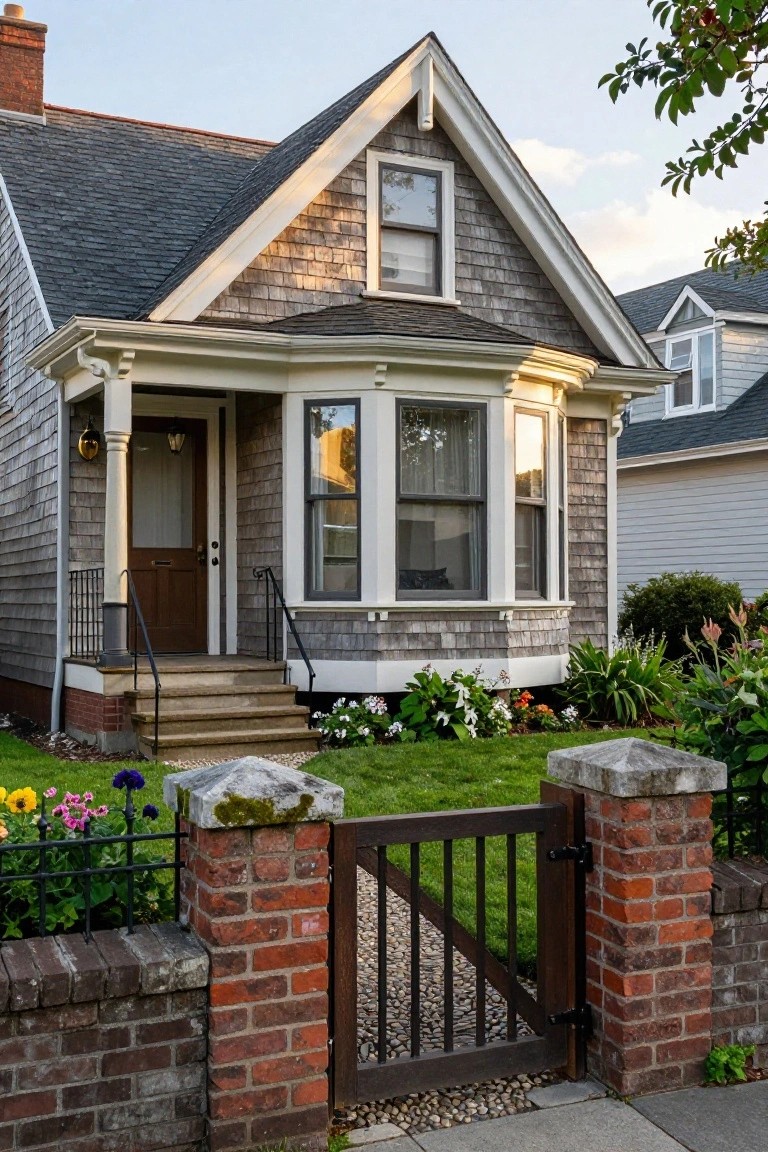
Shingle siding covers this cottage in textured gray shakes that climb the gables and wrap the bay window. That rough surface pulls from old New England styles and gives the whole facade a lived-in patina. White trim sharpens the edges without stealing the show.
It suits compact homes on tree-lined streets, especially where you want history without constant scraping. Go for cedar shakes that fade naturally. Keep the porch simple and add a gate out front to frame the entry. Watch the moisture though. It can darken fast in damp spots.
Front Porch Lantern Lighting
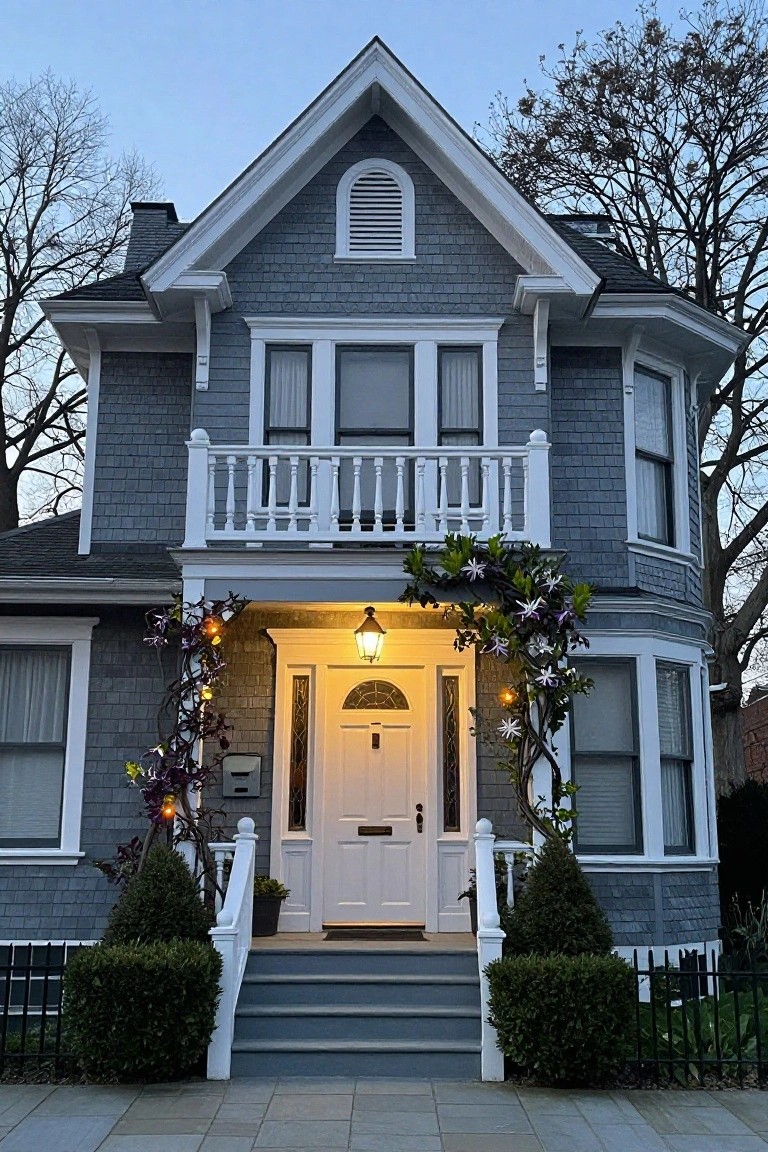
A single lantern hanging on the porch post works wonders here for this gray-shingled Victorian cottage. It casts a soft glow over the white front door just as evening sets in, making the entry feel open and lived-in. The purple garlands draped nearby pick up that warmth without much fuss.
Put lanterns like this on any porch with good overhang. They suit older homes best, especially where you want low-key curb appeal year-round. Swap garlands for simple vines in other seasons, but keep the light steady. Avoid spots with too much wind.
Victorian Octagonal Garden Pavilion
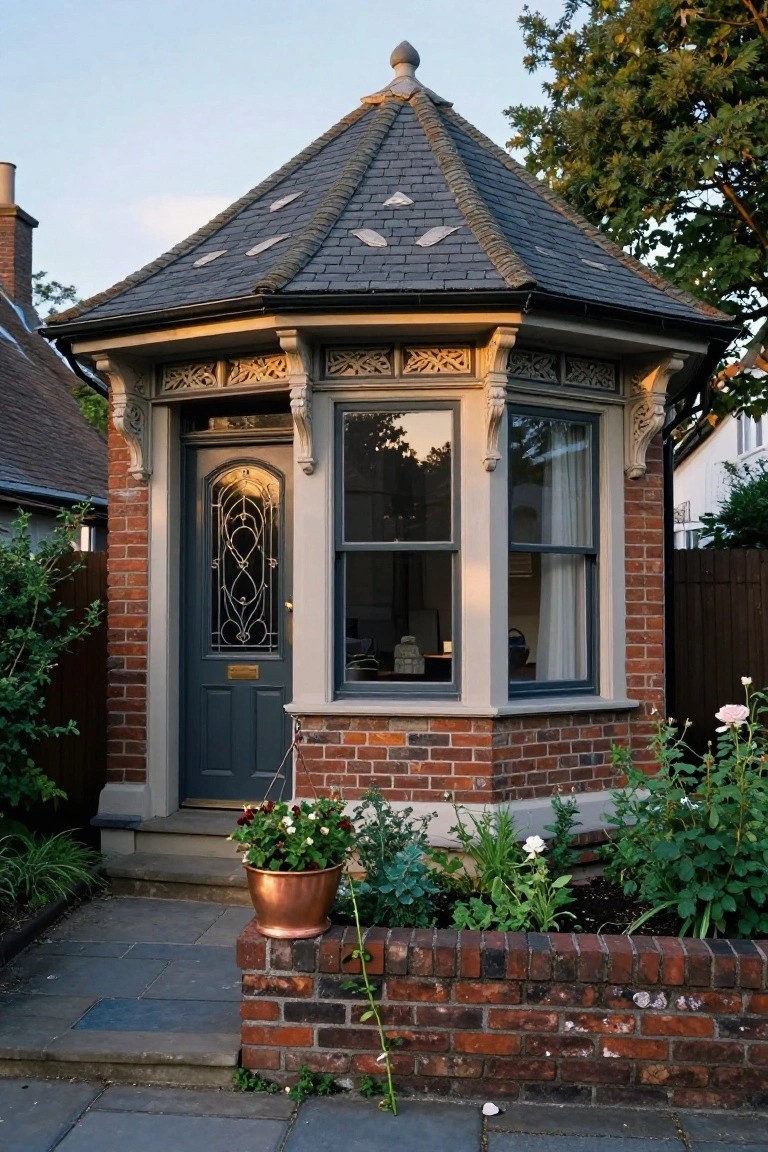
A small octagonal pavilion like this one brings real historic charm to a cottage garden. The carved wooden brackets along the eaves and around the door and window stand out nicely against the brick base and slate roof. It feels like a little jewel box tucked into the yard, pulling your eye without overwhelming the space.
These pavilions suit compact backyards or side gardens on older homes. Use one as a potting shed or quiet reading spot. Match the wood details to your house trim, and keep plantings simple around the base so the architecture shines.
Frequently Asked Questions
Q: How do I pick authentic colors for my Victorian cottage exterior?
A: Go for deep, muted shades like hunter green or rusty red that echo the era’s palettes. Paint a small test patch and check it at dawn and dusk. That way you nail the glow without regrets.
Q: Can I add modern touches without ruining the historic vibe?
A: Slip in subtle updates like energy-efficient storm windows behind the originals. They keep the gingerbread trim and arched shapes front and center. No one spots the difference from the street.
Q: What’s a quick fix for faded trim?
A: Scrape loose paint, then brush on high-quality exterior oil-based paint. Focus on those intricate edges first. It pops the details back to life.
Q: Do porch plants matter for that cottage charm?
A: And yes, drape ivy or hydrangeas over railings. They soften the lines just right.
