

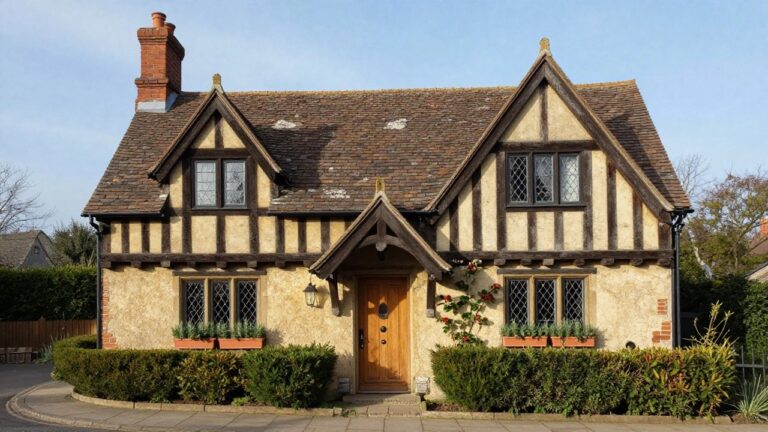
I’ve always admired how Tudor Revival cottages pull off that old-world vibe on such a humble scale. From the street, you notice the steeply pitched roofs and half-timbered stucco first, setting the tone for everything else. What works best is when the facade balances those bold lines with cozy entry details that draw you closer. I remember eyeing one where the stone quoins grounded the whole look, making it feel solid instead of storybook. A handful of these exteriors have tweaks I’ve thought about adapting to boost curb appeal without overdoing it.
Dark Timber on Pale Stucco Facades
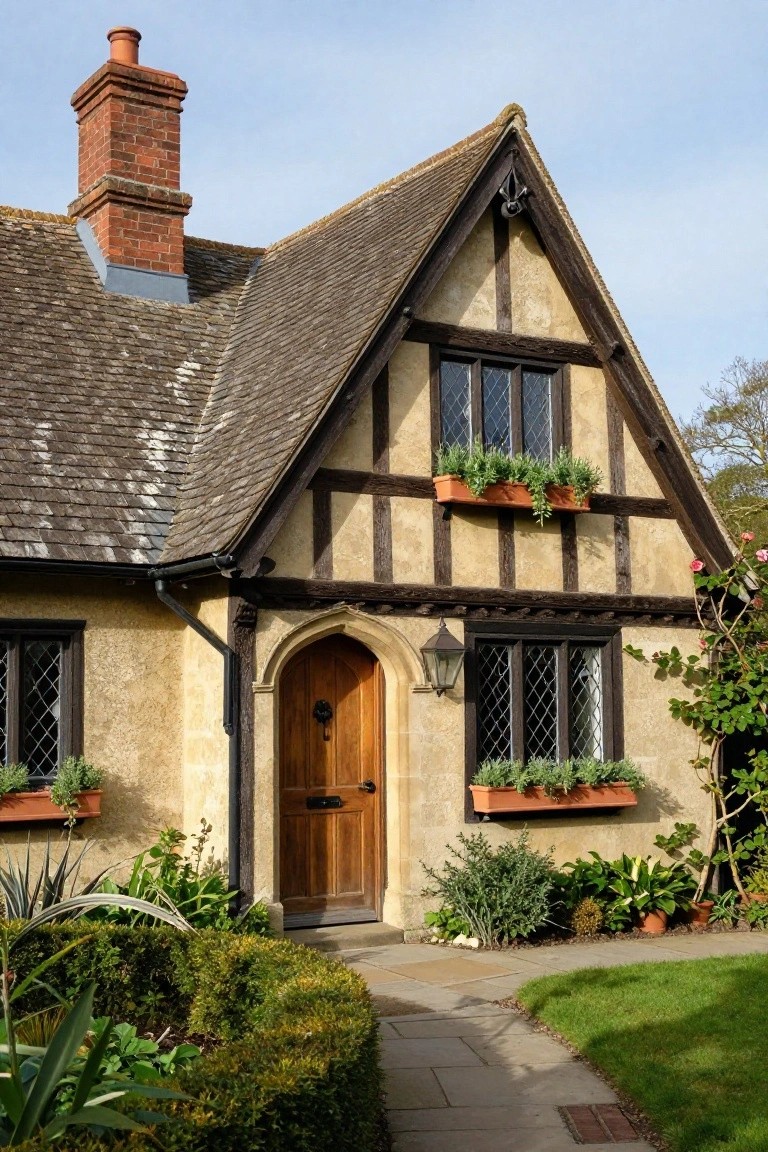
That old-school Tudor charm really shines when you pair dark wooden beams with light stucco walls. It creates a strong black-and-white contrast that makes the house pop without much effort. Here, the heavy timbers frame the windows and door just right, and those flower boxes full of green herbs add a lived-in touch that feels straight out of the countryside.
This setup works great on compact cottages like this one, especially if you’re aiming for a cozy, historic vibe in a suburban yard or rural spot. Keep the stucco in soft creams or beiges to let the beams stand out, and paint them a deep black or brown for staying power. Just plan for some upkeep on the wood to avoid weathering… it pays off in curb appeal.
Stone and Brick Facade Mix
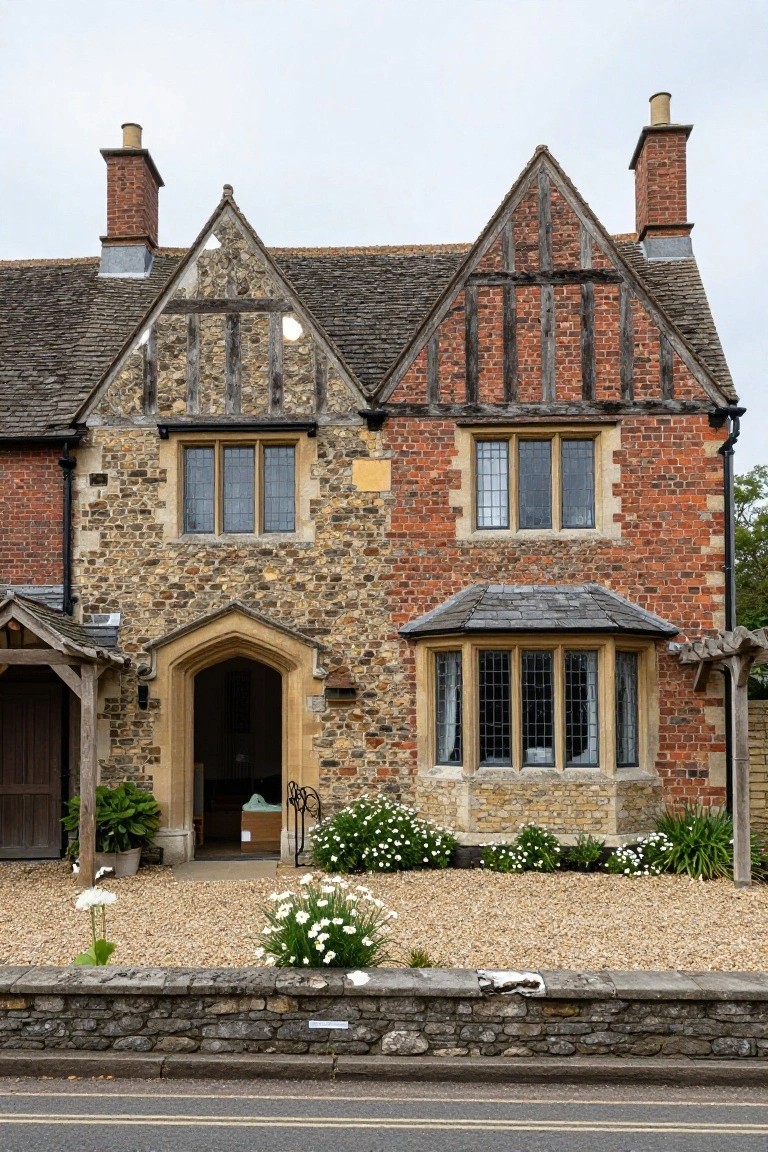
One way to give a Tudor Revival cottage that genuine old-world vibe is splitting the facade between stone and brick. Here the left side uses rough limestone blocks for a solid, ancient look while the right goes with red brick infill between dark timber frames. It creates natural contrast without feeling forced, and the shared gabled roofs pull it all together.
This approach suits narrow lots or semi-detached homes where you want each side to stand out a bit. Pair it with an arched stone entry like this one, and keep plantings simple around the gravel path. Just make sure the stones and bricks are similar in scale so the house reads as one cozy unit.
Timber-Framed Entry Porch
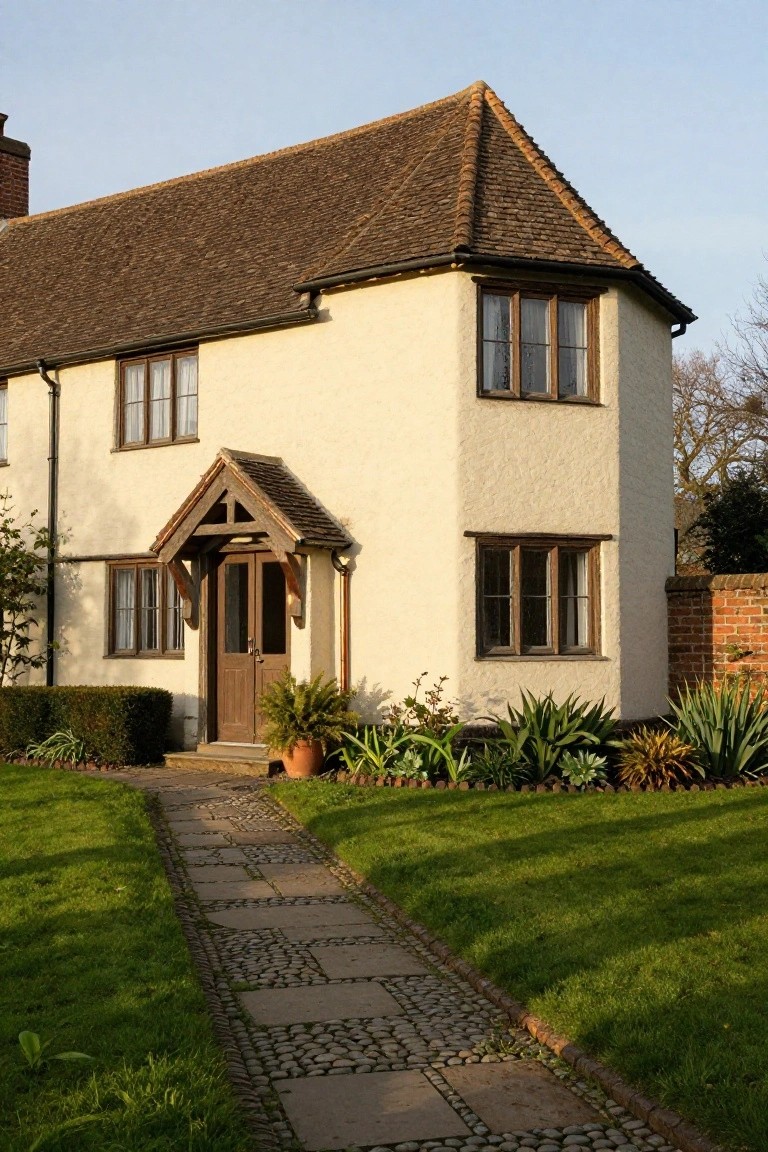
A timber-framed porch like the one on this cottage pulls the eye right to the front door. Those dark wood beams over the soft cream stucco walls give it that cozy old-world touch without any fuss. It’s a straightforward way to make an entrance feel protected and lived-in, especially on a smaller home.
You see this kind of porch a lot on Tudor-style places, and it suits low-slung roofs and textured walls best. Add a couple plants along the steps for some green framing, and it ties the house to the yard. Keep the scale right though… too big and it overwhelms the door.
Recommended Products

Natural stone design: This peel and stick wallpaper border features a realistic stone wall background with trailing vines and colorful wildflowers creating a peaceful countryside garden look for bathrooms bedrooms or kitchens.

Vivid Reptile Habitat Decorations: you will receive 1 set reptile vine, with vivid appearance and colors, which look like real vines; The artificial leaves terrarium tank has full leaves and fine textures, and you can twist around each other to create realistic habitats

Trumpet vine has masses of showy trumpet-shaped flowers that are loved by hummingbirds. The flowers are very attractive to hummingbirds, and many types of birds love to nest in the dense foliage.
Stone Cottage Entry with Climbing Vines
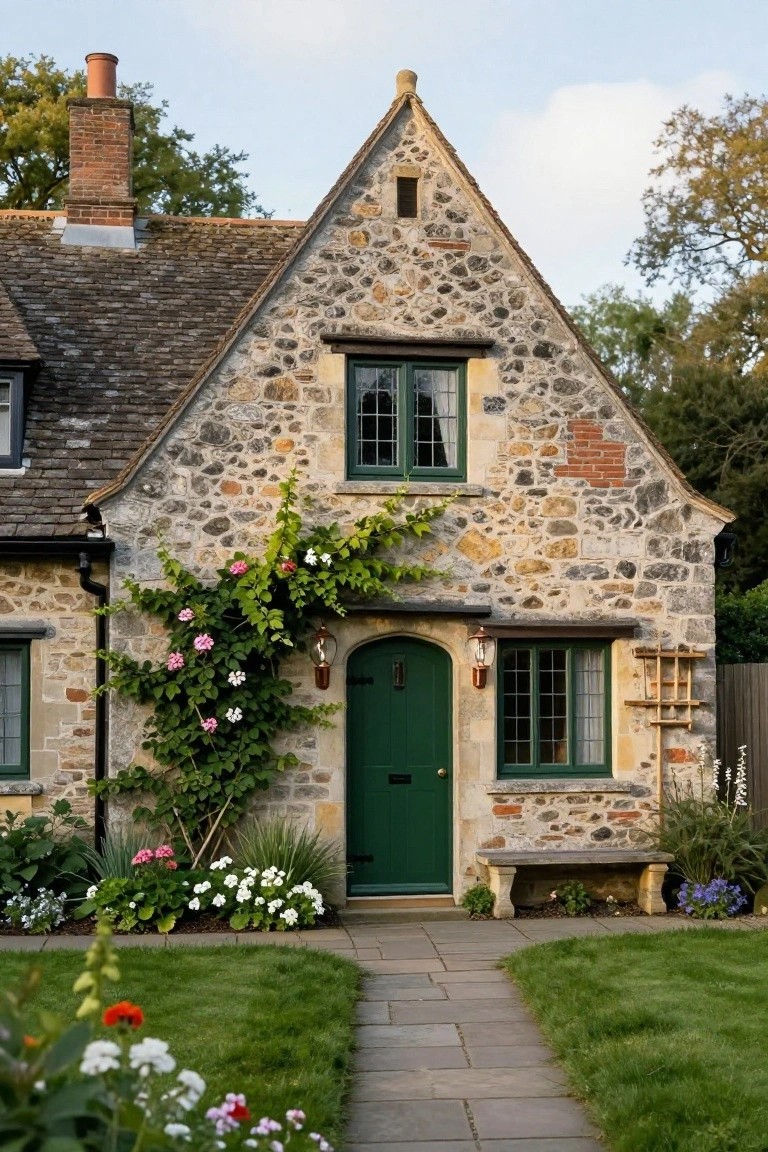
Climbing vines like these pink roses work so well on a rough stone facade. They soften the hard edges of the irregular stones and brick accents without hiding the old structure. That green arched door pops right out, and the vines pull your eye straight to the entry. It’s a simple way to give a Tudor cottage that lived-in, old-world feel.
You can try this on any stone or stucco house facing east or south for good sun. Pick tough climbers like clematis or roses that won’t overwhelm the wall. Train them up a trellis near the door, and add lanterns for evening light. It suits smaller homes best. Just prune yearly to keep paths clear.
Tudor Cottage Brick and Timber Facade

A solid brick base paired with half-timbered upper walls gives this Tudor cottage its old-world charm. The red brick anchors the bottom while dark beams cross light plaster up top. That simple contrast makes the house feel sturdy yet storybook pretty. Leaded windows and the balcony with flower boxes add to it without extra fuss.
This setup works well on compact homes where you want personality up front. Pair the brick with timber details on a gabled roofline, and top it with a heavy oak door. It’s right at home in a rural or suburban garden spot. Just keep plantings low around the entry so the architecture stays the star.
Flint Pebble Walls Define Tudor Character

Those rough flint pebble walls catch your eye right away on this cottage. Knapped flint gives a textured, handmade look that’s straight out of old English villages. It pairs so well with the steep gabled roof and those small leaded windows. The climbing vines just settle right in, making the whole front feel settled and real, not fussy.
You can pull this off on period homes or new builds aiming for that cottage vibe. Hunt for local stone to keep costs down and the look authentic. Plant some tough climbers like ivy or clematis around the entry to tie it to the garden. It shines on compact facades where the pebble pattern stands out against a simple path or street.
Lantern Lights Beside the Front Door
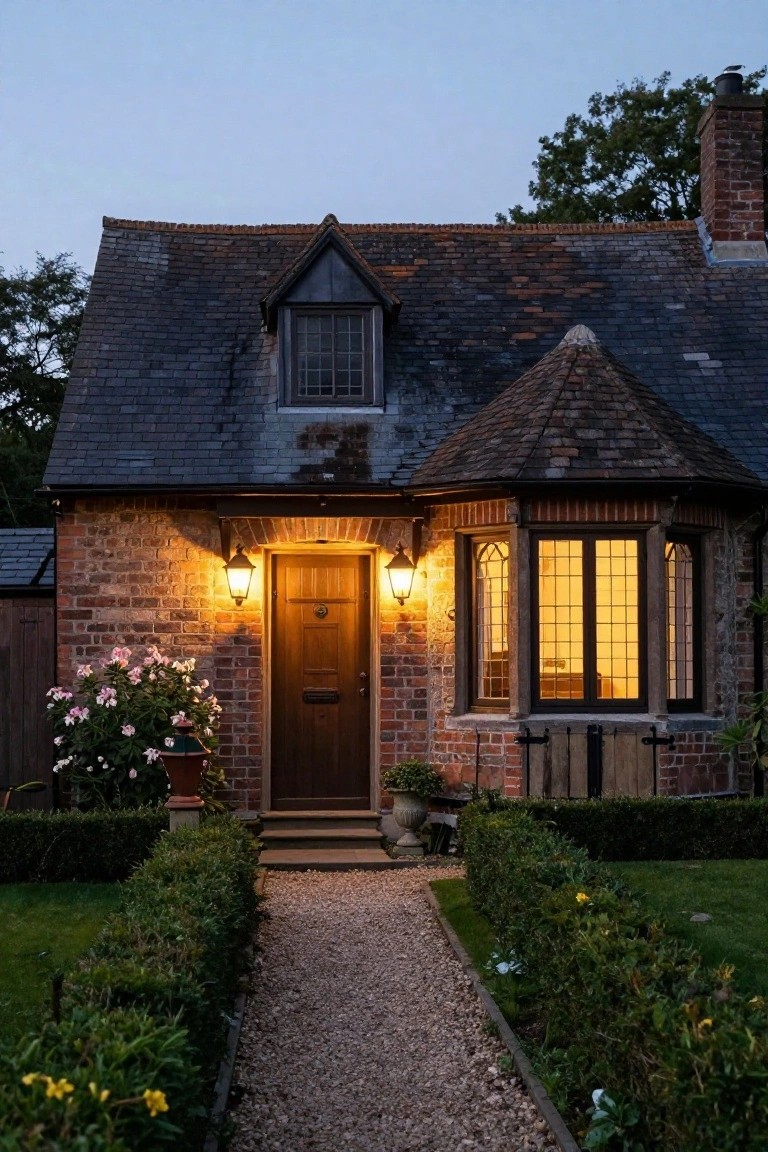
A pair of black lantern lights sits right next to this wooden entry door on the brick facade. They throw a soft yellow glow across the stoop and path at dusk, which pulls your eye straight to the house without being too bright. It’s that old-world touch that makes a cottage feel lived-in and ready for company.
You can add these to most any traditional exterior pretty easily. Pick lanterns with seeded glass and a simple metal finish to fit Tudor details, mount them about shoulder height. They suit brick or stone walls best, light up the doorstep safely, and work year-round. Just keep the bulbs warm, not stark white.
Timber Framing on White Stucco Walls
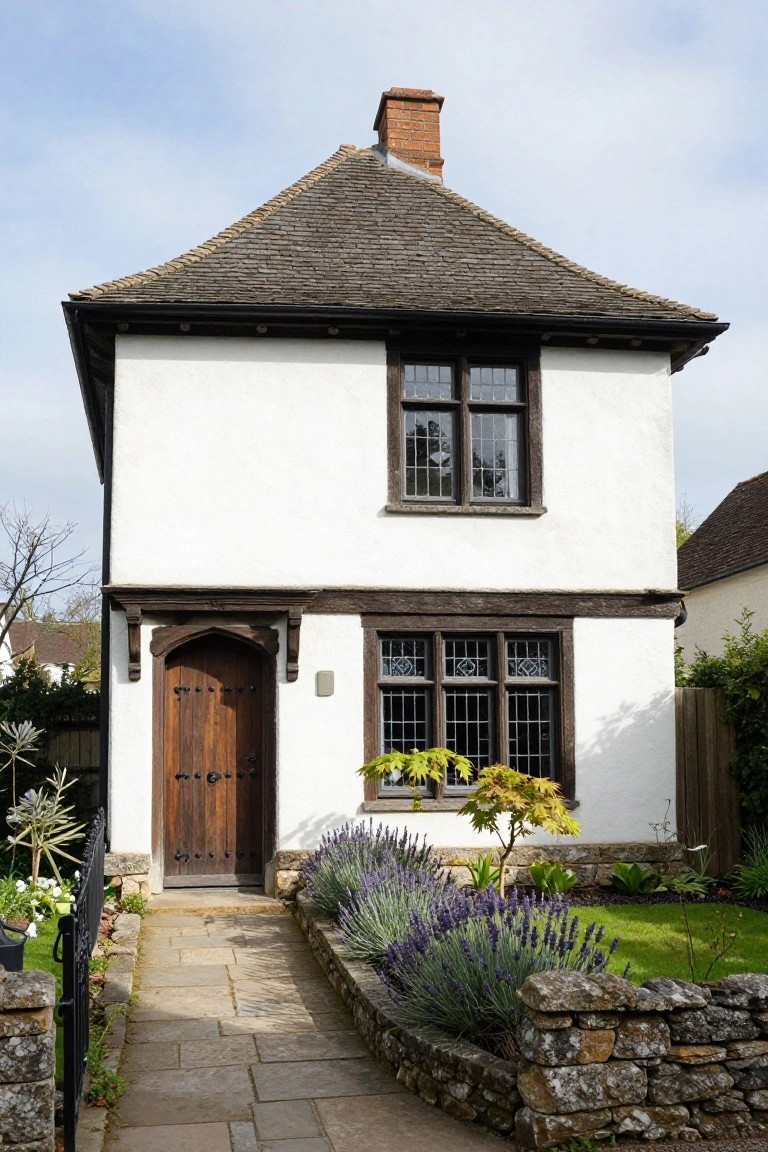
This cottage pulls off the classic Tudor look with white stucco walls and dark timber beams running across the front. The beams frame the leaded windows and arched door just right. It gives the house that solid, old-world feel without looking too fussy.
Try this on a compact one-story home where you want history in the design. The white keeps it bright. Add a stone path to the door and low plants like lavender along the edges. It suits older neighborhoods or spots needing more personality.
Tudor Half-Timbered Facade

One thing that sets Tudor cottages apart is the dark wood timbers laid over light stone walls. It builds that sturdy old-world look without much effort. The framing here follows the rooflines and windows, making the whole front feel balanced and real.
This style fits older neighborhoods or rural spots where you want some history. Use real oak timbers if you can, or go with fiber cement for less upkeep. Just match the stone color to keep it from clashing… and it pulls the house together nicely.
Timber-Framed Stone Facade
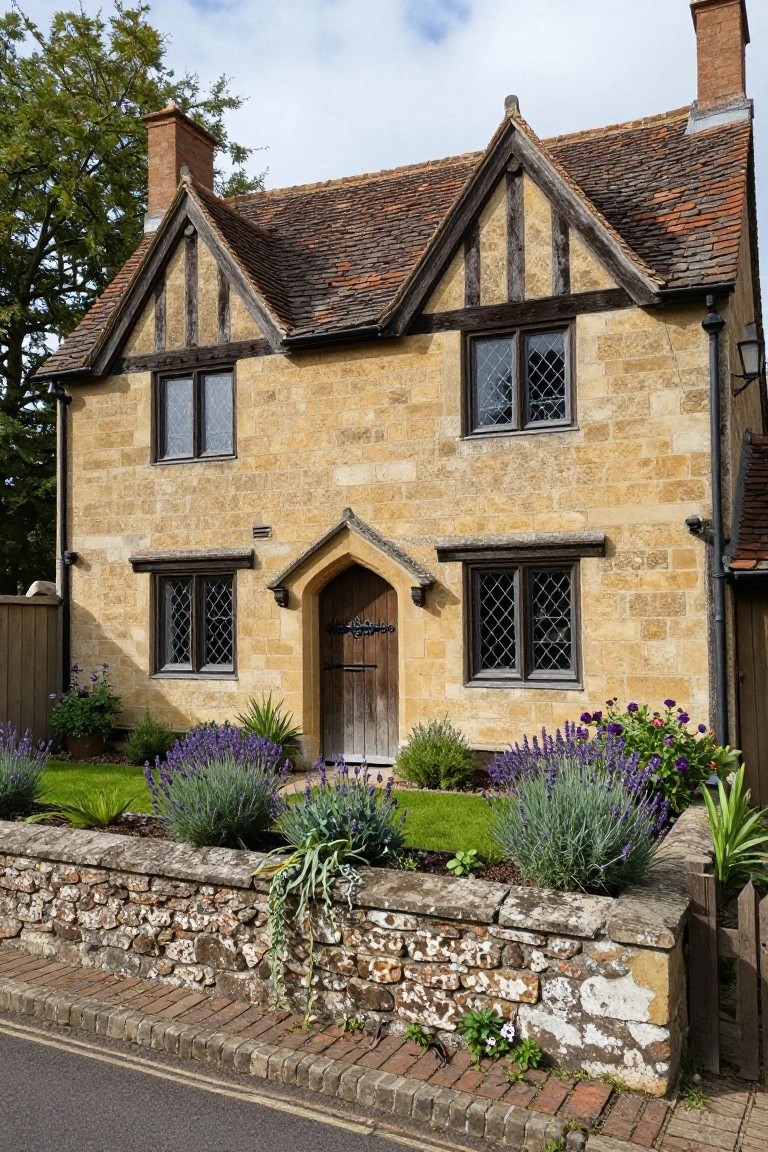
Dark wooden timbers stand out bold against the pale honey-colored stone on this cottage. That sharp contrast pulls together the whole front without any fuss. It gives off real old English village feel, like the house has been there for centuries.
You can pull this off on a modest two-story home aiming for Tudor charm. Pick limestone or similar light stone for walls, then add vertical and horizontal oak beams stained deep brown. It shines in countryside spots but watch scale on bigger houses, it might overwhelm.
Arched Entry with Built-In Bench
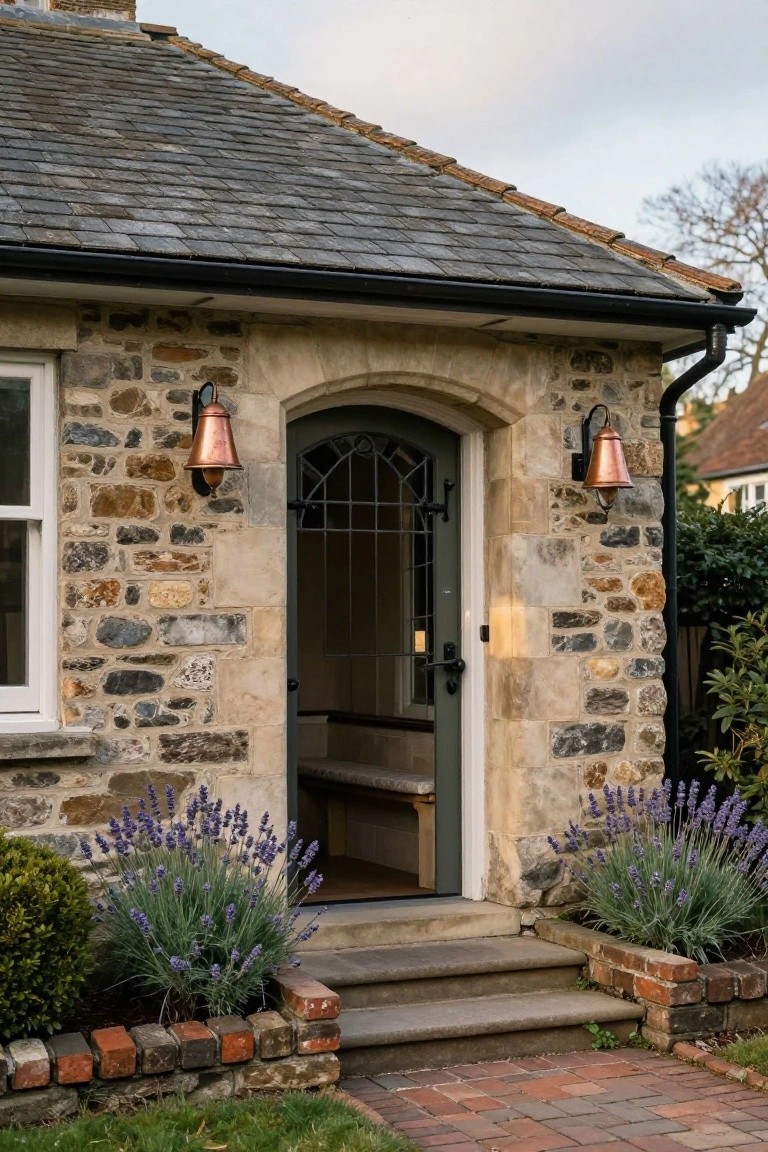
One simple way to give a Tudor cottage real old-world charm is a stone-arched entry like this. The green door with its wrought iron grille sits under a classic arch, and right there inside is a wooden bench for kicking off muddy boots or just sitting a minute. Copper lanterns on either side light it up nicely at dusk. It makes the front door feel like more than just an entrance. It’s a little spot that says welcome home.
This setup works best on stone or stucco facades where you want to highlight the architecture without much fuss. Tuck the bench just inside the arch for protection from weather. Flank it with low plants like lavender to soften things. It suits smaller homes trying to feel established and cozy. Skip it if your entry gets too much direct traffic though. The bench might wear out fast.
Timber-Framed Porch Entry
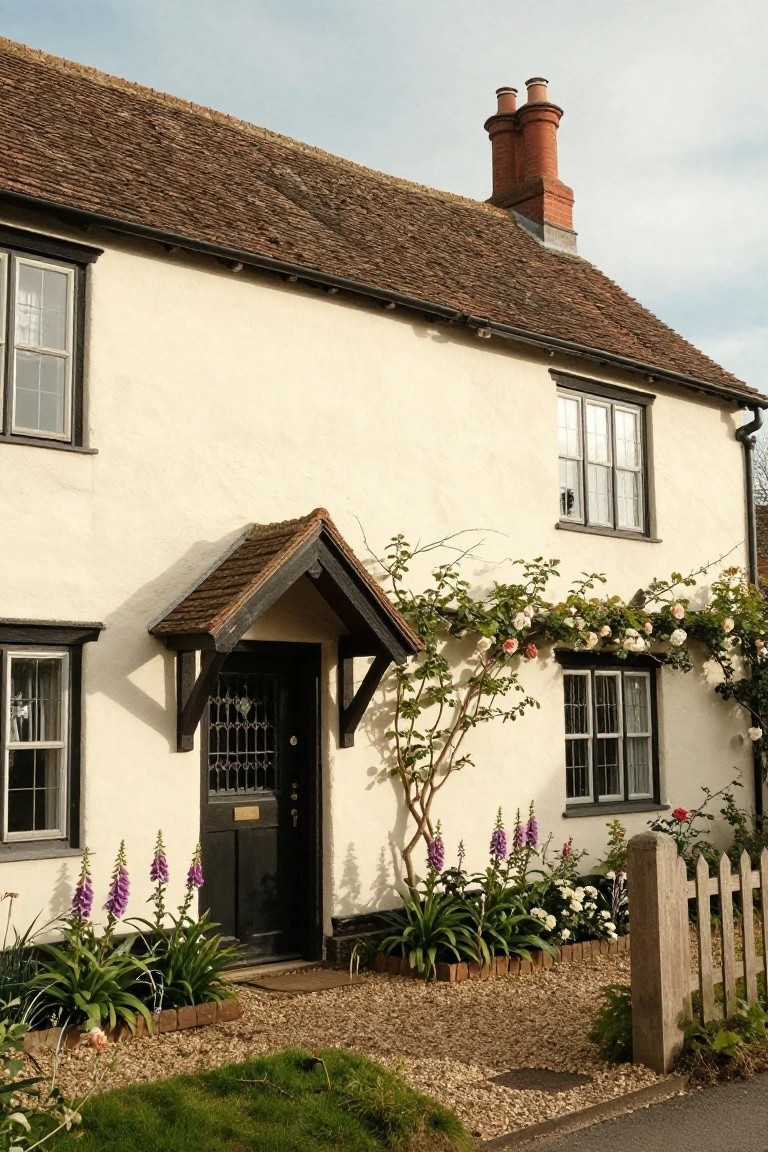
A timber-framed porch like this one sits right over the front door. It uses dark wood beams that match the black window frames and door, pulling the whole facade together. On a whitewashed cottage with a thatched roof, it adds that sturdy old-world feel without overwhelming the simple lines.
This works best on compact homes where you want the entry to stand out from the street. Keep the canopy small, maybe add climbing roses along the sides for a bit of green. It suits Tudor-style places facing a driveway or path, but skip it if your roofline is too busy already.
Tudor Cottage Stone and Timber Facade
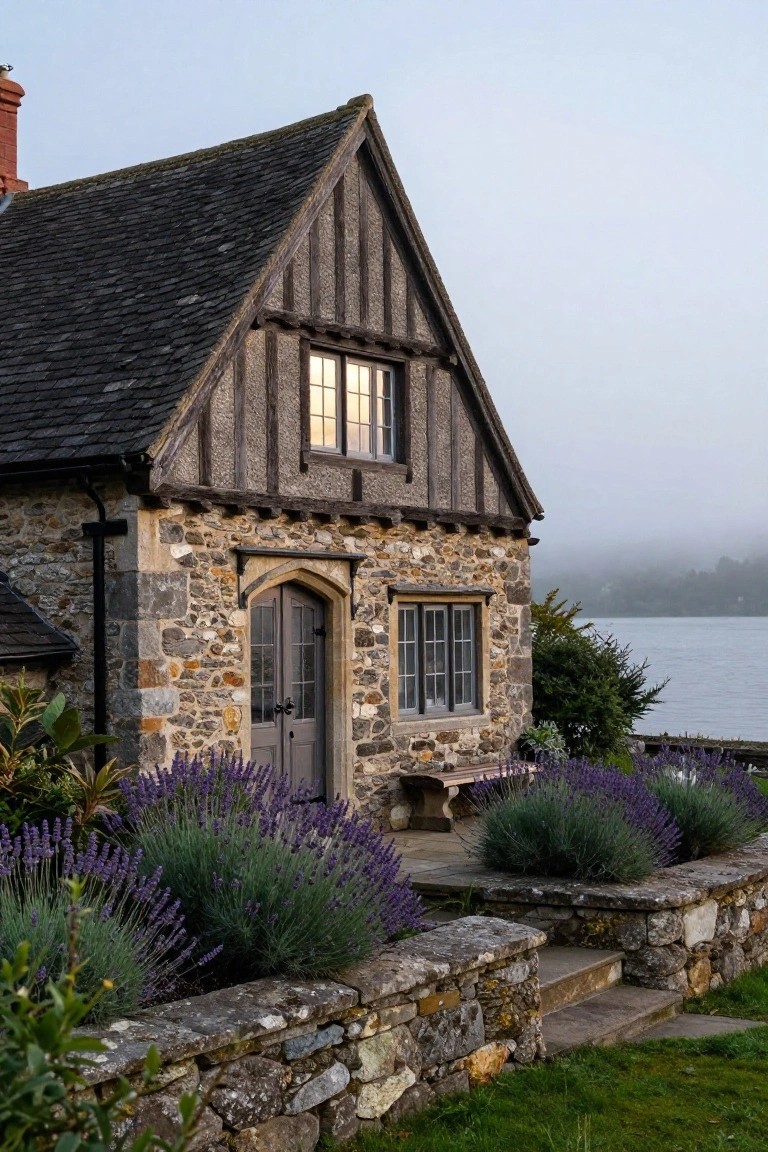
This kind of facade brings out that old-world Tudor feel without trying too hard. Rough stone walls at the base mix with dark timber framing up top, and a slate roof caps it all off. The arched double doors pull your eye right to the entry, and a simple bench sits nearby. It’s sturdy looking, like it belongs by a lake or in the countryside.
You can pull this off on smaller homes where you want character but not fuss. Use local stone for the bottom half to keep costs down and tie into the site. Add timbers only where they show, like around windows and gables. Works best on homes with some slope for those entry steps. Skip it if your lot is super modern or flat.
Wooden Shutters for Cottage Charm
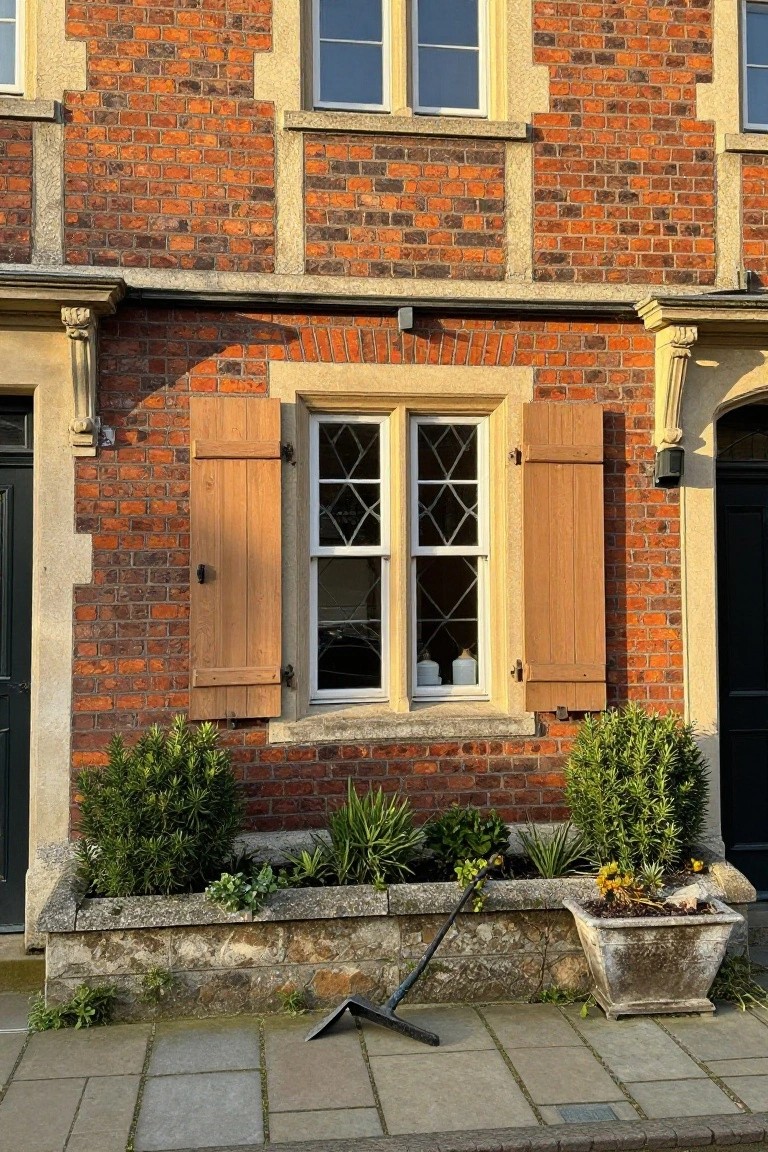
Wooden shutters like these give a Tudor Revival cottage that settled-in feel right away. They sit flat against the brick wall, framing the multi-pane window without overpowering it. The natural wood tone picks up on the warm red bricks and keeps things from looking too stark.
You can add them to any brick or stone facade facing south or west, where the sun hits hard. Match the wood to your trim, and hinge them so they close if you want privacy. They work best on homes with those divided-light windows, but skip them if your wall is super smooth modern brick, it might clash.
Climbing Roses on a Stone Cottage Entry
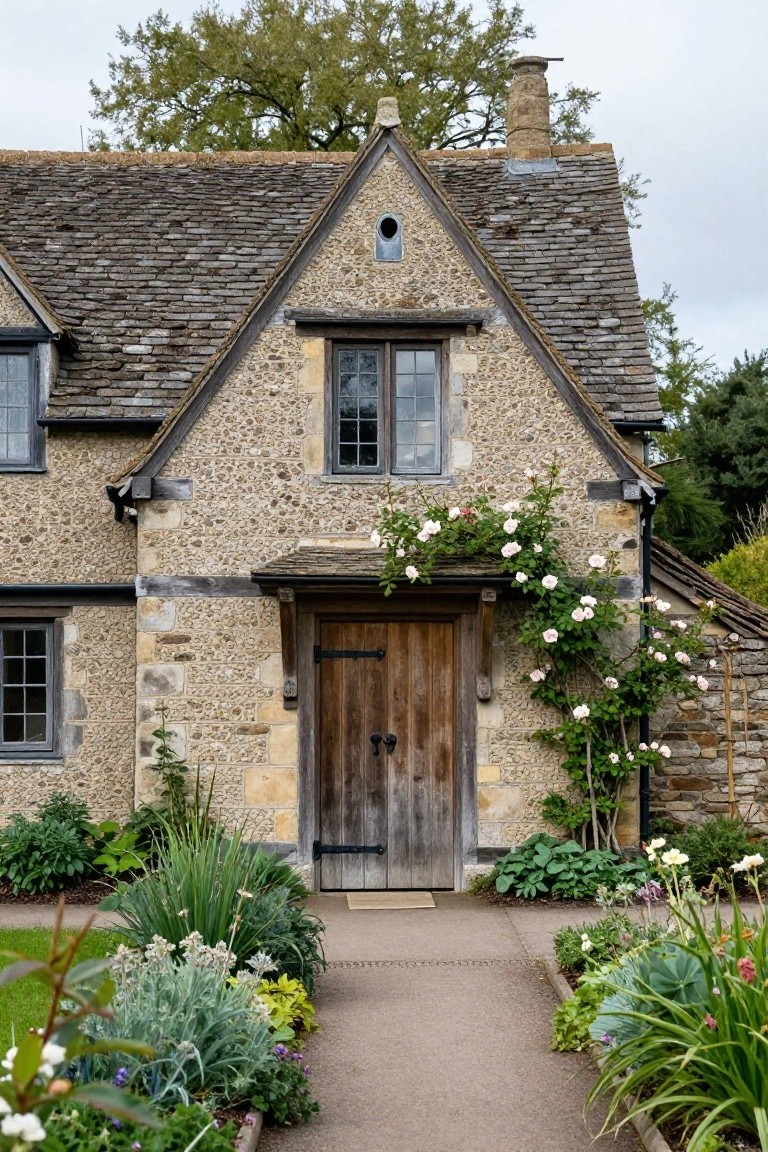
Climbing roses do a nice job giving stone cottages that lived-in, storybook feel. Here, soft pink blooms trail over the textured limestone walls and frame the heavy wooden door just right. They pick up on the old-world vibe without overpowering the simple lines of the facade. It’s a subtle way to make the front door feel more welcoming.
These roses suit Tudor-style homes with their rough stone and timber details. Go for repeat-blooming varieties like ‘New Dawn’ on a wall-mounted trellis, facing east for morning sun. They’ll soften hard edges over time. Just keep them trimmed back from the path and doorway so folks don’t brush against thorns heading in.
Lantern-Lit Entry Porch
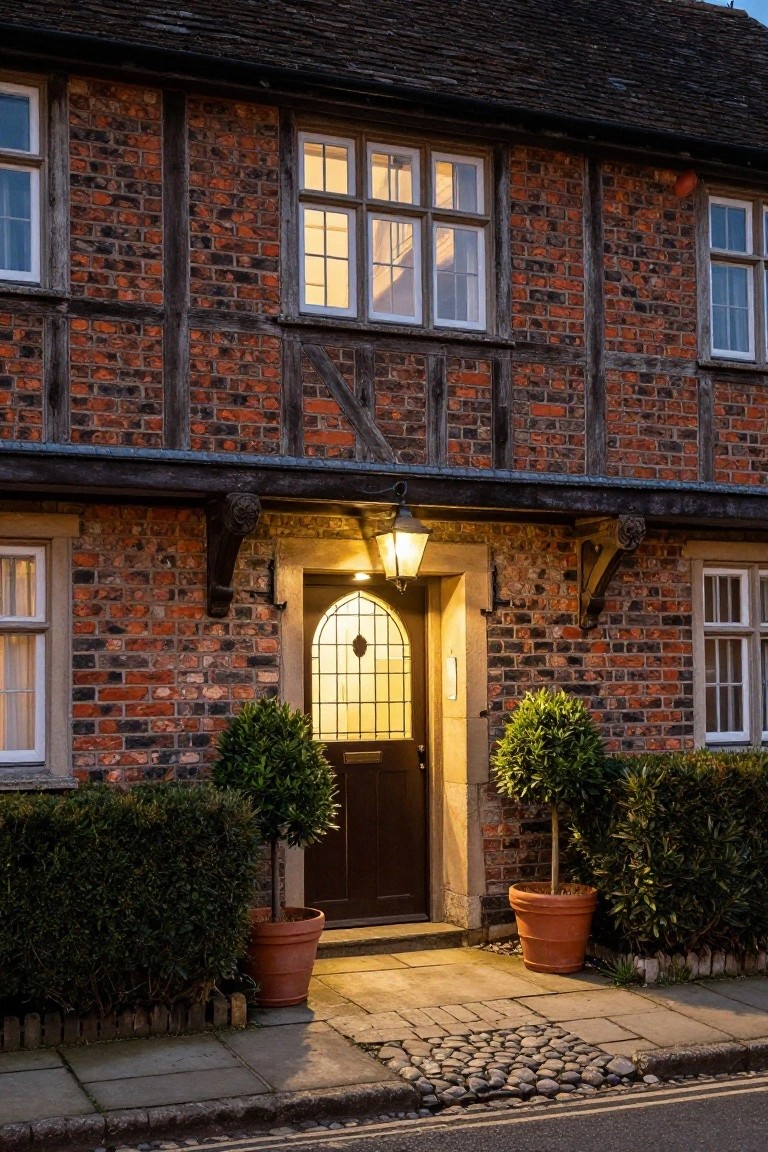
A simple hanging lantern on the porch beam does a lot for this Tudor cottage. It casts a soft glow over the arched door at dusk, making the entry stand out against the brick and timber walls. That warm light picks up the old-world details without overpowering them.
Try it on homes with deep porches or overhangs. Position the lantern to skim the door and path, and add matching pots nearby if you want. It fits revivals or period cottages best, especially in cooler climates where evenings get dark early. Just keep the fixture sturdy against weather.
Classic White Tudor Cottage Facade
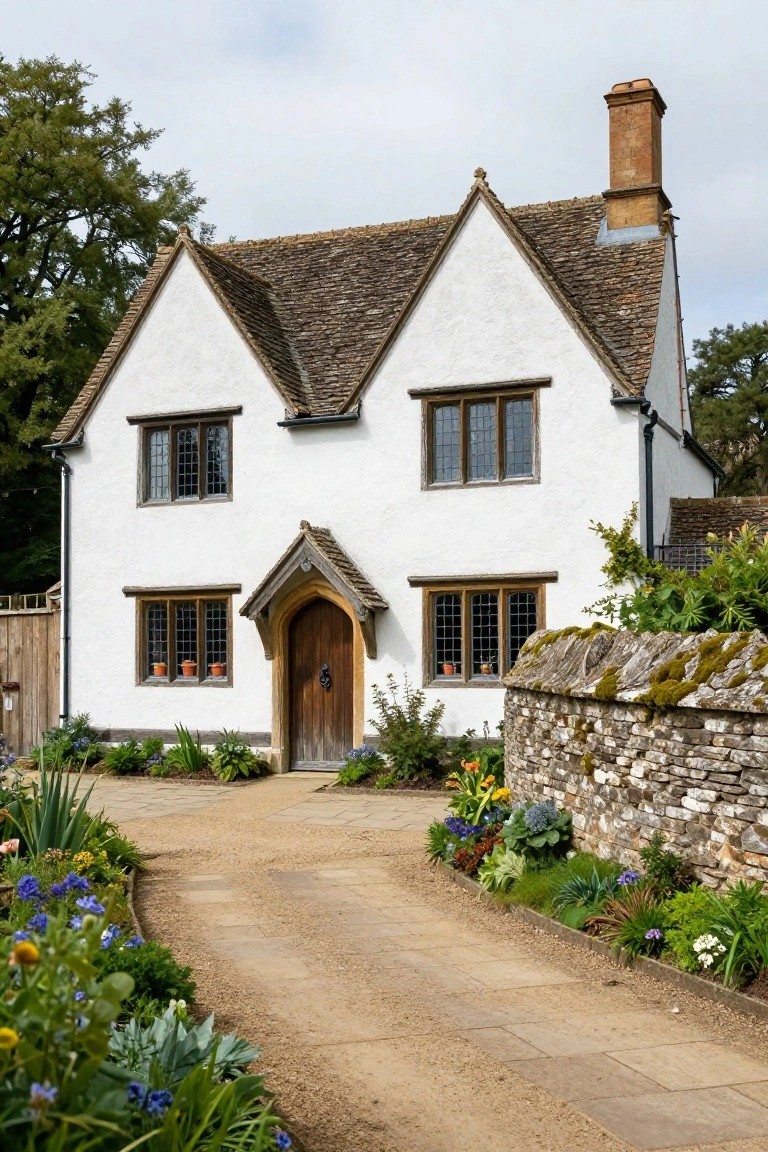
White plaster walls give this Tudor Revival cottage its standout old-world feel. The smooth white finish softens the dark timber framing and steep gabled roof, making the house look bright yet rooted in history. Paired with leaded glass windows, it pulls off that cozy English countryside vibe without feeling too heavy.
This look works best on smaller homes in suburban or rural spots where you want curb appeal that nods to the past. Stick to clean white stucco over darker woods and stone accents, and keep the entry simple like the arched door here. It suits modest lots… just avoid stark modern additions that clash.
Frequently Asked Questions
Q: How do I clean the stucco or half-timbering on my Tudor cottage without messing it up?
A: Grab a soft-bristle brush and some mild soap mixed with water. Gently scrub in small sections, then rinse with a garden hose on low pressure. Skip the pressure washer, it strips the texture too fast.
Q: What colors make the exterior pop like those old English cottages?
A: Go for warm creams or soft grays on the stucco with dark brown or black on the timbers. Add a pop of deep green on the door. Test samples in morning light first, they shift with the sun.
Q: Can I swap out old windows for new ones and still keep that Tudor charm?
A: Pick double-hung windows with divided lights and a wood finish. Match the muntin grid to the originals. They let in more light but look straight out of the 1920s.
Q: What’s a good way to landscape around my cottage for that cozy old world feel?
A: Plant low boxwoods or lavender along the front path. Tuck in climbing roses on an arbor by the door. Mulch with pea gravel, it drains well and stays tidy.
