

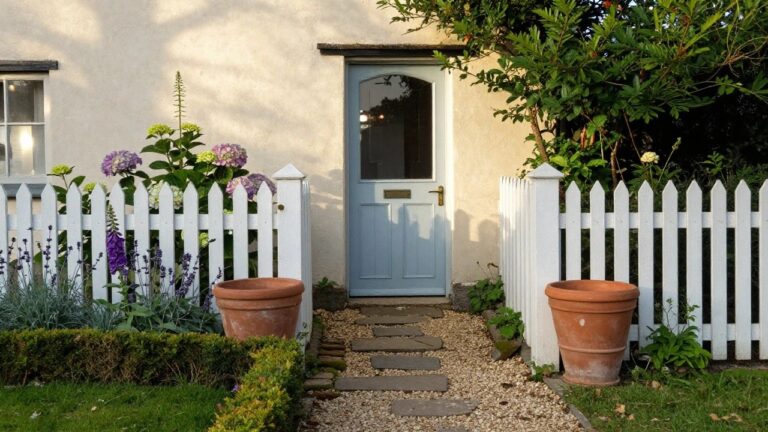
I always appreciate how cottage landscaping works best when it pulls the garden right up against the house, creating that smooth shift from stone walls to flower beds. Simple gravel paths winding through layered shrubs often catch my eye first because they guide you naturally toward the door without feeling forced. In my front yard, I added some low edging along the foundation, and it grounded everything in a way that makes the whole space read as one. Over time, plants that climb or spill over those edges mature into the kind of connection that feels lived-in rather than staged. A couple of these setups are practical enough to test on a smaller scale.
Arched Garden Gate Covered in Greenery
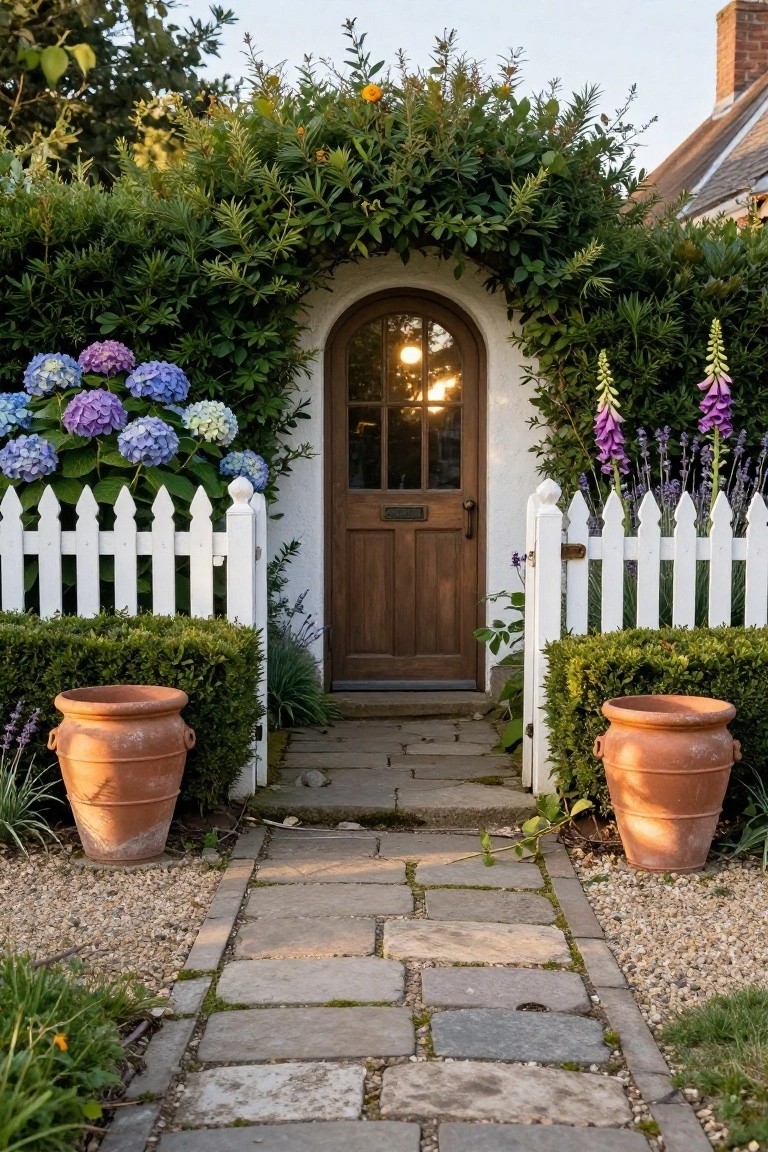
One straightforward way to blend your cottage with the garden is a simple white arch over the gate, draped top to bottom in thick green climbers. It frames the wooden door just right, turning the entry into a natural passage rather than a hard stop. Those big hydrangea blooms and foxglove spikes nearby pull in color at eye level, keeping it all soft and lived-in.
This works best on smaller homes where you want that fairy-tale cottage feel without much fuss. Plant something vigorous like jasmine or honeysuckle on the arch, then flank the path with pots of boxwood for steady shape. Skip it if your spot gets too shady… the vines need sun to thrive. Easy to add over time as things grow in.
Trellis Gardening Against the House Wall
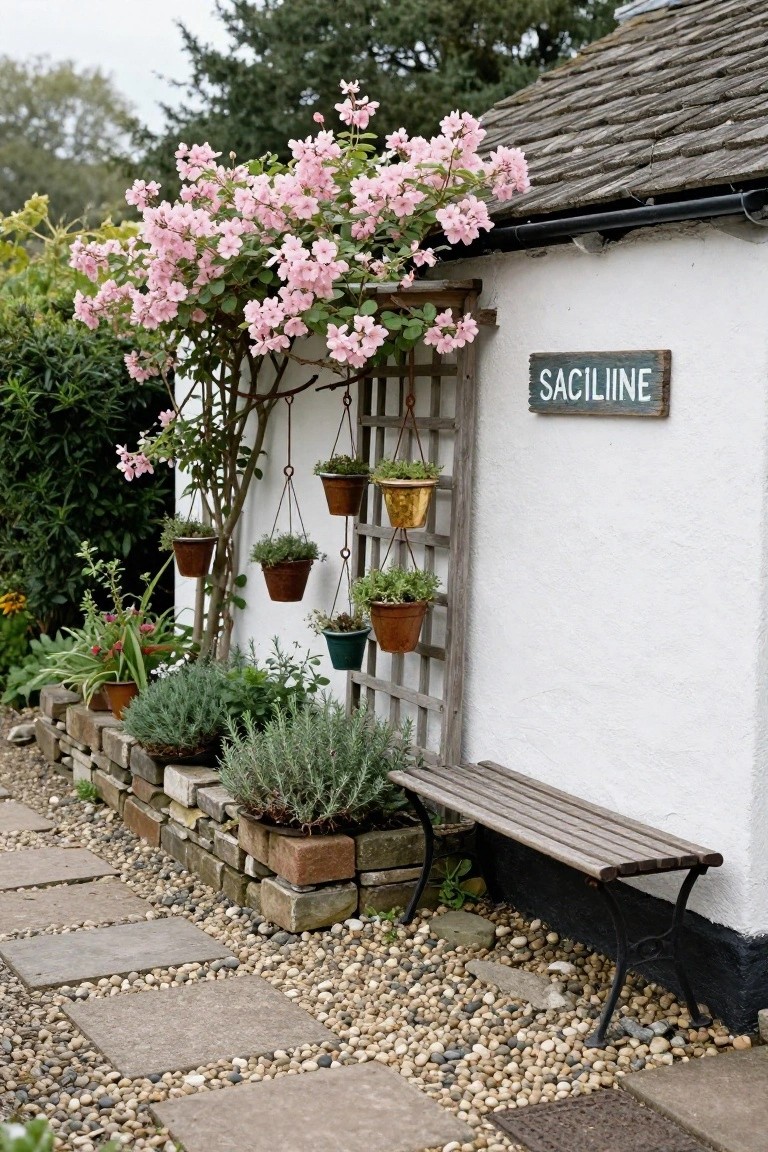
A wooden trellis mounted right on the plain white wall lets climbing pink flowers take over, with hanging pots tucked in between. It pulls the garden up to the house in a natural way. No big footprint needed, just steady support for the vines and a few pots of herbs or trailing plants.
This works best on cottage sides or narrow spots where you want green without crowding the path. Pick easy climbers that hug the trellis, like those pink blooms here, and hang pots at different heights for rhythm. Keep the wall light-colored so the plants pop. Suits older homes with simple lines.
Entry Bench Lined with Potted Plants
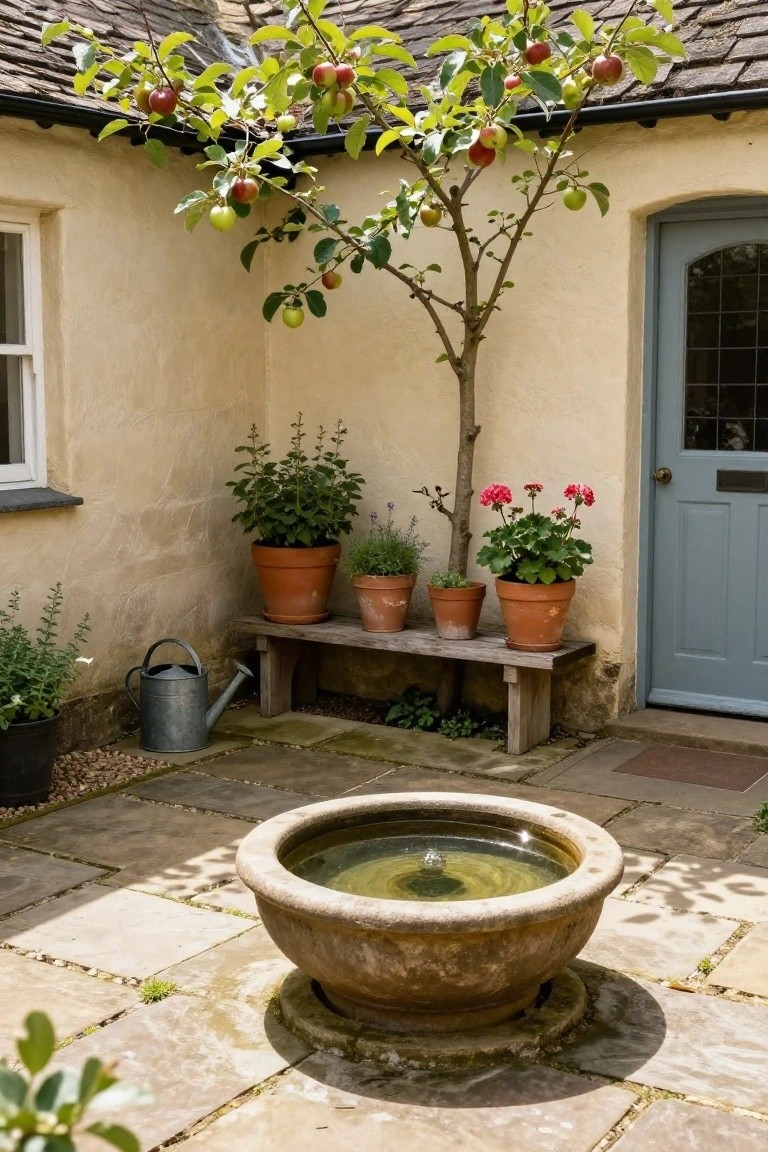
One easy way to tie your cottage door to the garden is lining a plain wooden bench with terracotta pots. Here, herbs and flowers sit right outside the blue door, under a small apple tree. It makes the entry feel tended and alive without much fuss. The bench doubles as a spot to set down tools, like that old watering can nearby.
This works best on small patios or narrow paths where you want color close to the house. Pick tough plants like rosemary or geraniums that handle some shade. It suits older homes with stone walls. Just keep pots from overcrowding the walk, and swap them out seasonally for fresh interest.
Stone Path Through Tall Grasses
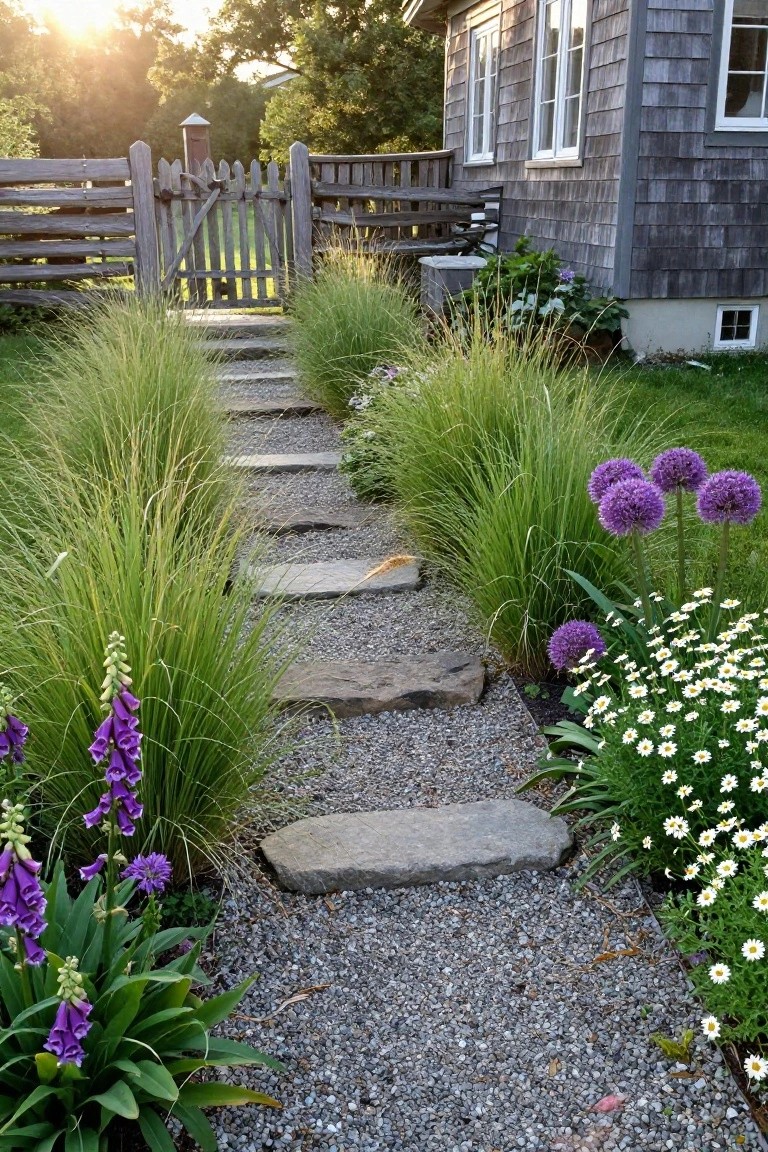
A simple stone path like this one cuts right through tall ornamental grasses and flower beds. It leads straight from the garden gate to the house steps without feeling too rigid. Flat stones set in gravel keep it low fuss. The grasses sway around it. That movement draws your eye along the way and makes the walk to the door feel part of the yard.
This works best for cottage style homes where you want the garden to blend into the entry. Plant miscanthus or similar tall stuff on both sides for height. Add clumps of alliums or foxgloves for color pops. Skip straight lines. Let it meander a bit. It suits smaller lots… keeps maintenance down once established. Just watch for weeds in the gravel.
Terraced Stone Walls with Lavender
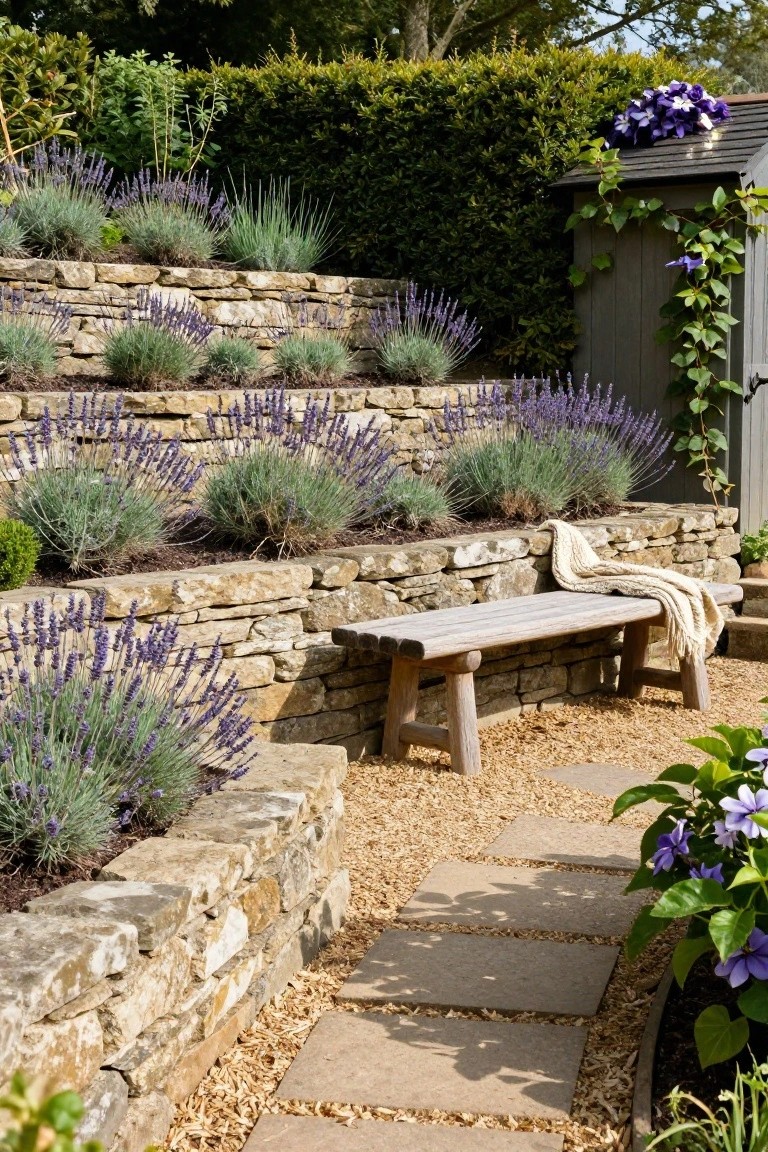
Slopes around a cottage don’t have to be wasted space. Building low stone retaining walls and packing them with lavender turns the drop into tidy planting pockets. The soft purple blooms and silvery leaves repeat up the levels, giving that relaxed English garden feel without much upkeep.
This setup works best on moderate backyard slopes near the house, where it pulls the garden right up to your door. Pick a tough lavender variety like English or lavandin, stack local stone for the walls, and tuck in a simple bench on one terrace. Keep paths gravel for easy drainage… just watch for spreading plants overtaking the edges.
Garden Path Between Raised Beds
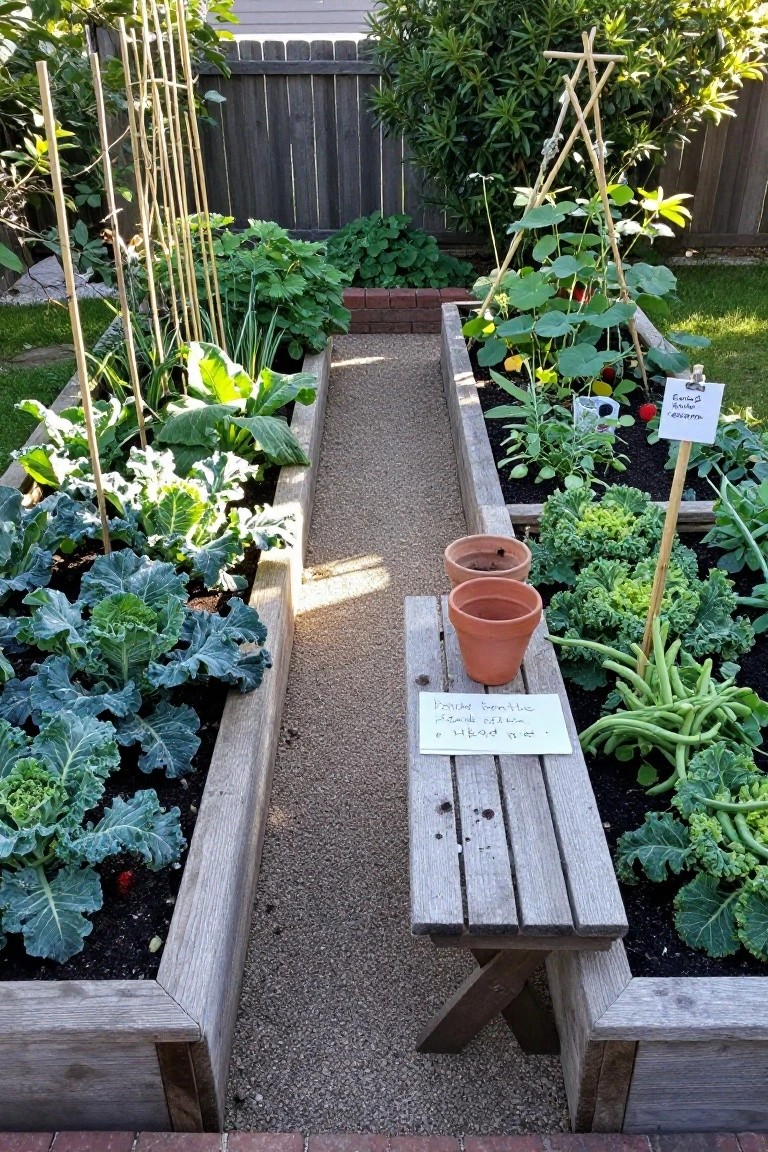
One straightforward way to make a backyard feel more connected and usable is setting up raised beds right along a central path. Here you see wooden beds filled with kale, beans, and nasturtiums, all growing strong on either side of a simple gravel walkway. That path pulls you right into the garden. And the weathered bench smack in the middle? It gives a spot to sit, check on plants, or just enjoy the quiet.
This setup works best in smaller yards or side areas where you want fresh produce without bending over too much. Use untreated wood for the beds to keep costs down and let them age nicely. Line them up symmetrical like this for that cottage rhythm. Keep the path narrow, maybe three feet wide, so it fits tight spaces. Watch the soil drainage though. Raised beds help with that, but gravel underneath keeps things from getting muddy.
Rustic Bridge Over Garden Pond
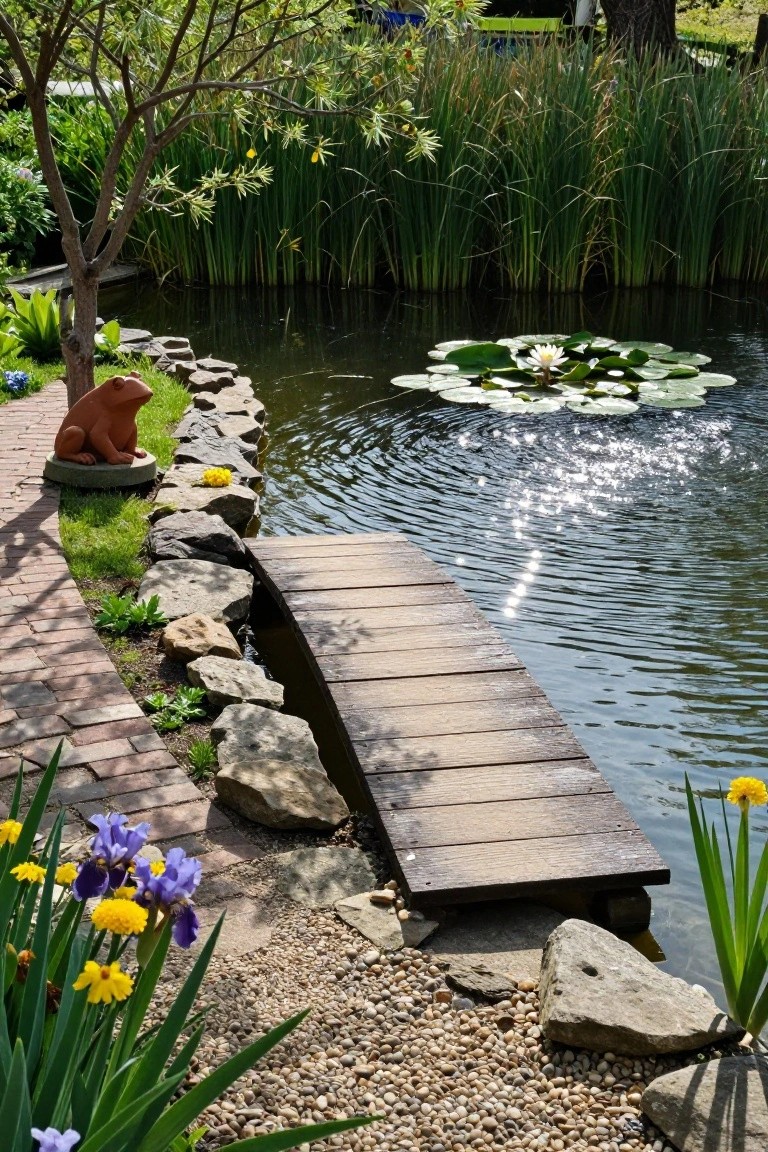
A wooden footbridge like this one makes crossing a small backyard pond feel easy and natural. It pulls the brick path right into the water garden without any fuss. With lily pads floating nearby and stones lining the edge, it keeps things looking wild yet welcoming. Folks love how it turns a simple water feature into a spot you actually walk through.
Try this in a cottage yard where space is tight but you want more garden flow. Pick rough-sawn wood that weathers over time, and keep plantings soft around it like reeds and irises. It suits low spots that hold water… just check local rules for ponds and build sturdy enough for everyday use.
Rose-Covered Arbors Frame Garden Paths
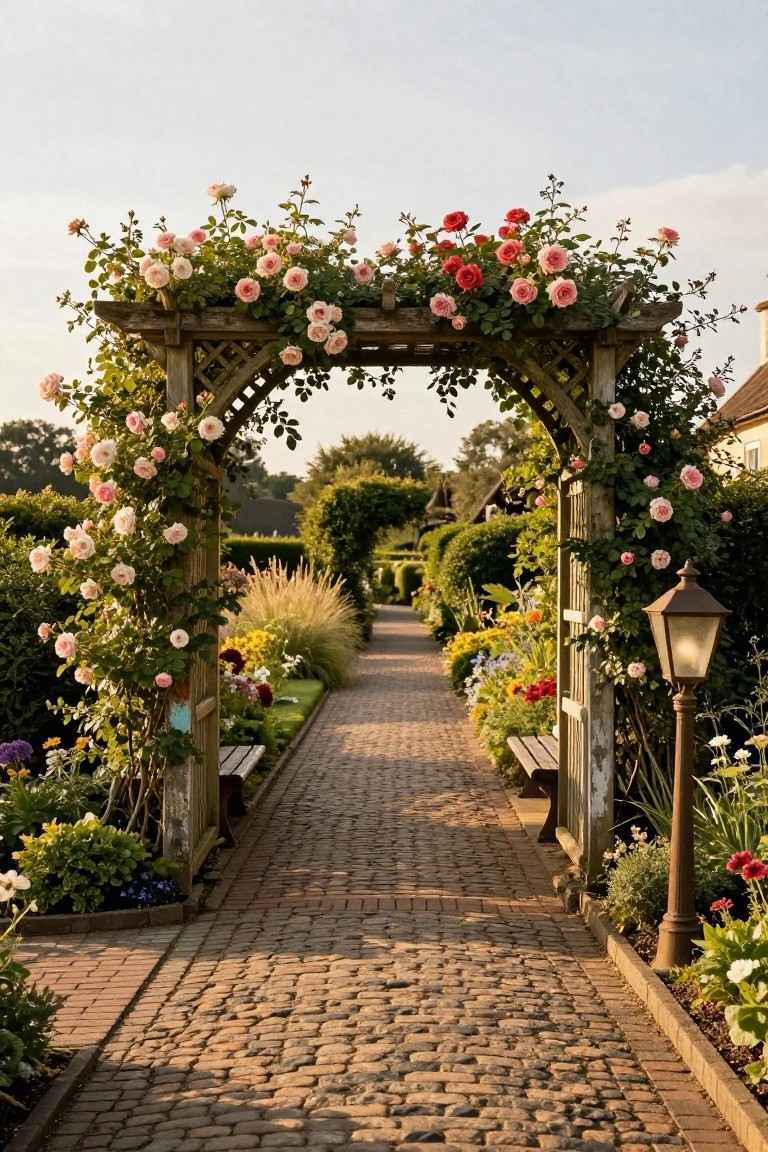
A simple wooden arbor draped in climbing roses makes a garden path feel like a proper invitation. The roses tumble over the weathered wood in pinks and reds, softening the brick walkway underneath. It pulls the eye forward without trying too hard.
Plant rambling varieties that bloom a long time, and tie them loosely to the frame each year. This setup suits cottage-style homes with side entries or back gardens. Keep the path clear so it stays practical for everyday walks.
Rusted Steel Planters Echo Stone Cottage Walls
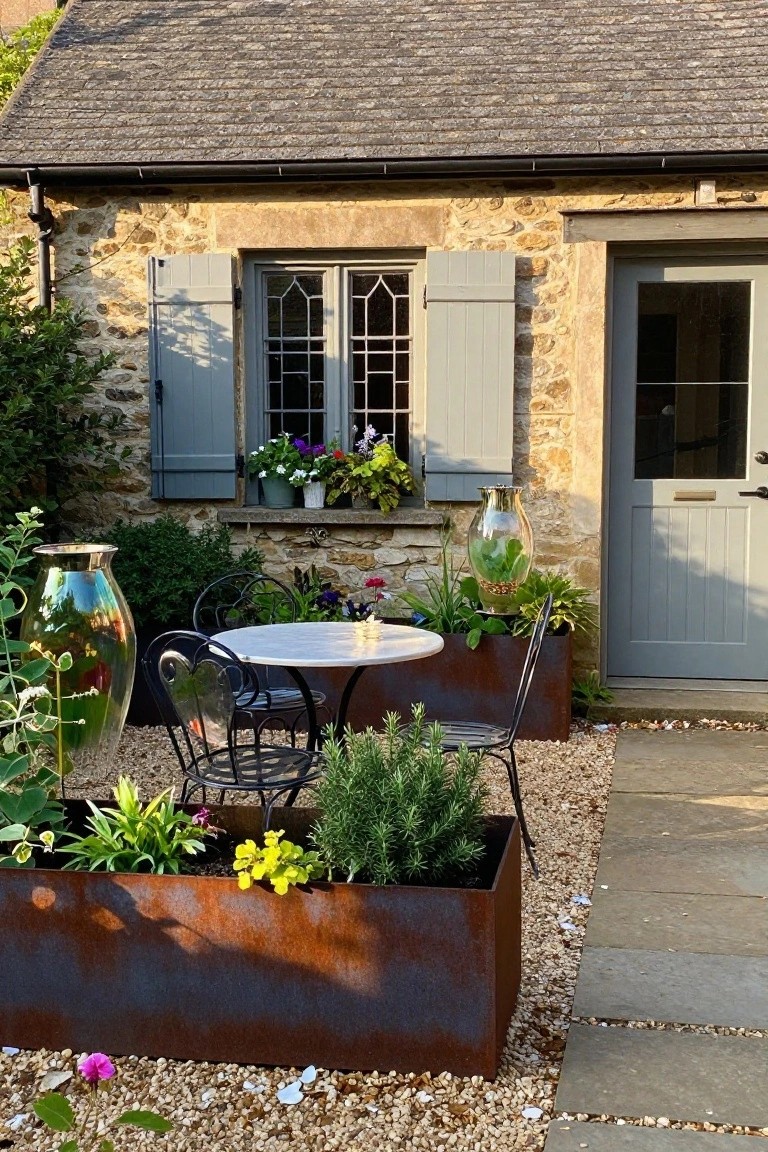
Rusted steel planters work so well next to old stone houses. The natural orange patina pulls out the warm sandy tones in the stone, and it makes the garden planting feel like part of the building itself. You see it here with a long rectangular box holding herbs and yellow flowers right by the wall. It keeps things simple but ties everything together without much fuss.
Put these planters along paths or under windows where you want to soften hard architecture. They suit compact cottage yards best, especially if you’re growing edibles like rosemary. Just make sure they drain well so roots don’t sit wet. Over time the rust deepens, which only makes the look better.
Boxwood Hedges Frame an Entry Garden
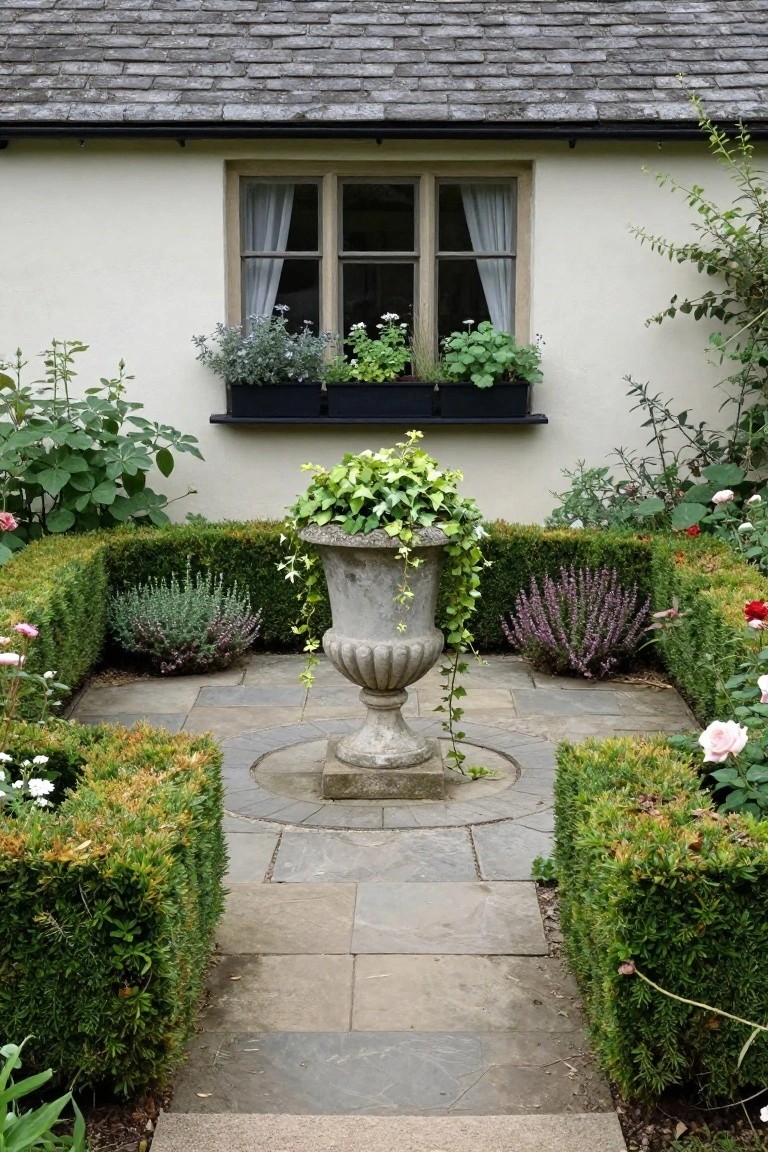
Low boxwood hedges shaped into neat quadrants make a simple front garden that pulls your eye straight to the house. Here they surround a slate path and a stone urn spilling over with ivy. That structure keeps things tidy and gives the cottage a bit more polish without much fuss.
Try this in a small yard where you want definition between path and beds. Boxwoods stay dense and easy to clip, so they suit sunny or part-shade spots near the door. Pair with perennials like lavender for color, but stick to one central planter to avoid crowding.
Cottage Garden Path with Irregular Stones
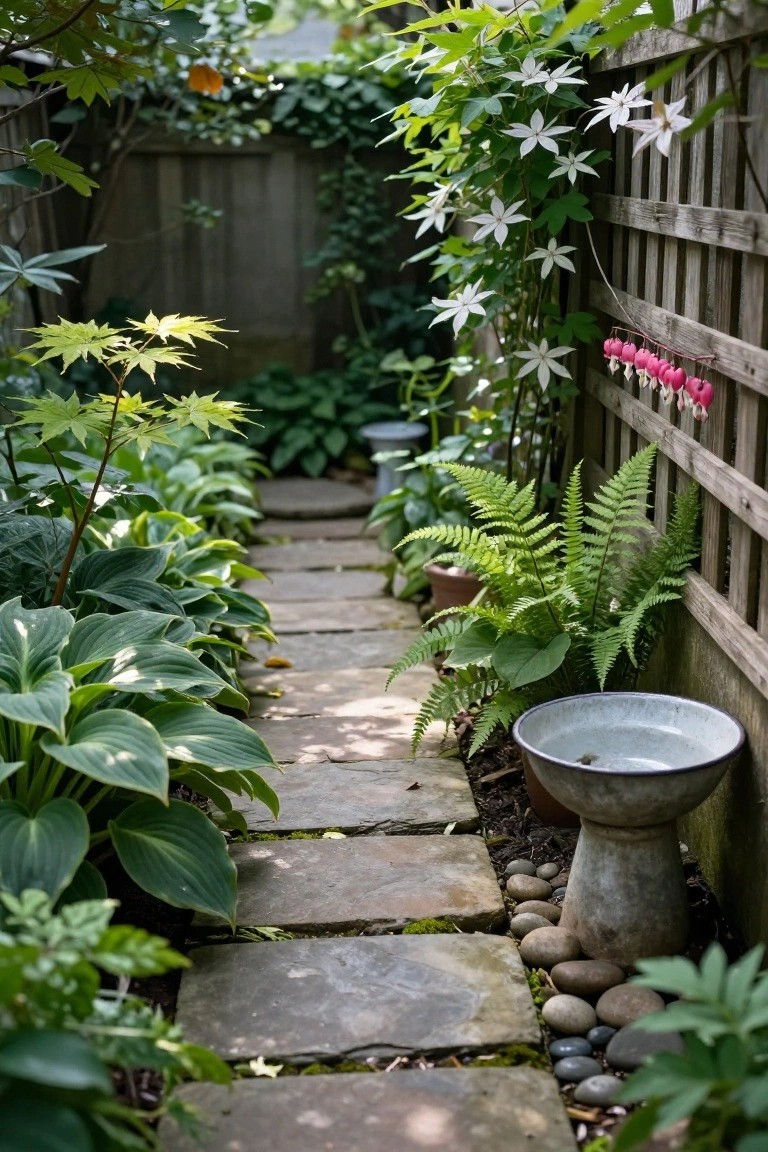
A narrow path like this uses rough-cut stone slabs set right into the soil, spaced just enough for moss or low plants to fill the gaps. Flanked by big hosta leaves and ferns, it pulls you gently through the garden without any hard edges. That mix of stone and soft green keeps things cottage-simple and shady-spot friendly.
Try it in a side yard or along a fence where space is tight. Pick stones in soft grays or earth tones, and plant bold foliage right up to the edges. It works best behind older homes with some wood fencing. Just watch the spacing so it’s walkable, even when plants grow in.
Vine-Covered Pergola for Terrace Dining
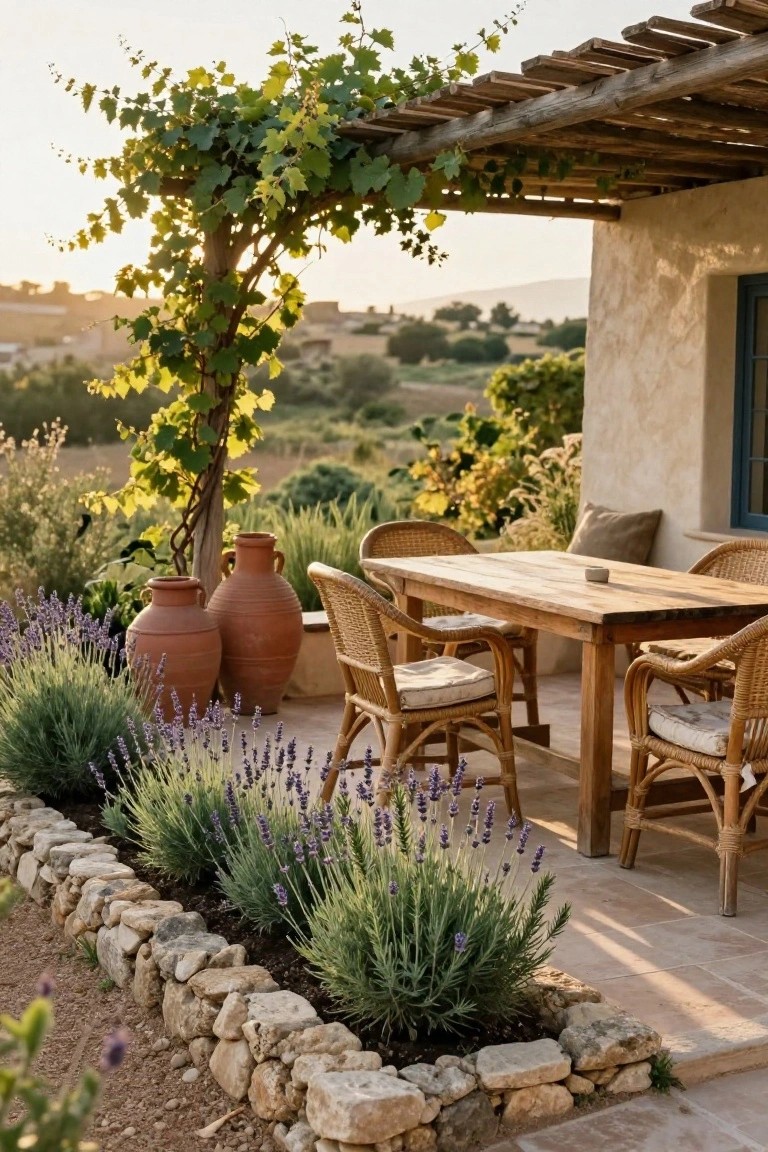
A wooden pergola draped in lush grapevines makes a perfect spot for outdoor meals. It pulls the garden right over the table, giving shade on hot days while keeping things open and airy. The simple rattan chairs and rough wood table fit right in, no fuss needed.
This works best on sunny patios near a house wall, like in cottage or rural spots. Pick fast-growing vines that handle your climate, and add lavender along the edge for scent and color without extra work. Just make sure the structure is sturdy enough for the weight.
Gravel Paths in Rock Gardens
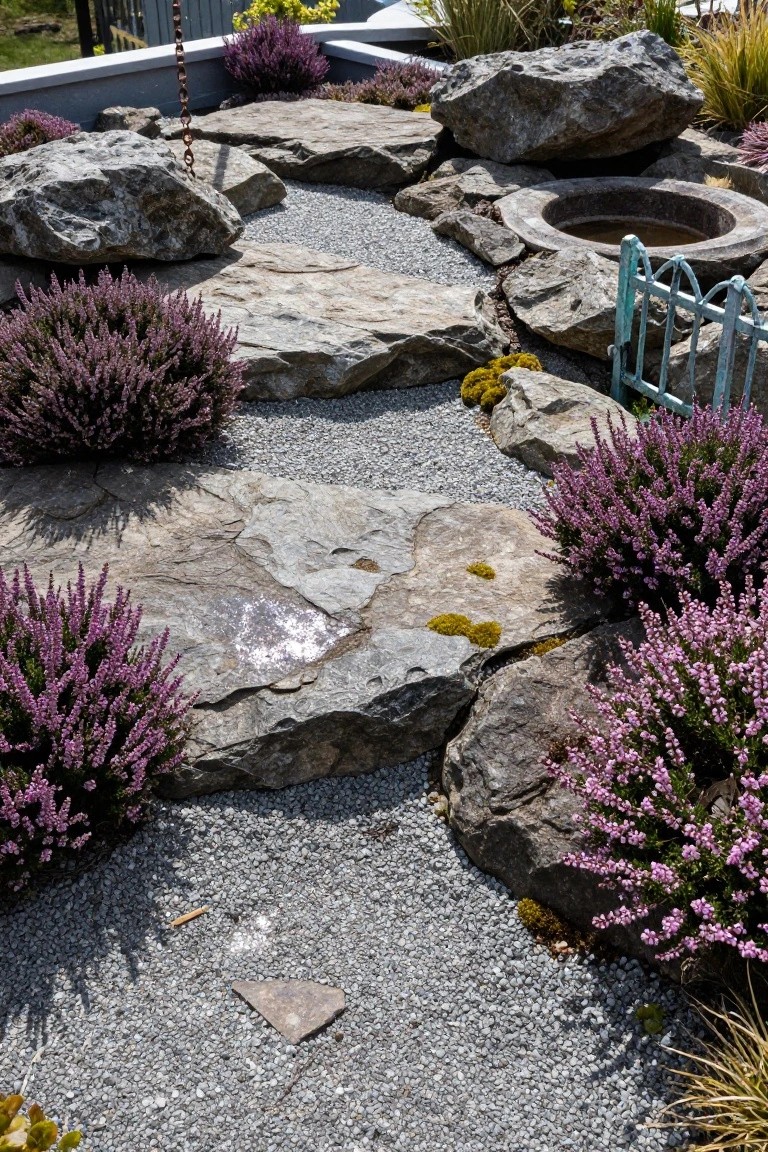
Gravel paths like this one wind gently through big boulders and low purple heather clumps. They create a natural flow in the garden that feels right at home in a cottage setting. The light gray gravel contrasts nicely with the rough stones and soft plants, making the space look put-together without much effort.
These paths work best in sunny, well-drained spots where you want low upkeep. Lay down landscape fabric first, then add gravel over it. Edge with boulders for definition and tuck in tough plants like heather that handle poor soil. A fire pit at the end turns it into a spot for evenings outside. Just keep the gravel topped up now and then.
Rope Fenced Paths Through Dune Grasses
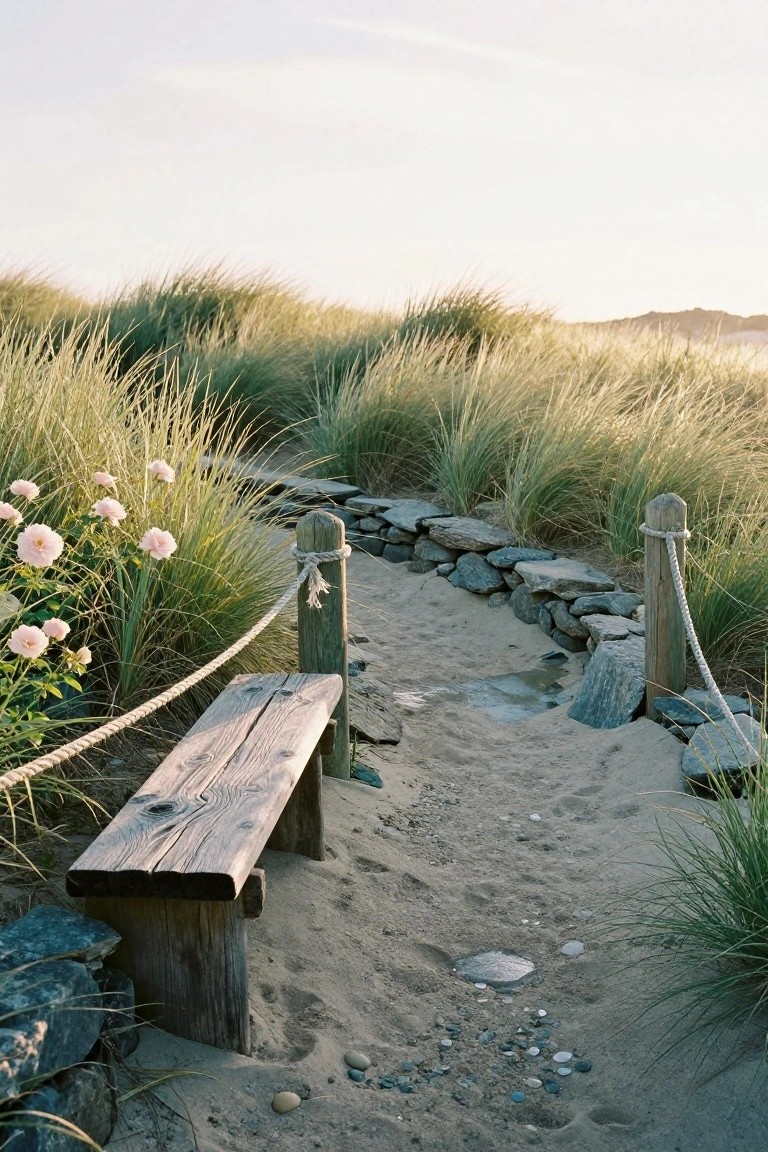
Rope fencing like this works so well for coastal spots. Thick rope looped around old wooden posts lines the sandy path, keeping feet out of the tall grasses while letting the dunes stay wild. A simple bench sits off to the side, right where the path curves. Pink flowers and scattered shells add just enough touch without trying too hard.
Try it leading from your cottage to the beach or water. It suits sandy yards with native plants that handle salt and wind. Stack local rocks along one edge for stability. Keep the rope natural, maybe swap in sisal if you want something that weathers even faster… low fuss all around.
Curved Brick Beds Around the Greenhouse
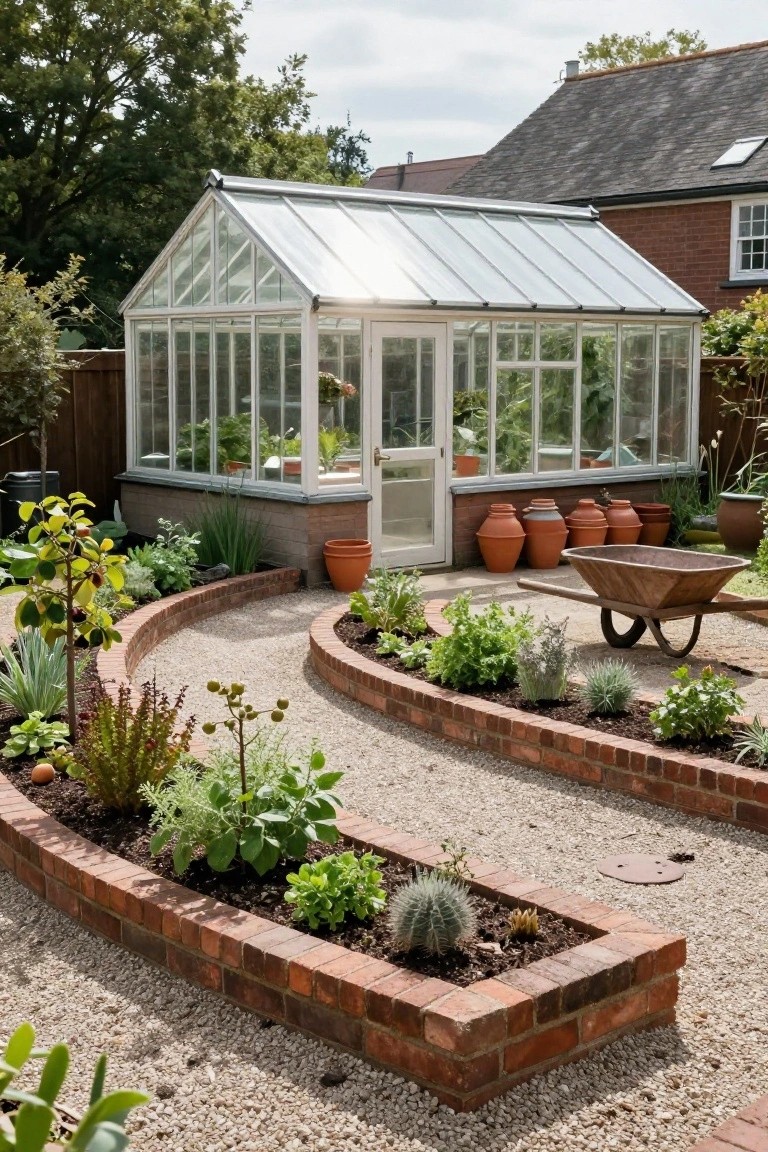
One nice way to tie a greenhouse right into your garden is with curved beds edged in brick. The gentle sweep pulls your eye from the glass doors straight into the plantings, making it feel like one flowing space instead of separate spots. Gravel fills the path between, keeping things simple and easy to walk on.
These work best in cottage-style yards where you want low upkeep but plenty of charm. Stack bricks just a couple courses high for the edging, then plant herbs, succulents, and soft perennials that spill over the edges. Skip fussy flowers here… go for stuff that thrives in full sun near the house.
Rustic Fire Pit for Garden Evenings
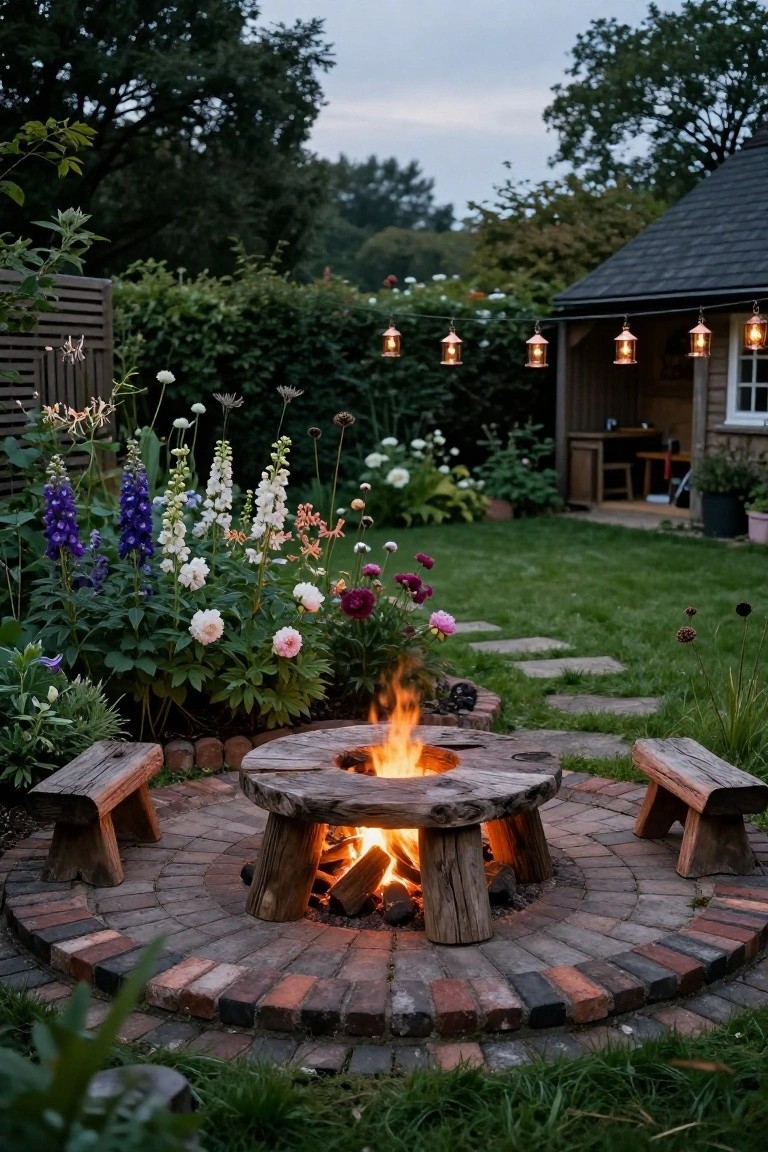
A round brick fire pit topped with a chunky wooden slab makes a natural spot for evening fires. Rough log benches sit right on the edge, keeping things simple and close. Flowers and plants tuck up against the base, so it blends into the yard without taking over.
This works best in smaller cottage backyards where you want a gathering place that feels homemade. Source old bricks and weathered wood to match. Keep it on level ground near a path, and add gravel inside if the fire needs it… just watch for sparks near dry plants.
Pebble-Lined Swale for Garden Drainage
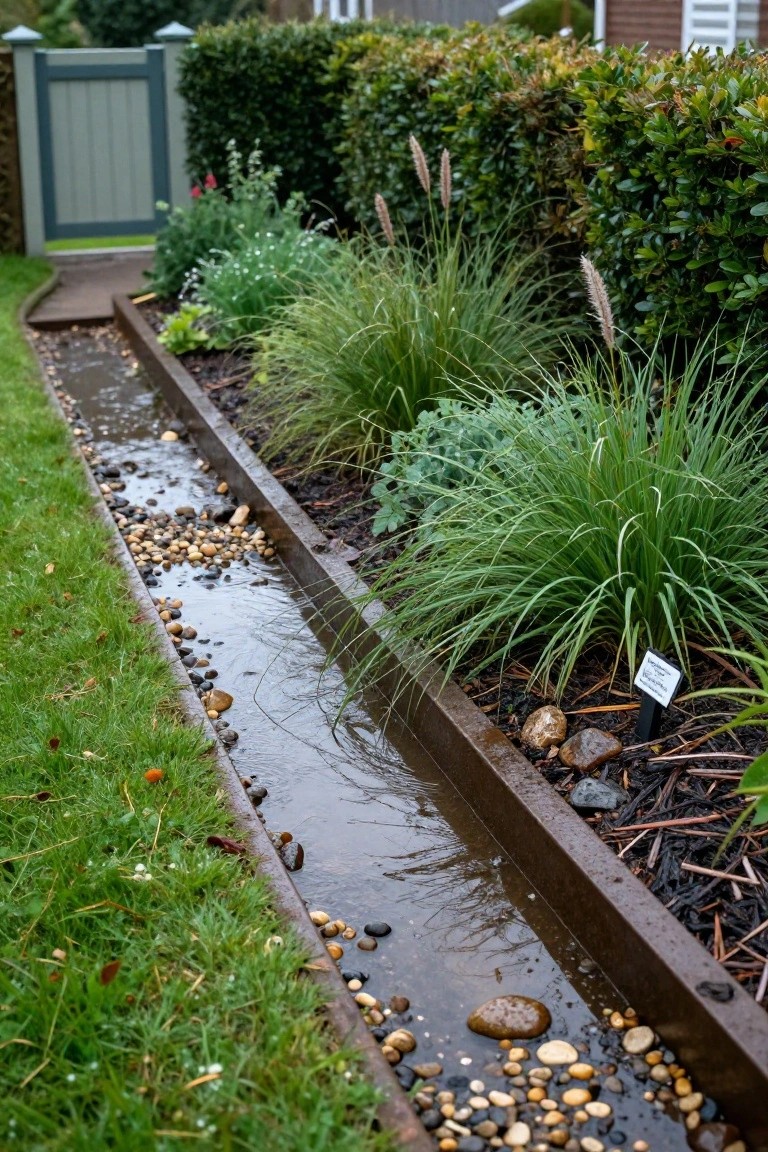
One smart way to handle water in a cottage yard is this narrow channel edged in rusted metal. It runs right through planting beds, lined with smooth pebbles and a trickle of runoff. Grasses like pampas spill over the edges, making it look natural instead of like a ditch. This pulls the garden together and keeps paths dry.
You can add one along a side border or near the house foundation where water pools. It works best in smaller yards with some slope. Pick tough, upright plants that won’t flop into the channel, and source pebbles locally for that worn-in feel. Just make sure the metal sits level so water flows smooth.
Picket Fence Garden Borders
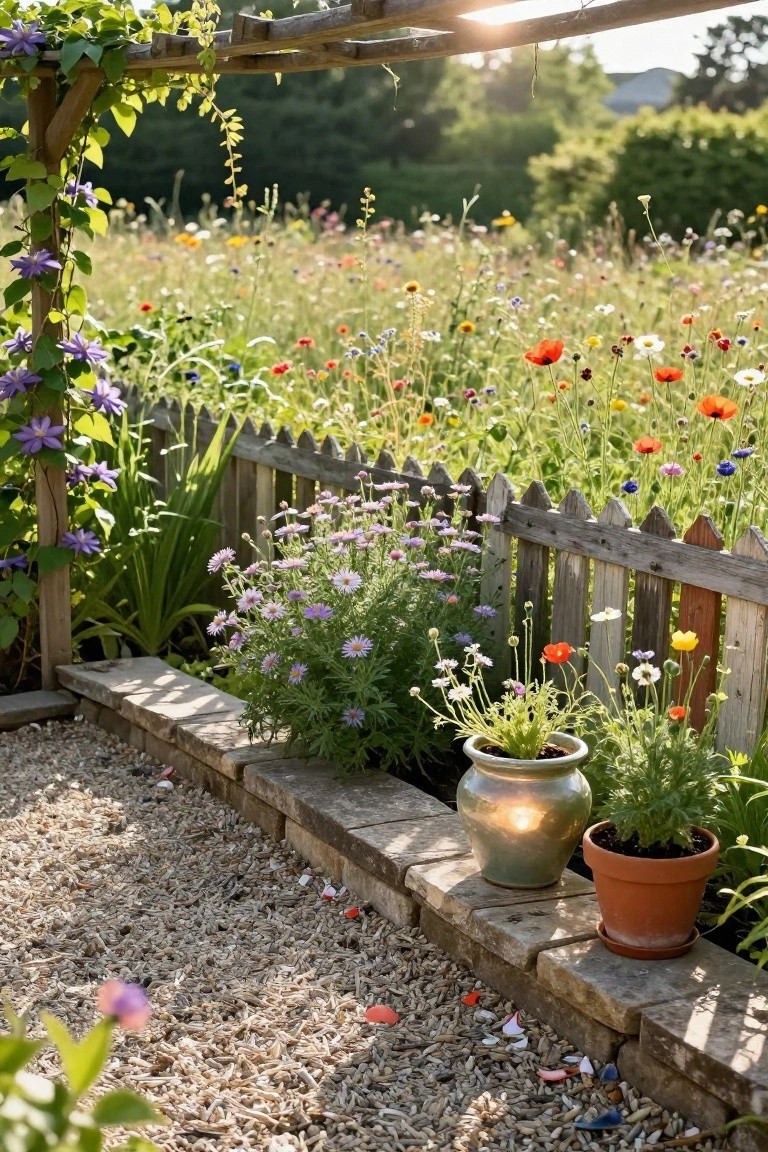
A weathered picket fence makes a perfect edge for cottage borders. Here it runs along a gravel path, backing a mix of daisies, potted herbs, and climbers like clematis draping over from an arbor. This keeps the front tidy while letting wildflowers spill out behind. It ties the garden right to your home without feeling too fussy.
Use this where you want some order near the house but room for meadow-style planting farther out. Pick a fence height that matches your yard scale, maybe three feet tall. Plant perennials along it for year-round shape, and let self-seeders like poppies take over the back. Works best on sunny spots with decent soil.
Frequently Asked Questions
Q: How do I start one of these ideas without a big budget?
A: Grab gravel or mulch for paths that weave from your door to the garden beds. It costs little and instantly pulls everything together. Plant quick climbers like morning glory from seed packets to soften walls fast.
Q: What plants work best if my cottage yard stays shady?
A: Ferns and hostas tuck right against the foundation and spill onto paths. They love the dim spots under eaves. Mix in a few hellebores for winter color that lasts.
Q: How do I keep these gardens from turning into a weedy mess?
A: Spread thick mulch right after planting. It blocks weeds and keeps soil cool. And water deeply once a week to build strong roots that compete better.
Q: Which idea ties my stone cottage to the garden quickest?
A: Build a low dry-stack wall along the front bed with rocks you scrounge nearby. Tuck in tumbling thyme between stones. It grounds the house and invites you outside…
