

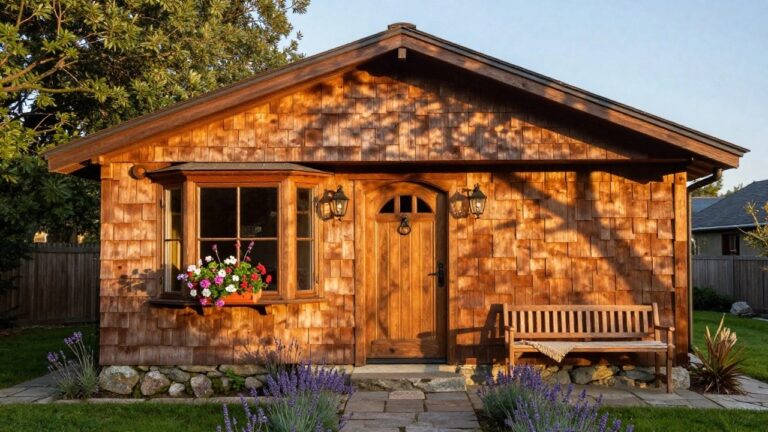
When you pull up to a cottage, the wood on the facade hits you first, setting whether it feels nestled in or awkwardly stuck on.
Good designs let the grain and varying tones pull the eye along the roofline and entry without overwhelming the simple shape.
I keep coming back to how some stains fade gracefully into the siding over years, making the place look lived-in rather than staged.
Wood choices like cedar shakes or rough-sawn panels add that depth that plain clapboard lacks.
A few of these would translate directly to refreshing a dated exterior on a real lot.
Shingled Wood Siding on Small Cottages
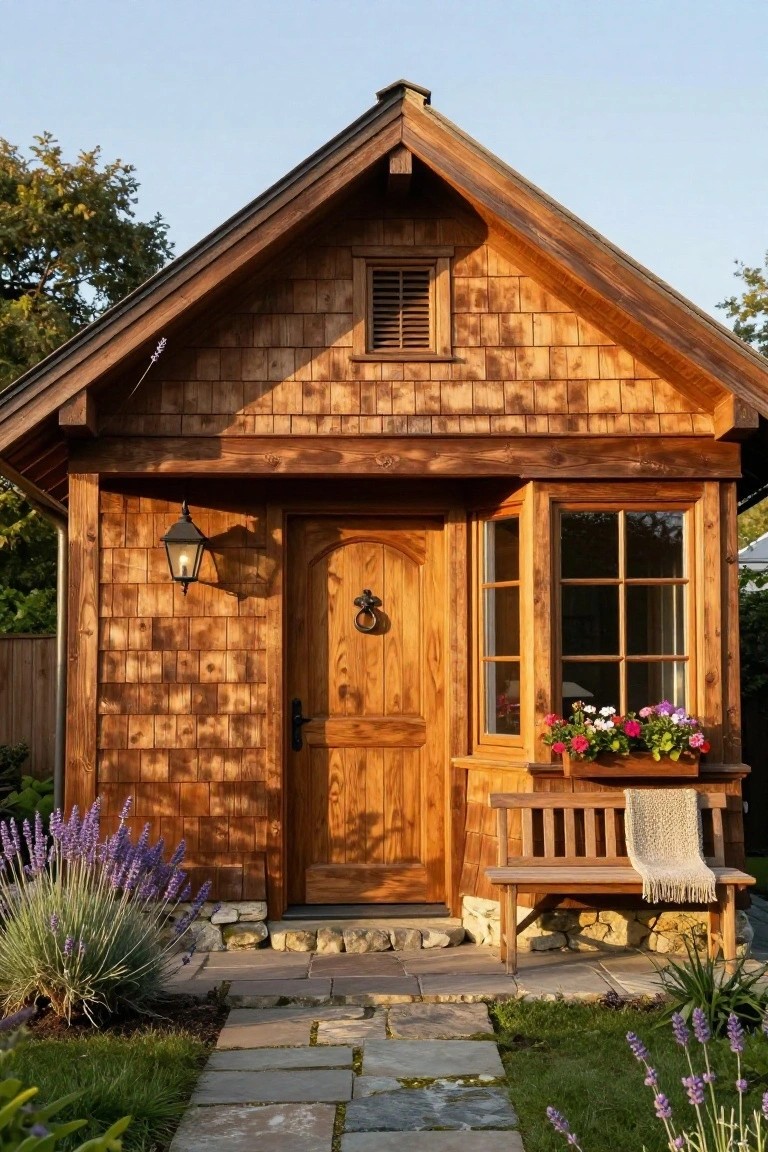
Wood shingle siding covers this little cottage in a way that feels right at home in a garden setting. The rough texture of the shingles picks up the light and gives off that steady natural warmth, especially with the wood door and frame tying it all together. It’s a simple choice that makes even a tiny structure look settled and lived-in.
Try this on backyard cabins or starter homes where you want low-key charm without much fuss. It suits spots with some tree cover or soft landscaping around the base. Just seal the wood at first to hold the color, then let it weather over time for the real patina.
Recommended Products

64 Cedar Shingles with Broad Coverage: Includes 64 western red cedar shingles designed to cover about 20-25 sq ft; Actual coverage varies with overlap, spacing, trimming and project layout, helping buyers estimate material needs before installation

Resquared & Rebutted (R&R) for precise fit and professional alignment

✅ #1 ROYALS GRADE – PREMIUM APPEARANCE QUALITY Royals grade shingles offer a high‑quality appearance with fewer imperfections, making them ideal for visible exterior siding and architectural projects.
Cozy Wooden Porch Entry
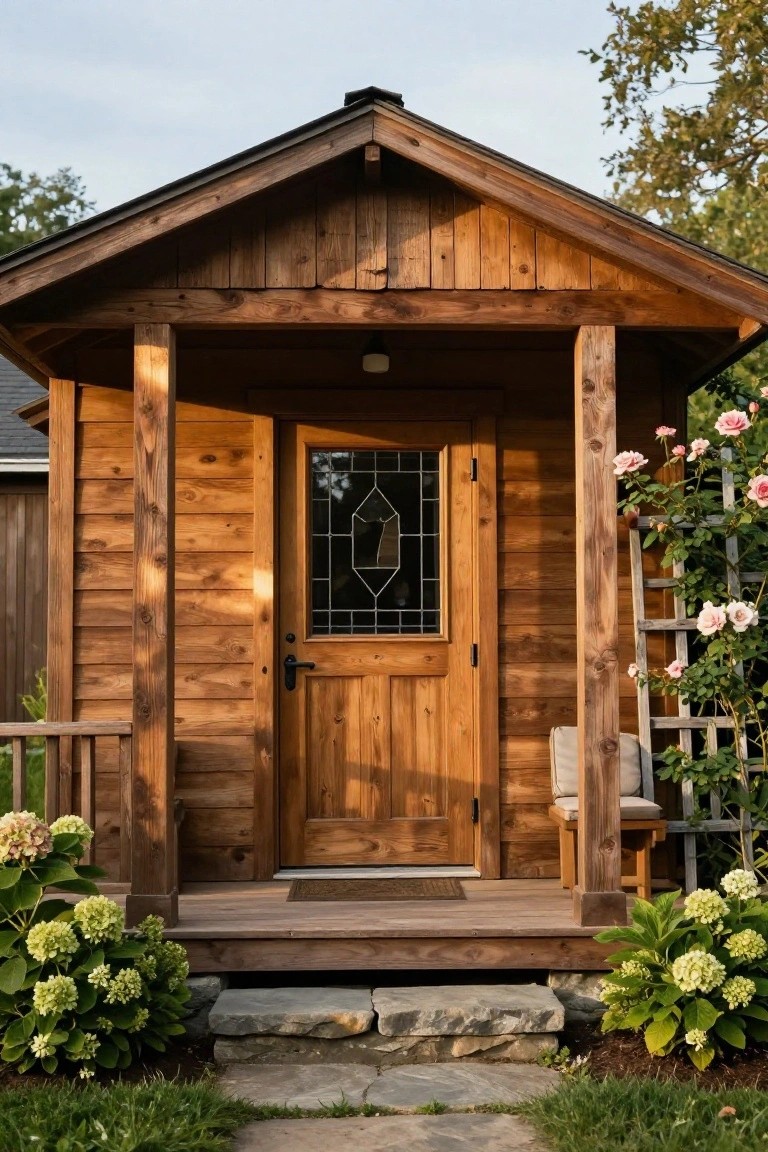
A wooden porch like this pulls you right up to the door with its natural grain and sturdy posts. The rich tones of the cedar siding wrap around the entry, making the whole front feel solid and lived-in. That stained glass window in the door gives just a hint of light inside without stealing the show from the wood.
This setup works great on small cottages or garden sheds where you want easy access and a bit of shelter. Go for untreated or lightly stained wood to keep the warmth, then frame it with steps and low plants like hydrangeas. Watch for moisture around the base… seal everything well to last through wet seasons.
Weathered Wood Shutters Warm a Shingle Cottage
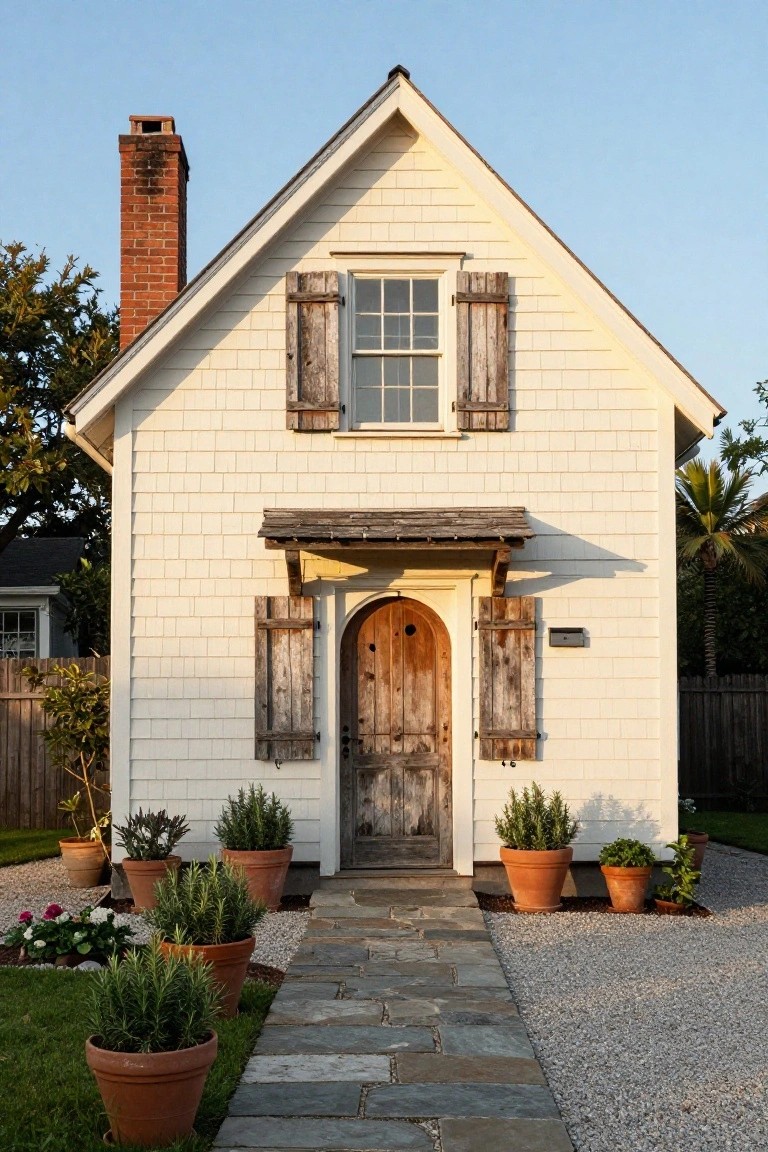
This little house pulls off a nice trick with its pale shingled siding paired against beat-up wood shutters and an arched door. The rough grain on those wood pieces stands out just right, making the whole front feel cozier and more like a real cottage that’s been there a while. It’s that mix of smooth and textured that keeps things from looking too plain.
You can do this on any small front-facing home, especially older ones with simple lines. Hunt for old barn wood or fence boards to make shutters yourself, or grab some from a salvage place. Keep plants simple too, like rosemary pots along the walk. Works best where you want low-key charm that ages well over time.
Classic Shingle Cottage Facade
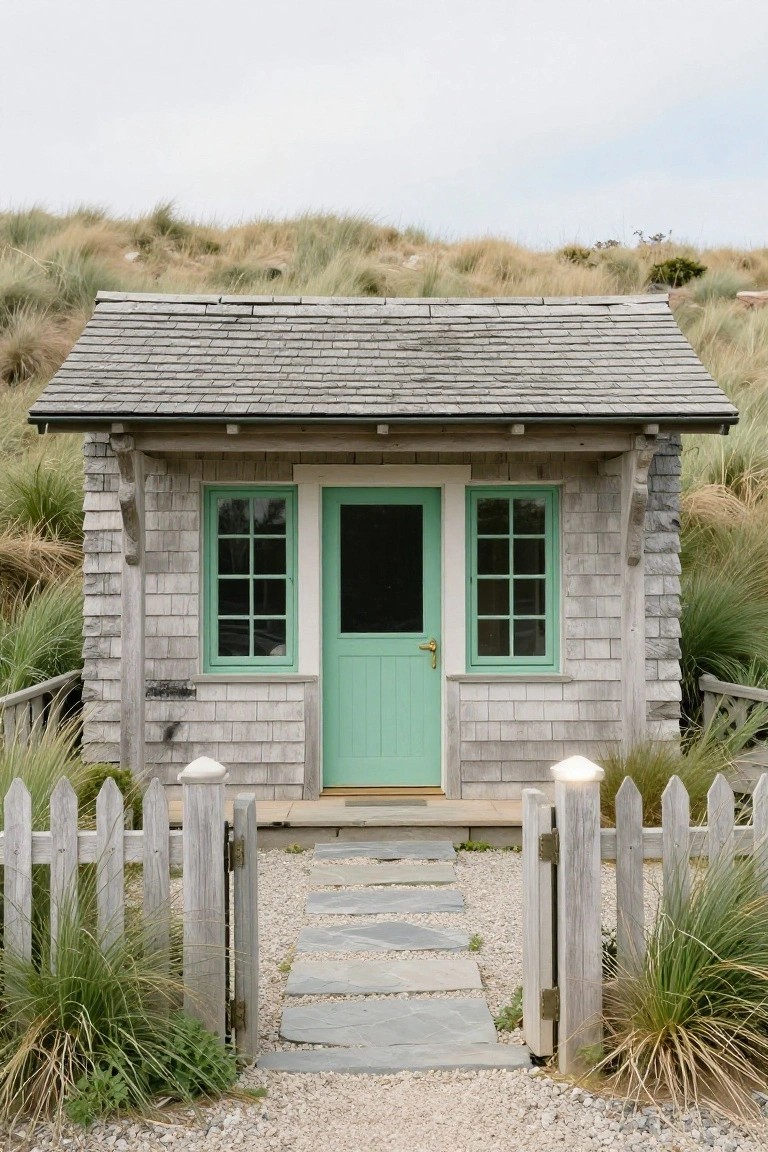
Wood shingle siding like this gives a cottage that lived-in feel right away. The weathered gray tones blend so well with the surrounding dunes and grasses. It looks like the house grew right out of the beach. That mint green door adds just enough color to make the entry pop without overdoing it.
You can pull this off on smaller homes near water or in wooded spots. Stick to natural wood finishes that age on their own. Pair it with a simple path and fence to keep the focus on the siding. Works best where you want low upkeep and that cozy, timeless look.
Rustic Shingle Siding on a Cottage Entry
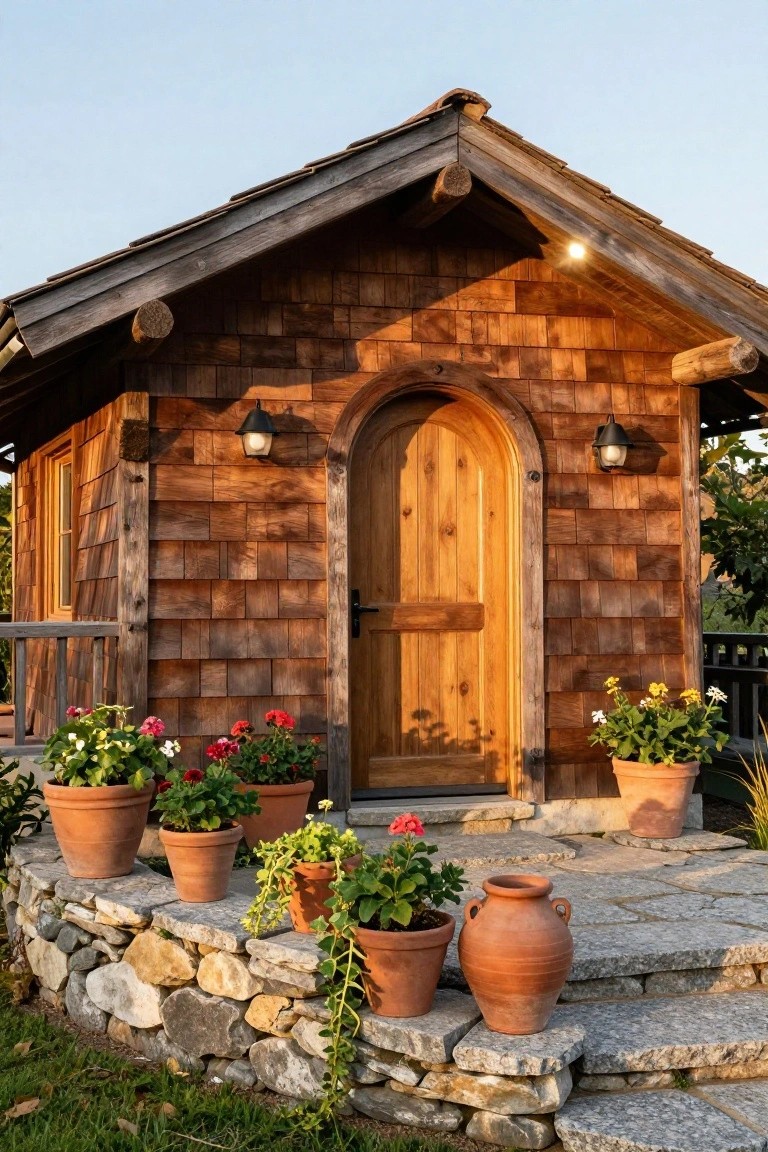
Wood shingle siding like this catches the eye right away on a small cottage. The reddish-brown tones warm up the whole front, especially in soft evening light. It feels lived-in and natural, not too perfect. That arched door and pair of lanterns pull it together without trying too hard.
This look works best on homes tucked into wooded spots or hillsides. Keep the shingles a bit weathered for real character, and add stone steps or simple pots at the base. It suits cabins or vacation spots where you want easy upkeep and that cozy feel. Just seal the wood now and then to hold the color.
Weathered Shingles Over White Clapboard
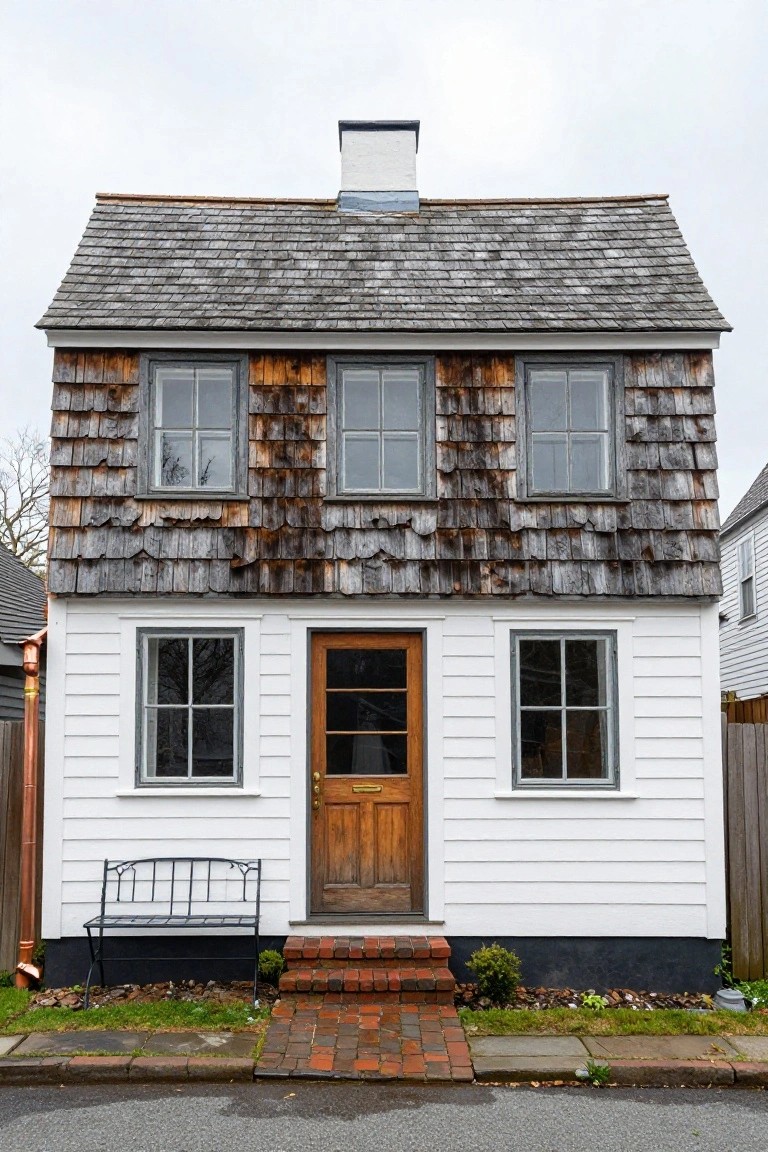
This cottage exterior uses dark, textured wood shingles on top paired with smooth white clapboard below. That simple split gives the house a layered look. The shingles bring in natural wood grain and age that feels lived-in and warm. Meanwhile the white base keeps things clean and bright. It’s a straightforward way to mix old-school charm with a crisp finish.
You see this a lot on smaller homes near the coast or in historic spots. It works best where you want curb appeal without too much upkeep. Add a solid oak door and brick steps like here, and the entry pulls it all together. Just make sure the shingles are treated to hold up in wet weather.
Rustic Porch Benches
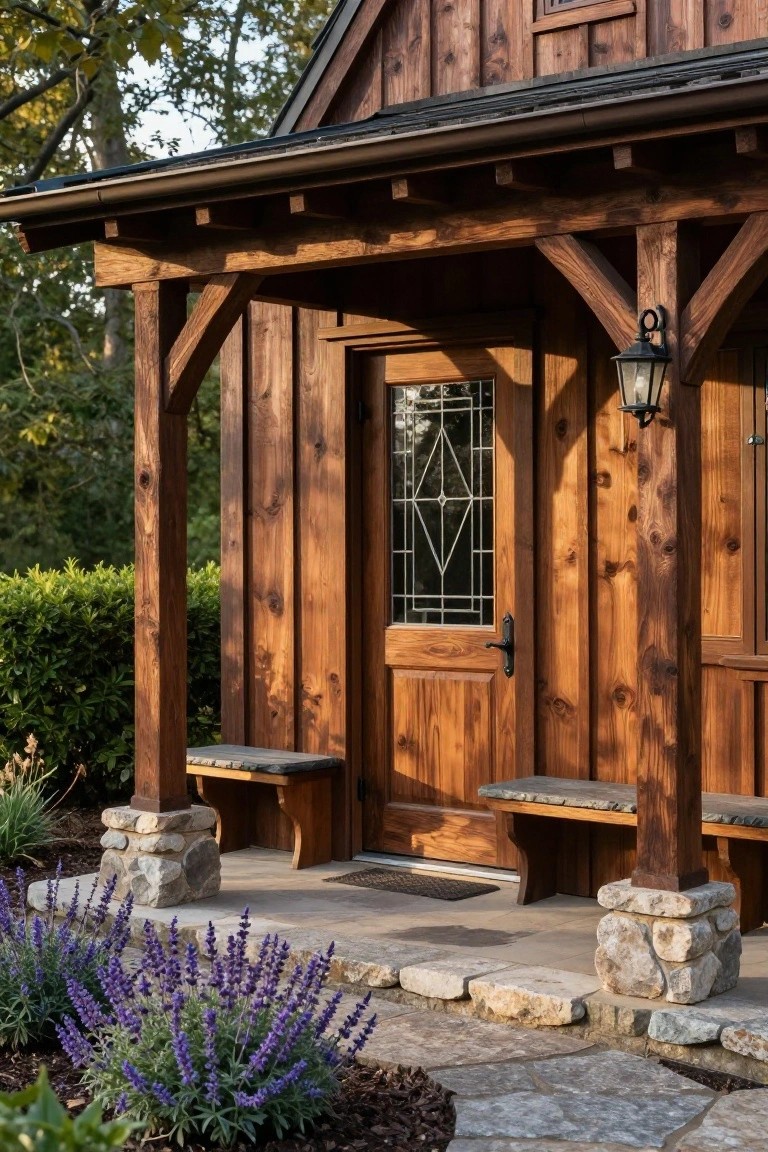
Built-in benches like these flank the entry door under a simple timber porch. The wood matches the cabin siding perfectly, all in that warm brown tone that pulls from the surrounding trees. Stone bases under the benches keep things steady and tie into the path stones. It’s a natural spot to rest boots or wait for company.
These work best on cottage-style homes or small cabins where space is tight. Place them right by the door for easy access, and they’re handy for flower pots too. Skip them if your porch gets heavy snow, though. Just seal the wood well and add cushions for comfort.
Cozy Cedar Cabin Facade
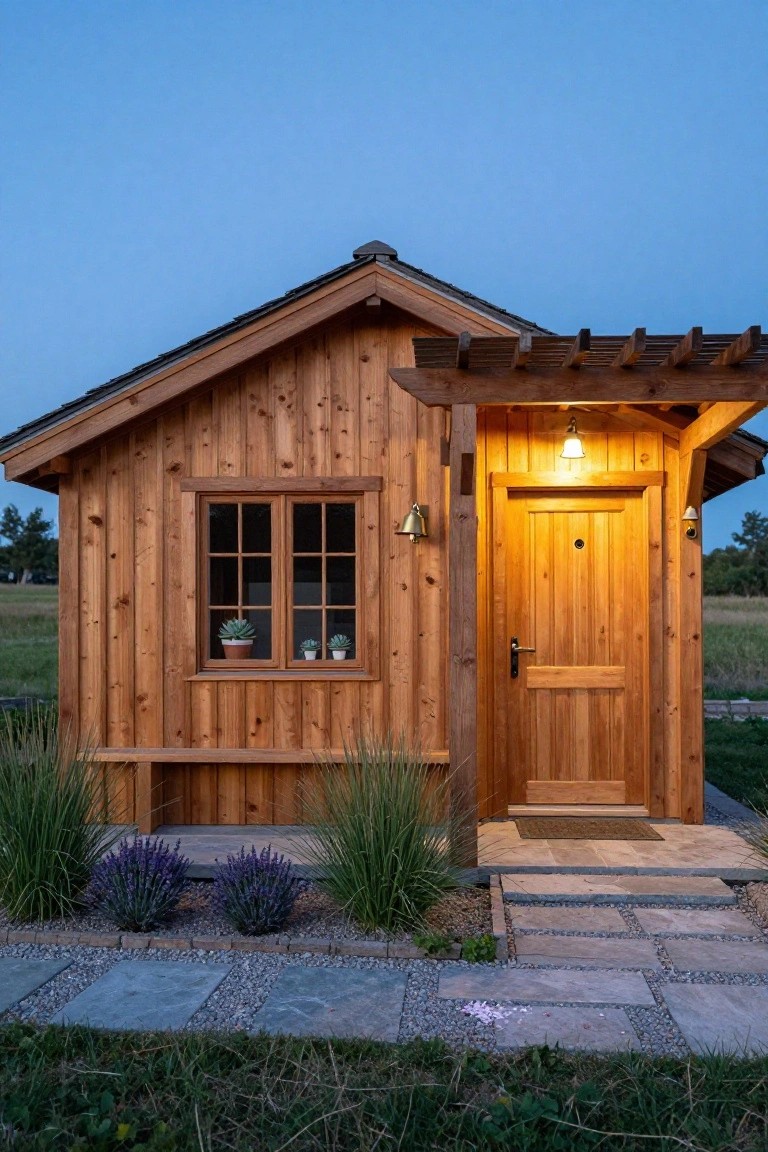
This small cabin pulls off a simple look with its rich cedar siding and timber porch frame. The vertical wood planks give it that classic cabin warmth without much fuss. Evenings bring out the glow from the entry lights, making the whole front feel welcoming right away. It’s the kind of exterior that fits right into a natural spot.
You can use this on a modest lot where you want something sturdy yet homey. Stick to unpainted cedar for that honey tone, and add a basic pergola over the door for shade. It works best in cooler spots… just seal the wood now and then to keep it looking good. Pairs nice with low grasses around the base.
Dark Timber Framing Warms Brick Cottages
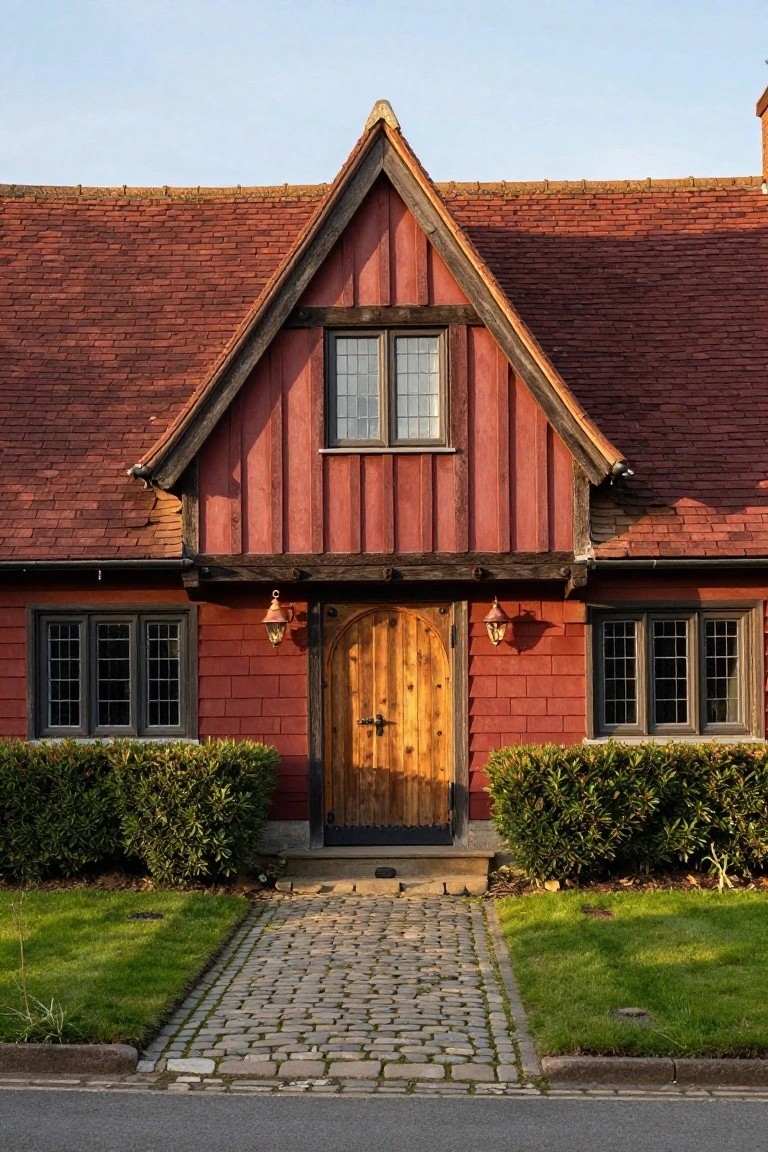
Dark timber framing like this stands out on a red brick cottage. It breaks up the solid walls and adds that old English feel without much effort. The wood’s natural tones, especially on the entry door, make the whole front more approachable. Folks notice it right away from the street.
You can add this to bungalows or small homes in town. Use reclaimed beams if you want real character, or stain new ones dark to match. Stone paths and simple bushes keep the focus on the wood. Skip it on super modern places, though. It suits spots with some history best.
Warm Wooden Cottage Entry
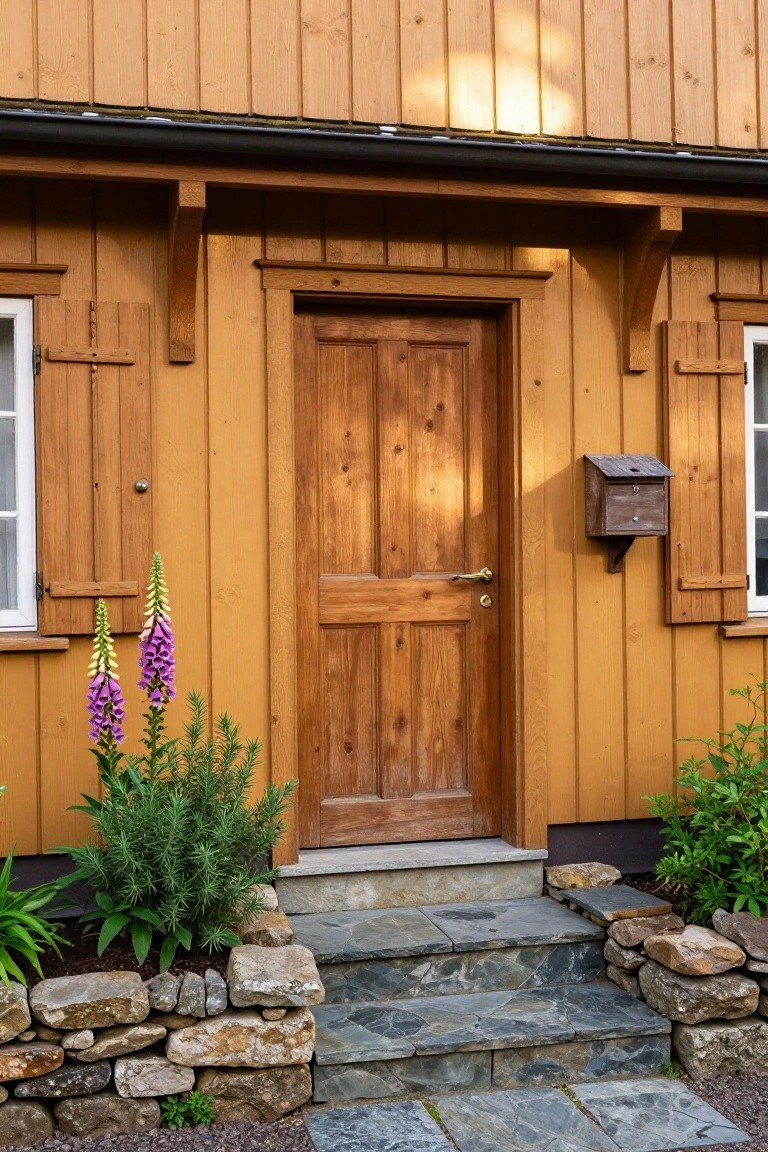
A solid wooden door like this one pulls the whole facade together with its rich, natural grain. The golden-brown tones glow in the light, making the entry feel open and lived-in right away. Simple touches like the foxgloves nearby keep things fresh without fuss.
This works best on cabins or small homes tucked into green spots. Go for untreated pine or oak with just an oil finish to let the wood breathe. Add low stone steps for a sturdy base, and skip heavy landscaping so the wood stays the star.
Cedar Wood Cladding for Cozy Cottage Sides
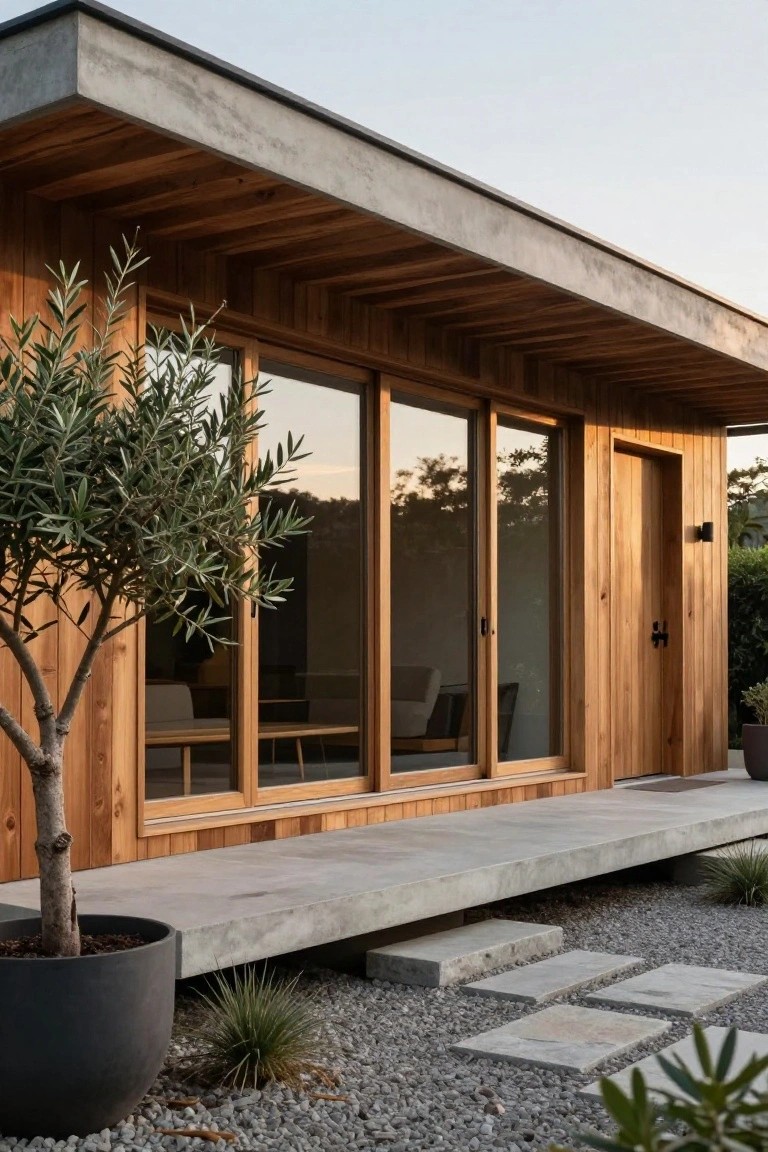
Cedar wood cladding wraps this cottage nicely. The vertical boards catch the light and bring out that natural grain everyone likes in wood homes. It stands out against the concrete roof and platform. Keeps the look warm even with those hard edges.
Try it on a backyard cabin or small addition. Works best where you want wood warmth without too much upkeep. Let the cedar weather over time for more color. Just seal it at first to hold off rain damage.
Weathered Shingle Siding on Cottages
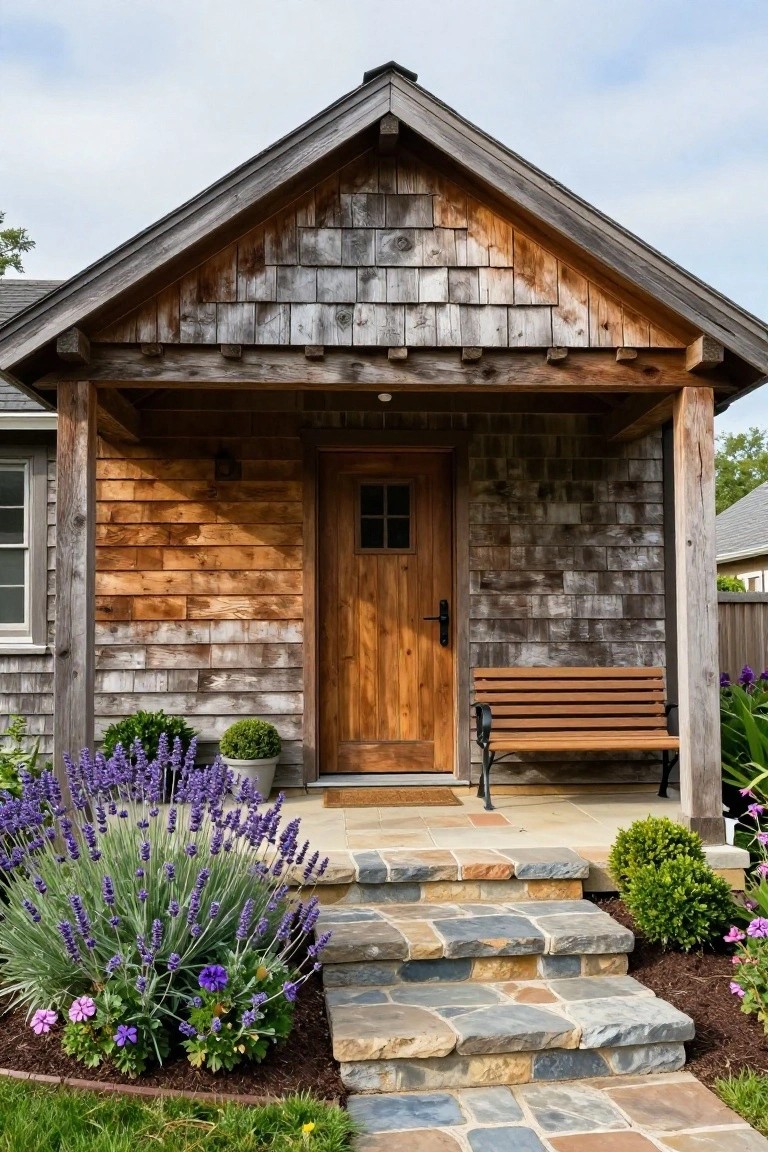
Weathered shingle siding like this takes plain wood and lets time do the work. You see the mix of gray tones and warm browns on the walls, giving the whole front a lived-in feel that’s hard to fake with new materials. It fits right into the cottage style, making the house look settled and welcoming from the street.
Try it on smaller homes or cabins where you want low upkeep but real character. It holds up well in damp spots, and adding a bench on the porch pulls it together without overdoing things. Just make sure the shingles are cedar or something that ages right, or it might look off after a few years.
Rustic Log Cabin Facade
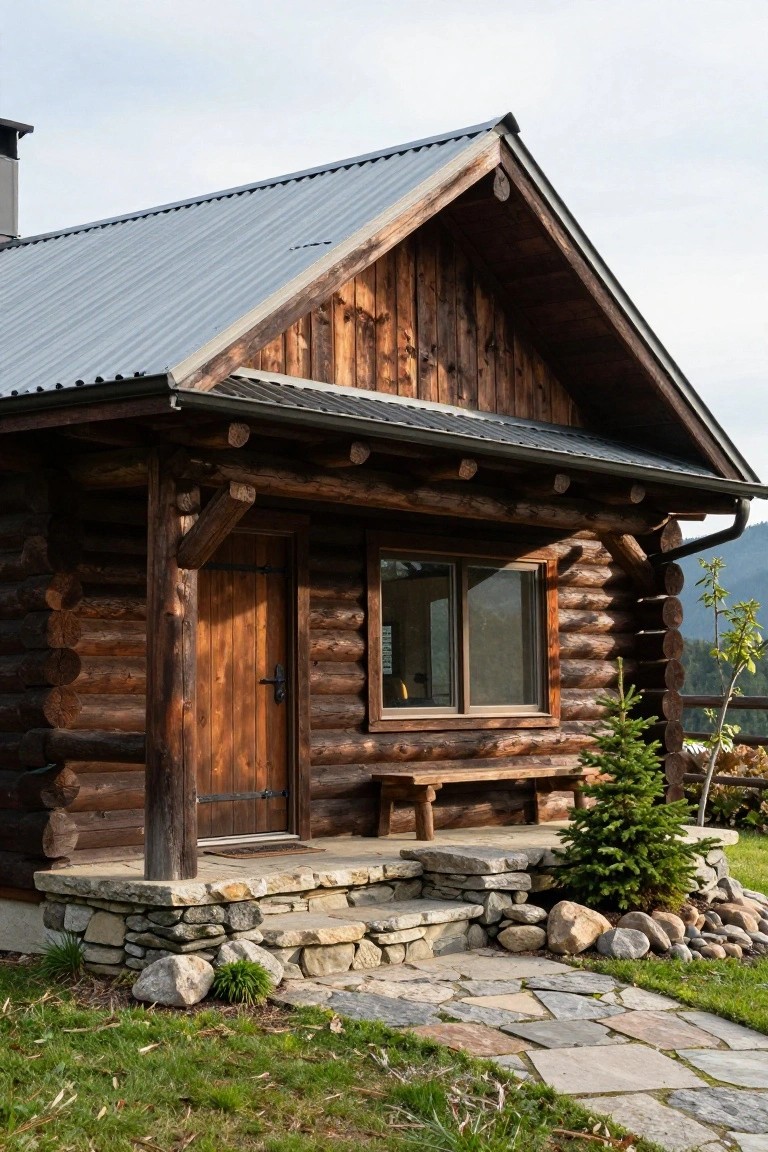
Nothing beats the straightforward appeal of a log cabin built from full round logs. Stacked and notched at the corners, these walls pull off that genuine rustic look without much fuss. The natural wood grain and dark tones make the place feel right at home in the woods, cozy even on gray days.
This style works best on sloped lots or spots with trees around. Go for a simple metal roof to handle snow and rain easy. Just keep the logs sealed against weather, and it stays solid for years.
Shingled Cottage Sides in Weathered Gray
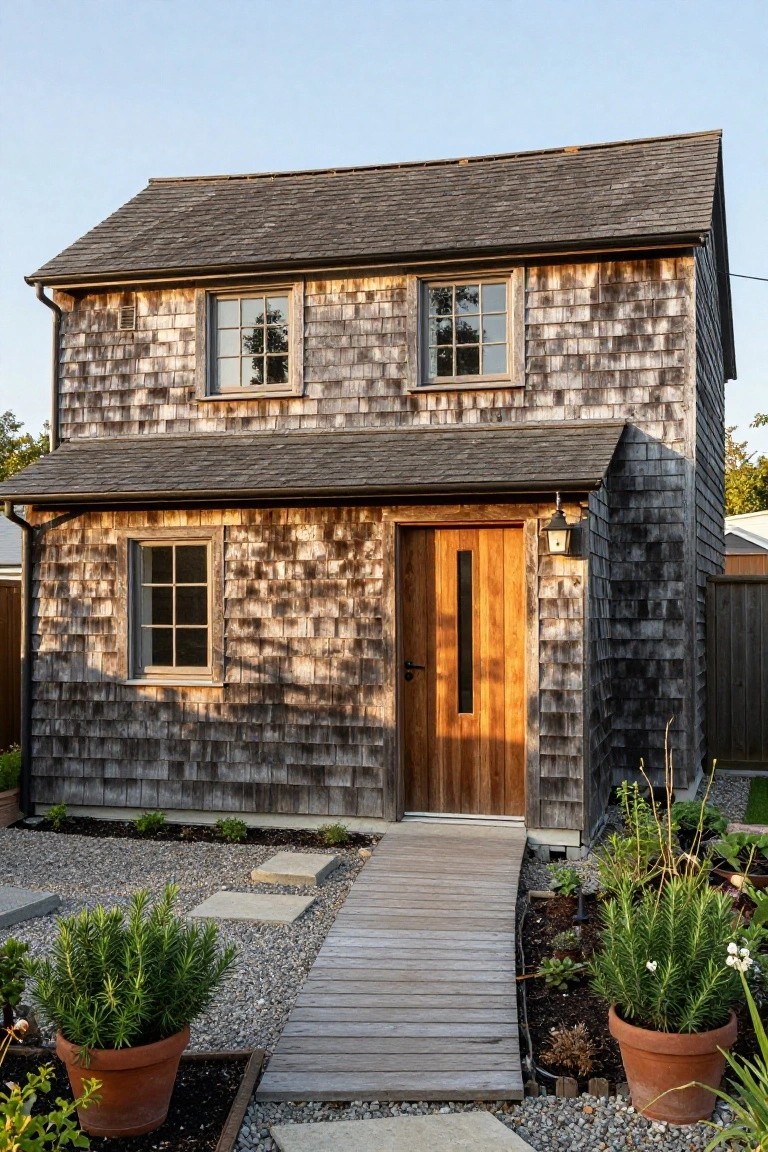
Shingle siding like this takes wood to a natural next level. The gray tones come from years of weather doing its thing, making the whole house feel settled and warm without any fuss. That rough texture on the walls pulls in the light just right, especially around the simple wooden door.
It works best on smaller cottages or cabins where you want low upkeep and real character. Skip fresh stain, let it age on its own. Pair with gravel paths and a few pots out front to keep the yard easy. Fits right in coastal spots or wooded lots.
Rose-Covered Wooden Pergola Entry
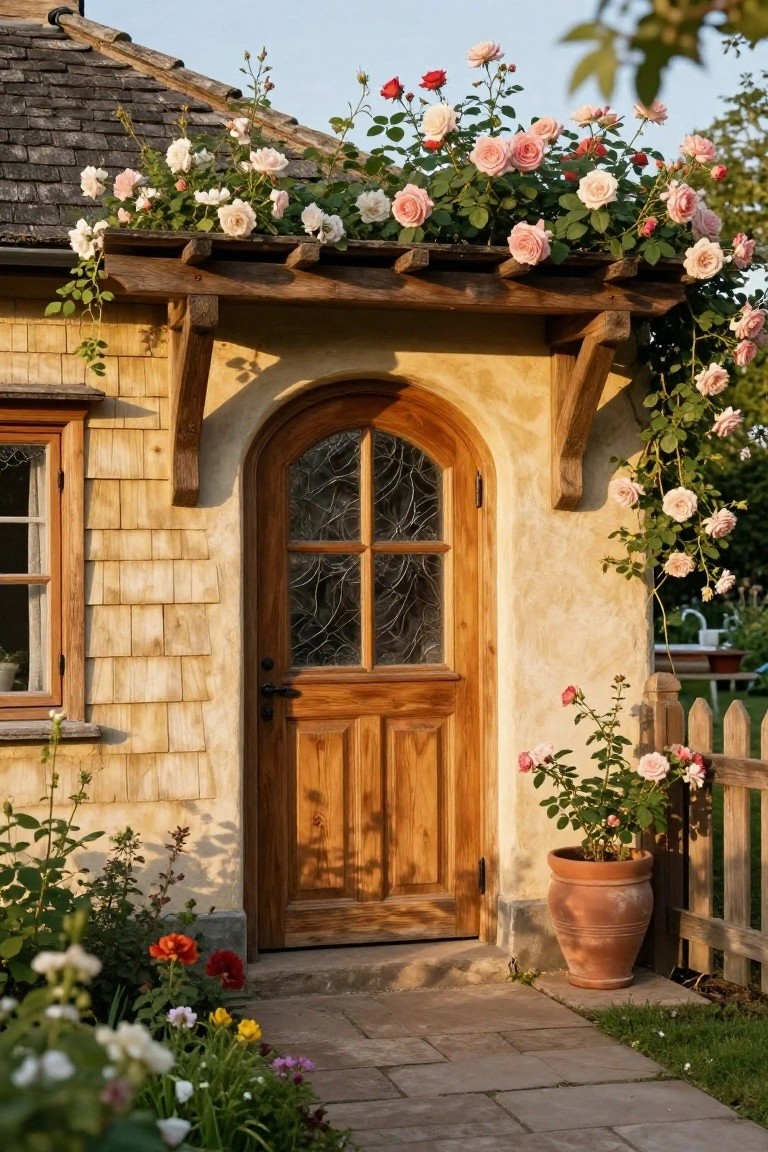
A simple wooden pergola stretched over the front door makes this cottage entry stand out. It’s draped in climbing roses that spill over the beams in soft pinks and whites. The rich wood tones of the pergola and arched door blend right into the flowers, pulling out that cozy natural warmth without much fuss.
This setup works well on smaller homes like cottages or bungalows where you want curb appeal that feels lived-in. Pick a sturdy pergola design and train everblooming roses up it each season. It suits sunny spots with good soil. Just watch for mildew in humid areas and trim back in winter.
Small Wooden Garden Cabin
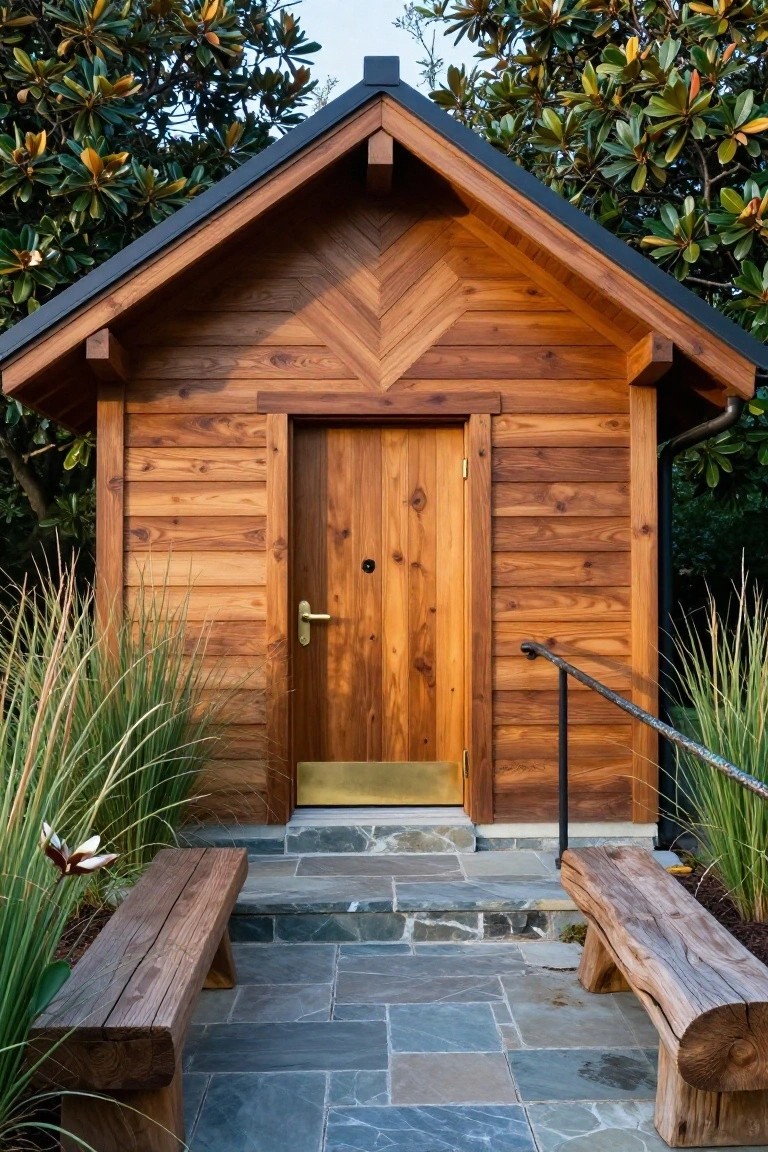
A compact cabin like this one uses vertical cedar siding to pull off that classic cottage look without overdoing it. The rich wood tones warm up the simple gabled shape, and little touches like the brass door handle keep things practical. It sits right in the garden, blending with the grasses and trees around it.
Build one for a sauna, office, or tool shed in a backyard with some shade. Go for cedar or similar rot-resistant wood, and match the stone steps for easy access. These work best on smaller lots where you want a spot that feels tucked away but not hidden.
Vertical Wood Siding on a Chalet Cottage
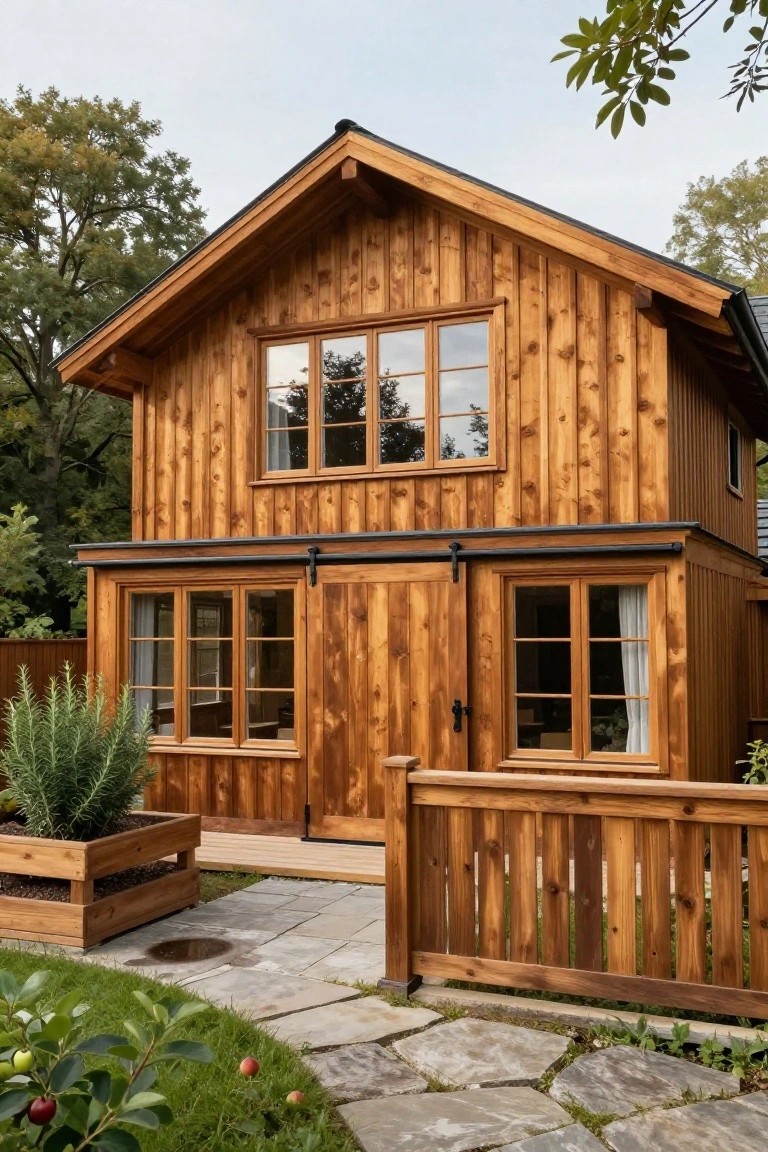
Vertical wood siding like this gives a cottage that solid, handcrafted feel. The planks show off the wood’s natural texture and color variations, pulling in the surrounding trees without any extra paint or stain. Paired with a dark roof and big windows, it keeps things simple yet sturdy looking.
You can pull this off on a small lot or sloped site where a steep gable roof fits right in. Stick to cedar or pine that’s treated for weather, and add a sliding barn door for easy access. It suits cooler climates best, but watch for moisture buildup in rainy spots, so good overhangs help.
Exposed Timber Framing Around the Entry
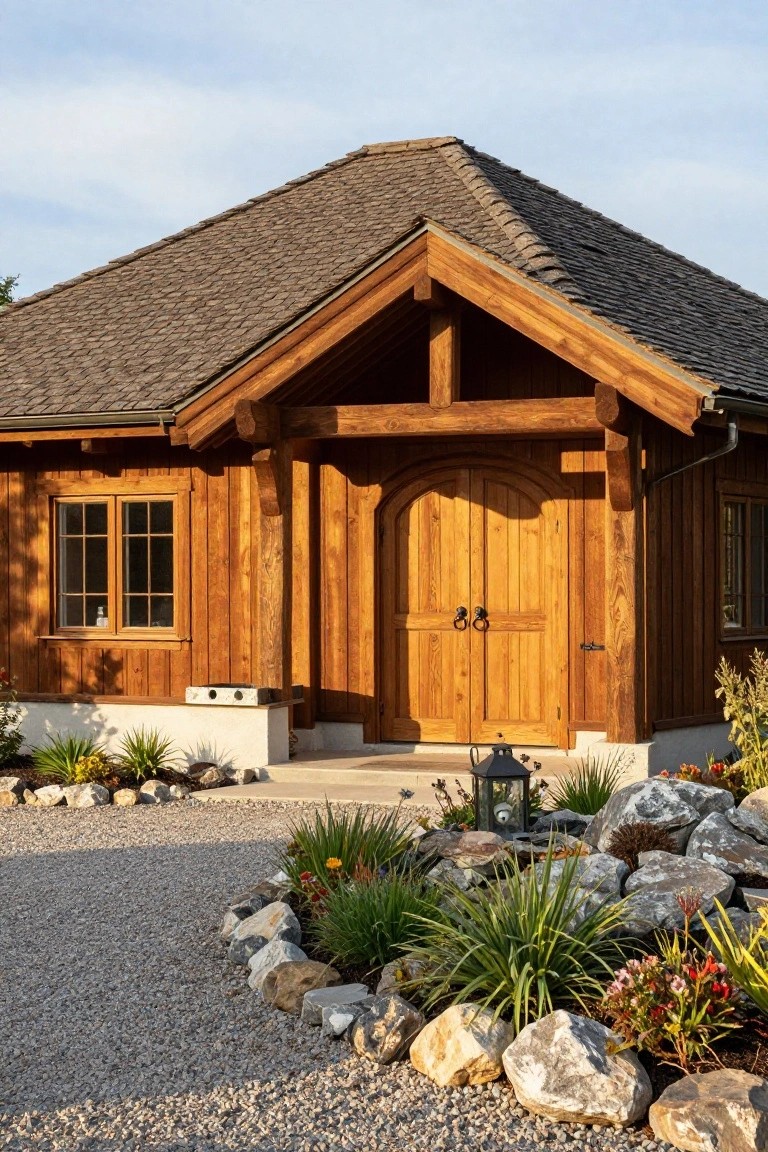
Exposed timber beams like these make a cottage entry feel sturdy and welcoming right away. The heavy wood posts and crossbeams wrap around that arched door, showing off the natural grain and knots in a way that looks built to last. It’s a simple way to add character without much fuss.
This style suits cabins or homes in hilly spots where wood blends with the surroundings. Use it on a small overhang porch, and match the beams to the siding color. Just seal the wood well to handle weather, and skip paint to keep that honest warmth.
Weathered Siding and Warm Wood Doors
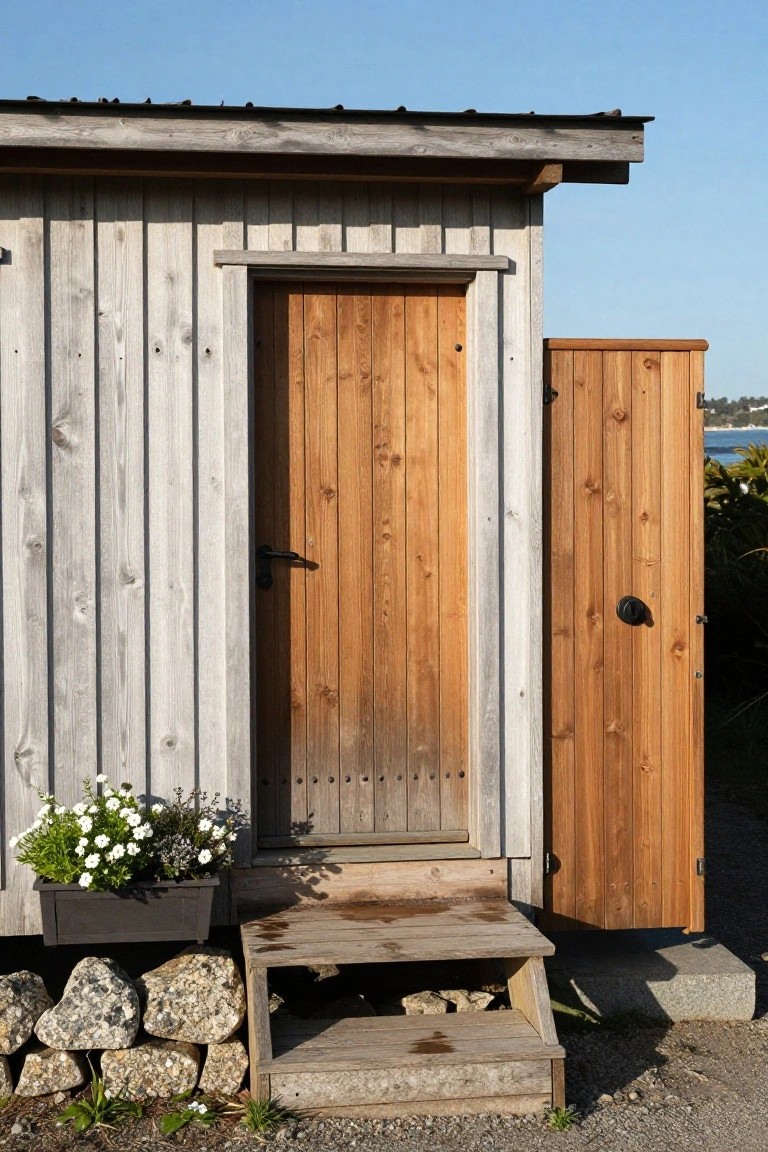
One nice touch in cottage designs is pairing faded gray siding with warmer wood doors. The siding takes on that soft, driftwood look over time from the weather. Then the doors in a richer brown tone pull your eye right to the entrance. It keeps things simple but adds real warmth without much fuss.
You can pull this off on sheds, garages, or even a main house entry. Works best in coastal spots or anywhere with natural stone bases and a few plants nearby. Just make sure the doors stay protected to hold that color longer. Fits older style homes that need a little life brought back.
Shingle Siding for Cottage Warmth
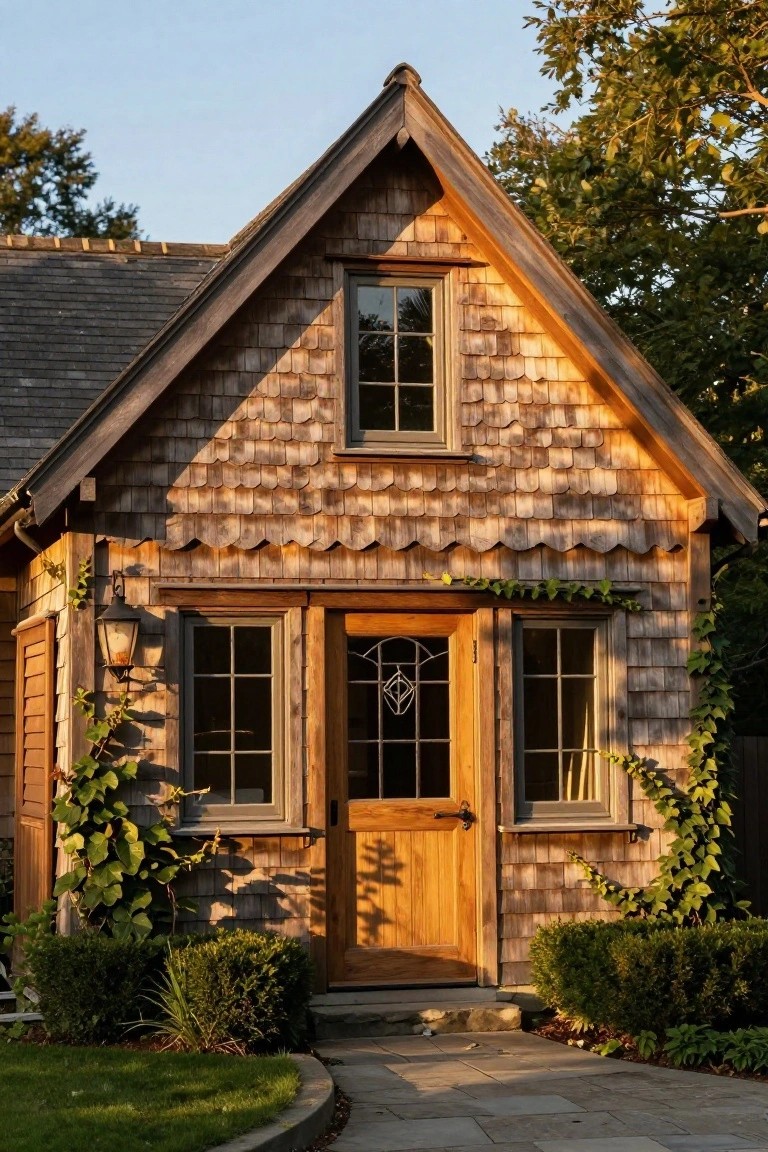
Cedar shingles like these give a cottage that lived-in feel right away. The way they overlap and weather over time brings out the wood’s natural tones, making the whole front look warm even in cooler light. Paired with a simple wooden door and some climbing ivy, it keeps things rustic without much fuss.
This style works best on smaller homes or guest houses where you want easy upkeep and a nod to older coastal designs. Use it on a facade facing the street or garden, and stick to natural finishes so the shingles can patina nicely. Just keep the trim minimal to let the texture stand out.
Wooden Cottages with Deep Porch Overhangs
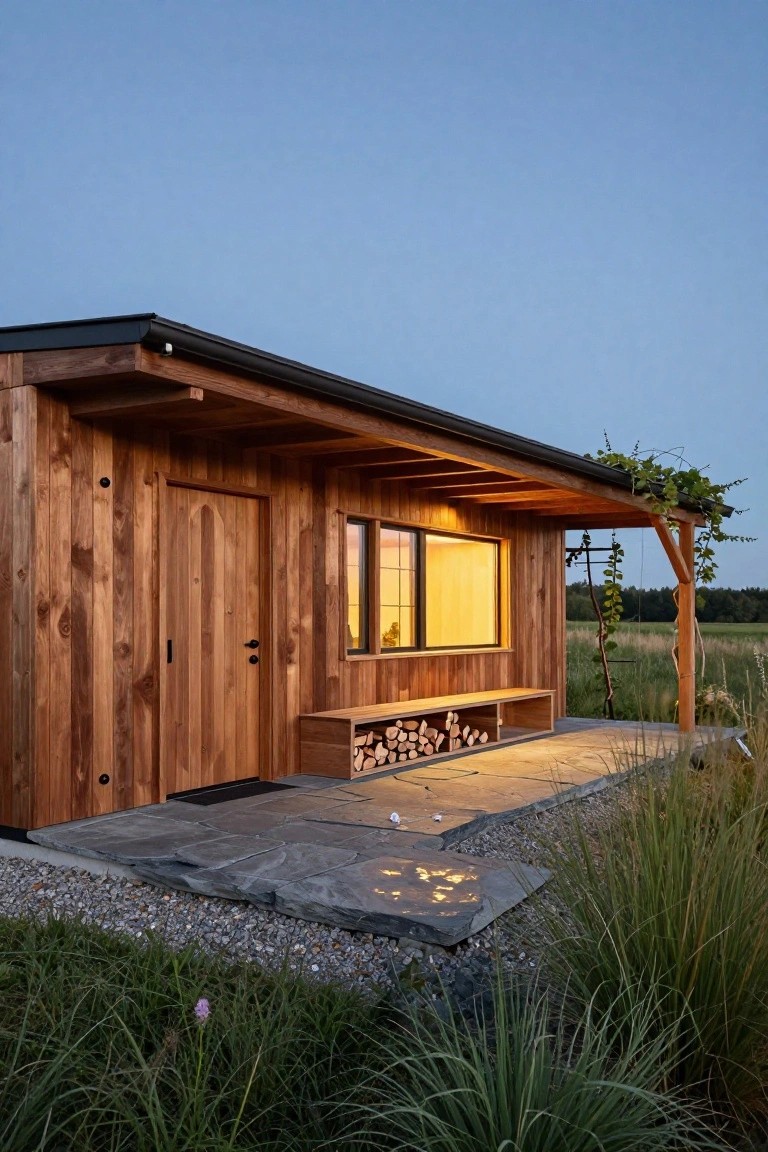
A deep overhang like this one turns a simple wood cabin into something more livable right from the approach. The wide roof extension covers the entry door and a side window, keeping rain off while letting warm light spill out in the evenings. It frames the facade nicely too, with the rich vertical wood planks catching that natural glow.
This setup shines on smaller rural homes or cabins where you want shelter without extra structures. Add a built-in bench and firewood nook underneath, like the stack shown here, for everyday practicality. It suits spots with some weather exposure, but keep the wood sealed to hold up over time.
Exposed Beam Porch Entry
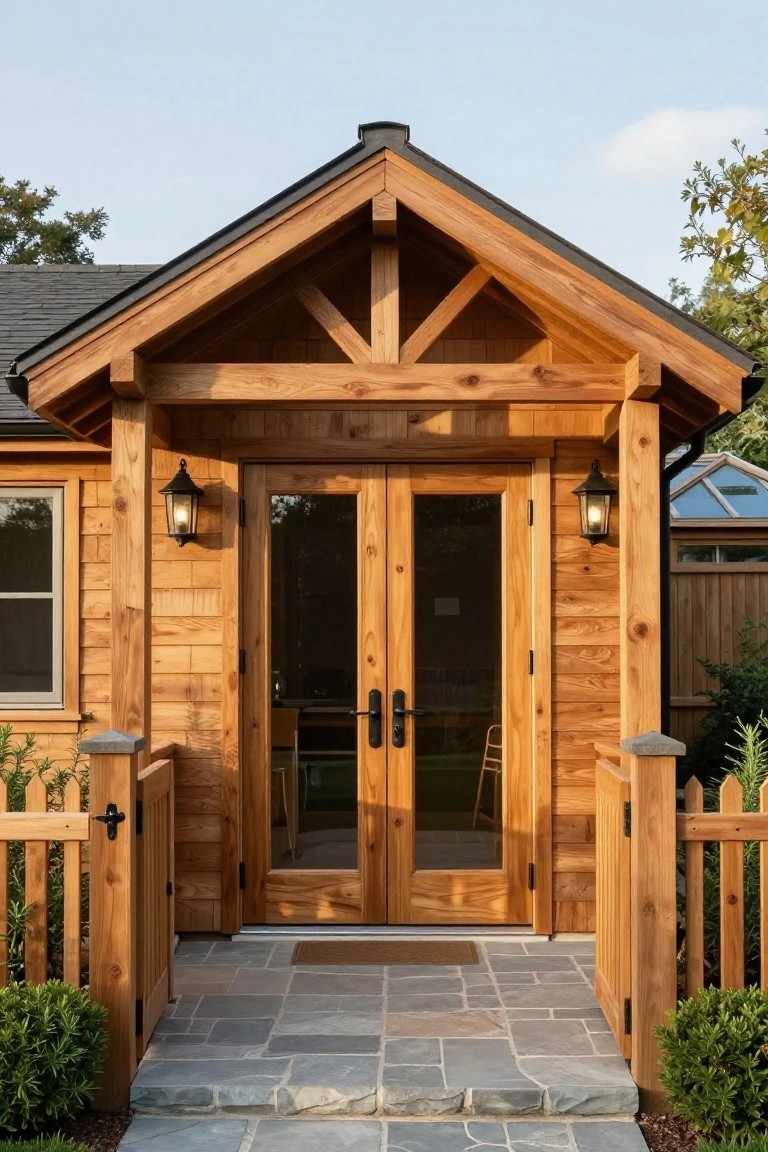
A timber-framed porch like this pulls together a cottage look with its open beams overhead. The rich wood grain shows off that natural warmth without any fuss. Paired with simple glass doors, it lets light spill out and makes the entry feel open yet sheltered.
Try this on a backyard cabin or small home addition where you want curb appeal that lasts. The beams add height and character, especially under a dark roof. Just keep the wood sealed against weather, and it stays looking good year after year.
Frequently Asked Questions
Q: How do I keep the wood from turning gray in the rain?
A: Brush on a penetrating oil sealant each spring.
That blocks moisture while letting the wood breathe. Your cottage stays cozy-looking without constant upkeep.
Q: Can reclaimed barn wood pull off these designs?
A: Grab rough-sawn planks and plane them smooth.
Seal right away to highlight those rich grains. It brings authentic warmth no new lumber matches.
Q: What’s the best way to refresh faded trim?
A: Sand lightly, then wipe with teak oil…
And watch the honey tones pop back to life. One afternoon job revives the whole front.
Q: How do I mix wood siding with stone accents?
A: Stain the wood a shade warmer than the stone.
Wipe excess for a soft blend that draws eyes to both. Trim ties it all together effortlessly.
