

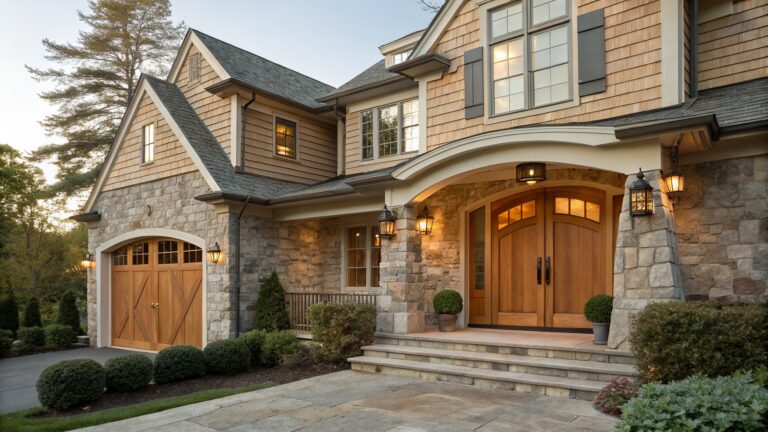
When I drive past older farmhouses the mix of stone at the base and wood siding above often decides how settled the whole place feels from the road.
I have noticed that soft neutral trim can tie those heavier materials together so the entry does not fight the roofline.
Materials matter more than I first thought.
Over time I started paying closer attention to how the stone wraps the foundation and whether the wood grain shows enough variation to keep the front from looking flat.
A few of these choices are the ones I would test on paper first before committing to any real changes.
Stone Arches at the Entry
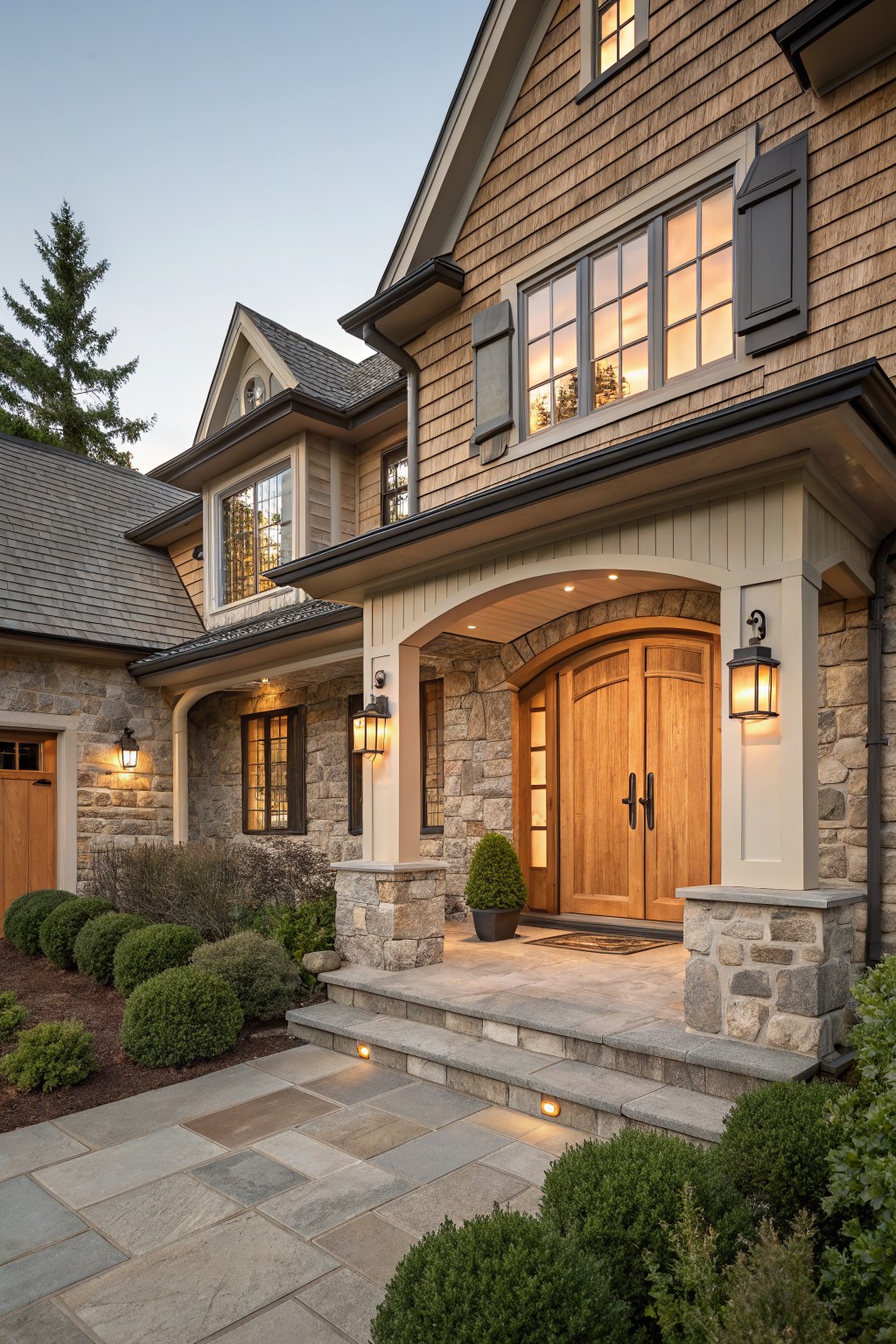
A stone arch over the front door adds structure and weight to a farmhouse exterior without needing extra trim or ornament. It creates a clear focal point that feels solid and lasting, especially when the rest of the house uses wood siding and softer colors.
This works best on homes where the foundation already includes stone, since the arch can tie into that base. Keep the doors in natural wood tones and limit other details so the arch stays the main feature rather than competing with too many materials.
Stone Foundation With Wood Siding
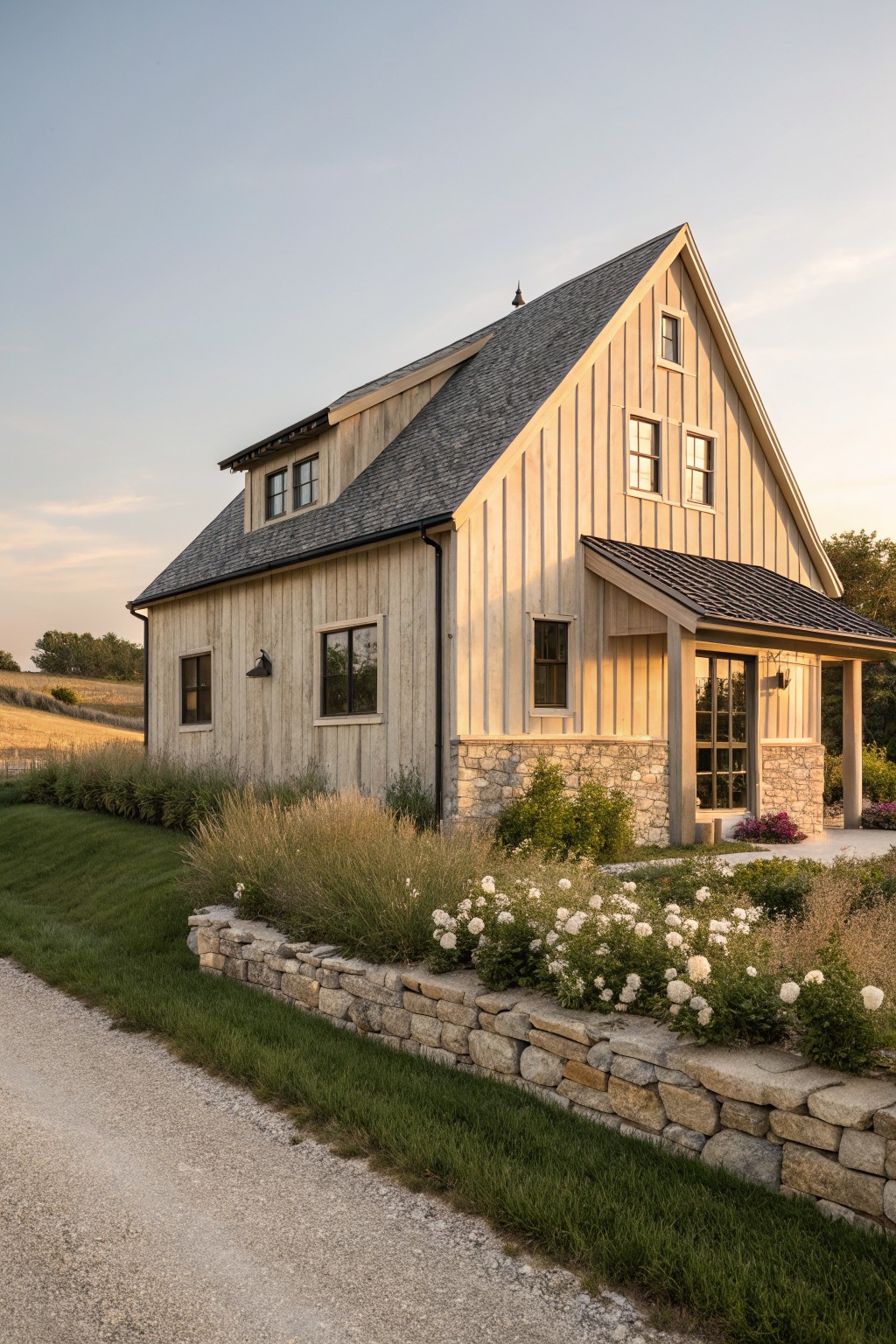
A stone base gives the house a grounded look that pairs well with vertical wood siding. It breaks up the height and keeps the exterior from feeling too light or flat.
This works best on homes with some yard space around them. Keep the stone low and let it run along the foundation and any small retaining walls nearby so the materials feel connected without competing.
Stone And Wood On The Porch
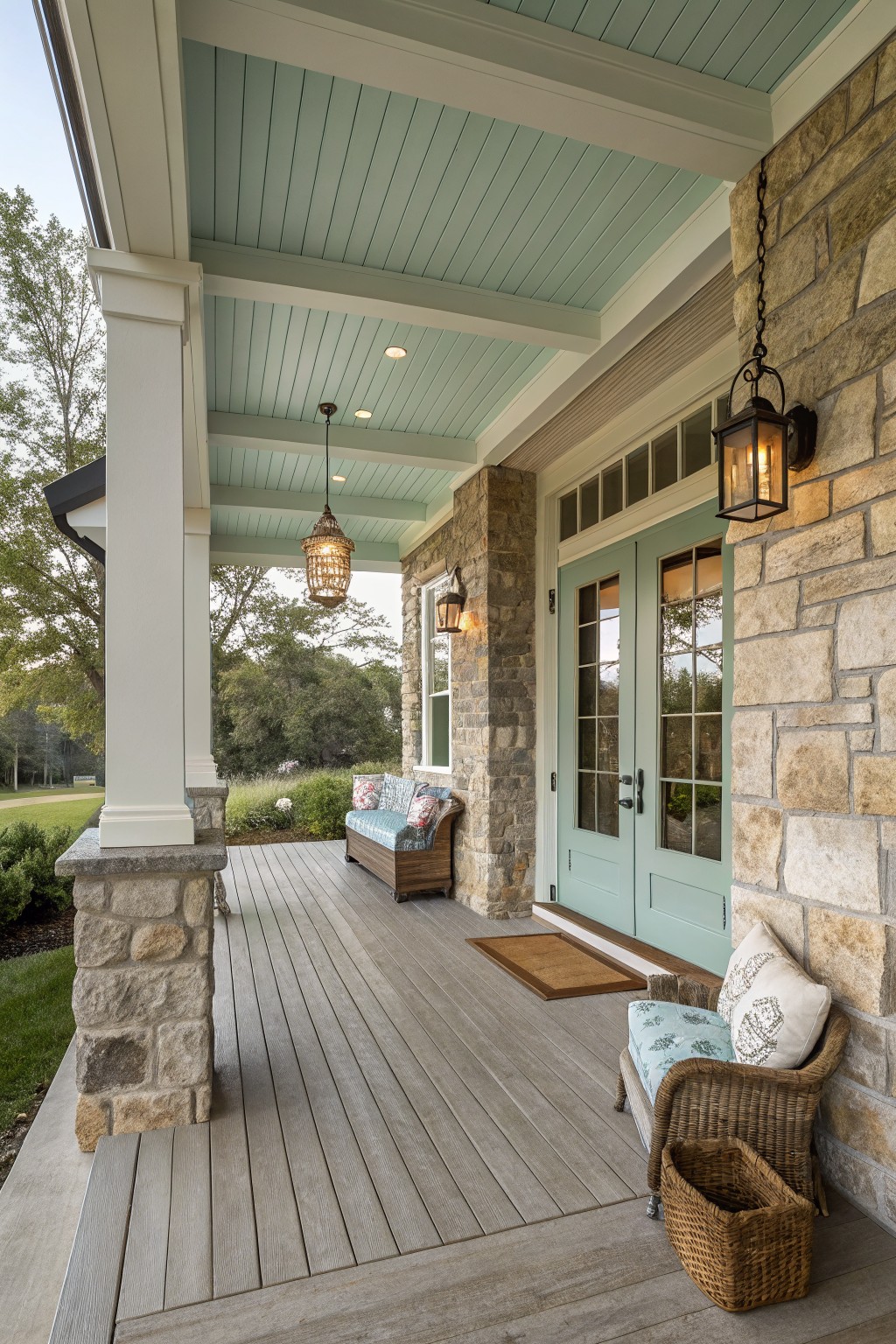
A porch feels more solid when the floor is wood and the main supports are stone. The two materials work together without fighting each other, and the wood keeps the space from feeling too cold underfoot.
This works best on homes that already use both materials elsewhere on the exterior. Keep the deck boards a soft gray tone and let the stone stay natural so the whole area stays simple and easy to maintain.
Blend Stone With Soft Neutral Siding
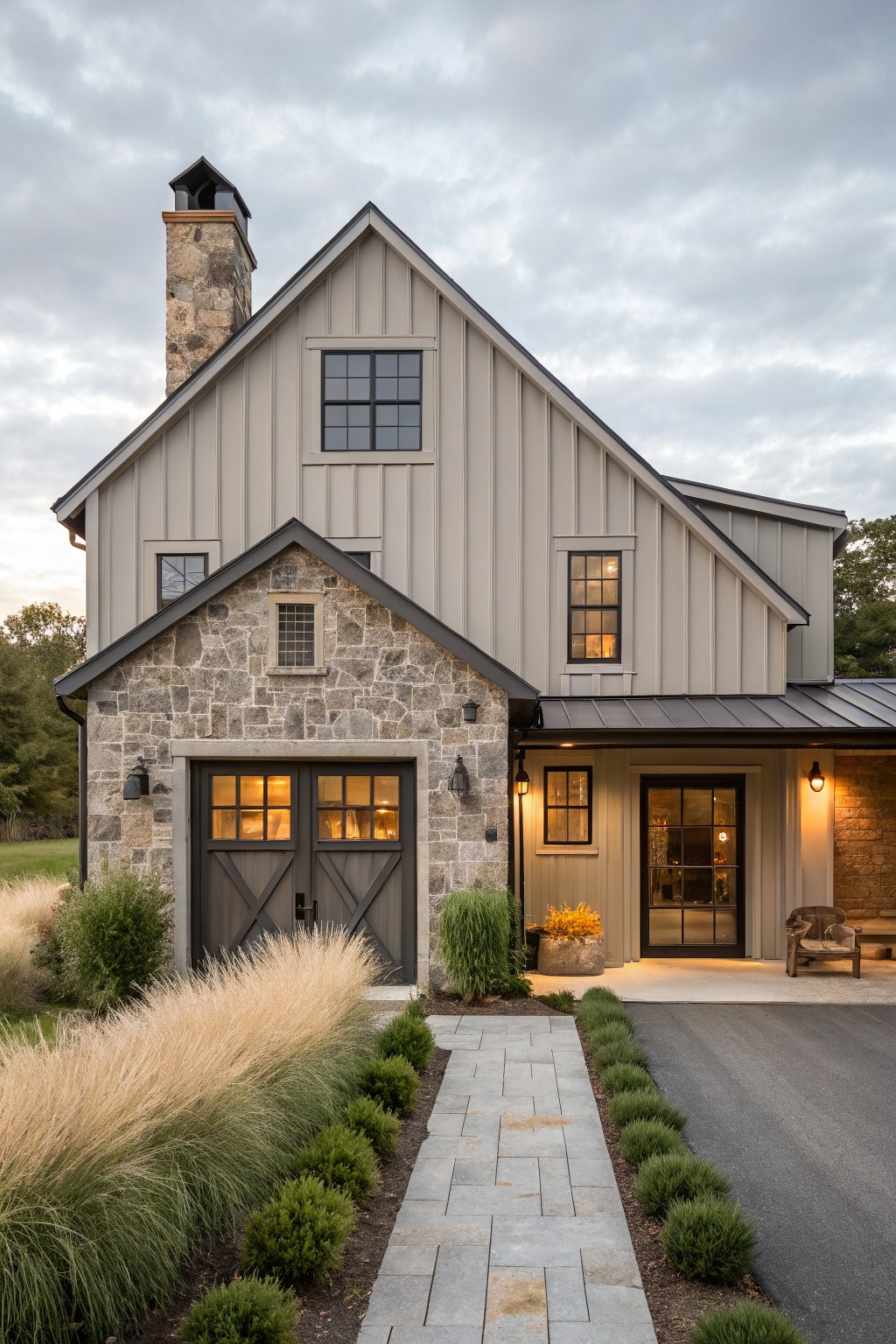
Stone brings weight and texture to a farmhouse exterior without needing to cover the whole house. When it is limited to the lower walls and paired with a soft neutral siding color above, the result feels balanced and still light.
This works especially well on homes with a strong roofline or multiple gables. Keep the stone in smaller sections around the base or garage so the siding can do most of the work and the overall look stays simple.
Stone And Wood At The Entry
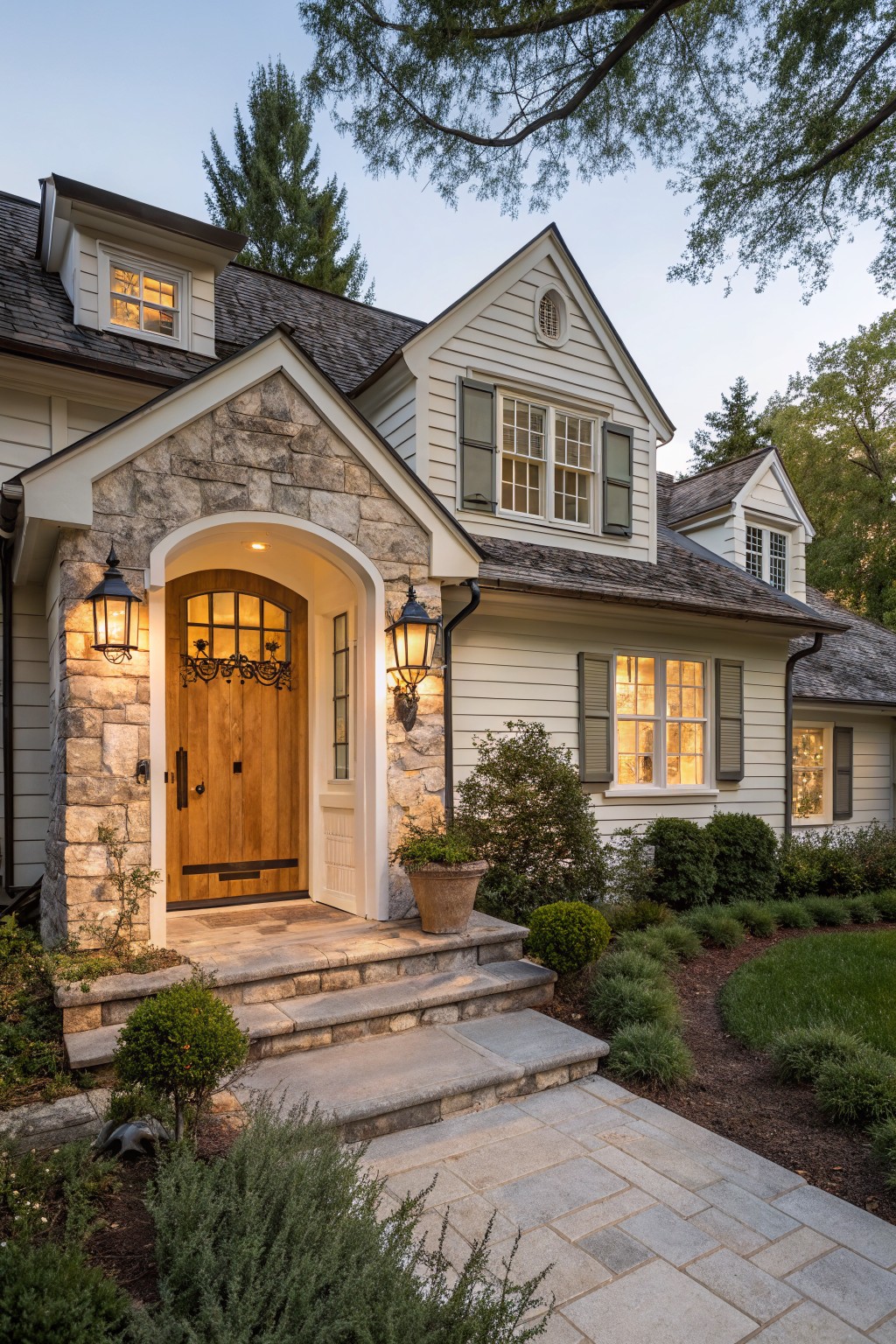
A stone arch around a wooden door gives the front of a farmhouse a solid, settled look. The mix keeps the entry from feeling too light or too heavy, and it works especially well against soft siding colors.
This detail suits homes that already lean traditional. Limit the stone to the entry area itself, and let the wood door carry most of the warmth. Avoid spreading the stone too far across the facade or it can start to feel heavy.
Mix Stone And Wood For Texture
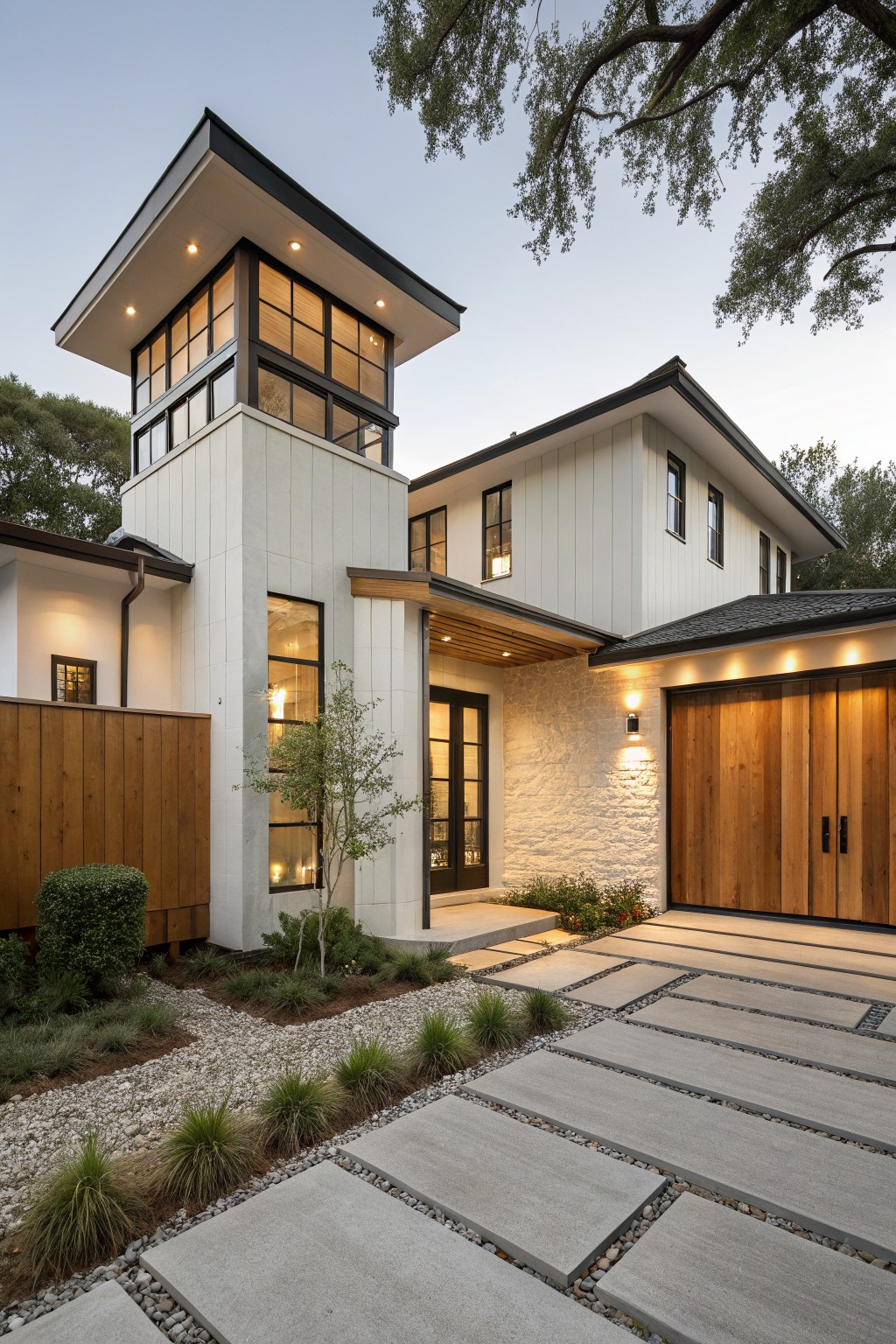
Stone and wood work well together on a farmhouse exterior because the stone adds weight and a bit of roughness while the wood keeps things warm. This mix prevents the house from feeling too plain or too stark, especially when the main siding stays light and neutral. It gives the facade some depth without needing lots of color or pattern.
Try using stone on just one section, like near the entry or beside the garage, and let wood handle the doors and trim. This works best on homes that already have a simple shape. Avoid covering large areas with stone or matching the wood too closely to the stone tone, since a little contrast helps the materials stand out.
Mix Stone With Neutral Siding
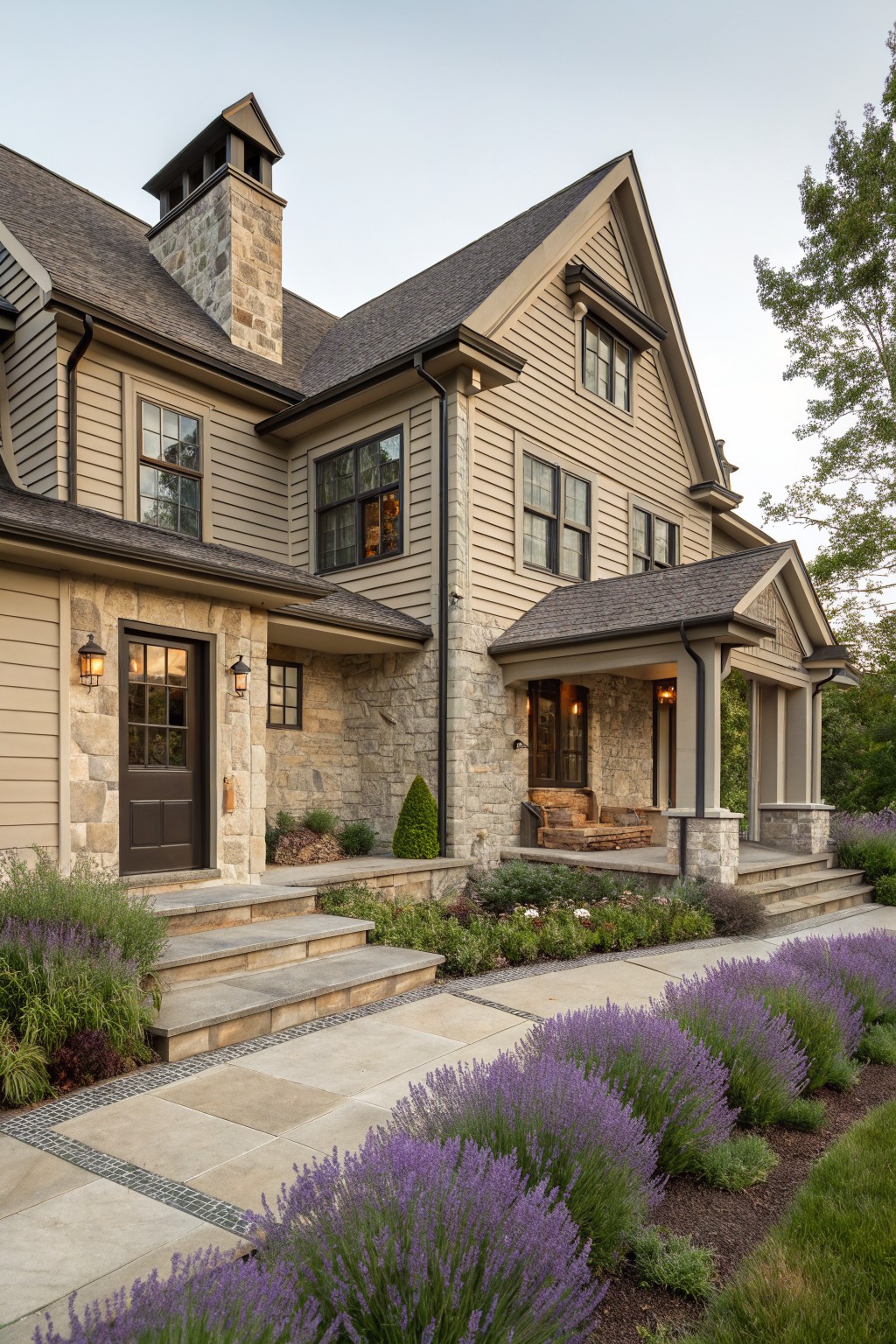
Stone paired with soft neutral siding gives a farmhouse exterior weight without looking heavy. The stone adds texture at the base and around openings while the siding keeps the upper walls feeling light and simple.
This mix suits homes with gabled roofs and multiple windows. Use it where you want the lower part of the house to feel grounded and the overall look to stay calm and traditional.
Blending Stone And Wood On The Outside
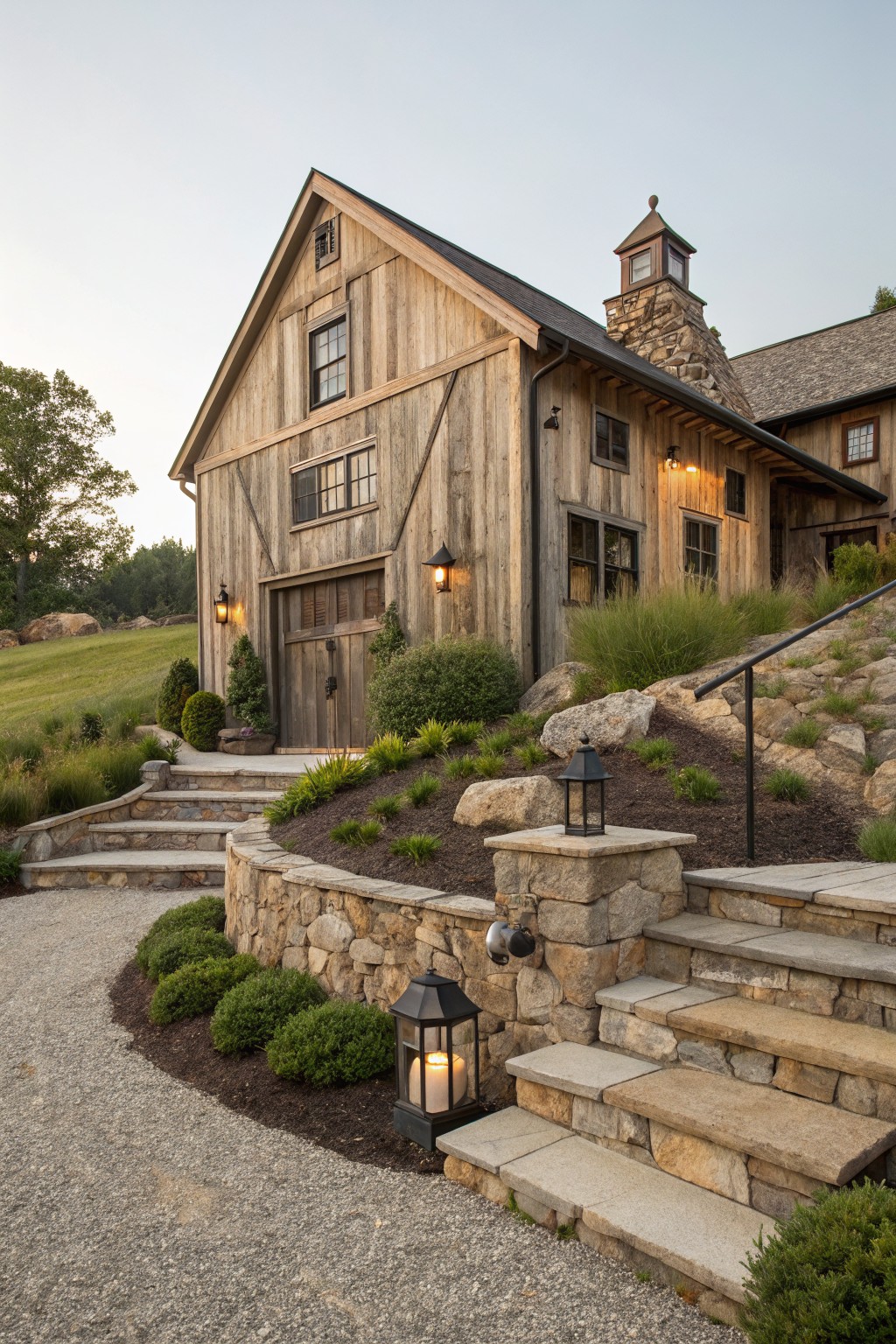
Stone and wood work well together on this kind of house because the stone gives weight to the wood. Here the chimney and foundation use the same stone that appears in the retaining walls and steps, so the house feels settled into the slope instead of just sitting on top of it.
Try matching the stone on the house with any walls or steps you add around it. This keeps the look simple and avoids a patched-together result. It suits older-style farmhouses or barn conversions on uneven lots where you want the materials to feel connected.
Stone With Soft Neutral Doors
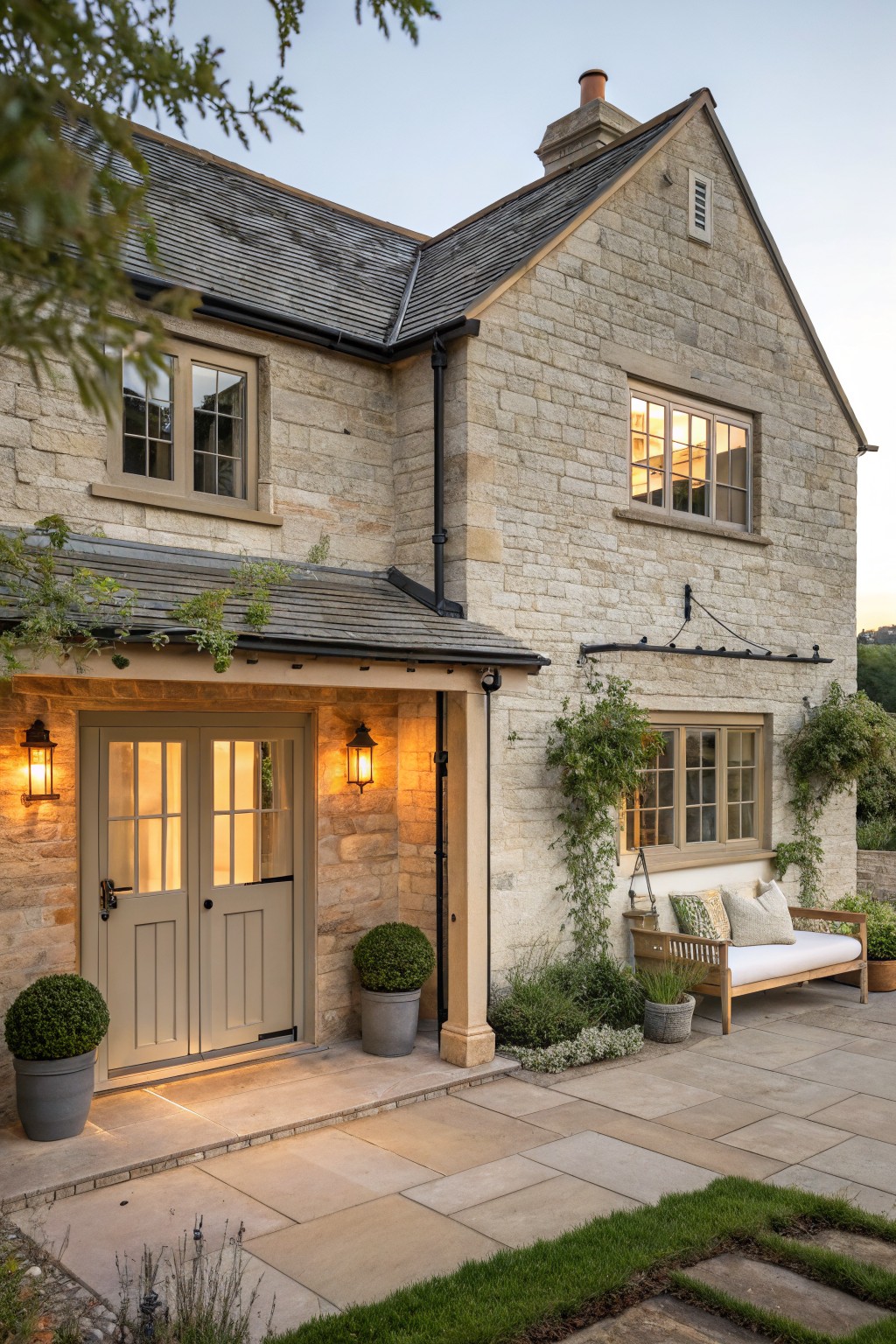
Stone exteriors can feel heavy if everything else matches that weight. Painting the doors and trim in a soft neutral like warm gray or beige lightens the whole look and gives the house a calmer presence. It also makes the entry feel more welcoming without adding extra decoration.
This approach works especially well on older stone homes or new builds meant to look timeless. Keep the paint color close to the stone’s undertones so the contrast stays gentle. Avoid stark whites or dark colors that fight the natural texture of the stone.
Stone Arches Over Wood Doors
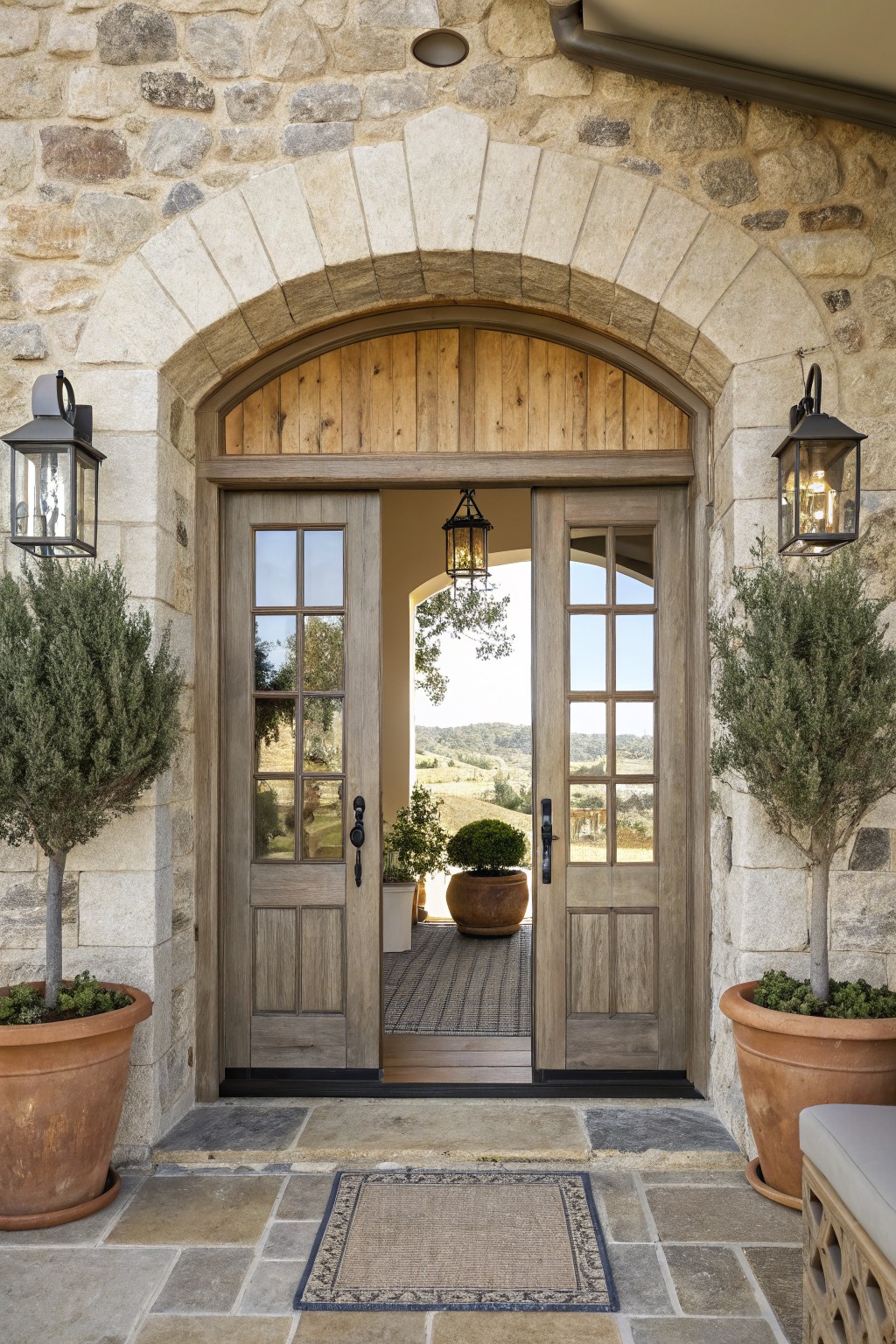
An arched stone entry with wood doors creates a simple and sturdy look that fits right into a farmhouse exterior. The contrast between the rough stone and the smoother wood gives the front a balanced feel without extra decoration.
This works best on homes that already use stone or want a bit more weight at the entrance. Keep nearby elements like lighting and pots low key so the arch and doors stay the main focus.
Mixing Stone With Wood Accents
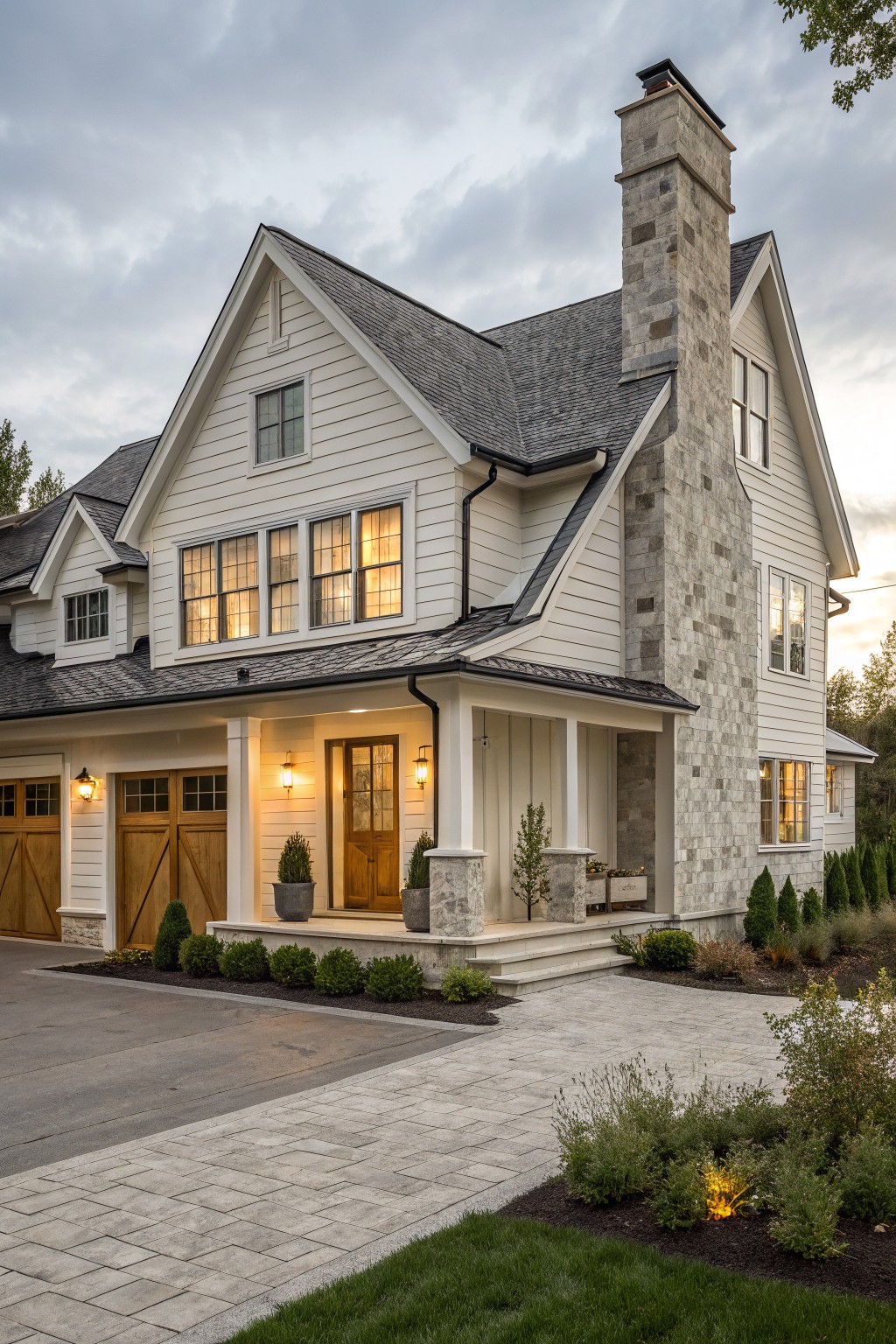
A stone chimney paired with wood doors and garage fronts gives a white farmhouse just enough weight without making it feel heavy. The contrast keeps the overall look light while adding texture that reads as classic rather than stark.
This works best on homes with simple gable lines where you can let the stone and wood elements stand out against the siding. Keep the stone to key spots like chimneys or column bases so the wood accents on doors and trim can still show through.
Wooden Gates For The Entry
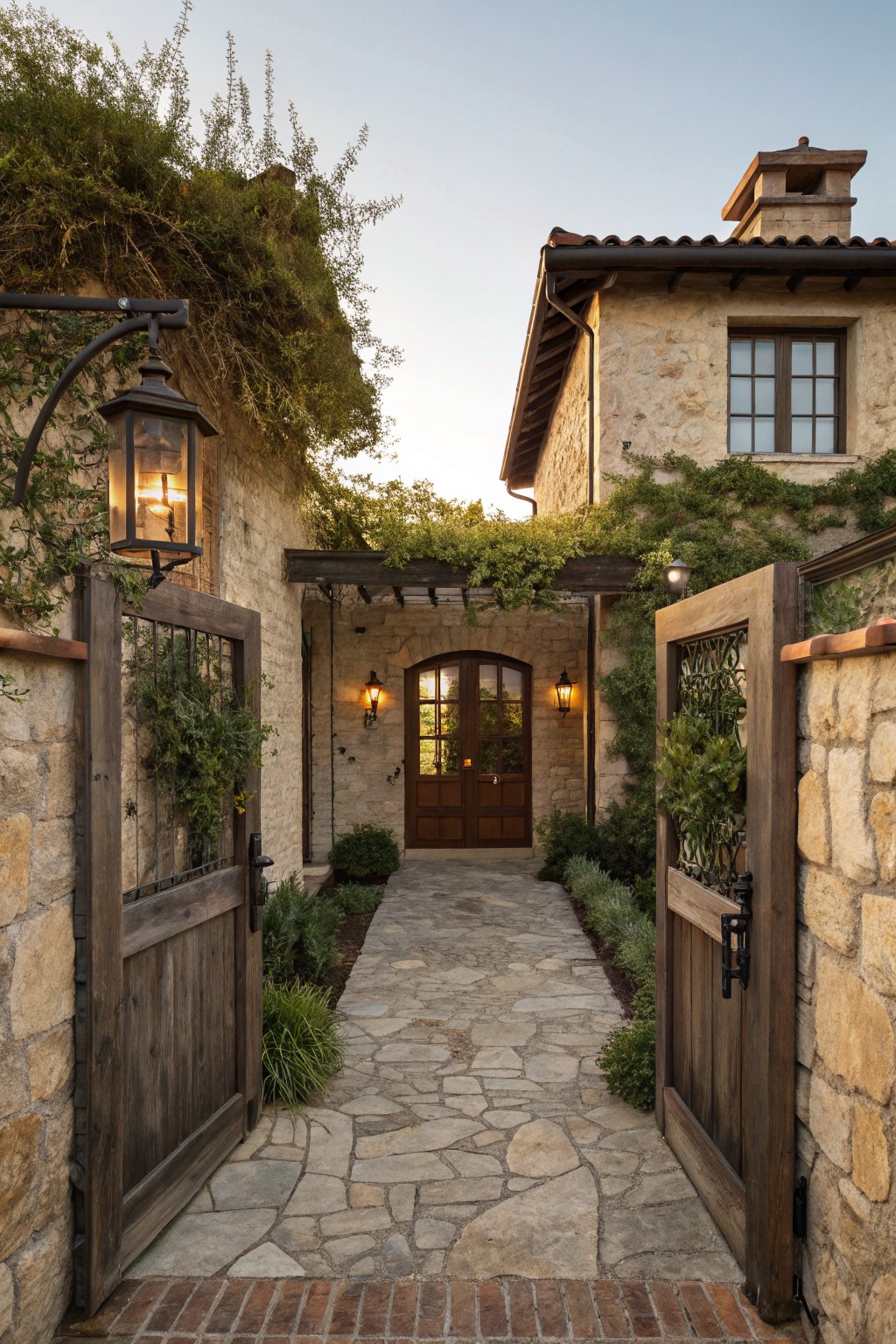
Wooden gates add a simple layer of farmhouse character to a stone exterior. They mark the entrance clearly and give the front a more settled, lived-in look that fits the overall style.
This works best on homes with stone walls where the wood brings in some warmth. Use gates with a similar tone to any trim or doors so the materials feel connected rather than added on later.
Mix Stone And Wood On The Lower Walls
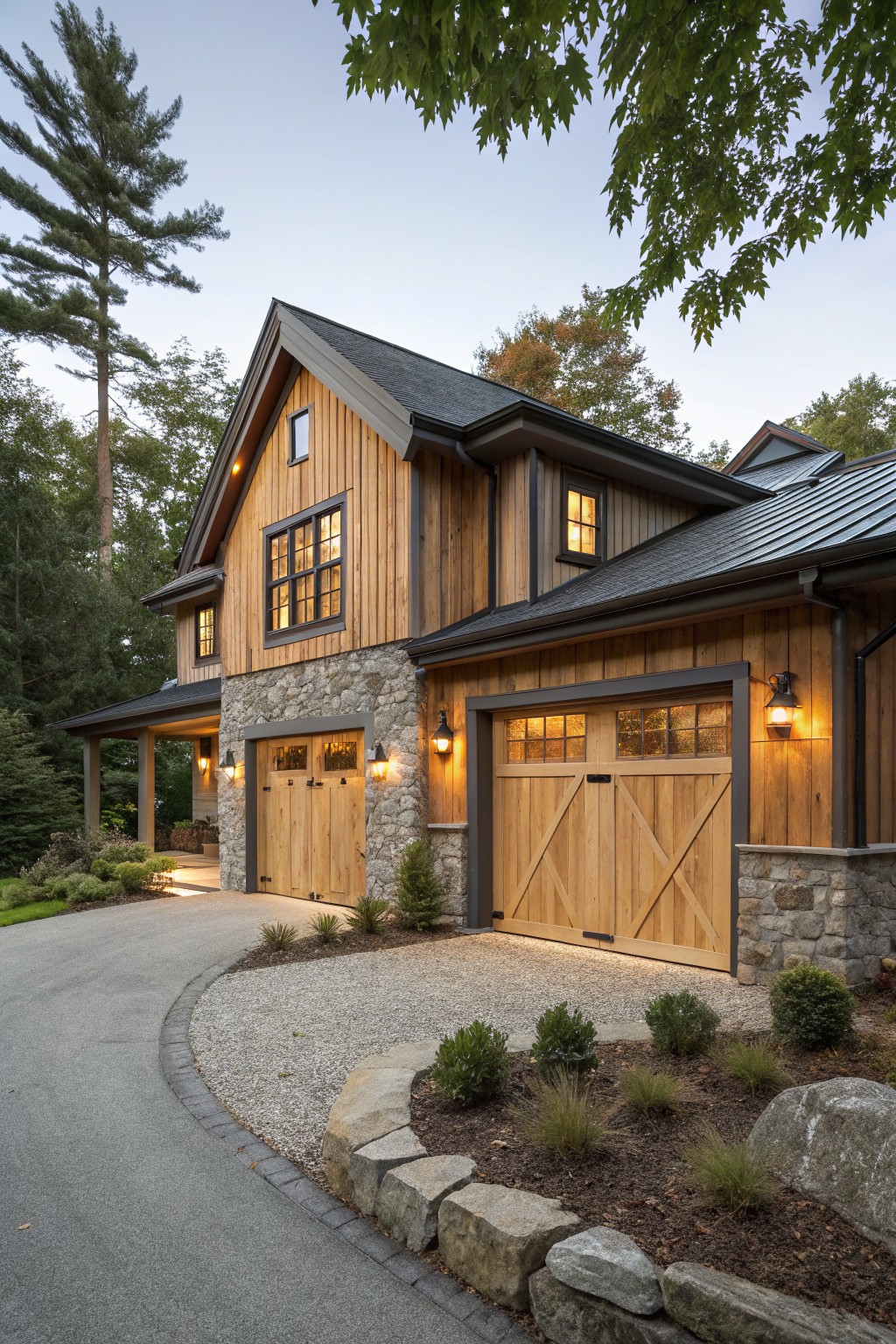
Stone on the base of a house gives it a settled look that wood siding alone can miss. It adds weight where the structure meets the ground and keeps the wood from feeling too light or tall. Many farmhouses use this split to handle changes in grade or to break up a wide facade without extra trim.
This approach works on homes that already lean traditional. Keep the stone in a similar tone to the wood so the shift feels natural rather than busy. Watch the height of the stone section. Too much and the house can start to look heavy.
Define Porch Seating With a Neutral Area Rug
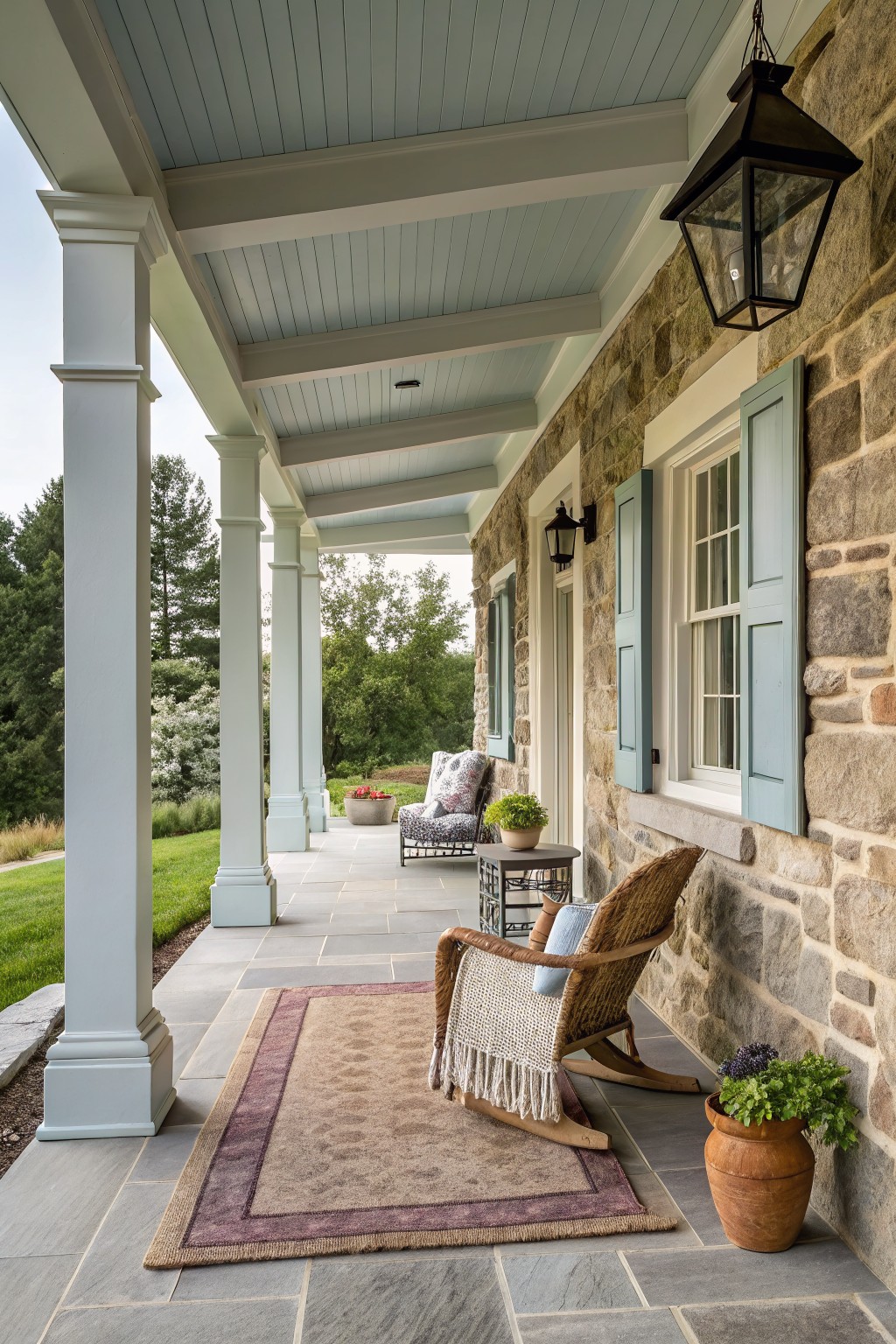
A large neutral rug helps turn a stone porch into a spot that feels more finished and comfortable. It pulls the furniture together and softens the hard surface underfoot without needing a lot of extra pieces.
This works best on covered porches where the rug can stay mostly dry. Place it under the main seating like a rocking chair so the area reads as one clear zone rather than scattered furniture on bare stone.
Stone Around the Front Door
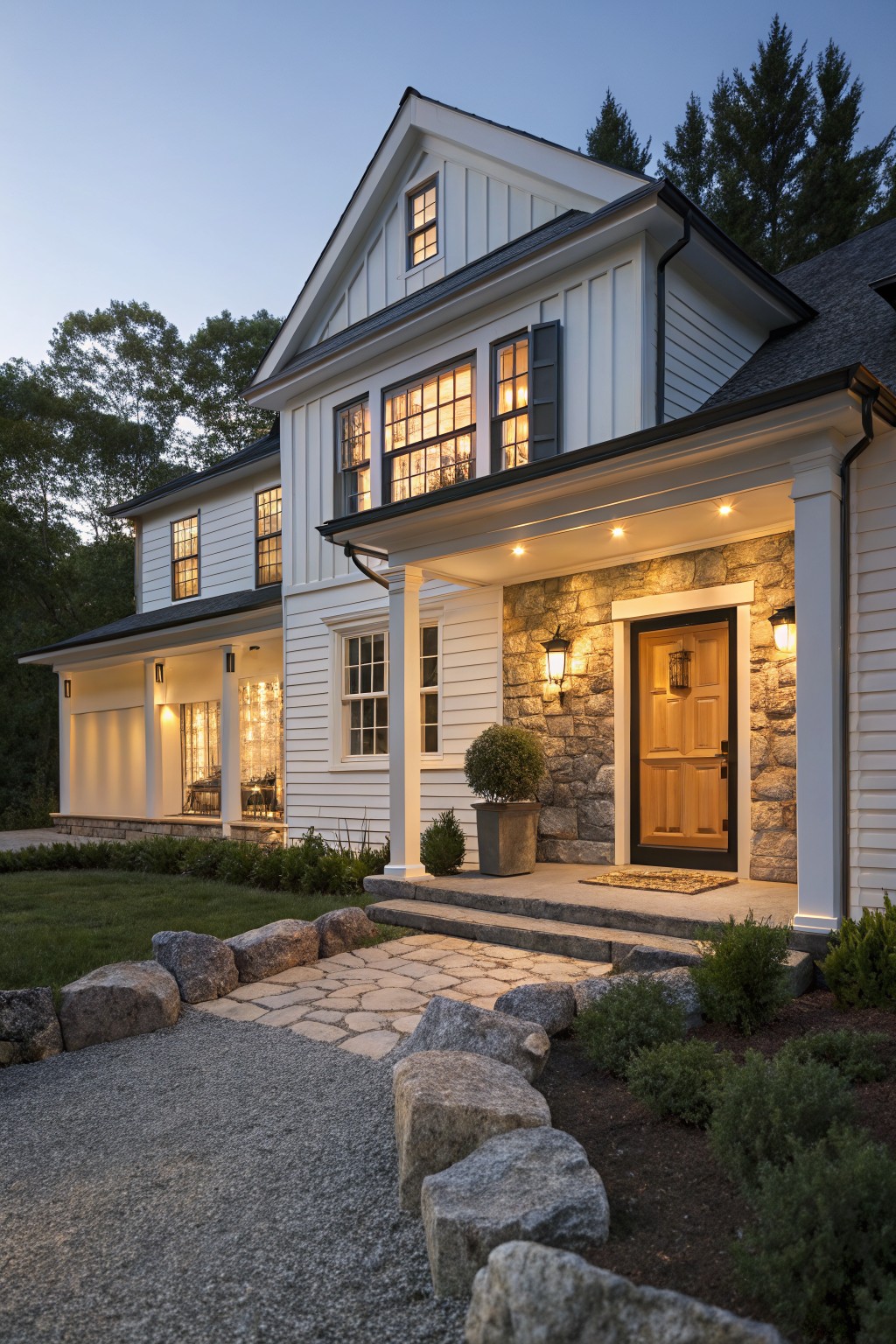
Stone right at the entry gives a farmhouse a grounded look without making it feel heavy. It works especially well against white siding and a light wood door, since the contrast keeps the whole front simple and welcoming.
This approach suits homes with a fairly traditional shape. Use a natural stone tone that blends with the surroundings, and keep any lighting soft so the entry stays easy rather than dramatic.
Combine Stone and Wood on the Facade
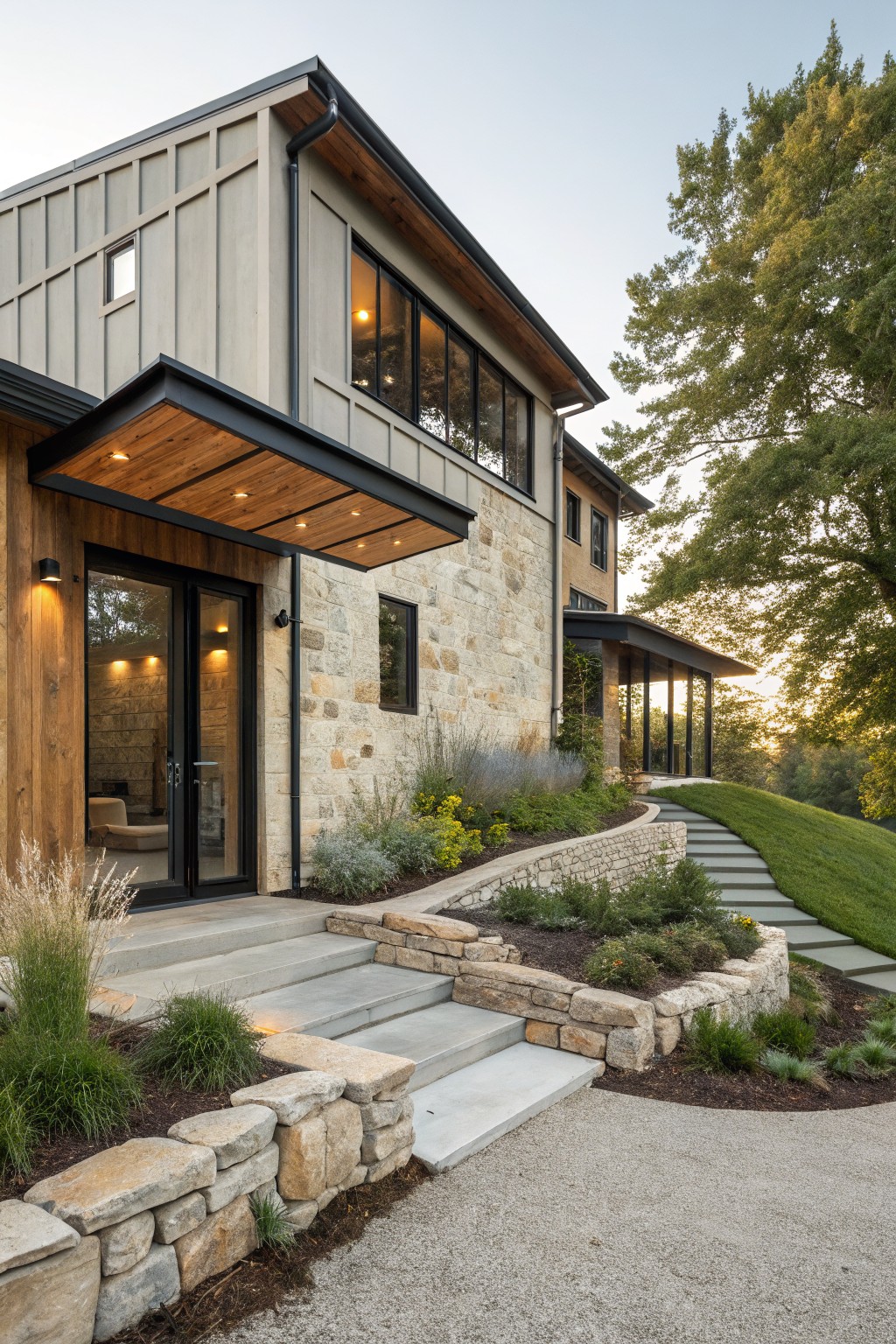
Stone and wood work well together on a farmhouse exterior because the stone adds weight at the base while the wood keeps the upper sections lighter. This mix prevents the house from feeling too heavy or too plain. The contrast also helps the entry stand out without needing extra decoration.
This approach suits homes on sloped lots or those with wide frontages. Keep the stone in larger blocks and let the wood run in simple horizontal lines above it. Avoid covering every wall in both materials or the look can start to feel busy.
Blend Stone With Light Wood Siding
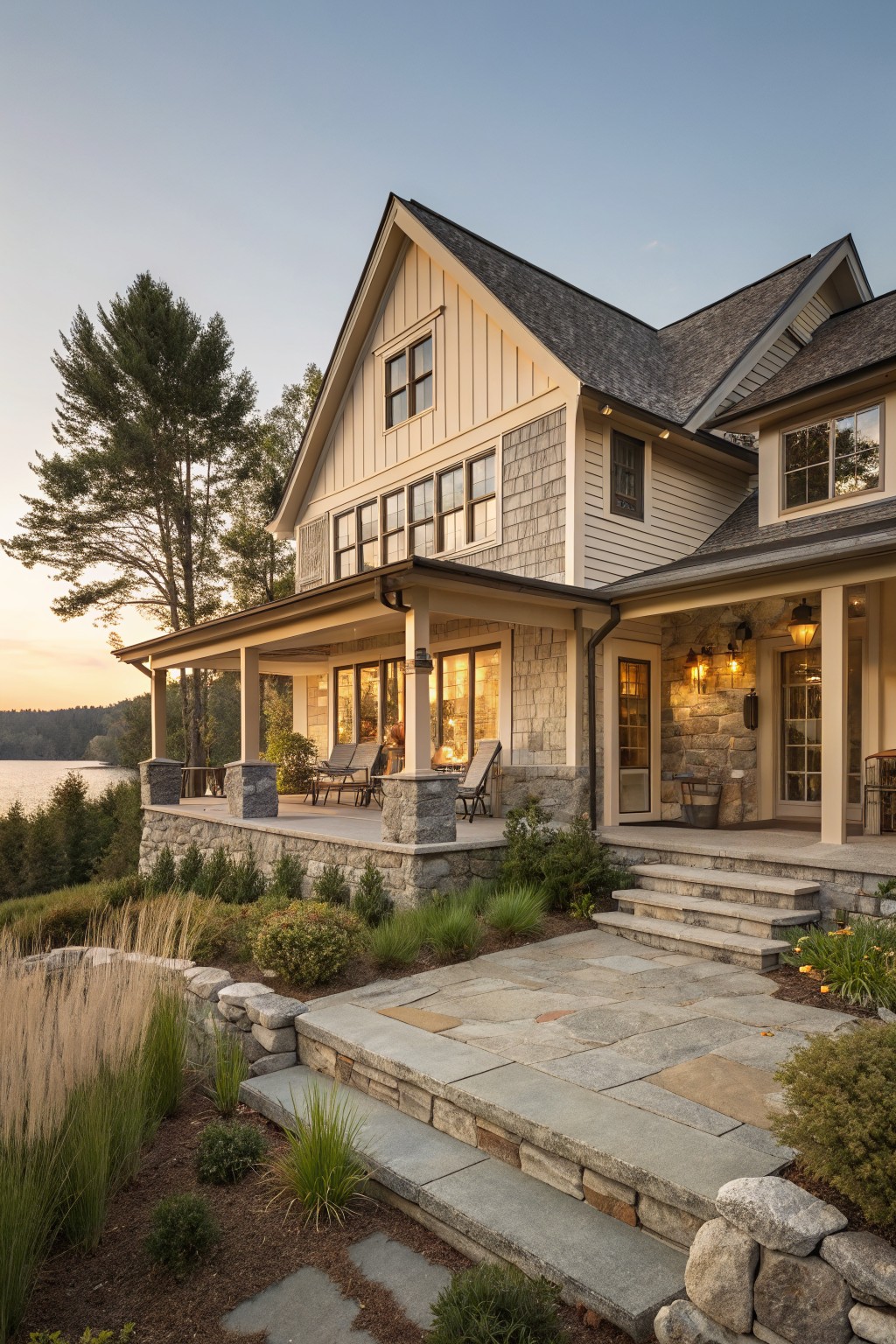
Stone at the base of a house adds weight and permanence while light wood siding keeps the whole look soft and simple. This mix works especially well on farmhouse styles because it balances the heavy and the light without needing extra trim or color changes. The stone grounds the structure and the wood keeps it from feeling too solid or dark.
This approach suits homes with a bit of height or slope to the lot since the stone can step up naturally with the grade. Keep the wood in a warm off-white or pale gray so the stone reads as the stronger element. Too many competing textures on the rest of the house will undo the calm effect.
Stone Paths That Curve To The Door
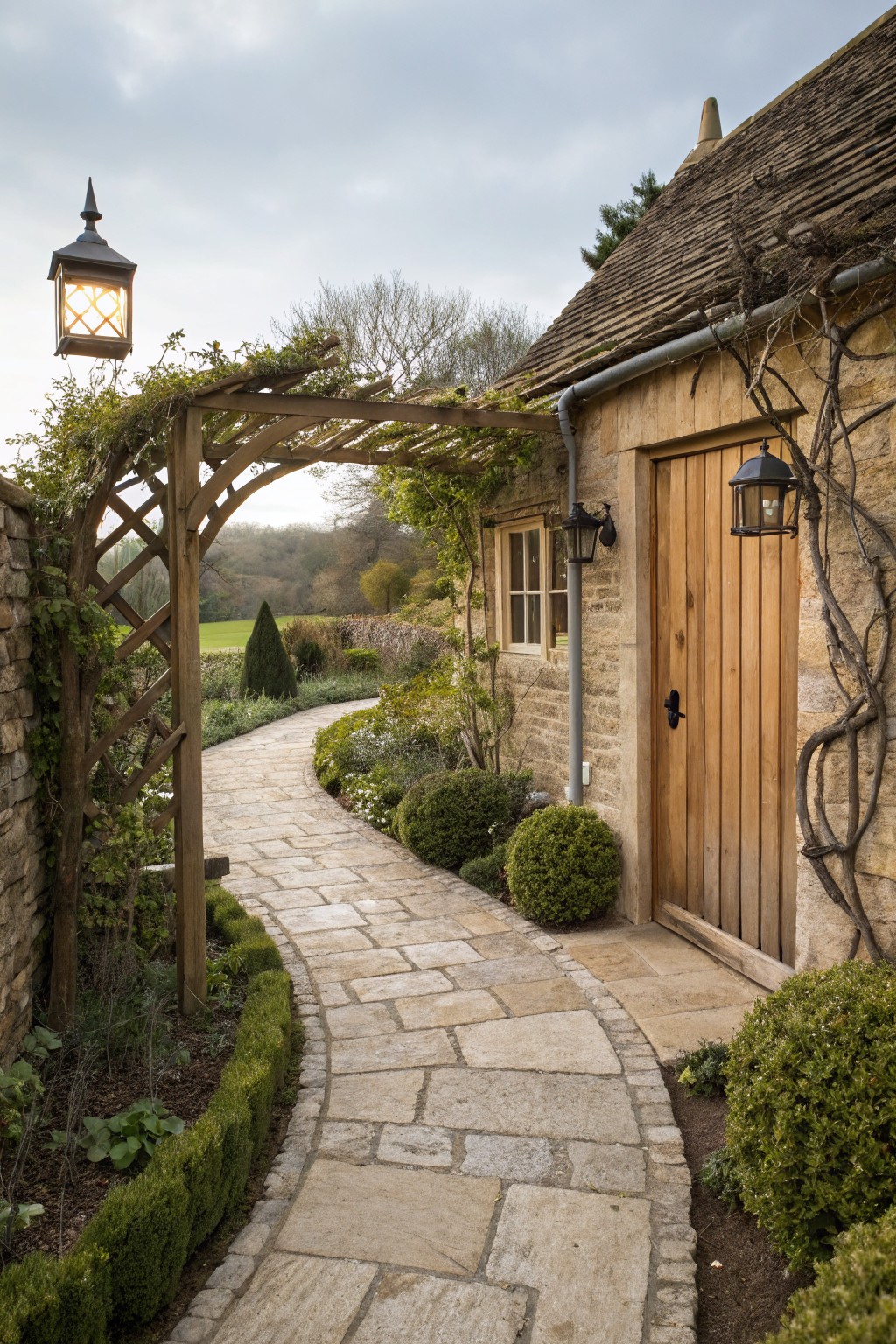
A curved stone path gives the front of a farmhouse a softer, more natural feel. Instead of a straight line that rushes you to the door, the gentle bend makes the walk feel like part of the garden and helps the house sit more comfortably in its setting.
This approach works best on homes with a little depth between the road or lawn and the entrance. Use irregular stones in light tones and let low plants edge the sides so the path blends into the beds rather than standing apart from them.
Mixing Stone With Wood On The Facade
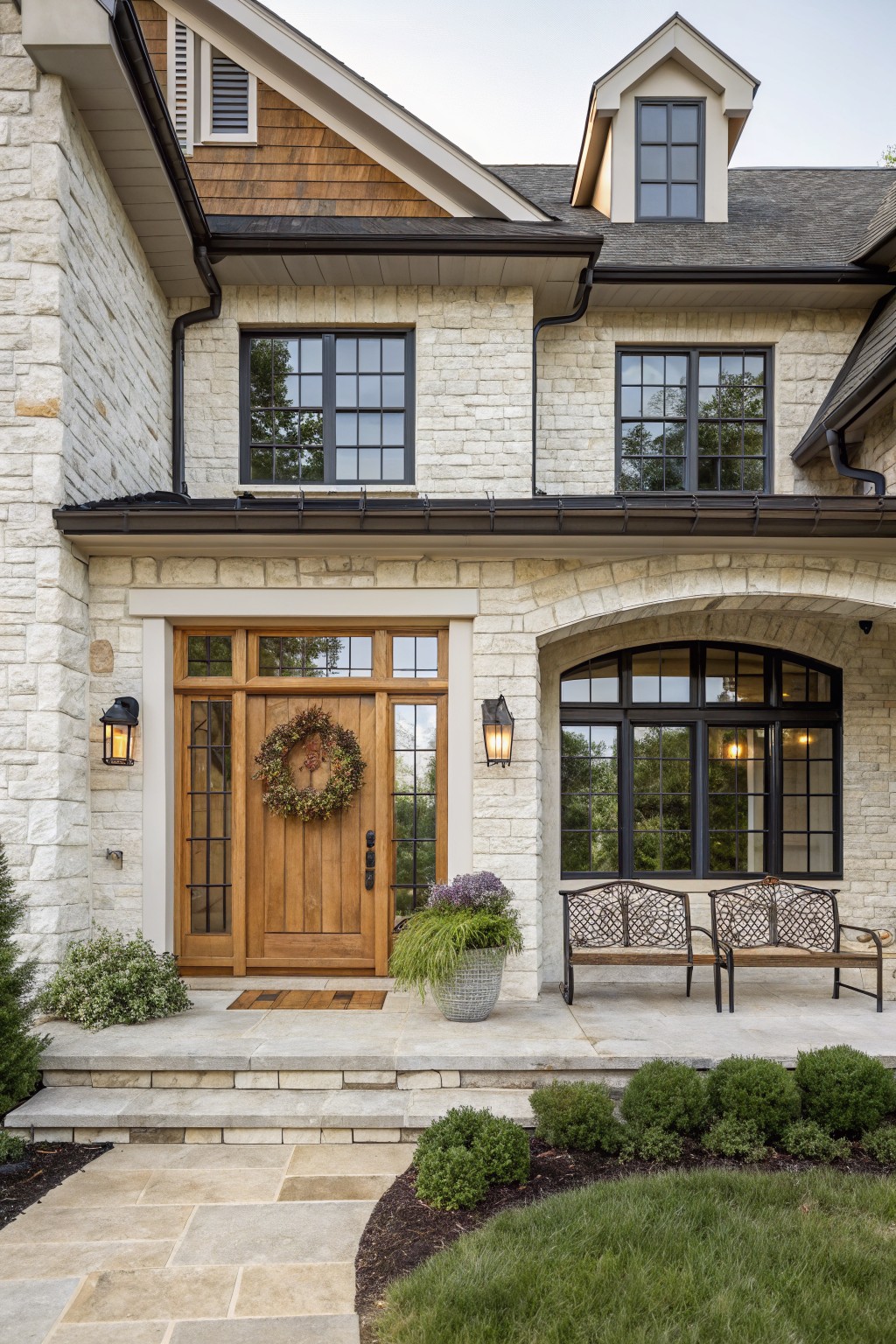
Stone and wood work well together because the stone gives the house weight while the wood softens the overall look. This mix keeps a farmhouse exterior from feeling too cold or too heavy, especially when the wood is used in smaller areas like doors and trim.
It suits homes that already have a simple roofline and clean window shapes. Keep most of the stone exposed and let the wood show up mainly around the entry so the two materials stay balanced.
Stone Steps With a Wood Porch Ceiling
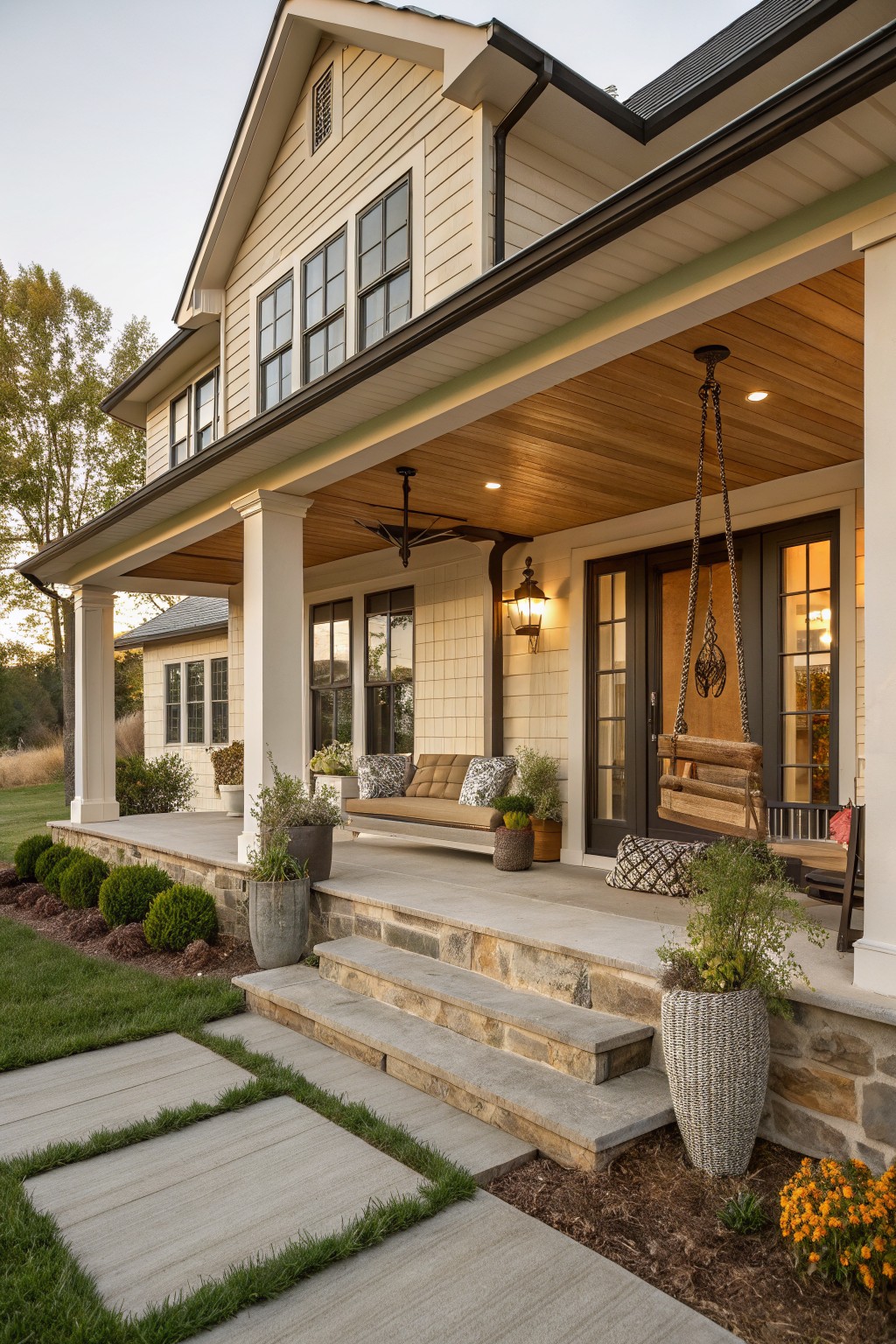
Stone steps and a matching base give the porch a solid, settled feel that works well with the rest of the house. The wood ceiling adds warmth without competing, and the soft neutral cushions and siding keep everything calm and balanced. This mix helps the entry feel both sturdy and inviting.
It suits homes that already lean toward farmhouse style and works best when the stone stays in the lower third of the view. Keep the upper siding light and let the wood ceiling run the length of the porch so the materials read as intentional rather than busy.
Add A Stone Tower To Your Farmhouse Exterior
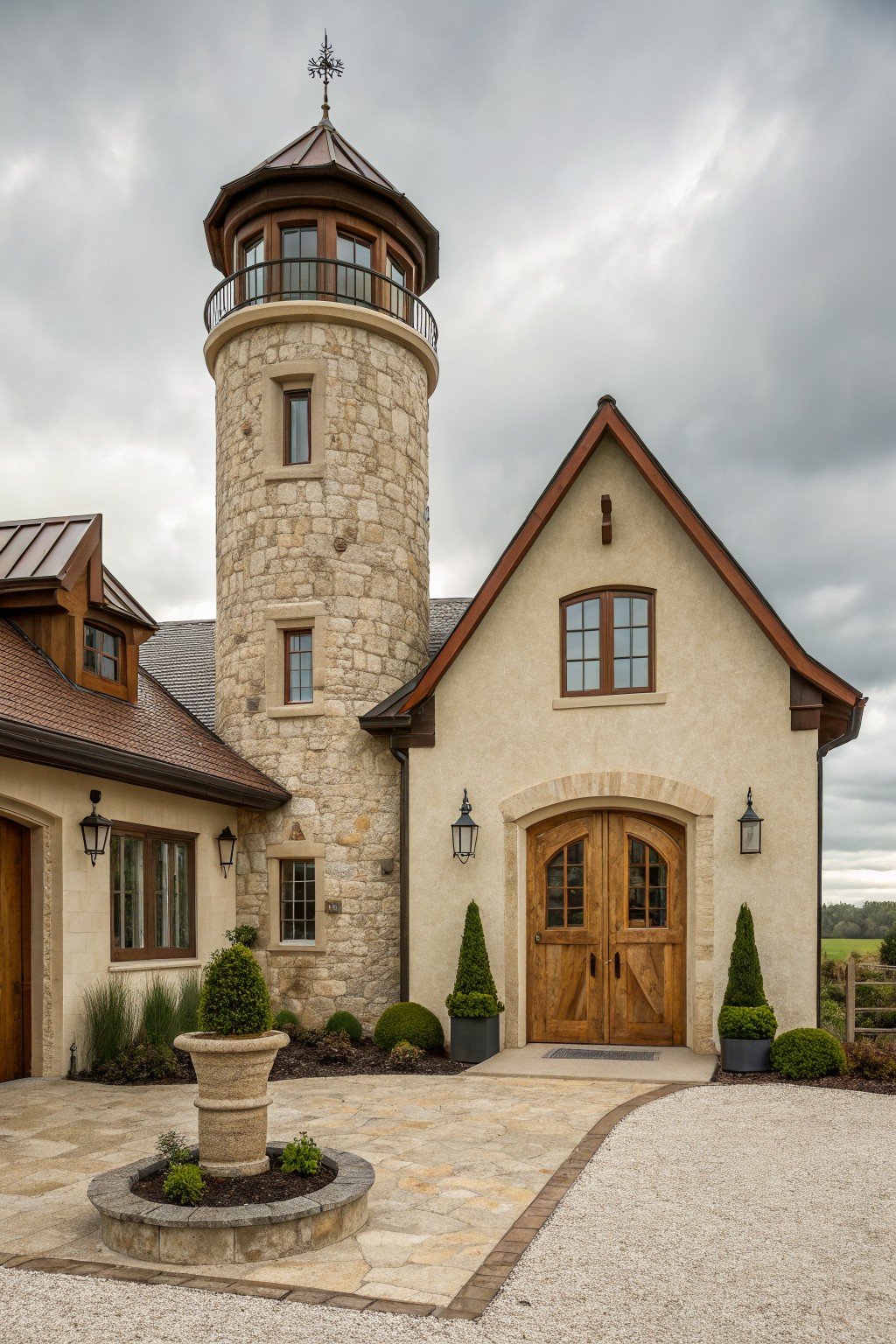
A stone tower gives a farmhouse some extra height and texture without making the whole house feel heavy. The mix of rough stone against softer stucco walls and wood trim keeps things grounded while adding character that works in most rural or semi-rural settings.
Place the tower near the main entry so it draws the eye naturally. Pair it with simple wood doors and small windows rather than large openings, and make sure the rest of the roof stays lower so the tower remains the clear focal point.
Stone Piers Under Porch Columns
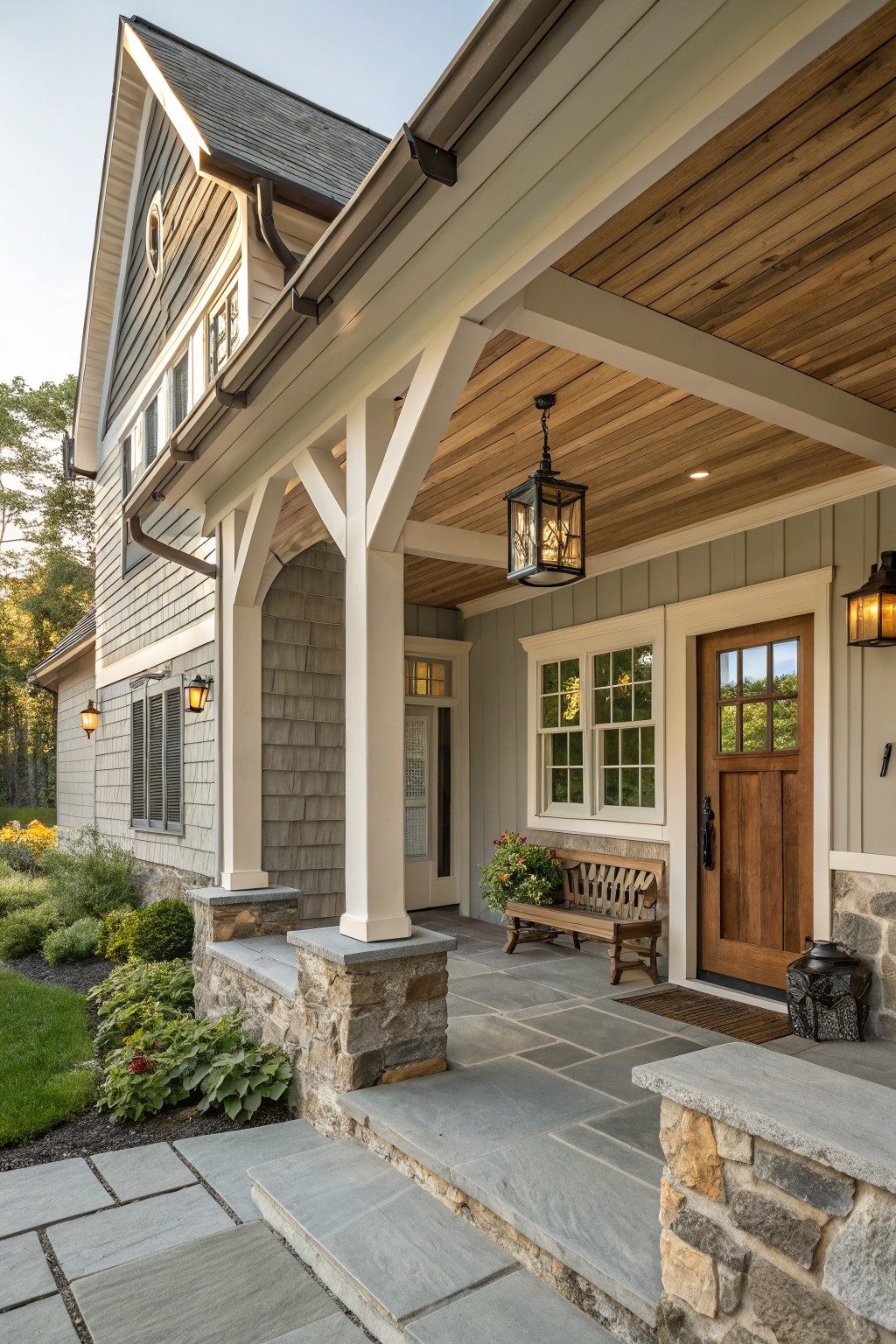
Stone piers at the base of the porch columns give the whole front a settled and sturdy feel. The stone adds weight and texture right where the house meets the ground, while the painted wood above keeps the look lighter and more open. This mix works especially well on farmhouses that already use wood siding and soft neutrals.
It suits homes that want the entry to feel grounded without adding too much detail. Keep the stone fairly simple in color and size so it blends with the rest of the facade instead of standing out on its own.
Mix Stone With Wood On The Facade
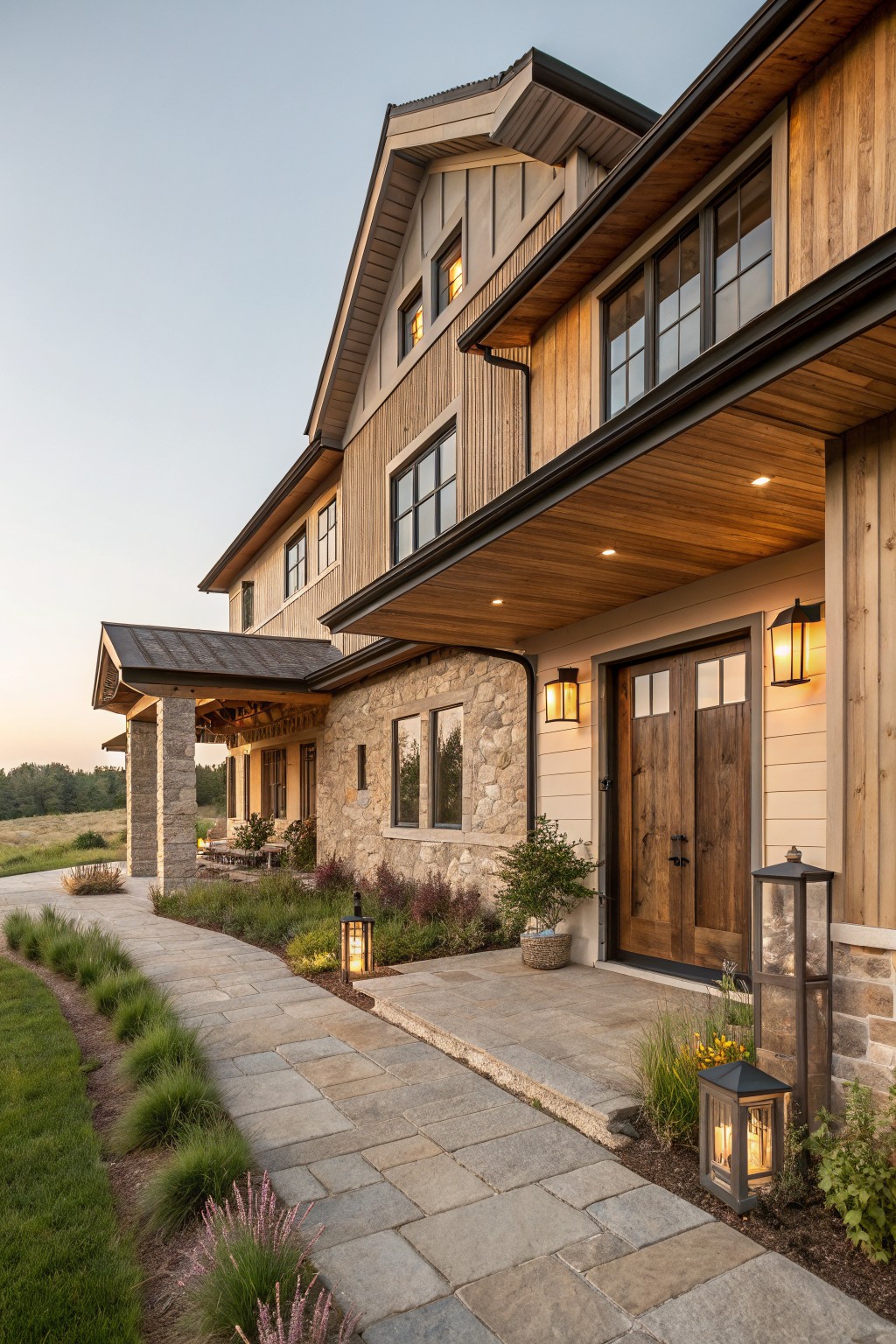
Stone and wood work well together because the stone gives the lower part of the house a solid base while the wood adds a lighter, more natural feel above it. This mix keeps the exterior from looking too heavy or too plain, especially on larger homes with simple roof shapes.
It works best when both materials stay in soft, neutral tones and the stone is used in smaller sections rather than covering whole walls. Watch the proportions so the stone does not overpower the wood or make the house feel too formal.
Frequently Asked Questions
Q: What wood type pairs best if my stone is already a light gray? A: Go with cedar in a weathered finish. It adds warmth and grain without fighting the stone tones. Test a small board first to see how the colors sit together in your light.
Q: How do I stop the front porch from looking too heavy with both materials? A: Keep the wood on the ceiling and posts while letting stone cover just the lower walls. This split keeps things light and draws the eye upward. One coat of whitewash on the wood helps it blend in fast.
Q: Will the soft neutrals wash out once the sun hits them all day? A: Pick paints with a bit of gray undertone rather than pure white. They hold their depth longer on south-facing walls. Repaint the trim every five years or so if fading shows up.
