

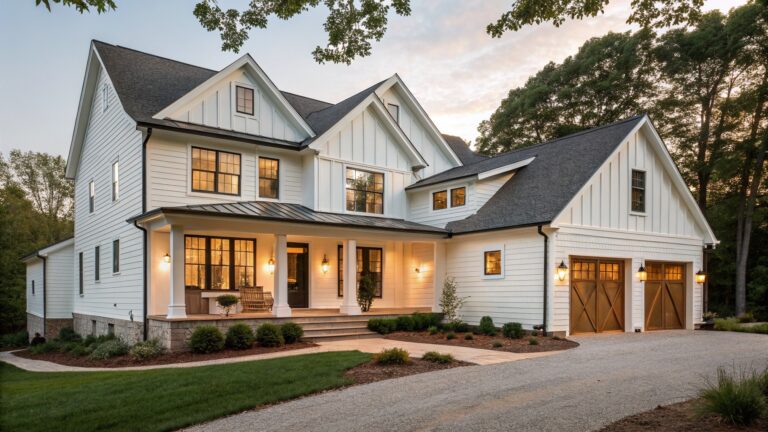
I often find that the first thing people notice about a house is how the materials wrap around the front without looking patched together.
Board and batten paired with brick tends to give that solid base while keeping the upper parts lighter.
Wood accents can soften the whole look if they are placed where the eye lands naturally on entry.
Some mixes hold up better once the weather hits them.
I would probably start by sketching how these options change the height and width feel before picking one for my own place.
Board and Batten Siding on Farmhouse Homes
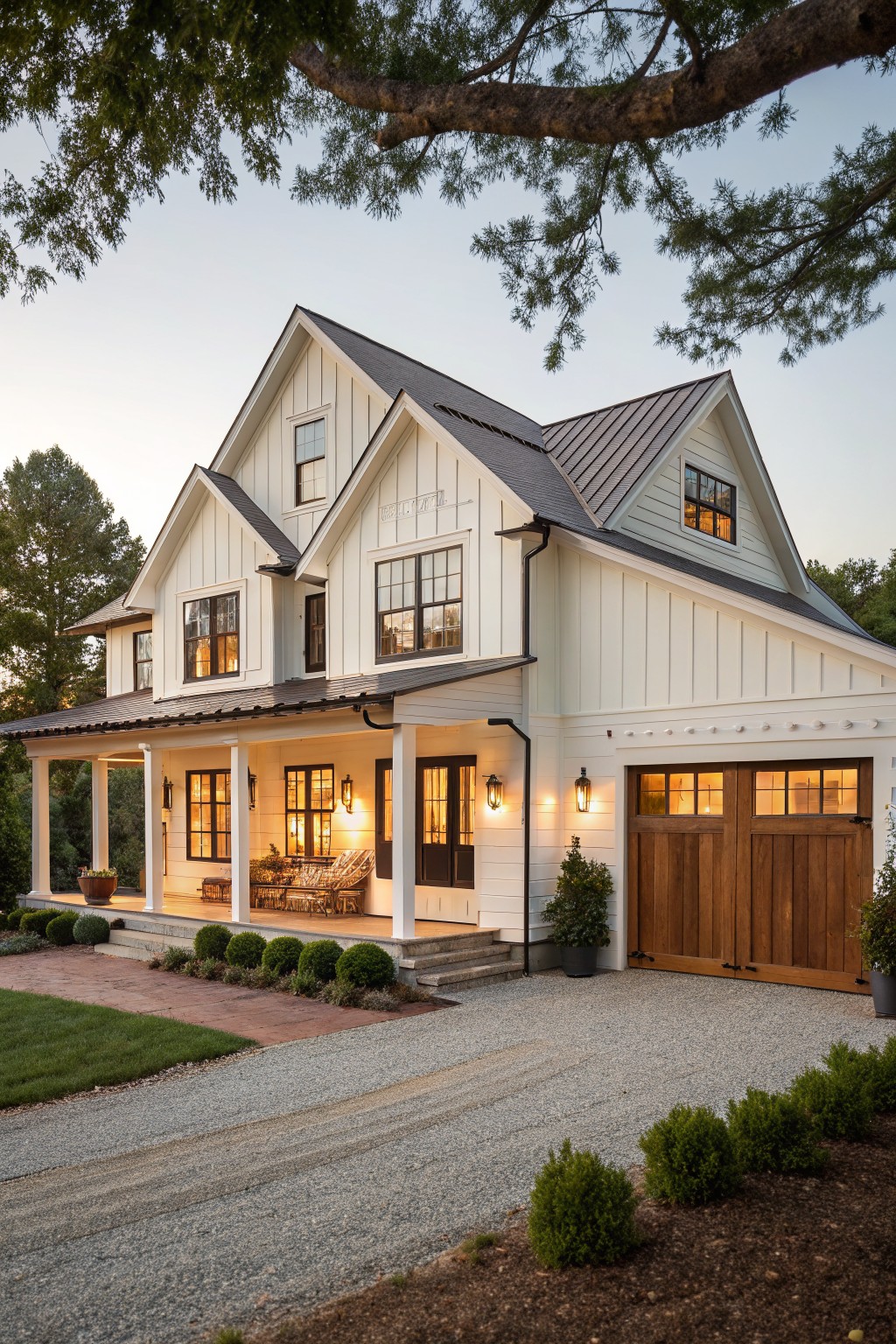
Board and batten siding gives a farmhouse exterior a simple vertical rhythm that feels both classic and clean. Painted white, the pattern stands out without extra trim work and pairs naturally with wood accents on doors and windows.
This look works best on homes that already have gabled roofs and a front porch. It suits suburban or rural settings where you want traditional character without complicated details or multiple materials competing for attention.
Board and Batten With Brick Accents
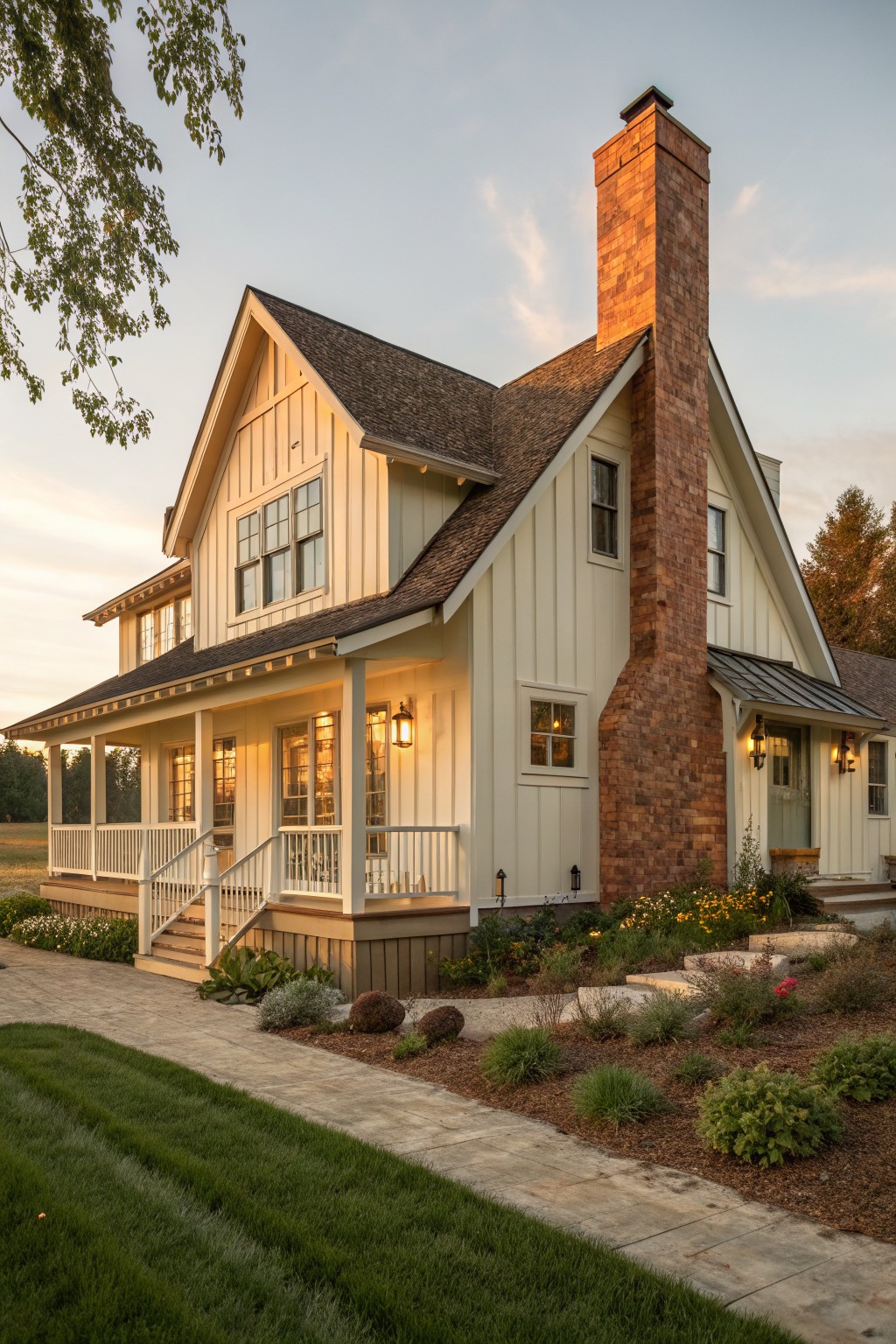
Board and batten siding pairs nicely with brick on a farmhouse because the vertical lines keep things simple while the brick adds some solid weight. The contrast stops the exterior from looking too light or flat, especially on larger homes with multiple rooflines.
This mix works best on traditional or slightly updated farmhouses where you want a bit of texture without extra trim work. Keep the brick tones warm and limit how much you use so the siding stays the main surface.
Board and Batten with Brick Accents
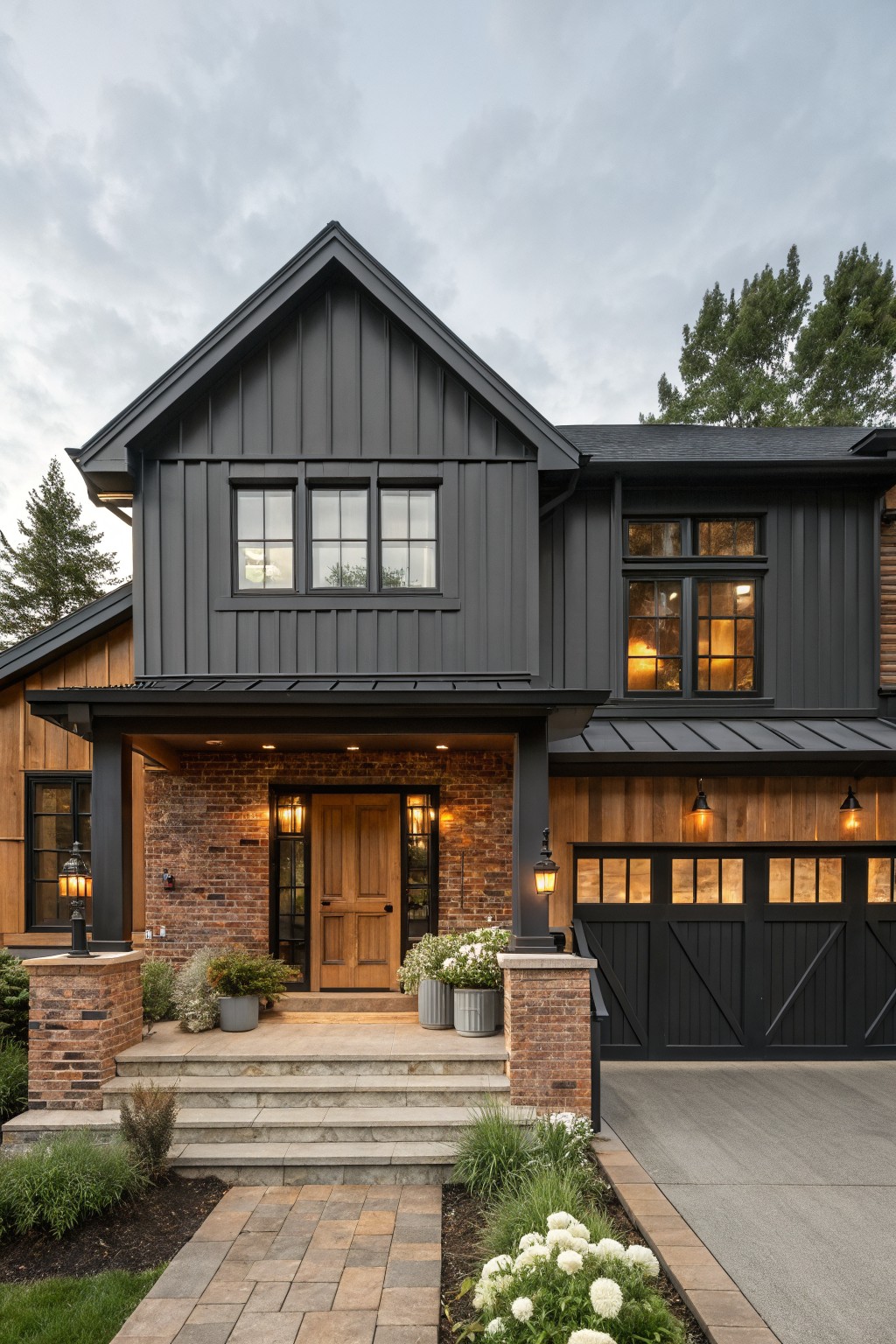
Many classic farmhouses look better when board and batten covers most of the walls and brick is used only around the entry. The vertical lines of the siding keep the house feeling tall and simple, while the brick adds weight and texture right where people walk up.
This approach works best on homes with a clear front porch or gable over the door. Use the same dark color on the siding and trim so the brick stands out without fighting the rest of the facade.
Board and Batten on the Gables
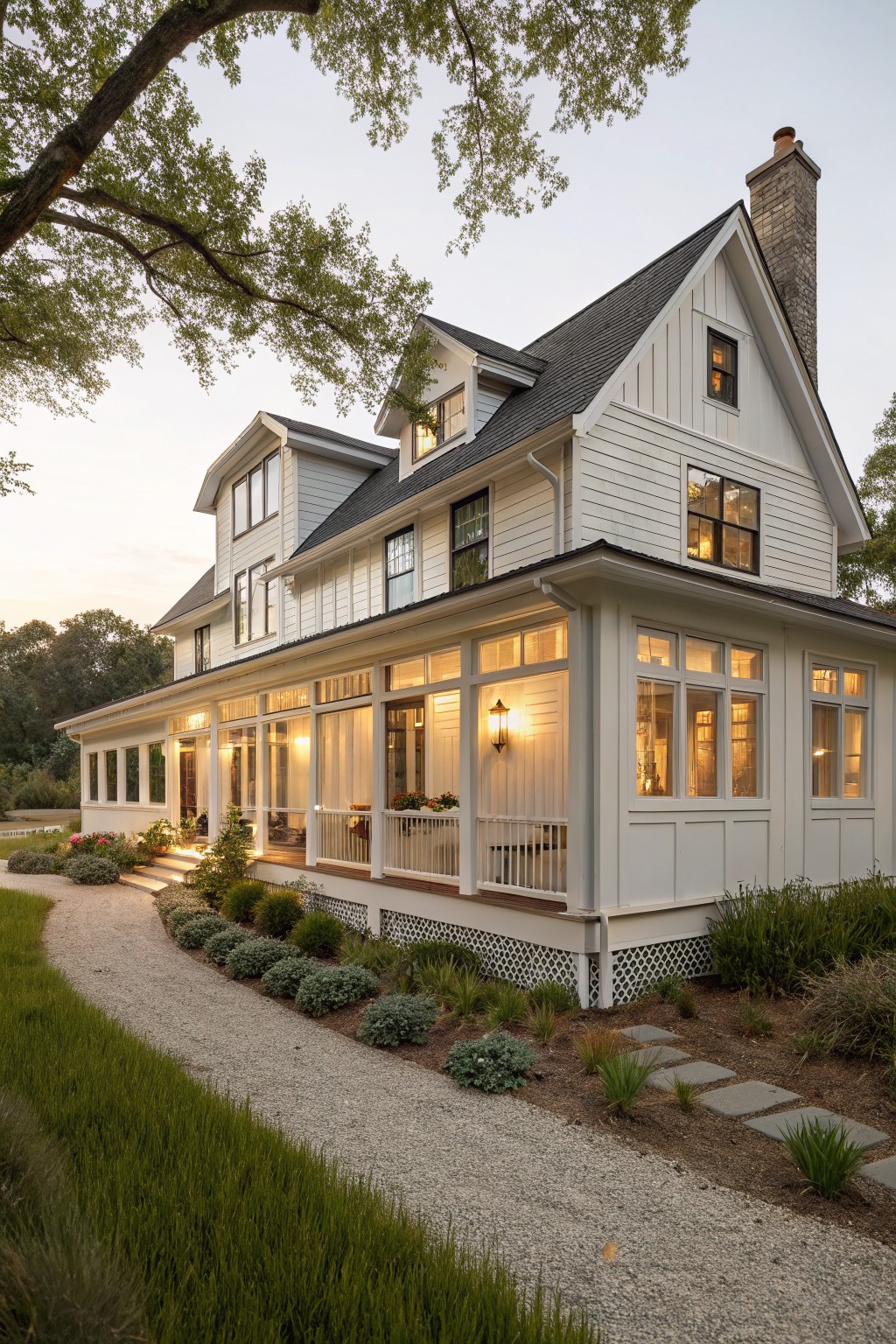
Board and batten works well on the gable ends because it adds texture without covering the whole house. The vertical lines give the upper part of the roofline more weight and keep the look from feeling too flat against the horizontal siding below.
This approach suits homes with several gables and a steep roof pitch. Keep the siding and trim the same color so the change in pattern stays subtle and the whole exterior reads as one clean surface.
Wood Double Doors for a Farmhouse Entry
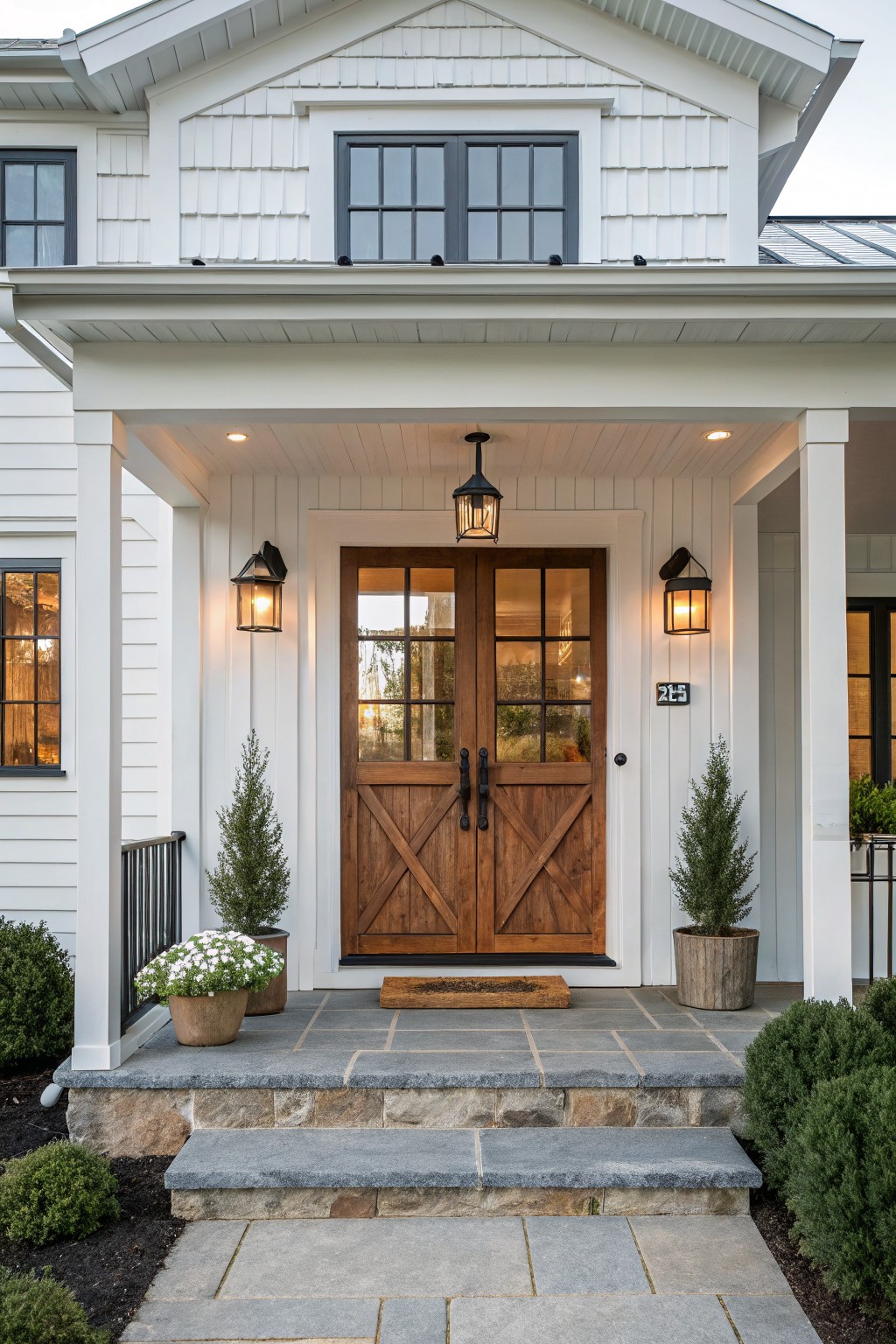
Double wood doors give a farmhouse entry real presence. The natural grain and darker tone stand out against white board and batten siding without needing much else to draw attention.
This works best on homes with a covered porch where the doors stay protected. Keep hardware simple and limit extra trim so the wood itself stays the main feature.
Board and Batten With Stone Accents
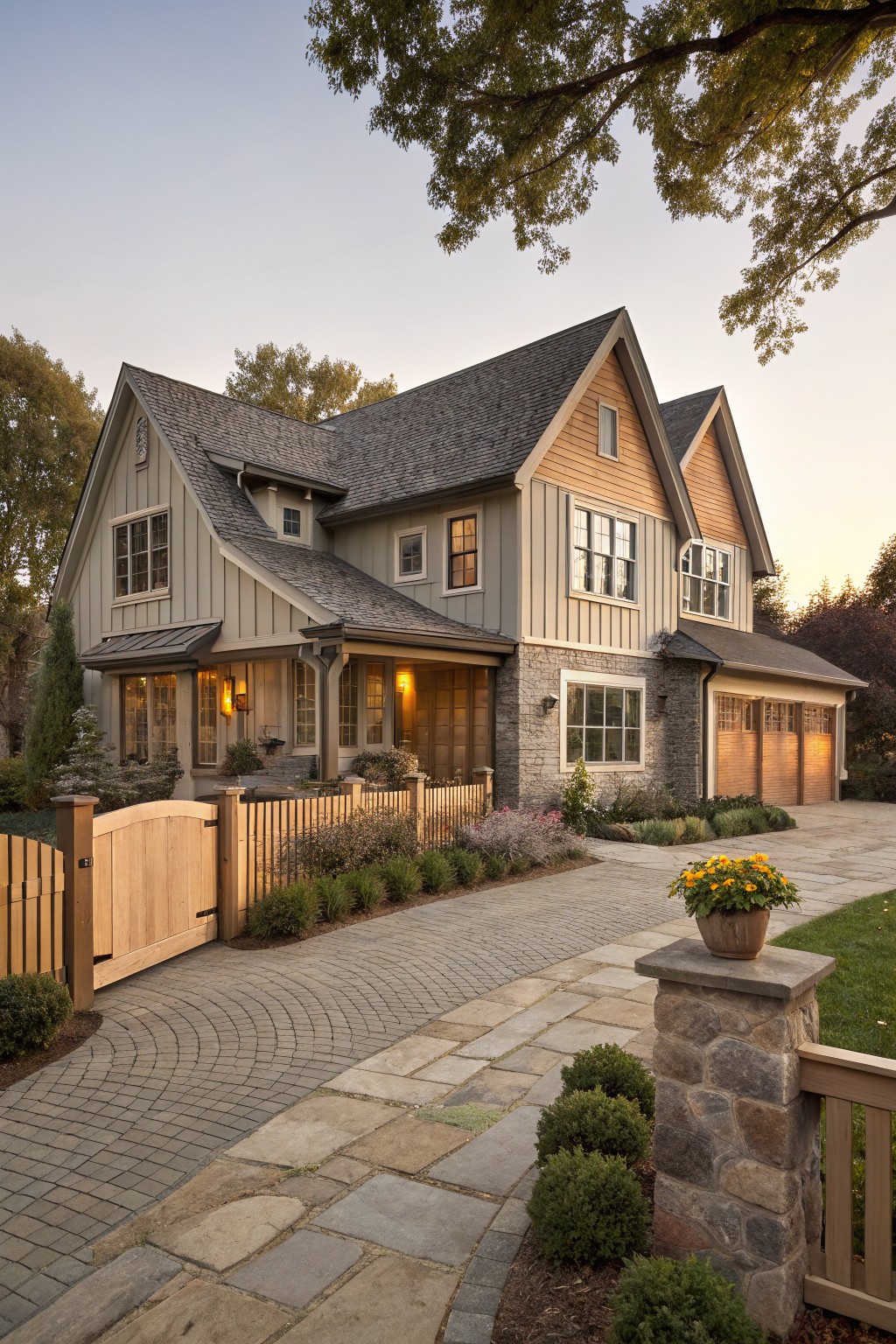
Board and batten siding gives a farmhouse its familiar vertical lines, and pairing it with stone keeps the look from feeling too flat. The contrast adds weight at the base while the lighter siding above keeps things bright. This mix works especially well on homes that have several gables and a wide front.
It suits houses in both rural and suburban settings where you want something classic without going too formal. Keep the stone to the lower portion or key corners so the wood siding stays the main feature. Too much stone can make the house feel heavy, so a balanced split usually looks best.
Board and Batten with Brick
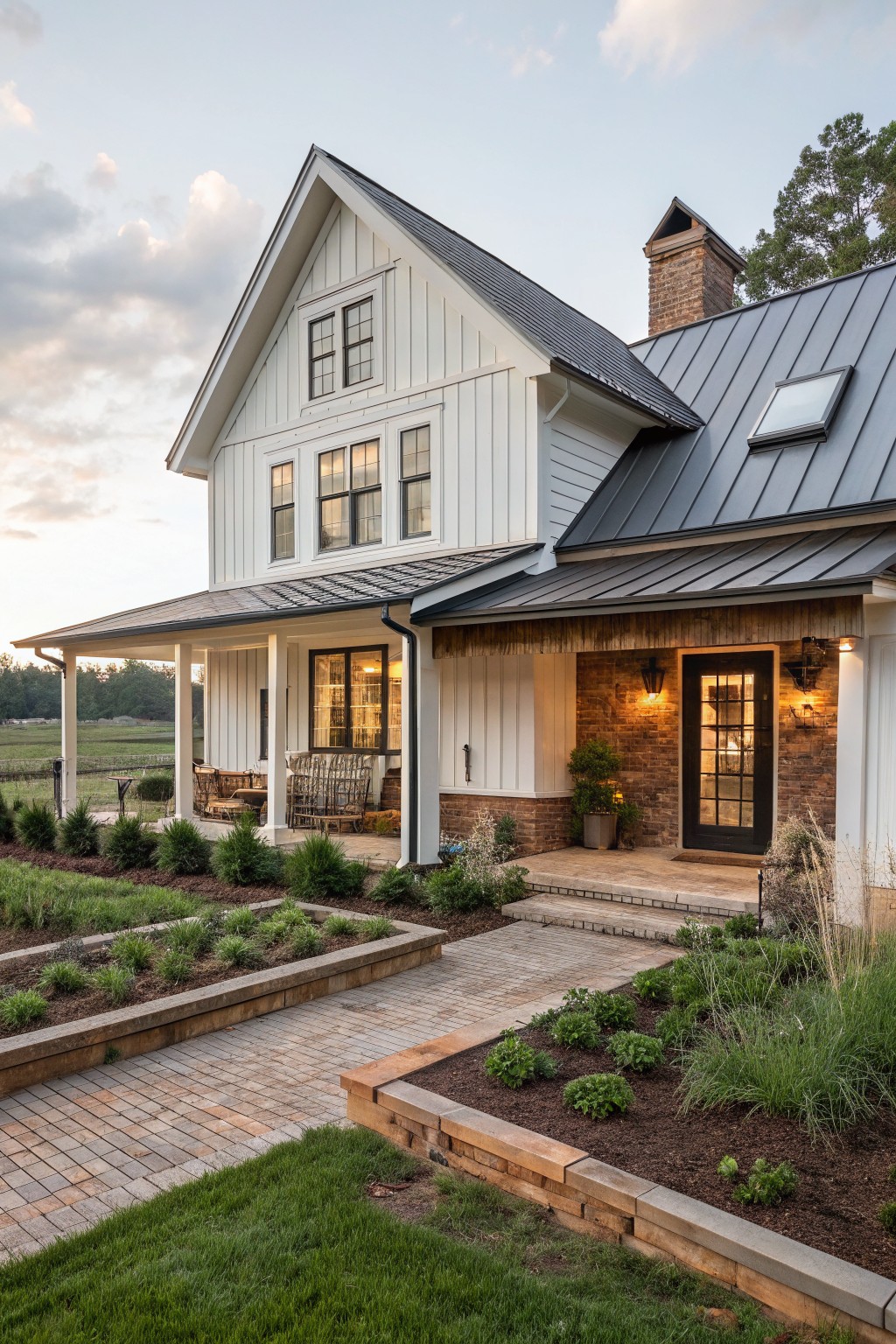
Many farmhouses gain a lot from pairing white board and batten siding with brick on the lower walls and around the entry. The two materials play off each other nicely and give the house more texture while still feeling simple.
This approach works best on homes that already have a clear gable or two and a front porch. Keep the brick to the base and key spots like the entry so it grounds the house without taking over the whole facade.
Gabled Porch With Brick Steps
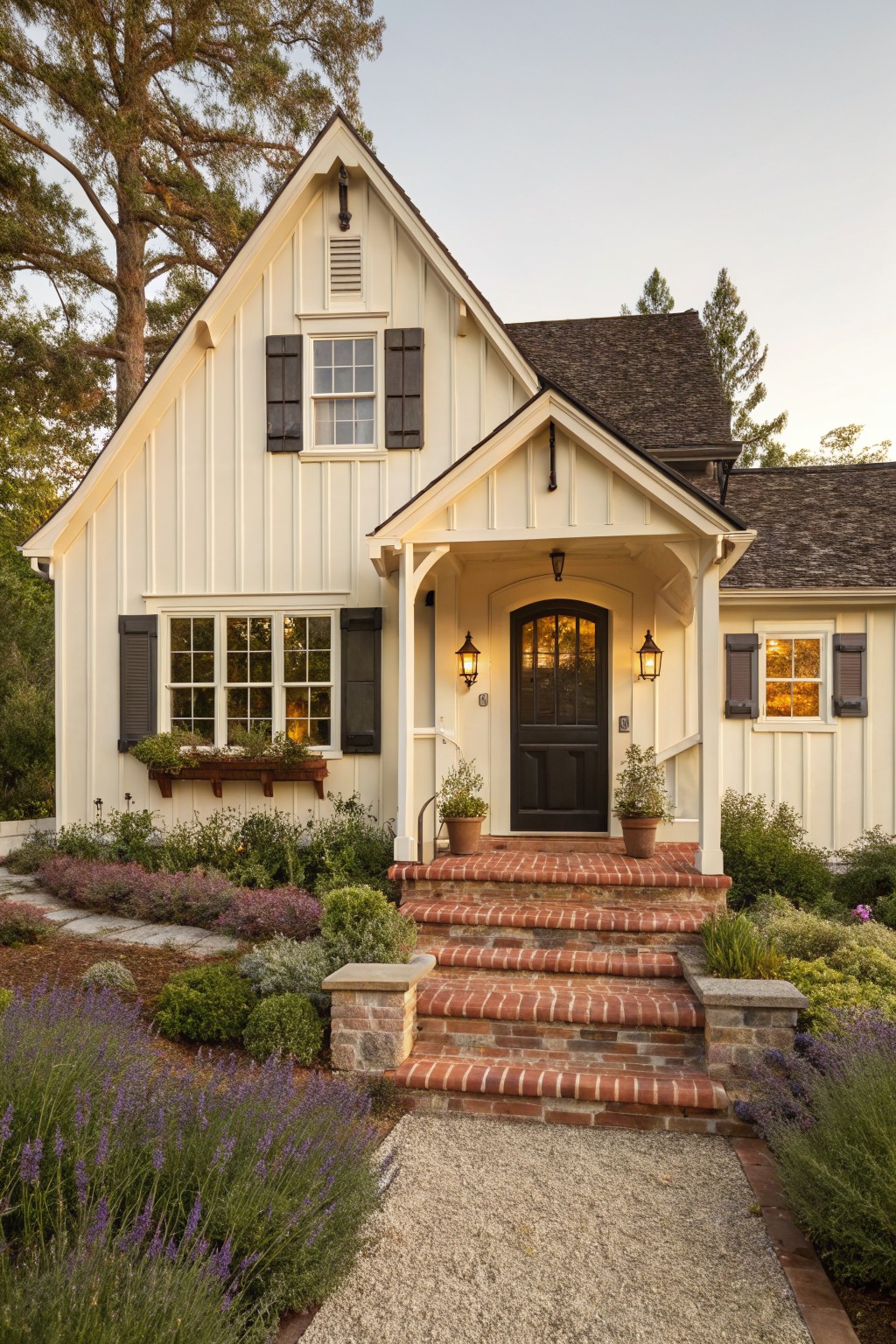
A small gabled porch over the front door keeps the entry feeling simple and balanced. The brick steps add just enough weight to ground the whole look without making it feel heavy.
This approach works well on board and batten farmhouses that sit on smaller lots. Keep the porch trim plain and let the brick handle the contrast. It suits homes that need a clear focal point at the door but do not have room for a larger covered porch.
Combining Board and Batten with Brick
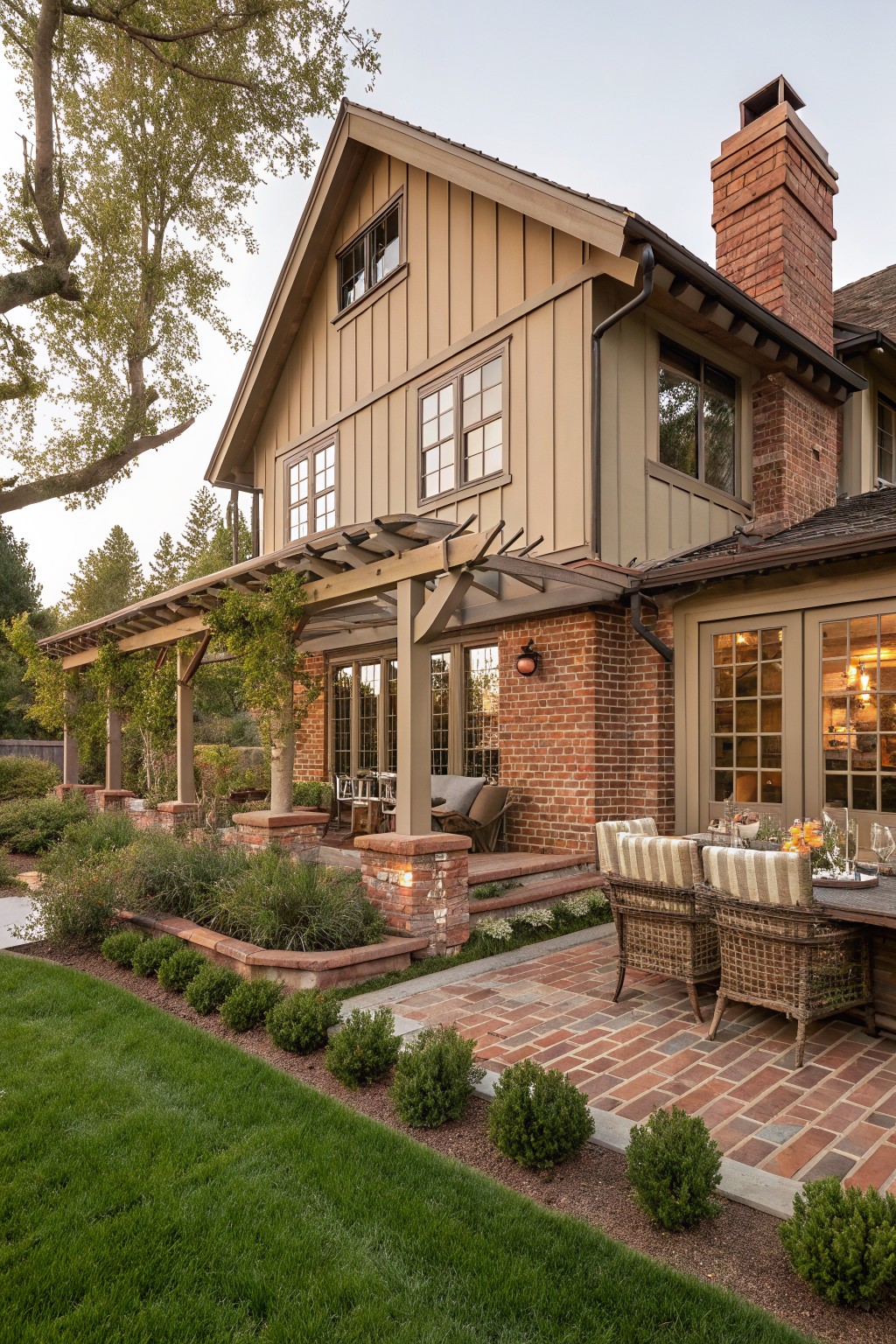
Board and batten siding over a brick base gives a farmhouse exterior a clean, balanced look that feels both sturdy and approachable. The vertical lines add height and rhythm while the brick keeps the lower portion grounded and practical.
This material mix works well on two-story homes where the brick can handle the lower level and the siding can lighten the upper story. It pairs especially nicely with simple window trim and a covered porch or pergola to tie the whole thing together.
Brick With Board And Batten Siding
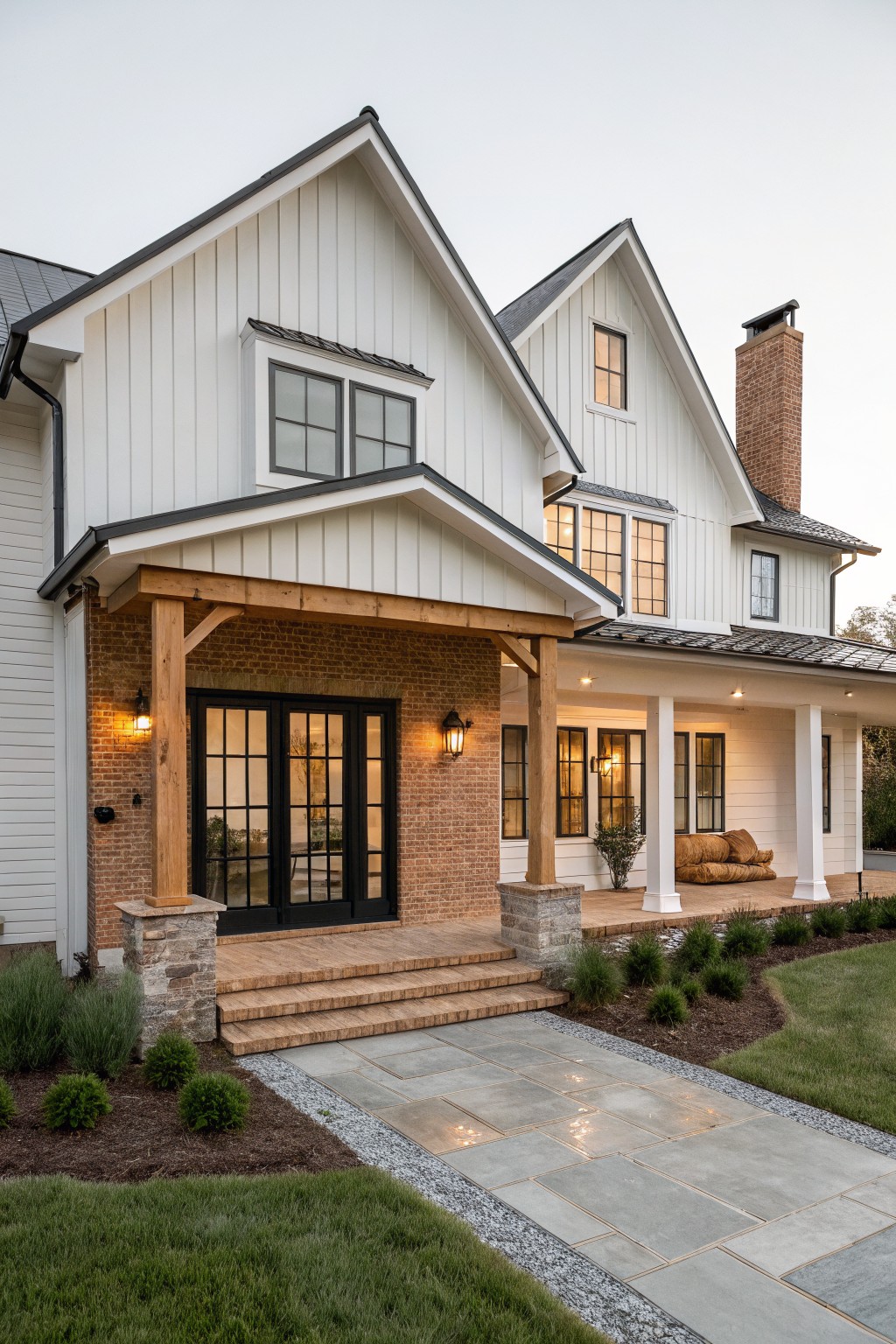
Many farmhouses gain a solid base when brick wraps the lower walls around the entry while board and batten covers the rest. The brick gives the house weight and keeps the white siding from feeling too light.
This mix works best on two-story homes with a centered gable and porch. Limit the brick to the main door area and let the siding take over above so the look stays simple and classic.
Board And Batten Siding In Soft Green
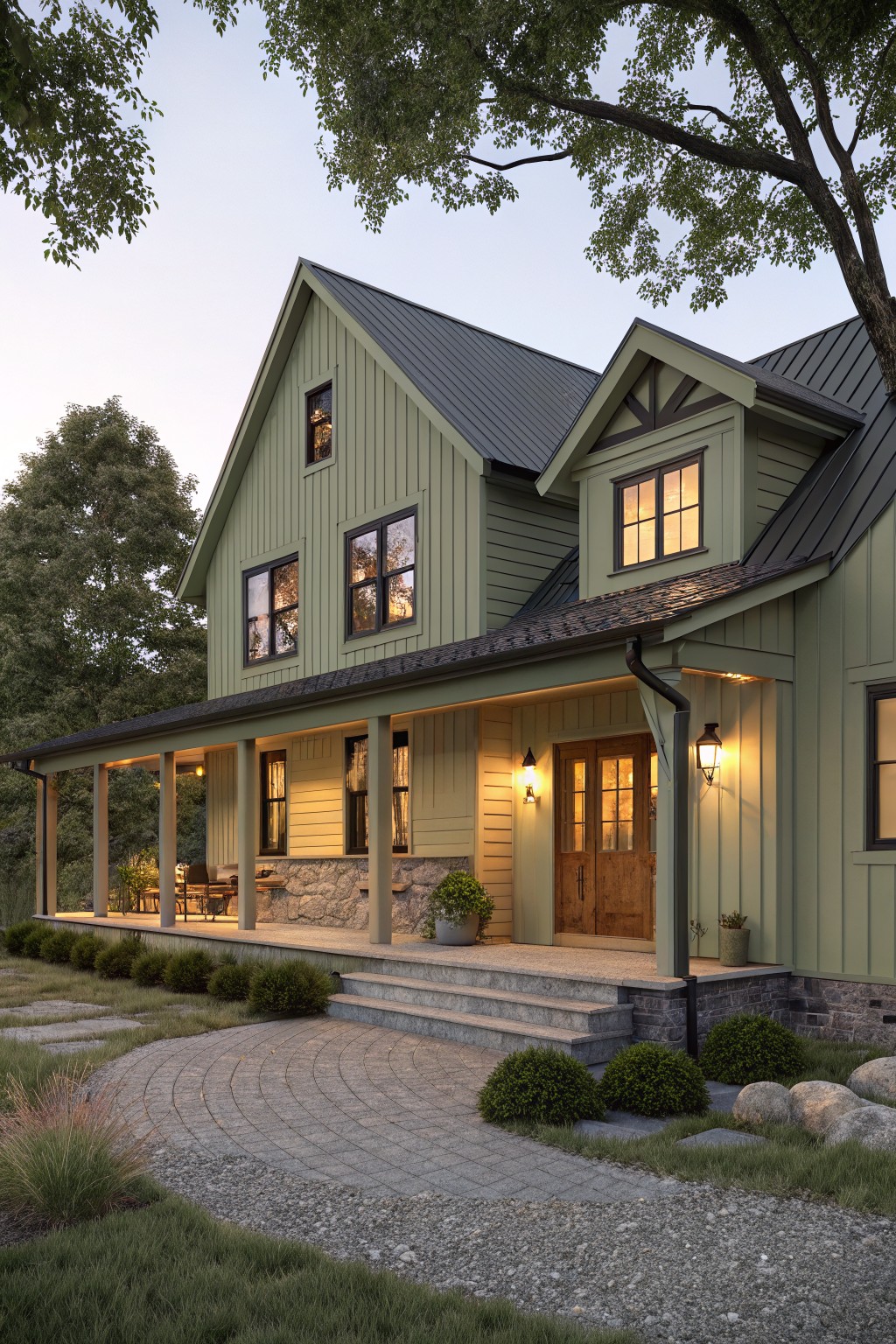
Board and batten works well on farmhouse exteriors because the vertical lines add height without extra trim or decoration. The muted green color keeps the house from feeling too stark while still showing off the texture of the siding.
This approach suits homes with simple rooflines and a front porch. Keep the trim and roof dark so the siding stays the main feature rather than competing with other colors.
Board And Batten For A Clean Farmhouse Look
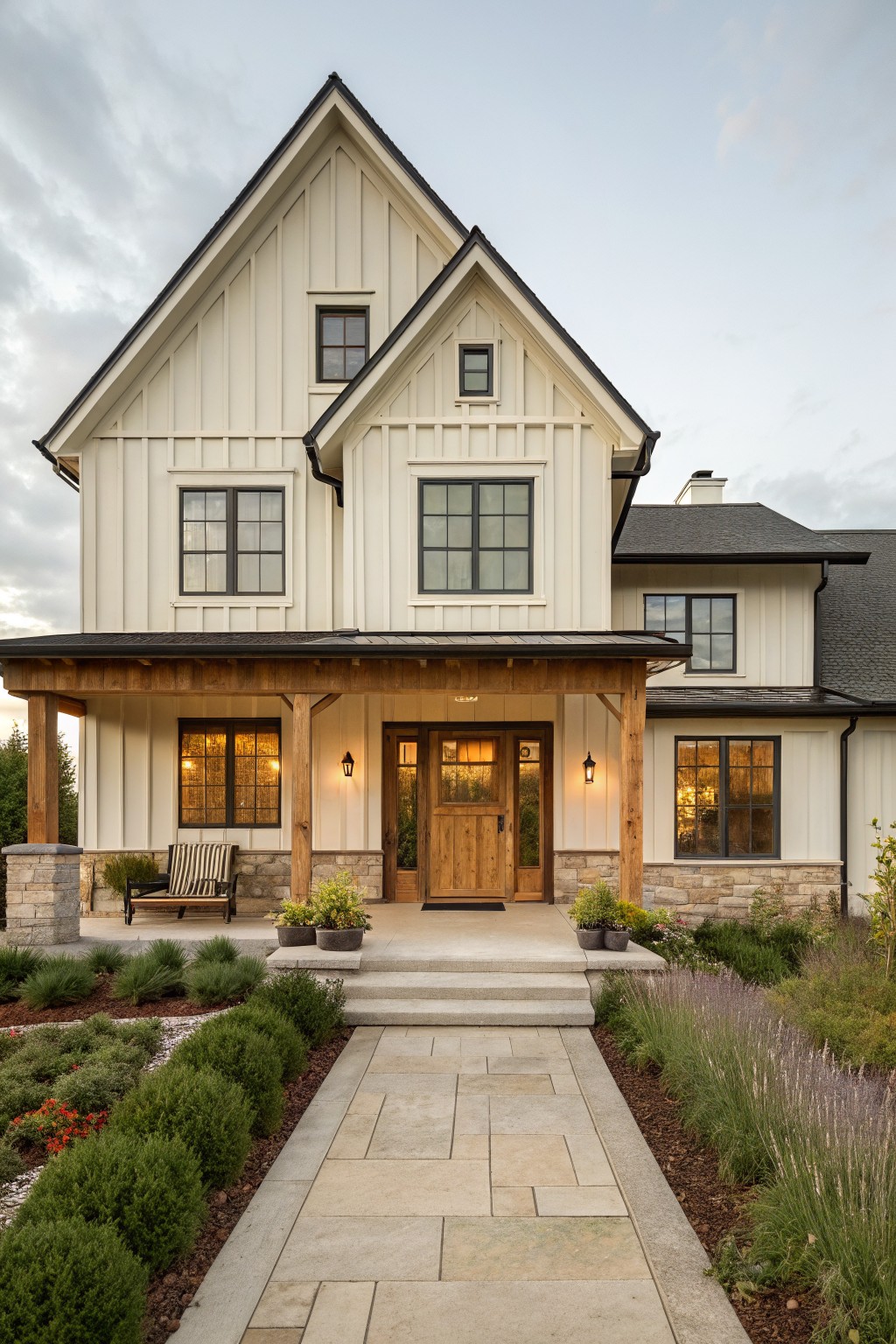
Board and batten siding gives a farmhouse that tall, simple look many people want. The vertical lines keep the house from feeling too busy while still showing off the gables and roof shape.
This approach works best on homes that already have wood trim or a stone base. It pairs well with a covered porch and dark windows, and it stays easy to maintain once painted.
Pairing Board And Batten With Stone
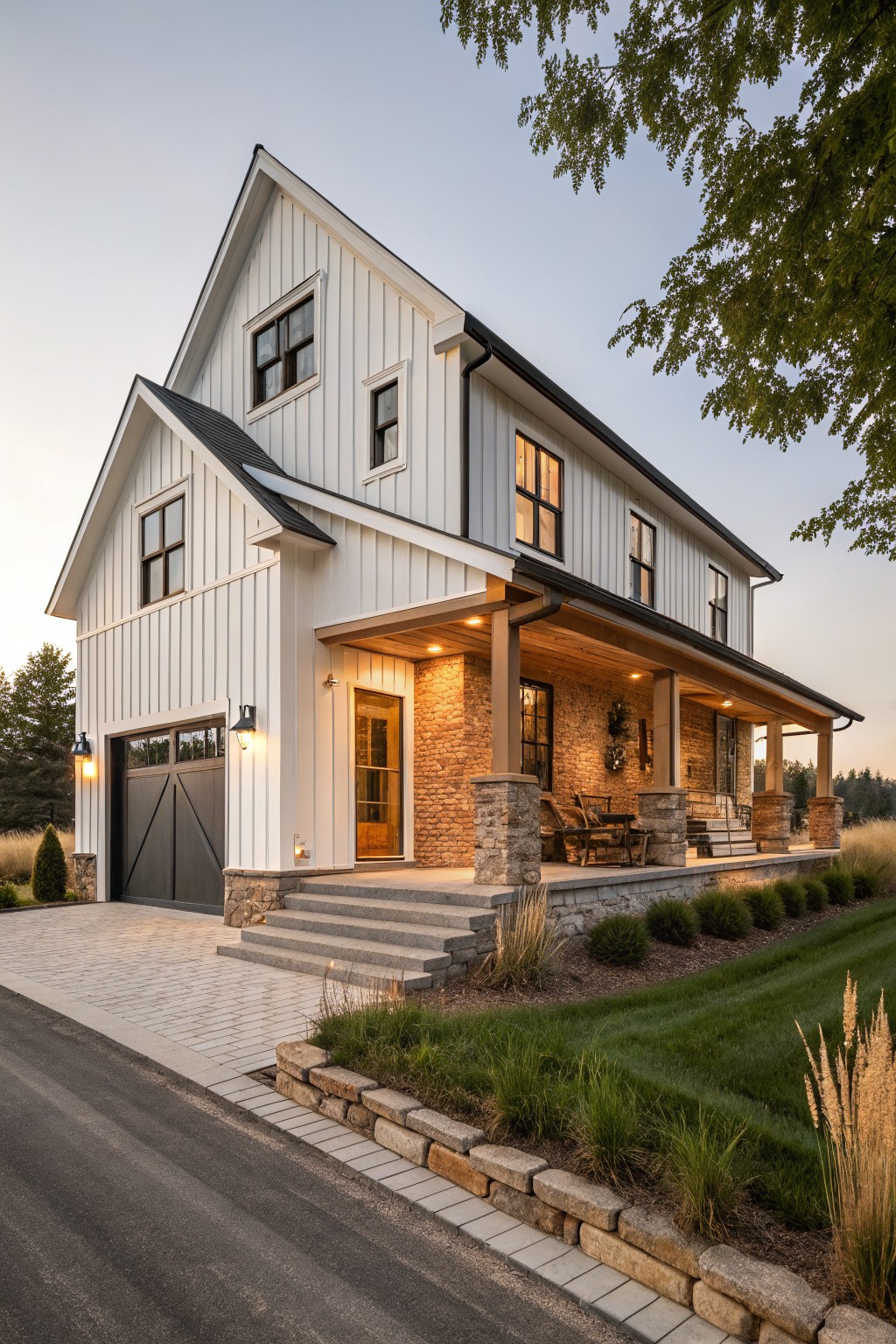
Board and batten siding gives a farmhouse that clean vertical look that feels both simple and classic. Pairing it with stone on the lower porch walls helps the house feel settled and adds some texture without overcomplicating the design.
This mix works best on homes that already have a straightforward roofline and a covered front area. Keep the siding light and let the stone stay natural so the whole exterior ages well and stays easy to care for.
Outdoor Kitchen Next To The Dining Table
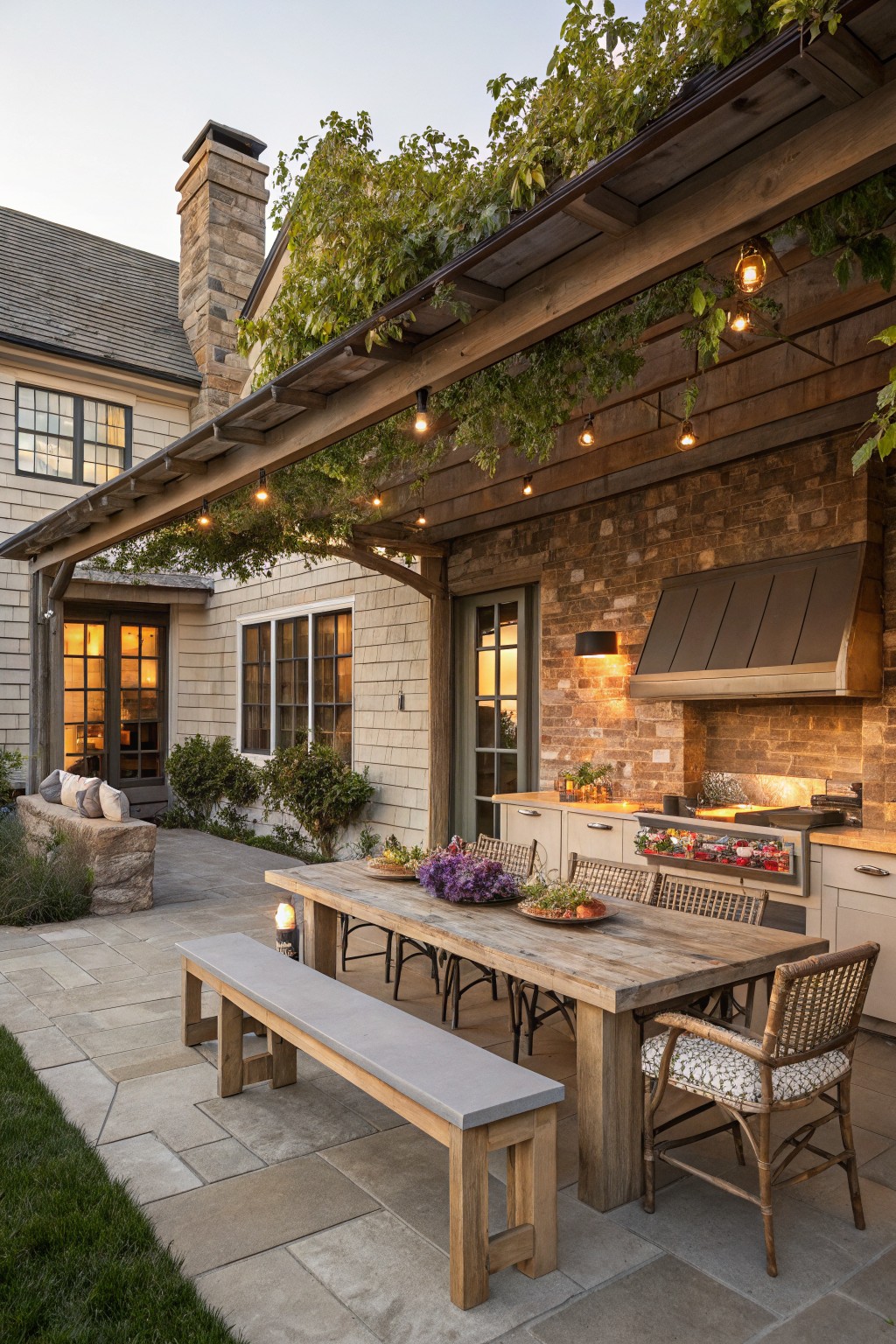
Placing the cooking area right beside a long dining table makes outdoor meals simpler to manage. You can prep, cook, and serve without running back and forth, which works especially well when you have guests or family gathered for the evening.
This setup suits farmhouse homes that already use wood siding and stone walls, since the materials carry over naturally from the house to the patio. Just keep the table and seating simple so the space stays open and easy to move through.
Mixing Brick And Board And Batten
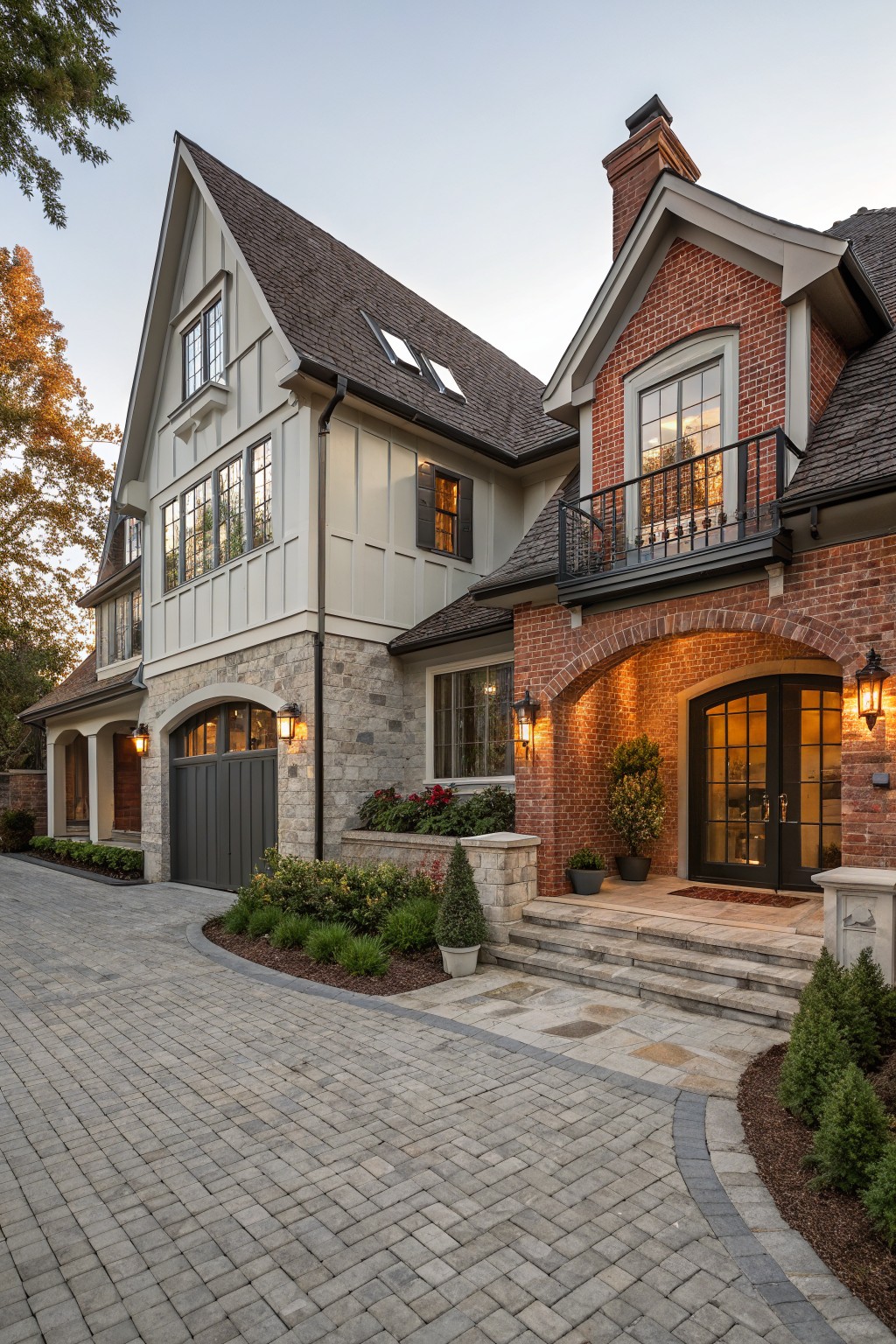
Many classic farmhouses gain character when brick covers the lower walls or main entry area while board and batten runs across the gables and upper sections. The heavier look of brick grounds the house and the lighter vertical siding keeps the overall feel simple and familiar.
This mix works best on homes that already have several rooflines or wings. It helps each section read clearly without extra color changes or trim details. Keep the brick to about the first story height so the siding above stays the main focus.
Board And Batten Siding Over Stone
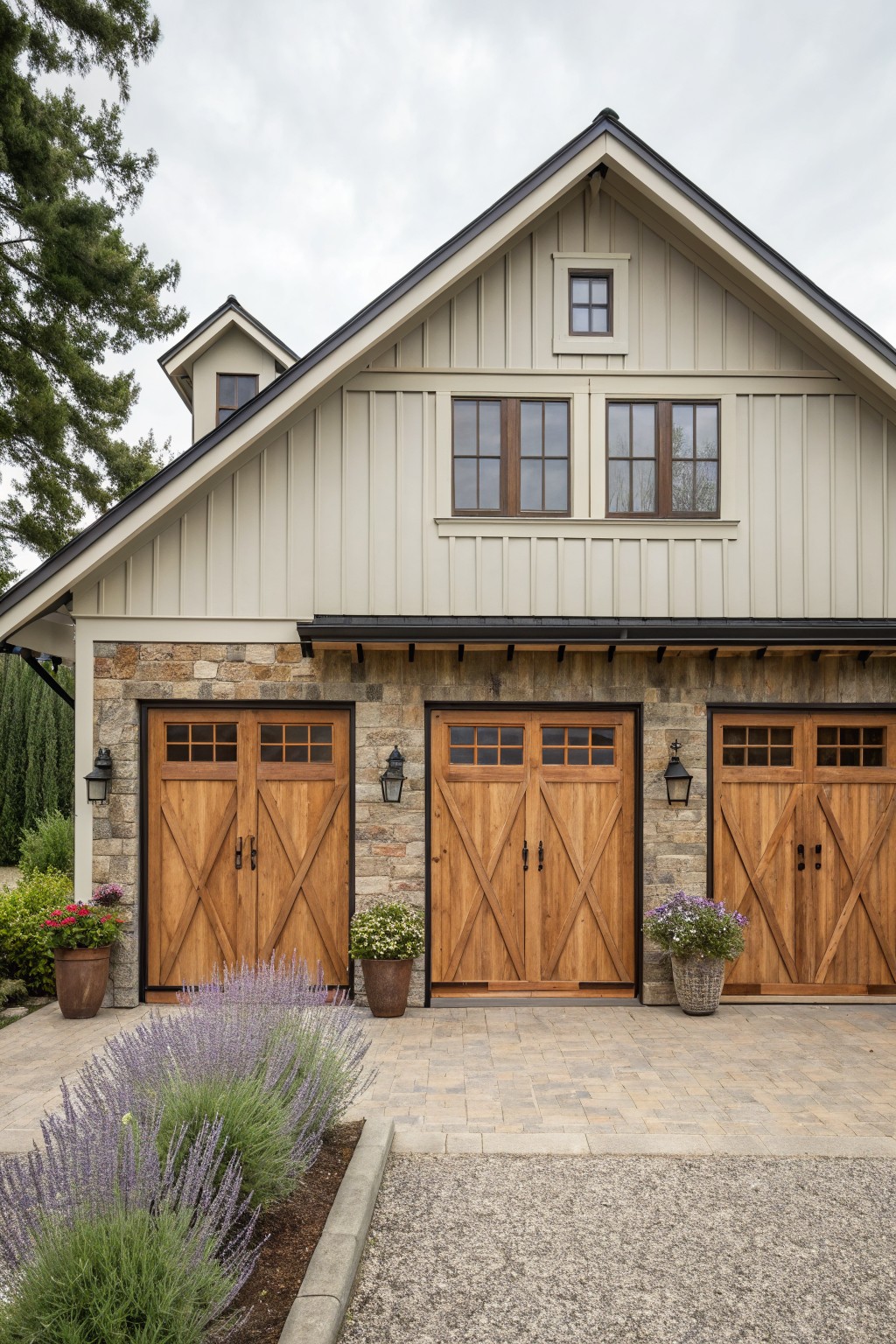
Board and batten siding works well on the upper part of a farmhouse because the vertical lines add height and keep the look simple. Pairing it with a stone base gives the lower section more weight and helps the house feel grounded.
This combination suits homes with a gable roof and works best when the siding color stays light enough to contrast with the stone. Keep the wood accents, like garage doors, in a natural tone so the materials stay balanced.
White Columns On A Front Porch
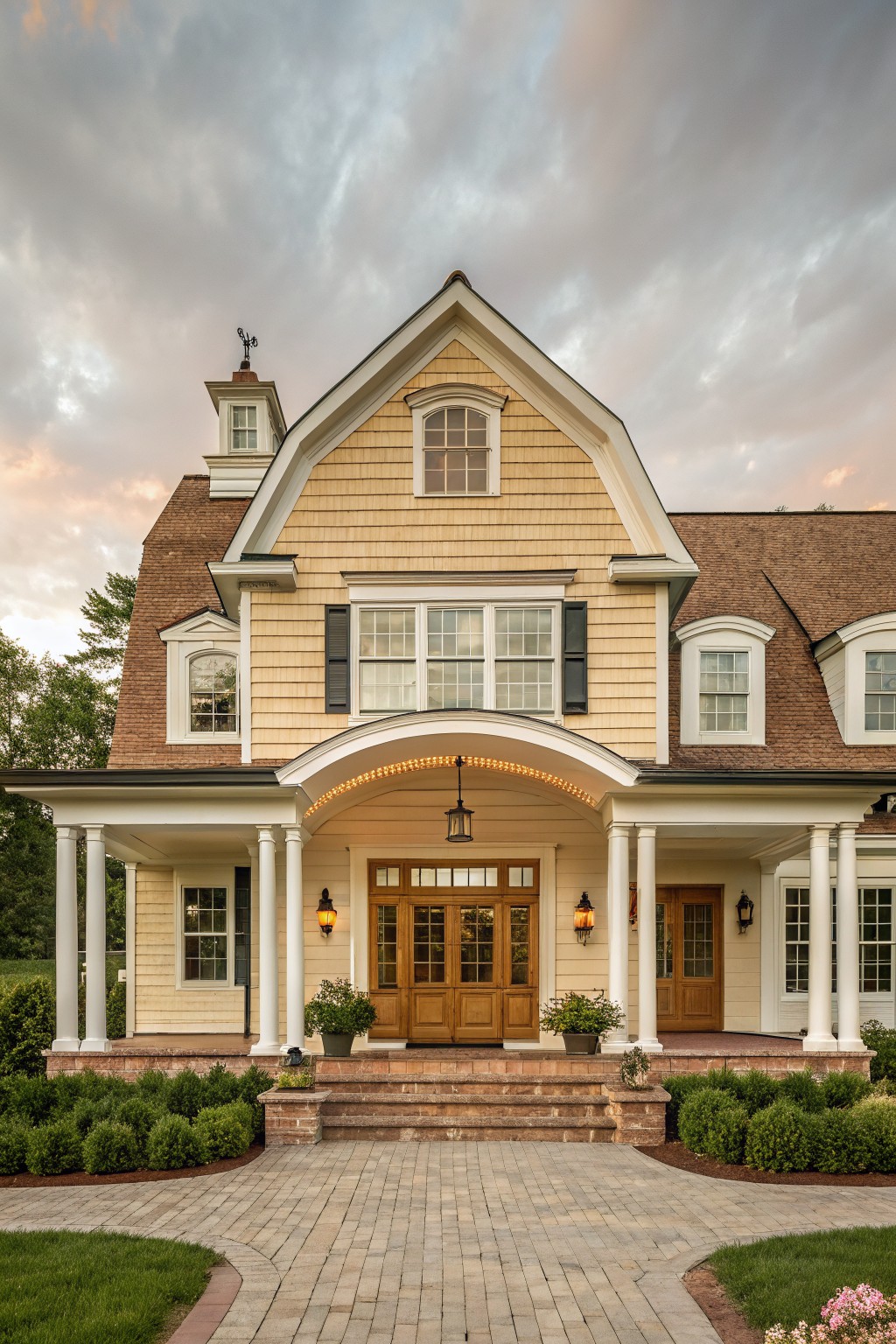
White columns can give a farmhouse exterior a solid, grounded look without much extra detail. They hold up the porch roof and create a clear frame around the front door, which helps the whole front feel balanced and finished. This works especially well when the house has simple siding and you want the entry to stand out.
This approach suits homes with enough roof overhang to make the columns useful rather than just decorative. Keep the columns plain and painted white so they contrast with the siding and roof. Avoid adding too many other trim pieces, or the look can start to feel busy.
Board And Batten With Brick Foundations
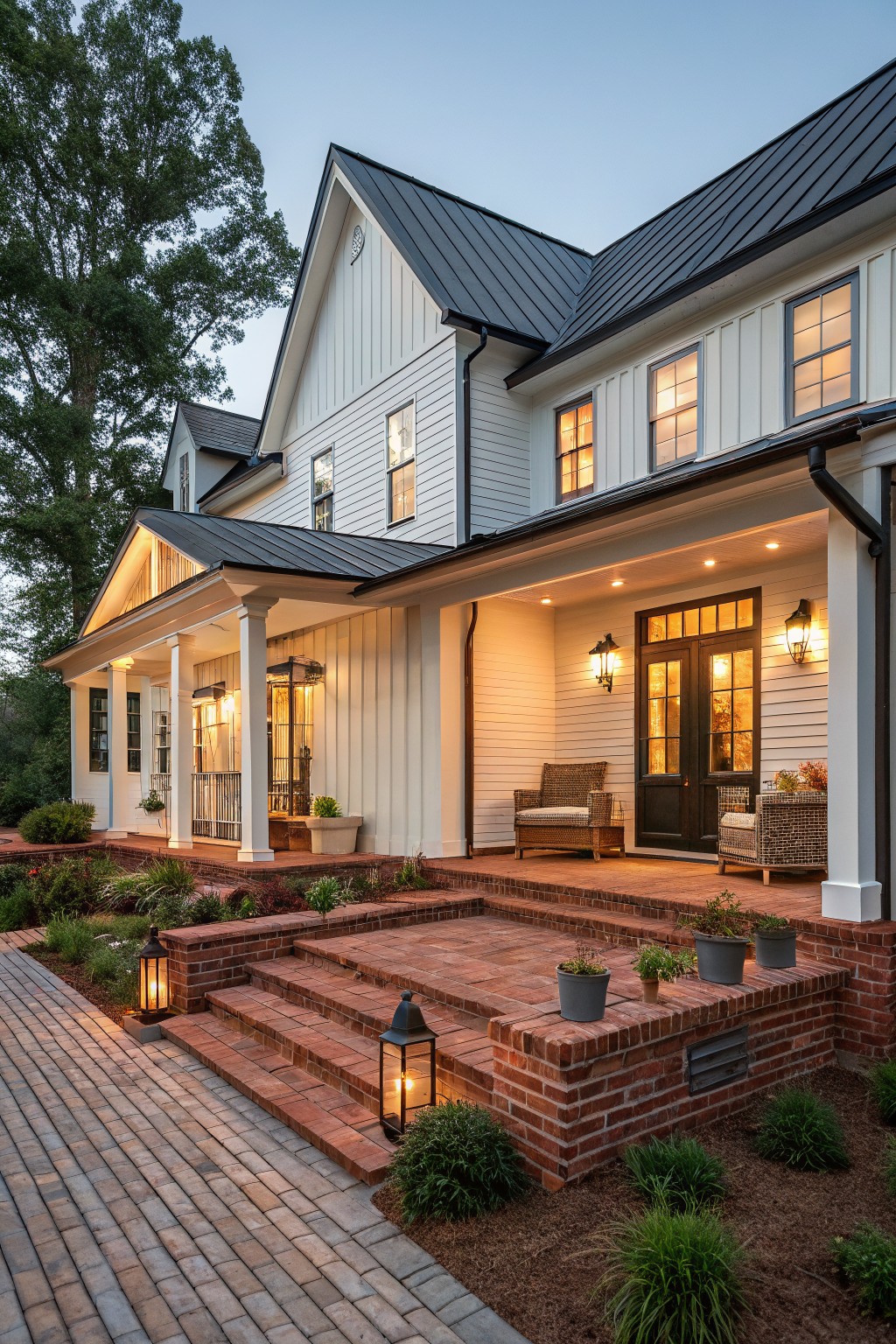
Many farmhouses gain a more grounded look when board and batten siding sits above a brick base. The brick gives the house some weight at ground level while the white siding keeps the upper part light and simple.
This approach works on homes with a slight slope or a raised porch. Keep the brick straightforward and match it to the roof color so the materials feel connected rather than busy.
Board and Batten With a Brick Base
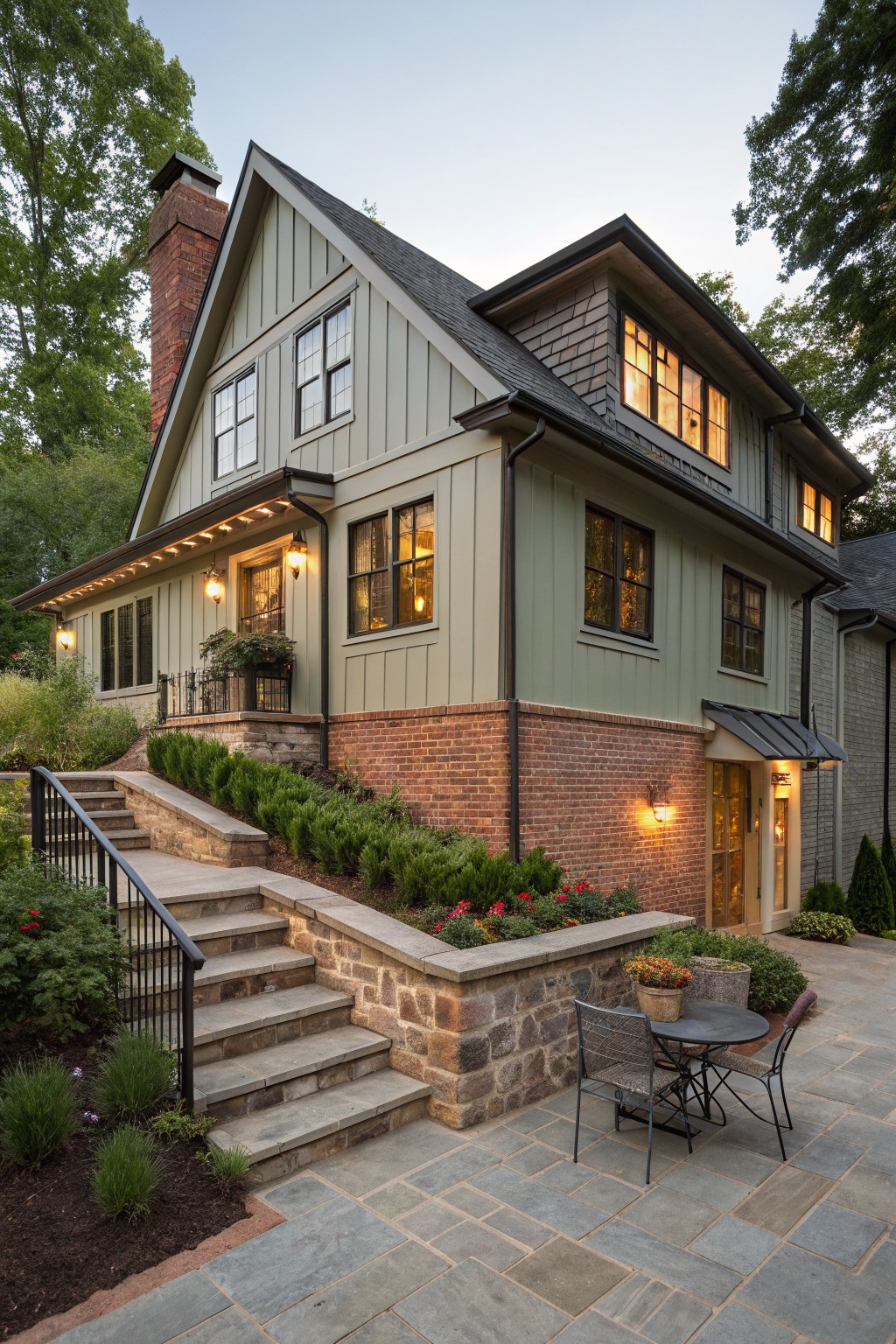
Many classic farmhouses use board and batten on the upper walls and let brick take over at the bottom. The vertical lines keep the look light, while the brick gives the house a solid footing that feels more permanent.
This approach works best on homes with gabled roofs or uneven terrain. The brick handles the lower half cleanly and helps the siding stay protected from moisture and wear. Just keep the brick color simple so it does not compete with the painted boards above.
Board and Batten Siding with Brick
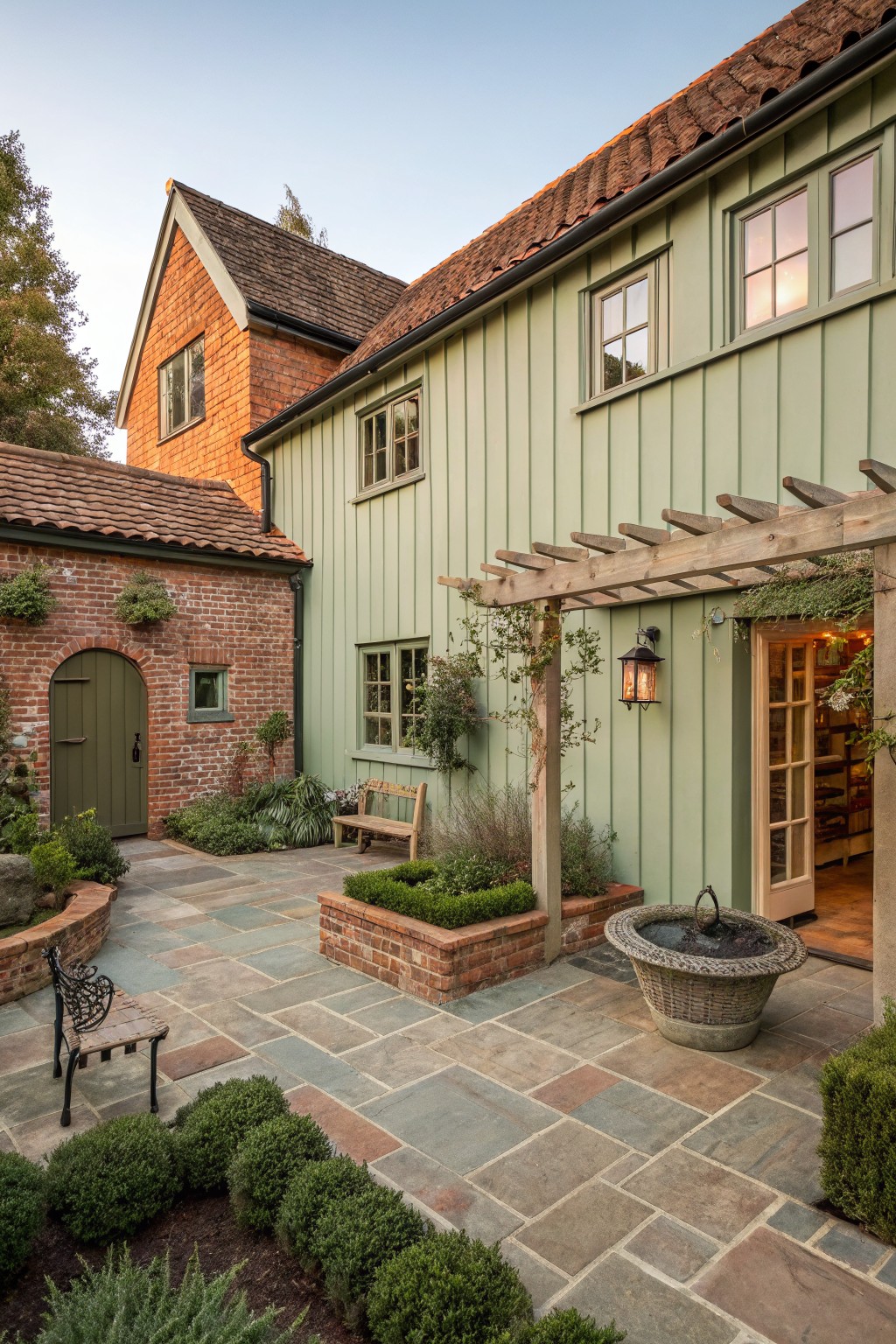
Board and batten siding in a soft green works well next to brick because the two materials balance each other. The vertical lines of the siding add height and rhythm, while the brick brings weight and texture that feels grounded. In a courtyard setting this mix keeps the space from looking too flat or too busy.
This approach suits older farmhouses or new builds that want a simple, classic look. It works best when the brick is used in smaller sections like gables or entries rather than covering whole walls. Keep the colors muted so the materials stay the focus instead of competing.
Frequently Asked Questions
Q: What material holds up best if my area gets lots of snow?
A: Brick resists moisture and ice better than wood. It needs almost no extra protection once installed. Board and batten works too if you seal the joints well.
Q: How often should I check my wood trim for damage?
A: Look it over once a year in the spring. Catch small cracks early before they spread. This keeps the whole exterior looking fresh.
Q: Does adding brick accents change how the house feels from the street?
A: Yes it adds weight and texture right away. Place the brick low on the walls to ground the design. The rest can stay wood for that classic farmhouse balance.
