

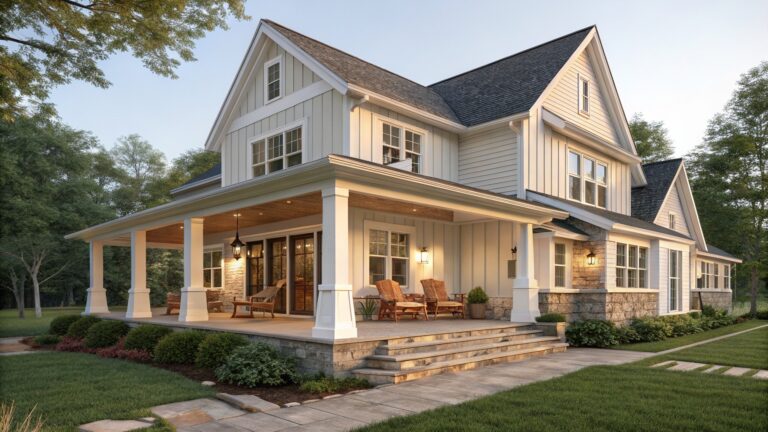
I’ve noticed over time that farmhouse exteriors often succeed when the porch feels like a natural extension of the front rather than something added later.
Materials and trim choices matter more than people expect because they determine whether the facade holds together from every angle.
Texture changes everything.
I usually start by checking how the entry reads in different lights since that sets the tone for everything else around it.
Paying attention to how these elements work together helps avoid the flat appearance that many updated homes end up with after a quick refresh.
Full Width Porches on Farmhouses
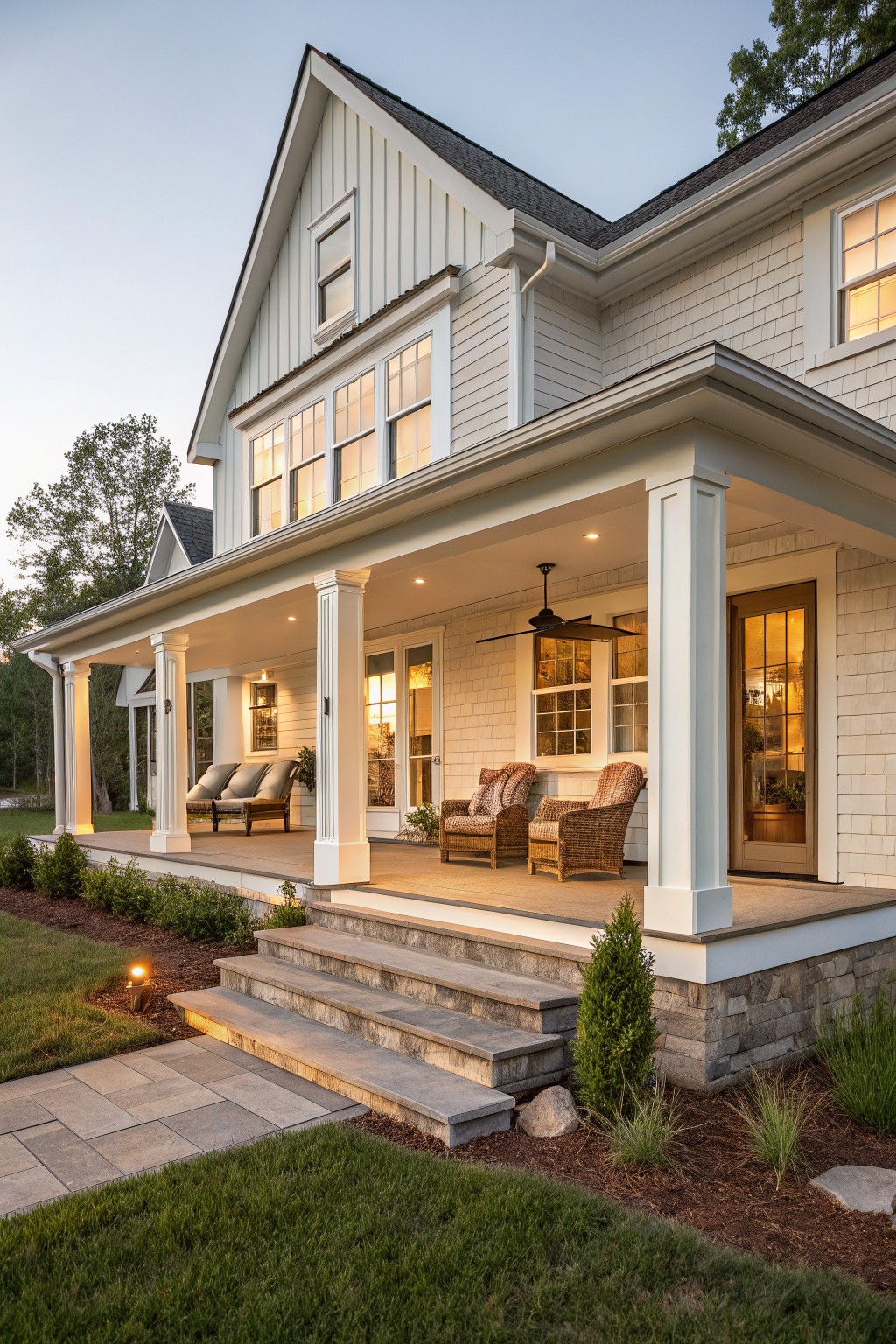
A wide porch changes how a farmhouse sits on the lot. It gives the tall gable something to rest against and keeps the front from looking too vertical. The columns and deep overhang also create a clear entry point without extra trim or decoration.
This approach works best on homes that already have a simple roofline and board siding. Keep the columns plain and the ceiling height consistent with the main floor windows. Avoid shrinking the porch depth just to save space, since the whole point is to give the house a grounded base.
Pergola Covers That Extend a Porch
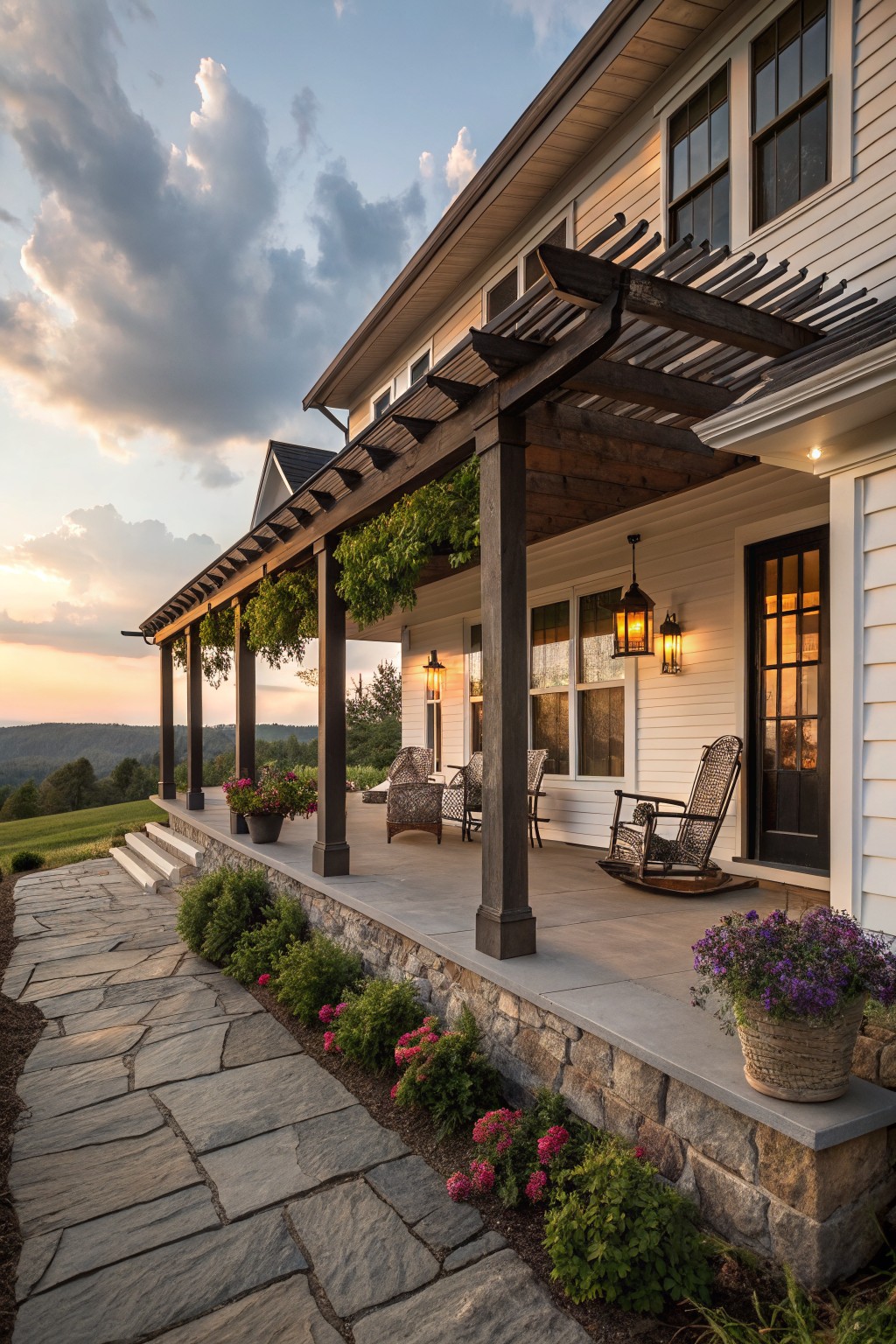
A pergola over a porch adds just enough cover to make the space comfortable without turning it into a closed room. The open slats let in light and air while giving vines a place to grow and creating a bit of shade for seating.
This works best on longer porches where you want to define an area for chairs without adding walls. It pairs well with simple siding and a stone base, and it keeps the whole front of the house feeling open but still usable on warmer days.
A Covered Porch That Gives The House Weight
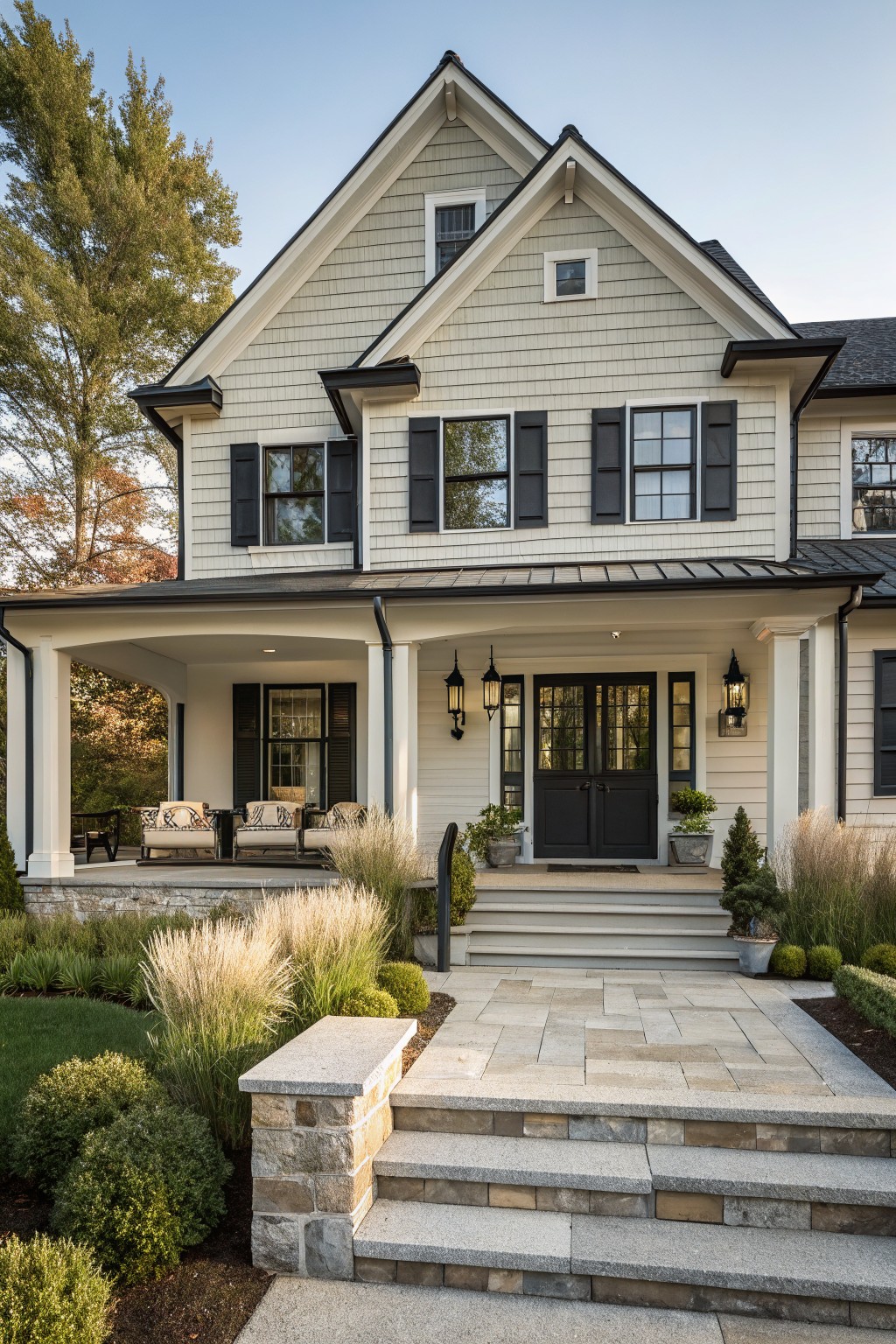
A covered porch works best when it feels built into the house rather than added later. The wide roof overhang, simple columns, and low stone base all help the porch sit naturally with the rest of the exterior and keep the whole front from looking flat.
This approach suits farmhouses with straightforward siding and a gable roof. Keep the columns plain, match the porch depth to the scale of the house, and let the stone run only where the porch meets the ground so the detail stays grounded instead of busy.
Wide Porches With Tall White Columns
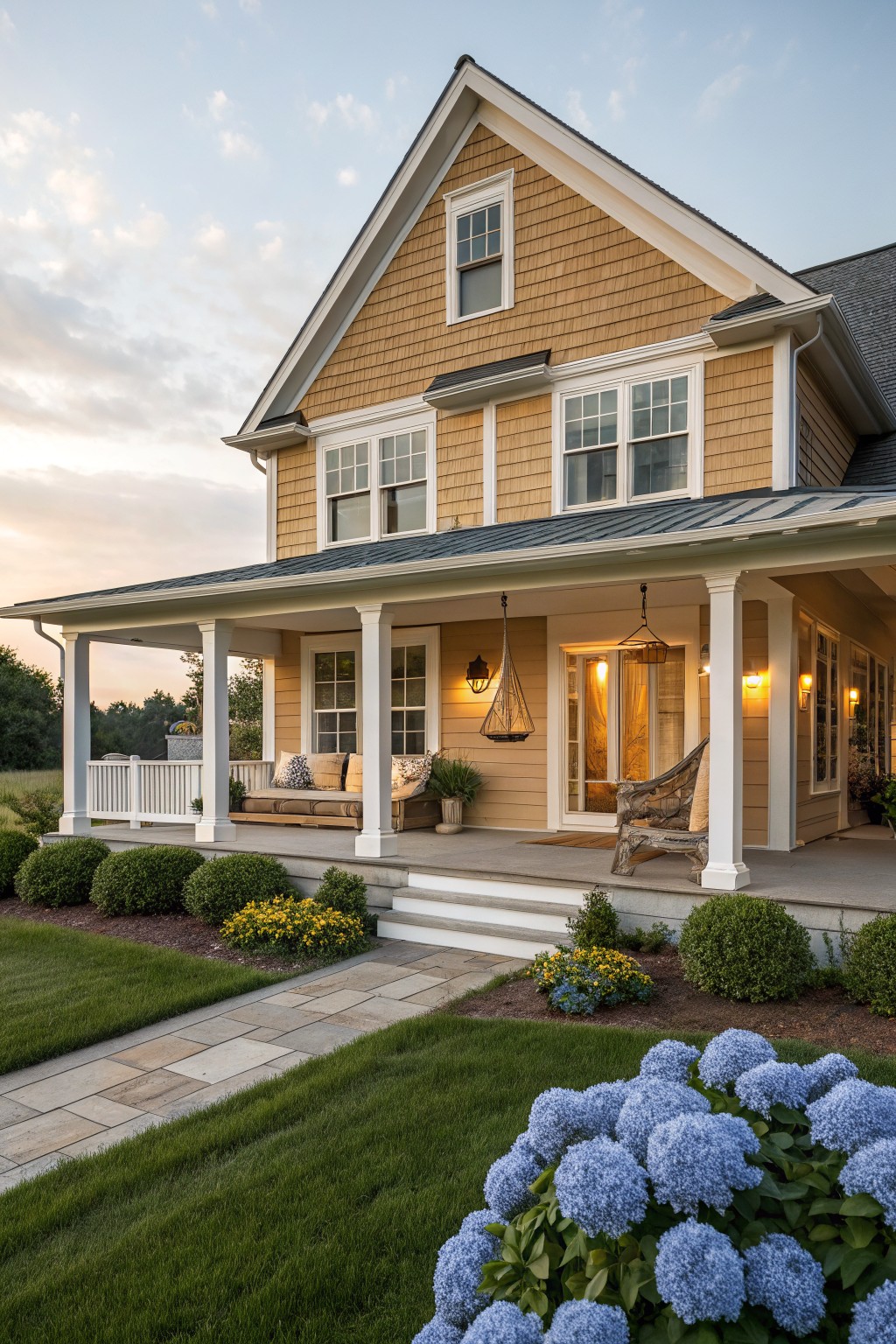
A deep front porch changes how a farmhouse sits on the lot. The wide roof overhang and tall white columns give the house a settled look and create usable outdoor space without adding another room.
This works best on homes with simple gable roofs and wood siding. Keep the columns plain and evenly spaced, then let the porch floor run the full width of the main facade so the proportions stay balanced.
Stone Fireplaces on Farmhouse Porches
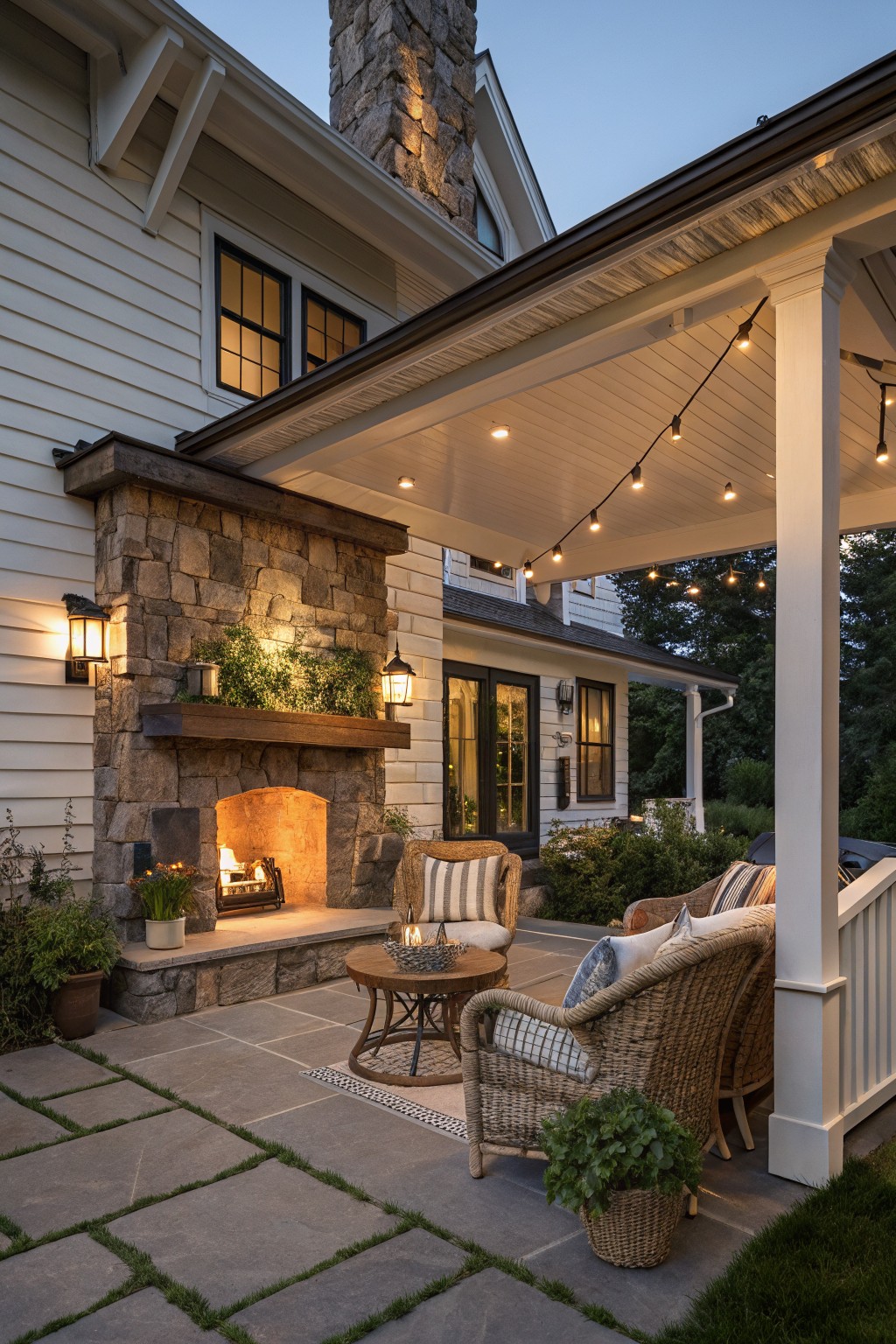
A stone fireplace built right into the porch gives the space a real sense of center. It turns an open seating area into something that feels more like an outdoor room, especially when the evenings turn cooler.
This works best on homes that already have a covered porch or patio space. Keep the seating simple and low, and let the fireplace handle most of the visual weight so the area stays comfortable without feeling crowded.
Stone And Wood Mixes On Farmhouse Facades
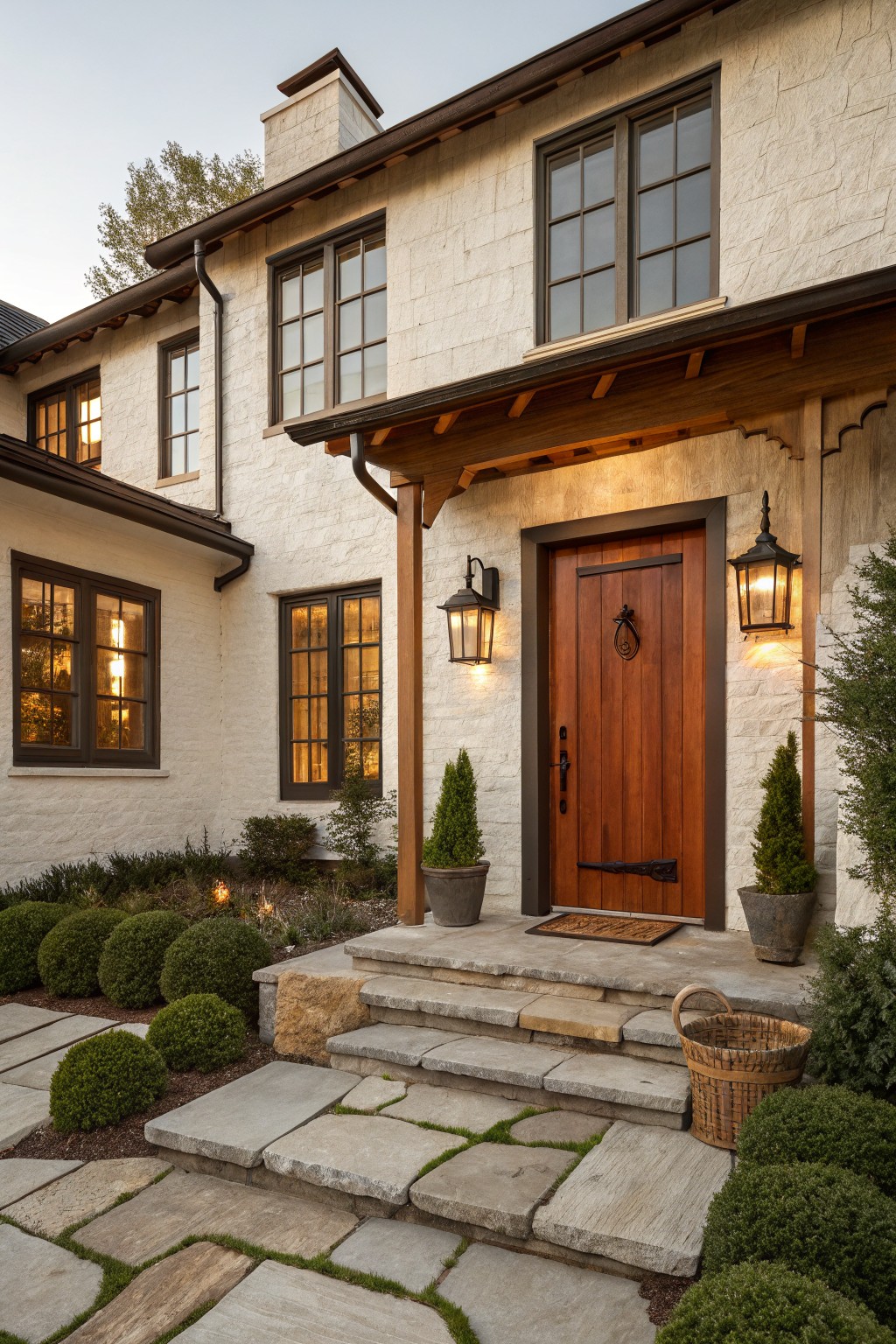
Light stone walls paired with wood trim and doors give a farmhouse exterior a grounded look without feeling heavy. The contrast adds texture while keeping the overall feel simple and welcoming. Many people like this approach because it ages well and works with basic shapes rather than needing lots of extra detail.
This combination suits homes with a straightforward roofline and works best when the wood is kept to the main entry, windows, and any overhangs. It is easy to adapt on both new builds and updates, though it helps to keep the stone color light so the wood can stand out.
A Porch with Tall White Columns
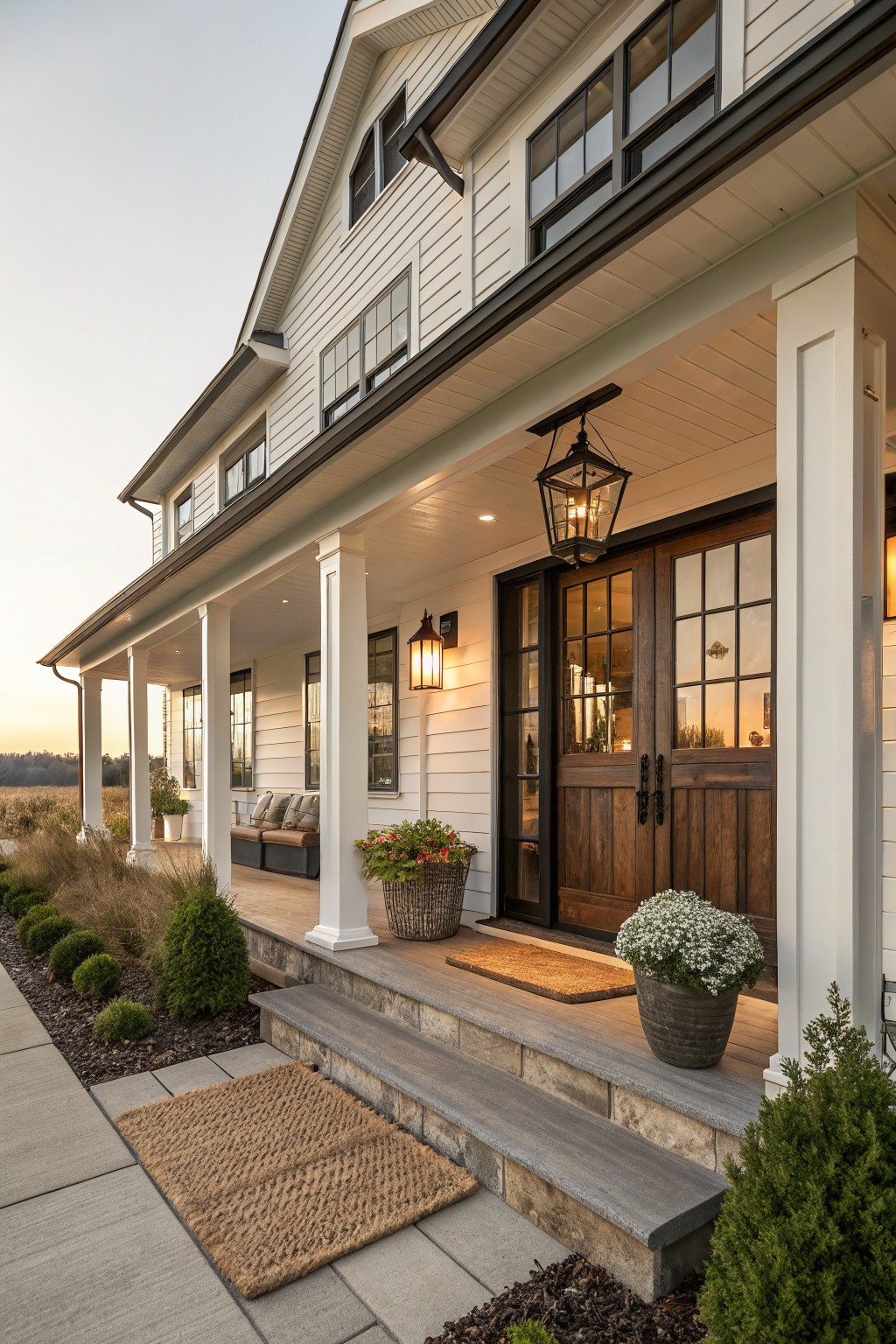
A covered porch supported by plain white columns gives a farmhouse front real presence. The columns lift the roofline and create a steady rhythm that makes the whole facade feel more balanced and finished.
This approach works best on homes with light siding and darker trim. Keep the columns simple and square so they match the trim rather than compete with it, and let the porch depth do the main work of welcoming people to the door.
Painting Trim In A Contrasting Color
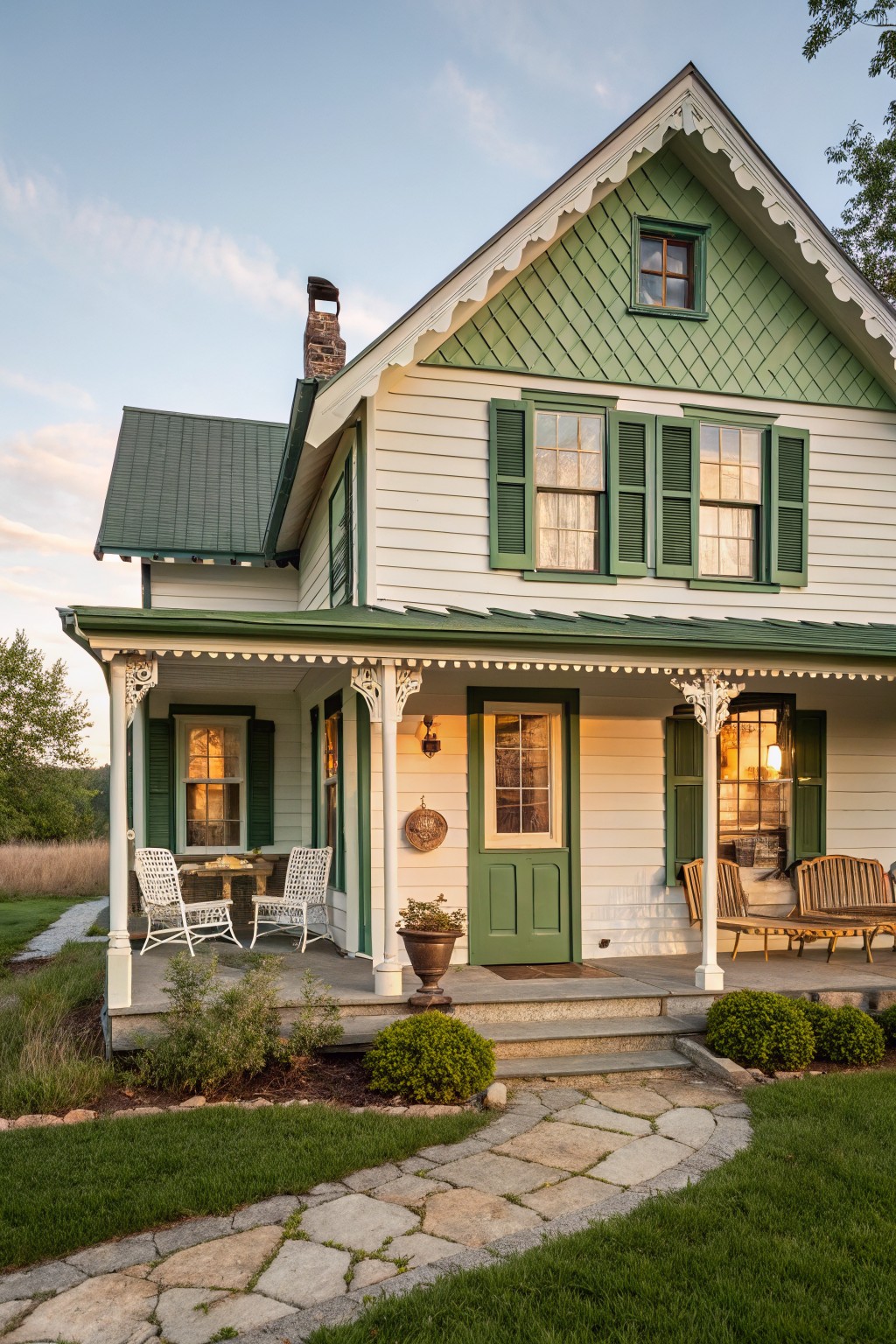
Many farmhouses gain a lot of character when the trim is painted a different shade from the siding. The green used on the shutters, door, and porch details here makes the white walls feel more structured and gives the whole front a clean, settled look.
This works especially well on homes with simple siding and a few strong architectural lines. Stick to two colors at most and carry the trim color through the windows and porch so everything feels connected.
Natural Wood on the Porch Ceiling
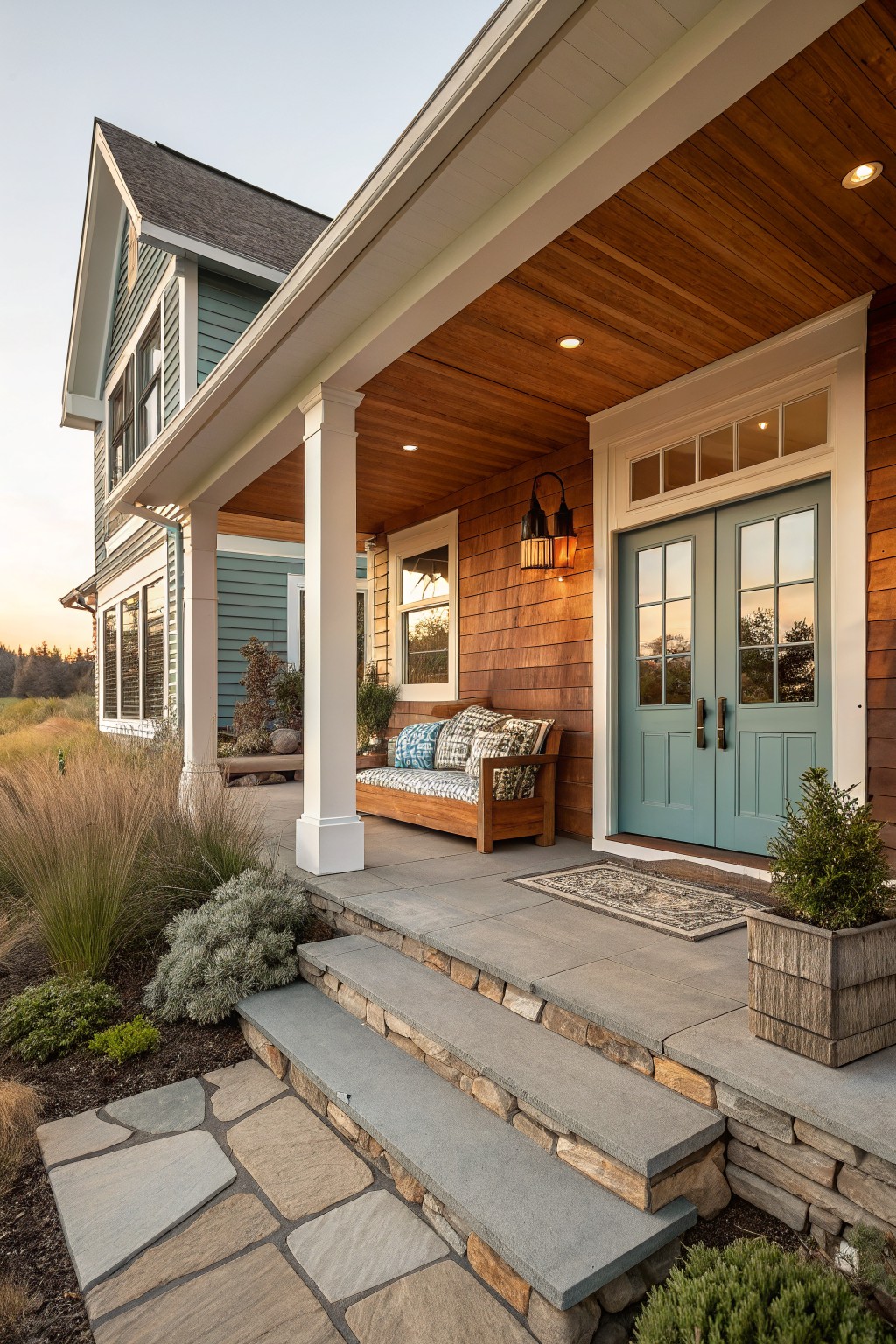
A wood ceiling on the porch gives the exterior a layer of texture that painted surfaces alone cannot provide. The contrast between the warm wood and cooler siding or trim makes the whole front feel more settled and lived in.
This approach works best on farmhouses with straightforward rooflines and simple columns. Keep the wood tone natural rather than stained too dark, and pair it with light trim so the ceiling reads as a quiet accent instead of the main feature.
Green Trim For The Shutters And Porch
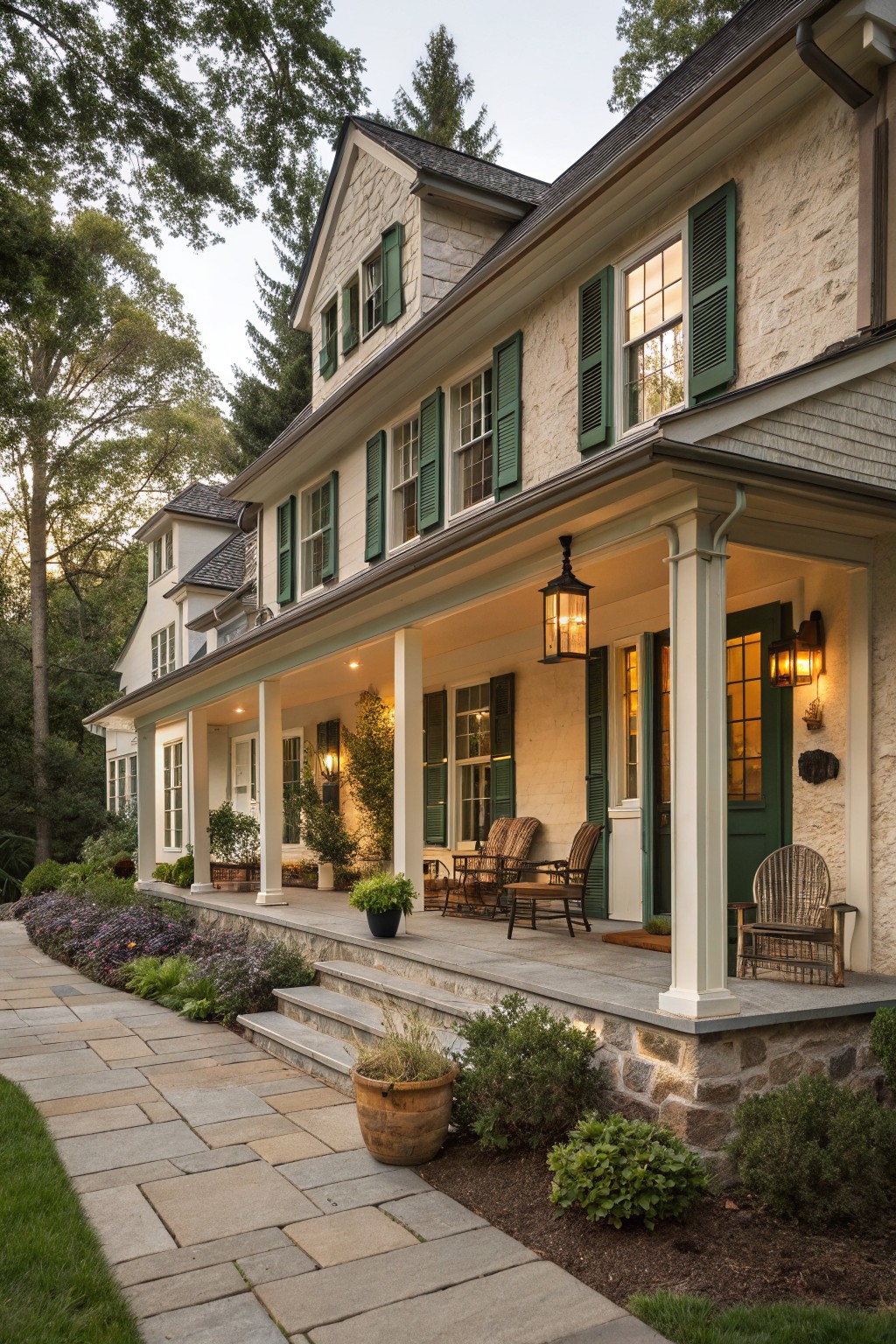
Green paint on the shutters and trim gives a stone and siding farmhouse a clear, simple look. It stands out against the lighter walls without needing extra decoration, and it helps the long porch feel more connected to the rest of the house.
This works well on older or traditional homes where you want the windows and porch to read as one unit. Keep the green deep and slightly muted so it ages nicely with the stone, and test it on a few boards first since the color shifts with the light.
Wood Ceilings on Farmhouse Porches
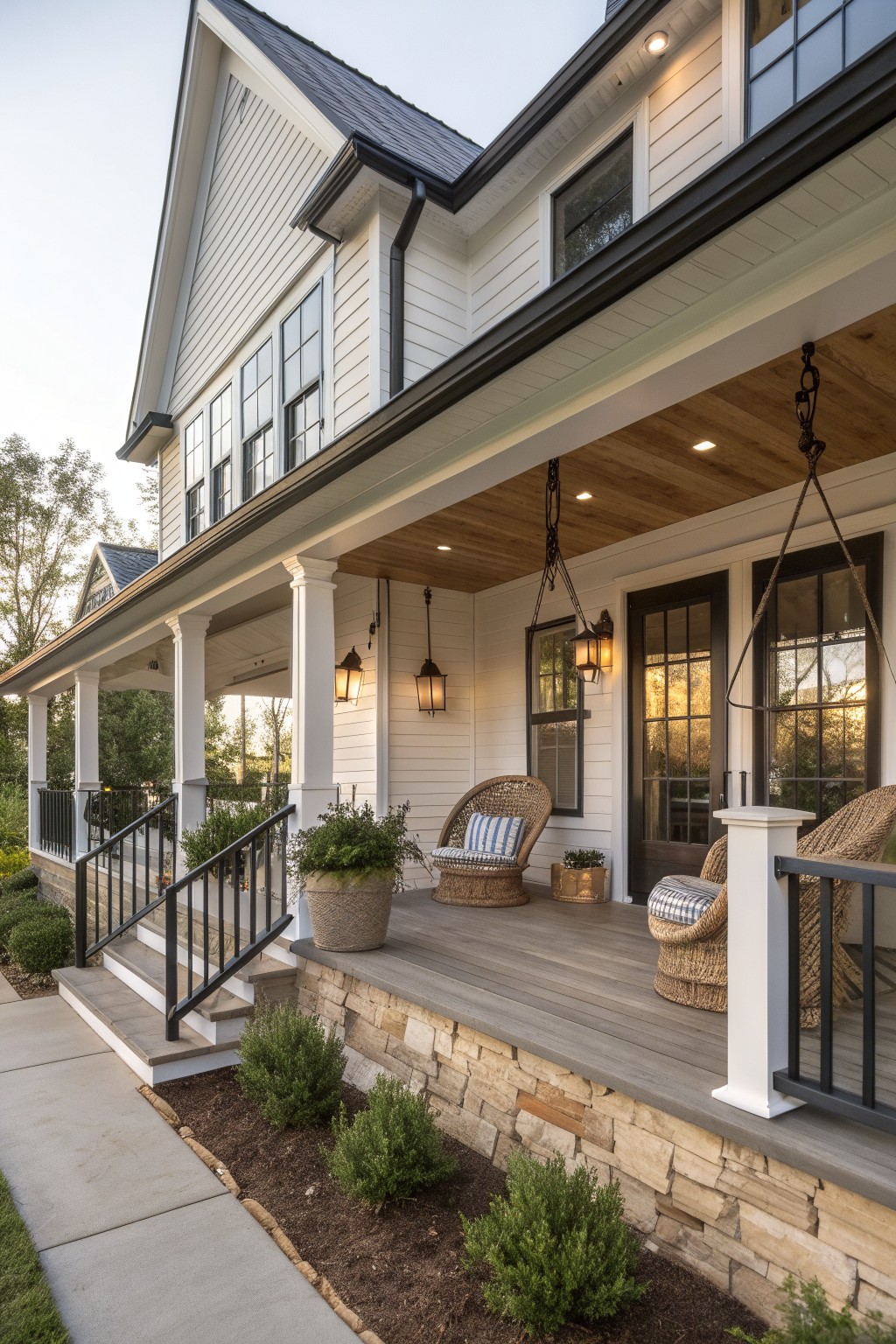
A wood ceiling on the porch adds a layer of warmth that plain white siding often needs. It softens the look of the whole front and gives the space a settled, lived-in feel without any extra color or pattern.
This choice works best on homes that already have simple trim and a lower stone base. Keep the wood tone natural and let the ceiling boards run straight across so the texture stays calm and easy to read from the street.
Stone Anchors The Porch Columns
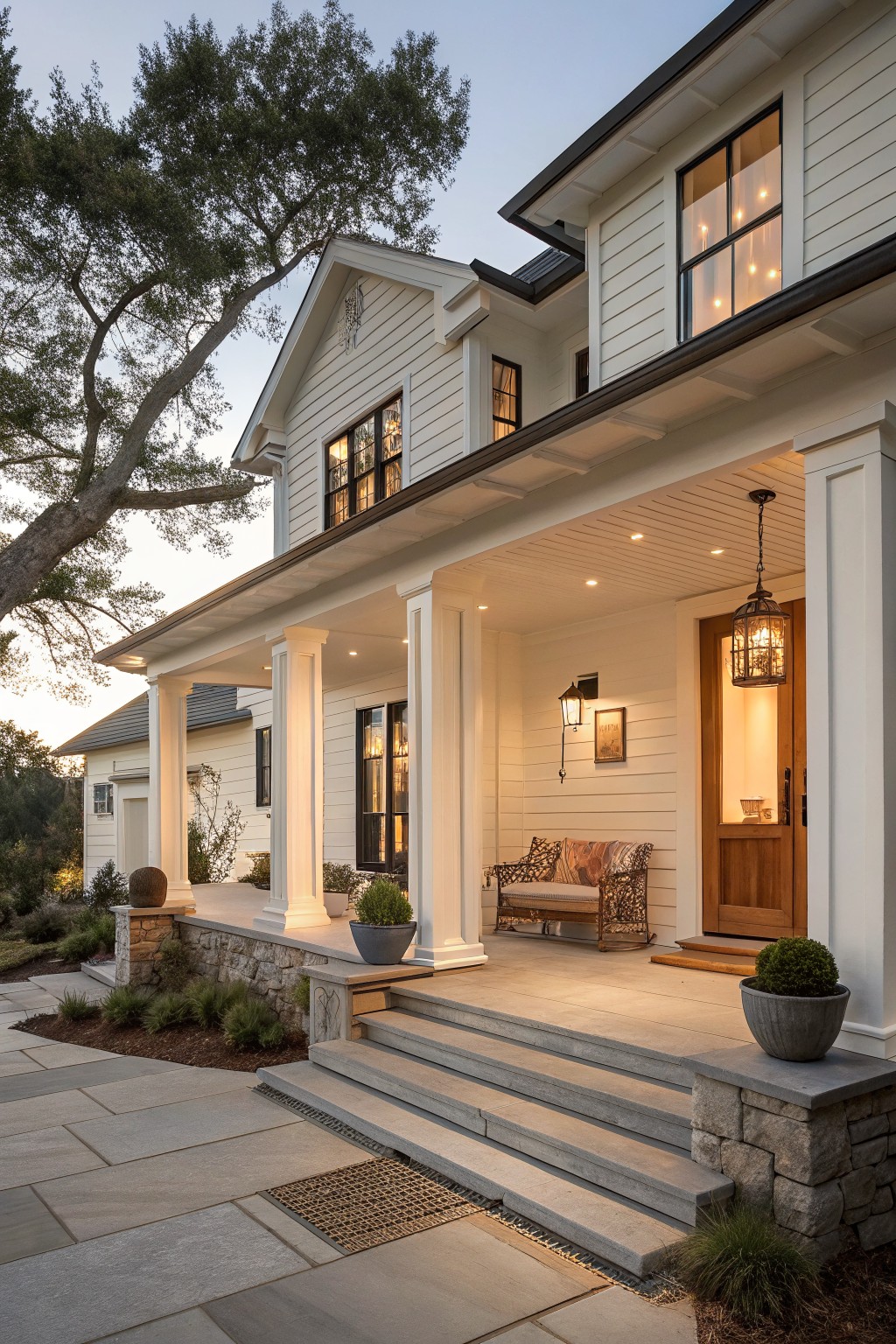
Many farmhouses feel more settled when the porch columns rest on a low stone base. The stone gives the structure weight and breaks up the white siding so the front does not look too tall or light.
This move works best on homes that already use some stone elsewhere, such as a foundation wall or walkway. Keep the stone height modest so the columns still read as the main feature rather than the base taking over.
Stone Accents On The Porch
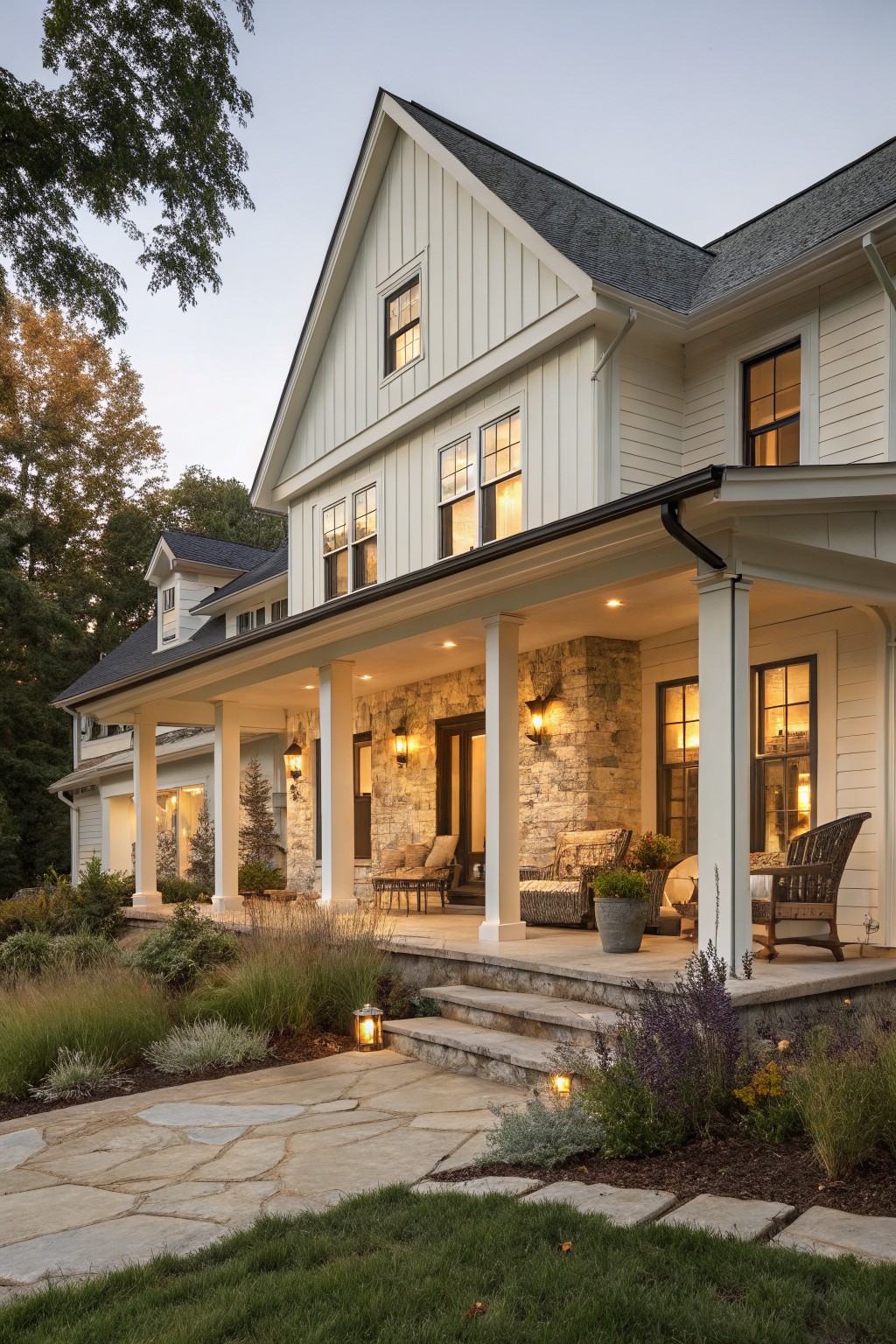
Stone on the porch wall gives the front of the house a warmer look next to the white siding. It breaks up the long stretch of paint and adds a natural texture that feels right at home on a farmhouse.
This works best when the stone stays in one area rather than covering everything. Keep the rest of the trim simple and let the stone do the work on just the back wall of the porch.
Climbing Vines on the Porch
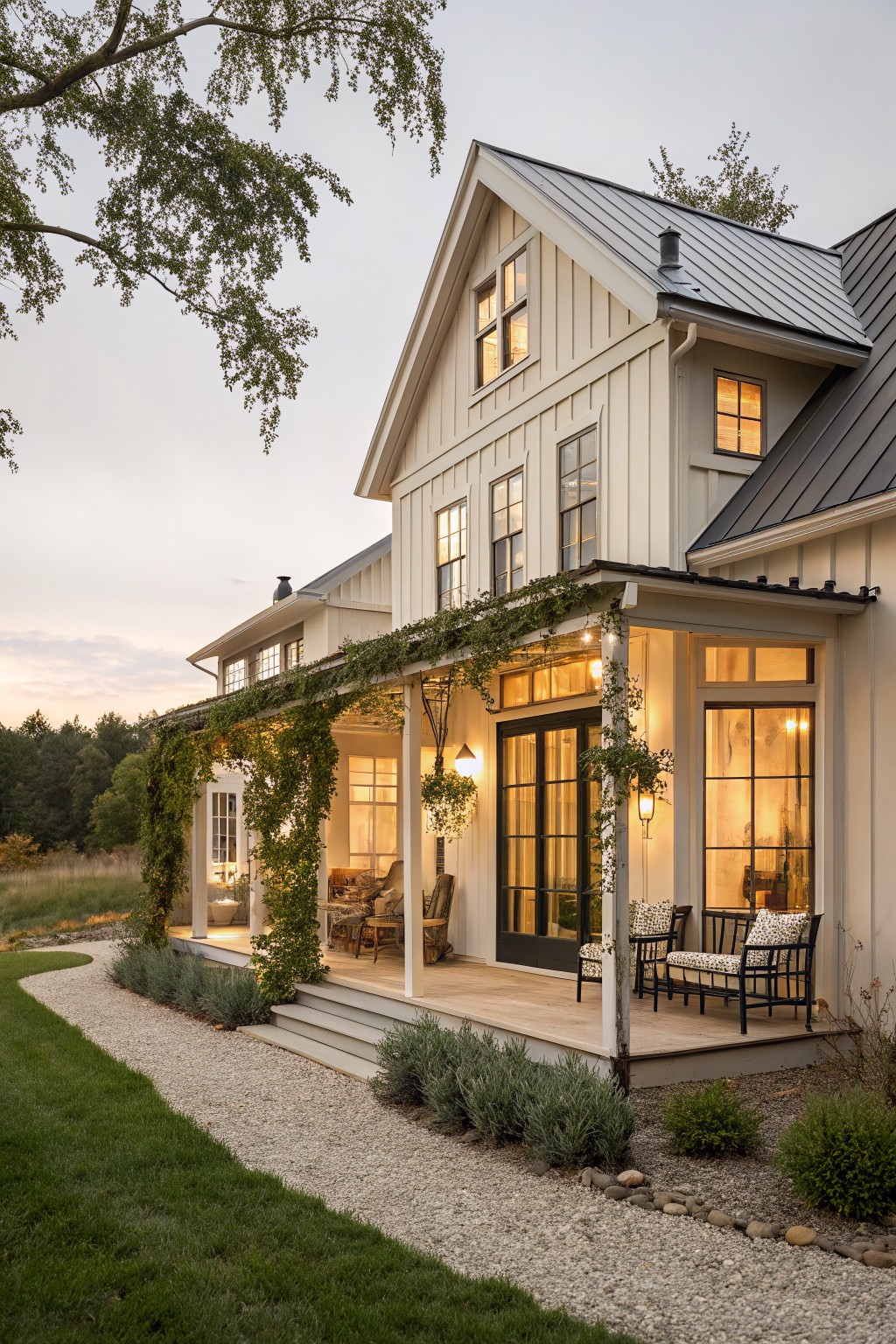
Many farmhouses gain a lot when vines are allowed to grow across the porch structure. The greenery softens the clean lines of the siding and roof without changing the overall shape of the house. It also ties the building to the surrounding plants in a simple way.
This approach works best on homes with straightforward trim and light-colored walls. Choose vines that stay manageable and check them each season so they do not creep into gutters or windows.
A Covered Porch with White Columns
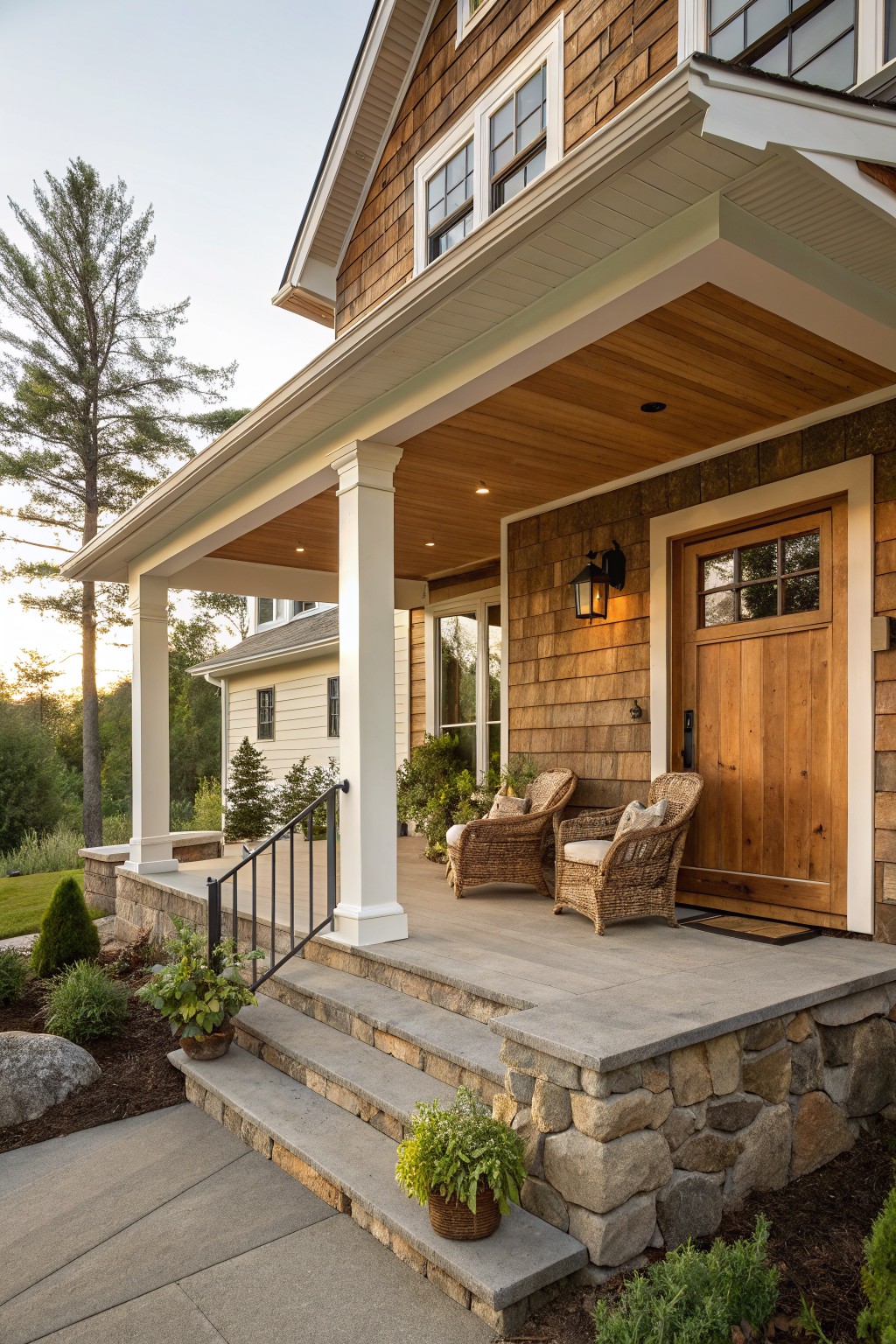
A covered porch held up by simple white columns gives a farmhouse a clear, welcoming front. The depth of the porch adds balance to the facade and creates a natural transition between the outside and the door.
This approach works best on homes that already use wood siding and stone at the base. Keep the columns plain so the wood ceiling and trim carry the warmth without extra decoration.
Consistent Trim Color on the Porch
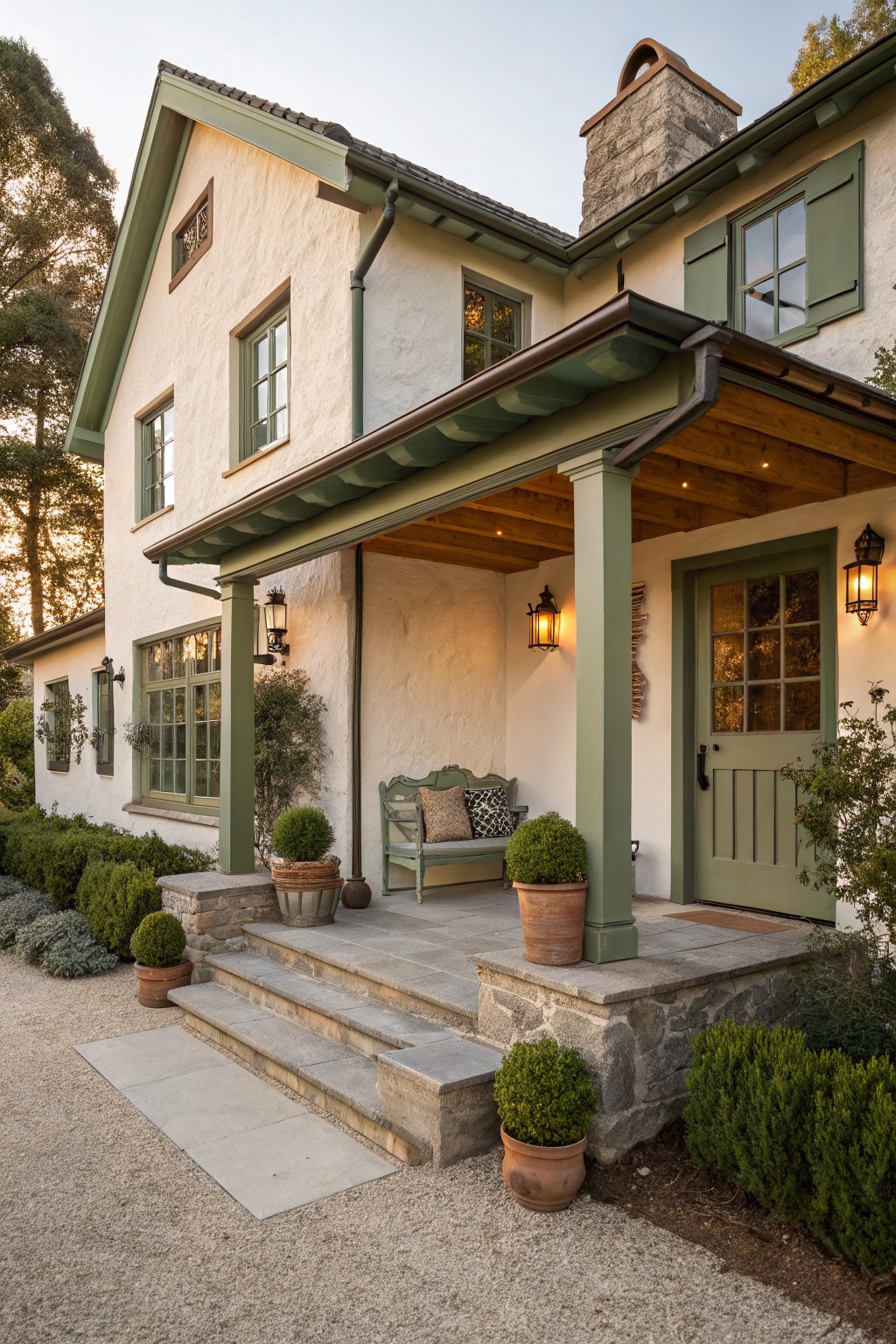
Many farmhouses gain a calmer look when the porch columns match the other trim. The single color creates a steady line that runs from the roof edge down to the base without breaking the view.
This approach suits homes with stucco or light siding where too many colors can feel busy. Keep the shade soft and repeat it on shutters or the front door so the whole exterior stays simple.
A Navy Front Door For Simple Contrast
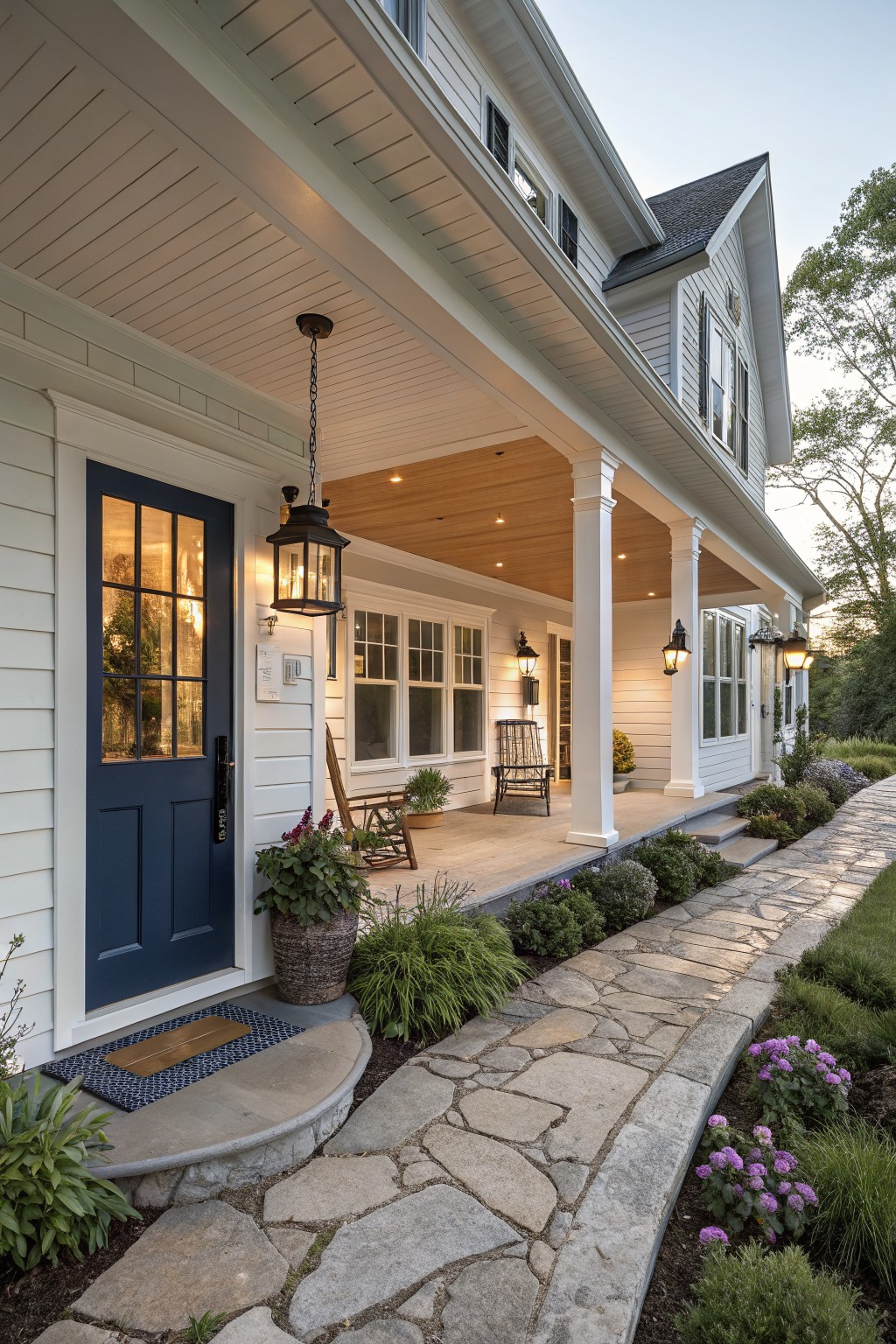
A dark navy door stands out nicely against white siding and trim. It gives the entry a clear focal point without needing extra decoration or bold accents elsewhere on the facade.
This works best on houses with a covered porch and simple column details. Keep the surrounding trim and hardware in black or oil-rubbed bronze so the door stays the main point of interest.
Covered Porches With Wood Ceilings
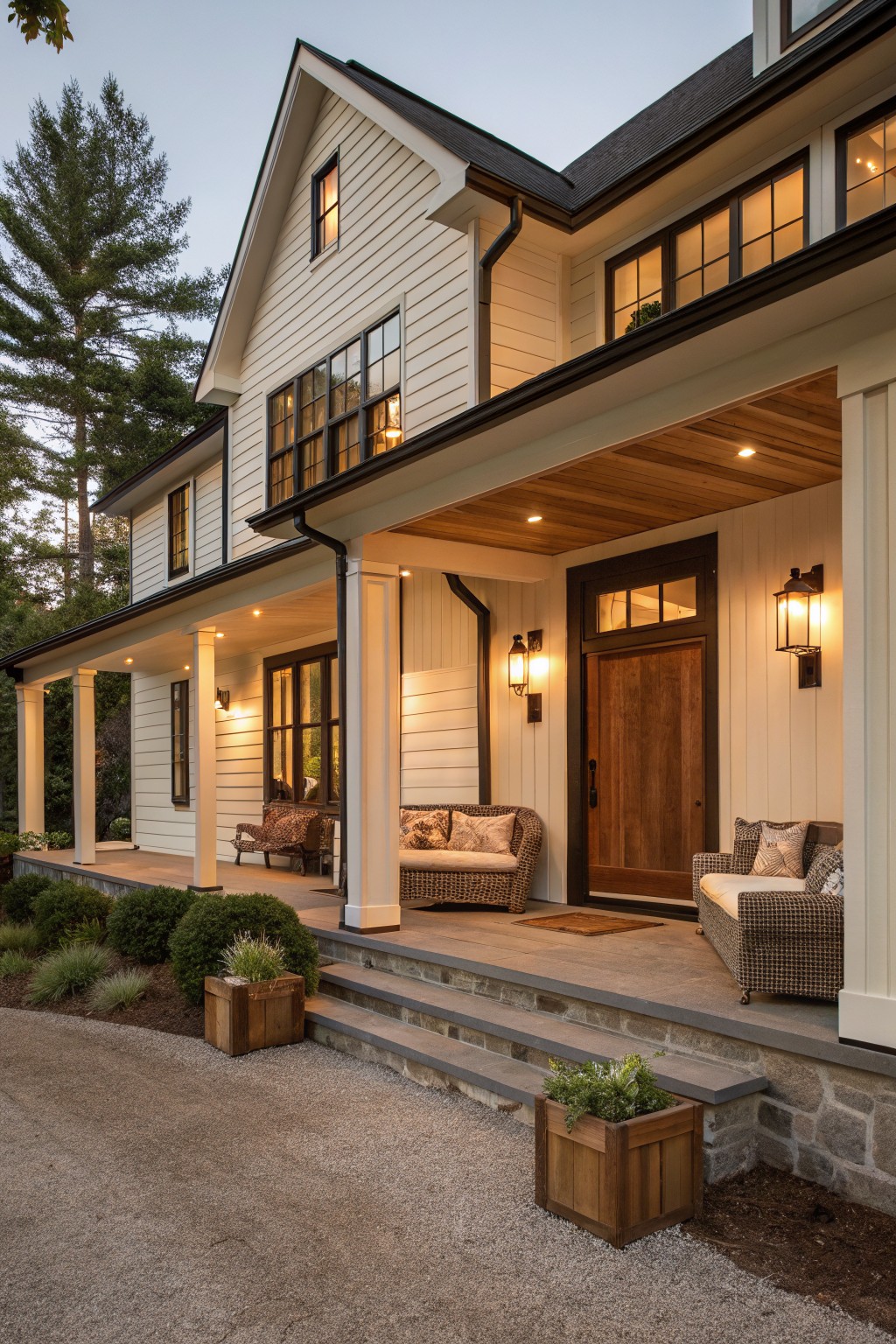
A covered porch with a wood ceiling adds real warmth to a farmhouse without overcomplicating the look. The wood brings texture and a natural tone that softens the white siding and makes the whole front feel more grounded.
This approach works best on homes that already have simple lines and clean trim. Keep the ceiling boards a medium tone so they contrast gently with the siding, and use the space for seating rather than filling it with too many extras. It suits both older farmhouses and newer builds that want that same settled appearance.
Frequently Asked Questions
Q: How much trim should I add around the windows to get that classic farmhouse look?
A: Start with simple white boards that frame each window cleanly. Keep the lines straight and not too wide so the house does not feel heavy.
Q: What if my porch gets a lot of sun and the wood might fade?
A: Choose a stain with UV protection and reapply it every couple of years. This keeps the warm tone without much extra work.
Q: Can I mix different textures like brick and wood on the same exterior?
A: Yes but balance them by using the brick on the lower half and wood siding above. The porch can tie everything together with matching posts.
Q: My house is small. Will a big porch make it look even smaller?
A: Scale the porch to about a third of the front width. This draws the eye outward and actually makes the whole place feel more welcoming.
