

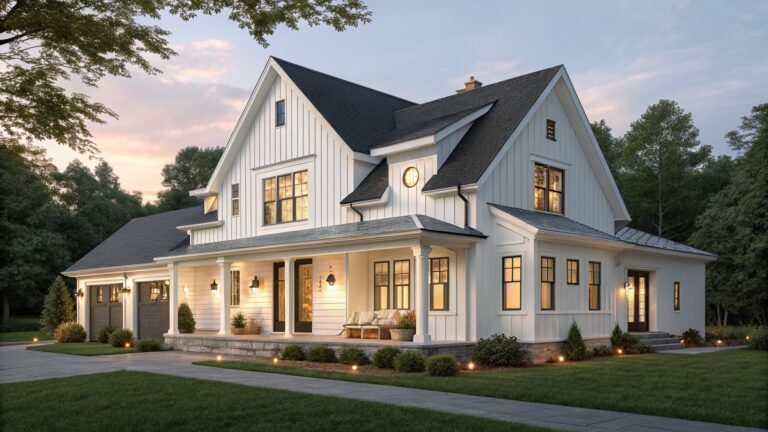
When I look at traditional farmhouses in my area, the exteriors that hold up best tend to use straightforward siding and roof details that do not fight the shape of the house.
Those choices affect curb appeal more than most people expect once you see them in different lights throughout the day.
Materials matter a lot here.
I often find myself wondering how a new entry door or window trim would change the view from the road before committing to any updates.
Trying out a couple of these ideas on paper first helps me picture what might actually suit the existing lines of a home rather than forcing something that feels added on later.
Adding a Covered Porch with Simple Columns
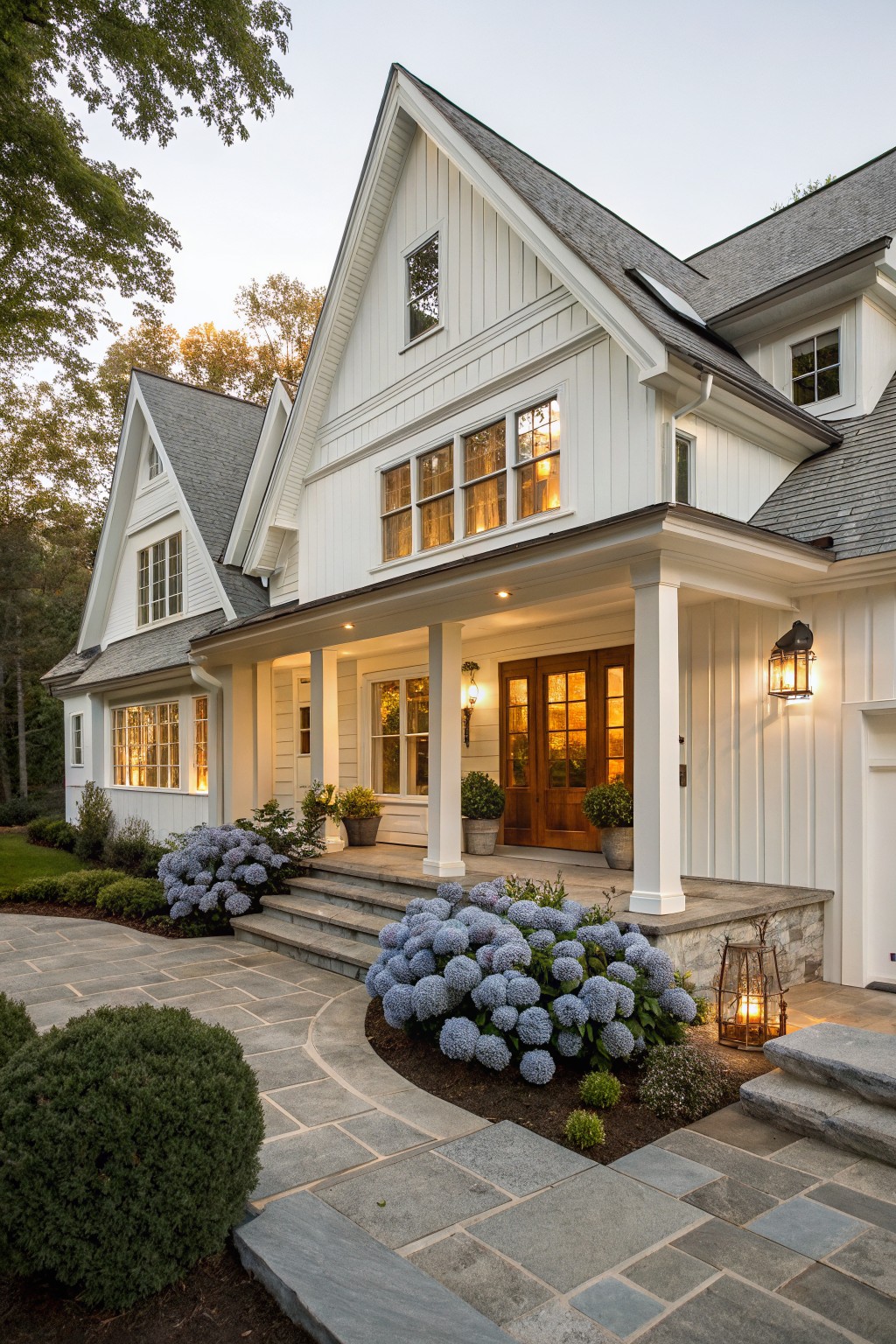
A covered porch supported by plain white columns gives a farmhouse an easy, approachable feel right at the front door. It creates a clear entry point without adding extra trim or decoration that might date the look over time.
This works best on homes with gabled roofs where the porch can sit centered under the main peak. Keep the columns straight and the roofline low so the whole front stays balanced and practical for daily use.
Match Garage Doors to the Siding
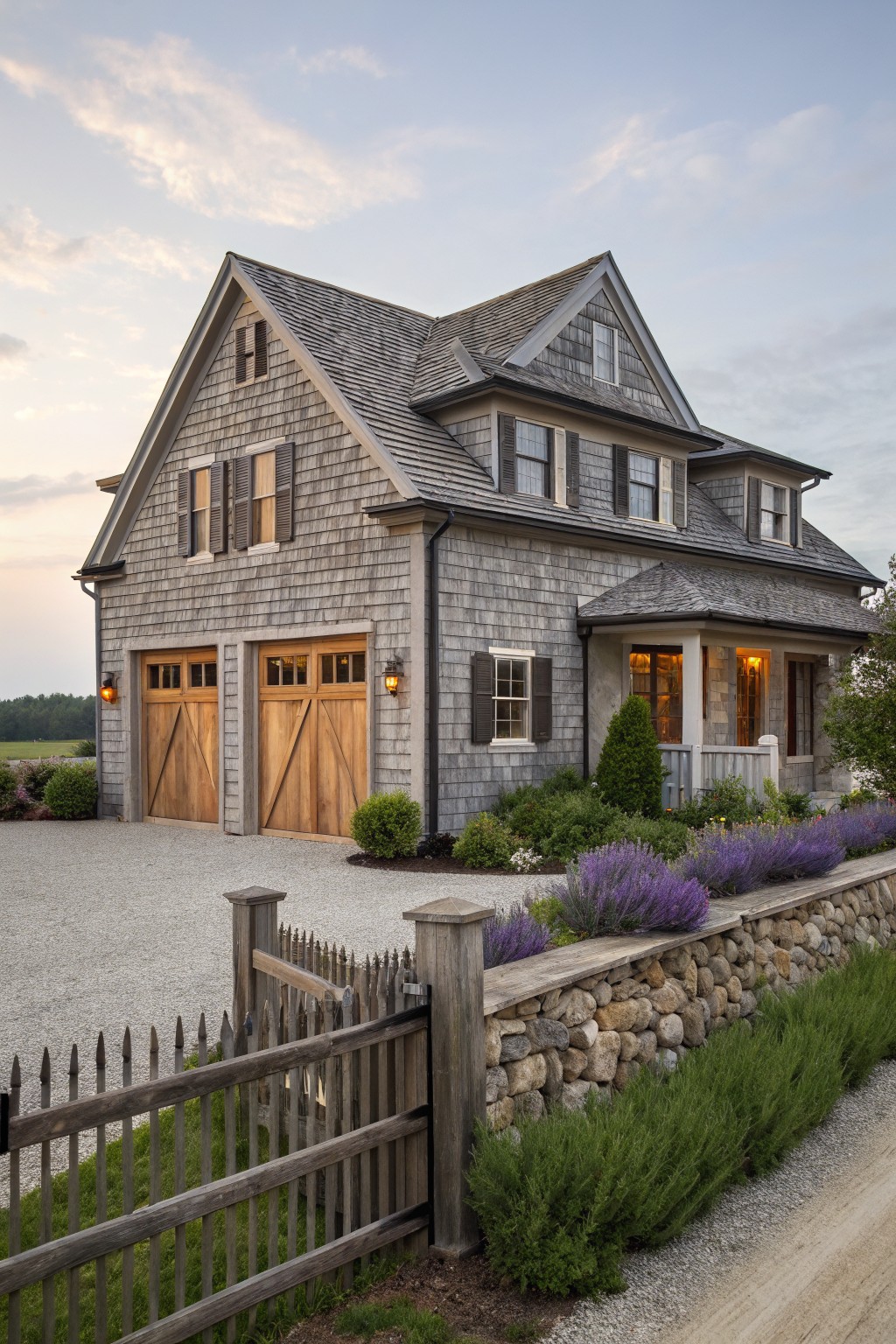
Many traditional farmhouses look better when the garage doors feel like part of the house instead of an afterthought. Using wood doors in a similar tone to the shingles keeps the front elevation calm and connected, so the whole house reads as one simple structure rather than a main house with a separate garage wing attached.
This approach works especially well on homes that already use natural wood tones and weathered finishes. It suits places with gravel drives or open yards where the garage faces the road, and it avoids the common problem of shiny metal doors breaking up an otherwise soft, wood-heavy exterior.
Front Porches on Brick Farmhouses
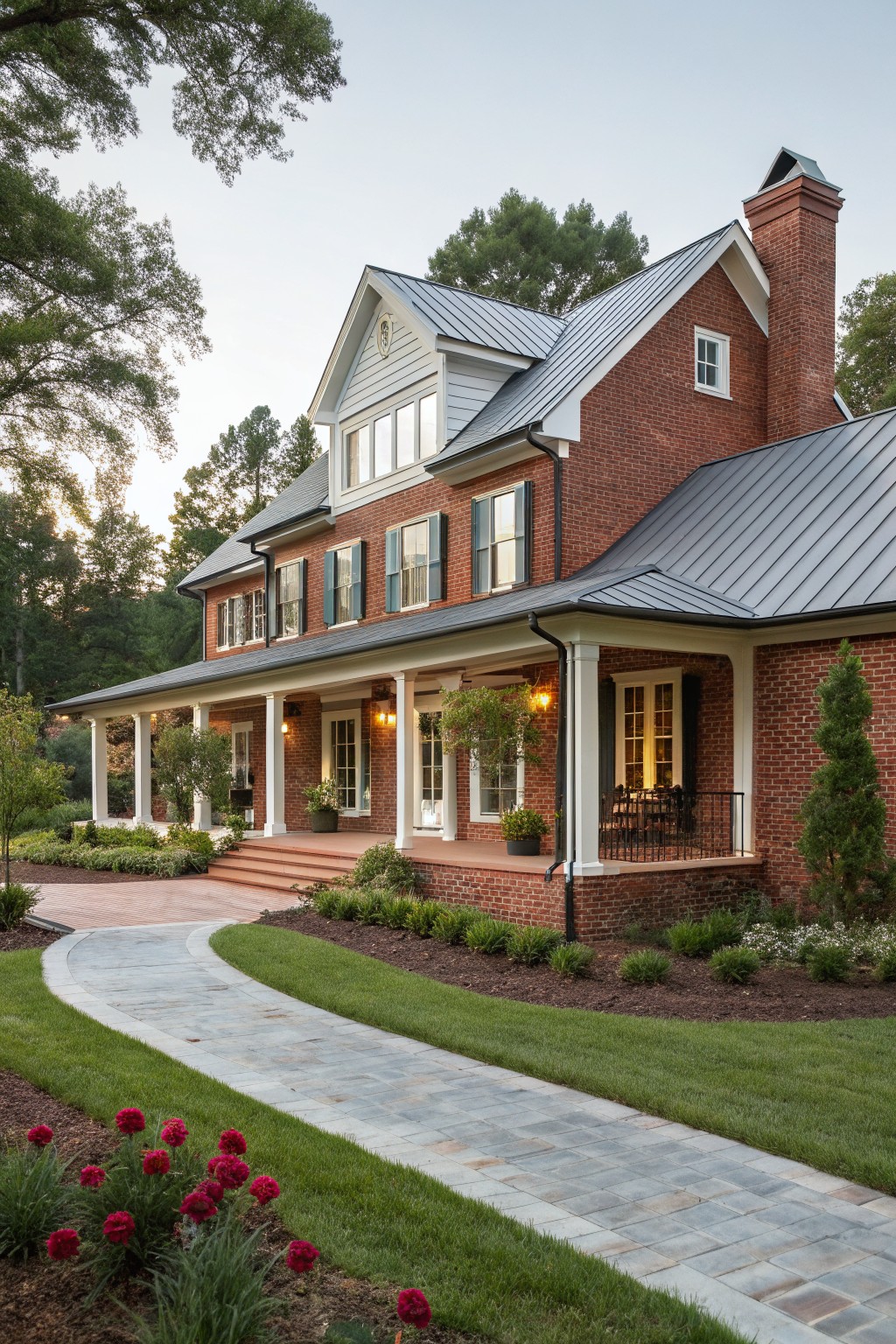
A wide front porch with simple white columns adds a lot to a brick farmhouse. It softens the solid look of the brick and gives the house a clear, welcoming entry point that feels practical rather than just decorative.
This works best on traditional homes where the roofline can extend cleanly over the porch. Keep the columns straightforward and make sure the porch has enough depth for a couple of chairs or planters so it actually gets used.
Stone Chimney Adds Lasting Character
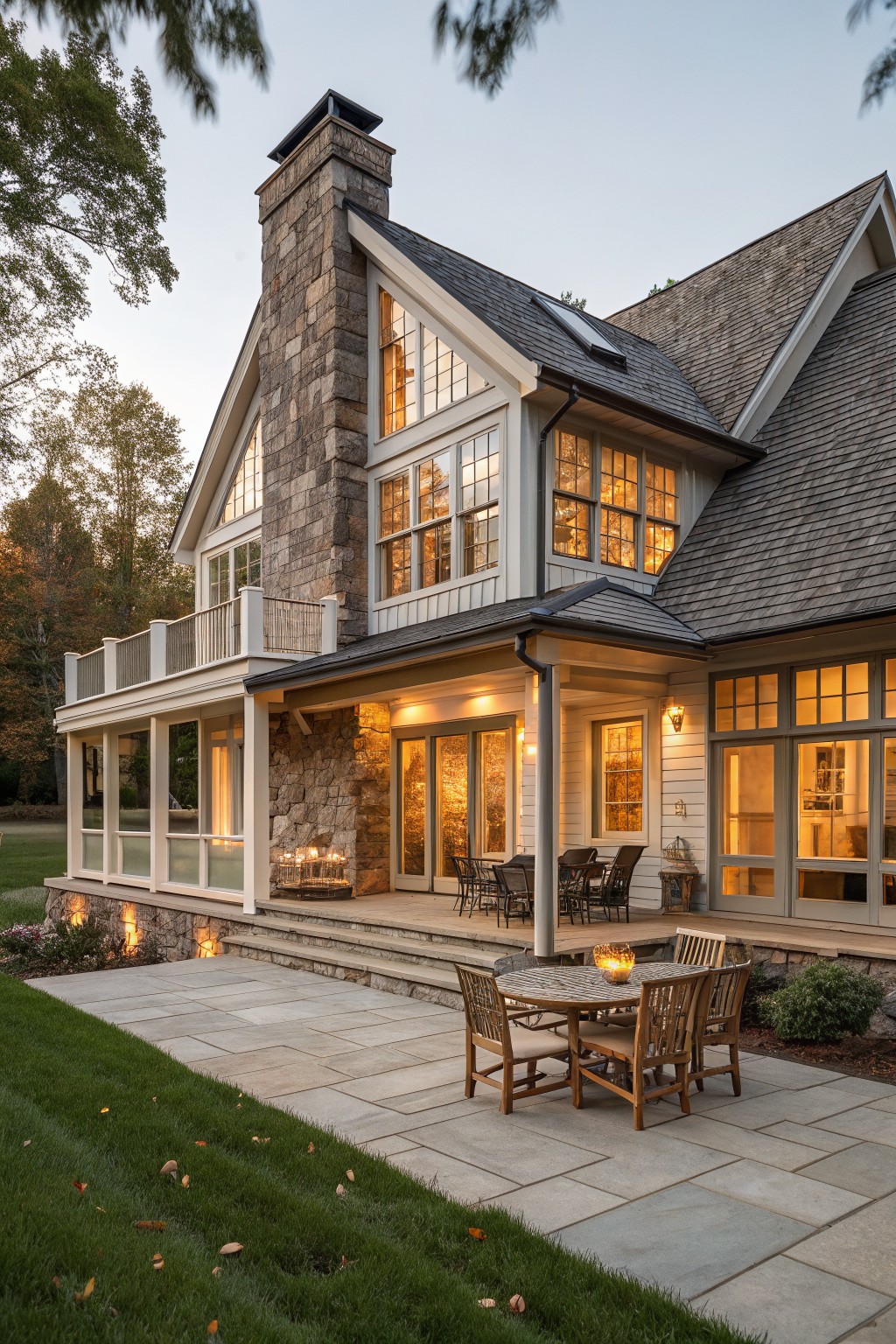
A big stone chimney can give a traditional farmhouse a solid, grounded feel that works well with the rest of the exterior. It breaks up the siding and roofline without needing much else to feel complete. The mix of rough stone against painted wood helps the house look like it has been there for a while.
This approach works best on homes with simple roof shapes and plenty of windows. Keep the stone color natural rather than too uniform, and let it run from the ground up so it feels like part of the structure instead of an add-on. Avoid forcing it on smaller homes where the scale could overpower everything else.
Curved Gravel Driveways For Farmhouse Entries
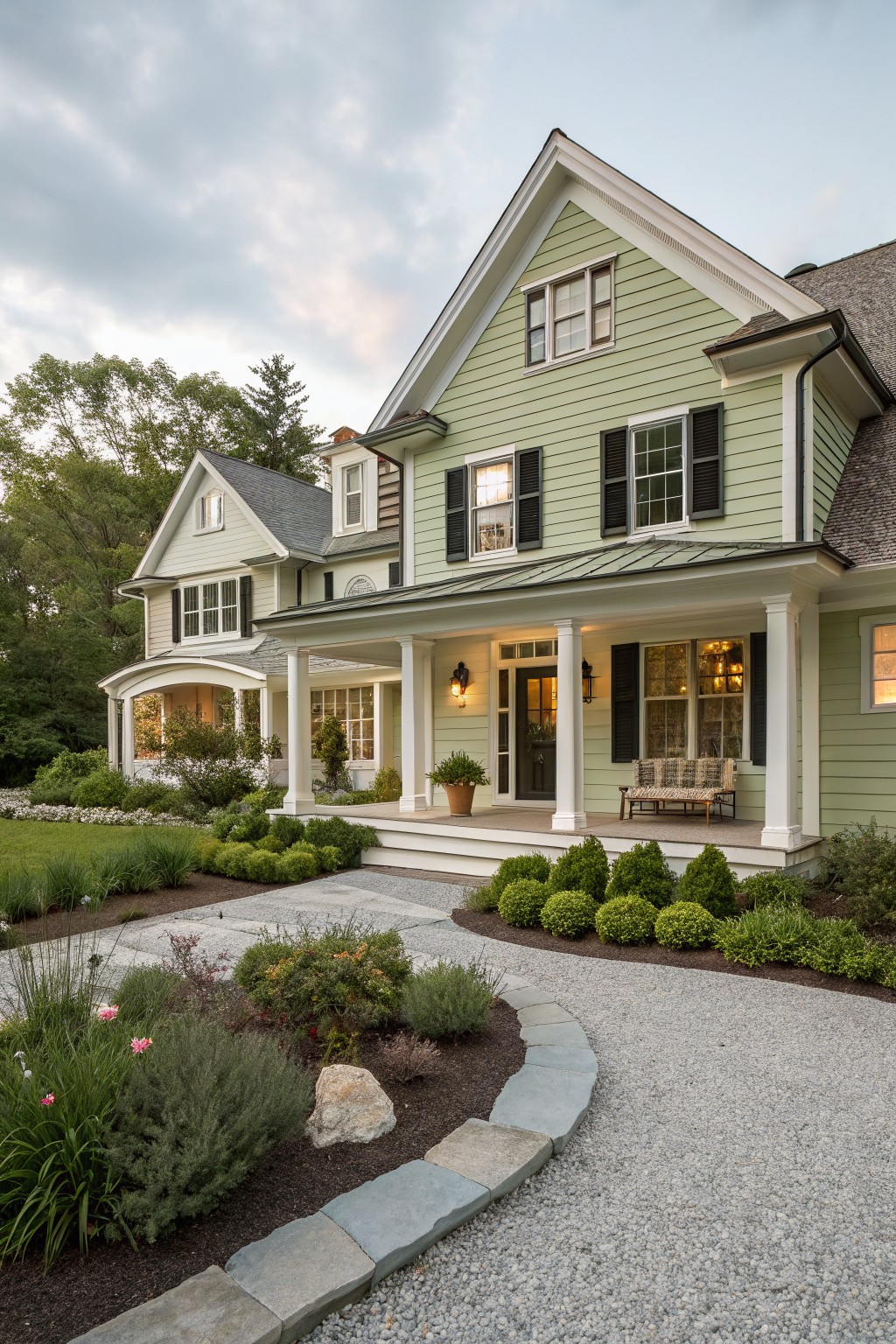
A curved gravel driveway gives the front of a house a softer, less formal feel than a straight paved one. It slows the approach and lets the landscaping along the edges become part of the first impression. Stone borders keep the gravel in place while adding a simple, lasting detail that works with older homes.
This layout suits traditional farmhouses that already have a porch or wide entry. Keep the curve gentle so delivery trucks and snowplows can still manage it. Avoid tight turns or steep drops near the road.
Climbing Roses On White Brick Exteriors
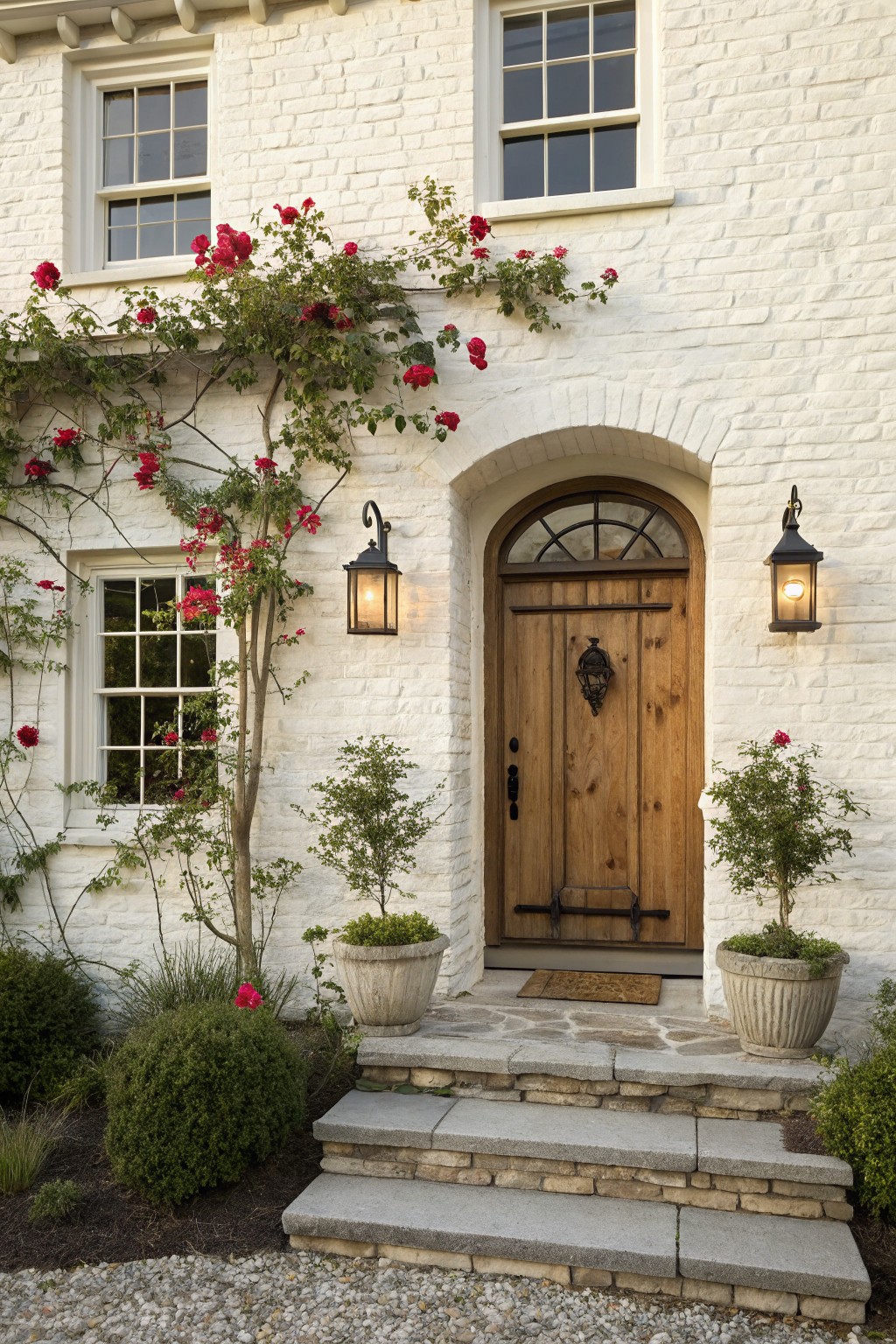
White brick already feels clean and simple, but adding climbing roses changes how the whole front looks. The vines bring color and movement without needing much extra decoration. It keeps the house feeling traditional while softening the hard lines of the brick and the arch.
This works best on homes with a clear entry point where the roses can frame the door naturally. Keep the plants trimmed so they do not cover windows or block light. It suits older farmhouses or new builds trying to feel established.
Mix Shingle Siding with Stone Accents
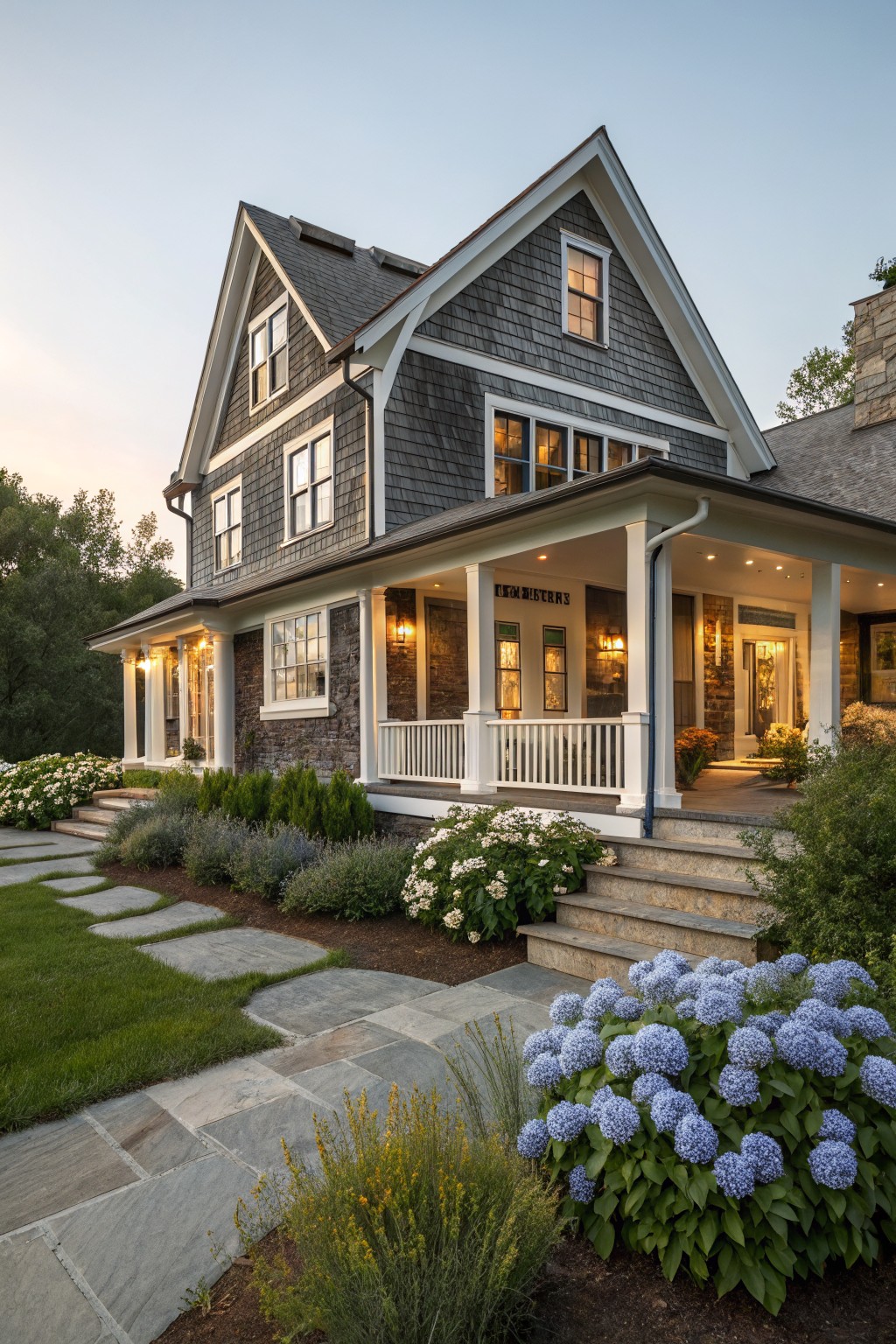
Many older farmhouses use more than one material on the outside walls. Dark shingles paired with sections of stone give the house weight and keep it from looking flat.
This works best on homes that already have a simple roofline and plenty of windows. Keep the trim light and let the two materials do the work, especially if the house sits among trees or open land.
Stone Foundations With White Siding
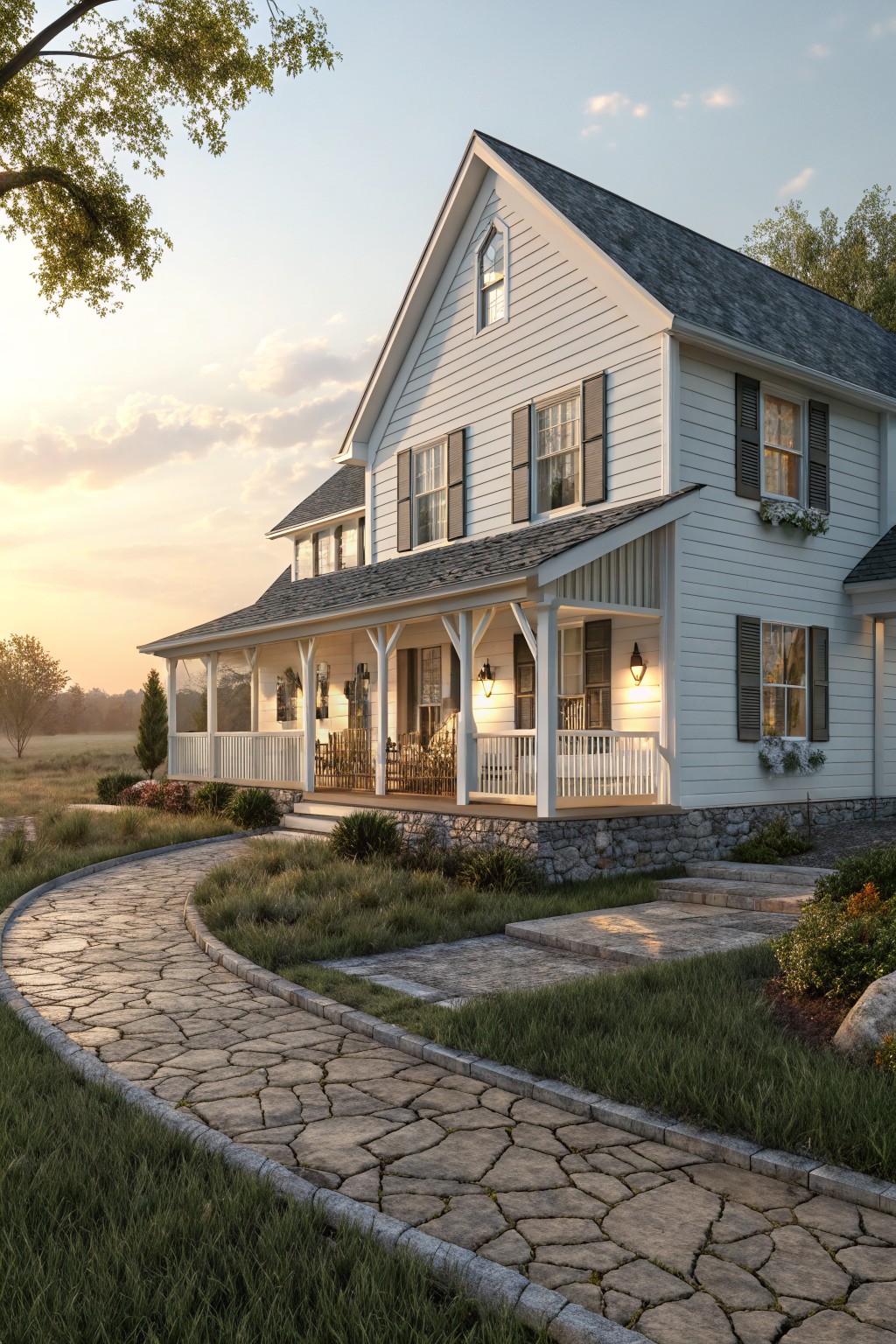
Many older farmhouses use a low stone base to support the main walls. It gives the house a settled look and helps the white siding above feel lighter without appearing to float.
This approach works best on homes with simple trim and dark shutters. Keep the stone height modest so the foundation reads as part of the original structure rather than an added layer.
Arched Front Entries
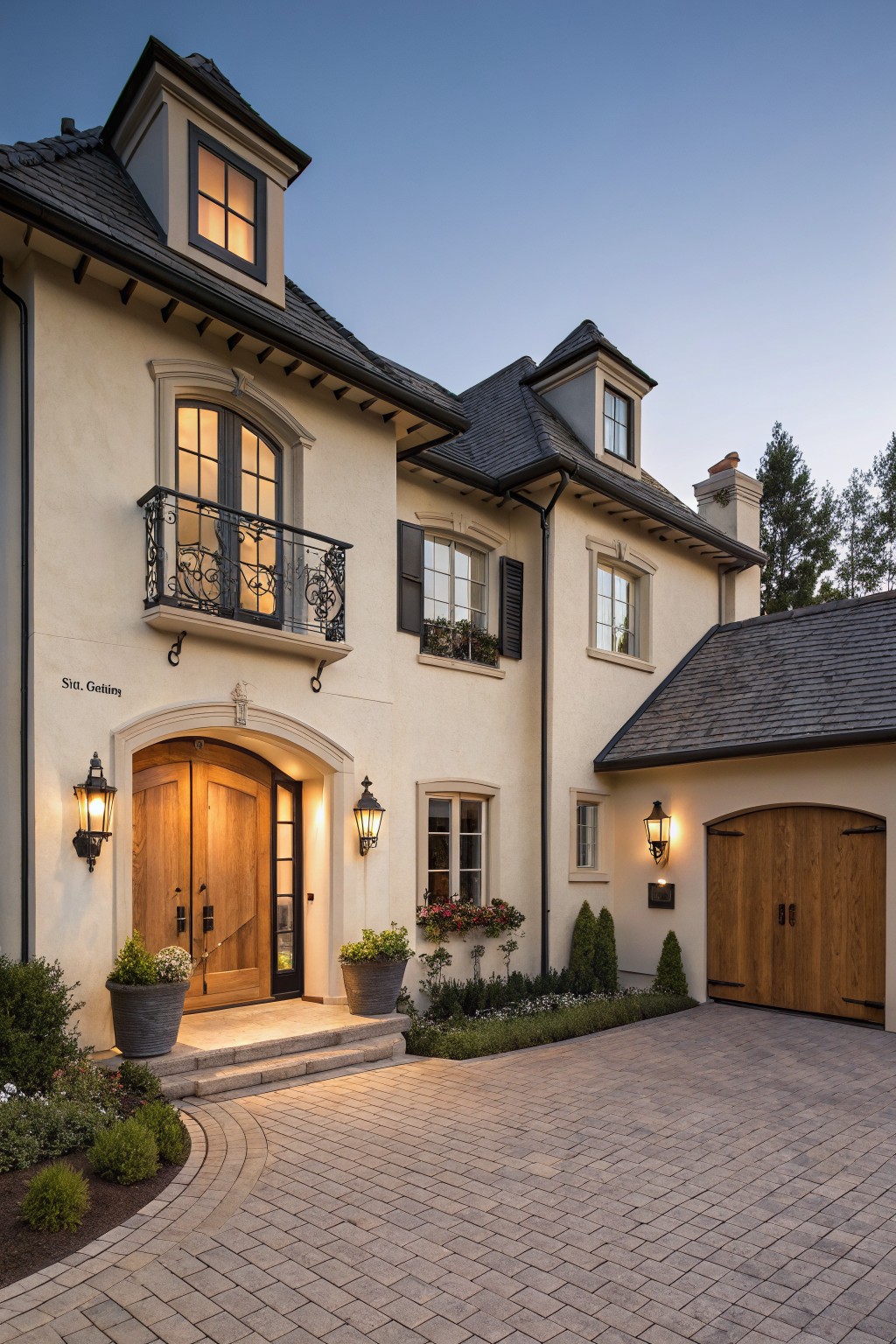
An arched doorway gives a farmhouse exterior a clear sense of welcome without extra decoration. The curve softens the straight lines of the roof and walls while making the front door the natural focus.
This detail works best on homes with light stucco or siding. Pair the arch with simple wood doors and a couple of wall lanterns to keep the look balanced and easy to maintain.
Stone Columns on the Front Porch
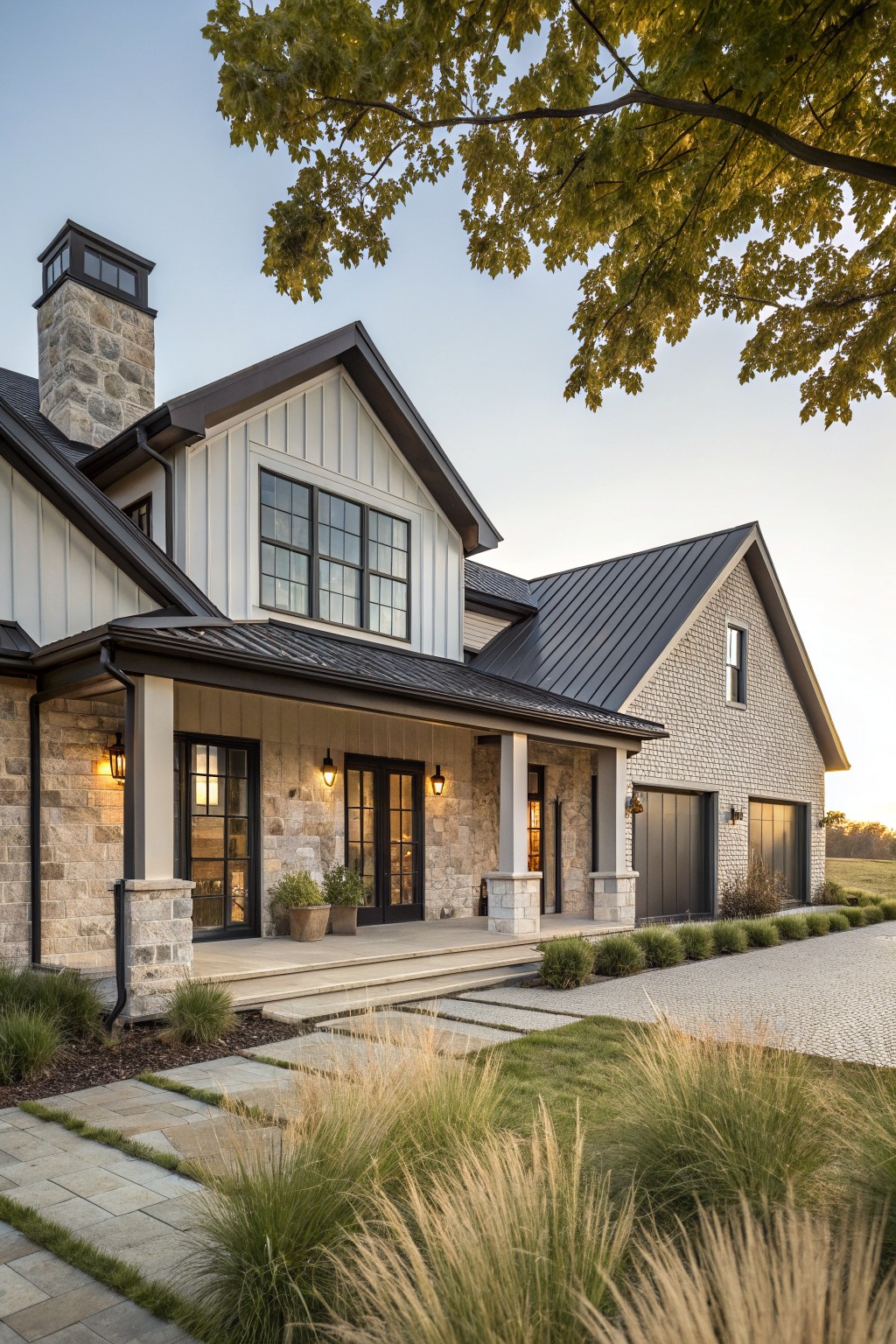
A covered porch with stone bases at the columns gives a farmhouse a solid, grounded feel right at the entry. It breaks up the siding without adding much extra detail and helps the house look settled into the site.
This approach works well on homes with simple gable roofs and mostly light siding. Keep the stone to the lower half and columns only, then match the rest of the trim to the roof color so the stone stays as an accent instead of taking over the whole front.
Add a Covered Porch to Highlight the Front Door
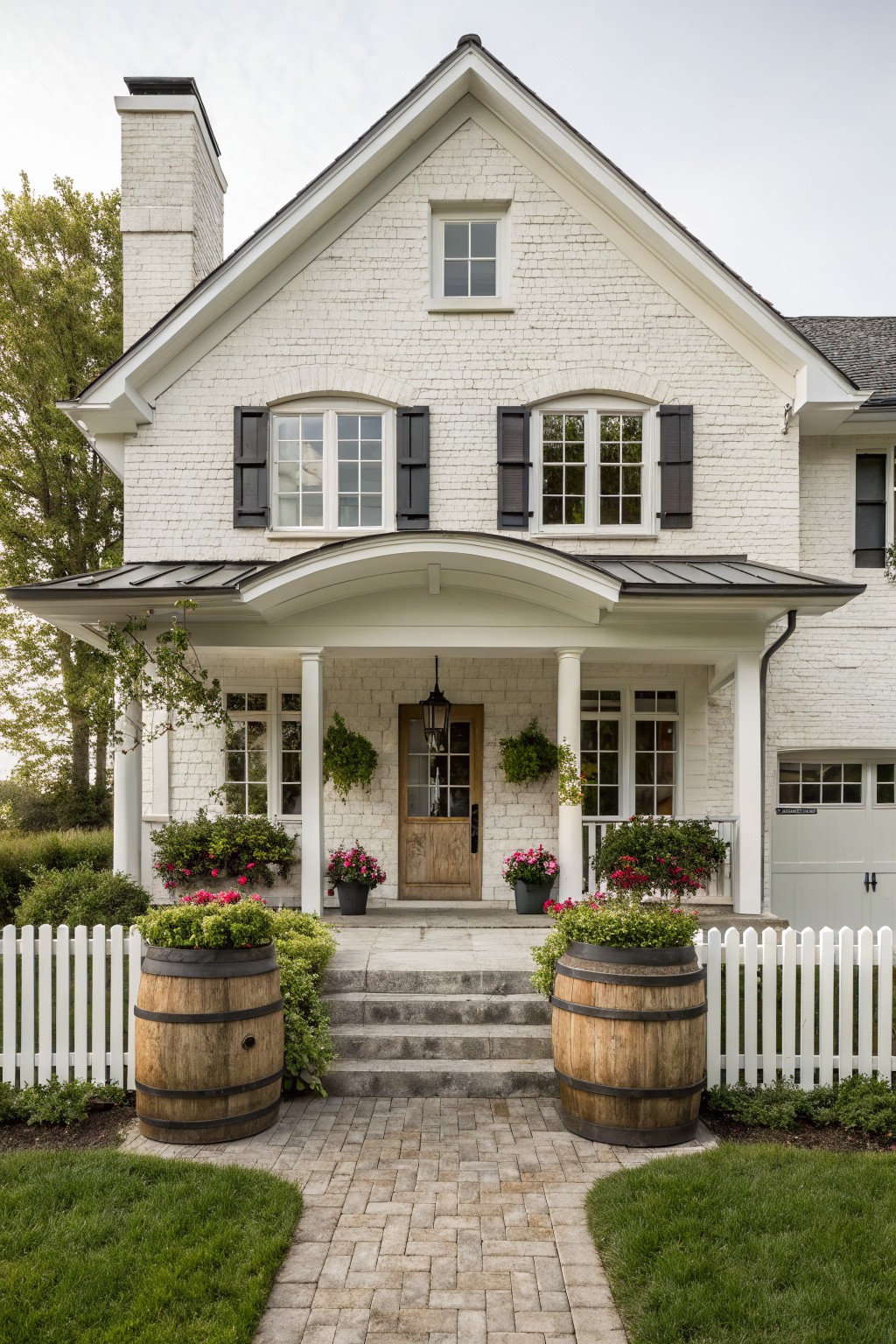
A covered porch softens the front of a house and makes the entry feel more intentional. The white columns and gentle curve of the roof draw attention to the door without adding much extra detail.
This approach works best on brick farmhouses where the goal is to keep the overall look simple. Match the width of the porch to the steps and door so the proportions stay even.
A Wide Front Porch Grounds the Whole Look
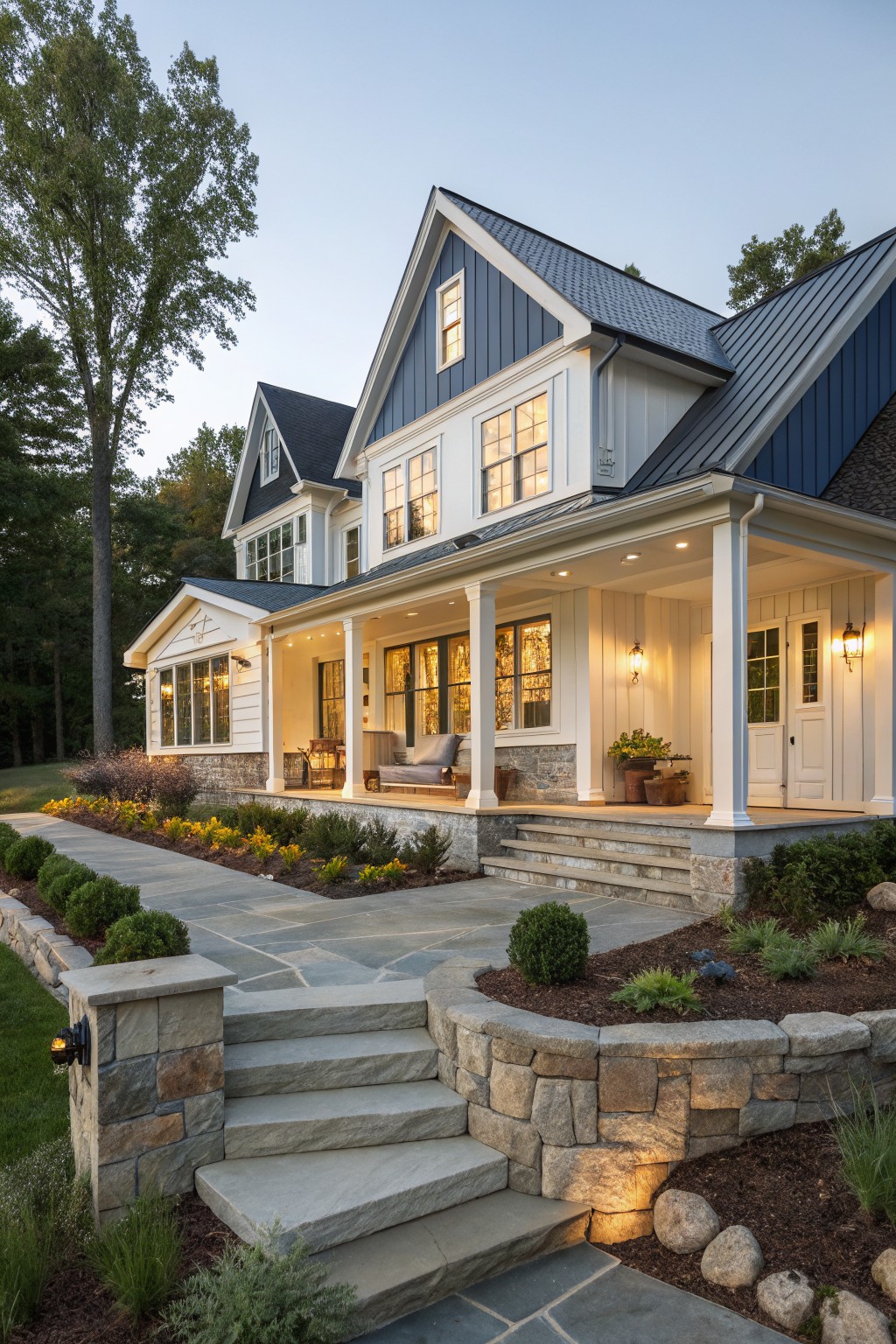
A covered porch with plain columns gives a farmhouse that settled, lived-in feel right away. It stretches across the front and turns the entry into something you actually use instead of just passing through. The simple posts and open space keep it from feeling fussy while still giving the house real presence.
This works best on houses that already have some width to the facade. Keep the columns straightforward, add a few steps in stone or concrete, and let the porch floor sit a little lower than the main level. Skip anything too ornate or the whole thing starts to feel dressed up instead of useful.
Stone With Green Trim
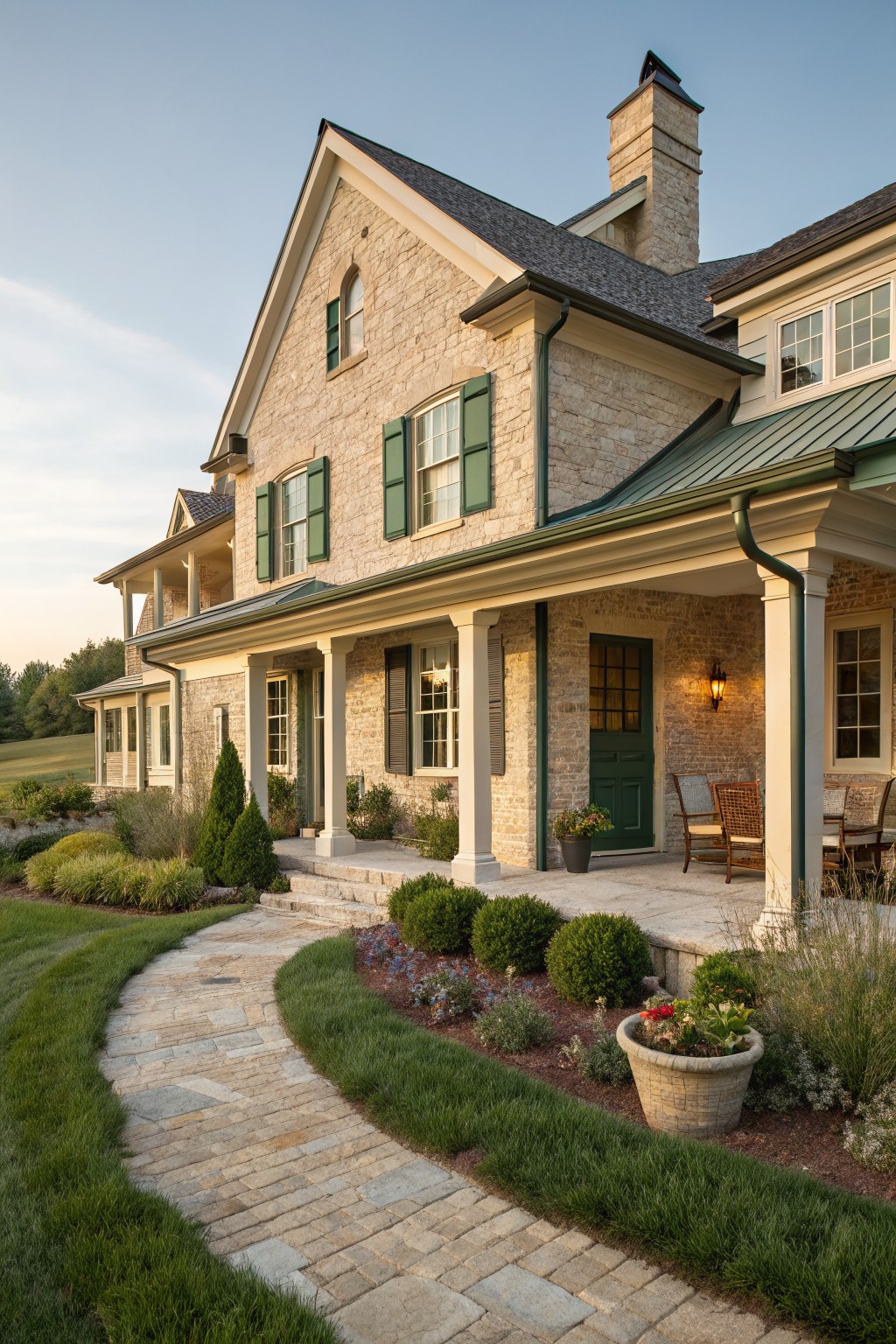
Stone exteriors hold up well over time and give a house that settled, established look many people want in a farmhouse. The deep green on the shutters and trim adds just enough contrast to keep the stone from feeling too heavy or plain.
This approach suits homes with simple rooflines and works best when the green is repeated on the door and any porch posts. It helps the whole front feel balanced without needing extra ornament or color elsewhere.
Rocking Chairs on a Covered Porch
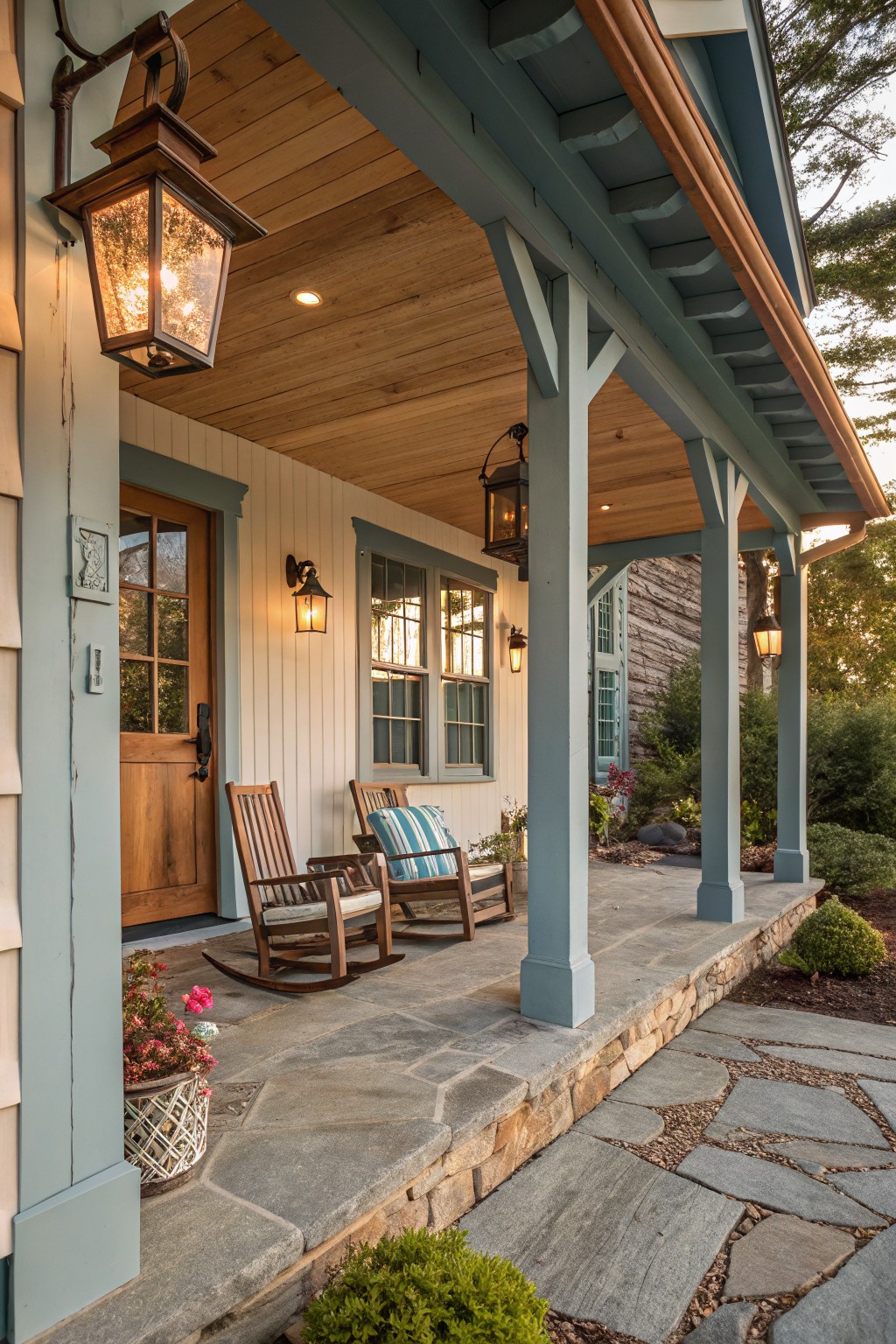
A covered porch with a couple of rocking chairs gives a farmhouse that easy, lived-in feel right away. The setup works because it turns the entry into a spot people actually want to use instead of just walking past.
Keep the chairs simple and wooden, and make sure the roof overhang protects them from weather. This idea suits homes with a traditional roofline and pairs well with basic lighting like lanterns along the posts.
White Siding With Black Shutters
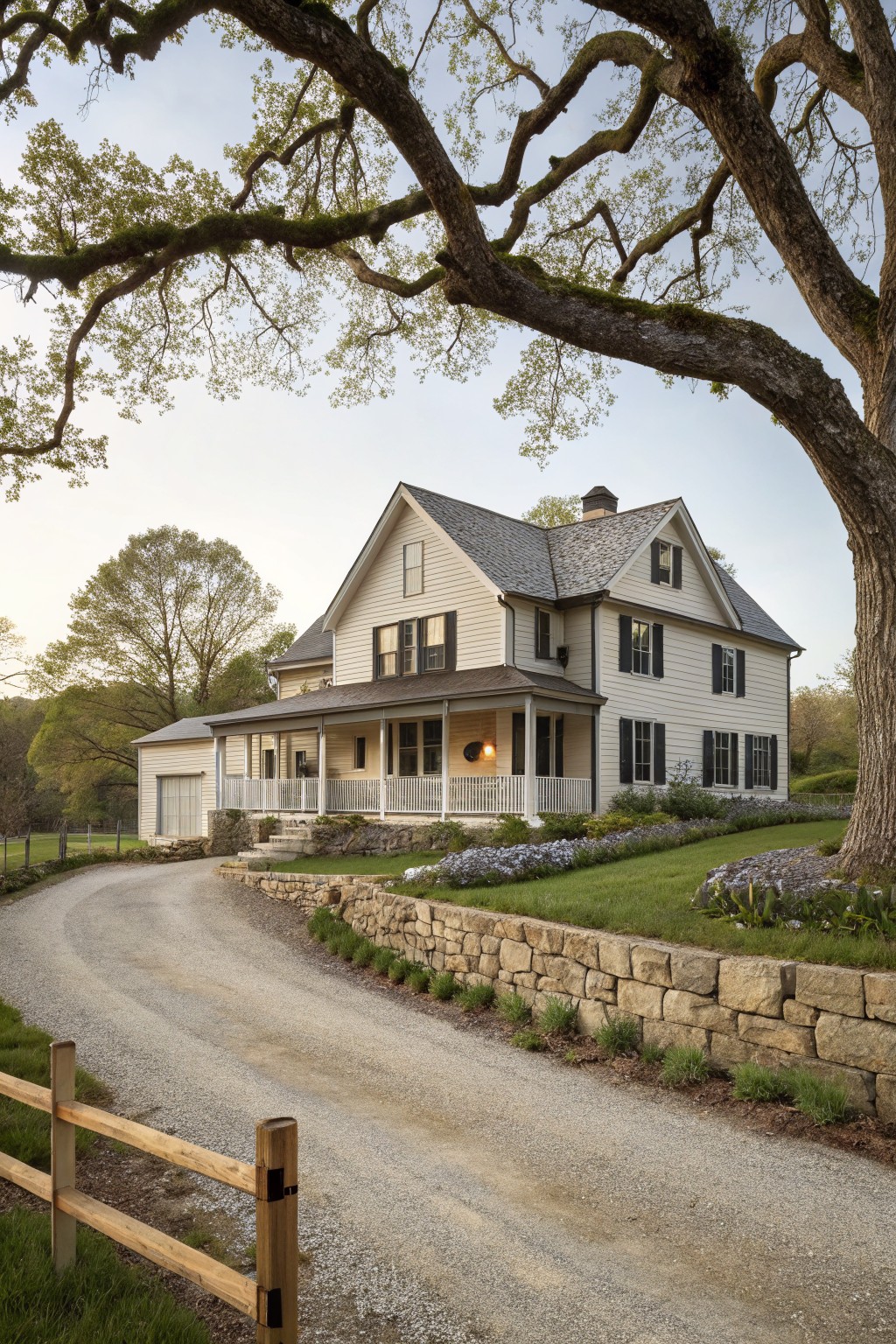
Many older farmhouses use this exact color pairing because it stays simple and readable from the road. The white keeps the whole structure feeling light, while the black shutters and trim give the windows clear shape without adding extra decoration.
This look suits homes with straightforward rooflines and a decent number of windows. It works especially well in open or lightly wooded settings where you want the house to feel friendly rather than stark. Just keep the trim clean and avoid too many competing colors on doors or railings.
White Siding With Green Shutters
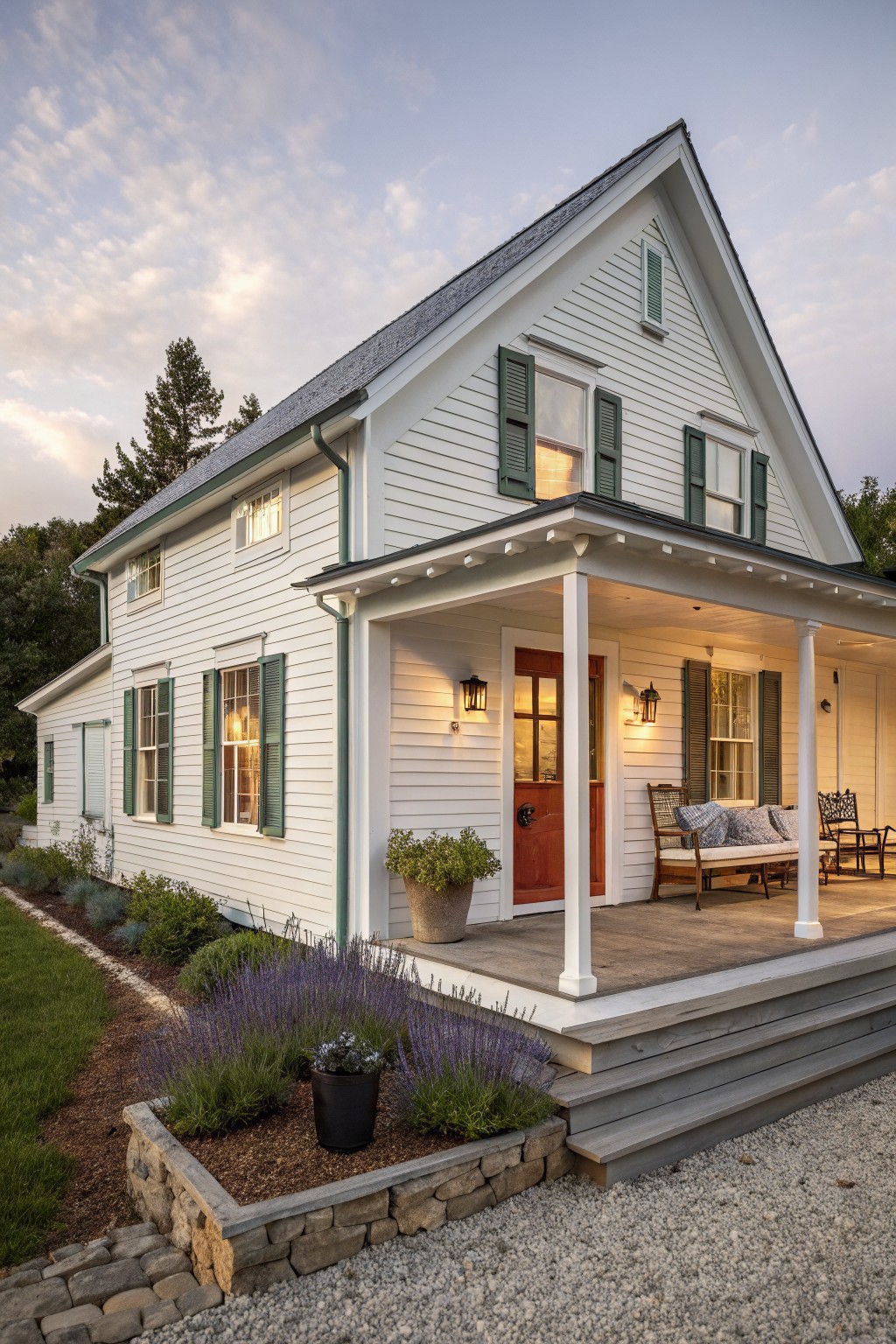
White siding paired with green shutters gives a farmhouse a clean look that still feels rooted in tradition. The contrast keeps the front from looking flat while staying simple enough to age well over time.
This approach works on both older homes and newer builds that want a classic feel. Use a deeper green on the shutters and keep the trim consistent so the windows read as part of the whole rather than scattered details.
Mix Stone With Shingle Siding
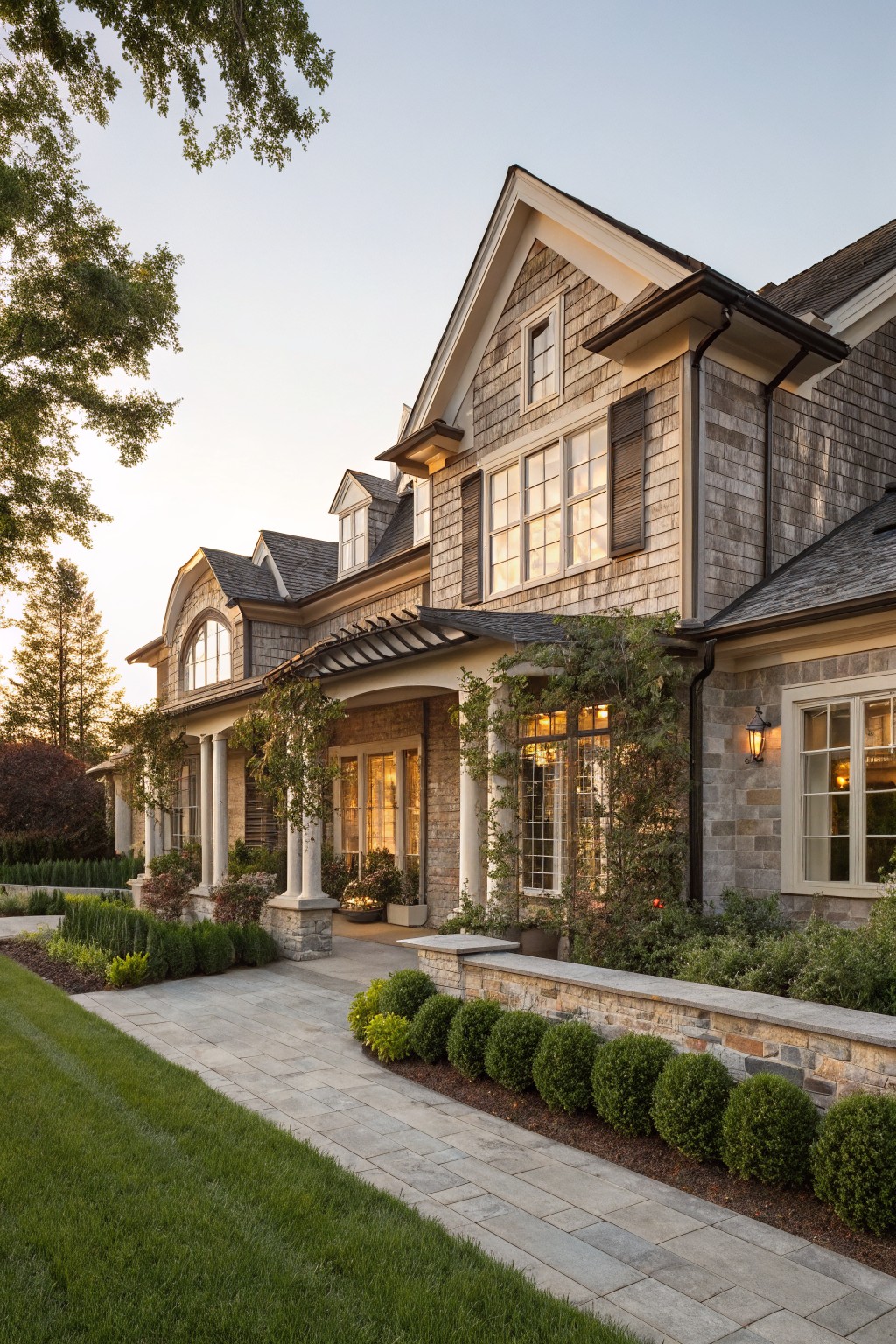
Many traditional farmhouses look more grounded when stone covers the lower walls and columns. The stone adds weight and texture that wood shingles alone cannot provide, and it helps the whole house feel settled rather than tall and thin.
This mix works well on homes that already have a simple roofline and several gables. Use a light gray or tan stone that matches local material, then let the shingles age naturally so the two surfaces blend over time.
Raised Beds Along The Front Walk
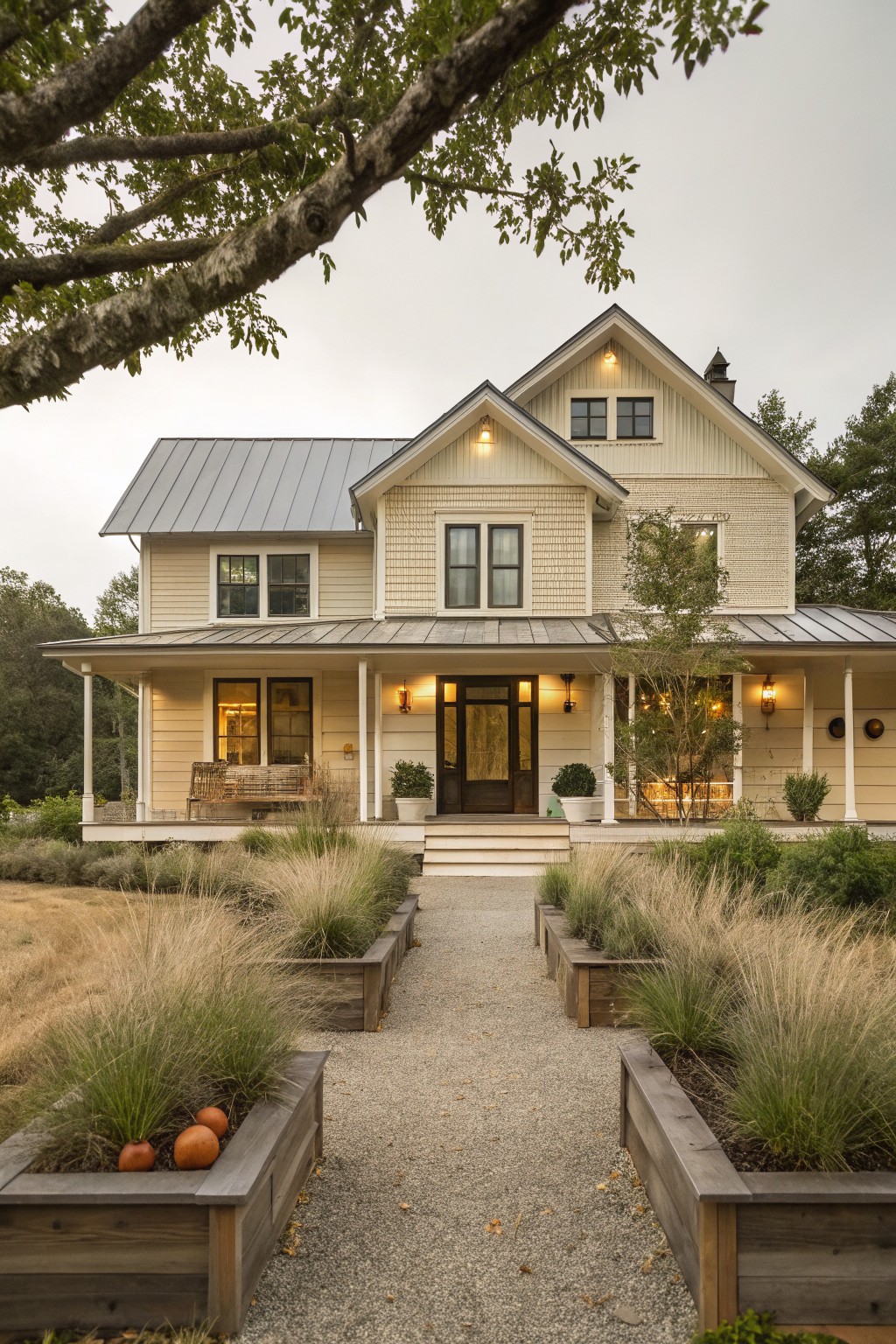
Raised beds give a gravel path more structure and help it feel like a real part of the house rather than just a strip of gravel. The low wooden boxes keep the planting neat while still letting the grasses soften the approach to the door.
This setup works best on farmhouses that sit a little back from the road. Keep the beds narrow, use the same wood tone as any porch posts, and stick with tall grasses or simple perennials so the path stays easy to maintain.
Combine Stone And Wood Around The Entry
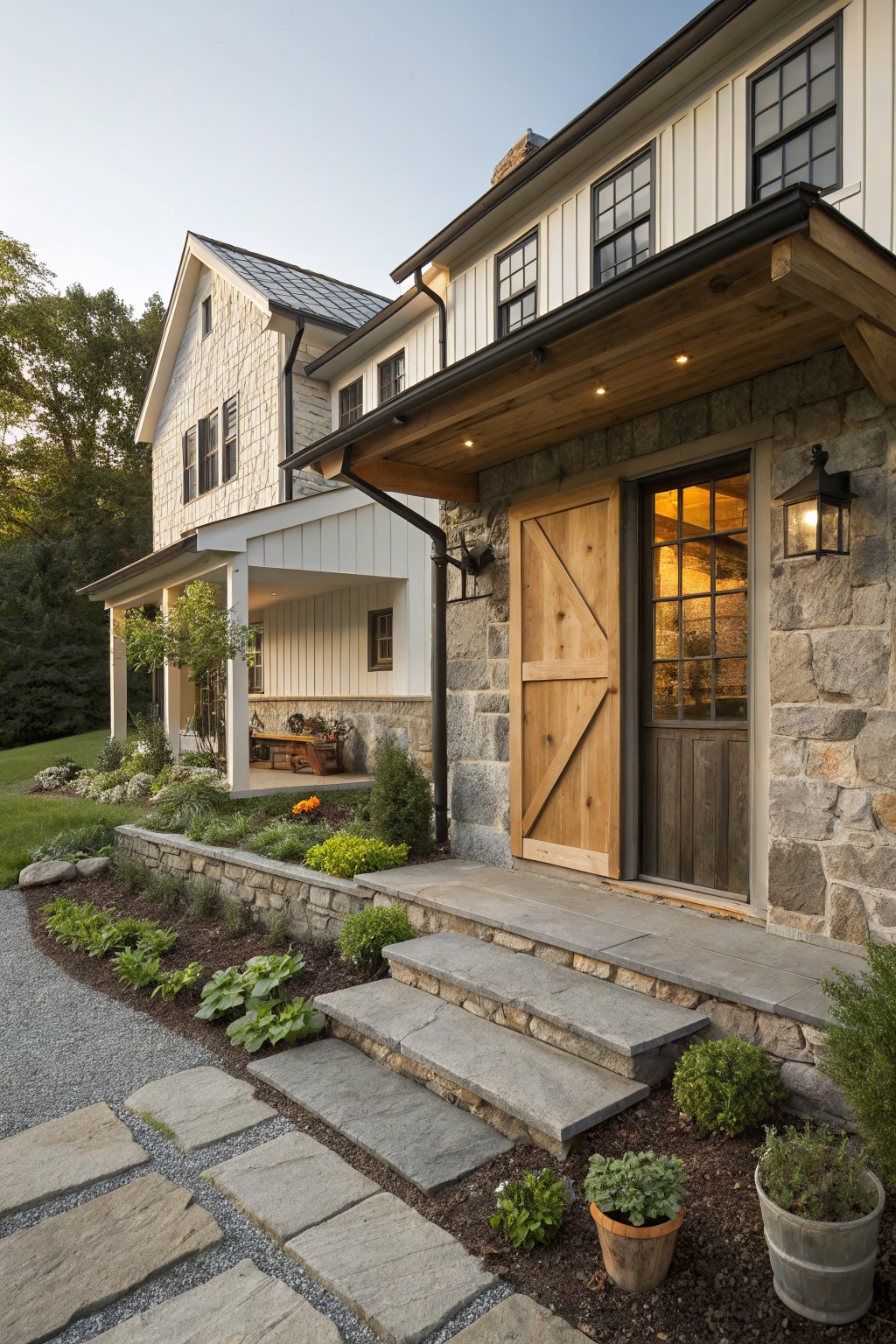
Stone paired with wood gives a farmhouse entry real weight without feeling heavy. The lower stone section grounds the house while the wood door and trim add warmth that siding alone cannot match. This mix works especially well when the stone stays local in color and texture so the whole front feels like it belongs to the land.
Try it on homes that already have a simple gable or porch line. Keep the wood tones natural rather than stained dark, and let the stone run only as high as the door frame so the eye moves easily to the siding above. It suits both new builds and older houses that need a sturdier-looking front without major changes.
Try a Two-Story Porch
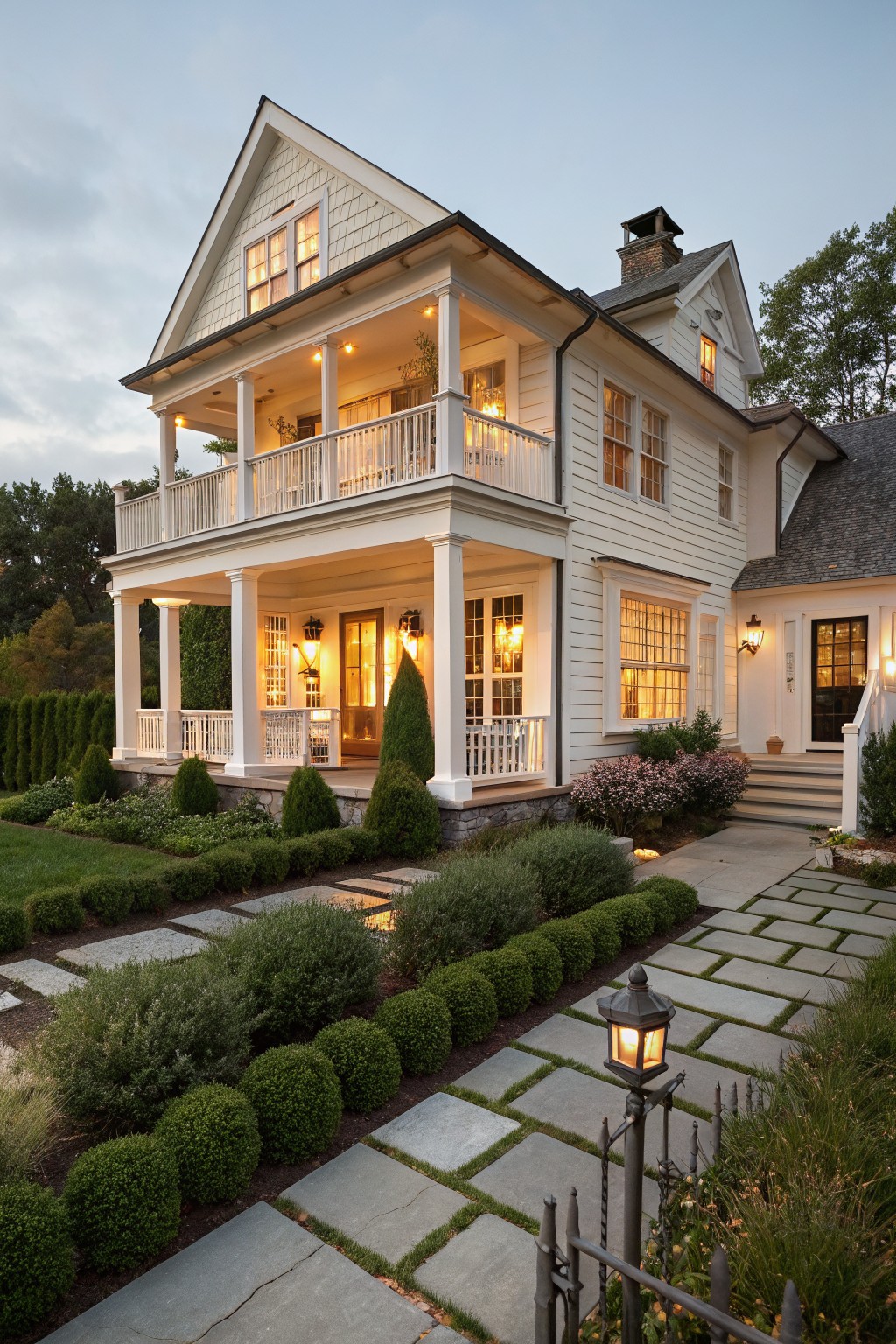
A two-story porch gives a farmhouse exterior real presence without needing extra ornament. The upper level extends the living space while the lower one frames the main entry, and the simple white columns keep everything light and balanced.
This works best on homes with enough width to support the structure. Keep the railings plain and match the siding color so the porch feels like part of the house rather than an add-on. It suits traditional builds where you want curb appeal that still feels approachable.
Pergolas That Turn Decks Into Everyday Outdoor Rooms
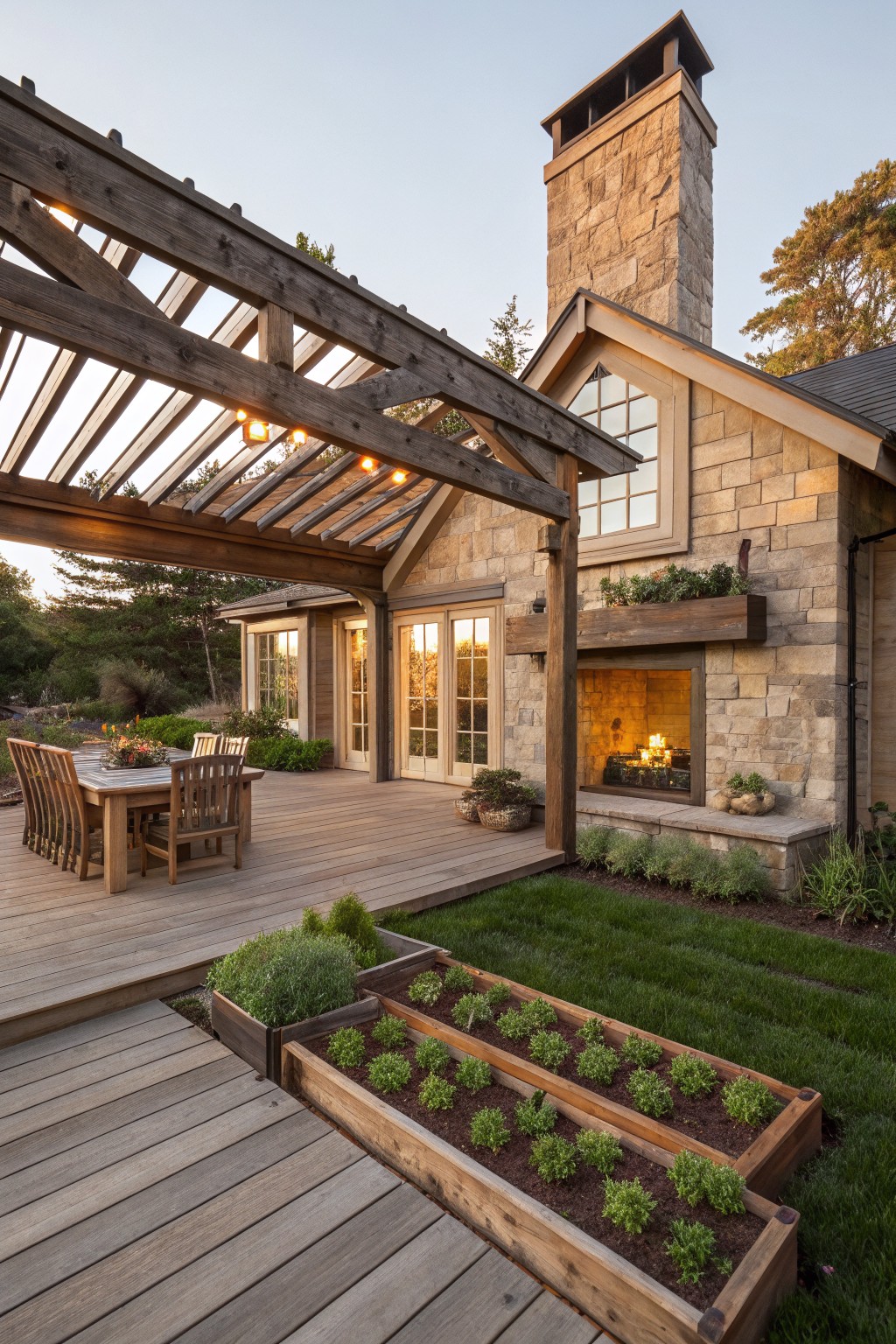
A pergola over the deck gives the space a clear sense of being a room without walls. It adds shade for meals and gatherings while still keeping the open feel that most people want outdoors.
This setup works best on homes where the deck sits right off the main living areas. Keep the furniture simple, like a dining table and chairs, and let the structure itself do the work of defining the zone. It suits traditional farmhouses that already have wood siding or stone details.
Add a Front Porch with Simple Columns
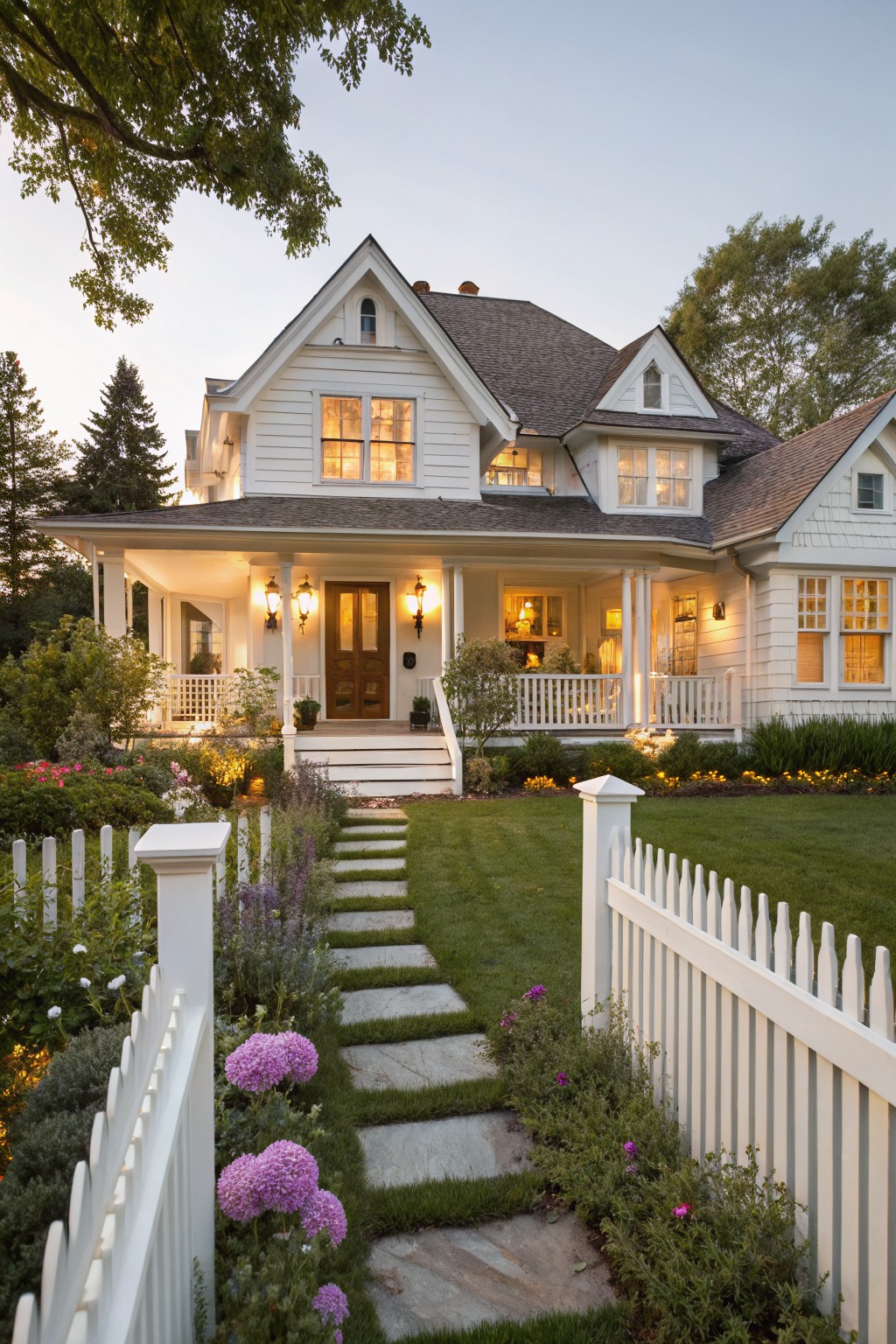
A front porch gives a traditional farmhouse its most welcoming feature. Placing it right in the center with plain white columns keeps the look balanced and makes the entry feel open without any extra trim or fuss.
This approach works best on homes that already have a bit of lawn and a straight path leading up to the steps. Use warm lights on either side of the door and keep the railing low so the porch stays useful for sitting while still looking clean from the street.
Frequently Asked Questions
Q: How do I choose shutters that actually suit a traditional farmhouse without looking fake?
A: Wooden shutters in a simple style add real depth to the windows. Paint them a soft black or deep green so they stand out against light siding. They give the exterior that settled, lived-in feel right away.
Q: What if my house lacks a big front porch but I still want the welcoming vibe?
A: A small covered entry with basic posts can create the same inviting spot. Keep the roofline low and match the materials to your siding. This change pulls the whole look together without major construction.
Q: Can I use asphalt shingles on the roof or does it have to be metal to feel authentic?
A: Asphalt shingles work well if you pick a dark color that sits quietly against the rest of the house. Focus your effort on the trim details and door color instead. The timeless feel comes through either way.
