

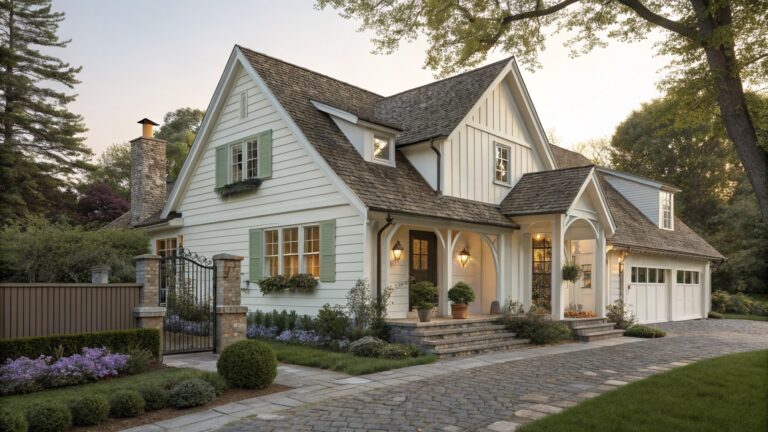
I have found that the front of a house often reveals its true character before anyone reaches the door.
Choosing siding tones that work with the roof pitch and window trim helps the whole facade sit more naturally against the landscape.
Many people overlook how entry details like the door surround or porch posts tie the elevation together when they work only from pictures.
Small tests help most.
I usually start by checking how a new material or color reads at different times of day before committing to larger changes on my own place.
Curved Stone Paths to the Front Door
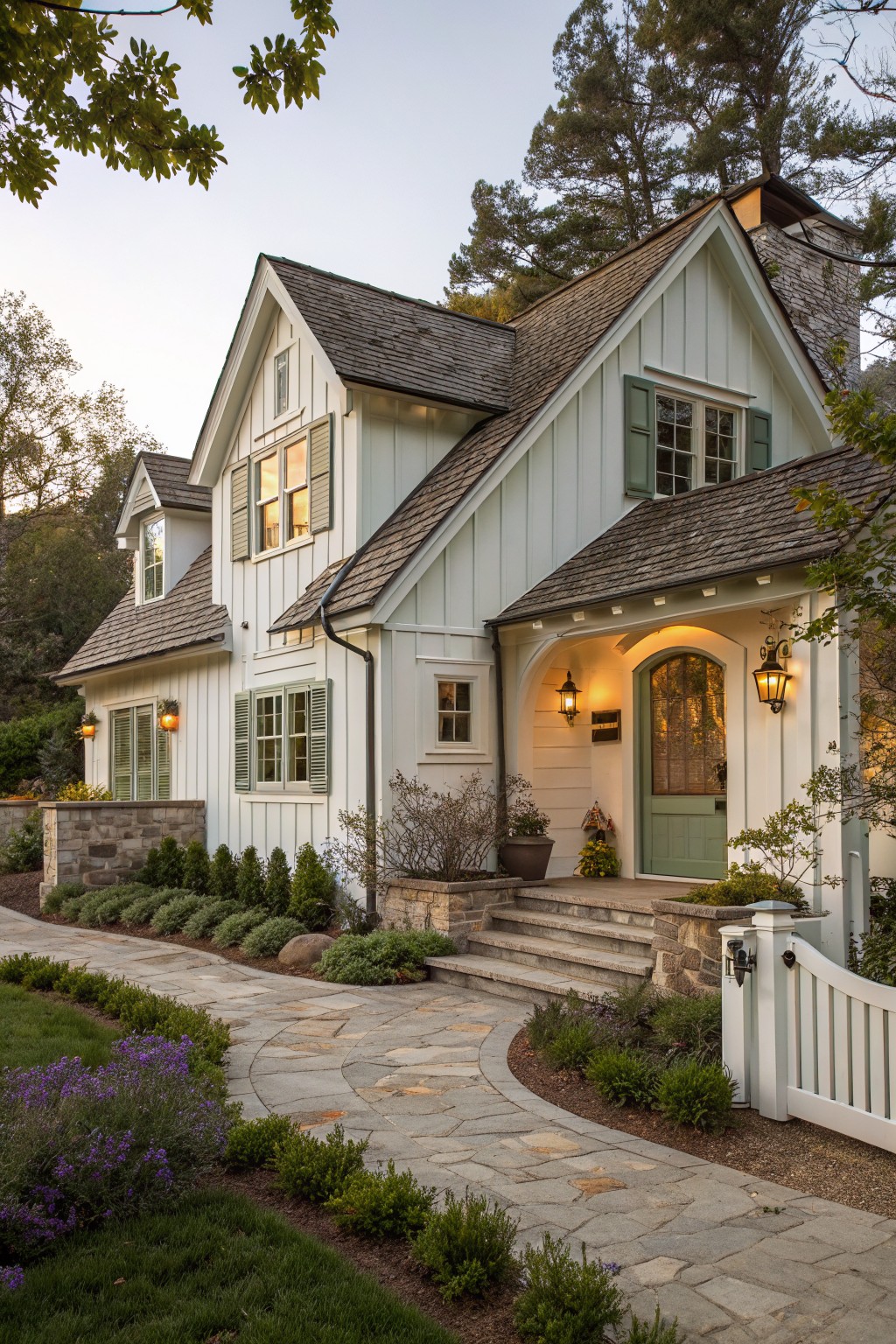
A gently curved stone path gives the front of a house a more relaxed and welcoming feel than a straight run. It slows the approach just enough to let people notice the plantings and the entry, and it works especially well with cottage and farmhouse styles that already lean informal.
This idea suits homes with a bit of yard depth where a straight sidewalk would feel too rigid. Use irregular pavers or flagstone, keep the curve soft rather than sharp, and let low plantings soften the edges. Avoid making the path too narrow or overly winding, or it can start to feel fussy.
Choose a Contrasting Color for the Front Door
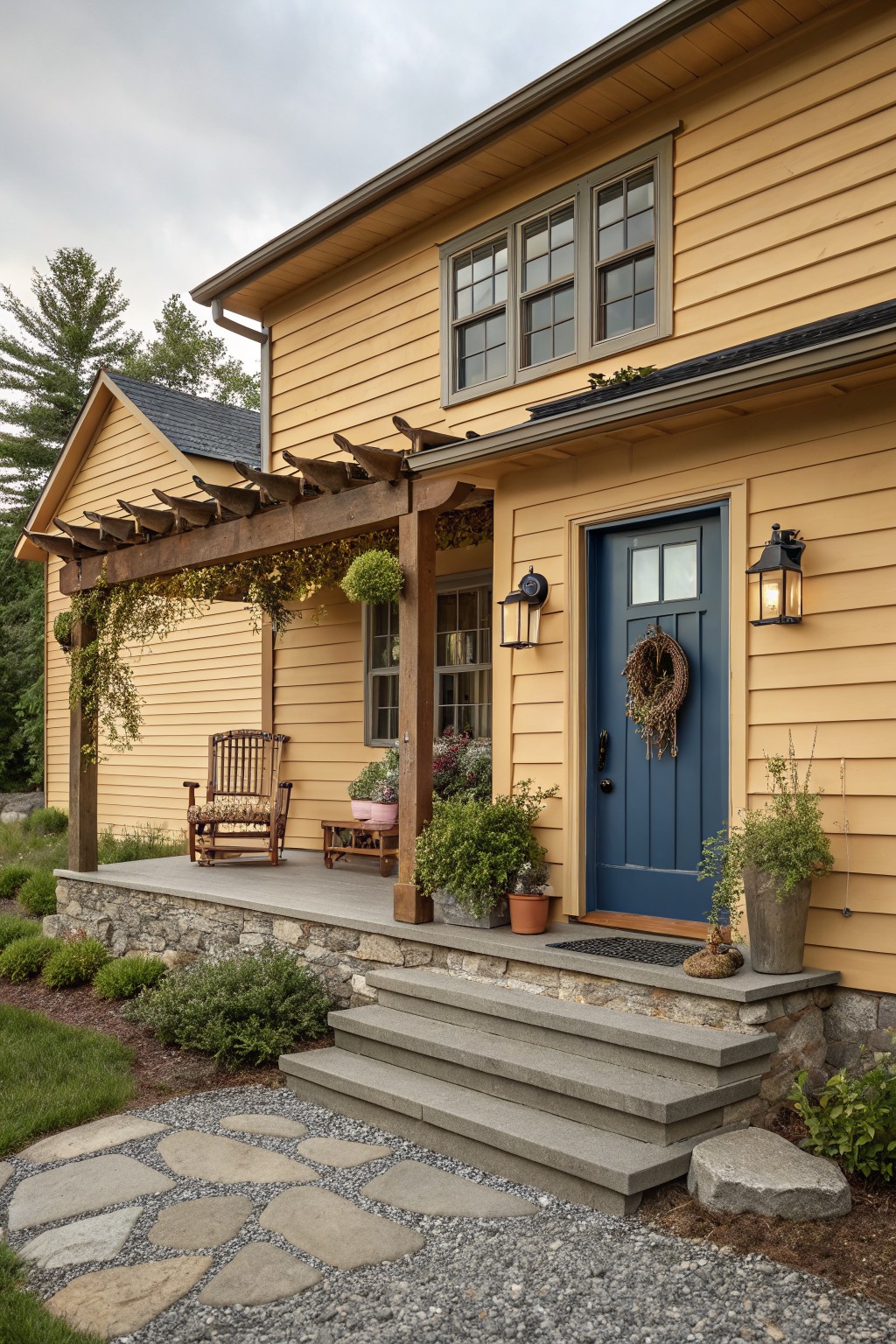
A painted door in a strong color can pull the whole front together without needing much else. Here the deep blue stands out cleanly against the yellow siding and gives the entry a clear focal point.
This works best on simpler cottage or farmhouse homes where the door can carry the main visual interest. Keep the rest of the trim and siding fairly neutral so the door stays the main feature, and test the color in different lights before committing.
Mix Stone and Wood on the Facade
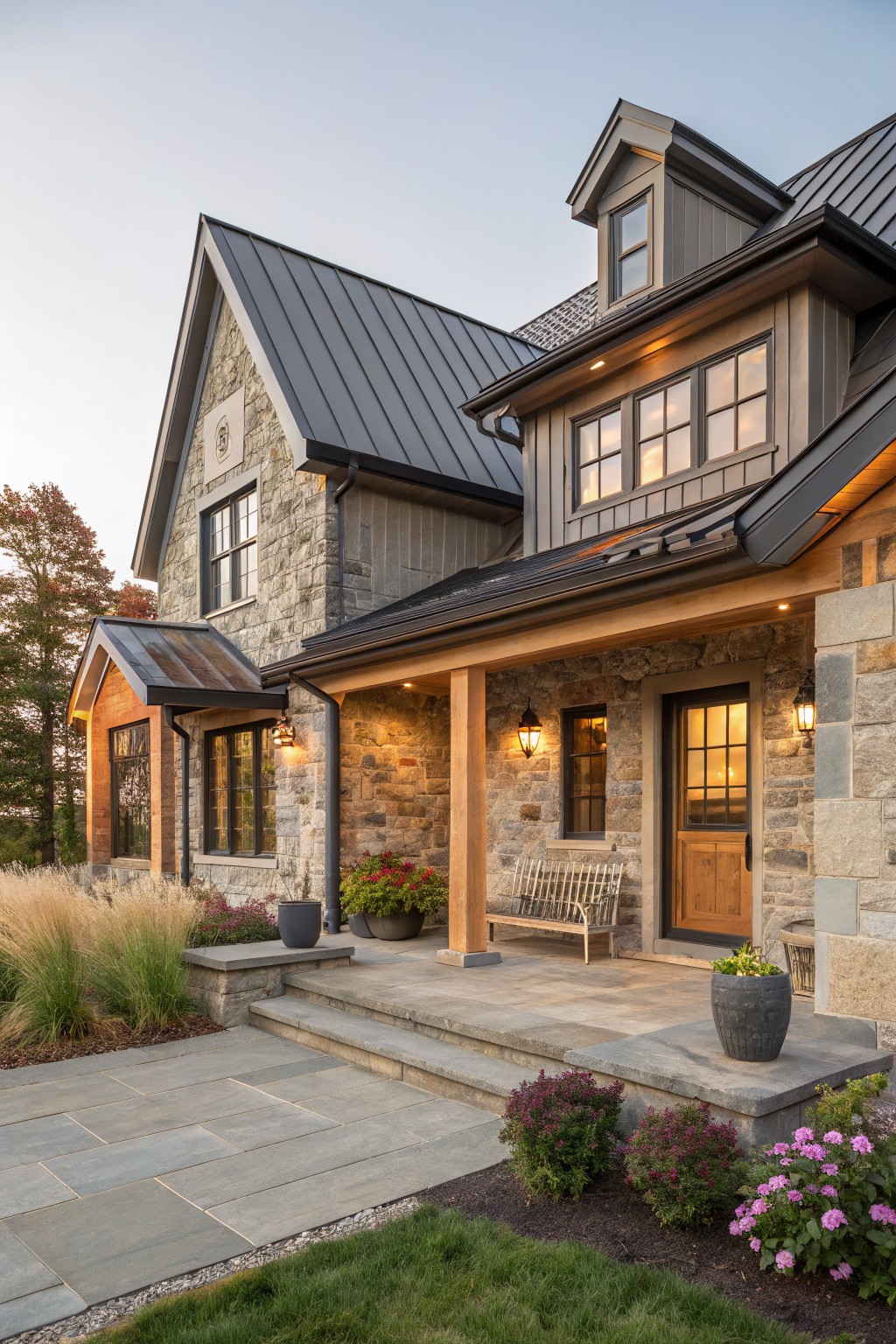
Mixing stone and wood gives a house a solid yet welcoming look that fits the cottage farmhouse style. The stone handles the heavier lower sections while wood softens the upper parts and adds texture that feels lived in.
This works best on homes with straightforward rooflines and gables. Keep the wood tones natural and let the stone stay in its original colors so the two materials support each other instead of competing.
Arched Stone Entry with a Red Door
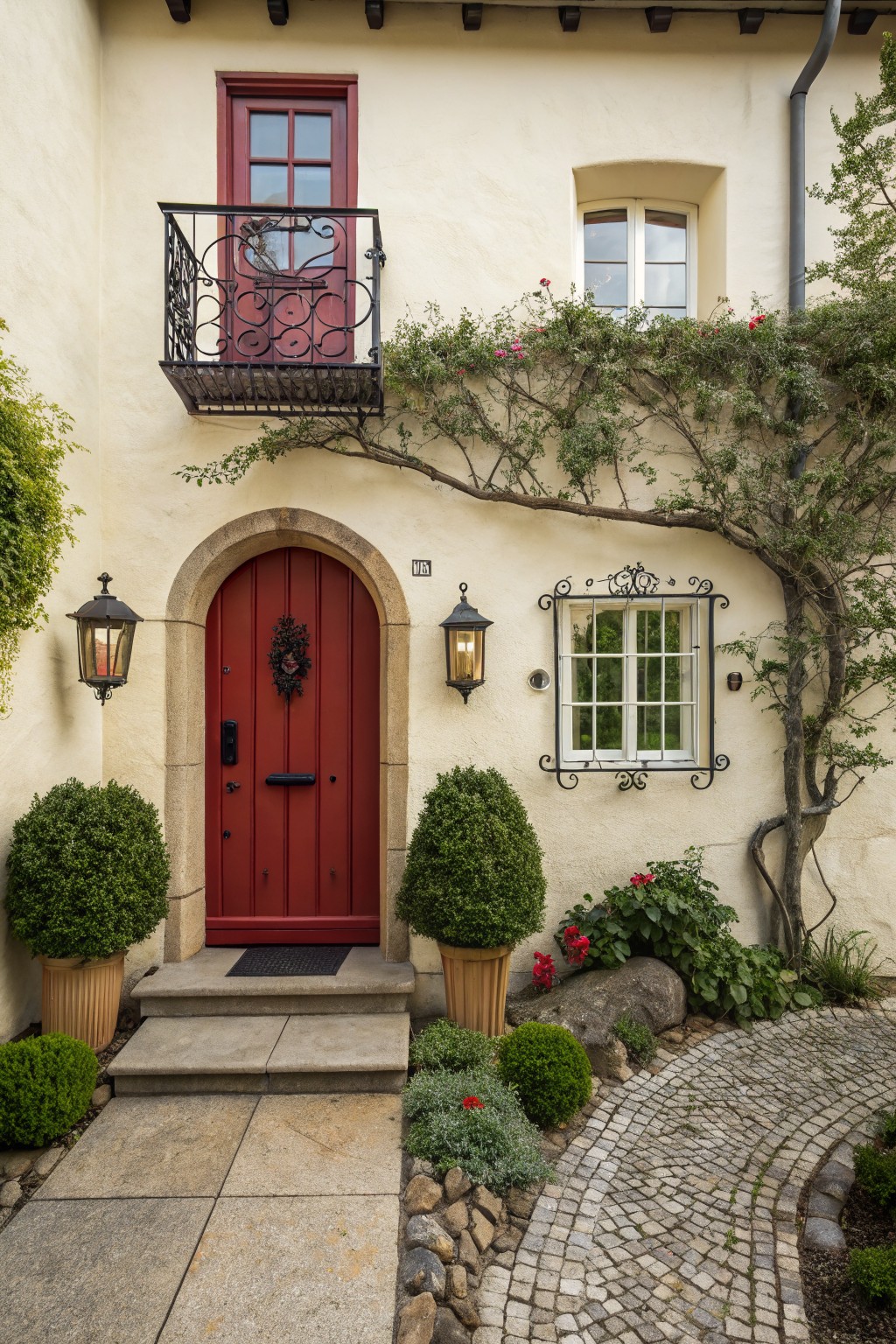
An arched doorway set in stone gives a cottage farmhouse a clear focal point at the front. The red door inside the arch stands out against the light walls and makes the entry feel more defined without needing extra trim or decoration.
This works best on homes with simple stucco or plaster siding where you want the door to carry the main visual weight. Keep the arch proportions modest and match the stone to any other masonry on the house so the whole front stays balanced.
Stick With a Classic White Exterior
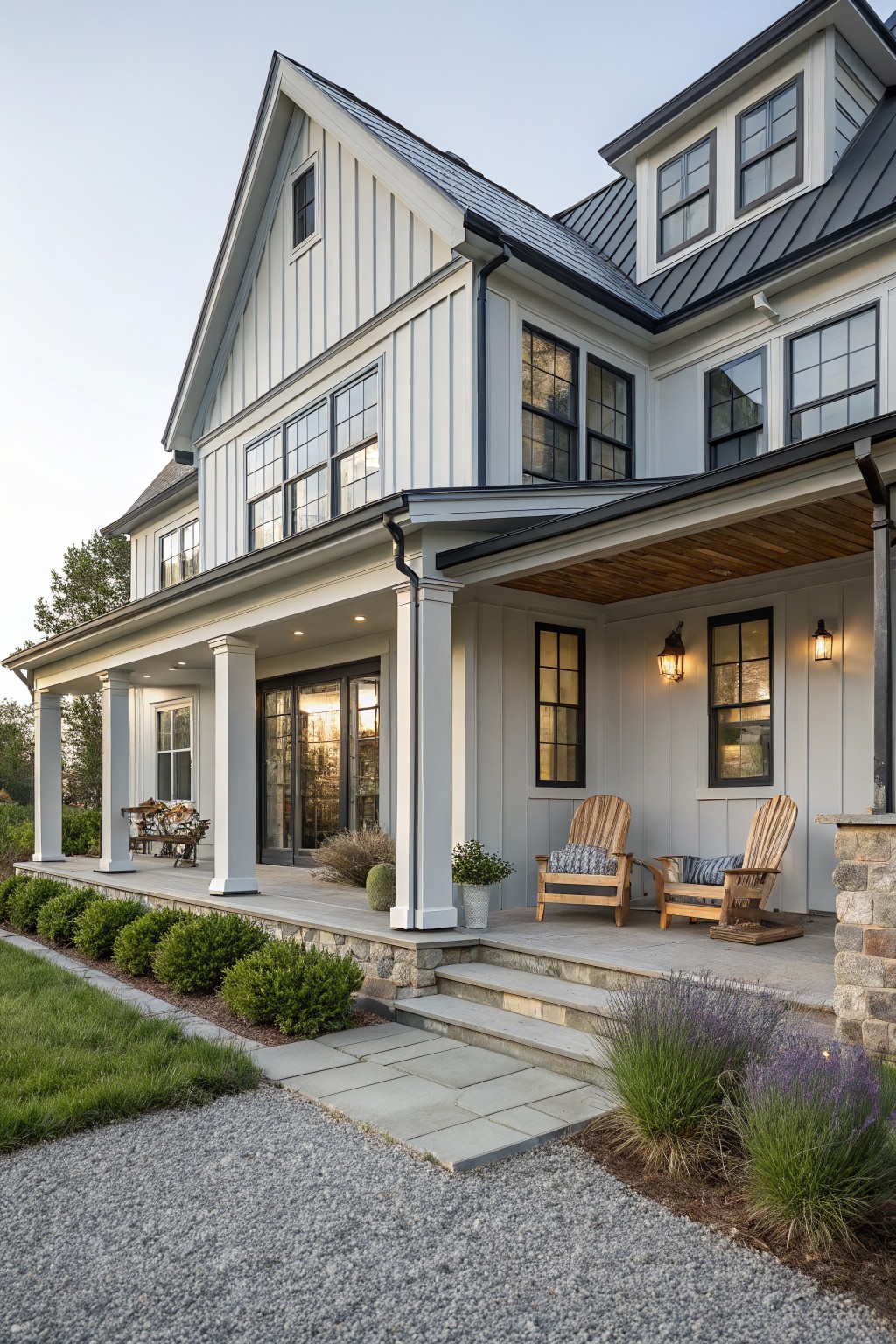
A white exterior paired with dark trim and roofing gives a cottage farmhouse that crisp, timeless look without extra fuss. The contrast keeps the house feeling bright and open even when the roofline is complex or the windows are large.
This style works best on homes that already have some architectural interest like gables or a front porch. It suits both rural lots and suburban streets, and the light color helps the house feel larger. Just watch the trim details so the dark accents stay sharp against the siding.
Arched Entries for Cottage Charm
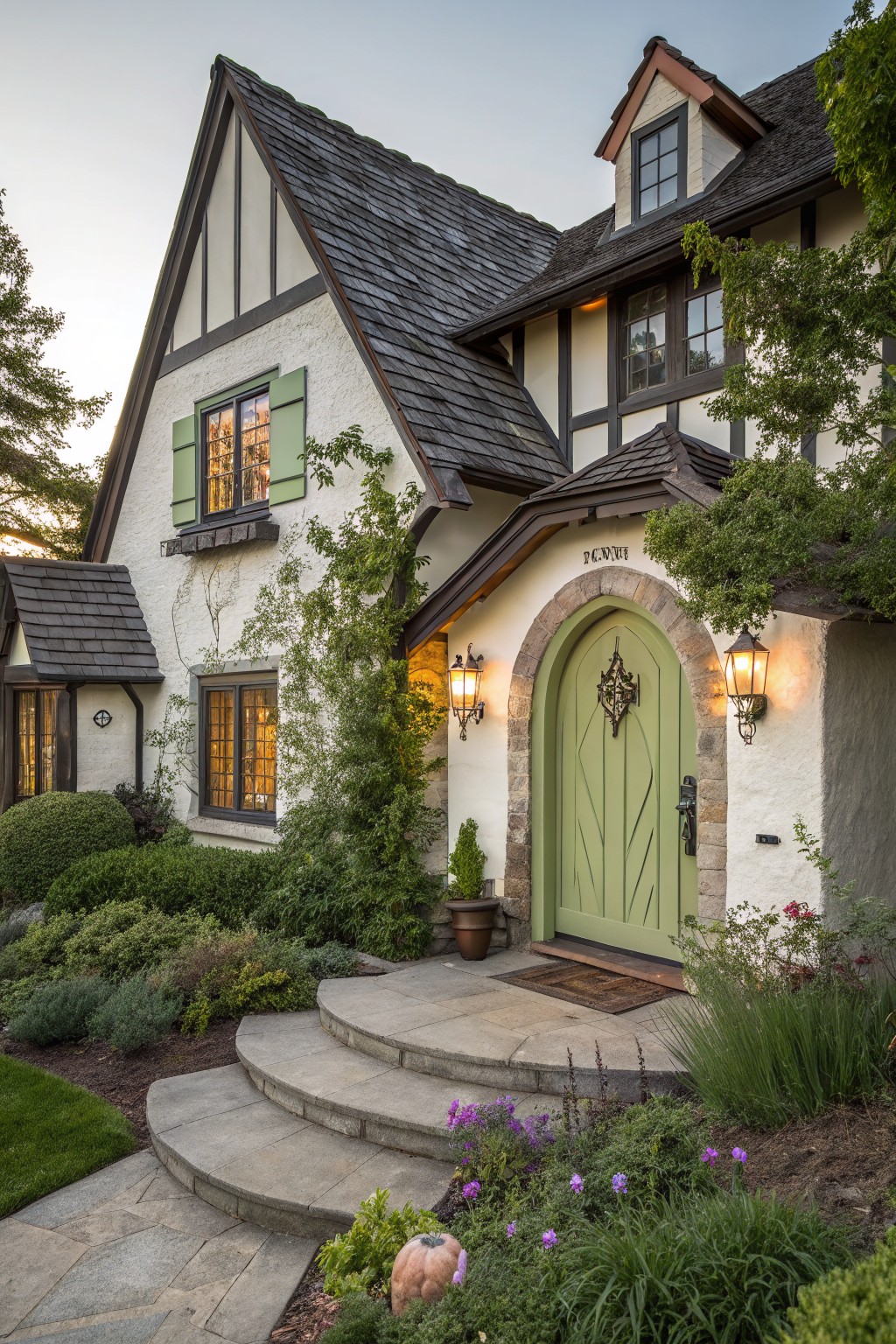
An arched doorway gives a cottage farmhouse a softer, more welcoming front without much extra work. The curve breaks up the straight lines of the roof and walls, and it makes the door the clear focal point even on a simple exterior.
This approach suits homes with stucco or wood siding where you want a bit of traditional character. Keep the door color distinct from the walls, use stone or brick around the arch if the budget allows, and avoid crowding the area with too many plants so the shape can be seen from the street.
Add a Porch Swing
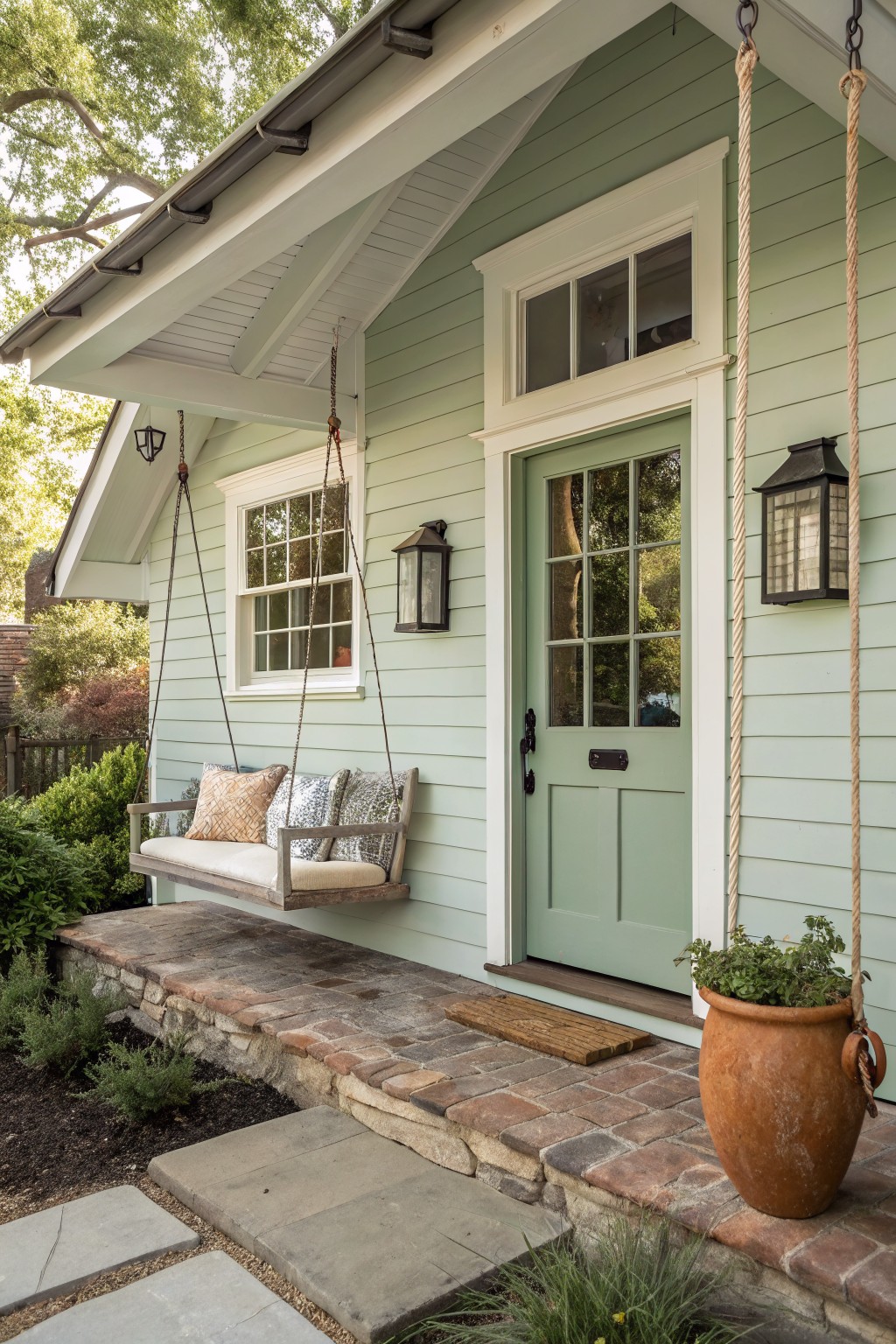
A porch swing gives the front of a cottage farmhouse an easy, relaxed feel without much effort. It turns a simple entry into a spot that looks like it gets used.
This idea works well on houses with a covered porch or overhang. Keep the swing low and simple so it does not compete with the door or siding.
Dark Doors on Light Siding
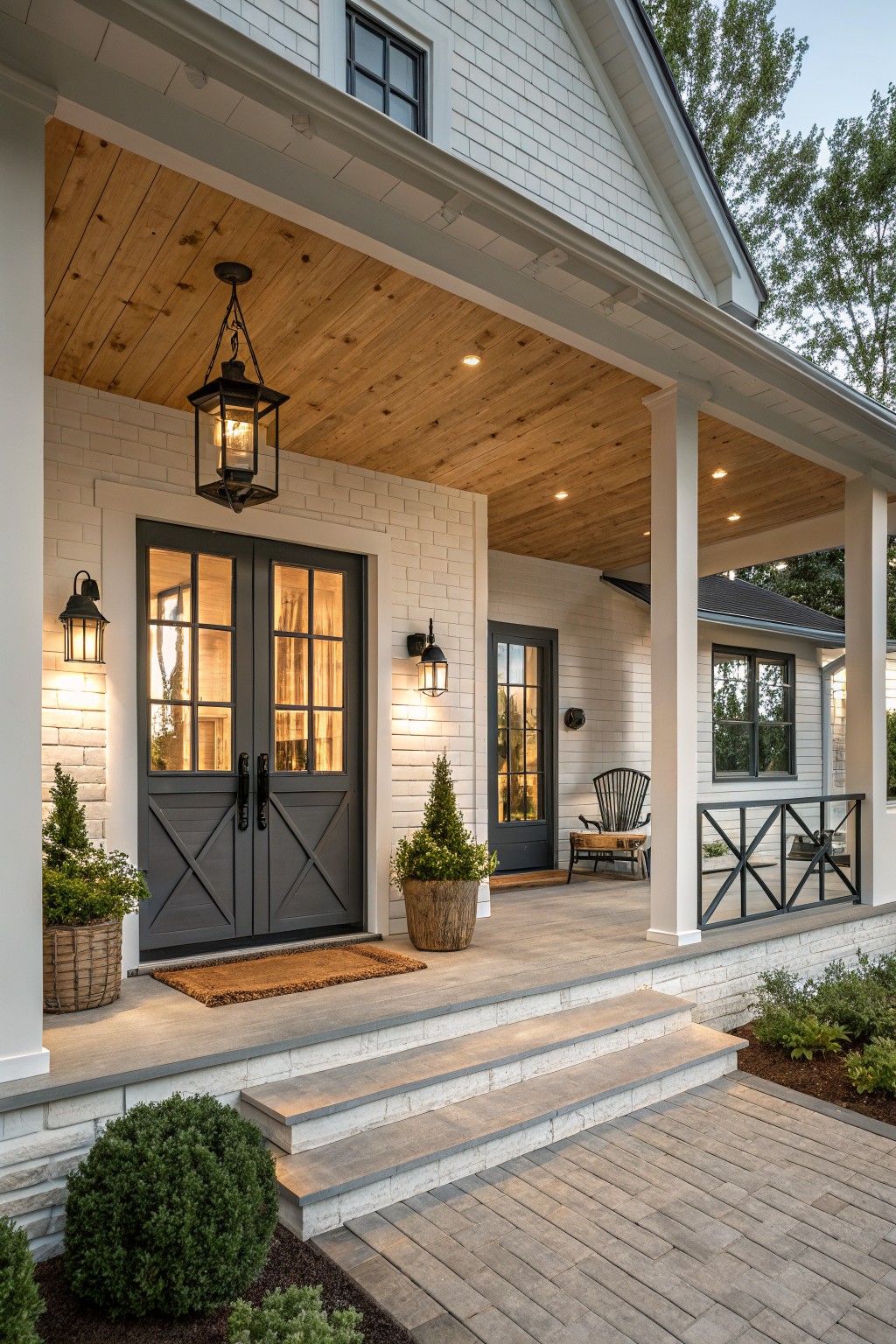
A dark double door gives a white cottage exterior more weight and focus. The contrast makes the entry feel intentional rather than blended into the rest of the facade.
This works best on homes with clean trim and a simple roofline. Keep surrounding walls and columns light so the door stays the main point of interest.
Choose a Soft Color for the Front Door
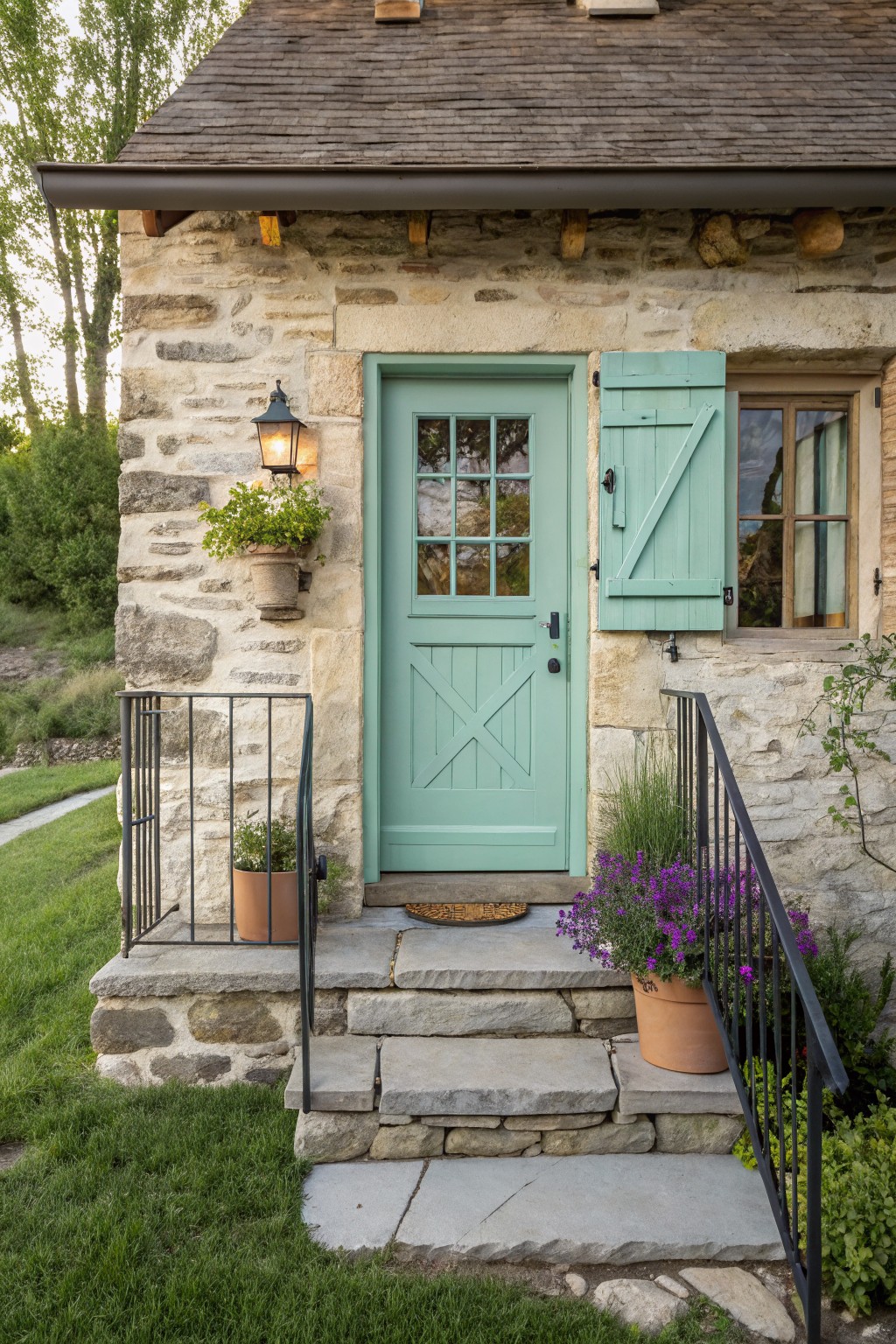
A painted door in a gentle shade can bring life to a stone house without much effort. The soft green here stands out nicely against the rough stone and gives the whole front a welcoming feel.
This works especially well on older cottages or farmhouses where the stone stays neutral. Keep the color muted so it feels cozy rather than bold, and match any shutters if you have them.
Mixing Stone And Wood Siding
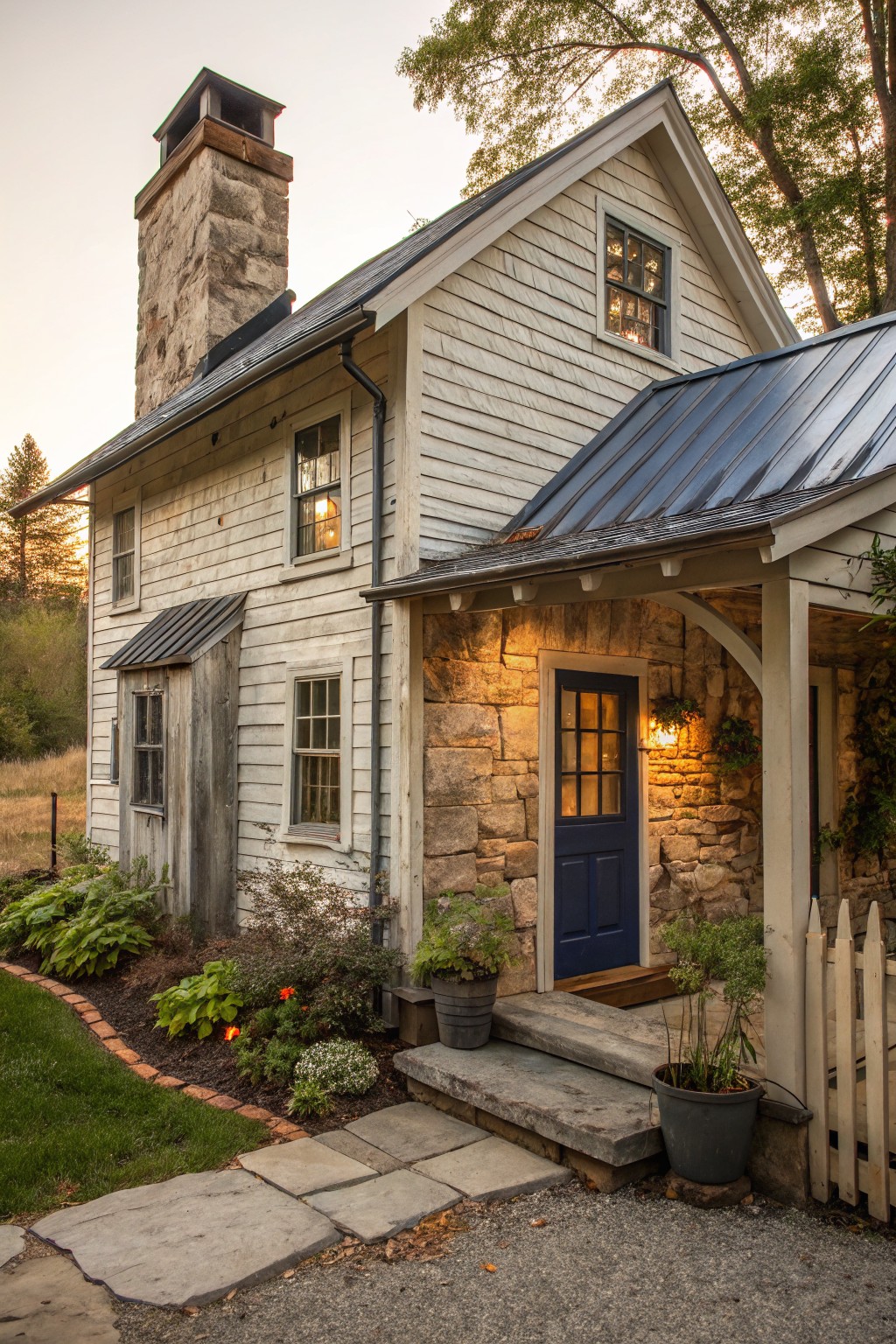
Pairing natural stone with painted wood siding gives a cottage farmhouse a solid, lived-in look. The contrast keeps the exterior from feeling flat while still staying simple.
This works best on smaller homes where you can use stone in focused areas like the chimney or entry. Stick with light siding so the stone stands out without overpowering the whole front.
Climbing Vines to Soften the Walls
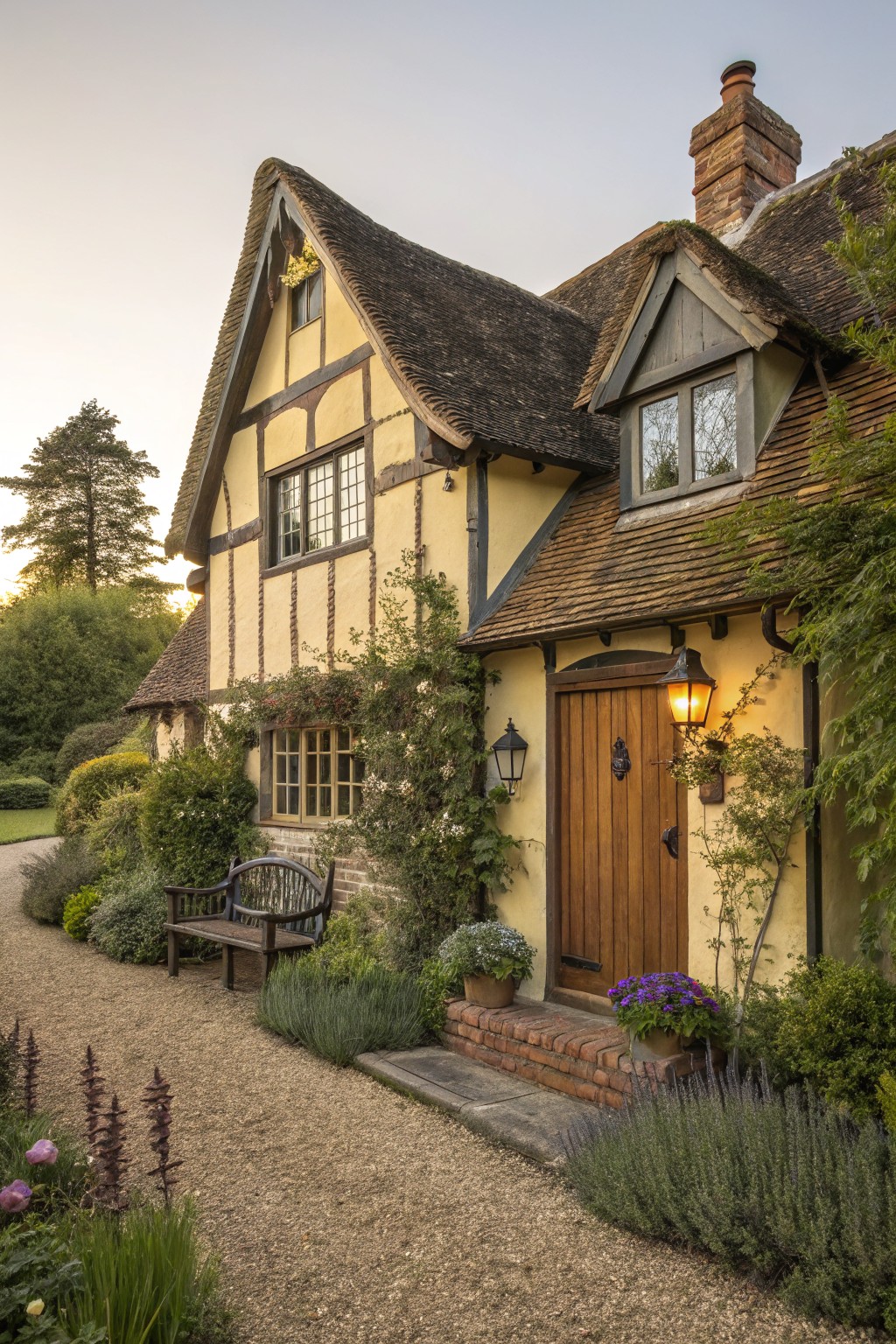
Letting vines and climbing plants grow up the side of a cottage gives it a softer, more settled look. The greenery breaks up the flat wall surfaces and helps the house feel like part of the garden rather than just sitting beside it. This works especially well on lighter walls where the leaves and flowers can stand out.
It suits older homes or simple cottage styles that already have some texture in the siding or trim. Start with a few plants at the base and train them toward windows or the door area. Watch how fast they grow so they stay neat and do not block light or damage the woodwork.
Add a Small Gabled Porch Over the Door
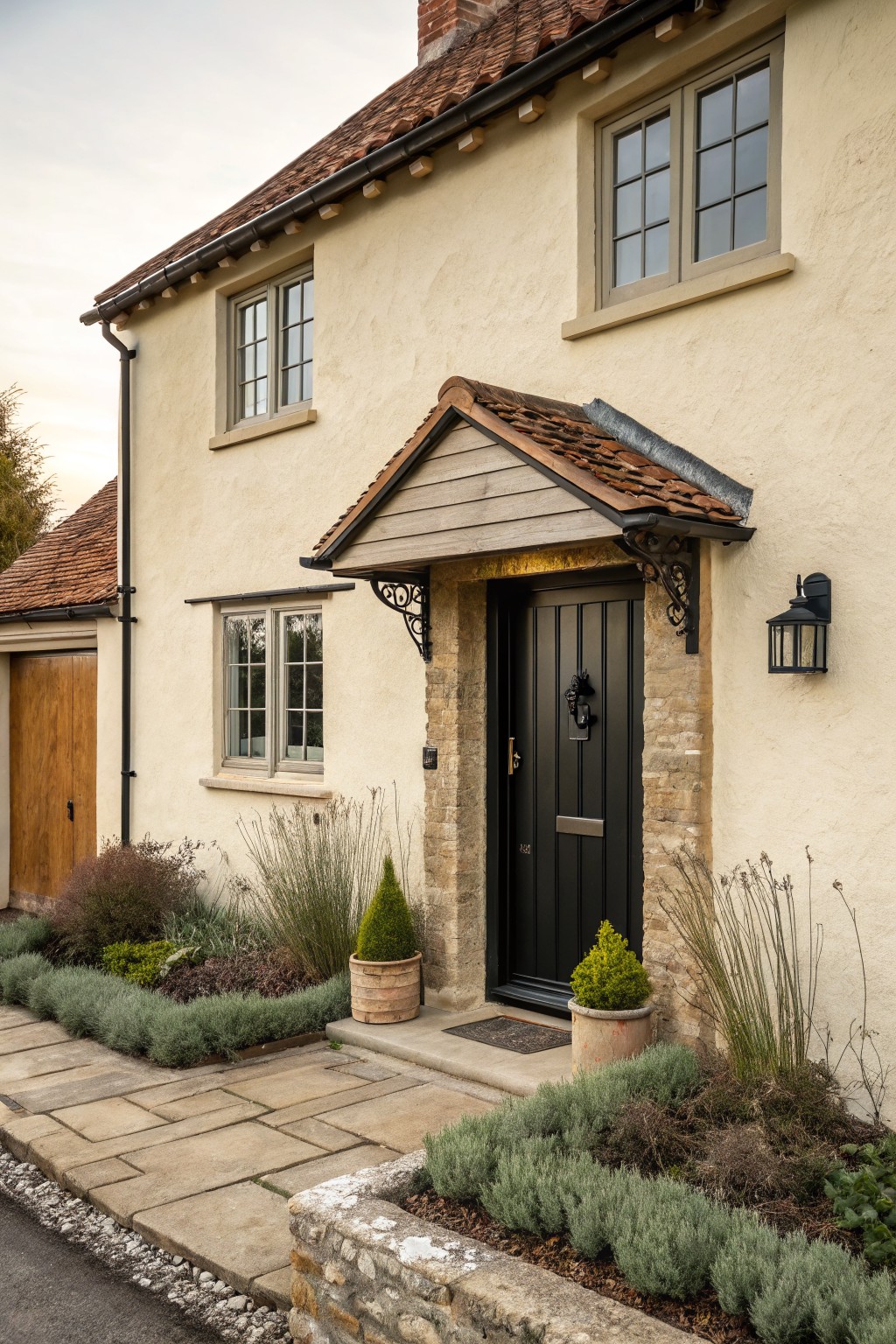
A modest gabled canopy over the front door gives the house a clear focal point without needing a full porch. It breaks up the wall, adds some roof texture, and creates a bit of shelter right where people need it most.
This works especially well on simpler cottage or farmhouse exteriors where the main facade stays fairly flat. Keep the structure narrow, match the roof material to the house, and let the door itself stay the main feature underneath.
Pick a Dark Door Color Against Light Siding
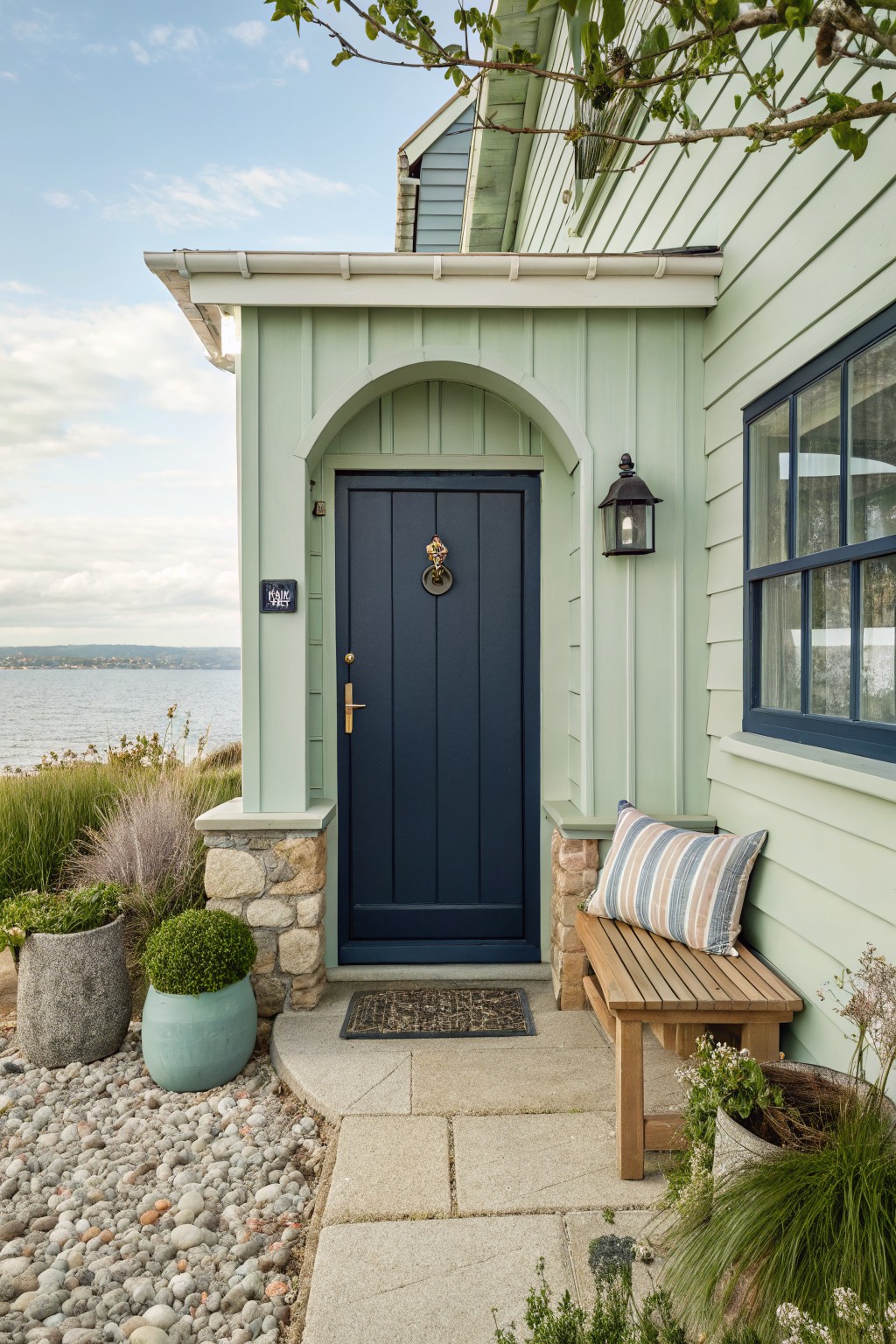
A deep navy door on soft green siding gives the entry a clear focal point. The contrast makes the doorway feel more defined and welcoming without adding extra trim or decoration.
This approach works best on smaller cottages where the front feels a bit flat. Keep the rest of the palette quiet so the door stays the main feature.
Bright Front Doors On Dark Siding
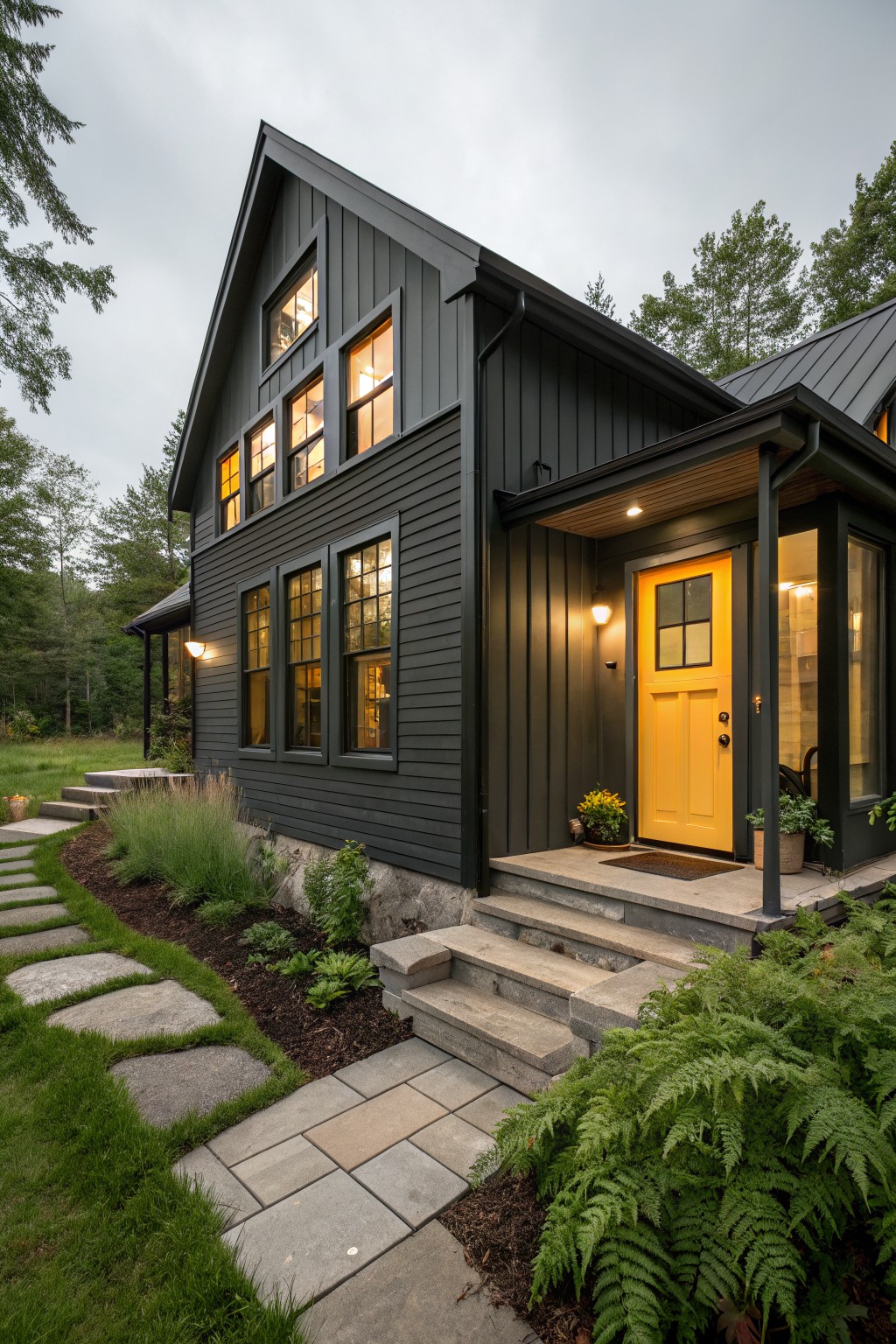
A dark house exterior can feel a bit heavy until you add a bright front door. The contrast makes the entry feel welcoming and gives the whole front a simple lift that works for cottage and farmhouse styles.
This idea suits homes with deep gray or black siding and a straightforward roofline. Pick a warm color like yellow, test it on a sample board first, and keep the trim and hardware simple so the door stays the main focus.
Soft Colored Doors For A Welcoming Entry
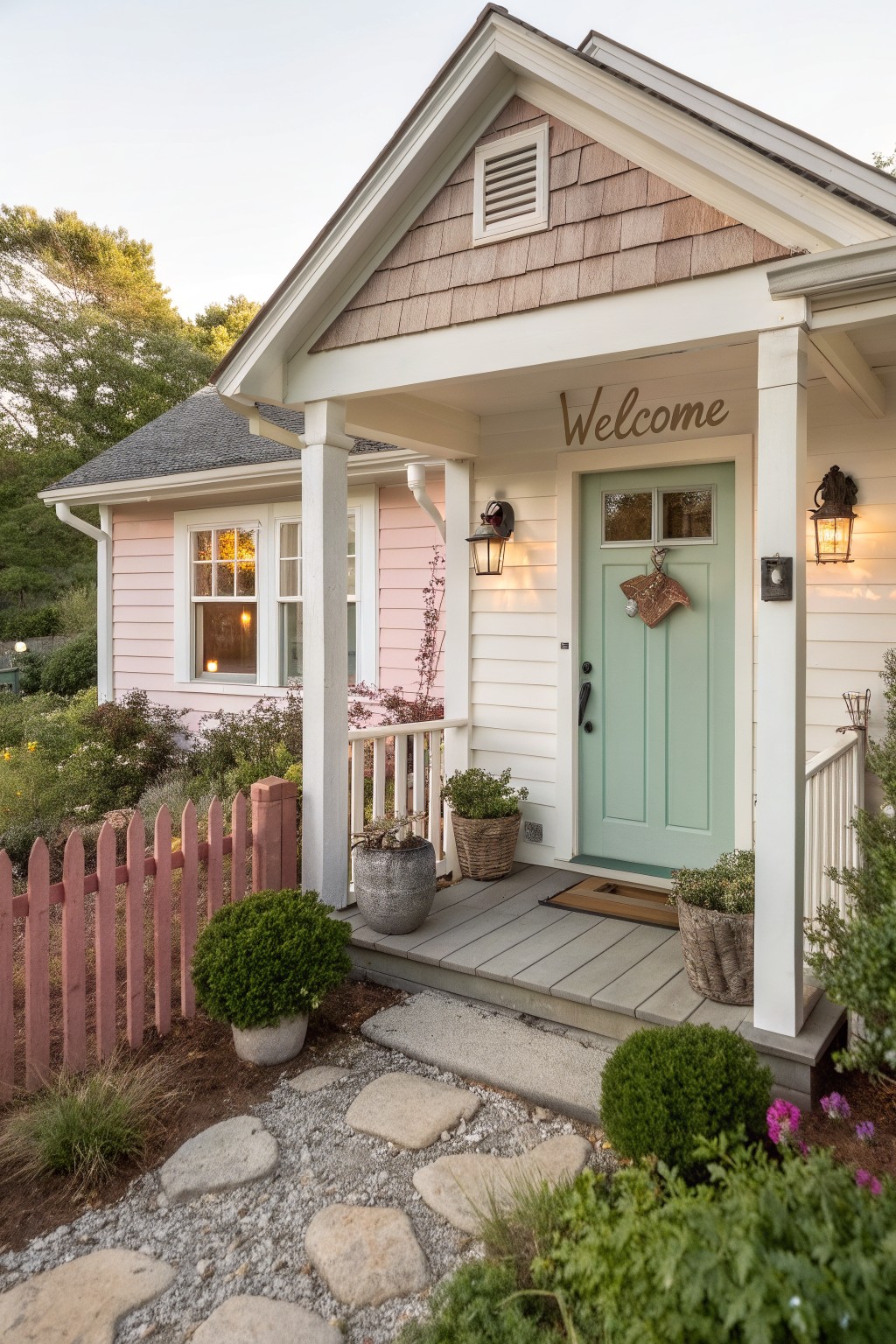
A soft colored front door gives the whole house a friendly feel without much effort. The light green door here stands out gently against the white siding and makes the entrance easy to spot right away.
This works best on smaller cottage homes where you want the entry to feel open and simple. Choose a muted shade that still contrasts with your siding, and keep any added sign small so it does not compete with the door itself.
Paint the Front Door a Bright Color
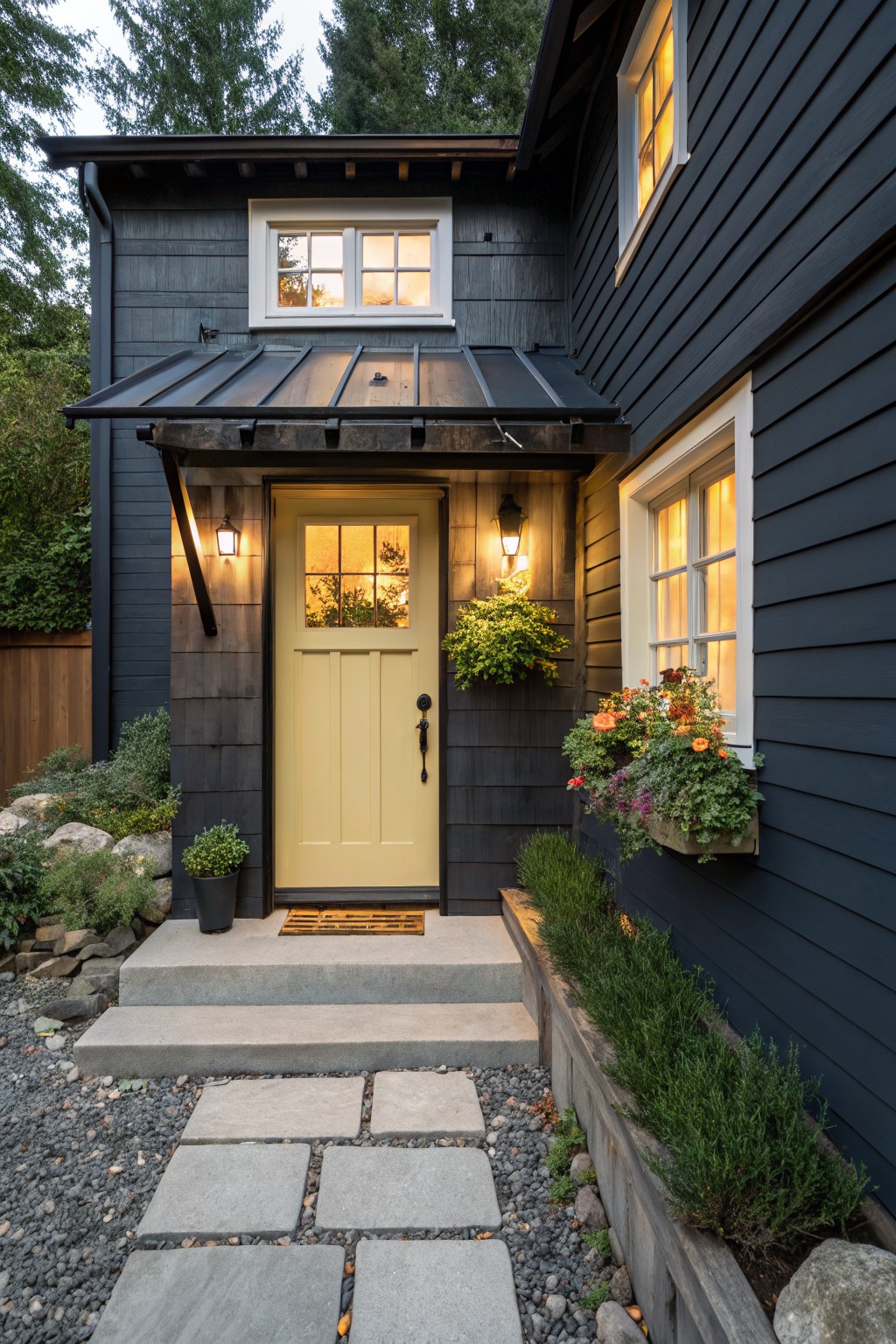
A bright front door stands out nicely against dark siding and gives the whole house a friendlier feel. It works as a simple way to add personality without changing much else on the exterior.
This idea fits cottage and farmhouse homes that already have a strong color on the walls. Keep the trim and hardware simple so the door color stays the main focus.
Paint the Front Door a Strong Color
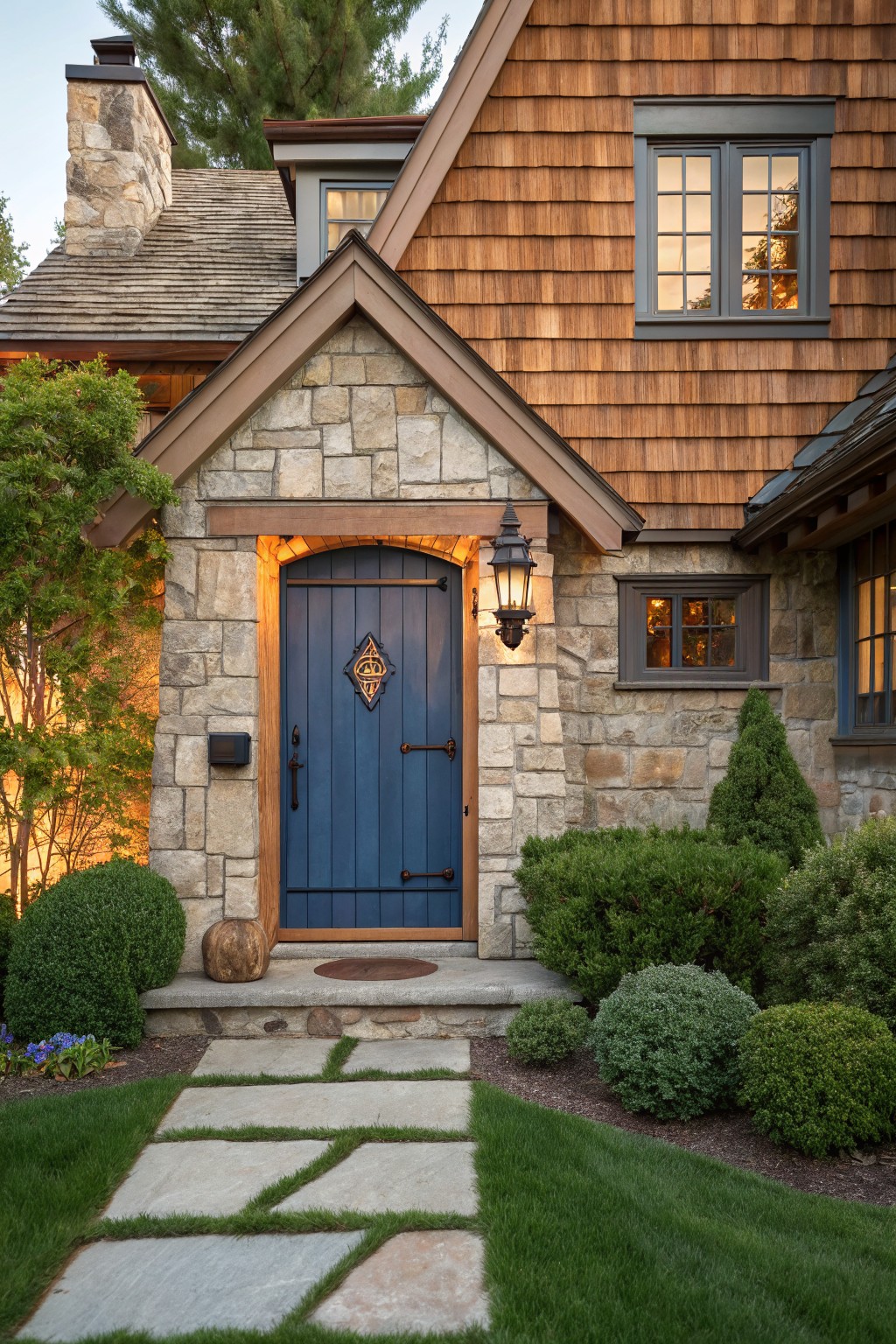
A deep blue door against gray stone gives the entry real presence without any extra trim or detail. The color stands out just enough to draw attention while the stone and wood around it keep the look grounded. This works especially well on cottage farmhouse homes that already have mixed materials.
Try the same move on any stone or brick entry. Keep the door color saturated rather than pastel so it reads clearly from the street. It suits homes with simple rooflines and natural siding, and it costs far less than adding architectural features.
Frame The Front Door With Stone
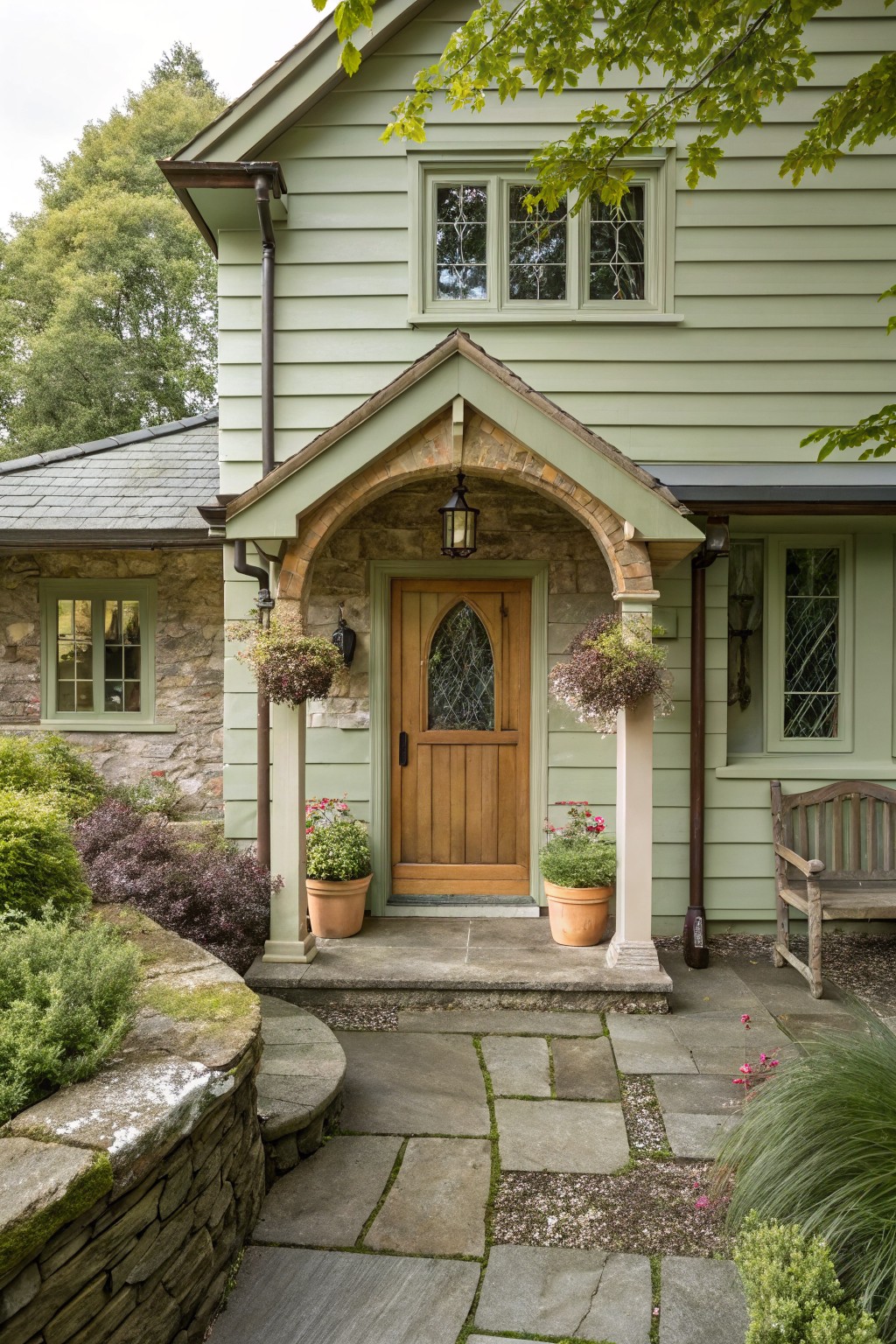
A stone arch over the front door adds weight and character to a simple house facade. It turns an ordinary entry into something that feels more rooted and permanent, especially when the rest of the house has wood siding.
This idea works well on smaller cottages or farmhouses that need a little extra presence at the entrance. Match the stone to any existing masonry on the house and keep the arch modest so it does not overpower the door itself.
Paint the Front Door a Warm Shade
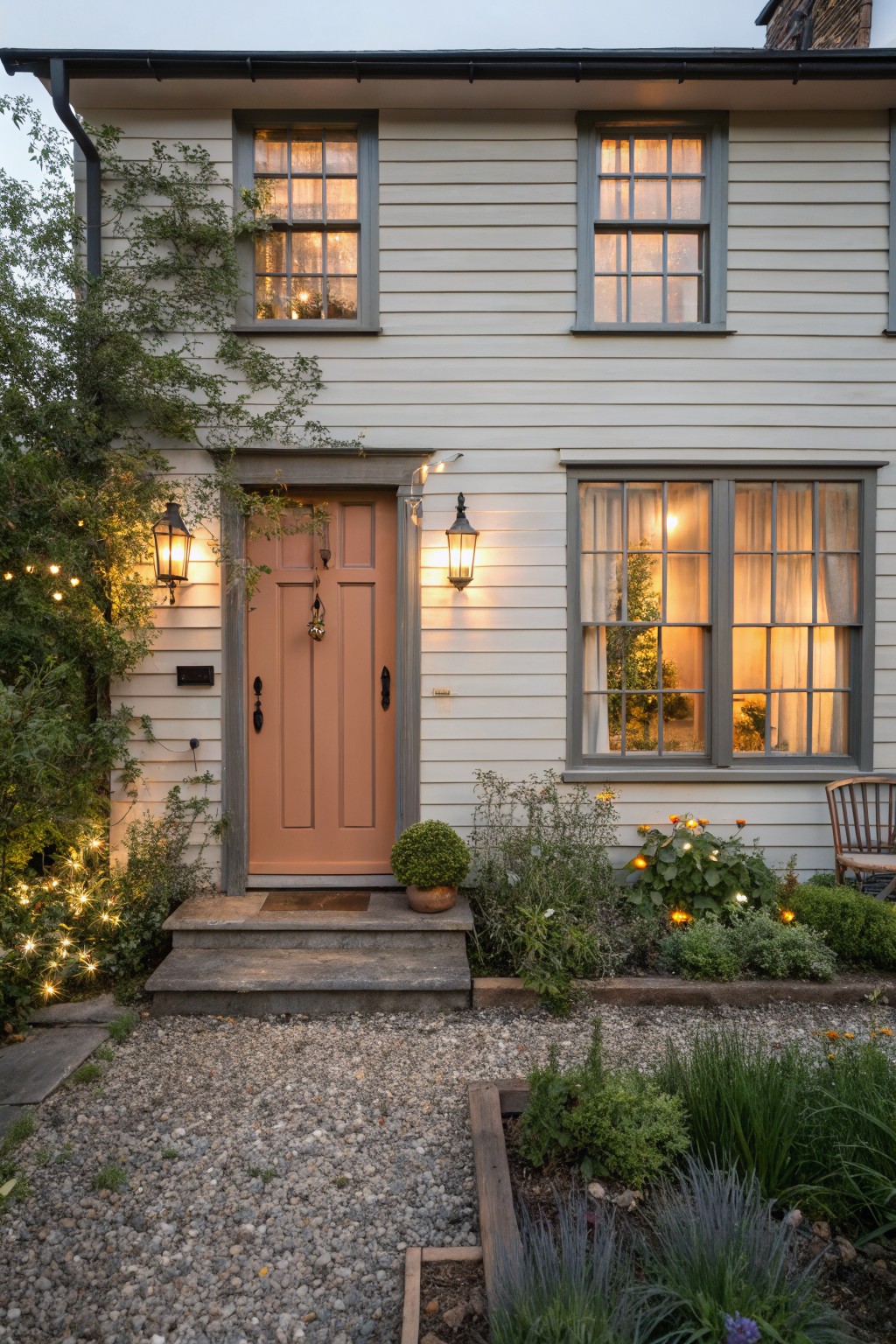
A soft coral or peach door gives a simple cottage farmhouse a friendly focal point without much extra effort. It stands out nicely against light siding and pairs well with basic lantern lighting on either side of the entry.
This approach works best on homes with clean lines and minimal trim detail. Keep the surrounding elements neutral so the door color can carry the charm, and test the shade in both daylight and evening light before committing.
A Simple Front Porch Entry
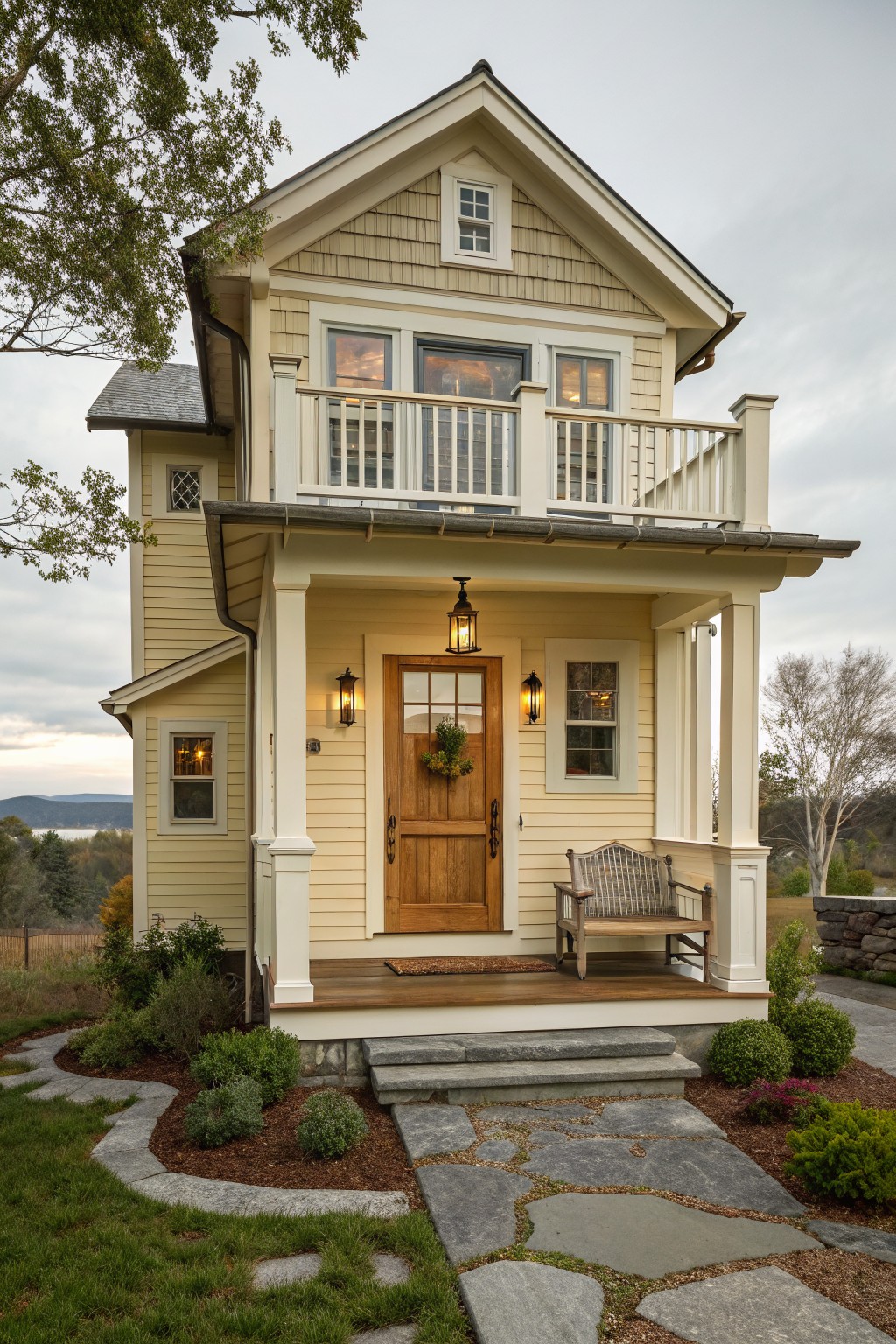
A front porch gives the house a clear sense of welcome without any extra fuss. The wooden door sits right in the middle, and the white columns hold up a roof that feels solid and practical. This setup works because it adds depth and a spot to pause before going inside.
Try this on a smaller home or a cottage style build where the front needs a little more presence. Keep the materials straightforward, use wood for the door, and let the porch floor extend just far enough to feel useful. Avoid adding too many decorations that could crowd the space.
Painting the Front Door a Deep Color
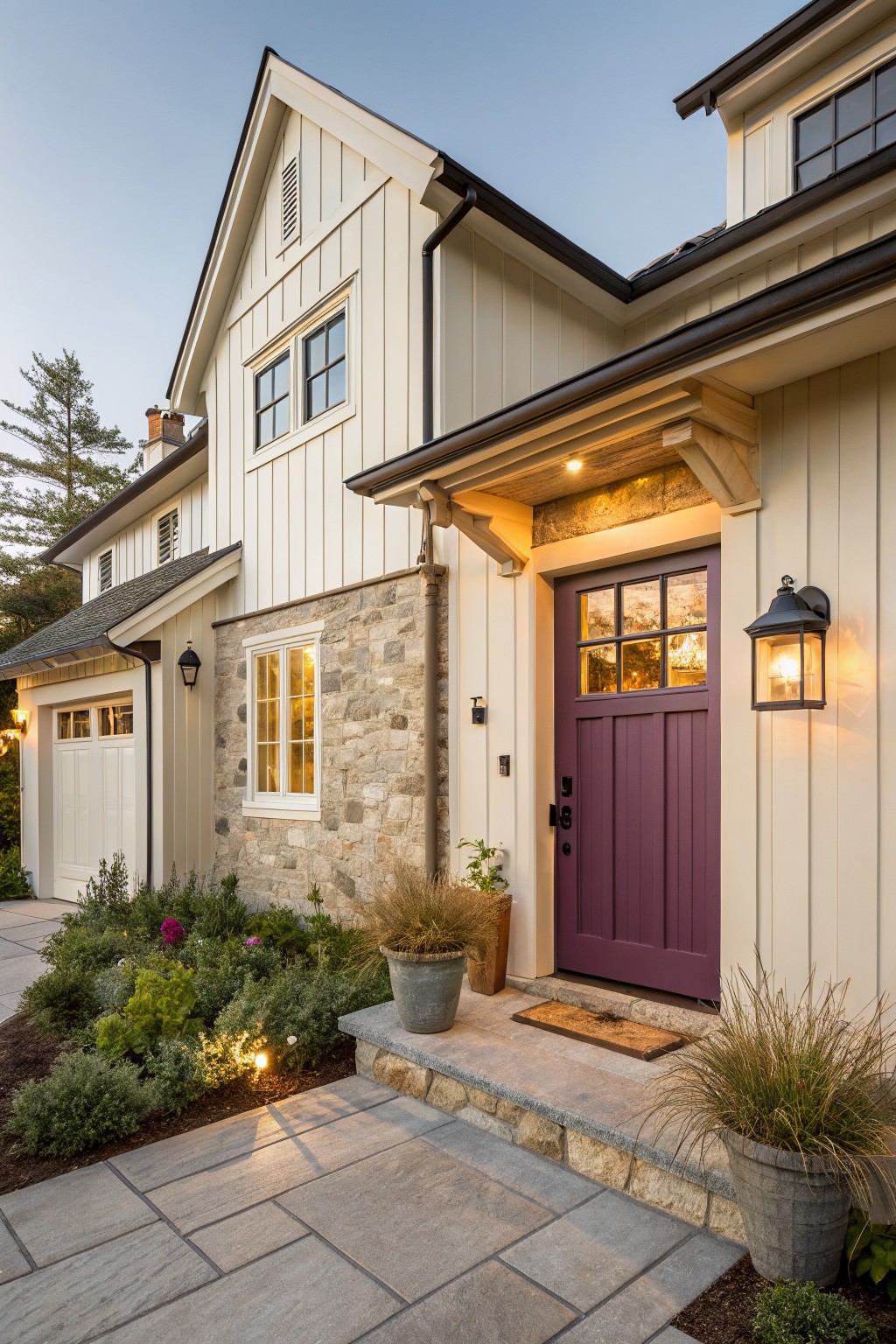
A deep colored door can give a simple farmhouse exterior more personality without any major changes. The purple door here stands out cleanly against the light siding and stone, which keeps the look balanced while still feeling welcoming.
This approach works best on homes with fairly plain siding and a clear entry point. Stick with colors that pick up tones from the stone or trim, and add a light fixture nearby so the door remains easy to see at night.
Frequently Asked Questions
Q: How do I pick shutters that actually suit my windows without guessing? A: Measure each window width first and choose shutters that match it exactly. Hang them so they frame the glass evenly from the road. This keeps the front looking balanced and welcoming.
Q: My porch feels bare even after adding a bench. What else helps? A: Hang a simple wooden sign above the door and set out two potted plants on either side. These draw the eye inward and add layers without crowding the space.
Q: Can I mix wood and metal accents on the same front wall? A: Use wood for the main trim and limit metal to one small detail like a light fixture. Keep both finishes in similar warm tones so nothing fights for attention.
