

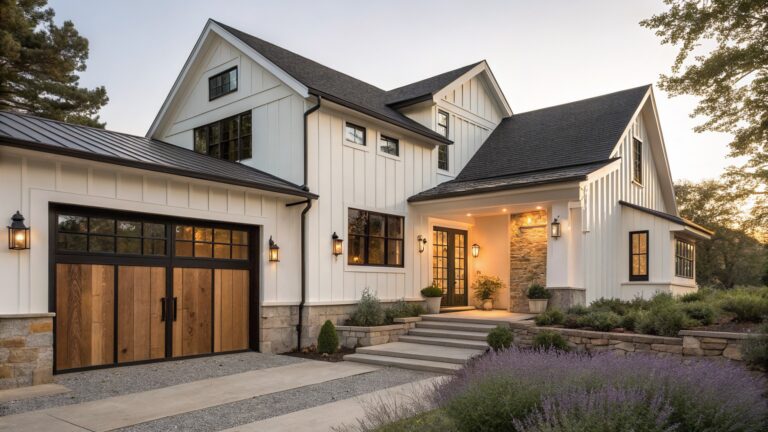
I have always noticed that the front of a house makes its first impression through the balance of shape and texture rather than any single bold feature.
Simple forms give the materials room to show their quality without competing for attention from the street.
Rooflines and entry details end up carrying more weight once the overall mass stays quiet.
I keep coming back to the idea that swapping in one better material often changes how the whole facade sits with its surroundings.
Testing a few of these combinations on paper first helps avoid choices that only look right in photos.
Natural Wood Garage Doors
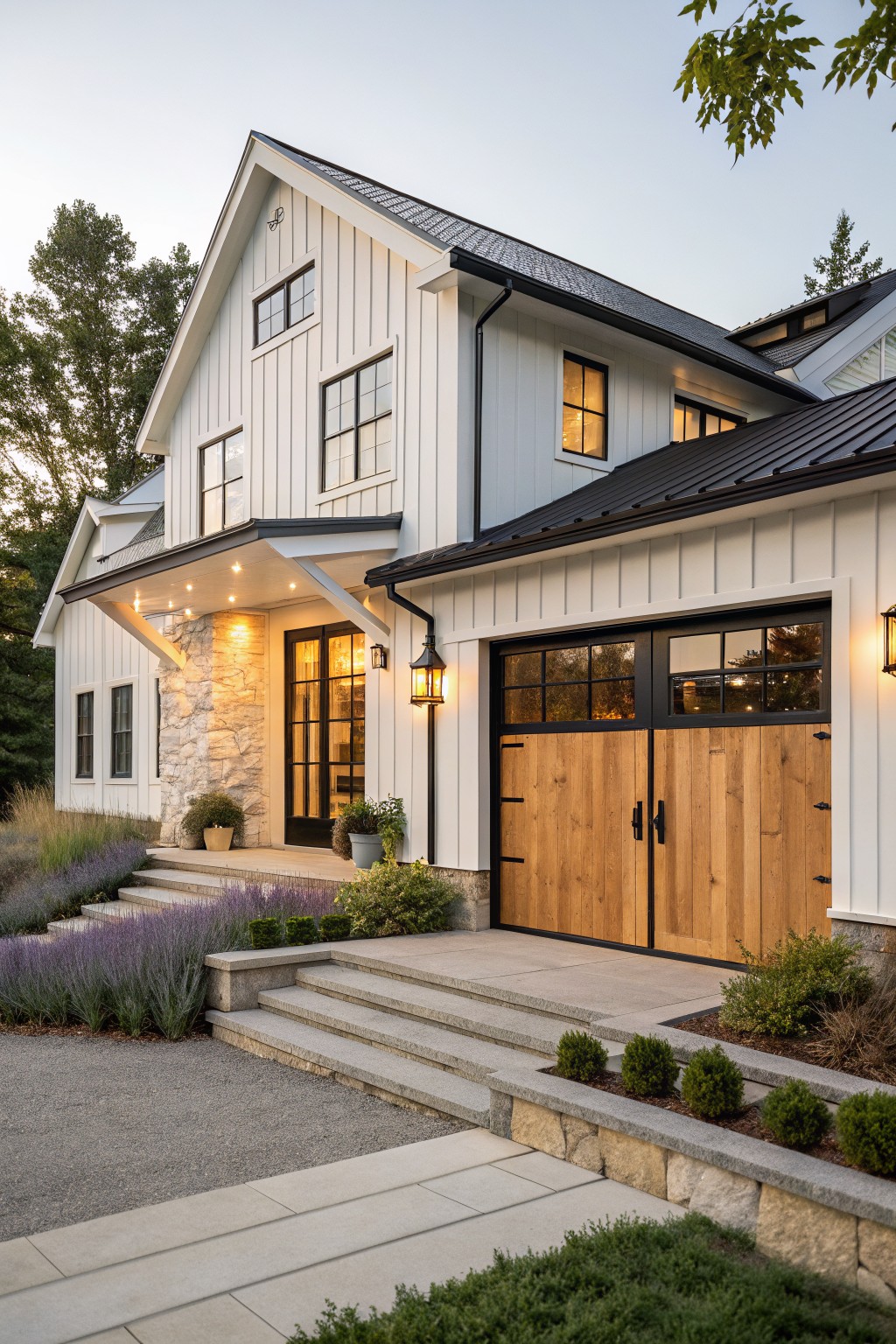
Many farmhouses keep the main body of the house crisp and simple with painted siding. Adding wood garage doors gives that clean look a bit of warmth without adding extra shapes or trim work. The wood grain stands out nicely against the white walls and black frames.
This works best on homes that already use black metal accents and a dark roof. It suits newer builds that want a farmhouse feel without looking too rustic. Just make sure the wood tone stays in the medium range so it does not fight with the stone or landscaping around the base of the house.
Pair Stucco With Stone For Texture
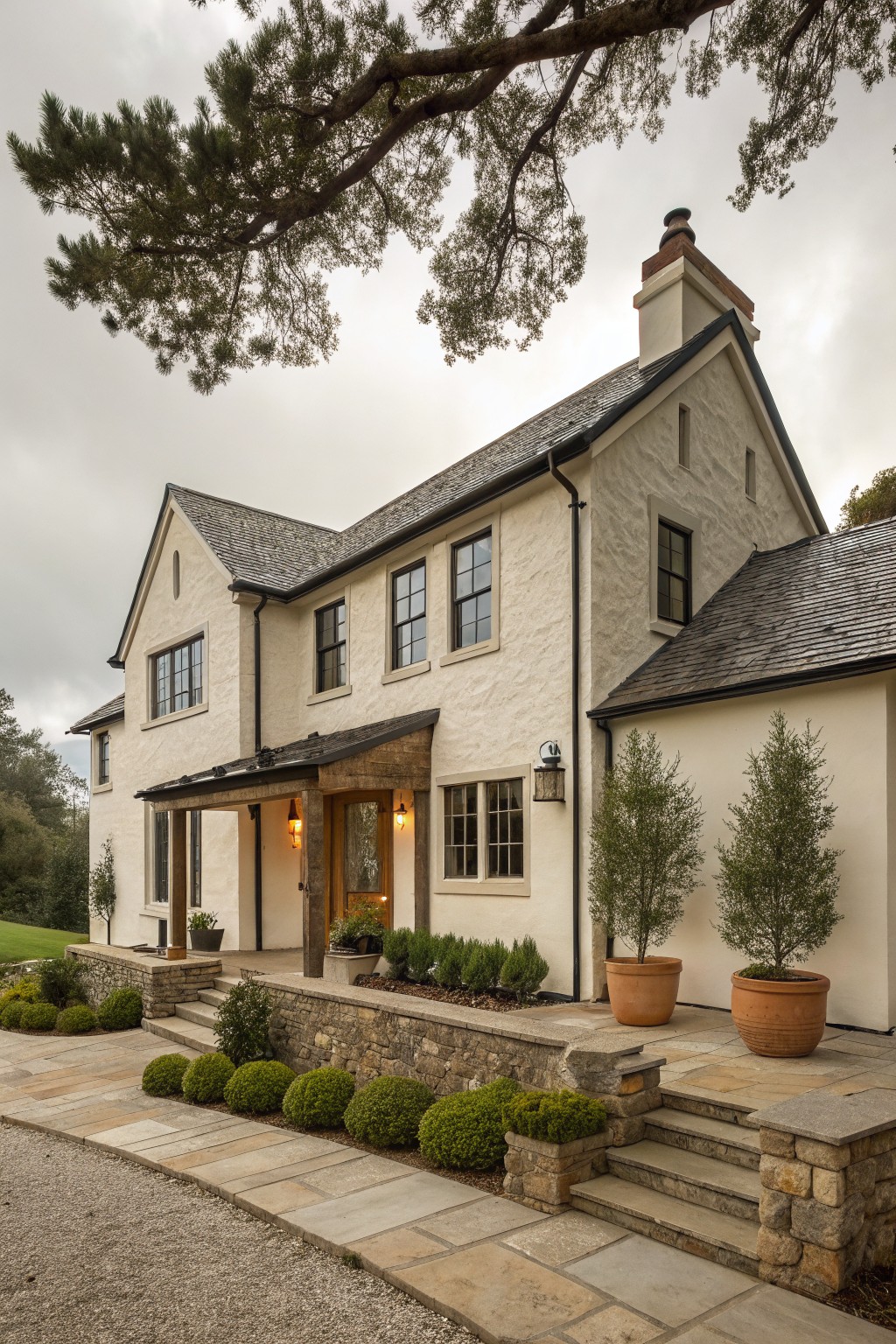
Stucco gives a house a smooth, simple look, but it can feel a bit flat on its own. Adding stone at the base and around the entry breaks up the surface without adding extra shapes or details. The contrast keeps the overall form clean while giving the eye something more interesting to rest on.
This works best on homes with straightforward gables and rooflines. Keep the stone low and limited to key spots like the foundation or steps so it supports the stucco instead of competing with it. Dark trim and roofing help tie the two materials together.
Mix Wood Siding With Stone Accents
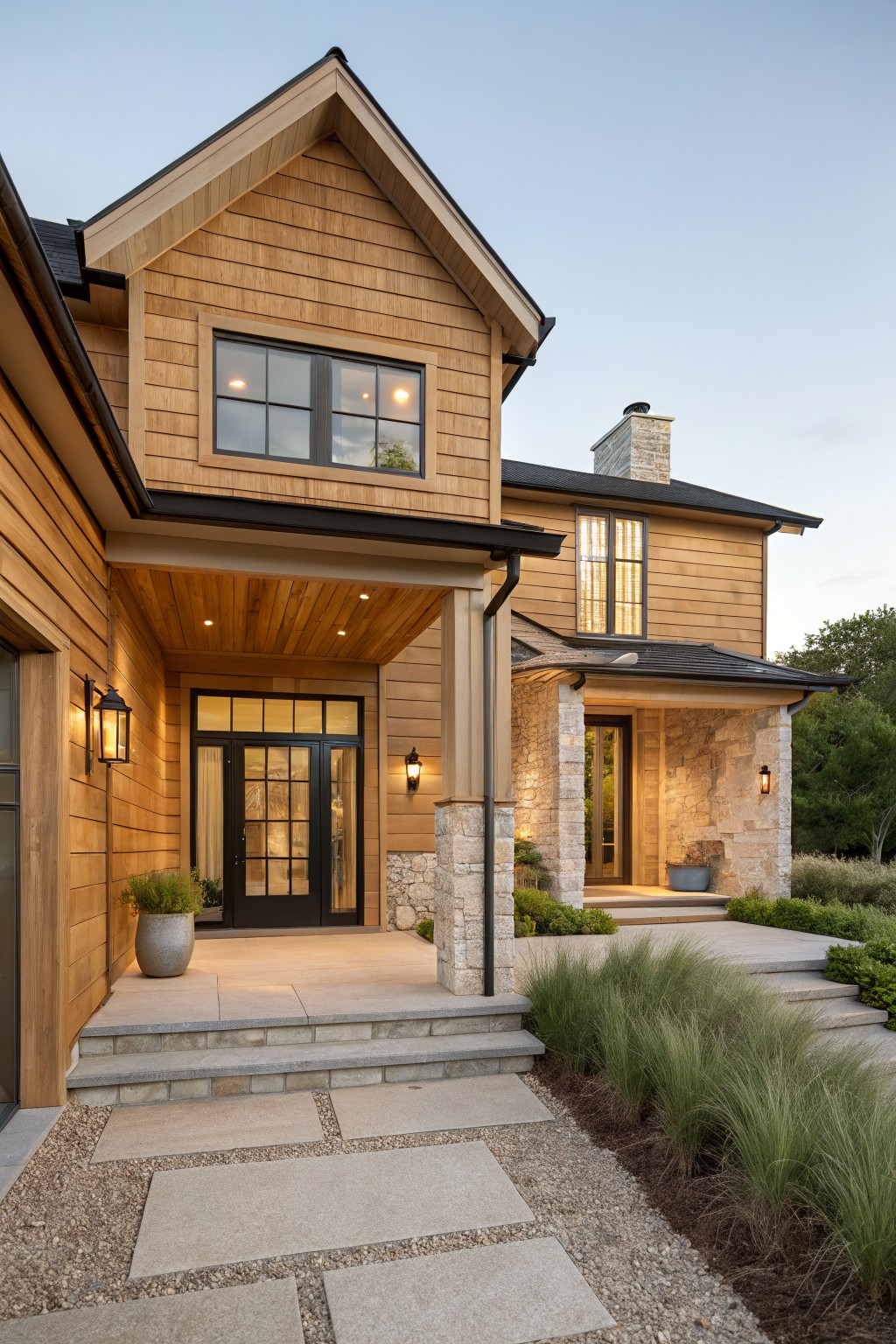
Many farmhouse exteriors feel more finished when wood siding is paired with stone on key spots like columns and the base of the house. The wood keeps the look light while the stone adds weight and texture where it matters most.
This approach works well on homes with simple rooflines and a few strong gables. Keep the stone to structural areas like porch supports and let the siding cover the rest of the walls. Stick to tones that sit close together so the change in material feels natural rather than busy.
White Brick With Black Shutters
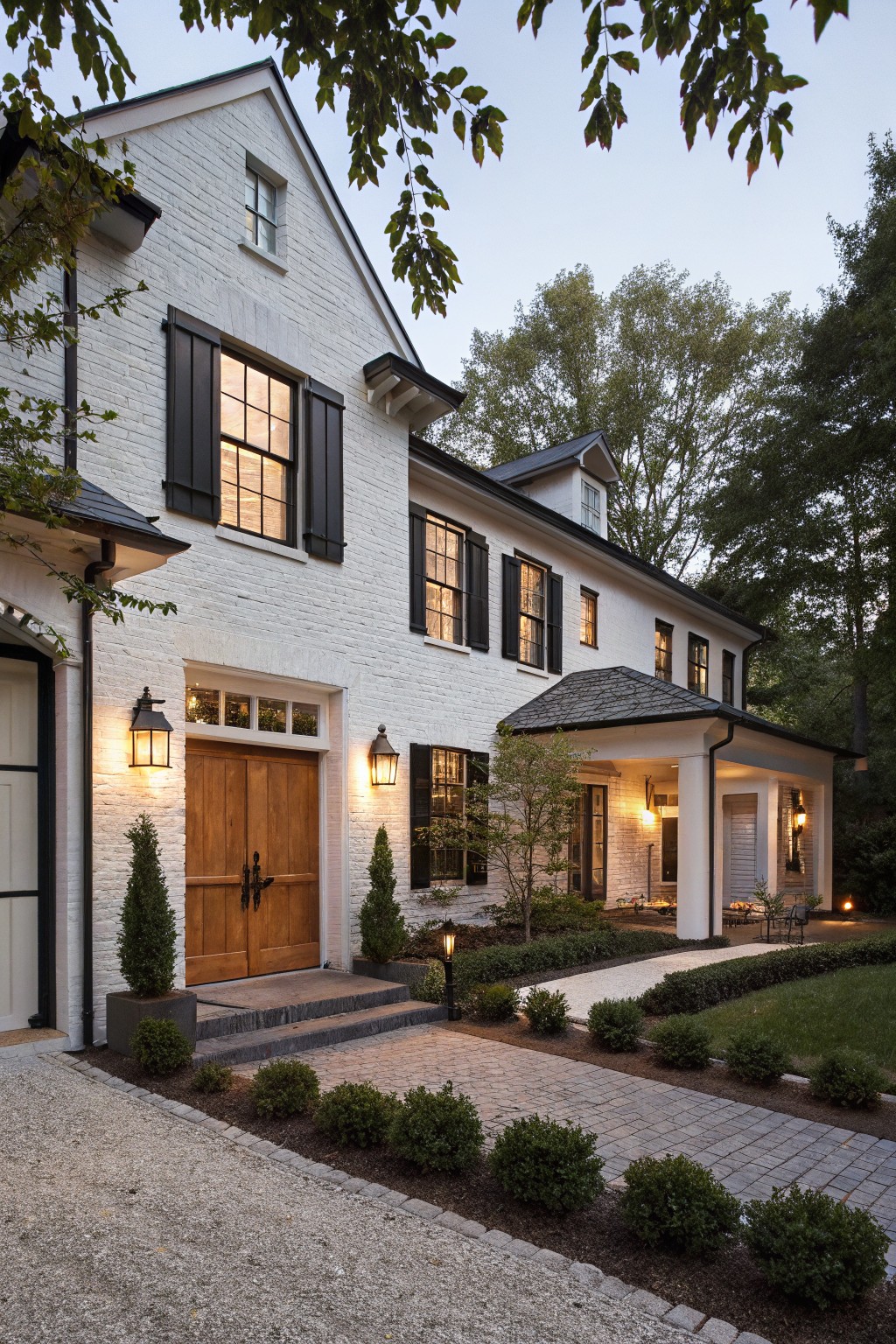
White brick gives a house a clean base that still feels substantial. Adding black shutters keeps the look simple without making the facade feel flat or plain. The contrast draws the eye to the windows while the brick itself handles most of the visual weight.
This approach works best on homes with straightforward rooflines and balanced window placement. It suits both new builds and older houses that need an update without adding trim or decorative details. Keep the shutters matte and the brick painted a true white so the dark frames stand out clearly.
Black Doors On A White Exterior
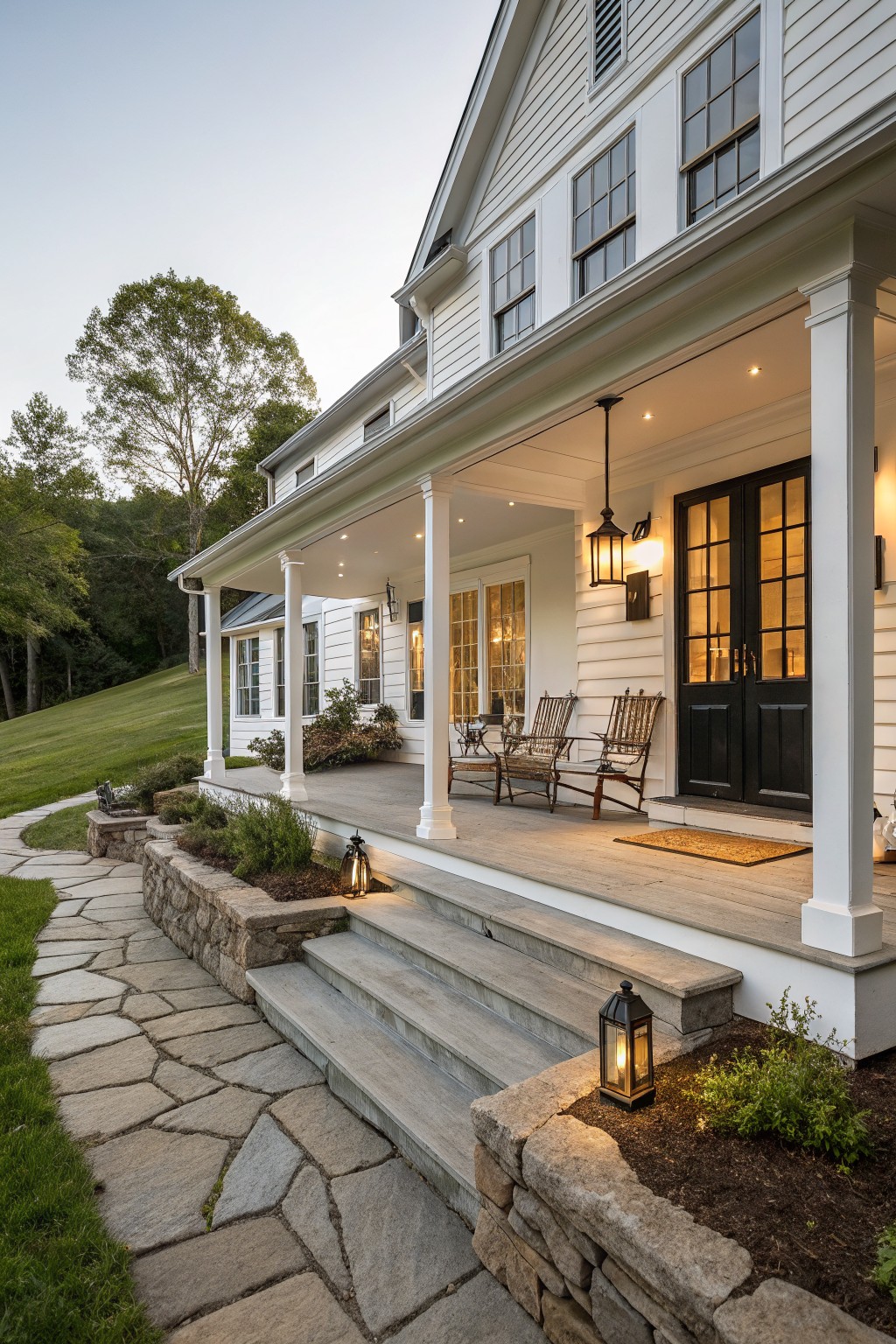
A white farmhouse gains a lot from black double doors set against the siding. The contrast keeps the front simple while still giving it a strong point of focus. Many people choose this because it avoids extra trim or color changes yet still feels finished.
This approach works best on homes with clean rooflines and a good sized porch. The porch itself can stay basic with white posts, while the dark doors and a bit of stone at the base add enough weight. Just keep the rest of the materials limited so the look does not get busy.
Wood Garage Doors Against Light Siding
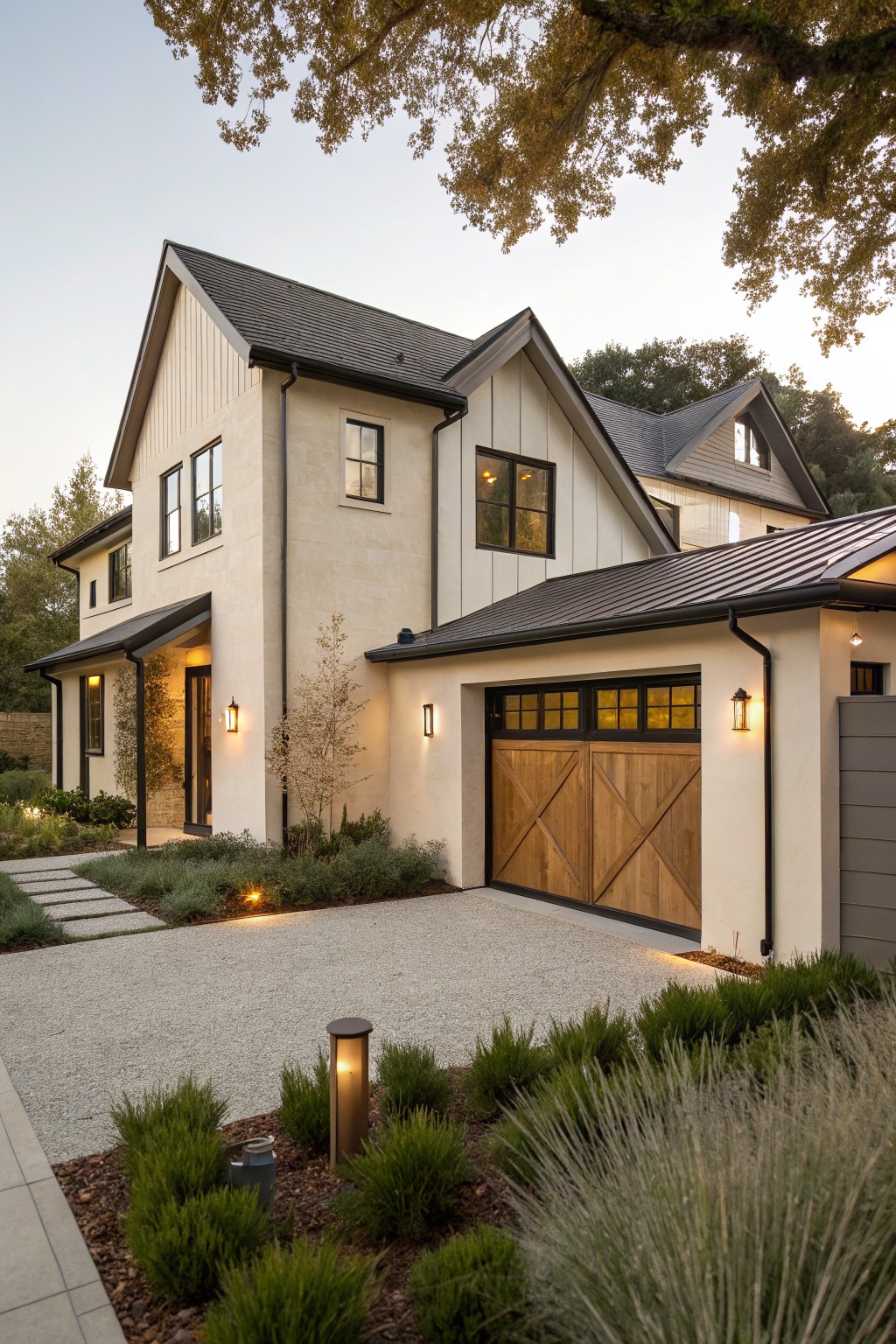
Many farmhouse exteriors stay simple by keeping the main walls light and clean. A large wood garage door then becomes the main point of interest and adds a natural material without needing extra trim or shapes.
This approach works best on homes with straightforward rooflines and few other details. It suits newer builds or remodels where you want some warmth but still prefer an uncluttered look overall. Just make sure the wood tone has enough contrast with the siding so it reads as intentional.
Mixing Stone With Vertical Siding
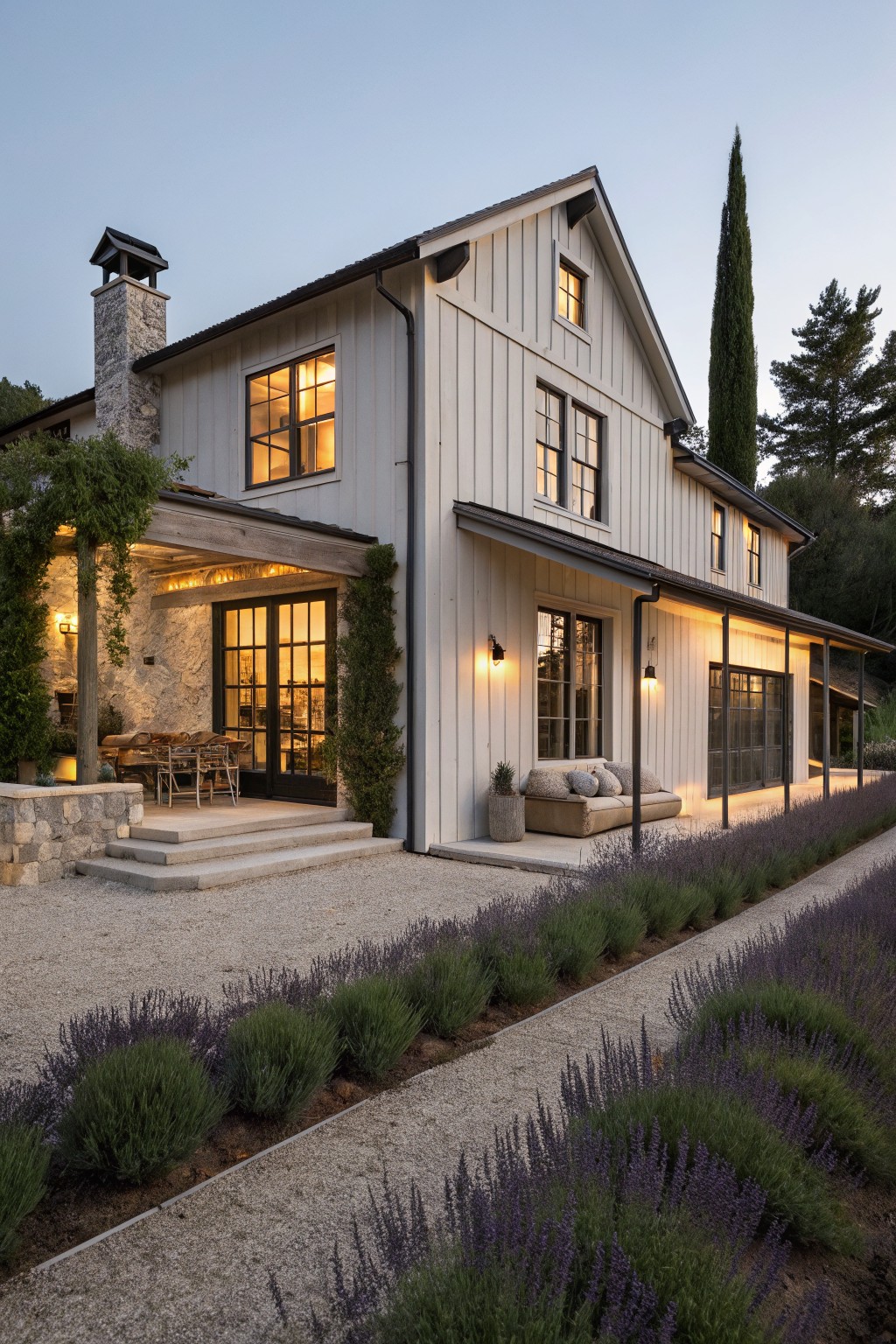
White vertical siding already gives a farmhouse that clean, simple look. Adding stone around the chimney and base creates just enough contrast without complicating the shape. The two materials play off each other and keep the house from feeling flat or too plain.
This approach works best on homes with straightforward gables and few rooflines. Keep the siding bright and the stone natural so the difference stays clear. Dark window frames help tie the two materials together without adding extra colors.
Covered Porches With Arched Openings
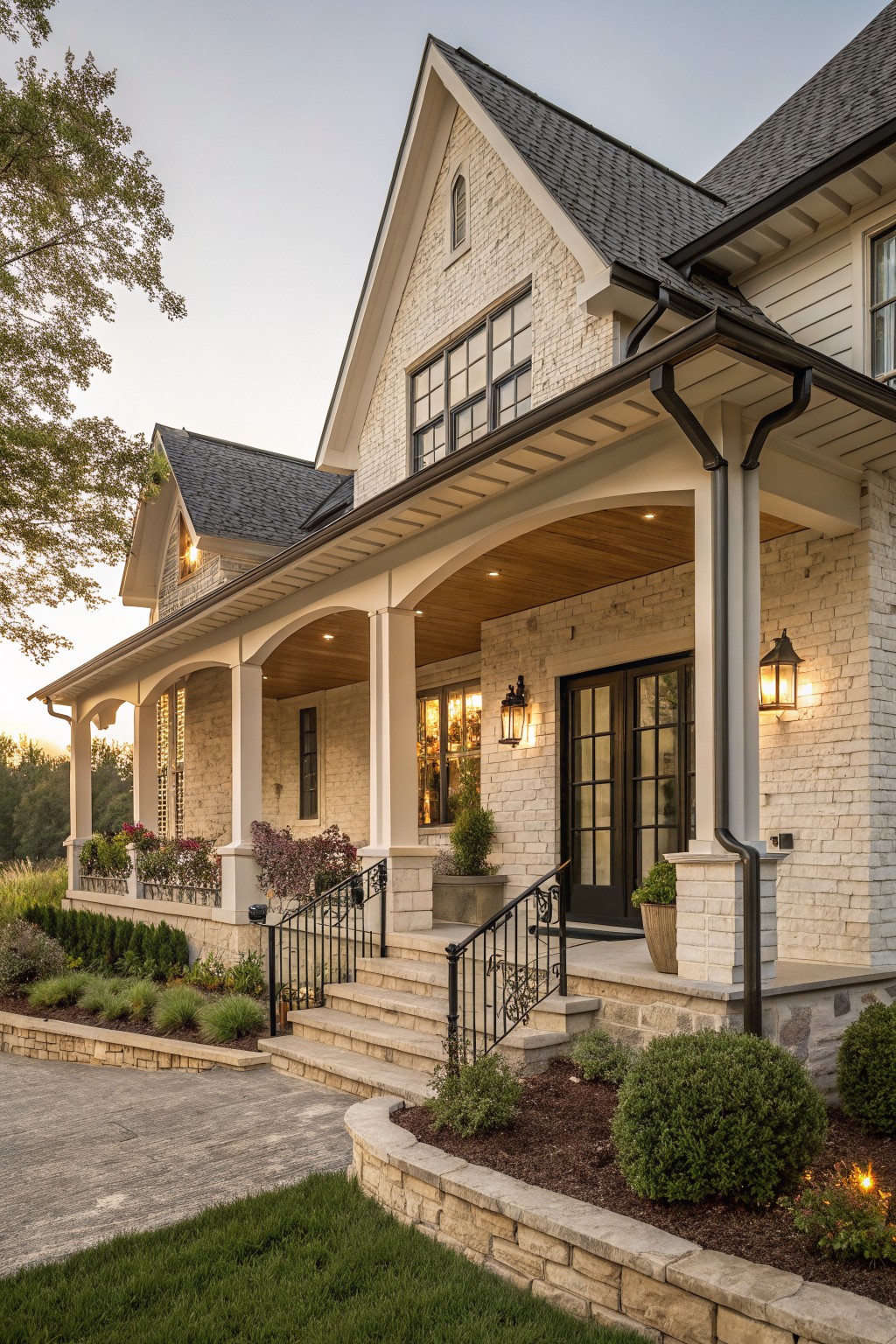
A deep front porch with arched openings gives a farmhouse a solid, grounded look without adding fussy rooflines or extra trim. The simple curves break up the straight lines of the house while still keeping everything clean and easy to build.
This works best on brick or painted masonry homes where the wood ceiling inside the porch adds a bit of warmth. Keep the rest of the exterior fairly plain so the porch reads as the main feature rather than one more detail fighting for attention.
Mixing Materials on a Simple Shape
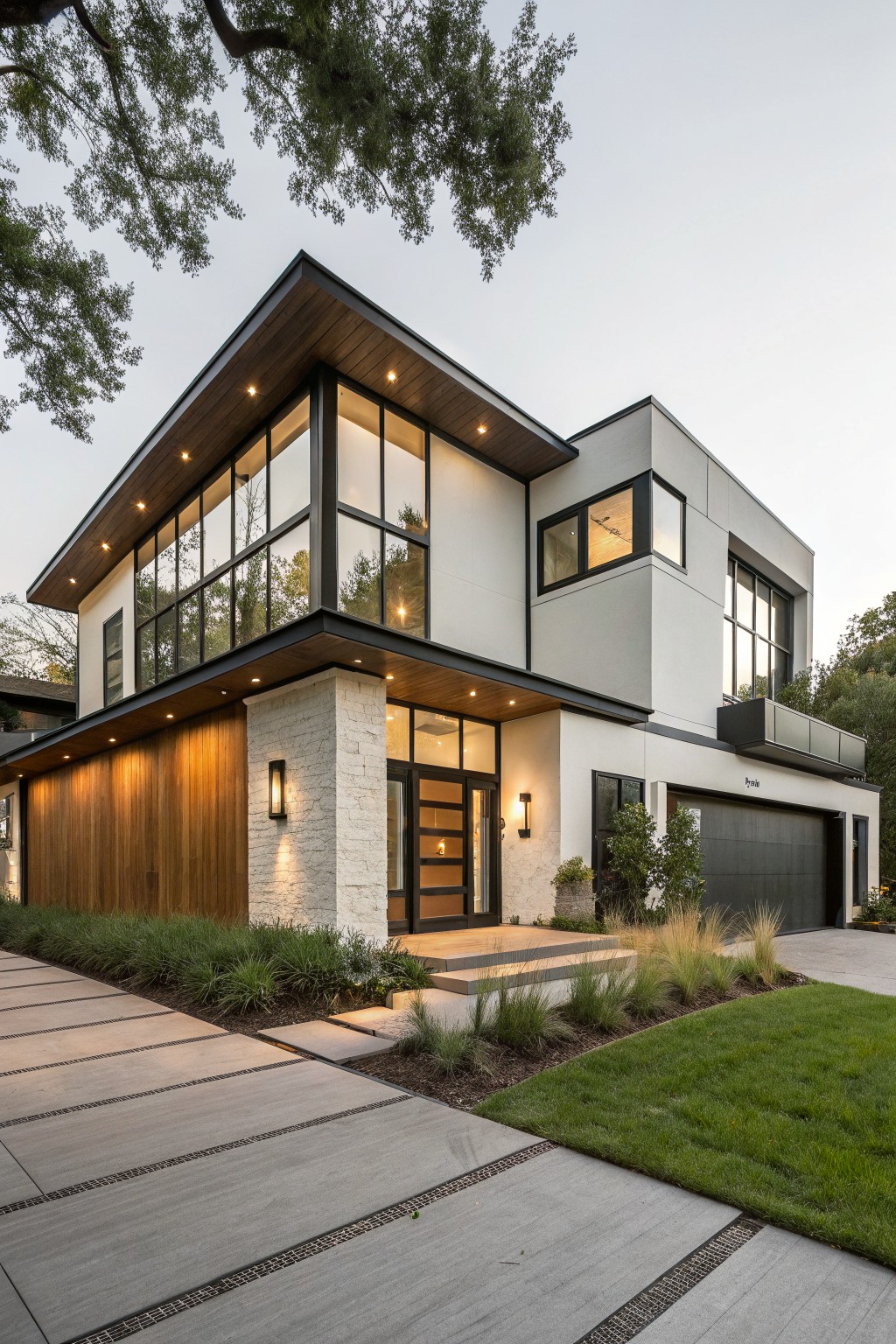
A clean house shape often needs some texture to feel finished. Using wood next to stone and smooth white panels gives the exterior depth while keeping the overall form straightforward.
This approach suits homes with simple rooflines and larger wall areas. Stick to two or three materials at most so the contrast stays clear instead of turning cluttered.
A Central Table Defines the Patio Space
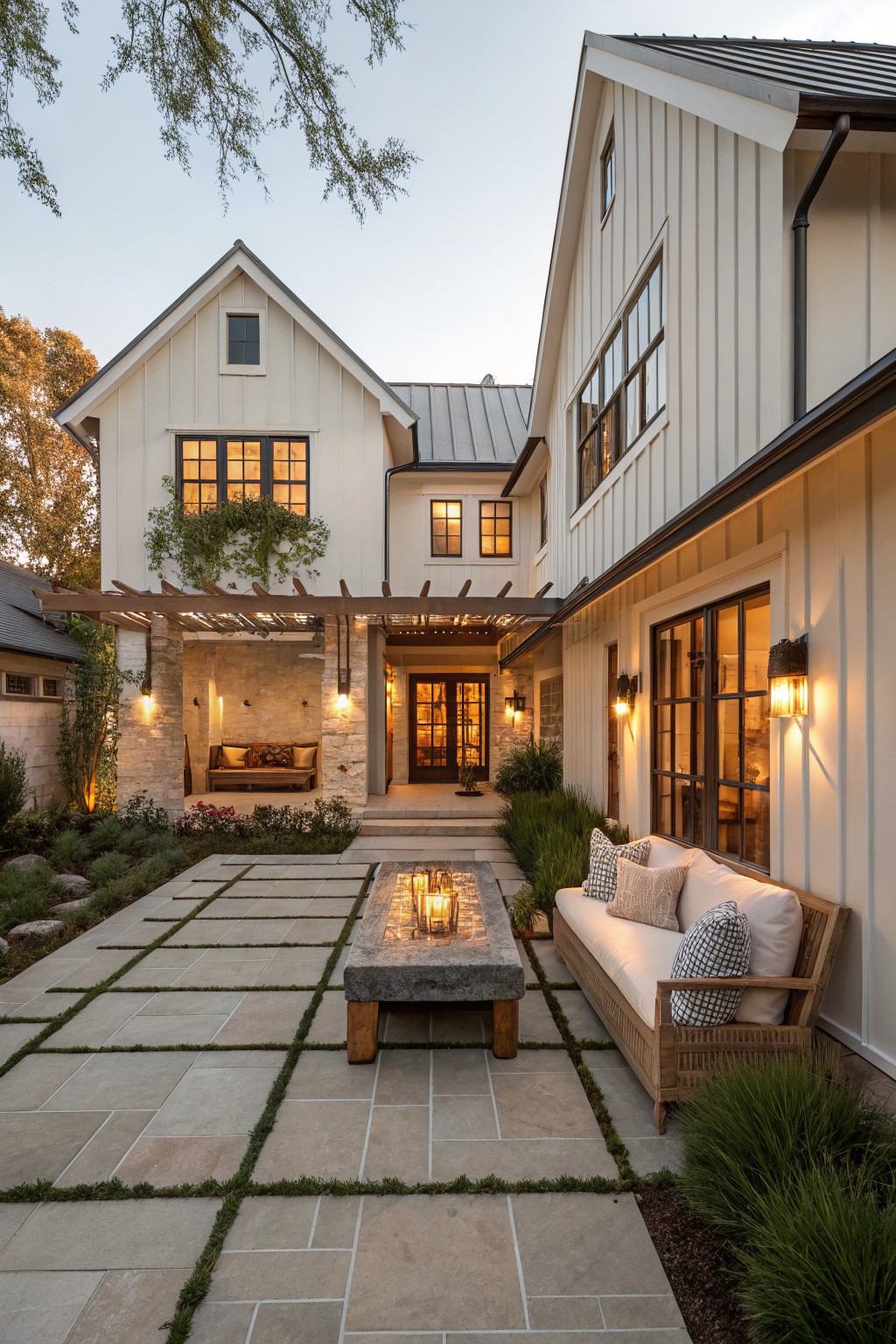
A large central table gives an outdoor patio a clear purpose without needing lots of extra pieces. It pulls the seating around it and makes the space feel finished even when nothing else is added. In this setup the stone table sits right in the middle of the pavers and holds a few simple lights, which keeps the whole area usable after dark.
This works well on homes with a courtyard or side yard that connects to the main rooms. The table should be sturdy and a bit oversized so it can handle trays, drinks, or even a small fire bowl on cooler nights. Keep the surrounding seating low and simple so the table stays the focus instead of competing with bigger furniture.
White Siding With Dark Metal Roofing
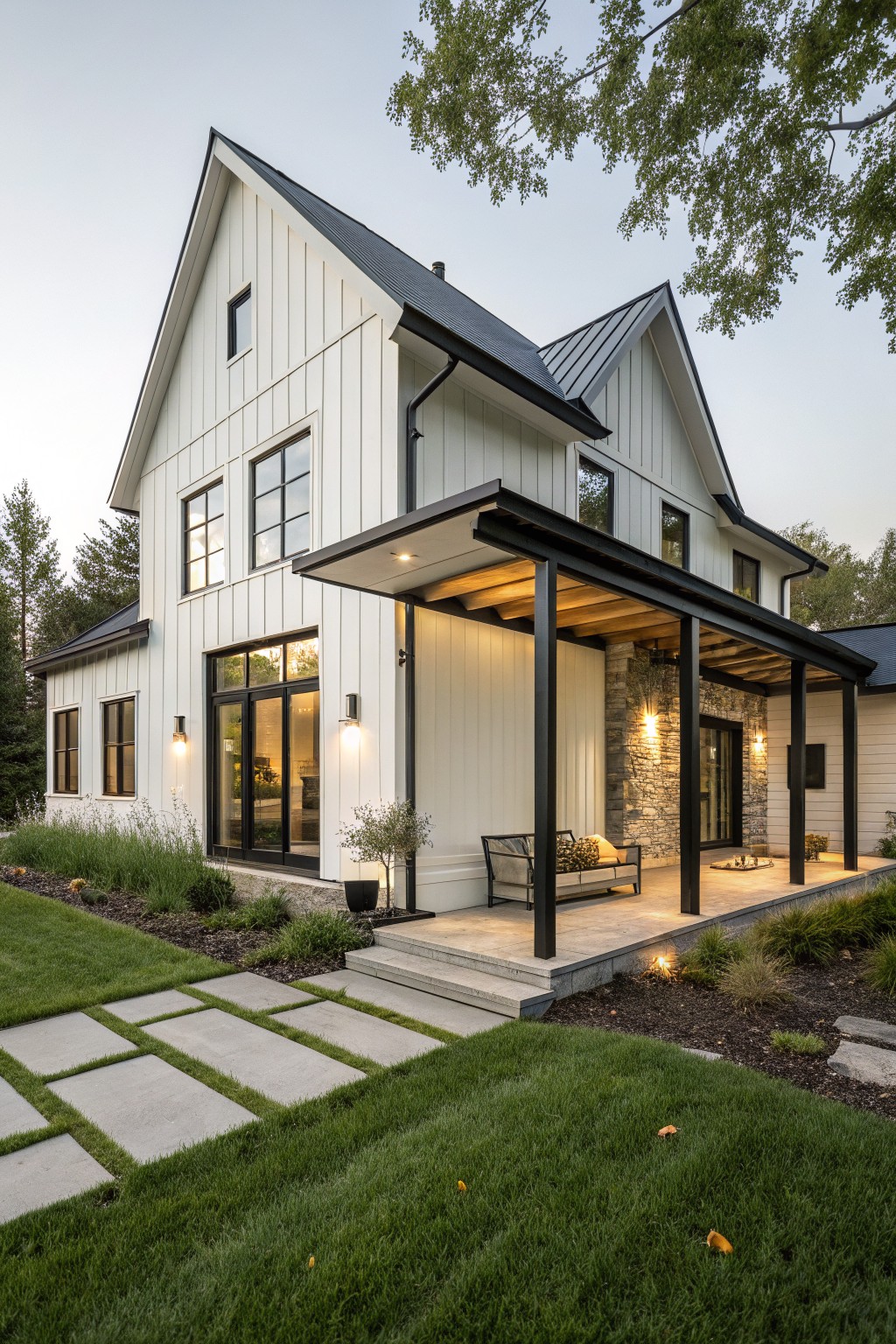
A simple white exterior can feel flat on its own. Adding a dark metal roof gives the house shape and weight without adding extra trim or details. The black standing seam roof here sits against the clean vertical siding and makes the gable lines stand out more clearly.
This approach works best on homes with straightforward roof forms. Keep the siding bright and the metal a true black or charcoal so the contrast stays sharp. It suits both new builds and updates to older farmhouses where you want to modernize the look without changing the basic shape.
Stone Pairs Well With Dark Metal
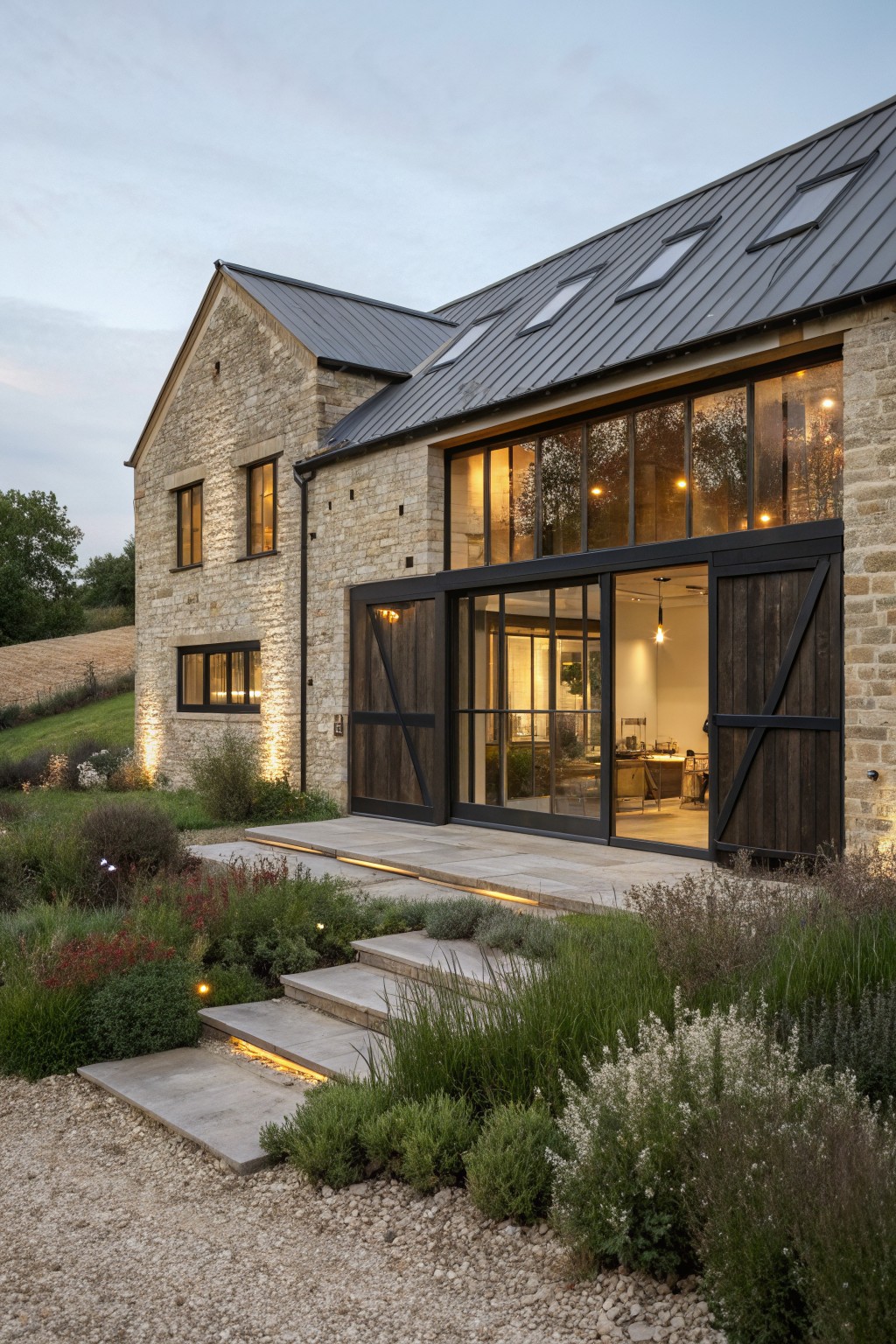
Stone walls give a farmhouse that solid, settled look while a dark metal roof keeps everything feeling sharp and simple. The two materials balance each other without needing much else to make the house stand out.
This approach works best on homes with straightforward rooflines and few breaks in the facade. Stick to one or two accent materials like the wood doors shown here, and let the stone and metal do the rest.
Stone Base With Smooth Upper Walls
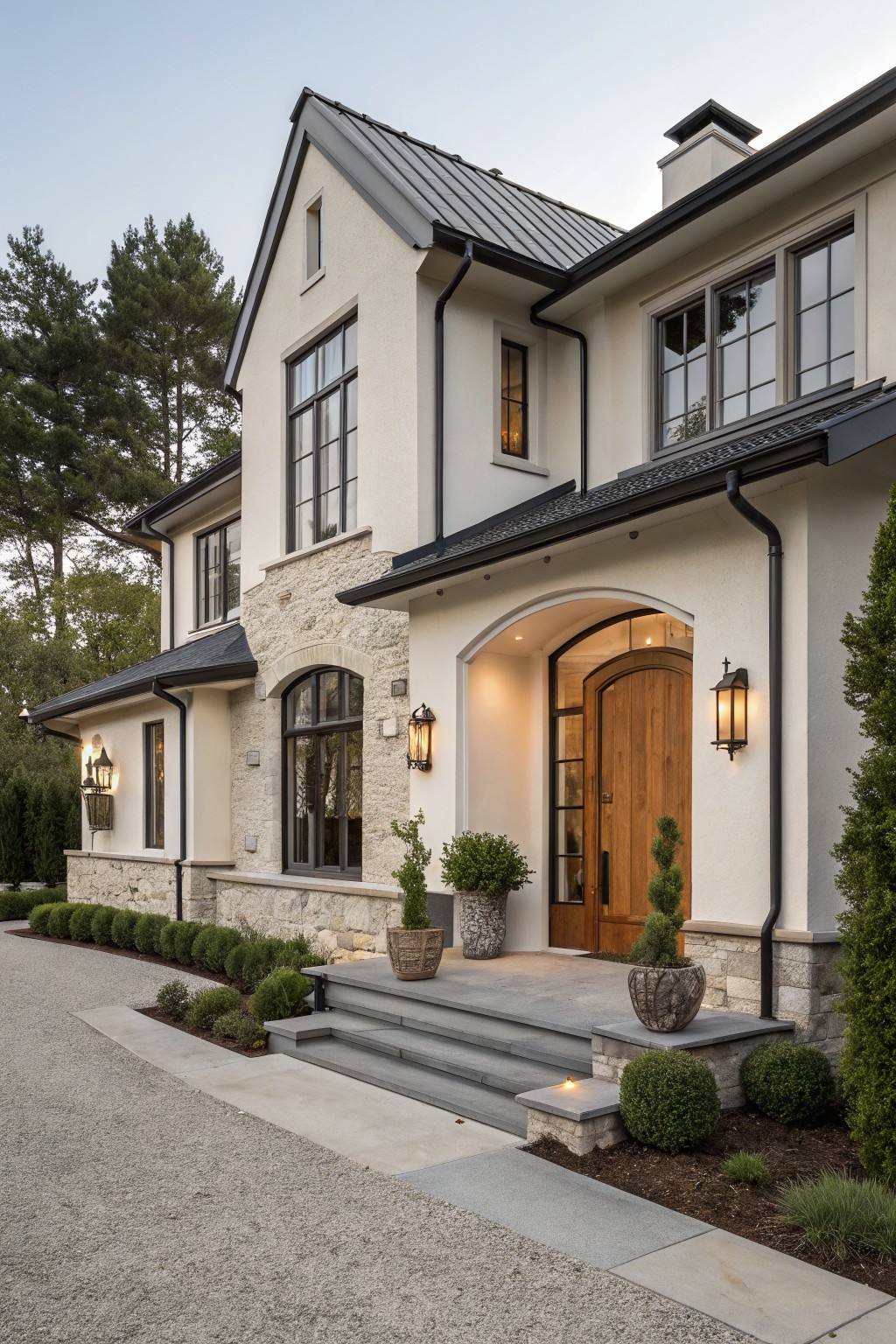
A low stone foundation paired with smooth walls above gives the house a grounded look without adding extra shapes or details. The contrast keeps the overall form simple while the materials feel substantial and lasting. It works especially well on homes that want a farmhouse feel without heavy trim or ornament.
This approach suits two-story houses with gabled roofs. Keep the stone height modest so it reads as a base rather than a full facade change, and choose a light wall finish to balance the darker roof and trim. The result stays clean even when the home sits on a larger lot.
Adding a Covered Patio Extension
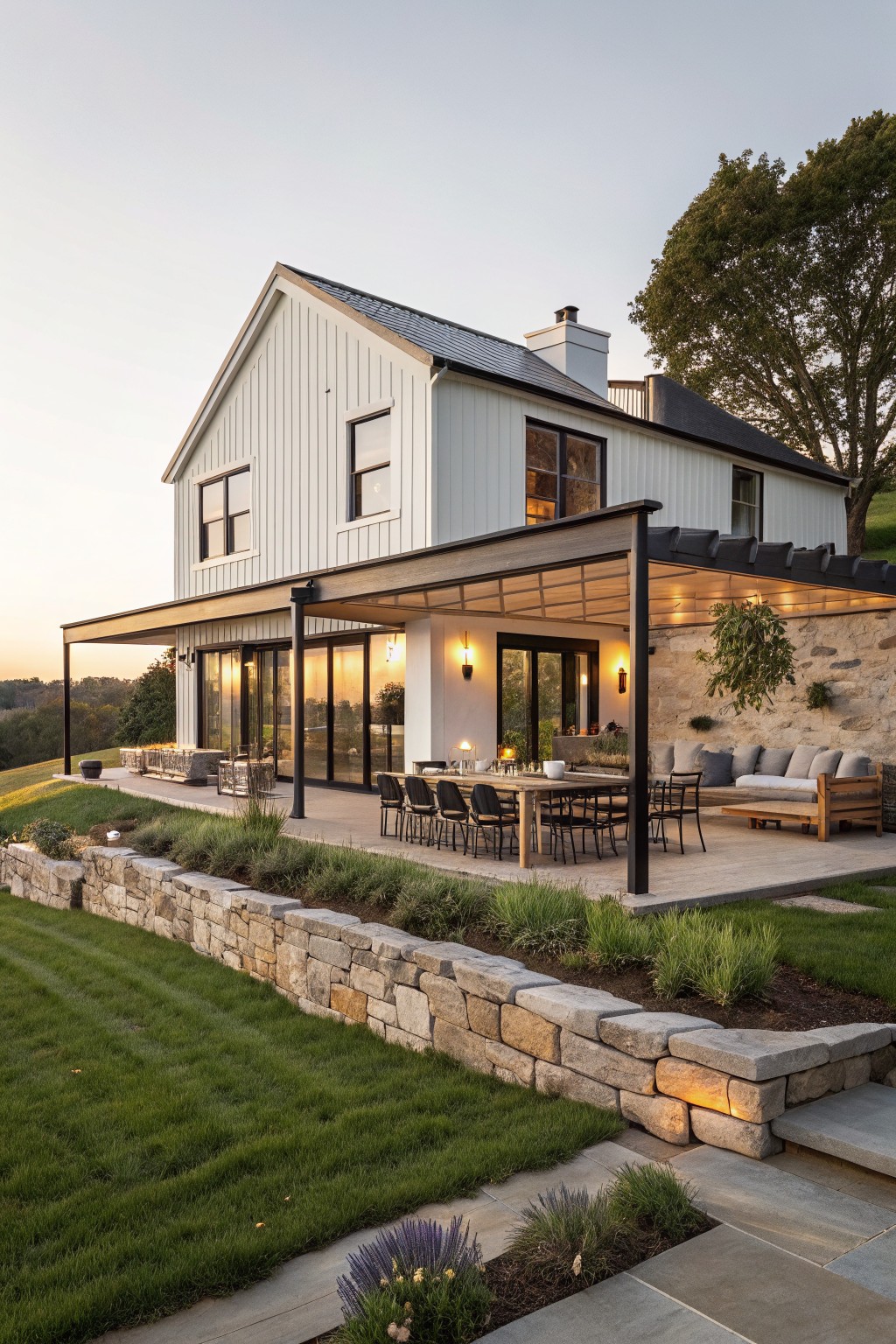
A covered patio extension keeps the main house shape clean while adding usable outdoor space right off the main living areas. The dark framing on the structure stands out against the light siding and gives the whole exterior a more finished look without adding extra rooflines or ornament.
This approach works best on homes that already have a simple gable or similar form. It suits properties where you want room for dining and seating without building a separate structure, though you will want to match the post and beam color to any other dark trim on the house.
Dark Siding For A Simple Farmhouse Look
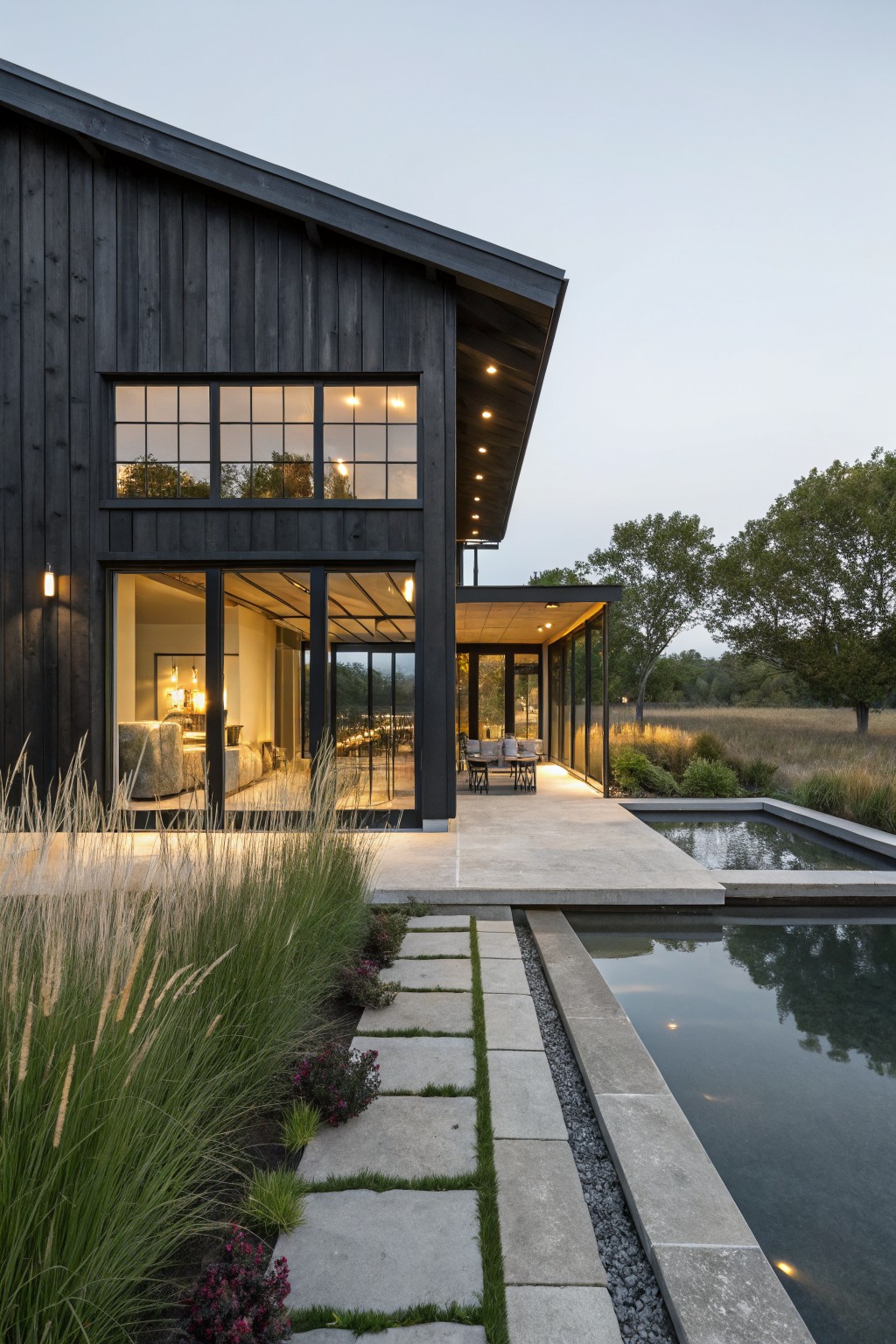
Dark siding works well on farmhouses when the goal is to keep the shape clean and let the structure stand out. The black wood here gives the house weight without needing extra trim or ornament. It pairs with big windows so the whole front stays balanced instead of feeling heavy.
This approach suits homes on open land where the building needs to hold its own against fields or water. Use it when you want a modern edge but still want the house to read as farmhouse. Just keep the roofline and window placement straightforward so the color does not overwhelm the form.
Line Overhangs With Wood For Added Warmth
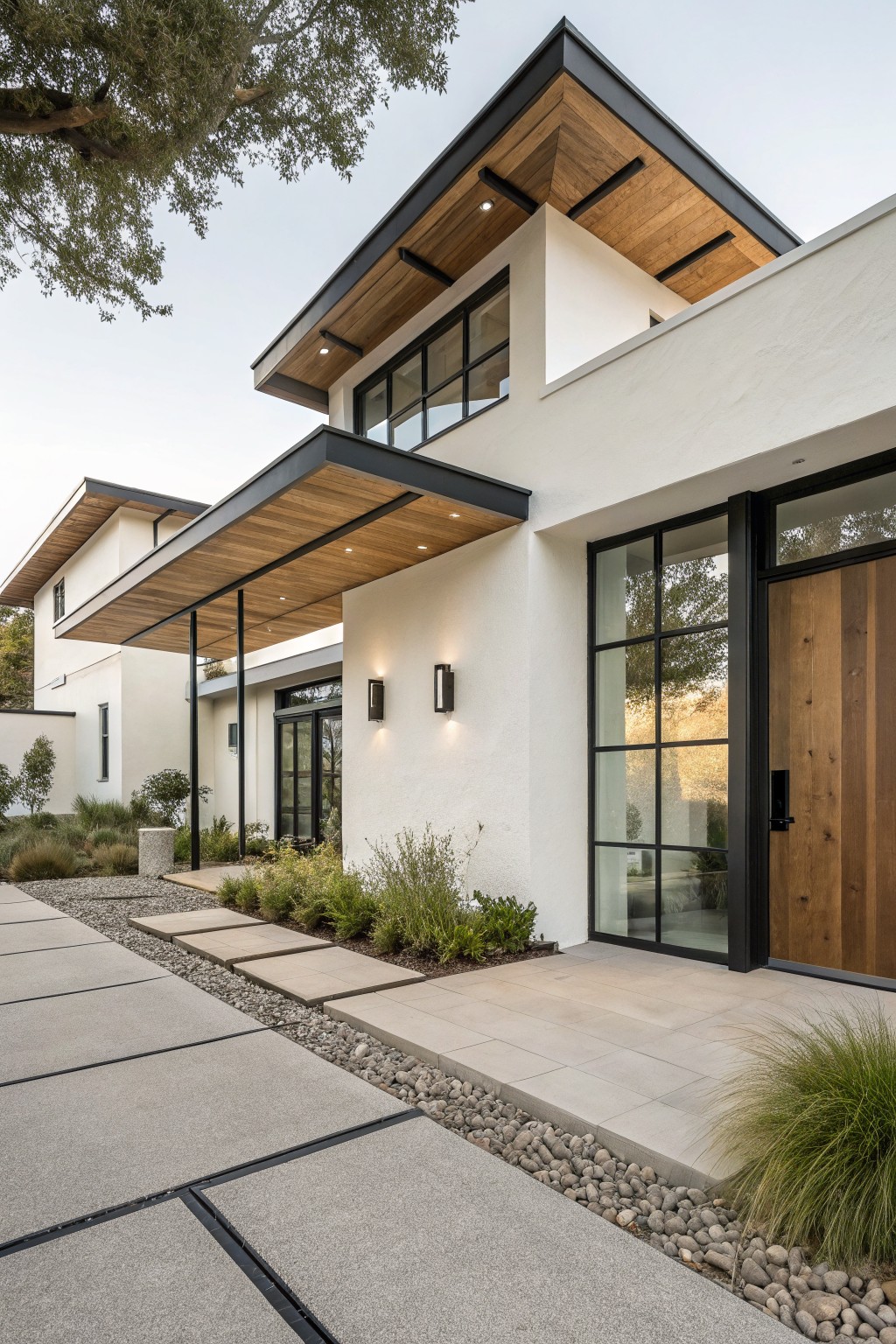
A simple white exterior can feel a bit stark on its own. Adding wood to the underside of roof overhangs brings in just enough warmth and texture without complicating the overall shape. The contrast between the smooth walls and the natural grain keeps things interesting while the black framing holds everything in place.
This approach works well on homes with clean rooflines and larger overhangs. It suits modern farmhouses that want some material variety but still rely on simple forms. Stick to one wood tone and keep the rest of the palette limited so the detail does not get lost.
Mix Stone With Light Siding
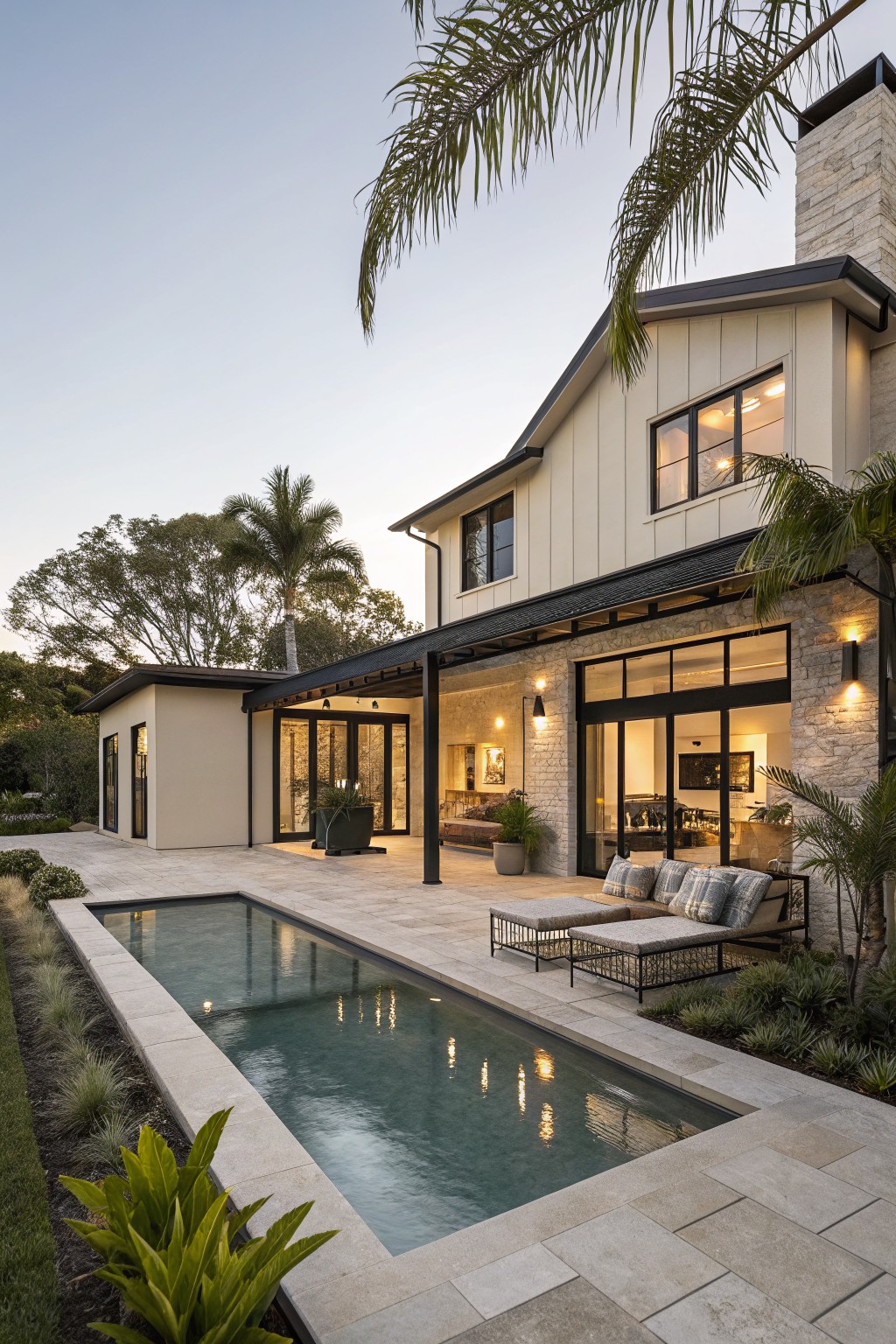
Many farmhouses look better when stone is used in small amounts rather than covering whole walls. Here the stone shows up on the chimney and around the main openings, which gives the house some weight while the rest stays in simple light siding.
This works well on homes that already have clean rooflines and larger windows. It keeps the overall shape easy to read and avoids the need for extra trim or decoration.
Frequently Asked Questions
Q: Which materials stand up best when you want clean shapes that last?
A: Fiber cement siding and steel roofing hold their flat lines through weather shifts without warping or fading fast. They match the elevated look in the examples while pairing easily with stone bases. Focus on matte tones to avoid any shine that fights the simple style.
Q: How do I blend these ideas with an older porch already on my house?
A: Keep the porch roofline straight and swap the posts for thicker wood or metal versions that echo the boxy forms. Add a single band of contrasting stone along the base to tie it in without adding extra trim.
Q: What works if I want one accent that feels custom but stays understated?
A: Try a slim metal panel inset beside the entry door in a dark finish. It breaks up the main siding just enough to highlight the shape while keeping everything else plain.
