

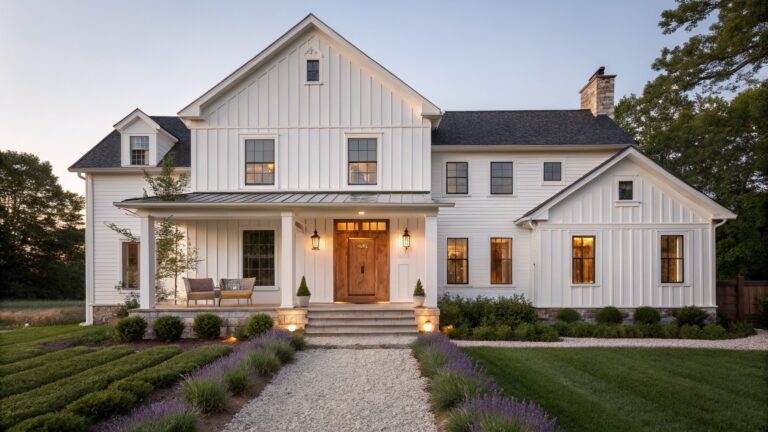
I have always noticed that white farmhouses stand out mainly because the clean color lets rooflines, window trim, and porch details carry the weight instead of fighting against darker siding.
When I look at homes on my street, the ones that age well usually have a clear rhythm between the gable ends and the front door placement that keeps the whole facade from feeling flat.
Materials matter more than people think.
Choosing the right white can shift how shadows fall across the siding at different times of day, which is why I always test a few samples on the actual wall before making a final call.
Paying attention to how the entry steps meet the walkway often reveals whether the exterior will feel settled or still need work after the paint dries.
Add A Classic Front Porch
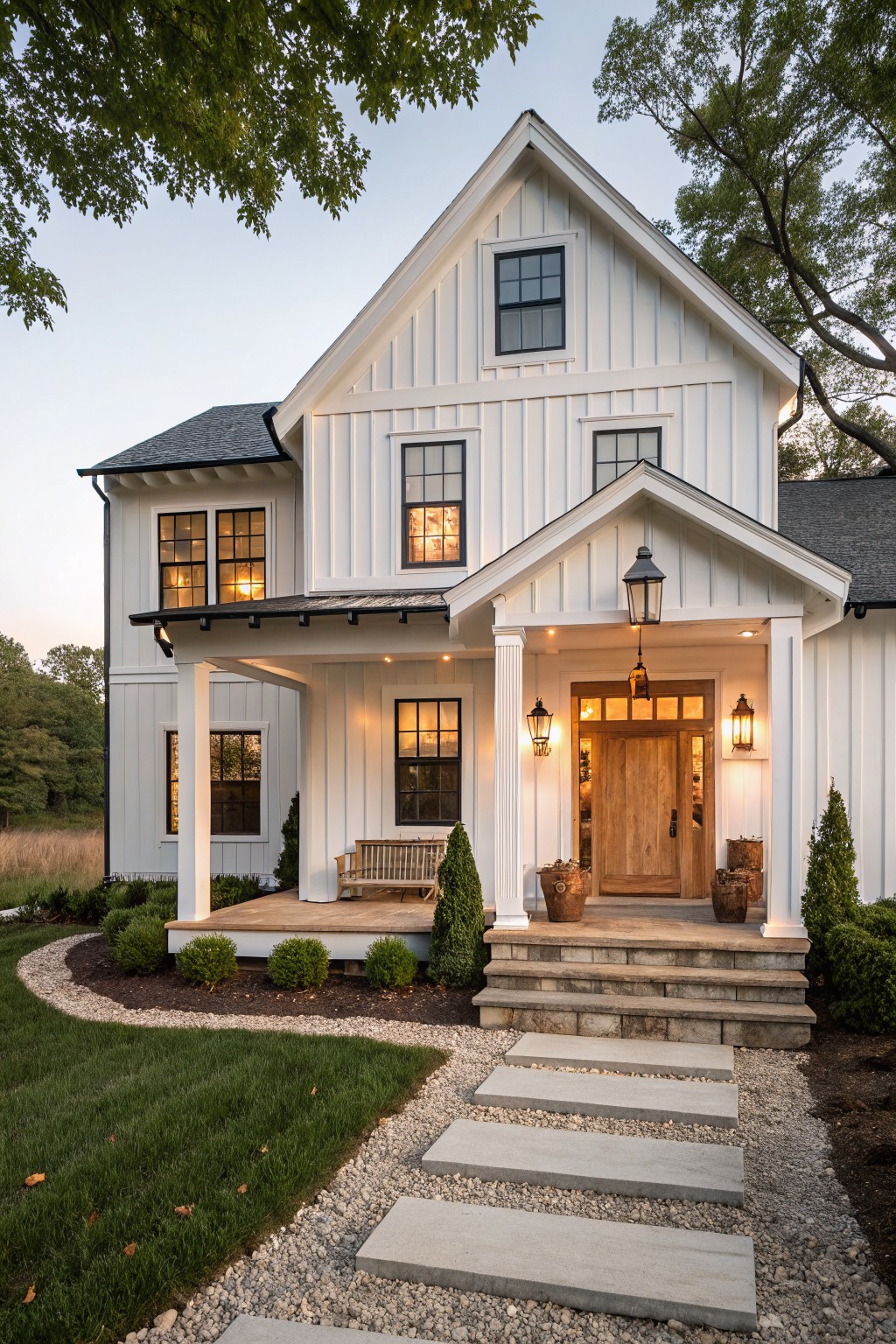
A front porch with white columns gives a farmhouse that settled look without much fuss. It pulls the eye to the center of the house and makes the entry feel more substantial than a plain door ever could.
This works best on homes that already have a centered gable. Keep the columns simple, match them to the siding, and let the porch roofline do the rest of the work.
Stone Accents On White Farmhouse Exteriors
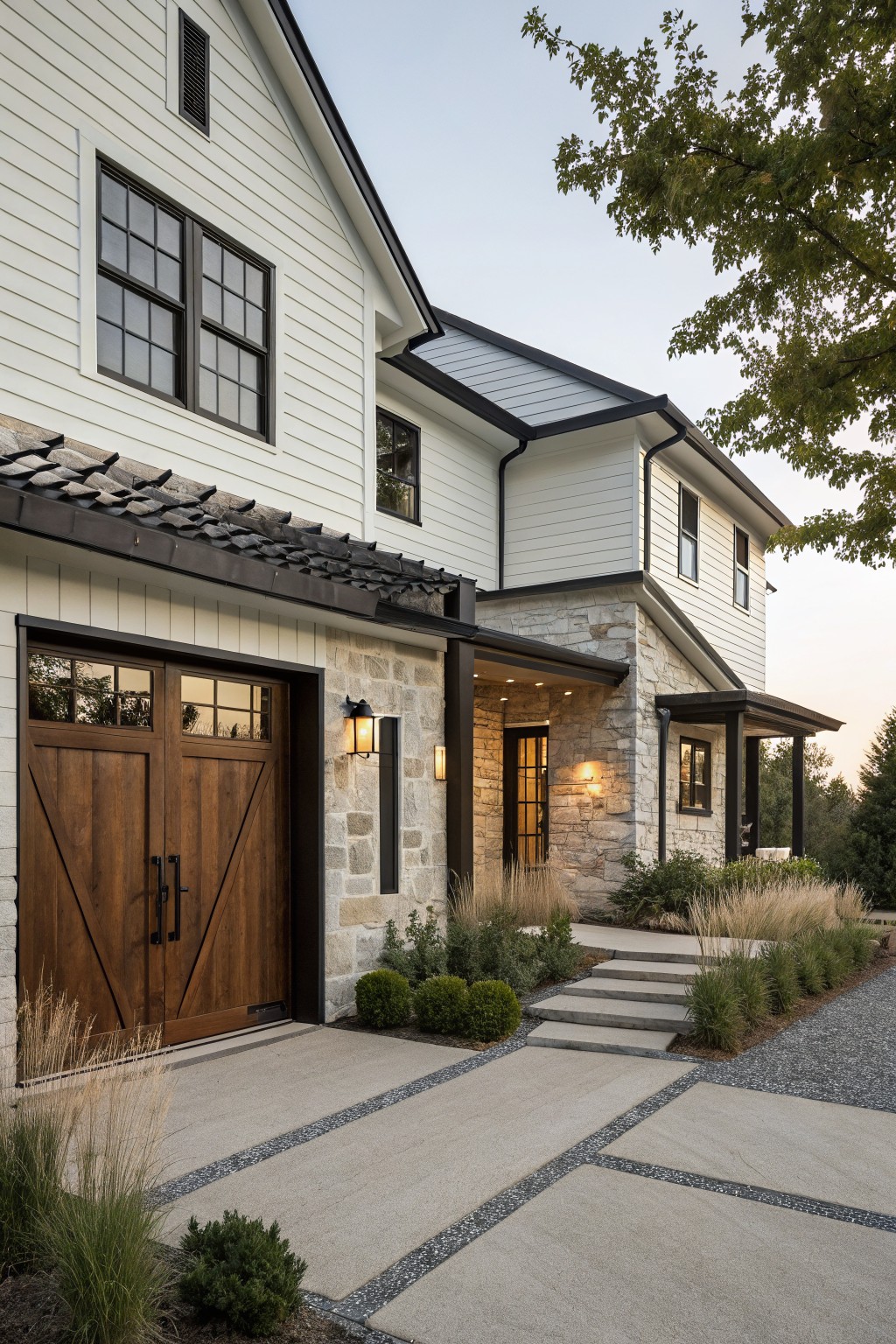
White siding can look a little flat on its own, so adding stone around the entry and lower walls gives the house more weight and texture. It breaks up the large white surfaces without making the whole exterior feel busy.
This works especially well on homes with a wide garage or front porch, where the stone can frame those areas and tie the different parts together. Just keep the stone in a limited zone rather than covering too much of the facade.
Black Accents Against White Siding
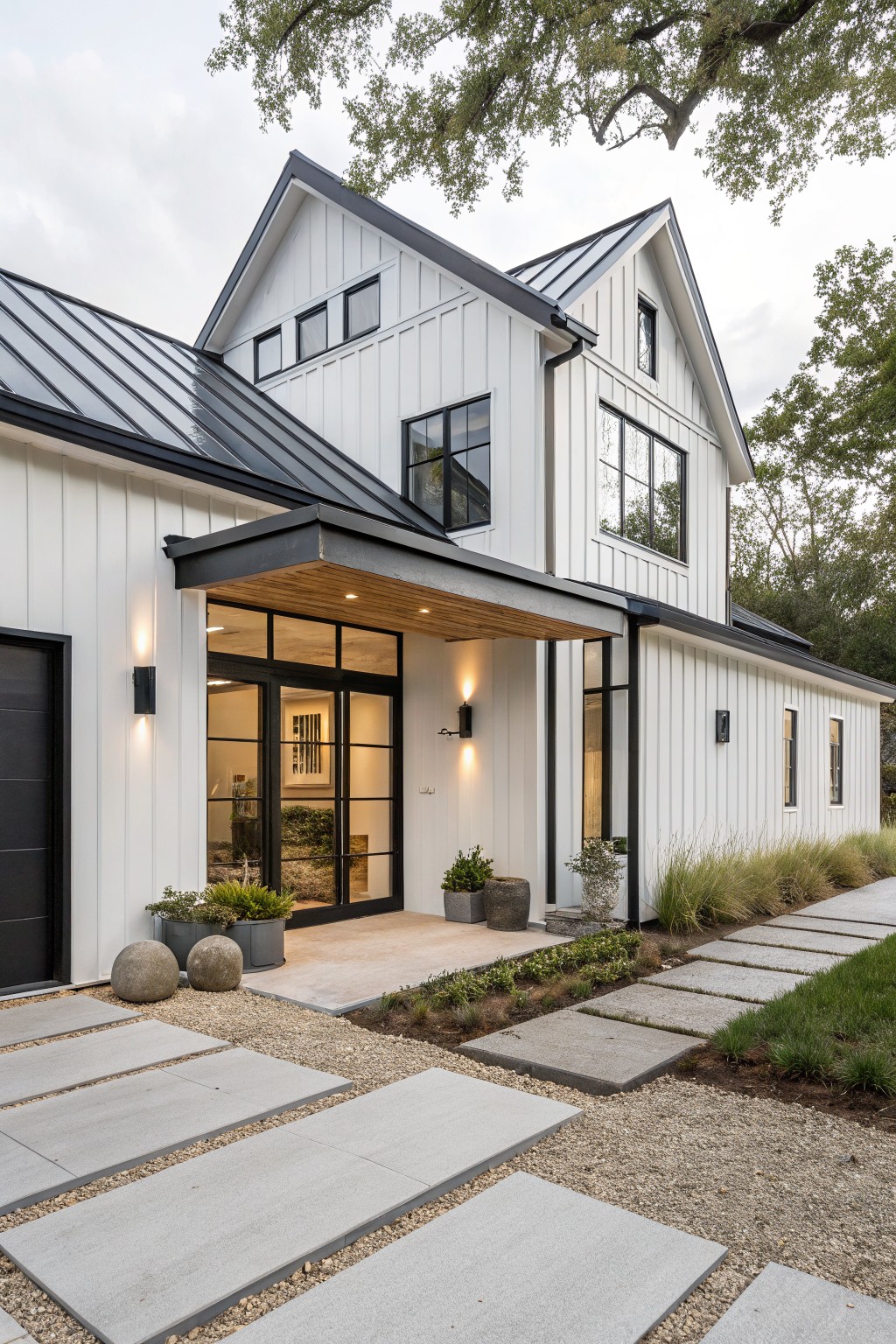
Black metal roofing and trim give a white farmhouse a sharper, more defined look. The dark color breaks up the large white surfaces and helps the roofline and windows stand out without adding extra decoration.
This works best on homes with straightforward shapes and simple gable roofs. Keep the black finishes consistent across the roof, gutters, and window frames so the contrast feels intentional rather than busy.
Green Shutters On White Siding
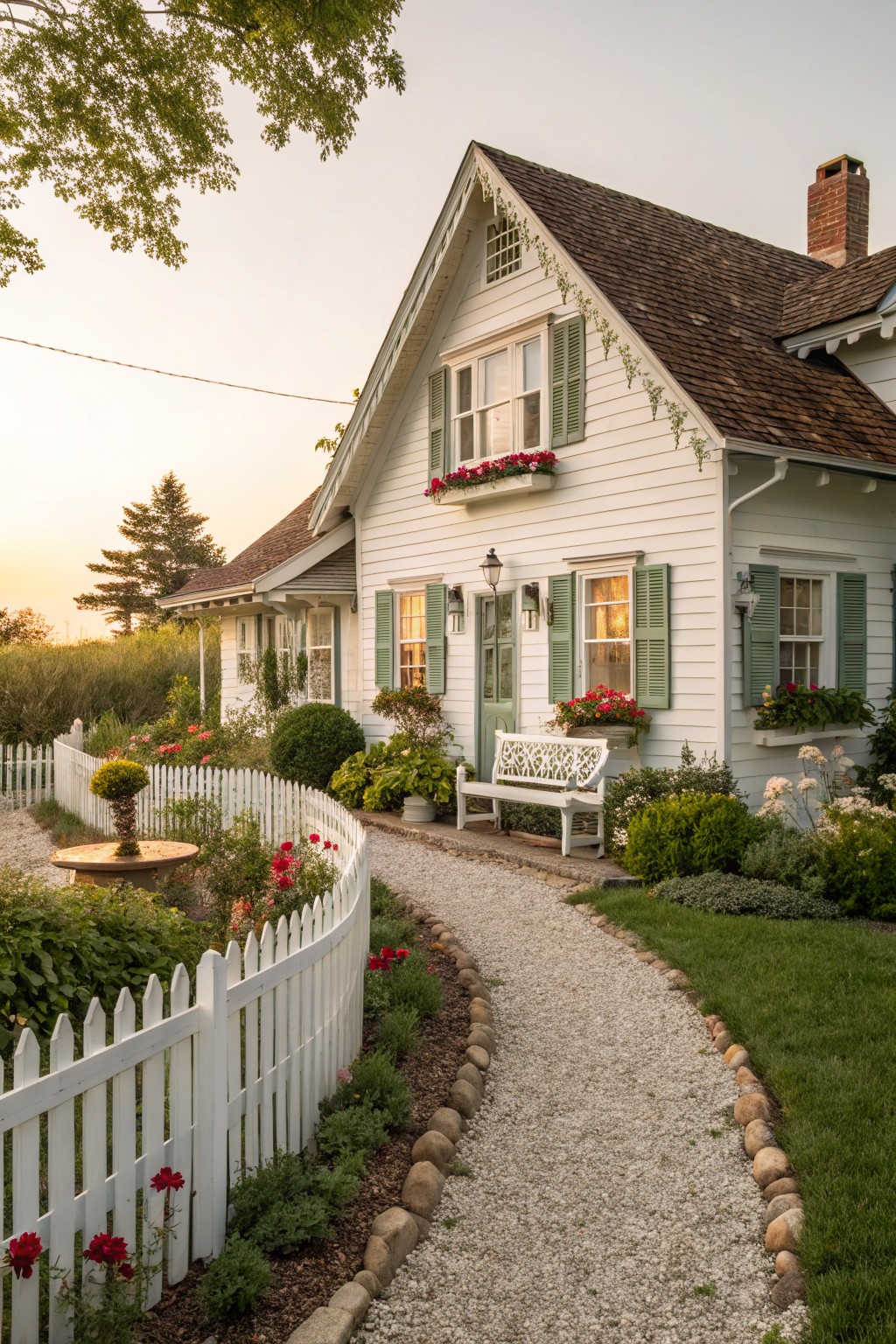
Green shutters give a white farmhouse just enough contrast to keep the exterior from feeling flat. The soft color works well with the simple lines of the house and helps the windows stand out without needing extra trim or detail.
This approach suits older homes or new builds that aim for a traditional look. Stick with a muted green rather than something bright, and keep the rest of the exterior fairly plain so the shutters remain the main accent.
Barn Doors on a White Farmhouse
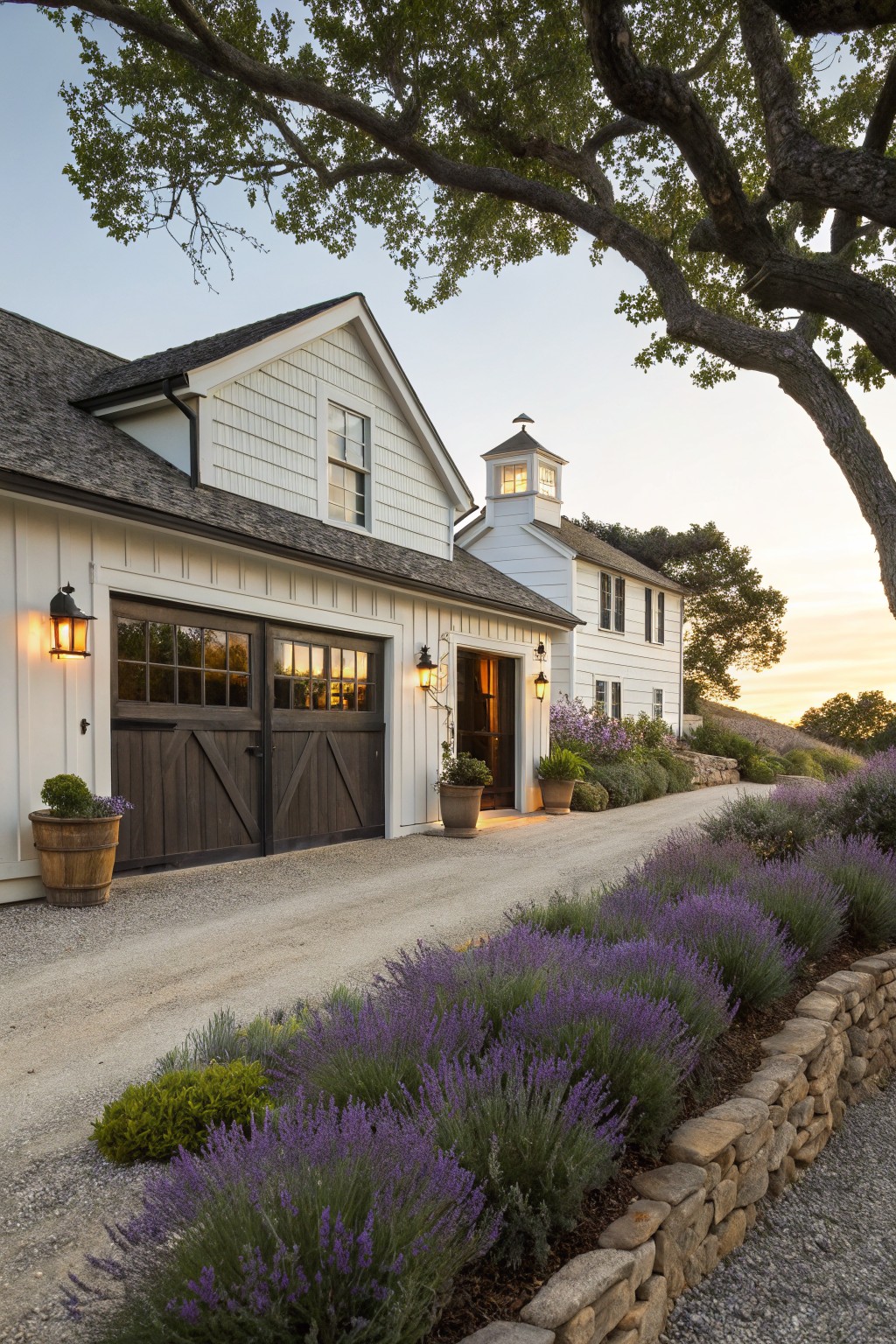
Dark barn-style garage doors give a white farmhouse a simple, grounded look without overcomplicating the exterior. They add texture and weight that plain white doors often lack, and the contrast helps the whole front read as more intentional. Many people like this approach because it keeps the house feeling classic while still showing some character.
This works especially well on homes with gravel drives or open yards where the garage faces the street. Stick with a deep brown or black finish on the doors and keep the rest of the trim consistent so nothing fights for attention. It suits both newer builds and older farmhouses that need a quick refresh.
Double Doors on a White Farmhouse
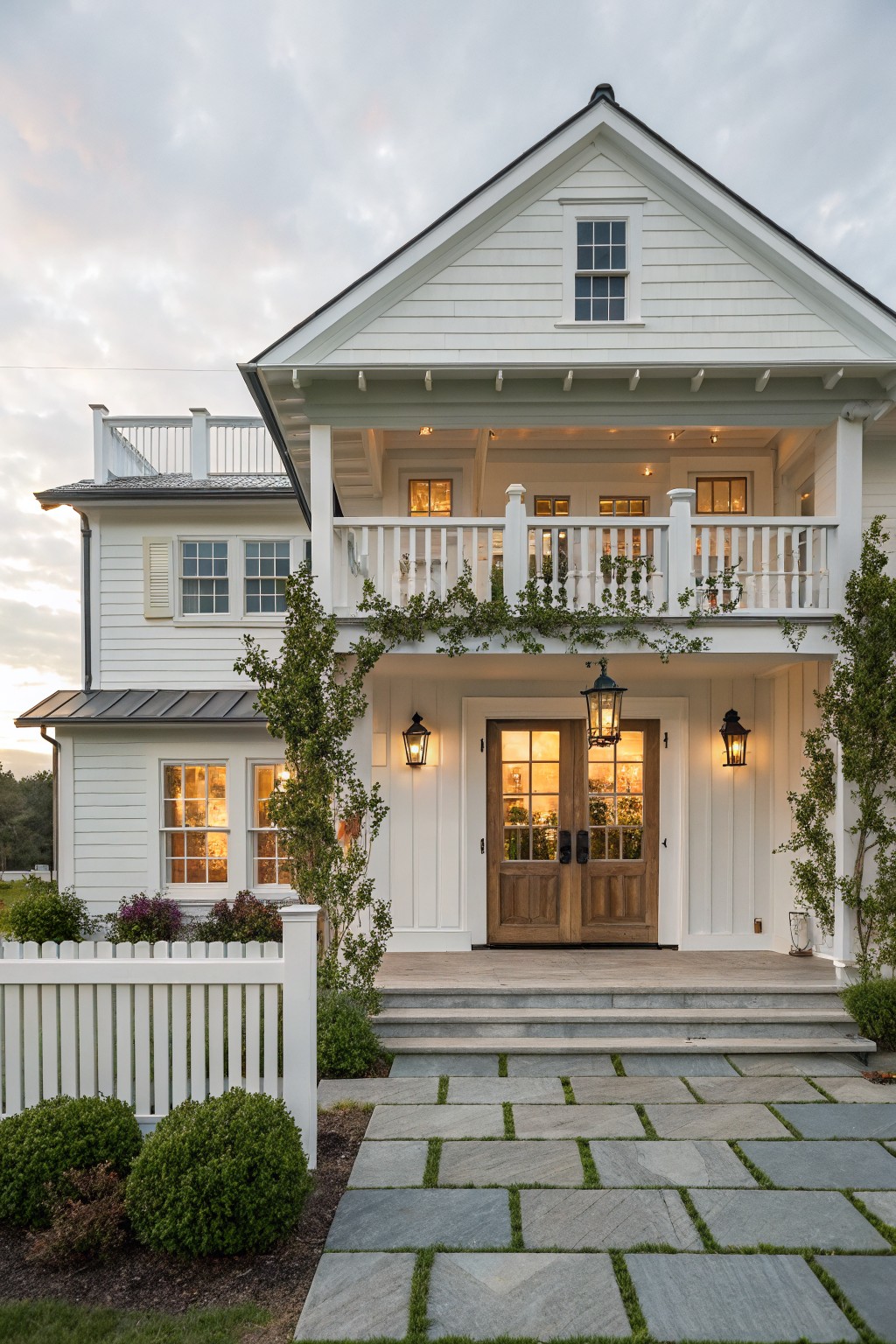
Double doors give the front of a house a more substantial look without much extra effort. On a white exterior they stand out right away and make the entry feel more important than a single door would.
This works especially well on farmhouses that already have a covered porch. The doors add warmth through the wood while the white siding keeps everything simple and bright. Just make sure the scale fits the width of the porch so the whole front stays balanced.
Stone Around The Entry
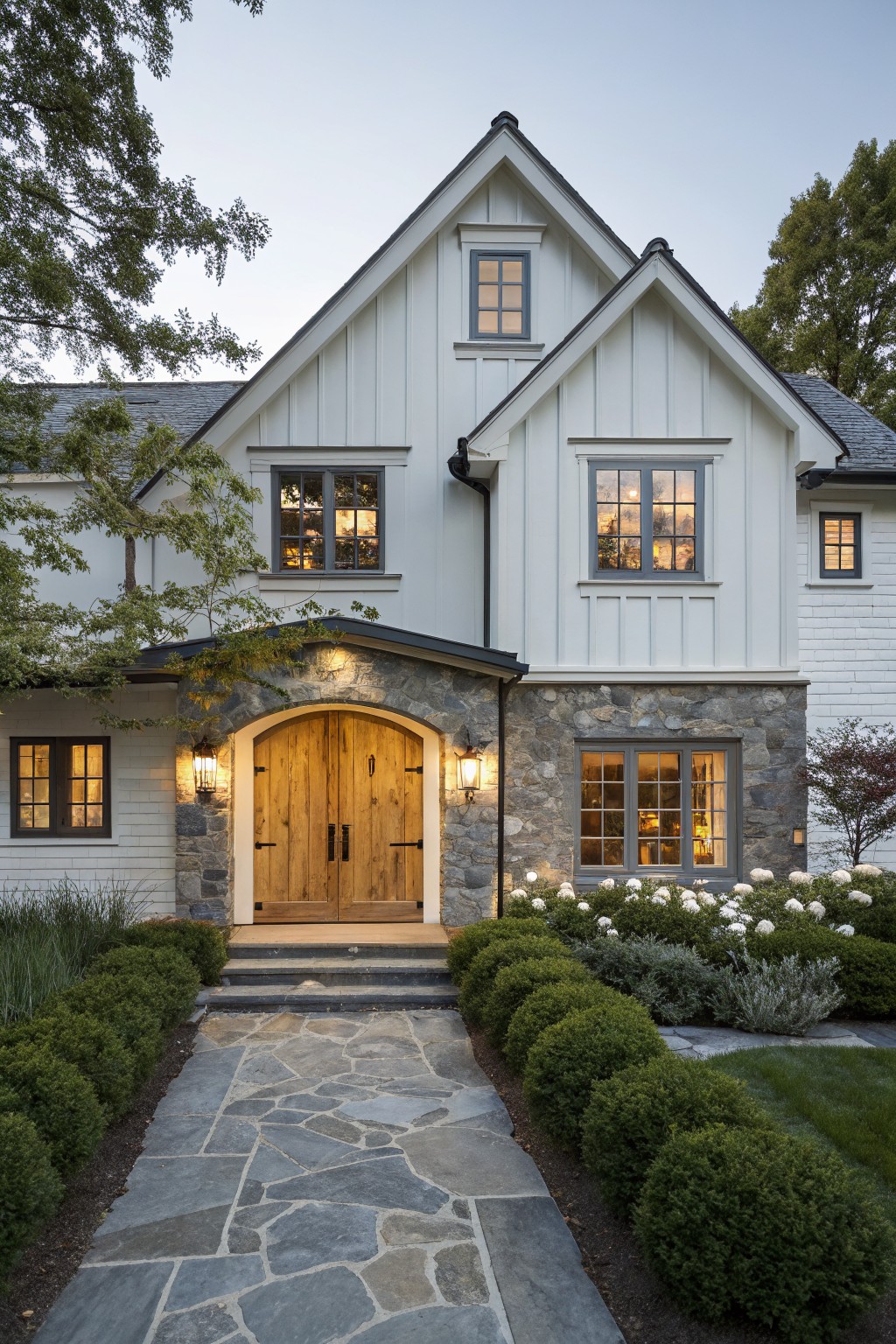
Stone around the front door helps a white farmhouse feel more solid and welcoming. It breaks up the siding without making the whole house look heavy, and it draws attention right where you want it.
This approach works best on homes with a clear central entrance and simple rooflines. Use the stone on the lower part only and keep the rest of the exterior light so the contrast stays balanced.
A Bold Front Door Color
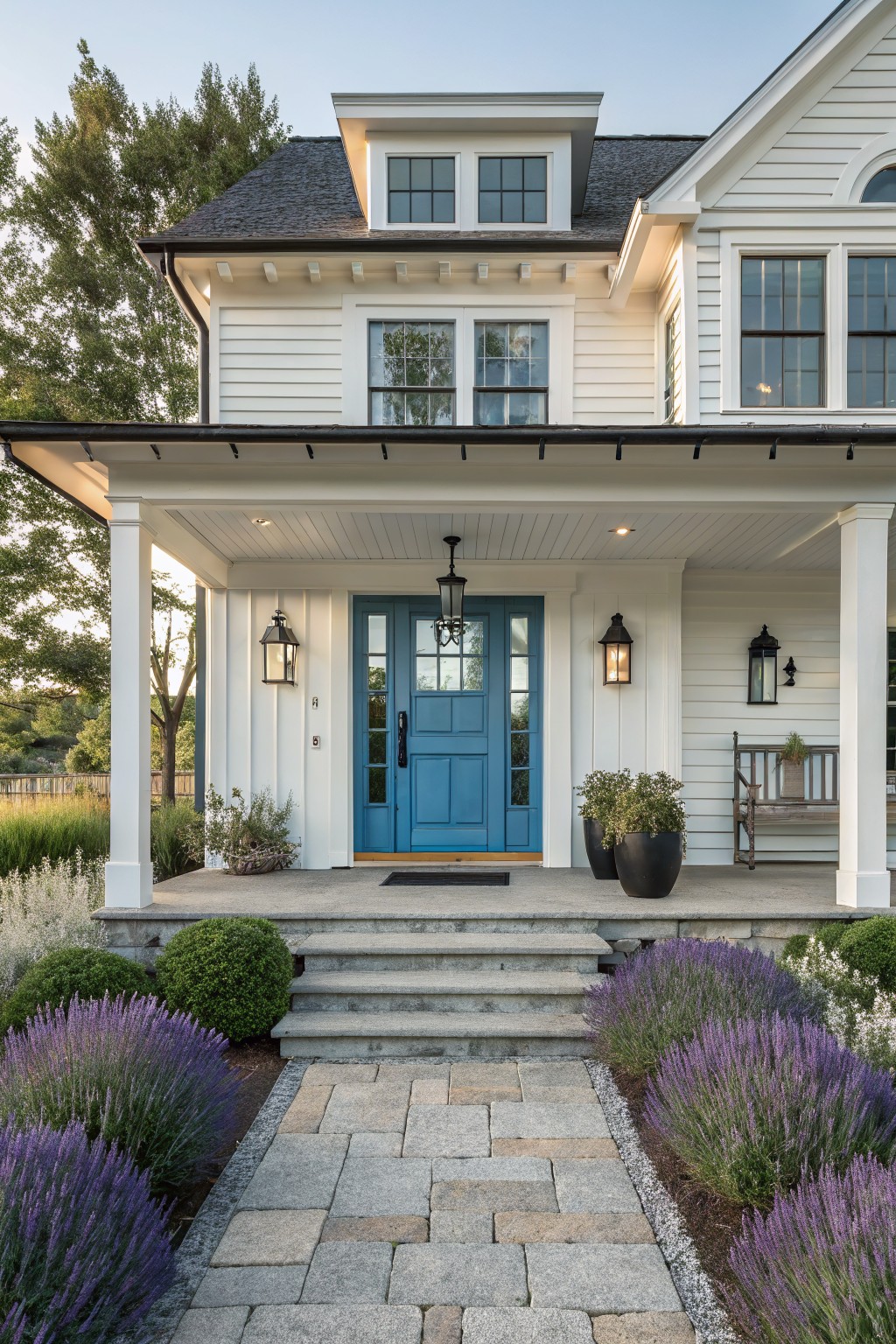
A white farmhouse often looks cleaner with a door in a strong color. The blue door here gives the front a clear focal point without extra trim or details.
This works best on simple homes where you want one main accent. Pick a color with good contrast and keep the rest of the entry fairly plain.
White Siding With Black Shutters
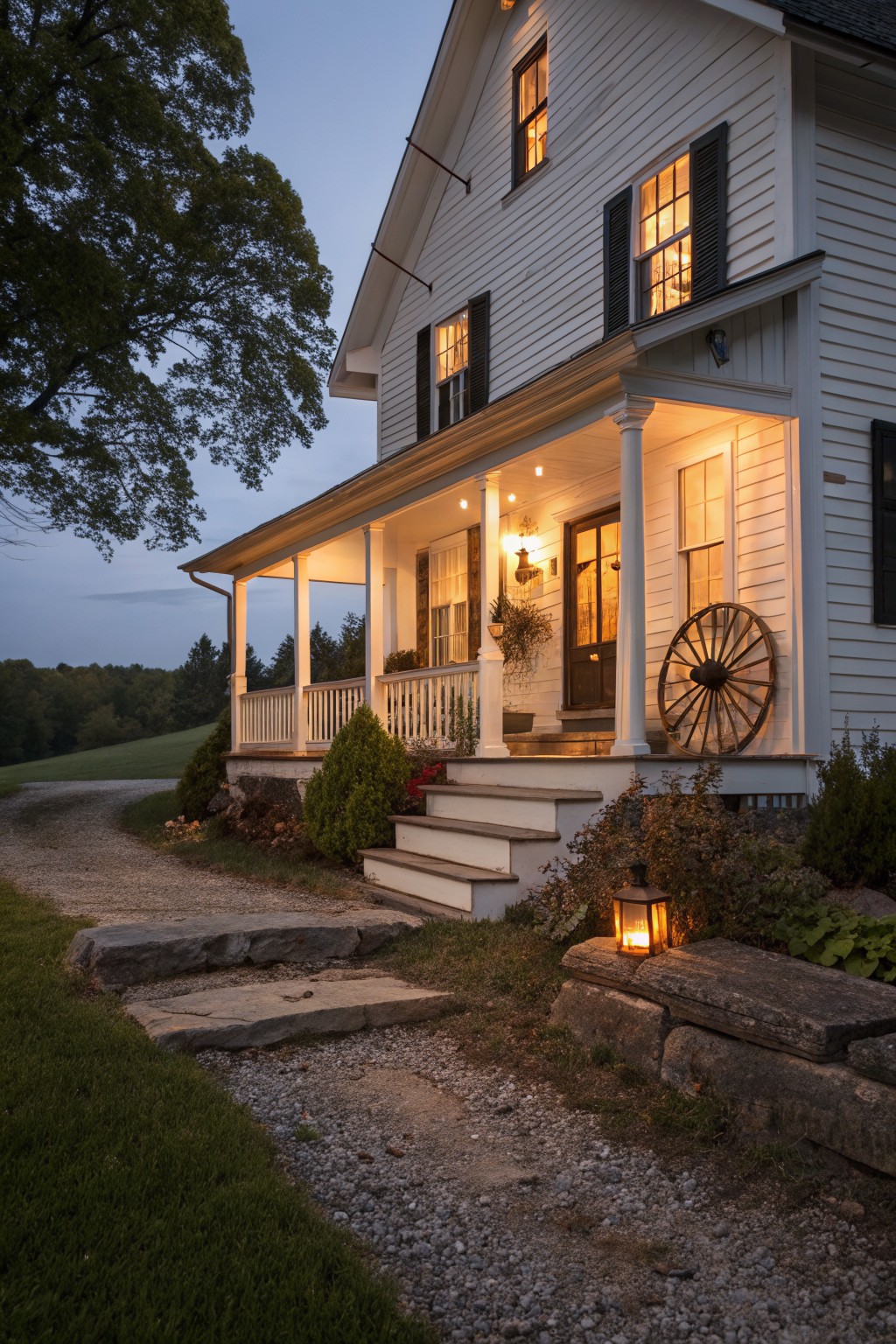
White siding stays a favorite for farmhouses because it keeps the look light and simple. Pairing it with black shutters adds just enough contrast to make the windows stand out without any extra trim or color. The result feels classic and holds up well over time.
This approach works on both older homes and newer builds that want a traditional feel. Keep the shutters sized to match the windows and use a matte black so the contrast stays soft rather than harsh.
Wood Garage Doors Against White Siding
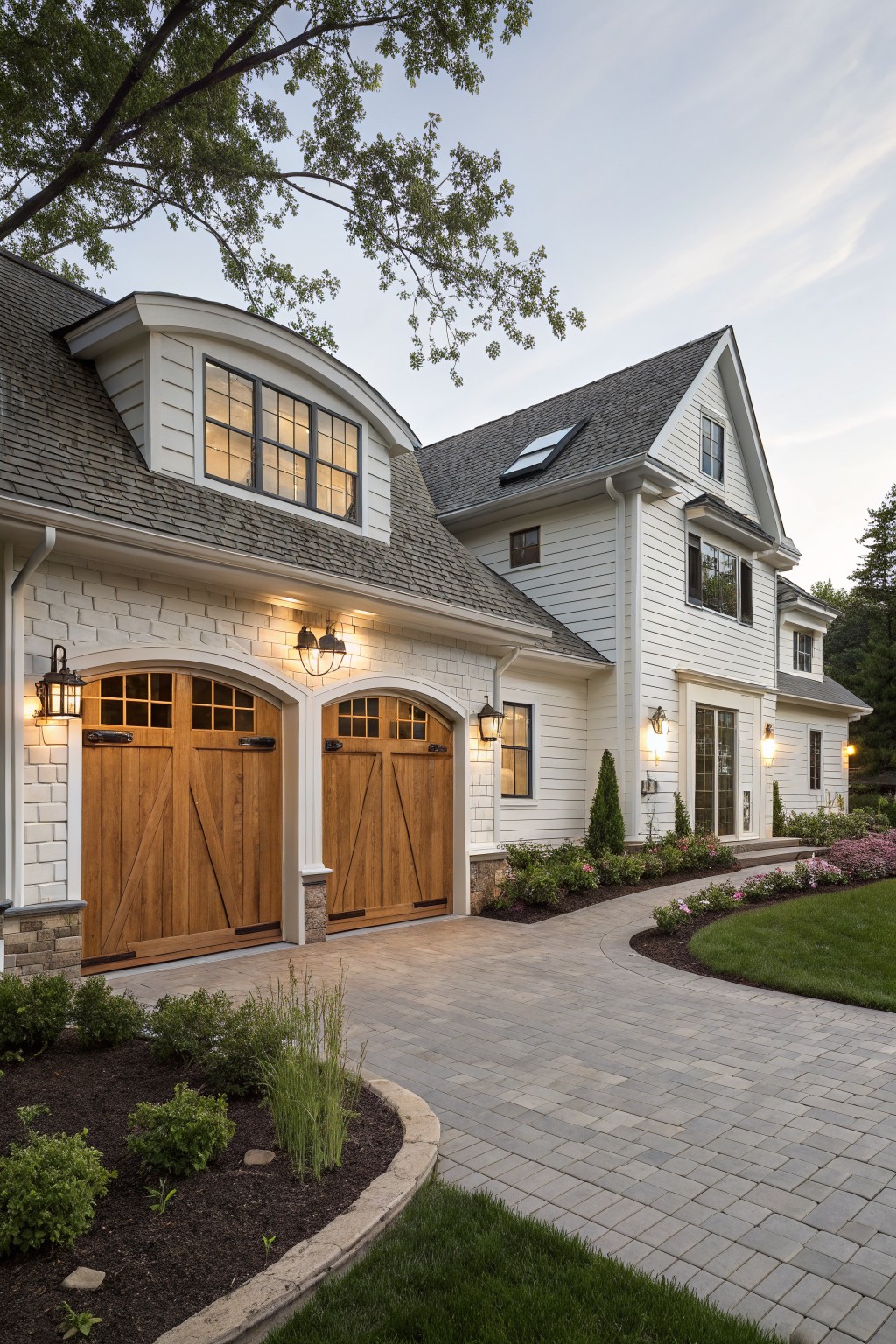
White farmhouses often need one natural element to keep the look from feeling too plain. Wood garage doors fill that spot by adding texture and a bit of warmth right where the eye lands first. The contrast makes the whole front feel more balanced without extra trim or color changes.
This approach works on homes with clean rooflines and simple siding or brick bases. Stick with a medium wood tone that reads natural rather than stained dark, and let the doors sit under basic lighting so the material stays the focus.
Outdoor Dining Under A Pergola
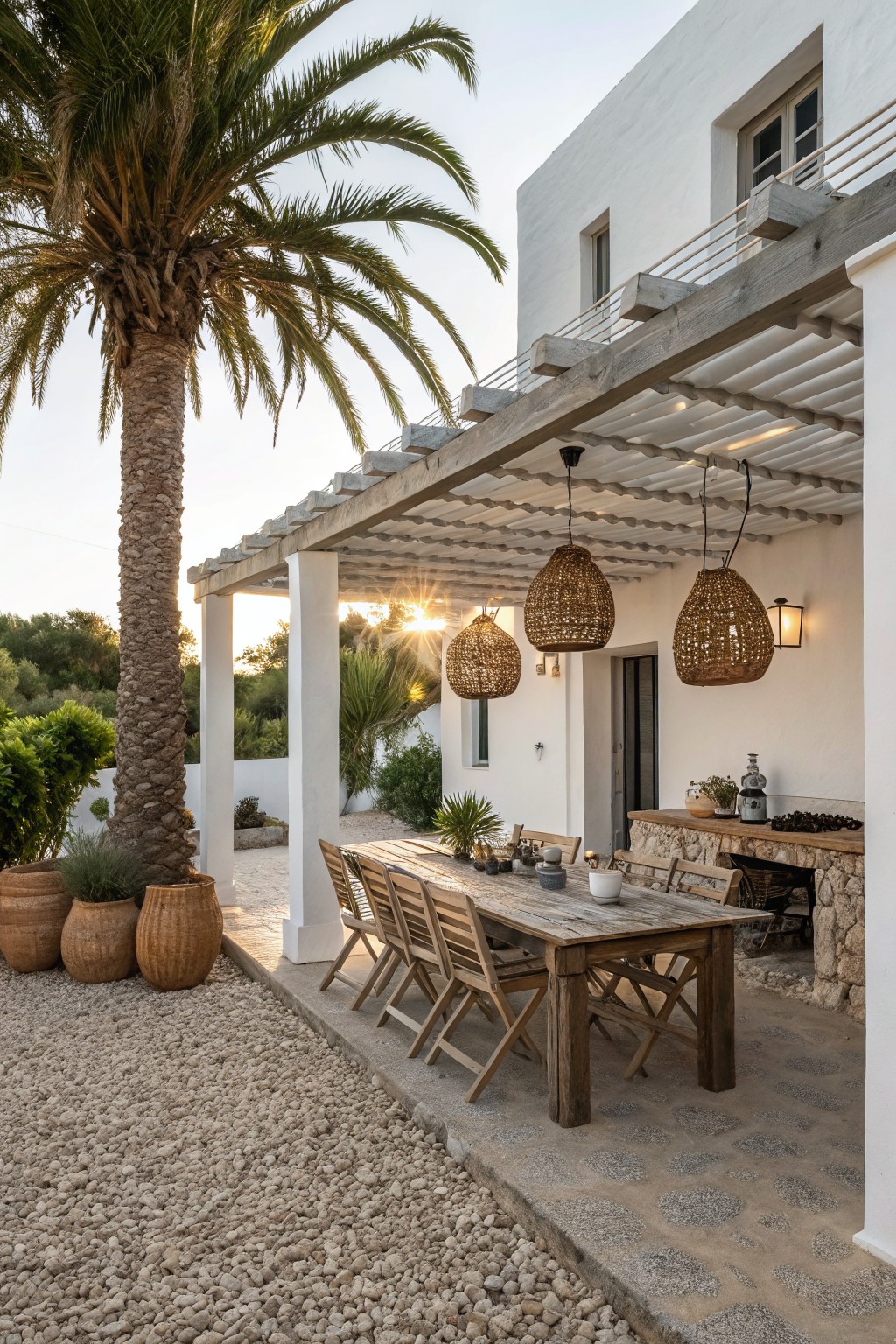
A pergola over the dining table turns a plain patio into a spot people actually use. It adds shade during the day and gives the area a clear boundary without closing it in. The simple wood frame works especially well against white walls and keeps the whole setup feeling casual.
This layout suits farmhouses that already have some outdoor space but need a little structure. Keep the table and chairs straightforward, then add hanging lights if you want to use the area after dark. Just make sure the pergola is sized to cover the table fully so it feels balanced.
Add a Cupola to Finish the Roofline
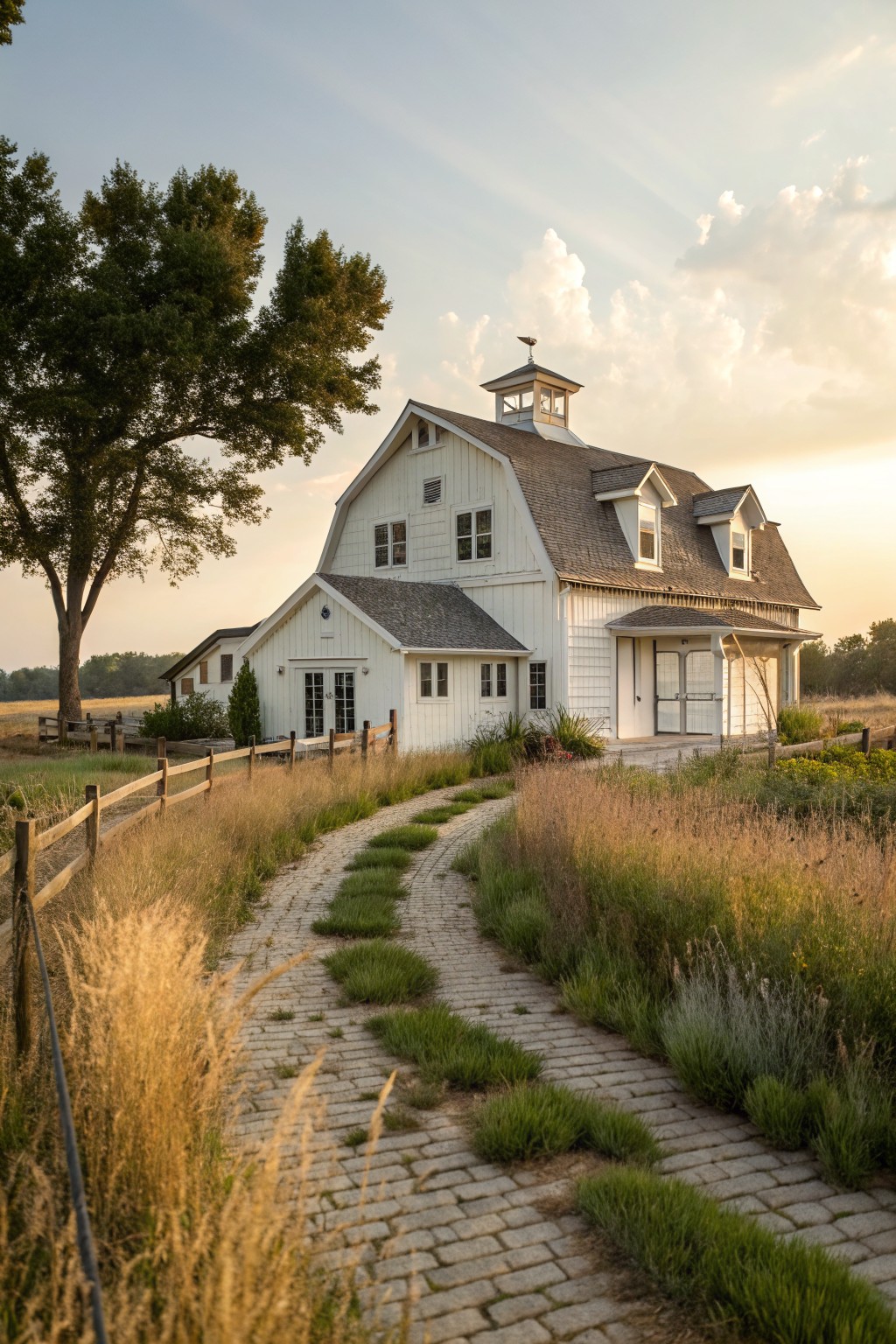
A cupola gives a simple farmhouse roof some extra lift without changing the whole structure. It breaks up a long roof plane and adds a bit of traditional character that feels right at home on a white exterior.
Place one near the center or over the main ridge if your roof is large enough. It works best on homes with gable or gambrel shapes where the added height can be seen from the road. Keep the scale modest so it looks like part of the original build rather than an afterthought.
Mix Stone With White Siding
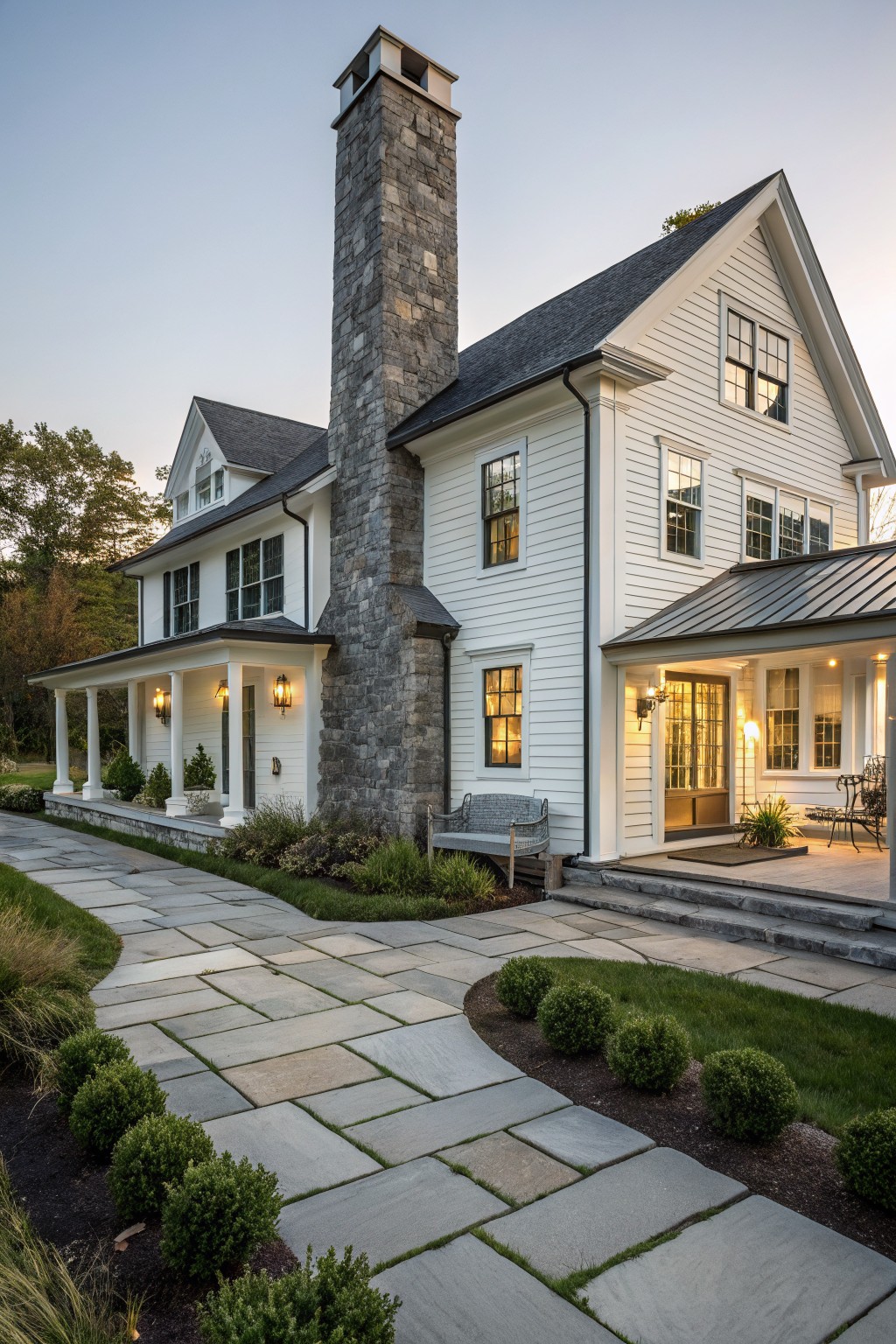
White siding can start to feel flat on its own, especially on a larger house. Adding stone on a chimney or a section of the facade gives the exterior some weight and breaks up the surface in a simple way. The contrast keeps the look clean while still giving it character.
This approach works best on homes with straightforward shapes and few other details. Keep the stone in one main spot rather than spreading it around, and let the rest of the siding stay bright and plain. That way the stone reads as a deliberate choice instead of just another layer.
Curved Paths on Sloped Lots
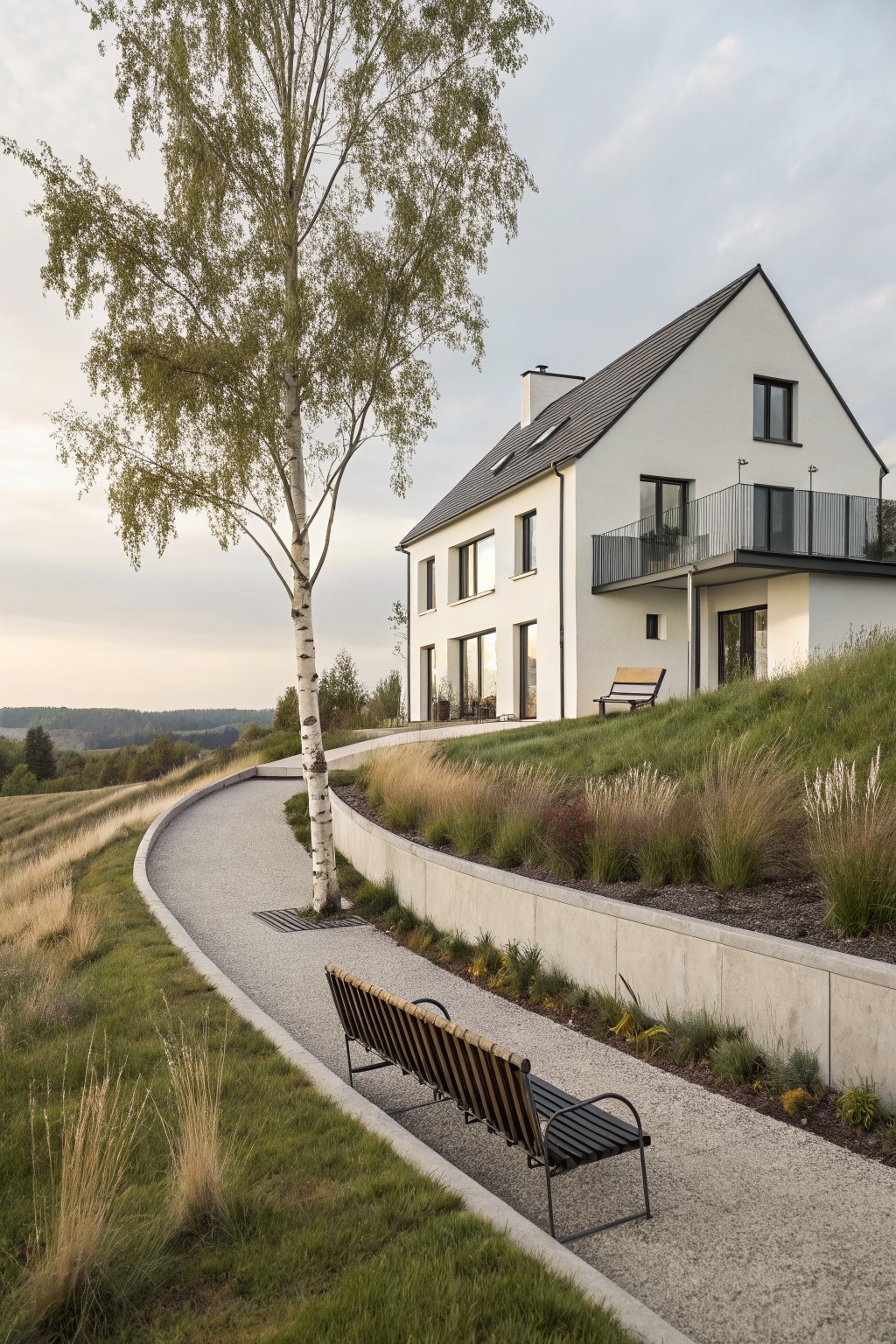
A curved gravel path works well when a house sits on a hillside because it follows the slope instead of cutting across it. The gentle bend keeps the walk feeling natural and avoids the steep look that straight paths can create on uneven ground.
This approach suits white farmhouses since the simple path and low wall let the clean lines of the house remain the main focus. Place the path to guide visitors toward the entry and use the wall to hold planting beds without adding extra height or bulk.
White Siding With Dark Window Frames
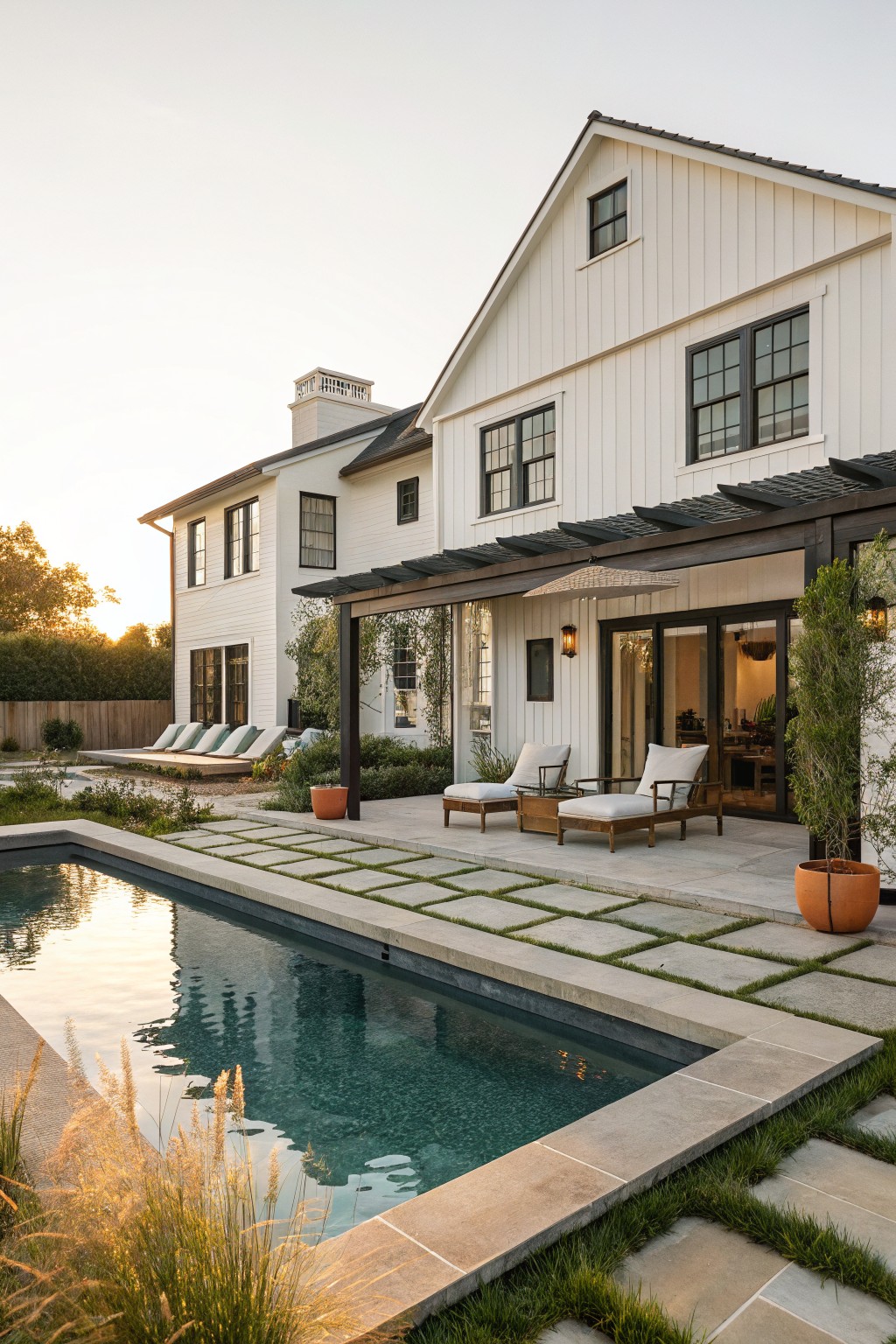
White siding paired with black window frames gives a farmhouse a clean and lasting look. The contrast keeps the exterior from feeling flat while still reading as traditional. Many people choose this because it works well in different light and does not need constant updates.
This approach suits homes that already have simple rooflines and gable ends. It also leaves room to add a covered patio or pool deck without the whole place feeling busy. Just keep the trim consistent and avoid too many extra colors on doors or shutters.
Add Built-In Seating Around A Fire Pit
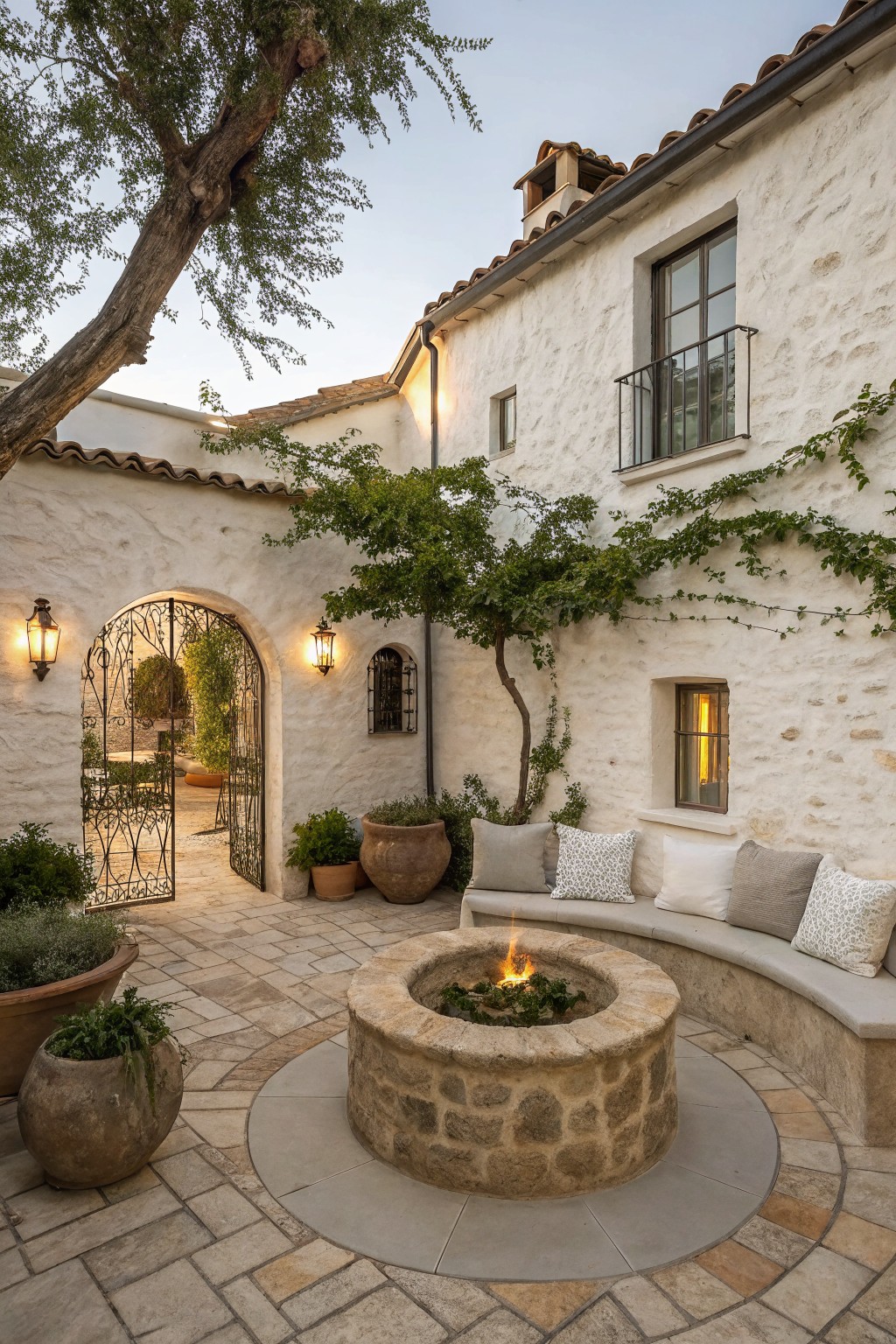
A fire pit with seating built right into the wall makes a courtyard feel finished and ready to use. The curved bench follows the shape of the space and keeps everything open in the middle so the fire stays the center of attention. White walls help reflect light and keep the area from feeling closed in.
This setup works best on homes with a small side yard or rear courtyard where you want a simple gathering spot. Keep the bench low and the cushions neutral so the look stays relaxed. Just make sure the fire pit sits on a solid paved base and leave enough room to walk around it.
Stone Pillars Frame the Driveway Entrance
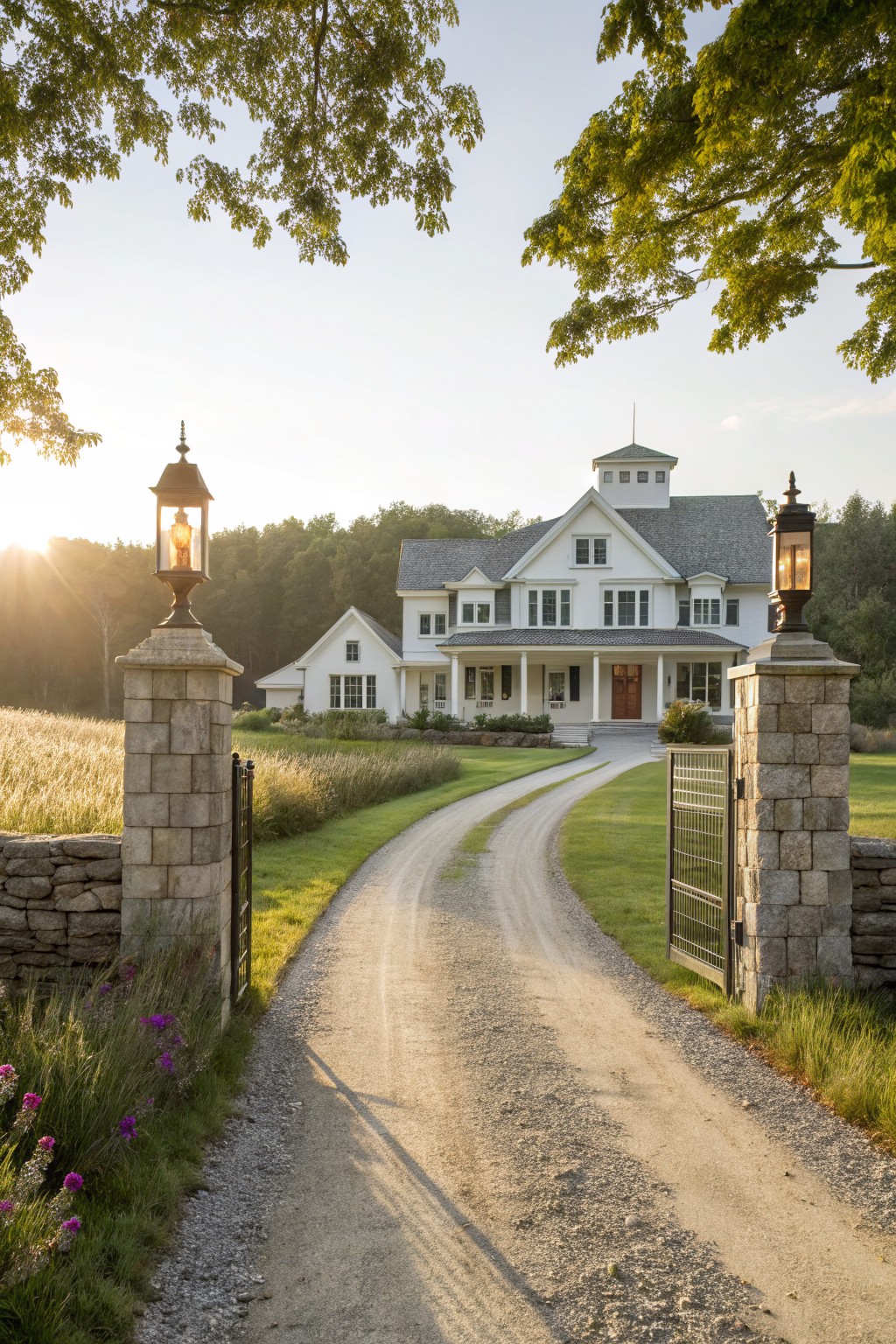
A simple pair of stone pillars at the start of the driveway can give a white farmhouse a clear sense of arrival. The pillars mark the transition from the road to the property and help the house feel more grounded without adding extra trim or decoration to the building itself.
This works best on homes set back from the road where the driveway becomes part of the first impression. Keep the pillars fairly plain and match the gate style to the farmhouse rather than making it overly ornate.
Stone Paths Along The Side Of The House
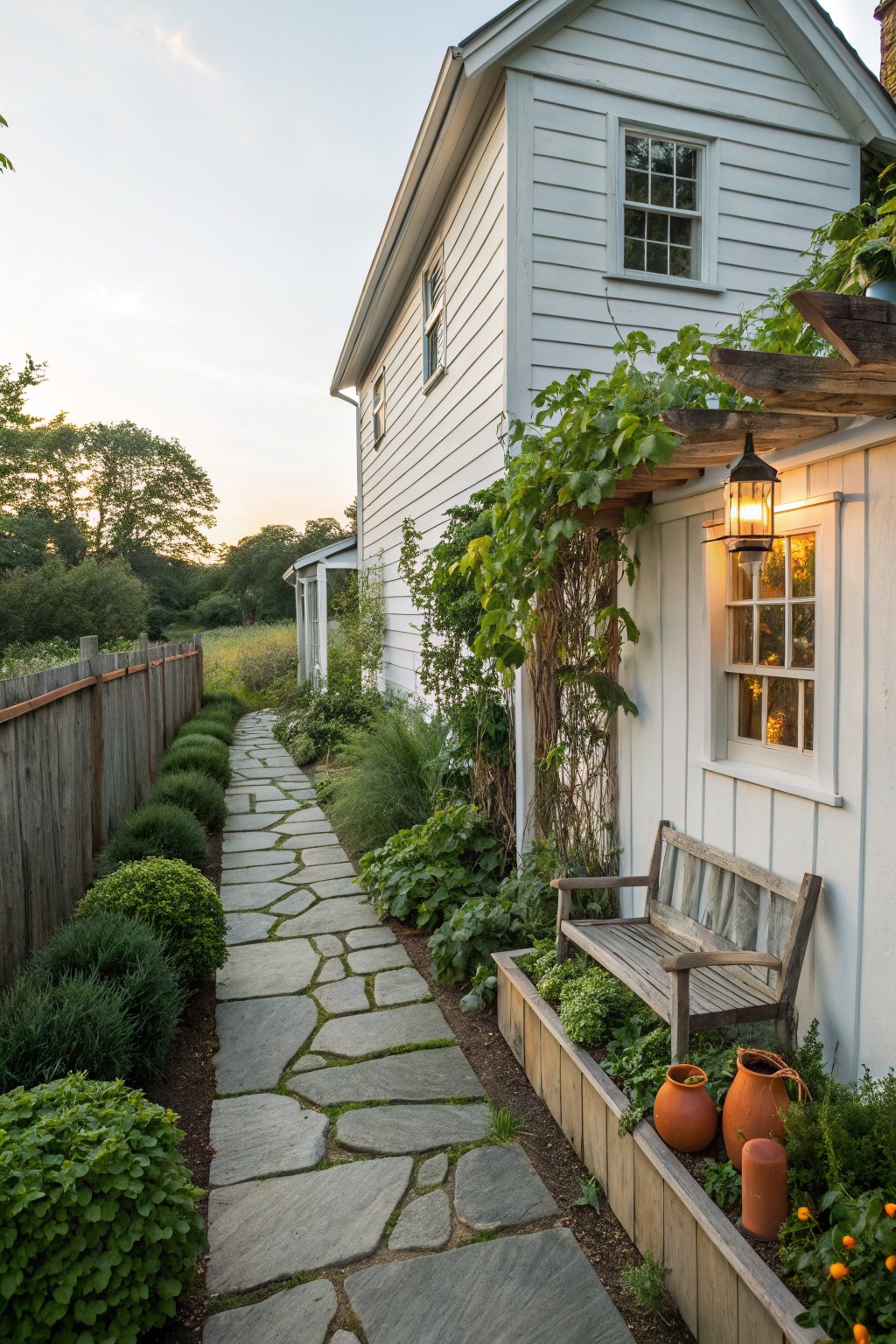
A stone path that runs right next to the house adds a practical way to move through the yard while giving the exterior more shape. It breaks up the flat ground and lets the white siding stand out without needing extra trim or details.
This works best on homes with a longer side yard or a narrow strip of land between the house and fence. Keep the stones irregular and let low plants grow along the edges so the path feels settled in rather than added on later.
Hang Lights From the Porch Ceiling
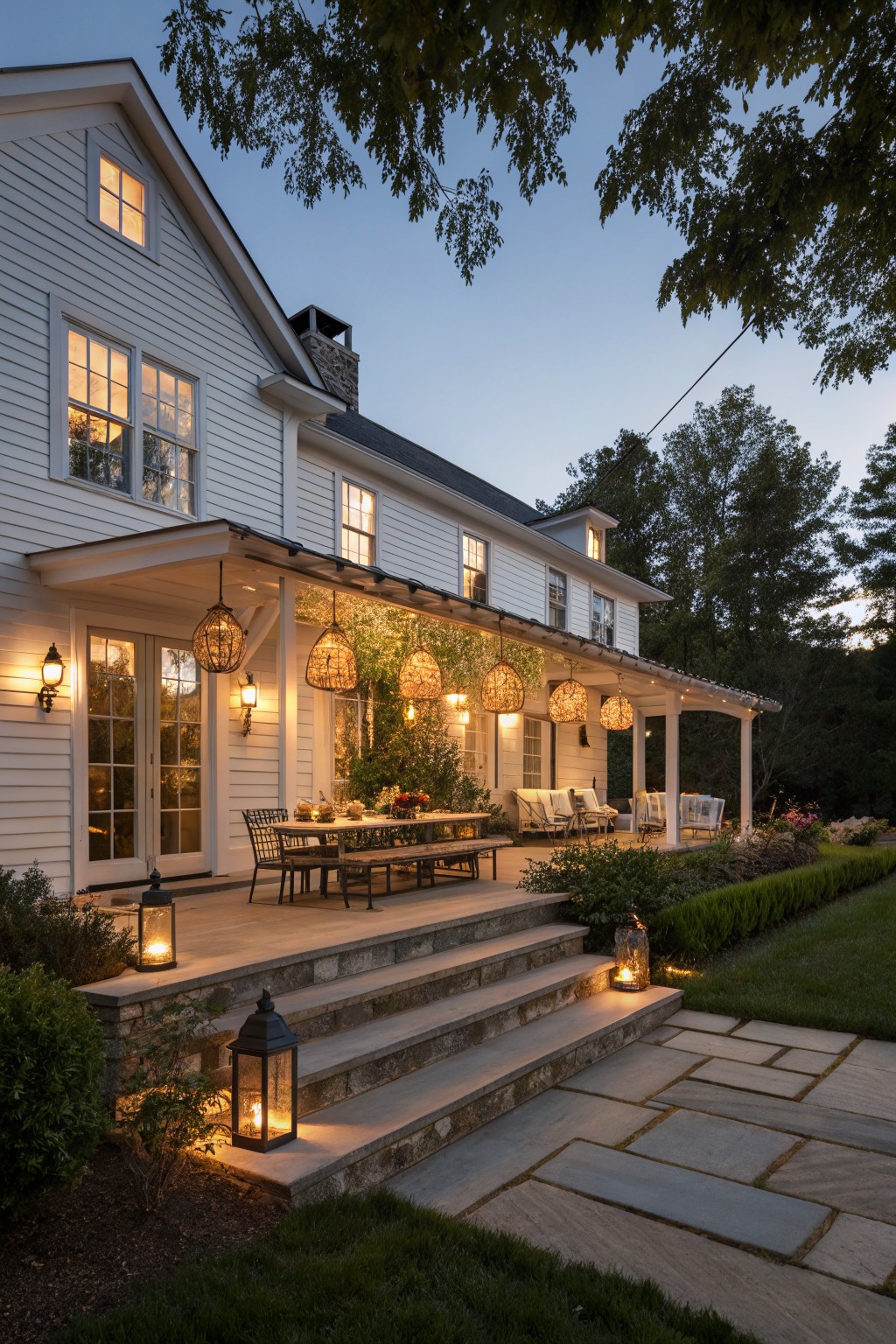
A simple row of hanging lights can turn a basic porch into the part of the house people notice first at night. The woven shades in this example spread a soft glow across the seating area without looking fussy or bright.
This approach works best on farmhouses with a deep roof overhang. Keep the fixtures simple, space them evenly, and add one or two wall sconces near the doors so the whole front stays easy to use after dark.
Stone Steps That Improve The Approach
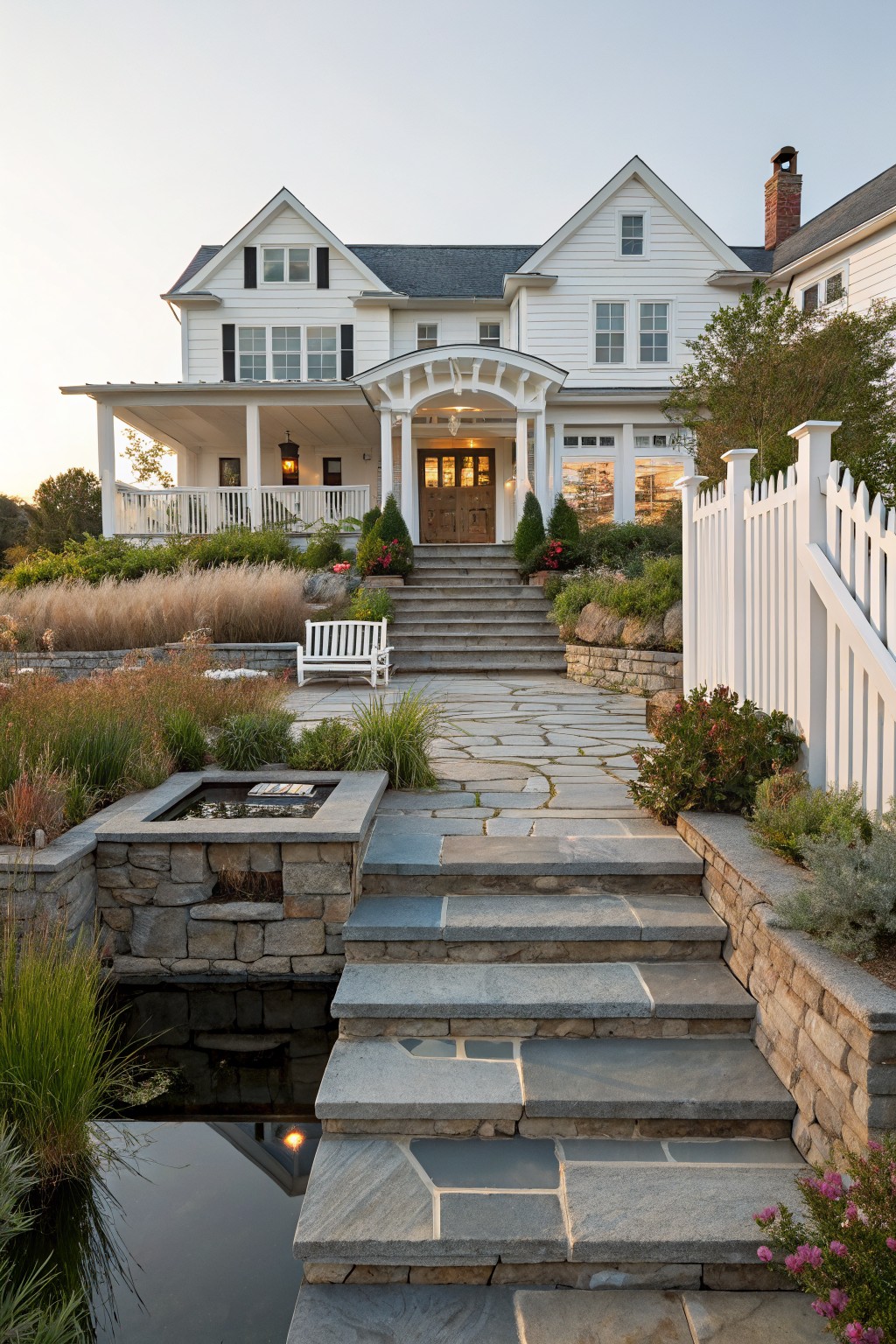
A wide set of stone steps paired with a matching path gives the front of a white farmhouse a clear sense of arrival. The material feels sturdy underfoot and holds up well in all kinds of weather, which makes the entry look intentional rather than added on later.
This works best on homes with a slight rise from the street or sidewalk. Keep the steps broad and the path slightly irregular so it feels natural rather than formal. Avoid making the stone too polished or the layout too straight, or the whole thing can start to feel stiff.
Frequently Asked Questions
Q: How do I choose white paint that holds up to weather without fading fast?
A: Pick a paint made for exterior use and test a small patch first. Let it sit through a few seasons before committing to the whole house. This saves you from repainting too soon.
Q: What landscaping works best around a white farmhouse?
A: Stick with simple green shrubs and maybe some climbing vines on the porch posts. They add contrast without fighting the clean white look. Keep beds mulched to cut down on weeds near the foundation.
Q: Can I update my existing house to this style without a full remodel?
A: Start with painting the exterior white and swapping out light fixtures. Add board and batten accents if your siding allows it. Small changes like new house numbers pull the whole thing together.
