

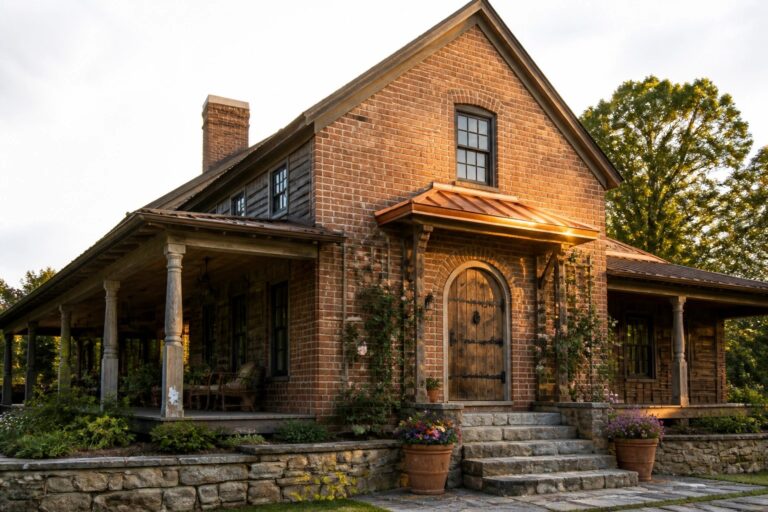
I have always noticed that the right brick on a farmhouse exterior can shift how the whole place feels from the street even before you reach the door.
Reclaimed brick tends to carry its own history and that shows up in the way light hits the uneven surfaces throughout the day.
Some choices hold up better once the weather starts to work on them.
I would probably start by checking how the brick color sits against the roof and trim on my own house before trying anything larger.
Paying attention to the entry and window details helps the material feel like it belongs instead of just covering the walls.
Arched Entries in Reclaimed Brick
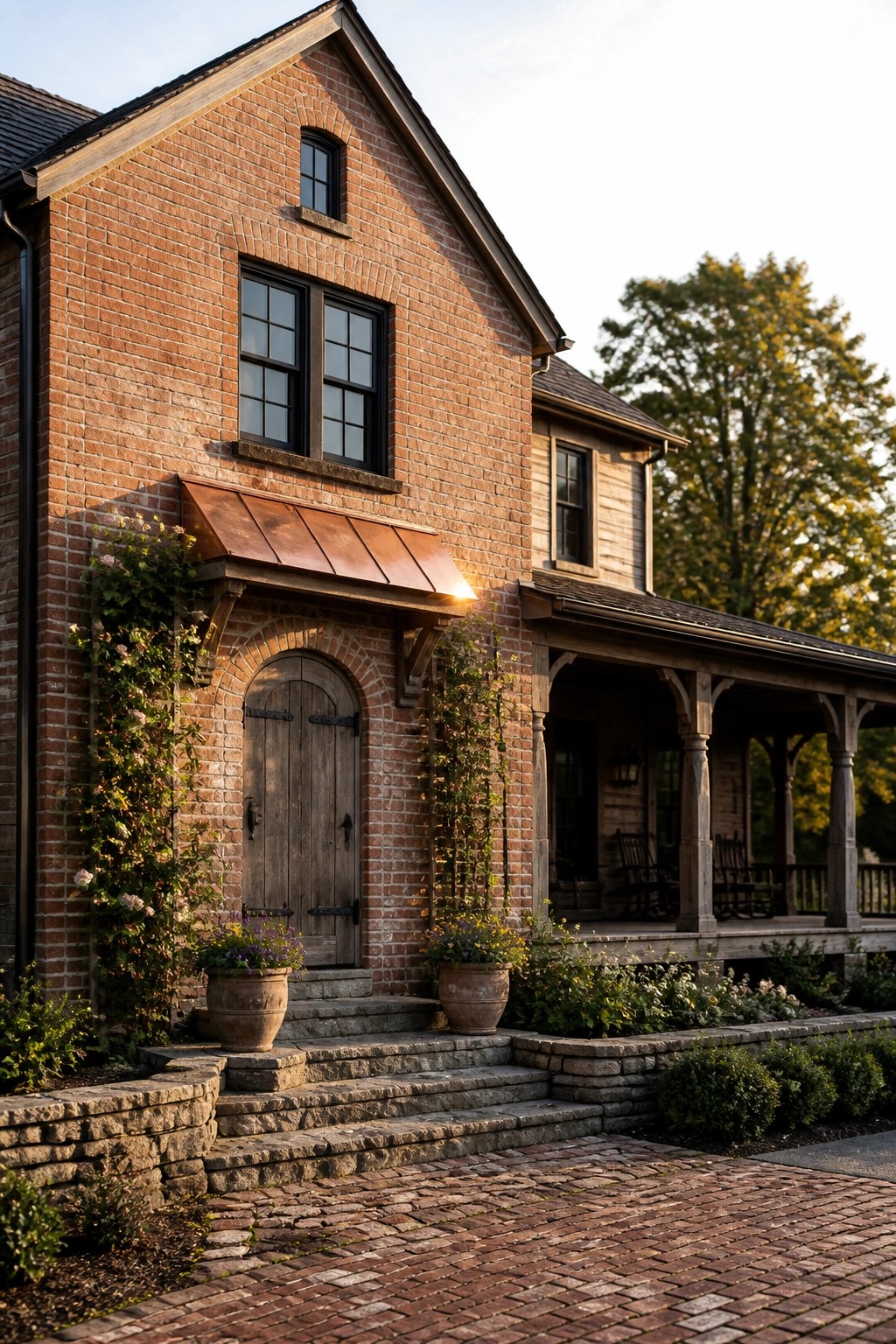
An arched brick entry gives a farmhouse that settled, older look without needing a lot of extra trim or decoration. The slight unevenness in reclaimed brick helps the arch feel like it belongs rather than something added later.
This works best on homes that already use brick or plan to add it in sections. Pair the arch with a plain wood door and a simple metal hood so the detail stays quiet and the whole front stays easy to maintain.
Reclaimed Brick With White Siding
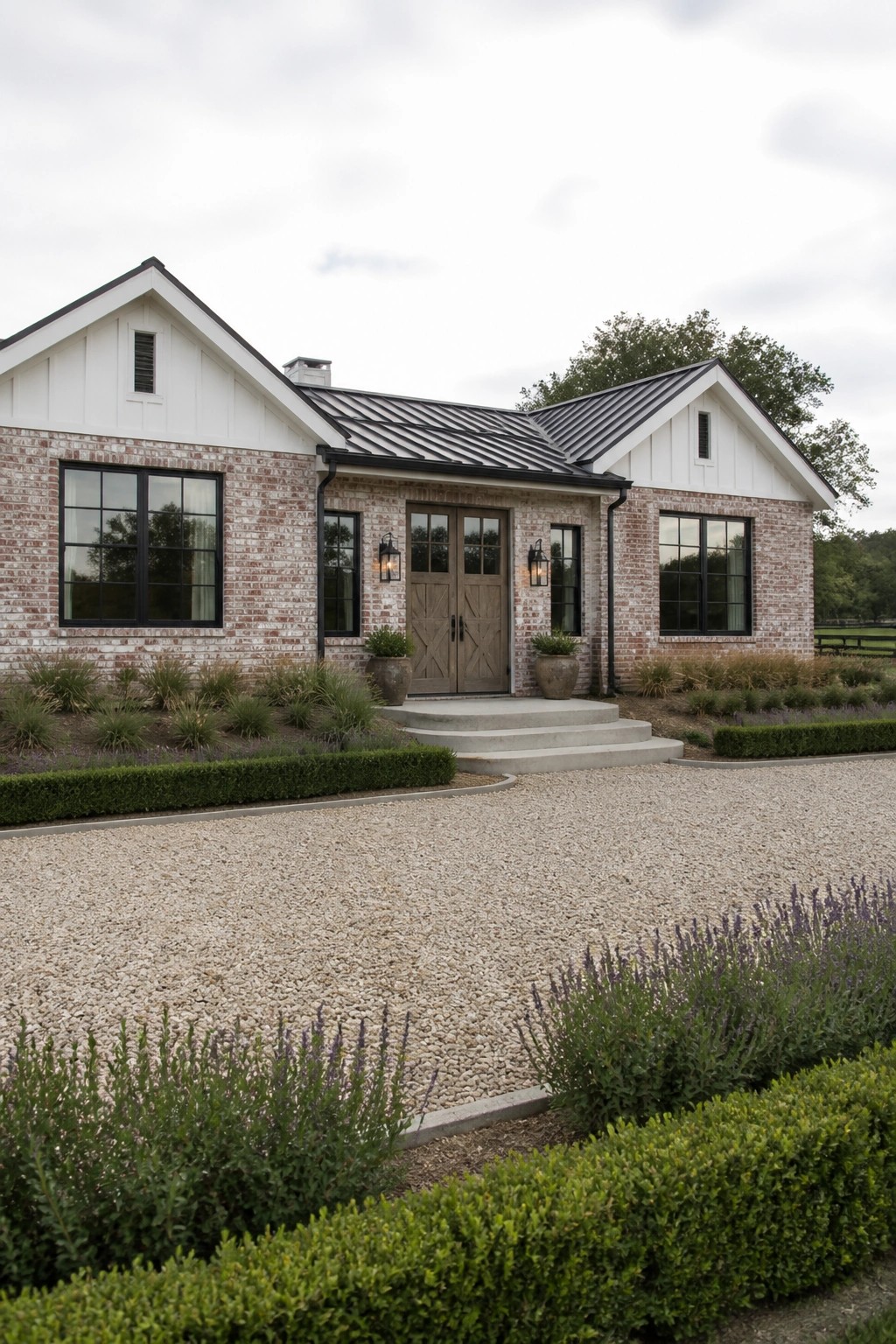
Reclaimed brick often looks heavy when it covers an entire facade. Pairing it with white painted siding on the gables and eaves lightens the whole house while still showing off the texture and age of the brick.
This mix works best on simple farmhouse shapes with metal roofs and black window frames. Keep the white areas limited to the upper gables and trim so the brick remains the main material.
Reclaimed Brick Chimneys
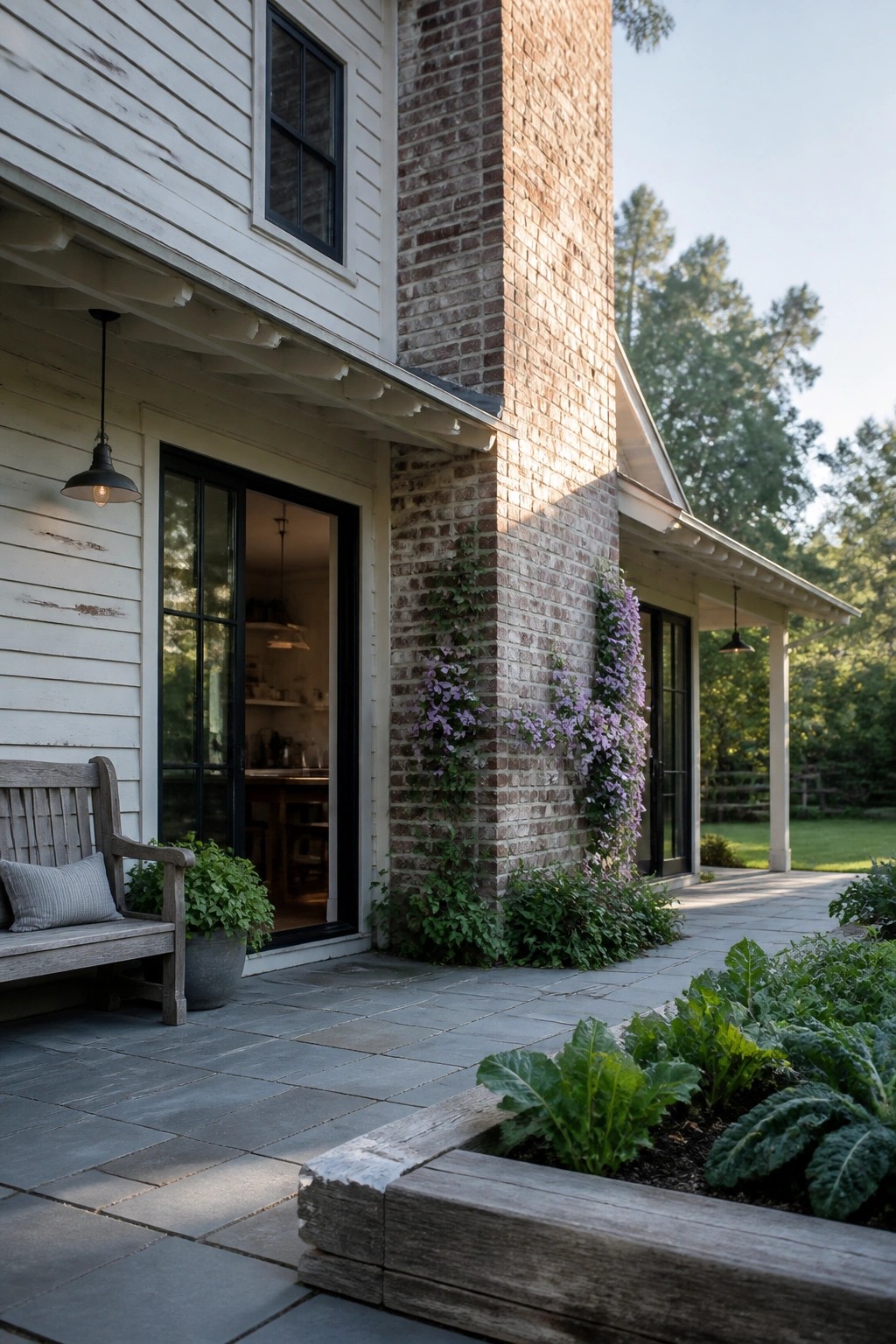
Reclaimed brick gives a chimney real presence on a farmhouse exterior. The varied tones and slightly uneven surface make the whole house feel older and more settled than a new build usually does.
This works best when the brick stays limited to the chimney rather than covering large wall areas. White siding next to it keeps the look balanced, and vines can soften the surface over time without hiding the material itself.
Full Reclaimed Brick Farmhouse Facades
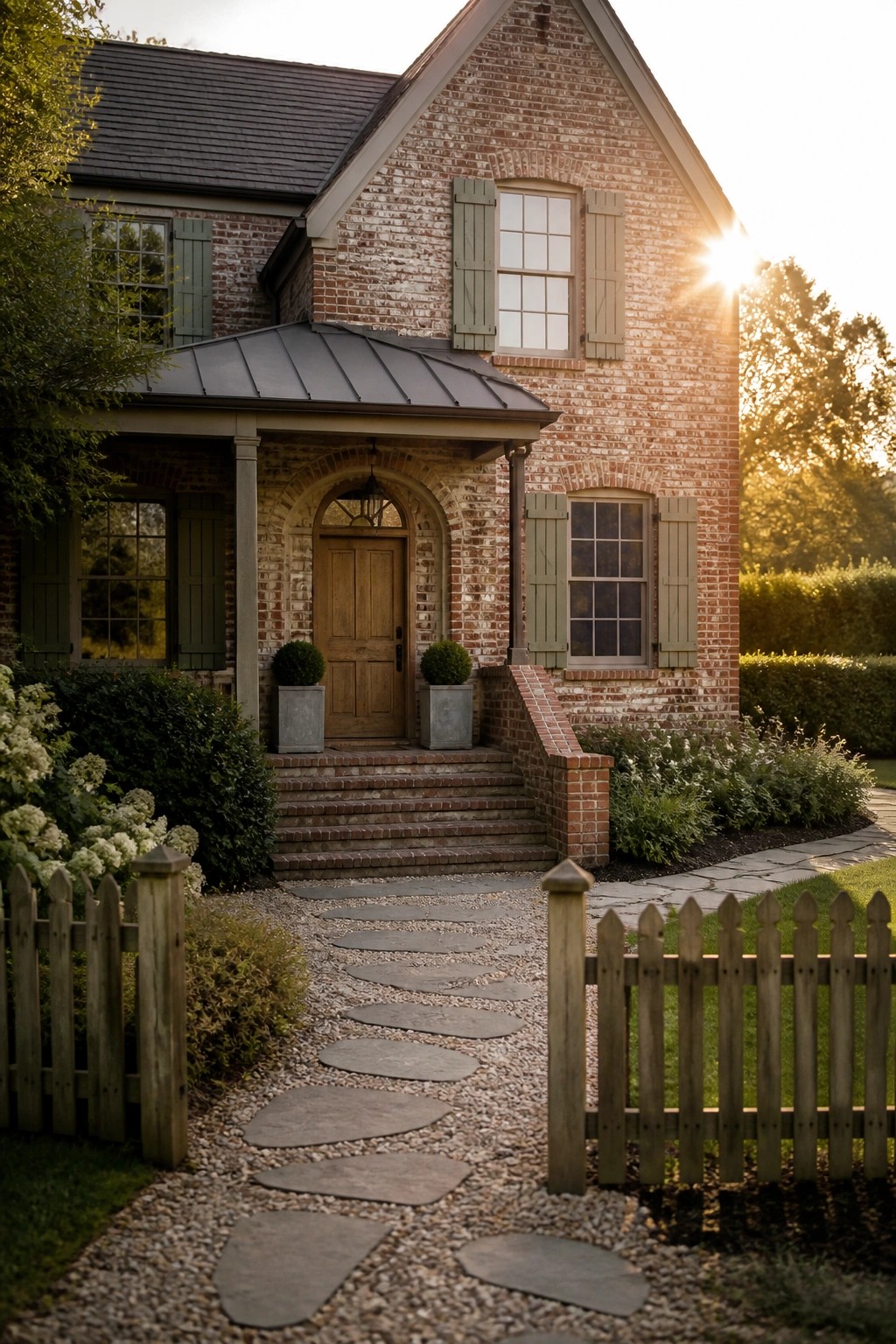
Reclaimed brick gives a farmhouse exterior real age and texture without looking forced. The uneven tones and visible wear help the house feel settled into the landscape instead of newly built.
It works best on homes that already have simple lines and traditional details. Pair it with wood doors, painted shutters, and basic trim so the brick stays the main feature instead of competing with too many extras.
Reclaimed Brick on the Gable
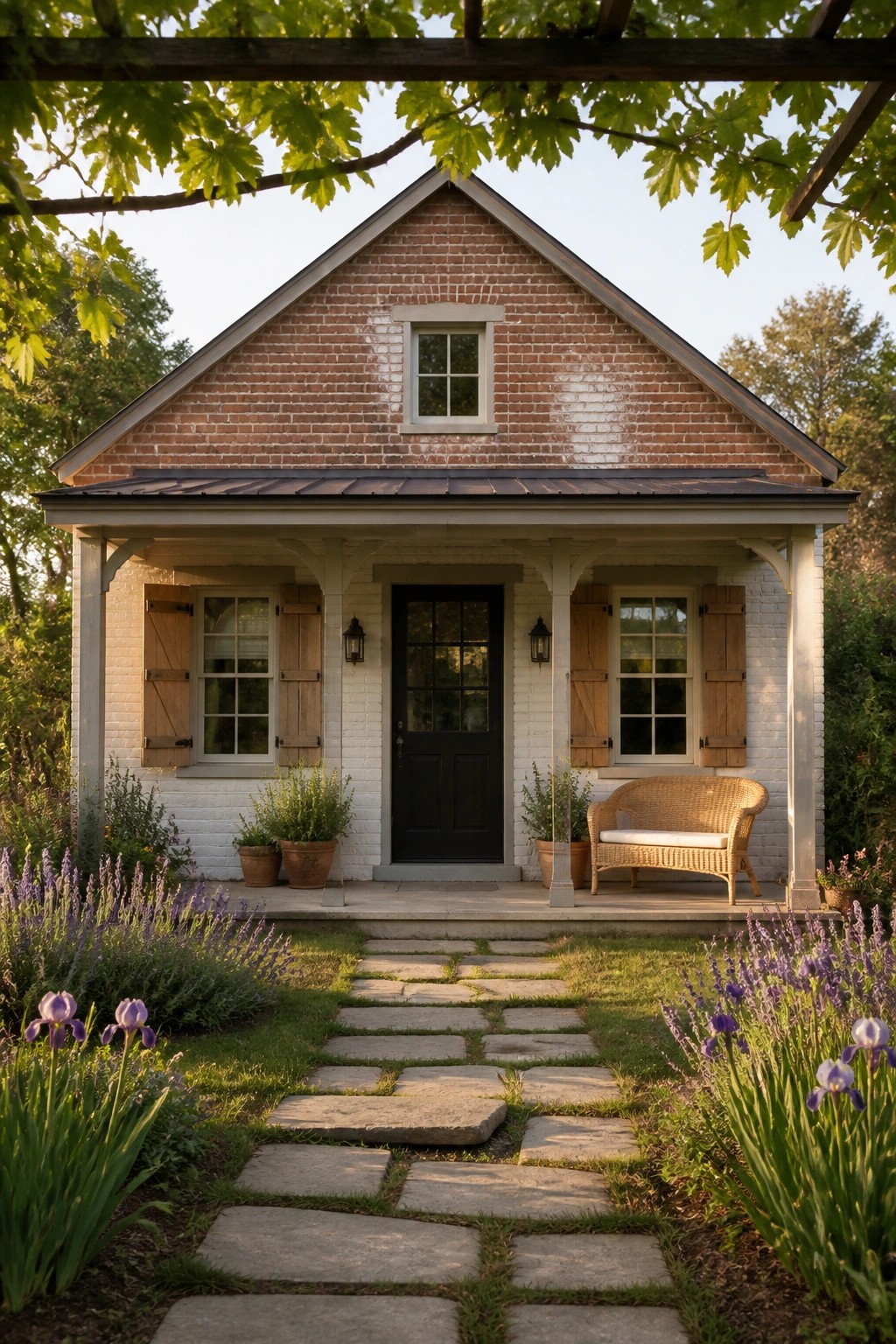
Reclaimed brick on the gable gives a farmhouse that settled, timeworn look without much extra effort. It adds texture and age right where the eye lands first, and it pairs naturally with the cleaner white sections below.
This works best on modest homes or additions where you want one strong material statement. Keep the rest of the facade simple so the brick reads as the main feature rather than one element in a busy mix.
Reclaimed Brick Centers the Facade
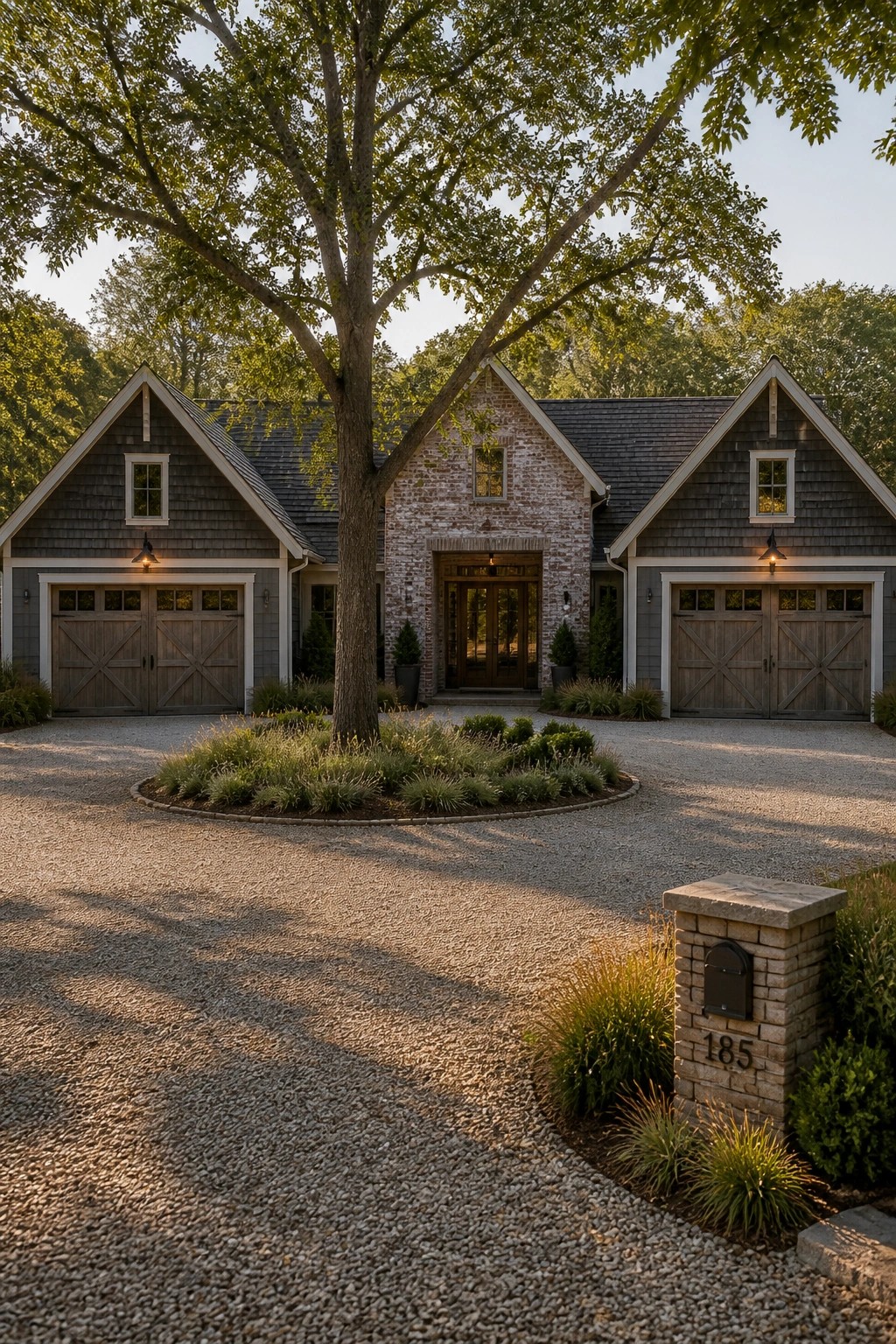
Reclaimed brick works well when it sits right in the middle of the front and pulls the whole look together. It gives the house that older farmhouse feel without needing every surface covered in the same material.
Place it around the main door and let the rest of the exterior stay in wood siding or shingles. This approach suits homes that already have a simple roofline and balanced windows. Just keep the brick area from getting too wide or it can start to feel heavy.
Brick Arches to Frame Courtyard Entries
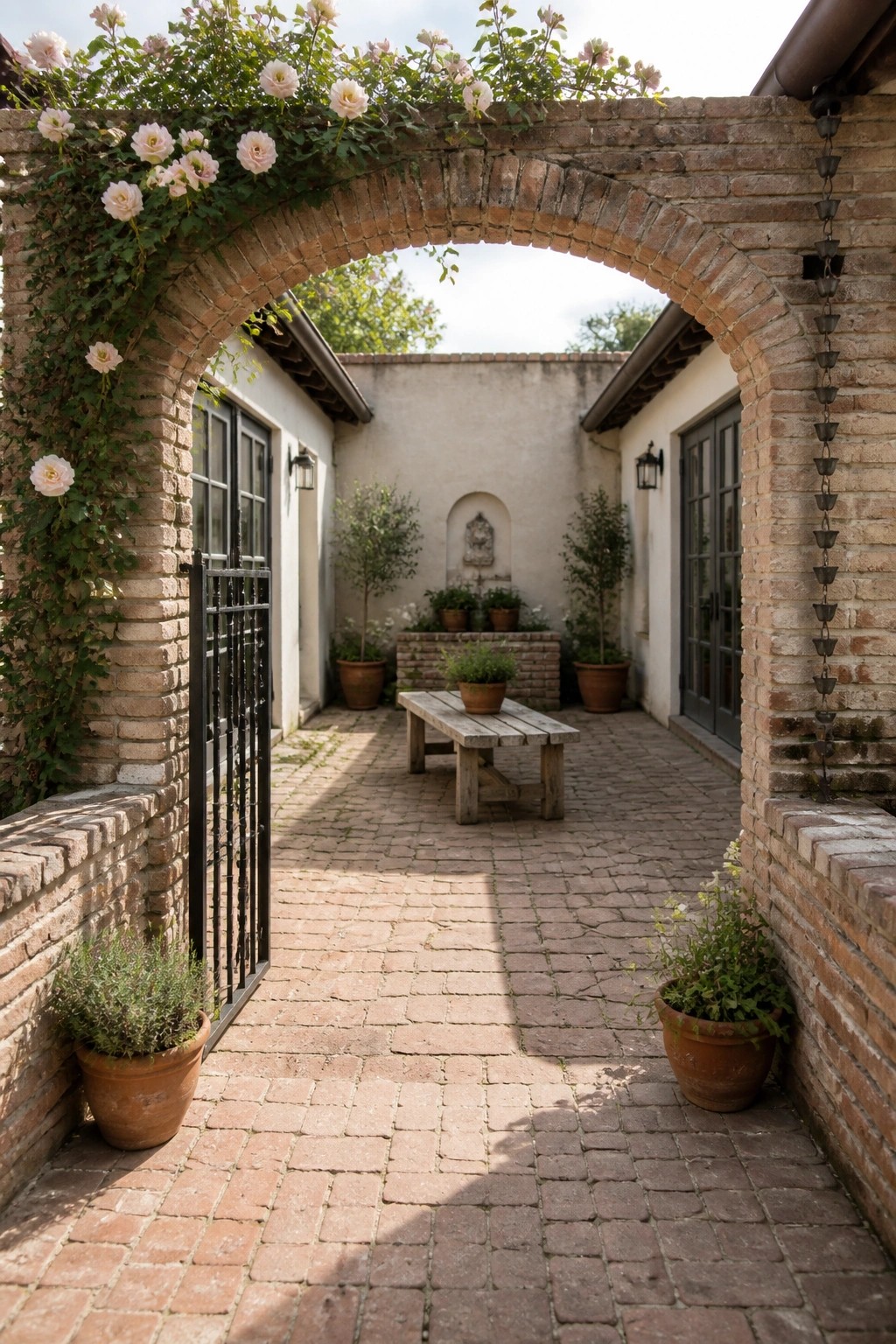
Reclaimed brick works especially well when it forms an arch that leads into a small courtyard. The curve softens the look of the walls while still feeling sturdy and tied to older farmhouse styles. It turns a simple path into something that feels intentional without needing much extra detail.
This approach suits homes with a bit of outdoor space that can be enclosed or screened from the street. Keep the arch low enough to feel intimate, and let vines or simple plantings soften the edges over time. Too many competing materials around it can take away from the brick itself.
Reclaimed Brick With White Board and Batten Siding
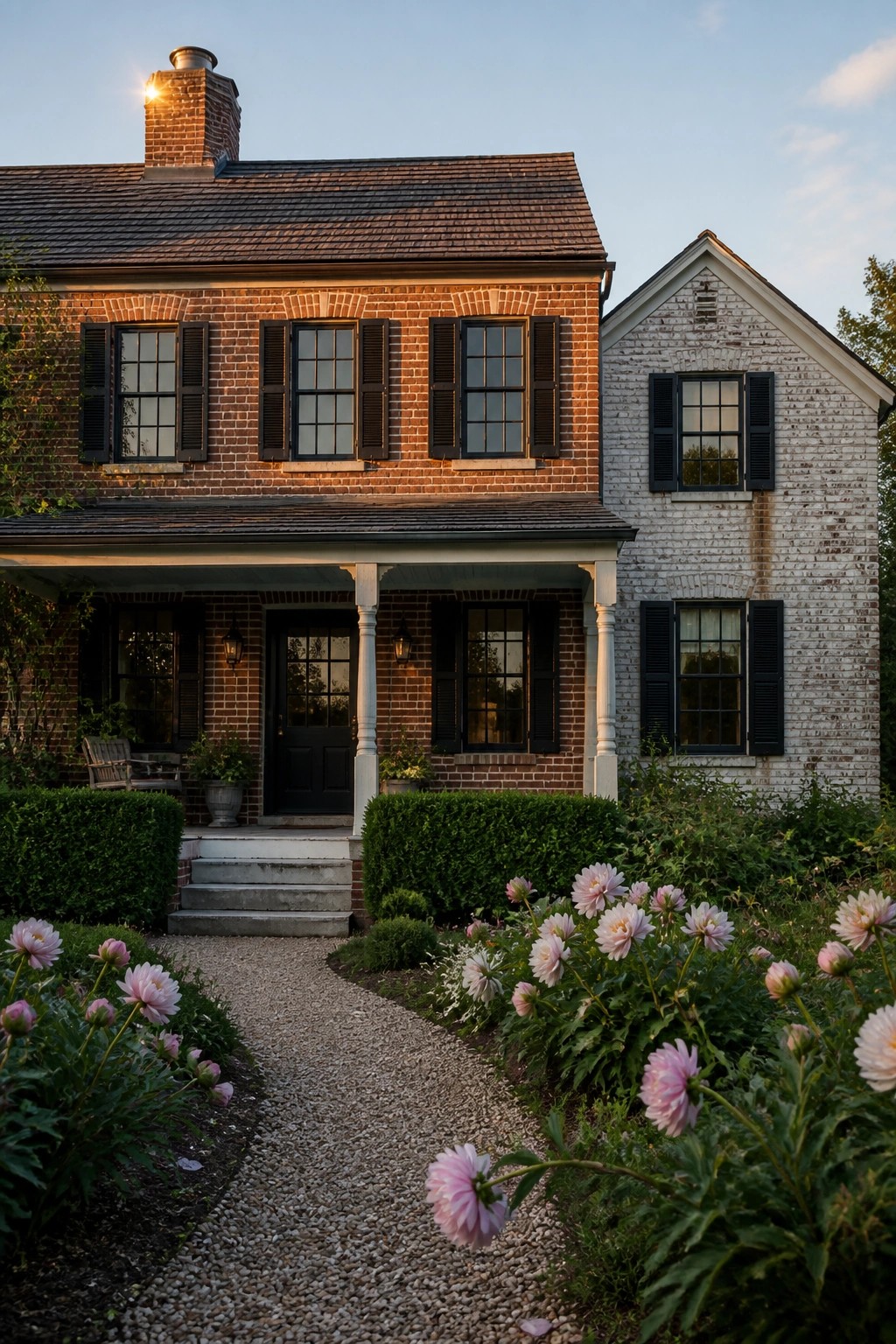
Reclaimed brick gives a farmhouse that settled, timeworn look, but pairing it with white siding on part of the house keeps the whole thing from feeling too solid or heavy. The contrast breaks up the mass and lets the brick stand out without covering every surface.
This mix works especially well when an older brick home has later additions or when you want to add space without matching the original material exactly. Keep the white siding simple and let the brick carry the texture and color.
Adding a Fire Pit to the Patio
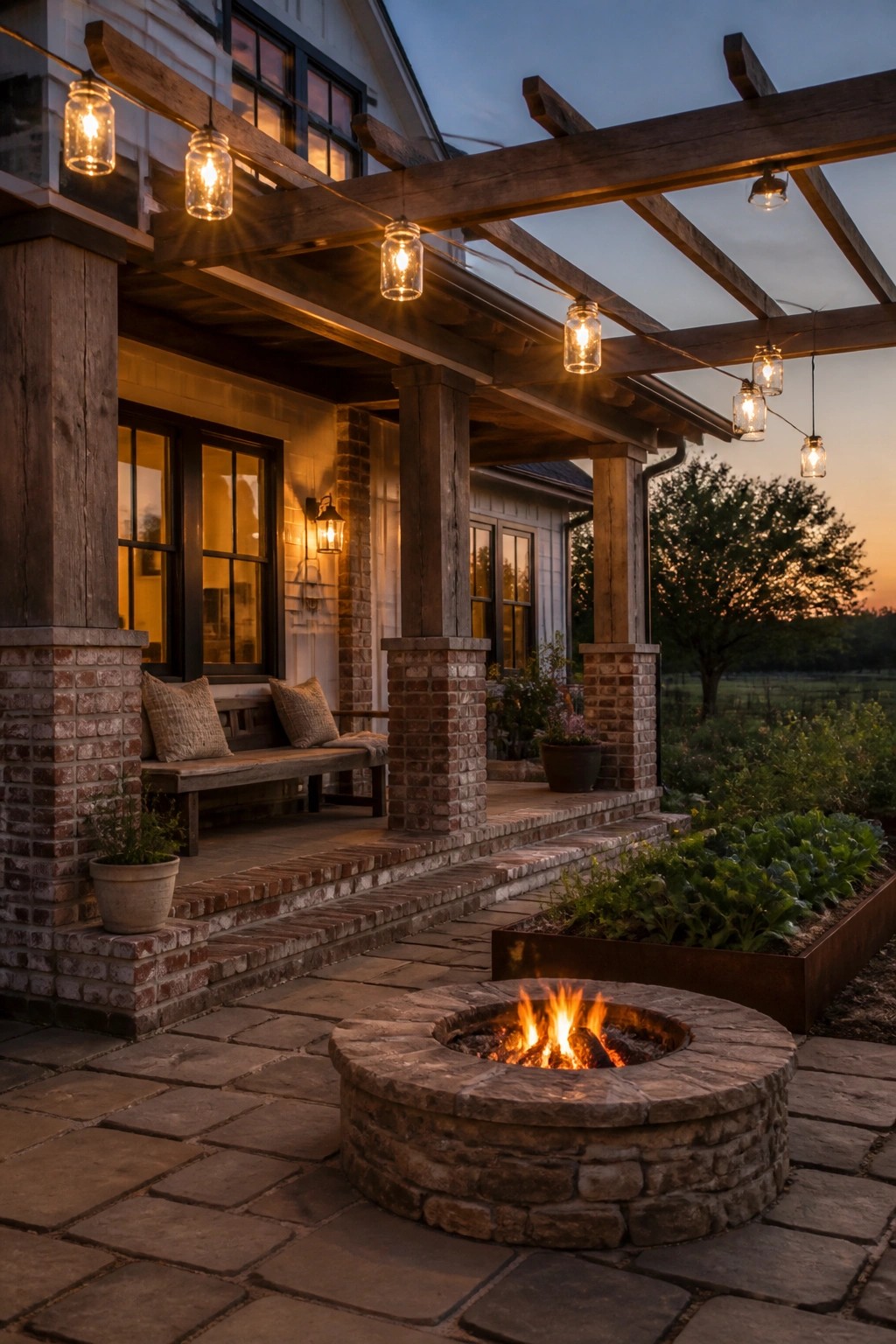
A stone fire pit placed right on the patio gives the whole outdoor area a clear purpose. It turns an open stretch of paving into a spot where people actually want to spend time after dark, especially when the porch is already built with brick and wood.
This setup works best on homes where the outdoor space sits close to the main living areas. Keep the pit a few feet from the steps so traffic flows easily and seating can circle around it without crowding the walkway. The brick on the porch columns helps the stone blend in without extra effort.
Reclaimed Brick Columns at the Entry
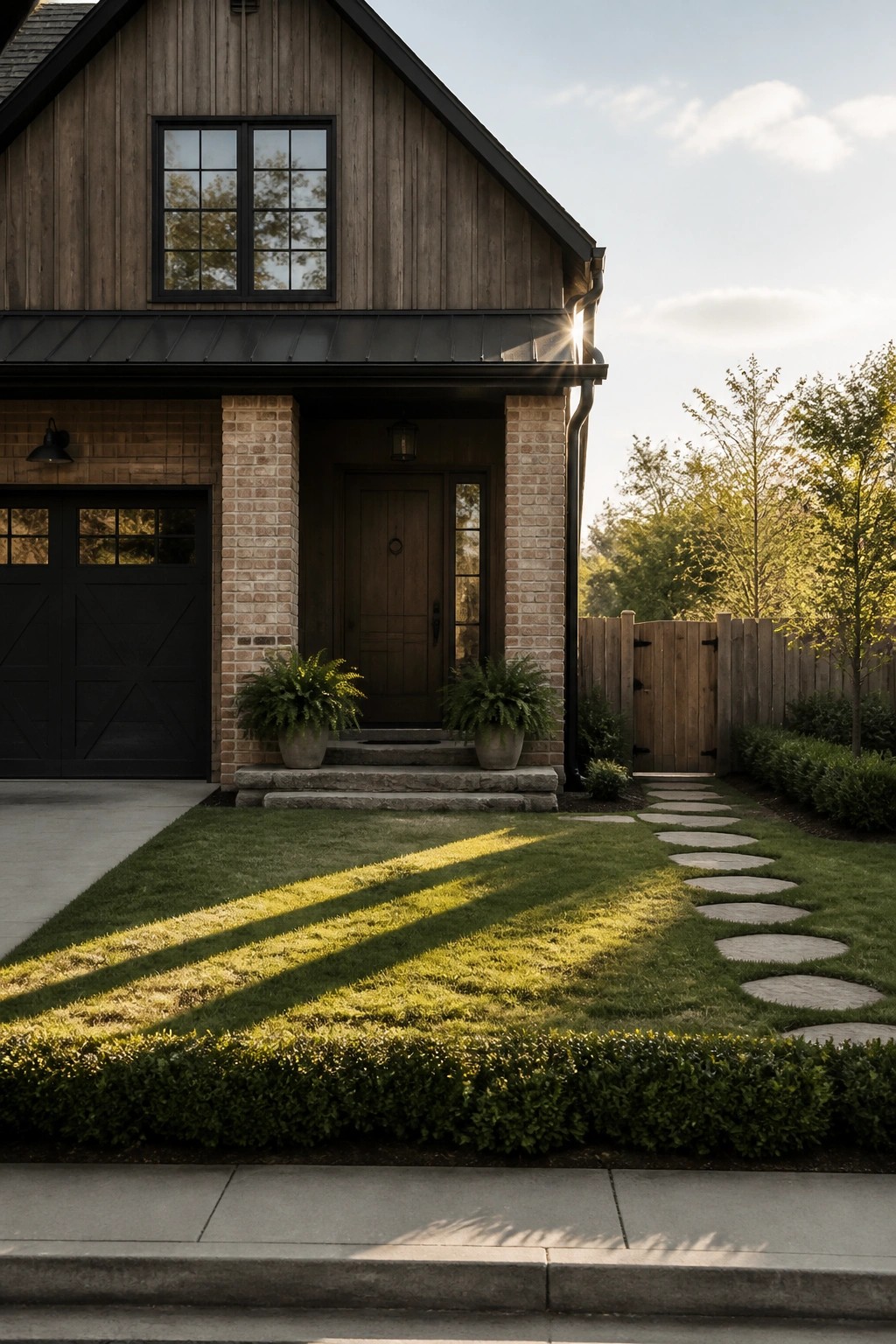
Reclaimed brick adds real texture when used for columns or accents on a farmhouse exterior. It gives the front a settled, older look that pairs naturally with wood siding and keeps the whole house from feeling too new or flat.
Try it on homes with mostly wood or siding walls. Limit the brick to the entry area or a few key spots so it reads as an accent rather than a full wall. This approach works best on traditional or rustic builds where you want the facade to feel established without adding much ornament.
Mix Reclaimed Brick With Weathered Wood
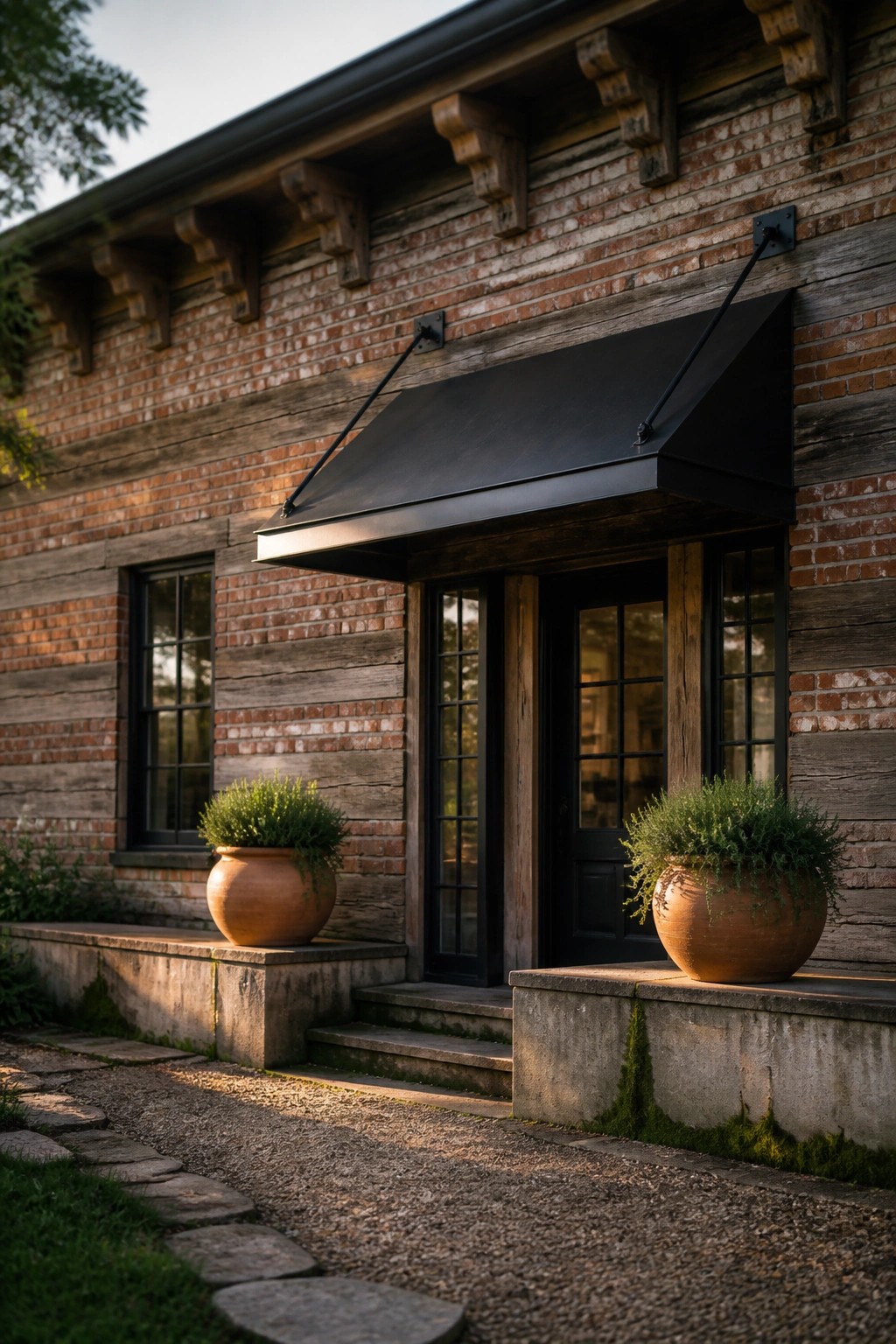
Reclaimed brick brings real texture and age to a farmhouse exterior when it is paired with older wood siding. The contrast between the rough brick and the faded timber keeps the look grounded instead of too polished.
This approach works best on homes that already have some wood trim or structural beams. Keep the brick on the main wall areas and let the wood show around windows and doors so the two materials play off each other without competing.
Reclaimed Brick on Gable Ends and Entry Walls
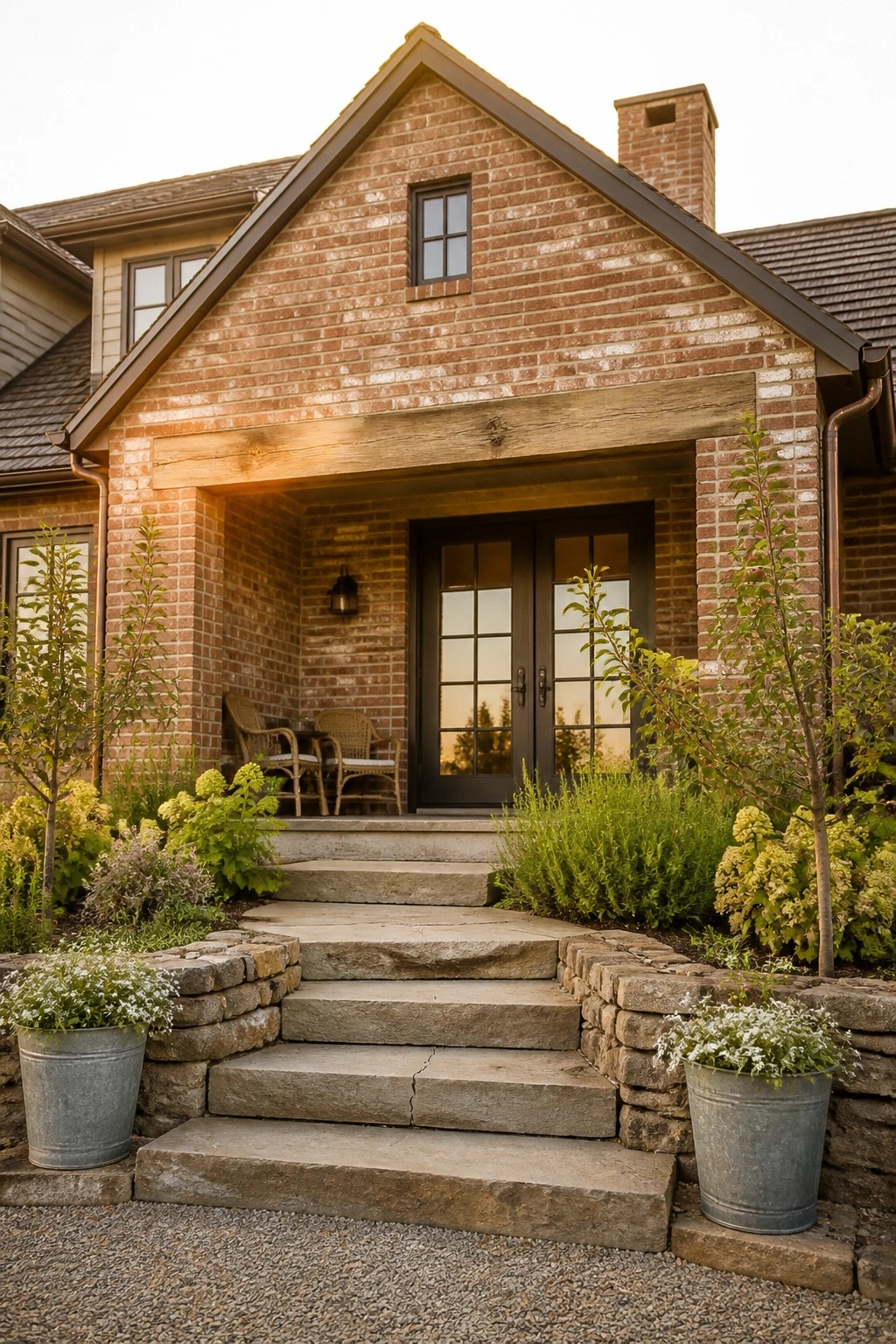
Reclaimed brick gives a farmhouse exterior that settled, timeworn look without any extra effort. The varied tones and texture make the whole house feel rooted in place rather than newly built.
This works especially well on gable ends and entry areas where the brick can be the main material. Use it on smaller homes or additions so the texture does not overwhelm, and keep trim and roofing simple so the brick stays the focus.
Minimal Trim With Reclaimed Brick Exteriors
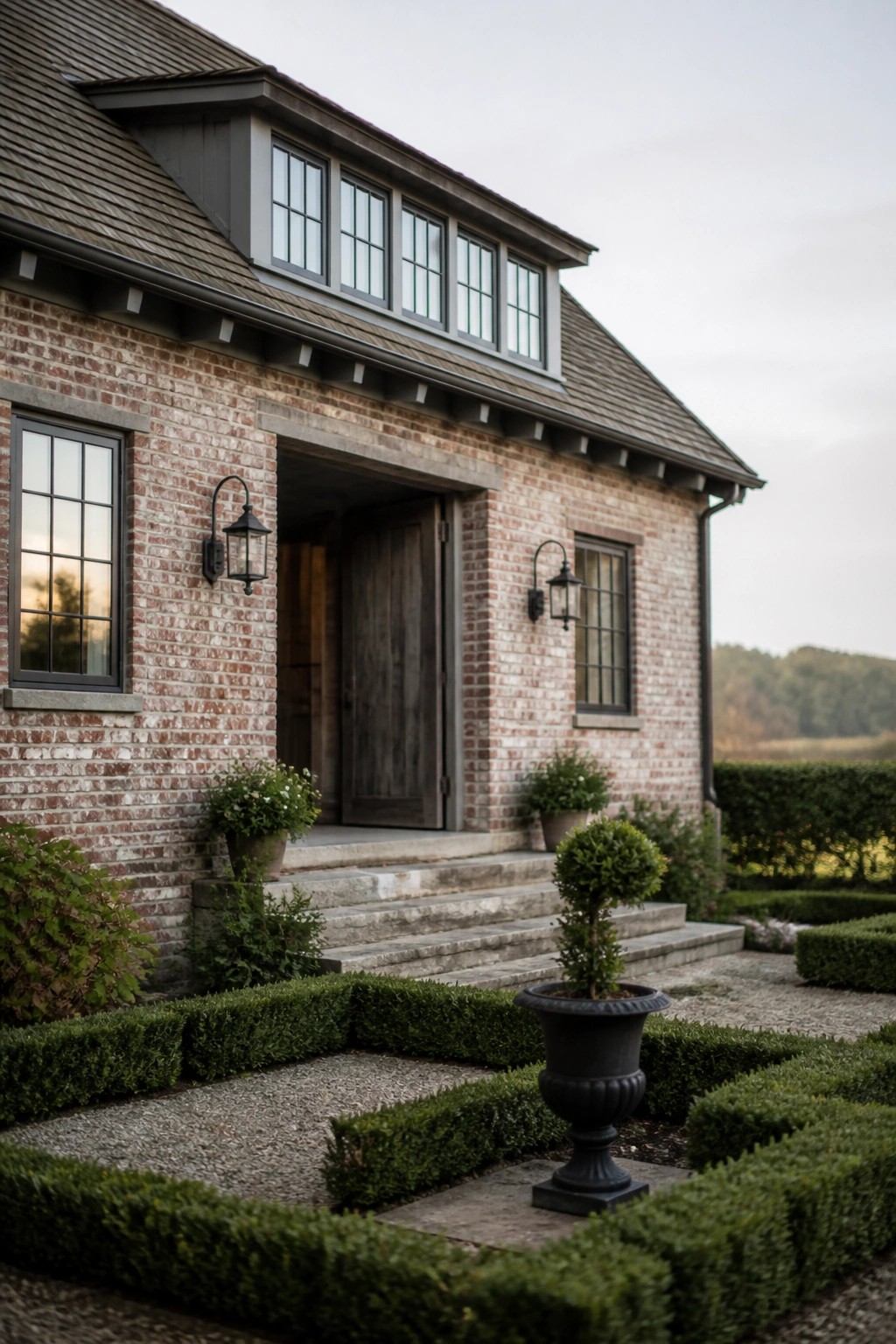
Reclaimed brick gives a farmhouse exterior real depth because the color and texture vary from one brick to the next. That natural variation keeps the house from looking too uniform or new.
It works especially well on simple shapes with a few wood accents, like a heavy front door. Keep the trim minimal so the brick itself carries the rustic feel.
Reclaimed Brick on Porch Bases
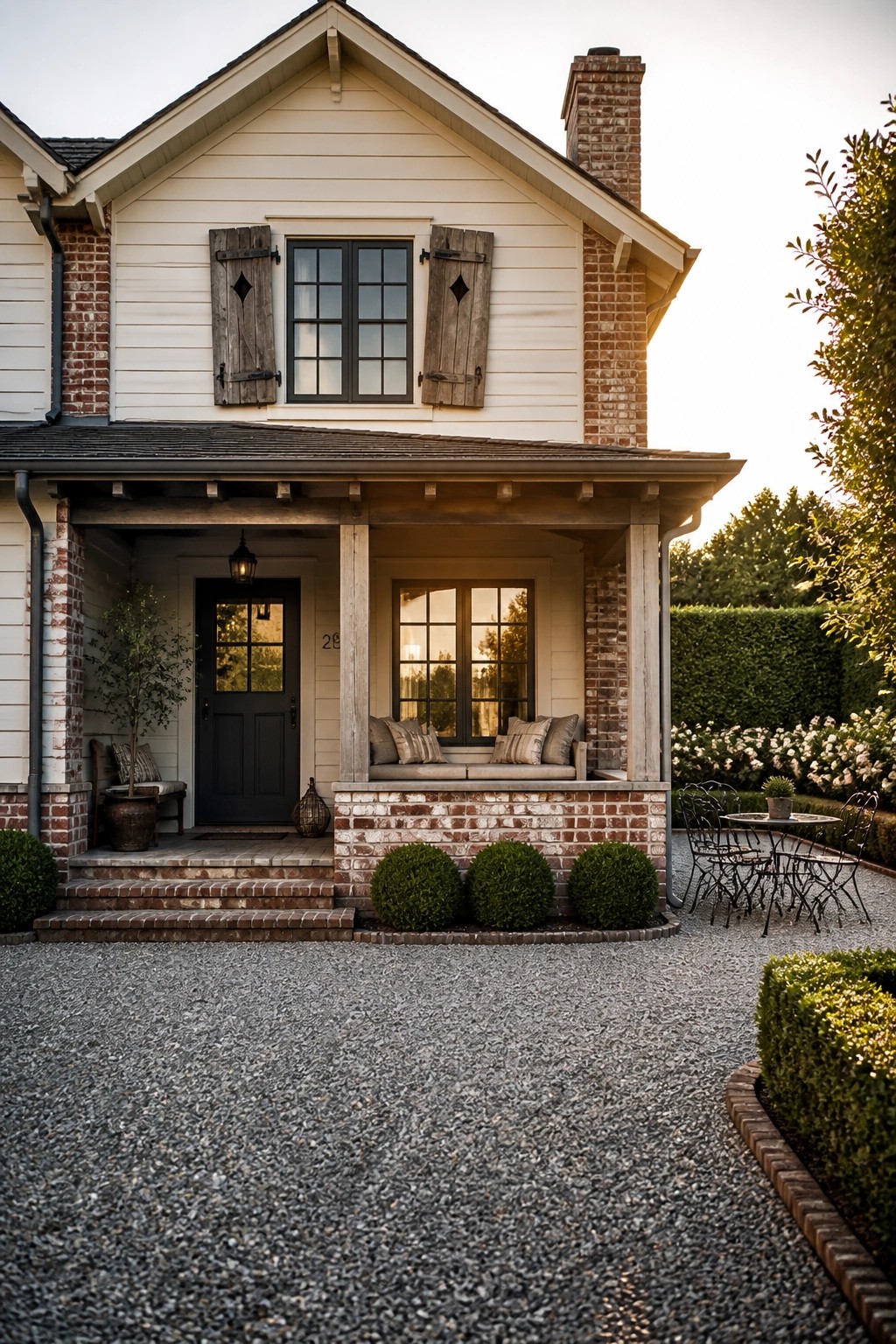
Reclaimed brick adds a solid, textured base that grounds the whole front of a house. It keeps the look rustic without covering every surface, which is why it works so well on farmhouses that already have white or light siding above.
This detail suits homes where the porch sits low to the ground. It looks best when the brick stays limited to the foundation wall and chimney, leaving the upper siding clean and simple.
Full Height Reclaimed Brick Exterior Walls
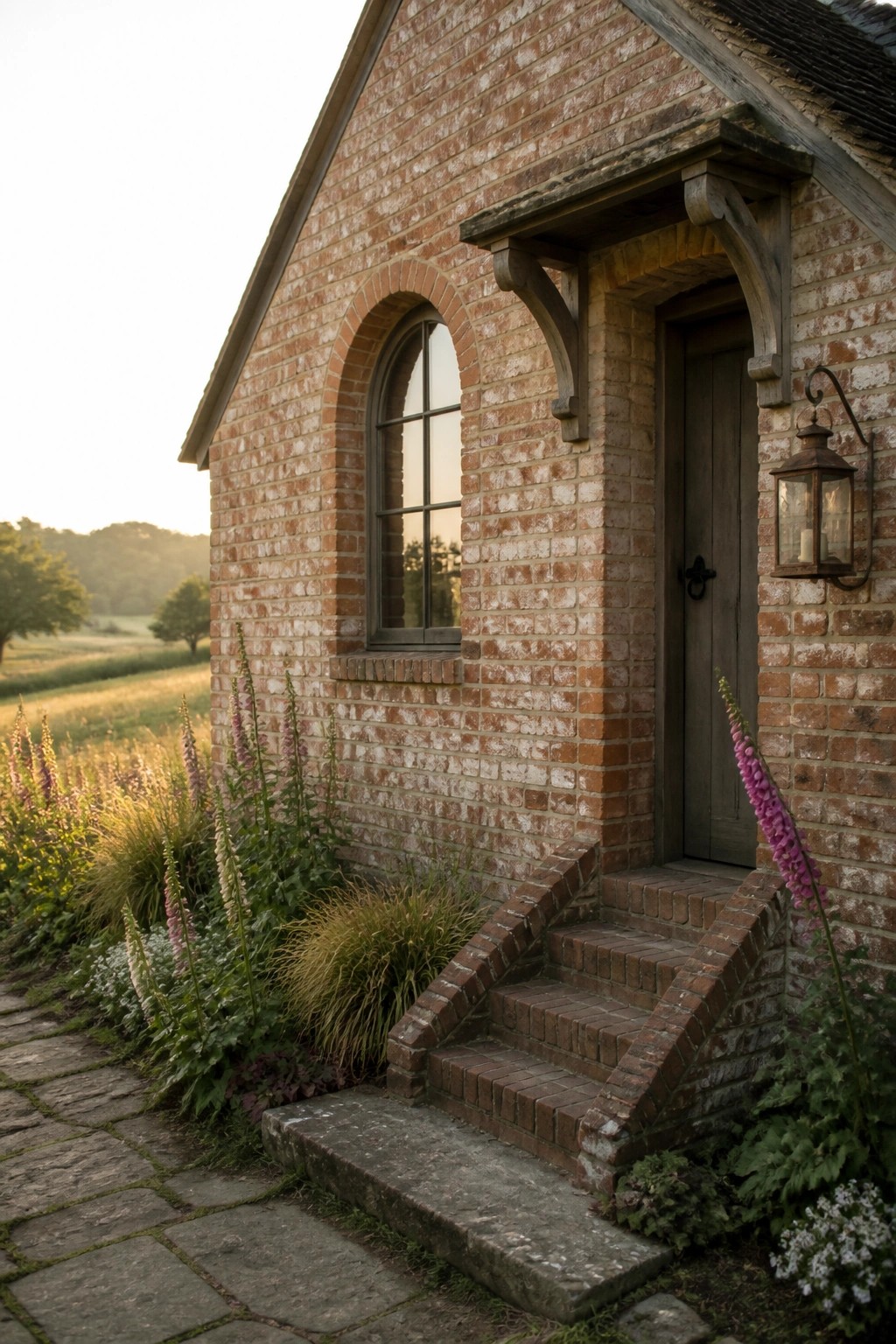
Reclaimed brick gives a farmhouse exterior that settled, lived-in look right away. The mix of colors and textures keeps the surface from feeling flat or new.
It suits homes that want a simple rural feel without extra trim or ornament. Use it on the full facade and keep windows and doors modest so the brick does the main work.
Reclaimed Brick With Dark Trim
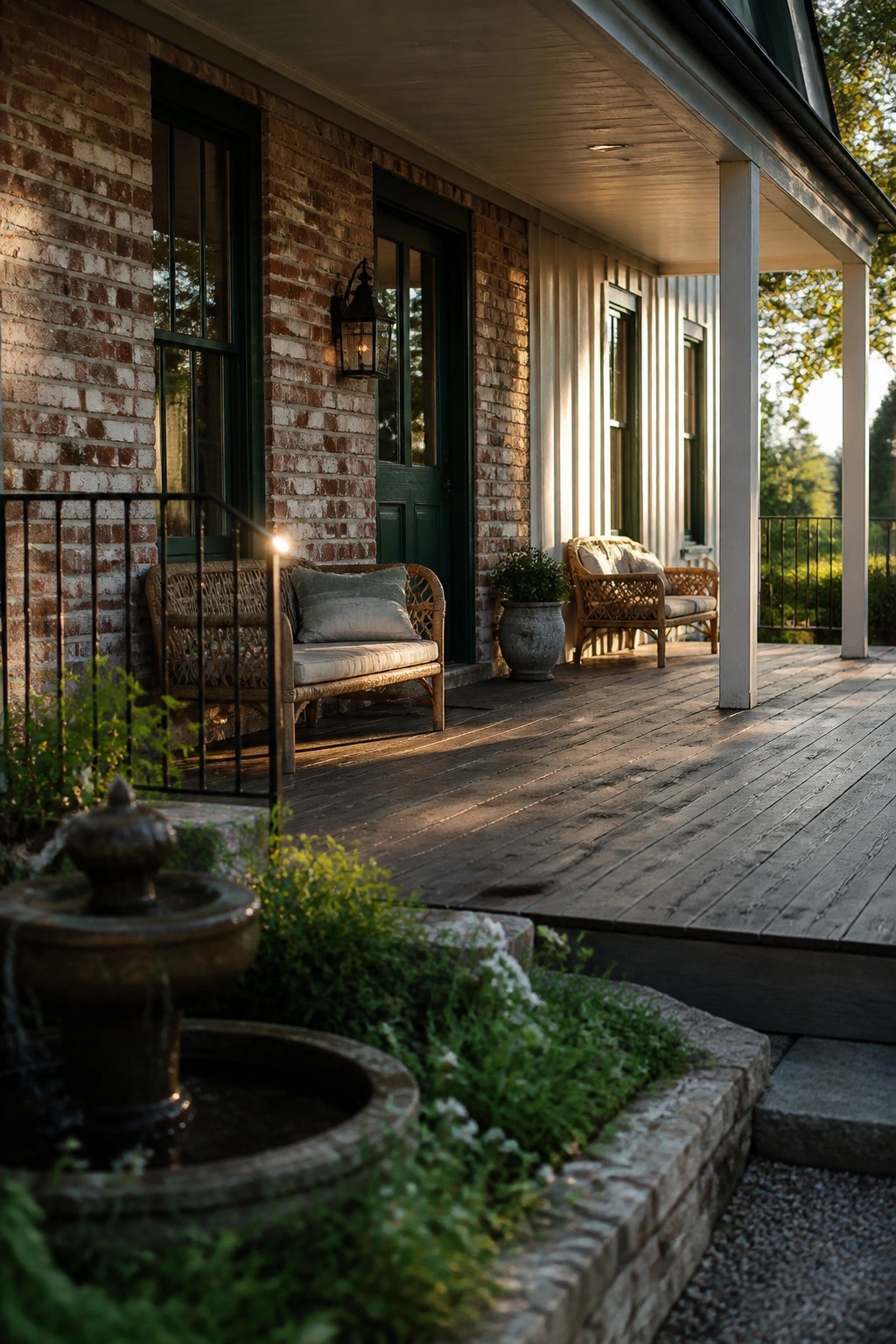
Reclaimed brick works well on a farmhouse because the uneven tones and old mortar lines add character right away. The surface feels settled and real instead of new and flat.
Use it across the main walls and pair it with dark green paint on the door and window frames. This mix suits homes that already have some age or want to look like they do, and it keeps the brick from feeling too heavy.
Use Reclaimed Brick For The Lower Facade
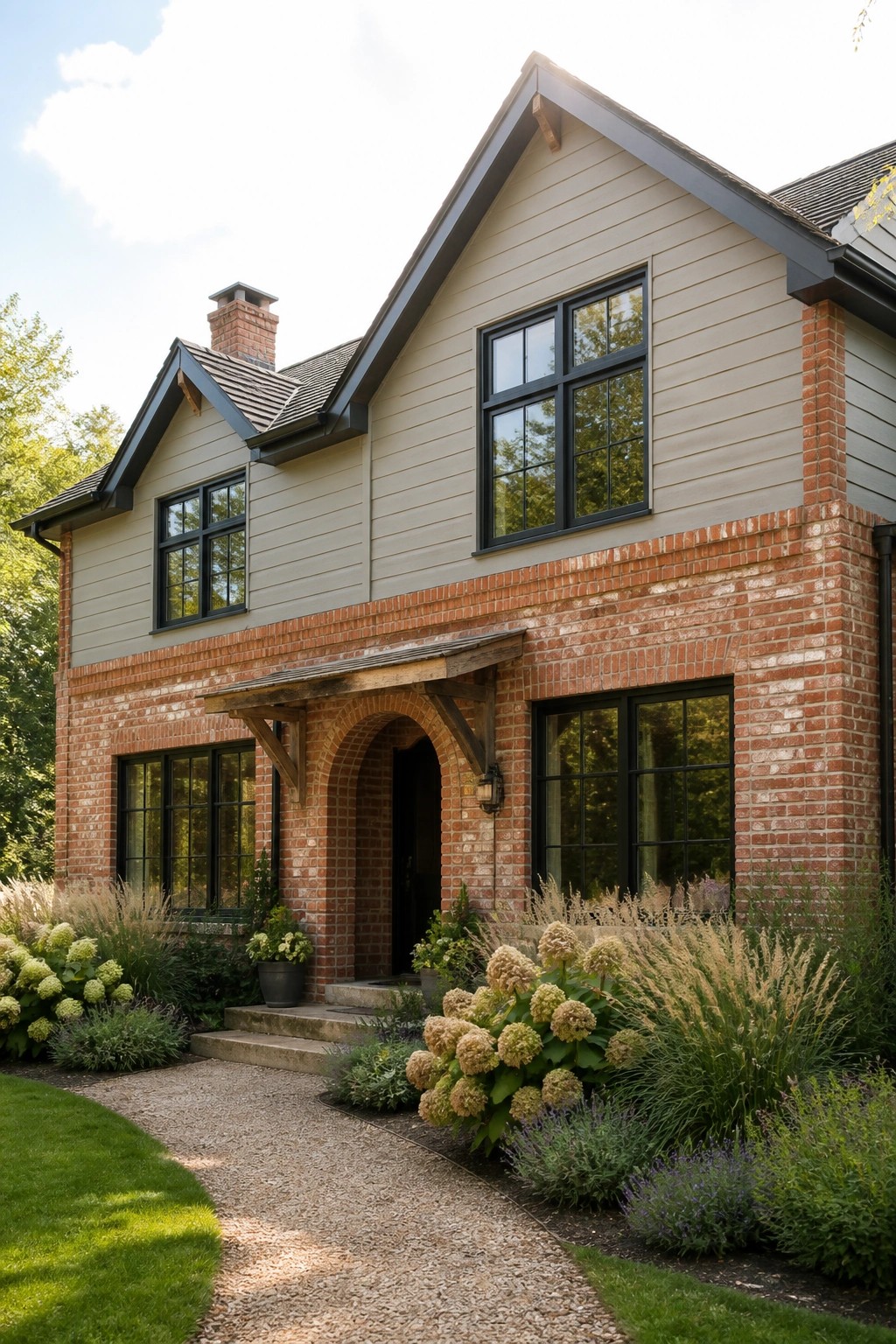
Reclaimed brick works well when it covers just the bottom portion of the house. It gives the structure a solid base without taking over the whole exterior. The contrast with lighter siding above keeps the look balanced and still feels like a real farmhouse instead of a new build trying too hard.
This approach suits two-story homes that need some weight at ground level. Keep the brick simple around the entry and windows so the arch or opening details stand out. It also helps the house settle into the landscape better than an all-siding or all-brick look.
Brick Steps With Matching Planters
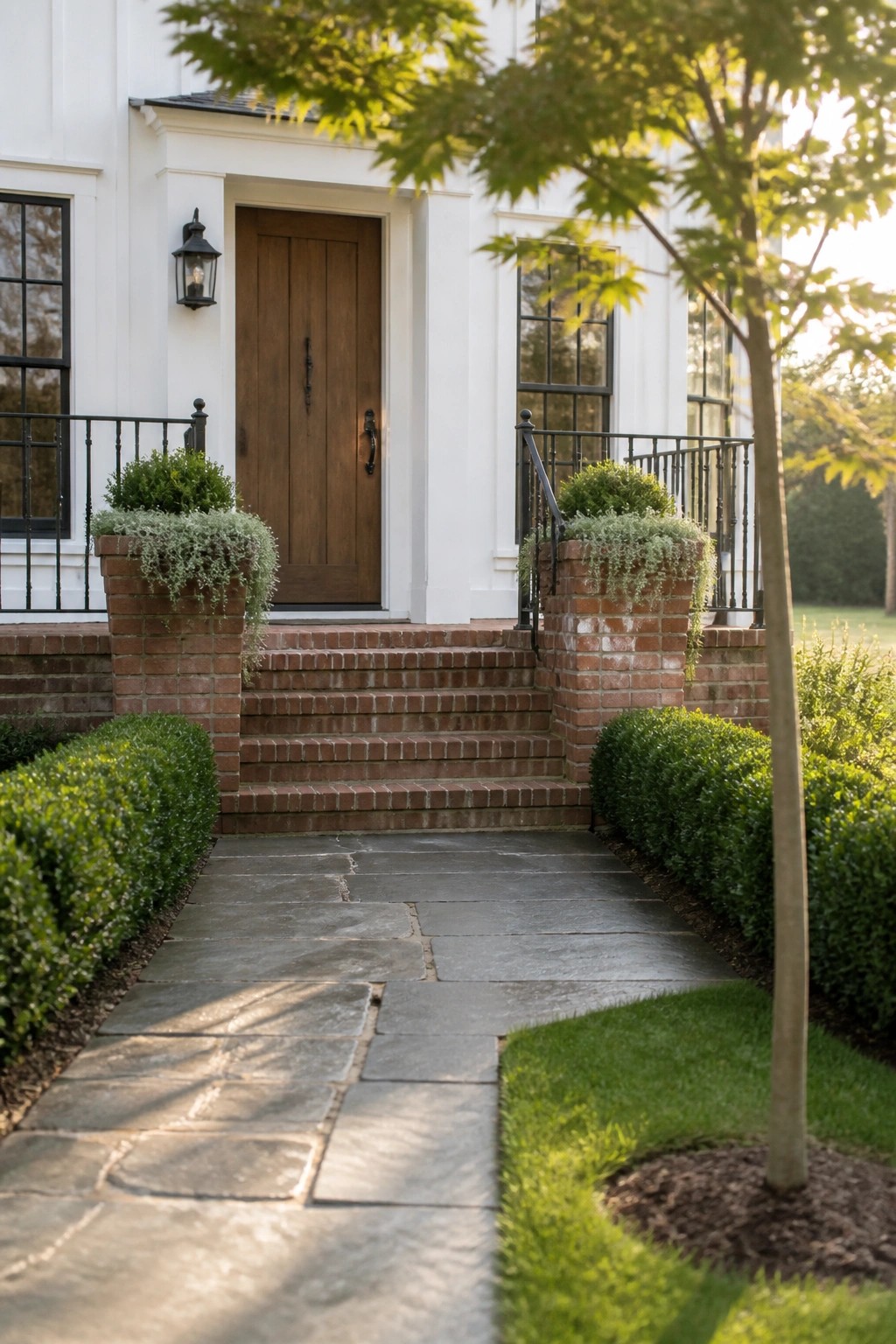
Brick steps give an entry a solid, grounded feel that works especially well on farmhouse homes. The material ages nicely over time and pairs with white siding without looking too heavy or formal. Building the planters right into the brick walls on either side keeps everything simple and connected.
This setup works best on homes where you want a modest amount of rustic detail at the front door. Keep the planting low so the brick remains the main feature, and match the brick tone to any other masonry on the house so the look stays cohesive rather than busy.
Reclaimed Brick With Metal Roof Farmhouses
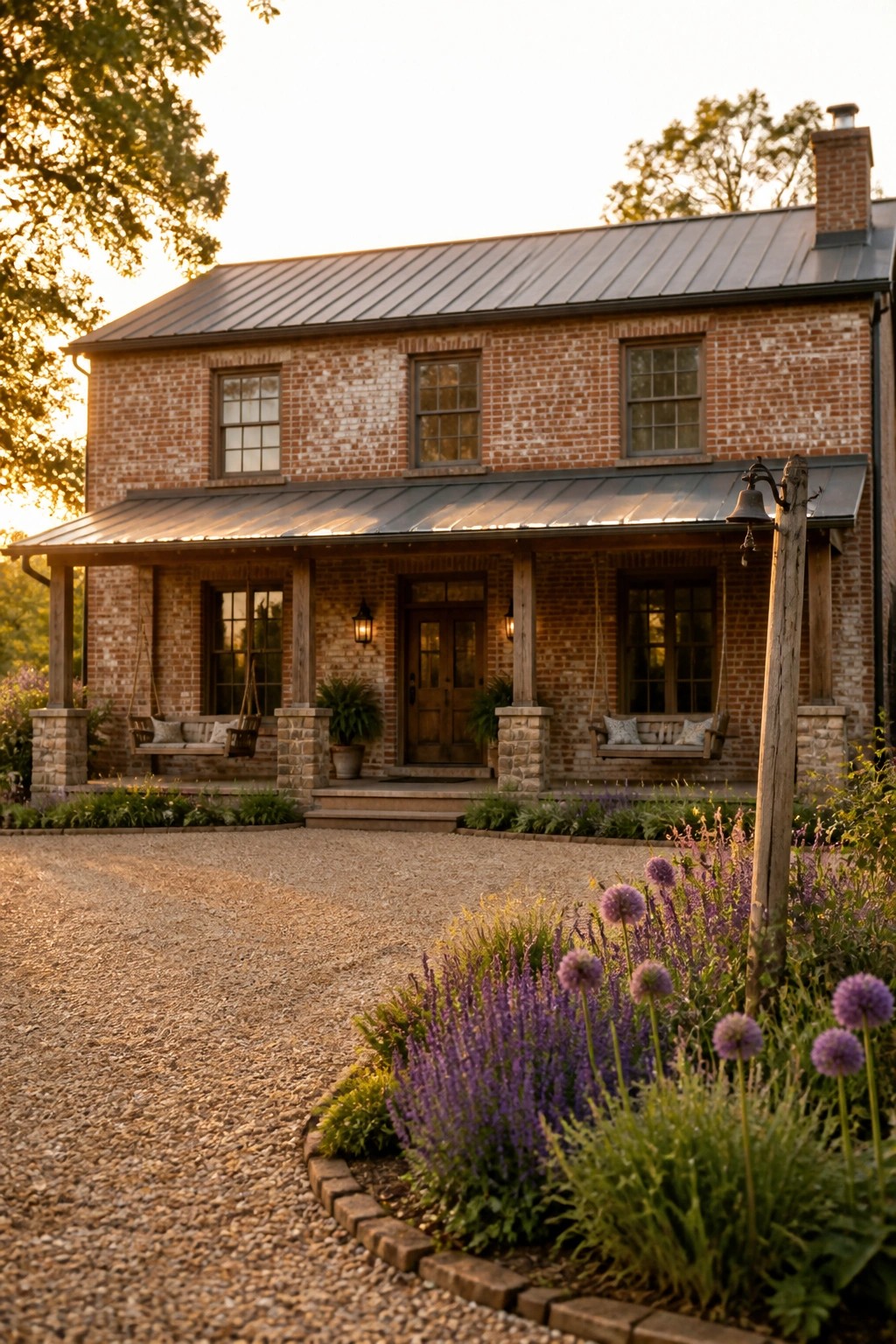
Reclaimed brick gives a house that settled, lived-in look without trying too hard. The uneven tones and old mortar lines add character that new brick just does not have, especially on a simple two-story shape with a metal roof.
It works best on homes that keep the rest of the exterior fairly plain. Let the brick carry the weight and use wood posts or trim on the porch to balance the texture. Avoid overdoing the landscaping right up against the foundation if you want the brick to stay the main feature.
Frequently Asked Questions
Q: How do I find reclaimed bricks without driving all over the state?
A: Start with demolition crews working on old barns or warehouses near you. They often sell bricks by the pallet at low prices if you pick them up yourself. Sorting through a few loads takes time but gets you the right mix of colors and textures.
Q: Will these bricks stay solid through freeze and thaw cycles?
A: They hold up well once installed with the right mortar. Choose a mix designed for historic masonry and leave small weep holes at the base so moisture escapes. Check the wall once a year and tuck in any loose spots before winter hits.
Q: Can I add reclaimed brick to just one side of my house?
A: Yes. Run it along the front facade first to test how the tones play against your existing siding. The contrast often looks intentional and adds depth without wrapping the whole exterior.
