

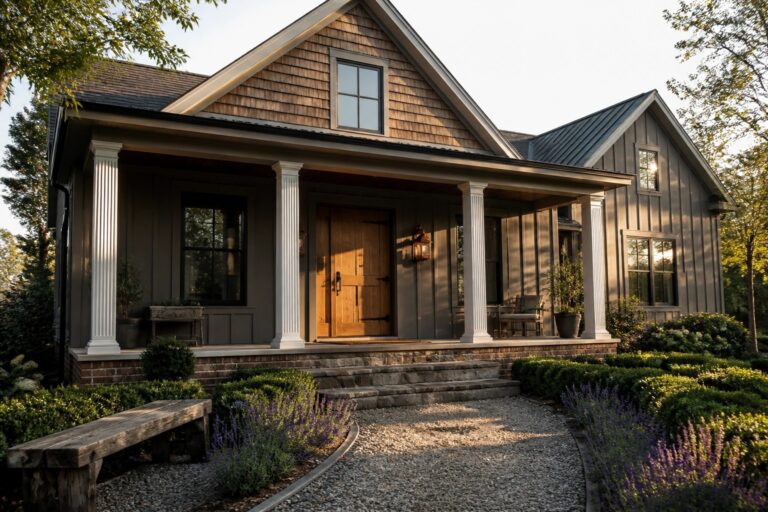
When I look at farmhouses around here, the ones that feel settled usually get the mix of gray siding and brick just right so nothing on the front looks too heavy or too plain.
The way those materials meet around windows and corners often decides whether the whole house reads as one piece or just a collection of parts.
I have found that checking the contrast from the street, not just in photos, shows whether the balance will hold up once the sun hits it.
Small shifts in how much brick wraps the base can change the whole look more than most people expect.
Trying one of these setups on a side elevation first usually reveals what will actually work once the roof and entry are in place.
Gray Siding Above a Brick Foundation
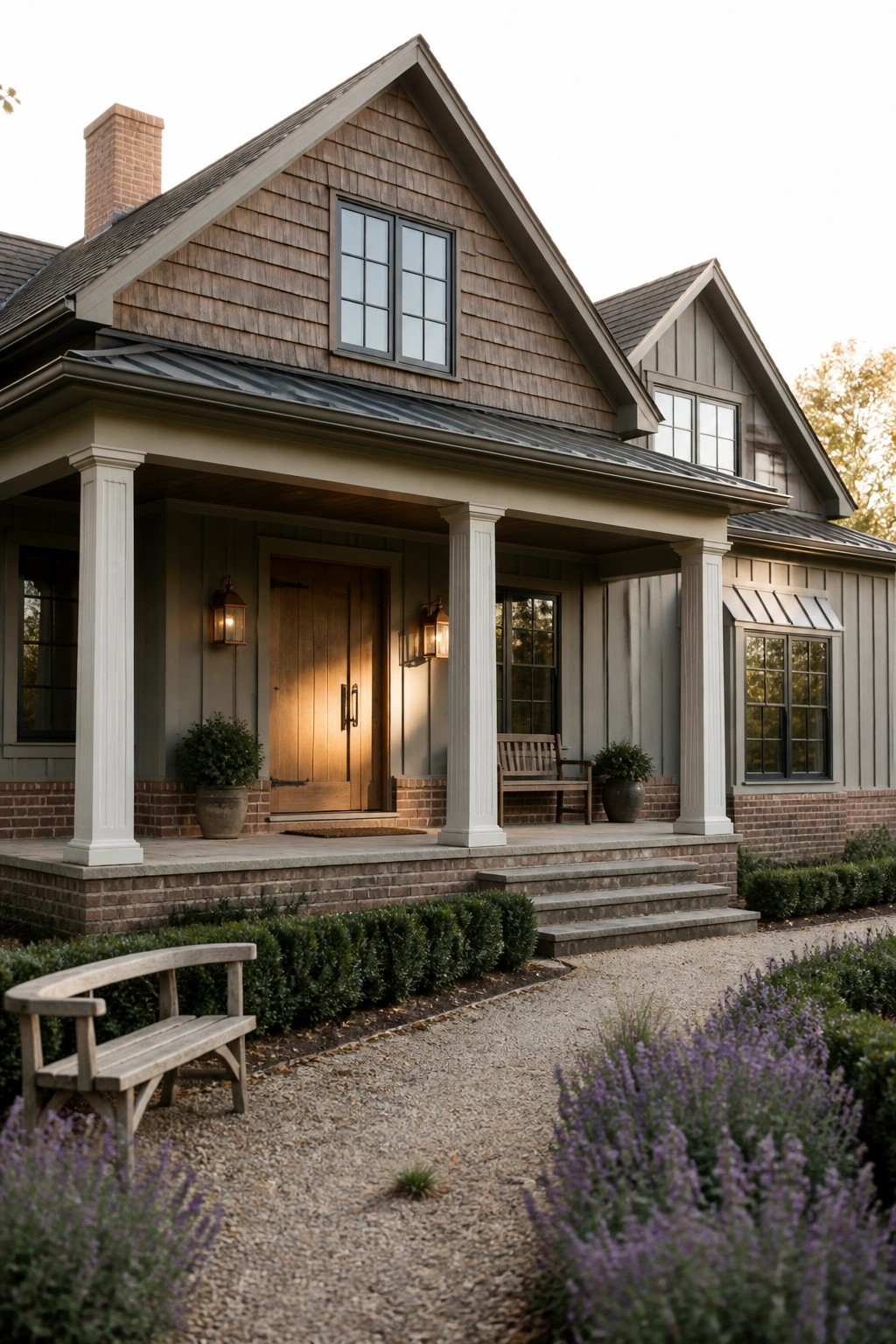
Many people choose this mix because the brick gives the lower part of the house some weight while the gray siding keeps the upper sections from feeling heavy. It creates a simple contrast that still reads as classic rather than busy.
This approach works best on farmhouses or similar styles where you want the foundation to look solid. Keep the brick low, around the porch and base, and let the siding take over above so the two materials stay balanced.
Let a Brick Chimney Add Warmth to Gray Siding
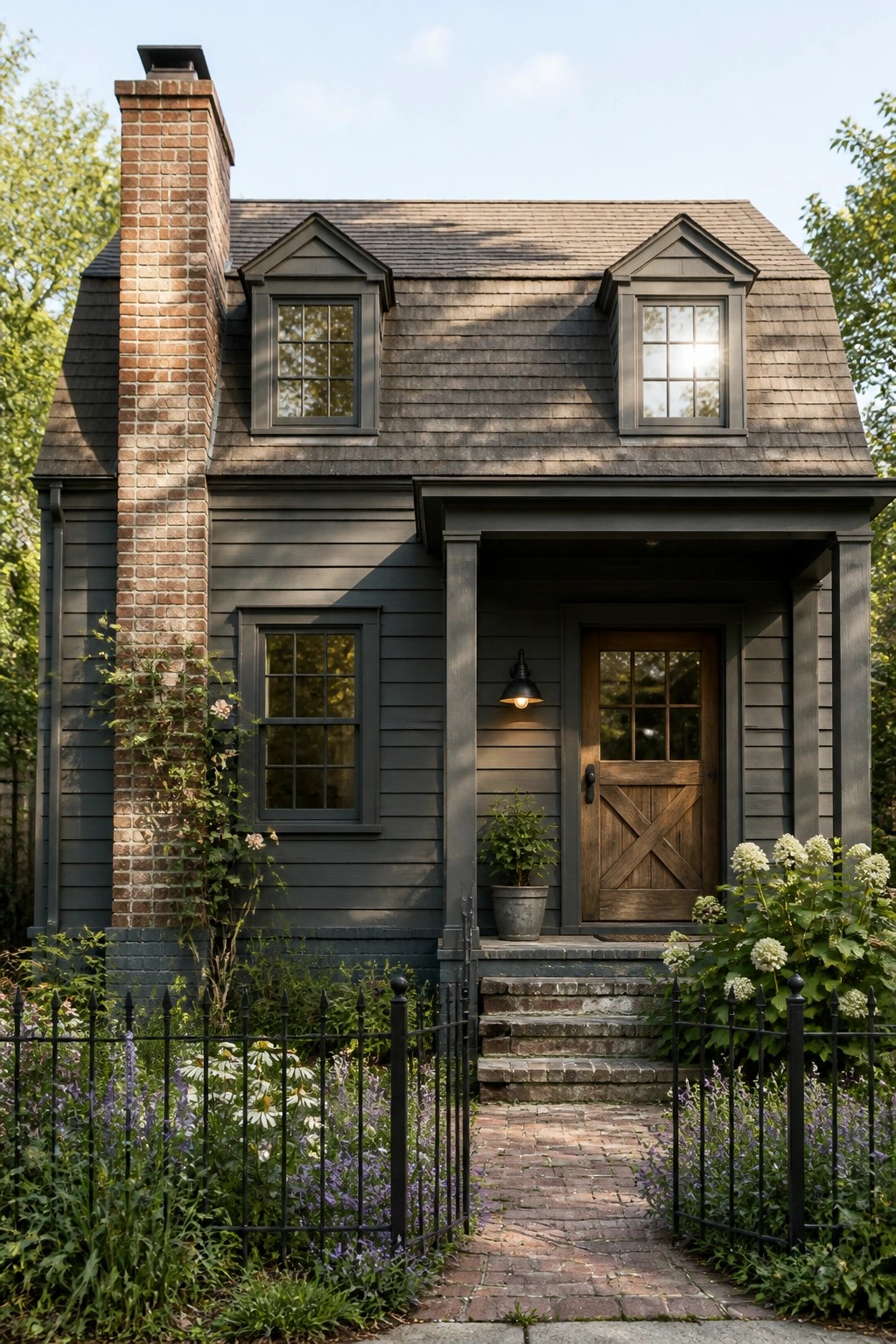
Dark gray siding can look a little flat when it covers most of a house. A tall brick chimney breaks up the color and gives the facade something solid to lean on.
This approach works best on smaller farmhouses or cottages where you want contrast without adding more materials. Keep the brick in a warm red or brown tone and let the rest of the exterior stay simple.
Brick Patios That Work With Gray Siding
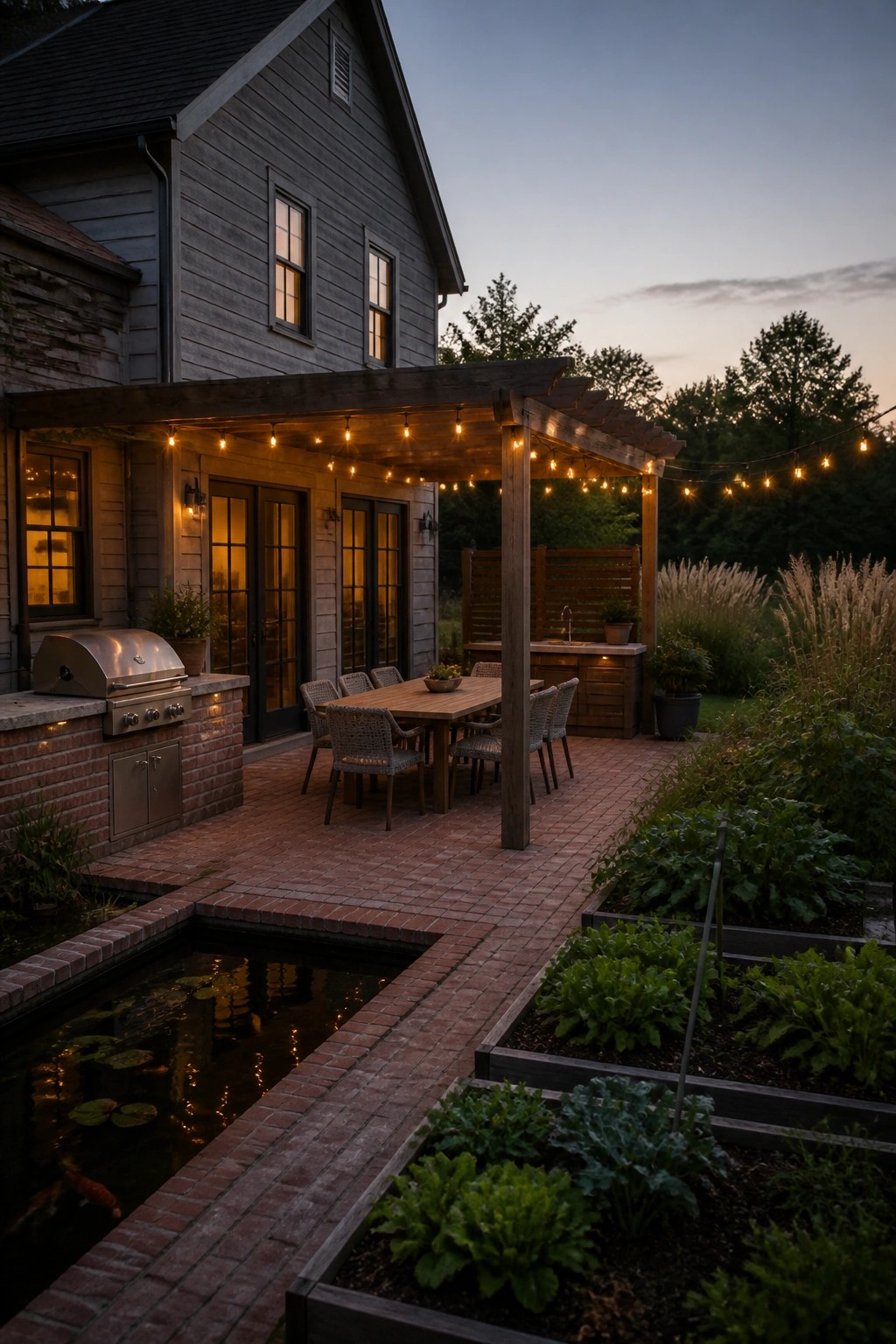
Brick paving gives outdoor spaces a solid base that plays well against gray siding. It adds a bit of warmth and keeps the whole area from feeling too cool or flat, especially when the house itself stays simple.
This approach works best on farmhouses where you want the backyard to feel connected to the main structure without matching it exactly. Keep the brick mostly on the ground and any built-in cooking areas, then let the siding stay the main surface above.
Black Metal Awnings for Entry Contrast
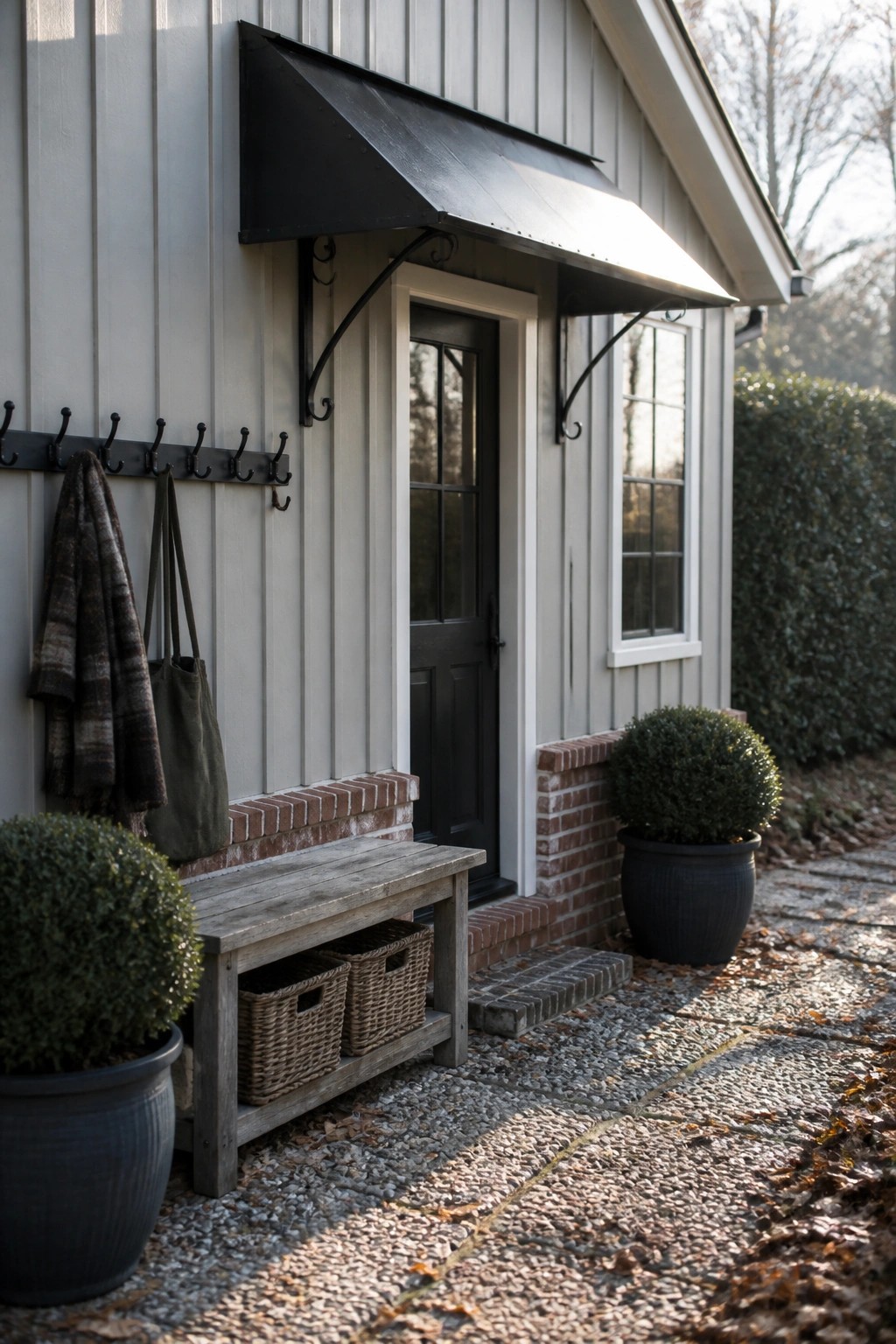
A black metal awning gives a gray sided farmhouse a clear focal point at the door. It breaks up the flat wall plane and adds just enough weight without needing extra trim or color changes.
This approach works best on simpler facades where the siding stays light and the trim stays white. Match the brackets and hardware to a dark door so the whole entry reads as one intentional move rather than scattered accents.
Gray Siding With Brick Accents
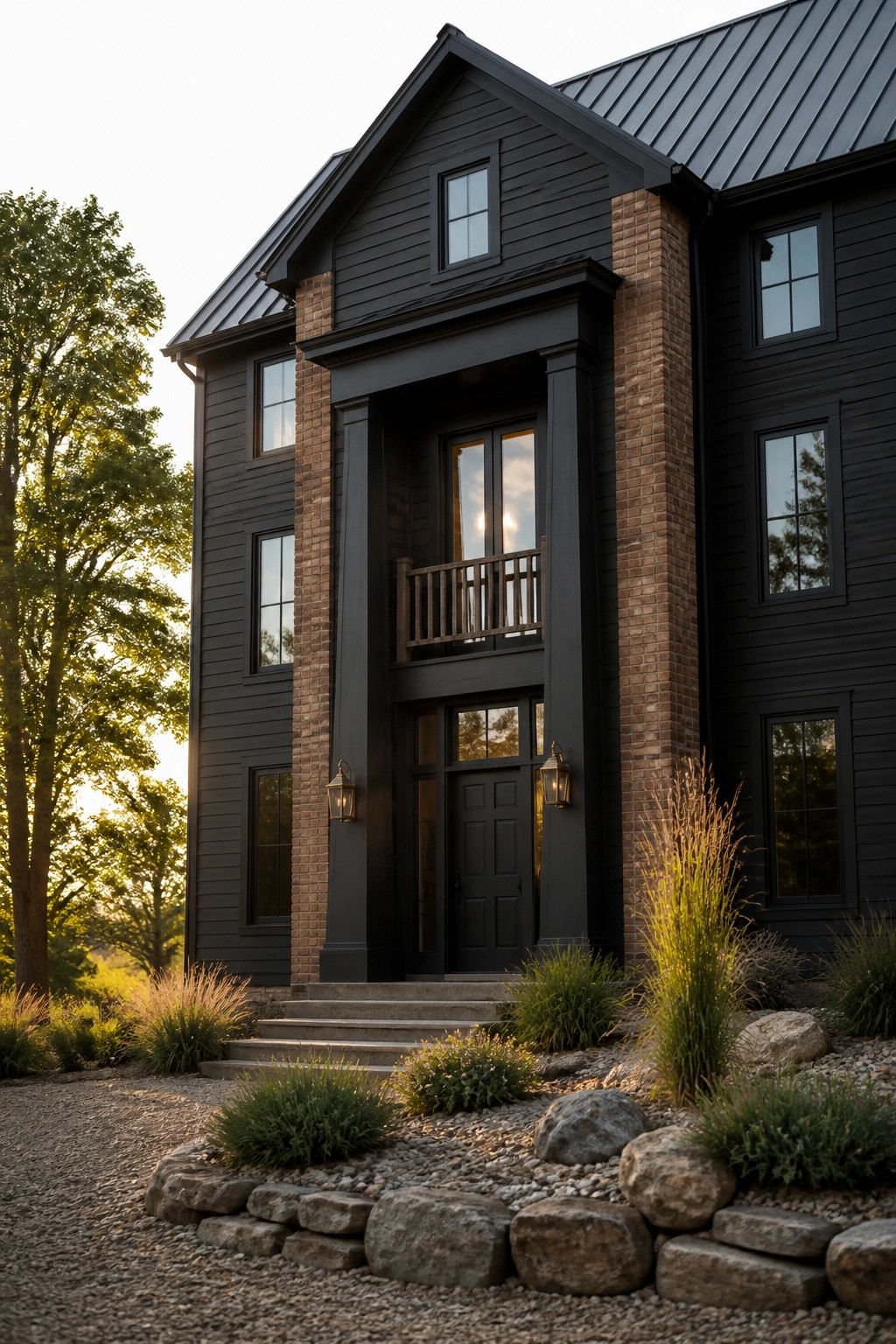
Dark gray siding gives a farmhouse a clean, modern base, but it can feel a little flat on its own. Adding brick on the columns and around the entry breaks up the surface and brings in some natural texture that keeps the whole look balanced.
This mix works best on homes with a strong central entry or tall porch supports. Keep the brick limited to those key spots so the gray siding stays the main color. It suits both new builds and updates where you want contrast without adding too many extra materials.
Brick Porch Walls Beneath Gray Siding
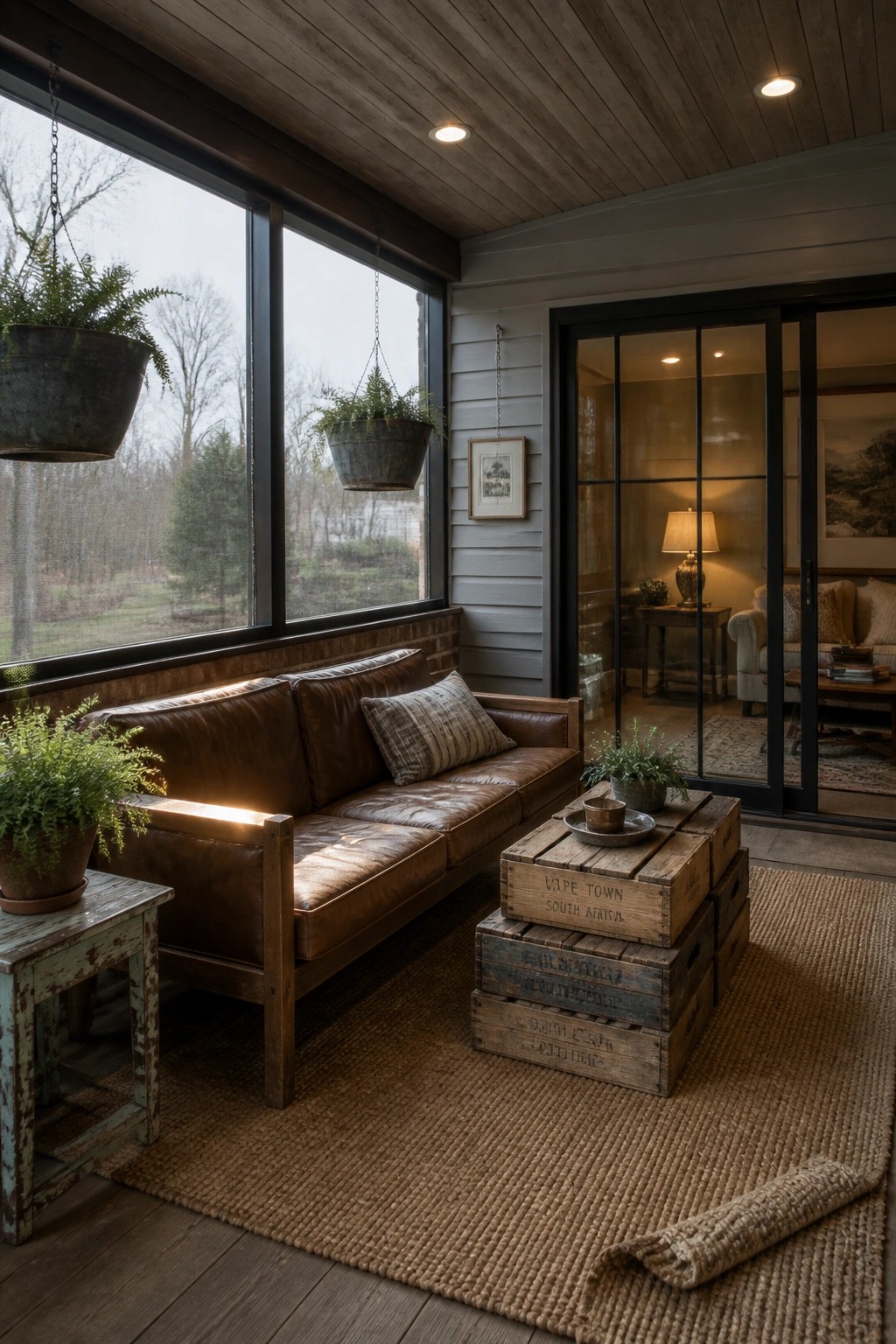
Brick at the base of a porch wall gives gray siding a grounded look that feels steady rather than flat. It adds just enough warmth and texture to keep the siding from looking too plain on its own.
This works best on farmhouses where the porch sits low and you want the materials to tie together without extra trim or paint. Keep the brick simple and let the siding run above it for the cleanest result.
Brick Porch Columns With Gray Siding
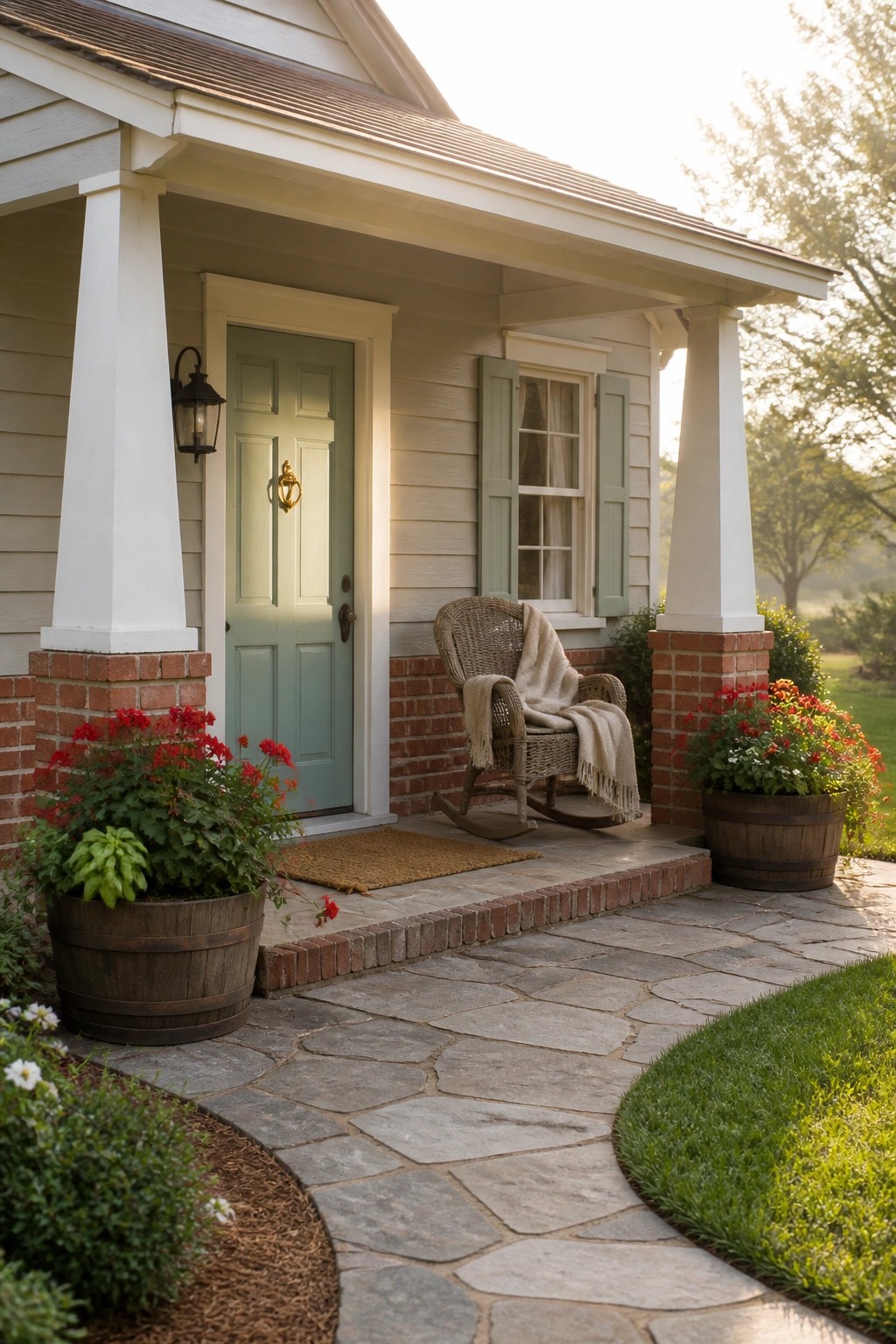
Many older farmhouses use brick along the lower walls and porch columns to keep gray siding from looking too light. The brick gives the house a solid base and creates a simple contrast that still feels balanced.
This works best on homes that already have some traditional details like white trim or a covered porch. Keep the brick limited to the foundation area or column bases if you want the look without a full material change.
Gray Siding With Brick Creates Simple Contrast
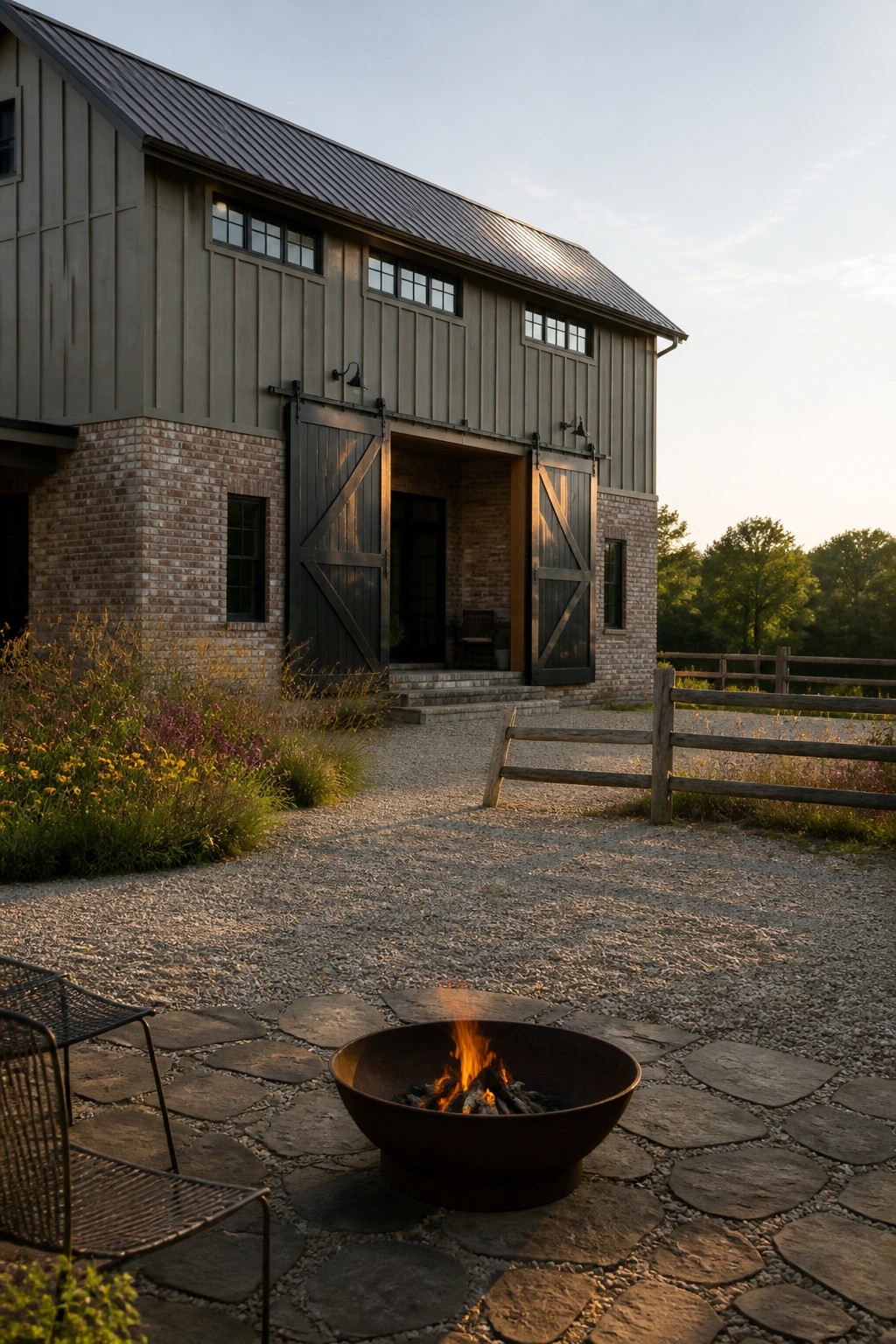
Many farmhouses look better when gray siding sits above a brick base instead of running all the way down. The brick adds weight at the bottom while the gray keeps the upper walls lighter and less bulky.
This mix works best on homes with straightforward rooflines and large doors. Use dark trim and hardware to connect the two materials so the change in texture feels intentional rather than abrupt.
Brick Borders Around the Pool
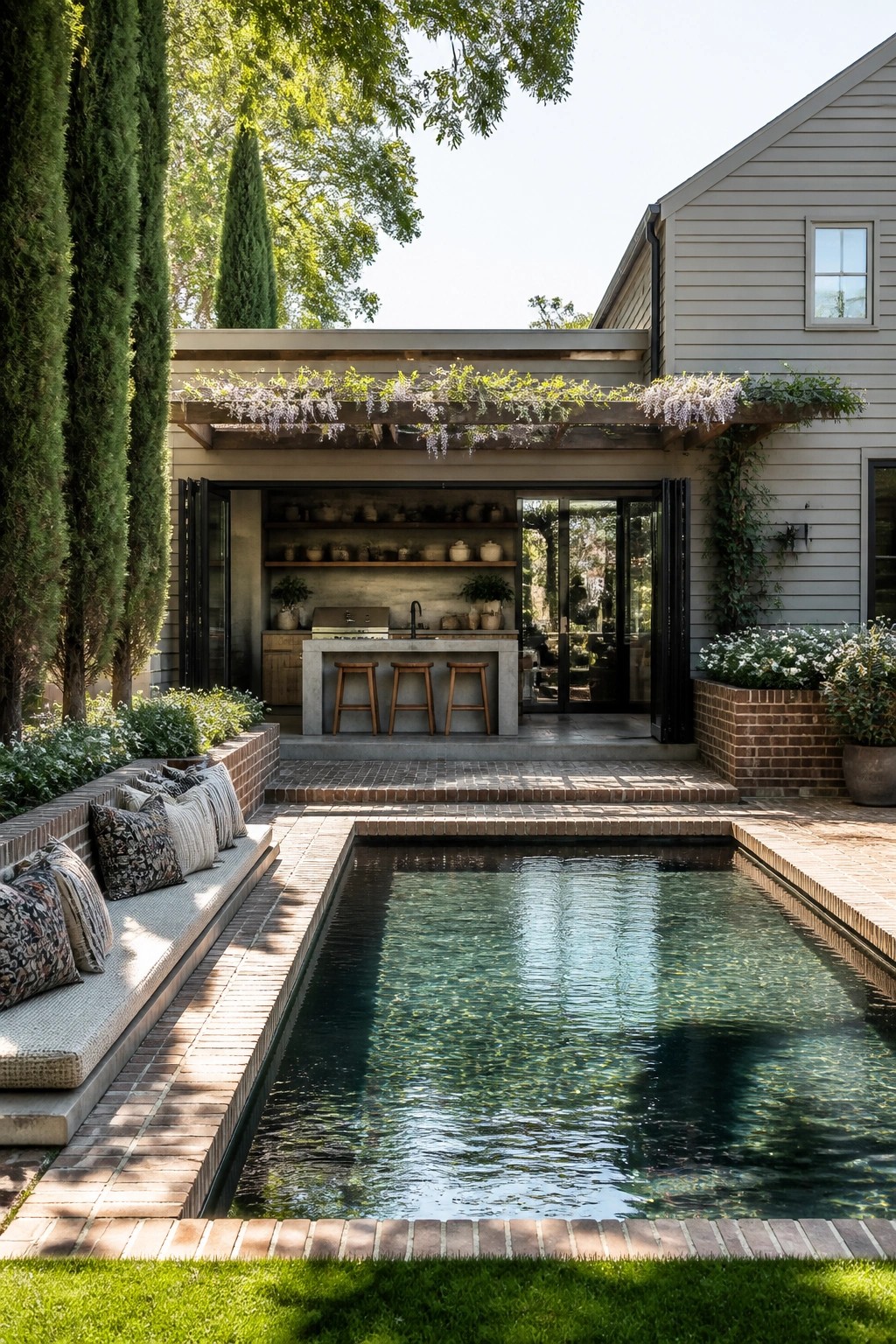
Brick works well as a simple way to frame a pool and tie it back to a gray sided house. It adds a solid base that keeps the outdoor space from feeling too light or disconnected from the main structure. The edging here runs along the pool and into the planters, which helps the whole area feel like part of the house rather than something added later.
This approach suits farmhouses that already use brick somewhere on the exterior. It works best when the brick stays low and contained so it does not compete with the siding above. Keep the scale modest and let the gray siding stay the main surface.
Brick Foundation With Gray Siding
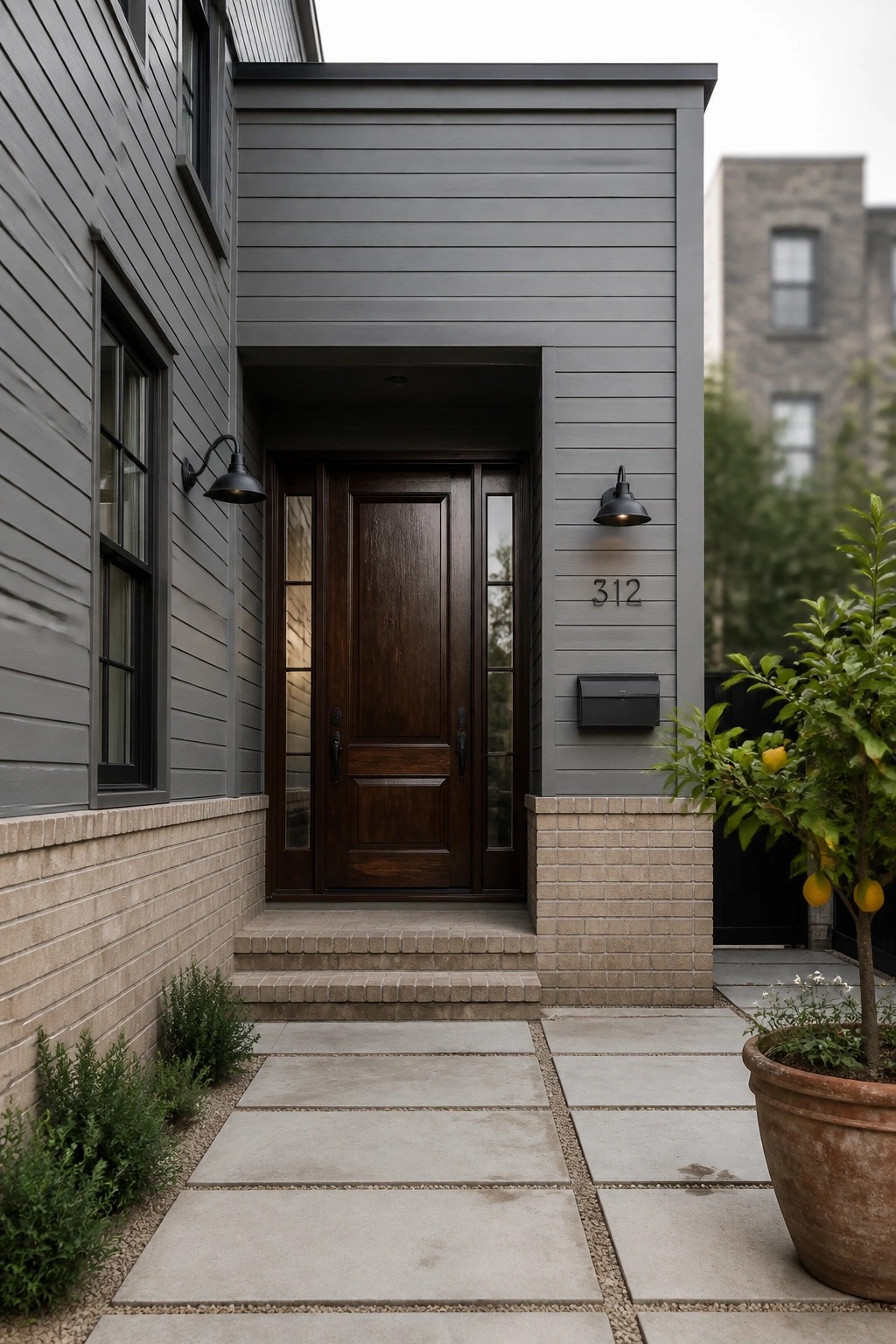
A brick base under gray siding gives the house a grounded look without making the whole exterior feel heavy. The lower brick section adds weight where it is needed most and lets the siding stay clean and simple above it.
This mix works best on farmhouse styles where you want a bit of contrast but still keep things balanced. Keep the brick height modest so it supports the siding rather than competing with it.
Mixing Gray Siding With Brick For Balance
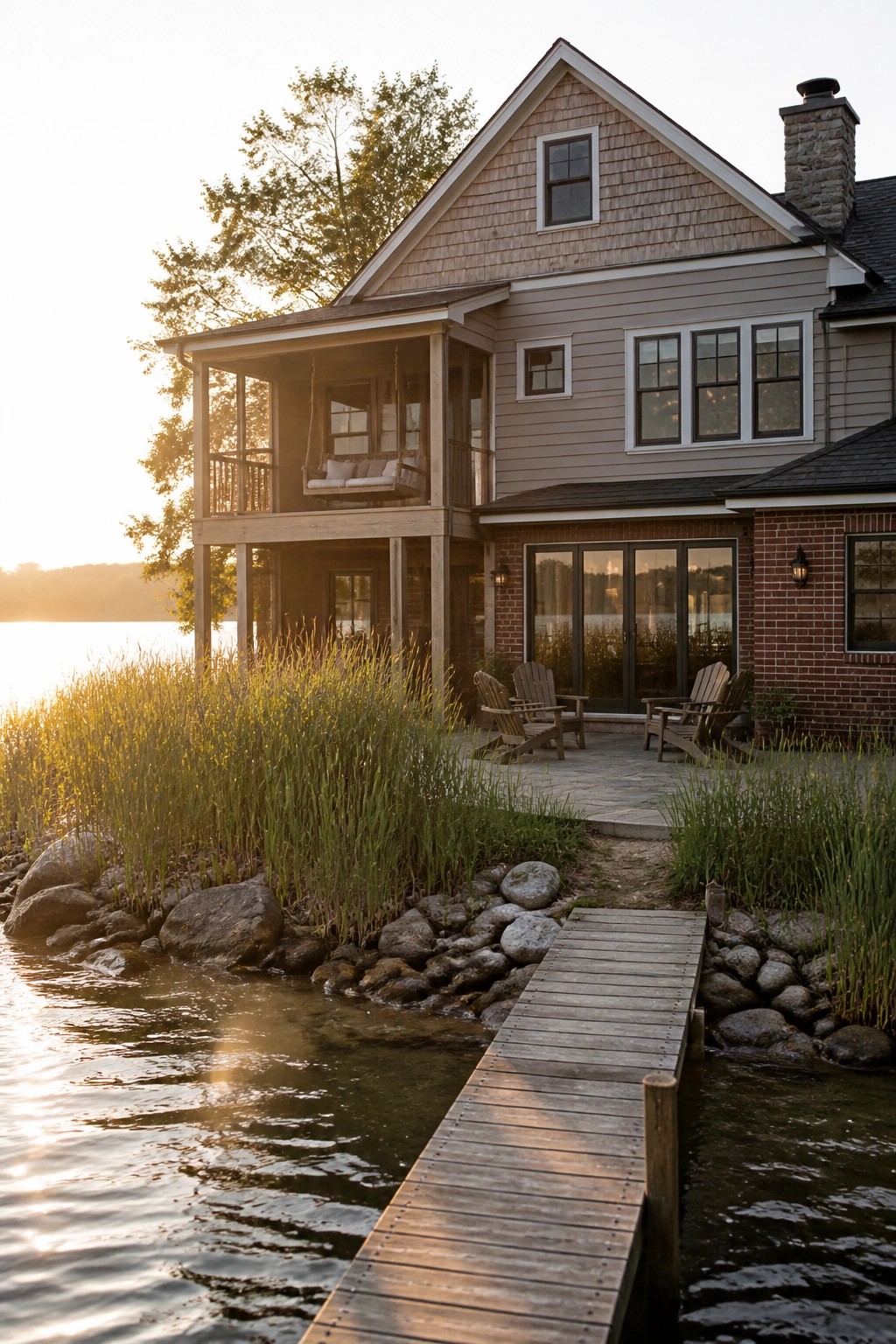
Gray siding paired with brick gives a farmhouse exterior a steady look without feeling too heavy or too plain. The lighter upper level keeps the house from sitting too low to the ground, while the brick base adds some weight and texture where it meets the landscape.
This mix works best on homes that sit close to water or open fields, since the gray reflects light and the brick handles moisture better at ground level. Stick to a mid-tone gray and let the brick stay natural so the two materials support each other instead of competing.
Gray Siding With Brick Gable Accents
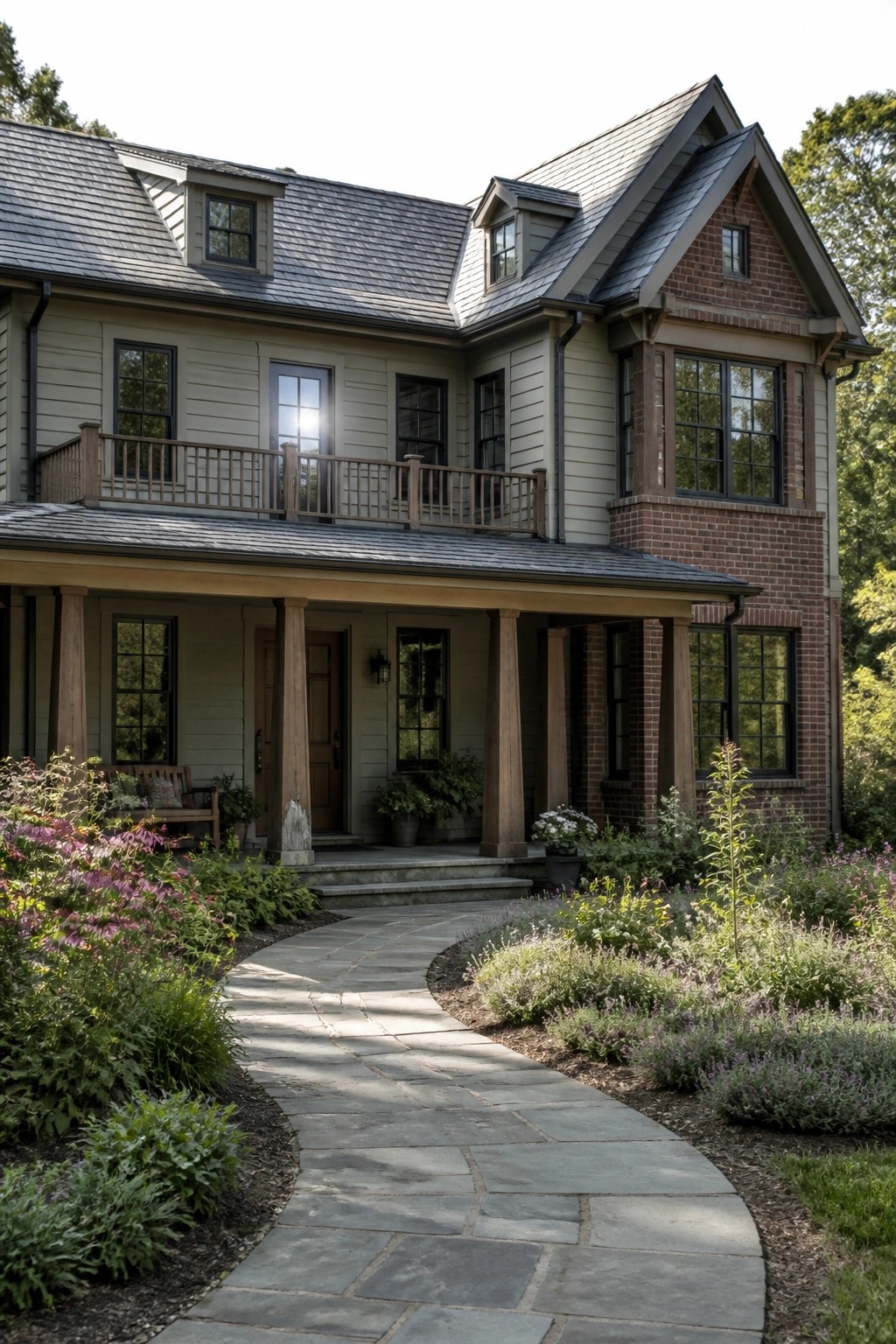
Gray siding paired with brick gives a farmhouse exterior some contrast without making it feel busy. The light siding keeps the overall look soft and bright, while the brick sections add weight and texture where it matters most, like on gables or lower walls.
This approach works well on homes that already have a traditional shape. Keep the brick to one or two areas so the siding remains the main surface. Too much brick can make the house feel heavier than intended.
Warm Brick Foundations Under Gray Siding
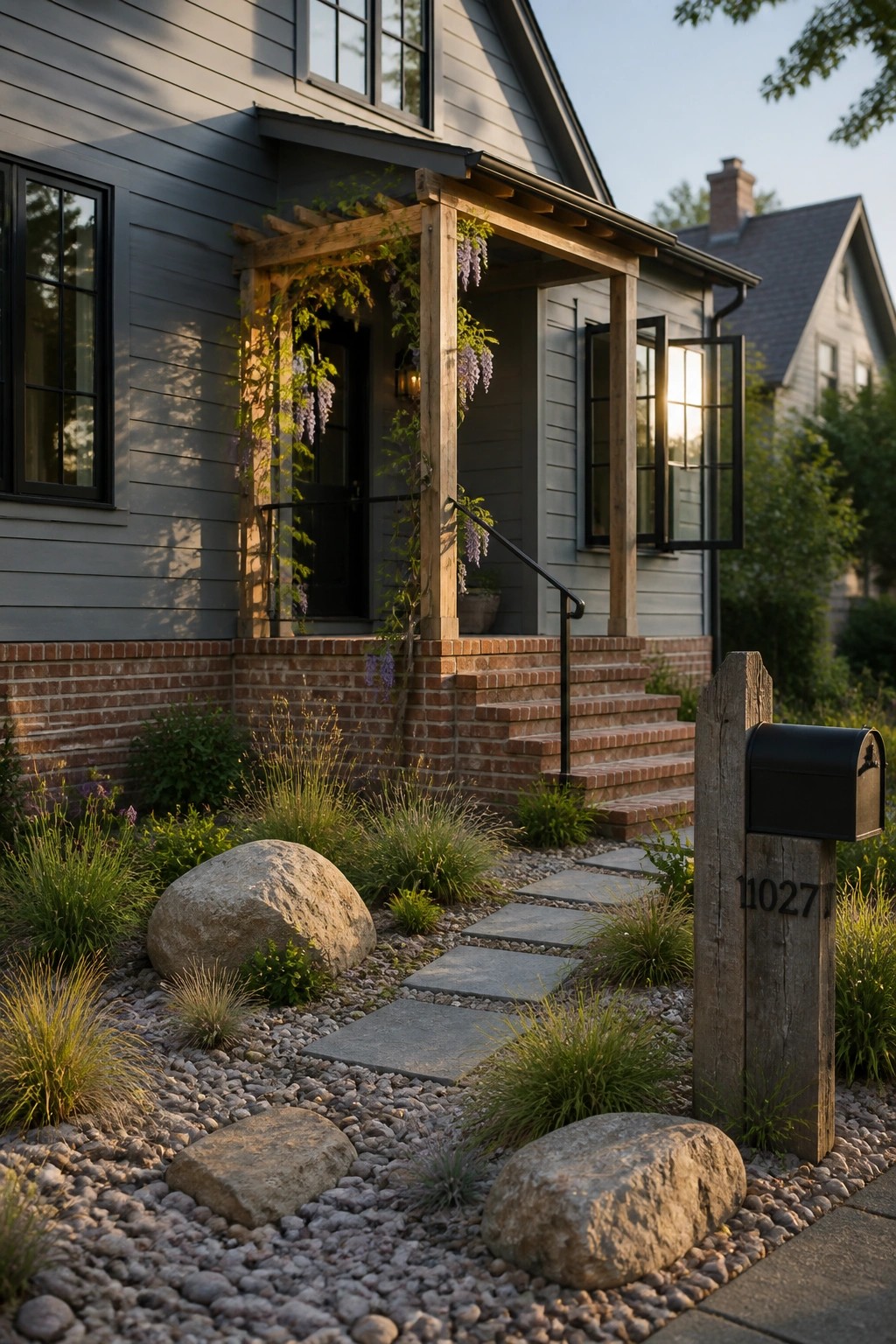
Many people like the look of gray siding sitting on a brick foundation because it gives the house a grounded feel without making the siding look too pale. The brick adds some weight at the bottom and helps the gray read as more balanced overall.
This approach suits older farmhouses or simpler new builds that already have brick steps or a chimney. Keep the brick color warm and the siding in a muted gray so the two materials support each other instead of competing.
A Fire Pit in the Center of the Patio
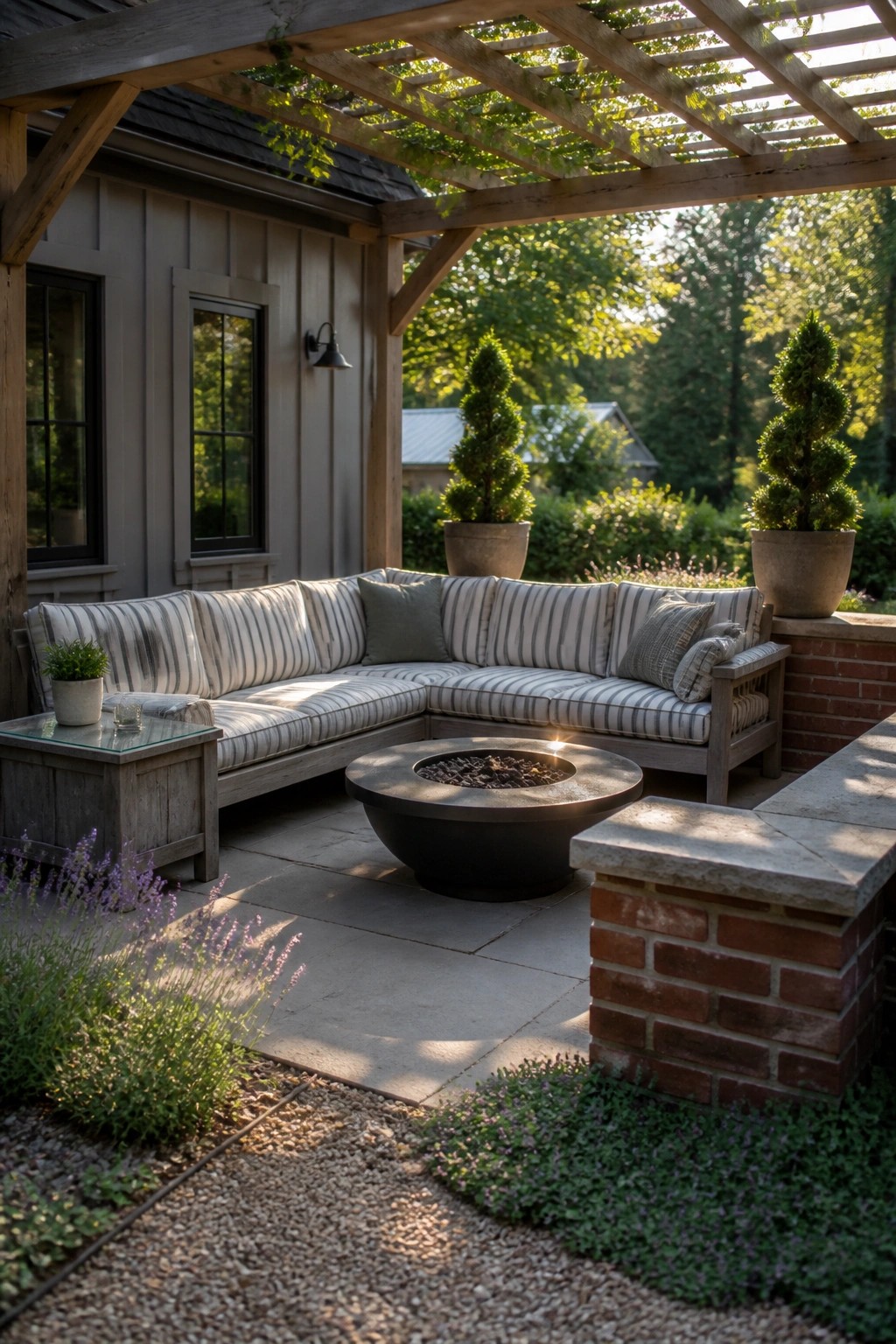
A fire pit placed right in the middle of the patio gives the space a clear purpose. It pulls seating in close and turns an open area into a spot where people actually want to sit for more than a few minutes. The round shape keeps things simple and works with almost any seating layout.
This setup suits a farmhouse exterior with gray siding and brick because the dark pit adds weight without competing with the house. Keep the surrounding seating low and wrap it around the pit so the focus stays on the fire. Just leave enough room to walk around the back of the chairs.
Brick Walls Frame Gray Siding Entries
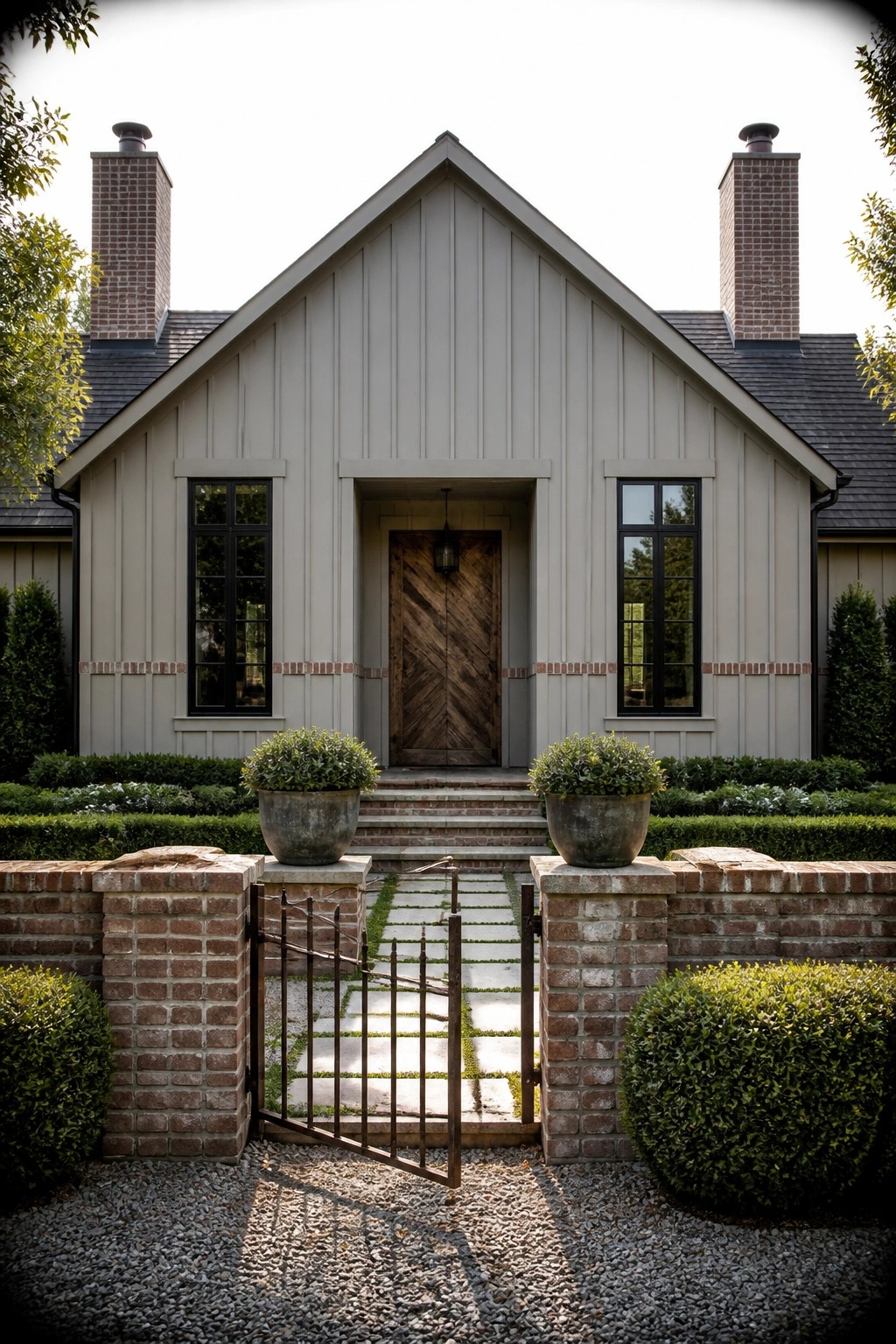
A low brick wall with a simple gate gives the front of a gray house a clear edge and some needed weight. The brick breaks up the large siding surface and keeps the whole look from feeling too flat or modern. It also creates a small transition zone between the street and the door.
This approach works well on farmhouses that already have brick chimneys or accents. Keep the wall height modest so it does not block the view of the house. Match the brick tone to any existing chimney brick if possible, and use a dark metal gate to tie the two materials together without adding extra color.
Built-In Seating Around the Fire Pit
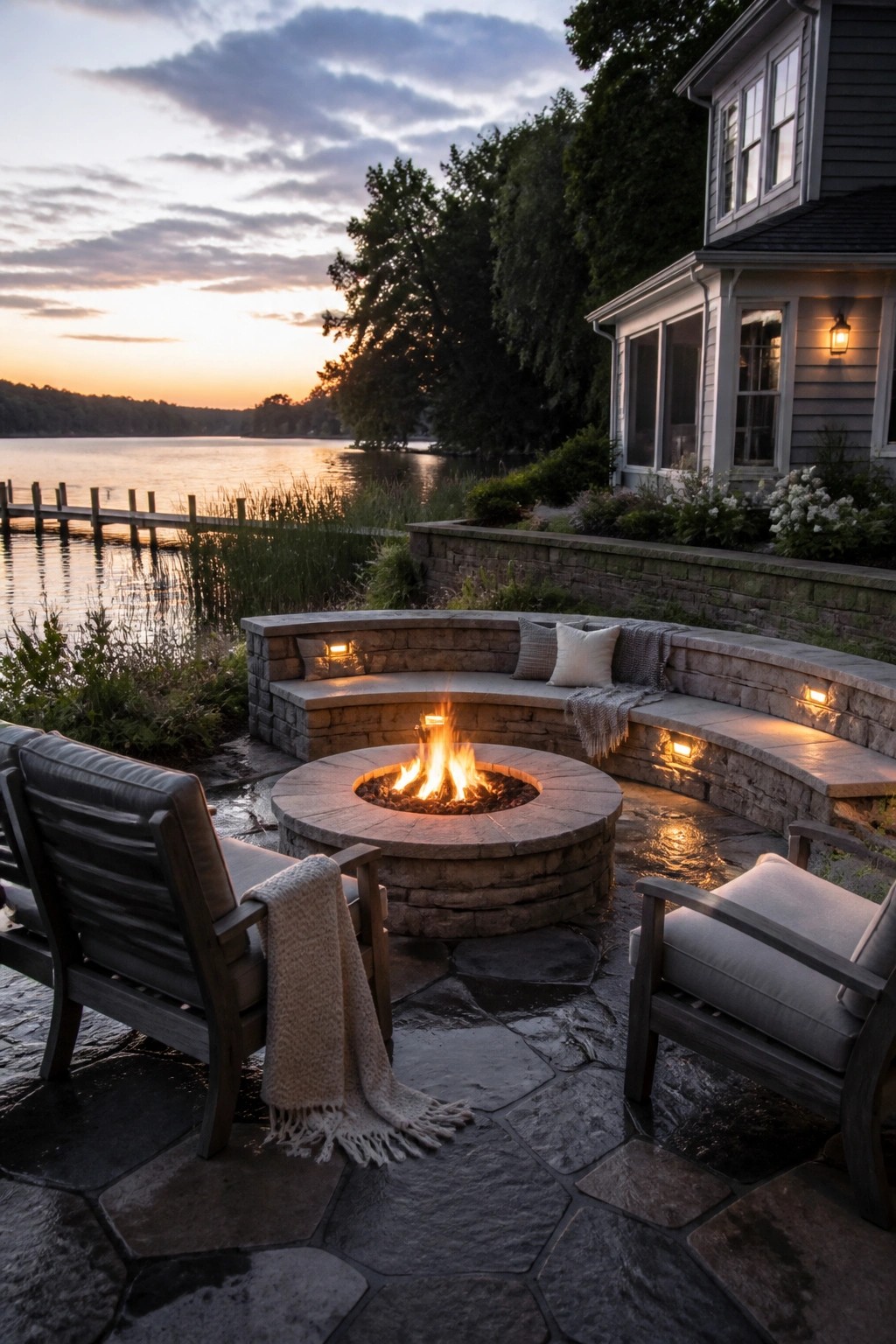
A curved stone bench that wraps around a fire pit gives the outdoor space a settled, finished feel. It turns the fire into the natural center of the area instead of leaving chairs scattered around an open patio. The stone also picks up on the house materials without trying to match them exactly.
This setup works best on homes with some kind of masonry already on the exterior, like gray siding paired with stone details. Keep the bench height comfortable for sitting and add a few loose chairs nearby so the space can handle both small groups and larger ones. Just make sure the seating stays low enough that it does not block the view from the house.
Brick Porch Column Bases With Dark Gray Siding
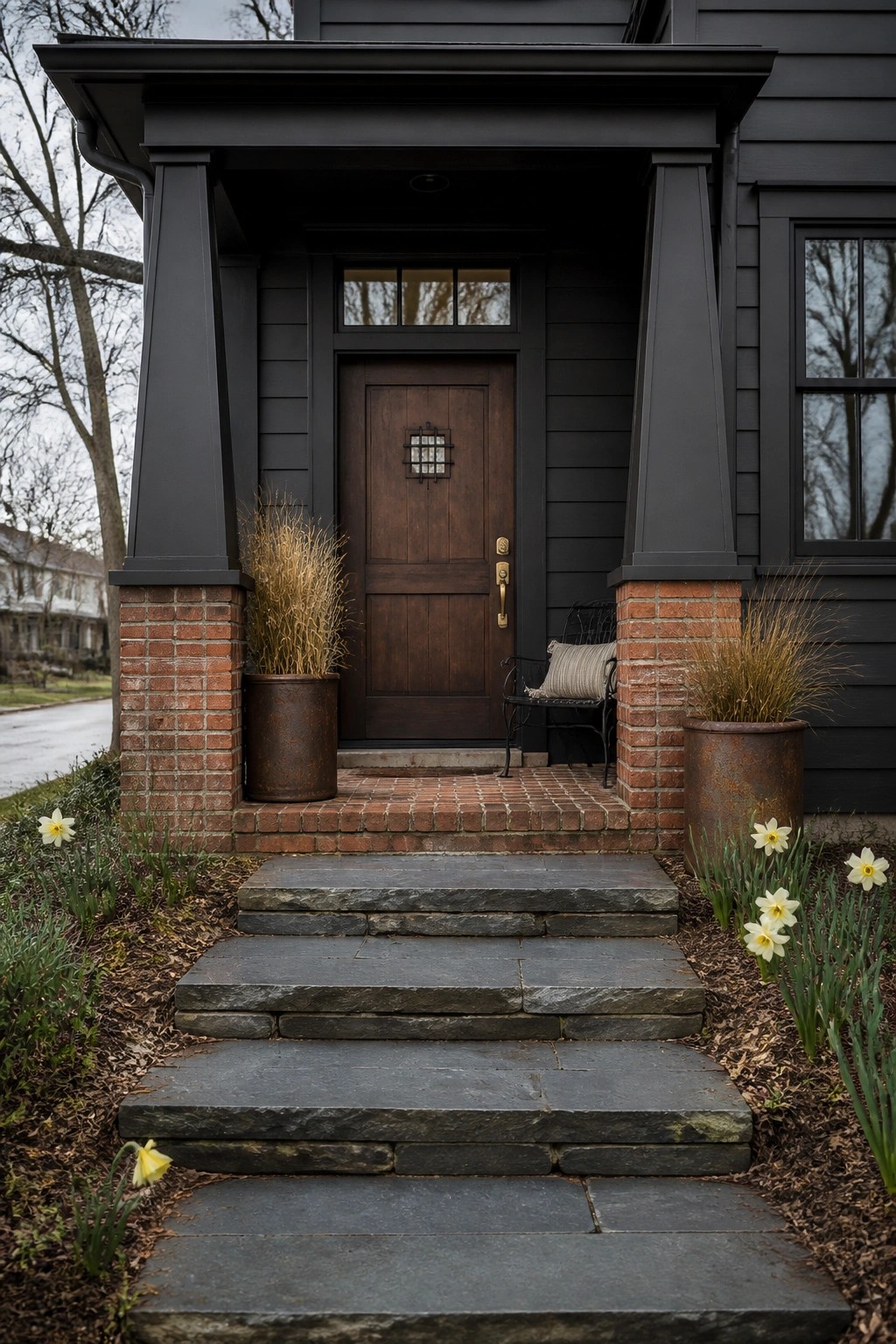
Many farmhouses use brick at the bottom of porch columns when the main siding is a dark gray. The brick gives the entry some weight and breaks up the flat look of the siding without needing extra trim or details.
This approach works best on homes that already have a simple shape. Keep the brick low and let the gray run above it. It helps the porch feel connected to the ground while the siding stays the main surface.
Outdoor Kitchens Built in Brick
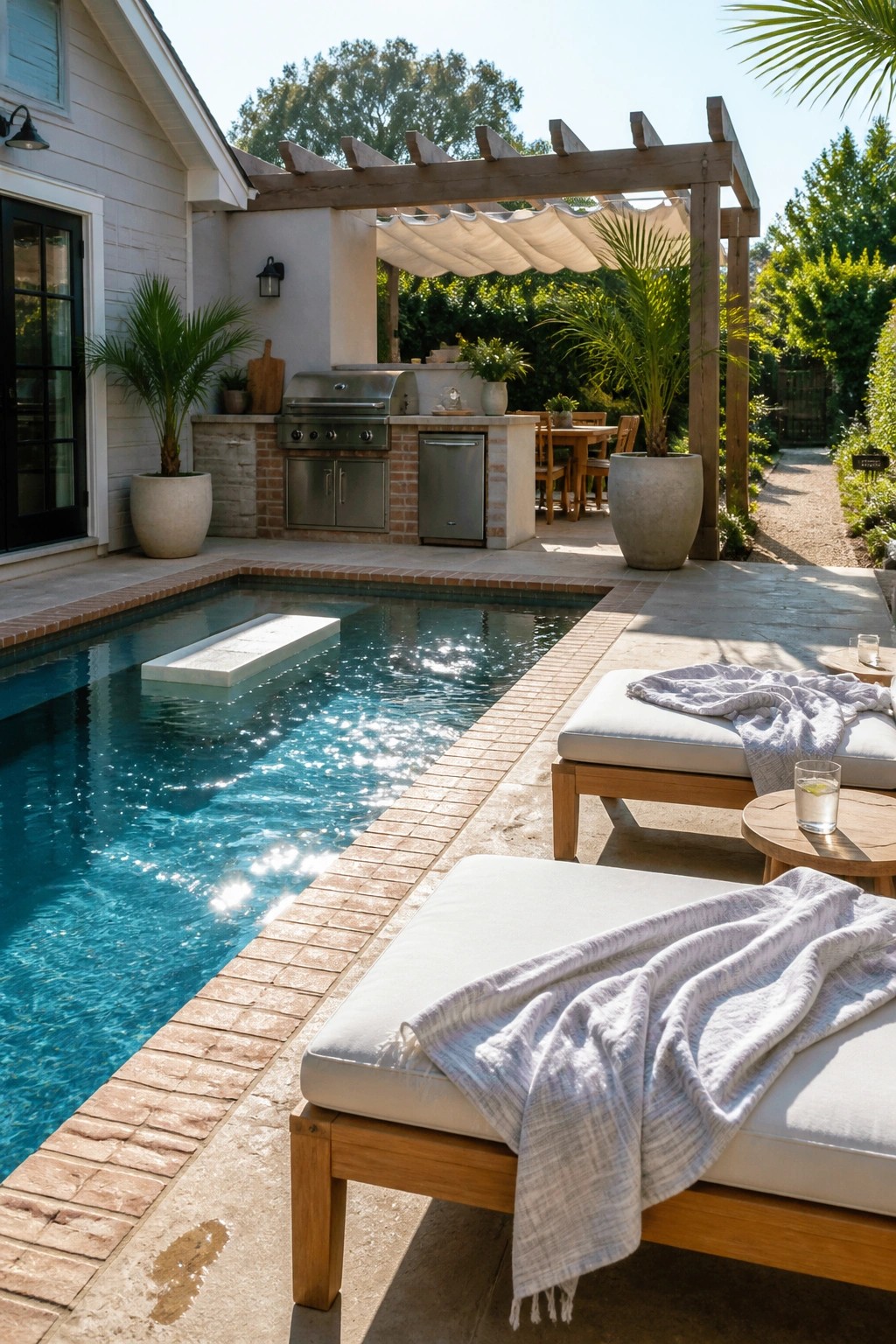
Many people like adding a brick outdoor kitchen when the house has gray siding. The brick gives weight and warmth that keeps the gray from feeling too cool or flat. It also ties the whole backyard together without matching everything exactly.
This works best on farmhouse homes that already use brick somewhere on the exterior. Keep the kitchen simple in shape and let the brick do the work. Just make sure the scale stays reasonable so the structure does not overpower the pool or patio space.
Gray Siding Paired With a Light Brick Base
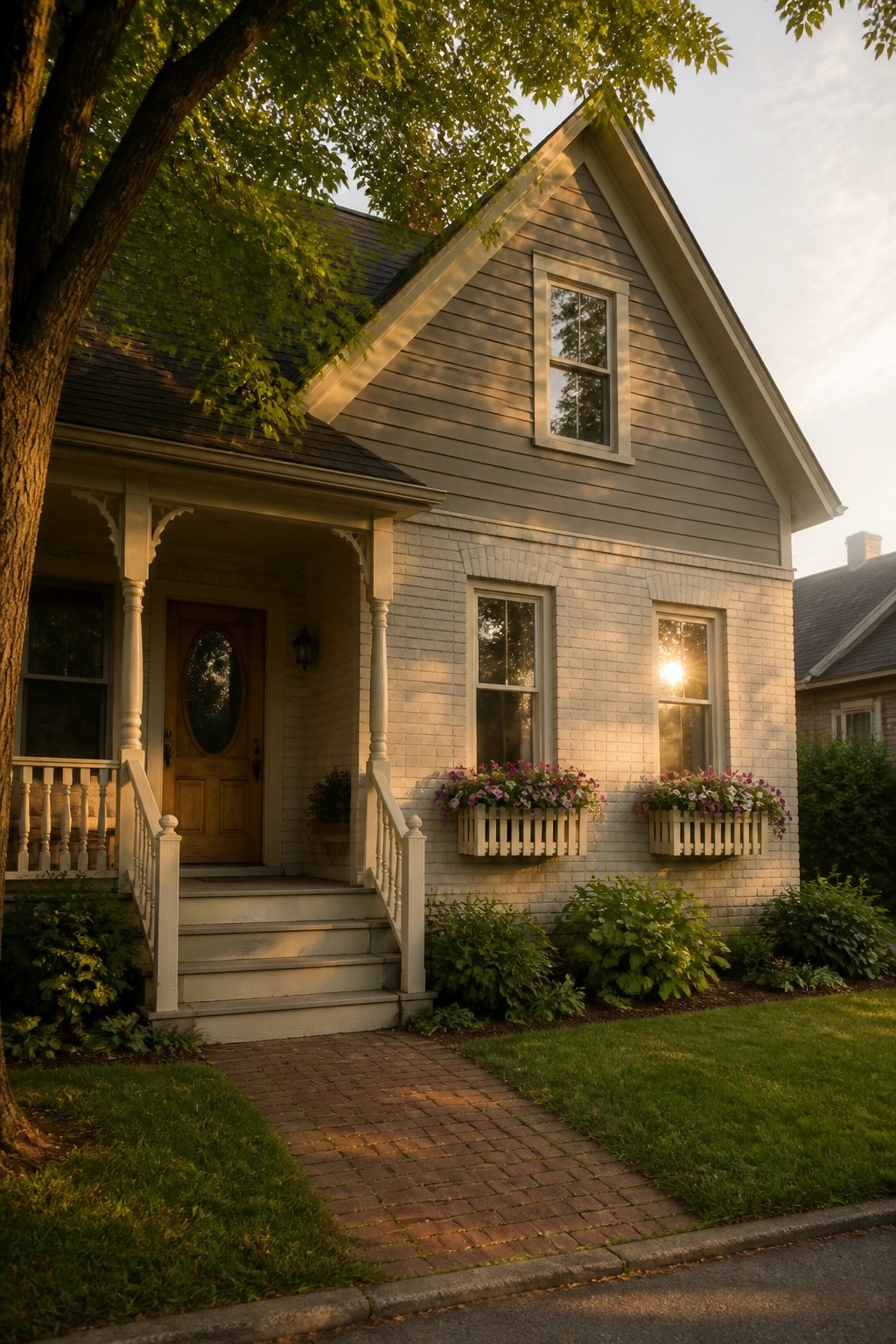
Many older farmhouses already use this mix, and it still feels right today. The gray siding sits lightly on the heavier brick base, which keeps the whole front from looking flat or one-note.
This approach works best on houses with a simple gable shape and a clear break between the two materials. Keep the brick light in color and let a brick path lead up to the door so the eye follows the same material down to the ground.
Fitting a Dining Table into a Narrow Side Courtyard
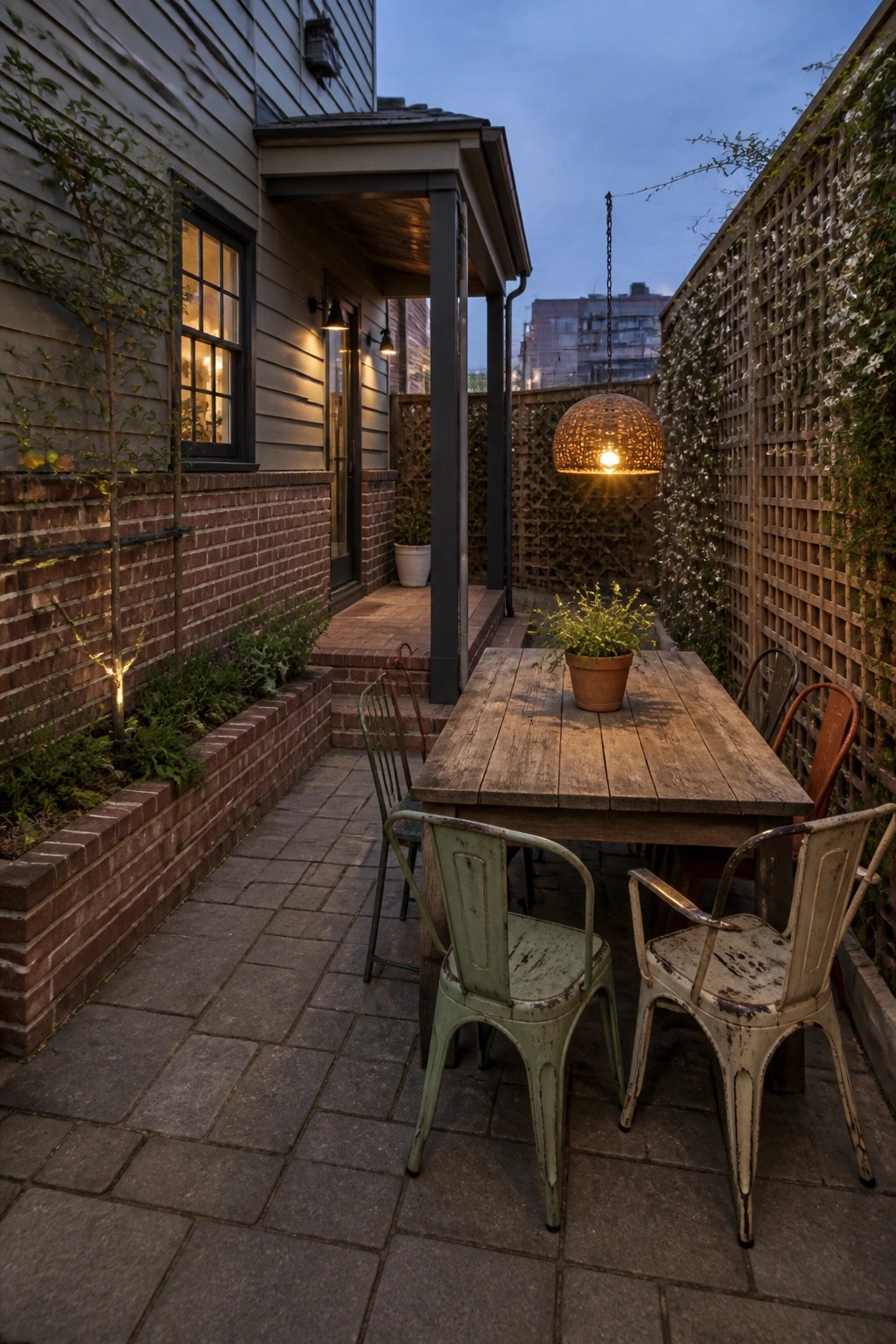
Many homes have leftover side spaces that feel too tight for much use. Setting a large wooden table there turns the spot into a working outdoor dining area that feels connected to the house rather than separate from it.
This approach suits homes with gray siding and brick because the weathered table surface echoes the natural tones already on the building. Keep the chairs simple and stackable so the space stays open when not in use, and add one overhead light if you want to use it after dark.
Frequently Asked Questions
Q: What gray shade pairs best with red brick without washing it out?
A: Pick a warm gray that has some beige undertones. Test samples on your actual siding in different lights before committing. This keeps the contrast balanced and inviting.
Q: How do I decide where to split the gray siding and the brick?
A: Run the brick up to the first floor windows and switch to siding above. It grounds the house while letting the gray add height.
Q: Can I add white trim with this mix or does it need something else?
A: White trim works great here. It frames both materials cleanly.
