

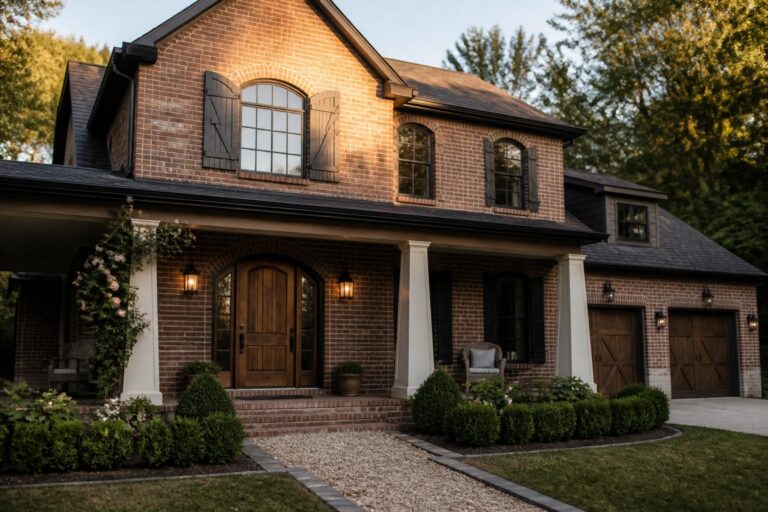
When I look at older brick farmhouses the roofline and entry details tend to shape how the whole place reads from the street.
Over time the brick holds its weight but the trim choices and window proportions can start to pull the facade out of balance.
Materials change everything.
I have noticed that some updates only prove themselves once you see the house in changing light or from across the road.
A few adjustments around the door and along the base often keep the solid form intact while giving it a clearer outline.
White Columns On Brick Porches
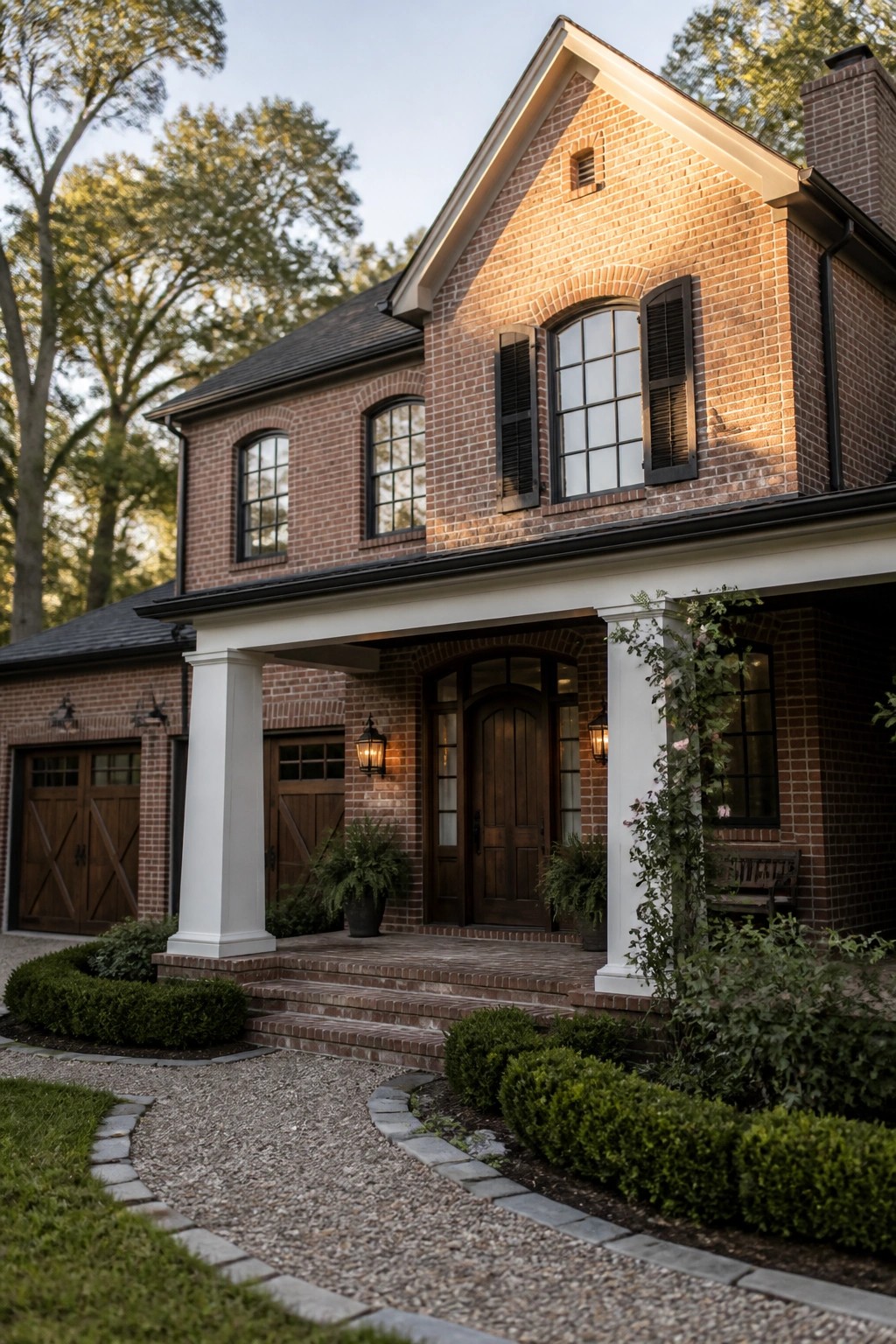
White columns give a brick exterior a lighter, more defined entry without changing the overall material. They create a clear break between the heavy brick and the open porch space, which helps the house feel balanced rather than flat.
This approach works best on homes with a straightforward gable or hip roofline. Match the column color to other trim and keep the base simple so the contrast stays crisp rather than busy.
White Brick With Black Accents
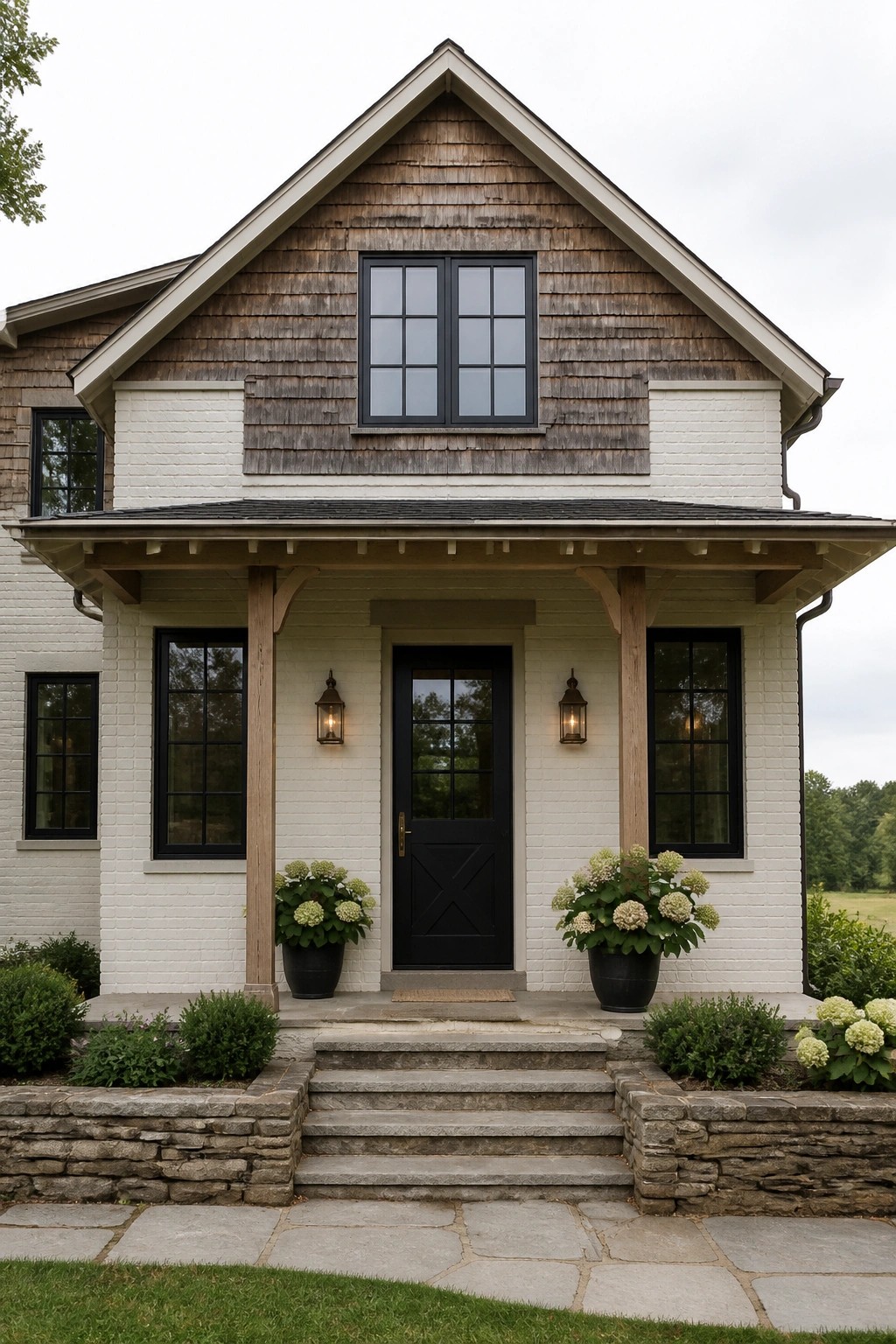
Painting brick white gives an older farmhouse a lighter, cleaner look without losing its basic shape. The white surface makes the house feel updated and helps it stand out more against grass and trees.
Black doors and windows add a simple contrast that defines the windows and entry without extra trim work. This approach suits brick homes that already have a straightforward roofline and porch, though it works best when the black stays matte so it does not reflect too much light.
Black Frames On Brick Add Modern Contrast
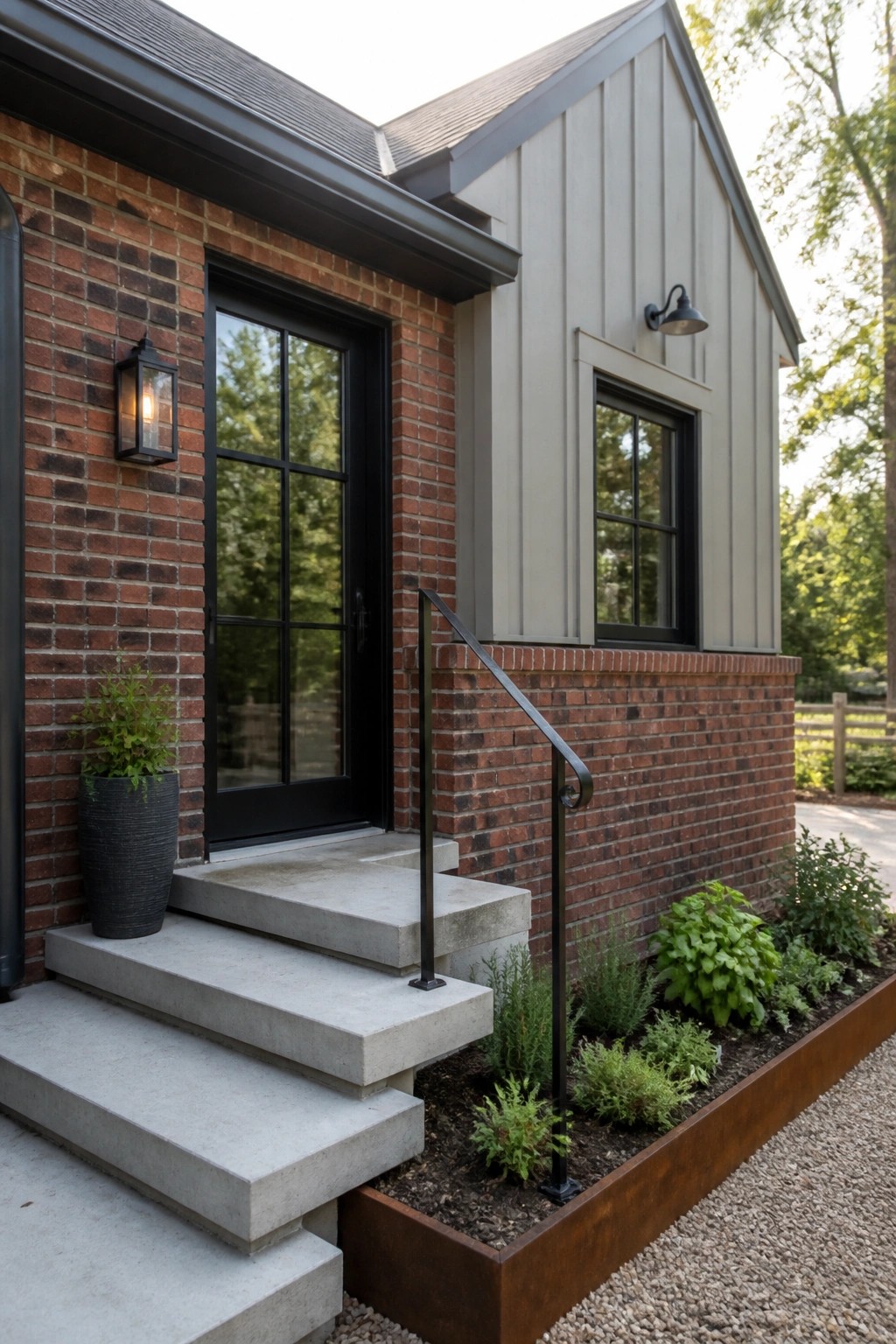
Black frames make brick exteriors feel sharper and more current. They stand out against the red tones without fighting the classic look most farmhouses already have.
This works best on homes where you want to keep the brick but need a simple refresh. Match the frames on the door and windows, then carry the same dark finish to railings or light fixtures so the front reads as one clean update.
Add a Covered Porch
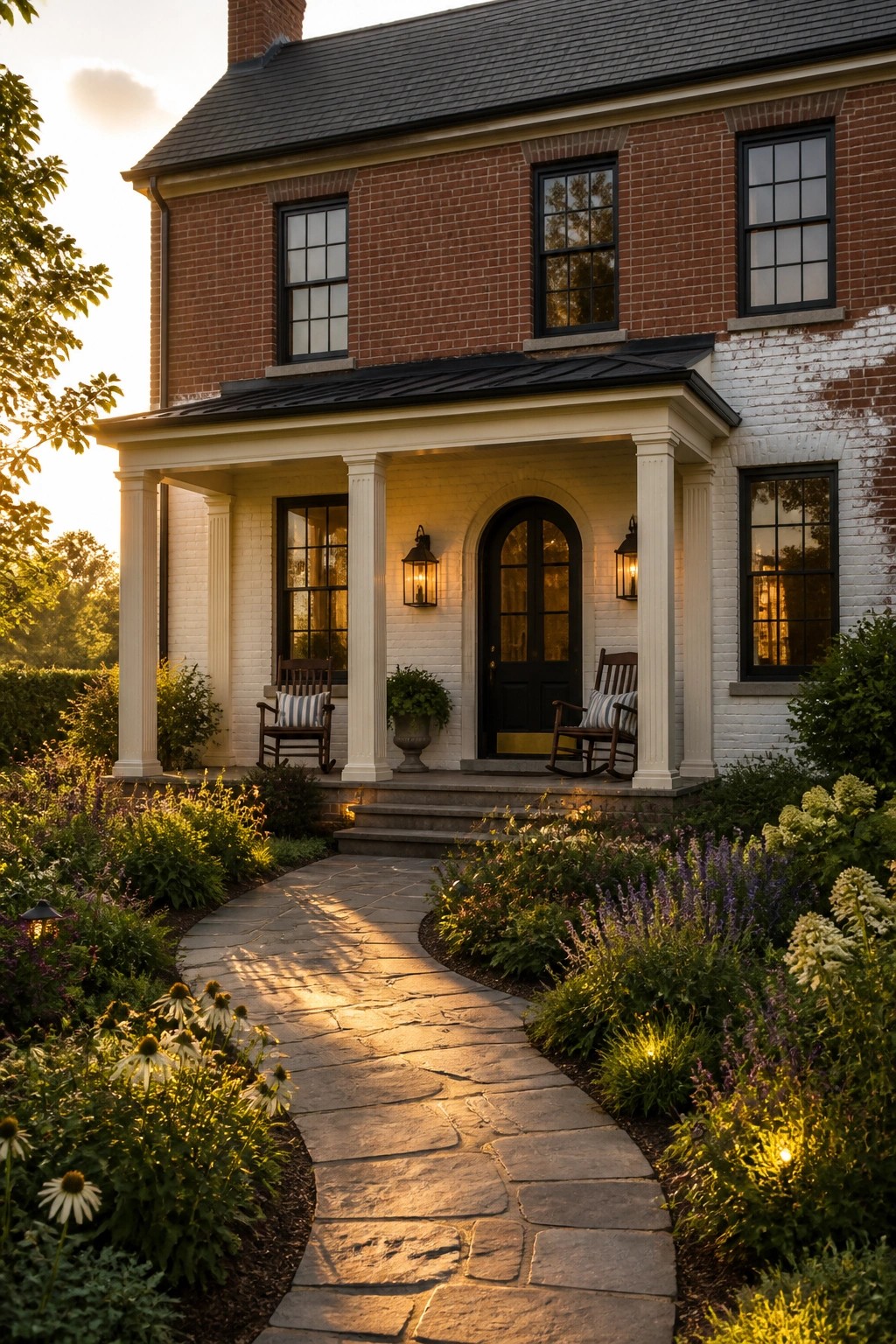
A covered porch gives a brick farmhouse an instant update without changing the main structure. It creates a clear entry point and adds some shade and shelter that the original house might lack. The white columns and trim stand out nicely against the red brick.
This works best on homes that already have a centered door and enough roof height to support the addition. Keep the columns simple and match the trim color to the existing windows so the porch feels like it belongs rather than an afterthought. Watch the scale so it does not overpower the house.
Add Stone Bases To Brick Exteriors
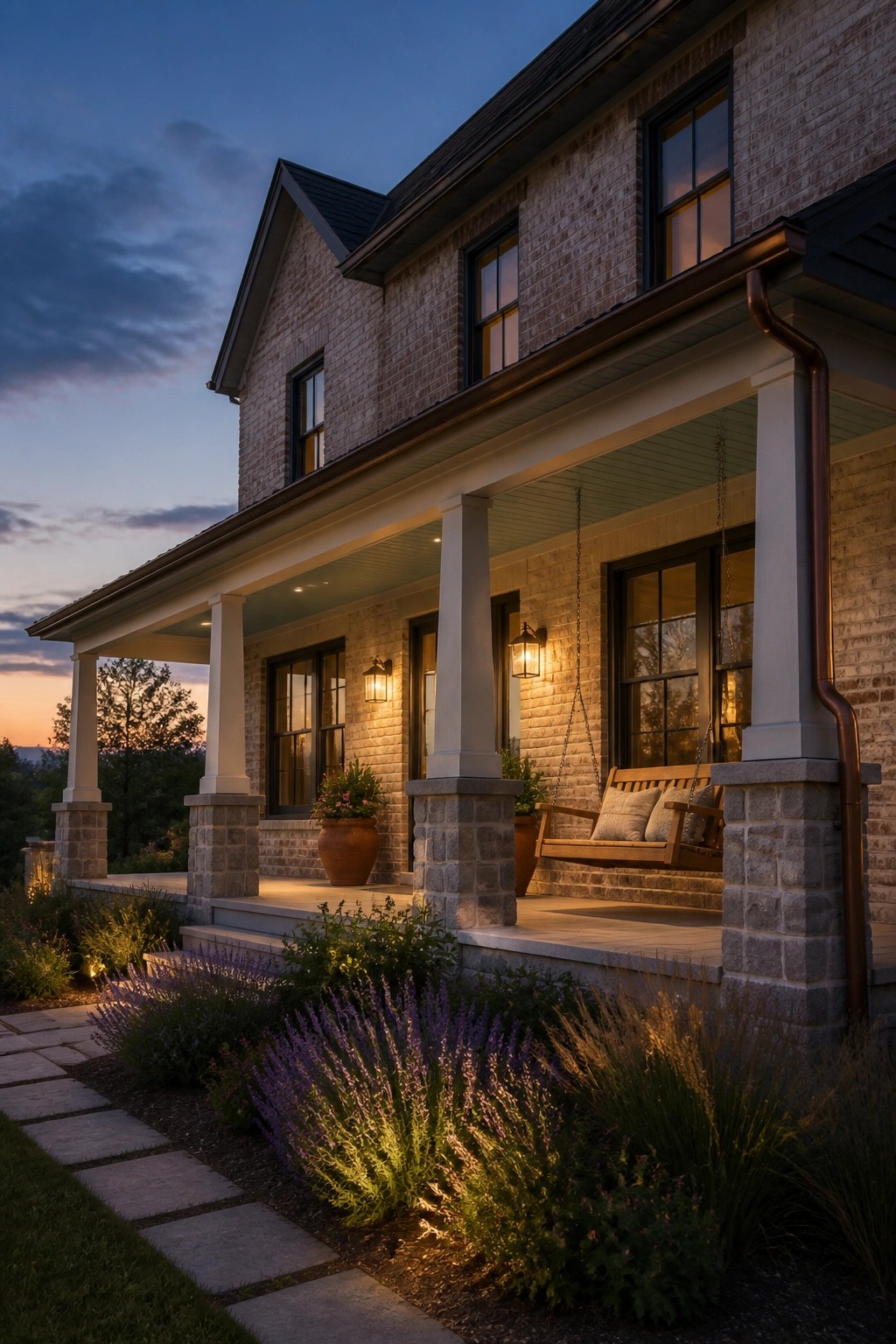
Many brick farmhouses look more grounded when the porch columns sit on stone bases. The change breaks up the wall without covering the brick or making the house feel busy.
This approach works best on homes with a straightforward porch layout. Keep the stone height modest so it supports the columns without overpowering the rest of the facade.
Black Trim On Brick Exteriors
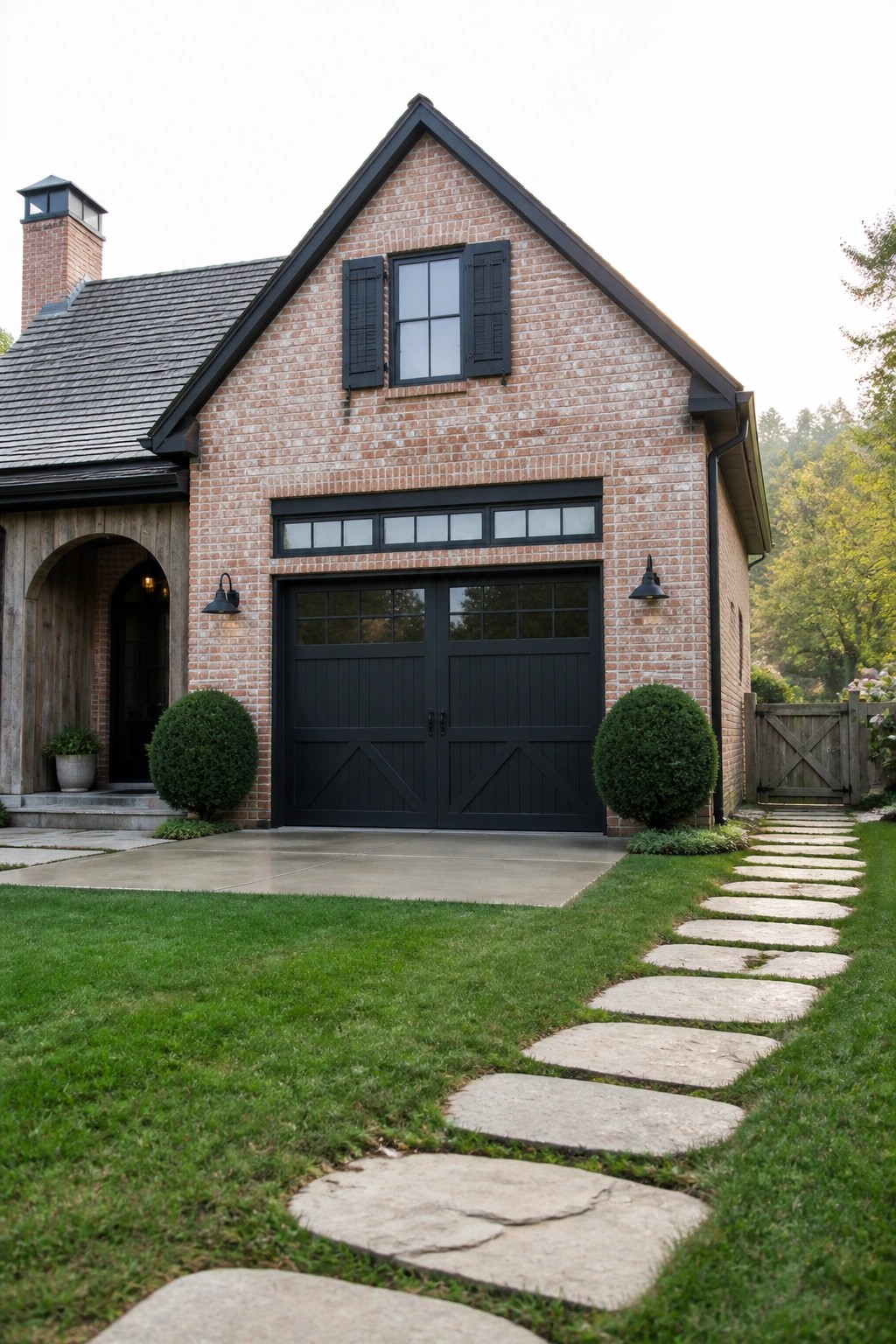
Black trim and garage doors give a brick farmhouse a sharper look. The dark color breaks up the brick without covering it, and it makes the whole front feel more current while still keeping the classic shape.
This works on many older brick homes that need a refresh. Match the trim color on the windows, doors, and roof edges, and leave the brick untouched so the contrast stays simple and clean.
Growing Vines on Brick Exteriors
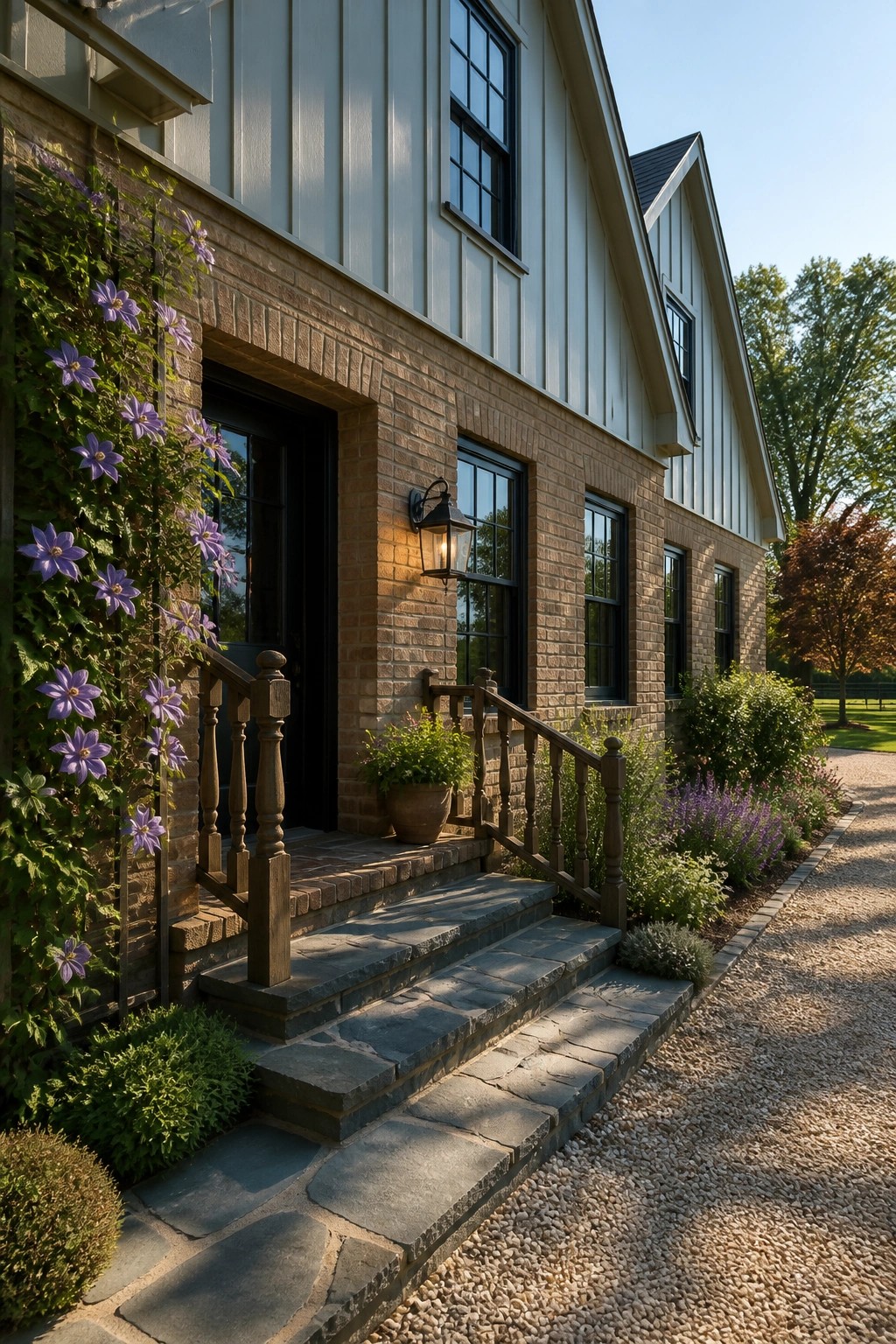
Vines can soften a brick wall without covering it completely. They add color and movement that changes through the seasons, which helps a classic farmhouse exterior feel less heavy while keeping its original character.
This approach works best on sunny walls where the plants can thrive. Choose varieties that cling lightly or train them on a simple trellis so the brick and mortar stay protected over time.
Black Metal Accents On Brick Exteriors
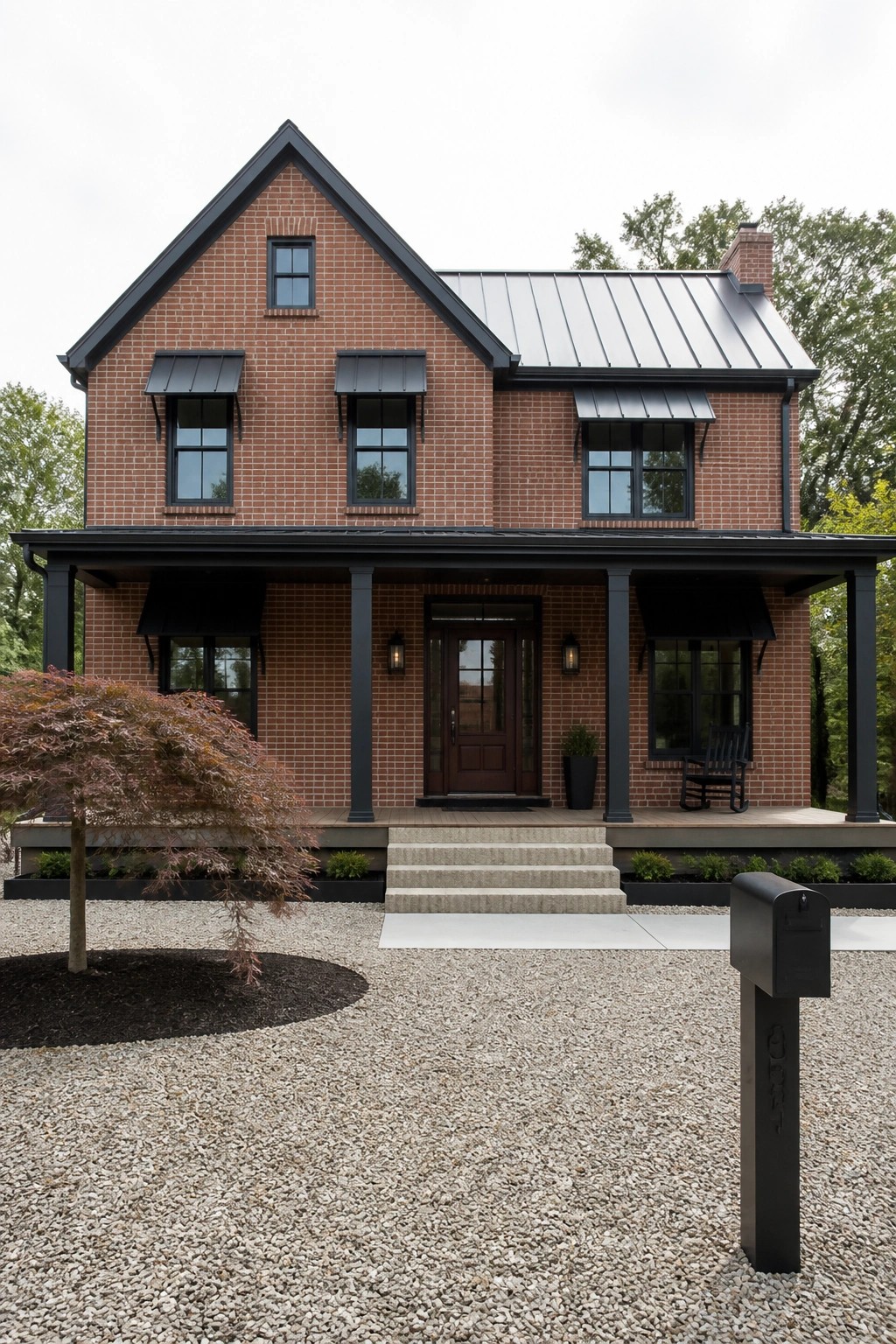
Many older brick farmhouses gain a cleaner look when dark metal is added to the roof and window details. The contrast keeps the brick warm but gives the whole house a sharper outline that feels more current.
This approach works best on homes with straightforward rooflines and covered porches. Keep the metal limited to the roof, awnings, and trim so the brick remains the main material.
Stone Paths That Guide Guests In
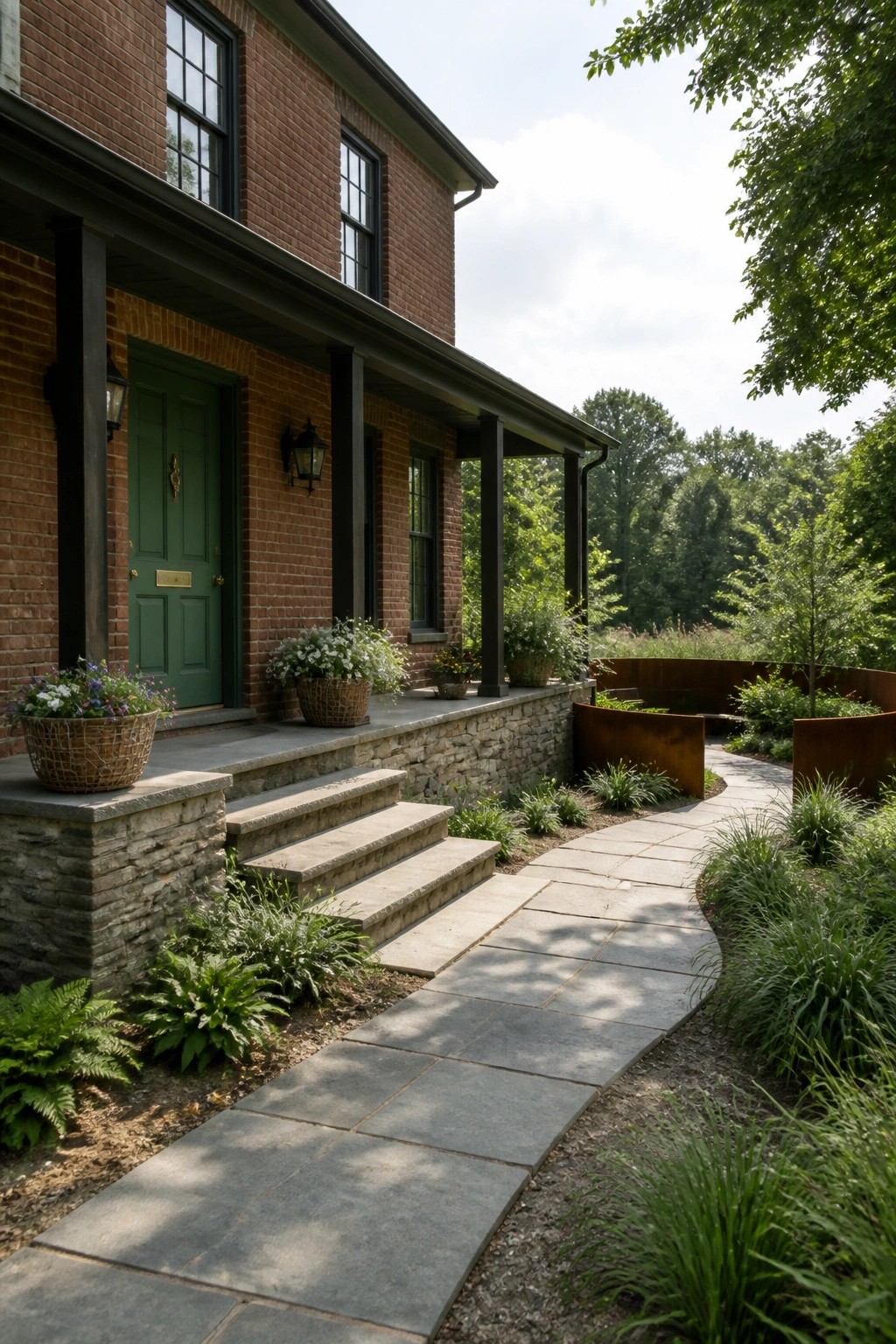
A curving stone path gives the front of a brick farmhouse a more settled feel. It softens the straight lines of the house and makes the walk to the door feel intentional instead of abrupt.
This works best on homes where the entry sits a little away from the driveway or road. Keep the curve mild, match the stone color to any existing hardscape, and let low plantings edge the sides so the path does not feel too wide or formal.
Add a Fireplace to the Porch
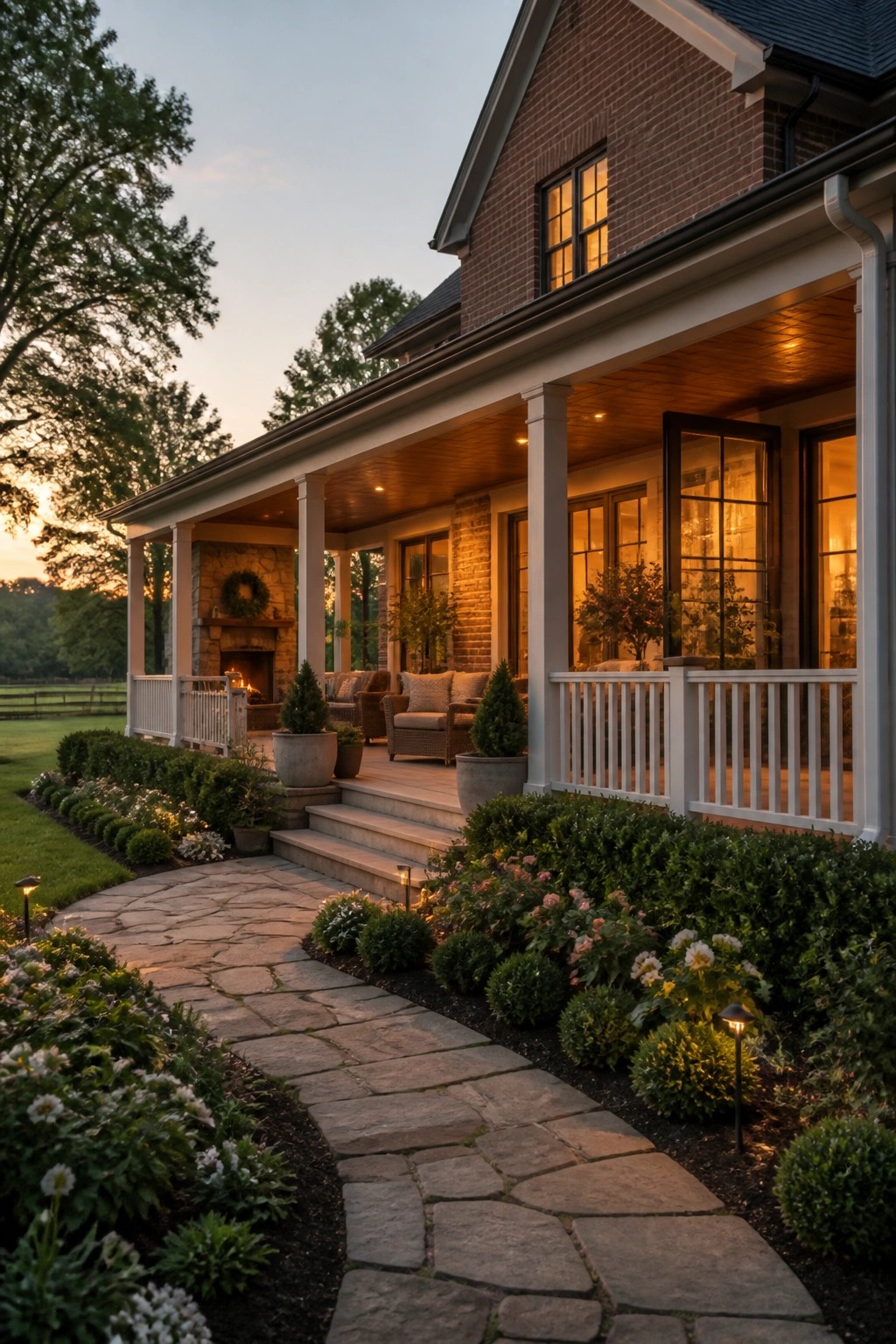
A fireplace on the porch gives the whole exterior a more usable feel once the sun drops. It turns an otherwise empty space into a spot people actually want to sit in during cooler evenings without needing to head inside.
This works well on brick farmhouses where the porch already has some depth. Keep the surround simple with stone or brick that matches the house, and leave enough room around it for a couple of chairs or a small sofa grouping.
Frame the Entry with White Columns
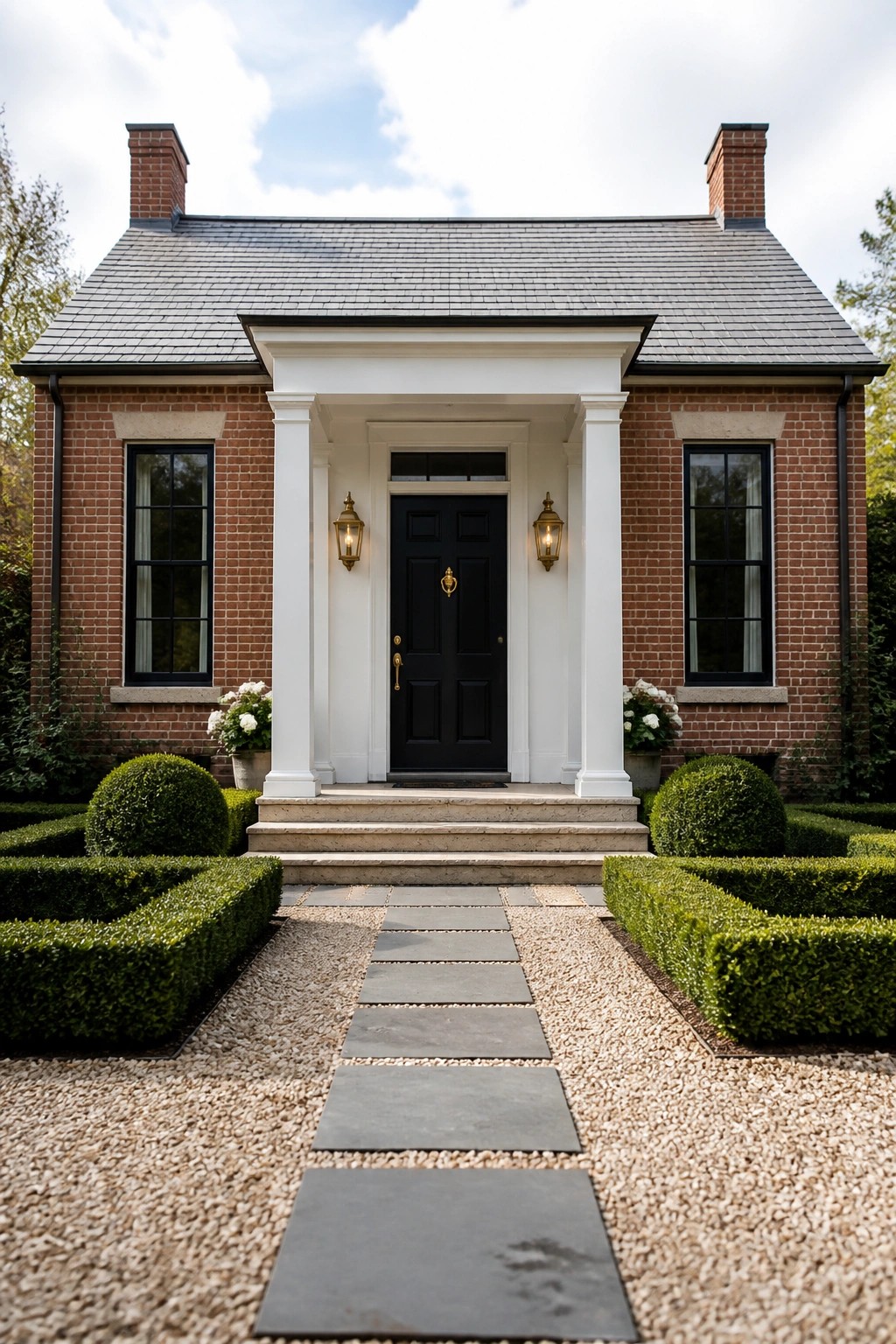
A white portico adds instant structure to a brick house. The columns create a clear focal point that makes the front door feel more important without overpowering the rest of the facade.
This approach suits brick farmhouses that already have good proportions but need a little more definition at the entry. Pair it with a dark door and simple lanterns so the contrast stays clean and the whole look stays timeless rather than fussy.
Arched Entries on Brick Exteriors
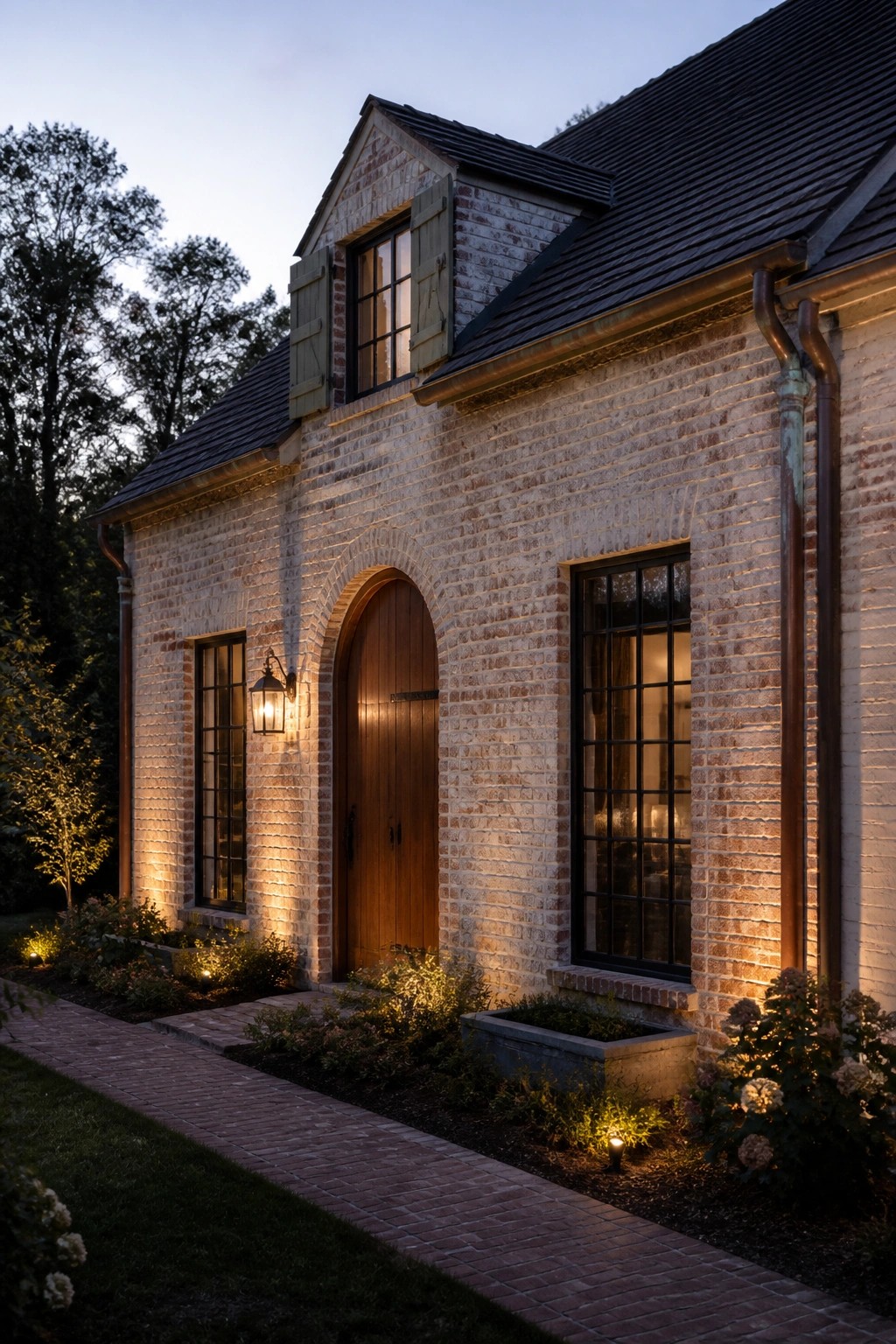
An arched doorway gives a brick farmhouse a softer, more classic shape without changing the whole facade. The curve stands out against the straight brick lines and makes the entry feel more welcoming.
This detail works best on simpler brick homes where you want to add a bit of character. Pair it with a wood door in a natural tone and keep any lighting focused right around the arch so the shape stays visible at night.
Mix Brick With White For a Fresh Update
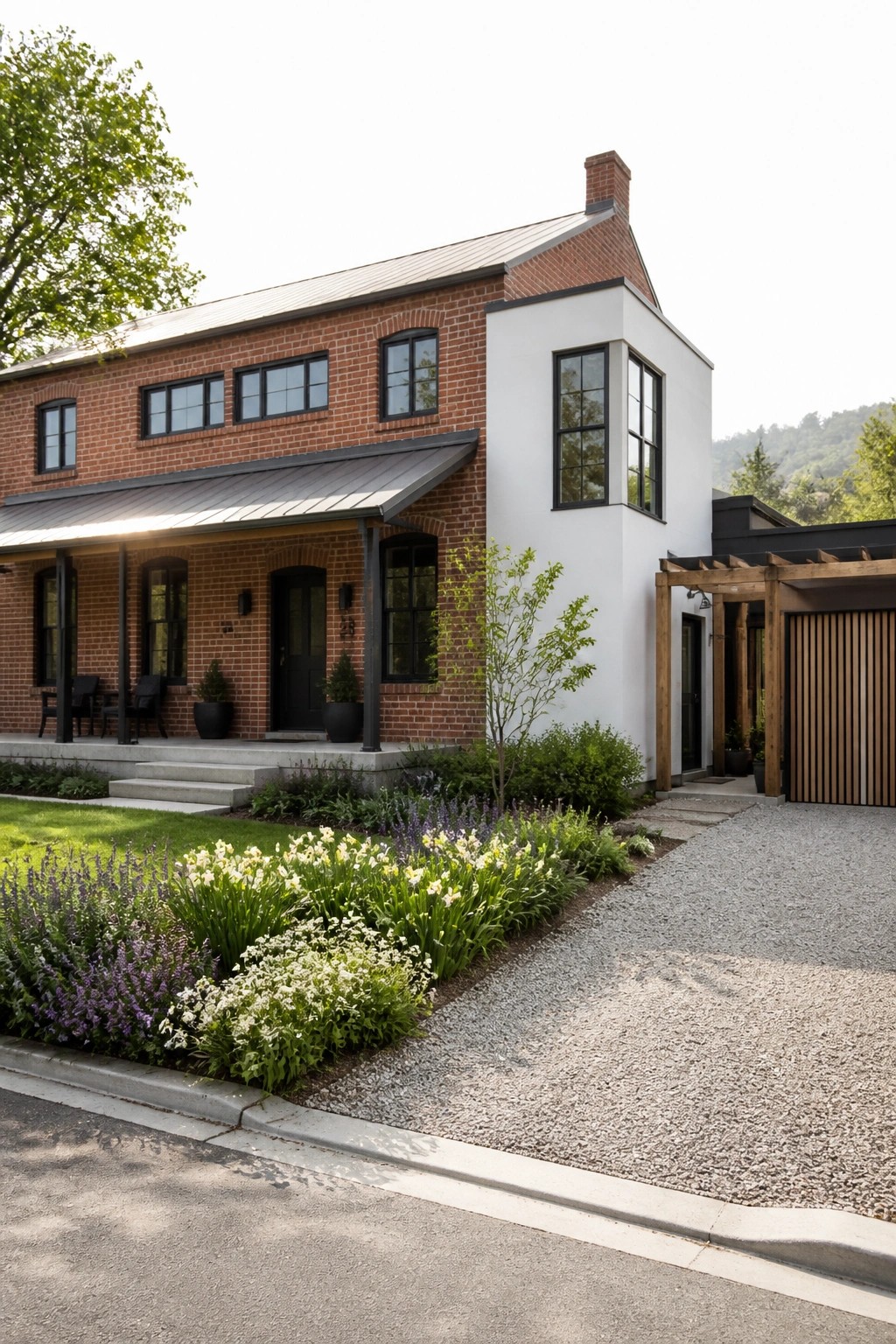
Many older brick farmhouses feel heavy or dated once you live in them for a while. Adding a white section breaks up the solid brick and gives the whole house a lighter, more current look without covering everything.
This works best when the white area is an addition or a prominent gable end. Keep the windows consistent in style and color across both materials so the house still reads as one. The black frames and metal roof shown here help tie the two sides together.
Built-In Porch Seating That Fits A Brick Exterior
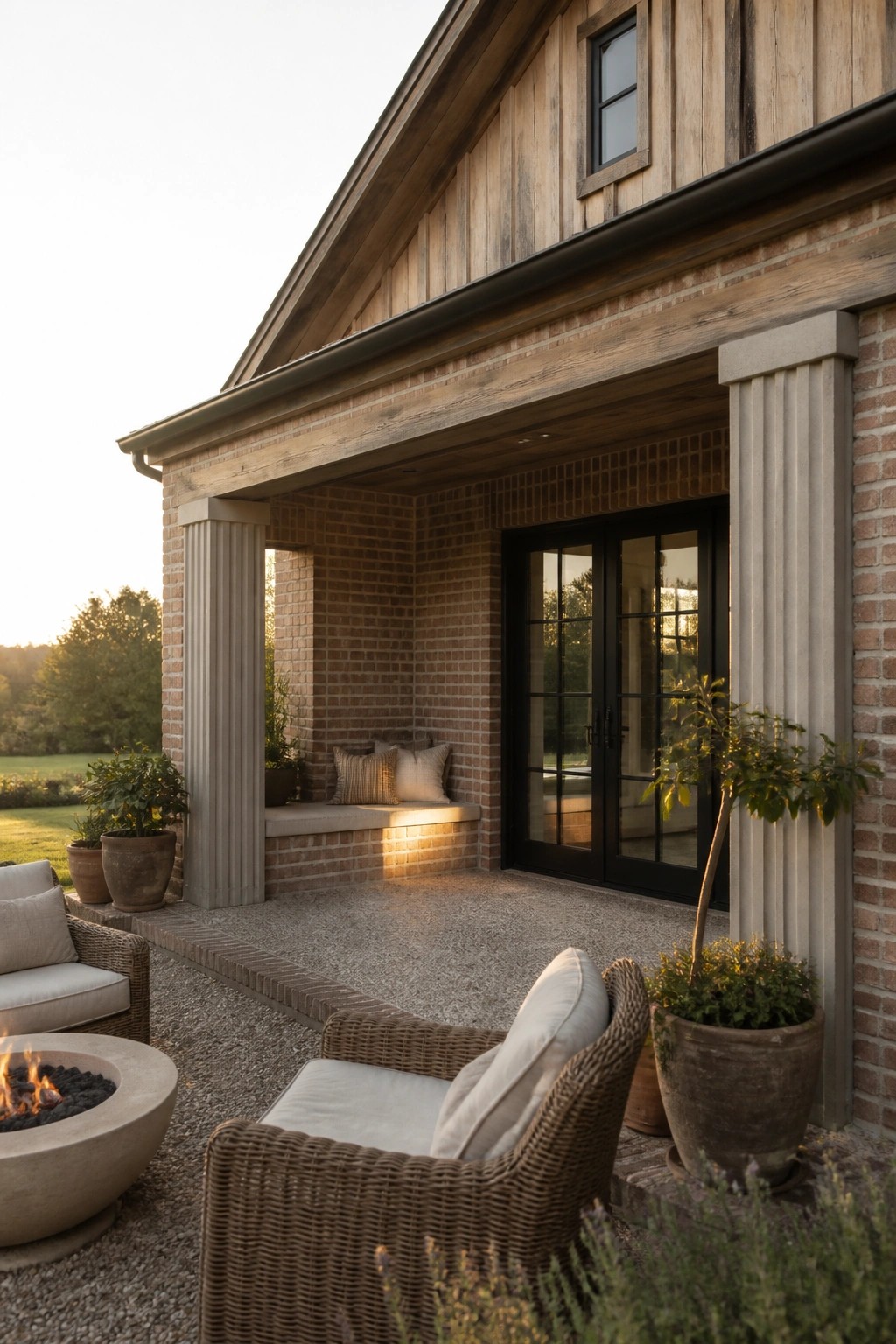
Built-in seating along the porch wall gives you a place to sit without crowding the space with extra furniture. It keeps the area open and makes the porch feel like a natural extension of the house rather than an add-on.
This works especially well on brick farmhouses because the bench can be tucked right into the wall and still look like part of the original structure. Use simple cushions and low lighting underneath so the seating stays comfortable in the evening without overpowering the brick.
Dark Trim Updates Light Brick Exteriors
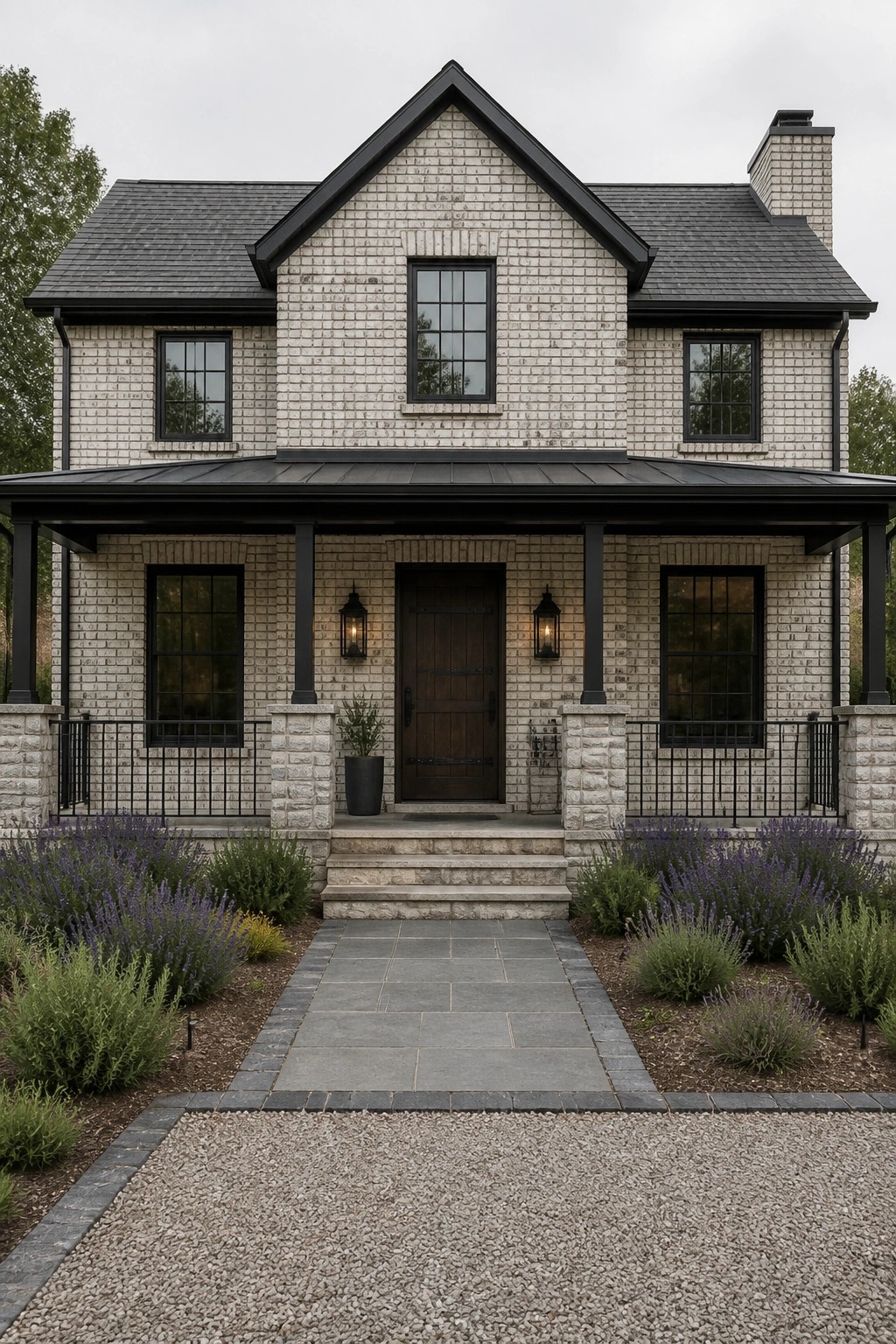
Dark trim and roofing can give a light brick farmhouse a cleaner, more current look while still keeping its classic shape. The black metal roof, porch posts, and window frames stand out against the pale brick without overpowering it. This contrast sharpens the whole front and makes the house feel updated rather than brand new.
It works especially well on two-story homes with simple rooflines. Keep the brick light, use black for the major trim pieces, and stick to wood or dark metal for the door and hardware. Avoid adding too many extra colors or it can start to feel busy.
White Columns on a Brick Porch
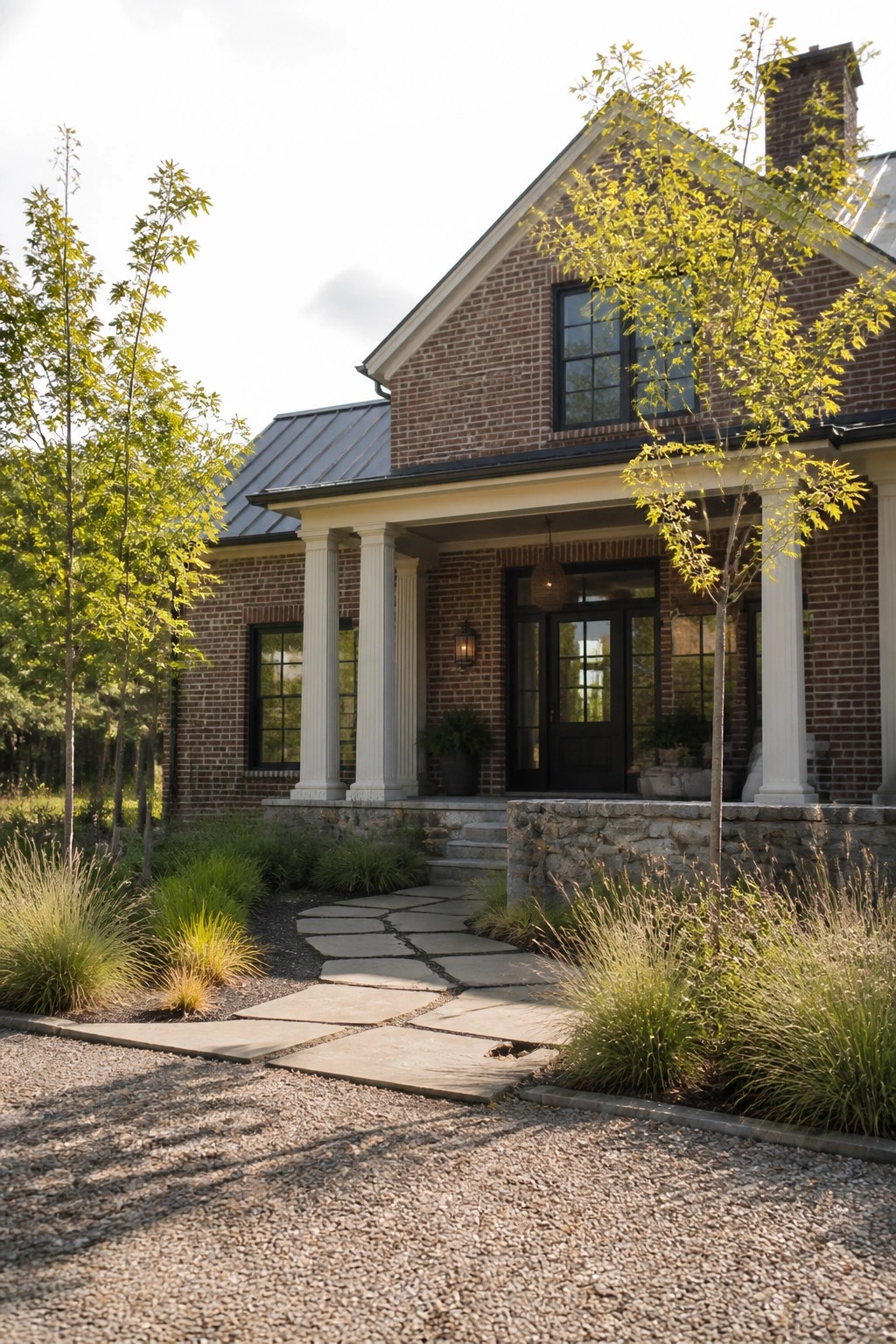
White columns give a brick house a lighter, more structured entry without changing the main materials. They break up the solid brick wall and make the porch feel like a real part of the house instead of just an add-on.
This approach works well on farmhouses that already have a simple roofline. Keep the columns simple in shape and match their width to the scale of the porch so the whole front stays balanced.
Woven Rugs For Porch Seating Areas
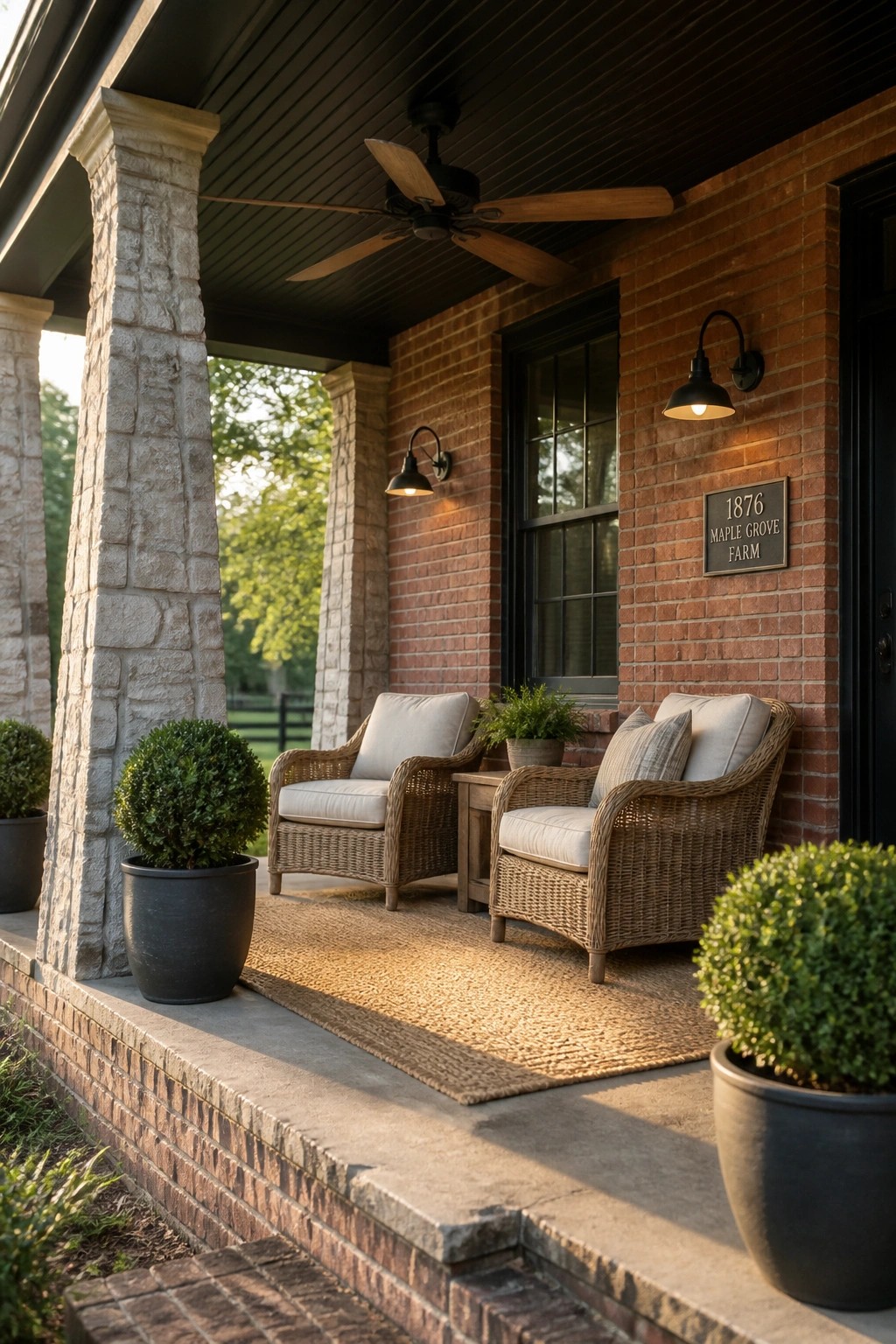
A simple woven rug can make a big difference on a brick porch. It pulls the chairs together and gives the space a finished look instead of feeling like furniture just placed outside.
This approach works on most farmhouse porches because it softens the hard surface without adding clutter. Pick a durable outdoor rug that fits under the seating and any small table, and make sure the edges stay flat so no one trips.
Built-In Brick Seating Along The House
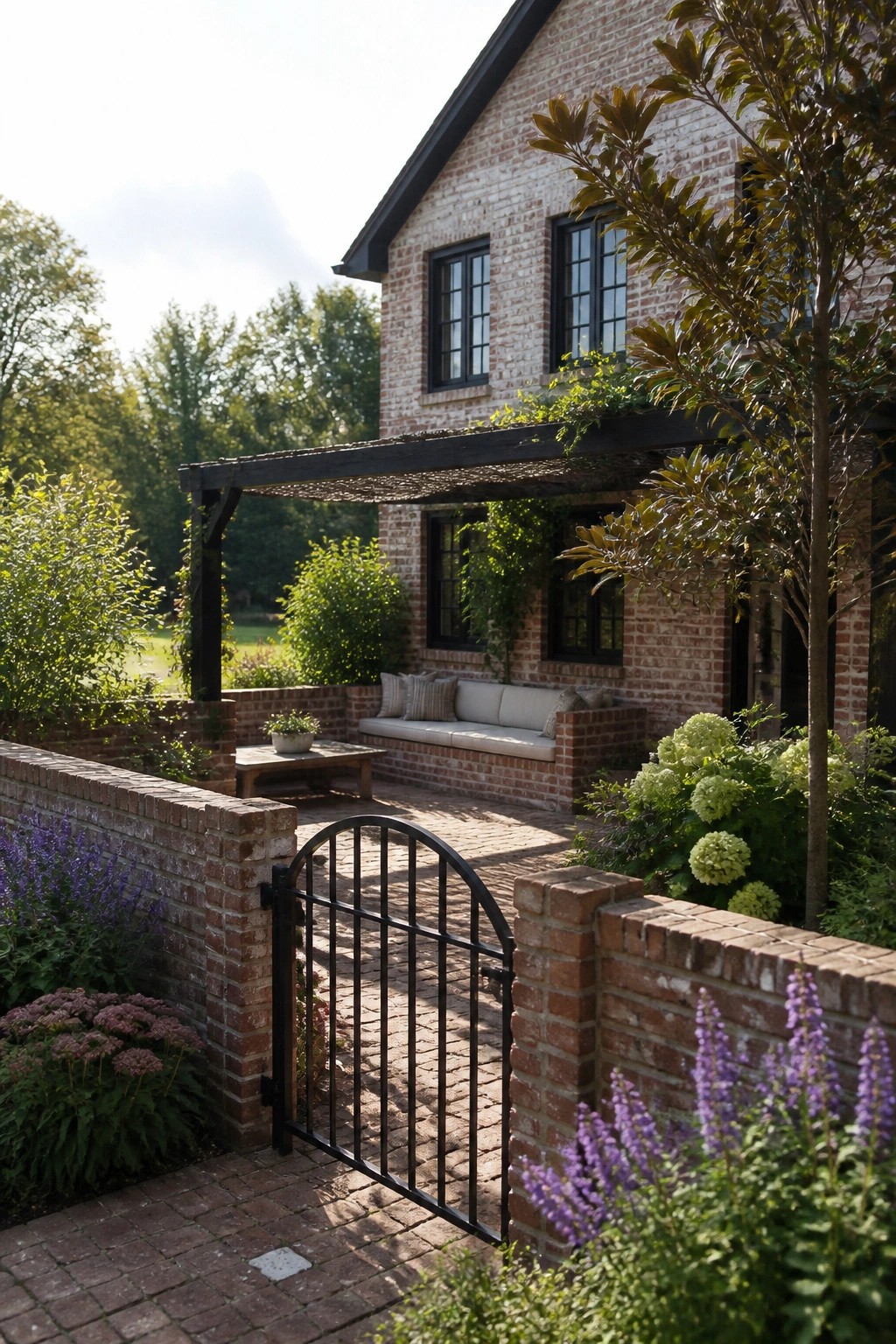
Matching the brick on a built-in bench keeps the outdoor seating from looking like an afterthought. It turns a simple patio into something that feels like part of the house itself, especially when the cushions and a light pergola keep things comfortable without adding new materials.
This approach works best on homes where the brick already shows some age or texture. Keep the bench height low so it does not compete with windows, and use the same mortar color so the whole run reads as one surface. It suits older farmhouses that already have low garden walls or raised beds.
Paint the Door and Trim a Deep Color
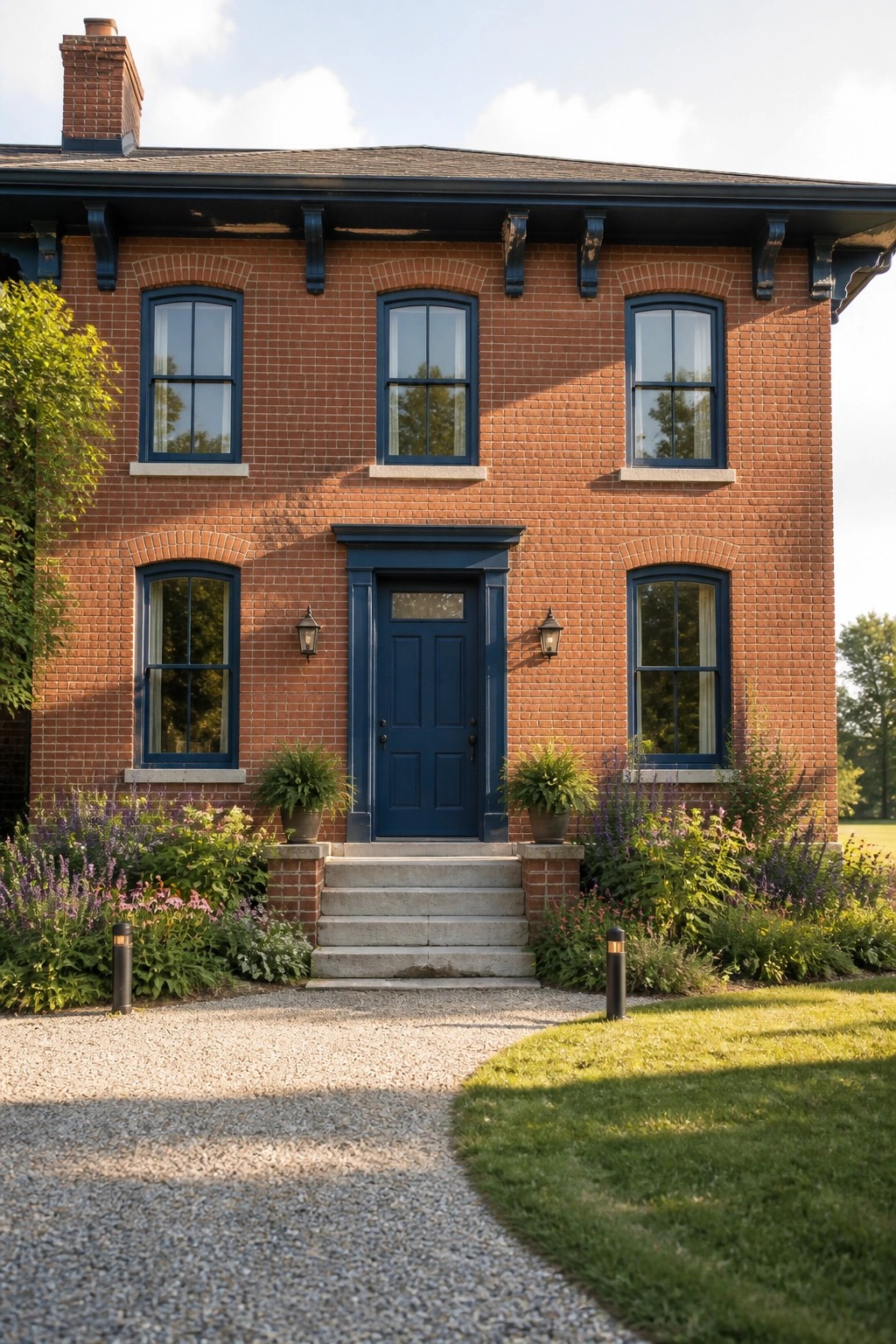
A deep navy on the front door and window frames gives a brick farmhouse an easy update. The color stands out against the red brick without fighting it, and it makes the entry feel more defined.
This works well on older brick homes that need a bit more personality. Keep the rest of the exterior simple and let the painted woodwork carry the change. It suits farmhouses with straightforward window layouts and a centered door.
Add Columns And A Pediment To The Entry
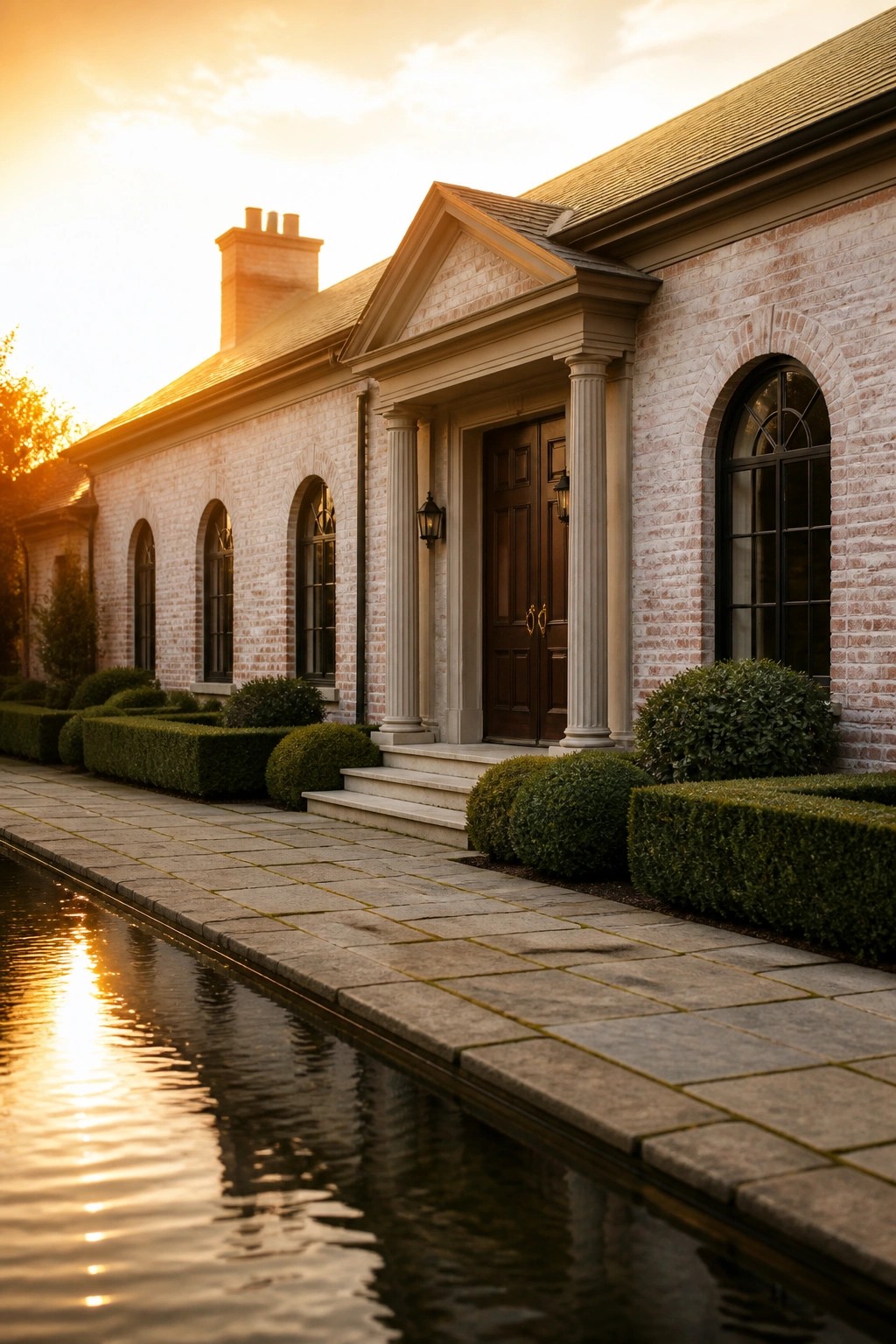
A simple portico with two columns and a small gable above the door gives a brick farmhouse more presence. The detail breaks up a long facade and makes the entrance feel intentional rather than plain.
This approach works best on one-story brick homes where the roofline needs a bit more height at the center. Keep the columns slender and painted to match the trim so the brick remains the main material.
Add a Timber Framed Entry Porch
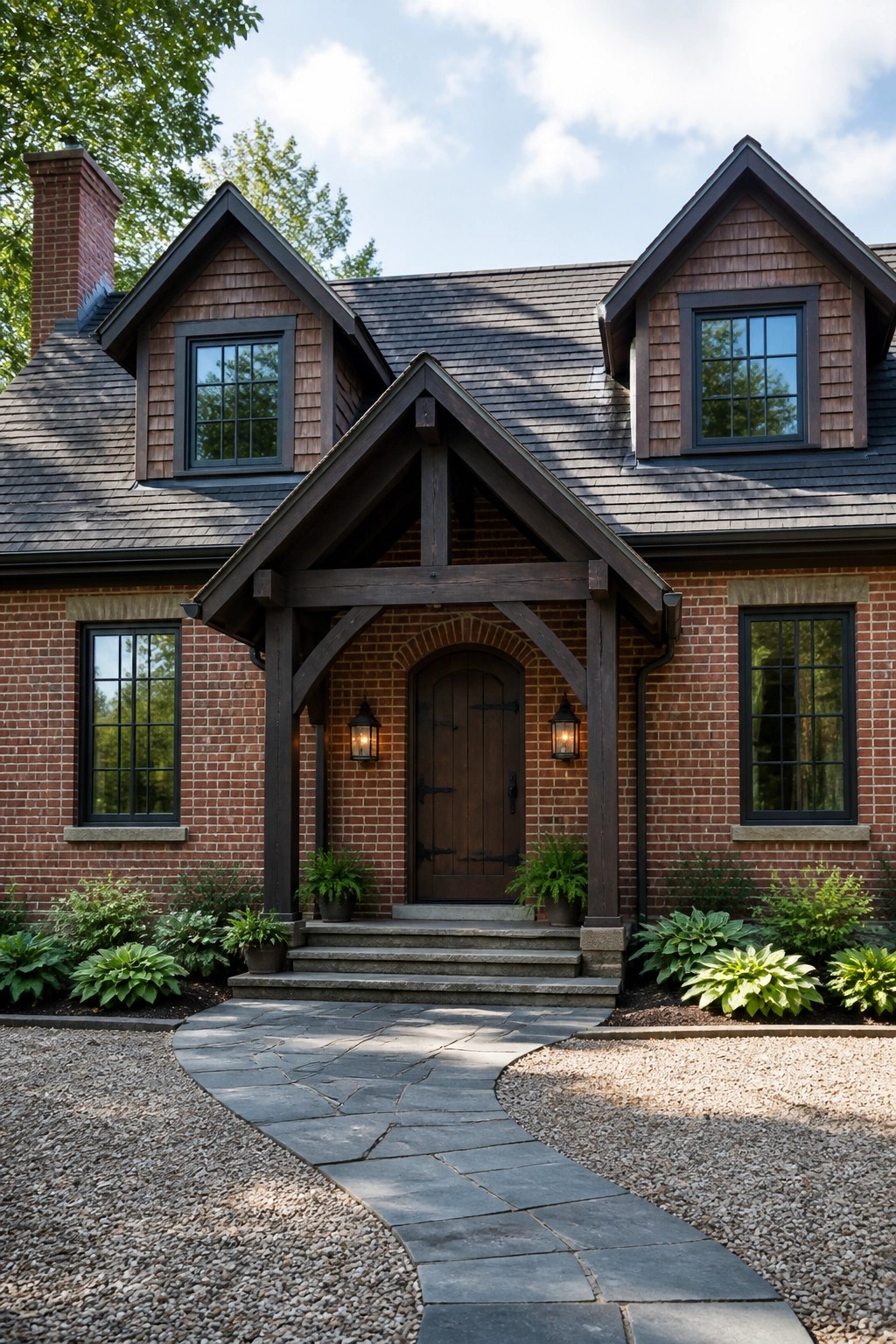
A timber framed entry porch gives a brick farmhouse a clear focal point without changing the whole facade. The dark wood adds contrast and makes the front door feel more important.
This works best on homes with fairly plain brick walls. Keep the structure simple, match the wood color to your windows or roof, and make sure the scale fits the height of your gables.
Dark Trim Updates Brick Exteriors
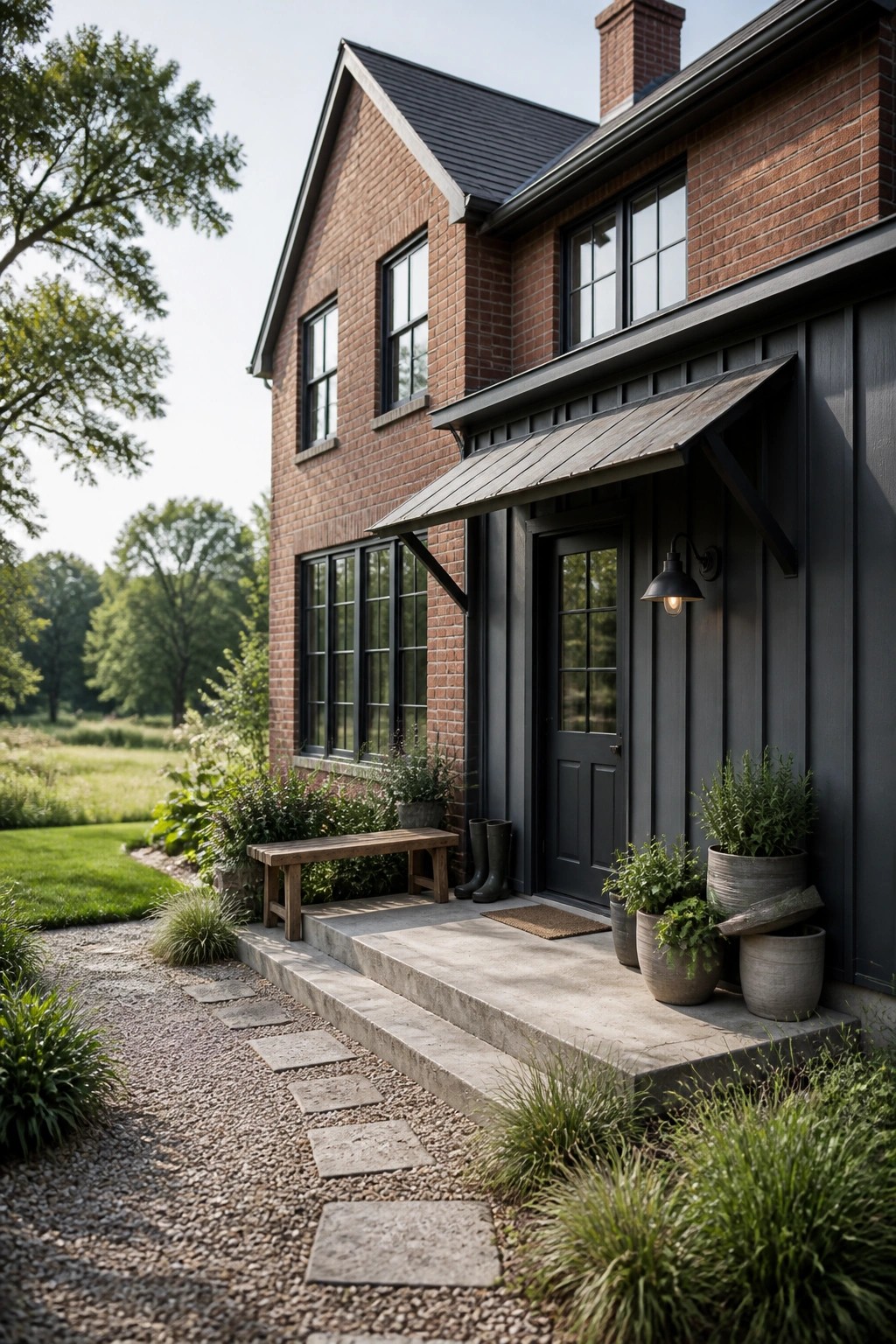
Many older brick farmhouses gain a cleaner look when the trim and accents shift to a dark color. The contrast keeps the brick as the main material but makes the windows, doors, and roofline stand out more clearly. It feels like a simple change that still respects the original house.
This approach suits homes that already have strong brickwork and just need a sharper edge. Paint the trim, add a dark door, and consider a simple metal overhang like the one shown here. Stick to one dark tone across the details so the brick stays the focus.
Pair White Brick With Dark Metal Roofing
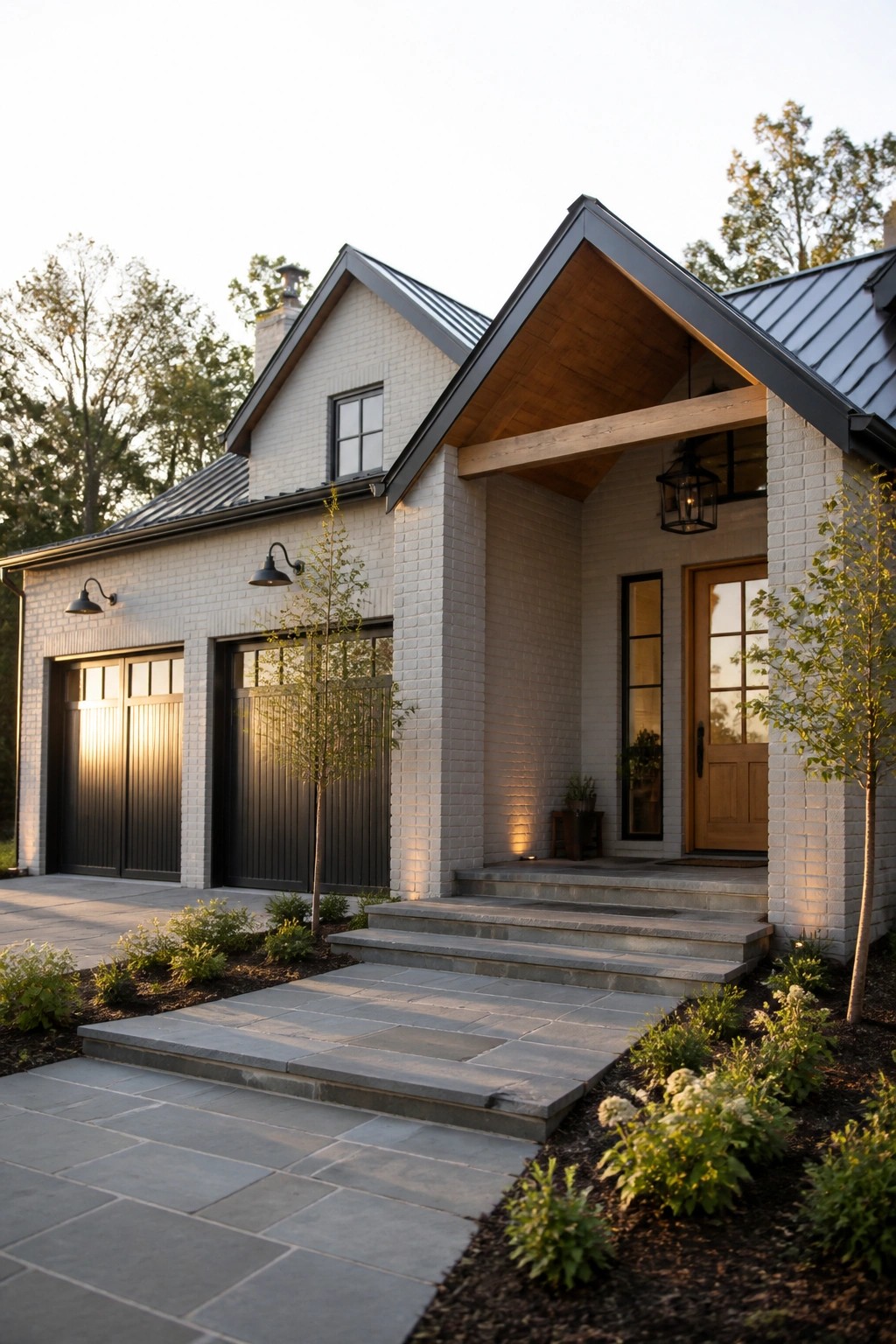
White brick looks sharper when it sits under a dark metal roof. The contrast keeps the house from feeling too soft or washed out, and it gives the whole exterior a cleaner outline without losing the farmhouse character.
This works best on homes that already have simple rooflines and gables. Match the trim and garage doors to the roof color so the look stays consistent. It is an easy swap that updates the classic brick base without changing the overall shape of the house.
Frequently Asked Questions
Q: What color should I paint my brick if I want a modern twist? A: Start with a soft gray or warm white that lets some of the original brick texture show through. Test a small patch first so you see how it looks in your light. This keeps the farmhouse feel while updating the whole look.
Q: How can I add new windows without losing the classic style? A: Choose frames in black or dark bronze to contrast nicely with the brick. Keep the shapes simple and rectangular like the originals. You will notice the house feels brighter right away.
Q: Do I need to replace all my siding or just update parts of it? A: Focus on the areas around the brick first. Swap in wood or fiber cement accents that match the scale of your house. This saves money and still gives a fresh appearance.
