

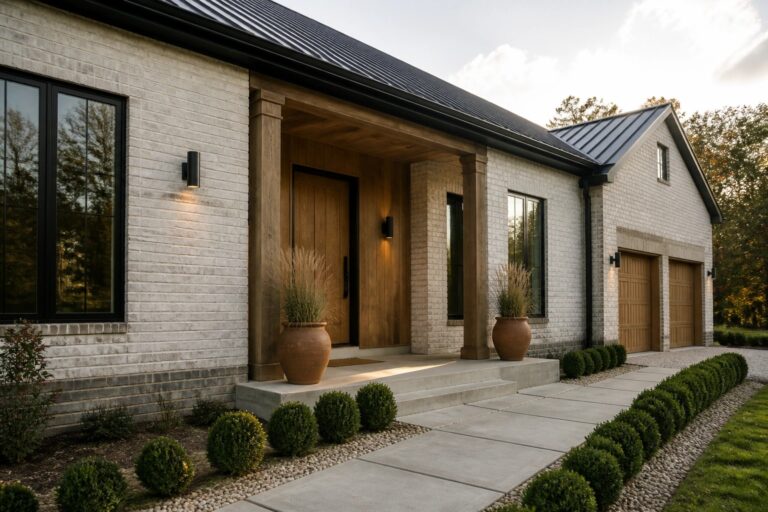
I have always found that brick farmhouses read best from the curb when the rooflines stay straight and the brickwork avoids extra trim that breaks the eye.
Clean lines let the material itself do the work instead of fighting against added details that often date quickly.
Windows and entries need careful placement so the whole front does not feel lopsided once you stand back and look at it in daylight.
Many plans look balanced on paper but shift once the brick color and mortar tone are chosen.
I usually sketch the main elevation on site first to see how the lines actually sit against the existing trees before making any final calls.
Wood Accents Around the Entry
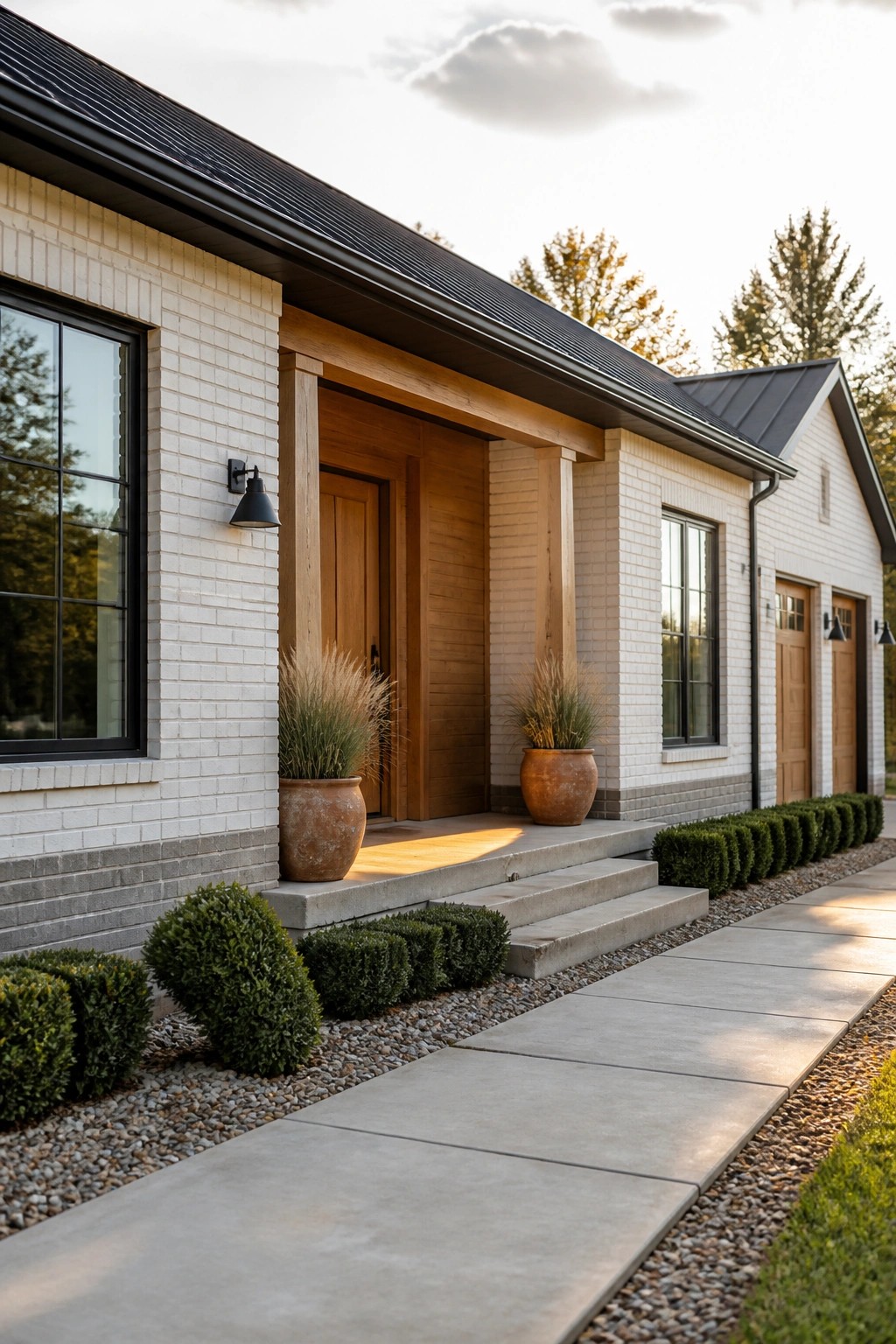
Wood accents can give a brick farmhouse a clear focal point without adding clutter. Placing them around the front door helps define the entrance and keeps the rest of the facade looking simple and balanced. The contrast between the warm wood and the lighter brick makes the lines stand out in a natural way.
This idea suits homes that want a bit of warmth while staying modern. It works best on straightforward single-story designs where the entry can be highlighted without competing elements. Keep the wood tones consistent and avoid too many extra details so the overall look stays clean.
Choose A Straightforward Gable Roof
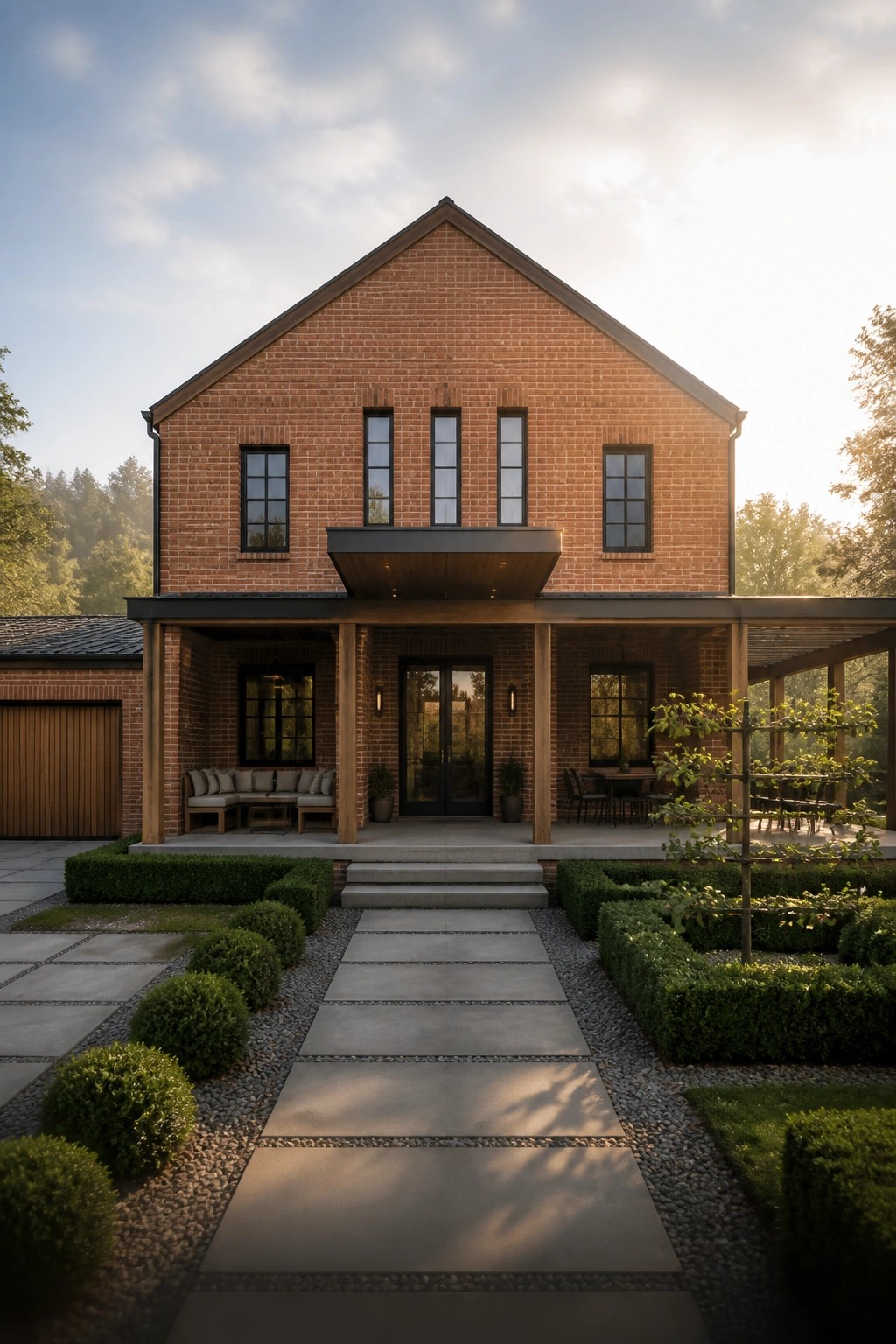
A simple gable roof gives this brick farmhouse its clean shape without extra fuss. The steep pitch and centered peak keep the whole front feeling balanced and easy to read, which works especially well on a two-story brick home that could otherwise look heavy.
This approach suits houses that want a modern farmhouse feel without turning to flat roofs or complex angles. Pair the roof with evenly spaced windows and a modest entry overhang so the lines stay sharp and the brick stays the main material. Just avoid adding too many roof breaks or dormers that would clutter the view.
Matching Brick For The Outdoor Kitchen
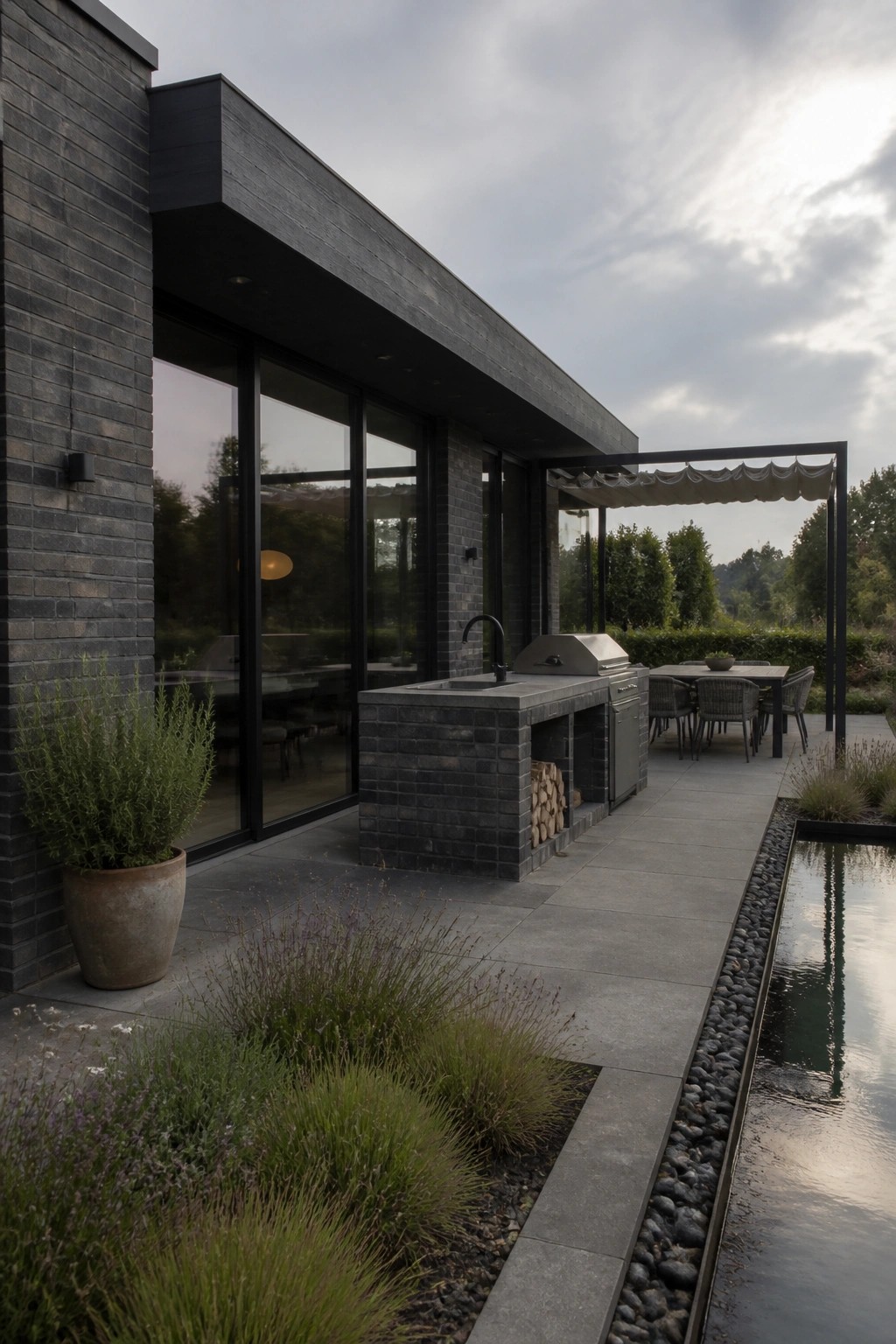
One idea that holds up well is using the same dark brick for the outdoor kitchen as on the house itself. It keeps the whole back area from looking like separate pieces and lets the clean lines of the architecture carry straight through to the patio.
This works best on homes where the outdoor space gets regular use for cooking and meals. Keep the island proportions simple and line up the brick joints with the main walls so the connection feels intentional rather than added on.
Central Arched Entries on Brick Facades
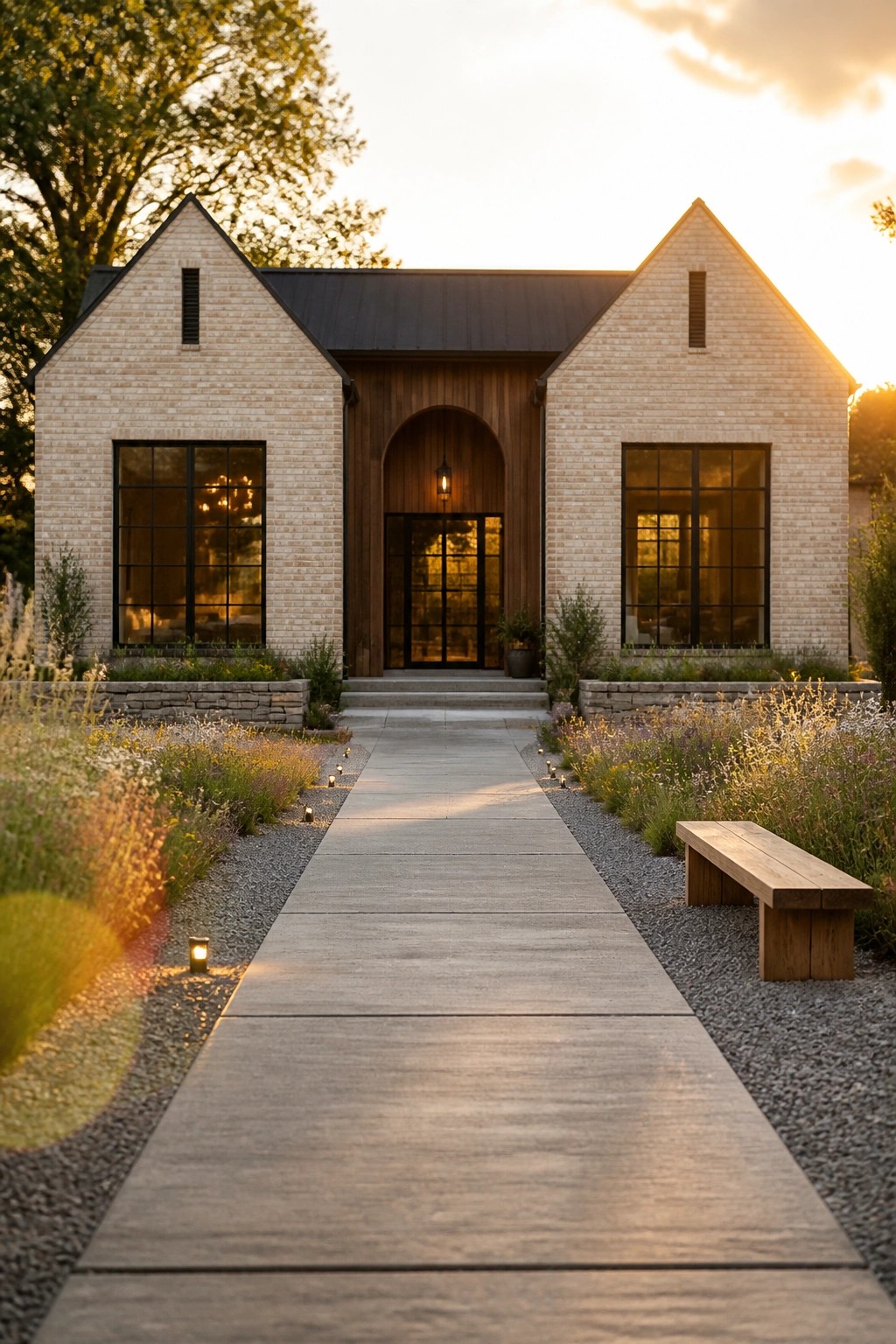
An arched entry can give a brick farmhouse a clear focal point without adding extra trim or clutter. The curve breaks up the straight lines just enough to feel welcoming while the rest of the facade stays simple and balanced.
This works best on symmetrical houses where the arch sits right in the middle. Keep the surrounding brick light and pair the arch with wood that matches the windows or doors. Avoid making the arch too wide or adding heavy decoration around it, since the goal is to hold the clean look together.
Horizontal Rooflines On Brick Homes
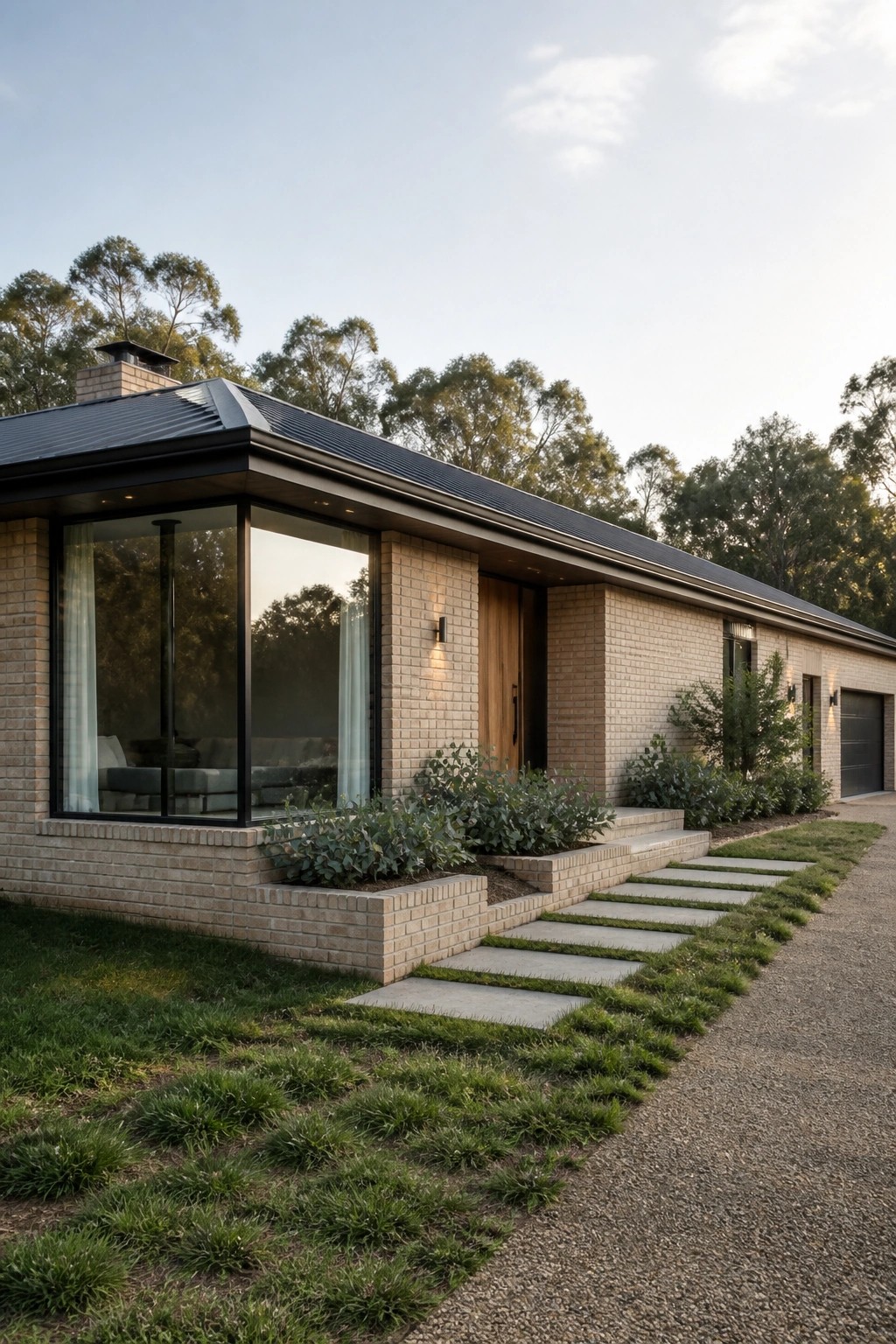
A long, low roofline helps a brick house feel more contemporary while still reading as a farmhouse. It stretches the facade and keeps the whole front looking orderly and grounded instead of busy.
This works best on single-story homes where you want to play up width instead of height. Keep trim simple, use large windows, and let the roof edge do most of the work.
Symmetrical Gables Keep the Lines Clean
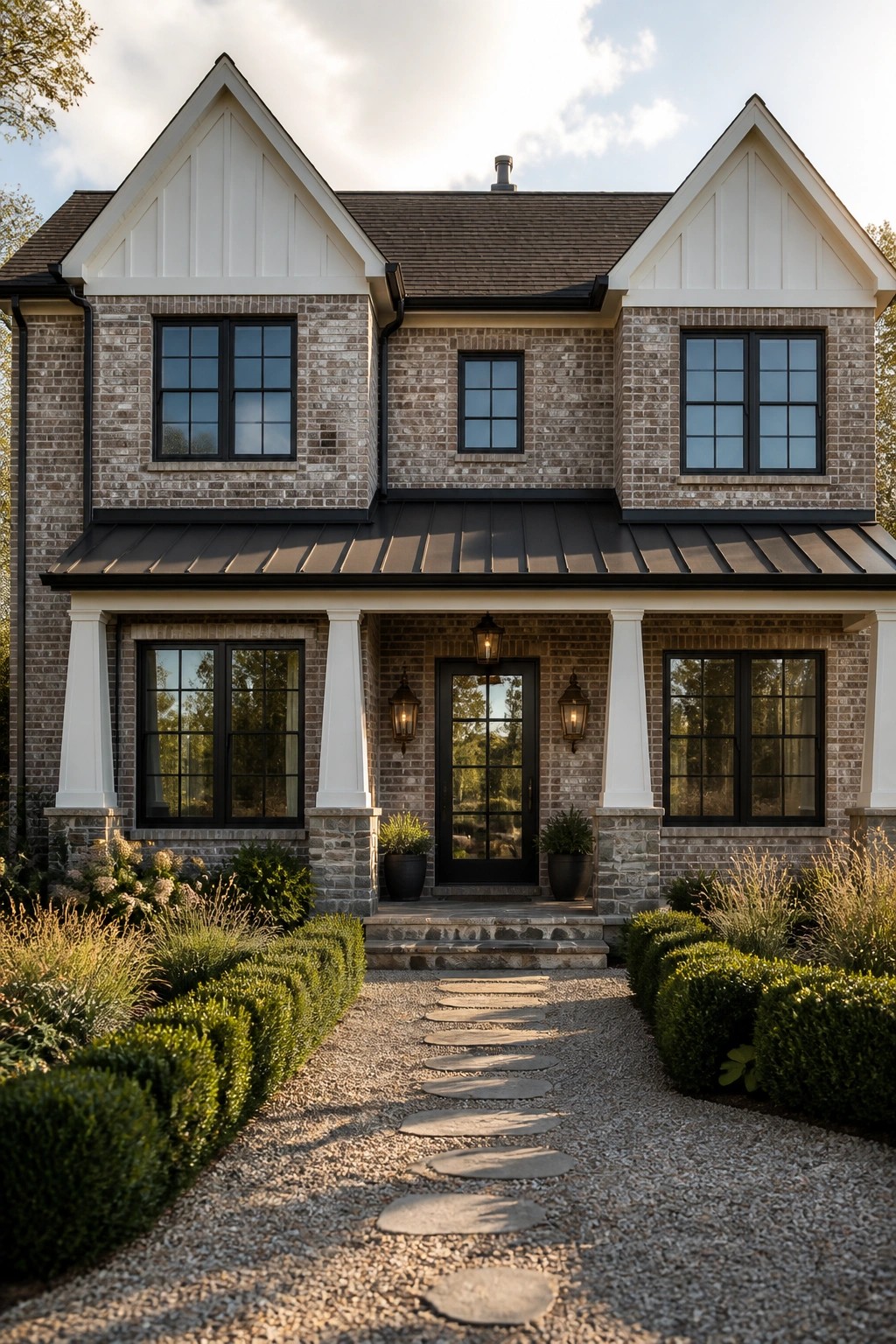
Matching gables on a brick exterior can make the whole house feel more ordered. When the roof shapes line up and the windows sit in similar spots underneath, the front stays simple even with a lot of brick showing.
This approach works best on two-story homes that already lean traditional. Keep the window grids consistent and let the gables carry the structure so the design does not need extra details to feel finished.
Mixing Brick With Black Accents
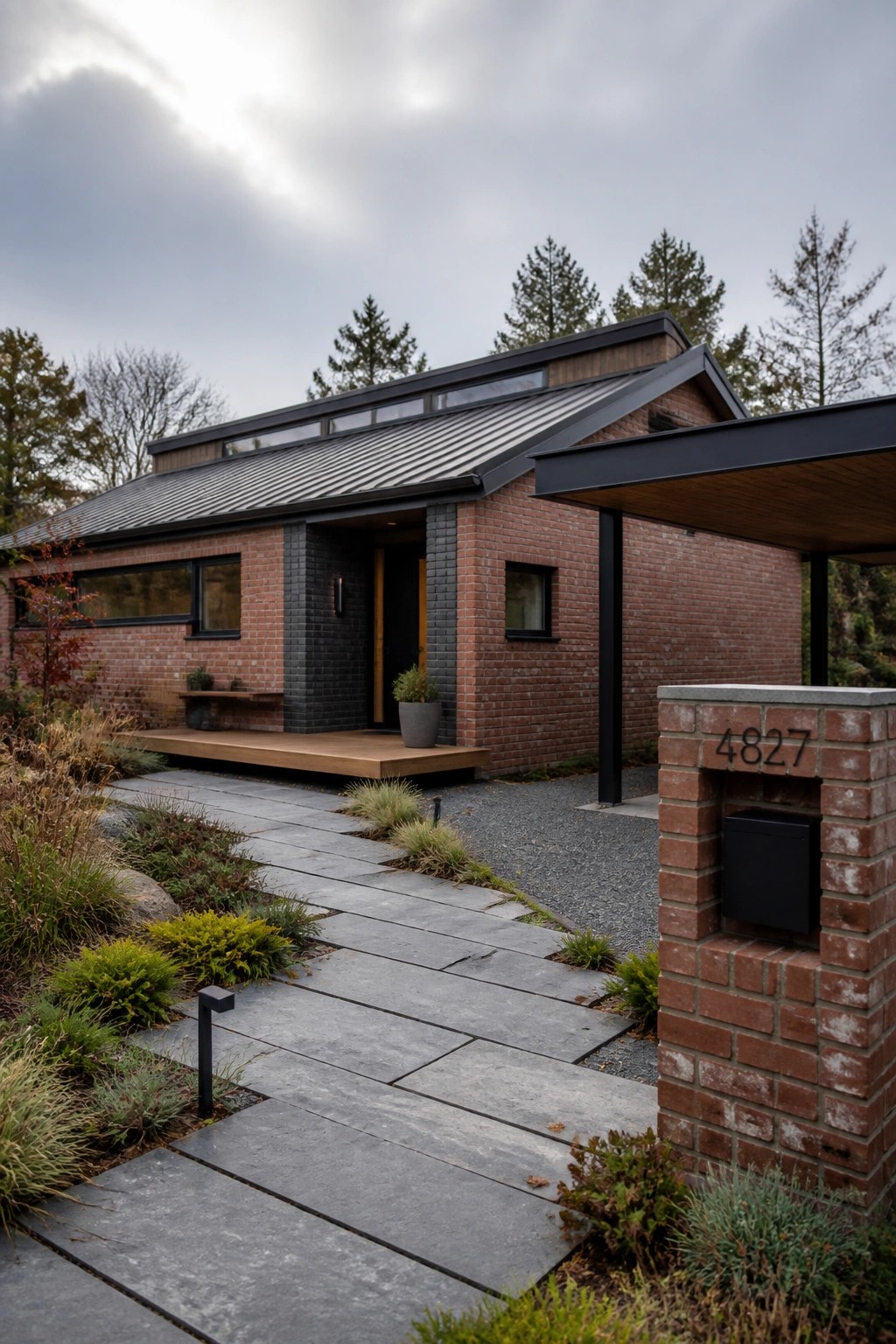
Many brick farmhouses gain a cleaner look when black accents are added around the doors and windows. The dark sections break up the red brick and help the simple roofline and wall shapes stand out more clearly.
This approach works best on homes that want a modern edge without losing the familiar feel of brick. Start small by painting or replacing trim and entry surrounds first, then see if the rest of the facade needs the same treatment.
Symmetrical Gables Keep the Look Clean and Balanced
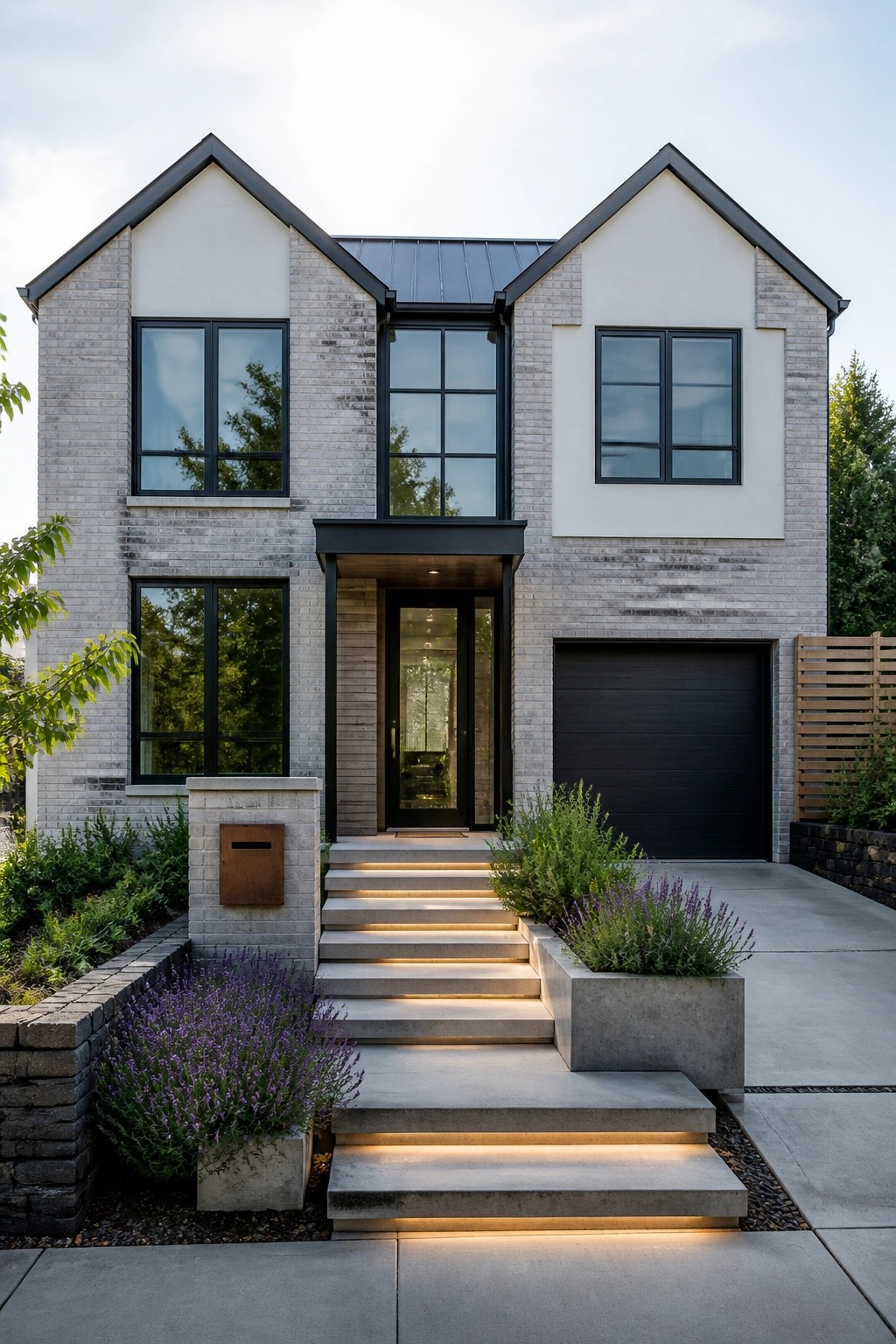
Matching gables on each side of the entry give the house a steady shape that feels simple and current at the same time. The rooflines line up evenly, so the brick and dark trim can stay in the background without fighting for attention.
This layout suits two-story brick homes that want to feel modern but still read as farmhouse. It works best when the rest of the details stay quiet, like the black window frames and the low concrete steps shown here.
Brick Exteriors With Crisp Rooflines
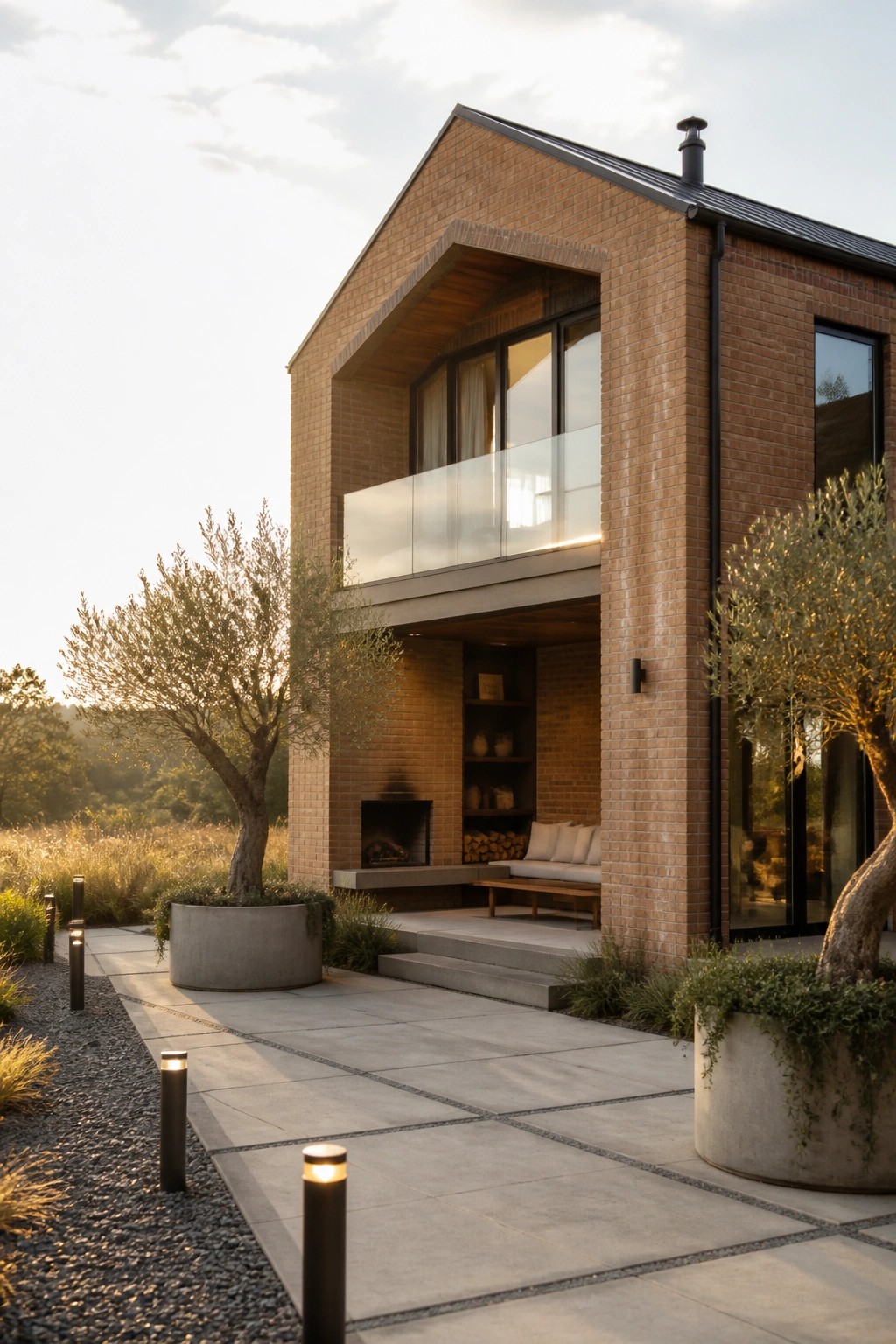
A simple gable roof and straightforward brick walls can give a farmhouse a clean, modern feel without extra trim or fuss. The house in the photo shows how that works well when the roof pitch stays sharp and the brick runs in a single tone with minimal joints showing.
This approach suits new builds or remodels on flat or gently sloping lots where you want the shape of the house to stand out. Keep windows large and evenly spaced, and let any outdoor seating sit under the overhang so the lines stay unbroken from the street.
Matching Brick Built-Ins Extend the Home’s Lines
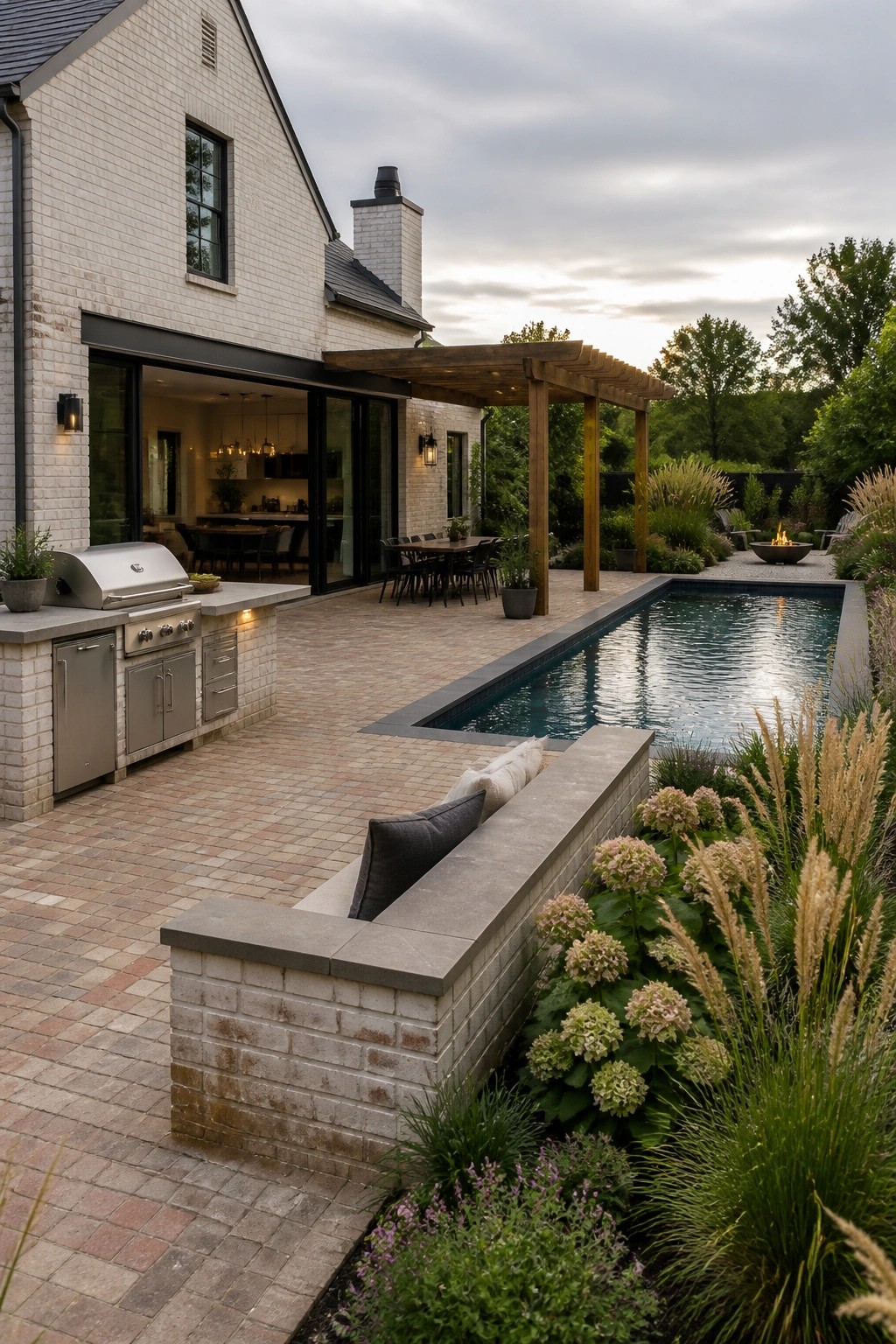
Using the same brick for outdoor elements helps carry the clean lines of a farmhouse right into the yard. The low seating wall and outdoor kitchen here show how that single material choice keeps the space feeling connected instead of like something added later.
This works best on homes where the main structure already uses brick, since it avoids new colors or textures that could break up the view. It suits patios that see daily use and keeps the overall layout looking simple and intentional.
Mixing Brick And Wood On The Facade
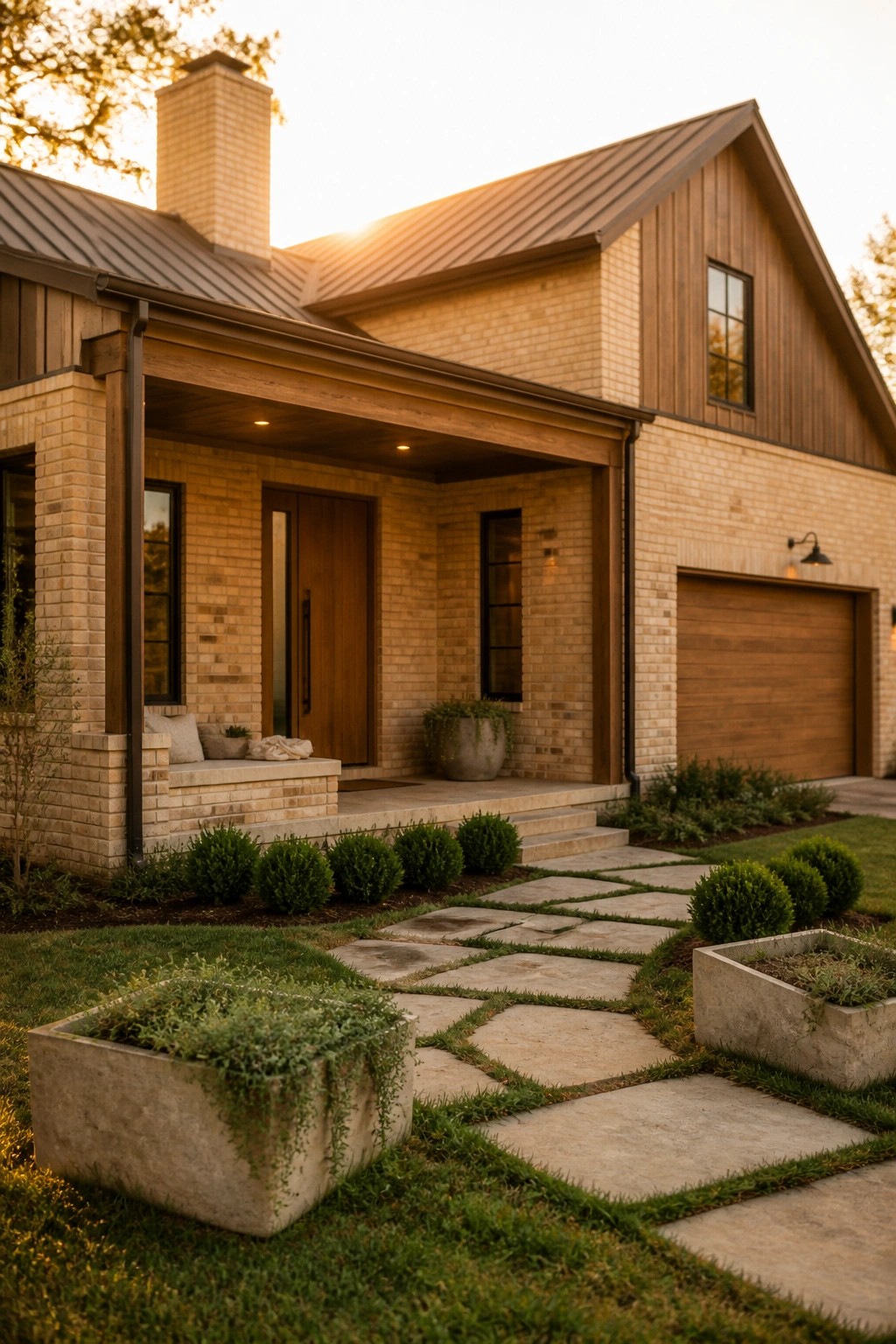
Many brick farmhouses stay cleaner when the main walls stay brick and wood shows up only in key spots. The change breaks up the height without extra trim or decoration, so the roofline and windows stay the main focus.
This approach works best on homes with simple gable roofs and few projections. Keep the brick on the lower two-thirds and let wood cover the gable ends or a small section above the porch. It gives the house presence without looking busy.
Black Window Frames On Brick
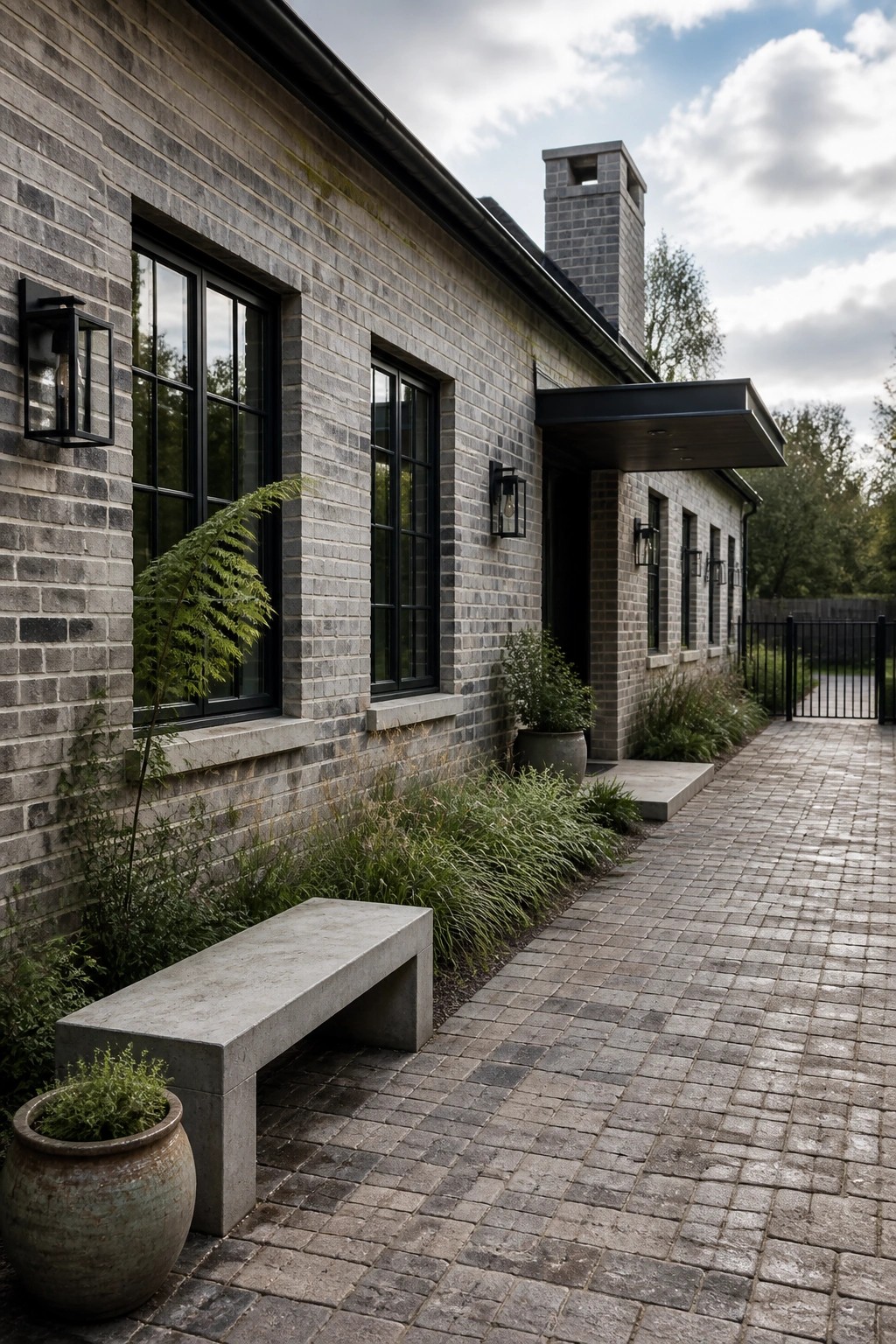
Many brick farmhouses gain a cleaner look when the windows are framed in black. The dark color outlines each opening and gives the gray brick a sharper edge without adding moldings or extra detail.
This approach suits homes that want a simple, modern feel while keeping the traditional brick material. Match the frames to other exterior metal like light fixtures or the entry overhang so the contrast stays consistent across the facade.
Mixing Brick Tones for Clean Contrast
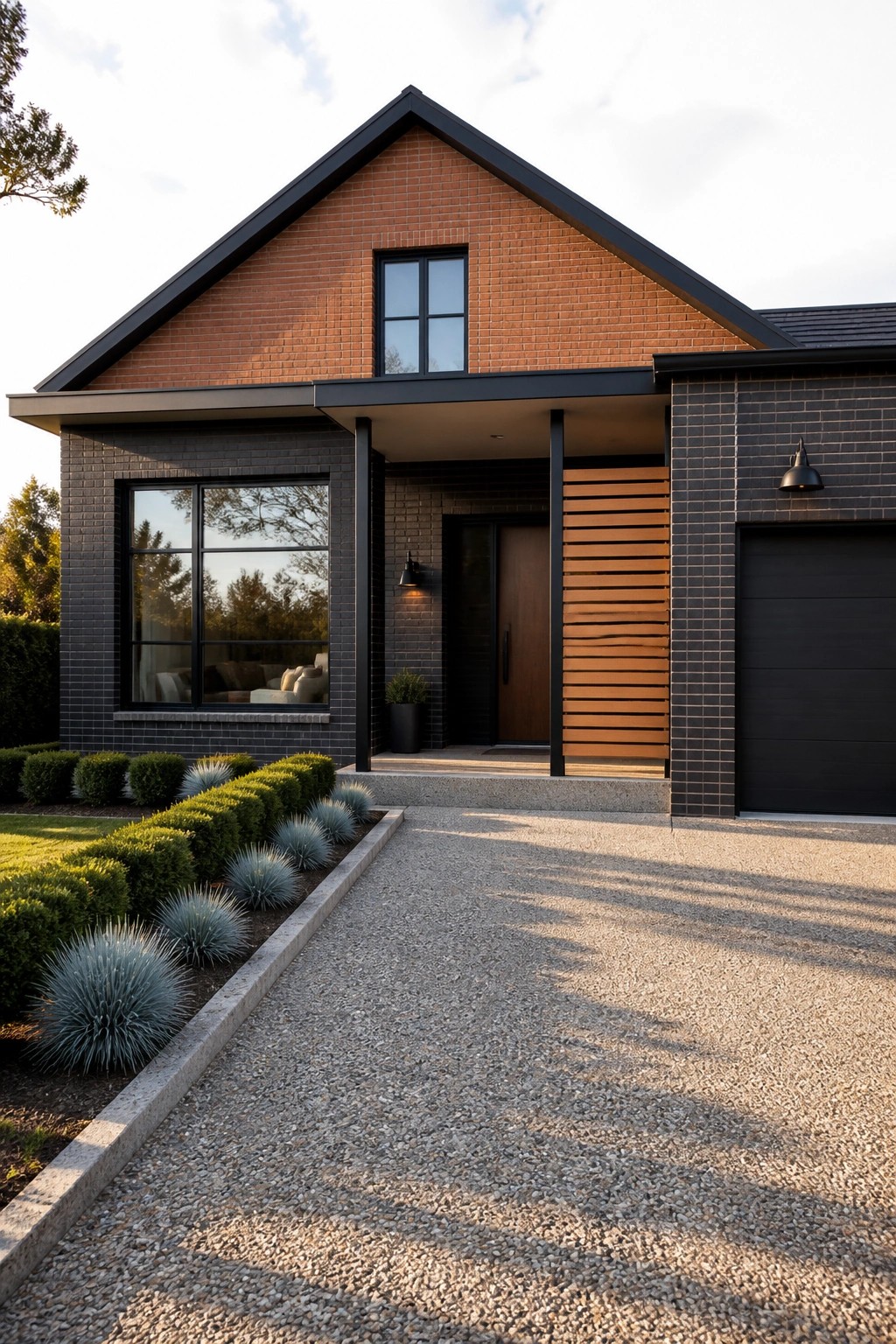
Mixing two brick colors on the same facade gives a farmhouse a sharper look without adding extra trim or detail. The warmer red brick on the upper gable breaks up the darker brick used on the lower walls and side sections. This simple switch keeps the overall shape easy to read while still feeling current.
The approach works best on homes with straightforward rooflines and larger window openings. It helps the entry and garage door sit more naturally in the design instead of competing for attention. Just keep the trim color consistent so the contrast stays focused on the brick itself.
Integrating Outdoor Kitchens Into Brick Exteriors
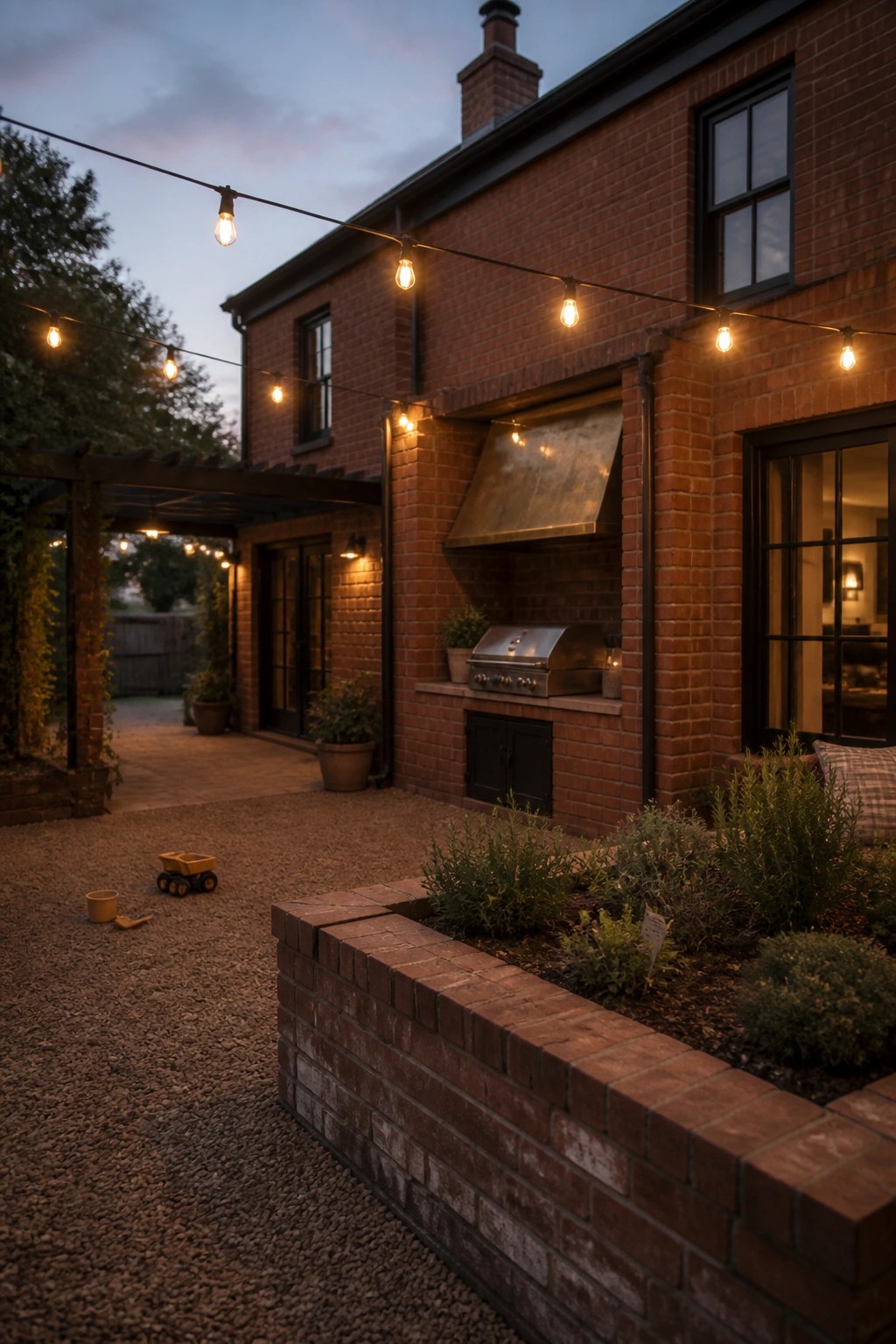
One practical move on a brick farmhouse is to set the grill and hood directly into the wall rather than adding a separate island. This keeps the clean lines of the brick unbroken and lets the architecture carry the look.
It works best on homes where the brick already shows strong horizontal joints and simple window placement. Match the hood finish to any dark trim or metal accents already on the house so the whole section reads as part of the original structure instead of an afterthought.
Choose A Standing Seam Metal Roof
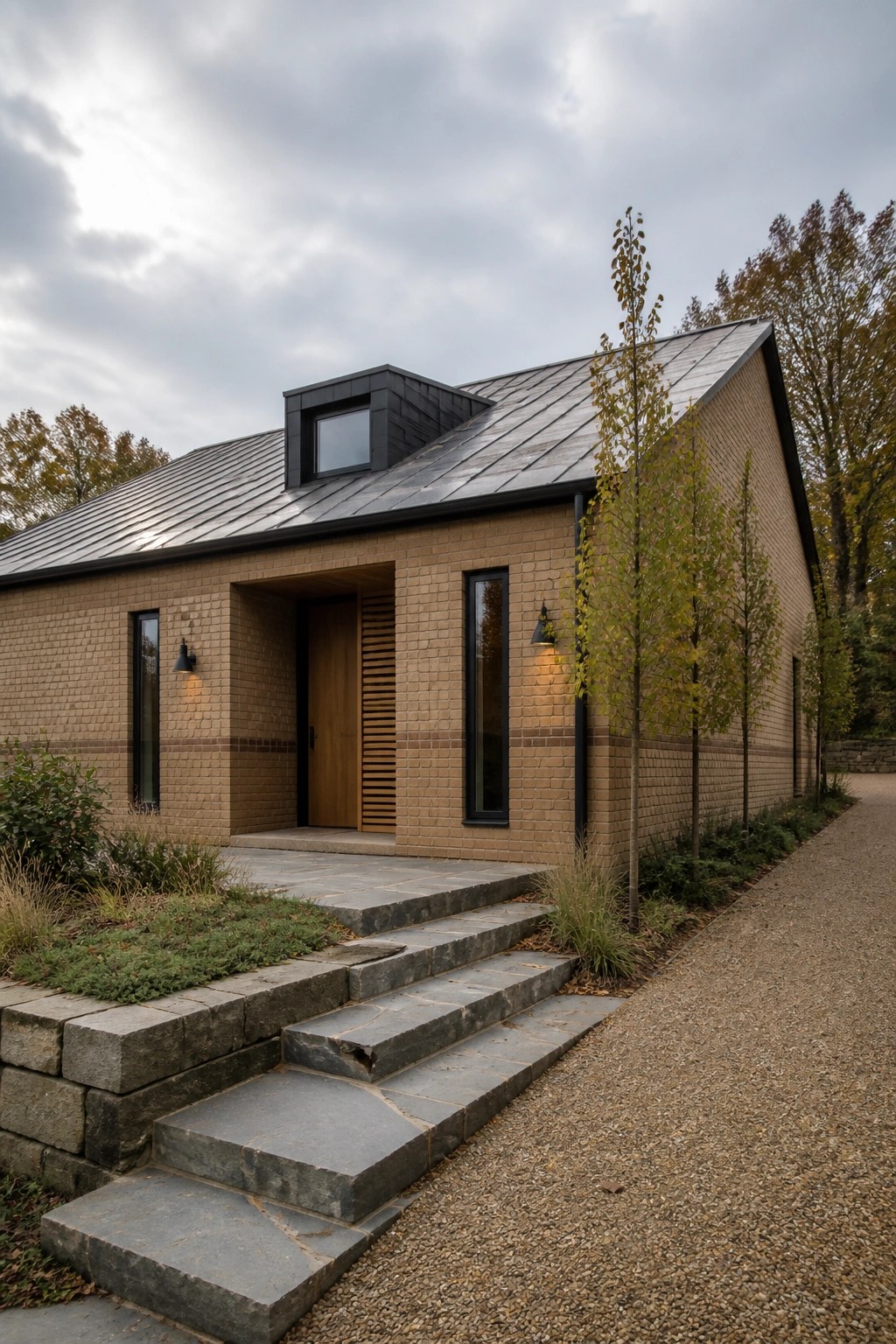
A standing seam metal roof gives the house a crisp edge that brick alone rarely provides. The vertical seams add just enough texture to keep the surface interesting while the dark color sharpens the overall shape.
This roof style works best on straightforward gable forms where you want the lines to stay simple. It pairs cleanly with brick and needs little extra trim to feel finished.
Dark Brick With Recessed Entries
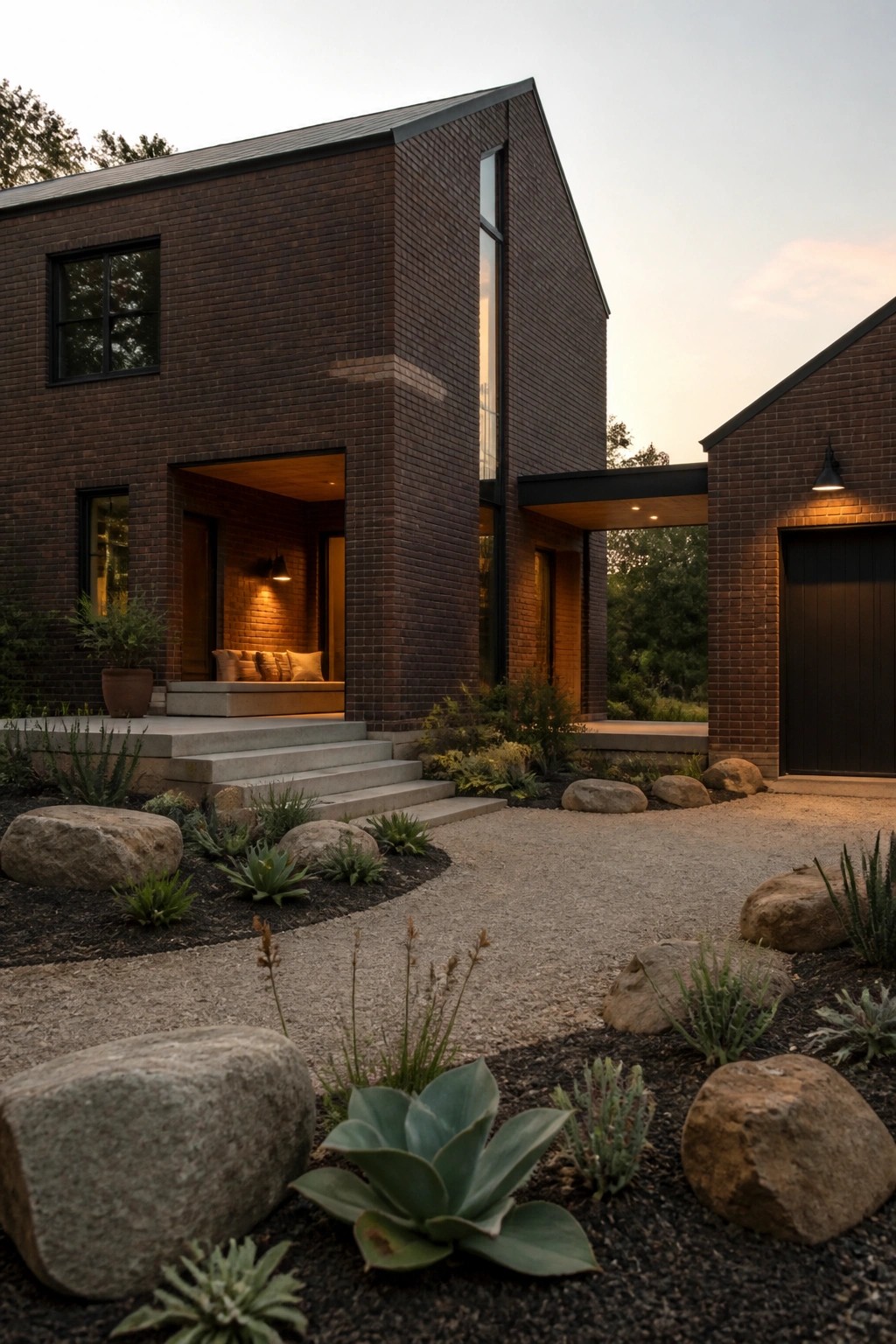
Dark brick works well when you want a farmhouse to feel current rather than traditional. The recessed entry here keeps the front wall flat and simple while still giving a place to sit or come in out of the rain. That one move keeps the lines clean and stops the brick from looking heavy.
This approach suits homes that already have a straightforward roofline and few trim details. It works best on smaller lots where you need the facade to feel orderly. Just make sure the recess is deep enough to read as intentional and not like a random cutout.
Frequently Asked Questions
Q: Which brick shade keeps the design feeling modern?
A: Stick with a light gray or warm beige. These tones highlight the sharp angles without adding extra texture. Darker reds can make the house feel heavier.
Q: How should I handle the roof to match the clean lines?
A: Choose a simple metal roof in a matte finish. It sits flat against the brick walls. This keeps everything looking sharp from the road.
Q: Can I add a porch without ruining the style?
A: Use a flat roof and slim posts for the porch. Keep it low so the brick stays front and center.
