

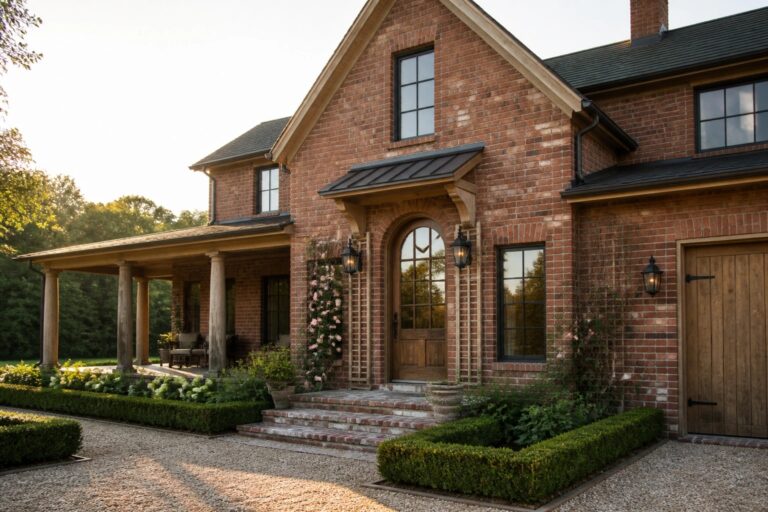
I’ve always noticed that brick farmhouses gain real presence from the street when the material shows its natural variation instead of sitting flat and even.
The mortar color and joint style end up shaping how the whole facade settles into the landscape around it.
Texture changes everything.
I keep coming back to the way roof overhangs and entry details interact with the brick, since those choices decide whether the house feels grounded or just layered on.
Testing a few of these material pairings on paper first has shown me which ones actually hold their warmth once the weather hits them.
Brick With Metal Roof Accents
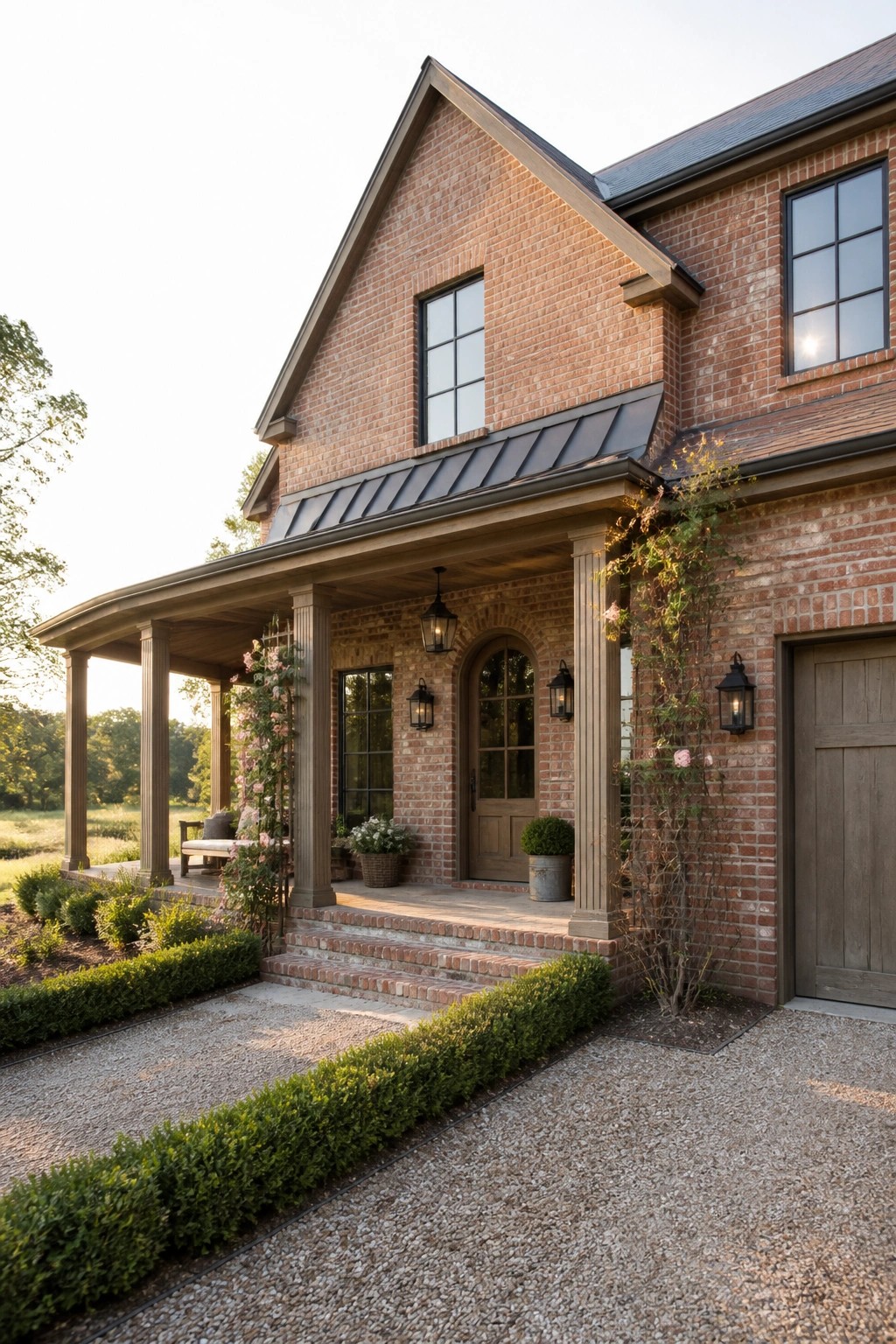
A metal roof section over the porch gives a brick farmhouse some extra texture without making the whole house feel heavy. The contrast between the warm brick and the darker metal helps the entry stand out while still keeping things simple and grounded.
This works best on homes that already have a traditional shape and roofline. Keep the metal limited to the porch or a small gable so it reads as an accent rather than a full roof change. It pairs well with wood columns and simple lighting.
Rustic Wood Accents on Brick Exteriors
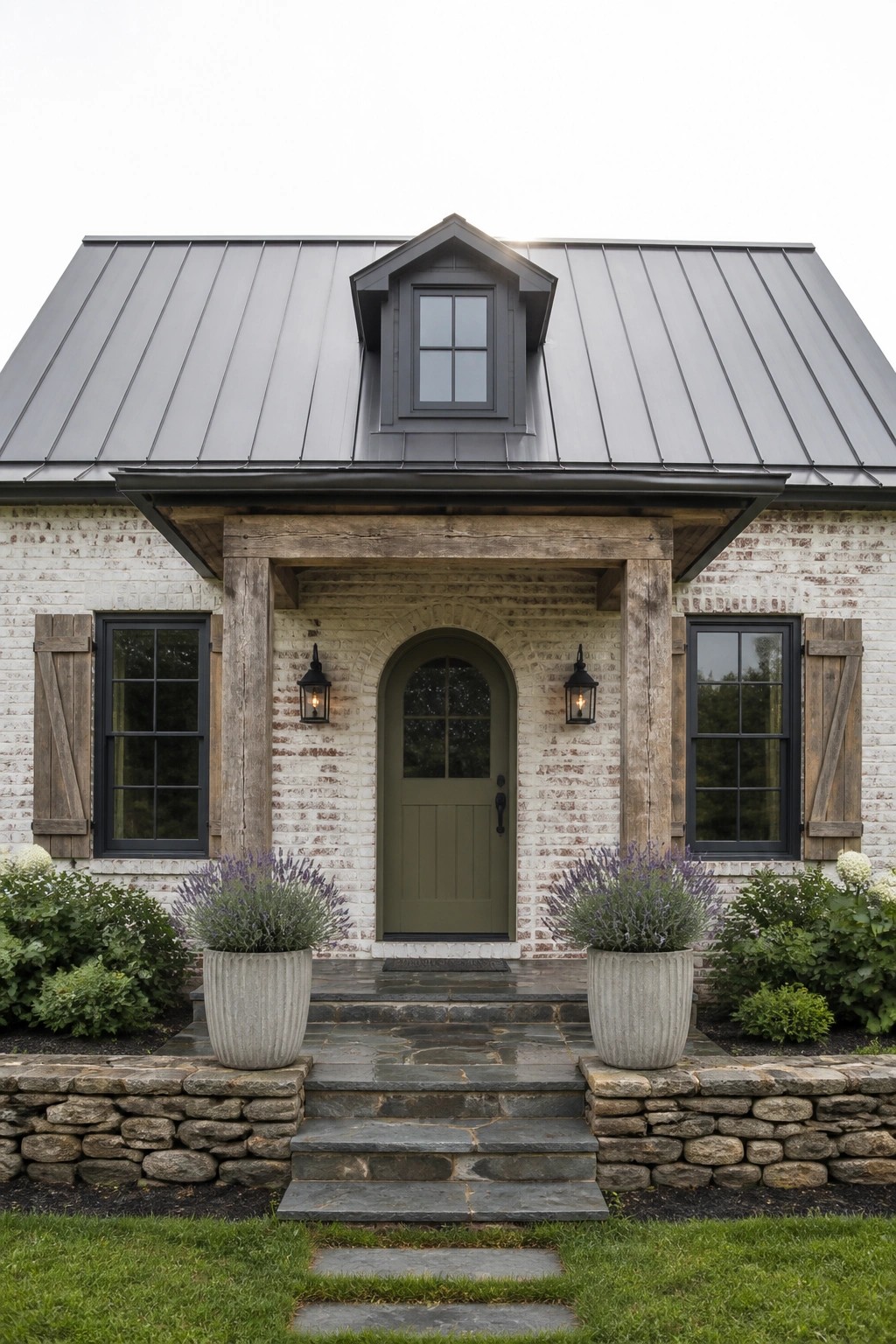
Many brick farmhouses feel a little stark on their own, so adding weathered wood helps bring in texture and warmth. The rough beams holding up the porch roof and the simple shutters on the windows show how this mix works without trying too hard.
This idea fits homes that already have a solid brick base and just need a bit more character. Use it around the entry first, and look for wood that already has some age so it blends in right away.
Brick Columns Give the Porch a Solid Base
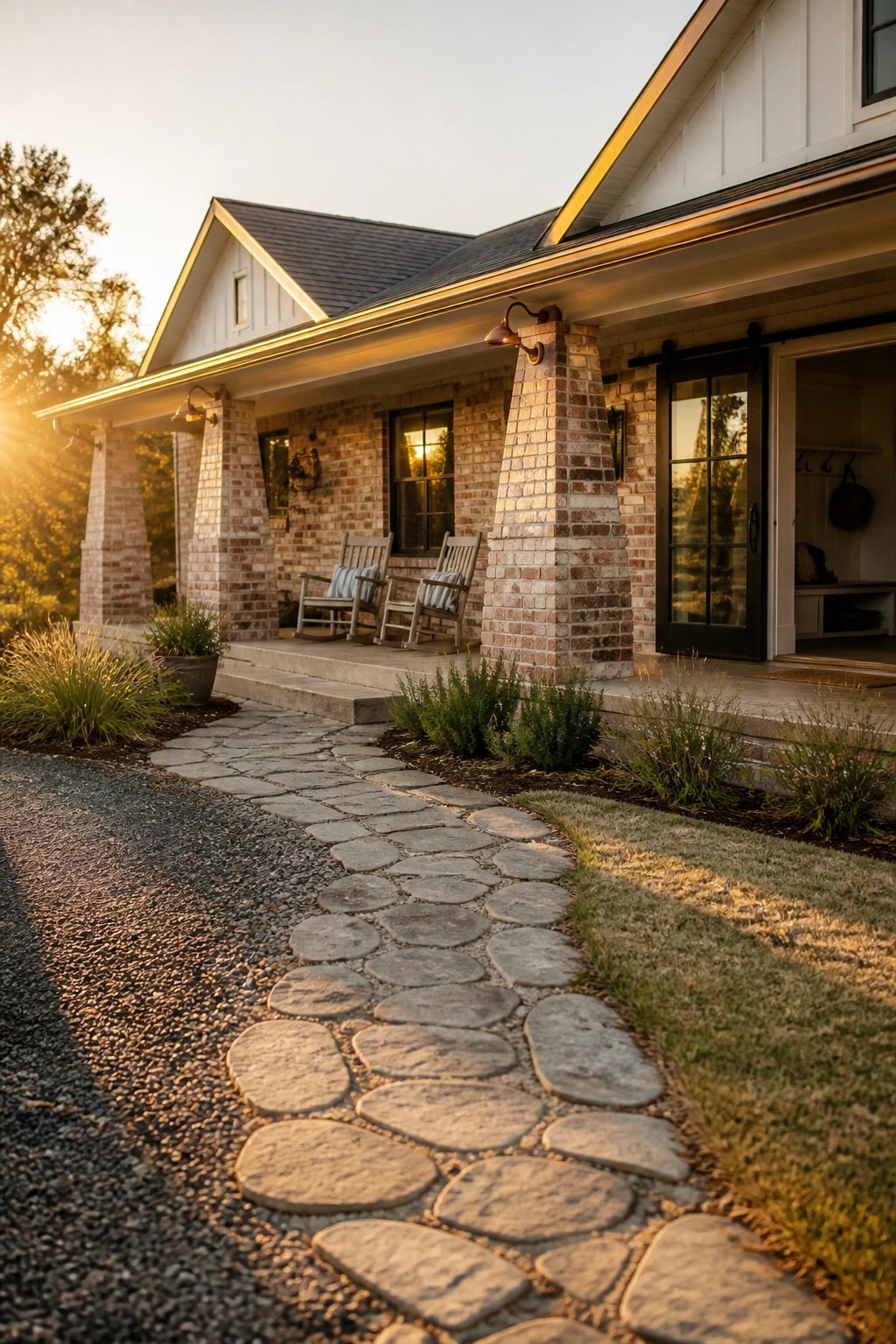
Brick columns work well on a farmhouse porch because they match the main material of the house and add real weight to the structure. They keep the look grounded instead of letting the roof float above open space.
This approach suits homes with a wide front porch and simple siding. Space the columns evenly and let the brick do the talking while keeping other details like railings and lighting fairly plain.
Paint the Front Door a Contrasting Color
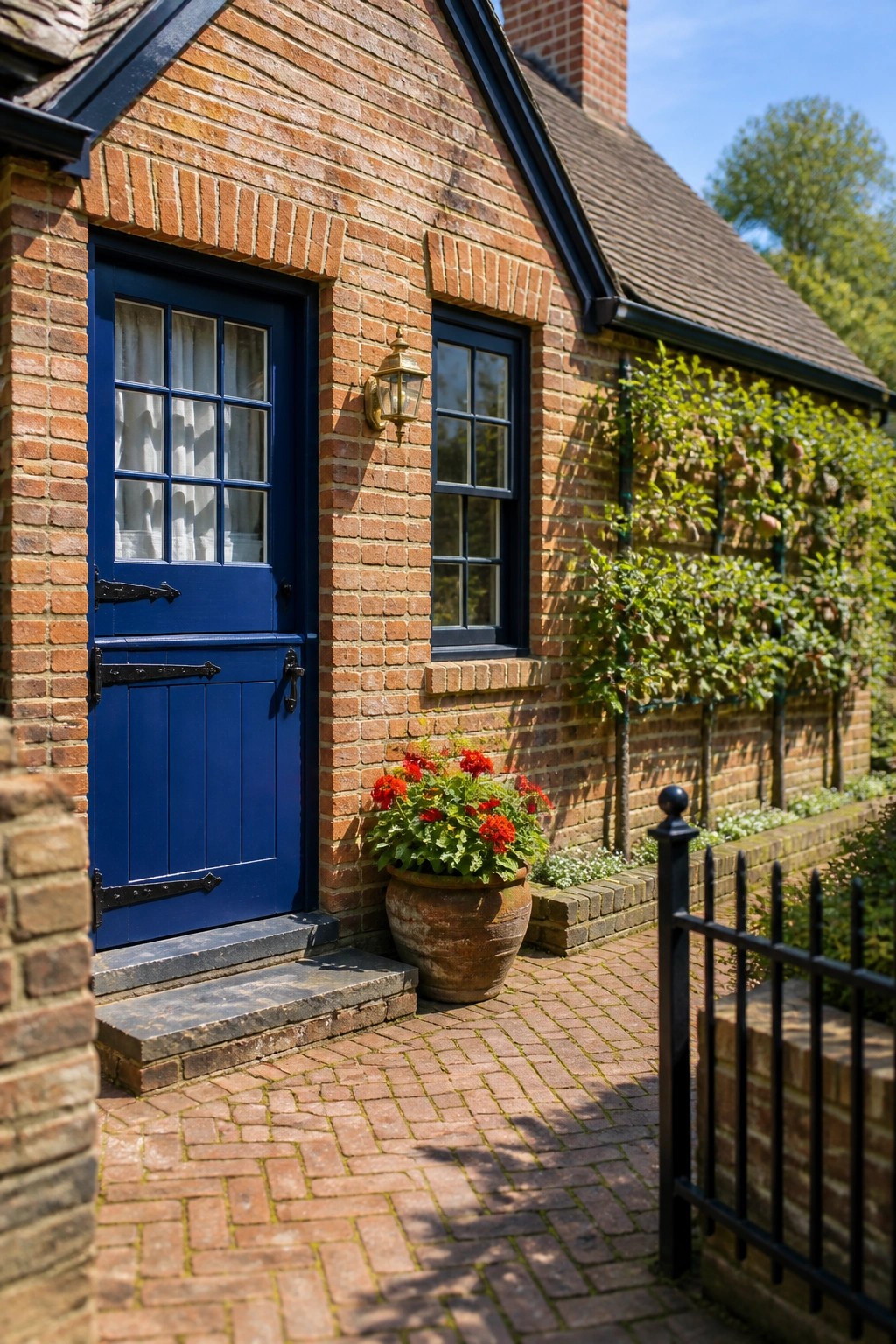
A painted front door stands out nicely against brick and brings some life to the whole entry. The color choice does not need to be loud, but it should feel different from the brick tones so the door becomes a clear focal point rather than just another part of the wall.
This works best on simple brick farmhouses where the architecture is already strong. Pick a color that feels right for the light in your area, and keep the trim and hardware simple so the door stays the main feature. It is an easy change that makes the house feel more welcoming without any major construction.
Lantern Lighting Along a Brick Porch
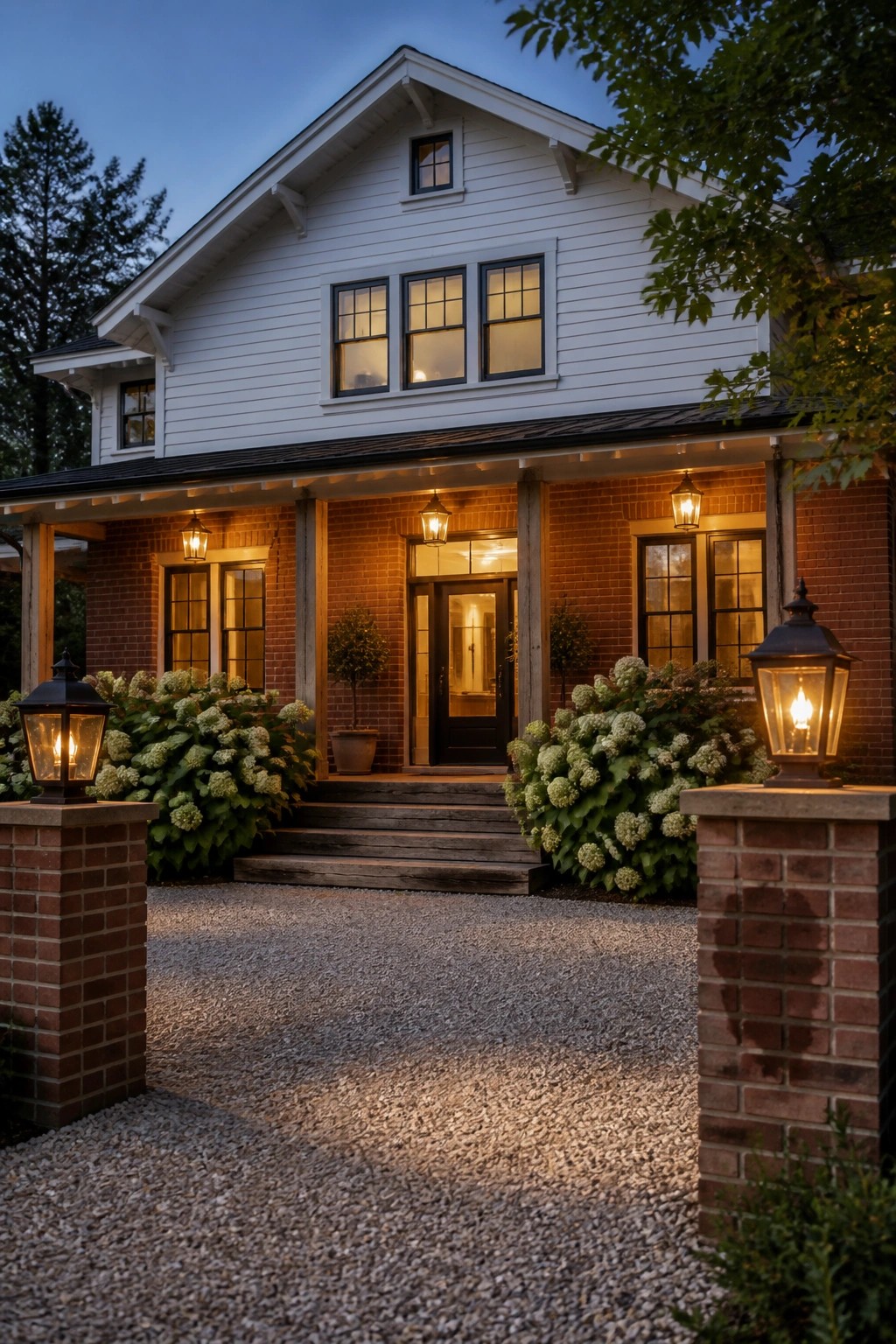
Warm lantern lighting works well on a brick farmhouse because it brings out the texture in the brick without overpowering the simple lines of the house. The soft glow also makes the entry feel more approachable at night while keeping the overall look grounded and unfussy.
Place a few lanterns at different heights along the porch and near the steps. This setup suits homes with a similar mix of brick and painted siding, especially if the driveway or path leads straight to the front door. Just avoid spacing them too evenly or using overly bright bulbs that wash out the natural material tones.
Use A Vine-Covered Arch Over The Door
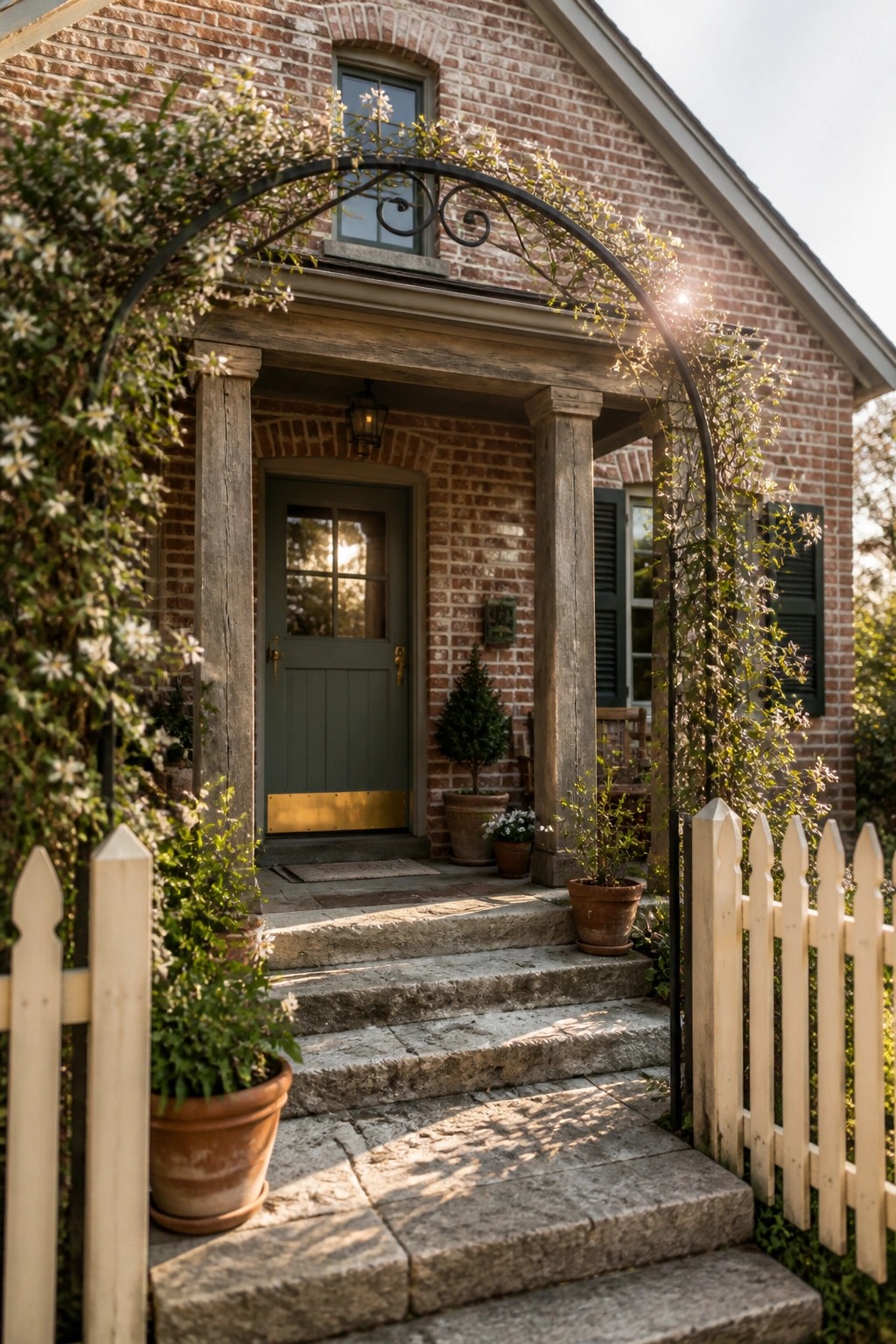
An arched trellis adds a simple layer of greenery right where people enter. It softens the hard lines of brick and gives the front a bit more warmth without changing the main structure.
This idea works best on smaller farmhouses or cottages where the entry is the main focal point. Let the vines grow freely and trim them only when they start to block light or the path.
Brick Outdoor Kitchens Extend The House Style
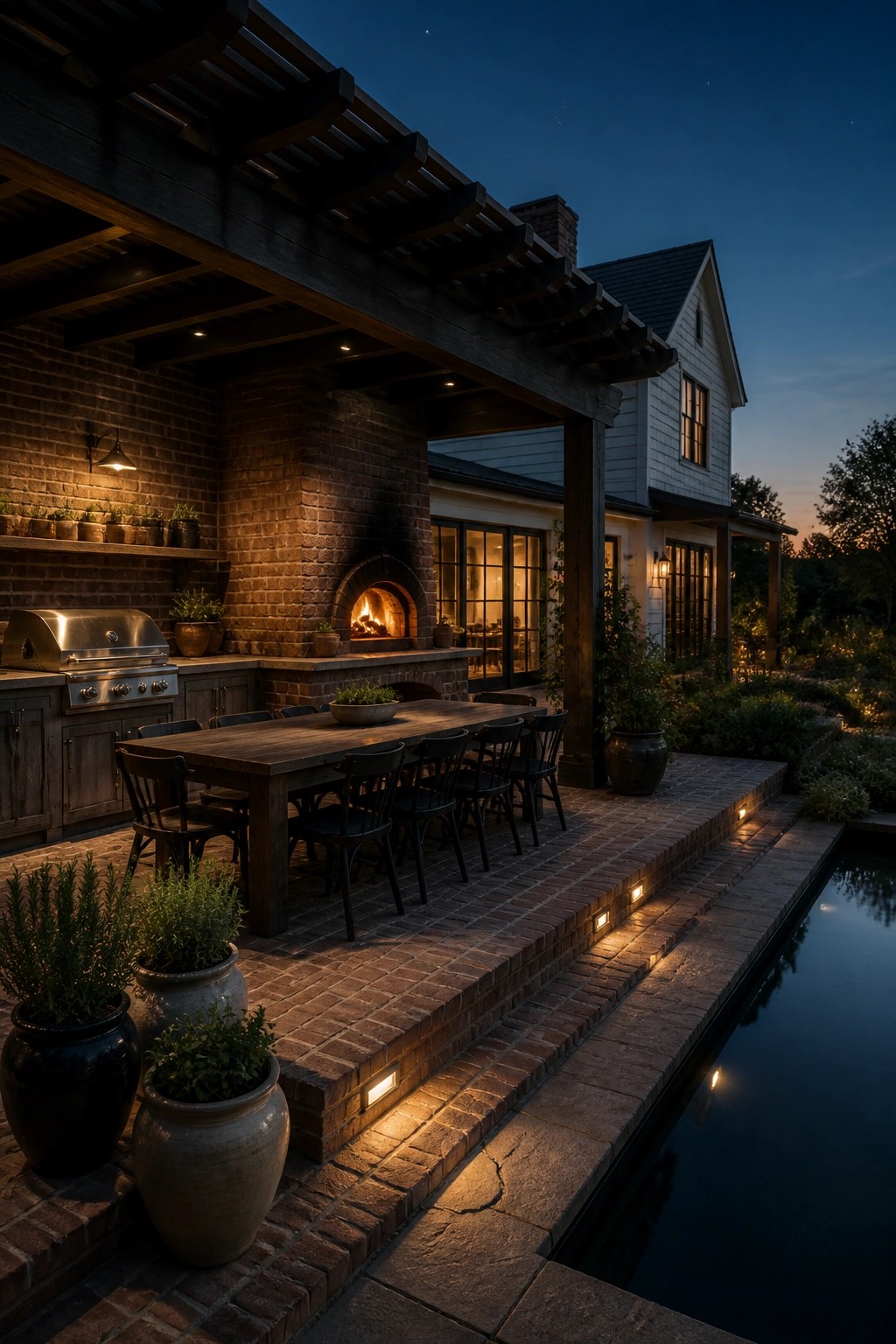
Brick works well for outdoor kitchens because it matches the texture of a farmhouse without feeling added on later. The built-in fireplace and cooking area create a natural gathering spot right off the main living space.
This layout suits homes with existing brick details and gives you room for both cooking and seating in one zone. Keep the surrounding paving simple so the brick stays the main material.
Wood Garage Doors On Brick Exteriors
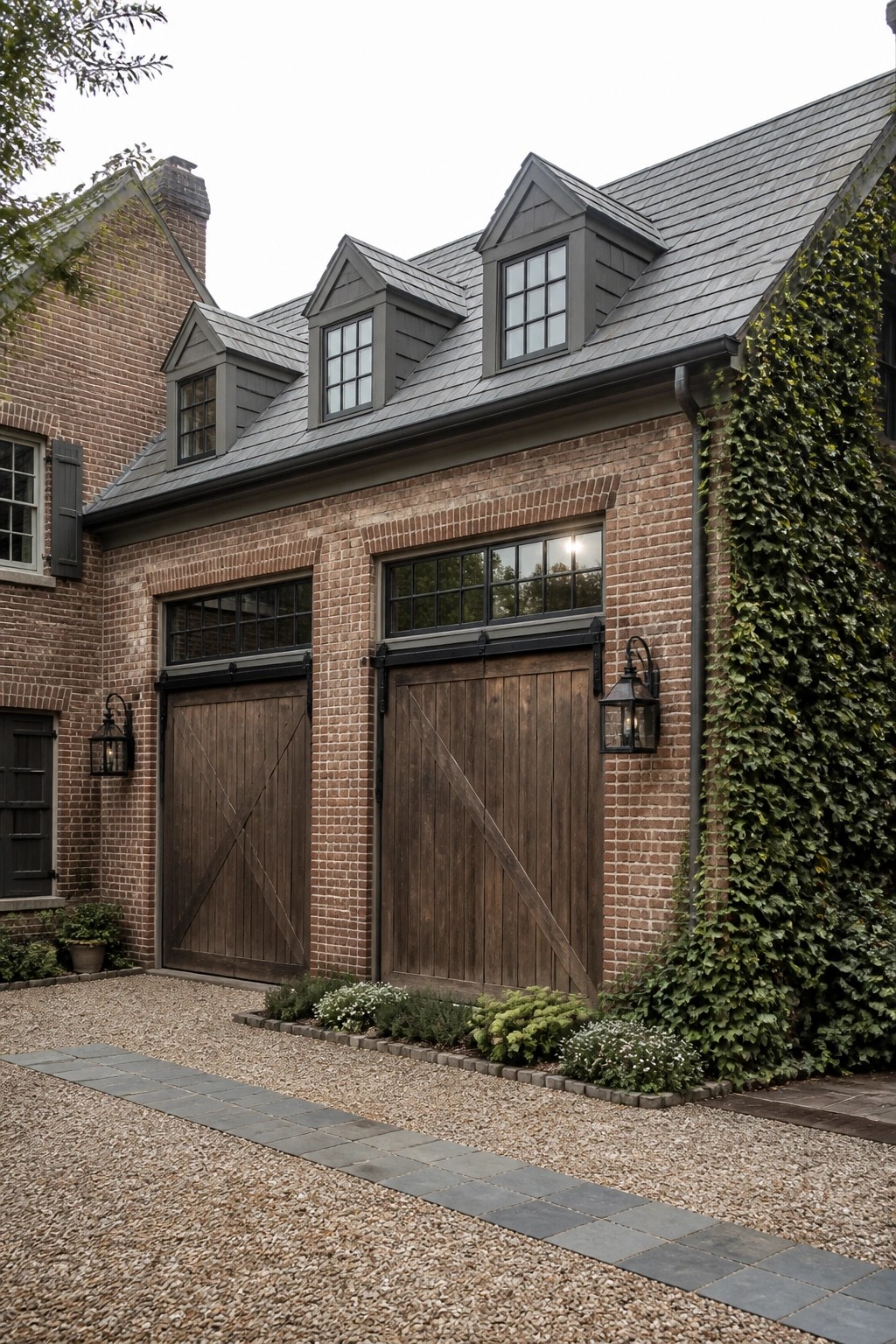
Wood garage doors bring a natural texture that softens the look of a brick facade. The dark wood against the red brick creates a simple contrast that feels warm and grounded without any extra trim or detail.
This approach works well on traditional farmhouses where the goal is to keep the exterior from feeling too heavy or uniform. It suits homes with gravel driveways and modest landscaping, and the wood should be stained rather than painted so it ages naturally with the brick.
Dark Brick for a Strong Farmhouse Entry
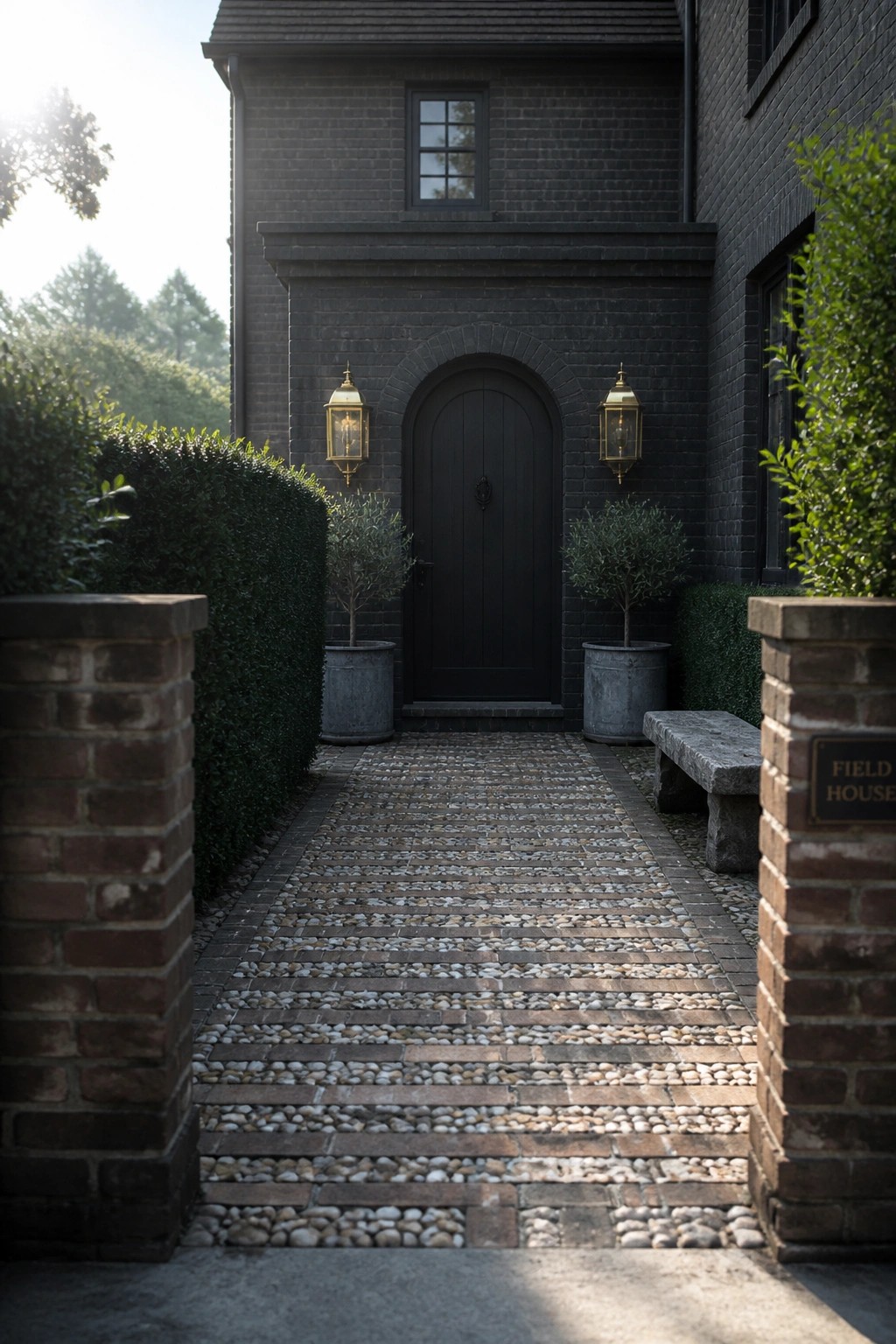
Dark brick gives a farmhouse a solid look that still feels welcoming. The color adds depth without needing a lot of extra trim or detail, and it holds up well over time in different weather.
This works best on homes with clean lines and a straightforward roof shape. Keep the door and hardware simple so the brick stays the main feature, and add a stone or gravel path to bring in some natural texture.
Frame the Entry with Potted Plants
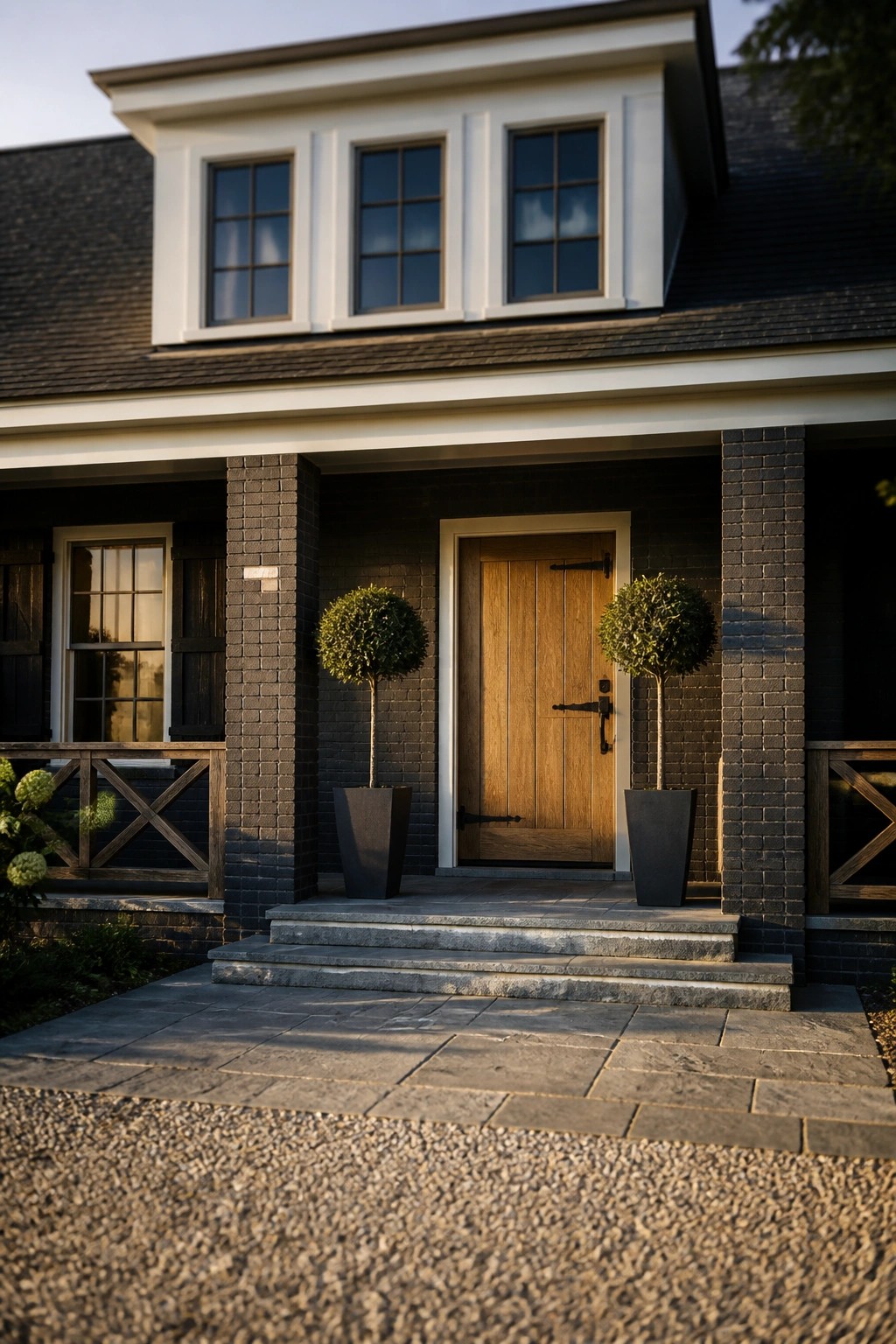
Many brick farmhouses can feel a little heavy without something to break up the solid walls. Placing two matching potted plants on either side of the front steps adds a simple layer of greenery that softens the look without taking up much space.
This approach works best on homes with a centered door and clean lines around the entry. Use tall pots in a dark finish and plants that hold their shape, so the symmetry stays tidy through the seasons.
Gabled Entries On Brick Farmhouses
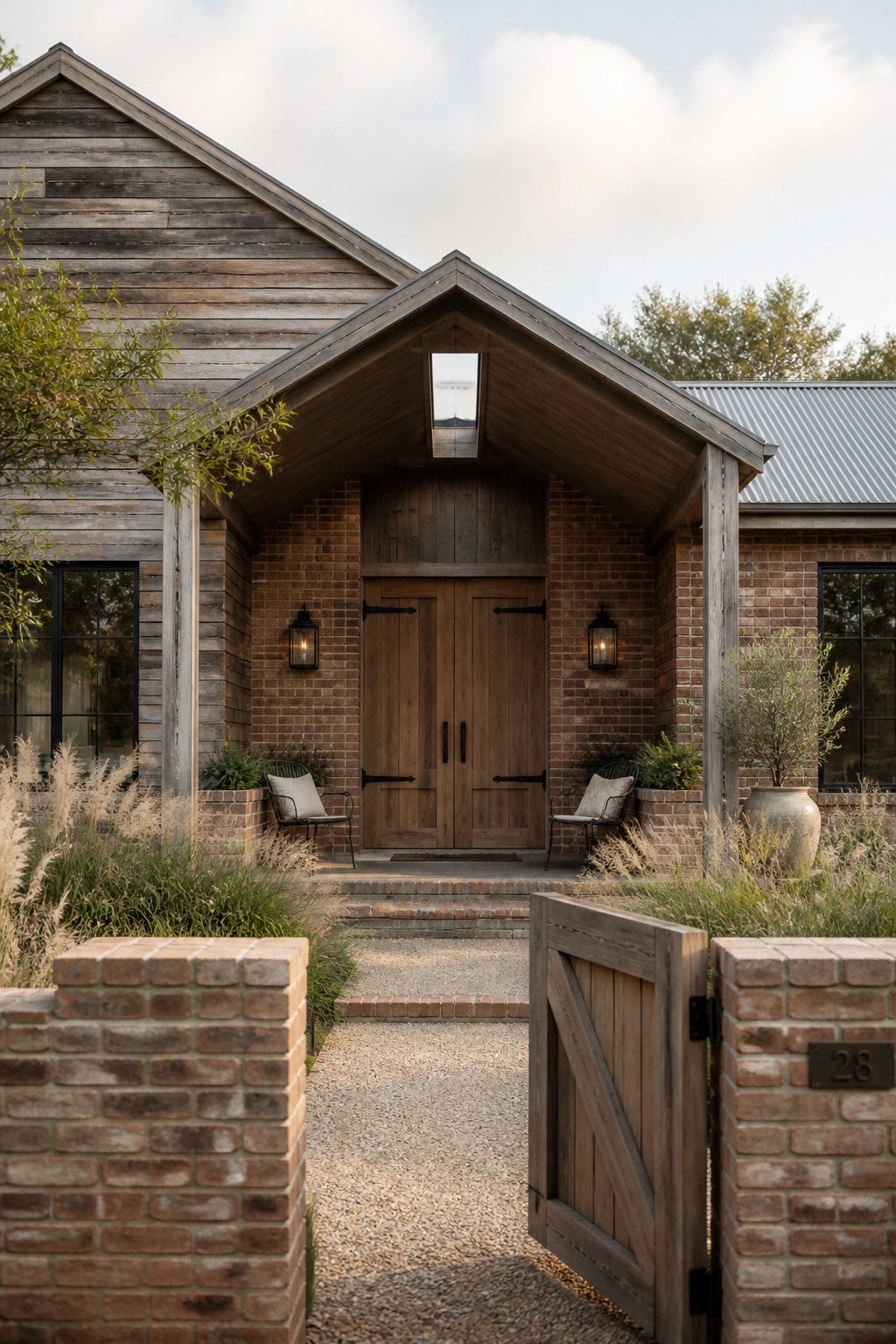
A steep gable clad in wood makes a simple brick exterior feel more like a farmhouse. The wood adds texture and breaks up the solid brick wall, while the shape itself creates a clear focal point right at the door. It works especially well when the rest of the house stays fairly plain.
This approach suits homes that already have a straightforward brick facade and need a bit more character at the front. Keep the wood weathered or stained to match the brick tones, and limit other details so the gable stays the main feature.
Center the Patio Around a Brick Fire Pit
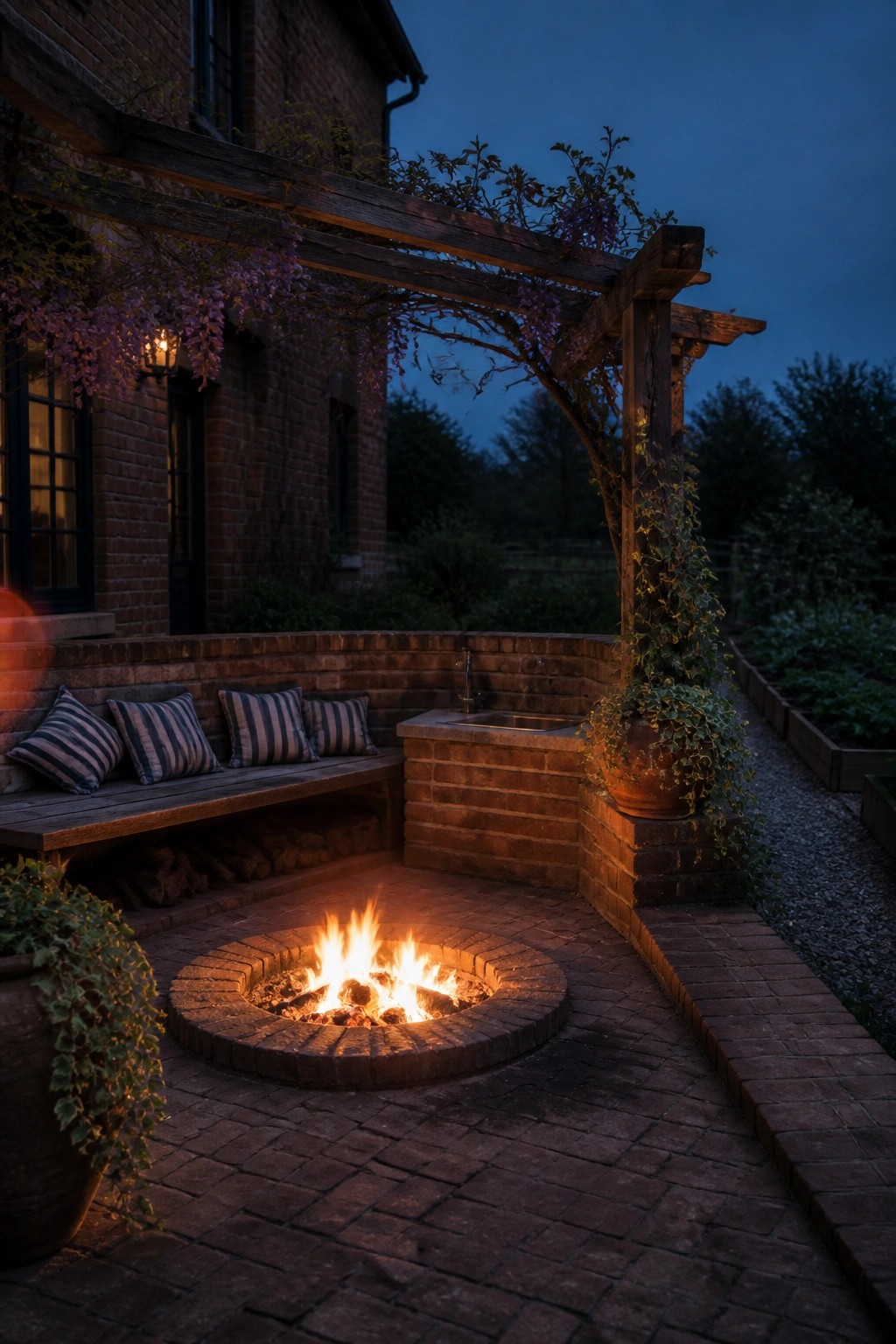
A brick fire pit gives an outdoor space a natural spot to gather without needing much else to feel finished. It works especially well on a brick patio because the materials already match and the warmth from the fire extends the season for sitting outside.
This setup suits homes with some yard space where people want a simple evening spot. Keep the surrounding seating low and built-in so the fire stays the main draw and the area does not feel crowded.
Brick With White Trim For A Classic Look
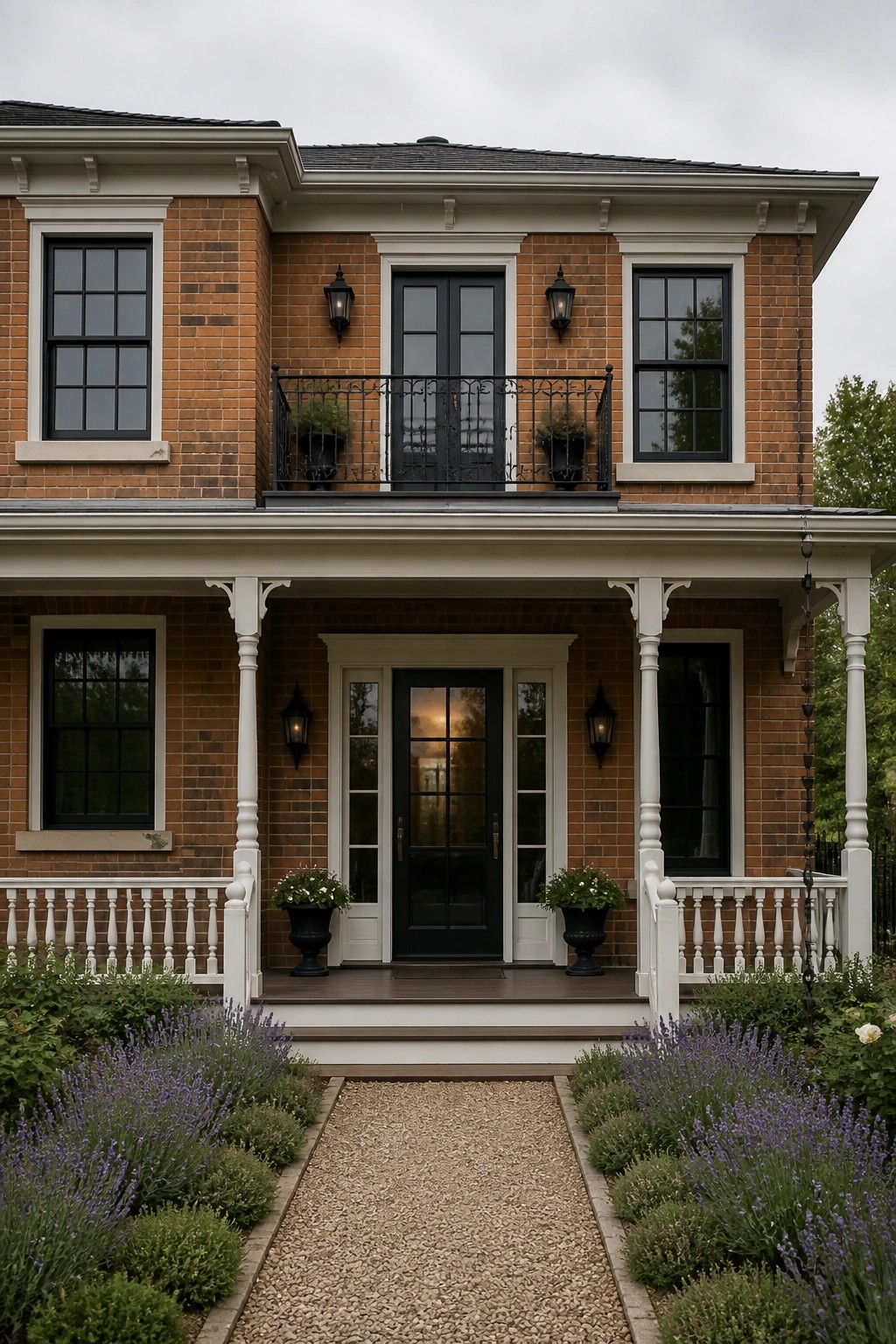
Brick brings natural texture that feels solid and warm on a farmhouse exterior. Pairing it with white trim on columns, window frames, and porch details keeps the whole house from feeling heavy while still showing off the material.
This approach works well on two-story homes where the brick covers most of the facade. Keep the white areas simple so the brick stays the main focus and the entry stays welcoming.
Combining Brick And Wood Shingles
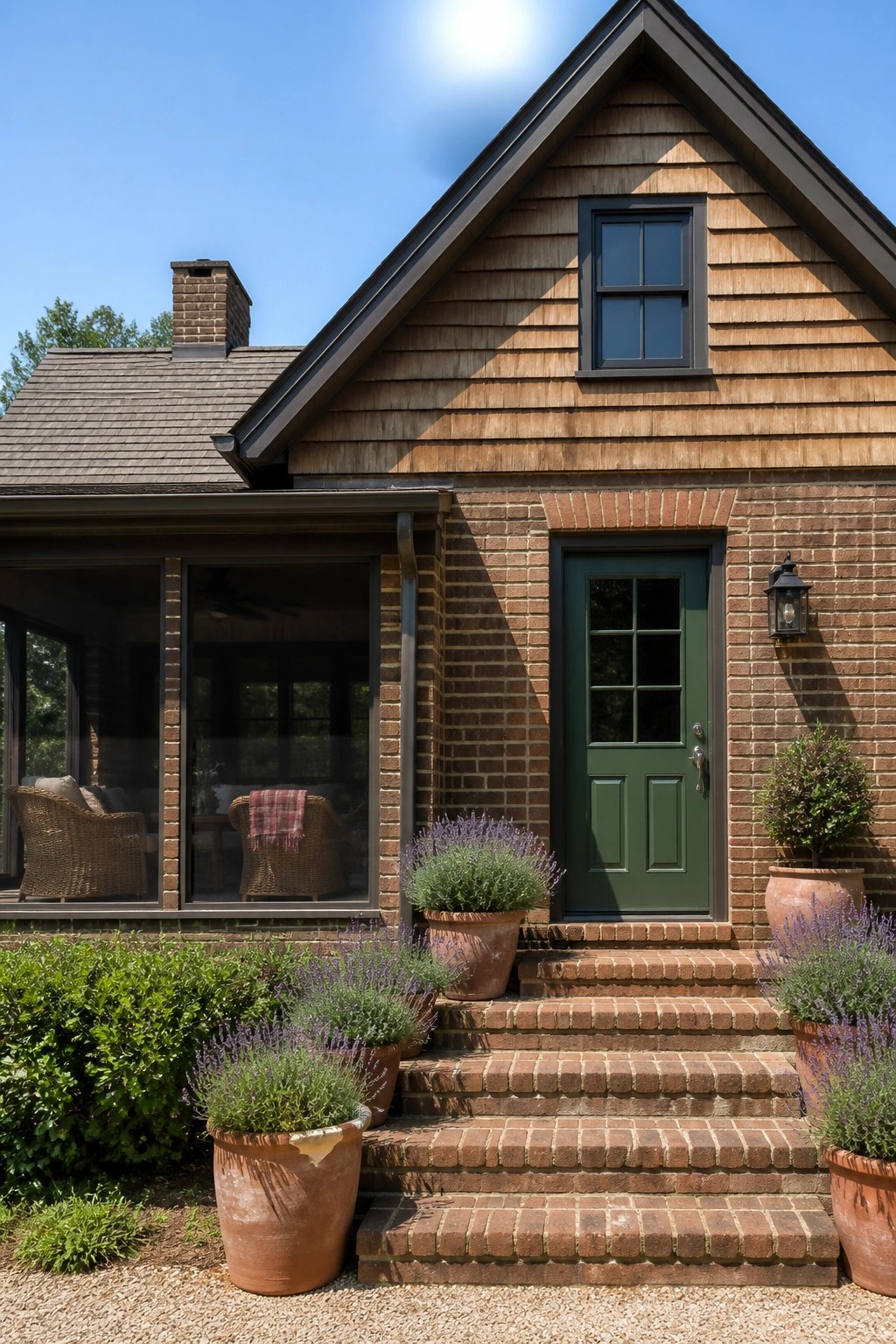
This mix gives the house a grounded feel without looking too heavy. The lower brick section anchors everything while the wood shingles above add a lighter, more traditional farmhouse layer. It works especially well on homes that sit close to the ground or have a simple roofline.
Try it on a modest size home where you want some texture but not a lot of extra trim or color changes. Keep the wood tone natural and let the brick stay its usual warm red. The green door in this example shows how one darker accent can tie the two materials together without fighting them.
Brick Arches Over Entry Doors
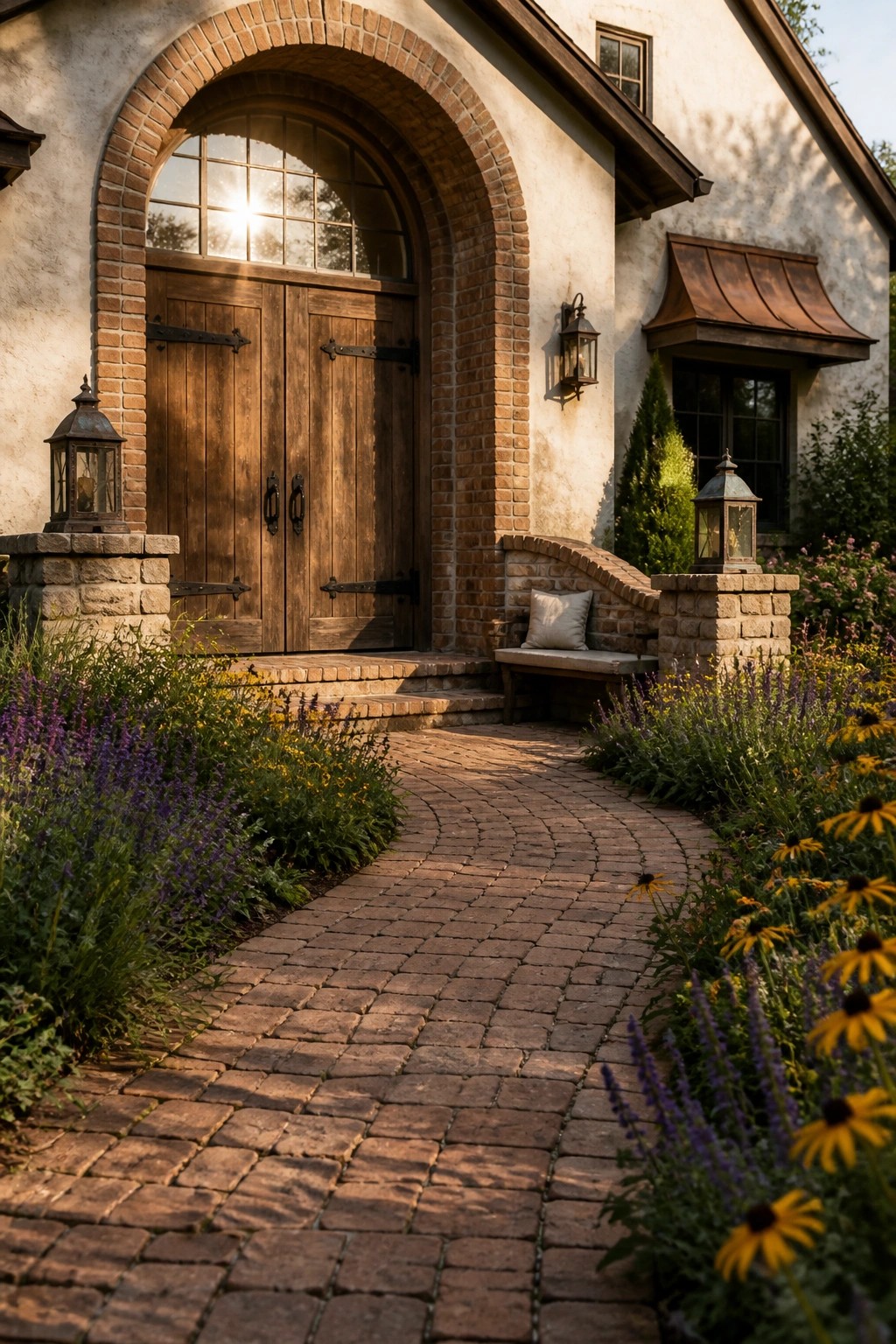
A brick arch around the front doors gives a farmhouse that settled, timeless feel without much extra effort. The curve softens the straight lines of the house while the brick itself adds texture that matches the rest of the exterior.
This works best on homes that already use brick or stone somewhere on the facade. Pair it with simple wood doors and keep the surrounding planting low so the arch stays the clear focal point. It suits properties where the entry sits a bit forward from the main wall.
Brick Ovens in Narrow Outdoor Spaces
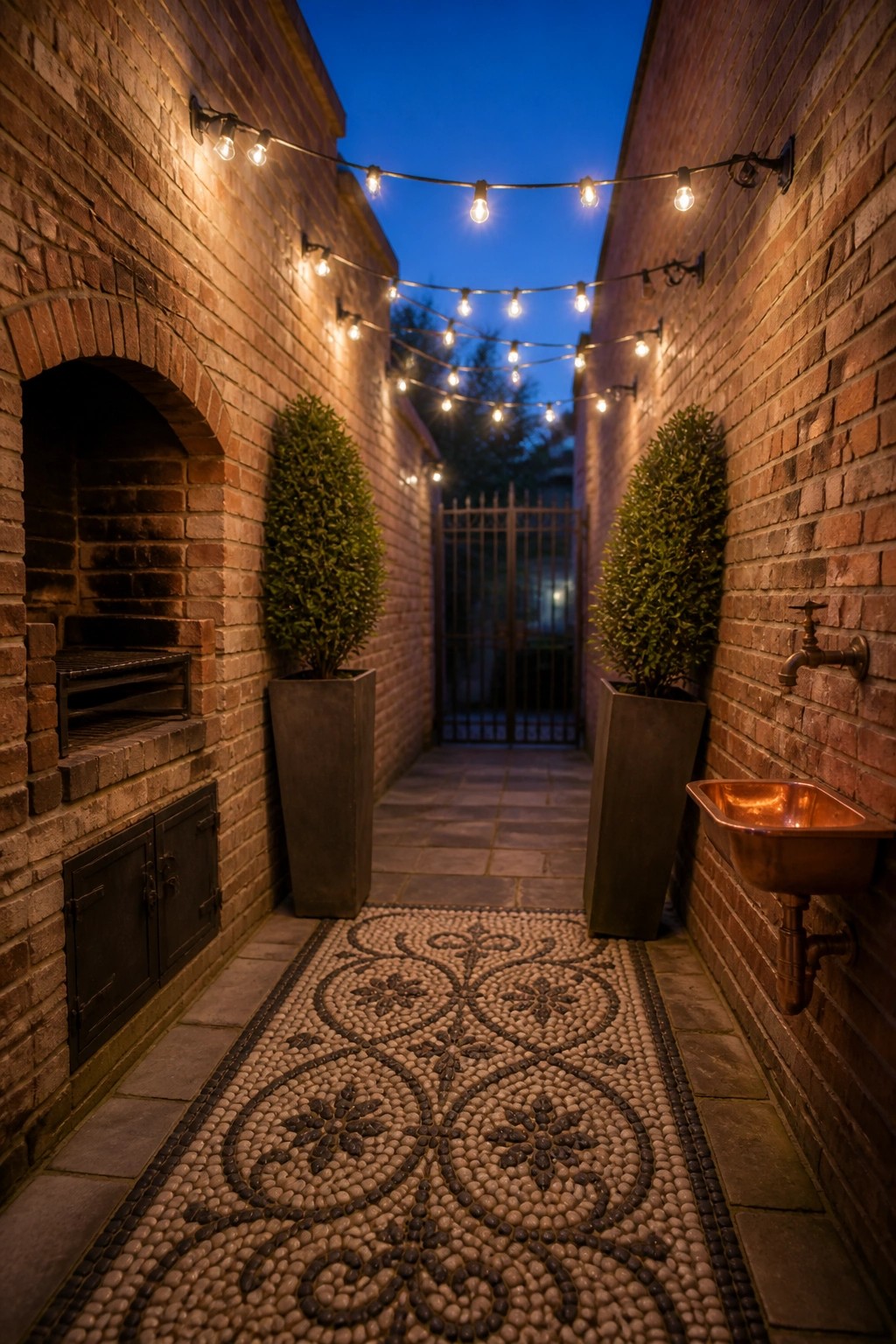
A brick oven built right into the wall turns a simple walkway into a working outdoor kitchen. The matching brick keeps everything feeling connected and warm without needing extra decoration.
This setup works best in tight side yards or between buildings where you want to add cooking space without taking over the whole area. Keep the path clear and use simple lighting overhead so the focus stays on the oven and sink rather than fancy extras.
Combining Brick With Exposed Timber Beams
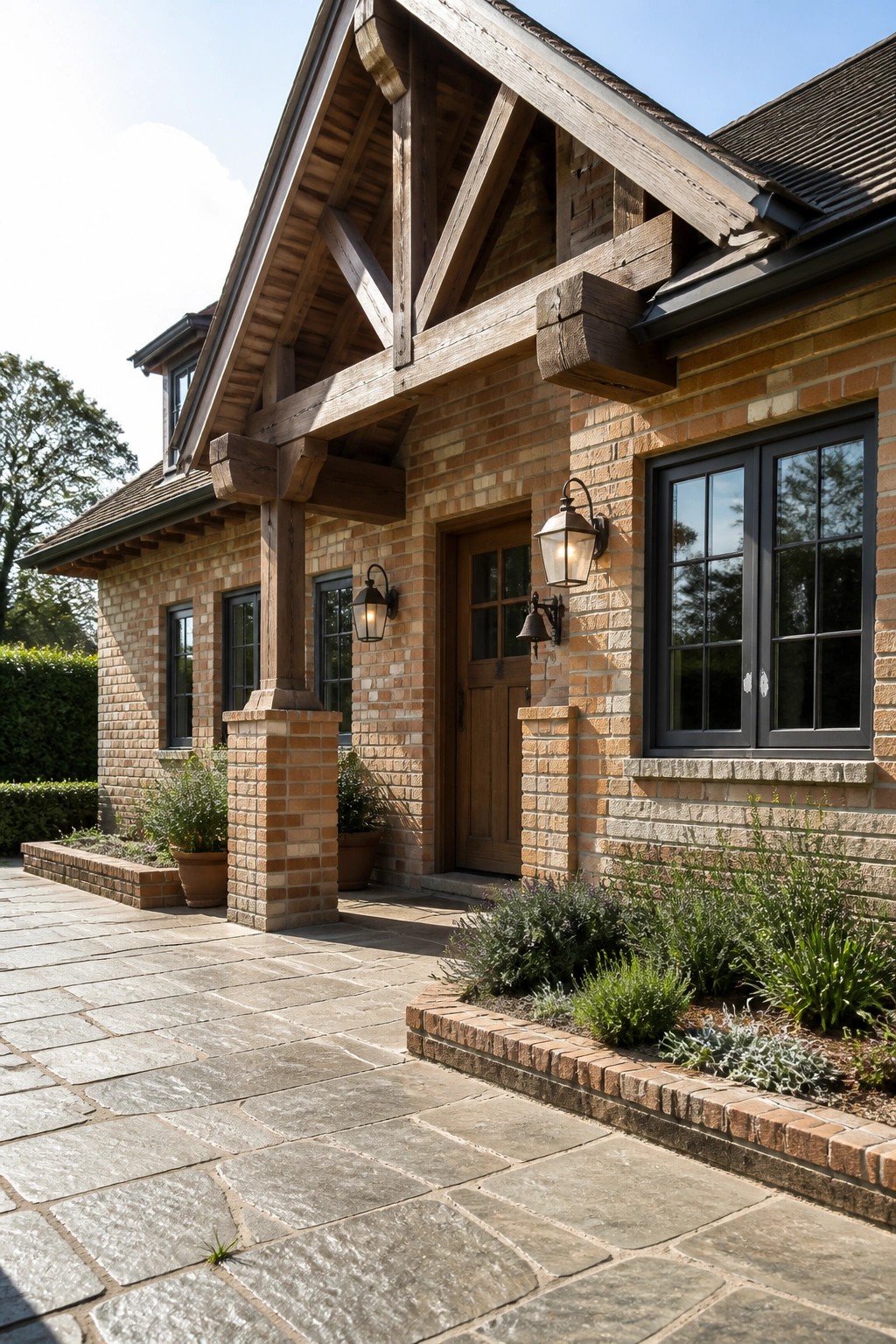
Brick exteriors gain a lot of character when paired with heavy timber beams that show the structure. The wood adds warmth and breaks up the solid wall surface without extra ornament.
This works best on homes with gabled roofs or covered entries where the beams can frame the door and create a clear focal point. Use it on new builds or renovations if you want the house to feel solid and grounded rather than flat.
Brick With Painted Shutters
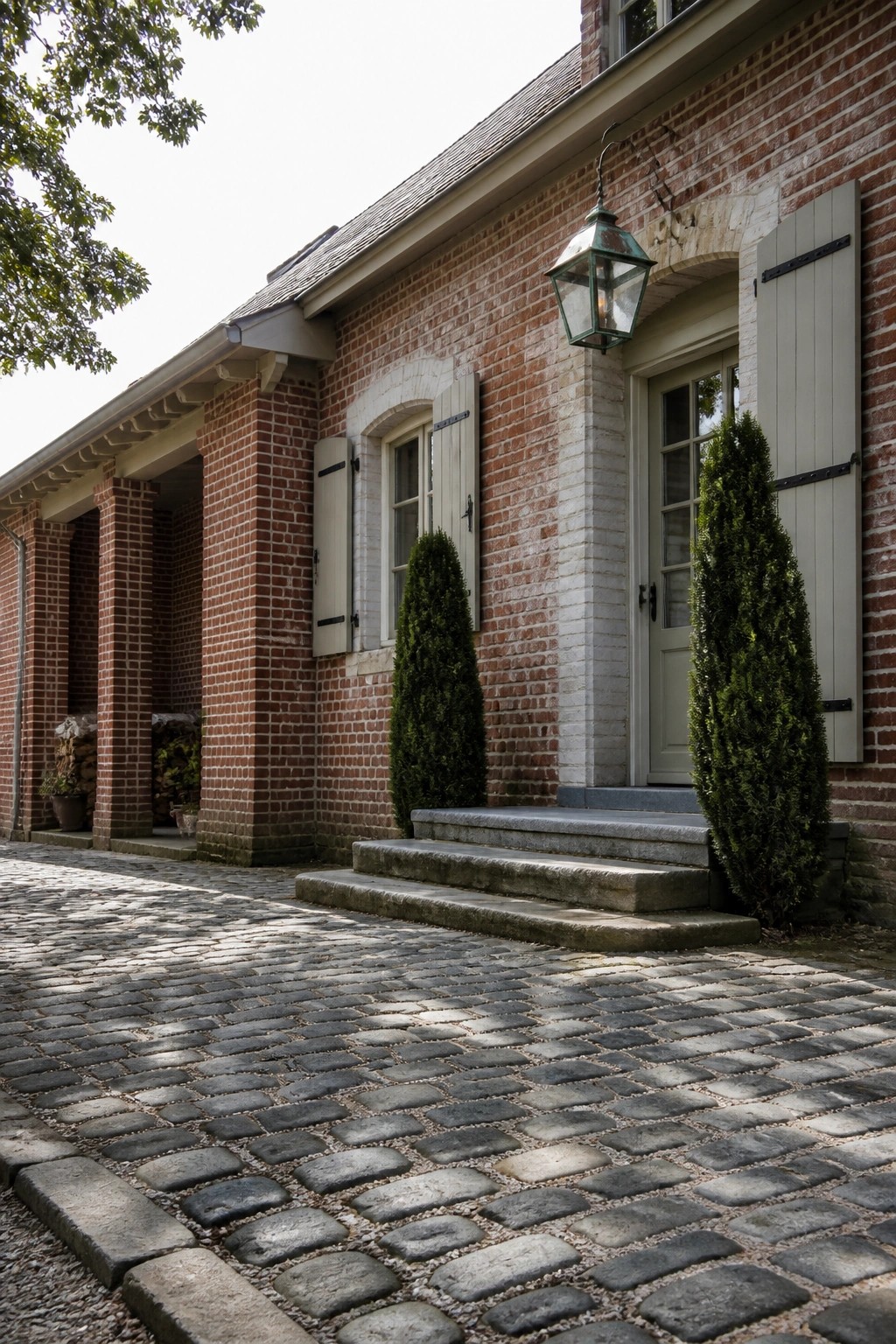
Brick exteriors often look better when you add painted shutters. They break up the solid surface and give the house a finished, settled appearance without much extra work. The contrast also helps the texture of the brick stand out more clearly.
This approach suits older farmhouses and newer builds that want a traditional feel. Keep the shutters in a light color and match the hardware to the rest of the trim. It works on both small and large homes as long as the proportions stay simple.
Brick Base With White Siding Above
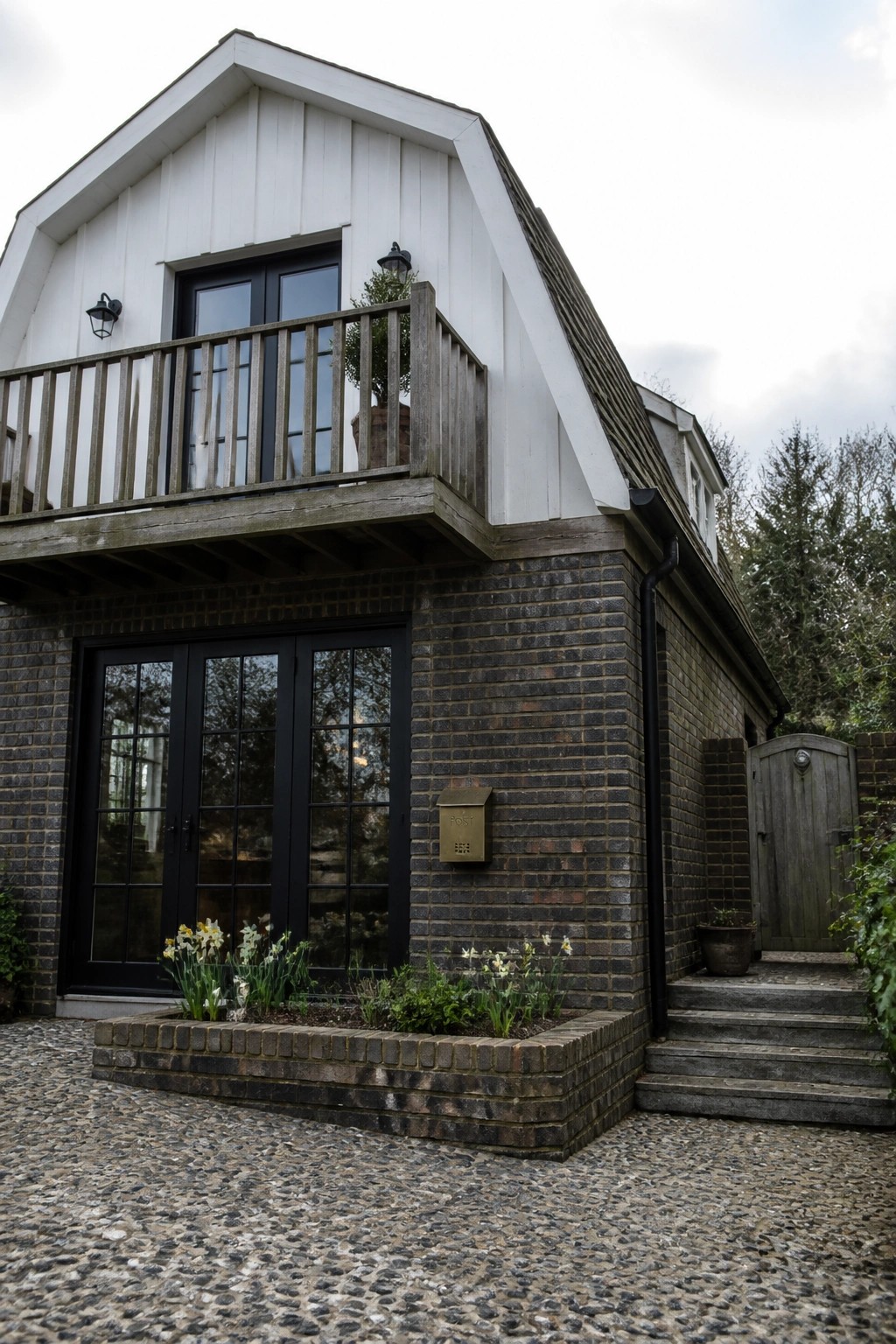
Many farmhouses use brick on the lower part of the exterior and switch to white siding higher up. The change in materials gives the house a solid look at ground level while keeping the upper part lighter and simpler.
This approach works best on homes with a clear break between stories or where the roofline allows the two materials to meet cleanly. Keep the brick color fairly neutral so it does not fight with the white siding or the trim around windows and doors.
Frequently Asked Questions
Q: How do I pick mortar color so the brick texture still stands out?
A: Match the mortar to the lightest tones in your brick for a blended look that keeps the surface interesting. Darker mortar lines create more contrast and make each brick pop on its own. Test a small patch on site before committing to the whole wall.
Q: What if I want to add wood siding next to the brick without it feeling forced?
A: Choose weathered cedar or reclaimed barn boards in a similar warm range as your brick. Place the wood on gable ends or around windows where it breaks up the brick planes naturally. Keep the wood grain visible and skip heavy stains that hide its character.
Q: Will rain and sun fade the warmth of the brick over the years?
A: Most bricks hold their color well once they settle in. A light yearly rinse with a garden hose removes dirt that dulls the surface. Skip harsh cleaners that strip the natural finish you chose the brick for in the first place.
