

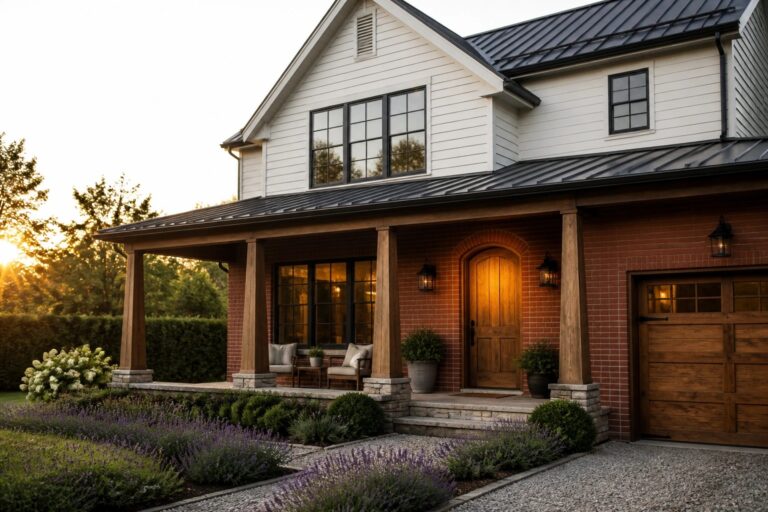
I’ve spent time looking at farmhouses where brick meets siding, and the best ones seem to let one material lead while the other adds just enough contrast around the doors and windows.
The rooflines and entry points play a bigger role than people expect when these materials come together on the facade.
Some mixes end up looking heavier than planned once the paint and trim go on.
I wonder how a few of these would hold up after a couple of seasons in different climates.
Trying one of the simpler pairings first would probably teach me more than jumping into the boldest option right away.
Mixing Brick And Siding On The Facade
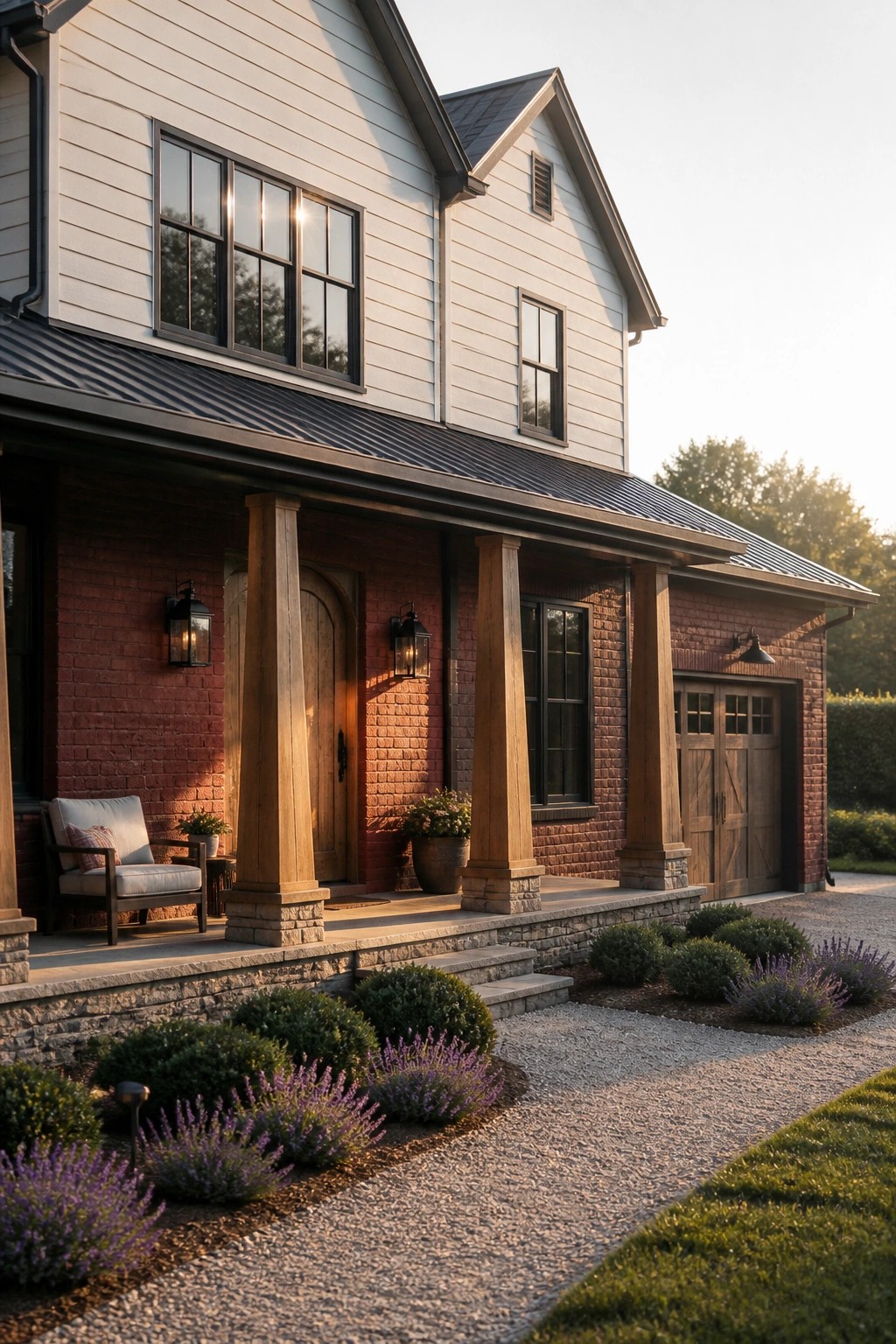
Mixing brick and siding gives a farmhouse exterior more depth without overcomplicating the look. The lower brick section anchors the house while the siding above keeps things lighter and brighter. This combination works especially well on two-story homes where you want some weight at the base.
It suits traditional or updated farmhouses that sit on larger lots. Keep the brick to the main body and let the siding handle the gables or upper level. Watch the color contrast so the two materials do not compete.
Brick Base with Siding Above
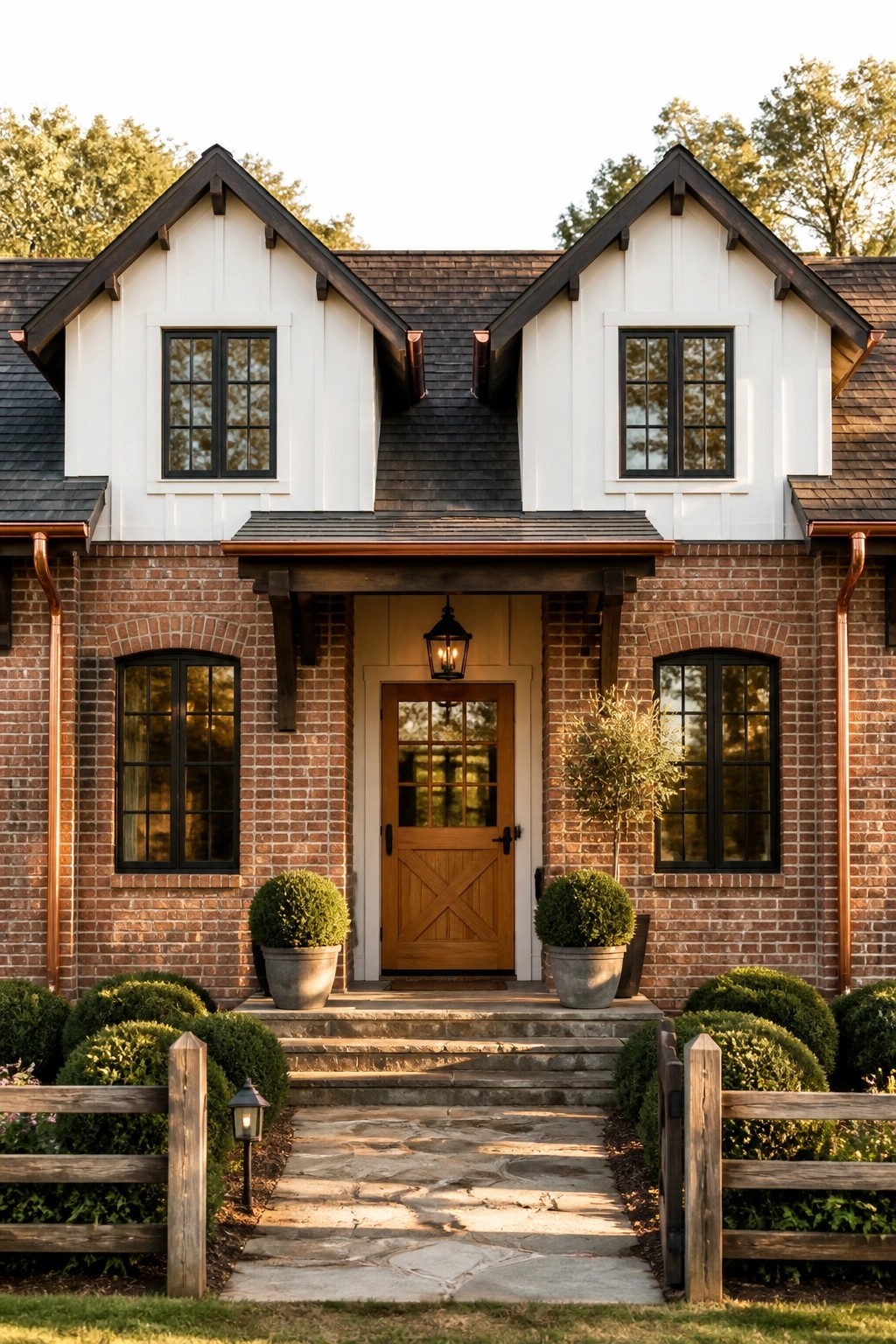
Many farmhouses use brick on the lower walls and siding on the gables because the mix gives the house a grounded look without feeling heavy. The brick adds texture and weight at eye level while the lighter siding keeps the roofline from overpowering the whole front.
This approach works best on homes with simple roof shapes and a clear entry. Keep the siding a soft white or cream and let the brick stay natural so the two materials balance each other. Dark window frames and a wood door help tie everything together without adding extra color.
Mixing Brick With Painted Siding
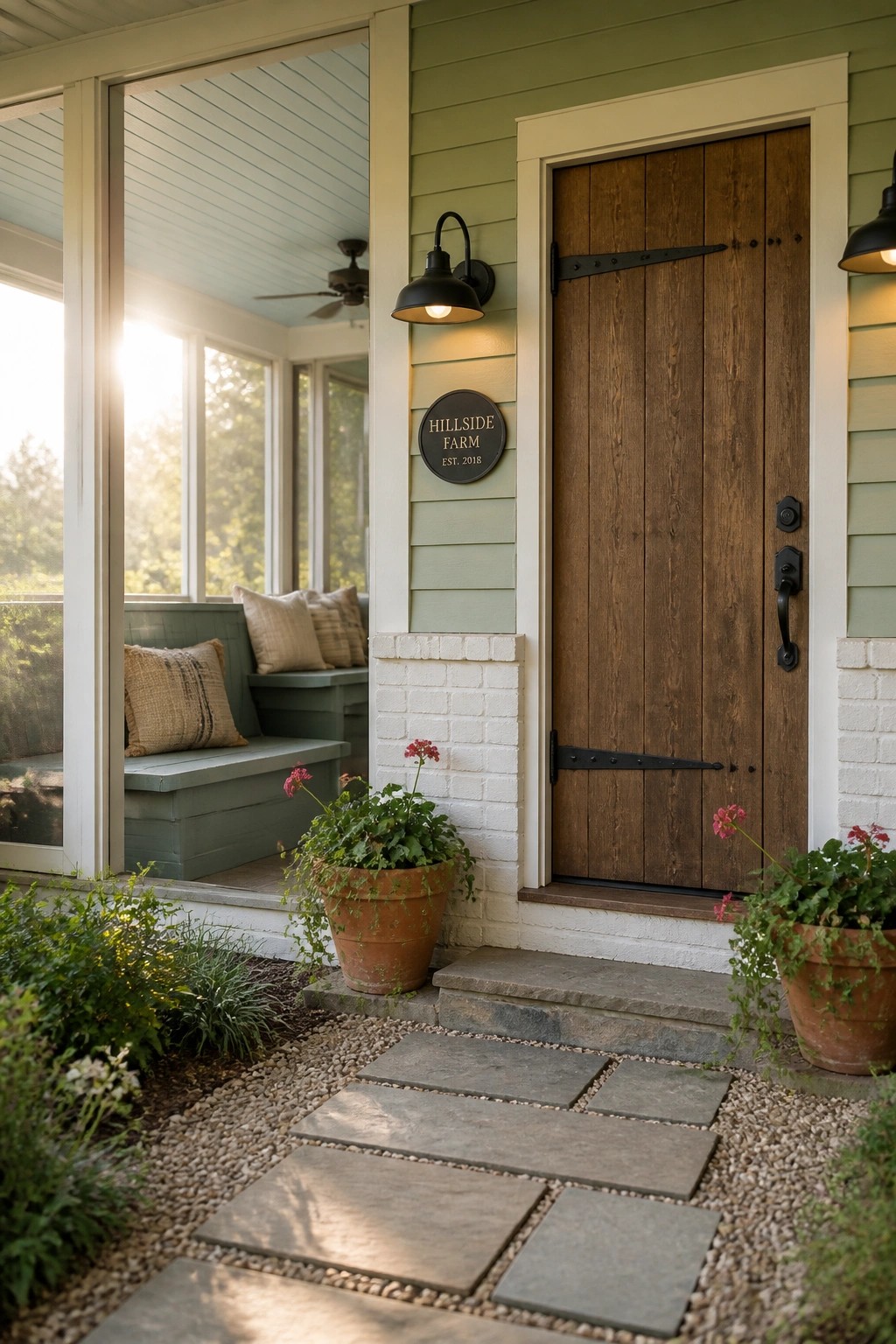
Many older farmhouses use brick along the lower walls to create a sturdy base that protects against moisture and wear. The contrast with painted siding above keeps the look simple and balanced rather than heavy.
This approach works well on homes with straightforward rooflines and modest trim. Stick to light brick tones so the siding color stays the main feature and the materials do not compete.
Mixing Brick And Dark Siding On Farmhouse Exteriors
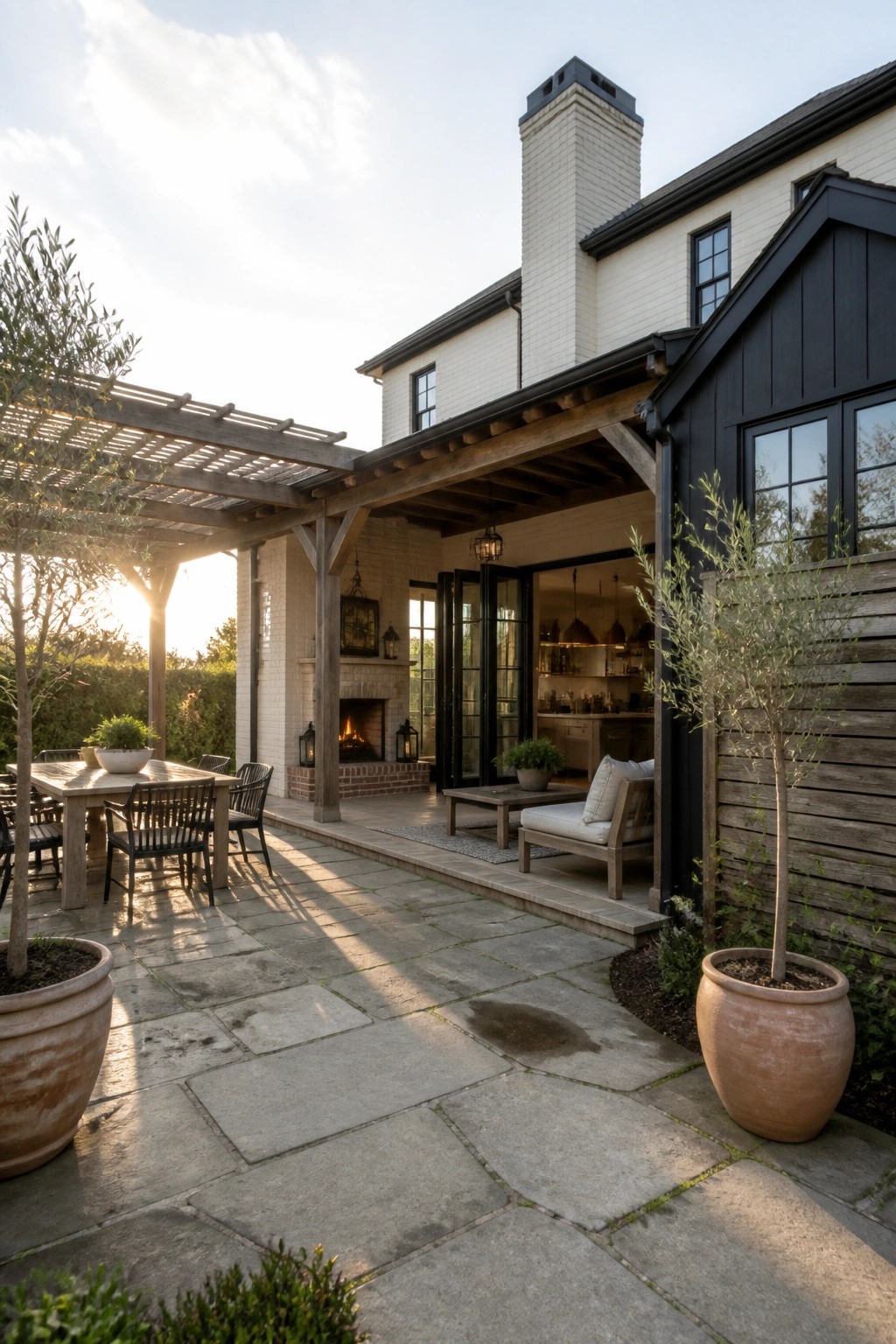
Mixing white brick with black siding gives a farmhouse a clear but simple contrast. The brick adds texture and weight while the dark siding keeps the look sharp and modern without feeling heavy.
This combination works best on homes with straightforward rooflines and covered outdoor areas. It helps separate the main house from extensions like porches or patios while keeping everything tied together through the shared materials.
Mixing Brick And Siding On The Facade
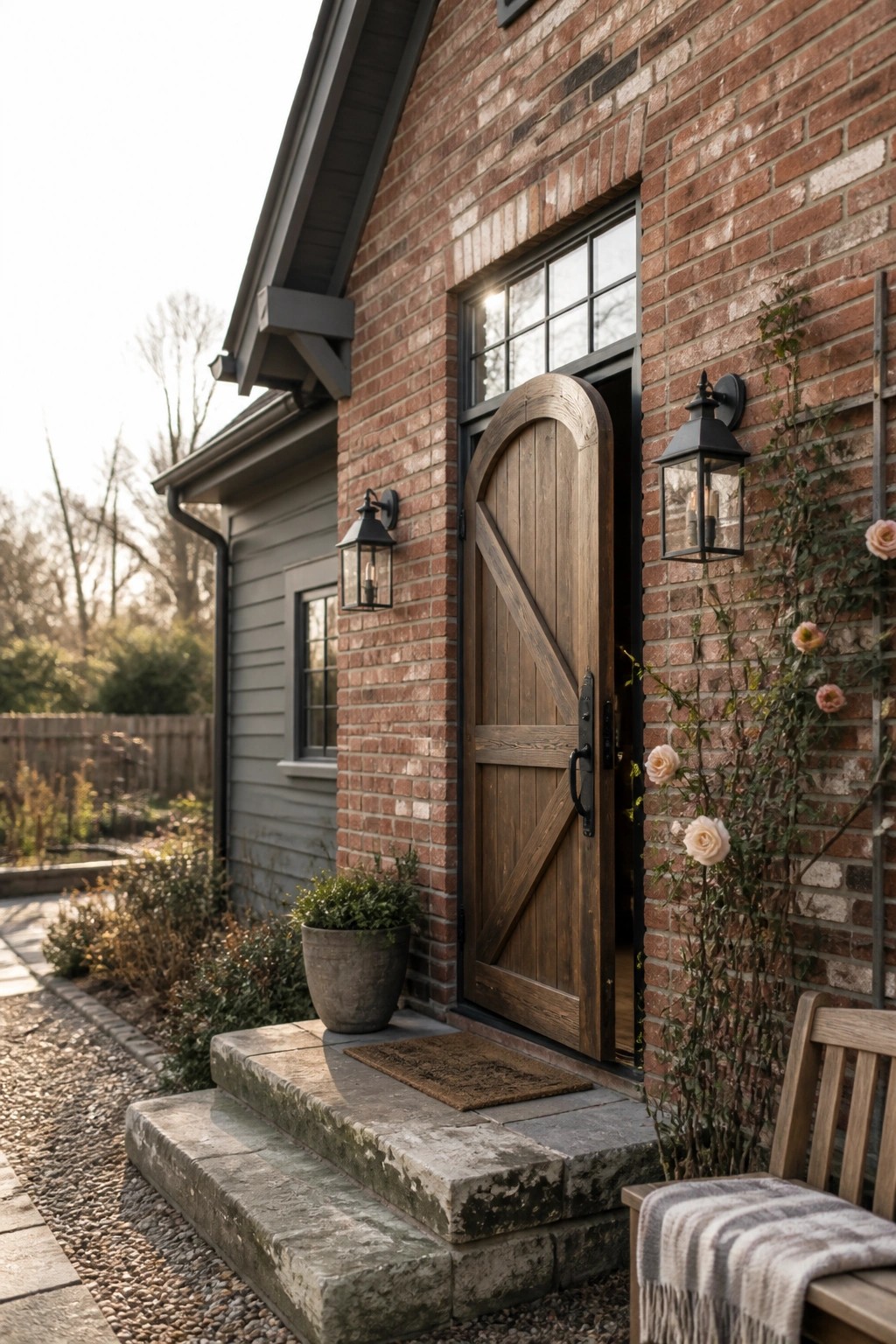
Many farmhouses gain character when brick covers the main wall and siding wraps the side sections. The shift in texture breaks up the mass of the house without needing extra trim or color changes. It also lets the brick feel more grounded while the siding keeps the overall look lighter.
This approach works best on homes with simple rooflines and modest window placements. Keep the siding in a soft gray or cream so the brick stays the main focus, and let the entry door sit in the brick section for a clear focal point. Avoid letting the two materials meet at a corner where both would compete for attention.
Blend Brick With Painted Siding
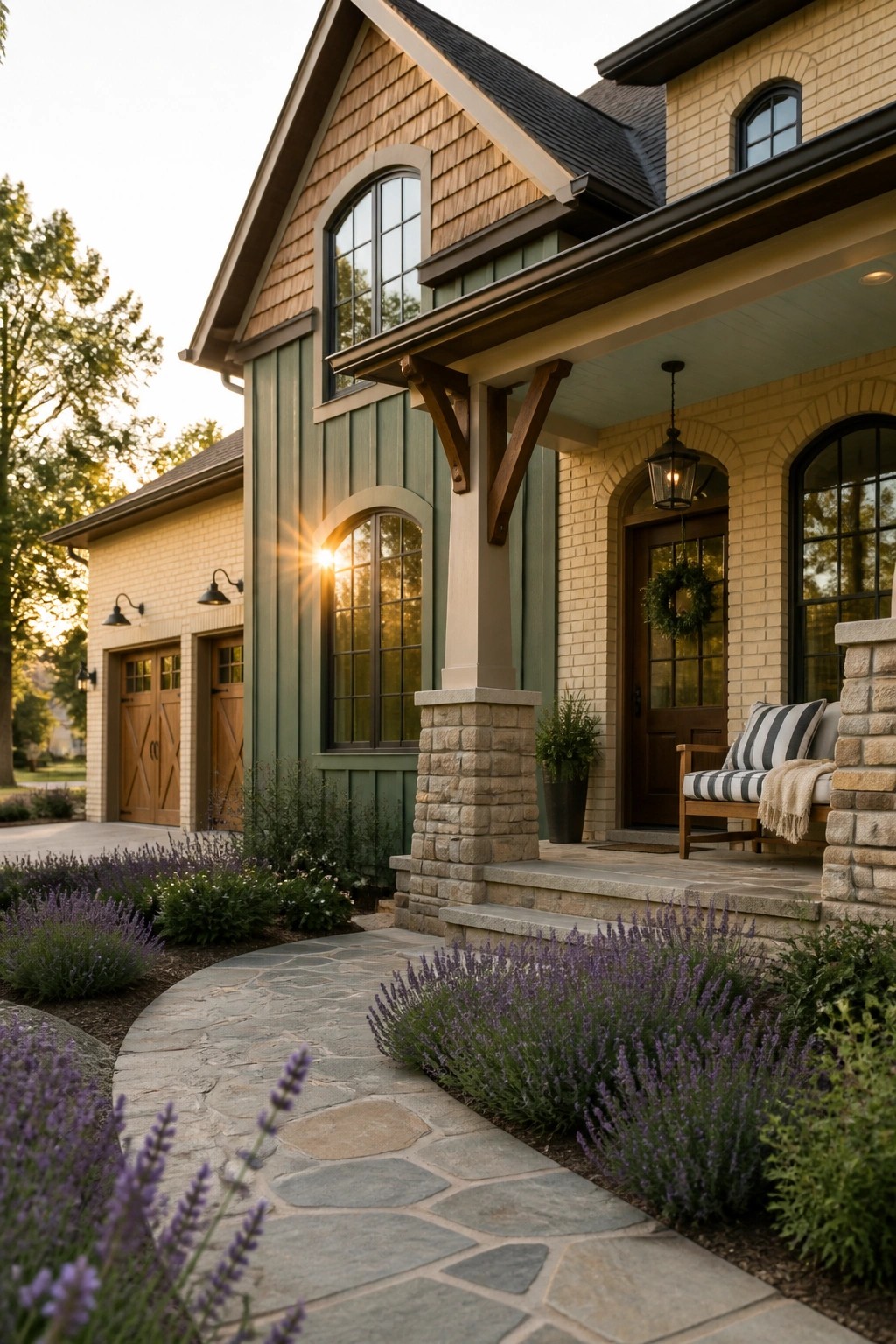
Mixing brick and painted siding gives a farmhouse more depth without needing lots of extra trim or details. The brick adds weight at the base while the siding lightens the upper sections, and the change in texture keeps the whole front from feeling flat.
This approach works well on homes that have different volumes or gables. Keep the siding color soft and let the brick stay natural so the materials read as one house instead of two separate pieces. Stone on the porch columns can tie them together if the colors stay close.
Mixing Dark Siding With White Brick
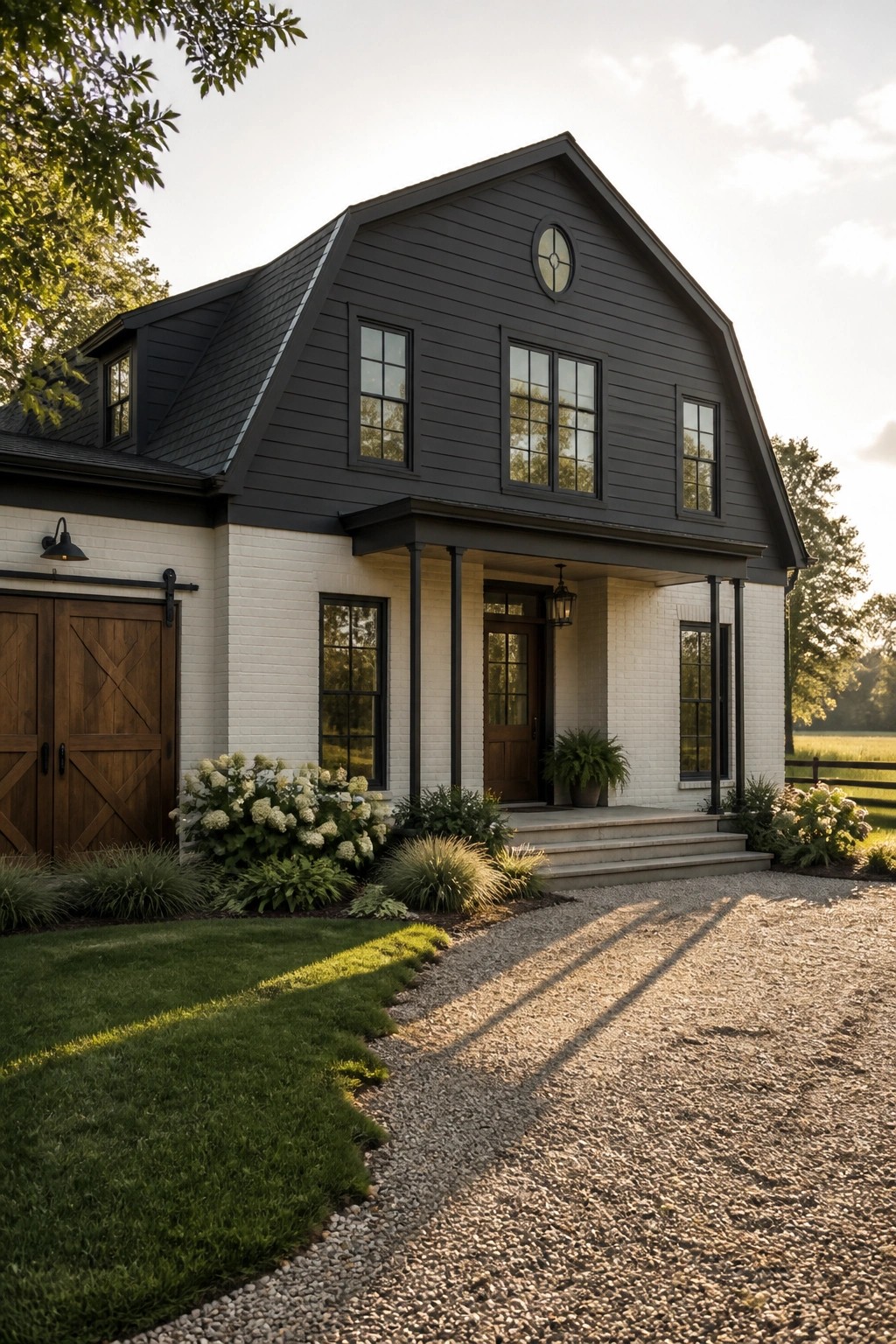
Many farmhouses look more balanced when the upper walls use dark siding and the lower section stays in light brick. The shift breaks up the height without needing extra trim or color changes.
This approach suits homes with a clear gable line and a simple porch. Keep the brick clean and the siding matte so the two materials read as one steady whole rather than two competing finishes.
Brick And Siding Combinations For Farmhouse Exteriors
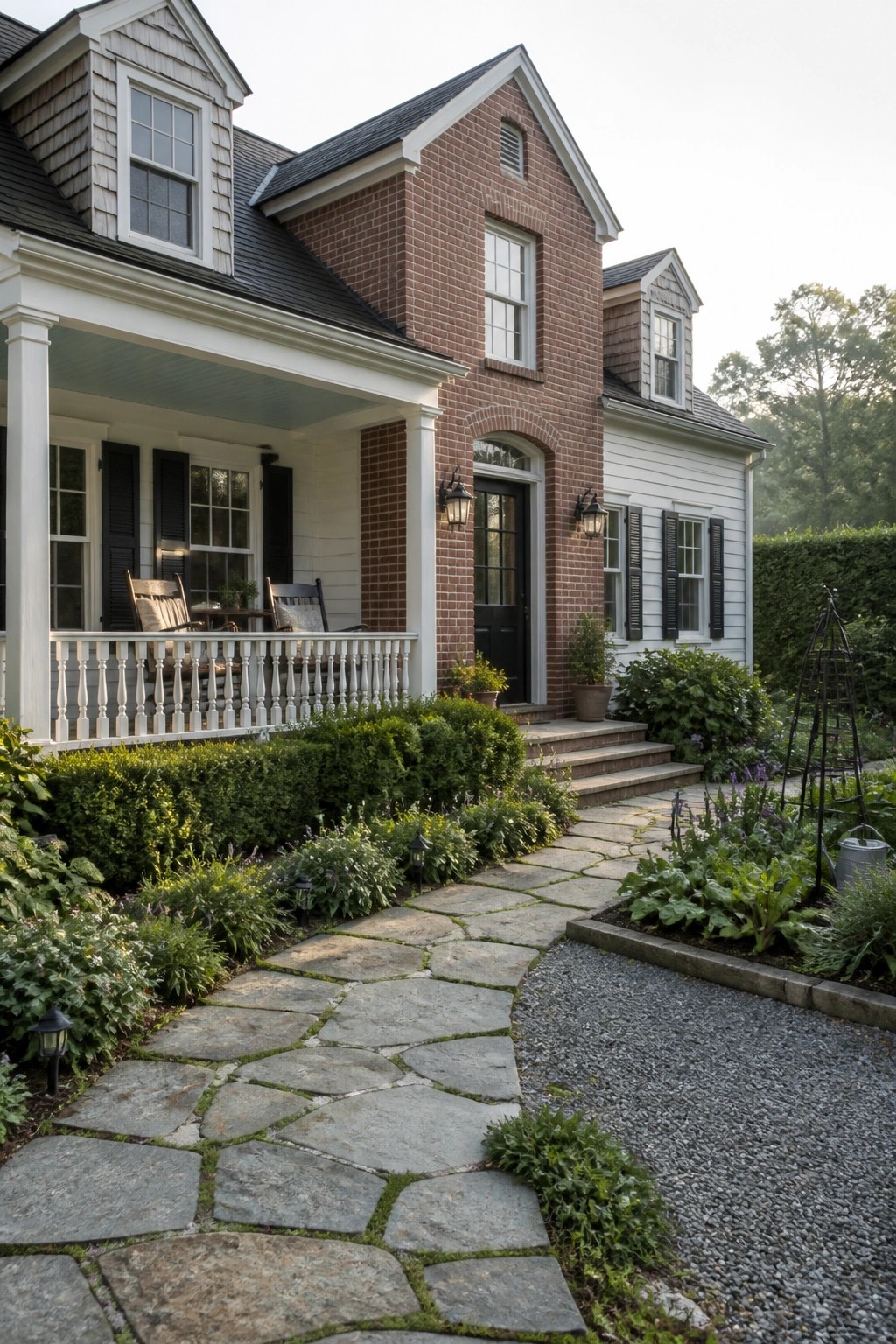
Mixing brick and siding gives a farmhouse that solid base without looking too heavy. The brick anchors the main part of the house while the siding keeps the overall look lighter and more open. It is a simple way to add some contrast without adding extra trim or details.
This approach works best on homes that already have a traditional shape and roofline. Keep the brick on the taller or more central sections and let the siding cover the wings or upper stories. Watch the color balance so the brick does not overpower the white or light siding next to it.
Mixing Brick With Vertical Siding
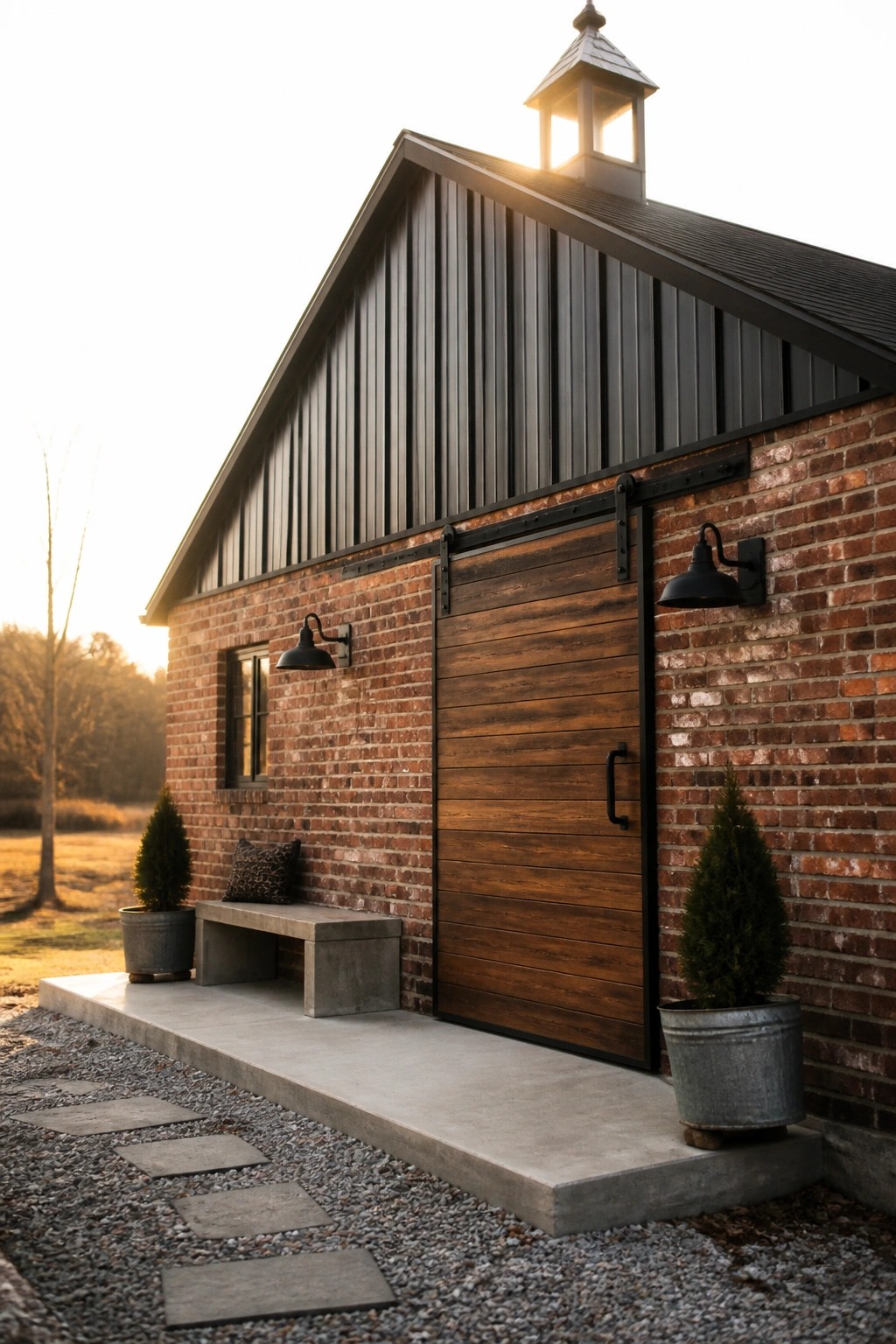
Many farmhouses look stronger when the lower walls stay in brick and the gable or upper sections switch to vertical siding. The brick gives weight and a classic base while the siding keeps the roofline from feeling too heavy.
This mix works best on simple gable shapes where the two materials can meet in a clean horizontal line. Dark siding tends to hold up better against brick than lighter tones, and it keeps the whole front from looking too busy.
Mixing Siding And Brick With Wood Details
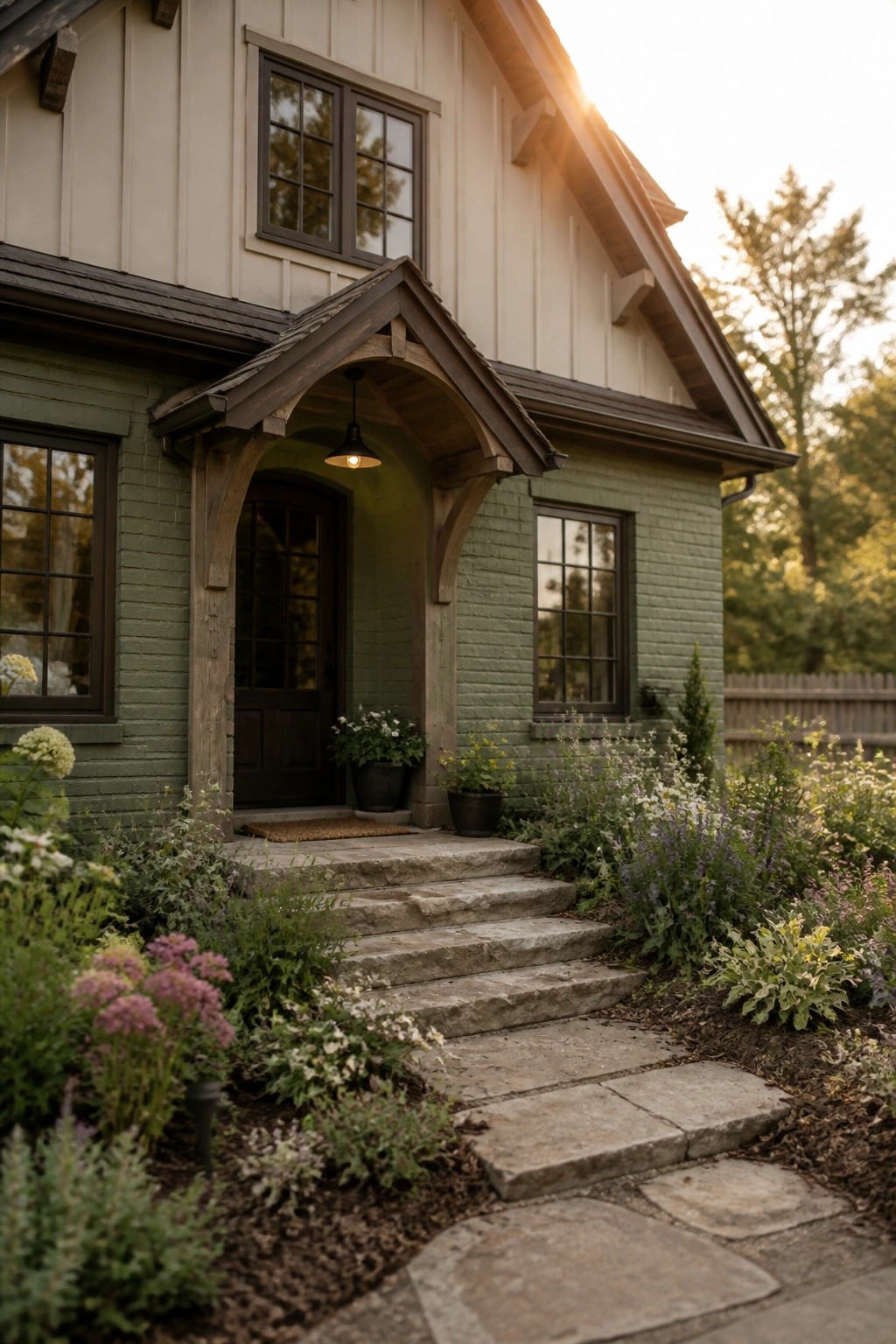
A simple way to add character to a farmhouse exterior is to bring in wood elements alongside painted siding and brick. The wood softens the look of the harder materials and gives the entry a more grounded feel without overpowering the rest of the house.
This approach works well on smaller homes or those with a modest front porch. Keep the wood tones natural or lightly stained so they contrast with the siding color and brick. Just make sure the wood details stay in scale with the overall facade so they do not look added on later.
Brick Base With Siding Above
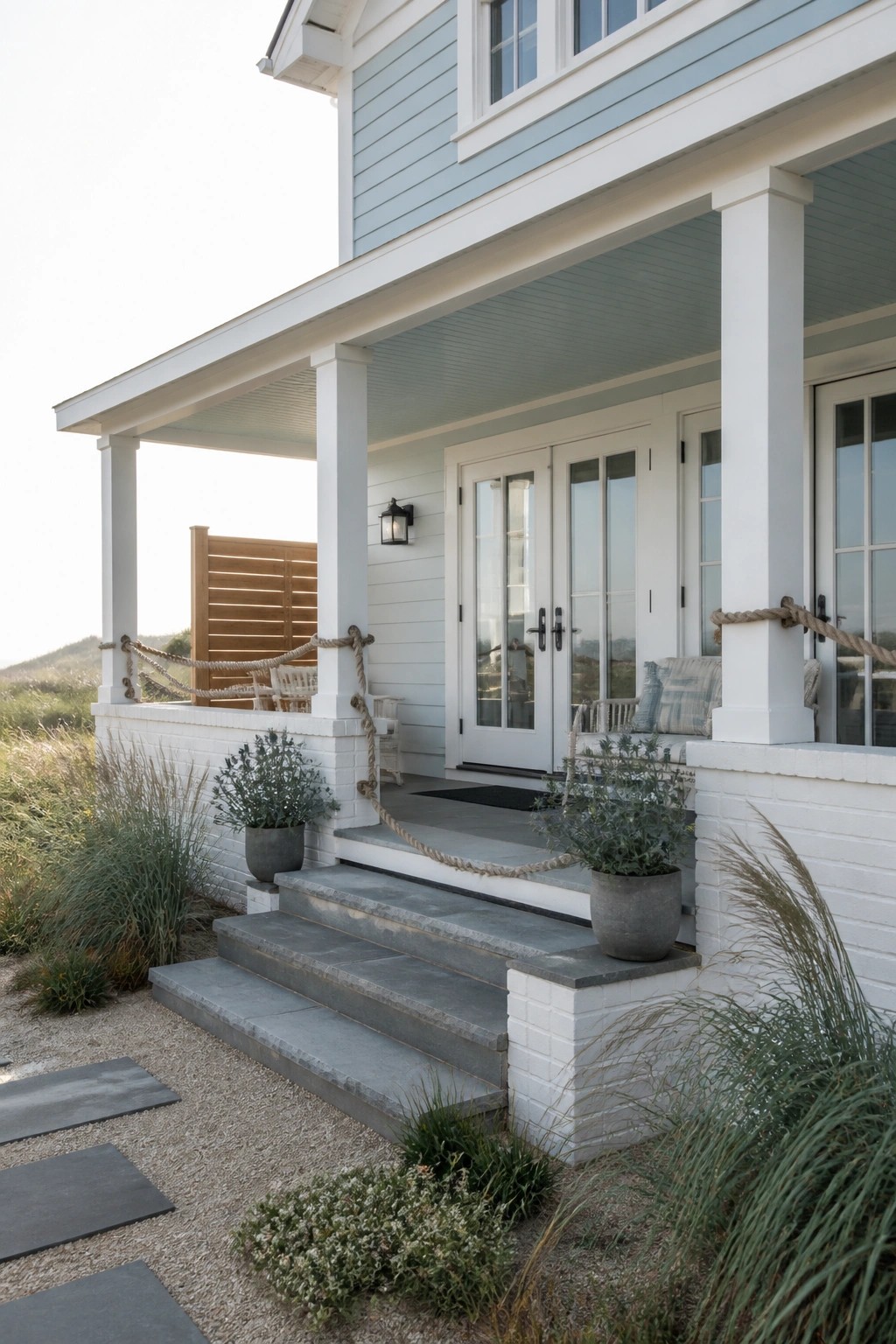
A brick base under siding gives the house a simple, solid look that feels more finished than siding alone. The white brick here sits low and clean, holding up the light blue siding without competing with it.
This approach works best on farmhouses that already have steps or a porch to tie the materials together. Keep the brick light in color so it does not pull the whole house down visually.
Mixing Brick With Siding
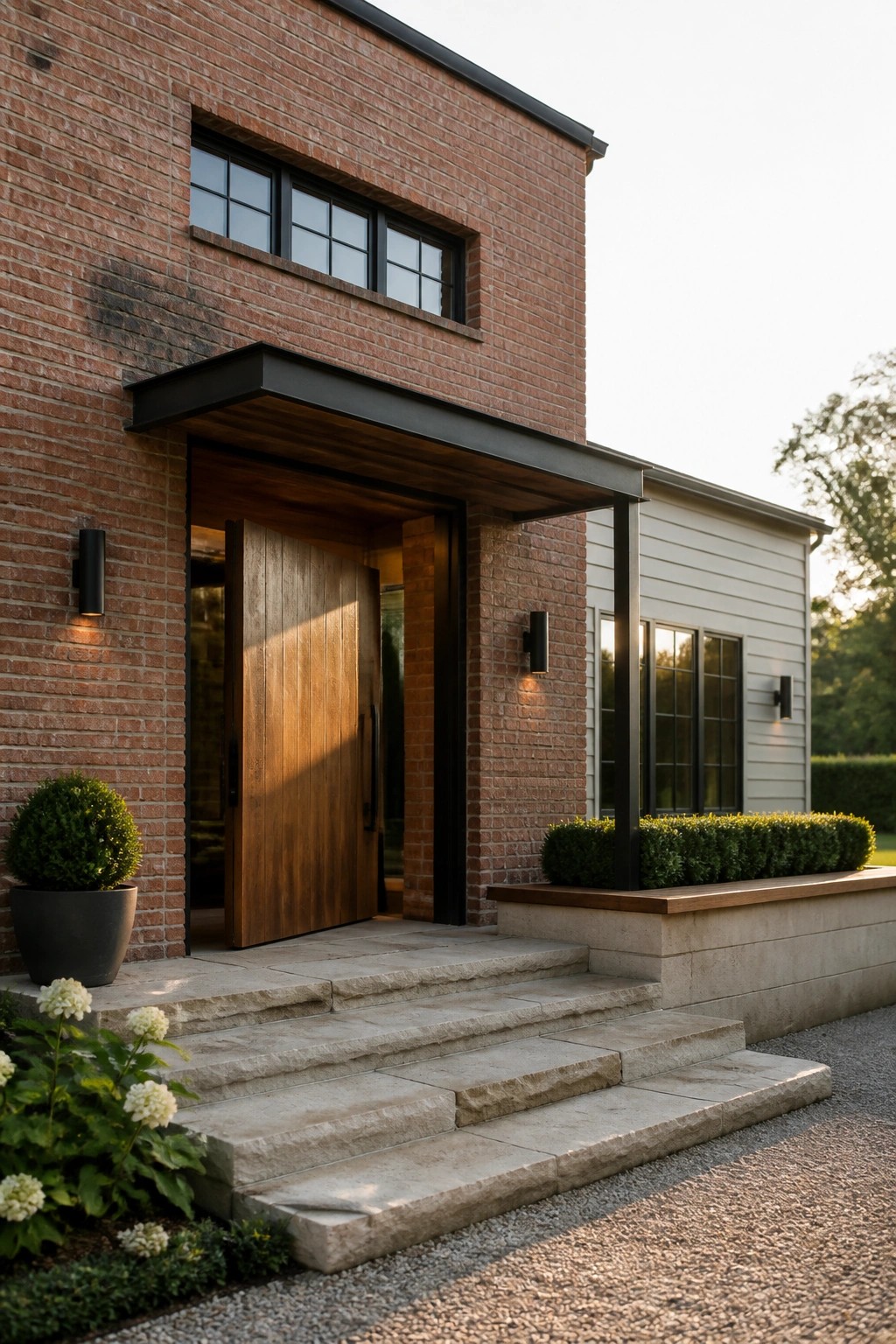
Mixing brick and siding gives a farmhouse exterior a clear break without needing extra trim or color changes. The brick keeps the main mass feeling solid while the siding lightens the side sections and prevents the whole house from reading as one heavy block.
This works best on homes with a straightforward gable or simple roofline where one material can cover the primary facade and the other can handle the wings or additions. Keep the siding in a light neutral so the brick stays the focus.
Mixing White Brick With Dark Siding
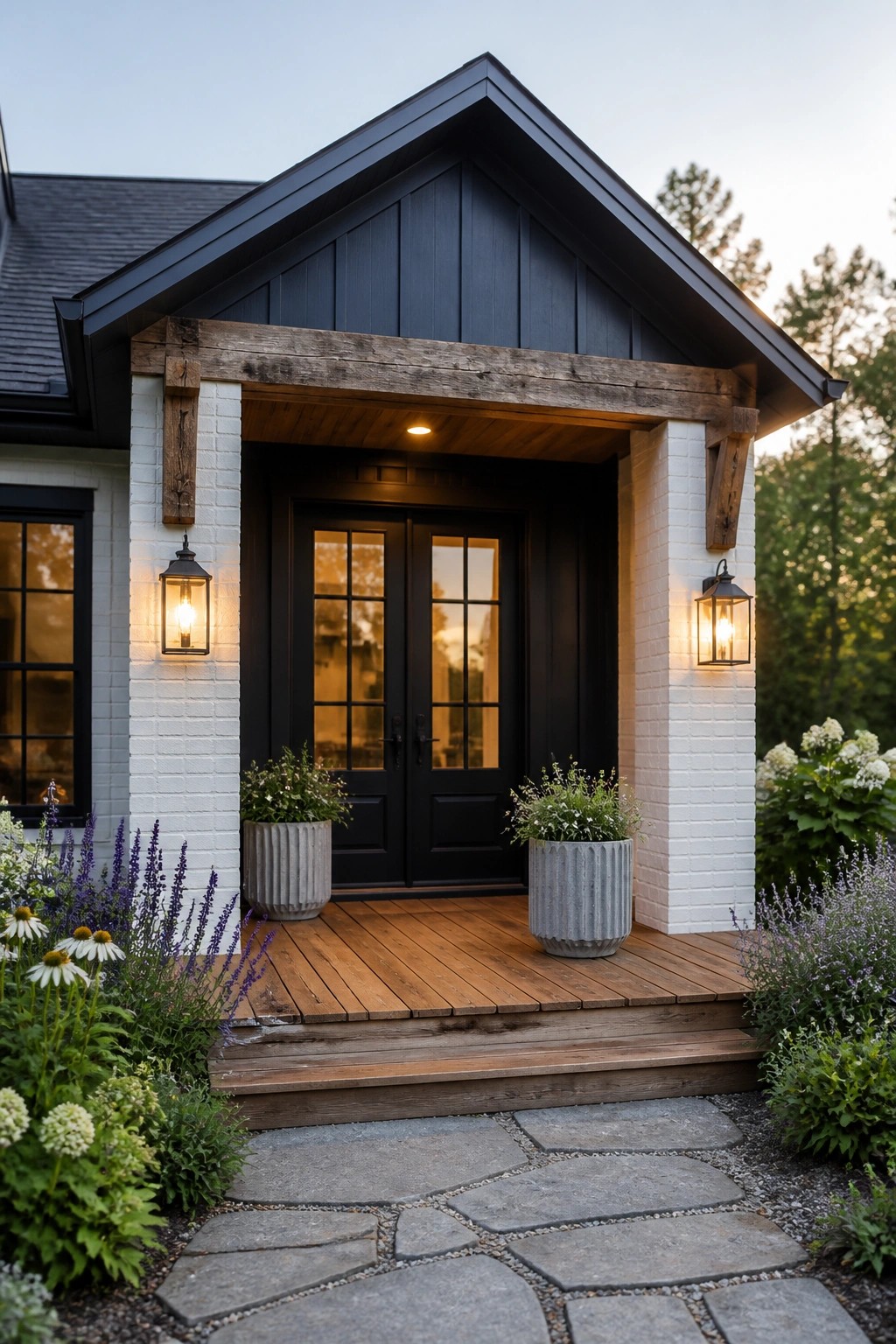
White brick paired with dark siding gives the front a clear break that feels balanced rather than busy. The brick keeps things light and simple at eye level, while the darker boards above add weight and make the roofline feel more grounded.
This mix works best on smaller farmhouses where you want contrast without adding lots of extra trim. Keep the wood accents warm and limit them to the entry area so the two main materials stay the focus.
Mixing Brick And Siding On Farmhouse Exteriors
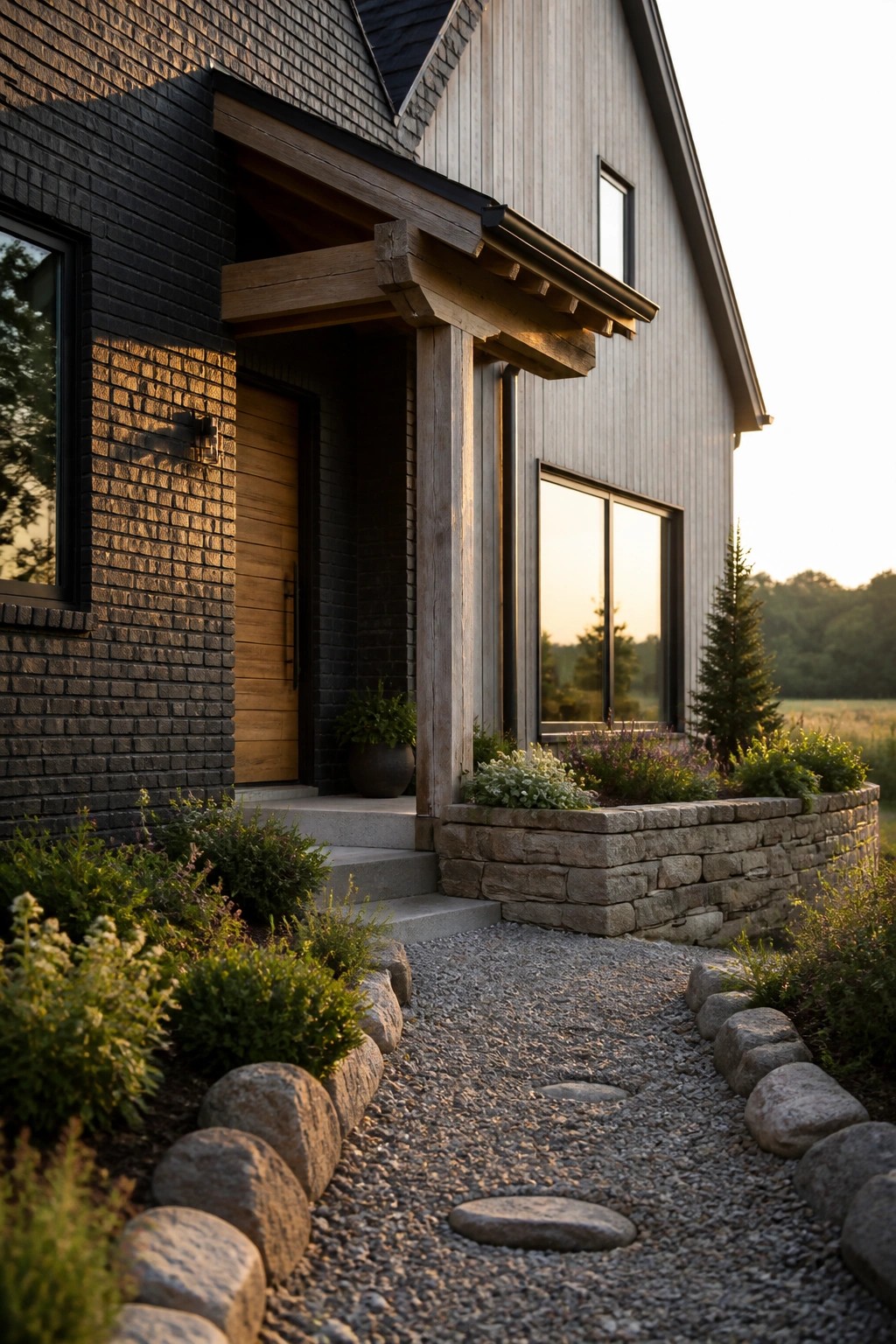
Pairing brick with wood siding gives a farmhouse exterior more depth than using just one material. The dark brick section next to the lighter wood creates contrast that feels balanced rather than overwhelming.
This mix works best on homes with straightforward rooflines where the materials can highlight the entry without extra trim. It suits both new builds and updates to older farmhouses, though it helps to keep the color palette simple so the two textures stand out clearly.
Brick Steps With Siding Exteriors
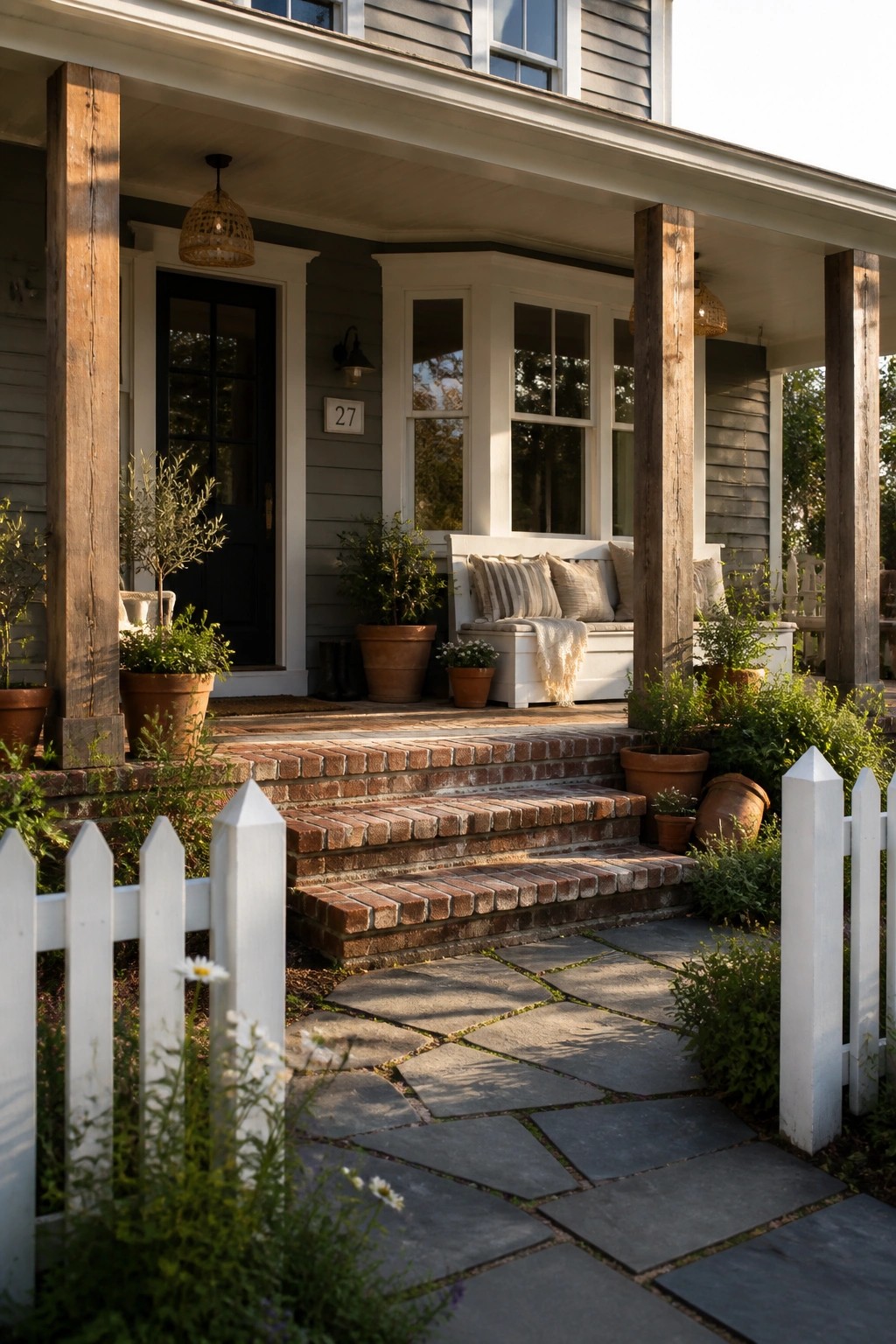
Brick steps give a siding exterior some weight and structure. They mark the entry clearly and add texture that siding alone often lacks, especially on a simple gray house with white trim.
This approach suits farmhouses that already have a porch or covered entry. Use the brick mainly on the steps and path, then keep the rest of the hardscape simple so the siding stays the main surface.
Mixing Brick With Wood Siding
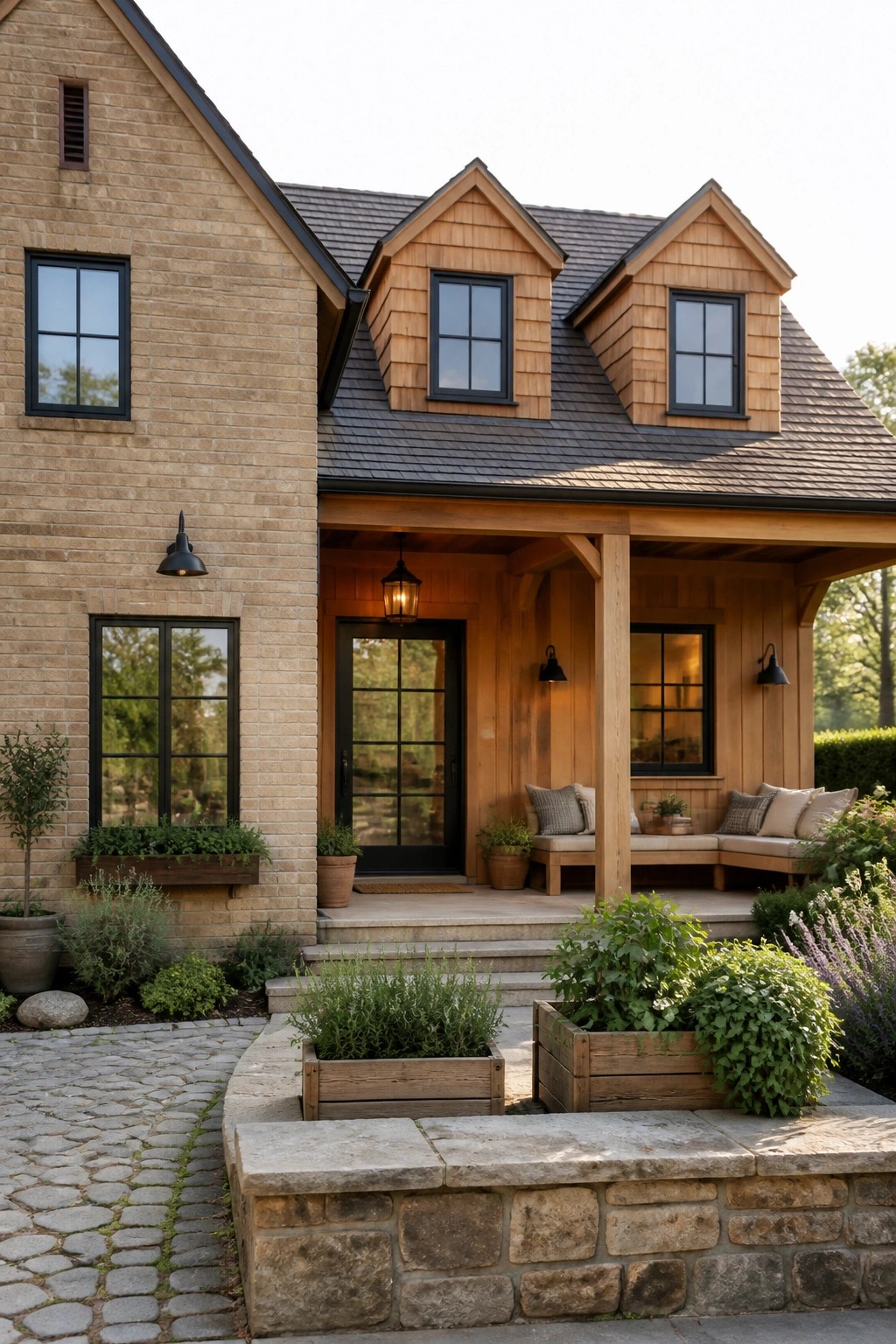
Many farmhouses gain character when brick covers part of the front and wood siding takes over on the porch section. The two materials keep the house from looking flat while still feeling like one simple structure.
This approach works best on homes that already have a covered entry or porch. Let the brick run along the main walls and switch to siding where the wood posts begin so the change feels natural rather than forced.
Brick With Siding Above
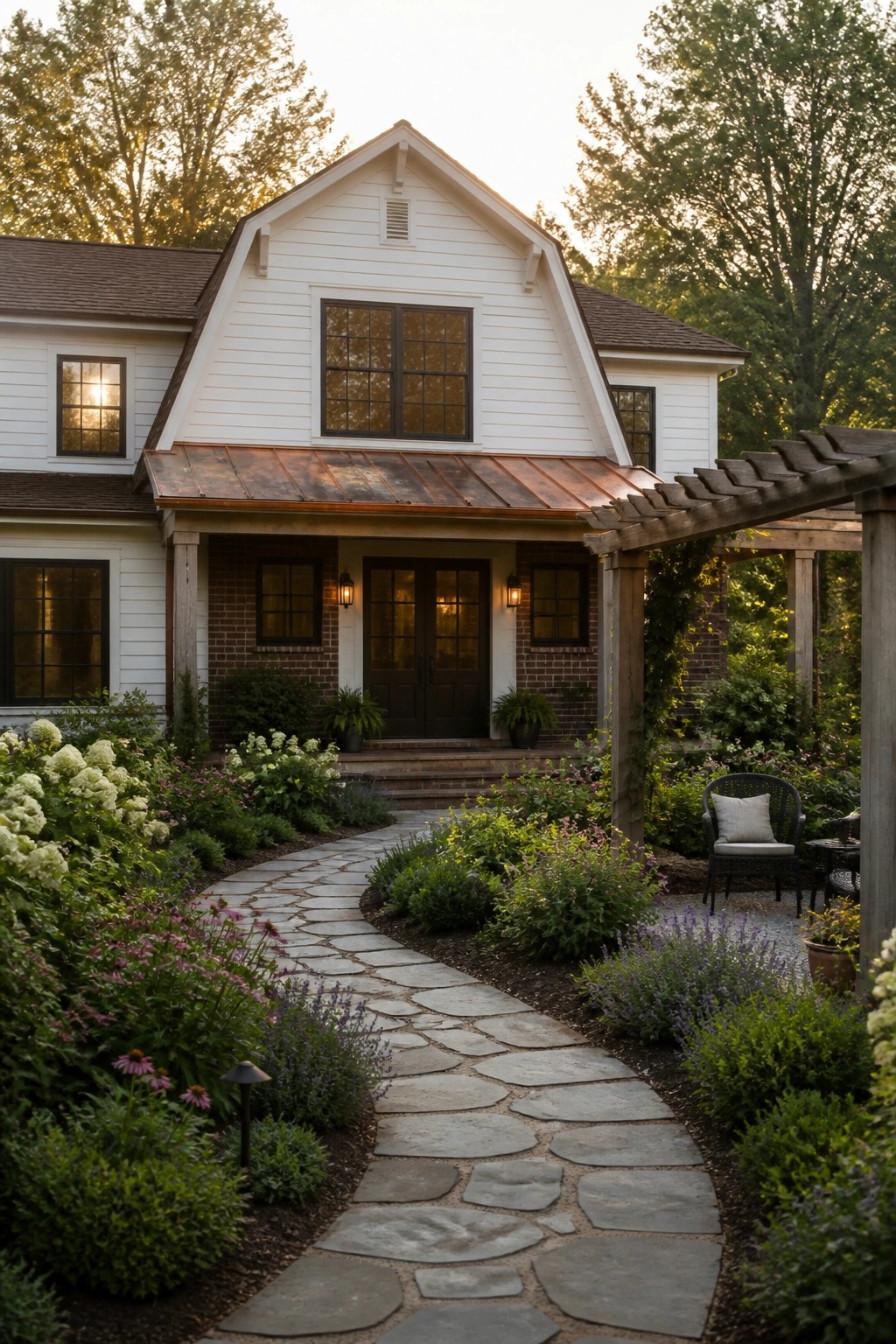
Mixing brick on the lower walls with white siding higher up gives a farmhouse a grounded look without feeling too heavy. The brick adds texture and weight at eye level while the siding keeps the upper part of the house light and simple. This combination shows up often because it works with both older homes and newer builds that want a bit of traditional character.
It suits homes that already have some brick details or those looking to add contrast without changing the whole exterior. Keep the siding a clean white or off-white and let the brick stay natural so the two materials do not compete. A stone path leading to the door helps tie the lower brick into the rest of the yard.
Mix Brick With Dark Siding For Contrast
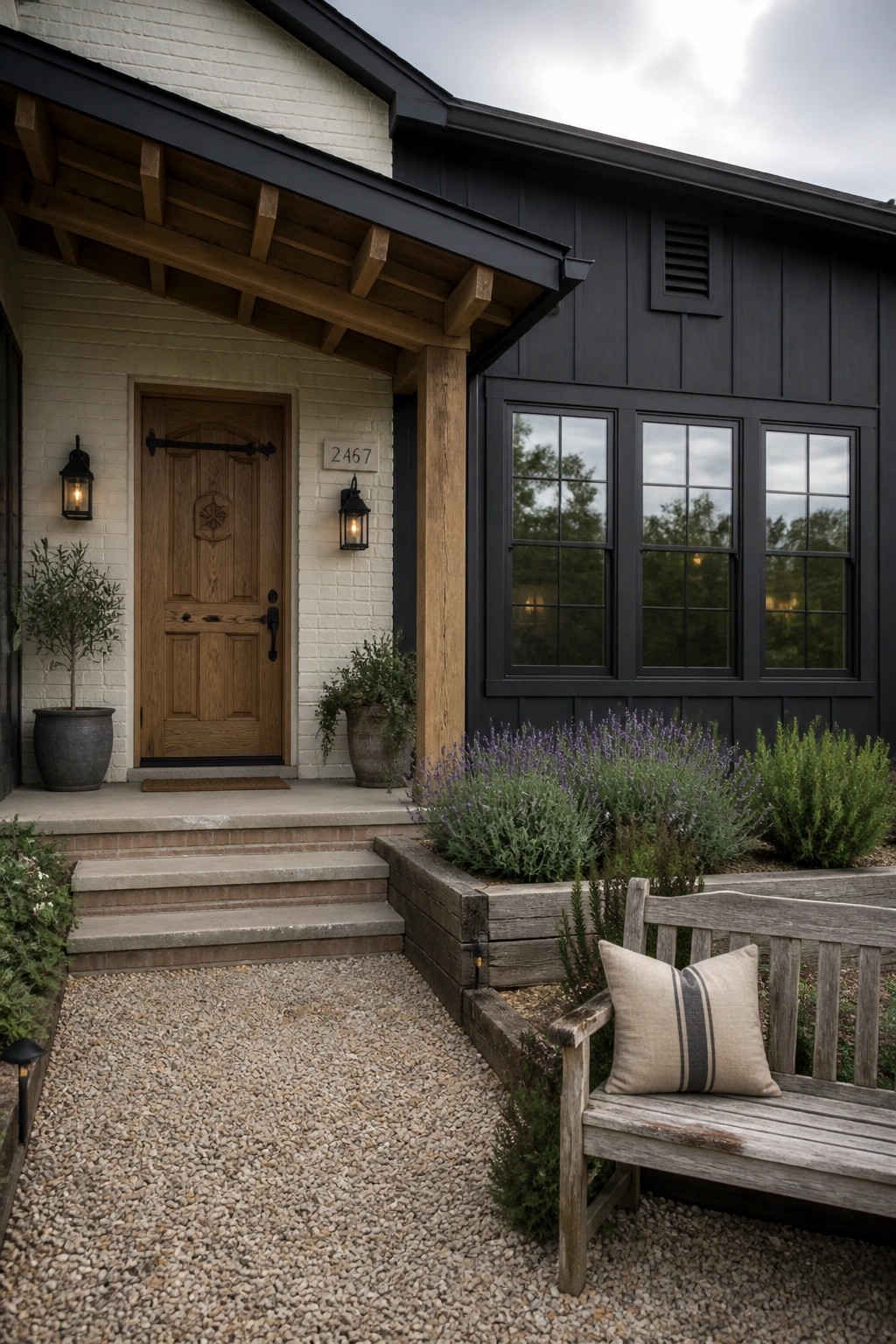
Many farmhouses gain character when they use brick only in key spots instead of covering the whole exterior. White brick around the entry gives the door a solid base while the black siding keeps the rest of the wall simple and clean.
This mix works best on homes where the front door needs a little extra weight. Keep the brick limited to the entry area and let the siding cover the larger surfaces so the two materials balance without fighting for attention.
Mix Brick And Siding On The Facade
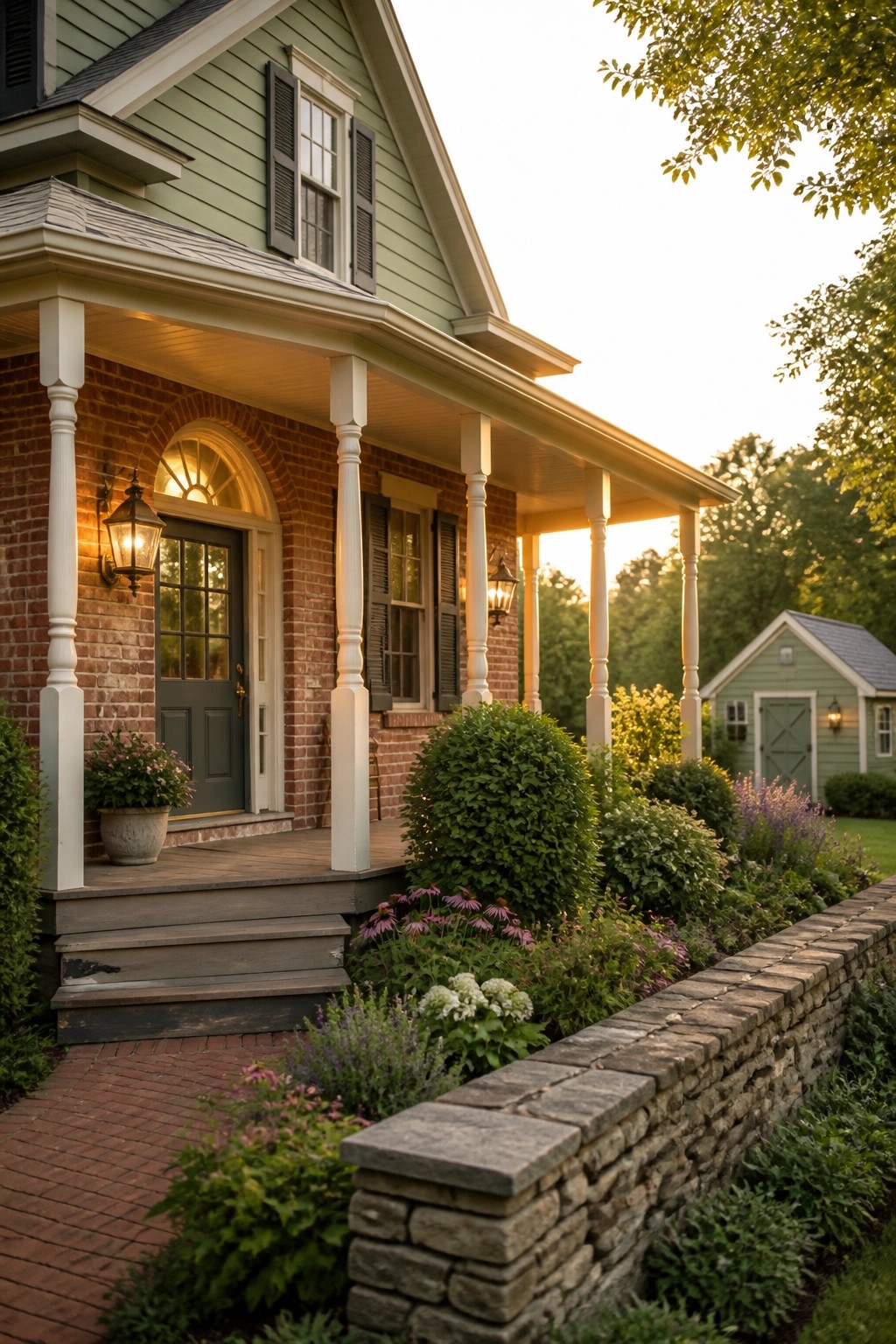
Mixing brick and siding gives a farmhouse exterior more depth without needing extra trim or details. The brick base grounds the house while the siding above keeps things lighter and softer. It works especially well on two-story homes where you want the lower level to feel solid.
This approach suits traditional or updated farmhouses best. Keep the brick on the bottom third or half and let the siding take over above. Watch the color balance so the brick does not feel too heavy next to lighter siding shades.
Mixing Brick And Siding On The Facade
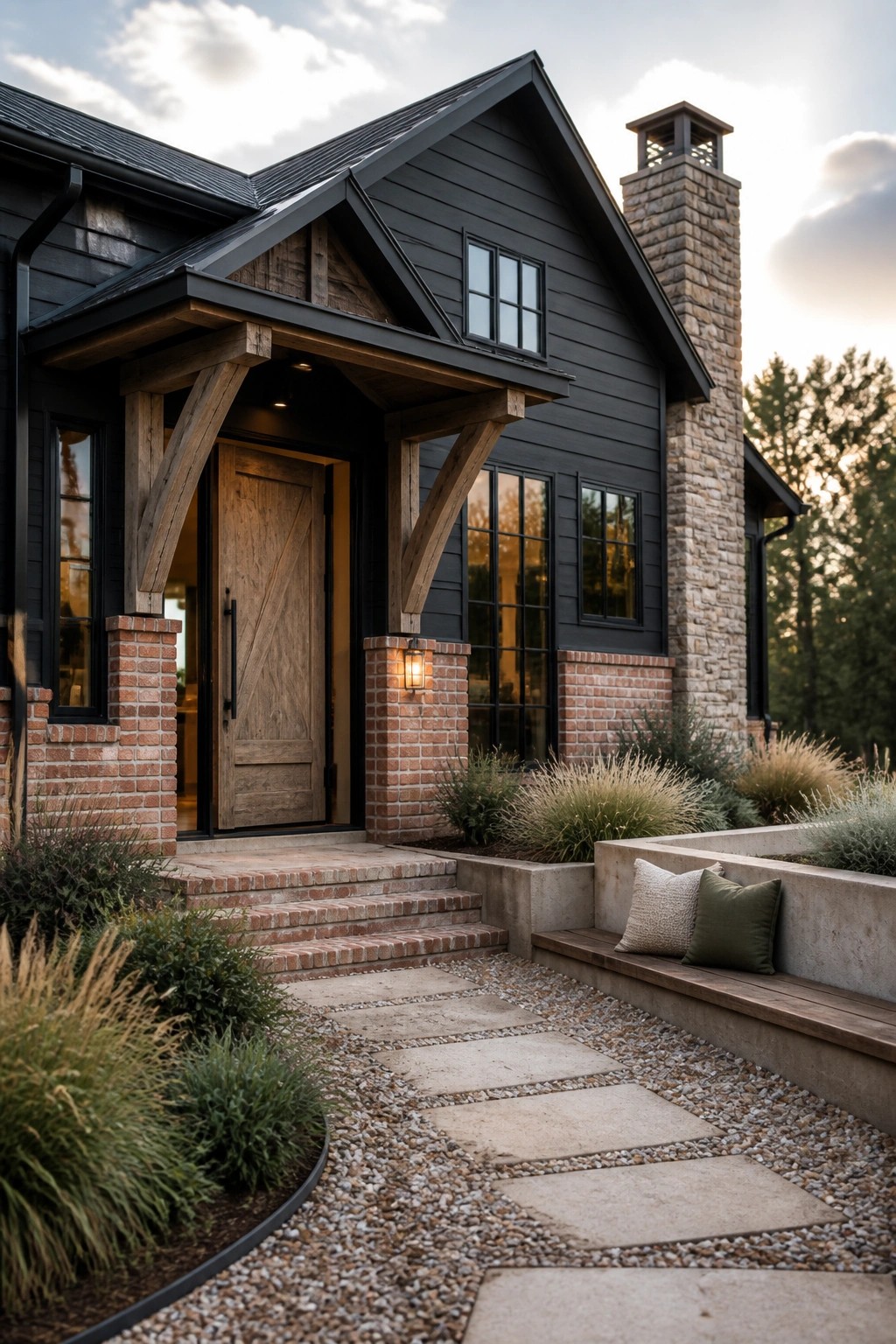
Many farmhouses get a stronger look when brick is used at the base and around the entry while dark siding covers the upper walls. The brick adds weight and texture that keeps the dark color from feeling too flat or heavy.
This mix works best on homes with simple rooflines and wood trim details. Keep the brick in a warm tone and limit it to key spots like the porch supports so the siding still reads as the main surface.
Mixing White Brick With Dark Siding
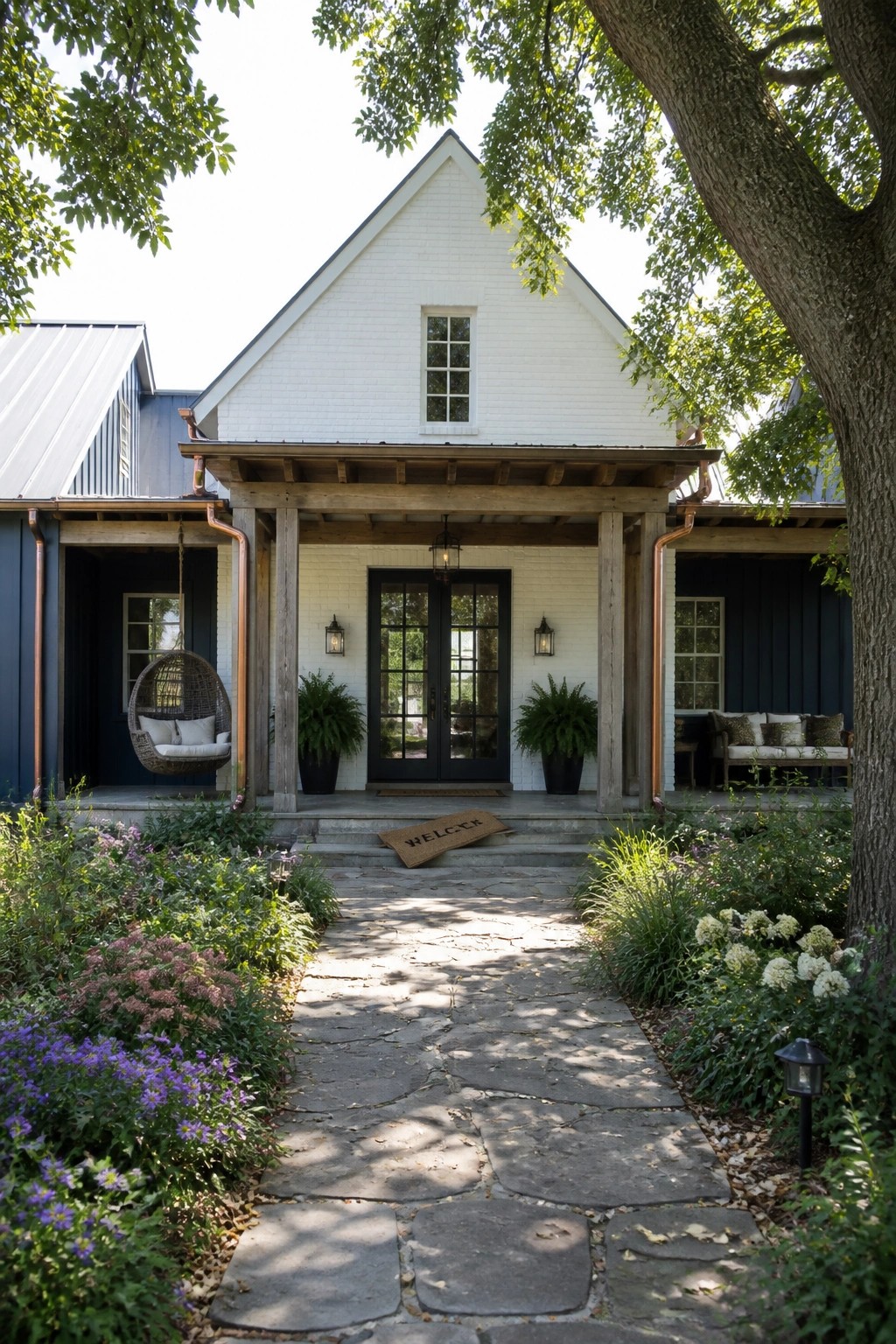
White brick paired with dark siding gives a farmhouse a clean but grounded look. The light upper section keeps the house feeling bright, while the darker lower walls add weight and help it settle into the landscape without needing extra trim or decoration.
This mix works well on homes with simple rooflines and front porches. Keep the dark siding on the main body or wings and let the white brick stay on the gable ends or upper story. It is an easy way to add interest without overcomplicating the design.
Blend Brick With Siding At The Base
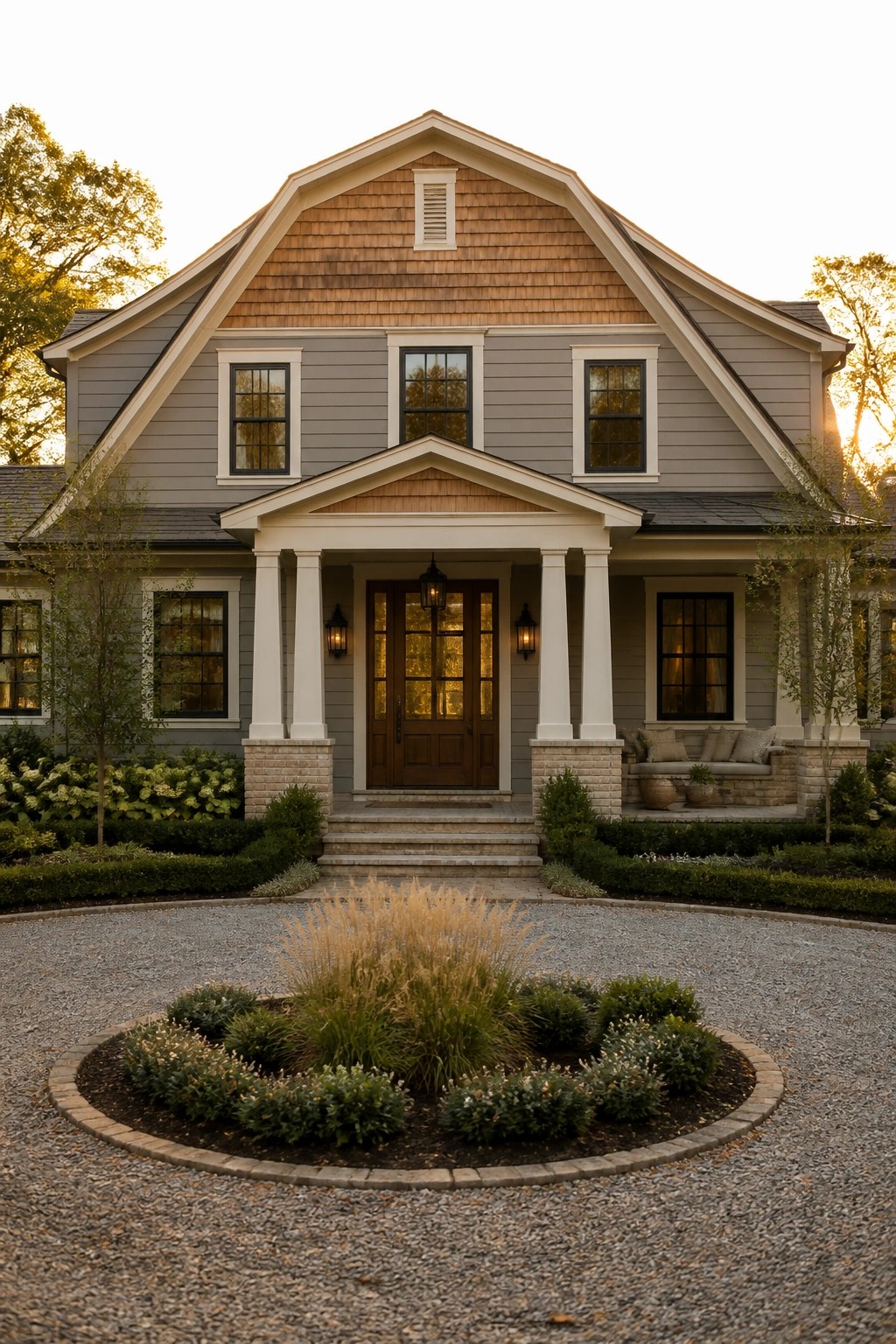
Many farmhouses gain a steadier look when brick covers just the lower sections. The gray siding above stays light while the brick columns and foundation give the house weight without overpowering it.
This mix works best on homes that already have a central porch. Limit the brick to the supports and base so the siding remains the main surface and the whole front stays simple.
Frequently Asked Questions
Q: How much brick should I use if my siding already covers most of the house? A: Keep the brick to the bottom third or the main entry wall. This anchors the look and cuts down on the weight of the material. Anything more starts to feel heavy on a typical farmhouse frame.
Q: Will the siding fade faster next to brick over time? A: Choose fiber cement or a quality vinyl that matches the brick’s undertones from the start. Repaint the siding every eight to ten years to keep the contrast sharp. The brick itself needs almost no upkeep beyond occasional washing.
Q: Can I add a small stone accent without losing the mixed-material feel? A: Yes, but limit the stone to one chimney or a short porch base. It plays off the brick without competing for attention. Keep the siding dominant so the whole exterior stays balanced.
