

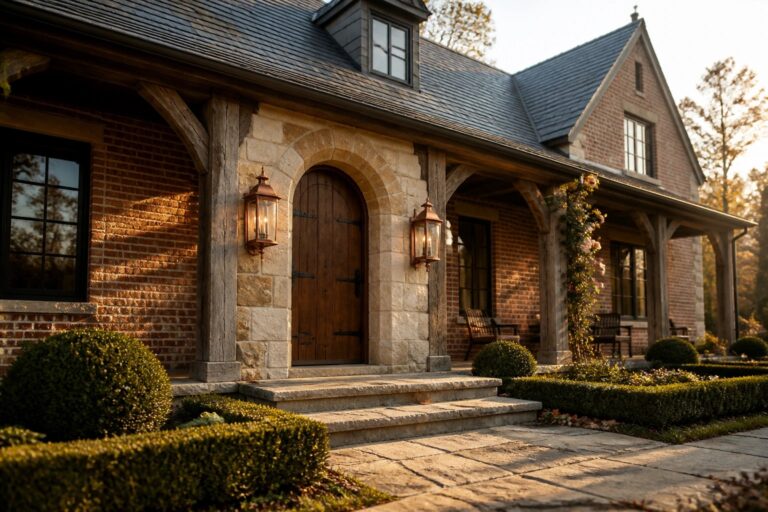
I often find myself slowing down when I pass a farmhouse that uses brick and stone well, because those materials give the whole place a settled look that paint alone never quite reaches.
The way the facade meets the roofline and how the entry sits can make a house feel grounded or oddly tall from the street.
Small choices in texture add up fast.
I keep a few photos of combinations that worked in person so I can check them against my own front elevation before committing to changes.
Seeing what holds up after a few seasons of weather tells me more than any rendering ever could.
Stone Arches on Brick Exteriors
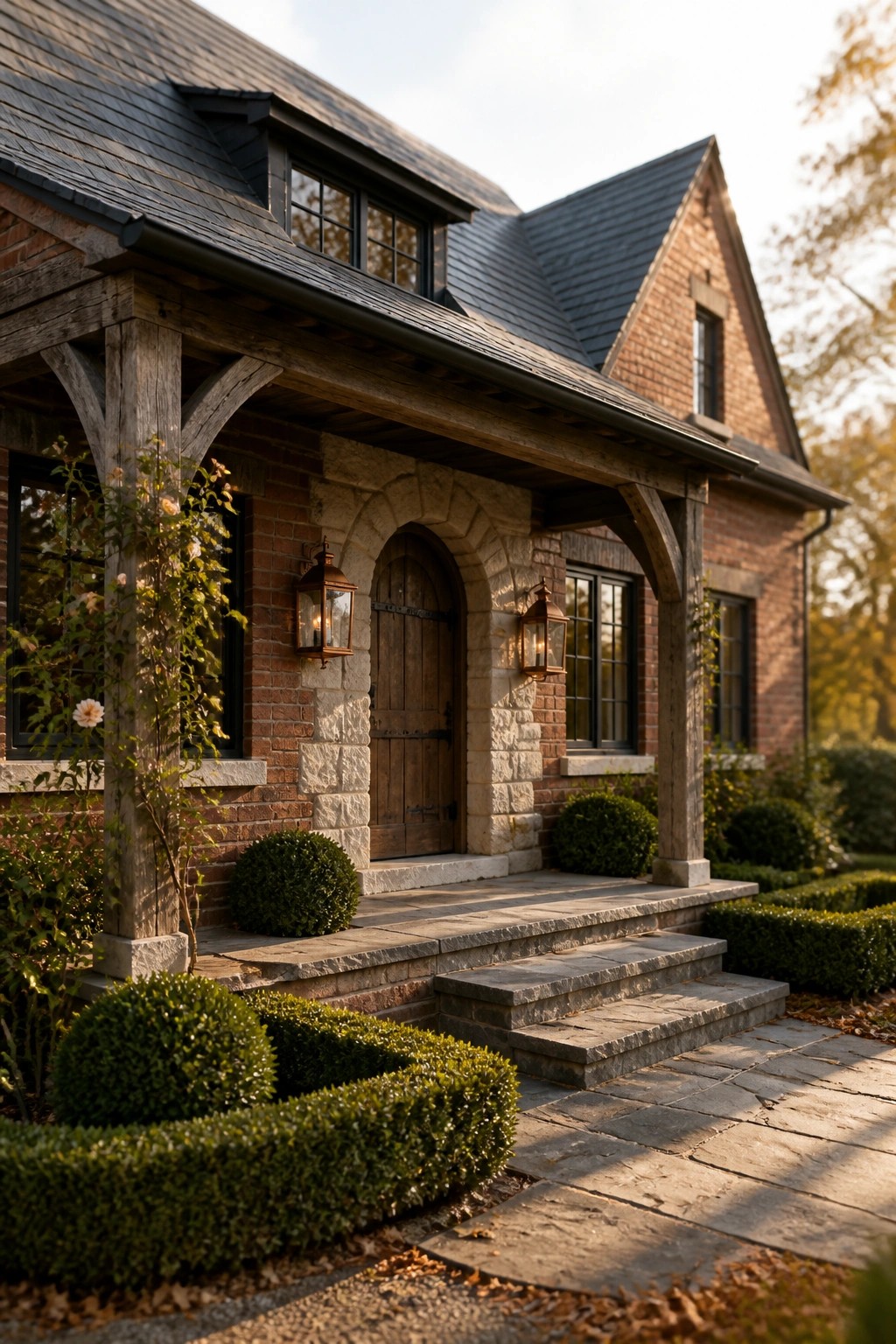
A stone arch around the front door gives a brick farmhouse more weight and character. It breaks up the flat surface of the brick and draws attention to the entry without needing extra trim or decoration.
This approach works best on homes with a simple roofline and traditional proportions. Match the stone to any foundation or window sills already on the house so the arch feels like part of the original build rather than an add-on.
Stone Columns Frame the Front Door
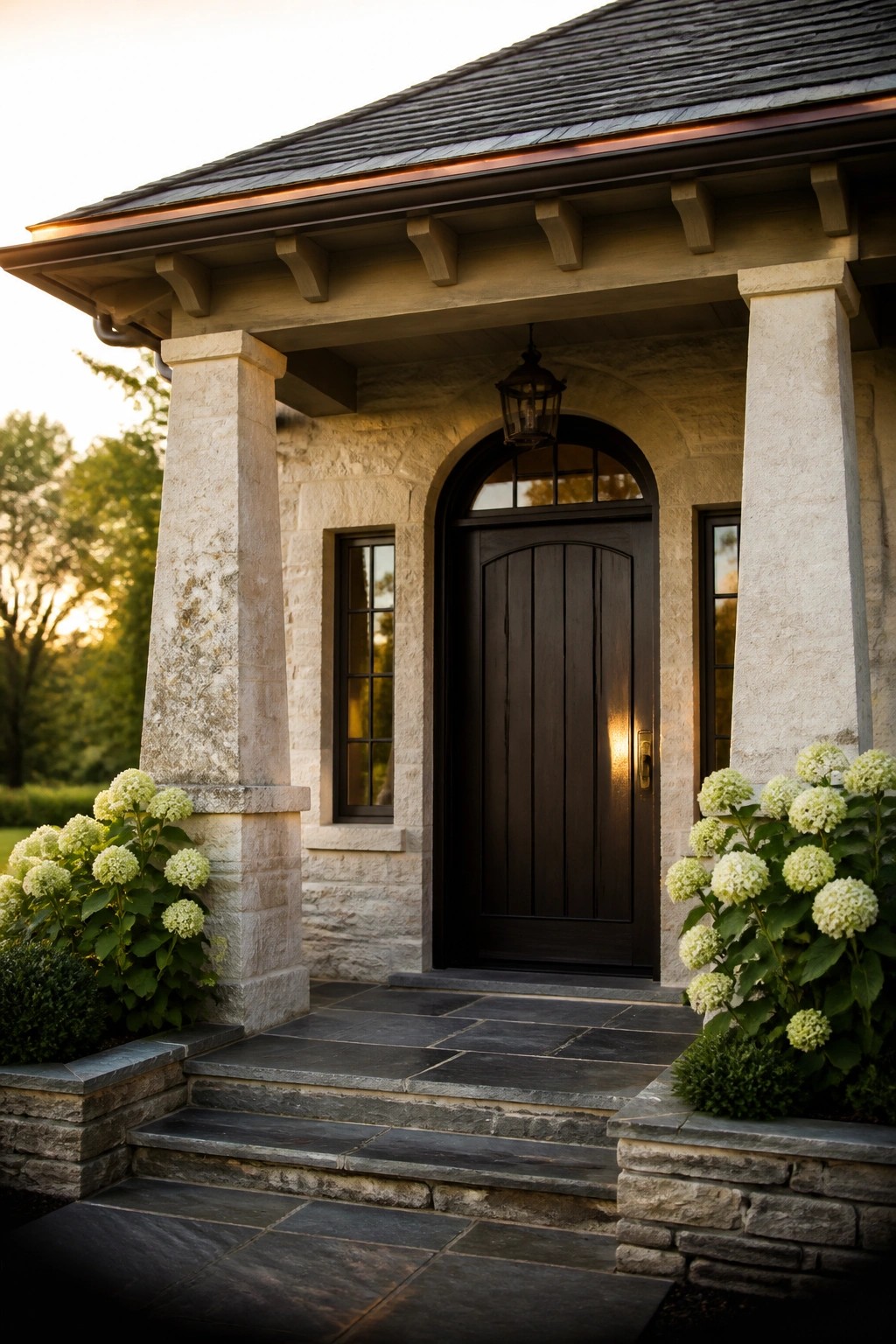
Stone columns give a farmhouse entrance more weight and presence. They turn a simple door into something that feels solid and welcoming at the same time.
This works best on homes with stone or brick walls. Choose a dark door so the columns stand out without competing, and keep the scale generous enough to match the roof overhang.
Layer Stone At The Foundation
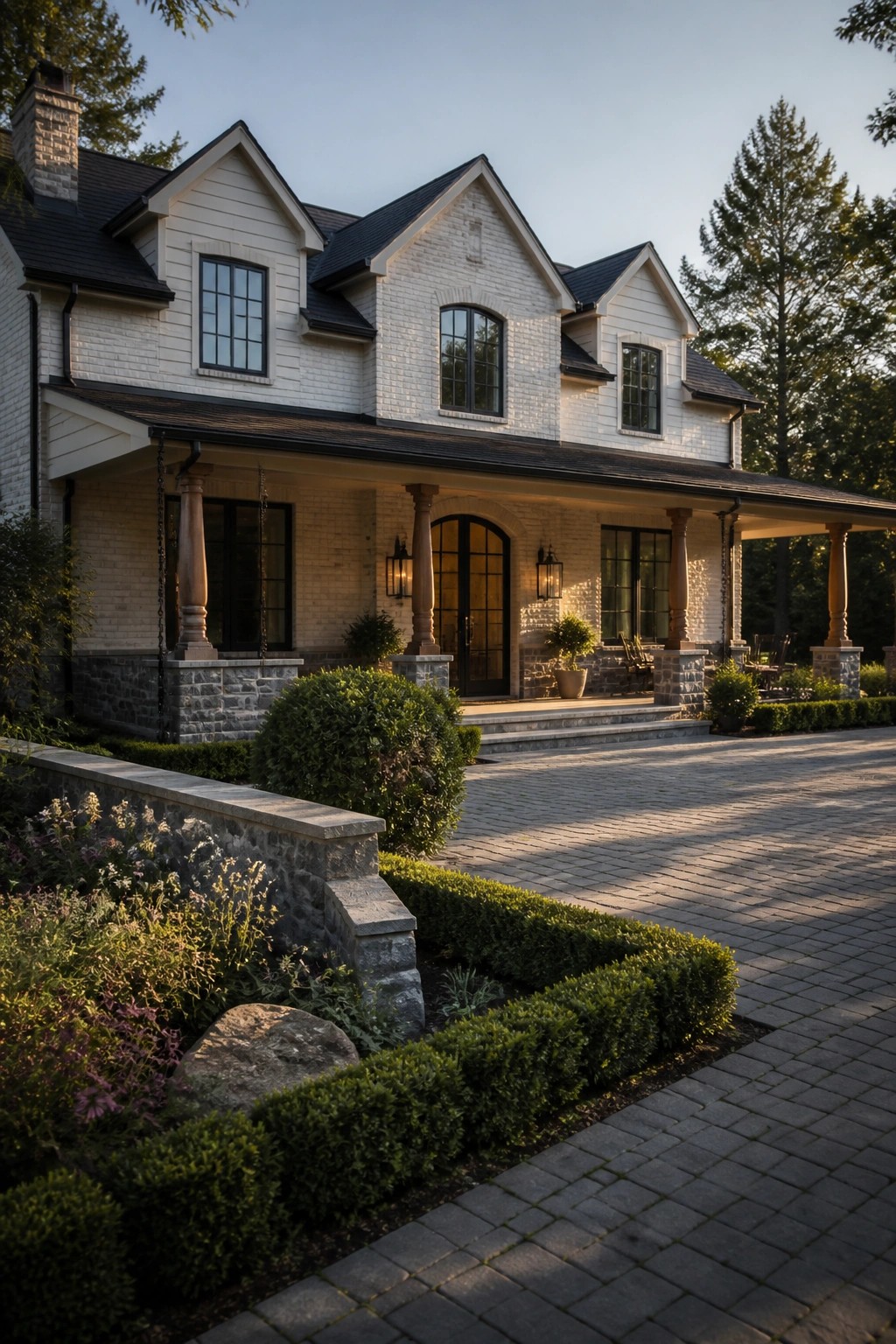
Stone at the base gives a farmhouse exterior more weight without making it feel heavy. It works well with lighter brick and painted siding above, since the darker stone anchors everything and adds texture right where the house meets the ground.
This approach suits homes that already have a mix of materials. Keep the stone sections fairly low and use it on columns or porch supports too, so the look stays balanced rather than busy.
Mix Dark Siding With Stone Accents
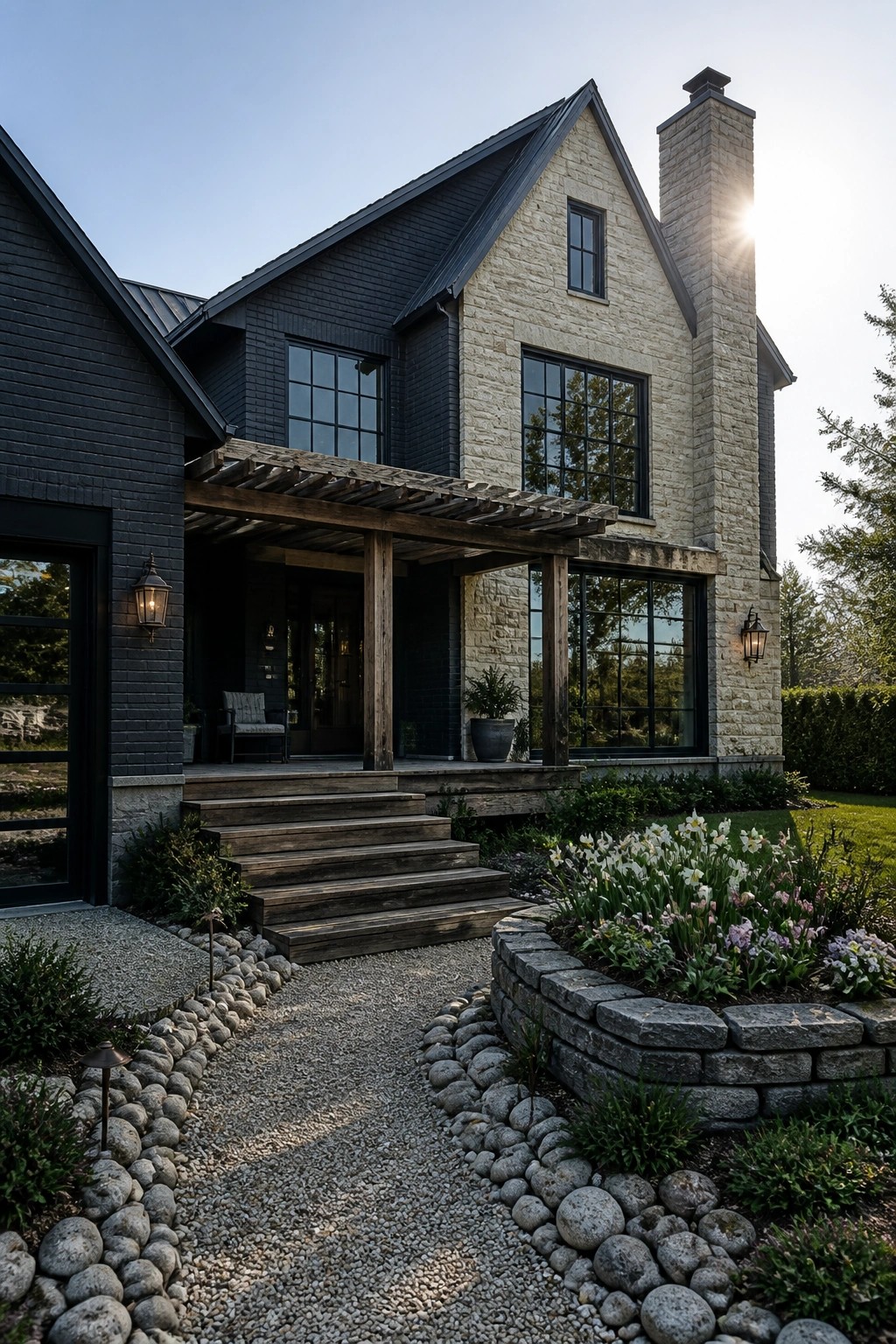
Mixing dark siding with lighter stone gives a farmhouse exterior more depth without adding extra trim or details. The dark sections recede while the stone areas stand out, which keeps the house from looking flat or too heavy. This approach works especially well on homes that already have strong rooflines and large windows.
It suits newer builds that want a traditional feel without going fully historic. Keep the stone on key spots like chimneys, corners, or around windows so it reads as intentional rather than scattered. Too much stone can start to feel busy, so less is usually better.
Stone Fountain in the Courtyard
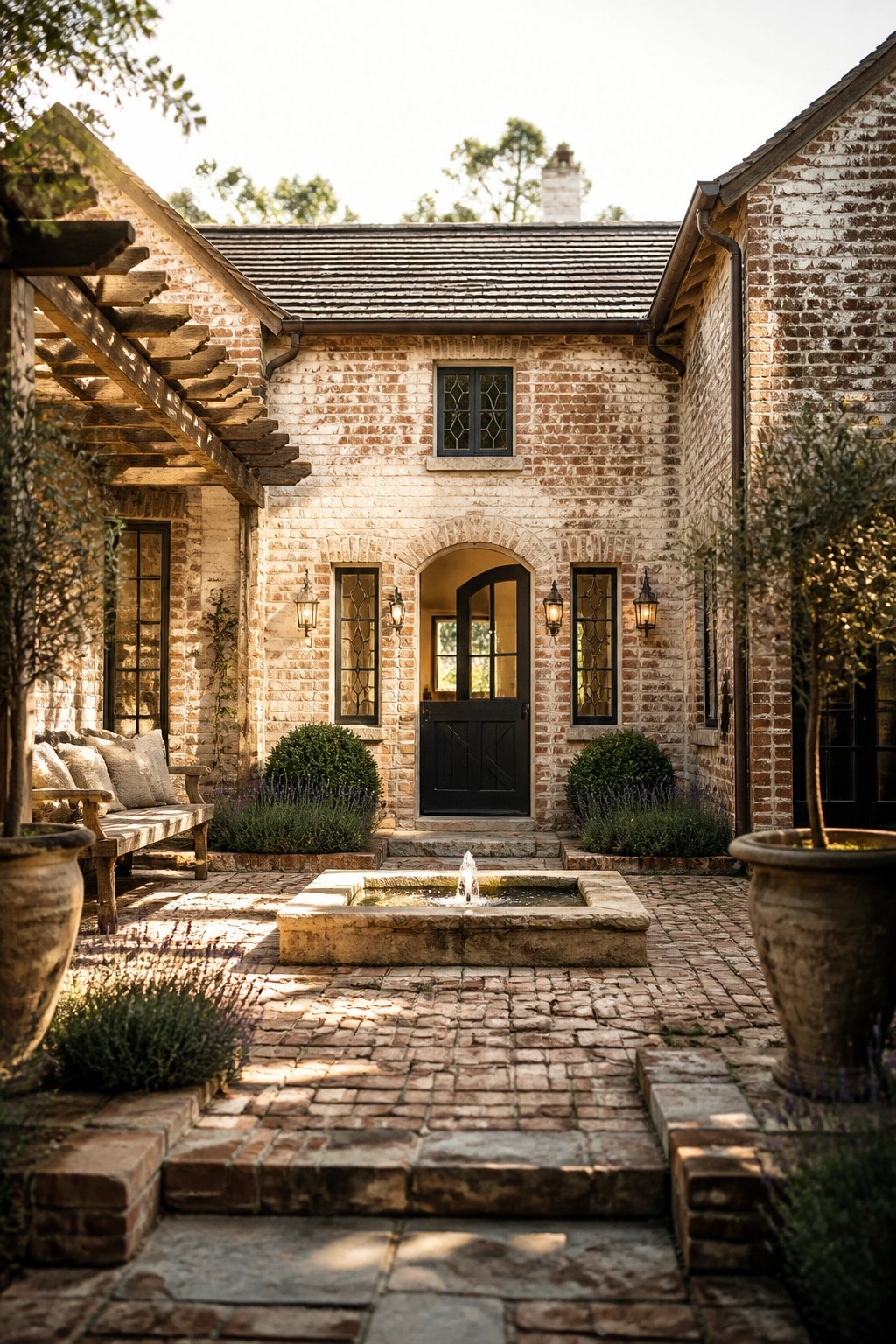
A simple stone fountain set in the middle of a brick courtyard gives the whole front a quiet center point. It pulls the eye forward and makes the entry feel more settled without needing extra decoration.
This works best on homes that already have a paved or gravel approach. Keep the fountain modest in size so it sits comfortably with the door and windows rather than competing with them.
Stone Accents Around the Front Entry
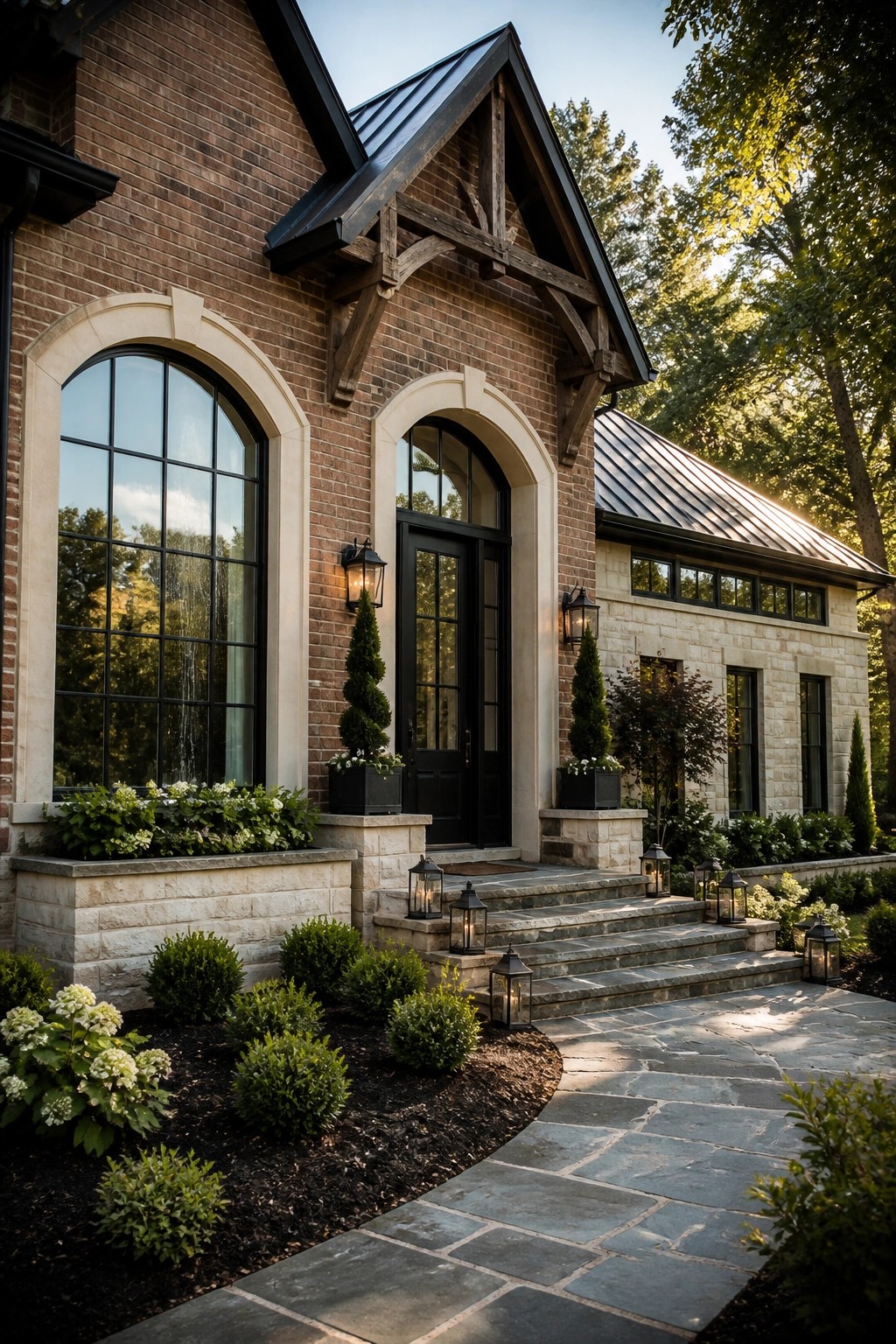
Many brick farmhouses gain a lot from a simple stone surround at the main door. The contrast breaks up the wall without needing extra trim or decoration, and it gives the entry a solid, grounded feel that fits the style.
This approach works best on homes with straightforward rooflines and a few other stone touches already in place, like a foundation or steps. Keep the stone limited to the arch or frame so the brick stays the main material.
Arched Stone Entries
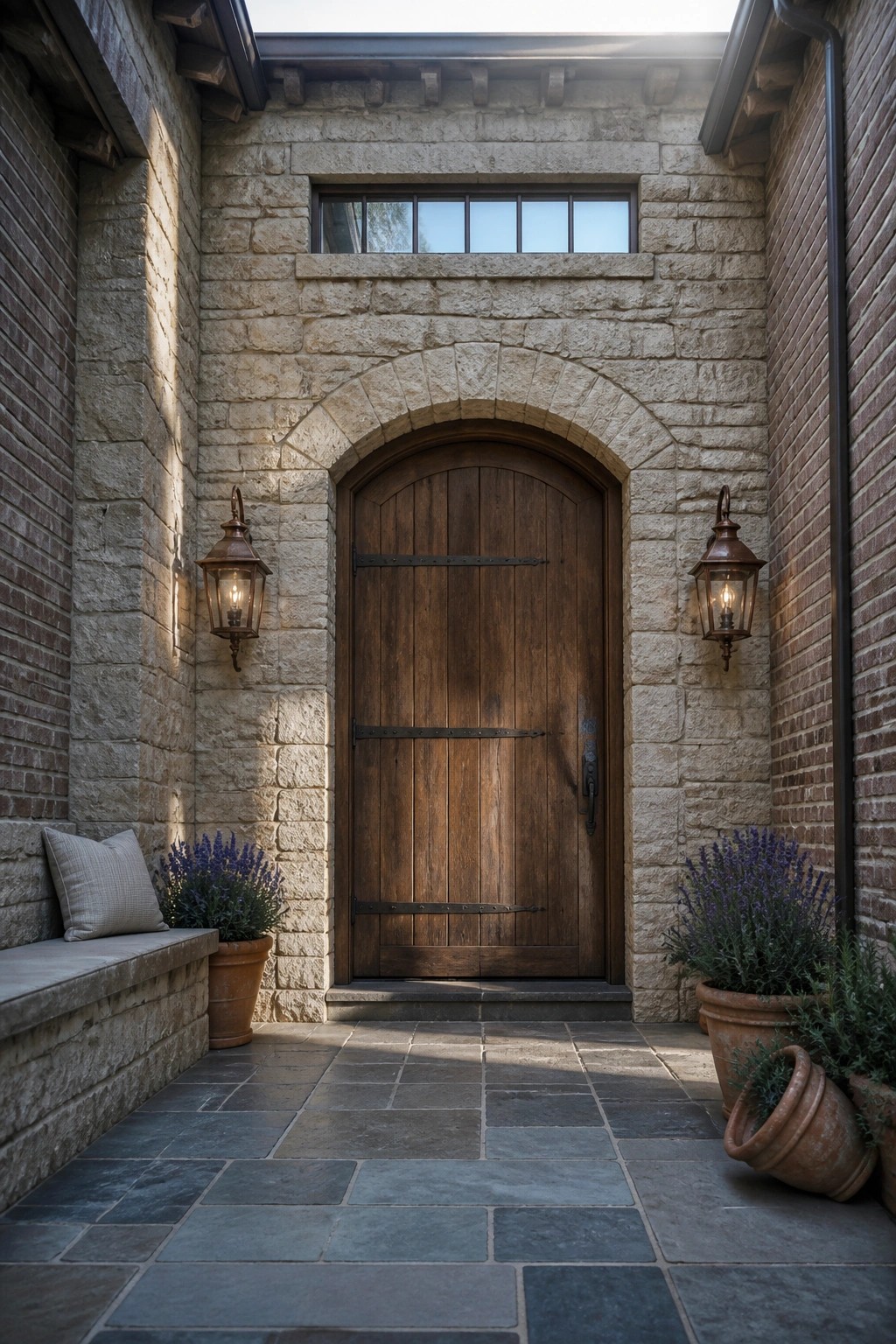
An arched stone entry gives a farmhouse a solid and welcoming front without much extra effort. The curve softens the strong lines of brick while the stone ties the whole facade together in a simple way.
This detail works best on homes that already mix brick and stone. Keep the door in a warm wood tone and add just a pair of lanterns on each side so the arch stays the main focus.
Adding Wood To Stone Exteriors
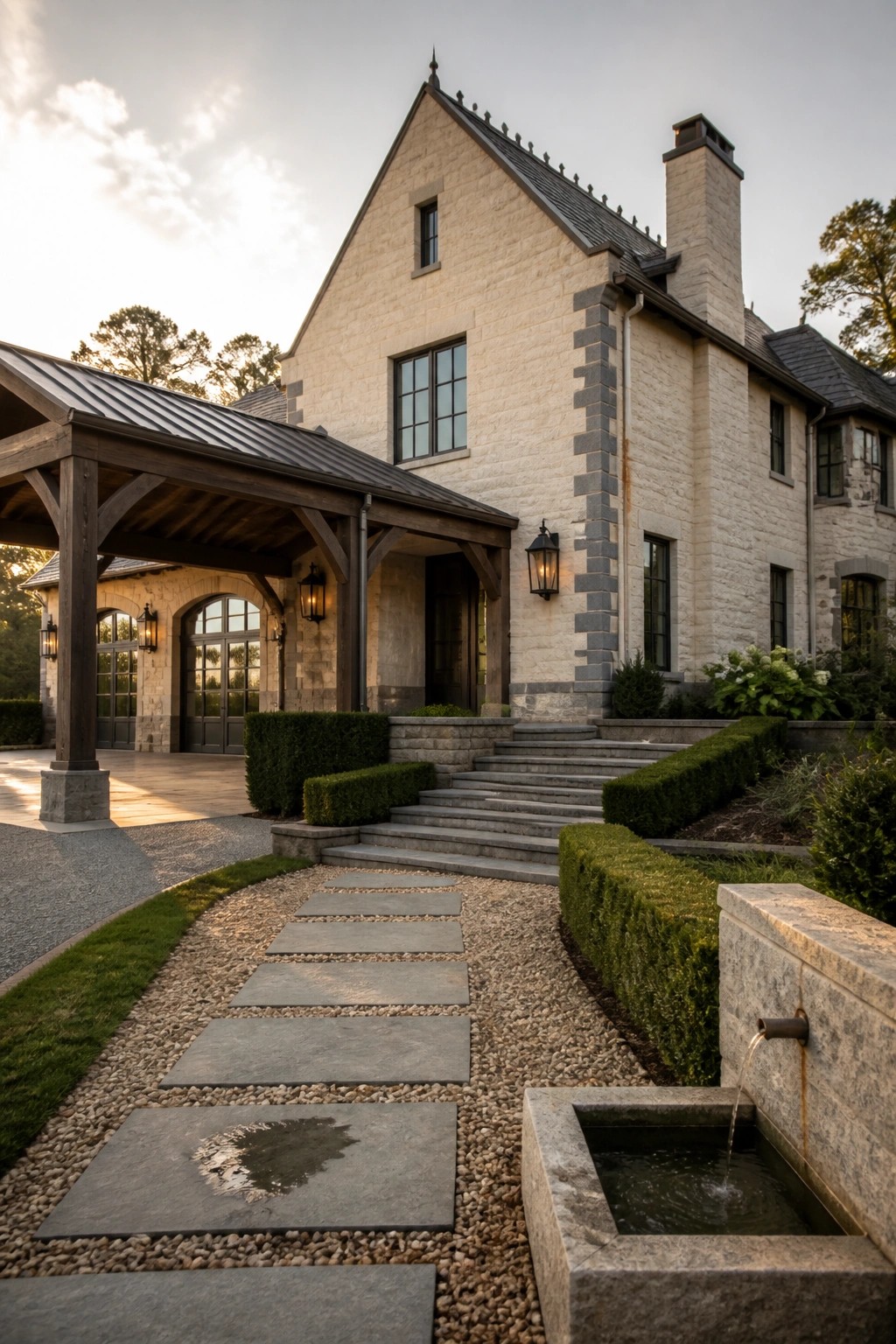
Stone homes often look solid but can feel a little plain without some contrast. A wood structure over the entry, like heavy beams and a metal roof, breaks up the surface and gives the front a more settled, farmhouse look that still feels substantial.
This approach works best on larger homes where the entry needs a clear focal point. Keep the wood dark and the design straightforward so it frames the door without competing with the stone walls.
Symmetrical Stone Facade with a Central Entry
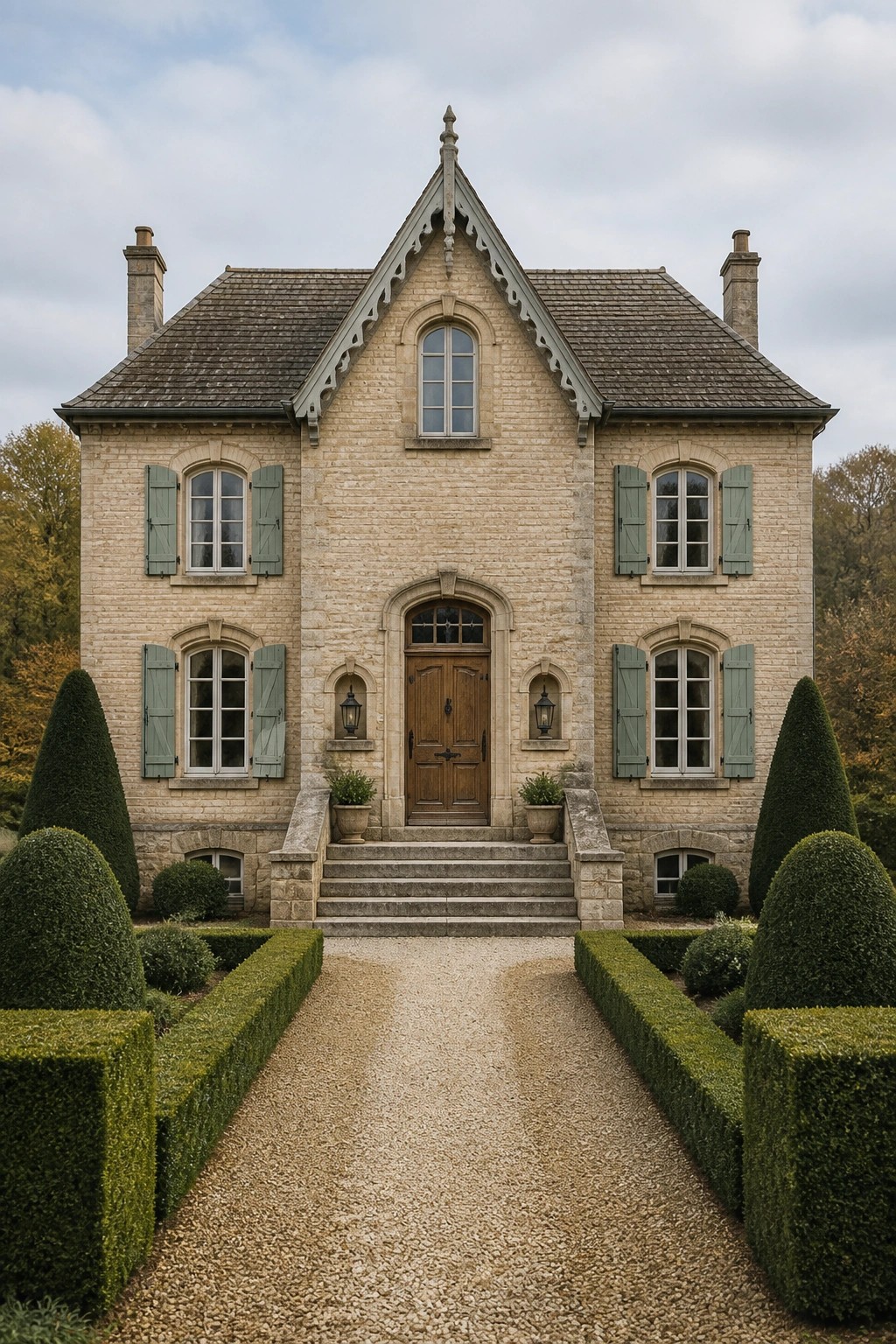
A centered door under a steep gable gives the whole front a clear sense of order. Stone walls keep the look solid and simple, while the balanced windows on each side make the house feel settled rather than busy. That kind of layout reads well from the street and needs little extra detail to hold attention.
This works best on homes with enough width for matching windows. Keep the shutters the same color and style on both sides, and let the stone carry most of the texture. Avoid adding too many small accents that could break the balance.
Stone Bases For Brick Farmhouse Exteriors
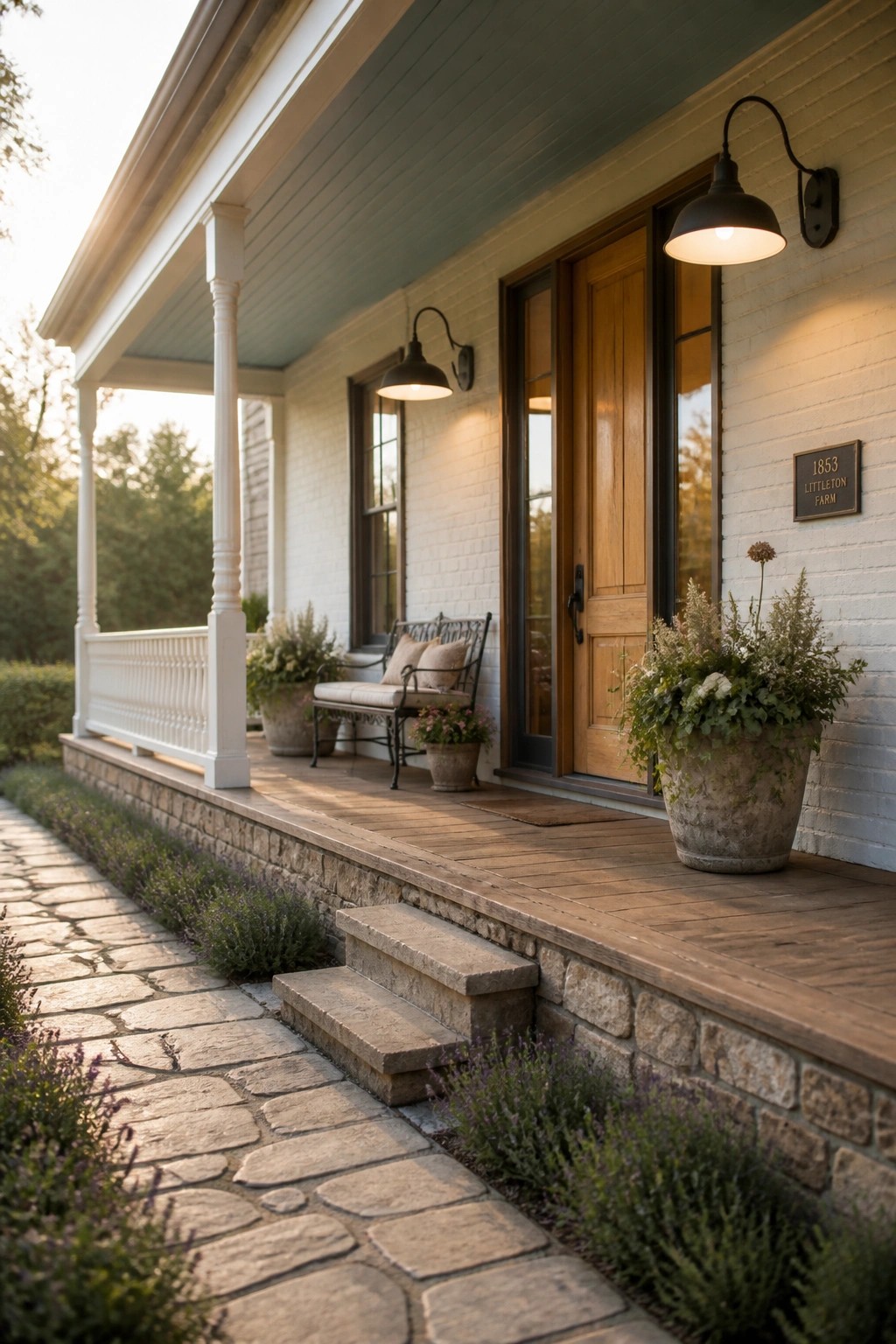
A low stone foundation under white brick gives the house a solid starting point that feels right for a farmhouse. The stone adds weight and texture without competing with the brick above it.
This works best on homes where the porch sits a step or two above grade. Keep the stone height in scale with the steps and foundation walls so the brick remains the main surface.
Mix Dark Brick With Light Stone Accents
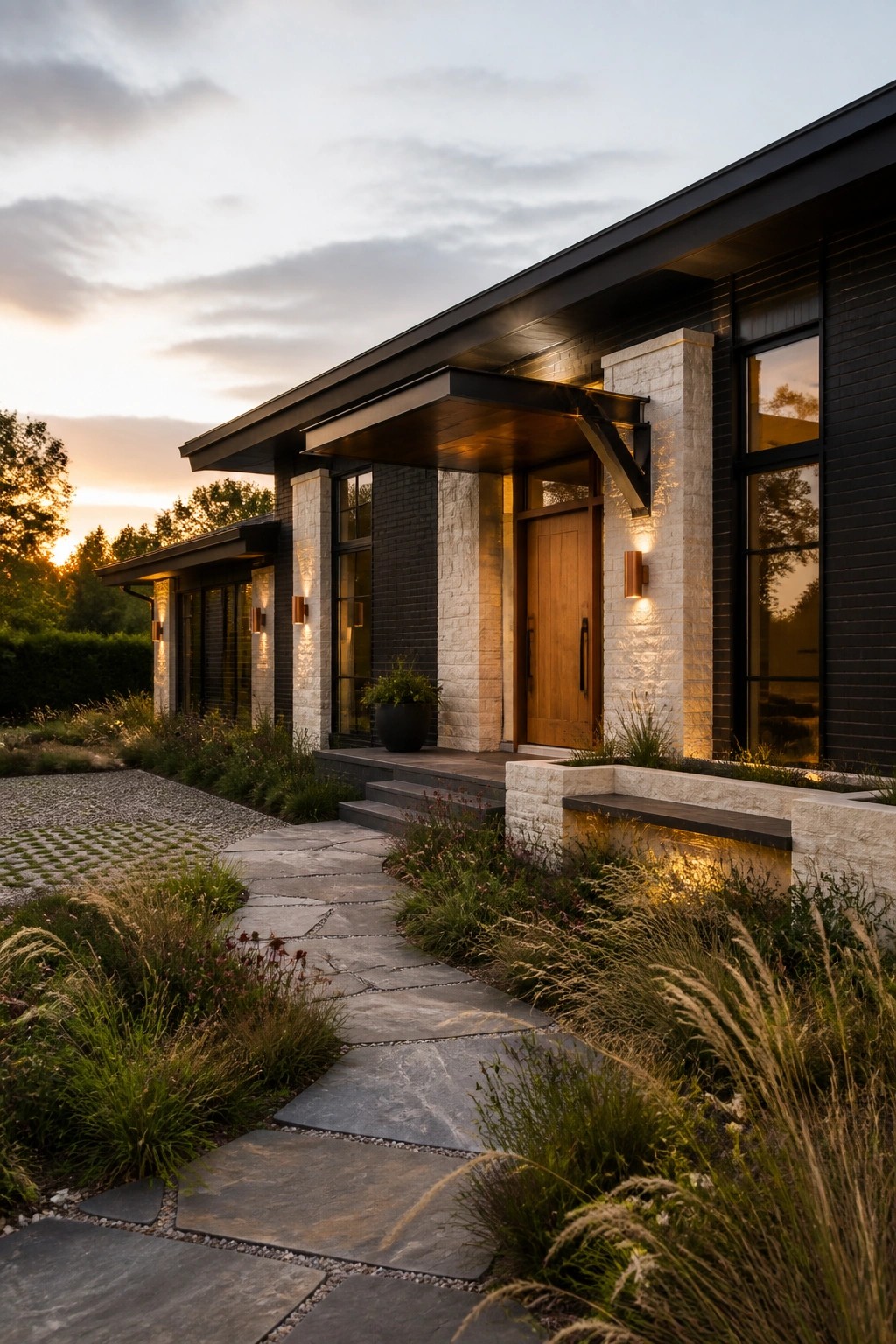
Pairing dark brick with light stone gives a house more depth than using one material alone. The contrast highlights key areas like the entry without adding fussy trim or extra ornament.
This approach works best on modern farmhouses that already have clean lines. Keep the stone to columns or small sections around doors and windows so the brick stays the main surface.
Brick And Stone Around The Entry
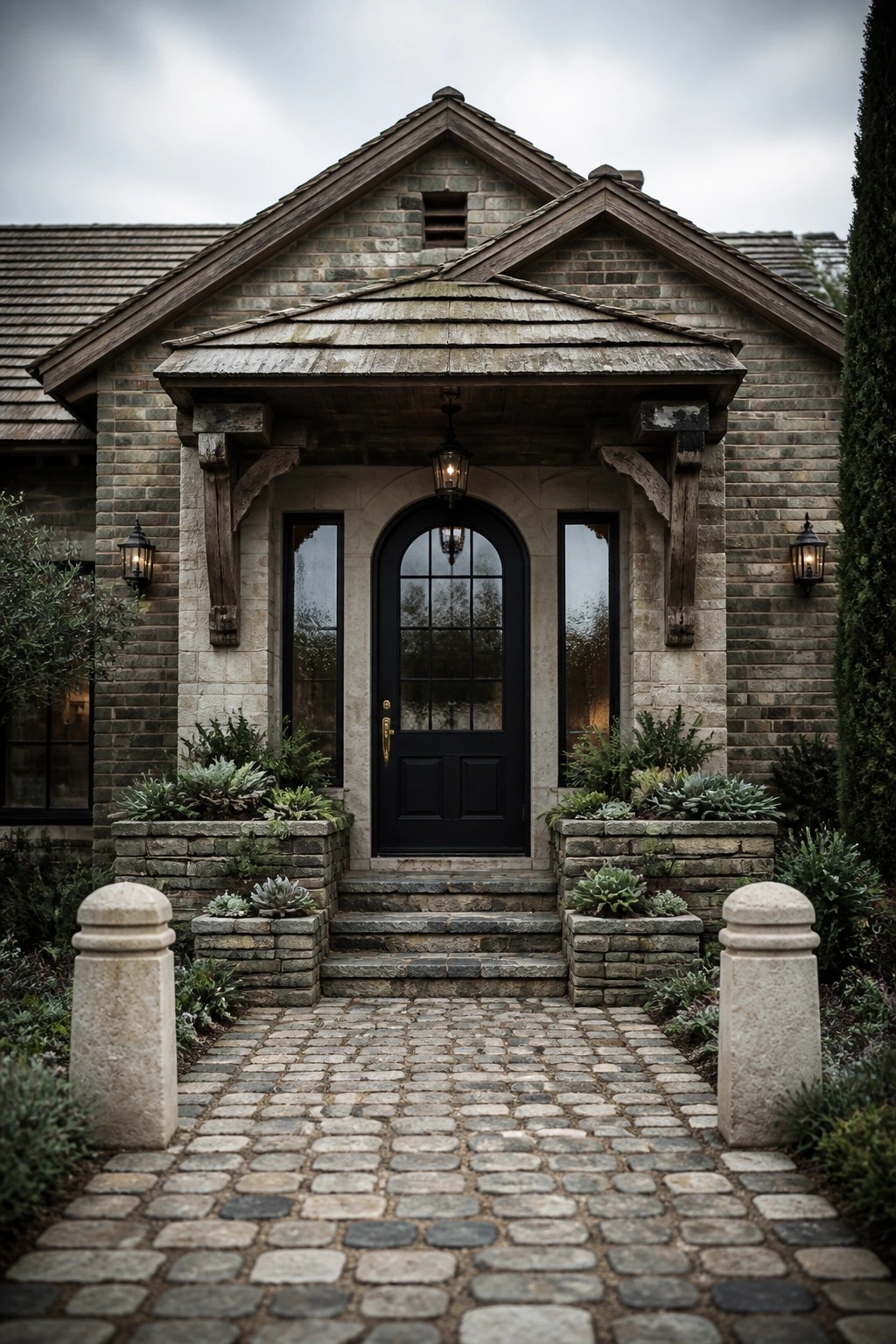
Mixing brick and stone gives a farmhouse entry more weight without extra trim or decoration. The stone here frames the door and steps while the brick covers the main walls, and that simple contrast makes the whole front feel solid and balanced.
This works best on homes with straightforward rooflines and not too many windows near the door. Keep the door dark so the materials stand out, and use the same stone for any low planters or pillars to tie the look together.
Stone Fireplaces for Outdoor Patios
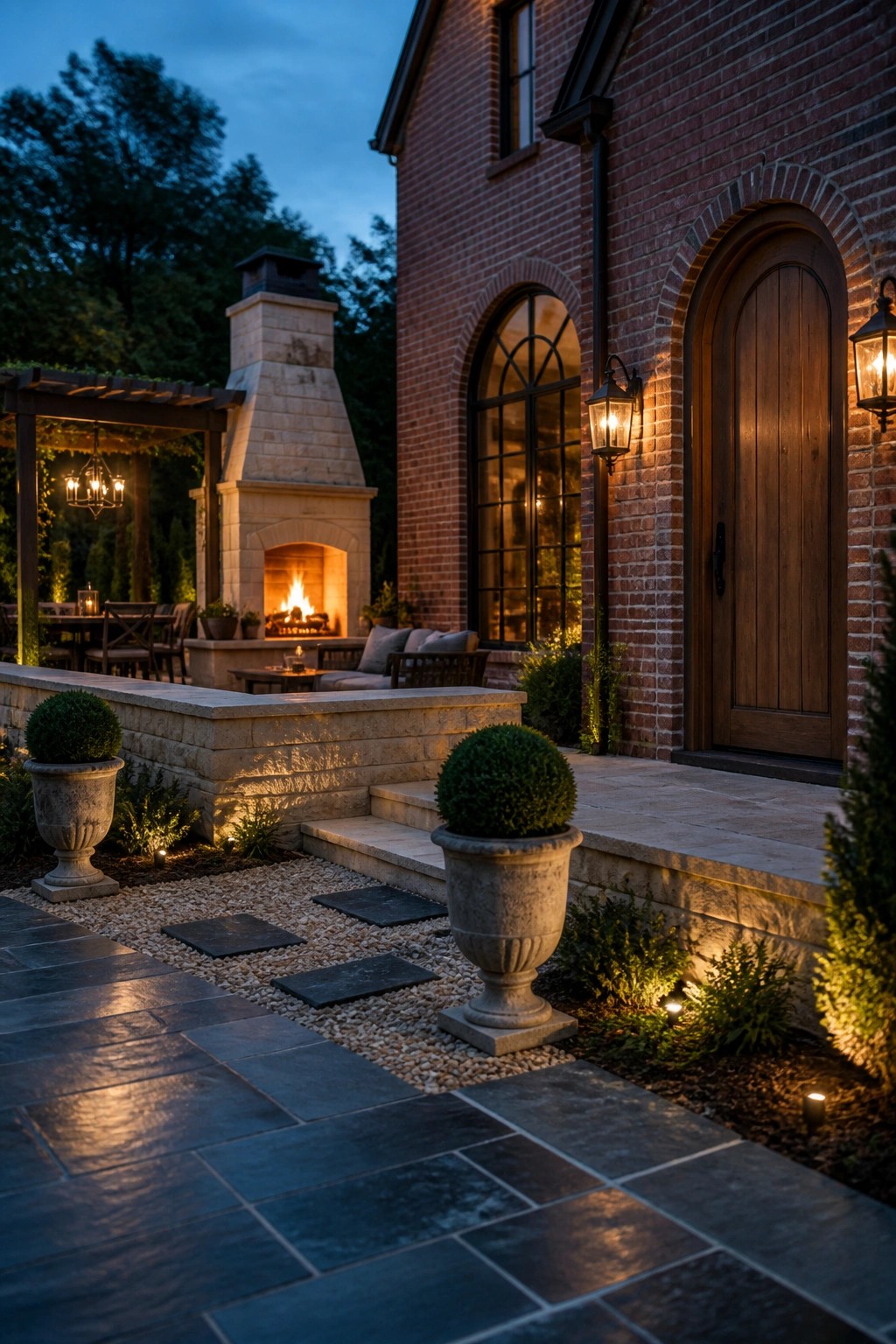
A stone fireplace gives an outdoor patio a real center point. It turns the space into somewhere you can use at night instead of just during the day, and it pairs naturally with the brick on the house.
This setup works best on homes that already have solid masonry exteriors. Keep the fireplace in scale with the wall it sits against and leave enough room around it for seating and walking paths.
Blend Brick With Stone For Depth
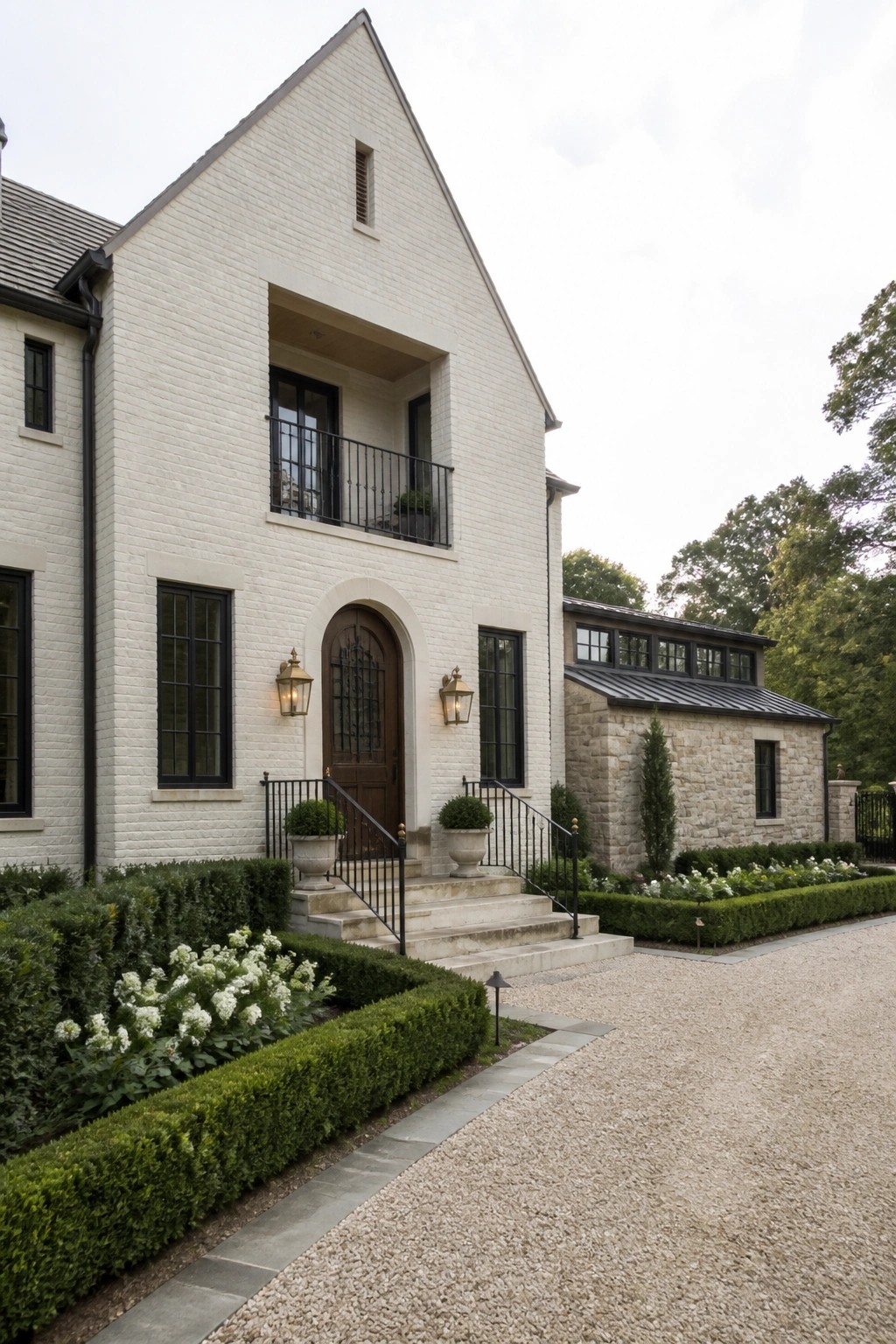
Mixing white brick with natural stone gives a farmhouse exterior more texture and interest than using just one material. The white brick keeps things bright and clean while the stone adds weight and a grounded feel, especially on a lower side section that breaks up the main facade.
This approach works best on homes with a main house and an attached wing or garage area. Keep the brick painted and let the stone remain natural so the two materials play off each other without competing. It suits traditional farmhouses that need a bit more character but still want a simple overall look.
Stone Columns at the Entry
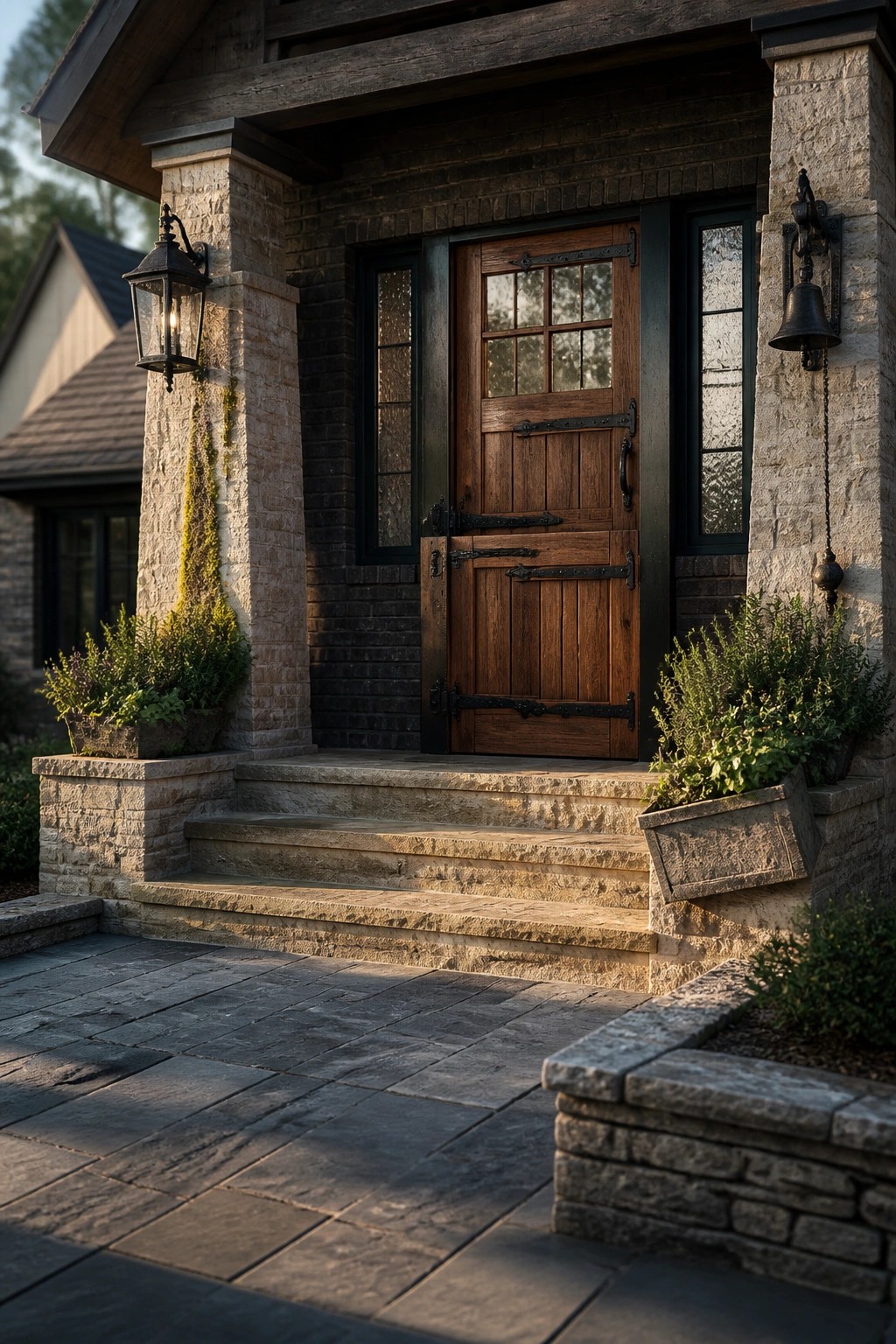
Stone columns give a brick farmhouse entry real weight without needing extra trim or decoration. They frame the door and tie the materials together in a way that feels sturdy and settled.
This detail works well on homes with a traditional shape where the entry needs a bit more presence. Keep the columns simple in profile so the wood door and its hardware stay the main focus.
Mixing Brick With Stone On The Facade
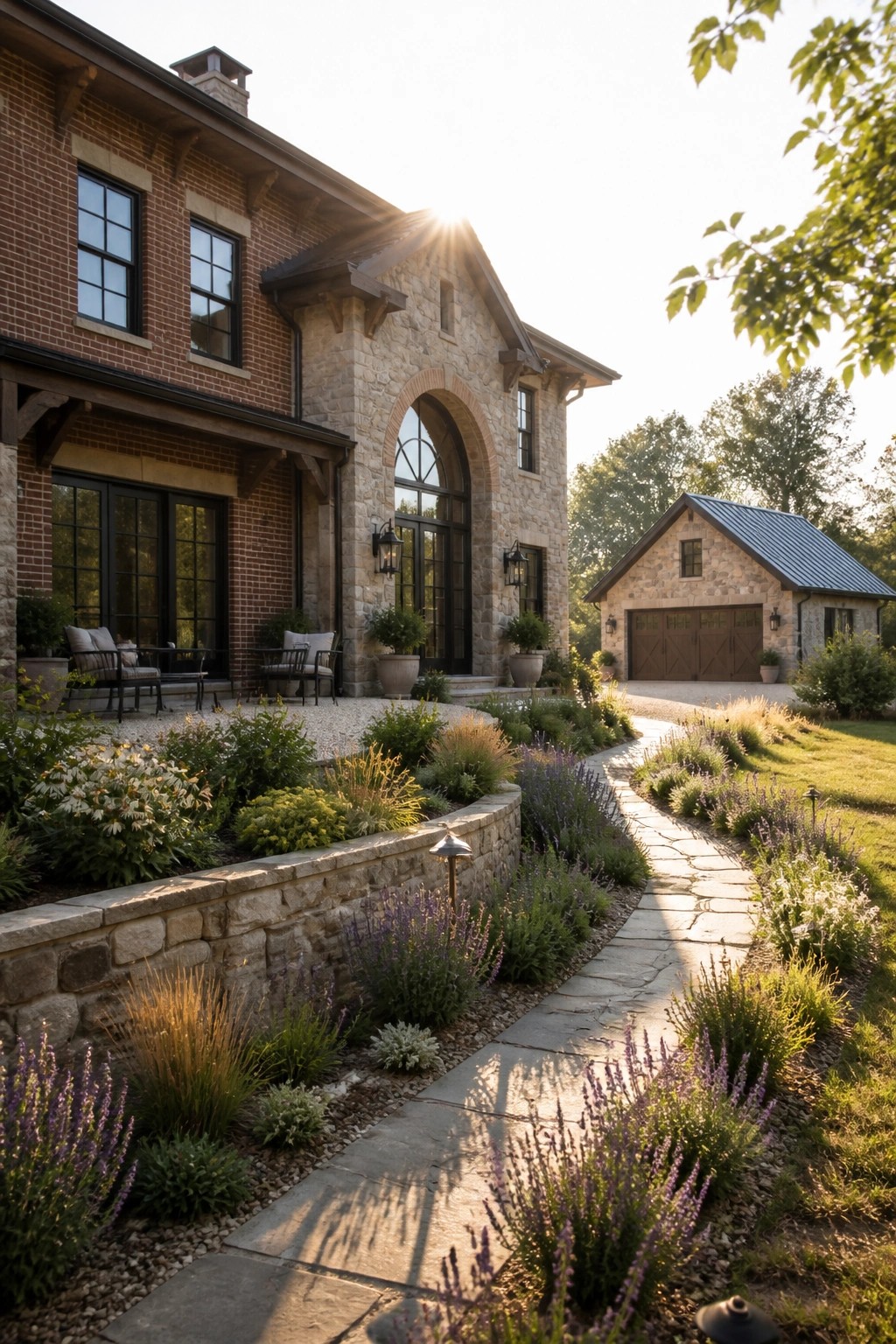
A simple mix of brick and stone gives a farmhouse exterior more texture than either material can manage alone. The stone adds weight around key spots like the entry while the brick keeps the rest of the wall feeling lighter and more familiar.
This approach works best on homes that already have a fairly traditional shape. Use the stone to highlight the main door and a few window openings, then let the brick run across the larger wall areas. It keeps the look balanced without needing extra trim or ornament.
Arched Stone Entries
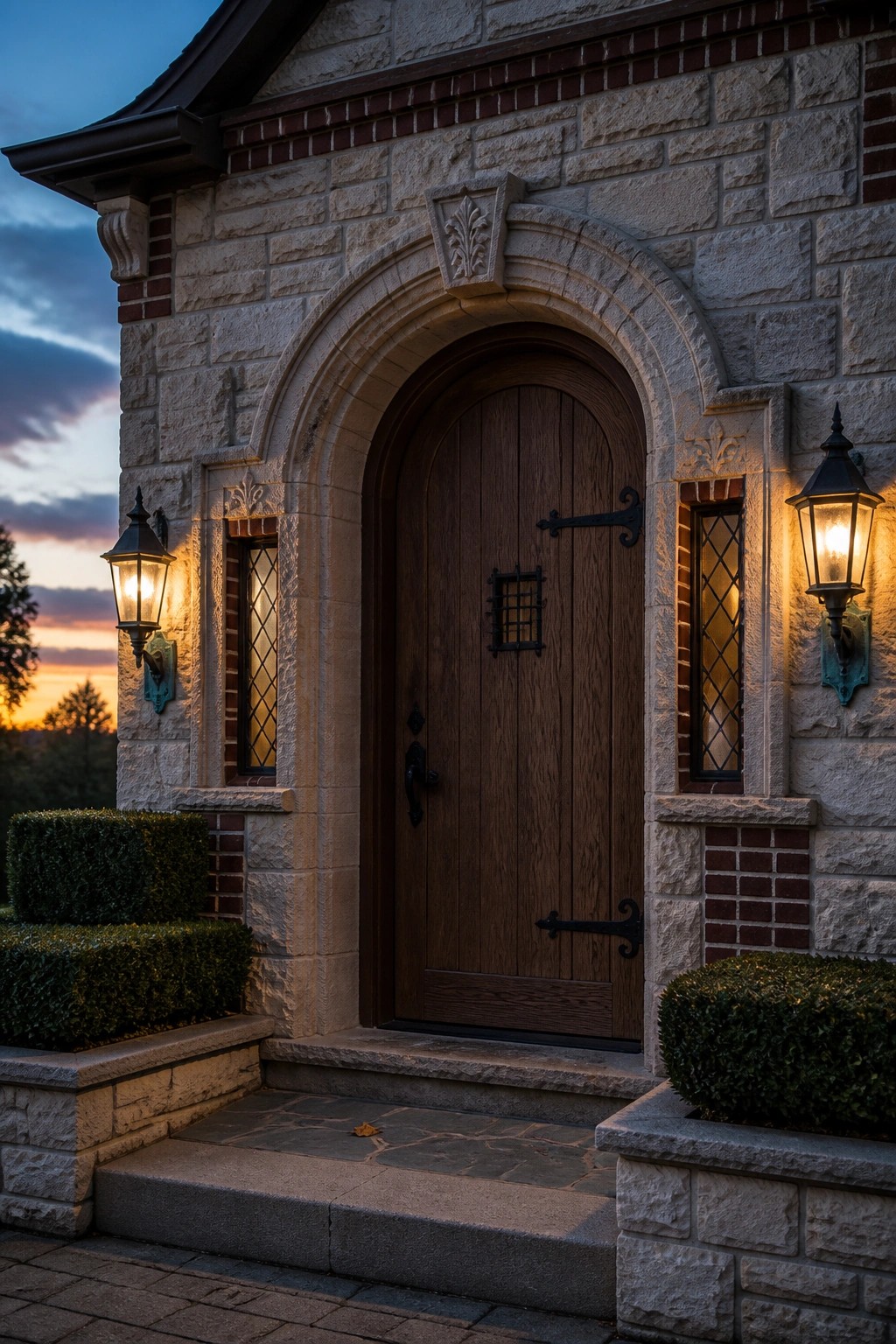
An arched stone entry gives a brick farmhouse a clear focal point without extra ornament. The curve breaks up the straight lines of the walls and makes the door feel more substantial.
Use this on homes where the entry looks flat or too plain. Match the arch stone to the main facade and keep the door simple in a dark wood tone. It works on both new builds and updates to older farmhouses.
Mixing Stone And Brick On The Facade
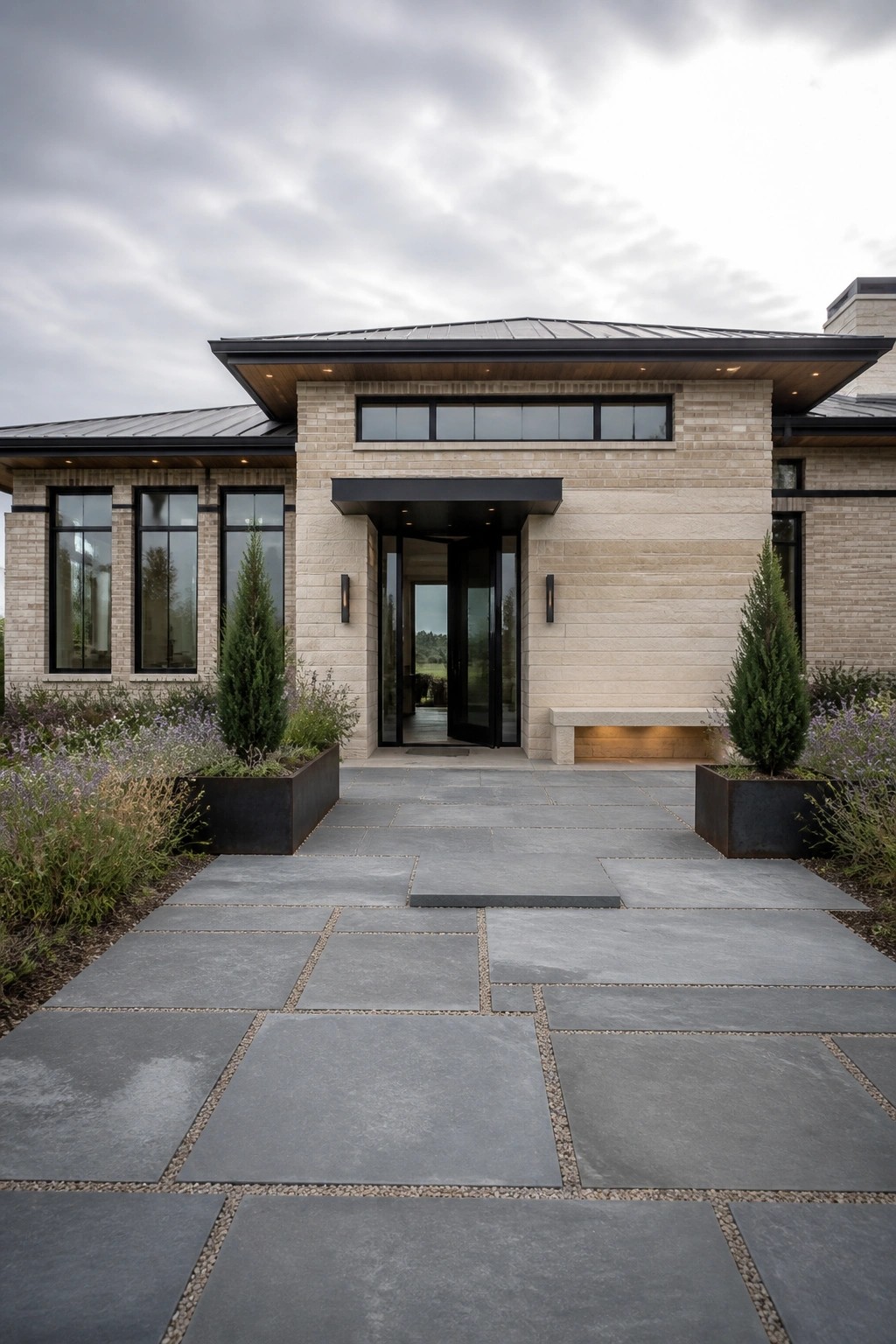
Mixing stone and brick gives a farmhouse exterior more depth without going overboard. The light stone keeps the front bright while the brick adds a bit of warmth and texture on the sides.
This works best on homes with simple rooflines where the materials can do the talking. Keep the tones close so the change feels natural instead of busy.
Frequently Asked Questions
Q: How do I keep brick from fading over time? A: Apply a clear sealer every few years to protect the color. Choose bricks rated for exterior use in your region. Sweep away debris regularly so nothing traps moisture against the surface.
Q: Can stone accents work on a small budget? A: Focus stone on the foundation or around windows instead of the whole front. This highlights key areas without high costs. Source local stone to cut down on delivery fees.
Q: What plants pair well with these materials? A: Go for climbing vines on stone walls to soften the look. Boxwoods or lavender near brick add color that lasts. Trim them back each season so they do not damage the joints.
Q: Should I cover old siding with new brick or stone? A: Add a moisture barrier first and attach the material directly over it. This saves time on full removal while keeping the structure sound. Work on one section at a time to check how it settles.
