

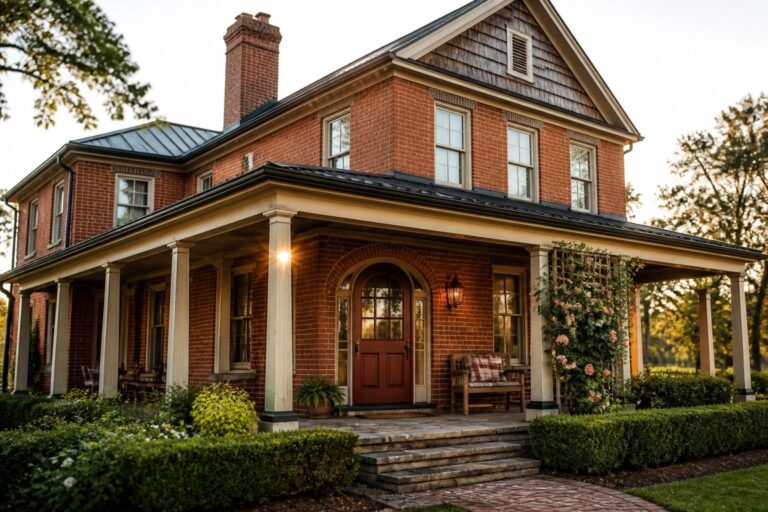
I often find that red brick farmhouses stand out because the material holds up well against weather and still looks intentional after decades.
The right trim color or porch detail can shift how the whole facade reads from the road in ways that surprise me every time.
Small changes to the entry make a bigger difference than expected.
Some of the setups here remind me that traditional proportions still work best when the scale fits the actual lot size.
I keep coming back to the ones that balance the brick with enough white or wood to keep the front from feeling heavy.
Add an Arched Entry for Classic Character
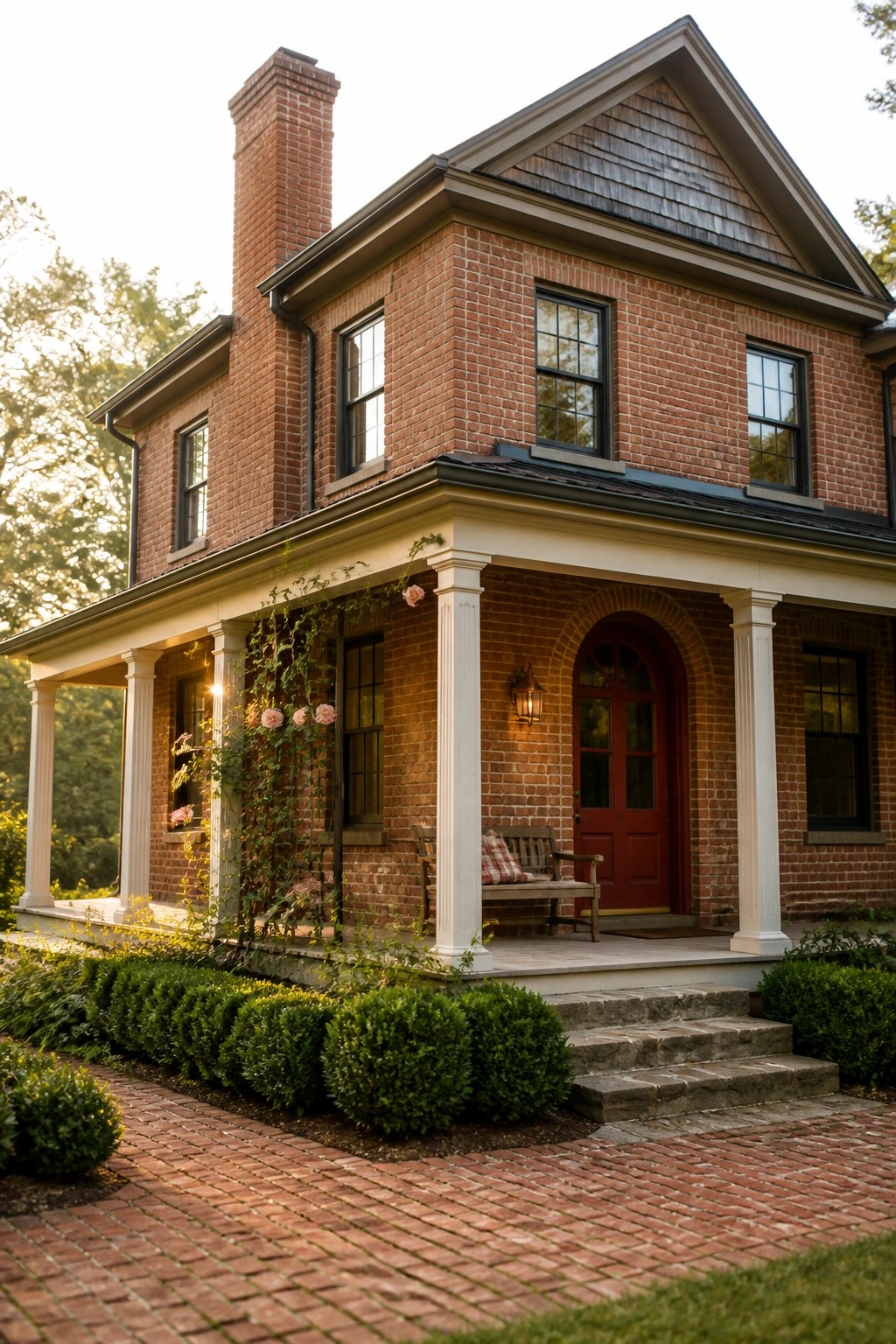
An arched doorway stands out on a red brick farmhouse because it breaks up the straight lines of the brick without adding extra trim or decoration. The curve draws the eye straight to the door and gives the whole front a settled, traditional feel that works especially well with older brickwork.
This detail suits homes that already have a solid brick facade and a simple roofline. Keep the arch clean, match the brick as closely as possible, and let a painted door provide the only real color contrast. Avoid making the arch too wide or adding heavy ornament, or the look can quickly feel forced.
Pair Red Brick with a Dark Entry Door
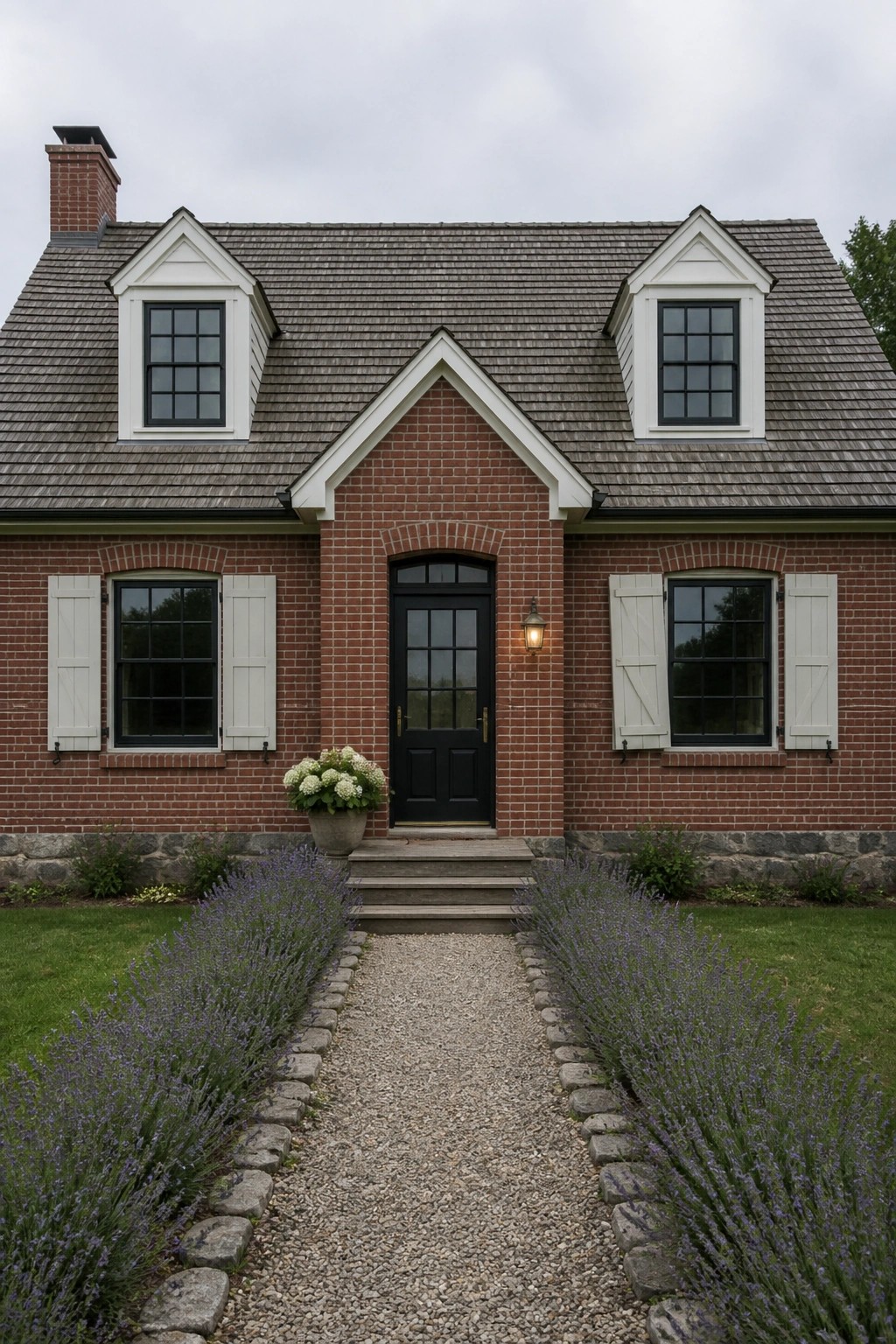
A dark door gives red brick a stronger presence and keeps the look traditional without extra trim or decoration. The contrast works because brick already carries a lot of color and texture, so the door becomes the main focal point.
This approach suits farmhouses that already have a centered entry and balanced windows on each side. It works best when the door color matches other dark elements like shutters or window frames so the whole front stays consistent.
Metal Roofs on Red Brick Farmhouses
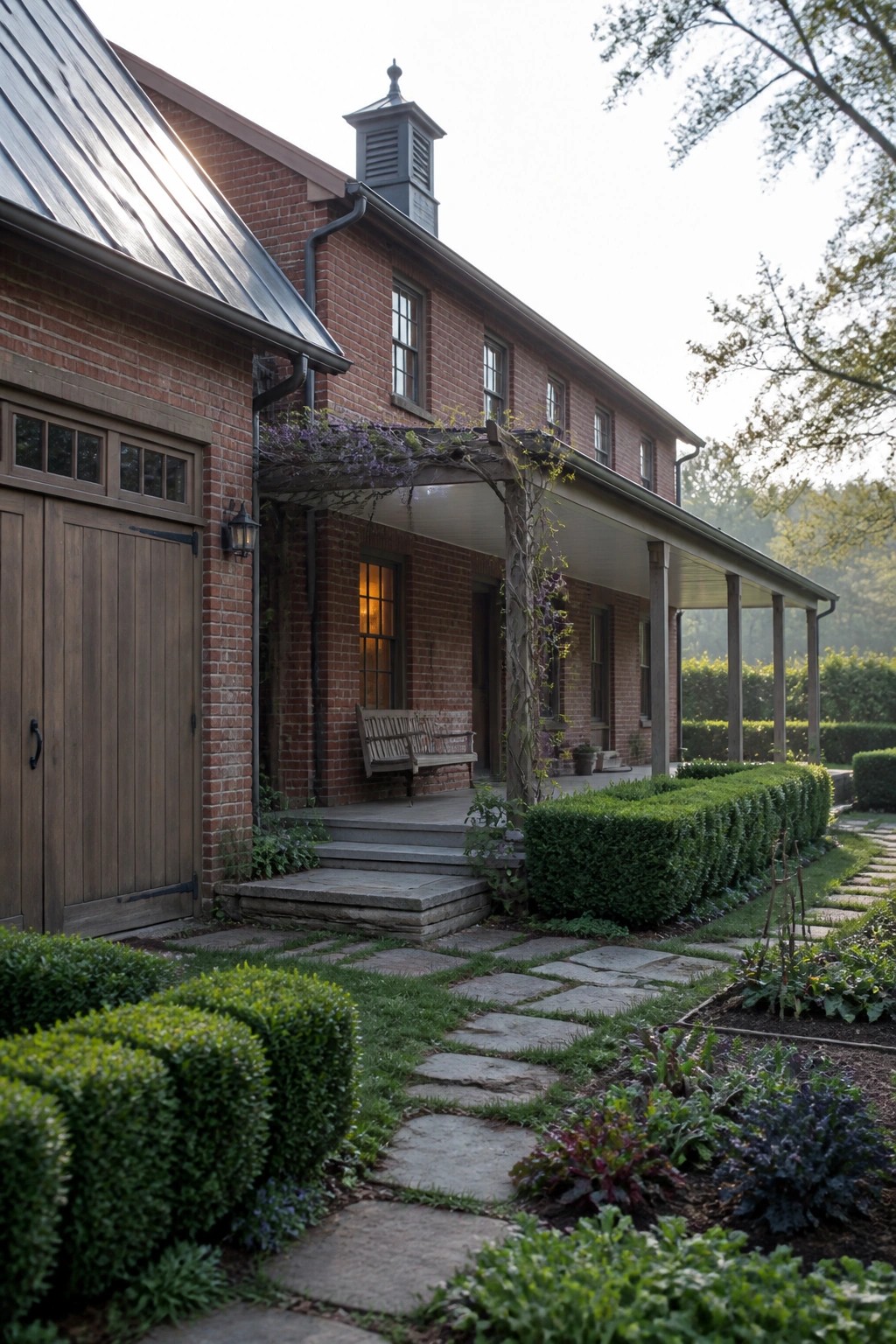
A metal roof gives red brick a clean lift that feels right for a farmhouse. The seams add some structure, and the material holds up better than most other options over time.
This works best on homes with simple rooflines and a few gables. Keep the trim and gutters dark so the roof reads as part of the whole rather than an afterthought.
Arched Brick Entries For Classic Character
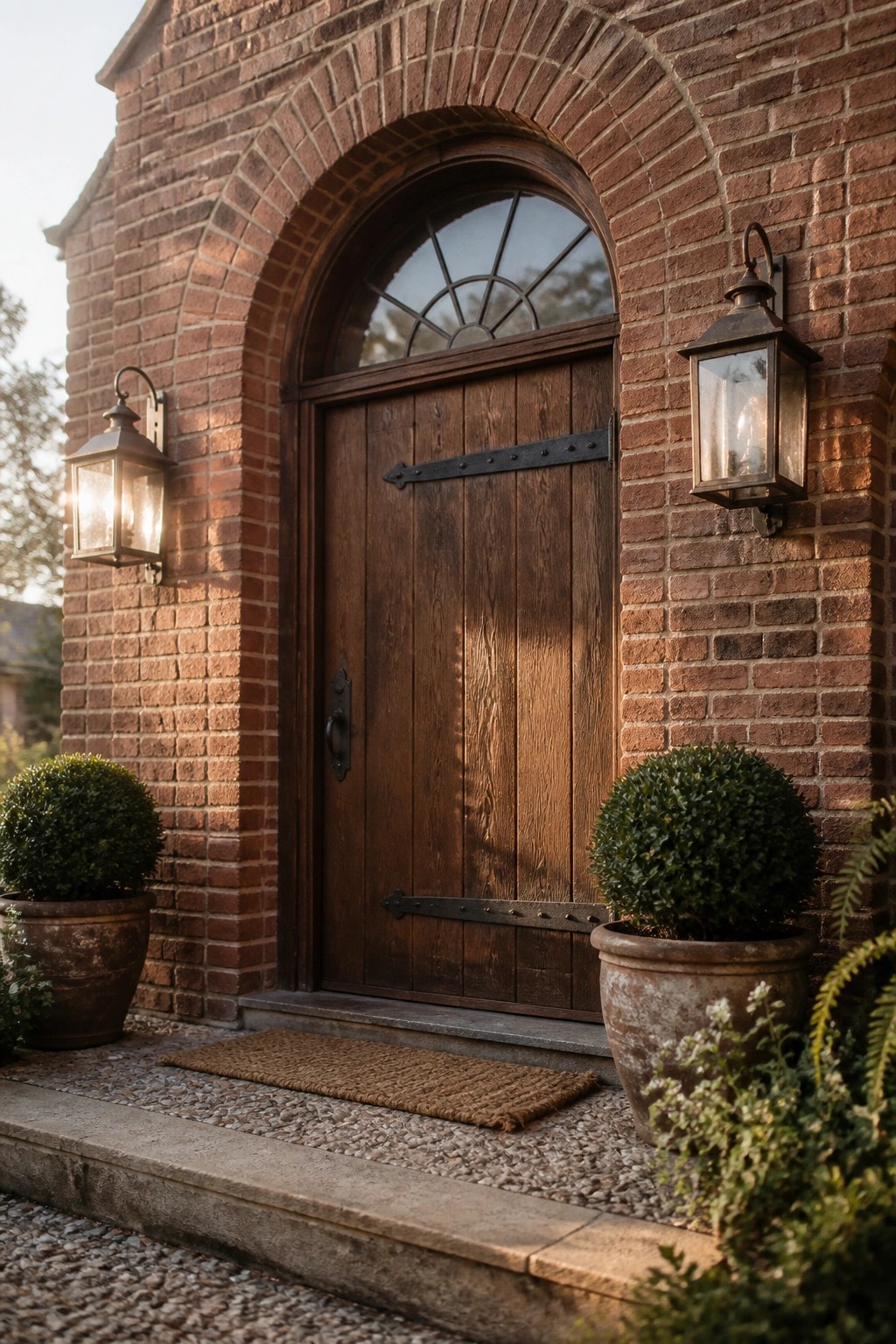
An arched brick entry gives a red brick farmhouse that settled, traditional look right away. The curve breaks up the flat wall while the solid wood door adds warmth and weight that feels right at home on older or newer builds alike.
This detail works best on straightforward rectangular houses that need a bit more presence at the front. Keep the hardware simple and dark, and let the arch do the work instead of adding too many other ornaments around the door.
Pair Red Brick with Muted Green Trim
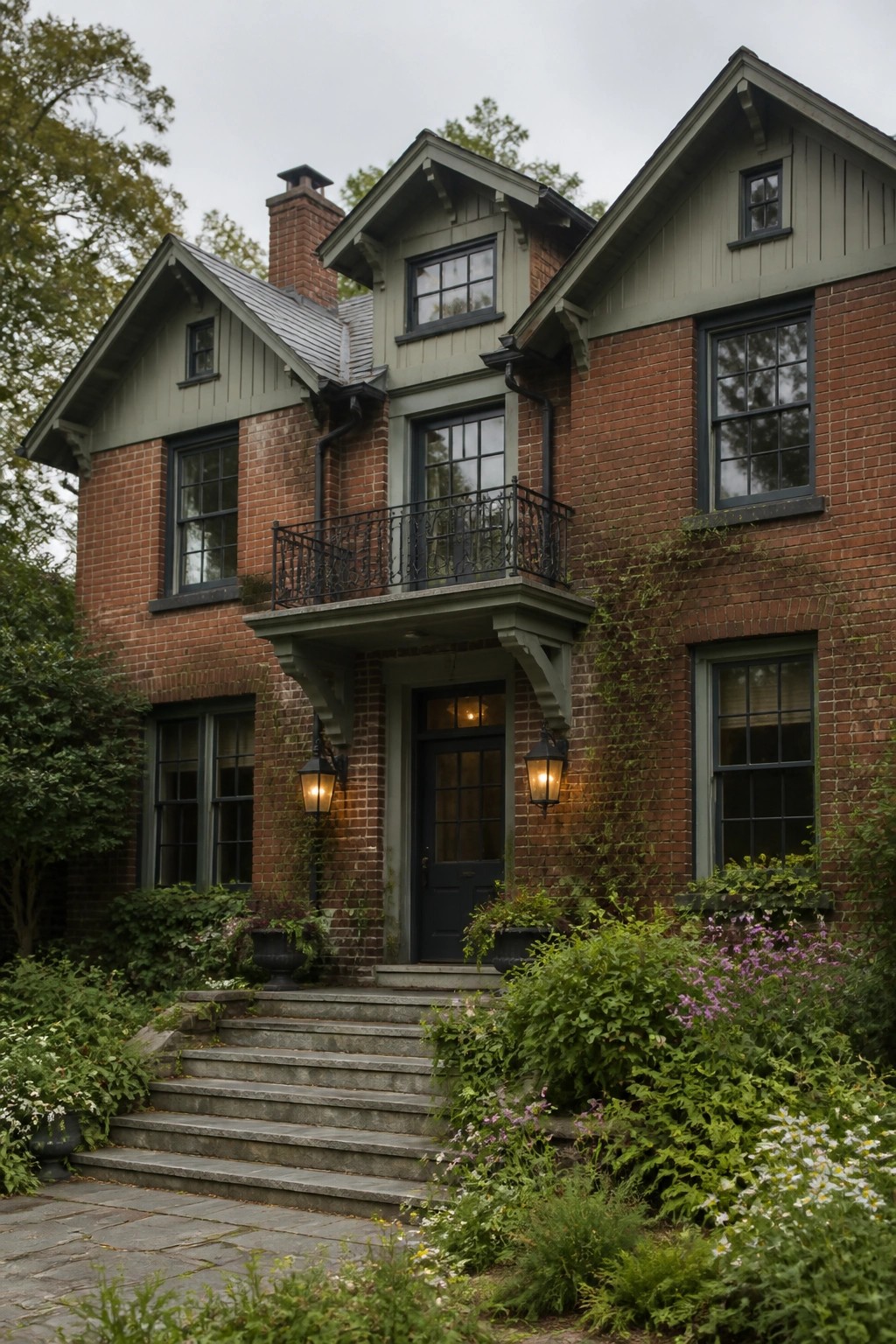
Red brick can look heavy on its own, so adding a soft green on the trim and gables helps lighten the whole facade. The color choice keeps the house feeling traditional without becoming too stark or formal.
This works especially well on older farmhouses or new builds that want the same settled look. Stick with a gray-green shade rather than bright tones, and carry it across the window frames and roofline details so the brick stays the main material but does not overwhelm the eye.
Screened Porches On Red Brick Farmhouses
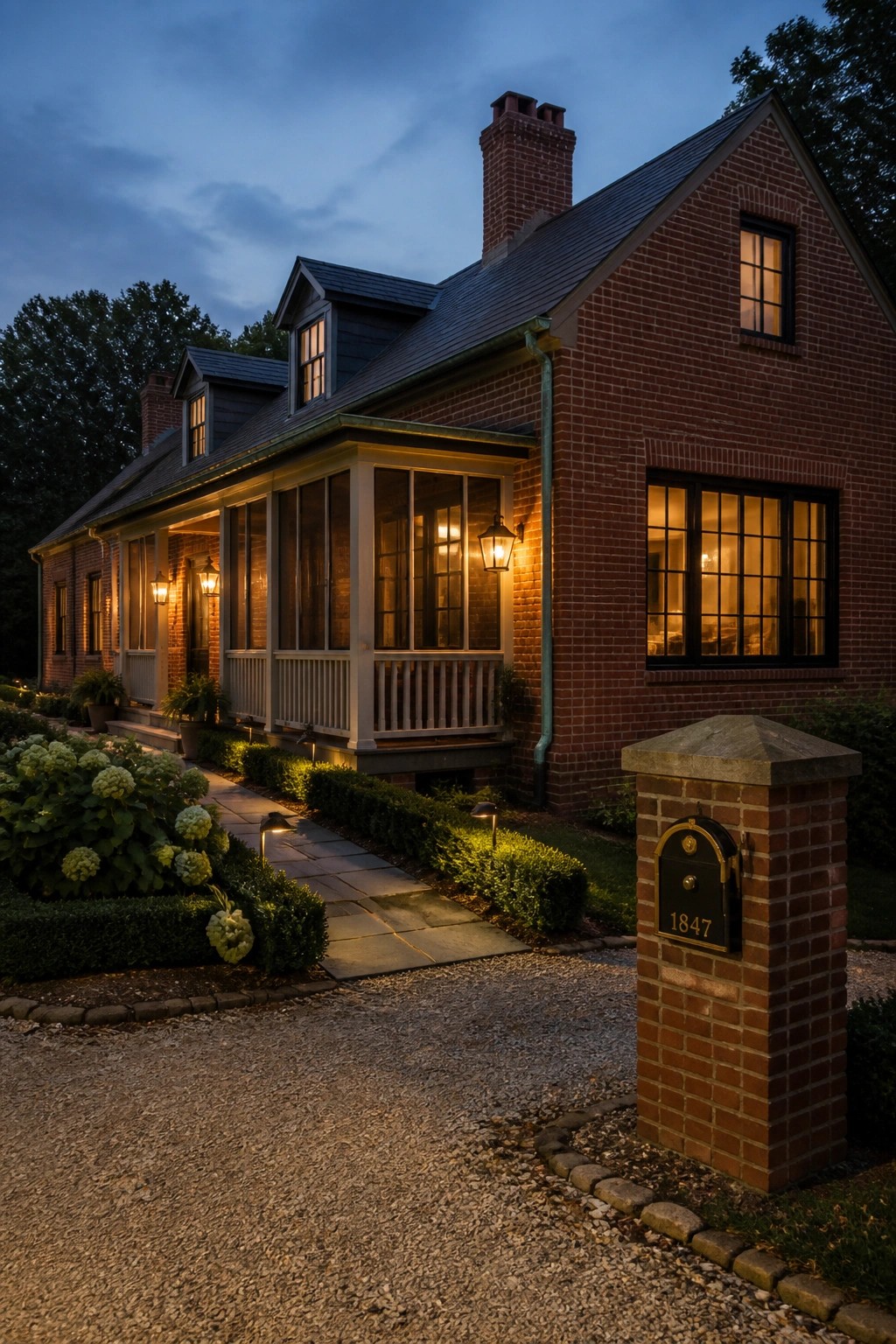
A screened porch works especially well on a red brick farmhouse because it adds usable space without changing the main lines of the house. The brick stays the main feature, and the porch sits alongside it as a light addition rather than a heavy one. It keeps the look simple and still feels like part of the original structure.
This works best on older homes where you want extra room for sitting without building a full addition. Keep the trim white or off-white to match the windows, and use the same roof pitch as the house so nothing looks stuck on later. Avoid large solid walls on the porch if you want the brick to remain the focus.
Center a Porch on Red Brick
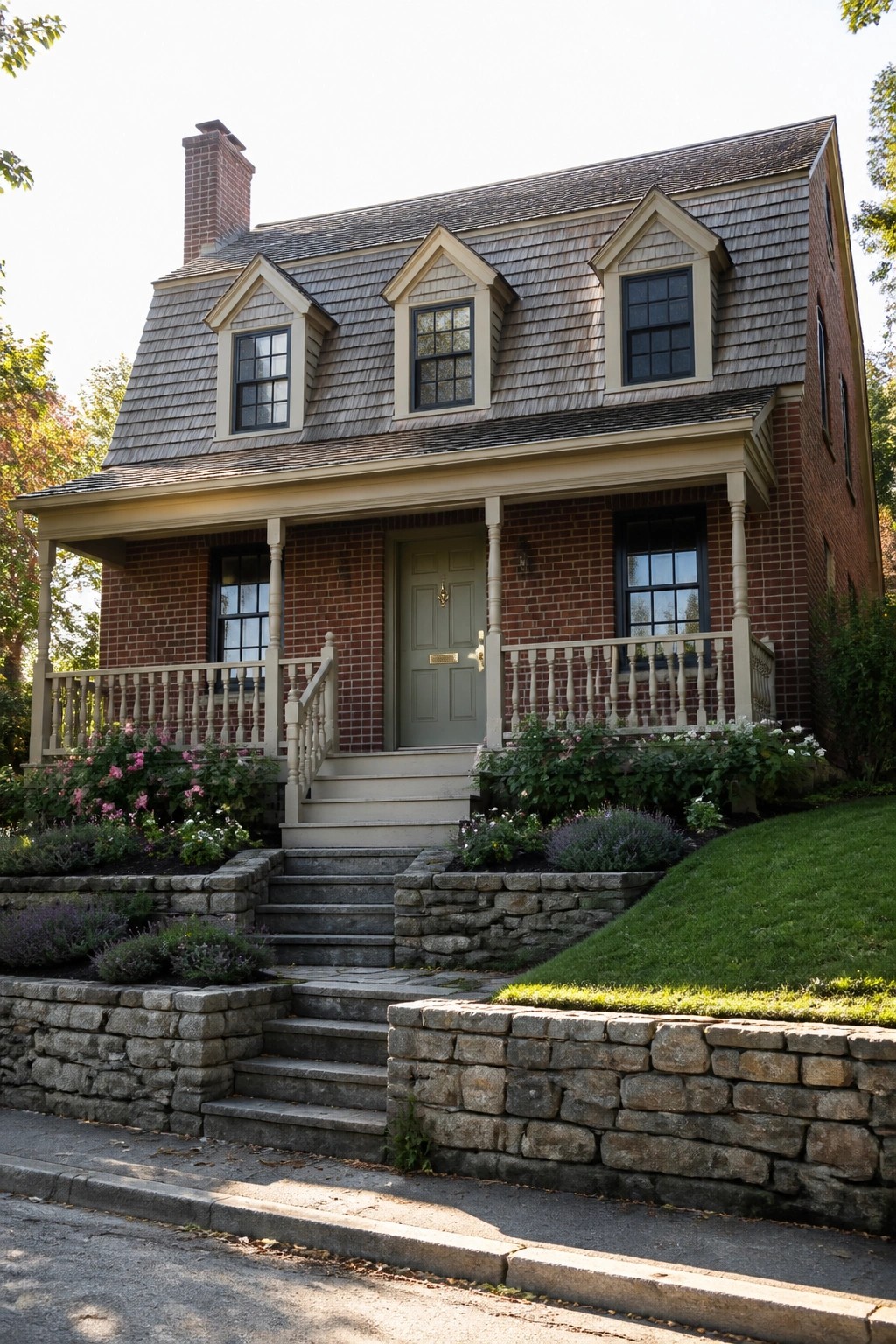
A centered porch with simple columns gives a red brick farmhouse a clear, welcoming entry point. It balances the facade and keeps the whole front from feeling too flat or heavy.
This approach works best on homes that sit above street level. The steps and low stone walls help guide visitors up while the porch itself stays modest in scale and detail. Stick with painted wood columns and a straightforward railing so the brick stays the main material.
Match Brick for an Outdoor Kitchen Area
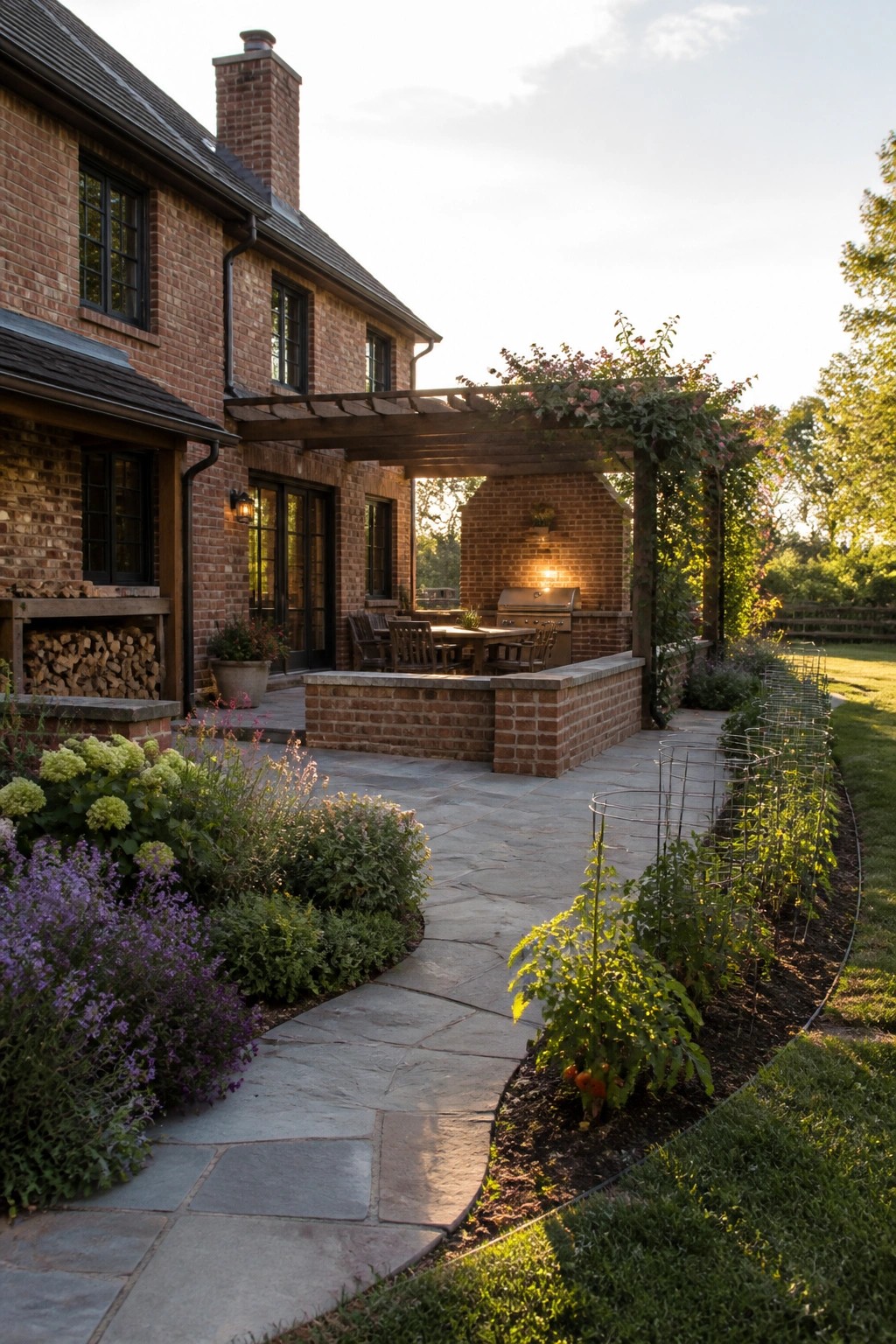
Using the same red brick for an outdoor kitchen and seating wall ties the space directly to the house. It avoids the common problem of an outdoor area that feels added on later. The material match keeps everything looking like one structure instead of separate pieces.
This approach works best on traditional brick homes where you want the patio to feel permanent rather than temporary. Keep the pergola simple in wood so the brick remains the main connection between house and yard. Watch the scale though. Too much brick can start to feel heavy if the space is small.
Red Brick With Black Trim
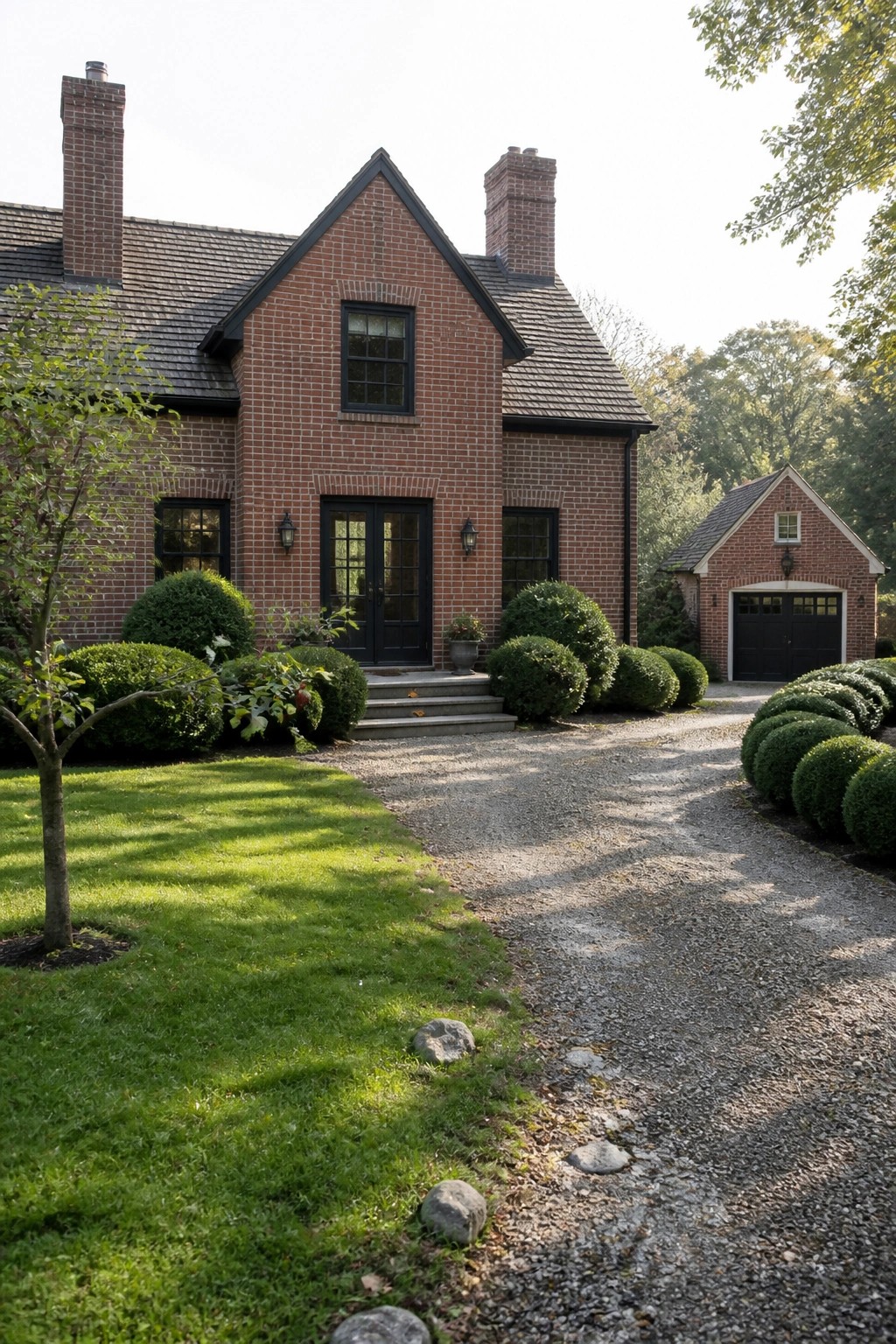
Red brick farmhouses often gain a sharper look when black trim is added around the windows and doors. The contrast keeps the brick from feeling too soft or washed out while still letting the material stay the main feature.
This approach works best on homes with straightforward rooflines and a few strong gables. It suits older farmhouses that already have brick chimneys and simple entries, and it tends to age well without needing frequent updates.
Wooden Bench Seating on the Porch
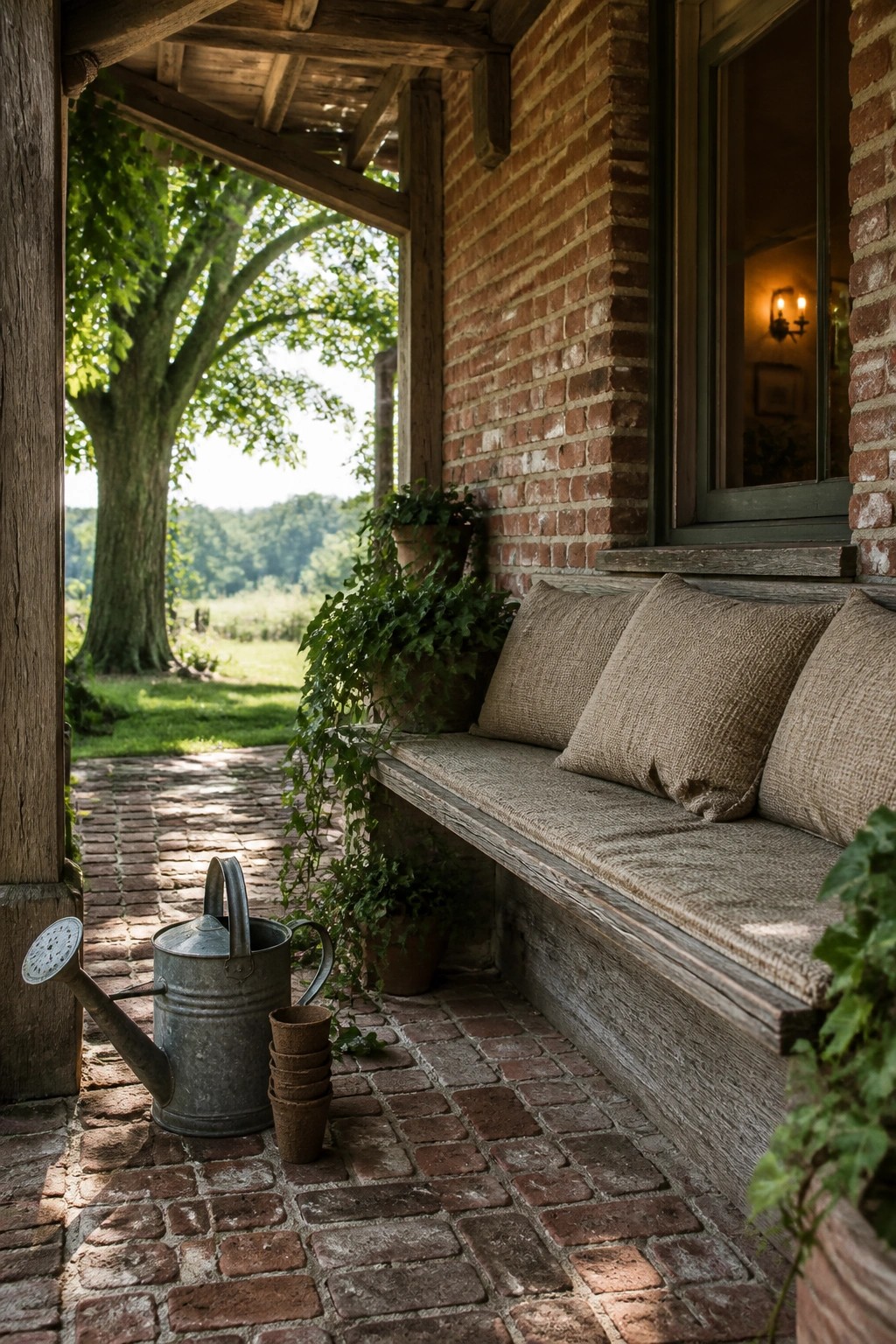
A simple wooden bench with loose cushions turns a porch into a spot people actually use. It runs along the brick wall and gives you a place to sit without crowding the walkway or adding extra furniture that gets in the way.
This setup works best on older brick farmhouses where you want seating that feels like it belongs there. Use sturdy wood and plain fabric cushions so the bench ages well and stays easy to clean.
Extending Brick From The House Into The Landscape
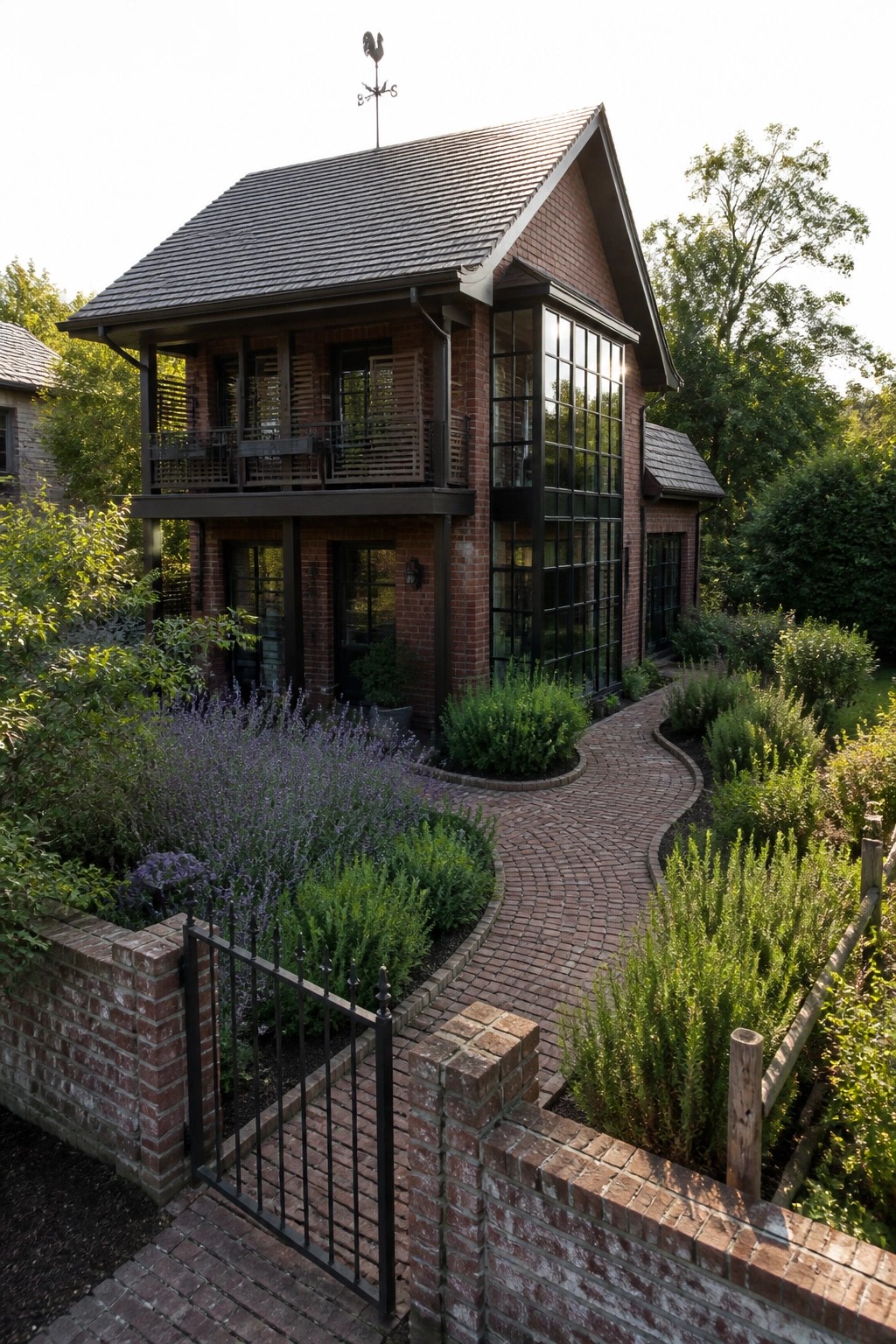
Red brick looks strongest when it does not stop at the walls of the house. Carrying the same brick down into low garden walls and a winding path ties the whole property together and keeps the traditional feel consistent from the roofline to the ground.
This approach works especially well on farmhouses that sit close to the street or have visible side yards. Use the same brick or a close match, keep the mortar joints simple, and let the path curve rather than run straight. The result feels settled and avoids the look of a house dropped onto a separate garden.
Red Doors Add Character to Brick Exteriors
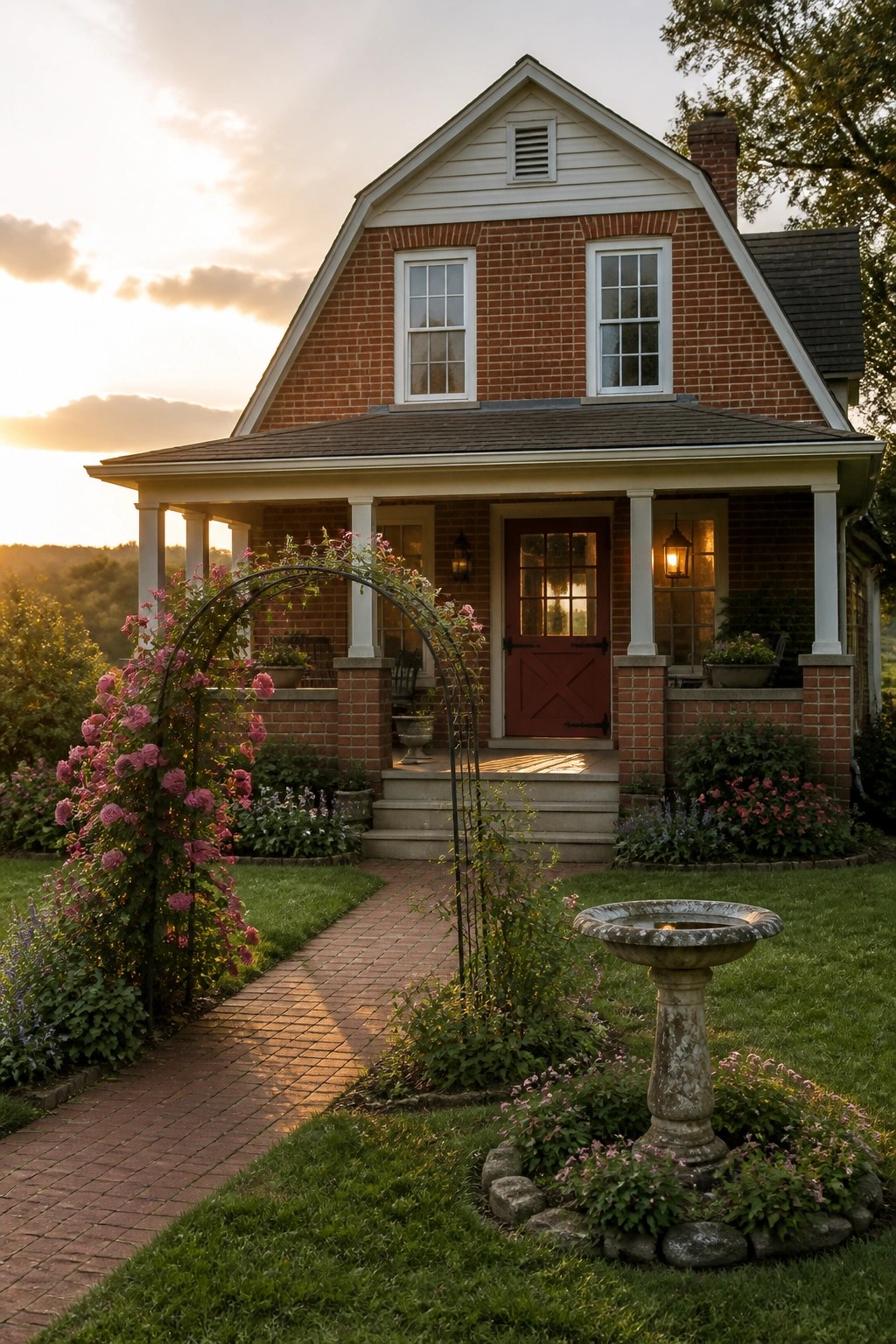
A red door gives a brick farmhouse a clear focal point and makes the entry feel more welcoming. It works because the color stands out against the brick without clashing, especially when the trim stays light and simple.
This approach suits older homes that already have strong lines and traditional materials. Keep the rest of the exterior quiet so the door can do the work, and test the shade in different light before committing.
Screened Porch with Stone Bases
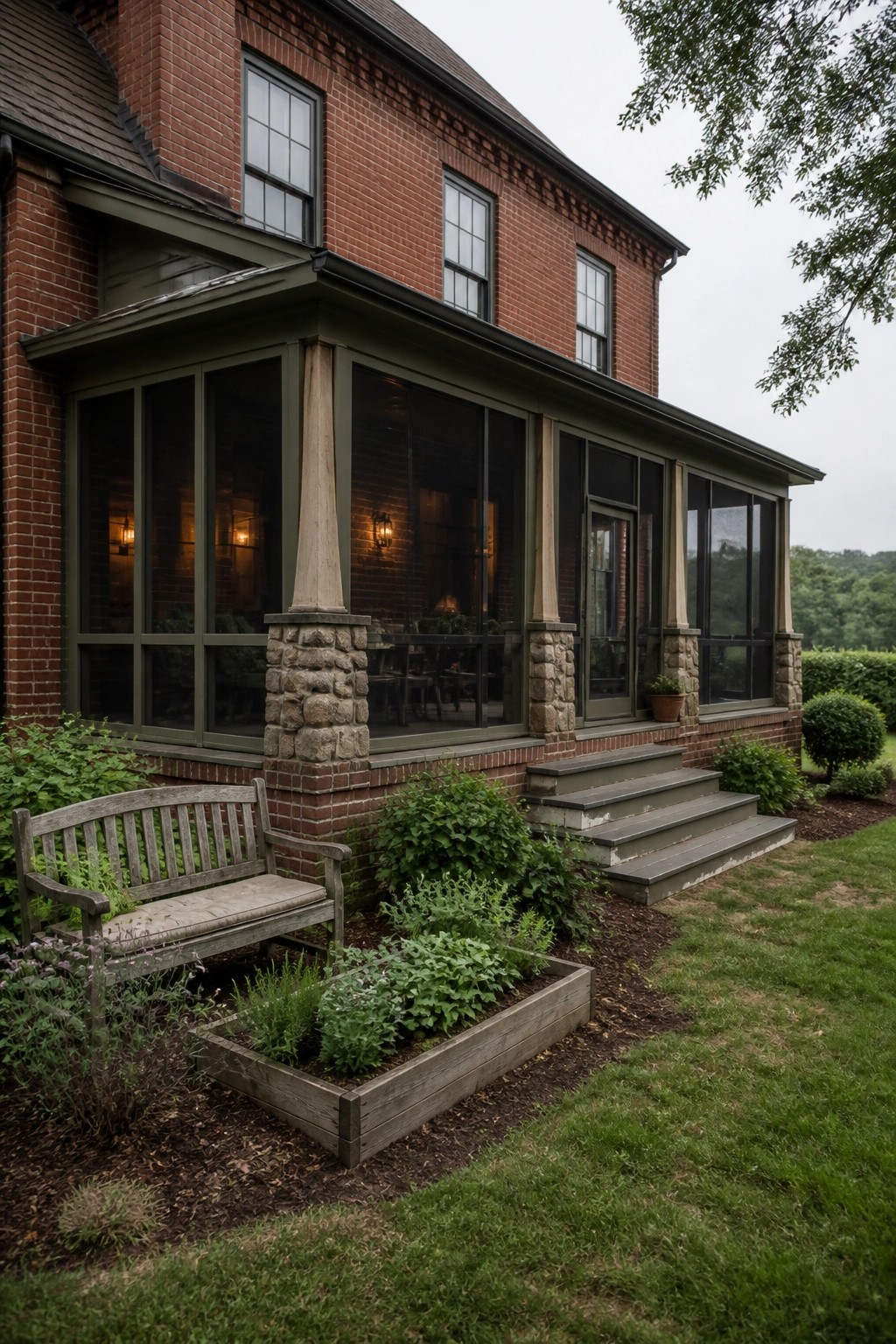
A screened porch works well on a red brick farmhouse when the supports sit on low stone piers. The stone adds weight and texture that matches the brick without competing with it. It keeps the porch from looking like a light add-on and gives the whole side of the house a settled look.
This approach suits older brick homes that already have some masonry detail. Keep the wood posts and trim painted in a deep green or gray so the stone reads as part of the foundation rather than an extra layer. Avoid tall, thin piers or ornate caps if you want the result to stay simple and traditional.
Brick Arch Entries On Red Farmhouses
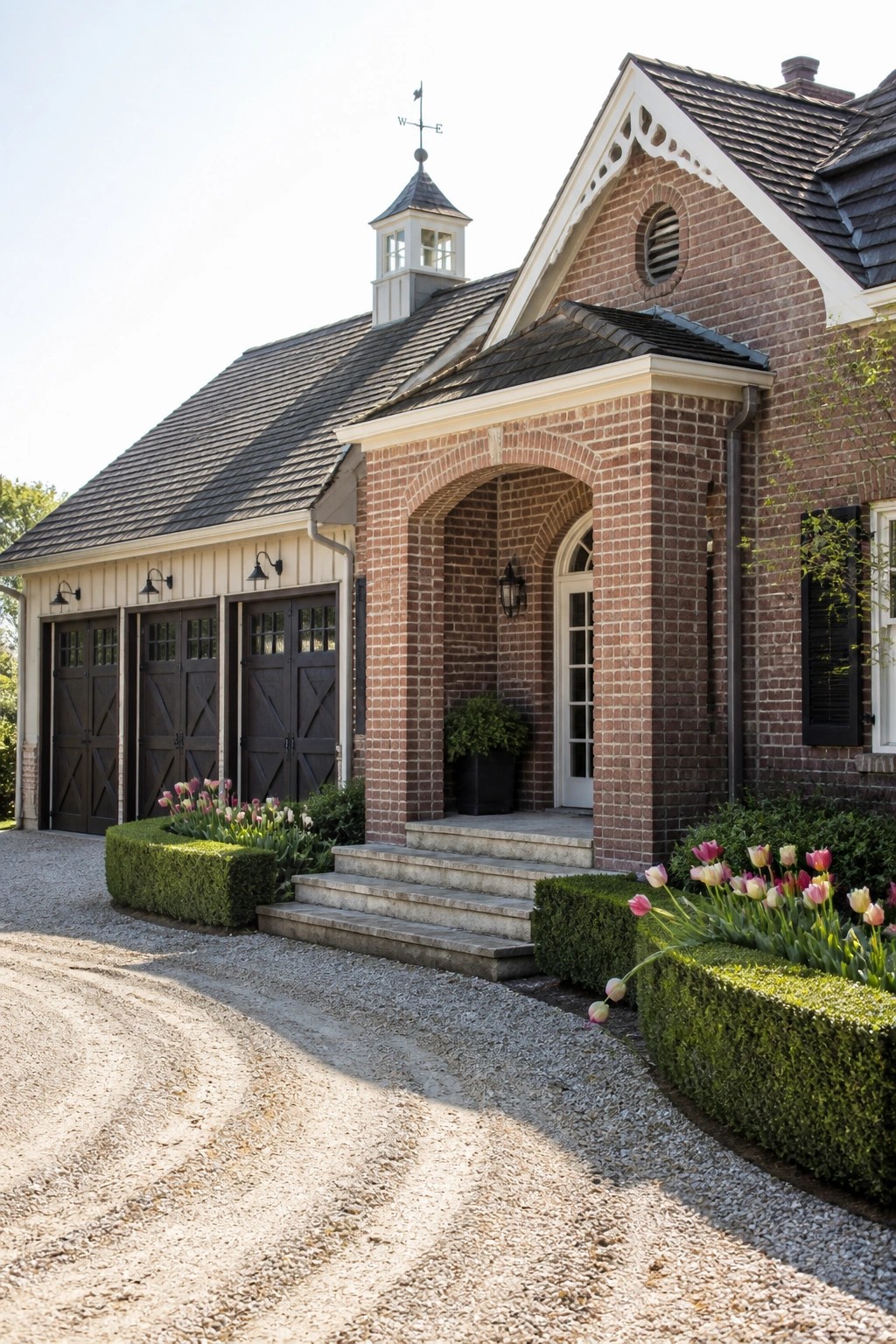
A brick arch over the front door gives a red brick farmhouse that settled, traditional look without any extra fuss. It frames the entry in a way that feels sturdy and familiar, and it works especially well when the rest of the house stays simple.
This detail suits homes that already use red brick and dark trim. Keep the arch clean, match the brick exactly, and let the steps and door stay understated so the shape does the main work.
Red Brick with Natural Wood Accents
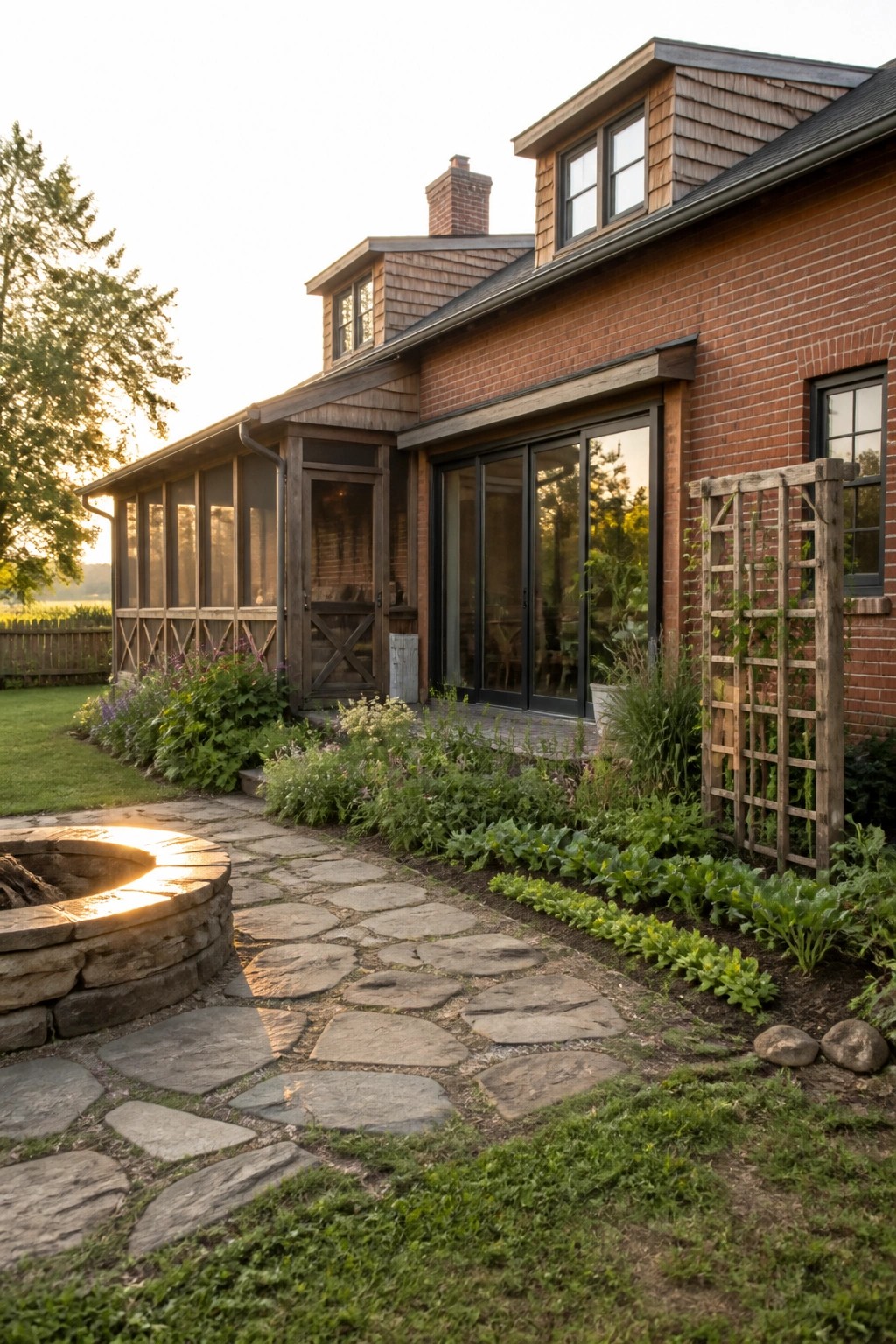
Red brick holds up well on farmhouse exteriors because it gives a solid, lasting base that feels rooted. Adding wood trim and siding on the upper sections and porch keeps the look balanced and traditional without extra fuss.
This mix suits homes that already have a simple roofline and plenty of windows. Use it when you want the brick to stay the main material and let the wood add just enough contrast and warmth.
Twin Gables Create Balance
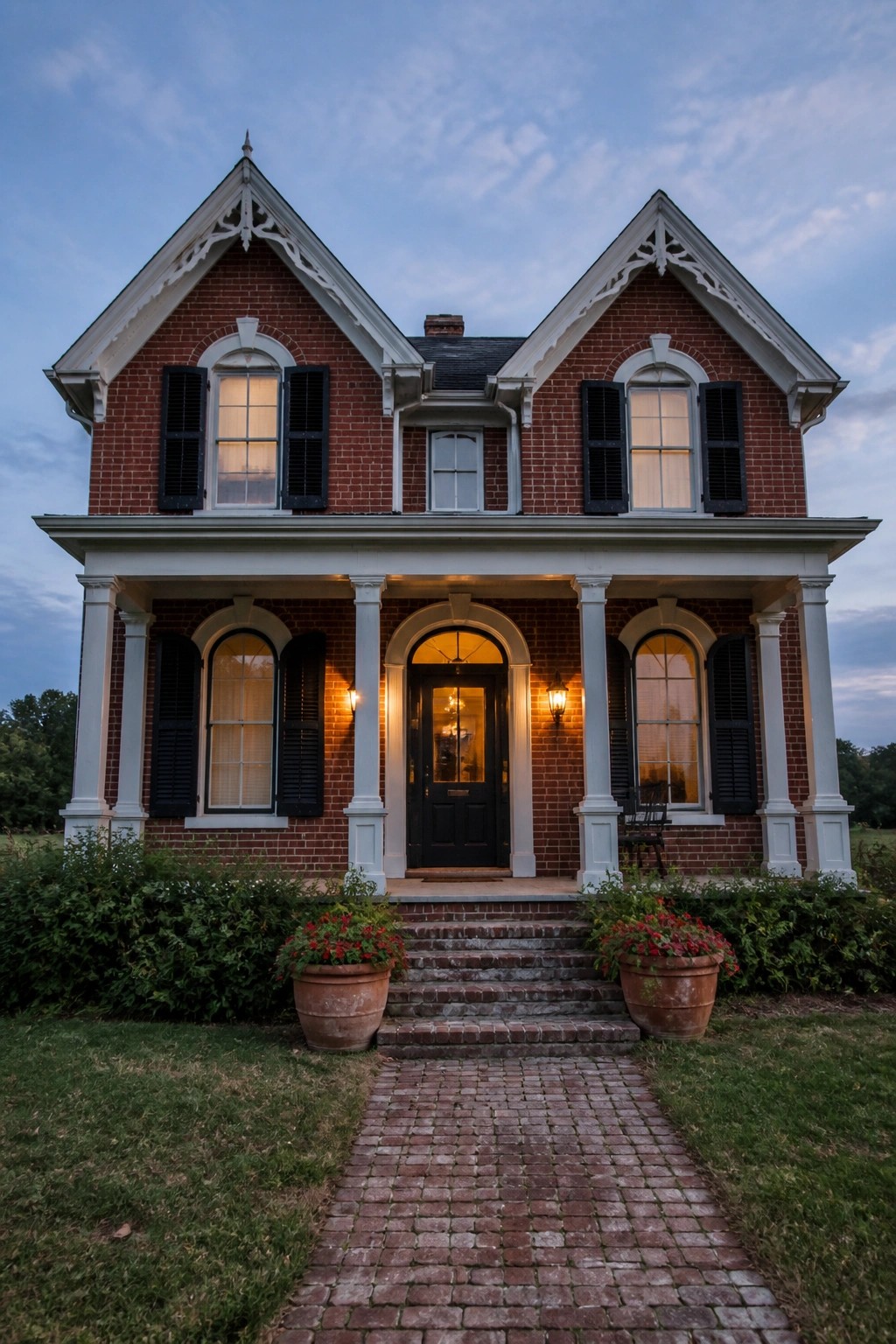
A pair of matching gables gives this red brick farmhouse its steady, traditional shape. The roofline stays simple and even, so the house feels grounded without extra decoration or busy lines.
This approach works well on older homes or new builds that want the same classic feel. Keep the gables the same size and angle, then let the brick and trim do the rest. It suits wider lots where the front needs a clear center point.
Brick Courtyards with a Fountain
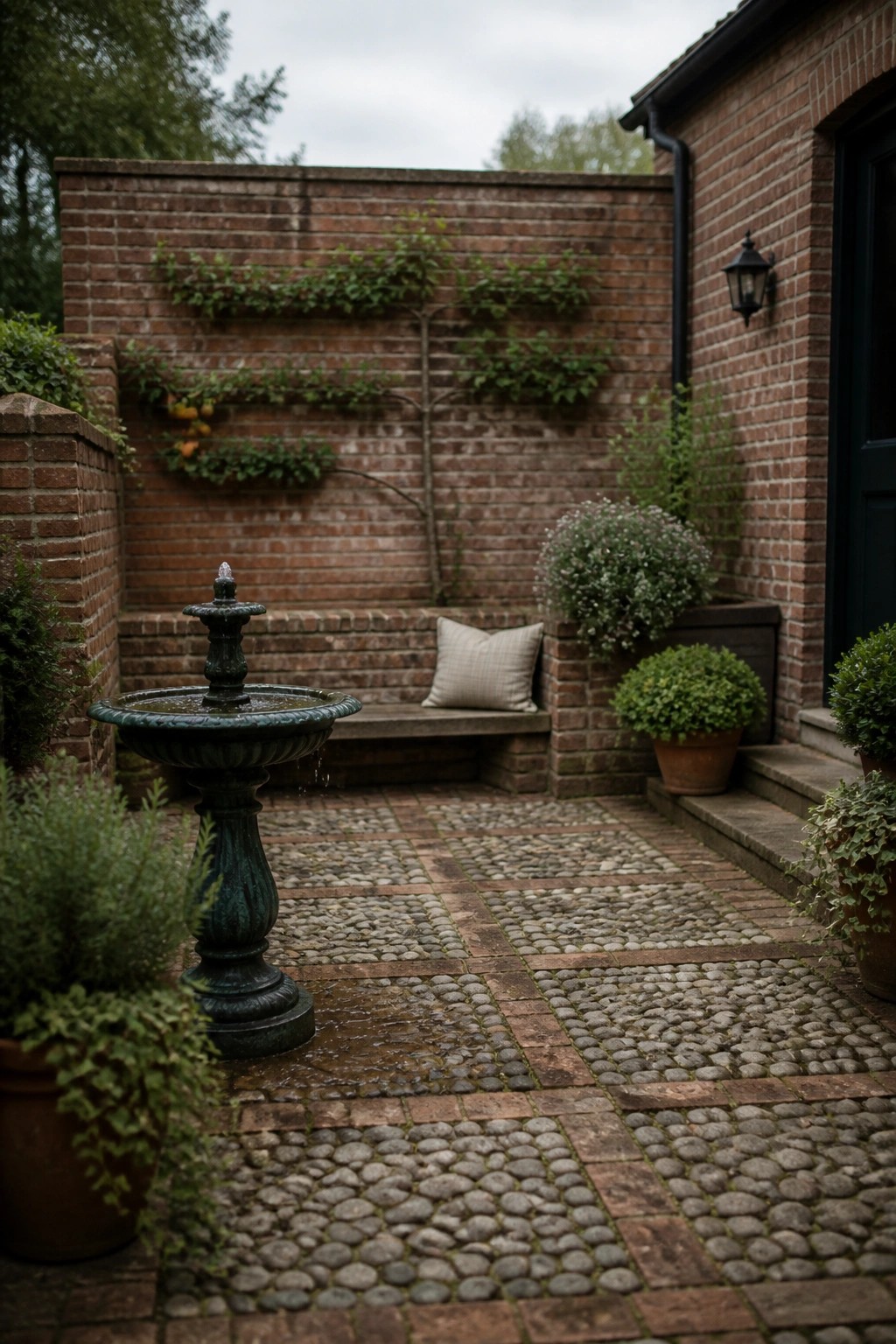
A small fountain can give a brick courtyard a quiet center without needing much else. It works well against the solid walls because the sound and movement keep the space from feeling too closed in, and the classic shape fits right in with older brickwork.
This setup suits farmhouses that already have some kind of walled or semi-enclosed outdoor area. Keep the planting simple around the edges so the fountain stays the main point, and make sure the bench or seating stays close enough to enjoy it without crowding the path.
Mix Red Brick With Stone Accents
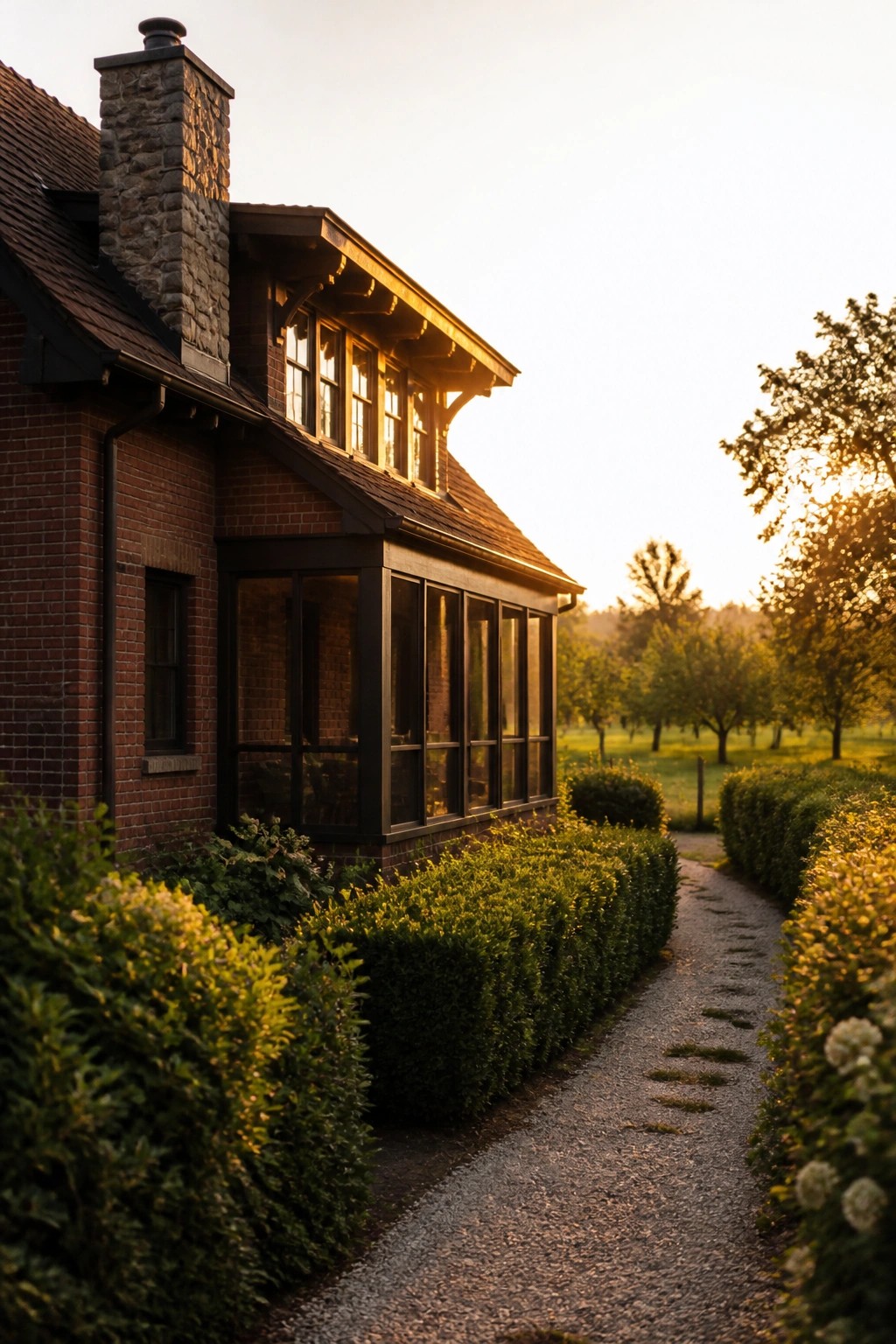
Red brick already gives a farmhouse that solid, time-tested look. Adding stone on key spots like the chimney adds texture without making the house feel busy or overdone.
This approach works best on traditional homes where you want to keep the focus on simple materials. Match the stone tones to the brick and keep the rest of the trim dark so the contrast stays clean and classic.
Red Brick Porch Columns That Match The House
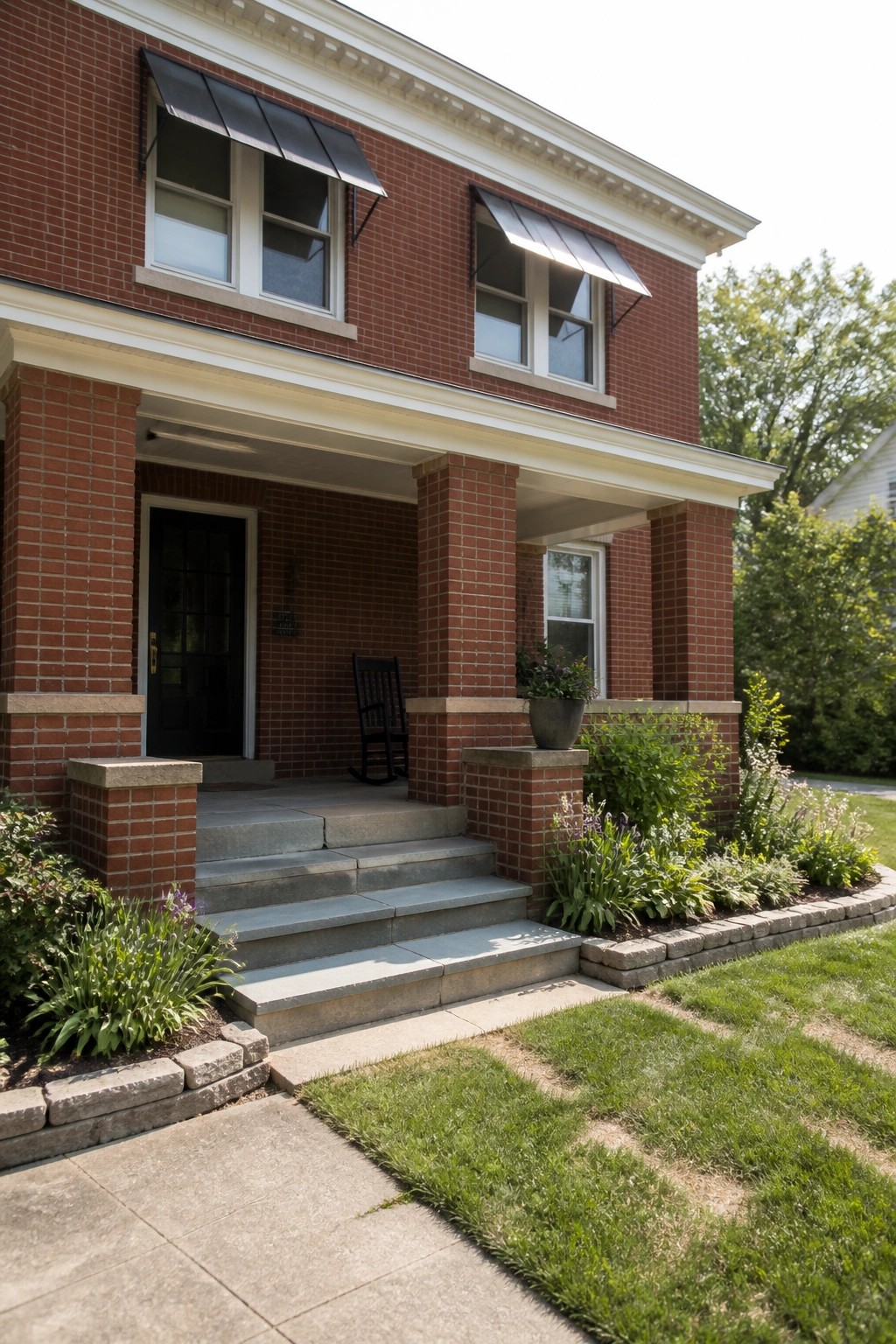
Red brick homes gain a lot of their traditional character when the porch columns are made from the same brick. It keeps the whole front tied together instead of looking like separate pieces added on later.
This works best on farmhouses that already use brick as the main material. The columns add weight to the entry without needing extra trim or different stonework that can feel out of place.
Pathway Lanterns For Evening Charm
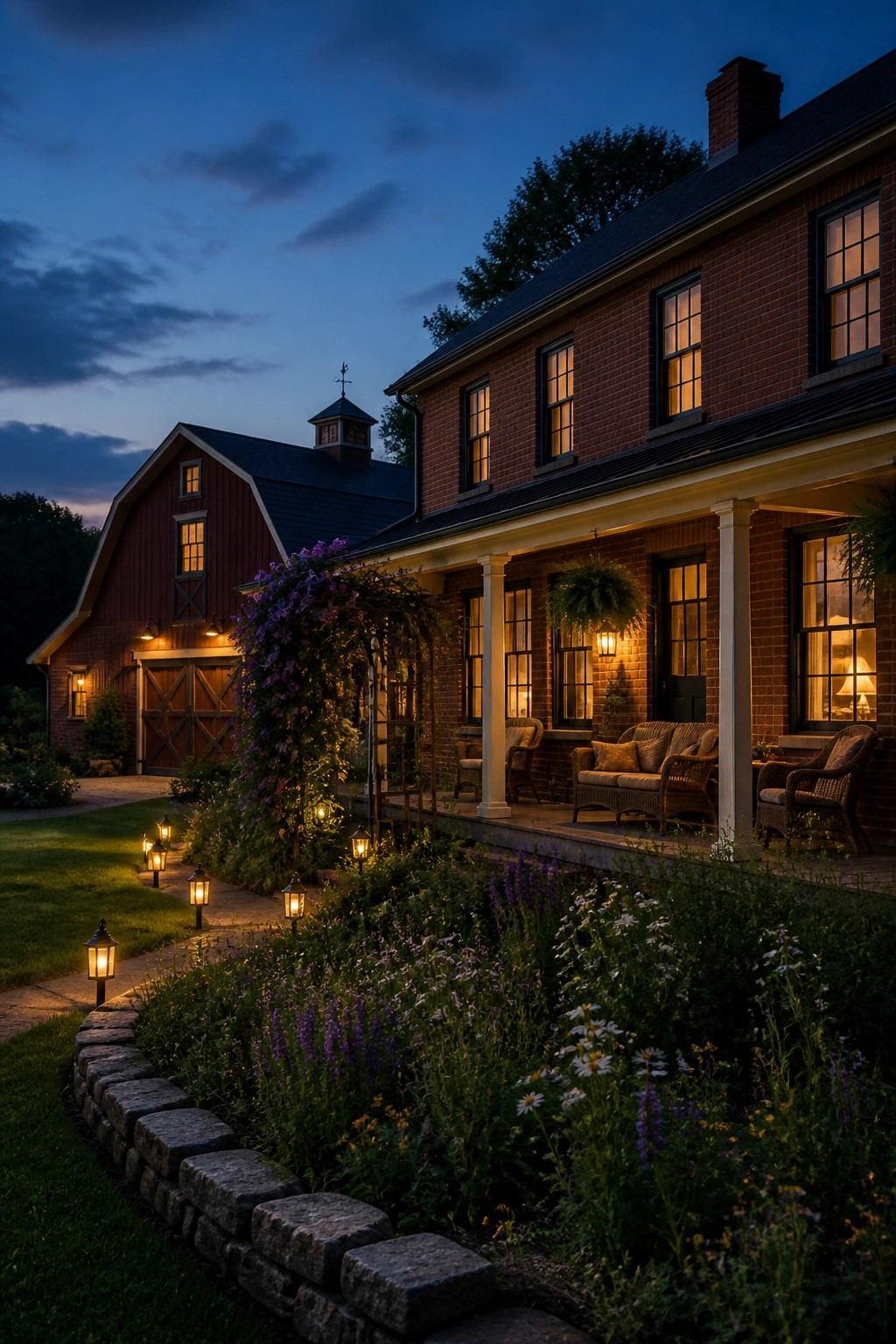
Lanterns placed along a curved garden path give a red brick farmhouse a gentle glow after dark. They highlight the brick without overpowering it and make the whole front feel more settled and lived-in.
This works best on homes where the path leads directly to the porch or main door. Keep the lights low and spaced evenly so they guide visitors rather than flood the yard. Stone edging along the beds helps keep the look simple and traditional.
Frequently Asked Questions
Q: What trim color pairs well with red brick on a farmhouse? A: Go with a creamy white or soft gray. These shades let the brick stand out without fighting it. Test a few samples on the wall first to see how the light hits them.
Q: How often does red brick need cleaning? A: Hose it down once a year to knock off loose dirt. Skip harsh chemicals since they can fade the color over time. A stiff brush works for any stubborn spots.
Q: Can I add black shutters without making the house look too dark? A: Yes. Black shutters add nice contrast and fit the traditional style. Keep them narrow so they do not overwhelm the windows.
Q: What roof color works if my brick leans toward orange tones? A: Choose a dark charcoal or deep brown shingle. It grounds the whole look and balances the warmer brick.
