

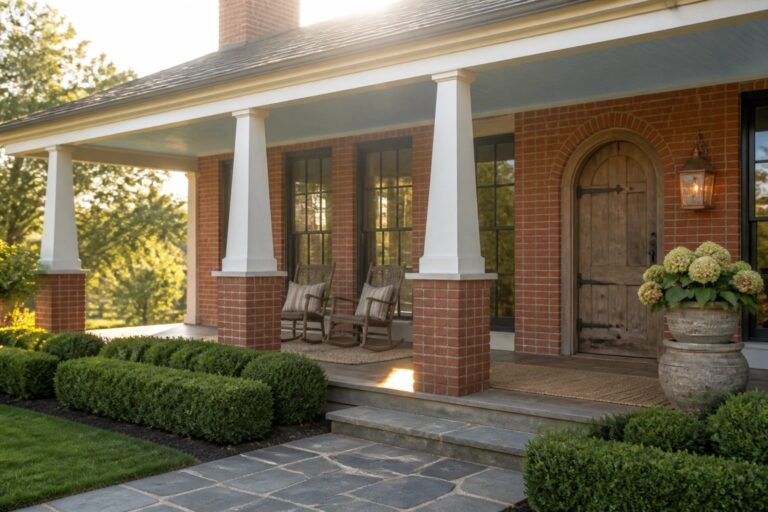
I’ve spent time driving through older neighborhoods and realized brick farmhouses often stand out because their simple lines hold up without needing constant updates.
The choice of brick color and how it meets the roof edge tends to set the tone for the entire front view.
Small shifts in entry placement can make a big difference in daily use.
I would test a few brick samples against my siding before committing to anything permanent.
Ideas that focus on lasting materials rather than quick trends usually end up looking better after a couple of seasons.
Add Rocking Chairs To The Front Porch
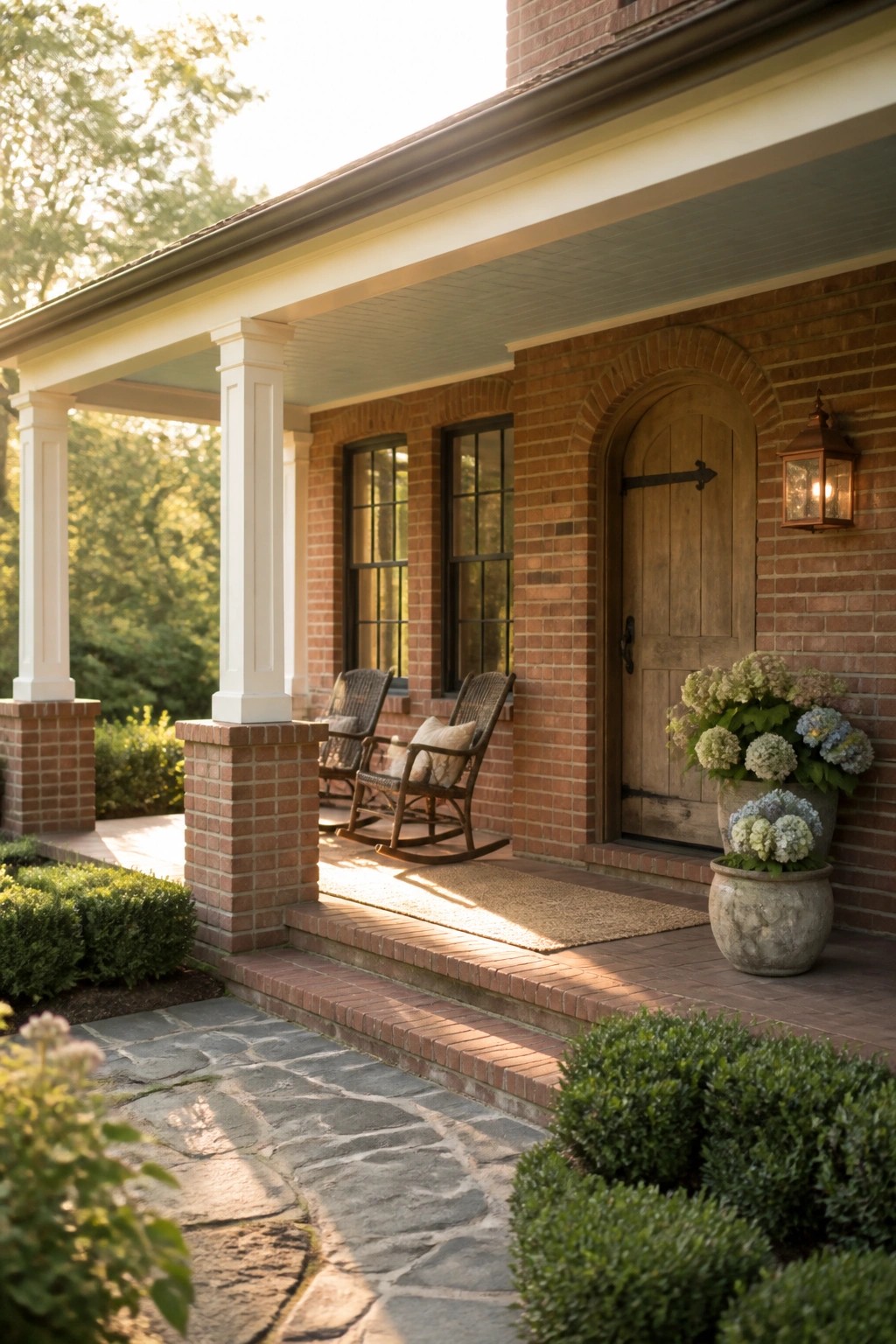
Rocking chairs turn a simple brick porch into something that feels ready for daily use. They give the entry a settled look that works well with the solid lines of a farmhouse.
Place a pair near the door on homes with at least a modest covered porch. Keep the chairs plain so the brick and the overall shape of the house stay the main focus.
Dark Metal Roofing With Brick
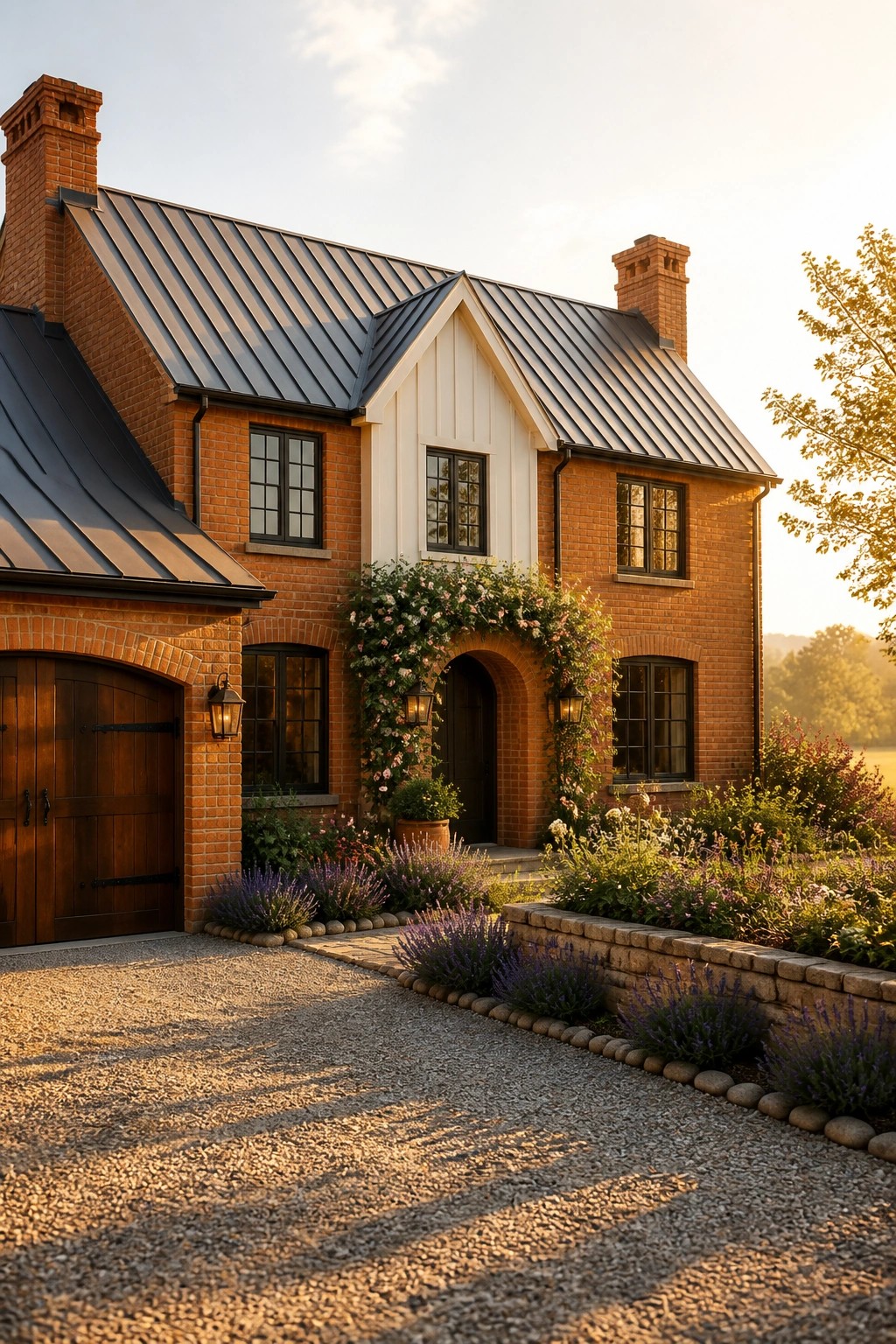
Dark metal roofing gives brick farmhouses a sharp, lasting contrast that feels both classic and current. The deep tone of the metal plays off the warm brick without competing with it, and the result holds up well in changing light.
This combination works best on homes with several roof planes or gables. Keep the metal finish simple and matte so the brick remains the main material, and make sure the roof edges are clean where they meet the brick.
Stone Walkways for Farmhouse Entries
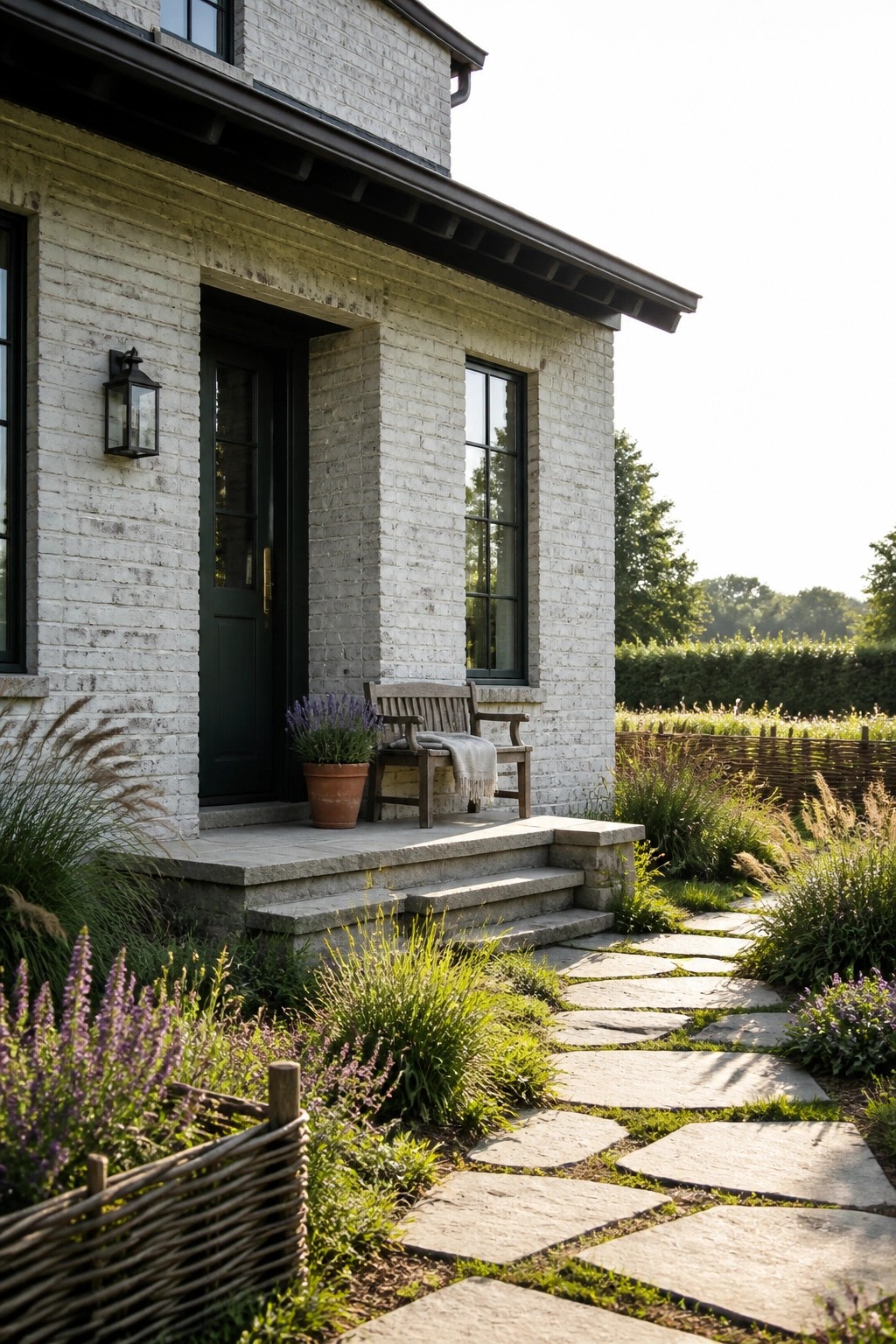
A stone path made of irregular slabs gives the front of a brick house a settled, natural feel. It breaks up the lawn and makes the walk to the door feel more intentional without adding anything fussy.
This works especially well on homes with simple brick exteriors and low porches. Keep the stones fairly level, let a little grass grow between them, and let the planting along the edges stay loose rather than perfectly trimmed.
Porches That Complement Brick Exteriors
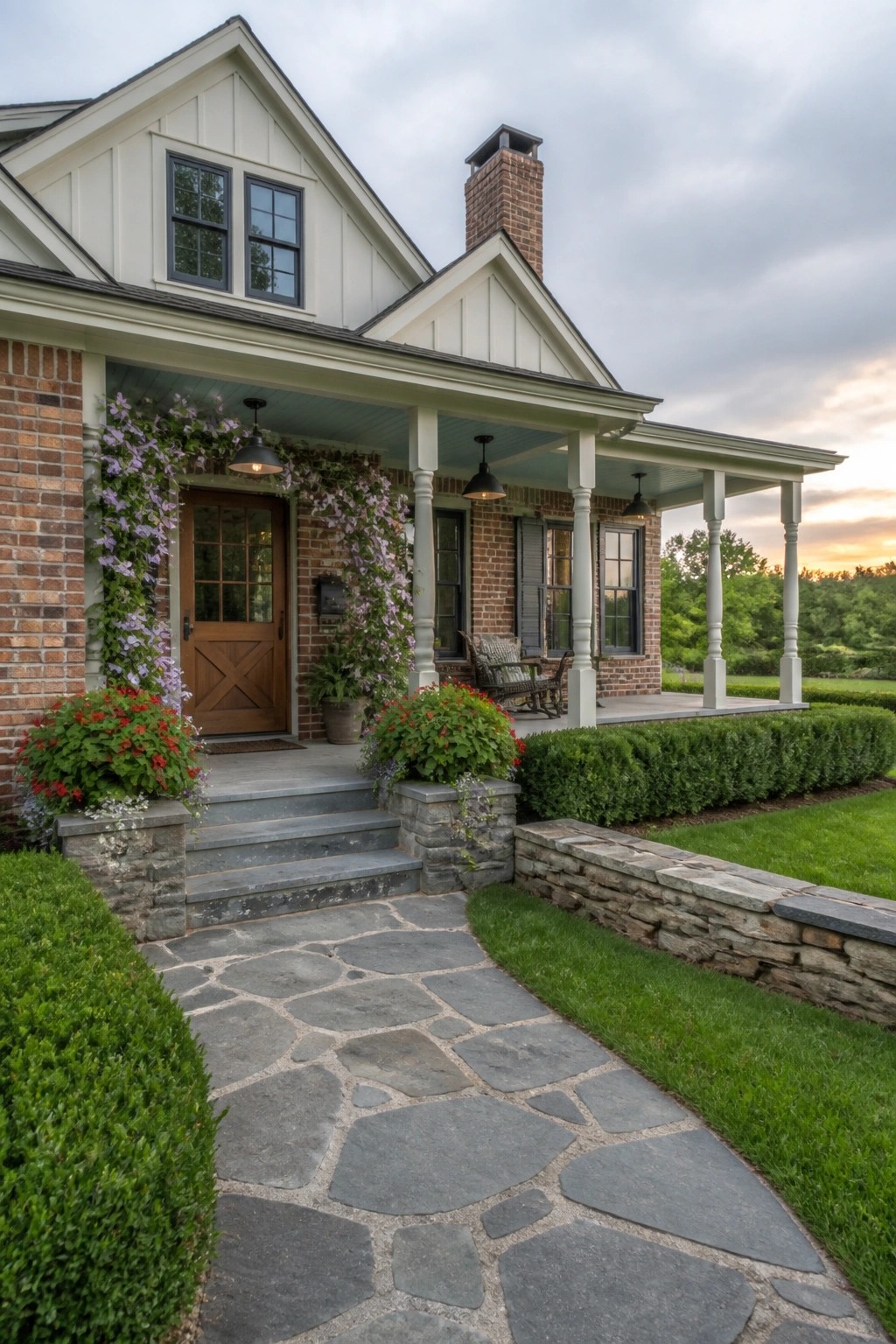
A front porch with white columns gives a brick farmhouse a clear sense of welcome without overpowering the main material. The simple lines of the columns break up the solid brick wall and create a place to pause before entering. Many older homes already have this setup because it adds usable space while keeping the overall look grounded.
This approach works best on homes with a straightforward roofline and enough width to let the porch feel proportional. Keep the columns plain and the trim a clean white so the brick stays the focus. Avoid adding too many extra details on the porch itself if the goal is a timeless result.
Wood Doors on Dark Brick Exteriors
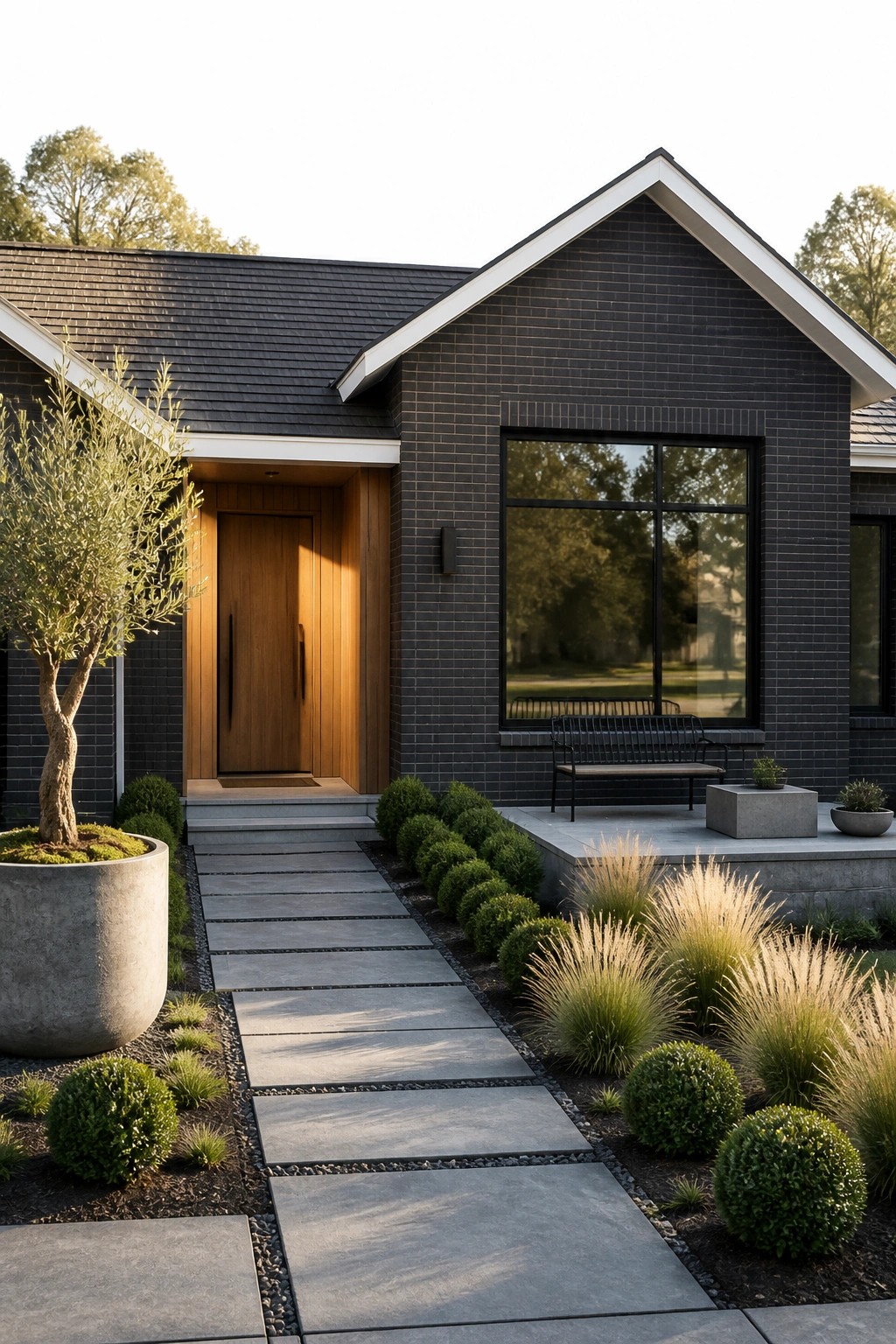
A wood door stands out nicely against dark brick because the natural tone adds warmth without competing with the material. Many homeowners choose this mix because it keeps the overall look simple while giving the entry a clear focal point.
This approach works best on homes with straightforward rooflines and minimal trim. Stick with a matte finish on the door so it ages well and does not fight the brick texture over time.
A Front Porch with Wooden Columns
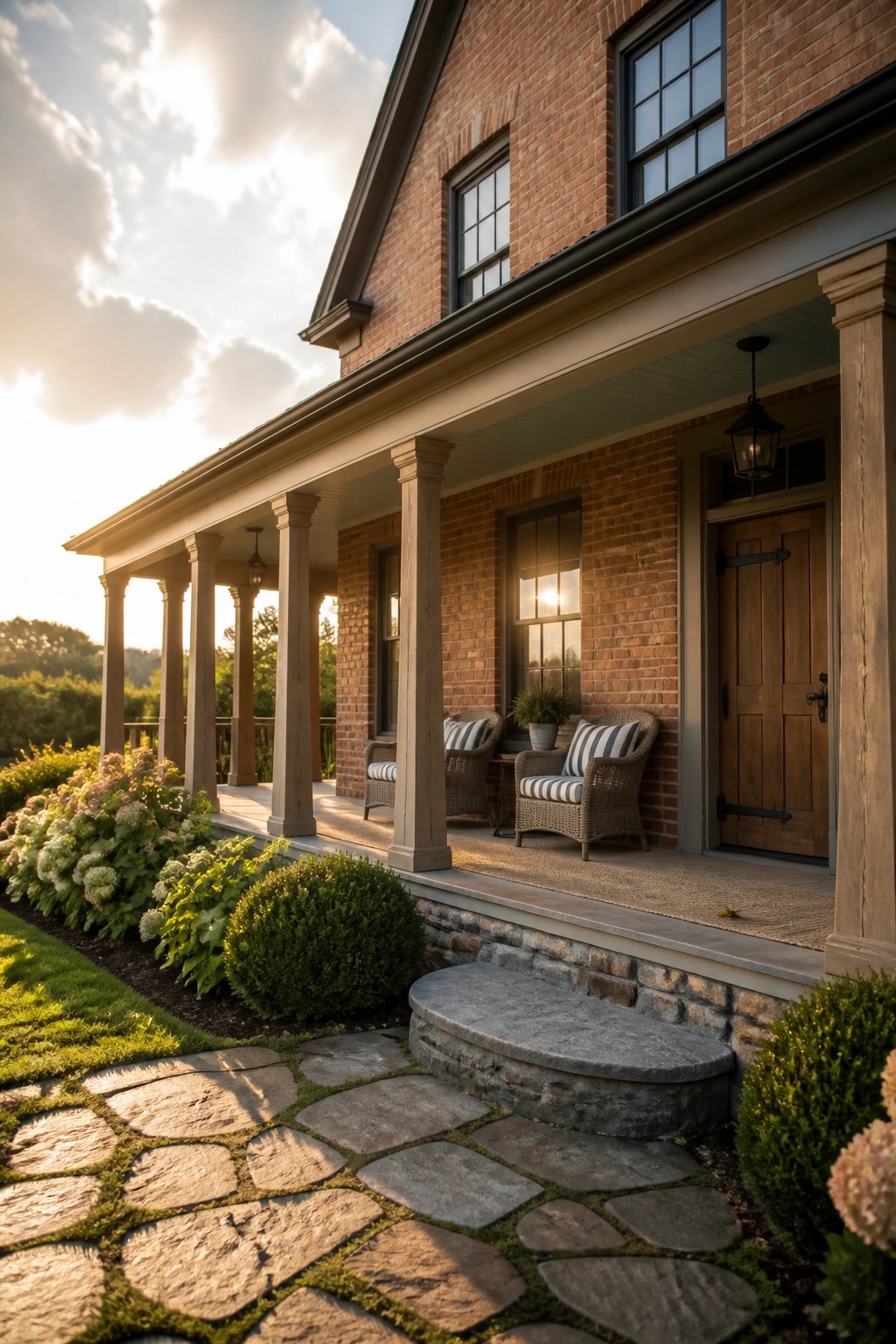
A covered porch with simple wooden columns adds real presence to a brick farmhouse. The columns break up the flat wall of brick and give the entry a settled, traditional feel that works in most neighborhoods.
This approach suits homes where the front has room for a decent depth. Keep the columns straight and unpainted if possible so the wood tone sits nicely against the brick. Stone steps at the base help tie the whole thing to the ground without extra fuss.
Arched Entries Add Character to Brick Farmhouses
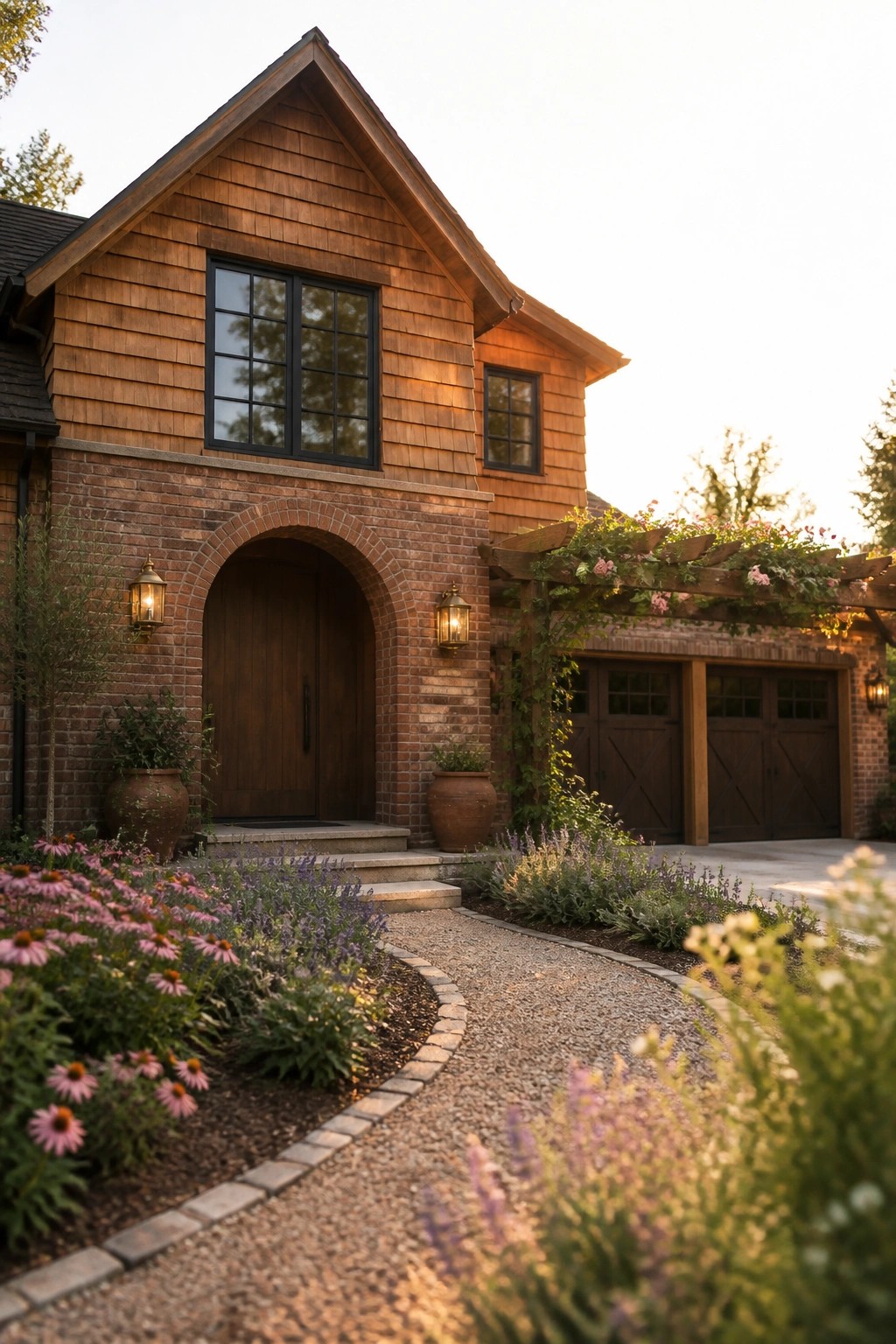
An arched brick entry gives a farmhouse a solid, grounded look that feels right at home on the exterior. The curve softens the straight lines of the brick while still keeping things simple and sturdy.
This works best on homes where brick makes up most of the lower facade. Keep the arch clean and let the material itself carry the detail. It pairs nicely with wood siding above and needs little else to feel complete.
Covered Porch with White Columns
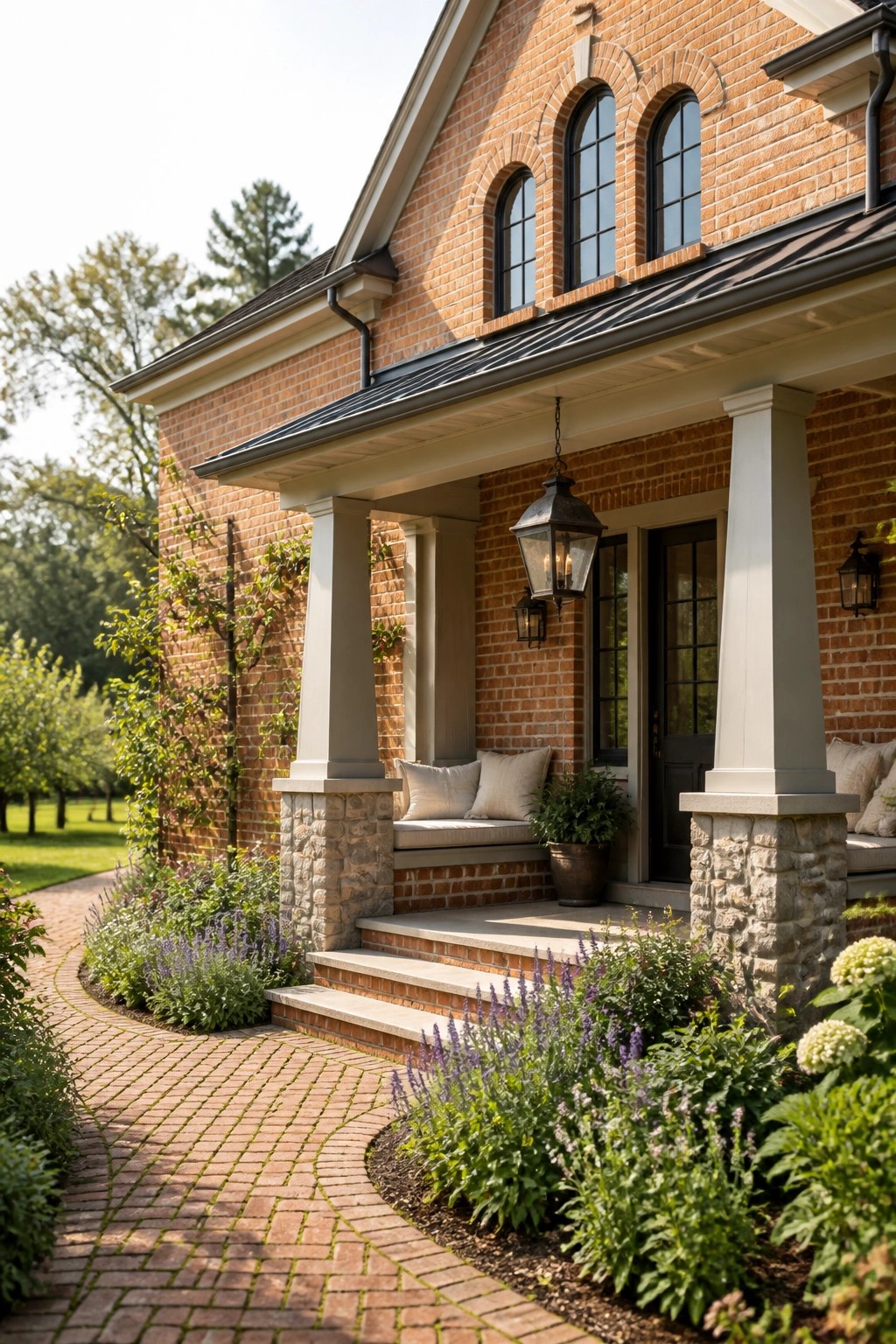
A covered porch with white columns gives a brick farmhouse a clear and welcoming entry. The columns break up the wall of brick and create a spot that feels protected without adding much fuss.
This setup works best on homes that already have a straightforward brick exterior. Keep the columns simple and set them on stone bases so the porch feels grounded rather than added on later.
Painted Gray Brick for a Softer Look
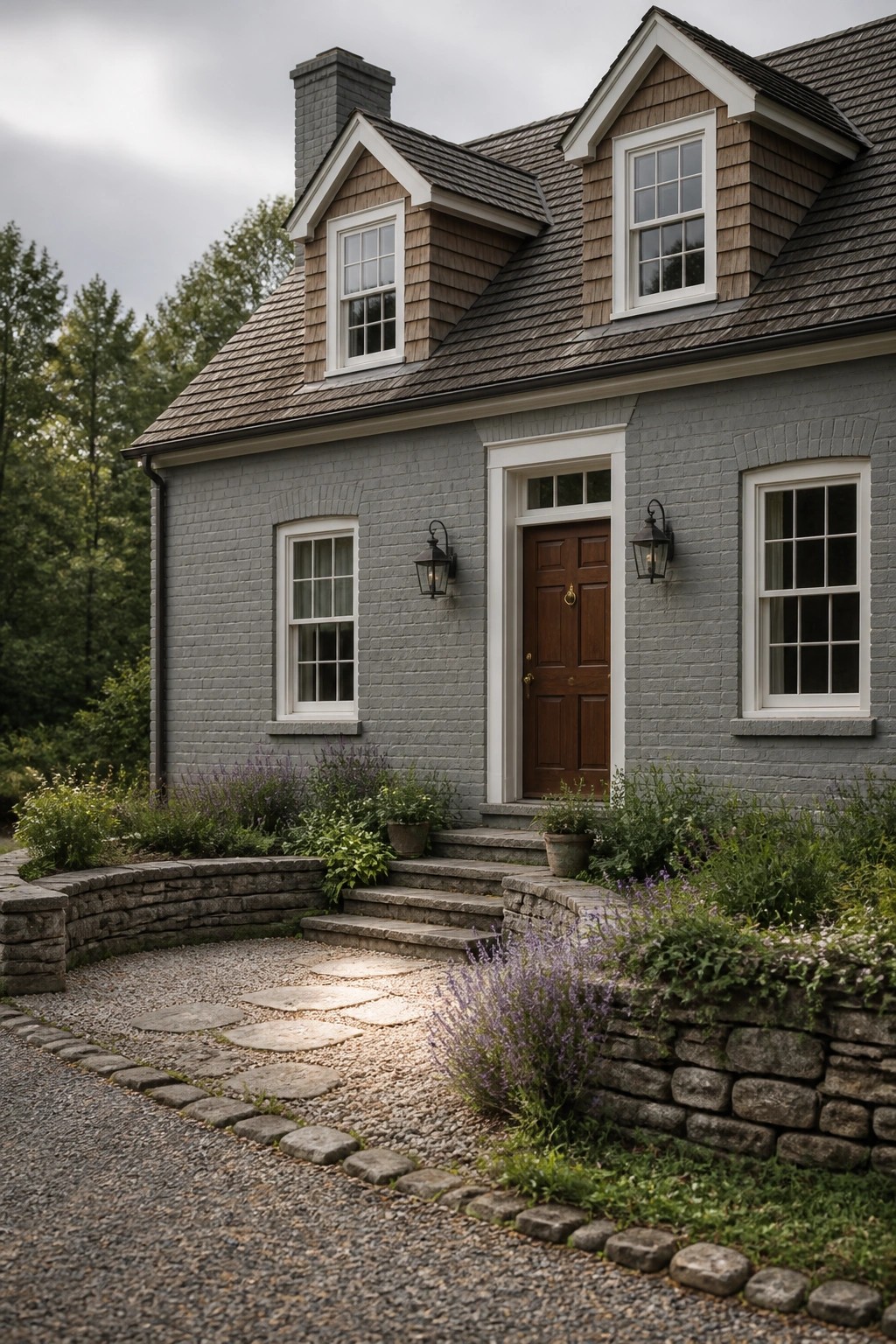
Gray painted brick gives a farmhouse a calm, updated feel without losing its traditional shape. The color works well on older brick because it keeps the texture visible while making the whole house feel lighter and more welcoming. Many people choose this shade because it pairs easily with white trim and a darker wood door.
This approach suits homes that already have simple lines and good rooflines. It looks best when you keep the trim crisp and add just enough landscaping to frame the steps. Avoid bright colors on the door if you want the gray to stay the main feature.
Paint the Front Door a Deep Navy
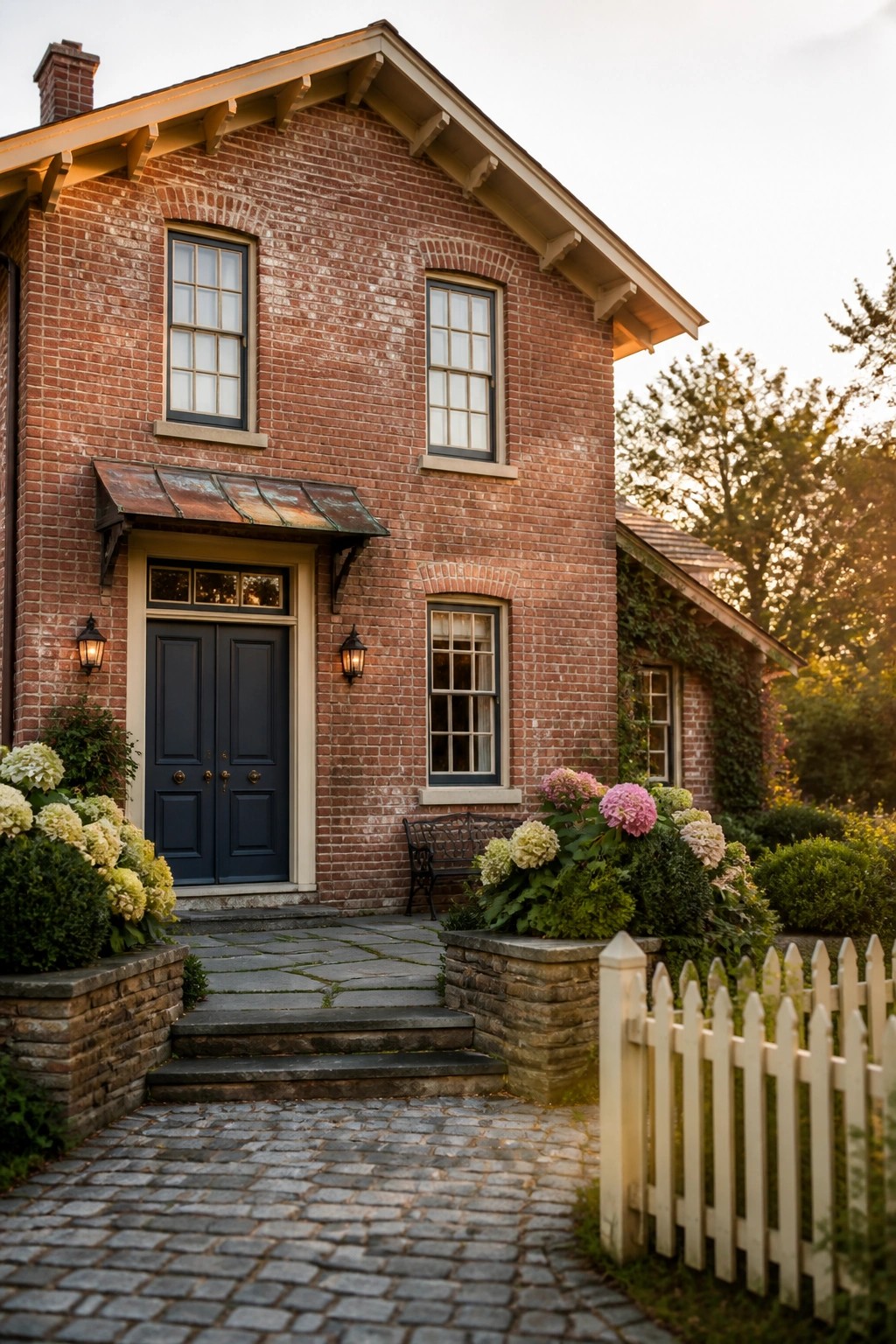
A deep navy door gives red brick an instant lift. The dark color stands out against the warm tones of the brick and keeps the whole front looking balanced and straightforward.
This works best on older brick homes or simple farmhouses where you want the entry to feel solid without adding trim or extra detail. Keep the surrounding paint light and add only a small overhang if you need weather protection.
Gravel Paths With Stepping Stones
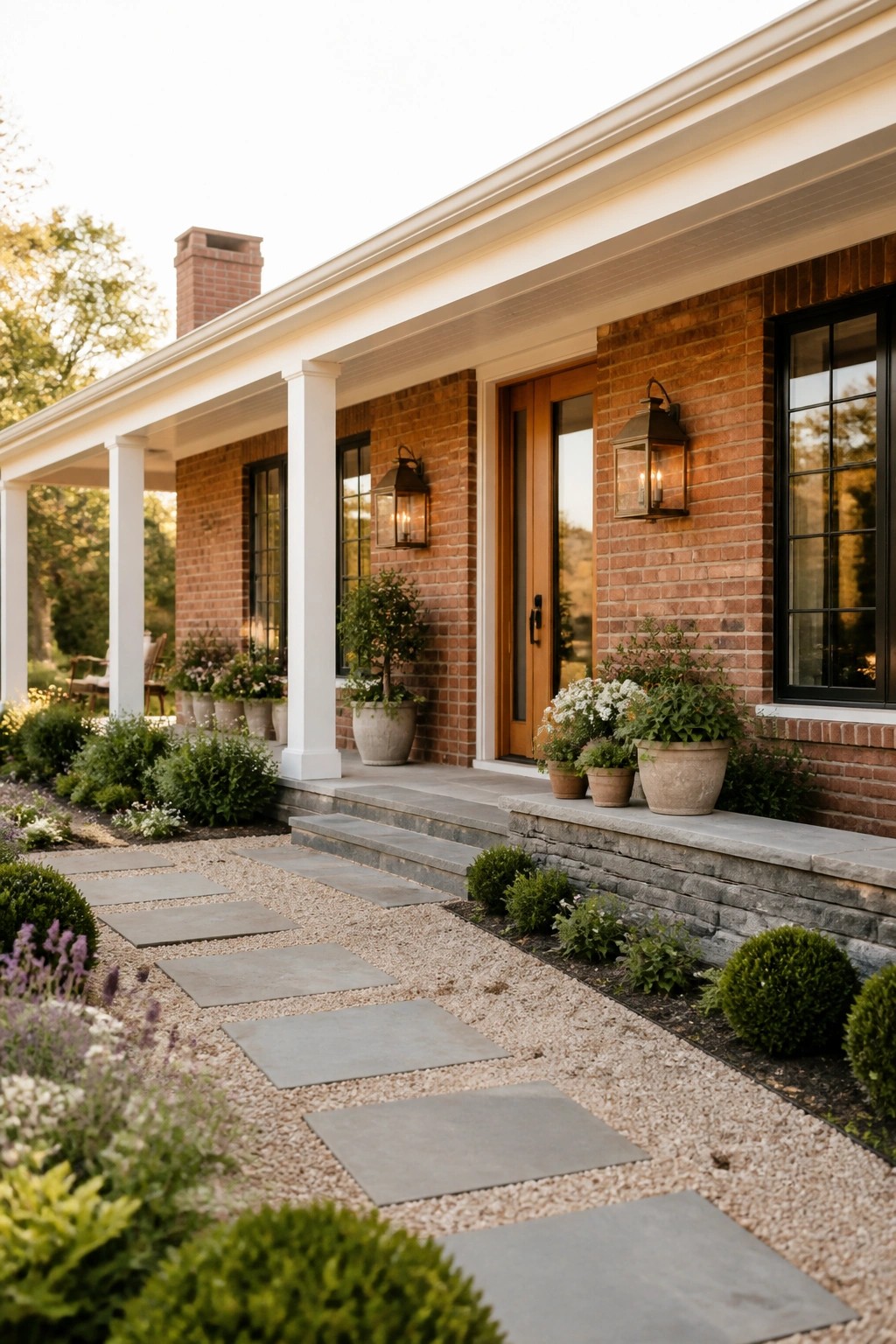
A gravel path lined with large stepping stones gives a brick farmhouse a practical and welcoming approach. It keeps the front yard looking neat without needing a solid paved surface that can feel too formal.
This setup suits homes where the walk runs a little distance from the drive or road. The stones stay stable underfoot, while the gravel drains well and blends with the natural setting around older brick exteriors.
Add an Arched Porch Entry
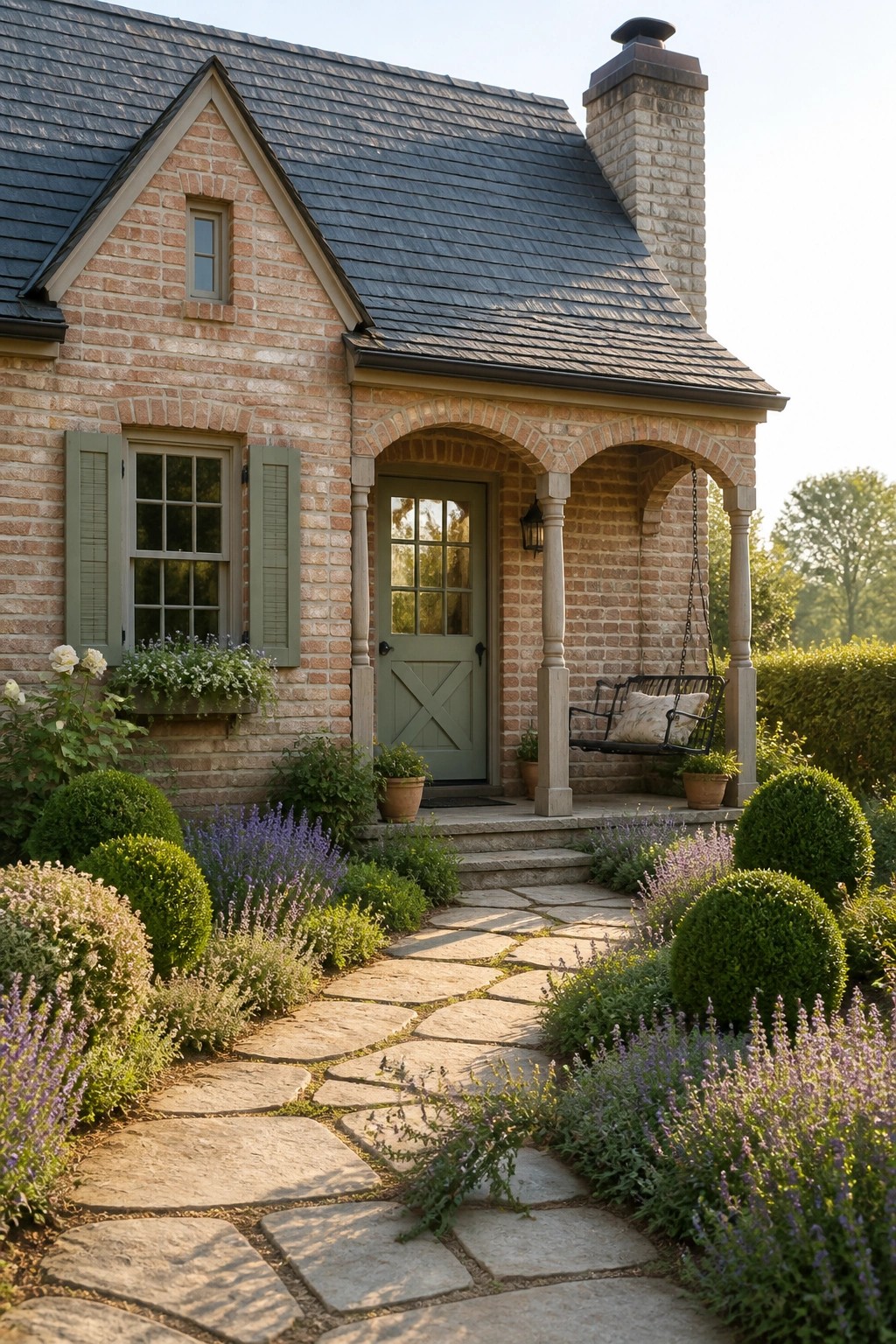
A brick farmhouse often looks more complete with a small covered porch that uses simple arches. The arches give the entry a bit of shape and depth while keeping the overall look straightforward and tied to the brick.
This approach works best on homes where the brick is already the main material. Match the arch bricks to the rest of the house and keep the columns plain so the detail does not feel added on. A stone path leading up helps the whole front feel connected.
Center an Arched Entry on a Brick Facade
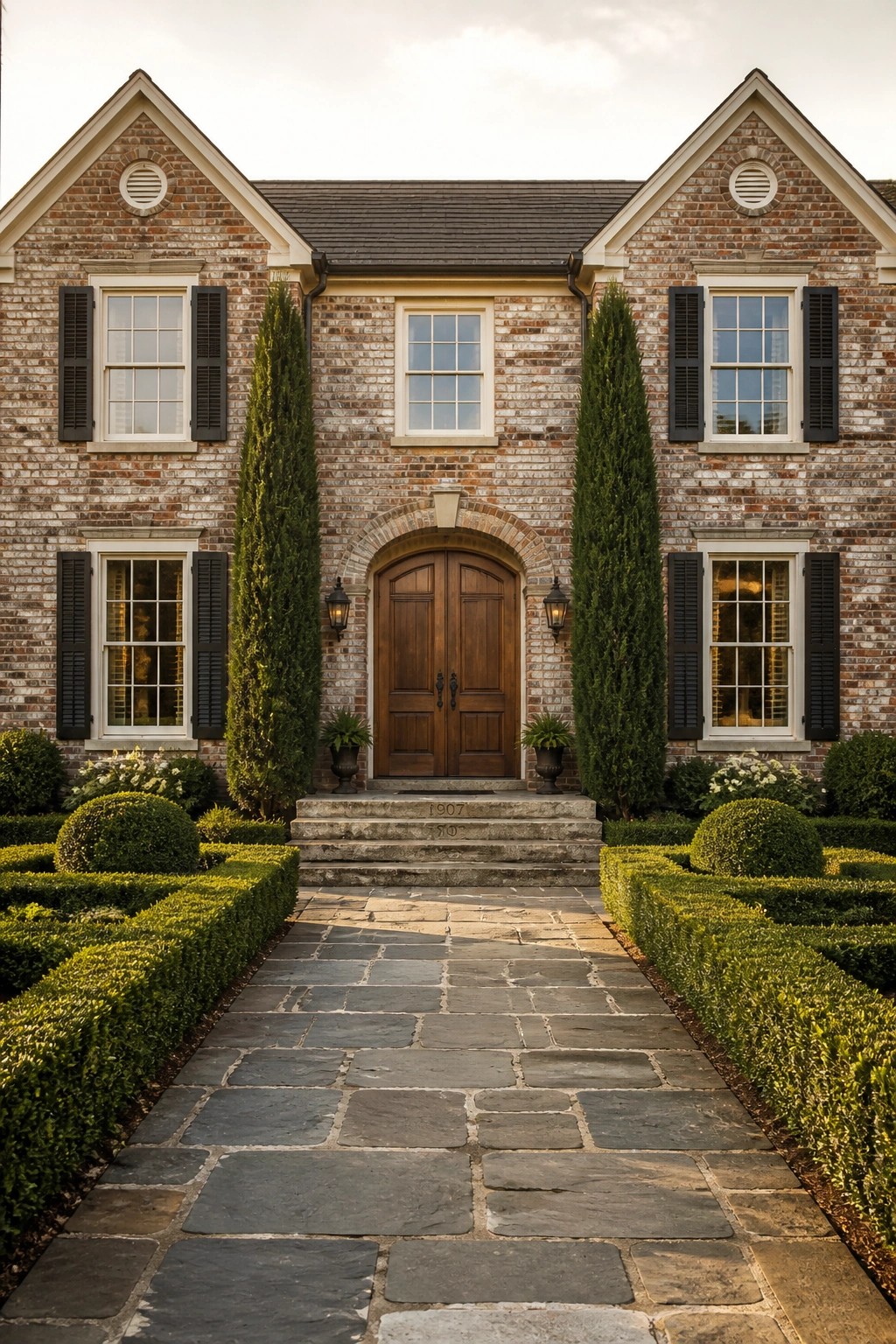
A brick farmhouse gains a lot from a clear center point. The arched brick surround around the double doors pulls the whole front together and makes the entry feel intentional rather than just placed.
This approach works best on homes with matching gables on each side. Keep the windows balanced and add simple flanking plantings so the arch stays the main feature. It suits traditional builds and helps the house read as solid and welcoming from the street.
Run a Porch Along the Full Length
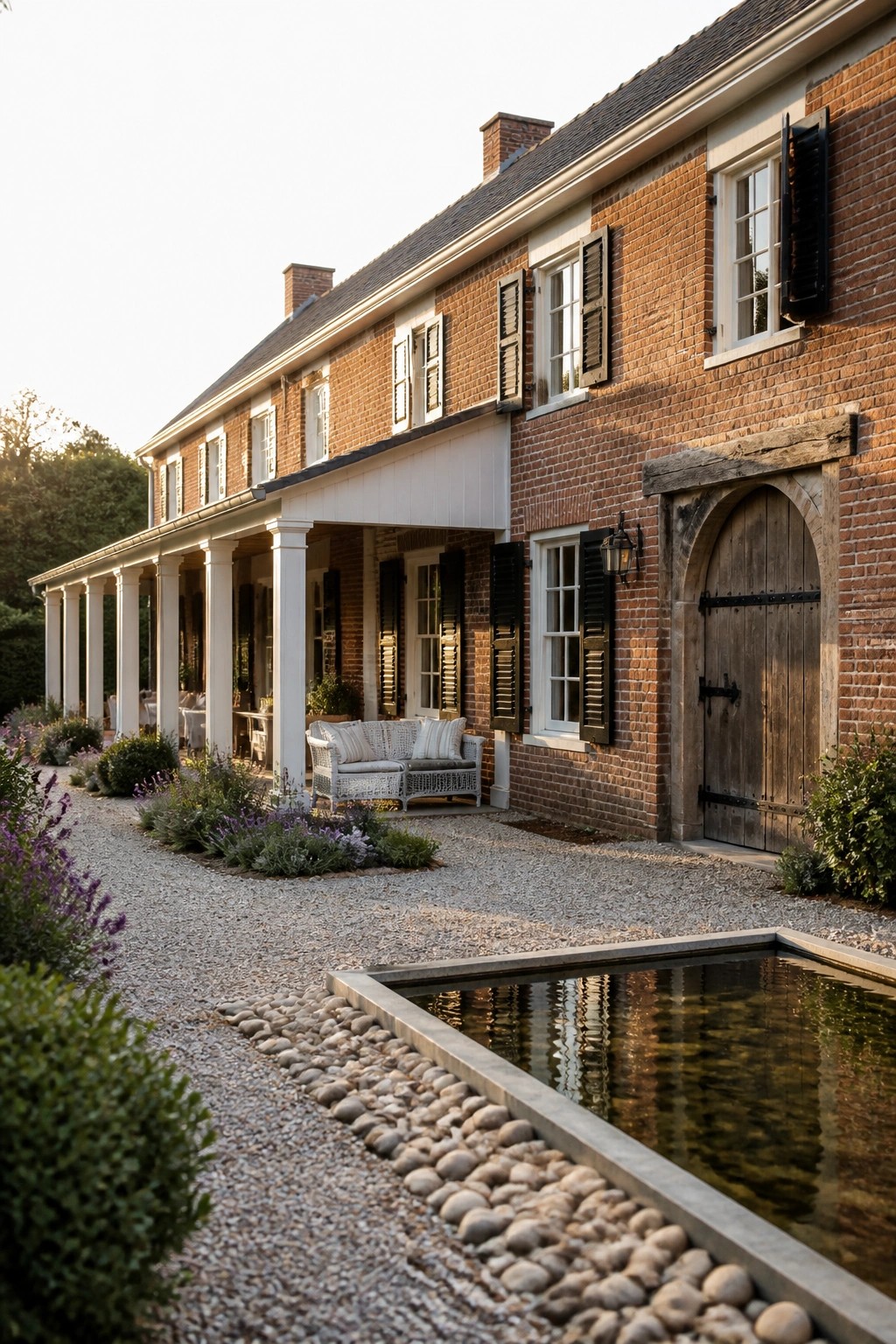
A long covered porch that stretches across the front of a brick house gives the facade a steady, grounded feel. It breaks up the wall of brick without adding extra trim or decoration, and it creates a usable outdoor spot right at the entry.
This approach works well on traditional farmhouses where you want the house to look settled rather than busy. Keep the columns simple and evenly spaced, and let the roofline stay low so the porch feels like part of the original structure instead of an add-on.
Adding a Covered Entry to Brick Exteriors
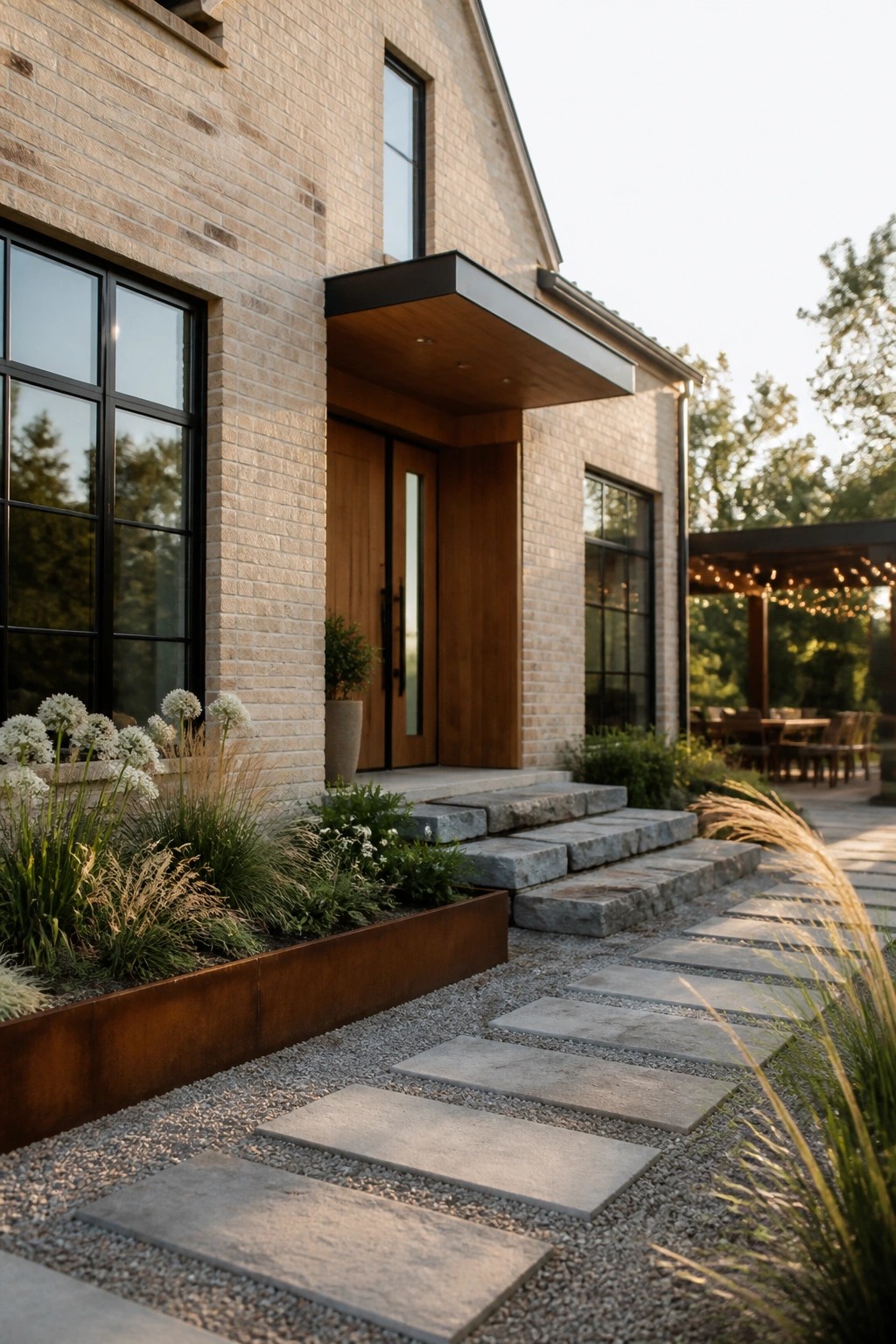
A covered entry helps a brick farmhouse feel more finished and welcoming without much extra work. The wood tones under the overhang contrast nicely with the brick and give the door a clear focal point that draws people straight to it.
This approach works best on homes where the front door sits a bit plain against the brick. Keep the canopy simple in shape and match the wood to any other trim or accents you already have. It adds shelter from rain and sun while keeping the overall look timeless rather than trendy.
Brick Arches Around the Front Door
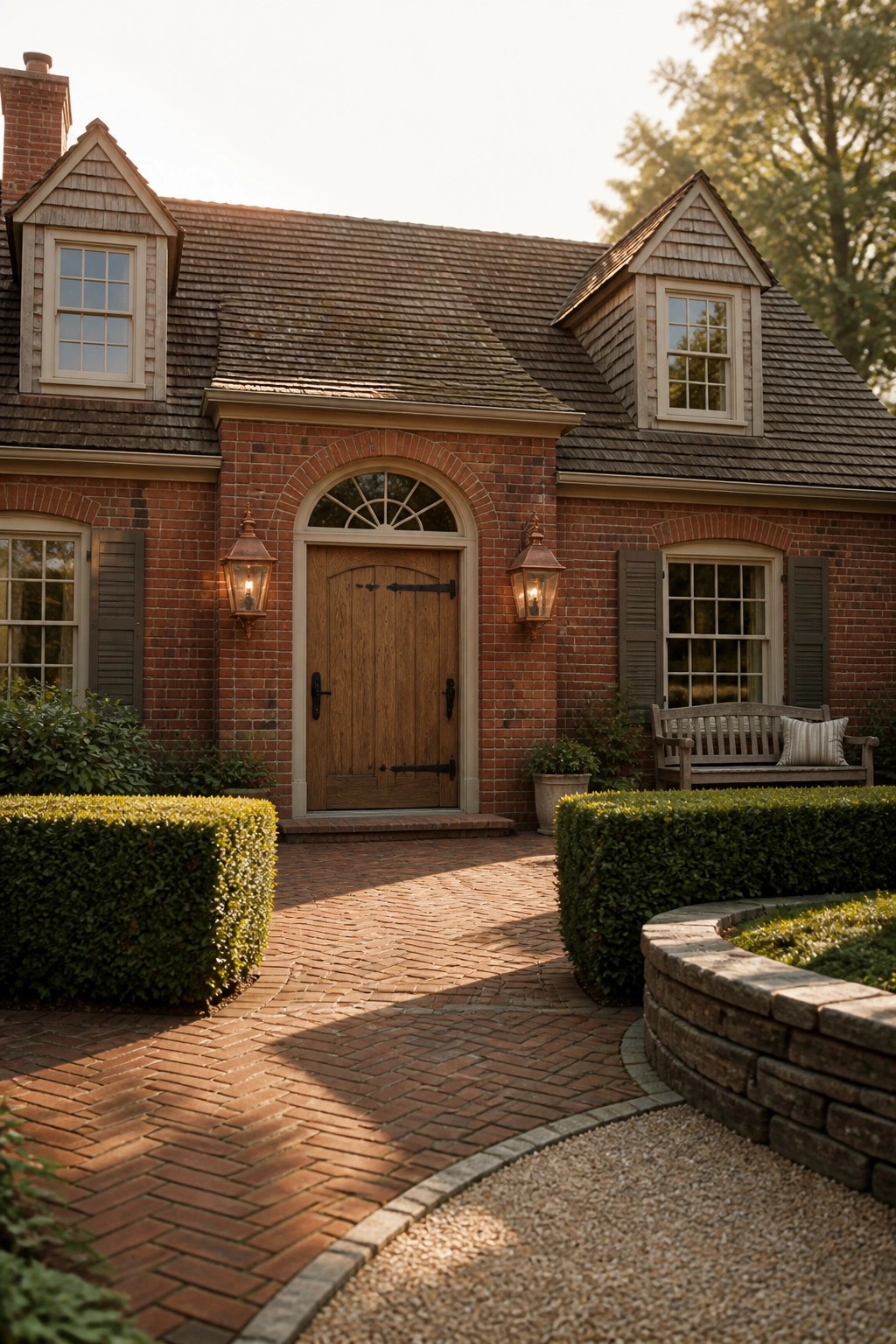
An arched brick entry gives a farmhouse a solid, grounded look that still feels open and welcoming. The curve softens the straight lines of the brick while keeping the whole front simple and balanced.
This works best on homes with a straightforward brick facade. Keep the door in a natural wood tone and add just a pair of lanterns on each side so the arch stays the main feature.
Stone Paths That Guide the Eye to the House
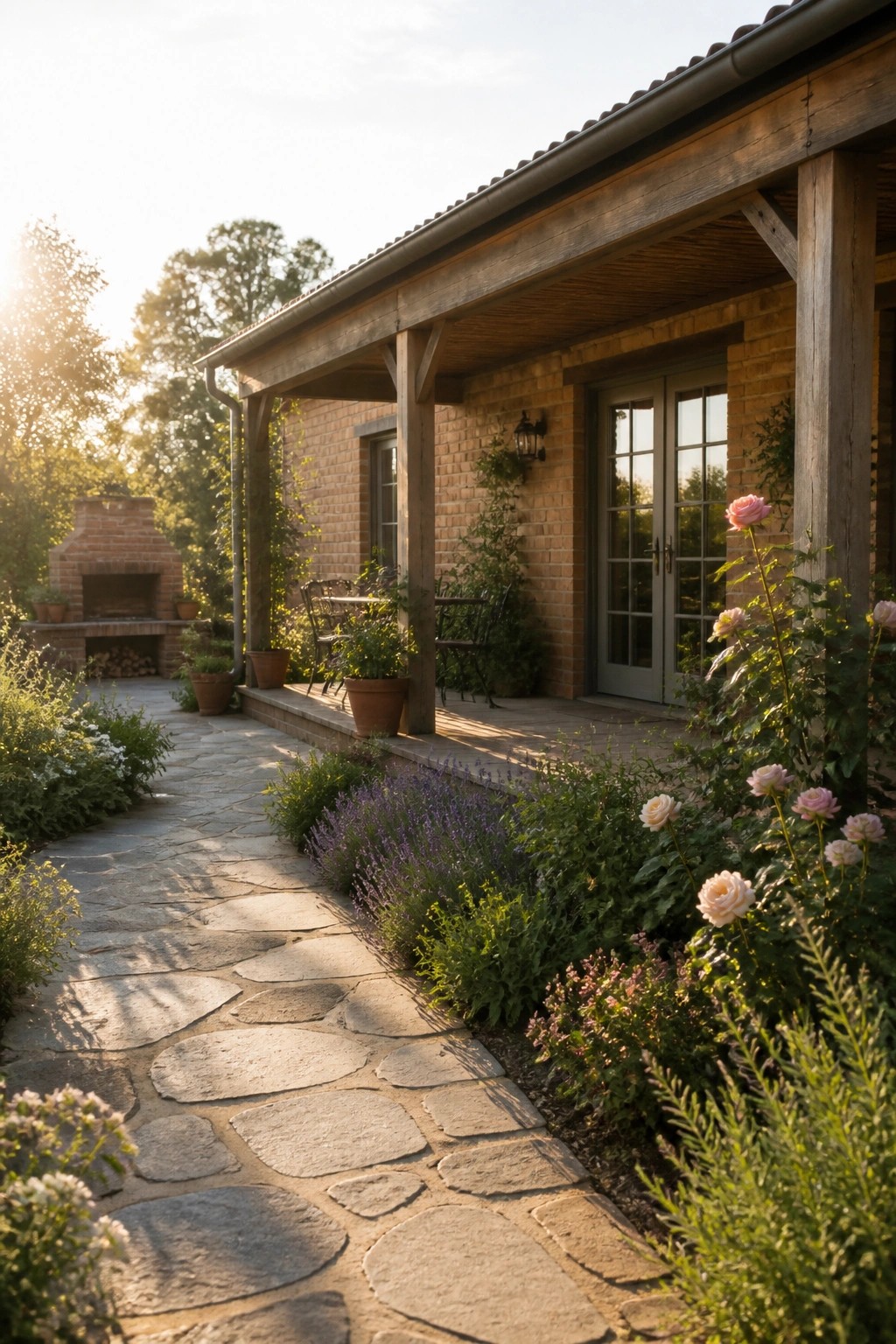
A stone path gives the front of a brick farmhouse a settled, purposeful feel. It turns an open stretch of lawn into something more structured without adding walls or fences. The irregular shapes and natural colors keep it from looking too formal.
This approach works best on homes where the entry sits a little distance from the road. Use plants that stay low along the edges so the path remains visible and easy to follow. Avoid anything too tall or dense that might crowd the walk or hide the brick.
Brick Arches Over Doorways
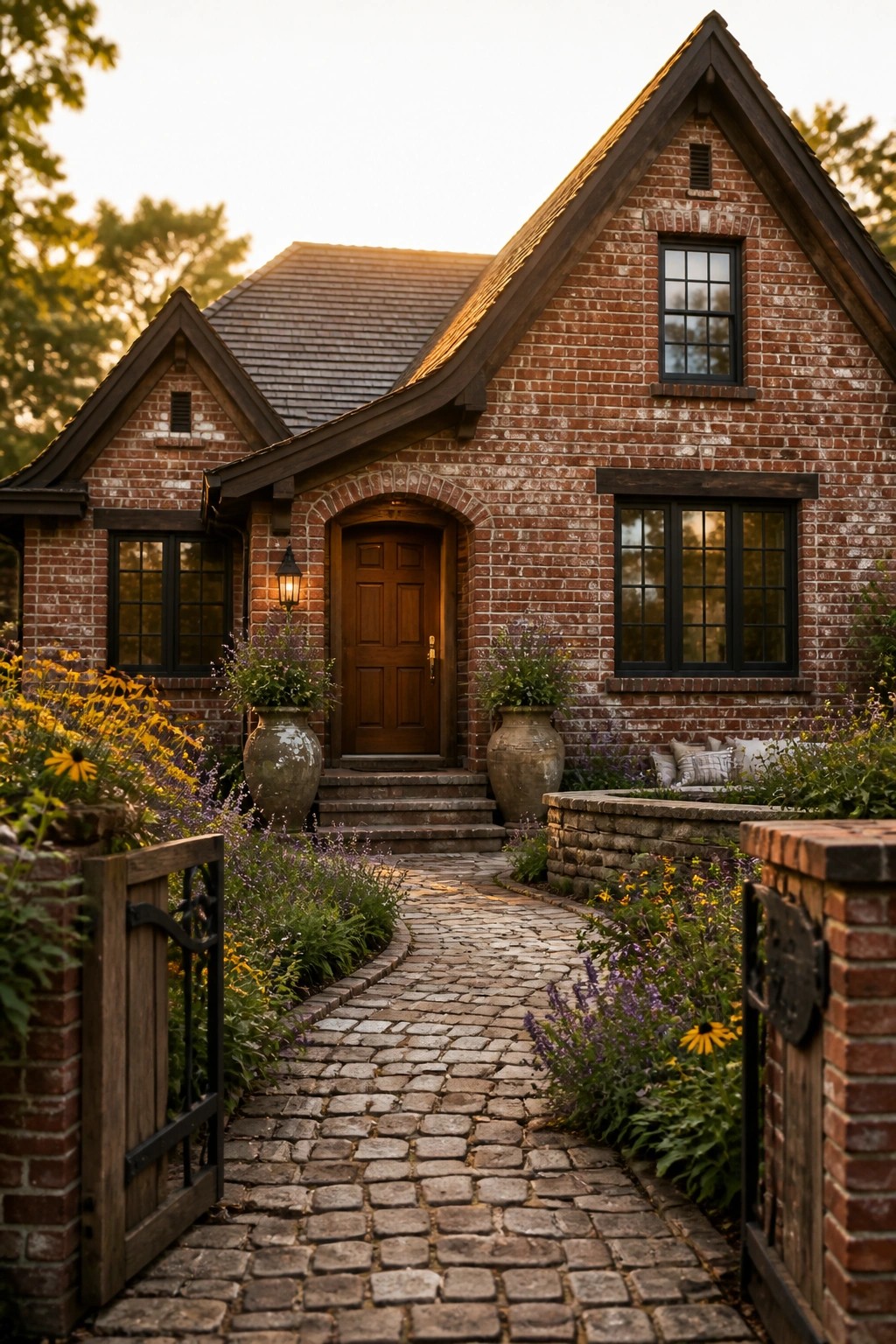
A brick arch above the front door adds a quiet bit of character to a farmhouse without feeling fussy. It breaks up the flat wall and gives the entry a rounded, settled look that many people find more welcoming than a plain square opening.
This detail works best on homes that already lean traditional. Keep the arch in the same brick as the rest of the house and let the path lead straight to it so the whole front feels pulled together.
Add a Covered Porch to the Entry
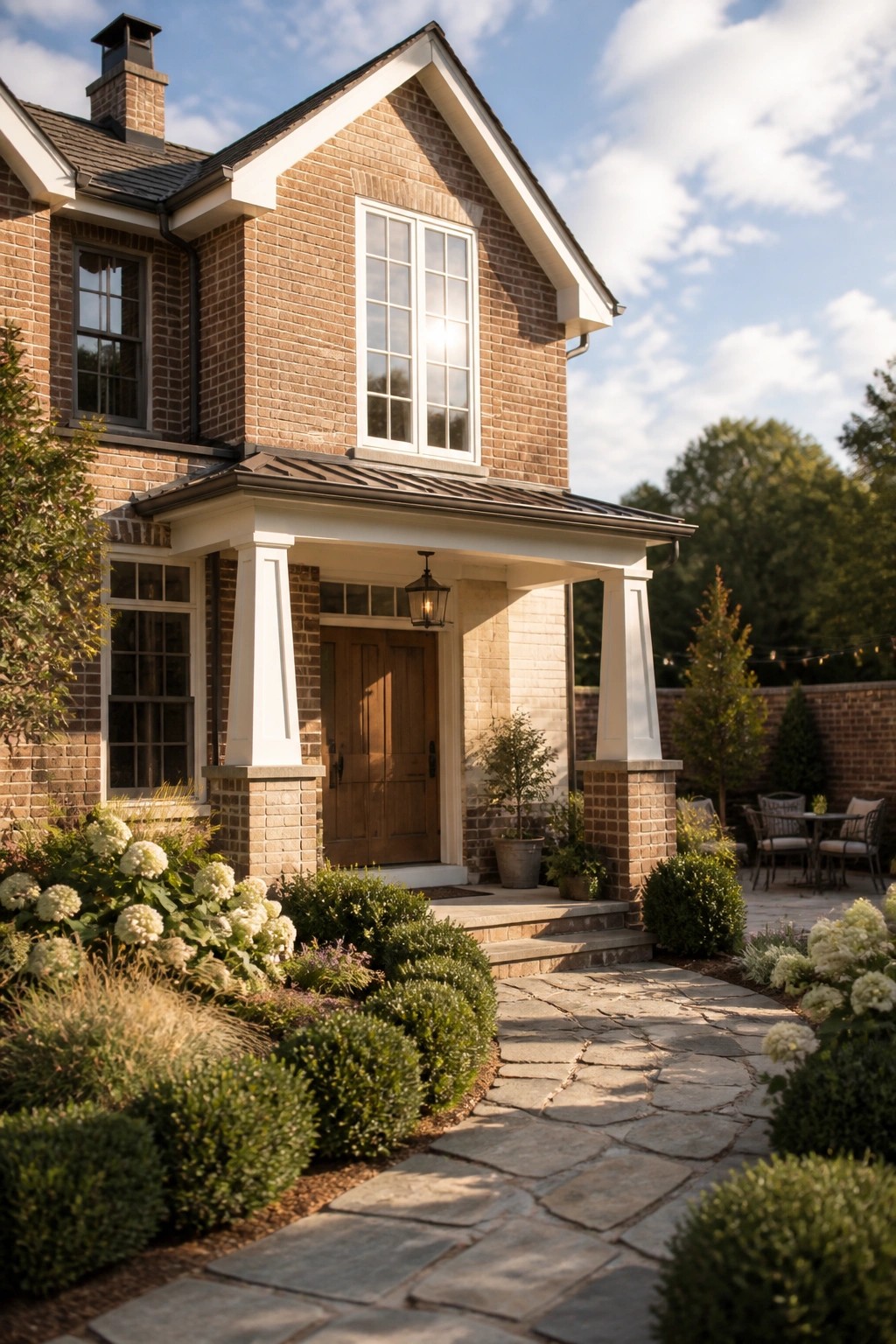
A covered porch gives a brick house a clear focal point and makes the front door feel more welcoming. The gable roof and white columns keep the whole front simple while still adding some depth to the facade.
This works best on traditional or farmhouse styles where you want the entry to feel useful year round. Match the column bases to the brick and keep the trim bright so the porch stands out without fighting the rest of the house.
Frequently Asked Questions
Q: How do I keep the brick looking fresh without much work?
A: Sweep off loose dirt with a soft brush every few months. Mix mild soap with water for any spots that stick around. Skip harsh cleaners since they wear down the brick over time.
Q: What if I want to add some wood accents to the brick exterior?
A: Pick cedar or pine that matches the warm tones in your brick. Nail it up on the gables or around windows first. This adds texture without overpowering the main material.
Q: Should the roof color match the brick or stand out?
A: Let the roof contrast a bit. A darker gray or black pulls the whole look together nicely.
