

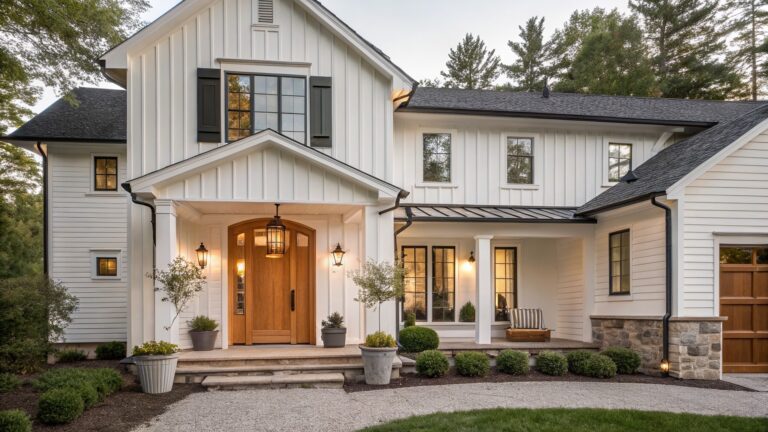
I have always noticed that white farmhouses can either draw you in from the street or sit there looking a bit stark depending on the materials chosen around the windows and doors.
The right balance of texture seems to make all the difference when you actually stand in front of one and take in the whole facade.
Some details matter more than others.
When I drive past older farmhouses painted white I often find myself wondering which elements keep the look grounded instead of washed out.
Testing a few of these approaches on my own place has shown me how small changes to the entry or roofline can shift the entire impression.
Black Trim Adds Definition To White Exteriors
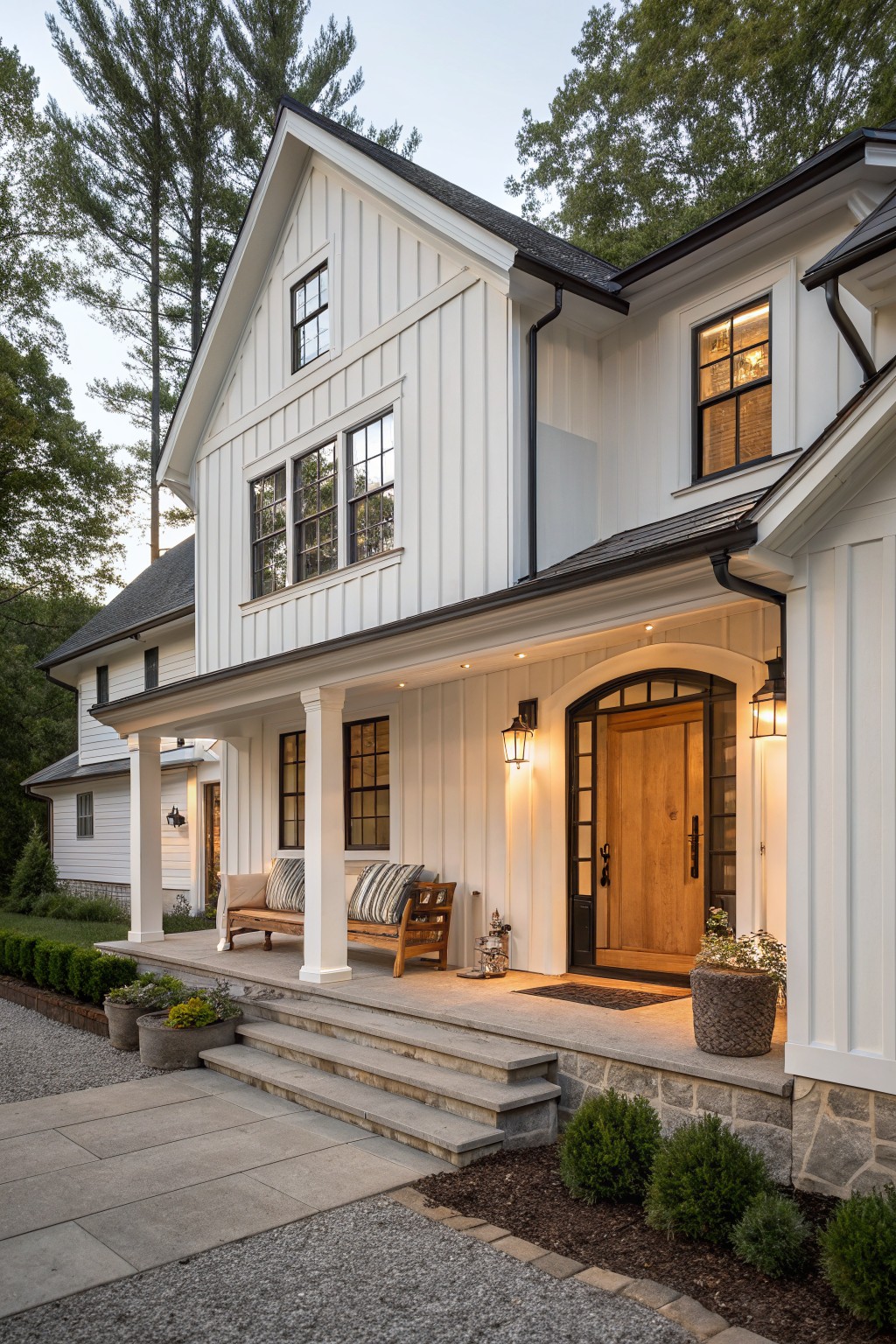
White siding can start to feel flat on its own, especially on a larger farmhouse. Black trim around the windows and door gives the whole front a clear shape and stops the white from looking washed out or too stark.
This works best on homes with simple lines where you want contrast without adding color. Keep the black matte on the frames and use warm light near the entry so the house still feels welcoming at night.
Pair White Siding With Dark Roofing
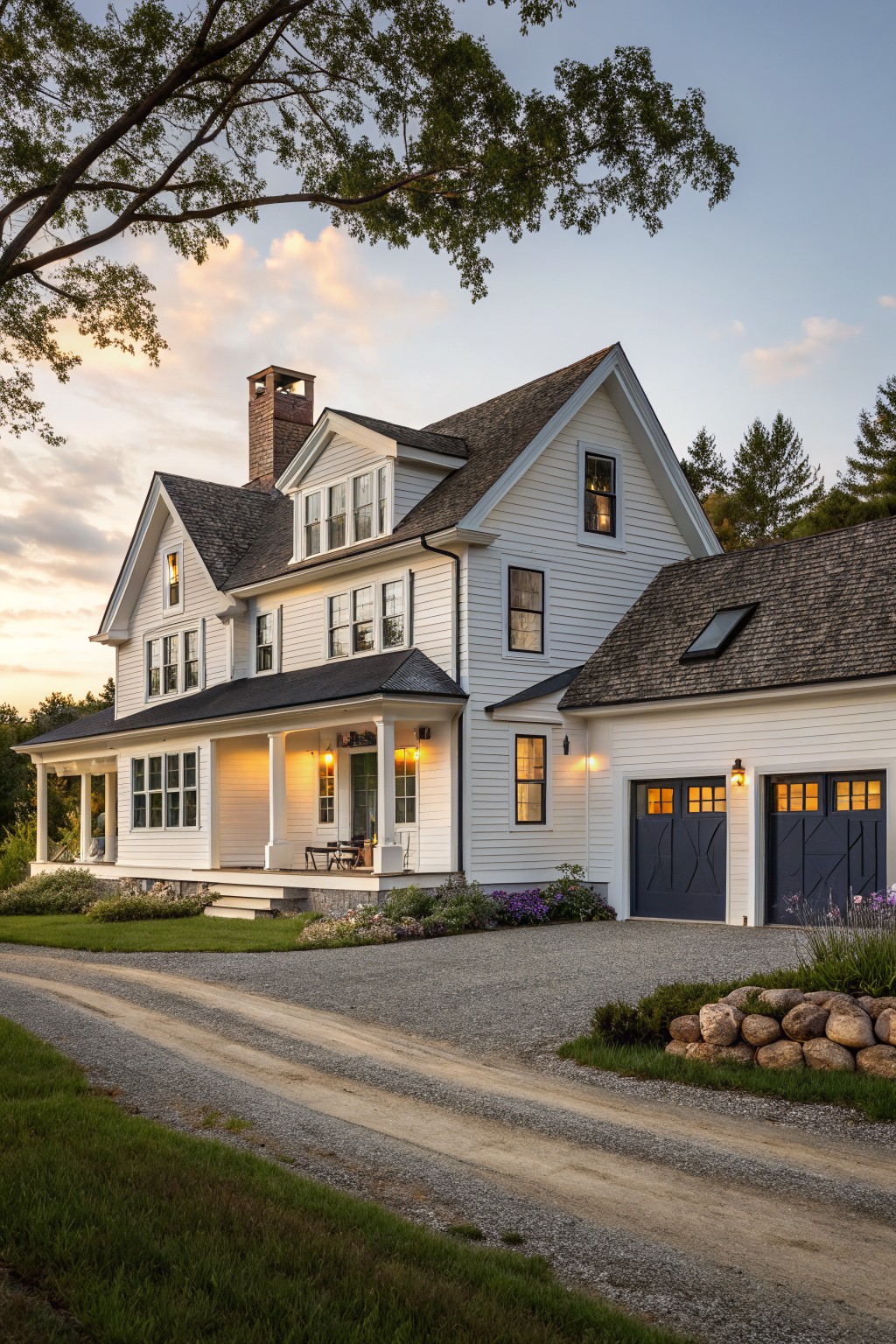
A white farmhouse stays fresher when the roof and main doors stay dark. The contrast stops the brightness from looking washed out or flat, especially on houses that sit in open light.
This works best on simpler shapes where the siding is the main surface. Keep the dark tones in the roof, doors, and maybe shutters, then let everything else stay clean and white.
Climbing Vines Soften Bright White Walls
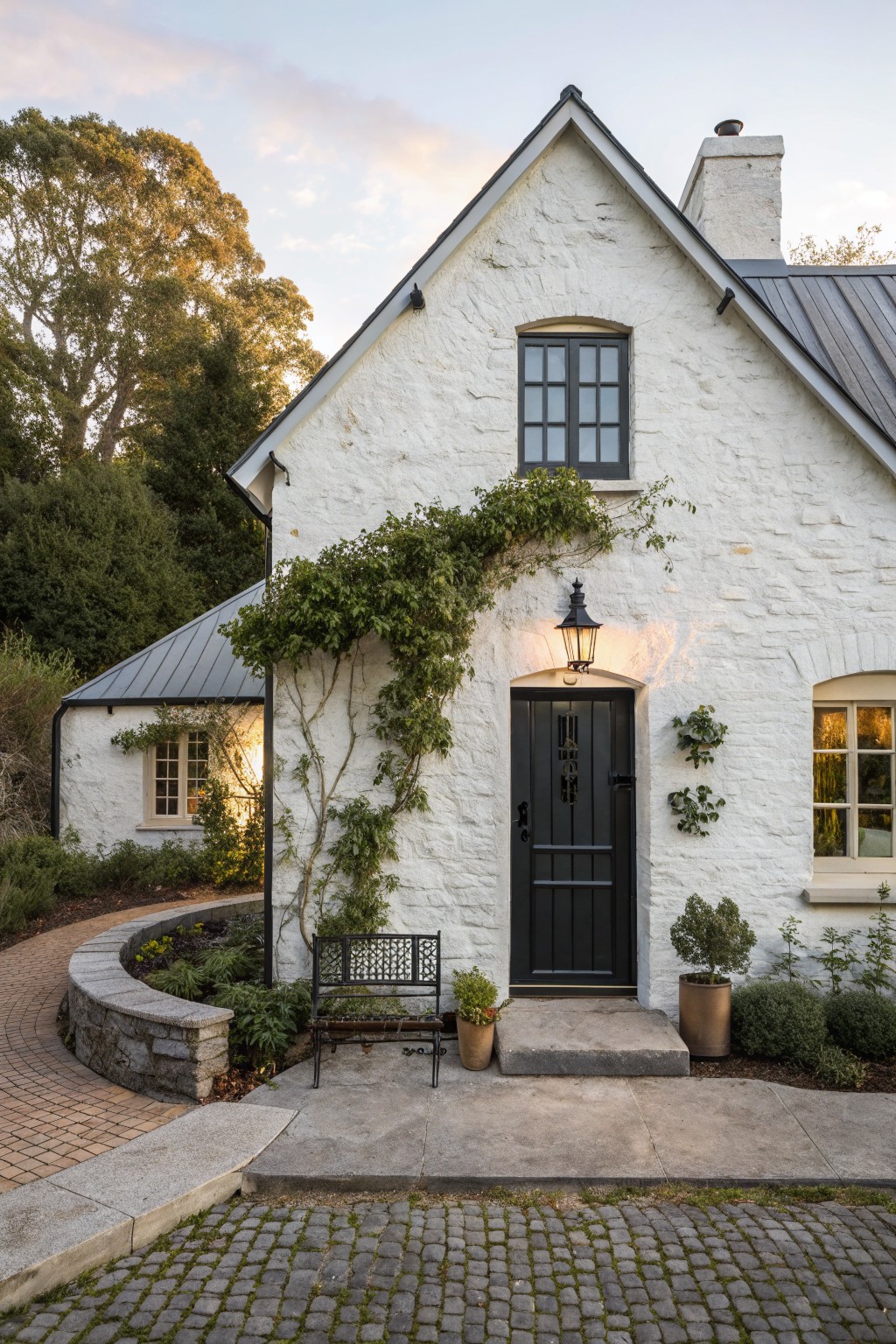
White farmhouse exteriors often need something to keep them from feeling flat or too stark. Climbing vines add natural texture that breaks up the white surface and brings a lived-in look that still feels clean.
This approach works best on homes with some wall texture or an entry that can handle a bit of greenery without looking overgrown. Keep the vines focused around the door or one corner so they frame the space rather than cover everything.
Use Black Accents To Anchor White Siding
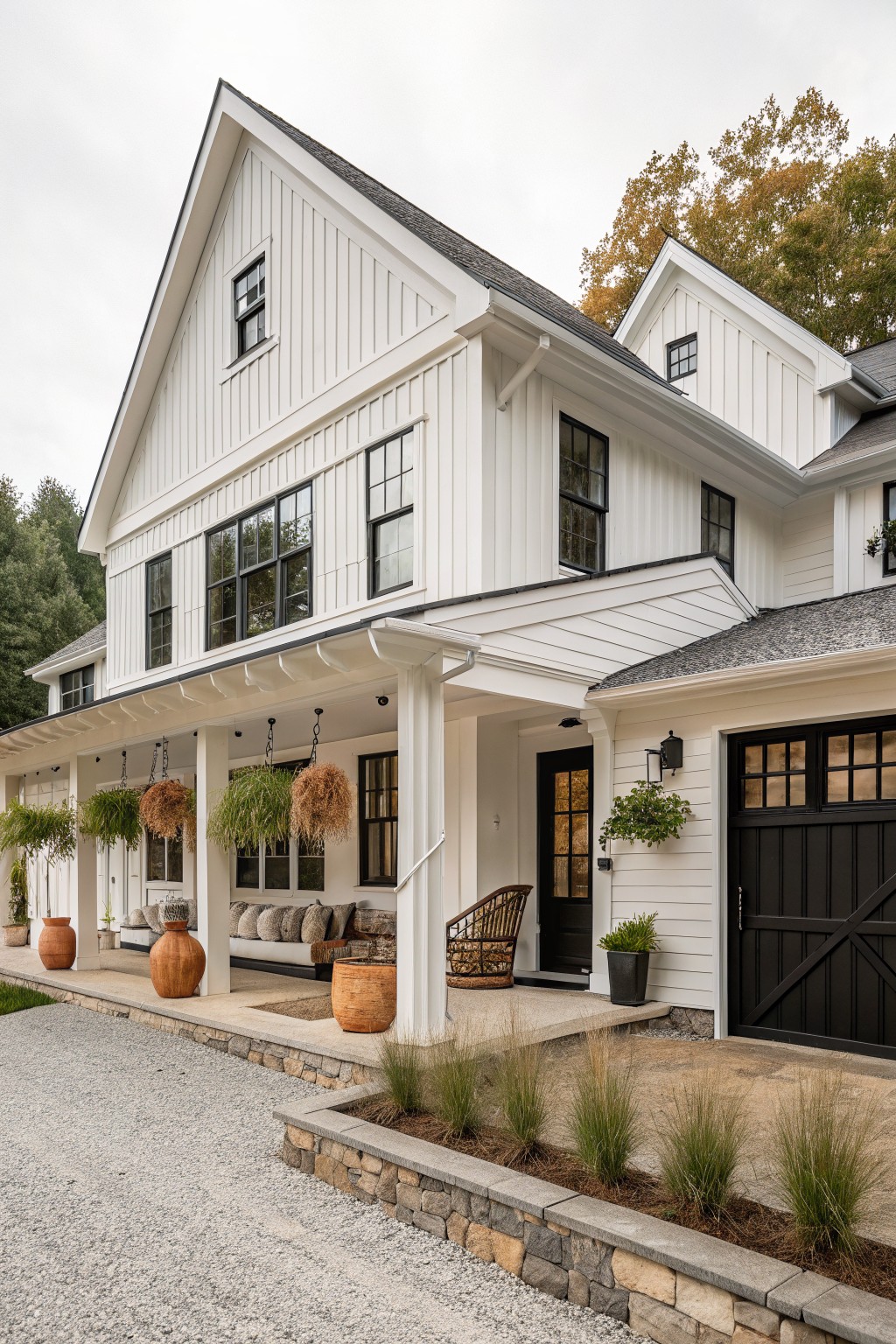
White exteriors can start to feel washed out once the paint is up. Black window frames and doors give the walls a clear edge and stop the whole house from looking too pale or flat.
This approach suits farmhouses with clean gables and simple siding. Keep the black matte, limit it to windows, doors, and maybe the garage, and let the white do the rest of the work.
Black Accents Give White Farmhouses Clear Definition
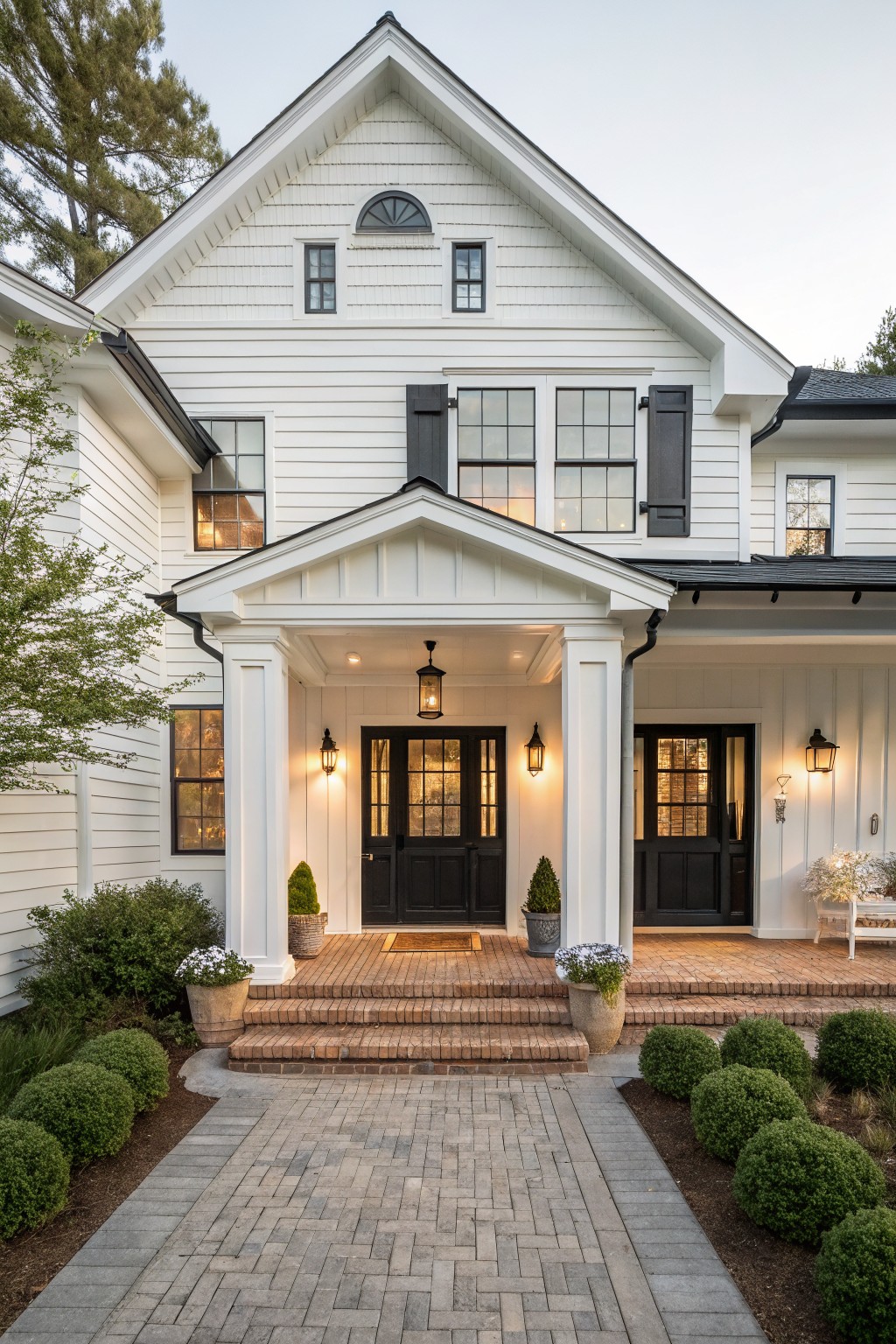
Black doors and shutters stand out against the white siding in a way that keeps the whole look grounded. The contrast stops the white from feeling too bright or flat, especially on houses with simple rooflines and gable ends.
This approach works best on traditional farmhouses where you want some edge without adding extra colors. Stick to just a few dark pieces like doors, shutters, and light fixtures so the white stays the main focus.
Pair White Siding With Dark Roofing
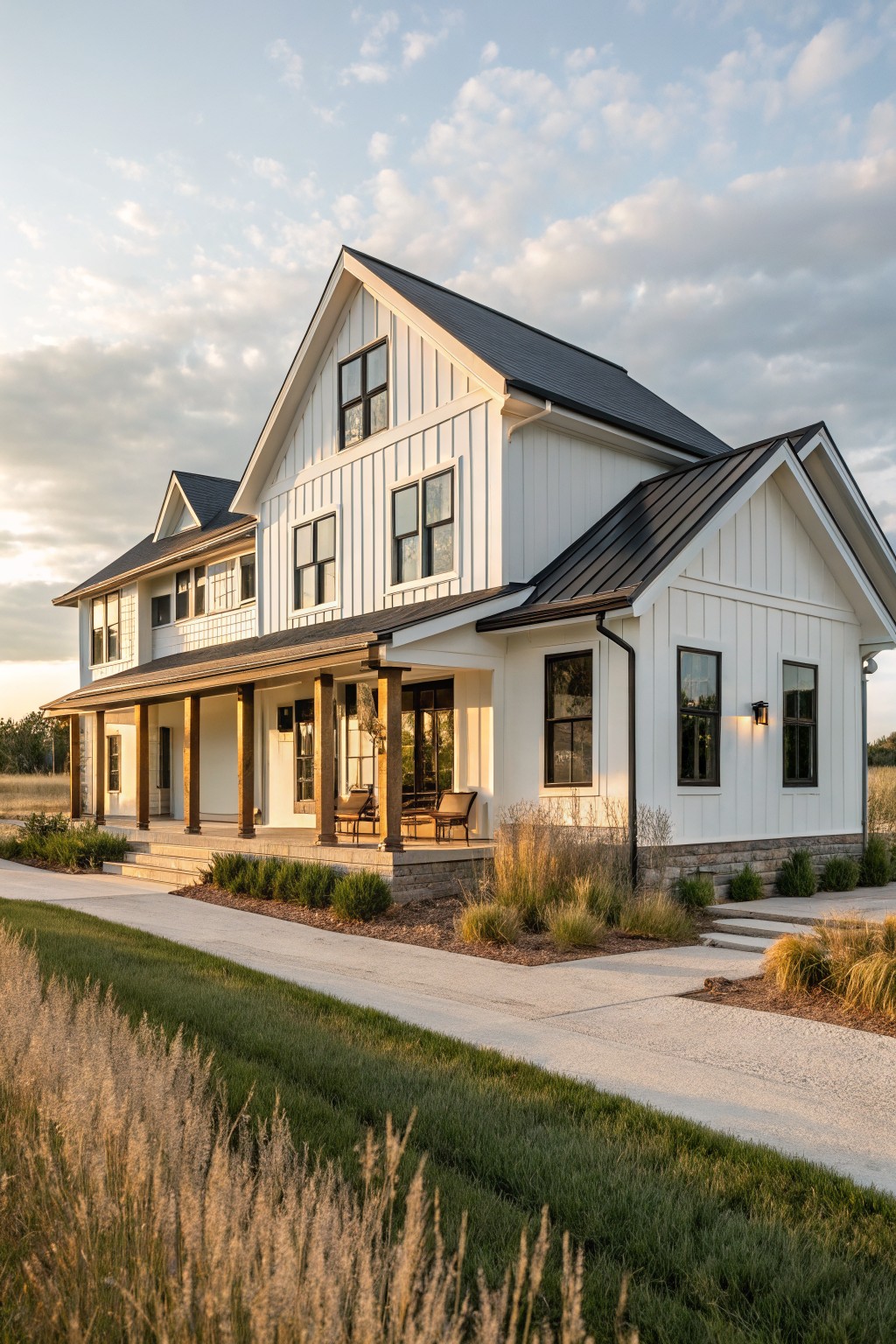
White siding stays brighter when it has something darker next to it. A black metal roof gives the house weight and stops the color from feeling flat or too stark.
This approach works on simple farmhouse shapes that get plenty of sun. Keep the trim and gutters dark too so the roof does not feel like an afterthought.
Add Dark Shutters To Bright White Siding
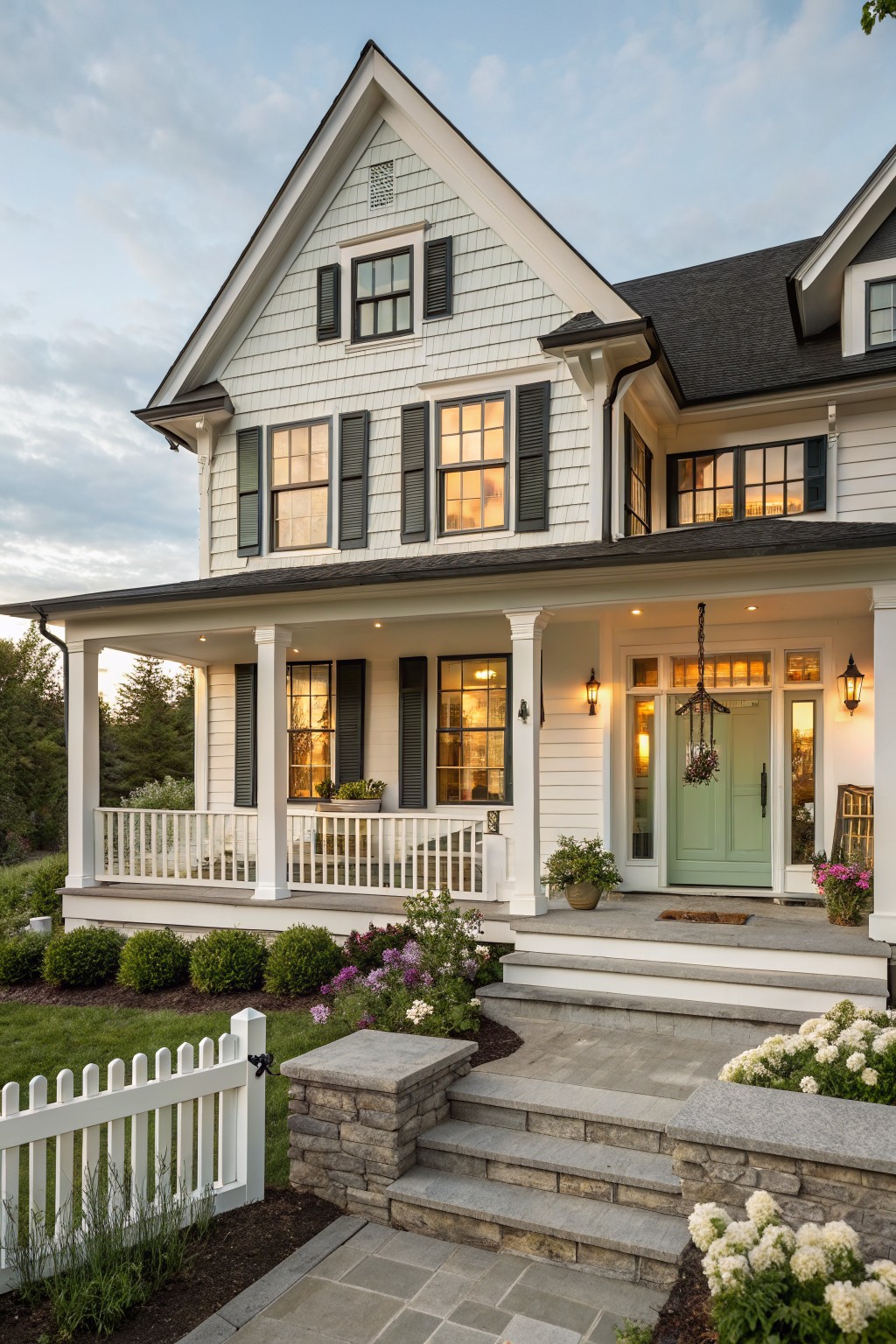
Dark shutters give white farmhouse exteriors some needed structure. They break up the brightness without making the house feel heavy or overly formal. Many white homes can start to look flat when there is no contrast around the windows, and shutters fix that quickly.
This approach works especially well on two-story homes with several windows. Stick with a deep charcoal or black shade for the shutters and keep the siding a clean bright white. A soft door color can add a little extra warmth if the house still feels too stark once the shutters are in place.
Black Window Frames On White Siding
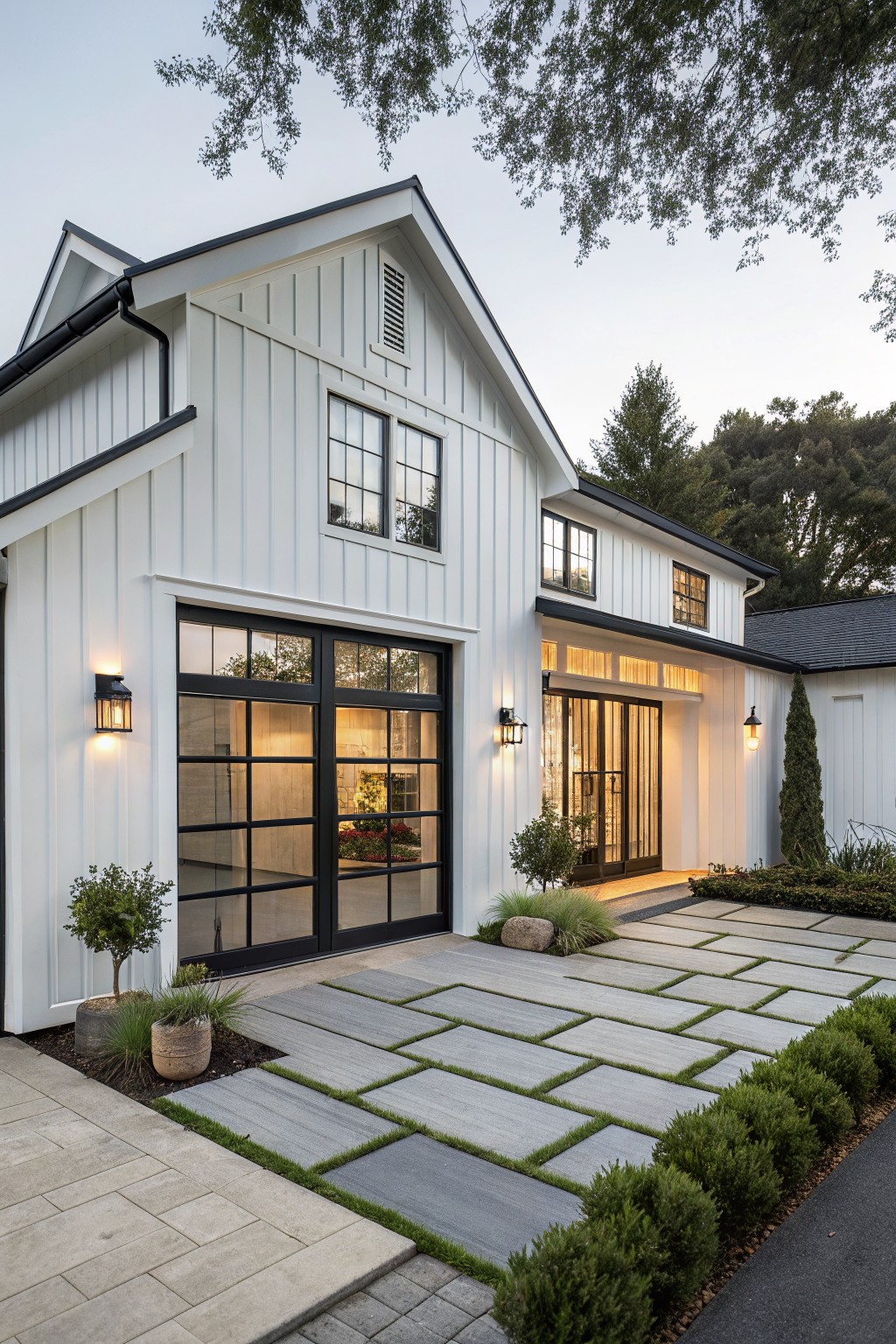
White siding can look clean and bright, but it sometimes needs a little contrast to feel finished. Black window frames give that balance without adding color or pattern. They keep the whole house looking crisp while stopping it from feeling too stark.
This works best on homes that already have simple lines and few extra details. Use the black frames on the main windows and doors, then keep everything else light. It suits farmhouses that want a fresh look but still need to feel a bit grounded.
Pair White Siding With a Natural Wood Door
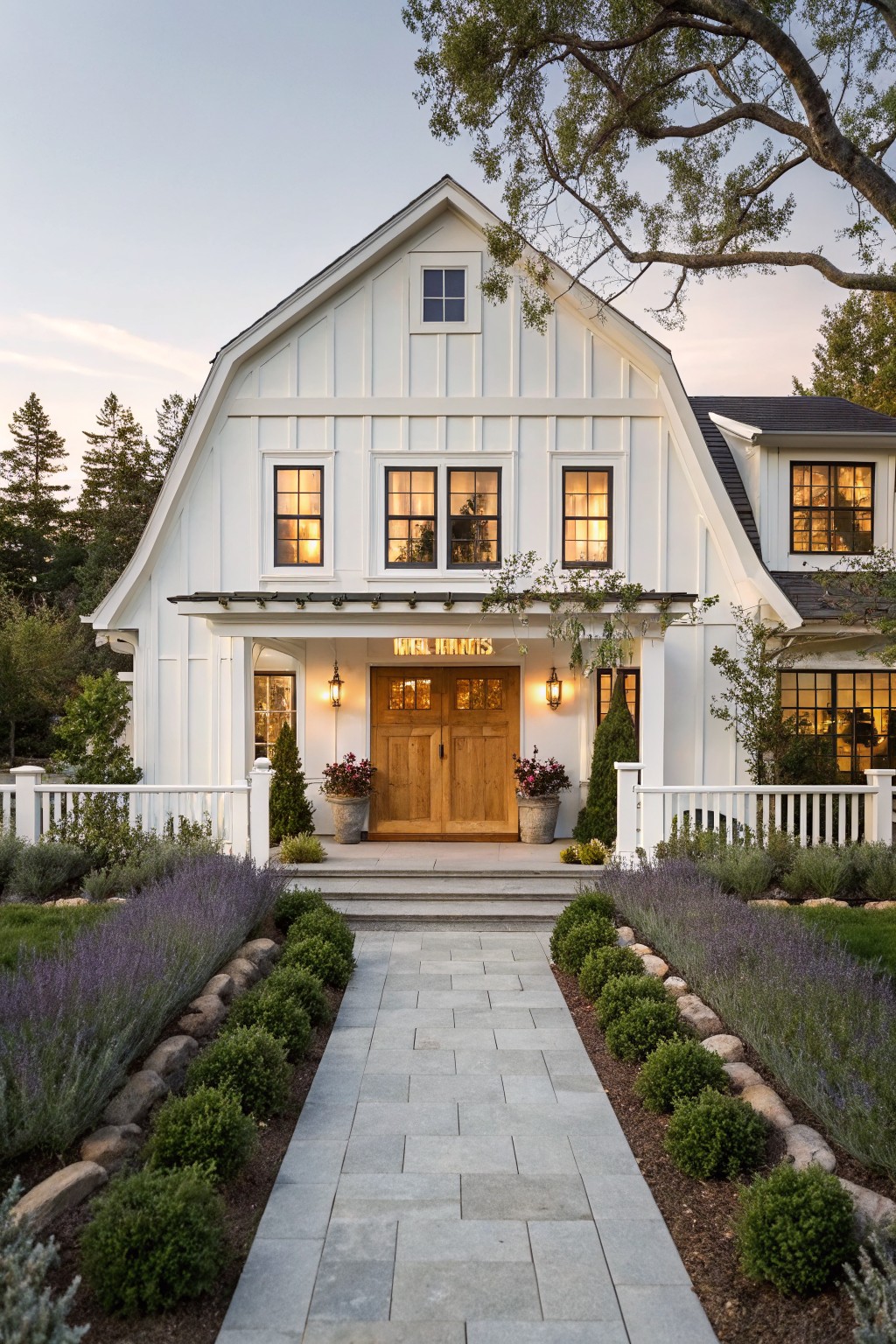
A bright white exterior can start to feel flat when every surface stays the same color. A solid wood door gives the front just enough warmth to keep the look fresh instead of stark.
This works best on simple farmhouses where the siding is already clean and bright. Let the door carry the wood tone and keep the trim and porch details white so the contrast stays clear without extra colors.
Black Shutters Add Definition To White Siding
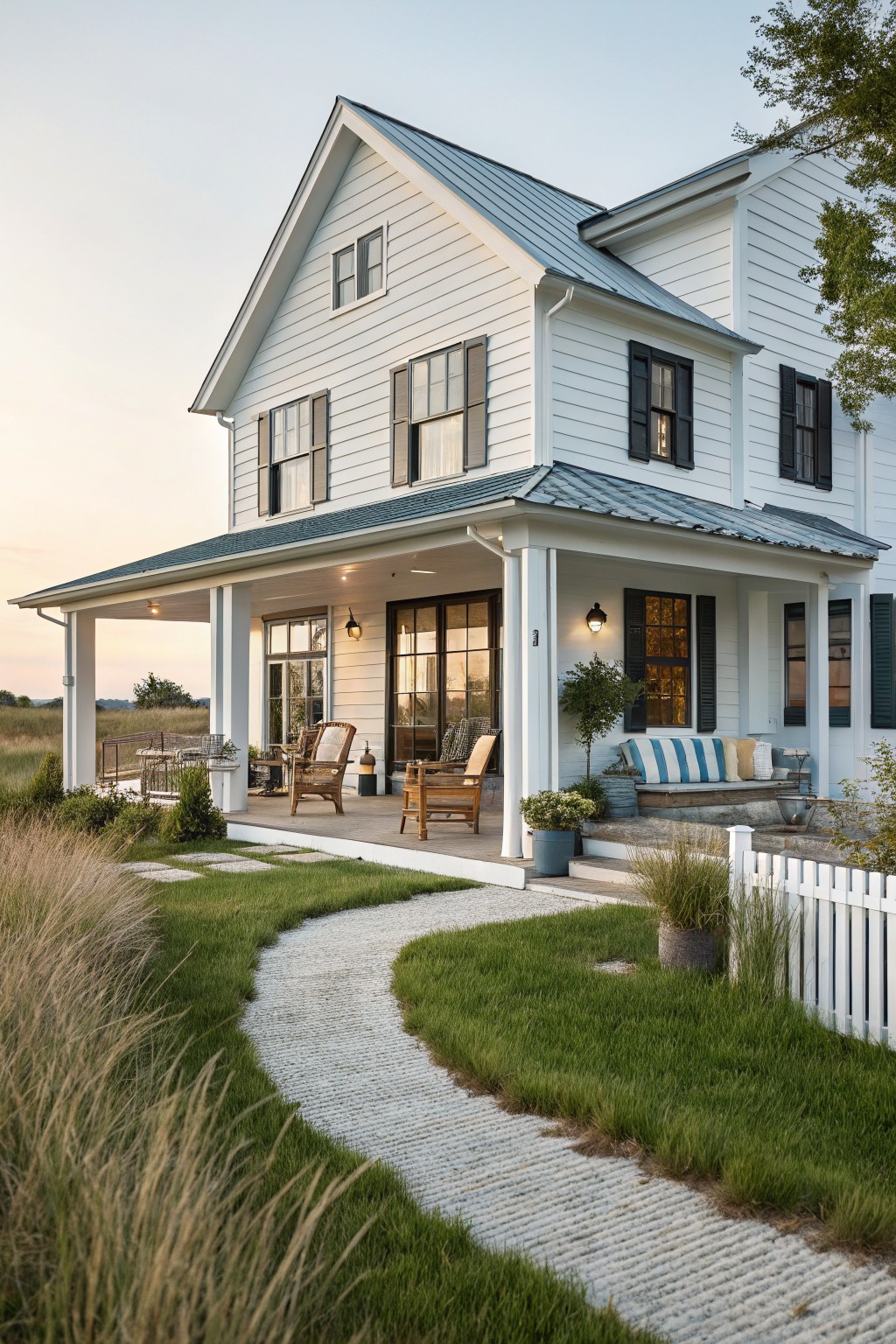
Black shutters give a white farmhouse exterior just enough contrast to stay interesting. They stop the bright siding from feeling flat or washed out, especially on homes with simple lines and a metal roof.
This approach works best on traditional farmhouses where you want the white to stay crisp. Match the shutters to the window frames and leave the rest of the trim clean so the contrast stays balanced rather than busy.
Dark Shutters Against White Siding
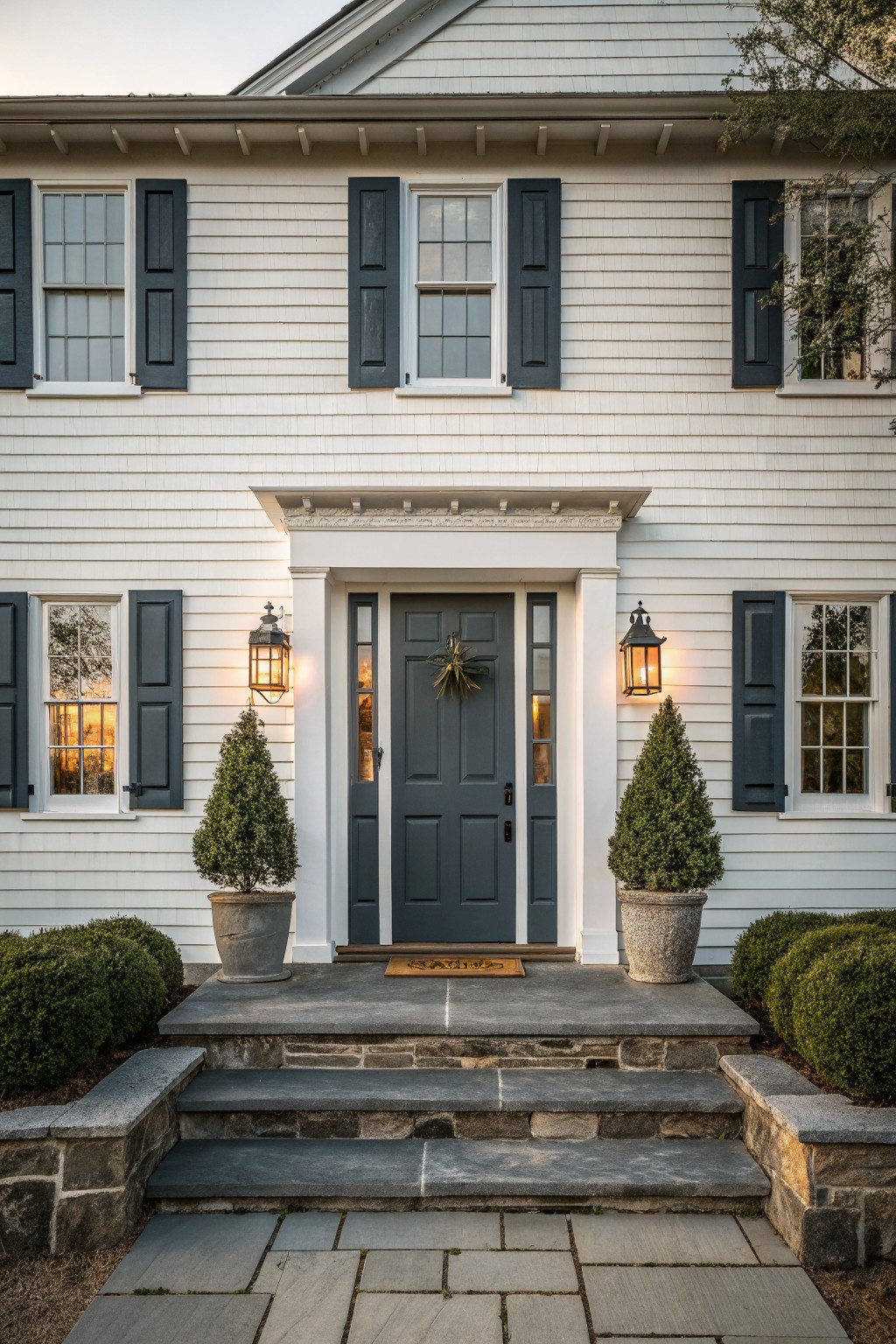
Many white farmhouses look better with dark shutters because the contrast keeps the siding from feeling flat. The deep tone around each window adds structure and stops the bright white from reading too stark.
This approach works on simple two-story homes with standard window sizes. Match the shutter color to the front door so the whole front stays balanced without needing extra trim or color elsewhere.
Warm Up White Brick With Wood Accents
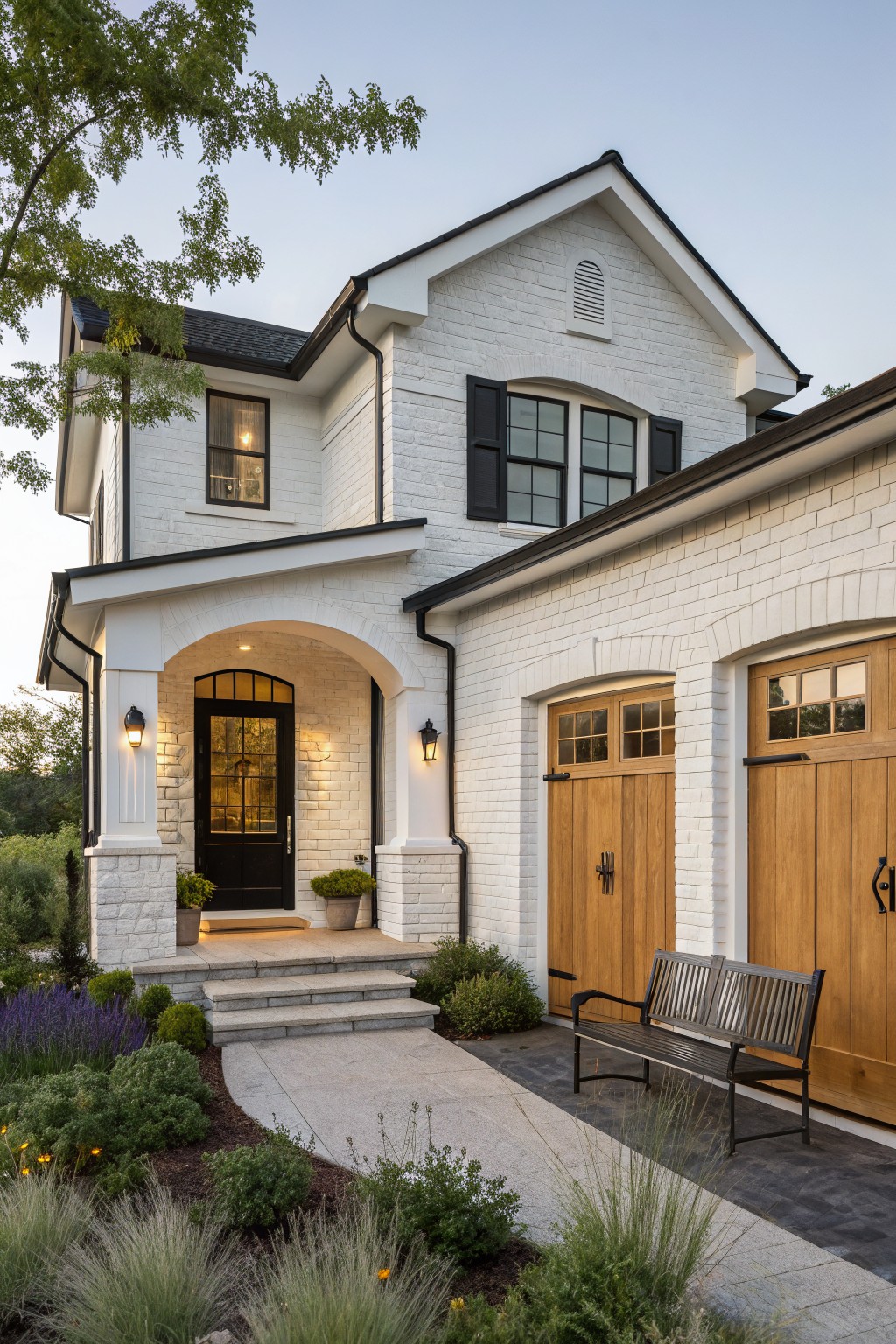
White brick can feel a little stark on its own, but adding wood doors and trim keeps the whole look softer and more inviting. The natural tone of the wood brings just enough warmth without pulling attention away from the clean white surface.
This approach works especially well on farmhouses where the garage sits right next to the main entry. Keep the wood in its natural finish or a light stain, and use simple black hardware so the contrast stays clear. It suits homes that already have some traditional details like arches or divided windows.
Pairing White Siding With a Dark Roof
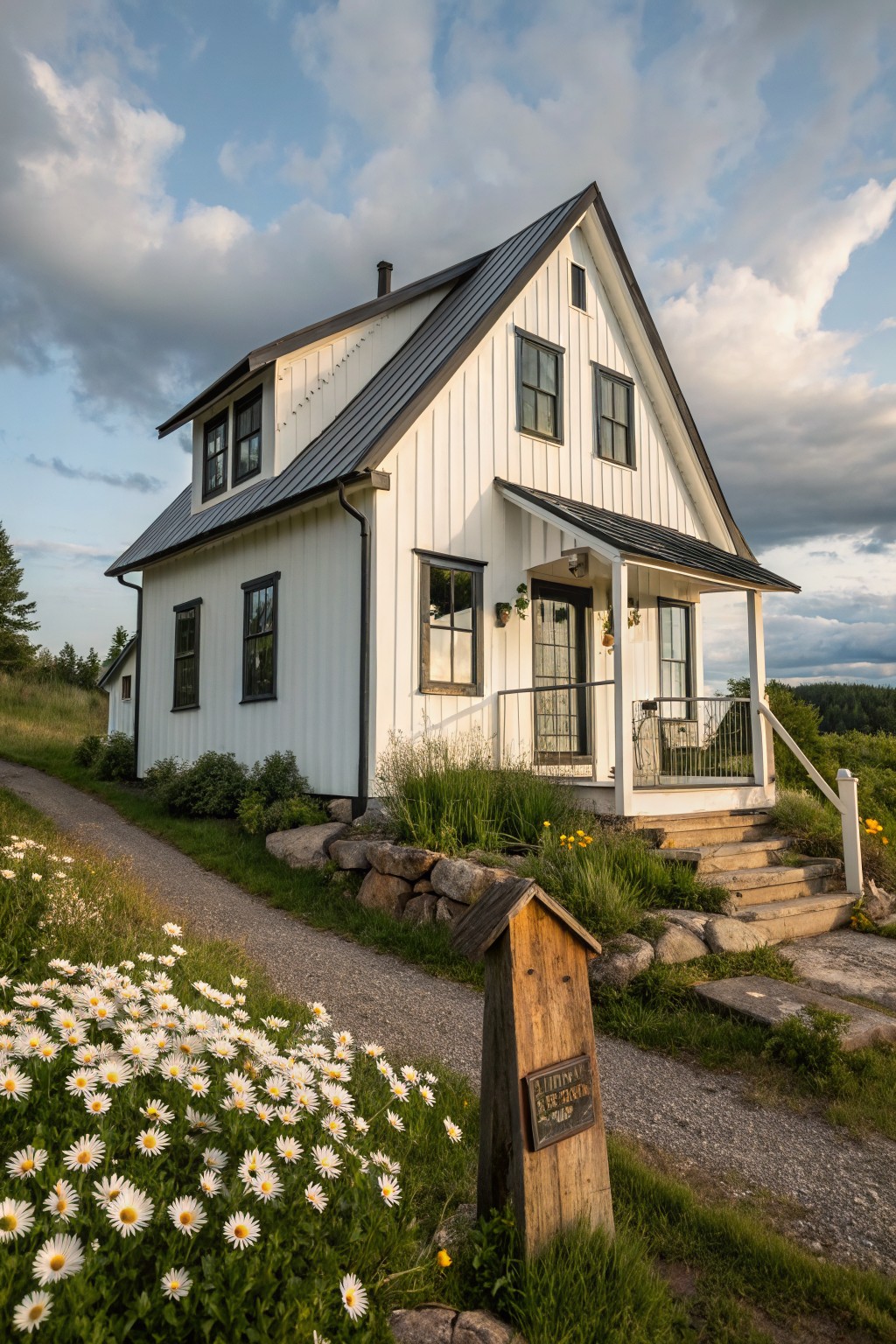
A dark metal roof gives bright white siding the contrast it needs. Without that darker element the house can start to look flat or washed out, especially in open settings with lots of sky.
This approach works best on simple gable forms where the roofline is clean. Match the windows and trim to the roof color so the whole exterior feels balanced instead of stark.
Use a Dark Door to Ground Bright White Siding
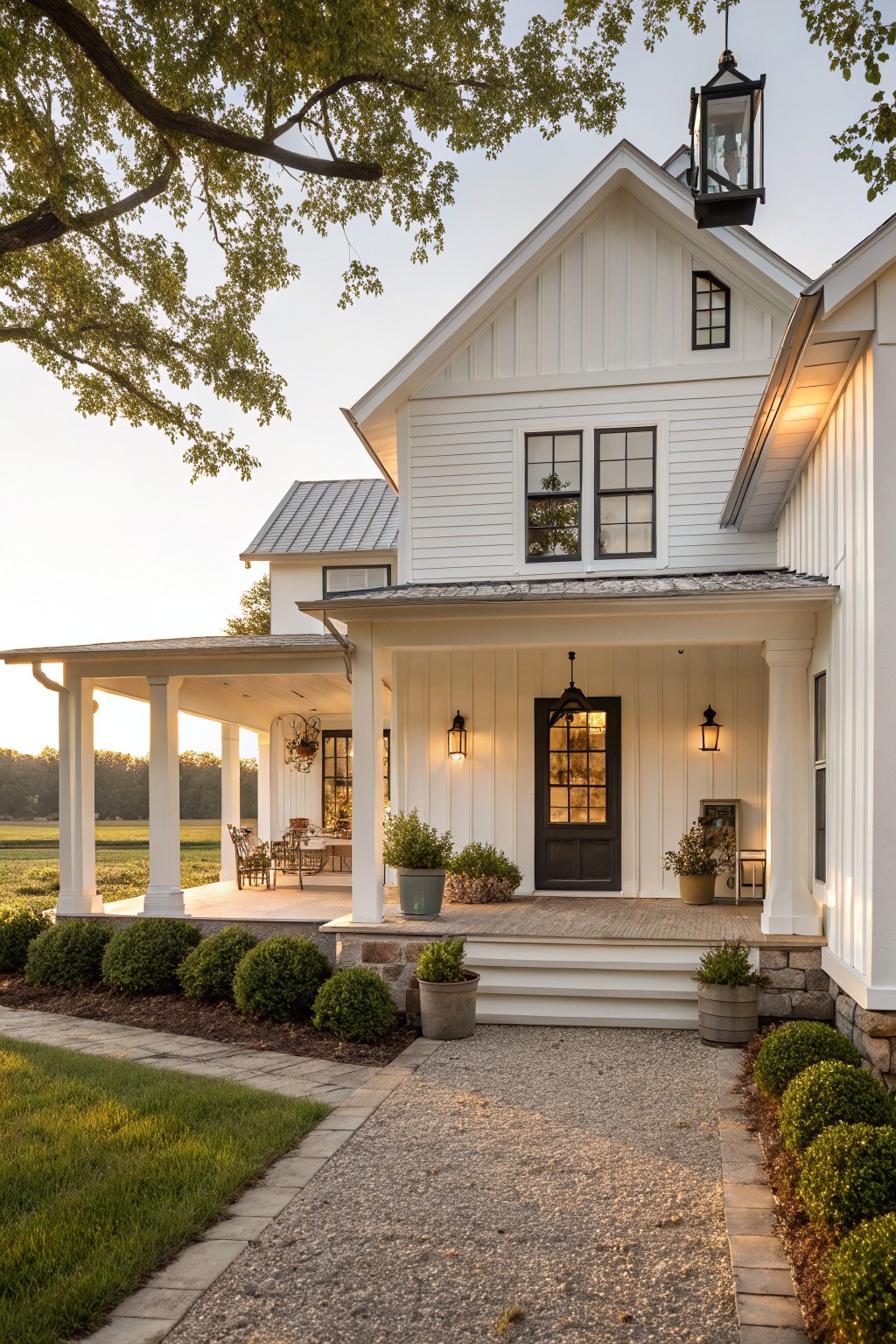
A dark front door gives white siding something solid to connect with. It keeps the exterior from feeling too bright or washed out, especially on houses that get strong sunlight. The black door here does that job without needing extra trim or color changes.
This approach works well on simple farmhouses with clean lines. Match the door with dark window frames or lanterns if you want the contrast to feel consistent. Just keep the rest of the palette light so the door stays the main focal point.
Pair White Walls With Dark Metal Accents
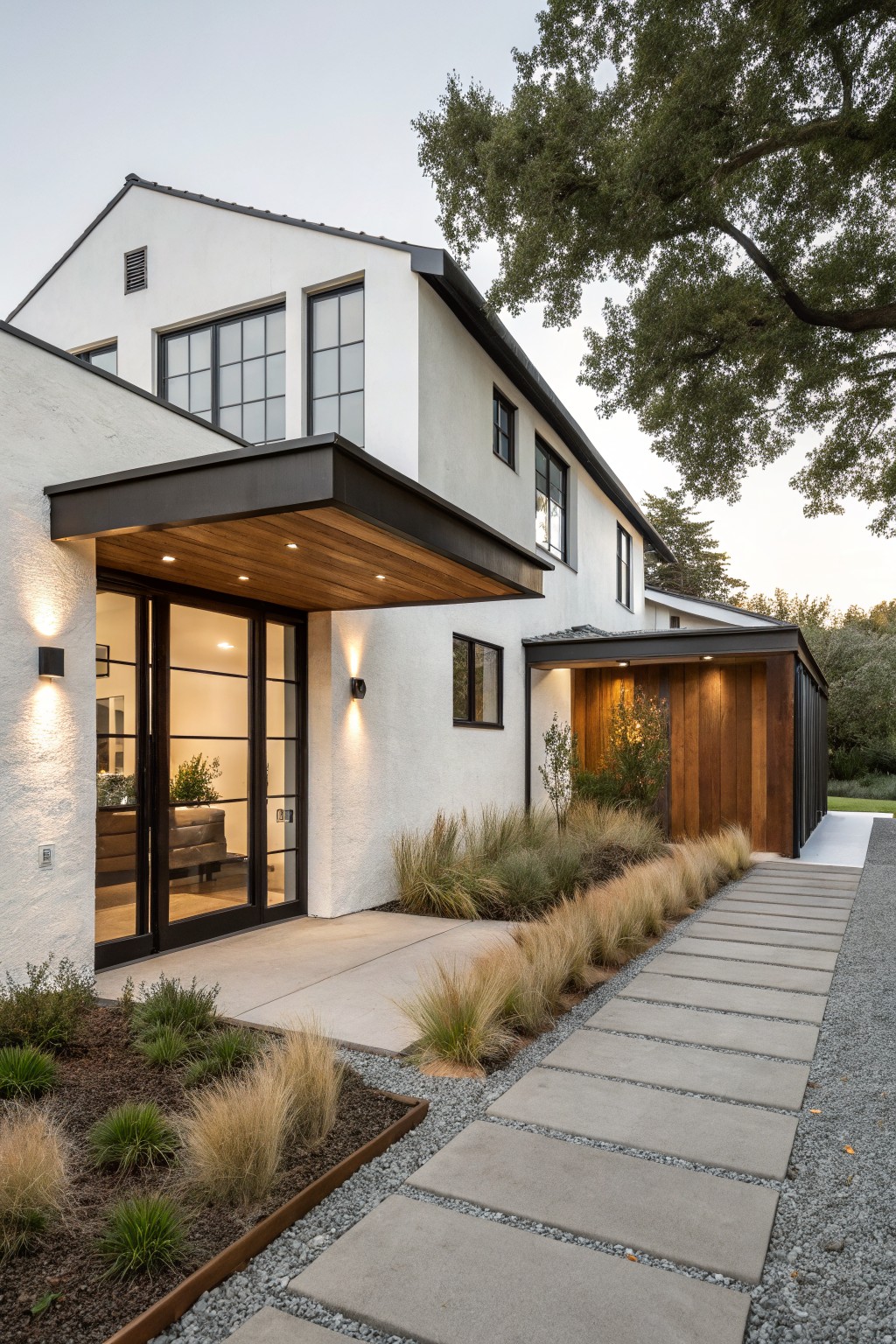
White exteriors often need something to break them up or they start to feel flat. Dark metal trim around windows and along the roofline gives the house shape and keeps the white from looking too stark or chilly.
This approach works best on farmhouse styles that already lean a bit modern. Keep the dark accents limited to key spots like the entry overhang so the house still reads bright overall.
A Bold Front Door Color
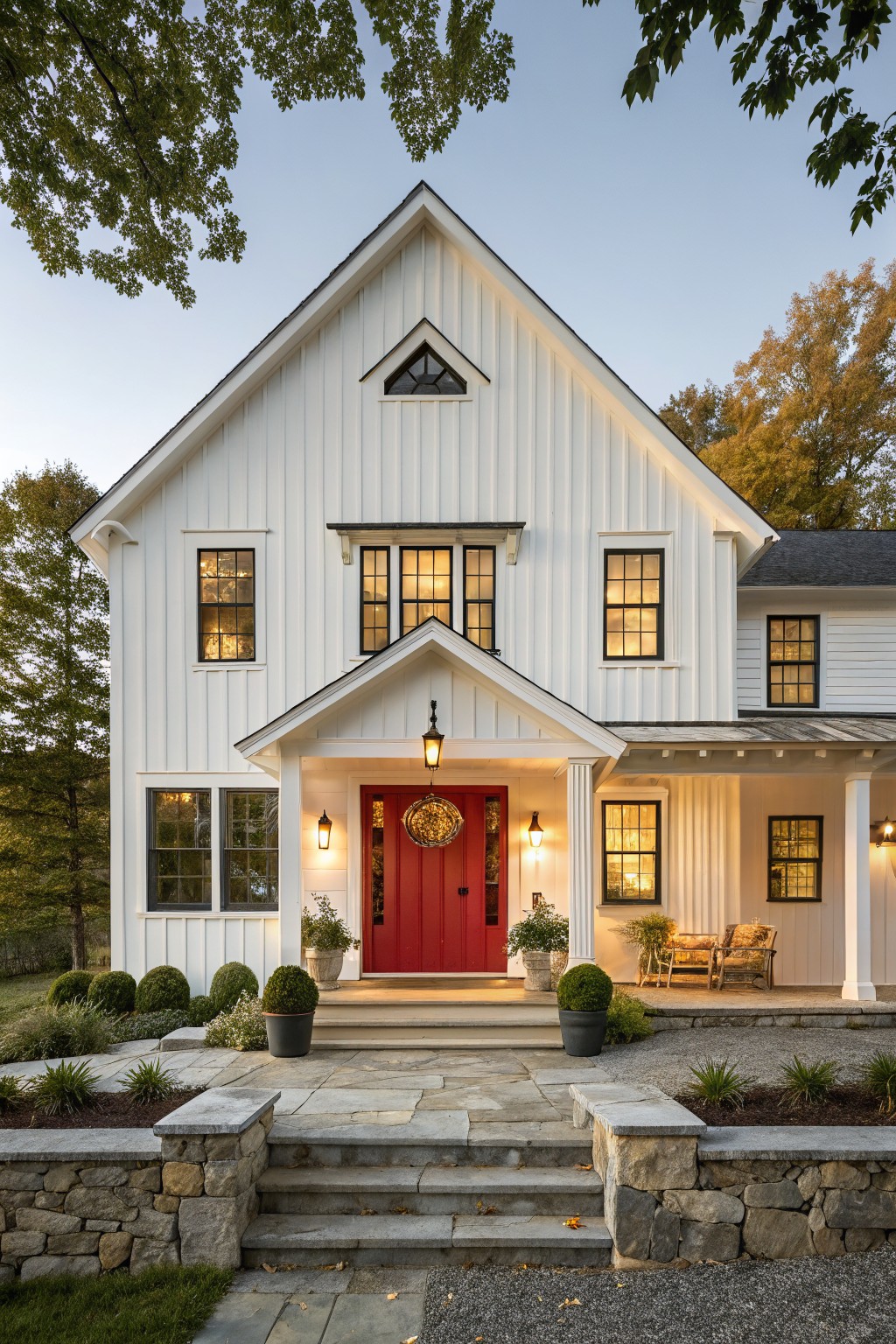
A bright red door on an all-white house gives the exterior some life without any extra fuss. The color draws the eye straight to the entry and makes the whole front feel more welcoming.
This works best on simple farmhouses with clean siding and dark window trim. Keep the rest of the palette quiet so the door stays the main point of interest.
Dark Trim Keeps Bright White Looking Grounded
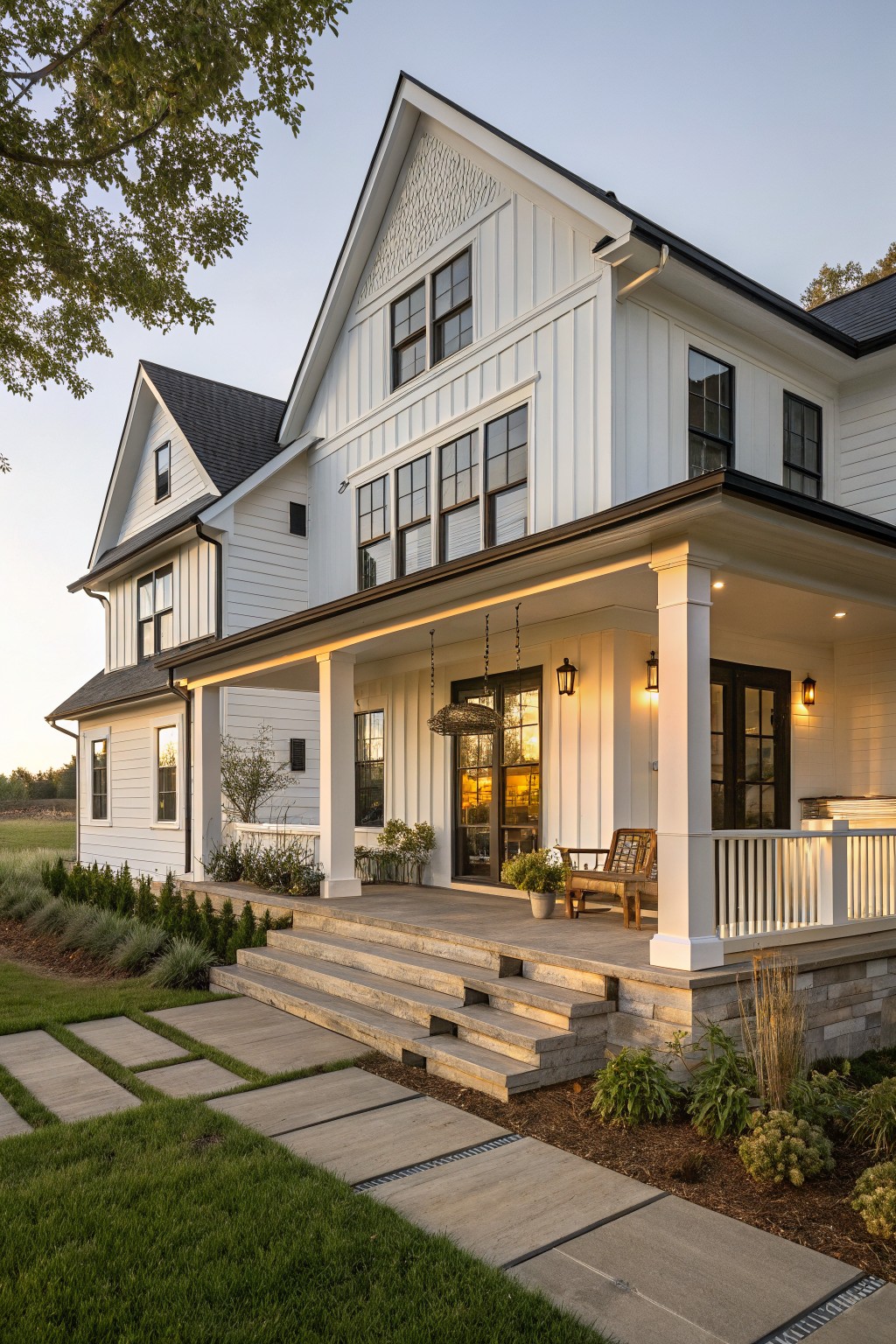
Many white farmhouses can start to feel a little stark when the siding has no strong edges. Adding black or very dark trim around the windows and along the roofline gives the white something to push against, so the house reads clean instead of washed out.
This works best on homes that already have a porch or overhangs. Keep the trim color the same on every window and door, and let any wood elements on the porch stay their natural tone. That small bit of warmth is usually enough to stop the white from feeling cold.
Dark Metal Roofs And Black Shutters On White Exteriors
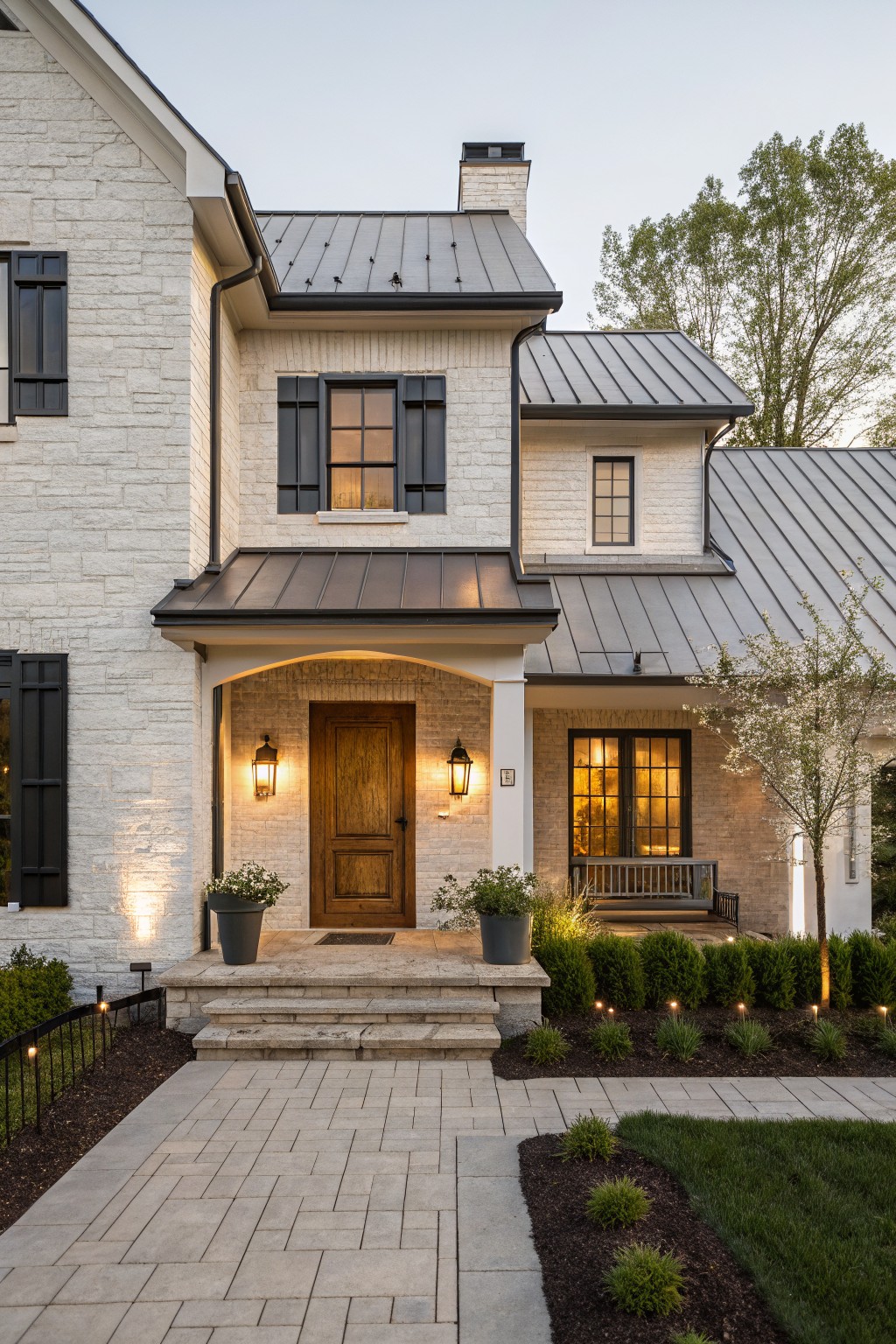
White stone can start to feel flat without something to push against it. Dark metal roofing and black shutters give the house weight and keep the bright walls from looking washed out. The contrast also makes the texture of the stone stand out more clearly.
This approach works especially well on two-story farmhouses where the roof is a big visual element. Keep the dark tones limited to the roof, shutters, and trim so the white still reads as the main color. Too many dark surfaces can tip the house the other way and make it feel heavy.
A Natural Wood Door On White Siding
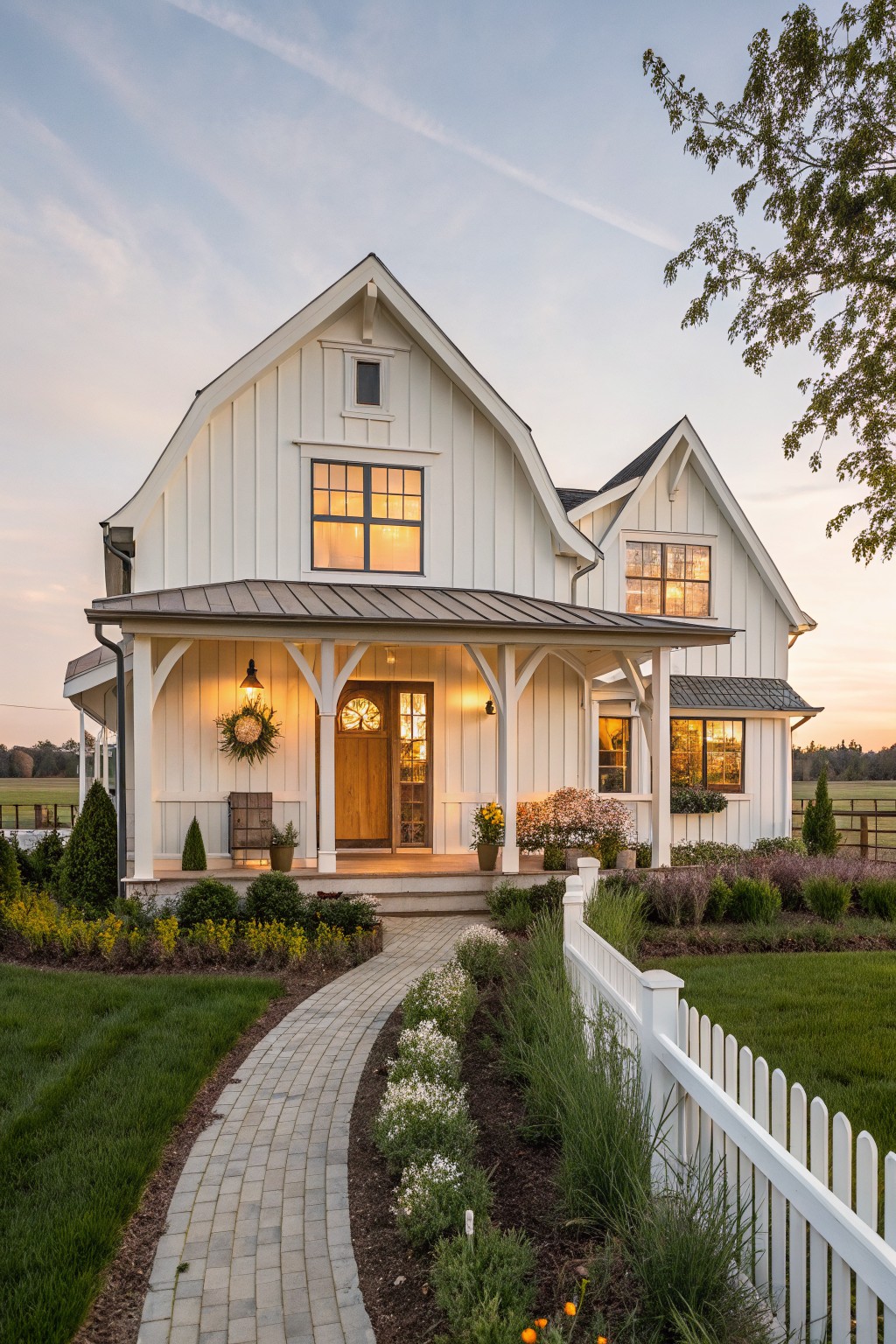
A natural wood door stands out on a bright white house because it adds an immediate layer of warmth. The grain and color break up the white without competing with it, and the effect feels simple rather than planned.
This works well on farmhouses that already have clean lines and minimal trim. Keep the wood in its natural tone or use a light stain, and make sure the door is large enough to read from the street. Smaller homes especially benefit from this single change.
Frequently Asked Questions
Q: How do I keep bright white from feeling too stark on a sunny day?
A: Add warm wood tones on shutters or porch posts right away. They pull the eye in and soften the light bounce without changing your main color. A few potted plants near the door help too.
Q: What trim color works best if I want to avoid any chill?
A: Go with a soft greige or light taupe on the trim and eaves. This choice grounds the white and makes the whole house feel settled. Test a couple samples on the actual siding first.
Q: Can I mix in metal roofing without making things look cold?
A: Yes, choose a weathered or matte metal that picks up the sun instead of reflecting it hard. The slight texture adds depth next to the white boards. Keep the rest of your accents natural to hold the balance.
Q: My yard has mostly evergreens. Will that clash with a bright white house?
A: Evergreens actually play well with white since their deep green adds instant warmth. Just add a few deciduous trees or shrubs for seasonal color shifts.
