

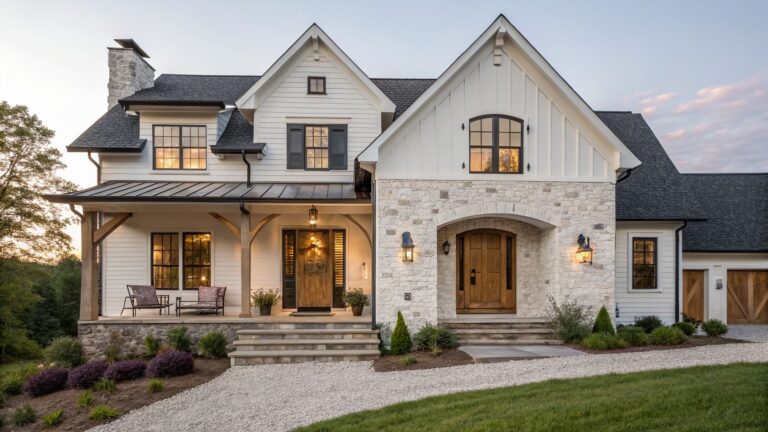
When planning a white farmhouse exterior, the mix of brick, stone, and wood can change how the whole facade sits against the landscape.
I have noticed that too much of one material often makes the house look heavy from the curb.
The right balance tends to highlight the entry and rooflines in ways that feel more natural.
Some mixes hold up better in person than they do in drawings.
I would probably start by testing a small section of stone against the wood trim before committing to the full look.
Stone Foundations With White Siding
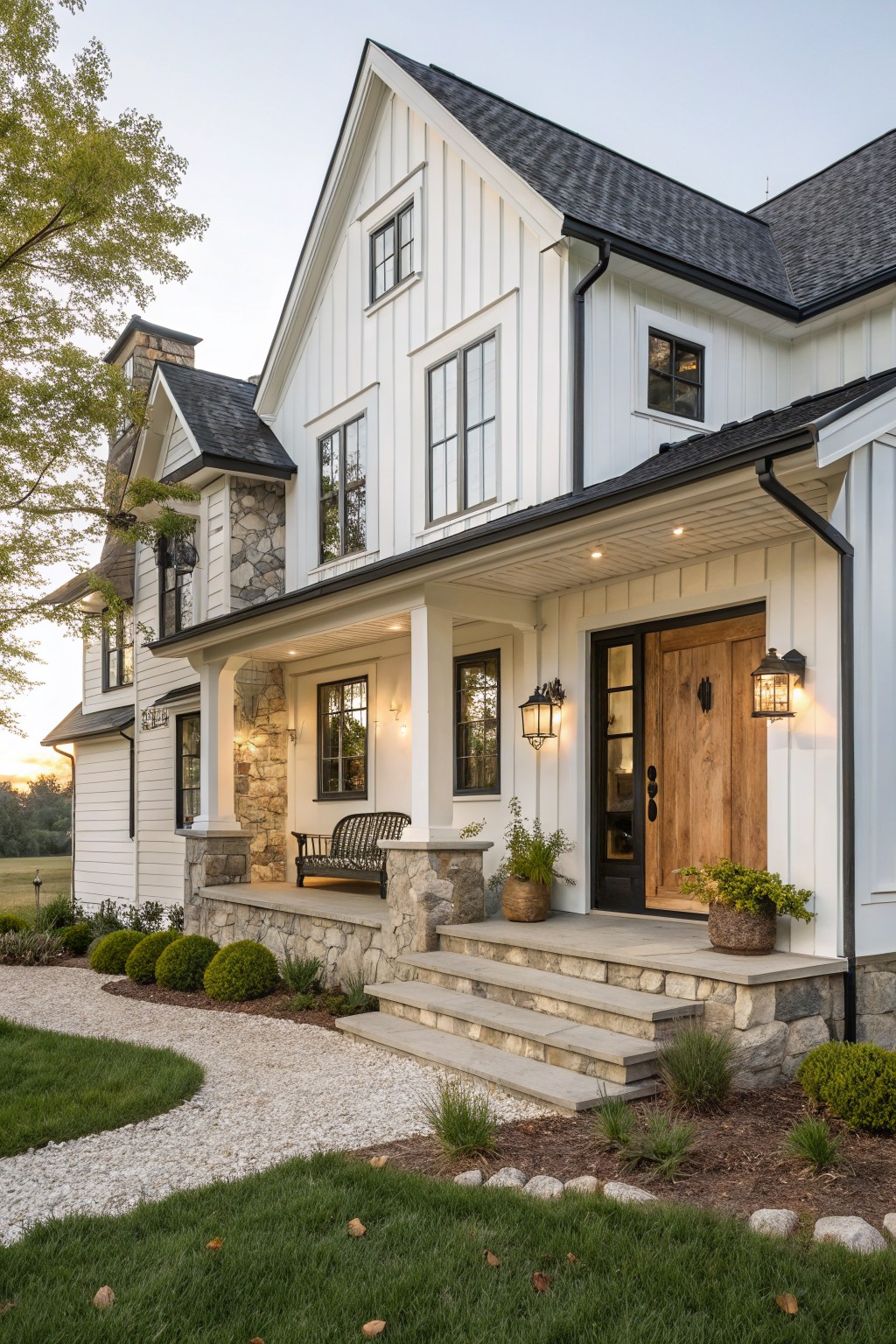
Many white farmhouses gain a steadier look when stone covers the lower walls and porch supports. The stone keeps the siding from feeling too light at ground level and gives the whole front a more finished base.
This mix works best on homes that already have a porch or slight slope to the lot. Keep the stone limited to the foundation and columns, then let the white siding take over above. It pairs easily with wood doors and dark trim without adding extra colors.
Stone Accents On White Farmhouse Siding
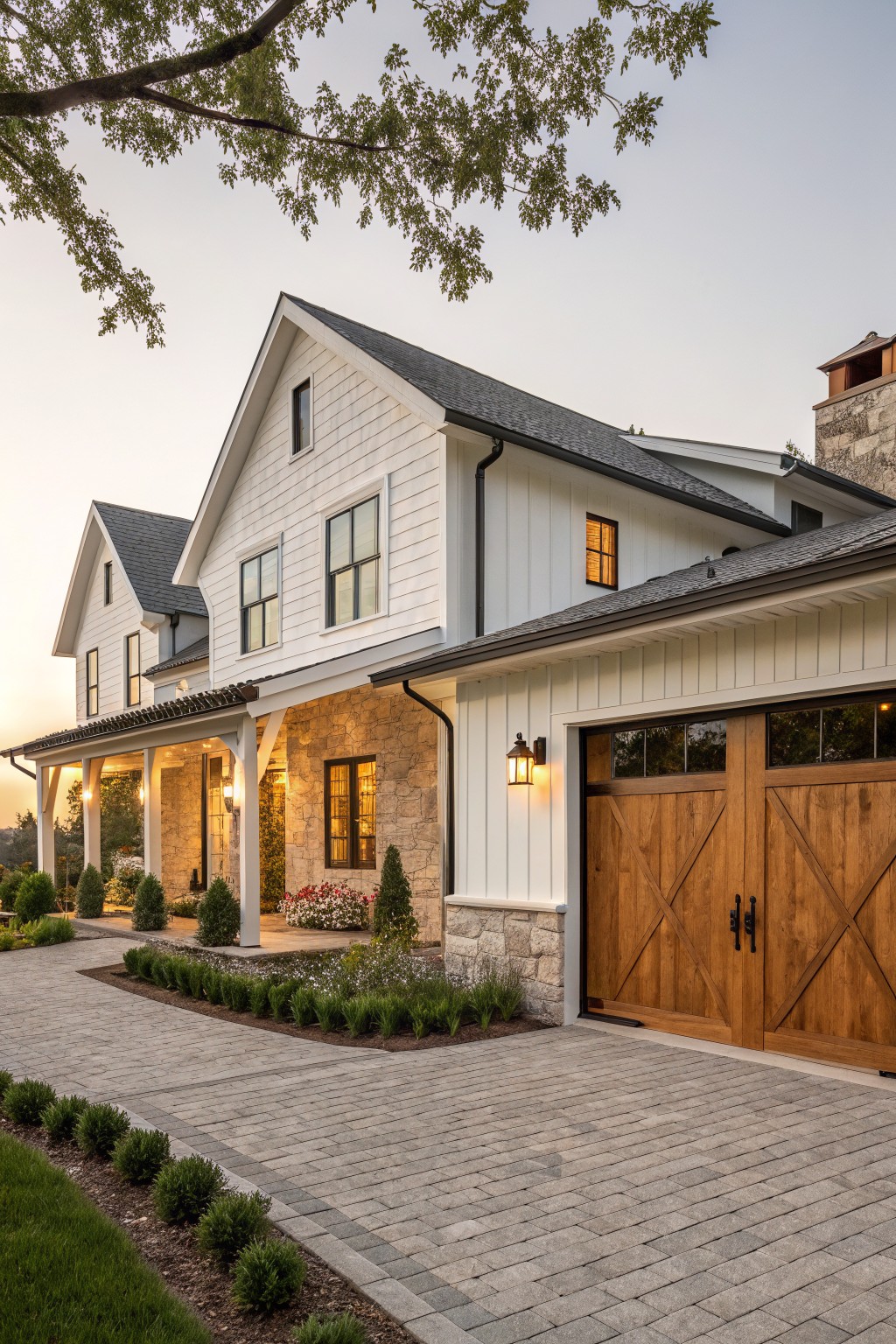
Stone works well with white siding because it adds weight to the lower part of the house without making the whole exterior feel heavy. The contrast keeps the look clean while giving the home a more solid base.
This approach suits farmhouses that have a simple shape and gabled roof. Keep the stone limited to one or two sections, like around the entry or along the garage, and let the white siding cover the rest.
Mixing Stone And Brick With White Siding
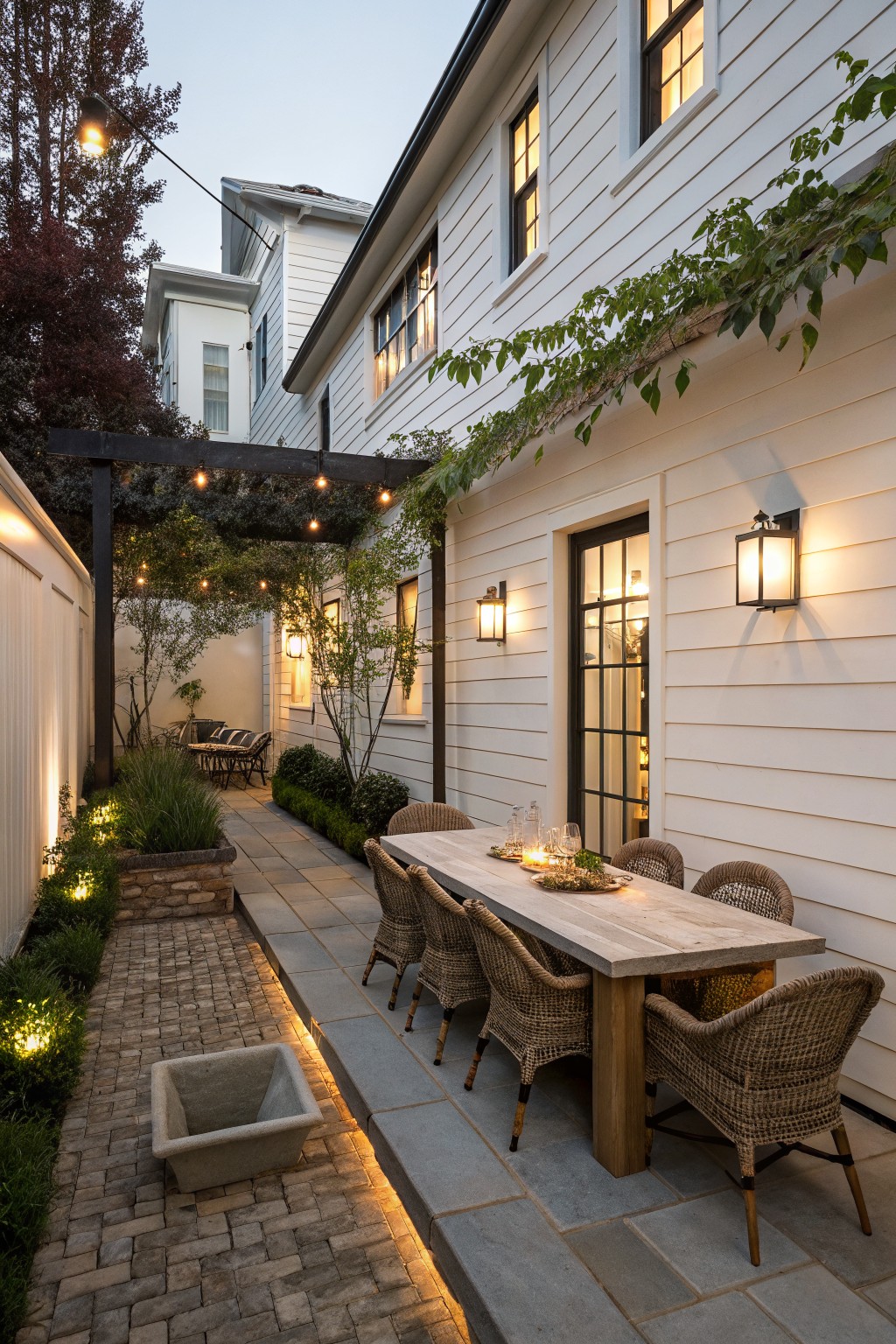
White farmhouses often look a little flat without some heavier materials nearby. Adding stone and brick around the base and along the paths gives the siding something to sit against and makes the whole exterior feel more finished.
This approach works best when the stone shows up in small doses like raised beds or borders and the brick stays on the ground as pavers. It keeps the white clean while giving the outdoor areas a practical, lived-in feel that matches most farmhouse styles.
Stone Details Balance White Siding
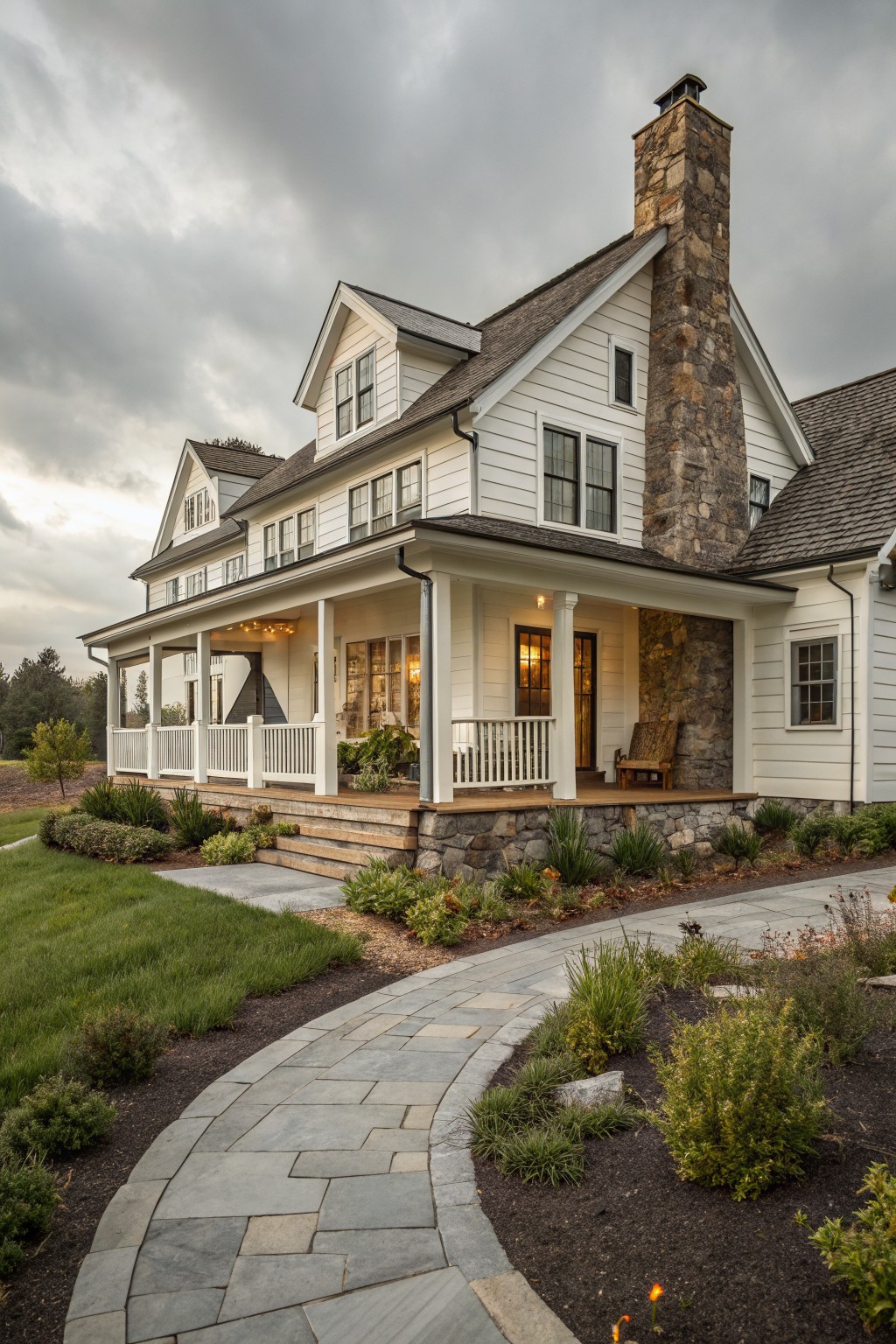
White siding often needs something heavier to keep it from looking flat on a large house. Stone used on the chimney and along the base adds that weight without overpowering the clean look of the paint.
This mix works best when the stone stays in one or two main spots rather than spreading across the whole facade. It suits farmhouses with simple rooflines and gives the exterior a more grounded feel that still reads light overall.
Adding Stone To The Base Of A White Farmhouse
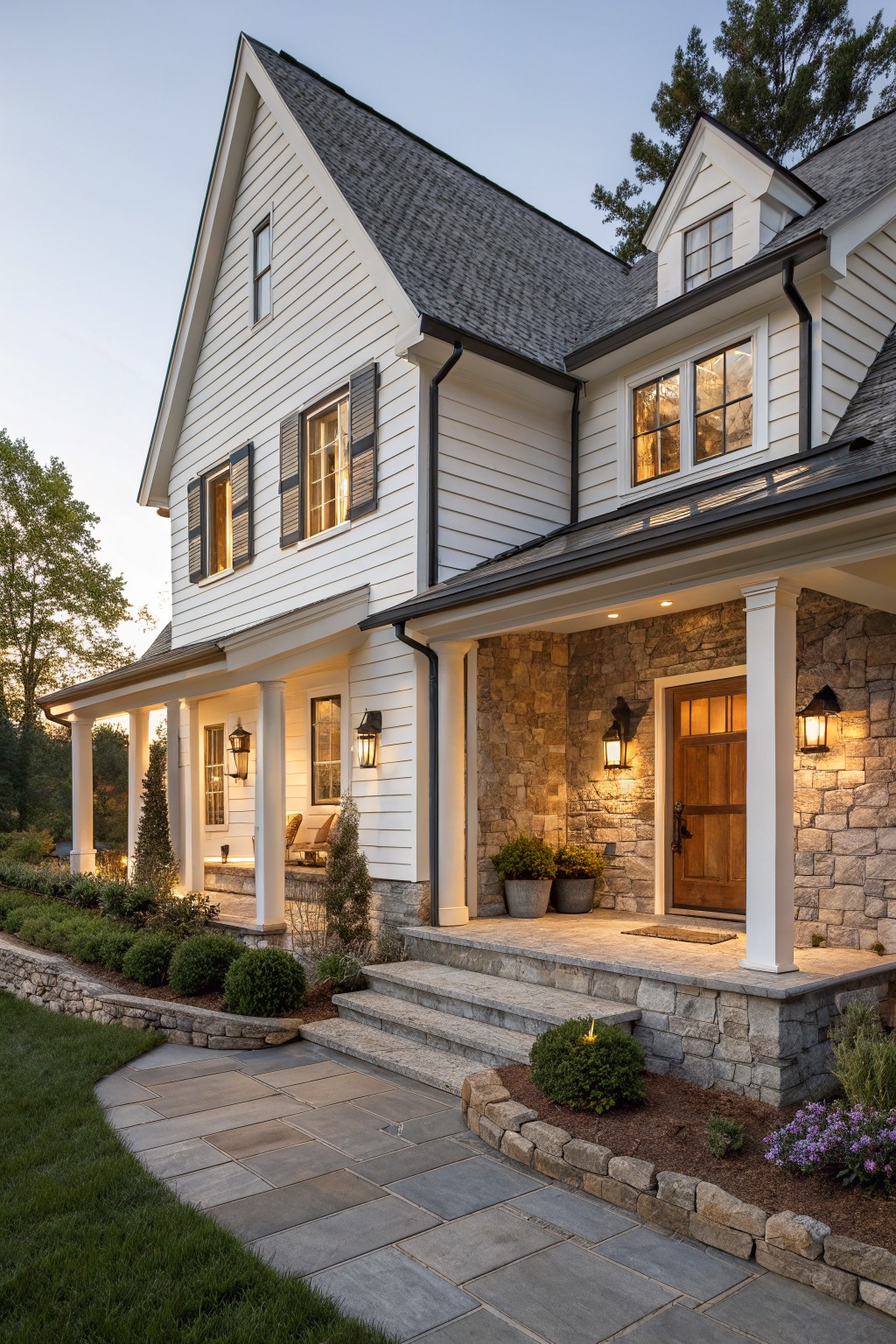
Stone at the lower level gives a white farmhouse some weight and helps it settle into the site. It works especially well when the stone stays low and only wraps the porch and entry area, leaving the white siding to do most of the visual work above.
This mix suits homes that already have a simple gable form and clean rooflines. Use a mid-tone stone that does not fight the white, and keep the stone height consistent so the transition feels deliberate rather than patchy.
Painted White Brick With Dark Roofing
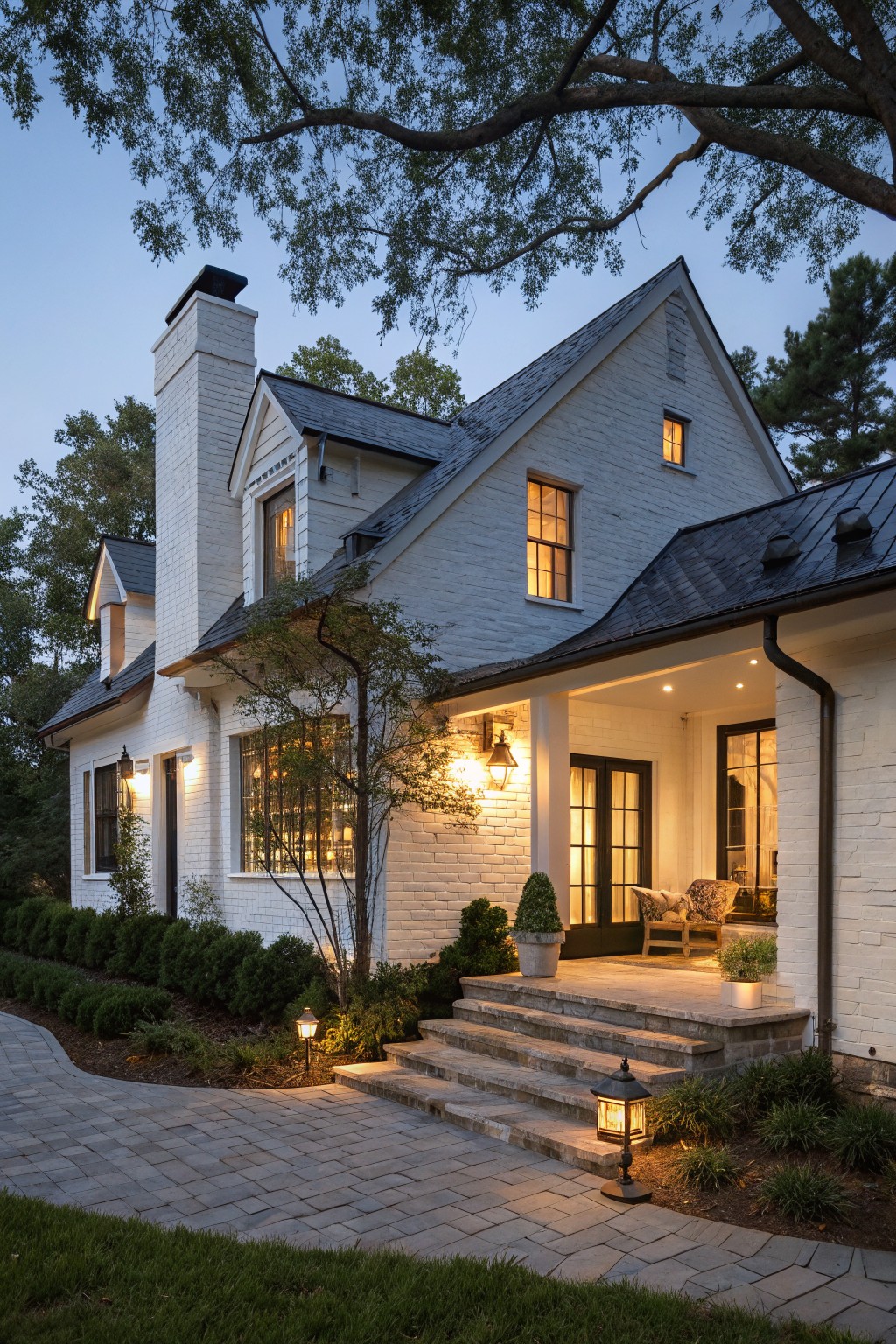
White painted brick gives a farmhouse that clean, bright look without losing the texture people like in brick exteriors. The dark roof and trim create enough contrast to keep the house from feeling too plain, and the white surface reflects light nicely even at dusk.
This approach works best on traditional or updated farmhouses where you want the brick to stay visible but need a lighter overall feel. Keep the roof and window frames dark, and use simple landscaping so the painted brick stays the main focus.
Mixing White Brick And Wood Siding
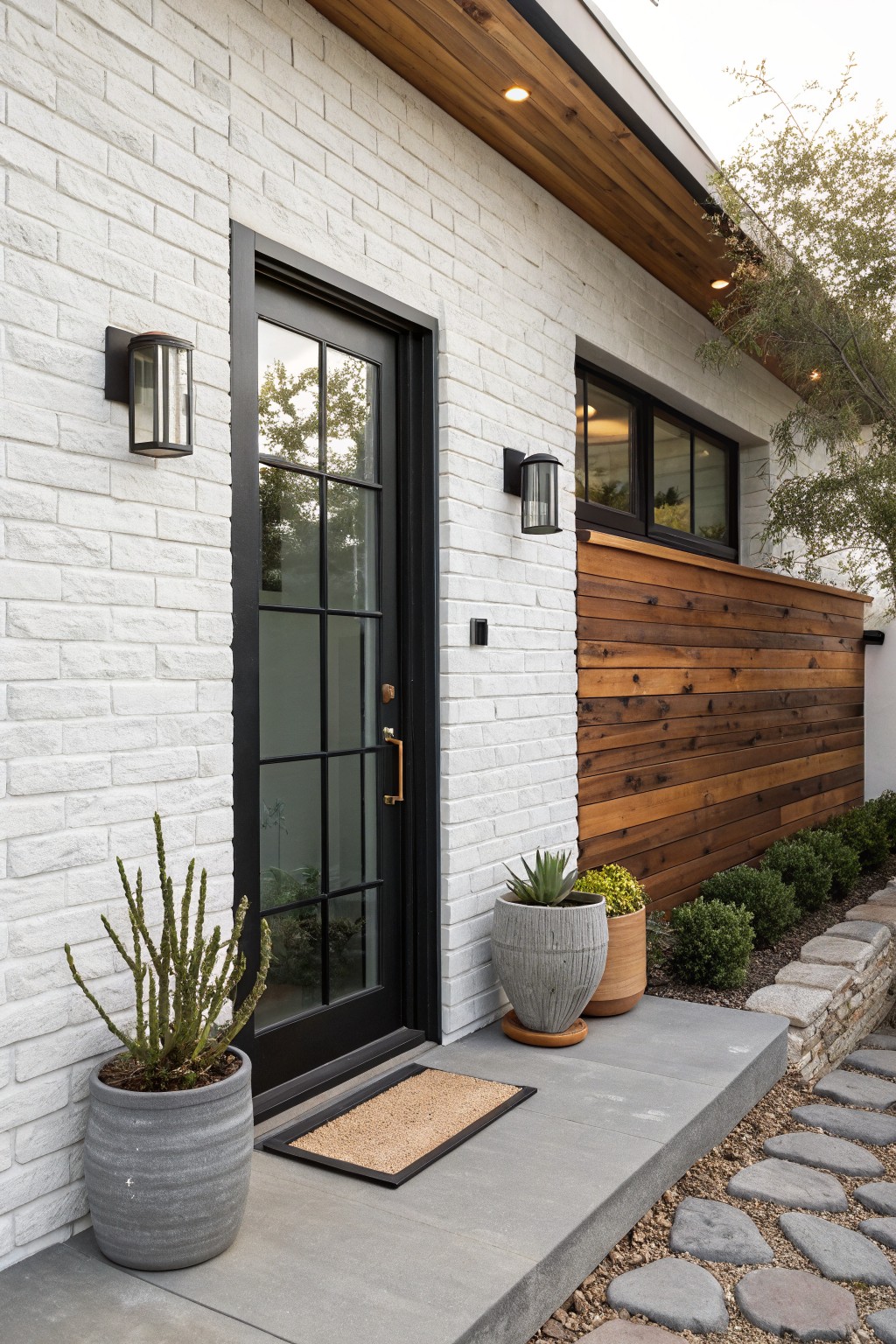
White brick already gives a clean look, but adding sections of wood siding keeps the whole exterior from feeling too plain. The wood adds warmth and breaks up the surface in a simple way that still reads as farmhouse.
This approach works best on homes where the brick covers most of the facade. Keep the wood in one or two focused areas, like a lower band or near the windows, and let the natural tones stand out against the white.
Brick And Stone Accents With White Siding
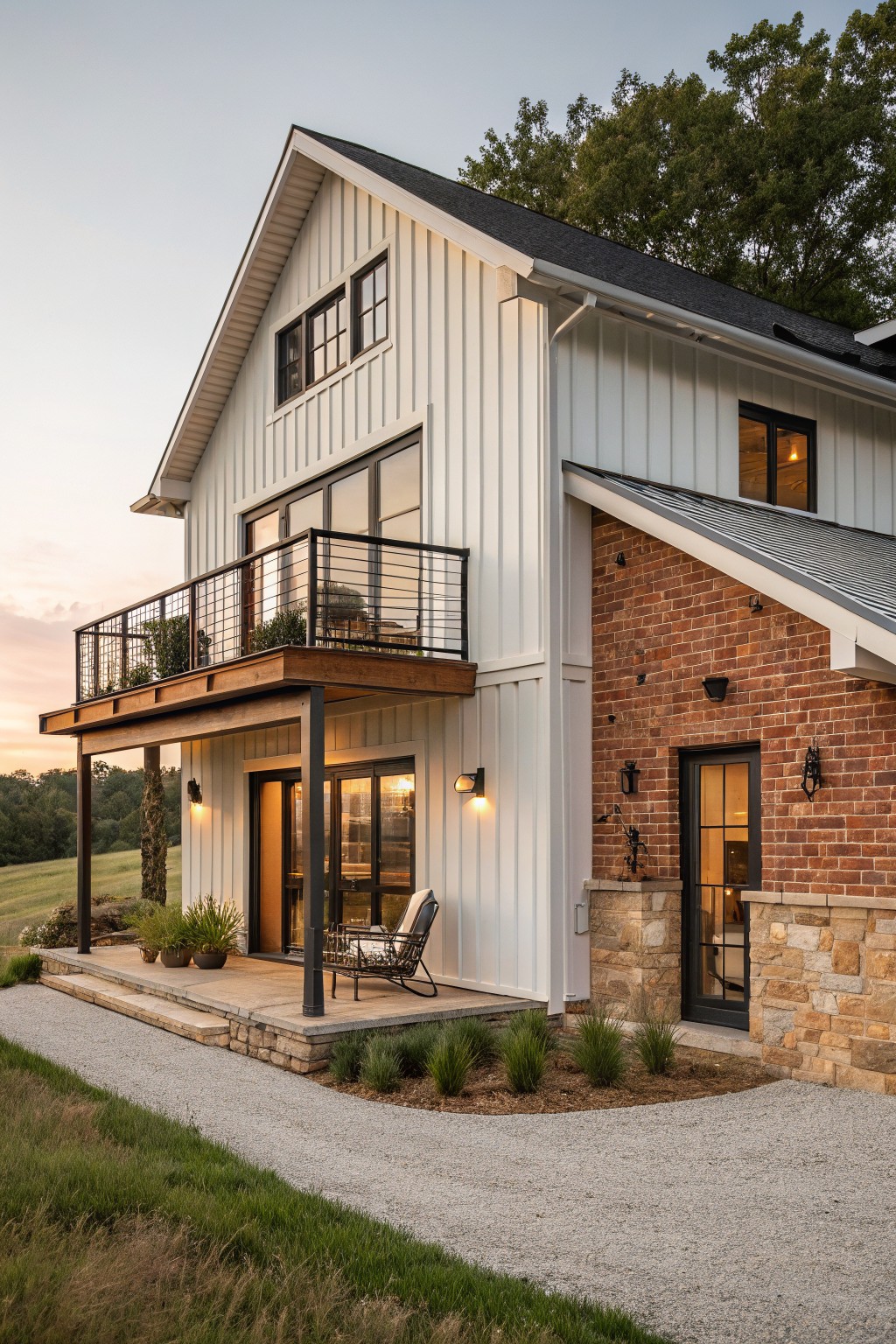
White farmhouses often need something to keep the look from feeling too light or flat. Brick and stone sections give the house weight at the base and create simple contrast against the vertical siding. The result feels more grounded without adding extra trim or color.
This approach works best on homes with a few different rooflines or side wings. Keep the stone low along the foundation and let brick cover a taller section on one side. It helps the white siding stand out while still looking like one connected house.
White Brick With Wood Details
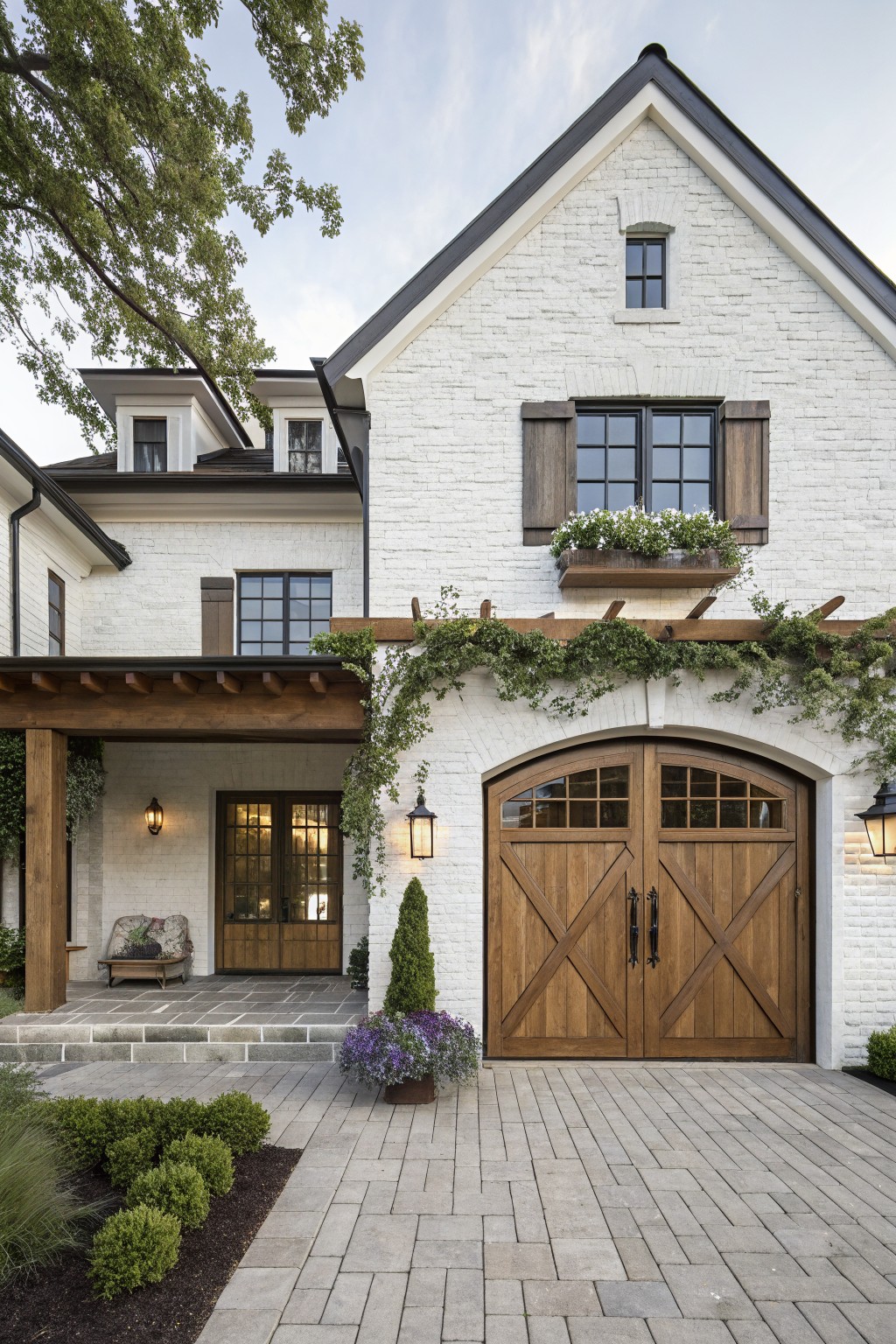
White brick already gives a clean look, but adding wood brings some warmth and texture that keeps the house from feeling too stark. The natural wood tones on doors, shutters, and beams create contrast without fighting the white surface. It is a simple way to add character while staying true to a farmhouse style.
This mix works best on homes where you want the brick to stay bright but still need some depth. Use wood on larger elements like garage doors or porch beams so the contrast reads clearly from the street. Stick to one or two wood tones and let the brick do most of the work.
Stone Bases With White Siding
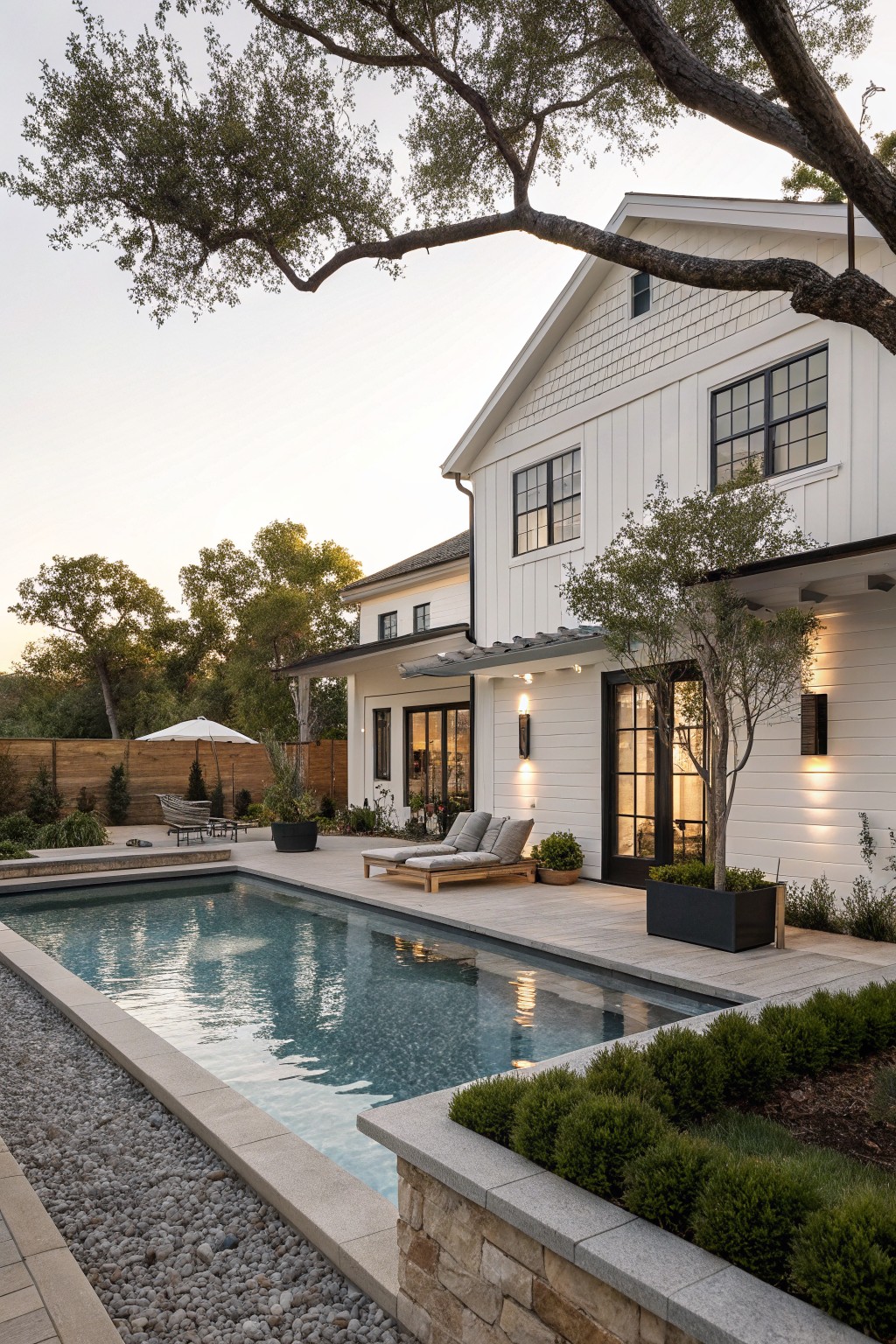
White farmhouses often look better when stone is added at the base. It gives the light siding a solid anchor and helps the house feel more tied to the ground, especially on properties with pools or changes in level.
This approach works well on newer builds or remodels where the yard has some slope. Use the stone mainly on retaining walls or lower sections rather than spreading it across the whole facade.
Stone With White Siding On Farmhouses
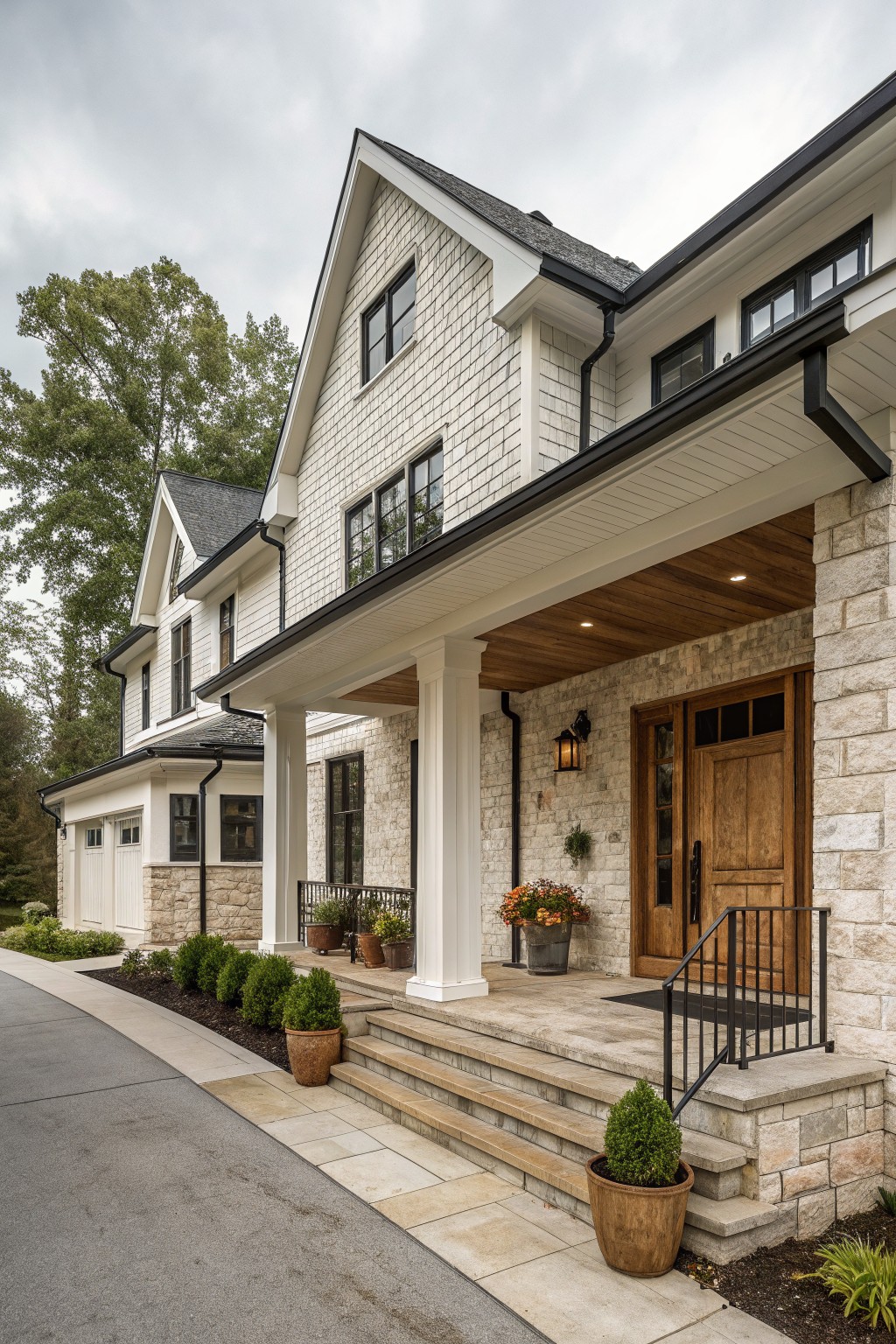
Many white farmhouses gain a stronger base when stone is added along the foundation and porch areas. The contrast keeps the siding from feeling too light while still letting the house read as classic rather than overly formal.
This approach works best on homes that already have some wood trim or a wood door. Use the stone in limited zones like the lower walls and columns, then keep the rest of the exterior simple so the mix stays balanced.
Stone Foundations For White Farmhouses
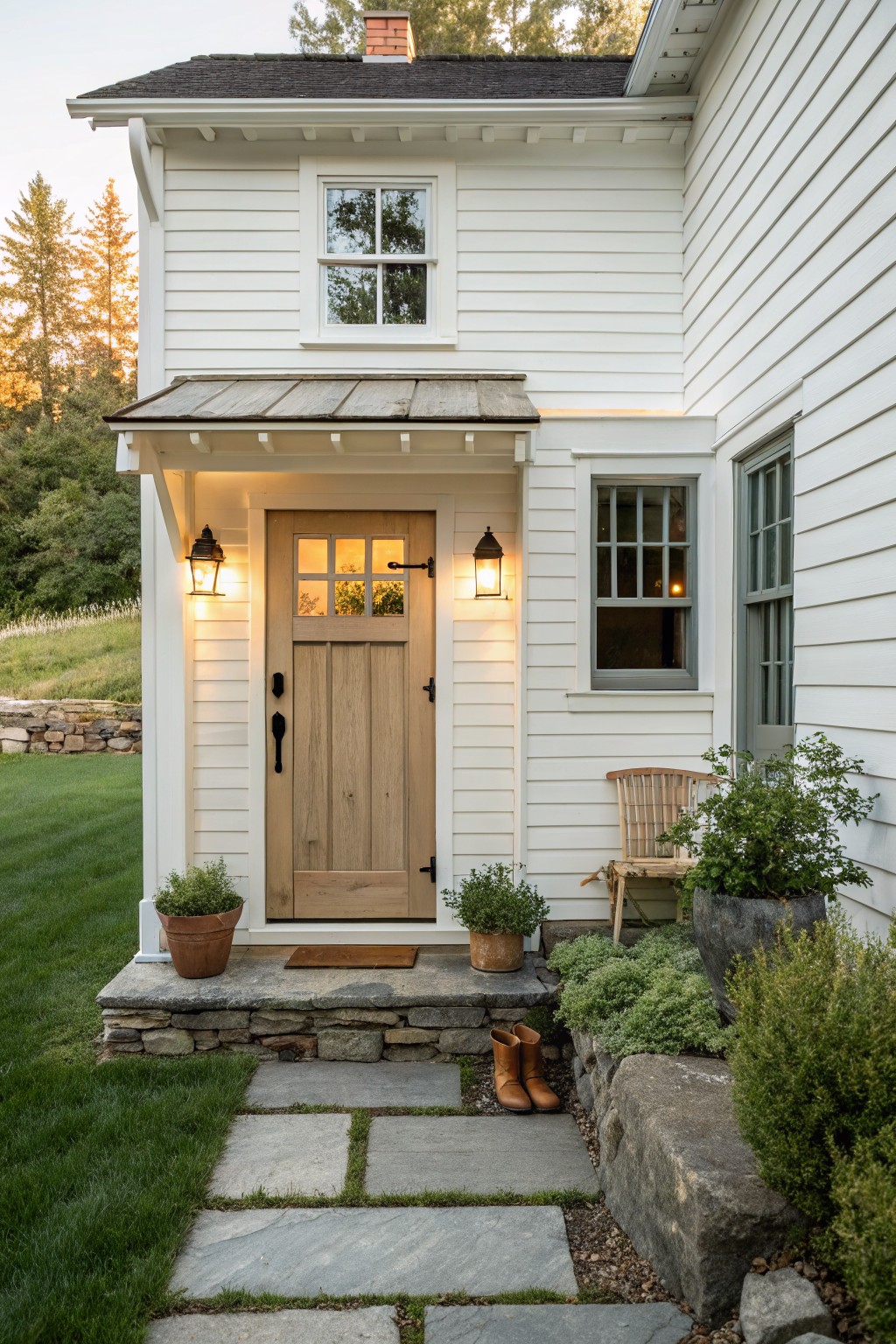
Stone at the base helps a white farmhouse feel more grounded and less like it is floating on the lawn. It also adds texture that works well with the smooth siding above it.
This approach suits homes that already have some slope or where the entry sits a step or two above grade. Keep the stone colors muted so the wood door stays the main point of interest.
Stone Tower With White Siding
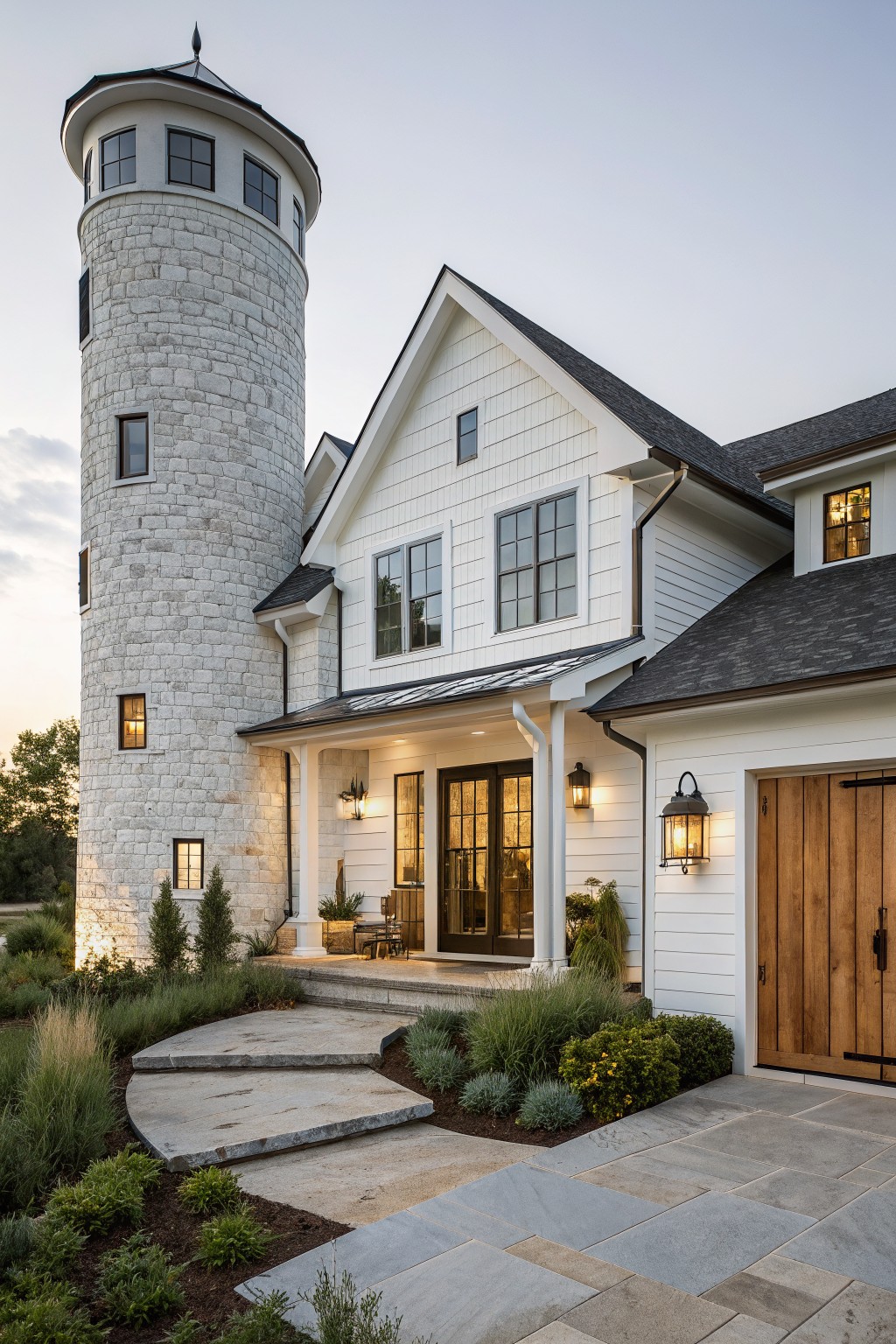
A tall stone tower next to white siding gives a farmhouse some height and texture without making the whole house feel heavy. The contrast between the rough stone and the clean painted surface keeps the look simple but still interesting from the road.
This works best on homes that already have a bit of land or open space around them. Keep the stone light in color and limit the amount of extra trim so the mix stays balanced instead of busy.
Stone And Brick At The Entry
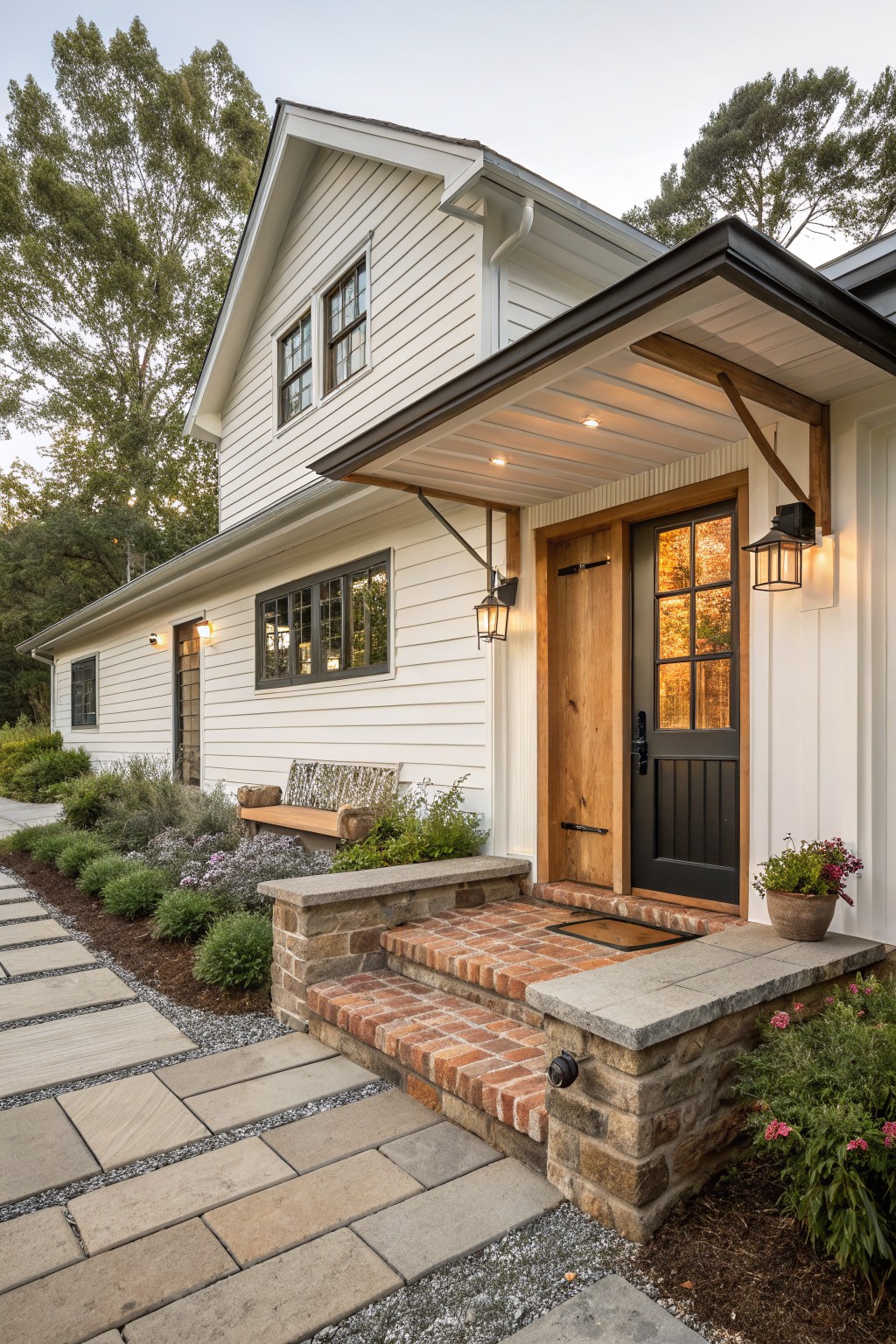
A simple way to give a white farmhouse more presence is to use stone for the porch base and brick for the steps. The two materials add texture and weight right where the house meets the ground, without taking attention away from the siding.
This mix works best on homes with wood trim or a wood door nearby. Keep the stone and brick in similar warm tones so they read as one element rather than two separate choices. It suits traditional farmhouses that need a little more structure at the entry.
Frequently Asked Questions
Q: What ratio of brick to wood feels right for a simple white farmhouse look?
A: Start with brick on the foundation and first story. Then switch to wood siding above for the rest of the house. This split keeps things grounded and light at the same time.
Q: Does adding stone mean more upkeep on the outside?
A: Stone needs little beyond occasional washing. Focus your efforts on sealing the wood parts yearly instead. That way the whole mix stays fresh without constant work.
Q: How can I test a material mix before doing the whole house?
A: Paint some sample boards and lean them against your current exterior. Live with the combo for a few weeks to see how light hits it. Adjust until it feels like home.
