

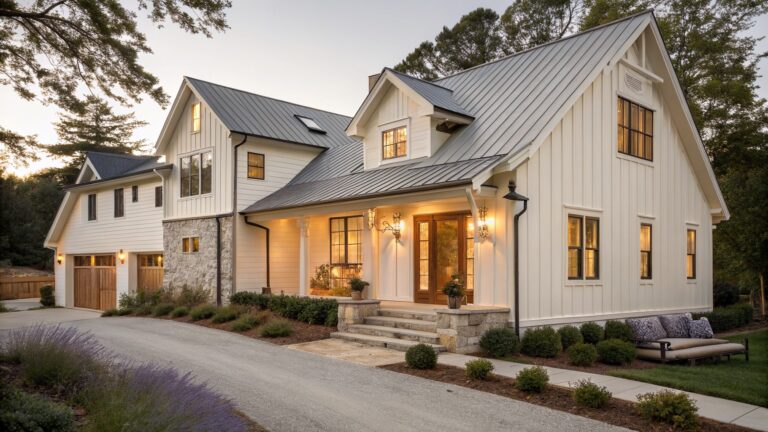
When I look at farmhouses painted in creamy white, I see how the softer shade can make the facade feel less stark against the landscape around it.
The choice often comes down to how the color interacts with the roofline and any wooden beams or stone bases that are already there.
I have found that seeing the paint on an actual wall during different hours of the day shows whether it will stay warm or turn flat.
Samples matter here.
Many homeowners end up adjusting the final mix once they realize how the finish reads from the road rather than up close.
Creamy White Siding for a Softer Finish
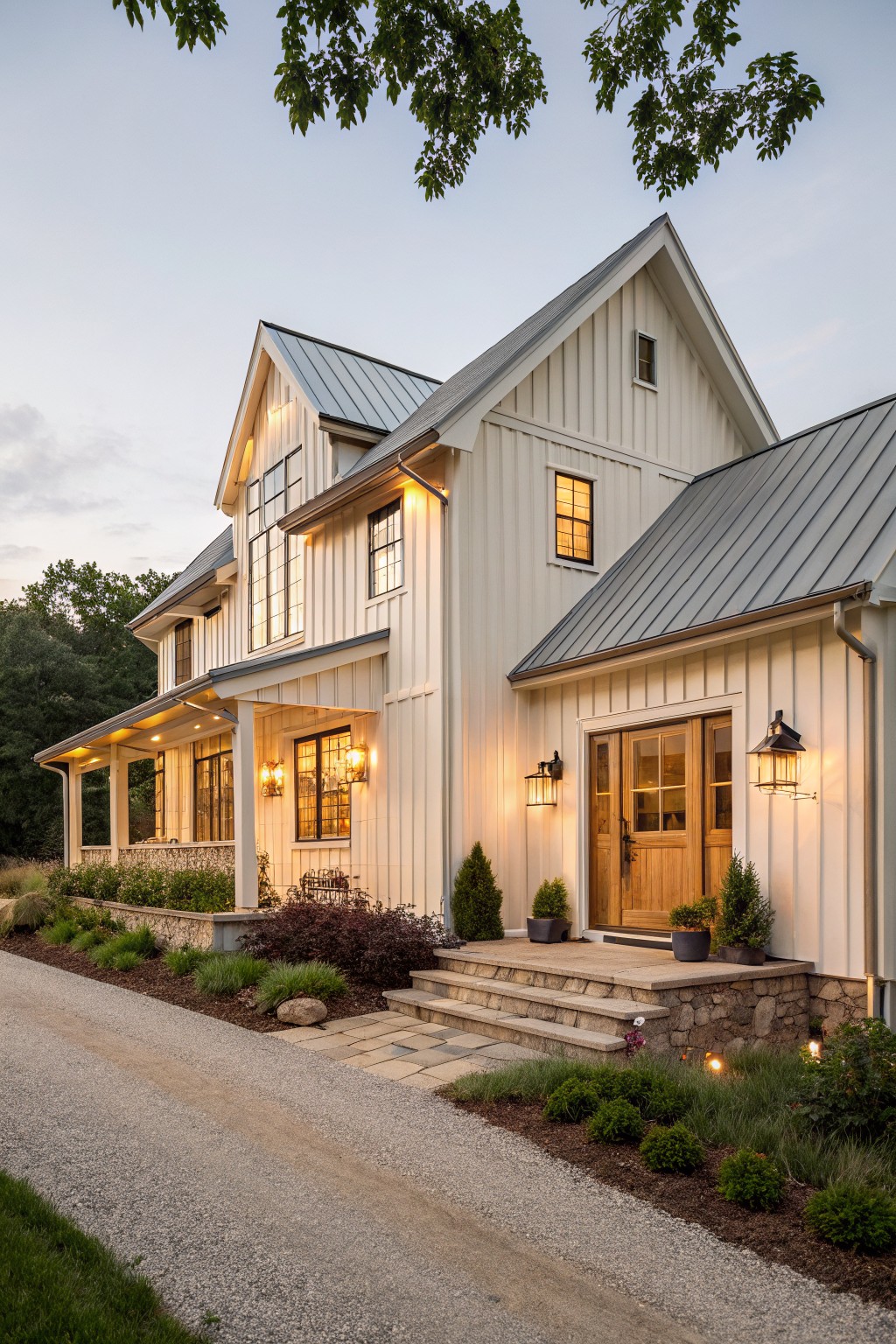
Creamy white siding takes the edge off a farmhouse exterior and keeps it from looking too stark. The color still feels clean and bright, but it sits better with gray roofing and natural stone details around the base.
This approach suits homes that already have simple lines and a mix of materials. It works especially well in areas where the light changes throughout the day, since the softer tone holds up without turning harsh.
Creamy White Trim On The Porch
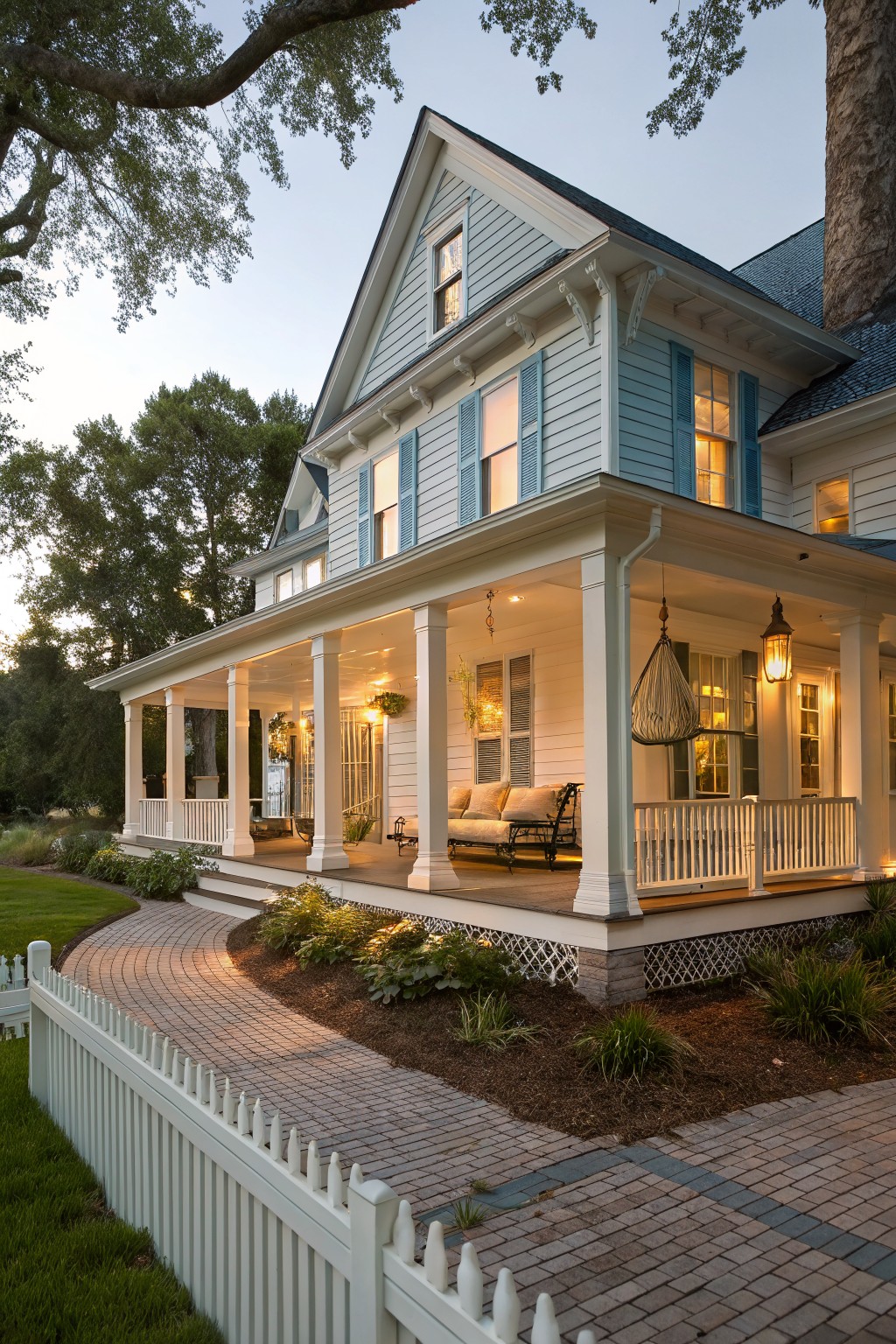
Creamy white paint on the trim and porch parts helps the whole exterior feel softer without needing a full repaint. It stands out against the siding and gives the house a warmer look that still reads as classic farmhouse.
This works best on homes with a simple main color where you want to add some depth around the windows and porch. Stick with it on railings, columns, and eaves if you like the style but do not want things to feel too stark.
Creamy White Siding With Dark Frames
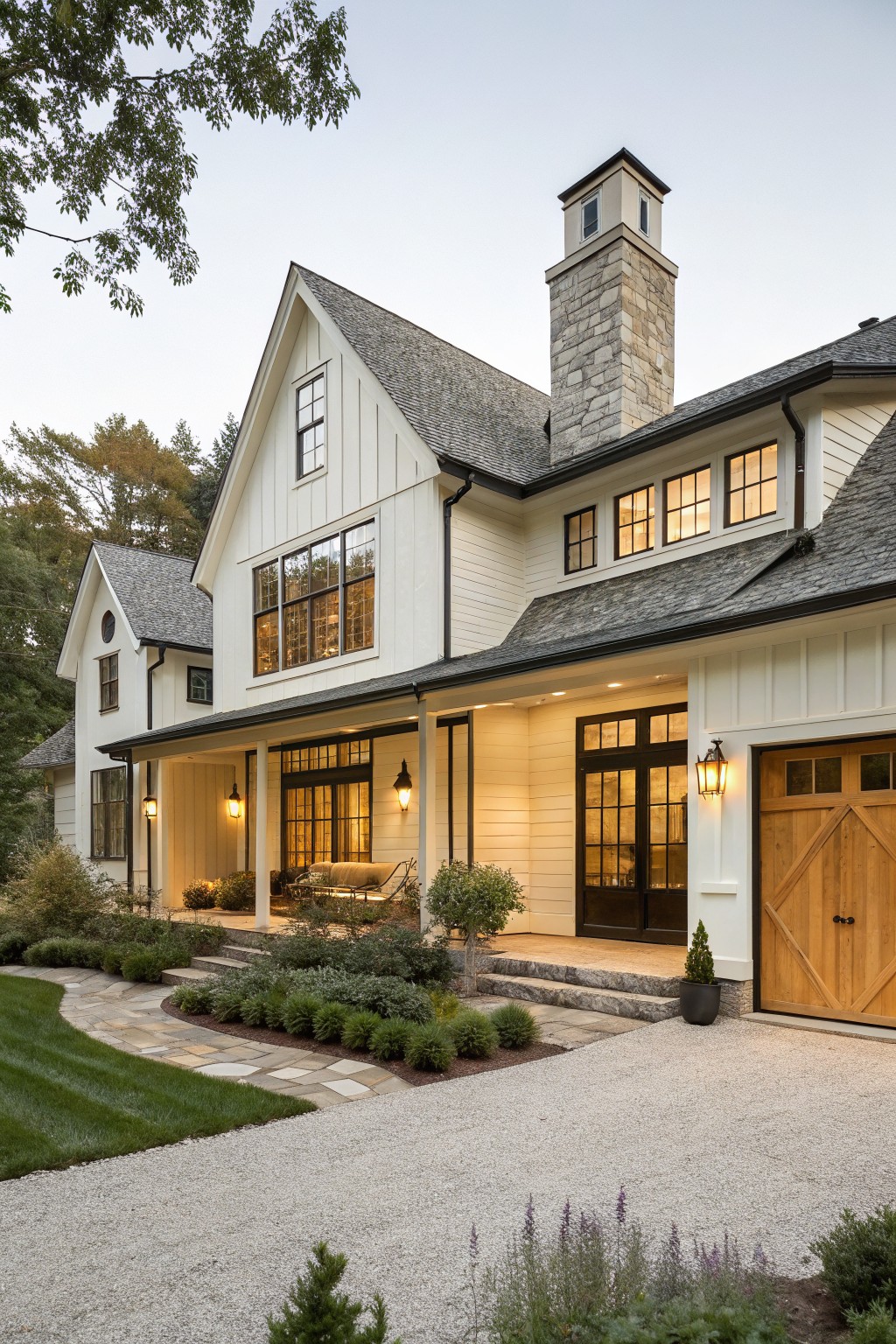
Creamy white siding gives a farmhouse exterior a softer finish than pure white. It still reads clean but feels a little warmer on its own, especially when the light shifts throughout the day.
This approach works best on homes that already have strong trim lines or natural materials nearby. Keep the window and door frames dark so the creamy tone stays grounded instead of drifting toward pastel. Stone chimneys or wood accents, like a garage door, help balance the look without extra color.
Warm Door Colors For White Farmhouse Exteriors

A soft neutral door can change how a white exterior feels without much effort. Instead of a bright white or deep color, this warm taupe shade sits comfortably against the brick and gives the entry a calmer presence.
It works well on farmhouses that already have creamy or off-white walls. Choose a door color with some beige or gray in the mix so it does not fight the siding. Keep hardware simple and add only a small wreath if you want a bit of greenery.
Creamy White Siding With Wood Accents
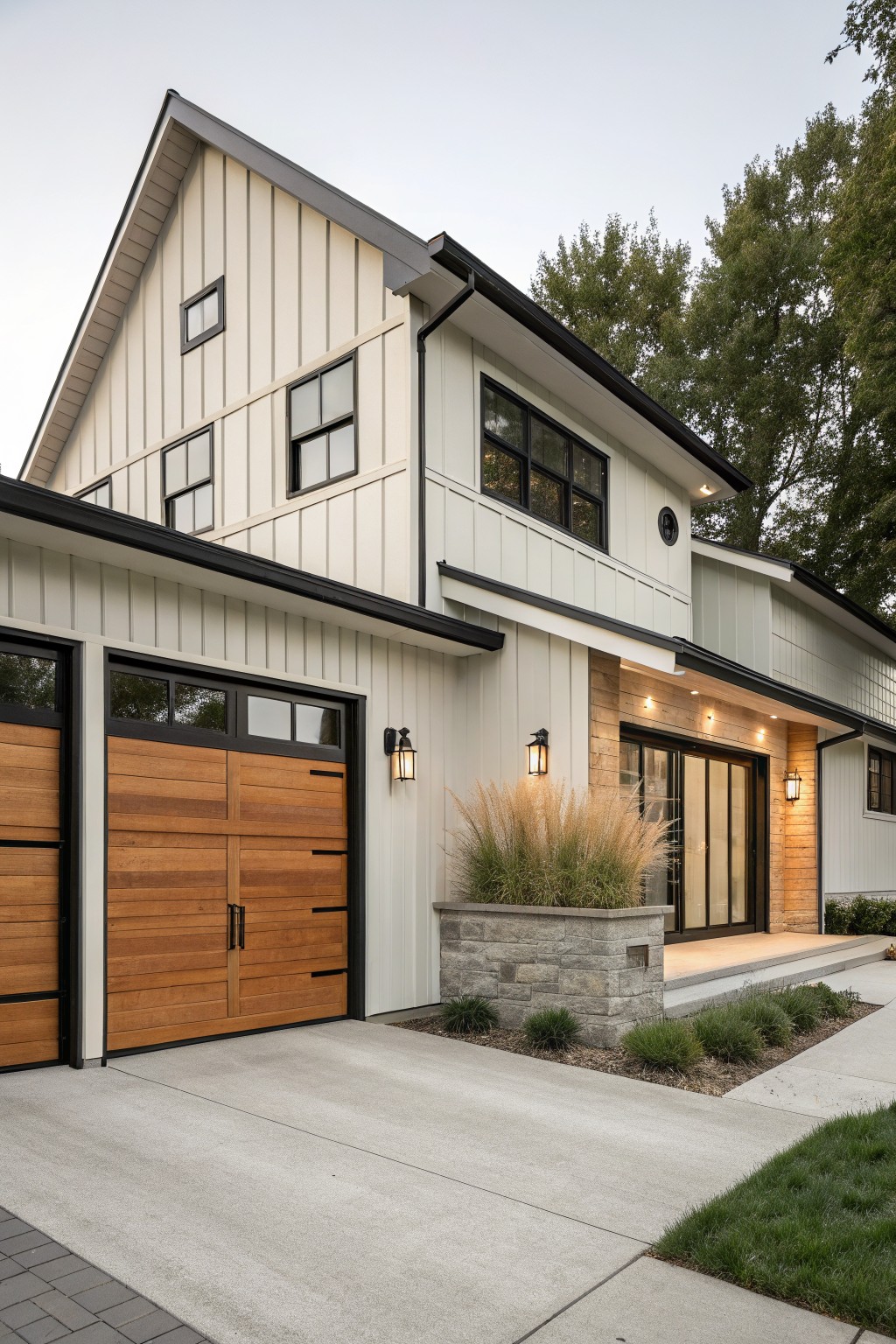
Creamy white siding gives a house that soft, clean look many people want on a farmhouse, but it can feel a little flat without some warmth. Adding wood on the garage doors and a small section of the entry wall brings in just enough natural tone to soften the whole exterior.
This approach works best on homes with simple rooflines where you want the color to stay light but not cold. Keep the wood tone medium and let the black trim do the work of defining the windows and edges.
Creamy White Farmhouse With Dark Roof Contrast
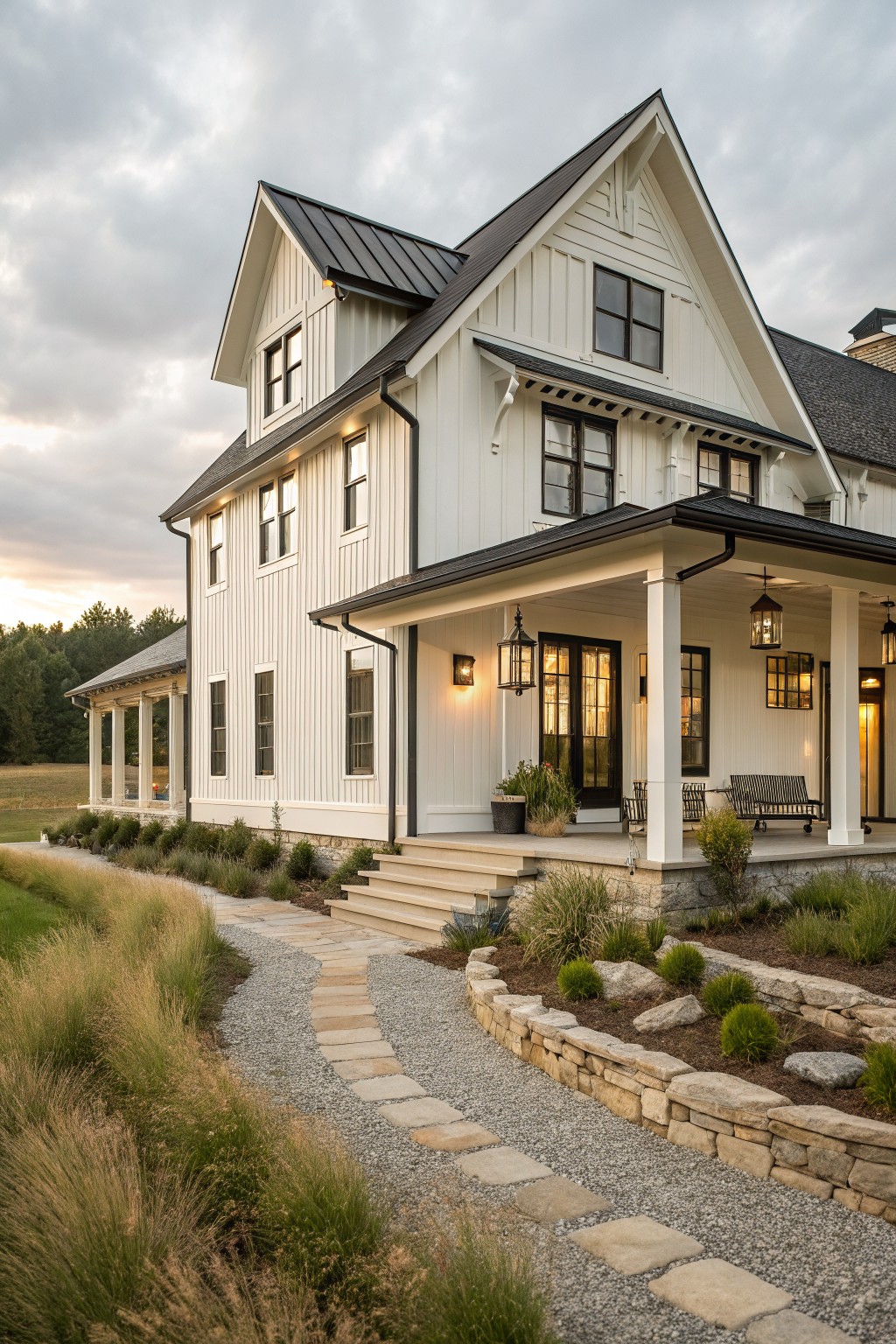
Creamy white siding gives a farmhouse a gentler look than bright white. It still feels classic but picks up warmer tones from the light, which helps the house sit more comfortably in its setting.
This works best on homes with some architectural detail like gables or porches. Keep the trim and roof in a dark color so the creamy tone does not wash out. It also pairs well with stone foundations or gravel paths that add a bit of contrast at ground level.
Creamy White Paint For Farmhouse Exteriors
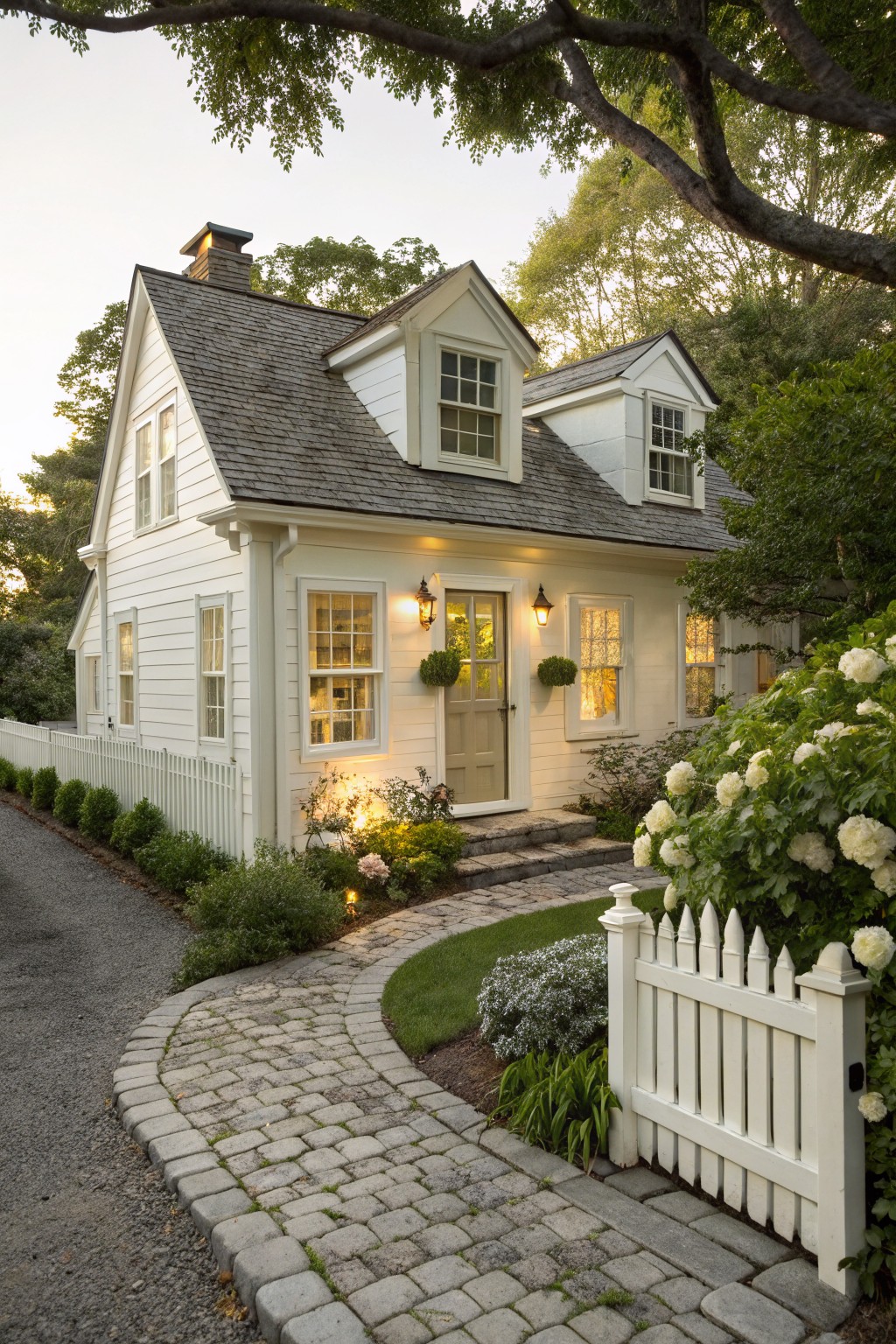
Creamy white paint gives a farmhouse a softer look than bright white. It still feels clean but adds a bit of warmth that works well with darker roofs and natural surroundings.
This color suits homes with simple trim and traditional shapes. It shows best when the house sits among greenery, and it holds up nicely against changing light through the day.
Creamy White Brick With Soft Green Doors
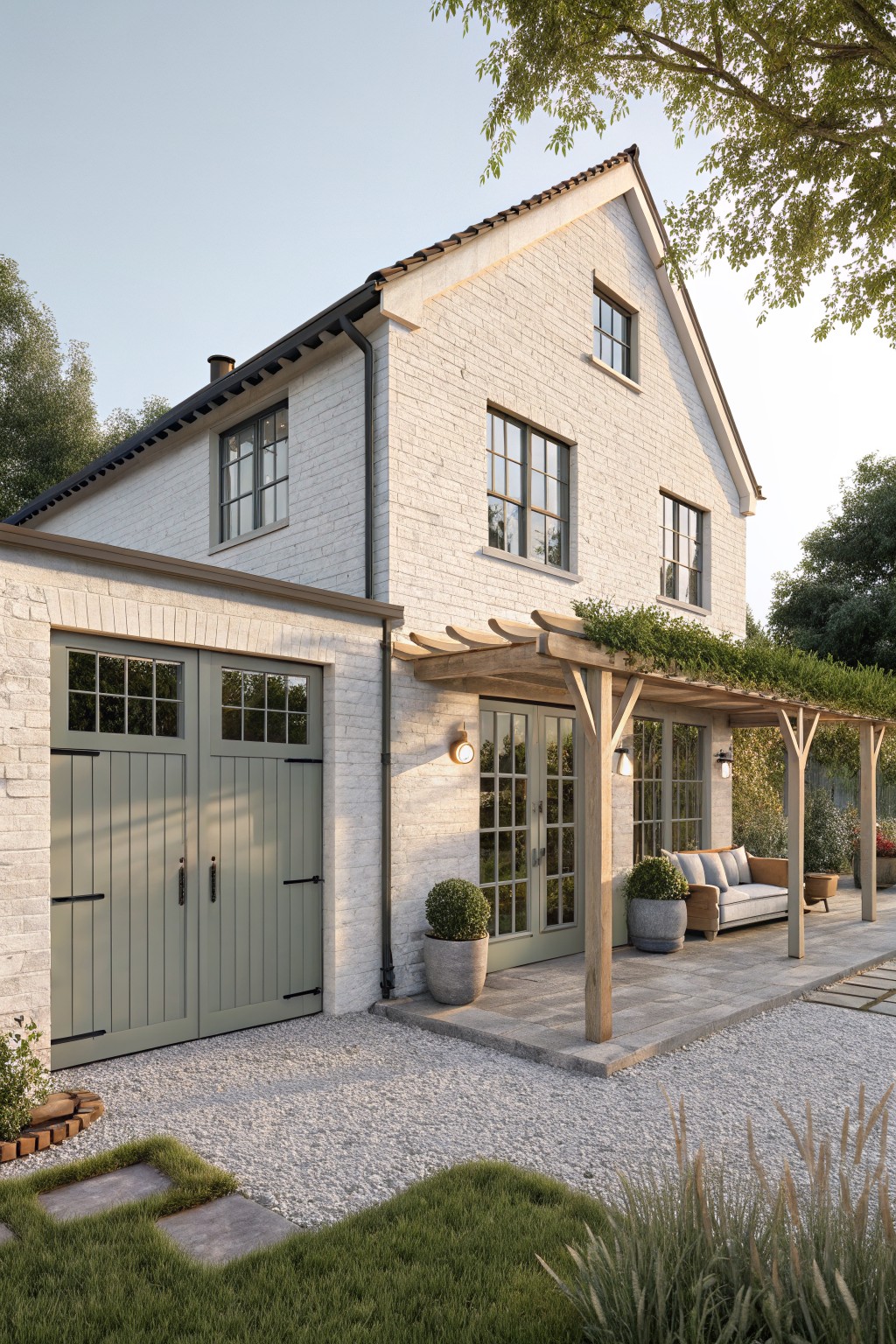
Creamy white brick already feels softer than plain white paint, but the real difference comes from pairing it with muted green on the doors and trim. The green adds just enough contrast to keep the house from looking flat while still holding onto that warm, settled look most people want on a farmhouse.
This approach works best on homes with clean lines and simple roof shapes. It suits both new builds and older houses that need a refresh, and it stays easy to maintain since the soft tones hide dust and wear better than brighter colors would.
Anchor an Outdoor Patio with a Stone Fireplace
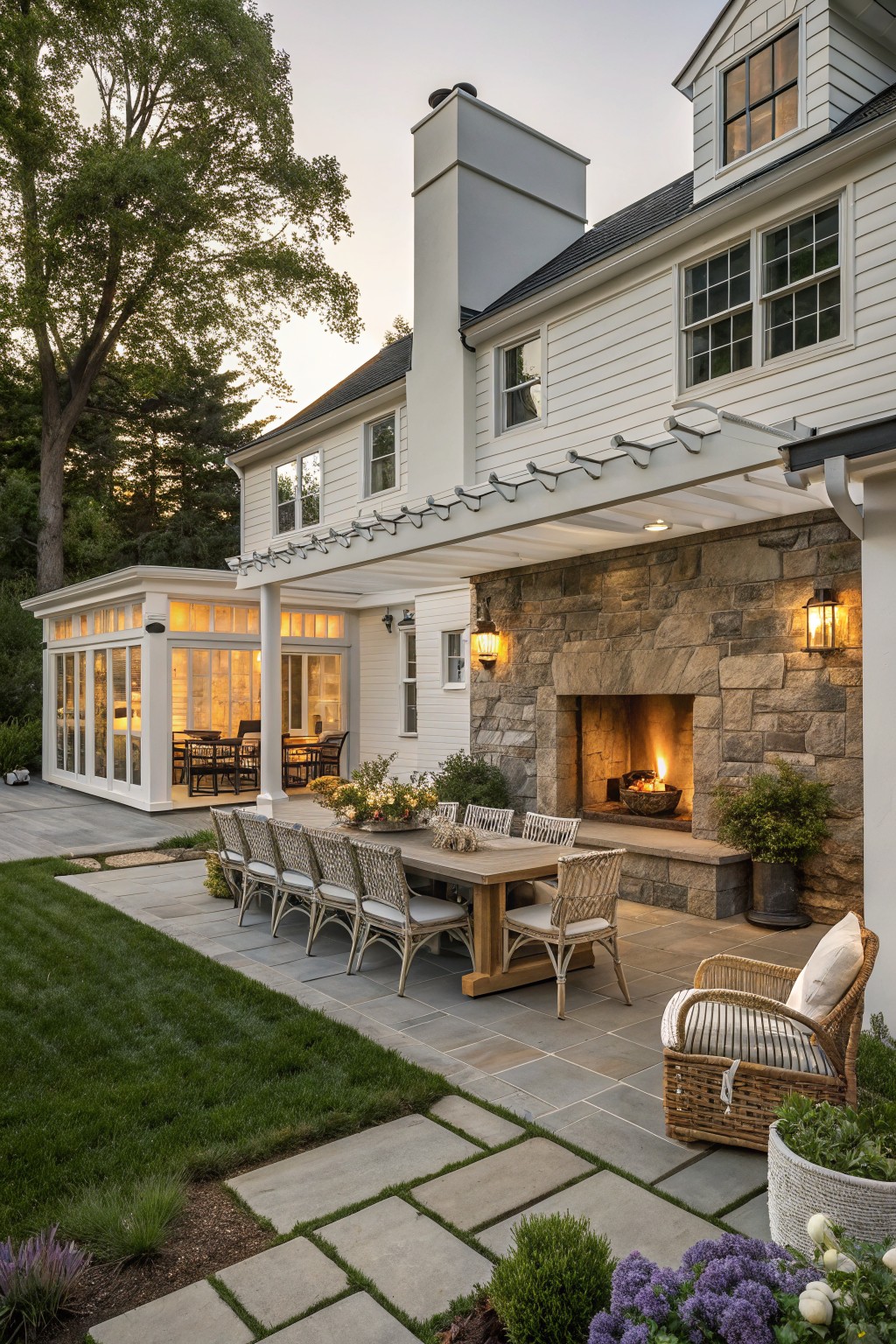
A fireplace on the patio gives the space a real focal point and makes it comfortable to use after the sun goes down. It turns what might be just a dining area into a spot where people actually want to linger, especially on a creamy white farmhouse where the stone brings in some needed texture.
This setup works best when the fireplace sits close to the table so the heat reaches the seating without taking over the whole layout. Keep the surrounding materials simple so the stone and the white siding stay the main contrast.
Creamy White Siding With Warm Lighting
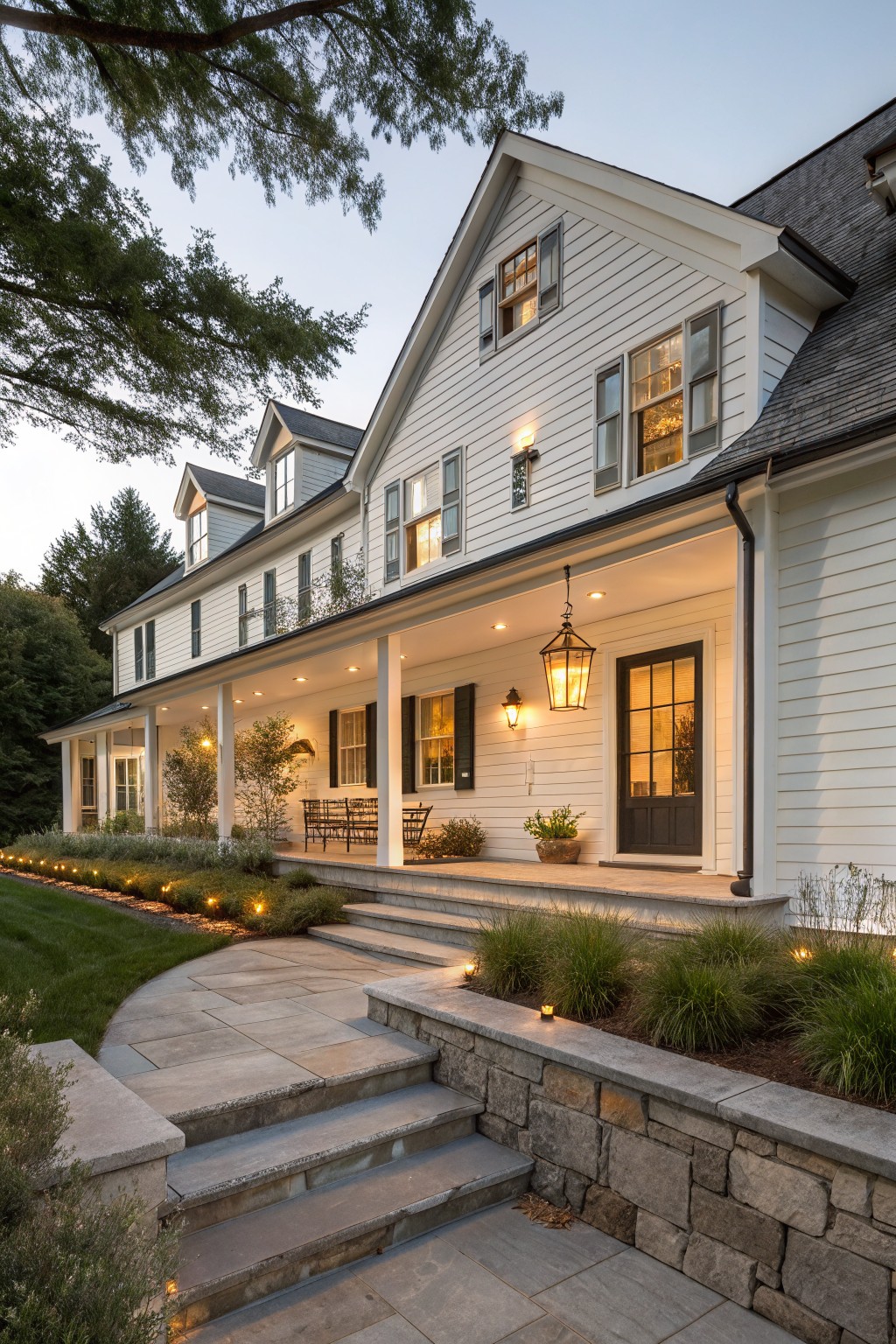
Creamy white siding softens the look of a farmhouse in a way that bright white never quite manages. The color takes on a gentle tone when paired with outdoor lights, especially in the evening when the glow hits the walls and trim.
This approach works best on homes that already have a solid lighting plan around the porch and entry. It suits both older farmhouses and newer builds that want a less stark finish. Stick with warm bulbs and avoid overlighting so the siding keeps its quiet warmth.
Creamy White Farmhouse With Stone Foundation
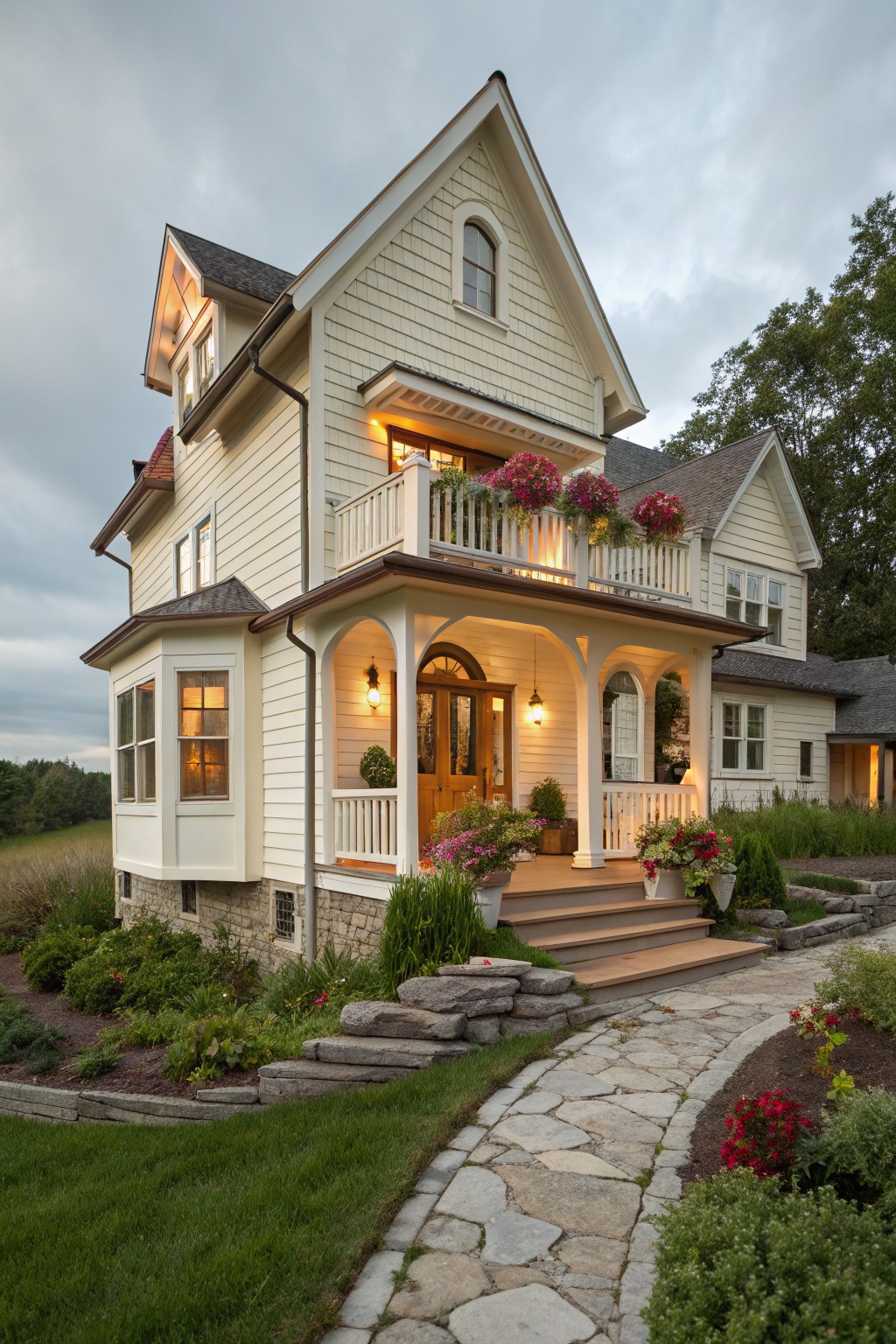
Many older farmhouses look better with a creamy white instead of a bright white on the siding. The softer tone takes the edge off the sharp angles and works nicely with stone foundations and dark roofs.
This color works best on homes that already have good trim details and some landscaping around the base. Test a few samples on the wall first because the shade can shift a lot depending on the light during the day.
Black Trim on Creamy White Siding
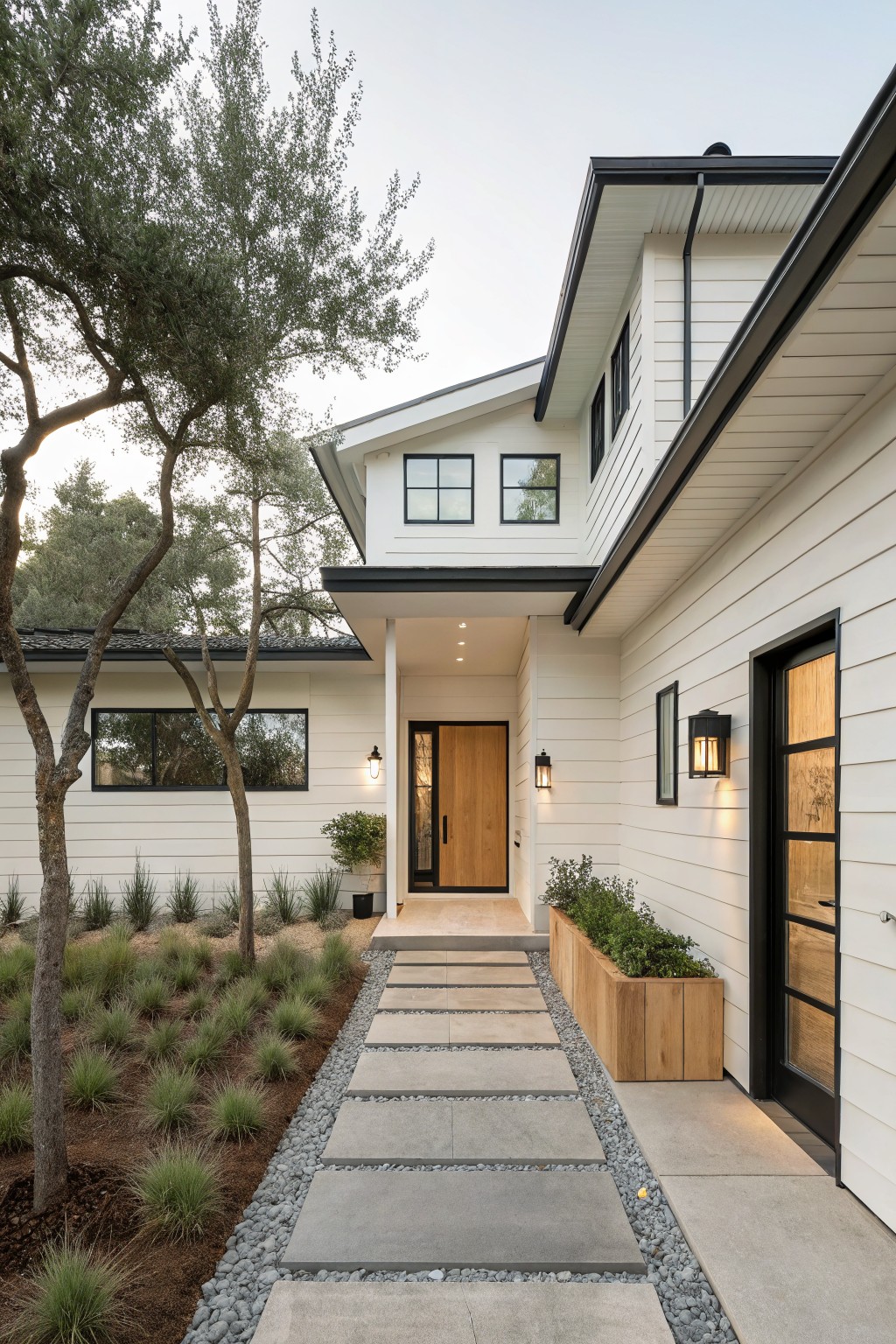
Black trim gives a creamy white farmhouse just enough contrast to feel fresh without losing its soft look. The dark frames around windows and doors help the siding read warmer and cleaner at the same time.
This approach works best on houses with straightforward shapes. Keep the siding light and let the wood door and simple black details carry the warmth. It suits homes that want a current farmhouse feel without extra ornament.
Creamy White Stucco For The Main Walls
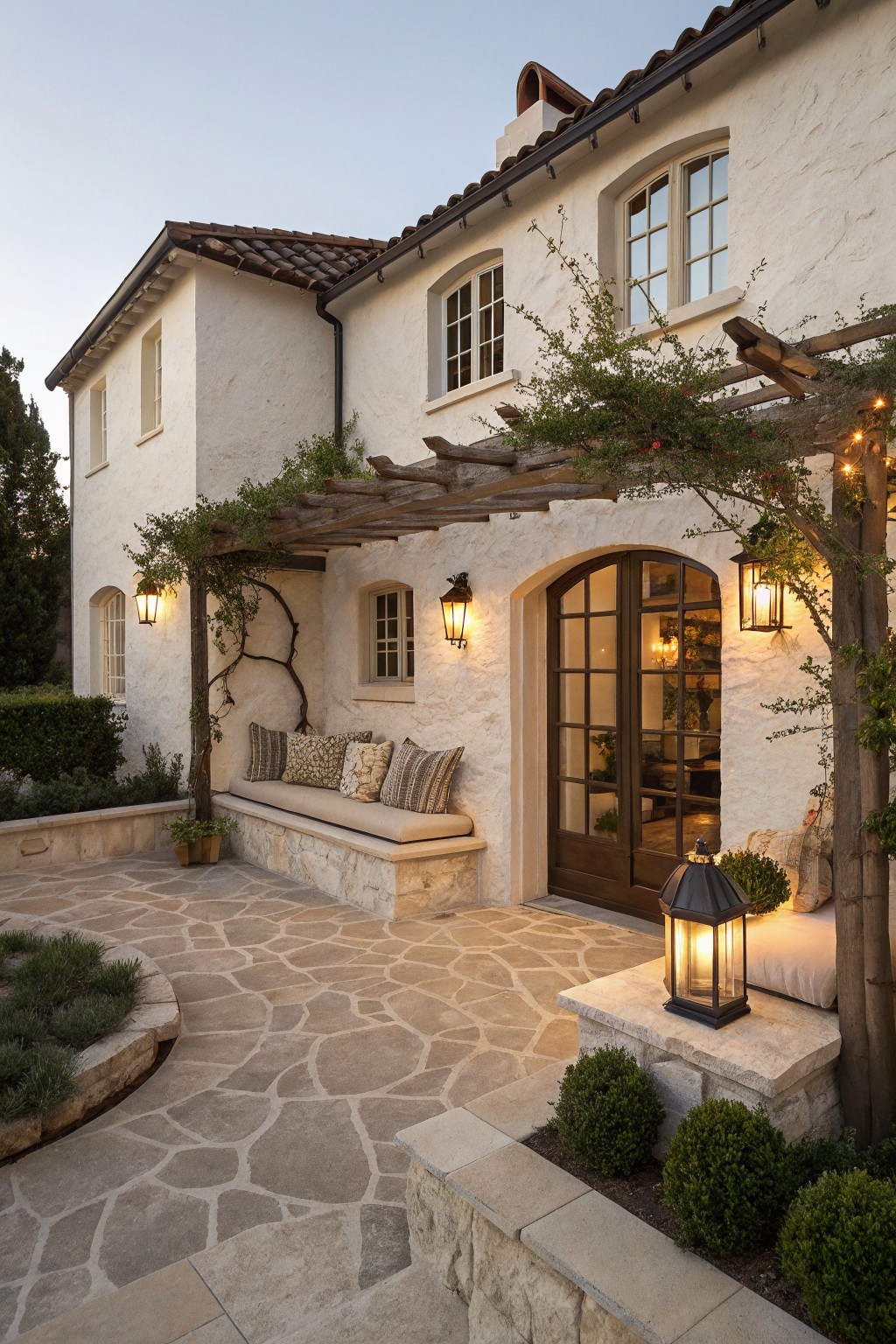
Creamy white stucco gives a farmhouse exterior a softer finish without looking too bright or stark. It works especially well when the house has simple shapes and some natural materials mixed in, since the off-white tone lets stone and wood show up without fighting them.
This finish suits homes that already have a low roofline or a few arched openings. Keep the base and any trim in a similar warm shade so the whole look stays calm rather than busy.
Creamy White Farmhouse Beside A Pool Area
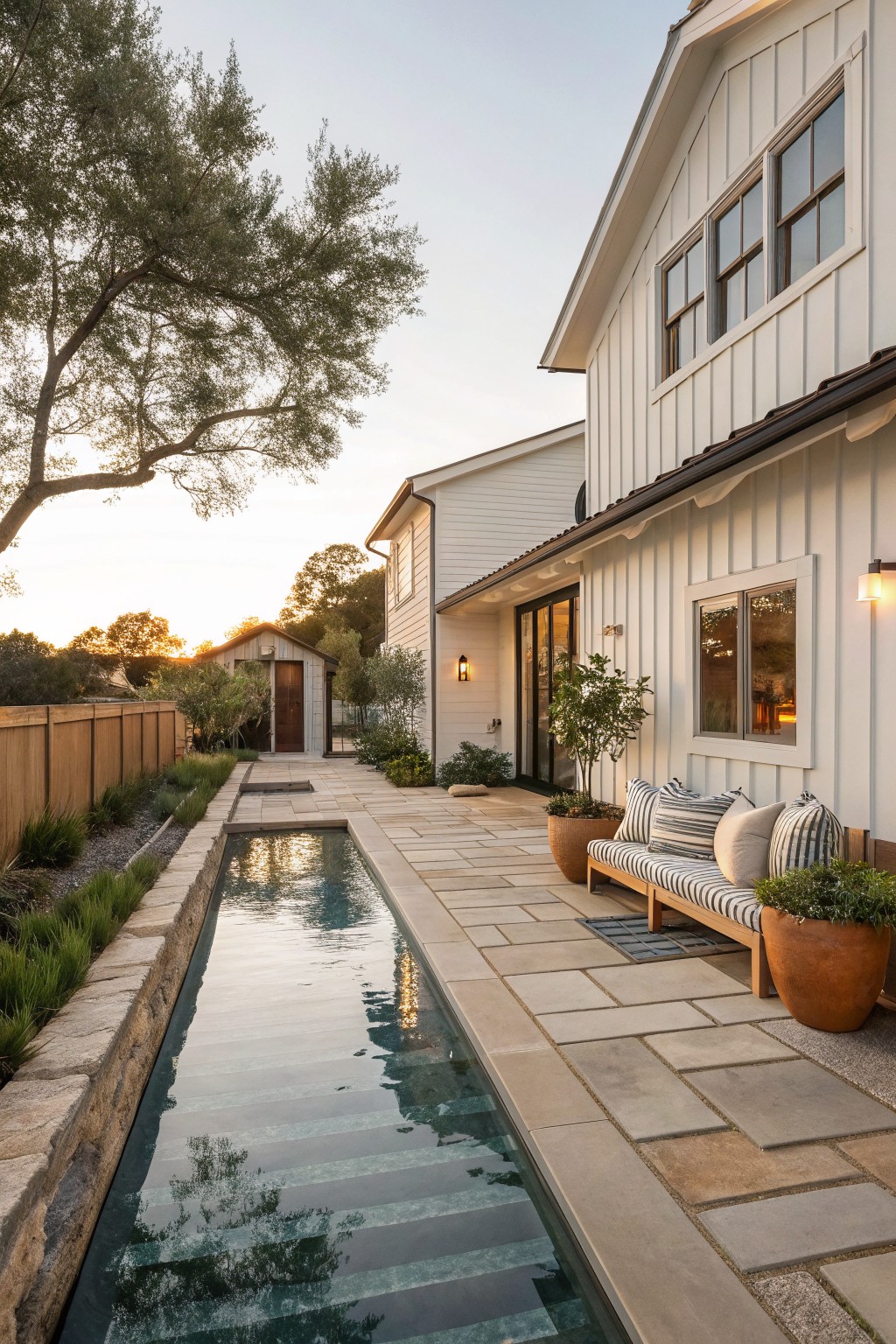
Creamy white siding takes the edge off a farmhouse exterior and keeps it from feeling too stark. The color picks up warm tones from the light and blends more easily with surrounding stone and wood.
This approach suits homes with straightforward shapes and dark window frames. It works especially well when you want the house to feel connected to a pool or path without needing extra trim or contrast colors.
Simple Creamy White Farmhouse Exterior
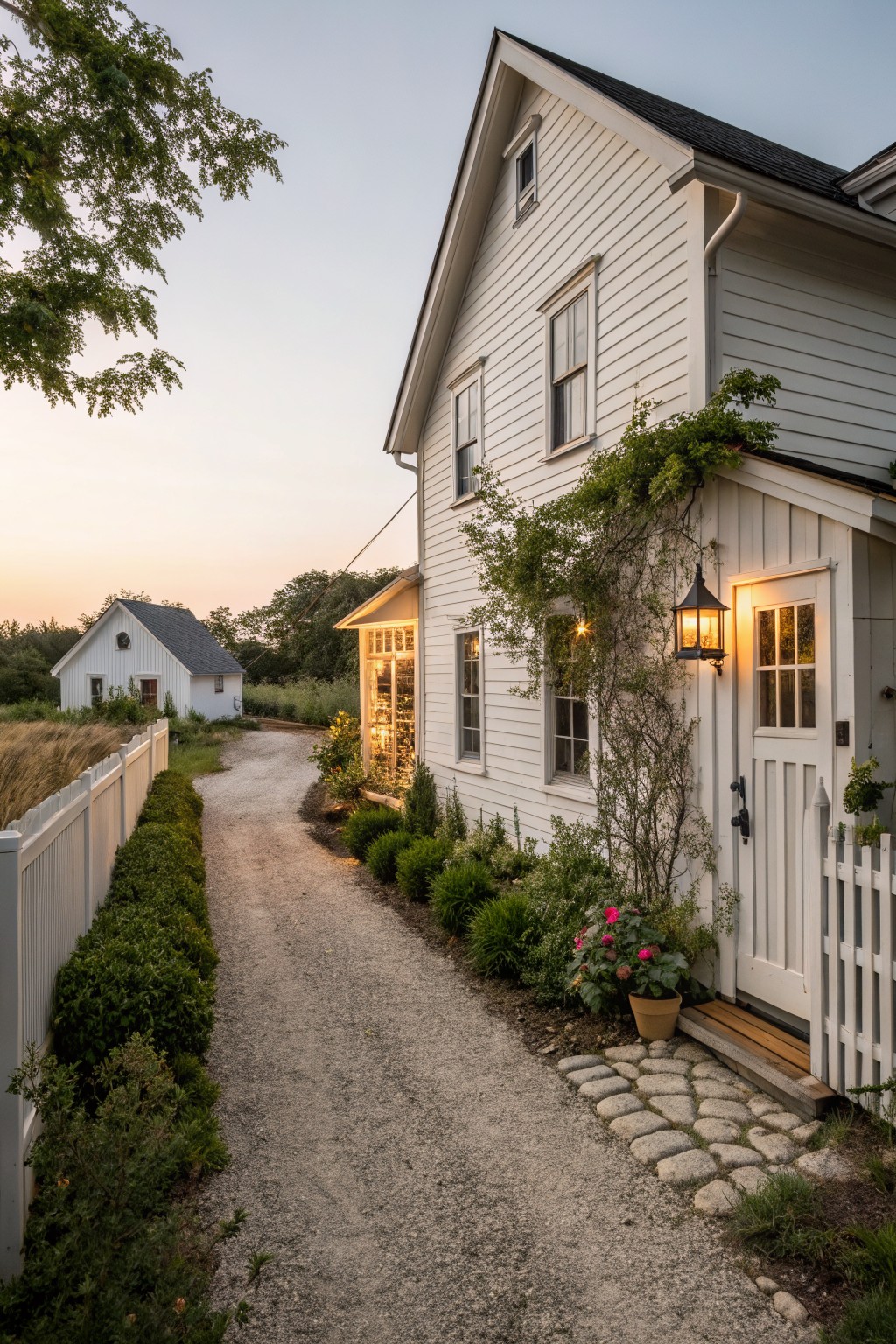
Creamy white siding gives a farmhouse a softer finish than pure white. It still reads clean but picks up warm tones from the light and feels less harsh against greenery or gravel paths.
This approach works on both older homes and newer builds that want a classic look. Keep the trim simple and let the color do the work, especially if your house has mixed window sizes or a straightforward roofline.
Pergolas Over Outdoor Dining Tables
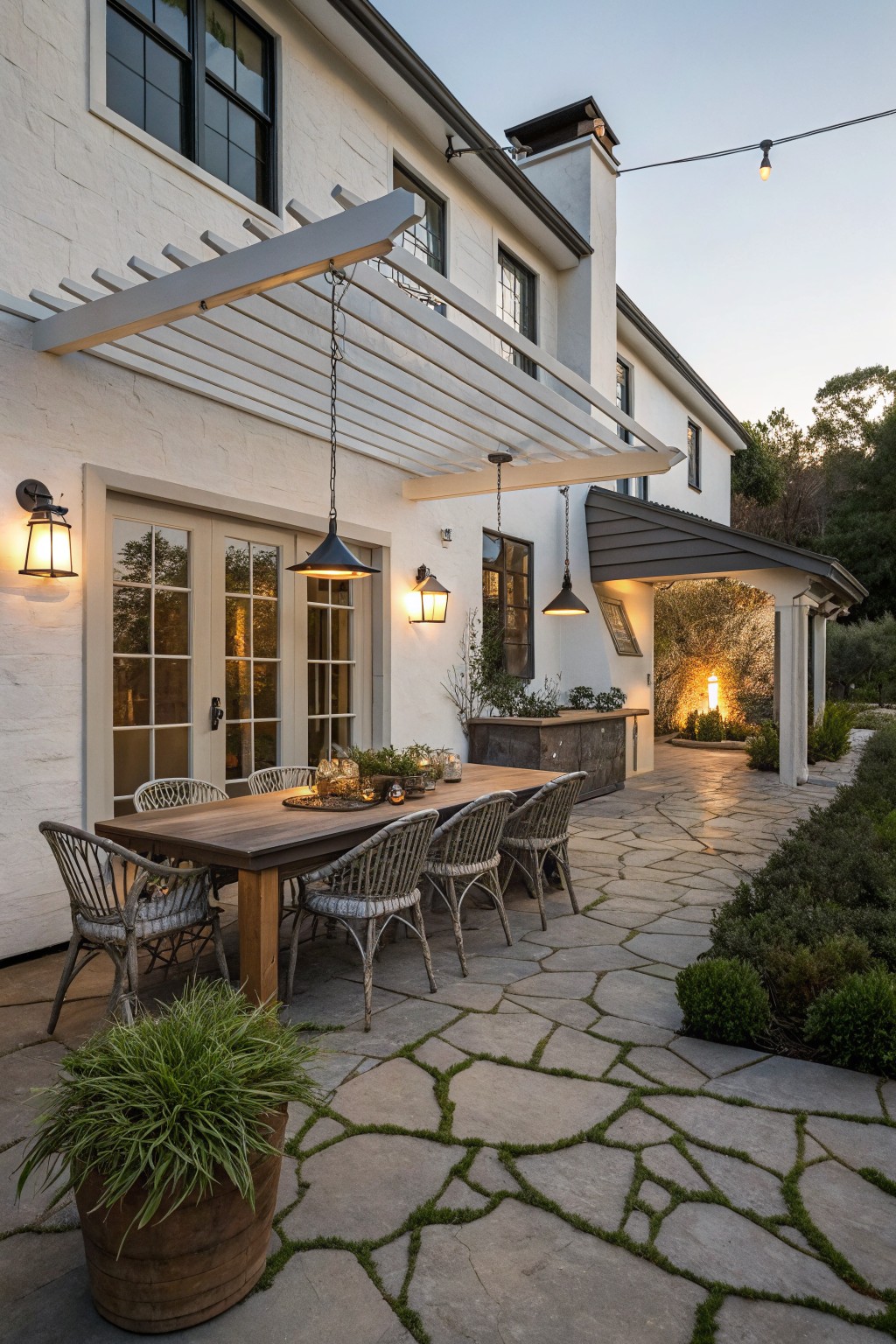
A pergola gives an outdoor dining area a clear sense of place without making it feel enclosed. It marks off the table and chairs as a spot meant for meals, which makes the space more usable on a regular basis.
This setup works best on simpler farmhouse exteriors where the structure can sit lightly against the house. Keep the pergola white or a soft neutral so it blends with creamy siding rather than fighting it. Avoid oversized versions that start to feel like a separate building.
Creamy White Vertical Board And Batten Siding
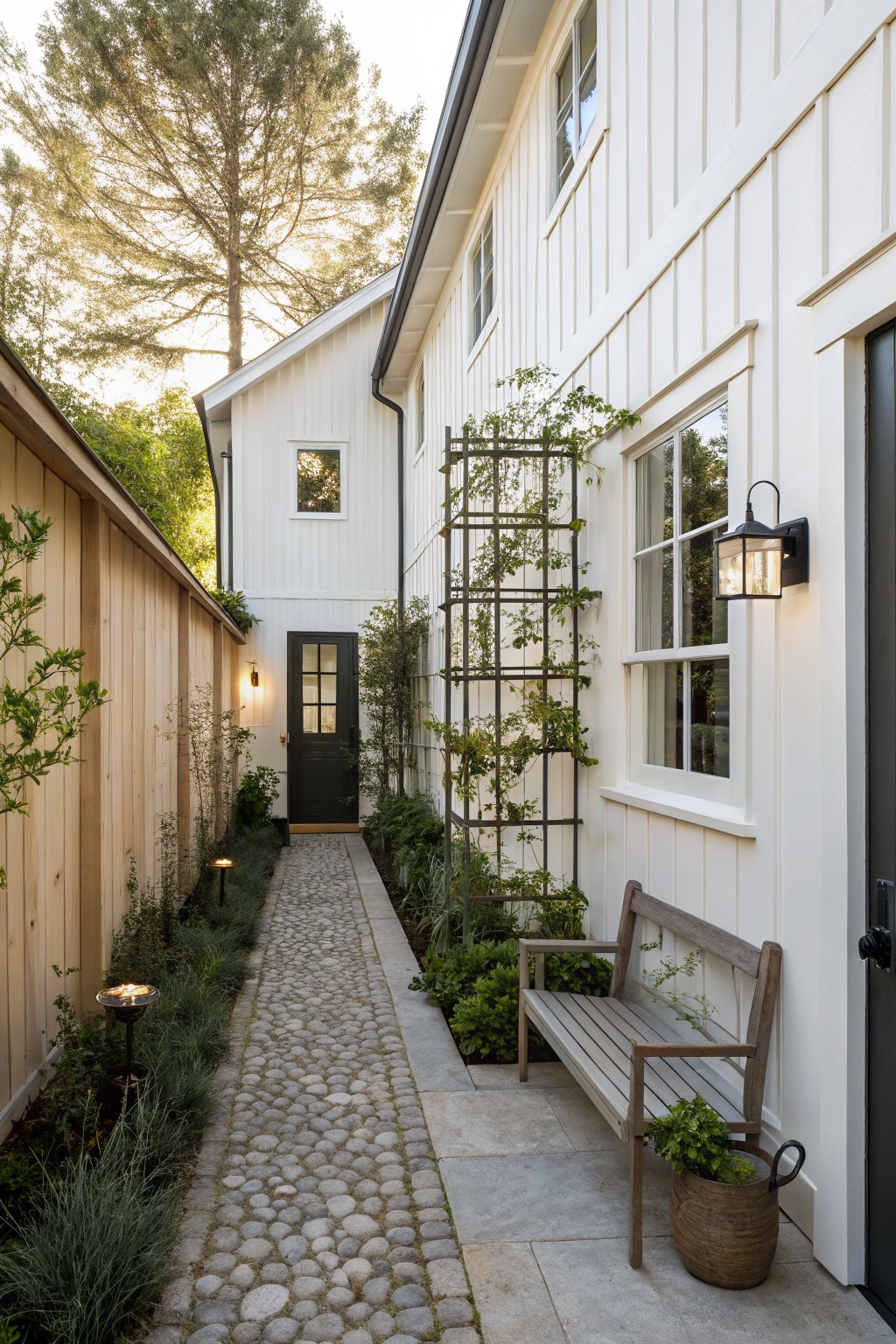
Creamy white siding gives a farmhouse a softer finish than bright white. It still feels clean but sits better with the landscape and aged materials around it.
This color works especially well on vertical board siding. It suits homes that already have dark windows or doors, since the slight warmth keeps the contrast from feeling too sharp.
Soft Creamy White Paint With Dark Hardware
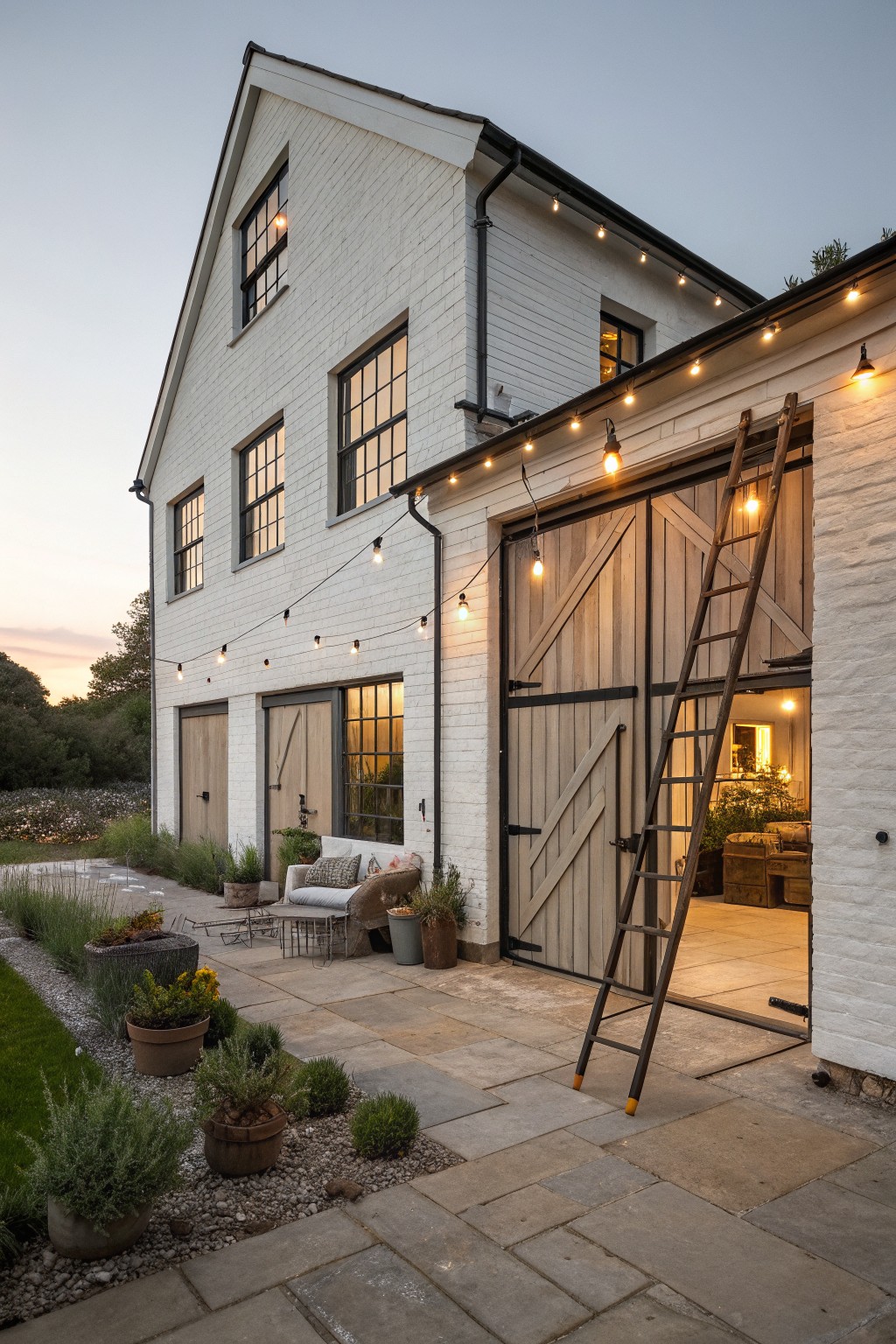
A soft white exterior can make a farmhouse feel more welcoming without losing its simple character. Many people reach for bright white and end up with a house that looks too stark, especially next to wood and stone. A creamy shade softens the overall look and helps the home blend better with its surroundings.
This approach works well on both new builds and older homes that need a refresh. Keep trim and hardware in black or dark gray so the white stays the main feature. Test the paint on a large section first, since the color can shift quite a bit depending on the light.
Creamy White Siding With Natural Wood Trim
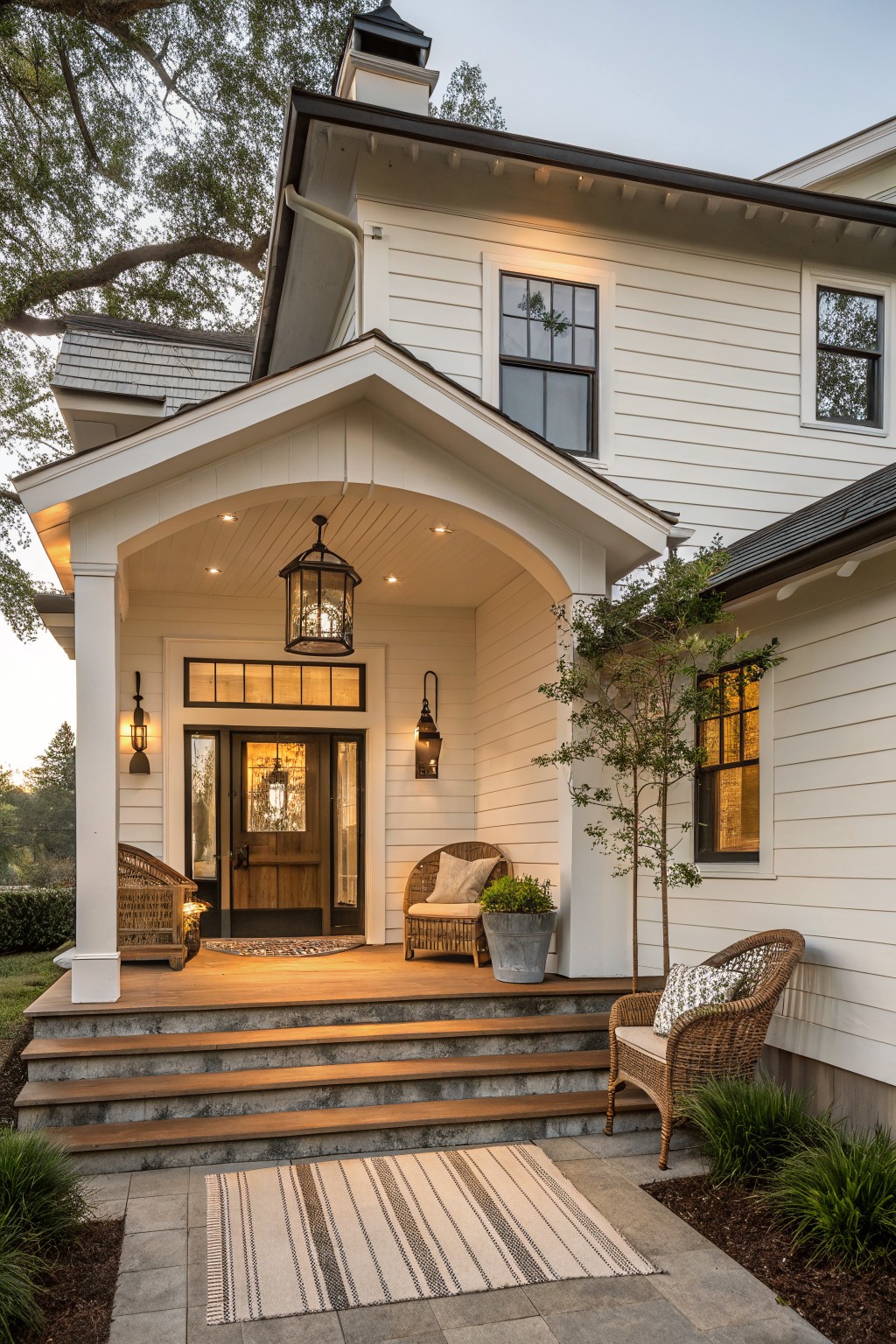
Creamy white siding gives a farmhouse a gentler look than bright white. It still feels classic but picks up warm tones from the light and nearby trees, which helps the whole house feel more inviting.
This color works best on homes with wood trim or doors that can add contrast. It suits older styles where you want to keep the traditional shape but avoid anything too stark or cold.
Creamy White Siding With Wood Doors
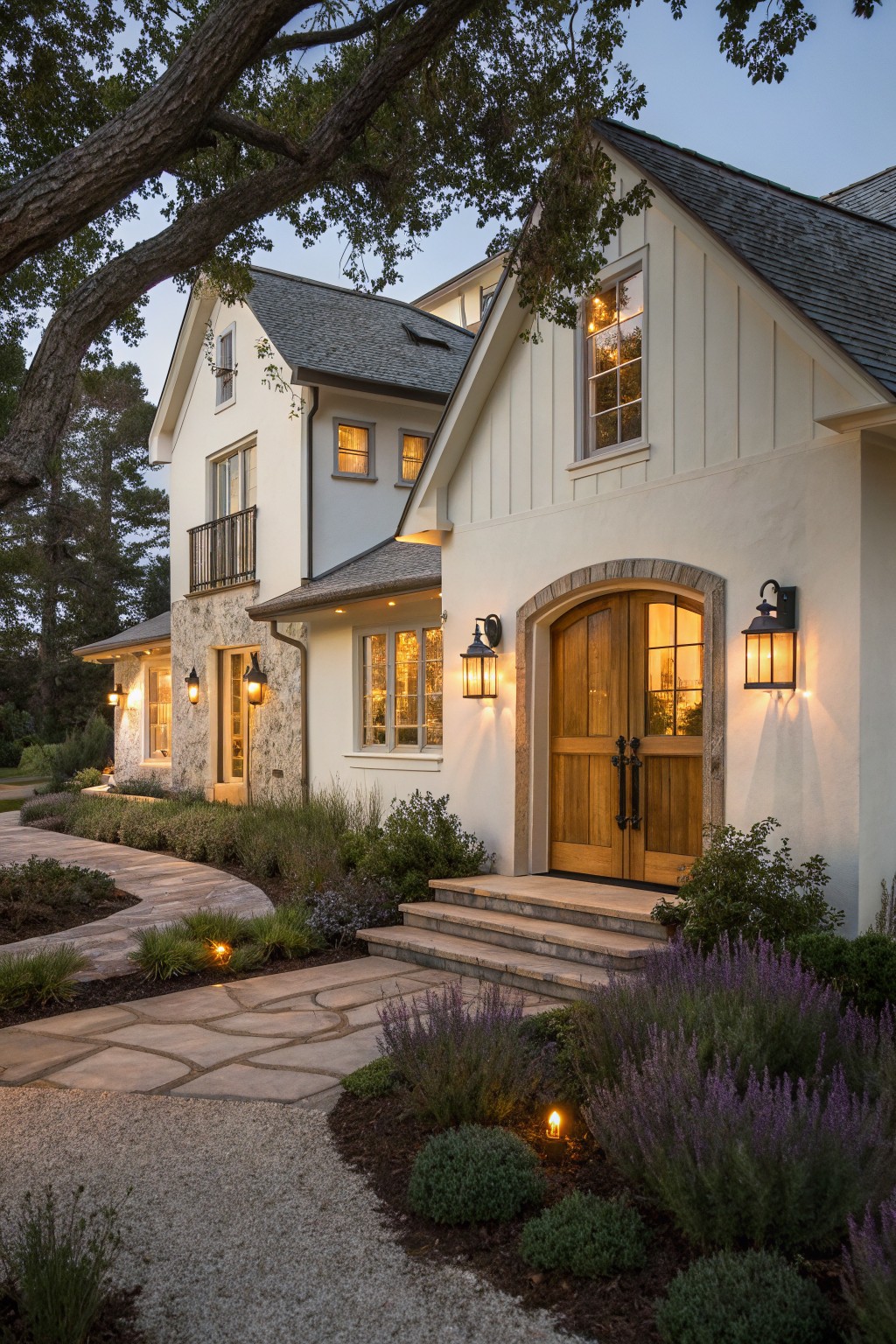
Creamy white siding gives a farmhouse exterior a softer look without feeling stark. It works especially well when paired with natural wood doors that bring in warmth and keep the whole front from looking too plain or cold.
This approach suits homes with simple rooflines and some stone or brick around the entry. The key is letting the wood show its grain and color rather than painting it to match. Keep the trim and other details in the same creamy tone so the wood becomes the main point of interest.
Frequently Asked Questions
Q: What trim color pairs best with creamy white on the outside?
A: Go with a soft greige or light taupe for the trim. This adds just enough contrast without overpowering the warmth of the main color. Stick to matte finishes to keep the farmhouse feel relaxed.
Q: How often does creamy white need touching up on a farmhouse exterior?
A: Plan to repaint every seven to ten years depending on your climate. Focus on south-facing walls first since they fade quicker from sun exposure. Regular cleaning helps extend the life of the paint.
Q: Can I use creamy white if my siding is wood instead of board and batten?
A: Creamy white works great on wood siding too. It softens the grain and brings out the texture nicely. Just make sure to prime well to avoid any bleed-through from knots.
Q: Does creamy white make a small farmhouse look bigger?
A: Yes it does. Light colors reflect more sunlight so the house feels more open. Use it on the whole exterior for the biggest effect.
