

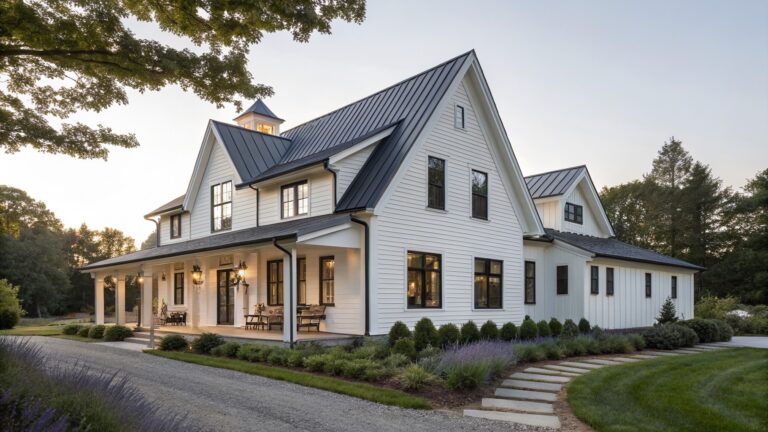
I have always noticed how the right trim color can shift the whole look of a house when you approach it from the road.
White siding with black accents tends to sharpen the rooflines and window frames in ways that make the facade read more defined from the curb.
It is worth testing a few of these on your own place.
Many homeowners find that the contrast works best when it matches the actual materials already on the house rather than fighting them.
I usually start by checking how the black trim looks against the front door and porch posts because those spots set the tone for everything else.
Black Trim Adds Clear Definition to White Siding
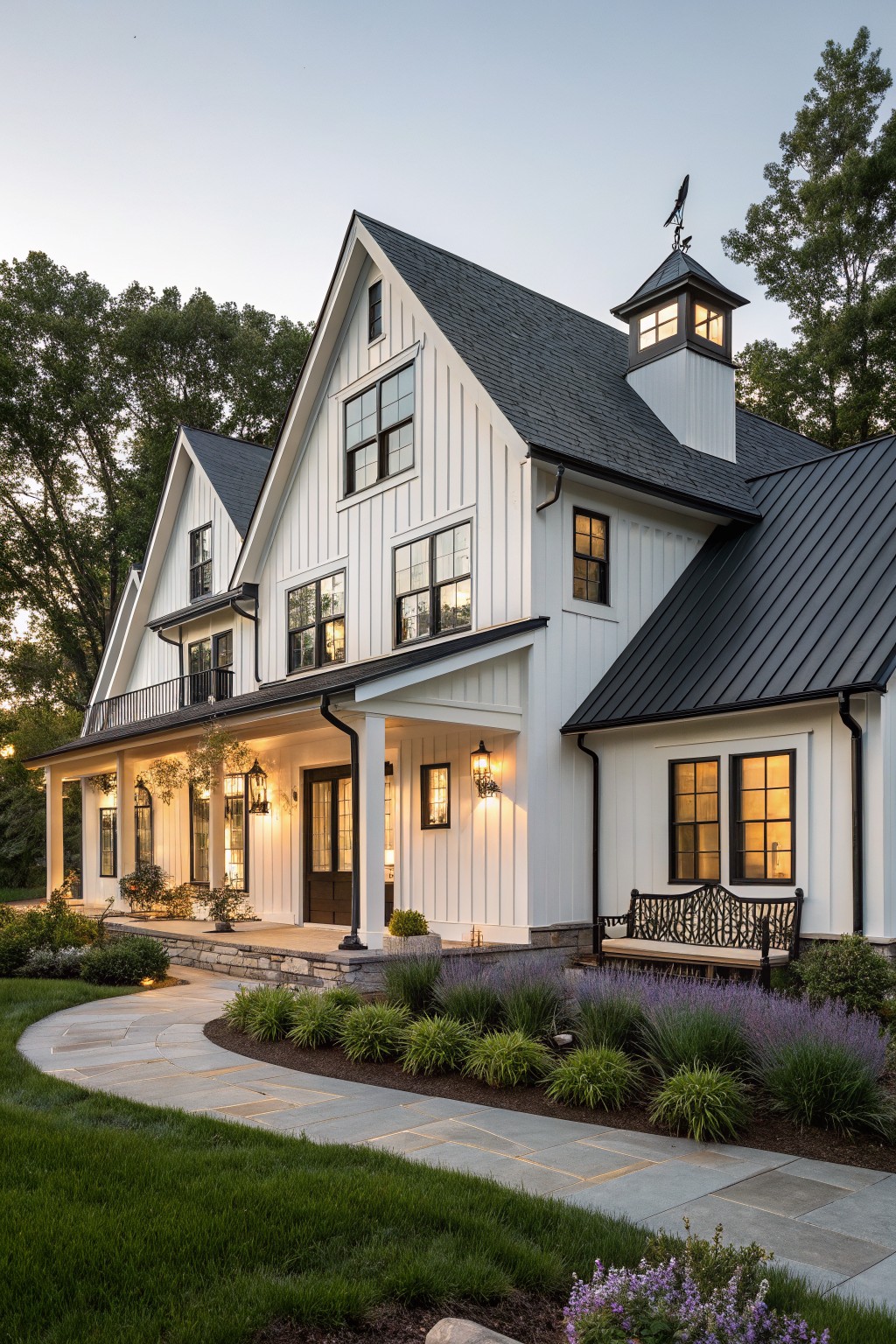
White farmhouses often look softer without some kind of edge, and black trim gives that edge without overpowering the whole house. It outlines windows, doors, and rooflines so the shape of the building stands out more clearly from a distance. The dark accents also make the white siding feel brighter by comparison.
This approach works best on traditional farmhouse shapes where the roof and window frames already create strong lines. Keep the black limited to trim, gutters, and hardware rather than large surfaces, and test the shade against your siding color at different times of day. Too much black can start to feel heavy on smaller homes.
Black Trim For Sharp Contrast On White Siding
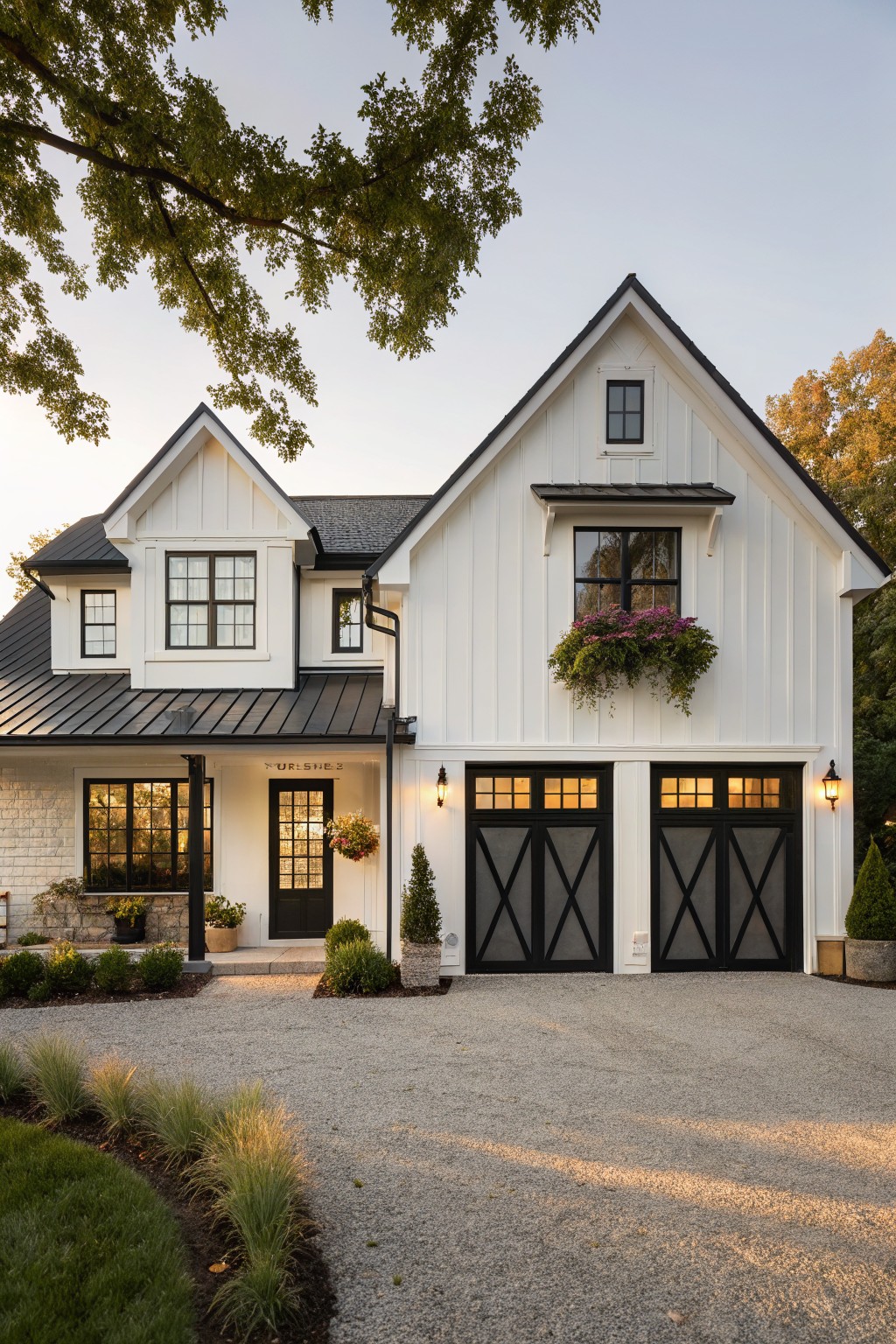
Black trim stands out well on a white farmhouse because it gives the whole front a sharper, more finished look. The dark lines around windows and doors keep the white from feeling too soft or plain.
This approach works best on homes with simple shapes and large openings like garage doors. It suits newer builds that want a classic look without extra decoration or color.
Extend Black Trim To The Patio Cover
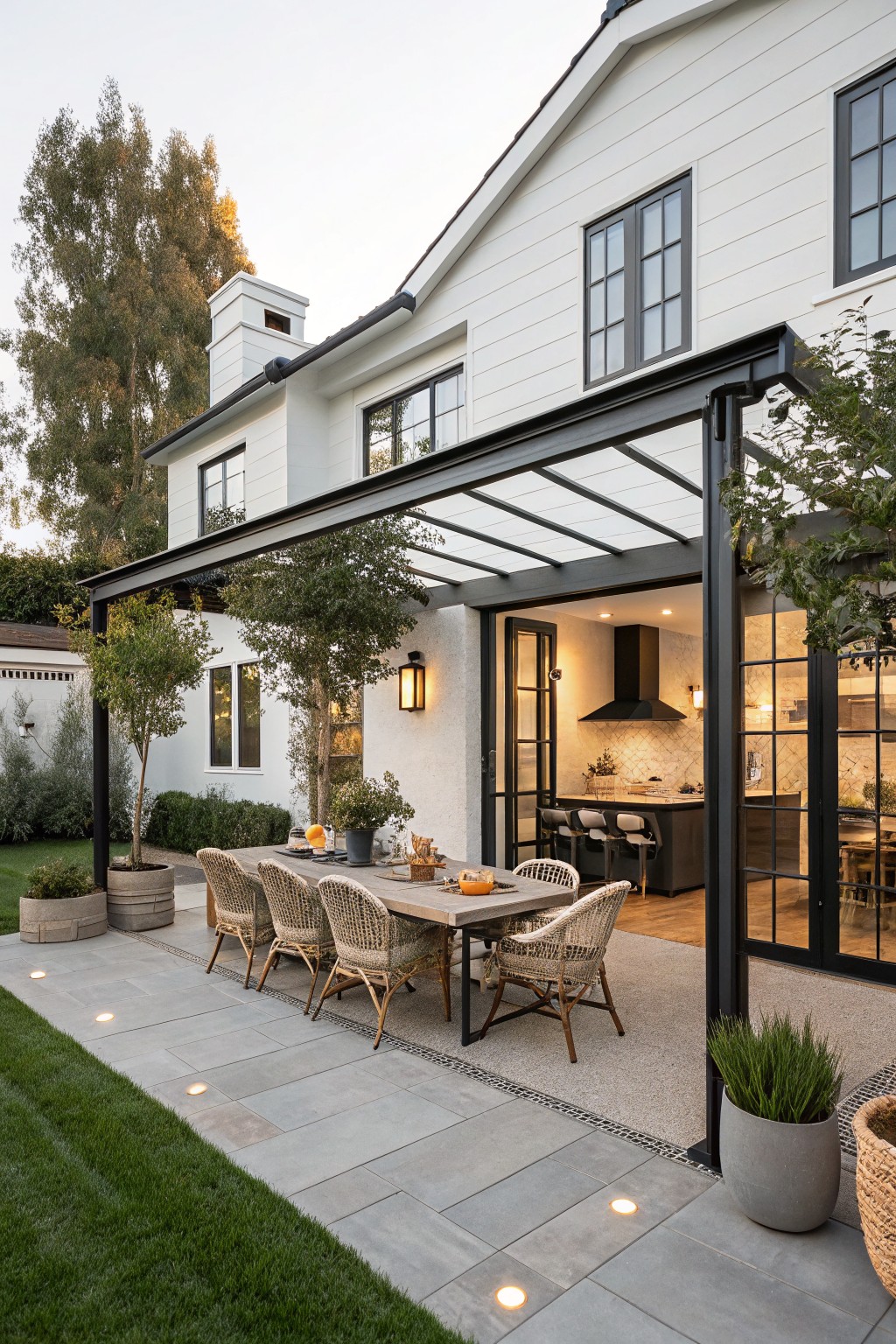
Many white farmhouses already use black trim around windows and doors for contrast. Taking that same dark finish to a patio cover or pergola keeps the look consistent and makes the outdoor space feel like part of the house instead of an add-on.
This works especially well on simple rectangular structures where the black frame stands out against white siding. Just make sure the scale stays modest so the cover does not overpower the house or block too much light from nearby windows.
Using Black Trim to Add Structure to White Farmhouse Exteriors
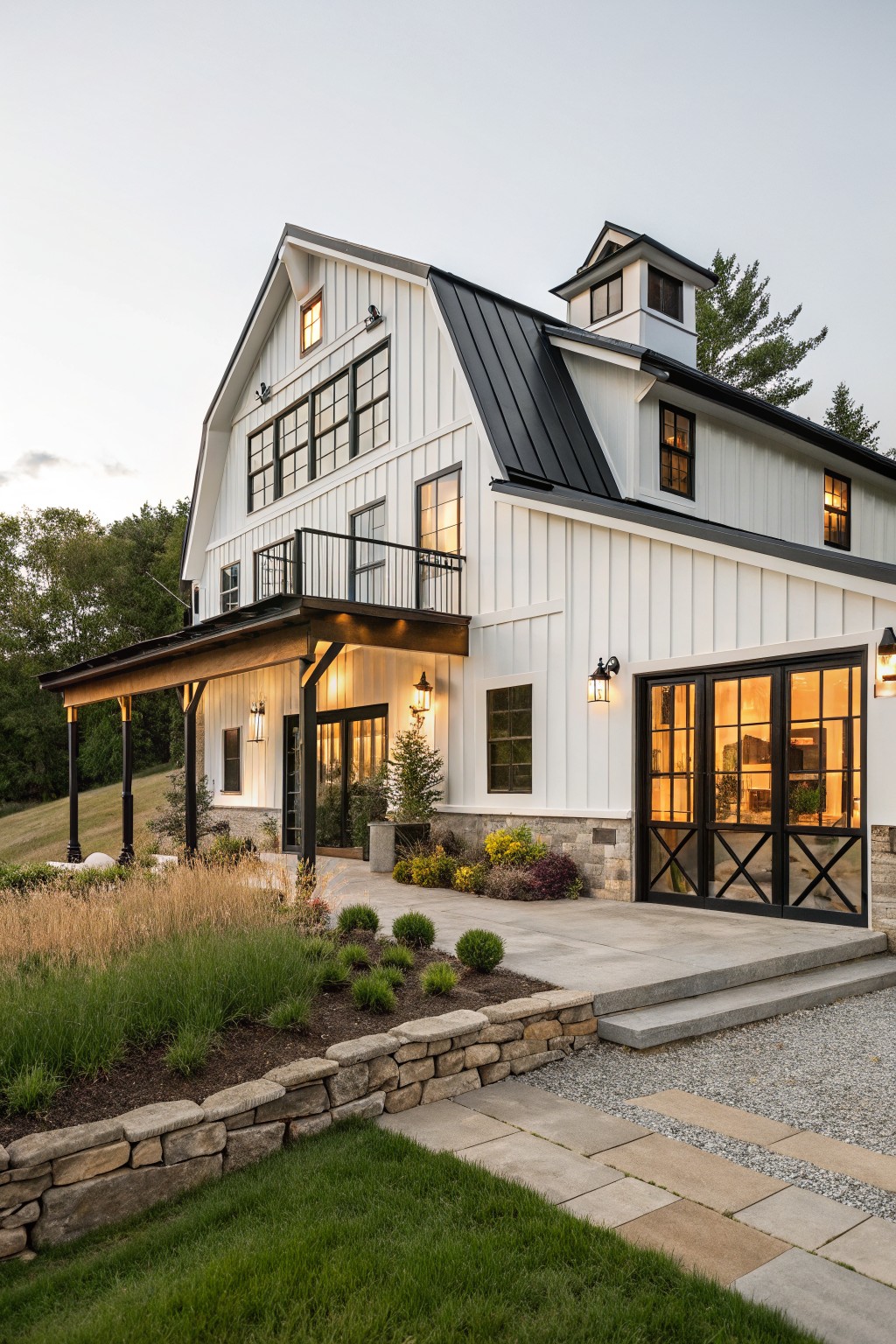
White siding gains a lot of definition when black trim is added around the windows and doors. The contrast keeps the house from looking flat and gives it a cleaner, more structured look that still feels like a farmhouse.
This approach works well on homes with simple rooflines and multiple window sizes. It helps the windows stand out without needing extra decoration, and it pairs easily with stone foundations or dark roofing.
Starting With Black Trim Around Doors and Windows
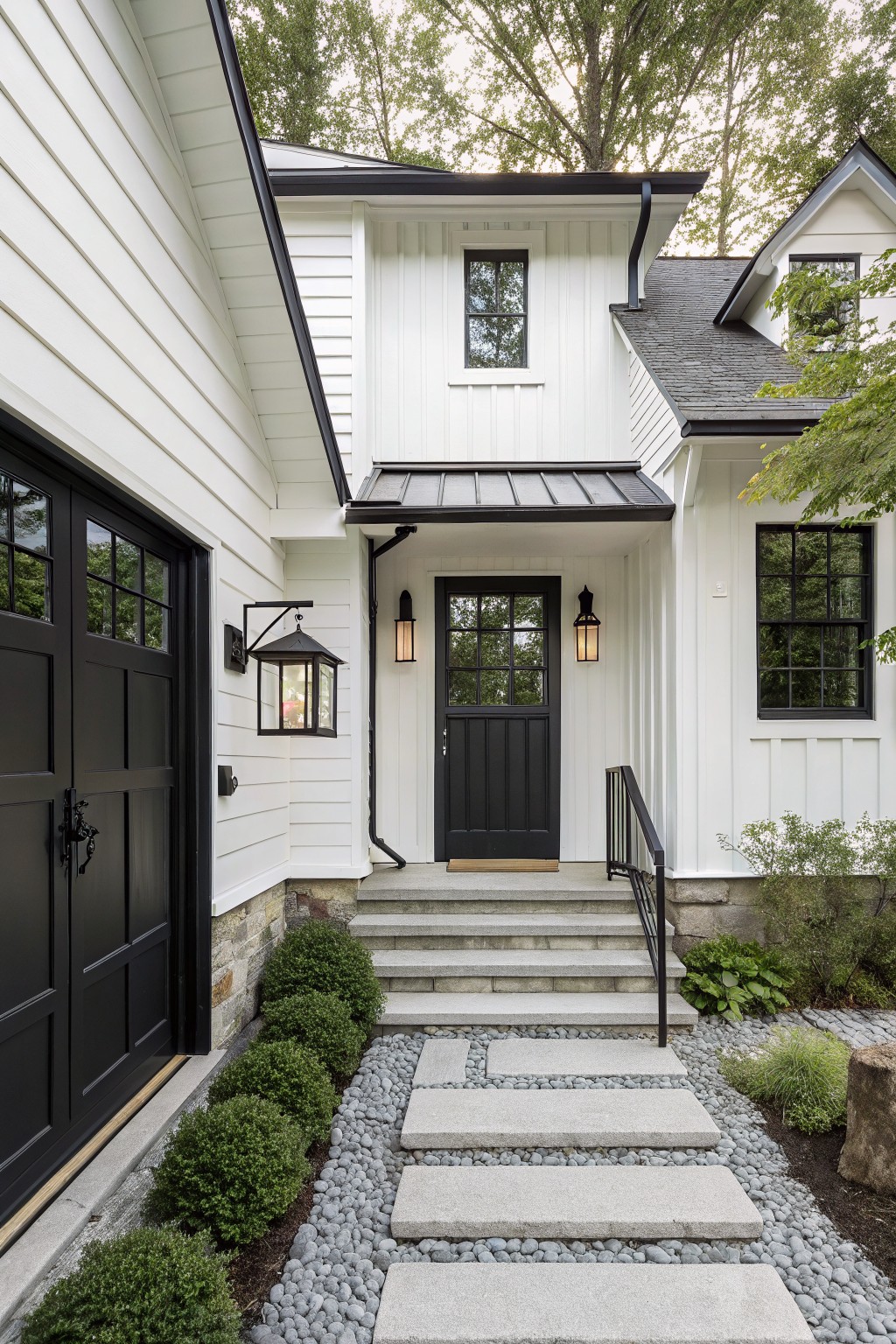
White siding gains a lot of definition when black trim is added around doors and windows. The contrast keeps the look simple but makes the house read as more structured and intentional instead of plain.
This approach works especially well on farmhouses or similar styles where you want the shape of the building to stand out. Start with the front door and main windows if you want to test the effect before painting all the trim.
Consistent Black Trim Creates a Cleaner Farmhouse Look
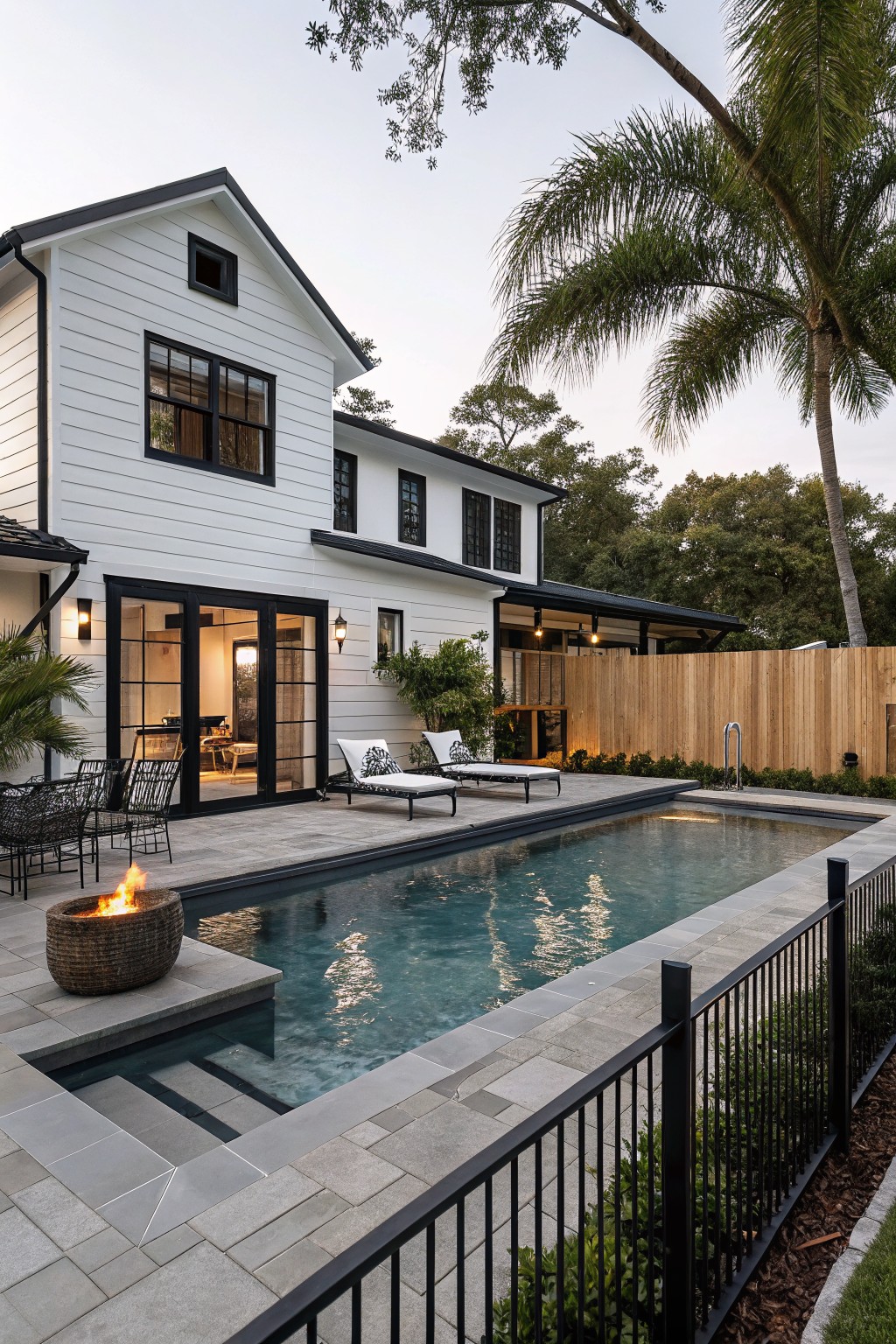
White siding looks cleaner and more defined when you add black trim around the windows and doors. The dark frames stand out without needing extra decoration, and the whole front stays simple. This approach works especially well on farmhouses that already have a straightforward shape.
It suits homes with enough wall space between openings so the black lines can read clearly. Keep the trim consistent on every window and door rather than mixing finishes, and check that the black is dark enough to hold its own against the white.
Black Trim Defines White Brick
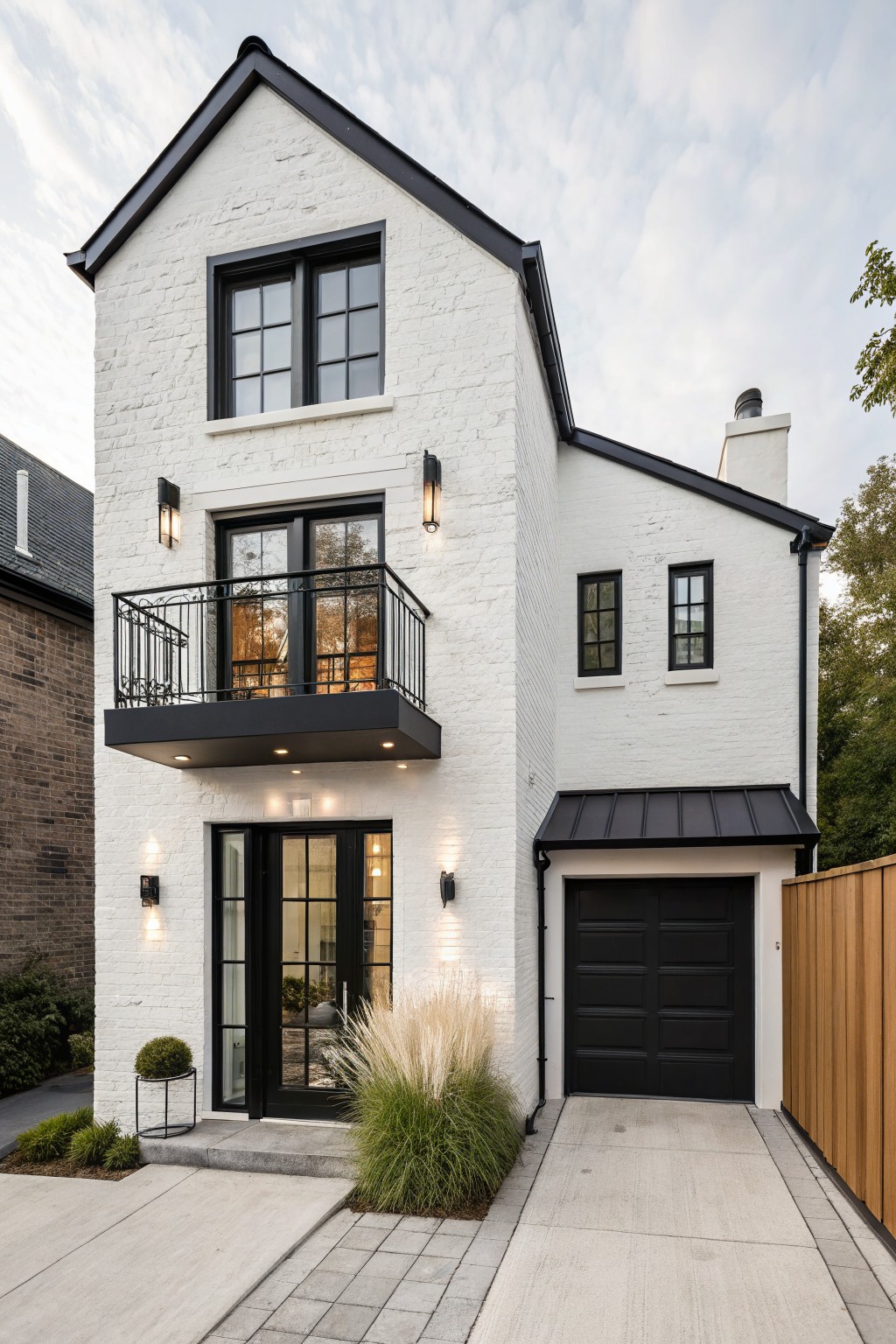
White brick already has a clean look, but adding black trim around the windows, doors, and balcony makes the lines stand out more clearly. The contrast keeps the house from feeling flat and gives it a sharper, more modern edge while still reading as farmhouse.
This approach works best on two-story homes where you want the windows and entry to feel intentional. Keep the trim consistent in color and finish, and make sure the black is deep enough to hold its own against the white brick.
Black Trim Frames the Windows
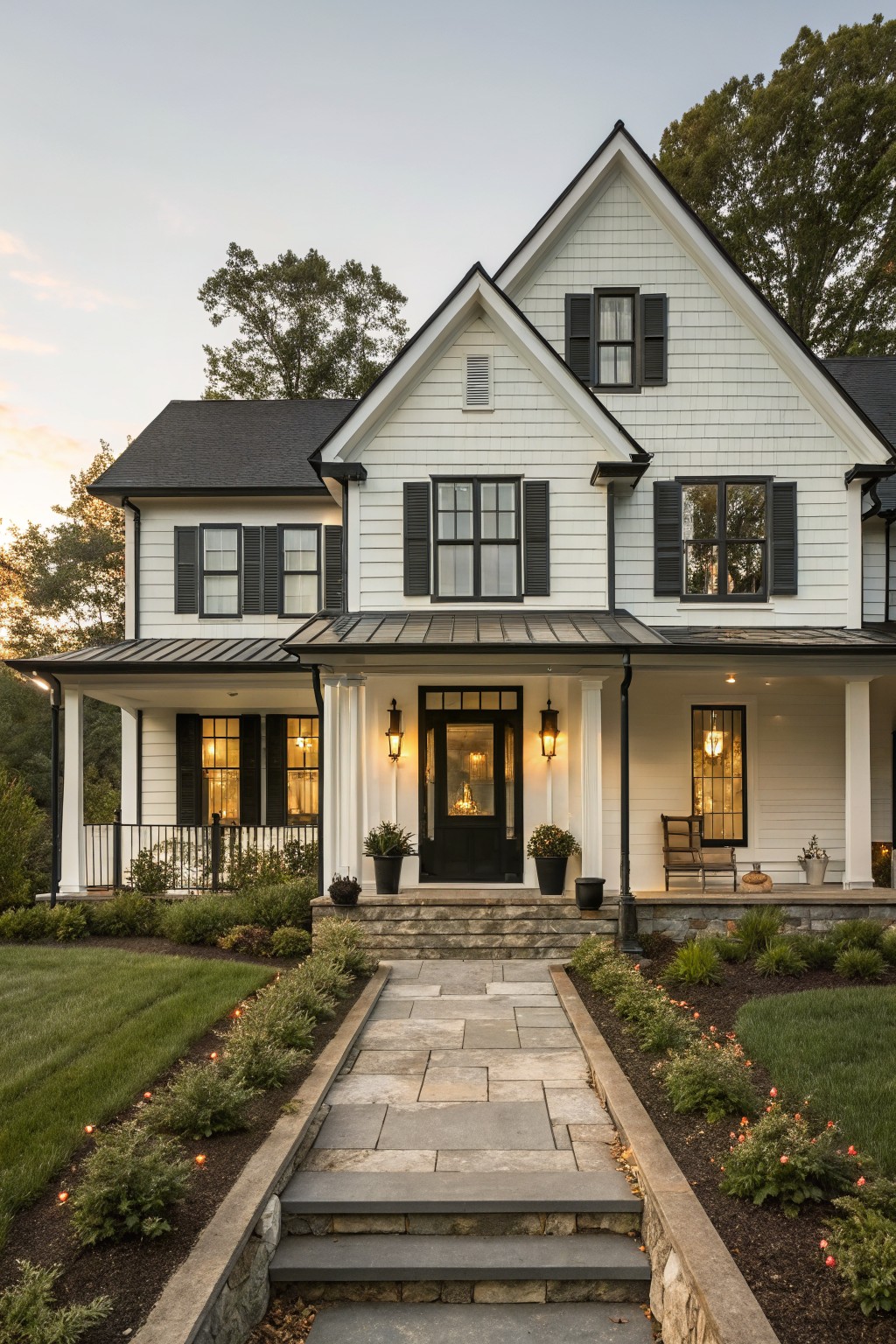
Black trim around windows and doors gives a white farmhouse a clear, structured look. It keeps the siding from feeling plain and helps every opening read as intentional rather than scattered.
This works best on homes with several gables or grouped windows. Match the trim color on shutters and the entry door so the contrast stays consistent instead of fighting itself.
Using Shutters and Doors to Reinforce Black Trim
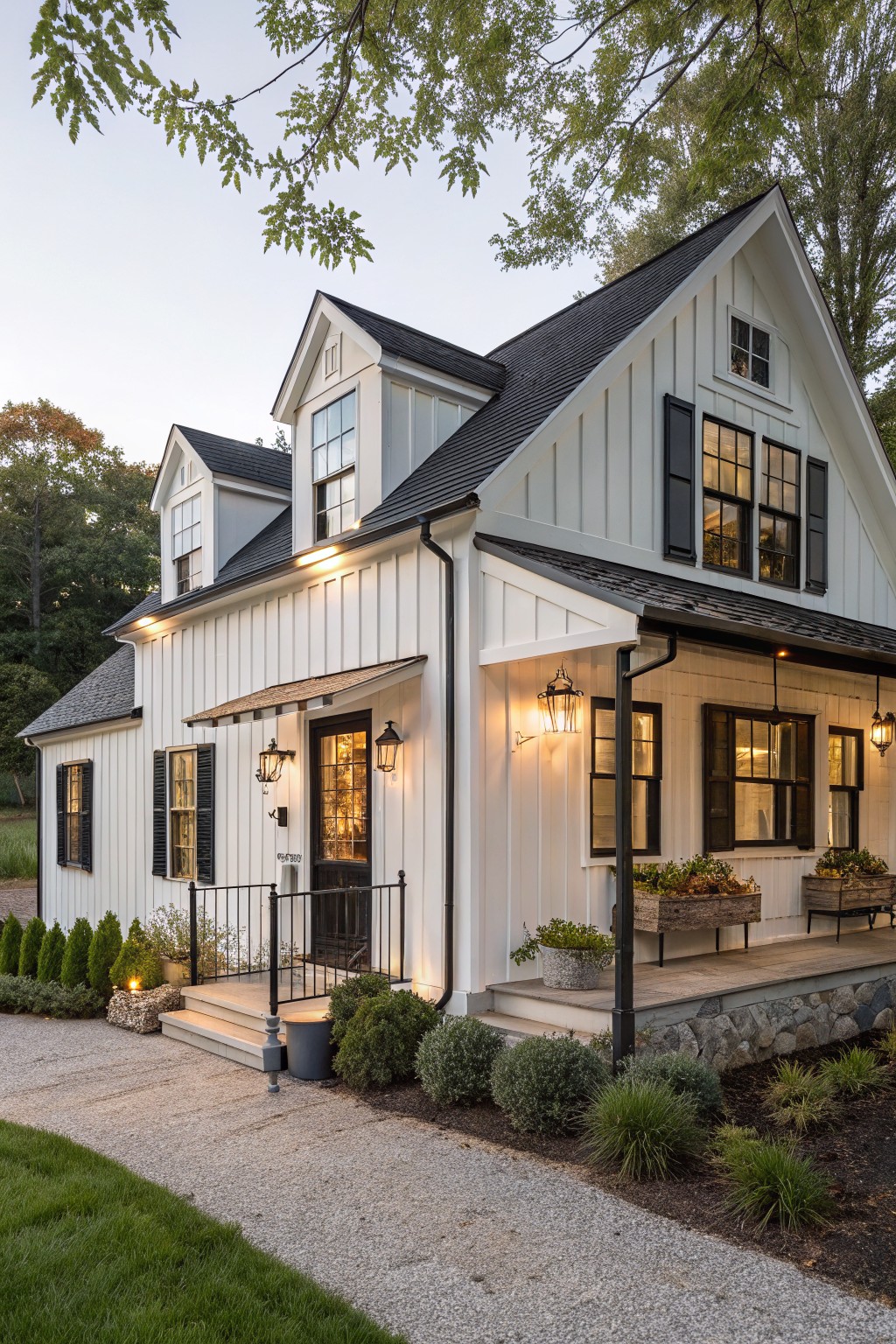
White siding looks cleaner when black trim outlines the windows, doors, and shutters. The dark lines give the house clear shape and keep the overall look simple instead of busy.
This approach works best on farmhouses that already have straightforward rooflines and siding. Use it when you want the entry and windows to stand out without adding extra colors or ornament. The black door and matching shutters in the photo show how little it takes to get the effect.
Black Window Frames on White Exteriors
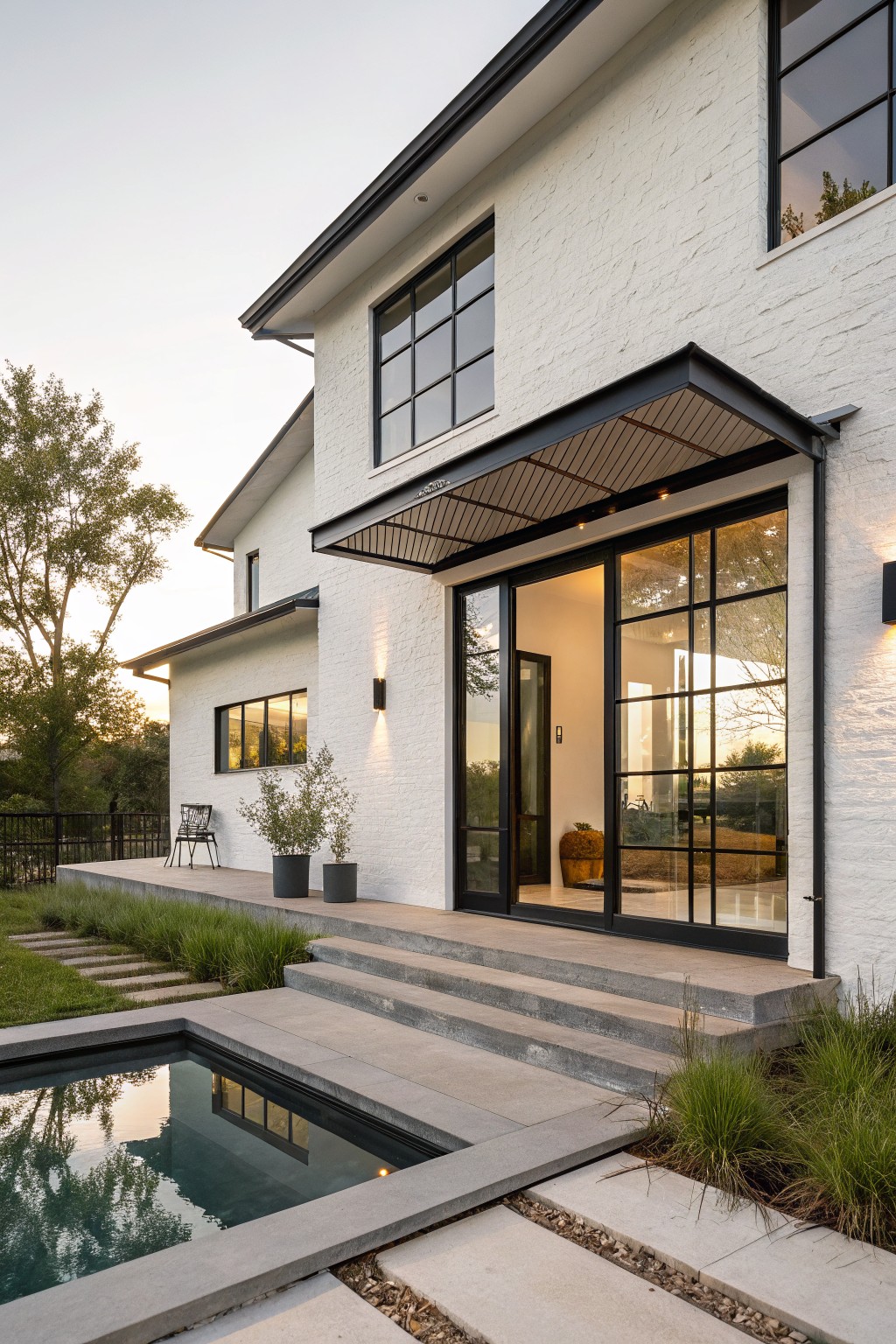
White exteriors stand out more when the windows and doors get black frames. The dark lines give the facade a sharper look and help the house feel balanced instead of plain.
This approach suits farmhouses with simple shapes and works best when the black is used on every window and entry point. Keep the rest of the trim light so the contrast stays clear instead of turning heavy.
Matching Black Front Doors With Window Trim
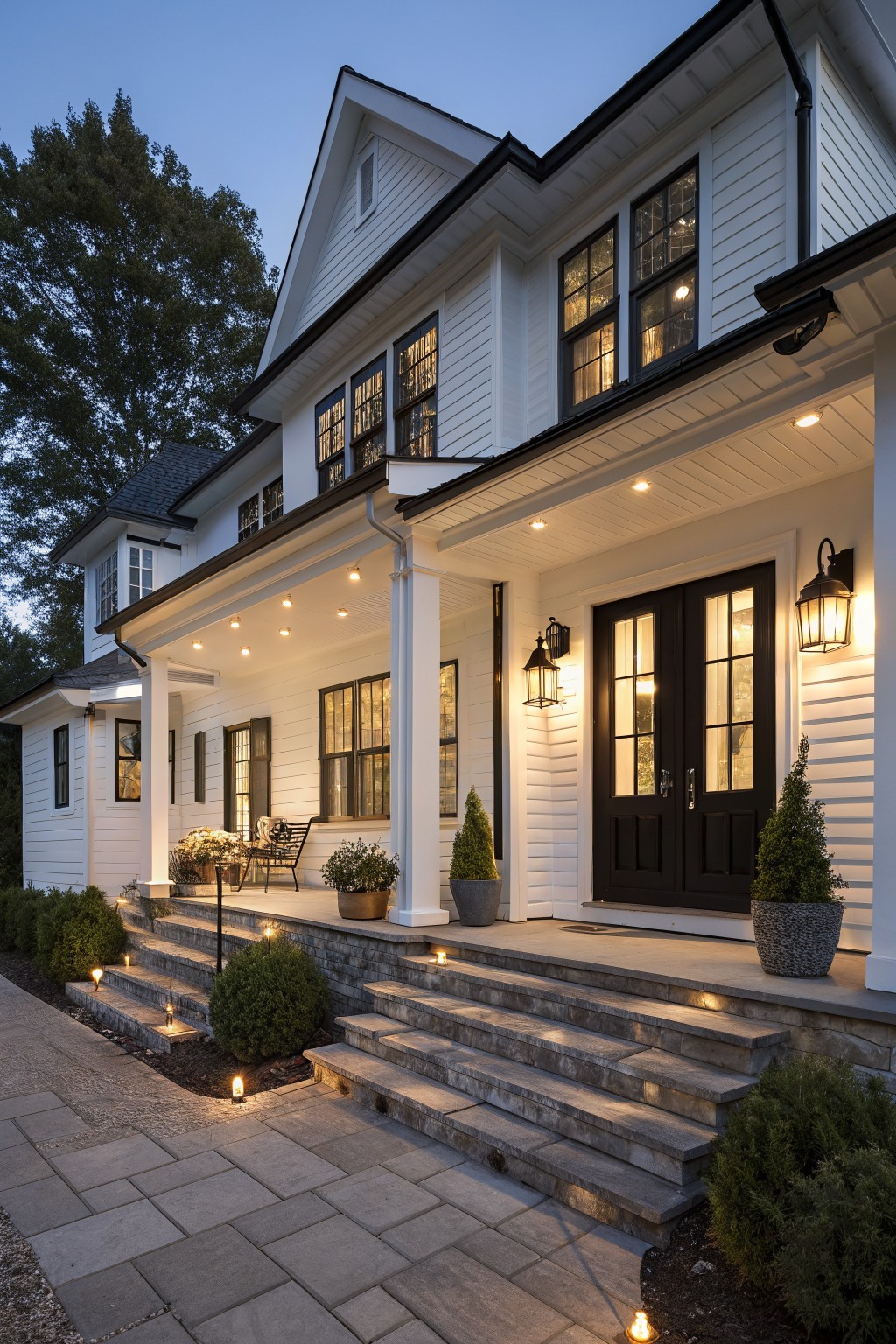
Black trim around the windows and doors gives a white house clear shape. The dark frames stand out without needing extra decoration, and the look stays simple even when the house has multiple rooflines and a wide porch.
This approach works best on farmhouses that already have straightforward siding and basic window sizes. Match the trim color on the front doors too, and keep the rest of the palette light so the contrast stays sharp instead of busy.
Extending Black Trim Across Rooflines and Outdoor Areas
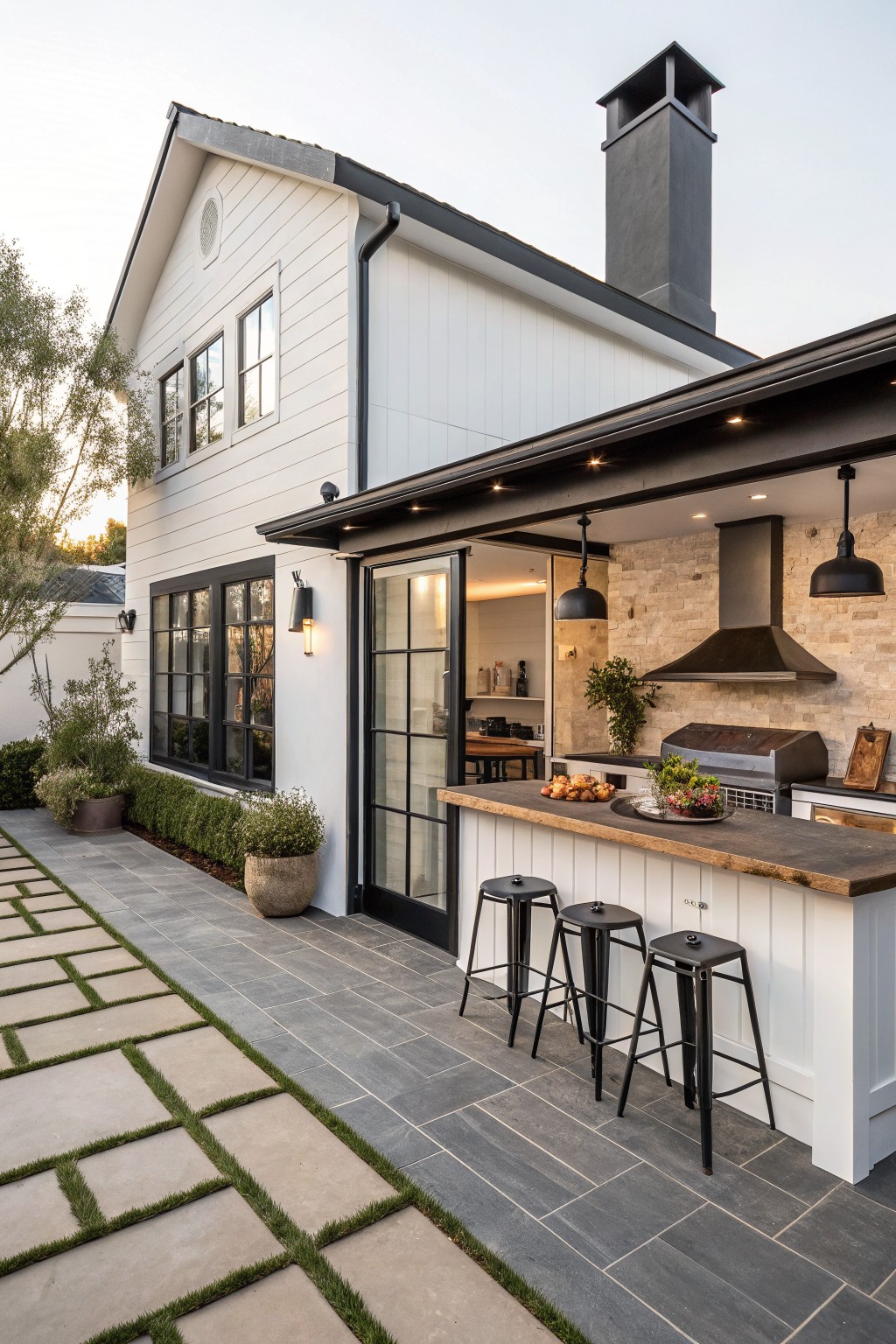
Black trim gives a white farmhouse exterior a clear, sharp look without much extra effort. The dark frames on the windows and doors stand out against the light siding and help define the shape of the house.
This approach works on both new builds and older homes that need a quick update. Use it on the main windows and doors first, then carry the black through to the roofline and any attached outdoor areas so the contrast stays consistent.
Adding Black Trim to Garage Doors and Railings
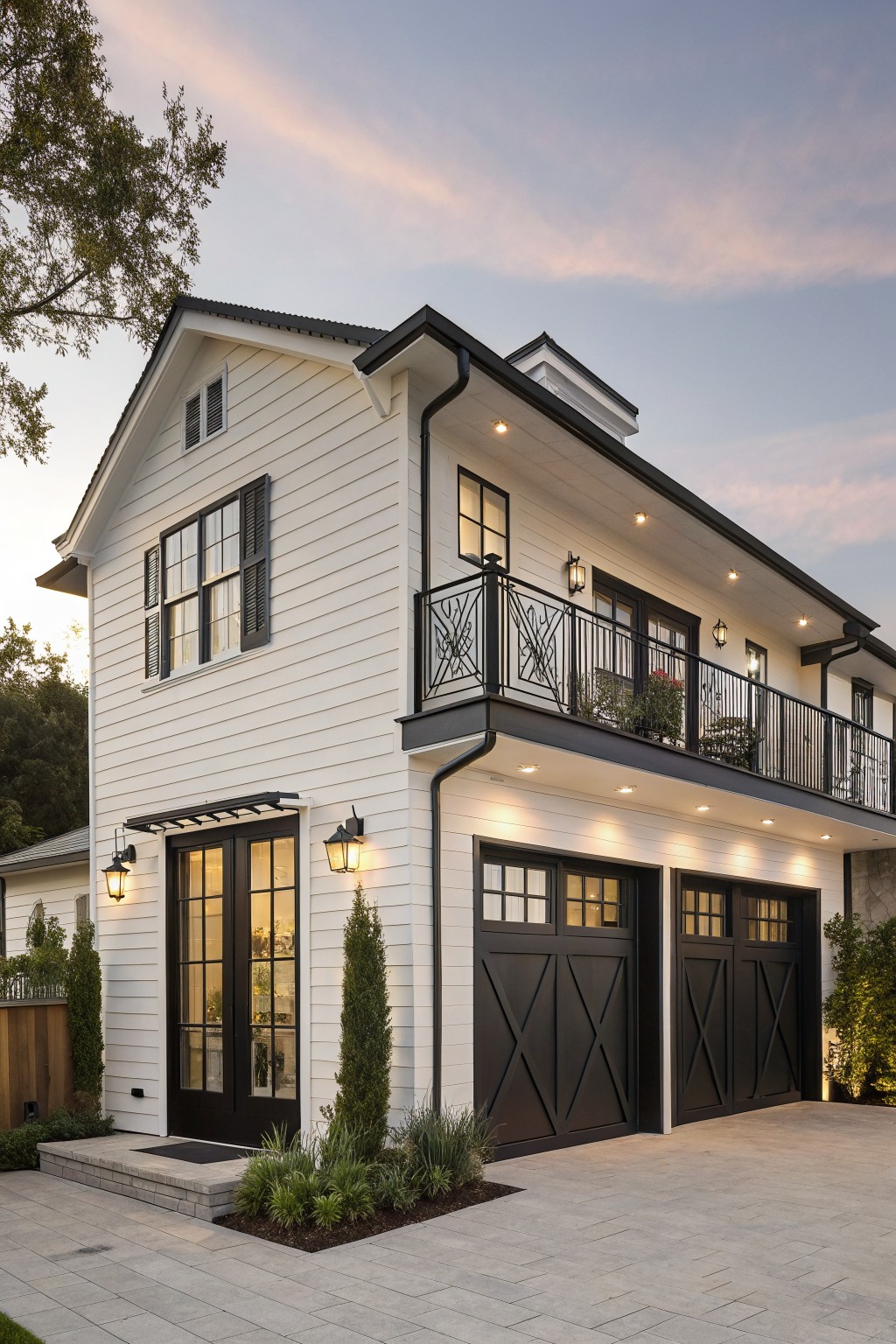
Black trim stands out on a white house because it gives the whole front a sharper, more defined shape. The dark lines around windows, doors, and roof edges keep the look clean instead of soft or washed out.
This works especially well on farmhouses that already have simple siding and gable roofs. Use it on the garage doors and any railings so the contrast stays even from top to bottom.
Black Trim On White Outdoor Structures
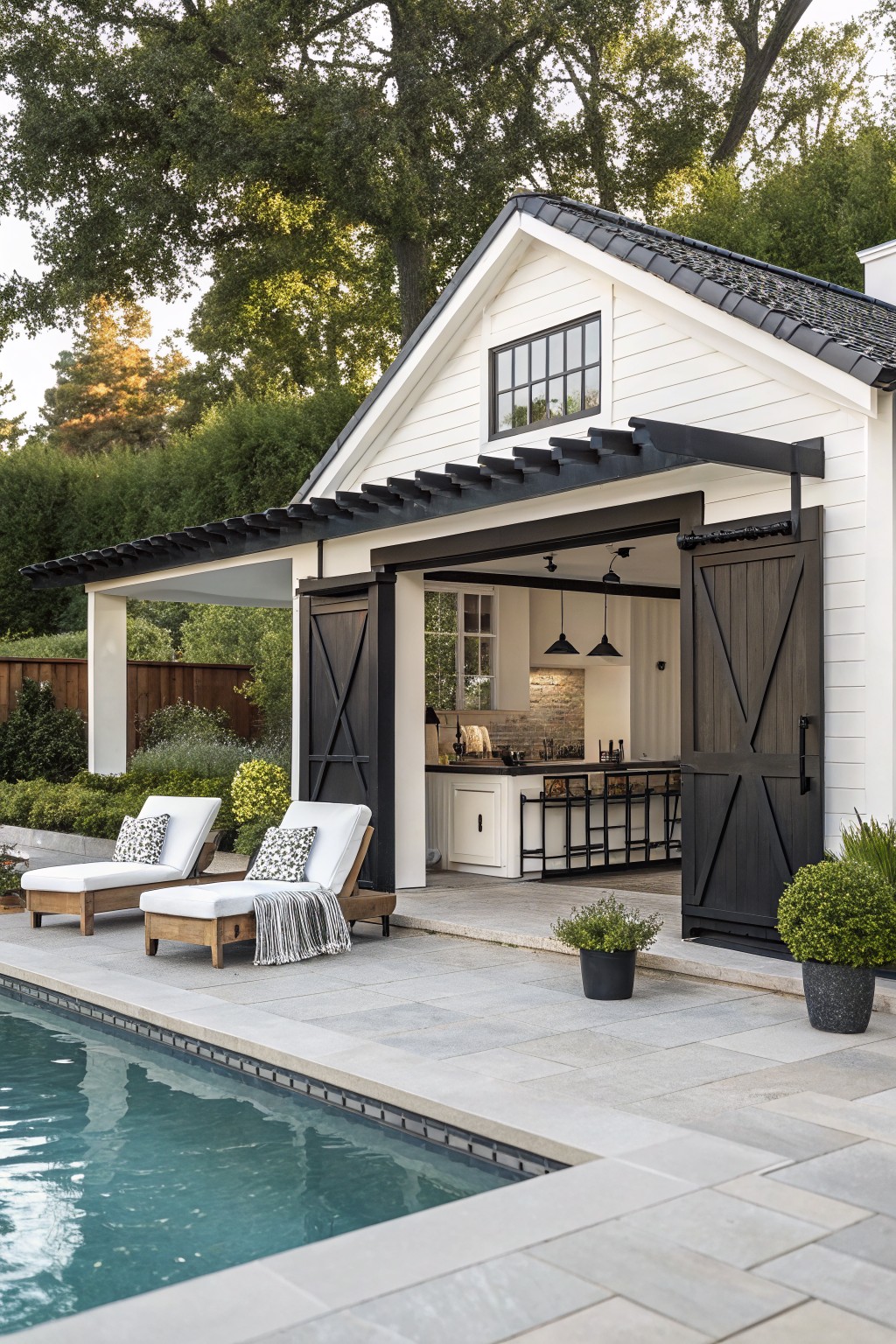
Black trim gives a white building more definition, especially when the structure sits right by a pool or patio. The dark doors, window frames, and overhang edges stand out cleanly against the light siding and make the whole area feel more finished without adding much extra detail.
This approach works well on pool houses, cabanas, or guest buildings where you want the architecture to read clearly from the yard. Keep the trim color consistent on doors, window sashes, and any exposed beams so the contrast stays sharp rather than busy.
Combining Black Trim With Natural Wood Accents
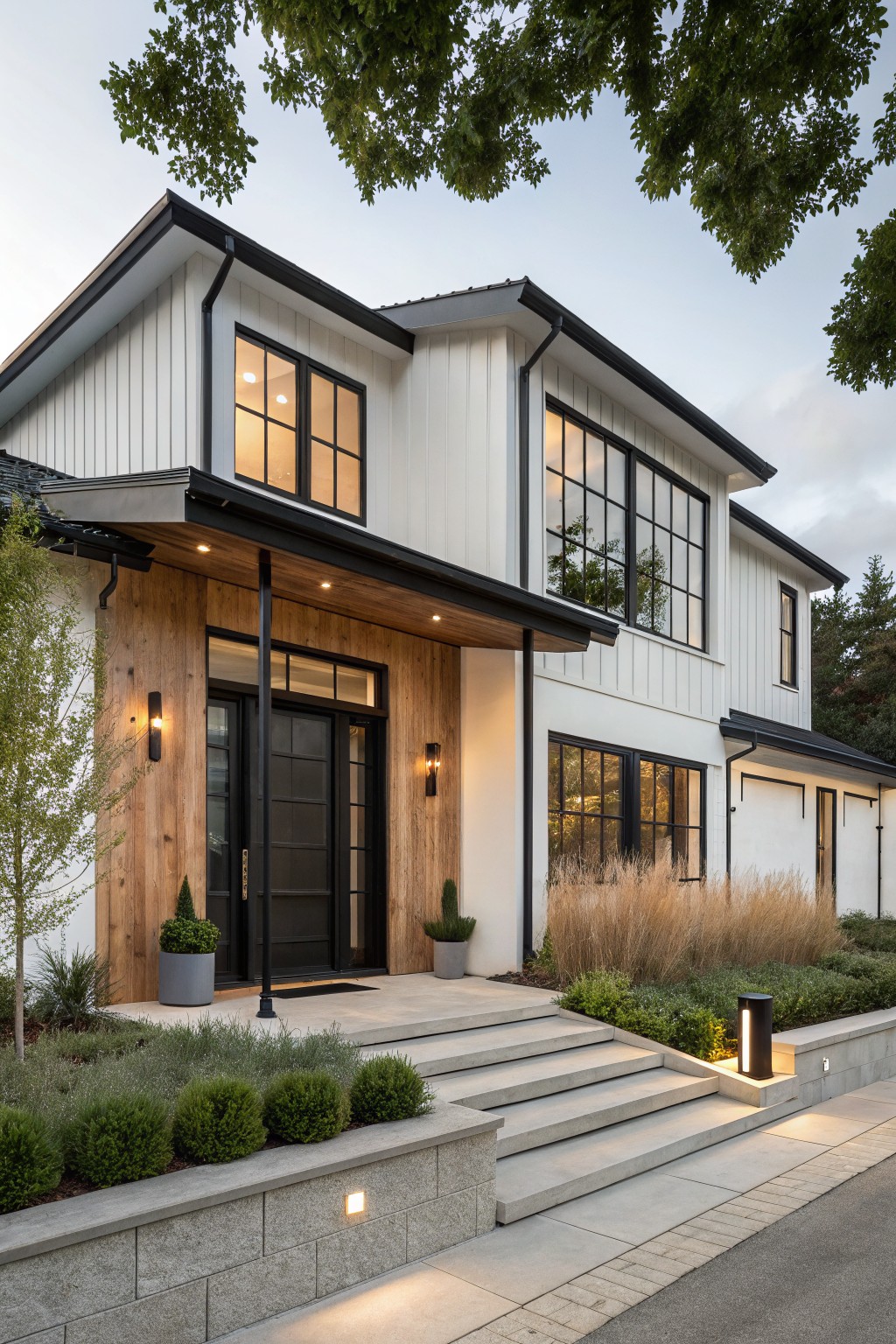
White siding with black trim gives a farmhouse that clean, sharp look many people want right now. The dark frames make the windows stand out and give the whole front a more defined shape without adding extra decoration.
This approach works best on homes with straightforward rooflines and a mix of siding and wood near the entry. Keep the black consistent on windows, doors, and gutters so the contrast stays strong rather than looking scattered.
Black Trim On White Brick
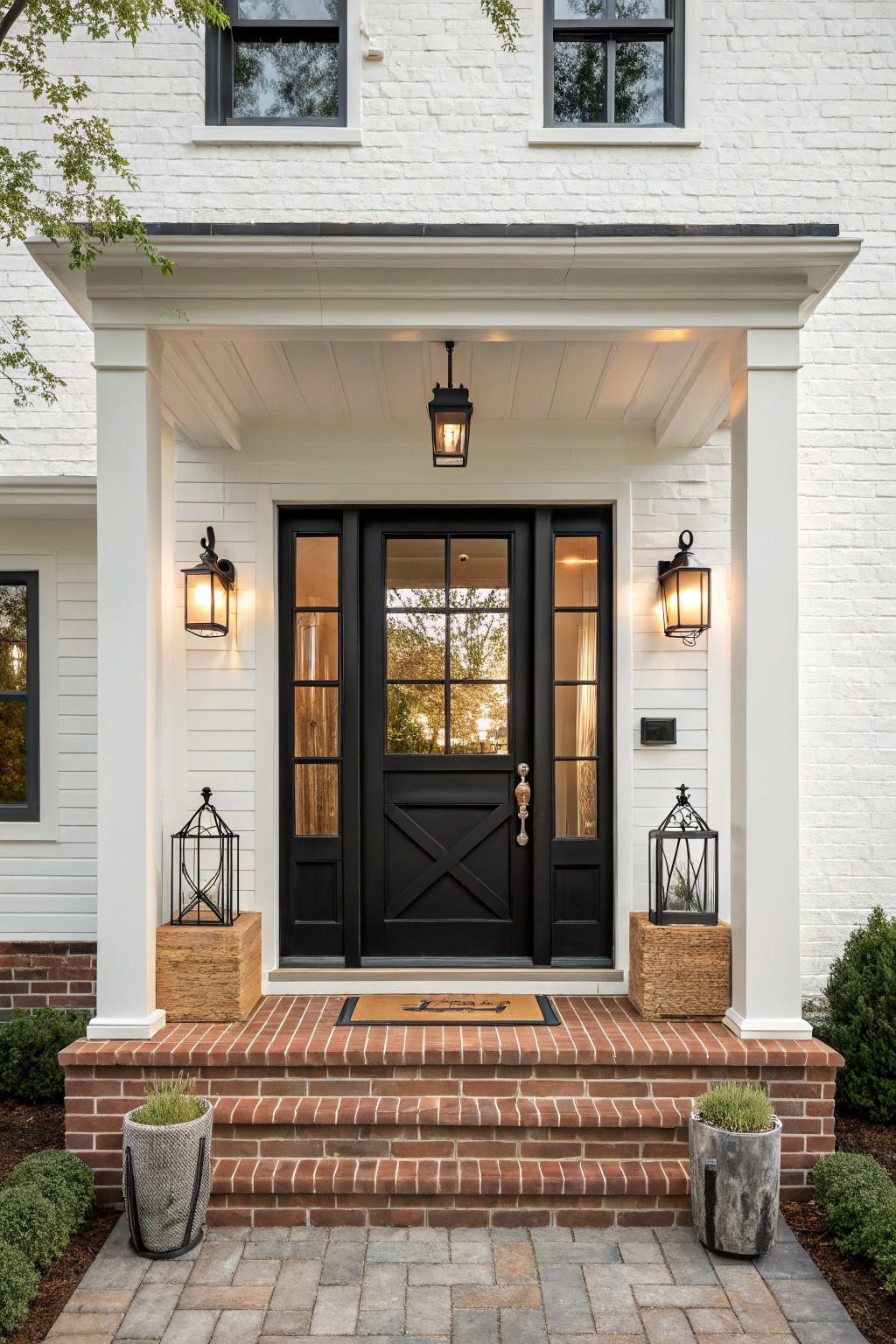
Black trim gives a white brick house a sharper, more finished look without needing extra color or decoration. The dark frames around doors and windows stand out clearly against the light brick, which helps the whole front feel balanced and easy to read from the street.
This approach works best on simple farmhouse shapes where the trim can highlight the windows and entry without competing with other details. Keep the black consistent on the door, window frames, and lanterns so the contrast stays intentional rather than scattered.
Frequently Asked Questions
Q: How do I keep the black trim looking fresh year after year?
A: Clean it twice a year with mild soap and water. Touch up any chips right away before they spread. This keeps the contrast strong without much effort.
Q: What if my house has vinyl siding already?
A: You can paint the trim black without changing the siding. Just make sure the paint sticks well to vinyl. Many people do this update in a weekend.
Q: Should I match my front door to the black trim?
A: A black door works great here. It pulls the whole look together. Try a matte finish for that farmhouse feel.
Q: Will this color combo work with my brick chimney?
A: Paint the trim around windows and doors black first. Leave the chimney as is for now. See how it feels before deciding on more changes.
