

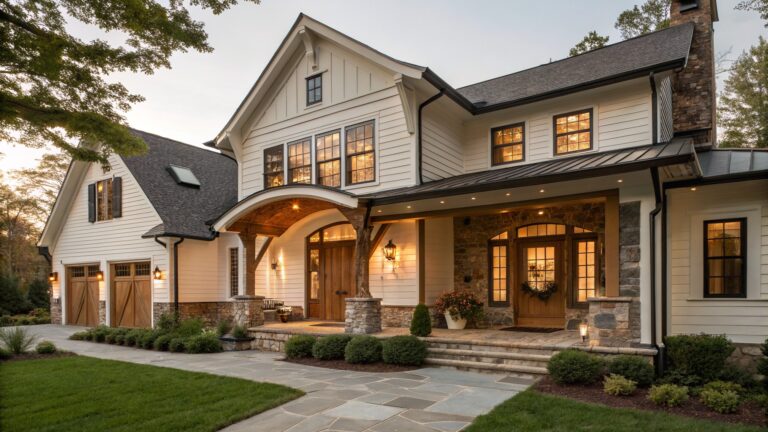
When I drive past farmhouses the ones that stand out tend to balance clean white siding with wood details that add depth without trying too hard.
Those choices often make the whole front read warmer from the street which is something I notice more than the overall style itself.
I keep thinking about how the texture of the wood changes with light and weather in ways photos rarely capture fully.
Details matter here.
Trying a few of these accents on my own place has shown me which ones hold up once the seasons pass.
Wood Accents on White Farmhouse Siding
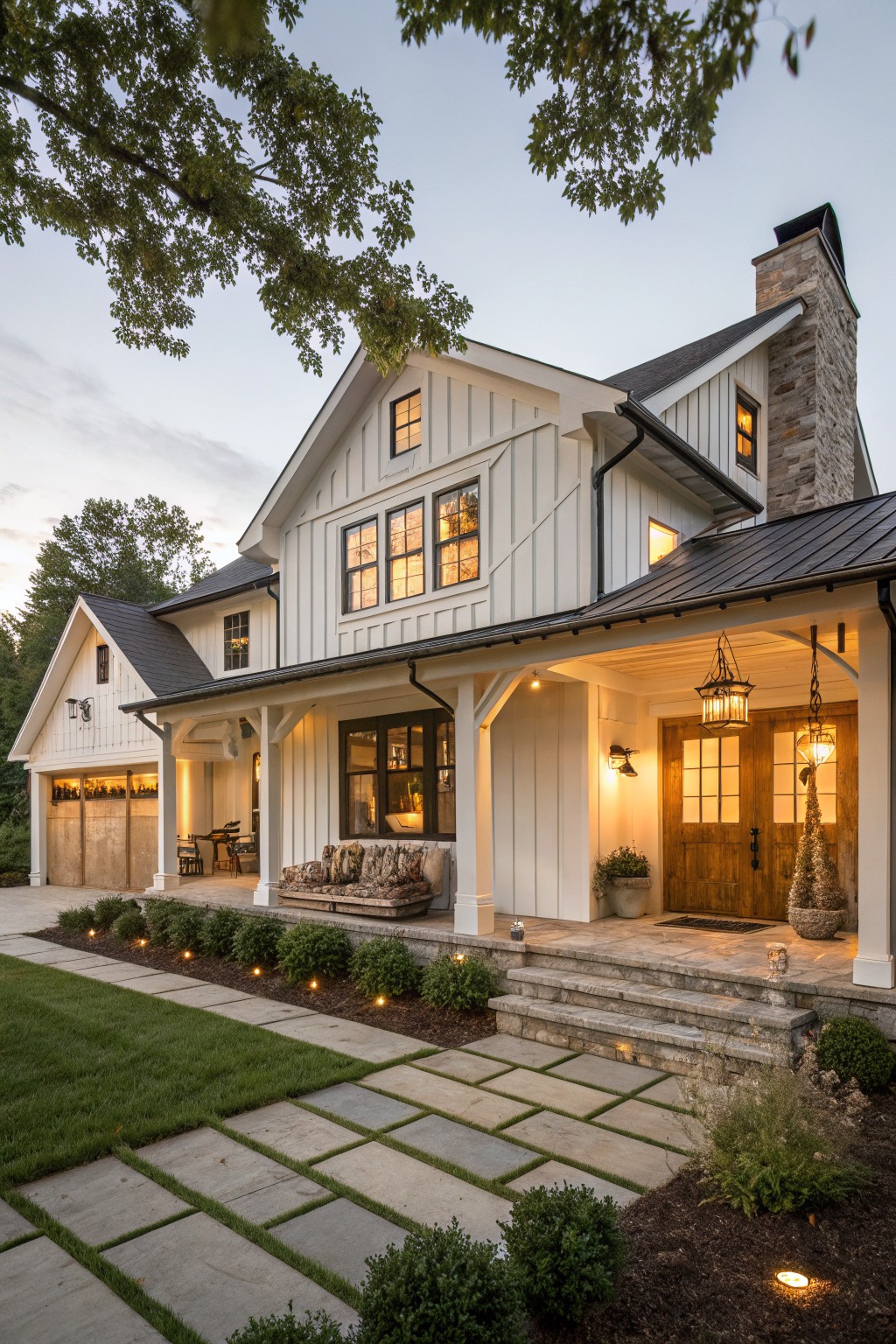
Many white farmhouses can feel a little stark on their own. Adding wood accents on the doors and trim gives the siding a warmer tone and a bit of texture that feels more lived in.
This approach works best on homes with straightforward rooflines and simple window placements. Start with the front doors and any visible trim rather than covering large areas, since a little wood goes a long way against white.
A Painted Door for Simple Contrast
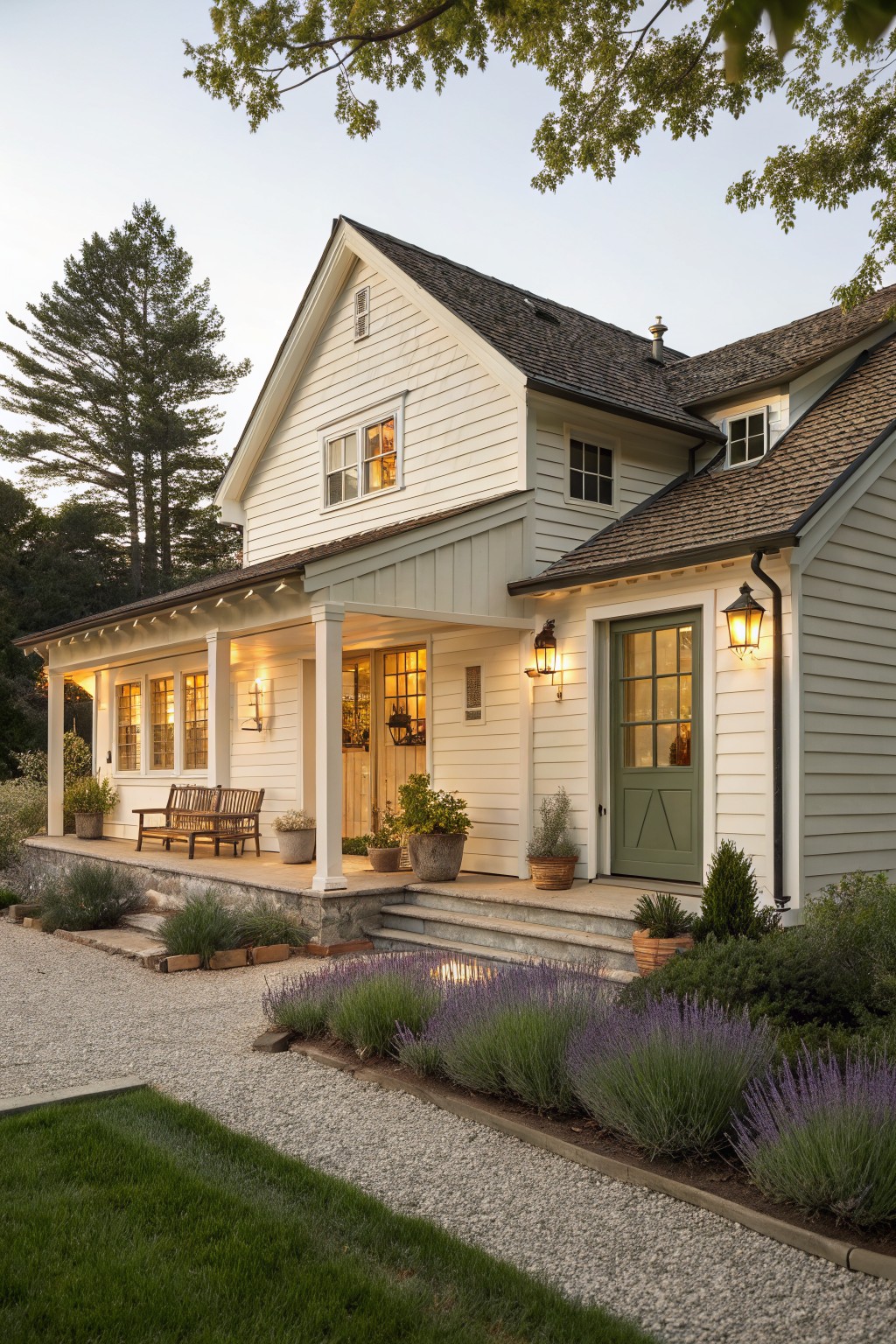
A soft green door stands out nicely against all the white siding without fighting it. The color feels calm and a bit unexpected, which keeps the whole front from looking too plain while still reading as farmhouse.
This works best on houses that already have clean lines and a covered entry. Stick with muted greens or similar soft tones, and let the door be the one spot of color rather than adding more elsewhere.
Vertical Wood Panels for Added Contrast
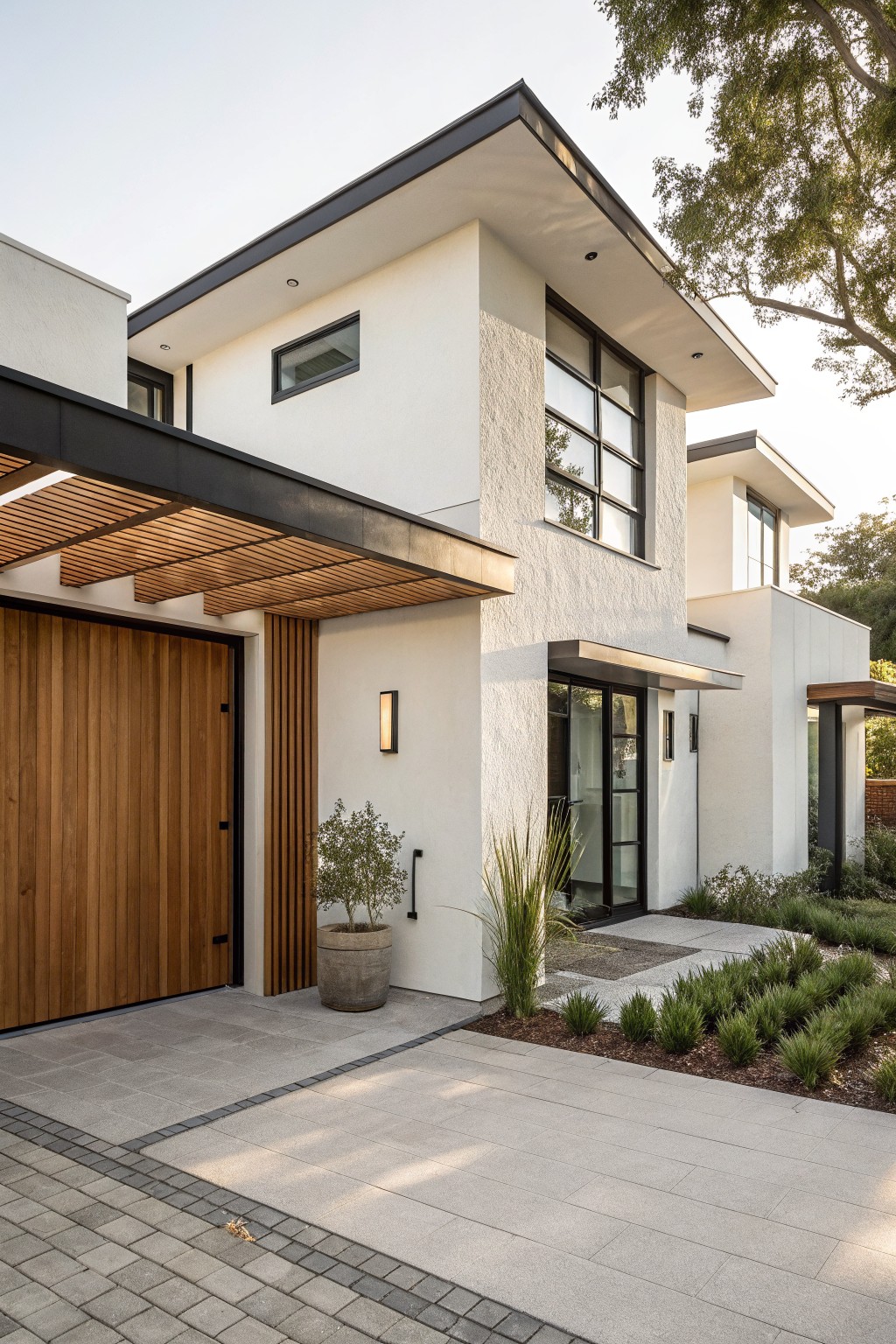
Many white exteriors can feel a bit flat without something to break them up. Wood accents give that contrast in a simple way, especially when they are used in vertical panels or doors that sit right against the main wall color. The result feels warmer and a bit more grounded without adding extra trim or color.
This approach works best on homes that already have clean lines and larger wall areas. Place the wood near the entry or garage so it is easy to see from the street, and keep the tones natural rather than stained too dark. It pairs well with soft landscaping that does not compete for attention.
Natural Wood Details for a Softer Exterior
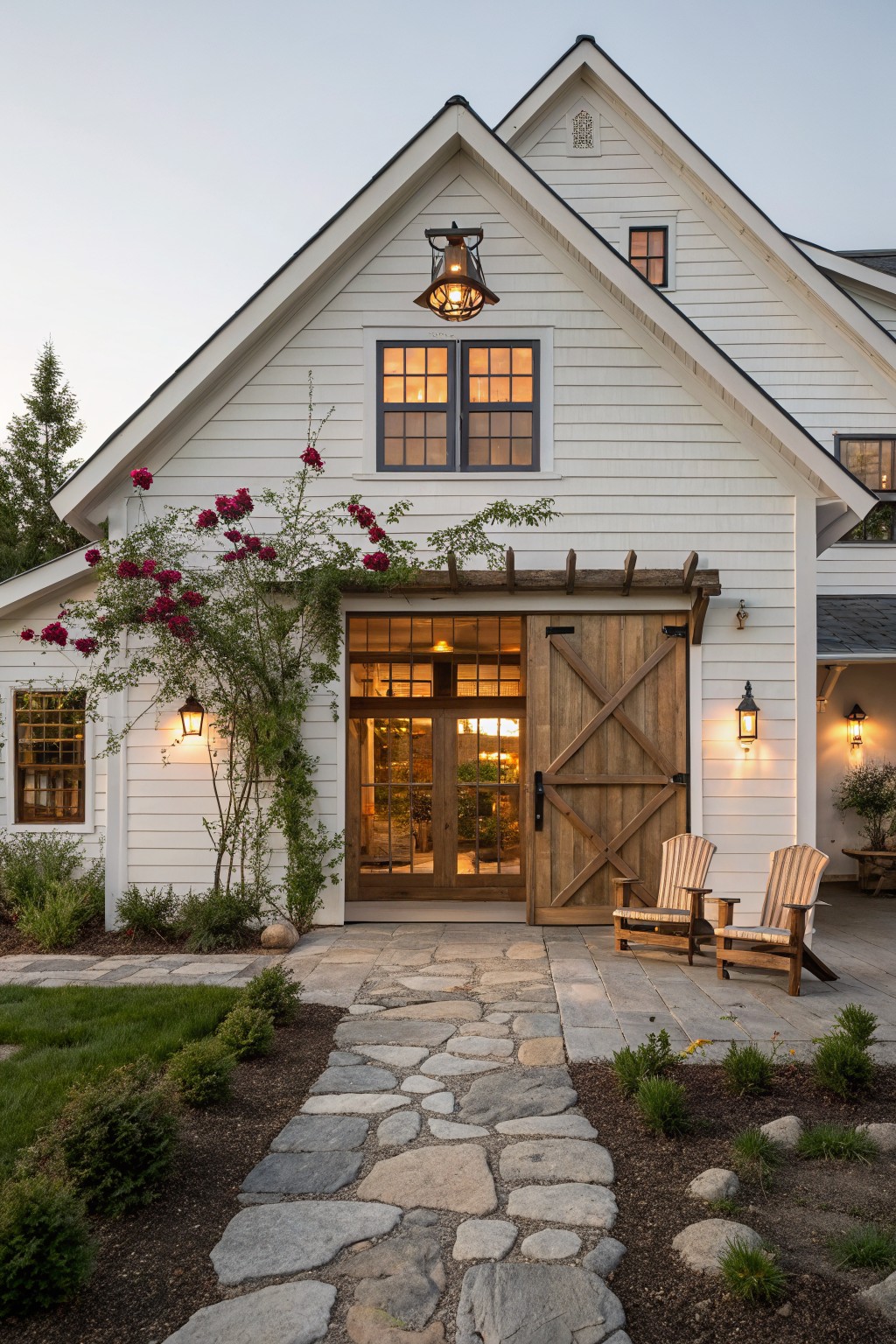
White siding can look clean but sometimes a little flat on its own. Adding wood accents like doors, trim, and simple seating brings in warmth and texture that makes the whole front feel more settled.
This works best on homes with straightforward rooflines where the wood can stand out without competing with too many other details. Keep the wood tones natural rather than stained dark, and let a few plants soften the edges so the contrast stays gentle.
Wood Accents Warm Up White Exteriors
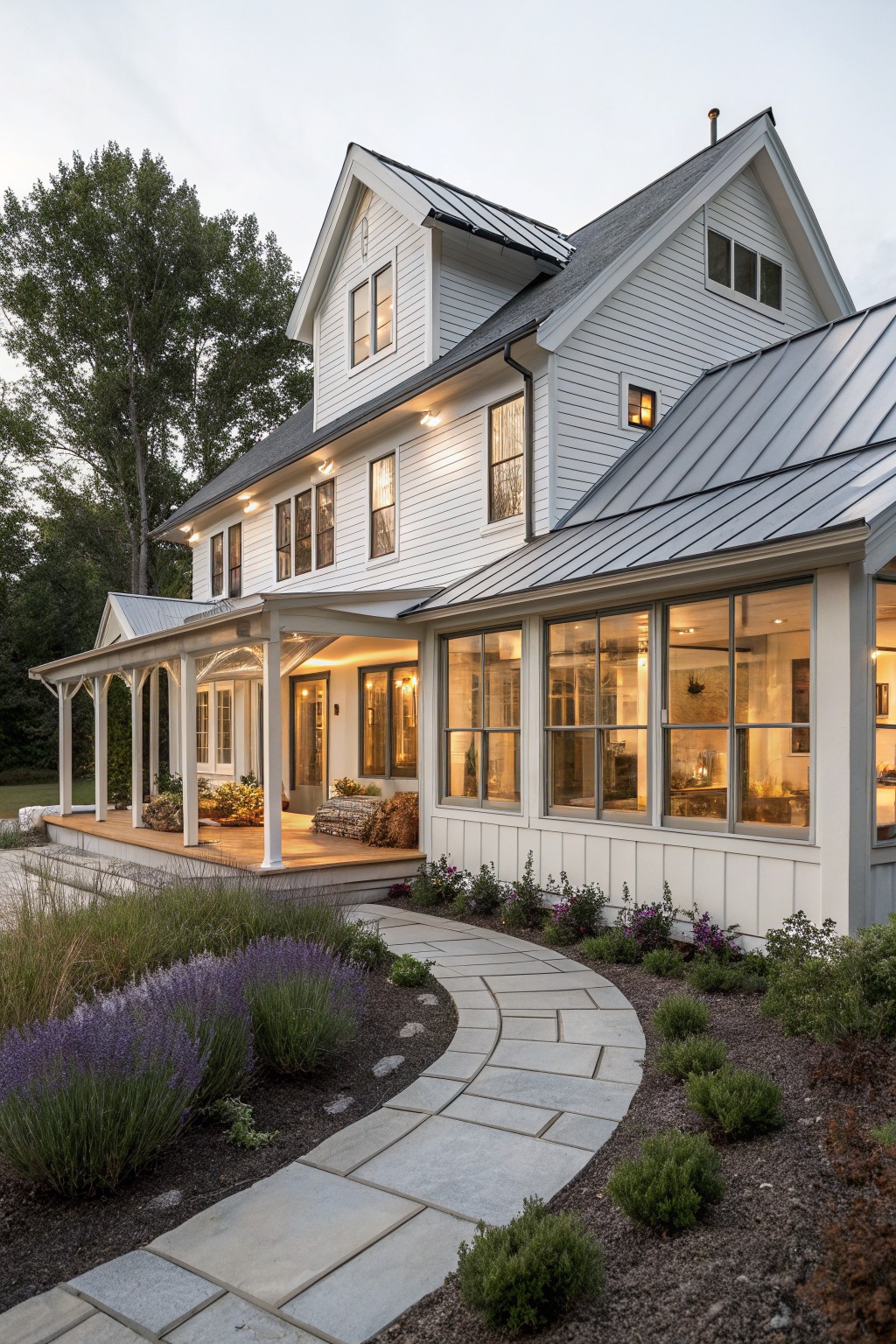
White siding can look a little plain by itself. Adding wood on the porch floor and posts gives the house a softer feel without changing the overall color.
This works best on farmhouses that already have a simple shape. Keep the wood in natural tones and let it show up in a few key spots like the decking or trim. It suits both older homes and newer builds that want a bit more texture outside.
Wood Garage Doors On White Farmhouses
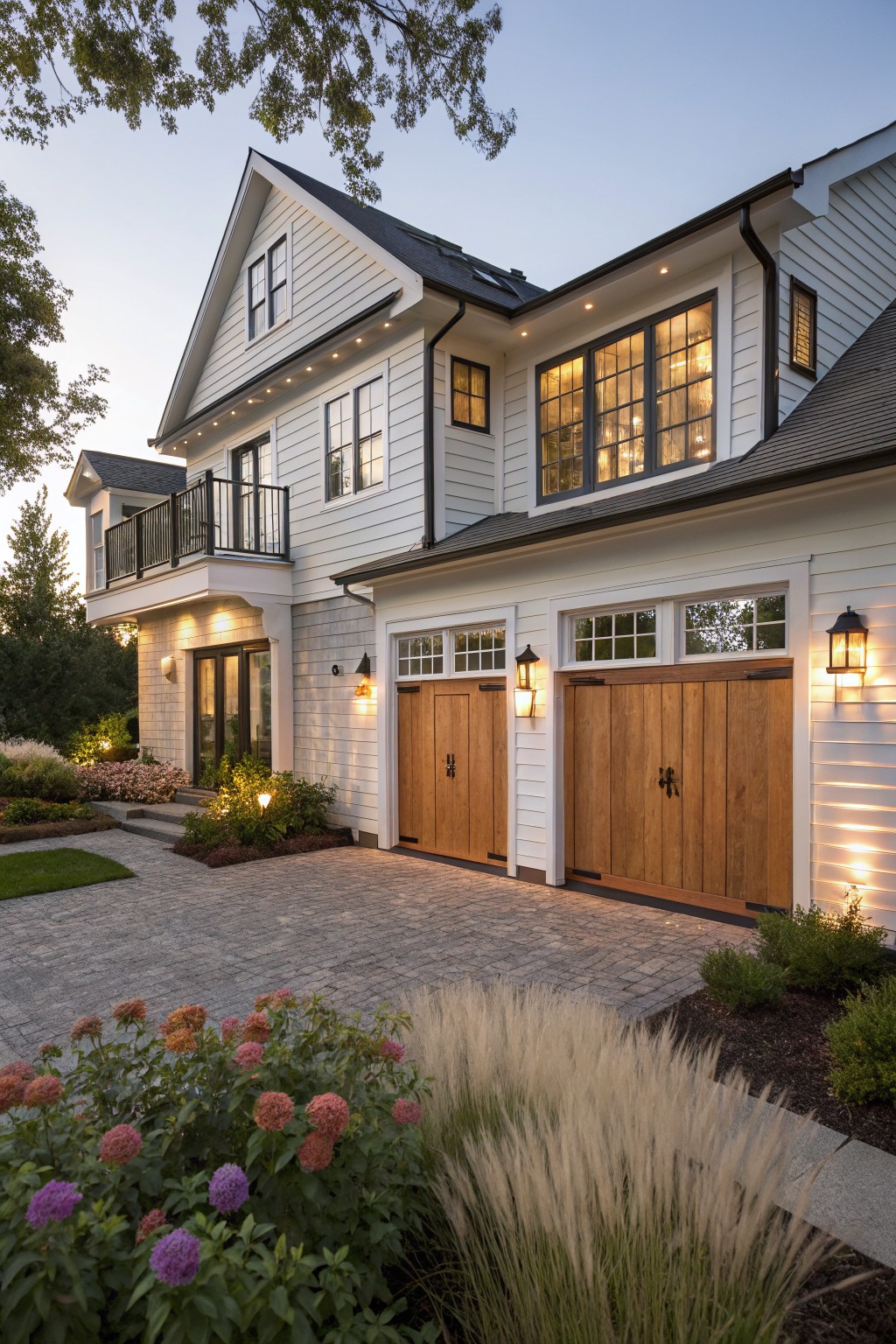
Many white farmhouses can look a bit flat without some contrast. Adding wood garage doors gives the exterior that warmer, softer touch while keeping the overall look clean and simple.
This works best on homes with straightforward siding and black or dark trim. The wood adds texture right where the eye lands on the front, and it pairs well with a paved driveway and modest planting so the house still feels grounded.
White Siding With Wood Accents
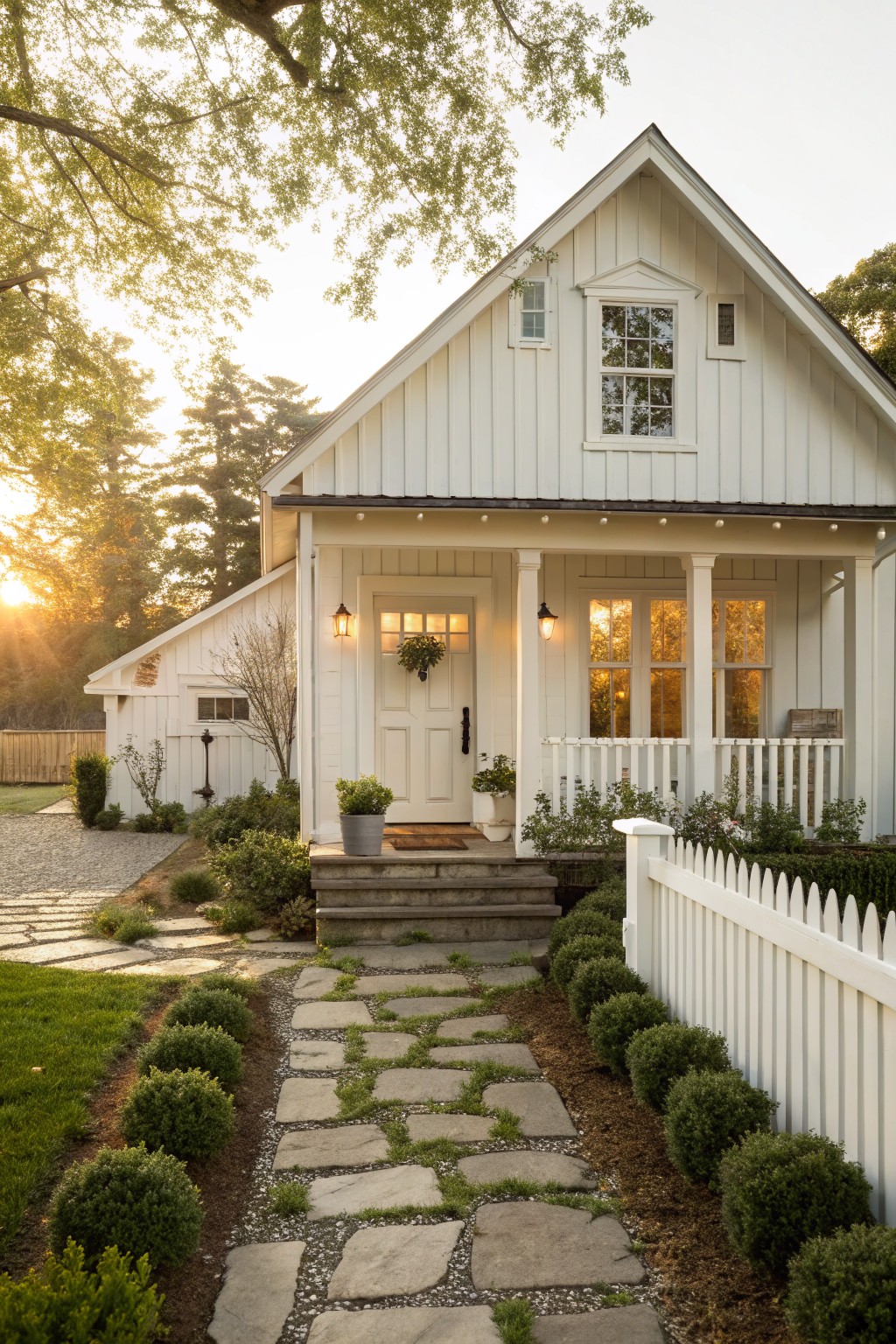
Many white farmhouses stay simple on the main walls and let the wood show up in smaller spots. This keeps the house bright while the wood gives it a bit of warmth and texture that feels lived in.
The wood works best on porch posts, trim, or railings where it can catch the light without taking over. It suits homes that already have a clean shape and a few good windows, since the contrast stays quiet and easy to maintain.
Wood Accents On Warm White Exteriors
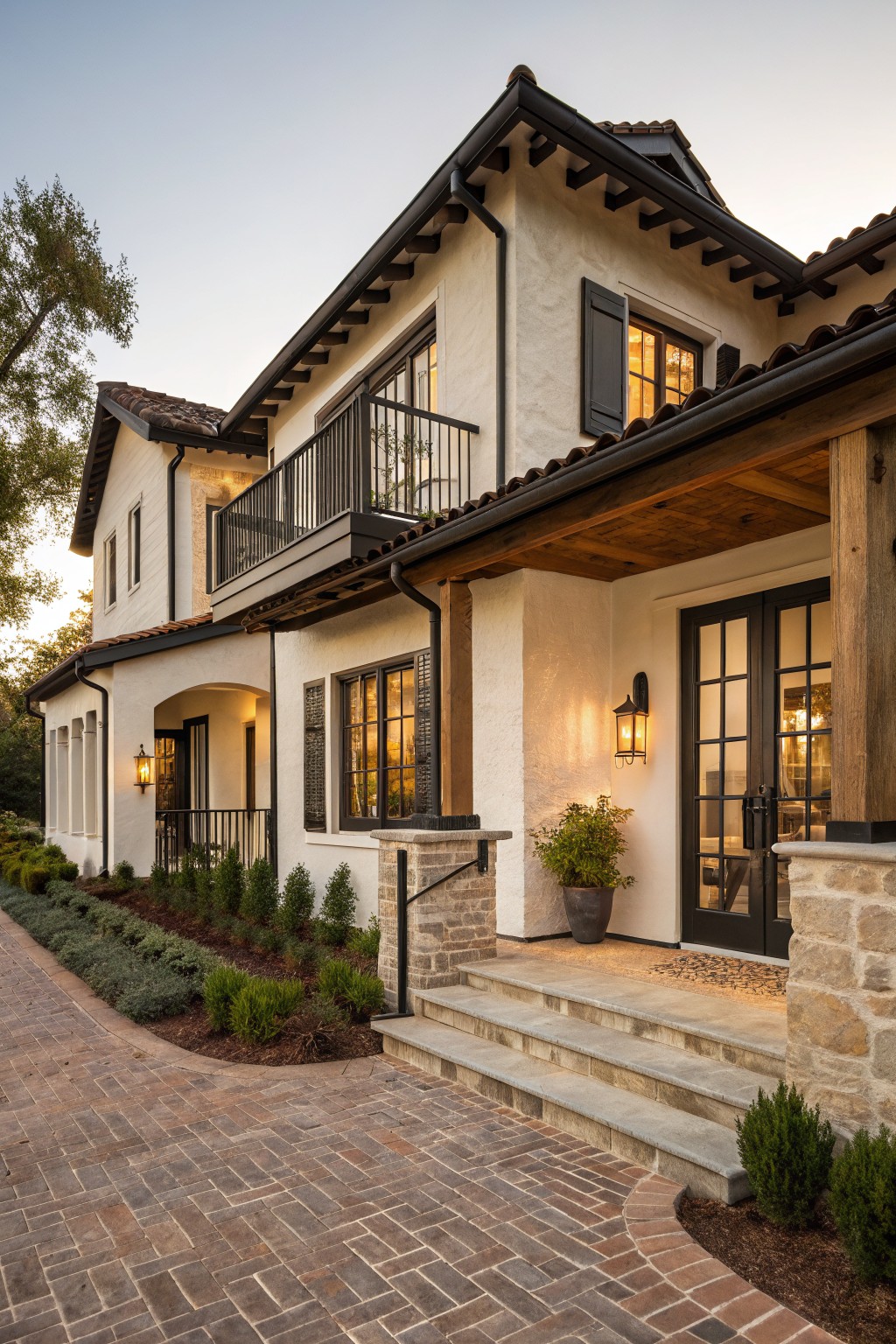
White stucco exteriors often need something to keep them from feeling flat. Wood beams and trim add that layer without changing the overall light look of the house.
This works best on homes with clean rooflines and a few strong architectural features. Use the wood in limited spots like porch ceilings or eave supports, and keep the tones in the medium to dark range so they stand out against the stucco.
Entry Canopies and Wood Porch Posts
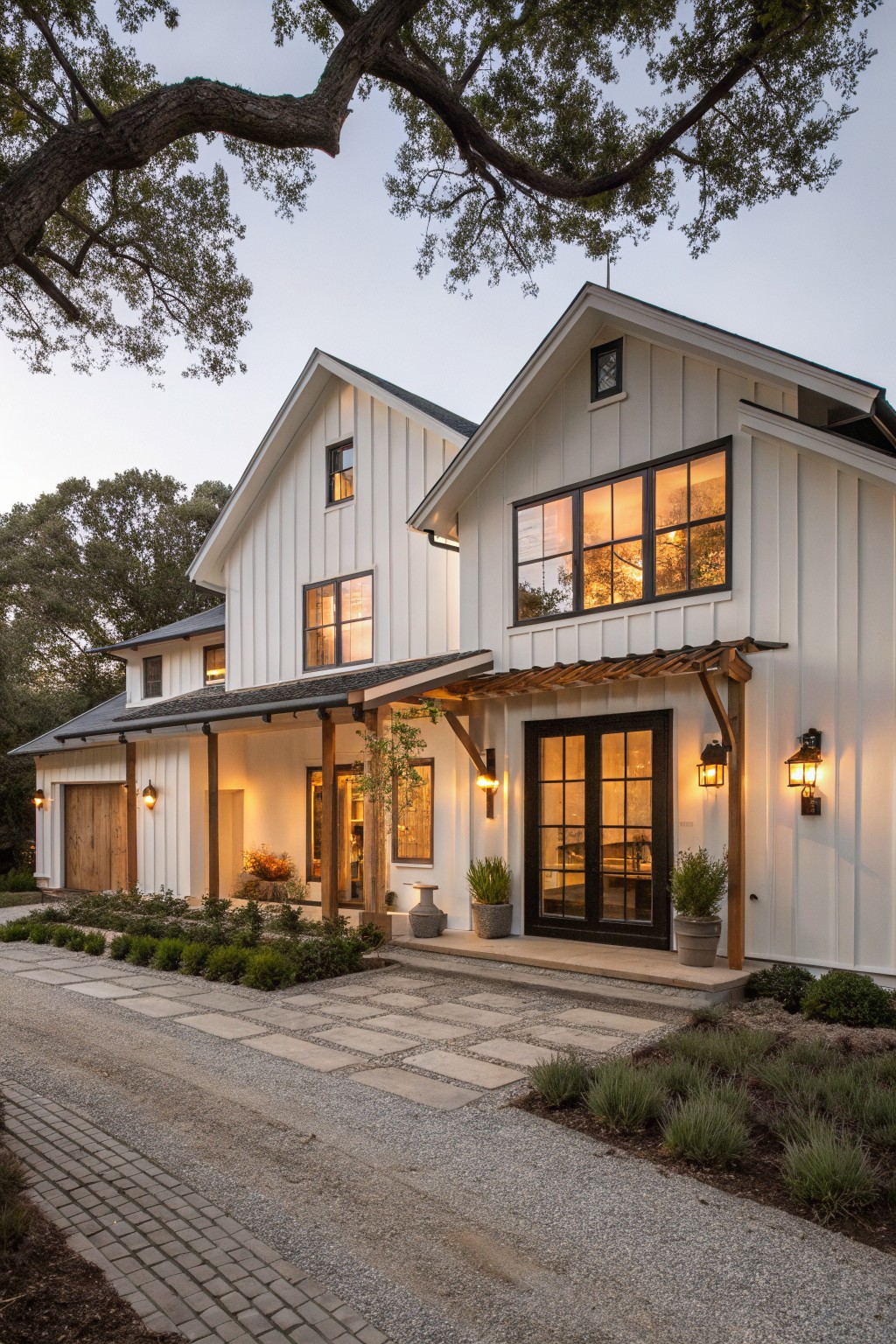
Many white farmhouses look crisp on their own, but they can feel a bit flat without something to break up the paint. Wood accents give the exterior a warmer feel while keeping the simple lines intact.
This approach works best on homes with straightforward siding and dark window frames. Focus the wood on practical spots like entry canopies or porch posts so it feels like part of the structure rather than added decoration.
Wood Ceilings on White Farmhouse Porches
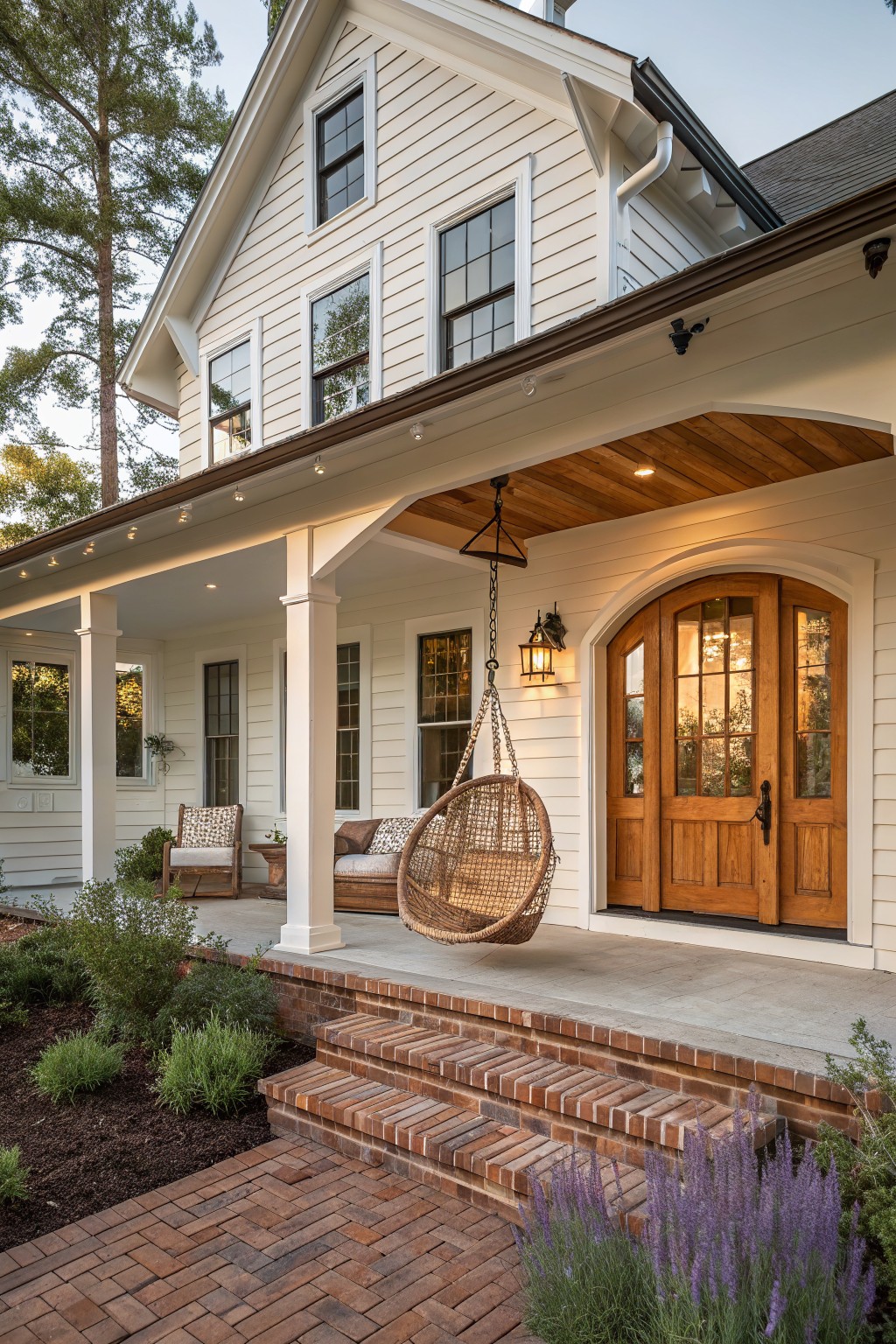
White farmhouses often need a little natural material to feel finished. A wood ceiling on the porch adds that layer without changing the overall siding or roofline. It gives the entry area a warmer tone that shows up especially at the end of the day.
This approach works best on homes with fairly plain exteriors. Keep the wood a mid-tone and repeat the same material on the front doors so the two elements feel connected. Too many different wood finishes can start to look busy.
Combining Wood Doors, Trim, and Porch Ceilings
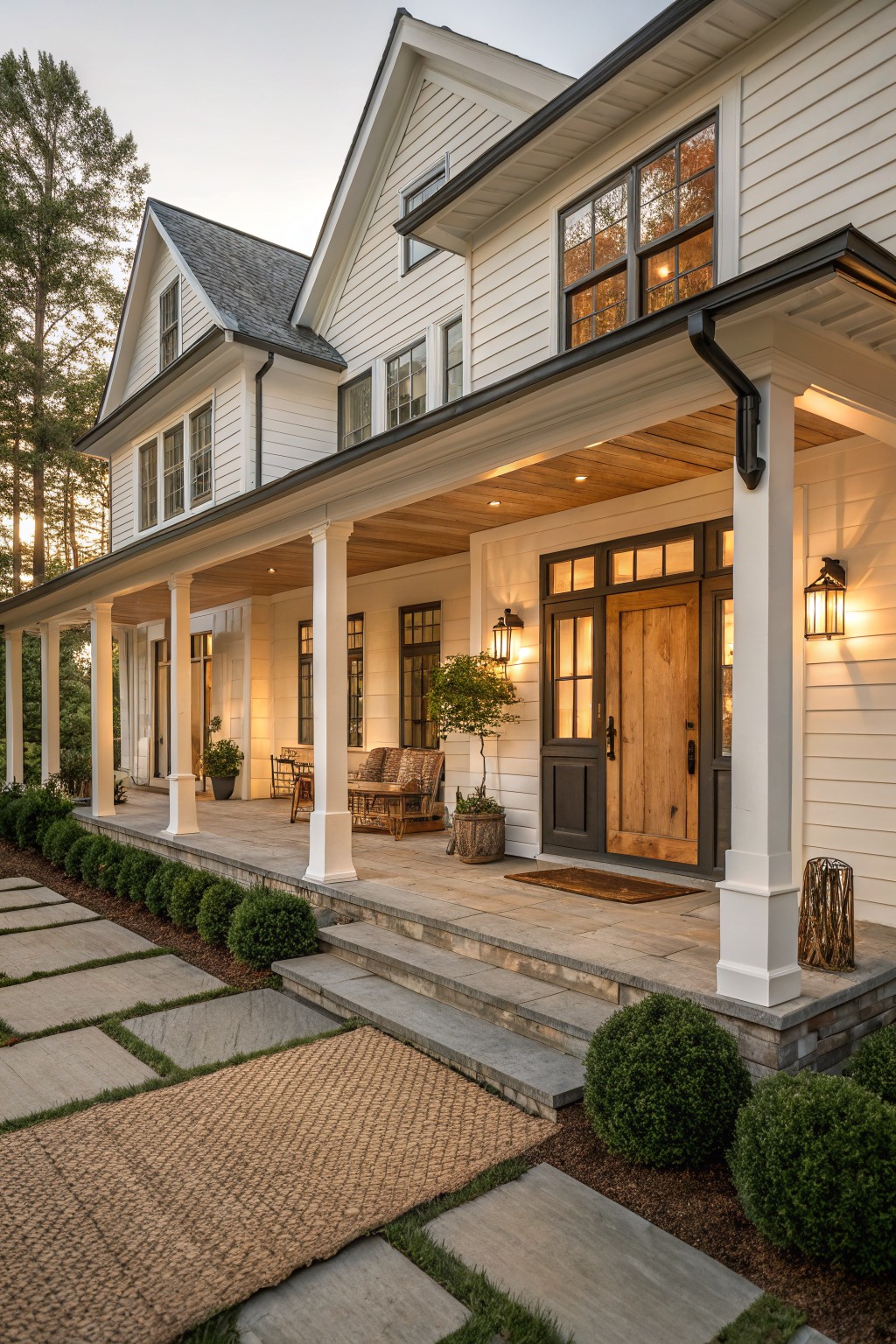
White siding can feel a little stark on its own, especially on larger homes. Adding wood in key spots like porch ceilings, doors, and trim brings in warmth without changing the overall clean look. The contrast keeps the house feeling fresh but also grounded and welcoming.
This approach works best on traditional or farmhouse styles where the roofline and columns already create strong shapes. Keep the wood tones natural rather than stained too dark, and limit the wood to two or three main areas so it reads as intentional rather than busy.
Natural Wood Decking and Outdoor Decor
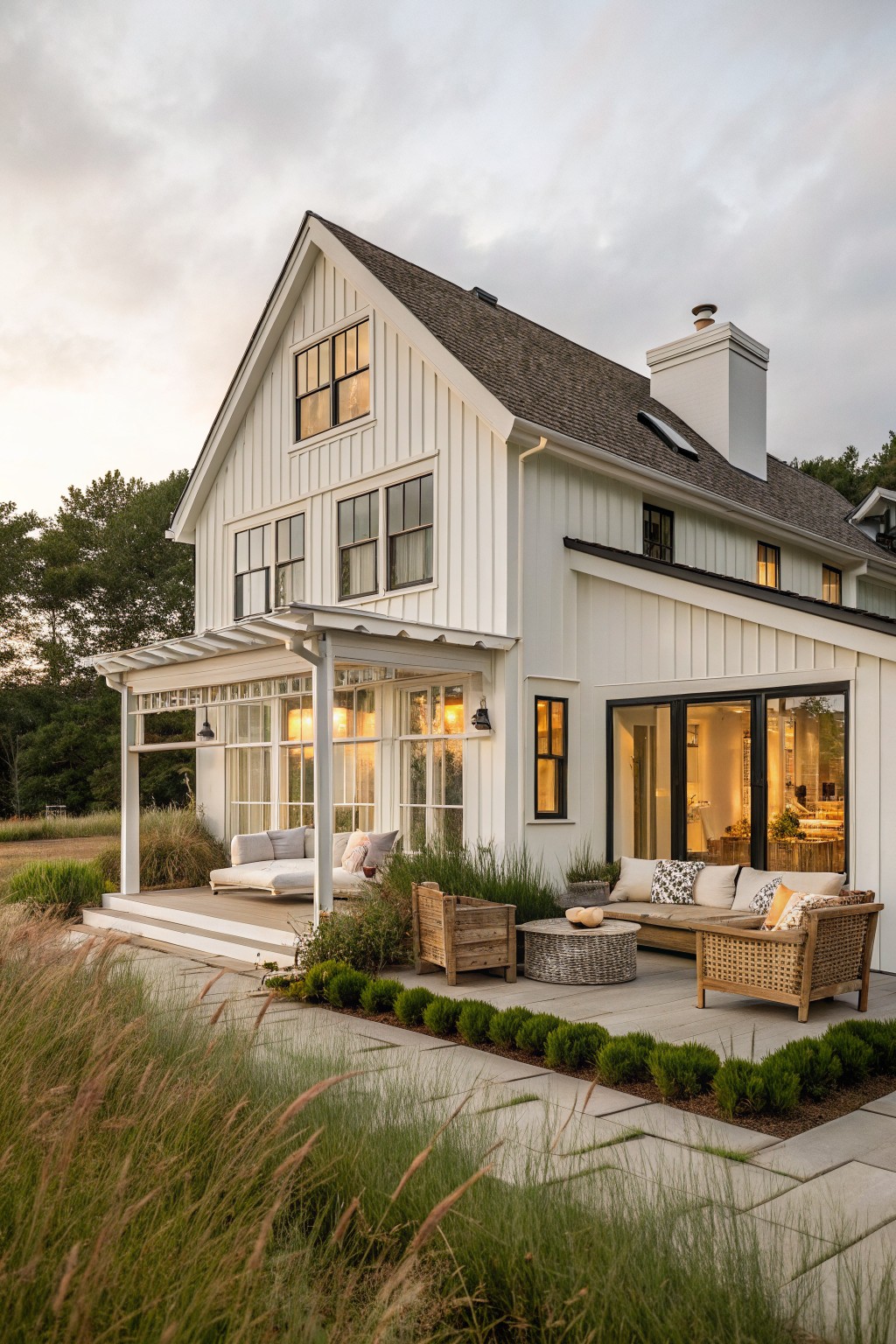
White siding can feel a bit stark on its own. Adding wood accents in the form of decking, simple crates, or woven seating brings in warmth without changing the overall clean look. The contrast between the bright walls and the natural tones keeps the house feeling friendly rather than formal.
This approach works well on farmhouses that already have a simple roofline and large windows. Keep the wood tones light to medium so they do not overpower the white. It suits homes in open settings where the materials can age naturally with the landscape.
Mixing Wood Accents With White Walls
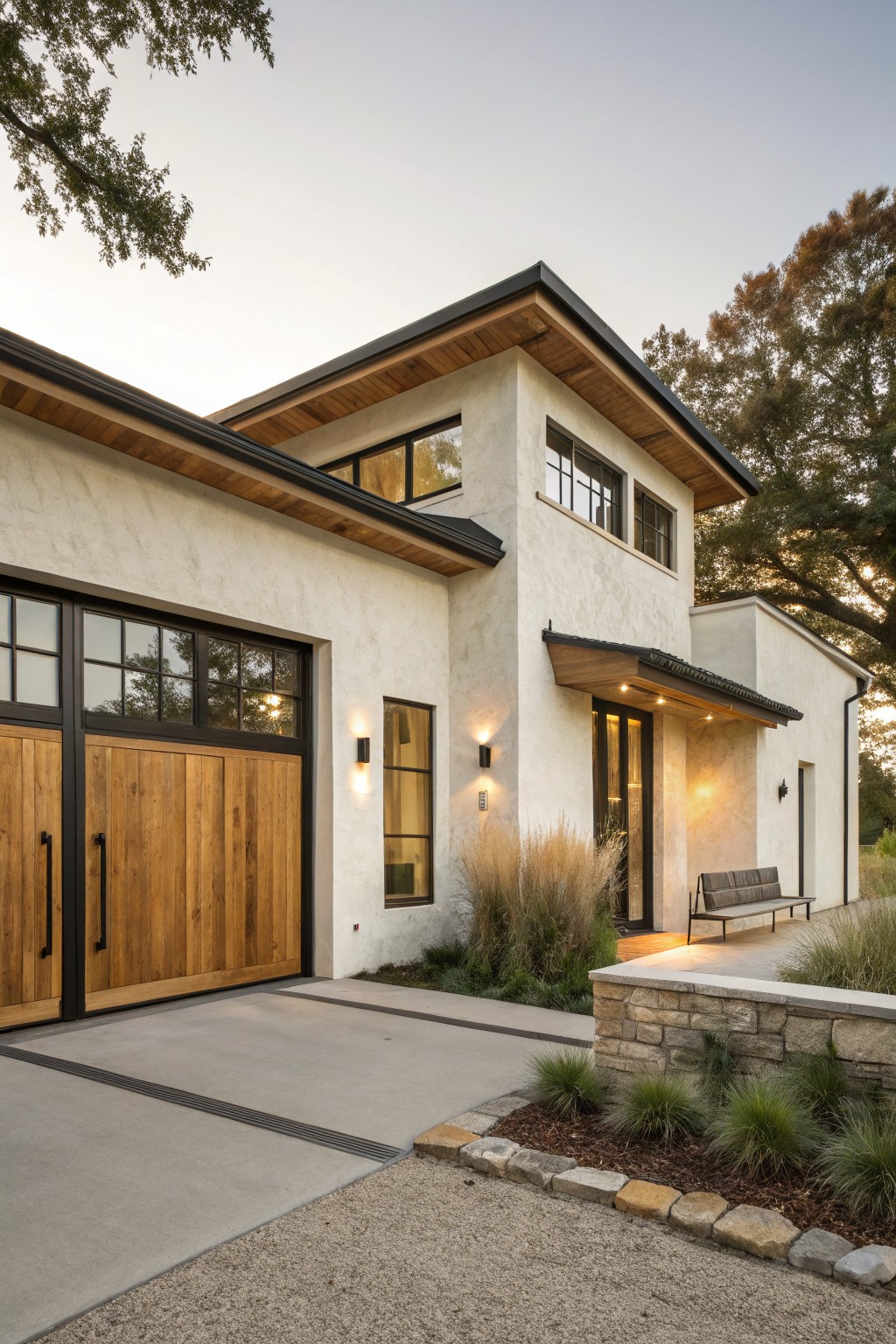
White exteriors can feel a little flat on their own. Adding wood accents in a few key spots gives the house warmth and makes the surface look more interesting without adding clutter.
This approach works well on homes with simple shapes. Keep the main walls clean and let the wood show up on garage doors, entry canopies, or roof trim so the contrast stays clear and easy to maintain.
A Wood Front Door as the Main Feature
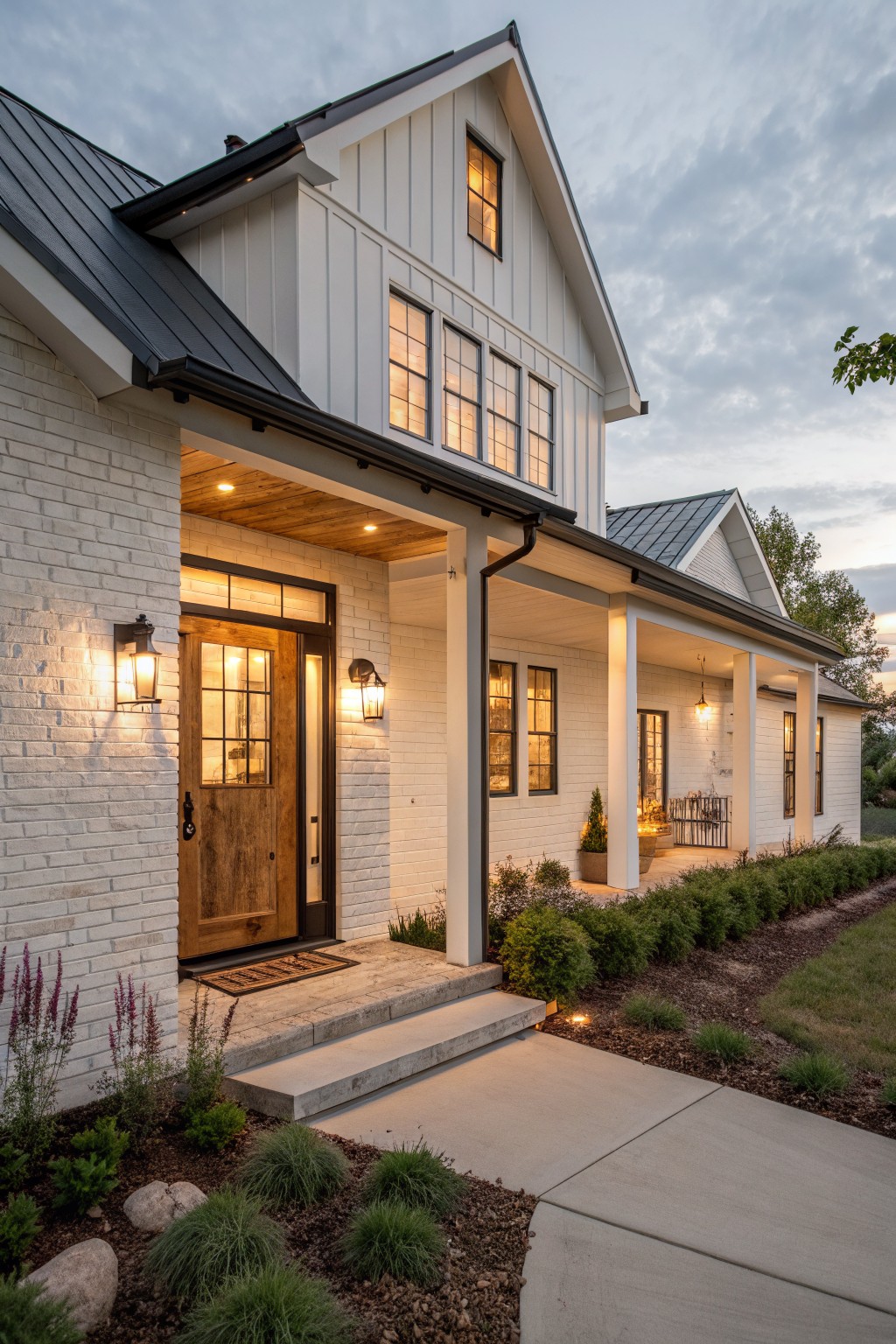
A wood front door stands out against white brick and siding in a way that feels natural and welcoming. It brings just enough warmth without breaking the clean lines of the exterior, especially when the wood has a simple finish and the surrounding trim stays dark and understated.
This approach works best on homes that already have a straightforward shape and plenty of white surface area. Keep other wood touches minimal, like a small bench or porch post, so the door remains the main point of interest.
Wood Shutters and Trim on White Siding
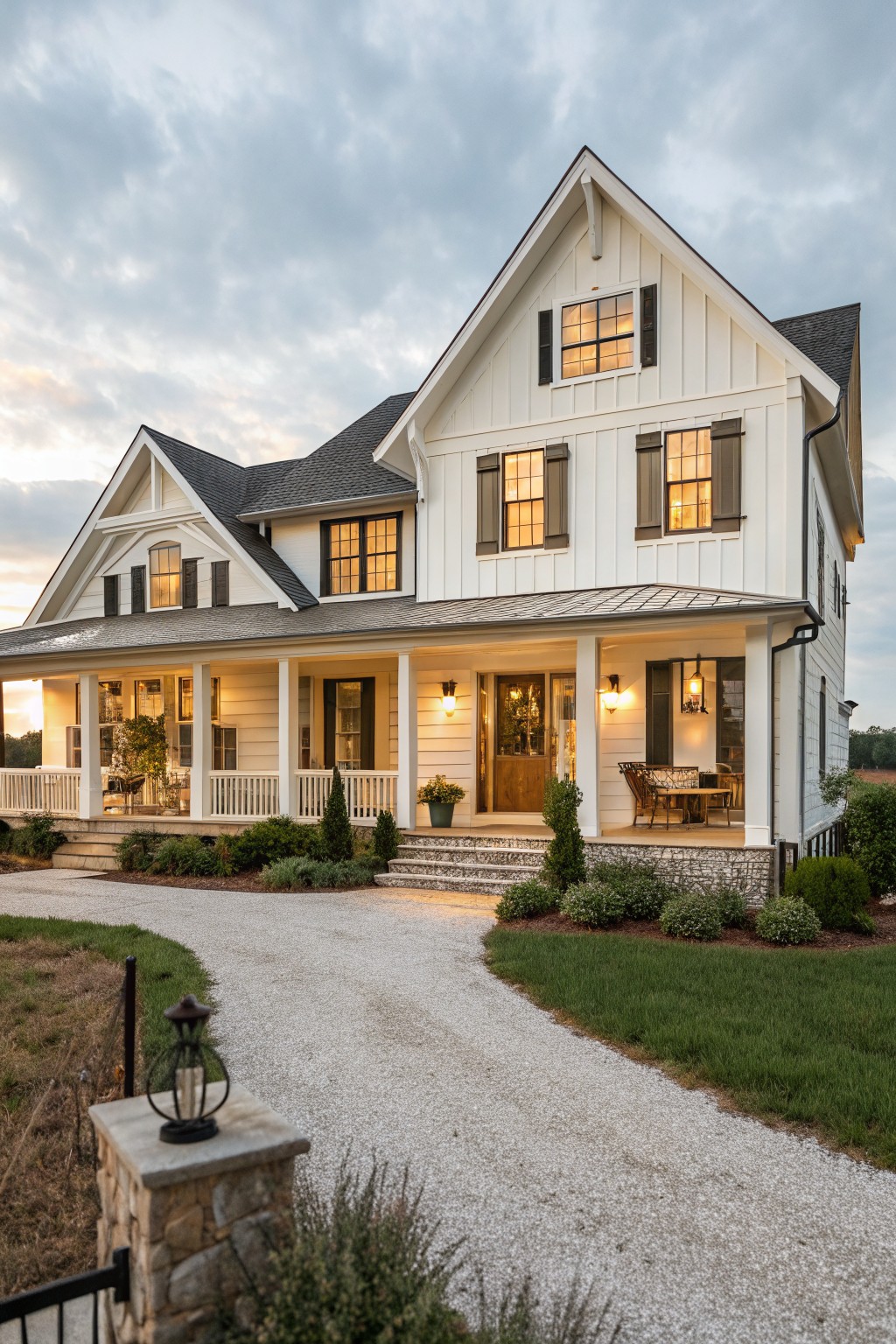
White siding can feel a little stark on its own. Adding wood accents in shutters, trim, and doors brings in just enough warmth without changing the clean look most people want from a farmhouse.
This approach works best on homes with simple rooflines and plenty of windows. Keep the wood tones in the medium to dark range so they stand out against the white, and use them in a few key spots rather than covering every surface.
Wood Doors Against White Siding
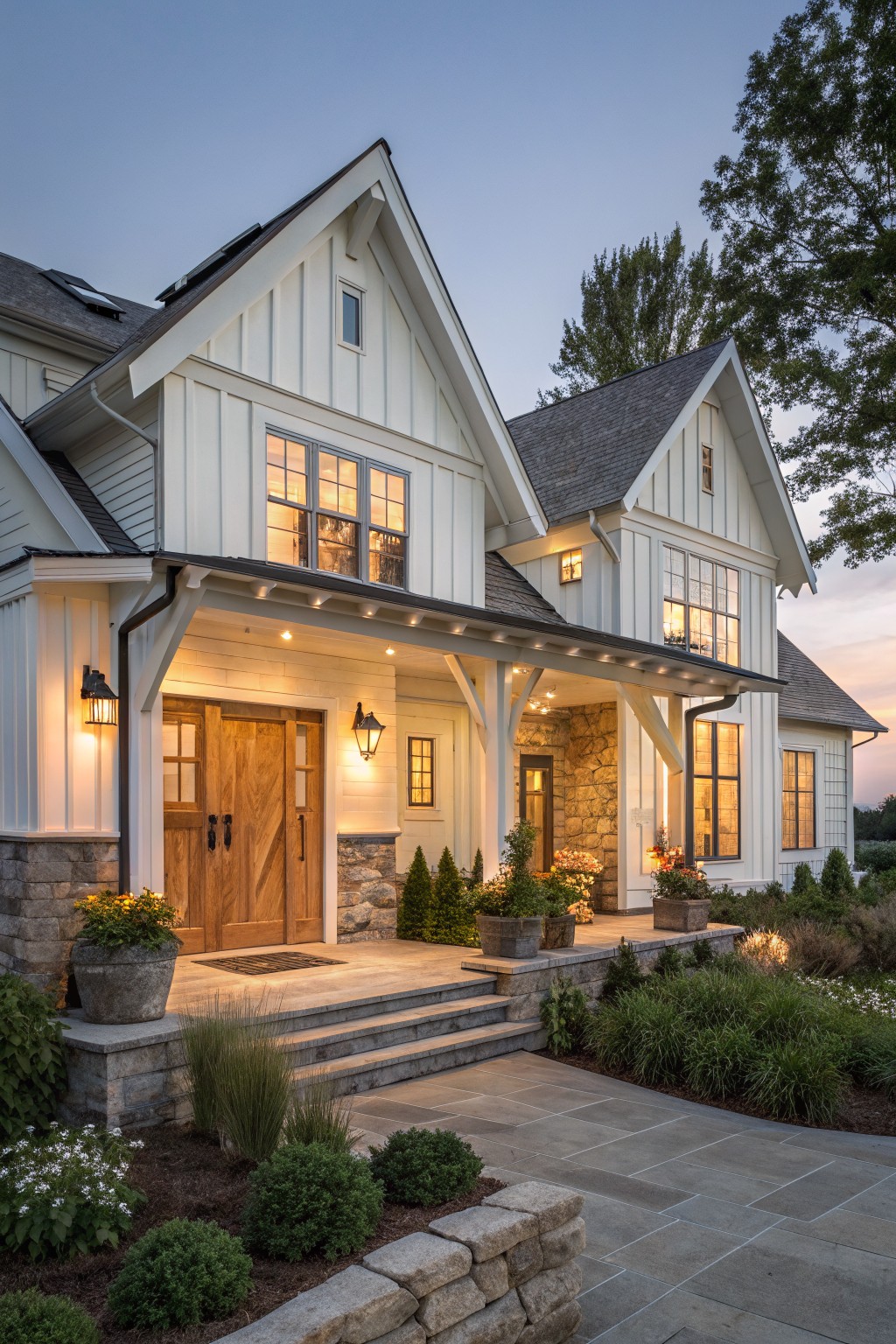
White farmhouses can feel a little stark without something to soften them. Adding wood doors brings in natural warmth that paint alone cannot match. The grain and tone of the wood stand out nicely against the clean siding and help the entry feel more grounded.
This works best on homes with simple rooflines and minimal trim. Keep the wood tone in the medium to warm range so it reads as part of the house rather than an afterthought. Stone at the base can add further texture if the siding stays bright white.
White Siding With Dark Trim
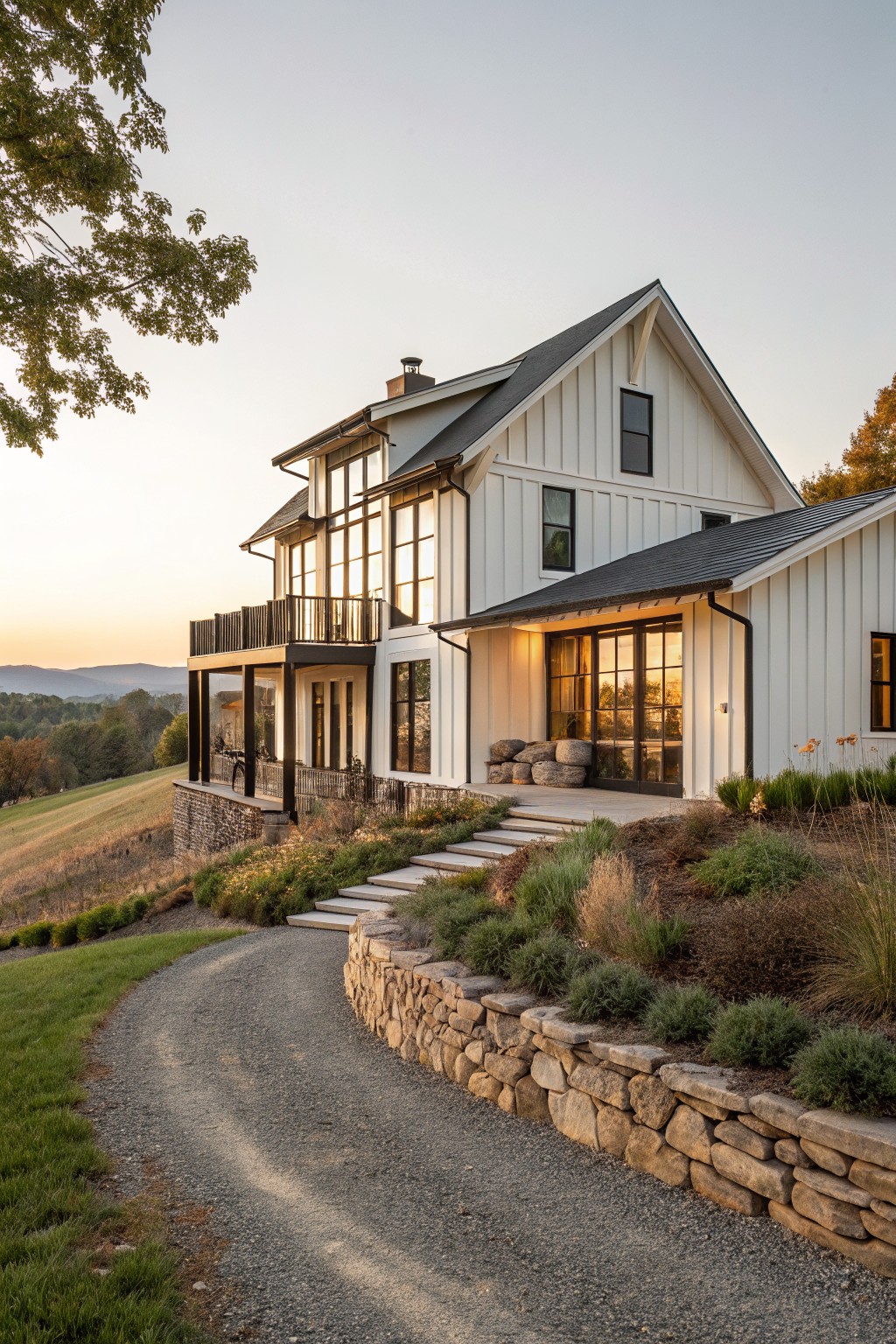
White siding looks cleaner and more defined when it is paired with dark trim around the windows and doors. The contrast keeps the house from feeling flat and helps the shape of the building stand out without adding extra color.
This approach works especially well on farmhouses that have a lot of windows or a simple roofline. Keep the trim a true black or deep charcoal and use it on the frames, corners, and any exposed beams so the white siding stays the main focus.
Frequently Asked Questions
Q: How do I pick a warm white that works well with natural wood tones?
A: Test a few samples right on your siding in morning and afternoon light. Warm whites with soft beige undertones blend best with cedar or oak accents and keep the whole exterior feeling inviting.
Q: What simple step adds the most texture without much work?
A: Swap in a few reclaimed wood shutters or a porch beam. The grain shows up nicely against the white and gives that soft layered feel right away.
Q: Do I need to match all my trim to the same wood type?
A: Mixing oak and pine works fine if the tones stay close. But focus on balance so nothing dominates the overall look.
