

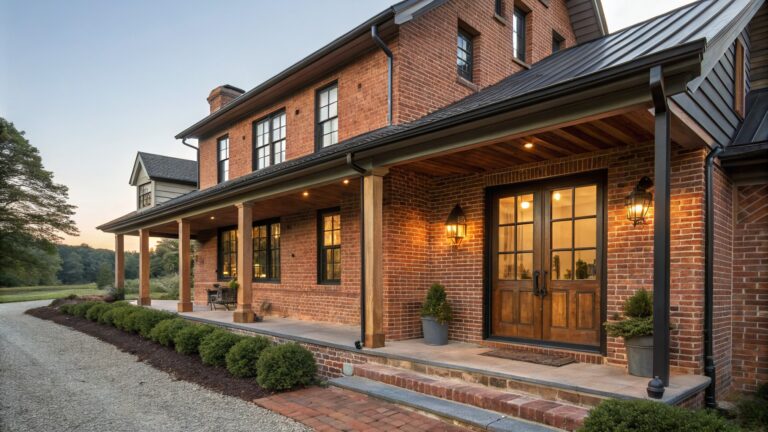
I have always noticed that brick farmhouses gain real presence when the brickwork shows some natural variation in color and texture instead of sitting perfectly even.
The way the material meets the roofline and entry details often decides whether the whole front reads as settled or still unfinished.
Some choices only make sense once you see them on an actual house rather than on a screen.
I keep thinking about which brick patterns would age well on my own place without requiring extra upkeep later on.
Small shifts in how the brick meets the windows can change the curb view more than people expect.
Add Wood Accents To Brick Exteriors
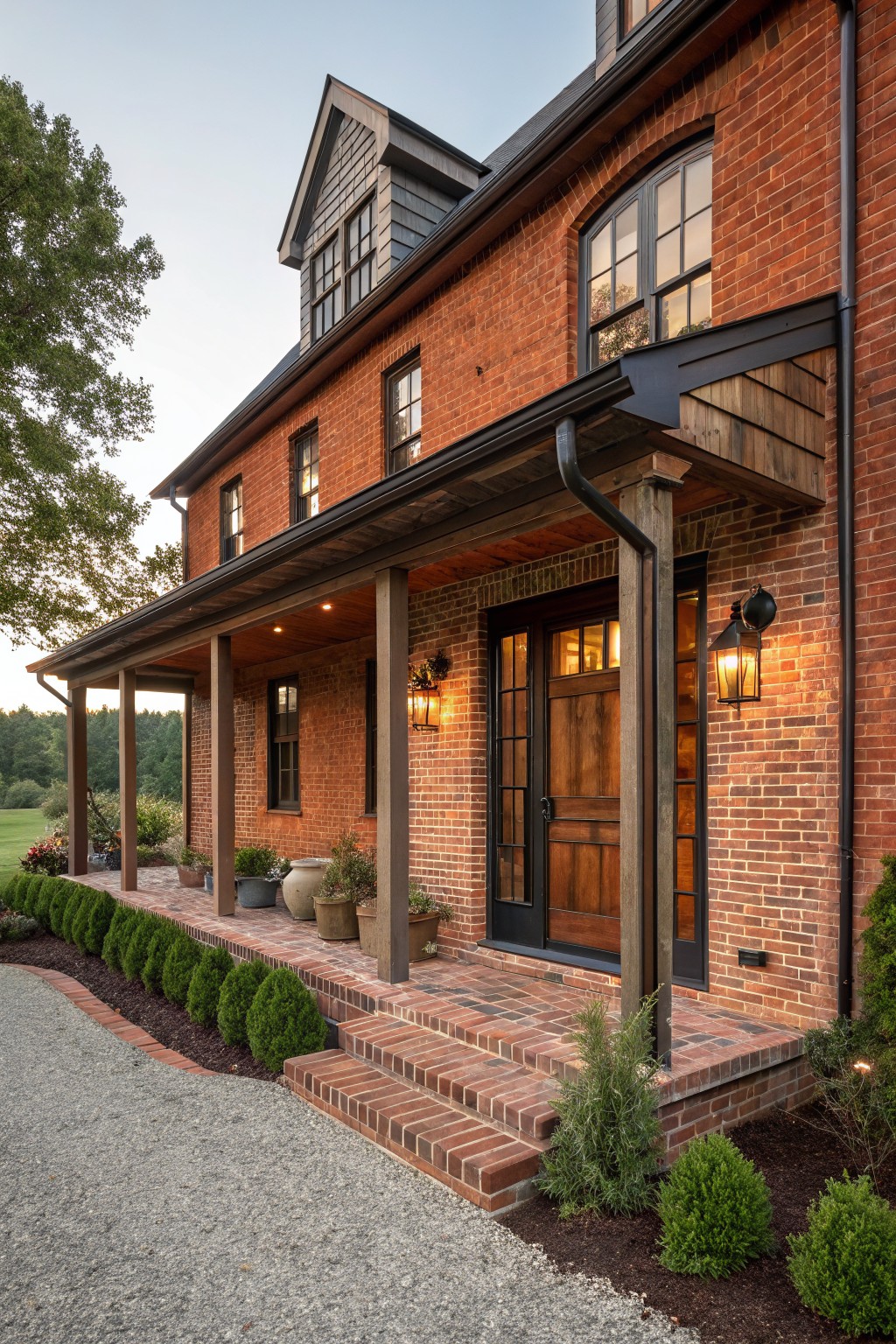
Brick walls hold up well over time but can look a little plain without some contrast. Adding wood posts, trim, and ceiling boards under a porch gives the surface more depth and a warmer feel that fits a farmhouse look.
This mix works best on homes with a simple brick base where you can keep the wood limited to key spots like the entry or porch. Use straight, natural wood tones and let the brick remain the main material so the two do not fight for attention.
Mixing Brick With Wood Siding
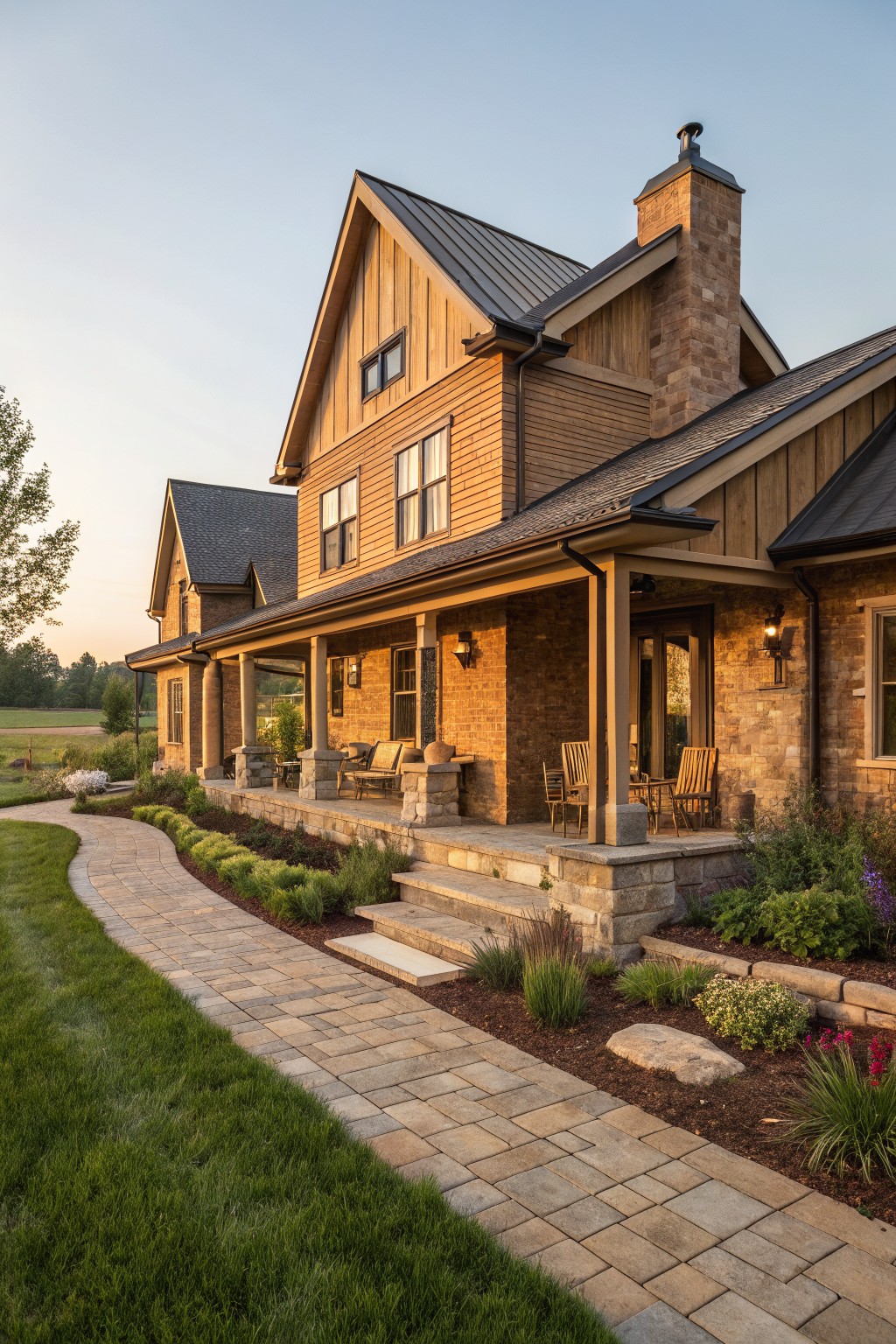
Many farmhouses gain lasting character when brick is paired with wood siding on the same facade. The two materials create natural texture and keep the exterior from feeling flat or one note.
This combination works best on homes with a clear base and upper level. Keep the brick lower for weight and let the wood run above it. The look suits both new builds and updates to older farmhouses.
Add a Brick Arch Over the Entry
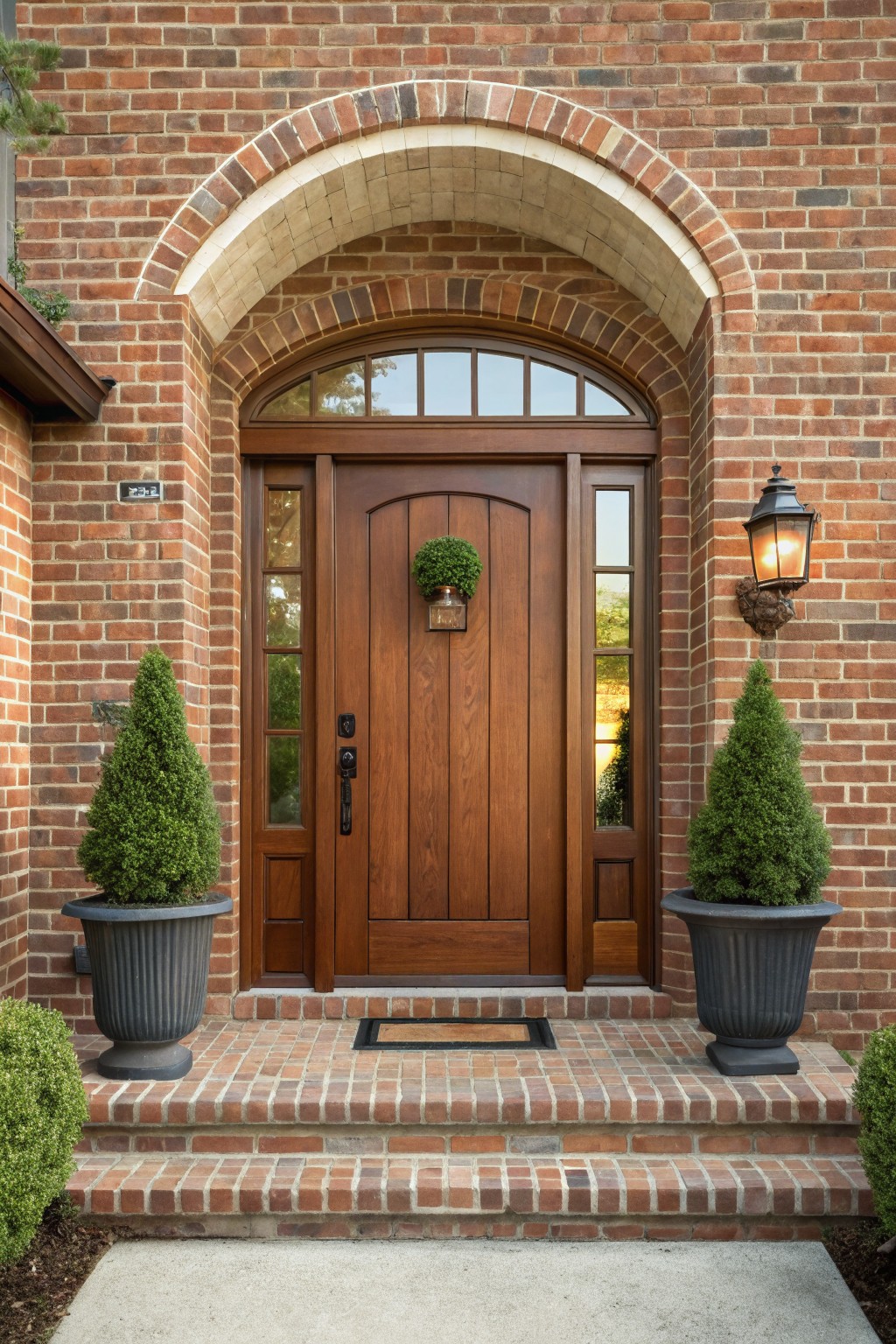
An arched brick surround gives a brick house more presence without needing extra trim or ornament. The curve softens the straight lines of the facade and makes the door feel like a deliberate focal point rather than just an opening in the wall.
This detail works especially well on traditional farmhouses and homes with simple brickwork. Keep the arch in the same brick as the rest of the house so it reads as part of the structure rather than an add-on, and pair it with a solid wood door for contrast.
Brick With Dark Trim For Clear Contrast
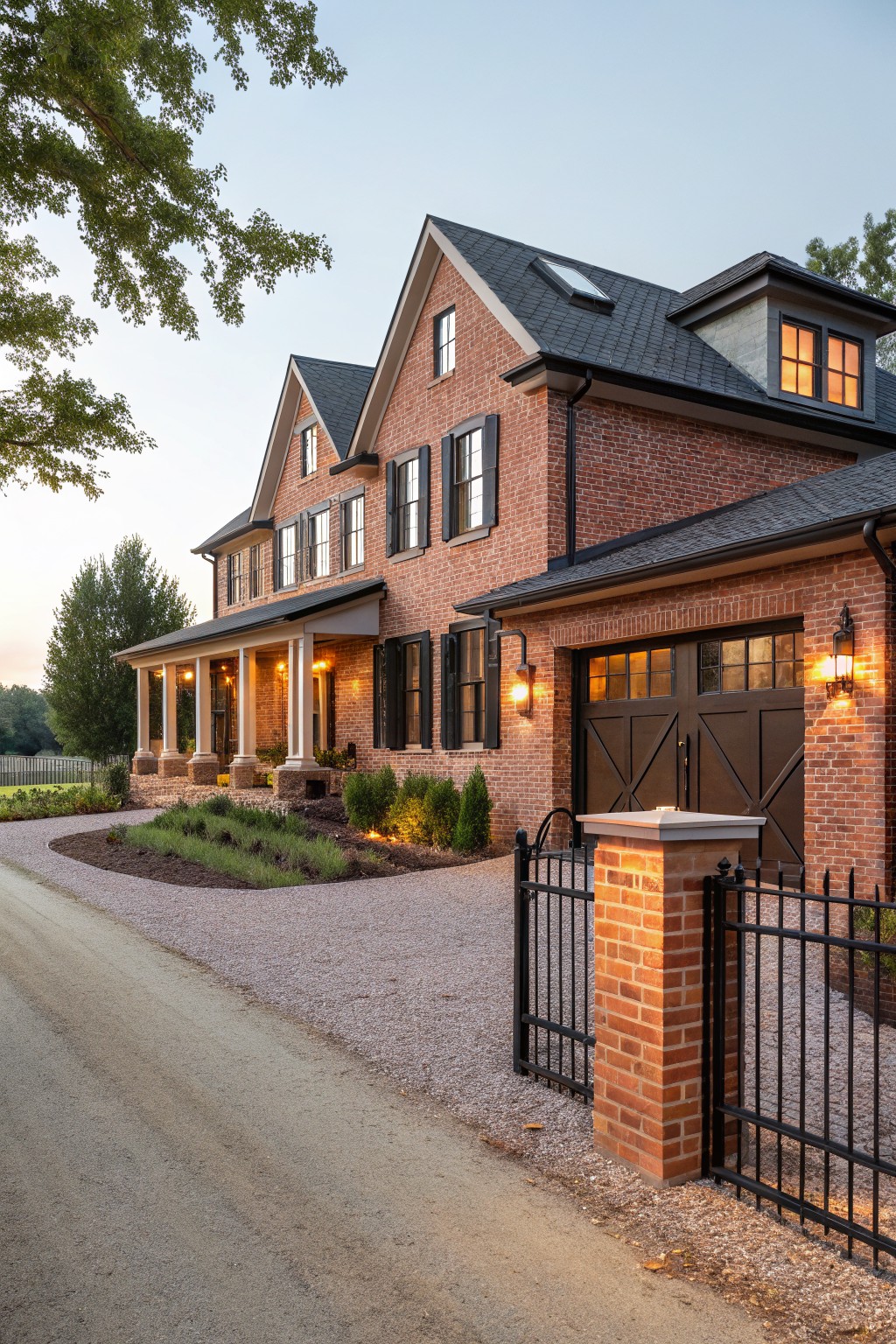
Brick already brings plenty of texture on its own, but pairing it with dark trim and shutters makes the surface read more clearly from the street. The black frames around the windows and the dark garage doors stand out against the red brick without competing with it. This simple contrast keeps the house from looking flat while still feeling traditional.
The same move works on both older homes and new builds as long as the trim color stays consistent across windows, doors, and any metal details. It suits two-story farmhouses with gabled roofs best, and it holds up well over time since both brick and dark paint age gracefully. Just avoid scattering too many accent colors around the facade or the contrast loses its impact.
Extend Brickwork Into Outdoor Spaces
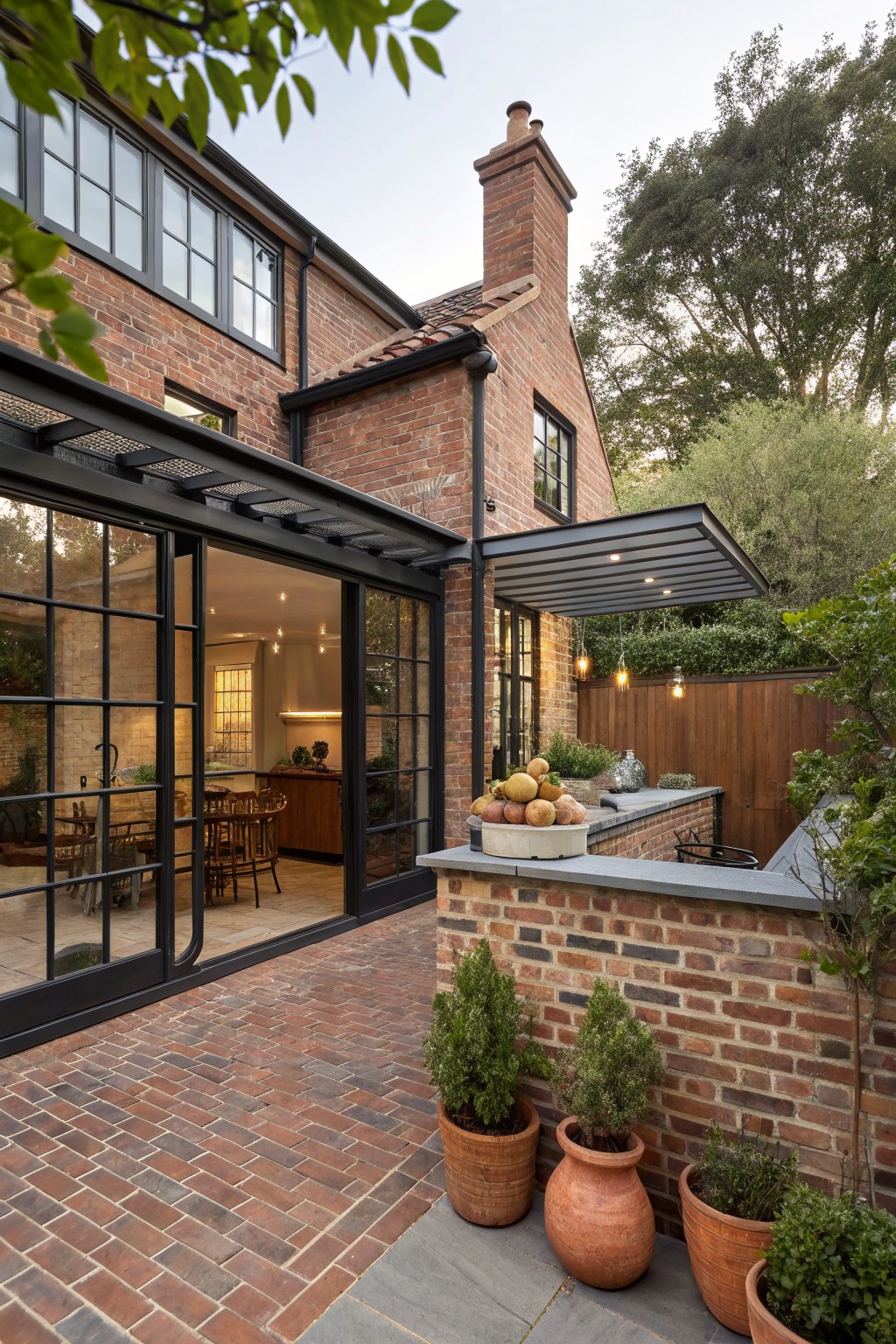
Matching the house brick on low patio walls and an outdoor counter helps the whole area feel connected instead of tacked on. The same material carries through from the main structure, so the outdoor kitchen zone looks like a natural part of the house instead of a separate addition.
This works especially well on brick farmhouses where you want the backyard to feel like an extension of the building. Keep the brick simple and let the texture do the work, then add just a few pots or plants to soften the edges.
Dark Trim Against Warm Brick
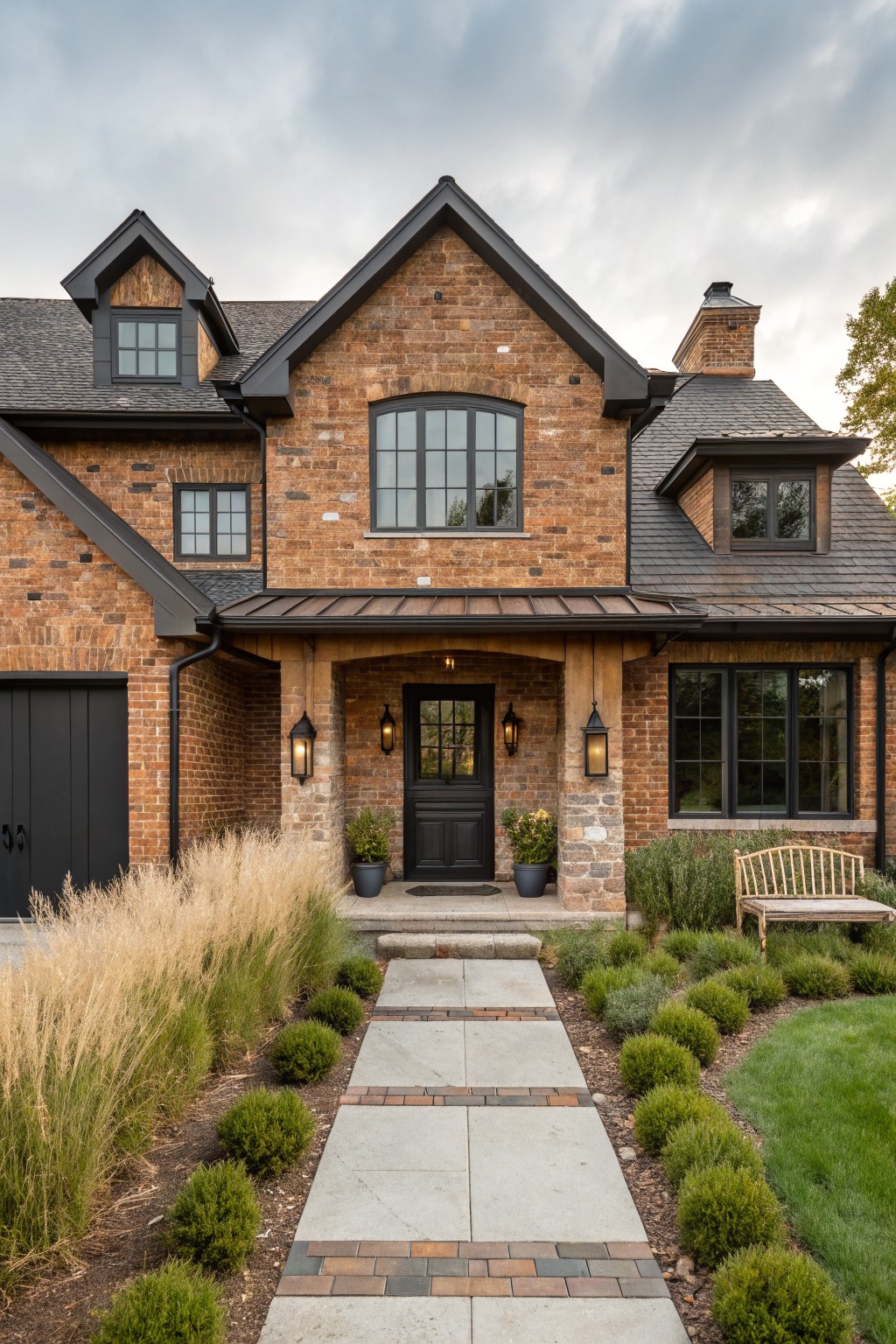
Many brick farmhouses look more defined when the windows and doors are finished in a deep black. The contrast makes the brick texture stand out without adding extra materials or patterns. It works well on homes that already have a simple roofline and classic proportions.
This approach suits older brick houses that need a bit more presence from the street. Keep the black shade consistent across all frames and doors, and avoid mixing it with too many other dark elements so the brick remains the main feature.
Brick Piers That Match the House
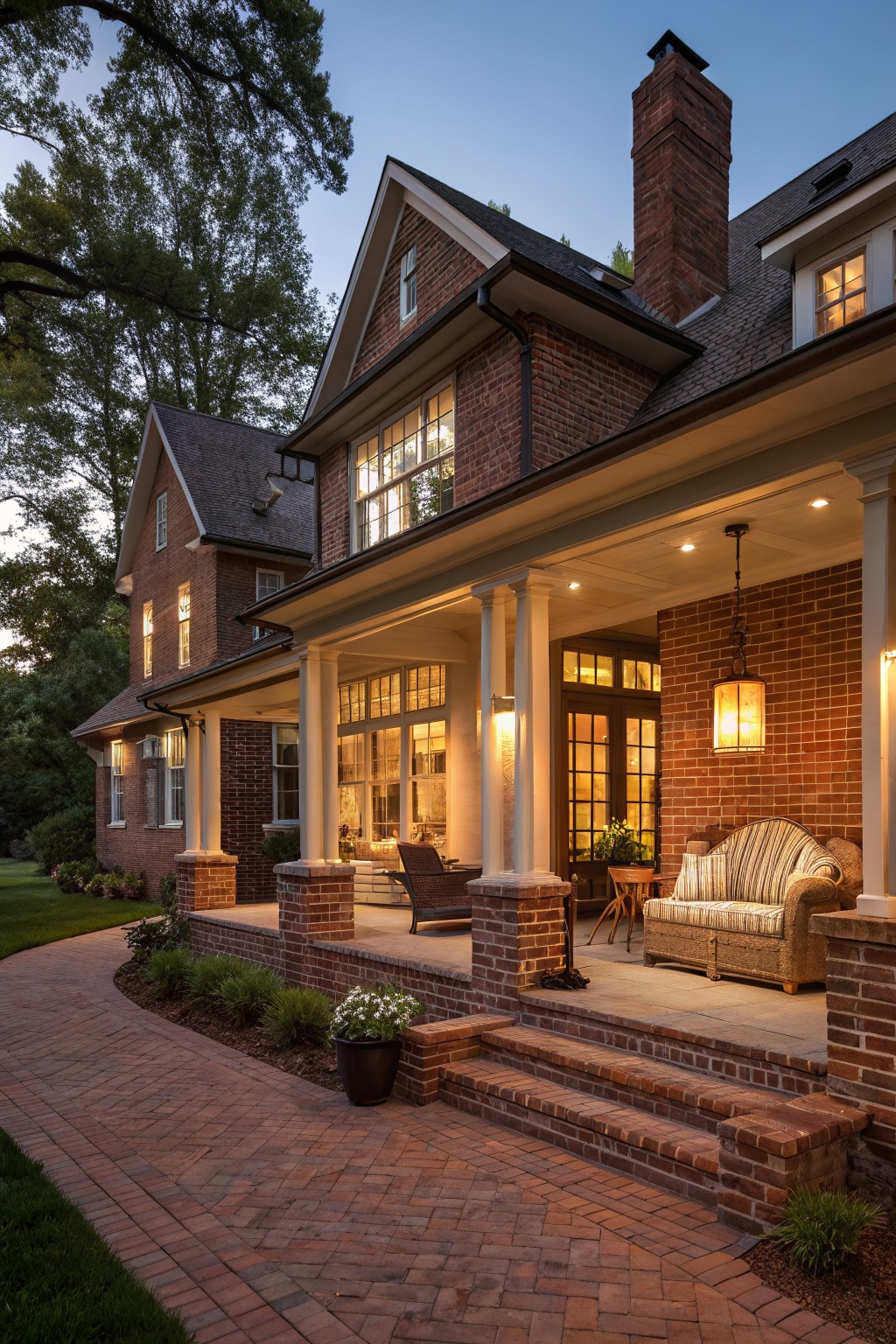
Brick piers under the porch columns help tie the whole front together. Instead of setting the porch apart with different materials, the brick base keeps the texture consistent from the ground up. It gives the entry more weight and makes the house feel more solid without adding extra trim or decoration.
This approach works best on brick farmhouses where the porch sits close to the main walls. Keep the piers fairly wide so they read as part of the foundation rather than thin supports. The result is a front that looks finished from every angle and ages well over time.
Brick Steps That Add Texture
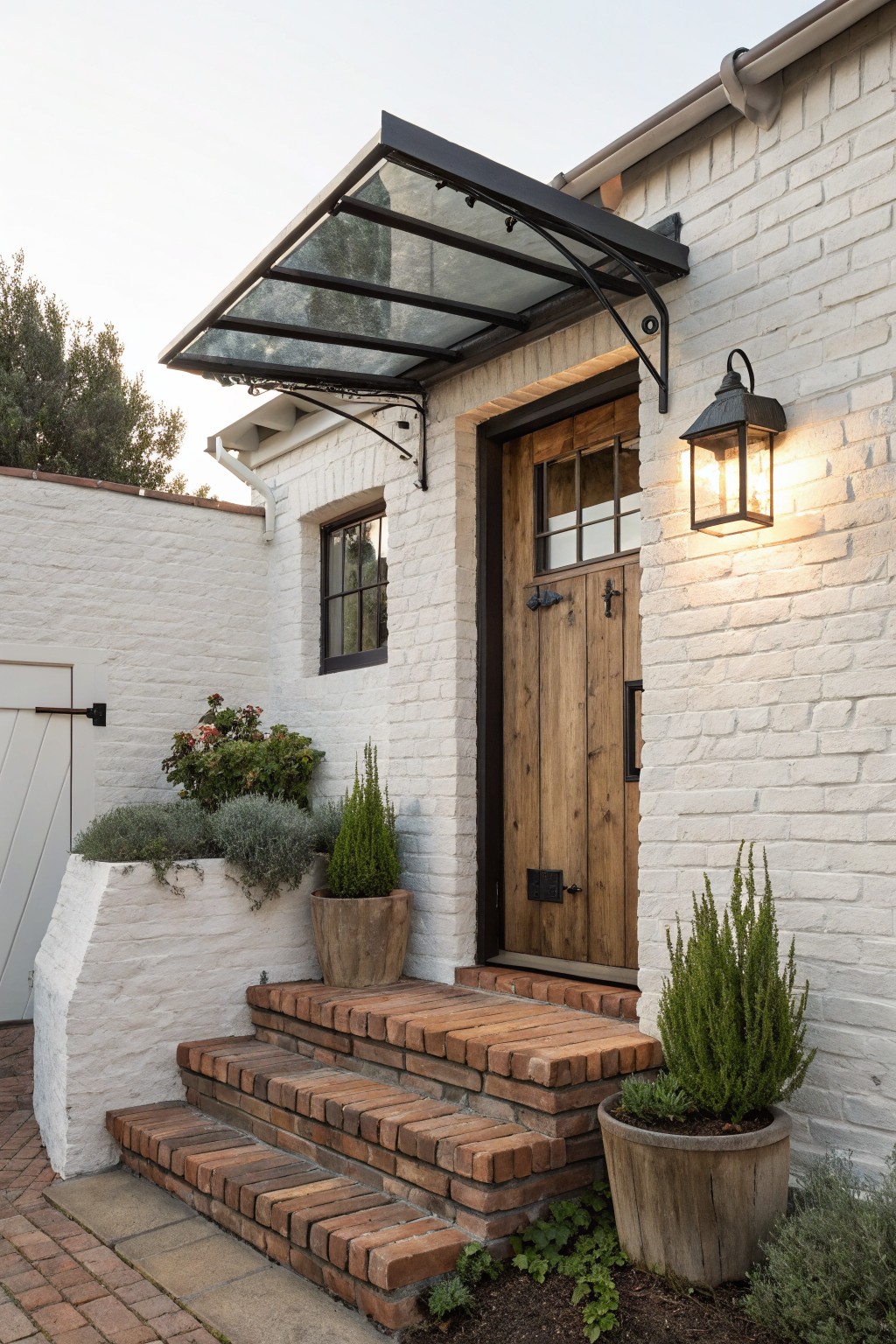
Brick steps work well on a painted brick house because they bring in a warmer tone that the white walls do not have on their own. The red tones and visible mortar lines create a simple contrast that makes the entry feel more grounded without adding much extra detail.
This approach suits older farmhouses or newer builds that want a traditional look. Keep the steps fairly wide and let them meet a small paved area at the bottom so the brick feels like part of the house rather than just an afterthought.
Brick Pathways for Added Texture
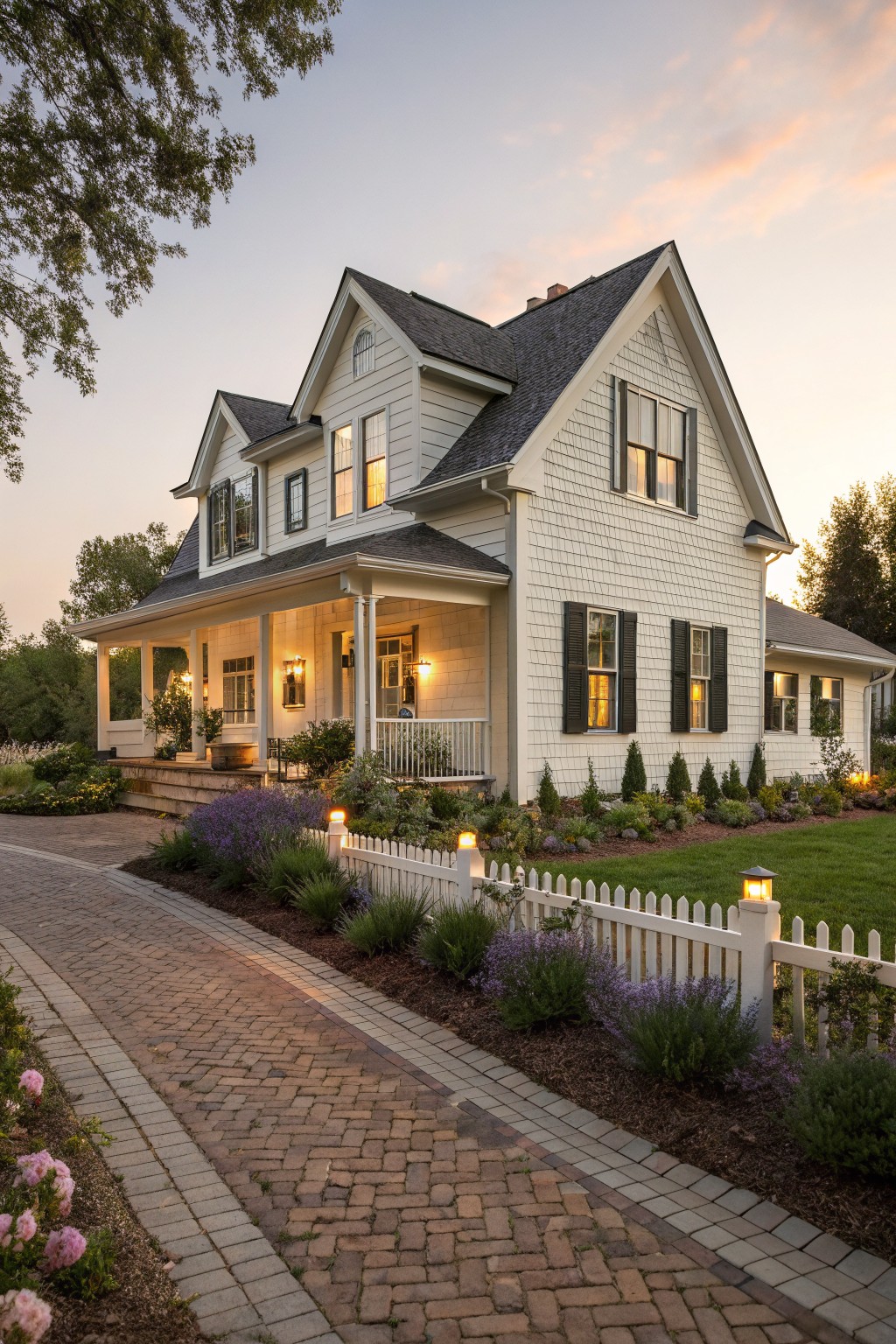
A brick pathway gives a farmhouse exterior real character without much fuss. It adds warmth and texture that pairs well with white siding and a simple porch, making the approach feel more established over time.
This idea works best on homes with a clear front entry and some garden space along the sides. Keep the path fairly narrow and let the brick pattern stand out against the lawn and plantings. It suits classic farmhouses especially well.
Brick Exteriors That Bring Lasting Character
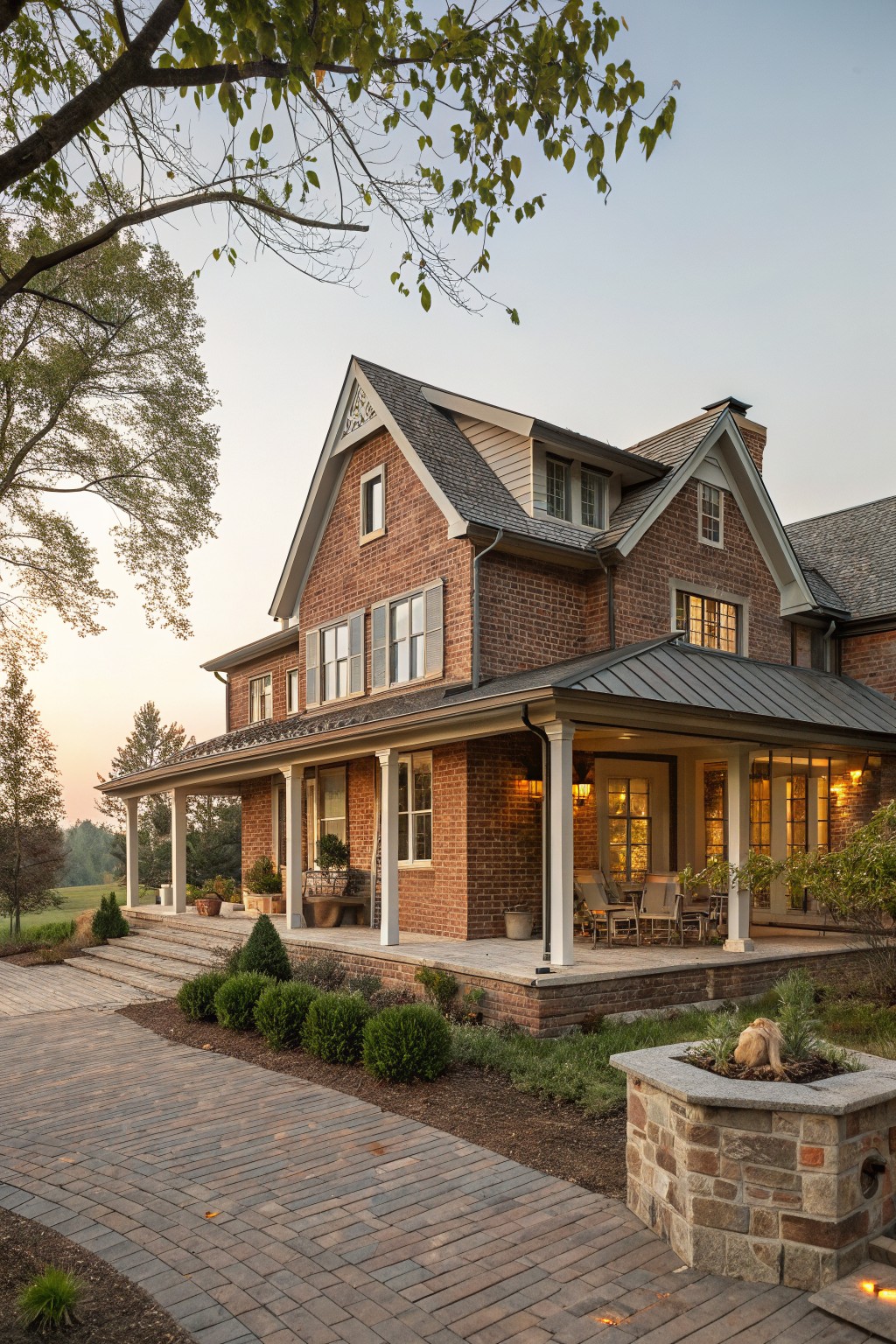
Brick gives a farmhouse a solid base that holds up well without needing constant upkeep. The surface texture catches light differently throughout the day and softens as the material ages.
This approach works best on homes with straightforward shapes and a generous front porch. Keep the trim simple and light so the brick stays the main feature rather than competing with too many other materials.
Frame Garage Doors With Brick Arches
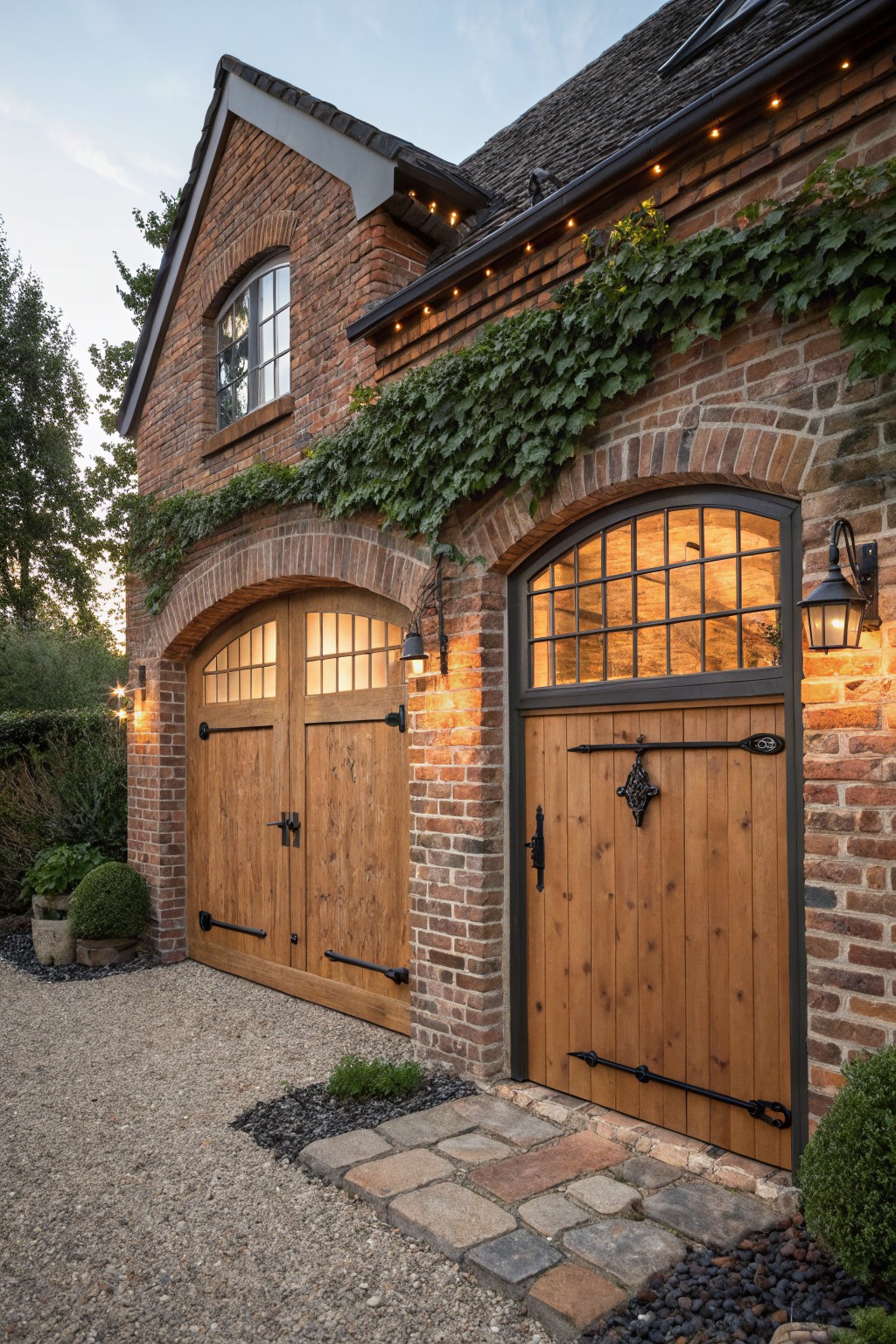
Brick exteriors can feel flat without some variation in the openings. Arched brickwork around the garage doors gives the facade more shape and draws attention to the wood doors instead of letting the whole wall blend together.
This approach works best on traditional or farmhouse-style homes where the brick already has some age or texture. Keep the wood doors simple and let the arch do the work. Avoid adding too many extra details around the edges or the look can start to feel busy.
White Columns On Brick For Simple Contrast
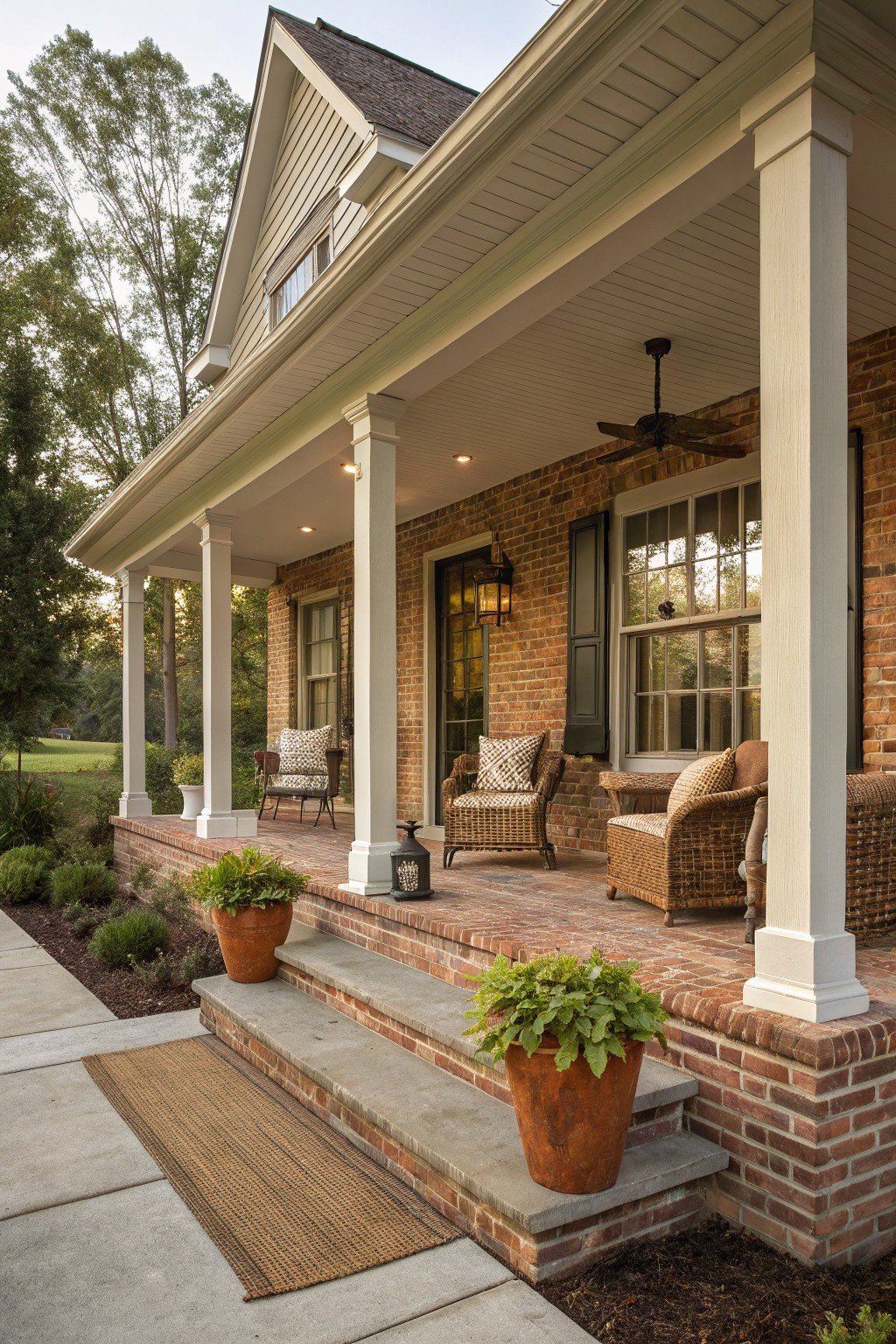
White columns give a brick house a clean, structured look that feels balanced without trying too hard. They break up the solid wall of brick and create a clear porch area that draws people toward the front door. The contrast also makes the house read more like a classic farmhouse than a plain brick box.
This approach works best on homes with a straightforward roofline and enough width for the porch to feel useful. Use columns that match the scale of the house and keep the finish simple so the brick stays the main texture. Avoid adding too many extra details that could compete with the basic column-and-brick pairing.
Stone Columns on the Porch
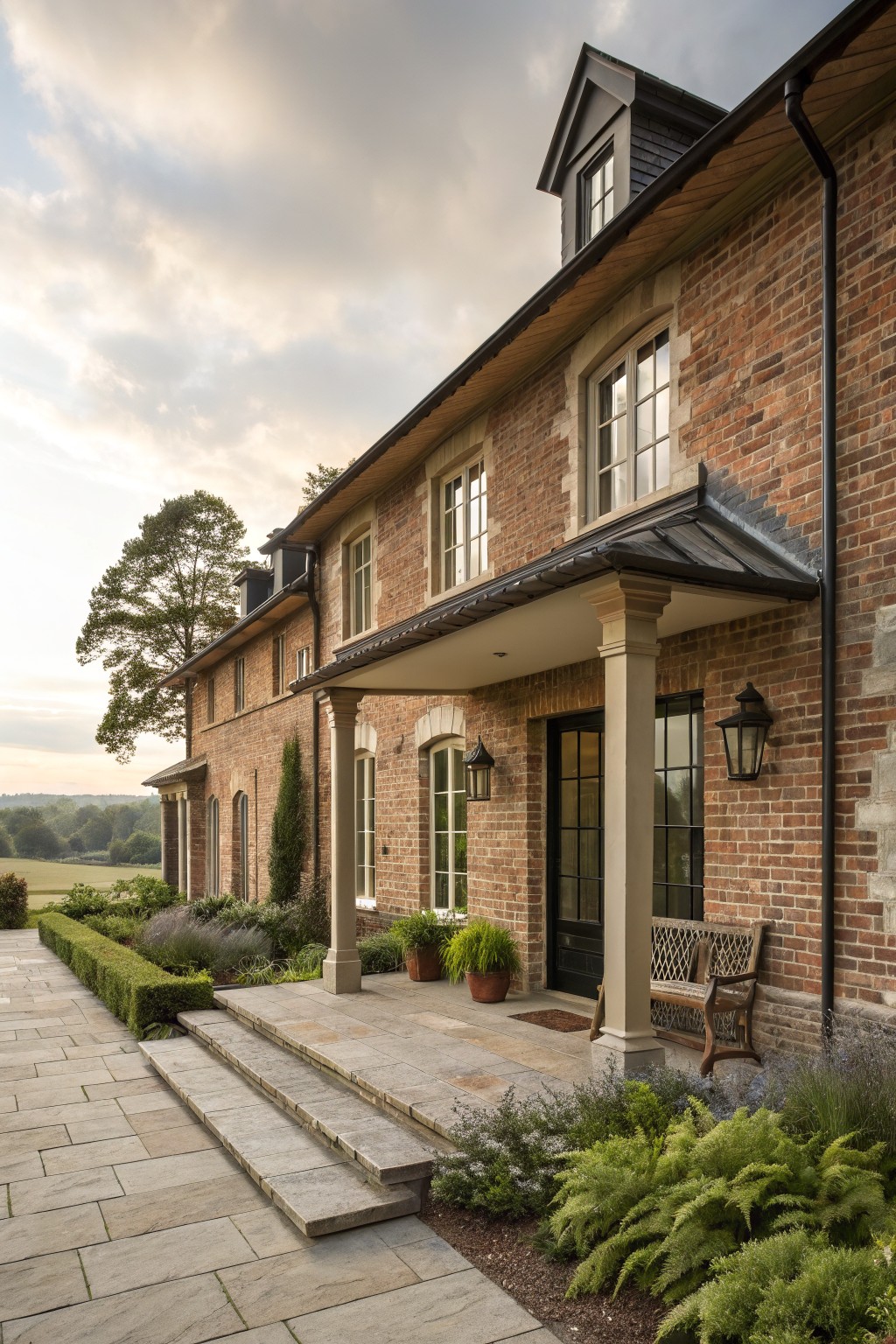
Stone columns give a brick exterior more weight at the entry. They support the roof overhang and create a clear stopping point that feels solid rather than flat against the wall.
This works well on straightforward brick farmhouses that need a bit more presence at the front door. Keep the columns simple in shape and match their scale to the house so the porch does not overwhelm the rest of the facade.
Brick Arches at the Front Door
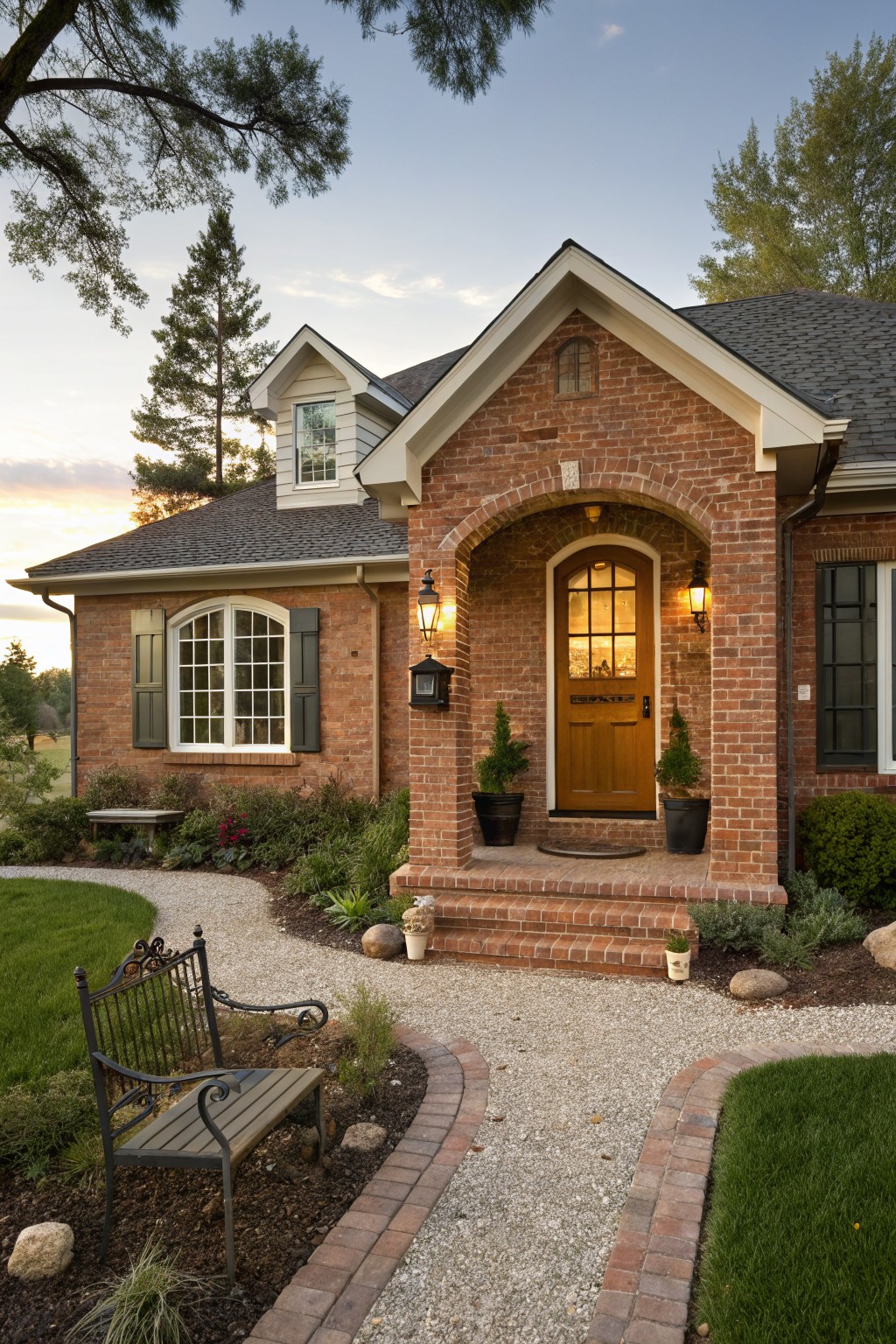
An arched brick entry gives a farmhouse a clear focal point without adding extra trim or fuss. The curve softens the straight lines of the brick while still feeling sturdy and practical.
This detail works well on homes that already use brick as the main material. Keep the door simple in wood tone and add just enough lighting on each side so the arch shows up after dark.
Covered Outdoor Dining Areas
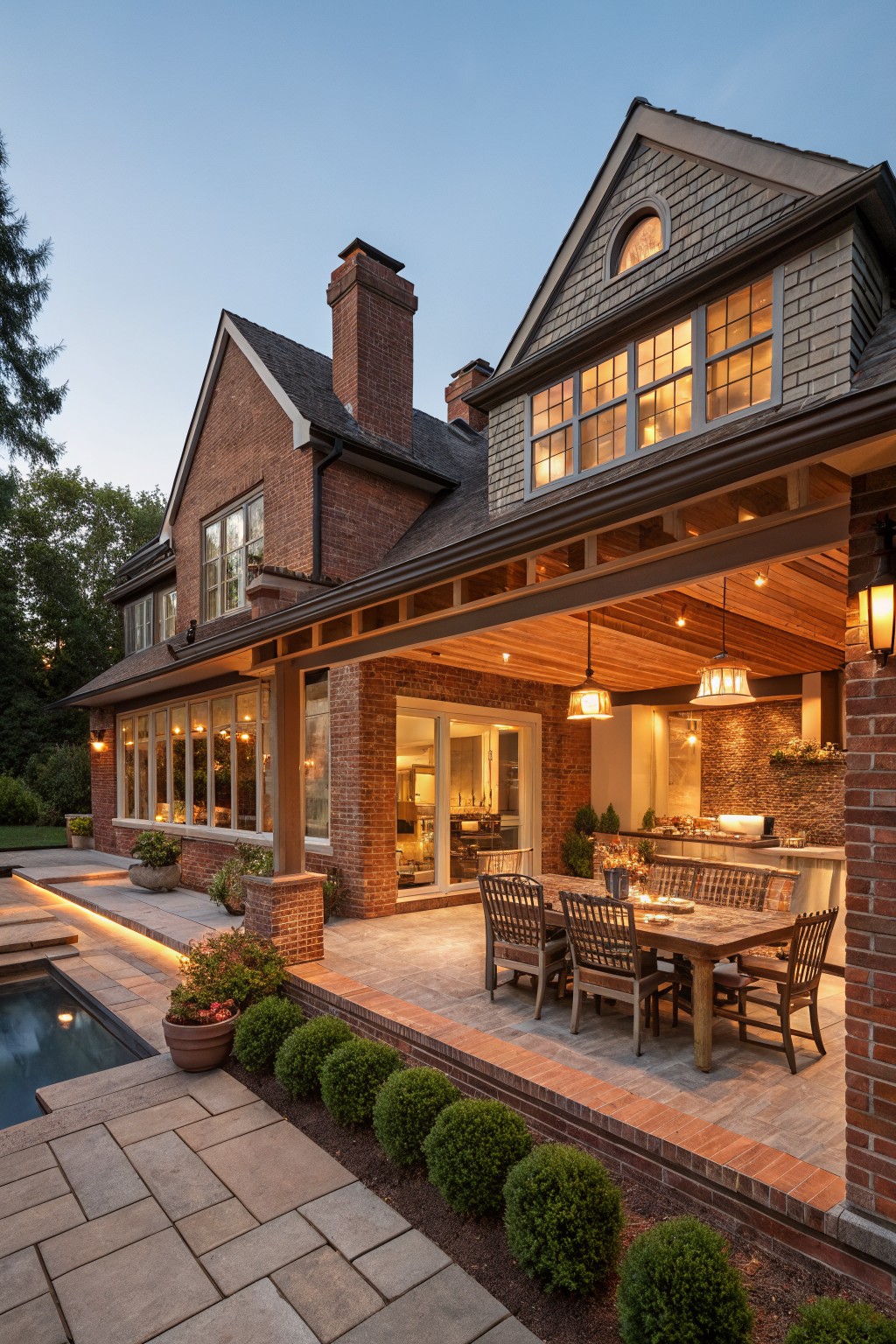
A covered outdoor dining space attached to the house gives you a sheltered spot for meals without needing a separate structure. It works especially well on brick farmhouses because the solid exterior wall provides a natural backdrop while the overhang keeps rain and sun off the table.
This setup suits homes where the roofline already extends far enough to create usable shade. Keep the furniture simple and weather resistant, and run a few hanging lights so the area stays comfortable after dark. Just make sure the patio surface slopes slightly for drainage so water does not pool near the house.
Brick With Dark Trim
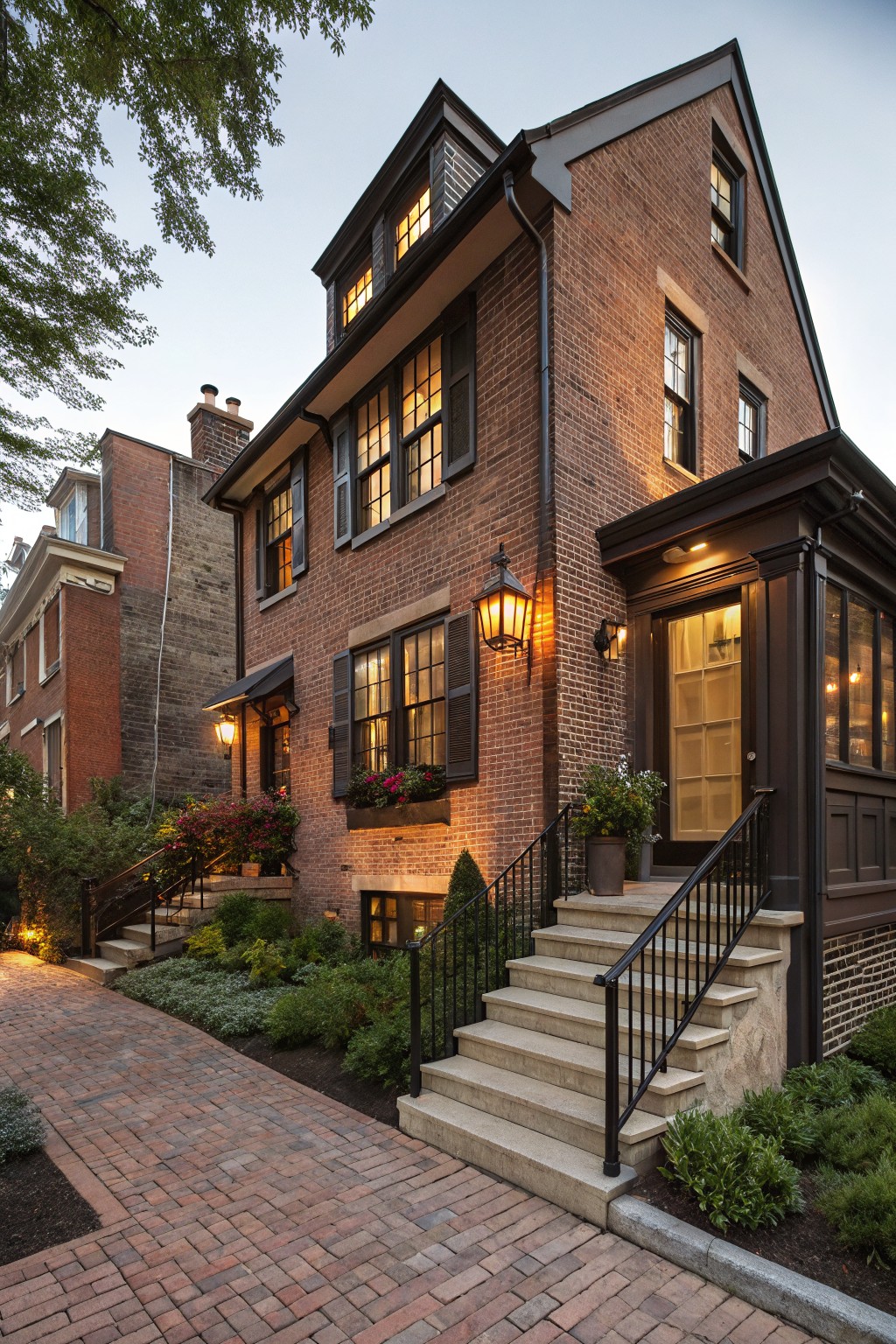
Brick already gives a house plenty of texture, but adding dark trim around the windows and doors makes the whole surface read more clearly. The contrast keeps the brick from looking flat and helps the architecture feel more intentional without needing extra ornament.
This approach works especially well on traditional or farmhouse styles where you want the brick to stay the main material. Keep the trim color consistent on shutters, window frames, and the front door surround so the house feels pulled together rather than busy.
Add a Bench Along the Exterior Wall
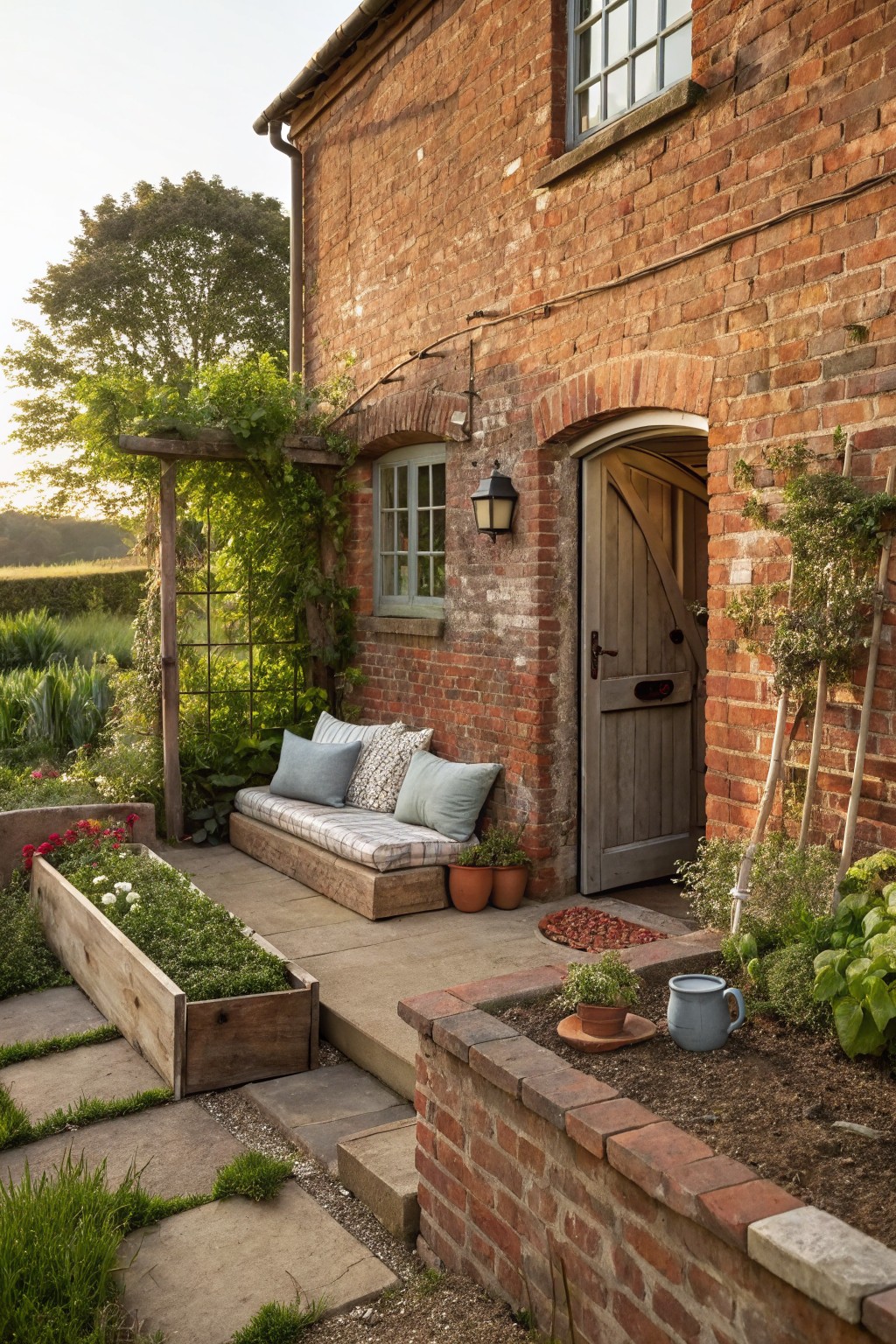
A bench set right against the brick gives the entry a place to pause without adding much clutter. It softens the hard surface and makes the front of the house feel more lived in.
This works best on farmhouses that already have a flat stretch of wall near the door. Keep the bench low, use simple cushions that can handle weather, and let the brick stay the main material.
Frequently Asked Questions
Q: Which brick style holds up best in wet climates? A: Go for ones with a rougher surface. They shed water better and keep that aged character longer.
Q: Should I seal the brick right away? A: Wait a season first. This lets any efflorescence show up before you lock it in.
Q: How can I add more texture if the brick alone feels flat? A: Tuck in some stone accents around the foundation (start small so it stays balanced). They break up the surface without fighting the brick’s main look.
Q: What about older homes where new brick might not match? A: Blend a few reclaimed pieces into the new sections. The slight variations add character instead of standing out.
