

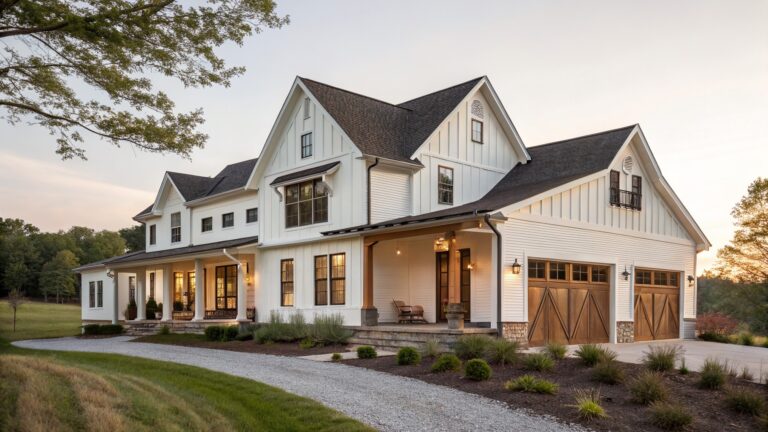
I often notice that farmhouse exteriors can look flat when every surface pulls from the same cool tone.
Natural wood accents tend to soften those lines and create contrast that reads better from the street than it does in drawings.
Some choices work better than others once you see them in person.
I keep wondering which grain and finish would hold up against the afternoon sun on my own siding.
Homes gain a steadier presence when the wood ties into the entry or roof overhang without fighting the main materials.
Natural Wood Garage Doors
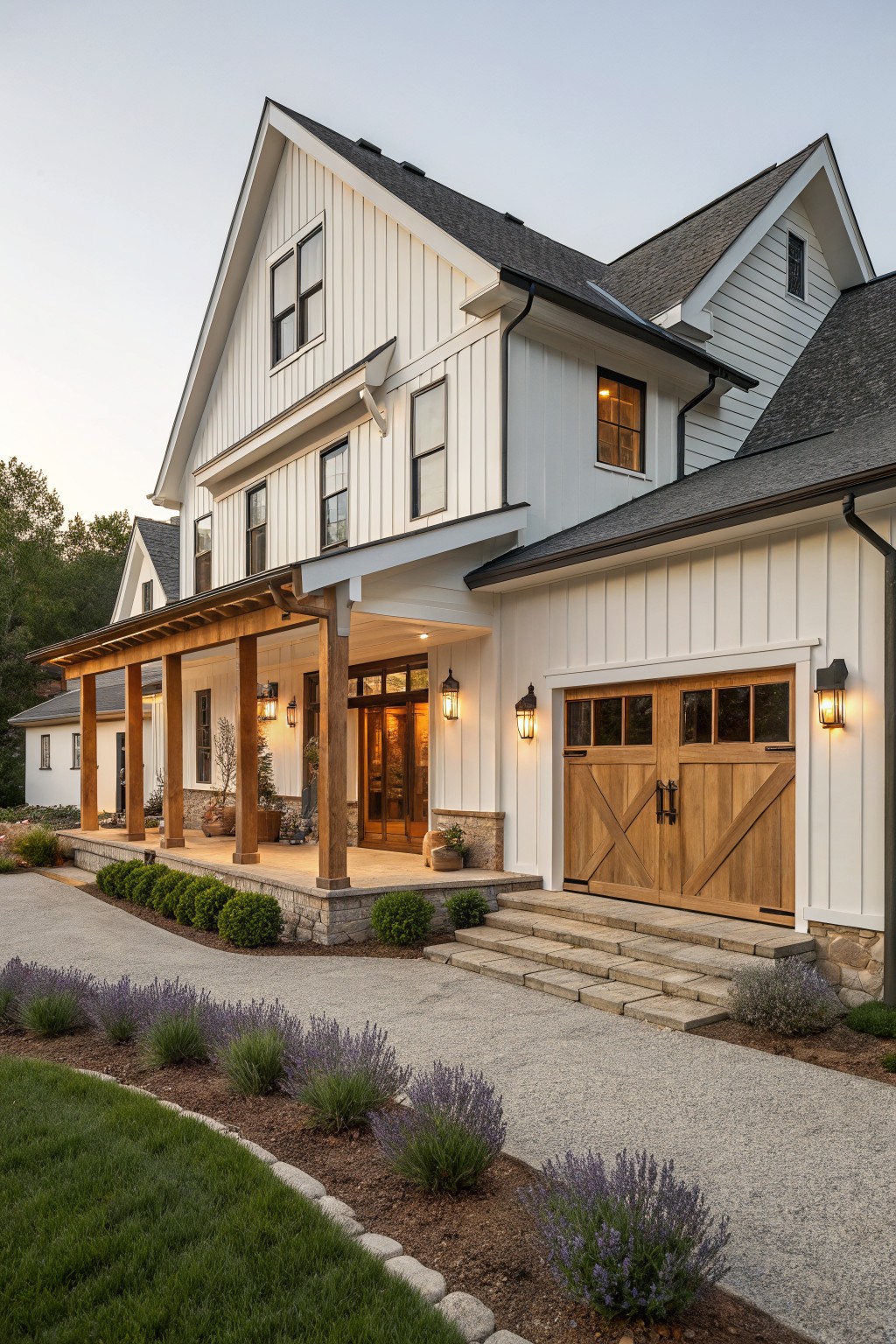
Many white farmhouses lean on wood accents to avoid looking too stark. A set of natural wood garage doors does this well because the grain and tone stand out cleanly against painted siding without needing extra trim or color.
This works best on homes with simple rooflines and limited other wood details. Keep the doors fairly plain in pattern so they read as a single strong accent rather than competing with the rest of the facade.
Natural Wood Posts Against White Siding
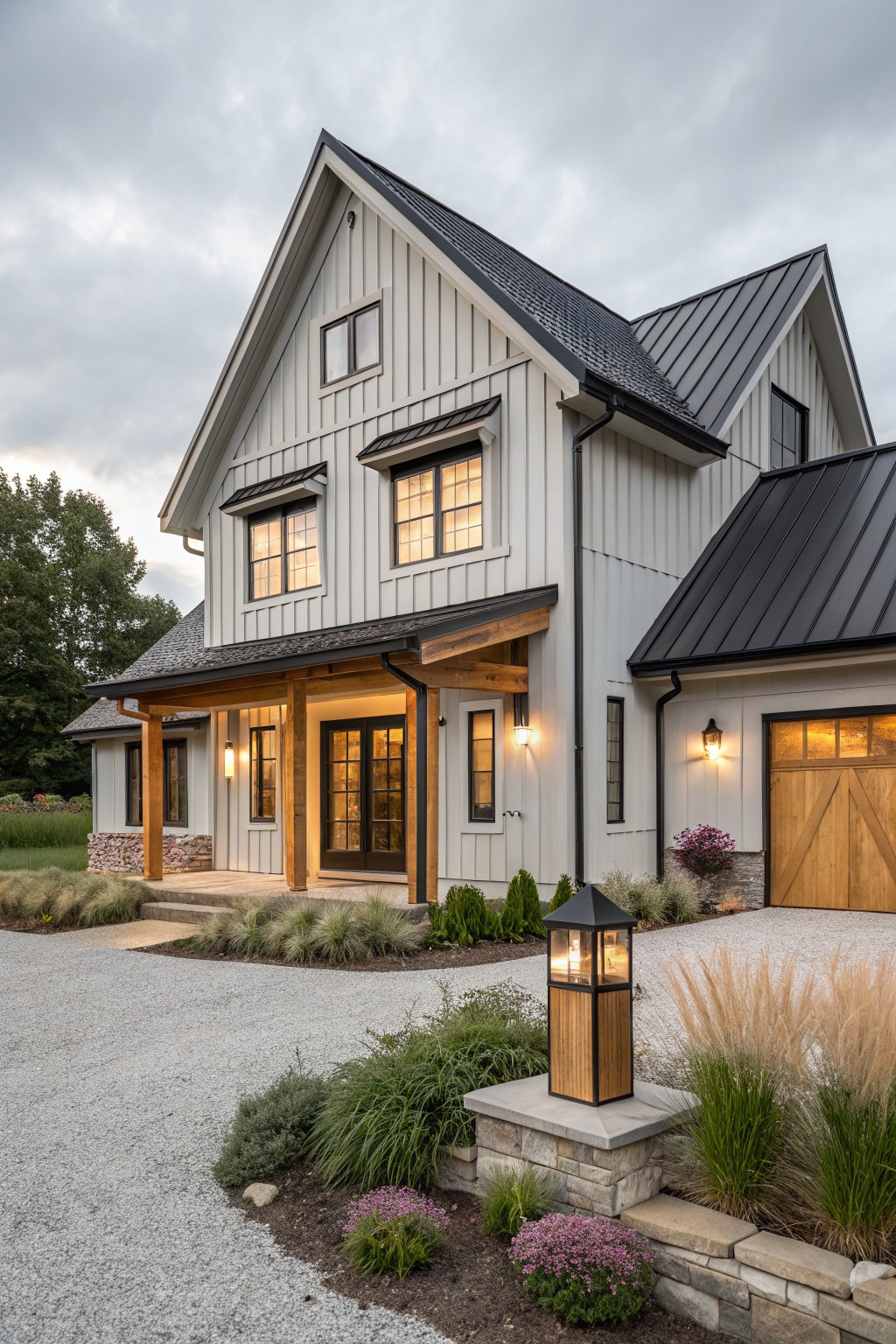
Natural wood posts and beams around the entry give a farmhouse a warmer look without changing the main color of the house. The contrast works because the wood sits right next to crisp white siding and a dark roof, so the entry feels grounded and inviting while the rest of the exterior stays simple.
This approach suits homes that already have a strong roofline and want just one spot to add texture. Keep the wood tone natural rather than stained dark, and limit it to the porch structure and a few trim pieces so it does not compete with the siding.
Natural Wood Beams Over The Porch
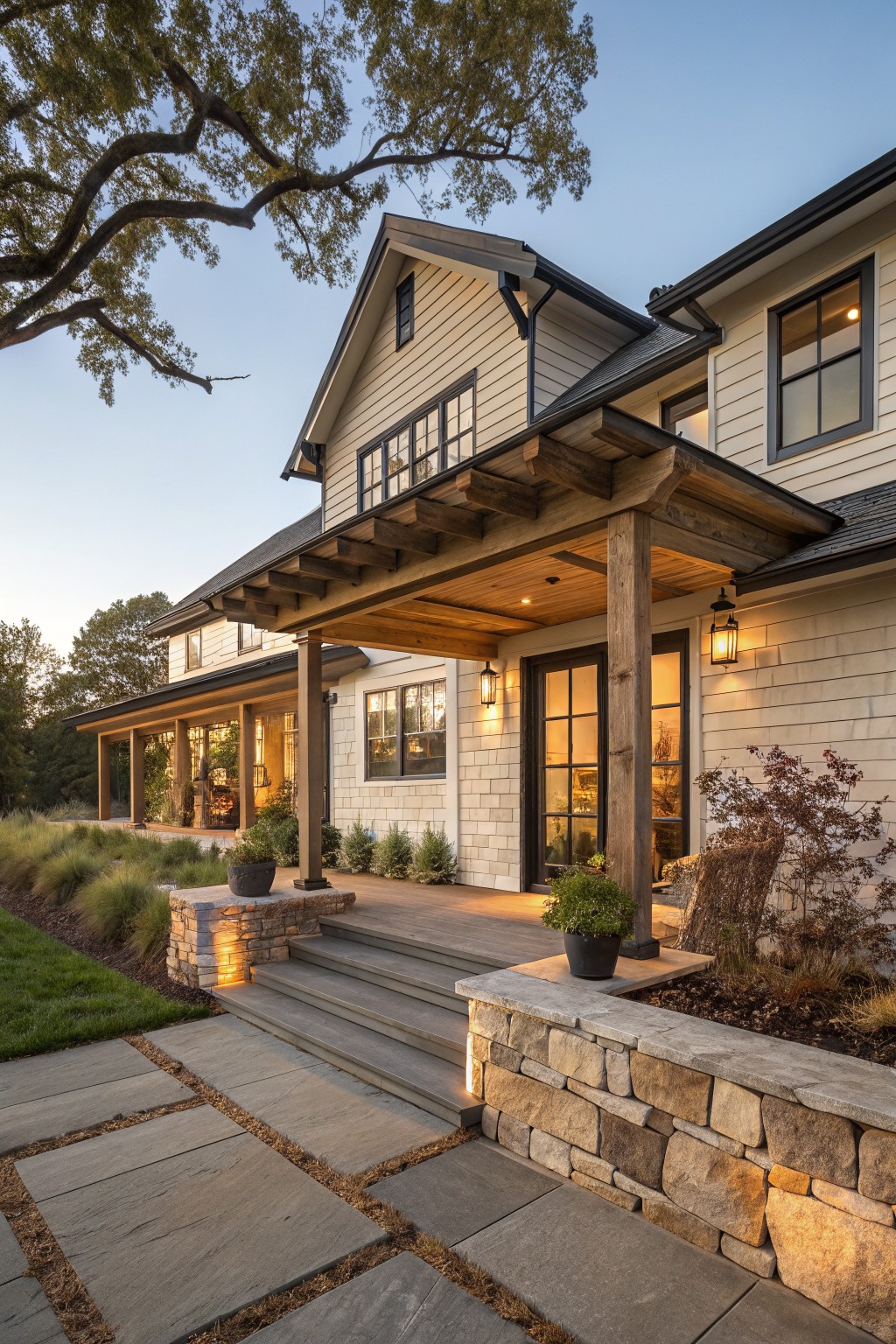
Exposed wood beams bring a simple warmth to a farmhouse exterior without needing much else. They stand out against lighter siding and create that contrast the style is known for. The heavy timber posts and beams here do most of the work while keeping the overall look clean.
This approach works well on homes with a front porch or covered entry. Keep the wood in its natural tone and pair it with stone or painted trim so the beams stay the main accent. Avoid painting the wood if you want that contrast to last.
Natural Wood Doors for Farmhouse Warmth
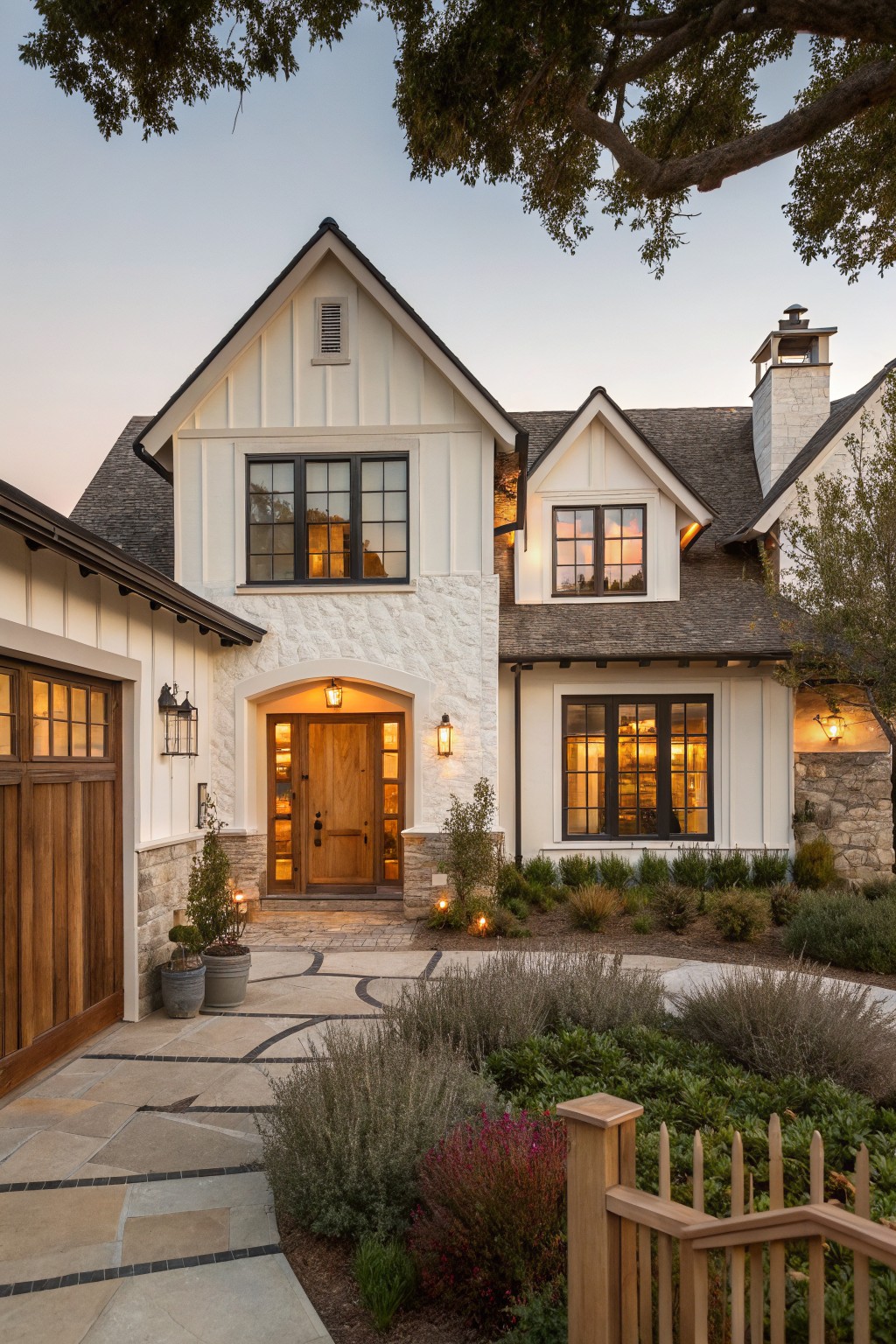
Natural wood doors stand out on light exteriors because they add a simple layer of warmth. The front door and garage door both use the same wood tone here, which keeps the look consistent and helps the house feel more grounded.
This approach works best on farmhouses with mostly white or off-white siding. Stick to one wood species across the main doors so the contrast stays clean rather than busy.
Natural Wood Garage Doors Against Dark Siding
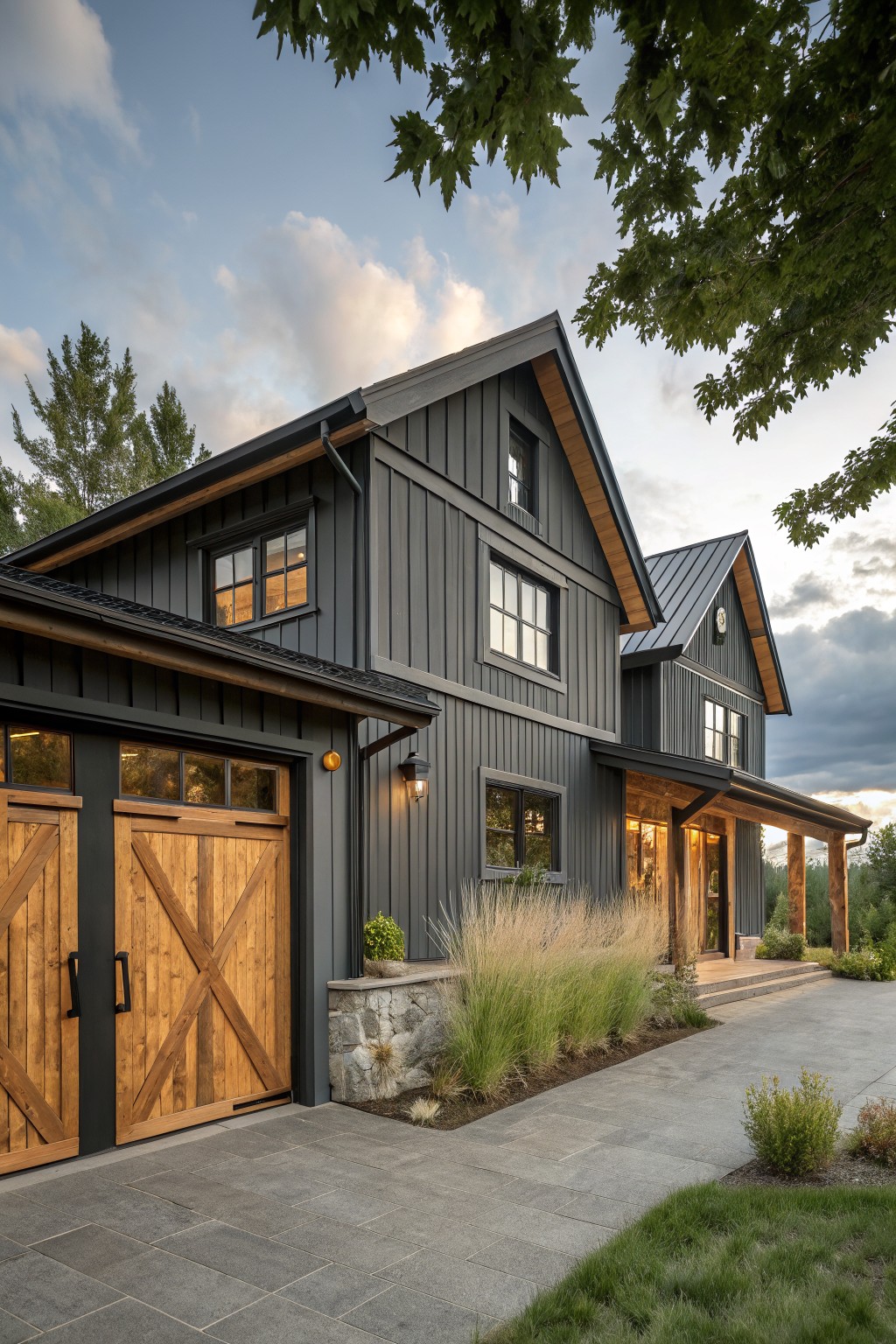
Dark siding gives a farmhouse a strong, modern shape, but it can feel a bit flat on its own. Natural wood garage doors break up that darkness and bring in warmth right where the eye lands first.
This approach works best on homes with a wide garage facing the street. Keep the wood finish simple and let the grain show, then repeat a smaller wood detail elsewhere, like porch posts or window trim, so the contrast feels intentional rather than scattered.
Natural Wood Beams at the Entry
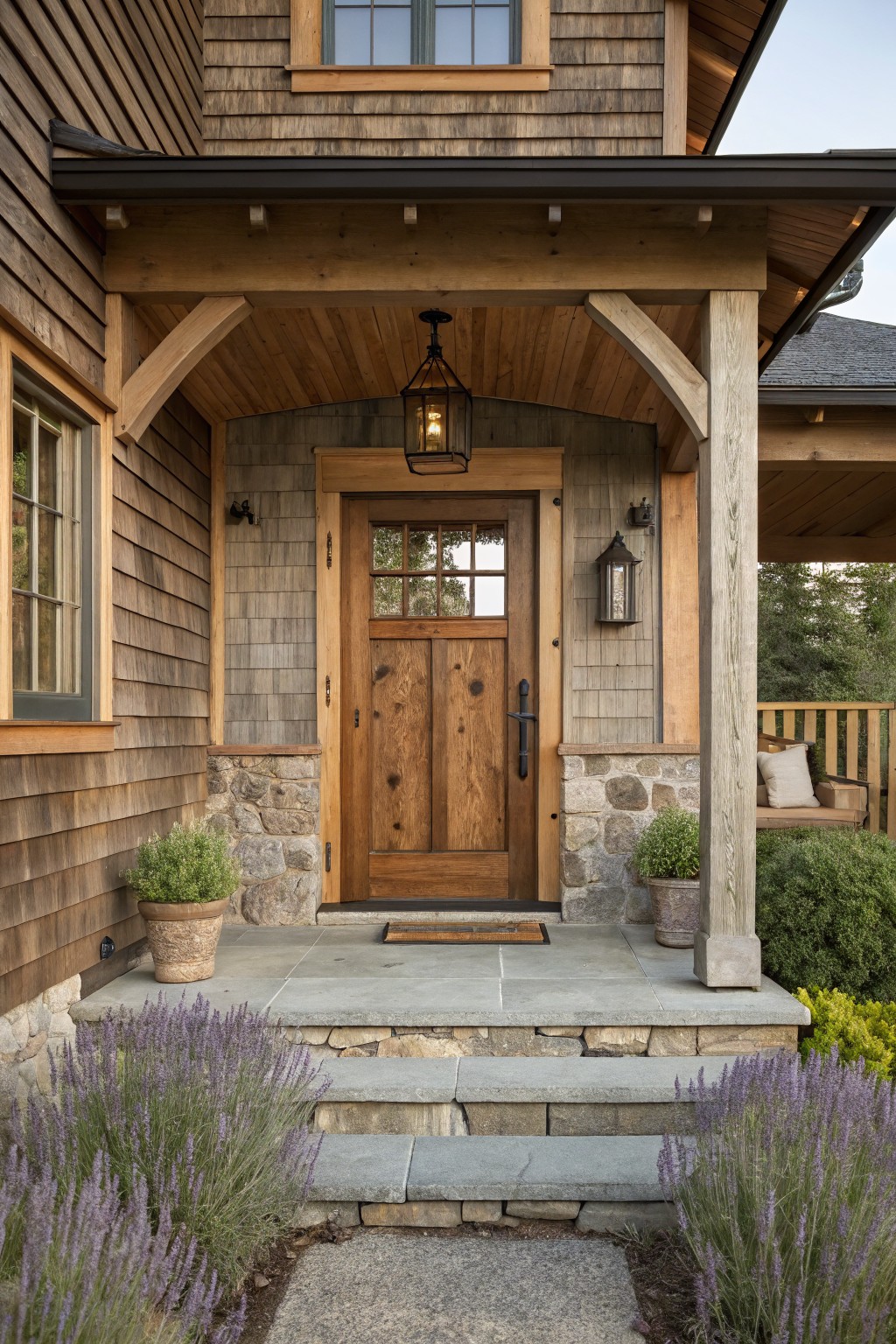
A simple way to add warmth to a farmhouse exterior is to use natural wood for both the front door and the overhead beams. The grain and tone stand out against stone and siding, giving the entry a grounded look without extra color or trim.
This approach works best on homes with mixed materials where the wood can act as the main accent. Choose a door style with clean lines and keep the beams exposed so the material stays visible from the street. It suits most farmhouse builds and helps the entry feel more welcoming year round.
Natural Wood Shutters Against White Siding
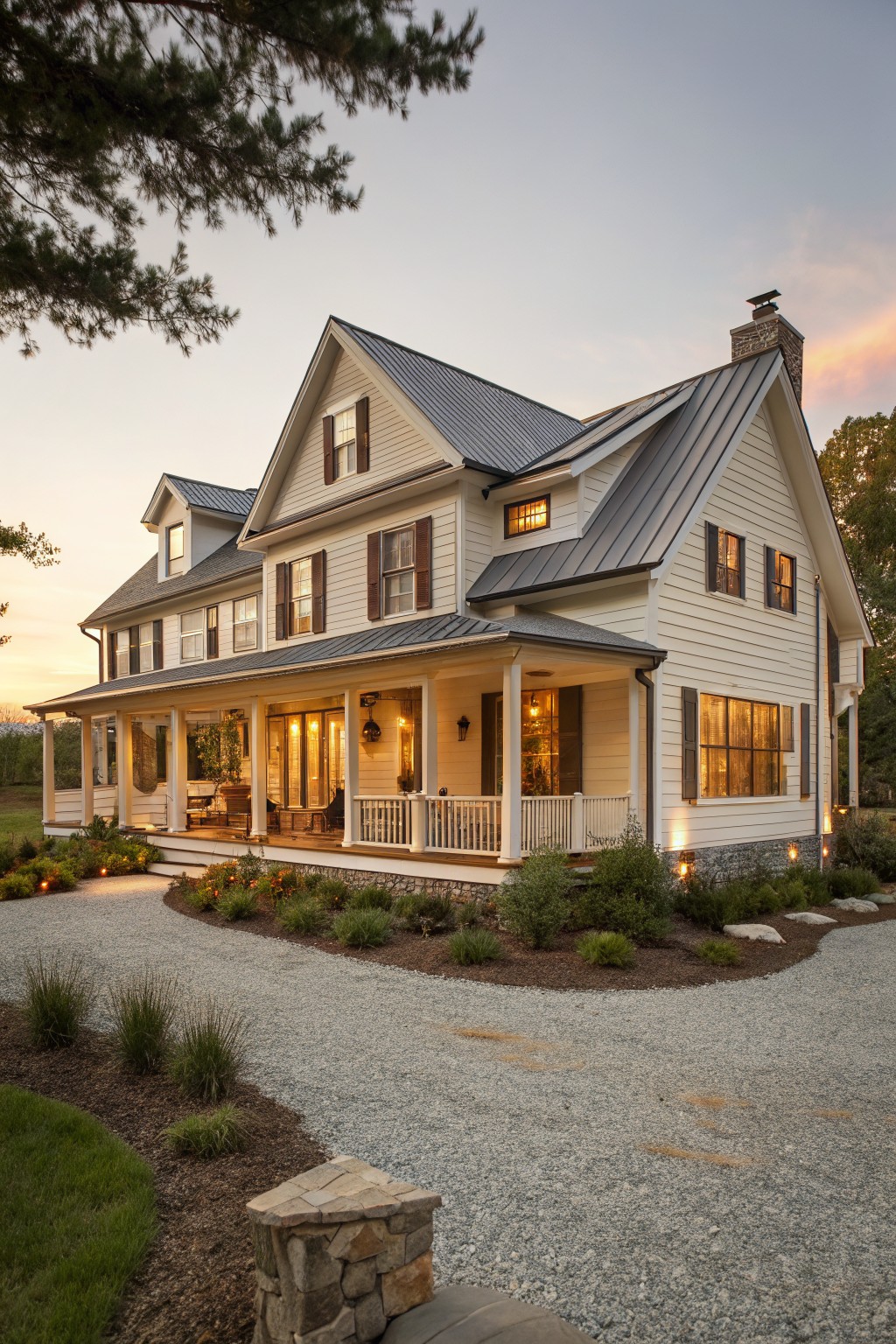
Wood shutters add a simple layer of warmth to a white farmhouse exterior. They break up the siding without overpowering it and give the house a bit more character, especially when the rest of the palette stays light and clean.
They work best on homes that already have some dark roofing or trim. Keep the wood tone consistent with any porch railings or doors so the accents feel tied together rather than scattered.
Natural Wood Doors Against White Siding
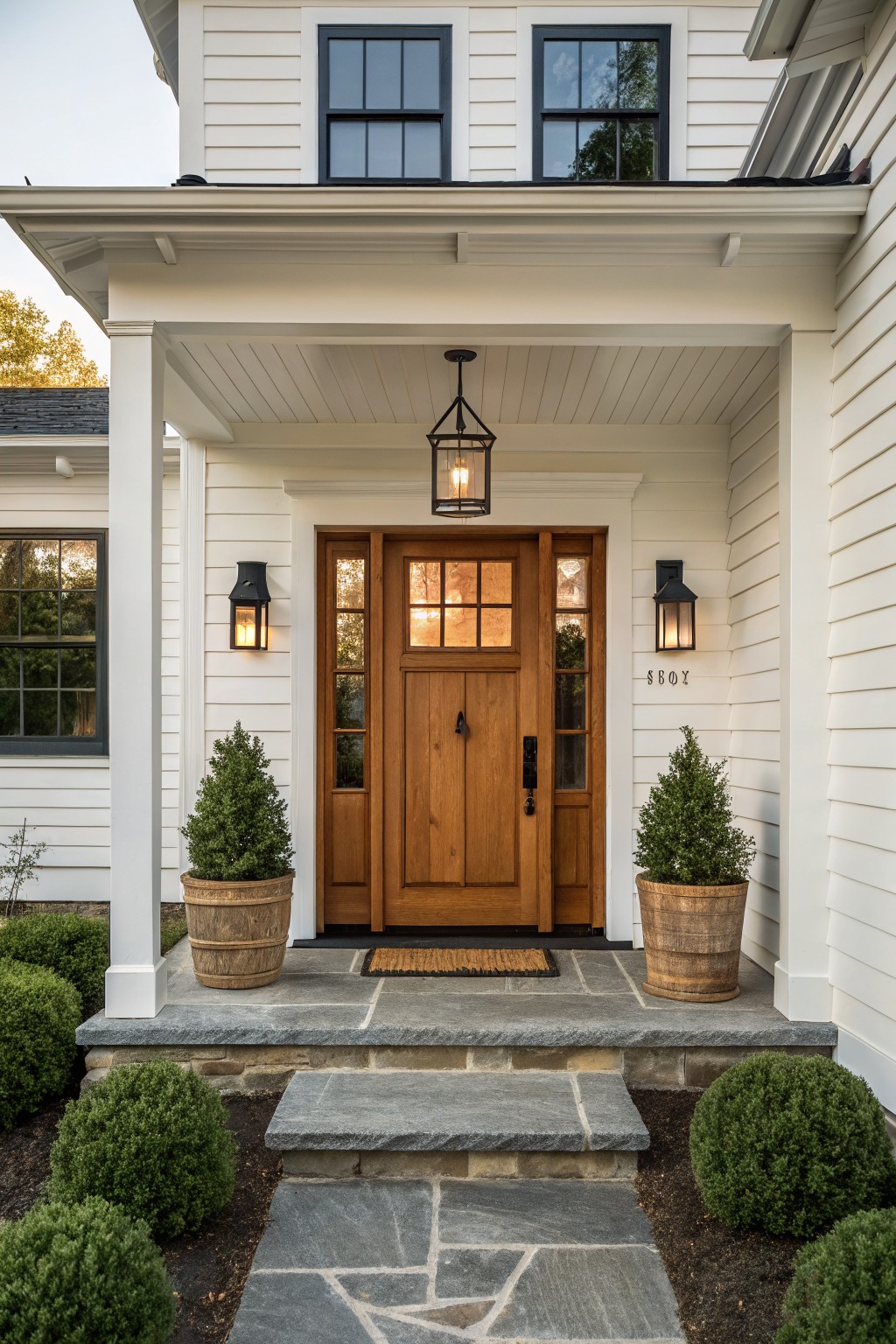
A natural wood front door adds a simple layer of warmth to a white farmhouse exterior. The contrast keeps the house from feeling too stark while still letting the siding stay bright and clean.
This approach works best on homes with straightforward lines and a covered porch. Pick a medium wood tone that does not fight the trim or hardware, and keep the rest of the entry fairly plain so the door stays the focus.
Natural Wood Garage Doors
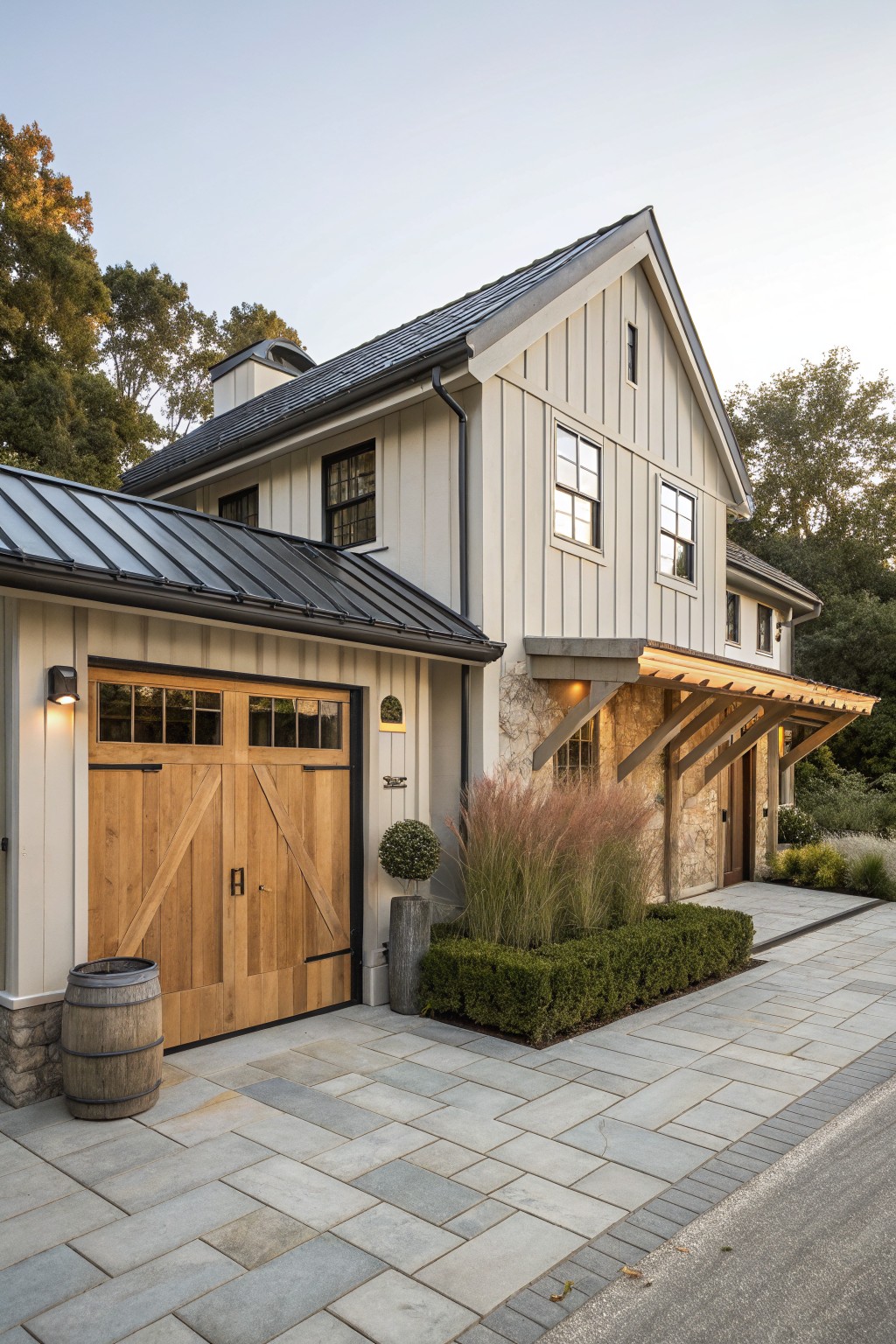
Natural wood garage doors add a simple layer of warmth to farmhouse exteriors that use mostly light siding. The wood grain and tone create contrast without needing extra trim or color changes.
This works best on homes with straightforward rooflines and neutral walls. Let the doors stay the main wood element so the look stays balanced and easy to maintain as the wood weathers.
Wood Pergolas on White Farmhouse Exteriors
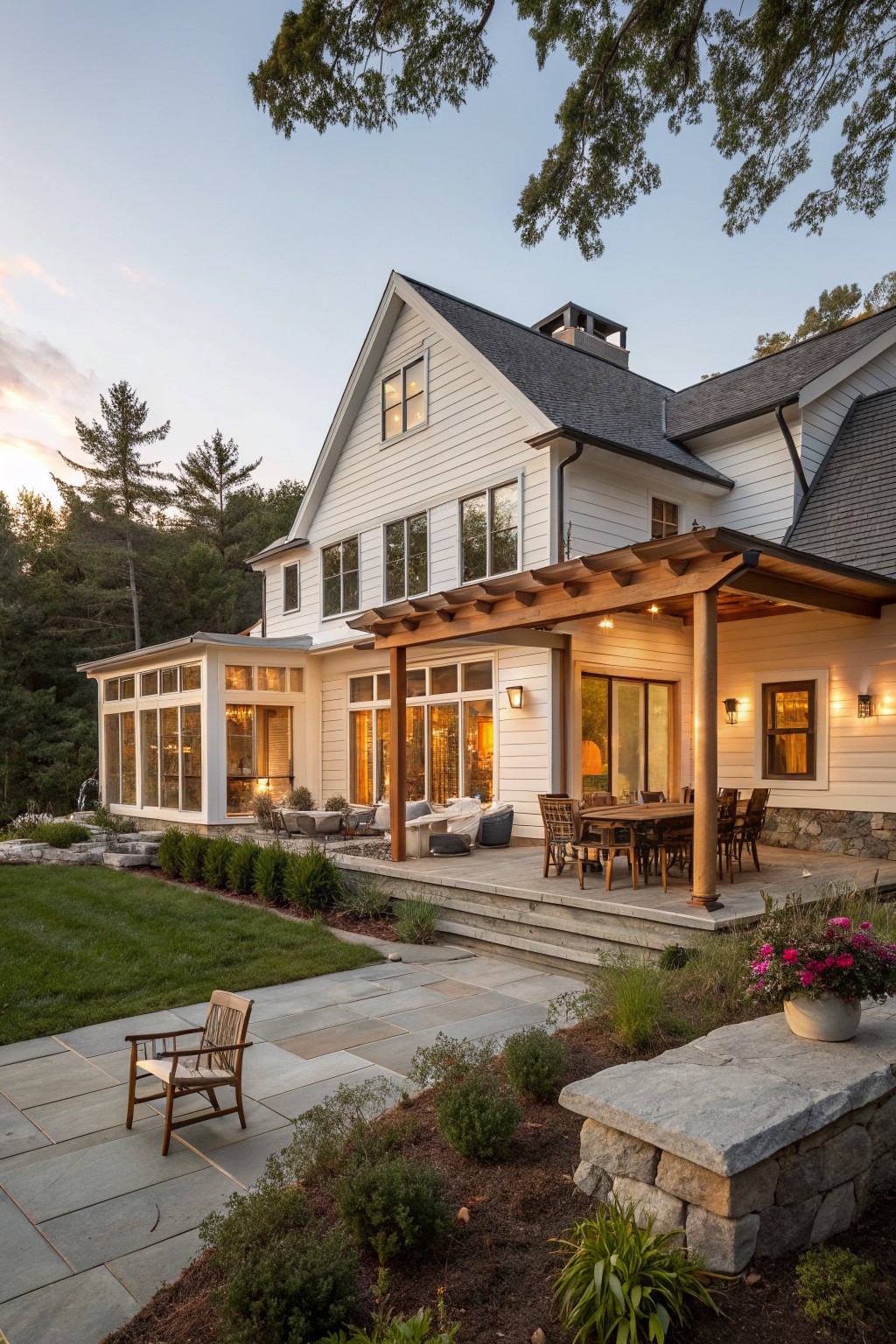
A simple wood pergola adds a natural material layer that stands out against white siding. The beams bring texture and a bit of depth without needing extra color or trim work.
This approach works best on homes with clean rooflines where you want to mark an outdoor seating area. Use straight posts and keep the finish light so the wood can weather evenly over time.
Natural Wood Accents Against White Siding
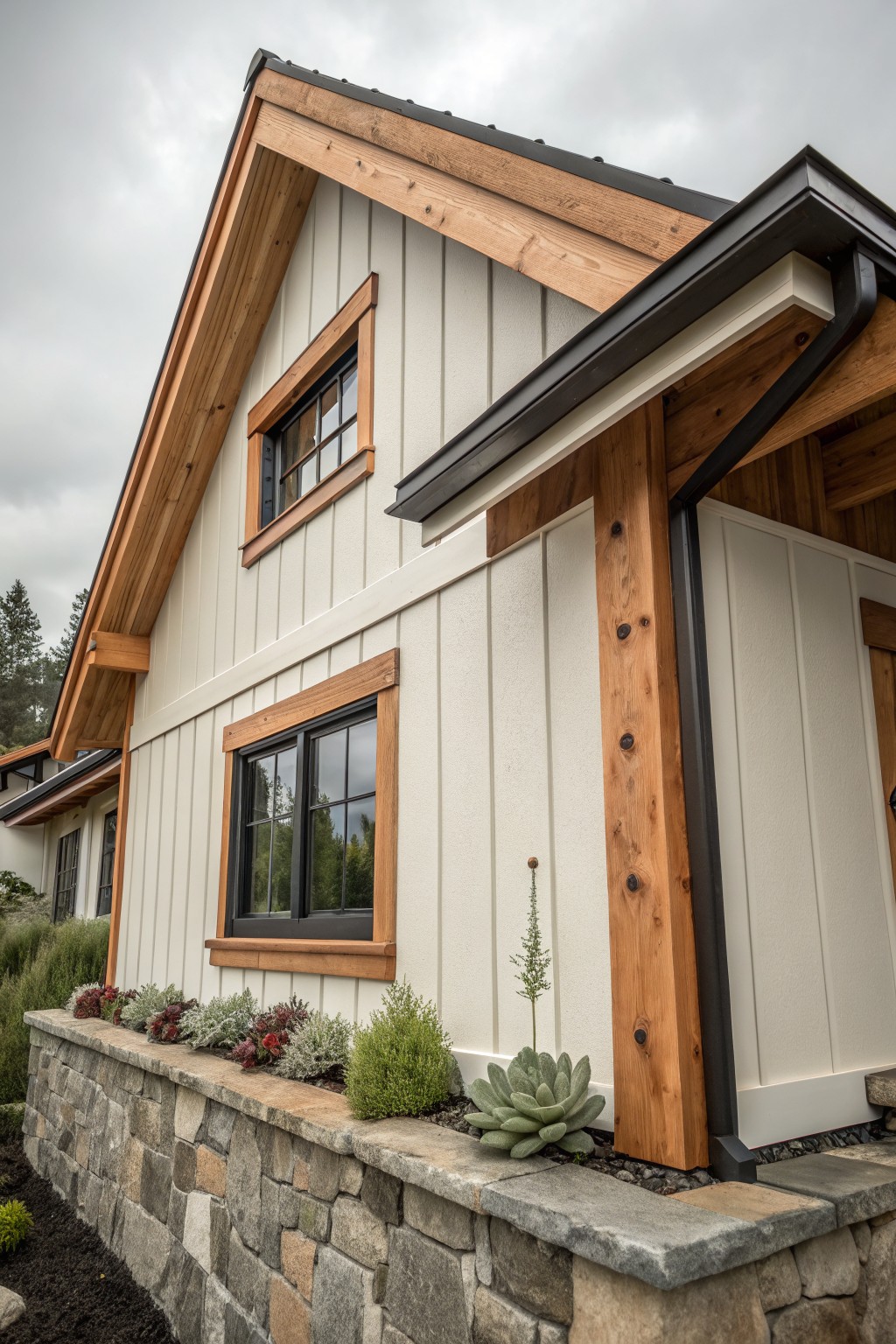
Many farmhouses keep the main walls light but bring in wood beams and trim to add some warmth. The contrast keeps the house from feeling flat while still looking clean and simple.
This approach works best on homes with straightforward rooflines and not too many other details. Use it when you want the wood to show up clearly without competing with stone or other materials.
Mix Wood Siding with Stone for Contrast
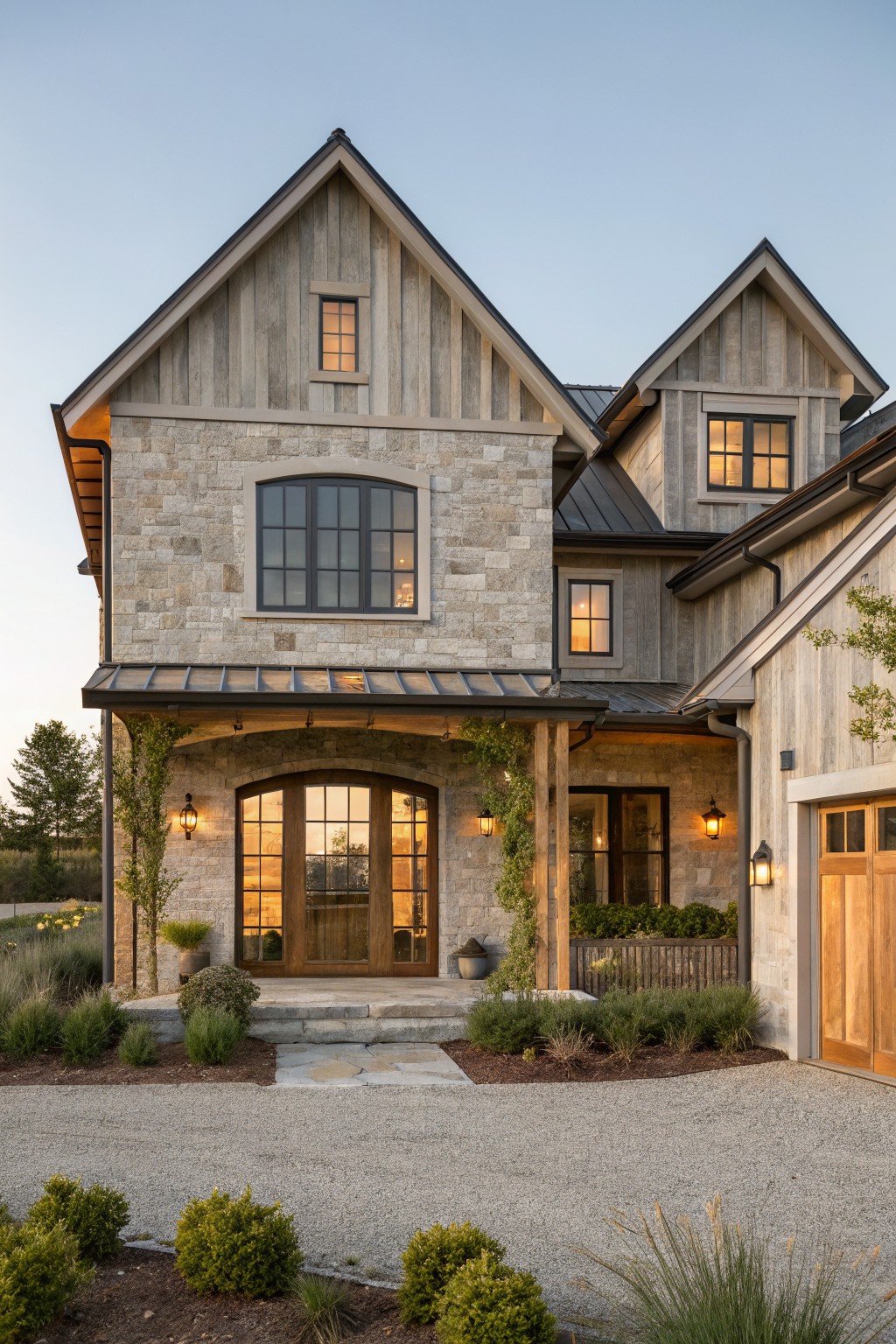
Many farmhouses use stone on the lower walls because it feels solid and lasting. Adding wood siding higher up on the gables or side sections breaks up that weight and brings a softer, warmer look without losing the sturdy base.
This approach works well on homes that already have a simple roofline and a few larger windows. Keep the wood tone natural rather than stained too dark so the contrast stays gentle. It suits both new builds and older houses that need a bit more depth on the front.
Natural Wood Accents On White Exteriors
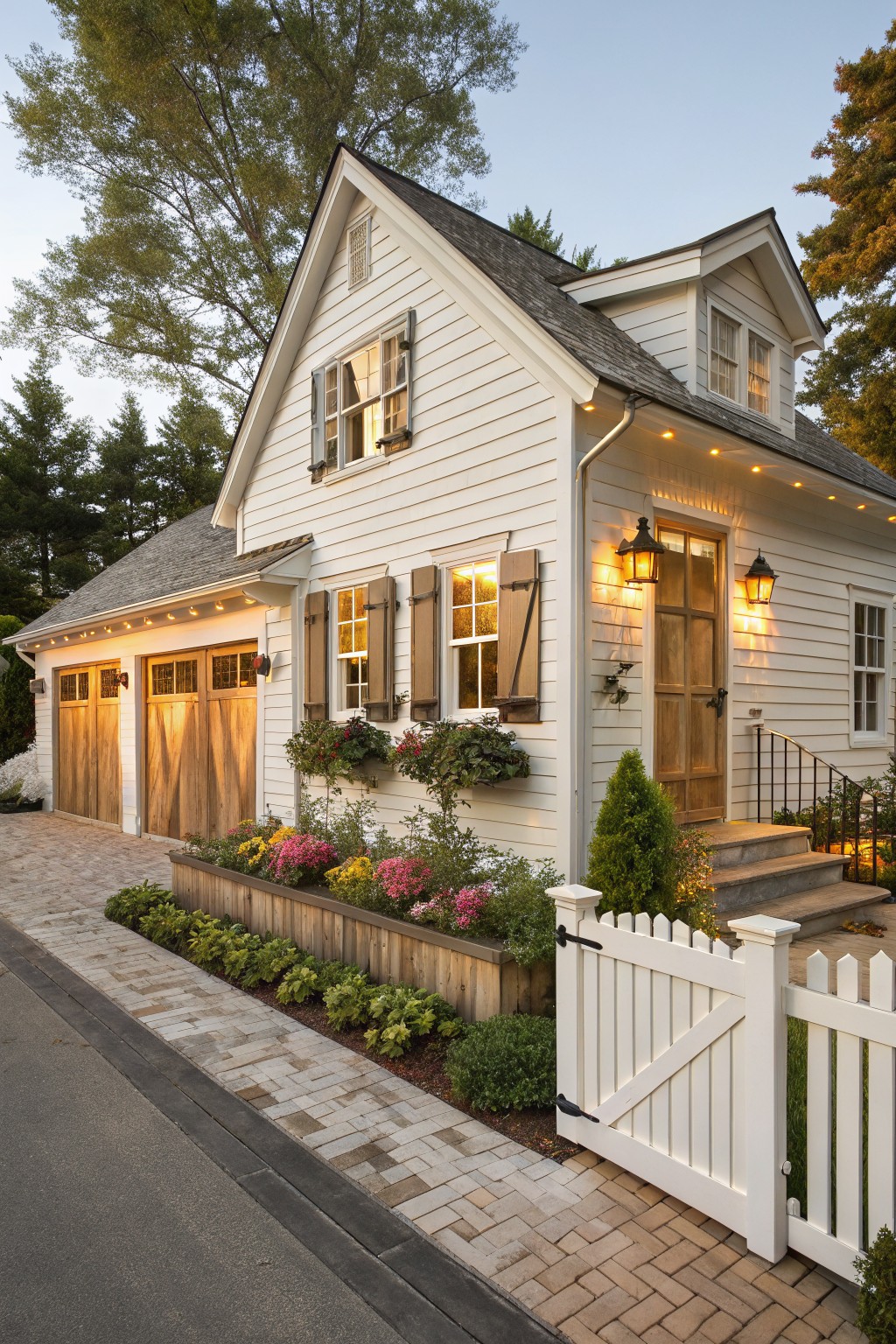
White siding gives a farmhouse a clean starting point, but it can feel a bit stark on its own. Adding natural wood on the garage doors and shutters brings in warmth and keeps the whole front from looking too plain.
This works best on homes that already have a simple shape and roofline. Keep the wood tones consistent across doors and shutters, and limit the amount so the white still does most of the work.
Natural Wood Accents Against Dark Siding
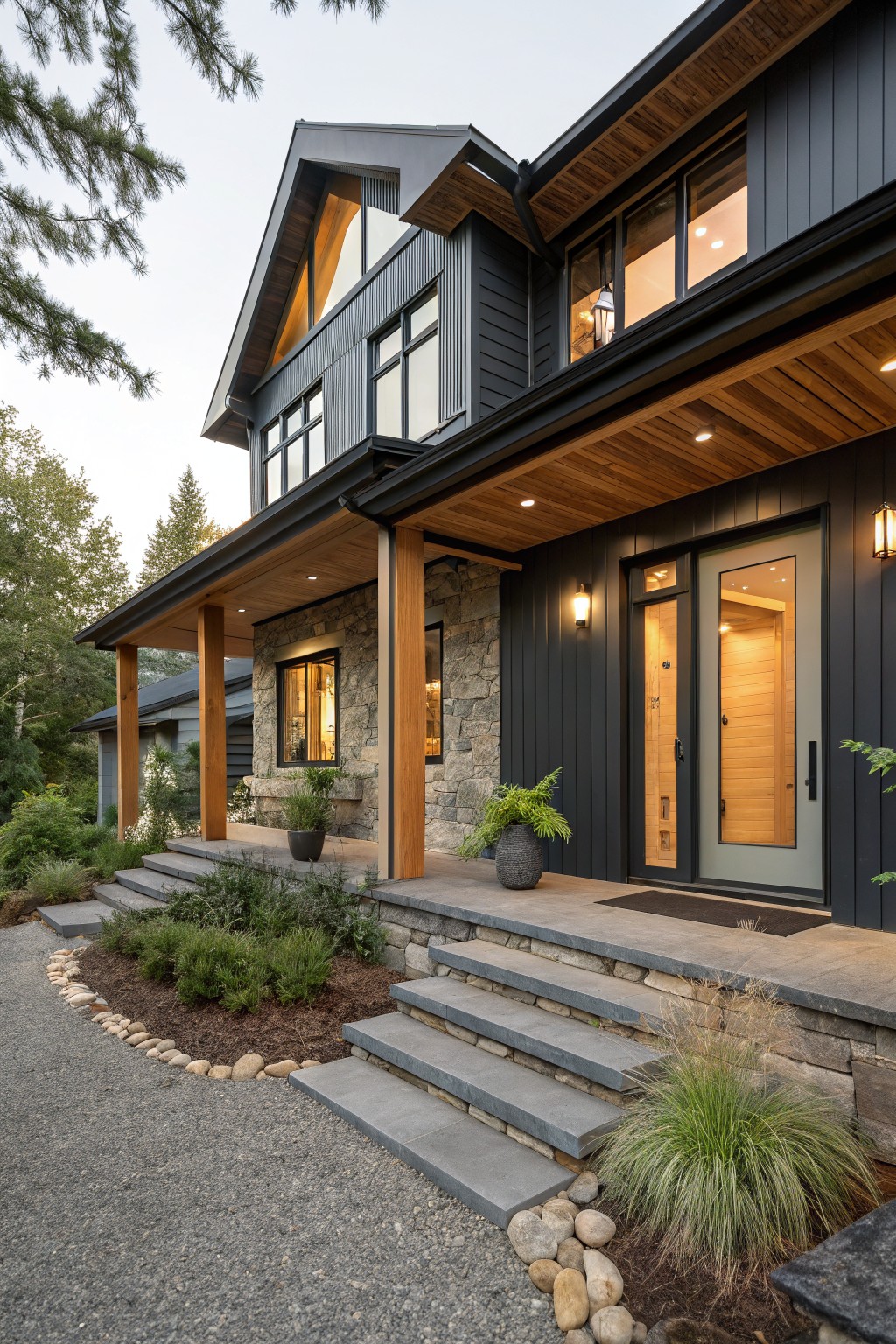
Wood accents stand out best when the rest of the house stays dark and simple. The contrast between the warm timber and the deep siding color keeps the exterior from feeling flat or cold while still looking clean.
This works well on farmhouses or modern homes that already have strong rooflines and stone details. Use it on porch posts and ceilings where the wood can catch light and soften the overall look without needing extra trim or color changes.
Natural Wood Doors For Warm Contrast
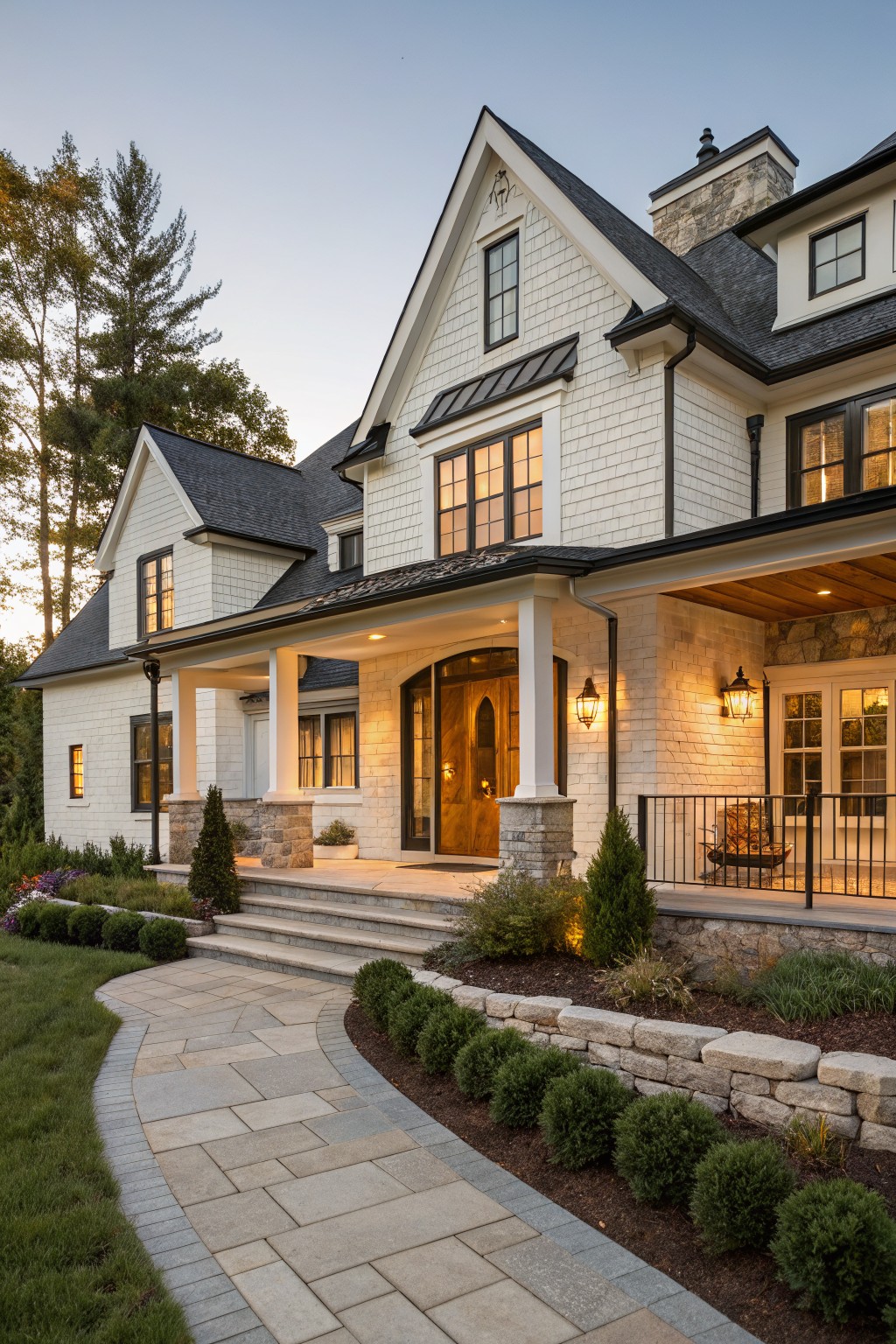
A wooden front door adds noticeable warmth to a white farmhouse that uses stone at the base. The contrast feels natural rather than forced and helps the entry feel more welcoming.
This approach works best on homes with light siding or masonry walls. Keep the wood tone medium to dark and pair it with simple black or oil-rubbed hardware so the door stays the main point of interest.
Mixing Natural Wood With Stone On The Exterior
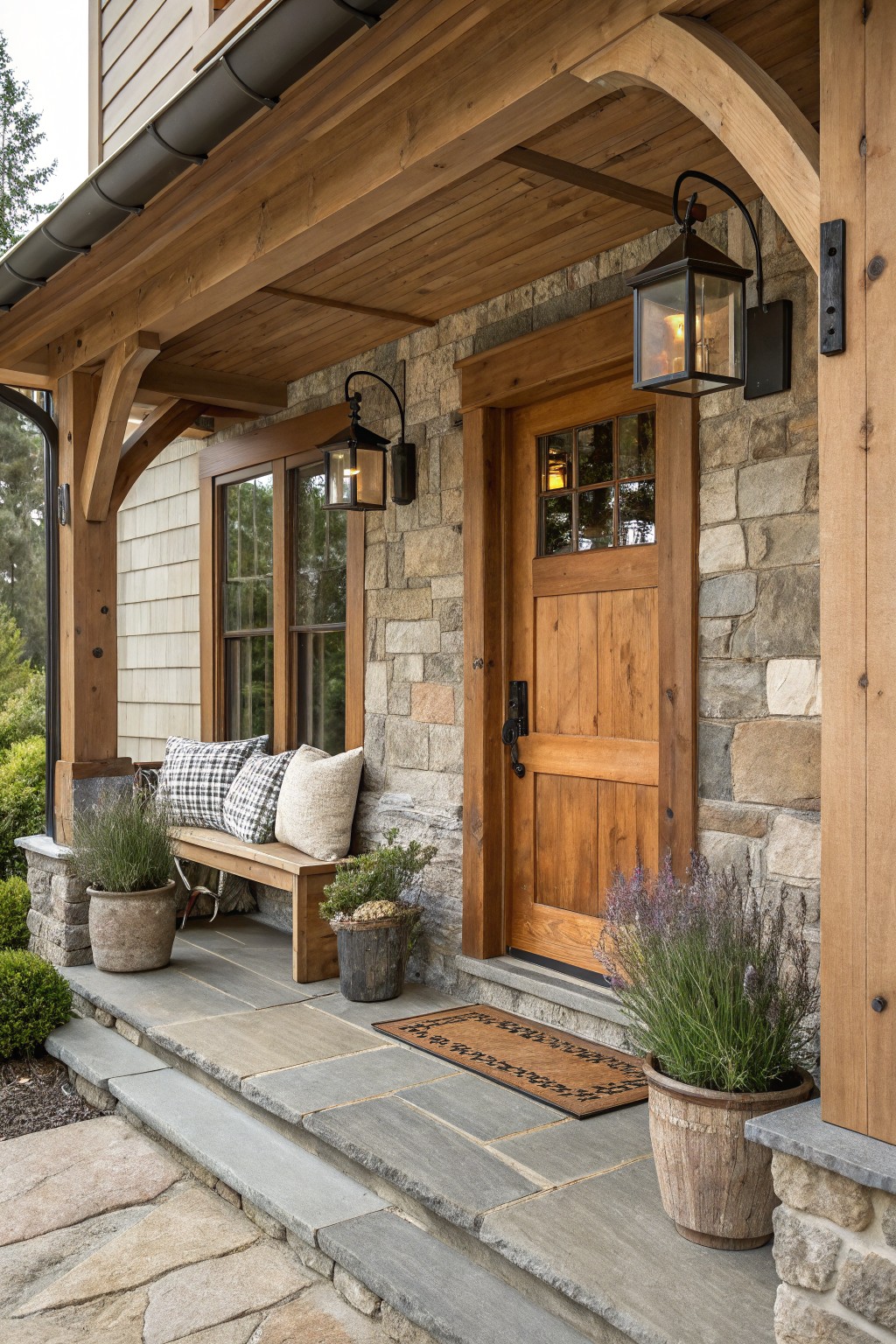
Natural wood accents give stone a warmer feel on a farmhouse exterior. The contrast keeps the stone from looking too cold while the wood adds texture and depth without needing much extra detail.
This works best on the front entry or along porch beams where the wood can frame the door and tie into the roofline. It suits homes that already have some rustic character and holds up well in most climates as long as the wood is properly sealed.
Natural Wood Siding for Farmhouse Contrast
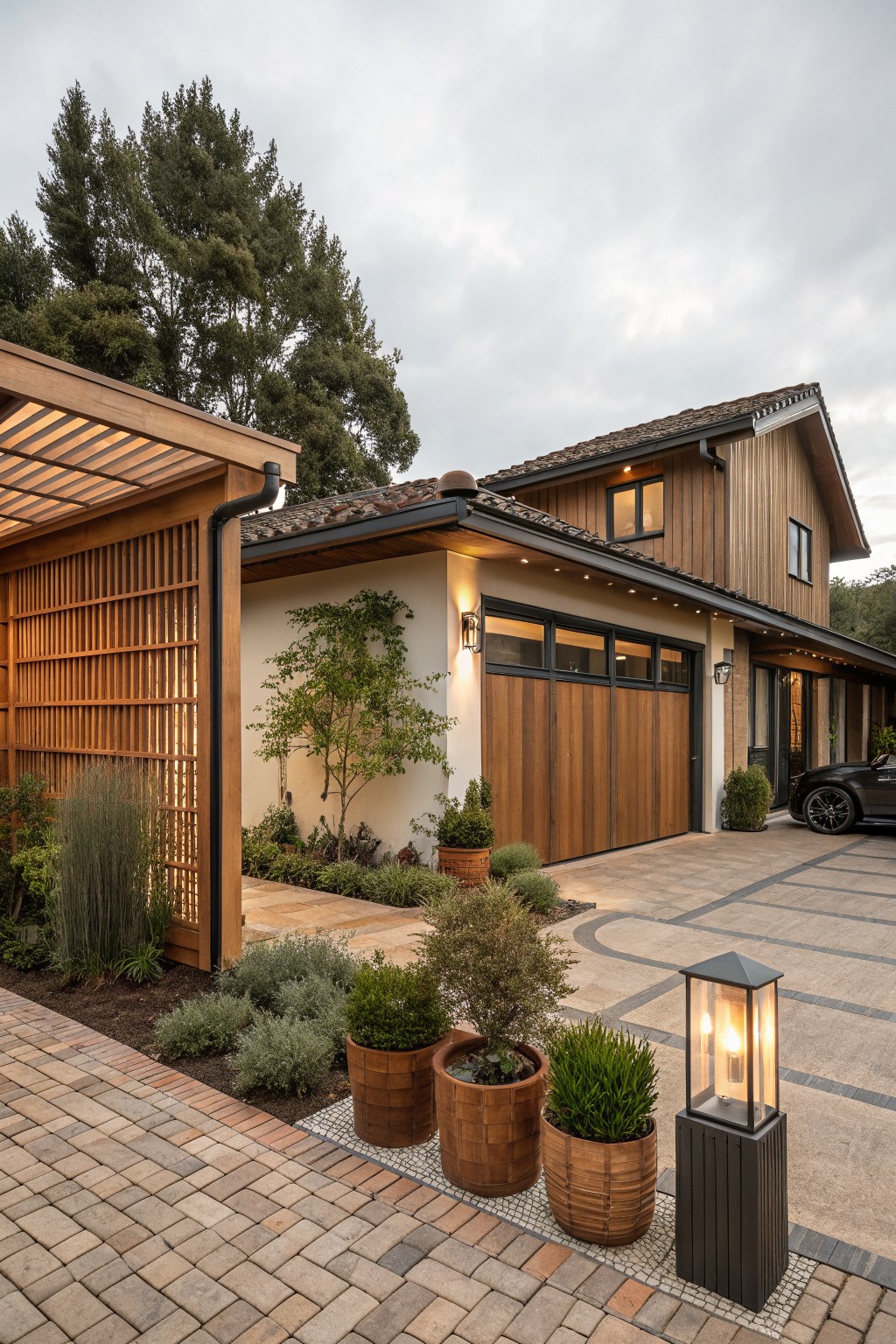
Natural wood siding stands out on farmhouse exteriors when it covers just part of the facade. It breaks up the lighter walls and gives the house a grounded look without adding too much detail. The vertical grain on the upper section and the matching garage doors show how the wood can be used in blocks rather than across the whole surface.
This approach works best on homes with simple rooflines and a mix of materials already in place. Keep the wood tone consistent and limit it to key areas like gables or entry zones so it does not compete with the rest of the design. Too much wood can start to feel heavy on smaller lots.
Natural Wood on the Porch Ceiling
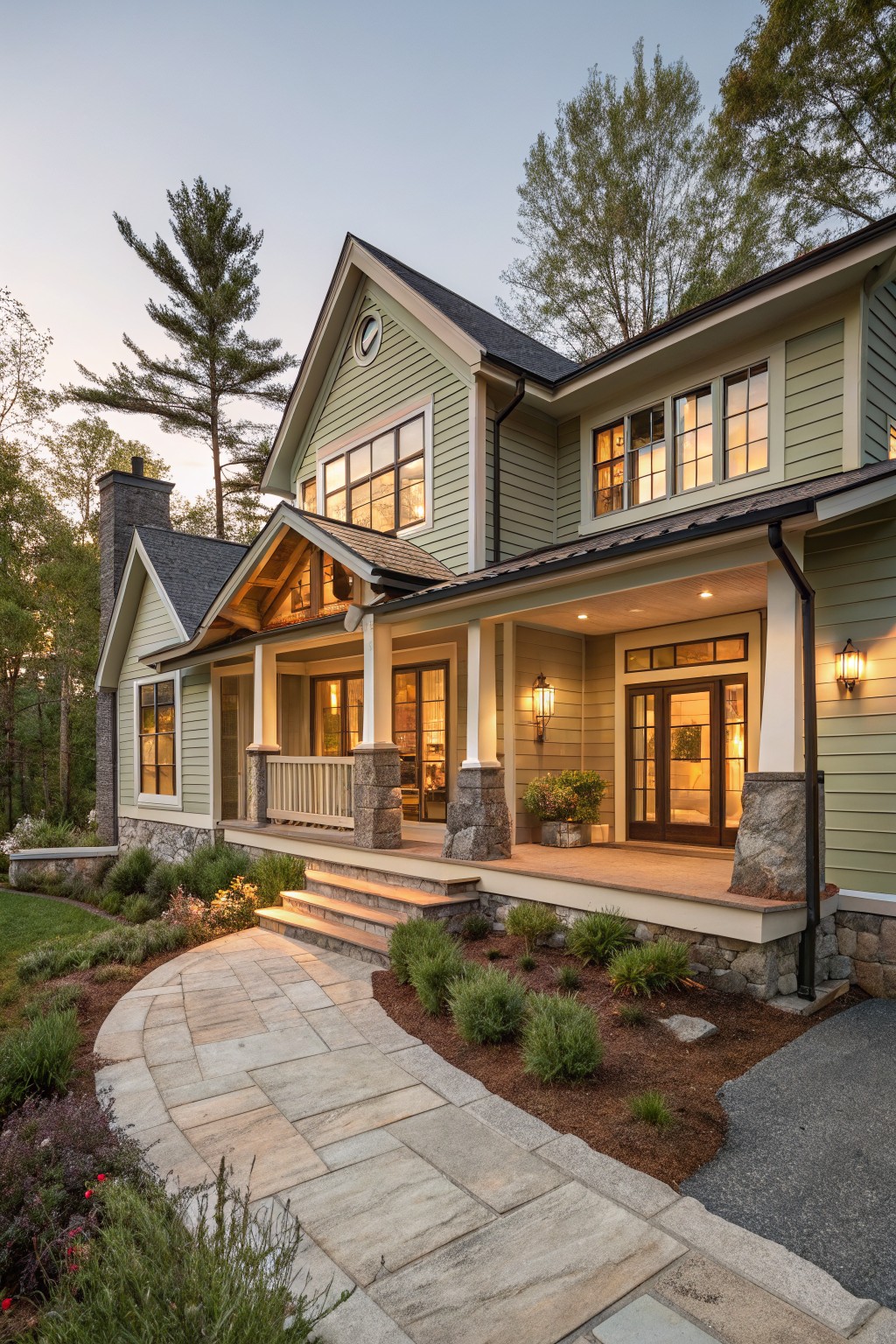
Many farmhouses add a natural wood ceiling under the porch to bring some warmth to the entry. It stands out against painted siding and stone bases without needing bold colors or extra trim.
This works best on homes with a clear front porch where the wood shows from the walkway. Keep the finish simple and let the grain show through. It pairs well with light siding and helps the whole front feel more grounded.
Dark Shutters On White Siding
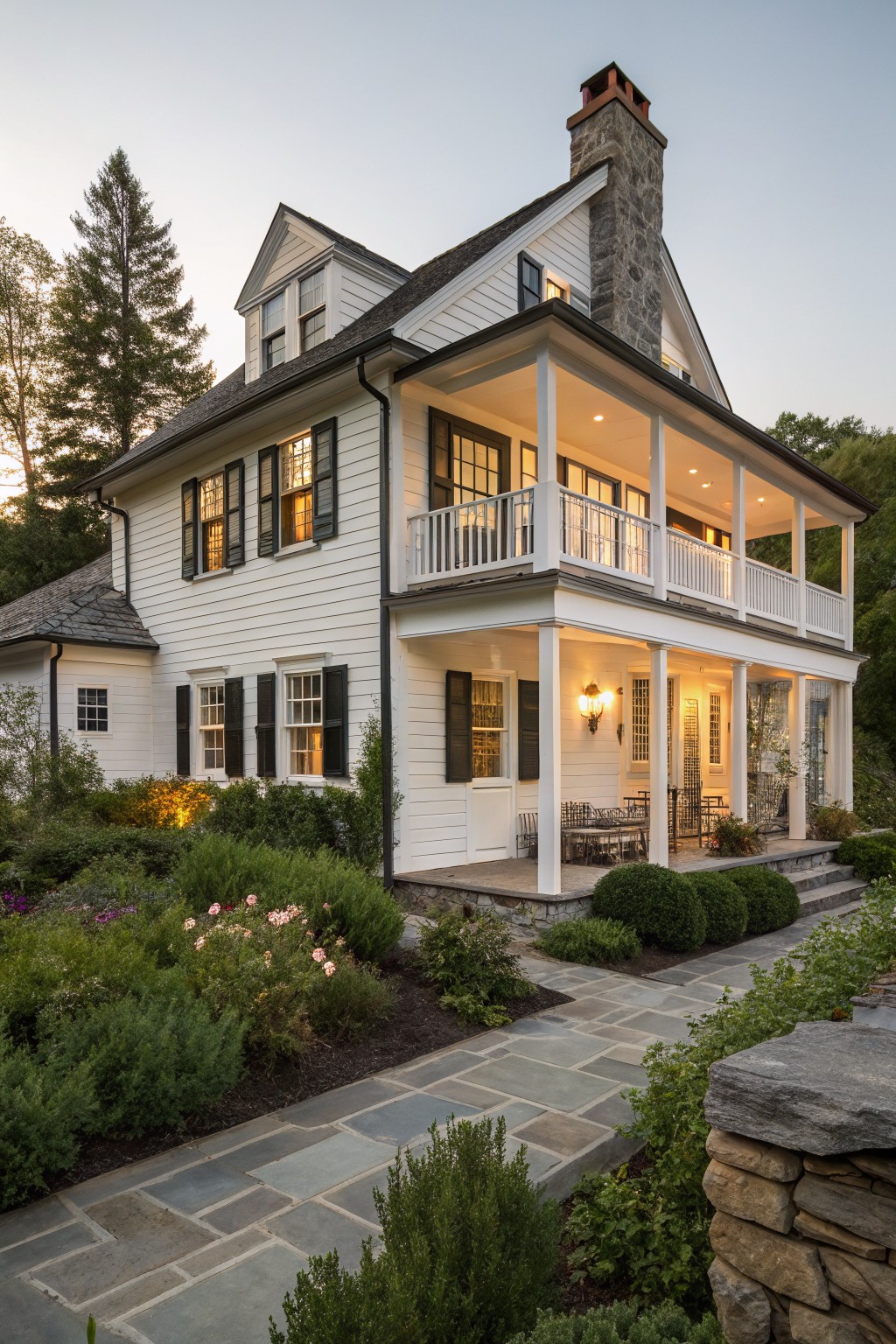
Dark shutters stand out on a white farmhouse because they give the windows clear shape without adding much clutter. The contrast keeps the whole front from feeling flat, and it works especially well when the rest of the trim stays simple.
This approach suits older homes or new builds that want a traditional look without extra trim work. Keep the shutters in a true wood tone or a deep stain rather than glossy black, and make sure the size matches the window so the effect stays balanced instead of busy.
Natural Wood Doors on White Farmhouse Exteriors
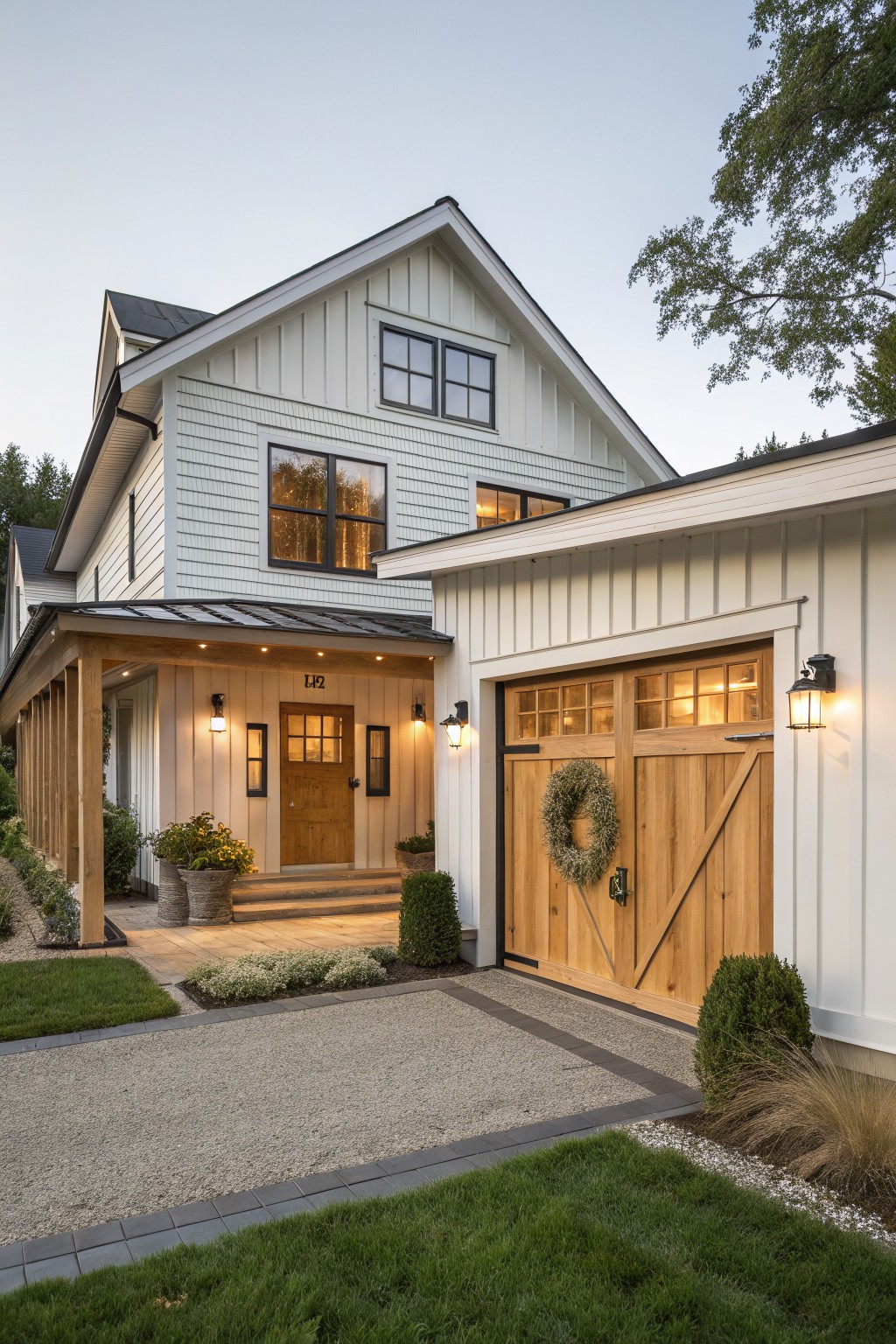
White siding gives a farmhouse a clean, simple base. Natural wood doors and garage panels add just enough warmth to keep the exterior from feeling too stark or flat. The contrast works because the wood stays in a few key spots rather than covering large areas.
This approach suits homes with straightforward rooflines and minimal trim details. Match the wood tone on the garage and front door so the look stays consistent. Avoid mixing too many wood finishes or it can start to feel busy.
Frequently Asked Questions
Q: What wood type works best for those accents if I live in a rainy area?
A: Cedar resists moisture well and keeps its warm tone over time. Pick boards with a natural finish instead of paint. Seal them once a year to block water damage.
Q: Can I combine wood with my existing brick exterior?
A: Wood adds nice contrast against brick. Mount the accents on furring strips to allow airflow behind them. This setup prevents moisture buildup on both materials.
Q: How do I pick the right shade of wood for warm contrast?
A: Go for medium tones like oak or walnut. They stand out without overpowering your siding color. Test a small sample board on the wall first to see how light hits it.
Q: Do these wood accents need special tools to install?
A: Basic carpentry tools handle most installs. A drill and level get the job done for simple trim pieces.
